screengrab

The need for connection is constant and ever present in life, and artists are particularly sensitive to that need, which is why I started “When Music Meets Mindfulness” – to have conversations with fellow artists that encourage us to learn from each other, to ground us, and to keep us anchored in a fast-paced world that often threatens to sweep us off our feet.  

In this conversation with multi-talented world/fusion artist Suba Sankaran, I found myself uplifted and motivated by her warmth and nurturing presence. She emanates joy as she speaks about what she loves to do most – reaching out and connecting through honest artistic expression, as a performer, a choral director, educator and arranger. She has composed and produced music for music theatre, film, radio and dance including collaborations with Deepa Mehta, the CBC, Stratford Festival, Shaw Festival, and the Barbican Theatre in London for the debut of her original music for Why Not Theatre’s Mahabarata. 

Through all these career-defining moments, she remains the same deeply rooted person with an open heart and voice that I met years ago at York University, where we shared a connection: membership in the collegiate a cappella choir Wibijazzn’ (now known as WIBI). We were not in the choir at the same time; nevertheless the legacy of the group initiated a bond between us, and has opened up opportunities to collaborate, including this interview. 

As always in this series, the three principle precepts of Mindfulness – Calming the Mind, Organizing Thoughts, and Flow – provided a roadmap for our exchange.


Read more: When Music Meets Mindfulness: Suba Sankaran, connecting the cultural dots

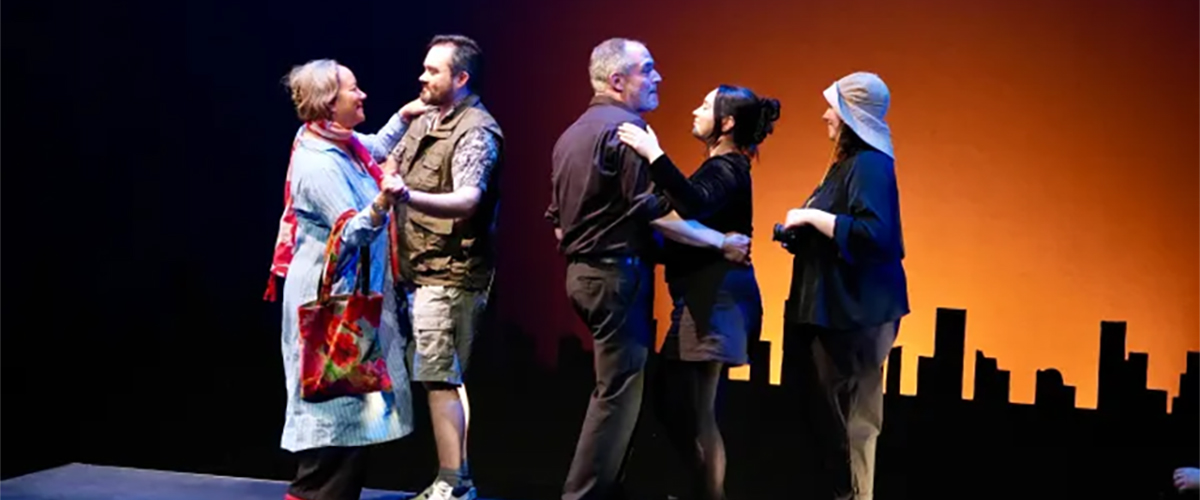
The Stories Don’t Die company:   Keely McPeek (Didi) Giles Tomkins (Oz), Ian Cusson (Composer), Marion Newman (Mimi), Royce Vavrek (Librettist), Evan Korbut (Bird), Danlie Rae Acebuque (Eugene) and  Asitha Tennekoon (Desi) photo:  Lauren HalaszWhen decorated author Thomas King revealed last November that he, in fact, could not verify his claim to his Cherokee ancestry, the reaction was swift and negative. Notably, scheduled operatic stagings of his novel Indians on Vacation in Edmonton (Edmonton Opera) and Toronto (Against the Grain Theatre) were cancelled, with Edmonton Opera stating that “moving forward would not align with our commitments to reconciliation, cultural respect, and responsible partnership.” 

But among those in the Indigenous community actively supporting the opera’s cancellation, one group of people was noticeably absent – namely, the cast and creative team of composer Ian Cusson and librettist Royce Vavrek’s opera based on King’s novel. Cusson, director Yvette Nolan, and all main cast members are Indigenous. Among them, there was consensus on two points: that outright cancellation of the fully developed but not yet staged Indians on Vacation was a solution they could not wholeheartedly endorse, and that unqualified support for bringing it to the stage as originally conceived was not an option either. 

Read more: “Stories Don’t Die” – Creative countering of cancellation culture

CONTXT BY TRANEEditor’s note: Gloria Blizzard’s  story” Black History at the Pilot Tavern” this past March/April looked back at a Black History Month weekly series at the Pilot Tavern – the brainchild of Trevor Bazilio, a long-time attendee at the venue, who queried the paucity of Black jazz musicians regularly featured at the venue.

Laudable as the series is, Blizzard wrote, “five nights of Black jazz musicians programmed to play at the Pilot Tavern, a jazz venue, calls attention to an absence on the musical landscape.” She goes on to note the efforts over time of some of  “the many others at work on changing the jazz landscape [by ensuring] environments where Black audiences, with an embodied knowledge, even if not explicit history of segregation, could feel at ease.” 

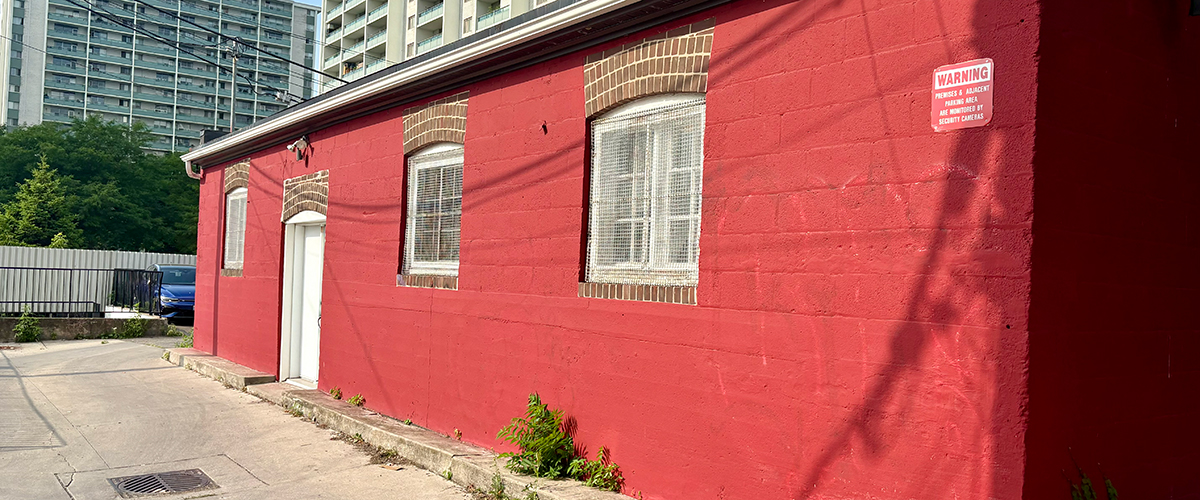
That work continues, as new venues arise, filling programming gaps in Toronto’s musical landscape and welcoming in new or underserved audiences. 

Read more: Stories that don’t die (2) | Fuelling musical empowerment: Contxt by Trane & Davie Studio

Photo by SHANE GRAY“Fiddling gave me freedom and instinct; classical playing gave me depth and language. Together they have shaped a wide emotional landscape that feels like home.”

It’s hard to know where to start in attempting to turn into a coherent story the delightfully rambling conversation I had, this past May 7, with William Fedkenheuer, incoming artistic director of Toronto Summer Music Festival and Academy (TSM for short).  

If we stick to the running order of the conversation, first up would be a 2021 Facebook post he made “during the quiet of the pandemic” about some of  the false assumptions, in most post-secondary institutions, about how musicians should educate. 

Read more: In Conversation | William Fedkenheuer: Second fiddle? Yes indeed!

kokoroko by Kemka AjokoIn the May/June WholeNote, see page 20, I wrote about the eight-piece band Kokoroko, a revolutionary group of young Black musicians from the United Kingdom, coming to the Toronto Jazz Festival for a June 25 appearance at the Phoenix Concert Theatre.on June 25, Toronto. My first image of them was ten or so years ago – a photograph of a frontline of Black women horn players - trombone, trumpet and saxophone. It looked like it could be a jazz band, but when I finally heard the music it was not landing as such to me. 

It turns out that the origin story of Kokoroko is firmly rooted in afrobeats. This music, out of Nigeria, names as a source Fela Kuti, who blended highlife, traditional African drums from Nigeria, American funk, electric instruments, and lots of horns. Since then, Kokoroko  have continued to expand compositionally: elements of hip-hop, gospel, palm-wine, soca, Jamaican sound system, and yes, jazz, with all these influences beautifully woven into an original sound that includes the original hornline-infused afrobeats of Fela Kuti’s era and highlife, along with hip-hip, grime from London’s electronic dance music scene, dancehall and gospel. 

As a music writer, I’m interested in process, how they compose, and so I  dug further into this in an interview with co-founders trumpeter Sheila Maurice-Grey and percussionist Onome Edgeworth.   

Kokoroko means “be strong” in the Urhobo language from southern Nigeria. I don’t know what they have in store for us on June 25, but judging from the soca-influenced “Sweetie”, I strongly suspect we’ll all be singing, “Sweetie make my heart beat bounce!”  In these challenging times, I anticipate a joyful gathering. There will be much dancing. 

Read more: AFROBEATS PLUS Kokoroko is coming to town
Back to top