 “Fiddling gave me freedom and instinct; classical playing gave me depth and language. Together they have shaped a wide emotional landscape that feels like home.”
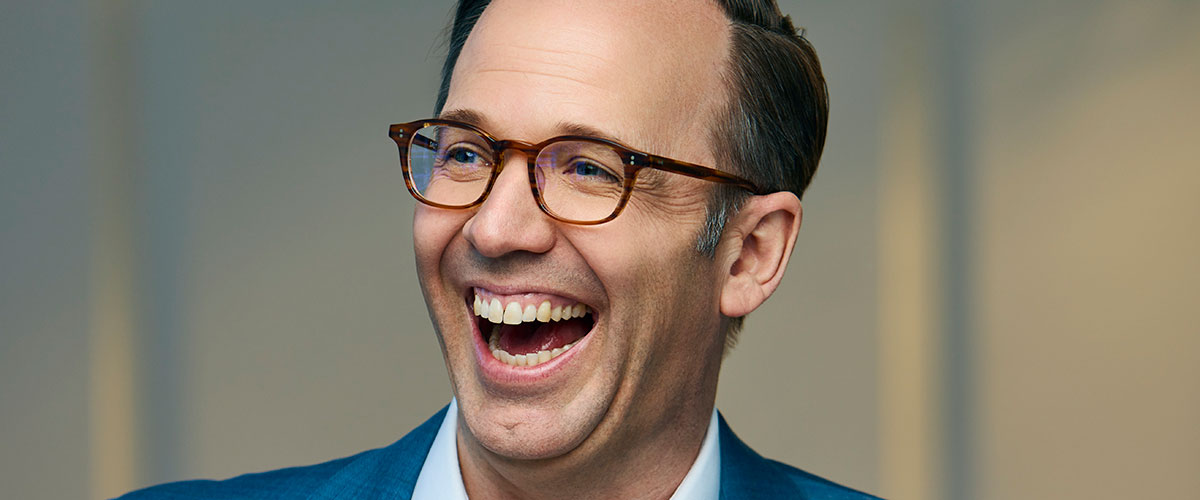
It’s hard to know where to start in attempting to turn into a coherent story the delightfully rambling conversation I had, this past May 7, with William Fedkenheuer, incoming artistic director of Toronto Summer Music Festival and Academy (TSM for short).
If we stick to the running order of the conversation, first up would be a 2021 Facebook post he made “during the quiet of the pandemic” about some of the false assumptions, in most post-secondary institutions, about how musicians should educate.
You can find that post here, if you’re reading this story digitally. If not, it’s quoted in full in “For Openers,” right before this story. Either way, it’s worth a look, because it is indicative of the mindset Fedkenheuer is bringing to his tenure, however long it lasts And because TSM (festival and academy) is fertile ground for putting the precepts in the post into practice.
“It was a post that struck a chord with thousands of musicians,” Fedkenheuer is quoted as saying. “It came out of years of research and more than two decades of performing, teaching and watching colleagues build meaningful careers. It still captures what I believe about how we can evolve our training for the next generation.”
That quote is from a conversation, well worth reading in its own right, that Fedkenheuer had this past December with Toronto blogger Leslie Barcza aka barczablog. The quote at the top of this story is also from that barczablog interview – Barcfza asks what Fedkenheuer’s fiddling background has meant for his classical career.
“Everything,” Fedkenheuer responds. “Fiddling was my first musical home, the place where I learned to step into the spotlight with comfort, spontaneity and a real sense of play. It taught me how to read a room, how to trust my instincts, and how to live inside a deep internal rhythm that comes from the body as much as from the ear. In the fiddling world there isn’t really the concept of mistake … you’re always only one note away from making it sound like you meant it…or discovering that you did. That freedom becomes a way of breathing on stage.”
And he sums it up this way: “As a fiddler, I learned instinct, groove, improvisation, and the joy of of playing for people in community spaces … how to read a room, how to bring an audience in close, and how to take the whole place on a ride where everyone feels part of the story. As a classical violinist, I learned precision, depth, structure, and a different kind of connection – one rooted in long-form storytelling, nuance, and emotional architecture. … Fiddling gave me freedom and instinct; classical playing gave me depth and language. Together they have shaped a wide emotional landscape that feels like home.”
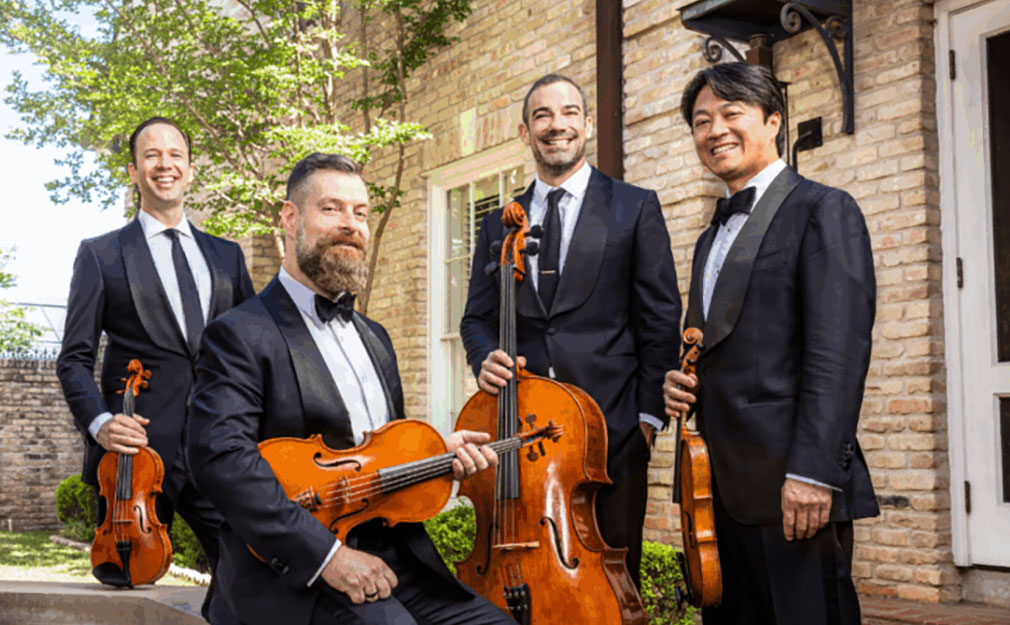
Second fiddle in the Miró
When you’re learning the transferable skills necessary for the “portfolio career” that Fedkenheuer advocates for in the 2021 post, the little things help. Like all the members of Miró Quartet being on the faculty of the school of music where the Miró is in residence. (The Butler School of Music in Austin, Texas which is where he was, May 7 when we talked.)
I joked about the thankless task of “playing second fiddle“ in a string quartet.
“You know what they say about quartets? The cello is the bottle, the first violin is the label, and the inner voices are the wine. Ask anyone what the hardest role to play in a string quartet, it’s second violin. I think about that a lot. How second violin is seen and what role I can play in changing that legacy.
“I spend time, a lot of time with scores, of masterpieces. You can define the main roles of the instruments. Cello has the bass line, violist is often filling in the harmonies, together they form a bridge from the lower half of the quartet to the upper half. Second violin does a bunch of negotiation, first violin is the soloist, and so on.”
Negotiation? “Between the soloist first violin and the backline. Second violin is often paired with someone. Variously. That puts central intelligence constantly going through the second violin. The thing to realize as second violin is that in the sound no one’s listening to you. So if you have to sound bad to fix something go ahead and do it. Because they’re not looking at you, they are looking at the label! You have to be good with strategy and negotiation and you also have to have very strong boundaries. There’s a lot coming at you. Like leadership of any organization it’s important to make decisions that are not in the spotlight. Stand strong. And not always do something someone requests. Think of it this way: if second violin is always paired with someone, then in decision making, from moment to moment, you have 50% of the vote.”
The ability to step into the spotlight with comfort, spontaneity and a real sense of play. And to make decisions that are not in the spotlight.The ability to read a room. And to bring an audience in close. And to take the whole place on a ride where everyone feels part of the story. The ability to apply precision, depth, and structure to any task at hand, so different kinds of connection can emerge – rooted in long-form storytelling, nuance, and emotional architecture.
So far In this story Fedkenheuer has spoken about these only in the context of his own musicianship. It’s not hard to imagine them instead as the stated prerequisites for candidates applying for the TSM AD position. And it’s easy to see why Fedkenheuer wanted (and got) the job – an opportunity, over time, to help reshape TSM’s artistic, educational and emotional landscape.
July 9 to August 1, 2026, he gets to make a start.
David Perlman can be reached at publisher@thewholenote.com