

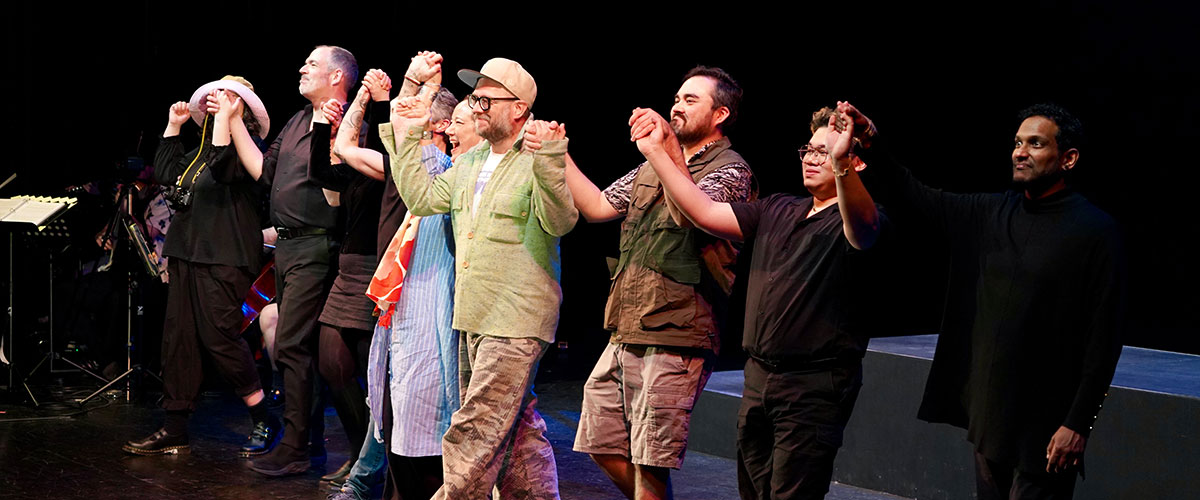
 When decorated author Thomas King revealed last November that he, in fact, could not verify his claim to his Cherokee ancestry, the reaction was swift and negative. Notably, scheduled operatic stagings of his novel Indians on Vacation in Edmonton (Edmonton Opera) and Toronto (Against the Grain Theatre) were cancelled, with Edmonton Opera stating that “moving forward would not align with our commitments to reconciliation, cultural respect, and responsible partnership.”
But among those in the Indigenous community actively supporting the opera’s cancellation, one group of people was noticeably absent – namely, the cast and creative team of composer Ian Cusson and librettist Royce Vavrek’s opera based on King’s novel. Cusson, director Yvette Nolan, and all main cast members are Indigenous. Among them, there was consensus on two points: that outright cancellation of the fully developed but not yet staged Indians on Vacation was a solution they could not wholeheartedly endorse, and that unqualified support for bringing it to the stage as originally conceived was not an option either.
The solution was nuanced. Under the aptly-named title “Stories Don’t Die,” Indians on Vacation was brought to life at the Terminal Theatre in Toronto on May 9, 2026 as a one-time staging by Against the Grain Theatre. The performance featured semi-staged scenes from the cancelled show, with interspersed monologues from the ensemble, stepping out of character, describing their experiences with the cancellation. The format managed to preserve the story’s disarming charm and emotional depth, while effectively making room for a voicing of the impact of the cancellation on those who had already given themselves emotionally and creatively to bringing to life a story they believed in.
Even more effective were the questions that arose during the monologues and the talkback that followed the show. Where does the tipping point lie between a now-deemed inauthentic Indigenous story and an Indigenous cast determined to bring it to life? In a cultural moment where questions of identity and agency can be treated as conversational landmines, leading only to stifling silences, can performances like “Stories Don’t Die” illuminate how art can be used as a tool to foster difficult yet empathetic discussions, rather than shutting the discourse down?
I wrote to several members of the cast and creative team in the weeks after the show, wanting to delve further into the questions that arose during my viewing of “Stories Don’t Die,” and to invite any further thoughts they might have now that the show is over. Yvette Nolan, the show’s director was the first to reply.
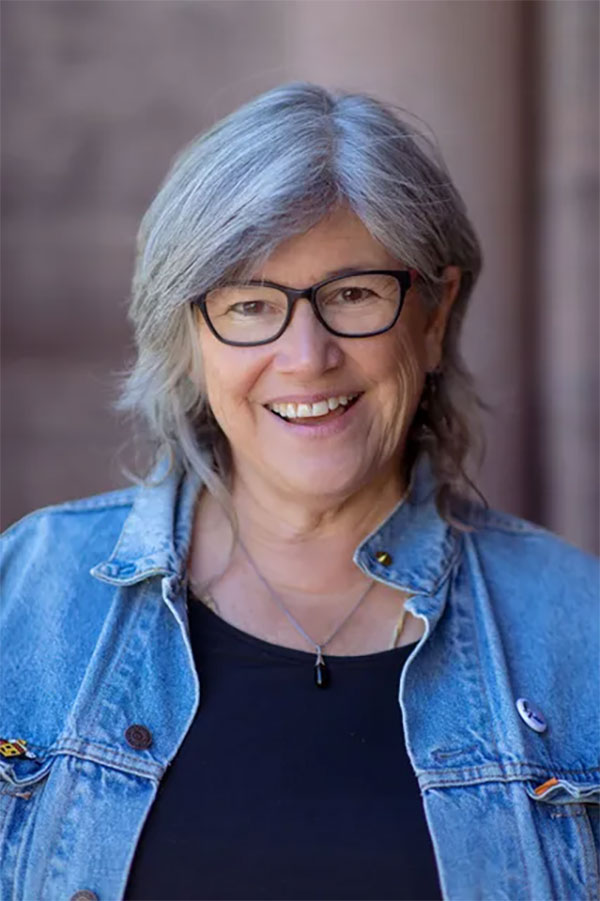 On the cancellation. “The good thing about the cancellation was it surfaced these questions, as well as the motivations and values of the partners, players and community. The people who came to Stories Don’t Die wanted to be there, wanted to be in conversation with us and with the art. The people who were responsible for the cancellation were not there.”
On what makes a work Indigenous. “[Leave] aside for the moment whether or not Tom King is Indigenous; I understand from the research he was shown to be not Cherokee but I think our histories are more nuanced and complicated than that. I have done lots of work on texts from writers who are/were not Indigenous – I directed the 40th anniversary production of The Ecstasy of Rita Joe for the NAC & WCTC - which of course was written by George Ryga, a Canadian of Ukrainian descent. The creative team and the cast were mostly Indigenous – and the process of making the play Indigenized it.
“In 2008, we produced Death of a Chief at Native Earth – again, the primary creator (Shakespeare) was not Indigenous, but the production surely was. Again, a critical mass of Indigenous creators - director, choreographer, cast, composer -- made it an Indigenous show.”
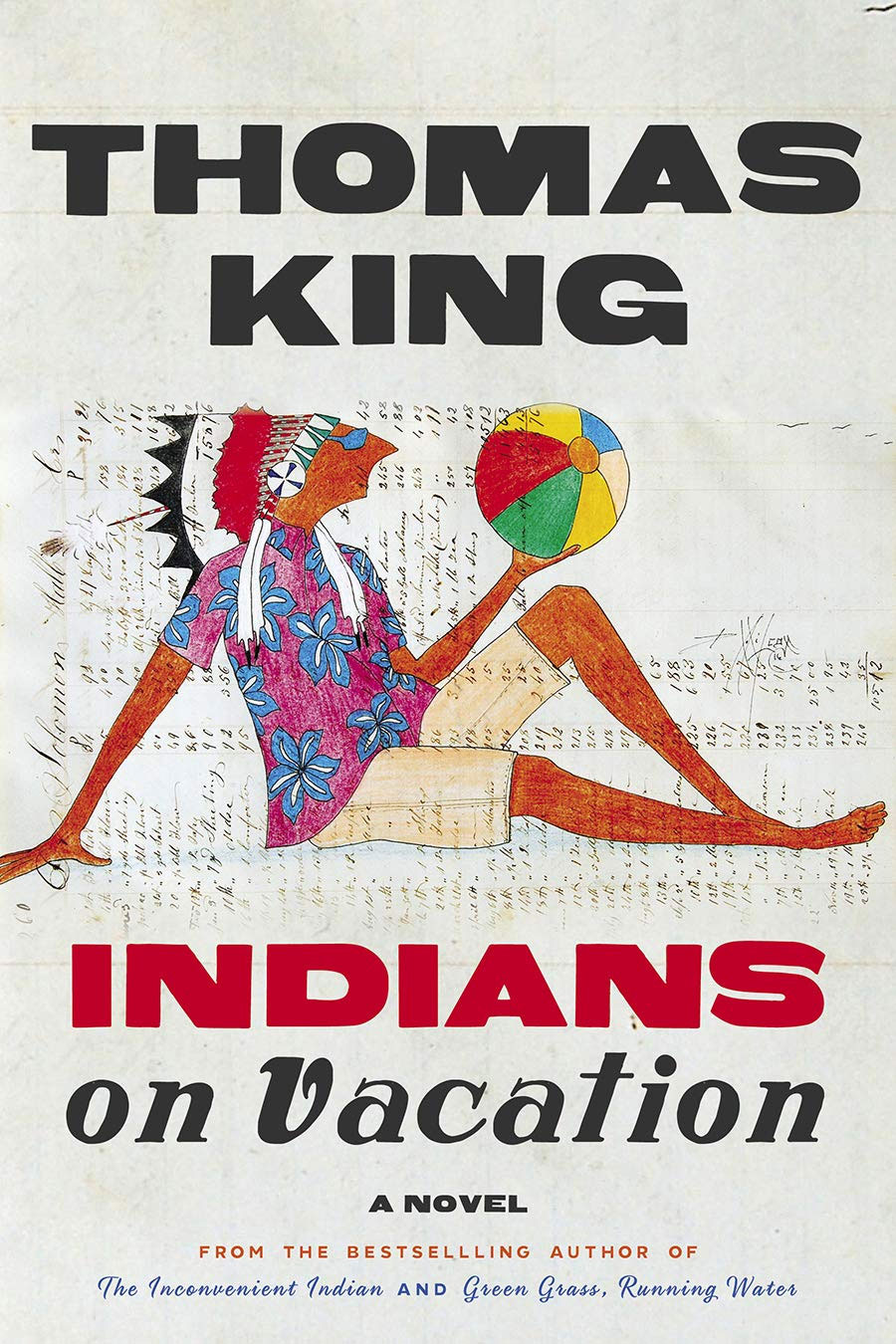 On the relationship between Tom King’s bona fides and the opera: “As noted at the post-performance discussion of IoV, many of us had heard murmurs over the years about Tom King’s Indigenous bona fides – so, if there had been confirmation that he was not Cherokee, would it have changed the way we adapt, stage, cast, or advertise the play? I honestly don’t know. Ian [Cusson] chose the book because he loved the story, for all the reasons we talked about at the showing: funny, joyful, showing complicated, whole human beings. One of the reasons he chose it was because they were looking to do something around mental health, and Thomas [King]’s evocation of Bird’s demons speak to many many people, Indigenous or not.”
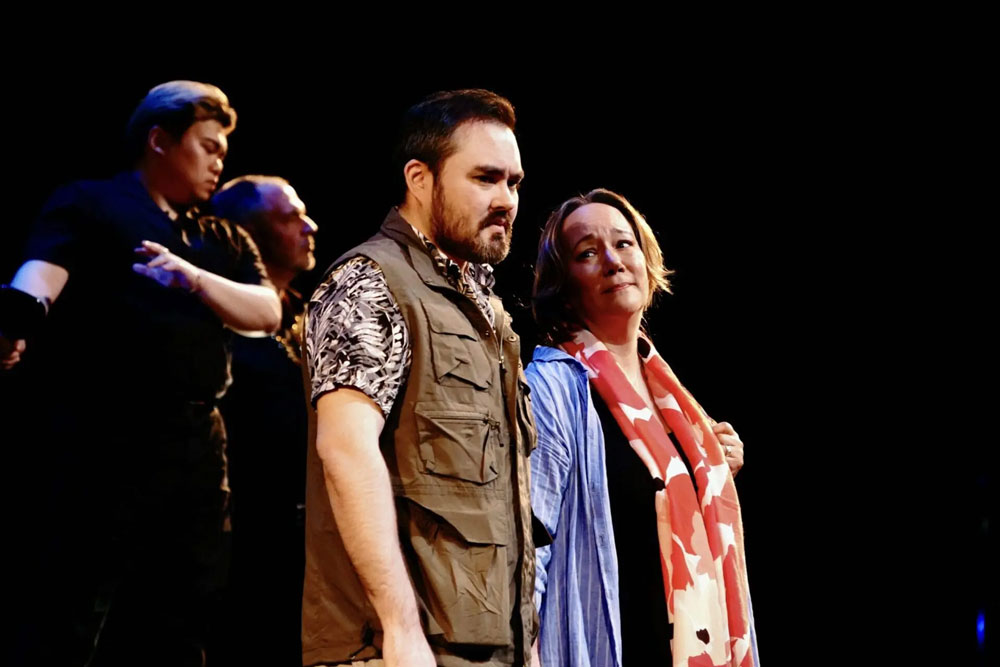 On the creative choice to break the fourth wall: “Great question. We broke the fourth wall in order to be in conversation with the audience, in order to address what they know, or don’t know, or think they know. After the cancellation and the terrible ‘town halls’ that followed, the artists were hungry to talk about what the work meant to them, what the loss of the work meant to them, and their fear and hopes for the future.[...] The structure we created gave them the opportunity to speak, and gave audience members who were baffled or confused or curious an opportunity to learn more.”
Would you do it again if you could? “Well, we had to cut about a quarter to a third of the music in order to accommodate the talking-beats [monologues from the cast], so I still would love to have the opportunity to hear the rest of the opera. But I was heartened by the audience’s engagement with the event, both the music and the talking, and I continue to ponder.
And I was heartened too by how Against the Grain supported moving the project forward. They gathered the artists of IoV together in Toronto in January to talk, to allow us to say how the cancellation affected us, and how we would like to move forward. That is where the idea for Stories Don’t Die was born, and then AtG - staff, board, patrons - made it so. They showed courage and humility in choosing to move forward with the project, and because the artists of IoV work from a place of values, we were comfortable entering into Stories Don’t Die with AtG."
I think theatre and opera are always conversations with an audience, but maybe we are not yet at the place where the population has the tools to enter into the conversation strictly through the art without breaking the fourth wall.”
The conversational minefield: “Why was IoV such a minefield? Because people are afraid of being wrong. Because we live in a climate that can feel unforgiving and punitive, and that can create fear. It grieves me, because I think it is an obstacle to true reconciliation. It is certainly an obstacle to inclusion – making institutions believe that they need to enforce colonial constructs – e.g. status cards – in order to ‘protect’ themselves from challenges to people’s identity. And we are ALL responsible for this fear, this chilly climate, this call-out, cancel culture.”
As Nolan suggests, entering the conversational minefield first demands a willingness to engage in dialogue. With “Stories Don’t Die”, the cast and creative team of Indians on Vacation collectively responded to a moment of deafening artistic silence with a moment of deeply felt music-making and creation. This musical moment, like its title, is one instance of a necessarily larger story. To be continued.
Having written for Total Baroque and Martlet, Lucas Hung follows stories at the intersection of artistic endeavour and public perception, and strives to uncover hierarchies and connections between programmers, performers, and the public. He can be reached at lucashungmedia@gmail.com.

