16 Weinberg Symphonies 3 7Weinberg – Symphonies 3 & 7; Flute Concerto No.1
Marie-Christine Lupancic; City of Birmingham SO; Deutsche Kammerphilharmonie Bremen; Mirga Gražinyté-Tyla
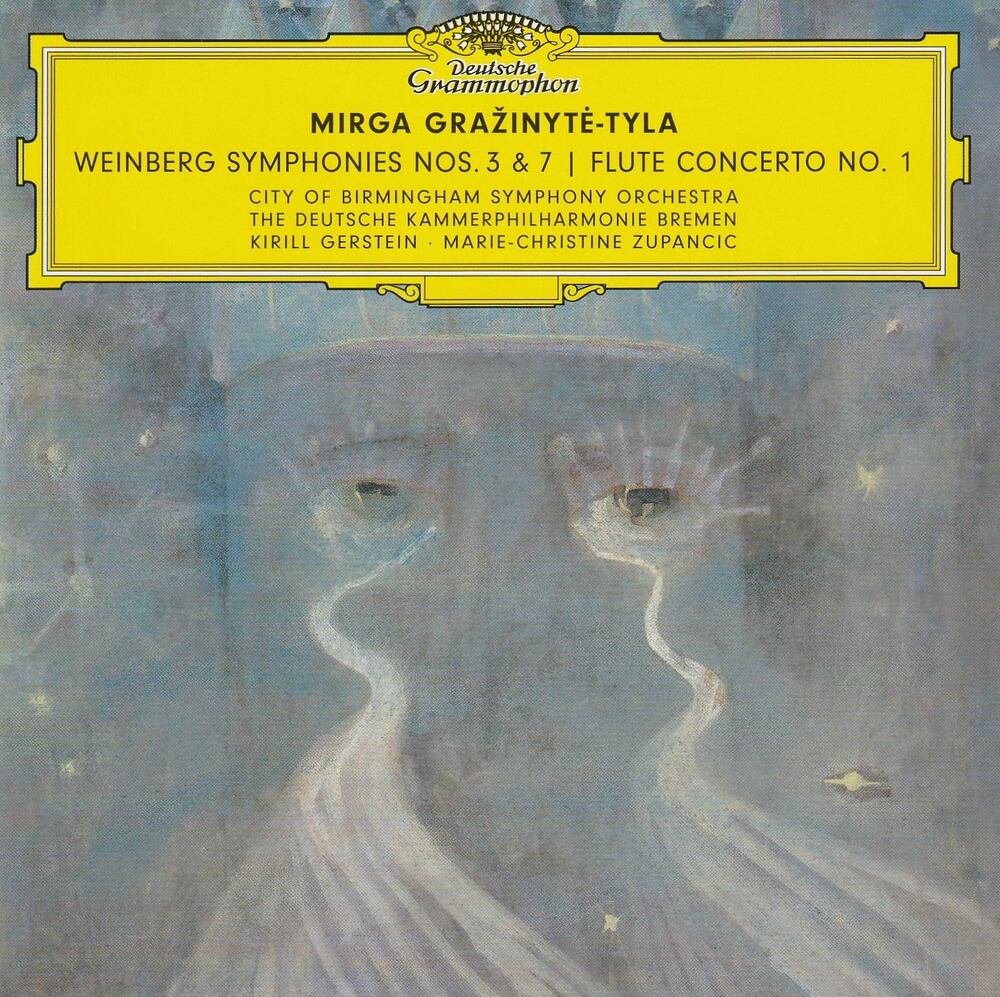
Deutsche Grammophon 486 2403 (deutschegrammophon.com/en/catalogue/products/weinberg-symphonies-nos-3-7-grazinyte-tyla-12783)

Mieczysław Weinberg initially composed his 34-minute Symphony No.3 for Large Orchestra, Op.45 in 1949-1950, a time when fearful Soviet composers were compelled to write “optimistic,” folk-flavoured music. In 1959, under a milder regime, he extensively reworked it. The Allegro opens lyrically, quoting a Belorussian folk song; turmoil erupts, serenity returns, but the movement ends with dark, ominous chords. The Allegro giocoso ebulliently quotes a folk song from Weinberg’s native Poland. The ensuing Adagio moves from contemplation to high tragedy. Tumultuous fanfares announce the Allegro vivace. Clearly influenced by Weinberg’s friend and mentor Shostakovich, it’s a bitterly sardonic mock celebration, filled with motorized dissonances, ending the symphony.

Mirga Gražinytė-Tyla conducts the City of Birmingham Symphony Orchestra in this symphony and the 16-minute Flute Concerto No.1, Op.75 (1961). In the opening Allegro molto, Marie-Christine Zupancic, the orchestra’s principal flute, plays cheerful chirpings over the string orchestra’s repeated pulsations. The Largo is a lonely, melancholic song. The Allegro commodo is strangely indecisive, with Zupancic’s flute meandering over plucked strings, ending abruptly.

Gražinytė-Tyla leads the Deutsche Kammerphilharmonie Dresden in Weinberg’s darkly mysterious, 31-minute Symphony No.7, Op.81 (1964) for strings and harpsichord. Its five connected movements begin eerily, quiet and slow, gradually growing in volume and intensity (Adagio sostenuto), followed by restless, driving discords (Allegro), wandering “night music” (Andante), agonized cries (Adagio sostenuto), sinister skittering, savage barrages and, finally, a return to the opening spookiness (Allegro). It’s haunted, haunting music.
17 White JujuSoweto Kinch – White Juju
London Symphony Orchestra; Lee Reynolds
LSO Live (lso.co.uk)

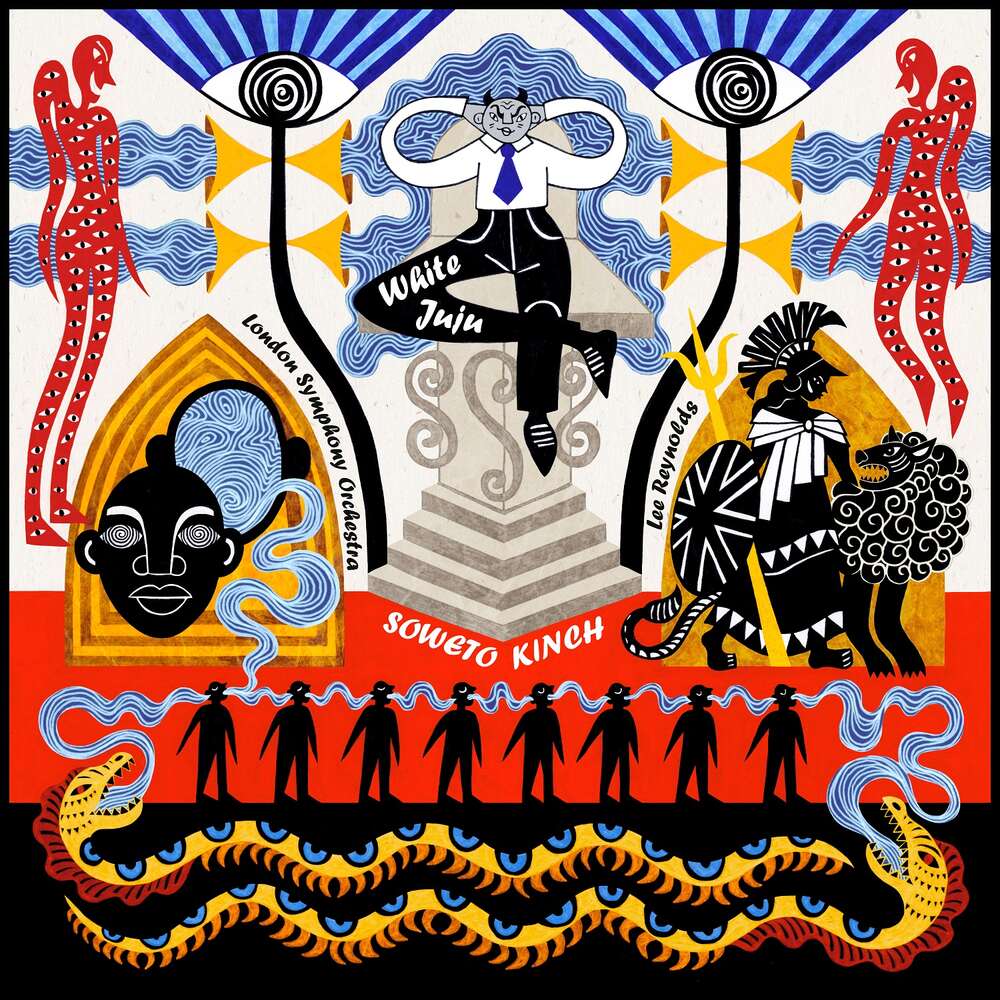
Perhaps one day there will be a genre of pandemic music studied and discussed like Baroque, bebop etc. This genre could include music composed during the lockdown when live concerts mostly stopped and White Juju would be a substantive contribution. Soweto Kinch is an award-winning alto saxophonist and composer who played several concerts in smaller centres in England at the end of the first lockdown. Walking along empty streets he noticed the “imperial emblems, flags and statues” that tended to go unnoticed during busier times. 

These experiences led to the creation of White Juju, which pairs his jazz quartet with the London Symphony Orchestra to create a magic carpet ride of hip-hop, rap, jazz, dance hall music, classical influences and lounge music, all while expounding on themes of colonialism, racism and class struggles. For example, Dawn begins with some sparkling and impressionistic flutes moving into strings and oboe presenting a Peer Gynt Sunrise vibe, then some soft horns and the rhythm section develops a jazzy hip-hop beat. After some gorgeous instrumental sections Kinch begins rapping over top (“the world looks different when it’s put into reverse”) and then embarks on a bop-influenced saxophone solo. The 16 sections of this live performance contain many surprises and White Juju combines humour with beauty while offering original political insight.

01 Barry Rombergthe way it is… is the way it was…
Barry Romberg’s Random Access Trio
Independent (barry-romberg.com)

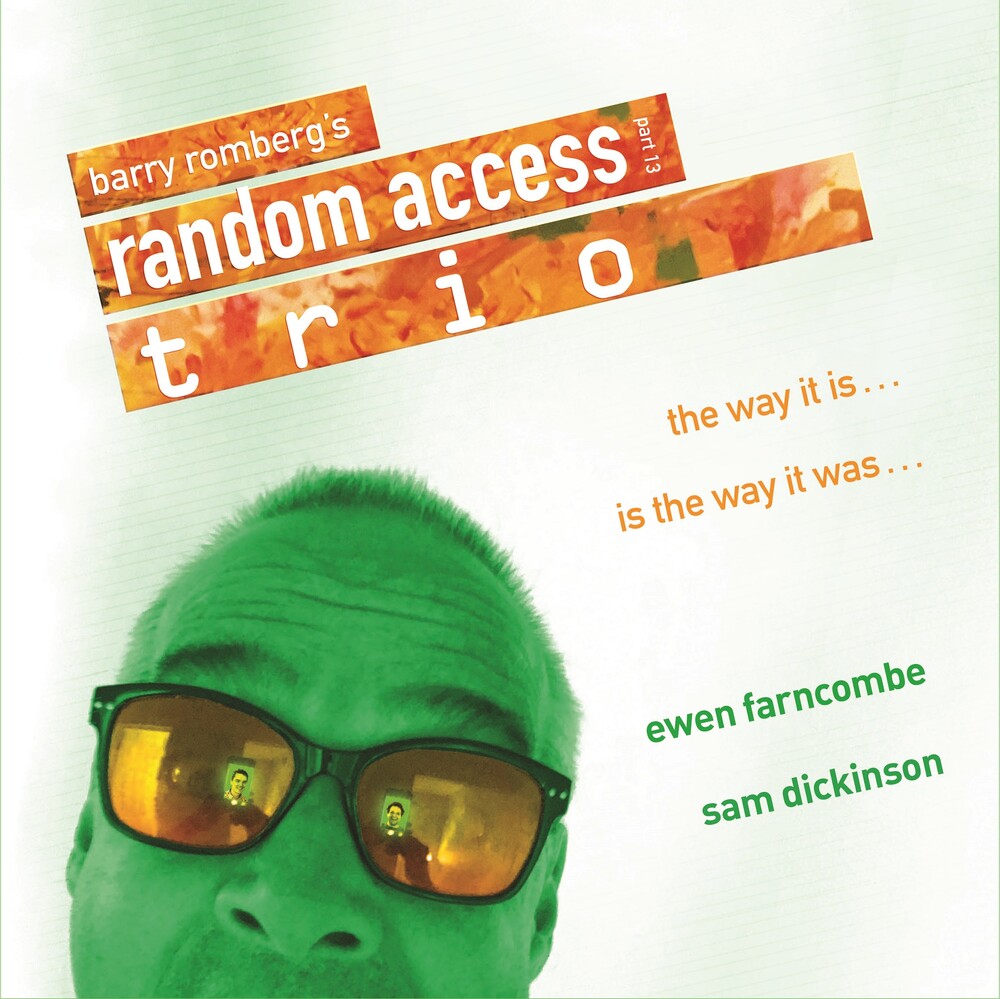
In his brief and somewhat self-deprecating album notes Barry Romberg says he “lost (his) mojo for creative recording pursuits” – something that lasted nine long years. However, listening to the music of The way it is… Is the way it was by Barry Romberg’s Random Access Trio it is hard to think that anything was really lost. Romberg’s sense of propulsion and of time is – if anything – more effervescent and masterful than ever.  

Using two harmonic instruments – the keyboard(s) played by Ewen Farncombe and guitar by Sam Dickinson – Romberg creates the effect of firing on multiple musical cylinders. Those cylinders do not necessarily equate to one-each for pianist and guitarist with the rest for Romberg. While it is true that it appears that the rolling thunder of the drums and the hiss and swish of Romberg’s cymbals make much of the delightful noise of the music. The young musicians bring a refreshing energy to songs such as Rocks on Rocks and the two-part suite We Want Miles (which also features old pal Kelly Jefferson on soprano and other saxophones).

To be correct, Dickinson also creates a myriad of electronic effects that add not just atmospherics, but also genuine harmonic riches to the music. Moreover, without much of a break in the proceedings from track to track, you feel a kind of wonderfully expansive and meaningful effect of music that is anything but randomly accessed.

Buy 'the way it is… is the way it was…' Now

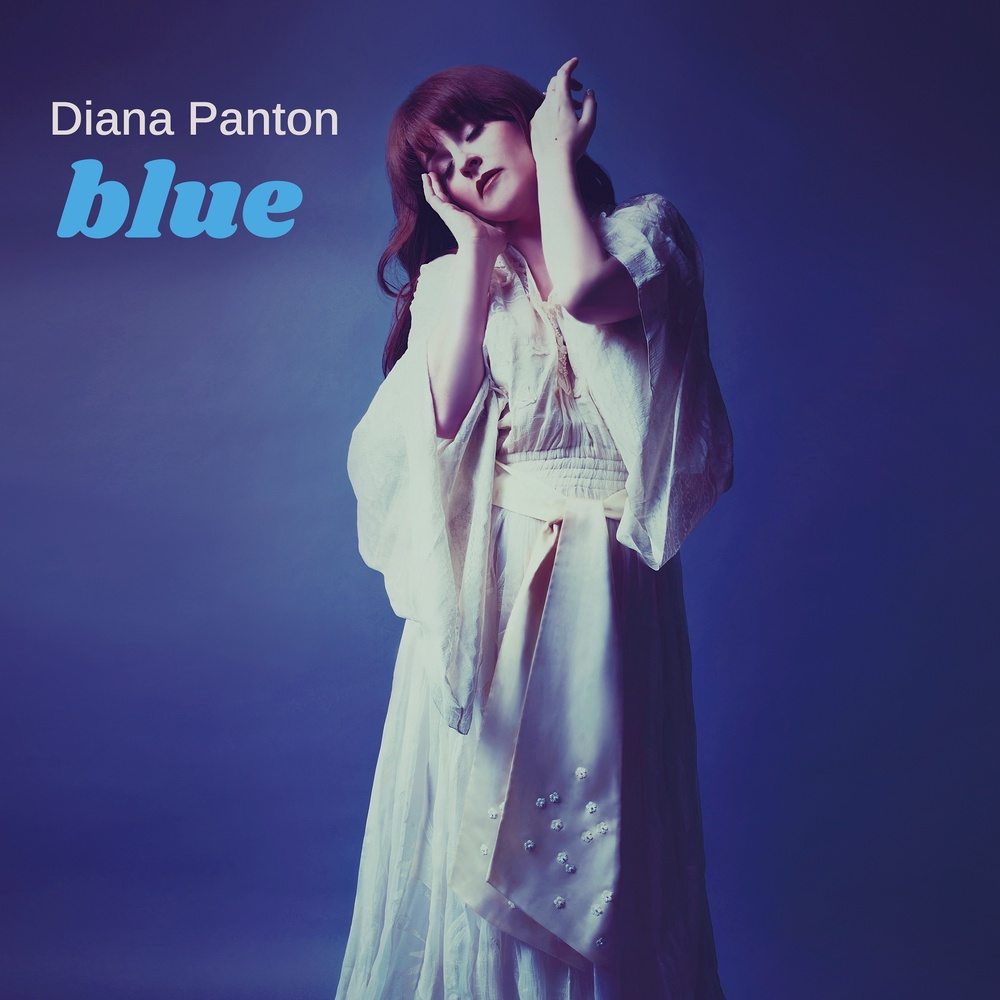
02 Diana PantonBlue
Diana Panton
Independent (dianapanton.com)

For jazz musicians, the “with strings” musical concept is often a bucket list goal. It is little wonder why. Not only have there been some incredibly satisfying recordings made with this instrumentation – Charlie Parker with Strings, Clifford Brown with Strings, Stan Getz’s Focus, to name but a few – but well-written string parts have an effervescent and lush quality capable of enlivening already swinging performances to new and exciting musical heights. 

Such is the case here on Diana Panton’s Blue. Captured again in the familiar company of longtime musical compatriots Don Thompson and Reg Schwager (this, their tenth recorded collaboration), Blue brings the talented bassist Jim Vivian into the core trio, fleshed out here by saxophonist Phil Dwyer. Great casting! 

Adding to the musical wonderment is the sweetening that Thompson’s beautiful arrangements for the great Penderecki String Quartet bring to the entire affair. How nice it is to hear this world-class chamber group, Wilfrid Laurier University’s Quartet-in-Residence, perform in such an intimate jazz setting. Speaking of setting, it would be difficult, perhaps, for any vocalist to come up short while fronting such a blue-chip ensemble. But such a risk was never a possibility with Panton, who once again leans into her strengths of crystalline phrasing and evocative lyrical nuance that she brings to a great set of music. It is a musical formula for success that has served her well on the previous nine releases, so why would this be any different.

The complimentary aspects of Blue contribute much to Panton’s already terrific discography, while the strings add just enough newness and musical freshness to uncork new possibilities for band and listener alike. Perhaps best of all, this new recording adds another important artifact into the canon of great Canadian jazz that documents the ongoing, and still developing, musical partnership of Panton and Thompson.

Listen to 'Blue' Now in the Listening Room

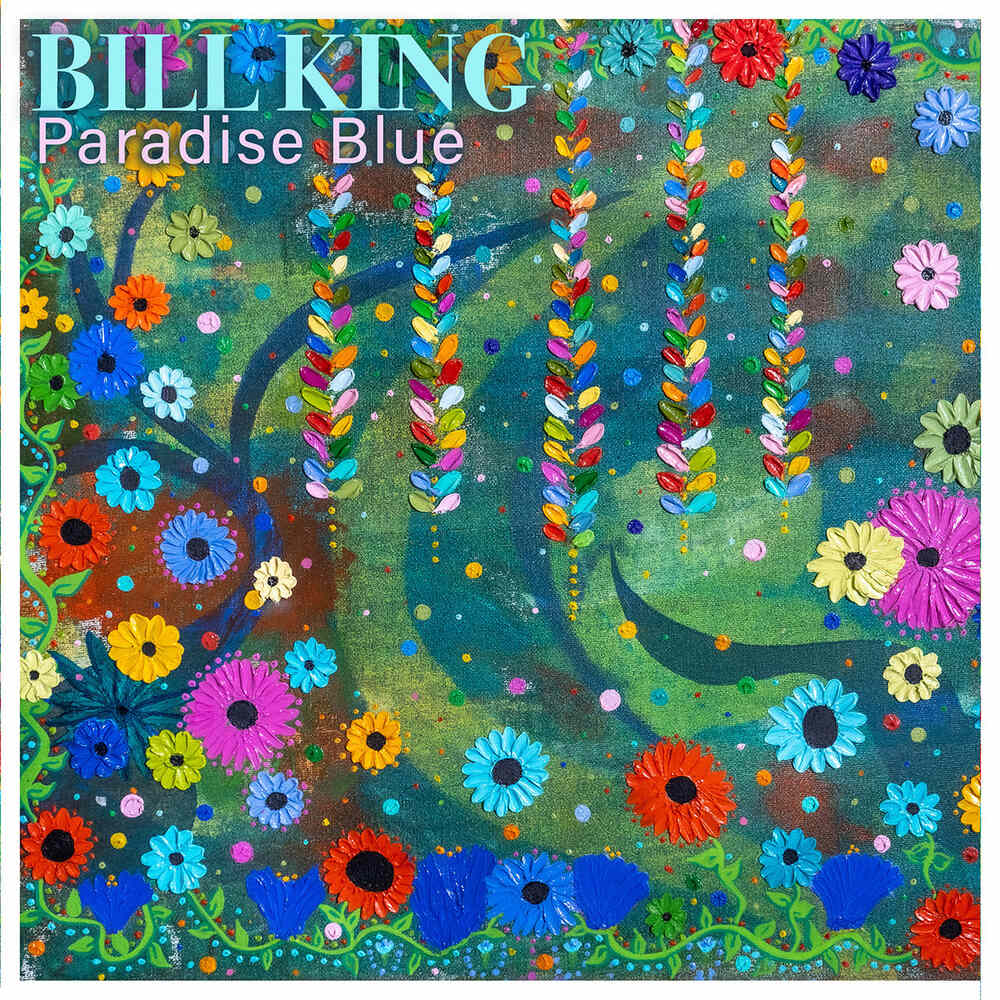
03 Bill KingParadise Blue
Bill King
Independent (billkingpiano.bandcamp.com/album/paradise-blue)

Solo piano music fills its absolute potential when the entire dynamic, melodic and expressive range of the instrument is utilized in an uninhibited fashion that allows for the player’s idiosyncrasies to shine through. Paradise Blue manages to distinguish itself in precisely this way. The standards are tackled in an engaging and subversive manner. Bill King’s playing humbles itself, staying indebted to the original melodies, while also challenging the listener to find the tune within the margins of the creative voicings and improvisational storytelling. 

On It Could Happen to You, King weaves an intricate rhythmic tapestry, punctuating every run and turn of phrase with inspired left-hand comping. The runs themselves are dizzying, incredible spiral staircases, seeming to ascend and descend at the exact same rate. While soloing, it can be evident that King is keeping a given song’s written melody in mind for pretty much the entire piece, often cleverly burying offhand references to it in increasingly unthinkable corners. The amount of fun being had is infectious, with stretches of the album having the same sense of adventure as an Easter egg hunt. 

These upbeat bits contrast perfectly with watershed moments like Redemption Song. In the intro, the way King unapologetically sustains each note gives the classic song an almost mournful quality, leaving us with no option but to meditate with them. The piano can be, above all else, an interpreter of expression and feeling. Exhibit A: Paradise Blue.

Listen to 'Paradise Blue' Now in the Listening Room

Back to top