Let me explain. Sunday, Colin Eatock my editor said “What’s the title of your piece for this month?” (The table of contents had to go to the printer early, you see.)  So I told him.

And now here I am, two days later, hoist with my own petard, wondering what the hell I was thinking of.

Maybe I was planning to write about the fact that up until the year of my birth, 1952, the Olympics offered medals for much more than sport. Canadian composer John Weinzweig, in fact, won a silver medal for composing at the 1948 London  Games.  I kid you not. But Martin Knelman at the Toronto Star scooped me on the Weinzweig story, almost two weeks ago. (He makes a habit of this sort of thing. Just ask the folks at the COC.)

It would have been a good story too. I would have started by musing on the irony that artists got booted from the Olympics in ‘52 because, the IOC said, the good ones were all professional, and therefore in violation of the Games’ principles of amateurism.  And I would have finished by muttering darkly at how in Vancouver 2010  we couldn’t think of anyone better to light the torch symbolizing all that is good in amateur sport than an individual whose own career epitomizes the extent to which in North America professional, mercenary sport reigns supreme.

Or maybe I was thinking that I could find something interesting to say about the relationship between music and sport.  And there probably is something worth exploring in that. “Compare and contrast the relationship of music and the Olympics to the relationships between a) music and supermarket shopping, b) music and winning lottery tickets, c) music and cellphones, d) music and academy award acceptance speeches … .”

Maybe I was just going to say something about wishing for the good old days of the CBC. Or wonder out loud why a song called “Both Sides Now” has three verses.  Or why anyone would come up with an arrangement of “O Canada” for an occasion like this that would prevent the crowd from singing along.

Maybe I was intending to write about Measha Brueggergosman’s stirring rendition of the Olympic anthem. But I must confess that I swooned so deeply when k.d. lang began singing Leonard Cohen’s Hallelujah that I did not resurface until the flags were flying, so I’d be lying if I said I was really there for that moment.

Or maybe I thought there was something profound to be said about the role of music in figure skating. After all, figure skating is dancing on ice, right? And dancers … . Well, never mind.

I have my athletic trophy somewhere (unless my mother finally threw it away). It was the cup I won in grade one in the Northcliff Primary School sports day.  First prize for … fanfare if you please … the under six musical chairs race. You know how it works, right? Twenty people traipse in a circle round nineteen chairs till the music stops. Then everyone races for a seat. The person left standing gets eliminated, another chair gets taken away, and so it continues until it’s just me and Philip Rogoff left, circling the one remaining chair. Waiting for the moment when the music stops, so we can go for gold.

And now? I’m sitting round waiting for the “going for gold” to stop, so I can get back to the music.

Guess I’ve got an an even worse than usual case of the Toronto end-of-February-tell-me-please-what-is-my-destiny blues.

And only music can cure that.
I heard pianist Angela Hewitt on Friday night, when she gave a recital at Roy Thomson Hall: Bach’s Italian Concerto, Beethoven’s Sonata Op. 10 No. 3 and Brahms’ Sonata No. 3. As the programme notes explained, this repertoire was chosen for a specific reason. These works were among the pieces she played on the same stage 25 years ago – in her successful effort to win first prize in the 1985 Toronto International Bach Competition.


Read more: Angela Hewitt Then and Now

Just how would the theatrical dance company Red Sky present the music of a spectacular integrated dance theatre work, by itself?  I was curious to hear for myself at The Music Gallery on January 20.

Read more: Tono by Red Sky

With the passing of Mary Gardiner on January 30, Canadian music has lost a true leader. Mary’s  extraordinary range of activities touched many lives and influenced many organizations.

Mary was an eloquent and persuasive advocate  for Canadian music. She had a gentle manner, but she was fierce in her determination to get things done. Her tireless work with the Association of Canadian Women Composers, the Alliance for Canadian New Music Projects, and the Canadian Music Centre left an indelible mark. To honour her achievements, the CMC and the Canadian League of Composers gave her their Friends of Canadian Music Award in 2003, and the Alliance for Canadian New Music Projects established a scholarship in her name.

As a composer, pianist, conductor and teacher, Mary accomplished far more than she would ever admit to. Her own compositions have been recorded, broadcast, and performed around the world.

Mary led by example. Her kindness, generosity, elegance, marvelous sense of humour,  unusual sensitivity, and reassuring confidence went far to help her accomplish so much. People listened to her.

A selection from recordings of Mary’s compositions can be heard on the Canadian Music Centre’s website: http://www.musiccentre.ca

We offer our deepest sympathies to her family.

Pamela Margles

Here's an artist, and a demo disc, worth talking about!

The intimate clarity Michelle Willis' Shining Bits and Pieces, an EP demo of original songs, captures and reveals every expressive nuance of the singer/pianists' silky voice. Twisting and turning, these songs explore the lyrics’ journey, creating musical textures that enwrap the listener. Shining does exactly that, glistening with freshness and energy.

The funky Quincy Jones-like groove of “Psychology” gives us a taste of Willis’ blues-R&B chops. She's able to make perfect sense of the quirky almost-anti-melodic semitone dissonance of “Rain,” and brings a wonderful spontaneity to “Weightless” and “Love Song.” Like other songs on this recording, “Open Hands” constantly entices and surprises with shifts of time, style, and texture. Backed by Heather Crawford (guitar), Charles James (bass), Shawn Rompre (drums), Kristjan Bergey (tenor sax) and vocalists Marla Walters, Janee Olivia and Andre Reid, Willis has a seemingly endless resource of vocal colours – breathy whisper, feline purr, bluesy growl, soulful wail – all used so naturally.

We’ll definitely be hearing more about this extremely talented singer-songwriter. In fact, you can hear her at the Rex this month, on February 9, 16, and 23, at 6:30 pm.

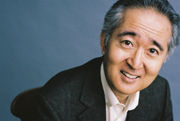
Frank Nakashimahead_shots_016


On January 20, TrypTych gave the world premiere of Frankenstein by Andrew Ager, composer-in-residence at Toronto’s St. James Cathedral. TrypTych has previously presented individual scenes from the opera, but on the 20th and 22nd (when I attended) we were supposedly seeing the completed work. I hope this is not true. The 70-minute minute piece has so much potential and Ager’s music so evocative that it really should be at least half again as long.

William Whitla’s five-scene libretto adheres closely to Mary Shelly’s original novel and thankfully dispenses with all of Hollywood accretions of schlock that have so distorted the tale. The opera, like the novel, is not a horror story but a philosophical meditation on the relation of creator and creation. Again and again there were moments when I wished the librettists would pause the action and allow characters to reflect more fully on their situation. Victor Frankenstein and the Monster both flee the laboratory after the Monster’s animation, but we really need to know more how each feels about that experience. The Monster peers in at the family he has secretly been helping. This would be a perfect time to have him reflect on the peace he sees inside and the alienation he feels outside. The use of Milton’s Paradise Lost as a parallel text in the De Lacey family scene could be much more extended.

There are dramaturgical problems. Frankenstein and the Monster should not really have their central encounter while a boy’s body lies ignores on the ground. The deaths of Frankenstein’s wife and brother really don’t need to be shown in the final scene since they tend to pitch the tone into melodrama, which it had till then avoided.

Despite this, the opera is gripping from start to finish. I wanted more because what there was, was so enjoyable. The librettists have boiled the story down to its bare essentials which are even more timely now when mankind really can artificially create life. Ager himself played the score on a grand piano, where it sounded like a gorgeous post-impressionist tone poem, lush yet propulsive, where constantly shifting tonalities reflected the morally ambiguous world of the story.

Of the cast of eight, Stephen King was the clear standout with a bass-baritone voice of great beauty and power, whose fine singing and acting painted the Monster in the most sympathetic light. As Victor Frankenstein, tenor Lenard Whiting had some difficulty with the highest lying notes, but successfully replaced the caricature of the “mad scientist” with a more psychological portrait of obsession. Baritone Michael York used his well rounded tone to characterize and differentiate the anger of Victor’s father from the serenity of Old Mr. De Lacey. Michael Taylor and Melanie Conly beautifully sang a duet celebrating the married bliss of Felix and Agatha De Lacey. Eleven-year-old Charles Waddell clearly showed abundant talent as Victor’s nephew. Though Graham Robinson and Dawn Bailey were given little to do as Victor’s best friend and his fiancée, they did it well.

Director and designer Edward Franko worked wonders in staging such a work on a microscopic budget. The performance was enthusiastically received – but I still feel an expanded version would have a greater chance of attracting the interest of other companies.


Christopher Hoile


An important voice in jazz was stilled when John Norris died on January 31.

Born in Surrey, England, in 1934 he emigrated to Canada in the mid-50s, first to Montreal where he operated the Montreal Traditional Jazz Society from 1956 to 1957 before moving to Toronto where soon became involved with the Traditional Jazz Club of Toronto. In 1958 Coda magazine was established with co-founder, Bill Smith, followed ten years later by Sackville Records. Both became recognized as models of integrity and honesty.

He was an authority on jazz and a respected critic, writer, broadcaster and promoter who never once compromised his opinions and values. As well as writing regularly for Coda, he contributed over the years to many of the other leading music publications – Jazz Journal, Melody Maker, Downbeat and International Musician – wrote a jazz history series for radio and for more than twenty years taught a jazz history course at the University of Toronto.

An unassuming man, but unshakable in his conviction, not gregarious but comfortable among his friends, he had the respect and admiration of all the musicians who recorded for the Sackville label: artists ranging in styles from Willie "The Lion" Smith to Anthony Braxton. The label, from its humble beginnings, established  itself as perhaps the world's leading independent record company.

Jazz has lost a great friend, and a true supporter of the music and the artists who perform it.


Jim Galloway


On January 20, COC General Director Alexander Neef announced the company’s 61st season. Of special significance is that this is the first season planned entirely by Neef. It was clear that Neef looked to see what works the COC had been neglecting because five operas are works the COC has not staged for at least twelve years and two are COC premieres.

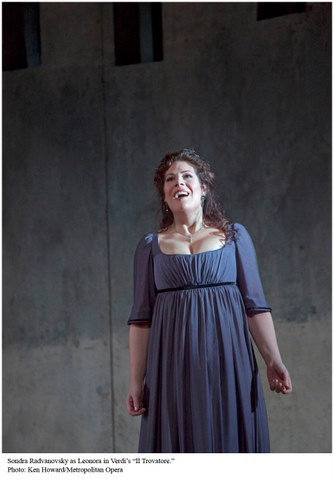
Trovatore0809_20The season opens on October 2 with a new production of Verdi’s Aida directed by Tim Albery and starring Sondra Radvanovsky in her company debut. Next is a new production of Britten’s Death in Venice conducted by Steuart Bedford, who conducted the opera’s world premiere in 1973. The winter season begins with a new production of Mozart’s Magic Flute directed by Diane Paulus and starring Michael Schade and Isabel Bayrakdarian.  This is paired with the COC premiere of John Adams’s modern classic Nixon in China with Tracy Dahl as Madame Mao. The spring season brings a new production of Rossini’s La Cenerentola with Brett Polegato as Dandini; Ariadne auf Naxos with Adrianne Pieczonka and Richard Margison; and finally, and surprisingly, the COC premiere of Gluck’s Orfeo ed Euridice directed by Robert Carsen with Lawrence Zazzo and Isabel Bayrakdarian.

Again the COC Ensemble Studio is allowed to take over one performance of The Magic Flute, rather than being given its own production. This is unfortunate because the Ensemble productions were a way for the COC to stage a wide range of chamber operas, from baroque to  contemporary, that helped to broaden our perceptions of what opera is.

Christopher Hoile

Pianist-composer Zygmunt Krauze, the subject of my last blog, presented a public lecture on his and his fellow Pole’s music by at the Faculty of Music, University of Toronto. For over 40 years Krauze has enjoyed a successful career not only as a musician but also as a key administrator in both the Polish and international new music scenes. His insights therefore reflect a refreshingly positive central European point of view on new music. It certainly puts into relief what many insiders believe is the veritable outsider status Canadian new music and musicians generally enjoy today.

Read more: Polish Perspectives Wraps Up

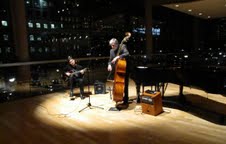
Thompson SchwagerThe word “privileged” kept going through my head as I stood in the Richard Bradshaw Amphitheatre in Toronto listening to a jazz concert last Wednesday evening. The word can have negative connotations, since opera and other “high brow” artistic endeavours are often perceived as being accessible only to the educated and wealthy. Certainly the Canadian Opera Company (COC) and the Four Seasons Centre, where the Richard Bradshaw Amphitheatre is located, would be familiar with such accusations. But as I enjoyed a free concert, being played by two of the finest jazz musicians in this country, in one of the most breathtaking performance spaces I've ever been in, “privilege” took on a whole new meaning.

Read more: The COC Reaches Out

The WholeNote Podcasts

ArtworkWelcome to the Conversations <at> The WholeNote podcast page. Below you will find our podcast episodes for your listening pleasure.

To listen, you have a few options:

  • You can listen via this website you can scroll down and find the episode you'd like and click play there.
  • Or you can download and save the podcasts on your phone, tablet or computer - and then you can listen to it anytime (even without an internet connection) by downloading from the episode articles below.
  • Or you can subscribe to this podcast on your favourite podcast service including iTunes, Google Play, Stitcher, BluBrry, PocketCasts and more. Just open your podcast app and search for Conversations at The WholeNote and hit 'subscribe'. 

If you are unable to find us on the podcast app that you use, please let us know and we'll do our best to try and make it available to you.

Scroll down to select individual episodes to enjoy.

Back to top