This sentence notwithstanding, I try not to use too many personal pronouns when writing. Call it a parasympathetic reflex from my student days writing prosaic, academically sourced theses, but words like “I” and “my” seem too personal and isolating to use even in a communal column and publication such as The WholeNote; and I don’t write editorials (although I do express the occasional opinion or two!). This month is an exception, however, for we begin our two-month survey of the Toronto early music scene with two personal anecdotes – disparate occurrences that, although entirely independent in time and place, share a common, relevant and important theme.

A few weeks ago, I gave a recital at Trinity-St. Paul’s Centre. The program for this little concert contained a blend of jazz, minimalist and avant-garde music, including György Ligeti’s Harmonies for organ. After the performance one audience member approached and asked, “Why bother with such music? You could have played that piece (Harmonies) forwards or backwards and we wouldn’t have known the difference!” It was ultimately a worthwhile question and one that many performers face, particularly in the realm of music written in the 20th century and onwards: why bother playing music that people won’t understand, music that is not necessarily tuneful, pretty, or accessible to the masses?

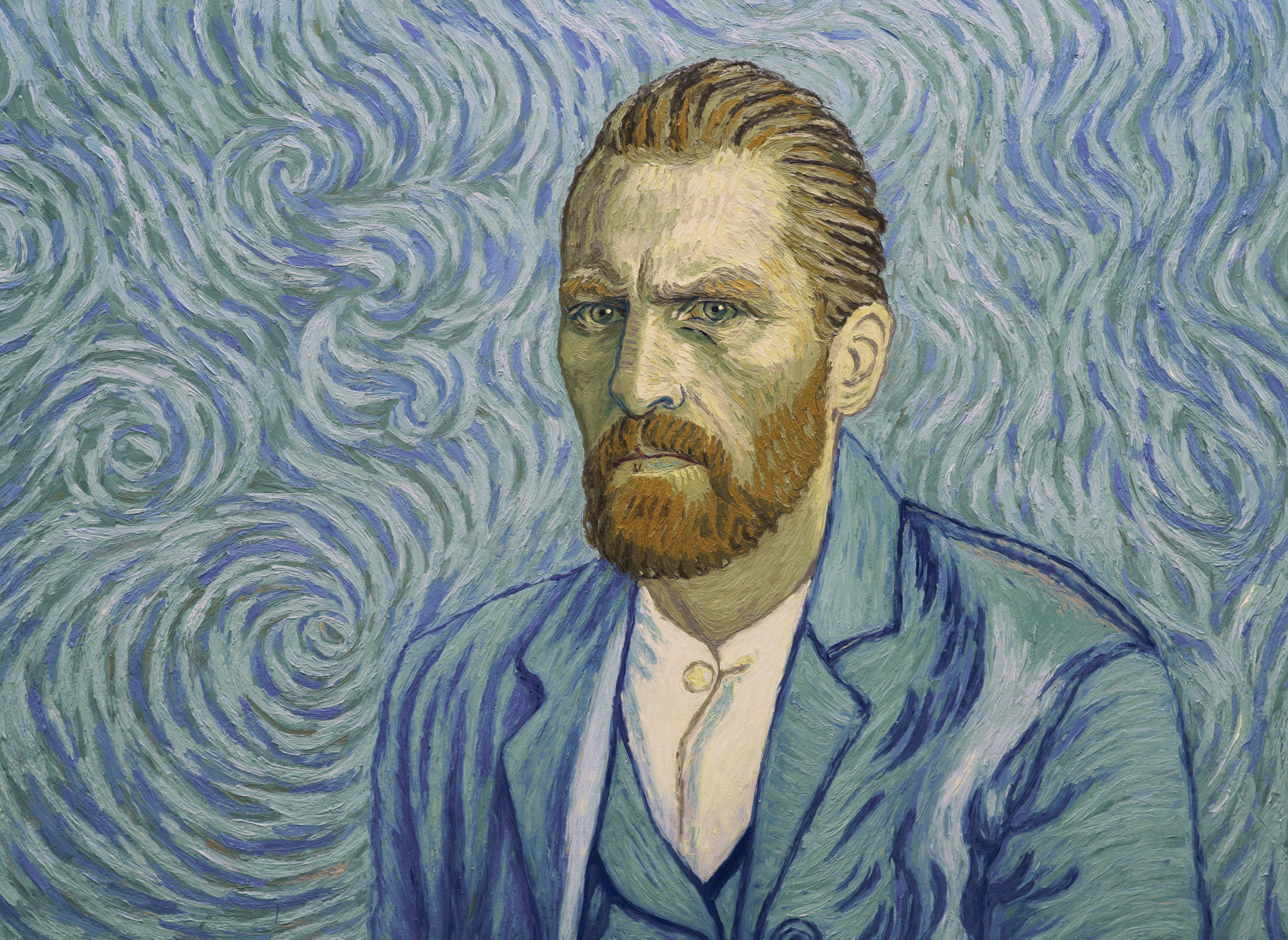
Robert Gulaczyk as Vincent Van Goh in 'Loving Vincent' - Courtesy of Mongrel MediaDays after my recital experience, I saw the new film Loving Vincent, an artistically oriented speculative recreation of the last days of Dutch painter Vincent van Gogh, incorporating elements of documentary and murder mystery. This film was screened at TIFF Bell Lightbox and is notable because of the way it was made. Each frame – 65,000 of them altogether – was hand-painted in the style of Van Gogh by an international team of artists, then photographed and digitized using animation software, thereby creating a literal motion picture. Before viewing Loving Vincent, I read a synopsis in The Guardian in which the reviewer questioned the painstaking process of producing the film, arguing that an equally visually satisfying production could have been generated using purely digital means without the trouble of hand-painting anything at all. In our digital age, the review queried, why bother with all the unnecessarily painstaking manual labour?

In early music circles, the question “Why bother?” is a relevant one, too. When we look at the frequency with which certain individual works are performed, there are inevitably moments where we question the rationale behind established conventions that have become normalized. For example, now that December is here, why bother playing Handel’s Messiah again across the city – haven’t we been up to our eyeballs in it every year for the past decade? Why bother with another performance of Bach’s Christmas Oratorio or Corelli’s Christmas Concerto? Reprising these works year after year seems to be the bad end of a Faustian pact, the lure of a full auditorium paid off with the ceaseless repetition of the same stuff, taxing our ears with all-too familiar strains of “Hallelujah!,” “Jauchzet, frohlocket!” or some other predictable and overdone work – a festive and wintry Groundhog Day, if you will.

These are thought-provoking queries, many of which are difficult to answer. The questions of “Why?” and “Why bother?” will always be applicable to the arts, particularly when something new and unfamiliar (in the case of Ligeti’s Harmonies) or unusual and idiosyncratic (as we see in Loving Vincent) is put on display, but another little anecdote recounted to me by a former teacher may help answer why we always seem to return to the time-tested Baroque classics in December:

Once a conductor was in a dress rehearsal of Messiah – everyone involved had performed the work many times. One singer was rather lackadaisical about his part and seemed lazy and lacklustre throughout, irking the conductor enough that he confronted him about it afterwards.

“Listen,” the conductor said, “I know you have sung this many times, as I’ve conducted it many times, but you have a great responsibility as a performer. Tonight’s concert may be the first time that someone in that audience hears Messiah. And this performance may also be the last Messiah someone in that audience hears.”

My Grown-Up Christmas List

For many, Messiah is as much a quintessential seasonal favourite as mulled wine and a ten-pound fruitcake. With dozens of performers presenting various Messianic adaptations and interpretations across Toronto and its surrounding areas, it can be a tricky task to pick only one! Fortunately, The WholeNote is here to help: read my recent blog post on notable performances, or search for the word “Messiah” in our online listings to get a list of most of this year’s shows. Whether full-length or condensed, HIP or modern, symphonic or sing-along, we have the Messiah for you.

Johann Sebastian Bach’s Christmas Oratorio is another classic Christmas composition from the Baroque era, compiled and composed between 1733 and 1734 to celebrate the Christmas season in Leipzig. Although catalogued as BWV248 and now considered a single, freestanding work, this “oratorio” is in actuality a series of six individual cantatas that were performed during the time between Christmas and Epiphany (what we now call the Twelve Days of Christmas) and divided between the Thomaskirche and Nikolaikirche, Leipzig’s two main churches.

Monumental in scope and brilliant in its musical expression of Bach’s beliefs and theology, the Christmas Oratorio is, along with the Passions, the closest Bach came to writing a narrative opera. Geoffrey Butler and the Toronto Choral Society perform the Christmas Oratorio at Koerner Hall on December 6, in what promises to be a welcome respite from the hurly-burly of the commercially overloaded Christmas season.

Continuing their trend of melding old and new, the Toronto Masque Theatre presents their seasonal salon “Peace on Earth” on December 17 and 18. Featuring the performance of baroque Noëls and the Messe de Minuit by Marc-Antoine Charpentier, these Franco-flavoured evenings will explore the simplicity, beauty and joy of the French Baroque Christmas, different in many ways from the immense and intricate forms we find in English and German oratorio.

To complement these French Baroque favourites, TMT also leaps forward into the 20th century with excerpts from The Birth of Christ, a cantata written in 1901 by Canadian composer Clarence Lucas (1866-1947) as well as seasonal readings by from T.S. Eliot’s The Journey of the Magi. With this medley of music and word on display only one week before Christmas, these performances will surely banish the last “Bah humbug!” from even the Scroogiest of curmudgeonly misers.

But Wait, There’s More! A Taste of 2018

Fast forward to January 2018: Belts are loosened an extra notch (or two); turkey leftovers, eggnog and rum hangovers, and the last few sweet treats all linger longer than expected. New Year’s resolutions are resolutely made and broken, and we start looking ahead to the inevitable wintry weather that is to come. If we somehow ignore the temptation to snuggle up with a cup of cocoa and hibernate until March, there are many exciting events taking place across Toronto in January, including two promising projects by Tafelmusik (who might quite reasonably go into hibernation themselves after their busy December!).

The first is the Tafelmusik Winter Institute, a terrific opportunity for those with a passion for Historically Informed Performance. A one-week intensive for advanced students and young professionals, this year’s TWI culminates in a free public performance at Jeanne Lamon Hall on January 10. Featuring music by French composers Lully, Campra, Marais and Rameau, and this performance presents a rare opportunity to hear top-notch music from the height of the French tradition for an unbeatable price.

Over the last few years, Tafelmusik has pushed the boundaries of the early music concert experience with Alison Mackay’s creative multimedia conceptions and collaborations. This positive trend towards HIP-infused modernism continues with Safe Haven, a program exploring the musical ideas of Baroque Europe’s refugee artists, drawing parallels between 18th-century Europe and present-day Canada. At that time of year when the Christmas chestnuts have come and gone, this concert looks to provide a palate-cleansing leap forward in a genre that occasionally seems to specialize in blasé repetition.

Joëlle Morton Scaramella: While Tafelmusik peers into the future with Safe Haven, period performance group Scaramella looks back in time with their “Ode to Music” on January 27. Featuring Scaramella’s Joëlle Morton and guest virtuoso viol players Elizabeth Rumsey and Caroline Ritchie from Basel, Switzerland, this program uses a variety of 16th-century music for viol consort to explore the impact of the muses on Renaissance composers. This concert provides a wonderful opportunity for viol enthusiasts and novices alike to acquaint themselves with the spectrum of sound these antiquated instruments can produce, living musical relics linking our ears to past centuries.

As winter-themed advertising flashes across our smartphone screens and store windows are redecorated with miniaturized villages and resplendent hues of red, green and gold, it can be overwhelming and daunting to find time to attend a concert; despite the seasonal hustle and bustle, I encourage you to explore the vibrant musical offerings that are on display this December and January. Whether you prefer Handel’s Messiah, Tafelmusik’s Safe Haven, a traditional Festival of Lessons and Carols, or any of the other listings in this double issue of The WholeNote, the richness and depth of Toronto’s classical music scene ensures that no concertgoer ever has to ask, “Why bother?”

Happy Christmas, Hanukkah, Kwanzaa, Festivus and New Year, everyone. See you in February! Until then, keep in touch at
earlymusic@thewholenote.com.

Matthew Whitfield is a Toronto-based harpsichordist and organist.

Celebrity success in classical music is a strange amalgam. In very few disciplines do we give as much focus to the medium-like, necromancing qualities that a good performer must have. Using training, taste, research and the occasional séance, an interpreter must form a personal connection with composers who are most often long-dead, and emerge with an interpretation that is ingeniously creative and original, yet faithful to the written score.

The duty of the classical performer is similar in many ways to that of an actor who takes a script, often written by someone else, and absorbs the on-page style and personality of a character while fusing it with an individual, personal energy. A play script, much like a musical score, can be read without hearing it live, but the deeper meaning that can be wrung from the page through practice and experience is what separates the “pros” from the “Joes.” And, if one is lucky as well as good, he or she may be fortunate enough to be discovered and swept up through the ranks into the realm of the classical music elite, just as can happen for actors.

This link between performing as a musician and as an actor is likely the closest parallel we can find within the arts – in no other discipline is pure interpretation the primary focus and determinant of artistic achievement. Imagine, for example, if we bought a copy of There’s Gonna Be a God Damn Riot in Here!, the famous film of Charles Bukowski’s 1979 Vancouver poetry reading, only to find someone else reading his poems! In the same way, we cannot conceive of a person whose exclusive role might be to meander around art galleries, exhibits and openings to explain the works using great, erudite phrases and explanations. Certainly we have art critics, professors, curators and gallery owners, but they do not look at a Mapplethorpe photograph or Basquiat painting, stand there and tell us what to see, and expect to be thought of on the same artistic plane as the artist himself.

Since the late 19th century, when the roles of composer and performer began to exist independently, the classical musician as performing interpreter has existed in this rather paradoxical grey area. Where Beethoven, Liszt and countless others wrote the music they played, today’s batch of internationally renowned soloists with legendary technique may not have written a single note on staff paper since their student days. There are, of course, notable exceptions, including Leonard Bernstein, John Adams and Pierre Boulez, though these are often conductor-composers rather than instrumental virtuosi.

Modern academies and conservatories are compartmentalized, welcoming young, talented students to learn “more and more about less and less,” as the saying goes. When we ask “What are you studying?” they do not reply “Music,” but rather “Composition” or “Collaborative Piano” or “Conducting.” We categorize, break down and divide the encompassing art into smaller, easy-to-market bites, thereby enabling the young musician to become a rather pigeonholed, although superiorly skilled, superstar “[fill in the blank].”

This is the old-yet-new world of classical music in the 21st century, a roster consisting of a relatively small number of highly specialized, jet-setting superstars who tour the globe, guest-starring with the world’s top orchestras. Managed by a few artist agencies who book their clients in a manner reminiscent of pop music – the biggest venues in the biggest cities, for the biggest fees – the names are revered, and they need not be in good form, either. Recently Lang Lang, who is recovering from an injury to his left hand, took the stage with a teenage prodigy who literally served as his left-hand man for the performance.

Mind you, the phenomenon of the superstar performer is not a bad thing for the propagation of classical music. Superstars attract hype, and hype fills seats, which ultimately brings the music to a wider audience. Toronto is fortunate to host a spectrum of marquee artists from the international scene every year, which continues to foster interest in the revival and performance of music from long ago. This November is no exception. Here are some highlights from the early music world:

Angela Hewitt

Legendary Canadian pianist Angela Hewitt makes an extended stop in Toronto this month, playing a solo recital at Koerner Hall and two concerts with the TSO. (I wonder if her Fazioli piano will travel with her to each venue?)

Angela HewittOn November 12, Hewitt’s Koerner Hall recital, her third such appearance, will be an all-Johann Sebastian Bach program, which is part of her three-year exploration of the composer. Works include three Partitas (No. 3 in A Minor, BWV827, No. 5 in G Major, BWV829 and No. 6 in E Minor, BWV830) and the Partie in A Major, BWV832. This concert will be preceded at 7pm by a talk by Rick Phillips. According to the RCM box office, tickets are sold out, but industrious ticket seekers may dig some up through secondhand sources such as scalpers, rush tickets or StubHub.

The Toronto Symphony then features Hewitt as director and soloist on November 18 and 19 in a concert of works by Bach and Mozart. It will be interesting to hear how the modern grand-piano-with-orchestra instrumental approach to Bach and Mozart will come across, particularly in contrast with Hewitt’s solo recital. Will the TSO’s leader attempt to temper the Romantic tendencies of the full orchestra, or will we hear a more scaled-down, “HIP”-style performance?

Kristian Bezuidenhout

Speaking of Mozart, Tafelmusik welcomes South African-born, London-based guest director and fortepianist Kristian Bezuidenhout from November 9 to 12, as he leads the orchestra through an early Classical-era program which includes Mozart’s Concerto for Piano in A Major K414 and symphonies by Mozart and two of his mentors, Carl Philipp Emanuel and Johann Christoph Bach.

Kristian BezuidenhoutThis performance will pair exceedingly well with the Hewitt/TSO concerts, as one ensemble interprets Mozart through a modern orchestra looking back in time, the other as a Baroque ensemble looking ahead. Both orchestras have deep roots in this style of music and it will be fascinating to hear the different approaches each group takes towards very similar repertoire.

In addition to his concert appearances, Bezuidenhout (who also plays the harpsichord and modern piano) will lead a masterclass on November 11 at Jeanne Lamon Hall, which is free and open to the public.

Ensemble Masques

Originally formed in Montreal, the international Baroque chamber group Ensemble Masques makes their Toronto debut on November 18 at St. Thomas’s Anglican Church. A classical supergroup featuring players from Collegium Vocale Gent, Tafelmusik and the English Concert, among others, this team of experts will perform a concert of music by Telemann. (Readers west of Toronto will be interested to know that Ensemble Masques will be performing the same program on November 16 in the Music Room of the Kitchener-Waterloo Chamber Music Society.)

Ensemble MasquesGeorg Philipp Telemann was enormously prolific, writing well over a thousand works, and was one of the most celebrated composers of his time before falling into relative obscurity. According to Ensemble Masques’ recent press release, their concert looks to “wipe clean generations of misunderstanding that kept Telemann in the shadows. Where Bach looked heavenward, Telemann’s genius was for life here on Earth. A brilliant observer of the world around him, his music translates all facets of human experience into works that are full of humour, wit and infinite invention.”

For modern audiences familiar with the contrapuntal density of Bach and the rhythmic vitality of Handel, Telemann’s music might seem rather simple and transparent. But do not be fooled. Hiding within Telemann’s massive oeuvre are works of remarkable beauty, and Ensemble Masques is undoubtedly well-equipped to put these pieces on public display. In advance of their Toronto appearance, explore their latest recording of Telemann’s Theatrical Overture-Suites on the Alpha label.

QUICK PICKS

In addition to these international headliners, there are a number of other talents, both local and foreign, playing Toronto this month. Here are a few.

Nov 4 and 5: Cor Unum Ensemble - “Music from the Early Italian Baroque.”

Cor Unum Ensemble is one of Toronto’s newest groups, an orchestra and chorus comprised primarily of students and graduates from the University of Toronto’s Early Music program. This talented, homegrown group of players presented Bach’s St. John Passion last year and their take on music by Monteverdi, Gabrieli, Frescobaldi and other Italian composers from the early Baroque should be on point as well.

Nov 10: “At the Heart of Bach - Christian Lane plays CCDP.”

Winner of the 2011 Canadian International Organ Competition, American organist Christian Lane plays an all-Bach program on Christ Church Deer Park’s 1982 Karl Wilhelm tracker organ. This instrument, a perfect match for Bach’s inimitable organ music, should be like putty in Lane’s hands.

Nov 19: “Musicians on the Edge: Jazz Standards of the Seventeenth Century.”

Rezonance Baroque Ensemble presents a concert of 17th-century tunes with a focus on ensemble improvisation. With a continuo section of Ben Stein, whose doctoral work focuses on the ancient art of partimento and the development of improvisation, Erika Nielsen and David Podgorski, the bass lines in this concert should be tight and groovy.

Dec 1: Upper Canada Choristers – “Charpentier’s Messe de Minuit.”

Christmas comes early this year, particularly for Charpentier fans, as Upper Canada College’s choristers perform Charpentier’s Messe de Minuit pour Noël and Kodály’s Christmas Dance of the Shepherds. Charpentier’s mass is a time-tested masterpiece that will bring in the Christmas season with style.

While it might seem rather early to mention Christmas, another month of seasonal favourites will be upon us before we know it! To keep up to date on all the Messiahs, oratorios, concertos and other Baroque things happening in the city, check out next month’s column. Until then, drop me a line at earlymusic@thewholenote.com.

Matthew Whitfield is a Toronto-based harpsichordist and organist.
"Classical music is dying!" Charlie Albright reported for CNN back in May 2016, and its death is not a quick and abrupt one but rather slow and painful, like a cancer that kills from the inside out. “With [its] stifling atmosphere of rules and ‘appropriateness,’ it is no wonder that people (especially youth) are apprehensive and often uninterested in the whole idea of classical music. Somehow, classical music has become inaccessible and unwelcoming."

October is here and based on the above we can anticipate a wave of the same old junk, identical to what came before, and identical to what will come next, a musical merry-go-round of the first degree: obsessive etiquettal xenophobia, predictable programming falling into pretty, compartmentalized categories (like a mother cutting up a pork chop for her child – easy to eat and it just tastes better this way) with attention-grabbing headlines that ensure that the conductor’s circle donors (who give more in a year than you’ll make in five) will remain happy, contentedly perennial boons to the budget.

Wanna hear something German? Here’s some Bach…

Wanna hear something French? Here’s some Lully and Rameau…

Wanna hear something English? Here’s a Handel oratorio…

Wanna be up to your eyeballs in gentrified groupies spewing vapid pleasantries? Here’s a post-concert reception…

Want something different?

Regeneration

In recent years there have been some interesting and original performances built around rather conventional repertoire, combining standard tunes with new visual and environmental stimulation. Alison Mackay’s multi-disciplinary Tafelmusik presentations of The Galileo Project and House of Dreams, among others, have broadened the horizons of many stiff-necked concertgoers in a way that is both familiar yet new, good for business but also for the regeneration of old music through new art forms. (“Thank Wotan for multimedia!” Wagner and his Gesamtkunstwerk ideals are whispering somewhere in the celestial ether.)

Multimedia collaboration is just one way that we can use old music in new incarnations. Last month I wrote about the fresh, modern movement that gets the cobwebs out of the canon by bringing classical music to bars, clubs and taverns. (You can read my review of the ClassyAF performance at Dakota Tavern on The WholeNote website.) These stripped-down yet high-quality performances declassify art music, removing the frills and snobbish attitude, making it less like a liturgical rite and more like the pop music it was when it was written. If you’re the guy who cringes when someone claps between movements at a concert or a member of the conductor’s circle, stay far, far away (and get your snotty nose out of my column!). If, however, you long for a way to take in the music you love without all the extra chi-chi superfluities, get out there and explore. Toronto is a wonderfully diverse city with dozens of concerts and events taking place every night, hundreds each month, thousands every year. I encourage you to go to as many as you can and step outside your comfort zone. Explore the different sections of this magazine, not just the ones you always do, and support the artists that bring this city to life!

(As a side note, if you own a bar and want to host a mean set of Bach and Brubeck, give me a shout…)

Aeneas and Dido?

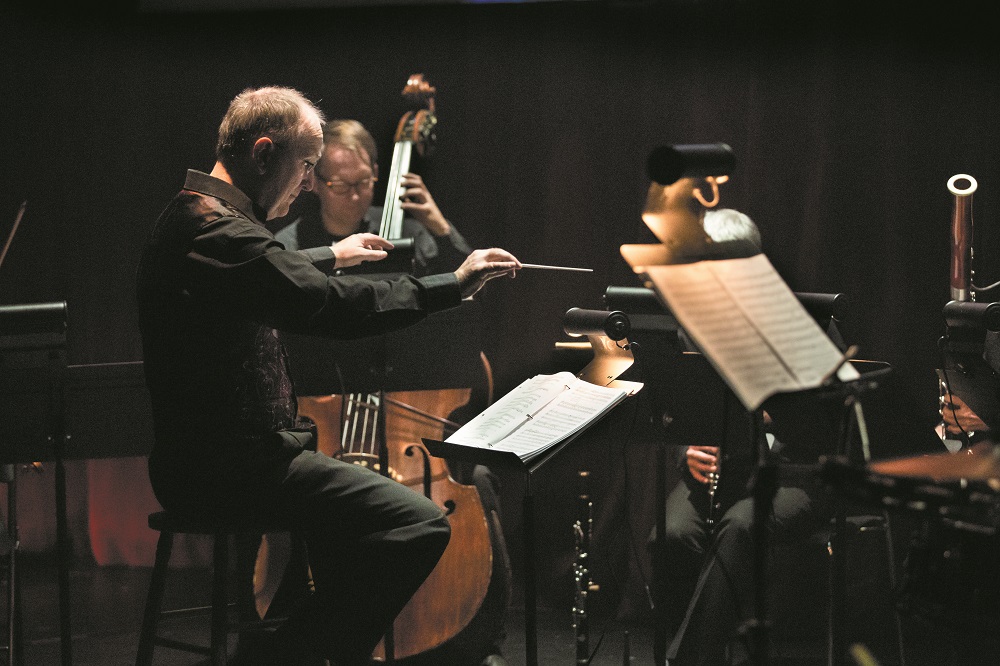
Larry Beckwith conducting Toronto Masque Theatre's 'A Soldier's Tale'Henry Purcell, particularly his opera Dido and Aeneas, has become something of a fixture the last few years – Google “Dido and Aeneas Toronto” and watch the 275,000 hits pop up. Musically, the relative simplicity of Dido’s score has long permitted conductors, producers, choreographers and directors free reign over the dramatic and visual components of the theatrical production, resulting in a wide spectrum of aesthetics. The beauty of Purcell’s opera, from a programming perspective, is its brevity; the 40-minute-or-so runtime allows another work, similar or contrasting, to be placed cheek to jowl with it, thereby creating a more dynamic performance than the Purcell does as a freestanding piece of music.

Larry Beckwith’s Toronto Masque Theatre is doing just that – pairing Purcell’s Dido and Aeneas with James Rolfe’s Aeneas and Dido to form a uniquely expressive concert. Far from being just a convenient inversion of the title, Rolfe’s Aeneas (commissioned by the Toronto Masque Theatre in 2007, with a libretto by 2015 Giller Prize-winning novelist André Alexis), “tries to imagine Aeneas’s interior life. What drives Aeneas to choose an uncertain quest for a new homeland over Dido’s offer of love and country?” (from jamesrolfe.ca) This performance takes place on October 20 and 21 and features soloists Krisztina Szabó, Alexander Dobson, Andrea Ludwig and Jacqueline Woodley, as well as orchestra and chorus.

It will be fascinating to see and hear how the Purcell and Rolfe complement, juxtapose and intertwine with each other, being separated in time by so many centuries. Choreographer Marie-Nathalie Lacoursière will add another dimension to the performance, perhaps paving the way for even more adventurous interdisciplinary collaborations in the future as the Toronto Masque Theatre disbands after this season, and its creative minds seek stimulation elsewhere.

The Holy Gospel According to Gould

Art of Time Ensemble's Andrew BurashkoTaking a leap well beyond the usual scope of this column, from November 2 to 4 the Art of Time Ensemble will present “…Hosted by Glenn Gould: Gould’s Perspectives on Beethoven and Shostakovich,” via screenings from CBC’s Glenn Gould on Television as introductions to live performances of music by Beethoven and Shostakovich.

In addition to being an interesting and exciting concert idea, a voice-from-the-grave presentation similar to holographic posthumous appearances by Frank Sinatra and Elvis, it will be fascinating to hear Gould’s perspectives on Beethoven, whose music has been comfortably and successfully interpreted by a great number of historically informed performing groups. Gould was equal parts genius and eccentric, certainly not at all a traditional performer in the historical sense, and those of us indoctrinated with the idea of fidelity to the score above all else should look forward to this concert as an opportunity to broaden our horizons, especially those of us (myself included) who were not fortunate enough to experience Gould in person during his lifetime.

Speaking of Beethoven…

This month is a good one for fans of Beethoven and his symphonic music. In addition to the release of Tafelmusik’s complete Beethoven symphony cycle featuring Bruno Weil directing the Tafelmusik orchestra and chorus (look for the CD review in this issue of The WholeNote), on November 4 and 5 former Tafel violinist Aisslinn Nosky leads the Niagara Symphony Orchestra in performances of Beethoven’s Seventh Symphony.

Hearing a modern orchestra tackle historic repertoire while led by an expert in historically-informed performance practice is a stimulating and thought-provoking experience. For those who have been trained to play a certain type of music a certain way, it is often difficult to reorient yourself around a different style and method of interpretation. I often spoke with Ivars Taurins on this topic while at the University of Toronto, and it was enlightening to hear his ideas on approaching Baroque and Classical symphonic repertoire with a modern orchestra such as the Calgary Philharmonic, where Taurins is a frequent guest conductor, versus a more specialized group such as Tafelmusik.

So take a trip down to wine country, partake in a tasting or two, and enjoy an evening of one of Beethoven’s greatest symphonies. (And if someone wants to clap between movements, for chrissakes, let them!)

I said at the beginning of this article that classical music as we know it is dying – that’s a good thing, for it is also being reborn under our noses.

Back to CNN’s Charlie Albright for the final word:

Breaking down ‘classical’ rules will kill ‘classical’ music – and thus save it. It will make the artform more accessible, more entertaining, and more disinhibiting, allowing for all of us to share more emotion and passion through the music. It will welcome those of us who are interested yet apprehensive about making the leap to buy a ticket to a concert. It will encourage more young people to have fun with the performing arts instead of viewing them as a necessary evil that requires a boring practice each day after school. And it is this death of “classical” music that will bring true classical music more life than ever.”

If you want to drop me a line, email me at earlymusic@thewholenote.com or talk to me in person at one of this month’s concerts – I’ll be at the bar.

Nothing can polarize a room of musically minded people faster than an expression of opinion on Historically Informed Performance (HIP). Wikipedia, the go-to source for information on all things from humdingers to hemiolas, defines Historically Informed Performance as “an approach to the performance of classical music which aims to be faithful to the approach, manner and style of the era in which a work was originally conceived.” Like sideburns, Pez dispensers, and many other “hip” things, Historically Informed Performance began in the 1950s with a small but devoted, cult-like following and has since been associated with some of the 20th century’s classical music luminaries including Nikolaus Harnoncourt, Ton Koopman and John Eliot Gardiner.

Traditionally, HIP has been closely connected with (and most successfully applied to) early music, specifically music from the Baroque era (1600-1750, approximately). This often involves tools such as period instruments, various tunings and temperaments, and a number of other variables that performers take into consideration. The majority of this information has been gleaned over the past few decades from various historical treatises written by composers that are now as famous, if not more so, for their theoretical writings as for the musical works they composed. Notable treatises include those by musicians such as Johann Quantz, C.P.E. Bach and Johann Mattheson.

Enter Norrington

Roger NorringtonAs the HIP movement grew throughout the latter half of the 20th century, its scope similarly expanded to include music by Beethoven, Brahms, and even Mahler (culminating in British conductor Roger Norrington’s anti-vibrato crusade which resulted in tendentious performances and recordings of a number of Mahler’s symphonies. These non-vibrato performances are interesting much in the same way that a circular-breathing saxophonist is interesting – at once fascinating and impressive, but also somewhat unnatural). Some of these experiments in performance practice, like Norrington’s Mahler, were greater in theory than in application, such as the idea to perform Beethoven’s symphonies with strict adherence to his metronome markings. This was in stark contrast to the über-Romantic interpretations of past maestros such as Furtwängler and Klemperer, and could become a bit frenetic when Beethoven’s metronomic suggestions had an entire orchestra flooring the gas pedal!

Given its history, it’s understandable that HIP is a rather controversial topic among musicians, scholars and audiences – especially when discussing mainstream composers such as Bach, Handel or Vivaldi – and like any theory, it cannot be applied with a one-size-fits-all mentality. (As a Canadian HIP-trained harpsichordist and organist, I can’t help but think of Glenn Gould’s Bach performances which, despite the theoretical issues of the appropriateness of performing Bach on the piano, are so unique, effective and timeless.) Part of the joy of being a musician in a city as diverse as Toronto is being able to hear the variety of interpretations and open-minded approaches taken towards similar repertoire, especially when Messiah season is in full swing! Having the opportunity to absorb multiple performances of a well-known piece interpreted by different ensembles in different ways can be an eye- and ear-opening experience, and we are extremely fortunate to have the opportunity to witness so many high-calibre concerts and players throughout the year.

September can be a slow month for the arts scene as musicians return from summer residencies and rehearsals resume after time away. Fortunately for early music lovers, there are a variety of concerts to choose from this month; here are a few highlights, organized by composer:

J.S. Bach

Top of most people’s list of Baroque composers is J.S. Bach, also known (to fans of P.D.Q. Bach creator Peter Schickele) as “Big Daddy” Bach. On September 13, Toronto Symphony Orchestra cellist Roberta Janzen performs cello suites by Bach and Kodály as part of the new ClassyAF concert series. This performance, part of a larger program that aims to bring classical music out of the concert hall, takes place at the Dakota Tavern on Ossington Avenue. The movement in recent years to present high-quality performers and performances in alternative venues such as pubs, clubs and taverns is a great way to welcome new audiences to music that is often stereotyped as outdated and stuffy. It’s also a chance to take in some great tunes with a drink in hand (a double bourbon on the rocks, preferably) amidst a refreshing change of scenery.

For those seeking a more traditional concert experience, Rosedale Presbyterian’s Recitals at Rosedale presents “My Good Fortune: The Music of J.S. Bach” on October 1. The program’s two cantatas, one secular (Schweigt stille, better known as the ‘Coffee Cantata’) and one sacred (Cantata 84, Ich bin vergnügt mit meinem Glücke) as well as a motet (Lobet den Herrn) will be led by music director Christopher Dawes and feature a roster of well-known soloists including soprano Gillian Keith, bass-baritone Daniel Lichti and tenor Lenard Whiting.

G.F. Handel

To many early music aficionados, Handel’s genius is surpassed only by Bach. Often grouped along with Domenico Scarlatti and Rameau into what John Eliot Gardiner calls “the Class of ’85,” Handel and Bach are certainly connected in some interesting ways, not least of which is the fact that both men were surgically mistreated by the same eye doctor. Bach died soon after his operation while Handel lived for nine years, increasingly blind, having derived no benefit from his treatment.

On a more positive note, Tafelmusik’s first full season under their new music director Elisa Citterio begins this September. Season-opening concerts can set the tone for the entire year, and this looks to be a dynamic and energetic program. With concerti by Handel and Corelli, a suite by Rameau, and a Vivaldi violin concerto featuring Citterio as soloist, we await these performances (September 21 to 24 and 26) with eager anticipation.

Gottfried Finger

I FURIOSI with James Johnstone (second from left) - photo by Ron SearlesIn a world full of concerts featuring oft-performed works by well-known composers, it’s important to point out the occasional deviation from the norm. On October 6, the Baroque chamber ensemble I FURIOSI presents “Introduction to the Body” which, according to their website, lauds “the various naughty and not-so-naughty bits” of the human anatomy. I FURIOSI, in addition to their engaging and often amusing titles and programming, are expert players and will perform works by Couperin, Handel and others, including the Moravian composer Gottfried Finger.

Finger was born in 1655 or 1656 and died in August 1730. He was a viol virtuoso and worked as a composer for the court of James II in London, where he was known as Godfrey Finger. He wrote a number of sonatas, operas, and suites for a variety of instrumental combinations. There are few recordings of Finger’s music, but the Echo du Danube disc of the Sonatae pro diversis instrumentis, Op. 1 on the Accent label is worth rooting around for.

October Outlook

Looking ahead, there are a number of exciting and important events on the horizon this October, as well as a stimulating opportunity for young professionals interested in working with some of Toronto’s best early music specialists. The deadline for applying to the Tafelmusik Winter Institute, a weeklong intensive which focuses on Baroque orchestral music, is October 11; this year’s participants will look at suites from the French Baroque by Lully, Rameau and others. For more information on this worthwhile program, visit the Tafelmusik website.

To keep up to date on everything early music in Toronto or to share your comments and questions, visit thewholenote.com or email me at earlymusic@thewholenote.com.

Matthew Whitfield is a Toronto-based harpsichordist and organist.
2208 Early MusicThere’s a scene in the Milos Forman movie Amadeus that always sticks with me whenever I think about composers being disliked or misunderstood by non-musicians. It’s the scene where Emperor Joseph II of Austria, played by Jeffrey Jones, has just been to the premiere of one of Mozart’s operas. He goes up to the composer and tells him, with full imperial pomp and arrogance, that his music has “too many notes.”

Since learning a bit about music history, I’ve learned a few things about the historical accuracy of this scene. First, the basic elements of the story are true – Joseph II did in fact gripe that Mozart’s music had too many notes. Second, the story is kind of unfair to the emperor’s legacy. While he may not have been able to appreciate Mozart, Joseph II was a so-called enlightened despot who modernized his country and turned an authoritarian regime into a liberal country, introducing progressive reforms like religious freedom and universal public education and working to abolish the death penalty. Third, the “too many notes” anecdote, like the movie, is part of a larger mythology that grew up around classical composers and persists to this day.

The Mozart Myth was perhaps the most famous example, and while parts of it have been dispelled, a few misconceptions remain. We can probably all agree now that he wasn’t in fact poisoned by Salieri (19th-century Mozart truthers argued otherwise) and he wasn’t destitute, he just never got a sweet court sinecure with Joseph; the Viennese didn’t totally misunderstand his music either, although they weren’t obsessed with it the way subsequent generations were.

Of all the Romantic legends, the Mozart Myth is probably the one that’s seen the most open debate, and a historical rehabilitation of the composer (or his bewildered Viennese public) is well underway. But there are myths about other composers which persist for the contemporary concertgoing public, many of which are the more pernicious for being completely unknown. The Bach Myth is probably one we need to tackle, because it’s one that the concertgoing public, as well as the majority of musicians, have bought into wholesale, and besides not aging particularly well, it’s also condescending, factually incorrect, and deeply alienating to potential listeners.

We all know the story. Bach was a genius in a category all his own. He wrote music that was incredibly intricate. If people don’t, or didn’t, like it, it was because they can’t, or couldn’t, understand it.

And that’s sort of true, but there are a few things we need to talk about to set the record straight. While Bach was a brilliant contrapuntalist, he wrote music that was generally conventional, albeit way more complicated. His obsession with counterpoint, including weird technical tricks, marked him to his contemporaries as an arch-conservative, rather than an inimitable trailblazer. And while he got fired from his capellmeister job in Cöthen and the congregation at St. Thomas in Leipzig didn’t like him all that much, he did have a cult following among composers, musicians and music geeks who understood how his music worked – he enjoyed a reputation as a musician who wrote music for other musicians.

And oh yeah, if we appreciate Bach so much today, why is so much of his music left unperformed? He wrote over 200 cantatas and motets for voice, just under 100 individual songs, and over 200 works for organ, but good luck hearing any of those performed today – you’ll mainly get to hear a handful of instrumental works he composed in the Cöthen years, a full 30 years before he died, and a few cantatas and passions that have worked their way into the popular repertoire.

Toronto Bach Festival

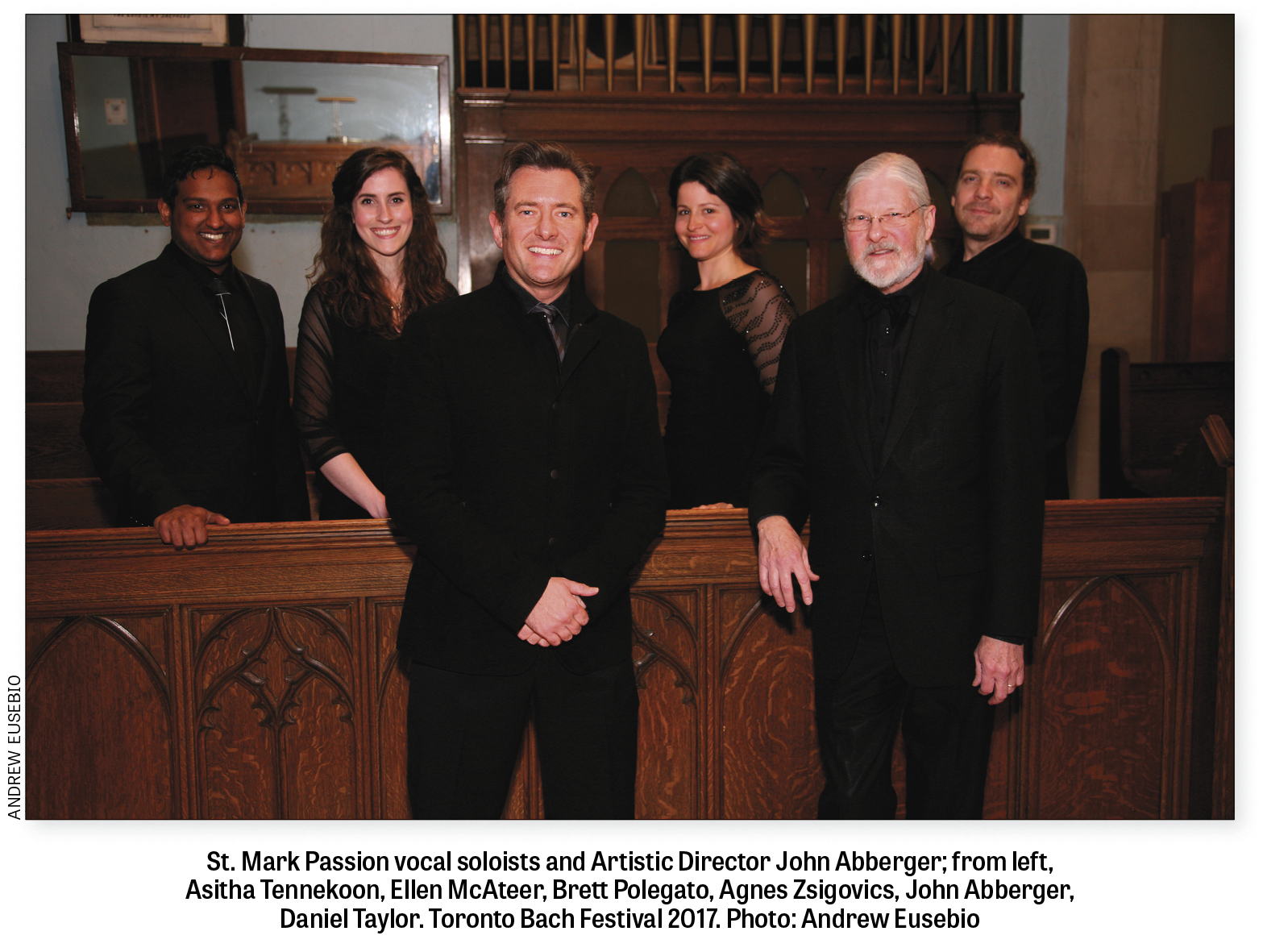
With so much of Bach’s music left forgotten and on a shelf somewhere, it’s time to bring it out and give it a listen so we can decide for ourselves whether it’s any good. I’m especially happy to see that the Toronto Bach Festival, now in its second year, is willing to show us a side of Bach we don’t often get to see. Hosted by St. Barnabas Anglican Church (361 Danforth Ave.) and led by Tafelmusik oboist John Abberger, we’re going to hear Bach the vocal composer (Cantatas 150 and 161, along with, yes, Brandenburg 6 and an oboe concerto May 26 at 8pm), the St. Mark Passion (May 28 at 3:30pm) and some keyboard works that aren’t fugues (Chris Bagan’s solo recital of the Six Little Preludes and a solo keyboard capriccio May 27 at 2:30pm). I’m excited to see that the festival is both willing to dust off some of Bach’s less well-known works for us to enjoy as well as to pay homage to the Cult of Bach. (Yes, despite my tendency to rant about my misgivings, I have yet to rescind my membership).

Elisa Citterio

It’s fun to argue about a musician’s legacy 200 years after the fact, but there are musicians in this city today whose legend has yet to be written. One such musician who is about to make a mark on the classical music scene in Toronto is Elisa Citterio, who after what seems like an epic search, has just been named the new artistic director of Tafelmusik as of last January. Citterio has been concertmaster and soloist of the Accademia del Teatro alla Scala di Milano and has been based mainly in Italy, playing with such groups as Europa Galante and Il Giardino Armonico. This month, she’ll be leading Tafelmusik along with Ivars Taurins in a program that includes Mozart’s Mass in C Minor and Haydn’s Symphony No.98. It’s repertoire that the group does especially well and I’m anticipating that Citterio will take the group in an exciting new direction in the coming years. You can catch Tafelmusik at Koerner Hall May 4 to 7. And if you’re interested in finding out what Citterio is like, she’ll be interviewed on stage by Robert Harris one hour before each performance.

Folies d’Espagne, a Clandestine Affair

Any concert, whether in Josephine Austria or contemporary Toronto, runs the risk that its paying public may not like or understand the music performed or interpreted, but you can avoid a great deal of that risk by making your concert a clandestine affair attended by a select few. This seems to be the thinking behind La Rêveuse’s concert, “Folies d’Espagne” which they’ll be performing at a secret location on May 11 at 7:30. The French-based group, founded by lutenist Benjamin Perrot and viola da gambist Florence Bolton, has been giving concerts since 2004. The group has decided to make this concert (sponsored by the publishing company Atelier Philidor) open to just 25 attendees; 80 bucks will get you a ticket to the concert, a free facsimile score and CD, and a chance to party with the group afterwards, but you have to contact 647-390-6037 or
emma@atelierphilidor.com before this concert sells out, which makes it very likely that by the time you’re reading this, it’s already too late. Then again, maybe the best way to make a reputation is to make music that’s unavailable to the general public and make them think they’ve missed out on something elite and exclusive.

David Podgorski is a Toronto-based harpsichordist, music teacher and a founding member of Rezonance. He can be contacted at earlymusic@thewholenote.com

2207 Early 1In professions that are physically and mentally challenging as well as competitive, there’s no experience quite as disappointing as discovering that you’re second best. Back in 1995, a team of psychologists observed and ranked the emotions displayed by Olympic athletes right when the final results in their events were announced, and then again when they were standing on the podium. What they found was not only that the bronze medal winners seemed significantly happier than the silver medallists, but that winning a silver actually caused negative emotions in the athletes who won them. Instead of celebrating an achievement – and how many people even know who are the second best in the entire world at something? – they expressed both sadness and contempt, and harshly critiqued their own performance, listing their mistakes and replaying the event in their heads, wishing they had acted differently in order to win gold.

The career of Marc-Antoine Charpentier (1643-1704) is an excellent example of the frustrations of being almost the greatest. Despite a professional lifetime of artistic patronage in some of the best courts in 17th-century France, a mid-career collaboration with Molière, an appointment as maître de musique for the Jesuit order in France, and a lifetime composing music with over 500 compositions to his name, he was still a (distant) second, career-wise, to the greatest French composer of the period, Jean-Baptiste Lully. It’s important to keep two things in mind about being second-best to Lully: one, that it doesn’t mean Charpentier, or any of his other contemporaries, was any less of a composer, and in many cases Charpentier was arguably better. Two, that being anything other than the best composer in Louis XIV’s France came with significant creative limitations on what composers were allowed to write. Lully, one must bear in mind, was not simply interested in writing better music than everyone else. He was also determined to be the richest and the most influential and, to the best of his ability, the only composer in France, and the centralization of French cultural and political life around Versailles made sure he could maintain an artistic monopoly.

The result for Charpentier was that he couldn’t legally produce an opera, or indeed any other piece of music, with more than two singers and six instrumentalists, without the express written permission of Lully. Although working for the prominent House of Guise meant that Charpentier could somewhat circumvent this, he still had to wait until he was 50 years old before he could get an opera produced at court after Lully finally died in 1687.

The opera in question was Médée (Medea) and although Charpentier had to wait most of his life to get a chance to write something like it, the wait was well worth it for the French court. Listening to Médée, the listener can tell right away that Charpentier was able to perfectly imitate the style developed by the old Italian monopolist and, although the opera only ran for a few months, Médée was critically well-received by contemporary audiences.

This month, Opera Atelier is reviving the crowning achievement of a composer whose career never did justice to his compositional talent. Medea is running April 22 to 29 at the Elgin Theatre and Opera Atelier, with its exceptional roster of singers, opulent staging and crack pit orchestra (Tafelmusik), will certainly make this rare performance of a composer who never got to be the best a must-see.

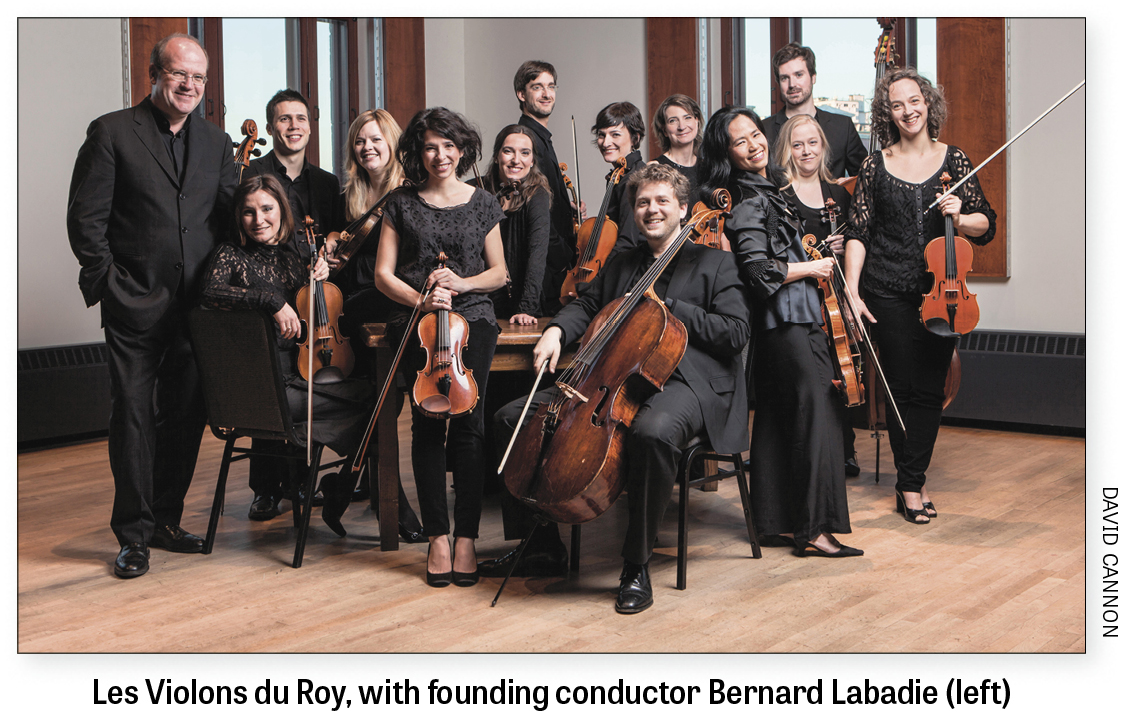
We like to think we’ve come a long way, culturally, since Louis XIV and his privilèges royaux, but the distance between first and second place in Canada still seems like a wide gulf. A perfect example of this is Les Violons du Roy who, from a vantage point within the Toronto early music scene, never seem to enjoy the popularity and success of Tafelmusik.

I’m not sure the lack of coverage is entirely fair to the the Quebec City-based group, as it’s certainly not lacking for talent. They’ve been led in the past by Bernard Labadie, Jonathan Cohen and Mathieu Lussier, all of whom have led full careers and made significant contributions to the early music field. The group’s members are all perfectly competent players and have enjoyed a lifetime of experience playing orchestral, solo and chamber music in Quebec. The group itself is one of Canadian early music’s stalwarts, having been in operation since 1984 (just five years after Tafelmusik) and now has some 35 recordings to its name. If there’s any reason this group is being held back, I have no idea what it is.

This month, you’ll be able to see for yourself what makes Les Violons du Roy worth hearing, as they’ll be coming to play Koerner Hall April 13 in a program that includes Bach, Handel, Fux and Graun. Lussier will be leading the group and, to sweeten the deal, the orchestra will be joined by the great countertenor Philippe Jaroussky who, far from being just a voice, has a versatility that lets him sing a wide range of repertoire from Monteverdi to Fauré. I will be very interested to hear what this soloist and this group are capable of when they collaborate.

Music-making has probably been a family business since about as long as there have been professional musicians. Although the history of music pedagogy is full of brilliant teachers and outstanding pupils, it’s difficult to overcome the problem of what the student does when the lesson ends and he goes home to (one hopes) practise, and a good deal of the numerous performance issues that arise from a typical piece of music can be resolved much more quickly in having an older, more experienced musician on hand at home to help.

The Bach family is an obvious example of such dynasty, but there are plenty of musicians who also parented a younger generation of great performers. Tafelmusik explores the theme of musical families in their concert this month, “Bach: Keeping It in the Family,” which features one great early music father-daughter duo, Alfredo and Cecilia Bernardini. Dad is a well-known baroque oboist, and daughter Cecilia is a baroque violinist who is beginning to shine as a soloist. They’ll both be coming to Toronto to show off their talents in a program that includes the JS Bach Concerto for Violin in E Major BWV 1042 and the CPE Bach Oboe Concerto in E-flat Major Wq. 165, as well as a sinfonia by Bach’s eldest son Wilhelm Friedmann and a Telemann orchestral suite. This is a pair of soloists who can handle virtuostic works with ease, and Tafelmusik always sounds great when there’s a guest director to give a new perspective on performance practice. Check this concert out April 5 through 9 at Trinity-St. Paul’s Centre.

If you’d prefer a concert of chamber music this month to a full-scale French opera or orchestral concerts of high Baroque music, consider checking out “Fork in The Road,” I Furiosi’ s concert on April 21 at Calvin Presbyterian Church. It’s somewhat unclear what the group is up to, but no matter: I Furiosi can always be counted on to put on an exciting concert with great performers, and this concert will highlight some seldom-heard composers, including Jean Baptiste Senaillé, Giuseppe Tartini and Louis Bourgeois.

David Podgorski is a Toronto-based harpsichordist, music teacher and a founding member of Rezonance. He can be contacted at earlymusic@thewholenote.com.

2206- BBB - Early Music.jpgNot being an art critic, and indeed like most musicians completely unable to draw anything beyond crude stick figures, I find the iconography of Renaissance paintings difficult to interpret. I am however, willing to bet that the images in a typical painting by Hieronymous Bosch are bizarre enough to give most art critics a conniption fit trying to figure out what they are supposed to mean.

Some scholars argue that the Flemish painter’s fanciful and often downright weird imagery should be read allegorically, as it was intended to lampoon both contemporary mores as well as a hypocritical clergy, while others argue it was proof that Bosch was on a drug trip, specifically ergotism (google “St. Anthony’s Fire”). I’m unwilling to come down on either side of the debate, but I would like to volunteer the possibility that a certain amount of Bosch’s work was a nascent form of art for art’s sake. I mean, given the opportunity, who wouldn’t want to paint a man shitting out a flock of blackbirds while being eaten by bluebird-headed monsters?

What’s interesting for musicians about Bosch is how much music is in his work, and that he clearly finds a great deal of it immoral. Like it isn’t even subtle. In The Ship of Fools, a monk and nun sing along with the boat’s drunken passengers (one of whom is seen retching over the side, having overimbibed) while accompanied by a lute. In The Haywain, a cart of hay is being pulled by a creepy looking crowd of animal-headed demons toward hell and everlasting damnation. The haywain’s main passengers, a man and woman, are oblivious to this despite the apparent entreaties of both a guardian angel and the appearance of Christ a few feet above their heads – they’re too busy studying a piece of printed music in front of them while a white-robed lutenist plays for them, accompanied by a faceless blue demon on an eldritch clarinet.

While I doubt the examples above mean Bosch was completely against music in all its forms, they do show he was not only concerned about music’s ability to corrupt otherwise good people, but was someone who believed that music had a very real power to influence the character of its practitioners and listeners, and that music-making was just as much an ethical experience as it was an aesthetic one. It’s perhaps in this spirit that the Toronto Consort is presenting the Cappella Pratensis as part of its special guest series. The Canadian-led ensemble – their artistic director is Stratton Bull, a native of Cobourg, Ontario, with degrees from U of T and the Royal Conservatories of Toronto and The Hague – is a Belgian-based group that has made Franco-Flemish music its specialty, and their concert, on March 3 and 4 at 8 pm at Trinity-St. Paul’s Centre is devoted entirely to composers based in Belgium whose music would have been performed in Bosch’s lifetime.

Although few music lovers in Canada go out of their way to praise Belgian composers, the country was the source of the leading composers of polyphony from the early Renaissance, so Pratensis has a wealth of music to choose from. This concert will likely feature the Missa Cum Jocunditate by Pierre de la Rue from the group’s latest album, released last year to commemorate the 500th anniversary of the painter’s death. If you’re interested in Renaissance music, this is a very interesting concept for a concert program and Cappella Pratensis is a group that has mastered the art of polyphony.

Catch this concert if you can.

Nicola Benedetti: Cappella Pratensis isn’t the only international early music group to show up in town this month. Already with eight recordings under her belt, superstar 29-year-old Scottish violinist Nicola Benedetti is a seasoned performer of violin pyrotechnics. She’s already recorded the Bruch and Korngold violin concertos, Vaughan Williams’ The Lark Ascending, Pärt’s Spiegel im Spiegel, and Tchaikovsky’s Violin Concerto in D Major Op.35, which in the modern classical world makes her a wunderkind. “But can she play early music?” is probably the main question critics and concertgoers will ask, and I’m excited to hear what the answer to that question will be. Benedetti will answer it when she appears with the Venice Baroque Orchestra, itself a very fine performing ensemble, under the direction of the Italian harpsichordist Andrea Marcon.

They’ll be playing a massive program of Italian works meant, one assumes, to highlight Benedetti’s formidable talents. But even a talented young superstar and orchestra will have to work hard to hold the audience’s attention for the entire Four Seasons by Vivaldi (itself of full CD length); Avison and Geminiani concerti grossi, a Galuppi concerto, and another Vivaldi concerto are tacked on to the program, for good measure. This kind of show can easily clock in at two and a half hours, and if done well can be an absolutely sublime experience – anything less and the audience will feel like they’ve been beaten into submission. Benedetti’s clearly intended to be the main event in this concert, and this will be a great opportunity to get a look at a brilliant young soloist who can cross over between modern and early repertoire with ease. She has been a regular visitor to Toronto concert halls and will hopefully return in a similar capacity. You can catch this concert as part of the Royal Conservatory’s string series on March 3 at 8 pm at Koerner Hall.

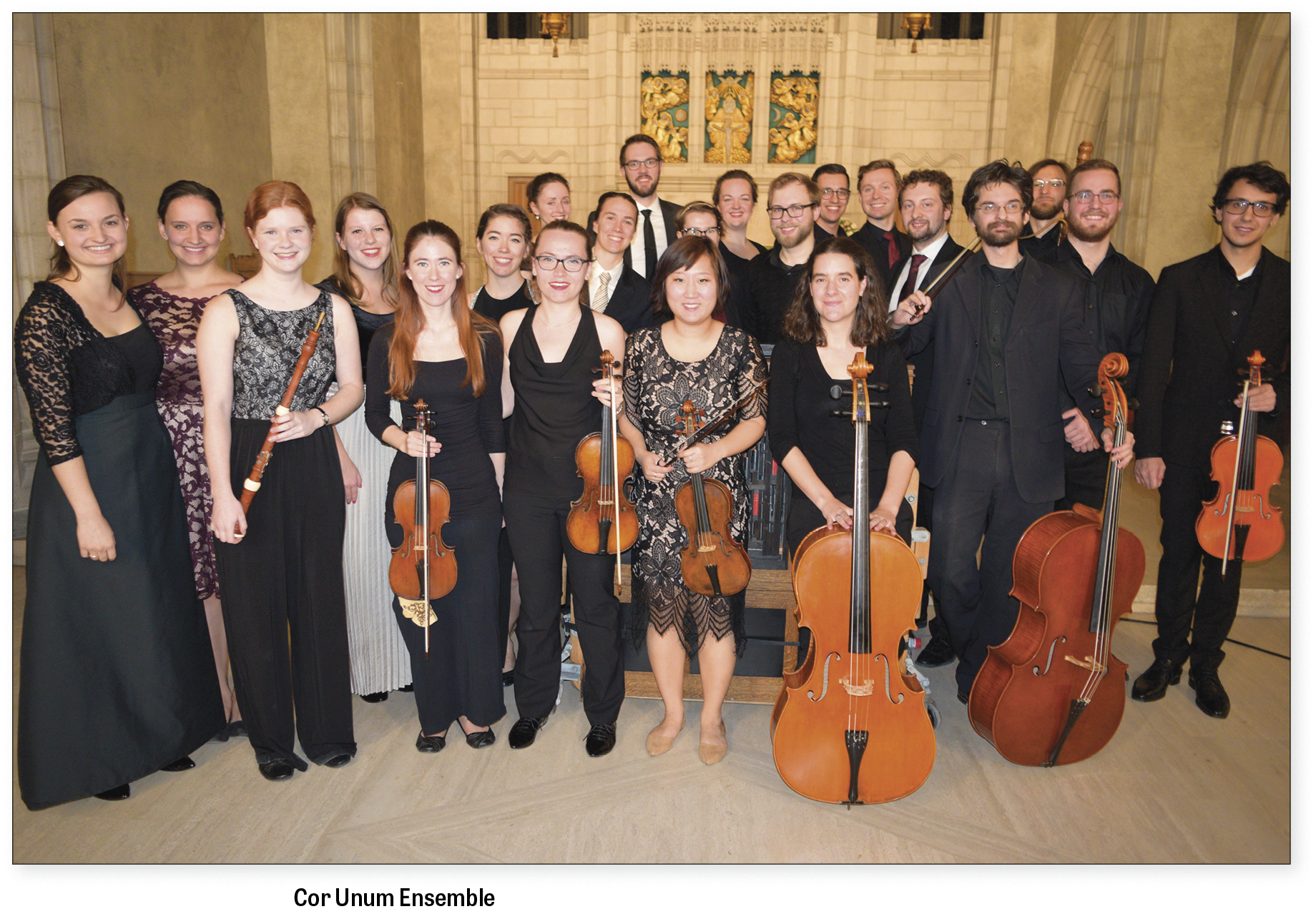
Cor Unum: It’s always good to see new groups on the music scene, and there’s a new group in particular in Toronto that I’ve been meaning to write about for some time now. The Cor Unum Ensemble formed late last year and despite being under a year old is already putting together some ambitious concerts of difficult repertoire. This month, they’ll be playing the St. John Passion by Bach along with the violinist Adrian Butterfield, who will be filling in as guest director of the ensemble. Butterfield is not so well known outside of the United Kingdom, where he is one of the co-founders of the London Handel Players, but he has a dozen recordings to his name that mainly feature late-Baroque and early classical works. He also has the unique honour of being the resident Naxos recording artist for the label’s collection of the complete sonatas of Jean-Marie Leclair, so branching out from Handel and the mid-18th century to Bach seems like a logical shift in repertoire for this chamber player. For its part, Cor Unum is mainly a group of younger players who are both new to early music and the Toronto music scene, and it will be interesting to see what the group will be able to accomplish when under the direction of a veteran player like Butterfield. Youthful vigour applied to standard repertoire like the St. John Passion can make for exciting results, especially combined with the guidance of a leader who is experienced in early music performance practice. Catch this concert at Trinity College Chapel on March 12 at 7:30pm.

Stylus fantasticus: Finally, if your interests lean more towards chamber music than vocal or orchestral extravaganzas, consider checking out a program dedicated to a musical movement from the early Baroque known as the stylus fantasticus. It isn’t particularly well-known today, meriting a mere stub of an article in most musical encyclopedias, but without the stylus fantasticus, Western instrumental music as we know it would likely not exist. It was first mentioned by the Jesuit and polymath Athanasius Kircher, who, writing in 1650, described the stylus fantasticus as “the most free and unrestrained method of composing, bound to nothing, neither to any words nor to a melodic subject; [it] was instituted to display genius and to teach the hidden design of harmony and the ingenious composition of harmonic phrases and fugues.” Certainly before the Baroque era, the chance to compose music freely wasn’t really a possibility for composers. Musical form was largely limited to either the repeating rhythms of dance forms or based on a set melody like a Gregorian chant. Not only was the stylus fantasticus the first chance for composers to test their creativity, but it brought new prominence to the potential of instrumental, rather than vocal, music.

Four hundred years later, it’s easy to see what got Kircher so excited: no instrumental music means no symphonies, and no freedom of form means no sonatas or other compositions that can develop over a couple hundred bars. For the first time, composers, or competent improvisers, could let their imaginations roam freely, limited only by their knowledge of harmony or their technique. Rezonance (full disclosure, I am a founding member of the group) will be performing Italian and Austrian works in this style from the early 17th century as part of the Hammer Baroque series at St. John the Evangelist Church in Hamilton (320 Charlton Avenue West) on March 18 at 4pm, and at Gallery 345 on March 19 at 3pm. If you’re looking for an out-of-the-box chamber music concert this month, this is a concert that invites you to enjoy composers who broke free from tradition and cliché and gave listeners a chance to hear musical creativity at its most expressive. You’ll definitely enjoy what they dreamt up.

David Podgorski is a Toronto-based harpsichordist and music teacher. He can be contacted at earlymusic@thewholenote.com.

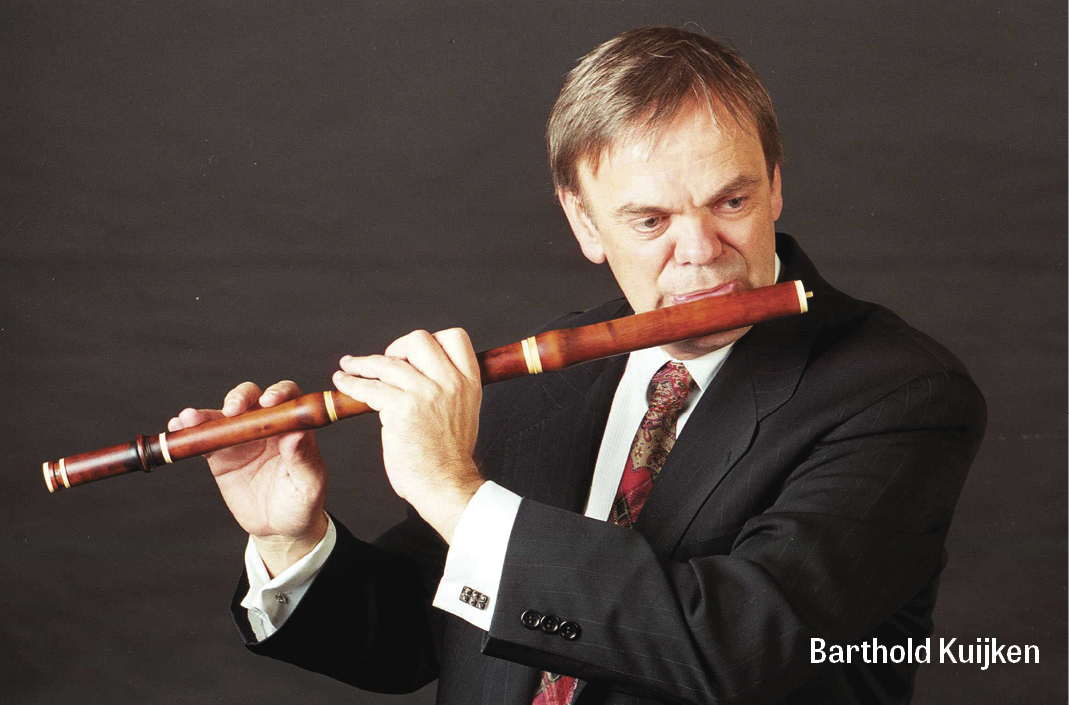
2205 Early 1I’m glad that Toronto’s early music scene has such a wide variety of talent. But every so often, someone shows up and makes even the best musicians in the city take notice. This month, Toronto has a rare opportunity to hear a soloist who’s spent decades becoming one of the living legends of early music. You may not have heard of the celebrated Belgian flutist Barthold Kuijken (pronounced CAUW-ken) but to hear him in concert is to appreciate an artist who has mastered some of the most ornate and technically demanding works of music in the classical canon.

I’ll do my best to describe Kuijken’s influence on the early music movement without resorting to superlatives, but it won’t be easy. He belongs to what’s effectively the first generation of early music players (the previous generation being largely a bunch of eccentrics rather than professional musicians) who, finding modern classical performance practice unfulfilling, left promising careers as modern musicians to find a new style of performing. Given that there was no existing generation of musicians to teach them how to play differently, Kuijken et al. were complete autodidacts with only a handful of musical artifacts and historical treatises to guide them. Since then, Kuijken has become an educated performer and amassed an enviable instrument collection and library of historical sources. But what makes him unique is that, unlike other musicians of his generation, he didn’t have to do it alone. His older brother Weiland is one of the movement’s great viola da gambists, and another older brother, Sigiswald, not only became one the great violinists of the movement, but also founded La Petite Bande, one of the great European early music orchestras, in 1972.

Having family on his side helped Barthold Kuijken. Since moving to early music, he has performed extensively with Sigiswald’s orchestra as their principal flutist, played chamber music with both his brothers, and not incidentally also enjoyed a stellar career as one of the genre’s eminent soloists, generating a staggering discography along the way. This month, Baroque Music beside the Grange brings this legendary flutist to Heliconian Hall in Yorkville for a program that should serve to demonstrate Kuijken’s reputation as one of the greats. J.S. Bach’s sonata for unaccompanied flute, a piece by C.P.E Bach written for Frederick the Great, a couple of Telemann fantasias, and a suite by French composer Michel de la Barre are all pieces that were written for flutists to show off both artistic mastery and technical prowess, and I’m willing to bet that Kuijken doesn’t even find these tunes a fair match for his skills. If there’s one concert to make this month, this is it. Catch it on Sunday February 12 at 2:30 pm.

Profeti della Quinta: One generation inspires the next, and while the first generation of early music players tended to have the same musical and cultural background (Western European, conservatory trained, institutional misfits) the movement they founded means that younger players of today now come from all over the globe and have an entirely different view of the classical canon. A case in point is the Israeli vocal and instrumental group Profeti della Quinta, who came together as an early music group in Galilee and re-formed in Switzerland at the Schola Cantorum Basiliensis. Since then, the group has specialized in late-Renaissance Italian music, particularly in the music of Salomone Rossi, the 17th-century Italian-Jewish composer of madrigals, sacred vocal music and chamber music.

To hear Profeti della Quinta’s singing is to know that Rossi has been unfairly neglected by history. He’s a top-tier composer in the seconda prattica vein – meaning he could compose sacred polyphony in the style of Palestrina as well as use later techniques such as word-painting in more secular works – who was just as comfortable setting texts in Hebrew as in Italian. The effect on a modern audience is splendid as well as jarring, as if Monteverdi had decided one day that Hebrew was a better language than Italian for his madrigals, but the Profeti are both technically and interpretively flawless players who do justice to both this composer and this style of music. You can catch them in performance in Kingston at the Isabel Bader Centre for the Performing Arts on February 15 for an all-Rossi concert. If you can’t make it out to Kingston, the group has posted a number of music videos on their website quintaprofeti.com featuring the music of Rossi, Orlando di Lasso and Carlo Gesualdo, all of which I highly recommend.

Ben Stein’s lute: Some artists choose to master the entire canon and others choose to specialize. Still others need no composer at all. We’ve known for years that performers in the Western art-music tradition were able to improvise. Bach’s Musical Offering, which was initially a challenge the composer received from Frederick the Great to improvise a three- and then six-part chromatic fugue, is a famous example, but many other famous composers were also great improvisers, and the tradition of improvisation stretches back much further than Bach. In the Renaissance and early Baroque, a young musician’s education included learning to improvise a melody over a commonly recognized bass line or series of chord changes – like the jazz standards of our time, but shorter and harmonically simpler. But knowing that improvisation was everywhere can change our view of compositions from the period. Printed music written down by gifted improvisers seems less like a painstakingly worked-out masterpiece and more like a surviving specimen from a larger group of improvisations, so players are supposed to perform music as if it were improvised. Less precise printings of music present other problems. But if they are just the shell of the music, rather than the final finished product, does that mean the performer is supposed to fill the gaps by ornamenting a bare melody or the chord progressions? Jazz musicians learn to improvise this way, but conservatory-trained classical players don’t. And as long as historically informed players can’t improvise in the style of the composer, it makes their supposed goal of re-creating the music as the composer heard it impossible.

Toronto-based lutenist Ben Stein may have an answer to this musical quandary. For the last several years, Stein has been researching how musicians of previous eras were taught musical improvisation, with a special focus on the conservatories of 18th-century Venice. Study and practice have let him re-create the part of a musical education from that period and, as a result, Stein can now improvise over a given melody or series of chord changes in much the same way that a 17th- or 18th-century musician would. If this sounds far-fetched to you, Stein can prove it – he’s going to both show and tell his musical discoveries in concert at a lecture-recital at Metropolitan United Church on February 10 at 7:30 pm. He’ll be joined by Lucas Harris on lute as well as Rezan Onen-Lapointe on violin and myself on harpsichord, and I’m pleased to say that Stein’s ability to teach classical musicians some necessary improv skills is as informative and entertaining for concert audiences as it is for his fellow musicians.

David Podgorski is a Toronto-based harpsichordist, music teacher and a founding member of Rezonance. He can be contacted at earlymusic@thewholenote.com.

2204 Early Music 1It’s a bit of a shame that, with all the marketing behind Christmas, no one ever remembers – let alone observes – Advent anymore. The pre-Christmas season has a rich repertoire of music behind it that often gets ignored in favour of Messiahs, Nutcrackers and Christmas carols, but a few Toronto-based artists are mining this hard-to-market season for interesting music that will keep audiences entertained throughout the month of December.

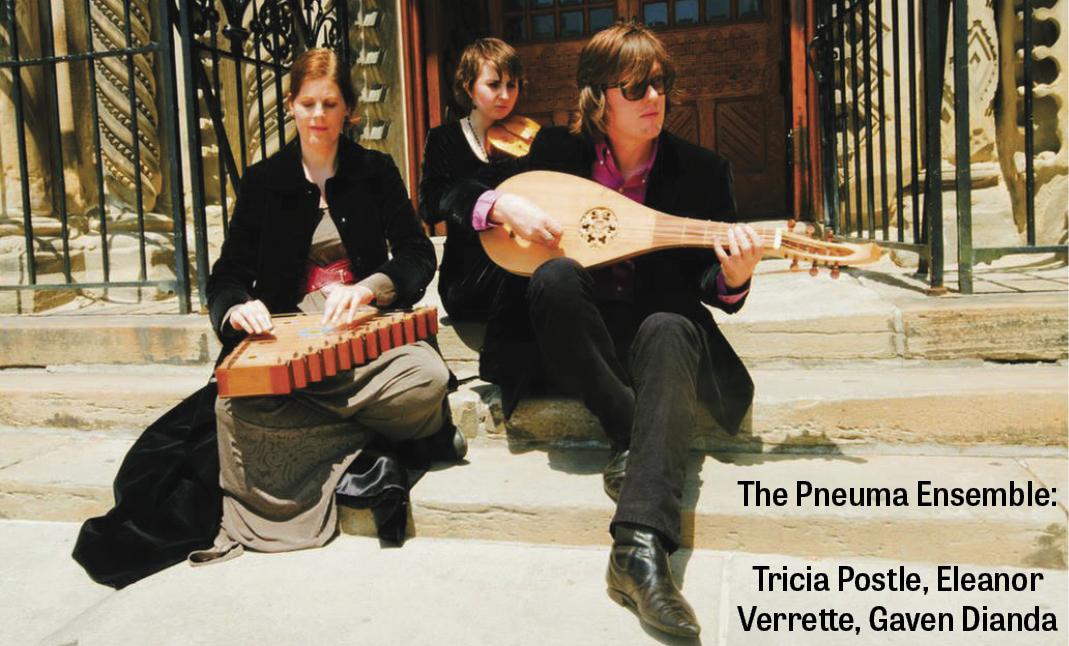
Musicians in Ordinary have been mentioned in this column before as a group that’s known for doing interesting programs of a seasonal nature throughout the year, and I’m pleased to say they’ll be doing just that this month. On December 9 at 7:30pm, the group will bring a concert of Monteverdi, Gibbons and Byrd to St. Basil’s Church. They’ll also be joined by the Pneuma Ensemble, a new group specializing in medieval music, for some Advent tunes from 13th-century Portugal. Besides being seasonally appropriate (especially if, like many people out there, you’re already sick of hearing Christmas music by the time December rolls around), it’s a concert that won’t be done by any other groups in town any time soon. There’s scarcely any chance to hear any pre-Renaissance music in Toronto, and medieval music is hardly heard anywhere, so I’ll be very interested to hear what the Pneuma Ensemble can bring to the music scene. If you’re looking for a chamber concert in early December, the Musicians in Ordinary and Pneuma sounds like an excellent choice.

The Oratory: If you’re not particularly into medieval or chamber music, there’s another Advent-themed concert worth checking out before Christmas. The Oratory at Holy Family has a regular series of concerts of vocal and chamber music, but this December, the venue has decided to feature a soloist who is one of the music scene’s best-kept secrets. Toronto-based organist Phillip Fournier brings a distinctly Lutheran flavour to Holy Family Church on December 7 at 8pm with a solo concert that includes Buxtehude, Bach and Scheidt. Fournier is a great organist and improviser who plays Bach particularly well, and hearing him play solo is positively delightful.

For some actual Christmas music over the Christmas season, consider a few groups that are willing to explore somewhat less-played music for the holidays:

The Toronto Consort will be putting on an interesting program devoted entirely to Christmas music from the Middle Ages that will feature the work of two notable women from the period. The posthumous legacy of the German abbess, writer, composer and mystic Hildegard of Bingen has already been revived with a slew of CD recordings from the mid-90s onward. Judging from the fact that most of the albums had titles like Canticles of Ecstasy, Heavenly Revelations, and Vision, the artists and record labels were trading on the mystic aspect of Hildegard’s life as much as the music she wrote. One wonders what the undoubtedly erudite and pious 12th-century nun would make of the new age marketing of her records, but no matter. The music remains extraordinary. Less well-known than Hildegard is a later mystic and nun, Anna of Cologne, who, as a 16th-century compiler of hymns and songs from a non-cloistered community, collected songs in both Latin and Middle German by other composers, who, with some very rare exceptions, remain completely unknown to us. The result is a uniquely spiritual take on the Christmas holidays, and where other musical groups emphasize the festive side of the holidays, Hildegard’s and Anna’s music shows us a more somber side of the darkest days of the year. Check out the Consort at Trinity-St. Paul’s Centre, December 9 through 11.

Cantemus: Still, there’s nothing wrong with wanting to celebrate, and if you’d rather listen to a choral ensemble for a dose of holiday cheer, consider going to a concert by the Cantemus Singers in December. Their concert, “In Dulci Jubilo,” will be a lively and joyful celebration of the music of Praetorius, Hassler, Schütz and Bach. Cantemus is an a cappella group devoted to Renaissance madrigals and chansons, and they will do a fine job with repertoire that’s upbeat and festive. Catch them in two performances, at the Church of the Holy Trinity on December 3 at 7:30pm, and at St. Aidan’s Anglican Church on December 4 at 3pm.

Haydn Operatic Gem in Concert: Among the Classical composers, it’s generally agreed that Mozart is the father of modern opera and Haydn the founder of the instrumental music we enjoy today. But besides composing on an exhausting schedule that included symphonies, chamber music and solo performances specifically tailored to the tastes of one Prince Nikolaus Esterházy, one of the most powerful aristocrats in the Austro-Hungarian Empire, Haydn was also responsible for managing an opera troupe for the amusement of his employer. In addition to two concerts a week of instrumental music, Haydn was contractually obliged to put on a different opera every week at the Esterházy palace. And although there was no way Haydn could have composed 52 operas a year, he did manage to write about 15 (that we know of) while employed by the prince, although unfortunately, none of them are performed more than occasionally. But on February 5 at the St. Lawrence Centre for the Arts at 2:30pm, Opera in Concert and the Aradia Ensemble will be presenting one of these forgotten gems by the founding father of the Classical canon.

L’Isola disabitata was an opera written by Haydn in 1779 based on a libretto by Metastasio and is an excellent example of the mature style of a prolific composer whose works were just starting to circulate around Europe. Although we don’t associate Haydn with opera today, he was more than capable of writing great vocal music, and Aradia and Opera in Concert will give this work the level of excitement and interpretive insight it needs. Get to this concert if you possibly can.

Beauséjour in Belleville: Outside the city, Belleville audiences can look forward to hearing a gifted solo musician in the new year. The talented Quebecois harpsichordist Luc Beauséjour has an encyclopedic catalogue of albums behind him and will be coming to play in St. Thomas’s Church in Belleville for a pay-what-you-can concert. No word yet on the program, but Beauséjour is a veteran of solo Baroque keyboard music and a technically flawless musician. If you’re in the Belleville area, you should definitely try to make it to his show on January 15 at 4:30pm.

Taylor’s TEM: Closer to the city, countertenor Daniel Taylor has made a name for himself as a soloist and opera singer, but lately his choir and chamber music performances have been gaining both notice and acclaim. Led by Taylor, the Choir of the Theatre of Early Music is made up mainly of younger Montreal-based singers. January 21 at 8pm, St. Jude’s Celebration of the Arts presents the group in a concert of contemporary and Renaissance a cappella vocal works by some great English choral composers, including Thomas Tallis, William Byrd and John Tavener. Taylor is a gifted singer with a glorious voice who has a fine ear for young talent, and the TEM choir is an exceptional group of voices.

David Podgorski is a Toronto-based harpsichordist, music teacher and a founding member of Rezonance. He can be contacted at earlymusic@thewholenote.com.

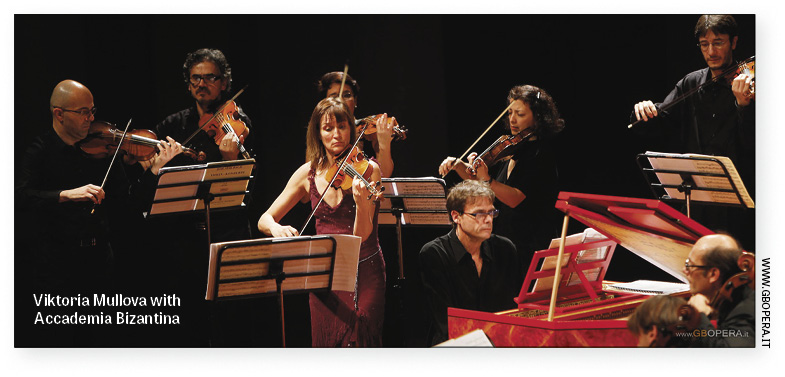
2203 Early Music 1Some people can do just about anything they put their minds to, and Russian violinist Viktoria Mullova is certainly one of these. After starting a career playing modern violin in the outskirts of Moscow during the Soviet era and serving up a steady diet of Tchaikovsky, Stravinsky and Prokofiev, Mullova decided to add historically informed perfomance practice to an already impressive skill set and completed the transition with an album of Beethoven and Mendelssohn violin concertos with the Orchestre Révolutionnaire et Romantique in 2003. Thirteen years later, Mullova has gone on to perform with the Orchestra of the Age of Enlightenment and with Venice Baroque, and is now a regular collaborator with Accademia Bizantina, a newer group on the European Baroque scene led by Italian harpsichordist Ottavio Dantone. The results have been impressive – Mullova has been plowing through the Bach chamber works, including the six Bach sonatas for violin and continuo, the violin concertos, and the solo sonatas and partitas – and her Vivaldi and Mozart concertos aren’t too bad either.

Ontario audiences will have ample chance this month to hear both Mullova and Dantone in both Kingston and Toronto, as the pair, along with Bizantina, will be touring an ambitious program of Bach concerti to both cities. Catch an international violin virtuoso along with a superb backing band in Kingston at the Isabel Bader Centre for the Performing Arts on November 12 at 7:30pm, and in Toronto at Koerner Hall on November 13 at 3pm.

Esfahani, harpsichord virtuoso: Solo harpsichord recitals are all too rare in Canada, but with internationally reknowned Iranian-American harpsichordist Mahan Esfahani coming to the Isabel Bader Centre for a concert on November 20 at 2:30, Kingstonians will have a rare opportunity to hear an up-and-coming virtuoso. Esfahani is just 32 years of age, but is already proving that he can do just about anything on the keyboard, with a repertoire ranging from Byrd to Ligeti (via CPE Bach and Rameau). And he plays all these composers rather well – each of his three albums netted Esfahani a slew of awards as well as accolades from critics. His Kingston audience will have a chance to decide the level of Esfahani’s virtuosity and versatility for themselves when he shows off a program of works by Bach, Rameau and Sweelinck. Montrealers reading this may also take some small comfort in the knowledge that if they want to hear this rising star, they need not drive all the way to Kingston – Esfahani will also be playing in Montreal on November 24 and 25 with Les Violons du Roy as part of Bach Sans Frontières, with another virtuoso concert – he’ll give his Montreal audiences both the Górecki harpsichord concerto and a Bach concerto with a cadenza by Brahms.

An Italian noblewoman being shipped off to become queen of France doesn’t seem like a particularly unusual event for Renaissance Europe – unless of course that particular Italian noblewoman happens to be descended from the most notorious, corrupt and despised family of political millionaires in history. The Toronto Consort explores this in their concert program “The Italian Queen of France,” by telling the story of Caterina de’ Medici, who found herself married off to Henry II in 1549 as a means of consolidating her already powerful family’s influence throughout Europe.

Calling Caterina the Italian Queen of France is an entirely appropriate title too, as the French never forgot – or let the queen herself forget – that she was an outsider in their country. Whether this could be attributed to anti-Italian sentiment or to the extremely negative reputation of the Medici family is perhaps one of the great debates of Renaissance history, but the French must surely have known that Caterina’s cousin was the de facto tyrant of Florence who bought politicians and judges to do his bidding. There was also another cousin of Caterina’s, Giulio (aka Pope Clement VII), who was skewered in one of the most bitter political feuds of the century – he was the pope who had to tell Henry VIII of England that he couldn’t annul his marriage to Catherine of Aragon, as her brother was occupying Rome with an army at the time. Like the rest of her family, Caterina wasn’t particularly popular. She suffered from rumours that she was a witch with links to the occult, and the fact that she was both interested in astrology and a personal patron of Nostradamus didn’t help this at all.

Still, if there was one thing the Medicis knew how to do well, it was to bolster a bad reputation through artistic patronage and, as the theme of the concert implies, one way the queen tried to counteract a negative reputation was through lavish – and eventually ruinous – spending on the arts, including music. French Renaissance composer Claude Le Jeune was a particular favourite under the Italian queen and features prominently in this program; the Consort will also feature music from his contemporaries Adrian Le Roy and Guillaume Costelay. Catch their show November 11 and 12 at Trinity-St. Paul’s Centre at 8pm.

Toronto Masque Theatre: Another group that’s good for at least one early-music show a year for Toronto audiences is the Toronto Masque Theatre, as they’ll demonstrate this month with performances of Handel’s Apollo e Dafne, at the historic Enoch Turner Schoolhouse on November 17 to 19. Handel was just 24 years old when he began working on this secular cantata for a Venetian concert-going public, but Venetians never got a chance to hear it. Instead, the budding opera seria master shelved it for a year and finally premiered it to a German-speaking audience in Hanover. Somewhat oddly for a Handel work, the overture has been lost, and modern perfomances typically substitute a Handel opera overture instead. No idea if Toronto Masque Theatre will do this, or indeed perform any overture at all, but the concert is a great chance to hear some rare and early (indeed, pre-opera) Handel.

2203 Early Music 2Tafelmusik: And finally, while all of these concerts are worthy of our attention, let us all take a moment to appreciate the most industrious group of period musicians in Canada. I’m speaking of course of Tafelmusik, who will be presenting at least five different concert programs before the next issue of The WholeNote hits the shelves: “Let Us All Sing,” November 2 to 6, celebrates the Tafelmusik Chamber Choir at 35, under the baton of Ivars Taurins. Members of the ensemble make visits to Western University’s Don Wright Faculty of Music November 18 and 24. “Close Encounters…,” an intimate new (and almost completely sold-out) series features “Close Encounters…of the Italian Kind,” November 25 and December 3. Finally, “A Grand Tour of Italy,” with the full Tafelmusik orchestra, December 1 to 4 and again December 6, will be conducted by Rodolfo Richter, violinist of the acclaimed early music group, Palladian Ensemble. Richter, who opened Tafelmusik’s 2015/2016 season, is becoming something of a regular; he will be back in March 2017 for “The Baroque Diva” with Karina Gauvin.

I’m not sure what has motivated what must be close to a record-breaking run of artistic output for an already prolific group, but Toronto and area audiences will have a slew of concerts to choose from in the next few weeks. Among them, one particular show this month stands out for me: “Haus Musik: Underground Elysium” is an attempt to de-formalize classical music and help it appeal to a younger audience. At 8pm on November 24, Tafelmusik will be taking over The Great Hall on Queen W. at Dovercourt, in a program that includes Marini, Purcell and Pachelbel. It’s the second season for Haus Musik, brainchild of new managing director William Norris, and is a step forward for the ensemble, offering a new way to enjoy old music. It’s  well worth coming out to see. Concert halls don’t seem to appeal to a generation that, with iPods and music streaming approaching their third decade, is determined to consume culture on its own terms. If enough young people go out to this show and end up liking it, Tafelmusik will have secured a future audience for classical music – and will be the number one group in the minds of new listeners.

QUICK PICKS

Nov 19: Scaramella presents “Mysteries: Joyful and Sorrowful,” works composed for the imperial chapels and courts of the Habsburg Empire by Schmelzer, Biber, Froberger and their 17th-century contemporaries performed by Ingrid Matthews, baroque violin; Joëlle Morton, bass viol; Matthew Girolami, G violone; Sara-Anne Churchill, harpsichord/organ at Victoria College Chapel.

Nov 30: Alison Melville, traverso/ recorders/ kantele and Julia Seager-Scott, clarsach/triple harp present “Border Crossings,” including works by James Oswald, Turlough O’Carolan, Corelli and Vivaldi, at Heliconian Hall.

David Podgorski is a Toronto-based harpsichordist, music teacher and a founding member of Rezonance. He can be contacted at earlymusic@thewholenote.com.

Before George Frideric Handel was hired by King George III, England was in some aspects a cultural backwater, at least as far as music was concerned. The main problem was a lack of patrons. The English court couldn’t spend as lavishly on entertainment on the same scale as, say, Versailles under Louis XIV or Vienna under Leopold I, and the Church of England didn’t exactly have much of a budget either. England was, unfortunately, a musically dull country, but encouraging culture was considered both a worthwhile political goal and a civic duty by liberally minded politicians around the turn of the 18th century.

For similar reasons, there was a push in England to both foster a native opera scene and build a national opera house in London – an ambitious project in an age when opera was still less than a century old, and far from the accepted musical institution that it is today. And opera has always been a hard sell for people not already inclined towards music or unwilling to accept the idea of a sung drama. While Italy and countries with an Italian influence on their culture embraced the opera readily, the English in particular didn’t warm to it. Italian opera had been performed in England in 1674; an early 18th-century writer, Colley Cibber, was still protesting that opera was “not a plant of our native growth, nor what our plainer appetites are fond of, and is of so delicate a nature that without excessive charge it cannot live long among us.”

But that didn’t stop the most ardent English opera devotees from trying to popularize opera. They successfully had an opera house – the Queen’s Theatre – built in London in 1705, by enlisting several like-minded (and wealthy) patrons and pre-selling subscriptions. And they commissioned an opera with an English libretto. There was just one problem. After rehearsals had started, the backers realized that the opera (Semele, by John Eccles) wasn’t very good. Changing their plans on the fly, they decided instead to make the debut performance at the new opera house the even more forgettable Gli amori di Ergasto, by Jakob Greber.

The result was a disaster. For one thing, it was sung in Italian, which few audience members could understand, by Venetian singers who, at least one audience member complained, were “the worst that e’re came from thence.” As a national cultural project, it was also a failure. The national ambitions of English opera also came under fire from critics, as some felt that it was a bad idea to debut a new national opera house with an Italian turkey rather than “a good new English opera.” And of course, with so much political capital riding on the success of the venture, political opponents as well as critics had been busy sharpening their knives. They were merciless, decrying the opera house and its lacklustre start as an example of hubris, and its patrons as “Creators, Givers of Being, and God Almighties.” The fact that the opera was in Italian was a particular problem for the audiences of the day, and an easy target for satirists, who predicted that future historians would be misled into thinking that average 18th-century Londoners understood Italian fluently.

With so much jingoistic sentiment lurking in the background, a distinctly anti-opera attitude, a backwater musical community, a dearth of native musical talent, and a composer of any worth seemingly nowhere to be found, English music – and English opera – needed a hero.

Surprisingly, they may have already had one in their midst, in the form of Henry Purcell and his epic opera Dido and Aeneas. Purcell’s opera had everything the English were looking for: an all-English text and a talented composer who was able to incorporate French and Italian musical style into a music that was distinctly his own as well as sounding very typically English. Unfortunately for the Purcell opera, its subject matter (a monarch who is led astray by Satan-worshipping witches) made Dido and Aeneas, with its implied indictment of the English monarchy, too politically charged and too inflammatory to be performed in a contemporary English opera house.

Given Eccles and Greber as the only alternatives, the tragedy of lack of compositional talent on hand to give the English the opera they needed was complete – Purcell having died the previous decade.

Comeback: With Dido having been overlooked by its contemporaries, and no other English-language opera able to fill its place, it’s nice to see that it has been making a comeback in recent years. Opera Atelier in particular has chosen it to kick off their 2016/17 season, and it seems that Purcell’s overlooked masterpiece will finally get the treatment it deserves. After some 300 years, the story of an ancestor of Romulus and Remus, founders of Rome, reads more like a foundational myth than an indictment of English royalty today. With a slew of dance numbers, airs and choruses, this is one of a very few operas that’s actually catchy. With a cast of established and rising young stars, top-tier staging and costumes, arguably the best theatre in Toronto, and one of the best opera orchestras in the world, Opera Atelier is the ideal company to be performing this opera. It’s playing this month at the Elgin Theatre from October 20 to 29. Go see it.

Music for Bloody Mary: If you’re not much of an opera fan, if you’re more inclined towards choral music, or if you just prefer Renaissance music to the Baroque, English music is once again on the menu with the Tallis Choir’s performance of Music for Bloody Mary, at St. Patrick’s Church on October 15 at 7:30pm. The Tallis Choir is being much kinder to Mary I than most historians – it’s hard to get too nostalgic over a monarch who ruled for just five years and whose main accomplishments were religious purges – but the concert is filled with some forgotten gems of the English Renaissance. Tallis’ glorious Videte Miraculum and Loquebantur Variis Linguis are the highlights here, and you can also get a rare chance to hear a John Taverner Mass and the almost never-heard composer John Sheppard. The Tallis Choir is a solid vocal group who has made Renaissance polyphony their specialty – this group is one of the best early music vocal groups in the city.

2202-EarlyMusic.jpgI Furiosi: Another chamber group in town that I haven’t written enough about is the great I Furiosi Baroque Ensemble. The ensemble was founded in 1999 by cellist/gambist Felix Deak, soprano Gabrielle McLaughlin and violinist Tim Haig. Deak and McLaughlin were joined soon after by violinists Julia Wedman and Aisslinn Nosky, and that core ensemble remains intact almost two decades later. This is a group that stands out for their fun, engaging thematic concerts featuring a potpourri of Baroque instrumental and vocal music (with the occasional pop tease thrown in) featuring blistering performances and spirited interpretations from a top-tier ensemble to boot.

This month on October 21 at 8pm, I Furiosi will feature music by Fux, Rameau and Lully, in a concert titled “Both Alike in Dignity” at Calvin Presbyterian Church. The group will also be joined by the Toronto’s reigning baroque bassoon virtuoso, Dominic Teresi, who is the closest thing to technically flawless I’ve ever seen in a bassoon player. Consider checking out this group if you’re a fan of chamber music.

David Podgorski is a Toronto-based harpsichordist, music teacher and a founding member of Rezonance. He can be contacted at earlymusic@thewholenote.com.

Back to top