05 Capitol QuartetBalance
Capitol Quartet
Blue Griffin Records BGR367 (bluegriffin.com)

As a result of the orchestral works of composers such as Bartók, Prokofiev, Berg – and many others – the saxophone has become a standard instrument of classical pedagogy and taught in many highly regarded conservatories. These classically trained saxophonists naturally began to seek out performance opportunities outside the jazz scene. Thus, the 20th century saw the birth of a new ensemble: the saxophone quartet. Like its predecessor, the string quartet, the saxophone quartet has been a place composers turn to for experimentation and exploration. The Capitol Quartet, is certainly no exception when it comes to celebrating and commissioning new works from today’s leading composers. In their release balance, Capitol has recorded four impressive works, three of which are commissions from the group. Carter Pann’s The Mechanics is a dizzying array of driving rhythms and clever gestures providing a playful and charming opening to the disc. American minimalism meets postmodern lyricism in John Anthony Lennon’s Elysian Bridges. A somber mood permeates Stacy Garrop’s Flight of Icarus, throughout which beautifully contoured chorales evoke the sadness of loss, a mood inspired by the Greek legend of Icarus. This piece is more about Daedalus’ loss of his son than the thrilling flight itself.

Last on the disc is a piece by French composer Alfred Desenclos (1912-1971). As the history of the saxophone quartet continues to grow, there inevitably will be pieces that remain to comprise a body of standard repertoire. Desenclos’ Quatuor will undoubtedly have a place in this canon. Wonderfully orchestrated themes and rich harmonic colours reminiscent of Debussy will surely provoke future quartets to embrace this work as a significant contribution to the genre.
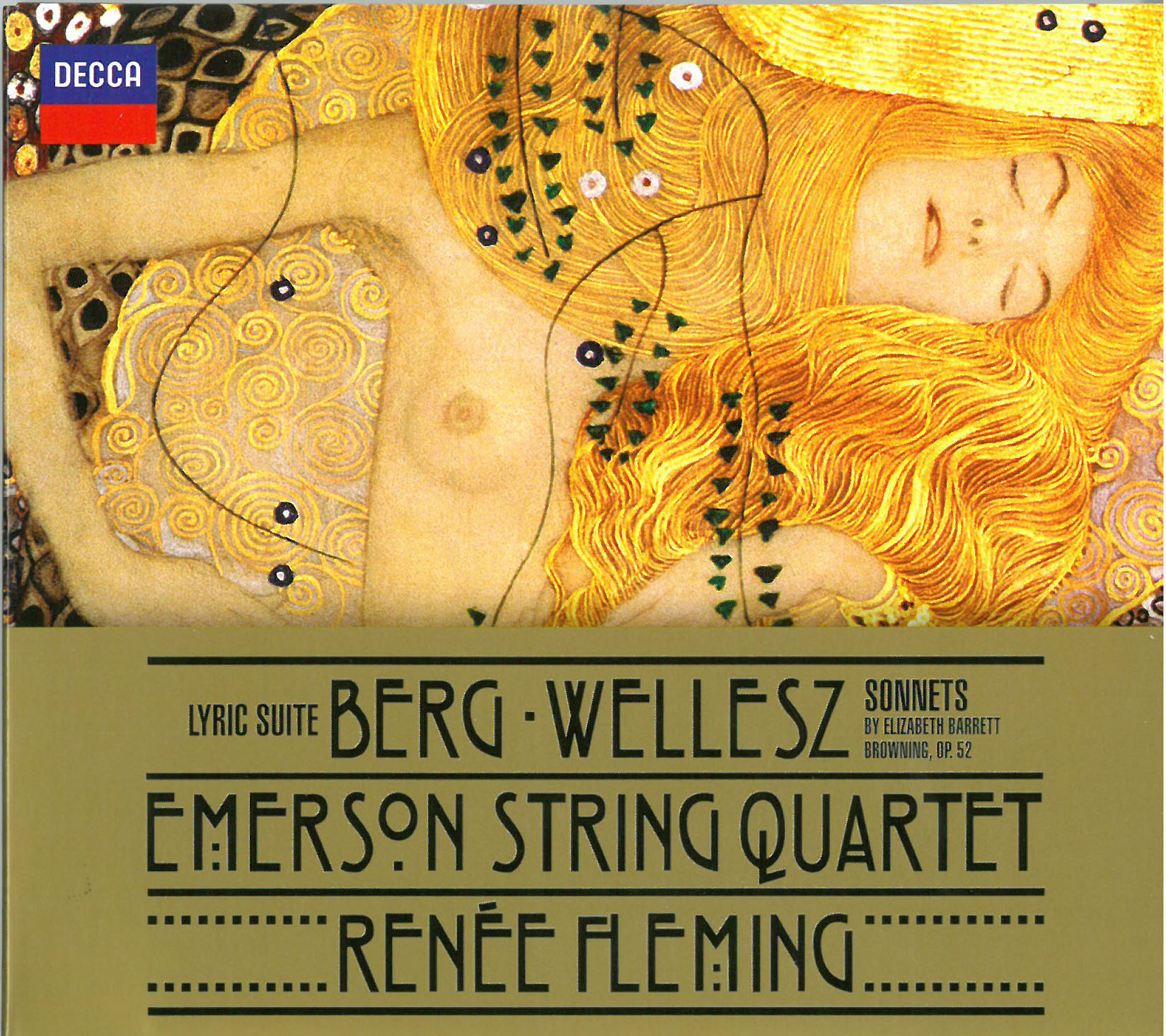
06 Berg Wellesz

Berg; Wellesz
Renée Fleming; Emerson String Quartet
Decca 478 8399

Review

In 1977, composer George Perle examined the annotated printed score of the Lyric Suite that Alban Berg presented to Hannah Fuchs-Robettin. Berg’s adulterous affair with her had provided the Suite’s encoded program. Berg had appended Stefan George’s translation of Baudelaire’s De profundis clamavi to the final movement in her score. Nothing suggests that Berg ever intended this text to be sung, yet it has since been incorporated, musically, into several performances and recordings, notably by Dawn Upshaw (Nonesuch 79696-2) and Marie-Nicole Lemieux (Naive V 5240).

In her own brief contribution to this “alternative” movement, superstar soprano Renée Fleming adds some emotional warmth following the Emerson’s robust traversal of the Lyric Suite’s erotically charged music.

Even more satisfying is their performance of Sonette der Elisabeth Barrett-Browning by Egon Wellesz who, like Berg, was born in 1885 and studied with Schoenberg. Wellesz’s rarely heard, expressive and expressionistic settings of five sonnets in translations by Rainer Maria Rilke, draw plenty of passion and intensity from Fleming and the Emerson.

Closing the CD is Eric Zeisl’s pleasant but unmemorable setting of Komm süsser Tod, enhanced by Fleming’s lush, lustrous voice. Zeisl (1905-1959), a Jew, fled his native Austria in 1938, and wound up composing film scores and concert works in Hollywood.

This CD will appeal to those interested in little-known but rewarding 20th-century repertoire (the Wellesz) and, of course, to Renée Fleming’s justifiably innumerable fans (including me).

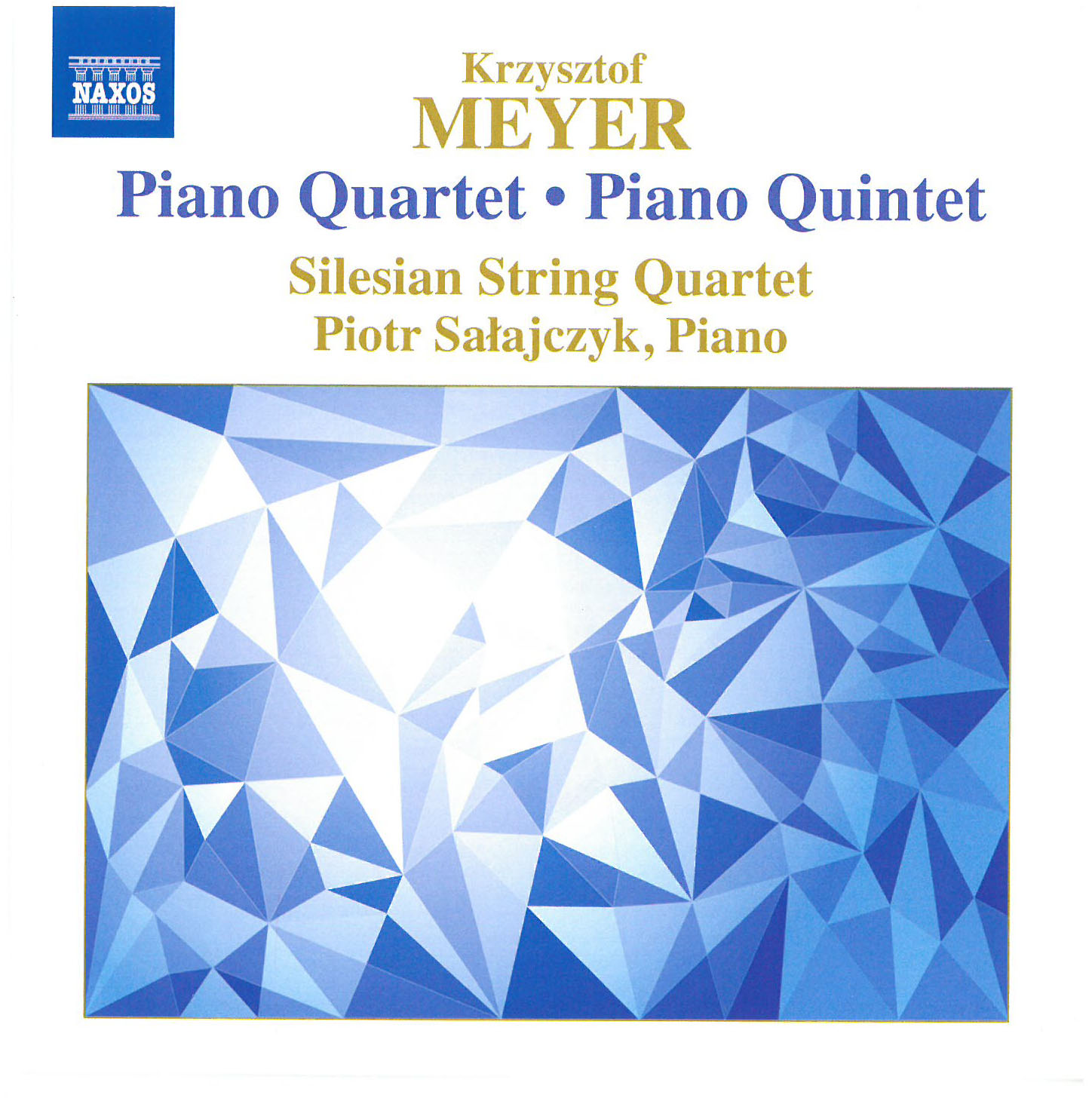
07 Meyer

Krzysztof Meyer – Piano Quartet; Piano Quintet
Piotr Salajczyk; Silesian String Quartet
Naxos 8.573357

Review

Polish composer and pianist Krzystof Meyer (b.1943) is new to me but not to my Baker’s Biographical Dictionary (7th ed. [1984], rev. Nicolas Slonimsky), which says his “musical intelligence and acoustical acuity are of the rarest quality.” Based on this CD I concur heartily. The extended, single-movement Piano Quartet (2009) is an unusually formed work. To my ears, imaginative process and compelling content are equally involved. Declamation, dialogue, perpetual motion, stasis and recurrence are prominent yet unpredictable modes of presentation. To be sure there is considerable dissonance, yet the tonal centre and interval structure are clear. Passionate expressiveness of three Silesian String Quartet players complements pianist Salajczyk`s virtuoso performance.

The Piano Quintet (1990-91) is a larger work in the traditional four movements. Its opening establishes a severe but still tonal musical language based on hierarchy of pitches. In the second movement I was especially taken by Meyer’s mastery of the mid- and late-twentieth century vocabulary of sound and texture, even though he does not use extended instrumental techniques. Throughout, the quartet and Salajcyzk never falter in ensemble, tone quality or dynamic control. Triplets in the more lively third movement suggest a vestigial scherzo; as perhaps also do sudden outbursts and high, scratchy strings. I enjoyed also the last movement’s drama and variety of effects – ornamental scrambles around main pitches, high dissonant bells in the piano and closing silences interrupted by retreating pizzicato whispers.

08 RzewskiFrederic Rzewski – The People United Will Never Be Divided; Four Hands
Ursula Oppens; Jerome Lowenthal
Cedille CDR 90000 158

The first time I heard Ursula Oppens perform was in a masterclass of Rosina Lhevinne at the Juilliard School in New York. Ursula and I were both students of the legendary Mme. Lhevinne. Listening to this CD I remember the lovely and rich tonal colours Oppens had in her classical repertoire. I am delighted to find the same lyrical palette in the Rzewski. It is so easy to make some of the Rzewski variations harsh and brittle. This is not the first recording Ursula Oppens has made of this work and this CD is far more reflective and poignant. There is a fluidity that connects the disparate movements. Rzewski gives many instructions to the pianist and each variation comes with informative titles: “with determination, delicate but firm, tenderly, in a militant manner,” and so on. In this performance each different style, whether folkloric, jazzy or lyrical does unite with sensitive and intuitive musicianship.

Technically it is brilliant playing. From pounding chords to effervescent riffs of extreme delicacy Oppens is in control and commands the keyboard. There are numerous recordings of this work but this CD is definitely in a class by itself.

For Rzewski’s piano duo work Four Hands, pianist Jerome Lowenthal, a Juilliard faculty member, joins Oppens. Their touch on the piano is so unified that it sounds like one pianist. It is a quirky piece with lovely moments and this work deserves more performances. However, this duo piano team would be difficult to improve on.

Excellent performances. Highly recommended CD.

01 Leo OrnsteinLeo Ornstein – Piano Quintet; String Quartet No.2
Marc-André Hamelin; Pacifica Quartet
Hyperion CMA68084

Why has there been a revival of music by composer/ pianist Leo Ornstein (1893-2002)? From early groundbreaking piano pieces onward, his was an extraordinary (and extraordinarily long!) musical life. In 1906 his family emigrated from Russia to the United States where he trained as a piano virtuoso, but after an amazing start he gave up concertizing. His father was a cantor and Ornstein’s Russian-Jewish musical heritage came to the fore. In a modernist context it permeates the Piano Quintet (1927), which I think ranks in quality with the Shostakovitch and Bloch quintets for piano and string quartet. The tempestuous opening movement typifies Ornstein’s rhapsodic process of linking varied phrases and sections that suggest frenzied dances, song-like laments, marches and much more. I particularly liked the slow movement, especially a passage with high violin, mysterious piano repeated notes and chords, and uneasy supporting strings. The Quintet reflects Ornstein’s piano virtuosity; Marc-André Hamelin, who has recorded a notable Ornstein solo disc on Hyperion, is ideal, while the outstanding Pacifica Quartet partners him with confidence, colour and clarity.

Ornstein’s String Quartet No.2 (c.1929) is a more orderly affair. Strings are treated more independently than in the Quintet,and the lower instruments are given solos. The Pacifica Quartet emphasizes the work’s lyrical beauty with well-shaped melodic gestures and sensitive playing of accompanying parts, which through Ornstein’s variety of chord spacings, registers and rhythmic patterns become just as interesting as his melodies.

02 Harley SpinSpin – like a ragged flock
James Harley; Ellen Waterman
Independent ADAPPS 15001(jamesharleymusic.com)

Review

Spin is a highly original disc created by composer James Harley and performer Ellen Waterman, combining electroacoustic composition, improvisation and spatialized sound. Harley provides the electroacoustics, processing, sound diffusion and theremin playing, while Waterman performs on an array of flutes and provides vocal elements. To demonstrate their improvisational creative process, they have included two versions of two different pieces. The first two tracks, Birding I and II, intermingle a wide range of bird and flute calls, creating hints of an intimate human-nature dialogue before cascading into more complex dissonant textures.

The second two tracks, Fluting I and II, create a sonic environment that puts the listener within a field of multiple flute voices, particularly evident when listening in the 5.1 surround sound format, a major feature of this recording. Sound diffusion is the art of moving the sound sources amongst multiple speakers. In listening to all six pieces, I observed a different-than-usual approach to diffusion. Rather than sounds dispersed individually in different spatial locations, I experienced a melded aesthetic, much like being in a reverberant space with the combined sound coming from all directions. Creating contrast between different locations in the space was, however, utilized in unique ways – to split up the layers of a dissonant chord, or to highlight glissandi moving between front and back. Spin creates a unique aural experience, providing several touchstones highlighting our relationship with nature. Although primarily a surround-sound DVD without a CD layer, the disc includes stereo files that can be downloaded to a computer or iPod.

03 Morton FeldmanMorton Feldmann - For Bunita Marcus 1985 
Ivan Ilic
Paraty 135305 (ivancdg.com)

American avant-garde composer Morton Feldman, the pioneer of “indeterminate music,” began (like Varèse) with the orchestra making weird sound effects as tonal paintings and later simplified it to white noise like his famous Rothko Chapel where people could sit for hours in isolation, meditate and chill out. For further simplification he turned to the piano with long works lasting over an hour, like this one that sounds like soft notes moving slowly and undisturbed around the middle of the keyboard, always quiet, no crescendo and never reaching forte. Sometimes shrill and percussive very high notes interrupt in a different rhythm like a bird chirping, then a sudden blob of a broken chord in the lower register like a drop of water into a still pond ….

Listen to it lying down and soon you’ll drift and float, no longer awake but not asleep either, and when it’s suddenly over you feel as if you have been asleep and perhaps missed something. Wagner wrote such subliminal music like the ancient, atavistic shepherd pipe tune meandering in and out of the consciousness of the mortally wounded Tristan that miraculously breaks through his coma and returns him to life.

Feldman’s music operates on this level, but it is also a set of 22 very loose variations with changes so imperceptible, like things that happen in real life. When you expect it, it usually won’t happen but if you don’t, it might. You’ll notice the difference between each variation when you quickly sample the tracks. The whole thing is actually composed and written down, but then it has to be played to sound totally improvised or haphazard, completely unstructured. With his soft and wonderful touch pianiste extraordinaire Ivan Ilić’s mind is so dedicated and attuned to Feldman’s that he can do this like no one else can. It’s spellbinding. (You can get a taste of it along with commentary by Ilić at youtube.com/watch?v=V1B9uX4v1H0.)

01_Israelievitch.jpgFancies and Interludes
Jacques Israelievitch; Christina Petrowska Quilico
Centrediscs CMCCD 21315

Fancies and Interludes is both a labour of love and musical declaration, intuited and played by two ingenious and accomplished musicians – former Toronto Symphony concertmaster Jacques Israelievitch and pianist Christina Petrowska Quilico. Recorded live at York University’s Tribute Communities Recital Hall, it has the immediacy and the vigour of a live performance (background sounds of pages being turned included), which makes the music come alive with the splendour of the excitement (or the sorrow) of each precious phrase as it was played in the moment.

Fancies and Interludes includes four duos for violin and piano by contemporary Canadian composers. The title track belongs to the last piece on the album, the lengthy and rich Fancies and Interludes VI by Raymond Luedeke, a prolific composer and former TSO clarinetist who wrote this composition especially for Jacques Israelievitch. Five Fancies are framed by Six Interludes, starting as a somewhat fragmented conversation between two vastly different voices and resolving in a harmonious ending.

On the other hand, the album opens with the strong momentum of Oskar Morawetz’s Duo for violin and piano. This piece grabs the listener right away, taking them on the journey from the rhythmical flow of the beginning to the deep lament in a Phrygian D-minor in the last section. Nestled in between are Drop by James Rolfe, my personal favourite on this recording, a fascinating musical travel from earth to heaven and back, and ...and dark time flowed by her like a river, by another composer with a TSO connection, composer-adviser Gary Kulesha. The work is a play between tonal and atonal, reflecting a search for the meaning of a moment in time.

The programming on this CD is exquisite – the compositions flow one after another as if they were meant to be. Israelievitch and Petrowska Quilico allow the impulse, the urge to soar and expand in their playing while granting the listener a breathing space – the true embodiment of Fancies and Interludes.

Editor’s Note: Jacques Israelievitch, who enjoyed an international career as a soloist, conductor and teacher, died September 5. He was 67 years old. He was diagnosed with aggressive, metastatic lung cancer in late February this year. Israelievitch had the distinction of being the longest-serving concertmaster of the Toronto Symphony Orchestra. Retiring in 2008 after 20 years, he joined the faculty of York University’s School of the Arts, Media, Performance & Design, as professor of violin and viola. On August 14, in a special ceremony at his home, Israelievitch was presented with the Order of Canada, one of this country’s highest civilian orders, recognizing outstanding achievement, dedication to the community and service to the nation for nearly three decades. Although Fancies and Interludes was the last CD released during his lifetime, Isrealievitch and Christina Petrowska Quilico completed recording Mozart’s 28 violin sonatas last May. The CDs will be released in 2016.

03_Keillor_Poetic_Sketches.jpgPoetic Sketches
Elaine Keillor
Centrediscs CMCCD 21615

Pianist Elaine Keillor appears on an extensive discography of 28 solo and chamber albums. Her newest solo release Poetic Sketches takes its title from Oskar Morawetz’s 1991 composition that includes the rhythmically energetic Prelude to a Drama, Raindrops, Storm, a haunting Prayer in Distress and the lively perpetual motion Olympic Sprinter.

Through a Narrow Window is an intense and convincing work by Estonian-Canadian composer Elma Miller that imparts the composer’s concern for the devastation of the environment and our “narrow window” of understanding regarding the ecological destruction of the planet.

John Weinzweig’s Netscapes is constructed from repeating motivic fragments that, according to the composer’s program notes, require “no further elaboration.” Having recorded the work on my own CD released last year, I am still intrigued, now as a listener, by the innovative structure of the piece and the integration of jazz-inflected interludes. Although entirely different in compositional technique and style, Alexina Louie’s In a Flash also incorporates jazz-like influences as Keillor’s interpretation brings verve to the composer’s performance direction of “energetically sassy.”

From John Milton’s pastoral poem L’Allegro, Patrick Cardy’s humorous Quips and Cranks: Five Bagatelles for piano (2004) was the composer’s last piece written before his untimely death at age 52. Keillor’s clarity of articulation creates vitality as she conveys the charm of these delightful works.

Kelly-Marie Murphy’s virtuoso Let Hands Speak (2003) was written for the Honens International Piano Competition and Keillor meets the technical challenges head-on in a spirited driving interpretation as the CD ends with an exciting climax.

04_John_Burge.jpgChamber Music of John Burge
Ensemble Made in Canada
Centrediscs CMCCD 21715

John Burge (b.1961) has produced a large body of instrumental and vocal works, while teaching at Queen’s University since 1987 and serving as president of the Canadian League of Composers (1998 to 2006). His Flanders Fields Reflections for string orchestra won the 2009 JUNO for best Canadian composition. The three works on this disc display Burge’s characteristic neo-romantic coupling of melodiousness with strong rhythmic drive.

Ensemble Made in Canada, formed in 2006 and winner of the CBC Galaxie Rising Stars award, is currently ensemble-in-residence at Western University. The ensemble commissioned this CD’s major work, the 34-minute Piano Quartet (2012), in which two highly propulsive movements, the first employing minimalist elements, bracket an elegiac Adagietto containing a scherzo (Presto misterioso). All three movements are dramatic attention-holders.

The disc opens with Pas de Deux (2010), performed by the Ensemble’s violinist Elissa Lee and cellist Rachel Mercer. Its structure mirrors that of the balletic duo and the music’s warm lyricism and rocking rhythm could easily be choreographed for a real, danced love-duet.

The ensemble’s other pair, violist Sharon Wei and pianist Angela Park, perform String Theory (2011), composed as the test piece for the 2012 Eckhardt-Gramatté competition. It’s “a compendium of string effects,” writes Burge, designed to challenge the competitors’ techniques, yet it’s no hodge-podge of mere “effects,” thanks to its constant melodic and rhythmic forward motion.

Three very engaging pieces, very engagingly performed.

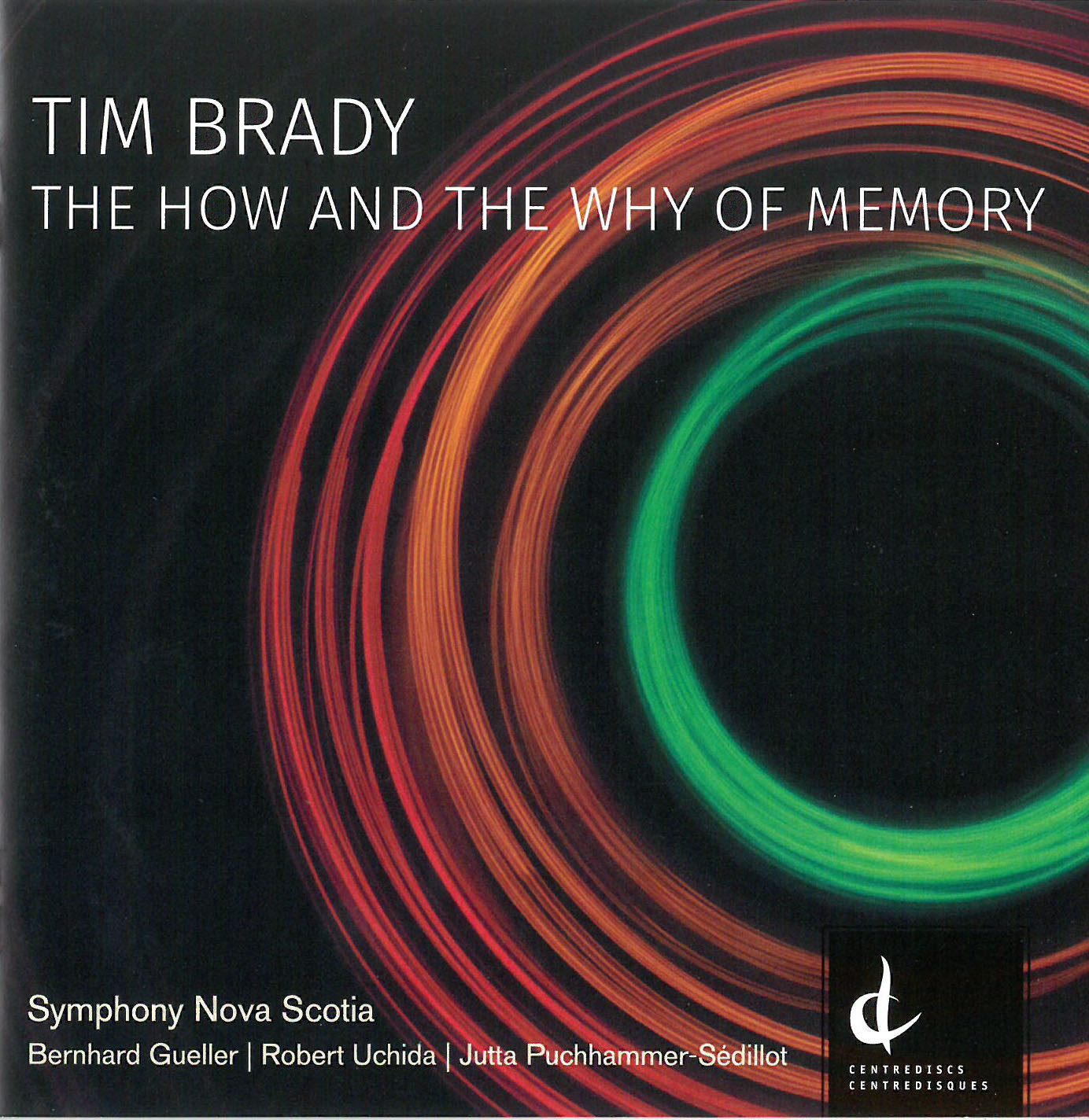
05_Tim_Brady.jpgTim Brady – The How and The Why of Memory
Symphony Nova Scotia
Centrediscs CMCCD 21515

Montrealer Tim Brady is a fertilizing force on the Canadian new music scene. A composer, electric guitarist, improvising musician, concert and record producer, his active administrative engagement with the Canadian concert music community over the past few decades has been multifaceted and deep. On this album, as distinct from previous Brady albums I have reviewed in these pages, we hear his composer chops applied to orchestral forces: a symphony bookended by two string concertos, one for violin and one for viola. They are admirably rendered by Symphony Nova Scotia, conducted by Bernhard Gueller.

Listening to The How and the Why of Memory: Symphony #4, (2010-2013), cast in a single continuously unfolding movement, I was repeatedly reminded of textures and rhythmic and harmonic ideas of composers active in the early- to mid-20th century. Perhaps those allusions are implied by the title. Brady however never allows such superficial affiliations to get in the way of musical momentum or dramatic gesture, characteristics embedded in his musical voice which engage listeners on an emotional level.

Brady’s very confident Viola Concerto (2012-2013) is dominated by its violist Jutta Puchhammer-Sédillot’s cocoa-coloured sound and brilliantly lyrical playing. It is also imbued with a heart-on-sleeve expressiveness, counterpointed by poised classicist melodic phrases and minimalist sequences. The multi-hued orchestration is endowed with plenty of rhythmic excitement and harmonic movement, relieved by mysterious moments of elegiac repose. The last section, marked “groove,” is particularly effective and texturally surprising. The Viola Concerto is my favourite work on the album and it makes a very valuable new addition to the international viola concerto repertoire.

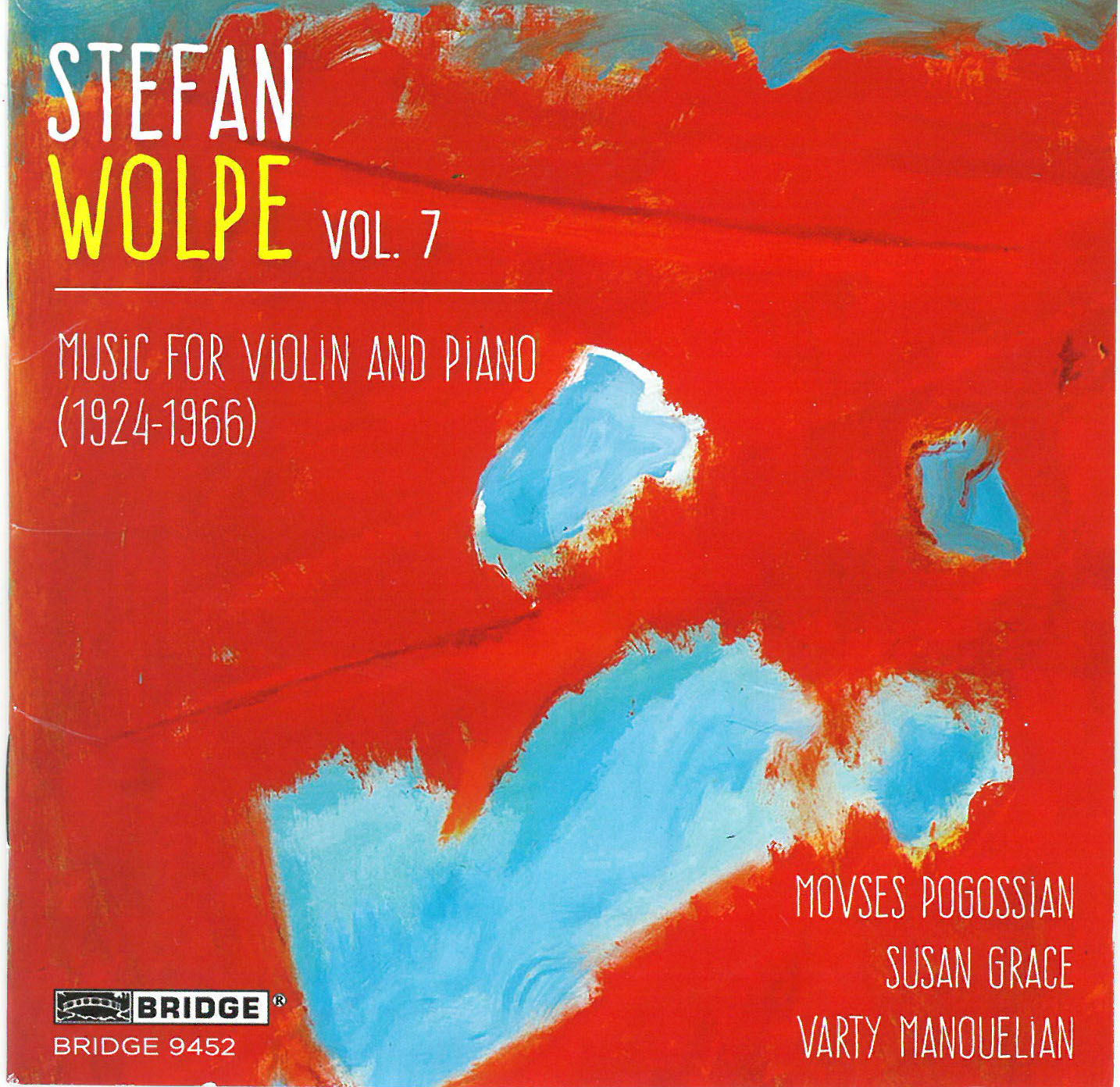
06_Stefan_Wolpe.jpgStefan Wolpe Vol.7 – Music for Violin and Piano
Movses Pogossian; Susan Grace; Varty Manouelian
Bridge Records 9452 (bridgerecords.com)

Armenian-born Movses Pogossian, first-prize winner of the 1985 USSR National Violin Competition and now based in California, is the featured soloist in the latest of Bridge Records’ landmark series devoted to German-Jewish/American composer Stefan Wolpe (1902-1972).

Wolpe’s four-movement, half-hour-long Violin Sonata (1949) is among his most enduring works, spanning an emotional gamut from playful and joyous to melancholy and anguished, and all the way back again. Pogossian and pianist Susan Grace provide all the intensity and flexibility required for its varied moods.

Pogossian is joined by his wife, Varty Manouelian, in two pieces, Duo for Two Violins (1924), with motoric echoes of Bartók, and the short Two Studies for Two Violins and Piano (1933).

The CD opens and closes with unaccompanied works, Second Piece for Violin Alone (1966), a three-minute quirky charmer that would make an effective recital encore, and the 15-minute Piece in Two Parts (1964), a thoughtful, thought-provoking series of brief, pithy phrases, influenced perhaps by Wolpe’s interest in Oriental meditation. The disc also includes a 29-bar fragment from an unfinished Second Violin Sonata (1959).

The detailed booklet notes are by Toronto musicologist Austin Clarkson, who studied with Wolpe and became, in 1981, the first board chairman and general editor of the Stefan Wolpe Society.

This is intriguing repertoire that deserves to be heard.

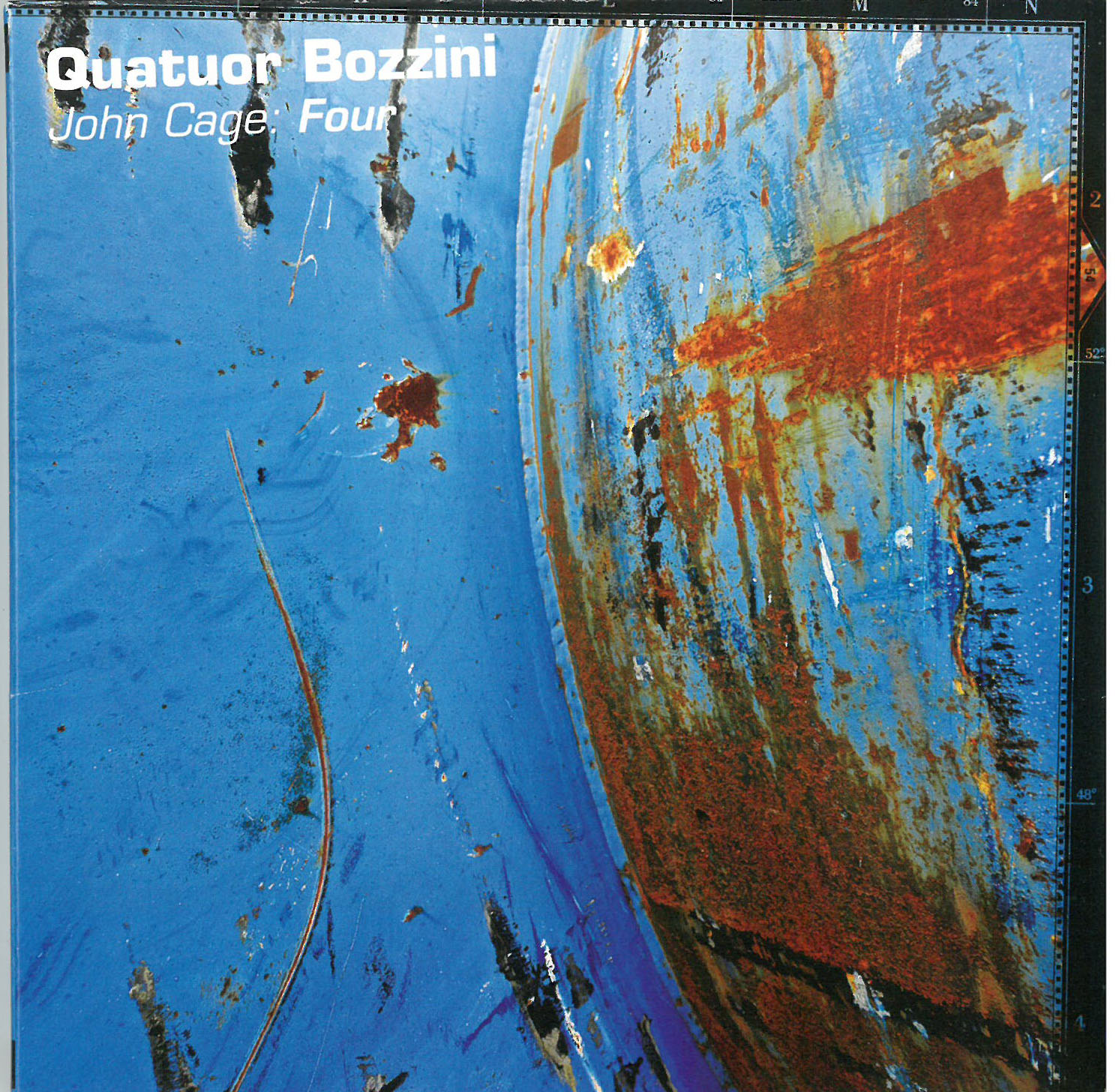
07_Cage_Bozzini.jpgJohn Cage: Four
Quatuor Bozzini
Quatuor Bozzini CQB1414 (actuellecd.com)

Montreal’s Quatuor Bozzini has been together for 16 years and has recorded 15 CDs of the kind of challenging contemporary music that they specialize in, including works by Canadians Malcolm Goldstein, Tim Brady and Jean Derome and international figures like Steve Reich and James Tenney. The experience tells as they take on John Cage’s three works for string quartet, realizing distinctive versions in the process.

The earliest of the compositions, String Quartet in Four Parts (1949-50), is a work descriptive of the four seasons with the composer’s notes encouraging light string contact and no vibrato. The work’s structure and minimal harmonies create an unlikely resemblance to the melodic purity of medieval music. Leaping ahead to 1983, Thirty Pieces for String Quartet presents the musicians with both demands and choices: each piece lasts about a minute, with each musician given a sequence of notes to be fitted into the “time bracket.” The musicians individually choose between microtonal, tonal and chromatic options, but the parts are not directly related to one another except for the coordination of segment lengths. The music that emerges within these configurations is rich in complexity and convergence, a kind of collaboration between composer, performer and listener.

The final work, Four, from 1989, is the most radically reductive of these works, still employing time brackets but offering choices from its sparse materials to all the performers. The result is spacious but continuous with tonal structures that may gently evolve or appear transient. The cumulative work is a serene landscape in which mysterious elements emerge and disappear.

Quatuor Bozzini assumes the substantial demand that this music makes on its performers: to at once realize the work in shaping its form while allowing the components to maintain their distinct, non-structural identities. If the Arditti Quartet’s recordings of these works (on Muse from the early 1990s) have long stood as masterful readings (they worked closely with Cage on Four), Quatuor Bozzini does a fine job of traversing this music, inevitably creating new works in the process.

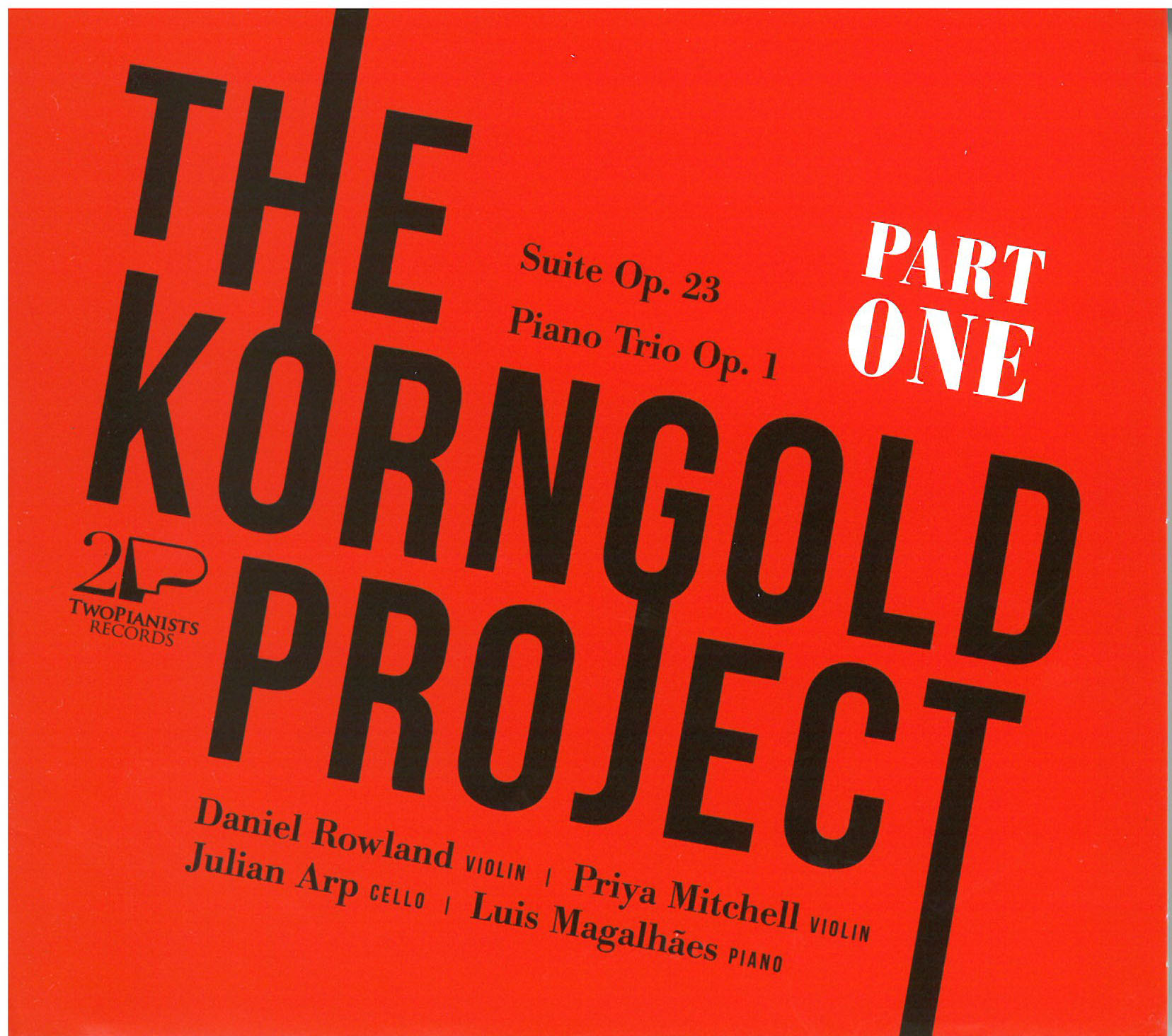
08_Korngold_Project.jpgThe Korngold Project Part One
Daniel Rowland; Priya Mitchell; Julian Arp; Luis Magalhães
TwoPianists Records TP1039282 (twopianists.com)

Pianist Luis Magalhães, originally from Portugal and now living in South Africa, is co-founder of TwoPianists Records and its Korngold Project, which here makes an auspicious debut, daring to go head-to-head (in the Suite) against Sony’s recording (SK 48253) by the all-star cast of Joseph Silverstein, Jaime Laredo, Yo-Yo Ma and Leon Fleisher.

To my very pleasant surprise, in a movement-by-movement comparison, Magalhães and the European-based string players outdo the famous foursome in every way, bringing much, much more punch and passion to this punchy, passionate work, one of three Korngold composed for pianist Paul Wittgenstein, who lost an arm in World War I. The balances here are much better, too, with the strings as closely miked as the piano, while on the Sony CD the strings seem muted, lacking focus and presence. (The flaccid Swedish performance on DG 459 631-2 isn’t worth considering.)

The Piano Trio doesn’t sound at all like a composition by a 12-year-old – but it is! – and it’s filled with real music, late-romantic Viennese gemütlichkeit laced with many of the already-distinctive melodic and rhythmic gestures that would remain with Korngold all his life. It, too, receives a vigorous, upfront performance, recorded live, as was the Suite, with well-deserved applause at its conclusion.

The Korngold Project will focus on the composer’s chamber music. This Korngold enthusiast, for one, looks forward to Part Two and beyond.

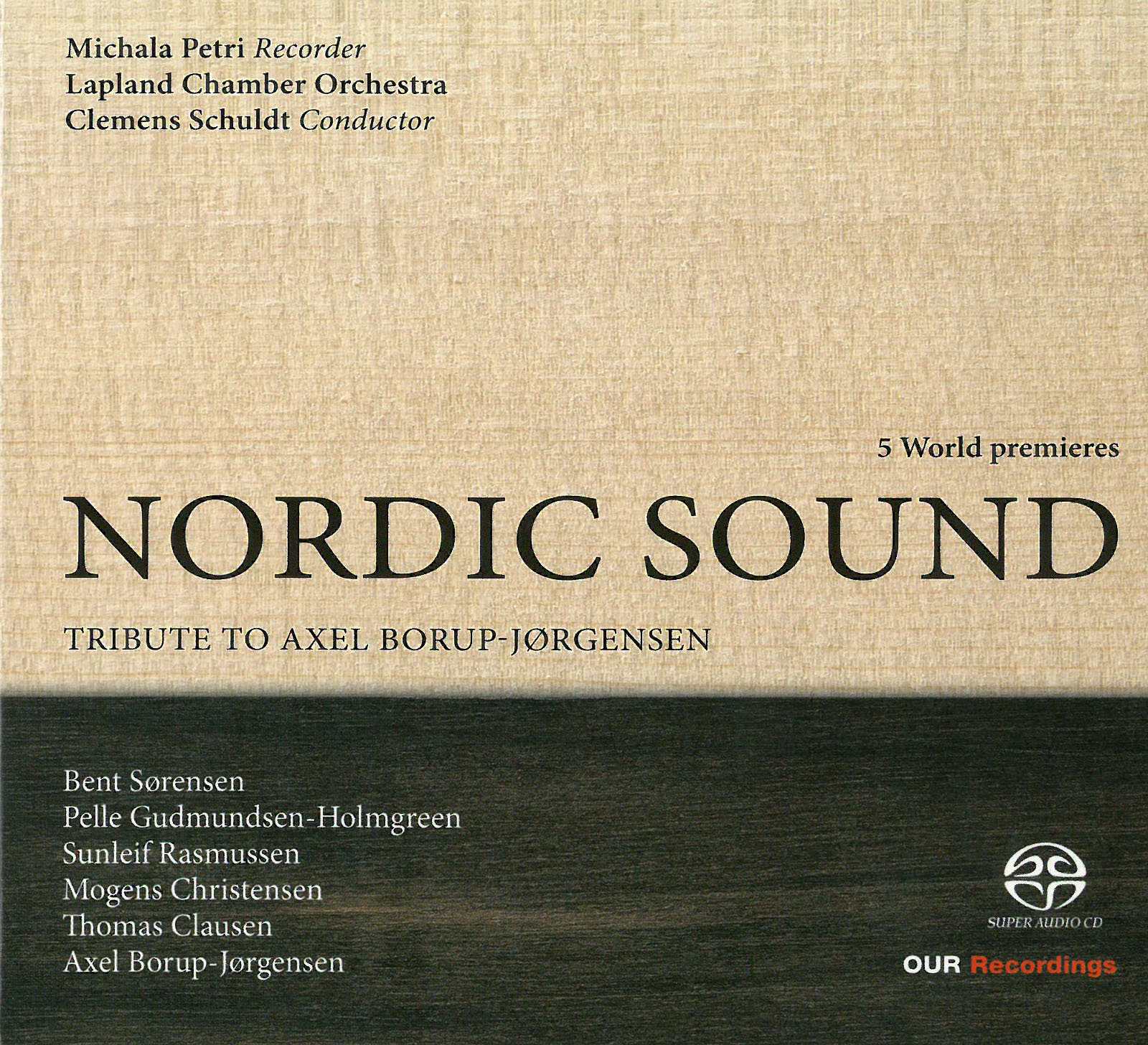
Nordic Sound – Tribute to Axel Borup-Jørgensen
Michala Petri; Lapland Chamber Orchestra; Clemens Schuldt
OUR Recordings (ourrecordings.com)

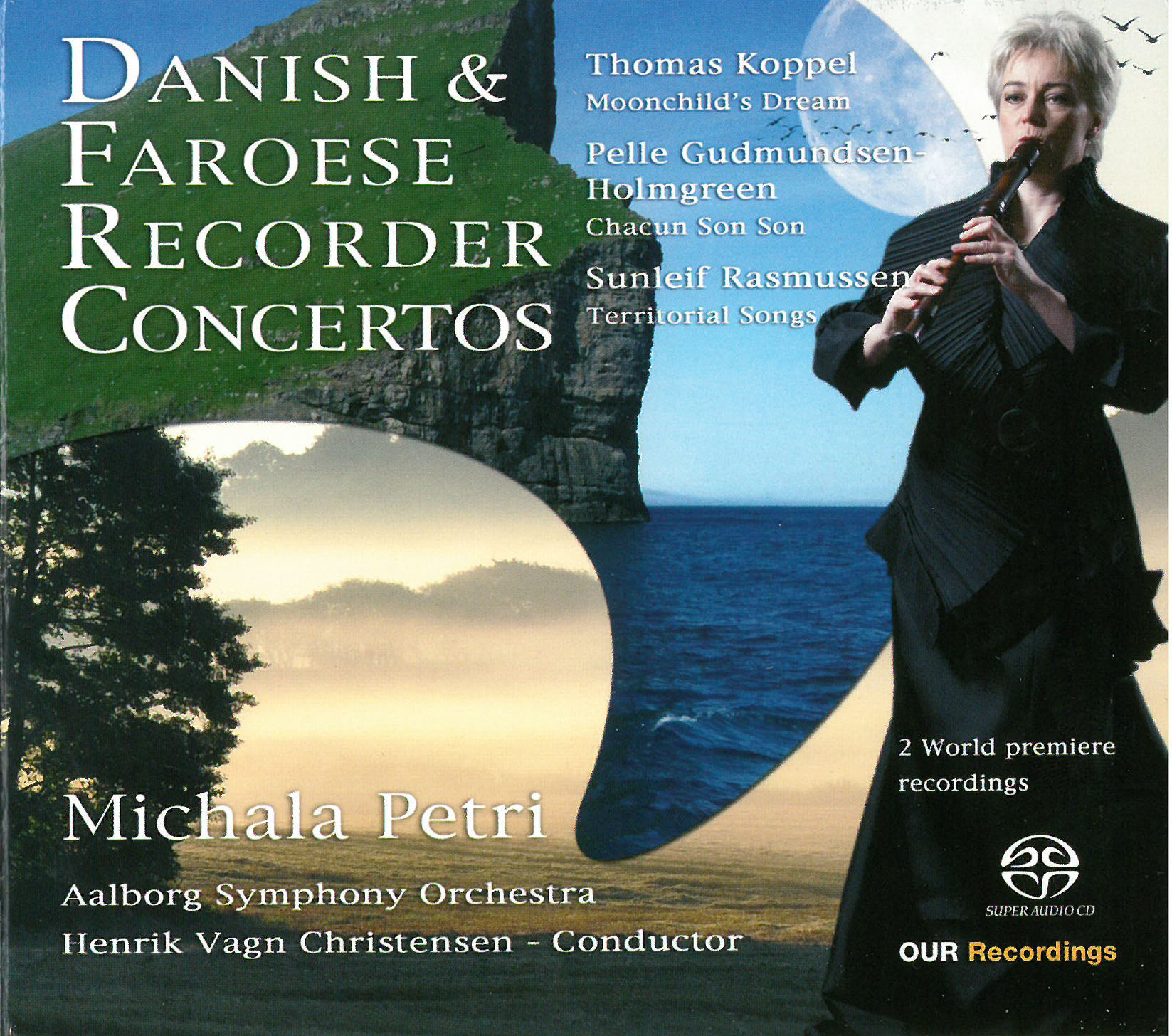
Danish & Faroese Recorder Concertos
Michala Petri; Aalborg Symphony; Henrik Vagn Christensen
OUR Recordings (ourrecordings.com)

August brought me two CDs of modern recorder concertos from Denmark, released on the Danish label OUR Recordings, and what a pleasant smörgåsbord they are (sorry, couldn’t resist that one).


Review

09a_Nordic_Sound.jpg

Nordic Sound is a special tribute to Axel Borup-Jørgensen (1924-2012), one of Denmark’s most influential modern-era composers, and four of the six works on the program are for recorder and strings. Inspired by the Danish landscape, Bent Sørensen creates a mystical and spacious atmosphere in Whispering, and the elegant pointillism and rhythmic complexity of the Faroese composer Sunleif Rasmussen’s Winter Echoes elicits wonderful and virtuosic playing from all parties. Mogens Christensen requests a panoply of flutters, pips, chirps and multiphonics from Michala Petri in his Nordic Summer Scherzo, all of which makes for a tour-de-force of bird imitation, and Thomas Clausen’s four-movement Concertino provides a tasteful shift to the neo-Baroque. Two pieces for strings, by Pelle Gudmundsen-Holmgreen and Borup-Jørgensen himself, are beautifully played by the members of the Lapland Chamber Orchestra under Clemens Schuldt.


Review

09b_Danish_Recorder.jpg

Danish and Faroese Recorder Concertos also features Petri as recorder soloist but this time with the excellent Aalborg Symphony Orchestra under Henrik Vagn Christensen. A novel by Italo Calvino was the inspiration for Rasmussen’s four-movement Territorial Songs, and his inventive, multi-faceted use of orchestral colour and depth of melodic expression is impressive. Chacun son son by Gudmundsen-Holmgreen begins with the whimsical combination of bass recorder, bass clarinet, clarinet and bassoon, and the various sections of the orchestra are pitted against one another, as one might expect given the piece’s title. The recorder is well incorporated into the woodwind section here, rather than being cast in a more typical soloist’s role, and the instrument, particularly the bass recorder, balances well with the others, something unlikely in an unplugged live performance. Thomas Koppel’s Moonchild’s Dream is the third contribution to the program and its lovely yet unmistakable film vibe is no surprise, considering that it was originally commissioned for a video.

As always in this repertoire, Petri continues to show why she remains a leading inspirer of new repertoire for the instrument. I just wish that the excellent solo clarinetist from the Aalborg Orchestra had been credited, as the violinist was.

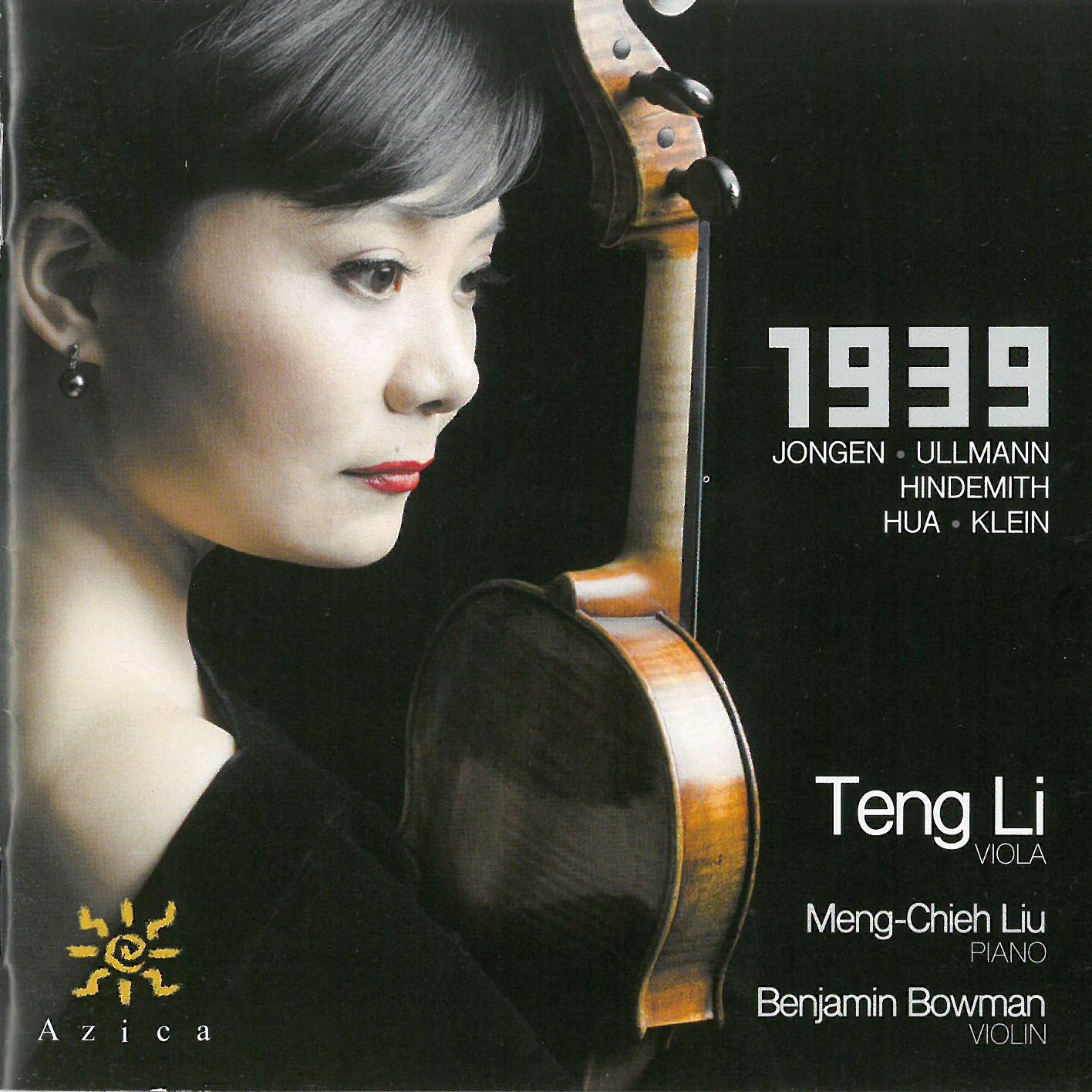
01_1939.jpg1939 (Jongen/Ullmann/Hindemith/Hua/Klein)
Teng Li; Meng-Chieh Liu; Benjamin Bowman
Azica ACD-71301

Since Teng Li moved here to join the Toronto Symphony Orchestra as principal viola, she has become a much-valued presence on the Toronto concert scene in her own right. But, surprisingly, this is her first solo disc.

At its heart is Hindemith’s third Sonata for Viola and Piano. Like most of the works here, it was written in 1939, as the horrors of World War II were being unleashed on the world. Li’s impassioned performance, with pianist Meng-Chieh Liu, underlines the expressive force of Hindemith’s dazzling work.

Gideon Klein was just 20 when he wrote his audacious Duo for Violin and Viola. Li is well-matched by violinist Benjamin Bowman in a shattering evocation of Klein’s despair. An extraordinary work – in an unforgettable performance.

Viktor Ullmann’s situation was as dire as Klein’s in 1939. But his Five Love Songs, like Joseph Jongen’s luminous Concertino for Viola and Piano, are infused with hopeful, if bittersweet, longing. Arranged for viola and piano by Liu, Ullmann’s songs, though fleeting and unmoored without their texts, find an eloquent poetic voice here.

Moon Reflected in Er-Quan takes us to Li’s native China with this tender elegy composed by the blind itinerant Yanjun Hua. Li manages to evoke the distinctive sound of the erhu in this moving arrangement for solo viola.

This is a memorable disc. The recorded sound is clear and authentic, and Li’s own booklet notes, in English, French and Chinese, are persuasive in presenting these works as direct responses to their fraught times.


Back to top