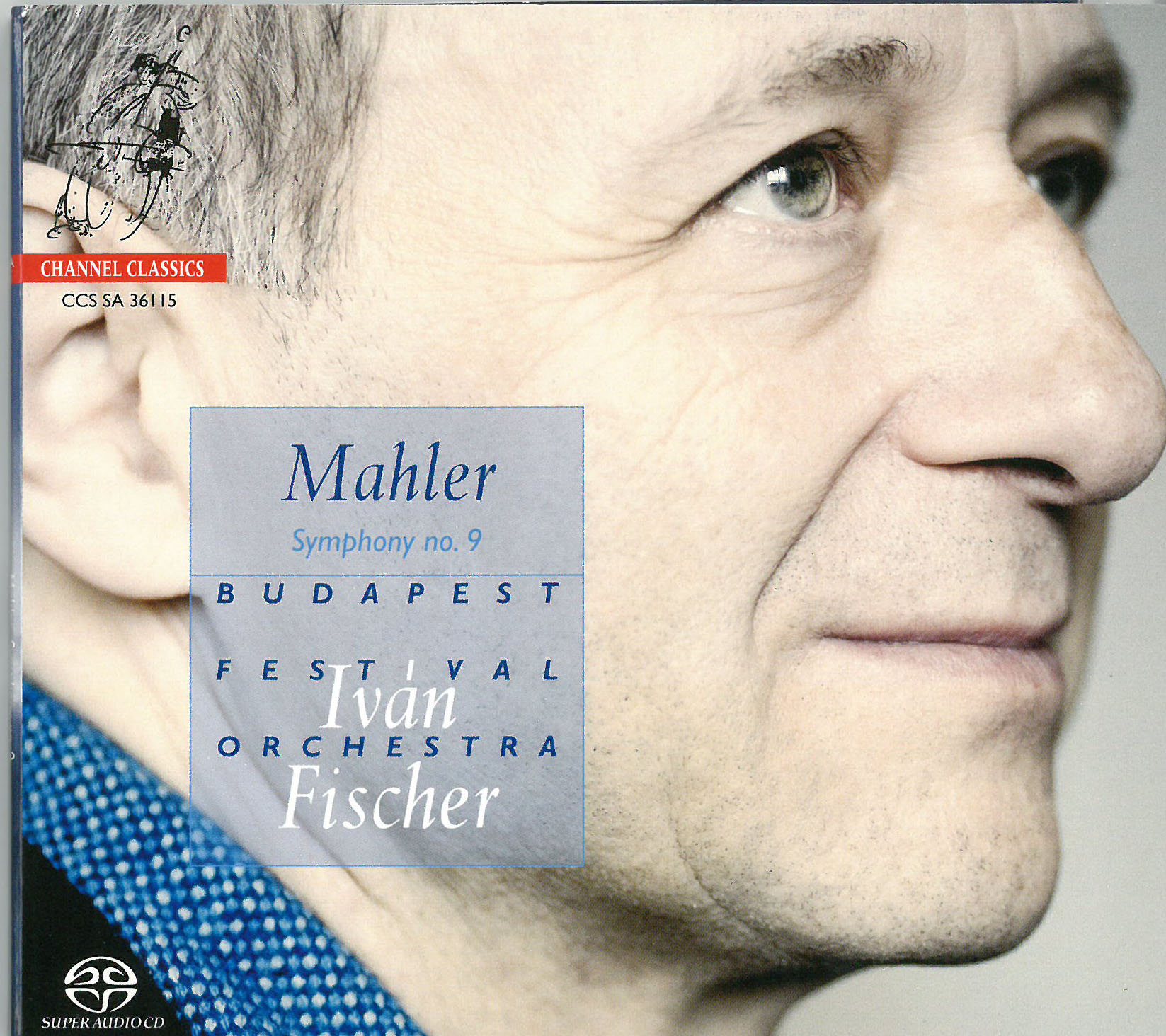
02_Mahler_Fischer.jpgMahler – Symphony No.9
Budapest Festival Orchestra; Iván Fischer
Channel Classics CCS SA 36115

Iván Fischer’s ever-innovative Budapest Festival Orchestra, now in its 30th season, is a unique ensemble. Formed from a core of younger freelance musicians and a modicum of state support it thrives without a musicians’ union or job security. Fischer aptly describes the profile of the BFO as “not a dinosaur but a tiger.”

This sixth instalment of their outstanding series of Mahler symphonies presents one of the finest recordings ever of the Ninth Symphony. The performance of the first movement, virtually a symphony in itself, is revelatory. It perfectly depicts Alban Berg’s description of this movement: “It expresses an extraordinary love of this earth, for Nature; the longing to live on it in peace, to enjoy it completely, to the very heart of one’s being, before death comes, as irresistibly it does.” The second movement, an archly ironic Ländler, is nattily performed with a curiously bourgeois restraint (the disruptive timpani strokes are barely audible), though all hell breaks out in the contrapuntal near-panic of the subsequent Rondo-Burleske. Time stands still in the intense longing and eventual serene acceptance of the Finale. Rarely have I heard such an exquisite balance within and between the sections of the orchestra; such unanimity of tone can only have been achieved with intensive sectional rehearsals, a luxury most orchestras have long abandoned. The orchestra is equally well served by Jared Sacks and Hein Dekker’s outstanding recording and production. At a relatively swift 75 minutes the work fits on a single disc in a hybrid SACD format. Not to be missed!


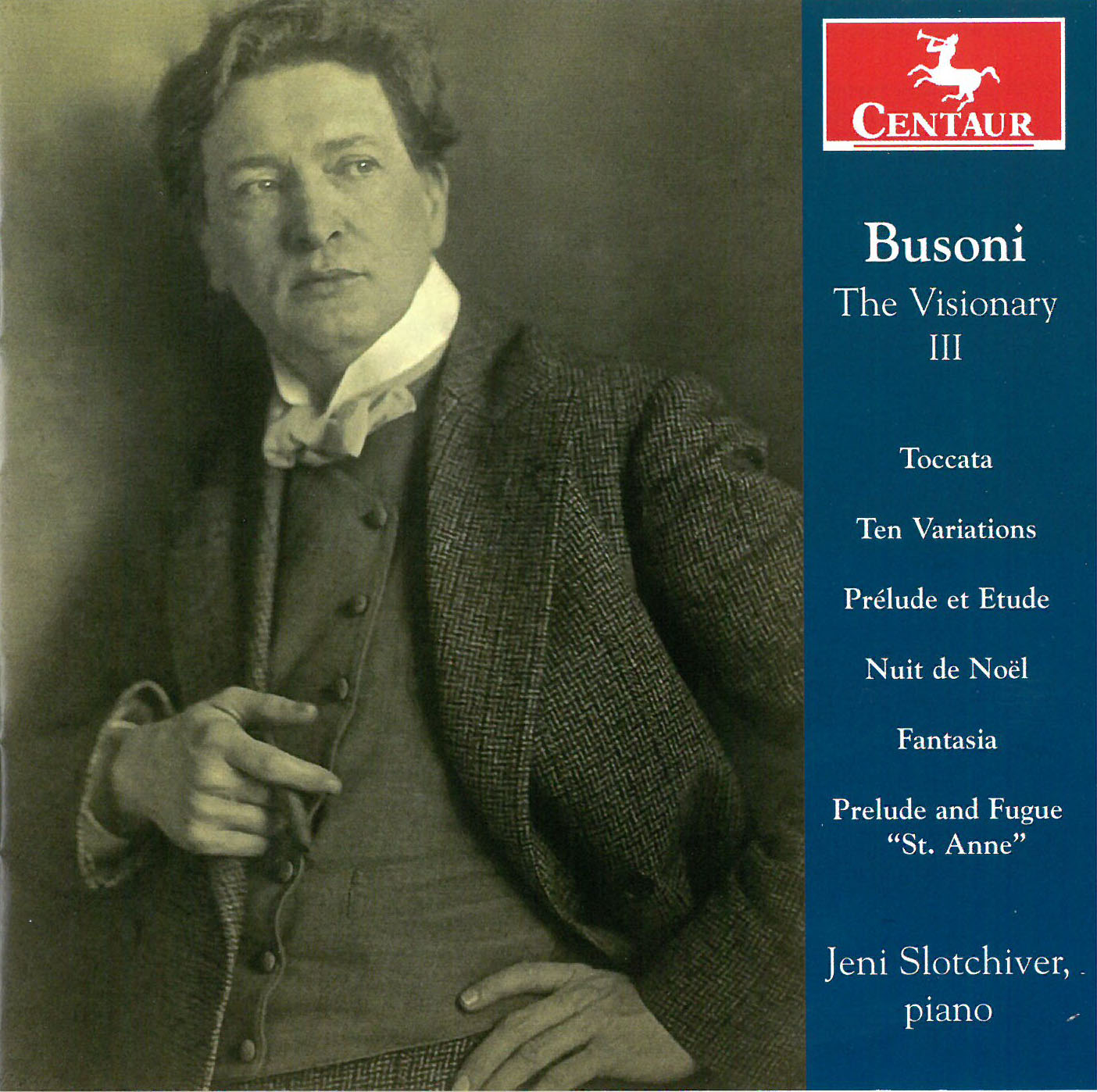
03_Busoni_III.jpgBusoni the Visionary III – Piano Music
Jeni Slotchiver
Centaur CRC 3396

This CD continues American pianist Jeni Slotchiver’s Busoni the Visionary series. Her wonderful playing and program notes challenge the image of Ferruccio Busoni (1866-1924) as a chilly intellectual composer of contradictory, strange works. We have instead a well-rounded Busoni: piano virtuoso; extraordinary composer; key figure in modern music. Included is Busoni’s piano transcription of Bach’s St. Anne” Prelude and Triple Fugue for Organ. But the Fantasia nach Johann Sebastian Bach (1909) shows innovative re-thinking of possibilities in Bach chorales, while Nuit de Noël (1908) imitates actual bells with their dissonant overtones. Slotchiver plays both with intimacy and fine gradations of touch.

Busoni’s style evolved rapidly. Of the late works Ten Variations on a Prelude of Chopin (1922) is most accessible and varied, with shifts in tonal centre that create kaleidoscopic effects. Slotchiver is virtuosic in the middle and ending variations, and equally capable of projecting abrupt mood changes in one variation or quirky waltz style in another. She captures the mystic opening in Prélude et Etude (en Arpèges) of 1923, then conquers the etude’s wild arpeggios and acrobatic hand-crossing. In Toccata (1920) she emphasizes motifs from his operas, including the contemporaneous Doktor Faust. With a road map the listener can sort out this rich assemblage. Relax and remember: Busoni’s music does not resolve the contradictions encompassed by his genius (Italian and German, 19th century and modern, concertizing pianist and exploring composer), but plays with them masterfully.


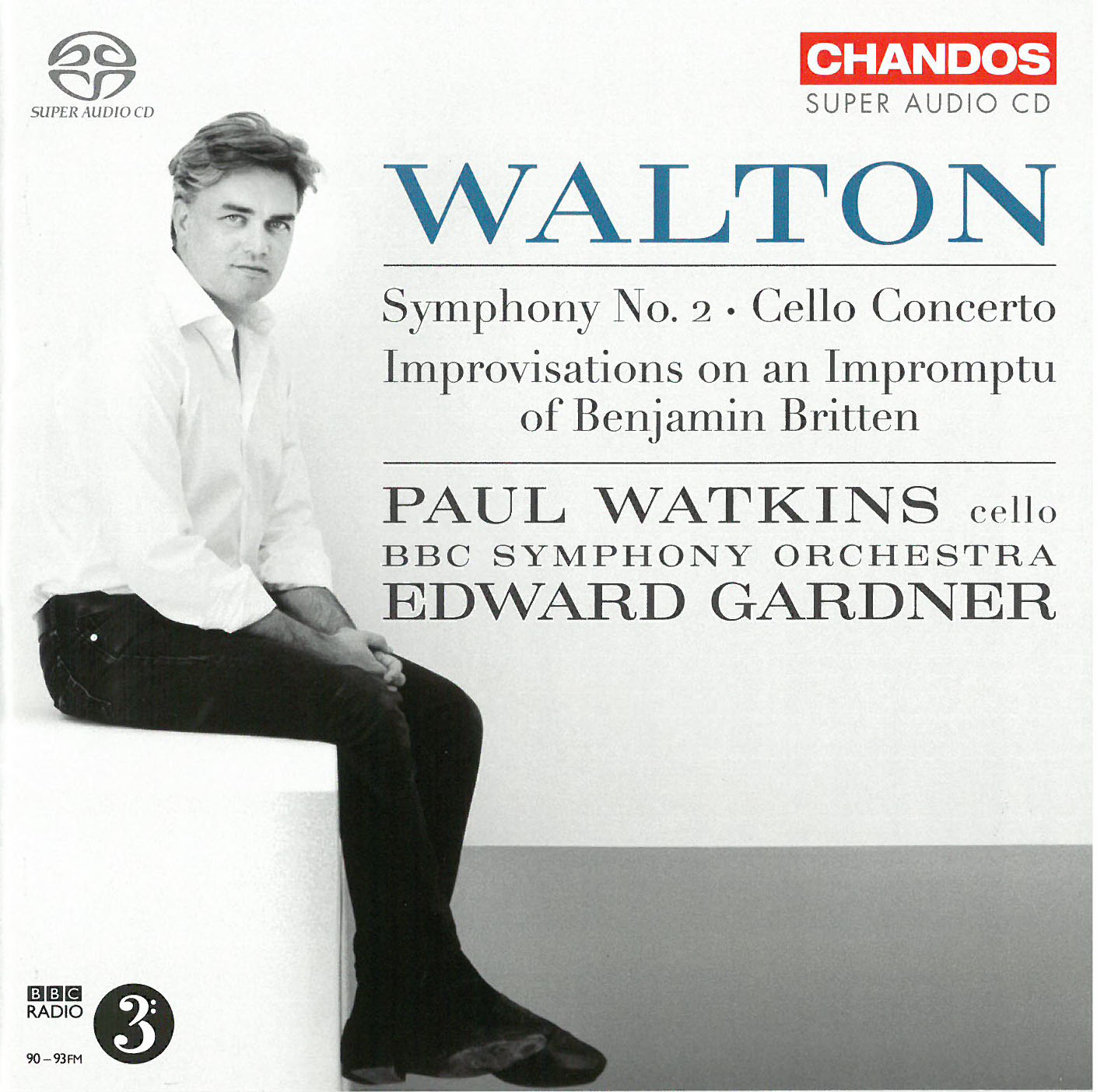
04_Walton.jpgWalton – Symphony No.2; Cello Concerto
Paul Watkins; BBC Symphony Orchestra; Edward Gardner
Chandos CHSA 5153

“When you play Walton make big gestures,” Gregor Piatigorsky told the soloist I accompanied in the Walton Viola Concerto. The great cellist, tall and impressive in a white summer suit, was giving a string masterclass at Santa Barbara’s Music Academy of the West. Only later did I learn that Piatigorsky himself had commissioned Walton’s Cello Concerto and premiered it with the BBC Symphony! This CD’s expressive performance by cellist Paul Watkins and the Edward Gardner-led BBC players captures the work’s engaging spirit. Many cellists can sound expressive generically, but Watkins’ cello is expressive of particular melodic and harmonic beauties from the lyrical first movement on. In the tricky scherzo notable are the soloist’s impeccable bowing, intonation and ensemble playing. Both Watkins and Gardner pull through many mood changes in the last movement’s theme and improvisations convincingly.

The passion and commitment of conductor and orchestra also show in Walton’s Symphony No.2 (1960). In the opening movement strings display virtuosity while maintaining the most prominent motif’s yearning quality. The slow movement has touchingly played woodwind and horn solos, with mysterious trills and tremolos in the background held in balance by Gardner. The closing Passacaglia’s recurring 12-tone line is not confining; dramatic moments abound and the whole ensemble shines in an exciting Fugato-Coda. In Improvisations on an Impromptu by Benjamin Britten (1969), less inspired and more schematic than the other works, the BBC-ers realize Walton’s craftsmanship and imaginative orchestration well. Highly recommended.


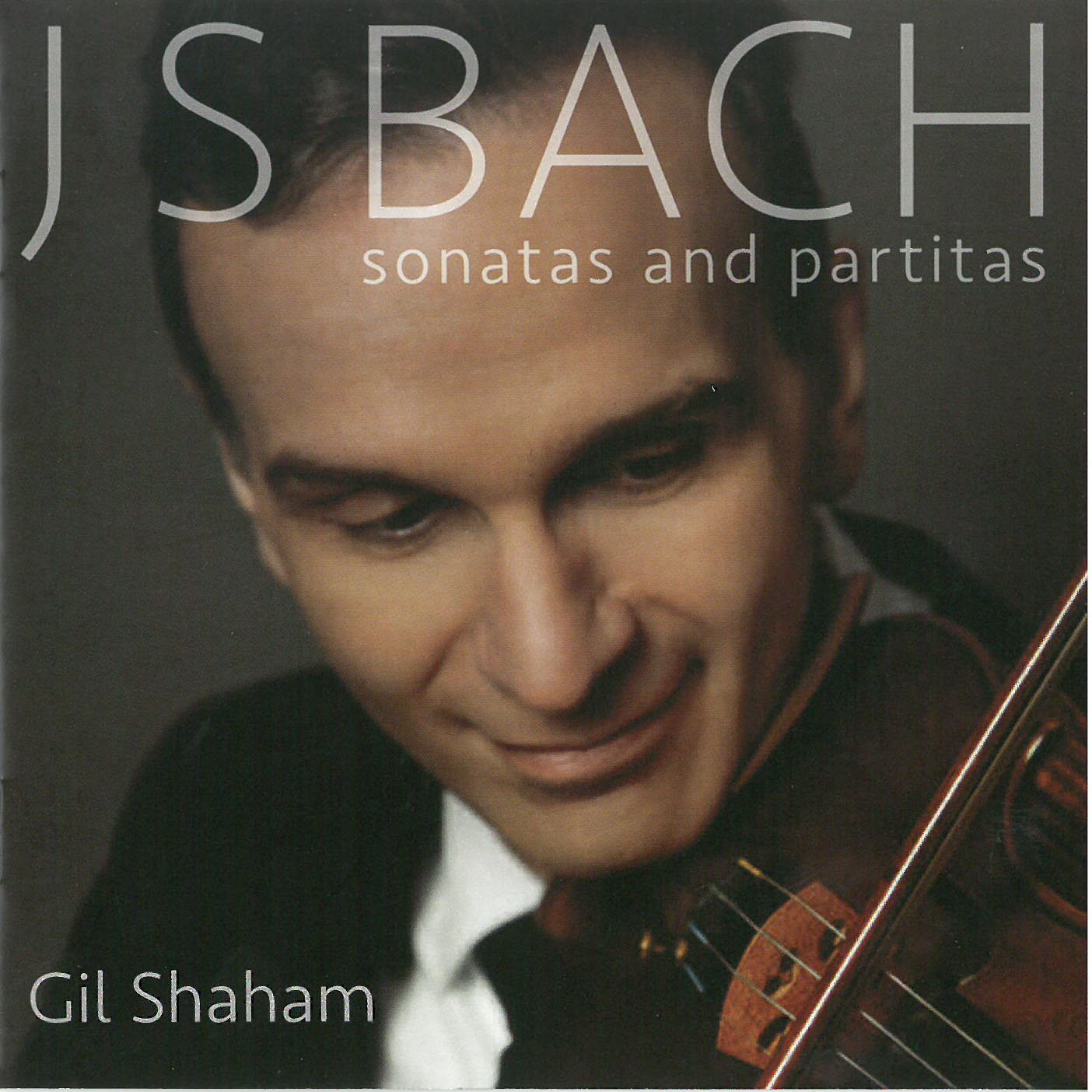
01_Bach_Shaham.jpgGil Shaham has long been one of my favourite violinists, the grace, intelligence and warmth of his playing never failing to produce performances of the highest quality. I opened his latest release, a 2CD set of the Bach Sonatas and Partitas on his own Canary Classics label (CC14), expecting great things, and I wasn’t disappointed. Because of the great challenges they present, many players are in no rush to commit the Bach solo works to disc; in Shaham’s case he didn’t even start performing them in public until about ten years ago. His continuing exploration of the music led him to experiment with wound gut strings and a baroque-style bridge and bow in an effort to more closely reproduce the sound of Bach’s own violin. For this current recording Shaham started with a more modern set-up, tried both approaches and eventually settled for the baroque option; it’s a great choice, with the warm, bright sound a perfect match for his style, and the lighter baroque bow in particular allowing for much cleaner passagework in Shaham’s decidedly faster tempos. There’s never a sense of rushing, though; the multiple stopping is always clean, the melodic line always clear, and Shaham often uses a brief rubato to allow the music to breathe or to highlight phrase peaks. His approach to the sometimes thorny issue of vibrato in baroque music is a decidedly sensible compromise: “I use some vibrato, but I try to err on the side of not using too much.”

It doesn’t always happen that you can put on a CD of the Sonatas and Partitas and just let it play; quite often there’s a gravity or seriousness to the performance that makes playing right through all six works quite demanding listening. Not with Shaham, though; he creates a world of warmth and light, and each of the two CDs just flies past. The playing here is light and brilliant without ever being superficial; fast without ever losing the sense of phrase; joyous and spontaneous without ever losing a sense of emotional depth; gentle but never weak; and strong but never strident.

There’s a great deal of competition in recordings of the Bach solo works, of course, with a wide range of styles and approaches to choose from, but you’ll go a long way before you find a more beautiful and satisfying set than this.
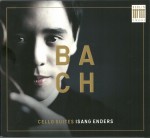
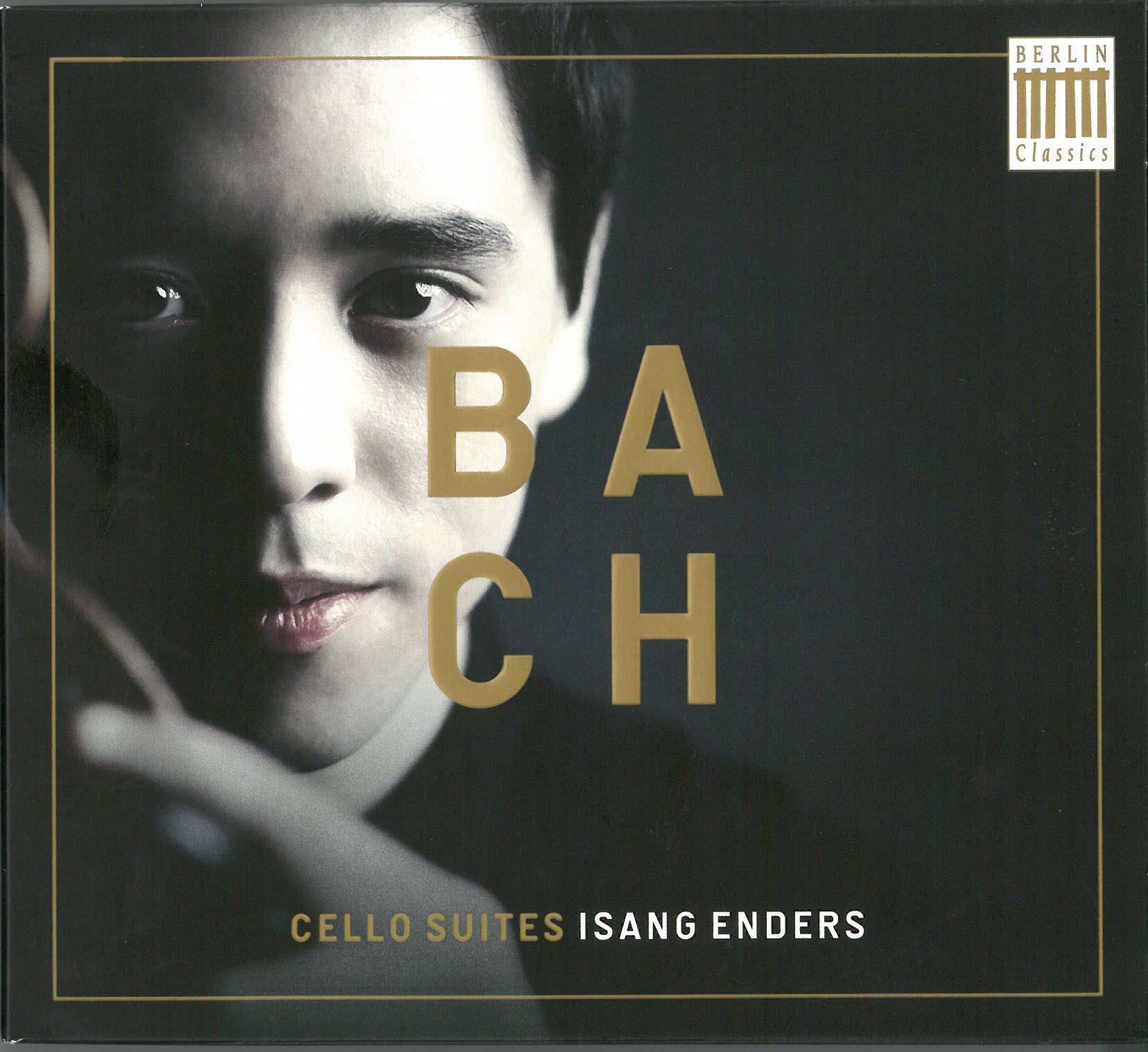
02_Bach_Enders.jpgThere’s another outstanding set of Bach solo works this month, this time the Cello Suites featuring the German cellist Isang Enders (Berlin Classics 0300552BC). The similarities with the Shaham set are quite striking: the 28-year-old Enders says that Bach has been in his life since early childhood, and that the challenges presented by the Cello Suites made him constantly doubt his abilities when it came to recording them. Then, after his first attempt had gone through the final production stages, he rejected it and returned to the studio to do justice not only to his own developing thoughts about the music but also “to do justice to Bach himself.”

Above all, he addresses the discussion about “historically informed,” as opposed to historical, performance practices that has been ever-present for players of his generation; his quoting of Nikolaus Harnoncourt in this regard (“words that say it all for me”) is worth repeating: “We naturally need to acquaint ourselves with performance practice, but let us not retreat into false purism, into false objectivity, into misinterpreted fidelity to the original. So I beg of you: do not be afraid of vibrato, liveliness or subjectivity, but do be very afraid of coldness, purism, ‘objectivity’ and barren historicism.”

Not only could that be a perfect guide for Shaham’s approach, but Enders also certainly takes this to heart: there is warmth and brightness to his playing and a real liveliness, especially in the dance movements where – as with Shaham – a judicial use of rubato helps to shape the phrases. For the two discs, Enders divides the suites into what he sees as light and dark colours, although he doesn’t really elucidate: Suites 5, 2 and 4 (in C minor, D minor and E flat major) on CD1 bring out the interval of a rising second, while Suites 3, 1 and 6 (in C, G and D major) on CD2 are keys in the circle of fifths. Whether or not that sequence contributes to the overall effect is irrelevant; all that matters is that, like the Shaham, this is a set that can more than hold its own against strong competition, and it’s as enjoyable a cello performance of these Suites as I have heard.
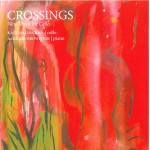
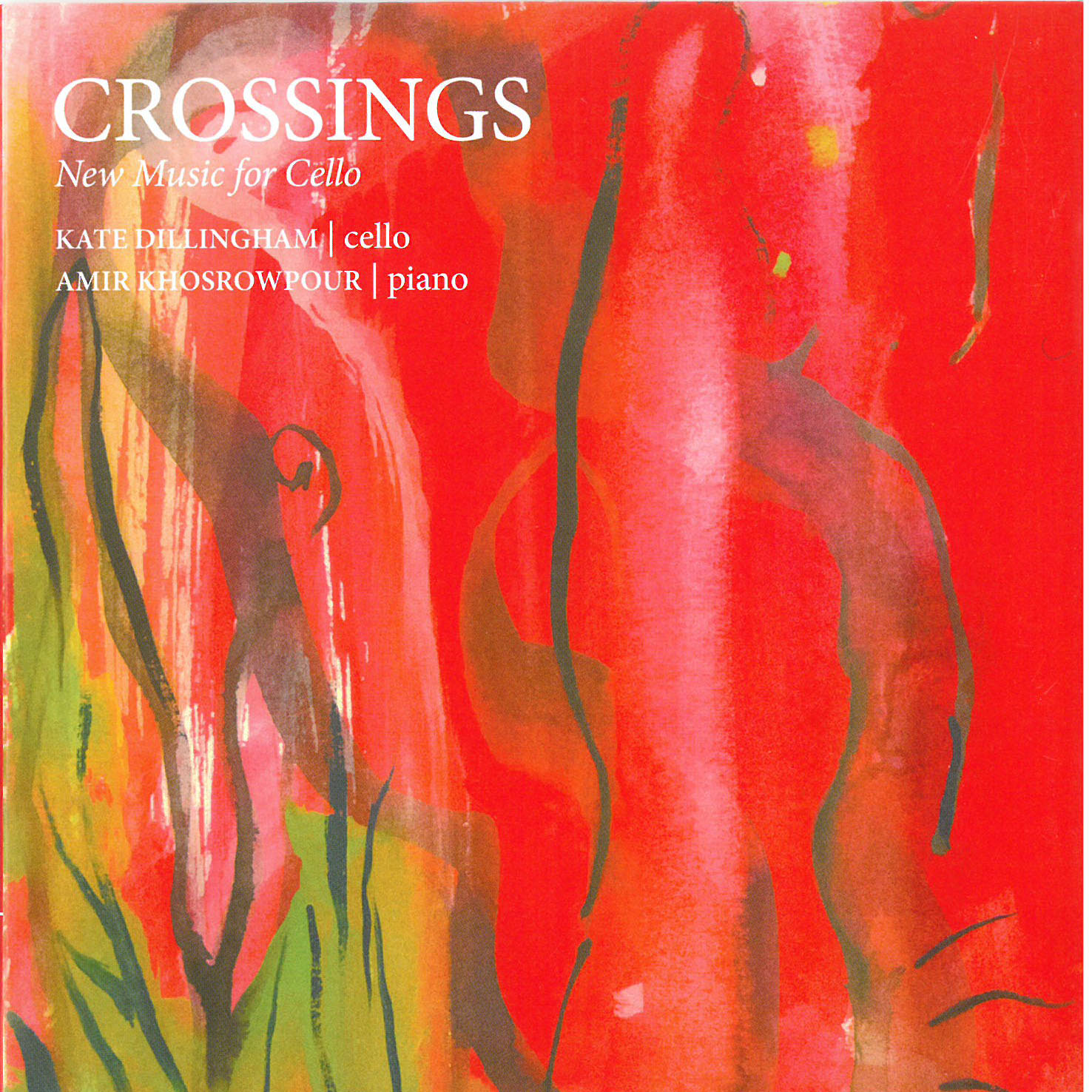
03_Crossings_for_cello.jpgIf you’re interested in contemporary cello music then you’ll certainly want to check out Crossings: New Music for Cello, a new CD featuring the American cellist Kate Dillingham and pianist Amir Khosrowpour (furious artisans FACD 6815). Expenses for the recording, which Dillingham calls a CD of cutting-edge contemporary compositions, were raised through the online crowdfunding platform RocketHub. Dillingham’s description of the music will give you a good idea of what to expect: “The musical expression varies widely: from driving rhythms to expansive, contemplative phrases; long, lyrical lines to in-your-face badass riffs; simple musical statements to bow hair-shredding technical challenges!”

American composers represented here are Gilbert Galindo, David Fetherolf, Gabriela Lena Frank, B. Allen Schulz and Jonathan Pieslak, although the four composers born outside the U.S.A. – Jorge Muñiz, Yuan-Chen Li, Federico Garcia-De Castro and Wang Jie – are all currently active in the American music scene.

The CD booklet includes bios of all the composers, but unfortunately not a word about the music – when and how it came to be written, for instance – although it’s clear from Dillingham’s comments on the RocketHub site that she works closely with most of the composers represented here, particularly those belonging to the composer collectives in New York (Random Access Music) and Pittsburgh (Alia Musica).

Four of the pieces are for solo cello and five for cello and piano. It’s difficult to make any meaningful comments about such a variety of recent pieces, but they are all clearly quite strong, colourful compositions that make an immediate impact; no single work here seems out of place. Both performers are more than up to the challenges – and believe me, there are quite a few!

With a playing time of almost 80 minutes it’s a fascinating portrait of contemporary American cello music. Watch the eight-minute Crossings Documentary on YouTube for background information on the making of the CD; there are also short clips of Gilbert Galindo and Federico Garcia-De Castro discussing their compositions.
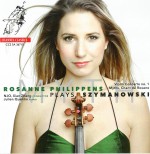
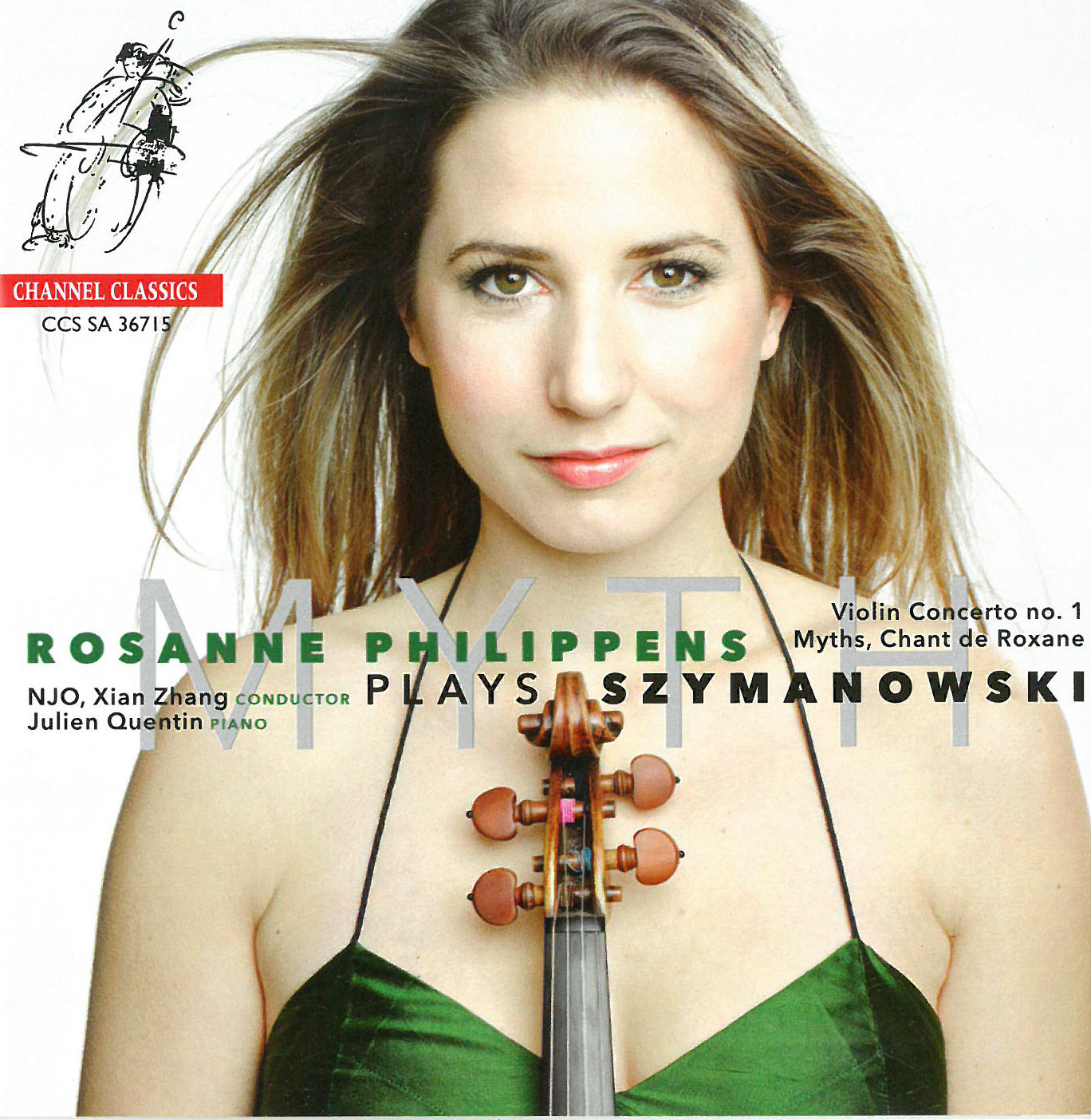
04_Philippens_Szymanowski.jpgMyth, the latest CD from the young Dutch violinist Rosanne Philippens, features the music of Polish composer Karol Szymanowski and it’s outstanding (Channel Classics CCS SA 36715). The main work here is the Violin Concerto No.1 Op.35 from 1916, with Xian Zhang conducting the NJO (the National Youth Orchestra of the Netherlands). It’s a beautifully lyrical work in one movement with a glorious rhapsodic main theme, and was written for the Polish violinist Pawel Kochański, who contributed significantly to the solo part and also wrote the cadenza. A good deal of the violin part is up in the stratosphere and requires not only a brilliant, shimmering tone but a rock-solid technical assurance. Philippens has both in abundance. She also clearly has a feel for Szymanowski’s music, having been introduced to the three-movement Myths, Op.30 a few years ago by the pianist Julien Quentin, who joins her for the rest of the CD. Myths, from 1915, was also written for Kochański, and has a distinctly Impressionist feel to it.

Other Szymanowski works presented here are the beautiful Chant de Roxane (an arrangement of an aria from the opera Krol Roger), and the Nocturne and Tarantella Op.28, also from 1915. Again, Philippens displays a brilliant tone and flawless technique in some really difficult music. Szymanowski was influenced by the music of Igor Stravinsky, who was exerting his own influence on the musical world in the years before the Great War, and three short works by the latter complete the CD. Stravinsky’s Firebird was a particular favourite of Szymanowski, and Philippens extends the “Myth” concept to include the Berceuse and Scherzo from the ballet, as well as the later Chanson Russe.

This really is an outstanding CD, full of dazzling playing from a violinist with a strong musical intellect. If you haven’t heard Rosanne Philippens yet, don’t worry – it won’t be long before you do.
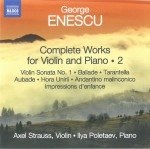
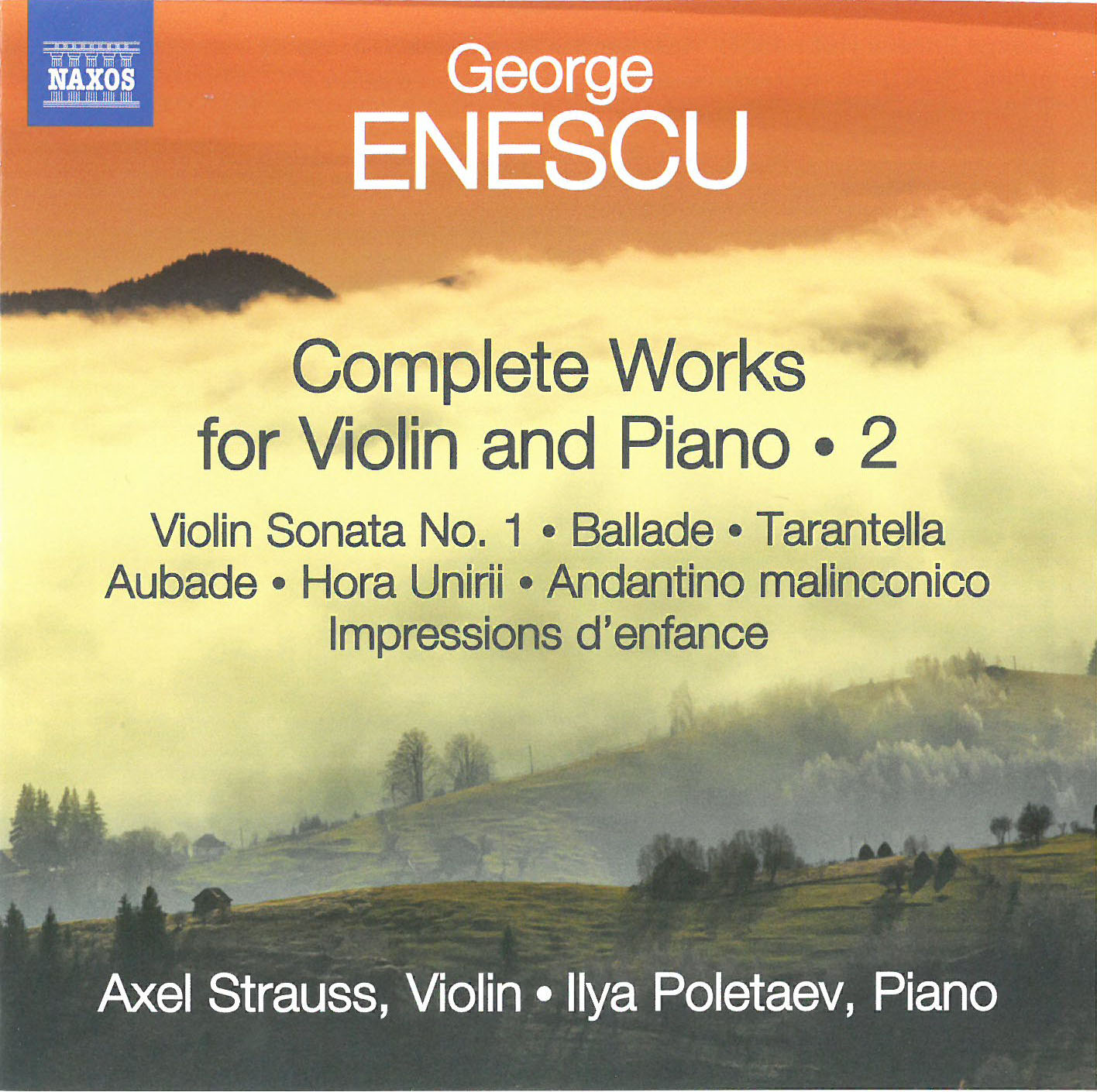
05_Enescu.jpgThe Romanian George Enescu, who died in 1955, was arguably the last of the great violinist/composers. Volume 2 of his Complete Works for Violin and Piano has just been released by Naxos (8.572692), and like Volume 1 (Naxos 8.572691) features the terrific German violinist Axel Strauss and the Russian pianist Ilya Poletaev, both of whom are currently on the faculty at the Schulich School of Music at McGill University.

The Violin Sonata No.1 was written in 1897 when Enescu was only 16 years old, and although it leans heavily on the German sonata tradition – especially Brahms – it is a very strong work that draws some outstanding playing from both performers. Two shorter pieces pre-date the sonata: the Ballade Op.4a was originally for violin and orchestra; and the unpublished Tarantella provides ample evidence of Enescu’s technical ability in his teenage years. The Aubade is a 1903 violin and piano version of a short piece written for string trio in 1899. The Hora Unirii from 1917 and the relatively late Andantino malinconico from 1951 complete the selection of effective and attractive shorter pieces. But the real gem on this CD is the Impressions d’enfance Op.28 from 1940, an astonishing suite-like work of ten short movements, played mostly without a break, which traces the day in the life of a child. There’s a folk fiddler, a stream in the garden, a caged bird and a cuckoo clock, a chirping cricket, the moon shining through the window, the howling of the wind in the chimney (a ghostly 23 seconds of scratchy violin solo) and a distant thunder storm at night. In the booklet notes, Poletaev calls the work “…a stupendous compositional tour-de-force… a musical fabric of extraordinary sophistication and richness.” It certainly is, and it’s worth the price of an exceptional CD on its own.
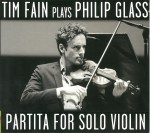
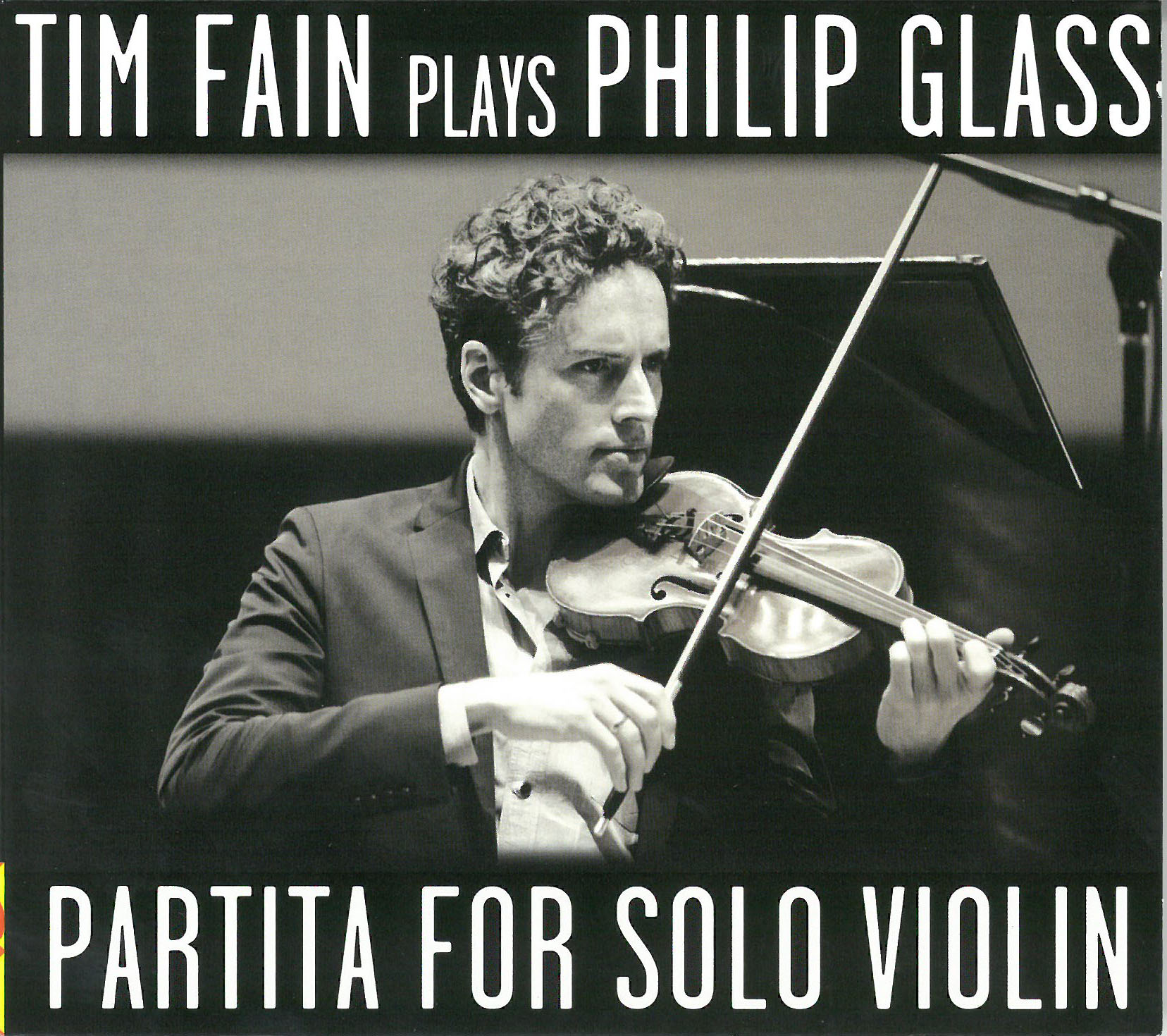
06_Glass_Partita.jpgI didn’t know exactly what to expect from Partita for Solo Violin: Tim Fain Plays Philip Glass (Orange Mountain Music OMM 0050), but what I heard was a revelation. Glass, recently named as laureate of the Glenn Gould Prize, has been a prolific and immensely influential composer for the past 50 years or so, with a far greater range of compositions than the familiar description of him as a “minimalist” would suggest; Glass himself has always disliked that term, feeling that he moved away from the style years ago, and now considers himself a “classicist.” Even so, I wasn’t prepared for such an incredibly strong, idiomatic solo violin work in a very traditional style (Opening; Morning Song; Dance 1; Chaconne Part 1; Dance 2; Evening Song; Chaconne Part 2) which quite clearly pays homage to the Bach Sonatas & Partitas; it’s a towering and powerful composition, strongly tonal and with a wide emotional, technical and dynamic range.

Tim Fain’s outstanding performance is definitive; the Partita is the central work in the recitals that Fain and Glass regularly perform together. There is no CD booklet, so no information on the work’s genesis, but Fain has been collaborating closely with Glass since 2008, when he had a short featured solo in the Book of Longing, Glass’s setting of poems by Leonard Cohen; their enjoying working together led to the writing of the Partita for Fain in 2011.

Three short works complete the CD. Knee 2 from the opera Einstein on the Beach is more what you might expect from Glass – a helter-skelter perpetuum mobile with slight shifts and changes in the patterns and accents. Book of Longing is the solo mentioned above; the contemplative Interludes from the Violin Concerto No.2 bring a marvellous CD to a close.
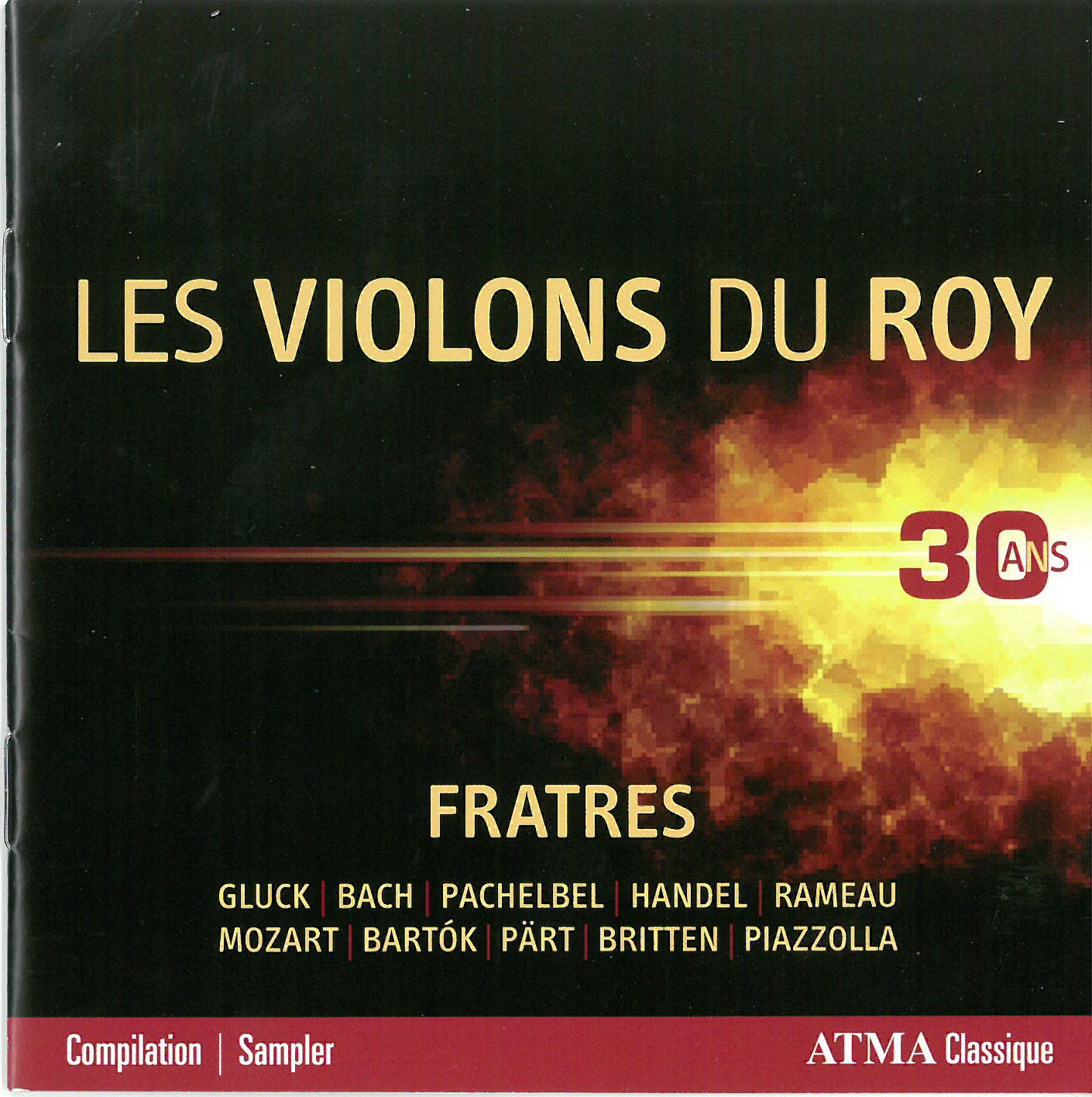
07_Fratres.jpgFratres is the new CD from ATMA celebrating 30 years of the Quebec chamber orchestra Les Violons du Roy, founded in 1984 by conductor Bernard Labadie (ACD2 3015). Over the years the group has released close to 30 CDs, mostly on the Dorian, Virgin Classics, Naïve, Hyperion, Erato and Analekta labels; since 2004 there have been eight CDs on the Quebec ATMA label, and it is from that catalogue that this self-styled compilation sampler has been put together. Sampler CDs, with their mixture of single extracted movements and short complete pieces, can tend to be less than satisfying in some respects, but the very high performance standards here together with the lovely recording quality and the choice of titles makes this a very attractive release.

The title track is a previously unreleased 2008 recording of the Arvo Pärt composition, featuring violinist Pascale Giguère. There’s a beautiful performance of the Mozart concert aria Chi’ omi scordi di te? by soprano Karina Gauvin, who is also featured in a performance of Britten’s Now sleeps the crimson petal and – along with countertenor Daniel Taylor – in an extract from Bach’s Tilge, Hochster, meine Sünden. There’s a movement from Bartók’s Divertimento, Gluck’s Ballet des Ombres heureuses, Mozart’s Overture to Lucio Silla, Handel’s Arrival of the Queen of Sheba, a brief Rameau piece and Astor Piazzolla’s Milonga del Angel. Oh – and the Pachelbel Canon. Bet you weren’t expecting that. Labadie conducts most of the tracks; Jean-Marie Zeitouni conducts all but one of the remaining five.
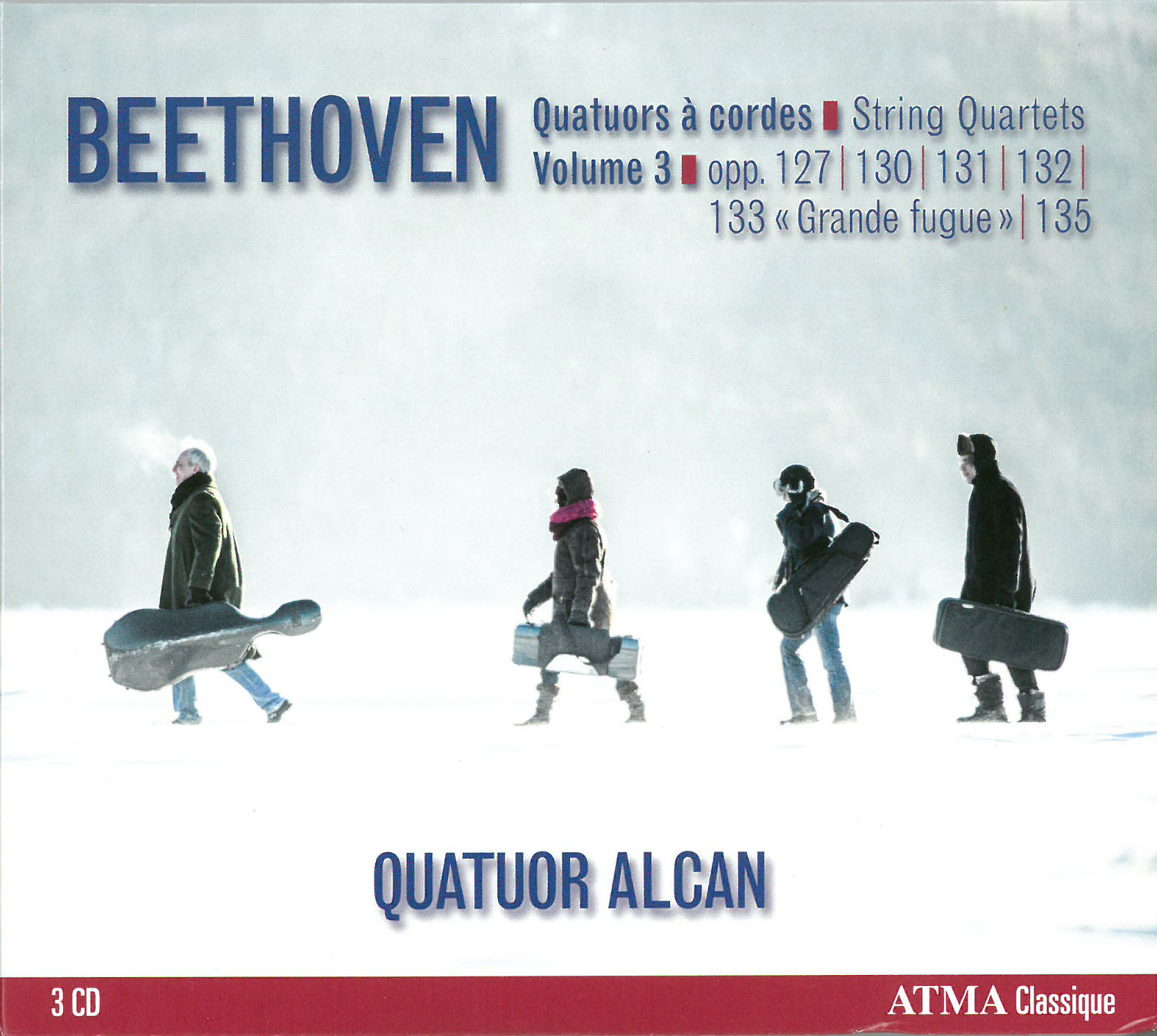
08_Beethoven_Quartets_3.jpgAlso from ATMA, the third and final volume of the outstanding complete cycle of the Beethoven String Quartets by the Quatuor Alcan has just been released (ATMA ACD2 2493). It’s another 3CD set, and features the wonderful late quartets: Opp.127, 130, 131, 132, 133 (Grosse Fuge) and 135. The entire cycle was recorded between May 2008 and December 2012 but, as noted earlier, the fact that all the recordings were made in the excellent acoustics of the Salle Françoys-Bernier at Le Domaine Forget in Saint-Irénée, Quebec means that there is no discernable difference in the recorded sound. There is also no discernable difference in the uniformly high standard of the performances. It really is a terrific set from a terrific ensemble, and a fitting celebration of their 25th anniversary.
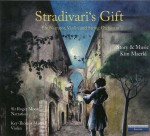
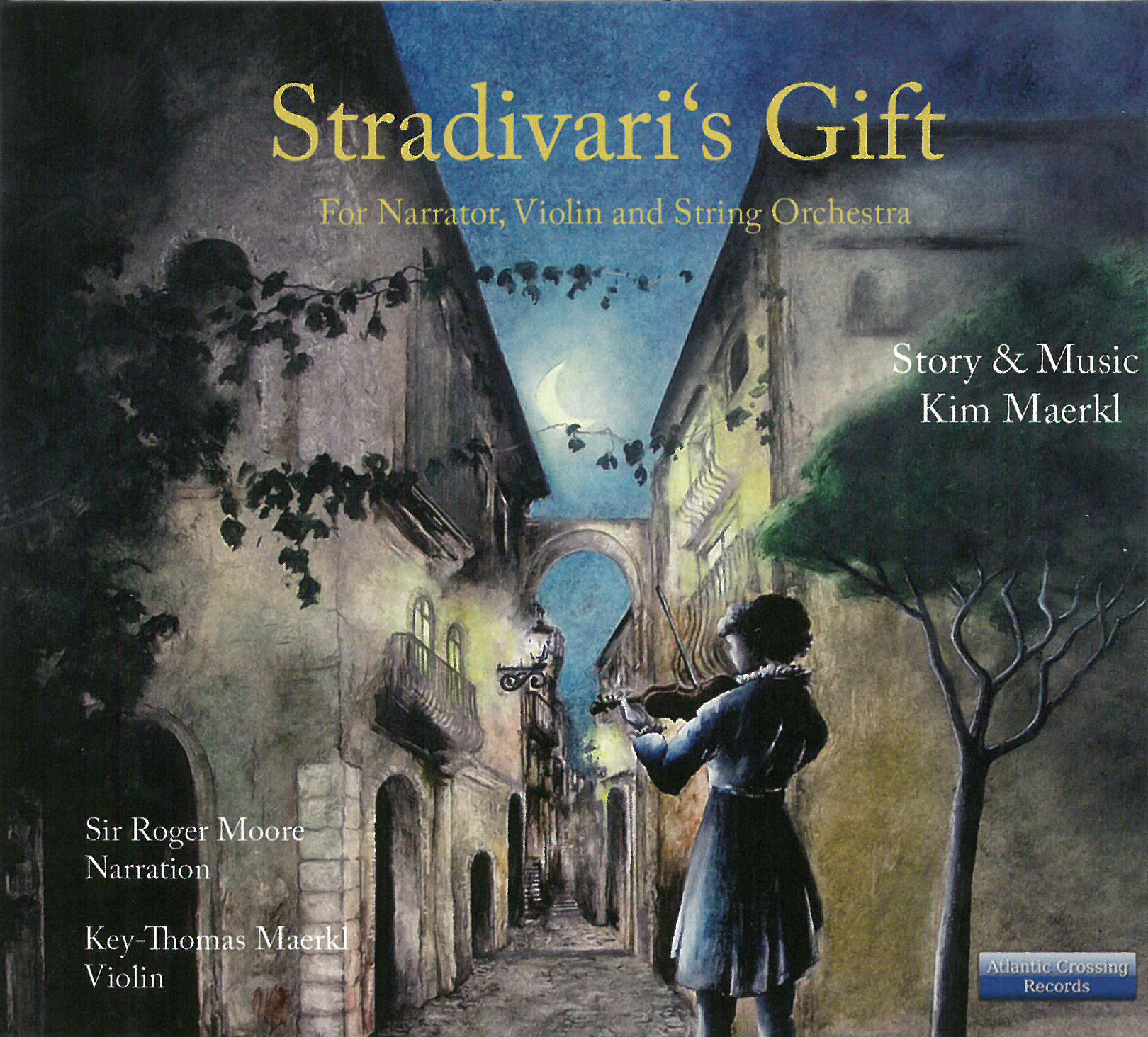
09_Stradivaris_Gift.jpgStradivari’s Gift, for Narrator, Violin and String Orchestra, is one of two story-and-music CDs (Amati’s Dream is the other) that will take young listeners on a journey to the violin workshops of 17th-century Cremona (Atlantic Crossing Records ACR 0001). The story and music are by the American author and composer Kim Maerkl, who founded Atlantic Crossing Records, and the violin soloist is her husband Key-Thomas Maerkl; the English actor Sir Roger Moore is the narrator.

The Maerkls hope that the CDs will inspire children to further explore classical music, and their creation here is first class, in much the same style as the well-known Classical Kids series of story-and-music CDs and DVDs. The story is simple, the music clear and uncomplicated but quite beautiful, and the performance of the violin solo part is simply stunning. Although the CD refers to “an original score for violin and string orchestra” all the supporting music here – string orchestra, guitar and harp effects – appears to have been produced on a keyboard synthesizer; it certainly doesn’t diminish the effect of the CD, though.

The story deals with the loss of court violinist Raphael’s Amati violin and its replacement with a violin made for him by Stradivari, and is long enough to be interesting but short enough – at just under 37 minutes – to hold a young person’s attention. Quite appropriately, Key Maerkl performs the solo violin part on a Stradivarius violin made in 1692 – and what a glorious sound it is!

Incidentally, if you’re a bit confused by the dual use of the names Stradivari and Stradivarius when discussing the maker and his instruments, here’s the explanation: the maker’s Italian name was Antonio Stradivari, but the labels he used in his violins were in Latin, showing Antonius Stradivarius Cremonensis Faciebat (made in Cremona by Antonio Stradivari). As a result, an instrument of his is usually known as a Stradivarius, but Stradivari is the correct form for the maker’s name.


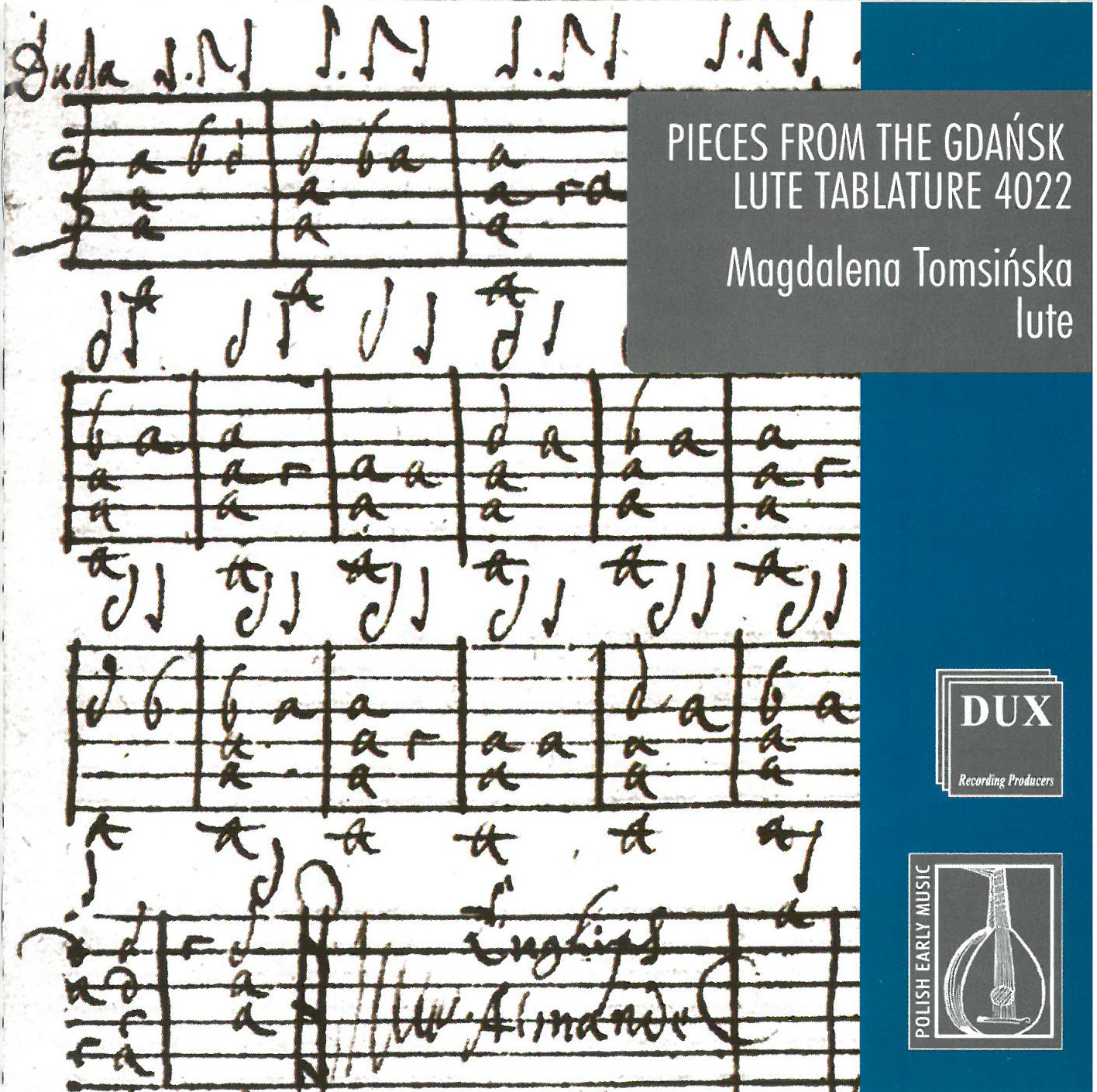
01_Gdansk_Lute.jpgPieces from the Gdańsk Lute Tablature 4022
Magdalena Tomsińska
Dux DUX 1150 (dux.pl)

The collapse of the Berlin Wall led to the discovery of a lute tablature of Gdańsk dated 1620. It emerged in the East Berlin library service, having been believed lost for 45 years. Some of the 222 pieces in the tablature had their titles and composers literally trimmed off by zealous officials; their attribution has, however, been deduced by Magdalena Tomsińska herself, who scoured many more lute collections to identify several of the pieces played here. The key composer is Frenchman Robert Ballard; some of his courantes and balletti are featured on the CD.

And so to Tomsińska’s choices (32 tracks in 58 minutes). Her balletti are played with a skill and clarity worthy of any concert hall recital. Note, indeed, Balletto Polachos 3, 4 and 30 both for their vigour and the pleasure which the performer imparts.

By far the majority of Tomsińska’s choices are anonymous and one gets the impression they were taken from street fairs and theatres and transcribed directly for lute. This must surely be true of the boisterous Ungaro and Be Merry, which Tomsińska takes in her stride. Her choice also extends to the English dancing tune Nutmegs and Ginger – reflecting the pan-European nature of the original tablature.

By contrast, there are eight pieces for whom composers are attributed, five to Robert Ballard and one each to Alessandro Piccinini, John Sturt and Gregory Huwet. These are played with a certain solemnity compared to the more popular anonymous pieces but Tomsińska puts her heart into all of them, as she does with the longest piece, Monycha. This is demanding but, once again, Tomsińska shows with her inspired playing why her anthology deserves to be bought – and not just by early-music enthusiasts. Buy it if it is the only lute recital you buy this year.


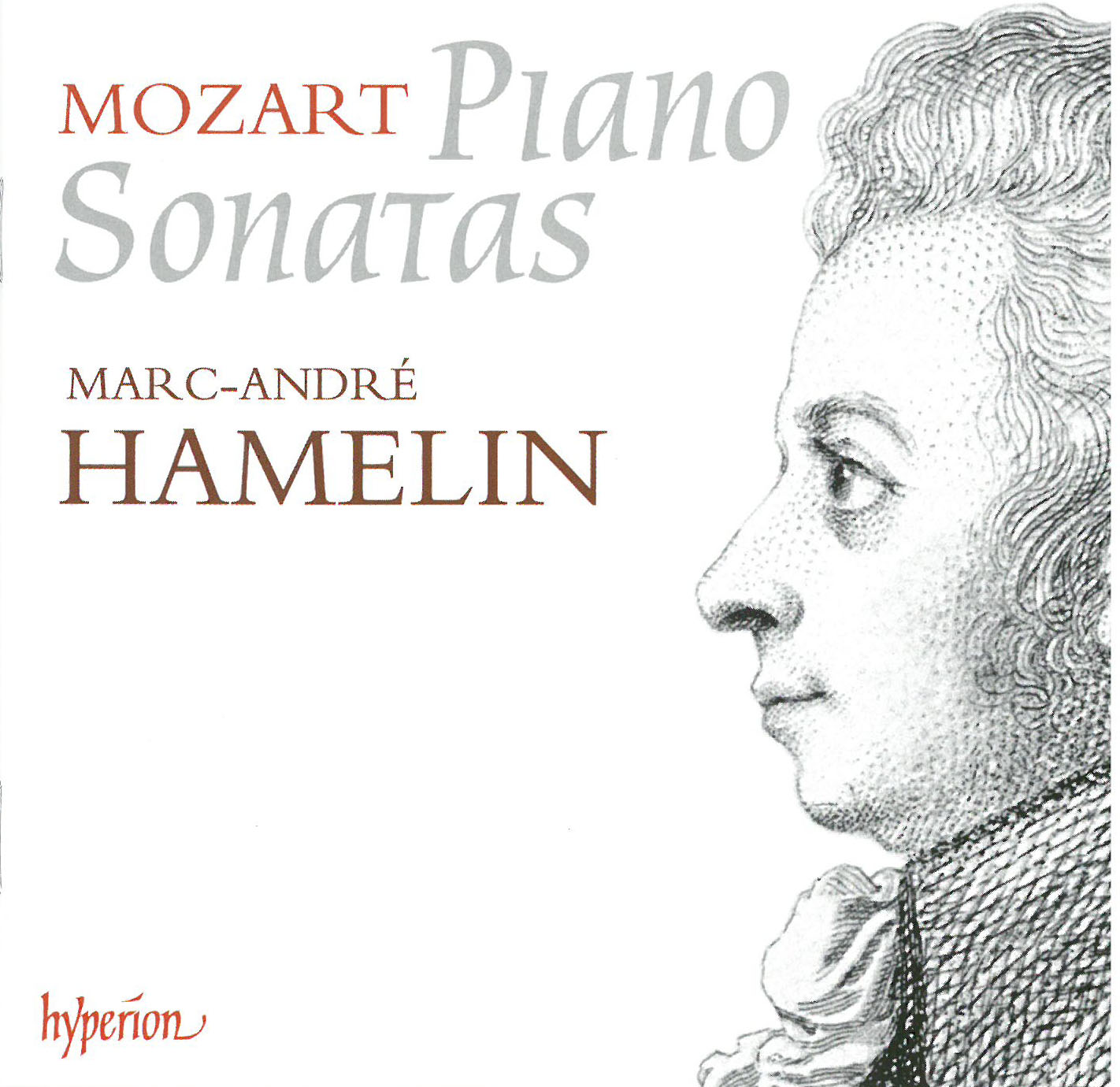
02_Mozart_Hamelin.jpgMozart – Piano Sonatas
Marc-André Hamelin
Hyperion CDA68029

Following his acclaimed Haydn piano sonata recordings, prolific pianist Marc-André Hamelin outperforms even himself in this two-disc release featuring eight Mozart piano sonatas along with some other Mozart solo piano treats. Hamelin is thorough in his attention to detail, rhythm and separation of lines in both hands when tackling the complex technical and musical intricacies in Mozart’s solo piano compositions.

Here are some highlights. Not all the works are technically challenging. His performance of the famous student “little sonata for beginners” Piano Sonata in C Major K545 raises the musical bar for any student of any aptitude. Hamelin is lyrical in the infamous opening Allegro first movement. And his concluding chords of the third movement Rondo are loud yet not banged, resulting in a formidable sensitive ending to an inspirational performance. In contrast, Piano Sonata in F Major K332 is a challenging work. The first movement Allegro is performed with tonal surprises in its orchestra-emulating scoring. The second movement features Hamelin at his very best. This is a touching, lyrical rendition. The bending and stretching of lines leads to a melody played with so much musicality and feeling that words escape me. Gigue in G Major is a robust contrapuntal dance. Clocking in at slightly over one minute, Hamelin plays energetically with imaginative splashes of Mozart-inspired musical humour.

High production quality and thorough liner notes complete this perfect package. Hamelin’s exquisite Mozart makes this the go-to music of the summer!


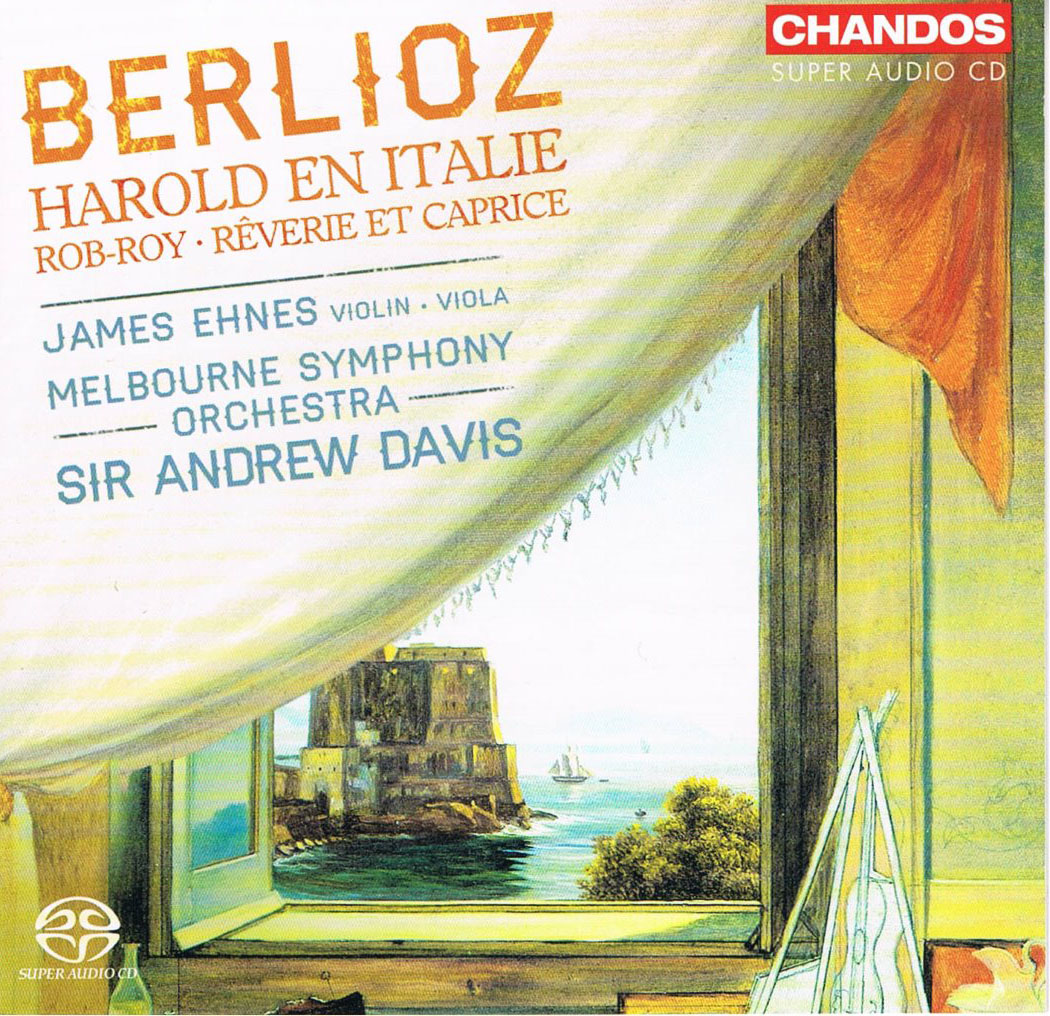
03_Berlioz_Harold.jpgBerlioz – Intrata to Rob-Roy; Reverie et Caprice; Harold en Italie
James Ehnes; Melbourne Symphony Orchestra; Sir Andrew Davis
Chandos CHSA 5155

The Intrata to Rob-Roy was written as an introduction to Rob-Roy but was so badly received in the first and only performance in 1833 that Berlioz burned the score after the concert. Fortunately there was another copy, but Berlioz had also used two of the melodies in a new work, Harold in Italy, the following year. The two themes are easily recognized and it is rather pleasant to hear them in their earlier setting, particularly as they are given to the winds whose playing is quite angelic.The Reverie and Caprice (1841) is Berlioz’ only work for solo violin and owed its existence to the initial failure of Benvenuto Cellini. It was a soprano aria that was replaced before the first performance. Clever Berlioz made a transcription of it for violin and orchestra which, in longer concerts,  he would give to his concertmaster.

A lifetime addiction to Harold in Italy gives me some license to be critical of any performance and it gave me great pleasure to realize from the opening pages that this orchestra has the texture for Harold. In the first movement, as the melancholy Harold, inspired by Byron’s Childe Harold (the viola), wanders in the mountains, Sir Andrew Davis is not simply beating time but moving the episodes along. The Pilgrims’ March has a comfortable swagger with the viola weaving comfortably through the procession. The Serenade is an appropriately jaunty scene of an Abruzzo and his amore. The last movement, Orgy of the Brigands, should describe just that, with fond memories of the previous episodes. These are not an unruly bunch but take their brigandizing seriously in an orderly, professional manner.

The viola (Harold) is not intended to be part of any event but is merely a wanderer, which is possibly why Paganini, who commissioned the work, found it not to his taste (at the time). James Ehnes’ take on this role is ideal, imparting quiet enjoyment at the events around him. Quite perfect. British conductors have an established tradition as great Berlioz interpreters and Davis may soon join them.

The sound is extraordinarily fine, impressive as a CD but if you have the multi-channel equipment, the SACD layer is encoded with five-channel surround sound.


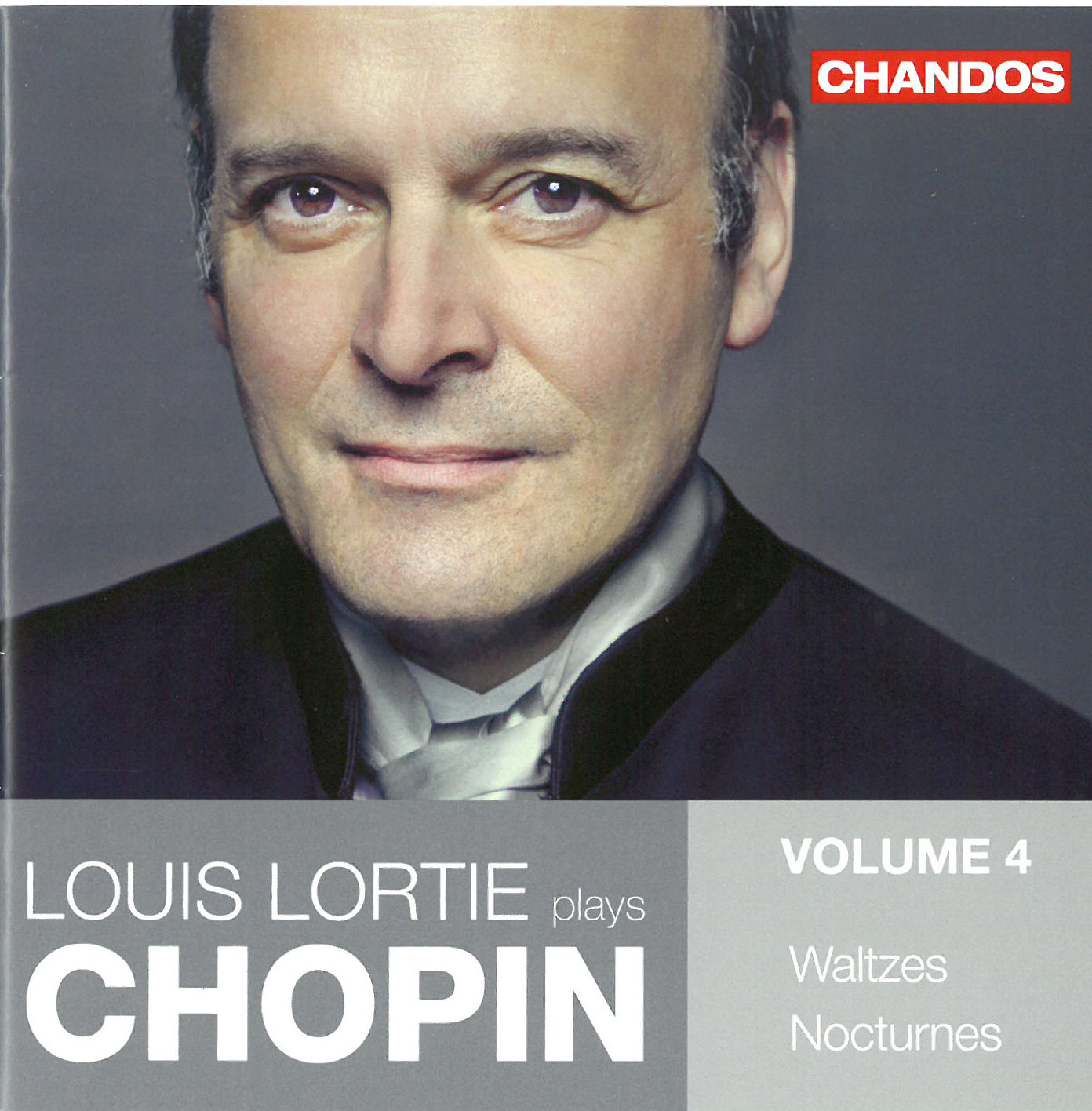
04_Lortie_Chopin_4.jpgChopin Volume 4 – Waltzes; Nocturnes
Louis Lortie
Chandos CHAN 10852

The early waltzes that Chopin composed were meant to be small personal gifts and tributes – most of them were not even intended for publication. That changed somewhat after the composer’s visit to Vienna in 1831. The precocious 21-year-old reported back to Warsaw with breathless astonishment: “Waltzes are regarded as works here!” By “works” he meant recognized musical pieces, worthy of publication. That he could have doubted that astonishes us equally – these are not throwaway ditties, despite their slender size. Somehow, Chopin managed to squeeze into a space of three to four minutes compositions with their own mutable rhythms and containing micro-movements within their minute frames.

To master Chopin’s waltzes, one needs an equally mutable, mercurial talent. Louis Lortie, the incredibly accomplished Montrealer now residing in Berlin, possesses such talent. For many of us, Lortie is not the first name that comes to mind when you think of master pianists. Yet it is enough to start listening to him play these waltzes to realize the magnitude of his gift. They virtually cascade from his fingers, simultaneously inviting us into a reverie whilst invoking a desire to dance along. Only on a couple of occasions does Lortie rush the tempi, perhaps as if he could not believe that the impulsive, romantic Chopin had really marked them as “moderato.”


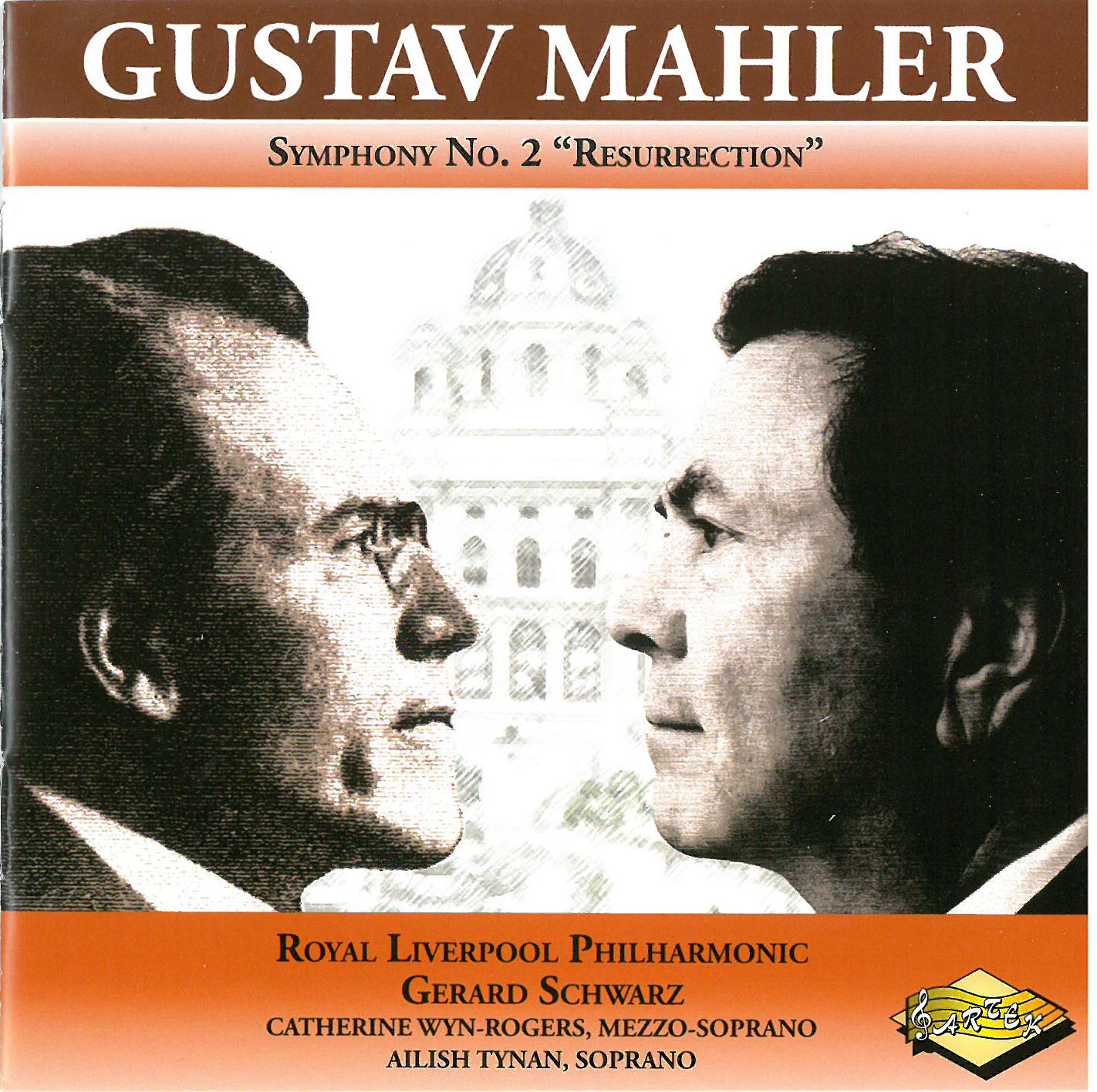
05_Mahler_2.jpgMahler – Symphony No.2 “Resurrection”
Catherine Wyn-Rogers; Ailish Tynan; Royal Liverpool Philharmonic Orchestra; Gerard Schwarz
Artek AR-0061-2

I must admit to a certain leeriness when I first laid eyes on the hideous artwork that adorns this recording. Gerard Schwarz and Gustav Mahler facing off, mano a mano, in some sort of grudge match? Has the conductor noted for his advocacy of neglected American music turned a new leaf? As it turns out, the provenance of this live recording is misleading. Though bearing a 2015 copyright, it is actually unreleased material from a Mahler cycle intended for the RLPO Live label, an enterprise launched shortly before Schwarz’s five-year reign in Liverpool that began in 2001. A sponsorship has now brought these tapes back to life. And what of the interpretation? A decent first movement, distinguished only by the unusually broad tempo afforded the secondary theme, followed by a so-so Menuetto. Suddenly from the Scherzo onward the orchestra rallies and everything thereafter is admirably compelling. When we finally arrive at the finale the rafters are shaking!

The sonic quality captured in Liverpool’s Philharmonic Hall is most impressive (courtesy of David Pigott, a member of the horn section) and the contribution of the choir is simply outstanding. There remain a few anomalies: the second disc contains only the finale, though the fourth movement vocal solo is designated to be followed without a break by the finale. Usually the break between discs (if needed) occurs after the first movement, where Mahler specifically asks for an extended silence. The editing of the booklet is also frustrating. Schwarz’s accomplishments receive a four-page paean, while the generic description of Mahler’s work rates a mere two, with the remainder devoted to dreary accounts of the secondary roles the singers have appeared in over the years and a page’s worth of white space. Judicious pruning would have easily made room for the pithy, indispensable lyrics for the vocal sections of the work. Recommended nonetheless.


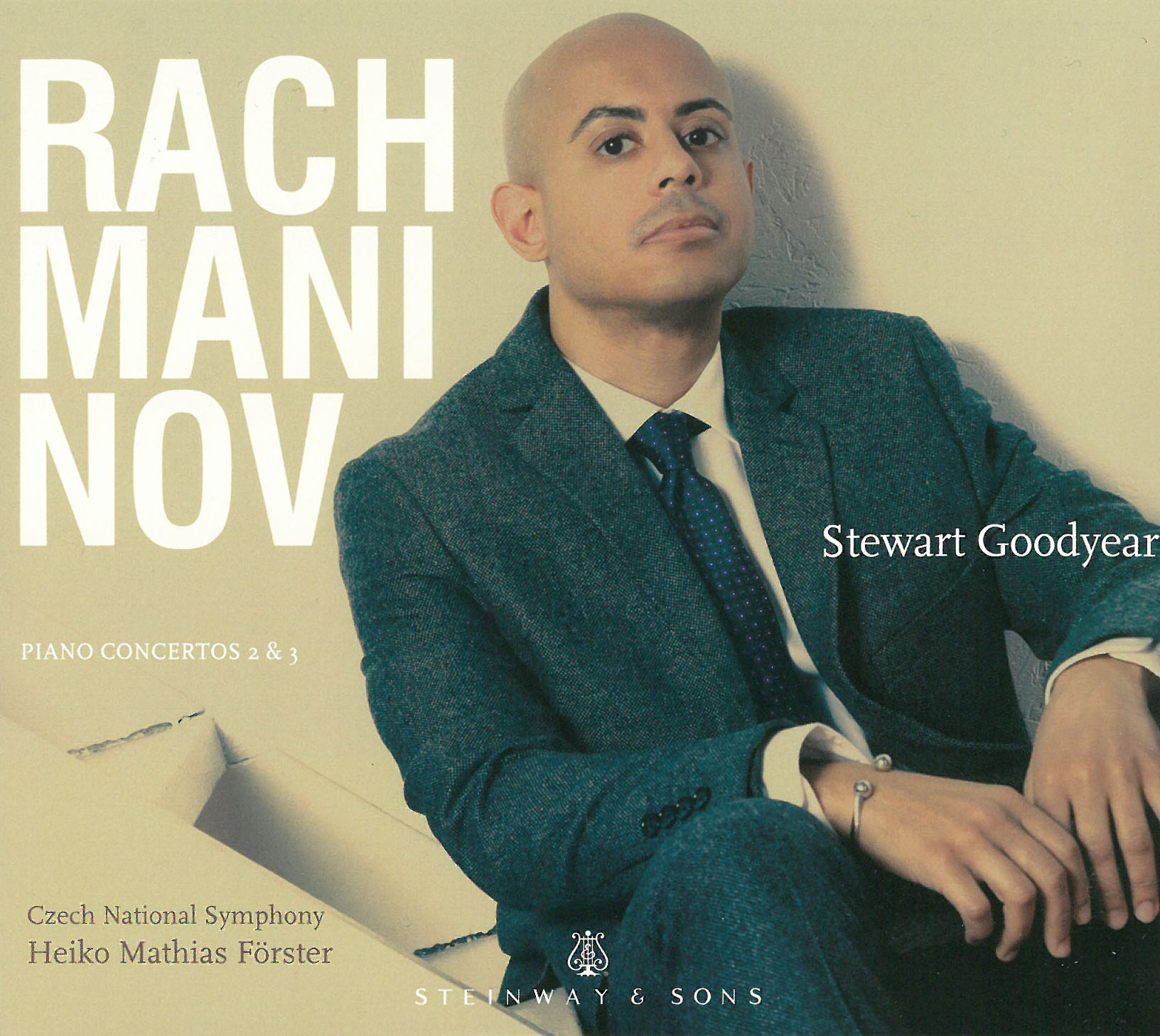
06_Rachmaninov_Goodyear.jpgRachmaninov – Piano Concertos 2 & 3
Stewart Goodyear; Czech National Symphony; Heiko Mathias Förster
Steinway & Sons 30047

Rachmaninov’s Piano Concerto No.2 owes its existence to a renowned neurologist by the name of Dr. Nikolai Dahl. At the time, the young composer was despondent over the failure of his first symphony in 1897. But under the good doctor’s guidance, he regained his confidence and creative urge – and the result was the most famous of his four piano concertos. To many people’s ears, the piece has almost become too well known since its premiere in 1901. But this fact certainly didn’t deter Canadian pianist Stewart Goodyear on this Steinway recording featuring both the second and third concertos performed with the Czech National Symphony, with Heiko Mathias Förster conducting.

Since concluding his studies at the Curtis Institute and the Juilliard School, this Toronto-born artist has earned an international reputation, and this CD provides ample proof. From the opening measures, his approach to the familiar repertoire is bold but elegant, demonstrating a flawless technique that never succumbs to empty virtuosity. Absent too, is any trace of overt sentimentality, something that is all too easy to do with Rachmaninov. The poignant and wistful Adagio and buoyant finale also prove to be a perfect pairing of artist and orchestra, with the CNS performing with a confident assurance under Förster’s baton.

In many ways, the Concerto No.3 from 1909 is an extension of the second, but even more so – larger in scope and perhaps even more technically demanding. Nevertheless, Goodyear and the CNS rise to the occasion with a polished performance certainly equalling – but not necessarily surpassing – established recordings by Argerich and Ashkenazy. Again, soloist and orchestra produce a warmly romantic sound, particularly in the second movement Intermezzo where the delicate interplay between strings and soloist is particularly admirable.

These are fine performances all around – kudos to Goodyear, Förster and the musicians from Prague for tackling this familiar music and for doing it justice in a very compelling way.


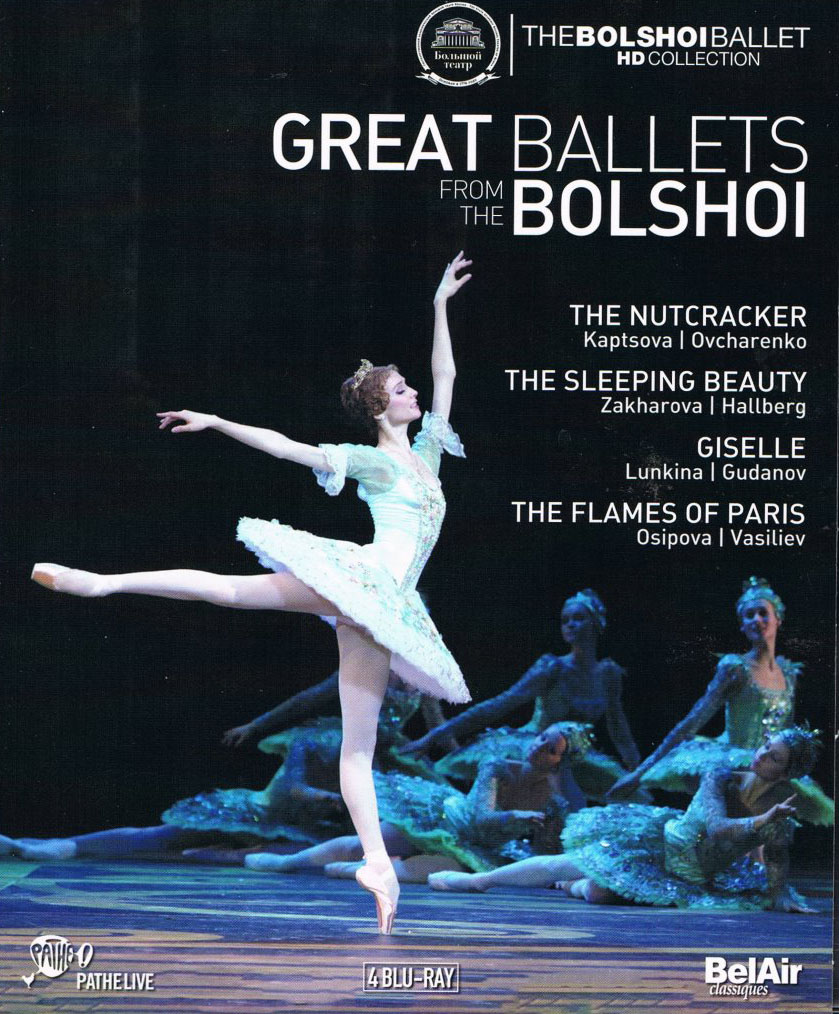
07_Bolshoi_Ballet.jpgGreat Ballets from the Bolshoi –
The Nutcracker; Sleeping Beauty; Giselle;
The Flames of Paris
Bolshoi Ballet
BelAir Classics 306103

The scores of the two Tchaikovsky ballets, particularly The Nutcracker, should be familiar to ballet enthusiasts and Adam’s Giselle to a lesser degree. The choreographer in all three is Yuri Grigorovich, a name that may be familiar to patrons of the “Live from the Bolshoi” ballets shown as special events at the Cineplex theatres that show the “The Met: Live in HD” operas.

However, The Flames of Paris, Stalin’s favourite ballet, may be known of in name only. It was “a classical ballet with music by musicologist and composer Boris Asafyev based on songs of the French Revolution, and originally choreographed by Vasili Vainonen.” It was premiered in November 1932 by the Kirov Ballet and the Bolshoi mounted it in July of 1933. Its original agitprop elements were communist propaganda showing in no uncertain terms the decadence of capitalism leading inevitably to chaos. Of course, the revolutionaries slaughter the aristocrats and there is general rejoicing. In 2008, the original choreography and staging were reconstructed for the Bolshoi by Alexei Ratmansky, who added a love story and expanded the choreography with his own. The company has very recently toured with it to much acclaim, from Hong Kong to London. The 2010 live production is seen here.

The Russians’ astronomical standards of ballet are on full display in every piece. Not only is every dancer in perfect form but each is also of uniform size, which is visually impressive in itself. All the dispositions and angles achieved by the ensemble, once seen, cannot be imagined being done differently. Not only are the visual elements stunning; the sets, the choreography, the costumes and the orchestral renditions all exceed every expectation. There are four different conductors with possible variations in the orchestral personnel, always producing a very Russian sound which could easily and comfortably compete with the best studio productions from elsewhere. The power and authority of the playing is constantly thrilling. The sound is stunning, and in terms of musical reproduction supremely satisfying to even the most critical and jaded ears.

So you don’t care to watch ballet? Then don’t watch and simply listen. You will never hear finer interpretations and productions of this music anywhere in the recorded repertoire.


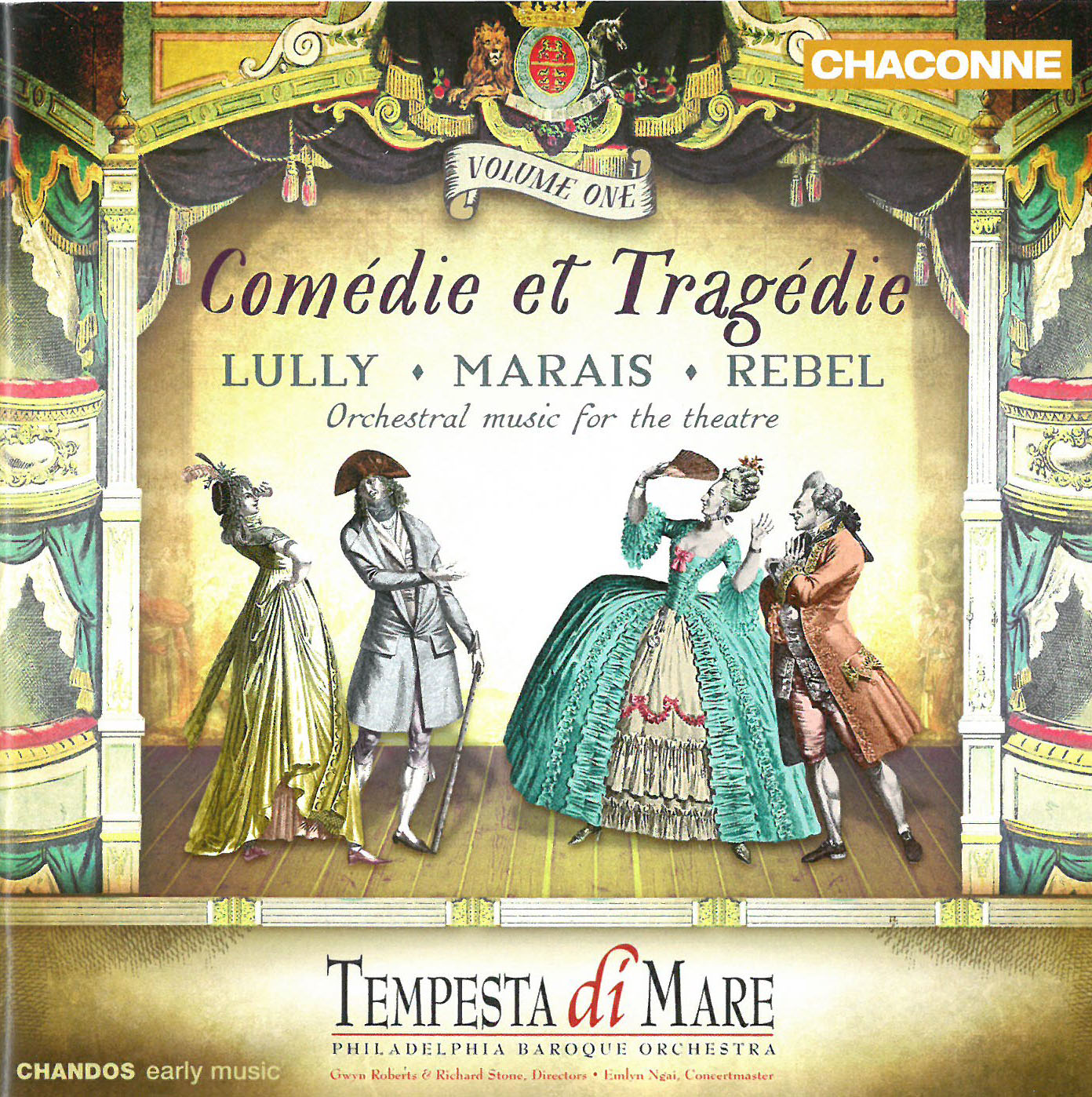
01_Comedie_et_Tragedie.jpgComedie et Tragedie Vol.1
Tempesta di Mare Philadelphia Baroque Orchestra
Chaconne CHAN 0805

Louis XIV’s cultural offensive involved the arrival of Giovanni-Battista Lulli, duly converted to Jean-Baptiste Lully. Lully then became director of the Petite Bande of string musicians. Combine Lully’s genius for composition with Molière’s brilliant social satire Le Bourgeois Gentilhomme and you have a magnificent comédie-ballet.

Tempesta di Mare’s interpretation of the overture to the comedy gives a flavour of what to expect; a rather clumsy and pompous nature admirably reflects Molière’s social climber Monsieur Jourdain. By contrast, the real dancers enjoy Lully’s graceful country dances in their 17th-century French heyday. Add to this the slightly oriental quality of the Cérémonie des Turcs and you realize how suited to each other Molière’s words and Lully’s music truly were.

On to Les Éléments by Jean-Féry Rebel (a pupil of Lully) who won great respect for his dance music. Le Chaos started life as an instrumental piece but was incorporated into the ballet. It is not what one expects from a baroque entertainment. Parts for bass, flutes, piccolos and violins represent respectively earthly tremors, the flow of water, air and fire. All attempt to impose themselves vigorously on the ballet and to be distinctive from one another. More soothing is the following Loure-Chaconne; earth and water are reconciled before we hear Rebel’s sprightly interpretations of traditional dance movements.

Marin Marais is best known as a bass viol composer, his prowess enabling him to come to the attention of, yes, Lully. Alcyone is a classically themed opera comprising an overture and five acts. The dramatic plots in each act would unfold until interrupted by a divertissement (entertainment). The 13 suites performed by Tempesta di Mare reflect this accurately whether with the stately prologue: ouverture or the relaxed airs for a whole sequence of characters such as sailors, magicians and priestesses of Juno. Enjoy above all the sarabande, tempest and concluding chaconne.

After listening to both Lully and Marais, listeners will have received a textbook introduction to the French baroque music which enhanced comedy and tragedy alike.


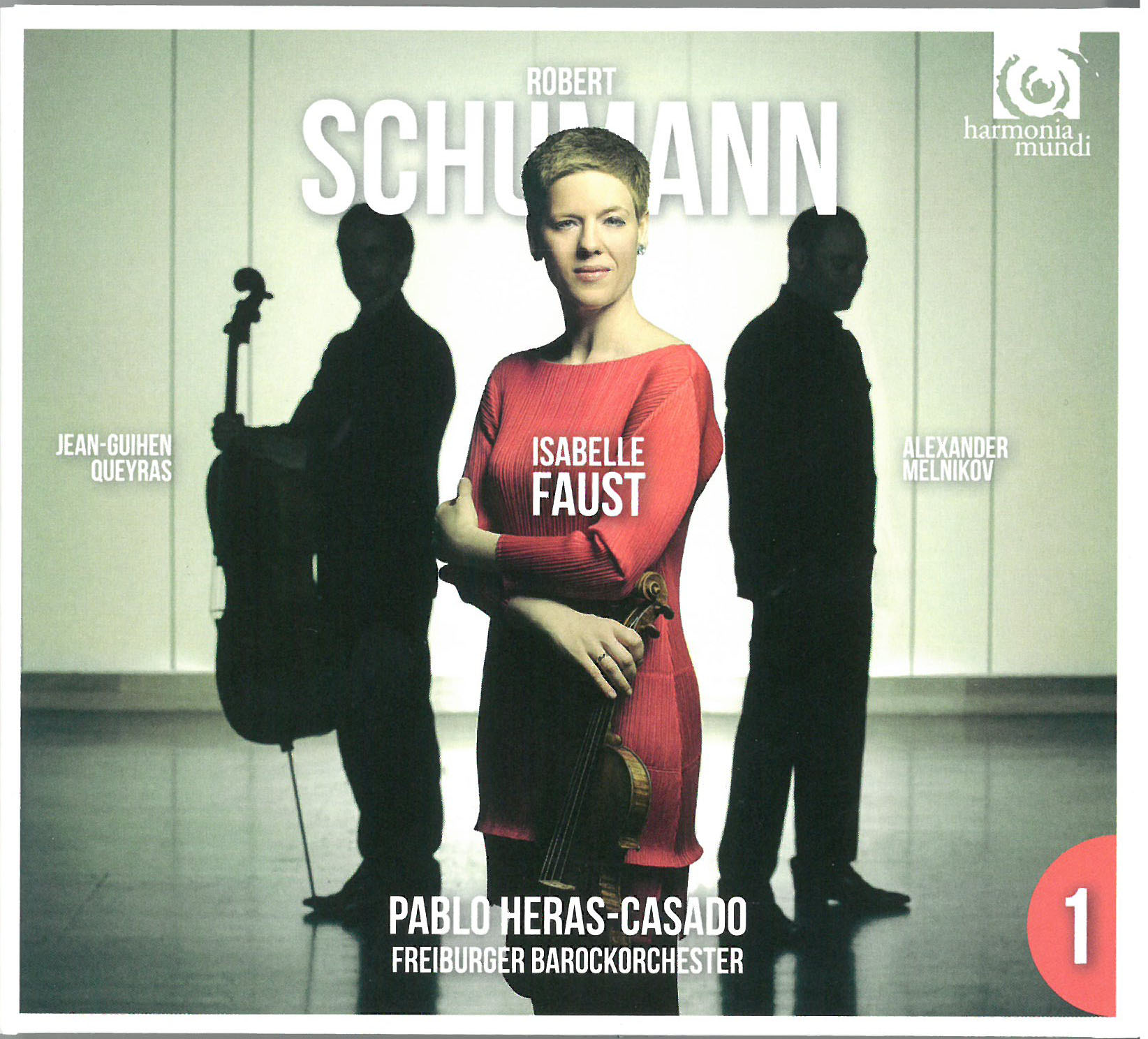
02_Faust_Schumann.jpgSchumann – Violin Concerto; Piano Trio No.3
Isabelle Faust; Jean-Guihen Queyras; Alexander Melnikov; Freiburger Barockorchester; Pablo Heras-Casado
harmonia mundi HMC 902196

Among the violin concertos by the great masters of the middle Romantic era, Brahms, Bruch, Mendelssohn and even Sibelius, Schumann’s is least popular and is infrequently performed. Also, it is considered of lesser value and impact among the composer’s own concertos. Both the piano Op.54 and the cello Op.129 are each at the summit of their genre and favourites for well over a century. Was the violin concerto inconsistent with his output and indicative of lessening musical genius? Written in 1853, the concerto, his last major work, remained without opus number and was secreted for 80 years until November 26, 1937 when it received its debut played by Georg Kulenkampff in Berlin with Böhm and the Philharmonic. On December 20 that year Telefunken recorded it there with Kulenkampff and Schmidt-Isserstedt conducting. Yehudi Menuhin championed the work in concert and in 1938 he recorded it in New York with the Philharmonic under Barbirolli. The value of the work however remains in controversy.

Isabelle Faust and the Freiburg Baroque make a convincing case for it in which the clarity and texture of the period instruments present a refreshingly different palette. The bonus DVD in this release contains the concert performance in the Berlin Philharmonie, revealing unexplored contours and textures characteristic of a baroque orchestra. From the very first bar this is echt Schumann! There are pros and cons of such treatments and while this concerto may not be the very best of Schumann, this sit-up-and-take-notice performance could change a few minds.

The Trio Op.110 in G Minor is another matter. While it may be thought of as the least of Schumann’s three trios, listening to it here challenges that opinion. It is assuredly worthy of a fine performance which it certainly receives. Faust and her colleagues radiate ardour and optimism, performing with sensitivity, sincere musicality and flawless ensemble that hold the listener’s attention. A genuine must-have.

This is the first of three albums by Faust and her colleagues (all passionate about Schumann – me too!), of all the concertos and trios using a historic piano and instruments with gut strings.


Review

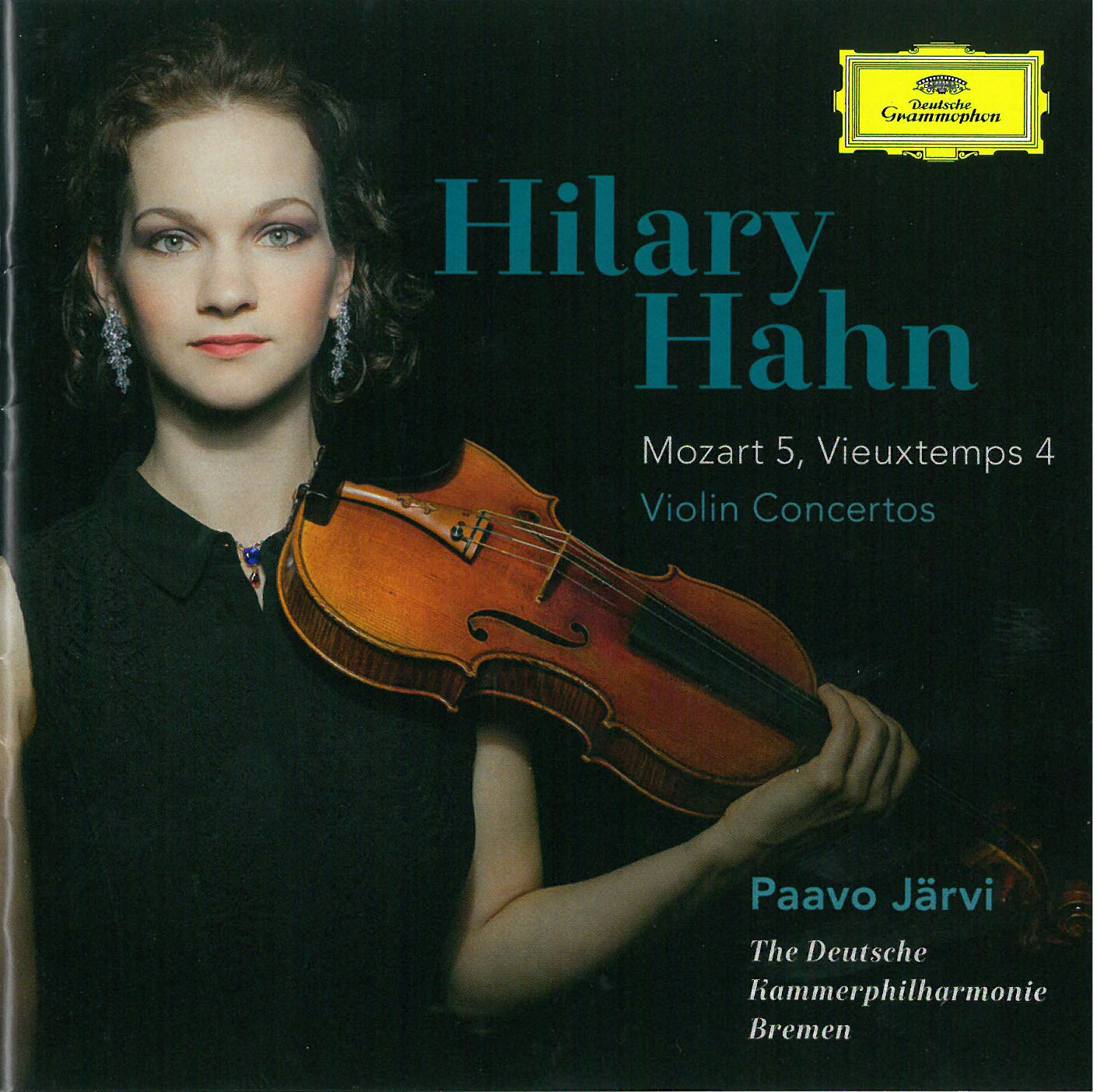
01_Hilary_Hahn.jpgThe wonderful Hilary Hahn has a new CD that features two concertos that have a strong personal resonance for her. On Violin Concertos: Mozart 5 Vieuxtemps 4 (Deutsche Grammophon 4793956) Hahn plays two concertos that she first learned at the age of 10. The Vieuxtemps Concerto No.4 in D Minor Op.31 was the last work she learned with Klara Berkovich, her first main teacher, and Mozart’s Concerto No.5 in A Major K219 was the first work she learned with Jascha Brodsky when she moved to the Curtis Institute of Music later the same year.

Hahn notes that both works have been pillars of her performance repertoire ever since, and her familiarity with and deep understanding of these works is evident throughout the CD, the Mozart in particular benefitting from her usual crystal-clear tone and her immaculate and intelligent phrasing.

The Vieuxtemps Concerto No.4 has always lived in the shadow of his Concerto No.5 in A Minor, and will probably be new to most listeners; I don’t recall having heard it before. It’s somewhat unusual in that it has four movements instead of the customary three, although Vieuxtemps did indicate that the Scherzo third movement could be omitted in performance. You can perhaps understand why: the Scherzo has a very strong ending that sounds for all the world like the end of the concerto,while the Andante opening to the actual Finale feels more like the start of a completely new work. Still, it’s a fine concerto, with a particularly effective slow movement, and it’s difficult to imagine it receiving a better performance.

Hahn is accompanied by the Deutsche Kammerphilharmonie Bremen under Paavo Järvi, whom she describes as “musical partners for a long time.” It certainly shows in these terrific performances.

02_Goldberg.jpgThe Bach Goldberg Variations have been the subject of many varied instrumental arrangements over the years, with one of the best being the transcription for string trio that the violinist Dmitry Sitkovetsky made in 1985 to mark the 300th anniversary of the composer’s birth. The string trio version serves the predominantly three-part keyboard writing particularly well, and Sitkovetsky later expanded this into a transcription for string orchestra; it is this version that is given a beautiful performance by England’s Britten Sinfonia, directed by their associate leader Thomas Gould, on a new harmonia mundi Super Audio CD (HMU 807633).

The larger forces involved (the string strength is 6-5-4-3-2) don’t ever seem to present a problem with regard to the intimacy and nature of the music, partly because it’s not a case of everybody playing all the time; there is a judicial use of solo instruments, especially in the really tricky fast passages, and the playing is always beautifully measured.

The CD jewel case quotes a Guardian newspaper review of a concert performance of this version of the Variations by the Britten Sinfonia, calling it “an astonishing performance that preserved the delicate contrapuntal intricacy of Bach’s original.” The same can confidently be said of this CD.

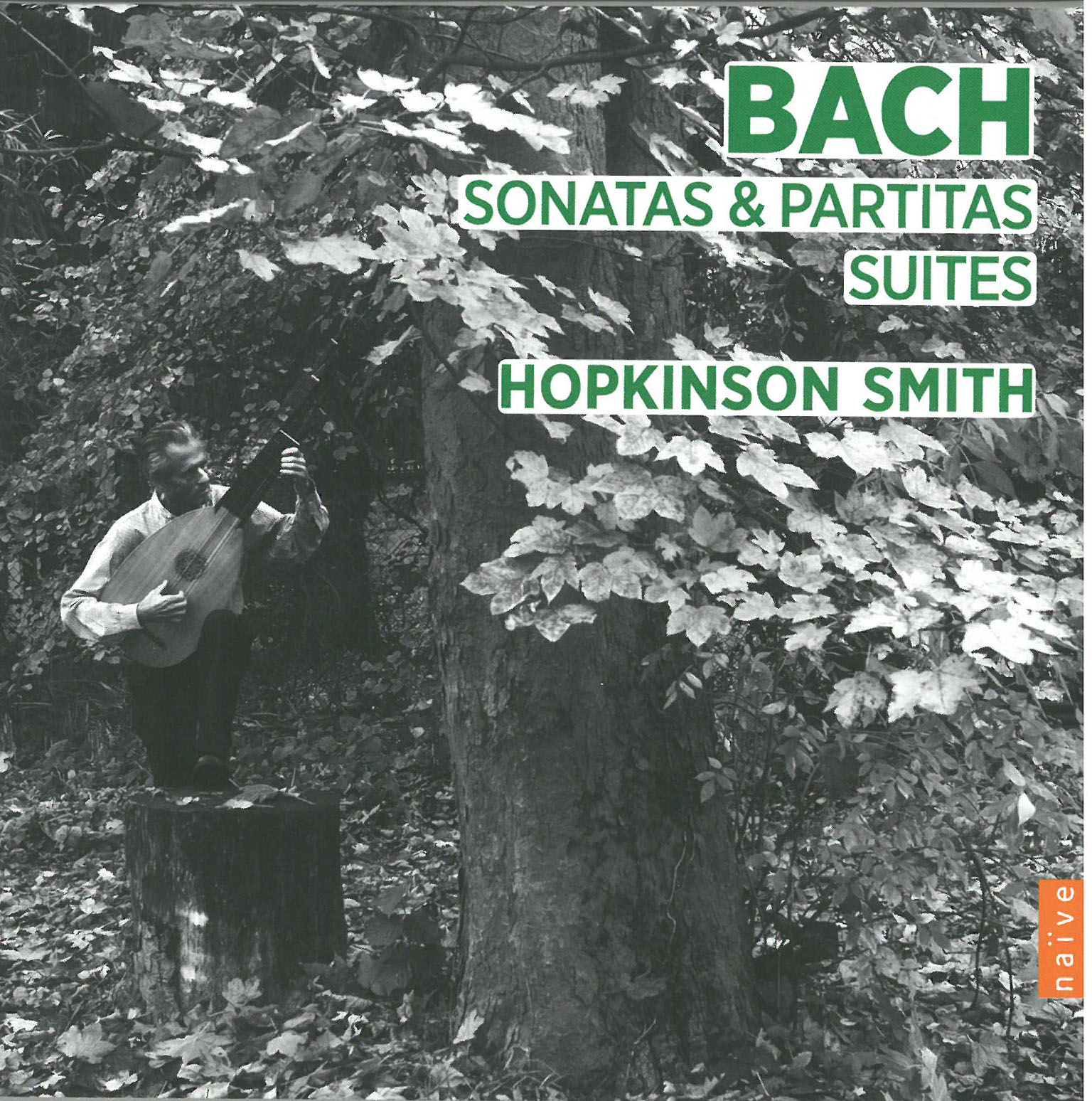
03_Bach_Hopkinson_Smith.jpgThere are more Bach transcriptions available in a 4 CD box set of the works for solo violin and solo cello, Sonatas & Partitas, Suites, this time in transcriptions for lute and theorbo by the American lutenist Hopkinson Smith (naïve 8 22186 08939 2). The set is a reissue in box form of Smith’s previous CDs; the Violin Sonatas & Partitas were recorded in 1999 and the Cello Suites in 1980, 1992 and 2012. A theorbo is used for the first three cello suites and a 13-course baroque lute for the violin works and the cello suites four to six.

The two individual cello CDs were reviewed in this column in April 2013, but these performances of the violin works are new to me. They are naturally in much the same style as the cello transcriptions, with a good deal of filling-in of harmony – although an underpinning of the implied harmonic structure might be a more accurate description – and a softer sound and smaller dynamic range than the original. Multiple stopping is much smoother, making it easier to hold and bring out the melodic line. The English composer and guitarist John Duarte, in his July 2000 Gramophone magazine review, called these performances “arguably the best you can buy of these works – on any instrument.”

In the expansive and detailed booklet notes, Smith makes a strong case for transcribing this music, pointing out that Bach himself played the violin works on the harpsichord with full accompaniment. These CD performances, however, make the strongest case you could ever need. It’s a marvellous set.

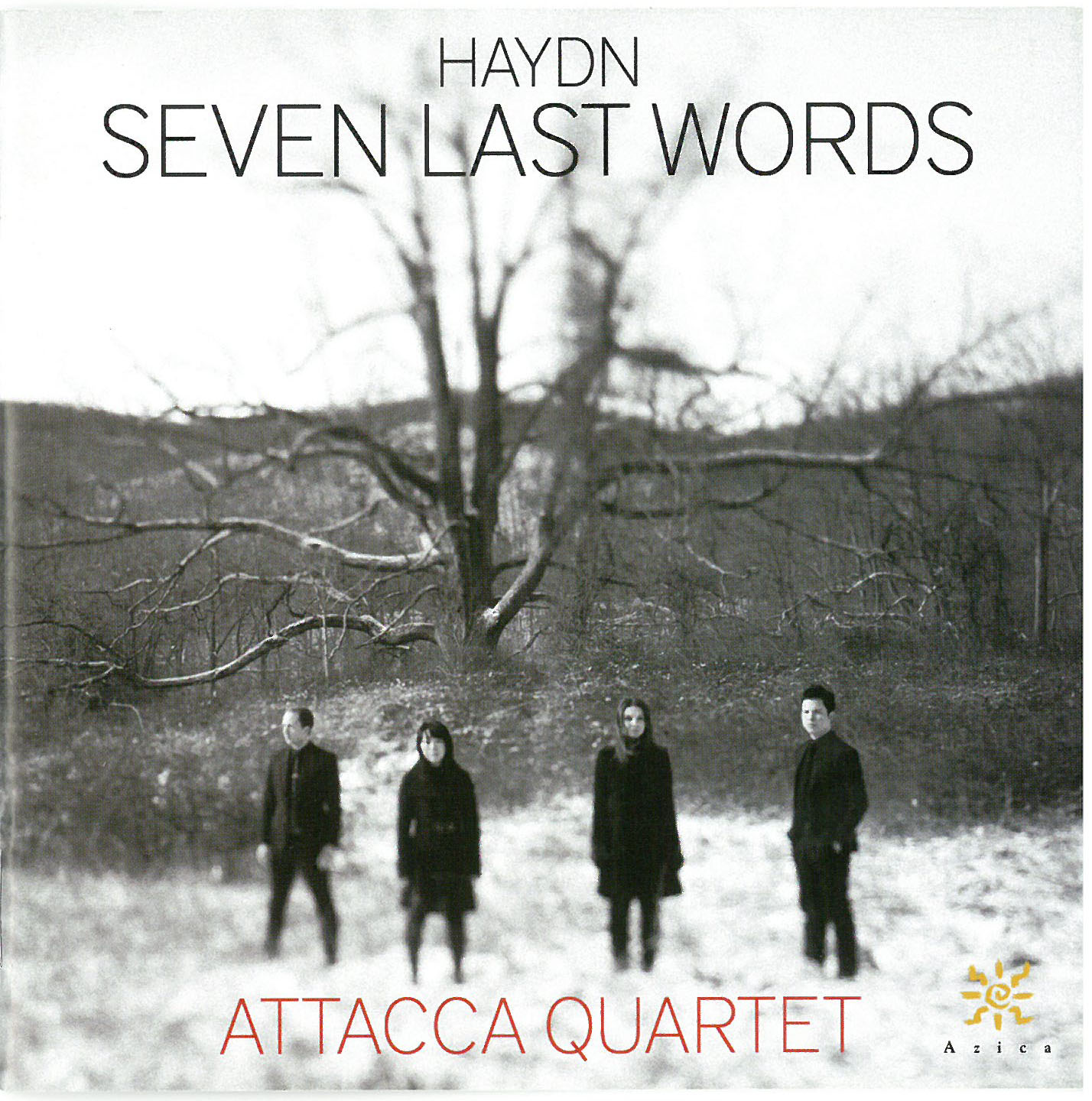
04_Haydn_Seven.jpgAnother work presented in a transcribed version on a new CD is Haydn’s Seven Last Words of Christ on the Cross, performed by the Attacca Quartet in a new arrangement by their cellist Andrew Yee (Azica ACD-71299). Although this is a work that is now most commonly performed by a string quartet it does exist in several versions, and Yee has chosen a new and creative approach with his arrangement.

Haydn wrote the work in 1786 on a commission from Cádiz Cathedral for an orchestral setting to be used in their Good Friday service, in which the reading of – and short sermon on – each of the seven quotes from scripture was followed by a musical interlude appropriate in expression to the preceding reflections. The work proved to be extremely popular, and Haydn clearly considered it valid outside of the liturgical framework, the publication of the orchestral version in 1787 being accompanied by both a Haydn-approved piano four-hand reduction and a string quartet version. The latter (which may not have been entirely Haydn’s work) essentially followed the violin, viola and cello parts from the orchestral version and ignored the wind parts. Haydn apparently wasn’t too happy with it, and although it probably wasn’t intended for anything other than amateur home performance it is the version we usually hear today.

In 1795 Haydn heard a performance of the work in a German choral version by Joseph Friebert, and was sufficiently impressed to make his own oratorio arrangement for soloists, choir and orchestra, a version which incorporated significant changes to the original work. All but one of the seven sections were preceded by a chorale setting of the relevant scripture passage, and the work was split into two sections, with a new introduction to the second half.

For this Attacca Quartet arrangement, Yee studied the original orchestral, string quartet and oratorio settings, with many of the editorial decisions based on the oratorio version; indeed, the jewel case blurb calls this recording “a new arrangement of the oratorio version.” It’s certainly extremely effective, and is beautifully played by the quartet, with a sensitive and spare use of vibrato and a clear empathy for the nature and meaning of the music. It’s easily the most satisfying string version of the work that I’ve heard.

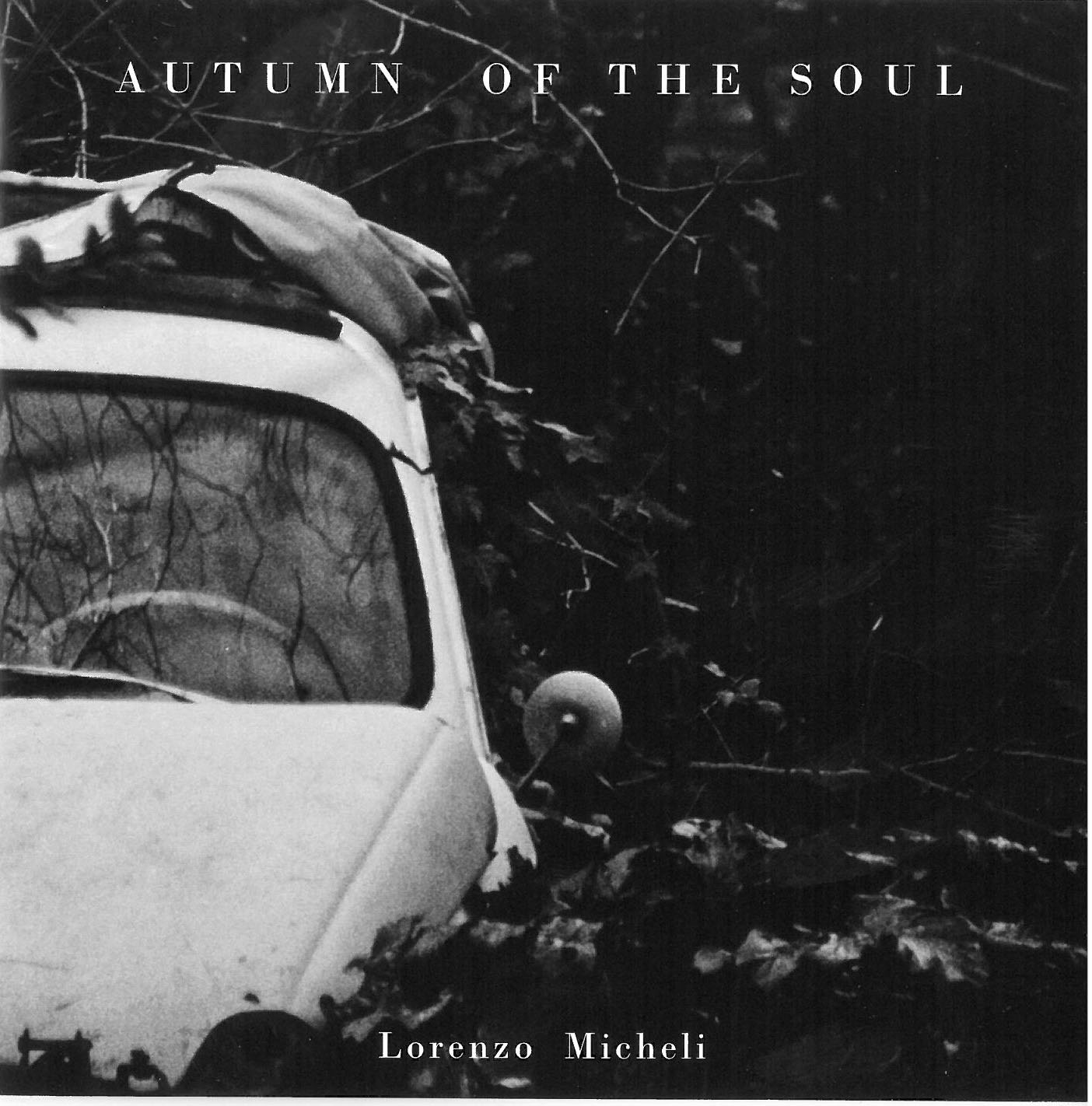
05_Autumn_of_Soul.jpgAutumn of the Soul is a charming new CD by the Italian guitarist Lorenzo Micheli featuring works by Mario Castelnuovo-Tedesco, Vicente Asencio, Angelo Gilardino, Alexandre Tansman and Pierre de Bréville (Contrastes Records CR9201409).

Andrés Segovia is not directly represented on the CD, but his influence links all the pieces together. Tansman and de Bréville were two of the composers who wrote works for Segovia following his groundbreaking 1924 solo guitar recital in Paris. Tansman, whose association with Segovia lasted for over 50 years, is represented by two works: the three-movement Hommage à Chopin and the Variations sur un thème de Scriabine. The French composer de Bréville’s short untitled composition from 1926 was never performed by Segovia, and remained unknown until the discovery of the manuscript in the Segovia archives in 2001.Gilardino was one of the two editors who published the work under the title Fantasia. Gilardino’s own Canzone notturna is included here. Asencio’s Suite mistica consists of three short movements inspired by the New Testament; the work was dedicated to Segovia, who suggested the title.

The CD opens and closes with selected movements from Castelnuovo-Tedesco’s Platero y yo, a work inspired by the 1914 book of children’s prose by the Andalusian poet Juan Ramón Jiménez that tells the story of the donkey Platero and his owner. It was written in 1960, coincidentally the same year a similar suite with the same name was composed by Eduardo Sáinz de la Maza, and was originally meant to be played in conjunction with a reading of the poems. Segovia intended to record it this way, but only managed ten of the pieces without narration. Castelnuovo-Tedesco’s work perhaps doesn’t have quite the Spanish warmth of the Maza version, but the eight movements here are quite delightful. Micheli’s playing is clean and accurate throughout a quite challenging selection of works.

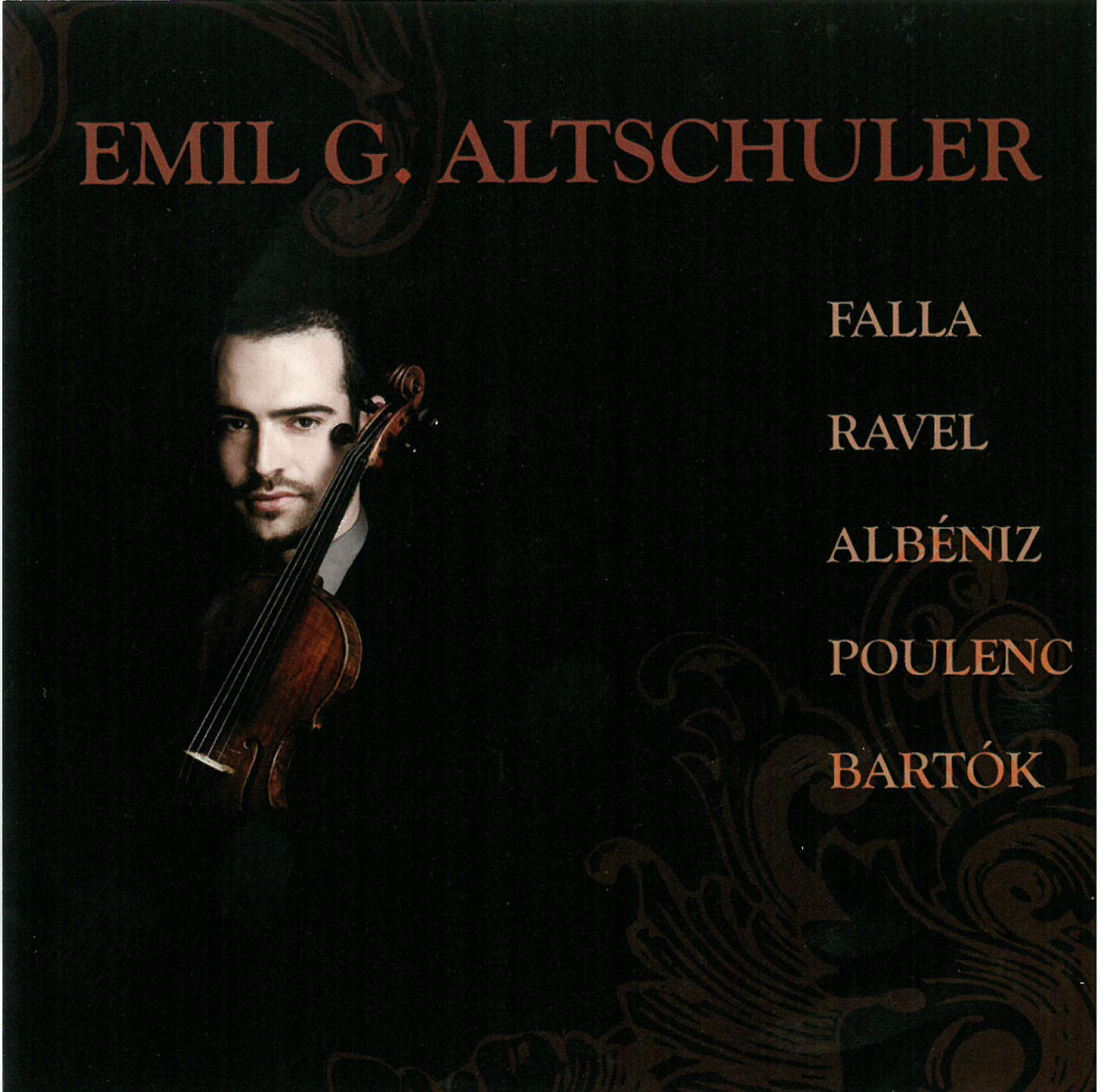
06_Emil_Altschuler.jpgThe young American violinist Emil Altschuler has a terrific pedigree, having studied with the legendary Dorothy DeLay at Juilliard and with Erick Friedman at the Yale School of Music. His self-titled and independently released CD (emilaltschuler.com) – apparently his second solo album – features works by Falla, Ravel, Albèniz, Poulenc and Bartók, with pianist Keunyoung Sun as accompanist.

There’s a decidedly old-style feel to Altschuler’s playing, with the almost constant fast vibrato and the bright, slightly nasal tone very reminiscent of Heifetz. His website says that he plays with gut strings and without a shoulder rest, and notes that his sound is indeed reminiscent of old school masters such as his former teacher Friedman, and Heifetz and Kreisler. Friedman was in turn a student of Heifetz, so the link is a valid one.

There is no booklet with the CD, just a single slip of paper in the jewel case front flap, so there is a complete lack of details regarding the recordings; the program, however, is apparently one which Altschuler has been touring for several years. Falla is represented by the Siete canciones populares Españolas and the Danse Espagnol from La Vide Breve; Ravel by the Pièce en forme de Habanera and the Tzigane; and Albéniz by the Tango Op.165 No.2. Poulenc’s Violin Sonata Op.119, written in 1942-43, seems to be a bit out of place in a predominantly Spanish program, but a passionate performance proves that it’s a terrific work which really should be heard more often. Bartók’s Romanian Folk Dances are listed as bonus tracks – possibly because they were not part of Altschuler’s regular recital program – and provide an energetic end to the CD.

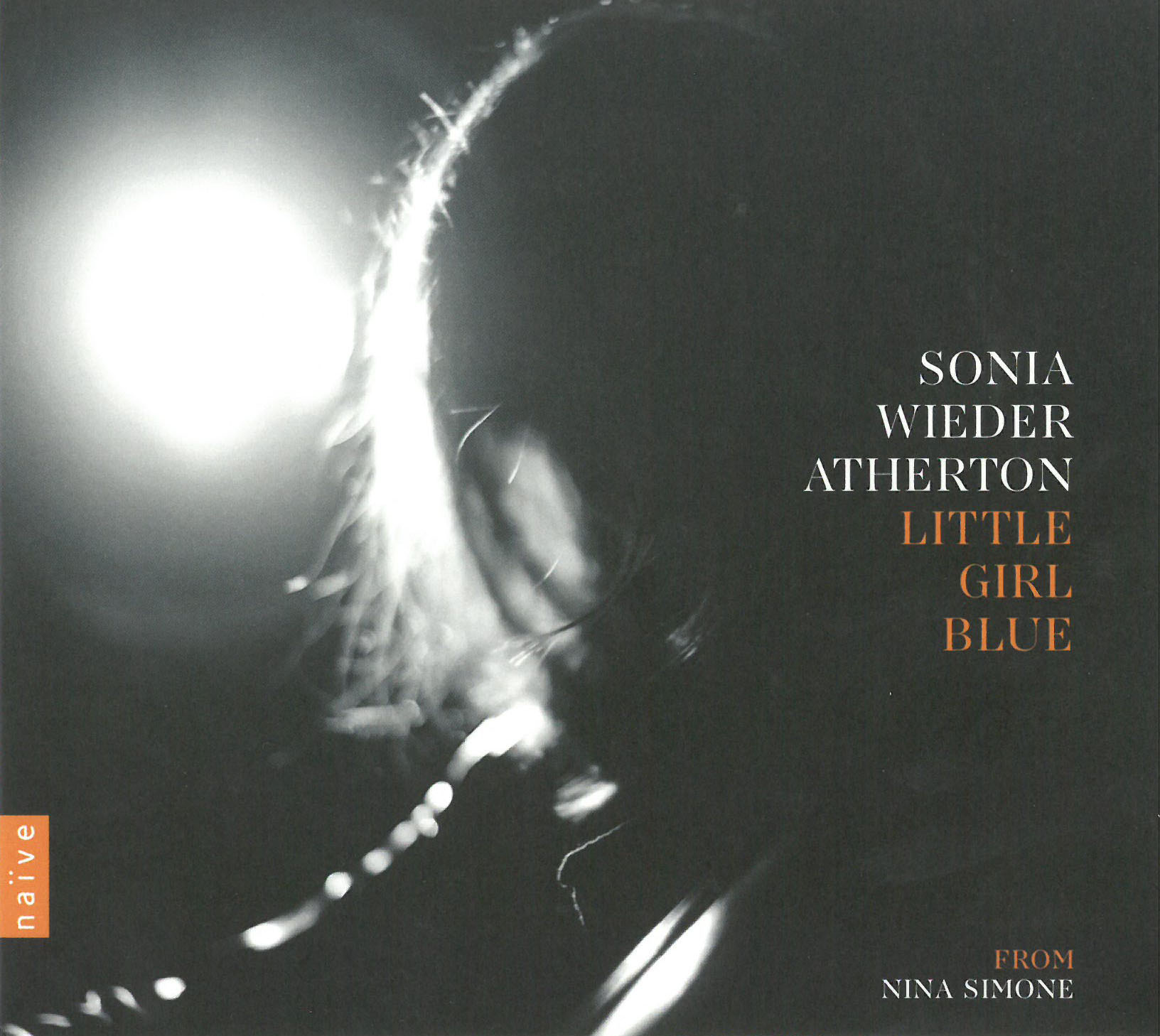
07_Little_Girl_Blue.jpgI originally knew Nina Simone only from her 1960s hit I Put a Spell on You, and then later as a jazz singer with a highly distinctive voice and style, but Little Girl Blue, the new CD from cellist Sonia Wieder-Atherton (naïve V 5376), shows how little I actually knew about the range of this artist’s work. Pianist Bruno Fontaine and percussionist Laurent Kraif join the cellist in a program, sub-titled From Nina Simone, that explores Simone’s legacy – “her repertory, her arrangements, her harmonic universe and her story too,” says Wieder-Atherton in the sparse booklet notes, although the significance of one or two of the tracks isn’t made clear.

Simone was a classically trained pianist who won a scholarship to the Juilliard School of Music (she left after running out of money) and was then denied admission to the Curtis Institute in Philadelphia, a rejection she always believed to be racially motivated. She was also an accomplished jazz pianist. Little Girl Blue was the title of Simone’s debut album in 1958, and the Rodgers & Hart song is presented here (with a nod to Simone’s own interpolation of Good King Wenceslas in the number) along with four compositions by Simone and a selection of songs by, among others, Duke Ellington, Billy Taylor, Fritz Rotter and Oscar Brown Jr., and two classical works: the Brahms setting of the Bach choral prelude Schmücke dich, o liebe seele and the Andante middle movement from Rachmaninov’s Cello Sonata in G Minor.

The mood throughout the CD is predominantly quiet and introspective, but it is full of lovely moments. The tracks with just piano accompaniment fare much better than some of those with percussion – bells and clusters, hand pans, water drum, grain basket and body percussion (including popping the finger from the mouth) for example – which sometimes seems to detract from the music rather than add to it. Wieder-Atherton’s style in the ballads is quite affecting, and there is some lovely playing from Fontaine, particularly in Fritz Rotter’s That’s All I Want From You, the title track and the two classical items, neither of which sounds the least bit out of place in this setting. Indeed, Simone’s own composition Return Home, the final track on the CD, ends with a whimsical quote from Bach’s Toccata and Fugue in D Minor.

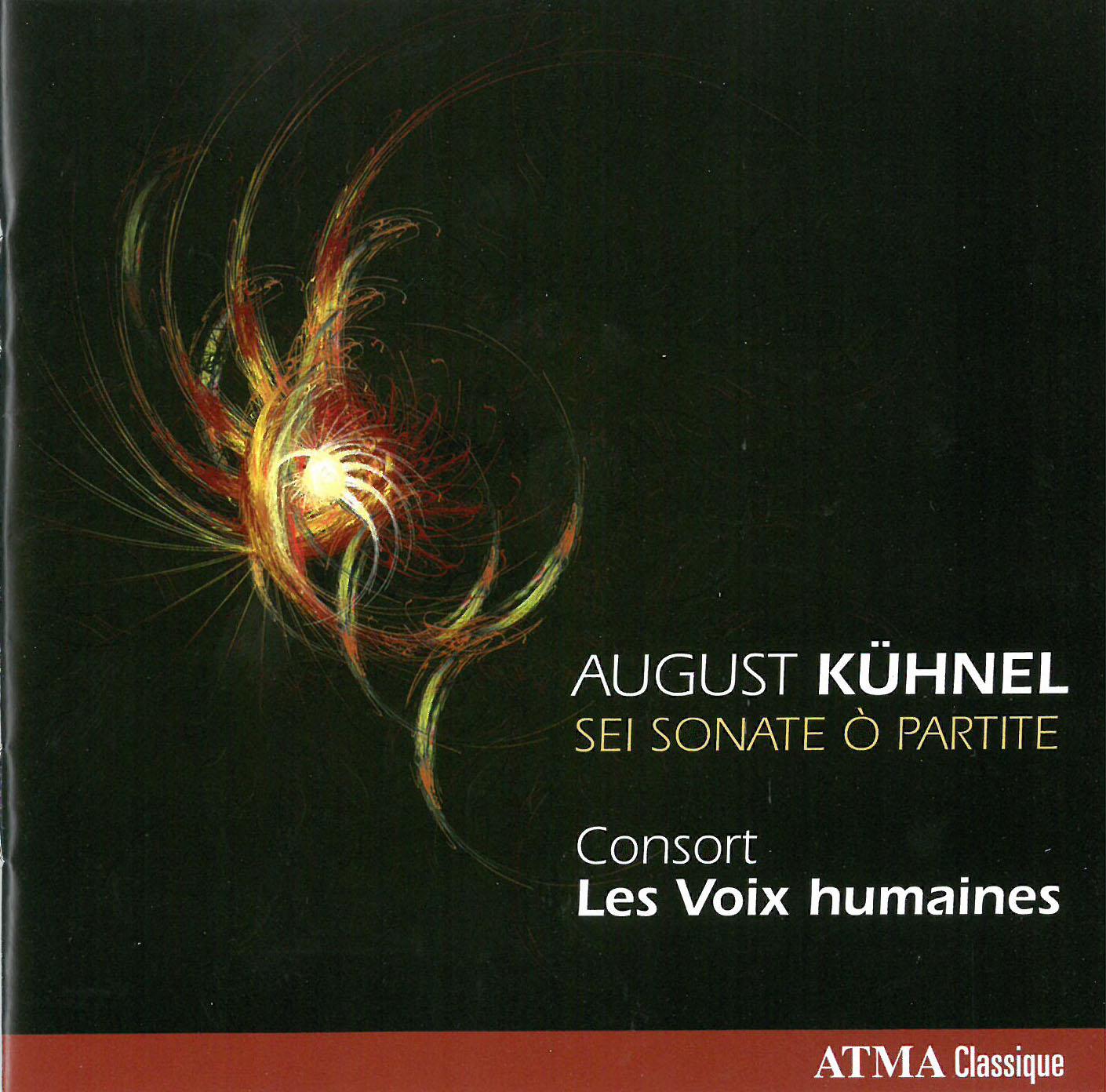
02_Classical_01_Kuhnel_Voix_humaines.jpgAugust Kuhnel – Sei Sonate O Partite
Les Voix humaines
ATMA ACD2 2644

Solo, rather than consort performances of the bass viol increased in popularity – not to say melodic and harmonic potential – in Europe in the mid-17th century. France emerged as a key centre for bass viol solo music but Germany was not so far behind. August 1645 saw the birth of August Kühnel in Saxony. Kühnel’s father Samuel, himself a composer and viol player, trained him to the extent that he was appointed viola da gambist to the court orchestra of Maurice, Duke of Saxe-Zeitz.

Only Kühnel‘s six sonatas or partitas were published; the rest of his music survives as manuscripts. In fact, the partitas deserve a wider audience. They start with a prelude which features rich embellishments and follow with rigorous allegros and adagios. Susie Napper, Margaret Little and Mélisande Corriveau tackle these movements with gusto. Their playing is reminiscent of what was called stylus phantasticus, a demanding interpretation which tests the bass viol player with its rigorous scoring.

Sonata I sets the pace in this respect even if Sonata II is more restrained; the former could almost be one of the folk-tune settings which had inspired early 17th-century viola da gamba players. Sonata III falls somewhere between its predecessors. This is not surprising as it is annotated solely as aria variata by Kühnel.

It is Kühnel himself who encourages the spirited playing of the Voix Humaines Consort as he himself acknowledges that it is impossible to annotate everything: he places an apostrophe where he requires an ornament to be played, leaving performers free to choose trills, vibratos, appoggiaturas and many others! It is a bit like leaving schoolchildren free to roam in the chemistry laboratory or, in the sleeve-note writer’s words, “the telepathic communion of a pair of jazz saxophonists.”

And the last three sonatas? The country-dance characteristics of some of their movements is certainly brought out, particularly in Sonata V, while Sonata VI is very reminiscent of the music accompanying baroque dramas. It is easy to see why Napper and Little are so admired for their interpretations of this genre.


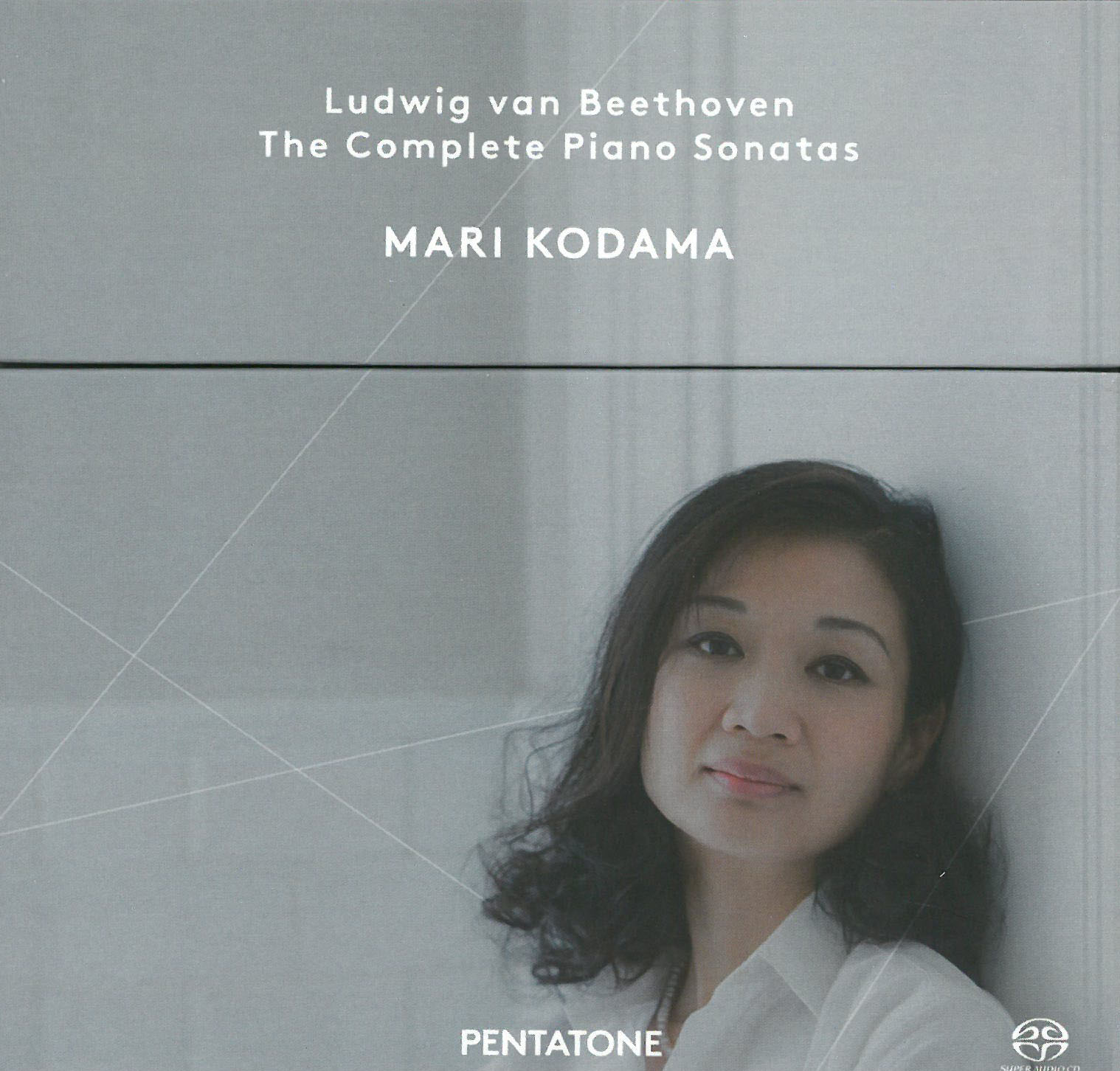
02_Classical_03_Beethoven_Kodama.jpgBeethoven – Complete Piano Sonatas
Mari Kodama
Pentatone PTC 5186 490

The 32 sonatas of Beethoven are a milestone in musical history and one of the marvels of human civilization. The piano was Beethoven’s own instrument; he first became famous as a concert pianist. The sonatas also trace the development of the instrument itself; with technical improvements it became more and more articulate and expressive, noticeable throughout the sonatas. Interpretation dates back to the time of Liszt and complete recordings by some of the piano giants are many, but almost exclusively by male pianists.

I met Mari Kodama at the time of launching her new set for PentaTone. She immediately impressed me as quiet, unassuming, rather reclusive and modest but very dedicated to her art. Well, quiet waters run deep as I certainly found out later in listening to her play. It took her some ten years to complete this project and “time was her greatest gift” as she thoroughly researched each sonata and understood the compositional process from the inside out as her extensive notes demonstrate. Kodama was virtually unknown when she started this project and so it was doubly difficult to make herself known as well as make a new statement on this field. Comparisons are limitless as everyone has his/her favorites they swear by, although it wouldn’t be fair to this relatively young pianist and the enormity of her effort and accomplishment.

Her playing can be summed up as impeccable, painstakingly observing the composer’s original metronome markings, usually on the fast side of what we are used to with amazing technical brilliance and rhythmic precision as well as a tremendous range of expression and structural coherence. Her playing is essentially delicate, but this is advantageous for the more light hearted, humorous pieces like the second movement of the Hunt Sonata, Op.31, No.3 and elsewhere where she is distinctly delightful in making the piano literally “swing” (Op.31, No.1). Even more challenging is the Pastoral Sonata Op.28, notoriously difficult to interpret, in which she excels. Her youthful joy of playing, especially her favourites, is infectious, which makes this set extra special.

But Kodama is certainly no lightweight. She makes an enormous impact with the Hammerklavier, Op.106, more than 41 minutes long, immensely difficult, an endurance test even for the likes of Richter. Her bold attack with the magnificent fanfare-like chords immediately rouses the listener. The long Adagio, often a stumbling block for pianists, is held together well and the enormous fugue that requires almost superhuman endurance and stamina comes off with such abundant energy that it’s simply breathtaking.

Nine CDs richly documented with Kodama’s own analysis of each sonata, the PentaTone sound is state of the art with gorgeous piano tone as if it was in your own living room.

Concert Note: Mari Kodama and Karin Kei Nagano, her 15-year-old daughter (with her husband MSO conductor Kent Nagano), perform April 25 as part of Bravo Niagara!’s second annual “Spring into Music @ Stratus festival, Stratus Vineyards, Niagara-on-the-Lake.

Back to top