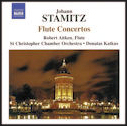
03_stamitz_aitkenStamitz - Flute Concertos

Robert Aitken; St. Christopher Chamber Orchestra; Donatas Katkus

Naxos 8.570150

These four (C major, G major and two in D major), of Johann Stamitz’s fourteen concertos for flute and orchestra, were probably composed in the 1750s for the flute virtuoso Johann Wendling. They demand reconsideration of the standard music school wisdom on the “rococo” period as a kind of transitional netherworld where composers produced inane music, which inexplicably laid the ground work for Haydn, Mozart and Beethoven. These concertos are poised and mature. The writing for the flute is superb, equally expressive in the virtuosic outer movements and in the slow middle movements. The orchestral writing is equally impressive; and the pair of horns in both D major concertos (not just the second as the notes suggest) are masterfully employed. The middle movement of the C major concerto, with its stern repetitive Beethovenian dotted rhythmic motif, is poignantly tragic; and the virtuosity required throughout of both the soloist and of the orchestra, far from being exhibitionism, is central to the meaning of this music.

Robert Aitken is exemplary, his sound robust, even in the most extreme register transitions, and at times tender; his articulation sets the standard. The orchestra is virile in the tutti passages and engagingly rhythmic when accompanying the flute. The cadenzas, composed by Aitken, are stylistically consistent and contain some lovely touches, like the orchestra joining the flute in the trill at the conclusion of the cadenza in the slow movement of the first D major concerto.

Allan Pulker

Concert note: Robert Aitken is featured in Alice Ping Yee Ho’s Dance Concerto for solo flute, strings and percussion with Chinese dancer William Lau and the New Music Concerts Ensemble at Betty Oliphant Theatre on February 14.

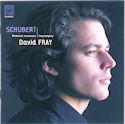
04_schubert_fraySchubert - Moments musicaux; Impromtus

David Fray

Virgin Classics 694489 0

In his short career, the young French pianist David Fray has gained a reputation for eccentricity, mostly due to his intense stage presence and singular vision. Inevitably, Glenn Gould comes to mind. In fact, Bruno Monsaingeon, who made a series of important films on Gould, has produced a documentary on Fray, called J.S. Bach – Sing, Swing and Think. Fray scored his first international success in Canada, at the 2004 Montreal International Music Competition, and recorded his very first disc, which included Schubert’s Wanderer Fantasie, on the Canadian ATMA label.

In this recording of Schubert’s six Moments musicaux, the first set of Impromptus, and the rarely heard Allegretto in C minor, Fray tends to favour subtle dynamics and restrained tempos. He can certainly be dramatic. But instead of creating sharp contrasts and sudden climaxes, he builds up tiers of sound. This is particularly effective in extended passages like the shimmering triplet runs in the first part of the Impromptu No. 2 in E flat Major and with motifs like the heart-wrenching inner-voice dissonances in the second part. He treats even the most fleeting lines like cantabile melodies, shaping them with an imaginative variety of colours, textures and harmonic details.

In his program notes Fray calls Schubert ‘a close friend’. In his playing Fray shows Schubert to be the most generous and humane friend possible. I find myself returning to this exquisite disc frequently, and feeling richly rewarded with each listening.

Pamela Margles

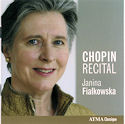
05_chopin_fialkowskaChopin Recital

Janina Fialkowska

ATMA ACD2 2597

Polish sausage is loved for its deep flavours that linger long after the blush of its immediate gratification to the palette. Our reluctance, however, to use food as a frequent metaphor for art means that the only place you’ll ever see Chopin likened to Kolbassa is… well, right here.

Janina Fialkowska is a Canadian pianistic stalwart – more amazing still because of her recovery from a 2002 cancer surgery that threatened her career. Her performance of the Chopin standards in this recording is remarkably strong. Her masculine keyboard energy is undiminished and her feminine subtleties as seductive as ever. This Yin and Yang are so beautifully balanced in her interpretations that one quickly forgets the performer while being drawn deeply into the swirling emotions that make Chopin’s music unique.

Stepping out of the way of the music is something Fialkowska does with clever and manipulative grace. One easily takes the bait offered by her technical perfection and is drawn toward the fiery melancholy of Chopin’s world.

Most unusual in these performances is the jarring pull-apart of the three-four rhythm in the C sharp minor Waltz (Op. 64 No.2) and the D Major Mazurka (Op. 33 No.2). The irregularity of the left hand “oom-pa-pa” is taken to its absolute limit without ever compromising the pulse of the music. This is a high risk interpretation but carried off convincingly because Fialkowska’s Polish roots run deep and true – and her musicianship is impeccable.

The audio balance of this recording leaves just the perfect amount of room space around the piano. And although the Steinway Fialkowska uses sounds a bit brighter and harder in the mid range than we generally hear from these instruments, this disc should definitely be a part of your Chopin collection.

Alex Baran

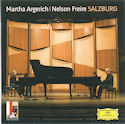
06_argerich_freireSalzburg

Martha Argerich; Nelson Freire

Deutsche Grammophon 477 8570

Back in the days before TV, radio and stereo recordings, inconceivable to the younger generation but really not that long ago, the only way to hear an orchestral piece was at a concert hall. For that reason composers reduced scores to single or two piano arrangements in order to be performed in the home. The other reason for 2 piano versions was so aspiring pianists could practise piano concertos with the 2nd piano, the orchestra, played by the teacher.

Argerich, the firebrand Argentinean virtuoso, now in her 70’s and still full of her powers, and Brazilian Nelson Freire who is a bit younger and was a child prodigy (who I saw playing as a teenager the Liszt Concerto under Rudolf Kempe), here combine forces at the Grosses Festspielhaus of Salzburg. These two have been playing together for years and have a wonderful compatibility and chemistry.

A carefully selected program from the classic to early and post Romantic and modern pieces gives a good cross section of what can be achieved in this instrumental mode. BrahmsHaydn Variations where the composer is in one of his sunniest moods and at his most inventive, is particularly suited to this version as it reveals the many structural intricacies that tend to be underplayed in the orchestra. It is a lovingly caressed and detailed performance. With the Rachmaninov Symphonic Dances, a piece written by a piano virtuoso, the players have a chance to show deliberate bravura eliciting a strong audience reaction. Their perennial showstopper, Ravel’s La Valse, conjures up many shades of mood and orchestral colour from the charm of a Strauss waltz to the menacing undertones of war. It ends in a gigantic explosion of sound followed by a gigantic explosion of applause.

Janos Gardonyi

07_mahler_5Mahler - Symphony No.5

Gürzenich Orchester Köln; Markus Stenz

Oehms Classics OC650

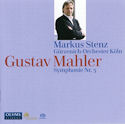
Founded in 1857, Cologne’s Gürzenich Orchestra gave the first performance of Mahler’s Fifth Symphony in 1904 under the composer’s baton. A century after the premiere the orchestra elected Markus Stenz as their music director and committed itself to recording the complete symphonies of Mahler under his direction. The cycle appropriately enough commences with the Fifth Symphony. This is actually Stenz’s second recording of this work following an earlier critically acclaimed though poorly distributed account during his leadership of the Melbourne (Australia) Symphony. Stenz drives the symphony ahead relentlessly, avoiding the self-aggrandizing expressive distortions so often employed by many another conductor. Some may find this no-nonsense approach a bit one-dimensional, and there are indeed moments such as the triumphant brass peroration at the close of the second movement that clearly benefit from just a bit more grandeur. However Stenz’s tempi in the first movement follow quite closely the outlines of Mahler’s own impromptu performance preserved on a Welte piano roll and his straightforward yet supple account of the famous Adagietto is, as it should be, more romance than lament. The skilful playing, sensitive dynamic nuances and total involvement of the excellent Gürzenich ensemble is well represented in a nicely balanced studio recording which includes an SACD layer.

Daniel Foley

08_ravel_nezet-seguinRavel

Rotterdam Philharmonic Orchestra; Yannick Nézet-Séguin

EMI Classics 9 66342 2

A conductor’s baton is a lightning rod. It can charge an orchestra’s performance with breathtaking energy or leave it in smoking ruins. Leading one of the world’s great orchestra’s therefore requires an Olympian confidence balanced with respect for the potential scale of both success and failure.

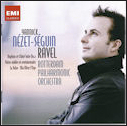
Young Canadian conductor Yannick Nézet-Séguin has been Music Director of the Rotterdam Philharmonic since September 2008. His appointment caused notable chatter in the small Canadian orchestra world and turned many heads internationally. Early reviews of his work in Rotterdam and London have been strong endorsements of his talent and this recording will be another step in his advancing career.

This disc reflects the French love for dance expressed in the music of Maurice Ravel. His orchestrations are legendary for their colour and dynamism. Both elements are so very French in their sense of abandon yet require a technical precision only available to the finest ensembles under gifted leadership.

In the Daphnis et Chloé Suite No.2 The Rotterdam Phil follow Nézet-Séguin through an impressionistic landscape where this large European orchestra often achieves a chamber ensemble intimacy. They repeat this in the Ma mère l’oye Suite and the Valses nobles et sentimentales. The real dynamism, however, reveals itself in La Valse, especially in the wild finale where 19th century traditions are torn apart and established truths satirically mocked by a cynicism rooted in the morbid trenches of WW1.

These performances are fluid and seamless. Repeated listening reveals new textures in the remarkable playing of the Rotterdam Phil. Nézet-Séguin clearly has this orchestra in hand and speaks their language.

Alex Baran

06_capriceCaprice

Alison Balsom; Gothenburg Symphony Orchestra; Edward Gardner

EMI Classics 3 53255 2

In recent years there has been a trend on the part of some instrumentalists to demonstrate their skills by performing transcriptions of works which were not originally written for their instruments. In some cases they have been orchestral works, and in others they were originally choral or solo vocal works. With one exception, a single movement from a Tomasini Trumpet Concerto, all of the tracks on this CD fall into that category.

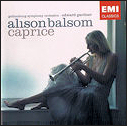
Although little known in North America, this young British trumpet performer has made quite a name for herself throughout Europe. On the one hand, her performance is as brilliant as you will hear from any trumpet virtuoso when she plays Mozart’s Rondo alla turca or Paganini’s Caprice No. 24. Then, when she turns to Piazzolla’s Libertango or Rachmoninov’s Vocalise, the result is a haunting mellow tone rarely heard in a trumpet performance. Of particular interest to trumpet aficionados is her rendition of Arban’s Variations on Casta Diva from Bellini’s opera Norma. Casta Diva has always been one of my favourite operatic arias and this version shed a whole new light on it.

Anyone who has ever been serious about playing a brass instrument will be familiar with Jean Batiste Arban’s “Tutor and most will be familiar with his ever popular Variations on The Carnival of Venice. However, I had to dig out my copy of that publication to confirm that I have owned it these many years. These variations would be an amazing challenge for any instrumentalist. Alison Balsom meets that challenge with apparent ease.

Jack MacQuarrie

09a_michael_unger_naxosMichael Unger - Organ Recital

Michael Unger

Naxos 8.572246


09b_universe_of_poetryUniverse of Poetry

Michael Unger

Pro Organ CD 7235 (www.proorgano.com)


Devotees of organ music are admittedly few but faithful. Their numbers, however slim, do sustain a modest stream of recordings from both major and private labels. Canadian-born Michael Unger offers two new recordings in this genre – each very different from the other.

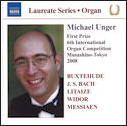
His Tokyo recital recording follows his 2008 International Organ competition victory there. Curiously enough, the Japanese have proven to be an enthusiastic and well-financed market for new pipe organs. Numerous concert halls throughout Japan have contracted North American and European pipe organ builders to install instruments costing millions. Nobody is certain why Asian audiences have so passionately embraced a culturally foreign form of music, but it gives dwindling numbers of organ enthusiasts in the West reason to be grateful.

The instrument is by European builder Marcussen & Son. Its tonal design seems a careful balance between the brightly voice ranks needed for the recital program’s Buxtehude and Bach as well as the 19th – 20th century French repertoire. The instrument’s scale reflects the desire to have a large and grand sound in the concert hall although one suspects the designers may have neglected to leave enough acoustic space in the hall to adequately blend the organ’s voices as cavernous churches do so well.

The treat in this recital is definitely Messiaen’s Dieu parmi nous (from La Nativité du Seigneur). Unger exploits the organ’s potential for colouristic effect and presents Messiaen with unreserved energy and brightness. The Gaston Litaize Prélude et danse fugeé is also a track worth hearing for its contemporary flavour.

Universe of Poetry presents Unger in a program of more traditional repertoire at Sacred Heart Cathedral, Rochester, N.Y. The organ is by American builder Paul Fritts and is as stunning visually as it is aurally. The Cathedral’s ambient space provides a marvellous acoustic setting for the instrument. The organ is voiced brightly making it perfect for a wide range of German repertoire and reasonably suitable for some English and American composers as well, especially the more contemporary ones. 19th century French music may not fare so well, but that’s the nature of tonal design in the organ world.

Unger’s program on this disc is mostly German (Bach, Buxtehude, Rheinberger) recognizing the instrument’s strengths. The few English, French and Belgian pieces do however, come across very well.

The performances on this disc convey a sense of fun and love for the music that contrasts with the fiery showmanship of Unger’s Tokyo competition. Production values are good on both CDs but the Cathedral recording in Rochester N.Y. has the definite edge.

Alex Baran

10_angele_dubeauVirtuose

Angèle Dubeau

Analekta AN 2 8729


I would venture to say that alongside tantalizing food products, sleek public transportation vehicles and couture fashion, violinist Angèle Dubeau could be regarded as an equally important Quebec commodity. Although she emerged as a soloist at a young age, her career has never been marked by flash and pizzazz. Rather, the approach she chose has been one of solid musicianship coupled with continuous learning and development, as seen in the 25 discs recorded for the Analekta label, either as a soloist, in chamber groups, or with her ensemble, La Pietà.

This newest release, titled simply Virtuose is rather like a tribute album, for instead of presenting newly-recorded material, it draws from recordings she has made over the last twelve years. The result is a most attractive and eclectic collection ranging from solo performances to those involving a full orchestra.


The CD opens with two familiar solo Caprices, the first by Locatelli, and the second by Paganini. Dubeau’s warm tone and technical virtuosity are immediately apparent as she treats these miniature gems with apparent ease. Considerably more dramatic are two final movements from 19th century concertos, those by Mendelssohn and Glazunov, and involving, respectively, the Orchestre Metropolitain, and Bulgarian Radio Symphony. Her affinity for chamber-music is discernible in pieces such as the finale from Schubert’s Violin Sonata in D major (with pianist Anton Kuerti), and the cheeky finale from the Martinu Sonata for Flute, Violin and Piano. Concluding with the tempestuous opening movement from the Sibelius Violin Concerto, the CD is a fine homage to an established Canadian virtuoso whom we certainly hope to enjoy for a long time to come.


Richard Haskell


Concert Note: Toronto audiences can hear Angèle Dubeau and La Pietà perform at the Jane Mallett Theatre on February 10.


09_lennyCelebrating Lenny

Leonard Bernstein

Medici Arts 2057068-1/2/3/4/5

One recent release of 20th century performances takes second place to none – the five-DVD video recordings by Medici Arts of Leonard Bernstein at his florid, warm-hearted best in a variety of musical contexts. In seven hours they illuminate his fierce involvement in every note of the works he’s conducting, the authority he radiates without the grim demeanour adopted by so many peers, the ability to draw the right emotional insights from his charges, the serene, closed-eyes reverence and relaxation masking his inner fire and his tireless insistence in keeping listeners attentive.

The DVDs cover the years 1973 through 1990, the final one a mighty take on Bruckner’s Ninth Symphony in D Minor in Vienna just months before his death. It’s no revelation to note the historical significance of the fourth in this series, another D Minor symphony – by Beethoven, his Choral, performed on Christmas Day 1989 with international choirs and musicians just weeks after the Berlin Wall came down. Usually dubbed ‘Ode To Joy’ from Schiller’s poem, Bernstein rechristened it ‘Ode To Freedom’. It still delivers goose-bumps, despite the lagging Adagio, and is the pick of the other examples of Bernsteinian mastery here - conducting Brahms with the Israel Philharmonic, Franck and Milhaud with the French national orchestra, Mozart and the Bruckner with the Vienna Philharmonic.

This contribution from Bernstein, so adept at the serious and the light, if West Side Story and Candide are truly light, is a not-to-be-missed box set gem.

Geoff Chapman

EXTENDED PLAY – VIOLINS GALORE

By Terry Robbins

01_beethoven_capucon_nezet-seguinI’ve been a bit reluctant to jump on the Renaud Capuçon bandwagon, despite his meteoric rise through the violin ranks, but his new recording of the Beethoven and Korngold Violin Concertos (Virgin Classics 9 694589 0) would make a believer of anyone. Capuçon is a ‘big vibrato’ player, but here it’s put to a controlled and telling use in a beautifully-judged performance. What really pushes this CD into the stratosphere, though, is the contribution of the Rotterdam Philharmonic Orchestra under Yannick Nézet-Séguin: perfect tempi, and remarkable balance and clarity that reveal details in the orchestration I’m not sure I’ve ever heard before. The Korngold benefits from exactly the same treatment, and Nézet-Séguin’s interpretation merges with Capuçon’s huge, warm sound to produce a terrific performance. It’s not always easy to appreciate the effect a conductor can have, but the reasons for Nézet-Séguin’s rapidly-growing international reputation are here for all to hear.

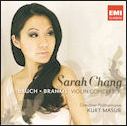
02_bruch_brahms_changAlthough I thought her Vivaldi Four Seasons CD was simply outstanding, I must admit I found the new Bruch and Brahms Violin Concertos from Sarah Chang (EMI Classics 9 67004 2) a bit on the ordinary side – if ‘ordinary’ can ever be applied to a player of Chang’s enormous talents. Chang tends to be another ‘big vibrato’ player, and in the Bruch – a work closely associated with her – I found it a bit distracting, despite the Romantic nature of the music. It’s much the same in the Brahms, where her big, wide vibrato makes it sound more like a “reach-the-back-of the-hall” live concert performance than a closed recording. Kurt Masur’s accompaniment with the Dresdner Philharmonie is rhythmically strong, but a bit pedestrian. Quality performances without a doubt, but, given the performers, a little bit nearer the middle of the pack than you would expect.


Concert Note: Sarah Chang will perform a concert on February 24 at 8pm at Markham Theatre.


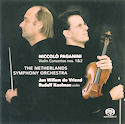
03_paganini_vriendWith his CD of Paganini Violin Concertos Nos. 1 & 2 (Challenge Classics Super Audio CC72343), Rudolf Koelman certainly answers the question “How?” when it comes to playing Paganini, but more importantly also answers the question “Why?” It’s easy to dismiss Paganini’s works as empty show pieces, with little to recommend them musically, but this disc not only highlights Paganini’s close personal friendship with Rossini but also stresses their musical association by including the overture to Rossini’s opera Matilde di Shabran. It’s a brilliant stroke, because it shows that Paganini’s works are not simply vehicles for virtuosity, but are firmly rooted in the Italian operatic and vocal style of the time; the violin merely replaces the voice. Koelman has the complete arsenal of technical skills, but plays with smoother lines and fewer sharp edges than many Paganini performers. Jan Willem de Vriend leads the Netherlands Symphony Orchestra in live performances, but audience noise is never an issue.

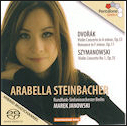
04_dvorak_szymanowski_steinbacherI’d forgotten just how much I love the two violin concertos by Karol Szymanowski, but Arabella Steinbacher’s stunning new CD of his Concerto No.1, together with the Dvorák Concerto (Pentatone Classics Super Audio PTC 5186 353) is a dazzling reminder. This is, by any standard, a wonderful performance of a gloriously lyrical and rhapsodic work; if the achingly beautiful theme that runs through the work doesn’t get to you, then nothing will. Steinbacher sounds as if she’s been playing this work all her life, and receives passionate and faultless support from Marek Janowski and the Rundfunk-Sinfonieorchester Berlin. The Dvorak receives no less perceptive and committed a performance, and his Romance in F minor is made to sound much more than just filler. A simply stunning CD.

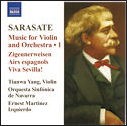
05_sarasate_yangTianwa Yang’s third CD in a projected seven-volume set of the complete works of Sarasate is the first volume of his Music for Violin and Orchestra (Naxos 8.572191). A wonderful Zigeunerweisen starts things off, and the standard never flags. Certainly it would be difficult to imagine more suitable support: Ernest Martinez Izquierdo draws passionate and nuanced playing from the Orquesta Sinfonica de Navarra, the orchestra founded by Sarasate in 1879, and the recording venue was their concert hall in Pamplona, the composer’s birthplace. Tianwa Yang toured China with this same orchestra in a series of Sarasate concerts, and clearly understands the music, going beyond a dazzling technique to get at the Spanish soul within.

Terry Robbins

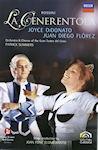
03_la_cenerentolaRossini - La Cenerentola

Joyce DiDonato; Juan Diego Florez; Gran Teatre del Liceu; Patrick Summers

Decca 074 3305

It is such a pleasure to enjoy this completely original, very imaginative and colourful DVD performance of the 24 year old Rossini’s comic Cinderella masterpiece completed under great pressure in a few weeks for the carnival season of 1817. Original indeed. What an inspired idea to bring in the ‘Comediants’, a group of itinerant players who give outdoor impromptu performances all over Catalonia much like in the Middle Ages. The overall effect is the work of Joan Fonts (director) and it’s like a comic book fairy tale with strong primary colours that are ever changing with mirrors and the magic of backlighting. One hilarious feature is a group of anthropomorphic rats constantly moving around in the background following and silently commenting on the action.

And it’s a musical triumph as well. The two principals, Joyce diDonato and Juan Diego Florez are top of the line today in terms of bel canto singing. American mezzo DiDonato easily conquers the fierce technical demands of Rossini fioraturas but is also capable of pathos and introspection to move audiences with the warmth of her voice. Juan Diego Florez’s voice is spectacular in the high flying tessitura and he throws out the high C’s with the greatest of ease. After his aria in the second act Si, ritrovarla, io giuro the audience goes simply hysterical.

There is no disappointment in the three supporting baritone/basso roles either. Perhaps veteran Italian basso Bruno de Simone (Don Magnifico) stands out in his characterization, irresistible comedy and bravura Rossinian pattering, a feature that Arthur Sullivan adopted later into his English operettas.

Indiana born conductor Patrick Sommers is fast becoming a force to reckon with, especially in bel canto repertoire. His unerring beat of metronomic precision and graceful and stylish tempos, sometimes at lightning speed, contribute to an outstandingly memorable evening.

Janos Gardonyi

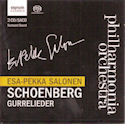
01_gurreliederA new performance of Gurrelieder, Schoenberg’s Tristanesque narrative, is not so rare these days, but still of interest. Earlier this year Esa-Pekka Salonen conducted it with the Philharmonia Orchestra in the Royal Festival Hall. Among the soloists is soprano Soile Isokoski singing Tove. Salonen appears to be less Romantic than, say Stokowski or Ferencsik, but achieves some exquisite balances between soloists and orchestra in the third part. The speaker in Herr Gänsefuss...” is Barbara Sukowa who is also in Abbado’s version (DG) in the role usually spoken by a male voice. The recording, issued by Signum (SIGCD173, 2 CD/SACDs) is lucid and dynamic.
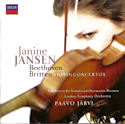
 

02_beethoven_jansenPaavo Järvi has just finished a complete Beethoven Symphony cycle with the Deutsche Kammerphilharmonie, Bremen, for RCA. These are electrifying performances, bringing new life to these perennial warhorses. Violinist Janine Jansen joins this same cast in the Violin Concerto with stunning results in a new Decca release (4781530). Her performance belongs to the perfect group emerging from young performers but, unlike most of them, she maintains the listener’s undivided attention. Jansen combines ease and elegance with authority, conveying Beethoven’s genius directly. The Britten Violin Concerto follows with Järvi at the helm of the London Symphony. They make a perfect pairing and complement Jansen’s previous Decca recordings of core repertoire.
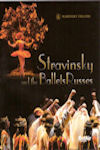
 

03_stravinskyThe Mariinsky Ballet’s performance of the meticulous re-construction of Nijinsky’s choreography and Roesch’s sets and costumes of the first performance of Le Sacre du Printemps, so enthusiastically reviewed here a few months ago, is now available on Blu-ray (BelAir BAC441). The high definition video makes an enormous difference, affecting a 3-D illusion, brilliantly drawing the viewer onto the stage mighty impressive, indeed. Fokine’s original Firebird of 1911 is included, as is the documentary on the extensive research to realise the originals.
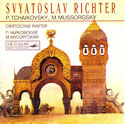
 

04_richterCollectors know that there are many live performances of Pictures at an Exhibition played by Sviatoslav Richter, each being individual and different from the others, no two the same. Richter was known to abhor the studio and therefore most of his recordings are drawn from live performances. In 1958 however, Melodiya managed to record him in the studio under ideal conditions. That recording has recently re-appeared (Melodiya MEL CD 1000515) and I had the opportunity to re-visit this exuberant reading. Here one can appreciate the finger work that is sometimes blurred in the live recording. Comparing it to the 1958 Sofia live performance for instance reaffirms what we already know about Richter, namely that never plays the same piece the same way twice.
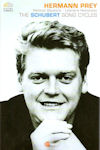
 

05_preyA MUST HAVE: The late Herman Prey, one of the last century’s greatest baritones, singing the three Schubert song cycles, Die Schöne Müllerin, Schwanengesang, and Winterreise (C MAJOR 700208, 2 DVDs). Prey was known for his perfect delivery of German art songs including, of course, Schubert. Not only did he have the voice, he was a consummate musician. The living room settings here are ideal and the sound appropriately intimate. How much nicer this is than a concert hall.
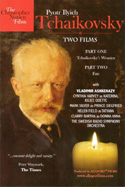
 

06_tchaikovsky_2_filmsTwo Films, Christopher Nupen’s celebrated 1989 video on Tchaikovsky’s life and music, is, at last, available on DVD (Allegro Films A10CND). Presented in two segments; Tchaikovsky’s Women deals with his relationships with women who passed through his life and their effect on his mental well-being, segueing nicely into Fate, his states of mind and the ensuing compositions. This is not presented as an entertainment but as a journal of his life and some major works. As is usual, Nupen provides the narrative, deftly drawing the viewer (me) into watching the entire 156 minutes without interruption. This is an important document and I liked it a lot.
 

07_mariinsky_1812The Mariinsky Orchestra’s third CD on their own label is devoted to the music of Tchaikovsky (MAR 0503, CD/SACD). The 1812 Overture which opens the program is mighty impressive with the added cannons and bells heard as if from afar and not vying with the entire orchestra for sonic dominance. The Moscow Cantata, scored for soloists, chorus and orchestra, follows then the Marche Slave (sic), opus 31, the Festival Coronation March, and the Festival Overture on the Danish National Anthem, opus 15. Recorded in their own hall earlier this year this album is outstanding in the excellence of the recorded sound, presenting a wide and deep sound stage, with every instrument and voice in natural perspective. The dynamic range, too, is impressive. Credit must go to the producer, James Mallinson, who is also responsible for the recordings of both the London Symphony and the Chicago Symphony orchestras on their own labels.
 

08_mahler_2Mahler’s Second Symphony with Chicago Symphony under Bernard Haitink continues their ongoing Mahler cycle with an outstanding performance recorded live earlier this year (CSO-RESOUND CSOR 901916, 2 CD/SACD discs). This is not an angst-ridden performance but a well considered interpretation from a Mahler conductor who has performed this work countless times and has already two performances in the catalogue. This is one of the very greatest orchestras and their playing is outstanding by any standards. Again, the recording itself is state-of-the-art, dynamic with breathtaking three dimensional perspectives that transports listeners to the best seats in Symphony Hall.
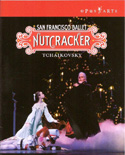
 

09_nutcrackerThe San Francisco Ballet’s production of The Nutcracker is but one of the countless different ways Tchaikovsky’s perennial favourite is offered to delight young and old alike. The 2008 staging was seen on PBS last year but Blu-ray enthusiasts will be delighted with the release on OpusArte, looking and sounding better than witnessed on TV (OA BD7044 D). In addition to an illustrated synopsis, there are interviews with the choreographer, the scenic designer and the costume designer. Also a documentary on the 1915 World’s Fair in San Francisco. A good package.


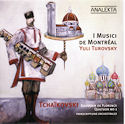
06_i_musici_tchaikovskyTchaikovsky - Souvenir de Florence

I Musici de Montreal; Yuli Turovsky

Analekta AN 2 9954

It was during his second visit to Italy’s sunny skies in 1890 that Tchaikovsky composed his string sextet in d minor, Op.70, appropriately titled Souvenir de Florence. Initially dissatisfied with it, he ultimately revised the piece and we have it here as arranged for string orchestra, along with the much earlier String Quartet Op.11 with I Musici de Montréal under the leadership of Yuli Turovsky.

What a fresh and vigorous sound IMM achieves on this recording! While always displaying a formidable precision, the group also demonstrates a keen sensitivity to the counterpoint. Melodic lines are carefully delineated, and there is none of the muddiness that can characterize string playing from time to time. This element of clarity is nowhere more evident than in the lively finale, which to me, always sounds more Slavic than Italian.

The String Quartet in D major is a considerably earlier work, written in 1871. Today, the piece is most famous for the well-known slow movement, the “Andante Cantabile”. Here, the augmented size of the ensemble, resulting in a lusher sound, seems particularly suited to this lyrical music which apparently brought Leo Tolstoy to tears upon first hearing it!

Kudos should also go to the engineering team for its fine technical work, and also for their decision (if indeed it was theirs) to record the disc at the Église Saint-Mathieu de Beloeil. The acoustics in this venerable 113-year old building are sublime and give a wonderfully resonant sound throughout, an element that further enhances an already great performance.


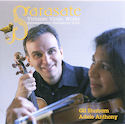
05_shaham_sarasateSarasate - Virtuoso Violin Works

Gil Shaham; Adele Anthony

Canary Classics CC07

By all accounts, Pablo de Sarasate must have been quite spectacular. One of the post-Paganini European virtuosi of the late 1800s, he dazzled audiences, critics and contemporaries alike, and not just with his playing. Like several of his fellow violinists – Vieuxtemps and Wieniawski in particular – Sarasate produced many outstanding compositions, and their warmth and brilliance is testimony to his playing ability.

Gil Shaham took the opportunity afforded by the centenary of Sarasate’s death in 2008 to present several concert performances of his works, culminating in the Sarasateada festival in Valladolid, Spain, last November. This latest CD on Shaham’s own Canary Classics label was recorded at the festival, and also features Shaham’s wife, the Australian violinist Adele Anthony.

Ysaÿe noted that it was Sarasate “who taught us how to play exactly”, and precision is certainly the first requirement if these pieces are going to be performed successfully. No worries here on that score. Shaham is brilliant in the four live orchestral performances with the Orquesta Sinfonica de Castilla y Leon under Alejandro Posada: the Carmen Fantasy; Zigeunerweisen; a somewhat bland Leo Blech orchestration of Zortica; and – with Anthony - the scintillating duet Navarra.

Anthony plays three of the eight outstanding tracks with pianist Akira Eguchi – Song of the Nightingale; Airs Ecossais; and Introduction and Tarantella - and certainly isn’t ‘second fiddle’ here in any respect. Shaham’s solo tracks are Habanera, Zapateado, Romanza Andaluza, Capricho Vasco, and Gavota de Mignon, and his playing standard never waivers.

Both players use a Stradivarius violin – Shaham the 1699 “Countess Polignac” and Anthony a 1728 instrument - and their richness in the lower register and brightness in the upper, while possibly more contrasted in Shaham’s playing, are very similar.

The booklet notes are by the always-reliable Eric Wen and nicely complement this delightful disc.

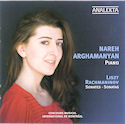
04_arghamanyan_lisztLiszt; Rachmaninov - Sonatas

Nareh Arghamanyan

Analekta AN 2 8762

Many years back I was fortunate to see young a Martha Argerich in concert and I recall hardly being able to sleep that night. So when I first listened to this debut recording of 20 year old Armenian pianist Nareh Arghamanyan I had only one wish and that was to see her performing in person as I had hopes of a new divine Martha. Fast forward now to the miracle of the Internet.

I‘ve already enjoyed three of her video performances seeing how she becomes symbiotic with the music, swaying her girlish, fragile body. Her seemingly gentle hands produce titanic sounds without any of the mannerisms and showiness of some pianists of great commercial appeal I don’t want to mention.

Her latest achievement is winning the 1st prize (piano) of the prestigious Montreal International Music Competition in 2008, but she has been winning competitions since age 11. In fact Analekta is fortunate in securing this young lady at this time as I predict her fame will skyrocket and the big recording giants will be clamouring to get her.

Both of the sonatas she plays are murderously difficult, “alternately passionate, desperate, energetic and tender with hurricanes of octaves seething with raw energy” (Lucie Renaud). They are prime examples of the Romantic sonata invented by Liszt and furthered by Rachmaninov. The strict sonata form is replaced by an inner subliminal logic, of ebb and flow, but it must be kept in balance. This is something only the greatest pianists like Ms Arghamanyan with her God given gifts are capable of.


Back to top