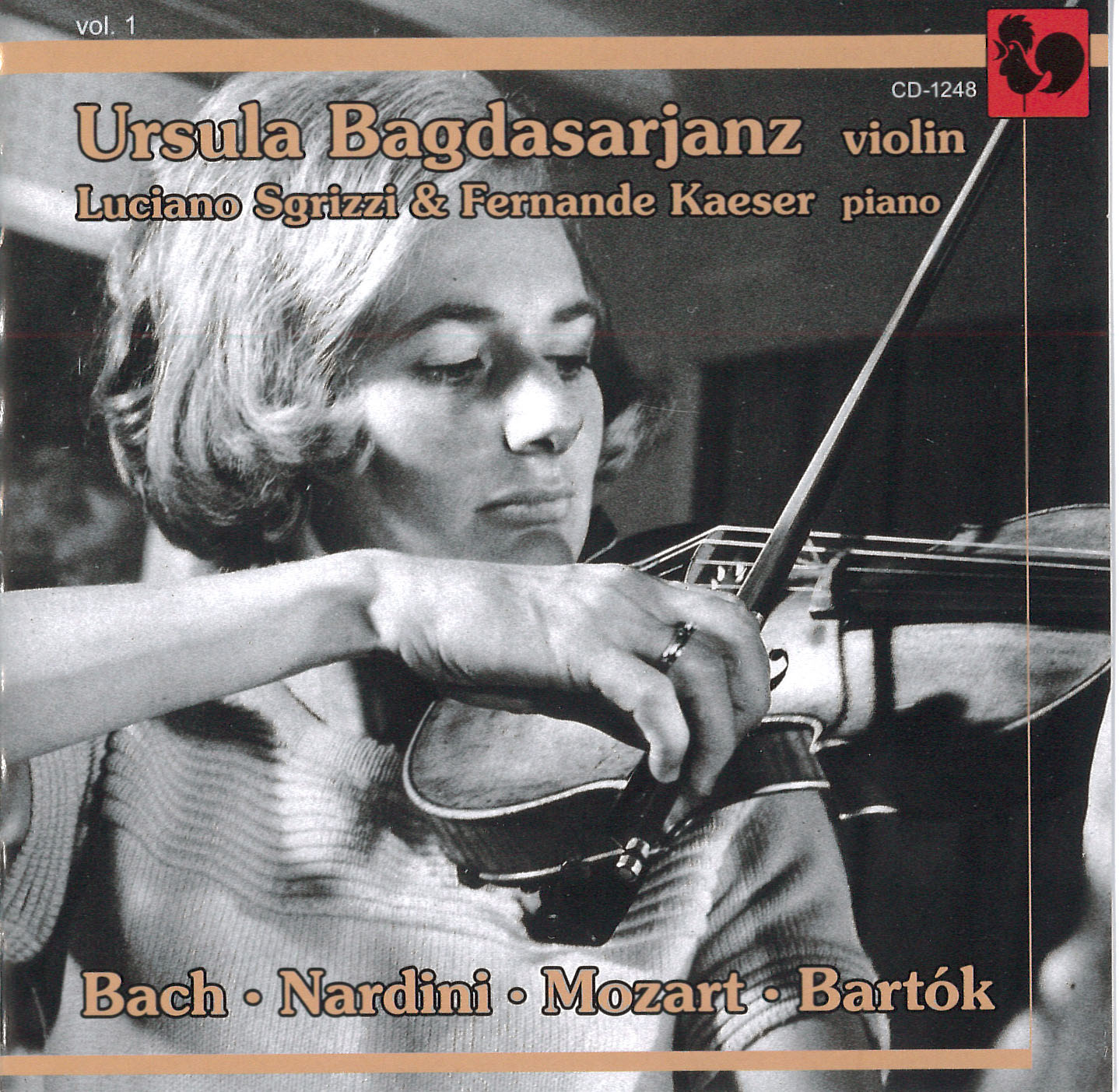
03a_ursula_bagdasarjanz_1Ursula Bagdasarjanz Vol. 1: Bach; Nardini; Mozart; Bartok

Ursula Bagdasarjanz; Luciano Sgrizzi; Fernande Kaeser

Gallo CD-1248
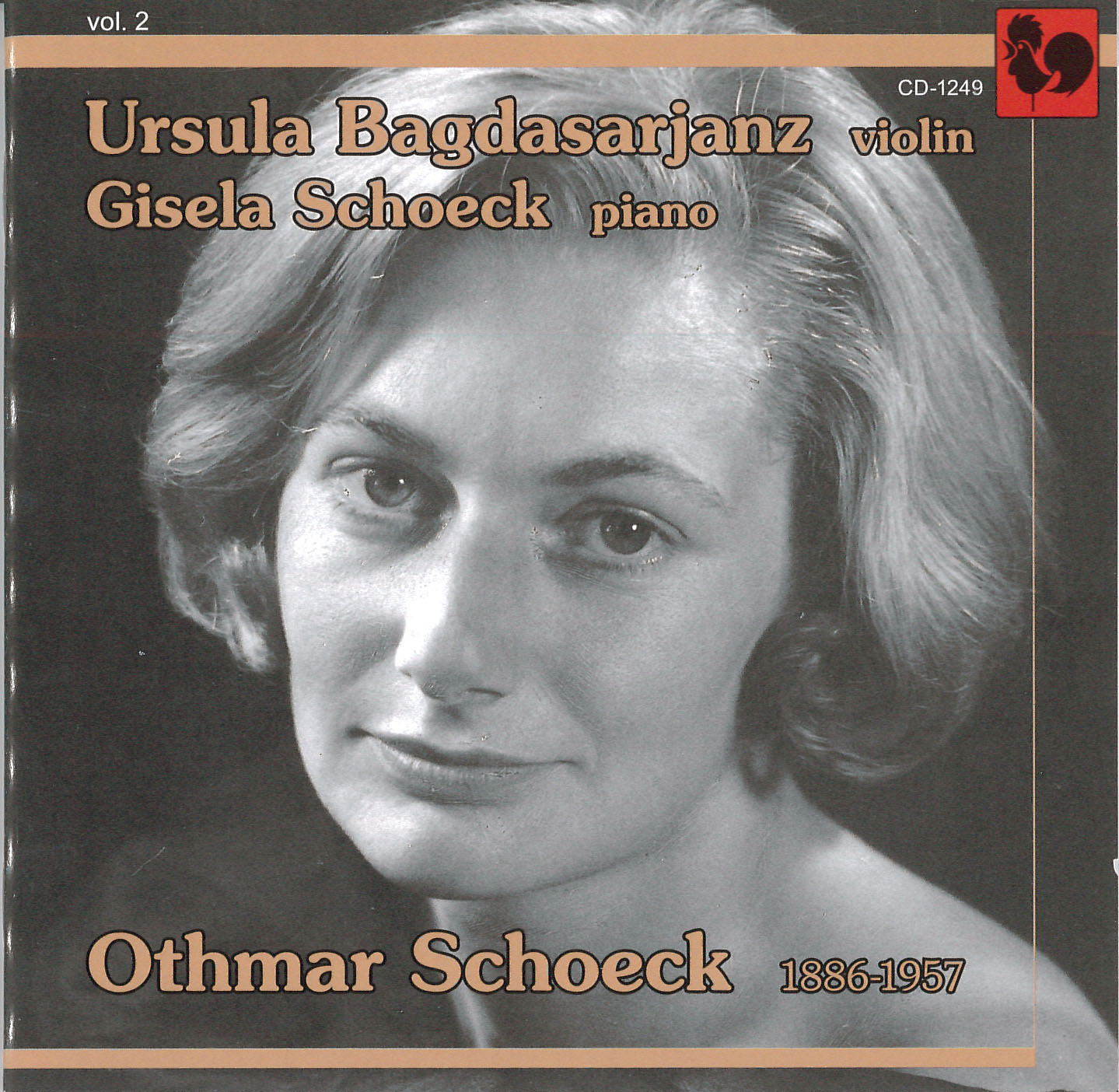
03b_ursula_bagdasarjanz_2Ursula Bagdasarjanz Vol. 2 - Othmar Schoeck

Ursula Bagdasarjanz; Gisela Schoeck

Gallo CD-1249 (www.bagdasarjanz.com)

When the Swiss violinist Ursula Bagdasarjanz retired from the concert stage in the late 1990s, she compiled a CD collection of radio and live recordings of her performances. These were, in turn, re-mastered two years ago for a commercially available series that currently stands at four volumes.

I must admit Bagdasarjanz, now 76 years old, is a new name to me, but given the standard of her playing on these two fascinating discs it’s difficult to understand why.

Volume One features works by Bach, Nardini, Mozart and Bartok, recorded between 1960 and 1969, and demonstrates not only Bagdasarjanz’s performance range but also the consistent elements in her playing: a big, warm tone; faultless intonation; a fairly heavy (but not wide) vibrato which is always used intelligently and sensitively; and a sophisticated sense of phrasing. The Bach A minor solo sonata is technically flawless, with a great sense of line and some remarkably tight triple-stopping in the Fuga. The big tone is evident in the Nardini D major sonata, the Mozart Bb major sonata K378, and Bartok’s First Rhapsody. The piano sound is slightly fuzzy in the Nardini, but otherwise the transfers are excellent.

By far the most significant of the two CDs, however, is Volume Two, which features the complete works for violin and piano by the Swiss composer Othmar Schoeck. Recorded for Swiss Radio in 1961, only 4 years after the composer’s death, the three sonatas feature Schoeck’s daughter Gisela as the accompanist in performances that The Strad magazine rightly called “so authoritative… that it is impossible to imagine them ever being superseded.” All three sonatas – Op.16, Op.22 and Op.46 - are not part of the standard repertoire and are rarely performed these days, which is a real shame; the first two in particular, dating from the early 1900s, are strongly personal works reminiscent of Brahms and Franck. Again, the re-mastered sound is excellent.

If you know Bagdasarjanz’s playing – and recordings of her have always been pretty scarce – then you won’t need to be told to get these CDs; if you don’t know her playing, get them anyway – you won’t be disappointed!
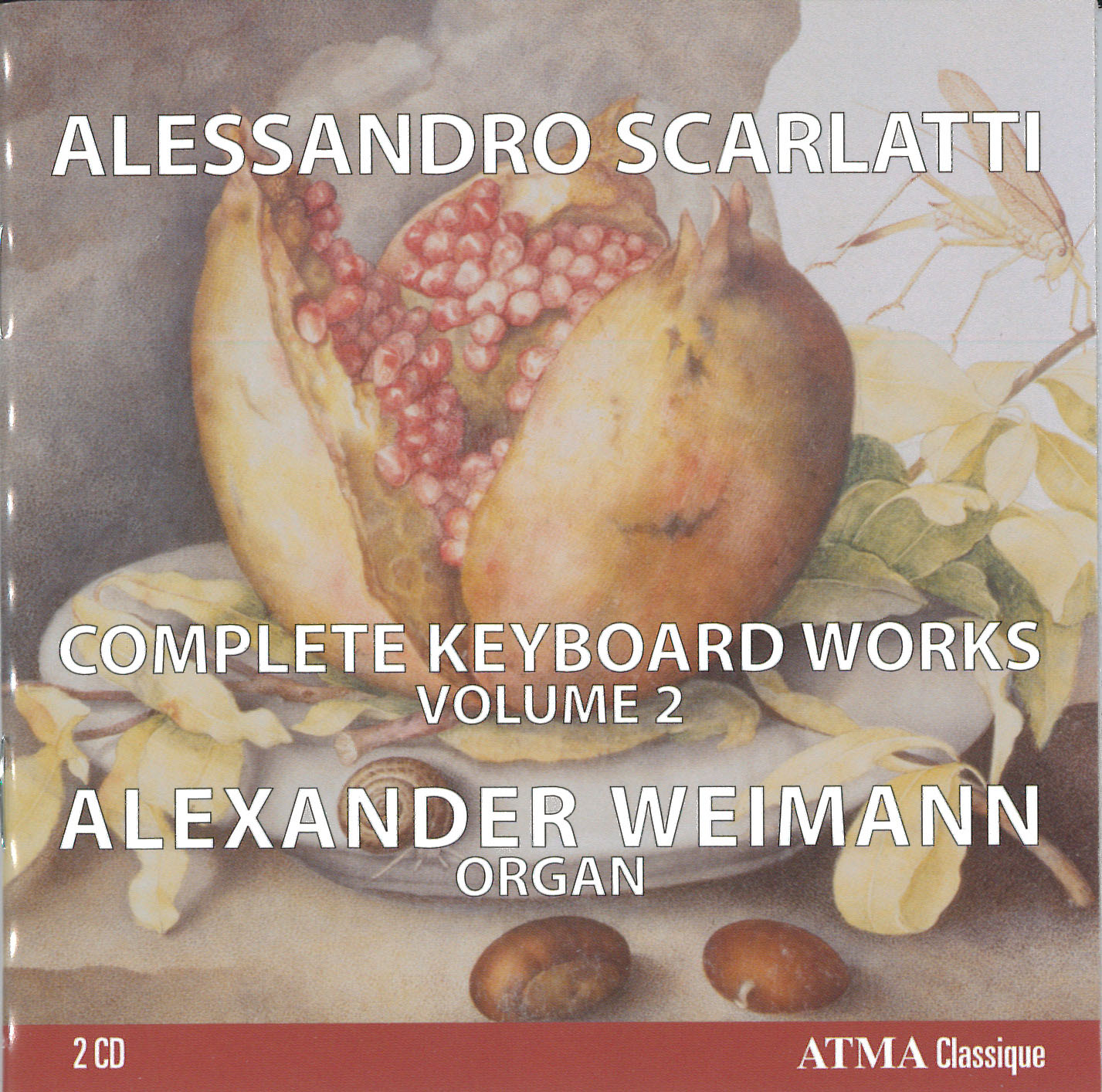
01_scarlatti_organAlessandro Scarlatti - Complete Keyboard Works, Vol.2

Alexander Weimann

ATMA ACD2 2528

Alexander Weimann, currently director of the Pacific Baroque Orchestra and an impressively versatile musician, has undertaken to record the complete keyboard works of Alessandro Scarlatti. So far, this survey has focused largely on toccatas omitting what Weimann deems as pedagogical works or what one musicologist has simply called “pupil fodder”.

These early 18th century pieces rarely specified the keyboard instrument for which they were intended and over the years performers have produced recordings for harpsichord, organ, piano and even arrangements for electronic keyboard with digitally sampled sounds!

The choice of pipe organ, however, does offer several strong artistic merits. This instrument in particular, with its Baroque voicing and tonal plan, gives Scarlatti’s music a degree of colour difficult to achieve on any other keyboard instrument. Its tracker action (direct mechanical linkage to the keyboard) also provides for remarkably fast single-note repetitions that are impossible on harpsichords and most lesser pianos.

All the tracks on these two CDs reflect Weimann’s fine musical decisions regarding tempo, phrasing and registration (tonal colour). Despite some very high speed passage work, Weimann maintains a clarity and crispness that delivers each note when it might otherwise be easier to drop a few. His playing uses the instrument to its greatest advantage.

ATMA cites the instrument as a 1993 Wilhelm at Église Trés-Saint-Rédempteur in Montreal but neglects to offer a complete “stop” list which most other organ recordings would do. Organ fans can be obsessively curious about these things and will hope for more information in Volume Three.

Overall Weimann offers a very listenable and fresh take on Italian keyboard music from the Baroque that is often overshadowed by the German school of the same era.


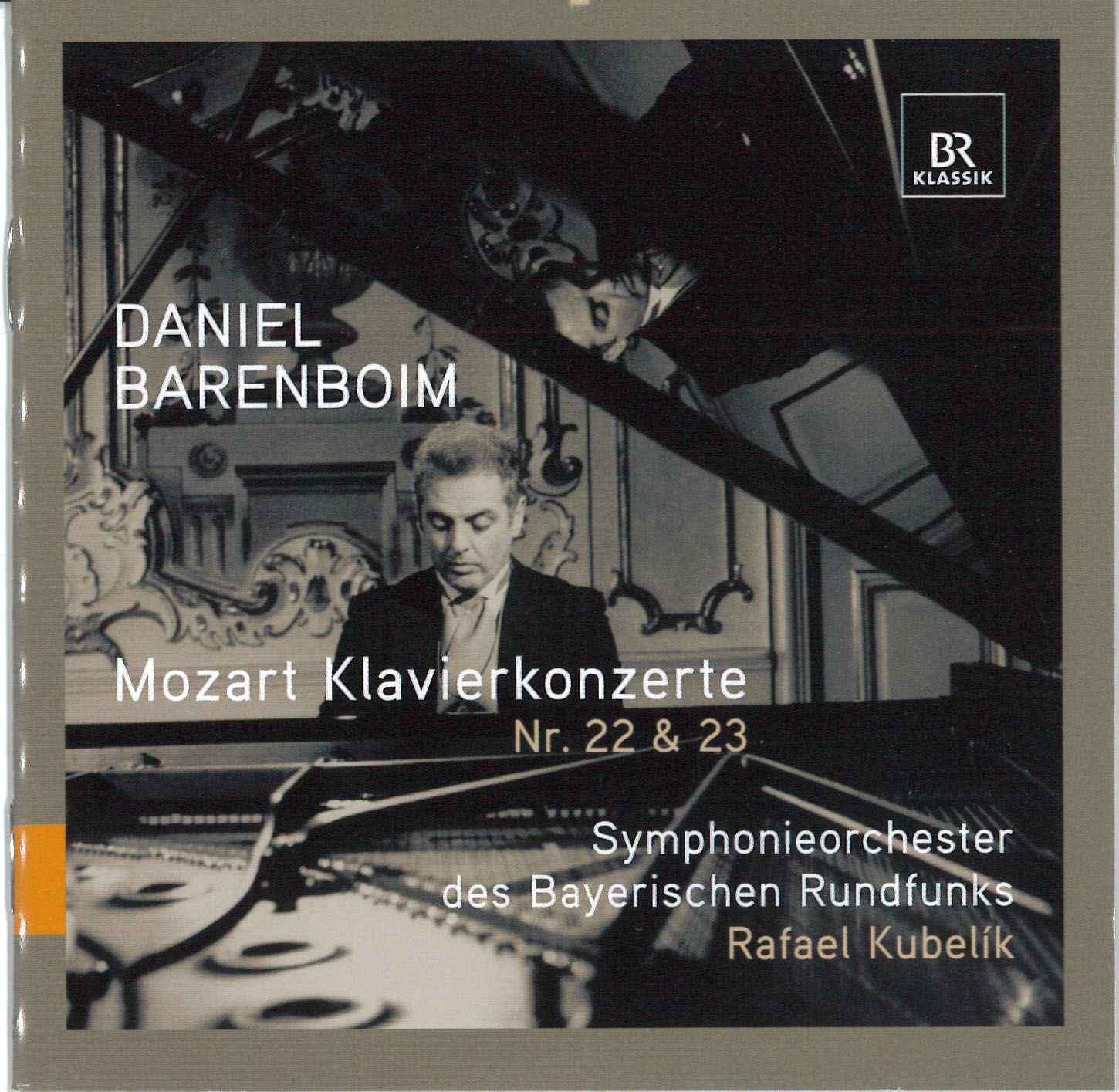
02a_mozart_barenboimMozart - Piano Concertos 22 & 23

Daniel Barenboim; Bavarian RSO; Rafael Kubelik

BR Klassik 900709


02b_mozart_kissin


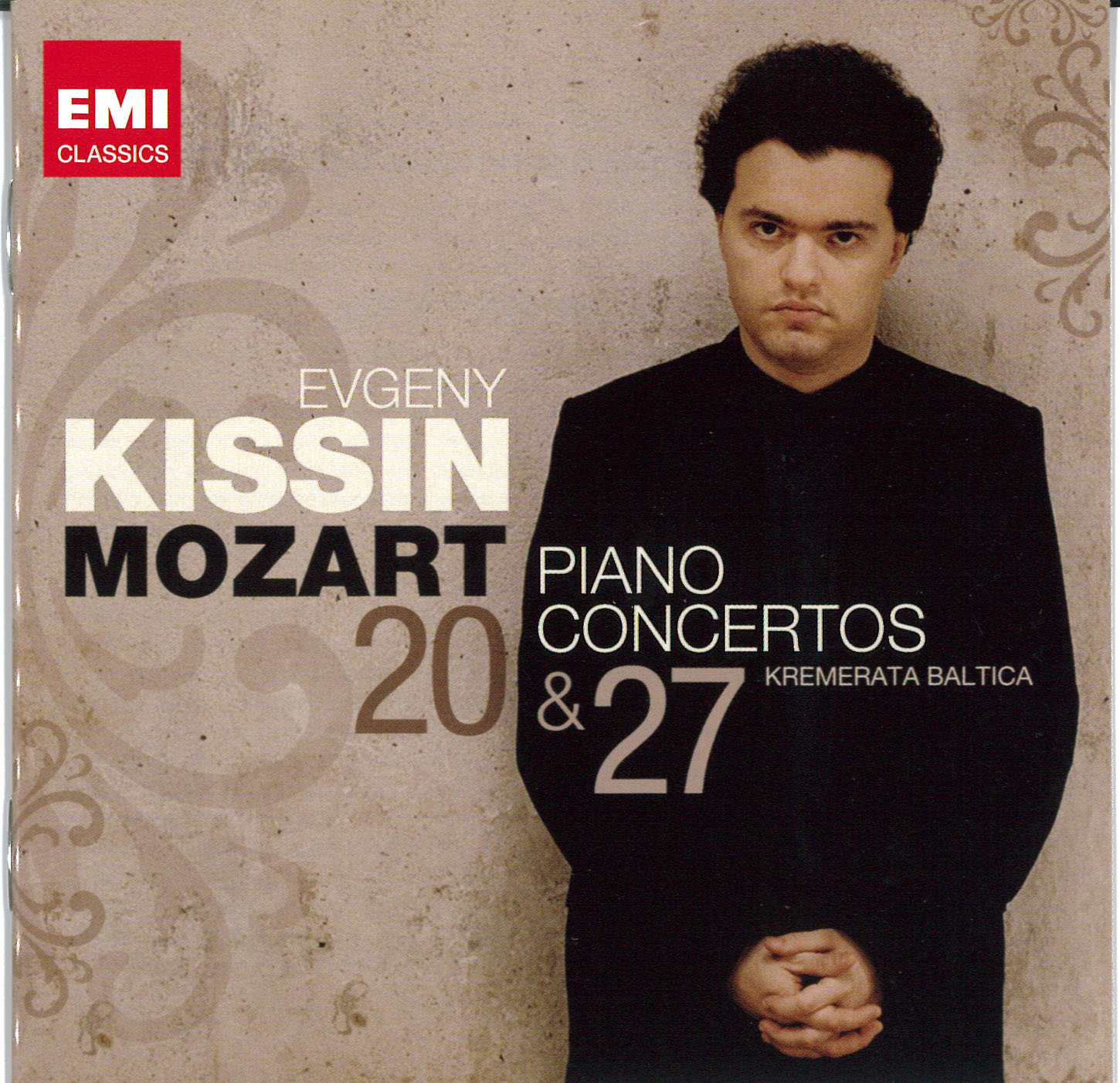
Mozart - Piano Concertos 20 & 27

Evgeny Kissin; Kremerata Baltica

EMI Classics 6 26645 2

Was it Anton Rubinstein who once said “Eternal sunshine thy name is Mozart?” Whoever it was would undoubtedly applaud the addition of two new Mozart piano concerto recordings to the already vast number available, performed by two pianists now considered to be among the world’s greatest.


At the age of 67, Daniel Barenboim may be considered one the veterans of the concert-stage, as both pianist and conductor. His newest offering, on the BR Klassik label, features performances from the archives of concertos No.22 and 23 along with the Bavarian Radio Symphony under the direction of Rafael Kubelik. Concerto No.22, written in Vienna in 1785, is a joyful and optimistic work, and here the music is treated in a fresh and engaging manner. The tempo of the first movement, while perhaps a bit brisk, doesn’t detract from the performance, while the second movement Andante and the exuberant Rondo finale constitute a perfect pairing between soloist and orchestra. Concerto No.23 from 1786, was recorded live, and once again, the fine performance is further enhanced by the excellent sound quality – clean and dynamic, it’s as good as you would find today. Recorded in 1970, it’s a mystery as to why it took so long to release these exemplary performances, but they were well worth the wait. This disc is a gem!


No matter what we may think of Evgeny Kissin’s personal eccentricities, there is no denying that he has long been regarded as one of the finest pianists around today. This EMI recording, with concertos No.20 and 27, marks his first in a joint role of pianist/conductor along with the Kremerata Baltica. Here, Kissin, who is more renowned for his interpretations of romantic-period repertoire, proves that Mozart, too, can be treated in a more passionate manner than is usually encountered. From the opening measures of the Concerto No.20 – one of only two Mozart wrote in a minor key - Kissin easily captures the dark and forbidding mood of this tempestuous music. His approach is bold and romantic – which may not be to everyone’s tastes - but Kissin makes it all sound particularly convincing. At the other end of the scale is the serene and ethereal Concerto No.27, Mozart’s last. While his treatment remains romantic, he demonstrates more restraint here, in keeping with the overall mood of the piece. At all times, the Kremerata Baltica provides a sensitive accompaniment, and it would seem that Kissin is as adept at leading an ensemble as he is with performing.


Two fine recordings featuring exemplary repertoire performed by outstanding artists – it doesn’t get much better than this!


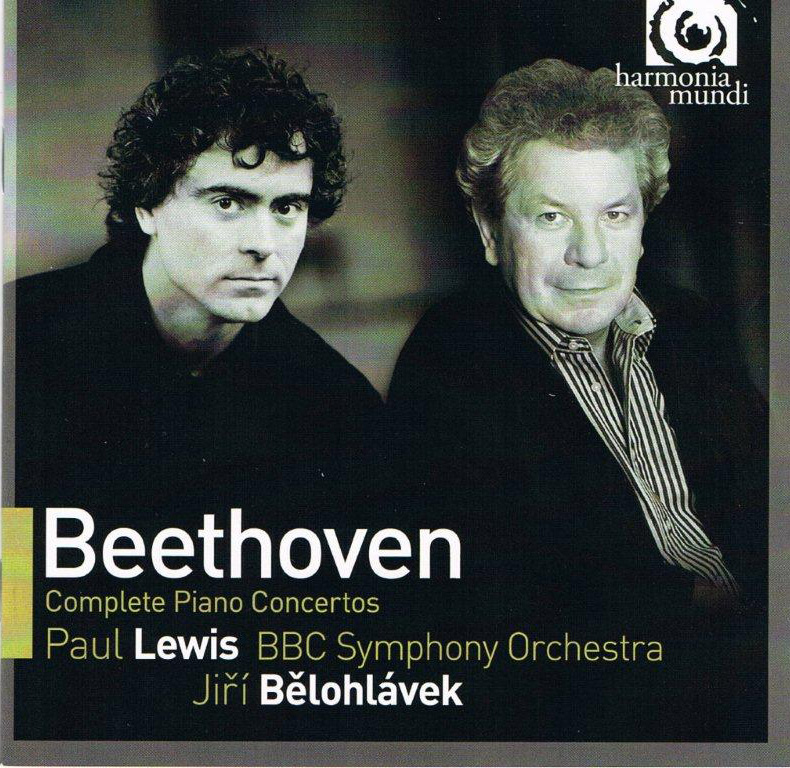
03_beethovenBeethoven - The Five Piano Concertos
Paul Lewis; The BBC Symphony Orchestra; Jiří Bělohlávek
Harmonia Mundi HMC 902053.55

The field of Beethoven piano concerto cycles has reached a point of saturation. To stand out, the performers, especially the pianist must be utterly distinctive. Paul Lewis breaks out of the crowd providing a banquet for Beethoven lovers... even those with jaded ears.

I listened to this set in numerical order and I was initially conscious of some idiosyncratic phrasing from the soloist but that changed to total immersion in Beethoven’s genius.

On first hearing, the opening of Lewis’s solo in the first movement of the first concerto impressed me as rather less imaginative than I would have expected. The rest of the movement corrected this impression. The second movement, Largo, is disarmingly tranquil. Delivered as heartfelt poetry, “It floats”. In truth, all the slow movements to follow, whether Adagio or Largo, are played with the same rapt absorption. The third movement is exhilarating where in the joy, the pulse and the humour are clearly conveyed by soloist, conductor, and orchestra alike.

Of these concertos, the first two are “classical”, the third concerto has clearly has romantic buds but even being in a minor key, has an air of optimism throughout. Lewis’s performance reflects these characteristics most convincingly. Number four is a leap into the romantic and Lewis and Bělohlávek are well adjusted to the sombre and serious mood to the extent that their performance is as good as the very best versions I have heard.

The fifth concerto is the most celebrated, a festive work on a large scale that is heard here to be just that. The orchestral texture points to a large orchestra and leaves behind the “period” approach. Again a superlative, thrilling performance.

Bělohlávek and Lewis work hand-in-glove, completely in agreement throughout the cycle, achieving ideal balances between piano and orchestra. I have to mention that I have not heard a piano more faithfully reproduced than on these discs recorded by the BBC.

Without discounting any of the keyboard titans who has gone before, Lewis is much more than competitive. We all have our favourites whose performances, quite often, are imprinted as the touchstone by which to judge others. Let me just say that I enjoy these new performances immensely and, after returning to them often over the past few weeks, find them captivating.


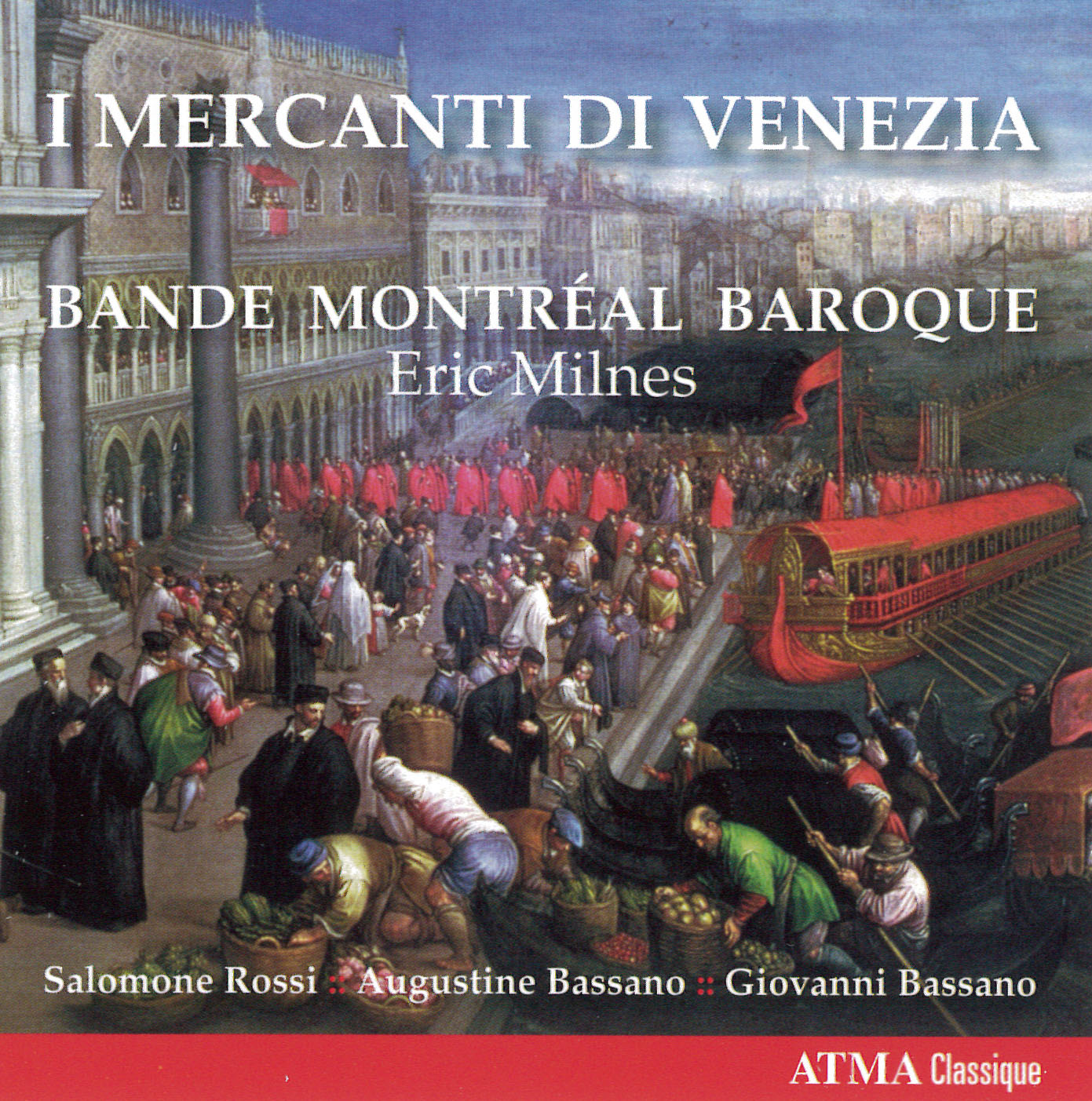
01_mercadti_di_veneziaI Mercanti di Venezia

Bande Montreal Baroque; Eric Milnes

ATMA ACD2 2598


Venice’s ghetto was designed to isolate Jews but unintentionally allowed Jews from all over Europe and the Middle East to live together and share their expertise and pride in their heritage; they created renaissance masterpieces.


Salamone Rossi, from that very ghetto, makes his mark here with a setting of the eternally-popular Eyn Keloheinu - if ever one wanted this hymn scored for renaissance woodwind and organ this would be the definitive item. Several of Rossi’s sonatas grace this recording and yet perhaps most impressive of all is his Sonata in dialogo detta la Viena. The cornetto makes its clear mellow presence felt via Matthew Jennejohn’s sensual interpretations of Rossi’s demanding writing.


Next, a composer and virtuoso cornetto player who also lived in the Venice ghetto: Giovanni Bassano, Rossi’s contemporary and neighbour, pioneered baroque improvisation as early as 1585. Margaret Little (Recercata Ottava, treble viol), Francis Colpron (Recercare Terza, recorder) and Jennejohn (Dimunitions sur Ung Gay Bergier, cornetto) more than meet the challenges set by this virtuoso improviser. Enjoy, too, the last two selections on the CD from Bassano’s 1591 Variations which bring together the full plethora of instruments listed above.


Rossi and Bassano were highly respected by Venetians in or out of the ghetto. This recording opens the door to their music - ajar but open enough for us to want more.


Lastly, music composed by Jews in a country where they were not supposed to exist but did so by concealing their identity. From 1550 to 1604, Augustine Bassano, very probably Jewish, served as a Musician in Ordinary for Recorders at four very different English courts. His Pavan & Galliard, enhanced by some fine recorder playing, stand with anything native English composers could offer.


02_stjohns_mozartMozart - Sinfonia Concertante; Violin Concertos 1 & 3

Scott & Lara St. John

Ancalagon ANC 136 (www.larastjohn.com)


Mozart’s Sinfonia Concertante for violin and viola has long been a favourite concerto of mine, and right from the opening bars of this wonderful recording it was clear that here was something very special. The St. Johns (with Scott on viola) have been performing this work in public since they were 12 and 10, and it shows in their sensitive interpretation; they understand every nuance and clearly think and feel as one, both when playing together and in the dialogue passages. Just as critical is the superb contribution of the New York ensemble The Knights under conductor Eric Jacobsen. The accompaniment is beautifully balanced, warm, articulate and refined, and Jacobsen’s choice of tempo is perfect. From the majestic opening Allegro, through the achingly beautiful Andante, to the joyous Presto, this is a breathtakingly fine performance. The ‘romantic’ element in this concerto is often over-played, but the performers here never fall into that trap, keeping things moving and striking exactly the right mood with warm, expansive, but never overstated playing. I simply can’t imagine a more satisfying recording of this glorious work.


Scott and Lara share the two solo violin concertos included here, Scott playing No.1, and Lara playing the more popular No.3, The latter features a long and interesting cadenza in the slow movement that almost seems to look back to the solo works of Bach. Again, top-notch playing from both soloists, with excellent accompaniment. The sound quality is superb throughout. An absolutely outstanding disc.


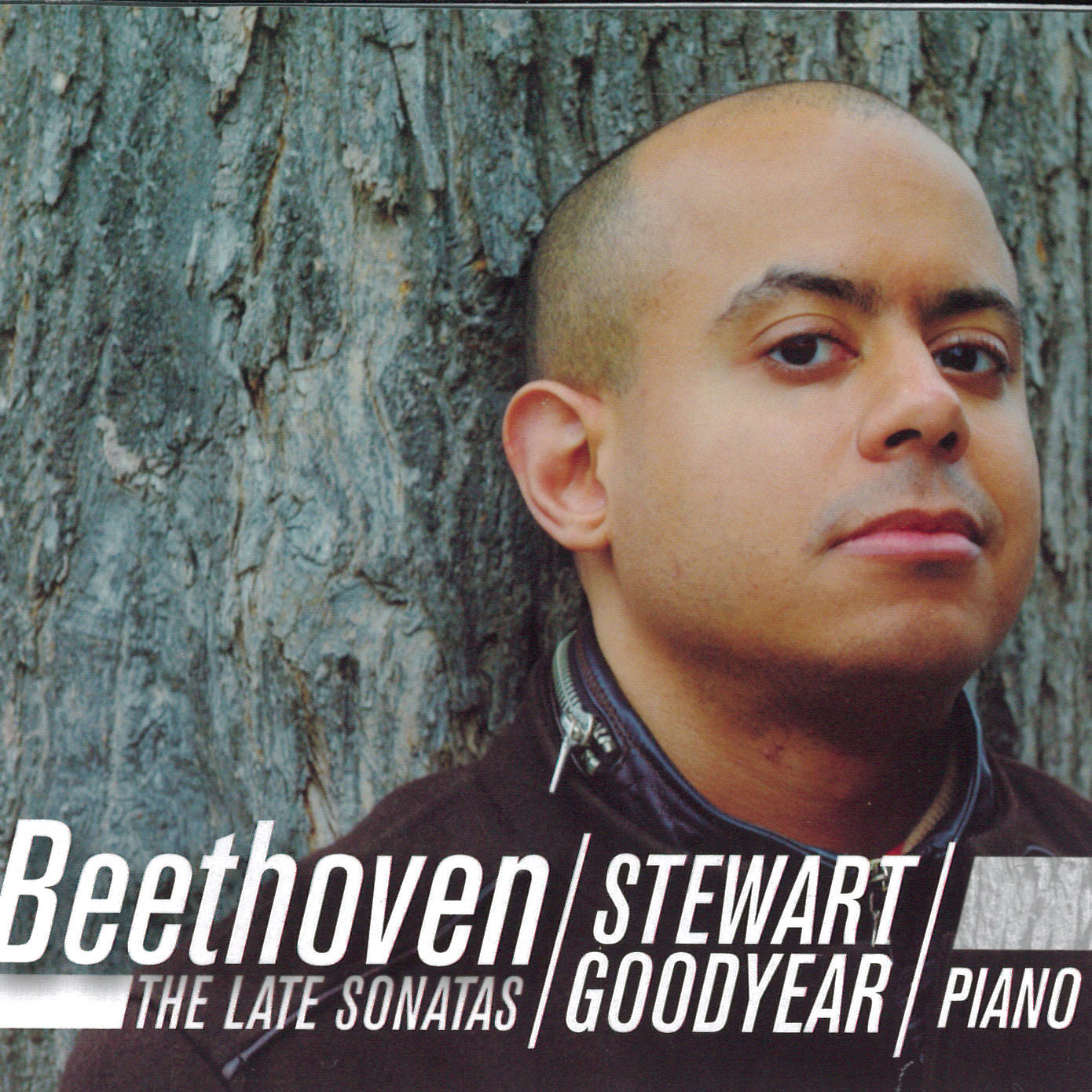
03_goodyear_beethovenBeethoven - The Late Sonatas

Stewart Goodyear

Marquis 81507 (www.marquisclassics.com)


Just as there’s more than one way to eat an Oreo cookie, there’s more than one way to listen to a recording of late Beethoven piano sonatas.

If I were you, and I’d just acquired Stewart Goodyear’s new 2-CD release of Sonatas 28-32, I’d start at the end, with the second movement of Sonata No. 32 (track 8 on disc 2). Here, you’ll hear Goodyear at his best: there’s a simple piety to the theme; a nice rocking lilt to the dotted passages, delightfully delicate pianissimos, trills to die for, and a sweeping arc that gives the movement a secure and convincing climax.


Next, I recommend listening to the final movement of Sonata No. 30, to enjoy Goodyear’s tender, almost dreamy, touch. Finally, I suggest the final movement of Sonata No. 29 – a tour-de-force of dexterity and contrapuntal clarity. After that, you’re on your own, with many more treasures to discover on these discs.


I wouldn’t say, however, that I agree with all of Goodyear’s interpretative ideas. Occasionally, when Beethoven calls for sudden forcefulness, Goodyear resorts to pounding on the keys. These moments – for instance, in the first movement of Sonata No. 29, or the third movement of Sonata No. 31 – sound heavy-handed and detract from the music’s architecture.


And speaking of the last movement of Sonata 31, there’s one flaw I can’t ignore: about one minute in, there’s a repeated A-natural that’s slightly out of tune. It’s a small point – but why wasn’t it caught and corrected?


Concert Note: Stewart Goodyear’s international touring schedule includes concerts at Philharmonic Hall in Liverpool and Barbican Theatre in London in January and a number of dates in the U.S. in the following months. Toronto audiences can hear this native son in an all-Beethoven program at Koerner Hall on November 28.

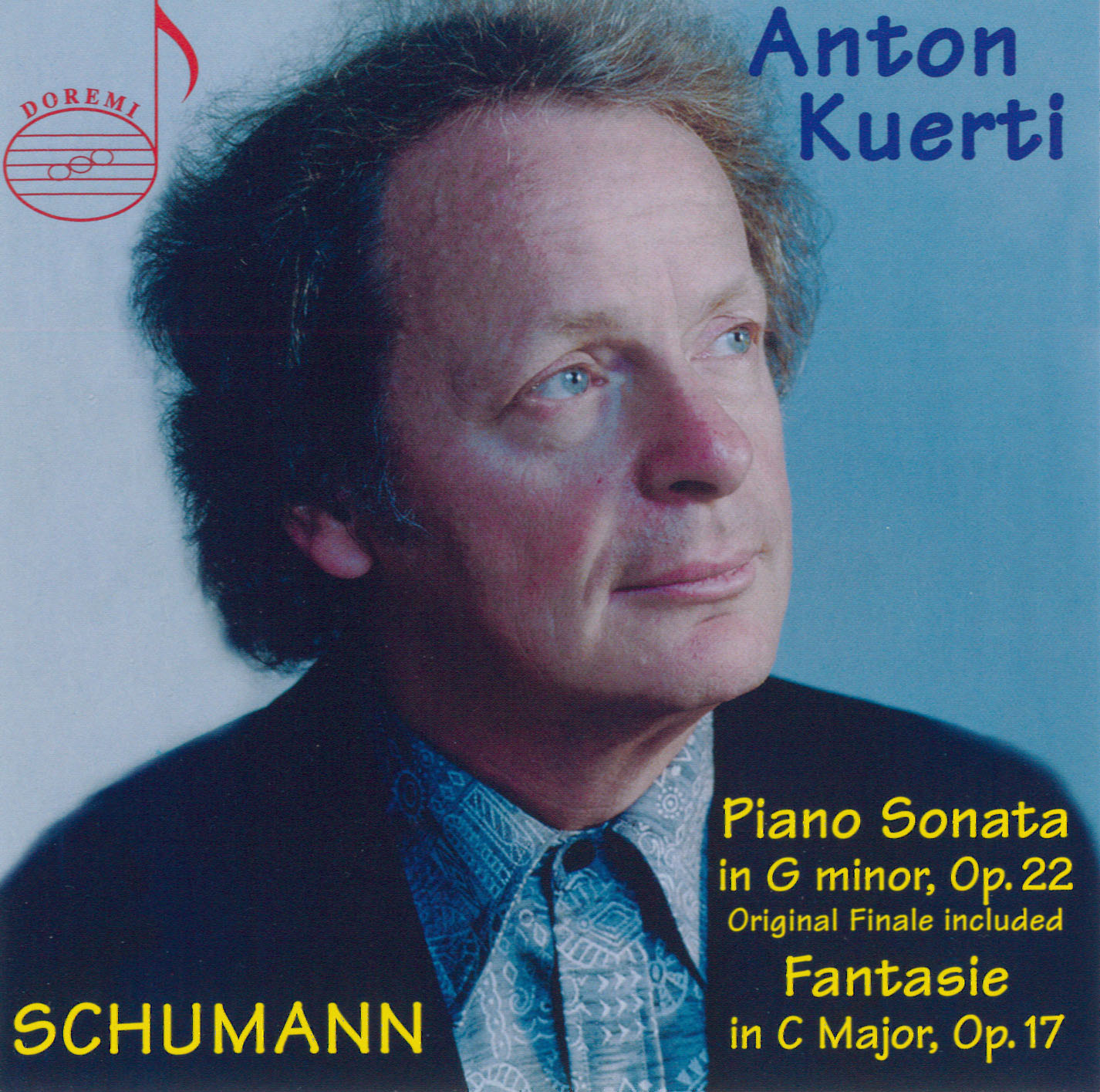
04_kuerti_schumannSchumann - Piano Sonata No. 2; Fantasie in C Major

Anton Kuerti

DOREMI DDR-6608 (www.doremi.com)


We are fortunate to have, living in Toronto, an internationally renowned pianist who is also a most respected Schumann interpreter, Anton Kuerti.


On July 20th we had the pleasure of attending the opening recital of the Toronto Summer Music Festival in Koerner Hall in which Kuerti mesmerized a sold-out house playing an all-Schumann program. This was a memorable event by any standards.


As a card-carrying Schumann zealot I have been collecting recordings of his music for half a century. As an admirer of Kuerti’s earlier recordings I was pleased that so many of the audience took advantage of the opportunity to acquire this new CD in a post-concert signing event, especially as the Fantasie, opus 17 had just been heard live. Or should I say experienced, as the influence of an admiring and appreciative audience inspired a more personal reading.


As with all great artists, no two performances can be exactly the same. Notwithstanding such vicissitudes, the recorded version of the Fantasie is outstanding and a fine souvenir of the live performance. The Sonata is presented by Kuerti in a rather sensible and novel way: he includes, as added movement, the original finale that Schumann had replaced because Clara declared that it was unplayable, being just too difficult. The movement was published posthumously simply as Presto für Pianoforte and Kuerti inserts it between the third and fourth movements. Well, Clara was wrong as Kuerti demonstrates in spectacular fashion in this five movement version of Schumann’s opus 22.


Recorded in the Willowdale United Church in August 2009, the sound is clear, appropriately dynamic, and well balanced.


EXTENDED PLAY – AK(A) Antonin Kubálek


Antonin Kubálek and his independent recording label AK were introduced in the July issue with Richard Haskell’s review of his Brahms set (AK 01) so I need not add anything further on Mr. Kubálek’s origins, career, performing history and credentials other than to say that he is a multifaceted virtuoso with the highest degree of technique, expression, subtlety and sensitivity. Although these recordings are all remastered from LP’s of the 1970s we are richly compensated by the quality and insight in these performances. Furthermore, his choice of repertoire is adventurous and full of surprises. Serendipity is the best word to describe them.


01_early_recordingsTo start with, there is the Mozart Rondo in A minor (Early recordings AK 06). This is a fairly late work, almost contemporaneous with the G minor symphony, No. 40. Minor keys are rare in Mozart and this piece is melancholic, played with a wonderfully gentle touch, well differentiated in its parts and in a nowadays sometimes frowned upon romantic manner. Be that as it may this is just right for me. This early disc is particularly rich and rewarding, also featuring works by Beethoven, Janáček and Hindemith. Janáček’s elegiac On an Overgrown Path is a long-time favorite of mine with its influences of nature, folk melodies and Czech language accents. It opens a new avenue in pianism. Each piece is a small masterpiece like “The Madonna of Frydeck” where the ruling minor key changes into major turning infinite pain into gentle sweetness that reminds me of Schubert. “Tears” has a typical Janáček kind of exquisite melody and “The Barn Owl Has Not Flown Away!” is so charming with the flurry of wings grounded by two repeated descending notes. Needless to say this music belongs to Kubálek and very few others can play it as beautifully as he. Hindemith’s Suite “1922” is formidably difficult, dissonant, tongue in cheek, sometimes jazzy, syncopated and inspired, or rather horrified, by early 1920s dance crazes. Hindemith, however, brilliantly intersperses these with dark toned Nachtmusiks perhaps forecasting events to come. “Boston” with its hollow bells and echoes is a particularly strong and despondent uttering.


02_chausson_faureThe original LP of AK 02 was recorded in the 1970s by the CBC in the now defunct Eaton Auditorium with wonderful acoustics, where I heard such legends as Wilhelm Kempff and Annie Fischer (but alas not Rachmaninov, Kreisler and Gould who also performed there!). For the Chausson Concert for violin, piano and strings, Op.21, the Orford Quartet is augmented by Otto Armin so that first violinist Andrew Dawes can join Kubálek in the title role. Here is a performance that truly pushes to the limits; powerful, complex, passionate and rhapsodic. The same can be said for the César Franck Piano Quintet played here with the Vaghy String Quartet. The Quintet caused some uproar upon its debut, and the story goes that Marcel Proust, the notably eccentric French author, hired a group of musicians to play the Quintet for him incessantly day in, day out.


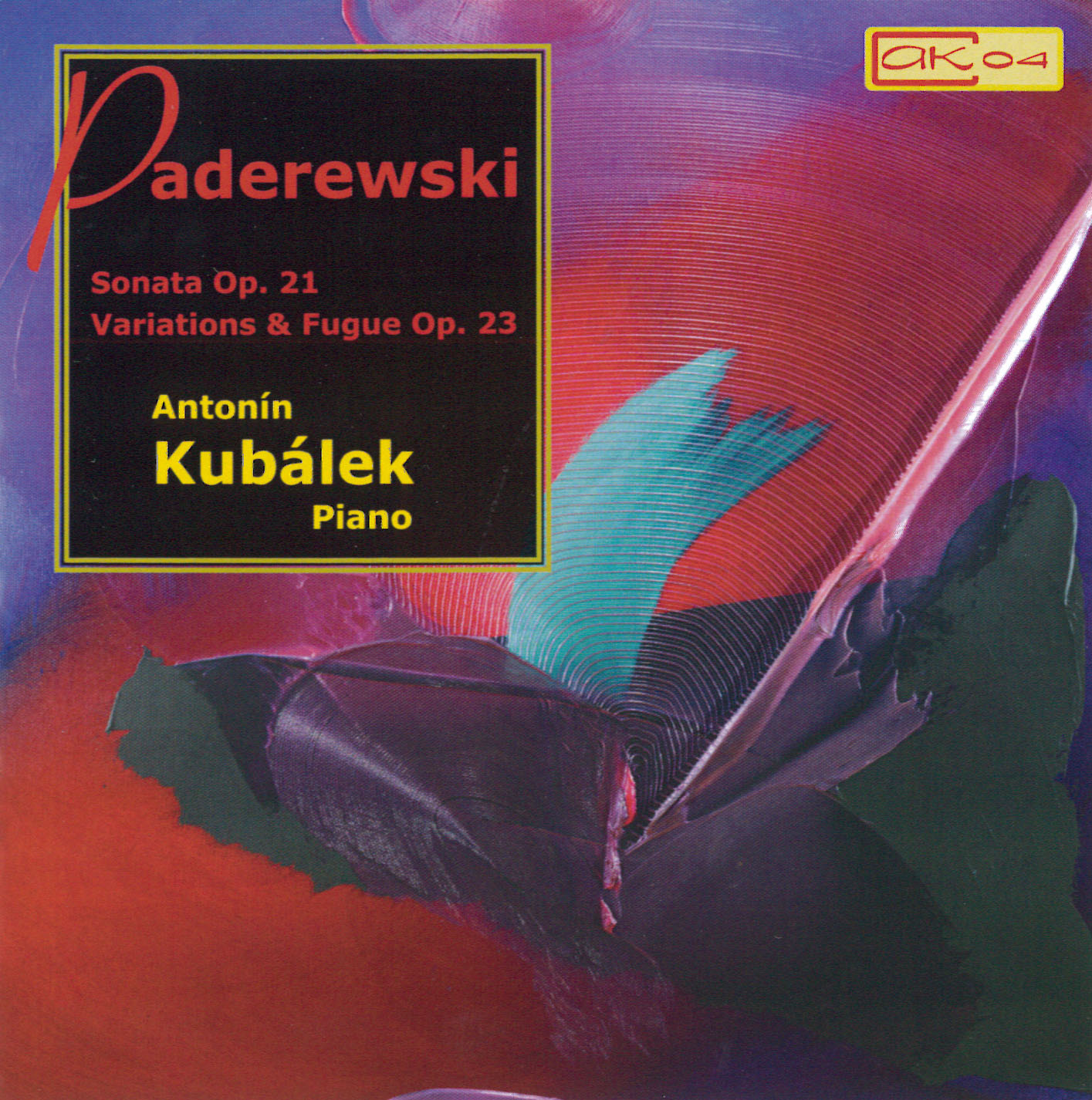
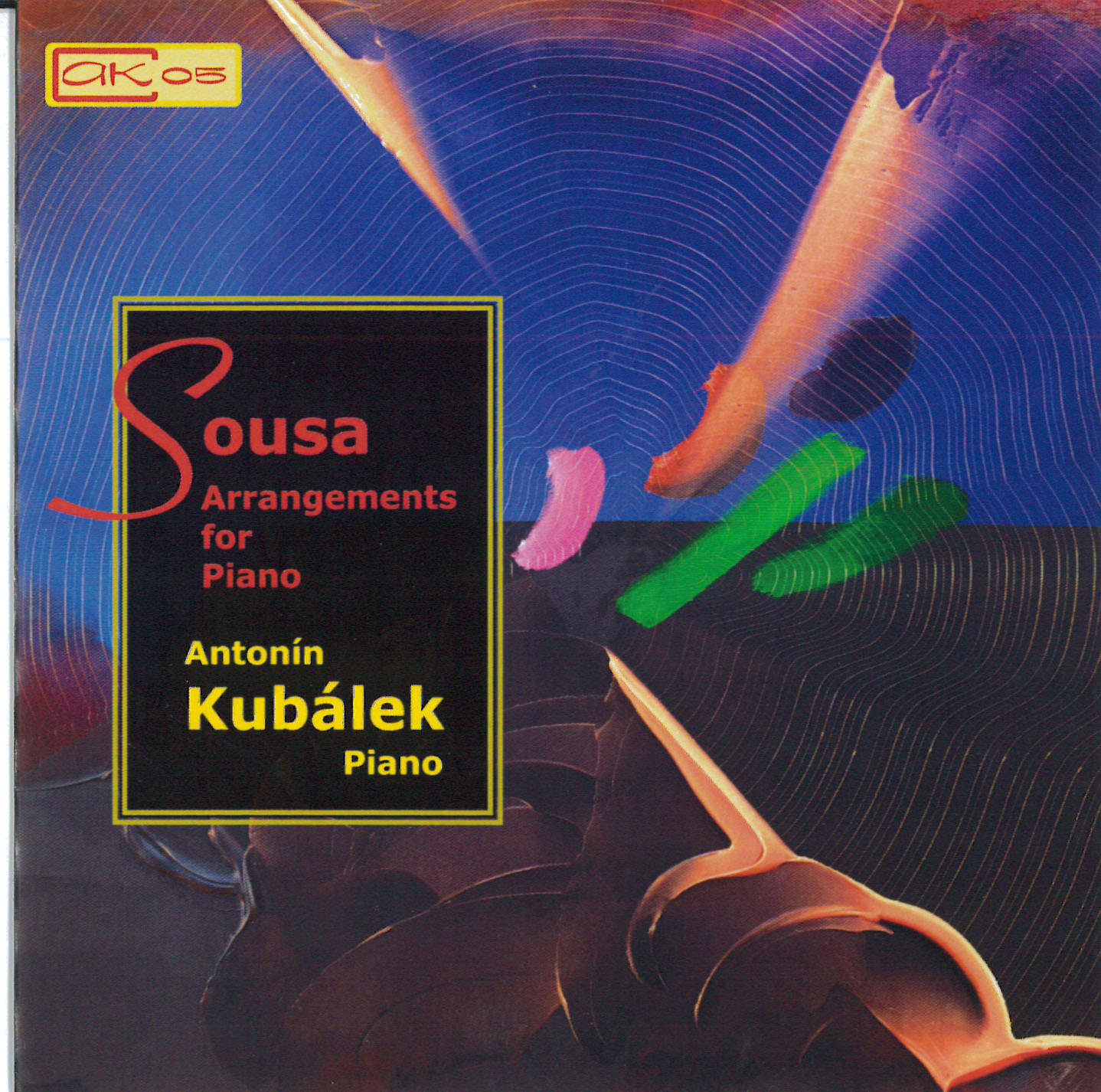
03_paderewski04_souzaSkipping Paderewski (AK 04), who in spite of being a legendary virtuoso and a great statesman – the prime minister of Poland at one time - never was much of a composer no matter how well Kubálek plays his incredibly difficult pieces, I will proceed to Sousa Arrangements (AK 05). This is a most enjoyable disc where Kubálek shows a completely different side of his talent. I can just see him in a bar playing these marches, waltzes and polkas with flying fingers and great delicacy as an entertainer par excellence. The great Arthur Fiedler would be pleased, for this is not “music of the boring kind”.


Editor’s Note: Antonin Kubálek’s recordings are available in Toronto at L’Atelier Grigorian and online at www.grigorian.com and www.cdbaby.com

01a_gesualdo_dvdGesualdo - Death for Five Voices
Werner Herzog
ArtHaus Musik 102 055


01b_gesualdo_cdGesualdo - Madrigals Book 1
Delitiae Musicae; Marco Longhini
Naxos 8.570548

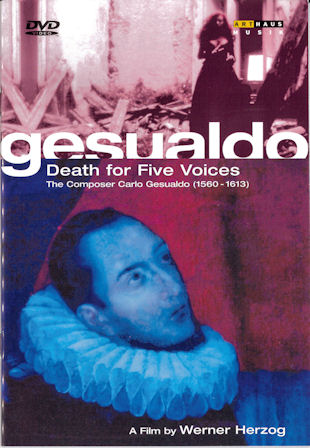
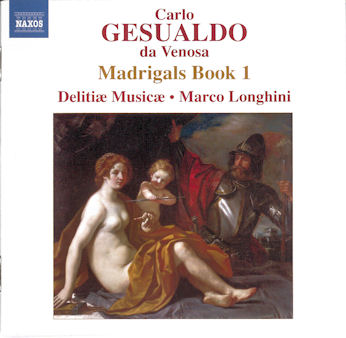
The sordid tale of a murderous prince is alluring; all the more so when the subject is also a supremely innovative composer for his time. While certainly intriguing for music aficionados, Carlo Gesualdo seems to have also left a legacy of fascination bordering on obsession for the current-day inhabitants of the village attached to his castle’s ruins. In 1586, he married his beautiful cousin, Maria d'Avalos. Only a few years later, in a pre-meditated act of jealous rage, he murdered Maria and her lover and displayed their bodies first on the steps of the house, then preserved them for display in a nearby church. Being a prince, he was never prosecuted for this “crime of passion” or for subsequently killing their young son, nonetheless, he did torture himself through unrelenting flagellation for the rest of his days.

Werner Herzog’s movie Death for Five Voices takes his audience on a tour of this house of horrors through the eyes of colourful local inhabitants: the bagpiper who regularly flushes out evil spirits, a mad opera singer who thinks she’s the reincarnation of Maria and local chefs who describe the decadent 120-course wedding feast. A few of his madrigals are performed by the Gesualdo Consort and Il Complesso Barocco led by Alan Curtis who also provides useful musical commentary. Both of these ensembles perform this difficult repertoire with its many harmonic and rhythmic twists and turns most admirably, if a bit too scholarly. The women do manage to evoke some of the sensuality of the “Three Ladies of Ferrara” that Gesulado would have certainly known from the house of his second wife Leonora d’Este (who later fled to a nunnery).

I did prefer the inclusion of female voices when comparing these performances with a recent recording of Gesualdo’s Madrigals Book 1 by Delitiae Musicae, an all-male ensemble led by Marco Longhini. That preference aside, this group does a superb job of conveying the sweet and painful longings inherent in texts by Guarini and Tasso made ever so much more excruciating by Gesualdo’s dissonances, chromaticism and quick tonal discombobulations. The group’s purity of tone and precise intonation ensures that these turns are well articulated and deeply understood.

Both DVD and CD releases provide artfully crafted insights into a virtuosic but deeply disturbed individual. Gesualdo’s history and his music are neither for the faint of heart nor the disingenuous.

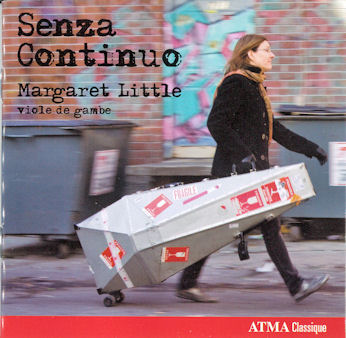
02_senza_continuoSenza Continuo
Margaret Little
ATMA ACD2 2612

The formidable gamba player Margaret Little – one half of the legendary Montreal duo Les Voix Humaines – is “a chamber musician at heart” and “this is her first adventure in solo repertoire.” So says the bio of her at the back of the booklet of this outstanding recording. From the opening strains of the first of three preludes by Jean de Sainte-Colombe which open the disc, I was transfixed by Little’s tone and freedom of sound. The varied program of music ranges from the late 16th century to the early 18th and clearly demonstrates why this instrument was so beloved, particularly in France.

Two solo suites, one by Le Sieur de Machy – a 17th century viol player about whom virtually nothing is known – and another by the celebrated virtuoso Marin Marais, make up the meat of the program and are both played with ease, elegance and poetry. Little has complete command of the ornamentation and character of each dance movement, and manages to convey the beautiful emotional arc of both large works. The rest of the CD is made up of four airs by the English composer Tobias Hume and two short “recercatas” by Italians Aurelio Virgiliano and Giovanni Bassano.

This lovely recording is a reminder of how special and expressive the viola da gamba is. In the hands of a confident and tender musician such as Little, a strong case is made for the unique solo repertoire of this oft undervalued instrument.

03_bach_brandenburgBach - Brandenburg Concertos
English Baroque Soloists; John Eliot Gardiner
Soli Deo Gloria SDG 707

Rare is the list of essential classical recordings which does not include the Brandenburgs. What makes this interpretation stand out is not just the actual playing but also some thoughtful commentaries by the conductor and soloists on the challenges Brandenburg players face.

From the start, this interpretation respects the instruments of Bach’s times. The horns of Anneke Scott and David Bentley are literally hunting horns, although never the “disruptive influence” she claims they are. All instruments blend into an enjoyable performance of Concerto No 1.   

The reviewer is a life-long lover of No 2, Bach’s allegro movements bringing out the best of baroque ensembles in general and the baroque recorder in particular. Rachel Beckett demolishes the idea that the recorder is a teaching instrument for children.

So to No 3, best-known of the six. This recording is upbeat in the initial allegro, enhanced by a silvery quality to the strings which continues through the much-over-looked adagio to the second even more inspired allegro.

Catherine Latham joins Rachel Beckett on recorder in No 4, reinforcing the virtuoso skills demanded of the instrument. The recorder conveys the plaintive tones of the andante, perhaps more poignantly than would the flute, which only makes its (belated) appearance in a subdued No 5.   

There is even an unsung heroine - viola-player Jane Rogers alone performs in all six concertos, saving her best for No 6. Her comments are worthy of the reflections published in this invigorating CD.

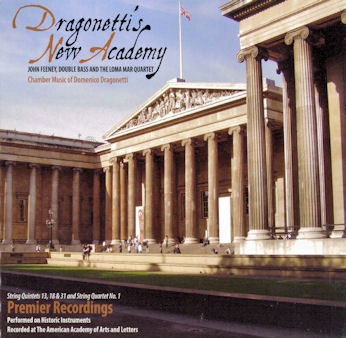
dragonettiDragonetti's New Academy - Chamber Music of Domenico Dragonetti
John Feeney; Loma Mar Quartet
Independent DNA2009

In these days of specialized musical disciplines, we tend to forget how often instrumental virtuosity and excellent compositional skills went hand-in-hand in the 18th and 19th centuries. No surprise, then, to discover that the Italian double-bass virtuoso Domenico Dragonetti wrote a large number of chamber works, although hardly any were published during his lifetime.

Dragonetti spent most of his adult life in London, and all the works on this disc were prepared by John Feeney from manuscripts in the Dragonetti collection in the British Museum. They may not seem particularly memorable on first hearing, but the composer was not only a regular at salons and musical evenings in London but also travelled in Europe, particularly to Vienna, where the development of the Viennese Style in the late 1700s had been of huge significance in the emergence of the double bass as a solo instrument. His compositions intelligently reflect the musical language of the day and the various styles he encountered.

The String Quartet No.1 employs the regular line-up, but the three string quintets are quite different. No.31 is for 2 Violins, 2 Violas and Bass, so the violin still handles most of the solo work, but Nos. 13 and 18 are for Violin, 2 Violas, Cello and Bass, giving the works a somewhat bottom-heavy feel as the bass assumes a solo role.

Top-class performances and excellent recording ambience make this disc – possibly the first of a series – an absolute delight.

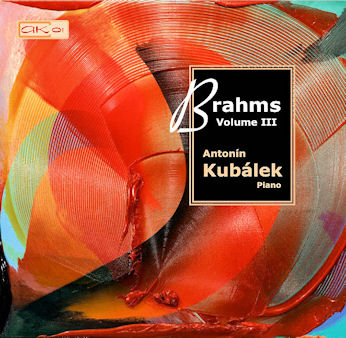
01_Brahms-IIIBrahms - Piano Music Vol.3
Antonin Kubalek
Independent ak01 (www.cdbaby.com)

The Czech Republic’s loss was surely Canada’s gain the day Anton Kubálek decided to flee political unrest in his homeland in 1968 to settle in Toronto. Since that time, he has quietly carved out his niche, earning a reputation as an outstanding pianist, pedagogue, and recording artist, his talents exemplified in the nearly 20 CDs produced for the Dorian label.

This latest offering is one originally intended to be Volume 3 in a series of music by Brahms, but Kubálek managed to obtain the rights, and has released it personally. Recorded in 1995, it features four early works: the Sonata Op.1, the Ballades Op.10, the Variations on a Hungarian Song Op.21 #2, and the Scherzo Op.4. The sonata is a large-scale work - Brahms first attempt at the form - and from the opening chords, Kubálek treats this confident music with a bold assurance. Considerably more mysterious and dramatic are the four Ballades Op.10, music from 1854 inspired by the Scottish poem Eduard. The Variations and the Scherzo (Brahms earliest extant composition) abound in technical challenges, while possibly proving that the composer’s piano music is sometimes less than “pianistic.” But Kubálek meets the difficulties with apparent ease, demonstrating both virtuosity and intense lyricism, and without the flashiness that often characterizes the playing of many of his younger contemporaries. As always, he remains the consummate musician.

Since the fall of communism in 1989, Kubálek has travelled back to the Czech Republic several times in order to give recitals and hold master classes, but luckily for us, he has no intentions of returning permanently. May he continue to share his talents - both in concert and on fine CDs such as this one - for a long time to come.

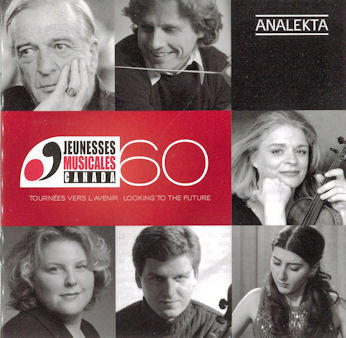
02_jeunesses_60Jeunesses Musicales Canada 60
Various Artists
Analekta AN 2 9927-8

Since the founding of Jeunesses Musicales du Canada 60 years ago in 1949 by Gilles Lefebvre following a meeting with Father J.H. Lemieux, Anaïs Allard-Rousseau and Laurette Desruisseaux-Boisvert, the admirable organization has been supporting young artists embarking on their concert careers through concert tours, scholarships, competitions, and just plain good advice on the various options available to them. Many acclaimed Canadian artists have played the JMC circuit – no wonder then that this two CD compilation features a plethora of world class Canadian JMC talent extracted from a number of previous Analekta releases.

Space prevents me from naming everyone, so here are my gems. The set kicks off with a gut wrenching performance of a man's heart breaking by bass Joseph Rouleau (with the Royal Opera House, Covent Garden) in “Elle ne m'aime pas!” from Verdi's Don Carlos. Violinist James Ehnes is perfect in the Adagio from Bach's Sonata in G Major BMV 1021. Ensemble Caprice's take on Vivaldi's Concerto in C major RV 533 is surprisingly successful in its spirit. It is a joy to hear pianist Anton Kuerti as the accompanist to violinist Angèle Dubeau in Schubert's Sonata for violin and piano in D Major. The Gryphon Trio's rendition of Piazzolla's The Four Seasons of Buenos Aires meticulously captures the quality of the composer's own performances.

I only wish more contemporary music had been included (even though harpist Valerie Milot is excellent in Salzedo's Scintillation). Also, performance dates would have made the liner notes more complete.

This is a fine release to enjoy time and time again, and a fitting tribute to JMC's 60 years of work with Canada's finest musicians.

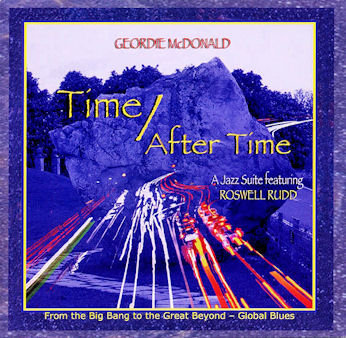
02_TimeAfterTimeTime/After Time: A Jazz Suite
Geordie McDonald
Sonavista Records (geomic@interlog.com)

Audaciously taking on nothing less than a history of our sad planet, from the big bang to its potential post-apocalypse, veteran local drummer Geordie McDonald has put together a multi-faceted two-CD set that melds futuristic, multi-ethnic and contemporary improvisations.

“Time/After Time” is an instrumental parable that begins with a brief electronically propelled explosion and ends with more than 12½ minutes of McDonald’s inventive polyrhythms on drums and ancillary percussion including a bell tree, claves, oversized cymbals, woodblocks and rain sheets. The suite encompasses the skills of 18 [!] of Toronto’s top improvisers plus New York-based trombonist Roswell Rudd, whose inventive brays and slurs perfectly fit the primitive-modern CD the drummer organized.

Organized is the key word since McDonald only composed one track. The others are group improvisations or themes written by the other players such as alto saxophonist/Shuffle Demon Richard Underhill; trumpeter/Flying Bulgar David Buchbinder; baritone saxophonist/educator David Mott; and inventive flutist and bass clarinetist Glen Hall.

A perfect example of this contrapuntal concordance both in writing and playing occurs on Hall’s Tribal Survival. Accompanied by vibrating resonations from John Rudel’s congas and Rick Lazar’s doumbek, the vamping horn section plus staccato hocketing from vocalists Maryem Tollar and Sophia Grigoriadis, the trombonist splutters cross tones throughout, working up to a climax of staccato, flutter-tonguing.

Further Rudd duets that include a low-pitched, plunger-and-slurs face-off with Mott, and Buchbinder and the trombonist advancing their version of modern tailgate styles, confirm that McDonald recruited the perfect crew for this project.

Back to top