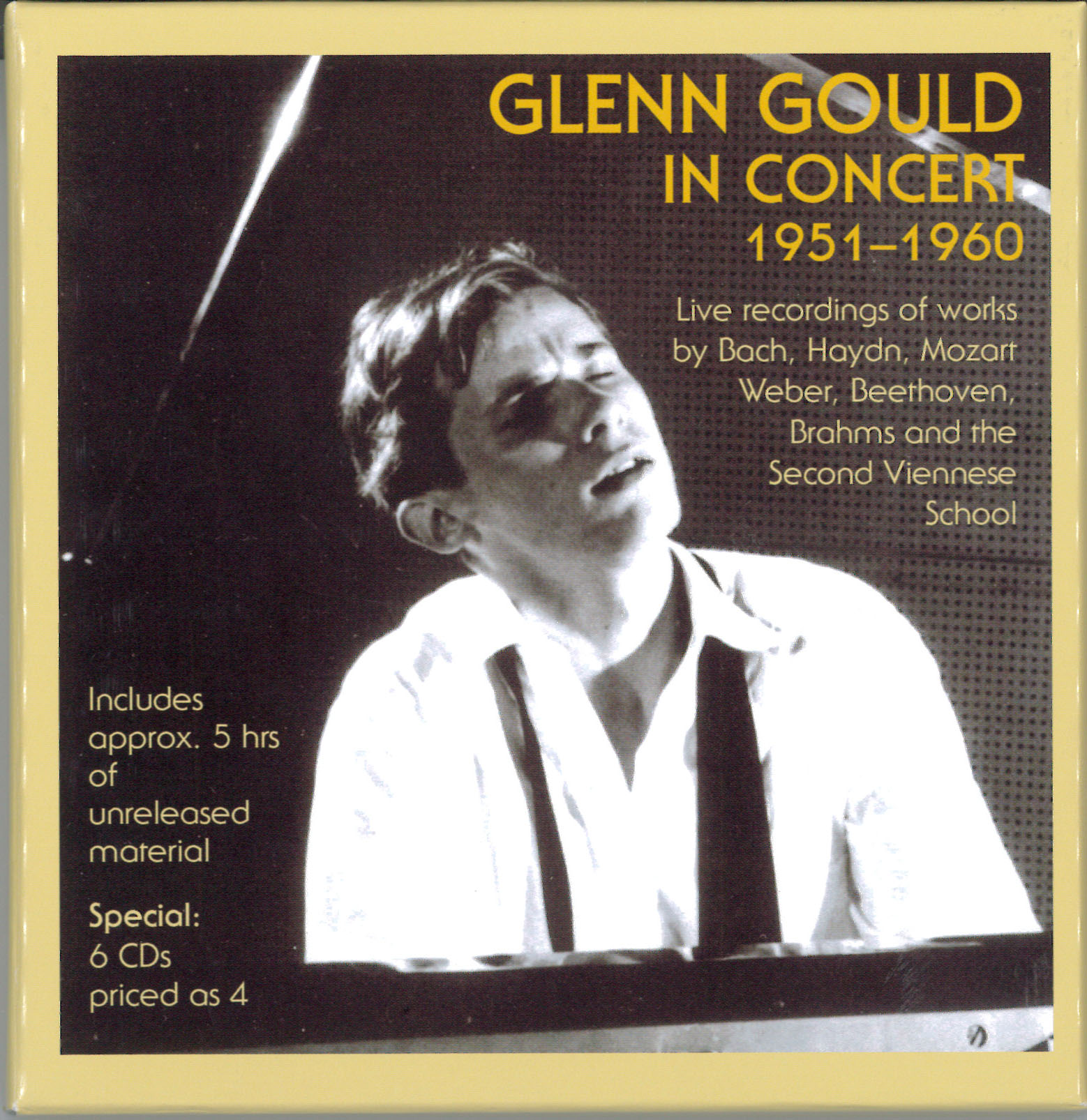
05_glenn_gould_liveGlenn Gould in Concert 1951-1960

Glenn Gould

West Hill Radio Archives WHRA-6038

The tragedy of Glenn Gould as concert pianist is seldom discussed. He faced crippling performance anxieties he could not overcome, and abandoned his flourishing career in his early thirties. He then commenced to become even more famous in his subsequent life as a combination recording artist, CBC arts producer, music journalist, and general Toronto eccentric.

Here we have the Glenn Gould most of us never knew, the concert artist, in some five hours of previously unreleased recordings. All of this material is unedited, taken from radio broadcasts or private recordings: it is raw Gould, so to say, with the occasional smudges and wrong notes of all pianists, from an artist who in later life insisted on zealous control of his work, in his bid for edited perfection. The performances are from Canada, the USA, Russia, Austria, and Sweden. Gould biographer Kevin Bazzana has supplied lengthy biographical notes, in extremely small print. The release itself is Canadian/German and cryptic, except for a clear warning label: “Not available in the USA.”

A 1958 Vancouver Festival performance of - guess what? - Bach’s Goldberg Variations opens this boxed set. The Aria dances with tremendous musicality and contrapuntal verve. It feels more elastic and personal than the famous Columbia debut release of 1955. Variations 29 and 30 are electric and wild, and played interwoven as one.

There’s a wonderful performance of the Beethoven Second Piano Concerto with Paul Paray and the Detroit Symphony, with an aching slow movement. We tend to put Gould in a cerebral, clinical camp of pianism: not here. With the same conductor and orchestra - on the same night, no less! - Gould then teamed up with the DSO’s concertmaster Mischa Mischakoff and principal flutist Albert Tipton for a splendid, warm performance of the Fifth Brandenburg Concerto. Gould’s long solo cadenza, written by Bach, is muscular and songful.

Other treasures abound, including a gentle reading of Beethoven’s Sonata Op. 109 from a Vienna recital, Schoenberg’s intimate, spiky Piano Concerto with the Cleveland Orchestra, and some gorgeous Beethoven chamber music from the Stratford Festival.

There’s an oddly dreary Gould performance of the Brahms First Concerto - with a fine Winnipeg SO led by Victor Feldbrill - that then roars to life for our hero in the finale.

Swedish mezzo-soprano Kerstin Meyer joined him for Schoenberg’s song cycle Book of the Hanging Gardens at the 1960 Vancouver Festival. She tells us in the notes that Gould was a superb and deferential accompanist, who followed her “like a shadow.”

Sound quality throughout these CDs is so-so, yet very present and alive. Engineer Albert Frantz did the digital restorations: you know right away these are dated performances, but you also feel like a time-traveller, sitting in a good seat at each concert venue.

It is sad to recall that this brilliant young Toronto pianist of the 1950s could still be concertizing today, had he lived, and had he continued a normal path. Gould would turn 80 next year. He was a contemporary of Paul Badura-Skoda, Alfred Brendel and Martha Argerich. But something went wrong, and Gould’s retreat into the recording studio brought a more mannered musical trajectory that still confounds many.

Strongly recommended! Order online from www.canadacd.ca ($52.99).


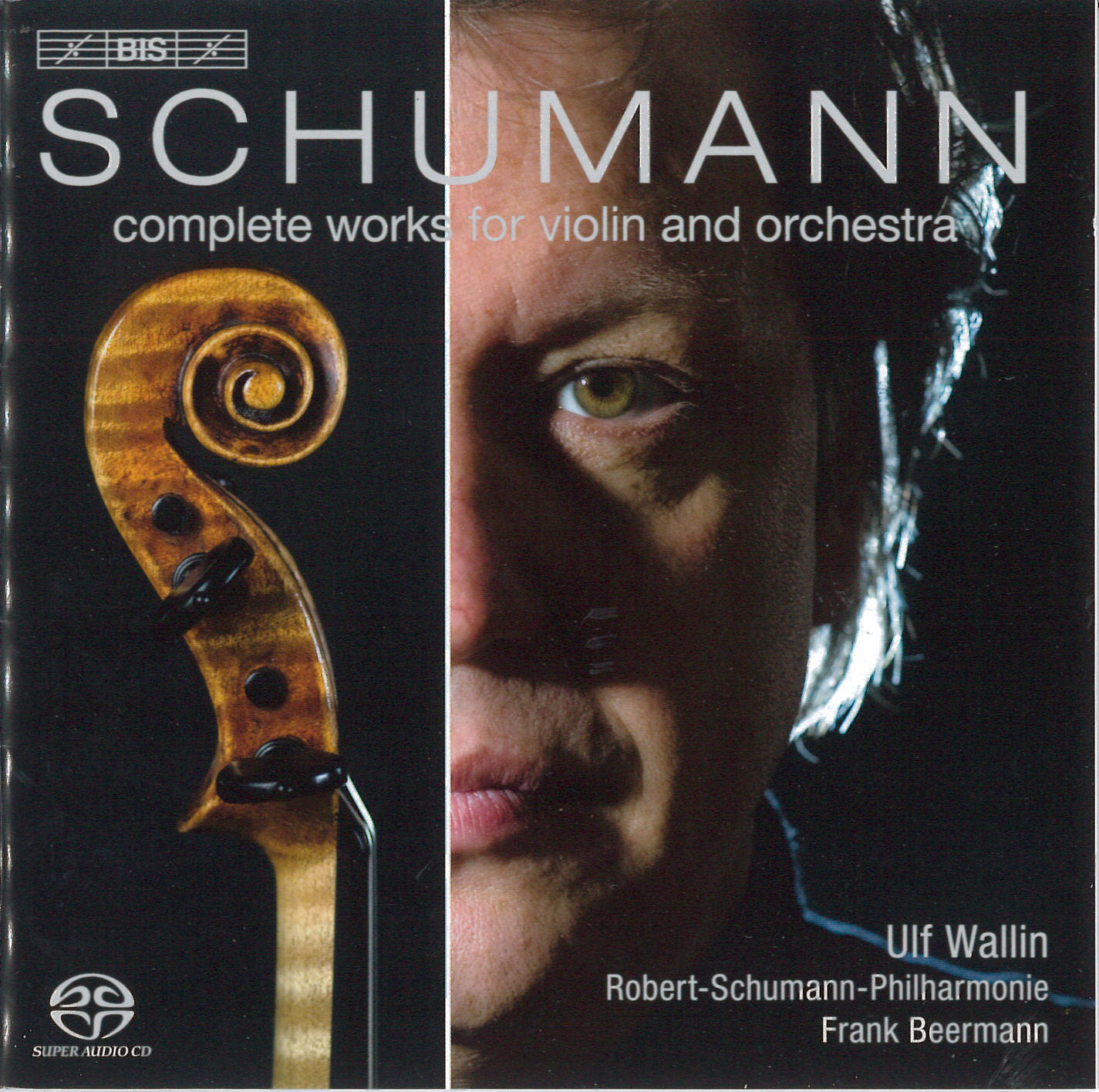
01_schumann_violin-orchestraThroughout his life, Robert Schumann tended to concentrate on one particular form of composition at a time, and in 1853 he produced his only three works for violin and orchestra, although only one – the Fantasy in C minor – was premiered before his death 3 years later. BIS has released an outstanding SACD of the Complete Works for Violin and Orchestra (BIS-SACD-1775) featuring Ulf Wallin with the Robert-Schumann-Philharmonie under Frank Beermann. The Concerto in A minor is Schumann’s own transcription of his 1850 Cello Concerto, and it works remarkably well, given the two instruments’ differences in pitch and tone. It was premiered as recently as 1987 after a copy was found in the papers of the violinist Joseph Joachim, to whom both the Fantasy and the Violin Concerto in D minor were dedicated. The Fantasy, an attractive work with a striking cadenza, fell out of favour after Schumann’s death, and the D minor concerto fared no better, with several projected premieres being cancelled before Clara Schumann and Joachim lost faith in it and decided against publishing it. Joachim’s resistance was probably due to the concerto’s technical and musical challenges: it’s a large work with a beautiful slow movement, but has never really established itself in the repertoire since finally being published and premiered in 1937. If anything can change that, it’s this recording. Ulf Wallin (who also wrote the outstanding booklet notes) uses Schumann’s original solo part, wisely choosing to ignore the later unauthorized “corrections and alterations” apparently made by Joachim. The result is a definitive performance, full of strength and beauty, and perfectly displaying the mix of Classical and Romantic styles that typify the music of this still often misunderstood composer.

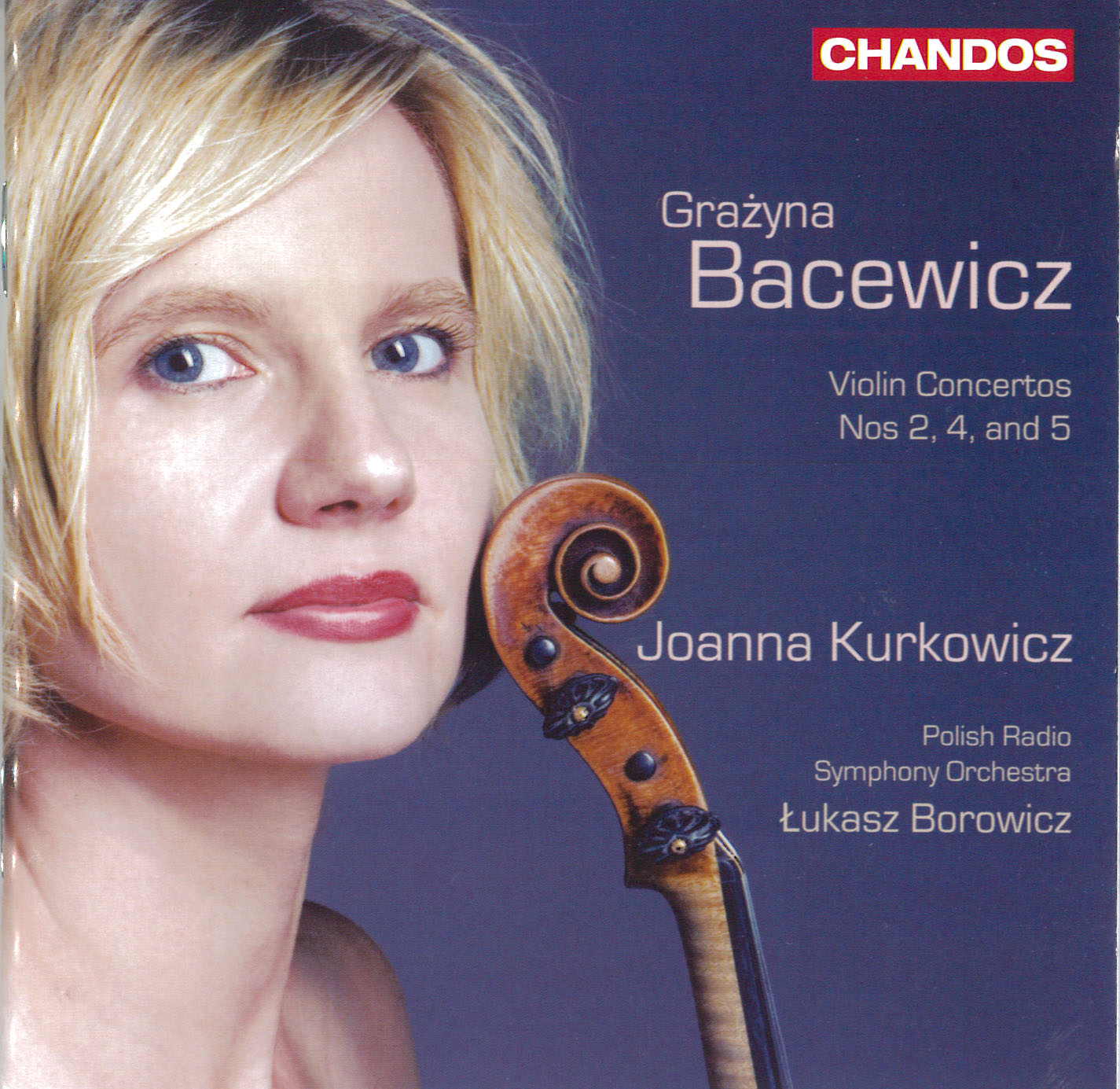
02_bacewicz_violin_concertosCHANDOS has issued Volume 2 of the Violin Concertos of the Polish violinist and composer Grazyna Bacewicz (CHAN 10673), and it’s quite stunning. Bacewicz (1909-69) was that 20th century rarity – a world-class violin virtuoso with compositional skills to match. Volume 1 featured Concertos 1, 3 and 7, and this new CD completes the set with Nos. 2 (1945), 4 (1951) and 5 (1954) (No.6 exists only in manuscript, and has never been performed). The three works here range from the somewhat Prokofiev-like No.2, with its mix of melodic and strongly rhythmic material, to the much tougher, terser world of No.5, as Polish music began moving away from the “formalist” Communist days. All three demonstrate Bacewicz’s innate understanding of the instrument, and her assured grasp of form and orchestration. The Polish-born violinist Joanna Kurkowicz, now resident in the United States, is wonderful throughout, and given terrific support by the Polish Radio Symphony Orchestra under Lukasz Borowicz. An absolutely essential addition to the 20th century violin concerto record catalogue.

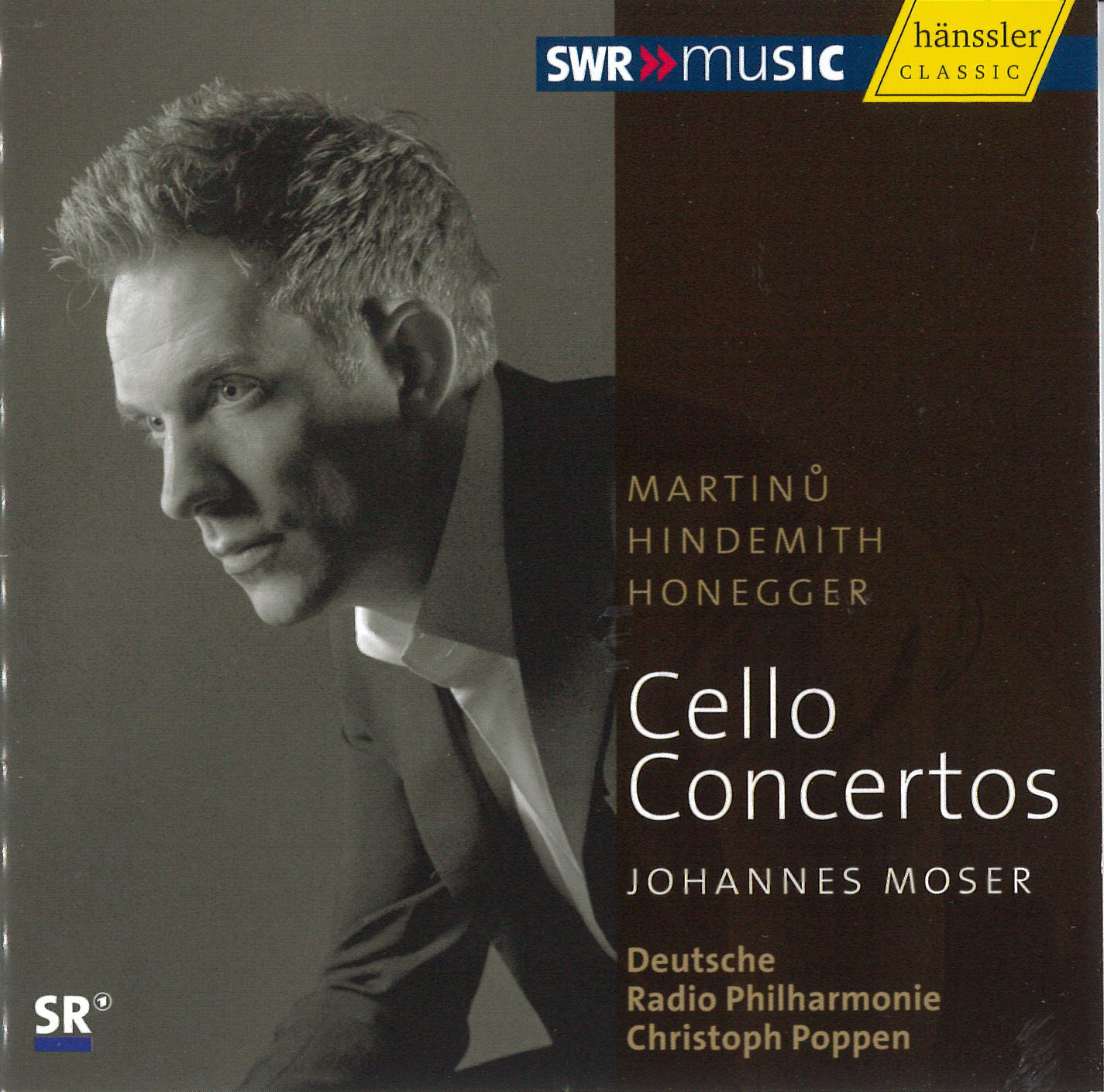
03_cello_concertosBohuslav Martinu, Arthur Honegger and Paul Hindemith lived almost exactly contemporaneous lives, being born within 5 years of each other in the early 1890s and all dying in their 60s between 1955 and 1963. As cellist Johannes Moser perceptively notes in the booklet for his latest CD, Cello Concertos (Hänssler CLASSIC CD 93.276) they had one other thing in common: they all consciously avoided the path of serialism and consistently developed their own very individual styles. Moser’s idea of bringing their cello concertos together in one programme is a real winner, and results in a terrific CD. All three works are in the traditional three-movement form and are immediately accessible, while clearly imbued with each composer’s individual voice. The Martinu, from 1930, has its roots firmly in the Czech tradition, with a soulfulness very reminiscent of Janáček at times. The Honegger is a short (15 minutes) but very effective work from the same year. The Hindemith, from 1940, is classic Hindemith: a strong, rhythmic opening; an immediate melodic entry for the soloist; an instantly identifiable and highly personal use of tonality; stunning orchestration. It’s a wonderful partner for the Violin Concerto from the previous year. I’m completely at a loss to understand why Hindemith is still regarded in some circles as a dry, theoretical musician – it’s a view completely at odds with his mature orchestral works, and one completely destroyed by performances like this. Moser is outstanding throughout the disc. The recorded sound is warm and resonant, and the Deutsche Radio Philharmonie and conductor Christoph Poppen are ideal partners.

04_yossif_ivanovTwo late 20th century violin concertos are featured on a Harmonia Mundi CD (AP007) of works by Henri Dutilleux and Rafael D’Haene, with the Belgian violinist Yossif Ivanov and the Orchestre de l’Opera national de Lyon under Kazushi Ono. Dutilleux was born in 1916, and is still with us at 95! His violin concerto L’arbre des songes (Tree of Dreams), finished in 1985, took a while to write: it was commissioned by Radio France in 1979 for Isaac Stern’s 60th birthday the following year. It’s an intriguing work, consisting of four main sections joined by three orchestral interludes, and shows a tremendous range of orchestral colour and timbre. The Belgian composer Rafael D’Haene was born in 1943, and was a pupil and consequently a close friend of Dutilleux. His violin concerto (1990) is a two-movement work which has as its theme the myth of Orpheus, with which the composer has always been fascinated. It’s maybe less immediately accessible than the Dutilleux, but is no less striking a work for that. Dutilleux's Nocturne for Violin and Orchestra, sur le meme accord, completes the CD; it's a short but brilliant piece built on a 6-note chord, composed in 2002 and dedicated to Anne-Sophie Mutter. Ivanov and the orchestra are in top form throughout a disc that has to be listened to – no simple background music here – but that amply rewards the effort.

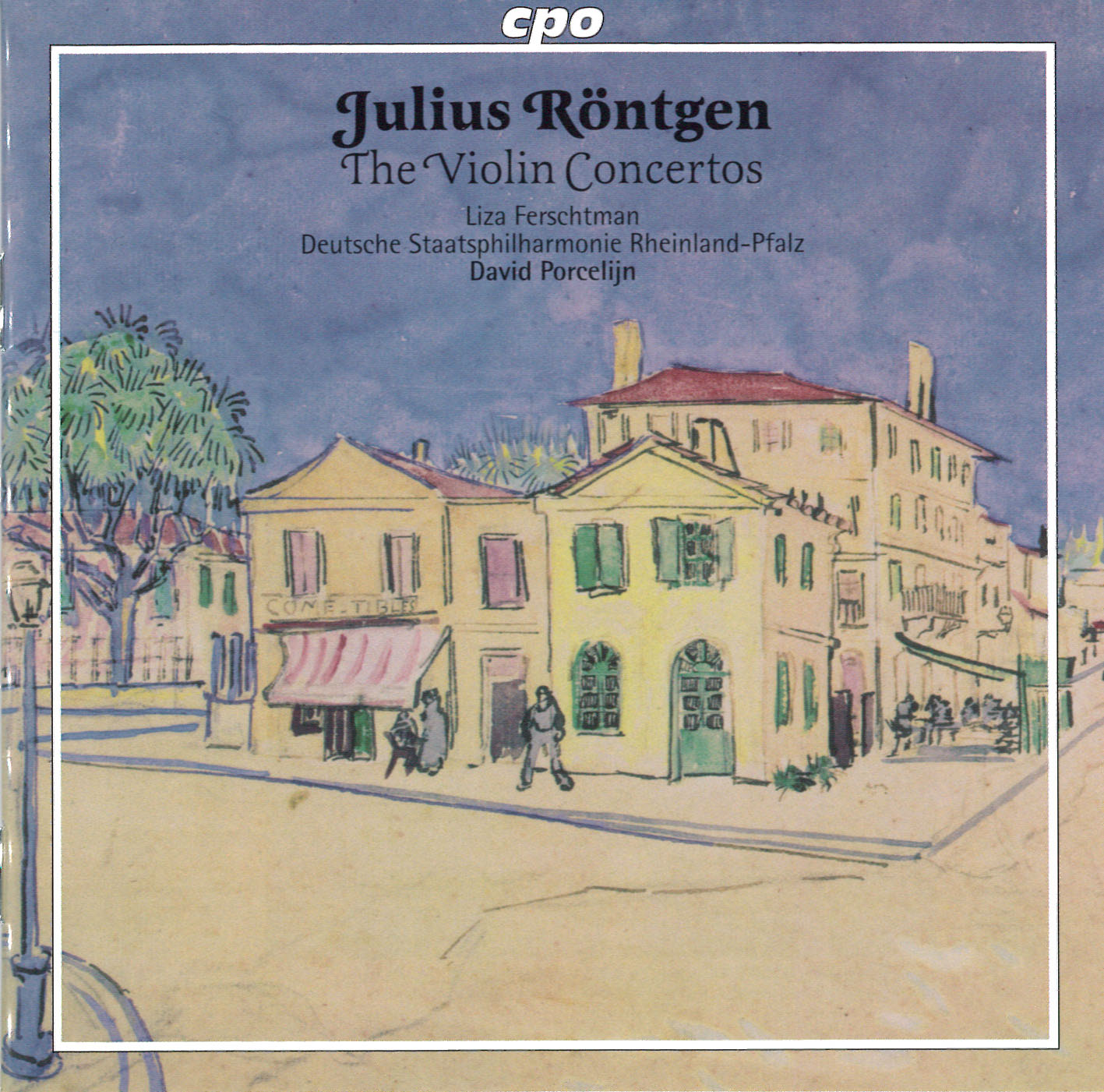
05_rontgenThree more 20th century violin concertos – although you would never guess to listen to them – comprise the programme on a CD of music by the Leipzig-born composer Julius Rontgen (1855-1932), who spent most of his life in the Netherlands, but remained firmly rooted in the German tradition of Mendelssohn, Schumann and Brahms. The German label CPO has issued an interesting and thought-provoking CD of his Violin Concertos (777 437-2) featuring the Concertos in A minor from 1902 and F sharp minor from 1931, together with the Ballad from 1918. Although I know the name, I can’t recall ever hearing any of Rontgen’s music, and listening to this CD it’s perhaps easy to understand why: despite all three works dating from the 1900s you’re constantly reminded of 19th century composers – Sarasate, Dvořák, and particularly Bruch and Brahms – and while it’s all very competent and makes for pleasant listening there doesn’t seem to be a great deal of substance or individuality. It always seems to fall just short of memorable. Brahms, himself a friend of Rontgen’s, was among those - both critics and colleagues - who commented that Rontgen’s musical voice was simply not original enough. That’s not to say that his voice was without talent, however. Rontgen may have been stylistically stuck in 19th century Germany, but he clearly knew his craft. These works display skill and taste, together with a real melodic gift and a fine grasp of orchestration; what he apparently lacked was that true spark of genius that would have infused his music with a strong personal identity. Dutch violinist Liza Ferschtman makes the most of the material here, with fully committed playing that presents the music in the best possible light. The Deutsche Staatsphilharmonie Rheinland-Pfalz under David Porcelijn provides excellent support. It might be easy to see why this music has remained in a backwater instead of drifting into the mainstream, but don’t be misled: there are many really lovely moments throughout this CD.

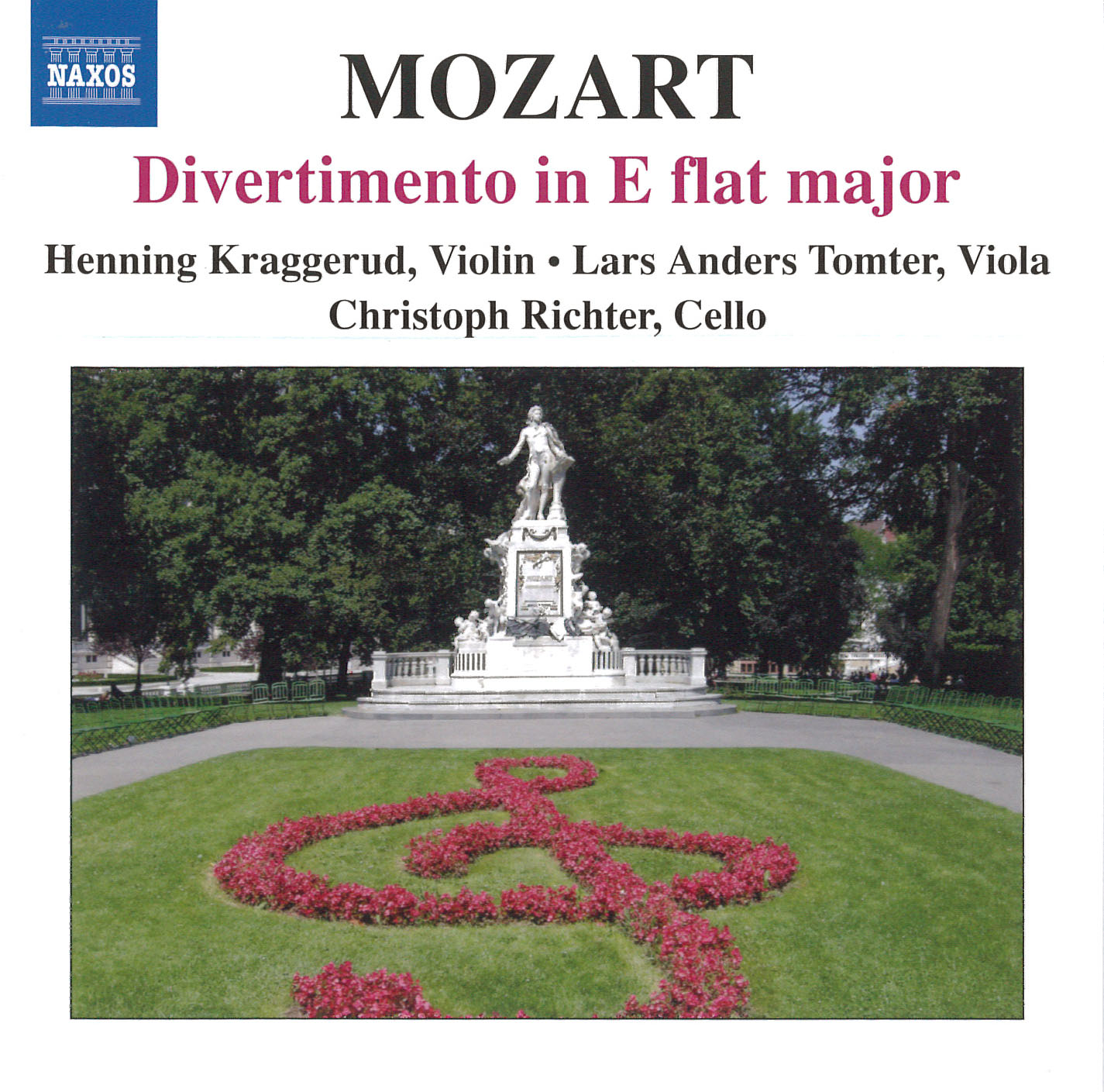
06_mozart_divertimentoThere’s another recording of the wonderful Mozart Divertimento K563 - the String Trio in E flat – one of Mozart’s most glorious keys. I raved about the Trio Zimmermann’s recording of this work earlier this year, and now Naxos has issued an excellent performance by violinist Henning Kraggerud, violist Lars Anders Tomter and cellist Christoph Richter (8.572258). Again, don’t be fooled by the designation Divertimento: although this normally signified light entertainment music where the composer was free to choose a mixture of movements and forms, this six-movement work is, as Ingrid Anderson’s booklet notes so rightly point out, “far from pure entertainment.” She echoes the Alfred Einstein quote from my previous review when she calls the first two movements “…among the most sonorous and masterful examples of chamber music ever written.” And they are. This performance may be slightly less intense than the Zimmermann at times, but it’s a warm, rich reading that is beautifully recorded. At the bargain Naxos price it’s a great way to obtain a superb work that is quite simply Mozart at his best.

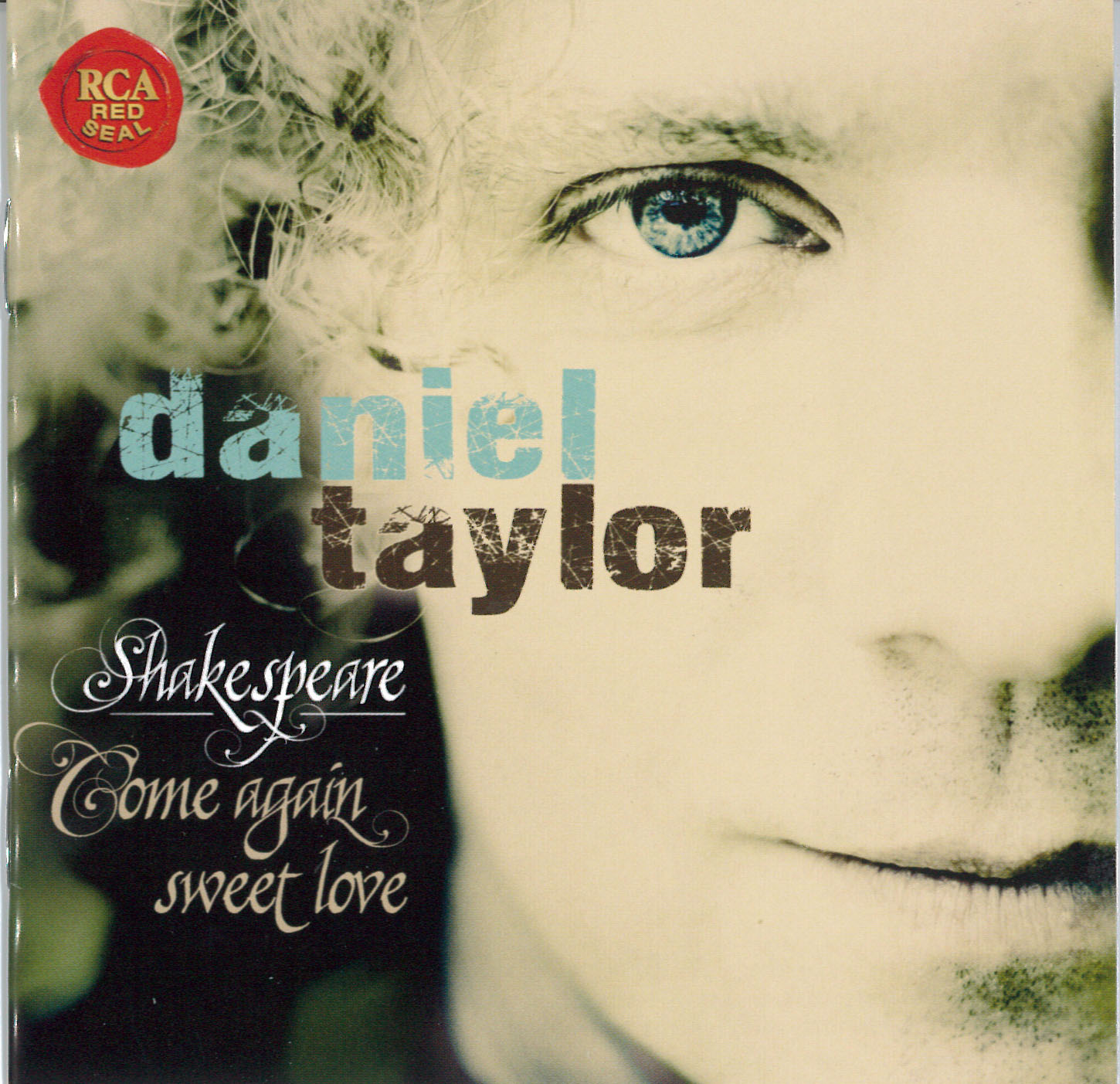
01_daniel_taylorShakespeare - Come again sweet love

Daniel Taylor; Theatre of Early Music

RCA Red Seal 88697727222

As founder and artistic director of the Montreal-based Theatre of Early Music (TEM) and a singer of international renown with over 60 recordings to his credit, Canadian countertenor Daniel Taylor is now at a point in his career where, on the Sony label, he headlines a recording that counts among its vocal performers Dame Emma Kirkby, Michael Chance and Charles Daniels as well as Carol Sampson and Neal Davies. Drawing on repertoire inspired by, referred to or performed in the plays of Shakespeare, this is a delightful and varied collection of solos, duets and madrigals complemented by adept instrumentalists from two different ensembles: TEM’s Elizabeth Kenny and Jacob Heringman on lute and Fretwork’s Richard Boothby and Richard Campbell on viola da gamba. A most wonderful confluence occurs in the various combinations of voices as in Orlando Gibbons’ The Silver Swan and particularly when countertenors Taylor and Chance duet in Robert Jones’ Sweet Kate and Thomas Morley’s Sweet nymph, come to thy lover. Purcell’s By Beauteous softness and If music be the food of love as well as Johnson’s Full Fathom Five are interpreted with tender affect by Taylor, Sampson and Davies respectively. Charles Daniels is given the title track and Emma Kirby adds a light-hearted flavour to Now what is love? This collection, recorded in London, is highly recommended as a feast of love for a mid-summer’s night.


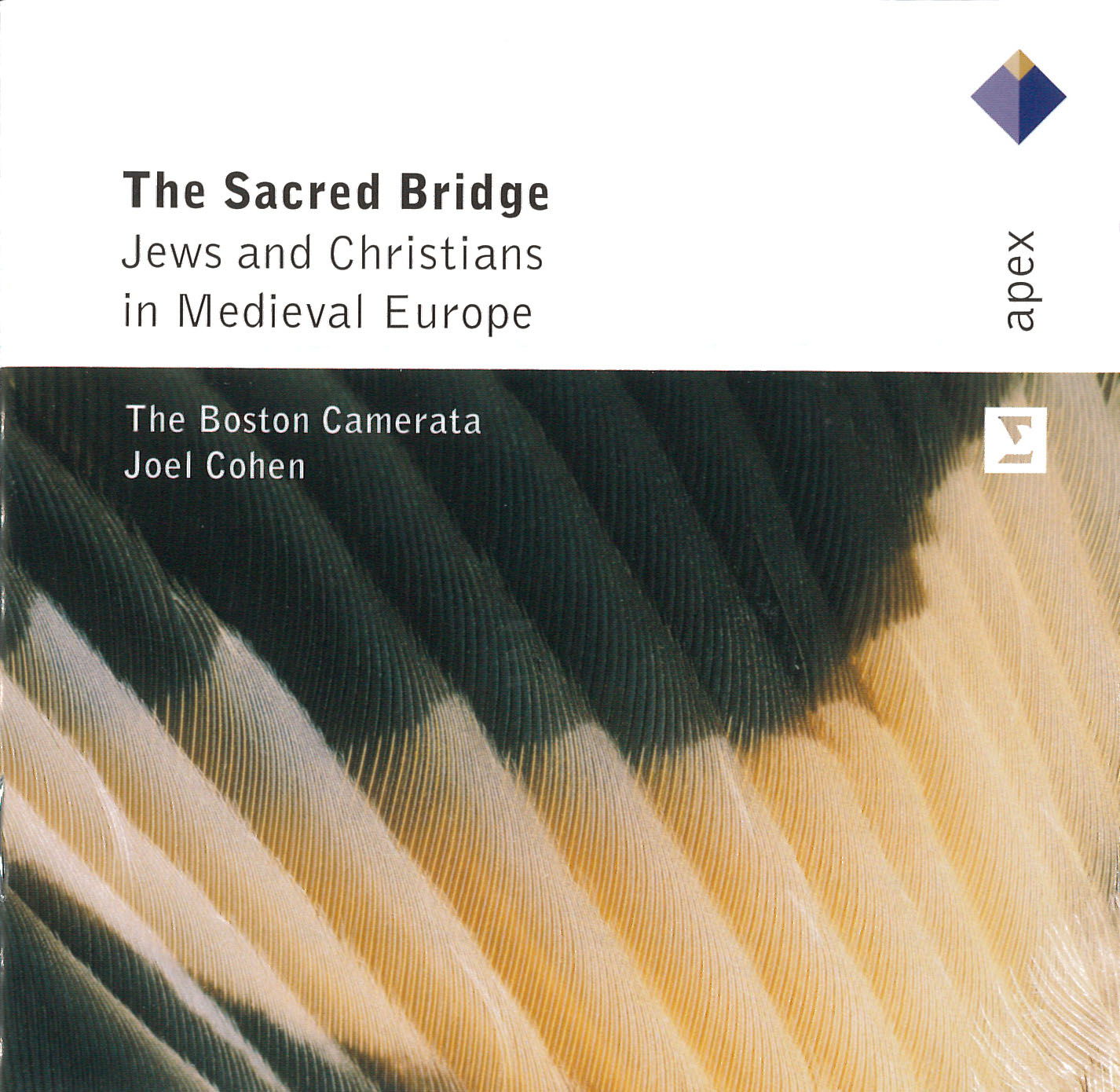
01_sacred_bridgeThe Sacred Bridge - Jews and Christians in Medieval Europe

Boston Camerata; Joel Cohen

Apex 2564 69895-6

Early music for many spans over 600 years to the mid-eighteenth century. This single CD takes in music from precisely those six centuries. They were an exhilarating time although this recording also displays deep and sometimes sad contrasts. Some of the music was composed and performed in Jewish ghettoes, some emanated from the Jews’ contemporary Christian persecutors - and yet both communities were inter-dependent.

This interdependence was traced by Joel Cohen 22 years ago in the original “Sacred Bridge” now available on the Apex budget label. At its most intricate Latin and Hebrew versions of Psalm 114 are interwoven line by line, declaimed by tenor, baritone and counter-tenor. As if that is not complex enough, Joel Cohen turns to Jewish minstrels at Christian Courts. One wonders whether Matthew le Juif was actually this composer’s name at court. For all that, John Fleagle (tenor) does him justice, as Michael Collver’s counter-tenor does Suesskint von Trimberg’s Wa heb’uf.

In fact, Cohen’s selections are not all as complicated in their context. Jewish Folklore of the Eastern Mediterranean takes one through Jews in Provence and among Jews exiled from Spain. Again, the counter-tenor makes his presence felt as does Anne Azéma’s soprano in Morena me llaman and Cansoun d’Esther.

And finally, a large number of tracks interpret the songs of Spain before the exile of 1492. King Alfonso the Wise attracts Cohen’s attention; Collver’s impassioned Madre de Deus, ora por nos explains why this monarch is so respected among early music enthusiasts.


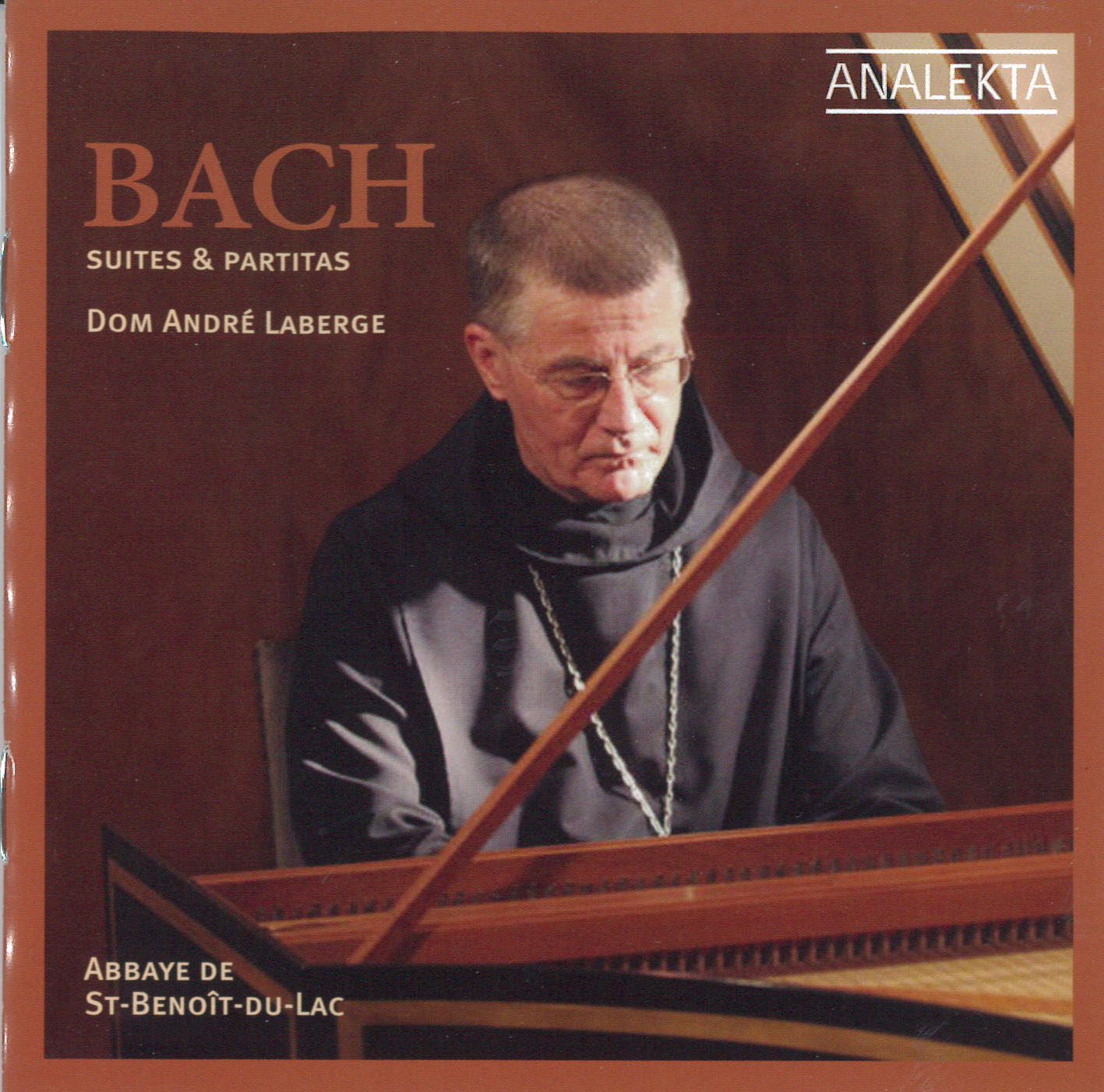
02_bach_dom_harpsichordBach - Suites and Partitas

Dom Andre Laberge

Analekta AN 2 9767

If we needed reminding of the inventiveness, adaptability and wide-ranging influence of Bach’s music, this recording provides ample evidence. The four major works are pieces Bach wrote for instruments other than the harpsichord, including violin (A minor sonata, BWV 1003 and famous D minor Chaconne), lute (BWV 996) and a hybrid known as a “Lautenclavicymbel” (BWV 997). With the exception of the Chaconne - which has been transcribed especially for Laberge by Pierre Gouin – all of the transcriptions were made during Bach’s lifetime by his students.

Paradoxically, the most convincing performance on the disc is of the least successful transcription. The solo violin sonata, BWV 1003, is a glorious work, full of contrapuntal and melodic interest. When transcribed for harpsichord, however, the sound alternates between being too thin or – when the “implied” harmonies of the violin are filled in – too thick and literal. Perhaps sensing this challenge, Laberge’s performance is brilliant, free and exciting, most particularly in the sensational fugue. This is in contrast to the somewhat careful and reserved approach to the rest of the material on the recording.

Laberge’s 1987 Dowd harpsichord records well and its warm and majestic sound suits its classy and formal owner, who is the organist and Abbot at the Benedictine Abbey of Saint-Benoît-du-Lac in Quebec.


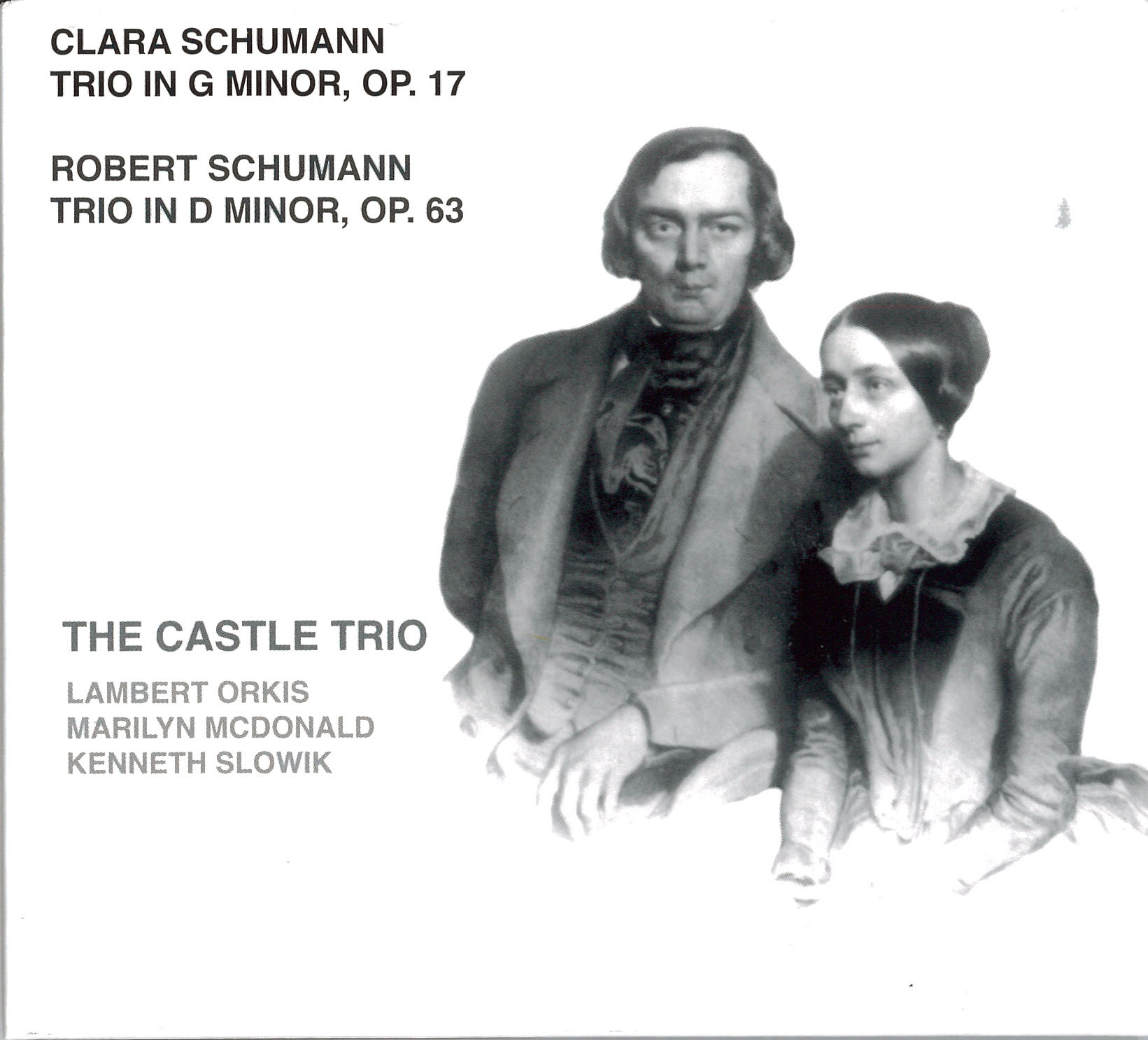
01a_schumann_castle_trio01b_schumann_triosClara and Robert Schumann - Piano Trios

Castle Trio

Friends of Music FOM 36-801 (www.smithsonian.org)

Robert Schumann - Complete works for Piano Trio

Leif Ove Andsnes; Christian Tetzlaff; Tanja Tetzlaff

EMI 0 94180 2

The American writer Catherine Drinker Bowen once referred to chamber music as “a conversation between friends.” I’ve long thought this a very apt description, and what better way to get ourselves in the mood for all the chamber music being heard at numerous festivals this summer than sampling these two recordings, featuring music by Robert and Clara Schumann? The first, on the Friends of Music label presents Clara’s only completed four-movement work, the Piano Trio Op.17, and her husband’s more familiar Piano Trio Op.63, performed by the Castle Trio. The second is a double disc featuring Schumann’s complete works for piano trio with Leif Ove Andsnes and Christian and Tanja Tetzlaff on EMI.

Clara Schumann’s Trio Op.17 and the Trio Op.63 by Robert were written within a year of each other, between 1846 and 1847, and both are now recognized as among the best of their output. Although Clara once described her trio as “effeminate and sentimental” there is no denying the fine craftsmanship displayed within. The American–based Castle Trio - Lambert Orkis, piano, Marilyn McDonald, violin, and Kenneth Slowik, cello – play with a finely-balanced precision and their exemplary interpretation is further enhanced by the decision to perform on early instruments, including an 1846 Streicher grand piano. To those used to modern-day chamber performances, the thinner, more transparent sound heard here may be a little disconcerting, but at the very least, the result is an accurate representation of how the music would have originally been heard.

The partnership among pianist Leif Ove Andsnes with violinist Christian Teztlaff and his sister, cellist Tanja Tetzlaff, is a not infrequent one, and their performance on this EMI recording is everything we’d expect from three outstanding players. Included in the set are the three piano trios, the Fantasiestücke Op.88, as well as the Six Etudes in Canonic Form Op.56, as arranged by Theodor Kirchner. Indeed, there is much to admire here – the playing is at times bold and impassioned, imbued with the true romantic spirit. Yet sections such as the second movement of the Piano Trio No.2 display a wonderful sense of intimacy, with the cello particularly warm and resonant. The four Fantasiestücke Op.88 are an attractive bonus, with the Marche finale bringing both the set and the collection to a buoyant and optimistic conclusion. In all, these are two fine additions to the catalogue; surely Robert and Clara would nod their heads in approval.


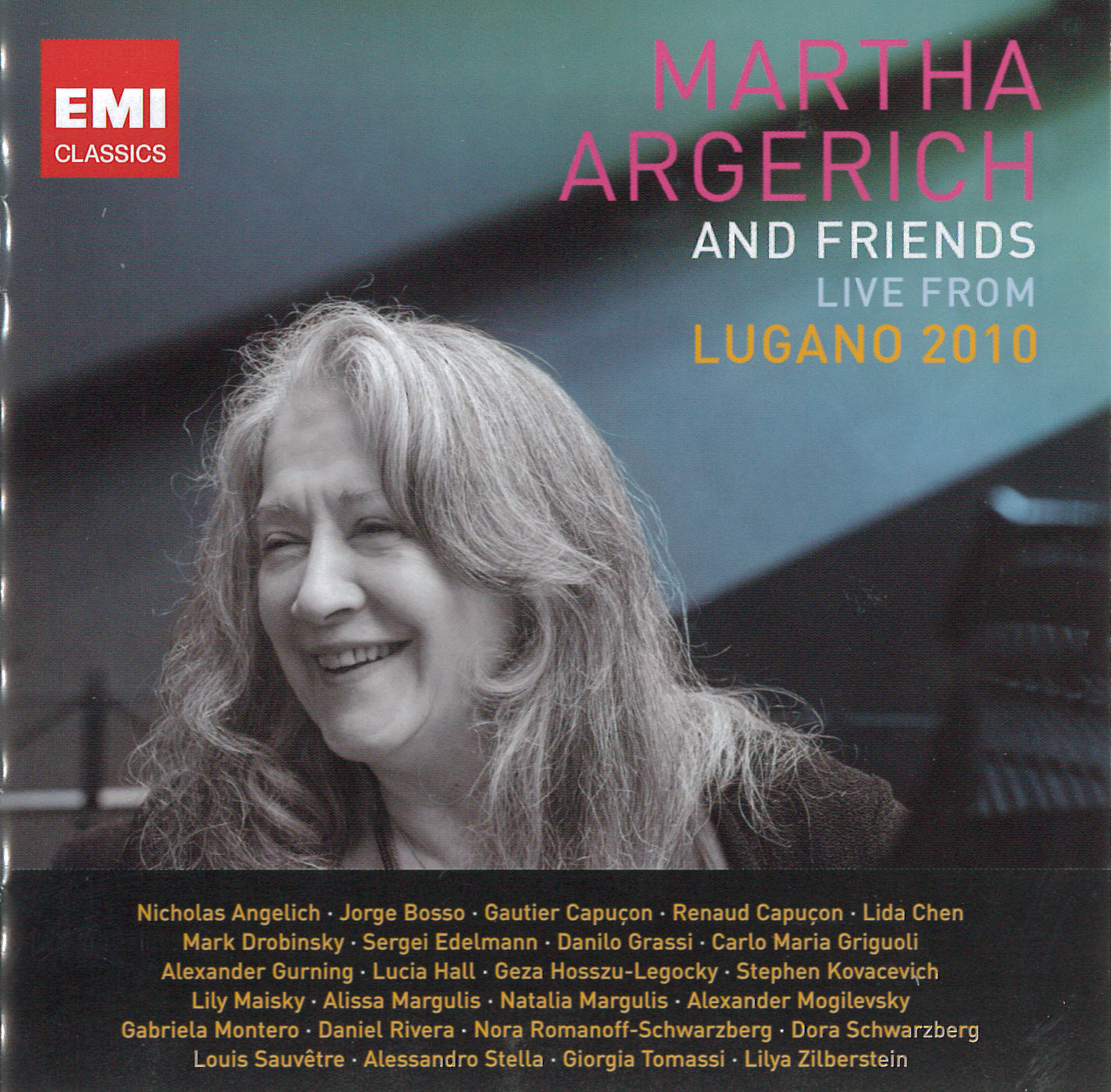
02_argerichLive from Lugano 2010

Martha Argerich and Friends

EMI 0 70836 2

Once again, in June 2010 in Lugano (Switzerland) “the hills are alive with the sound of music.” Those lucky enough to find a hotel room can enjoy Martha Argerich’s famous festival with many of today’s most talented young musicians playing solo and chamber music. Martha is as good as ever but her interests now extend towards a) teaching and inspiring the young and b) getting involved with chamber works as well as new adventurous projects, new music and even jazz. This year, apart from nearly 20 young artists, we have her usual stalwarts like the amazing brothers, violinist Renaud and cellist Gautier Capuçon and even her ex-husband the famous pianist Stephen Kovacevich.

2010 being the year of 200th anniversaries for Schumann and Chopin these are dutifully celebrated with Schumann’s Violin Sonata in a minor played beautifully by Renaud Capuçon and Argerich and his Adagio and Allegro Op. 70 for cello and piano, performed with Gautier Capuçon. To honour Chopin there is a wonderfully relaxed performance of one of Martha’s long time favourites the E minor piano concerto.

But here ends the “traditional” part and the “adventurous” now begins. First comes a fiendishly difficult transcription for two pianos of Liszt’s Les Preludes presaging next year’s Liszt celebrations. Erich Korngold’s rarely heard, feverishly overheated post-Straussian Piano Quintet still harkens back to late Romanticism but not the next work. Bartok’s Sonata for 2 pianos and percussion is from the composer’s “barbaric” period, a relentlessly percussive, uncompromising piece. If some listeners think it is “ugly” then Bartok actually achieved his purpose. It is played with great aplomb and exuberance by Argerich and Kovacevich. It had already been recorded by these two but alas that disc was deleted from the catalogue. Now with this set thankfully it is back.

I doubt Stravinsky ever heard Carlo Maria Griguoli’s three piano version of the Firebird Suite but he would certainly have approved of this stunning virtuoso arrangement played by three young pianists including the arranger himself. Now for a suitable ending of this fascinating set, terrifying noises of the big city emanate from Alfred Schnittke’s Piano Quintet (1976). Fully atonal with plenty of quarter tones we hear sirens of an ambulance at one point and at another unbearable noise of a swarm of hornets closing in around one’s head. Yet at the end ironically there is heavenly peace inspired by Beethoven’s Pastoral Symphony.


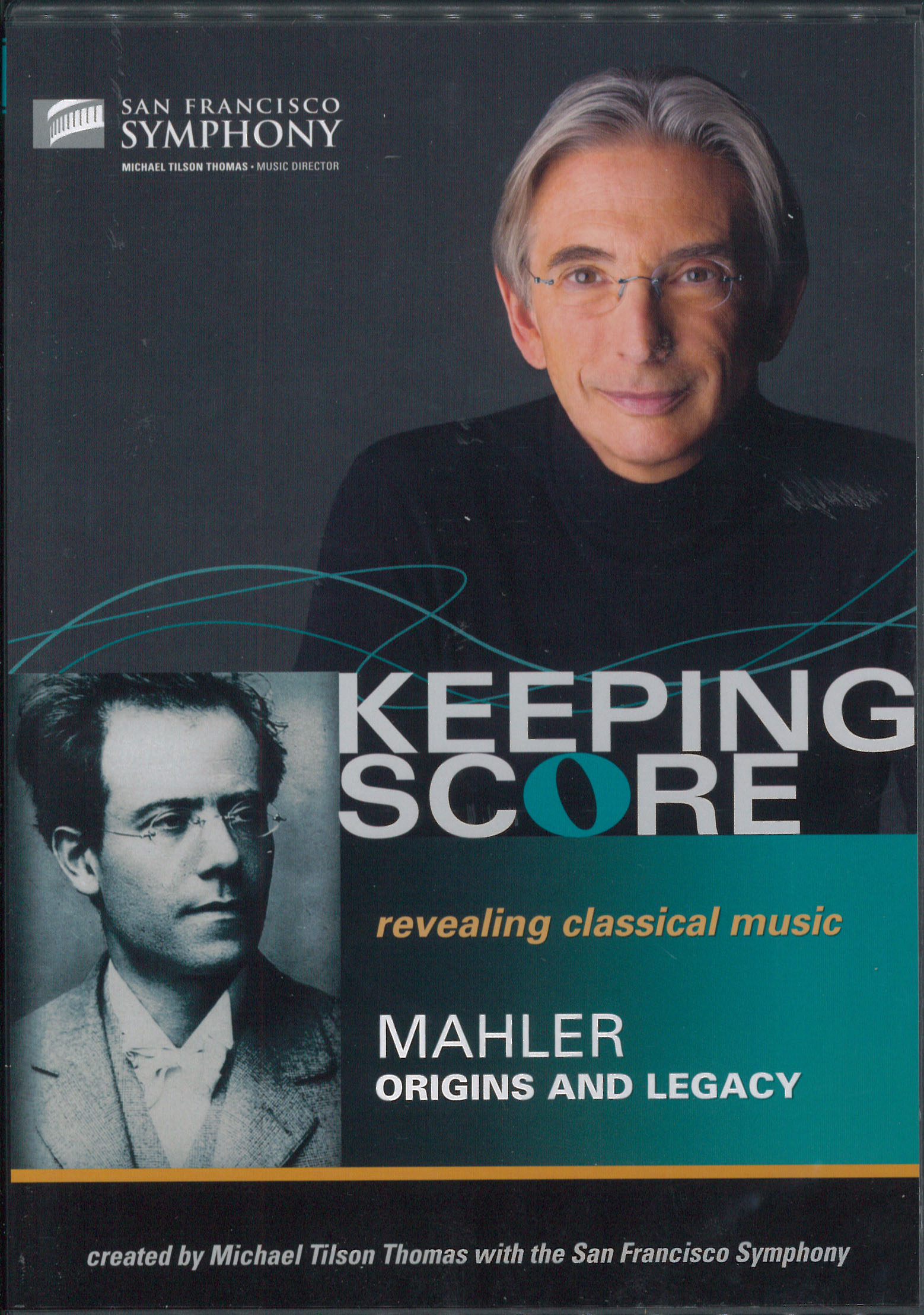
03_mahler_dvdKeeping Score: Mahler - Origins and Legacy

Michael Tilson Thomas; San Francisco Symphony

SFSMedia

This is the third season of the San Francisco Symphony’s admirable “Keeping Score” music documentary series, a project that can be followed on certain PBS stations (unfortunately Buffalo’s WNED is not among them). The episodes are typically an hour long, though the latest Mahler instalment is twice that length. The retail version of the broadcast includes a second CD featuring the complete First Symphony and isolated movements from three more symphonies (details are available at keepingscore.org). This handsomely produced and thoughtful documentary is considerably enhanced by on-location visits to Mahler’s boyhood home of Iglau (now Jihlava, in the Czech Republic) and the re-creation of its unique soundscape: a melange of military bands, the hymnody of St. Jacob’s church (Mahler, though Jewish, joined the choir there), the rustic sounds emanating from his father Bernard’s tavern, and the sylvan stillness of the ravine just beyond the town walls. Tilson-Thomas delivers an extended and quite engaging thematic analysis of Mahler’s First Symphony, convincingly demonstrating how Mahler forged the touchstone for all his subsequent works from these disparate cultural elements. Mahler’s rapid rise to the very top of his profession as a conductor is traced via stops in Budapest, Vienna and New York, including an unprecedented opportunity to enter his villa on the Wörthersee and visits to the various “composing huts” he had built for his precious few summers of composing. We learn of the genesis of most, though not all, of his 10 symphonies along the way. It is perhaps understandable, considering the huge expense of the recording contracts involved, that the choral symphonies (2 and 8) are glossed over and the grandiose 8th symphony rates but a single sentence. It is nonetheless an unfortunate omission, as both these works embrace a message of resurrection and transcendence that belie the clichéd thesis of Mahler’s introverted “otherness” which forms such a large part of Tilson-Thomas’s argument.


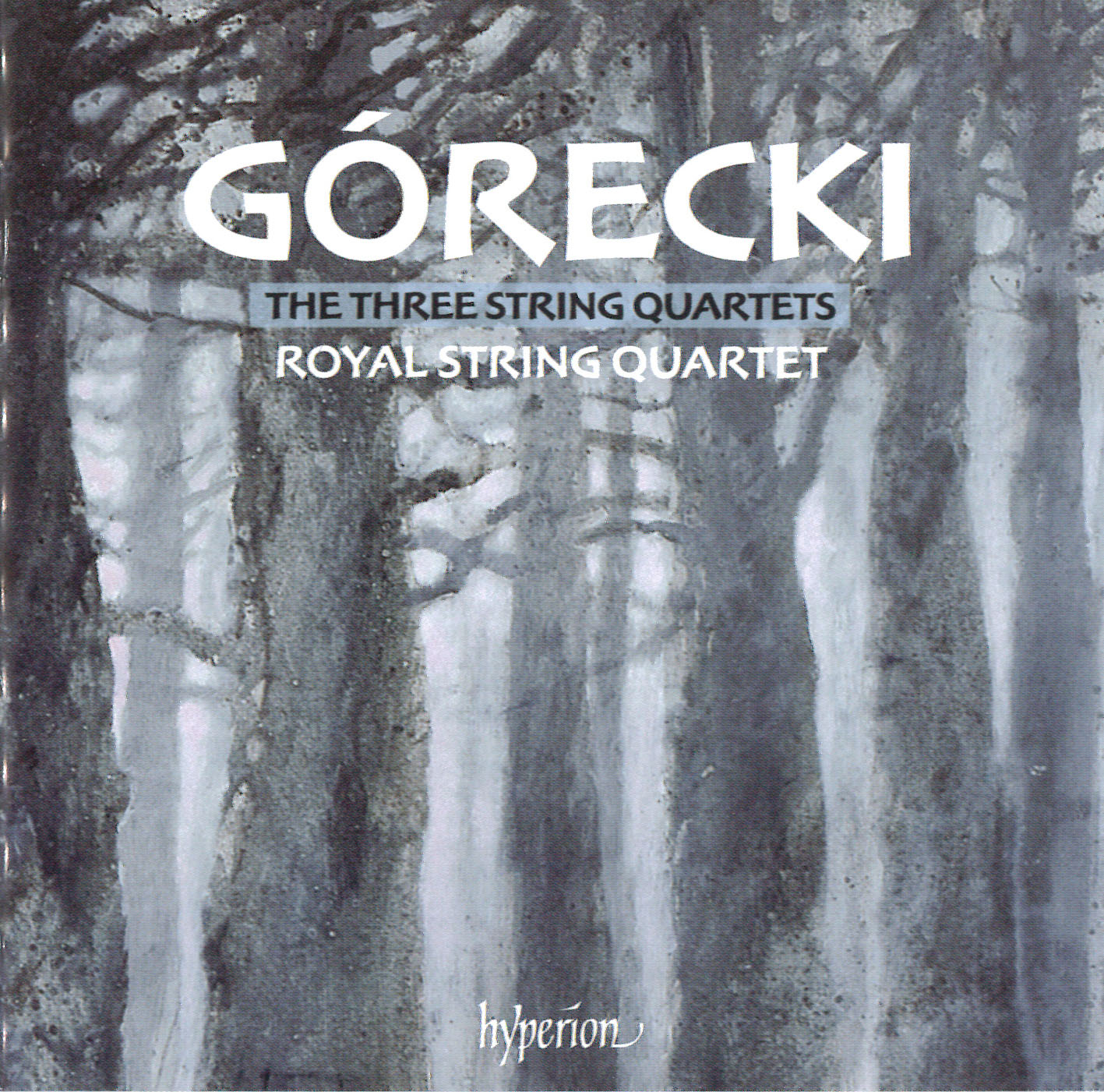
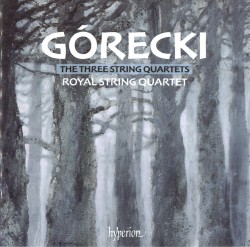
01_goreckiThe Polish composer Henryk Gorecki, who died last November, wrote three string quartets fairly late in his career - a fourth was apparently unfinished at the time of his death - and these are presented on the specially-priced 2-CD set Gorecki: The Three String Quartets (Hyperion CDA67812) performed by the Warsaw-based Royal String Quartet. It’s certainly not easy listening, with predominantly slow, quiet, and often dissonant meditative passages with low harmonies and little vibrato, interspersed with rich tonal outbursts. Already it is dusk, from 1988, Quasi una fantasia, from 1991, and ...songs are sung, completed in 1995 but not released until 2005, all offer ample support for Adrian Thomas’ comment in the booklet notes that “contemplation was always central to Gorecki” - certainly there is a sacred as well as a secular feel to these complex and very individualistic works. All three quartets were commissioned and first performed by the Kronos Quartet, who have also recorded them. I haven’t heard their versions, but however different they may be it’s hard to believe that they could be any more authoritative than these exemplary performances by the Polish ensemble.
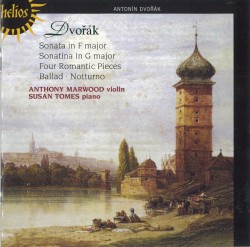
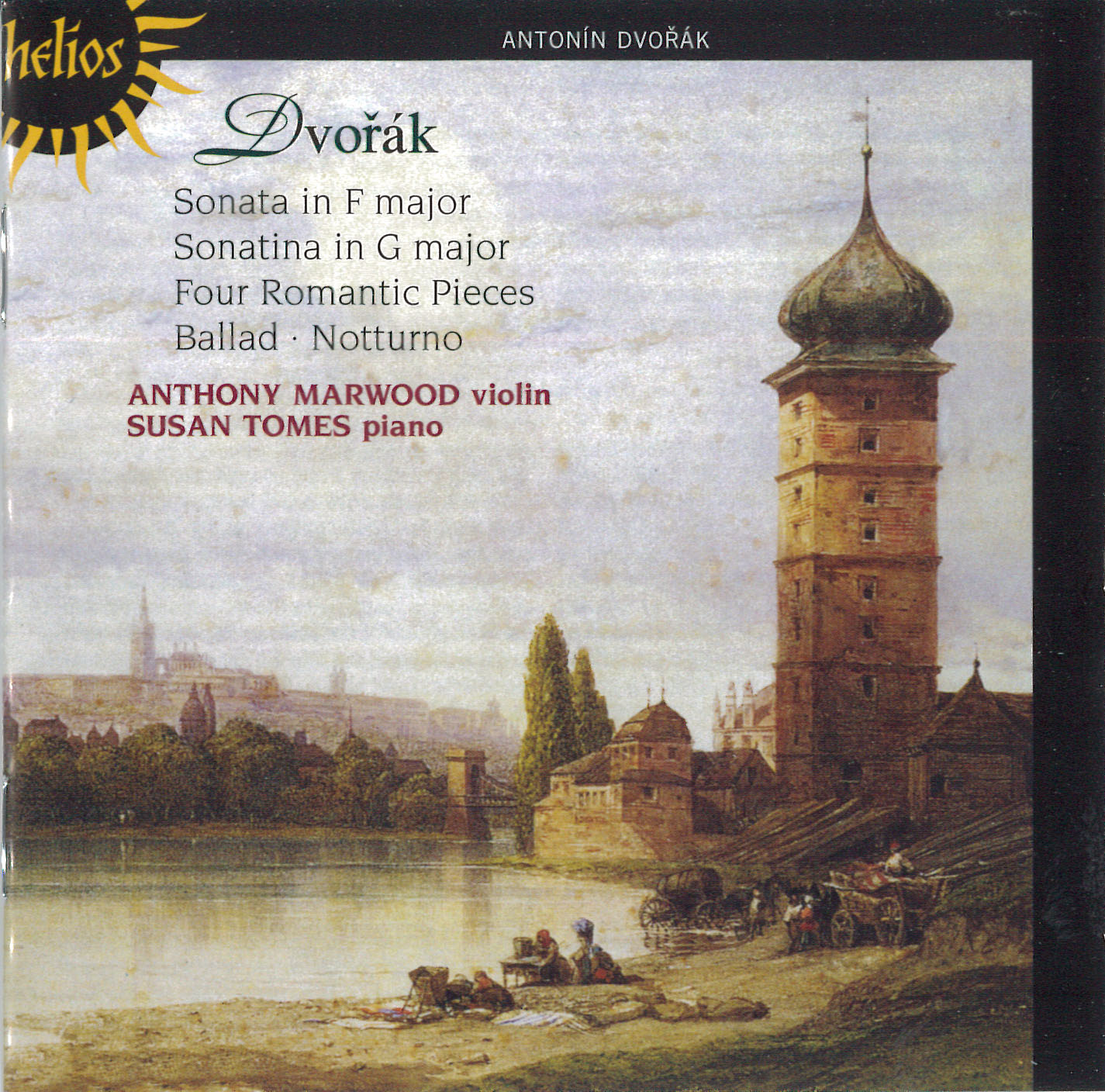
02_dvorakHyperion continues to add outstanding discs to its catalogue, and has just re-issued the Anthony Marwood and Susan Tomes recital of Music for Violin and Piano by Dvořák in their Helios budget-label series (CDH55365). It’s an absolute delight from start to finish, with really fine works, outstanding playing, and a beautiful recorded sound. The Sonata in F minor and the Sonatina in G are the major works, but there isn’t a single track that is less than top-drawer. The Four Romantic Pieces were originally written for 2 violins and viola, Dvořák arranging them almost simultaneously for violin and piano; two shorter works, the Ballad in D minor and the Notturno in B major, complete the disc. Marwood’s playing is simply faultless, with perfect intonation, a lovely tone, and sensitive and intelligent phrasing. He is matched in all respects by Tomes. Marwood has a half-dozen other fascinating and highly-acclaimed CDs on the Hyperion label, ranging from Weill and Stravinsky to little-known British Romantic concertos. He’s clearly a player with a range to match his ability – and that’s saying something.
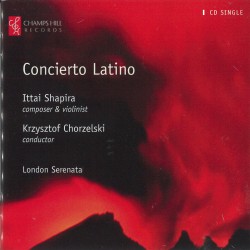
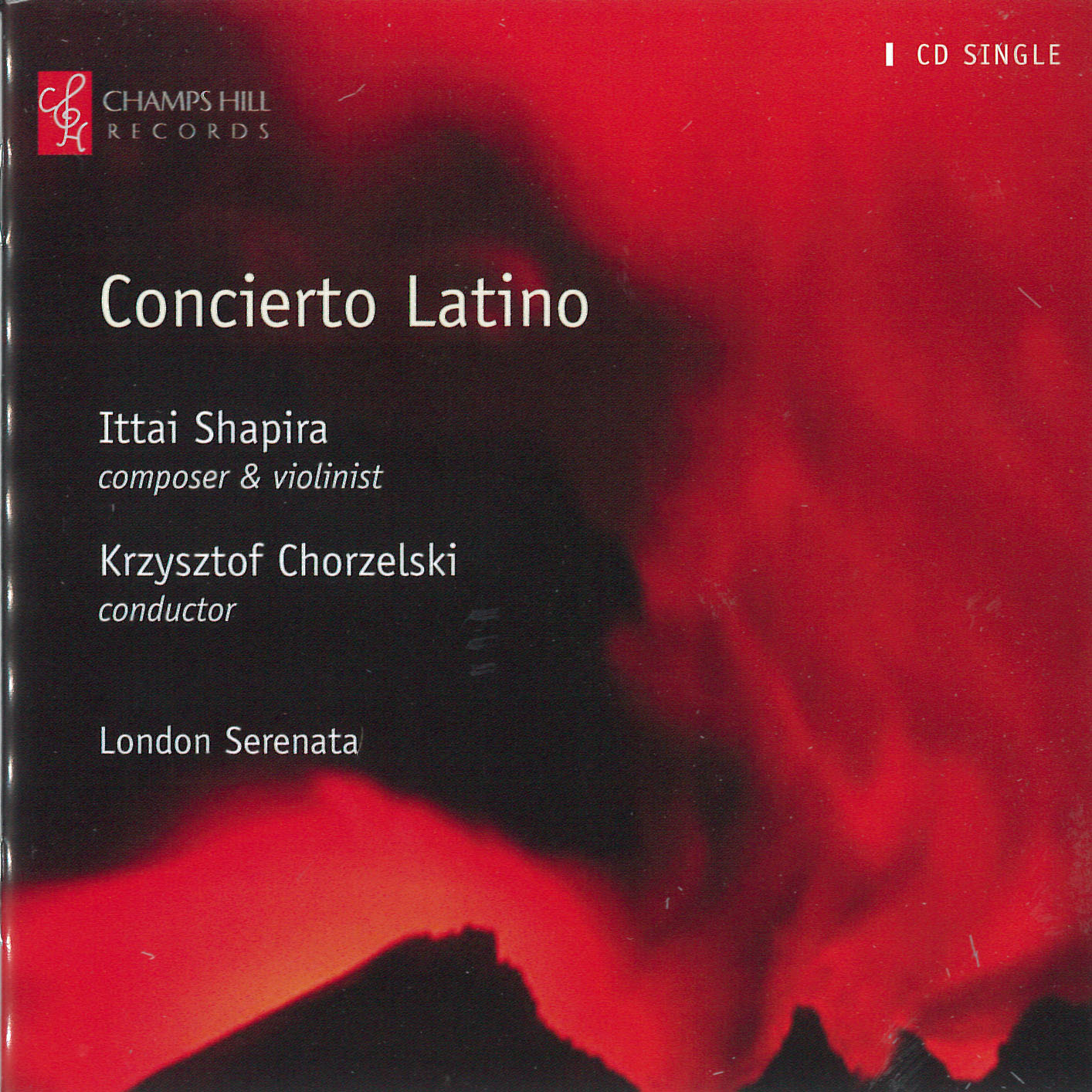
03_concerto_latinoI’m constantly reminded of how difficult it is to keep up with contemporary performers and compositions – or at least reminded of the fact that I’m probably not doing as well as I should be in that respect. A case in point is the new CD from the Israeli violinist Ittai Shapira, who is active as a soloist and as a composer. He performs his own Concierto Latino on an abbreviated (26 minutes) CD from Champs Hill (CHRCD020) with the London Serenata conducted by Krzysztof Chorzelski. Shapira is a new name to me, but in addition to his own works he has already had 14 concertos written for him by other composers! This concerto was written in response to a personal assault Shapira experienced when he was mugged by a New York gang in January 2005: the three movements, titled Assault, Lament and Party, clearly indicate the therapeutic nature of the work, and Shapira’s celebration of his recovery. It’s an interesting and accessible piece, with a mix of various technical and musical influences - Latin, Iberian, Sephardic, Cuban, among others – and is extremely well played by all the performers. Recorded at St. Paul New Southgate, London the sound quality is excellent.
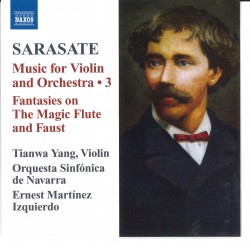
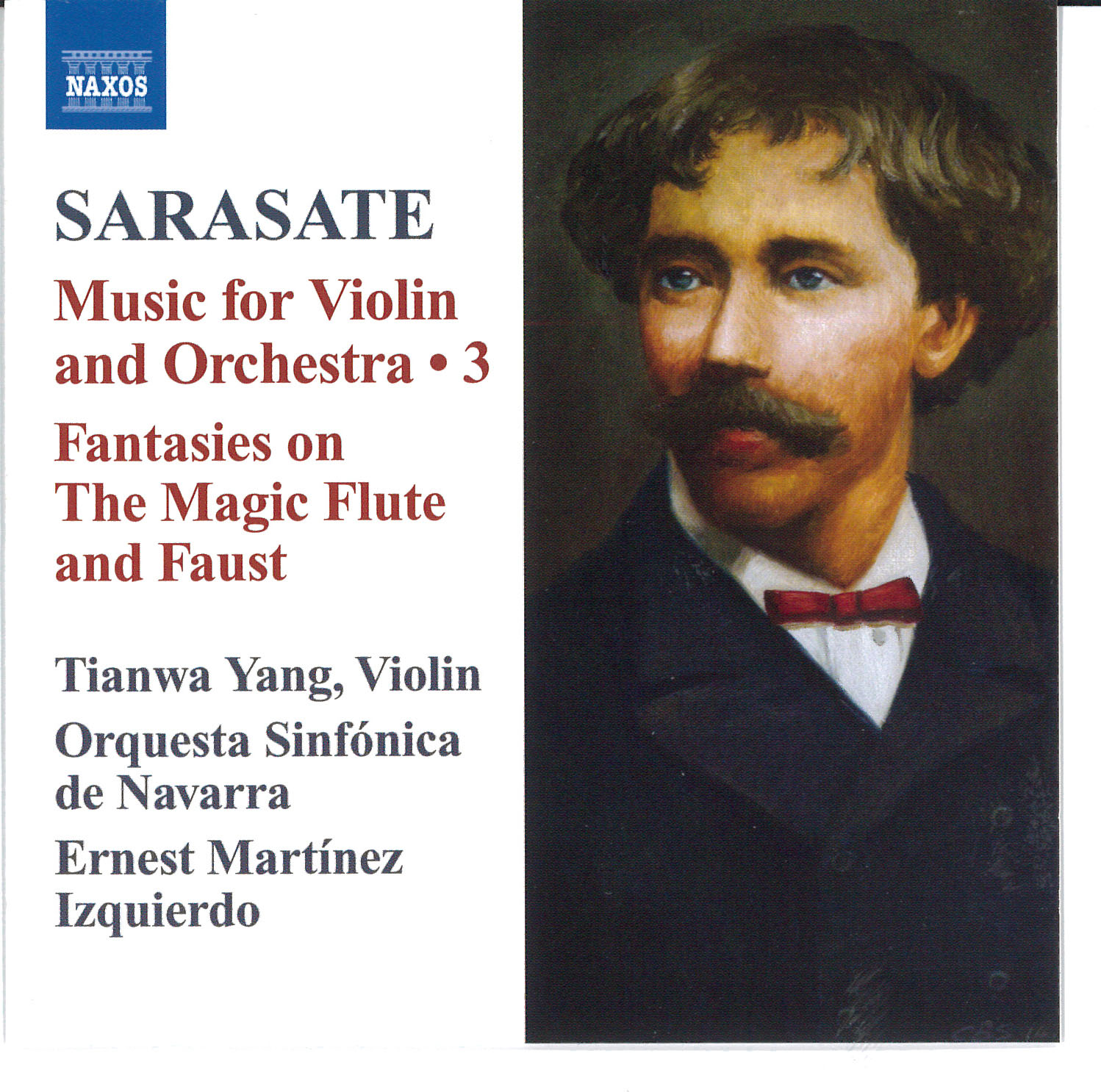
04_sarasate3Naxos has released Volume 3 of the projected 8-volume series of the complete Music for Violin and Orchestra by Sarasate (8.572275). I wrote a glowing review of the earlier volumes a few years ago, and this latest CD is clearly their equal. The young Chinese violinist Tianwa Yang is again simply brilliant throughout, playing Sarasate’s own violin on two of the tracks. The Orquesta Sinfonica de Navarra (founded by Sarasate himself in 1879) under Ernest Martinez Izquierdo provides the most idiomatic support imaginable. And don’t think for a moment that the standard of the works themselves is lagging as the series proceeds: the Concert Fantasy on Mozart’s Die Zauberflõte is dazzling; Navarra (with the soloist double-tracked) is an exuberant duet; the bagpipe-influenced Muineiras is a delight. The Nouvelle fantasie sur Faust de Gounod, the Barcarolle venitienne and the Introduction et Caprice-Jota complete an immensely satisfying, entertaining and probably definitive disc.
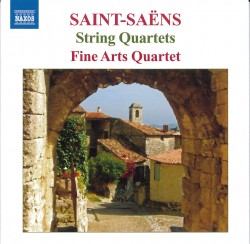
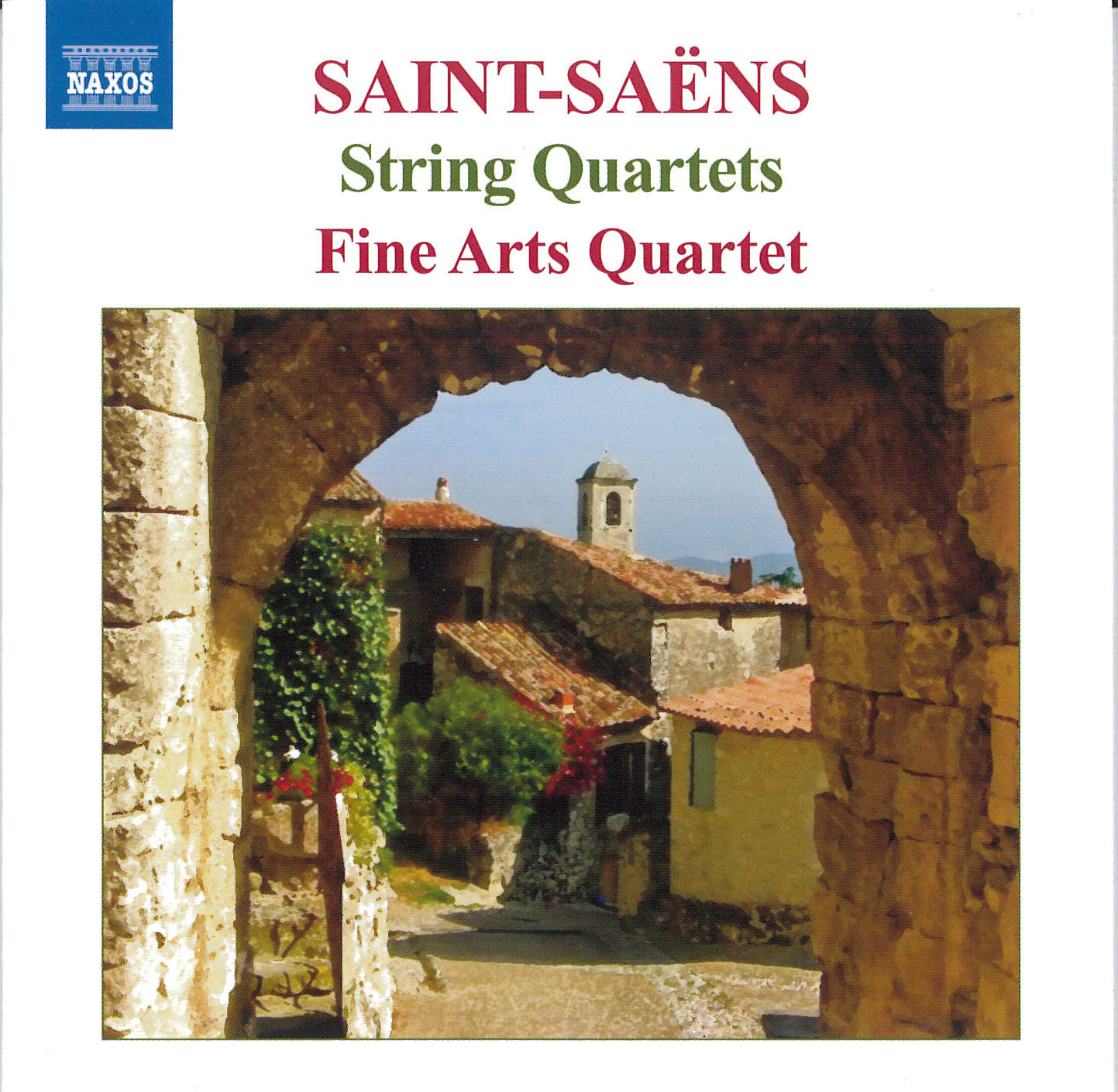
05_saint-saensNaxos has issued a fascinating CD of Saint-Saëns String Quartets (8.572454) played by the Fine Arts Quartet. Saint-Saëns was born ten years before the premiere of the Mendelssohn Violin Concerto and died eight years after the premiere of Stravinsky’s Rite of Spring, but such radical change was never reflected in his music. The quartets are both late works – the E minor Op.112 from 1899 and the G major Op.153 from 1918 – but it’s hard to tell from their decidedly 19th century musical style. It’s quite astonishing, for instance, to think that the Op.153 was written by a French composer during the last year of the Great War, and ten years after Schoenberg had first abandoned tonality; in places it’s almost Beethovenian. Fine Arts violinist Ralph Evans correctly describes the quartets as “serious, intellectual, brilliantly crafted yet delightful works,” but it’s difficult to identify a personal voice in them; they tend to remind you more of other composers than of Saint-Saëns himself. It’s also easy to see why his reputation in France had faded by the time of his death - he simply belonged to a different era.

The Fine Arts Quartet has been around since 1946; three of the current members have been there for at least 28 years. Their playing here is of the highest level, although the big vibrato and the occasional “scoop” give it a somewhat dated feel. The sound quality is very resonant, in places almost too much so.
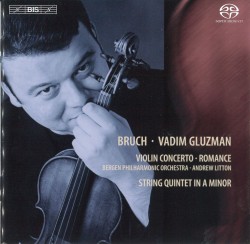
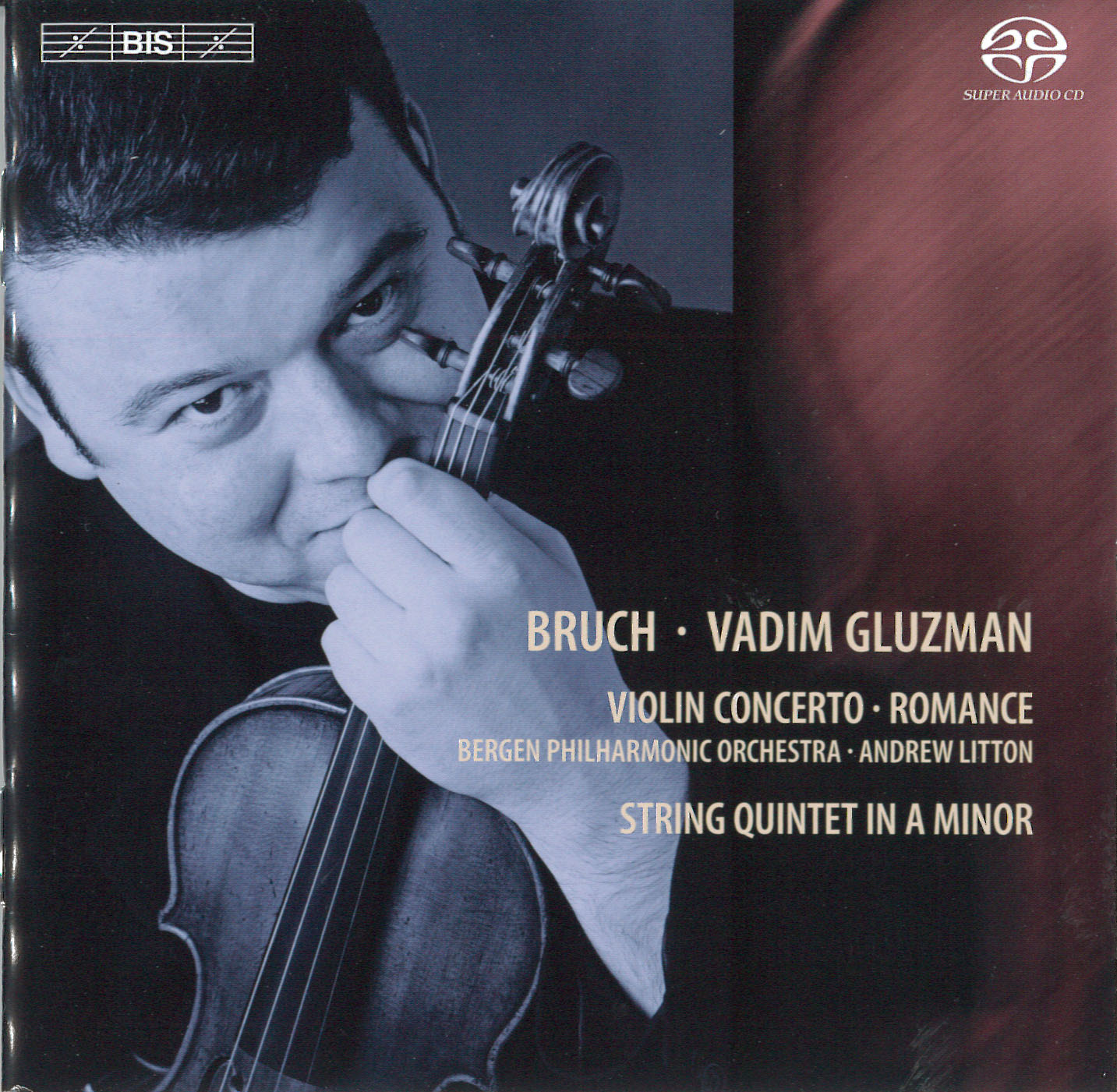
06_bruchVadim Gluzman turns his attention to the music of Max Bruch on his latest Super Audio CD (BIS-SACD-1852), with the Bergen Philharmonic Orchestra under Andrew Litton. Given that Bruch wrote three violin concertos plus the Scottish Fantasy it’s a bit disappointing, albeit not particularly surprising, to see that once again it’s the Concerto No.1 in G minor – “the” concerto – that is the main work here. Bruch himself was constantly exasperated by the popularity of this concerto over the others: apparently little has changed! Still, it’s an impassioned and extremely satisfying performance from Gluzman, perfectly showcasing his rich, warm tone, and with Litton providing a sympathetic and glowing accompaniment. The Romance in F major was written for viola and orchestra, but rather than switching instruments (as did Janine Jansen on her 2008 CD) Gluzman uses the violin part from the violin & piano version prepared by the composer. It works very well, but if you know the viola version this one loses something in the translation. The third work on the CD, the String Quintet in A minor, has much in common with the Saint-Saëns String Quartet No.2 reviewed above. Bruch and Saint-Saëns had almost identical life-spans – 1838-1920 and 1835-1921 respectively – and the works were both written in 1918, when the world that both composers still belonged to had vanished completely. Like the Saint-Saëns quartet, Bruch’s quintet gives absolutely no hint of the new world order. It’s a well-crafted, lovely work, but it comes as no surprise to hear 19th century voices – particularly Mendelssohn and Brahms – in the melodies and harmonies.

Gluzman is joined by Sandis Steinbergs on violin, Maxim Rysanov and Ilze Klava on violas, and Reinis Birznieks on cello in a finely-balanced and well-recorded performance.
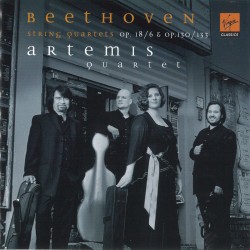
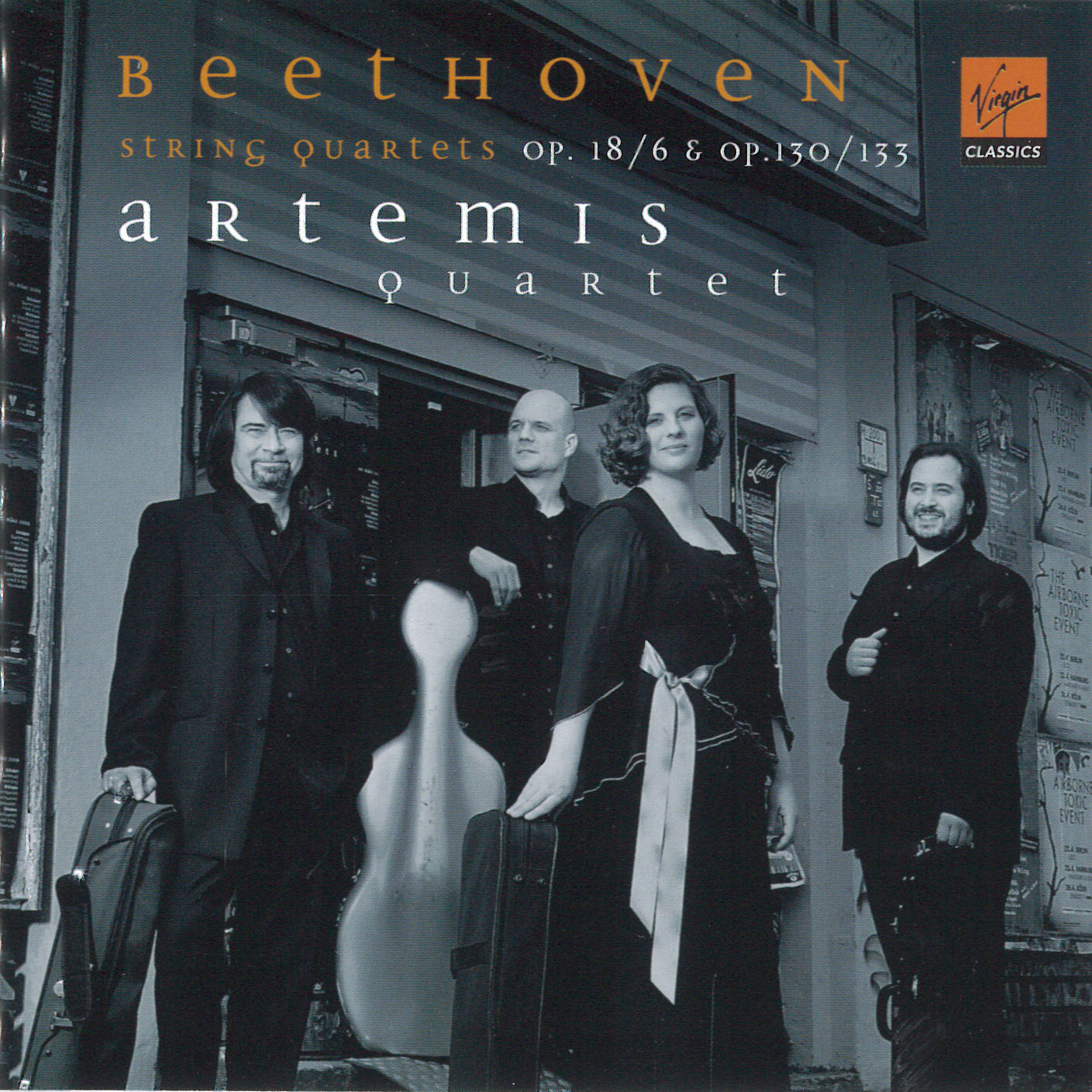
07_beethoven_artemisThis May, Virgin Classics released the final CD in the complete cycle of Beethoven quartets by the German Artemis Quartet. Their 2010 release of the String Quartets Op.18/6 and Op.130/133 (50999 694584 0 8) has just reached me, and presents the perfect opportunity to mention the project. The series started on the Ars Musici label, and Virgin reissued two single Ars Musici CDs as a Virgin Classics 2-CD set last year. Unfortunately, I wasn’t able to write a full review at the time, but the CDs were top of my list of highlights of the year. The playing on each CD I’ve heard so far is as good as any you will encounter, and the recorded sound is full and warm, although the cello tends to “boom” a bit on this latest disc. According to the Quartet’s website, the entire project will be issued as a box set in the near future - definitely something to look out for, especially if it’s attractively priced.




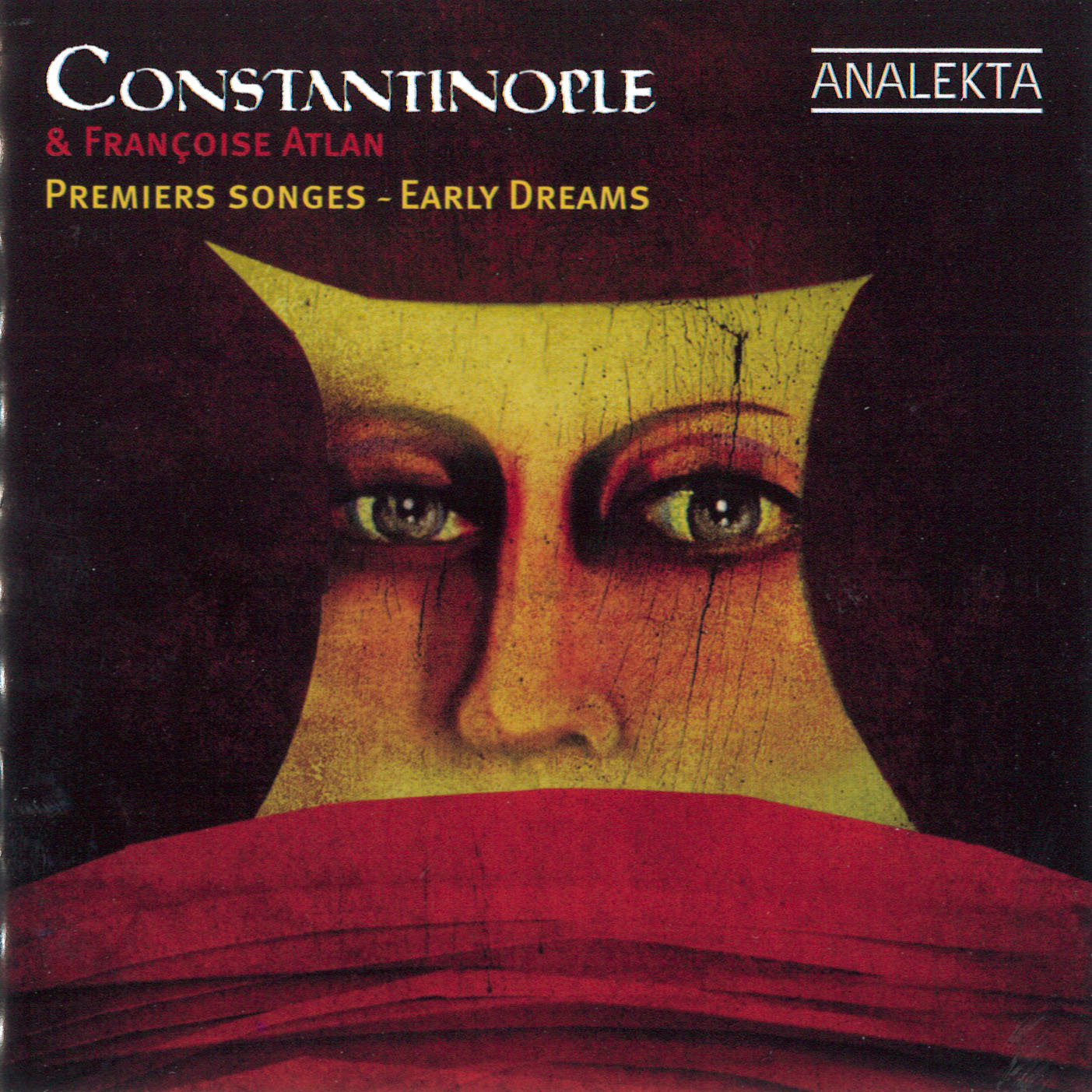
01_constantinopleEarly Dreams

Constantinople; Françoise Atlan

Analekta AN 2 9989

Constantinople has been specialising for ten years in exploring Mediterranean oral tradition and medieval musical manuscripts. A vast area in terms both musicological and geographical, not least with the export of Spanish music to the New World! And it is (very) early New World-based composers who feature here.

“Early Dreams” unites Constantinople’s core of sétar, percussion and viola da gamba with a guest baroque guitarist and, above all, the voice of Françoise Atlan, herself of Judeo-Berber origin.

One must single out Detente, sombra de mi bien esquivo (based on Spagnoletta, a Renaissance “dance hit”), which brings together Ms Atlan’s clear enunciation, a magnificent combination of impassioned da gamba and lute playing, and the words of Sor Juana Inés de la Cruz, the first great Latin-American poetess.

Eventually, Françoise Atlan’s voice does come to dominate this CD, not only with her interpretations of baroque settings of de la Cruz’s poetry but also those of modern Canadian composer Michael Oesterle. Her clarity of voice alone would make these recordings special.

One pleasant question to decide is whether Oesterle’s settings or those of the Latin composers are more inspiring. But first listen to the Fandango of Mexico-based Santiago de Murcia. We speak of Spain enjoying a golden age of its music in the mid-16th century; we are only now discovering the musical legacy of Spain’s conquests of Latin America.


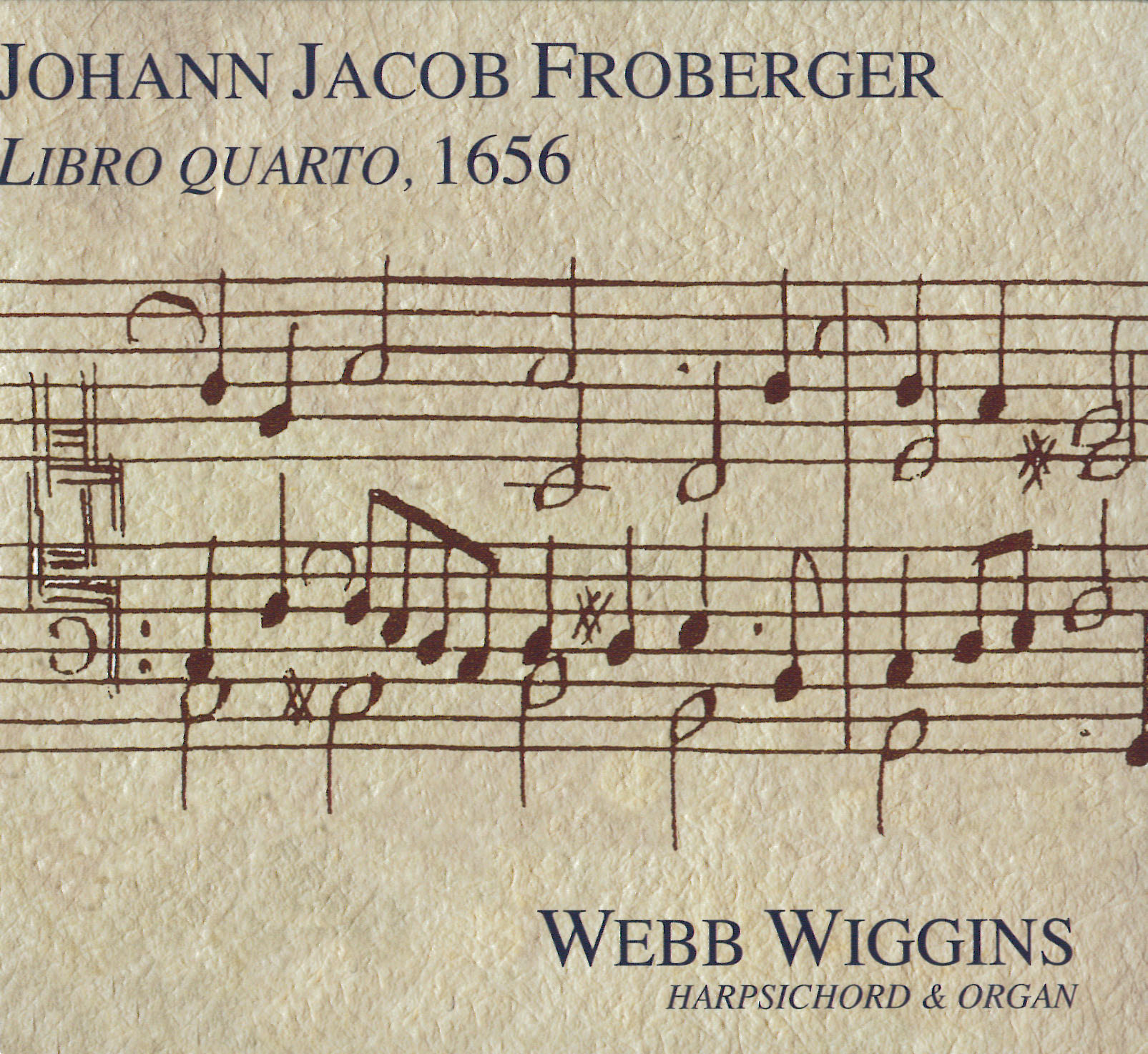
02_frobergerFroberger - Libro Quarto, 1656

Webb Wiggins

Friends of Music FOM 10-027.28 (www.smithsonian.org)

Johann Jacob Froberger, organist at the court of Vienna, paid very close attention to the formalities of Baroque music: Libro quarto contains six toccatas, six ricercars, and six capriccios, followed by six suites, with five based on the standard allemande, gigue, courante and sarabande. Only a lament on the death of the Austrian Crown Prince - and Webb Wiggins’ own choice of organ or harpsichord as he feels appropriate – provide variation.

So how did Froberger deal with a rigidity imposed upon him by Austrian court procedures? Well, his toccatas, notably No. 4, are as testing as any by the more famous baroque composers; Froberger helped the toccata emerge from being a mere warm-up exercise.

More conservative are the ricercars played on organ; some could almost be a renaissance woodwind consort, not surprising as the organ is reconstructed on early 17th century principles. The capriccios, nearly all on organ, are taxing pieces but Webb Wiggins rises to the challenge.

And so to the suites. Wiggins breathes liveliness into Froberger’s charming gigues and courantes, accompanied by a sense of feeling for the allemandes. It is difficult to select which of these twenty-four movements are the most entertaining as they are of a consistently high quality when played by Wiggins.

Travels throughout Western Europe and time with Girolamo Frescobaldi helped Froberger become a pioneer of “mainstream” baroque music; Webb Wiggins reinforces that status.


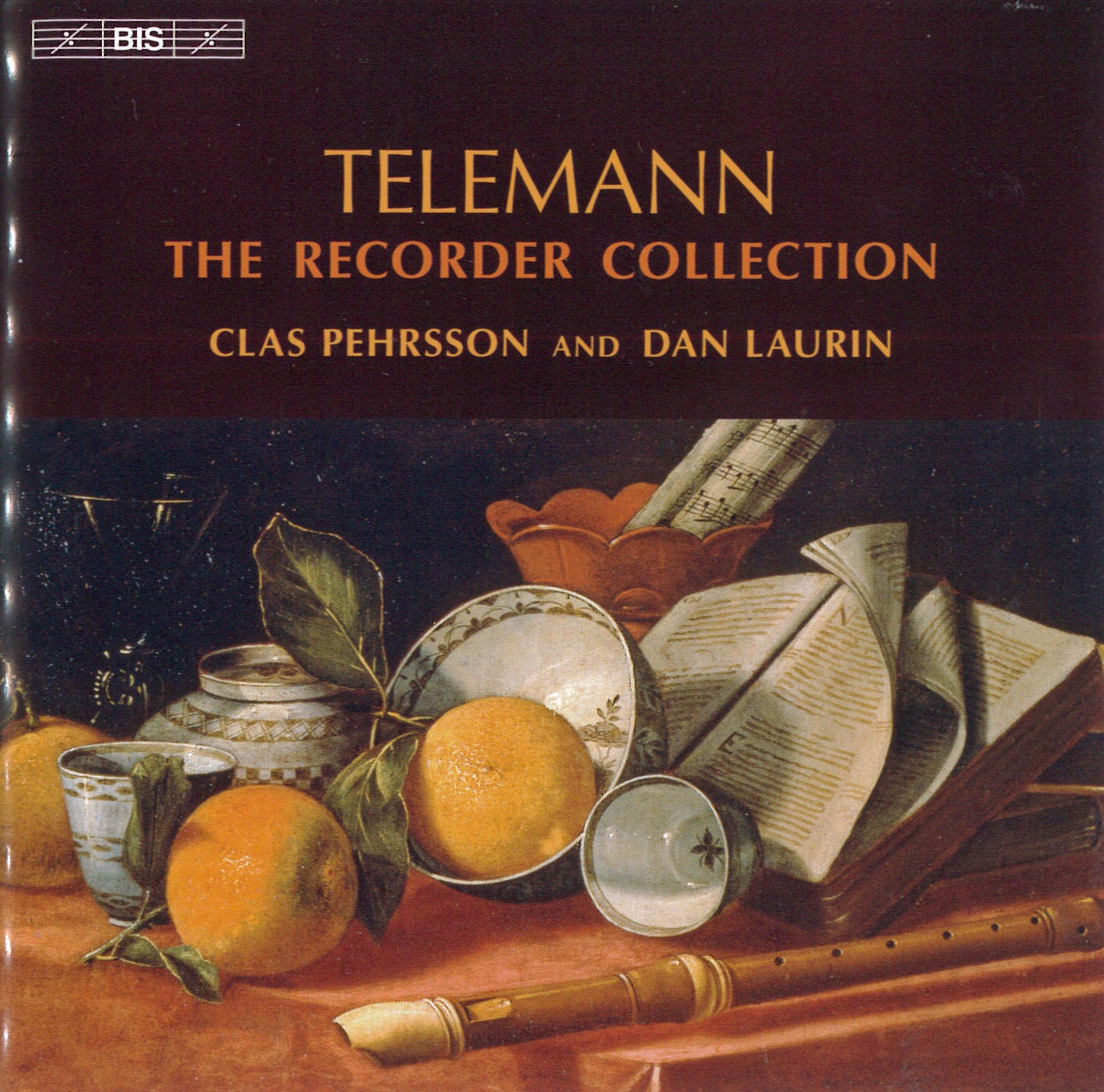
03_telemannTelemann - The Recorder Collection

Clas Pehrsson; Dan Laurin

BIS BIS-CD-1488/90

This six-disc boxed set offers a thorough collection of Telemann’s “solo” recorder music: the fantasias, sonatas and miscellaneous pieces with basso continuo, duets, and solo and double concertos. The players are Dan Laurin, an active member in the current recorder soloist circuit; and Clas Pehrsson, who taught at Stockholm’s Royal College of Music from 1965 until 2009 and was one of several players who helped put the recorder on the map in the ‘70s. While some of the material has been newly recorded, most of the contents are reissues of earlier recordings, and herein lies one of this compilation’s unusual virtues – a chance to hear two different players, at different phases of their musical lives, and to compare two somewhat different approaches to this fundamental and rich repertoire for the instrument. The solo fantasias were recorded by Laurin in 1994, and his other solo contributions are the two lovely Neue Sonatinen recorded in 2008 – it’s very interesting to hear what has changed in his playing over 14 years. Pehrsson’s contributions, which include some bravura takes on the solo sonatas, range in recording date from 1974 to 1987.

It’s thought provoking to hear the different takes on ornamentation in slow movements, use of vibrato, articulation styles, and the liberties taken (or not) with what Telemann actually indicated in his own publications. And does one keep a tempo reasonably steady, or move it around? What’s the difference between vivace, allegro, and presto, and even between various allegros? Though this is possibly more recorder music than some would ever want to hear, it’s some of the best Baroque repertoire available for the instrument, performed by fine players. And these CDs make clear the fact that instrumental taste changes over time… Postmodernism and the recorder? Go figure.


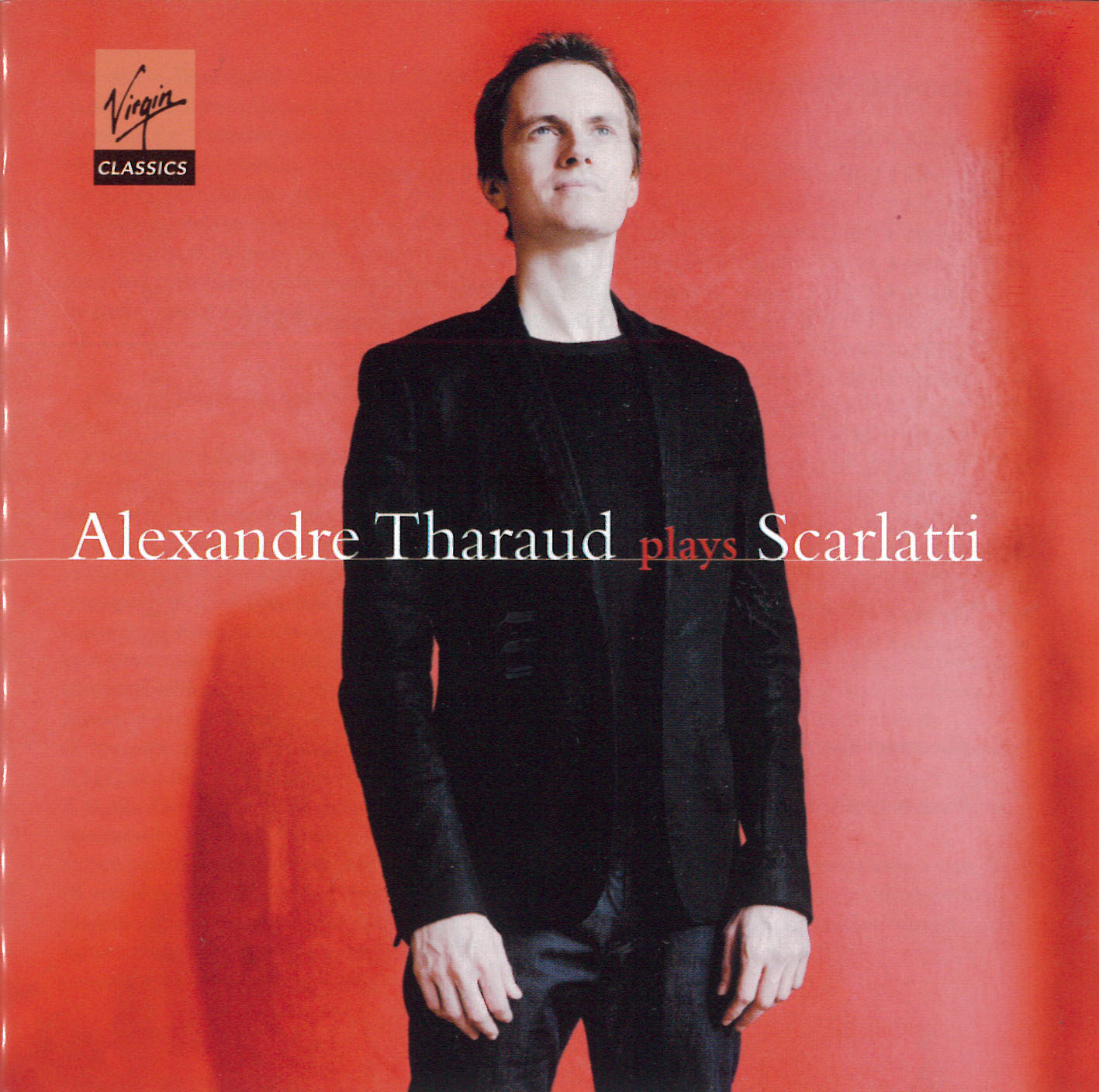
04_scarlattiAlexandre Tharaud plays Scarlatti

Alexandre Tharaud

Virgin Classics 50999 6420162 7

Squirreled away in the relative solitude of the royal courts of Portugal and Spain, Domenico Scarlatti (1685-1757) turned from the public world of opera championed by his father Alessandro and turned inward. He developed into a true maverick, absorbing the rich, lively sonic world of Iberia and creating a stream of musical miniatures of unprecedented originality. It is a delicate matter to chose from the hundreds (at least 555) of harpsichord sonatas that have come down to us. Alexandre Tharaud succeeds admirably with a judicious mix of the many sides of Scarlatti’s character, presenting 18 sonatas with a particular emphasis on the composer’s melodic gifts, so often overshadowed by his fascinating harmonic and motivic innovations.

Performances of these works on the modern piano present a challenge to the performer as articulations and dynamic levels unavailable on the harpsichord have to be re-invented. Undaunted, Tharaud shamelessly exploits the full resources of the piano, utilizing a wide dynamic range from the raucous to the introspective with a soupçon of tasteful ornamental spices and well-controlled pedaling. He brings an infectious enthusiasm to the more extroverted sonatas and conjures up wonderfully subtle tonal palettes for the more tranquil ones. I look forward to further instalments from the treasure trove of Scarlatti.

Recorded in Switzerland, Tharaud performs on a closely recorded, somewhat brittle sounding Yamaha piano which displays touches of distortion in the louder passages in my review copy.


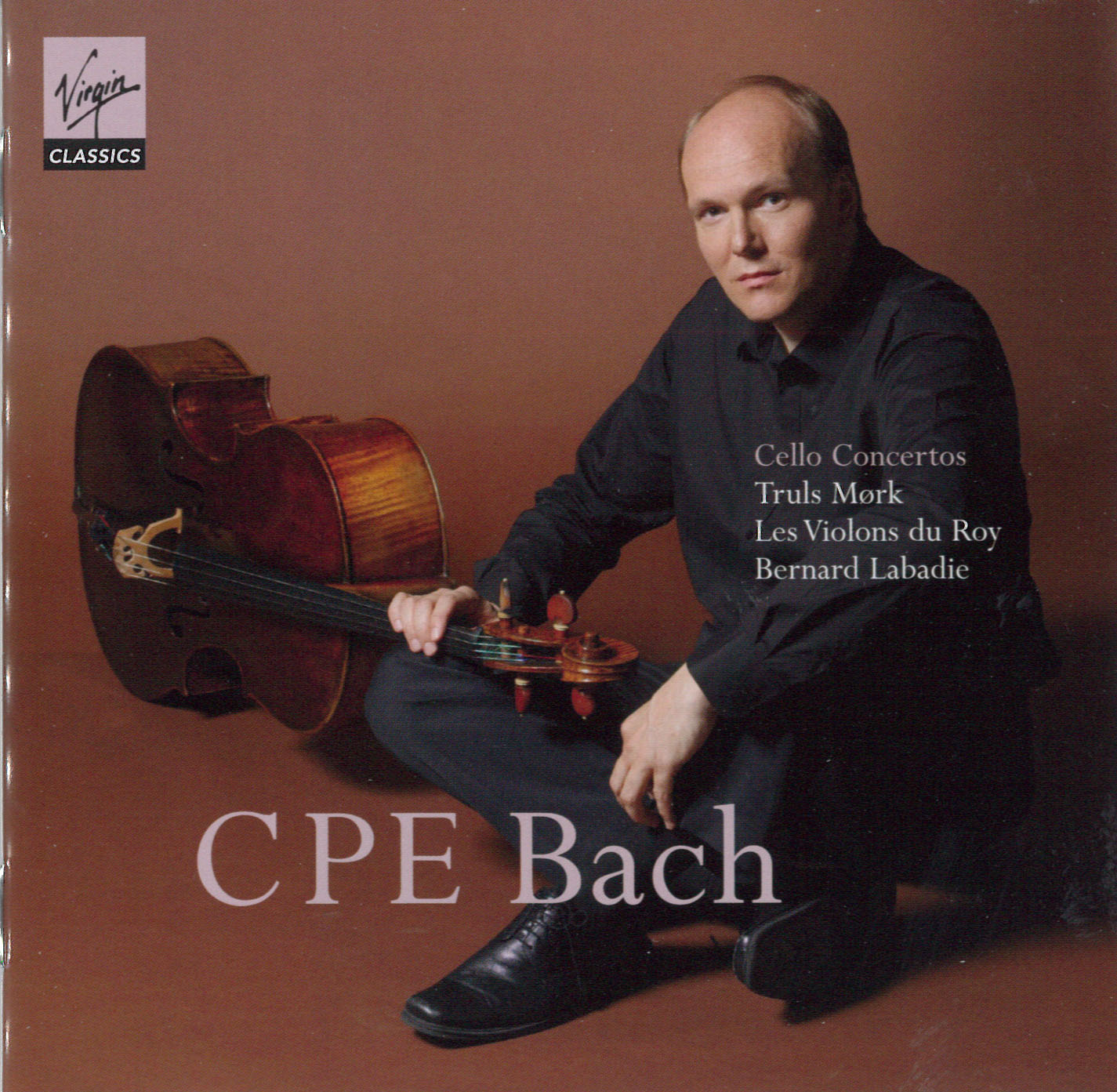
01_cpe_celloCPE Bach - Cello Concertos

Truls Mørk; Les Violons du Roy; Bernard Labadie

Virgin Classics 50999 6944920 8

Soloist, orchestra and conductor are in perfect synch on this beautiful and stylish recording of the rarely-heard cello concertos of CPE Bach. Written between 1750 and 1752, the three concertos are fascinating and challenging works and very different from one another. The fascination lies in the emerging galant style of composition. The nine movements display a wide variety of colours, tempi – sometimes fluctuating wildly in the same movement – and harmonic language. Though written in the mid-eighteenth century, the Baroque era is clearly behind us now, stylistically.

The solo playing of the Norwegian cellist Truls Mørk is full of depth, bursting with virtuosity and gloriously free and imaginative. He handles the technical challenges of the quick movements with panache, and displays a sweet, transparent and vulnerable sense of line in the slow movements. There are many moments of sublime beauty in these pieces and Mørk doesn’t shy away from them.

Bernard Labadie and Les Violons du Roy infuse these pieces with tremendous energy and are a great support and foil to Mørk’s playing. There’s a detailed dialogue going on throughout in the tradition of great chamber playing. Special mention must be made of orchestra cellist Benoit Loiselle who partners from time to time with Mørk in two cello passage work.

One further interesting aspect of this recording is the varied cadenzas – one by Mørk, one by CPE Bach and one by the great Dutch baroque cellist Anner Bylsma.


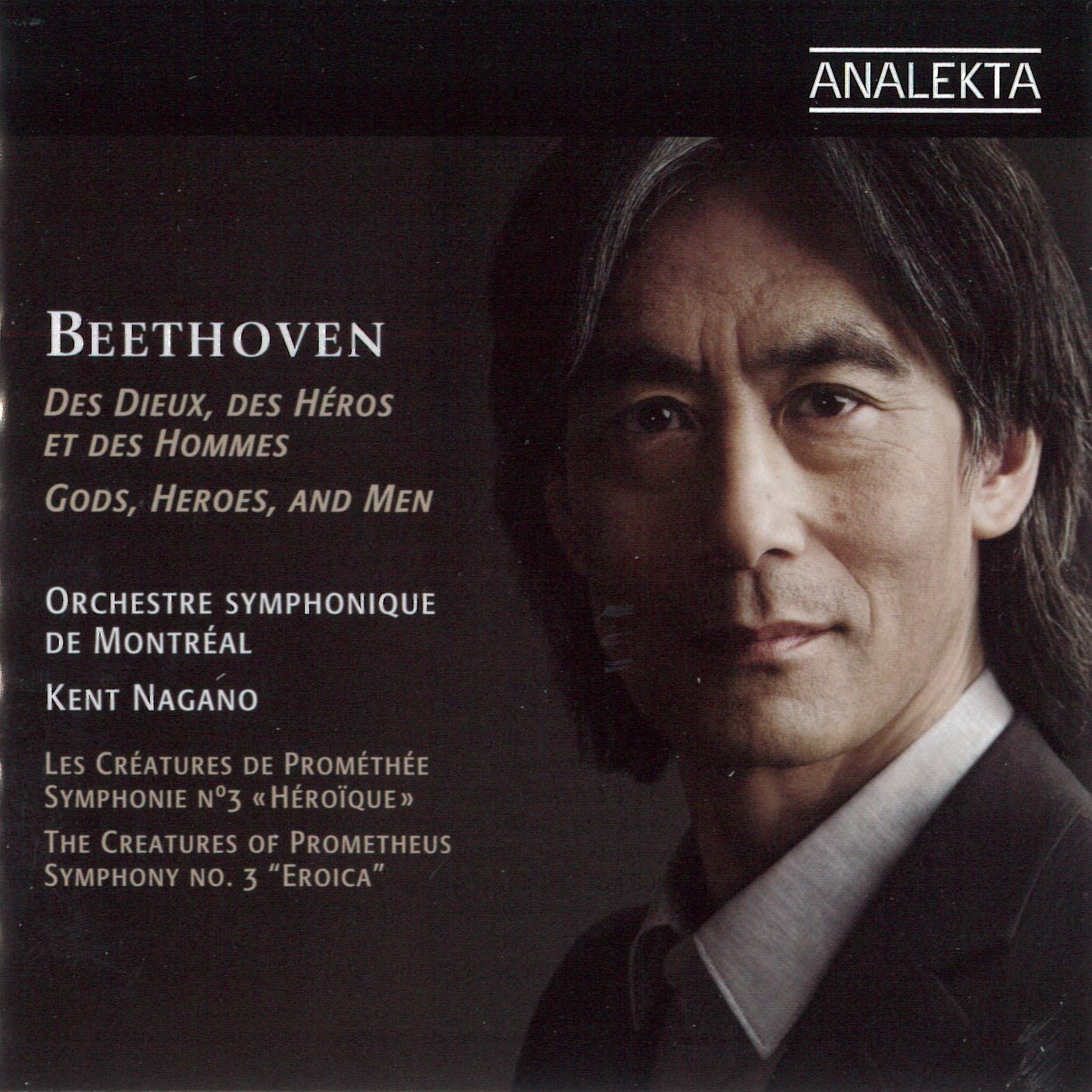
02_beethoven_naganoBeethoven - Gods, Heroes and Men (Symphony 3; Creatures of Prometheus)

Orchestre Symphonique de Montreal; Kent Nagano

Analekta AN 2 9838

My love affair with the Eroica symphony started at the age of 10 when I first heard it at a concert conducted by the legendary Otto Klemperer at the Music Academy in Budapest. It didn’t dawn on me as anything special until much later when I found out that Herbert von Karajan travelled all the way to London just to hear Klemperer do the Eroica. Speaking of Karajan, Kent Nagano was a student and associate of Seiji Ozawa who in turn was a student and associate of Karajan. The “bloodline” having been established, now we can rest assured that my beloved Eroica is in good hands here. And indeed it is…

Nagano takes a refreshing look at the symphony. At a brisk tempo it pulsates with life and excitement. The wonderful secondary theme (1st movement) really sings and the complex architectonics of the 1st movement are made crystal clear. The great fugue of the 2nd movement, always a challenge for the conductor, has a shattering, extraordinary power. The Montreal horns delight us with their joie de vivre and uncanny precision in the 3rd movement Trio. The Finale crowns the Symphony with its ubiquitous Prometheus theme and variations and stampedes along with breathtaking virtuoso bravura. Here Beethoven is caught in his lighter side with the unexpected, devil may care Hungarian gypsy episode.

In the liner notes, Nagano shows scholarly insight in drawing parallels between the budding Romanticism, the cult of the Hero, the Greek myth of Prometheus and Napoleon, a single man who could bring empires to their knees. There is more to it than that in view of the bloodbath that followed which left the French male population decimated for decades to come. But even without his personal views and literary interpretations, Nagano establishes himself as a great conductor for our time and this recording with full bodied sound is a treasure.


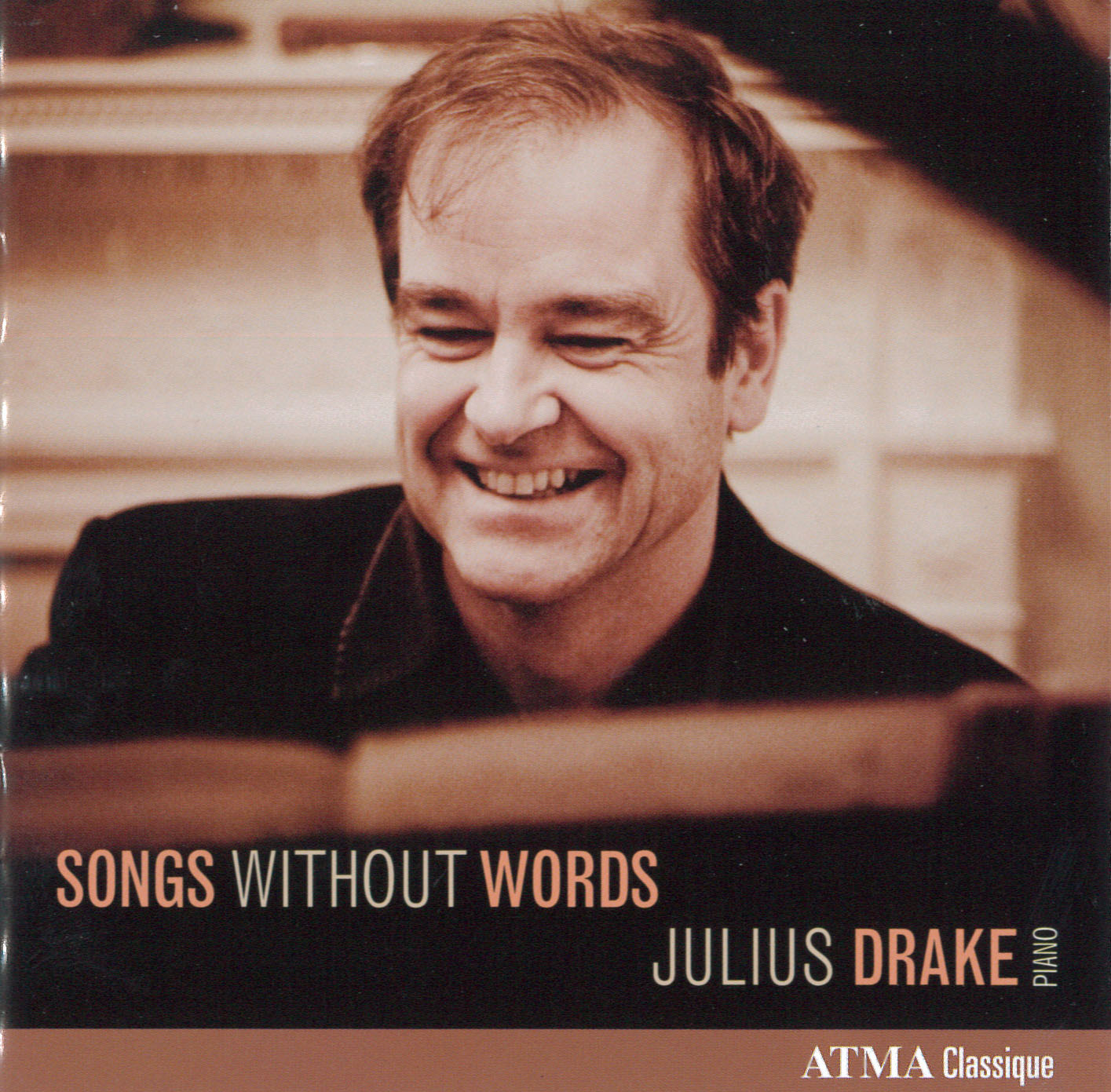
03_songs_without_wordsSongs Without Words

Julius Drake

ATMA ACD2 2616

Julius Drake is a sought-after English pianist who devotes most of his career to accompanying singers, typically intelligent art song recitalists of the calibre of tenor Ian Bostridge and Canadian baritone Gerald Finley. Here he has returned to his solo piano roots while still saluting the song idea, by crafting a tender program of short lyrical character pieces, many of them familiar to the piano student or the adult amateur player.

The title of the CD pays homage to Felix Mendelssohn, two of whose Songs Without Words are included, a Venetian gondola song and the Duetto. Schumann is represented by two Album for the Young selections, and one from Scenes from Childhood. There is a Brahms Intermezzo, a Schubert Moment Musical, a Grieg Lyric Piece, and Debussy’s Clair de Lune. You get the concept: Romantic-era brevity and intimacy.

More recent selections are a lullaby by Poulenc, four of Bartók’s Mikrokosmos pieces, and the haunting, spare “Night” from Benjamin Britten’s Holiday Diary (1934), a suite I’ve never encountered on any piano recital.

Recorded in London, England by Canadian sound engineer and ATMA label founder Johanne Goyette, Drake’s songful renderings are restrained and polished. The Steinway employed sounds both present and resonant.

A lovely, “small” release. This would make a nice gift to any music lover who shuns thunder.


Back to top