02 Early 01 Handels RecorderHandel’s Recorder: Recorder Sonatas; Musick for the Royal Fireworks
Ruth Wilkinson; Miriam Morris; John O’Donnell
Divine Art dda 25124
(divineartrecords.com)

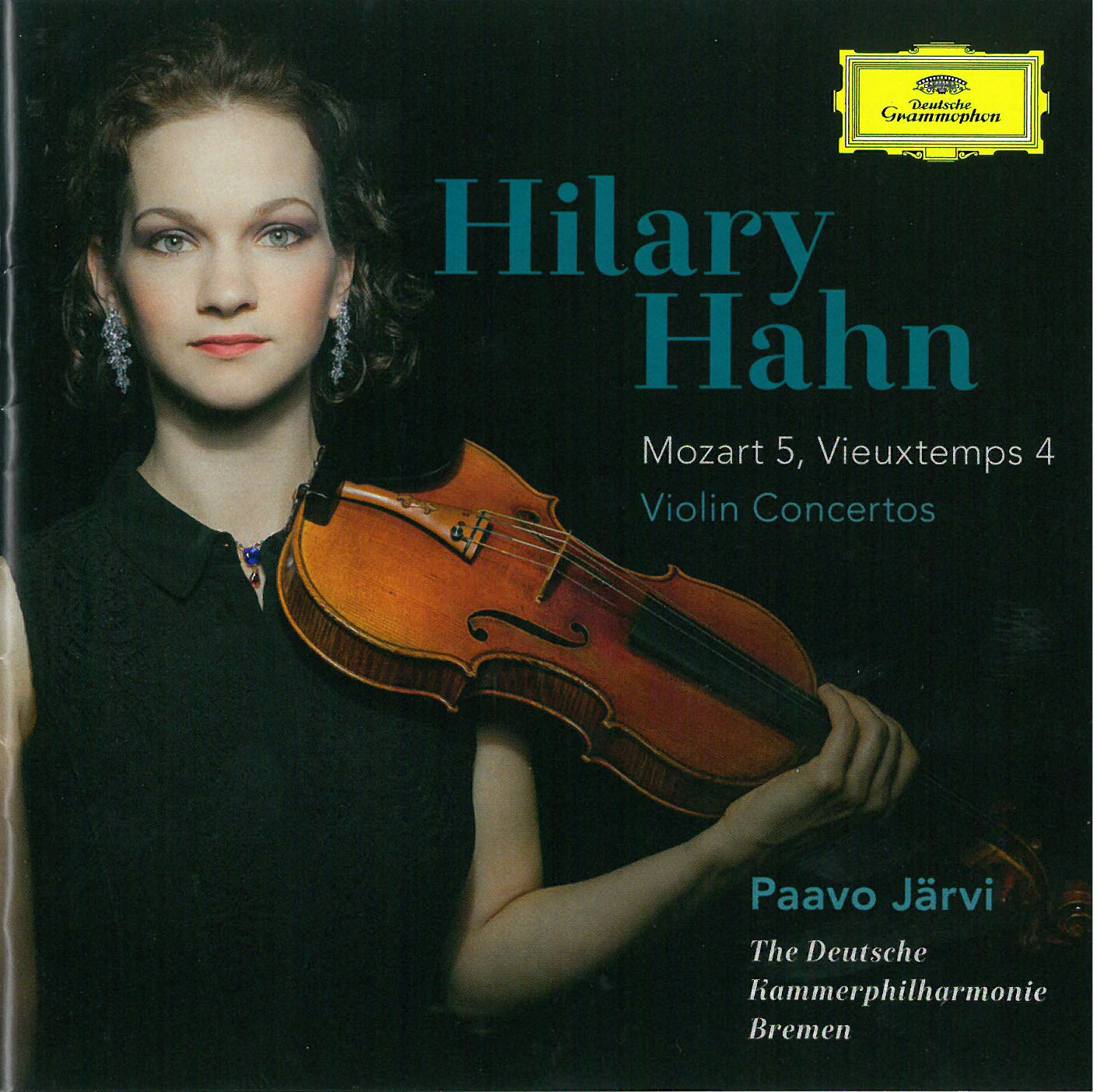
Putting out a CD of Handel’s recorder sonatas might seem a slightly strange choice these days, as numerous versions are already available; but then, if musicians want to record music they’ve known and long enjoyed, who’s to argue? Featuring three Australians active as performers and teachers for over three decades, this disc opens with a twist: an intimate version of the Music for the Royal Fireworks, arranged in the 18th century (like much of Handel’s opera music) for treble instrument and basso continuo. It’s a pleasure to hear this piece in miniature, and quite entertaining if you’re familiar with the heartily orchestrated original!

The four recorder sonatas from Handel’s Opus 1, lovely pieces all, follow in their usual order, and there is much tasteful and cheery playing here. The perennial balance problems in the A minor sonata are solved by the removal of the bass viol from the mix, though that’s a bit of a pity because Handel’s bass lines are so robust, but that said, harpsichordist John O’Donnell whips through the feisty second movement with aplomb. The seasoned and well-knit ensemble playing of recorder player Ruth Wilkinson and her colleagues O’Donnell and gambist Miriam Morris is immediately evident, as is their affection for this music. The booklet notes are informative and the recorded sound is particularly beautiful; because of this, the session photo of the musicians with their tech team is a very nice touch.


01 Vocal 02 Robert BruceRobert Bruce – Songs of Light and Shadow, Vol.1
Various Artists; Robert Bruce
Independent (robertbrucemusic.com)

Robert Bruce is the composer, lyricist and pianist in nine pieces which border on new age, easy listening sentiments while exploring minimalism, simple harmonies and uncomplicated melodies.

Listening to Bruce perform his own work on piano is such a joy, and a perfect example of compositions played just the way the composer intended them to be performed. Sure he wrote them, but this is no easy task even for the composer himself. Bruce the performer plays with an appropriate degree of detachment to make Bruce the composer’s works elegant, unaffected and clear. Vocalists Janet Obermeyer, Amy Dodington and Karen Barrett-Grignon perform clearly and musically to Bruce’s accompaniment. The additional occasional instrumental inclusion of harpist Elizabeth Eastwood, oboist Nancy Neeson and percussionist Dave Simpson add much appreciated aural depth.

Bruce’s Songs explore love, dreams and the female life experience. The words may not be to everyone’s taste but are a tight fit to the carefully composed constructed lines and, like film music, image-evoking harmonic colours. Especially enchanting and beautiful are the repeated oboe line in Spirit of Song and the closing repetitive piano line of The Candle of Love. Too bad A Little Bit of Neptune ventures a little bit too much into the pop music planet for this reviewer, but that’s the only one which does.

Excellent production values, mix and levels complete the package. The haunting, enigmatic and ethereal tonal music of Robert Bruce makes this a satisfying listening experience.


Robbins 01 Beethoven AlcanCanada’s Quatuor Alcan has been at the forefront of the string quartet world for many years now, and the ensemble is currently celebrating its 25th anniversary. The group’s sizeable discography includes quartets by Haydn, Mozart and Schubert, but so far, perhaps surprisingly, only two of Beethoven’s 16 string quartets. That’s about to change, however, as their 25th anniversary is being marked by the release of a CD series of the complete Beethoven Cycle. Volume 1 (ATMA ACD2 2491) was released in November and is a 2-CD issue containing the six quartets of Op.18. Although the ensemble’s website refers to the Beethoven project as a “new recording,” these six quartets here were actually recorded between May 2007 and November 2010. 

It’s certainly an auspicious start to the series. There’s marvellous playing, tremendous accuracy and attention to detail here, made even more effective by the way this ensemble seems to think, breathe and play in complete unison.

The Alcan is up against serious competition in this field of course, with complete cycles still available from most of the leading ensembles of the last 60 years – the Guarneri, Amadeus, Orford, Alban Berg, Budapest, Borodin, Emerson, Tokyo, Artemis and Quartetto Italiano for starters. The good news, though, is that comparisons are not only almost impossible but also completely irrelevant; this promises to be a terrific set, and that’s all that matters.

Volumes 2 and 3 are scheduled for release in February and April of this year. Stay tuned.

Robert Schumann, more than any other composer I can think of, tended to concentrate on one particular genre of composition at a time. 1842 was his chamber music year and his three String Quartets Op.41 were written in a matter of eight weeks in June and July, after he had spent several months preparing by studying the quartets of Haydn, Mozart and – in particular – Beethoven, whose late quartets had so impressed him a few years earlier. The influence of the latter is easy to hear, but the voice that really leaps out at you is that of Mendelssohn, to whom the quartets were dedicated on their publication in 1848.

Robbins 02 Schumann YingOn Schumann, their latest CD (Sono Luminus DSL-92184), the Ying Quartet gives passionate and committed performances of these wonderful works. Schumann’s non-keyboard compositions are often viewed as being somewhat pianistic, but if any of his works belie this view it’s these string quartets: they are beautifully written – idiomatic, strong and imaginative, sensitive and nuanced, with wide-ranging emotions and an abundance of rhythmic vitality. All of these qualities are fully exploited by the Ying Quartet; this is full-blooded Romantic playing recorded with a rich resonance.

The CD package comes with an additional Pure Audio Blu-ray CD equipped with the mShuttle application, enabling you to access portable copies of the music featured on the regular CD.

Robbins 03 LanggaardThe third and final volume of the outstanding series of the Complete String Quartets by the Danish composer Rued Langgaard (1893-1952) is now available (DACAPO 6.220577). Volume 1 was reviewed in depth in this column in July 2012 and Volume 2 in April 2014, at which times I noted that Denmark’s Nightingale String Quartet was simply superb in this series of all nine quartets by a composer described as an eccentric outsider who was virtually ignored by the Danish musical establishment in his lifetime.

Most of Langgaard’s string quartets were written in his youth, between 1914 and 1925, although his later revision and recycling of earlier material makes for a confusing numbering system which doesn’t include all of the quartets and doesn’t even reflect the order of their composition. As the excellent booklet notes point out, the works date from the departure point between Late Romanticism and Modernism and cover a remarkably wide stylistic spectrum, with tonal idioms ranging from Mozart to Bartók.

This third volume features the String Quartet No.1 from 1914-15 (revised in 1936), the String Quartet No.5 from 1925 (revised 1926-38) and the very brief string quartet movement Italian Scherzo from late 1950, Langgaard’s last contribution to the genre. This track and the String Quartet No.1 are world premiere recordings.

Once again, the performances by the prize-winning all-female Nightingale Quartet are outstanding – warm, passionate, expressive and displaying great ensemble playing. Beautifully recorded at the Royal Danish Academy of Music and issued on Denmark’s national record label, these performances are as close to definitive as you can get; the complete set is an outstanding addition to the 20th century string quartet discography.

Robbins 04 Brahms SonatasIt’s always a good sign when you play through an entire CD of some of your favourite works and realize that you were so taken by the performances that you haven’t even made any notes. That’s exactly what happened with the new CD of the three Brahms Sonatas for Violin and Piano in performances by the French violinist Arnaud Sussmann and the American pianist Orion Weiss (Telos Music TLS 174). From the opening bars of the wistful G Major Op.78 through the graceful A Major Op.100 to the tempestuous D Minor Op.108, this is simply beautiful playing. Sussmann has a warm, soft tone and faultless intonation, and perfectly captures the different moods of these glorious works. His tonal quality and nuanced phrasing are matched by Weiss, who is an outstanding collaborator and partner throughout the CD. Recorded in Germany in 2013, the sound quality and balance are excellent.

There are so many terrific young violinists around these days that it’s difficult to keep up with them all. The English violinist Thomas Gould is a new name to me, but like many of the soloists I encounter for the first time is already into his early 30s and well-established; also, like many of his contemporaries who grew up in the musical world of the 1980s and 1990s, he is reluctant to restrict his playing to any particular genre.

Robbins 05 Thomas GouldGould describes his latest CD, Bach to Parker (Champs Hill CHRCD078) as beginning life as a recital program in which he interspersed movements from Bach’s Six Sonatas and Partitas for unaccompanied violin with some of the new works recorded here for the first time. His intention was to show how contemporary extended violin technique has evolved from Bach’s supreme contrapuntal writing, and the result is a fascinating CD.

Gould’s technical prowess and musical intelligence are established right from the start with a warm, expansive performance of the great Chaconne from Bach’s D-minor Partita No.2. From then on it’s an eclectic list of ten short pieces written by predominantly young contemporary composers – six are still in their 30s – almost all of whom were either born or are now resident in the UK.

Two pieces – Nico Muhly’s A Long Line and Mark Bowden’s Lines Written A Few Miles Below – use pre-recorded backing tracks, but the rest are pure solos by Graham Williams (Mr. Punch), Anna Meredith (Charged), Nimrod Borenstein (Quasi una cadenza), Ewan Campbell (Two Extremes), Aziza Sadikova (La Baroque), Dai Fujikura (Kusmetche) and John Hawkins (Bobop).

The CD ends with the Miles Davis tune Donna Lee, made famous by the recording with Charlie Parker’s quintet – hence the title of the CD. Gould is joined by bassist David O’Brien in a terrific but all-too-brief jazz performance that channels Stéphane Grappelli.


Gould’s tone is sumptuous throughout, regardless of the style he is required to play; hardly surprising, given that he plays a 1782 J.B. Guadagnini violin. The whole CD is a fascinating look at the contemporary music scene in England, and at the way that many young virtuoso musicians view their role and function in a changing musical world.

03 Classical 01 Beethoven Piano ConcertosBeethoven – The Piano Concertos; Triple Concerto
Mari Kodama; Deutsches Symphonie-Orchester Berlin; Kent Nagano
Berlin Classics 0300597BC

They say marriages are made in heaven and this is a good case for it, especially if the wife is distinguished Japanese pianist Mari Kodama and the husband the incomparable Kent Nagano, one of the top five conductors today. Apart from their obvious love for each other, there is another bond, their love of Beethoven. For them playing these concertos is a constant revelation, a journey of discovery, as if they’ve never heard this music before. “Richly nuanced” comes to mind as Kodama particularly delights in the unexpected, where Beethoven breaks tradition, as well as in his sense of humour, most pronounced in the two early concertos she recorded in 2006 (previously reviewed enthusiastically on these pages). At that time she was relatively unknown.

It has taken almost eight years for the young pianist to mature sufficiently to conquer the final three, in which Beethoven by a tremendous quantum leap broke loose from the spectre of his predecessors, Haydn and Mozart. Each one is a new entity, a world of its own, completely different from those written before and completely different from each other as well. From the poignant, minor key Third, through the gracefully eloquent, unorthodox and probably the most forward-looking Fourth, to the boldly defiant, heroic Fifth which the deaf Beethoven wrote while Vienna was being heavily bombarded by Napoleon’s guns, all shine with technical brilliance, superbly controlled passion, grace, rhythmic precision, clarity and an epic sweep that are certainly the mark of a mature pianist. A spectacular achievement for Kodama, who is joined by Kolja Blacher (violin) and Johannes Moser (cello) in a memorable performance of the Triple Concerto in C Major, Op.56 under Nagano’s deft direction.

03 Classical 02 Clarinet TriosBeethoven; Brahms; Weber
Jon Manasse; Jon Nakamatsu; Clive Greensmith
Harmonia Mundi HMU 807618

Oh, to have made this recording! What fine playing and fine representation of the repertoire from clarinetist Jon Manasse, with Jon Nakamatsu on cello and Clive Greensmith on piano. The early Beethoven Trio, Op.11 sets a tone of heady optimism, youthful spirit and crisp virtuosity. Beethoven had yet to discover his deafness when he wrote this work. It is perhaps hindsight informing the sense one gets that the young composer felt invulnerable, yet this performance favours the notion. Interesting liner notes fill in details about this seldom-recorded piece, including the fact that Beethoven took the theme for its third movement from a popular opera aria of the day, now forgotten.

At the far end of the romantic spectrum is the final work on the disc, Brahms’ monumental Trio in A Minor, Op.114. As dark and melancholic as the Beethoven is light and chipper, it is a work for which Brahms saved a final great outburst of his Sturm und Drang manner. The piece is difficult, especially the finale, where the sections can seem almost cut-and-pasted together. This tremendous ensemble works beautifully together, eliding and joining the range of moods into a seamless expression. Manasse does something mysterious with his tone in the haunting, second movement Adagio. Rather than press, he floats. It’s extraordinary. This is a special performance, and I’m glad to have heard it.

Sandwiched by the trios is Weber’s Grand Duo Concertante Op.48. Here I’m bound to question how often they dip into the rubato well, which I think cheapens Weber’s music. I like Weber. I think he shows what a lesser-talented Beethoven might have written, had he grown up in the real one’s shadow.

03 Classical 03 Fantasy Parkerfantasy
Jon Kimura Parker
Independent FP0908
(jonkimuraparker.com)

Jon Kimura Parker first gained attention as the Gold Medal winner of the Leeds International Piano Competition in 1984 and he has since maintained a stellar 30-year career. Parker’s newest release fantasy presents five solo piano works in this genre, demonstrating not only his technical prowess, but also his substantial range. The recording opens with Schubert’s Fantasie in C Major, D760, also known as the Wanderer Fantasy, and closes with another monumental work, Schumann’s Fantasie, Op.17. Parker’s deeply expressive playing and seemingly tireless energy propel the momentum of these complex, multi-movement compositions.

Originally written for two pianos, William Hirtz’s Wizard of Oz Fantasy (1999) is presented here in a solo piano arrangement that transforms a medley of Herbert Stothart & Harold Arlen’s Academy Award-winning score into a virtuoso’s delight with its changing textures and dazzling finale. Calogero Di Liberto’s Fantasia sulla Cavalleria Rusticana is a tribute to the opera composer, and fellow Sicilian, Pietro Mascagni with a fantasy that, although written in 2005, recalls the Romantic grandeur of Liszt’s operatic piano transcriptions. The bravura of these two works is in stark contrast to Mozart’s unfinished Fantasia in D minor, KV397 featuring Parker’s own 90-second ending and refined playing.

Mention should also be made of the excellent audio quality of this 75-minute CD that was recorded in Stude Concert Hall at Rice University, Texas where Parker is professor of piano.

03 Classical 04 Niagara PlayersTransformation
Gallery Players of Niagara
Independent GPN14002 (galleryplayers.ca)

Chamber transcriptions of vocal or orchestral music are nothing new – as early as the 1780s, Bohemian composer Joseph Tribensee was arranging arias from Mozart operas for woodwind ensembles, helping to bring music from the opera house onto the street. The tradition continues today, and among the most recent offerings is this delightful disc aptly titled Transformation, featuring arrangements of works by Beethoven, Ravel and Schumann performed by the Gallery Players of Niagara.

The disc opens with Beethoven’s Violin Sonata Op.24 “Spring” – as transcribed for flute, violin, viola and cello by GPN violist Patrick Jordan. Here, the deft arrangement is greatly enhanced by elegant and finely-nuanced playing in which the ensemble achieves a particularly sensitive balance at all times.

Ravel thought highly enough of his keyboard suite Le Tombeau de Couperin to produce an orchestral version in 1919. In this particular arrangement for oboe, clarinet, violin, cello and piano, Trevor Wagler indeed achieves what he set out to do – to remain as faithful to the original as possible. The playing is both graceful and spirited, while the inclusion of the piano is an attractive reminder that the suite was originally conceived for solo keyboard.

Most transcriptions diminish the original orchestration, but in the case of the third work – Schumann’s famous song cycle Dichterliebe Op.48 the resources are augmented, comprising an unusual combination of string quartet, classical guitar and double bass, all joined by Canadian baritone Brett Polegato. Yet Patrick Jordan’s arrangement in no way hampers the mood of quiet introspection, and the six members together with Polegato’s warm interpretation achieve a wonderful sense of intimacy right up to the anguished finale, Die alten, bösen Lieder.

Transformation is appealing on two levels – tasteful and sympathetic arrangements coupled with some fine music-making. It’s perfect listening for a brisk day in February – or for that matter, any time of year.

03 Classical 05 Debussy HamelinDebussy – Images; Preludes II
Marc-Andr
é
Hamelin
Hyperion CDA67920

Internationally recognized French-Canadian pianist Marc-André Hamelin has an impressively extensive repertoire and an astounding discography of approximately 60 albums recorded on the Hyperion label. Hamelin originally developed a reputation as a virtuoso performer of little-known, and fiendishly difficult, late-19th and early-20th century music. This CD showcases Hamelin’s masterful technical control and intriguing interpretive vision as he ventures into the world of Impressionism with a recording of Debussy’s Images (complete) and Préludes, Book II.

Written between 1905 and 1907, the two volumes of Images feature Debussys six well-known favourites Reflets dans l’eau, Hommage à Rameau, Mouvement, Cloches à travers les feuilles, Et la lune descend sur le temple qui fut and Poissons d’or. Suited to the composers rare moments of overt virtuosity, Hamelin executes the intricate passagework with fluidity and ease, exposing an array of subtle tone colours.

The first book of twelve Préludes was composed in 1909-1910, with the second set published three years later. Each Prelude has a descriptive title and the works are considered some of Debussys finest compositions for piano. Hamelin effectively captures the different moods of each piece, bringing a brooding quality to the dark Brouillards and Feuilles morts, complexity to Ondine, and a subtle playfulness to the comic General Lavine. The final prelude Feux d’artifice (Fireworks), the most difficult of the set, catapults this beautiful album to a resplendent close.

03 Classical 06 Pictures at an ExhibitionMussorgsky – Pictures at an Exhibition; Schumann – Fantasie
Paul Lewis
Harmonia Mundi HMC902096

For the first time in memory I found myself truly listening to Mussorgsky’s music. The score itself is not unfamiliar to most music lovers and collectors for whom the only reason for hearing a new performance is surely to assess the pianistic and athletic prowess of the performer. Not so here… not at all. From the opening Promenade there is a real sense of discovery that is unlike any other version, recorded or live, that I have ever heard. This is patrician playing in the very best sense of the word.

There is more than a sense of musical narrative here. His art makes maximum use of the ups and downs of the journey that arcs the music through its climactic episodes with patrician ease. He is always the empathetic observer. This may seem obvious but Lewis is the only performer of whom I am aware, who, instead of imposing his pianistic stamina on the score, successfully plays the music from within, thereby revealing the unsuspected, hidden beauties, the ebb and flow, tension and release as carefully written by the composer.

The listener to this unique performance may well conclude that any orchestration of it is superfluous, losing many of Mussorgsky’s subtlest nuances. Most pianists end up with a demonstration of how loudly they can erect the Great Gate of Kiev, now judged to be a measure of a great performance. Lewis employs extraordinary control in restraining his performance to achieve maximum effect without limiting its power, thereby rather strengthening it.

A stroke of genius on someone’s part was to follow the extroverted Mussorgsky with the substantial, inward-looking Schumann Fantasie. Many of the greats have recorded this work but Lewis stands behind none of them.

The sound is exemplary.

03 Classical 08 Piano TriosFauré; Pierné – Trios avec piano
Trio Wanderer
Harmonia Mundi HMC 902192

Here are two piano trios that belong in anyone’s strings-and-piano chamber music collection! One surprise: I have always found the technically challenging finale of the Fauré Trio, Op.120 problematic on account of its quirky, off-balance character. But Trio Wanderer turns this into a positive quality by emphasizing it rather than smoothing it over, with spiky accents and precise articulation that never interfere with overall fluency. In the wonderful Andantino they capture both the sentiment of the opening melody and the probing character of motivic development and harmonic exploration that follows. Both in this and the opening movement, I found myself moving from admiration of the elegance and clarity of playing to appreciation of subtle effects of light and shade, the nuances that make Fauré’s music such a delight when well-performed.

The Trio, Op.45 by Gabriel Pierné (1863-1937) is the strongest work I have heard by this composer. The extended opening movement seems to receive its energy from an enigmatic, syncopated figure in the piano, which grows and changes in myriad ways. Pierné’s palette is darker than Fauré’s, with thicker sonorities and dynamics ranging from fortissimo climaxes to whispering string harmonics. Trio Wanderer is adept in this dramatic style, and equally so in the dance style of the bouncy middle movement, influenced by the Basque zortzico. A highly inventive theme and variations featuring amazing fingered harmonics on the violin rounds off the work.


03 Classical 09 TurinaTurina – Chamber Music for Strings and Piano
Lincoln Trio
Cedille CDR 90000 150

Bullfighting, Andalusian rhythms, Spanish flavoured motifs and French aesthetics – this is the world of Joaquín Turina (1882-1949), a relatively unknown Spanish composer and pianist. This double CD presents the chamber works written over the 30-year period of his most prolific time as a composer. Compositions include several piano trios, a piano quartet and a piano quintet as well as a sextet written for solo viola, piano and string quartet. Turina, born in Seville, spent most of his life in Spain, with the exception of the period between 1905-1914, when he studied piano and composition at Schola Cantorum in Paris. French influence on his music is apparent – as a matter of fact, Turina adopted and used César Franck’s principle of cyclic composition in most of his works. Late Romantic elements are also present in his lush melodies and cinematic atmosphere, especially in slow movements. But what makes his music alive is virtuosic piano writing coupled with rhythmical sounds of his native land, Andalusia.

Among many interesting works presented here, Circulo, Op.91 stands out for me. It depicts the day as a circle – not with youthful vigour but rather with the restraint of a life lived – and brings out the essence of Turina’s musical aesthetics.

Members of the Lincoln trio – Desirée Ruhstrat (violin), David Cunliffe (cello) and Marta Aznavoorian (piano) – not only play with passion but also highlight beautifully the sublime sounds of muted strings (Turina loved using this effect) and effortlessly convey the fugal aspects present in many of these compositions. The ensemble sound blossoms in larger works, with each guest artist (violists Ayane Kozasa and Doyle Armbrust, violinists Jasmine Lin and Aurelien Fort Pederzoli) adding a bit of individual sound to Turina’s music.

04 Modern 01 Nicole LizeeNicole Lizée – Bookburners
Various Artists
Centrediscs CMCCD 20514 (CD+DVD)

In 2013, Canada’s government committed what scientists now call libricide, closing seven Department of Fisheries and Oceans libraries. Ostensibly, it was to save by digitizing materials, but that hasn’t happened. Little attempt was made to preserve the materials and precious collections were lost to landfill. It was 21st-century book burning, but without the symbolic theatre.

Milton wrote that anyone who kills a man kills “a reasonable creature, God’s image; but he who destroys a good book kills reason itself.” The striking cover image (by Todd Stewart) of Nicole Lizée’s Bookburners CD/DVD may assert a similar interpretation. Depicting a skeleton holding a smouldering book, the figure may have sought to burn it, but instead self-immolated, consigning her/himself to eternal damnation, rather than squelching the ideas on the pages. Conversely, a dug-up, laughing skeleton having a good read fits in with the rough-hewn and somewhat nostalgic approach to technology and media that permeates the aesthetic of the five works in this collection.

The music and images tease us into dissecting the materials, reference points and tools; a rich exercise with antennae outside European contemporary music and into pop cultural icons that are the shared knowledge of Lizée’s generation. Prog-rock chord progressions, American minimalist repetitions, post-digital glitch techniques, DJ sound gear and uncommon instrumentations are all there, crashing into one another, but listening exclusively that way becomes so fragmented that it prevents the pleasures of listening to the global textures. When identification of materials becomes second to hearing their blended interaction, the music opens up a bright tableau of complex rhythms and timbres, despite the darker undertones of the titles and subject matter.

On the CD, White Label Experiment, for percussion quartet and electronics, is a joyously warped mashup of John Cage and rave culture, with the turntable as the common denominator. Typewriters peck away, combined with stylus/needle drops, noise timbres and omnichord, while metallic percussion takes you higher, in register and experience. Ouijist continues the attraction to sound hacking and an expansive, low-tech electronic palette built on the bent and the broken. On Son of the Man with the Golden Arms, drummer Ben Reimer’s playing stands out with a crisp tone and light touch, relishing in the complexity of notated beats, which are at times reminiscent of Bill Bruford on the Yes Fragile album.

For the DVD, Lizée brings film into the mix. Hitchcock Études (for piano and “glitch”) works with the Lissajou-inspired credits from Psycho, excerpts from The Birds and other middle-period Hitchcock films, looping them and jarring perception of the familiar into the strange and sometimes menacing. Paradoxically, the glitches are a by-product of digital sound techniques, whereas the film sources she’s working with originate from the silver (analog) screen, meaning the glitch element is obtained by imposing new tech on old media. Bookburners is staged footage of turntablist DJ P-Love and cellist Stéphane Tétreault performing in a freight elevator/loading dock. Like the other pieces in this set, it’s a bit longer than the material suggests, yet achieves its goals more tamely. Without exception, these are excellent performances, artfully combined to express a fresh remix of North American musical mannerisms.

04 Modern 02 Cuarteto TetraktysTetraktys – Contemporary music for string quartet by young Mexican composers
Cuarteto Latinoamericano
Urtext Digital Classics JBCC239

A tetractys is a triangular figure in geometry consisting of ten points arranged in four rows. With tracks such as Fibonacci on the Beach and Triple Point, the term tetractys appropriately represents the ten young Mexican composers featured. Further, common threads intersect each piece stylistically as clear references to popular Latin grooves, rhythms and harmonies are heard throughout.

While each work on the disc deserves mention, three of the ten were particularly successful. First, in the piece Chandrian, composer Mateo Nossa makes excellent use of novel bowing techniques to evoke skeletal tiptoeing amid strong rhythmic play. Use of Col legno bowing conjures a rather danse macabre mood. The title seems to reference a group of seven fairly evil chaps created by American author Patrick Rothfuss in his fantasy trilogy, The Kingkiller Chronicle.

Next, in Ciudades Suspendidas by Jean Angelus Pichardo, glissandi and natural harmonics pass around the quartet creating a seamless ethereal cloud. We are quickly swept into punchy groove-oriented sections with angular melodies. This feature of the nebulous taking shape into a crunchy groove-based section seems to permeate each piece on the disc, a stylistic feature the quartet seems to enjoy.

Lastly, in Roberto Sarti’s  Echoes from the Past, we hear a work that is clearly the most adventurous in terms of texture, harmony and form. Sarti’s use of virtuosic explosions makes for a serendipitous shattering of expectations. The strong imaginative palette of this composer leaves a visceral and pleasantly disturbing atmosphere in the mind of the listener.

It is clear that the members of the quartet thoroughly enjoyed the demands each piece had to offer. This joy of the process can be heard in the bright, crisp and confident expressiveness the quartet offers in this recording.

About 40 years on, so-called “free jazz” and “free music” from the late 60s, 70s and early 80s doesn’t sound so revolutionary any more. The idea of improvising without chord structures or fixed rhythm has gradually seeped into most players’ consciousness, with the genre(s) now accepted as particular methods for improvisation along with bop, Dixieland and fusion. Historical perspective also means that many sessions originally recorded during that period are now being released. Some are reissues, usually with additional music added; others are newly unearthed tapes being issued for the first time. The best discs offer formerly experimental sounds whose outstanding musicianship is more of a lure than nostalgia.

Waxman 01 Frank LoweThe most spectacular physical example of this is the Frank Lowe Quartet’s Out Loud (Triple Point Records TPR 209 triplepointrecords.com). Thoroughly old school in that the release consists of two LPs, the session is brought up to date with an LP-sized 38-page booklet that puts the music into historical context, plus an internet link to video footage of the band in action. Tenor saxophonist Lowe (1943-2003) was part of the second generation of free jazzers, following vanguard revolutionaries like Ornette Coleman and John Coltrane, and the quartet is his working group of the time (1974) – trombonist Joseph Bowie, bassist William Parker and drummer Steve Reid. The material consists of what was going to be Lowe’s second LP plus another LP recorded live in an East Village loft adding trumpeter Ahmed Abdullah. The fascination of Out Loud is how perfectly matched improvisers are forging a group identity. Memphis-born, Lowe mixes an R&B-influenced tone that often soars into altissimo, with extended near-human cries encompassing split tone and cacophonous glossolalia. Trombonist Bowie, who produces a distinctive hunting horn-like resonance, introduces the Midwestern idea of adding small instruments like congas, balafon, whistles and harmonica plus primeval vocalization to the program. Parker’s sul ponticello asides add taut vibrancy to the improvisations; and when his power strokes lock in with Reid’s floating rumbles, they strengthen a groove that moves the improvisations chromatically. The live tracks are more bellicose and aggressive. Paced by the drummer’s irregular ruffs and rolls, however, calming solo interludes alternate with frenetic upturned yelping. Whew! – almost the only titled track – reaches a bouncing boogie-like ending, after the trumpeter’s flutter-tongued triplets extend a plunger trombone and wheezing harmonica face off. Heart-on-sleeve emotional throughout, Lowe’s tenor saxophone joins slides and slurs into a solo that’s part Coleman Hawkins’ mellow and part John Coltrane melisma on the final track. Subsequent dot-dash flutters from Bowie extend this near-mainstream context until plunger trombone tones and vocalized squeals from Lowe’s soprano shudder and shake the tune into a joyful and jagged concluding sway.

Waxman 02 Don PullenMixing joyfulness with jagged edges also characterized the playing of pianist Don Pullen (1941-1995), who in 1975 recorded Richard’s Tune (Delmark/Sackville CD2-3008 delmark.com),his first-ever solo release, in Toronto due to the suggestion of producer Bill Smith of CODA. Known for his stint in bassist Charles Mingus’ band, Virginia-born Pullen was a keyboard anomaly. Fully conversant with the clashing dynamics of the so-called “new thing,” his grounding in blues and gospel music gave even his most advanced compositions a lilting rhythm. Case in point is Big Alice, heard in two versions – the second of which is one of the CD’s two previously unreleased tracks. Almost danceable and certainly funky, the versions demonstrate the propulsion that can arise from a single keyboard. While the original mates bravura glissandi with thrusting theme variations, the alternate encompasses a harder touch that emphasizes the blues base without weakening the distinctive theme. Kadji, the other discovery, demonstrates Pullen’s mastery of pacing as he cascades a skipping childlike theme. The kinetic Song Played Backwards spills out a multitude of notes in a headlong rush, while maintaining a directed flow. Overall, the more than 15-minute Suite (Sweet Malcolm) is a major statement that demonstrates Pullen’s duality. Slithery splatters and moderato pacing bring in inferences from gospel, stride, blues and work songs, while later sharp and percussive timbres inhabit the area between Cecil Taylor-like percussiveness and Thelonious Monk-like angular diffidence. 

Waxman 03 Lacy CyclesFree Music was appreciated in many non-American places besides Toronto. In fact the 20 selections on the two-CD set Cycles (1976-80)[Emanem 5205 emanemdisc.com] were recorded in Paris, Rome, Cologne and Switzerland. Someone who created a place for the soprano saxophone in advanced jazz, Steve Lacy (1932-2004), was a master at finding new playing situations and a pioneer of solo saxophone concerts. Some of the five-part Hedges cycle for instance was recorded in concert with a dancer, and on the happy-go-lucky Rabbit the sounds of the dancer’s footfalls are audible. Otherwise the tracks are aurally descriptive, with Fox including the replication of a hunting-horn before turning to altissimo animal cries and growls and Squirrel using reed kisses to approximate animal squeaks and scurries. Others like The Ladder are self-explanatory as Lacy chromatically ascends the scale in a series of peeps, whistles and overtones. However while the logic behind using timbre-dissecting tight aviary tones to salute Albert Ayler on The Wire may be evident, the cantering sweeps that turn from a spindly line to circular breathing to a sweet melody on Tots that honours Claude Debussy may confuse some. The underlying point, as demonstrated on Wickets where Lacy appears to be vacuuming up sound from every crevice of his horn, is that the soprano saxophonist used every type of music to forge his playing.

Waxman 04 Ted DanielNot everyone had given up on New York however. Trumpeter Ted Daniel’s Energy Modules recorded Innerconnection (NoBusiness Records NBCD 72/73 nobusinessrecords.com) there in 1975. With 40 years of hindsight it’s apparent that Daniels’ quintet was not only creating its own variation of Energy Music, but was so comfortable with the idiom that it was almost a repertory band. Considering that the compositions in the repertory were by Sunny Murray, Dewey Redman, Albert Ayler and Ornette Coleman, there’s little chance Wynton Marsalis will ever follow suit. Daniel crafted sophisticated arrangements so the originals fit seamlessly with the other tunes. For instance Murray’s sing-song Jiblet serves as an appropriate introduction to Redman’s Innerconnection, which is given such a furious workout by Daniel Carter’s nephritic sounding tenor sax work and drummer Tatsuya Nakamura’s vigorous slapping that the track could define energy music. While the other horns honk and cry, the trumpeter’s tone is smoother and graceful. That’s most obvious when his mellow composition Pagan Spain is performed with muted grace notes joining a reading of Coleman’s Congeniality. Cunningly Congeniality is the concluding theme following an introduction of thickened stops from bassist Richard Pierce plus Nakamura’s splatters. Unbridled buoyancy is maintained, while in the background Oliver Lake creates a seething call and response, alternating between cowbell and piccolo. The true magnum opus on the two-CD set however is Ghosts. Turing Ayler’s march-tempo dirge into an extended collective improvisation, the band emphasizes the tune’s gospel roots. Swelling in tandem, Carter’s squeaking melisma becomes the preacher as the other instruments’ sway congregation-like around his literal speaking-in-tongues solo. Crucially though, the trumpeter’s erudition is such that though the tune coarsens, space remains for his controlled comments.

Waxman 05 DunoisEuropean players had almost become avant-garde masters by this time – but with a distinctive non-Yank style. Case in point is 28 rue Dunois juillet 1982 (Fou Records FR-CD 06 fou.records.free.fr), two extended never-before-released performances by American trombonist George Lewis, guitarist Derek Bailey and saxophonist Evan Parker from the United Kingdom, and French bassist Joëlle Léandre. Like Lacy, each developed a matchless playing method that’s apparent from the first tones: Bailey outputting irregular string clanks, Parker circular breathing and Léandre warbling as she bows. To appreciate Dunois 1982’s 78 minutes of music imagine it’s an aural feature film with close-up inserts. Volcanic crescendos and whispering minimalist textures arise from the polyphony created when the slurs, smacks and scrubs brush up against one another. But also focus on each of the players, noting how individualistic patterns stay consistent as they improvise in a parallel fashion. For instance on 1ère partie/1b what would be out-of-tune licks from another guitarist are used by Bailey to angle into a duet between Parker and Lewis, where the reedist’s tones slide upwards as the trombonist blows downwards. Eventually Léandre’s taunt extrusions push the others into a mini climax of ferocious percussiveness surmounted by Lewis’ buttery tone. Almost immediately though, each player sabotages the near swing with distinctive tone substitutions leading to the improvisation creatively dissipating. By the extended 2éme partie/1 the contrapuntal improvising becomes as stimulating as a Dixieland jam, but framed more sophisticatedly. While the bassist often sardonically mocks the others by injecting high-European classical phrases, Lewis’ lowing blurts are close cousins to tailgate slurs and Bailey could be abrasively pounding banjo strings. Only Parker’s staccato tongue-shattering tones resist the comparison, but when he triggers a cascade of notes, contemporary skills and imagination are confirmed. Raucous excitement is there, but in a more minimalist fashion than in earlier music.

Many listeners may have missed out on the flowering of free music first time out. With these releases, they have a chance to catch up in an organized fashion.

If a single quality distinguishes much of what’s best in Canadian jazz it’s lyricism, a warm, singing focus on melody that links many of our best musicians, whether they choose to stay near home (Ed Bickert) or move away (Paul Bley). It’s a quality shared by three distinguished recent releases, though they differ in style and locale.

Broomer 01 Don ThompsonSome Other Spring by the Don Thompson Trio (Cornerstone 144, cornerstonerecordsinc.com) is an elegy in advance. Dedicated to Peter Appleyard, it was recorded a couple of months before his passing in July 2013, but Thompson reflects that the great vibraphonist was in his thoughts during the recording. While the multi-instrumentalist Thompson may be less well-known for his vibraphone playing than for his skills as a bassist and pianist, he’s a fine player, his work imbued with a resonant lyricism. He’s joined here by guitarist Reg Schwager and bassist Neil Swainson, comparable masters and long-time associates (for many years the three played in George Shearing’s quintet) in a program of standards and a few originals. It’s state-of-the-art chamber jazz, with superb renderings of some lesser-known pop songs, like Hoagy Carmichael’s One Morning in May, as well as classic jazz tunes like Django Reinhardt’s Nuages.

Broomer 02 Lenny BreauThere’s more great guitar playing on Lenny Breau’s LA Bootleg 1984 (Guitarchives 270201, linusentertainment.com), the first release of a club set from Donte’s in Hollywood recorded just two months before Breau’s death. Breau was a celebrated technician and his work (especially commercial recordings) sometimes suffered from pastiche, his playing marred by a clutter of classical, flamenco and country & western elements. Here there’s none of that, just intensely focused playing on familiar tunes with the empathetic support of bassist Paul Gormley and drummer Ted Hawk. Breau’s technical brilliance and harmonic invention (he was strongly influenced by pianist Bill Evans) come to the fore on ballads and up-tempo performances alike. His version of Tadd Dameron’s If You Could See Me Now is sublime, a composer’s harmonic subtlety igniting a performer’s.

Broomer 03 Marianne TrudelPianist/composer Marianne Trudel has emerged in recent years as one of Quebec’s brightest talents, a musician of considerable depth with a strong identity. La Vie Commence Ici (Justin Time JTR-8588-2 justin-time.com), a quintet date featuring British Columbia (by way of New York) trumpeter Ingrid Jensen, is her finest work to date. The instrumentation proceeds from an opening duet through mutations of the ensemble and a rich sense of timbre and voicings. At times Trudel’s material can suggest Mozart, at other times Ravel, but it seems to proceed from the title, developing a meditative depth that communicates a reverence for life. The title track demonstrates how well Trudel can orchestrate, reducing the ensemble to just Morgan Moore’s pizzicato bass for the theme, then later repeating it with a duo of bass and minimal piano. Saxophonist Jonathan Stewart and drummer Robbie Kuster contribute effectively, but Trudel’s compositions seem to find their fullest voice in Jensen’s soaring, passionate performance.

Broomer 04 Saturated colourMontreal is currently serving as an incubator for innovative jazz composition. While Trudel represents the mainstream, alto saxophonist Erik Hove (originally from Vancouver) has radical forebears, drawing on influences from the microtonal spectral harmonies of contemporary French composers Gerard Grisey and Tristan Murail and the rhythmic languages of American saxophonist/composers Steve Coleman, Henry Threadgill and Anthony Braxton. Hove’s Chamber Ensemble on Saturated Colour (erikhovemusic.com) is an imaginative nonet mixing winds and strings and relatively traditional bass and drums with standout performances from flutist Anna Webber and violinist Josh Zubot. A tree by a pond, half-lit is evanescent, a subtle spray of high-pitched sounds, while Inner Chamber and Brain Freeze find disjunct but genuine grooves. Hove the soloist is clearly an improviser who thrives on complex support, and Hove the composer is adept at supplying it.

Broomer 05 ArrabbiataPianist/composer Félix Stüssi relocated from Switzerland to Montreal in 1998, and within a few years was leading a quintet that still includes saxophonists Alexandre Côté and Bruno Lamarche, bassist Clinton Ryder and drummer Isaiah Ceccarelli. Since 2008 it’s been Félix Stüssi 5 & Ray Anderson, celebrating the American’s status as one of the trombone’s most virtuosic, creative and witty performers. On Arrabbiata (Effendi FND133, effendirecords.com), Stüssi works from a varied palette, evident immediately with Funda-Mentally, a distant relation of Tiger Rag that turns into free improvisation at the drop of a cue. His energy and humour can be reminiscent of Charles Mingus, with broad farcical nods to ancient idioms mixed with energized revisions of blues, bop and gospel. Côté and Ceccarelli provide fine moments, but it’s ultimately Anderson’s show: he can exaggerate the trombone’s traditional vocal proclivities to the point of parody while leaping registers or playing double-time bop.

Broomer 06 Samuel BlaisSamuel Blais is a young Montreal saxophonist who has come a long way since his 2008 debut CD Where to Go. He’s earned a masters in Jazz Performance from the Manhattan School of Music under the direction of saxophonist Dave Liebman, and he commemorates the relationship with Cycling (Effendi FND137), the two saxophonists getting together with bassist Morgan Moore and drummer Martin Auguste during a break in a saxophone quartet tour. It’s a loose blowing session on a batch of originals, played in a joyous spirit of mutual regard and inspiration. Blais plays baritone, alto and soprano, Liebman, tenor and soprano, and they exploit the possibilities for similarity (two sopranos on Liebman’s title tune) and difference (baritone and soprano on Blais’s Interludio Obscurio). The only familiar tune is A Taste of Honey, the modal theme leading to some inspired Coltrane-flavoured collective improvisation.   

05 Jazz 01 TurbopropTurboprop
Ernesto Cervini
Anzic Records ANZ-0047
(ernestocervini.com)

Expanding his Turboprop quartet by adding the breezy Desmondesque alto and soprano saxophone of Tara Davidson and trombonist William Carn’s mellow harmonies, local drummer Ernesto Cervini is able to buttress still further his sophisticated arrangements of standards and originals. With wider breadth the sextet interprets lines by Charlie Parker, Keith Jarrett, Debussy and a song from Charlie and the Chocolate Factory in its program.

Admirable as that is, the compositions – mostly by the drummer – as well as the playing by fellow Torontonian pianist Adrean Farrugia plus New Yorkers, tenor saxophonist Joel Frahm and bassist Dan Loomis, are strong enough on their own to move without extra impetus. Taken as a group in fact, the speedier cover tunes are a little fluffy and the slower ones overly enervating. On the other hand, Jarrett’s The Windup, with concise jittery piano chording and this-side-of-R&B tuneful slurs from the saxes, gives the CD an appropriate bouncy finale; and the cover of Parker’s Red Cross showcasing slippery slides from Farrugia produces some of his best playing on the date.

Yet overall the originals, with Cervini’s Fear of Flying and Three Angels particular standouts, are far superior. Both are based around the breathy flutter tonguing of Frahm – whose spiky swiftness is further showcased on his own De Molen – though Cervini’s lines better integrate Frahm’s reed work within the expositions. Fear of Flying, for instance, contrasts a floating cool jazz-like head with enough tough beats from the composer to preserve a robust narrative. More sombre and ethereal, the second tune moves forward with a swinging undertow, but this flexibility never upsets its mood of profound sadness and distance. Here too the elusive balance between Frahm’s expressive soloing and the backing horn choir creates an expressively memorable narrative.

A member of many Toronto-based aggregations, Cervini demonstrates his additional skills as an arranger with this beefed-up ensemble. Notable as this CD may be, tying up the few loose ends remaining with additional work portends even higher quality sounds on future sessions and in person for this sextet.

Back to top