06 Ice and LongboatsIce and Longboats: Ancient Music of Scandinavia
Ake & Jens Egevad; Ensemble Marie Balticum
Delphian DCD34181
(delphianrecords.co.uk)

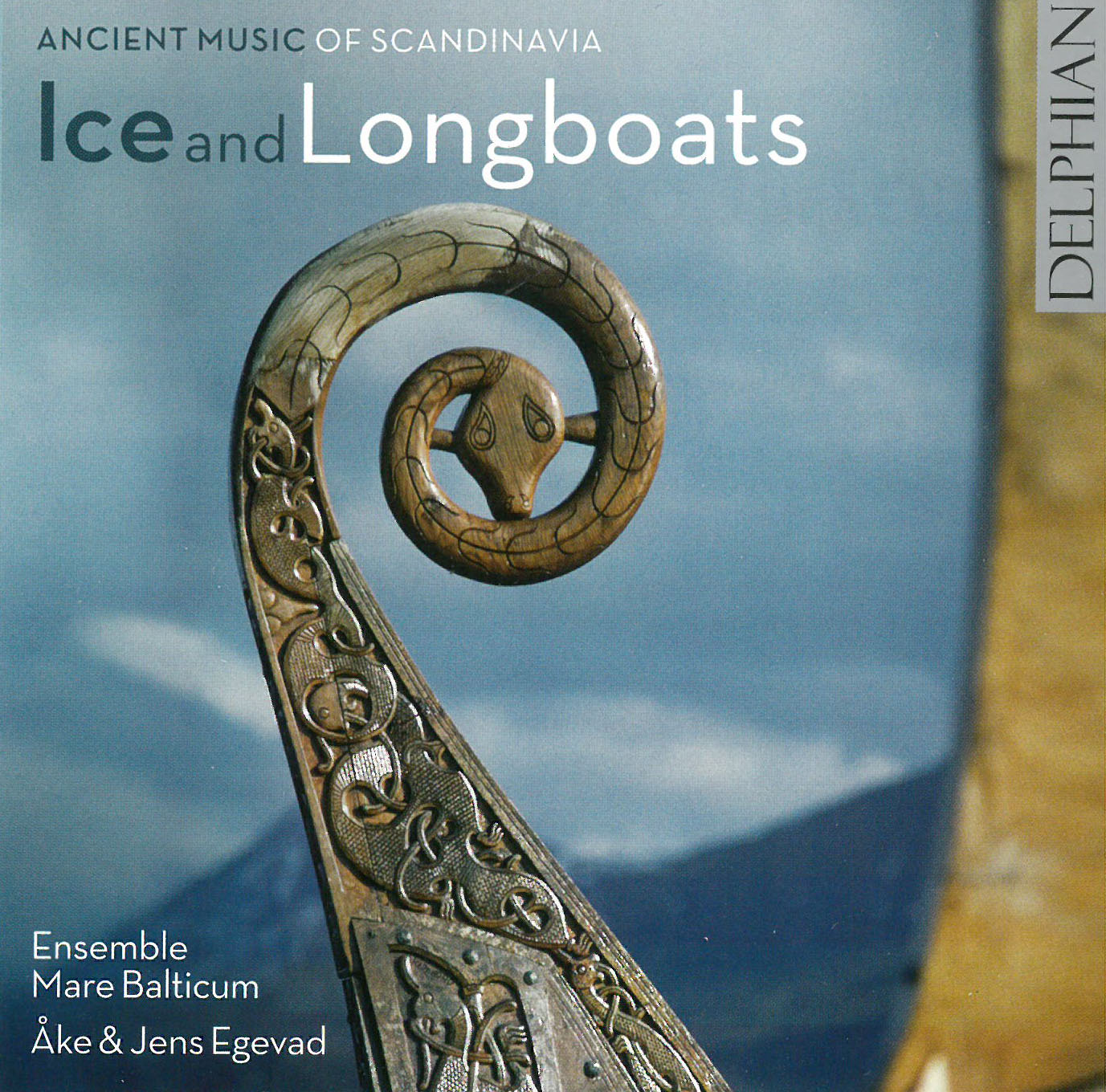
What would the music of the Vikings have sounded like? This CD offers a partial response to this question and more, as it takes the listener on a journey through soundscapes of two periods: music improvised on Viking era (800-1050 AD) instruments, as well as notated songs and instrumental items from the early centuries of Christianity in Scandinavia.

The second volume in Delphian Records’ groundbreaking collaboration with the European Music Archaeology Project, Ice and Longboats showcases the work of the versatile Ensemble Mare Balticum, as well as the remarkable father/son team of Åke and Jens Egevad. The Egevads are musicians and reconstructors of ancient instruments. They built the wooden lurs (trumpets), frame drums, bone flutes, hornpipe, animal horn and Viking lyres heard on this recording.

The selections mostly alternate between instrumental and vocal songs, with occasional dramatic shifts in mood and texture between tracks. The delicate medieval bone recorder is contrasted with the declamatory sounds of the lurs, and the simplicity of the bells provides a foil to the more elaborate medieval vocal and ensemble sections.

Standouts include the lyre duet on In the Village: evening, the Jew’s harp solo (played by Ute Goedecke) on Gaudet mater ecclesia and the sublime vocals on Nobilis humilis. The overall sound is pristine, as the music was recorded in the historic (ca. 1100s) Oppmanna church in Sweden. A beautiful and illuminating recording, Ice and Longboats is a voyage worth taking.

01 enoughMulti-Disc Box Sets Offer Depth As Well As Quantity

When a CD box of improvised music appears it customarily marks a critical occasion. So it is with these recent four-disc sets. One celebrates an anniversary tour by nine of London’s most accomplished improvisers. Another collects small group interactions in Krakow by musicians gathered to perform as an orchestra. A third is a souvenir of concerts celebrating Swedish saxophonist Mats Gustafsson’s 50th birthday. Finally enough still not to know captures extended improvisations by pianist John Tilbury and tabletop guitarist Keith Rowe, who have worked with one another on and off for 40 years.

Although the other sets can be likened to North American self-serve buffets that on the same sideboard offer an assortment of dishes, the Rowe-Tilbury box (SOFA 548 sofamusic.no) is like a superior fish-and-chips restaurant. The fare is phenomenal, but no substitutions are entertained. At points each musician appears to be following an intense chess game from another room – you know concentrated cerebral strategy is taking place, but you’re unable to observe the participants. A good portion of the four, hour-long Tilbury-Rowe faceoffs also involve protracted silences. Perhaps the liveliest disc is Second Part where interactions are more audible. Like the tantalizing hints of understated perfume before a person enters a room, Tilbury’s single note chiming unfolds into serialism-like suggestions and more surprising near-impressionist echoes. Perhaps fancifully reflecting his radical-left politics, Rowe sets himself up as the disrupter, twisting dials and shuffling objects with percussive gestures. The upshot is desiccated textures that still reflect back on the pianist’s paced narrative. If anything the music is Feldmanesque – like Morton Feldman. The performances take a great amount of time to not advance that much. Still the final section of Second Part spawns a sequence where what sounds like heavy-object moving transforms into conga-like slaps and cymbal-resembling pings on the guitarist’s part met by piano bottom board rapping from the keyboardist. Tilbury’s noodling that dwindles to a single key stroke at the end relates back to the piece’s low-pitched introduction. A similar bagpipe-like tremolo shuddering on Rowe’s part is matched by mallet-on-strings pop from the piano innards during the ending of Third Part. Those cognizant with the ingredients of improvised music will revel in the set. But most should approach it one disc at a time.

03 MopomosoA British pianist whose style is Tilbury’s antithesis is Pat Thomas, whose solo CD, Nasqsh, is one of the highpoints of Making Rooms (Weekertoft 1-4 weekertoft.com). With Mopomoso Tour 2013 celebrating the 21st year of this initiative in free-form music, the others discs in the set are vocalist Kay Grant and clarinetist Alex Ward’s Seven Cities; violinist Allison Blunt, violist Benedict Taylor and bassist David Leahy’s Knottings; and Chasing the Peripanjarda with saxophonist Evan Parker, bassist John Edwards plus Mopomoso founder, guitarist John Russell. Playing nine selections Thomas ranges chameleon-like over and inside the piano producing textures ranging from buzzing string swirls to aggressive, staccato lines that involve the piano’s wooden components as much as its strings and keys. On for Martin Lings Thomas’ theme balances echoing glissandi, key clicks and a faux waltz; whereas for al Battani is a near-boogie-woogie with flashing chords reflecting back unto one another. The letter is as romantic in execution as ibn Arabi could be musique concrète, with Thomas cascading harp-like arpeggios from the strings. Named for the seven cities in which it was recorded, the Grant-Ward recital finds the vocalist and reedist operating like conjoined twins, with fascination lying in how many timbres each replicates from the other. With Ward’s tone frequently altissimo and atomized, and Grant eschewing lyricism for quickened yelps and screeches, the effect is like peering at two near-identical drawings from which you have to intuit the subtle differences. Like a distorted funhouse mirror, Blunt/Taylor/Leahy create loosened-up chamber music. They use so-called classical tunings to rub and wiggle unexpected, contradictions from their instruments. Thickened pizzicato with mandolin-like plucks keeps a track like Sheet Bend exciting. A sense of hairline-triggered dynamics allows Noose to loosen from nearly inaudible to detonate into an exercise in col legno and sul ponticello trills. Slip Knot is like an upstairs-downstairs soundtrack as Edwardian drawing room formality is swept aside by shrill runs which jump and split like a jitterbug dancer. The trio’s skill is confirmed in how it manages to impart a romantic patina while distorting themes. The latter skill is habitual for Parker/Edwards/Russell. Like a reversible garment that’s both familiar and flashy, each of their tracks defines in-the-moment improv. Gunpowder, for example, never detonates into smithereens but stretches elastically without breaking. Parker’s focused snarls and tongue extensions transmit the theme decorated with no-nonsense strums and smacks from Russell, as Edwards holds the road like a racing car driver. The triple connection is such that partway through you notice that the tempo has sped up immeasurably from a canter to a Olympic-level race yet neither the tune’s seemingly limitless motion nor the trio’s interaction has perceptibly altered. The Auction of Pictures is even more animated as the saxophone unleashes just the proper amount of circular breathing.

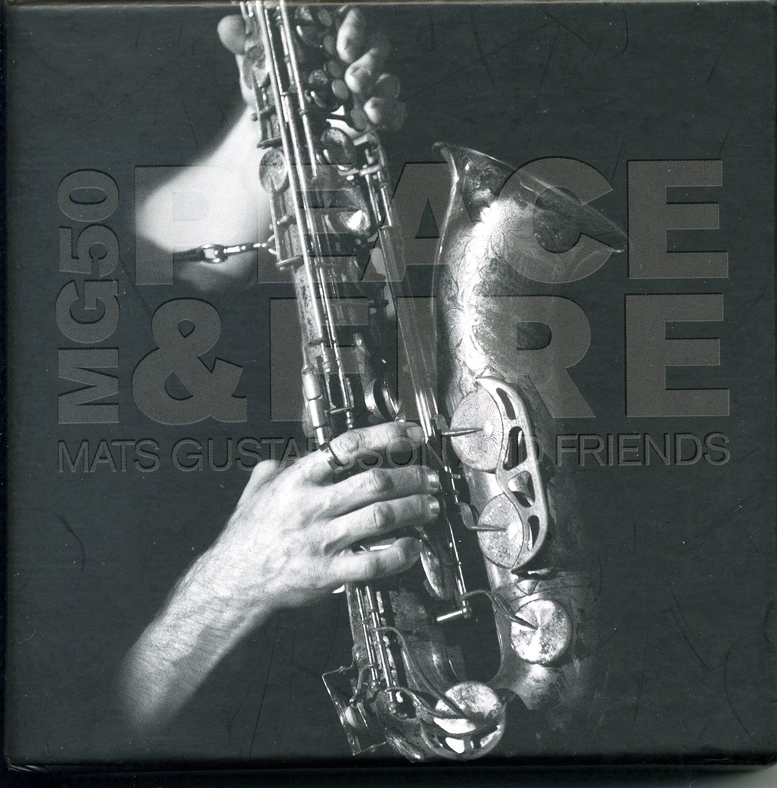
02 PeaceFireCircular breathing is just one of techniques exhibited by birthday boy Mats Gustafsson, on MG50 Peace & Fire at Porgy & Bess (Trost Records TR 140 trost.at). In honour of his 50th the Swedish saxophonist mixed and matched 30 associates in various ensembles. Although the effect is somewhat like moving through a raucous, outdoor carnival into a near-soundproof laboratory and back out onto a noisy speedway, the tracks confirm the reedist’s breadth. Gustafsson sounds exactly like himself whether he plays alto, tenor, baritone, bass saxophones or self-invented flutophone and whether he’s lobbing power shards against the industrial-style drumming of Didi Kern on Peace or advancing hard pitches that are descriptive without being disruptive while embedded among the reeds, brass and strings of Klangforum Wien on Konstellation. A track such as Molting Slowly (without noticing), where his Fire trio of electric bassist Johan Berthling and drummer Andreas Werliin is augmented with two vocalists, electric organ and bagpipes [!], sashays from bedlam-styled vocalizing and reed shrieks to Death Metal-like melodrama without letting the menacing theme overcome the supple voice and instrumental interaction. Similarly a meeting of his The Thing trio – bassist Ingebrigt Håker Flaten and drummer Paal Nilssen-Love – with saxophonist Ken Vandermark on tracks like Unheard. I Yield may feature a saxophone faceoff with tones winding around one another like snakes in a mating ritual, but a final bass-led descent to an R&B-like pulse adds swing to the tough reed mass. Suspended within an electrified concerto with synthesizer player Thomas Lehn, drummer Paul Lovens and trombonist/cellist Günter Christmann, Gustafsson meshes thick reed tones with hissing synth vibrations as carefully as he uses singular puffs to connect with isolated drum strokes and string plinks. Plus, when his Swedish Azz quintet which include Dieb13’s turntables plus tuba, saxophone, vibe and drums gets going on a piece like Quincy processed samples and unexpected reed tongue flutters confirm the band’s contemporary bona fides even as the theme salutes Sweden’s mid-century modern jazz roots.

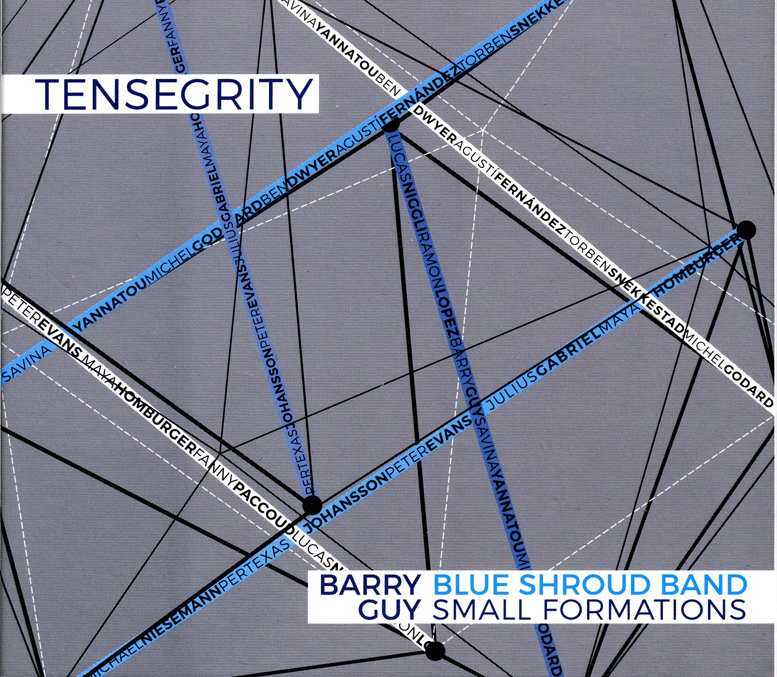
04 TensegrityAnother variation on a similar theme is Tensegrity (NotTwo MW938-2 nottwo.com). Here the 14 members of British bassist Barry Guy’s Blue Shroud Band, gathered in Krakow to perform the bassist’s orchestral Blue Shroud, were recorded in Small Formations. The set features 26 tracks where band members from 10 countries demonstrate their skills. Some improvisations are unexpected, as when four reed players stack up so many timbres that are alternately shrill, subterranean, harsh and gentle, that it appears critical mass is reached. Then they’re joined by serpent-player Michael Godard, whose hunting-horn-like subtly adds a further subterrestrial dimension. On one track, Bach specialist Maya Homburger reads her violin part, but backed by Guy’s four-square bass and the creative accents of percussionist Lucas Niggli the result is easy swing. Other assemblages are more customary. Guy’s mufti-directional arpeggios and percussionist Ramón López’s pacing draw out the best from saxophonist Julius Gabriel so that his flutters, reed kisses and slurps culminate in a set that salutes both the hushed improv of Mopomoso and Gustafsson-style Energy Music. Vocalist Savina Yannatou showcases her tonal sensitivity or creates a hubbub of sounds scatted and otherwise equal to the instrumentalists’ free playing. Overall the MVP is Catalan pianist Agustí Fernández. On his own he mixes highly technical carefully prepared string additions to create a kaleidoscopic solo that’s as percussively syncopated as it is breezy. On the set’s final track he joins Guy, López, trumpeter Peter Evans and Yannatou for a matchless half-hour improvisation. Sequences successively resemble a classic piano trio; a rhythmic safety net for Evans’ tongue gymnastics; and focused backing for the vocalist’s mumbles and speaking in tongues. Throughout, the pianist draws unexpected glissandi and inner-piano resonations like gold nuggets from a stream to both match and accompany the other soloists.

Each box here has something to offer the adventurous. Together they add up to a faultless picture of contemporary improvised music.

“No other composer has owed so much to Mother Nature and his own father as Wolfgang Amadeus Mozart. He came into the world endowed with a native genius that probably has not had its equal in the history of music and it was his good fortune to have a father who was able to develop and guide the natural gift.”
– Pitts Sanborn, critic and essayist, 1938.

Born in 1756, Wolfgang was not Leopold and Maria Anna Mozart’s only surviving child; his sister Nannerl was born in 1751. Little Wolfgang, still in his cradle heard his sister’s music lessons given by their father and at the age of three he was able to pick out chords on the clavier and repeat passages he had learned by ear. In 1760, he too began clavier lessons from his father and by the next year, aged five, was composing pieces for that instrument that were taken down by Leopold and in 1763 he was already published. The Mozarts – father, daughter and son – began a concert tour including, in 1764, a reception in Versailles by Louis XV, a trip to London and an introduction to J.C. Bach. During that busy period, he composed clavier pieces, in addition to sonatas for violin and piano and cello sonatas, while working on his first two symphonies. Not your typical teenager. By the time he was 21 years old he had composed four piano concertos, five symphonies (there were six but No.2 K17 proved to be by Leopold), choral works, ten violin sonatas, piano pieces and various shorter works taking us to K97.

The very young Mozart was a prodigy, a child prodigy who, as the years passed, became evermore prodigious. In his 35 years he composed 41 completed symphonies, 27 piano concertos, four horn concertos, piano sonatas, violin concertos, works for the theatre including 22 operas, 33 violin sonatas, 23 string quartets, eight piano trios, 14 sonatas for organ and strings, seven string quintets, piano quintets and the list goes on…and on. Terminal illness prevented him from finishing the Requiem Mass K626 that was completed by Franz Xavier Süssmayr after Mozart’s death on December 5, 1791.

Although his influences were Germanic, Mozart was not a composer of national music. His music is arguably the most universal of all and least locally rooted. Broadly speaking, it more reflects the Italian influence in Austria in the 17th and 18th centuries: elegance, refinement and polish.

Review

Mozart 225 3d

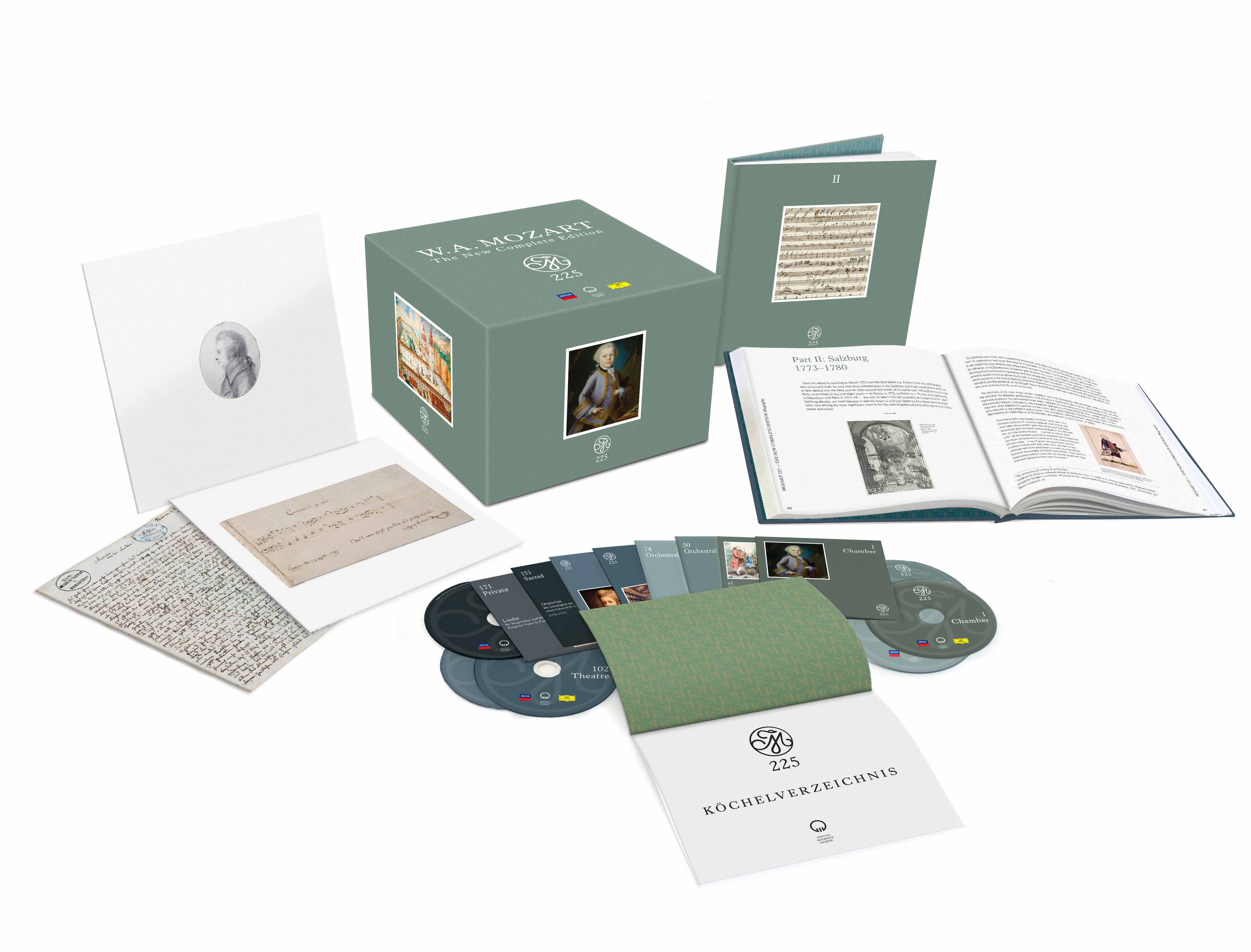
Paul Moseley is Director of Mozart 225, in other words the man at Universal Music responsible for bringing together all the elements for Mozart 225: W.A. Mozart – The New Complete Edition (Universal Music/Stiftung Mozarteum Salzburg, 200 CDs, Books, literature, etc.).

In an interview with Barry Holden, VP of Classical Catalogue, Moseley responded to the question, why now? “In December, this year will be the 225th anniversary of Mozart’s death and it occurred to us that this was a chance in our lifetime to celebrate our relationship with one of the greatest creative minds that ever lived and look again at our recorded interpretation on disc and scholarship with this incredible genius.

The edition is, we think, the biggest CD box set ever put together. It would take you ten days to get through all the music on the set, I think there are 15,000 minutes which is something like 240 hours. 200 CDs, 4000 tracks, over 600 solo performers and ensembles, 60 orchestras. From a label point of view, to be able to include Decca which obviously is Decca and the old Philips label, Deutsche Grammophon with its wonderful catalogue of Mozart recordings – also the ASV catalog – so there are perhaps nearly 20 labels represented all together. We’ve gone one better even than the Philips’ Mozart edition which came out 25 years ago for the 200th anniversary by not only finding new music that wasn’t recorded before but also offering alternative interpretations of music to give the listener the ability to choose between a period instrument performance for example and a modern instrument performance. Just to give them that sense of the breadth of recorded interpretation of some of the great works.

“The first thing you’ll see when you open up is two very large hardback books. The first book is a new biography of Mozart by Cliff Eisen. Cliff Eisen is professor at King’s College London and I would say, probably the world’s preeminent Mozart scholar.

“The second book which Cliff has curated the editorial of, is just on the music contained in the boxes so follows you through each box and each work. Cliff was also the editorial consultant for the entire edition so he’s made sure that everything that’s written is up to date and scholarly.”

Fitting the two hardbound books, the new Köchel catalogue and 200 CDs into a 26 x 26 x 18 cm box is a tight fit. The bottom of the big inner box holds four smaller removable boxes: “Orchestral,” “Chamber,” “Theatre” and “Sacred/Private/Supplement,” each with a booklet with information on each disc in that group. I found it impossible to locate and remove a disc before easily removing the booklet. Also you don’t bring a 20-pound (9 kg) box to your chair…you go to it. That’s exactly what I have been doing for the past month, appreciating new versions of so many familiar works that restore their newness and originality. Performances of works as over-familiar as Eine kleine Nachtmusik, Piano Concerto No.21 or A Musical Joke (Ein musikalischer Spass K522) inspire close attention.

I cannot imagine that Universal expects this labour of love to hit the charts but those who acquire the invaluable set will be rewarded for a long time come. You may examine the complete edition for yourself at mozart225.com.


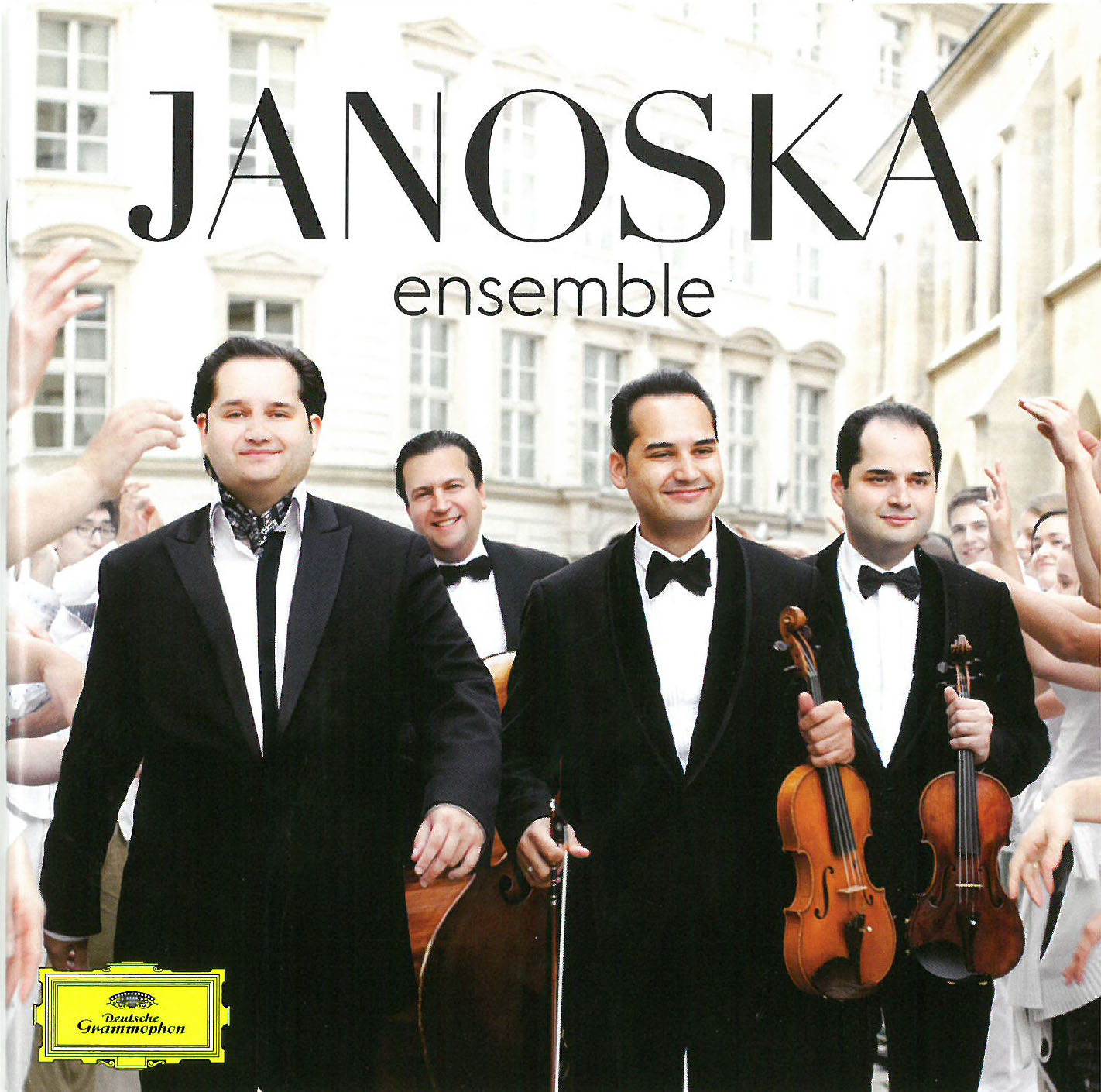
Very, very rarely does a review copy CD have such an effect on me that I simply want to keep playing it instead of listening to the rest of the month’s selections, but that’s exactly what happened with the absolutely stunning CD Janoska Style, featuring the Janoska Ensemble in a dazzling selection of their own distinctive arrangements (Deutsche Grammophon 481 2524).
01 JanoskaThe ensemble features the three Czech brothers Ondrej and Roman Janoska on violin and František Janoska at the piano, with their Hungarian brother-in-law Julius Darvas on double bass. All four musicians had significant independent careers in Vienna before deciding to concentrate on their own music with the Janoska Ensemble in 2013. They combine salon style, gypsy music, jazz and improvisation and bravura cadenzas in virtuosic arrangements that leave you short of breath and scrambling for words to describe them.

From the opening Die Fledermaus Overture à la Janoska, which morphs into a frenetic gypsy version of Those Were the Days, through reworkings of Waxman’s Carmen Fantasie, Massenet’s Thaïs Meditation, Paganini’s Caprice No.24 to Piazzolla’s Adiós Nonino, this is musical imagination, vision and virtuosity of the highest order.

We’re never asked to choose a CD of the Year, but if we were then this would undoubtedly be mine.

Review
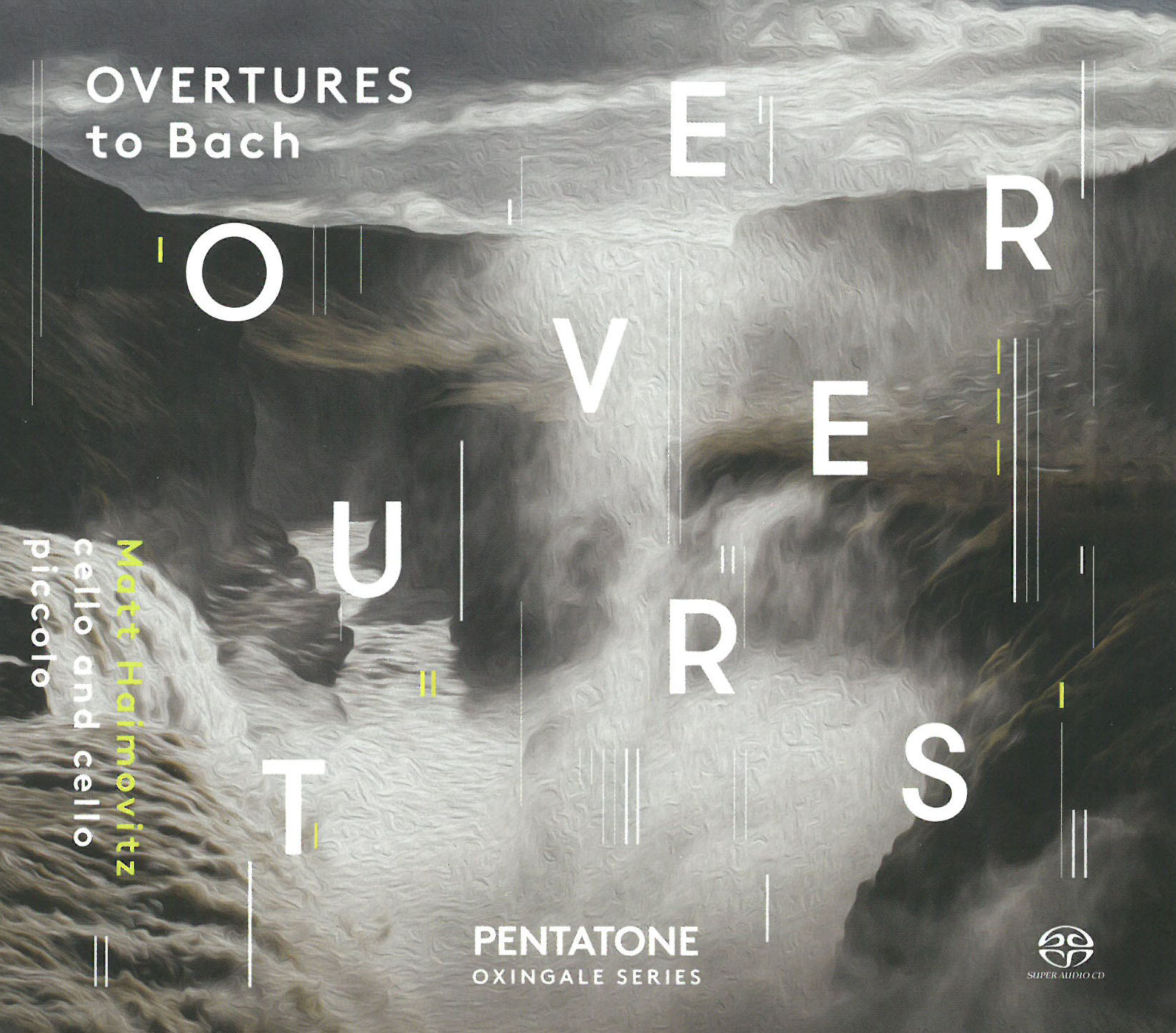
02 Haimowitz BachOvertures to Bach is the latest CD from the cellist Matt Haimovitz on the Pentatone Oxingale Series label (PTC 5186 561). It’s yet another tour-de-force solo recital of Bach and Bach-inspired contemporary works from this outstanding performer.

Haimovitz’s continuing relationship with the Bach Cello Suites stretches back over a period of more than 30 years, and in this latest venture – which he calls a culminating moment in the relationship – he has commissioned six new overtures that reflect on and anticipate the six individual suites and, by expanding on the cross-cultural and vernacular references in Bach’s music, reach both forward and backward in time. Each new piece is followed by the Prelude to the relevant Suite. The new works, in Suite order, are: Overture by Philip Glass; The Veronica, by Du Yun; Run, by Vijay Iyer; La memoria, by Roberto Sierra; Es War, by David Sanford; and Lili’uokalani for solo cello piccolo by Luna Pearl Woolf.

Haimovitz is superb in the wide range of technical challenges presented by the new works, and is as thoughtful and inquisitive as ever in the Bach Preludes. It’s a simply outstanding CD.

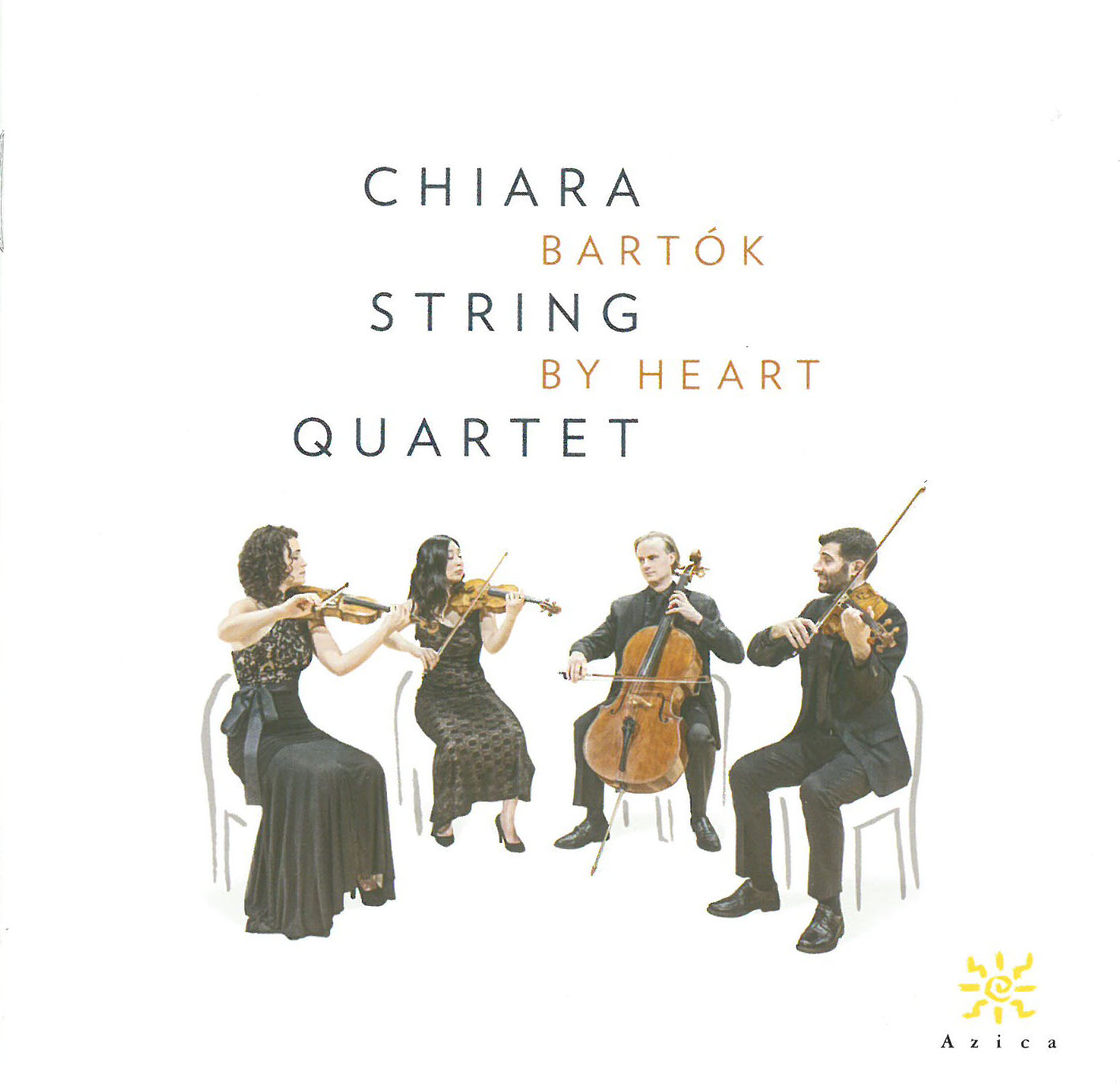
03 Bartok ChiaraWhen I saw the title of the new 2-CD set from the Chiara String Quartet – Bartók by Heart (Azica ACD-71310) I couldn’t believe my eyes. Surely it didn’t mean that they were performing all six of the Bartók quartets from memory? Well, yes it did, and yes they were.

I don’t think you necessarily have to be a string player to be able to appreciate the simply staggering nature of such a challenge, but anyone who has ever played in a string quartet will know exactly what is involved here – you don’t simply have to remember your own part, but also everybody else’s part to a large extent so that the complete picture is always present in your mind. And these are six works of huge complexity and technical difficulty.

It’s important, though, to move beyond the astonishing magnitude of the feat itself to the musical and emotional result, and the level of the performances here more than repays the effort involved. Interestingly, the quartet members feel that memorizing the music made the more difficult passages easier to play, and that the process took the music back to the aural tradition from which Bartók drew his initial influences.

One thing is certain: in a fiercely competitive field there isn’t another Bartók set quite like this one.
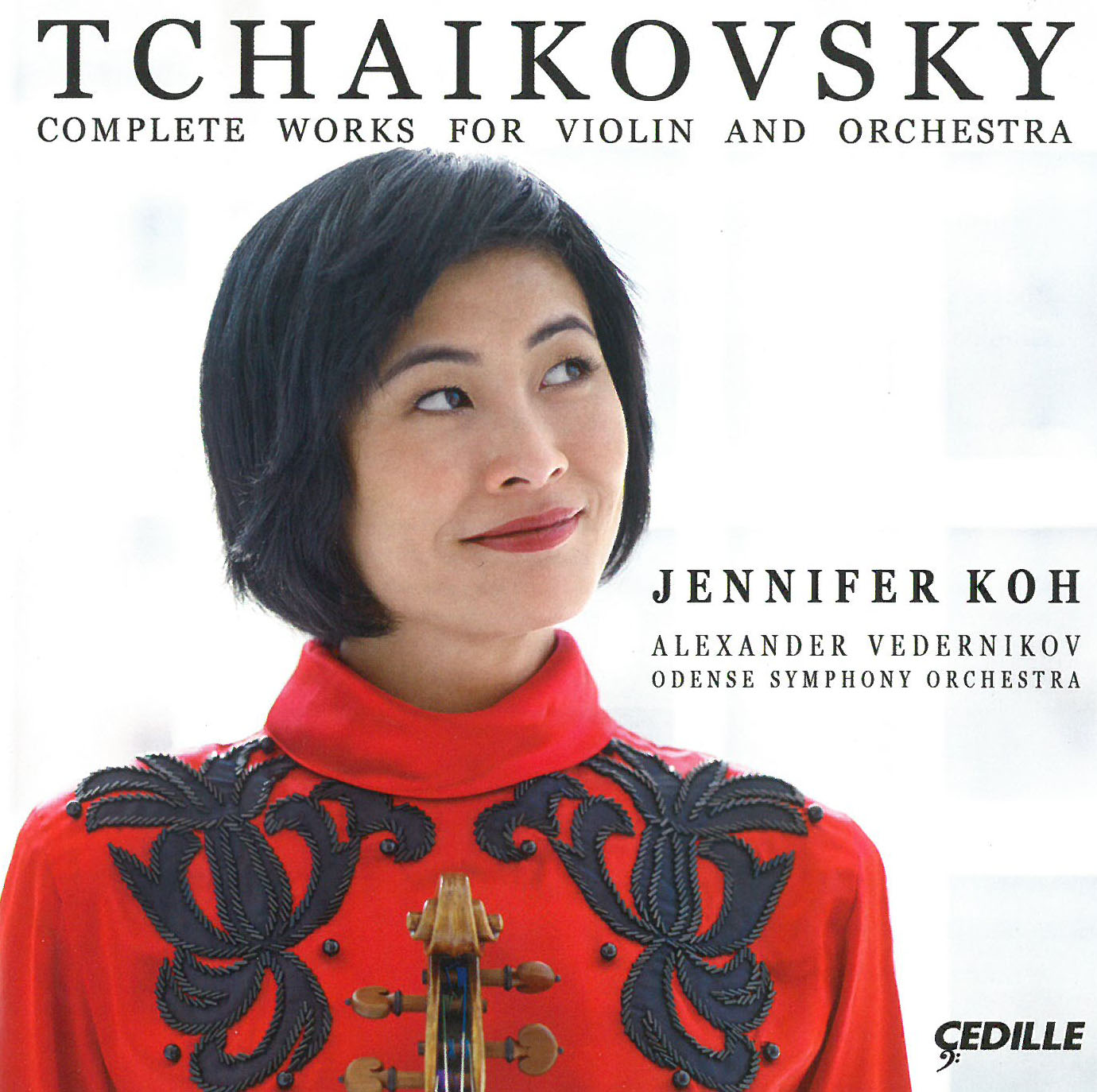
04 Koh TchaikovskyThe outstanding American violinist Jennifer Koh, who has produced a string of terrific CDs for the Cedille label featuring contemporary compositions, returns to the standard repertoire for her latest release, Tchaikovsky Complete Works for Violin and Orchestra, with Alexander Vedernikov conducting the Odense Symphony Orchestra (CDR 90000 166). The trademark Koh intelligence and sensitivity in programming is still there, however: Vedernikov was the conductor when the 15-year-old Koh played the Tchaikovsky Violin Concerto in D Major Op.35 in the International Tchaikovsky Competition for Young Musicians in 1992, the same year in which she first played with the Odense Symphony, and in 2011 all three performed together for the first time.

Koh admits to possibly being more patient in the concerto after all these years, and there is certainly never any sense of rushing in what is a carefully measured and highly lyrical performance. There aren’t quite the fireworks that you’ll find in some recordings, perhaps, but that doesn’t in any way diminish the interpretation here – it’s a thoughtful, personal statement from a player with impeccable technique.

Tchaikovsky’s works for violin and orchestra all date from the years 1875-78. The Sérénade melancolique in B Minor Op.26 from 1875 and the Valse-Scherzo in C Major Op.34 from 1877 open the disc, with the 1878 concerto as the central work; the Glazunov orchestration of the three-piece Souvenir d’un lieu cher Op.42, also from 1878, completes a highly satisfying CD.

Another outstanding American musician, cellist Zuill Bailey, features on two new CDs.
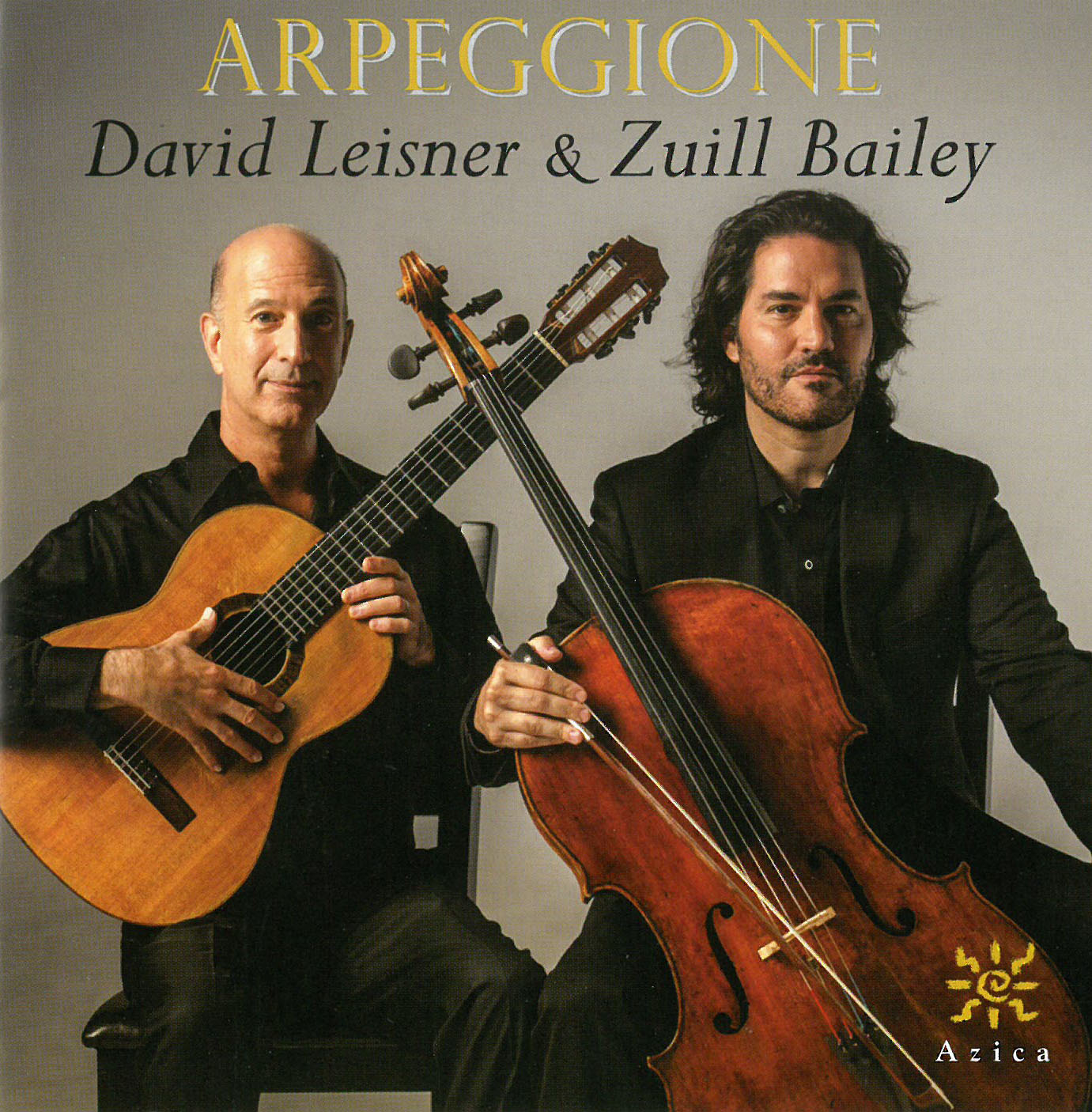
05 ArpeggioneOn Arpeggione (Azica ACD-71306) he teams with guitarist and composer David Leisner in a recital that includes Schubert’s Sonata in A Minor (Arpeggione) D821, de Falla’s Siete Canciones Populares Españolas and the world premiere recording of Leisner’s own Twilight Streams. Short pieces by Gluck, Saint-Saëns and Villa-Lobos fill out a CD that ends with an astonishing transcription of a virtuosic violin piece by Paganini – the Variations on One String on a Theme from Rossini’s Moses.

Terrific technique and warm tone from both players make this a charming disc. All of the arrangements other than the Villa-Lobos are by Leisner.
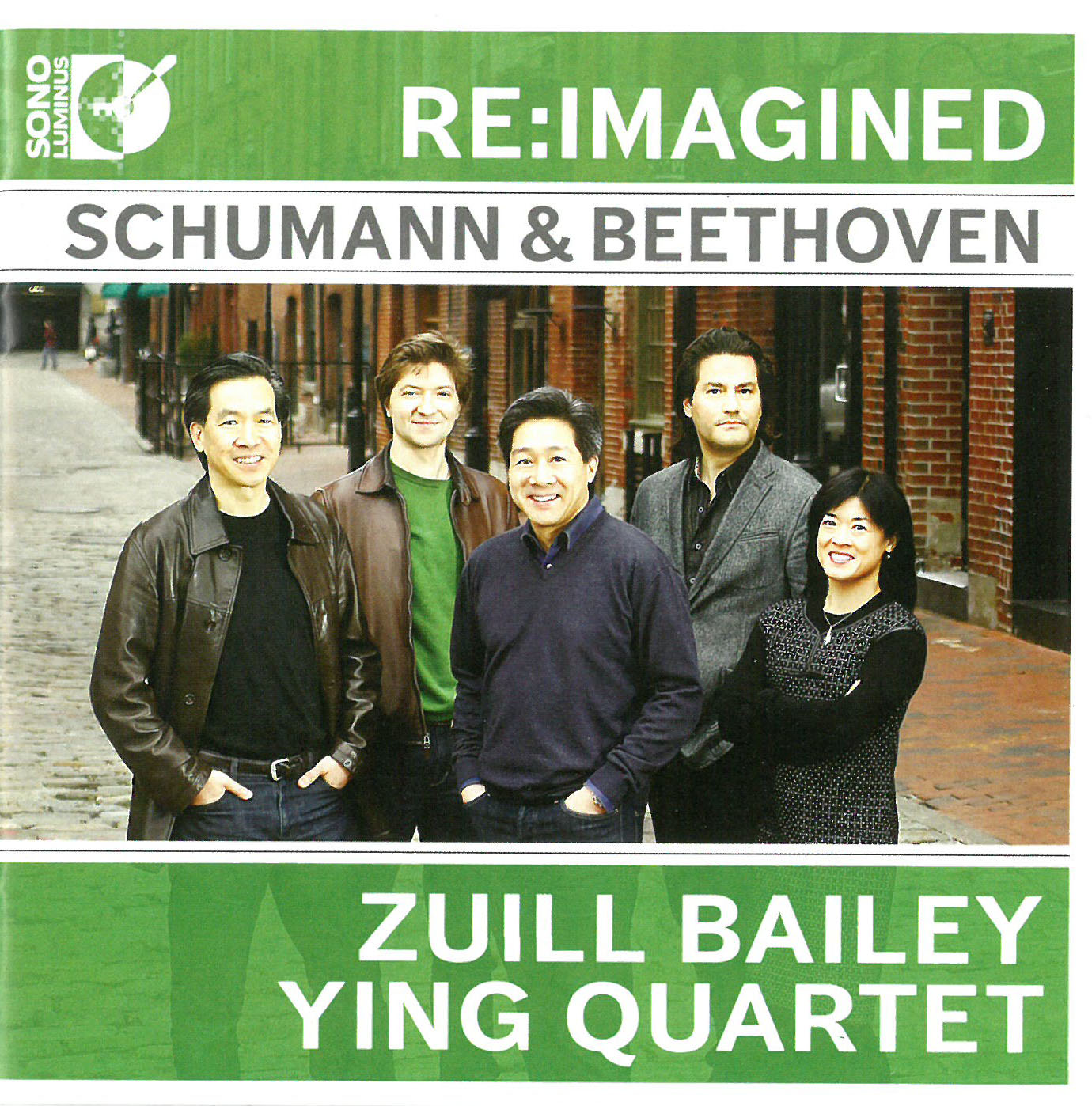
06 Re Imagined Ying QuartetOn Reimagined: Schumann & Beethoven for Cello Quintet (Sono Luminus DSL-92204) Zuill Bailey joins the Ying Quartet in arrangements of the Schumann Cello Concerto in A Minor Op.129 and Beethoven’s Sonata No.9 for Violin and Piano Op.47Kreutzer.” The Schumann arrangement is by the performers; the Beethoven is an anonymous arrangement from 1832.

The Schumann works well, but the revelation here is the “Kreutzer” Sonata. The absence of a piano makes for a completely different opening, for starters, but the entire work comes across not just as a transcription or arrangement but as a new Beethoven string quintet – and a stunning one at that. It makes you realize and appreciate the sheer depth and strength of the original sonata.

The playing is outstanding throughout a quite fascinating and thought-provoking CD.
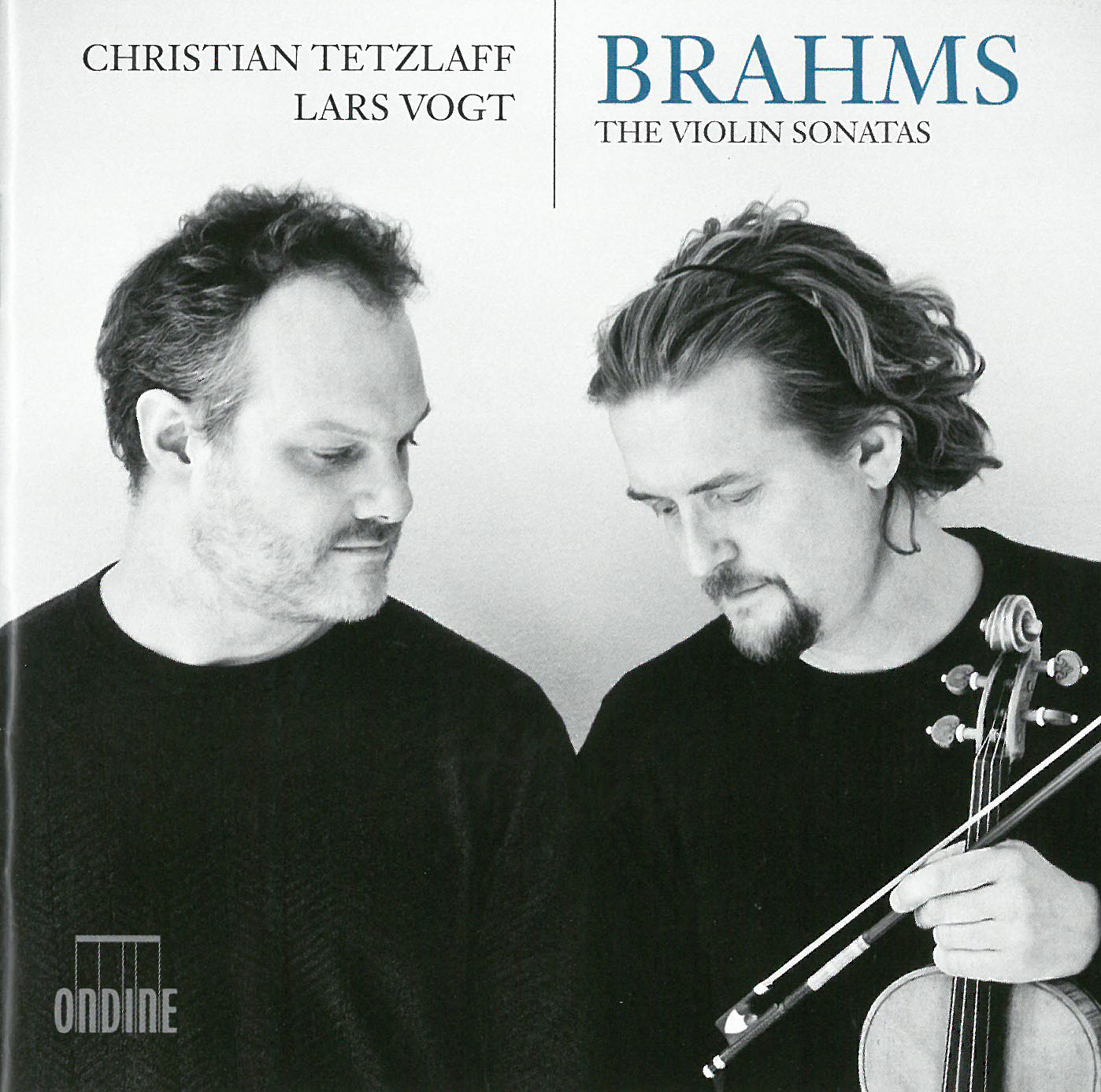
07 Brahms TetzlaffHaving first recorded the Brahms Violin Sonatas in a 2002 live performance, violinist Christian Tetzlaff and his regular collaborator pianist Lars Vogt have revisited them after 14 years as they feel that their growth as a duo has resulted in their having more to say (Ondine ODE 1284-2). I’ve never heard the 2002 CD, but this latest issue provides ample proof that the duo does indeed have a great deal to say in these immensely popular works.

The opening of the Sonata No.1 in G Major Op.78 is simply lovely, and the beautiful playing that follows evokes all the usual Brahms descriptive terms – it’s warm, gentle, expansive and autumnal in feel. The Sonata No.2 in A Major Op.100 is equally lovely, and there is plenty of fire in the Sonata No.3 in D Minor Op.108.

Brahms’ contribution to the F.A.E. Sonata, the Scherzo WoO 2 completes the disc. The playing from both performers throughout is rhapsodic, passionate and nuanced, with an excellent dynamic range and a simply lovely recorded sound. This is one revisit that is quite clearly well worth the trip.
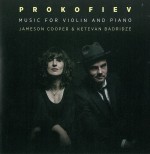
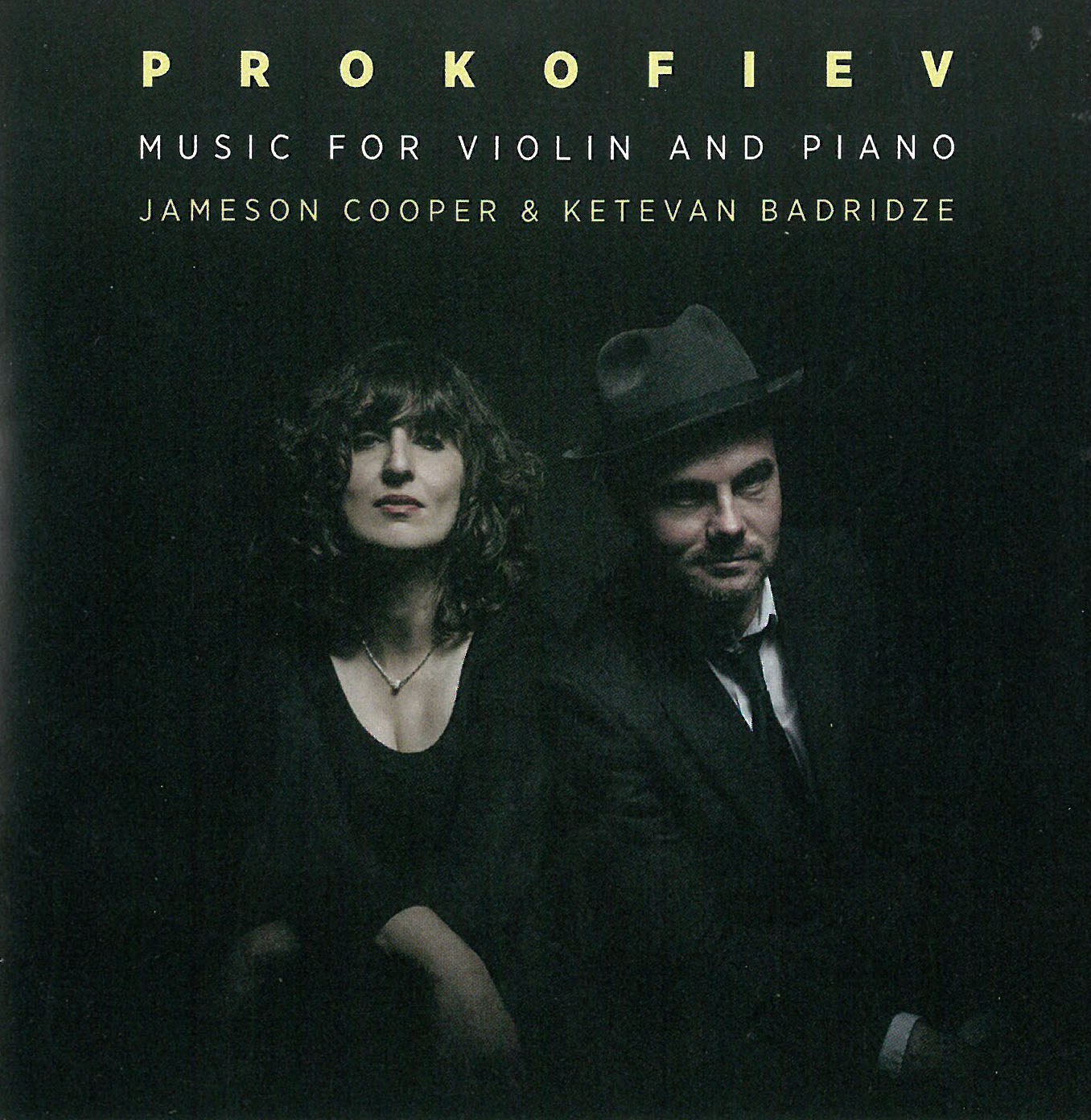
08 Prokofiev CooperThere’s more lovely duo playing on Prokofiev Music for Violin and Piano, the debut duo CD by violinist Jameson Cooper and pianist Ketevan Badridze issued on the Afinat Records label (AR1601) in celebration of the 125th anniversary of the composer’s birth. The English-born Cooper has long been active in the United States, and is the first violinist with the Euclid Quartet in residence at Indiana University South Bend, where Badridze is also on the faculty as a senior lecturer.

It’s a CD that certainly makes a lovely birthday present, with outstanding playing of the three works on the program: the Five Melodies Op.35bis; the Violin Sonata No.1 in F Minor Op.80; and the Violin Sonata No.2 in D Major Op.94bis. Both performers are in great form, with their outstanding techniques allowing them to explore the emotional depths of the dark and intensely personal F Minor sonata in particular.

Cooper and Badridze have some top competition in this field – I’ve reviewed similar CDs by Viktoria Mullova, Alina Ibragimova, Jonathan Crow and James Ehnes in the last few years – but this is a disc that can more than hold its own. Cooper’s insightful and perceptive booklet notes complete a terrific package.
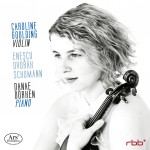
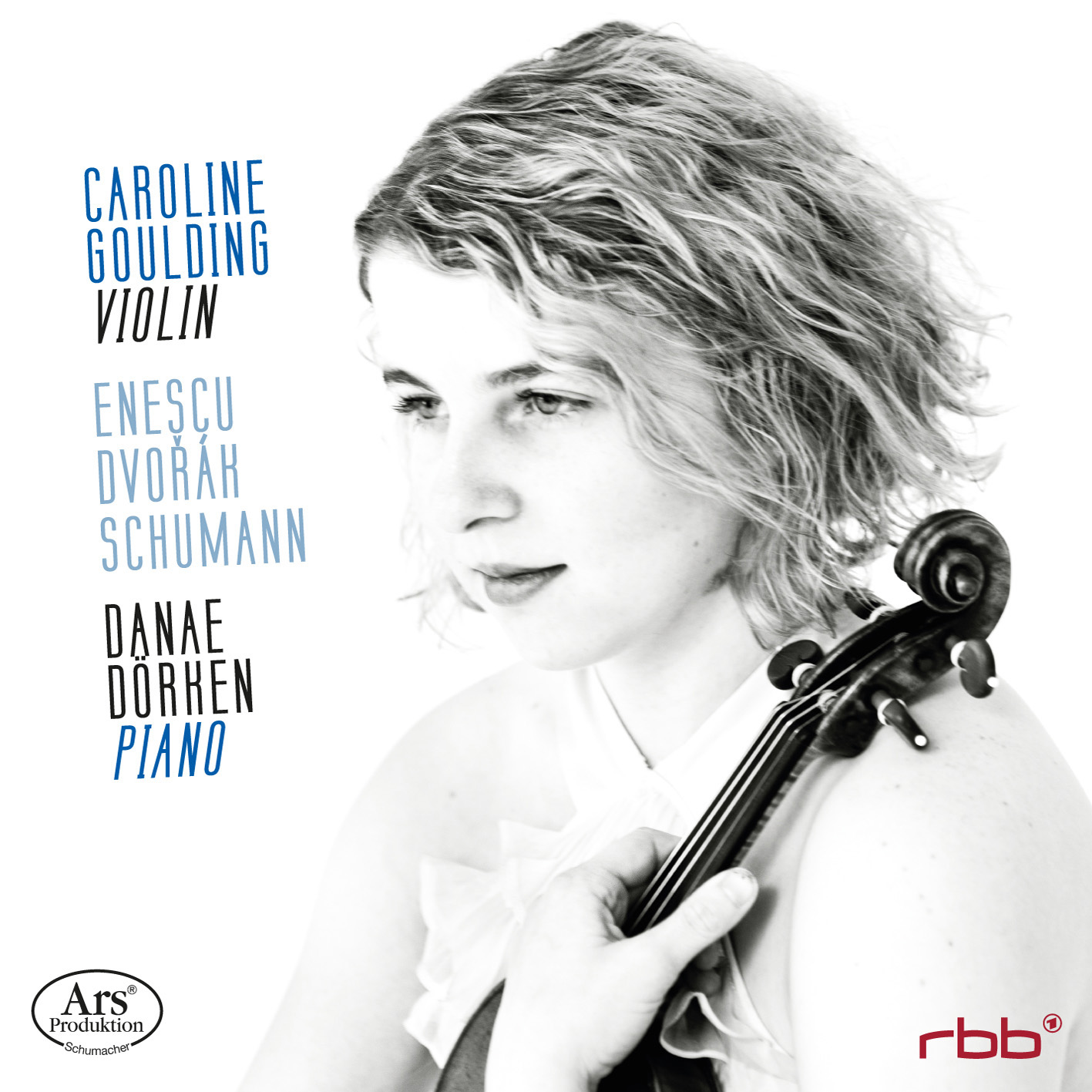
09 Caroline GouldingThe 23-year-old American violinist Caroline Goulding teams with pianist Danae Dörken on her debut CD of music by Georges Enescu, Antonín Dvořák and Robert Schumann (Ars Produktion ARS 8536).

The choice for the opening work on the disc, Enescu’s Impressions d’enfance Op.28, is a surprising but strikingly successful one. This simply astonishing suite that traces the course of a child’s day is not what you would expect on a debut disc, but it provides a wonderful palette for violinists to display their range of tone colour as well as their technique, and Goulding takes full advantage of it.

There is something pleasingly old-fashioned about Goulding’s playing in some respects, with its big warm tone and vibrato and her judicial use of portamento. The Dvořák Romantische Stücke Op.75 benefits greatly from this in a lovely performance, and there is more nice playing from both performers in Schumann’s Violin Sonata No.2 in D Minor Op.121.

All in all, an excellent debut CD from a definite talent.
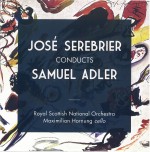
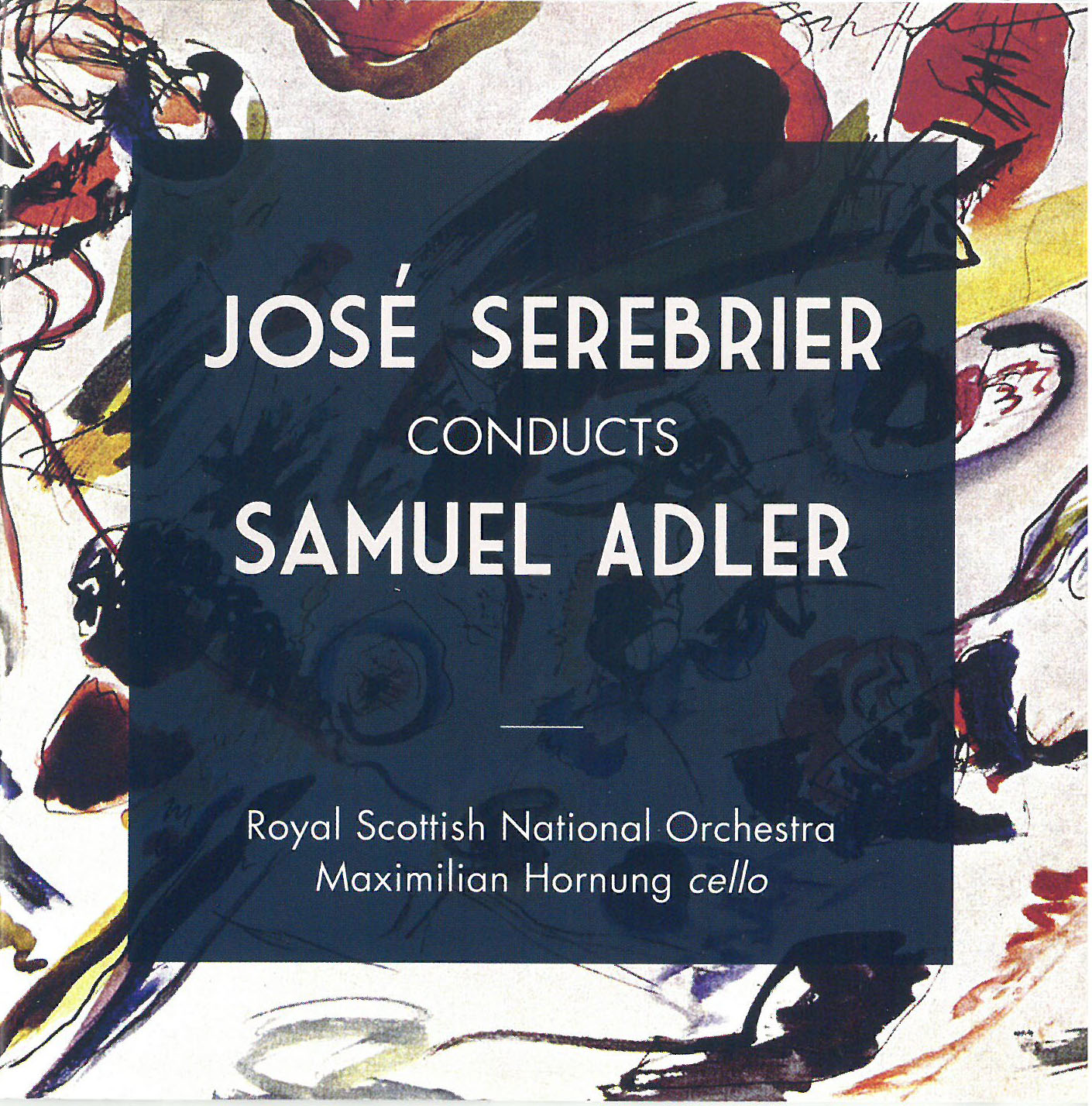
10 Adler Cello ConcertoMaximilian Hornung is the soloist in the Concerto for Cello and Orchestra by the American composer Samuel Adler (b.1928) on the CD José Serebrier conducts Samuel Adler (Linn CKD545); Serebrier also conducts the Royal Scottish National Orchestra in Adler’s Symphony No.6.

The concerto is a strong four-movement work written for the Cleveland Orchestra and its principal cellist Stephen Geber almost 30 years ago, when Adler was a professor at the Eastman School of Music in Rochester. The movements strike a lovely balance between slow, lyrical writing for the cello and rhythmically strong up-tempo passages that show a fair bit of jazz influence.

The symphony is perhaps the more significant recording here. It was written in 1984-85 for the Baltimore Symphony Orchestra and their conductor David Zinman, but Zinman left the orchestra before the work could be scheduled. This recording is the premiere performance of the symphony as well as the first recording.

It’s a powerful three-movement work with a simply explosive start and a slow, expressive middle movement between two fast outer movements. The orchestration has a distinctively American feel, with more than the occasional hint of Leonard Bernstein, especially in the handling of the percussion and the rhythmic writing.

The short orchestral tone poem Drifting On Winds And Currents concludes an impressive CD.

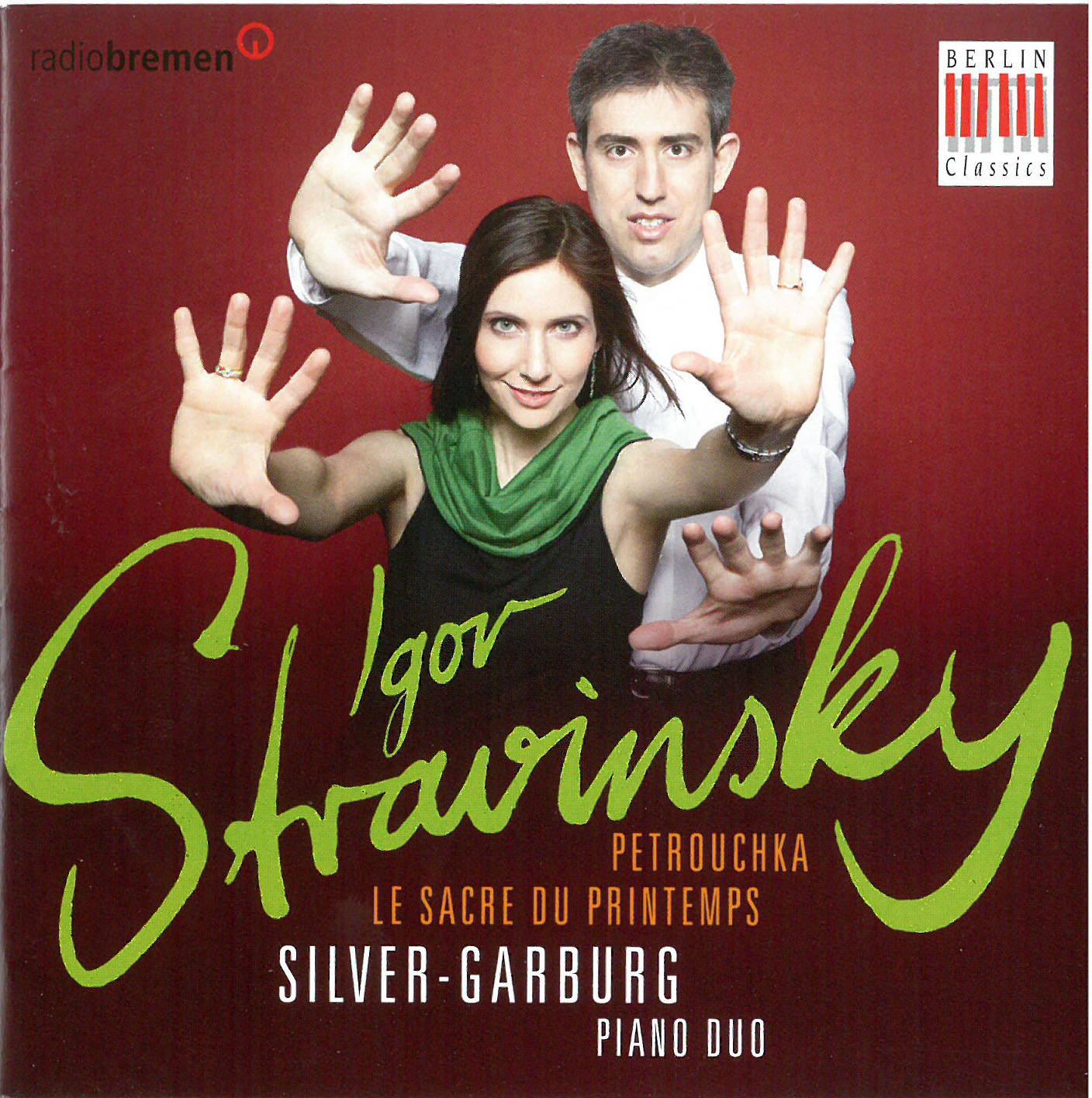
01 Silver GarburgUsing the piano as an orchestral percussion section, often brutally, is a requisite for performing Stravinsky’s The Rite of Spring. Sivan Silver and Gil Garburg are unrestrained in conveying the savagery of the ballet’s storyline in their recording Igor Stravinsky – Petrouchka, Le Sacre du printemps (Berlin Classics 0300588BC). Stravinsky wrote this duet version of The Rite of Spring at the same time as the orchestral score. Curiously, the piano version was published a week before the stormy Paris premiere in May 1913, while the orchestral score remained unpublished for another eight years.

The Silver-Garburg duo performs wonderfully throughout this work always using the well-placed quieter moments of repose as contrast against the wilder passages. They understand it completely and play with a commitment to making an emotional impact no less powerful than the larger orchestral score.

Petrouchka also exists as a piano duet by Stravinsky. He finished it just as he began The Rite of Spring in 1911. The duo performs it beautifully. They play with exceptional unity and control especially through the long mystical pauses and speed changes of Petrouchka’s Room. Their crisp, energetic staccatos make Russian Dance a track worth hearing more than once. The disc’s closing track, The Mummers is a brilliant display of speed and technique, and a terrific ending to this recording of two of Stravinsky’s most admired compositions.

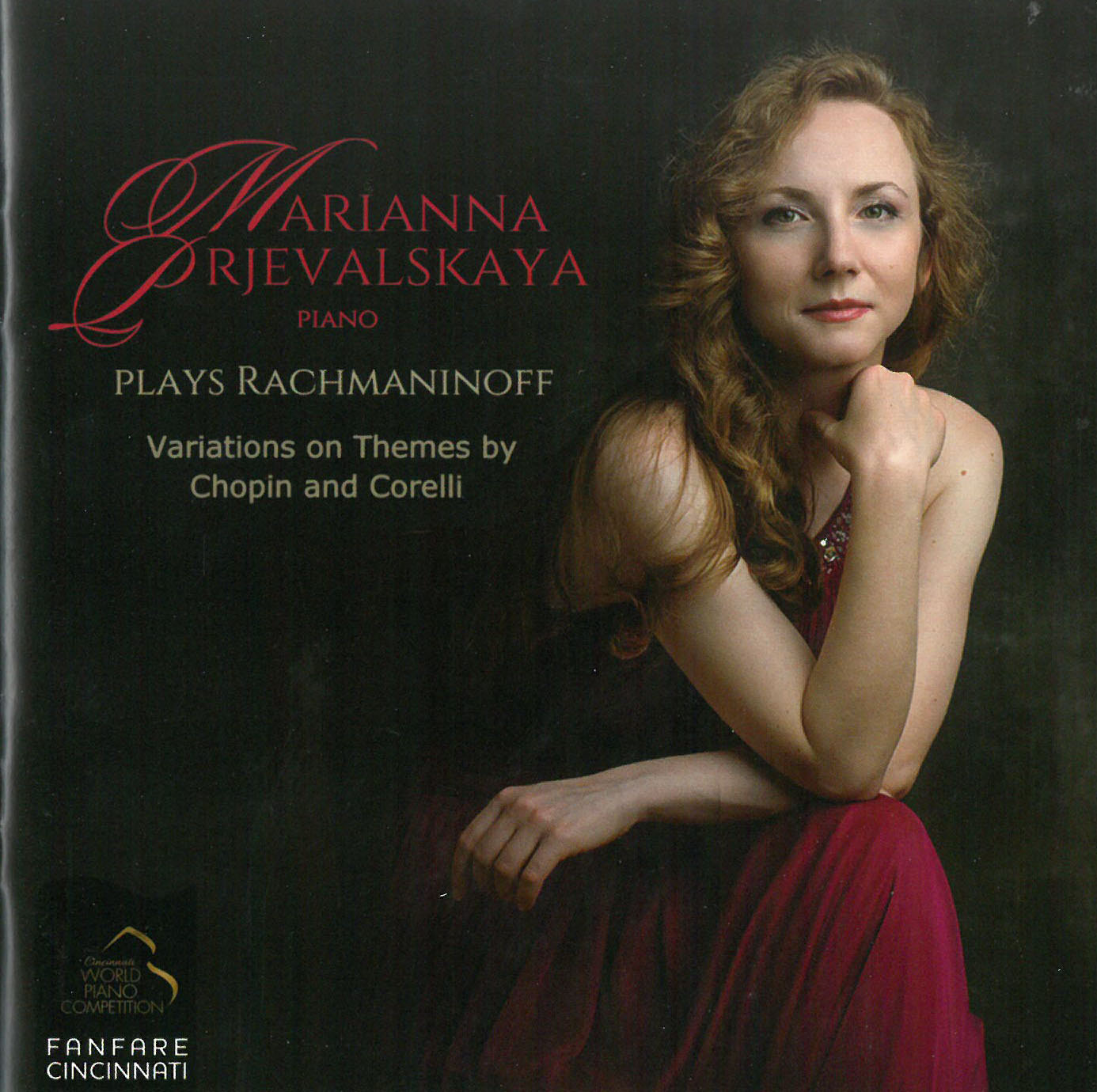
02 Prjevalskaya RachmaninoffShortly after winning the 2013 Cincinnati World Piano Competition, Marianna Prjevalskaya recorded Marianna Prjevalskaya plays Rachmaninoff, Variations on Themes by Chopin and Corelli (Fanfare Cincinnati FC-008). The works are big and sit 30 years apart in Rachmaninoff’s oeuvre. The earlier set of variations on the theme of Chopin’s Prelude in C Minor Op.28 dates from 1902. Prjevalskaya plays these 22 pieces capturing all the references to Chopin’s language as well as the early hints of Rachmaninoff’s growing penchant for large-scale orchestral statements, even if only from a keyboard. There’s a lot of emotional variety in this set, with retrospective glances at the Baroque and Classical. But Prjevalskaya ensures that we never lose sight of the essential Russian-ness of the composition. The concluding variation, Maestoso, embodies this in its larger-than-life declaration of Chopin’s idea as towering chords of Russian pianism.

Variations on a Theme of Corelli Op.42 shows us a different composer. Prjevalskaya knows this, and plays with a focus on Rachmaninoff’s more modern vocabulary. She uses his rhythmically irregular figures and unexpected harmonic shifts to present the mature composer writing his last solo piano work. Her approach is less academic than the earlier set and far more a full concert piece that asks to be considered as a whole. It’s for this reason that we hear more clearly the Rachmaninoff of the piano concertos, his melodic voice and rich harmonic palette. Imagine hearing the premiere performed by the composer in Montreal in 1931.

Review

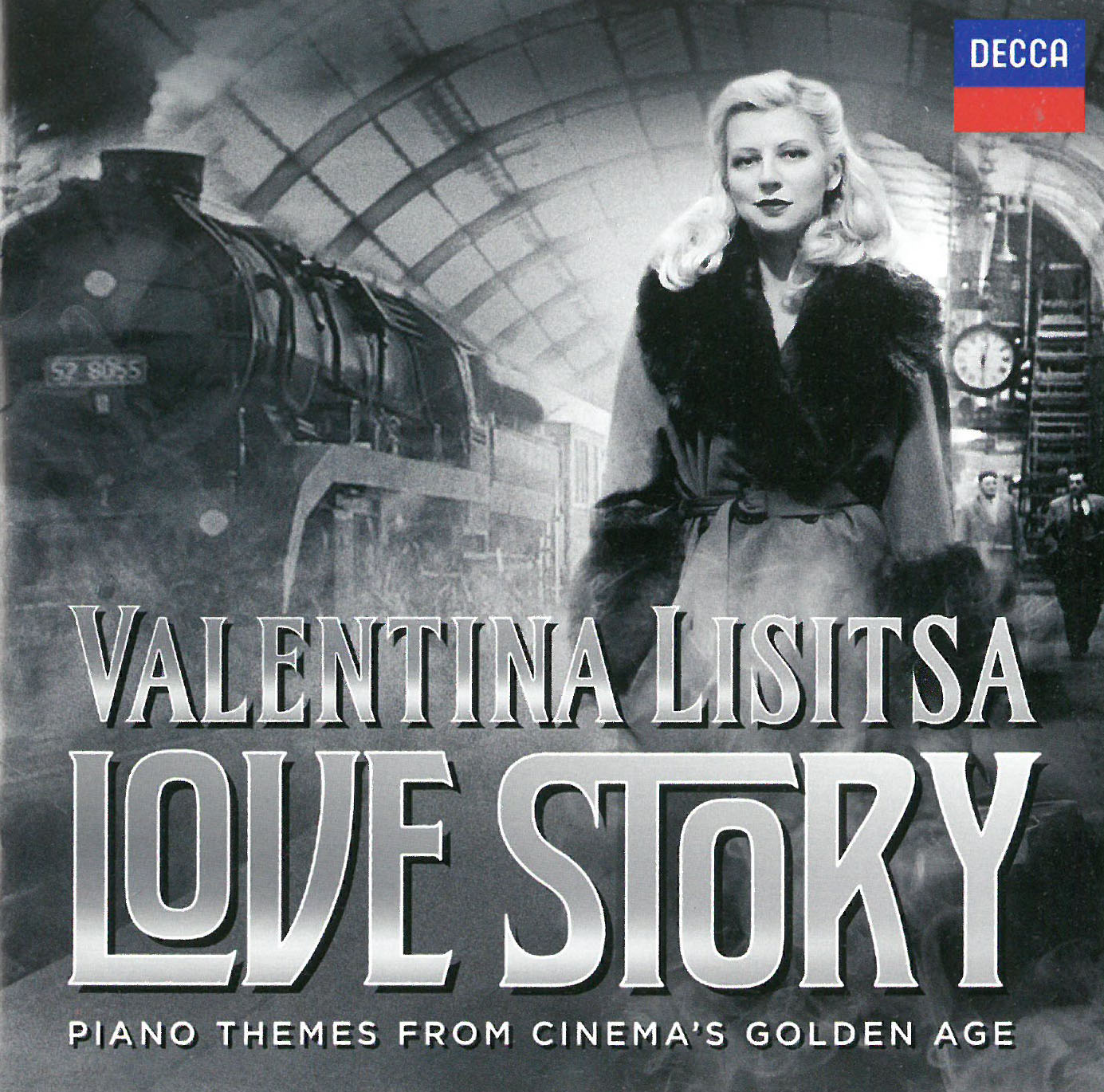
03 Lisitsa Love StoryFilm music is a reliable audience pleaser for orchestras, and people never seem to tire of the great themes that slumber in the soundtracks of so many half-forgotten films. Since its early role as accompaniment to films, the piano has receded into more of a concerto relationship with orchestral film music. Still, many a good theme falls to the keyboard, and Love Story, Piano Themes from Cinema’s Golden Age (Decca 4789454) collects some of film’s most beautiful music for this instrumental combination.

The screen seems to require composers to write in a way that gives immediate access to emotion and drama. Valentina Lisitsa, whose controversial public stance on the turmoil in Ukraine compelled the Toronto Symphony to cancel her 2015 concerts, appears on this disc as the pianist. Her performance of these screen works with the BBC Concert Orchestra is superb. She brings all the requisite concert technique and expression to the service of the score. It’s all intensely Romantic and very lush, graphic music. You can almost smell the popcorn.

There’s a surprisingly conservative Classic/Romantic tradition to these scores. Richard Adinsell’s Warsaw Concerto is the best example of this. Hubert Bath’s Cornish Rhapsody from Love Story (1944) sounds remarkably like Rachmaninoff, while Nino Rota reveals his own voice in The Legend of Glass Mountain (1949). A delightfully unusual track is Dave Grusin’s New Hampshire Hornpipe from On Golden Pond (1981). Here Lisitsa, without orchestra, creates the convincing atmosphere of an early New England folk dance.

The title music from the 1985 TV series Pride and Prejudice, with its period feel, is an artful work by composer Carl Davis. Lisitsa takes her solo moments in this as though they were short solos in Mozart piano concertos. Pure delight.

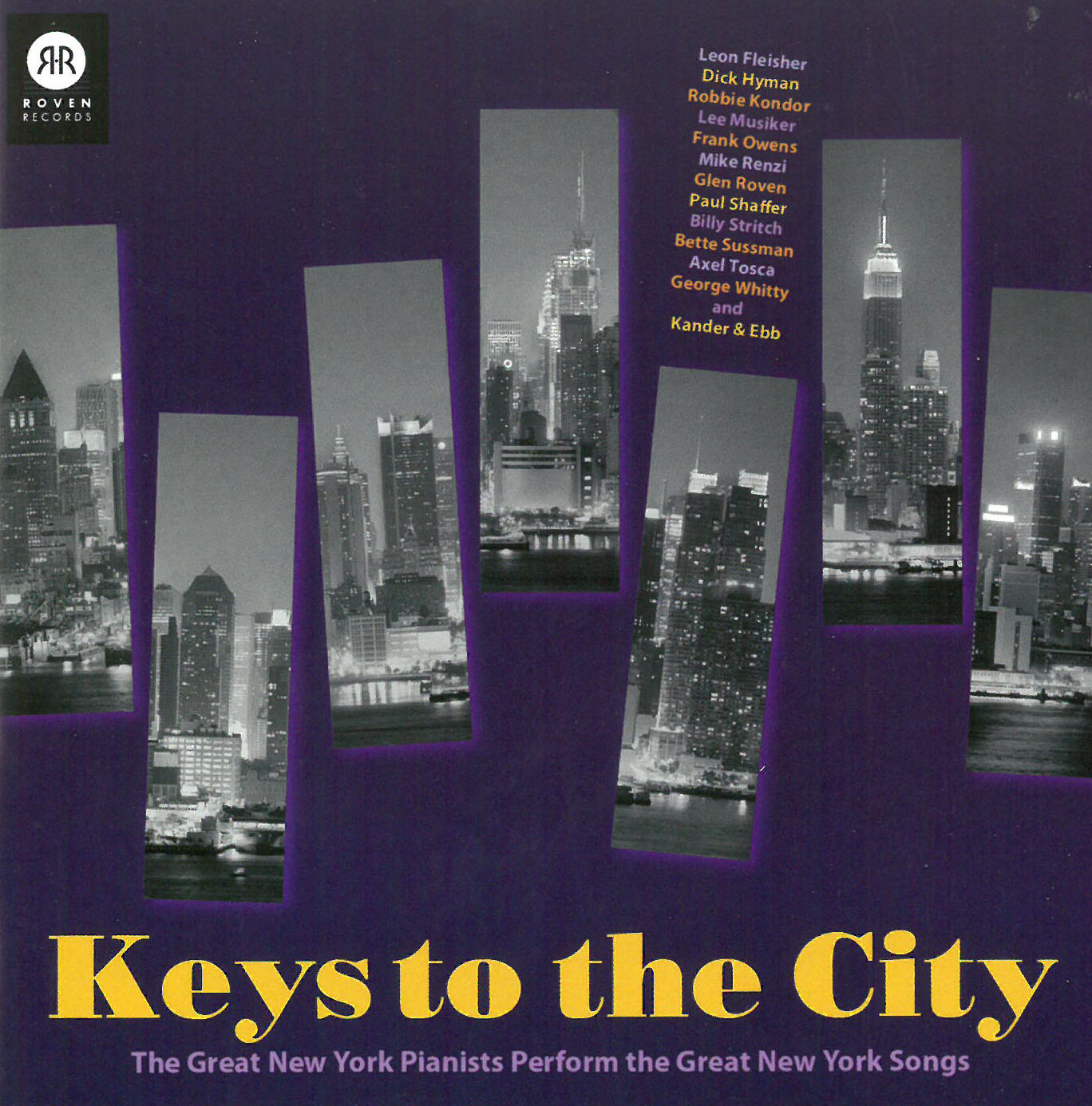
04 Keys to the CityThis unusual recording Keys to the City – The Great New York Pianists Perform the Great New York Songs (Roven Records RR99999) is a celebration of the Big Apple’s music by its own musicians. As an added treat, the liner notes have the pianists writing about each other. Glen Roven writes about Dick Hyman, Hyman about Frank Owens, Billy Stritch about Paul Shaffer and so on. It’s a wonderful gathering of performers who admire each other’s contribution to the New York keyboard scene.

A few highlights from the playlist include Axel Tosca playing Take the “A” Train with a strong Latin feel that works surprisingly well, Dick Hyman playing 42nd Street, and Frank Owens performing Lullaby of Broadway with a distinctly Gershwinesque feel. There’s also Glen Roven playing 55th Street Bop in a trio for piano, violin and cello.

The bonus track on this disc has pianist, conductor and teacher Leon Fleisher performing Earl Wild’s arrangement of Gershwin’s The Man I Love. He plays it entirely with the left hand, a reminder of the rare condition he suffered, causing him the loss of his right hand for performance.

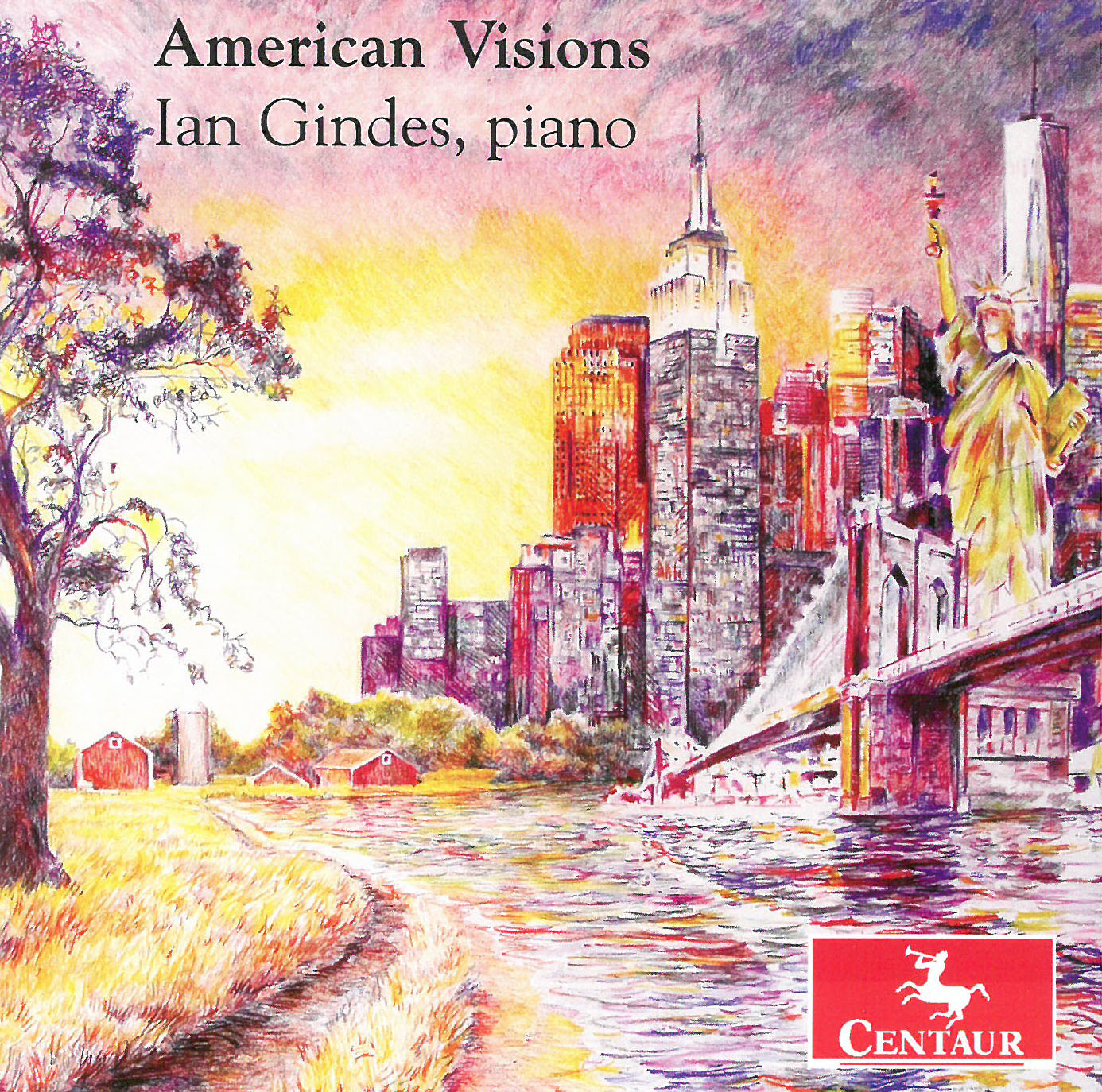
05 American VisionsPianist Ian Gindes is a commissioned officer in the US National Guard. His pride in the distinctive language of American music is evident throughout the tracks of American Visions (Centaur CRC 3476). More than half the disc is music by Aaron Copland whose Four Piano Blues No.3 opens the program with a tender and haunting tribute to pianist William Kapell. Gindes establishes his credible interpretive abilities in this quiet and muted piece.

He next explodes into Copland’s Rodeo where Buckaroo Holiday and Hoe-down are crisp, powerful and highly energized. Saturday Night Waltz is often played more pensively but Gindes’ approach is entirely consistent with the rest of the suite and works well.

Our Town is Copland’s music to Wilder’s play. It’s less idiomatic than Rodeo and Gindes’ approach reflects the composer’s focus on the atmospheric, emotional narrative. Gone here is the big Copland piano sound of Rodeo. In its place is a deeply quiet introspection delivered by sparse writing and measured playing. Gindes proves to be a superb Copland interpreter.

A couple of fun tracks follow. Études by Earl Wild on Gershwin’s Fascinatin’ Rhythm and Embraceable You are demonstrably virtuosic. Stephen Hough’s equally brilliant arrangements of Rodgers and Hammerstein’s My Favourite Things and Carousel Waltz give Gindes another chance to show his mastery of the keyboard.

The final track is a live recording of Sousa’s The Stars and Stripes Forever for two pianos, eight hands in which Gindes is joined by Tatiana Shustova, Jiafang Yan and Jing Hao. Rousing from start to finish!

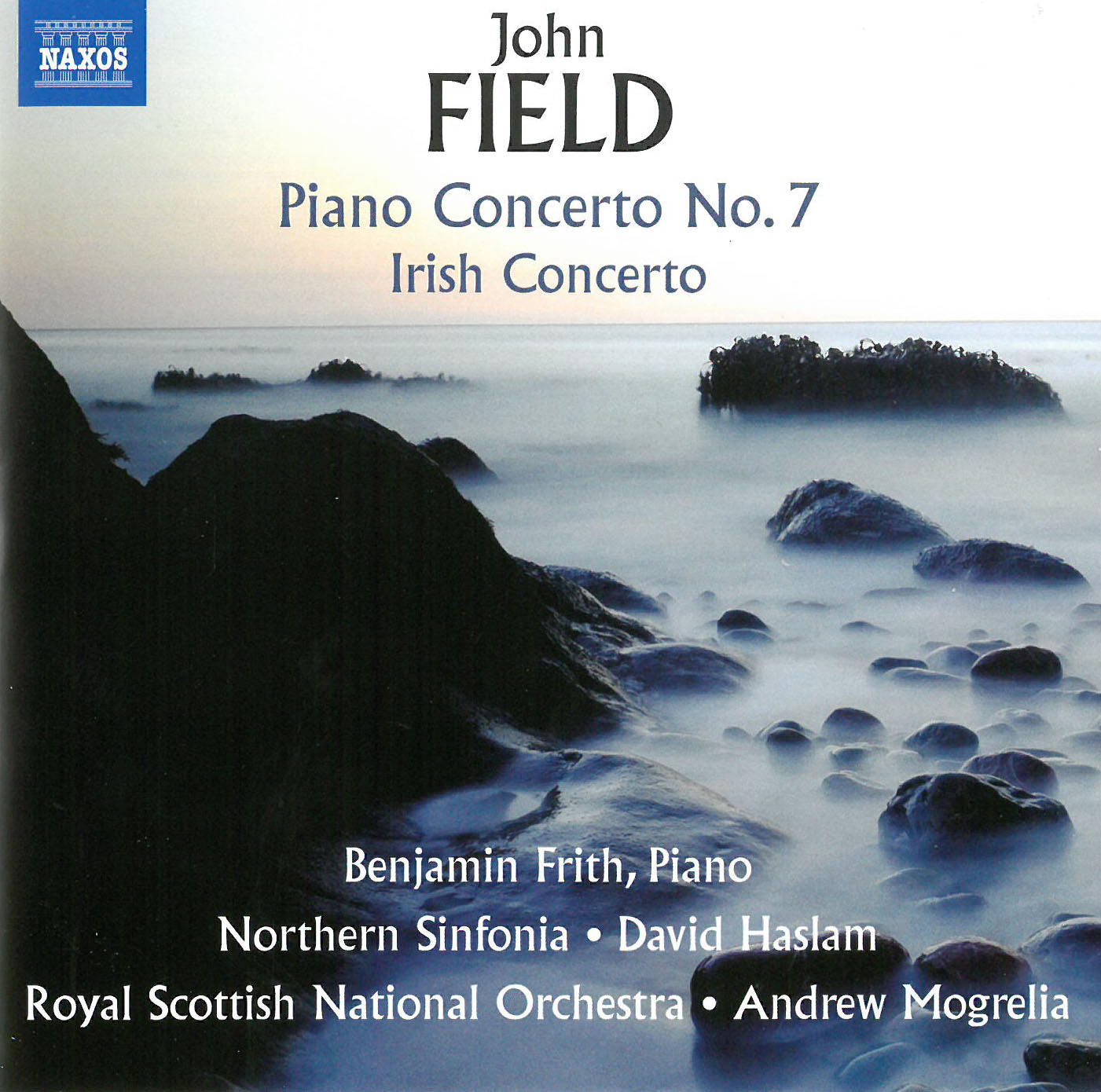
06 Field Piano ConcertoIrish-born John Field (1782-1837) was a composer of a modest body of works. Despite their relative neglect, they are exquisitely crafted for any pianist who makes the effort to understand their composer. Benjamin Frith in John Field – Piano Concerto No.7; Irish Concerto with the Northern Sinfonia; David Haslam (Naxos 8.573262), shows Field’s language to have many elements that are antecedents of phrasings and figures we hear in the music of Chopin and Liszt, who both attended the 1832 Paris premiere of the Concerto No.7. It makes for curious listening as Beethoven- and Schubert-like elements also occur. Still, there’s no doubt Field evolved his own voice. He rejected the current trend for virtuosic exhibition, instead favouring nuance and subtlety in his writing and playing. Frith captures these hallmarks of Field’s music. He is generous with his pauses and capably exploits every opportunity to create contrast and interest in Field’s ideas.

Frith is especially engaging in the Irish Concerto, where his gentle touch matches the beauty of Field’s numerous and ornate melodies. This is lovely material and Frith lets not a single note escape his affectionate attention.

The Piano Sonata No.4 in B Major has a frequent early Classical feel and Frith plays it with balanced Mozartian sensibility. Here too there is an ever present lightness to Field’s music that uses none of the turmoil or bombast of some of his contemporaries.

This Naxos disc brings together recordings from 1996, 2013 and 2014. Production values have remained wonderfully consistent over the years and the spread in performance dates is not evident without reading the notes.

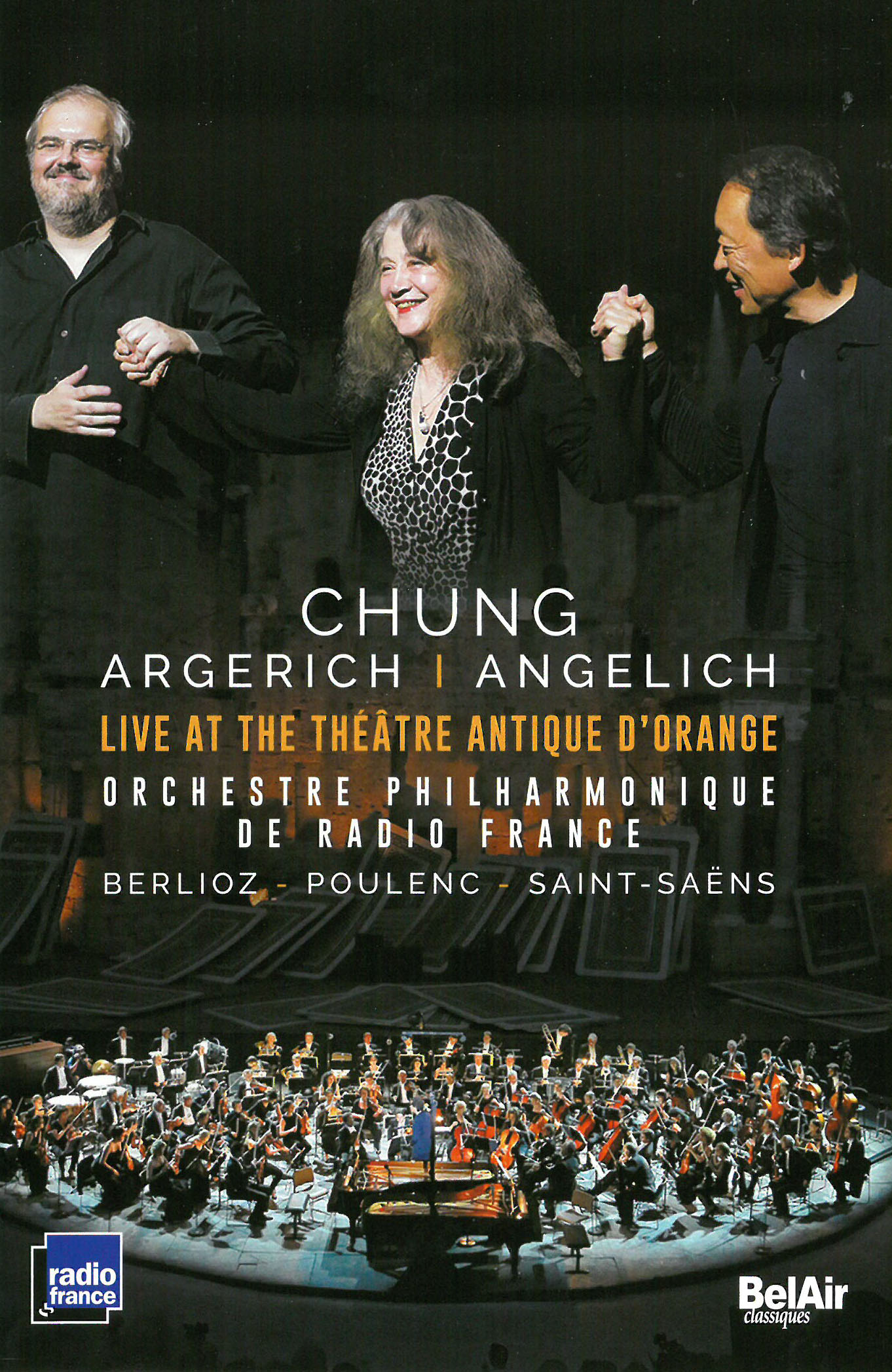
07 ArgerichHere’s a terrific video production of a concert featuring familiar and impressive names: Chung, Argerich, Angelich: Live at the Theatre Antique d’Orange, Orchestre Philharmonique de Radio France, BelAir Classics (BAC132). The first-century Roman amphitheatre is packed with an eager audience. Myung-Whun Chung conducts one of Europe’s finest orchestras. And a statue of Caesar looks down on them all as they open the concert with Berlioz’s Roman Carnival Overture.

The pianistic treat on the program is Poulenc’s Concerto for Two Pianos and Orchestra in D Minor. Martha Argerich and Nicholas Angelich are at their respective Steinways. The whole thing is impeccably played and presented. Clever production offers occasional split screen views of both keyboards in action. Chung conducts the entire evening without a score. He joins the two pianists at a single keyboard to play Rachmaninoff’s Romance for Six Hands in A Major. It’s a bit harmonically thick at times but it’s Rachmaninoff and everyone’s having so much fun. Also on the DVD is Saint-Saëns’ Organ Concerto and a blowout encore that brings the audience to its feet.

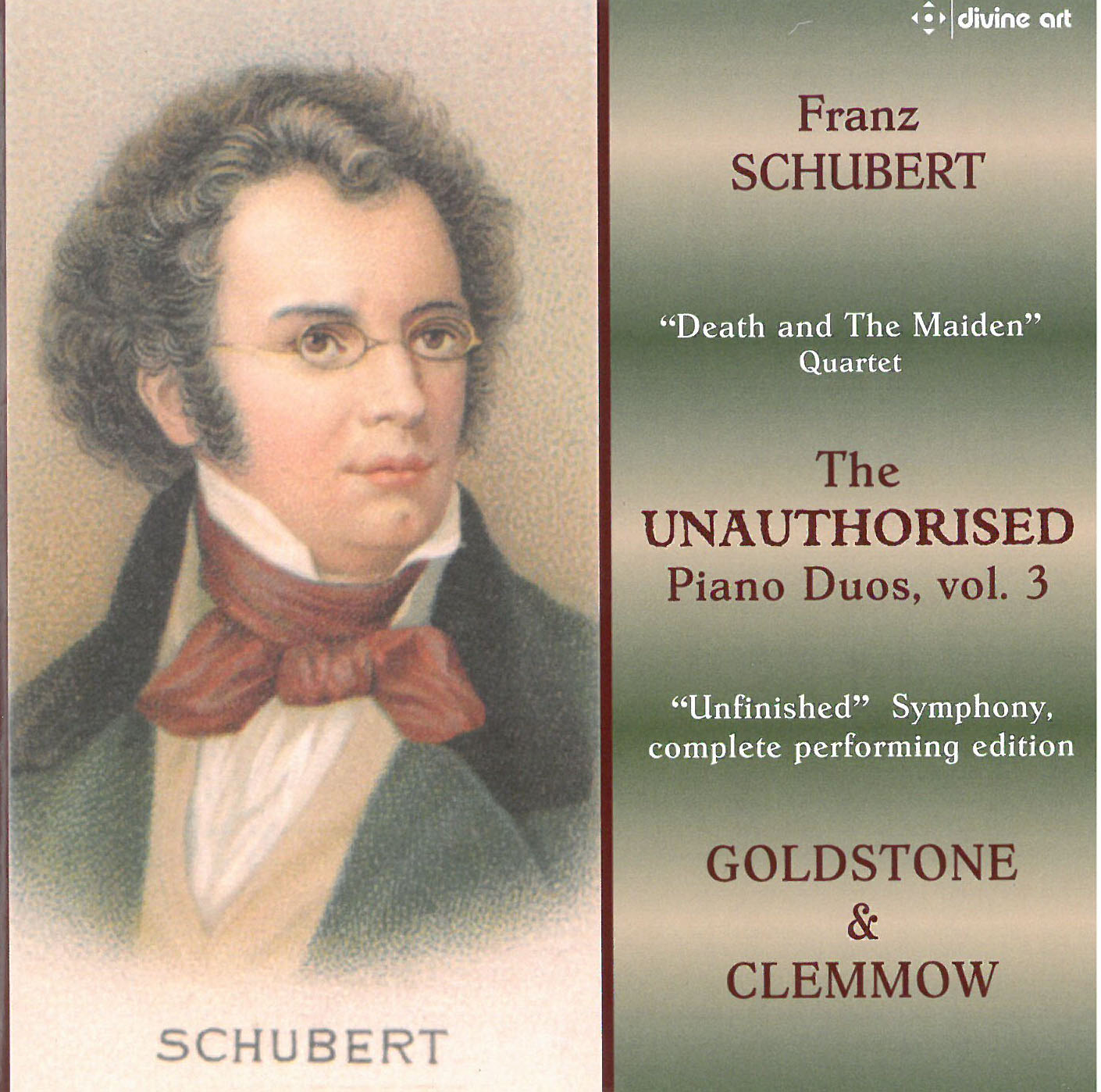
08 Schubert UnauthorizedSchubert’s string quartet Death and the Maiden has seen a couple of larger reworkings. Mahler set it for string orchestra and John Foulds for full symphony orchestra. In Franz Schubert, The Unauthorized Piano Duos, vol. 3 (Divine Art dda 25125) duo pianists Anthony Goldstone and Caroline Clemmow give us the recording premiere of this 1878 arrangement by Robert Franz.

Franz has arranged the quartet beautifully with part distribution balanced across the keyboard. He uses the added advantage of adding inner harmonies not available to the original four string instruments. Goldstone and Clemmow play fully pianistically using everything the piano can offer. It gives the feeling of the quartet being a rather large duo piano sonata and is completely believable.

The second movement theme and variations on the title Lied is wonderfully played. The third movement theme gets added punch from the piano’s powerful bass register. Goldstone and Clemmow play an impressive final movement never showing the strain that Schubert’s relentless tempo imposes.

This disc also offers the Unfinished Symphony in an arrangement by Hüttenbrenner, to which Goldstone has added his completed version of the Scherzo and Trio, using Schubert’s sketches. Goldstone also adapts a fourth movement finale using the Entr’acte from Rosamunde D.797.


Schubert – Lieder: Nacht und Träume
Ailish Tynan; Iain Burnside
Delphian DCD34165

Duet
Lucy Crowe; William Berger; Iain Burnside
Delphian DCD34167

01a Schubert LiederAn accompanist (or, as we now prefer to write, a collaborative pianist) must be a technically accomplished player. That goes without saying. But he also needs to be more: he needs to be alert to a singer’s every nuance. The two discs reviewed here have one performer in common: the pianist Iain Burnside. He is splendid.

Many of the songs on the Schubert disc are very familiar. Their inclusion came as something of a surprise to me, for Burnside, in a 2009 interview, complained that singers tend to play it safe. He himself felt that he had nothing new to say on the Schubert song cycles. But the record shows that, if singer and pianist are sufficiently committed to the works they perform, these works do not come across as merely routine. The disc includes Schubert’s Ave Maria and I cannot think of any music more familiar. Yet the way Ailish Tynan and Burnside perform it here makes one feel that one has never heard it before. Besides, not everything here is familiar fare; Ave Maria was one of three songs projected by Schubert as a setting of Scott’s The Lady of the Lake. This recording gives us all three songs.

Tynan is an Irish soprano who won the Cardiff Singer of the World recital prize in 2003. She is a lyric soprano who has sung at several of the leading opera houses, including Covent Garden and La Scala. But her main strength would appear to be that of a recitalist. I look forward to hearing her live one day. I have not heard such a fine recital disc by a soprano since the days of Elly Ameling and the young Irmgard Seefried.

01b DuetDuet includes a few solo songs but most of the works here are indeed duets, by Schumann, Mendelssohn and Cornelius. In an accompanying note, Richard Stokes argues that the duet form has fallen out of favour because many artists as well as listeners feel that the form is beneath them. I doubt that is the real reason for the drop in popularity in the duet form. Two centuries ago, domestic music making was a central part of people’s experience and both the solo song and the duet must have played an important part in the rituals of courtship in upper- and middle-class society. Be that as it may, these songs, none of them now familiar, were well worth reviving. They are beautifully performed with the radiance of the soprano (Lucy Crowe) set against the gravity of the baritone (William Berger). Of particular interest is the concluding song, a setting of the poem Wiegenlied by Friedrich Hebbel. When Schumann set the poem, he changed the title to Wiegenlied - am Lager eines kranken Kindes. Stokes is, I am sure, right when he argues that the change in title shows an allusion to the illness and death of Schumann’s infant son Emil.

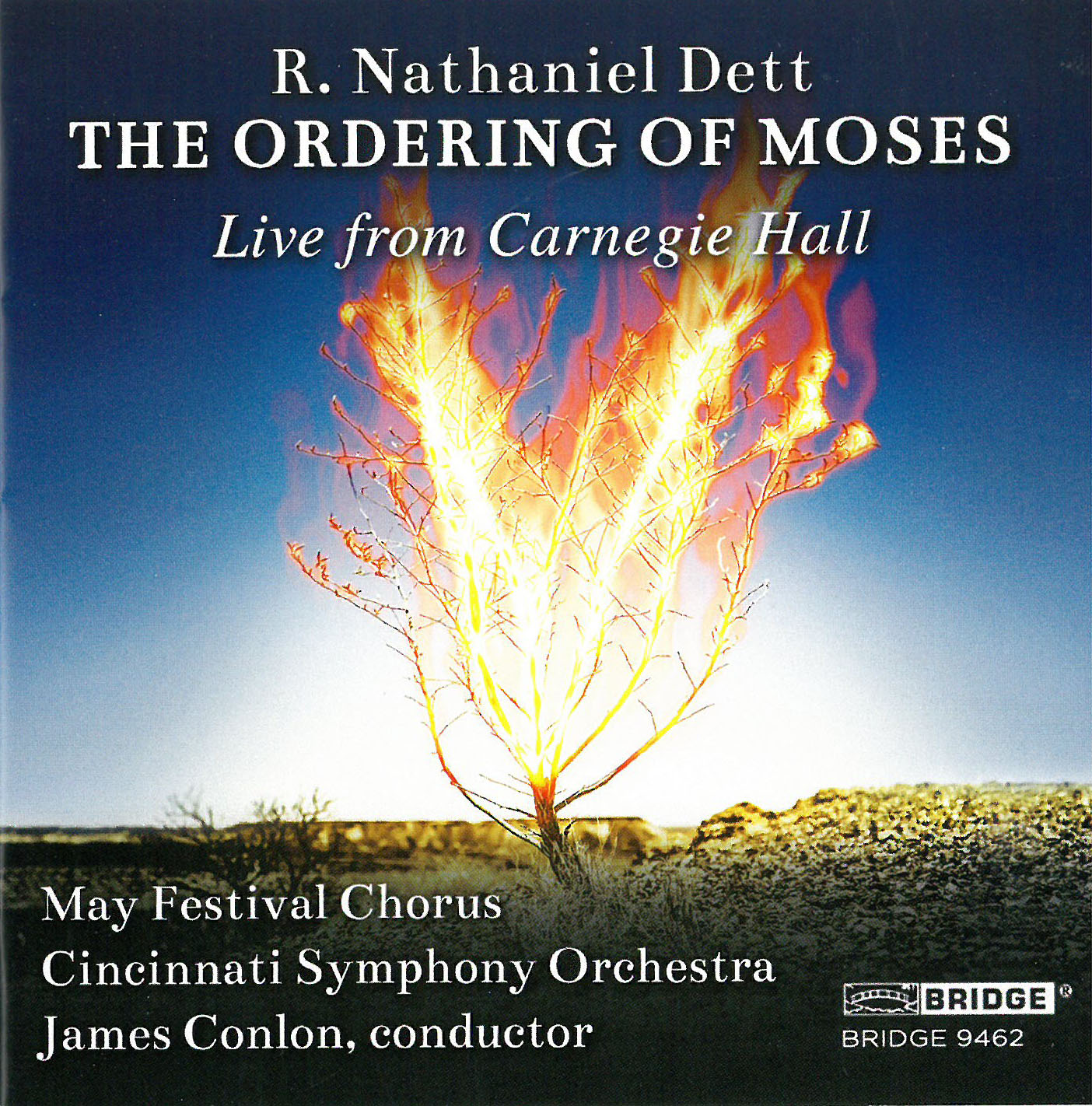
02 Nathaniel DettR. Nathaniel Dett – The Ordering of Moses
May Festival Chorus; Cincinnati Symphony Orchestra; James Conlon
Bridge Records 9462 (bridgerecords.com)

Review

Canadian-born R. Nathaniel Dett (1882-1943) is without question one of the most significant African/North-American composers of the 20th century. In 1937, near the end of his life, Dett’s magnificent oratorio, The Ordering of Moses (which he described as a “Biblical Folk Scene”) had its world premiere in a performance by the May Festival Chorus and the Cincinnati Orchestra, which was broadcast live throughout the United States by NBC, and was the first network broadcast of a work by an African/North-American composer.

Throughout his life, Dett was a unifier of music, culture and individuals – and in light of the world’s current condition, his oratorio, linking the Israelite exodus from Egypt and slavery with the northern exodus (via the Underground Railroad and beyond) of the African-American peoples is as meaningful now as when it was composed. The orchestration and composition is lush, dynamic, thrilling and harmonically complex while still gracefully embracing American folk and negro spiritual motifs. The juxtaposition of the dynamic chorus with the rich, sonorous vocal instruments of the skilled soloists (soprano Latonia Moore, mezzo-soprano Ronnita Nicole Miller, tenor Roderick Dixon and baritone Donnie Ray Albert) is almost unbearably gorgeous.

The exceptionally produced new recording, which once again features the May Festival Chorus (under the direction of Robert Porco) and the Cincinnati Symphony Orchestra (conducted by James Conlon), was performed in its entirety on May 9, 2014, as part of the Spring for Music Festival at Carnegie Hall in New York City. This beautifully produced and performed recording of Dett’s magnum opus was facilitated and broadcast nationally by WQXR FM, New York City’s classical music radio station.

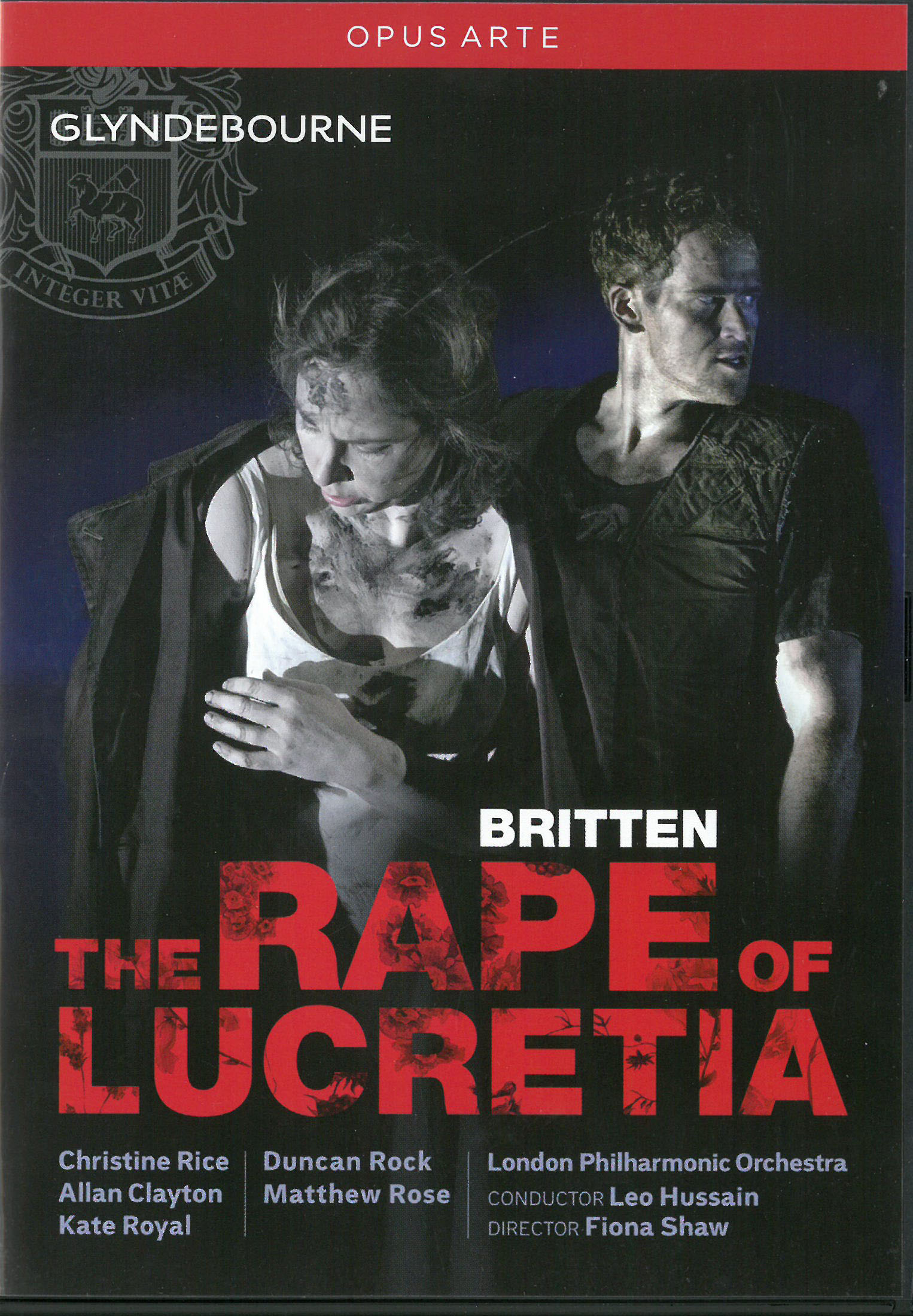
03 Britten LucretiaBritten – The Rape of Lucretia (Glyndebourne)
Rice; Clayton; Royal; Rock; Rose; London Philharmonic Orchestra; Leo Hussain
Opus Arte OA 11219 D

Around 510 BC, Tarquinius, son of the Etruscan king of Rome, raped the Roman aristocrat Lucretia. The rape, and Lucretia’s honour-driven suicide, precipitated the rebellion that toppled the monarchy, launching the Roman Republic. So goes the legend, perhaps historically based, recorded in much later Roman annals and subsequently re-interpreted in poetry, paintings, plays and, in 1946, Britten’s first chamber opera, with eight vocalists and only 13 instrumentalists.

This 2015 Glyndebourne production won rave reviews from the British press, and no wonder. The singers are all vocally and dramatically terrific and the staging stark, powerful and moving. The innovative staging by director Fiona Shaw and set designer Michael Levine presents a military tent and archaeological site, darkly lit, in which the ancient events take place.

Shaw introduces two silent extras: Lucretia’s young daughter and a warcamp slave-prostitute. Most surprisingly, she has the Male and Female Chorus, as modern archaeologists, not only comment about the action, but in time-warp fashion, actually get physically involved with it! I usually deplore such deviations but here, they respect the spirit of Ronald Duncan’s libretto, while enhancing the very visceral dramatic impact.

Duncan’s libretto provides the opera’s only weakness, an epilogue sung by the Male and Female Chorus, replete with Christian religiosity, quite extraneous to the tragedy that has just unfolded. Extras include commentary by director Shaw, a brief documentary about the opera’s 1946 Glyndebourne premiere and a cast gallery.

Intensely gripping, strongly recommended.

04 Staniland Dark Star RequiemAndrew Staniland; Jill Battson – Dark Star Requiem
Neema Bickersteth; Krisztina Szabó; Peter McGillivray; Marcus Nance; Elmer Iseler Singers; Gryphon Trio; Ryan Scott; Mark Duggan; Wayne Strongman
Centrediscs CMCCD 22716
(musiccentre.ca)

In a 2010 review of a Luminato performance of Dark Star Requiem, Joseph K. So said “the text would have benefited from surtitles.” I’m afraid that a lack of libretto for this recording left me with a similar reaction. This is a shame, as I’m a huge McGillivray and Szabó fan. Also, when I interviewed librettist Jill Battson in 2010, I was intrigued by what she was doing with the 19 poems comprising the piece. These days, even English performances carry same-language surtitles, and perhaps this production would have been more accessible as a DVD release. Despite excellent enunciation by the soloists and Elmer Iseler Singers, the words are often overwhelmed by the music and miking from different distances, and I was only able to catch snippets of much of the text; even the parts of the Mass used in the libretto were lost to this Latinist, as was my concentration: it was too hard to hear this work holistically, trying to follow the sung and spoken words.

The music, however, is intriguing. Track 1, Zero Six One, is a chilling introduction to the work by highlighting the assigned numbers for HIV-1 and HIV-2 from the International Committee on Taxonomy of Viruses, and it brought to mind the song Three-Five-Zero-Zero, from the musical Hair. There’s something very affecting about using enumeration to humanize huge horrors. Unfortunately, the percussion seems to be competing with the singers throughout the CD; however, the Gryphon Trio’s strings play empathetically.

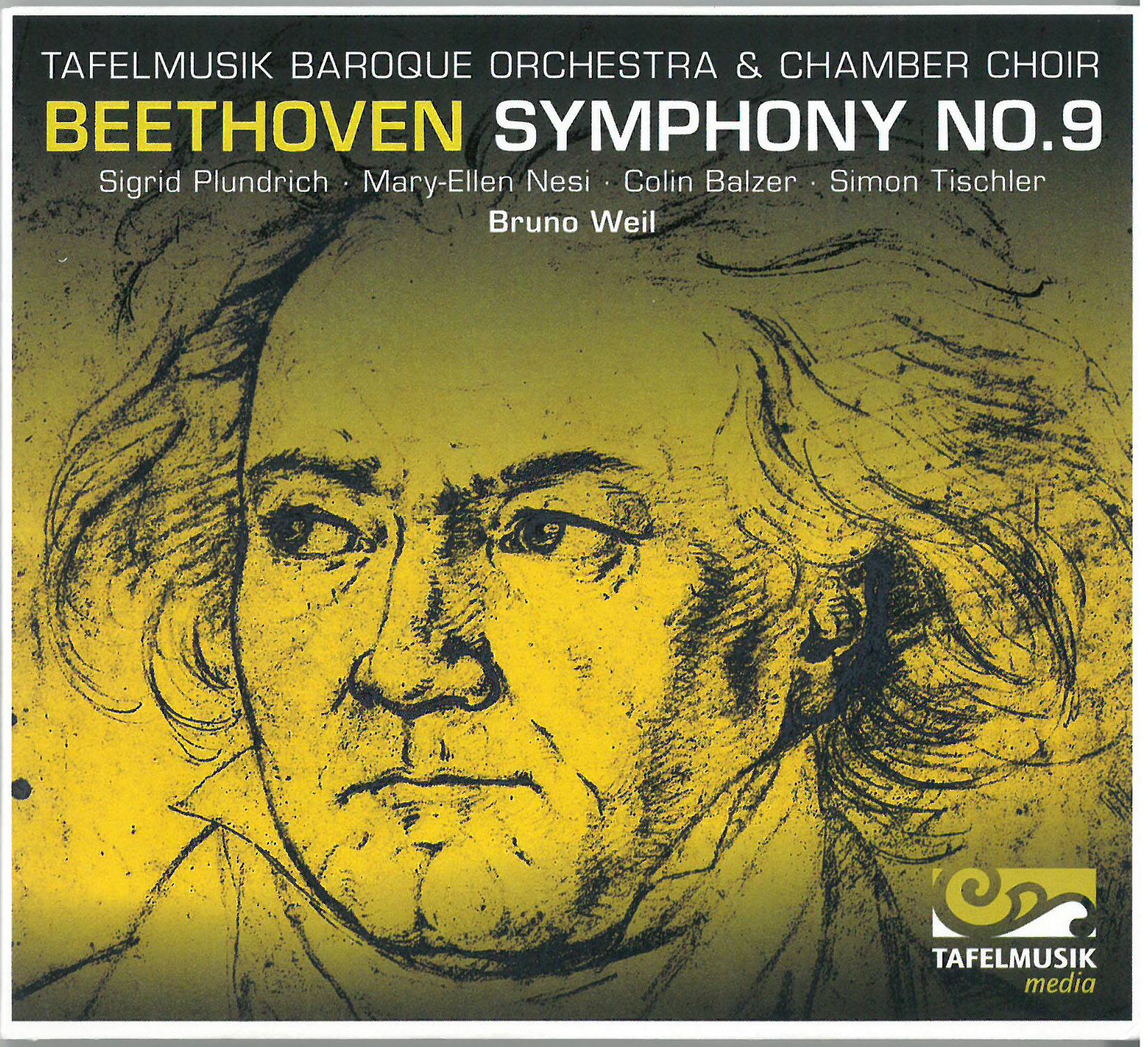
01 Beethoven TafelmusikBeethoven – Symphony No.9
Plundrich; Nesi; Balzer; Tischler; Tafelmusik Baroque Orchestra & Chamber Choir; Bruno Weil
Tafelmusik Media TMK1030CD
(tafelmusik.org)

With his Symphony No.9, Beethoven introduced a whole new compositional territory into the musical world of Vienna. From its 1824 premiere, this work not only influenced several generations of symphonic composers but also became the symbol of victory for humanity. The struggle and rise of man (on both personal and universal levels), so powerful in this symphony and unlike anything heard before it, has produced a wide array of interpretations and recordings. Many argue passionately which one is the best. A few of the notable ones definitely include Karajan’s version from 1962, Bernstein’s from 1989 and the recording by Gardiner in 1994 on period instruments.

So it is in this good company that Tafelmusik Baroque Orchestra offers its own dynamic interpretation under the direction of Bruno Weil. Recorded at live concerts at Koerner Hall in Toronto in February 2016, the album holds the animated energy of a live performance. I enjoyed the precise and light articulation of the period instruments in the second movement and slightly subdued colours and the beautiful swelling of the third movement phrases. But make no mistake – Tafelmusik sounds just as powerful as any contemporary symphony orchestra. It builds the momentum of the emotional narrative with conviction, starting from the solemn D Minor theme of the first movement all the way to the jubilant ending of the fourth in D  Major. Tafelmusik Chamber Choir and soloists – Sigrid Plundrich, Mary-Ellen Nesi, Colin Balzer and Simon Tischler – are all superb in bringing out the purity and drama of Beethoven’s music. 

02 French ConnectionsFrench Connections
Music of Saint-Saëns, Prokofiev, Uebayashi
Chatterton-McCright Duo
Proper Canary (lindachatterton.com; matthewmccright.org)

This flute-piano debut recording features Minnesota-based recitalists Linda Chatterton and Matthew McCright in a Paris-themed program. The disc is a timely tribute to the City of Light in these terrorist-plagued times. Flutist Linda Chatterton has ably transcribed and performed Saint-Saëns’ four-movement Sonata in D Minor for Violin and Piano (1885). I am captivated by her variations of colour and mood and her brilliant technique. Pianist Matthew McCright is right with her in ensemble and in creating appealing textures, as in the contrast-filled opening movement. I like the duo’s melodic interplay in the second movement and their light, spiky texture in the waltz-like third. In the hair-raising finale, dynamics are balanced beautifully.

Yuko Uebayashi was born in Japan; her Paris residency is apparent in Sonate (2003), stylistically reminiscent of early-20th-century French music. She has integrated influences from Japan convincingly, for example, in the slow third movement’s pentatonic passages and melodic fourths and fifths. The piece displays exquisite tone colours and textures, idiomatic and expressive instrumental writing, and a sure sense of style. The Chatterton-McCright Duo’s reading of Prokofiev’s Sonata in D Major (1943; later transcribed for violin and piano) is notable for lightness and clarity suggesting the work’s playful, perhaps toy-like aspects. I appreciate their avoidance of over-interpretation and of the vulgar, aggressive sound some duos bring to the finale. Overall a fine, thoughtful program and a duo I hope to hear from again!

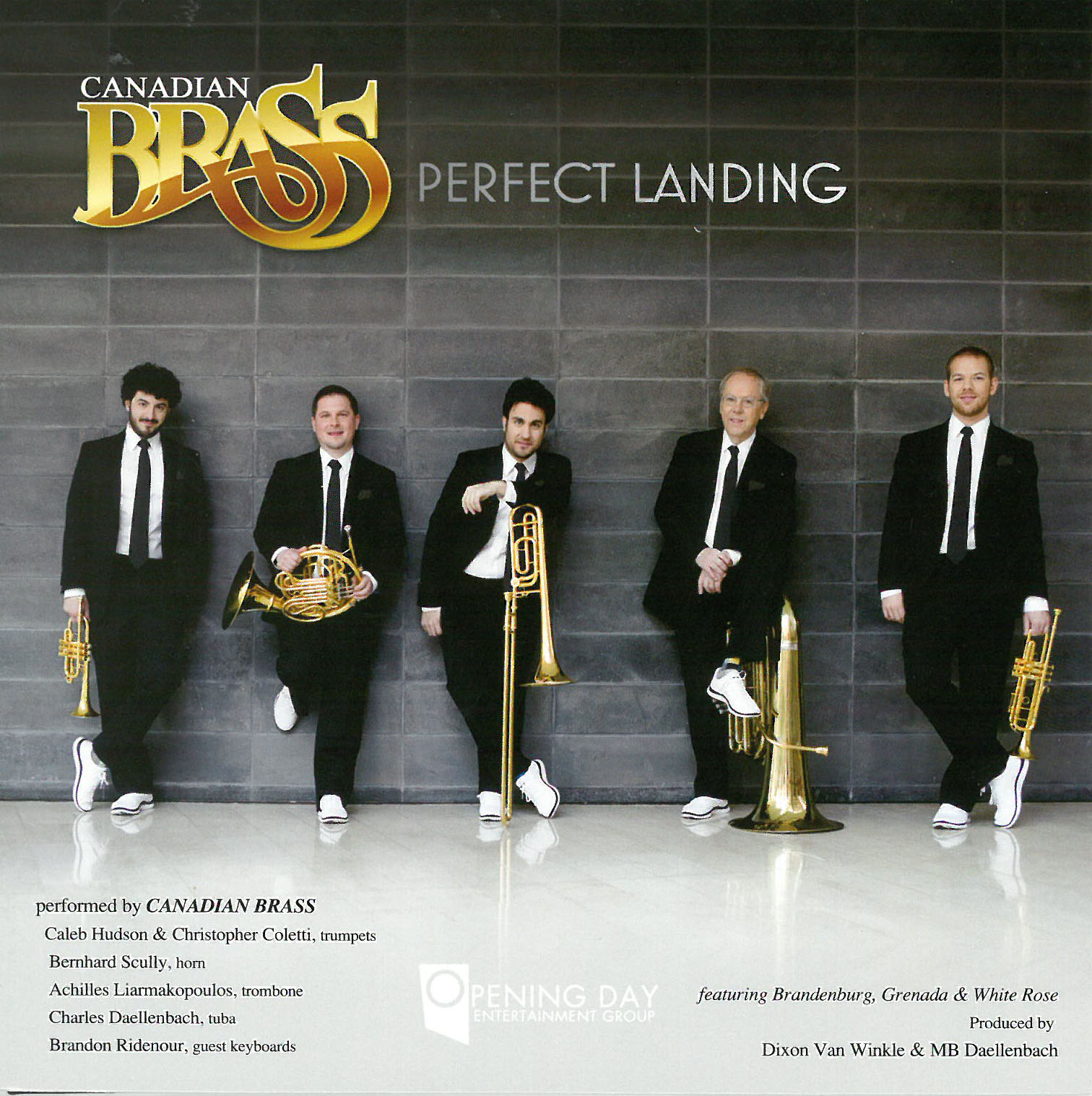
03 Canadian BrassPerfect Landing
Canadian Brass
Opening Day ODR 7450 (openingday.com)

Any time that I hear of a new release from the Canadian Brass I wonder what about this CD will set it apart from any other release of theirs. Every time there is something new and different. I could say that this CD is perhaps their biggest step yet. When they first hit the local scene over 40 years ago, brass quintets were almost an oddity and didn’t have the respect that string or woodwind chamber groups enjoyed. How that has changed. The Canadian Brass is now one of the world’s pre-eminent chamber music ensembles. This CD, Perfect Landing, establishes their versatility in a wide variety of genres. For this project they are joined by their former trumpet player, Brandon Ridenour, on harpsichord.

What better way to start than with Bach. The CD opens with a short harpsichord cadenza based on Brandenburg Concerto No.5 and then shifts into the fiendishly difficult third movement of the Brandenburg Concerto No.2 featuring the piccolo trumpet of Caleb Hudson. Then it’s Mozart’s “Spring” Quartet K387 where all members of the ensemble have an opportunity to demonstrate their skills. Having demonstrated their skills in that genre, with the help of arrangements by Luther Henderson, they demonstrate that Bach’s music still has a place in this era with Dixie Bach, Cool Bach and Bebop Bach. There are also a few fine Latin numbers. Perhaps the most outstanding of these is El Relicario which takes the listener through an amazing range of musical skills and emotions. This CD truly has made a Perfect Landing. It will certainly continue to entertain and amaze me in the days and months ahead.

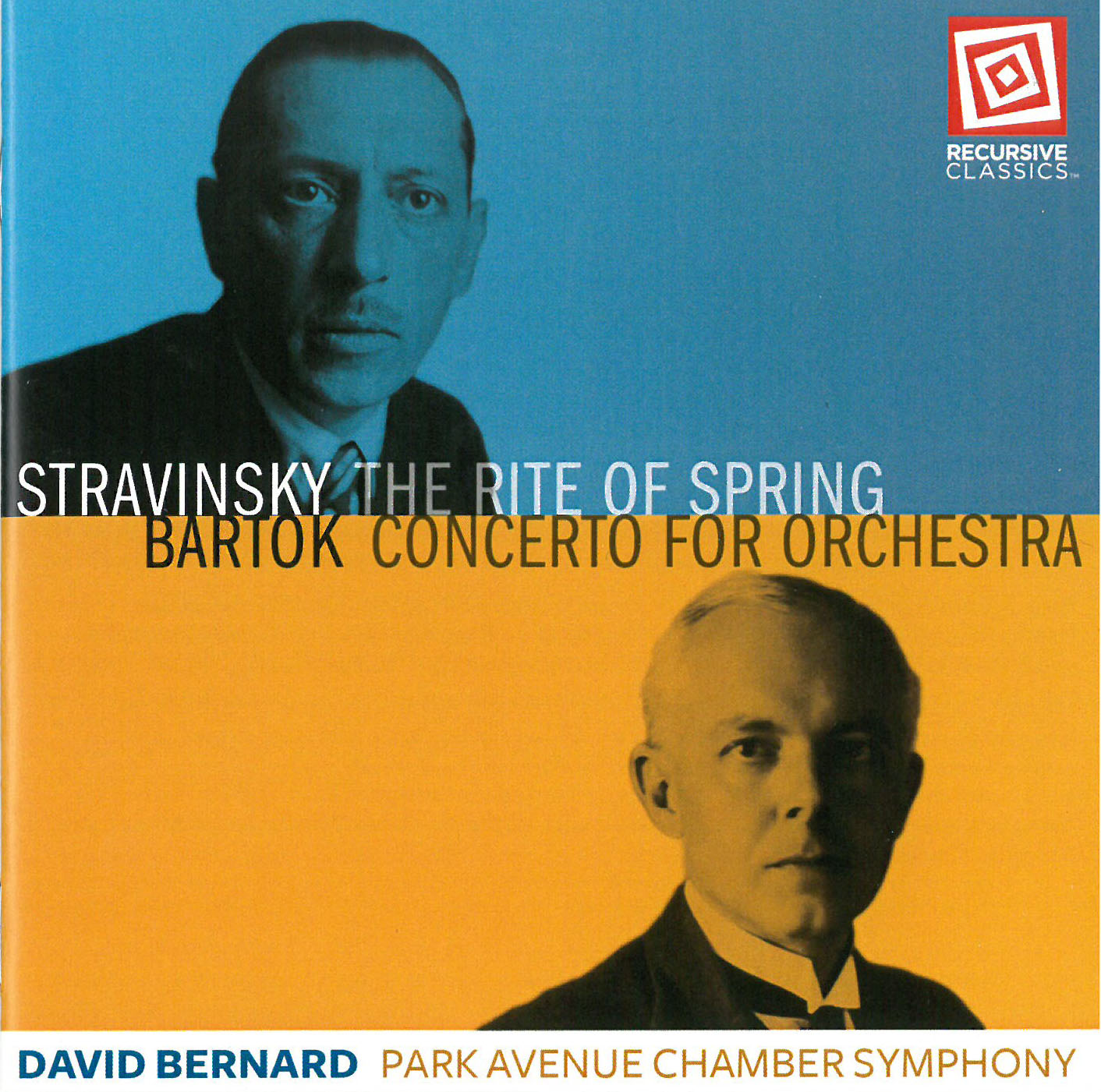
01 Stravinsky BartokStravinsky – The Rite of Spring; Bartók – Concerto for Orchestra
Park Avenue Chamber Symphony; David Bernard
Recursive Records RC2057001

Did Bugs Bunny ruin The Barber of Seville for you? How about Merrie Melodies’ The Three Little Pigs with Brahms’ Hungarian Dance No.5? I have a particular eye/earworm of The Rite of Spring: I can never unsee the gorgeous choreography of Pina Bausch when I hear this piece. The Park Avenue Chamber Symphony’s recording is bright and clear and complements the rather dark storyline of the ballet. The First Part is a vital description of nature and leads with some urgency to the undeniable corporeality of the Second Part. The backbone of the piece, however, is Track 2, although I prefer my Augurs of Spring to be a little more heavy-handed than David Bernard’s version, such as the Cleveland Orchestra/Pierre Boulez take on it; I think this reflects Bernard’s interpretation, though, and does not make Stravinsky an inappropriate choice for this orchestra. (The Augurs of Spring always strikes me as a misplaced climax, though.)

The Bartók Concerto for Orchestra, known as a soloistic piece, also has a pure sound, which emanates from the musicians themselves and is perhaps also enhanced by the fine recording engineering. Again, the chamber symphony easily handles the piece’s gravitas with aplomb. Apparently, the movements’ tempi listed on the back cover differ from their historical provenance and this made me curious to hear it live under another baton: fortuitously, this will be possible when the TSO performs it on May 4, 2017, in a matinee led by Peter Oundjian.

This CD offers two excellent examples of early-20th-century Eastern-European composers who still captivate us technophiles with these elemental pieces that were based on European folk song.

02 LindbergMagnus Lindberg – Al Largo; Cello Concerto No.2; Era
Anssi Karttunen; Finnish RSO; Hannu Lintu
Ondine ODE 12815

Magnus Lindberg’s recently released disc makes it clear why he is among the elite of current composers. Qualities in the music on this CD evoke huge structures or panoramic landscapes. One is drawn along past remarkable and startling shapes. He underpins contained bursts of lightning virtuosity (electric, never frantic) with tectonic brass chorale movement. As an orchestrator, it is fair to compare him with Strauss, Ravel and his compatriot Sibelius. He quotes or references each of them.

An Italian term meaning “out of sight of land,” Al Largo subverts expectations. Lindberg (as paraphrased in the liner notes) contends this is the fastest music he has ever written, but I was more impressed with the sheer speed in some of the writing elsewhere, especially in Era. Both pieces are wonderful workouts for the Finnish Radio Symphony Orchestra under Hannu Lintu. Everything seems so sensibly written, I’m willing to bet the musicians love to play it no matter the difficulty. The writing is starkly sectional with bracing shifts of tempo and character. Cloudy swatches of spectral writing are blown clear by woodwind flourishes and massive brass chords.

The other work, the Cello Concerto No.2, follows a three-movement format with no breaks between. Gorgeously played by Anssi Karttunen, the serious and substantial first movement imperceptibly slides into a serious, substantial-but-shorter second movement with cadenza followed by the obligatory tutti response and coda, into a Presto to begin and a Romanza to conclude the Finale.

03 RCO Horizon 7Horizon 7 – George Benjamin; Magnus Lindberg; Richard Rijnvos; Tan Dun
Royal Concertgebouw Orchestra; Mariss Jansons
RCO Live RCO 16003 (rcolive.com)

Horizon 7 features significant, contrasting works by established composers. With texts by two 11th-century Hebrew poets and Federico García Lorca, set for countertenor, women’s choir, and orchestra, George Benjamin’s Dream of the Song evokes reflections on voice and mood. A sultry Andalusian atmosphere is created not by lush harmony, but by an advanced idiom with hints of ancient and modern scales, delicate orchestration and astonishing vocal sound and imagery. Bejun Mehta’s singing is outstanding and the Concertgebouw strings and winds are especially notable. The burning down of Venetian opera house La Fenice in 1996 inspired fuoco e fuma (fire and smoke) by Richard Rijnvos. The sonic representation of licking flames and the relentlessness and unpredictability of the fire’s progression are extraordinary.

In Magnus Lindberg’s Era, the Finnish composer builds on a compositional process from Sibelius’ Fourth Symphony and other developments in 20th-century music. The Concertgebouw brass and percussion shine in Lindberg’s masterful orchestration. Era opens brilliantly; later, I feel a lack of original, memorable ideas that would make the sense equal to the marvellous sound. Concertgebouw principal double bassist Dominic Seldis has a rare solo opportunity in Tan Dun’s The Wolf. Open strings, harmonics and pentatonic melodies create resonance and colour in the instrument, while diverse bowing effects generate excitement in the fast sections. A Mongolian two-stringed fiddle becomes the source of a folk song and a sliding expressive style for the double bass in this unique work. Highly recommended.

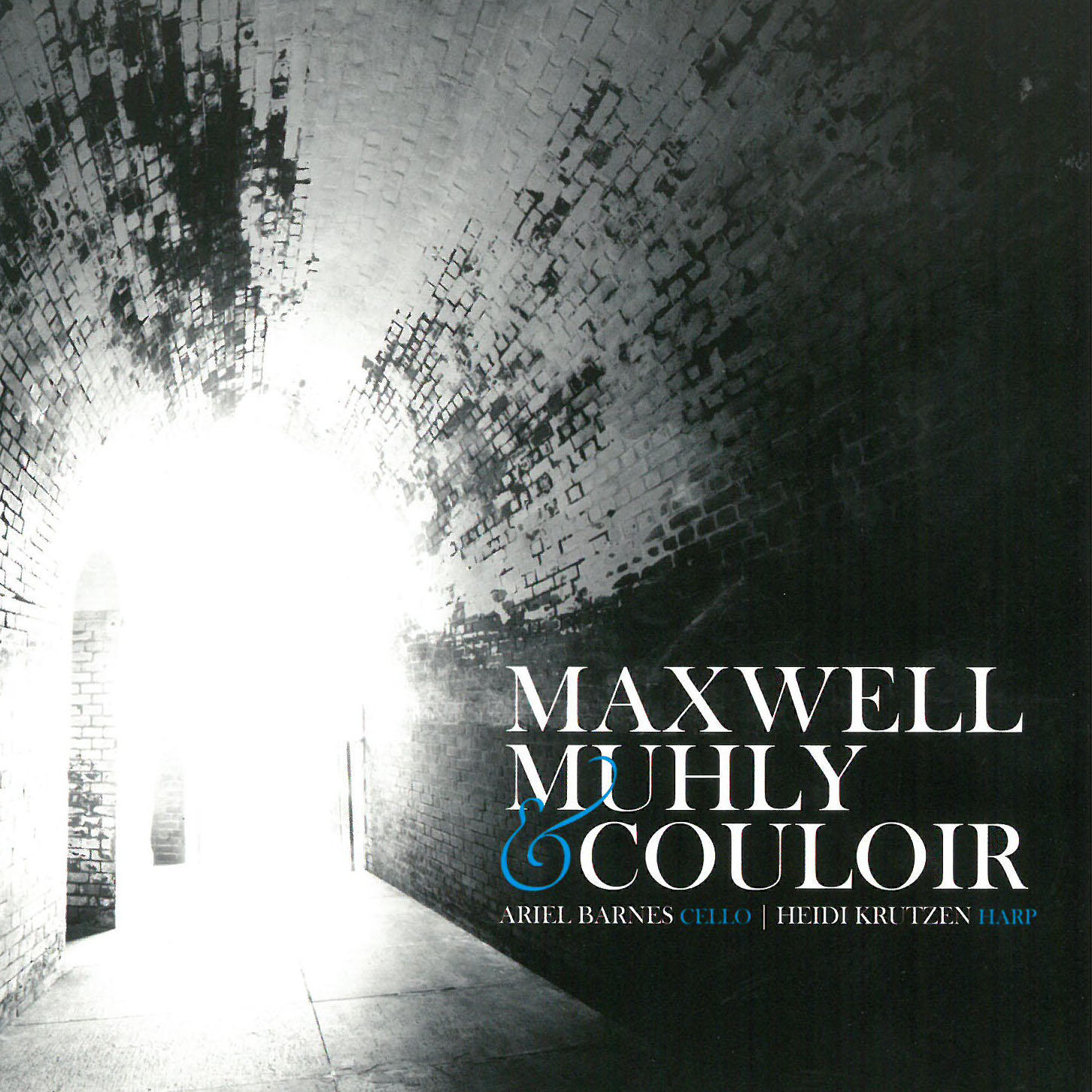
04 Muhly CouloirMaxwell, Muhly & Couloir
Ariel Barnes; Heidi Krutzen
Ravello Records RR7932
(ravellorecords.com)

Since 2010, Couloir – the duo of cellist Ariel Barnes and harpist Heidi Krutzen, respectively principals of the Vancouver Symphony and Vancouver Opera Orchestra – has been performing, commissioning and recording music for this unusual combination of instruments.

This CD offers two works, one of them in two versions. Vancouver-based James B. Maxwell (b.1968) calls Serere (2012) “the concert music incarnation” of his ballet score Double Variations, commissioned by Ballet Kelowna. The first version of Serere (Latin for compose/contrive/interweave), just under 20 minutes, interweaves moods of dreamy meditation, restless anxiety and melancholic resignation. The cello provides the strong melodic content, supported by the harp’s harmonic figurations. The second version takes six minutes longer, having an added electroacoustic track featuring percussive rhythms and the scratching sound of a pencil on paper (Maxwell’s ballet dealt with themes of writing and calligraphy). The track adds considerable texture, colour and energy, making the piece much more urgent and turbulent than the predominantly reflective first version.

Sandwiched between the two is a nine-minute piece by American Nico Muhly (b.1981). In the booklet notes, Muhly describes Clear Music (2003) as “an extended exploration of a single measure” in Renaissance composer John Taverner’s motet Mater Christi Sanctissima. Here, Couloir is joined by Maryliz Smith on celeste. As in Serere, the cello leads with yearning, searching lyricism, here embellished by the magical tinklings of harp and celeste.

Fascinating listening throughout.

Back to top