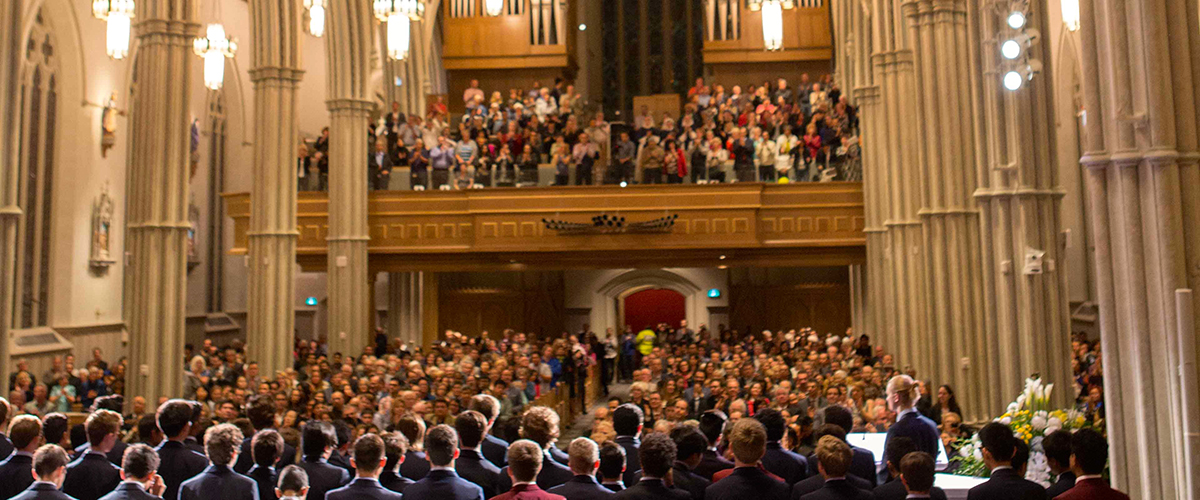
St. Michaels CathedralIt happens every time after the Hallelujah Chorus in Handel’s Messiah. There are always audience members in tears – profoundly affected by the art and majesty of the music. There are not many other major works that have this effect, and probably none that are so beloved in Toronto. St. Michael’s Choir School performs Parts II and III of Messiah for Easter 2018, 

having performed Part I during Christmastime 2017.

There’s a long European choral history of all-male choirs, commonly known as boy’s and men’s choirs. They’re a common feature in many churches and boys’ schools in Europe, for example in the Anglican tradition in the UK. They are not common in Canada, but a handful of Canadian boys’ and men’s choirs still exist. Few, anywhere, have such a storied history as St. Michael’s Choir School in downtown Toronto. Adjacent to the head of the Archdiocese of Toronto – St. Michael’s Cathedral Basilica – St. Mike’s Choir School has been generating high-quality musicians since 1937.

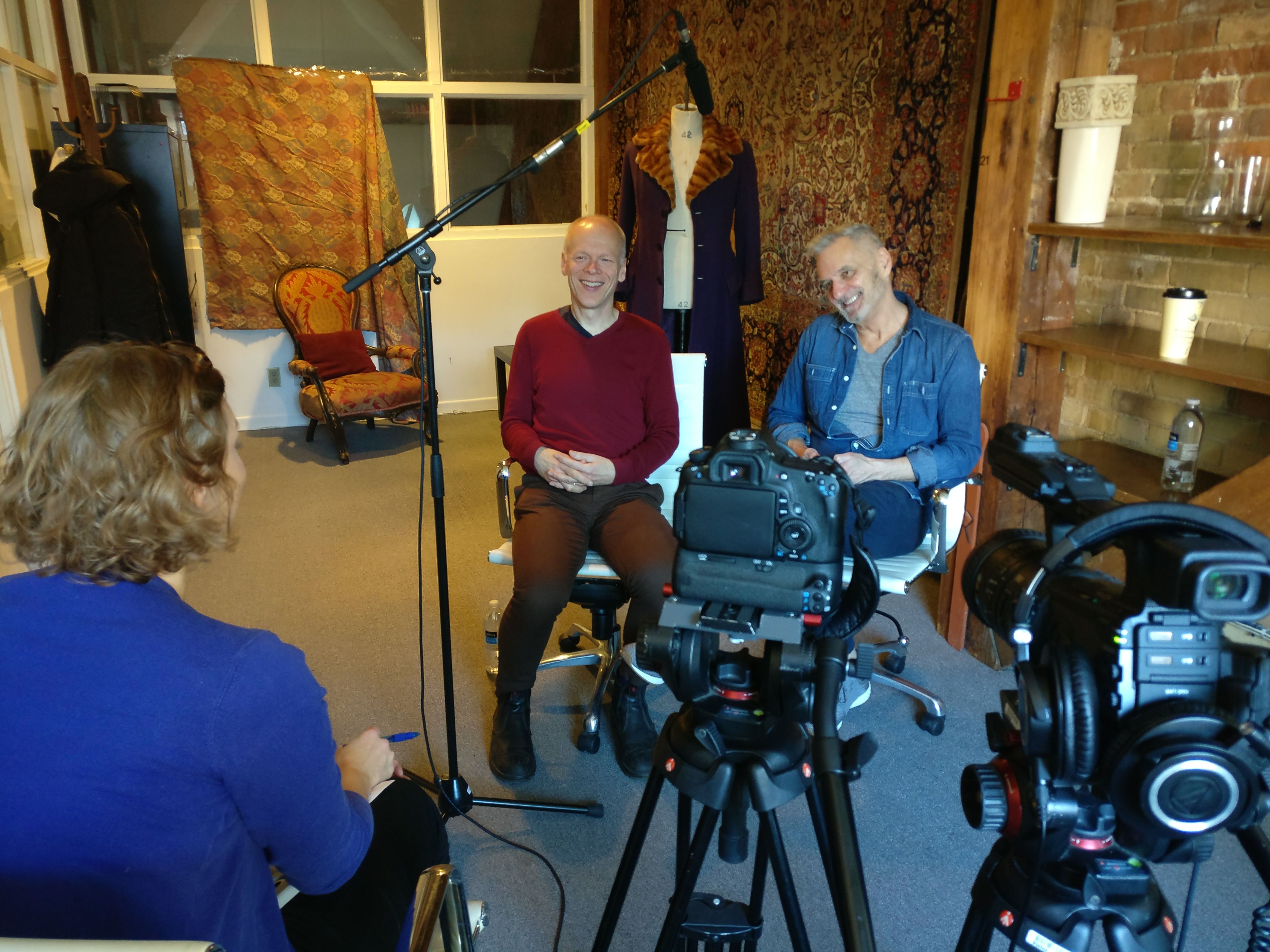
Peter Mahon, interim choir head at St. Mike’s, sat down with me over the March break to talk through their upcoming Messiah performance. I’m no stranger to Messiah myself, as a singer with the Toronto Mendelssohn Choir whose annual performances in Roy Thomson Hall with the Toronto Symphony Orchestra draw well over 8000 patrons over a week-long run. Mahon is also no stranger to the work as a singer: a veteran countertenor, he sings in the alto section of Tafelmusik Chamber Choir, whose own annual Messiah run reaches about 5000 patrons and includes the incomparable “Sing-Along Messiah” at Massey Hall.

Messiah is a big work, both technically challenging and requiring a high level of artistry. So, perhaps not surprisingly, as far as Mahon knows, the work has never been performed by the school. “It’s very easy in a place like St. Michael’s Choir School to only focus on what you do well,” says Mahon. “These guys have to basically do a performance every week, preparing for a mass; four or five pieces of music, and the older boys, at least two pieces of chant. You can focus on that mass preparation, and there’s loads of work to do.” Mahon relishes the challenge of introducing this beloved Toronto tradition to the choristers of St. Mike’s. “It’s nice to have a change of pace. I think they’re finding it very refreshing.”

The first half of Messiah, performed by the school this past Christmas, has six chorales that are conventionally performed. Parts II and III have about double that amount depending on cuts or additions. Unlike the Christmas performance, which numbered over 160 choristers, this time Mahon has assembled a smaller set of students, around 60, to present the work. The boys had to audition to perform in this concert. Any wrangling of children aged 10 to 17 is inherently challenging and Mahon appreciates that for this concert the boys want to be there, rather than have to be there.

Andrew Walker, an alumnus of the St. Michael’s Choir school program, returns as one of the two tenor leads at the core of the tenor section. Other Tafelmusik professionals joining in are Richard Whittall and Simon Honeyman on countertenor/alto; Paul Jeffrey, joining Walker on tenor; and Joel Allison and Keith Lam on bass. All of them are joined by the all-boy treble line on soprano. Whittall and Honeyman share the alto solos and Michael Colvin joins as tenor soloist. The only female-identified voice will be Meredith Hall as soprano soloist.

“I had never done Messiah before I did it with St. James Cathedral,” says Walker, joining me at a café before a Toronto Mendelssohn Choir rehearsal. He was introduced to the piece after leaving St. Mike’s. “We never did a major work or oratorio while I was there. It was always about providing music for the Cathedral. Even when we did our major concerts for Christmas or the spring or fall, it was pretty much always motets.”

Walker reflects on the power of being able to perform a work like Messiah: “I think it’s incredibly difficult to know what it really feels like until you have done it. In Grade 5, I was in intermediate choir. It’s the first year you start providing the music at the cathedral. But in Grade 5, to learn this music … Messiah is a great piece of repertoire to sink your teeth into, but it’s a big work to take on as one of the first pieces of music in just the first ten years of your life. It’s exceptional. It’s a good challenge and a testament to the teaching staff, Peter, Teri (Dunn), and Maria (Conkey).”

Mahon has added another challenge for the choir in this Messiah, by emphasizing Baroque interpretation and aspects of Baroque singing style: spacing between notes to give the music lightness and energy; more articulation on specific notes and less on others, to drive musical phrasing; and dynamic phrasing that tapers off at the end, appropriate to the fugal counterpoint common at the time.

“They aren’t doing badly on the Baroque interpretation – but it all takes some getting used to,” Mahon says. They are used to Palestrina and songs like that, he explains, but the great sweeping sounds of Renaissance music are dissimilar to the technical precision and nuanced phrasing of equal length notes that he is asking for here. After all, these choristers are being asked to acquire a cultural feeling for Baroque music that usually takes years to master.
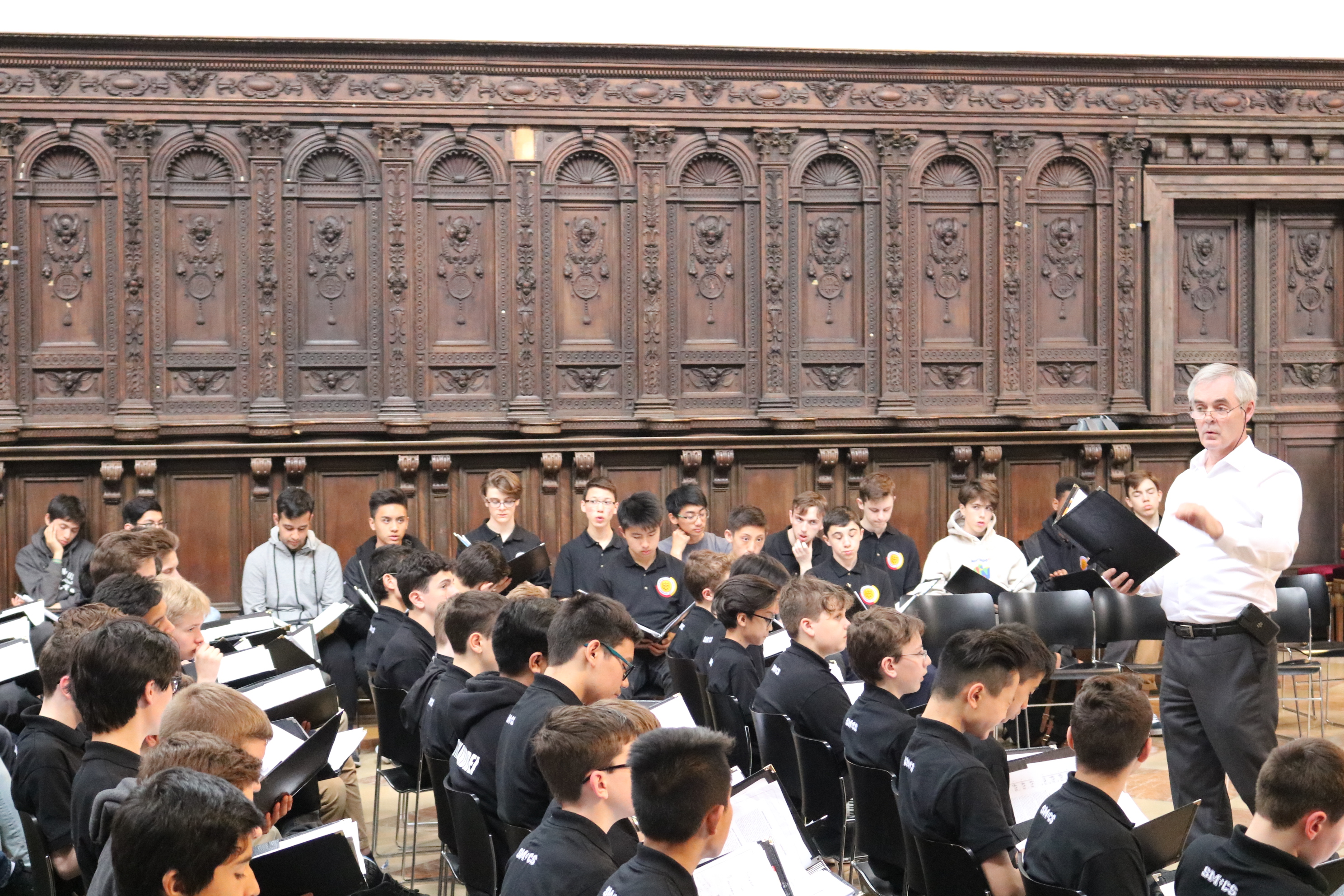
Peter Mahon conducting the SMCS choristers in GermanyThe fact that these boys are singing with an orchestra is already in itself exciting,” says Walker. “That a 13-year-old boy is being introduced to Baroque and period music is really something, and part of the mandate of the school. I think if you’re educating a new generation of singers, knowing about Baroque pitch is important.”

As a guide to matters of interpretation, Mahon has referred the boys to the Tafelmusik recording of Messiah, a close match to what he’s looking for. “It takes a little longer to teach them the music,” he says. “Getting them to do the style and actually understanding how to sing a Baroque phrase rather than a Renaissance phrase is quite hard.” It helps that Mahon himself led the larger contingent of choristers in the Christmastime 2017 performance of Part I so they are not entirely new to the art he’s looking for.

The boys are talented and excited, ready to delve into the work. They have been rehearsing since January. “It’s quite something,” says Mahon. “They’re so motivated, they know the music. In the fall, they auditioned with For Unto Us a Child is Born. This time around they auditioned with All We Like Sheep.” Walker is impressed to hear that the boys auditioned on that chorale: many singers consider the vocal runs in All We Like Sheep amongst the hardest sections of music in the entire score.

Walker reminisces about his time being back at St. Mike’s and what he would have felt like getting a work like Messiah to perform and having to audition. “I switched from being a treble in about Grade 8,” he says. “You are still a red jacket at that point. You get your blue jacket when you enter high school. At age 13, that these boys are actively wanting to sing this piece, and on top of that, can, is an incredible idea. It bodes well for the future of the choral scene in Toronto. What an honour it is to sing with a group of musicians and create this art together. The music lends itself to excellence, and to a really good show, to creating something magical. There are some moments in the piece that are life changing, and I don’t use that term lightly. What an amazing moment; how magical and momentous it is.”

St. Michael’s Choir School presents Handel’s Messiah Parts II and III with conductor Peter Mahon; Meredith Hall (soprano); Richard Whittall and Simon Honeyman (alto); Michael Colvin and Andrew Walker (tenor); Joel Allison and Keith Lam (bass); and a Baroque orchestra, on Saturday, April 14 at 7:30pm at St. Michael’s Cathedral, Toronto.

Follow Brian on Twitter @bfchang. Send info/media/tips to choralscene@thewholenote.com.
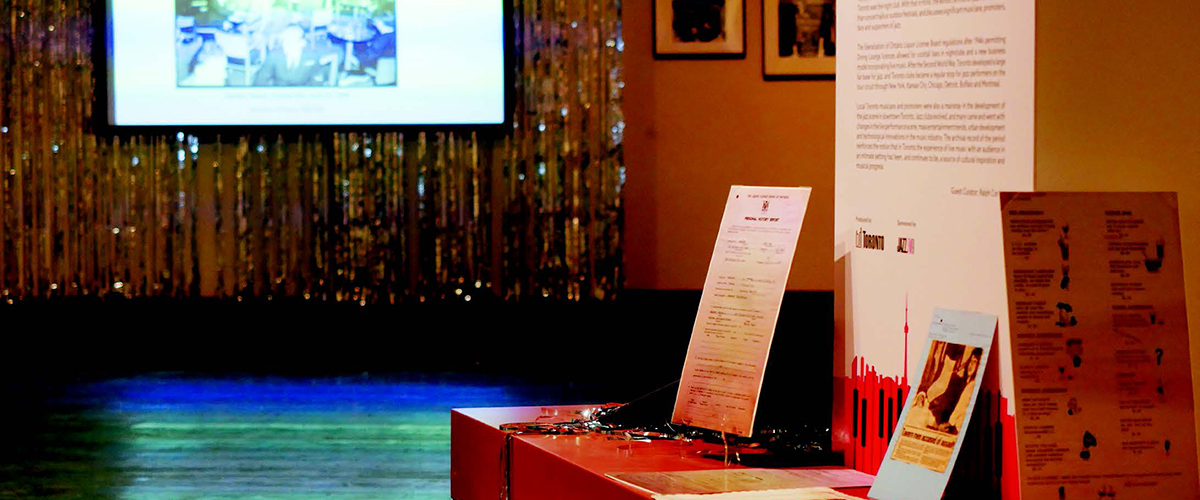
Photo by Kevin KingThey were as opulent and upfront as the Imperial Room at the Royal York Hotel, which frequently hosted internationally famous stars such as Ella Fitzgerald; or they were as grotty and out-of-the way as the Subway Room of the Spadina Hotel on King Street, where CODA magazine’s Bill Smith presented avant-garde improvisers in the early 1980s. Some like George’s Spaghetti House on Dundas Street E. operated for 38 years until 1994; others like Queen Street’s Matt Muldoon’s lasted barely a year in 1978, But what these clubs and about 75 other music spots did over the years was provide a place for Toronto’s jazz musicians to play, where fans knew they could go to see their favourite music.

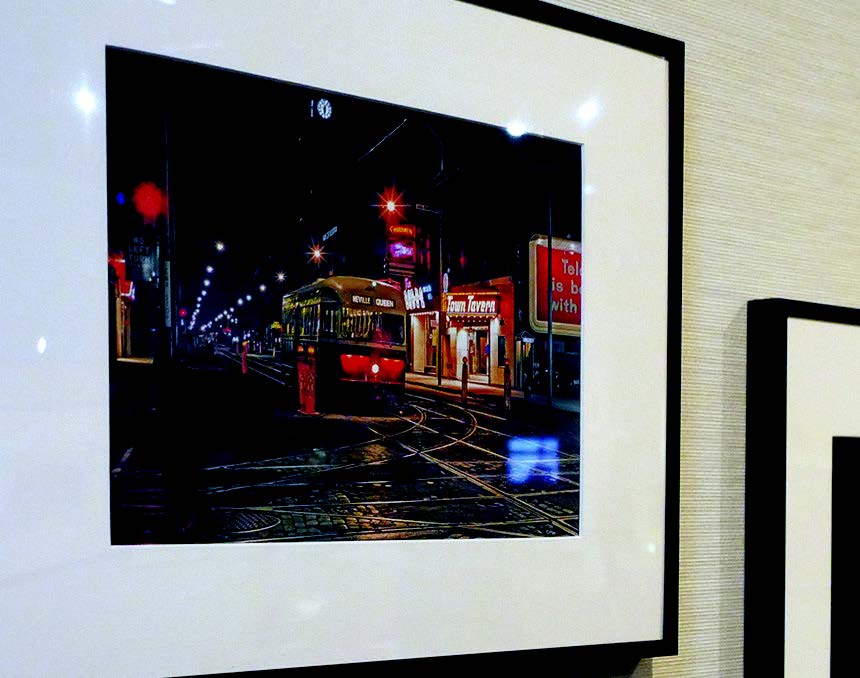
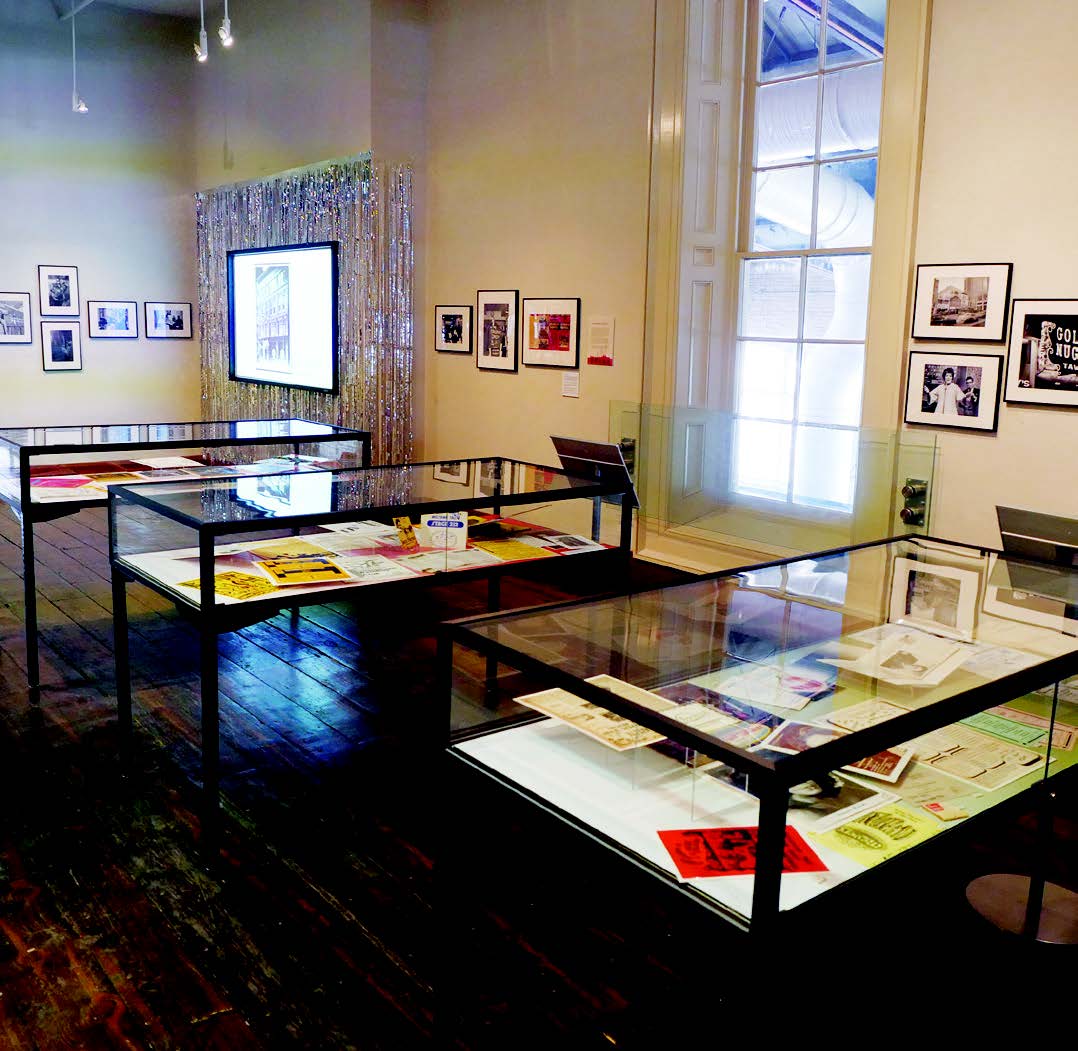
Notes in the Night: The History of Toronto Jazz Clubs Since 1946, on show at The Market Gallery until June 23, offers an audiovisual history of that phenomenon. To present a three-dimensional view of the scene, the exhibit includes more than 200 items on its walls, on stand-alone panels and in display cases. Not only are there rare photographs of the clubs and performers in their heydays, but also ephemera that take in club menus and table cards, match boxes, LP covers, tickets, advertisements and wall posters. Highlighting 19 major venues, one wall includes a poster of a kilt-wearing saxophonist Jim Galloway advertising an upcoming gig with pianist Doug Riley at the Montreal Bistro. In one display case is a vintage photo of Moe Koffman playing two saxophones at once during a performance at George’s; in another, pianist/singer Jay McShann leads Galloway’s Wee Big Band through its paces at the Montreal Bistro. A 1982 portrait shows drummer Art Blakey in front of Basin Street’s sparkling tinsel backdrop; and a 1960 photo from the House of Hambourg finds a band of young Toronto jazzers trying to impersonate New York junkies in a local version of the play The Connection. Another wall displays a 1969 Toronto Telegram photo shoot of the mock-picketing of the Savarin Tavern by local reed players demanding to be included in The Boss Brass. There’s also an evocative late-night photo of the Queen streetcar moving past the illuminated Town Tavern sign.

Photo by Kevin KingBesides a continuous slideshow projecting 80 images otherwise not seen in the exhibition, are two audiovisual presentations: one monitor shows Toronto Jazz, Don Owen’s 1963 film classic, featuring performances by guitarist Lenny Breau’s trio and saxophonist Don (D.T.) Thompson’s quintet; another monitor captures musicians Don Vickery, Molly Johnson and Archie Alleyne discussing aspects of their careers on the local jazz scene.

Toronto’s club explosion happened after 1946 when new Liquor Licensing Board of Ontario dining lounge rules allowed live music venues to sell liquor, explains Ralph Coram, guest curator for the Market Gallery show. “Pent-up demand after wartime austerity and later the building of the subway system facilitated the growth of burgeoning nightlife districts downtown.” All the clubs were in an area bordered by Bathurst and Sherbourne, Dupont to Front, often in rundown but historically important buildings. The majority of clubs allowed patrons and players of all backgrounds to mingle. So for almost every photo of well-dressed patrons drinking at tiny nightclub tables with a band in the background, there are shots of intense fans raptly gazing at the improvisation of among others, pianists Ray Bryant or Lennie Tristano. Most jazz clubs were set up and managed by hoteliers or restaurateurs who had an established operation that could be granted a liquor licence, notes Coram. “The pure music places tended to be the unlicensed after-hours clubs whose patrons were attuned to jazz and who appreciated a casual or bohemian atmosphere, as a reaction against the social and cultural mores of Toronto the Good,” he adds. Toronto’s original so-called music room was the House of Hambourg which operated from 1948 to 1963 in four locations near Bloor and Bay.

Photo by Kevin KingSome clubs specialized in Dixieland, others in modern jazz. But the ones which lasted the longest, such as George’s, Bourbon Street/Basin Street, the Colonial and the Town Tavern offered all sorts of fare. “Many of the owners were music fans and they became even more so if the place made money,” notes Coram. “Some even booked hard-core jazz bands as a prestige or loss-leader venture.” Still, in some cases the lowering of the drinking age to 18 in 1971 led some to start featuring rock music. One show sidelight also traces the activities of several jazz entrepreneurs active at the time, such as Dave Caplan. A tailor, not a club owner, during a career that lasted from the late 1950s to the mid-1980s, he booked jazz at locations that included Club Norman, East 85th, St. Regis Hotel and Meyer’s Deli. One photo shows a snappily dressed Caplan greeting patrons at the St. Regis.

The exhibit was the result of four years of research which involved combing though voluminous paper and photographic files in university, library, government and private archives. Coram explains that “I’m old enough to have been to some of these places like the Colonial, and Bourbon Street. The experiences there always stuck with me and I wanted to bring them back to public consciousness through visual history.

“While this exhibition shows that jazz heritage is a large part of Toronto’s reputation as Music City, the debate in this city around the continuing demise of live music venues is something the jazz community has been dealing with for decades. There’s never been a shortage of local jazz musicians, just a shortage of places for them to play. The jazz community was also right at the centre of some of the social issues of the day, including the struggle to overcome racism, to include Canadian musical content in shows and to participate in urban revitalization.”

Notes in the Night continues until June 23. Located on the second floor of the St. Lawrence Market, 95 Front St. E., the gallery is open Tuesday to Thursday: 10am to 4pm; Friday: 10am to 6pm; Saturday: 9am to 4pm. Closed Sundays, Mondays. toronto.ca/marketgallery

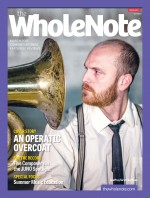
overcoat bannerOn our cover

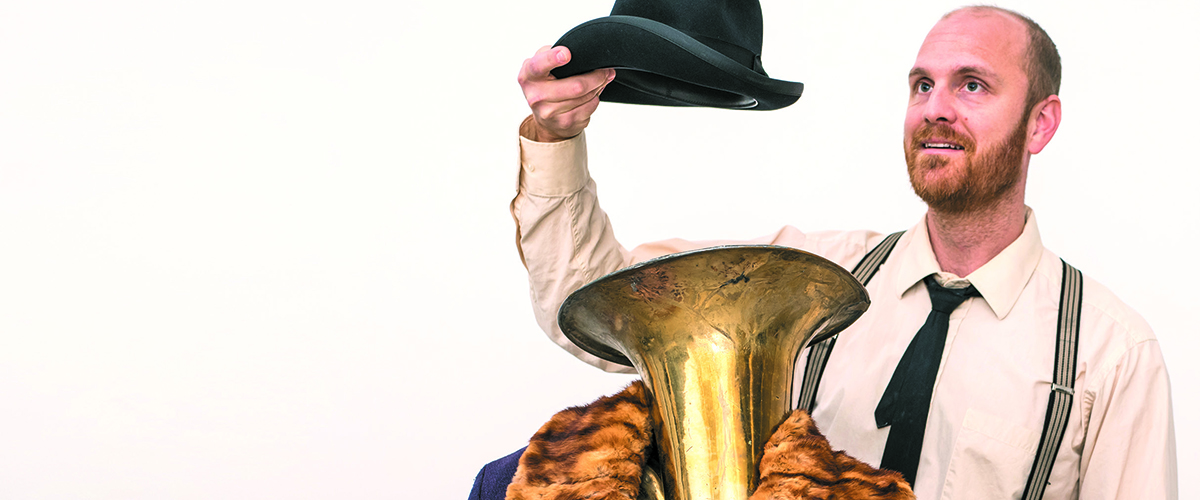
Cover Photo by Dahlia KatzAsked about the photo, Geoff Sirett, who plays the lead in the upcoming The Overcoat: A Musical Tailoring is refreshingly candid. “I’d love to be of help, but I’m not really sure what to say. We did two photo shoots months apart with a lot of different ideas. I mostly went with the flow!” Tapestry artistic director Michael Mori was happy to fill in the blanks: “We were looking for a way to capture the essence and the newness of it. This world premiere production introduces new text, new music, opera singers, and live orchestra to the concept of Morris Panych’s original physical theatre piece, which was an enormous hit. Akakiy staring into the tuba gives us a taste of the character’s contemplative psychology, introduces the new dynamic element of music, and teases the surrealist world that the show traverses.”


---

There is a bubbling excitement in every conversation I am having with members of the creative team for The Overcoat: A Musical Tailoring, which will have its world premiere on March 29 at Toronto’s Bluma Appel Theatre in an epic three-way co-production between Tapestry New Opera, Canadian Stage and Vancouver Opera.

This excitement, from all accounts, was there from the very beginning of the project, although in the words of Tapestry’s artistic director Michael Mori, it began “almost by accident” at Tapestry’s annual new opera incubator, the composer librettist laboratory (LibLab). Each summer four composers and four librettists are brought together for the LibLab, and over the course of about ten days go through an operatic speed dating process, each creating with different partners four brand-new mini-operas no longer than about five minutes in length.

At the 2014 LibLab, award-winning Canadian composer and former LibLab participant James Rolfe was acting as mentor to that summer’s composers when for the first time ever, a composer had to drop out due to a musical emergency back home. Rolfe, who had been – in Michael Mori’s words – “feeling funny about just observing and not taking part,” now had his chance to jump into the mix, and as chance would have it, one of the librettists he was partnered with was two-time Governor General’s Award-winner and prolific playwright and director, Morris Panych. They hit it off immediately.

At the LibLab, pressure is high and time is short to find good ideas to base a new opera upon, and as Panych put it to me: “Let’s be honest, you start to run out of ideas and I thought, hey, The Overcoat, that could be interesting, because I’m always trying to think when I develop those little scenarios, could this be expanded into a full opera... and as a short story and not a novel (which are really hard to adapt) it already has a lot of the storytelling elements that you want.” At that point, though, he wasn’t really thinking yet about a full opera but about a particular scene “which I thought would be a charming scene to do with James, where the tailor and his wife measure (the main character) Akaky for a new coat” – the overcoat of the title. The project had begun.

To see where this new theatre piece is headed, it’s helpful to look back at where it has already been. Gogol’s famous 1842 short story The Overcoat, about an ordinary man whose life is turned upside down by first acquiring and then losing a wonderful new overcoat, has already had a long and successful theatrical life in the groundbreaking physical theatre production created by Panych with Wendy Gorling in 1998. Originally an experimental production for the students at Studio 58 theatre school in Vancouver, then a full-fledged professional production that took Vancouver and Toronto by storm, it travelled around the country and then the world, garnering great acclaim and many repeat engagements. The extraordinary thing about this earlier production was that it was performed without words. The storytelling was all done through movement, created collaboratively by the company under the guidance of Panych and Gorling, but also very tightly choreographed to carefully chosen and shaped musical selections from the works of Russian composer Dmitri Shostakovitch.

This first production was so quintessentially wordless, and so successful in its physical storytelling, that my first question to Panych about the new Overcoat was where the inspiration came from to do – in effect – the opposite, putting words back into the mix. His answer was that the experiment at the LibLab lit the spark but that once it did, the opportunity was there to explore a “whole different idea for the show than it originally had” in that there had to be “a development of intellectual ideas because now there were words” – something he had, in fact, long been contemplating.

The original version had been a thrilling and very successful experiment, but a new opportunity had now arisen – going back to Gogol’s original story and exploring it again from the point of view of philosophical and intellectual ideas that could be brought out through the new libretto and new score, to be expressed and explored by the singers with the audience. As Panych explained, they went back to the leading character Akaky being an accountant (as he is in the short story) and “I came up with this idea of singularity and numbers, of people counting and not counting, which developed through into the piece as an idea about human value and existentialism and what the coat actually means in terms of its intrinsic social and moral value.”

Back at the LibLab when the Overcoat scene was presented, it immediately struck a chord with both singers and audience. Mori says that Panych had very quickly written a very clever mini-libretto for the scene of the tailor and his wife creating the coat for Akaky “based on how deeply he knows the story and the interplay between the characters, and I think James was intrigued and wrote the music very quickly. We heard it and said ‘It’s almost Gilbert and Sullivan in a way’ – not because it was British, it was very Morris – but because it was so fast and the energy was really exciting.”

Almost immediately after the LibLab and the success of the presentation of the scene to an invited audience (including an intrigued Mathew Jocelyn, artistic director of Canadian Stage), Tapestry found the funding for a libretto workshop and the development snowballed from there, moving very quickly through two more workshops to reach the point where it is now about to go into rehearsal for the full production. Vancouver Opera joined in along the way, as co-commissioner of the piece, as did Canadian Stage, as a season presenter.

Both Panych and Rolfe commented upon the speed of this process, Panych writing the libretto very quickly as he knew the story already so intimately, and Rolfe connecting so quickly to the material that the score was also completed very fast. In Panych’s words: “I wrote the libretto and James took it, and I emailed and called him a few times and said ‘Any changes?’ and he said ‘Not really, it’s perfect,’ and he wrote the score. We did the first and second workshops and staged it [so that we would have a] template for working on the show, then see where to go from there.”

When I asked Panych and Rolfe about the original use of Shostakovitch and if it had any bearing on the new music, both said that it was really just a starting point and that Rolfe’s music is completely new and original, although “very Russian in feeling,” and that this was both right and exciting. The cast has been cut down to 11 from 23, although there is still a “mad chorus” and ensemble numbers that Rolfe says he is excited by (as well as by the character interaction throughout). The show is sung through without spoken dialogue, but written so that the story and ideas can be clearly shared and communicated, and with a great sense of energy and pace. As Rolfe says, the score is also written with an awareness that the production will still have a very strong physicality. “The music is a twisted circus,” Panych says. “It’s acrobatic, you feel its tunefulness, you feel the beat of it but you don’t recognize it, similar to Prokofiev but in a much more modern way; it pushes forward in unexpected and exciting ways.”

There will also be a 12-piece orchestra, a luxury for a new opera production, led by music director Leslie Dala.

Panych is very clear that people should not come to this new Overcoat expecting to see the old version. The famous big set pieces created for the wordless choreographed world of the original, such as the ballroom scene or tailor shop with “semi-naked men in the shop creating the coat,” will not be there. With the smaller cast and the emphasis on the singing, the words, the ideas and the production will be much more intimate. Although the original design team of Ken Macdonald, Nancy Bryant and Alan Brodie will be creating a similarly designed world on a smaller scale, the action will be purposefully much more “downstage, closer to the audience.”

At the same time, there is still a desire to retain some of the signature theatrical physicality of the original and Wendy Gorling will be joining the company at the start of rehearsals as movement director; two members of the original wordless Overcoat will also be there to anchor that physical style. Most of the singers in the cast have been with the show through the development process of the workshops, cast primarily for their singing and acting ability, but also with an eye to their ability to move and take part in more experimental production styles. Peter McGillivray and Keith Klassen, in particular, being longterm performers with Tapestry and in new opera around the country, are known for their expertise in interpreting new work.

Joining the cast in the most recent workshop as the leading character Akaky was Geoffrey Sirett, a young Canadian baritone with a quickly growing reputation not only for the richness of his baritone voice but for his fearless physicality in more experimental productions, with Against the Grain Theatre, for example, where he shone in their staged Messiah. Cast in the workshop on the advice of Mori, Sirett proved adept at the physicality explored during that process, impressing the director and staying on to lead the company as work on the full production began. While he didn’t have physical training as part of his opera studies, Sirett credits his early experience working with choreographers James Kudelka, Lawrence Lemieux and Bill Coleman on dance/opera crossover works at Citadel + Compagnie as providing him early on with “the opportunity to explore contemporary movement and get in touch with my physical self.”

James Rolfe (left) and Morris Panych - photo by Nathan Kelly

As this issue goes to print, The Overcoat company will be in rehearsal and the process will have begun of discovering exactly what the eventual production will look like, how physical it will be and what new nuances might arise. The template is there but the final journey of discovery is just beginning.

Hearing the show described as almost more of a “musical than an opera” by its librettist and director because of its clarity, energy and pace, it sounds as though The Overcoat: A Musical Tailoring is living right on that edge of new opera and music theatre creation, reaching to find the best medium to tell stories that matter and connect with audiences of today.

Opening night is March 29, with two previews on March 27 and 28 and performances until April 14. The show then travels out west, where it will play at the Vancouver Opera Festival April 28 to May 12.

Toronto-based “lifelong theatre person” Jennifer (Jenny) Parr works as a director, fight director, stage manager and coach, and is equally crazy about movies and musicals.

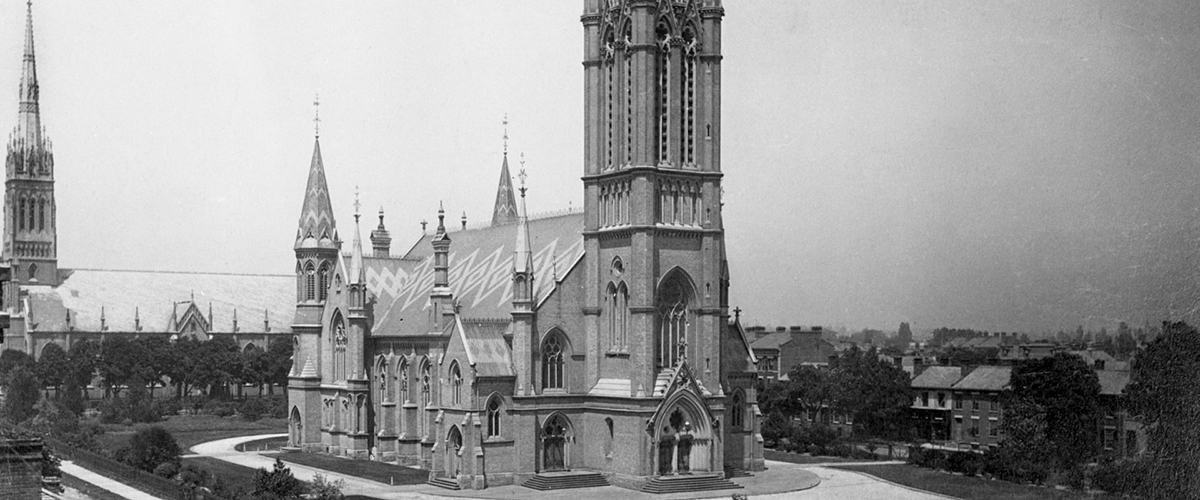
Metropolitan Methodist ChurchMetropolitan United Church is one of Toronto’s most musical places of worship. Founded two centuries ago in 1818, the Methodist congregation grew so rapidly that by 1872 a new, imperiously gothic church was built, seating 1800 congregants with additional room for 300 choristers. Described as Canada’s “Methodist Cathedral” or “Mother Church of Methodism,” Toronto’s Metropolitan Wesleyan Methodist Church became Metropolitan United Church in 1925 after the unification of Methodists, Congregationalists and Presbyterians.

Unfortunately, this newly dedicated church was all but destroyed by fire in 1928, replaced by the current Metropolitan United Church building in December 1929. Featuring Canada’s largest pipe organ with over 7,200 pipes (increased to 8,200 in 1998), Metropolitan developed many of the musical programs for which it is now famous – the Silver Band, the concert series and the outstanding choirs – during the 1930s and 1940s.

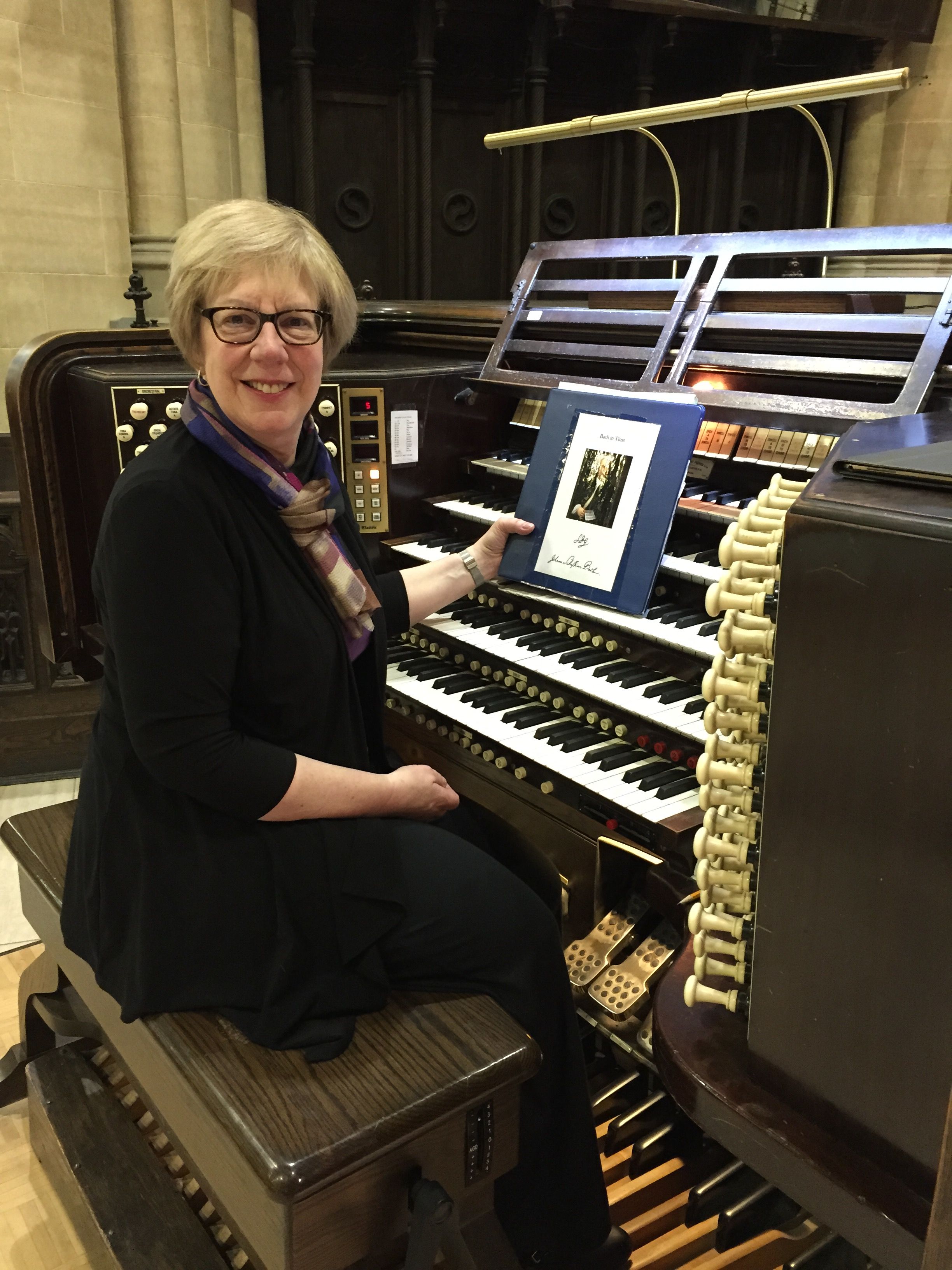
Metropolitan United Church’s tradition of musical excellence continues to this day, evolving and increasing its outreach over the decades, most recently under the guidance of Minister of Music Patricia Wright. Under Dr. Wright, the Music at Metropolitan program has expanded to include the Wayne C. Vance Organ Scholar program and the annual Jim and Marg Norquay concert, this year featuring Rezonance, Metropolitan’s newly-minted ensemble-in-residence, in their presentation of the “Mystery of the Unfinished Concerto.” (For those who find the classics a bit stuffy, this coming May Music at Metropolitan also presents “Showtunes for 200,” a multimedia concert of standards from operetta and musical theatre.)

Along with these newer initiatives are the older, more traditional presentations, including a weekly organ recital series (on a temporary hiatus due to renovation) and Met’s famous Good Friday choir and orchestra concerts. Both these weekly organ recitals and large choral concerts are Metropolitan traditions, each started in the 19th century and continuing unbroken to the present day, with significant improvements in quality and programming; for example, this year’s Good Friday concert features Bach’s magnificent Mass in B Minor.

In anticipation of this concert and in celebration of Metropolitan’s bicentennial, we asked Dr. Wright to share her thoughts on Music at Metropolitan’s past, present and future.

WN: Metropolitan United is a historic church with a historic music program. Tell us about the history of music at Met, especially related to the development of what is now Music at Metropolitan, a freestanding concert series.

PW: Metropolitan has always regarded music as a ministry. In 2004 I was covenanted as the first congregationally-dedicated minister of music within the United Church of Canada, the first denomination to officially regard music as a ministry.

There is a long tradition of midweek concerts as well as a concert series, which is not new; Frederick Torrington [director of music 1873-1907] had a series of Thanksgiving Day concerts, presenting choir and orchestra performances. S. Drummond Wolff led what was probably the first [Metropolitan] performance of the St. Matthew Passion in 1946, and in 1964 Paul Murray led the Brahms Requiem on Passion [Palm] Sunday. Melville Cook [director of music 1967-1986] expanded the concerts, eventually giving three concerts a year with orchestra, and started performing the St. Matthew Passion each year on Good Friday.

[In 1987] I inherited this tradition of a Festival Choir concert on Good Friday and we have performed a variety of repertoire since, including Bach’s St. John Passion [eight times], Mass in B Minor [four times], Brahms Requiem, and large choral works by Duruflé, Fauré, Chilcott and Rutter, among others. This is my 32nd Good Friday concert and there are some singers in the choir who have been involved in these Festival Choir performances longer than I have!

Patricia Wright

Met turns 200 this year and selecting the music for such an important season likely required much thought and consideration. Why did you choose the Mass in B Minor for this year’s Festival Choir performance?

The Mass in B Minor is the biggest choral and orchestra work we perform. To me, [the Mass in B Minor] is the summation of Bach’s work. It is, from my perspective as an organist, conductor and Bach lover, the greatest piece in choral literature, if not all of music. The way Bach put it together, combining music that he took from other cantatas with newly composed material … and he never heard it performed in his lifetime!

Last June [my husband and I] were at the Leipzig Bach Festival and the last concert of the week was the Mass in B Minor. We’re in the Thomaskirche, sitting in the chancel with Bach’s grave plate in front of us, hearing the Mass in B Minor – that is a lifetime experience, so touching and moving, I can’t describe it.

Beyond the traditional Good Friday concerts, the Music at Metropolitan series has grown considerably over the past few years. Now that it incorporates a variety of sacred and secular presentations, what role do you see Music at Metropolitan taking in Toronto’s musical landscape?

We started experimenting with a variety of programs – choral and brass concerts at Christmas, for example – then we branched out into vocal recitals. This wasn’t a new idea; vocal concerts were happening at Met during Melville Cook’s time. In the 1970s there were summer concerts in the park [in front of Metropolitan, on Queen Street], so [Music at Metropolitan] is a combination of past and present. We’ve presented all kinds of concerts under the Music at Metropolitan label, including concerts by our own singers, guest singers and performers, leading organ recitalists, and for the first time, our own ensemble-in-residence, Rezonance Baroque Ensemble. They gave a concert last fall, are giving another in April [the Mystery of the Unfinished Concerto on April 22], and we also give lighter shows [such as Showtunes for 200]. We’ve branched out into all kinds of concerts!

We want Metropolitan to be known as a place where people from any or no faith tradition can come and be touched by music, because music transcends traditions. Metropolitan, in all areas of its ministry, is a place where people can come and be comforted: spiritual comfort through music; physical comfort through our downtown outreach programs. I inherited one of Toronto’s important and historic musical traditions and I am honoured to be a steward of that tradition into the future. Metropolitan has always regarded music as ministry and outreach and I hope that’s what Metropolitan continues to represent to this community in the future.

Matthew Whitfield is a Toronto-based harpsichordist and organist.

Sam ShalabiThough he now splits his time between Montreal and Cairo, guitarist, oudist and composer Sam Shalabi was born in Libya to Egyptian parents. He and his family immigrated to Canada when he was five. He started his musical career in Montreal in the mid-90s, and has played guitar and oud with a number of different groups, including the critically acclaimed Shalabi Effect, which he has led since its inception in 1996.

On Saturday, March 24, Shalabi’s Land of Kush will play at the Aga Khan Museum as part of the institution’s Global Conversations Series, presented in partnership with the Music Gallery. Land of Kush is a large ensemble, with over 20 members slated to play at the Aga Khan, and will feature as special guest artists the Cairo-based musicians Nadah El Shazly (vocals) and Maurice Louca (keyboards), both of whom are frequent collaborators of Shalabi’s.

Land of Kush will be performing Shalabi’s Sand Enigma, the latest in a series of six large-scale compositions written specifically for the ensemble, three of which so far (Against The Day, Monogamy and The Big Mango) have been released by Montreal’s Constellation Records.

WN: Sand Enigma will have its world premiere here at the Aga Khan at the end of March?

SS: Yes.

So this will be the fourth release for Land of Kush, is that correct?

I think it’s going to be a release at some point… but it’s going to be logistically difficult to record it, that’s the only thing, because Maurice and Nadah … they live in Egypt, and they’re going to go back to Egypt, and so it’s going to be a bit difficult to record it. But in terms of the fourth piece, it’s not the fourth piece, actually. There’s actually six pieces, only three of which have been [recorded].

And so the last recording that was released would have been The Big Mango.

That’s right.

Nadah El Shazly - photo by Alan Chies

Two of the prominent themes [of] The Big Mango were gender and Arabic culture. I was wondering if those figured into Sand Enigma – and if not, what are some of the themes that came into play when you were writing and conceptualizing this work?

[Sand Enigma] is kind of an unusual piece, in that in some ways it’s probably the least explicit piece that I think I’ve done, partially because the piece … was meant to be a solo album. And so the pieces were kind of written in a weird way, [in that] they were not meant to be played by humans (laughs).

… [It] started its life first as pieces that I wanted to do with Nadah El Shazly, and then that didn’t really work out due to time, because we were working on her album. And then I thought, well, “I’m going to take these pieces and adapt them to a solo album,” because there is a kind of thematic continuity with the pieces. And then as I was working on it, I realized that it might be interesting to try something which I’ve never done before, which is to take solo pieces, and somehow try to adapt them for Kush, which took a little while to do for the reason that some of the music was not meant to be played by [other] people. So I had to simplify it and re-notate it and tweak it.

In terms of the theme, there is a theme to [Sand Enigma], but I’m kind of resistant to say what it is …[it’s] a kind of a mirror, in a way; the piece has kind of a mirror quality to it, to whoever is listening to it or experiencing it. That’s all I’ll say.

Kind of like a theme, or perhaps a collection of themes, that reveals itself within the actual performance of the piece [in front of] an audience?

Yes, exactly, exactly.

Maurice Louca

So what do [Maurice Louca and Nadah El Shazly] – the special guests for this particular performance – bring to this piece that’s unique, and maybe different than some of the previous things that you’ve done with this ensemble?

Well, they bring the sand (laughs). Part of it is a natural thing, I guess, a natural collaboration, and part of it is a desire of mine to have more of that [as] part of what I do in Kush. Since at least Monogamy, or just after Monogamy, I’ve been working with Maurice, and that’s become a big part of what I do. I play with him in two bands, and tour with him a lot, and we’ve collaborated a lot. And then Nadah, we’ve worked a lot in Egypt, and collaborated on her album, and collaborated on other things, and so… it [seemed] like a sort of natural progression to work with two musicians I love working with, and two friends. But the other part of it, I think, is that I can kind of do things with them that I might not necessarily be able to do without them, in that I can do more maqam … They just bring out another set of references that I have been working with in my solo stuff. In terms of the more Arabic, Egyptian sounds… it’s a little bit more foreign for a lot of the members of Kush to completely dive into that, so I think with Nadah and Maurice I was more free to write music that I knew, and in particular [music that] Nadah would be able to sing, because she’s used to singing stuff like that.

You’ve said about modern Egyptian classical ensembles that, even though they incorporate a fair number of Western sounds or Western instruments, they’re not exactly fusion ensembles; that they’re taking from other practices in order to evolve from within, to grow of their own volition. I was wondering if that’s an accurate description of Land of Kush, and what you think about the terms “fusion” and “world music.”

I think that the important thing is to do something that feels somewhat natural, and feels somewhat right. So I think that, in terms of the fusions, or the music, whatever I do obviously my Egyptian background and my Arabic background is a big part of it. But it’s not the only thing.

I think, basically, you have to have something interesting to say. It doesn’t necessarily have to be earth-shatteringly meaningful, but it should be something that at least for you, as a writer or as a musician, is interesting. And I think that requires delving into yourself, delving into why you would even have anything to say. And so to say that what I’m doing is fusion, or is world music, at this point, I don’t really care if people describe it as that. There’s stuff that I’ll do that sounds like it could be Western music, or stuff that I do that sounds like it’s completely Arabic music. I think the interesting thing for me is how to tap into something that is a synthesis of all that, that is already in myself or in an individual, and that feels or sounds not contrived, to myself and to whoever else is involved in it, or is listening to it.

I definitely need something to say … there has to be some reason. Hence the space between Kush pieces, why there’s a certain number of years between the pieces, and why we almost never do the same piece more than twice. We almost never perform these pieces more than once or twice, because I think they are kind of something that I need to do, as opposed to something that I feel like I should be doing.

And so that’s what it is. It’s sort of a re-engagement with who I am, as a writer, as a musician, a person, whatever; and trying to do that every time, if that makes sense. I don’t know if that makes sense (laughs).

Absolutely, it makes sense. Ultimately it doesn’t matter how someone else might describe it, what you’re trying to do is to create something that feels honest and relevant to you as an individual.

Yeah, exactly, exactly, exactly. And so those elements are there because those are interests that I have. They’re not conscious. If they were, it would be something that I would be less interested in.

Colin Story is a jazz guitarist, writer, and teacher based in Toronto. He can be reached at www.colinstory.com, on Instagram and on Twitter.

Back to top