But for a few instances of momentary curiosity of a few brave, or possibly foolhardy, musicians, modern concert audiences might have never heard the sound of historical instruments at all. A great case in point is the pianist Malcolm Bilson’s discovery of historical keyboards back in 1969.

2201_-_Early_1.jpgWhen Bilson decided to give a concert on “Mozart’s piano” the result was very nearly a disaster. “I have to admit now that I really couldn’t handle the thing at all,” Bilson said in a lecture. “I must be the least gifted person for the job: my hands are too big, and I don’t have the necessary technique such an instrument required. In trying to operate this light, precise mechanism, I really felt like an elephant in a china closet. But I kept at it all week and practised hard and after several days began to notice that I was actually playing what was on the page. Suddenly I found that I really didn’t need much pedal and that the articulative pauses actually made the music more expressive.” Concert audiences and audiophiles should certainly be grateful that Bilson persevered – he was one of the first 20th-century fortepianists, and without him it’s doubtful we’d even hear a fortepiano today.

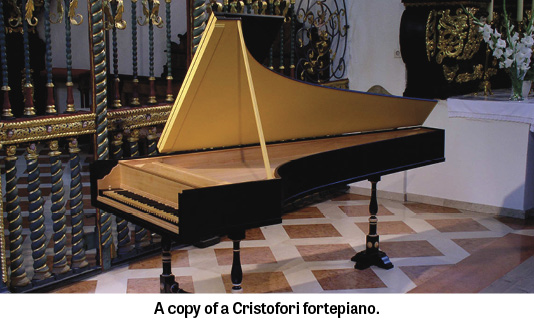
We’re also kind of fortunate Bilson opted to try using a fortepiano in the first place – the instrument itself is something of an oddity. Even to its inventor, it couldn’t have been considered to have much potential – it was initially a research and development project for the wealthy Florentine Medici family by the Italian instrument maker Bartolomeo Cristofori way back in 1700.

Cristofori fit the stereotype of the eccentric inventor quite well indeed. As if inventing a new keyboard instrument wasn’t ambitious enough by itself, Cristofori also tried making harpsichords out of ebony as well as building his own upright harpsichords from designs by other inventors. It’s not known what Cristofori’s patrons thought of the instrument, but it was likely positive, as he continued to develop his invention over the next 20 years and the technology and building of pianos spread across Europe. By the 1730s, J.S.Bach had a chance to play one and recommended the builder make changes (which out of respect for the composer’s expertise, he duly did, much to Bach’s satisfaction). Still, the harpsichord was generally regarded as the superior, or at least, the more affordable, of the two keyboard instruments until the century’s end.

In the classical era, Haydn composed for the harpsichord for most of his early career, and wouldn’t buy a fortepiano until he was in his 50s, but Mozart, being 20 years younger, would come to favour the fortepiano exclusively. Just 50 years after Haydn’s death, pianos were becoming louder, more uniform in sound and more durable – and with the coming of the Industrial Revolution, mass-produced in factories and available to a middle-class market.

Andrea Botticelli: The fortepiano revival owes much to that first adventurous concert Malcolm Bilson gave in 1969, and there’s been a steady increase in fortepiano players since, but there hasn’t been a professional fortepianist who’s called Toronto home until now. Andrea Botticelli is a recent graduate of the University of Toronto’s doctoral music program in piano performance who has decided to specialize in fortepiano and Classical repertoire. Like Bilson, Botticelli found playing a different instrument to have an almost immediate effect on her interpretation. “Playing a fortepiano was such an eye-opening experience,” Botticelli says. “All the performance issues that are such a struggle on the modern piano – texture, clarity, balance between the hands – become so much easier on the fortepiano.” According to Botticelli, all the exacting details that composers like Mozart and Schubert took such care in writing, all those little slurs, phrase markings and articulations that pianists struggle with, were actually written for the old 18th- and 19th-century instruments, and a modern Steinway can’t really negotiate the difficult terrain as easily.

“So much of what I was trying to add in terms of expression is really inherent on this instrument,” she says. “Once I really started playing the fortepiano, I wondered how I could have gone through a whole undergraduate degree without ever having heard one.” Botticelli will be making her solo debut later this month at the Richmond Hill Centre for the Performing Arts on September 24 at 6:15 pm, playing fantasies by Mozart, Haydn and Hummel, as well as a Mozart piano sonata.

It’s really about time there was a resident fortepianist in the GTA, and the fact that Botticelli is willing to base herself in Toronto is yet another sign that the local arts scene has grown to world-class size. There’s been a steady creep of historically inspired practice around the world since the 1970s from medieval/renaissance repertoire through the Baroque period and well into the 19th century, and professional fortepianists have been starting to pop up in major cities around the world in recent years. It’s as if an extinct species has been found again in the wild and is starting to propagate. Like audiences in London, Amsterdam and Vienna, Torontonians will now be able to hear period performances of classical and romantic keyboard music on this compelling period instrument.

Christophe Coin: There are few musicians worldwide as accomplished as Christophe Coin. A gambist, cellist and protégé of Jordi Savall since the mid-70s, Coin has gone on to record over 50 albums ranging from Gibbons’ consort music to Schumann’s cello concerto. Coin also directs the Ensemble Baroque de Limoges and is the cellist for Quatuor Mosaïques, so he’s quite adept in conventional baroque and classical repertoire. It will be exciting to see him as both musical director and soloist for Tafelmusik in their upcoming concerts October 5 to 9 at Trinity-Saint Paul’s Centre. It’s clear from this program that Coin is no slouch as a soloist – he’ll be playing both a Boccherini and a Haydn concerto – and he’ll also be leading the orchestra in symphonies by C.P.E. Bach and Dittersdorf – repertoire that both Tafelmusik and Coin excel at. If you’re at all interested in classical music, this is a concert well worth attending.

Rezonance: Finally, if you’d like to hear a chamber music concert this month, or just want to get out of the concert hall for a change, consider making it out to hear my group Rezonance Baroque play the music of J.S. Bach at the CSI coffee pub at 720 Bathurst St. (home base of The WholeNote), on September 25 at 2 pm.

After Bach settled in Leipzig as the resident music director of St. Thomas’s Church, he was left without a venue to perform any of his secular compositions or chamber works. Fortunately for the master, Gottfried Zimmermann, the owner of the local café in Leipzig, was already one of the hottest music venues in town. Rezonance will perform an all-Bach program that could have easily been heard at Zimmermann’s, including a cantata he composed for the café in honour of coffee. While it’s easy to imagine Bach as overwrought, overworked, and dependent on a caffeine fix to get through the day, this concert features exciting and whimsical repertoire that shows that the brilliant composer may have had a sense of humour after all.

David Podgorski is a Toronto-based harpsichordist, music teacher and a founding member of Rezonance. He can be contacted at earlymusic@thewholenote.com.
Early.pngWith the arrival of summer weather – and the attendant cottage weekends – it’s a safe bet that it’ll be a few months at least before next season starts up again for most major early music ensembles around town. Most of their concert seasons wound down the year by the end of May, but there are a few concerts to catch around Toronto, most of them free. But if you can make it out of town, or you’re willing to take a chance on some music festivals, you can actually hear quite a wide variety of good music this summer.

Montreal Baroque: It’s completely impossible to talk about early music festivals over the summertime without mentioning Montreal Baroque, which completely dominates the musical landscape every year. Its four-day, long-weekend-in-Quebec extravaganza is packed with nearly 30 concerts, lectures, free public events, and just out-and-out weird ideas, and features top-tier Canadian talent salted with a few international artists who fetch top dollar anywhere in the world.

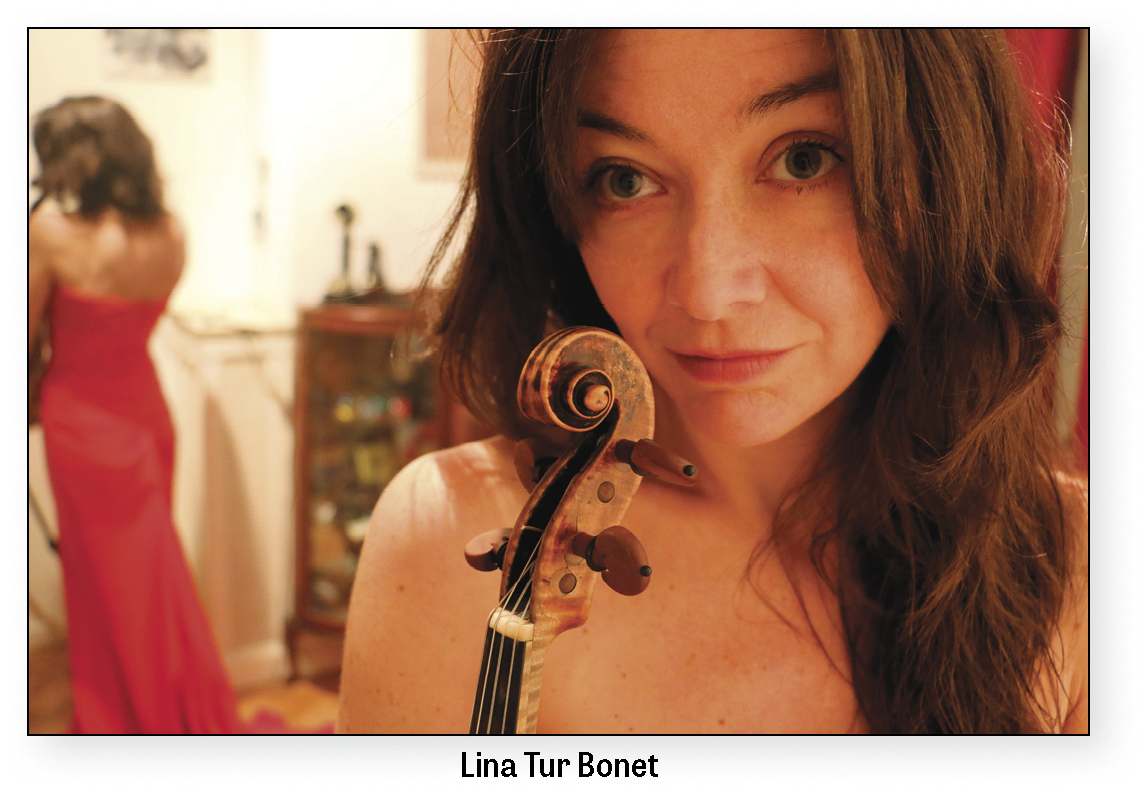
And the festival isn’t just about spectacle alone – this year’s is actually delivering a sizeable chunk of the Bach catalogue, including some rarely performed works. A casual glance at their program shows there’s about a half dozen must-see concerts packed into one weekend. The festival will feature Bach’s complete sonatas and partitas for solo violin, played by rising star Lina Tur Bonet. Then, in the weird ideas category, there’s a concert devoted to The Art of Fugue featuring Les Voix Humaines and the electric guitar collective, Instruments of Happiness, which as a concert idea is likely the perfect way to get people interested in what’s probably the most academic composition of the classical canon. But if you need further motivation to pack your bags for Montreal, here are two other concerts make the road trip worth it: the near-legendary Italian gambist Paolo Pandolfo will be joining the festival for a concert of Bach cello suites (which he’s decided, somewhat mercurially, to transcribe and play on viola da gamba); and harpsichordist Eric Milnes will direct the Montreal Baroque Festival band, which includes the festival's best soloists, for an all-star concert of Bach cantatas.

And there’s plenty more good music to see: a concert of instrumental music composed by Purcell and his contemporaries; soprano Jacinthe Thibault singing late 18th-century French cantatas; and a fantastical concert dedicated to the music of Jean-Féry Rebel, to name a few. If the idea of taking a weekend off to hear non-stop Baroque concerts appeals to you, consider giving this festival a look. It takes place on and around the McGill University campus in downtown Montreal from June 23 to 26.

Tafelmusik Summer Baroque: To some, getting outside the city for a weekend of concerts might be a bit ambitious. Fortunately, Toronto’s top baroque band has a little festival of its own. The Tafelmusik Summer Baroque Festival features a series of free concerts running from June 6 to 18, and while the group isn’t forthcoming on details, they’re solid enough to take a chance on, particularly when they’re free. A couple stand out: Tafelmusik soloists will be playing a mixed program of chamber music on June 11 at 12:30 in somewhat baroque-unfriendly Walter Hall in the Edward Johnson building; if you prefer a full, woody orchestral sound, consider checking out their concert for choir and orchestra at Grace Church on-the-Hill on June 18 at 7:30.

Cappella Intima: One lesser-known group that’s been putting on some great concerts for a while now is also worth a listen this month. Tenor Bud Roach’s ensemble Cappella Intima has been getting quite a reputation for its exciting, well-researched concerts of late-Renaissance Italian vocal music, and their next show promises to be more of what the group does very well. “The Paradise of Travellers” will be an evening devoted to the Venetian stop on the grand tour, featuring canzonettas, arias, and sacred motets written by the composers (Monteverdi, Croce, Banchieri, and, somewhat later, Rolla) with accounts of the city of Venice by tourists from the early 17th-century (spoiler: not all of them thought the city lived up to its reputation). You can catch this show at Trinity St.-Paul’s Centre on June 22 at 8pm.

Have cello, will travel: I’ve always liked the idea of casual classical concerts; so, if you’re not in the mood for a formal evening at the concert hall, consider giving this show a try. Steuart Pincombe is an American baroque cellist who has recently come back to North America after doing a degree at the Royal Conservatory at The Hague. Not content to tough it out on a more conventional, and in all probability, slower, path to a musical career, he has taken the artistic lifestyle to new extremes. He has bought a used trailer, in which he now lives, and is putting on a series of concerts all over North America in whatever venue will put him up.

His current solo project, “Bach and Beer” is a pay-what-you-can concert of three of the Bach cello suites, which he’ll be performing at the Rainhard Brewery in the Junction on June 16 at 7 pm. Each suite is paired with a brew from Rainhard’s own selection. As a concert idea, Pincombe’s approach is fun. But as a beer aficionado, don’t get me started! (Did you know people have been brewing beer using recipes that are hundreds of years old and changing them gradually over time? Sort of the same way music has evolved? Surely I’m not the the first person to suspect the craft beer movement as being a thinly applied intellectual veneer meant to rebrand alcoholism as a fun hobby...oh dear, there I go.)

Anyway, as I said, you can’t deny it sounds like a fun idea. I am all in favour of getting classical music out of the concert hall and into as many different venues as possible. Bach, in particular, is rarely if ever performed on the bar scene; letting the audience relax with some food and drink while listening is a great idea for winning over a new audience.

Summer Music in the Garden: Speaking of the cello suites, the Music Garden at the foot of Spadina, landscaped to follow the structure of the Bach suites, is a good reason to take a trip down to Harbourfront and find an oasis in the middle of downtown. Among the twice-weekly concerts that will take place there till well into September, this summer some younger Montreal-based musicians will be giving a spirited performance of some composers who don’t get much attention at all. Soprano Andréanne Brisson Paquin joins Pallade Musica chamber ensemble – harpsichordist Mélisande McNabney, violinist Tanya LaPerrière, lutenist Esteban La Rotta, and JUNO-nominated cellist Elinor Frey – to perform two female baroque composers (Elizabeth-Claude Jacquet de la Guerre and Rosa Giacinta Badalla) together with the English composer, John Eccle, and the Polish composer, Adam Jarzębski, in a free concert on July 14 at 7pm. This is definitely a group that can take risks with their concert programming, and you can be sure they will play everything on the program with dedication and verve.

David Podgorski is a Toronto-based harpsichordist, music teacher and a founding member of Rezonance. He can be contacted at earlymusic@thewholenote.com

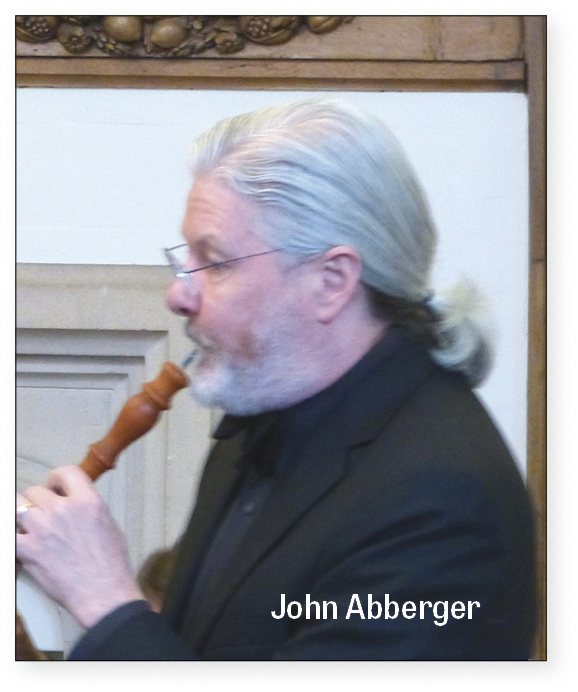
Early_1.jpgFunny how new initiatives that should be big news have a way of sneaking up on you. Case in point, apparently there’s a Bach festival (three concerts) happening in town next month and nobody told me! Titled “Four Centuries of Bach. First Annual Toronto Bach Festival” it appears to be the brainchild of  John Abberger, who besides being a principal oboist for Tafelmusik and the American Bach Soloists, recorded an album of Bach organ concertos for Analekta in 2006 as well as an album of Bach’s Orchestral Suites 2 and 4 in 2011. His principal accomplice appears to be Phillip Fournier, organist at the Oratory of St. Philip Neri, on King St. W. Fournier will doubtless dazzle the audience May 28, in the middle concert of the three, performing Bach’s Toccata and Fugue in d BWV 565 and other works on the Oratory’s historically inspired Gober and Kney instrument.

The other two concerts, bookending this one, May 27 and May 29 take place at St. Barnabas Anglican Church, 361 Danforth Ave and are, I suspect, Abberger’s “babies.” The first is a concert that includes two of Bach’s Weimar cantatas (Weinen, Klagen, Sorgen, Zagen and Herz und Mund und Tat und Leben), with a vocal lineup featuring Ellen McAteer, soprano, Daniel Taylor, alto, and Lawrence Wiliford! Info for the Sunday closing concert is somewhat vaguer – sonatas and trios by J.S. Bach, played by “Musicians of Four Centuries of Bach.” But if the calibre of the players in the first two concerts is anything to go by, we’re in for a three-part treat!

Given that the scope of the project is fairly ambitious, the people responsible really should devote more time to publicity. To wit, their website lists only concert titles, venues and dates, and a chance to order tickets. And that’s pretty much it. You may see some concert programs if they update the website by the time you read this, but it doesn’t look like they will. So being somewhat diligent about these things, and wishing always to provide a service to my readership, I did a little sleuthing and managed to uncover a few details, with which I can make some conclusions about this little-known upstart of a music festival.

Which leads me directly to my second reason for exhorting you to catch this Bach festival while you can, which is that the organizers seem to be burying their light so deep beneath a bushel - lack of publicity, last-minute organization - that “Four Centuries of Bach” might end up being how long it takes Abberger et al to get through Bach’s catalogue of compositions for at least (wait for it) four centuries.

Grumbles aside, Abberger has enough experience with Bach’s cantatas and other works to be able to craft a better-than-average performance. And Fournier is a gifted musician: I’ve enjoyed listening to him play a Bach sonata or two on at least one occasion.

Calling anything a “First Annual” festival is equal parts hubris and hopefulness. May the latter prevail!

Toronto Masque Theatre: If you’re looking for a good show to see this month, you need not make any decisions based on trust, either of the abilities of the musicians on stage or of the conjecture of any music critics, look no further than Toronto Masque Theatre’s performance of Purcell’s The Fairy Queen, which will be given at the company’s new digs at the Arts and Letters Club of Toronto, May 27 to 29 at 8pm. TMT was conceived with the idea of doing English 17th-entury repertoire, for which Purcell fits the bill perfectly, and the work will be staged and danced to by the redoubtable Marie-Nathalie Lacoursière, who has chosen to spice things up by setting the story contemporaneously. This is the kind of show that TMT was created to do, with singers, dancers and musicians who will do it very well. If you feel like something operatic, this concert is a sure win.

Monteverdi: If you’re not in the mood for English opera, consider attending a performance of one the masterworks of one of the greatest composers of the 17th century, performed by the ensemble in the city that’s most qualified to do it. I’m speaking of course about Toronto Consort’s final concert of the season, a complete performance of Claudio Monteverdi’s Vespro della beata Vergine, which they’ll be doing at Trinity-St. Paul’s Centre, May 6 to 8. I can’t tell you the number of times that other groups’ recordings and performances of this particular work have left me disappointed in the past, particularly with the oft-repeated decision to perform the Vespers a cappella, and I’m happy to say that the Consort will not be duplicating this particular faux pas. They’ll be bolstered by a Montreal-based consort of sackbuts, La Rose des Vents, and that implies that some continuo will also be on hand – entirely necessary for a major work that was performed in a positively palatial church in one of the richest cities of the Renaissance. English tenor Charles Daniels will also lead the group, so you can bet the Consort is going to end this season on a high note.

Tafel’s Two-City Tale: Of course, all these picks lead up to the Toronto early music scene’s safest bet this month. Tafelmusik will be performing another program designed by Alison Mackay, this one based around the coffee-house scene of the early 18th century. “Tales of Two Cities: The Leipzig-Damascus Coffee-House” brings Canada’s number-one baroque orchestra together with oud player Demetri Petsalakis, percussionist Naghmeh Farahmand and singer Maryem Tollar in a concert of Arabic music along with the music – if the Leipzig connection is any indication – of J.S. Bach. It seems like there’s something in this concert for everyone. Not interested in hearing just another Tafelmusik Bach concert? The Arabic angle adds an interesting perspective. Not particularly keen on world music? Tafelmusik does a good enough job of Bach. You can catch this cultural cross-pollination at Koerner Hall, May 19 to 22, and George Weston Recital Hall, May 24.

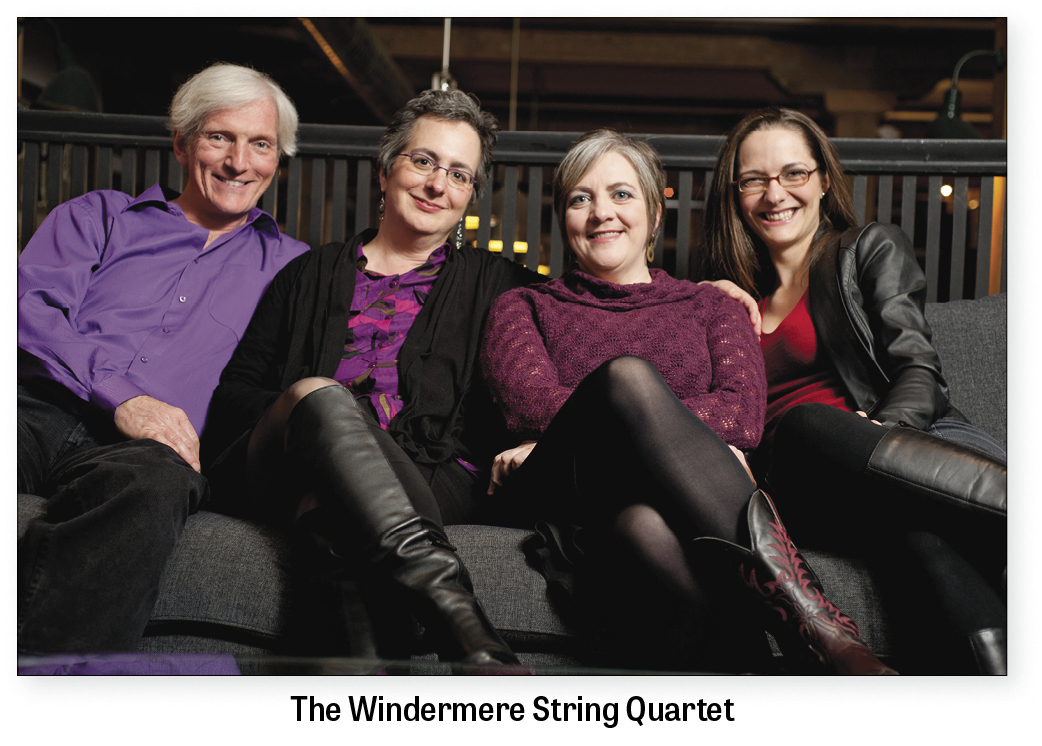
Early_2.jpgWindermere Fan: And finally, there’s a lesser-known group in town that deserves to be gambled on. The Windermere String Quartet is a string ensemble that features some interesting repertoire and is capable of a very spirited performance indeed. Their next show, on Sunday, May 15, will feature a couple of standards of the string quartet repertoire, namely a Haydn quartet and Schubert’s Death and the Maiden. But the WSQ has also found a hitherto-unknown composer, the early 19th-century Spaniard, Juan Chrisóstomo Arriaga, who died at the tender age of 20. The WSQ has a following already, puts on a fun show, and is willing to explore the entire length and breadth of the quartet repertoire. They’re worth a shot.

David Podgorski is a Toronto-based harpsichordist, music teacher and a founding member of Rezonance. He can be contacted at earlymusic@thewholenote.com.
BBB-Early1.jpgCount Hieronymus Joseph Franz de Paula Graf Colloredo von Wallsee und Melz, by the grace of God both spiritual and temporal ruler of the city of Salzburg, had ambitious plans for his new city. Although an unpopular choice with other church officials, as his election on the 13th ballot would indicate, Colloredo had no intention of currying favour with the common people either. His intentions were loftier. He wanted reform.

Reform, in any age, means not worrying over the popularity of your policies, and a certain optimism that you’ll be appreciated for them later. For the archbishop, a well-educated eighteenth-century modernizer and would-be statesman, this also meant embracing the ideals of the new Enlightenment. The religious superstition that still clung to Catholicism after a millenium was to be officially suppressed. No more pilgrimages, and worshipping relics was frowned upon. There were to be no more religious processions through the streets, no kitschy decorations hung in churches and no lengthy orchestral musical interludes during the Mass. Colloredo’s new modern church was to shed medieval superstition for the new ideals of reason and science – and if this meant he could save himself a bit of work, and a bit of money, along the way, then so much the better.

For the 16-year-old Wolfgang Amadeus Mozart, Colloredo’s reform, especially the part that involved budget cuts, was an unmitigated disaster. As the prince-archbishop’s new concertmaster, less music in church (call it cuts to arts funding) meant fewer commissions, and therefore less money, for composers like him. Furthermore, as what we might today refer to as an emerging artist, there was less opportunity for the young Mozart to distinguish himself by writing large-scale works that could get him a better appointment in the future. So faced with fewer opportunities Mozart did what artists typically do – he left to find work elsewhere. In this case, Mozart left for Milan to write an opera.

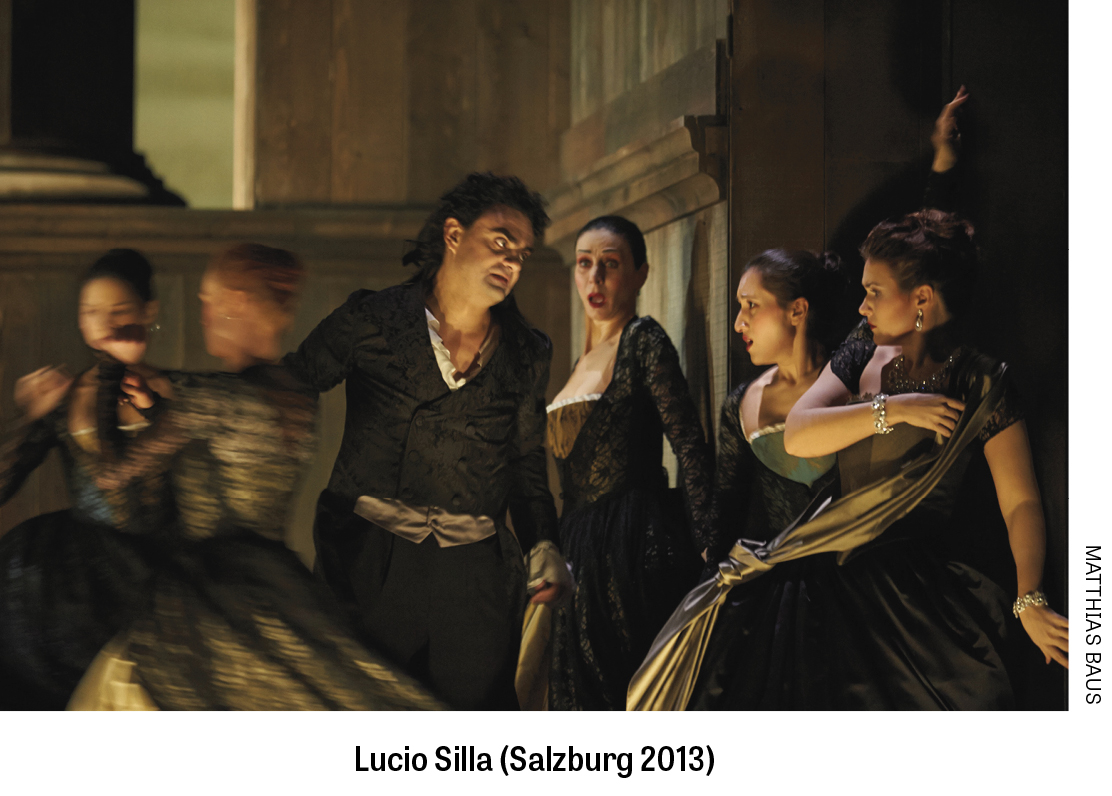
The result of Mozart’s journey to Milan was Lucio Silla, an opera seria based on the story of Julius Caesar’s predecessor (and Rome’s first dictator) Lucius Sulla. As a career move, the idea of putting on an opera in Milan circa 1772 seemed like a bit of a sure thing. This was the third opera the teenage wunderkind would be writing for the Milanese stage and he would be working with a capable librettist, the Teatro Ducale’s new appointment, Giovanni di Gamerra. Mozart also had a few months to devote to the project, more than enough time for a hyper-prolific composer who had already written some 25 symphonies, seven operas, and four piano concertos. Success, it would seem, was guaranteed.

Sadly, Lucio Silla didn’t go over quite as Mozart planned, and it wasn’t his fault, either. The lead tenor fell ill and his replacement couldn’t handle the part, so many of the best arias in the opera had to be rewritten or cut out entirely. The other singers were late arriving in the city and had to begin rehearsing behind schedule. Not only did they bomb in the premiere, but the opera was considerably longer in performance than during rehearsal – imagine, if you will, a poorly sung opera that seems to never end, and you’ll probably have some idea of how the premiere went. Lucio Silla would be the last opera written by Mozart for an Italian audience, and after a catastrophic run the chastened young composer crawled back to Salzburg and the archbishop, a failure at 16.

I think it’s safe to say that Opera Atelier’s Canadian premiere of Lucio Silla will raise the admittedly low bar set by its initial premiere. But they will likely do a lot better than that! Atelier’s artistic directors, Marshall Pynkoski and Jeannette Lajeunesse Zingg played a significant role in the show’s triumphant return to Milan at La Scala last year, under the baton of Marc Minkowski, and an even more extensive role in the triumphant production of the opera in Salzburg two years prior to that (including the participation of the Atelier Ballet in the Salzburg run). Now they get to bring the opera, in their very own production, to Toronto audiences from April 7 to 16 at the Elgin Theatre, including the stars of of the Salzburg and La Scala runs (Kresimir Spicer and Inga Kalna). Unlike Mozart’s Milanese collaborators, Opera Atelier never fails to put on a great show, and this is a Canadian premiere that is long overdue! If you see one concert this month, make it this one.

The Orlando Consort, with over 25 recordings to their name, doesn’t come to town very often (although as a soloist their tenor, Charles Daniels, is well known to Tafelmusik audiences, and a welcome guest), but any chance to hear them live is certainly welcome. The medieval-themed a cappella vocal group is known for their imaginative concert programming as well as some exceptional singing. Their latest project is certainly as imaginative as choral concerts get; they’ve devised a program of music known to have been extant in France during the lifetime of Joan of Arc and used it to score a compilation soundtrack to the 1928 silent film classic La passion de Jeanne d’Arc, by Carl Theodor Dreyer.

As either a work of scholarship or of film scoring, this would have been a formidable workload. The fact that the Consort has accomplished both demonstrates incredible artistic vision and dedication, and I have no doubt the veteran singers will be able to pull it off splendidly. You can catch this at Koerner Hall at the Royal Conservatory of Music, April 3 at 3pm.

BBB-Early2.jpgZelenka at Tafelmusik: One composer who’s been getting some well-deserved attention in recent years is the Czech composer Jan Dismas Zelenka. Since his rediscovery by fellow Czech composer Bedřich Smetana in the mid-19th century and the publication of a catalogue running to nearly 200 works, early music audiences have had more and more chances to hear him over the last few decades. Indeed, Tafelmusik audiences should already be familiar with the composer – the group performed his concert overture, Hippocondrie, earlier this concert season, and an excerpt from one of his sonatas made it on to their fantastic Galileo Project.

A double bassist, kapellmeister and avid contrapuntalist, Zelenka had the good fortune to work in the epic Dresden court of Augustus the Strong, where he wrote sacred works for choir and orchestra. Zelenka was also well-connected. Besides working with the great violinist, Johann Georg Pisendel, he was also a personal friend of Bach and was much admired by both composers. This month, Tafelmusik honors both Bach and Zelenka as composers of sacred music with a concert of Zelenka’s Missa Omnium Sanctorum and Bach’s cantata Weichet nur, betrübte Schatten at their home base at Trinity-St. Paul’s Centre, April 28 through 30 and May 1.

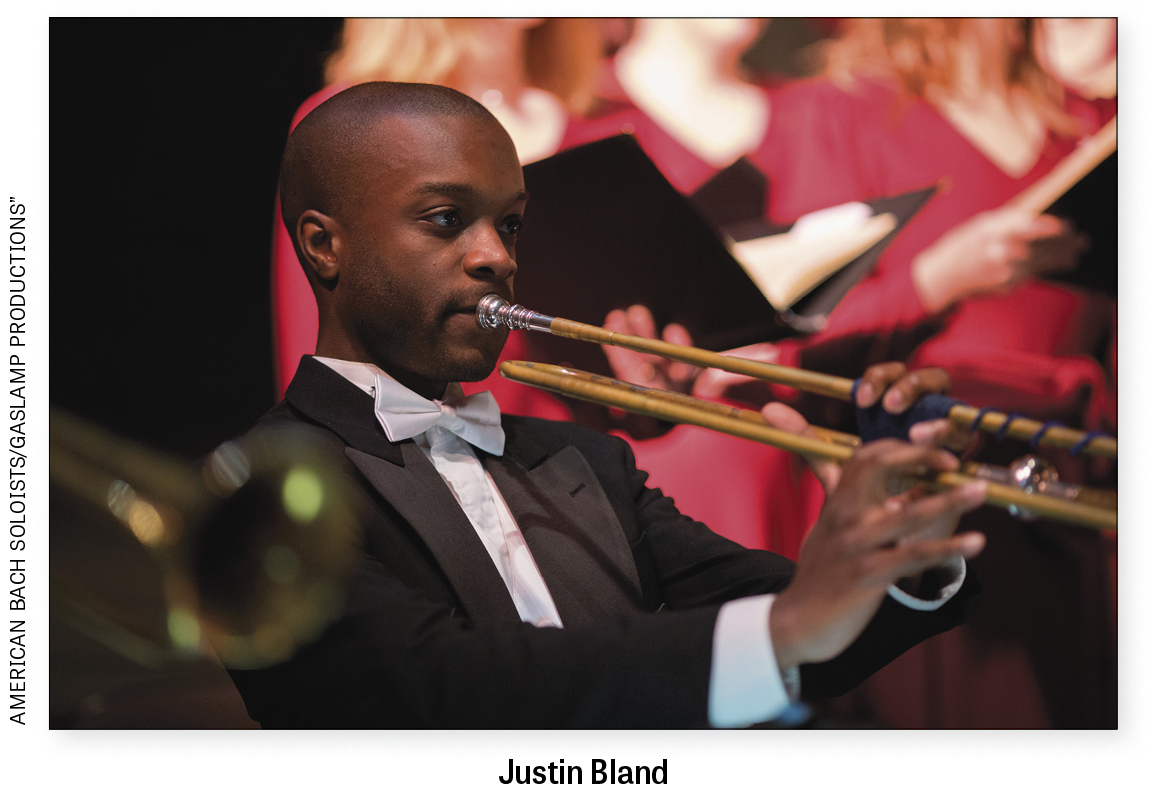
Bland by name only! A good trumpet player is hard to find, and an excellent one harder still. It’s again still rarer to find a great player of the baroque trumpet, since the instrument is considerably harder to play than its modern counterpart (smaller embouchure, no valves) and this may explain why Justin Bland is so darn busy and why he plays with, well, basically everyone. The Copenhagen-based musician will be visiting Toronto to play with Scaramella in a concert dedicated to music for baroque trumpet, and featuring the music of Bach, Melani, Merula and Purcell at Victoria College Chapel on April 16. The up-and-coming virtuoso will be playing with Scaramella artistic director Joëlle Morton on violone, the talented young soprano Dawn Bailey and local hotshot violinists Michelle Odorico and Rezan Onen-Lapointe, which means that this concert will feature a considerable amount of talent as well as youthful exuberance. (In the interest of full disclosure, I should  also say that the concert also features this columnist on harpsichord, whose talent and/or exuberance you will have to judge for yourselves.)

David Podgorski is a Toronto-based harpsichordist, music teacher and a founding member of Rezonance. He can be contacted at earlymusic@thewholenote.com.
2106-Early.pngSo. Is there any point in reading Beowulf anymore? It has the distinct honour of being the first work of literature from a non-Greek or Latin source text, but while a quick glance at U of T’s course calendar would seem to indicate that the Viking Age epic will likely show up on an Old English literature course, you could very easily complete an entire English undergraduate degree without ever having to read it. In fact, reading it may well be entirely unnecessary. The poem has also undergone countless adaptations and updates to appeal to a modern audience, including Sci-Fi film versions, operas, comic books (there is a Beowulf: The Graphic Novel if you care to read it), novels (including the Michael Crichton bestseller Eaters of the Dead) and, currently, a made-for-TV mini-series created for British television and starring a cast of complete unknowns.

It’s also well worth asking if Beowulf, being over a thousand years old, still holds up as literature. For practical purposes, reading it in the original Old English is effectively impossible. And despite numerous translations into modern English spanning over two centuries (including a very fine, if overly creative, adaptation by the Irish poet Seamus Heaney), Beowulf is, as I mentioned, no longer required reading. As poetry – in the sense of an exploration of language and wordplay – it probably won’t impress a modern audience. If you’ve read it, you will probably recall that the poet’s technique of choice was alliteration not rhyme, and rhythm not metre – not particularly impressive in a digital age. Besides, the plot is next to non-existent and focuses on a series of fights between the titular hero and increasingly large and dangerous monsters. What’s up with that? as they say these days. I also doubt if too many potential readers are at all interested in the period in which Beowulf is set – that is, Northern Europe between the 8th and 11th centuries. I’m no historian, but I take historians’ word for it when they call the period the Dark Ages. (And we haven’t even touched on the issue of whether the Beowulf poet’s own audience would or could have even read the poem themselves.) What were literacy levels like in eighth-century Denmark? What was their book publishing industry like? I’m guessing not very robust. So does the literary canon still need Beowulf, or should it be stricken from the roster of classic literature?

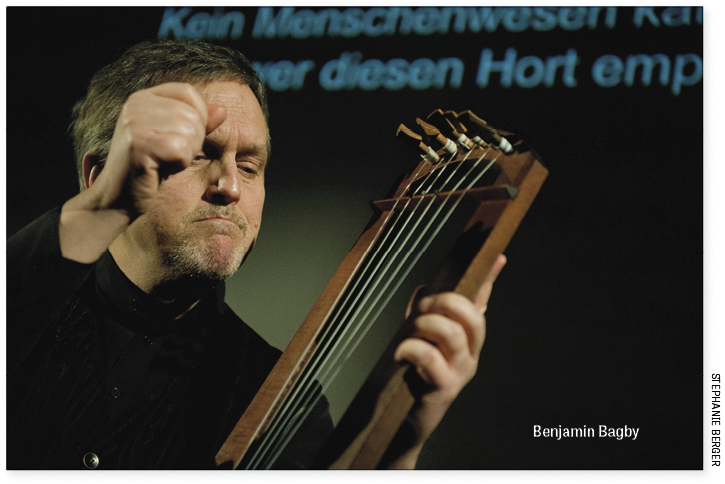
To answer this question, one need look no further than the very interesting life of one Benjamin Bagby who has made a career as (to my knowledge) the world’s only bard, meaning he travels the world performing ancient epic poetry and accompanies himself on the Anglo-Saxon harp. Yes, this is literally his day job. Bagby claims he was captivated by the Beowulf saga from the day he read it at the age of 12, and I for one am prepared to completely believe him. Since he first read it, Bagby taught himself to perform the epic in the original Old English, and has since been touring Beowulf around the world as a solo performance for the last decade. If there is any justification for Beowulf’s place in the literary canon, Bagby’s performance is it, and this month, he’ll be performing the epic poem (with English surtitles) in Toronto at Trinity-St. Paul’s Centre, courtesy of Toronto Consort, on March 11 and 12. I can’t think of any better reason for historically inspired performance than to revive classic musical or literary works and present them to the public in a manner as close to the original as modern scholarship will let us get. We still have no idea who wrote Beowulf, but if he knew his poem was still being performed over a thousand years later to sold-out concert halls, he’d be gobsmacked.

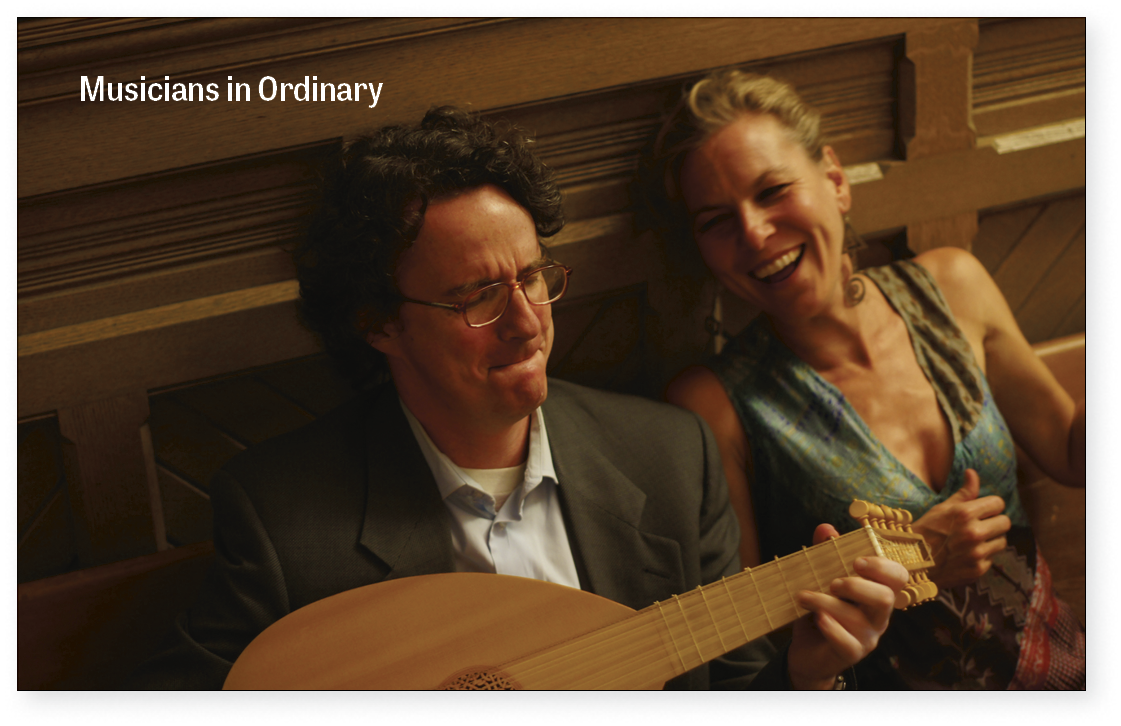
Swan of Avon: Some literary classics are more accessible than others, some because they’re written in modern English, and some because, unlike Bagby’s Beowulf, tickets haven’t already almost sold out a month in advance. So, while you still can, avail yourself of tickets to the Musicians in Ordinary who are in the midst of a three-concert series devoted to Shakespeare, featuring ornate poetry and elaborate musical arrangements (albeit fewer monster fights than Bagby’s Beowulf). But, like Bagby, “Sweet Swan of Avon” attempts to take the audience into the language of Shakespeare’s time, rendering Shakespeare’s words more the way people would have said them at the time, rather than, as is more customary these days, like a modern dude who happens to have studied Shakespeare. March 19 at 8pm, in the intimate surrounds of the Heliconian Hall, the MiO present the second of this three-concert series, “Shakespeare’s Saints & Sinners,” featuring excerpts from Hamlet, Macbeth and Romeo and Juliet read by U of T prof David Klausner, along with lute songs by Dowland and Thomas Campion, and motets with strings composed by Orlando Gibbons. Violinist Chris Verrette leads a string band along with soprano Hallie Fishel and lutenist John Edwards for a concert that’s 100 percent Shakespearean. Check it out, as well as the third concert in the series, “Shakespeare’s Sorrows,” which takes place at the same venue on April 23, the 400th anniversary of the Bard’s death.

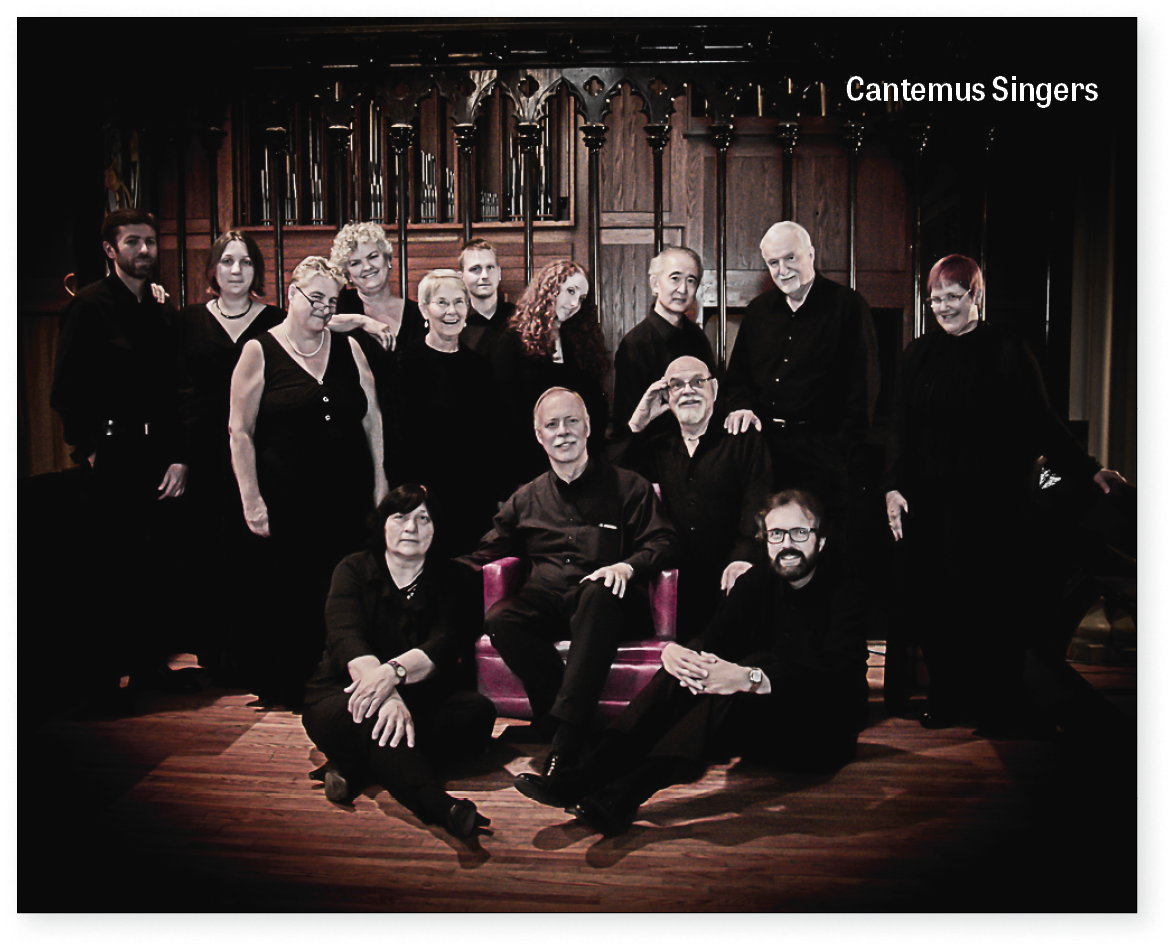
Sweet Kisses: Shakespeare still too serious? If you’re looking to enjoy a concert that that’s passionate, emotional and exciting, but demands less gravitas than (say) Shakespeare or Old English epics, consider checking out a concert by the Cantemus Singers instead. “Sweet Kisses/Baci Soavi” is a concert of Italian madrigals on March 19 at one of the hidden gems of Toronto’s downtown core – the Church of the Holy Trinity. By the end of the Renaissance in Italy, poetry and music went from romantic and refined to a roller coaster of emotions. One really wonders how Italians of the 16th century were able to make it through the day without making themselves lovesick. Soprano Iris Krizmanic joins the Cantemus singers for a program of music by aristocrat, composer and murderer Carlo Gesualdo and the undisputed father of the musical Renaissance, Claudio Monteverdi, as well as by two lesser-knowns – Monteverdi’s contemporary Luca Marenzio, and the composer/nun Vittoria Aleotti (apparently a nun of the time could write sordid love songs and none of her colleagues seemed to mind). This sounds like a thoughtful, in-depth exploration of the Italian renaissance vocal repertoire by a group that has made madrigals their specialty. Be sure to check this concert out.

Polyphonic grand tour: For the more contemplative, the Oratory at Holy Family Church has a special concert for Lent that features sacred music from the Renaissance that transcends the everyday world of the secular. There, on March 16 at 8pm, you can hear a sung compline and a choral concert which includes choral pieces and arias by Bach, two settings of the Lamentations of Jeremiah by Byrd and Tallis, and motets by Victoria and Cristóbal de Morales. It’s a grand tour of sacred polyphony by some of the greatest composers of the Renaissance performed by some exceptional singers.

Alard’s Goldberg: Finally, Tafelmusik is presenting a special concert of chamber music featuring the French harpsichordist Benjamin Alard that is sure to delight Bach aficionados. Alard is just 30 years old but is already working his way through the master’s repertoire for solo harpsichord. This month, Alard comes to Trinity-St. Paul’s, March 31 to April 3, to play the Goldberg Variations. He’ll be joined by Grégoire Jeay, Jeanne Lamon and Cristina Mahler to play the masterful trio sonata from The Musical Offering. Alard is a Bach specialist who already established that he has what it takes to make it as a soloist before his 30th birthday, so it will definitely be worth it to hear his take on Bach’s masterpiece. 

David Podgorski is a Toronto-based harpsichordist, music teacher and a founding member of Rezonance. He can be contacted at earlymusic@thewholenote.com.
2105-Early.jpgDare one ask if there will come a time in music history when the historically informed performance practice advocated by the early music movement becomes no longer necessary? Devotees of capital-C classical music may well wonder why the early music revival is so preoccupied with bringing back minor composers from the 17th and 18th centuries, but stops, officially, with the death of Bach in 1750.

It’s a worthwhile question to ask: there were, after all, treatises on musical practice, like those beloved by the early music movement, written well into the 19th century; and the instruments of a Romantic-era orchestra were no more significantly different from those of their predecessors as they are from an an orchestra of today.

Fans of Tafelmusik, for example, might once in a while dare to whisper, given the group’s near-canonic range of orchestral literature, that the group should take on more conventionally classical repertoire for a symphony orchestra. And indeed, they sometimes do. This month, as an example, Tafelmusik is giving the concertgoing public the opportunity to hear an early music take on the Classical and Romantic eras. Hopefully they will both bend the ears of a few traditionalists with a rare foray into 19th century repertoire that features works by Brahms, Beethoven and Rheinberger, and will offer a fresh take on the works in question for hard core classicists more accustomed to hearing the same repertoire kicked to death by over-large orchestras in unforgivingly large halls. If there’s an early music group in Toronto that’s qualified to take on Romantic repertoire, Tafelmusik is it – the group cut its teeth on Haydn and Mozart in the early ’90s, making it the most forward-leaning ensemble on the Toronto early music scene.

Tafelmusik’s concert, on February 4 through 7 at Koerner Hall, features German conductor Bruno Weil, who has been leading the group through the Beethoven piano concertos and symphonies since 1996, and is now back to complete the cycle with a performance of the Ninth Symphony. While it’s easy to dismiss Beethoven’s Ninth as the warhorse of orchestral concert programs (who can’t hum the Ode to Joy?), it’s not often that one gets to hear it done by a period ensemble on classical instruments. From a performance practice perspective, The Ninth is also the gateway to the 19th century, and the choral works chosen to accompany it in this program complement Beethoven’s final symphony perfectly. Brahms’s chromatic, fugal Warum ist das Licht gegeben and Rheinberger’s beautifully imitative Abendlied are both delightful to listen to and entirely appropriate for an early music group – Brahms’ well-known penchant for trying to compose in the style of Bach is quite evident here, and the Rheinberger sounds like a Palestrina motet updated for a 19th-century audience.

Weil is also a fine conductor with the unique ability to straddle both early music and modern territory deftly. Having him back to conduct the Ninth in order to complete the Beethoven cycle celebrates a particularly successful artistic collaboration between the conductor and the orchestra. Who knows? Maybe we will see Weil next year conducting Tafelmusik in a Schubert or Brahms symphony.

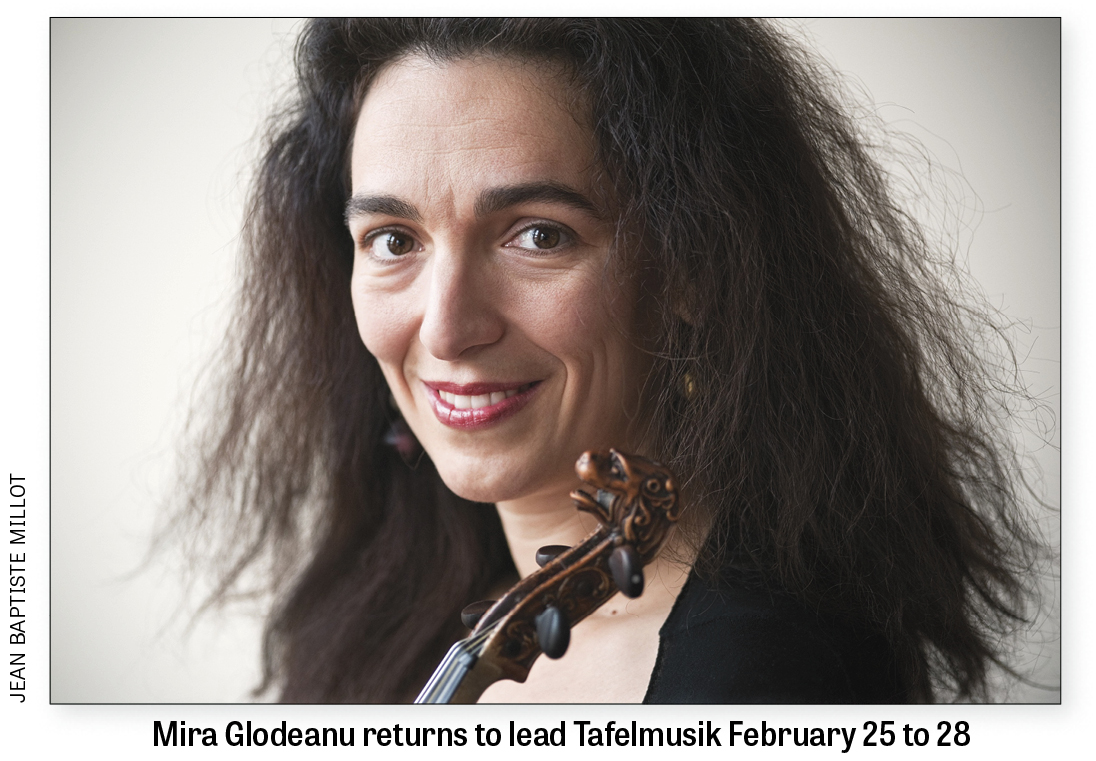
If you miss this particular orchestral extravaganza, you might still want to catch Tafelmusik’s other concert later this month. Like the earlier concert, it features the group doing orchestral repertoire that stretches hard-line early music definitions; this time Mozart, not Beethoven, is the evening’s dedicatee. The Romanian violinist Mira Glodeanu will return to lead the group in a concert of Mozart’s greatest hits – including Eine kleine NachtmusikSymphony No. 40 and his Sinfonia Concertante. It should be a worthwhile evening for similar reasons to the Beethoven concert – like Weil, Glodeanu is a gifted musician with an ear for Classical repertoire, and it will be interesting to see what kind of performance she can pull out of the ensemble. And once more, it’s a chance to hear an early music take on some orchestral standards by a group that will do a first-class job. Maybe that’s why Tafelmusik keeps getting mistaken for the TSO. You can catch Tafelmusik doing Mozart at their more usual venue, Trinity-St. Paul’s Centre, February 25 to 28.

The Way of the Consort: It’s been 16 years since the Toronto Consort released their medieval album The Way of the Pilgrim, and if you’ve never heard the disc before, you’ll get a chance to hear it in concert February 12 and 13. The Consort is re-releasing the album this month on the Toronto-based independent label Marquis records, and celebrating the occasion with a concert/CD-release-party at Trinity-St. Paul’s on February 12 and 13 at 8 pm. The Way of the Pilgrim features songs from the 12th and 13th centuries, from Spain, France and Germany, sung by crusaders, travellers, and yes, pilgrims to the Holy Land. The Way of the Pilgrim became something of a seminal album after its release in 2000, and it ranks as one of the best recordings of medieval music by a Canadian group, so it’s good to see that the Consort is giving the disc some publicity as well as a live performance.

Scaramella pardessus: The social conventions around what is considered appropriate behaviour often seem confusing to outsiders or succeeding generations. In the ultra-conservative conformity of 18th-century France, it was apparently considered unladylike behaviour for a woman to hold a violin on her shoulder, or worse, under her chin. The elegant solution the French came up with was the pardessus de viole, a miniature version of the viola da gamba that could play music in the same register as the violin while being held daintily in the lap. On March 5 at 8pm in the Victoria College Chapel Scaramella pays tribute to this eccentric instrument with a concert of French music composed just for the pardessus de viole. Montreal-based gambist Mélisande Corriveau joins New York harpsichordist Eric Milnes and Toronto’s own Jöelle Morton for a concert of French 18th-century music. An excellent chance to hear a rare instrument played by a virtuoso, so be sure to check it out.

Pisendel: Sometimes you can judge someone by the company he keeps. We might not appreciate the music of Johann Georg Pisendel very much today, but the Dresden composer and orchestra leader was a colleague and friend to a galaxy of talent in 18th century Germany and Italy, including Bach, Vivaldi, Telemann, Zelenka, JG Graun … you get the idea. Although Pisendel was more of a bandleader and violinist than a composer – he left us with just a handful of violin concertos, orchestral works and sonatas – he had the good fortune to be a musician in a city where culture counted for a lot. His employer, Augustus the Strong, may well rank as the most extravagant man in history, and spent lavishly on cultural events ranging from court balls, Venetian-inspired masquerades, and animal-tossing contests (?) in order to entertain a wide succession of mistresses, to a court orchestra, directed by Pisendel and paid for by Augustus, which was one of the finest, and largest, in Europe. On February 28 at 2 pm at Gallery 345, my group, Rezonance, presents a concert of some of the finest music of the late Baroque, all dedicated to a man who was one of the greatest conductors of his day. If I may be permitted to blow my own (modern) horn for a moment, Rezonance is an energetic ensemble that features up-and-coming talent in the city playing insightful and interesting concert programs. If you’re interested in an informal, fun concert of chamber music, this concert promises to be both informative and entertaining. 

David Podgorski is a Toronto-based harpsichordist, music teacher and a founding member of Rezonance. He can be contacted at earlymusic@thewholenote.com.
Early Music 1For most non-musicians, the end of December is a welcome opportunity to take a break from the pressures of work, usually present year-round, and spend time with family and friends. This is sadly not the case if you happen to be a performing musician. While most of us are winding down for the holidays, it seems like Toronto early music groups are working harder in the next couple of months. December and January are two busy months for early music groups in the city, and whether it’s Christmas repertoire or part of their regular programming, if you’re in the mood for a concert on any given week in the next couple of months, there will be an early music concert that will be well worth going out to hear.

It’s not often that I find myself in the position of trying to argue that Antonio Vivaldi is an underrated composer who needs to be given his due. But while Vivaldi still ranks as the great Italian orchestral composer of the 18th century, it’s rare to hear his opera music, and still rarer to hear his sacred vocal music performed in concert. I’m happy to say that the Aradia Ensemble will be doing their part to give us a new take on the Red Priest with their recording of his sacred vocal music, which they’ll be celebrating with a CD launch concert at 7:30pm on December 5 at St. Anne’s Anglican Church (270 Gladstone Ave). Soloists Hélène Brunet and Vicki St. Pierre will join the group to sing in an all-Vivaldi program that includes his cantatas Beatus VirCur Sagittas, Cur Tela, and Vos Aurae per Montes. Aradia has over 50 albums under its belt, many of them excellent, so it’s a bit of a shame that the group remains largely ignored by the Toronto concert-going public. This promises to be a solid concert of some rare music by a first-rate composer.

Not Ordinary: Another Toronto group that deserves a little more attention is the Musicians in Ordinary. Over the last few years, the group has been positively thriving as the ensemble-in-residence at St. Michael’s College, of the University of Toronto. In an age of cuts to culture and with symphony orchestras being forced to close their doors for lack of funding, it’s heartening to see that U of T is giving the group a regular performance space as well as some resources for larger-scale concerts. There is absolutely no group on the Toronto early music scene that performs as wide a range of repertoire as frequently as this one. Their concert next month is a great example of what the group can do when it’s scaled up. St. Michael’s Schola Cantorum will be joining the Musicians in Ordinary for a concert of English music by Handel and Geminiani. Violinist Chris Verrette will also be performing with the group in what promises to be a very enjoyable musical evening, December 7 at 7:30, at St. Basil’s Church, St. Michael’s College. The holiday season also promises a chance to get out and see some concerts, and it’s nice to see that there’s more than just Messiahs to get us all in the mood.

Cantemus Singers start the Christmas season off early at 7:30pm on December 5 with a concert of Christmas music from the courts of 16th-century Spain and Austria at the Church of the Holy Trinity. If you happen to be in Kingston, or if you’d prefer a choral concert that’s a little more conventional in its repertoire, you might want to consider checking out the Melos Choir, who will be doing a program of Advent and Christmas songs and readings featuring music by some Renaissance heavyweights –Schütz, Byrd, Praetorius and Victoria. It’s at St. George’s Church in Kingston on December 5 at 7:30.

The Oratory at Holy Family Church often puts on timely music and a well-researched repertoire. This month’s concert at 8pm on December 9 at the Oratory is no exception. They’ll be doing Advent music by Charpentier and Bach, as well as some baroque composers that I had to look up. Giovanni Rigatti was a 17th-century Venetian composer, while Nicolaus Bruhns was a Danish-German composer, organist and violinist, who was a student of Dietrich Buxtehude. Both these composers wrote music for Advent, and both of them would probably be better known if more of their work had survived to the present day. Have they been justifiably ignored, or are they neglected masters? Check out the concert and find out.

Zak Ozmo: As far as original ideas for Christmas concerts go, you can’t get much more creative – or exotic – than the Toronto Consort’s Christmas concert this year. On December 11, 12 and 13 at Trinity St-Paul’s Centre the group will present a concert of Christmas music from the monastery of Santa Cruz. Guest director and lutenist Zak Ozmo will lead the group in a program of Portuguese- and Brazilian-influenced music unearthed from the monastery’s archives. I’m especially looking forward to hearing this concert, as it’s a unique program from a musical tradition we don’t often get to hear much of in Toronto (Be honest, when was the last time you got a chance to go to a concert of Portuguese baroque music?) and this find could very well be a treasure trove of scores to add to the early music canon.

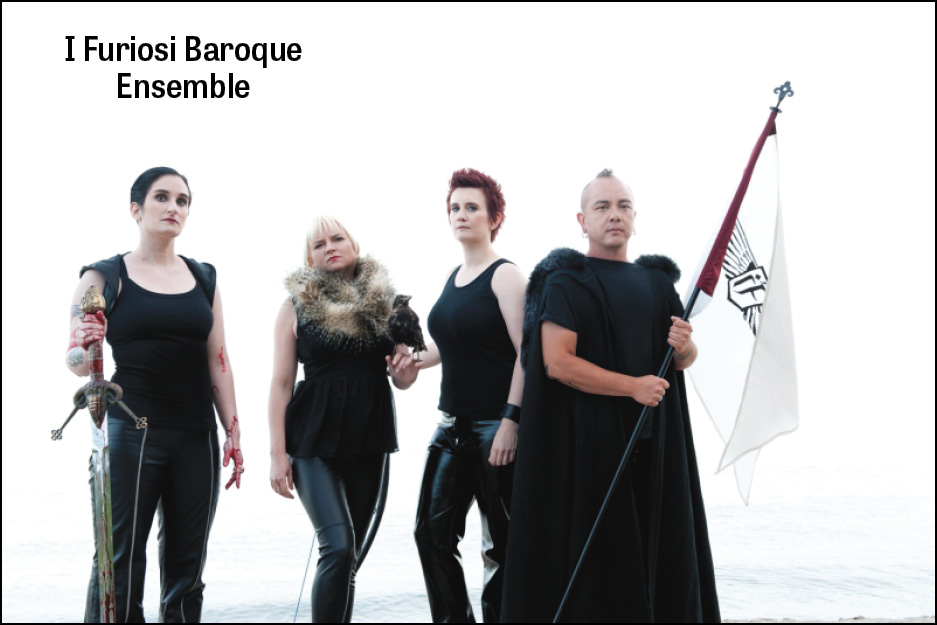
I Furiosi: After the holidays, I’m happy to say that the music scene in the city won’t be quieting down at all. The always-boisterous I Furiosi ensemble will be presenting a mixed concert of Luzzaschi, Charpentier and Purcell at 8pm on January 9 at Calvin Presbyterian Church. The band will be joined by soprano Merry-Anne Stuart and organist Stephanie Martin for a concert of songs about unrequited love, rejection, and futility.

Tafel welcomes Glodeanu: Finally, at the end of January, more Vivaldi. Tafelmusik will be honouring Vivaldi’s music in an all-Italian concert led by Romanian violinist Mira Glodeanu. Vivaldi’s L’estro armonico (“harmonic fancy”) is a series of 12 concertos published by Vivaldi that endure as the composer’s best-known work and was hugely influential on music in the 18th century. (J. S. Bach liked the concertos so much he transcribed six of them.) On January 20 at 7pm and on the following weekend, Tafelmusik will perform the second, fourth, and eleventh concerts from the work, along with chamber music and a concerto grosso by Locatelli as well as music by Vivaldi’s contemporary Giovanni Guido, who was so enamoured of The Four Seasons that he based his Scherzi Armonici on them. This promises to be an exceptional sampling of 18th-century Italian music and with Glodeanu making her debut with the ensemble from the first violin, the concert offers for Tafelmusik regulars another teasing view of how the ensemble plays with someone other than Jeanne Lamon leading from first violin. 

David Podgorski is a Toronto-based harpsichordist, music teacher and a founding member of Rezonance. He can be contacted at earlymusic@thewholenote.com.
EarlyThere’s an anecdote from a book I read once that’s been bothering me for a while. In the memoir Kitchen Confidential the American celebrity chef Anthony Bourdain describes the following altercation he had with one of his Italian chefs at a restaurant he owned:

“Gianni had taken one look at my chef de cuisine, shaken his head and warned, ‘Watch out for dees guy. He’ll stobb you inna back,’ making a stabbing gesture as he said it.

“What? What’s his problem? He’s Sicilian?’ I asked jokingly, knowing Gianni’s preference for all things Northern.

‘Worse,’ said Gianni. ‘He’s from Naples.’”

Bourdain never explained what the problem with being Neapolitan was at any point in the rest of the book (maybe he never got around to asking Gianni), and frankly, I’ve never tried to ask anyone whether they were from Naples, Italy, or anywhere else. Was Bourdain’s chef a racist? Are Neapolitans intrinsically untrustworthy? And (most importantly) why would they be intrinsically untrustworthy to other Italians?

Maybe the chef’s mistrust had to do with the fact that Naples had a history that pitted it against the rest of the Italian kingdoms for most of the last millennium: the Kingdom of Naples, comprising the city of Naples and roughly the southern half of the Italian boot, was ruled by the (French) King of Anjou from mid-13th to mid-14th century, the (Spanish) Aragonese from then to the early 16th century, the Spanish and Habsburg Empires for the next 200 years, and became a Napoleonic possession from then until 1815. That wasn’t a lot of time for Southern Italy to develop an independent, let alone pan-Italian identity, so maybe other Italians (or at least that particular Italian) are referencing the fact that, politically, Naples was in fact a French, Spanish, or Austrian province more than it was ever an Italian one.

As a cultural centre, though, Naples in its prime was a fascinating place. Ethnically Italian with a Spanish influence, its position smack in the middle of the Meditarranean made it a natural port of call between the rest of the European continent and the Middle East. Naples is also largely responsible for giving us a major institution of both culture and of classical music – the modern conservatory. The Spanish regime in Naples was one of the first governments to found conservatories, which it did in Naples – initially church-run institutions to shelter and educate orphans, they later became the music schools we know today. In 17th-century Naples, with the new form of opera quickly becoming popular and a sudden high demand for trained singers and musicians throughout Italy, conservatories found themselves part of a feeder system for professional musicians and singers, as they were both amply funded and made music education a significant part of a child’s education.

Vesuvius: This month, The Toronto Consort pays tribute to the music and culture of this Renaissance cosmopolis in their opening concert of the season, “The Soul of Naples.” The Consort will be performing this month at Jeanne Lamon Hall at Trinity-St-Paul’s Centre at 8pm on November 13 and 14. I’ve been looking forward to this concert for some time. The Consort is teaming up with the Vesuvius Ensemble, which is the only folk group I’ve ever encountered that specializes specifially in Renaissance Neapolitan folk music. The group has the good fortune to be led by a top-rate tenor, Francesco Pellegrino, who will be directing both Vesuvius and the Consort this time around. And if you’re a guitar fan, this is definitely the concert for you – this show features a menagerie of plucked-string instruments, including baroque guitar, theorbo and lute, as well as the far more obscure chitarra battente and colascione. The Consort has a few concerts for 2015/16 that look very interesting, and this is one of them. The group has a unique talent for taking an audience back to a particular time and place in history. I can’t wait for opening night.

The Canadian Opera Company is a Toronto institution that dabbles in early music only occasionally, but it will be well worth checking out their upcoming program this month if you’re a fan of either Monteverdi or new music. Pyramus and Thisbe is a new opera by Canadian composer Barbara Monk Feldman and will be headlining the evening, but the two opening acts are overlooked gems of the Baroque repertoire and rank as some of the Venetian composer’s most accomplished miniatures. Il combattimento di Tancredi e Clorinda and Lamento d’Arianna are both exciting and powerful (though brief) works that take the listener back and forth from vivid depictions of warfare to intense sadness, often in the space of just a few bars. They’re great examples of the revolution in music that happened at the beginning of the 17th century when Monteverdi declared that poetry and text was more important than any musical idea could be. And more importantly, they’re fun to listen to. Check them out on November 5 and 7 at the Four Seasons.

The Oratory: Sometimes less is more. If a folk/medieval supergroup and a pair of Monteverdi mini-operas with a full continuo band aren’t enough to get you to a concert this month, there are a couple of choral concerts that promise to be very enjoyable indeed. The Oratory at Holy Family Church (1372 King Street West) is presenting two concerts based around the Renaissance choral repertoire. The first, featuring a five-voice men’s chorus singing just one to a part, is a requiem mass for the feast of All Souls. The oratory has some fairly pious music lined up for the occasion – they’ll be performing works by that great papal hero of Renaissance polyphony, Giovanni Pierluigi da Palestrina, as well as the Spanish composer Cristobal de Morales on November 2 at 8pm. If you miss the occasion (or don’t want to sit through a whole mass) consider going instead to their November 18 concert at 7:30, which will feature Roland de Lassus’ Requiem for 5 Voices and his Music from the Office of the Dead as well as music by Tomas Luis de Victoria and J.S. Bach. Hardly cheerful music, to be sure, but a chance to hear Renaissance sacred music done with all soloists as opposed to a massive chorus is a rare and enjoyable experience.

Rossi in Ordinary: The 16th-century Italian composer Salamone Rossi has the unique legacy, for musicians and scholars, of having written sacred music for the synagogue which survives and is still performed today. It’s unfortunate that there aren’t more extant examples of Jewish sacred music that modern audiences can listen to – Catholics  being the main recipients of a half millennium of high-level patronage to the exclusion of nearly everyone else – but this month, the Musicians in Ordinary are performing Rossi’s sacred music as well as some of his sonatas for two violins. Violinists Chris Verrette and Patricia Ahearn will join the ensemble on November 27 at 8 pm at Father Madden Hall in the Carr building at the University of Toronto to explore the work of a fine composer in the Renaissance mould who has been regrettably overlooked by history. 

David Podgorski is a Toronto-based harpsichordist, music teacher and a founding member of Rezonance. He can be contacted at earlymusic@thewholenote.com.
Every so often, one classical musician or another will mention, by way of discussing career options, that younger emerging musicians should consider moving to Korea, China or Japan if they want a shot at a playing career. Having never even seen the Hellespont, let alone ventured east of it, I really have no idea what to make of this. I have very little if any knowledge of the classical music scene over there, and still less of an idea what their early music scene looks like. Still, the armchair career counsellors have a point. Asia does appear to be a fast-growing market for classical music. Asian retailers will stock and sell a vast inventory of classical music, including some of the most obscure recordings that would go completely unnoticed here. And, moreover, their demand for live music appears equally insatiable – Tokyo, for example, has six (six!) symphony orchestras.

It’s a little disappointing, then, that this passion for Western music doesn’t seem to extend to the early music movement. While there’s much to give Canadian and American musicians cause for optimism as far as an emerging market is concerned, East Asia does seem to be a good half century behind the times, as far as historically inspired performance is concerned.

Bach Collegium JapanBach Collegium: The shining exception to this, of course is the Bach Collegium Japan. Founded by harpsichordist Masaaki Suzuki in 1990, seemingly with the single purpose of recording Bach’s entire catalogue, the Collegium is an awe-inspiring group that boasts a roster of some of the finest baroque players, both in Japan and on the international scene. The Collegium is one of just a handful of ensembles in the world that has recorded the complete cantatas of J.S. Bach and it has distinguished itself as the most renowned Japanese classical ensemble in the world.

Besides committing Bach’s entire symphonic repertoire to disc, their 99-disc output includes a recording of the Monteverdi Vespers, a Mozart Requiem, a Messiah, a recording of Bach’s contemporary Buxtehude and (why not?) an album of Beethoven’s Ninth Symphony arranged by Richard Wagner. They are prolific, they are experienced and they are without a doubt some of the most exceptional musicians in any category worldwide. But don’t take my word for it – you can decide for yourself when the group comes to Koerner Hall on October 28 at 8pm for (what else?) an all-Bach program. They’ll be playing some standard repertoire like Brandenburg 5 and the trio sonata from the Musical Offering, but the concert will also include some lesser-known hits of the Bach catalogue like the Concerto for Oboe d’amore BWV1055R and the soprano cantata Mein Herze schwimmt in Blut BWV199. I have no doubt that this will be a fantastic performance by an internationally renowned ensemble and a rare chance to hear some of the finest musicians in the world live in concert.

Ensemble Les Songes is another out-of-town group visiting Toronto this month that’s well worth hearing, although their concert will likely be a quieter affair than the arrival of a visiting Japanese orchestra. The Montreal-based quintet features soprano Samantha Louis-Jean, harpsichordist Mélisande McNabney, and recorder wunderkind Vincent Lauzer, but all five are talented musicians who can be counted on to deliver a spirited and intelligent performance. They’ll be playing a free concert of love songs by Corelli, Scarlatti and Handel at the Four Seasons Centre on October 6 at noon.

Early Music Fair: The other great event next month is of course the annual Early Music Fair, organized by the Toronto Early Music Centre. The annual fair is a day that allows visitors to sample the early music scene in Toronto and the GTA, and which features presentations by instrument makers and specialists, scores for sale and an introduction to the world of historic keyboards, string and wind instruments. It’s usually held at Montgomery’s Inn in Etobicoke, but this year the organizers have opted for a more downtown venue at Fort York on October 17, running from 11am to 4pm. You’ll have a chance to hear several musical ensembles over the course of the day, but one group that you might want to make a point of catching is Capella Intima, an a cappella vocal ensemble that will be singing English madrigals and partsongs in the Blue Barracks at 1pm and 1:30pm. The group is made up of just four singers who are doing an accessible repertoire and a short program, so if you’re at all curious about early choral music, check them out, catch some of the presentations and enjoy a day at historic Fort York.

I get a kick from Champlain: October 2015 also marks an important milestone in the history of Ontario, as it is the 400th anniversary of the first recorded visit to Ontario by European explorers. Samuel de Champlain, having already made a name for himself as the founder of New France, not only became the first European to visit Ontario 400 years ago, but also took the time to visit and map the Great Lakes, befriend the Wendat (Huron) tribes, and pass through what is now Peterborough and Lake Simcoe in September and October 1615. The fact that he went on to attempt an invasion of the Haudenosaunee (Iroquois) tribes and failed miserably in the process is perhaps less celebrated by Ontario or Quebec historians. But I digress.

In an unabashedly Eurocentric version of history, Ontario turns 400 this month, and the Aradia ensemble will be performing a concert of French music at the Alliance Française to commemorate it. Aradia is one of the best Toronto-based ensembles for French repertoire, so it’s sure to be a very fine performance. The composers they’ve selected aren’t likely to have ever been heard by Champlain himself (most of them were either infants or had yet to be born when the great explorer died) but historical accuracy must sometimes be sacrificed for the sake of good music, and Jean-Baptiste Lully and Marc-Antoine Charpentier most definitely qualify. You can catch Aradia, along with soprano Katherine Hill and narrator Patrice Dutil on November 1 at 7pm.

Lassus’ oddest work: History often inspires great music, but the Renaissance composer Orlande de Lassus can lay claim to the singular honour of having the weirdest historical theme for a composition, ever. His 13-movement Prophetiae Sibyllarum, with its notoriously chromatic prologue, purports to be based on predictions made by oracles from ancient Greece to the Roman empire that prophesied the birth of Jesus. On October 30 at 8pm in St. Basil’s Church, the Musicians in Ordinary will perform Lassus’ oddest work as part of their concert series as the artists in residence at Saint Michael’s College at the University of Toronto. It’s a concert I’m looking forward to, and it promises to be very interesting from both a musical and a historical perspective, although Lassus’ claim to oracular divinity begs at least a few questions. Why would a group of Bronze Age polytheists predict the son of a single god? Why would a Roman emperor care about the beliefs of a tiny religious minority in a faraway provincial backwater? Why were Renaissance humanists so preoccupied with rehabilitating the religious beliefs of antiquity? Fortunately, if you show up for the pre-concert talk at 7:30, you’ll get the answer to all of these questions, and hopefully the lecturer will lay them safely to rest.

David Podgorski is a Toronto-based harpsichordist, music teacher and a founding member of Rezonance. He can be contacted at earlymusic@thewholenote.com.
I don’t know how many people I can speak for when I say that I’m not too eager for summer to be over so soon, but it does seem as though many Toronto ensembles aren’t quite ready to start their new seasons just yet either. Happily there are a few performances in September that are well worth going to see.

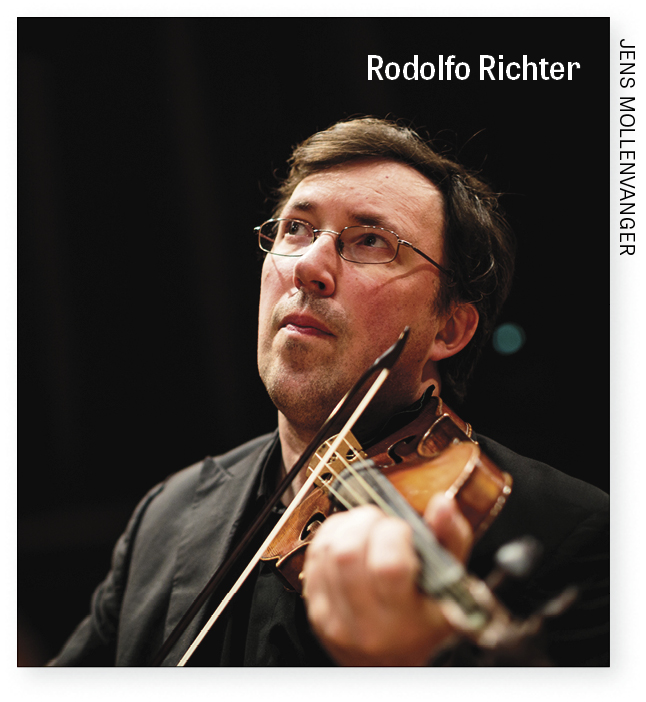
Early_1_-_Rodolfo_Richter.jpgRodolfo Richter: One group that’s definitely ready for the new season is Tafelmusik, which has its first concert the week after Labour Day. The superstar orchestra will, in fact, be very busy, very soon – they have two concert runs between now and October as they continue their search for a new artistic director. The first concert will feature the Brazilian-English violinist Rodolfo Richter, who, as the associate leader of the Academy of Ancient Music and a Handel/Bach specialist, may be exactly what Tafelmusik is looking for.

Early_2_-_Mirelle_Lebel.jpgRichter is an experienced player who has worked his way to the top of the European musical scene. Initially a modern violin player and composer – he studied composition with Pierre Boulez – he decided to make the switch to baroque violin in his mid-20s, studying with Monica Huggett. He also comes with an impressive discography as a leader, chamber player and soloist, having made the first recording of the complete violin sonatas of Erlebach and a solo album of 18th-century Italian composers Giuseppe Tartini and Francesco Veracini in addition to his recordings with the AAM.

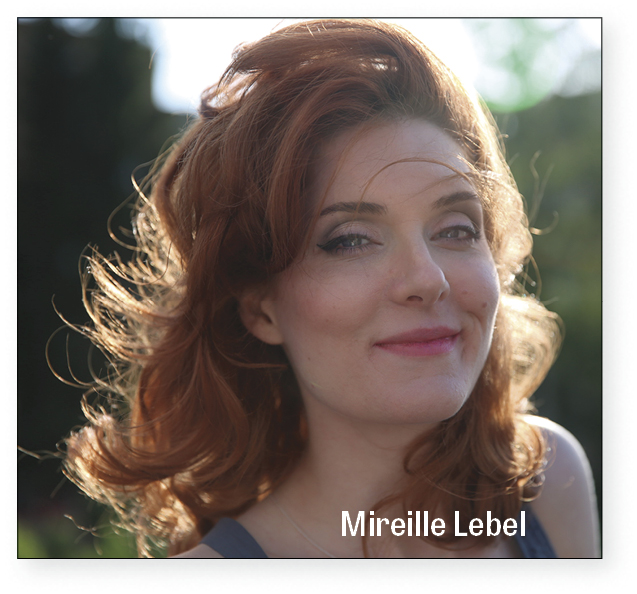
With an extensive musical CV behind him, Richter will likely do a fine job with Tafelmusik as he leads them in a performance of music by Vivaldi, Handel and Bach at Trinity-St. Paul’s Centre, Jeanne Lamon Hall, September 16 to 20. The group will also be joined by mezzo soprano Mireille Lebel for some Handel arias and the wonderful bassoonist Dominic Teresi for a Vivaldi concerto.

Cecilia Bernardini: Tafelmusik will also be bringing back violinist Cecilia Bernardini, who dazzled Toronto audiences when she debuted with the group in March last year. Bernardini was hired as a replacement for the virtuoso violinist Stefano Montinari, but she exceeded expectations with her performance of one of Jean-Marie Leclair’s notoriously difficult violin concertos which she had added to the regular program. Bernardini is a gifted soloist and performer, and has the potential to bring a great deal of youthful energy to the group – she’s barely 30 years old. Besides touring as a soloist, she already has her own ensemble (the string trio Serafino) and is in the trial period for leadership of both the Scottish Chamber Orchestra and Camerata Salzburg. She has fewer recordings to her name than Richter – just a couple of  La Serenissima recordings as a section player- but is nevertheless an up-and-coming player on the international music scene.

Besides being an exceptional player, Bernardini chooses exciting and interesting concert repertoire that doesn’t get performed very often. Her concert series with Tafelmusik, taking place October 1 to 4, and 6, is no exception. She and the group will be playing a Geminiani follia, as well as Jan Dismas Zelenka’s wind-rich (but nevertheless very queasy sounding) Hypochondria. Vivaldi and Telemann, respectively, will round out the program with two pieces the group is playing for the first time – Il Proteo, o il mondo al rovescio, and the misleadingly titled La Bizarre (with the exception of the last movement, it doesn’t sound that strange).

Anne Boleyn: If you’re more in the mood for something a bit less maniacal, the Musicians in Ordinary have a chamber concert September 25 featuring music sung and enjoyed by one of the most famous women in English history.

Anne Boleyn was just a girl when she was sent from England to the Netherlands and France in order to be trained to be a lady-in-waiting for the English court. Part of her education was in music, and she was familiar with, and very likely performed, the works of some of the most influential composers of the time. In particular, Boleyn had the work of Josquin des Prez (1450-1521), widely considered to be the greatest composer of the early Renaissance, in her collection, and his compositions will be featured in the Musicians’ concert. Soprano Hallie Fishel and lutenist John Edwards will be joined by a group of four singers for an 8pm concert of vocal music and dances for solo lute at Father Madden Hall in the Carr Building at St. Michael’s College.

 If you’re also interested in some of the history behind how Anne Boleyn found herself studying music in the Netherlands, consider showing up early for an edifying pre-concert lecture by Deanne Williams, author and associate professor of English at York University. And if you’re really a history geek (or binge-watched The Tudors way too much), you might want to check out the history colloquium organized that day by the Centre for Renaissance and Reformation Studies at the University of Toronto, based around the discovery of this manuscript and what it tells us about music in Europe in Boleyn’s time. You can find information on the colloquium at their website, crrs.ca.

TEMPO: If you’re not content to simply listen to baroque music and would like to actually try playing it, you should learn about TEMPO. The Toronto Early Music Players Organization is a group devoted to making early music accessible to amateur musicians who want to learn to play early music repertoire, and they have brought in lutenist Lucas Harris to coach their first workshop of the 2015/16 season. Harris is an excellent choice to coach amateurs – aside from being a professional lute player of the first rank, he’s also a coach for the Toronto Continuo Collective and an experienced choral conductor besides. No word on what they’ll be playing yet, so be prepared to sight-read, I suppose. If you’re at all interested in playing with the group, the workshop is at the Armour Heights Community Recreation Centre on Sunday, September 13 from 1:30 to 4pm. To participate, go to their website (tempotoronto.net), fill in the application form and show up with an instrument and a music stand. And have fun.

Going public: Finally, I should mention one new feature of this season that I haven’t seen before. Some of the top players in Tafelmusik will be giving lectures in their various areas of expertise over the next few months. It’s a natural outgrowth of period performance – most early music specialists have traditionally studied musicology alongside their studies in performance practice. As a result, there are many early musicians who have a wealth of knowledge to share about music history. This month, the Toronto Public Library will feature Christopher Verrette lecturing on the origins of the symphony in the 17th and 18th centuries at the North York Central Library on September 23 at 7pm. Verrette is an intelligent player with a wide knowledge of instrumental playing and a lifetime of experience playing early symphonic repertoire, so it should be quite interesting to to hear what he has to say on the subject. 

David Podgorski is a Toronto-based harpsichordist, music teacher and a founding member of Rezonance. He can be contacted at earlymusic@thewholenote.com.
Early-Leblanc.jpgThe just-concluding concert season has been an exceptional year for Toronto musicians in the early music scene. I’ve heard a lot of music that was very easy to like, whether it was emerging artists on the scene putting together some innovative programs of interesting musical material and giving us the opportunity to hear some fascinating music, or concerts from more established artists that stood out as exceptional. In the former category, I’m thinking specifically of countertenor and baroque guitar player Bud Roach’s concerts of Giovanni Felice Sances and a couple of stellar concerts from the Cantemus singers – which let Toronto concertgoers know that there is a thriving music scene here with many talented young artists who deserve to be heard.

In the latter category, there were two fantastic multimedia events: “Paris Confidential,” the Toronto Consort’s program of life in Renaissance Paris; and Tafelmusik’s wonderful “J.S. Bach, The Circle of Creation,” both of which proved that established artists are still pushing their own limits, innovating and willing to try something new. That wasn’t everything, of course. Opera Atelier gave us some very fine productions of Gluck and Rameau, Tafelmusik provided us all something to talk about (or at least write about) with their ongoing search for a new artistic director, and I’m sure that there’s at least one stellar performance that I’ve either forgotten or didn’t get a chance to see.

I’m happy to have witnessed some fantastic concerts this season, but of course, all good things must come to an end. As this year winds down, you can be content with the remnants of the artistic seasons of a few Toronto-based groups as the summer months set in or you might want to look further afield than the GTA.

If you’re searching for a getaway that includes something more than a cottage and a lake, there are a few summer festivals that have exceptional entertainment value as well as being a welcome escape from the city. Musique Royale is a little-known festival that takes place in multiple cities in Nova Scotia that will give you a chance to hear some great Canadian artists. While not strictly an early music festival per se, there are some great renaissance and baroque musicians there, including the recorder and lute duo La Tour Baroque, the fabulous baroque flutist Chris Norman, soprano Suzie LeBlanc, the vocal group Studio de musique ancienne de Montréal (who will also be appearing at the Ottawa Chamberfest July 25) and baroque fiddler David Greenberg. Best of all (and somewhat confusingly), these artists will be playing in multiple cities in June, July, August and September, so if you’re at all interested in going to Nova Scotia this summer, check out the website (musiqueroyale.com) to see if there’s a concert in town, or at least nearby.

Montreal Baroque: If your vacation plans are more along the lines of a quick weekend getaway than a lengthy road trip, or if you just prefer the big city to a trip to the countryside, consider travelling to Montreal over the St. Jean-Baptiste weekend (June 25 to 28) to hear the number one early music festival in North America, Montreal Baroque. Viola da gambist Suzie Napper has been running this festival for over a decade, and it is a singular achievement that she can build an entire long weekend on concerts, lectures and unusual events centred exclusively around historically-inspired performance.

This year’s festival returns to the McGill campus in downtown Montreal and features the Dutch baroque violinist Sigiswald Kuijken, himself something of a legend in the early music world, leading the Montreal Baroque Ensemble as well as performing the Bach violin suites on the violincello da spalla. (Do yourself a favour and Google image search that one. It’s extremely unlikely you will hear this instrument performed in Canada again in the next decade.) If an eccentric pet project from a classical music superstar isn’t enough for you, Montreal Baroque also features a few local groups, albeit ones from a crowded, hyper-talented music scene. Ensemble Caprice will be performing their signature “gypsy baroque,” Studio de musique ancienne de Montréal will put on a concert of Palestrina and Benevoli and Canadian countertenor Michael Taylor will join the viola da gamba duo Les Voix Humaines and lutenist Nigel North for an all-Tobias Hume concert. This will be a very busy weekend and well worth the trip to Montreal.

Of course, there are still a few shows you can catch if you’re in the city this summer. For one, my group Rezonance will be putting on “I Giorni di Cane Pazzi,” a concert featuring wild and extravagant music from 17th-century Italy. The group will be joined by guest artists Michelle Odorico on violin and Eleanor Verrette on viola to play some of the more bizarre chamber pieces in the early music repertoire. The program features Carlos Farina’s Capriccio Stravagante, which lets the listener hear all manner of the beasts one might encounter on a walk through 17th-century Mantua depicted in music, as well as Girolamo Frescobaldi’s Capriccio sopra Il Cucho, a play on the cuckoo’s song that beats its own idea pretty much to death. You can catch this performance on July 28 at Artscape Youngplace, 180 Shaw St., Suite 202, at 7:30pm. I guarantee you will find no better concert in the dog days of summer.

Aradia Ensemble: Of course, there are still other options before prime vacation time. The Aradia Ensemble winds down its concert season on June 27, with a performance at the acoustically excellent Music Gallery of Purcell’s and Locke’s very fine music for Shakespeare’s The Tempest. The Tempest, as it was revised in the composers’ time, began its life as an attempt to introduce opera to the English theatregoing public. Compared to some other English stinkers of the same period, it actually did quite well and was revived numerous times in the 18th century. Early musical adaptations of Shakespeare such as this one are seldom revisited, but the Purcell/Locke score is one of music history’s more unique collaborations, and Aradia should do it justice.

I Furiosi: Of course, if you just can’t wait to hear a concert, consider checking out the always-entertaining rock-star quartet of early musicians, I Furiosi. In “All About Me,” the quartet will be joined June 6 by tenor Rufus Müller and organist James Johnstone presenting songs all about narcissism by Handel, Giuseppe Tartini and Juan Bermudo. I Furiosi are a passionate group who don’t take themselves too seriously, so if you’re looking for a fun concert this one would certainly fit that description. 

David Podgorski is a Toronto-based harpsichordist, music teacher and a founding member of Rezonance. He can be contacted at earlymusic@thewholenote.com.
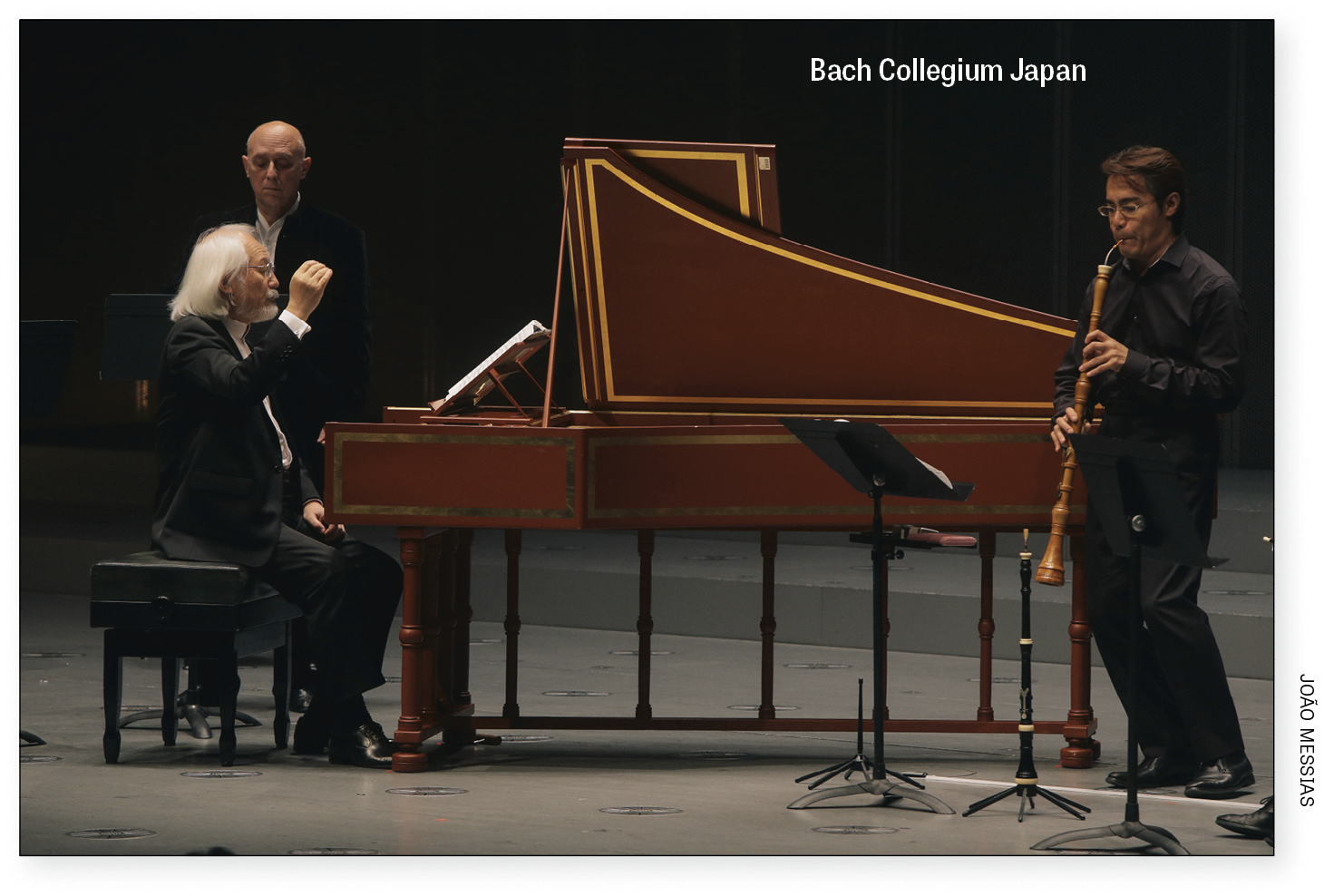
Back to top