Choirs Warm Up
As September looms menacingly on the horizon, all nature aligns to reinforce the sobering message that summer 2010 is gone forever. More than a few trees have sprouted red and yellow leaves, the punishing heat of the Toronto summer appears to be giving way to the air of fall, and – what is that strange humming sound in the air, especially on Thursday evenings?
Choirs or all sizes and configurations are beginning their vocal warmups. Major and minor chords buzz and resonate like eager cicadas at dusk. That strange, plaintive wail like the howl of a mournful coyote in the night? A choir director pleading in vain with singers to bring their pencils, put their music in order and pay their choir dues on time.
Choral singers, of course, are generally dormant in the summer. There is an odd and unsubstantiated rumour that they actually work for a living and go on the occasional vacation, but this is surely nothing more than idle conjecture.
If they are active at all, it is only as regards to the coming season of concerts, and each choir section has its own set of preparatory habits and customs. Sopranos check to make sure that their new season’s wardrobe is appropriate to both the year’s repertoire and to their central importance to the choir. Altos beam with pride on the new pair of sensible shoes they have invested in, knowing that the moment the conductor asks them to stand they will be able to do so in complete comfort – unlike those glory-hogs, the sopranos. The tenors busily practice their “scales” – in fact a series of spectacular high notes that bear the same relation to scales as chocolate icing to rye bread, smiling with satisfaction as the neighbours bang on the wall at a particularly resonant high C. The basses, getting ready for another comfortable season of snoozing in the back row, select their mystery novels, magazines and ergonomic pillows with care.
As these worthy folk assemble to grace us with another season’s concerts, let’s survey the vocal fun that awaits us in the year ahead. The Toronto Chamber Choir has a well-rounded season that includes a concert of English music from the renaissance era to modern times (October 24), a concert of the music of the great renaissance composer Josquin de Prez (April 2), and that finally delves into Bach’s fascination with numerology (May 15).
Tafelmusik Orchestra and Chamber Choir will be performing Handel’s Dixit Dominus (November 11-14), Bach’s B Minor Mass (February 9-13) and, interestingly, Beethoven’s Ninth Symphony – this group’s first foray into what has been traditionally the territory of larger choirs and modern instrument orchestras (April 7-10). John Tuttle’s Exultate Chamber singers have an ambitious season that includes Duruflé’s Requiem, one of Bach’s Lutheran masses, and Rachmaninoff’s All Night Vigil, often known as the Vespers (www.exultate.net).
An admirable four out of five concerts by the Elmer Iseler Singers feature music by Canadian composers, notably an a-cappella programme of mass settings by Healey Willan, Ruth Watson Henderson and Eleanor Daley, as well as Palestrina (October 24). EIS conductor Lydia Adams pursues this Canadian theme with the Amadeus Choir as well, as they perform Our Home and Native Land: Songs and Stories of Canada (May 14).
Soundstreams Canada celebrates ten years of hosting epic gatherings of choirs, combining 180 voices to perform various works by Arvo Pärt, and a newly commissioned piece by the venerable R. Murray Schafer (November 7). Kitcher’s Da Capo Chamber Choir is undertaking a number of concerts featuring new music, as well (dacapochamberchoir.ca).
The Toronto Mendelssohn Choir takes part in the TSO’s performance of Mahler’s Symphony No. 2 (September 25), and follows this with Bach’s St John Passion (March 3) and Mozart’s Great Mass in C Minor (May 11). Toronto’s Nathaniel Dett Chorale performs “Voices of the Diaspora – Haitian Voices” (February 23 and 26).
Barrie’s Lyrica Chamber Choir looks at some rarer repertoire in the excellent choral works of Montreal Composer Donald Patriquin (December 11), 19th-century German composer Josef Rheinberger (March 26), and an American themed mixed programme (May 28).
 As a concert reviewer, the phrase “choral pot-pourri” tends to make my heart sink. But as a singer and concert-goer I know that these can be some of the most interesting concerts in any given season. It’s in concerts of smaller works that the interesting nooks and crannies of choral repertoire are fully explored. Smaller scale works – often written originally for liturgical contexts and not necessarily intended for concert performance – comprise a central part of the choral repertoire, and a concert of smaller works by one composer, or varied works with a similar theme, can be among the most interesting concerts of a season.
Several concerts in this vein are being given this season by Toronto’s Bell ‘Arte Singers (bellartesingers.ca), and the Burlington Civic Chorale (burlingtoncivicchorale.ca). The Cantabile Choirs of Kingston have gone an audacious step further than a single themed concert, and have programmed an entire season of concerts on the theme of “Voyages.” This set of programmes looks particularly intriguing (cantabile.kingston.net).
The multitudinous Messiah concerts that await us in December need no advertising at this time. One interesting point worth mentioning: recent scholarship has ascertained that the beloved “Hallelujah” chorus was in fact written by lesser-known Handel contemporary Nicola Porpora. Accordingly, no performance of Messiah this year will include that section of the work. (Just kidding!)
The Common Thread Community chorus of Toronto showcases Latin-American music (September 8), Robert Cooper’s Chorus Niagara provides a live choral soundtrack to the classic Lon Chaney film “Hunchback of Notre Dame” (November 5-6), and the Guelph Chamber Choir performs Bach’s Christmas Oratorio (November 27) and Brahms’ German Requiem (April 2). The Oriana Women’s Choir performs Pergolesi’s Stabat Mater (March 5) and a special concert in tribute to William Brown’s 15th year as conductor (May 7).
Make sure to check out the various excellent childrens’ choirs in the region, among them the Mississauga Children’s Choir (mississaugachildrenschoir.com), the Bach Children’s Chorus (www.bachorus.org), the Toronto Beaches Children’s Chorus (torontobeacheschildrenschorus.com) and the Viva Youth Singers of Toronto (vivayouthsingers.com). The distinguished Toronto Children’s Chorus offers us a rare chance to hear Brahms’ Four Songs for Two Horns and Harp and Verdi’s Laudi Alla Vergine Maria (May 7).
All in all, the season appears to be a good mixture of the familiar and the rare, the majestic and the intimate. It’s excellent to see the amount of new music being performed: choirs are contributing new sounds to the tradition as well as building on what has gone before.
Benjamin Stein is a tenor and theorbist. He can be contacted at: choralscene@thewholenote.com.
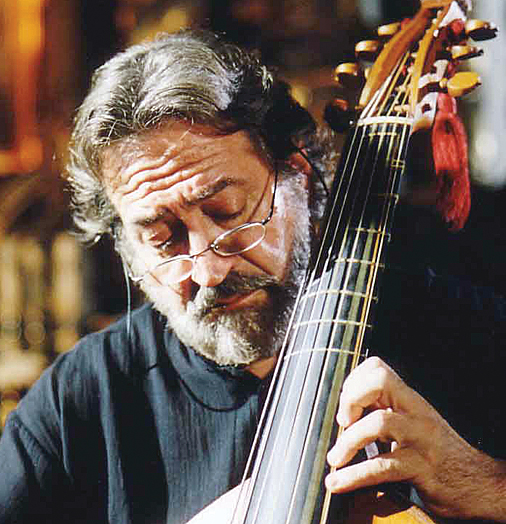
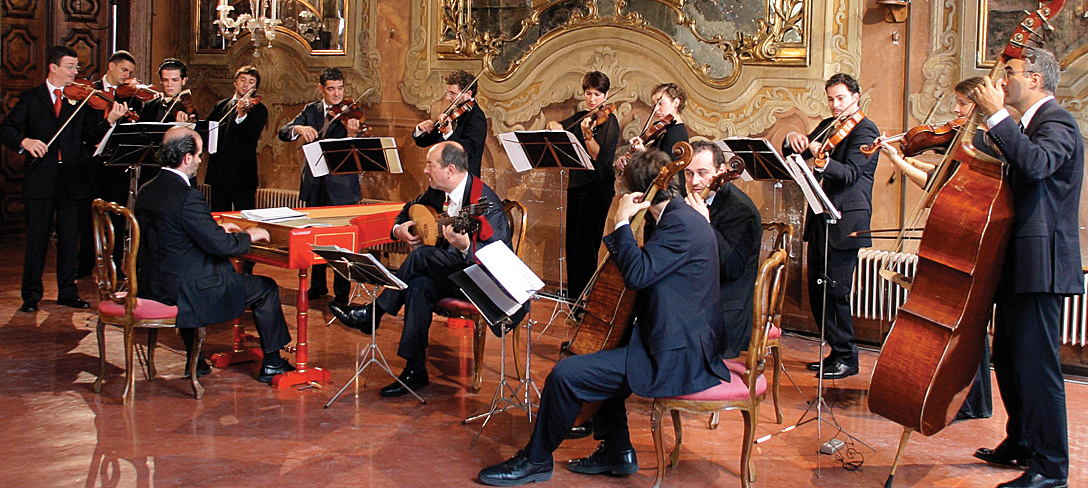
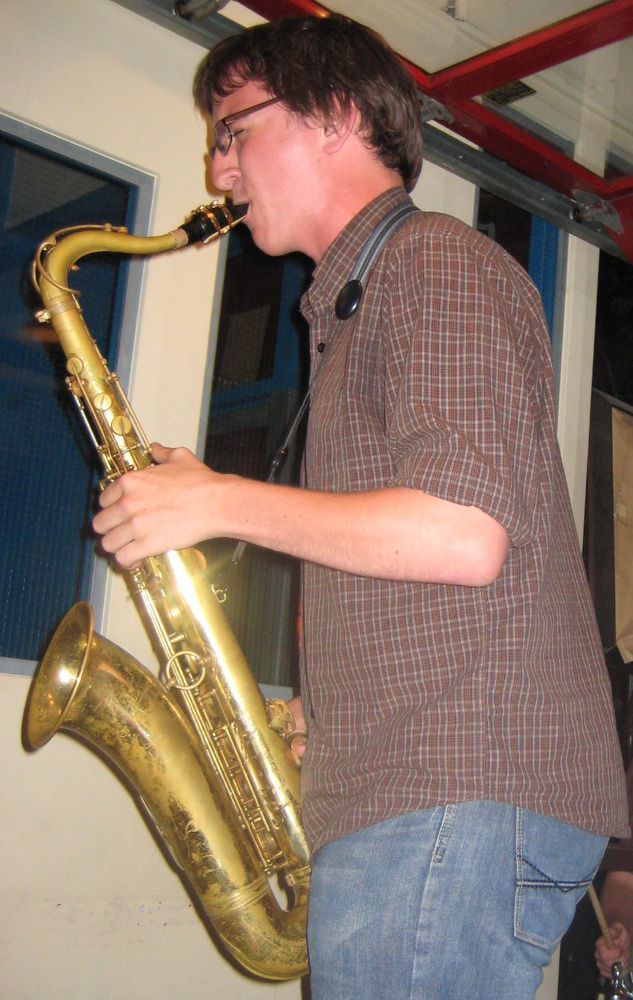
 I switched from bass trombone in the Beethoven to an antique Soviet Army rotary valve baritone horn in the Colonel Bogey march at the IWBC. I also went from a tuxedo on Saturday to a T-shirt on Sunday, and from The Glenn Gould Studio Saturday to a grassy slope at the Humber College Lakeshore Campus for the IWBC. It certainly was a weekend of variety!
 The original bandleader was Cliff (“Kid”) Bastien, and his Saturday afternoon residence at Grossman’s began when, in 1970, then-owner Al Grossman hired the young trumpeter and his Camelia Band, later called Kid Bastien’s Happy Pals, to perform every Saturday. Apart from a short period around 1980, Kid played there until his death in February 2003. But the band, now led by Patrick Tevlin, still plays New Orleans jazz to a faithful following.
 On July 8, CBC Radio 2, the National Gallery of Canada and Music and Beyond will unveil the results of their Gallery Project – the culmination of a national contest to choose five works of art from the Gallery to inspire new compositions. The programme includes works by a cross-country collection of Canadian composers, including Jocelyn Morlock, Denis Bédard, Michael Conway Baker, Colin Mack, Scott Macmillan, Elizabeth Raum and Kelly-Marie Murphy. The following day, Music and Beyond partners with the Ottawa New Music Creators to celebrate local composers Gabor Finta, Steven Gellman and Patrick Cardy at the Church of St. John the Evangelist. Across both days, the National Arts Centre Orchestra will open its afternoon rehearsals to the public with two new music reading sessions. Conductor Gary Kulesha will lead the orchestra in explorations of new orchestral works by both emerging and established Canadian composers. For full Music and Beyond festival details, and to purchase passes, visit www.musicandbeyond.ca.