04 Muhly CouloirMaxwell, Muhly & Couloir
Ariel Barnes; Heidi Krutzen
Ravello Records RR7932
(ravellorecords.com)

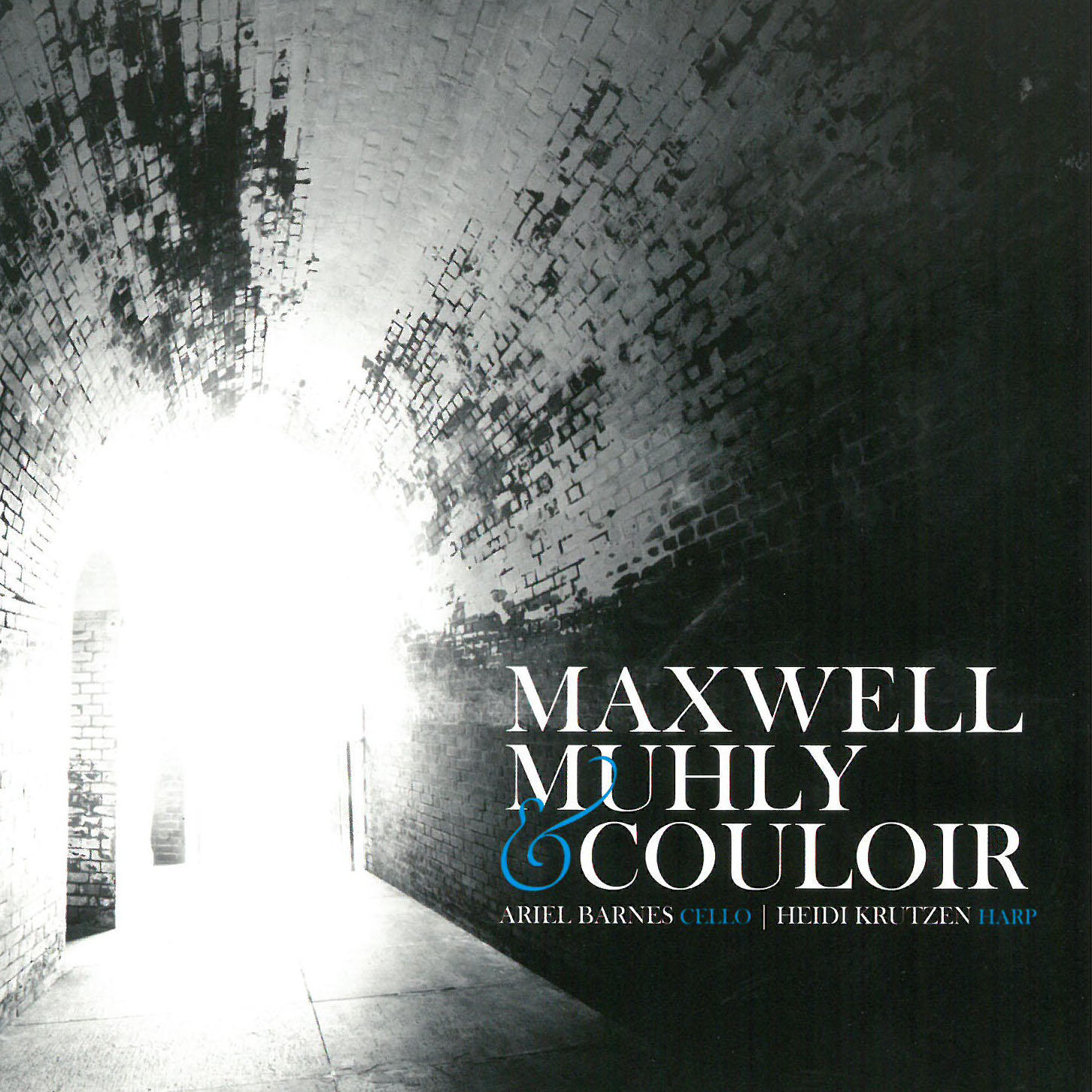
Since 2010, Couloir – the duo of cellist Ariel Barnes and harpist Heidi Krutzen, respectively principals of the Vancouver Symphony and Vancouver Opera Orchestra – has been performing, commissioning and recording music for this unusual combination of instruments.

This CD offers two works, one of them in two versions. Vancouver-based James B. Maxwell (b.1968) calls Serere (2012) “the concert music incarnation” of his ballet score Double Variations, commissioned by Ballet Kelowna. The first version of Serere (Latin for compose/contrive/interweave), just under 20 minutes, interweaves moods of dreamy meditation, restless anxiety and melancholic resignation. The cello provides the strong melodic content, supported by the harp’s harmonic figurations. The second version takes six minutes longer, having an added electroacoustic track featuring percussive rhythms and the scratching sound of a pencil on paper (Maxwell’s ballet dealt with themes of writing and calligraphy). The track adds considerable texture, colour and energy, making the piece much more urgent and turbulent than the predominantly reflective first version.

Sandwiched between the two is a nine-minute piece by American Nico Muhly (b.1981). In the booklet notes, Muhly describes Clear Music (2003) as “an extended exploration of a single measure” in Renaissance composer John Taverner’s motet Mater Christi Sanctissima. Here, Couloir is joined by Maryliz Smith on celeste. As in Serere, the cello leads with yearning, searching lyricism, here embellished by the magical tinklings of harp and celeste.

Fascinating listening throughout.
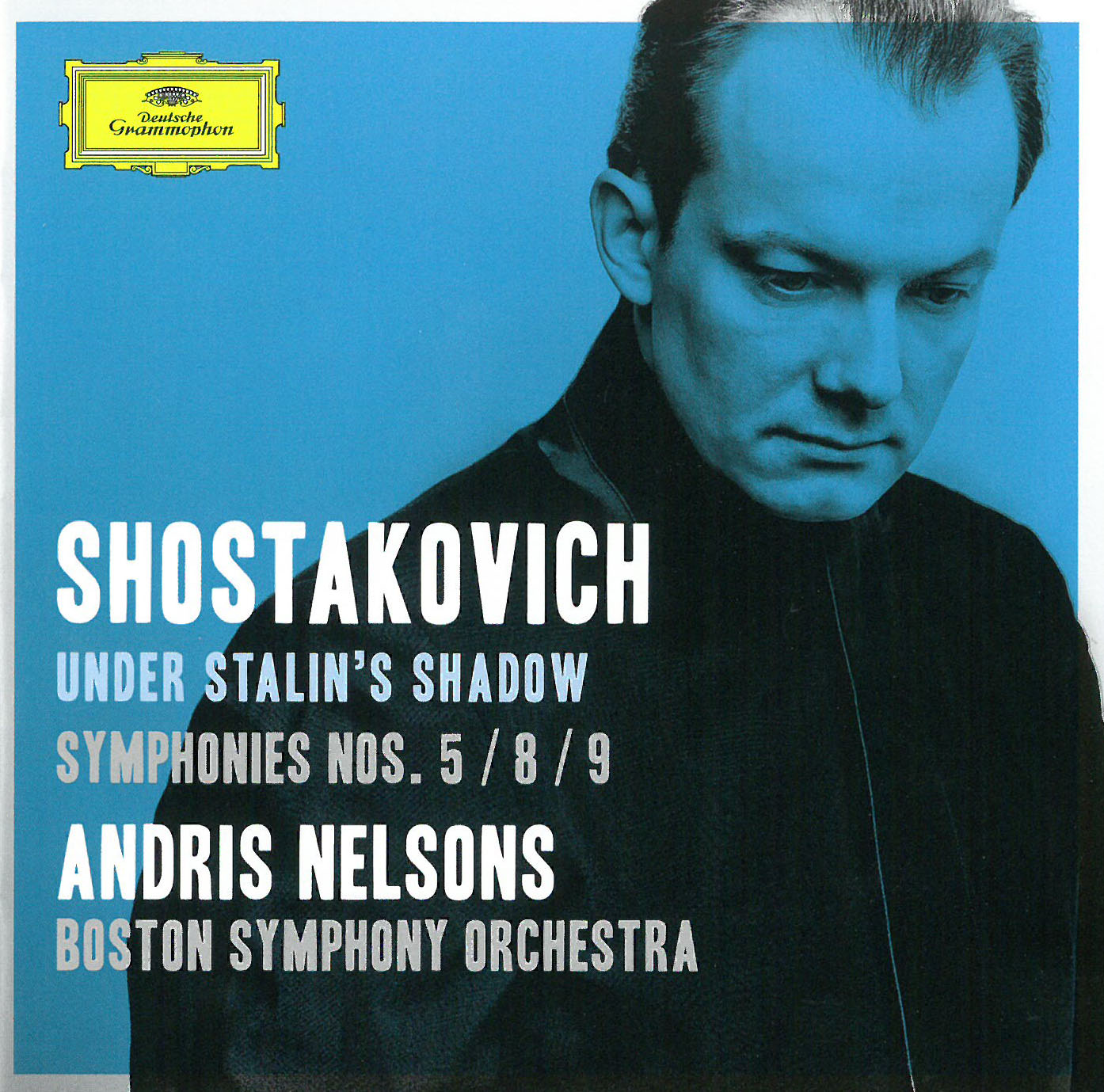
01 Shostakovich Stalins ShadowShostakovich – Under Stalin’s Shadow: Symphonies 5; 8; 9
Boston Symphony Orchestra; Andris Nelsons
Deutsche Grammophon 479 5201

Review

At various times during his illustrious career, Dimitri Shostakovich was roundly criticised for being either too close or too far from the Communist cause. However, when he died in 1975 there were very few who could deny that he was the last of the great composers whose qualities were acknowledged throughout the Western world in both the modernist and traditionalist camps. Indeed Shostakovich was celebrated as the finest composer of the 20th century. Even those who did not rate him quite so highly would argue that he was one of modern music’s most fascinating characters. The idealistic Shostakovich spent his entire life under the Soviet system and believed that it was his responsibility to serve the state as an artist, and he settled down to composing “realist” music, albeit with a progressive edge.

Any performance of Shostakovich has to contend with the Leningrad Philharmonic Orchestra’s iconic concerts, under the baton of Yevgeny Mravinsky, legendary for his incisive presentations bereft of sentimentality and strain. However Andris Nelsons’ Symphonies Nos.5, 8 & 9 with the Boston Symphony Orchestra have a sublime technical polish. In the case of Symphony No.5, there is no doubting the sincerity of the performance or the dignity with which the desolate vision is communicated. The Scherzo will forever be remembered for its glorious flow. Nelsons’ Symphony No.8 occupies the middle ground between the impassioned extremity of many Russian recordings and the sleek angst-free tones of many Western interpretations. His version is decidedly more intense, anguished and powerfully dramatic. The writing of Symphony No.9 has decidedly less of the daring precocity of Shostakovich’s First or the anguished bitterness of his 15th Symphony. Nelsons’ Ninth has all the characteristics that the master intended it to have including the marvellous tutti, finely honed themes and an almost celestial transparency and lightness.

The Suite from Hamlet is a masterpiece of rage and madness. Dramatized by Shostakovich in a daring musical exegesis of Shakespeare’s best-known tragedy, it caps a most enduring performance of Shostakovich by the Boston Symphony Orchestra and Nelsons.

02 Shostakovich Piano TriosShostakovich – Piano Trios 1 & 2; Viola Sonata
Ashkenazy; Viontay; Lidstrom; Meinich
Decca 478 9382

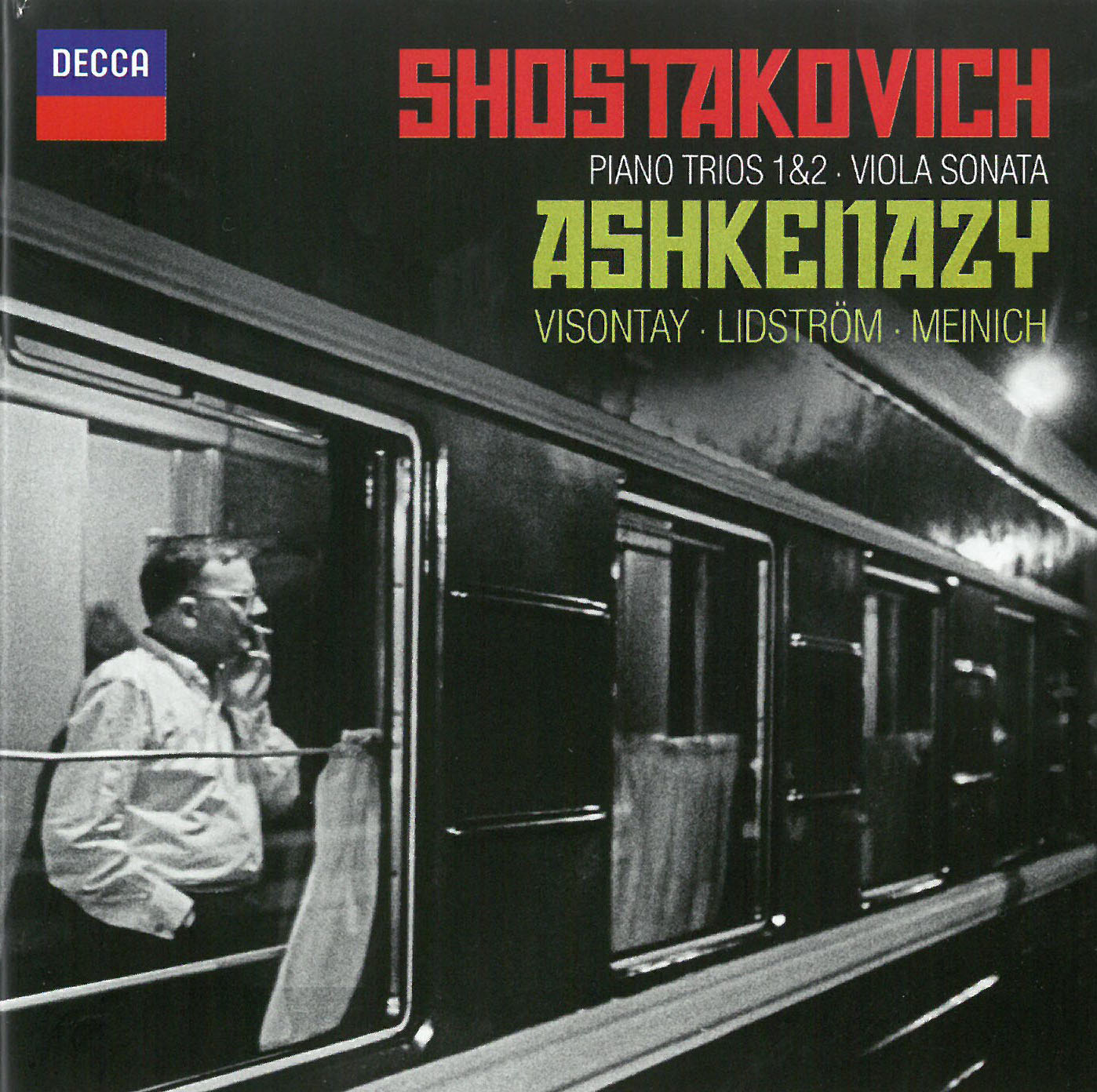
The three chamber music works featured on this recording were written during three distinct stages in Shostakovich’s life (1923, 1943, 1975), showing the development of what was to become his unmistakably unique musical expression. Shostakovich wrote Piano Trio No.1 at the tender age of 17 and dedicated it to the girl he was in love with. Already in place are the typical Shostakovich elements that became more pronounced in the Piano Trio No.2 – singing melodies, textural use of string pizzicatos, percussive piano, chromatic scales and a hint of the grotesque. The second trio was dedicated to Ivan Ivanovich Sollertinsky, Shostakovich’s greatest friend who had died suddenly shortly before. The opening theme is ethereal, muted and lonesome. Nestled in between two lively, swaying and occasionally dense movements is Largo – a sorrowful ode, a yearning lament in the face of inevitability.

The Viola Sonata was written in the last few weeks of Shostakovich’s life. It is quite different from his previous works – sparse, with subdued yet powerful colours, 12-tone scales and musical quotations, most notably from Beethoven and Shostakovich himself, sombre throughout.

The intensity of Shostakovich’s music is matched by the captivatingly intense performances of these extraordinary musicians – Vladimir Ashkenazy (piano), Zsolt-Tihamér Visontay (violin), Mats Lidström (cello) and Ada Meinich (viola). Here we hear it all – the pain, turmoil, despondency, soaring, playfulness, raggedness, tenderness and radiance. These musicians bring out every colour, every nuance, every motif with astounding conviction and utmost respect for the great composer.

03 Galilean MoonsThe Galilean Moons
Robert Dick; Ursel Schlicht
Nemu Records NEMU 017 (robertdick.net)

American extended flute master Robert Dick is renowned among contemporary flutists for his five-decade-long contribution to radically expanding the concert flute’s sounds, performance practice and repertoire. His work serves as a cornerstone of the flute avant-garde.

First published in 1975, his definitive reference work for flutists and composers The Other Flute: A Performance Manual of Contemporary Techniques remains in print and in demand. His contribution to flute hardware, the Glissando Headjoint®, was inspired by the electric guitar whammy bar. This telescopic flute mouthpiece designed by Dick allows downward glissandi from every note enabling the production of voice-like phrases and otherworldly sounds not heard before emanating from the flute.

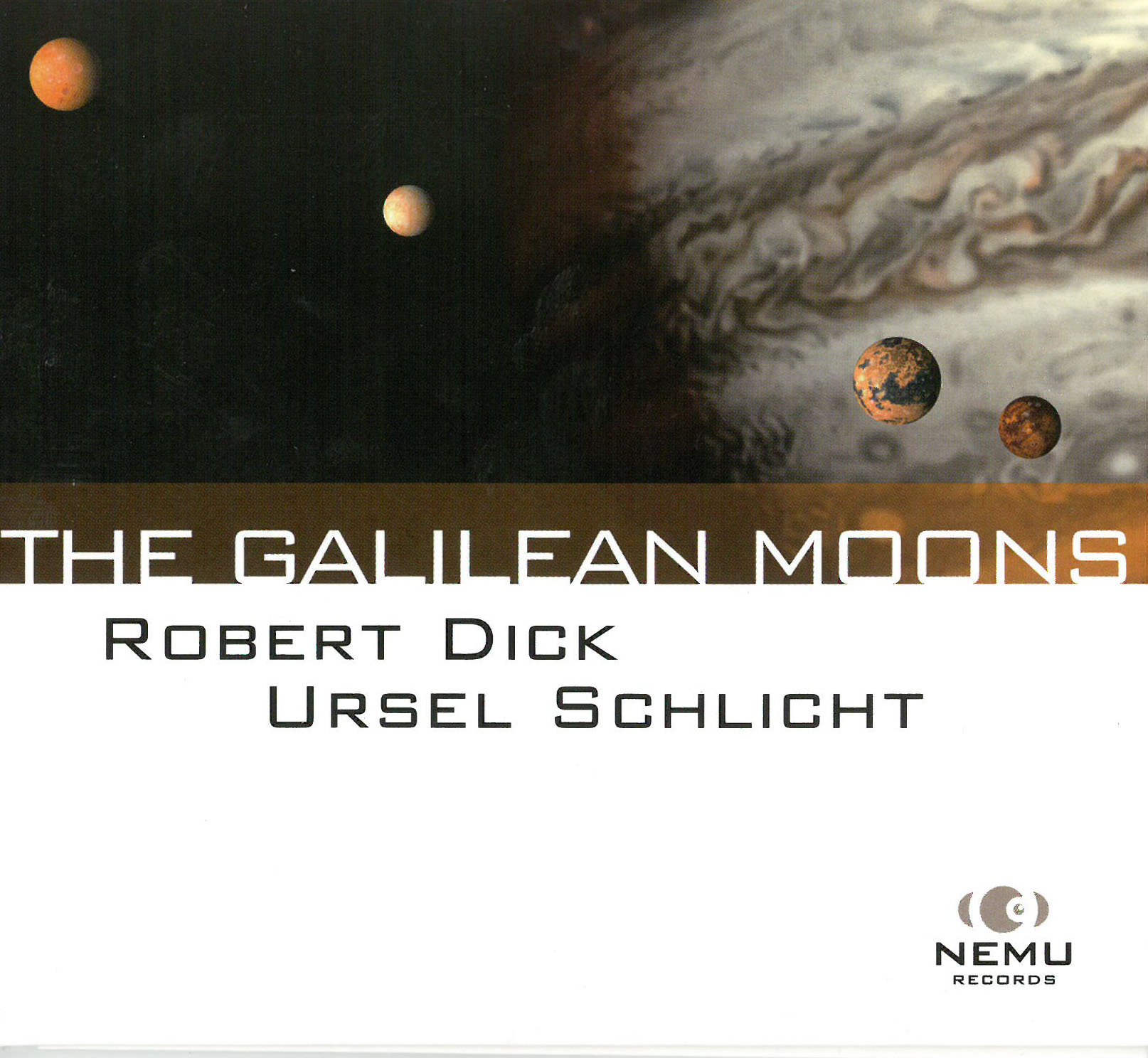
Dick makes use of many of the extended flute techniques he’s catalogued, as well as his pitchbending headjoint, to evoke four contrasting extraterrestrial soundscapes in the album’s centrepiece The Galilean Moons. The four-movement suite co-composed by Dick and pianist Ursel Schlicht evokes, at times viscerally, the distinct physical environments found on each of Jupiter’s four moons.

The five other works on this album assay a tremendously wide sonic and emotional vocabulary ranging from Dark Matter, in which Dick recites texts used by Internet spammers through the unusual contrabass flute, to Dick’s multi-movement work Life Concert. The latter explores European atonalism, in places haunted by the ghost of the blues, but also enriched by explicit references to African and Indian music. The piano’s strings emulate the sound of the kalimba at one point, while the primary theme of the final movement echoes aspects of the Hindustani raga Multani.

Expect a surprising and ear-opening journey from this veteran intergalactic flute traveler.

04 QuasarDe souffles et de machines
Quasar quatuor de saxophones
Quatuor Bozzini CQB 1618 (actuellecd.com)

The first striking thing about this new record from Quasar, Canada’s premier saxophone quartet, is its minimalist packaging. The sleeve and booklet are black and white. The notes probably fill one letter-size page all-told, and they read like a pastiche of found text. Montreal-born composer Pierre Alexandre Tremblay presents an Aloysius Bertrand-inspired poem in lieu of notes; Wolf Edwards offers a wikipedia-esque blurb about predator drones. But for music that means to speak beyond the bounds of words, there can be no better introduction. Like a rare, hand-painted cassette hiding at the bottom of a bin otherwise filled with greatest-hits compilations and obsolete business audio books, these electroacoustic soundscapes wait patiently to be heard.

That spirit pervades every work on this disc, but none more so than Tremblay’s Les pâleurs de la lune. Here, electronic clicks flitter against a nocturnal saxophone backdrop. This electronic scaffolding, which also takes the form of saxophone long tones distilled into pulsewaves, is omnipresent but unobtrusive. Like circuit traces on a motherboard, these elements lay flush against Les pâleurs, where they serve a mysterious yet important function.

Listening to De souffles et de machines feels like being the only person awake on an overnight bus winding its way through a dark forest: it’s as though the night, unaware of your presence, has let its hair down. Only here, as the saxophone squalls mount, the night seems perilously close, at times, to rearing its head.

05 IsrafelIsrafel – Music for flute and electronics
Paolo Bortolussi; Keith Hamel; John Oliver
Redshift Records TK443 (redshiftmusic.org)

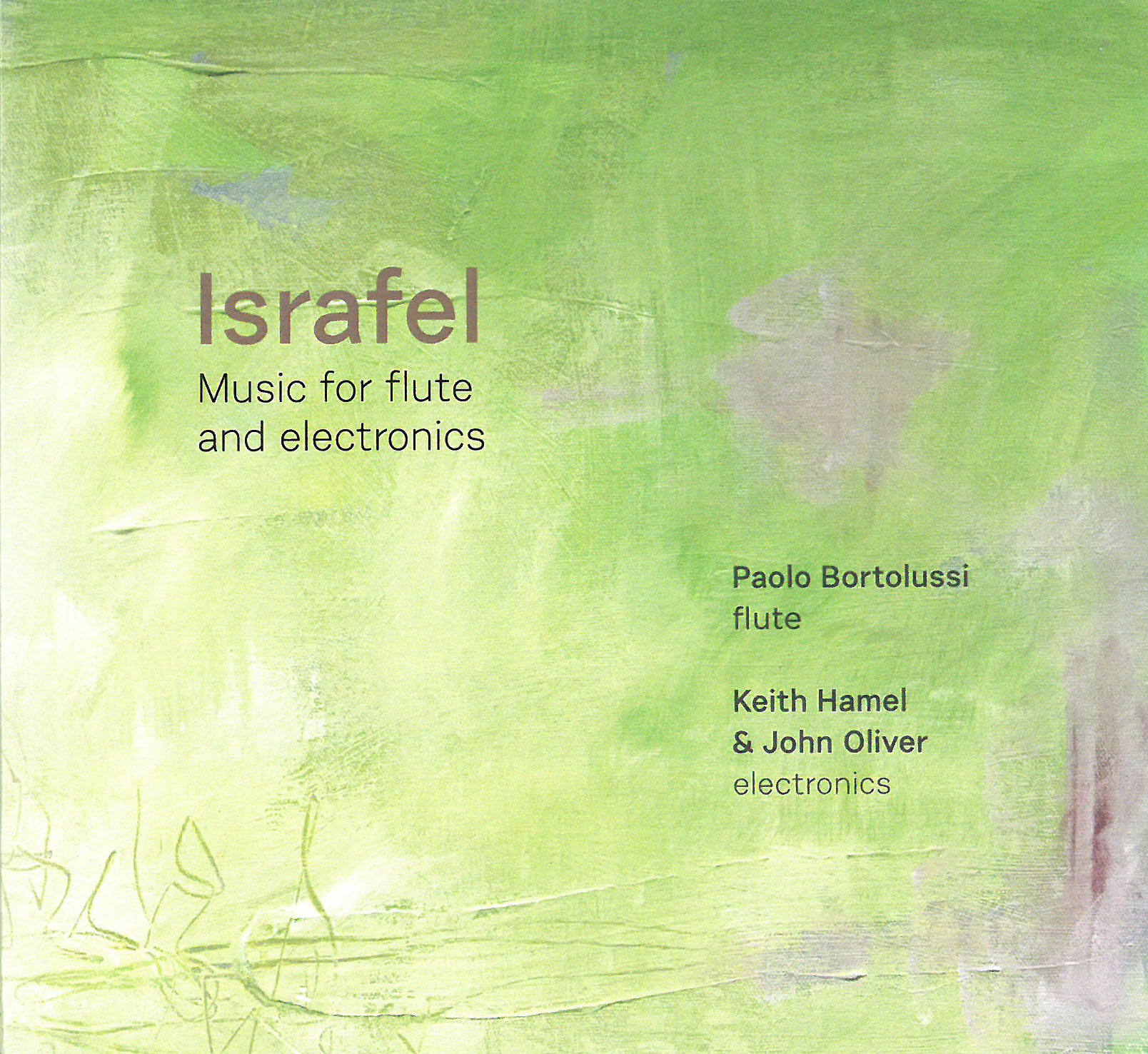
Israfel is Canadian flutist Paolo Bartolussi’s first solo recording, and it shows. That’s not because it’s bad, however, rather it shows because Bartolussi’s enthusiasm over the freedom offered by a solo recording seems to border on giddiness. Here he has packed everything in: Israfel is simultaneously an homage to the teachers who introduced him to his passion for electroacoustic music, a catalogue of the pieces he played on the way to becoming a virtuosic electroacoustic performer and a miniature history of interactive electronic music technique.

The narrative of Bartolussi’s development as a musician presented here is certainly resonant: Bartolussi first heard Larry Lake’s Israfel while standing outside his professor’s studio before a lesson with his ear to the door. Somehow, Israfel just sounds like one of those pieces which leaves a young musician in awe of his or her teacher: the pyrotechnical virtuosity, the novelty of the tape accompaniment.

But ultimately the most compelling aspect of this disc is the way it showcases the various degrees of interactivity between a performer and electronic accompaniment. At one end of the spectrum is the aforementioned Israfel, with its unflinching pre-recorded tape accompaniment. Then there’s Kaija Saariaho’s NoaNoa, with its pedal-activated electronics. On the bleeding edge is Keith Hamel’s Krishna’s Flute; here, the computer actually listens to what the performer is doing and responds with electronic events. Throughout, it’s Bortolussi’s consummate virtuosity which allows the listener to trace the nuances of these various techniques.

Back to top