06 Schwartkopf DetachDetach
Angela Schwarzkopf
Redshift Records TK472
(redshiftrecords.org)

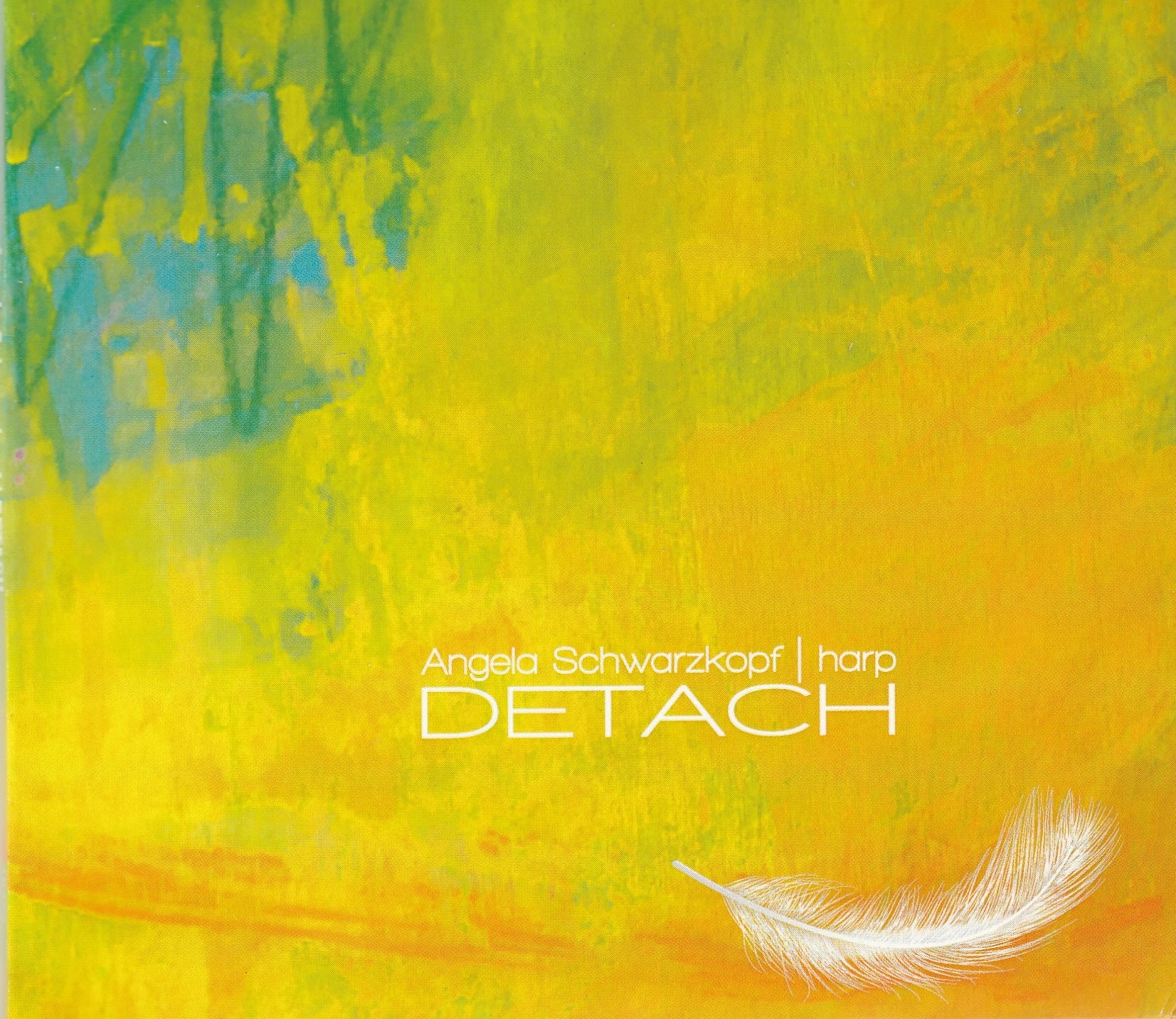
Often, new music, as much as that term is understood within the worlds of jazz or art music, is put forward to provoke, to be forward thinking, or to be purposefully progressive. Among the many adjectives most frequently used to describe this interesting genre, beautiful and serene are, arguably, not often heard. That is, however, not the case with Detach, the debut recording from Toronto-based harpist Angela Schwarzkopf on Redshift Records. Her sublime instrumental touch and skillful manipulation of dynamics successfully draw in and activate listenership. With the extremely capable accompaniment featuring vibraphonists Michelle Colton and Étienne Levesque, Schwarzkopf highlights and bring to life a number of compositions by new and notable contemporary Canadian composers Monica Pearce, Cecilia Livingston, Patrick Arteaga, Mark Nerenberg, Elisha Denburg and Kevin Lau. 

There is an intriguing programmatic arc to this recording. After an initial bold musical statement, Detach moves slowly and gently through the rest of Pearce’s attach/detach before traversing a tremendous terrain of harmonic and rhythmic complexity. Compositional nuance and sophistication abound, as well as wide-ranging dynamics, before ending, after a 15-minute tour de force reading of Lau’s Castles in the Sand, with an arpeggiated cascading melodic line on solo harp. 

This recording is indeed progressive, forward-thinking and modern, but it is simultaneously engagingly listenable, melodic and beautiful. Congratulations to the Ontario Arts Council for having the good sense to support these important voices in contemporary Canadian music, and to Schwarzkopf and the vibraphonists for creating such a fine recording. Picking up on the hopeful success of this debut, I trust there will be more to come. 
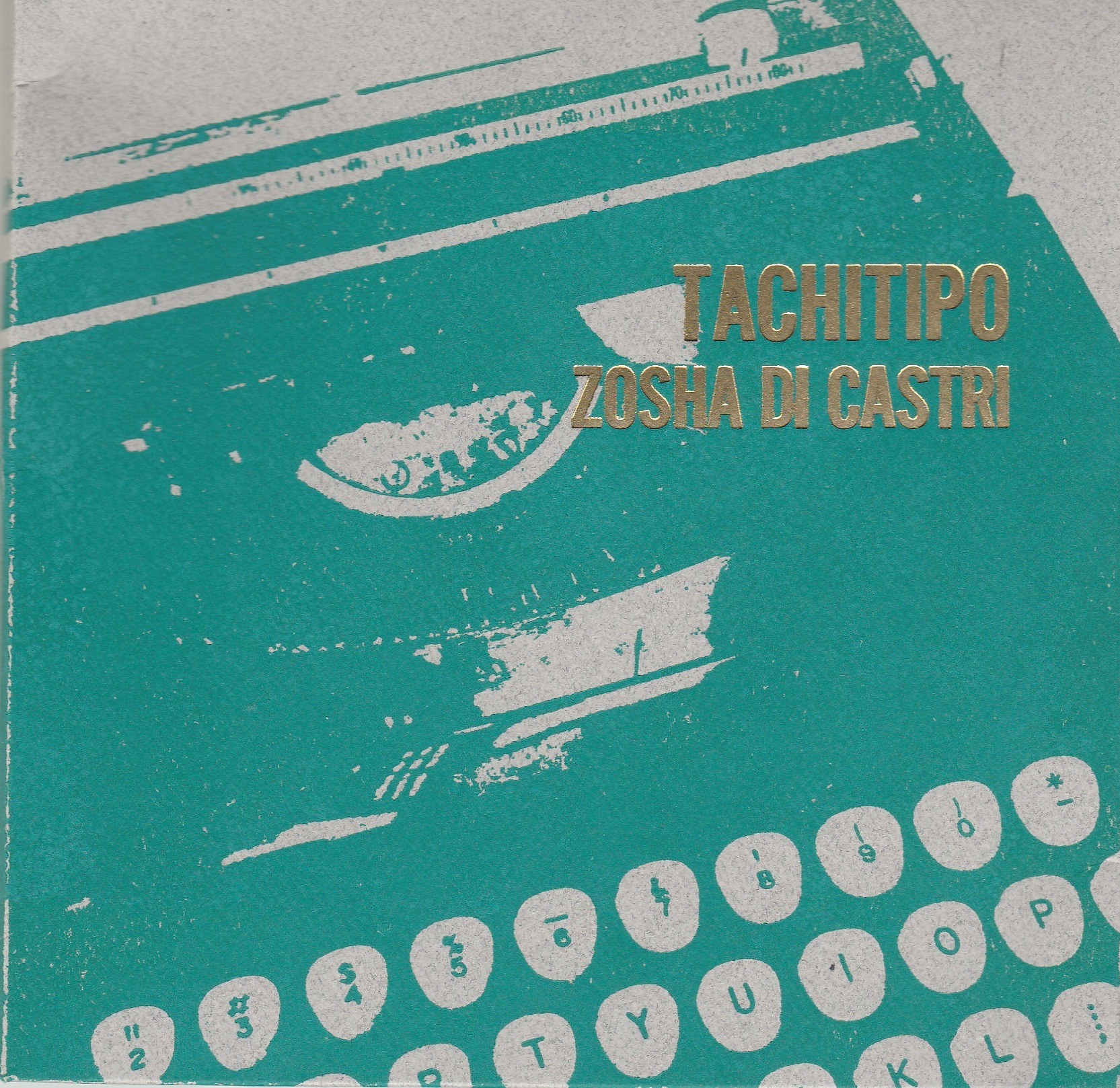
07 Zosha di CastriZosha Di Castri – Tachitipo
Various Artists
New Focus Recordings FCR 227 (newfocusrecordings.com)

Right from the beginning of her career, Canadian composer Zosha Di Castri has been stirring up great enthusiasm – and some controversy. This recording, the first devoted solely to her compositions, offers up the altogether worthwhile experience of entering Di Castri’s adventurous sound world. 

There is a lot going on in these works, with their constant shifts in mood and texture. But the inventive details add up to much more than a series of engaging episodes. Each work is tautly structured, creating an invigorating momentum. Above all, these works are inescapably moving, whether on a personal level, or when confronting the global issues that concern Di Castri. 

The best moments are the most unexpected. Take the burst of reflectiveness at the end of the title work Tachipito. Or the way the explosive glissandi in Quartet No.1 are interrupted by magical other-worldly harmonics. In Dux, virtuosic passages of unprompted rhapsodizing create a reassuring dream state. In Cortège, from 2010 the earliest composition here, the repetition of the opening motif throughout creates a poignant sense of longing. 

Each work is played by a different set of musicians. The array of performers gathered here is truly exceptional, from solo pianist Julia Den Boer playing Dux to the 13 musicians of the Talea Ensemble under Lorraine Vaillancourt performing Cortège.

Di Castri’s fresh, imaginative voice carries forward the vital lineage of the avant-garde at its most enjoyable. With these works she manages to both challenge and delight.

08 Mercer SistersOur Strength, Our Song
Akemi Mercer-Niewoehner; Rachel Mercer
Centrediscs CMCCD 27719
(cmccanada.org)

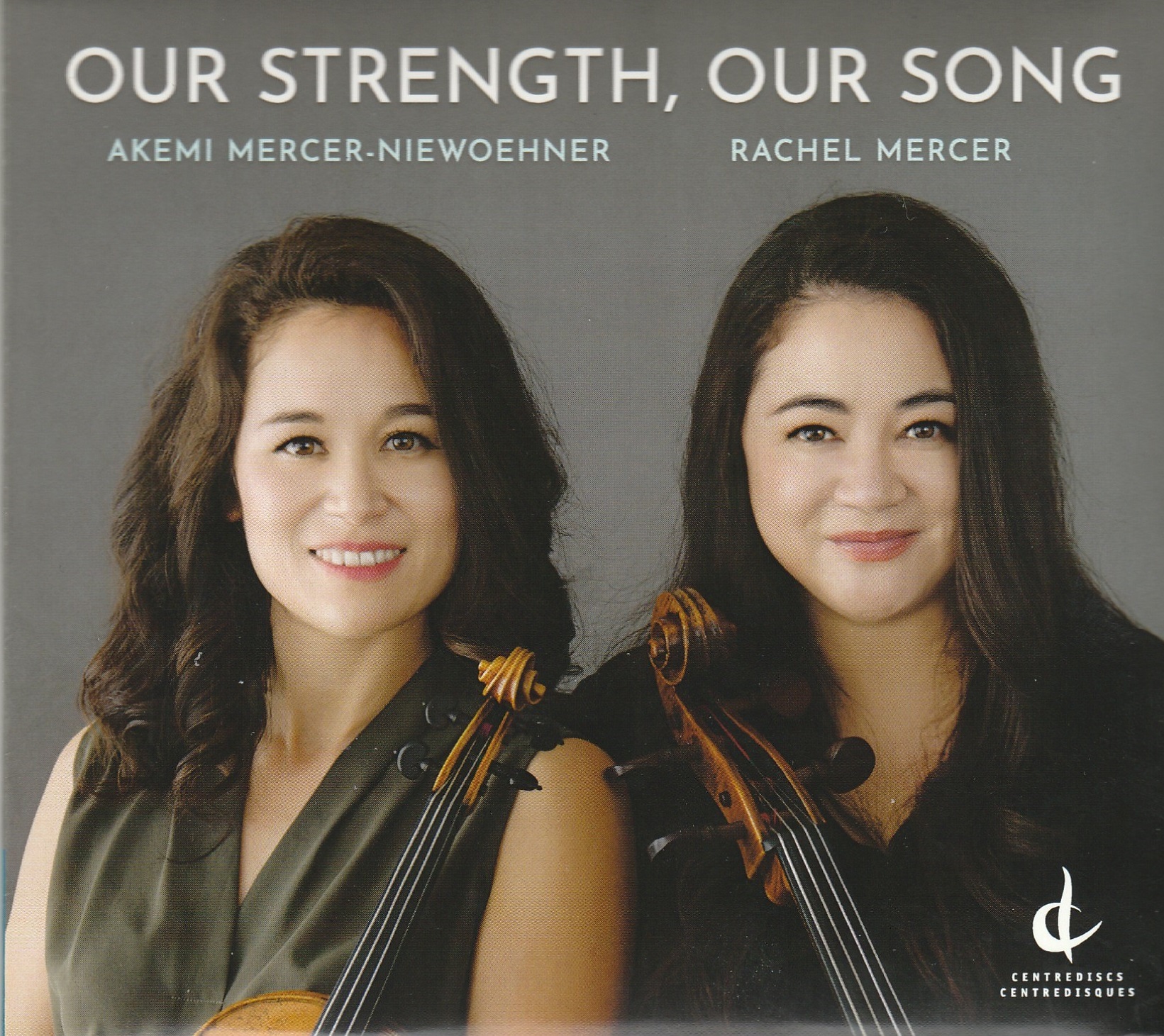
In a recent issue of The WholeNote, David Jaeger wrote at length about cellist Rachel Mercer. Jaeger produced this new release with Rachel and her violinist sister Akemi Mercer-Niewoehner playing six duo works by Canadian women composers. 

Violet Archer’s Four Duets for Violin and Cello (1979) is a four-movement work composed “especially” for violinist Tom Rolston and his then 12-year-old cellist-daughter Shauna. Family fun galore, as the opening Brooding movement starts with a slightly grim low-pitched cello mood leading to a more reassuring violin line. Love the upbeat plucks in the dramatic Paean fourth movement. More tonal rhythmic sounds in Jean Coulthard’s Duo Sonata for Violin & Cello (1989) as repeated patterns and plucks unite this orchestral-sounding piece. Barbara Monk Feldman‘s Pour un nuage violet (1998) is a welcome change of pace with nature-inspired subtle rhythmic original sounds.

The Mercer sisters are phenomenal in their passionate performances of their commissioned works. Rebekah Cummings’ Our Strength, Our Song (2018) features conversational counterpoint, high and low staccatos, and dynamic shifts written in traditional Bulgarian folk-singing style. Jocelyn Morlock’s (2019) Serpentine Paths’ use of intense sound effects like high violin and low cello pitch contrasts, fast intense and slower passages, is a race to the performance finish line! Alice Ping Yee Ho’s Kagura Fantasy (2018) is an exciting listen with contemporary string effects, theatrical feel, dance-like sections and Asiatic folk-music influences.

The Mercer sisters are inspirational to both musicians and families alike.

09 Focus guitar duoFocus
Adam Cicchillitti; Steve Cowan
Analekta AN 2 8792 (analekta.com/en)

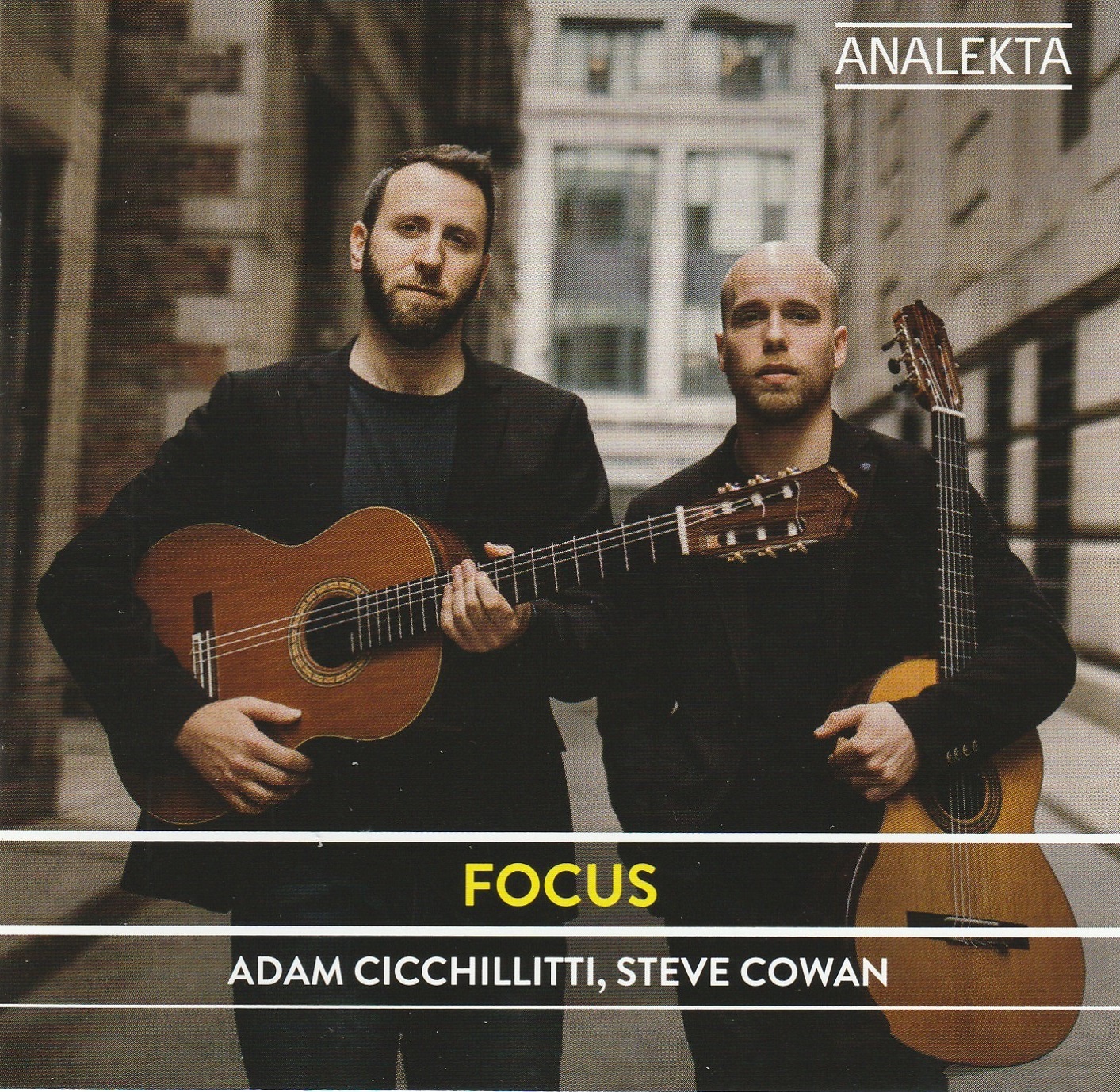
Canadian guitarists/friends Adam Cicchillitti and Steve Cowan formed this duo in 2015. Their dedication to performing, commissioning and collaborating with living composers from contemporary classical to popular music styles is heard here in five works by Canadian composers.

A wide cross-section of styles can be heard. The duo’s Canada Council commission Focus (2018) by Harry Stafylakis is a unique mix of pop, jazz, and classical. The first movement is more pop-sounding while the more classical second movement, based on a theme from Beethoven’s seventh symphony, opens with a single-pitch melody and develops through contrapuntal writing to a strumming rock-like closing. Andrew Staniland’s Brazilian-inspired Choro: the Joyful Lament for Villa-Lobos (2017) is a virtuosic rhythmic work. Cicchillitti and Cowan’s 2017 arrangement of José Evangelista’s five-movement Retazos (2010) is impressionistic, with reflective, haunting, mellow tonal melodies and contrasting florid fast runs. Their commission Ombres et lumières (2017) by Patrick Roux has a grief-stricken lyrical first movement and a contrasting faster rock-groove-flavoured second movement. Originally for two harps, composer Jason Noble impeccably arranged his more atonal programmatic two-movement River and Cave for the duo in 2018. The opening water rippling effect is achieved by delicate repeated pattern playing. The slower low-cave section emulates cave echo effects with lower strums, longer silences and staccato drips. 

Cicchillitti and Cowan are fabulous duo guitarists who perform together to perfection in all styles. No wonder this recording is on CBC’s Top 20 Canadian Classical Albums of 2019!

10 Boston CommissionsBoston Symphony Commissions – Timo Andres; Eric Nathan; Sean Shepherd; George Tsontakis
Boston Symphony Orchestra; Andris Nelsons
Naxos 8.559874 (naxos.com)

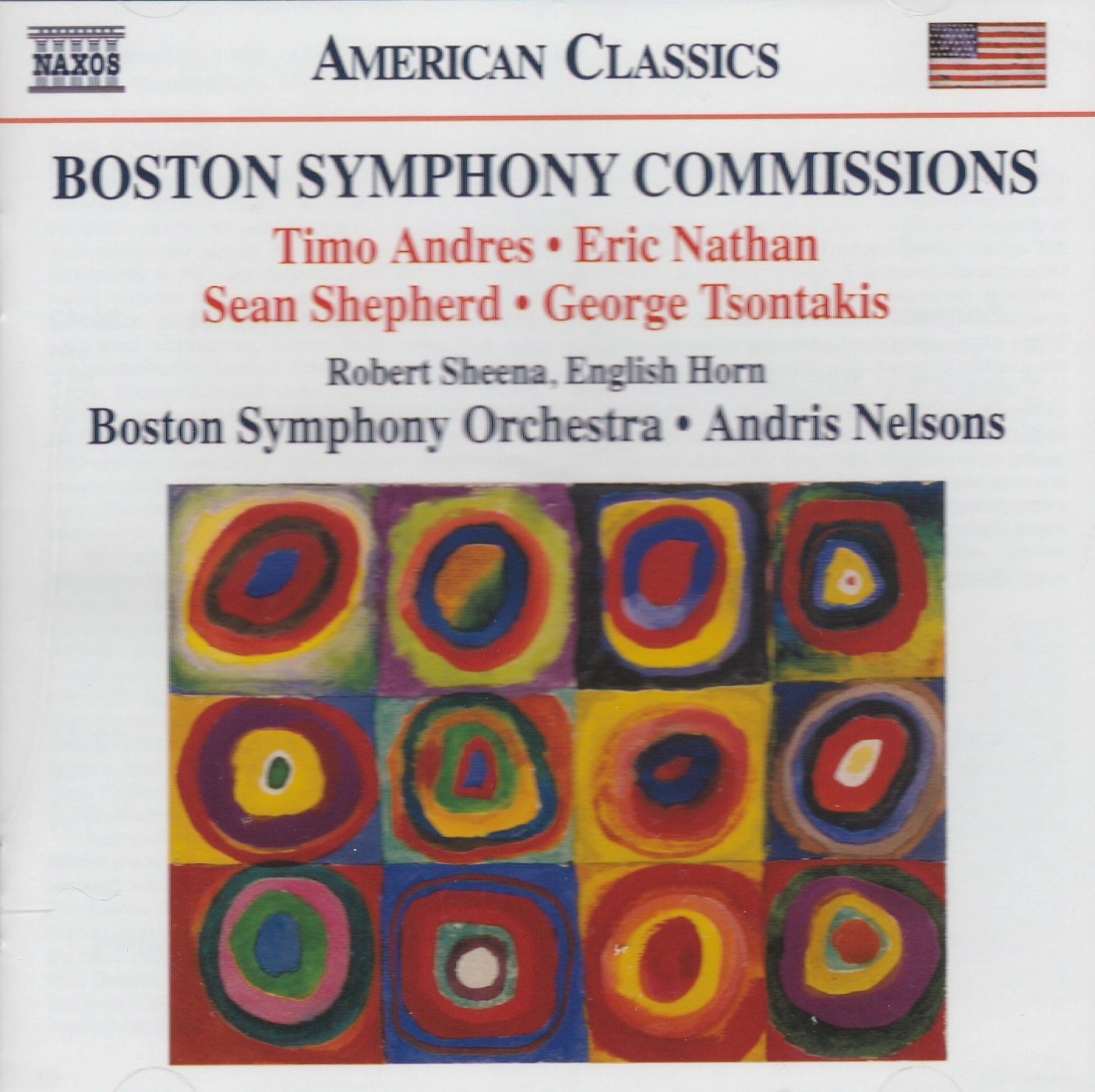
Four recent (2016-2017) works by American composers receive their premiere recordings on this disc.

The episodic structure of the brightly scored, 11-minute Everything Happens So Much by Timo Andres (b.1985) suggests, as per its title, a variety of things happening, as in a play, film or ballet. Similarly, the colourful episodes of another 11-minute piece, the space of a door by Eric Nathan (b.1983), also hint at a sequence of unseen events. Both of these compositions seem, to me, not quite self-sufficient, yet well-suited as soundtracks for something to be watched.

The 13-minute Express Abstractionism by Sean Shepherd (b.1979) invites visual accompaniment by its very nature. In four movements inspired by artists Alexander Calder, Gerhard Richter, Wassily Kandinsky, Lee Krasner and Piet Mondrian, Shepherd’s quirky, cleverly scored music would be even more persuasive if performed together with projected slides of the artists’ works.

The longest (24 minutes) and most substantial music on the disc, needing no visual support, is by the oldest and best-established of the composers, George Tsontakis (b.1951), visiting composer in 2008 at the University of Toronto’s Faculty of Music. His four-movement Sonnets – Tone Poems for English Horn and Orchestra, inspired by Shakespeare, is a lyrical, moody gem, its solo part beautifully played by the BSO’s Robert Sheena. It’s an English horn player’s worthy alternative to Sibelius’ Swan of Tuonela, which it closely resembles in overall impact, though boasting Tsontakis’ individual, memorable melodic expressivity.

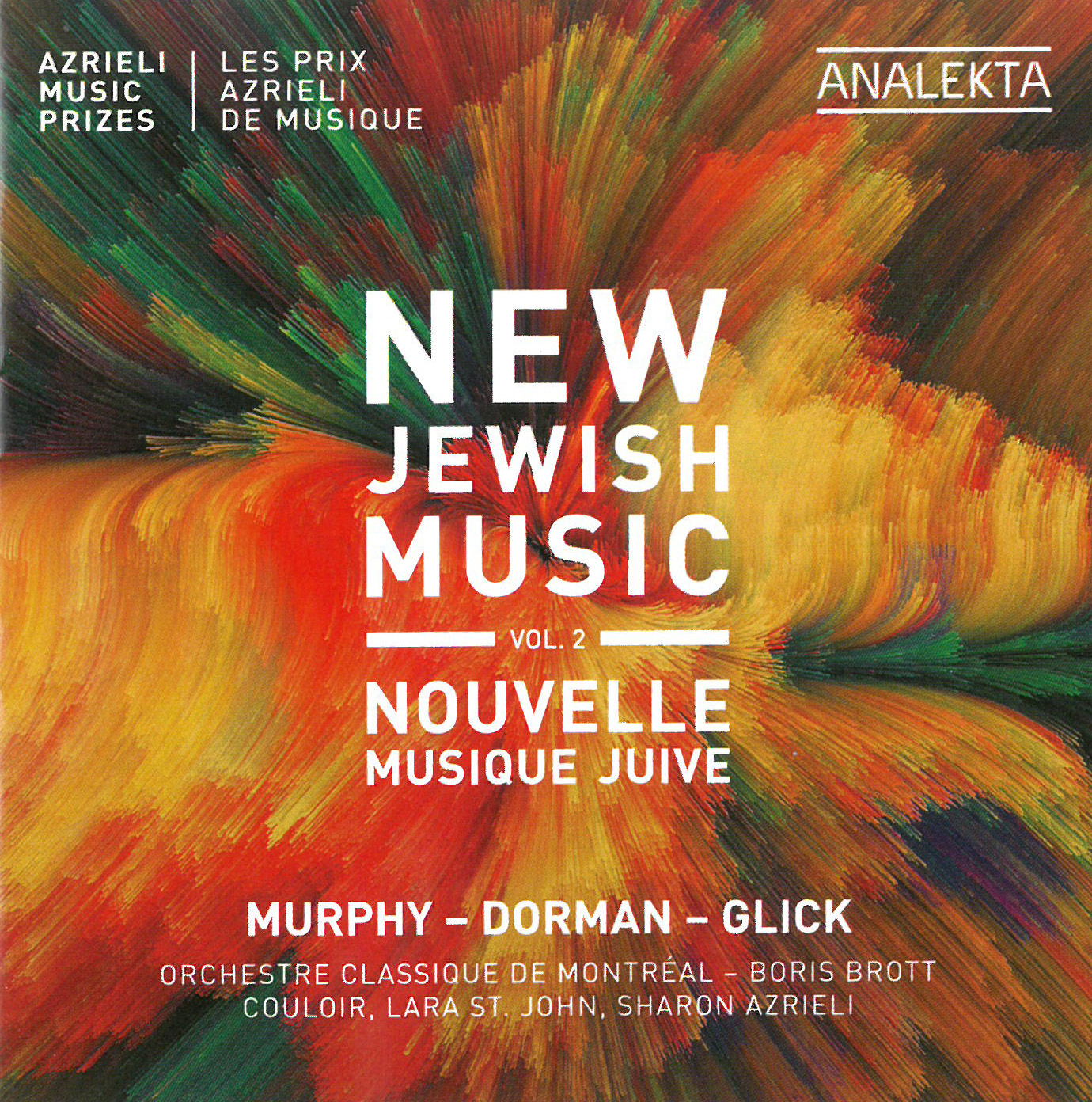
01 New Jewish Music 2New Jewish Music Vol.2
Lara St. John; Sharon Azrieli; Couloir; Orchestre classique de Montreal; Boris Brott
Analekta AN 2 9262 (analekta.com)

This Analekta release of new orchestral works features the powerful musical abilities of the Orchestre Classique de Montréal under the internationally respected Canadian conductor Boris Brott. The disc centres around the Azrieli Foundation’s prizes for newly created works. Two prizes are awarded: The Azrieli Prize for Jewish Music – recognizing an existing work – and the Azrieli commission for Jewish music, an initiative created to encourage composers to critically engage with the question of “What is Jewish music?”

The first piece on the disc – the premiere performance of En el escuro es todo uno (In the Darkness All is One) by Canadian composer Kelly-Marie Murphy – is a tour de force of orchestral imagination. Murphy is clearly a confident orchestral writer and it shows in this piece. The work is scored for solo harp, cello and orchestra, and Murphy expertly delivers a fine example of the concertante idiom. This piece represents the results of the 2018 Azrieli Commission Prize and features B.C. duo Couloir, Heidi Krutzen (harp) and Ariel Barnes (cello), as soloists.

The 2018 Azrieli Prize for Jewish Music was awarded to the Israeli-born composer Avner Dorman for Nigunim – a violin concerto in four movements. Dorman writes highly idiomatic and playful passages for the soloist answered by equally light dances and trifles in the orchestra. This work makes for an excellent showpiece for the soloist, Lara St. John in this instance, while not being overly dramatic in the virtuosic sense.

Last on the disc is a new recording of Seven Tableaux from the Song of Songs by the late Canadian composer Srul Irving Glick. This music is lyrical and melancholy. Glick had a particular affinity for creating an emotional painting with his music without being overtly sentimental. Soprano soloist Sharon Azrieli performs this work with stunning colour and musical prowess.

Back to top