03 JabFungIn Real Life
JabFung
Independent (jabfung.bandcamp.com)

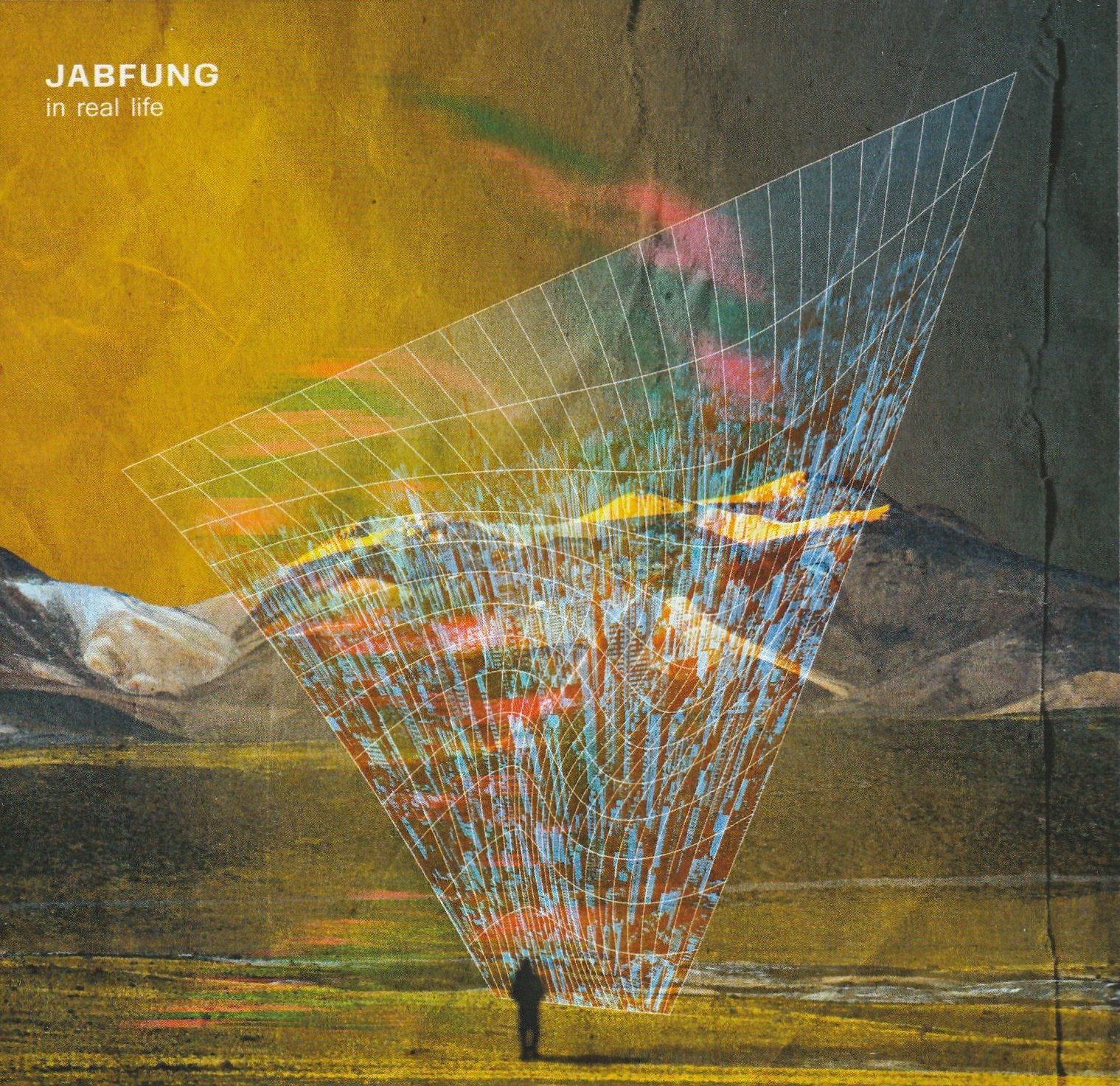
The album art really fits the music flawlessly here; multimodal, intermeshed and finding multiple simultaneous access points with which to engage the senses. Bandleaders Julian Anderson-Bowes and Anthony Fung continue to build creative momentum from last year’s debut record, refining their sound while painting over the peripheral sonicscape with new radiant elements. The final mix is more pristine than pristine (not backhanded, it sounds incredible), while the band’s ideas are rounded out with real experimentation and grit. 

Each instance feels dynamic and full of potential to fluctuate in a single breath. One cannot with confidence guess where the metre or a soloist’s line is heading, but this unpredictability invariably leads to exciting and even intuitive places. Intricate melodicism and rhythmic intensity are primary sources of intrigue throughout the tracklist, with the serpentine Skander being particularly addictive as a result of this overt synthesis, while the humorously-albeit-existentially-titled Methadone for Doomscrolling immediately recreates this effect in a more patient and understated way. 

As an ensemble, JabFung’s aural road mapping within each piece often visits two theoretical extremes in quick succession as a means of slowly eroding any differences between these modes. There will be an elaborate bass solo that plays with time and texture underneath blissful horn pads, with the totality making perfect sense. If there is one thing that unites the success of everything this album sets out to convey, it is JabFung’s steadfast commitment to their craft. 

Listen to 'In Real Life' Now in the Listening Room

04 Jean DeromeLe Sourire
Jean Derome & Somebody Special
ambiances magnetiques AM 286 CD (ambiances-magnetiques.bandcamp.com/album/le-sourire)

This is Canadian saxophonist, bass flutist, vocalist Jean Derome and ensemble Somebody Special’s second recording of improvisations, adaptations and swing touches on compositions by soprano saxophonist Steve Lacy (1934-2004). The band takes its name from Lacy’s tune of the same name. Derome’s longtime collaborators are Normand Guilbeau (double bass), Pierre Tanquay (drums) with new members Alexandre Grogg (piano) and Karen Young (vocals). Together their musical ideas and performing expertise create brilliant, tight renditions of 11 Lacy originals featuring settings of texts by diverse writers Anna Akhmatova, Samuel Beckett, Robert Creeley, Bob Kaufman, and Judith Malina.

Jack’s Blues starts with Derome’s attention-grabbing sax solo. Midstream, his alto sax incorporates some bluesy phrasing. His singing blends beautifully in duet with Karen Young in Robert Creeley’s text. Piano and drums add a jazzier feel to the closing held note. The Smile (Le Sourire) encompasses some of the best Derome ideas. Repeated slightly atonal piano, bass held notes and sax start. Young’s emotional singing of Anna Akhmatova text is moving with Derome’s sax lines and his expressive solo is supported by bass line, drum kit and piano chords. High pitched piano solo is followed by vocal re-entry. Touching slower ending with vocal held notes. All the musical lines are independent yet fit together seamlessly, setting the stage for the other Lacy songs here. 

Slower, hypnotic, calmer instrumentals and Akhmatova text feature in The Cuckoo. Young’s hilarious pronunciation of the word “cuckoo” evokes the cuckoo clock’s “singing.” Derome leads the other tracks with equal musicality.

 Liner notes with bilingual French/English lyrics are included. Derome’s solo and ensemble music is always SO carefully adventurous yet thoughtful in these renditions of Lacy compositions!

05 PlatanusPlatanus
Scott Thomson; Allison Cameron
ambiances magnetiques AM 287 CD (scottthomson.bandcamp.com/album/platanus)

When it comes to improvised music, some of the most magical moments to me as a listener occur when I cannot pinpoint precisely which participant was responsible for a particular sound. These moments can be fleeting, and the illusion can be broken with relative ease, but they are transcendent; even hierarchy-disrupting. Suddenly, distinctions between voices and textures cease to matter as much, instruments shed their skin to merely become skeletal shapes, and the ensuing output becomes all that is truly real in the mind’s eye. I bring this up to say, Platanus has too many of these to count, and they accumulate even more on repeat listens. 

The improvising duo of Cameron and Thomson is truly formidable, both as a sum and as a cohesive unit. Individually, their voices on their instrument(s) have been honed and expanded to the point of being able to convey a universe of textural information alone, and the collision of these cosmic expanses amplify this exponentially. Together, a word like “telepathy” does the tangible level of active listening and deep consideration for where each micro-gesture fits. At any given second, both musicians can be a percussionist, an operatic voice, a field of crickets, an intercepted radio signal or the scrape of sheet metal. Pairing electricity with brass in this way places digital and analog sound on the same continuum, with the utter dismantling of such a distinction being ultimately achieved.

06 Strat AndriotisThe Wolf Sleeps Alone
Strat Andriotis
Dekatria Records (stratandriotis2.bandcamp.com/album/the-wolf-sleeps-alone)

The guitarist/composer Strat Andriotis was born in Greece and his family immigrated to Canada when he was four. He lives in Hamilton and has released several earlier albums with different instrumentation such as guitar, piano and violin and a larger group with bass and drums. The Wolf Sleeps Alone uses a basic guitar trio format with Alex Karcza on drums and Vince Di Francesco on bass to perform Andriotis’ nine original tunes. 

Bullets begins mysteriously with some tense syncopated chords and then moves into more traditional jazz swing and some rapid picking. Can’t Help Myself starts out swinging with angular guitar lines scampering over a solid bass and drums backing. Caretaker is a bit moodier with some tense chordal parts and then deliberately tentative guitar lines and includes a nice bass solo. 

The Wolf Sleeps Alone hangs itself around the guitar playing which can sound hurried, deliberate, introspective and sometimes quite swinging. Andriotis works hard to avoid cliche and presents each chord or note as an original and unique choice. Occasionally the guitar work sounds a bit slapdash, but I believe this is simply a result of always pushing for originality and that is what makes this album interesting and evocative. 

Listen to 'The Wolf Sleeps Alone' Now in the Listening Room

07a El Arte Del Bolero 3El Arte del Bolero – Volume 3
Miguel Zenon; Luis Perdomo
Miel Music  (miguelzenon.bandcamp.com/album/el-arte-del-bolero-vol-3)

Expressions – Concerto for Alto Sax and Orchestra
Miguel Zenon; Barcelona Art Orchestra
Miel Music D.L. B 11731-2026 (barcelonaartorchestra.bandcamp.com/album/expressions-concerto-for-alto-saxophone-and-orchestra)

This is a very good year for Grammy-winning alto saxophonist, Miguel Zenon, who has recently released two consequential recordings: El Arte Del Bolero, Vol. 3 with pianist Luis Perdomo, and Expressions – Concerto for Alto Saxophone and Orchestra with the cutting edge, Barcelona Art Orchestra. Two diverse projects, spanning the musical panorama from intimate, emotional and lyrical duets to a large-scale work with one of the most highly regarded contemporary orchestral ensembles in the world.

El Arte Del Bolero is a collection of sensual, slow and emotional ballads, a modality that emerged from Spanish roots in Cuba in the 1880s and quickly became one of the most widely popular Pan-Latin musics. Eight sumptuous pieces are included here, composed by a variety of Latin artists, each of whom was in some way influenced by jazz. While each track is superb, clear highlights include La Gloria Eres Tú – a stunning alto-solo intro which segues into a marvelous, symbiotic musical experience. The romantic longing of this composition and the depth of emotion from both players is palpable, and Un Amor De La Calle (A Love of the Street) is almost unbearably heart-rending, rife with loss and regret. Zenon’s alto sobs with sadness and Perdomo plays with an intuitive touch of emotional understanding.

07b Expressions Miguel ZenonFor Expressions Zenon joins forces with the Barcelona Art Orchestra in a large-scale work exploring the many dimensions of human expression through the dialogue between soloist and ensemble. Structured in four movements, it reflects contrasting emotional states ranging from silence and whispering to lament and outcry. Each section has been composed by one of the Orchestra’s founding Artistic Directors: Nestor Gimenez, Lluc Casares, Joan Vidal and Lluis Vidal. Part l: Silenci/Xiscle (Gimenez) is rife with haunting themes and sonic chaos that bathe the listener in a sense of otherworldliness, while intermittent guitar lines sooth the tortured chord pads. Zenon enters following a volcanic explosion of sound, after which he creates a musical, lyrical and malleable infra-structure over a relentless percussive line. His tone is crystalline and soulful, and his complex improvisations, in tandem with the more structured orchestral lines, are breathtaking. Also stunning is Part ll:  Canta/Parla (Casares), a languid, torrid, trip through the jungle on an ancient river, and as elements of swing begin to enter the equation, the vista of this composition stretches to the absolute edges of our collective imagination. The additional movements are equally innovative, challenging and thrilling.

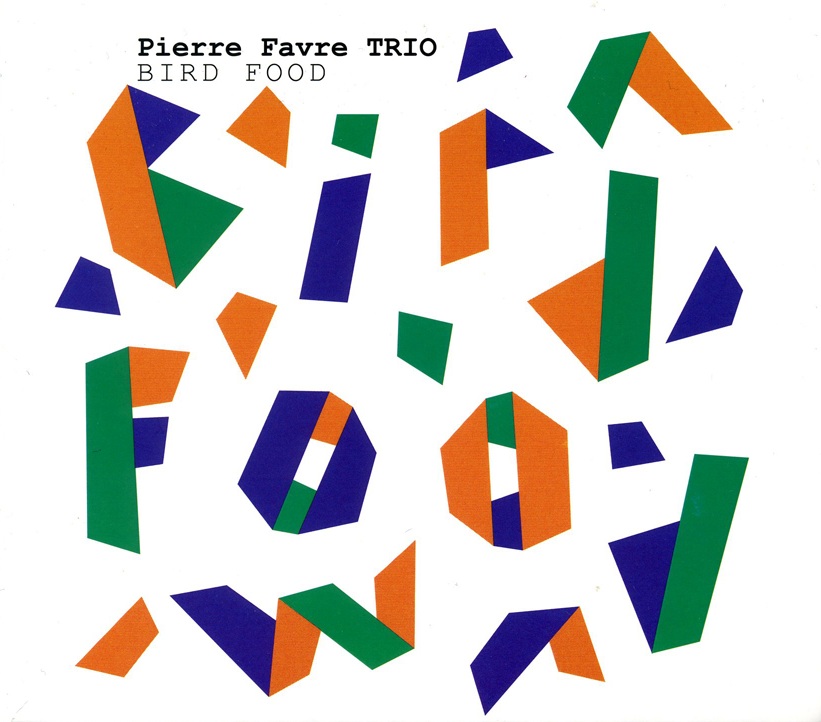
08 Pierre Favre Bird FoodBird Food
Pierre Favre Trio
Songs 004 CD (samuelblaser.bandcamp.com/album/bird-food)

A historical redefining document, Bird Food is an unearthed 1968 session and the earliest recording by Swiss drummer Pierre Favre’s trio with fellow Swiss pianist Irène Schweizer. It precedes by several months the recorded beginnings of the now 89 year old drummer’s creative music career and adds to the discography of Schweizer (1941-2024). The trio’s third member is Czech bassist George Mraz (1944-2021), better known for his mainstream work.

This underlines the album’s transitional nature. During the Ornette Coleman composed title tune and three Schweizer originals stentorian bass string stops and ambulatory patterning preserve a swing groove underneath the other’s sonic extensions. Schweizer’s variations sometimes shift towards blues inferences and jaunty interludes. The drummer’s strokes are thick and aggressive with press rolls, and chunky ruffs.

More imposing are Schweizer’s tunes. Mraz’s supple walks and woody plinks undulate alongside Favre’s dynamic shuffles and prodding smacks. Schweizer’s timbral expansions also expand. Creating antiphony with herself from both sides of the keyboard, on Sounds II; and on Hinten swiftly boosts the rhythm section’s funereal pace to presto with spirited key stopping and inner strings scrapping.

By the concluding The Attack, the three move closer to defining European Free Jazz. The pianist’s pressure often reiterates the theme so extended bass resonations and drum rat tat tats provide the backdrop for Schweizer’s theme embellishments and a corresponding tonal upsurge that ends the album. Nourishment derived from this bird food is archival excitement and profound music.

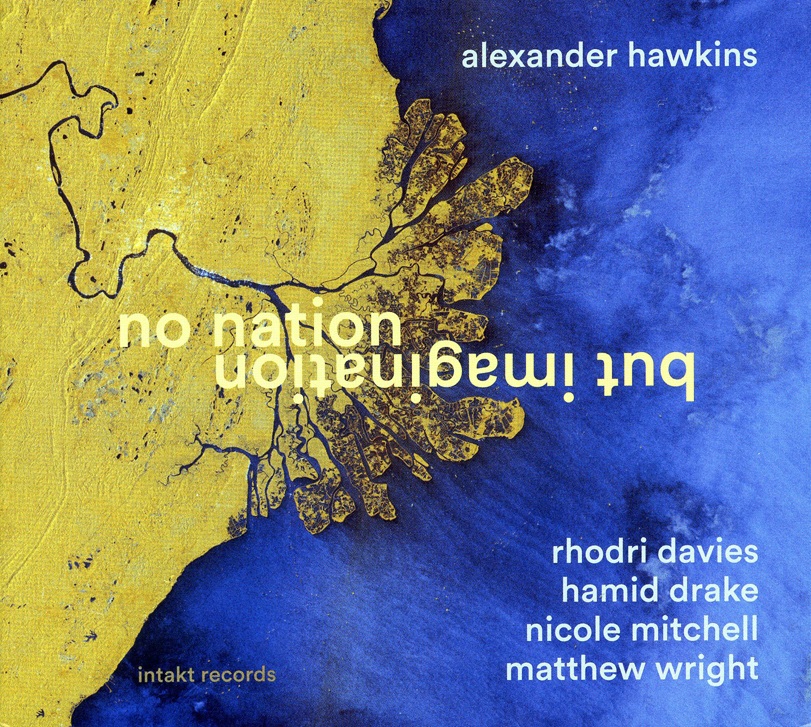
09 No Nation but ImaginationNo Nation But Imagination
Alexander Hawkins
Intakt CD 453 (alexanderhawkinsintakt.bandcamp.com/album/no-nation-but-imagination)

A departure for UK pianist Alexander Hawkins who usually plays acoustically, No Nation But Imagination expands his compositional and international direction with electronic instruments and more associates. Hawkins uses synthesizer and sampler as well as piano; fellow Brit Matthew Wright turntables and live sampling; while additional textures are contributed by Welsh harpist Rhodri Davies plus Americans, flutist Nicole Mitchell and drummer Hamid Drake.

Wave form crackles and static are omnipresent as are heightened synthesized aural colors, while Coda Over The Fence is dominated by turntable-mutated instrumental samples. However acoustic and electric textures are balanced throughout. 

Tracks are introduced or expanded with Mitchell’s transverse trills and Davies’ sweeping multi-string strums or singular stops. A track like Each And Every combines the harpist’s pizzicato plucks with darkened flute trills, surmounted by sampler wave forms and underlined by Drake’s drum rumbles. 

While some sequences are near pastoral the best indications of how Hawkins melds contradiction are Lullaby Much Further and Hocket Fierce Peaceful. Between Wright’s dial-twisting jiggles or descending drones which begin and end the first, drum clanks and piano comping create a distorted theme. Wavering flute variables, harp patterns and Carnatic sound samples initially dominate the other tune, with pauses leading to a distorted interchange from electric keyboard ripples and speedy flute peeps. The result is linear and limitless.

Hawkins has demonstrated his skill in other configurations. Pivots to electricity with an augmented cast suggest further exploration continues to be rewarding.

Although they were the ensemble of choice for configurations like Count Basie’s Kansas City Seven, Miles Davis’ Birth of the Cool sessions, Carla Bley’s groups and Ulrich Gumpert’s Workshop Band, the little big band of seven or eight musicians has a curious jazz history. Although infrequently on the road, in the studio the group is both bare bones and fleshed out, giving composers and arrangers the maximum amount of sonic colours created by the minimum number of musicians.

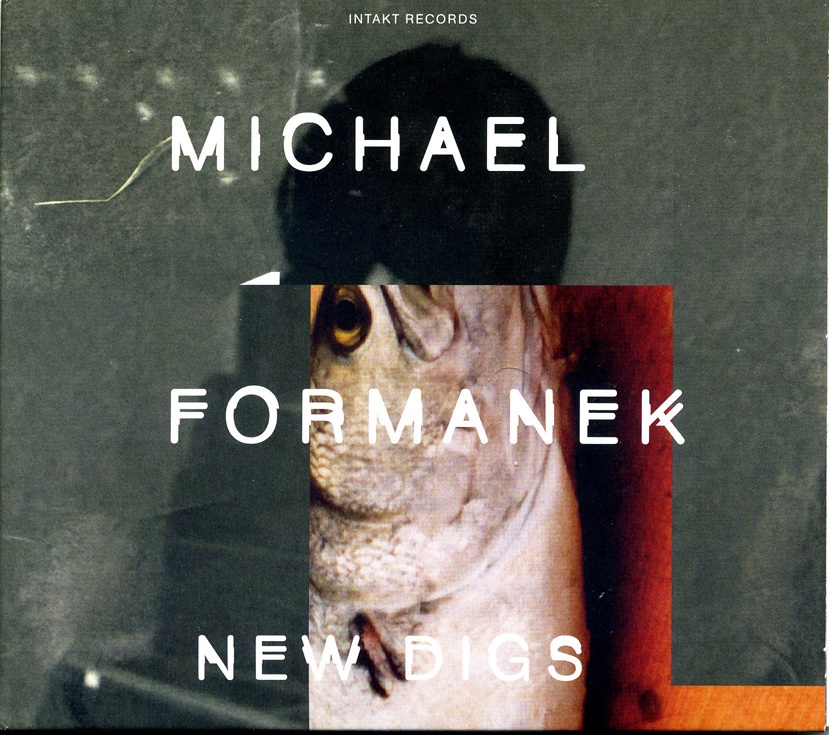
01 FormanekOne method of using this is demonstrated by American bassist Michael Formanek who now lives in Portugal. On New Digs (Intakt Records CD 457 intaktrec.ch michaelformanekintakt.bandcamp.com/album/new-digs-dolby-atmos), he augments his stateside Thumbscrew trio of drummer Tomas Fujiwara and guitarist Mary Halvorson with Portuguese trumpeter João Almeida and US alto saxophonist John O’Gallagher, who lives in Lisbon, plus Canadian tenor saxophonist/clarinetist Chet Doxas and UK organist Alexander Hawkins. Despite the soul jazz implications suggested by guitar and organ only one of Formanek’s nine compositions – Aka The Stinger – with Hawkins’ organ slides and stops, Halvorson’s rhythmic strokes and Doxas’ slurs and quickened double tonguing, is overtly funky. Otherwise, Hawkins, who usually works as a pianist, uses his dual keyboards for ghostly resonations and pinpointed reverberations on tunes such as Prequel and Quinze. In tandem with guitar frails and double bass stops on the first, he extends the exposition until his ostinato meets contrapuntal drum thumps. Quinze on the other hand balances on speedy organ pulses as three horn vamps splinter with Almeida proffering triplets and swift puffs to both saxophonists’ honks and snarls. Emphasizing timbral accords, instrumental subsets ensure that lyrical story telling is emphasized as much as dissonant variations. At points O’Gallagher builds solos from upwards moans and bites intensified by guitar string tweaks and a bouncing bass line. But shifts in the narratives introduce tougher responses such as portamento brass breaths and string sweeps before initial themes are recapped. 

Formanek doesn’t stud the tracks with multiple bass solos. But on Gone Home/Interlude For Susan Alcorn, a threnody for a steel guitarist, he takes advantage of the subsequent multiple sonic colours depicted by other bands members. Initially solo, he then directs his mordant and moving extended bass line towards a full band response that combines harmonized reed patterns and muted brass grace notes. These tender group undulations avoid being maudlin when Halvorson unleashes a coda of a jarring Hawaiian-guitar like twangs.  

02 CookingOn the other hand, doubling the size of quartet to an octet can introduce inferences from other genres into compositions from a jazz base. Brussels-based French pianist Lara Humbert does so with her I’m Not Done Cooking band on Tome I: Beauty and the Queen (MOKU H 1011 larahumbert.bandcamp.com/album/tome-1-beauty-and-the-queen-2) by adding the close-to-notated tones of flutist Lúcia Pires and violinist Amèle Metlini plus the rock-oriented pulse of electric bassist Matteo Mazzù and guitarist Raphaël Desmarets to the improv tinctures from Adrien Lambinet (trombone) and Alejandra Borzyk (tenor saxophone). Bridging the gap among the genres are Gaspard Sicx’s vibraphone sustain and drum beats, and Humbert’s own formal or free keyboard. 

Throughout, languid interludes also populate the tracks adding soundtrack suggestions. On La Sombre Avancée for instance upwards drum smacks, vibe colouration and a horizontal reed line are fragmented with sharpened violin sweeps, simultaneously referencing country fiddling and concerto formalism, until pedal point pianism and a plunger trombone snort refresh the initial straight-ahead direction. Separated by episodes where group timbral intersection is more polyphonic than pretty, the light music echoes nearly vanish by the disc’s second half. The concluding Jouvenet and especially Dreamland demonstrate how Humbert’s arrangements paper over potential textural fissure. Based around amplified electronic pressure that underlines a breathy tenor sax introduction on the first tune, pinpointed guitar fills create a contrapuntal ambulatory line as cross pulses build up the tension so that undulating processes complete it via flute puffs and plunger trombone inserts. Another revelation despite its title, Dreamland quickly shakes off its movie theme suggestions following a near-baroque violin introduction with gutbucket trombone sputters. Reed yelps adumbrate sweeping piano and swift fiddle glissandi while measured drumbeats cement light swing. 

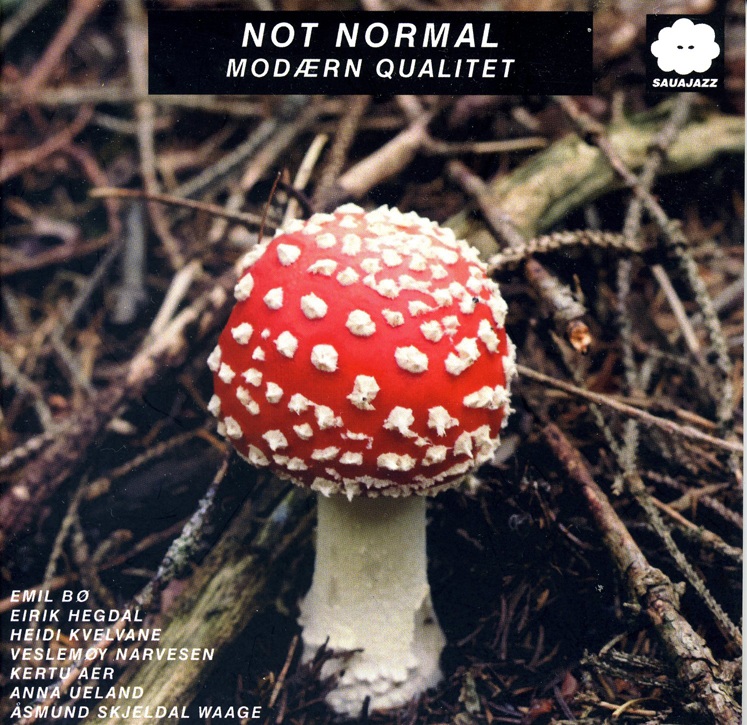
03 Not NormalAdding multi-timbral electronic instruments to a project can also make a difference as is done on Modærn Qualitet (Sauajazz SAU 006 CD emilb.bandcamp.com/album/mod-rn-qualitet). A Norwegian septet playing compositions by trombonist Emil Bø, Not Normal doesn’t overuse electronics, but instead uses the timbres from Anna Ueland’s electric piano and synthesizer and the synthesizer of multi-reedist Eirik Hegdal to put a finer point on the acoustic impressions from Bø, Hegdal, alto saxophonist Heidi Kvelvane, vibraphonist Åsmund S. Waage, bassist Kertu Aer and drummer Veslemøy Narvesen. Meanwhile judicious use of voltage washes and oscillating flanges on tracks such as the affiliated Intro/Maskinell Loop, Subland and Ingensteds cleverly put electro-acoustics into practice. On the first the trombonist’s squeezed burrs evolve alongside synthesizer whirrs eventually made palatable by a relentless bass pulse. Subland and Ingensteds follow a similar formula. As cascading synthesizer expansions and wave form fizz join equivalent guitar flanges to reach a climax that suggests a rocket launching soundtrack. In both cases quieter piano chording isolates a linear melody. 

With or without electronics, the concluding Dizzy Dada Pt.1 and Dizzy Dada Pt.2 demonstrate that voiced the right way seven instruments can express the same sort of sleek, shouting power expected from much larger bands. Yet as the narratives move from allegro to presto to prestissimo, elements suggesting a marching band, a country hoedown and a Metal band’s strength confirm that Not Normal isn’t your father’s (or mother’s) powerhouse configuration. Note-bending flutters from the saxophonists also confirm modernity. The disc is a fine introduction to an evolving little big band. But it still needs seasoning to take full advantage of the instrumentation’s colour palate.

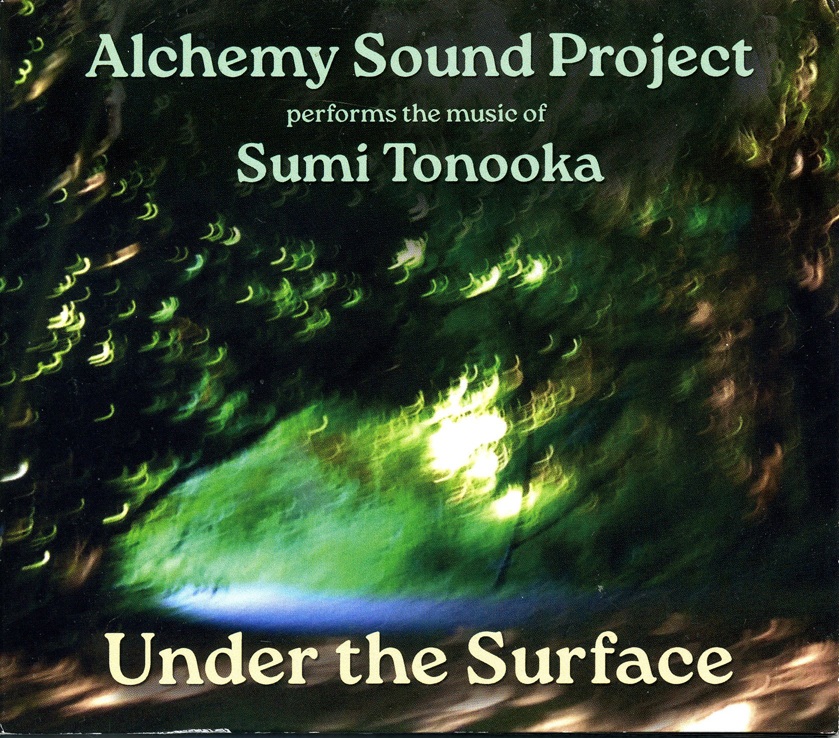
04 Under the SurfaceOne septet that does so is the resolutely non-electric Alchemy Sound Project on Under the Surface Plays the Music of Sumi Tonooka (ARC 6670 sumitonooka.bandcamp.com/album/under-the-surface). It features trumpeter Samantha Boshnack, trombonist Michael Ventoso, tenor saxophonist Erica Lindsay, Salim Washington playing tenor saxophone, bass clarinet and flute, pianist Tonooka, bassist Gregg August and drummer Jonathan Blake. A transnational collective, this particular configuration was organized to play this suite, symbolically representing tree root survival. It was composed by Tonooka, who often plays in a trio, but now branches out composing for chamber ensembles, symphonies and larger jazz groups. 

Beginning with the obviously titled Points of Departure her emphasized and often stop-time keyboard strategy is astringent enough to suggest Herbie Nichols at his most cadenced, angular enough to reference Thelonious Monk’s comping but alive with keyboard tinkles and responsive voicing to salute her mentor Stanley Cowell on For Stanley. But as acerbic as some of her lines may be, turns during the tracks contain a steadfast finger-snapping groove. Ventoso contributes a virtuoso wah-wah introduction to Saveur reminiscent of “Tricky Sam” Nanton’s growls with early Duke Ellongton bands. It introduces the pecking horns vamps and August’s walking bass line, allowing the measured theme to shuffle forward with a plethora of emphasized notes and rests. Overall narratives highlight everything from clarion register bass clarinet trills to portamento trumpet theme elaboration. Emphasized are equally knowing dips into keyboard interpretations ranging from faux old-timey to clashing near-atonal. Overall, Tonooka uses band timbres to their fullest. With tunes at points referencing bossa nova, Bop and blues motifs, her arrangements stretch the instruments into reed, brass, string and percussion sections to produce a sound much larger than expected from seven pieces.

05 You ranA different expansion was attained with seven musicians on Youran (Klein -21 joachimbadenhorst.bandcamp.com/album/youran). Result of another commission, Belgian Joachim Badenhorst, who plays clarinet, bass clarinet and tenor saxophone, gathered musicians from continental Europe and Japan to play his compositions during two Rotterdam concerts, one in a former margarine factory, the other in a medieval church. Pipe organist Hayo Boerema played the mammoth church instrument, while the reedist and the other players – trumpeter Alistair Payne, trombonist Nabou Claerhout, Simon Jermyn on guitar and electric bass and Tsubasa Hori using taiko drums, bell and a koto – took full advantage of the buildings’ spatial qualities as they roamed through the audience. Later electronics manipulator Rutger Zuydervelt took these concert sounds plus additional studio recorded material and processed and synthesized the results into Youran’s 11 tracks.  

No different than mixing electronic and acoustic instruments in a live setting, the dial twisting and sequencing merely means that variations of single vocal and choir-like timbres from Badenhorst are inserted into some narratives. These warbles and murmurs are intertwined with the instruments as are electronic wave forms as well as the pitches and volumes from the pipe organ’s ranks. Sustain and pressurized air from the organ creates a continuum as well as commentary on the expositions, with pointed interludes from the other instruments. That means that Mineral Rhythm moves between koto and guitar strums to pointed trombone grace notes mixed with clarion reed trills on top of wave form crackles and static, climaxing with bell-ringing and diffuse electronics ascending in volume. Elsewhere, as on the concluding But, Still, extended drones and slides animate both trombone and multi-keyboard projections as single-string guitar variations are cushioned by pulsating oscillations. Themes touch on sweetened baroque-like airs, distended synthesized sustain, and one percussion heavy track that appears to be both a country tune and an anthem. 

The polyphonic, pretty, powerful and programmed motifs on Youran couldn’t have been attained without the full participation of all seven members of this group. The result is another explanation of why adventurous players and composers turn to this little big band configuration.

A number of decades ago my wife and I attended a fabulous concert by superlative percussionist (now Dame) Evelyn Glennie at the George Weston Recital Hall. The piece that has stuck with me for all these years was PRIM by Icelandic composer Áskell Másson, a ten-minute composition using only one snare drum. The result was transfixing (you can see a performance on YouTube). I would never have imagined that a single drum could be so compelling.

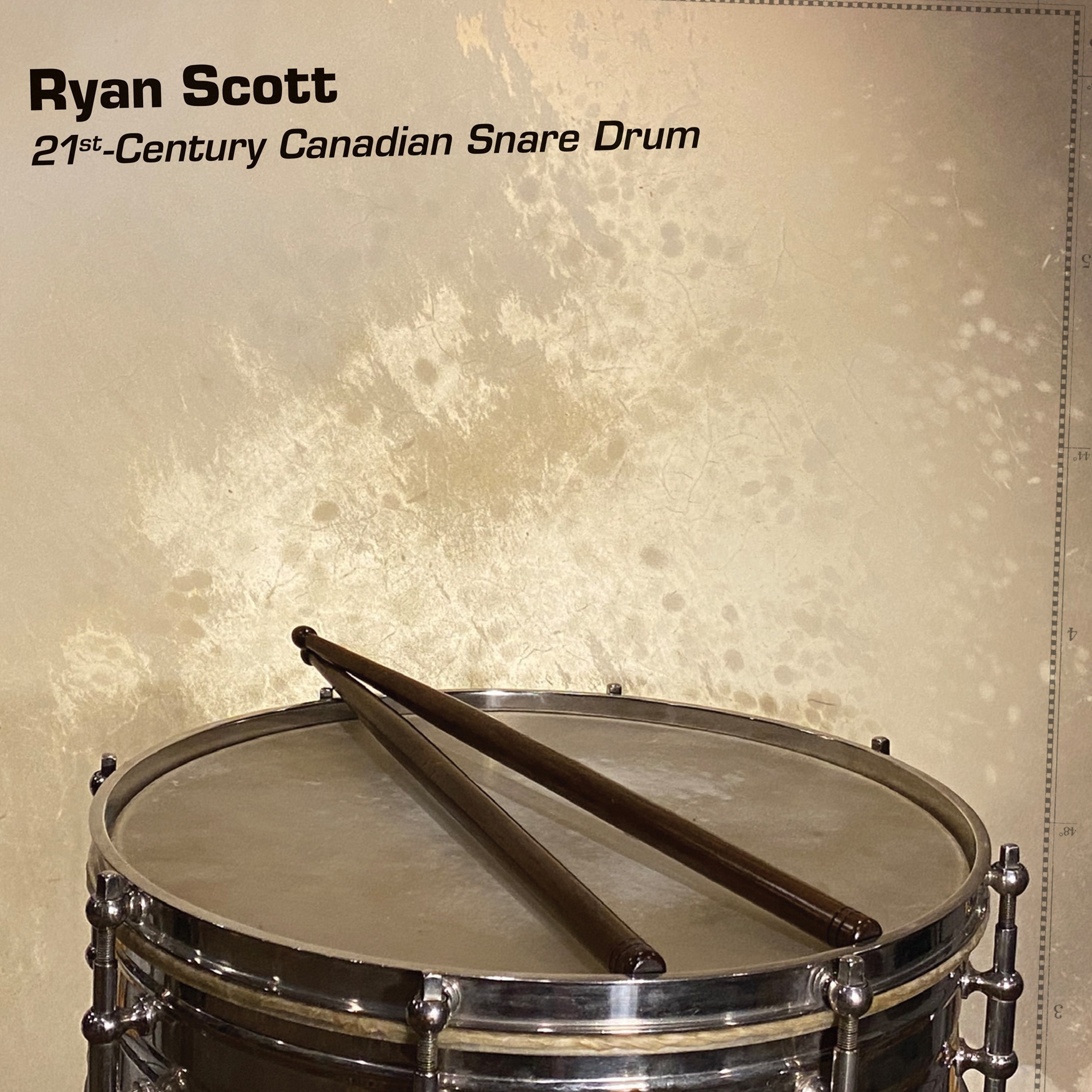
01 Ryan ScottThat being said I was a little daunted when I encountered Ryan Scott’s new double CD 21st Century Canadian Snare Drum (collectionqb.bandcamp.com/album/21st-century-canadian-snare-drum). Any qualms I had were quickly put to rest as I began to listen. While the snare drum does indeed figure prominently in the 14 works, almost all of them include additional resources, be it spoken word, electronic processing, prerecorded soundtracks, or requiring Scott to perform in other ways. One notable exception is Michael Oesterle’s brilliant, ironically titled hush (2022) with its seven minutes of just sticks on skin. Anna Höstman’s pebbles also uses the unadorned drum in a piece inspired by the words of artist Rockwell Kent, while Scott whistles and hums fragments of melodic material. 

Andrew Staniland’s ANTIGRAVITYDRUM begins with the drum alone, its snare springs disconnected. Two and a half minutes later an engaging soundtrack begins, filled with electronic effects and MIDI-instruments in counterpoint with the still snare-less drum. Bekah Simms’ Skinscape IV involves Scott’s interaction with an electronic, disembodied version of the snare drum, transforming “something intimately familiar into something processed and alien.” Christina Volpini’s only ghosts finds Scott producing a harmonica drone over a soundtrack reminiscent of waves upon a shore. FOMO (Fear of Missing Out) by Kati Agócs is scored for snare drum, kick drum and two large metal plates. It is a sparse piece in which “the soloist enacts a kind of stream-of-consciousness pantomime, searching for something inchoate, elusive, and potentially unreachable.” 

Perhaps the most idiosyncratic work is Brian Current’s abrasive Infantry which delves into the militaristic implications of the snare, with pre-recorded texts by soldiers from different backgrounds and periods of history and percussive interjections. The set concludes with Nicole Lizée’s The Dark Night.fm, in which “analogue synths and slowed-down voice smears… wrap themselves around Scott’s nimble percussion and vocal interjections.” 

All of the above, plus works from Amy Brandon, Monica Pearce, Vincent Ho, Emilie Cecilia LeBel, Jason Doell and Hiroki Tsurumoto ensure that these discs never devolve into “too much of a muchness.” They provide a welcome showcase for the diversity of Canadian composition at this point in time and a stunning platform for the many talents of Ryan Scott (principal percussionist of Esprit Orchestra, artistic director of Continuum Contemporary Music and a member of the Canadian Opera Company Orchestra).

Listen to '21st Century Canadian Snare Drum' Now in the Listening Room

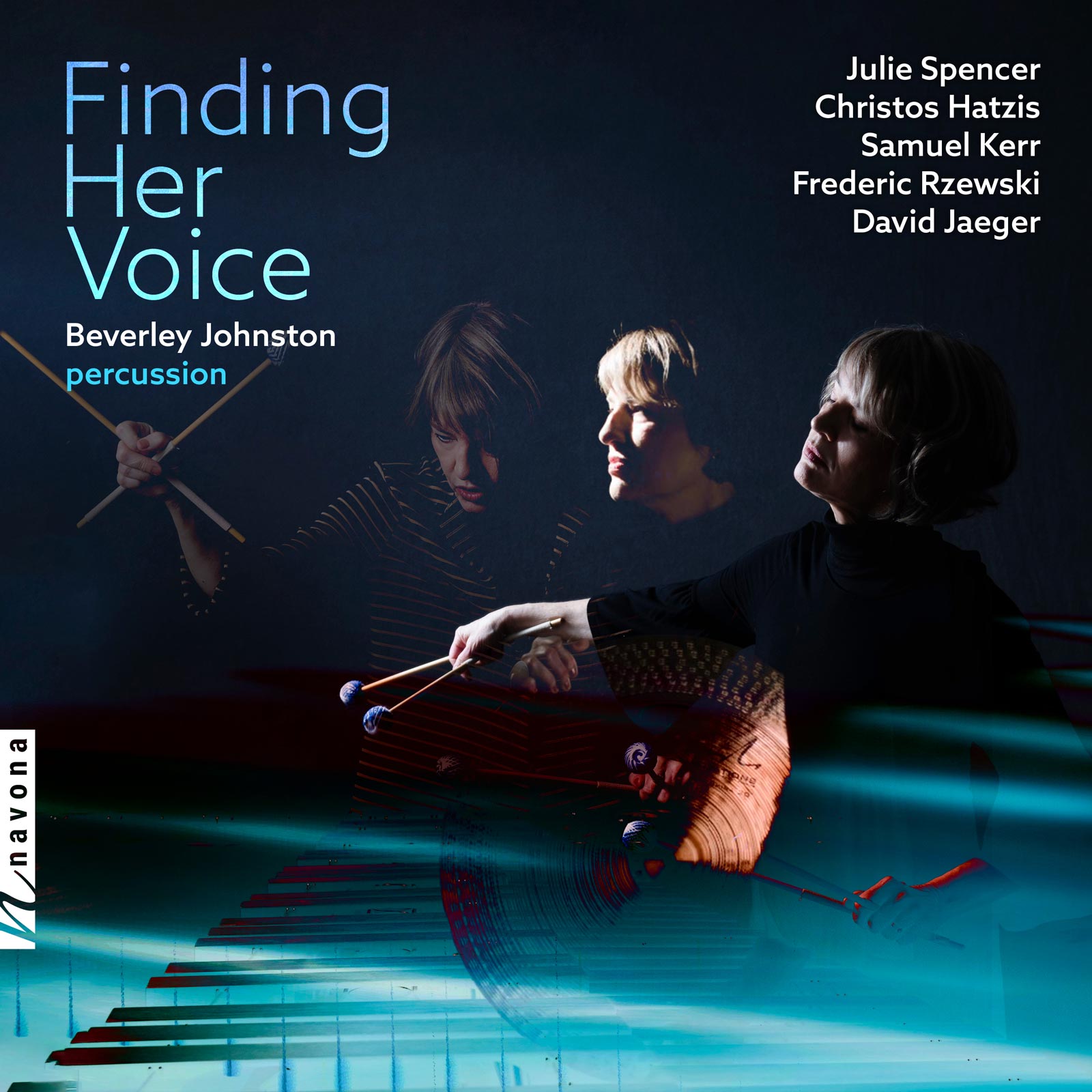
02 Beverly JohnstonFor the past number of decades another Toronto percussionist has made a name for herself as a virtuoso solo artist. Beverley Johnston’s repertoire stretches from her own transcriptions of the music of Bach, to the most intricate of contemporary works, often employing her super-sized five octave marimba. Her most recent release Finding Her Voice (navonarecords.com/catalog/nv6823) is “a journey through sound, history and identity… celebrating the enduring resonance of women’s voices across time.” Johnston presents works by Julie Spencer, Christos Hatzis, Samuel Kerr, Frederic Rzewski and David Jaeger, and two compellingly meditative structured improvisations of her own. 

The instrumentation ranges from assorted quiet percussion in Spencer’s Angels in Arches of Hildegard’s Bingen (in which Johnston is also called upon to intone the text), vibraphone (Hatzis and Jaeger), marimba (Kerr), flowerpots (Rzewski) and temple bowls, temple bells and Thai gongs (Johnston). The Hatzis and Jaeger works also include playback of electroacoustic sounds, and in Kerr’s November we hear the haunting voice of the late character actor Kenneth Welsh reciting a poem by Robert Frost. In each case rich sound worlds are created using minimal resources, a case in point being Rzewski’s To the Earth in which the performer strikes simple clay pots while reciting words that honour the earth. 

Jaeger’s Lyrics II pays homage to Canadian composer, broadcaster and co-founder of New Music Concerts Norma Beecroft, referencing her pioneering work in electronic music. We also hear a brief quotation from Beecroft’s celebrated The Living Flame of Love. The disc ends with Johnston’s vocal interpretation of Sara Teasdale’s poem The Crystal Gazer, accompanied by ever more intense Thailand gongs, providing a dramatic close to this beautifully realized album. 

03 Robert Humber into air coverWhen I first encountered Newfoundland composer Robert Humber’s into air – four multitracked pieces (redshiftmusicsociety.bandcamp.com/album/into-air) I expected an album of music that would sound like Steve Reich’s Counterpoint series, with its tuneful overlaid minimalist lines. While there are moments here that do suggest that medium, the overall impression is quite different. 

The title work, for five violins (all performed by Adrian Irvine) begins quietly, with distinct separate lines which gradually come together in a doppler-like cloud. The second movement is an agitated storm reminiscent of a demented Vivaldi. The final movement is quiet and somehow gentle, despite bows grating on the strings and strident upper register meanderings. 

Mothmouth for three guitars performed by Ben Diamond opens with gentle string scrapes and ringing harmonics that gradually give way to busy contrapuntal picking. Murmurations for six layered pianos (Stephen Eckert) is reminiscent of the “continuous music” of Lubomyr Melnyk before transitioning to Reich-like phasing and then morphing into other worlds including that of Philip Glass. This is more what I expected from my first glimpse, but less derivative than I feared. 

The disc ends with a work for solo cello and cello octet (all performed by Heather Tuach). Humber says that singing in circles emerged from a time that he felt himself “approaching a breaking point. I was isolated, anxious and without purpose.” The angst-filled lament begins with an extended solo cadenza lasting more than half of the 14-minute work, before the octet joins for a melancholy but somehow peaceful resolution. 

I was the general manager of New Music Concerts from 1999 through 2019 and having mentioned NMC’s co-founder Norma Beecroft and its present artistic director Brian Current above, it’s only fitting that I should include Robert Aitken, who served as artistic director for the organization’s first half century. 

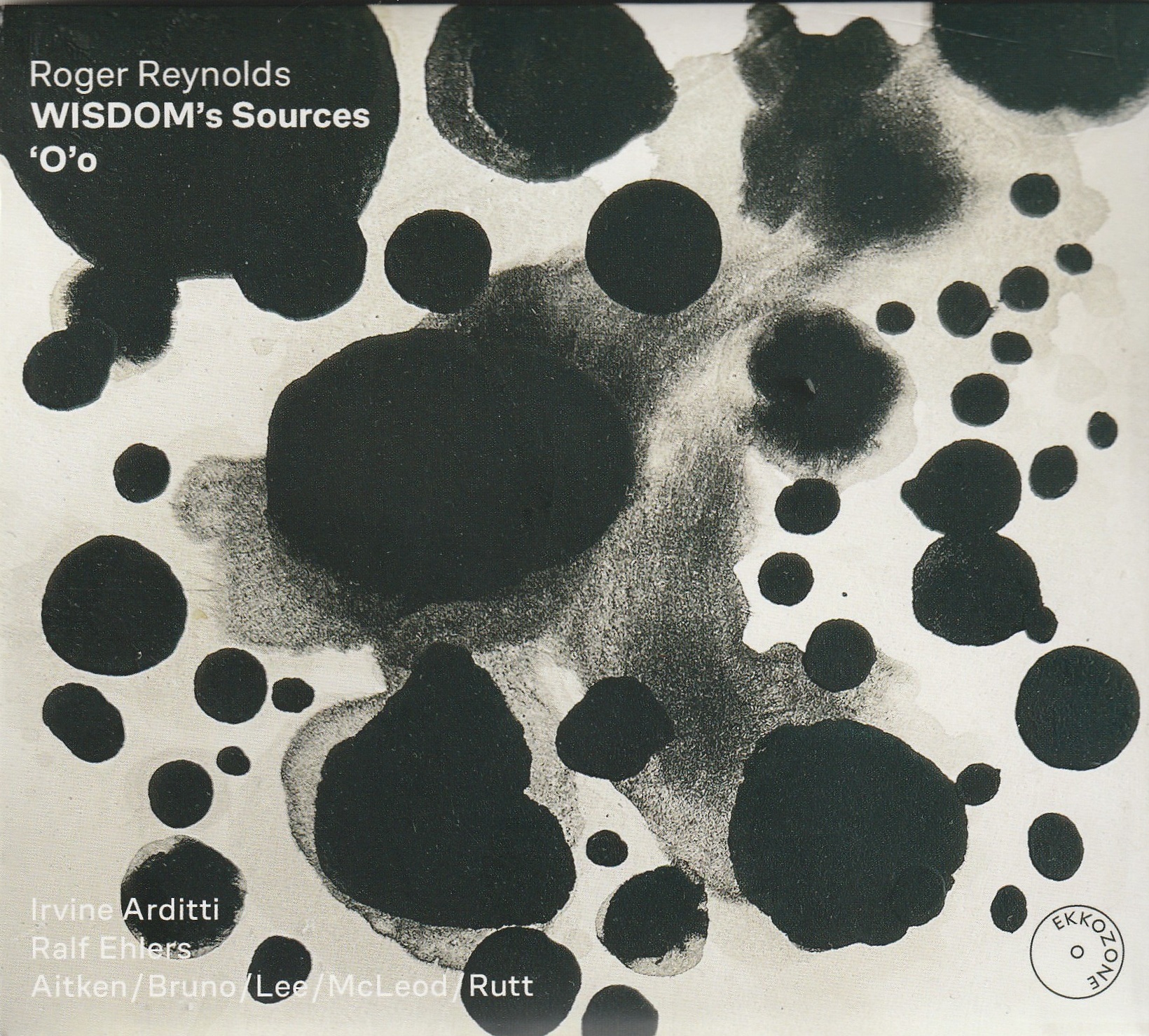
For many years Aitken, a world-renowned flutist, had lamented the dearth of works for flute and string quartet. Over the centuries composers had opted to follow the template set by Mozart with his quartets for flute, violin, viola and cello. Aitken’s complaint was that whenever he was invited to perform with an established string quartet, one of the violinists would have to sit out. He has endeavoured to rectify this over the years by commissioning new works for the full five players. A recent example is ‘O‘o by Pulitzer Prize laureate Roger Reynolds, premiered by NMC in May 2018 during the 21C Festival. 

04 Roger ReynoldsRoger Reynolds: WISDOM’s Sources | ‘O‘o (ekkozone.com/recording/roger-reynolds-wisdoms-sources-oo) features the performers from that Royal Conservatory concert, Robert Aitken and the Iris Ensemble (Yolanda Bruno, Mark Lee violins, Rory McLeod, viola and Leana Rutt, cello) who worked with Aitken and Reynolds at the Lunenburg Academy of Music Performance in Nova Scotia in advance of this recording. The subject of the mournful work is the extinct Hawaiian ‘O‘o bird, the last known sighting of which was in 1934 on the slopes of Mauna Loa. Programme notes tell us that “Both male and female of this particular species sang to each other, and what made their plight especially poignant was the persistence of the [last] male, who survived another four years after the female died, continuing to sing to his absent mate.” Reynolds found recordings of the ‘O‘o’s songs at Cornell University’s Lab of Ornithology and transcribed them. He uses the ensemble to provide “a metaphorical habitat, a sonic environment within which the outlines of a calling and responding would gradually emerge.” 

In his 80th year at the time of the recording, Aitken is in top form as he leads a group of fine young players in this emotionally charged, important addition to the flute quintet repertoire.

The disc also includes WISDOM’s Sources, an extended, extremely challenging work for violin and viola, written for Irvine Arditti and his longtime Arditti Quartet colleague Ralf Ehlers. The players are required to “vocalise – without words – and gesture physically” in ways that the composer says “add investment and whole-body arousal.” Composed during COVID with its imposed isolation and resultant frustrations, Reynolds turned to philosophy for inspiration. The first movement is dedicated to the Greek tragedian Aeschylus, the second to the Tirukkural, a classic Tamil text on morality, and the third to the writings of Pan-Africanist civil rights activist W.E.B. Du Bois, specifically his The Souls of Black Folk. I’m afraid I don’t have words to describe this excruciating commentary on that terrible COVID time. It simply must be heard.  

“The sense of space (height, width and depth) is palpable: the music reaches out to embrace us; withdraws into the distance; then, like a steam locomotive, comes suddenly roaring back. Invisible bands march across the soundstage in two different directions at different speeds, a solo viola mutters an occult hymn-tune as the rest of the orchestra sprays fireworks in all directions; the chorus intones wordless transcendental benedictions as the music fades away into silence. We were all completely blown away…” Those are the words of Grateful Dead bassist Phil Lesh describing a performance of Charles Ives’ Fourth Symphony by Leopold Stokowski and the American Symphony Orchestra which he attended with his bandmates in 1967.   

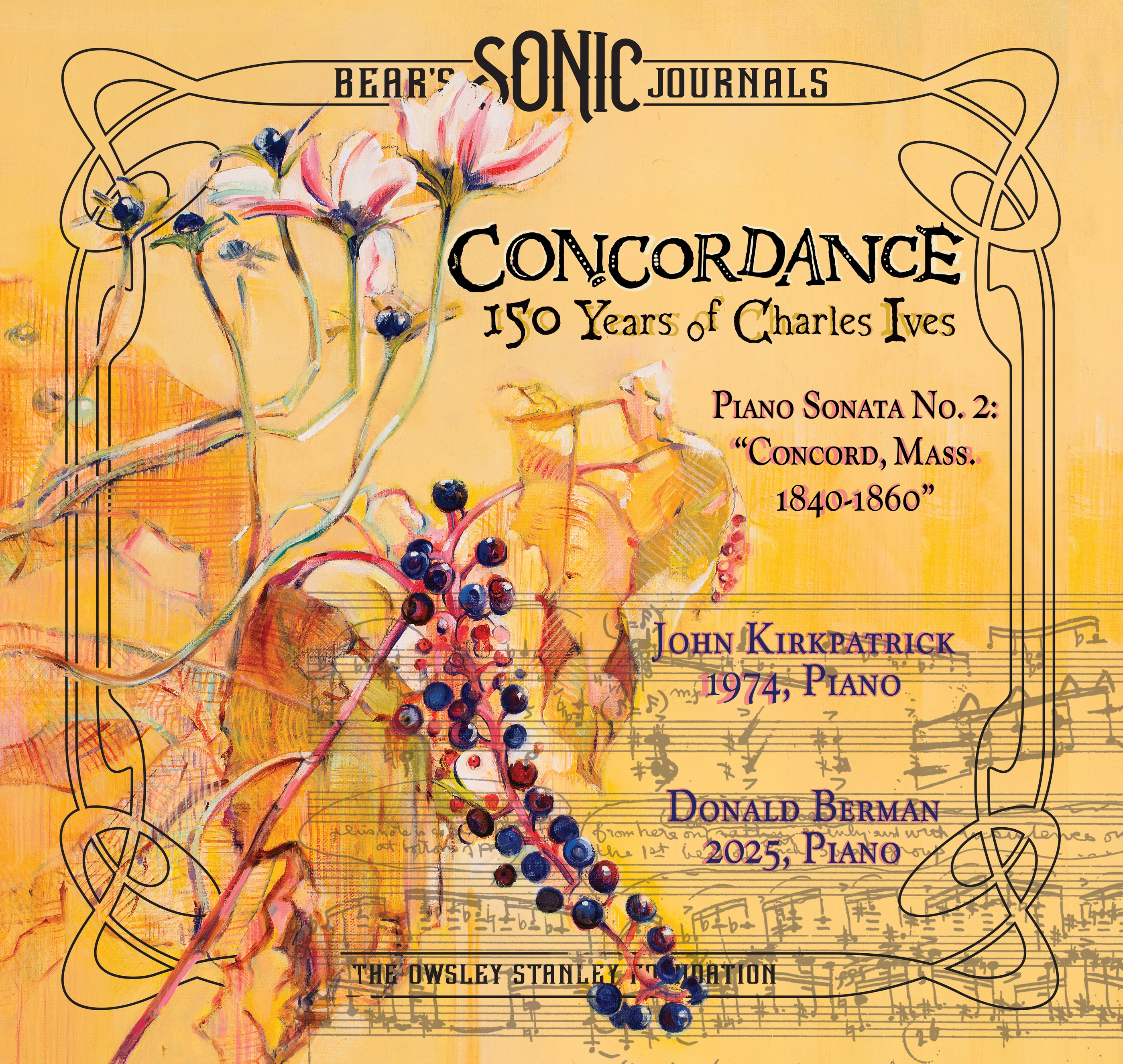
05 Ives ConcordanceBack in February 2025 I thought I had probably had my last say about the music of Charles Ives. The year of his sesquicentennial had just concluded, and it seemed that all imaginable archives had been mined. Imagine my surprise when over a year later a new double CD Concordance: 150 Years of Charles Ives appeared under the banner of Bear’s Sonic Journals presented by the Owsley Stanley Foundation (owsleystanleyfoundation.org/concordance-150-years-of-charles-ives). 

The hard-bound book that contains the two CDs includes 116 pages of essays, detailed programme and production notes, photographs, anecdotes and appreciations accompanying two live performances of the Piano Sonata No.2 “Concord, Mass. 1840-1860” recorded half a century apart. The first, from 1974, featuring Ives’ collaborator John Kirkpatrick who gave the first complete performance of the work some three decades earlier, was recorded by “Bear” aka Owsley Stanley, the long-time Grateful Dead soundman who documented virtually every Dead performance over the years. The second, staged specifically for this project, features Donald Berman playing in an “intimate home performance space just next to a trail that leads through the woods to Walden Pond” in the heart of Concord, home of the Transcendentalist movement celebrated in Ives’ sonata. 

The 2025 recital includes four works written especially for Berman, presented as Concord Legacy: Other Transcendentalists. The contributors are Eve Beglarian – As Syllable from Sound (on Emily Dickinson), David Sanford – Underground (on Harriet Tubman), Marti Epstein – The Piano at Palace Beautiful (on Louisa May Alcott) and Elena Ruehr – Summer on the Lakes, in 1843 (on Margaret Fuller). The artists provide notes giving their compositions a context within the whole. I find them each a satisfying extension of the Ives sonata, with Epstein’s Alcott meditation particularly apt. 

As I have often said before, I like it when my reading and my listening coalesce. When I learned about Phil Lesh’s involvement in the Concordance project, I was moved to read his Searching for the Sound – My Life with the Grateful Dead. There I learned that before his days on the road playing bass, he was a classically trained musician and studied composition for a time with 20th century icon Luciano Berio. Who knew?

06 Hanes GARGANTUATwo other recordings led me to literature recently. The first was a suitably bombastic treatment of François Rabelais’ GARGANTUA by composer Simon Hanes, scored for three drum sets, three electric basses, three trombones, three French horns and three soprano voices (Pyroclastic Records PR 46 simonhanes.bandcamp.com/album/gargantua). From the opening of A Series of Waves Tremble in a Sea of Blood, to my ear reminiscent of Max Roach’s 1961 classic Garvey’s Ghost with high vocalise from Abbey Lincoln, I was hooked. The subsequent movements vary, but all are in some way or another representative of Rabelais’ rambunctious, audacious, irreverent, scatological and often bawdy writing. Other musical inferences include Frank Zappa’s Mothers of Invention, the munchkins from The Wizard of Oz, renaissance motets (albeit with closer harmonies) and period pageantry, medieval sackbut chorales, and the profane dissing of contemporary street rap. Yet another eclectic and extraordinary offering from Kris Davis’ Pyroclastic label.

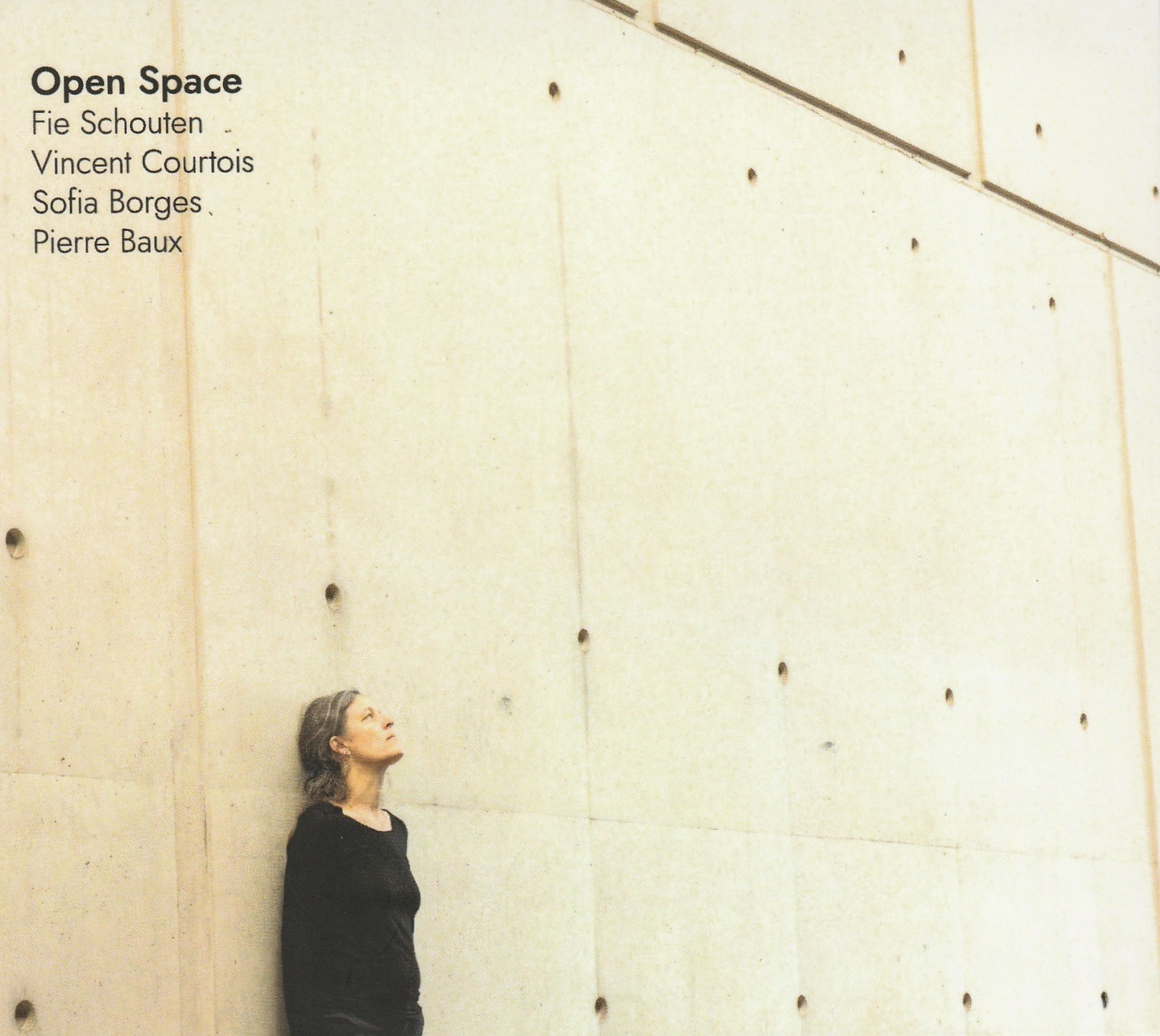
07 Fie SchoutenThe second takes another French author, Georges Perec, as its point of departure. Although Perec’s La vie mode d’emploie (Life a User’s Manual) is one of my very favourite books, I was unfamiliar with his Espèces d’espace (Species of Spaces) and intrigued when the next recording crossed my desk. Dutch bass clarinetist Fie Schouten uses Perec’s short descriptive novel as the outline for Open Space (relativepitchrecords.bandcamp.com/album/open-space-2). Her frequent collaborators Vincent Courtois (cello) and Sofia Borges (drums) are joined here by actor Pierre Baux, whose distinctive narration of Perec’s texts (in French) is an integral part of the ten group improvisations based on the chapters of the book. Perec’s premise is the depiction, through various list-like constructions, of the various spaces in which we exist, from the confines of a bed, a room, an apartment, the building in which the apartment is located (and here he references his masterwork La vie), a street, a neighbourhood, a city, the (artificial) borders which divide countries, and, ultimately, the world and its place in the universe. The book, and its interpretation by these creative musicians, is intriguing and wholly satisfying. I thank Schouten for expanding my knowledge and appreciation of Perec’s oeuvre.

Listen to 'Open Space' Now in the Listening Room

08 Eric St LaurentThe next disc I’ll mention only in passing because I don’t quite know what to say about it other than the fact that I like it, perhaps more on each subsequent listening. I’ll let Toronto guitarist and the project’s mastermind Eric St. Laurent’s cryptic press release set the scene: “A team of French speaking music engineers from Alfa Centauri lands in 1822 Bogotá, where they start jamming with a local dance band. At the bar, Duke Ellington smokes a cigar while playing Wordle on his phone… A more conventional bio would mention the meeting of Surf Guitar, Latin Rhythms and exotic vocal melodies in French and Spanish. But where would be the fun in that?” 

St. Laurent and his band Science Fiction Cumba, comprised of Calvin Beale (electric bass), Irene Torres (voice and keyboards), Chendy Léon (voice and percussion) and Luisito Orbegoso (voice, percussion and trombone) released Volume 1: Arizona (eric-st-laurent.bandcamp.com/album/science-fiction-cumbia-volume-1-arizona) in April and I can hardly wait for Volume 2. Highlights for me include Torres’ vocal work on the opening track Jean Gendron, St. Laurent channeling Dick Dale’s guitar stylings in Moonlight on Vermont, and a wonderful cover of Joe Jackson’s Steppin’ Out with Orbegoso’s trombone doing yeoman duties on the earworm melody. Léon’s percussion is pervasive and captivating. My only regret is the meagre 20-minute duration of the disc. 

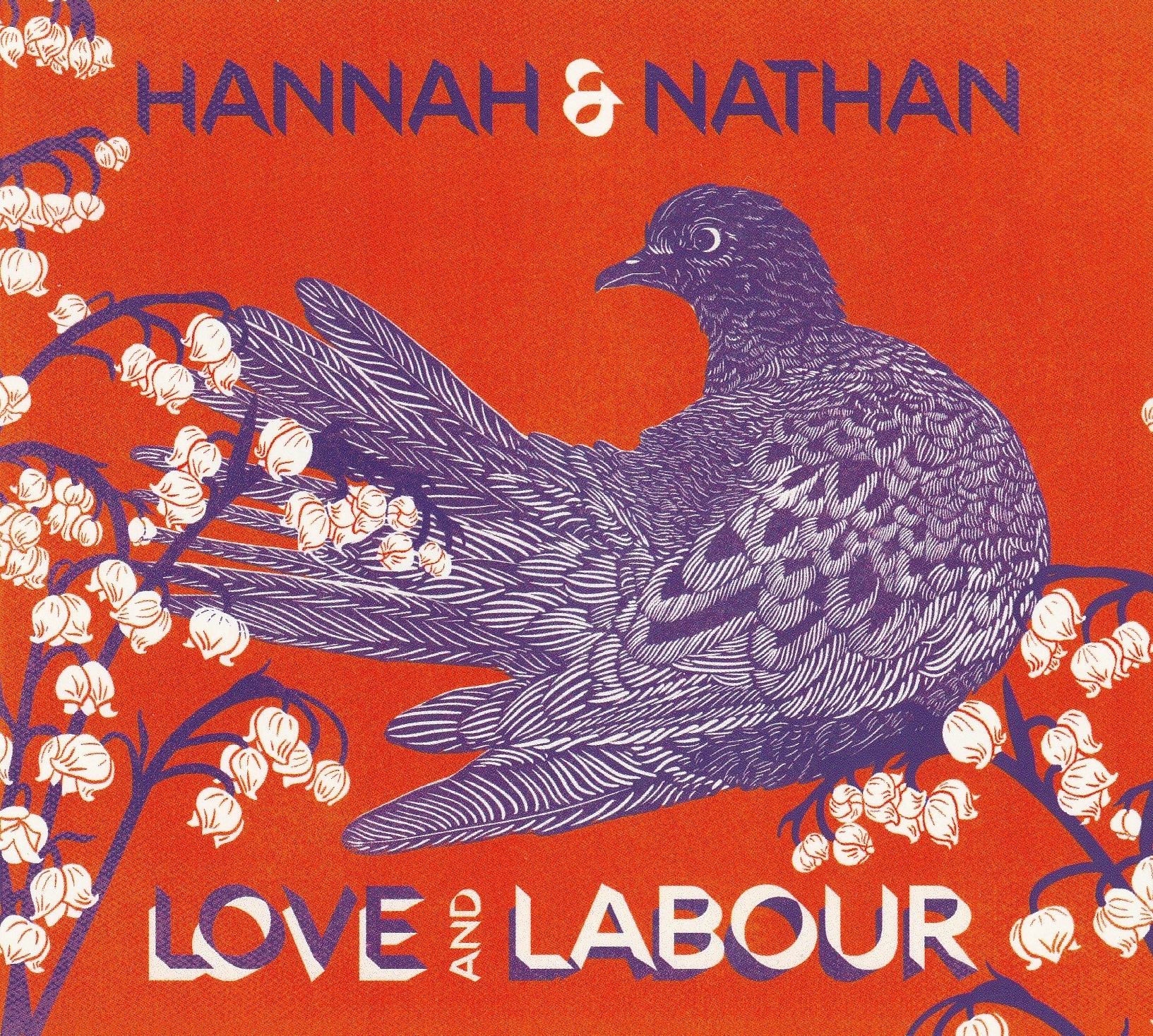
09 Hannah and NathanI’ve exceeded my space allotment, but there are two late arrivals I feel compelled to recommend before the long summer break. Love and Labour is the debut release by Hannah and Nathan, a duo whose roots-based contemporary songwriting reflects traditional Appalachian and “Old Timey” influences (hannahandnathanmusic.com/music). Their banjo frailing, fiddle and guitar playing, with high lonesome vocal harmonies, is complemented with tasteful and engaging upright bass, pedal steel and drums. Hannah and Natham will be playing various festivals around Ontario this summer.

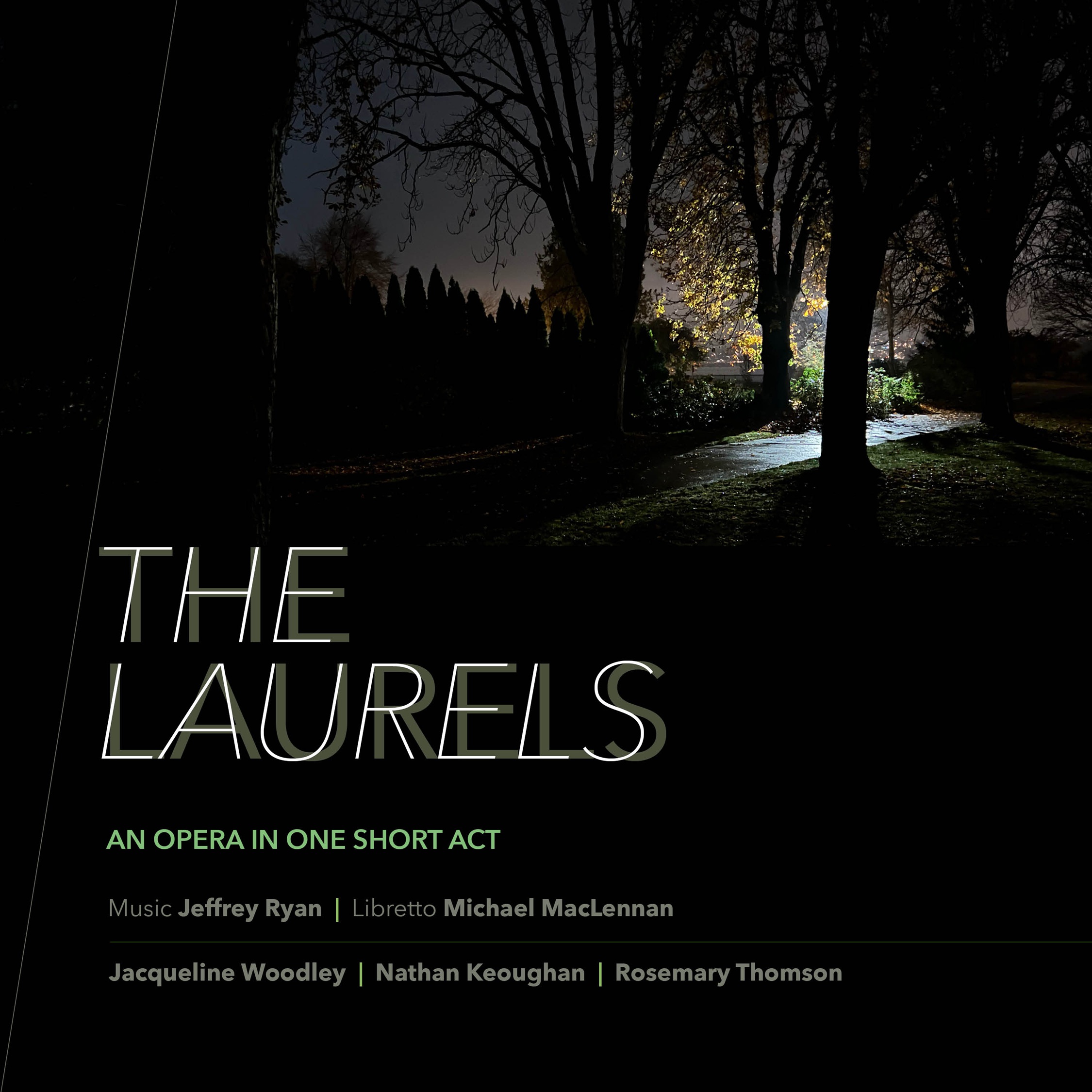
10 Jeffrey RyanTHE LAURELS is a short one-act opera — a contemporary retelling of the Daphne and Apollo myth, conceived as a thriller charting one woman’s psychological unravelling in the aftermath of a harrowing crisis. Composed by Vancouver-based Jeffrey Ryan with libretto by Torontonian Michael Lewis MacLennan, the opera features Jaqueline Woodley as the tormented soprano with baritone Nathan Keoughan and an ensemble led by Rosemary Thomson. The digital release is available here: redshiftmusicsociety.bandcamp.com/album/the-laurels.

Listen to 'THE LAURELS' Now in the Listening Room

David Olds can be reached at discoveries@thewholenote.com. 

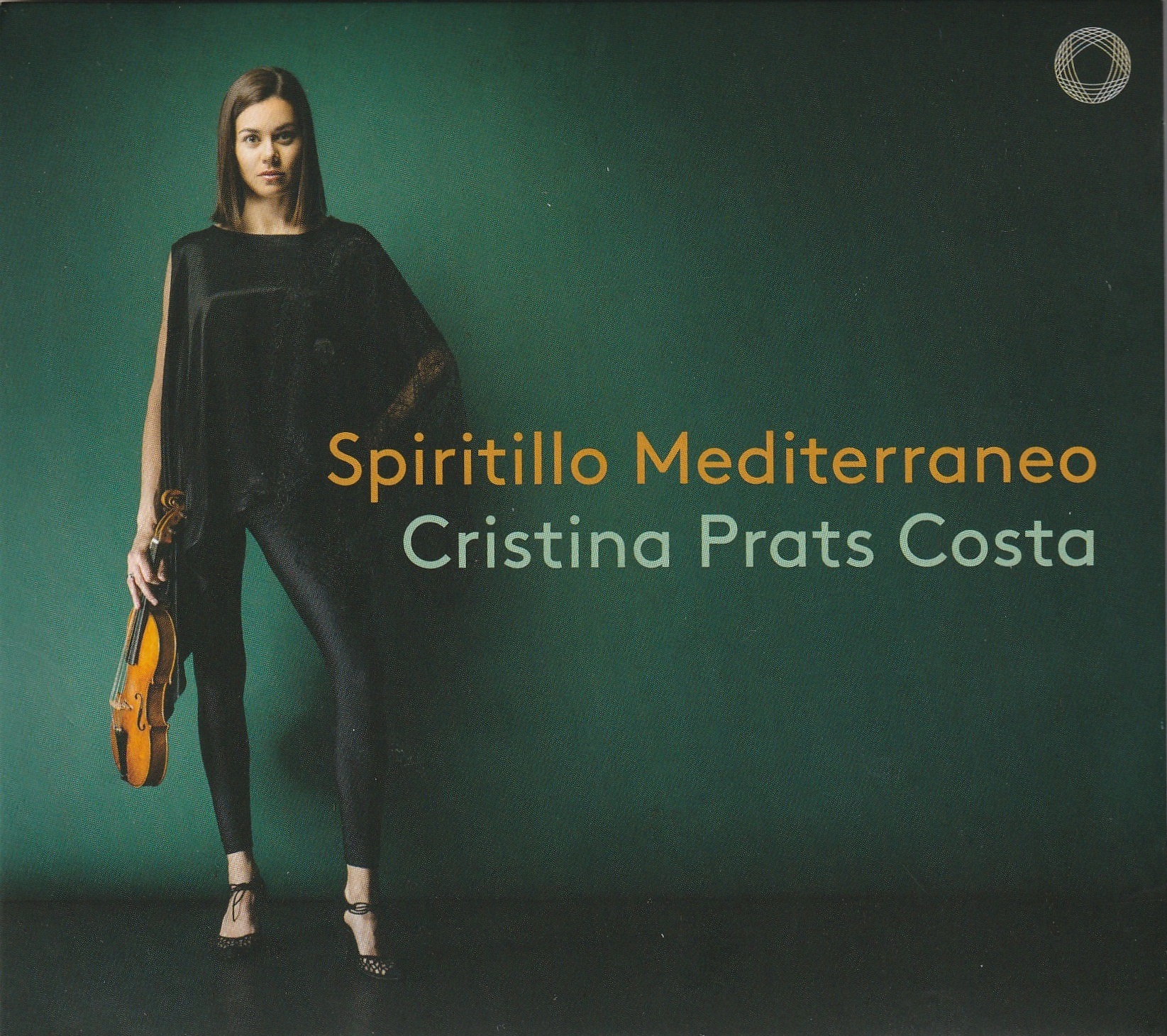
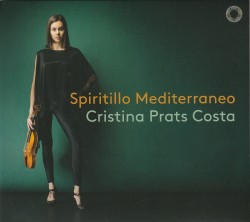
01 Spiritillo MediterraneoThe Spanish violinist Cristina Prats Costa, who has played with Tafelmusik and the Toronto Consort, makes her solo album debut with Spiritillo Mediterraneo, on which she invites listeners into the vibrant and expressive sound world of 17th- and early 18th-century Mediterranean music. She is supported by Charlotte Nediger (harpsichord), Lucas Harris (archlute, theorbo, Baroque guitar), Michael Unterman (cello), Joseph Phillips (viola da gamba and bass) and Nagmeh Farahmand and Esmeralda Enrique on percussion (Pentatone PTC 5187 582 pentatonemusic.com/product/spiritillo-mediterraneo). 

Costa stresses that the Mediterranean was not a boundary in this period but a crossroads, blending Italian virtuosity, Spanish rhythmic fire and French elegance. Composers represented are Andrea Falconieri, Heinrich Ignaz Franz von Biber, Nicola Matteis, Santiago de Murcia, Gaspar Sanz, Antonio Vivaldi, Johann Schop, José de Nebra and Jean-Féry Rebel. It’s a dazzling array of spirited, colourful music that simply jumps out at you from the CD, all brilliantly played and with outstanding recording ambience and balance.

Tafelmusik connections abound: Nediger and Unterman are members; Julia Wedman is the producer; Tafelmusik’s Toronto base Trinity-St. Paul’s United Church was a recording venue; and the “wonderful” 17th-century Bolognese violin that Costa uses was loaned to her by Aisslinn Nosky.

The album “explores the imagination, freedom, and ornamented dialogue that defined Baroque performance,” says Costa, and it does so quite superbly.
Listen to 'Spiritillo Mediterraneo' Now in the Listening Room

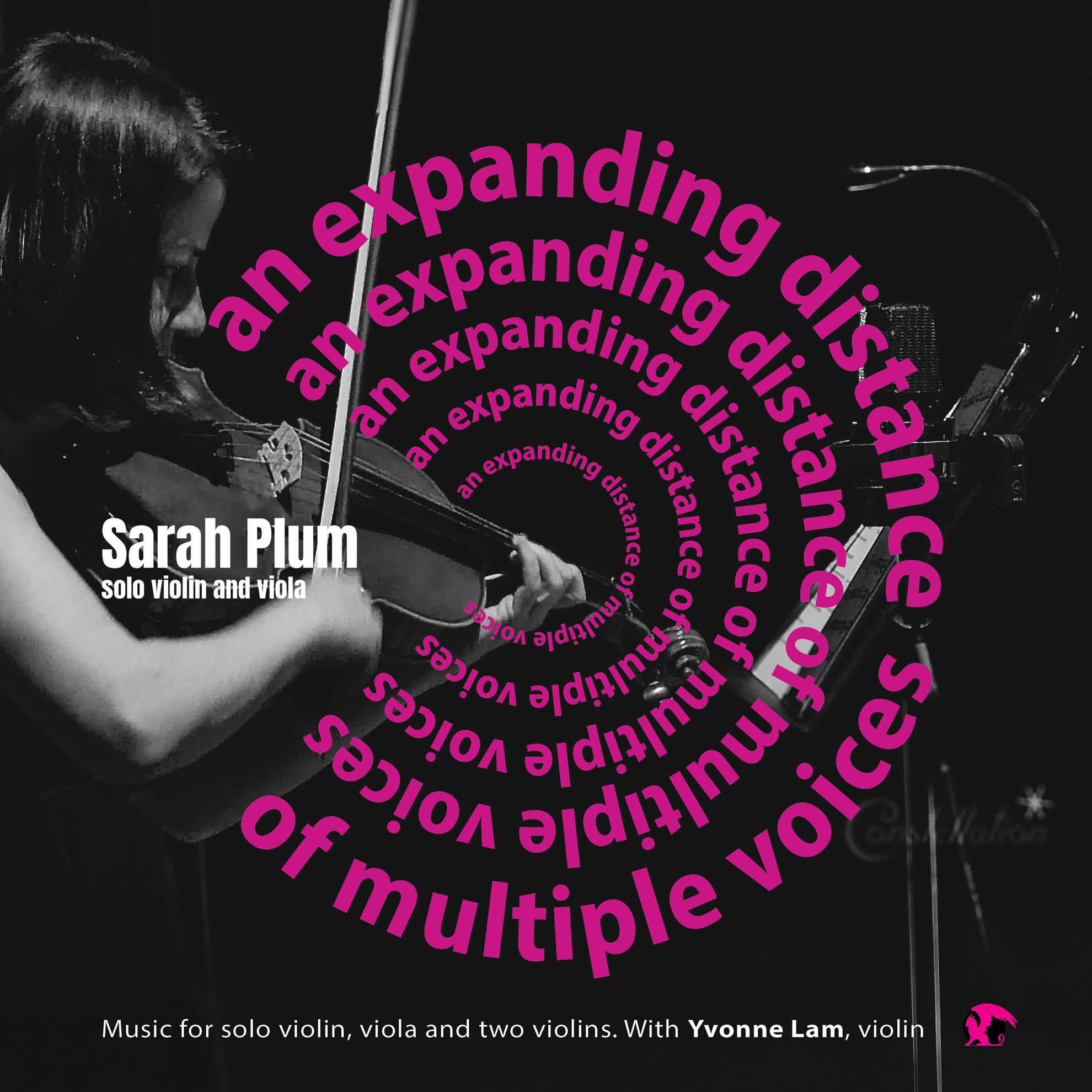
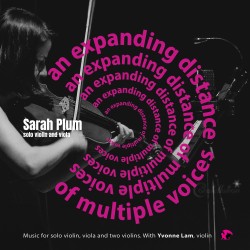
02 Sarah PlumSarah Plum adds to her already significant discography with An expanding distance of multiple voices, an album of six contemporary works for solo violin and viola (Blue Griffin BGR729 sarahplum.bandcamp.com/album/an-expanding-distance-of-multiple-voices).

The title work is a five-movement suite of variations by Jeffrey Mumford (b.1955). Olive Cotton, by Osnat Netzer (b.1979) was originally for solo cello and transcribed for viola by Plum in 2020.

Canticle (in memoriam David Foster Wallace) by Sidney Corbett (b.1960) was written for Plum, at whose suggestion a Bach solo sonata was the inspiration. Moves and Remains for scordatura violin from 2017 by Tonia Ko (b.1988) is a meditation on the will to linger, inspired by a Virginia Woolf quote.

Yvonne Lam joins Plum on Elegy for two violins by Mari Takano (b.1960), also written for Plum, and Sirens for solo violin and reverb pedal from 2018 by Ben Fuhrman (b.1982) closes the disc. All bar the Mumford are world-premiere recordings.

Plum’s technique in challenging works is faultless, but it’s her close affinity with the music that ensures such convincing interpretations.
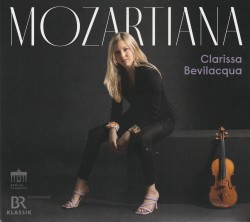
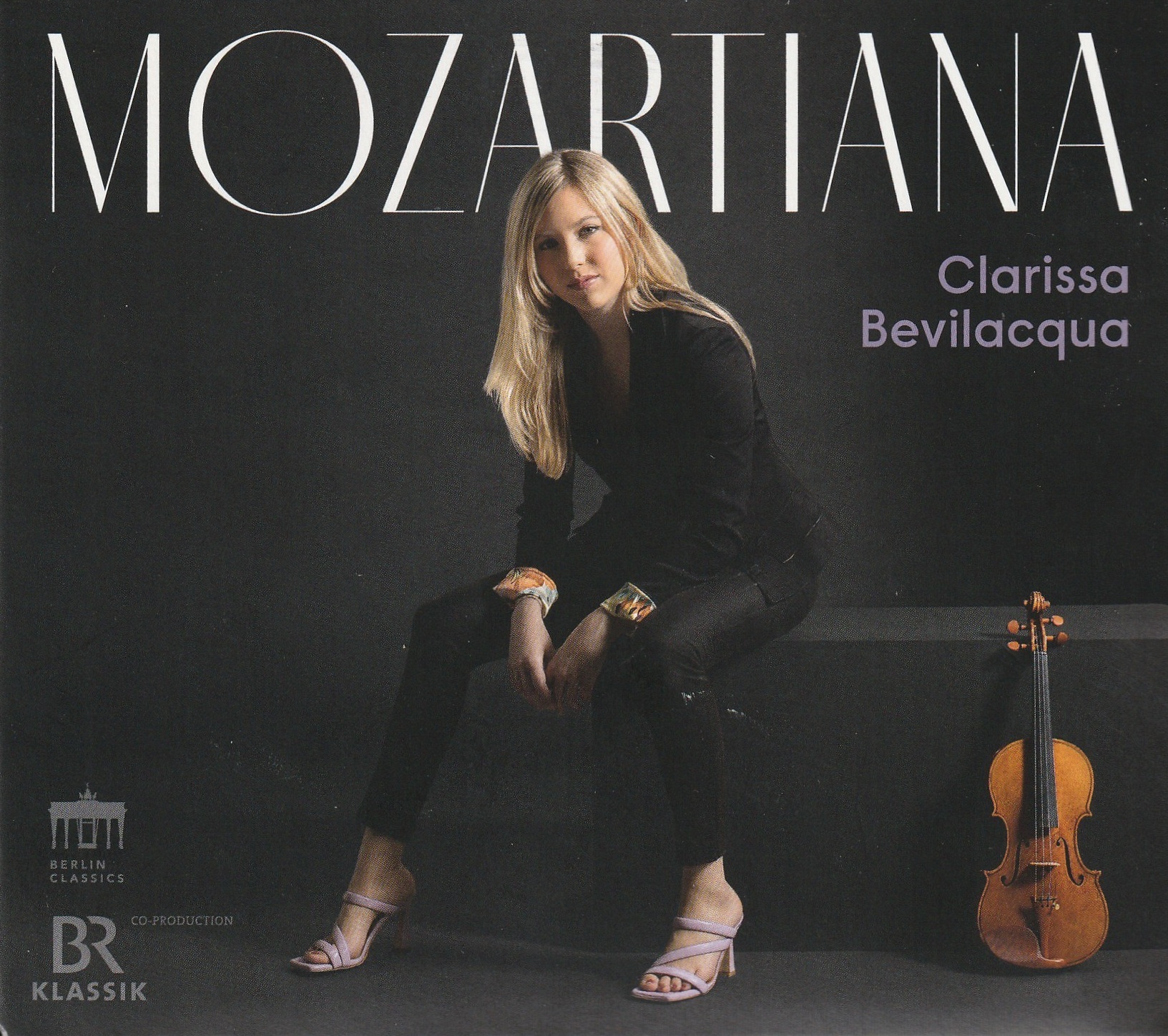
03 MozartianaMozartiana, the new CD from violinist Clarissa Bevilacqua is a reflection on Mozart’s legacy (Berlin Classics 0304344BC berlin-classics-music.com/en/album/885470044910-mozartiana).

Florian Willeitner’s To be Mozart or not to be! was commissioned for the 2020 Salzburg International Mozart Competition which Bevilacqua won at age 18. Based on motifs from the K216 G Major violin concerto it’s at the centre of a recital that opens with the delightful Sonata for Violin and Piano in B-flat Major Op.7 by Franz Xaver Mozart, Mozart’s youngest son.

Hindemith’s solo Sonata Op.31 No.2 ends with variations on the Mozart song Komm, lieber Mai. An aria from Le Nozze di Figaro is the source for Beethoven’s early 12 Variations on “Se vuol ballare” in F Major, WoO40. Larissa Cidlinsky joins Bevilacqua in Schnittke’s Moz-Art for two violins, based on fragment K416d.

Three works were written especially for this album: Sophia Jani’s Cadenza for Violin and Piano; Jorge A. Bosso’s Ascoltate, dei della vendetta (Der Hölle Rache) and Giovanni Sollima’s Trazom, a dazzling end to a really impressive CD.

Martina Consonni is the excellent pianist in the Mozart, Beethoven and Jani works.
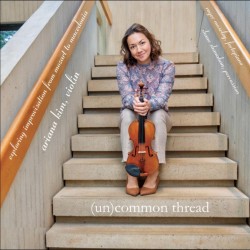
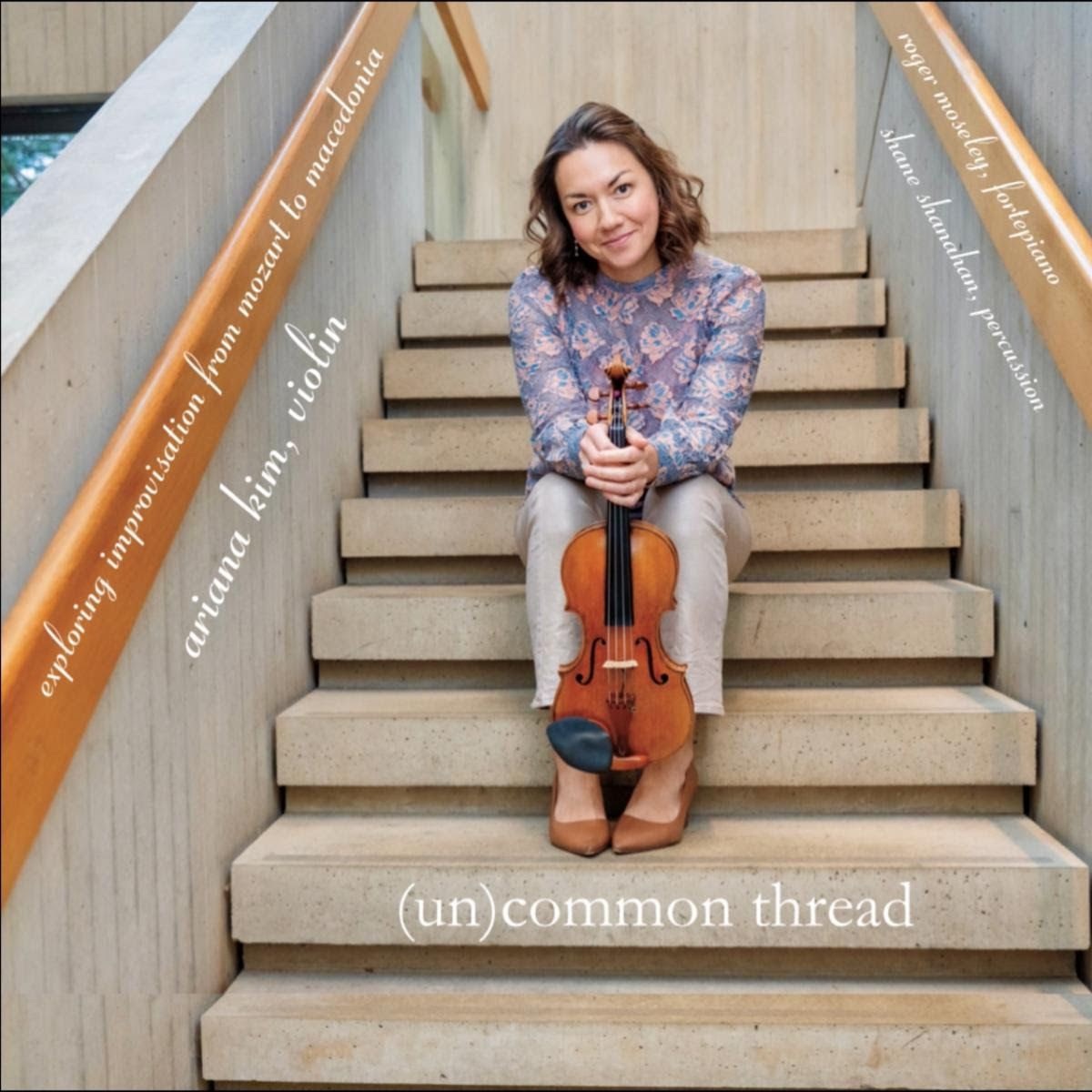
04 Ariana KimOn (un)common thread the trio of violinist Ariana Kim, pianist Roger Moseley and percussionist Shane Shanahan explores musical improvisation through two seemingly disparate lenses: 18th-century violin sonatas with fortepiano and world folk music with percussion, Kim noting that the album was born from a curiosity and love for improvisation in the languages of Western classical and Americana traditions (Saffron Soul Records SNH-ED-519061 arianakimviolin.bandcamp.com/album/un-common-thread-exploring-improvisation-from-mozart-to-macedonia).

For the first half of the CD Kim uses gut strings and Moseley an historical replica pianoforte, with tuning dropped to 430 Hz. The resulting performances of Mozart’s Sonata in B-flat Major for Violin and Pianoforte K454 and Beethoven’s Sonata in E-flat Major for Violin and Pianoforte, Op.12 No.3 are an absolute delight.

An improvisation for solo violin, Bahudari (Raga Aalapana) reflecting Kim’s stint studying South Indian music in Mysore, acts as a bridge to the second half of the disc, all of which is for violin and percussion. Shanahan’s three pieces Audacity, Oil Field Fires and Khanda Jog, reflecting his roots in folk music from India, the Middle East and West Africa share the programme with traditional Macedonian and Bulgarian folk music and Kim’s own improvised Migrating Home for violin and looper pedal.

It’s a fascinating journey.
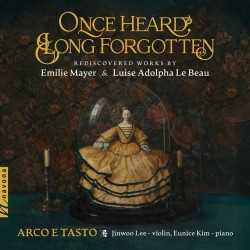
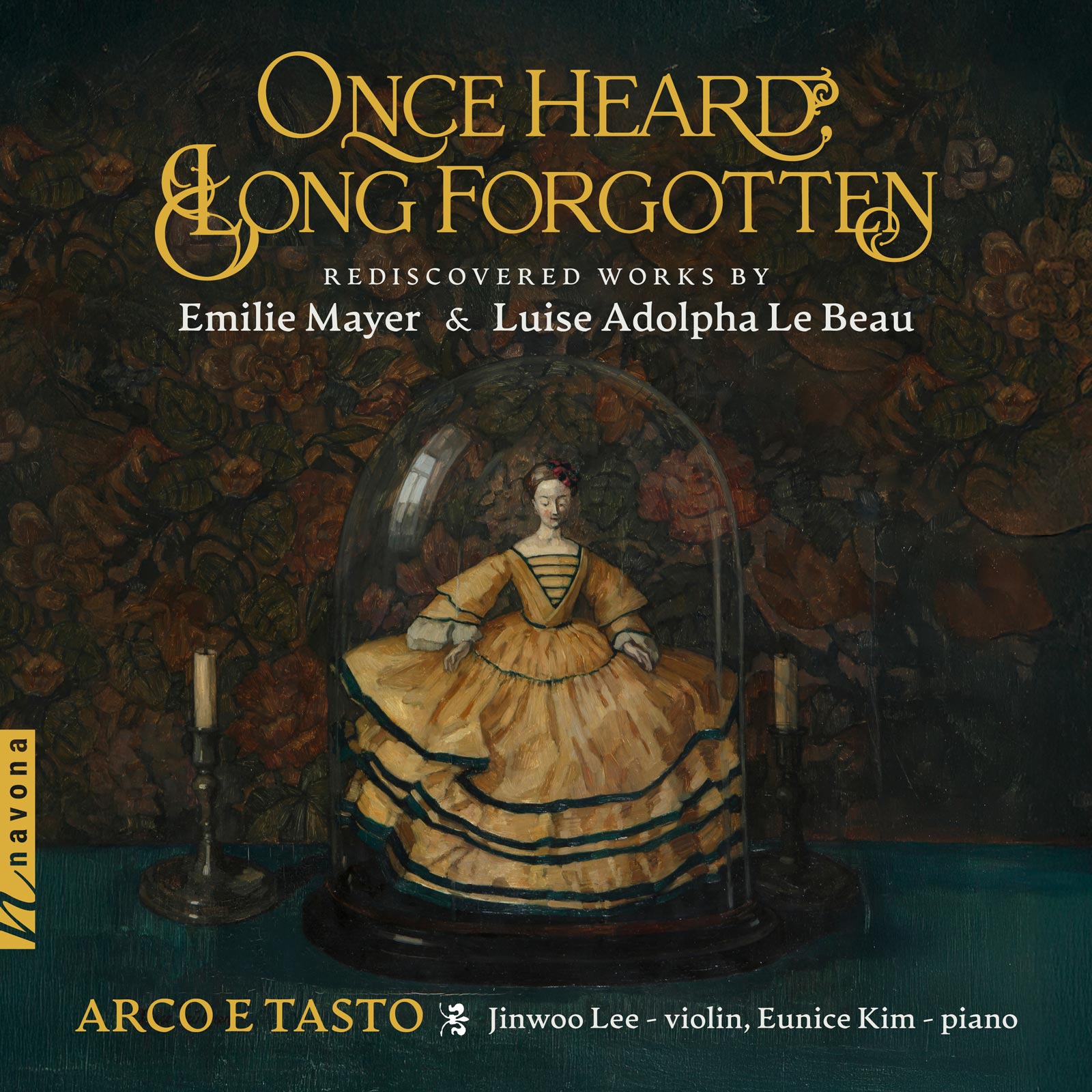
05 Once Heard Long ForgottenTwo women who made significant contributions to the German Romantic violin and piano repertoire are celebrated on the digital release Once Heard, Long Forgotten – Rediscovered Works by Emilie Mayer & Luise Adolpha Le Beau, in really persuasive and beautiful performances by the Arco e Tasto duo of violinist Jinwoo Lee and pianist Eunice Kim (Navona NV6852 navonarecords.com/catalog/nv6852).

Mayer (1812-83) and Le Beau (1850-1927) both came from non-musical families, started composing at an early age, never married and pursued serious musical studies across Germany. Unlike Fanny Mendelssohn and Clara Schumann, however, they had no established family connection to counter the discrimination that women endured.

Le Beau’s Violin Sonata Op.10 is strongly reminiscent of Grieg, and her Romance Op.35 and Elegy Op.44 are beautifully crafted. Mayer’s Violin Sonata in E-flat Major and in particular her gorgeous Violin Sonata in F Major, Op.17 explain why she was once known as the “female Beethoven.” Her lovely Notturno Op.48 closes a hugely satisfying release.

Warm, crystal-clear violin playing and supportive piano playing, all beautifully recorded, make a compelling case for two composers whose music cries out to be much better-known. 
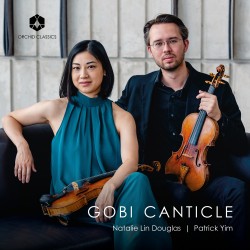
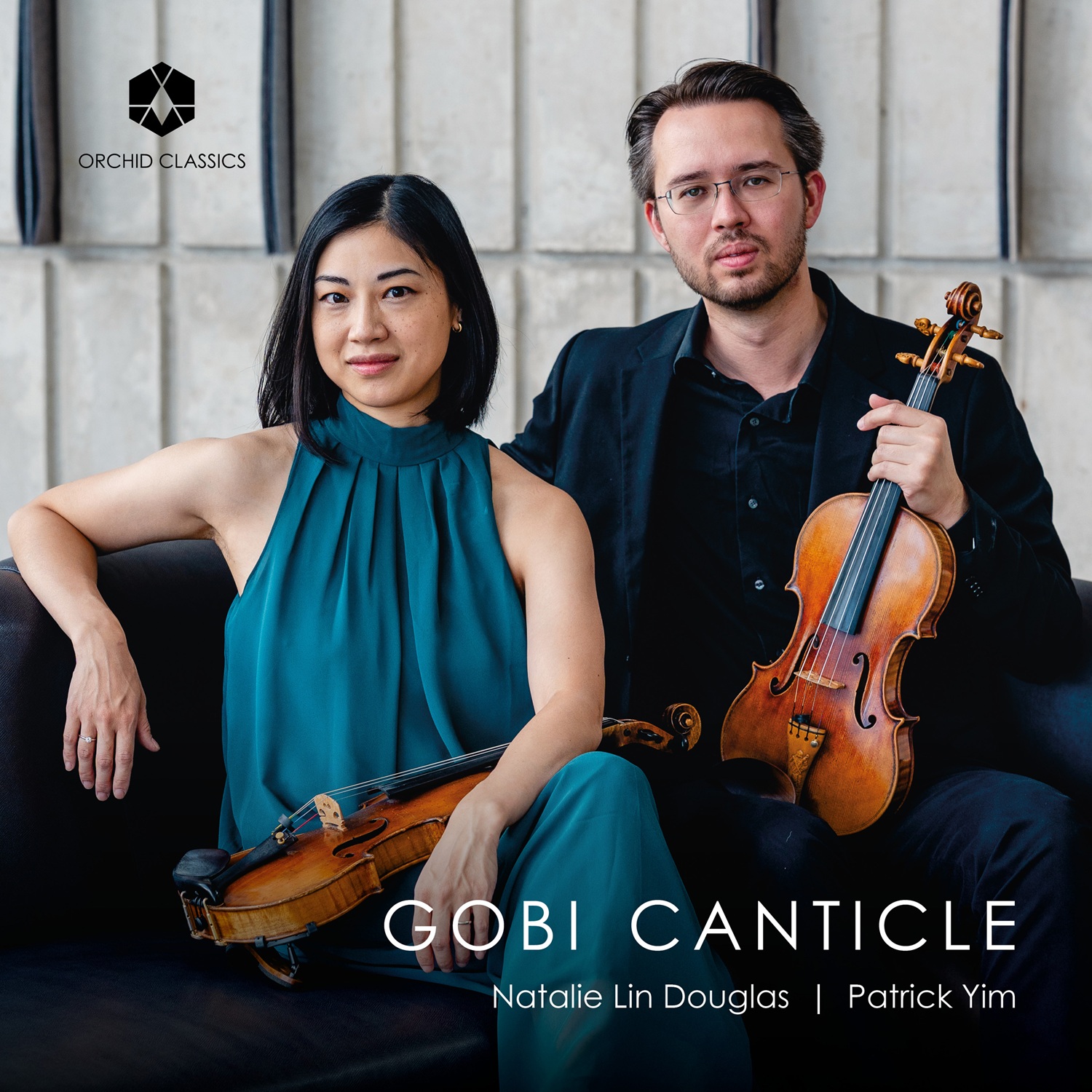
06 Gobi CanticleOn Gobi Canticle the duo of Natalie Lin Douglas (violin) and Patrick Yim (violin and viola) perform duo works by ten contemporary composers of Asian heritage, all but one of the works a premiere recording (Orchid Classics orchidclassics.com/releases/orc100426-gobi-canticle/).

Lei Liang’s fascinating title track, which uses ritual chants and folk melodies from Mongolia as its source sets the stage for a delightful recital of works for violin duo or violin and viola by Zhou Tian (b.1981), Chen Yi (b.1953), Kai-Young Chan (b.1989), Yao Chen (b.1976), Texu Kim (b.1980), Meilina Tsui (b.1993), Clarence Mak (b.1959) and Jungyoon Wie (b.1990), all of whose works were written post-2000. The one exception is the 1959 Retrogade by Doming Lam, who died aged 96 in 2023.

Yim says that these works “combine personal experience, seasonal imagery, and cultural tradition, showcasing the rich heritage of Asia and the innovative, colourful, and exciting voices of today’s leading composers.” Advanced techniques and technical challenges abound in a finely-played programme that creates a fascinating soundscape.
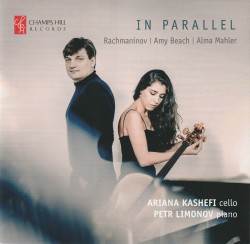
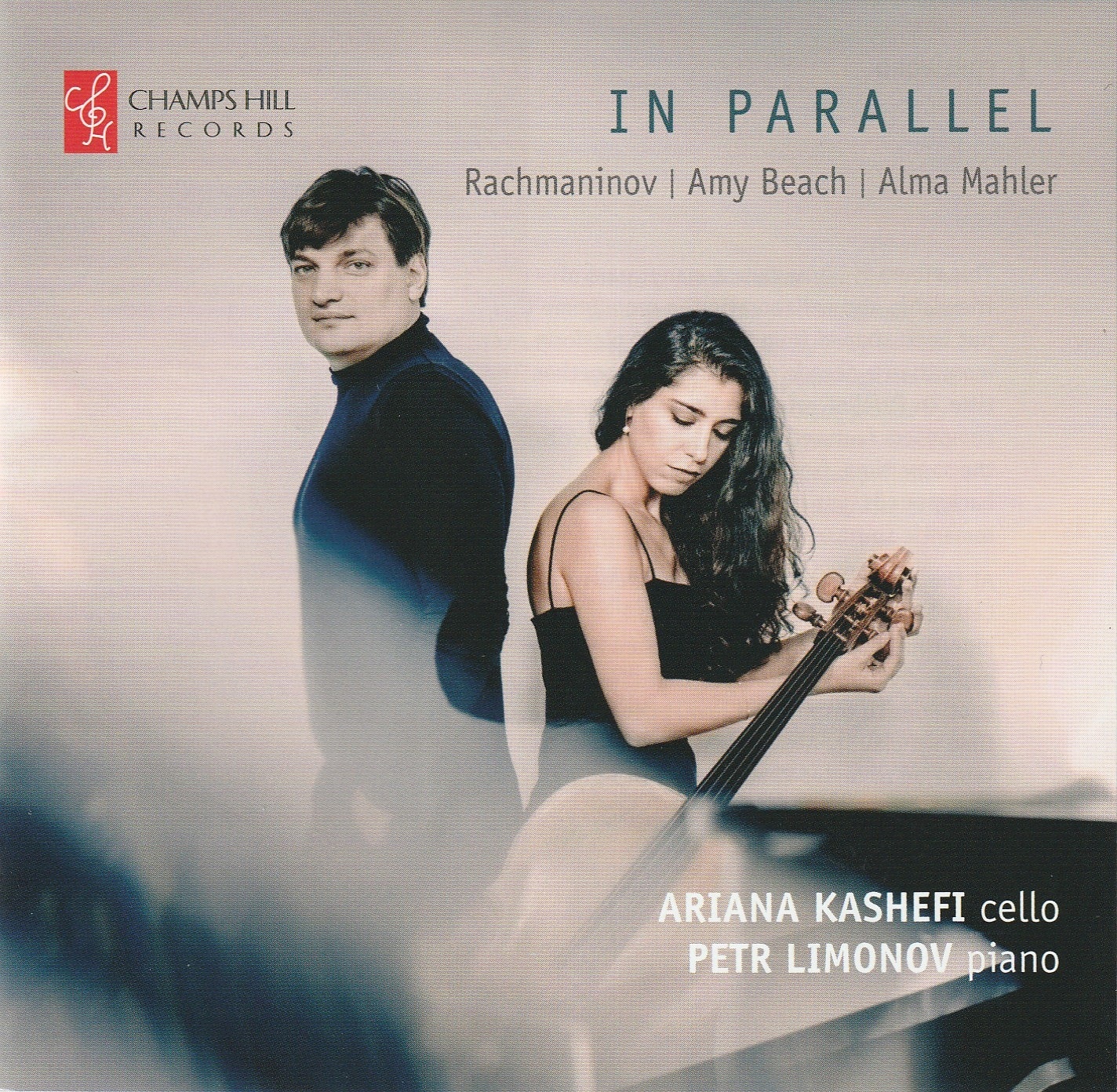
07 In ParallelThere’s yet another simply gorgeous performance of the ravishing Rachmaninov Cello Sonata Op.19, this time by the British-Persian cellist Ariana Kashefi and the Russian-born British pianist Petr Limonov on In Parallel, a new CD featuring turn-of-the-century works by Rachmaninov, Amy Beach and Alma Mahler (Champs Hill Records CHRCD177 propermusic.com/collections/ariana-kashefi-petr-limonov?srsltid=AfmBOoqrOGc1jvgiMjGyjYaes4VJw5bWgDInlj6efkb8txxiG5O7mVpr).

All three composers were writing at about the same time – hence the CD’s title – and despite being from very different backgrounds shared a deeply expressive romantic spirit. The Rachmaninov sonata is by far the biggest work on the CD, but the rich warmth, passion and sensitivity that define the performance are present throughout the disc. The other Rachmaninov pieces are the song Zdes‘ khorosho Op.21 No.7 and the piano Prelude Op.23 No.10 in a contemporary arrangement by the cello sonata’s dedicatee Anatoly Brandukov.

Beach is represented by Dreaming, Op.15 No.3 from the four Sketches for piano and by her own cello arrangement of the 3 Pieces for Violin and Piano Op.40, with Alma Mahler’s dreamlike song Die stille Stadt ending a quite beautiful CD.
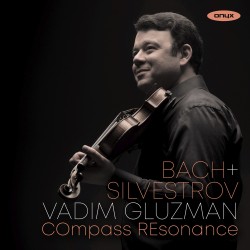
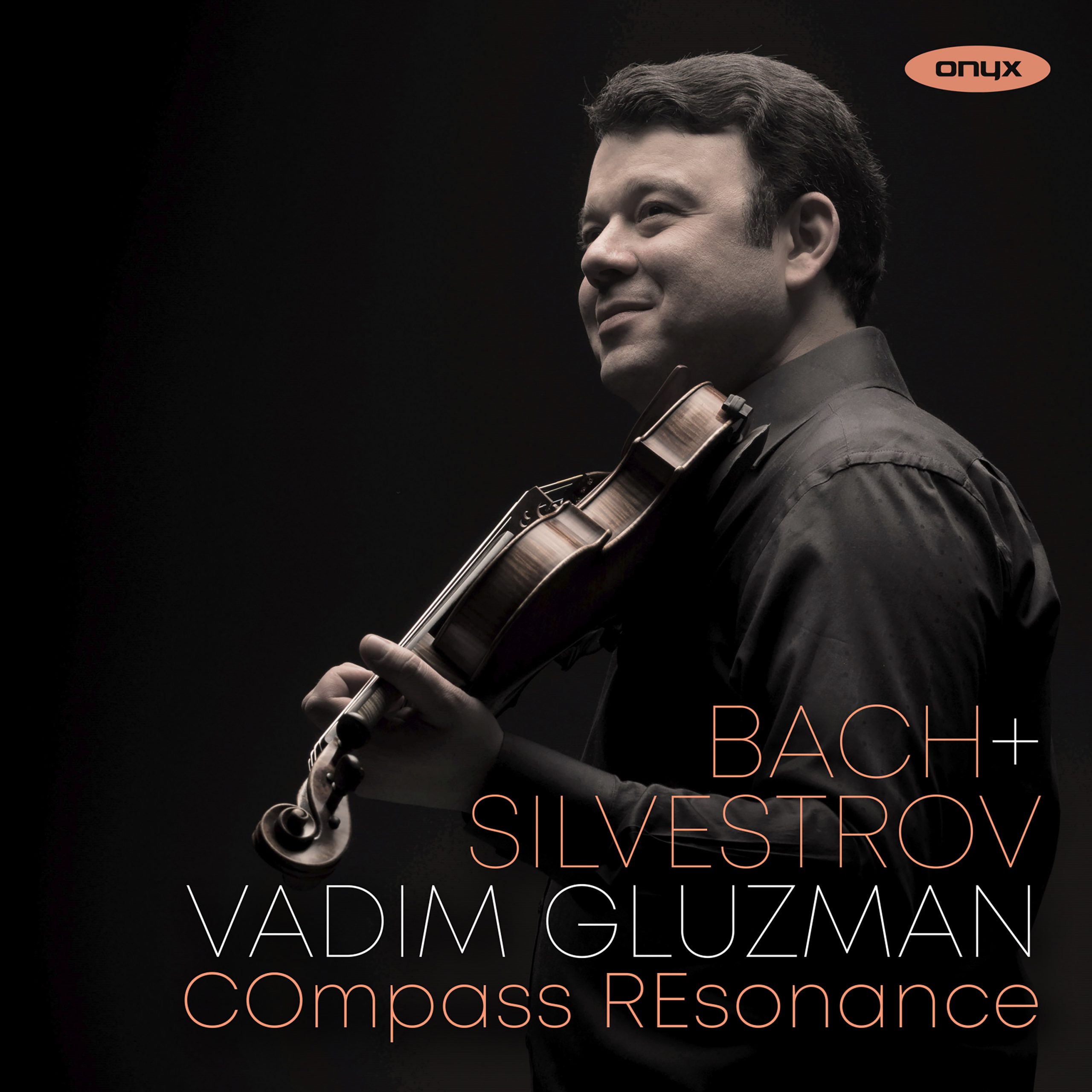
08 Bach SilvestrovOn Bach + Silvestrov violinist Vadim Gluzman joins the Boulder, Colorado based string chamber ensemble COmpass REsonance (CORE) in simply outstanding performances of J.S. Bach’s Violin Concertos in A Minor BWV1041, E Major BWV1042 and D Minor BWV1043, with the group’s music director Zachary Carrettin the second violin in the latter work. Three works by Valentyn Silvestrov influenced by and dedicated to Bach complete the disc (ONYX4273 onyxclassics.com/release/bach-silvestrov).

Using baroque bows and modern tuning, and comprised of two first violins, two second violins and one each of viola, cello and bass plus harpsichord continuo, the CORE ensemble produces a captivatingly intimate sound, the solo violin never predominating but running through the orchestral soundscape like a silver thread through a tapestry.

The Silvestrov works, which Gluzman feels are united with the music of Bach “by purity, spirituality and clarity of expression,” are the 2 Serenades for violin solo from the 2008/9 Tryptych, played between the concertos, and the 2009 Hommage à J.S.B. as the final track, Mina Gajić the pianist in the latter.

The Bach in particular is breathtakingly beautiful playing; if you only want one CD of these concertos you’d be hard pushed to find a better one.
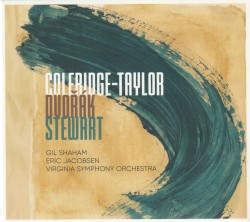
09 Coleridge Taylor DvorakTwo composers who both found inspiration and success in the United States are featured on a new CD from Gil Shaham and the Virginia Symphony Orchestra under Eric Jacobsen, with performances of the violin concertos by Coleridge-Taylor and Dvořák recorded live in March 2023 (Canary Classics CC27 canaryclassics.com/album/coleridge-taylor-dvorak-stewart).

Coleridge-Taylor’s Violin Concerto in G Minor, Op.80 has an opening that could easily make you think it was by Max Bruch, and an orchestral texture that Shaham understandably says sounds “almost Elgarian.” Its style, however, belies its composition date, having been written for Maud Powell in 1912, a year before The Rite of Spring and when Schoenberg was moving towards throwing tonality out of the window.

Both composers expressed their ethnic identity in the concertos, the African-English Coleridge-Taylor with the infusion of Negro Spirituals and Dvořák, in his Violin Concerto in A Minor, Op.53 with Czech folk traditions.

The premiere of F. Harper, Op.46 No.2 from Curtis Stewart’s VSO-commissioned The Famous People, a series of re-compositions based on Dvořák’s Slavonic Dances, each dedicated to a significant Black leader, acts as an encore.

Shaham’s stylish playing, as always, is an absolute delight.
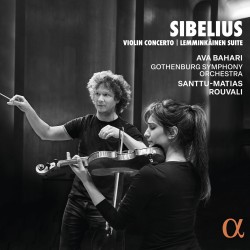
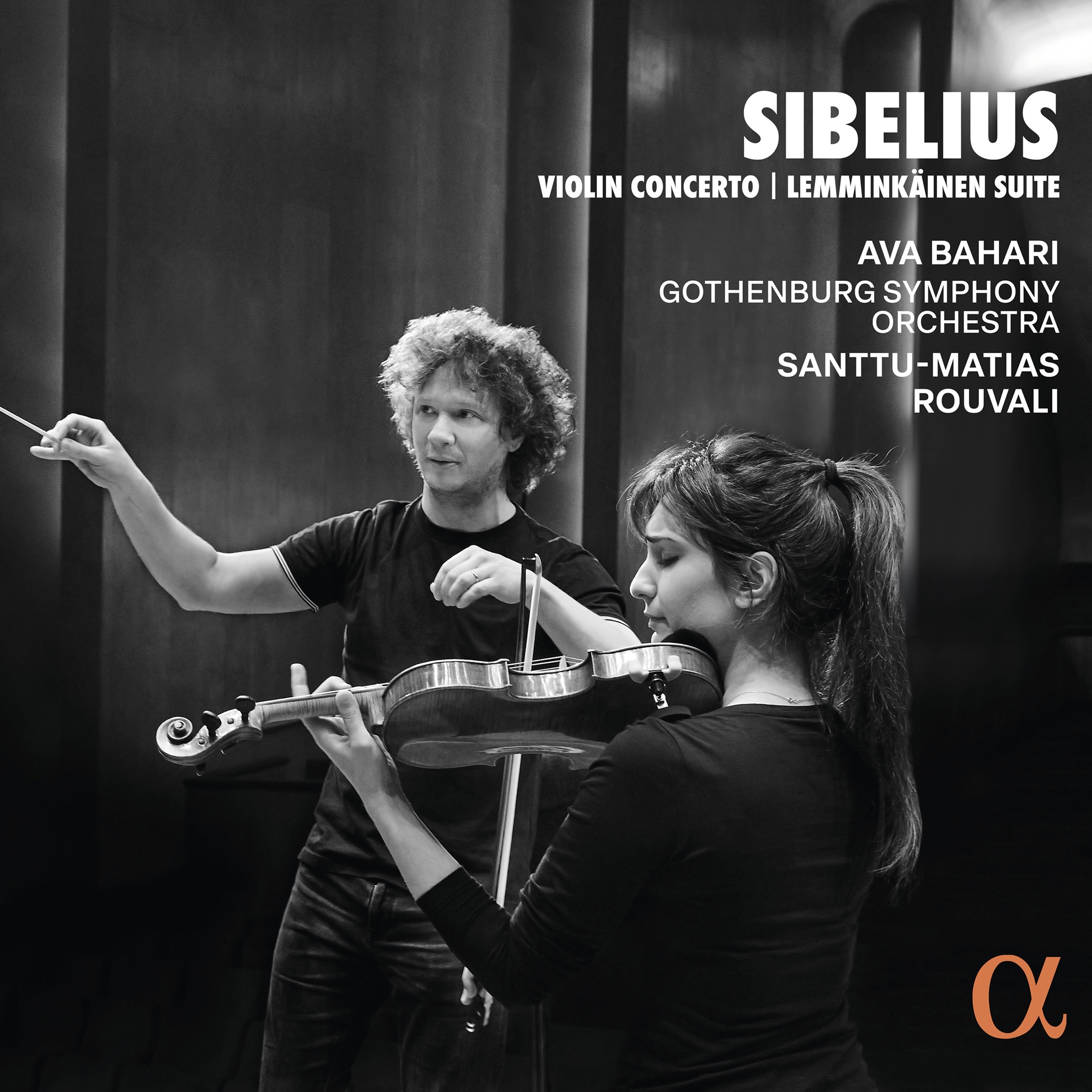
10 Sibeliux Violin ConcertoConductor Santtu-Matias Rouvali and the Gothenburg Symphony Orchestra have spent five years recording the Sibelius symphonies and symphonic poems, and they continue the cycle with Sibelius Violin Concerto & Lemminkäinen Suite, with the young Swedish violinist Ava Bahari the exquisite soloist (Alpha Classics ALPHA 1215 outhere-music.com/en/albums/sibelius-violin-concerto-lemminkainen-suite).

There’s a brooding darkness and intensity to a first movement that still retains warmth and has a real impetus, the same rhythmic drive and momentum also propelling the finale. Bahari’s strength is never overpowering, but always supremely confident and superbly nuanced. The orchestral support is exceptional, with outstanding brass and an at times revelatory attention to inner details.

The Lemminkäinen Suite Op.22 from 1896 consists of four legends from the Finnish epic verse collection The Kalevala, Lemminkäinen being the dashing young hero of the tales. The inner movements, including The Swan of Tuonela are descriptive pieces, while the two outer movements point inexorably towards the composer’s mature symphonic style.

Again, absolutely superb orchestral playing, brilliantly recorded.
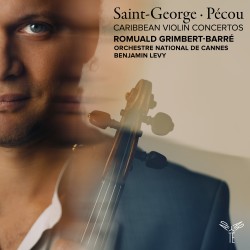
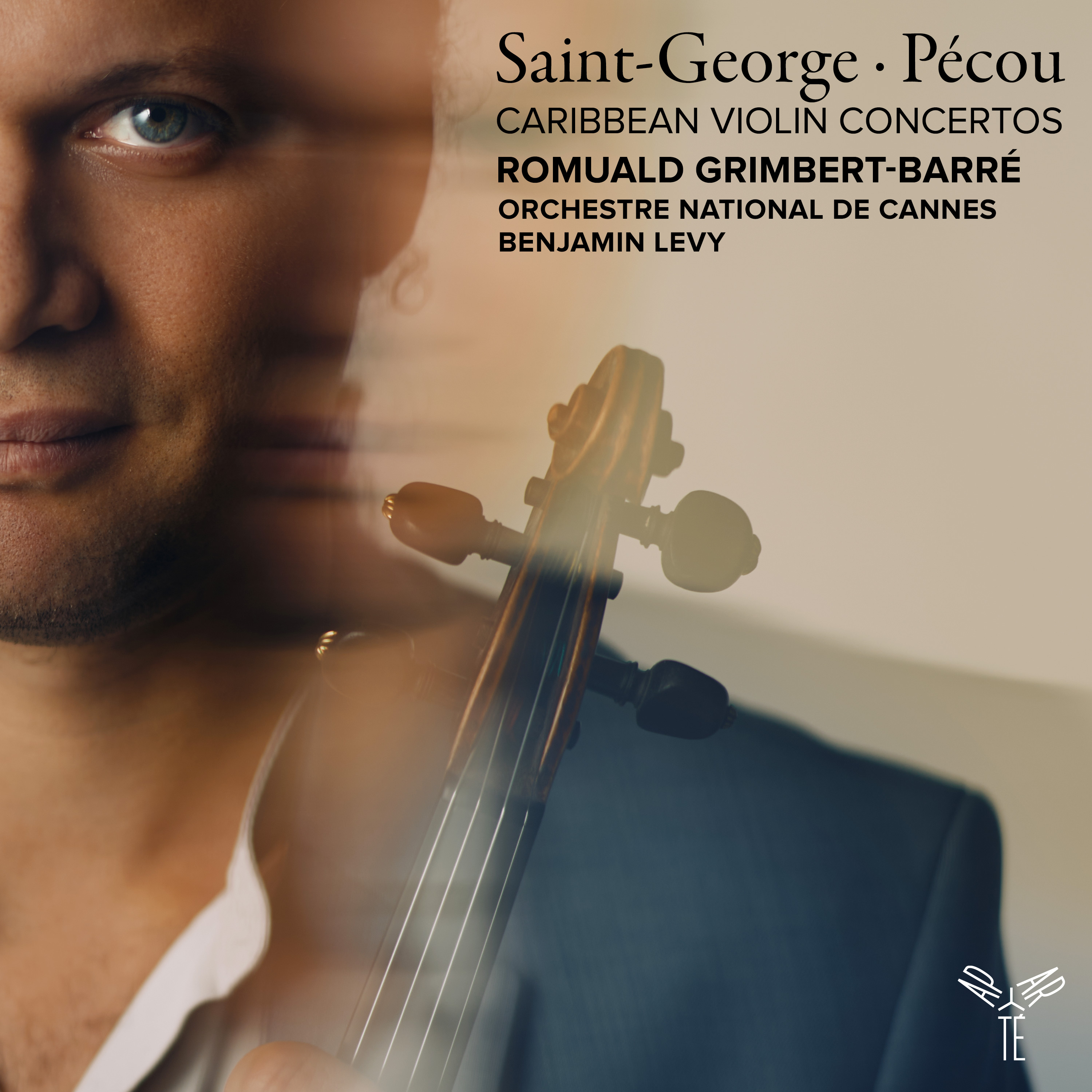
11 Saint George PecouSaint-George & Pécou Caribbean Violin Concertos presents a new recording of two violin concertos by Joseph Bologne, Chevalier de Saint-George, this time paired with a brand new concerto dedicated to the Guadeloupe-born musician, fencer, horseman, soldier, revolutionary and Freemason who captivated Paris in the second half of the 18th century. Romuald Grimbert-Barré is the violinist, supported by the Orchestre National de Cannes under Benjamin Levy (Aparté AP421 romualdgrimbert-barr.bandcamp.com/album/saint-george-p-cou-caribbean-violin-concertos).

The two Saint-George works are the Violin Concerto in A Major, Op.5 No.2 from 1775 and the Violin Concerto No.9 in G Major, Op.8 No.2 from 1777. Both are delightful works stylistically close to Mozart’s five concertos of 1773 and 1775.

Thierry Pécou’s 2025 Concerto “Hommage au Chevalier de Saint-George” for violin and chamber orchestra receives its premiere recording here. Pécou has the violin  part represent the man himself by referring to key elements in his life and works – his fencing and military career, his birthplace and his Freemasonry – although it’s difficult to discern anything other than a standard contemporary concerto. 
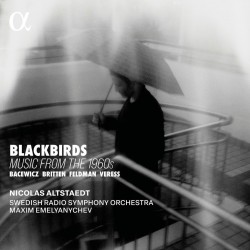
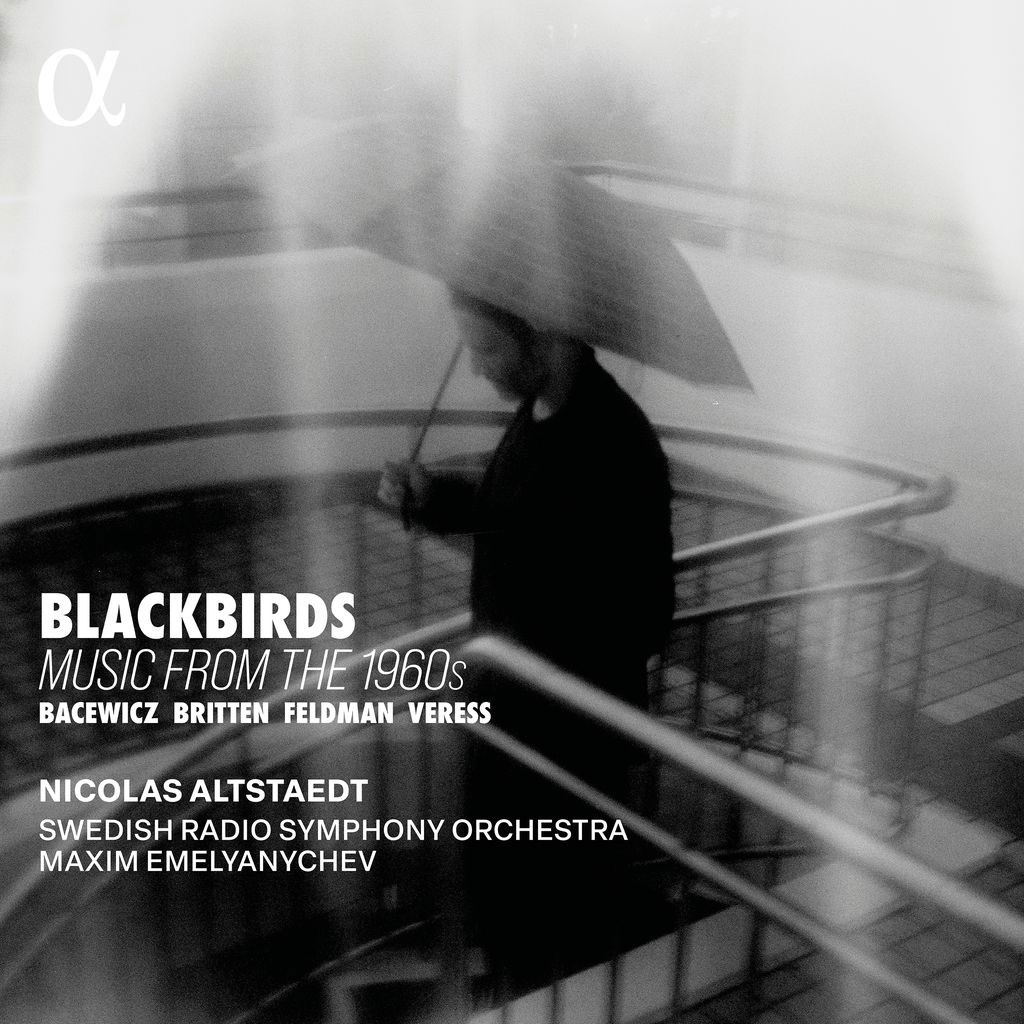
12 BlackbirdsOn Blackbirds – Music from the 60s cellist Nicolas Altstaedt presents an eclectic programme ranging from solo cello to cello and orchestra. Maxim Emelyanychev conducts the Swedish Radio Symphony Orchestra and is also the pianist in two of the works (Alpha Classics ALPHA 1213 outhere-music.com/en/albums/blackbirds).

The 1963 Cello Concerto No.2 by Grażyna Bacewicz is difficult to describe, the cello being less a solo instrument in the traditional manner but more an intrinsic part of the scoring, described by the composer as a connecting thread essentially holding everything together. 

Morton Feldman’s Durations II for Cello and Piano from 1960 is a brief, very slow and very quiet piece with independent choice of tempo and note lengths for both performers, Feldman wanting “a minimum of attack. Dynamics are very low.” No editing was possible, this being the last of four takes.

There are solid performances of Britten’s Cello Sonata Op.65 from 1961 and the 1967 Sonata for Solo Violoncello by Sándor Veress, a work that clearly should be much better known and more frequently performed.

A rather strange version of Paul McCartney’s Blackbird closes the disc, with lutenist Thomas Dunford’s soft instrumental and vocal tracks almost drowned out by the superimposed cello variations. 
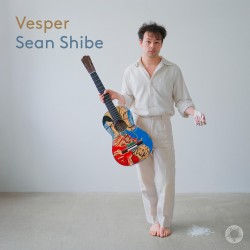
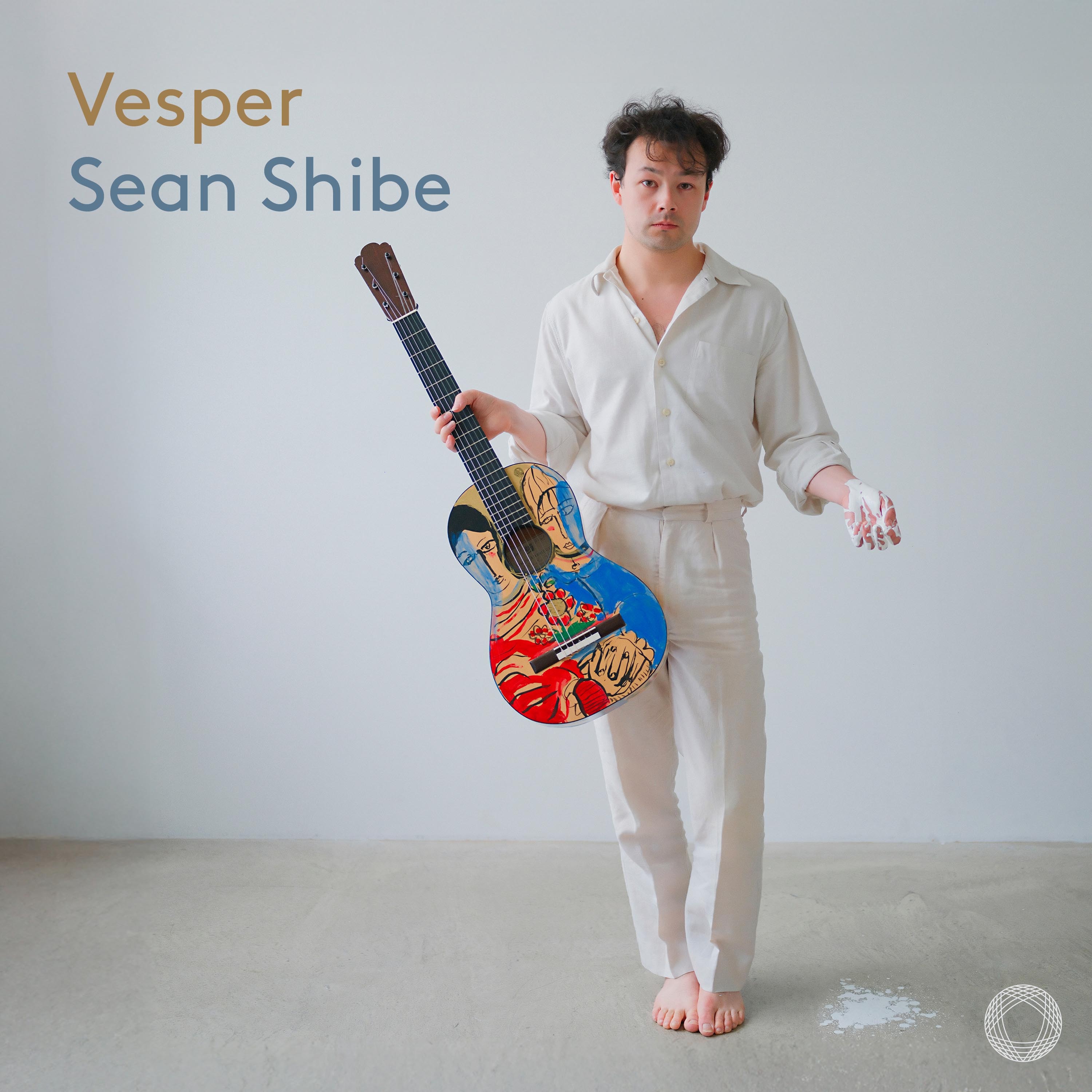
13 Vesper Seam ShibeI could spend the entire column discussing Vesper, the remarkable CD of premiere recordings of guitar music by Thomas Adès, Harrison Birtwistle and James Dillon that the Scottish guitarist Sean Shibe describes as exploring the potential of the guitar in the first quarter of the 21st century (Pentatone PTC 5187 518 pentatonemusic.com/product/vesper).

Merely listing the works – Adès’s Forgotten Dances (2023) and Habanera (2016), Birtwistle’s Beyond the White Hand: Construction with Guitar Player (2014) and six other short pieces, and Dillon’s 12 Caprices (2025) – doesn’t begin to describe the intrinsic relationships addressed in the 32-page booklet essays by Hugh Morris and Jonathan Leathwood.

For the Julian Bream-commissioned Beyond the White Hand Leathwood worked with Bream and Birtwistle, who wrote Guitar and White Hand and two other short pieces for his son Silas, whose friend Forbes Henderson arranged the three Birtwistle piano pieces here for guitar and also introduced Shibe to Bream’s esteemed luthier Simon Ambridge, whose Hauser-style guitars Shibe plays on the CD.

The end result is an integrated recital of the highest musical quality, with Shibe’s all-encompassing technique producing a stunning array of what he calls “a startlingly wide range of unique, and, often, totally new sonorities.”


01 Mozart LisieckiMozart – Piano Concertos Nos.9 &22
Jan Lisiecki; Bamberger Symphoniker; Manfred Honeck
Deutsche Grammophon 520238000 (store.deutschegrammophon.com/en-en/products/jan-lisiecki-manfred-honeck-bamberger-symphoniker-kopie-mozart-piano-concertos-nos-9-22-110962)
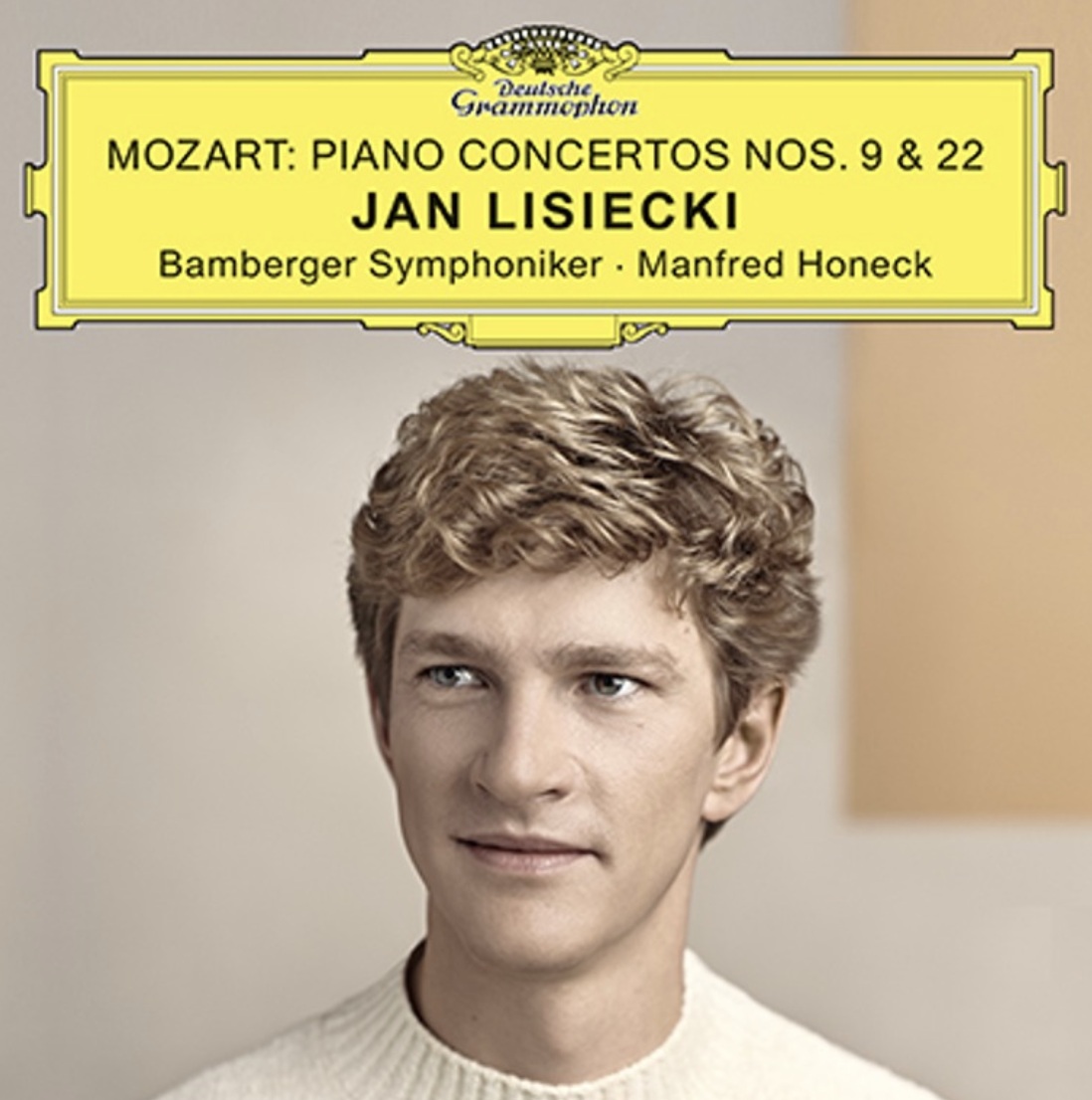
From the opening phrases of Mozart’s Piano Concerto No.9 K271, surely one of his earliest masterpieces, one realizes these performances take a rich, luxurious approach, expressively shaped with strong bass support from the Bamberg Symphony under Manfred Honeck. Lisiecki’s phrasing is invariably elegant, sometimes highly sculpted (hear the variety of tone in passagework at the recapitulation of the first movement of Concerto No.22 K482 at 8:13 of track 4, or in the trills of K271’s first movement development at 4:55 of track 1), while elsewhere phrases are presented simply and directly. There is none of the additional ornamentation that other pianists are increasingly adding to Mozart’s pure melodic lines (the recent recordings of sonatas and concertos by Robert Levin being only one of the most striking examples). Even in the recurring rondo theme of the third movement of No.22, Lisiecki resists any decoration of the often-repeated single-note tune. 

There is, however, a notable flexibility of line in many of the solo passages of this new recording. As an example, listen to the sudden use of rubato in the recapitulation of K271’s first movement (7:12 of track 1). In the slow movements of both concertos, Lisiecki very often pulls back the tempo in his solo phrases. Both movements seem more Adagio than the Andantino and Andante that Mozart has indicated and are notably slower than recordings by the likes of Uchida, Andsnes, and Levin. The overall impression is that Lisiecki and Honeck take a leisurely, unhurried, and elegant view of this music. There is none of the impulsive energy or searingly intense woodwind colouring that one sometimes encounters in performances on period instruments. Even the cadenzas – Mozart’s own in K271 and Paul Badura-Skoda’s in K482 – tend toward the dreamy and introspective rather than the virtuosic or the extroverted. 

These are classy performances for those who enjoy plush, shapely, and straightforward Mozart, impeccably phrased and in rich, warm recorded sound.

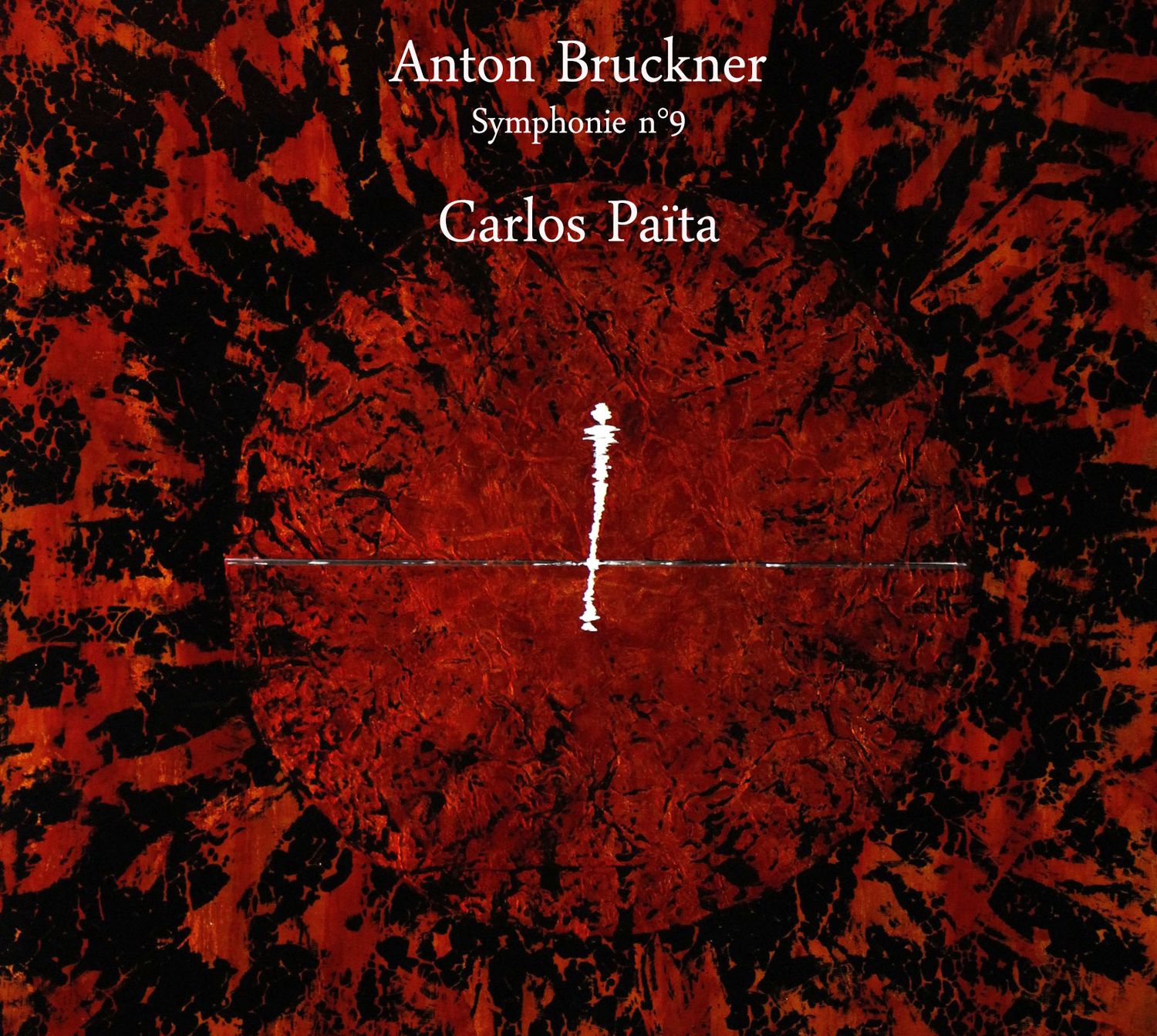
02 Bruckner 9Bruckner – Symphony No.9
Philharmonic Symphony Orchestra; Carlos Païta
Le Palais des Degustateurs PDD043 (lepalaisdesdegustateurs.com/store/carlos-paita-anton-bruckner-symphony-ndeg9)

When conductor Carlos Païta died in 2015 in Switzerland he was 83. Born in Argentina, his first professional engagement was at Colón Theater in Buenos Aires. He conducted the Stuttgart Radio Symphony Orchestra in 1966 and moved permanently to Europe in 1968. That year Païita was awarded the Grand Prix du Disque for his recording A Wagner Festival on London Records and in 1978 he received this prestigious prize again for Berlioz’s Symphonie Fantastique with the London Symphony Orchestra. The French label Le Palais des Degustateurs has been issuing some of his previously unreleased recordings from the 1980s and ‘90s, most recently this unusual take on Bruckner’s Symphony No.9 in D Minor. 

As a young man Païta got fired up to conduct after hearing Bruckner performed by Wilhelm Furtwängler, who was perhaps the ultimate expert on this composer. Païta’s live take with the Philharmonic Symphony Orchestra, is impressively coherent proof of his deep understanding of this work, perhaps surprisingly, as his concept is radically untypical of Furtwängler’s epically monumental approach. He keeps the connectedness intact, but here we get an efficient reading that eschews any luftpausen [breath pauses] and bridges the different musical paragraphs with a headlong sense of purpose. The overall concept is almost brisk, but transitions are allowed to just make their point and carry on. There are a few sudden and dramatic slowings at the ends of the big movements, but the Scherzo may be one of the fastest ever attempted. 

Païta almost gets away with the headlong speed, while keeping the band together, but the pizzicato figurations ending the opening phrases are barely articulated. A slower tempo might have made it more playable. However, this is a fascinating, radically faster concept of the whole work – which I would never propose as my basic model of this piece – but it is valuable as a quite different, rather streamlined alternative.

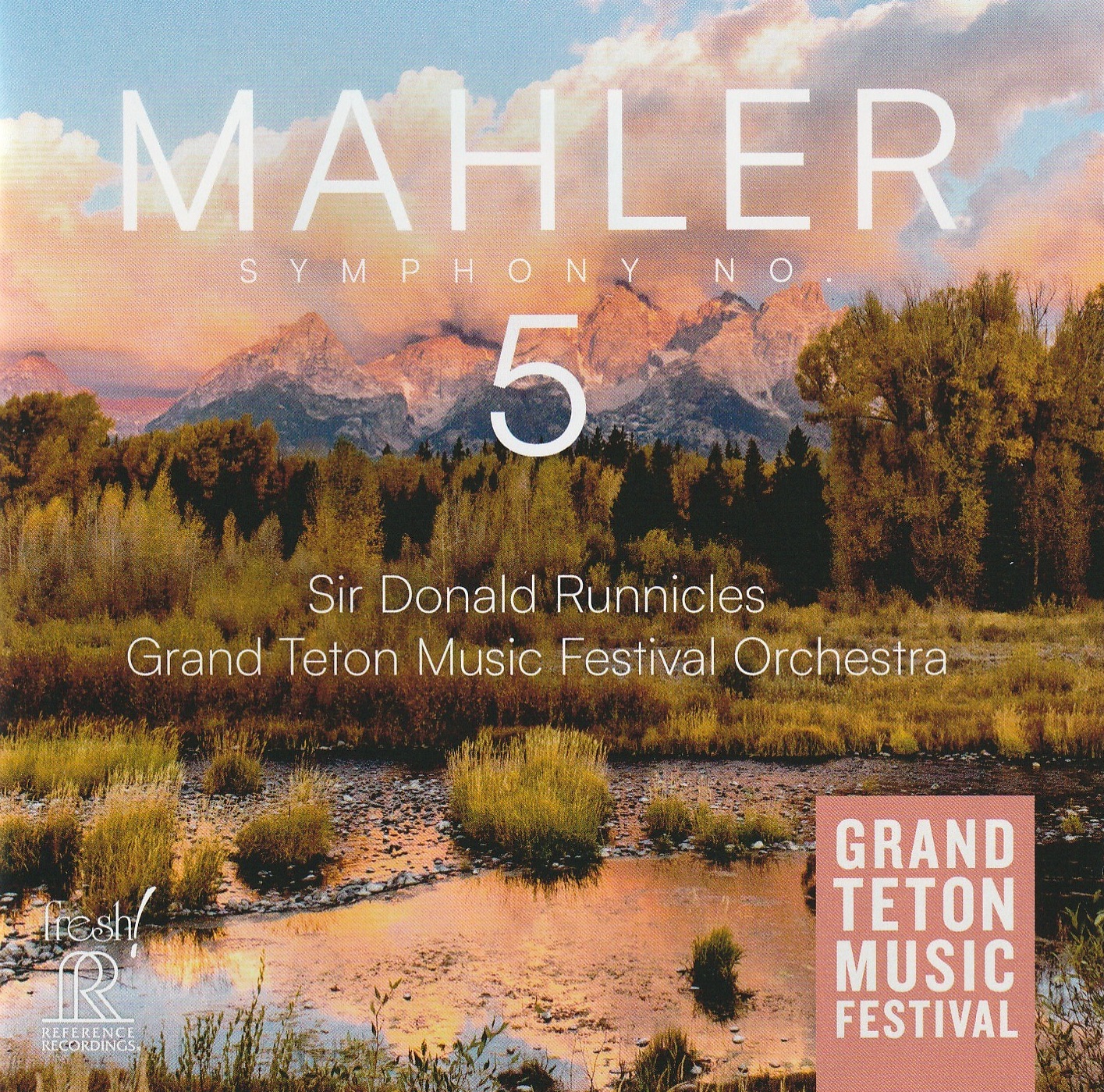
03 Mahler 5Mahler Symphony No.5
Grand Teton Music Festival Orchestra; Sir Donald Runnicles
Reference Recordings FR-763SACD (referencerecordings.com/recording/mahler-symphony-no-5)

The tremendous emotional range in Gustav Mahler’s sprawling, five-movement Symphony No.5 exemplifies his credo, as he famously told Sibelius, that “a symphony must be like the world, it must embrace everything.” Actually, the “everything” Mahler “embraced” in his symphonies included all the angst and turmoil frequently occurring within his own, inner “world.” The Fifth’s extreme emotive trajectory from agony to joy surely mirrored a marked improvement in Mahler’s circumstances. It was completed in 1902, the year he married Alma after recovering from a life-threatening intestinal hemorrhage the year before, still enjoying his recent appointment as artistic director of the Vienna Court Opera. 

The opening funereal Trauermarsch leads to the second movement, marked Stürmisch bewegt. Mit grösster Vehemenz (Stormily agitated. With great vehemence). Mahler described the rustic Scherzo, genial and sometimes raucous, as “mankind in the full brightness of day, at the zenith of life.” The luminous, transcendent Adagietto, over-familiar since its use in the film Death in Venice, nevertheless tugs the heartstrings. The jocular Rondo-Finale ends this darkness-to-light masterwork with a blaze of triumph. 

This richly-coloured, dramatically energized performance was recorded at the 2024 Grand Teton Music Festival in Wyoming with festival artistic director Donald Runnicles leading the large festival orchestra. The resplendent brass section, including seven horns, powered the symphony’s multiple grand climaxes while Runnicles treated Mahler’s reflective interludes, the Adagietto chief among them, with loving care. It’s a welcome new addition to the roster of superb recorded Mahler Fifths.

04 Holst PlanetsHolst – The Planets; Bax – Tintagel
London Symphony Orchestra; Sir Antonio Pappano
LSO Live LSO0904 (hyperion-records.co.uk/dc.asp?dc=D_LSO0904-D)

Sir Antonio Pappano is beginning a series of recordings with his new orchestra, the London Symphony, one of the most redoubtable orchestral institutions on the planet. This is the third release in what so far has been British music, two discs of Vaughan Williams symphonies, and this one featuring two masterpieces from the height of the modern British Musical Renaissance, Gustav Holst’s suite, The Planets, and Arnold Bax’s mighty tone poem Tintagel. This is a major new release featuring performances that herald Pappano’s committed dedication to this repertoire. He has been labouring at the Royal Opera for decades honing his skills, and is now showing them off in performances of special heft and insight. His intensity reminds me a little of Barbirolli who always seemed to bring a measure of extra insight to anything he performed.

It is terrific to have this pairing in such fine performances, so well recorded in spite of the usual LSO venue, the Barbican Center, which still seems a little dry but provides unflinching clarity. Pappano’s The Planets offers a profound take on this ubiquitous piece. It is so well scored that it is hard to get it wrong, so it is always impressive, but here we have a weight and sense of purpose that is rare. The hideously prophetic Mars is monstrous and more exhausting than usual, and the Saturn movement which is awesomely drawn out is shattering in its moments of panic and despair. Venus is serene and seems timeless and somehow chaste, less sensuous than usual. The virtuoso vocal group Tenebrae provide the chilly, eerie chorus depicting the vastness of the cosmos, as Neptune fades into nothingness.

The fact that the performance of Tintagel may provide one of its best takes on record makes this new disc irresistible. The orchestral sonority is fierce and detailed, capturing every nuance of the elemental orchestration. This description of the castle crowned cliff on the Cornish Coast with its magnificent engulfing wave crashes is overwhelming and one can feel the wetness of the surges. Listening to this disc is nothing short of intoxicating.

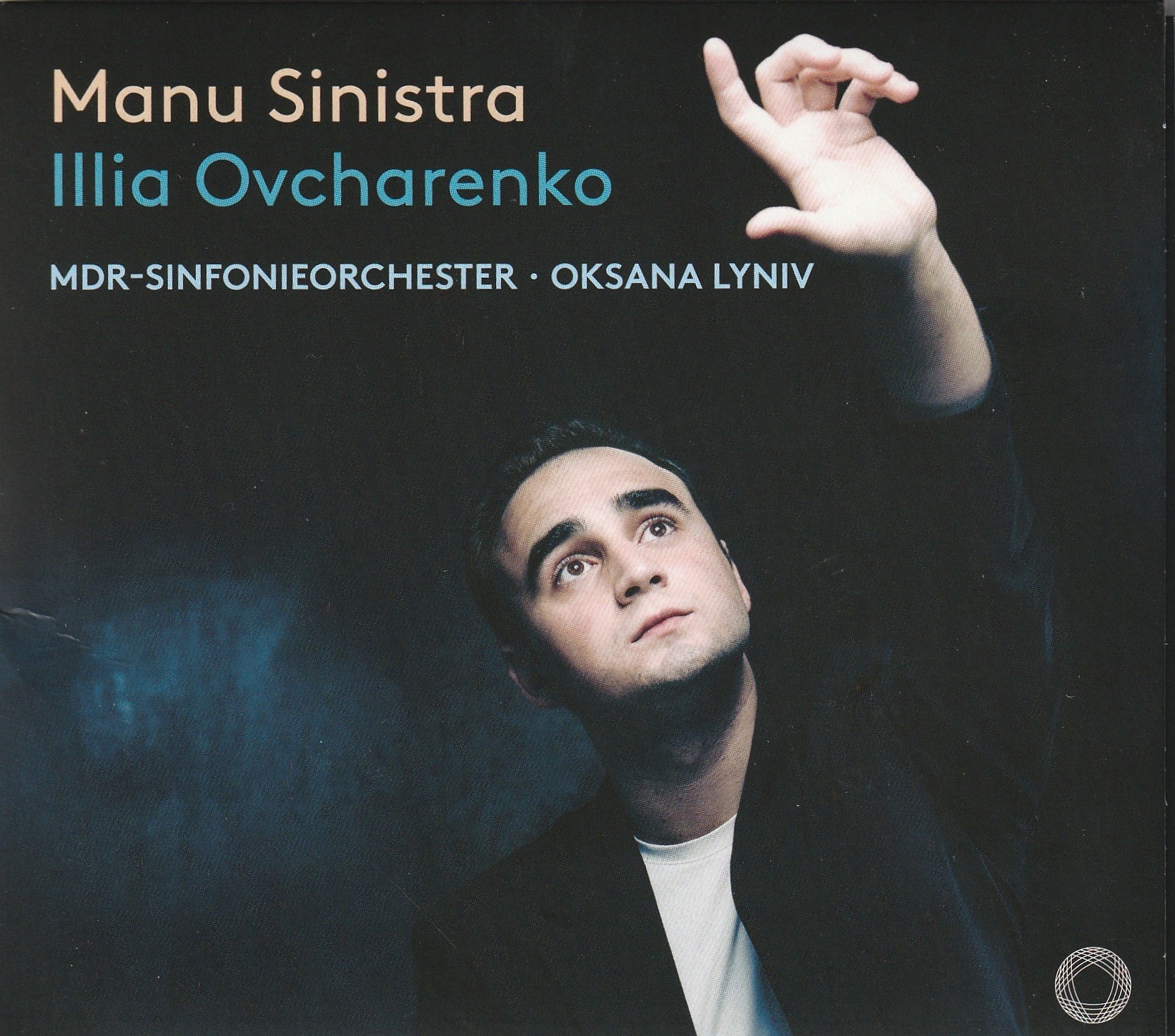
05 Manu SinistraManu Sinistra
Illia Ovcharenko; MDR-Sinfonieorchester; Oksana Lyniv
Pentatone PTC 5187 498 (pentatonemusic.com/product/manu-sinistra)

Injured in battle during the early weeks of World War I, 26-year-old concert pianist Paul Wittgenstein lost his right arm. Peace restored, the wealthy Wittgenstein began commissioning a composers’ Who’s Who, including Richard Strauss, Erich Korngold, Paul Hindemith and the three on this CD, to create works playable with his one remaining hand.

Following the Bolshevik revolution, Ukraine-born Sergei Bortkiewicz fled to Vienna, where he met Wittgenstein. His rarely-performed Piano Concerto No.2, Op.28, is firmly in the Late-Romantic tradition. In the Allegro dramatico, a tumultuous orchestra tutti leads to a long-lined, yearning piano melody, soon joined by the orchestra. The dreamy Andante cantabile features rippling piano runs over hushed winds and strings. Turbulence, now celebratory, returns in the Allegro vivo, a bravura display of what five super-skilled fingers can achieve.

Wittgenstein wrote to Sergei Prokofiev, “Thank you for the concerto, but I don’t understand a note of it and I shall not play it.” Prokofiev’s Piano Concerto No.4, Op.53 remained unperformed until 1956, after the composer’s death. Despite sharing the playful-dramatic-lyrical idiom of Prokofiev’s Romeo and Juliet, it still hovers on the fringe of the active repertoire.

One unquestioned masterpiece emerged from Wittgenstein’s commissions – Maurice Ravel’s gorgeous Piano Concerto for the Left Hand. It and the CD’s two other concertos receive passionate performances from Ukraine-born Illia Ovcharenko, 2022 winner of the Honens International Piano Competition held every three years in Calgary, and Leipzig’s MDR-Sinfonieorchester conducted by Ukrainian Oksana Lyniv.

06 Harmonic Breath PalestrinaHarmonic Breath – The Music of Palestrina
Mysterium Duo
Canadian Classical Records Inc. (canadianclassical.ca/collections/mysterium-duo-harmonic-breath-the-music-of-palestrina)

Calgary-based Mysterium Duo is two brilliant “classical” accordionists. Internationally renowned performer Sir N. Antonio Peruch currently teaches classical accordion at the University of Calgary. Penny Sanborn is a University of Calgary PhD graduate student with a Master of Music in Performance on accordion who has also performed internationally. They each play on the chromatic free-bass accordion. The left-hand buttons are single tones arranged in ascending semitones from lower pitched at the top of the accordion to higher pitches lower. Both play button keyboard right hand instruments, with a wide pitch range, which accommodate the duo’s fascinating adaptations of nine Renaissance composer Giovanni Pierluigi da Palestrina sacred compositions. 

The opening Ricercar del Primo Tuomo, originally scored for brass quartet, has each accordionist playing in a strict tempo and pulse together, and in separate contrapuntal lines. Their detached notes are very clear and attention grabbing. Sicut Cervus is Palestrina’s most famous and often performed four-voice motet, a setting to Psalm 42. After a held note start, the accordions play in two-part individual lines. Love the clear phrasing, controlled accordion bellows breathing, and lower pitched held note lines. Alma Redemptoris Mater is a church motet. The short melodic phrases translate well to the accordion, especially the lower pitch and higher pitch lines together. A very positive and uplifting performance to closing held note. Mysterium’s sheet music adaptations for two free-bass accordions are available.

The release is only 25 minutes in length, yet timeless in Mysterium’s colour, beauty, and respectful adaptations of Palestrina’s sacred works, played perfectly by Peruch and Sanborn.

Back to top