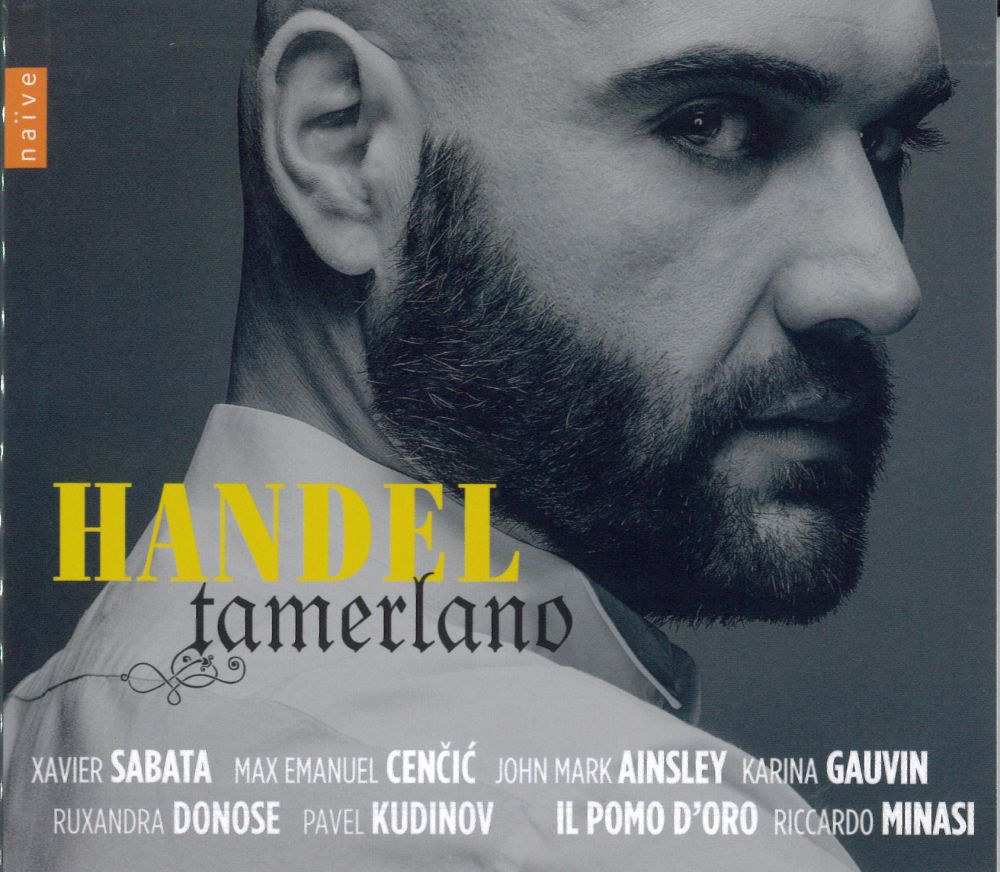
02 early 04 handel tamerlanoHandel – Tamerlano
Xavier Sabata; Max Emanuel Cenčić; John Mark Ainsley; Karina Gauvin; Ruxandra Donose; Pavel Kudinov; Il Pomo D’Oro; Riccardo Minasi
Naïve V 5373

The story of Tamerlano, or Timur the Lame, and his victory over the Ottoman sultan Bajazet provided perfect fodder for the operas of Baroque’s greatest masters (Handel and Vivaldi), as well as a slew of lesser composers, Gasparini amongst them. The peasant who rose to rule most of Asia, from Anatolia to northern India, and claimed to be a descendant of Genghis Khan, was essentially a 15th-century version of Alexander the Great. His defeat of the Ottoman Empire offered Europe a 50-year breather from a war on its eastern flank. His imprisonment and killing of Bajazet was already being used in Great Britain as a political metaphor for the struggle against the house of Stuart and plays on the theme were staged in early November of each year before Handel wrote his opera. In 1724, at its premiere, Tamerlano was joined by two other plays on the subject. It proved to be one of Handel’s great successes, in no small part because of numerous, brilliant arias and the dramatic tension of Bajazet’s suicide. In this recording, as in most if not all Naïve productions (the label is famous for recording all of the works by Vivaldi), the playing is meticulous and the voices… The voices are, to be frank, fantastic! If we only had such an ensemble in the recent COC production of Hercules! Karina Gauvin astounds with her ongoing vocal development, and Sabata and Cenčić are both delightful discoveries for this reviewer. Bravi!


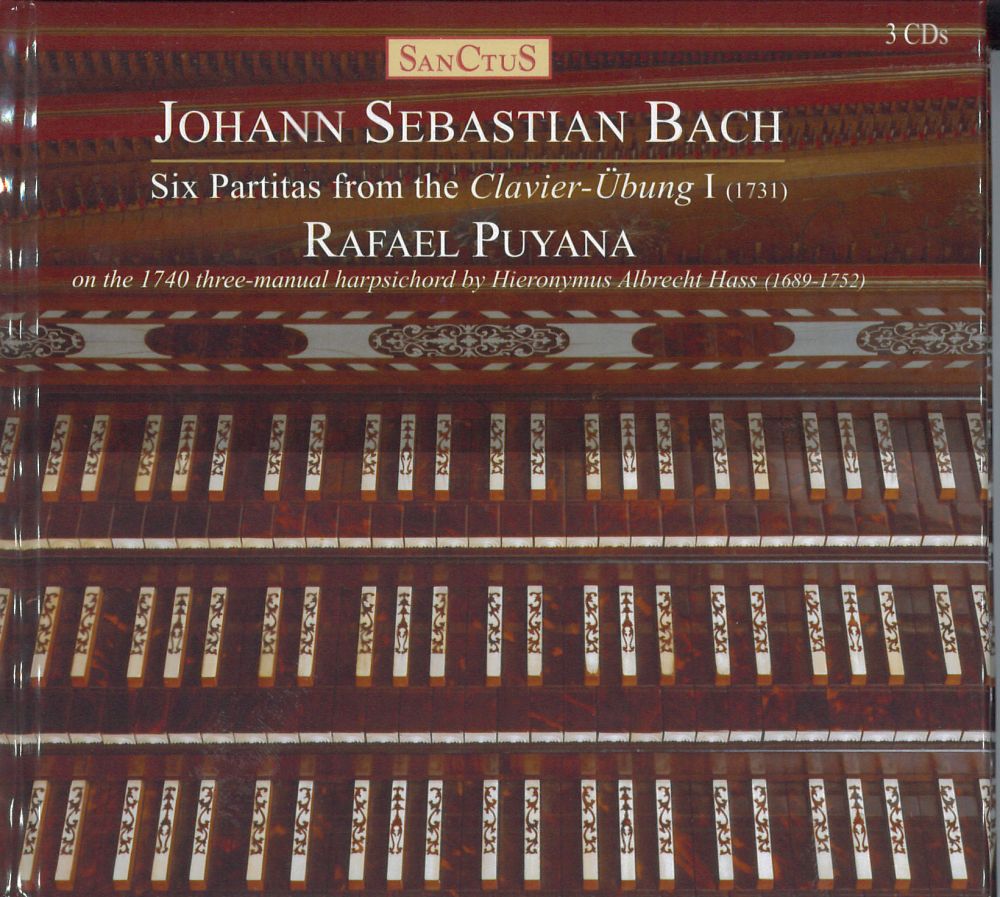
02 early 05 bach harpsichordBach – Six Partitas from Clavier-Übung I (1731)
Rafael Puyana
SanCtuS SCS-027-028-029 (sanctusrecordings.com)

Lavish is an understatement when it comes to describing the cover and booklet for this interpretation by the late Rafael Puyana of these six partitas. They are a tribute to a breathtaking odyssey in which Puyana’s teacher Wanda Landowska first saw the three-manual harpsichord used in this recording – back in 1900. The instrument was acquired and painstakingly restored by Puyana, but not until 2013 was his 1985 recording made public on these CDs.

 The very first Praeludium and Allemande indicate the joy and pleasure that Bach discovered when composing the partitas. Indeed, the rural background of the allemandes, courantes and sarabandes found in each of the partitas show how important this provenance was for Bach. This light quality is shared by the writer of the sleeve notes regarding the allemande: “If it is treated as being in quadruple time, the player is obliged to take it more slowly, the end result being frankly soporific. Many contemporary harpsichordists have bored us to death through over-literal interpretations…” No such anxieties here; listen to the gushing quality of the Giga or the Sinfonia which opens Partita II, not to mention the heavenly quality of the latter’s Sarabande. Its concluding Capriccio is “technically fiendish to master.”

 Partita III demonstrates both the speed of the Corrente [sic] and the slow, stately Sarabande which immediately follows it in total contrast. The three last movements (Burlesca, Scherzo, Gigue) return the listener to the demanding complexity of Bach’s composition.

 Particularly testing (even in comparison with other partitas) is the overture to Partita IV, with its almost glissando effects. Everything else is sedate by comparison until the concluding Gigue places its own demands on Puyana’s skills. Partita V is far more spirited, as Praeludium, Gigue and Corrente contrast with the slower Sarabande.

 And finally Partita VI, starting with the only Toccata in the collection, which culminates in a complex and varied set of sequences. The subsequent movements are light but expressive. All in all, the comment in the notes is absolutely correct: Bach’s six partitas were unprecedented in their virtuosity, length and intensity. They amazed contemporary harpsichordists.

 Soporific and bored to death? Not with Rafael Puyana’s interpretations.


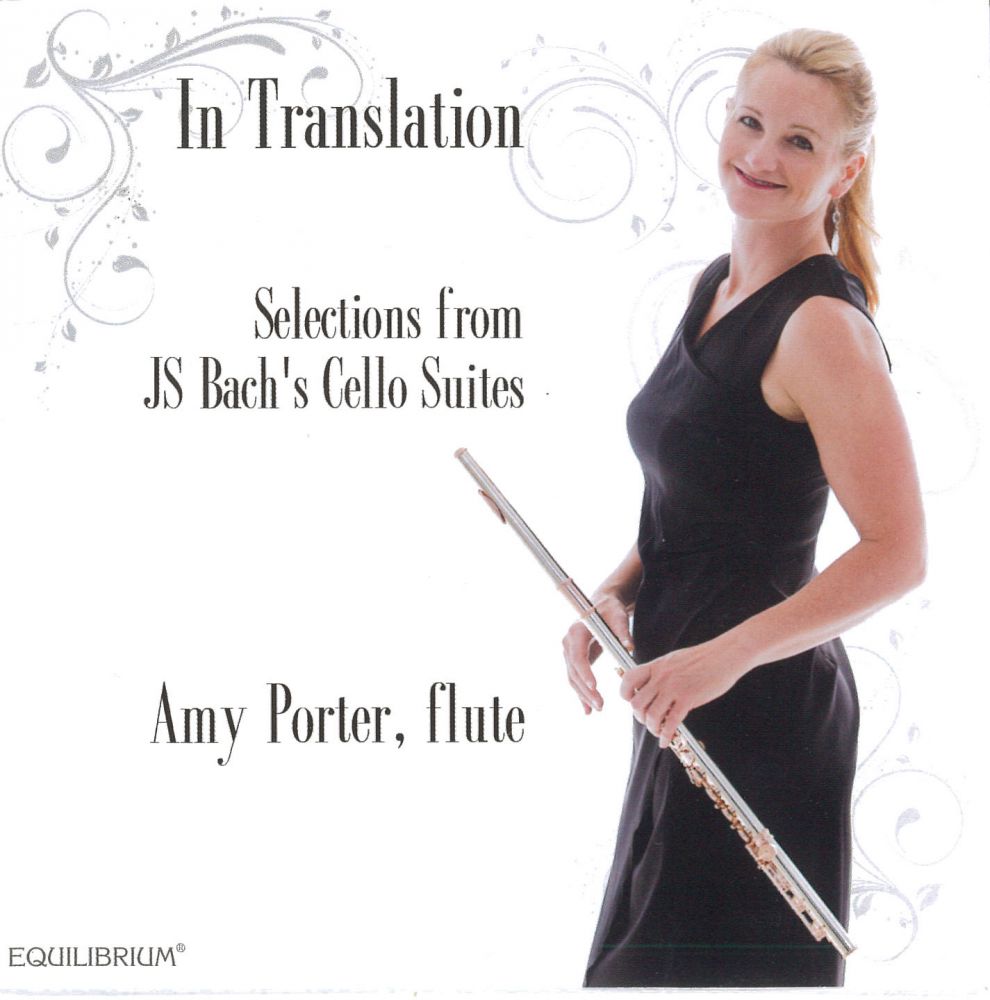
02 early 06 amy porter bachIn Translation – Selections from JS Bach’s Cello Suites
Amy Porter
Equilibrium EQ 124 (equilibri.com)

What an audacious undertaking, to record J.S. Bach’s cello suites played on the flute. Despite all we hear about composers of the Baroque era encouraging musicians to play their works on instruments other than the ones for which they were written, these suites seem made for the cello, and are indelibly associated with it, particularly because of their introduction to mainstream music-making in the 20th century by the legendary cellist, Pablo Casals. Since Casals, every cellist able to play them, including Rostropovich, Yo-Yo Ma and a host of others have performed and recorded them.

Outrageous as the undertaking may seem, Amy Porter almost pulls it off: she plays the Prelude of Suite 1, the Sarabande of Suite 2 and the Prelude and Sarabande of Suite 4 with an effortless, ethereal and contemplative serenity, which to me works as well as any number of interpretations by cellists. Her technical brilliance in the Prelude of Suite 6 is striking, especially because she carries her virtuosity lightly; it’s just what she does – no big deal.

Where things don’t go so well is in the dances – the allemandes, courantes and gigues. Rostropovich plays these like dances, with great energy, vitality and forward motion. This is what Porter doesn’t do. She stays in a contemplative frame of mind: when the music is crying out for dynamic physicality it becomes static. While the more contemplative movements are often exquisite, the rest is dragged down by dances that don’t dance.


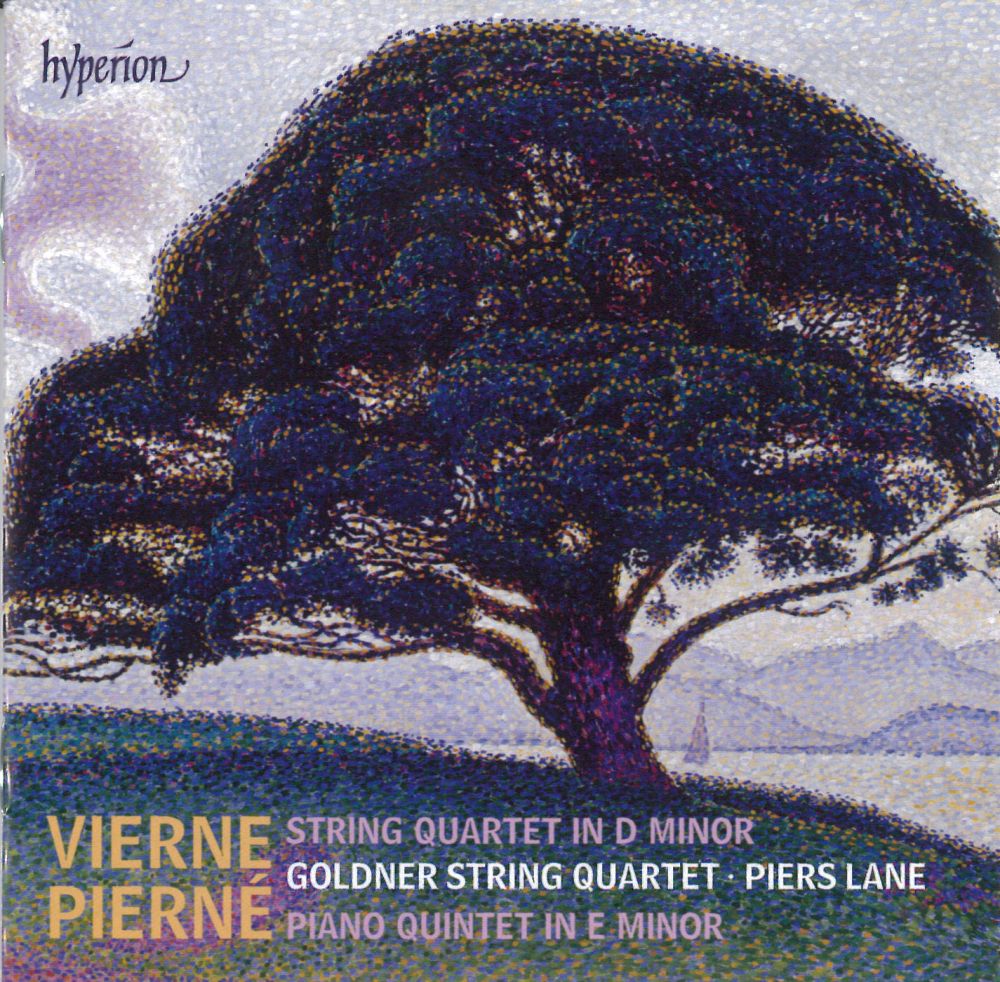
03 classical 02 vierne pierneVierne – String Quartet; Pierné – Piano Quintet
Goldner String Quartet; Piers Lane
Hyperion CDA68036

The Goldner Quartet from Australia should be better known. Dene Olding and Dimity Hall, violins, Irina Morozova, viola, and Julian Smiles, cello, are brilliant in these seldom-heard works. YouTube footage shows the near-blind Louis Vierne (1870-1937) playing the organ, erect and with head completely still, as though totally wrapped up in a vision of the music that streams forth effortlessly from minimal finger and foot motions. His String Quartet in D minor, Op.12 (1894) similarly seems a natural and complete mental conception from the young composer. Everything happens at just the right time. The Goldner Quartet brings it off confidently, with impeccable ensemble in the delightful Intermezzo and deep feeling in the Andante.

Gabriel Pierné (1863-1937) was a Paris conductor-composer who led the Colonne Orchestra in important premieres of compositions by Stravinsky, Ravel and Debussy. Playing his sprawling late-Romantic Piano Quintet in E minor, Op.41 (1916), the Goldners do their best along with Australian pianist Piers Lane. This is a remarkable work but, despite harmonic inventiveness, the composer’s obsessive repetition of rhythmic patterns in the first movement becomes troubling. The second movement features absolutely charming handling of the zortzico, a Basque dance in 5/8 time. Yet the many repetitions of the tune, re-harmonized using almost every move in the late-19th-century toolkit, were more than I could take. To be sure, the work has some fine mystical moments and Lane is a true virtuoso in the last movement’s near-crazy ending!


03 classical 03 leonardelliImpressions of France
Caroline Léonardelli
CEN Classics CEN1453
(carolineleonardelli.com)  

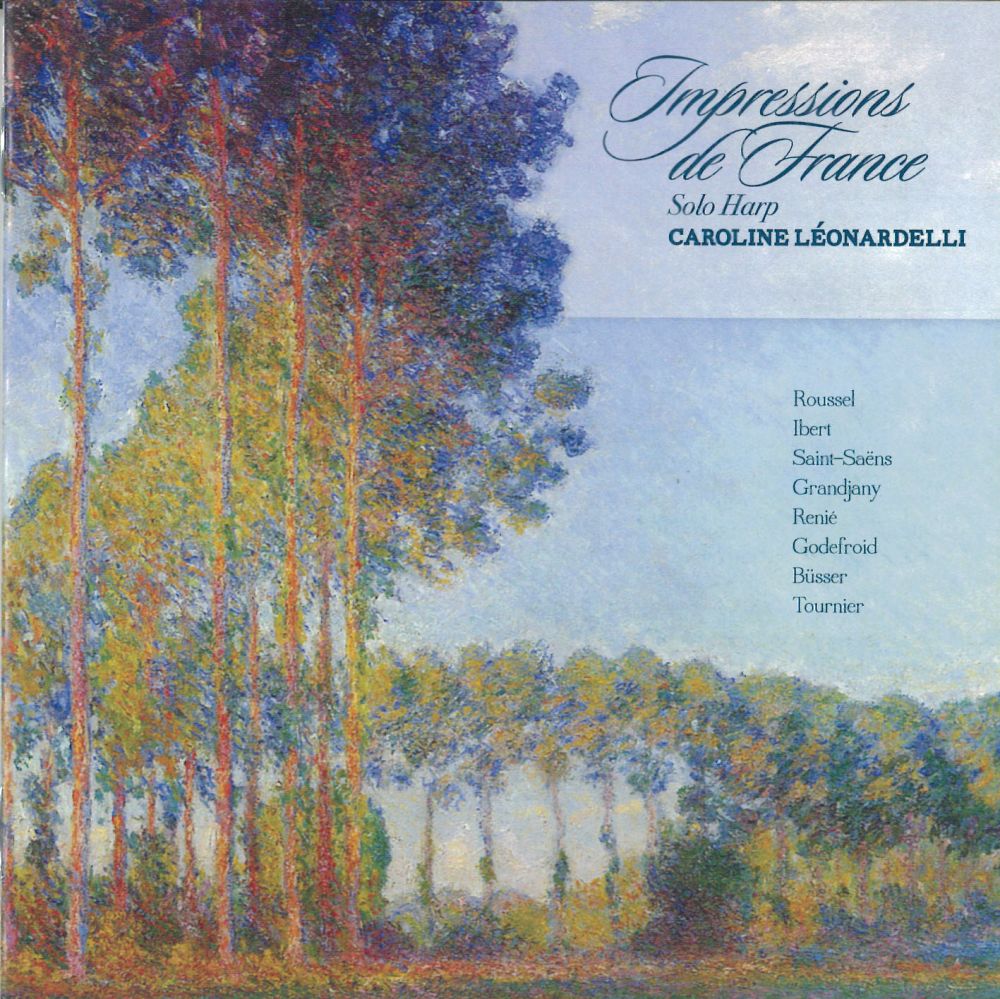
Ottawa-based harpist Caroline Léonardelli presents an attractive selection of late 19th- and early 20th-century harp music by Paris Conservatory-educated composers. Her previous recording El Dorado received a JUNO Award nomination. Beyond technical proficiency and adherence to the French school of her teachers, it is her artistic sense of pacing and of shaping melodies within cascades of notes that help make these performances commanding. Léonardelli captures both the sense of a wonder-filled fairy tale in Marcel Grandjany’s impressionist Dans la forêt du charme et de l’enchantement, and the moods of meditation and exaltation in his Gregorian chant-inspired Rhapsodie. Grandjany’s teacher was the less-well-known Henriette Renié, who deservedly receives recognition here with the premiere recording of her challenging, aptly conceived Ballade No.2.

One of Léonardelli’s intentions for this disc is to honour the long French harp tradition, involving interaction between teachers, students, composers, performers and manufacturers. The disc opens with the Étude in E-Flat Minor by harp virtuoso Felix Godefroid, who helped the Érard Company improve the double-action harp, followed by the Pièce de concert, Op.32 by centenarian Henri Büsser (1872-1973!), written for Renié’s teacher Alphonse Hasselmans. There are also intriguing works by more familiar composers Saint-Saëns, Roussel and Ibert. I found Roussel’s ingeniously chromatic Impromptu, Op.21 especially heartfelt, and Léonardelli’s personal association with its dedicatee Lily Laskine makes this recording particularly valuable.


Violinist Lynn Kuo and pianist Marianna Humetska have been playing as a duo since 2006, but Love: Innocence, Passion, Obsession is their self-issued debut CD (LKCD0001
lynnkuo.com)
. It’s promoted as “a musical exploration of love, from the sparks of passion to the throes of jealousy and heartbreak,” but I’m not sure if the recital program really lives up to it.

The main work on the CD is the always-popular César Franck Sonata in A Major, which is given a solid performance highlighted by Humetska’s expansive and passionate keyboard work. Astor Piazzolla’s Milonga en re is a short, haunting piece given a sensitive, tender reading here. Michael Pepa’s Fantaisie bohémienne lives up to its title, giving Kuo the opportunity to shine and to display a wide range of technical skills in a bravura, almost improvisatory gypsy-flavoured fantasia. Nino Rota’s Improvviso en re minore is another short but passionate offering.

The final track is the Concert Fantasy on Themes from Gershwin’s Porgy and Bess, Op.19 by the Russian violin virtuoso Igor Frolov, who died just last summer. It’s a colourful portrait that captures the range and passion of one of Gershwin’s most popular works, and gives Humetska in particular the chance once again to display the full power of her technical and interpretive skills. Recorded in CBC Studio 211 in Toronto, the balance and sound quality are excellent.

Unfortunately, there is no accompanying booklet: full notes are promised by visiting Kuo’s web site, but at the moment there’s nothing there about the works on the CD.

The Montreal-born violinist Frédéric Bednarz is joined by his wife, pianist Natsuki Hiratsuka, in a CD of Sonatas for violin and piano by Szymanowski and Shostakovich (Metis Islands Music MIM-0004 metis-islands.com). Karol Szymanowski’s Sonata in D Minor, Op.9, is an early work from 1904; it’s a traditional late-Romantic piece with more than a passing reference to the Franck sonata, and is given a clear, thoughtful reading by both players.

The Shostakovich Sonata Op.134 is, by contrast, a late work, written in 1968 for David Oistrakh’s 60th birthday; as with so much late Shostakovich, it never seems to shake that all-pervasive sense of nervous apprehension, desolation and loss of hope. Again, the playing is sensitive and clear, with a particularly effective Largo, the third and final movement which is almost as long as the first two movements put together. There could perhaps be a bit bigger emotional range in places – maybe more of a raw edge at times – but these are beautifully balanced and satisfying performances.

The CD was recorded in McGill University’s Music Multimedia Room in Montreal, where Bednarz is a member of the Molinari String Quartet, the quartet in residence at the Montreal Conservatory.

The English violinist Sara Trickey is joined by her regular duo partner Daniel Tong in an outstanding recital of Schubert Sonatinas for violin and piano on her latest Champs Hill CD (CHRCD080). The Callino Quartet accompanies her in the Rondo in A Major for Violin and Strings, D438.

The sonatinas – D Major D384, A Minor D385 and G Minor D408 – are actually the first three of Schubert’s violin sonatas, and were written in early 1816 when he was 19. They weren’t published until 1836, eight years after Schubert’s death, when Anton Diabelli, who had purchased a large part of Schubert’s musical estate from Schubert’s brother Ferdinand, issued them as Sonatinas by Diabelli, their true identity remaining unknown for many years.

Trickey has known these works for some time – she says they have been “under my skin” ever since she first encountered them at the age of 14 – and it shows. Her foreword to the booklet makes clear that she understands exactly what these sonatas are: she refers to “the joy mixed with frailty, the poignancy and darkness which never quite subsumes a sense of hope” and to the “passing hints of almost everything that is to come.”

Trickey has a beautiful tone; it’s sweet, clear and pure, but never lacks a steely underlying strength when needed. Tong is an equal partner in every respect.

The Rondo, a more challenging work from 1816 presented here in its original form with string quartet, rounds out a simply stunning CD.

for may half tones marc-andre hamelinSchumann – Waldszenen,  Kinderszenen; Janáček – On an Overgrown Path
Marc-André Hamelin, piano
Hyperion CDA68030

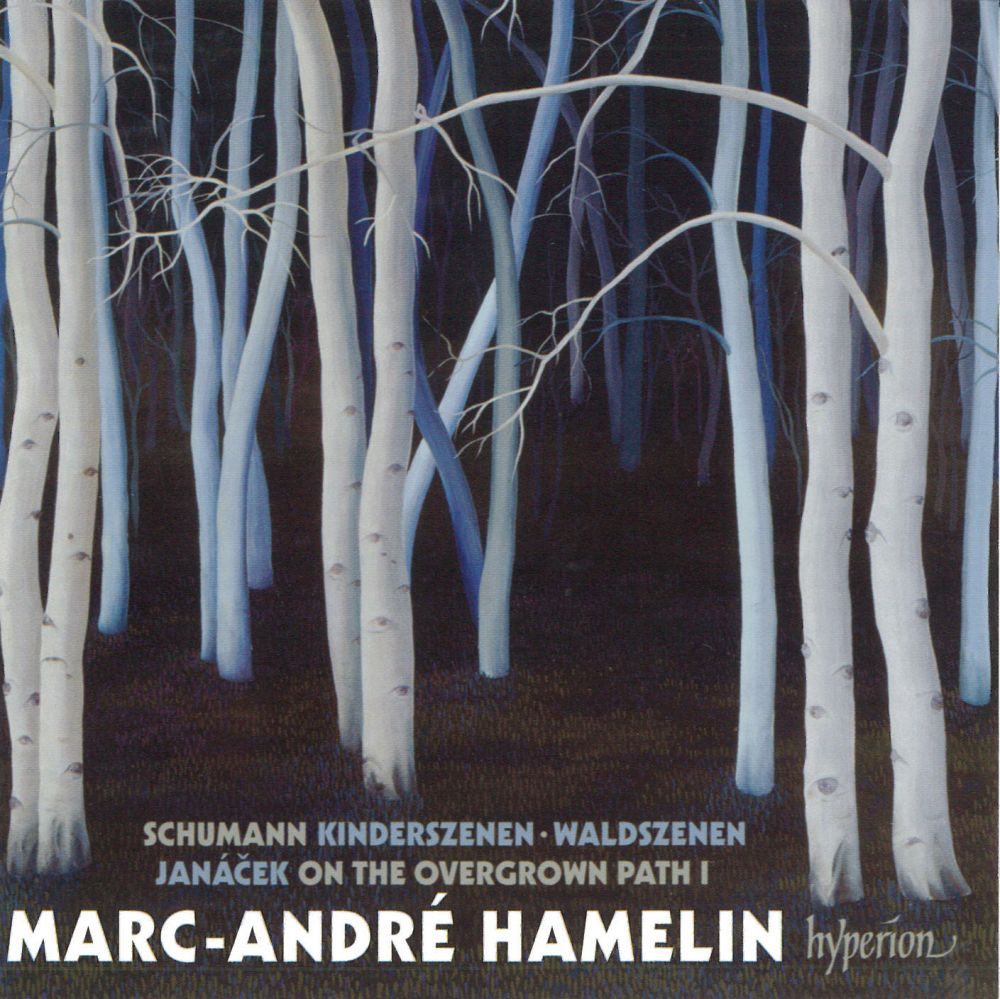
The term “pianistic supernova” is not one that music reviewers should ever use lightly, but it can surely be applied to Marc-André Hamelin. Since making his debut in 1985, this Montreal-born pianist now based in Boston continues to prove that his musical talents really are extra-ordinary, earning well-deserved accolades from critics and audiences alike. Although Hamelin has long championed composers slightly left of the mainstream, his newest recording features two that are decidedly more familiar – Janáček and Schumann – in an engaging program of music from the early and late Romantic periods.

Read more: Schumann – Waldszenen, Kinderszenen; Janáček – On an Overgrown Path - Marc-André Hamelin, piano

03 early 01 dowland melancholyThe Art of Melancholy –  Songs by John Dowland
Iestyn Davies; Thomas Dunford
Hyperion CDA68007

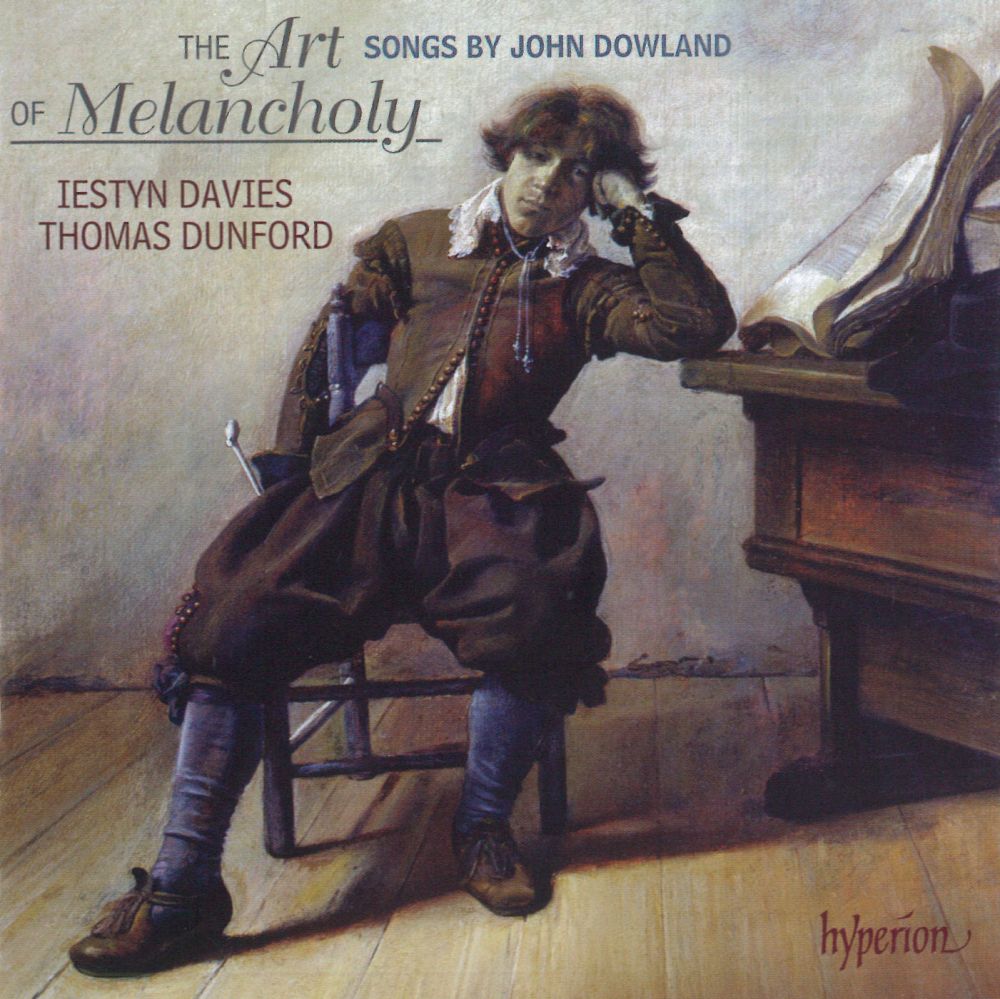
Half a century ago a countertenor was still seen as unusual, some would say unnatural. There are now a substantial number of countertenors and I would rate Iestyn Davies as one of the very best, judging from the record under review and also from the recent recording of Handel’s Belshazzar, in which he sings the role of Daniel. He has a strong and very even voice with an excellent sense of pitch. He has himself said that for him the finest countertenor is Andreas Scholl and he has commented on Scholl’s ability to create “a column of sound which doesn’t weaken and stays absolutely even.” The comment fits Davies’ own singing.

Melancholy was a common malady in early 17th-century England. Think of Hamlet or of Jaques in As You Like It. It could become an affectation and it was delightfully parodied in Ben Jonson’s Every Man in his Humour, in which a character calls for a stool to be melancholy upon. Davies, however, believes strongly that, for Dowland, melancholy is more than just a pose. That conviction accounts for the passion which Davies brings to the songs on this disc.

Davies is ably accompanied by lutenist Thomas Dunford, who also has five solos. They include The Frog Galliard, a performance which, for good measure, throws in Greensleeves as an excursion. Davies sang in Vancouver, Banff and Calgary a couple of months ago. I hope we shall hear him in Toronto soon.


03 early 02 terra tremuitTerra Tremuit
Studio de musique ancienne de Montréal; Christopher Jackson
ATMA ACD2 2653

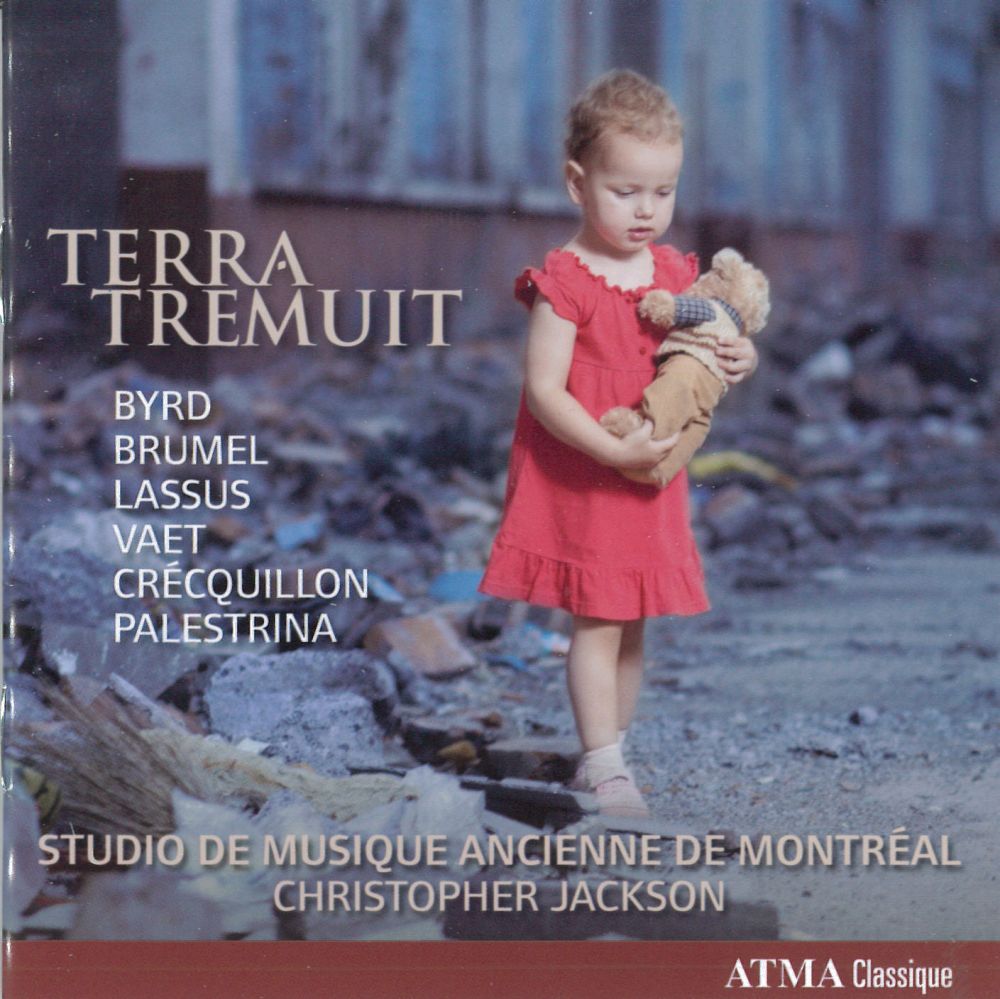
Several Renaissance composers dwell on the subject of world catastrophe – the cataclysms, floods, epidemics that will lead to humanity’s end. On this disc Christopher Jackson’s studio (40 years old this year) interprets doom-laden compositions by six such composers.

 An all-too-short one-minute motet Terra tremuit by William Byrd, with its sometimes clashing parts, sets the scene. Antoine Brumel’s five-movement Earthquake Mass for 12 voices follows, starting with a serene “Kyrie eleison” and a “Gloria” initially gentle but where the discordant music finally reflects the sinister nature of this compilation. It is certainly the case during Brumel’s “Sanctus, Benedictus”; his demands on the vocal abilities of the singers to change from high to low, and to perform melodic leaps must surely be intended to reflect the events of an earthquake.

 Then there are the composers who followed in the footsteps of Brumel. Vaet and Crecquillon, as employees at the court of the emperor Charles V, saw first hand the terrors of absolute power; not surprisingly they bring a mellow and melancholy richness to their compositions – both are terrified as they look to the last day and their judgment. More formal is Palestrina’s Terra tremuit. This depicts the aftermath of the earth’s trembling and the quiet that pertains as God rises in judgment.

 And if the sky does fall in, at least you will have been warned well in advance by some of the greatest early composers.


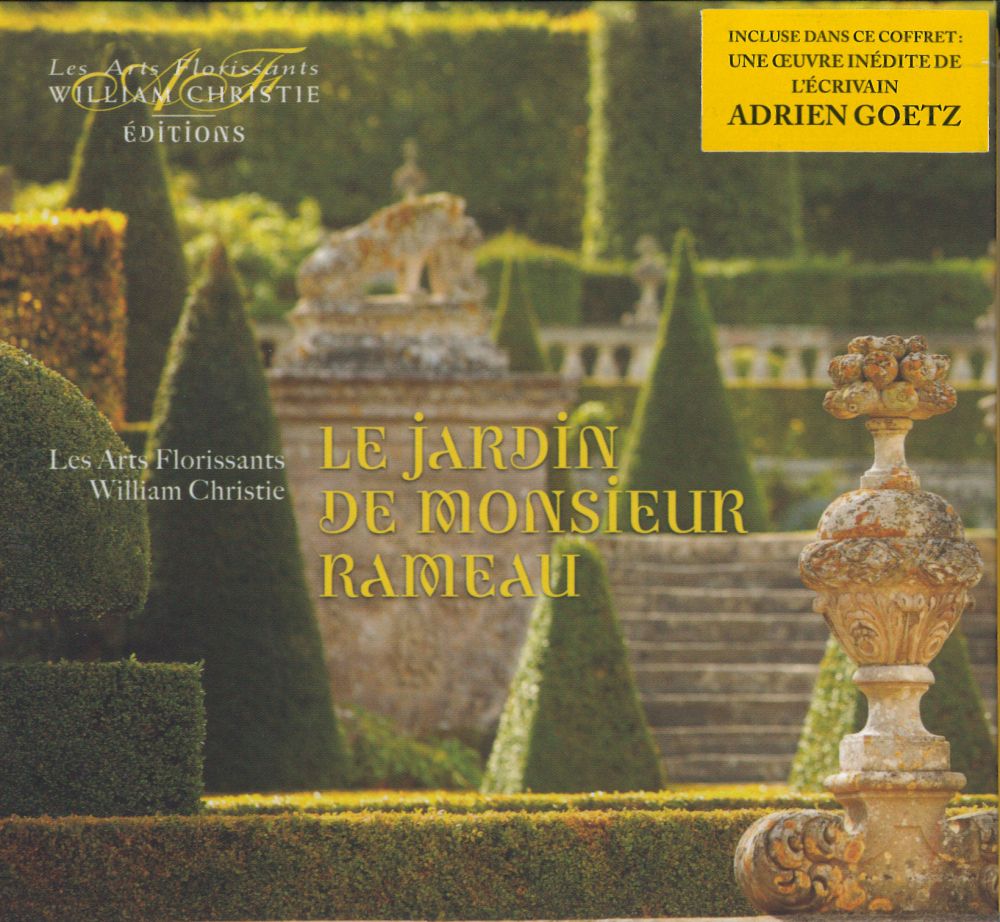
03 early 03 arts florisantsLe Jardin de Monsieur Rameau
Les Arts Florisants; William Christie
Les Arts Florissants Editions Edition AF002

Le Jardin des Voix is a two-week training program for young singers, organized by the ensemble Les Arts Florissants. It was launched in 2002 and this recording represents its sixth edition. Le Jardin de Monsieur Rameau was devised by Paul Agnew, the Associate Director of Les Arts Florissants. It was given as a semi-staged entertainment, first in Caen (in Normandy) and then on a tour that took the musicians as far west as New York and as far east as Helsinki.

In an interview printed in the booklet that comes with the CD, Agnew expresses the view that a normal training program may help a singer to perform the role of Gilda or that of Masetto but is of little help in 18th-century French opera. The training these young singers received has certainly paid off in their idiomatic command of both the literary and the musical language of the works performed. They are also very well attuned to each other.

The music of Rameau is central to the disc but there are also arias, duets and ensembles from Montéclair, Campra, Grandval, Dauvergne and Gluck. When I saw the track list I was concerned that the overall effect would be terribly fragmented, but I need not have worried. The program flows beautifully. I was especially taken with the alto-tenor duet from Rameau's Les fêtes d'Hébé, with the baritone aria from the fourth Act of his Dardanus and, most of all, with the heavenly quartet from his Les Indes galantes, which closes this recording.


04 classical 01 mauro bertoliItalian Memories
Mauro Bertoli
Independent (maurobertoli.com)

Despite Italy’s long-standing reputation as a country of vocal music, there is also a keyboard tradition going back as far as Frescobaldi – and what better way of sampling 300 years of Italian keyboard music than with this new recording titled Italian Memories with pianist Mauro Bertoli?

Born in Brescia, Italy, Bertoli has established an international reputation within a fairly short time, having appeared in recital and as a soloist with numerous chamber ensembles and orchestras throughout the world. A recipient of the prestigious Giuseppe Sinopoli award in 2006, Bertoli has been artist-in-residence at Carleton University in Ottawa since 2009. Italian Memories is his fourth recording, and one that clearly brings him back to his roots.

The CD opens with four miniatures by three composers, Benedetto Marcello, Mattia Vento and Domenico Paradisi. Bertoli’s playing is elegant and poised, easily demonstrating how well music originally intended for harpsichord can sound on a concert grand. The name Muzio Clementi is a more familiar one – is there a piano student who hasn’t played music by this Italian-born composer who spent most of his life in England and whose reputation rivalled that of Haydn? The two sonatas presented here are a delight, and Bertoli makes ease of the sometimes breakneck speed required of the performer. A complete change of pace comes with two brief and languorous pieces by Martucci and the Diario Indiano by Ferruccio Busoni, an homage to Native American culture. The latter is a true study in contrasts where Bertoli’s wonderful sense of tonal colour is juxtaposed with a formidable technique.

The final work is a true tour de force, music not by an Italian but by the 12- year- old Franz Liszt – the Impromptu Brilliant on Themes by Rossini and Spontini. Here, both Liszt and Bertoli pull out all the stops in this flamboyant piece, thus rounding out a splendid program of music that deserves greater exposure.


04 classical 02 brahms string quintetsBrahms – String Quintets
Takács Quartet; Lawrence Power
Hyperion CDA67900

The string quintet, as an art form, offers ingenious possibilities for creating unique harmonies and colours, and Brahms took full advantage of that. While he was known to have some difficulties establishing the right medium for his creative ideas, with string quintets he had found a perfect vehicle for expressing the depth and uniqueness of his artistry. Edvard Grieg allowed for the same sentiments in one of his letters: “How different the person we call Brahms now suddenly appears to us! Now for the first time I see and feel how whole he was both as an artist and as a human being.”

In String Quintet in F Major, Op.88, we hear Brahms’ signature use of eighth notes against triplets enhanced by syncopation in the first movement. The second movement combines the characteristics of two movements by means of alternation, thus expressing both dark colours that evoke mystery and a light, pastoral character. The rhythmic energy of the closing movement grants a boisterous mood to the fugal subject. The String Quintet in G Major, Op.111, opens with a grand, densely scored first movement, followed by two middle movements with more alluring, dreamy melodies. The final movement follows the thread of different and at times surprising tonalities.

The members of the Takács Quartet and Lawrence Power present cohesive and thoughtful performances. They are equally at ease expressing melancholy and introspection as they are at bringing out the complexity of Brahms’ writing. Their vibrato is so exquisite that it makes every note meaningful. If you find yourself in a mood for contemplation, this is a perfect recording for such moments.


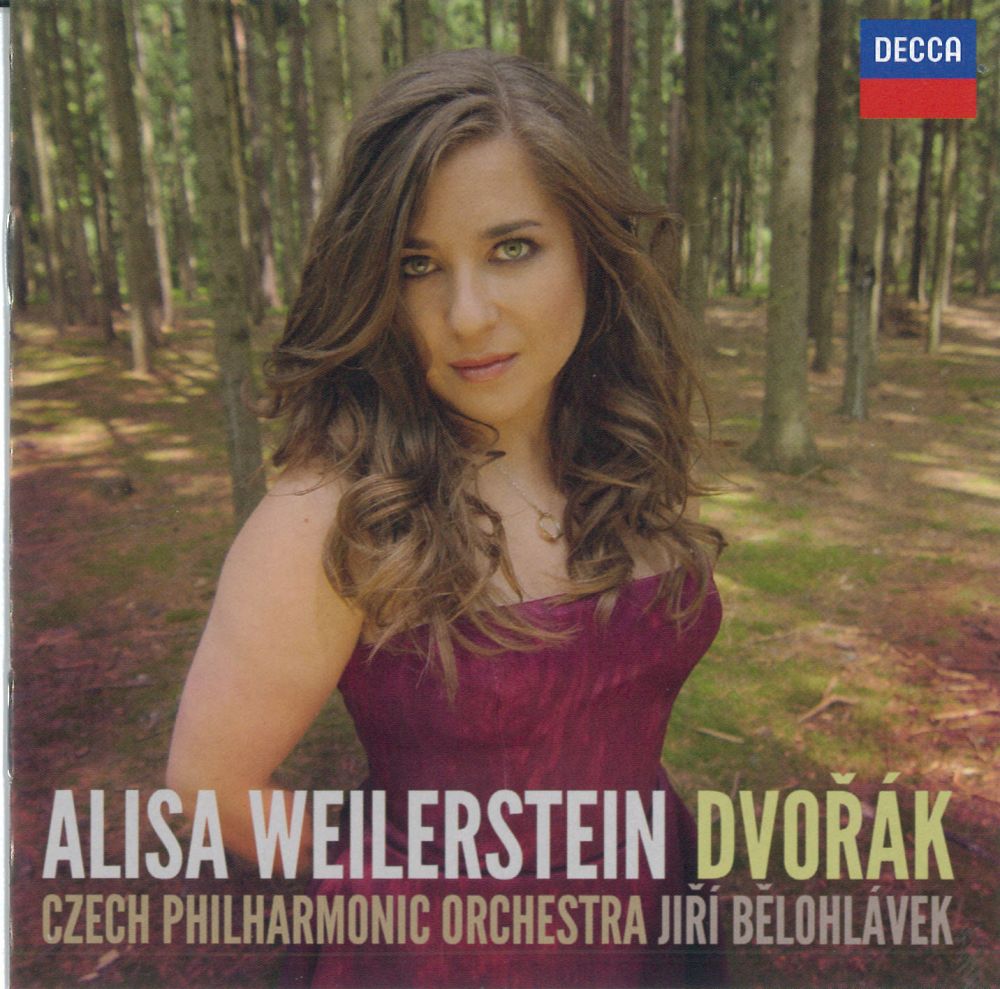
04 classical 03 weilerstein dvorakDvořák – Cello Concerto in B Minor, Op.104
Alisa Weilerstein; Czech Philharmonic Orchestra; Jirí Bělohlávek
Decca B0019765-02

When we think of great cello concertos only a handful come readily to mind, namely those from the Romantic composers; Dvořák, Elgar, Schumann, Saint-Saëns, plus Prokofiev and the two from Shostakovich. Of course, there are also these popular named works: Tchaikovsky’s Rococo Variations, Richard Strauss’s Don Quixote, Bloch’s magnificent Schelomo. For the average music lover, the Dvořák and the Elgar are most likely to come to mind.

Neither of the two wants for excellent recorded performances from past and present luminaries, but today’s artist to listen for is Alisa Weilerstein and she has recorded both (her EuroArts DVD and Decca CD recordings of the Elgar were reviewed in these pages in October 2011 and December 2012 respectively). From the moment of her entry in the first movement of the Dvořák we are aware of her flawless and stimulating technique, producing thrilling sonorities with assurance and rhythmic precision. 

Under Bělohlávek, the Czech Philharmonic has regained the sound and authority of the past, playing with palpable enthusiasm and partnering in a very exciting and satisfying performance, superbly recorded.

Just a thought: a photograph of the recording session shows Weilerstein facing into the orchestra which may account for the total involvement of everyone concerned.

Six shorter show pieces are included: Lasst mich allein, Op.82 No.1; Rondo in G Minor, Op.94; Goin’ home; Songs my mother taught me, Op.55 No.4; Silent Woods, Op.68 No.5 and an exciting Slavonic Dance in G Minor, Op.46 No.8. Even though she does not yet have a recognizable, distinctive sound of her own, Weilerstein excels with an engaging rendering of each piece, closing out this most welcome disc.


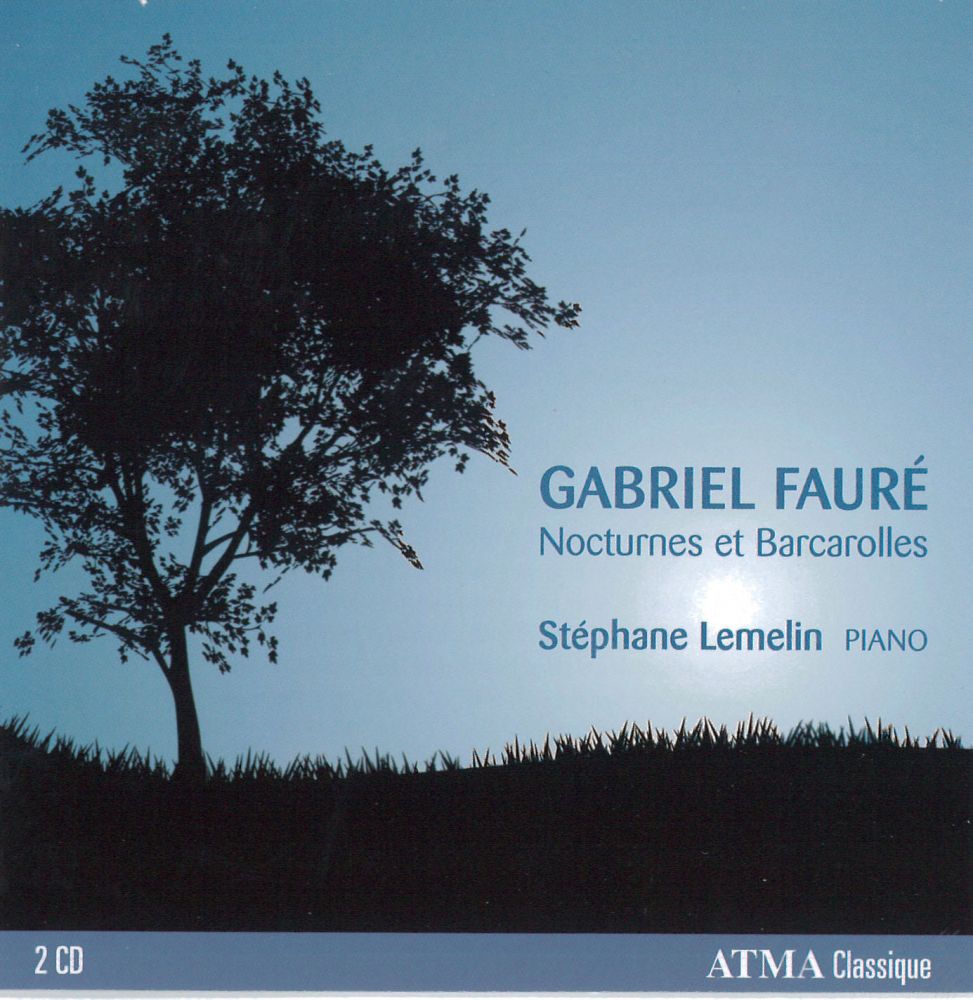
04 classical 04 faure lemelinFauré – Nocturnes and Barcarolles
Stéphane Lemelin
ATMA ACD2 2466

Stéphane Lemelin’s program interweaves Fauré’s complete nocturnes and barcarolles (13 of each) on this two-disc release, providing an ideal chronological overview of the composer’s development. Lemelin’s program notes are clear and interesting. For example, he notes that while the pieces became less nocturne- or barcarolle-like over the composer’s lifetime, the publisher retained those generic names in an effort to boost sales!

Interpretively, Lemelin follows Fauré’s abstention from rubato yet maintains expressiveness with inflections and sense of breathing, in the manner of a Fauré mélodie (art song). Technically he executes well, from the clarity and filigree work of Barcarolle No.2 to the rumbling bass, octaves and even tone clusters of Nocturne No.12. Stylistically, many listeners will find the experimental works of the years 1902-1913 most difficult to appreciate: here Lemelin is uncompromising in projecting the bleakness and obsessive quality of Nocturne No.10, or the repetitive melody and harmony (for this chromatically sophisticated composer) of Barcarolle No.9. And yet, on repeated hearing I find that these pieces too reveal many beauties.

As for Fauré’s accessible early pieces, Lemelin sets a high standard of commitment from the beginning. His playing of Nocturne No.1 is full of harmonic interest and emotional depth. Though Barcarolle No.1 is fairly conventional Lemelin elevates it, capturing the beauty of texture and occasional twists of chord direction that will become stylistic trademarks. And so it goes, onward from these works and throughout this wonderful set.


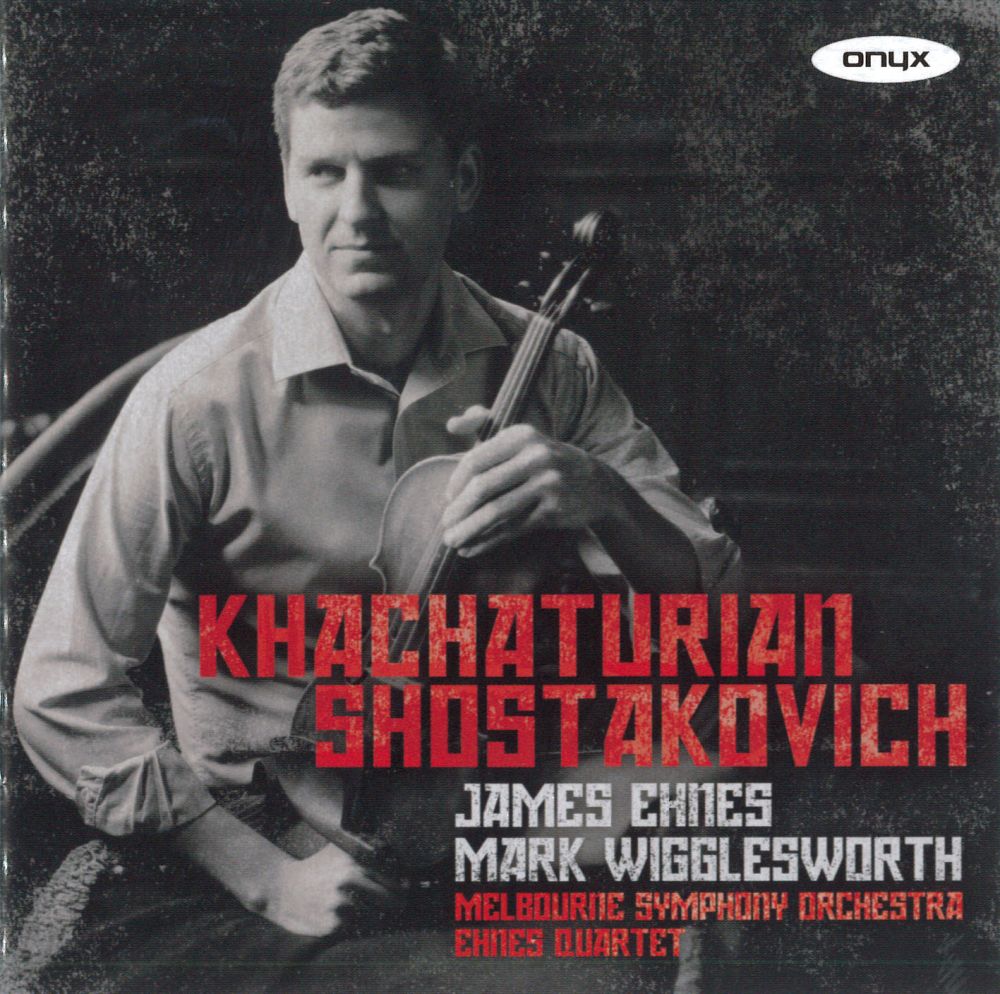
strings attached 01 ehnes khachaturianJames Ehnes is back with a program of Russian music on his latest CD, Khachaturian/Shostakovich (ONYX 4121). Ehnes is joined by the Melbourne Symphony Orchestra under Mark Wigglesworth in a solid performance of the Khachaturian Violin Concerto. The slow middle movement is particularly lovely here, and the “Allegro vivace” final movement really sparkles. Recorded in the orchestra’s Melbourne concert hall, the violin seems to be a bit far back in the balance at times, but the overall sound is full and resonant.

Shostakovich is represented by two works from his series of 15 string quartets – the Quartet No.7 in F Sharp Minor, Op.108 and the Quartet No.8 in C Minor, Op.110 – played here by the Ehnes Quartet, an ensemble formed in 2010 in which Ehnes himself is joined by violinist Amy Schwarz Moretti, violist Richard O’Neill and cellist Robert deMaine. The quartets, both written in 1960, are highly personal in nature, with the Op.110 in particular being essentially autobiographical. Dedicated “To the Victims of Fascism and War,” it quotes from six of Shostakovich’s earlier works and is dominated by his signature monogram D-S-C-H, the German designation for the notes D, E flat, C and B natural. It is a work that consistently reduced Shostakovich to tears, both in its composition and in performance. The playing here is dynamic and thoughtful, although perhaps a bit too polished at times; the aching, yearning sense of melancholy, desolation and despair so essential to the Op.110 in particular doesn’t always come through.
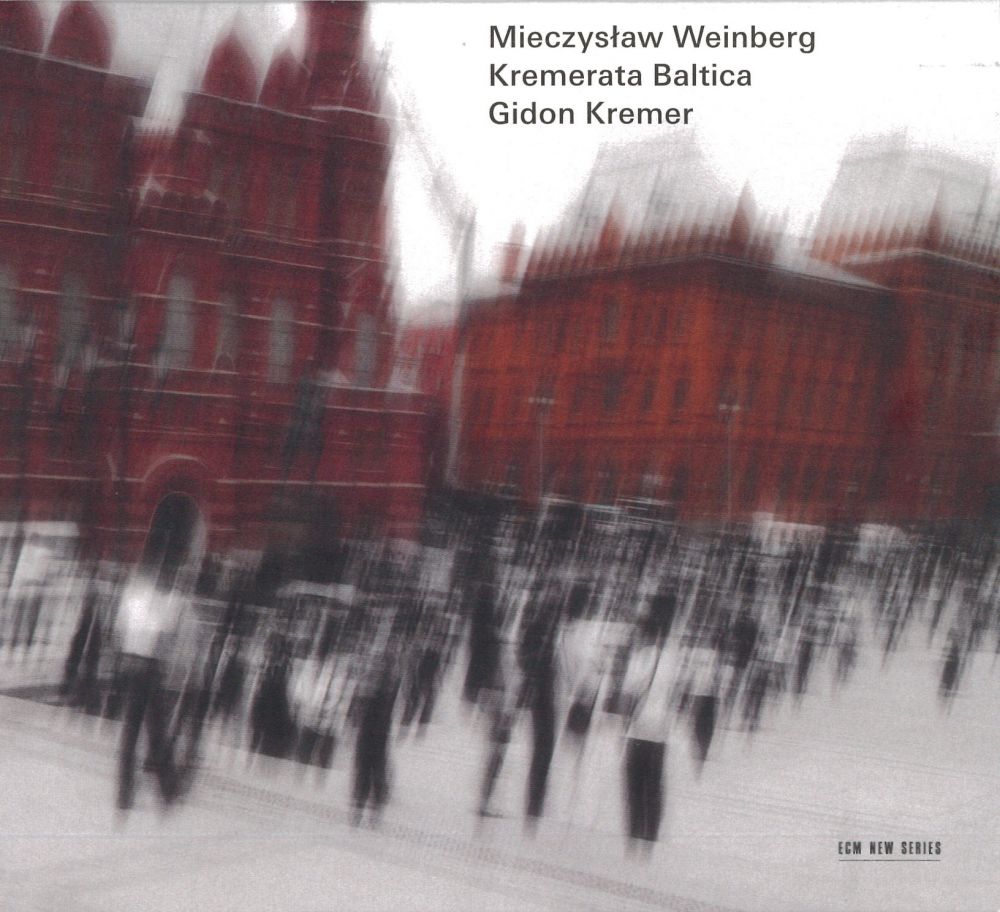
strings attached 02 weinbergShostakovich’s influence is clearly audible in an outstanding 2-CD set of the music of Mieczysław Weinberg (1919-1996), the Polish/Soviet composer who, with Shostakovich’s help, settled in Moscow in the early 1940s. The two composers shared a close friendship and clearly influenced each other. For many years Weinberg’s music has been unjustly neglected, but that has gradually been changing, with an ever-increasing number of CDs exploring his extensive and hugely impressive output. This latest issue on the German ECM Records label (ECM 2368/69) featuring Gidon Kremer and the Kremerata Baltica makes a massive contribution to the growing appreciation of Weinberg’s music.

Three of the works – the Concertino Op.42 for Violin and String Orchestra, the Sonatina Op.46 for Violin and Piano and the String Trio Op.48 – are from the period 1948-50, when toeing the Party line was more than just a sensible idea; Reading between the musical lines, the excellent booklet essay on Weinberg, refers to his being “under suspicion and shadowed day and night for five years from 1948 to 1953.” Like so much Soviet music of the time, these works are immediately accessible, but always with the sense of added meaning lurking beneath the surface.

The two other works – the monumental and towering Sonata No.3 Op.126 for Solo Violin from 1978, which Kremer rightly puts on the same level as the Bartók sonata, and the Symphony No.10 Op.98 for String Orchestra from 1968 – are from a period when the mature composer clearly enjoyed a greater sense of freedom, both politically and musically.

It’s a quite stunning set, with the performers outstanding in all respects. Kremer is as good as I’ve ever heard him, and this is clearly music very close to his heart.
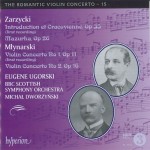
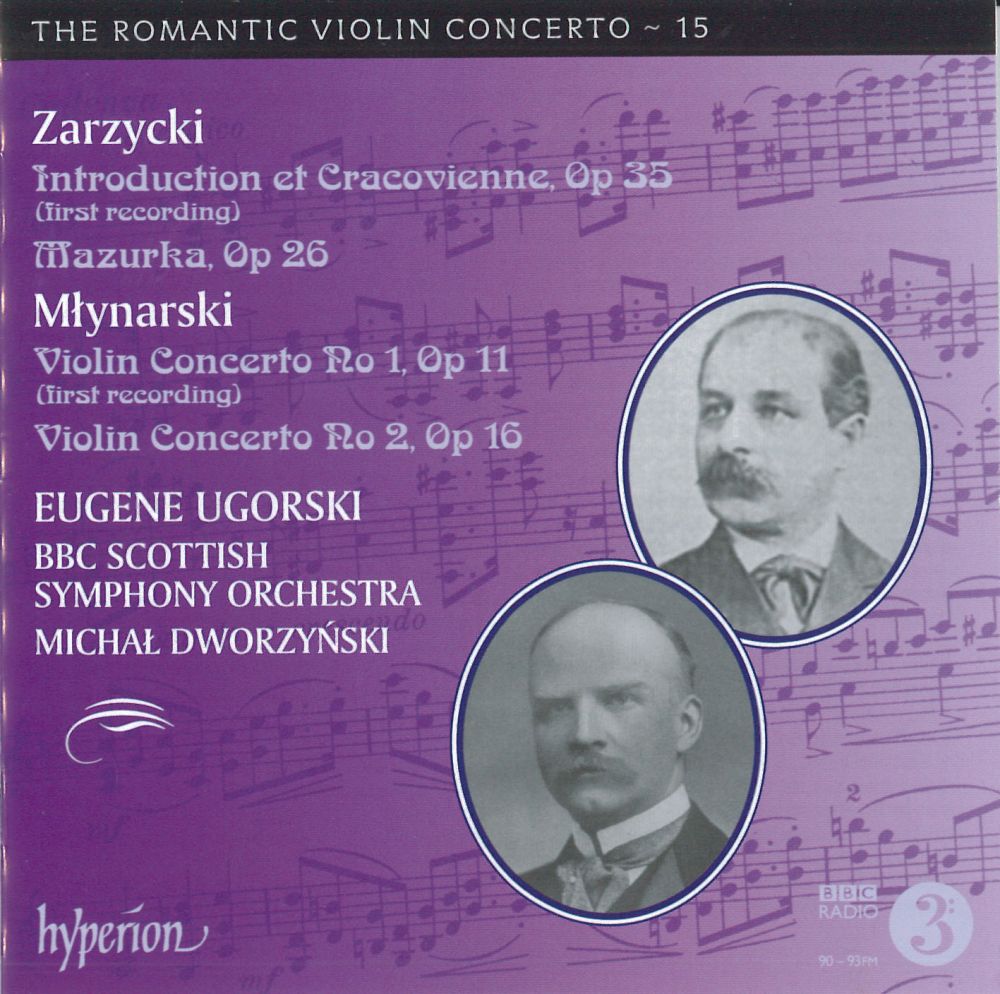
strings attached 03 romantic violin 15Hyperion’s The Romantic Violin Concerto Volume 15 features the music of Polish composers Emil Młynarski (1870-1935) and Aleksander Zarzycki (1834-1895) (CDA67790). Młynarski enjoyed a hugely successful international career as a violinist, conductor and composer, and is represented here by his two violin concertos, No.1 in D Minor Op.11 from 1897 and No.2 in D Major Op.16 from 1916. The style is typically late Romantic, with echoes of Wieniawski and Dvořák. The first concerto virtually disappeared after its initial success, and apparently remained unplayed until 2011. The second concerto is clearly a more confident and individual work that has stayed in the repertoire.

Zarzycki was primarily a virtuoso pianist before concentrating on composition and teaching. His Introduction et Cracovienne in D Major Op.35 and Mazurka in G Major Op.26 are both delightful virtuosic pieces. Violinist Eugene Ugorski is terrific, with a big tone and a large and constant vibrato which is perfectly suited to the style of these works. The BBC Scottish Symphony Orchestra under Michał Dworzyński provides excellent support.
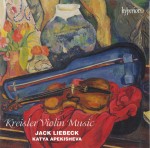
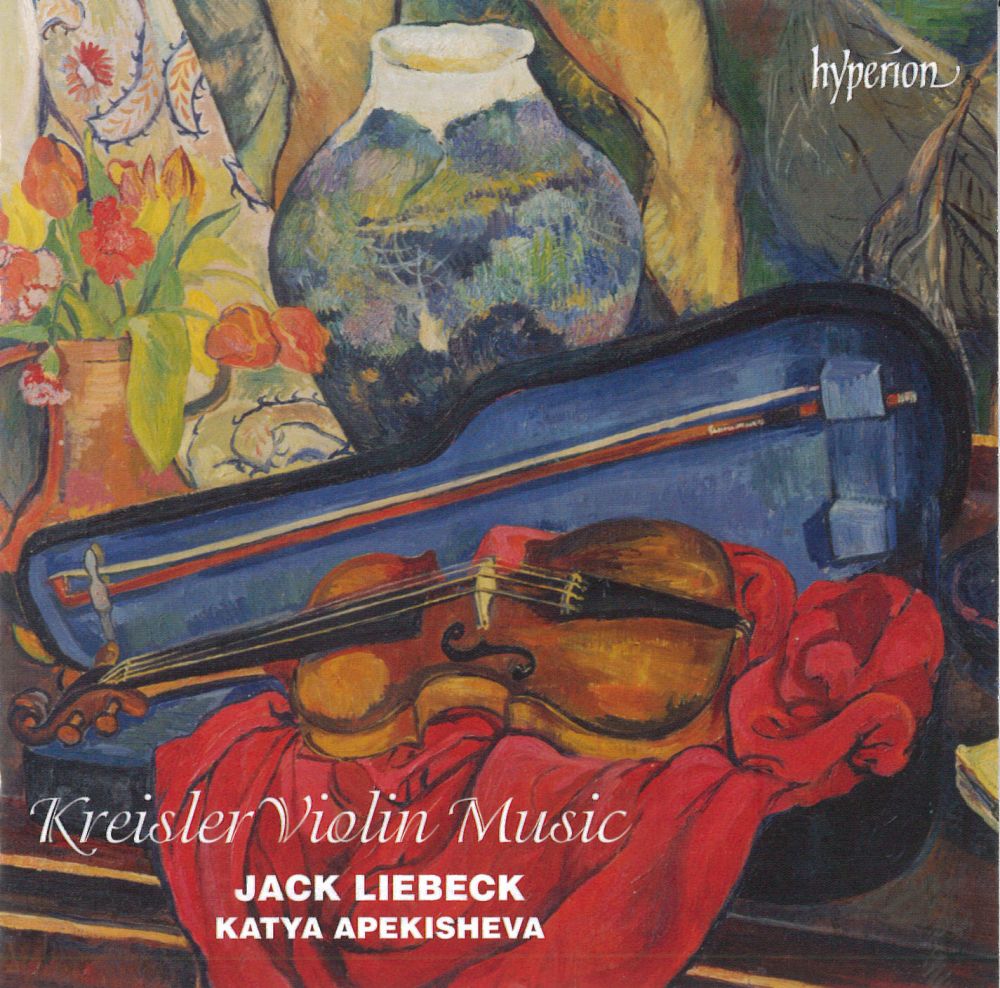
strings attached 04 kreisler musicBritish violinist Jack Liebeck is superb on another outstanding Hyperion disc, this time a recital of Kreisler Violin Music, accompanied by pianist Katya Apekisheva (CDA68040). The Viennese violinist Fritz Kreisler was one of the most outstanding and instantly recognizable players in the first half of the 20th century. As the excellent booklet notes by the ubiquitous Tully Potter point out, Kreisler`s continuous use of vibrato was considered to be a revolutionary new style of playing; he was also renowned for his pure, sweet tone and his immaculately clean and accurate double-stopping.

Although there is now ample opportunity for us to hear Kreisler himself in recorded performance – there are well over a dozen Kreisler CDs in the Naxos Historical series alone – he is still mostly remembered for his compositions, transcriptions and arrangements. Some of the compositions, of course, were the subject of a mini-scandal in the mid-1930s when Kreisler, who had passed them off as being by various Baroque and Classical composers, even claiming to own the original manuscripts, finally admitted that they were his own compositions. They are now usually listed as “in the style of…” The most well-known (and arguably the best) of these, the Pugnani Praeludium and Allegro, opens this recital in fine style. Other “in the style of…” compositions are the Boccherini Allegretto and the Cartier La Chasse, the latter full of the dazzling double-stops that Kreisler could handle so comfortably. As can Liebeck, quite clearly.

The four most popular Kreisler compositions – Schön Rosmarin, Tambourin chinois, Liebeslied and Liebesfreud – are here, the latter two, incidentally, having been originally passed off as being by the Austrian waltz composer Joseph Lanner. The lesser-known Syncopation, Toy Soldiers’ March, Caprice viennois, Polichinelle and Marche miniature viennoise are also included, along with the fascinating Recitativo and Scherzo for solo violin. Four Kreisler arrangements fill out the program: Gluck’s Mélodie from Orfeo; De Falla’s Danse espagnole from La vida breve; Dvořák’s Slavonic Dance in E minor; and Tartini’s G minor Sonata The Devil’s Trill, where Liebeck’s superb multiple-stopped trills bring an outstanding CD to a jaw-dropping conclusion.

There is a good deal of competition in recordings of this repertoire, but Liebeck and Apekisheva provide as lovely playing of these beautifully crafted works as you could wish to hear.


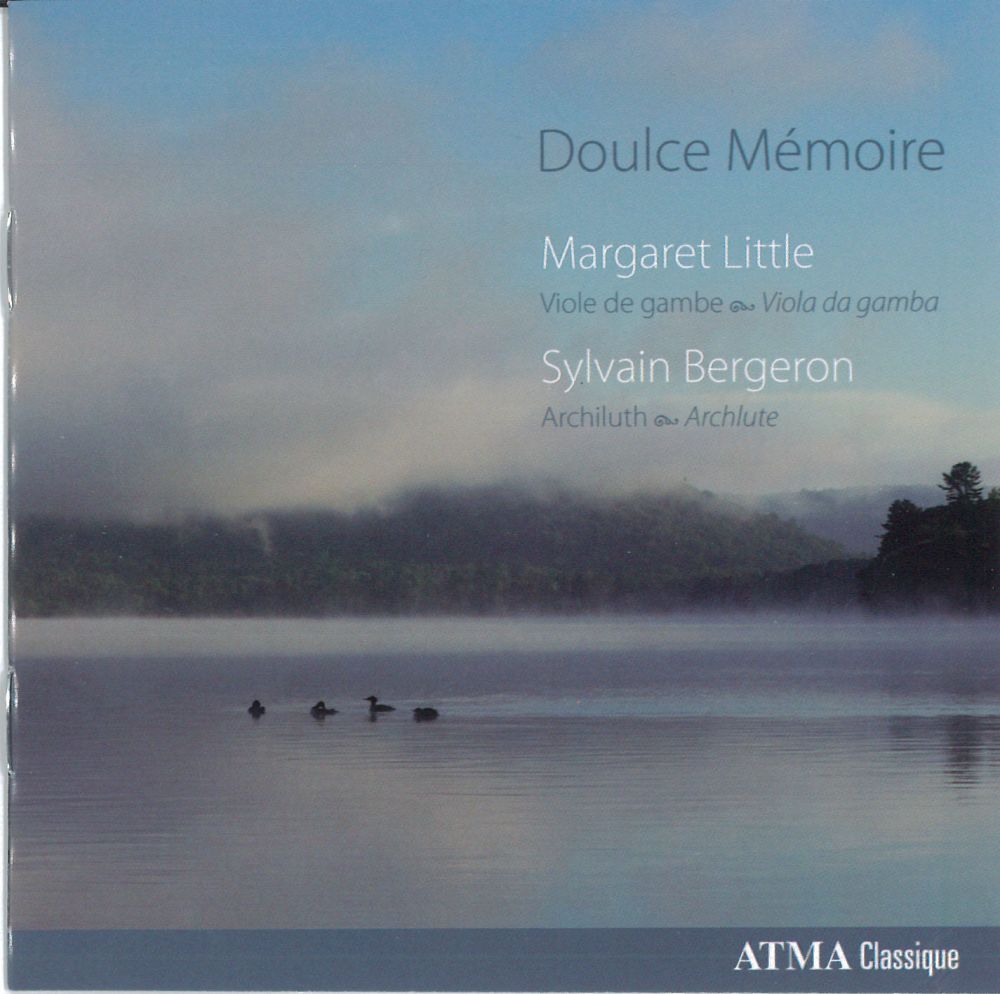
03 early 01 doulce memoireDoulce Mémoire
Margaret Little; Sylvain Bergeron
ATMA ACD2 2685

This CD explores the variation technique known as “diminutions,” a concept more commonly known as “divisions.” It is explained in the accompanying booklet: “Diminutions were made by dividing long notes of the melody into a series of shorter notes either surrounding the melody note or filling up the interval between it and the next melody note.” Many of these were based on madrigals, most famously Cipriano de Rore’s Ancor che col partire. Here the artists have chosen one set of variations, that by Ricardo Rogniono. The title of the CD refers to a different madrigal, Doulce Mémoire, by Pierre Sandrin. Here three sets of variations are played: by François de Layolle, Diego Ortiz and Vincenzo Bonizzi.

Although there are only two players, the recital gives us many different textures: of the 17 tracks, seven are for treble viol and archlute, six for bass viol and archlute, two for solo treble viol and two for solo archlute. The material is largely based on variations on 16th century madrigals, but it is complemented by selections from John Playford’s 1684 collection The Division Viol with its variations on popular English songs. No selection of variations would be even half complete without that most popular of songs, La Folia. Fittingly the CD ends with an anonymous set of variations based on that song.

Throughout the CD viol player Margaret Little and lutenist Sylvain Bergeron, are superb. I am always careful not to use superlatives too easily but these performances are truly out of this world.


Back to top