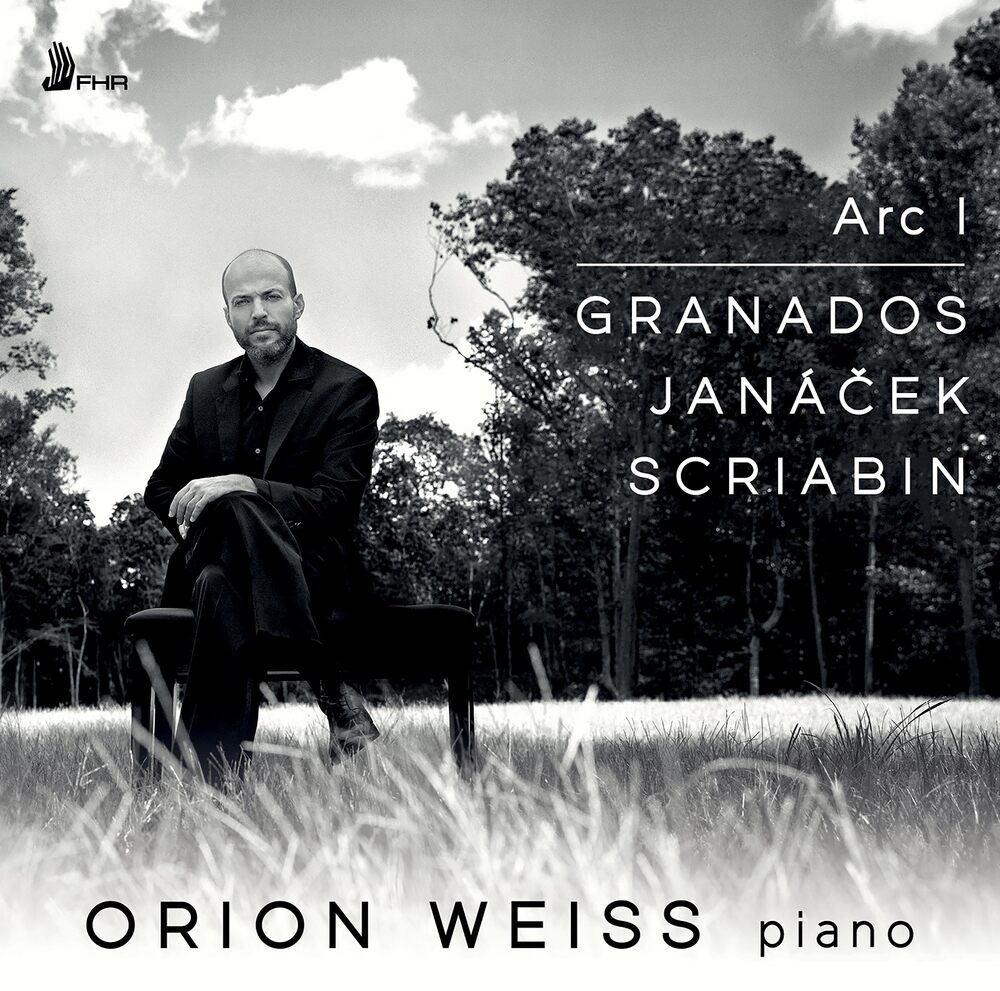
06 Orion Weiss Arc IARC I: Granados; Janáček; Scriabin
Orion Weiss
First Hand Records FHR127 (firsthandrecords.com)

American pianist Orion Weiss delivers a powerful musical statement with his new album, ARC I: Granados, Janáček, Scriabin. Please note that I am using the term album, rather than recording. This is purposeful. Without generalizing, or hopefully sounding overly pedantic, much of what exists in both classical (and jazz) discographies are recordings; a sound capture of what, essentially, is a live musical event documented in such a way as to preserve and remember a concertizing moment in time. An album, conversely, has, at the very least, an extra musical purpose to it, cognizant of track order, narrative arc and overall presentation. 

What Weiss has created, by connecting music written by Enrique Granados, Leoš Janáček and Alexander Scriabin (historically congruent, but stylistically and nationalistically disparate composers), through their zeitgeist-appropriate shared aesthetic of writing bleak, self-referential and globally aware music shortly before the world plunged into a devastating and worldwide war, is creative, programmatic and most definitely, album worthy.

As the first of three recordings in a projected ARC trilogy, Weiss here finds the commonalities of modernism, despair and haunting beauty that unites Granados’ Goyescas, Janáček’s In the Mists and Scriabin’s Piano Sonata No.9 “Black Mass,” mining historically prescient meaning from these pieces, as our world watches what seems likely to be an impending Russian invasion of Ukraine. Weiss’ album is beautifully played, captured with sonic elegance and presents an eerie programmatic message in musical form of what creatively was in the air between 1911 and 1913. The world should listen. Not only for the beauty of this recording, but for the message therein.

07 Bruckner 2Bruckner – Symphony No.2 in C Minor
Wiener Philharmoniker; Christian Thielemann
Sony Classical G010004595494F (naxosdirect.com/search/19439914122)

Bruckner is not everybody’s cup of tea. Some worship him and some outright despise him. And he is so easy to ridicule. He was a country bumpkin, a peasant. The funny story goes that he even gave a thaler to Hans Richter, his conductor, as a reward to buy himself a beer. His reputation was also hampered by the British critics calling his symphonies “boa constrictors” and so he had difficulties gaining acceptance in England or North America. Today however, his reputation has never been higher. His symphonies are a step-by-step progression towards an ultimate goal and the last three are works of a genius.

Due to the COVID pandemic all concert activities were stopped so Christian Thielemann, onetime assistant to Karajan, famous as general music director of the Bayreuth Festival and principal conductor of the Dresden Staatskapelle, decided to record all nine of Bruckner’s symphonies in a leisurely manner with plenty of time now being available. The Vienna Philharmonic was the obvious choice, since it was they who had premiered those works, and in the Musikvereinssaal with its legendary acoustics. This recording is part of that series.

After the turbulent, sturm und drang First Symphony, the Second is entirely different. It is notable as the first time Bruckner opens with a tremolo on the high strings pianissimo, which has been described as a “primeval mist” that Thielemann renders nearly inaudibly. From this tremolo a sinuous cello theme emerges which returns in many guises throughout as a leitmotiv. Another new idea is the so-called “Bruckner rhythm” of two beats followed by three that appears here for the first time. 

Thielemann takes a relaxed approach, a slower tempo than some, so all the details come out beautifully and the climaxes are shattering.

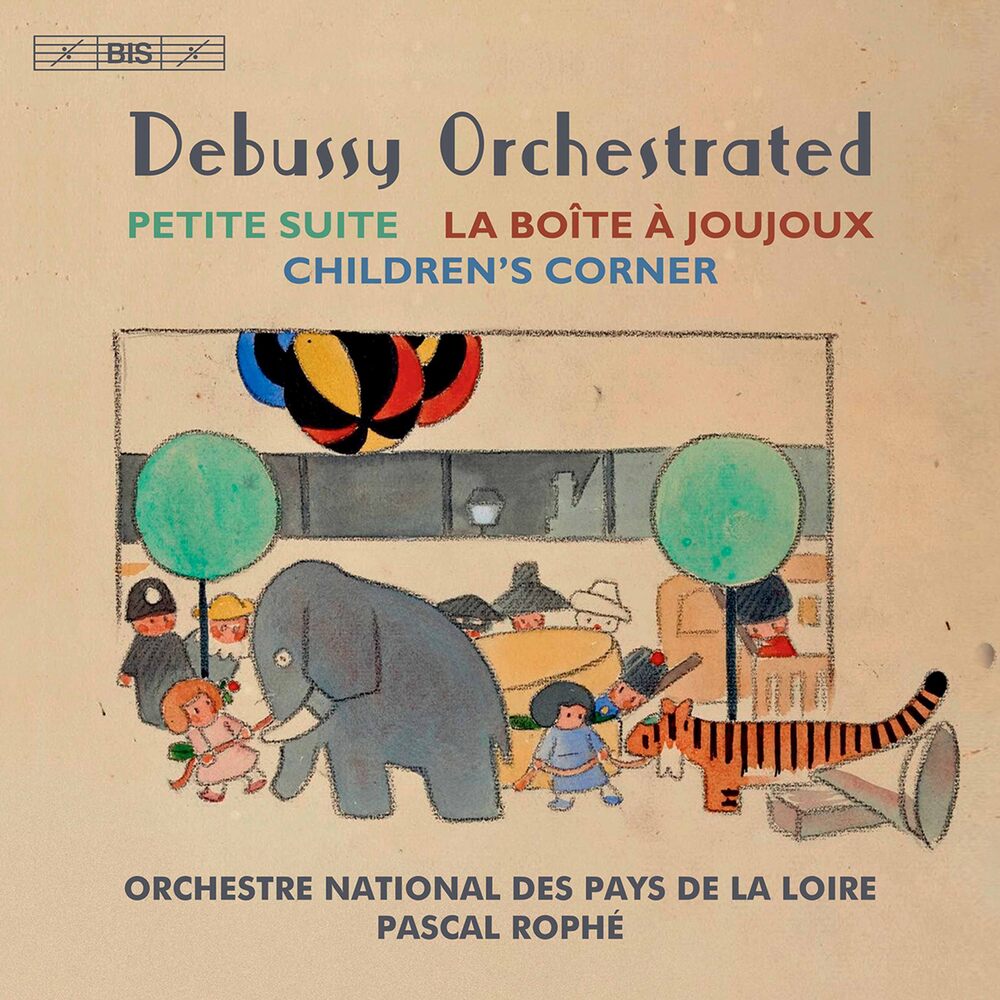
08 Debussy OrchestratedDebussy Orchestrated
Pascal Rophé; Orchestre National des Pays de la Loire
BIS BIS-2622 (naxosdirect.com/search/bis-2622)

Who better than a French orchestra – in this case, the Orchestre National des Pays de la Loire conducted by Pascal Rophé – to pay homage to the music of Claude Debussy in this delightful recording on the BIS label? Two of the works here – the Petite Suite and the Children’s Corner Suite  were originally composed for piano and later orchestrated by Henri Büsser while the ballet scenario La Boîte à joujoux  (The Toy- Box) existed only in a piano version at the time of Debussy’s death in 1918, but was later orchestrated by his friend André Caplet. 

The four-movement Petite Suite from 1899 was inspired by the “fêtes galantes” paintings of Watteau and Fragonard as portrayed in poems by Paul Verlaine. The suite may have originated from a request for music that would appeal to skilled amateurs, and its simplistic and affable style stands in contrast to the more progressive music Debussy was creating at the time. 

Debussy adored his young daughter “Chou-Chou” and she was undoubtedly the inspiration for the ballet-scenario La Boîte à joujoux devised by writer André Hellé. The plot in this highly descriptive six-movement score revolves around three principle characters, and in the end, love triumphs over adversity. It was for Chou-Chou that Debussy composed the Children’s Corner Suite in 1908. More than 100 years later, the music continues to charm, with movements such as Serenade for the Doll, Jimbo’s Lullaby and The Snow is Dancing, a poignant and wistful glimpse of childhood in a more innocent age. Throughout, the ONPL delivers a polished and elegant performance, at all times thoughtfully nuanced. This is a fine recording of some familiar (and less-than-familiar) repertoire. Debussy – and quite probably Chou-Chou as well – would have heartily approved!

09 Popov SchulhoffPopov – Schulhoff
Quartet Berlin-Tokyo
QBT Collection QBT 001 (quartetberlintokyo.com)

Prokofiev, Shostakovich, Khachaturian – in 1948, the USSR’s three leading composers were denounced as “formalists” by the Communist Party’s Central Committee, removed from official positions, many of their works banned. Now almost forgotten is that along with unspecified “others,” three less-celebrated composers were also named in the condemnation – Nikolai Myaskovsky, Vissarion Shebalin and Gavriil Popov. In the following years, the fearful composers tended to employ the folk-flavoured, patriotic or “optimistic” styles demanded by the authorities.

Popov’s whopping, 57-minute String Quartet in C Minor, Op.61, subtitled “Quartet-Symphony,” premiered in 1951 and here receives its first recording. There’s no evident folk music but, following the Party line, it’s unremittingly cheerful. In the first movement, lasting nearly 25 minutes, muscular buoyancy frames extended sweet violin melodies bordering on sentimentality. The six-minute scherzo, propelled by cello pizzicati, dances lightheartedly. A dreamy violin solo over slow pulsations begins the 15-minute Adagio cantabile colla dolcezza poetico. As the other instruments join in, the music becomes more animated and festive, then subsides with an eloquent cello melody. The 11-minute Allegro giocoso opens with graceful pizzicati before repetitions of the five notes of “bin-de-en wie-der” from the Ode to Joy slowly build to the quartet’s own joyful conclusion.

Included on this CD is Erwin Schulhoff’s tuneful, heavily rhythmic, 14-minute Five Pieces for String Quartet (1923). Each of these playful, satiric miniatures would make a superb concert encore piece. Superb, too, is the playing of the multi-award-winning Quartet Berlin-Tokyo. Bravi!

Listen to 'Popov: Schulhoff' Now in the Listening Room

10 Uncovered Florence B PriceUncovered Volume 2 – Florence B. Price
Catalyst Quartet
Azica (catalystquartet.com/uncovered)

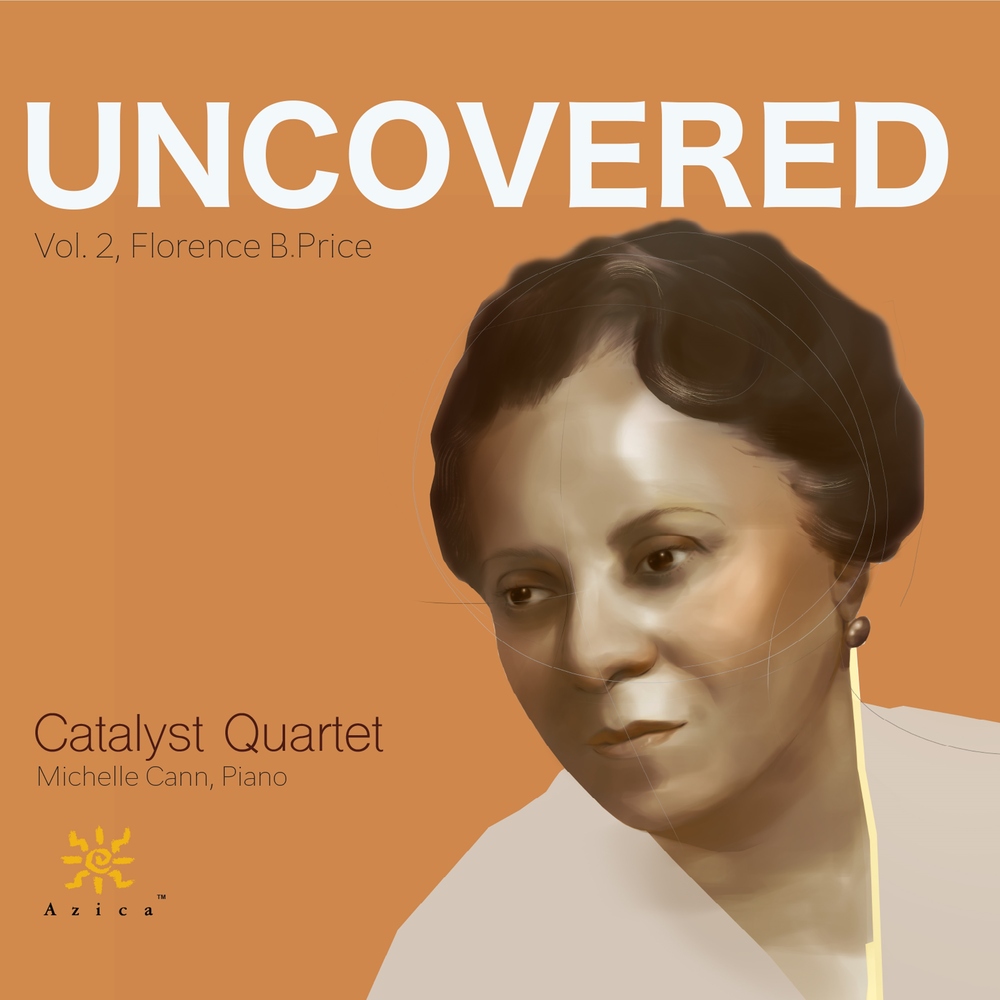
It is a proverbial travesty that we are “discovering” the work of an important Black composer – such as Florence B. Price – almost a hundred years after her career began. And that too, even as the music continuum has now been propelled into the 21st century. After all, it’s no secret that over three hundred years ago the it was a celebrated Black English violinist, George Bridgetower who, in 1803, performed Beethoven’s Violin Sonata No.9 in A Minor (Op.47) much to the composer’s delight. 

Happily, Azica Records has taken action again with the Grammy Award-winning Catalyst Quartet’s Uncovered Vol.2, featuring Price’s stellar chamber works. 

A measure of how remarkable a recording this is is heard not only on Price’s re-invention of Negro Spirituals – such as Go Down Moses – in her elegant chamber works, Negro Folksongs in Counterpoint and Negro Folksongs for String Quartet. Even more remarkable is that five of these works are world premieres on this album that includes the Quartets and Quintets for Piano and Strings, which carry the heft of this recording

The Catalyst penetrates the skins of these melodies and harmonies with deep passion and uncommon eloquence. The nobility of this music is quite beyond reproach. Each piece seems to speak to the musicians like a secret revealed from the heart. The Negro Folksongs in Counterpoint are bittersweet and often even exhilarating. This is a delicate, perfectly weighted performance by the Catalyst; a recording to die for.

11 David Jalbert ProkofievProkofiev – Piano Sonatas Vol.1
David Jalbert
ATMA ACD2 2461 (atmaclassique.com/en)

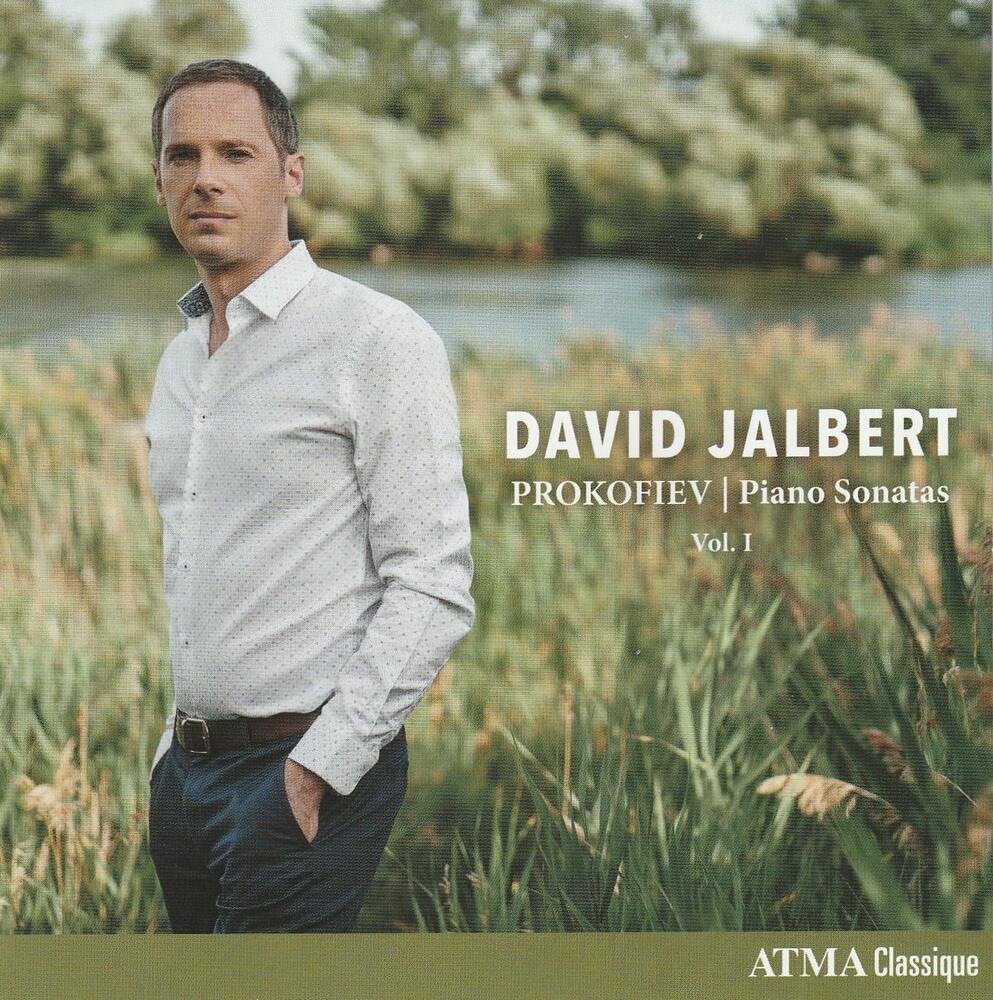
Sergei Prokofiev began his career as a concert pianist, so perhaps it’s not surprising that music for piano would comprise such an important part of his output. Undoubtedly his finest keyboard writing is to be found in the nine piano sonatas composed between 1907 and 1953, four of which are presented on this ATMA recording with pianist David Jalbert.  A graduate of the Conservatoire de musique du Québec, the Glenn Gould School and the Juilliard School, Jalbert is currently head of the piano department at the University of Ottawa.

The brief Sonata Op.1 in F Minor from 1907 went through numerous revisions and is very much steeped in the late-Romantic tradition. From the outset, Jalbert demonstrates keen understanding of this daunting repertoire tempered by a flawless technique.

While the first sonata has roots in the 19th century, the second from 1914 is clearly a product of the 20th, with its biting dissonance and angular melodies. Very much the music of a young composer finding his own voice, the work embodies a spirit of buoyant enthusiasm. The single-movement Sonata No.3 completed in 1917 contains a variety of contrasting moods all within a seven-minute timeframe.

Jalbert admits his partiality towards the Fourth Sonata, Op.29, also finished in 1917. Again, the work is a study in contrasts, from the restrained and darkly introspective first movement to the exuberant finale, which Jalbert performs with great panache.

An added bonus is the inclusion of four miniatures, the Marche, the Gavotte and the Prelude from the set Op.12 and the Suggestion diabolique from Op.4, which further enhance an already satisfying program. This is a stellar performance of engaging repertoire and we look forward to future additions in this series.

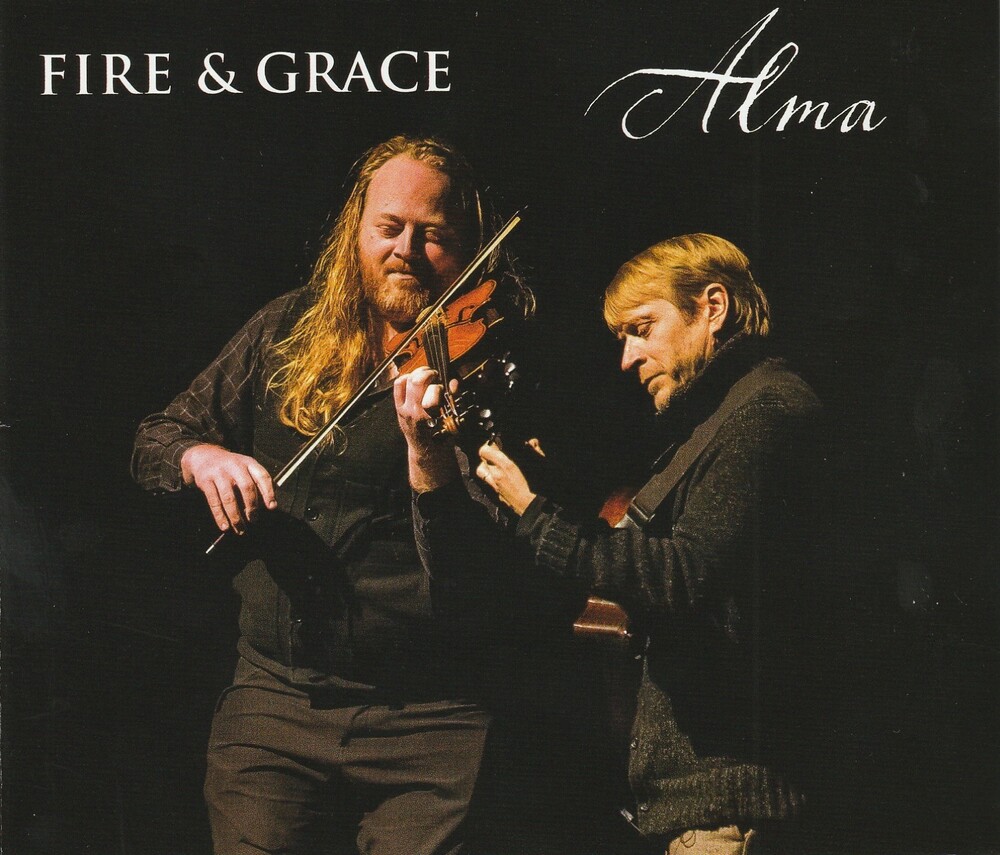
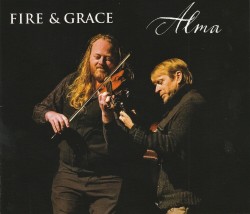
01 Fire and GraceAlma is the third album of original arrangements by Fire & Grace, the duo of violinist Edwin Huizinga and guitarist William Coulter (Roaring Girl Records fireandgracemusic.com). Coulter’s plectrum guitar is an acoustic steel-string Custom Meridian made by Mike Baranik.

Piazzolla’s Libertango, Albéniz’ Asturias (with violin shredding!) and Vivaldi’s L’Estate – Summer open a fascinating CD, at the heart of which is Suite Español, a continuation of the duo’s project of arranging the solo music of Bach (in this case the Cello Suite No.1) and blending it with folk music, the six Bach movements in this case interspersed with melodies from Spain.

An arrangement of Tanya’s Tune, composed by the former Väsen guitarist Roger Tallroth, completes a hugely entertaining disc.
Listen to 'Alma' Now in the Listening Room

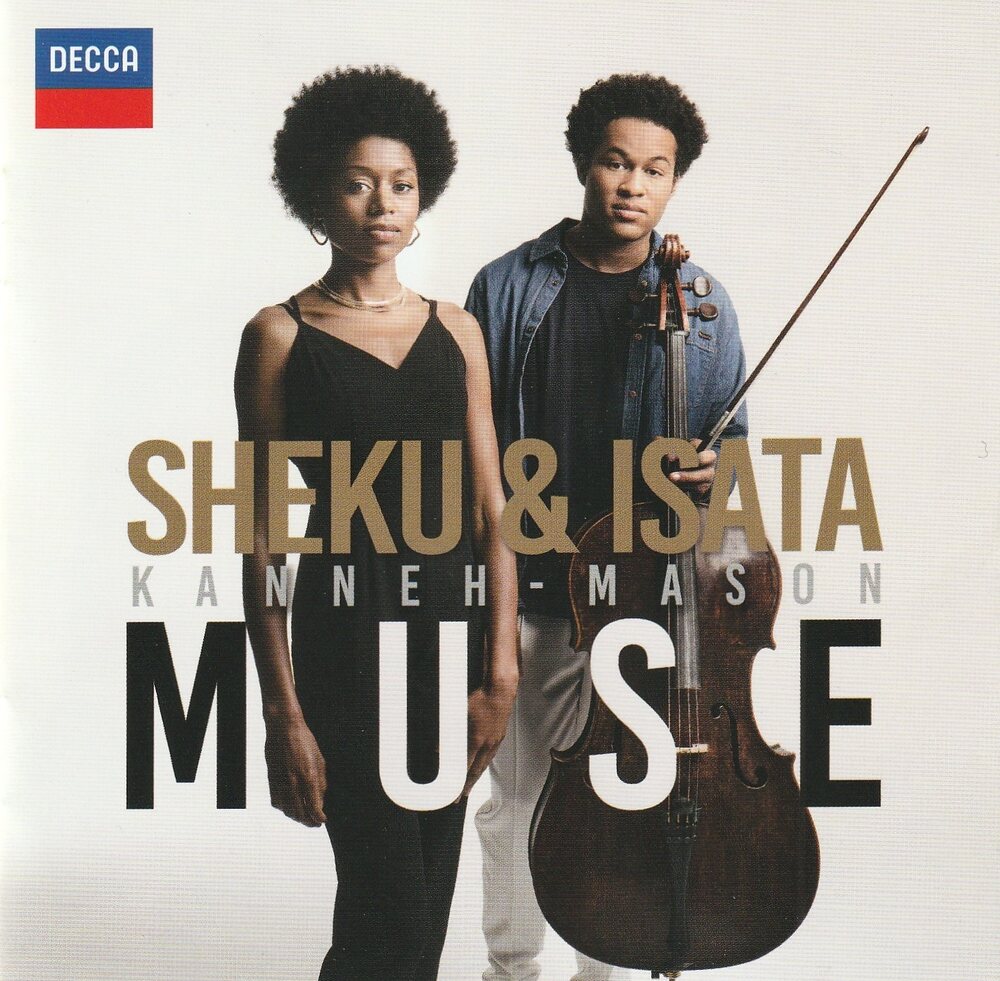
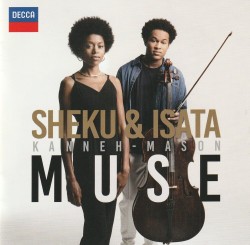
02 Sheku IsataFor Muse, their first album together, the young brother and sister duo of Sheku and Isata Kanneh-Mason chose two works that they love playing in concert (Decca Classics 4851630 deccaclassics.com/en).

Barber’s Cello Sonata in C Minor Op.6, written when he was 22 and a student at the Curtis Institute in Philadelphia, opens the disc, while Rachmaninoff’s Cello Sonata in G Minor Op.19 from 1901 closes it. The duo notes that the two works are from completely different worlds, but “somehow they work together in terms of their emotional intensity.” Certainly there’s no lack of emotional intensity in these outstanding performances.

Songs by the two composers effectively tie the sonatas together on a terrific disc. The three Rachmaninoff songs – It Cannot Be!, How Fair This Spot and The Muse – were already among the duo’s favourites while the four Barber songs – There’s Nae Lark, A Slumber Song of the Madonna, With Rue My Heart Is Laden and Sure on This Shining Night – were new to them.
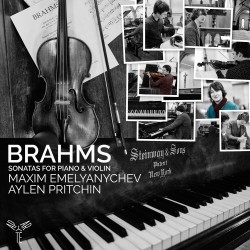
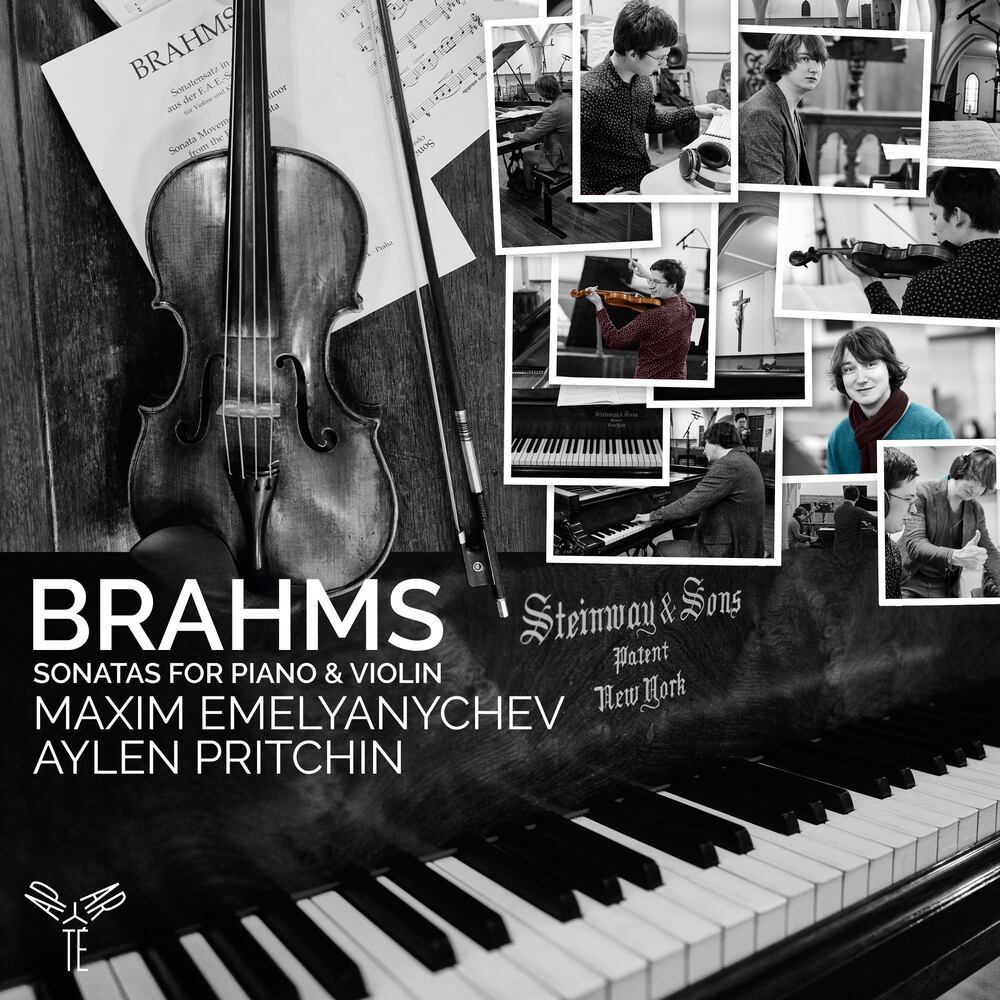
03 Brahms SonatasTwo outstanding representatives of the younger generation of Russian musicians, pianist Maxim Emelyanychev and violinist Aylen Pritchin, are featured on Brahms Sonatas for Piano & Violin on period instruments (Aparté AP237 apartemusic.com).

The instruments in question are an 1875 Steinway piano and a 1725 Jacques Boquay violin, but there’s plenty of powerful, full-bodied piano playing to accompany Pritchin’s beautifully bright and sensitive touch.

The Scherzo from the 1853 F-A-E Sonata, Brahms’ contribution to the three-movement work written with Schumann and Dietrich as a gift for Joseph Joachim, opens the disc. Fine performances of the three sonatas from the period 1878-88 – No.1 in G Major Op.78, No.2 in A Major Op.100 and No.3 in D Minor Op.108 – complete a lovely CD.

The booklet essay notes the references to Brahms’ own songs in the sonatas, particularly the first two, and there’s certainly a delightfully lyrical approach to the beautiful performances here.
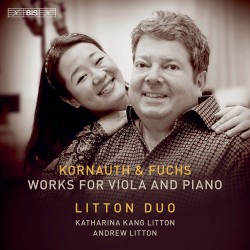
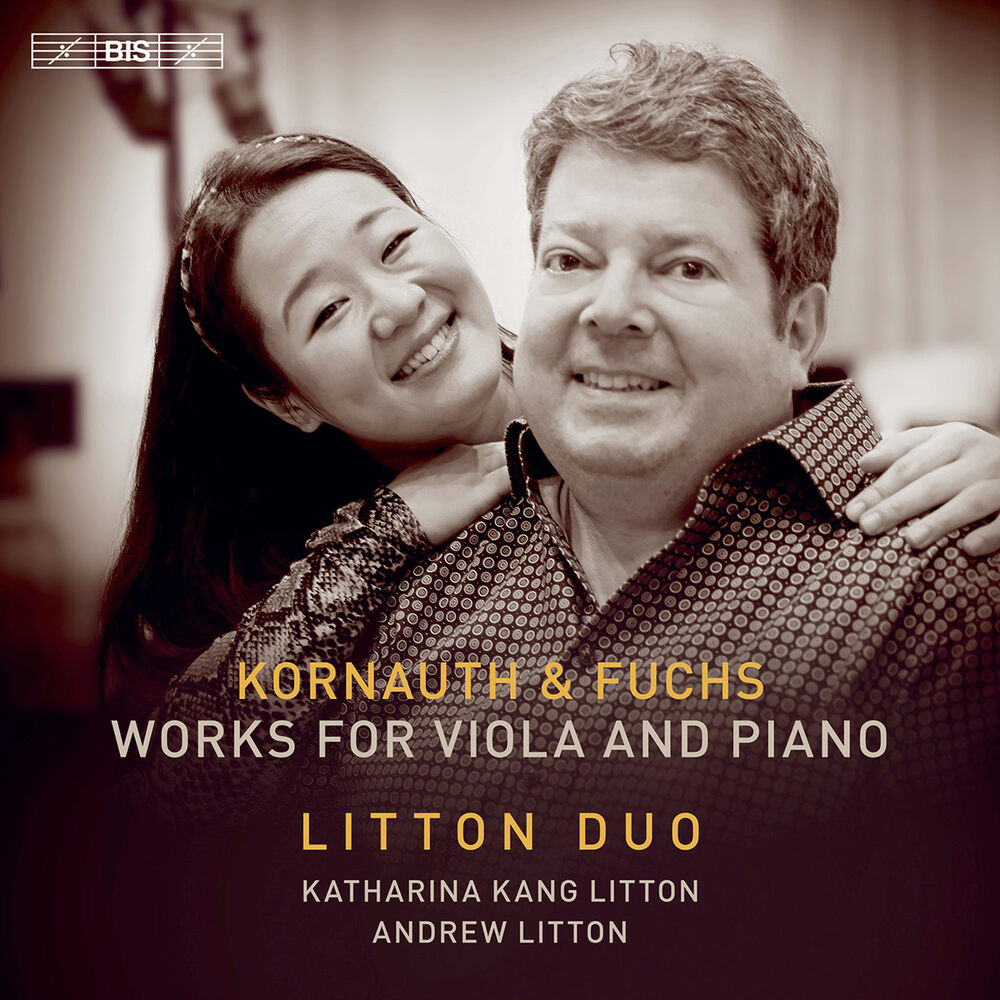
04 Kornauth FuchsKornauth & Fuchs Works for Viola and Piano is another CD product of the Covid lockdown, this time featuring the Litton Duo of Katharina Kang Litton, principal violist of the New York City Ballet and her pianist husband, conductor Andrew Litton (BIS-2574 bis.se).

Through playing the Brahms sonatas together the two discovered the viola and piano music of Brahmns’ contemporary Robert Fuchs (1847-1927), whom Brahms greatly admired, and Fuchs’ student Egon Kornauth (1891-1959). Fuchs’ other students included Mahler, Wolf, Sibelius, Zemlinsky, Korngold, Enescu and Franz Schmidt.

Kornauth is represented by his Viola Sonata in C-sharp Minor Op.3 from 1912, and Fuchs by his Viola Sonata in D Minor Op.86 from 1909 and Six Fantasy Pieces Op.117 from 1926-27.

While not exactly “of their time” from a progressive viewpoint they are nonetheless beautifully crafted and extremely attractive works that require passion, warmth, feeling, effortless technique and perfect ensemble, all here in abundance on a lovely CD.
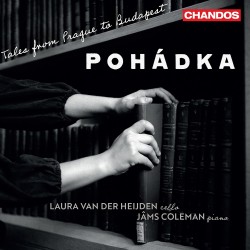
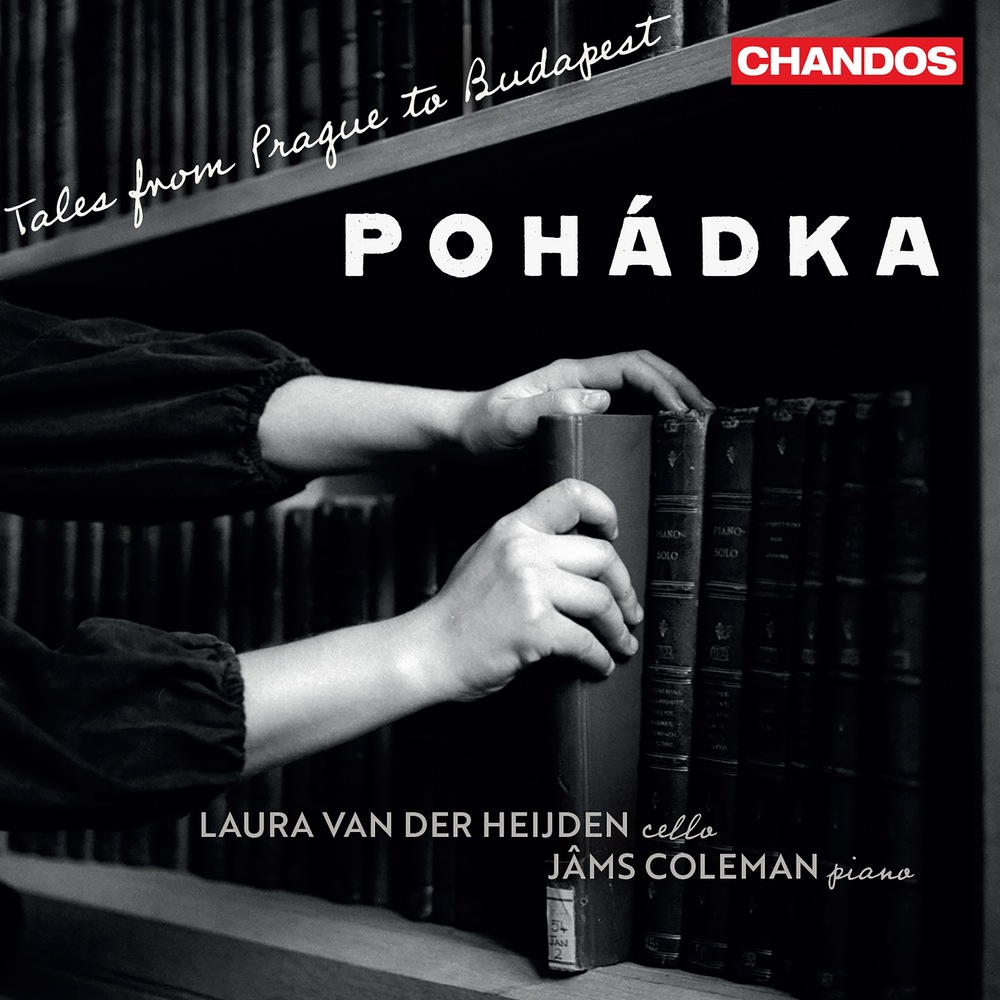
05 PohadkaCellist Laura van der Heijden and pianist Jâms Coleman make their Chandos label debut with Pohádka: Tales from Prague to Budapest, an album that explores the rich folk melodies of Janáček, Kodály and Dvořák (CHAN 20227 chandos.net).

Janáček’s Pohádka (Fairy Tale) is typical of the composer’s late and highly individual voice. Kodály’s Cello Sonata Op.4 from 1909-10 is here, as are two short songs transcribed by van der Heijden and the Sonatina, also from 1909 and originally intended as part of the Op.4 sonata. The Dvořák is the short song Als die alte Mutter Op.55 No.4 from 1880.

There are two works by lesser-known composers: Mouvement, written for Kodály’s 80th birthday in 1963 by András Mihály (1917-1993); and van der Heijden’s transcription of the brief 1936-37 song Navzdy (Forever) Op.12 No.1 by Vitězslava Kaprálová, who died from tuberculosis in 1940 aged only 25.

Van der Heijden’s remarkably effective adaptation of Janáček’s Violin Sonata closes an excellent disc.
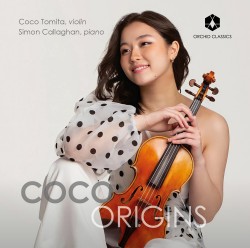
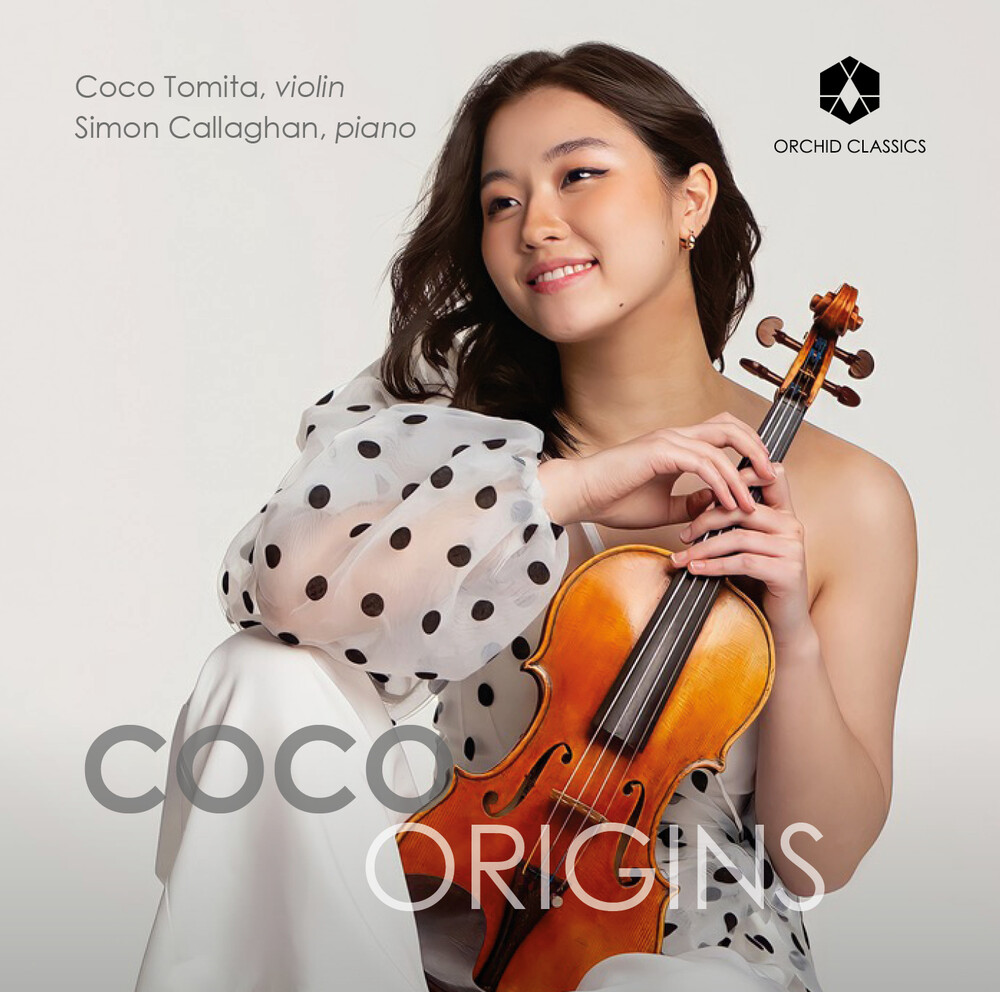
06 Coco TomitaAnother artist making her label debut is the young Japanese violinist Coco Tomita, who was offered a debut album on the Orchid Classics label after winning the Strings Final of the 2020 BBC Young Musician competition; she is accompanied by pianist Simon Callaghan on Origins (ORC100194 orchidclassics.com).

At the heart of the recital are Poulenc’s Violin Sonata – a marvellous piece, despite his doubts and misgivings – and the Ravel Violin Sonata No.2, both works given superb readings. The other major work is Hubay’s Carmen – Fantasie brillante, one of Tomita’s performance pieces from the 2020 competition and indeed played quite brilliantly.

Enescu’s unaccompanied Ménétrier (Country Fiddler) from his Impressions d’enfance Op.28 opens the disc. Lili Boulanger’s brief but beautiful Nocturne from Two Pieces is included, and the Heifetz arrangement of Debussy’s Beau Soir closes an outstanding CD.

There must surely be great things ahead for such a talent as this. [Please Note: the disc is not scheduled for release until March 2022.]
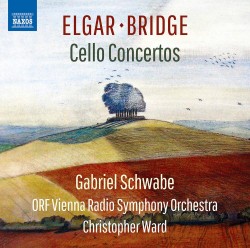
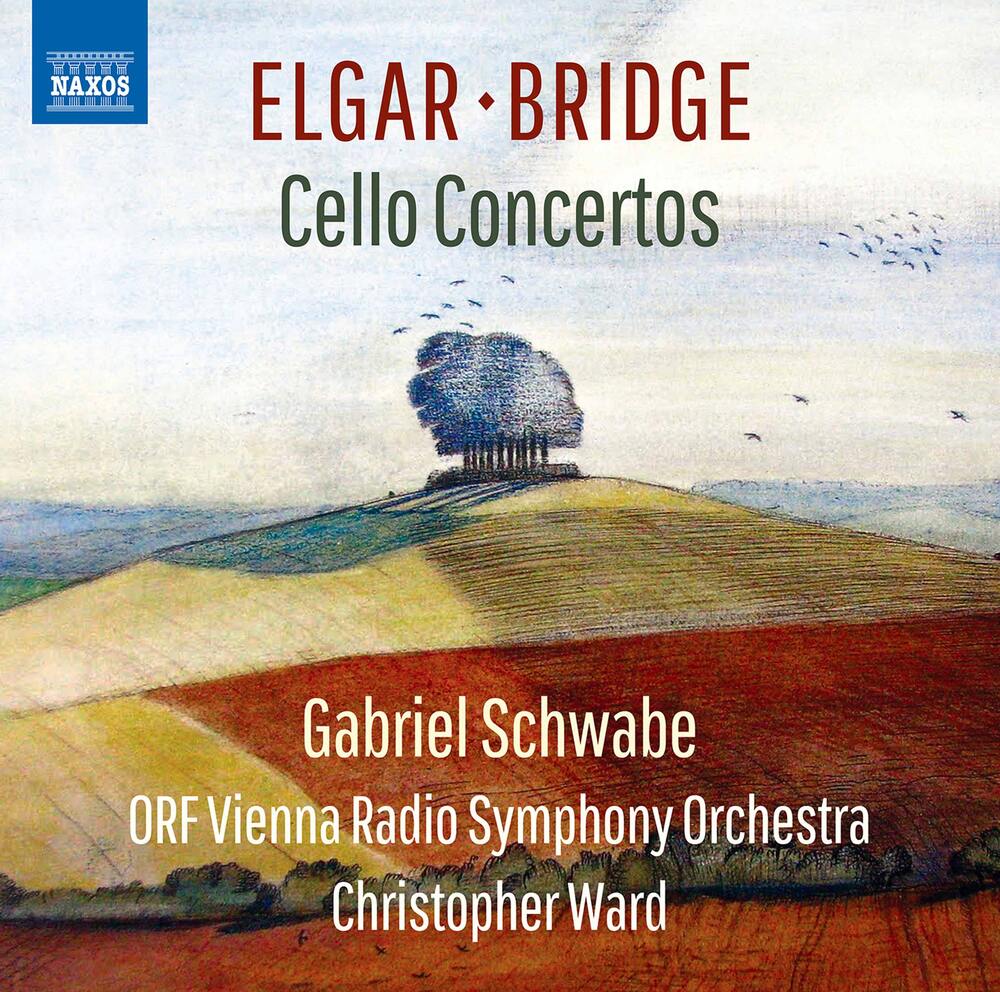
07 Elgar BridgeGabriel Schwabe is the cellist on Elgar & Bridge Cello Concertos, with the ORF Vienna Radio Symphony Orchestra under Christopher Ward (Naxos 8.574320 naxosdirect.com/search/8574320).

The Elgar Cello Concerto in E Minor Op.85 dates from 1919, when the composer was appalled and disillusioned by the suffering caused by the war and by the loss of the Edwardian world he loved. Schwabe’s performance gives you everything you could want from this beloved concerto.

The real revelation here, though, is Frank Bridge’s Oration, Concerto elegiaco. Written in 1929-30, it shares spiritual affinities and shadows of the Great War with the Elgar, and is described as “a funeral address of huge solemnity and narrative power in its outcry against the futility of war.” At times it is much like the Elgar in sound and style, but not in form, having seven connected movements with a particularly martial Allegro giusto and a central cadenza. I don’t recall ever having heard it before, but if ever a work cried out for wider exposure it’s this one. 
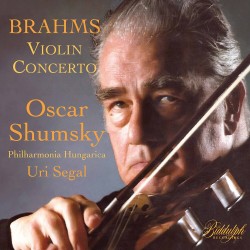
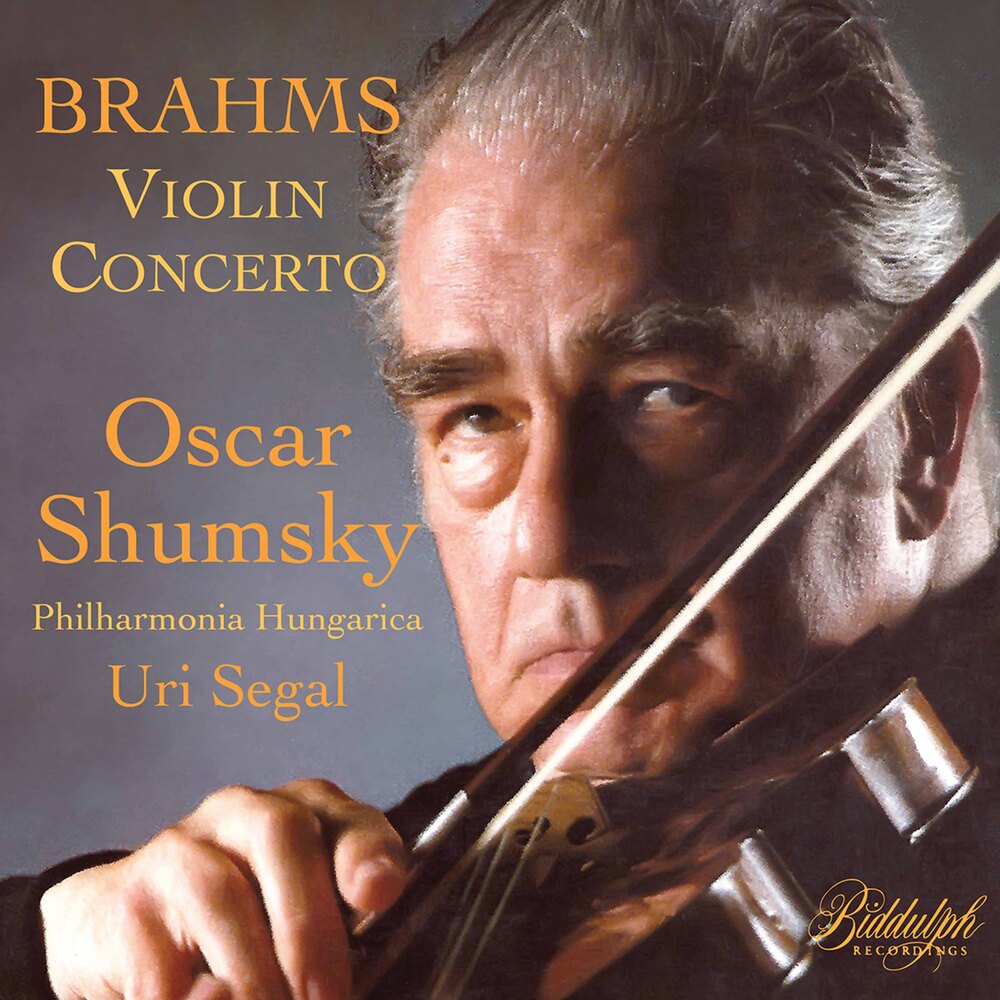
08 Shumsky BrahmsThe American violinist Oscar Shumsky, who died in 2000 at the age of 83, recorded extracts from the Brahms Violin Concerto in D Major Op. 77 for the Music Appreciation Recordings LP label, but a complete performance of the work has never been available. He did, however, make a digital recording with the Philharmonia Hungarica under Uri Segal in 1984, although apparently it was forgotten for almost four decades. It has now been released by Biddulph Recordings, with the Shumsky family’s permission, as Brahms Violin Concerto (85007-2 naxosdirect.com/search/bdf-ed-85007-2).

Shumsky was generally considered to be one of the great violinists of the 20th century, the New Grove Dictionary calling him “a player of virtuoso technique, pure style and refined taste,” qualities that are fully evident in this really fine performance. The orchestral sound is quite resonant, with the violin’s brilliant tone very much up front. It’s a gem of a CD.
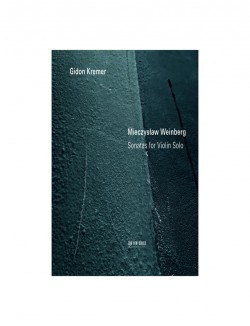
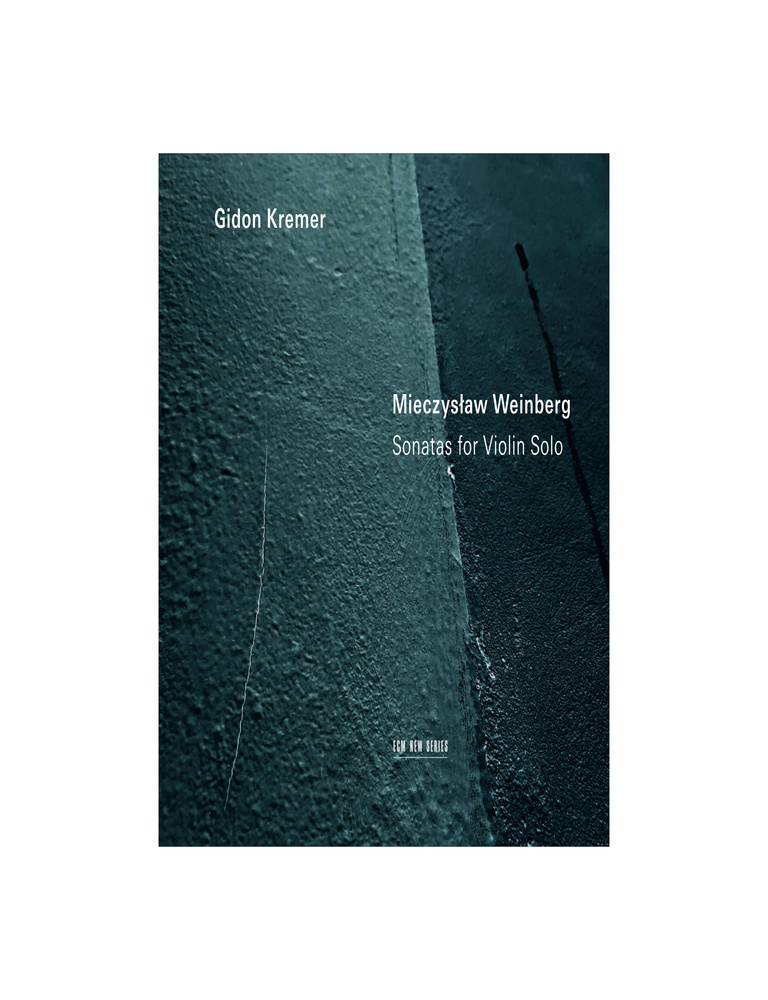
09 Weinberg booklet 1Following his 2021 recording of Weinberg’s Violin Concerto in G Minor Op.67 and the Sonata for Two Violins Op.69 Gidon Kremer continues his passionate promotion of the previously neglected music of Shostakovich’s close friend and compatriot with Mieczysław Weinberg: Sonatas for Solo Violin (ECM New Series ECM 2705 ecmrecords.com/shop).

Sonatas No.1 Op.82 and No.2 Op.85 were both written in 1964, and are comprised of several short movements: Adagio, Andante, Allegretto, Lento and Presto for the Op.82; and Monody, Rests, Intervals, Replies, Accompaniment, Invocation and Syncopes for Op.85. Sonata No.3 Op.126 from 1979 is a single-movement work with a decided Shostakovich feel about it.

Kremer really throws himself into this music, which has a great range of emotional and technical challenges, but is capable of playing with much tenderness and sensitivity when required. This may not be the first recording of these fascinating works, but it’s difficult to imagine a set with a greater commitment. 
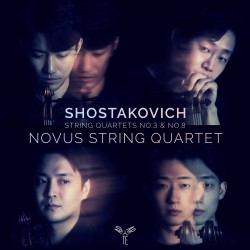
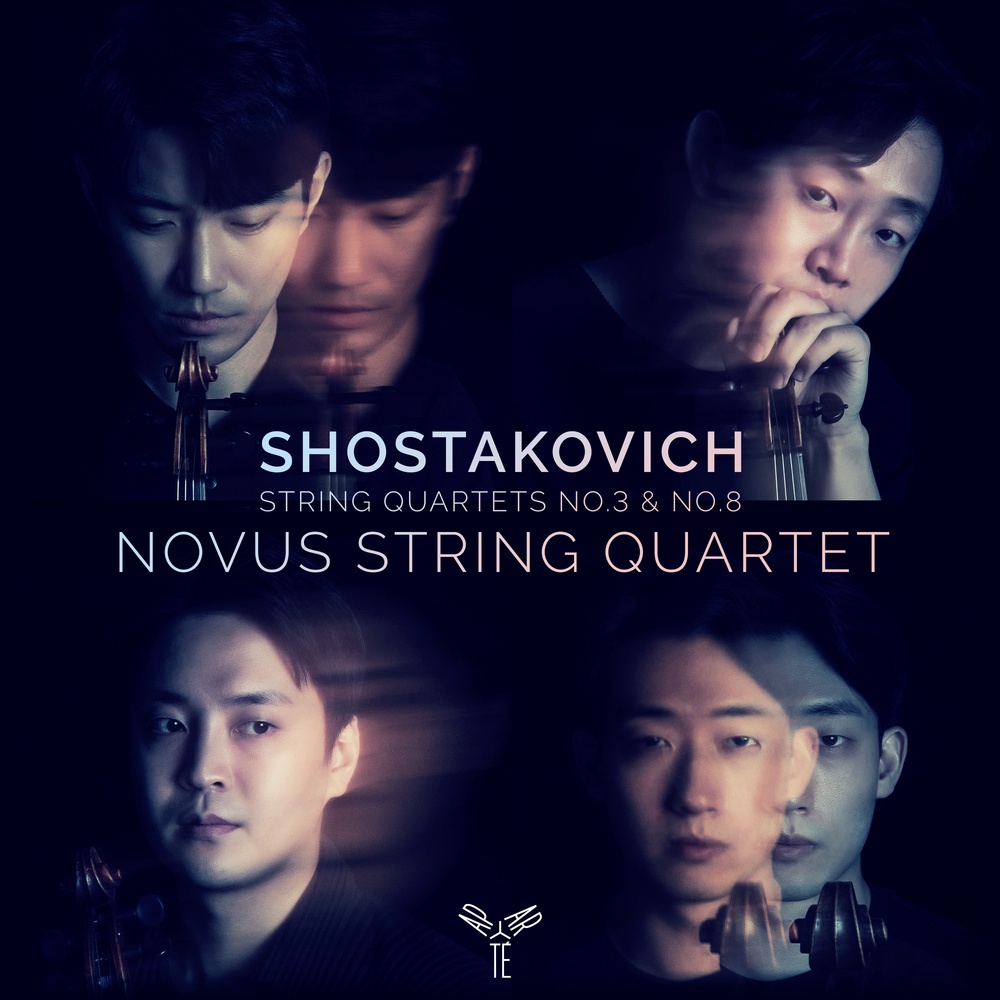
10 Shostakovich quartetsThere’s music by Weinberg’s compatriot himself this month as well, with a new recording of Shostakovich String Quartets No.3 & No.8 in excellent performances by the Korean ensemble Novus Quartet (Aparté AP271 apartemusic.com).

The String Quartet No.3 in F Major Op.73 from 1946 was triumphantly received by the public and critics alike, and seems to chart the path from the losses of the war to a return to daily life, albeit with a “forced cheerfulness” typical of the composer.

The String Quartet No.8 in C Minor Op.110 is the most autobiographical of the Shostakovich quartets, with his musical monogram D, E-flat, C and B natural (DSCH in German notation) forming the basis for much of the work. Moreover, the quartet is full of direct quotes from earlier Shostakovich works, most touchingly the melody from the opera Lady Macbeth of Mtsensk, the work which resulted in his initial persecution by the Soviet authorities. Written in 1960 in response to the wartime destruction of human life and artistic treasures in Dresden, it was portrayed by Soviet propaganda as denouncing fascism, while it was almost certainly a reaction to Soviet atrocities under the Stalin regime.
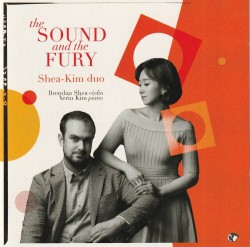
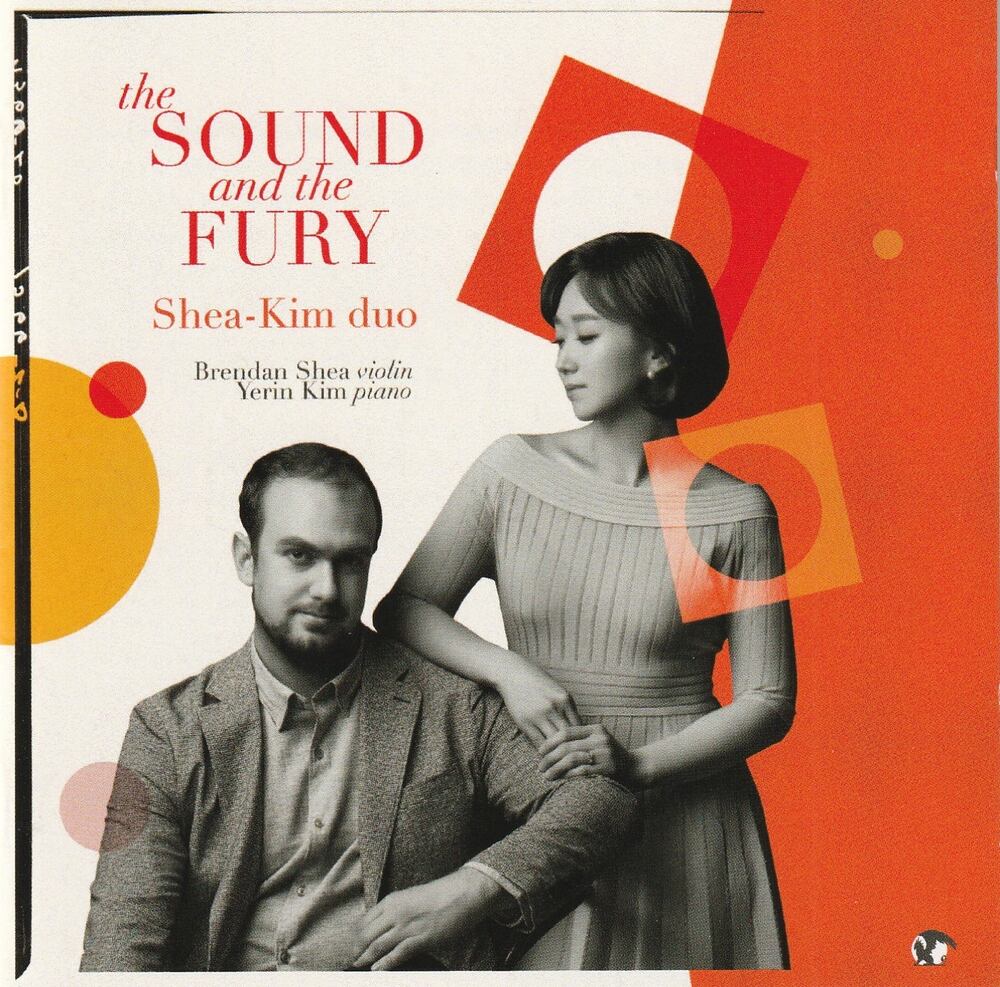
11 Shea Kim duoThe Sound and the Fury is the first studio recording by the Shea-Kim Duo, the husband and wife team of violinist Brendan Shea and pianist Yerin Kim (Blue Griffin Recording BGR593 bluegriffin.com). Dvořák’s Mazurek Op.49, with its abundant and virtuosic double stops, was inspired by and dedicated to the great Spanish violinist Pablo de Sarasate. Grieg’s Violin Sonata No.3 in C Minor Op.45 is the biggest of his three violin sonatas and, possibly because of the simply beautiful slow middle movement, one of the composer’s favourite works. 

Janáček’s Violin Sonata, his only work in the genre, was written in early 1914, just prior to the outbreak of the Great War. The composer later referred to “the sound of steel clashing” in his head.

Shea plays with a warm tone on a violin which can tend to sound somewhat muted at times. Kim’s piano contribution is first-class throughout.
Listen to 'The Sound and the Fury' Now in the Listening Room

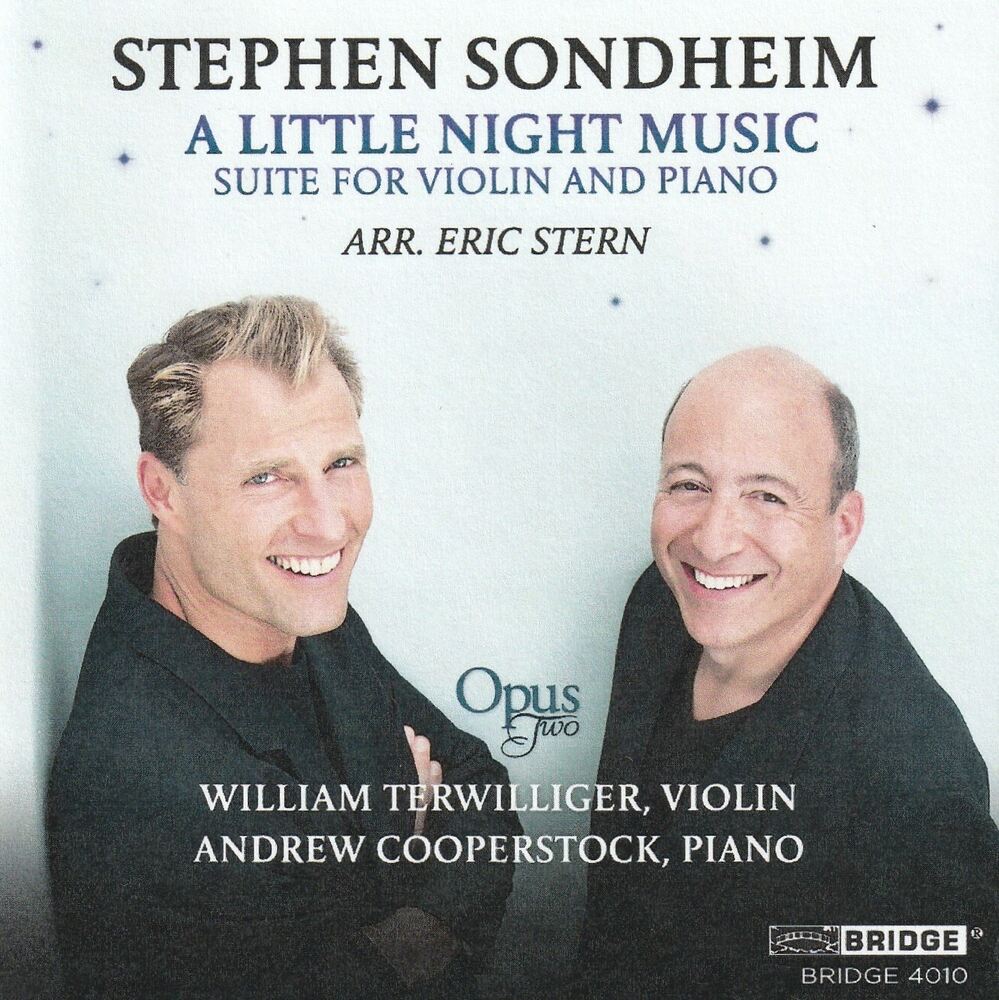
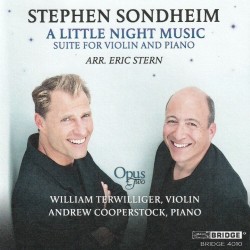
12 Sondheim A Little NightFinally, space restrictions usually preclude our covering short streaming-only releases, but in view of the recent passing of the legendary Broadway composer Stephen Sondheim, as well as the superb quality of the arrangement and performance, I just have to mention Stephen Sondheim A Little Night Music: Suite for Violin and Piano, arranged by Broadway veteran Eric Stern for the Opus Two duo of violinist William Terwilliger and pianist Andrew Cooperstock (Bridge 4010 bridgerecords.com).

The third in a series of Stern Broadway arrangements commissioned by Opus Two and made with the composer’s approval, it’s just under 15 minutes in length, but the four-movement suite of Night Waltz, You Must Meet My Wife, A Weekend in the Country and Send in the Clowns is an absolute delight.

I was lucky enough to receive a promo hard copy, but it can be streamed on Amazon, Apple Music, Spotify and YouTube Music, and purchased via Amazon, iTunes and Google Play, among others.


01 QuicksilverEarly Moderns, The (very) First Viennese School
Quicksilver
Independent (gemsny.org/online-store/quicksilver-early-moderns)

Viennese music means Mozart and Haydn. Well, not according to Quicksilver. They have compiled a CD of music from the very familiar venue that is Vienna, but by mainly unfamiliar composers. 

Perhaps the strangest factor is Quicksilver’s frequent use of the dulcian, ultimately familiar to Mozart as its descendant the bassoon, here helping to reinforce this school of music’s claims to be recognized in its own right. Dominic Teresi’s vigorous dulcian playing in Giovanni Battista Buonamente’s Sonata prima à 3 is a real highlight. 

Throughout the CD, the trombone and dulcian are prominent. This is noteworthy in the Sonata à 3 attributed to Heinrich I. F. von Biber, where Greg Ingles’ dignified trombone-playing proves that Viennese Baroque does not consist exclusively of violin and cello chamber music.

This is not to dismiss the stringed element. Johann Caspar Kerll’s Canzona à 3 in G Minor combines violins and viola da gamba with harpsichord/theorbo continuo. The result is a very lively and highly entertaining composition. One wonders how these pieces came to be so neglected.

And yet, there is still room for solo compositions for more established instruments. Avi Stein’s harpsichord skills are tested more and more intensively as Kerll’s Passacaglia variata unfolds, making demands worthy of Bach or Couperin on the player. Kerll is perhaps the most overlooked composer on a CD of a certainly overlooked school of music.

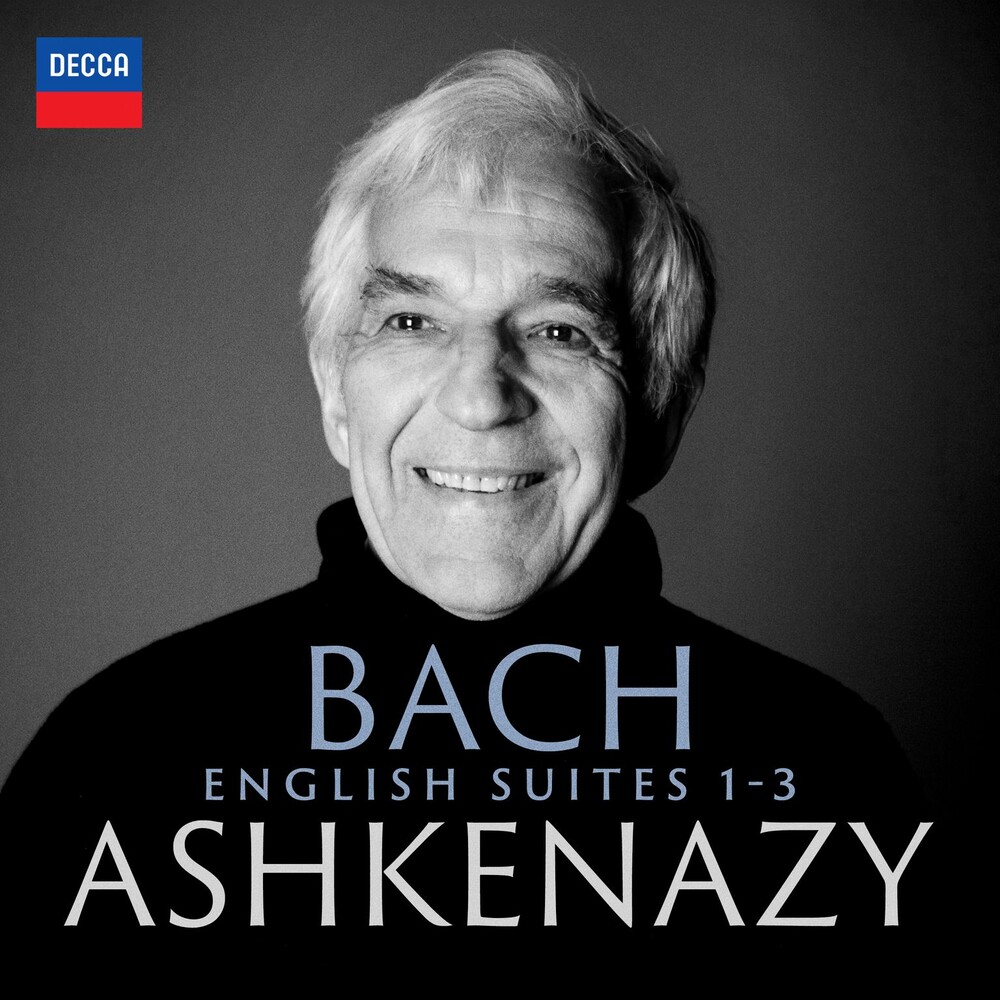
02 Ashkenazy Bach English Suites jpegBach – English Suites 1-3
Vladimir Ashkenazy
Decca (deccaclassics.com/en)

Musicians, most especially those who perform or record within a tradition that has a crowded and storied line of artistic interpreters of seminal performances, often stand on the shoulders of those who came before them. This can be in order to raise themselves to a heightened vantage point from which to spot new insights and perspectives. Or it can be in order to tramp down those who went before, in an attempt to assert their own dominance and singularity of artistic approach. And most certainly, when performing the music of Johann Sebastian Bach on solo piano it would be virtually impossible to avoid the supreme influence and shadow cast by Canadian pianist Glenn Gould. 

For the Russian-born highly fêted pianist Vladimir Ashkenazy, who has been performing and recording the music of Bach since 1965 (arguably living and working through the entire period of Gould’s dominance), his approach to Bach evidences, in his own words, a “different concept” than that of Gould. How lucky then are we to now have a newly released double CD on Decca Records that combines Ashkenazy’s latest recording of Bach’s English Suites 1-3 with his first recording from 1965 of Bach’s Concerto in D Minor. Not only does the music sparkle with a straightforward, didactic approach to the Baroque master that brings forth all of the beauty and detail of the original compositions without the idiosyncratic flourishes for which Gould was both reviled and revered, but there is bravery in this release as it shows just how much Ashkenazy’s own development as a Bach interpreter and world-class performer has matured, developed and even changed over the years.

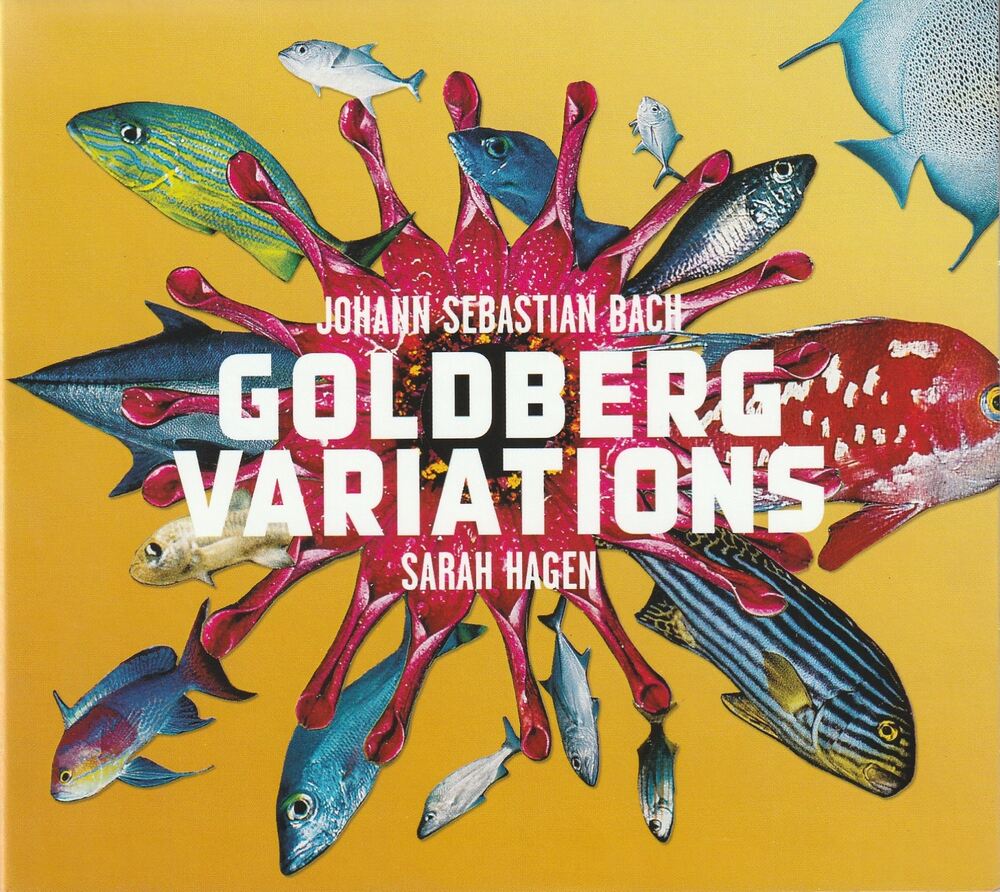
03 Goldberg HagenBach – Goldberg Variations
Sarah Hagen
Independent SH004CD (sarahhagen.com)

Great expectation always precedes a new recording of Bach’s Goldberg Variations. Glenn Gould’s benchmark recordings (1955 and 1981) may have thrown down the gauntlet to anyone recording this epic composition after him, but it was Bach who left the door of interpretation slyly ajar. Yet, playing these wonderfully varied and emotionally differentiated Goldberg Variations is one of the most daunting experiences a pianist could face. 

The chords of the “Fundamental Bass” are the first hurdle because the inspiration for the entire piece originates in the accumulation and release of tension by the harmonies of these chords. In composing the Goldberg Variations Bach was also probably thumbing his nose at Johann Adolph Scheibe who once criticized his compositions as being fraught with “a turgid and confused style.” Bach’s playful rebuttal came by way of the complexity of many voices collaborating to form the lofty harmonic beauty of the Goldbergs

Canadian pianist Sarah Hagen’s Goldberg Variations are dramatically different. Naysayers and refusniks beware: her approach combines unfettered joy, wide awake with wonder, requisite pedagogy and the ability to make the instrument bend to her will. The epic scope of the work is stated right out of the gate, with an extensive exploration of the Aria that opens the way to the variable tempi, harmonic adventure with unlimited changes in registration and emotion. Hagen’s performance combines vivid precision of touch with perfect articulation of line, making her Goldberg Variations something to absolutely die for.

Listen to 'Bach: Goldberg Variations' Now in the Listening Room

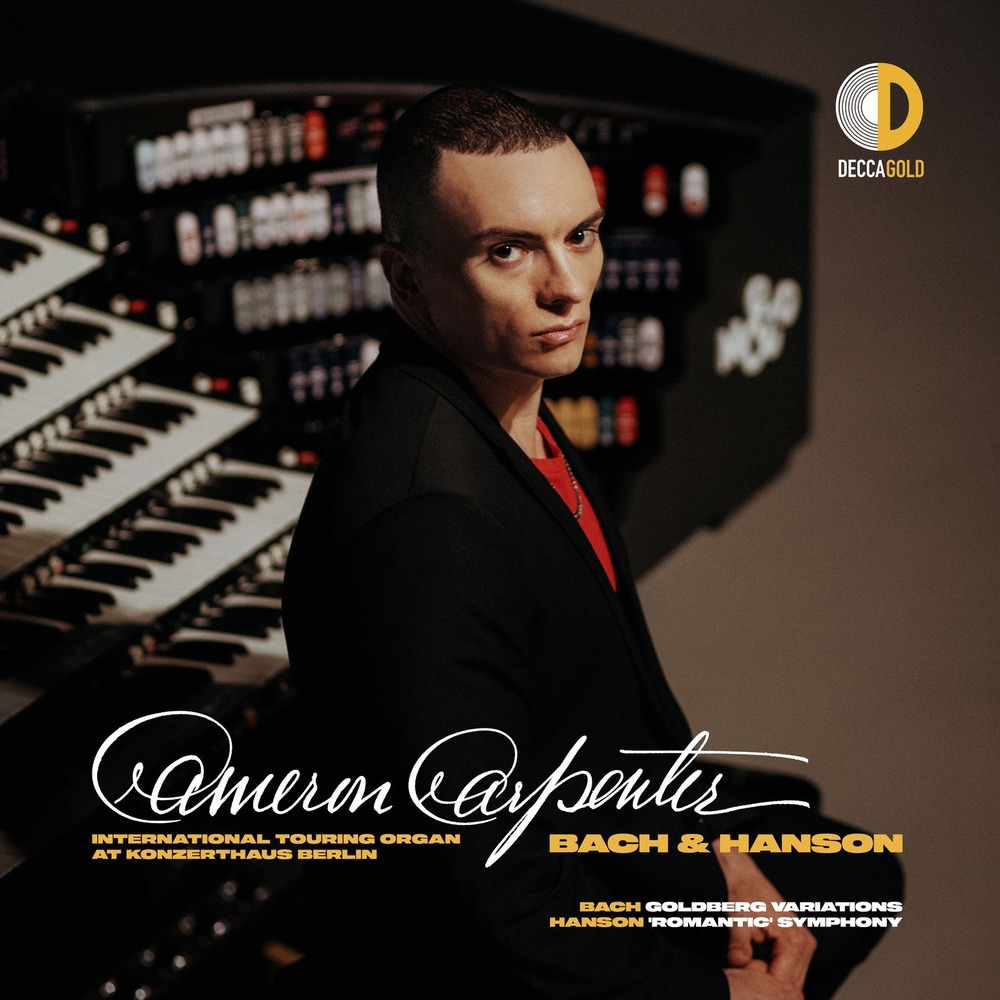
04 Cameron Carpenter Bach and Hanson jpegBach – Goldberg Variations; Hanson – Romantic Symphony
Cameron Carpenter
Decca Gold (deccarecordsus.com/labels/decca-gold)

J.S. Bach’s Goldberg Variations have become ubiquitous in the classical music world, brought to popularity primarily through Glenn Gould’s debut recording in 1955. Originally written for harpsichord and published in 1741, this virtuosic masterwork has since been adapted for a wide range of instruments and ensembles, from piano to full orchestra. This recording features renowned American organist Cameron Carpenter performing his own transcription on the International Touring Organ, the American digital concert organ designed by Carpenter that travels from country to country with him on his tours.

What makes the organ such a unique instrument for the performance of the Goldberg Variations is the number of sounds that can be contrasted and combined by a single player, resulting in clear contrasts that amplify the linear complexities of Bach’s counterpoint. Where other instruments are limited by timbral similarities, the organ is capable of producing strikingly different sounds simultaneously, with one set of pipes sounding like a flute and another like an oboe, for example, creating a textural clarity that is almost impossible on any other single-player instrument. 

But while the tonal variety of the organ is an indispensable asset, its lack of acoustic attack can be a challenging factor. The harpsichord is, perhaps, the most attack-heavy keyboard instrument in history, its sound almost entirely characterized by the plucking of a string and the sound’s subsequent, rapid decay. Conversely, the organ produces relatively little attack but can sustain pitches indefinitely, requiring deft use of articulation to produce the clarity required in Bach’s music.

As one of the world’s best orchestral organists, Carpenter manages both the pros and cons of the organ with an expert hand, applying his mastery of timbral variety and thoughtful articulation to bring the Goldberg Variations to life in a new and exciting way.

Carpenter reinforces his status as a master of orchestral performance with his own transcription of Howard Hanson’s Symphony No.2, the “Romantic,” demonstrating both his own stunning virtuosity and the capabilities of the International Touring Organ. This powerhouse performance is both unique and remarkable, and sheds light on a work that, while less well known than its recorded counterpart, is equally satisfying and impressive.

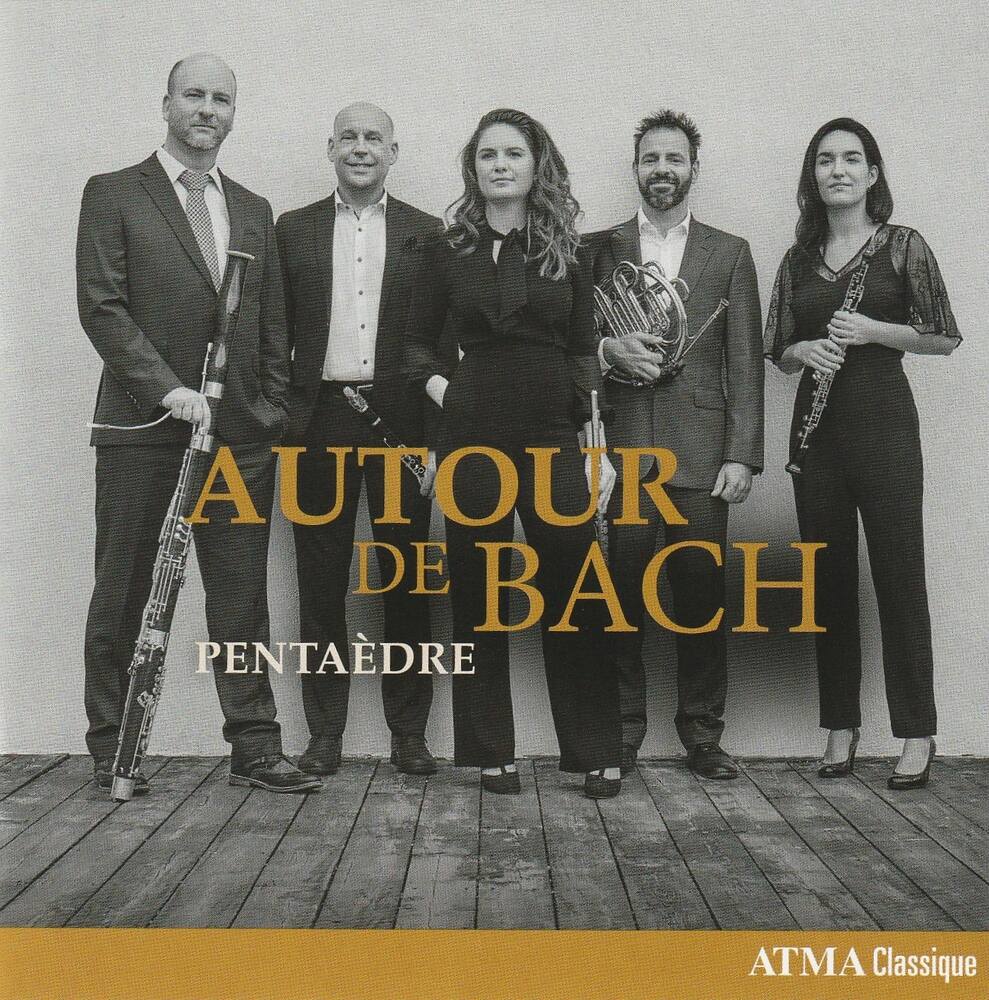
05 PentaedreAutour de Bach
Pentaèdre
ATMA ACD2 2841 (atmaclassique.com/en)

Pentaèdre is a compelling and refreshingly unique Quebec-based chamber ensemble that, since its founding in 1985, has been boldly working to expand the canon of classical music through the creation and dissemination of new work. One of the group’s missions is to introduce chamber music fans and classical listeners alike to new work that both draws inspiration from and moves beyond the body of established repertoire. Their latest release, Autour de Bach, couples transcriptions for wind quintet of J.S. Bach works with the Bach-inspired Quintet No.3 by the late American composer David Maslanka and succeeds on all fronts.  

Bach’s music, with its weaving and intersecting lines that have the strength of purpose to stand alone but coalesce with a beautiful and logical precision, is the perfect foil for this egalitarian and cooperative ensemble that knows exactly when to put forward individual lines with a clarity of purpose and when to abdicate one’s individual agency for the overarching blend and good of the ensemble. While some of the pieces contained on this fine album will, no doubt, be familiar to listeners (Fugue in G Minor BWV565), the three-part developmental Maslanka contribution – which offers the group an opportunity to explore tempo, dynamic range and expressivity – slots neatly alongside Bach’s music, producing a congruent and compelling artistic presentation by this fine ensemble deserving of wider recognition. 

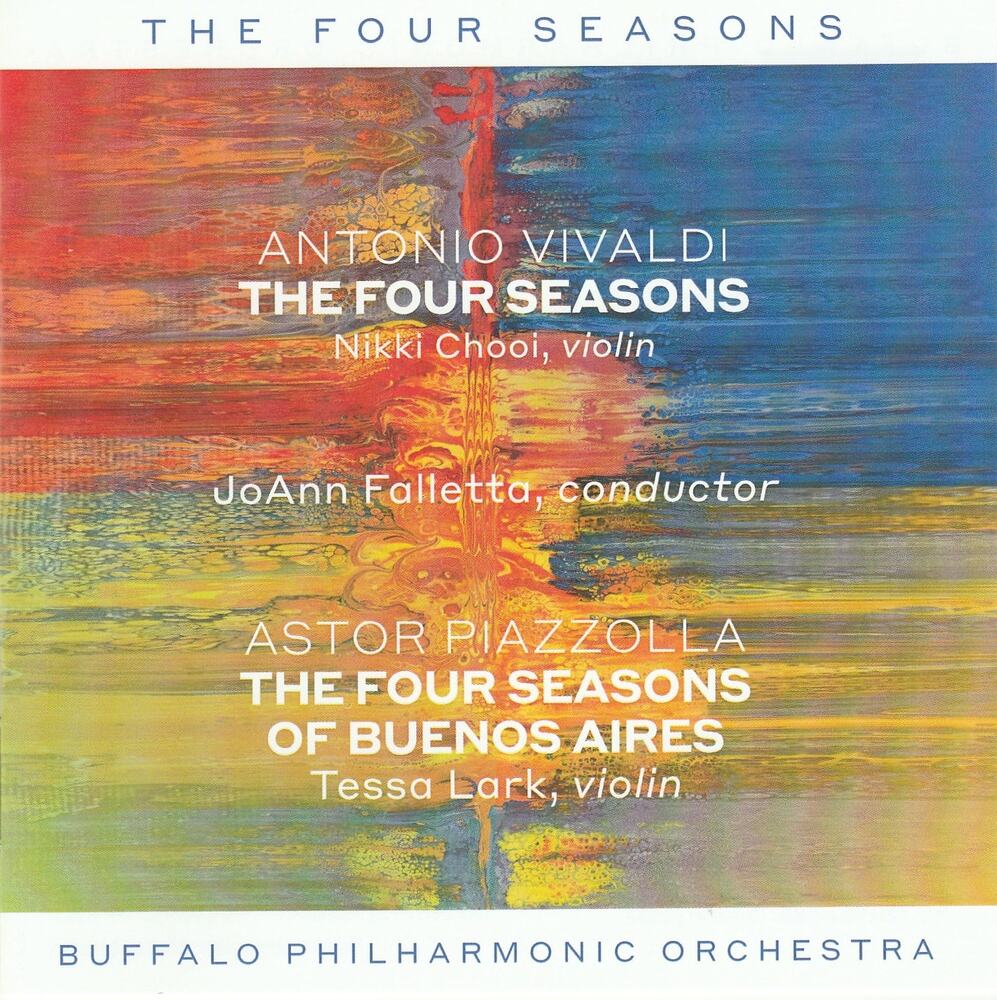
06 Vivaldi.PiazzollaVivaldi – The Four Seasons; Piazzolla – The Four Seasons of Buenos Aires
Nikki Chooi; Tessa Lark; Buffalo Philharmonic Orchestra; JoAnn Falletta
Beau Fleuve Records 605996-998562 (joannfalletta.com/discography.html)

This CD’s two works based on the “four seasons” idea is intriguing, since Astor Piazzolla’s The Four Seasons of Buenos Aires makes references to Vivaldi’s familiar The Four Seasons violin concertos. Canadian violinist and Buffalo Philharmonic concertmaster Nikki Chooi and the JoAnn Falletta-led Buffalo Philharmonic play the latter with vitality, colour and precision. For example, in the concerto La primavera Chooi brings clean intonation and articulation, the orchestra adding fine dynamics and lots of bounce. Slow movements of concertos evoke night in different ways. Outstanding is L’autunno with soft chromatically connected string chords sounding over a steady harpsichord. Given our present frightful winter, the first movement of L’ivorno seems especially effective: shivering string tremolos; raw cold of a harsh violin bow stroke; a fateful mood in the steady bass tread and relentless harmonic sequence of fifths. In the finale Chooi takes advantage of opportunities for free-tempo playing that come often in this concerto cycle – here because the solo protagonist is walking on ice!

Piazzolla’s tango-based The Four Seasons of Buenos Aires (1965-70), written for a cabaret group, became a four-piece suite for violin and strings arranged by Leonid Desyatnikov in 1998. Soloist Tessa Lark has plenty of technique and temperament for rapid mood changes in each piece. Summer begins in a chugging offbeat-accented rhythm, followed by a violin solo with occasional references to Vivaldi’s work. Languid playing with frequent slides alternates with faster jazzy passages. The following enticing pieces show similar variety.

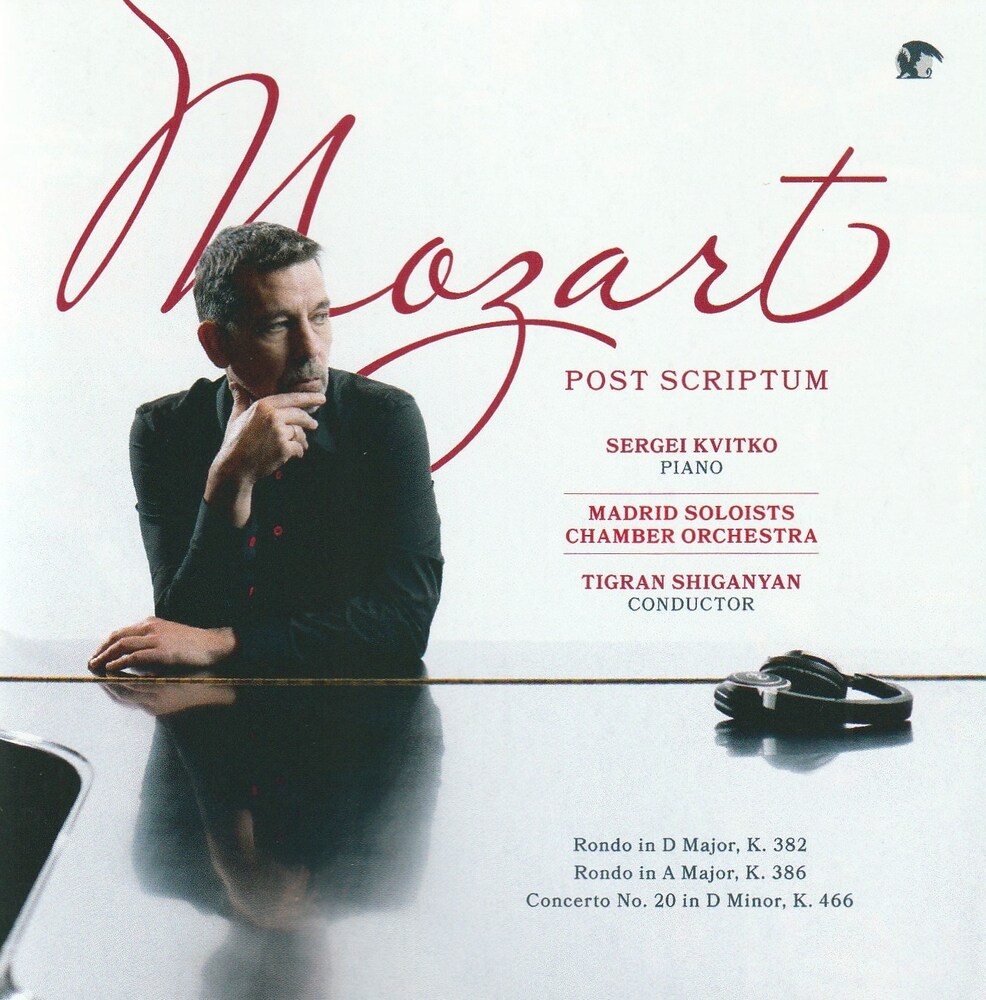
07 Mozart Post ScriptumMozart – Post Scriptum (Rondos K382/386; Concerto No.20)
Sergei Kvitko; Madrid Soloists Chamber Orchestra; Tigran Shiganyan
Blue Griffin BGR597 (bluegriffin.com)

Sergei Kvitko explained that he wanted this disc to be “full of surprises.” The Russian-born artist is not only an accomplished pianist, but also an arranger, producer and sound engineer who founded the Blue Griffin label in 2000 while completing his doctoral studies at the University of Michigan. Who better then to inject new life into this brief all-Mozart program where he partners with the Madrid Soloists conducted by Tigran Shiganyan? As for the surprises, they involve reconfigurations of the two Rondos, K382 and K386, with respect to orchestration, ornamentation and dynamic markings, with new cadenzas composed by Kvitko himself.

The two rondos – the first a set of variations – were written as possible alternate finales for piano concertos. Kvitko and the 29-member ensemble deliver a polished performance displaying solid musicianship, with alternative orchestral ornaments and cadenzas at times foreshadowing Beethoven.

Starkly contrasting in mood is the Concerto in D Minor K466 from 1785. Again, the pairing of Kvitko and the Madrid Soloists is a formidable one. But as for the cadenzas, this writer has never heard such musical excursions in a Mozart concerto before. Not only are they lengthier than the average, but stylistically, Kvitko jumps ahead some decades to the Romantic period. Here are modulations to remote keys (including E-flat Major and F Minor) and dazzling bravura passage work. Do I hear echoes of Franz Liszt and is that a quotation from Saint-Saëns? Indeed, the listener may have cause to wonder if soloist and ensemble will ever reunite!

Nevertheless, this is an exemplary performance and whether the enhancements should be viewed as creativity on the part of the soloist or mere musical indulgences, it should be up to the listener to decide. Surely Mozart would have approved – this disc is definitely worth investigating.

Listen to 'Mozart: Post Scriptum (Rondos K382/386; Concerto No.20)' Now in the Listening Room

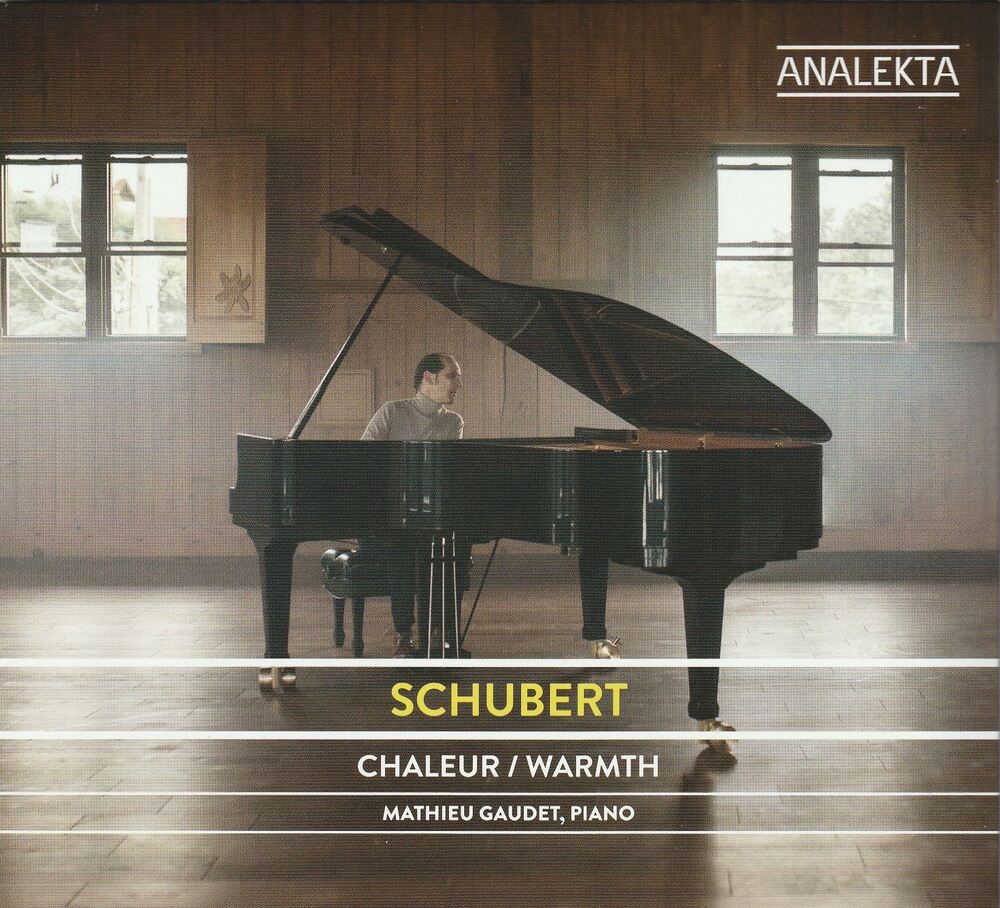
08 Schubert WarmthSchubert – Chaleur/Warmth
Mathieu Gaudet
Analekta AN 2 9185 (analekta.com/en)

This classy album hits all the right marks in its pursuit of excellence – beautiful music, engaging performance and a meaningful message to the world. Volume 5 in a series of 15 projected albums covering the wealth of Schubert’s piano music, this album is filled with warmth and artistry, perfect for a season of solitude, contemplation and discovery. 

Mathieu Gaudet has an undeniable connection with Schubert’s music. Being an exuberant and lavish piano player, he is capable of grand gestures that bring out the magnificence of Schubert’s form and architecture. On the other hand, listening to Gaudet makes me feel like he is playing this music just for me, such is the intimacy of his lyrical sound and phrasing. Most appreciated is how intensely this artist conveys the subtlety and the meaning behind all the magnificence. 

Sonata No. 5 in A-flat Major opens the album with the traditionally noble atmosphere of the post-classical mode, continuing with four smaller pieces in the form of dances and Thirteen Variations on a Theme by Schubert’s contemporary Anselm Hüttenbrenner. Although placed last, the Sonata No.16 in D Major is the central work of this album. The monumental composition offers a compressed experience of all the Schubertian characteristics – exultation, passion, memorable melodies and grace.

As for its gentle message, this album shows that despite all the unsettledness in the world one can always find a way to connect to what matters.

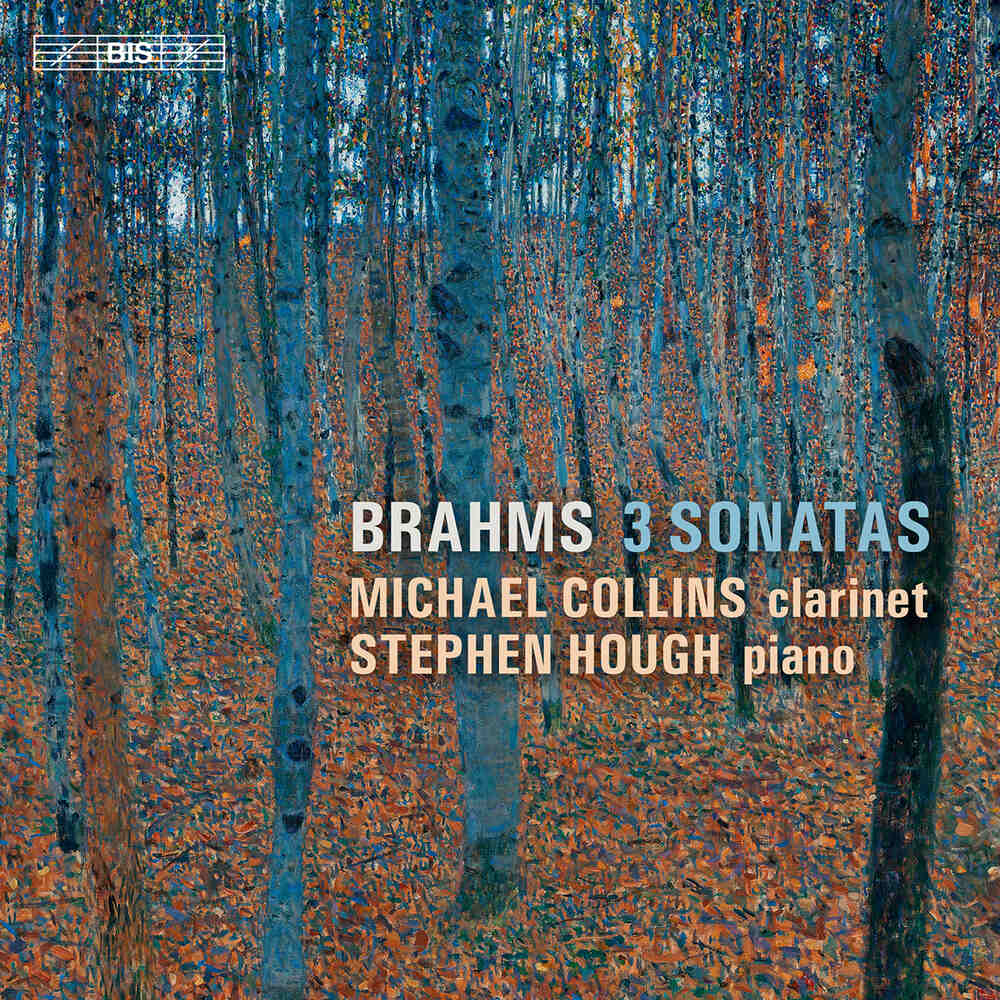
09a Brahms ClarinetBrahms – 3 Sonatas
Michael Collins; Stephen Hough
BIS BIS-2557 (bis.se)

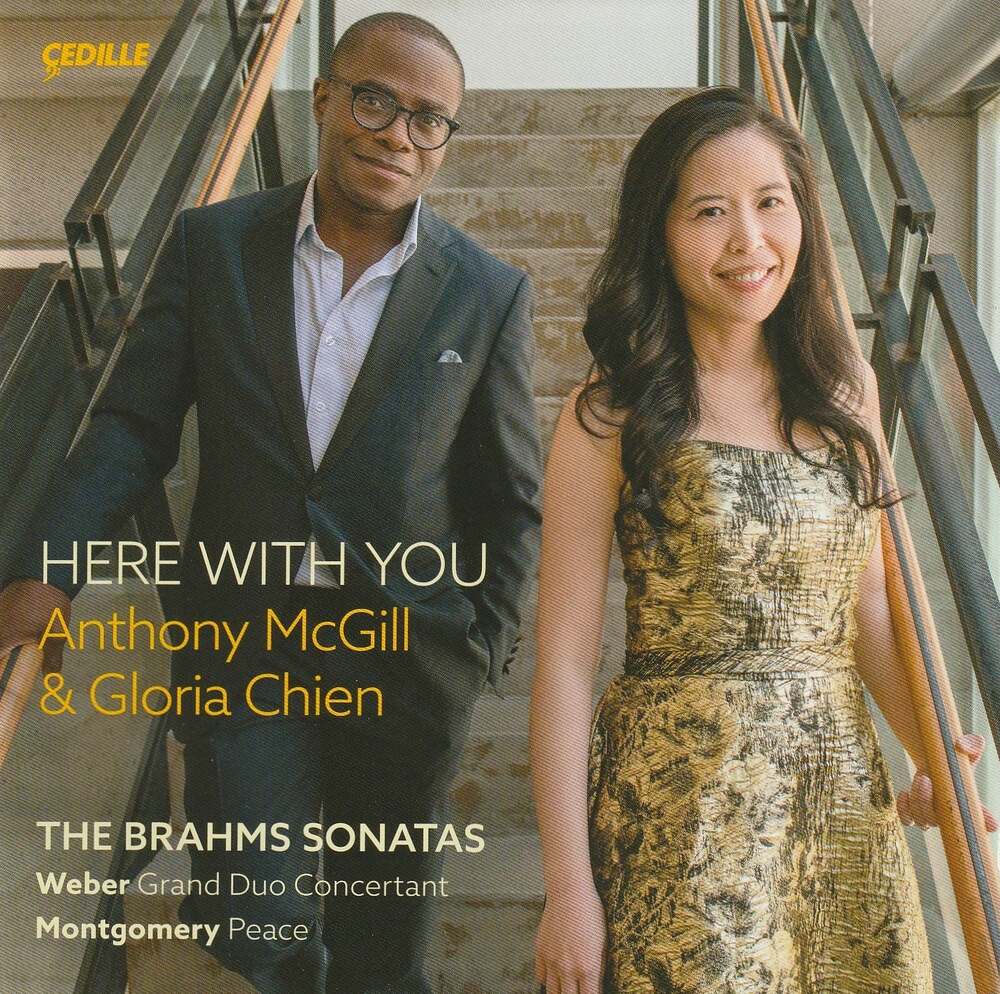
Here with You – The Brahms Sonatas; Weber – Grand Duo; Montgomery – Peace
Anthony McGill; Gloria Chien
Cedille CDR 900000 207 (cedillerecords.org)

No longer, it seems, is it enough for clarinetists to throw down their hottest take on Brahms’ majestic Opus 120 Sonatas for Piano and Clarinet on its own. If recent examples are anything to go by, something more is now called for, a sidecar offering some alternate musical perspective. Last year, for example, the recording released by Jörg Widman and Andras Schiff included Widman’s own Brahmsian Intermezzi for piano. This month, two more collaborations do something similar: Anthony McGill and Gloria Chien perform Opus 120 and then add Weber’s Grand Duo Concertant, Opus 48, and Peace, by Jessie Montgomery; meanwhile Michael Collins and Stephen Hough open with a transcription (at pitch!) of Brahms’ Opus 100 Violin Sonata in A Major and then move on to Opus 120

I’m never fond of poached repertoire, but I admit the violin sonata feels like it could easily have been written for the clarinetist, Richard Muehlfeld, as the Opus 120 were. Only when Collins extends the range to the higher reaches do I think Brahms wouldn’t have offered Muehlfeld that opportunity to suffer. Not that there’s anything wrong with Collins’ technique; he deals quite beautifully with the higher tessitura of the violin piece. It’s just uncharacteristic, un-Brahmsian per his treatment of the clarinet elsewhere.

09b Brahms Clarinet McGillMcGill and Chien, presenting the late Classical/early Romantic Carl Maria von Weber’s tour-de-force, arguably made the more conservative decision, but I prefer it because it proposes an unexpected comparison of the two composers. Brahms can be a tad wordy, like some reviewers I might name. Weber is seriously underappreciated, and deserves a good deal more respect than he’s been afforded in the past century.

McGill sounds fabulous; Chien wrings, and rings, out the mittfuls of Brahms’ piano writing. In the Weber, avoided by some pianists on account of its dastardly technical demands, she bats no eyes and crosses no fingers; in short, she kicks the piece into gear and roars away. We should all be so lucky to play the piece with her! The Grand Duo is a dessert, which leavens out the weighty Brahms, and is so much more Romantic: more fun and, I’ll admit it, entertaining. The slow movement is an arioso without words, beautifully rendered by the tandem. The presto playout of the Rondo movement is a rousing display of music hall bravura; see if you don’t rise at the end to give them a standing ovation.

Collins plays a somewhat brighter set-up than McGill, and sounds great. Then there’s Stephen Hough, who is already in the pantheon. His work on the three sonatas is impeccable, considered and moving. Collins and Hough hew to a steadier, faster pulse than the Americans, whose fluid flexibility appeals to me but might bother some. McGill and Chien are too indulgent during the Sostenuto section of the Second Sonata’s second movement, which plods. Collins and Hough have more the right idea. And in Hough’s hands the Andante un poco adagio from the F-Minor Sonata receives more lingering affection than Chien seems willing to spend. Both clarinetists’ pitch is immaculate throughout. There is so much to appreciate in both offerings, choosing between them is not recommended. 

Last month I proposed a new artistic genre: Responses to the Pandemic. Montgomery’s Peace is exactly such a work. The mood is pensive, opening with augmented, searching harmonies, insistent but not harsh dissonance that hints at kindness or obscured joy. McGill has an incredible range of colour and depth in his low register, which Montgomery exploits with heart and soul.

Back to top