Soundstreams#1 LB_7-JAN

03 Al QahwaWeyn Allah
Al Qahwa
Independent (alqahwa.bandcamp.com/album/weyn-allah)

Depending on who you talk to, the word multiculturalism is either meaningless, or a politically correct supercharged word, especially in a post-pandemic world where everyone becomes easily overheated about everything. If the media is to be believed even Canada has not been spared the blushes of intolerance, and there seems no reason to doubt this. 

However, Canadian artists like the one-world-one-voiced Al Qahwa have always fought back against any form of divisiveness in the exquisite poetry of their music, sometimes with subtly crafted lyrics and at other times with more overt sounding words. The album Weyn Allah feels slightly different, not only because the title asks (and translates to) Where is God? But more than that there appears to be a more elemental, haunting cry that emanates from this music. The song of the same name hits the proverbial right spot in every way: poignant lyrics, elegant music and perfect execution.  

Elsewhere, on Dunya Farewell chromatic notes sigh, but the harmonic cushioning rarely falls where you anticipate. Vocalist Maryam Tollar embodies this elegance in the plaintive evocations of her vocals sung with Jono Grant’s excellent performance on nylon-string guitar.  

The lonesome wail of Ernie Tollar’s reeds and winds is breathtaking. Meanwhile, the delicately knitted single notes from Demetri Petsalakis’ oud, framed with the deep rumble of Waleed Abdulhamid’s bass and the resonant thunder of Naghmeh Faramand’s daff all make for a truly affecting experience.

04 Laila BialiYour Requests
Laila Biali
Imago EMG607 (lailabiali.com)

Gifted pianist and vocalist Laila Biali has just released an all-star recording with an interesting twist; in addition to welcoming vocal luminaries Kurt Elling, Emilie-Claire Barlow and Caity Gyorgy, the repertoire is based on requests that she has received from audience members during her performances. 

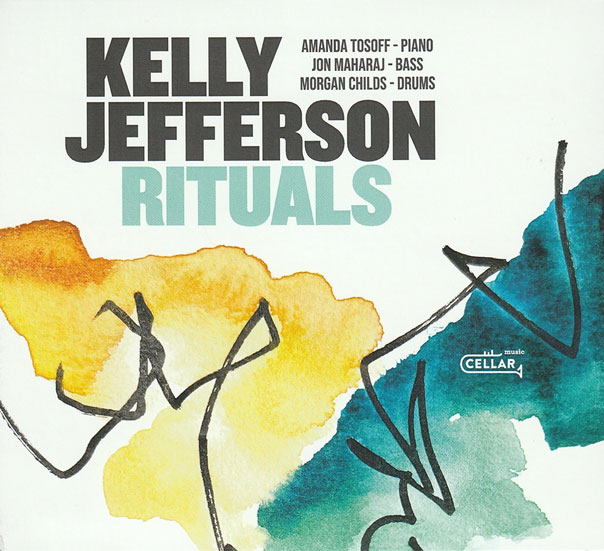
There are ten exquisite tracks here. Biali’s instrumental collaborators include clarinetist Anat Cohen, Grégoire Maret on harmonica, Michael Davidson on vibes, Kelly Jefferson on tenor/soprano sax, George Koller on bass, Ben Wittman (who also shares arranging and production credits with Biali) and Larnell Lewis on drums and Maninho Costa on percussion.

First up is the classic standard, Bye Bye Blackbird, arranged with a contemporary and rhythmic sensibility, replete with a dynamic sax solo from Jefferson. Directly following is a diaphanous take on Oscar Levant’s Blame it on My Youth. Biali’s voice is sultry and emotive here, perfectly interpreting the story of the poetic lyric. Also of note is Rogers and Hart’s immortal ballad My Funny Valentine, rendered here (with palpable musical chemistry) as a lovely duet between Biali and the inimitable Elling.   

A true highlight is an inspired duet with Barlow on Rogers and Hammerstein’s My Favourite Things. Barlow and Biali harmonize effortlessly and easily manifest a joyous track. Additionally, Biali shines on both piano and voice on a sumptuous take on Autumn Leaves. Her interpretation of Johnny Mercer’s renowned lyric is perfection itself, enhanced by another dynamic soprano sax solo from Jefferson and sensitive and creative bass work from Koller. 

05 Nicky Schrire Nowhere GirlNowhere Girl
Nicky Schrire
Anzic Records (nickyschrire.bandcamp.com/album/nowhere-girl)

This is singer-songwriter Nicky Schrire’s first release in ten years and she’s come a long way since then, both geographically and musically. Born in London, England, raised in South Africa and educated in New York, Schrire has made her home in Toronto for the last few years. Her previous jazz recordings had a healthy dose of covers from the Great American Songbook, with a smattering of originals, but Nowhere Girl’s 11 tracks are all (but one) written by Schrire. 

Whether this is a jazz album is debatable, if you care about such things, but what’s not in doubt is the high quality of the songwriting, singing and playing. Supported by the Canadian jazz trio, Myriad3 (Ernesto Cervini, drums, Dan Fortin, bass and Chris Donnelly, piano) and local luminary saxophonist Tara Davidson, there’s plenty to satisfy jazz fans. Starting with the driving title track and finishing in a similar high energy style with My Love featuring Mozambican Julio Sigauque’s guitar work. In between is a collection of lilting, poetic songs delivered with Schrire’s pretty, unaffected voice that lends a somewhat Celtic feel to many of the tracks. Her travels inform a lot of this new album both literally, with songs like In Paris and This Train (about New York City), and also musically, as styles from various cultures subtly leave their marks.

Listen to 'Nowhere Girl' Now in the Listening Room

06 Brandon Seabrookbrutalovechamp
Brandon Seabrook
Pyroclastic Records PR27 (store.pyroclasticrecords.com)

Brandon Seabrook is known to be a composer who eschews both sonic norms and overheated emotion. But on brutalovechamp he seems to tear up that musical playbook, to turn his own insides out and even bare his soul. These are works, seemingly like musical shards of raw emotion. You don’t really need to unscramble the three-word mash-up of the title or reach the end of the booklet to discover that Seabrook was gutted by the loss of man’s best friend, his dog Champ. 

Seabrook creates dizzying layering-on of tonal cadences, mixing guitar, mandolin and banjo, into the low instrumentation of bass recorder, alto, B-flat and contrabass clarinets and two contrabasses. Into this he has a cellist pour liquid notes, while the ensemble glimmers, redolent of a myriad of percussion instruments. This unusual collision of timbre creates a musical feast for the senses. 

If Seabrook means for you to feel the evocations of his pain at losing his beloved dog, then this you certainly do up close and personal on brutalovechamp. This is all inward-looking music, raw in a Jean-Paul Sartre-esque, existential sort of way. And although Seabrook may be averse to labels, some works cannot escape sonic allusions to the symbolists like Arthur Rimbaud, in for instance, Gutbucket Asylum. But make no mistake, every piece of music on this recording bears the authentic imprint of Seabrook’s feral sound palette.

For Portugal, a country that was still struggling to solidify its democracy in the 1980s following nearly 50 years of outright dictatorship, one unexpected byproduct of that struggle has been a burgeoning free music scene. Resourceful, the scene nurtured by the struggle for the country’s expanding freedoms now includes internationally known veterans like violinist Carlos Zingaro, younger local experimenters and has started to attract improvisers from elsewhere.

01 Road MusicOne experienced player is Paris-born pocket trumpeter Sei Miguel, who has lived in Portugal since 1986 and has propagated local free music since then. Road Music (Clean Feed CF 621 CD cleanfeedrecords.com/album/road-music) features ten tracks by his Unit Core recorded between 2016 and 2021. Most position Miguel’s smeared brass timbres in microtonal cohabitation with plunger tones from Fala Mariam’s alto trombone and Bruno Silva’s guitar clips and twangs with Pedro Castello Lopes adding rhythms from percussion instruments. These understated pulses are particularly effective on Sentinela and Canção, with triangle clinks decorating broken octave and unison short brass bites. Not only do the woody clave smacks provide a distinctive backing when joined with guitar strums on Canção, but Mariam’s contrapuntal designations take up as much space as the trumpet lines. Silva’s percussive string picking is featured on Sentinela #2 which provides a rare instance of the trumpeter moving past his usual breathy sighs to a sequence of bugling triplets that torque the tune’s excitement before harmonizing with the trombonist’s horizontal slurs. Otherwise, expositions are usually slow-moving and often descend into near stasis as dramatic bent notes and grit are favoured over unbroken lines and half-valve expressions. Still there are enough pivots throughout to trombone tailgate slides, trumpet squeaks and guitar twangs to feature tonal examinations along with related continuum. 

02 Luis LopesAt nearly the opposite end of the sound spectrum is Echoisms (Clean Feed CF 628 CD cleanfeedrecords.bandcamp.com/album/echoisms) by young veteran Lisbon guitarist Luis Lopes and his Abyss Mirrors tentet. Featured on the seven tracks of the harsh and turbulent title composition are two saxes, two players using electronics, a three-person string section, an electric bassist and another guitarist besides Lopes. Although working without a drummer, there are enough guitar flanges, bass thumps and electronic pulses to anchor the angled and squeaky string glissandi as well as the doits, honks, smears and altissimo excursions from the reed players. Most sequences rumble along with Felipe Zenícola’s electric bass throb and electronics signals creating linearity until straight-ahead movement is shattered as Lopes’ and the one-name Flak’s effects pedal motions and unusual string techniques join with dog-whistle-like screeches from saxophonists Bruno Parrinha and Yedo Gibson to stretch the exposition to near schism until it rights itself by the following track. By the penultimate Echoism VI however a bagpipe-like tremolo drone from the dual saxes sets up the final track – and the suite’s – resolution. Moving through a building crescendo of cello, violin and viola spiccato shakes, jerky electronic whizzes and triple-tongued enhanced reed multiphonics, the resolution slows the narrative to single guitar licks cushioned by voltage pulsations.

03 ImpromtuAlthough violist Ernesto Rodrigues and guitarist Flak from Lopes’ tentet are also part of the Suspensão octet on Impromptu (Creative Sources CS 773 CD creativesourcesrec.com/ ernesto_material/discography/disc_773.html) the music is as hushed as Echoism is boisterous. A single, almost 35-minute improvisation, whose 15-word title is nearly longer than the music itself, it confirms Portuguese improvisers’ versatility. With frequent silent intervals, the evolving track alternately connects and separates timbres that suddenly arise and just as quickly vanish. The introduction matches Carlos Santos’ synthesizer washes with Bruno Parrinha’s bass clarinet burbles as spiccato string vibrations, woody clanks and triangle pings from percussionist José Oliveira and Luisa Gonçalves’ occasional piano chords decorate and disrupt the exposition. One-third of the way along a combination of tougher guitar frails and Nuno Torres’ alto saxophone flutters pushes the narrative into horizontal motion. However that’s swiftly overcome by ray-gun-like whooshes and sul ponticello pressure from the violist and bassist João Madeira, while Gonçalves’ vibrating patterns from both keyboard and stroked internal strings reintroduce linear movement. A further expansion of altissimo cries from the reeds is subsumed by an unvarying double bass groove. Voltage drones and pinpointed but rugged metal percussion slaps then affiliate for a logical conclusion. Like much free form music the key isn’t resolution but the tonal varieties of evolution.

04 Karoline LeblancThe same could be said for The Wind Wends its way Round (atrito-afeito 012 atrito-afeito.com) by Montreal pianist Karoline LeBlanc seconded on three of the six tracks by Portuguese drummer Paulo J Ferrreira Lopes. A frequent musical visitor to Portugal, the pianist’s playing completely negates the Canadian cliché of deference and politeness. Pouring intensity into her improvisations, all tracks are taken at presto or prestissimo tempos and emphasis is almost always on the ringing bottom notes. Sympathetically adding press rolls and rolling patterns, Lopes mostly stands aside from the boiling cauldron of emphasized notes. Perfectly capable of slowing the tempo, as she does on Porter ses pas, and able to leapfrog into treble clef tinkles from darker interludes at will, LeBlanc takes these quick changes in almost literal stride. Tinkling tonal interludes usually occur at the same time as her other hand is crunching and clattering basement notes that resonate through the soundboard and piano’s wood.  Always in control, her pumped-note profusion may resemble those of a player piano, but there’s cerebral planning attached. Splayed and sputtering piles of notes may issue from the piano on the title tune and concluding Round Talk yet these hard returns and dips into darker timbres are heard in symmetry with unexpected glissandi detours or slapping rebounds. When it appears, as on The Wind Wends its way Round, that this pressurized playing will never lose its ferocity, LeBlanc surprises by rebounding to a measured pace and sudden stops.

05 BreakfastWhat hasn’t stopped is the number of Portuguese players experimenting with musical forms and collaborating with international players. MUEJL’s By Breakfast (4Da Record CD 006 4darecord.bandcamp.com) for instance, while recorded in Lisbon, features local bassist João Madeira, also on Impromptu, Brazilian clarinetist Luiz Rocha, French tenor saxophonist Michel Stawicki, Turkish cellist Uygur Vural and Italian vocalist Elisabetta Lanfredini. With the nine tracks as consolidated as the band name made up of the members’ initials, the program displays the tension generated from string/reed equilibrium, while Lanfredini stretches her tessitura to approximate timbres from lyric soprano nonsense mumbles, alpine yodels and wispy basso breaths. Contrapuntal results are expressed at greatest lengths on Kia’s Vocal Calls as the singer’s melismatic switch from bel canto to basement mumbles stretches still further the exposition defined by heavily vibrated bass thumps and warm clarinet lines. With Lanfredini moving to replications of davening at one point and Aboriginal chants at another, integration is invoked when vibrated drones from voice and reed become indistinguishable. Overall the five constantly move from lightness to darkness as chalumeau register clarinet and timed sul tasto string strokes can vanish in a maze of verbal nonsense syllables or, despite cross talk, bel canto vocalizing can smack up against reed tongue slaps and a mournful cello line. Furthermore, as demonstrated on Ohai Forest Suite, vocal mewling doesn’t detract from reed multiphonics, but climaxes in harmonized breathy tones.

As Portuguese democracy continues to solidify, the hope – and expectation – is that creative music will evolve with it.

01 Karl BohmBorn on August 28, 1894 in Graz, Austria Karl Böhm was one of the most outstanding conductors of the last century. He made his first foray into conducting in 1917 in his hometown before migrating to Munich in 1921 at the behest of Bruno Walter. In 1933 Böhm debuted at the Vienna State Opera and in the same year was appointed GM of the Dresden State Opera. Upon his death in 1981 he left many recordings with different orchestras in a wide repertoire and is best known for his Beethoven, Brahms, R. Strauss, Wagner and of course Mozart. Some Torontonians may remember him guest conducting here in the 1960s. I attended a very memorable rehearsal and concert at Massey Hall. He was a strict disciplinarian with a very fine ear. 

SWR Classic has issued a six-disc CD set of live recordings from concerts with the Radio Symphony Orchestra Stuttgart. This orchestra, as many believe, is a superior ensemble and better than many European philharmonics. The first disc contains two works from a live concert on September 18, 1974, Mozart’s Symphony No.40 K550 followed by the Beethoven Piano Concerto No.4 with pianist Branka Musulin. This is the first performance and recording from the set and I found it movingly fresh and satisfying. It certainly gave me great expectations that were completely realized by the repertoire, performances and recordings that followed.  

The set continues with Symphonies Nos.2 and 7 by Beethoven, recorded in concert in Stuttgart on February 14, 1979. Disc Three contains Beethoven’ s Ninth Symphony recorded live in Stuttgart on November 12, 1959 with soloists of Ruth-Margret Pütz, Sibylla Plate, Walter Geisler and Karl-Christian Kohn, with the Sudfunkchor and Philharmonischer Chor Stuttgart. As I expected this is a dramatic and intense performance with no holding back in the many explosive tuttis that characterize this work. The choir and soloists complete a flawless cast. 

Johannes Brahms waited many years to write his first symphony. People were waiting for him to write a “Beethoven Tenth Symphony” as he was thought to be the logical successor to Beethoven and able to compose a work of this calibre no matter what he would call it. Of course, he had no intention to put himself in that position. He started his first symphony at the age of 22 but didn’t finish it until 1876 at the age of 43. If you don’t know the work, just know it is pure Brahms. Böhm understood that perfectly and his affectionate performance recorded in the studio reflects his deep admiration and understanding of the composer. Also on this disc is the well-known Schumann Piano Concerto Op.54, again with Musulin.

Disc Five opens with the beautiful Dvořák Symphony No.9 “From the New World.” A very animated approach to this popular work brings a more inspired performance than we are used to hearing. It is wonderful to hear the wind instruments in such balance with the orchestra. One can only imagine that this is what Dvořák intended. On the same disc is a vital performance of the Paul Hindemith Symphonic Metamorphosis of Themes by Carl Maria von Weber. This performance is unusually translucent. Disc Six contains one work, the Seventh Symphony by Anton Bruckner recorded live on September 18, 1974 in Stuttgart. Böhm certainly knew his way around Bruckner as this live performance confirms. 

Karl Böhm The SWR Recordings
SWR 19123CD (naxos.com/CatalogueDetail/?id=SWR19123CD)

02 Jascha HeifetzFrom Rhine Classics we have an impeccable transfer of the Jascha Heifetz legendary New York concert of 1947 on two CDs. The Korngold Violin Concerto in D Major Op.35 broadcast performance is presented with the radio announcer’s introduction. He gives a brief history of Heifetz’ connection to the work as well as letting us know that Korngold himself is in the audience. 

After a little bit of tuning, we hear Heifetz and the New York Philharmonic conducted by Ephrem Kurtz. The recording is immaculate with neither click nor distortion belying its age. Clearly Heifetz is in position close to the microphone, as was his preference and the performance sounds authoritative. Also from the same March 1947 concert, we have the Mozart Violin Concerto No.5 in A Major K219, the “Turkish.” 

On the second disc we hear the Beethoven Violin Concerto with the Detroit Symphony Orchestra under Paul Paray, this one from the United Nations General Assembly Hall in New York City on December 9, 1959. After the brilliant Carnegie Hall acoustics this performance sounds rather dry but all together certainly worth another hearing. The Brahms Double Concerto with Heifetz and Gregor Piatigorsky with an unnamed orchestra from December 15, 1966 is clearly an amateur recording from the stalls. This recording was made by a member of the audience and wisely released for its historic value as this was the last time Piatigorsky and Heifetz were to play together. Finally, the Jules Conus Violin Concerto edited by Leopold Auer from Carnegie Hall with unnamed orchestra and anonymous conductor. All in all, a must-have disc for Heifetz fans, including me. 

Jascha Heifetz] – The Legendary New York Concerts
Rhine Classics RH-025 (rhineclassics.com/products/rh-025-2cd-jascha-heifetz-legendary-new-york-concerts).

03 Jessye NormanEnglish Decca has issued another collection from their vaults of unreleased masters of unique performances in their famous beautiful sound, the excellence of which may be well remembered from when they introduced Full Frequency Range Recordings. They were exceptional for their day and some of them are prized by collectors. One of these invaluable unreleased recordings is the three-CD set of the late soprano Jessye Norman. I’ve been looking forward to this since it was announced, and I’ve not been disappointed. Norman was well known in some circles as a “dramatic soprano” a title she resented as her range was far beyond that described in such a way. On the first disc we have excerpts from Tristan and Isolde recorded in Leipzig with the Gewandhausorchester conducted by Kurt Masur during March and April in 1998. In the cast are Norman and Thomas Moser, Hannah Schwartz (Brangäne) and Ian Bostridge (Seemann). There are arias and duets from each of the four acts. The performances are excellent as is the conducting under the sensitive direction of Masur. The Liebestod is heartbreaking. 

In the second disc there is outstanding singing in both the Four Last Songs of Richard Strauss and Wagner’s Wesendonckl-lieder. Performances are meaningful with sensitive support by the Berlin Philharmonic under James Levine.

The third disc brings us arias from the Joseph Haydn Scena di Berenice and arias from Berlioz’s Cléopâtre followed by Benjamin Britten’s Phaedra. Haydn’s Beatrice and Benedict is very attractive as conducted by Seiji Ozawa with the Boston Symphony.

This is a wonderful set that has given me great pleasure hour after hour. I must admit then that the Four Last Songs has regularly found its way to my player, although perhaps not quite as often as the third disc. But who’s checking? 

Jessye Norman – The Unreleased Masters
Decca 4852984 (store.deccaclassics.com/*/CD/The-Unreleased-Masters/7MRD1YD8000). 

01 Raphael FeuillatreThe French guitarist Raphaël Feuillâtre cites his desire to share his love for Baroque music as the reason he chose Visages Baroques, a recital of transcriptions of works mostly written for solo harpsichord, as his debut album on the Deutsche Grammophon label (00028948640737 deutschegrammophon.com/en/catalogue/products/visages-baroques-raphael-feuillatre-12899).

The two major works are Bach’s Concerto No.1 in D Major BWV972, itself a transcription of a Vivaldi violin concerto, and the Partita No.1 in D Major BWV825. Bach’s Prelude in C Major and Gavotte en Rondeau bookend a recital which also includes works by the French composers Antoine Forqueray, Jean-Philippe Rameau, Joseph-Nicolas-Pancrace Royer and Jacques Duphly, the latter’s brilliant Médée a real highlight. 

Feuillâtre plays with complete technical command, crystal-clear definition and effortlessly clean movement, the tone, colour and phrasing being all that you would expect from the 2018 winner of the Guitar Foundation of America International Concert Artist Competition.

02 Bach 31Alejandro Marías (Viola da Gamba) and Jordan Fumadó (harpsichord) are in superb form on 3 + 1 Bach Viola da Gamba Sonatas on the Eudora label (EUD-SACD-2302 eudorarecords.com).

The three original works here – the Sonata in G Major BWV1027, the Sonata in D Major BWV1028 and the Sonata in G Minor BWV1029 – were not conceived as a set, and no contemporary manuscript contains all three. Composition dates are uncertain, and the sonatas may be reworkings of previous scores; BWV1027 definitely is, and is also the only one of the three extant in Bach’s manuscript, the other two existing in 1753 copies by Christian Friedrich Penzel.

Completing the recital is the Sonata in G Minor BWV1030b, a post-1770 transcription of Bach’s Sonata for Flute and Harpsichord BWV1030 by Johann Friedrich Hering, its demanding solo part bringing an outstanding recital to a close.

03 Podger CPE Bach 2Violinist Rachel Podger is joined by Kristian Bezuidenhout on harpsichord and fortepiano in an outstanding recital of C.P.E. Bach Sonatas for Keyboard & Violin (Channel Classics CCSSA41523 SACD outhere-music.com/en/albums/cpe-bach-sonatas-keyboard-violin).

The duo sonata’s form and style were open and changeable during the composer’s lifetime, and his own imaginative and inventive works for violin and keyboard cover a 50-year period from the 1730s to the 1780s. The two sonatas with harpsichord are the Sonata in G Minor H.542.5, the earliest work here and possibly a collaboration with his father Johann Sebastian, and the Sonata in D Major WQ.71, a 1746 reworking of a 1731 original.

The works with fortepiano are the Sonatas in B Minor WQ.76 and in C Minor WQ.78, two of a set of four from 1763, and the Arioso con variazioni per il cembalo e violino in A Major WQ.79, a 1780 reworking of an earlier solo keyboard work.

There’s brilliant playing from both performers on a superb disc.

04 Lera AuerbachThe Danish duo of violinist Christine Bernsted and pianist Ramez Mhaanna present an absolutely fascinating recital on Lera Auerbach 24 Preludes for Violin and Piano (Naxos 8.574464 chandos.net/products/catalogue/NX%204464).

The Russian Auerbach, long resident in New York, wrote the work in 1999. One of three sets of 24 Preludes from that year – the others are for piano solo and cello and piano – it’s a cycle of compact works that follows the key scheme of Chopin’s 24 Preludes: major keys in a circle of fifths, each followed by its relative minor. Auerbach calls “looking at something familiar, yet from an unexpected perspective” vital to understanding them.

There’s a wide range of moods, dynamics and colours here – from calm and mysterious to intense, strident and passionate – that exploits the full registers of the instruments, all of it superbly portrayed by the duo in a wonderfully resonant recording.

05 Daniel LozakovichOn Spirits the young Swedish violinist Daniel Lozakevich celebrates legendary violinists with a selection of miniatures he associates with great players from the past. Stanislav Soloviev is the pianist (Deutsche Grammophon 00028948624928 deutschegrammophon.com/en/catalogue/products/spirits-daniel-lozakovich-12864).

Elgar’s Salut d’amour and La Capricieuse open a recital that includes Debussy’s Clair de lune, da Falla’s Danse espagnole, Gluck’s Melodie, two of Brahms’ Hungarian Dances and Kreisler’s Liebeslied.

Lozakevich’s Romantic playing style and the warm, rich tone he draws from the 1727 “Le Reynier” Stradivarius are ideally suited to a delightful, if somewhat brief at 29 minutes, recital.

06 Luka FaulisiThe young violinist Luka Faulisi makes his CD debut with Aria, a recital of operatic transcriptions with pianist Itamar Golan (Sony Classical 19658765272 sonyclassical.com/releases/releases-details/aria-1).

Faulisi, who grew up near the Paris Opéra, chose a program of operatic themes linking not only to the era of operatic transcriptions but also to great violinists of the past. Franz Waxman’s Carmen Fantasie is associated with both Isaac Stern and Jascha Heifetz. Lensky’s Aria from Tchaikovsky’s Eugene Onegin is heard in Leopold Auer’s arrangement, and Auer’s pupil Efram Zimbalist produced the Concert Phantasy on Rimsky-Korsakov’s Le coq d’or. 

Roxana’s Song from Szymanowski’s opera Król Roger was arranged by his violinist collaborator Paul Kochanski. Wieniawski’s Fantasie brillante on Themes from Gounod’s Faust Op.20 is here, as is Faulisi’s Sempre libera, his own very brief arrangement of four themes from Verdi’s La Traviata.

Faulisi has a big sound and technique to burn, combining showmanship in the virtuosic tradition with musical taste and maturity in a really impressive debut.

07 Debussy Images OublieesOn Claude Debussy Images oubliées the duo of cellist Stéphane Tétreault and pianist Olivier Hébert-Bouchard presents a recital consisting mostly of their own arrangements of a selection of Debussy’s music for piano (ATMA Classique ACD2 2863 atmaclassique.com/en).

The only original work for cello and piano is the Cello Sonata, with the rest of the disc comprising pieces that span almost all of Debussy’s creative life, from the Danse bohémienne to the Page d’album, the three-part Images oubliées giving the CD its title. The arrangements are not always of the straightforward melody and accompaniment type, the cello and piano parts often being blended in what the performers call abstract textures, an approach most successfully displayed in the lovely Clair de lune that closes the disc.

There’s beautiful playing here, with the Domaine Forget recording location in Quebec guaranteeing top-level sound quality.

Listen to 'Claude Debussy Images oubliées' Now in the Listening Room

08 Inner WorldThe Debussy Cello Sonata also turns up on Inner World, an outstanding recital by the Armenian cello and piano duo of Mikayel and Lia Hakhnazaryan described as a “musical exploration of the emotions of a musician discovering new worlds and searching for their inner voice and inner world” (Rubicon Classics RCD1083 rubiconclassics.com).

Other standard repertoire works are Rachmaninov’s Vocalise, Schumann’s Fantasiestücke Op.73, Bloch’s From Jewish Life and Tchaikovsky’s Valse sentimentale. Armenian music is represented by Khachaturian’s Dream, two pieces by Komitas featuring Artyom Minasyan on the traditional double-reed woodwind duduk and Adam Khudoyan’s impressive Sonata for cello solo No.1

The brief Elegy by the Georgian composer Igor Loboda and the Australian Carl Vine’s quite fascinating Inner World for cello and pre-recorded CD bring a generous (80 minutes) and really high-quality disc to a close.

09 Trio ETAWinner of the 2021 German Music Competition, the Trio E.T.A. makes its CD debut with works by Haydn, Pawollek and Smetana (GENUIN GEN 23816 trio-e-t-a.com/en/home-2).

Haydn’s Piano Trio in C Major, Hob.XV:27 was one of three written during his second visit to London in 1796-97. The playing here is superb – light, agile and nuanced, with Till Hoffmann outstanding in the technically brilliant and more demanding piano part. The dazzling Presto Finale is worth the price of the CD on its own.

In the 2006 Piano Trio by Roman Pallowek (born 1971) overtones and harmonics in two short, slow and quiet movements create a mystical but brief soundscape. Smetana’s Piano Trio in G Minor Op.15 from 1855-56 is a passionate “epitaph full of memories” following the tragic death of his four-year-old daughter. 

There’s lovely tone and balance throughout a beautifully-recorded recital, and a fine sense of ensemble in top-notch performances.

10 Catalyst QuartetThe Catalyst Quartet continues its ongoing multi-volume anthology of music by overlooked Black composers on the Azica Records label with Uncovered Vol.3, featuring string quartets by Coleridge-Taylor Perkinson (1932-2004), George Walker (1922-2018) and William Grant Still (1895-1978) (Azica71357 catalystquartet.com/uncovered).  

The three three-movement quartets are all beautifully crafted and immediately accessible. Perkinson’s String Quartet No.1 “Calvary” from 1956 is loosely based on the spiritual of the same name. Walker’s String Quartet No.1 “Lyric” from 1946 was his first major composition; the beautiful middle movement is often performed alone as Lyric for Strings.

The central work on the CD is Still’s Lyric Quartette from the early 1940s; the movements are musical representations of a plantation (a gorgeous movement), the mountains of Peru (incorporating an Incan folk melody) and a pioneer settlement. 

Strong, resonant performances by the Catalyst Quartet showcase these three gems in the best possible way.

11 Weinberg String QuartetsThe desire to promote an overlooked composer – albeit one now with an increasingly higher profile – is also the driving force behind Weinberg String Quartets Nos 4 and 16, the third volume in the ongoing series by the Arcadia Quartet of the complete string quartets of Mieczysław Weinberg (Chandos CHAN 20180 chandos.net/products/catalogue/CHAN%2020180).

As with previous volumes, the quartet chose works from two contrasting stylistic periods. The String Quartet No.4 in E-flat Major Op.20 from March 1945 followed Weinberg’s move to Moscow and reflects his affinity with Shostakovich, the war context particularly clear in the slow movement Largo marciale. The String Quartet No.16 in A-flat Minor Op.130 from 1981 was the last of four written in quick succession following the death of Shostakovich in 1975, as if Weinberg felt free to return to a genre his friend had dominated. 

The previous volumes have garnered glowing reviews, and it’s easy to hear why: these are quite superb performances of works that “instantly captivated” the Arcadia members when they first encountered them.

12 Esme QuartetIn 2018 the South Korean Esmé Quartet became the first all-female quartet to win the International String Quartet Competition at London’s Wigmore Hall, also taking four special awards including the Mozart performance prize. Mozart, Tchaikovsky and the quartet’s compatriot Soo Yeon Lyuh (b.1980) are the featured composers on their new CD Yessori – Sound from the Past (Alpha Classics ALPHA 923 outhere-music.com/en/artists/esme-quartet).

A finely judged performance of Mozart’s String Quartet No.19 in C Major K465 “Dissonance” opens the disc, with a particularly sensitive Andante. There’s an equally strong reading of Tchaikovsky’s String Quartet No.1 in D Major Op.11 with its famous Andante cantabile slow movement – in fact, the quartet members say that they chose the two quartets because they especially loved the two slow movements.

The title track was commissioned by the Kronos Quartet in 2016 and written for string quartet and the traditional two-string Korean haegeum; this is the premiere recording of the version for string quartet alone. Strongly influenced by traditional Korean music, it’s an extremely effective work.

13 Korngold String QuartetsOn Korngold String Quartets Nos.1-3 the Tippett Quartet celebrates its 25th anniversary with solid performances of the complete quartets by the Austrian child prodigy and composer Erich Wolfgang Korngold, until relatively recently best known for his brilliant Hollywood film scores from the 1930s and 1940s (Naxos 8.574428 naxos.com/CatalogueDetail/?id=8.574428).

The String Quartet No.1 in A Major Op.16 is from 1923. The String Quartet No.2 in E-flat Major Op.26, written in 1933 and premiered in 1934, the year that Korngold, concerned about the rise of Nazi Germany moved to the United States, has a melodic and harmonic clarity that belies the conditions in which it was completed. The String Quartet No.3 in D Major Op.34 is from 1945, and despite its positive assertiveness made little impact at the time.

Don’t expect any Hollywood scoring here, as in his Violin Concerto – this is Korngold the gifted classical composer in three impressive and substantial works.

14 Bach 6Cellist Amit Peled is joined by his Mount Vernon Virtuosi Cello Gang of the three cellists Natalia Vilchis, Jiaoyang Xu and Nick Pascucci, all former pupils of his on Bach 6 with 4, the world-premiere recording of an arrangement by Sahun Hong of Bach’s Cello Suite No.6 in D Major BWV1012 (CTM Classics 95269 22197 mountvernonvirtuosi.com).

Peled plays the original solo cello part as written, with the other three cellos providing what amounts to a cross between an orchestral and a continuo accompaniment, blending well with the solo line. He calls looking at these monumental pieces in a different light and from an ensemble viewpoint “a magical experience.” 

Tempos feel – perhaps unavoidably – possibly a bit less flexible than in a solo performance, but the quartet creates a warm, rich soundscape, albeit a somewhat brief one at only 32 minutes.

Listen to 'Bach 6 with 4' Now in the Listening Room

15 Souvenir dEspangeMusic of Turina and Castelnuovo-Tedesco is featured on Souvenir d’Espagne, the outstanding new CD from the Quatuor Byron with guitarist Matteo Mala. The four works – “shot through with Hispanic musical reminiscences” – show a range of influences from Franck and Debussy to Ravel and Andalusian music, with the spirit of the guitar never far away (Aparté AP308 apartemusic.com/produit/souvenir-despagne).

The three works by Turina, who was born in Seville, are all extremely attractive: La oración del torero Op.34 (The bullfighter’s prayer) from 1925; the String Quartet “de la guitarra” Op.4 from 1911; and the Serenata Op.87 from 1935, a dramatic and unsettled work perhaps reflective of the contemporary events in Spain. 

The Italian Castelnuovo-Tedesco would have to go back several centuries to find his Spanish roots, but no matter: his Guitar Quintet Op.143 from 1950, dedicated to the great Spanish guitarist Andrés Segovia, is indeed shot through with Spanish colour and warmth.

In 1598 John Dowland, unable to obtain a position in the court of Elizabeth I, joined the Danish court of Christian IV, whose sister Anne was married to James VI of Scotland, soon to succeed to the English throne on the death of Elizabeth in 1603. Dowland continued to publish in London, and in 1604 produced his greatest instrumental work, Lachrimae or Seven Tears for lute and five viols, dedicated to Anne of Denmark, Queen of England. 

16 Dowland LachrimaeOn John Dowland [Complete] Lachrimæ the cycle of seven Lachrimae pavans and 14 “divers other Pavans, Galliards and Almands” is given a captivating, entrancing and quite brilliant performance by the Musicall Humors ensemble of lutenist Thomas Dunford and viola da gambists Julien Léonard, Nicholas Milne, Myriam Rignol, Lucile Boulanger and Josh Cheatham (Alpha Classics ALPHA944 outhere-music.com/en/albums/dowland-lachrimae-alpha-collection).

Imbued with the sense of melancholy so typical of Tudor England, the music here is given added colour by the violists taking turns playing the leading voice line.

17 Jonathan LeshnoffWorks of remembrance, memorialization and hopefulness are featured on Jonathan Leshnoff Elegy | Violin Concerto No.2 | Of Thee I Sing, the fifth in an ongoing series devoted to the music of the Baltimore-based composer who turns 50 this year. Noah Bendix-Balgley, the North Carolina-born first concertmaster of the Berlin Philharmonic is the soloist in the concerto, with Alexander Mickelthwate leading the Oklahoma City Philharmonic (Naxos 8.559927 jonathanleshnoff.com/listen).

Leshnoff’s music features pulsating rhythms and unpredictable accents reminiscent of Philip Glass together with contrasting melodic lyricism and lush harmonies, the latter clearly in evidence in the 2022 Elegy, a work much in the style of Barber’s Adagio for Strings. 

The beautiful second movement, subtitled Chokhmah Yud and scored for strings and harp is the emotional core of the terrific 2017 four-movement Violin Concerto No.2, with Bendix-Balgley the outstanding soloist.

The Canterbury Voices appear in the closing section of the lengthy and impressive Of Thee I Sing, written in 2020 for the 25th anniversary of the Oklahoma City bombing. 

01 Duo OrianaHow Like a Golden Dream
Duo Oriana
Leaf Music LM264 (leaf-music.ca) 

The repertoire on How Like a Golden Dream traverses the sacred and the secular; 17th-century hymns and antiphons from the Office of Hours, sung at Vespers and Compline in monasteries and Irish folk songs influenced by Celtic missionaries. Throughout, the luminous soprano of Sinéad White illuminates the long shadows of dusk and night. Jonathan Stuchbery adds energizing precision. With both lute and theorbo he serves White with silvery gusts of harmonic colours.  

Familiar melodies such as ‘Tis now dead night by John Corprario, Come, Heavy Sleep by John Dowland and Never weather-beaten sail by Thomas Campion are made to float weightlessly by White. Meanwhile Stuchbery weaves his instruments in and out turning poetic lines into a sort of diaphanous harmonic quilt that quiets the imaginary fears of the night. Louise Hung’s glorious textures on the organ are subtly, yet appropriately expressive when added to the music.

The plaintive sound world of sacred and secular polyphony not only evokes a sense of wistful melancholy, but also lifts the listener from grief and sadness to unfettered joy and hope of salvation in the celestial realm. This is superbly evoked by two closing hymns by Francesca Cassini: Te lucis ante terminum and the deeply expressive Regina Caeli. Booklet notes with richly referential song-by-song English and French commentary by Jill Rafuse and Pierre Igot deserve special mention as part of the excellence of this production.

Listen to 'How Like a Golden Dream' Now in the Listening Room

02 Affetti AmorosiAffetti Amorosi
Bud Roach
Musica Omnia MO0805 (budroach.com) 

Whether known as a troubadour or a singer-songwriter, the concept of a solo singer providing their own accompaniment has been around for centuries, and tenor Bud Roach delves into 17th-century Italian “singer-songwriter” music with Affetti Amorosi, in which he accompanies himself on the theorbo. Performing music by seven composers, ranging from the well-known Claudio Monteverdi to the lesser-known Berti and Milanuzzi, this disc explores a range of solo vocal repertoire that demonstrates the lyrical beauty and musical inventiveness of the time.

Perhaps the most interesting facet of this repertoire is the variety of interpretive choices presented to the performer. Reconciling the lost oral traditions and conventions of the 17th century with the notated score is an objectively impossible task for modern performers, and a high degree of informed subjectivity is required of the contemporary interpreter. Even with current scholarship and research, the quest for an “authentic reproduction” remains an unattainable oxymoron.

The benefit of this historical ambiguity is that the listener gains greater insight into the uniqueness of an individual performer’s interpretations – no two recordings are alike. Roach’s approach is sustained and lyrical and utilizes both the modality of the music and the drama of the texts to great effect. By accompanying himself, Roach maximizes the potential for rhetorical invention and provides a convincing suggestion of how this music might have sounded on the streets of Venice almost 500 years ago.

Listen to 'Affetti Amorosi' Now in the Listening Room

03 Worship in a Time of PlagueWorship in a Time of Plague
Capella Intima; Gallery Players of Niagara; Bud Roach
Musica Omnia MO0804 (budroach.com) 

In 1629, Heinrich Schütz published his Symphoniae Sacrae, a collection of vocal sacred music based on Latin texts. Influenced by his exposure to the Venetian school, Schütz set psalms and excerpts from the Song of Solomon for one to three voices, with various instruments and continuo. After a period of great productivity in Italy, Schütz returned to Dresden just before the plague outbreak which would kill one third of the population.

Capella Intima’s Worship in a Time of Plague places its focus on Venice in 1629, highlighting a selection of music which Schütz would likely have heard, as well as several of Schütz’s own works. These were effectively some of the last scores published and disseminated before the plague led to the collapse of the music publishing industry, church choirs and the opportunity for large-scale musical performances, and they undoubtedly attained even greater meaning as the opportunities for producing and publishing new music were swiftly curtailed. 

Despite the dreary temporal background of these works, each of them, from Grandi’s florid O beate Benedicte to Schütz’s sublime Paratum cor meum is a vibrant essay in the art of 17th-century composition that radiates both contrapuntal mastery and expressive piety. Capella Intima and the Gallery Players of Niagara under Bud Roach’s direction give a wonderful performance, unearthing the subtleties of the scores and ensuring that both tuning and text are executed with precision. This is a magnificent recording for all to gain an understanding of Italian vocal music of the period, especially for those who appreciate the choral music of Heinrich Schütz.

Listen to 'Worship in a Time of Plague' Now in the Listening Room

04 Handel SemeleHandel – Semele
Soloists; NZ Opera; Peter Walls
Opus Arte OA1362D (naxos.com/CatalogueDetail/?id=OA1362D) 

Disguise is the elaborate subtext of Semele. Indeed, the same might be said of the work itself for it is an Italian opera masquerading as an English oratorio. Gone is Handel’s Biblical subject matter. In its place is the decidedly secular fable from Ovid’s Metamorphoses with a libretto by the dramatist William Congreve.

The beautiful mortal, Semele, becomes the lover of the god Jupiter, which panders to her overweening vanity. Jupiter’s jealous wife, Juno, seeking revenge, appears to Semele in disguise and easily persuades her that she too could become immortal, and so Semele asks Jupiter to reveal himself to her in his full glory. Unfortunately, he does just that and Semele is destroyed by his burning brightness. End of story. The moral? “Be careful what you wish for.”

This was exactly what happened to Handel, who anticipated – indeed expected – a glorious reception for Semele when it was premiered during the Lent of February 1744, in Covent Garden. The audience was unimpressed. In the memorable words of Winton Dean: “where they expected wholesome Lenten bread, they received a glittering stone dug from the ruins of Greek mythology.” Handel’s most secular opera, however, stayed alive thanks to Jupiter’s Act II aria, Where’re you walk

Emma Pearson (Semele), Amitai Pati (Jupiter/Apollo), Sarah Castle (Juno/Ino) and Paul Whelan (Cadmus/Somnus) brilliantly perform Handel’s opera around the iconic church altar marriage setting, propelling this New Zealand Opera production into the stratosphere where Semele rightfully belongs.

05 LAmant AnonymeJoseph Bologne, Chevalier de Saint-Georges – L’Amant Anonyme
Haymarket Opera Company
Cedille CDR 90000 217 (cedillerecords.org) 

With the recent release of the film Chevalier, the life of Joseph Bologne, Chevalier de Saint-Georges, one of the small number of biracial early composers whose works were celebrated in the 18th century, has been thrust into the spotlight. Before Chevalier was on theatre screens, however, Chicago’s Haymarket Opera Company issued their world-premiere recording of Bologne’s L’Amant Anonyme, the only one of his six operas to survive to the present day.

Often called “the Black Mozart”, Bologne’s nickname has provided his music with relatively recent recognition through its celebratory comparison, but also obscured his own originality and influence. This recording clearly demonstrates that Bologne was an exceptionally gifted composer of his own accord, and that his works merit widespread rediscovery and respect, whether Mozart is nearby or not. (Bologne was highly respected and well-connected in his day – he and Mozart were neighbours in Paris, and he commissioned Haydn’s six Paris Symphonies.)

Premiered in 1780, L’Amant Anonyme is a two-act opéra comique (it contains spoken dialogue instead of recitative) that is a striking combination of Baroque and classical forms, utilizing galant styles and earlier dance forms to create an aristocratic air that is always delightfully tuneful. Indeed, this melodic genius is even more impressive when one considers that Bologne wrote this opera before any of Mozart’s major operas, reversing the conventional understanding of which composer influenced who.

No matter how perfect the composer’s intentions, music needs performers to make it come alive, and the Haymarket Opera Company does not disappoint. Both singers and orchestra are light, agile and transparent in tone, and the tempi are neither rushed nor tardy. This disc is highly recommended for all who love the early classical repertoire, and especially for those who watched Chevalier and are eager to learn more about this unsung hero.

06 Schubert GoerneSchubert Revisited – Lieder arranged for baritone and orchestra
Matthias Goerne; Deutsche Kammerphilharmonie Bremen
Deutsche Grammophon 483 9758 (store.deutschegrammophon.com/p51-i0028948397587) 

The fact that Franz Schubert was not – like Beethoven or Mozart – a virtuoso musician seemed to overshadow (even diminish somewhat) his greatest achievements as a composer. His unfettered gift for melody and attachment to classical forms didn’t help his cause either. However, Schubert helped shape the art of lieder like no other composer of his day, or after. For all he did to give wing to the poetry of (especially) Goethe (but also others), Schubert himself might easily lay claim to being a true lieder poet, great in every way as the writers whose poetry he set to music. 

More than anything else Schubert’s songs live and die with the talents of their performers. Like the plays of Shakespeare, the songs respond to a variety of interpretations while always needing the singer who can strike the right balance between characterisation and vocal beauty. Baritones like the great Dietrich Fischer-Dieskau, the Welshman Bryn Terfel and German-born Thomas Quasthoff mastered that and distilled the beauty of Schubert’s profound art with majesty.

The pantheon of great Schubert lieder interpreters must also include Matthias Goerne. His performance is truly masterful on Schubert Revisited – Lieder arranged for baritone and orchestra. Together with the Deutsche Kammerphilharmonie Bremen Goerne gives a particularly atmospheric and powerful performance of songs set to the poetry of Goethe, Claudius, Mayrhofer and others. Highlights include the dramatic Grenzen der Menschheit, and the wonderfully fleet-footed and joyful Gesänge des Harfners.

07 Gimeno Puccini Messa di GloriaPuccini – Messa di Gloria & Orchestral Works
Charles Castronovo; Ludovic Tézier; Orfeo Catala; Orchestre Philharmonique du Luxembourg, Gustavo Gimeno
Harmonia Mundi HMM905367 (harmoniamundi.com/en/albums/puccini-messa-di-gloria) 

We all know Puccini is one of the greatest opera composers, but little do we know that as a student in the conservatory he dabbled in orchestral and religious music. Three of his orchestral pieces are presented here and to my surprise, embedded in one of them, Capriccio sinfonico, I found the opening pages of his first breakthrough success and masterpiece: La Bohème.

On this new Harmonia mundi recording, the chief conductor of our TSO Gustavo Gimeno with his fine Luxembourg orchestra perform these works, as well as a major choral work. The Messa di Gloria is a very ambitious youthful composition, a complete five-movement Catholic Mass for chorus and orchestra with tenor and baritone soloists. 

I was truly amazed at Puccini’s budding genius in the level of invention, evocative power and passion, but also as a future composer of opera. For example, near the beginning in the Gloria section a beautiful aria, Gratias agimus tibi (We give thanks to Thee), sung passionately by tenor soloist Charles Castronovo. Later Qui tollois peccata mundi, a march with alternating male and female choruses, is very effective, but Verdi’s influence is noticeable. (Puccini saw Aida at age 18 and was very impressed.) His great talent for the dramatic (shades of the later Tosca) emerges in the deep voices of the tragic Crucifixus but we soon are comforted by the Resurrection (Et resurrexit tertia die Secundum Scripturas) with a joyful chorus of the sopranos. The two concluding sections are radiantly beautiful. Benedictus is sung by Ludovic Tézier a master of Italian bel canto baritone, who then joins Castronovo for Agnus Dei, which in a gentle rollicking 3/4 time ends the Messa in heavenly peace.

08 Puccini TurandotPuccini – Turandot
Sondra Radvanovsky; Ermonela Jaho; Jonas Kaufmann; Orchestra dell’ Accademia Nazionale di Santa Cecilia; Antonio Pappano
Warner Classics 3394009 (warnerclassics.com/release/turandot) 

Where does Puccini’s genius lie? Apart from his exceptional melodic gifts it’s his tremendous versatility and ability to create atmosphere. No other composer has been capable of conjuring up a Paris waterfront, the American Wild West or contemporary Japan, all so different, with equal ease and with music that feels fully authentic. Such is the case in Turandot, Puccini’s last and sadly unfinished opera where the scene is ancient China. The music is oriental, brutal and dissonant, heavy in percussion for the inhumanly cruel despotic Imperial Court but intense, lyrical and beautifully melodic for the protagonists, two extreme elements resolved very successfully.

In this new studio recording the obvious motivating force is Maestro Pappano, his unbridled enthusiasm, deep insight, overcoming COVID limitations yet creating an optimal sound world this opera demands. It’s beautiful to watch him on YouTube wildly gesticulating to inspire the singers who respond with equal enthusiasm, body and soul.

Turandot, the ice princess, is Sondra Radvanovsky, an American-Canadian soprano of the highest calibre who copes wonderfully with this very strenuous role full of spectacular high notes in fortissimo. Her famous aria In questa Reggia is absolutely ravishing. Her hopeful lover who has to solve three riddles (shades of Oedipus Rex) otherwise he dies, is today’s leading helden tenor Jonas Kaufmann. His faultless Italian and intense bel canto is a worthy successor to the iconic, unforgettable Pavarotti who single-handedly turned the world’s attention to opera with his Nessun dorma, the opera’s most beautiful aria. The unfortunate servant girl Liu who sacrifices her life for love is Albanian mezzo soprano sensation Emanuela Jaho. Her totally engaged emotional singing is heartbreaking and a real asset to this extraordinary recording.

09 Man UpMan Up / Man Down
Constellation Men’s Ensemble
Sono Luminus DSL-92266 (sonoluminus.com) 

Everything about this recording is dramatic, even to the idiomatic cover, with a feather from which hangs a stone. The image and the imagery of the cover together with the quite bitterly sardonic repertoire has Promethean connotations and therein lies the ingenuity of the whole project. Not least, of course, is that the Constellation Men’s Ensemble is a truly fine all-male a cappella group, unafraid to allow the power of their voices to expose the myth of masculine power in the music of Man Up/Man Down

Three composers contribute to this extraordinary debut album. They are Jeffery Derus, whose composition HOME sets up the whole recording. Derus’ work takes its cue from a poem by Carl Sandberg who writes at night as he “listened… to a mother signing softly to a child restless and angry / in the darkness.” Perhaps unwittingly (or otherwise) this song sets up the Madonna and her unquiet child who grows into his uncomfortable manhood. 

This is the kind of man we encounter in Robert Maggio’s monumental, 11-part work Man Up/Man Down. Expectation and the harsh realities on man/woman inequity collide in Maggio’s work as the composer peals and chips away at the hollowness of male role modelling which – as the narrative prosody of the words tell us – has resulted in the near-destruction of contemporary body politic.  

The disc concludes with a work by David Lang. His song manifesto makes for an uplifting utopian dénouement after some brilliant, yet otherwise dark music.

Back to top