04 Ron DavisPocket Symphronica
Ron Davis
Really Records REA-ED-5886 (rondavismusic.com)

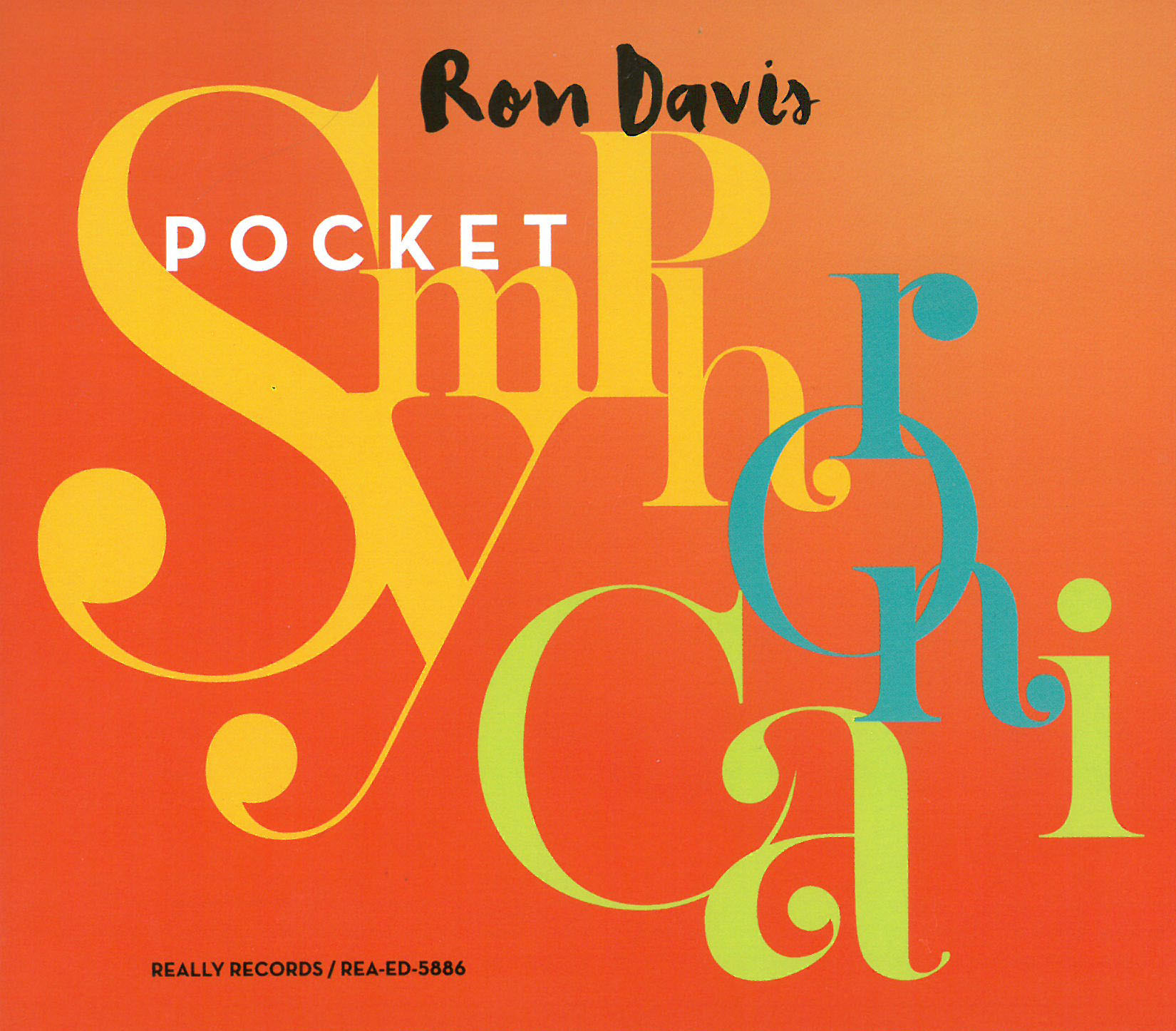
With the release of his tenth recording, eclectic and skilled pianist/composer/producer Ron Davis has reaffirmed his position as one of the most tenacious and engaging musical artists in Canada. Pocket Symphronica embraces the wide range of Davis’ skills and taste (which includes explorations into the milieus of jazz, world, pop/dance and classical musics). Comprised of 11 original compositions (and with Davis performing brilliantly on piano, Fender Rhodes and Hammond B3), this new project is a fresh distillation of his previous, innovative CD, Symphronica – a clever symphonic jazz recording which in turn led to the current chamber-sized, more portable version of the larger ensemble.

Davis has surrounded himself here with a stalwart group of collaborators, including arrangers Mike Downes, Jason Nett and Tania Gill and co-producers Dennis Patterson, Mike Downes, Roger Travassos and Kevin Barrett. A breathtaking string quartet (including genius Andrew Downing on cello) and a first-call core band comprised of guitarist Barrett, bassist Downes and drummer/percussionist Travassos fully manifest Davis’ creative and stylistically diverse visions.

Included in the recording are Davis’ impressions of such far-flung motifs and artists as Lady Gaga (the ambitious Fugue and Variations on Gaga and Poker Face), funk (Gruvmuv – featuring a few face-melters from Barrett), Middle Eastern/Sephardic elements (the exciting and rhythmic D’hora) and a beautifully string-laden and evocative take on the traditional Jewish Passover song, Chassal Siddur Pesach (featuring sumptuous cello work from George Meanwell).

Additional memorable tracks include the uptempo string/piano feature, Presto and the gentle, bossa-infused beauty of Jeanamora. This is a deeply satisfying CD, as well as a portrait of an artist at the peak of his creativity and technical facility.

05 Artie RothDiscern
Artie Roth Quartet
Independent (artieroth.com)

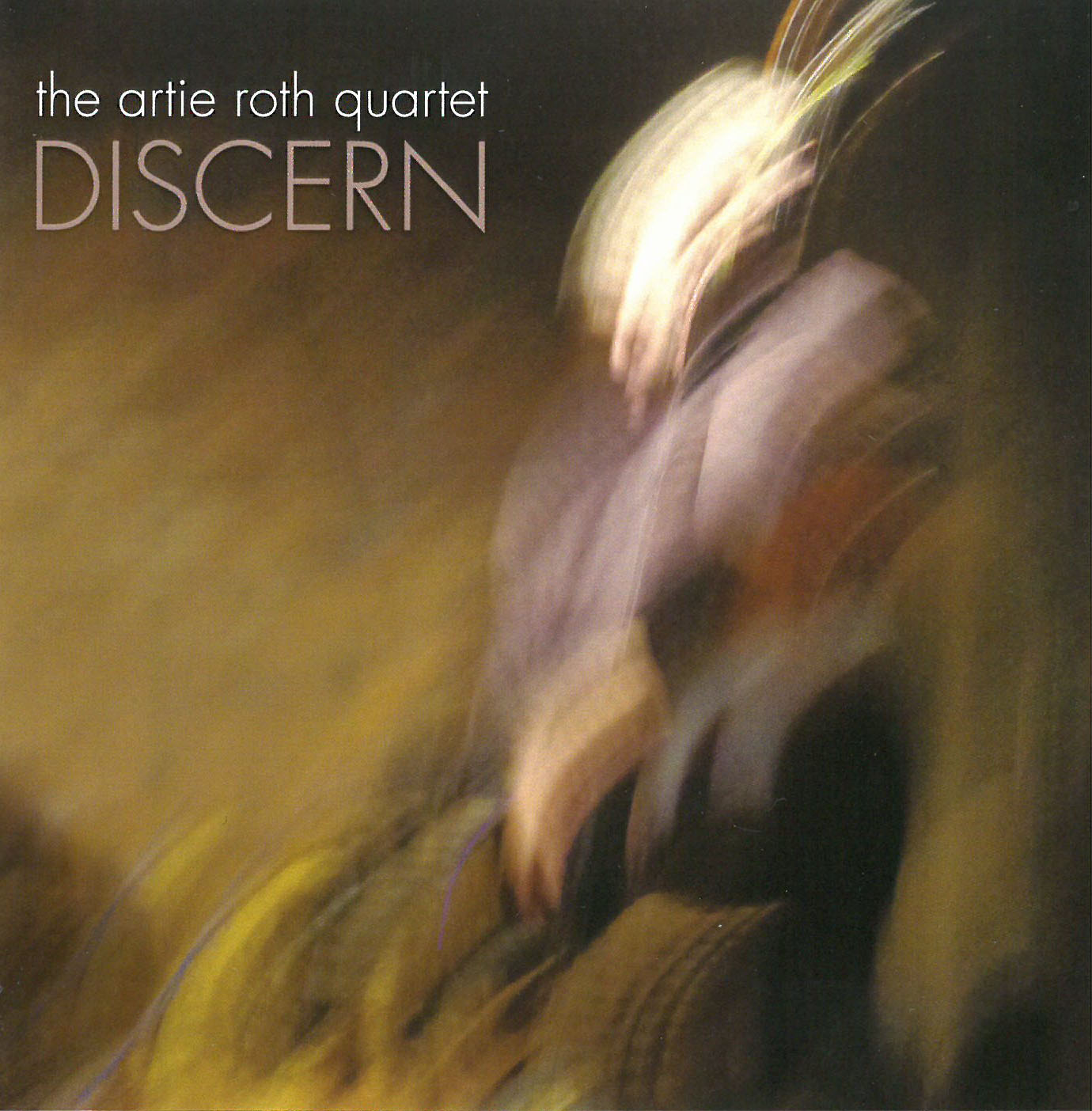
Bassist Artie Roth’s latest offering, Discern, is a highly textured and interactive affair, combining a loose, open feel with remarkably precise and detailed arrangements. The mix of electronic sounds with acoustic instrumentation lends itself to approaches that are both highly varied and coherent. His writing is steeped in the harmonic and rhythmic language of contemporary jazz while retaining a strong melodicism.

The Compromise Blues establishes the tone of the recording with its majestic soundscape and drummer Anthony Michelli’s Elvin Jones-inspired groove. Roth opens the soloing, elaborating on the lyricism of the melody and paving the way for Mike Filice’s tenor sax. Filice’s understated opening lines and relaxed style gathers momentum as he fluidly weaves his way in and out of the tune’s harmony. Guitarist Geoff Young, equally adept in the language of modern jazz, makes use of a rich overdriven tone to build into inspired double time lines. As well, Young’s sonic palette orchestrates the proceedings in ways that become increasingly apparent as the album unfolds.

The textural aspect of the CD comes into full fruition in Still Hear, dedicated to the late drummer Archie Alleyne, a long time cohort of Roth’s. Tenor saxophone and bass clarinet are overdubbed, meshing with Young’s atmospheric guitar colours. Frontline instruments converse and Michelli lets loose over Roth’s ostinato bass figure. This is a beautifully played and produced recording that is a pleasure to listen to.

06 Heillig ManoeuvreWait, There’s More
Heillig Manoeuvre
Independent HM 6015 (heilligman.com)

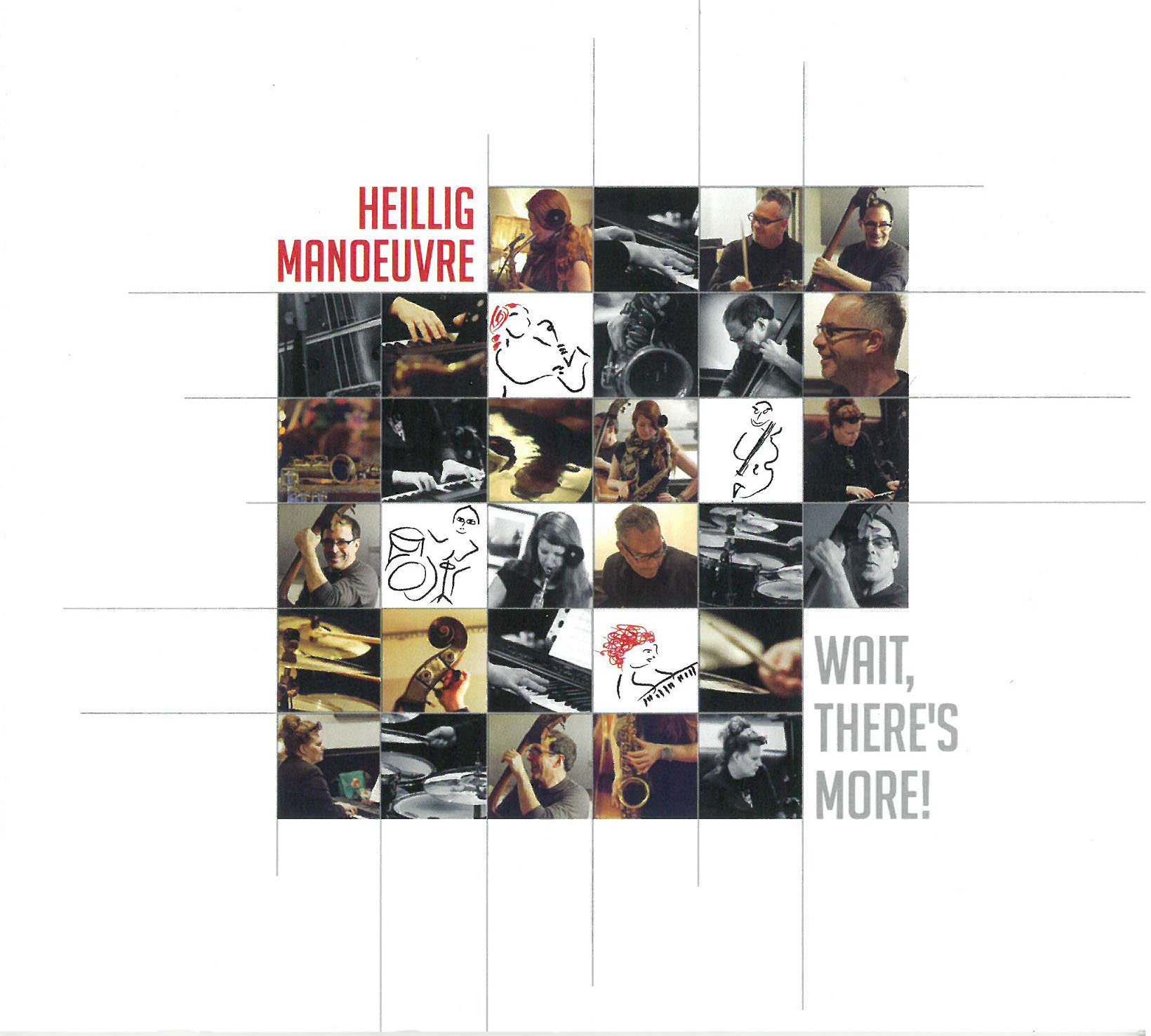
The latest incarnation of bassist and composer Henry Heillig’s Heillig Manoeuvre continues the shift from the group’s earlier more electric sound to the decidedly mainstream bent of Wait, There’s More. The constant in the band’s evolution has been Heillig’s accessible, groove-oriented compositional style. The current group, including longtime Manteca cohort Charlie Cooley on drums, pianist Stacie McGregor and saxophonist Alison Young may be its most compelling lineup to date. Young, who has established herself as an important new player on the scene, brings a confident, fresh voice to the quartet’s blend of bebop, blues and funk. McGregor embraces a similar sensibility, occupying both frontline and rhythm section roles with aplomb.

Wait, There’s More, the opening tune, highlights Heillig’s and Cooley’s ease with classic Latin and swing feels. The drum/sax duet off the top of Young’s solo is a perfect setup for her soulful, swinging style. McGregor follows suit, complementing the sax solo with her own well-rooted sense of the tradition. Arrangements are the key here and solos are concise and to the point without feeling truncated. Wonky Rhomboid features bass and baritone saxophone over a seven-beat figure that slips momentarily into a fast swing, reminiscent of Mingus’ Fables Of Faubus. Young’s composition Waltz For Harriet showcases the composer’s command of nuance with a nod to Cannonball Adderley’s funky exuberance. Groove and fun are the order of the day in this highly satisfying outing.

07 Paul NewmanPaul Newman – Duo Compositions
Paul Newman; Karen Ng; Heather Segger
Independent (paulnewman1.bandcamp.com)

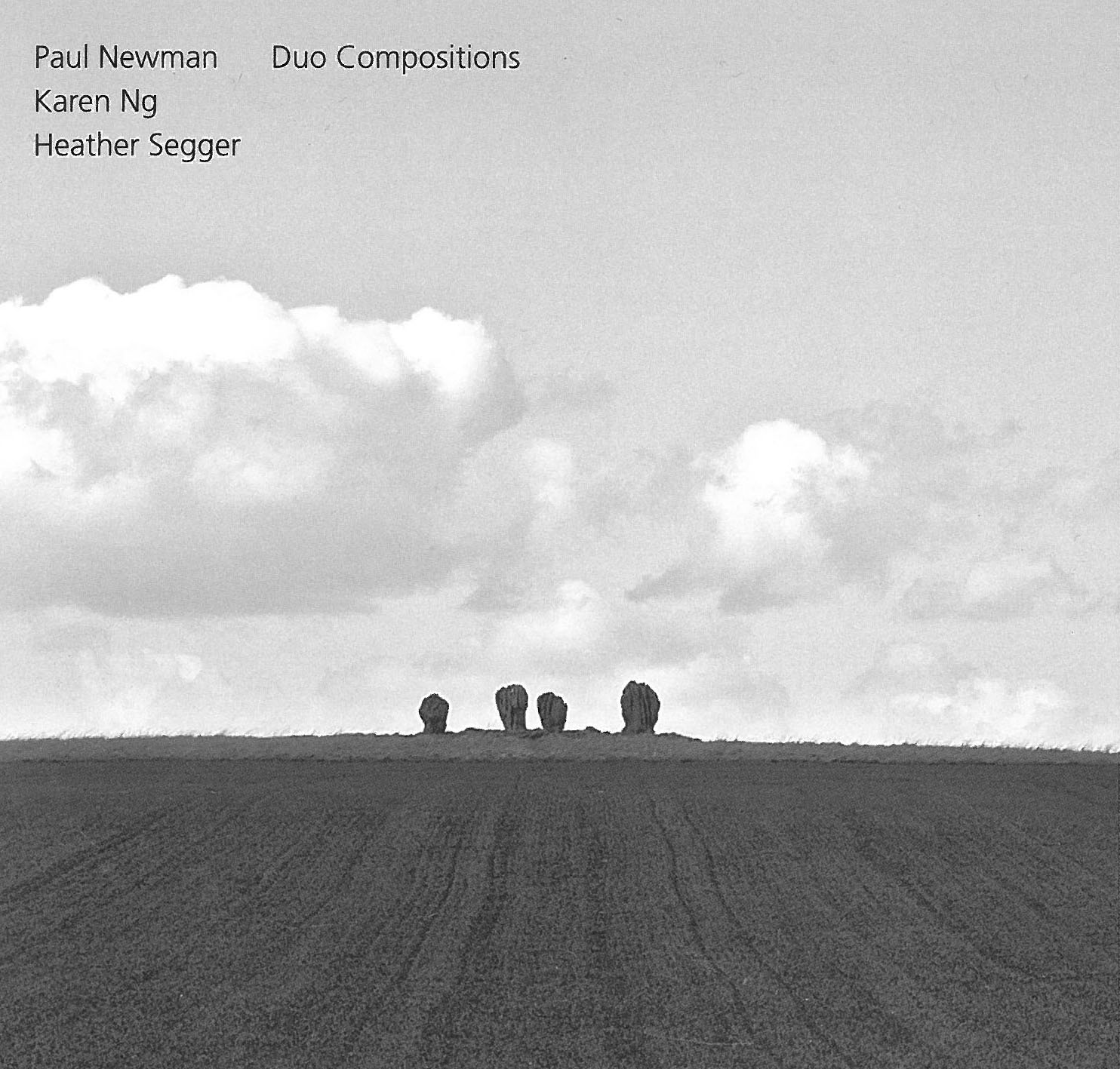
Paul Newman has already proved his credentials at the existential end of the saxophone. Now he turns that angst and all of his utterly brilliant compositional prowess to a pair of daring works for a set of duets – the first featuring his tenor saxophone with the alto of Karen Ng, entitled Strange Customs. The second piece (with Heather Segger’s trombone replacing Ng’s alto) is a furiously innovative one, its title taken from a poem by the quintessential artist, Dianne Korchynski. The music is as arresting as the title: When I Die, Who Will Be There to Count the Rings? While experimental music such as this can be more concerned with process than result, the fruits of Paul Newman’s experiments – especially on Duo Compositions – are brave, gutsy and aurally fascinating. These duets could have been limited by the timbre of each instrument – a tenor and an alto saxophone and a trombone. But Newman’s scores expand the consciousness of the improvising musicians. And you experience this throughout the recording.

These are endlessly fascinating pieces, their broad glissandos and darting arpeggios, products of the fertile imaginations of the improvising musicians, Ng and Segger. The language of Cage might seem to be spoken and sung; that and the gleeful dancing of Cecil Taylor, whose gymnastically inclined pianism appear to inform the improvisations. The scores suggest something equally original, both in the suggested “vocalastics” and instrumental mischief of saxophones and human smears of the trombone. These admirable performances make a worthwhile addition to any collection of music.

09 TenThousandThe Ten Thousand Things
Simon Rose; Stefan Schultze
Red Toucan RT 9350
(www3.sympatico.ca/cactus.red/toucan)

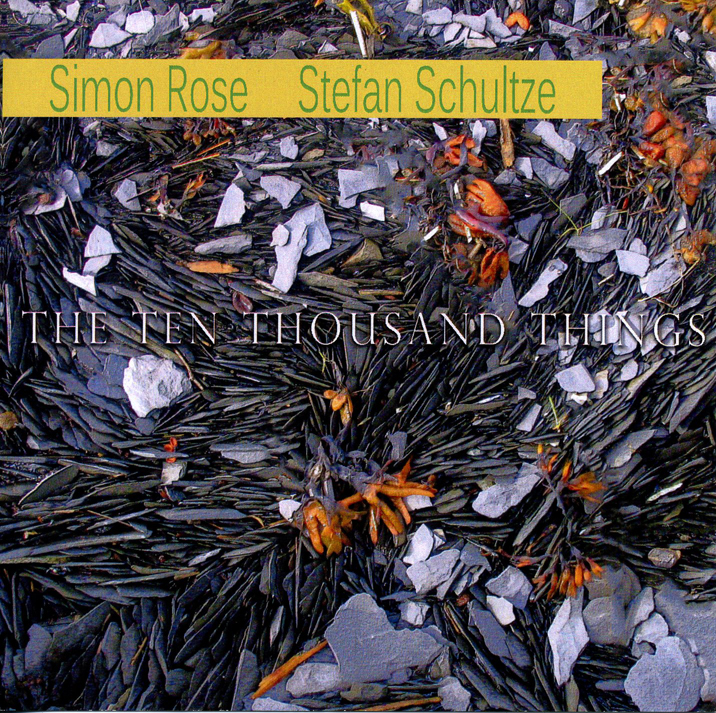
Joining forces to extract as many undiscovered textures from their instruments as humanly possible, British alto and baritone saxophonist Simon Rose and German-prepared piano specialist Stefan Schultze come across less like mad scientists and more like dedicated epistemologists. Like researchers confronted with unexpected by-products from their experiments, they assiduously dissect the results for further trials. And like the Lone Ranger and Tonto riding in tandem, for every extended technique exposed by Rose, from tongue slapping to atonal smears, Schultze has an appropriate response or goad, plucking, stopping, pushing and sliding along his strings, and with implements such as bowls, bells and mashers vibrating atop them.

A track like Magua for instance starts with gargantuan baritone sax textures exposed via bone-dry multiphonics, soon pleasantly liquefying to a jerky slap-tongue rhythm to affiliate with bell-like clangs from the piano’s speaking length. Or consider Schultze’s ring modulator-like reverberations which bring out the mellow underpinning of Rose’s back-and-forth snuffling on Bird Sommersaults. Additionally, harpsichord-like string stopping gets a tougher interface that vibrates the soundboard strings when sympathetically matched with low-pitched reed vibrations on Unstabled. Rose’s split tones allow him to play reed strategies that are simultaneously mellow and rickety or skyscraper high and copper mine low at the same time; while Schultze’s strategies create equivalent concurrent textures inside and outside the piano. Leviathan Blues is a fine demonstration of this. The pianist’s stretching the strings while percussively key slapping creates a rhythmic backbeat which expands to meet the saxophonist’s theme variations that likewise widen and become more dissonant as Rose plays. Altissimo reed agitation brings out equivalent kinetic key pummeling, until a simple pedal-push counter-theme calms the woodwind cyclone enough to move Rose to singular honks that finally meld with solidifying key vibrations.

By the time the last note sounds at the end of this CD’s 11th and final track, if the two haven’t exposed the sound textures from 10,000 things they’ve certainly come close to doing so.

10 Mette Henriette

Mette Henriette
Mette Henriette
ECM 2460/2461 (ecmrecords.com)

Review

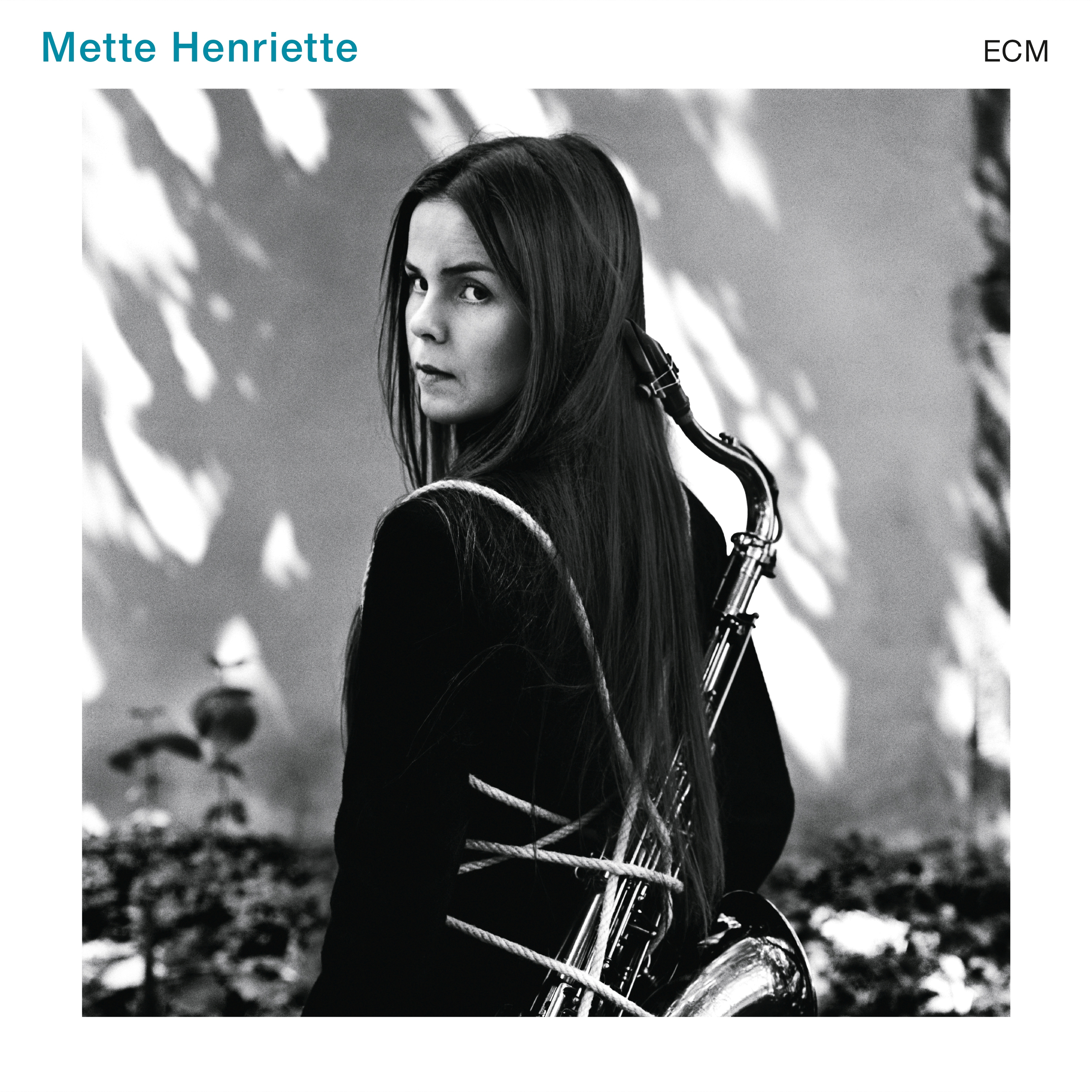
Mette Henriette is a young Norwegian saxophonist and composer and this eponymous two-CD debut is a remarkable statement, whether considered for its skill, beauty or sheer reach. Recorded during 2013 and 2014, the music possesses sufficient breadth to escape any immediate classification, with materials and textures drawn from contemporary composed music, jazz and free improvisation. The two CDs are distinguished by their resources: the first features a trio with pianist Johan Lindvall and cellist Katrine Schiøtt; the second adds 11 musicians including a jazz rhythm section and five more strings.

Henriette does not immediately reveal herself on the first CD as Lindvall and Schiiøtt develop elongated textures that are at once rich and spare, aloof and full of suggestion. There’s a profound state of attentiveness in this music: neither specifically contemplative nor serene, it seems poised to accept revelation. The opening track, So, may suggest something of Arvo Pärt, while later episodes are at times more evanescent still, touching on the whispers and transparency of George Crumb’s Night Music. Henriette’s tenor saxophone is often limited here to long tones and brief phrases, her interest focused on sonority, overtones and the literal sound of air and moisture in the horn.

That role expands, along with the range of compositions, on the second CD, with Henriette’s wellspring of lyricism coming immediately to the fore on the beautiful passé, before the music moves on to darker realms, including the foreboding circus of late à la carte. As a saxophonist, she has a tremendous expressive range. Her timbral focus can suggest tenor sounds as distinct as Stan Getz, Jan Garbarek and Gato Barbieri (the latter in wildheart, a brooding noisefest that invokes the early Jazz Composers Orchestra), while a willingness to explore multiphonics and sheer air suggests affinities with free improvisers. Mette Henriette’s reach is impressive, her grasp even more so.

11 Sonny SharrockAsk The Ages
Sonny Sharrock
M.O.D. Technologies MOD0016 (mod-technologies.com)

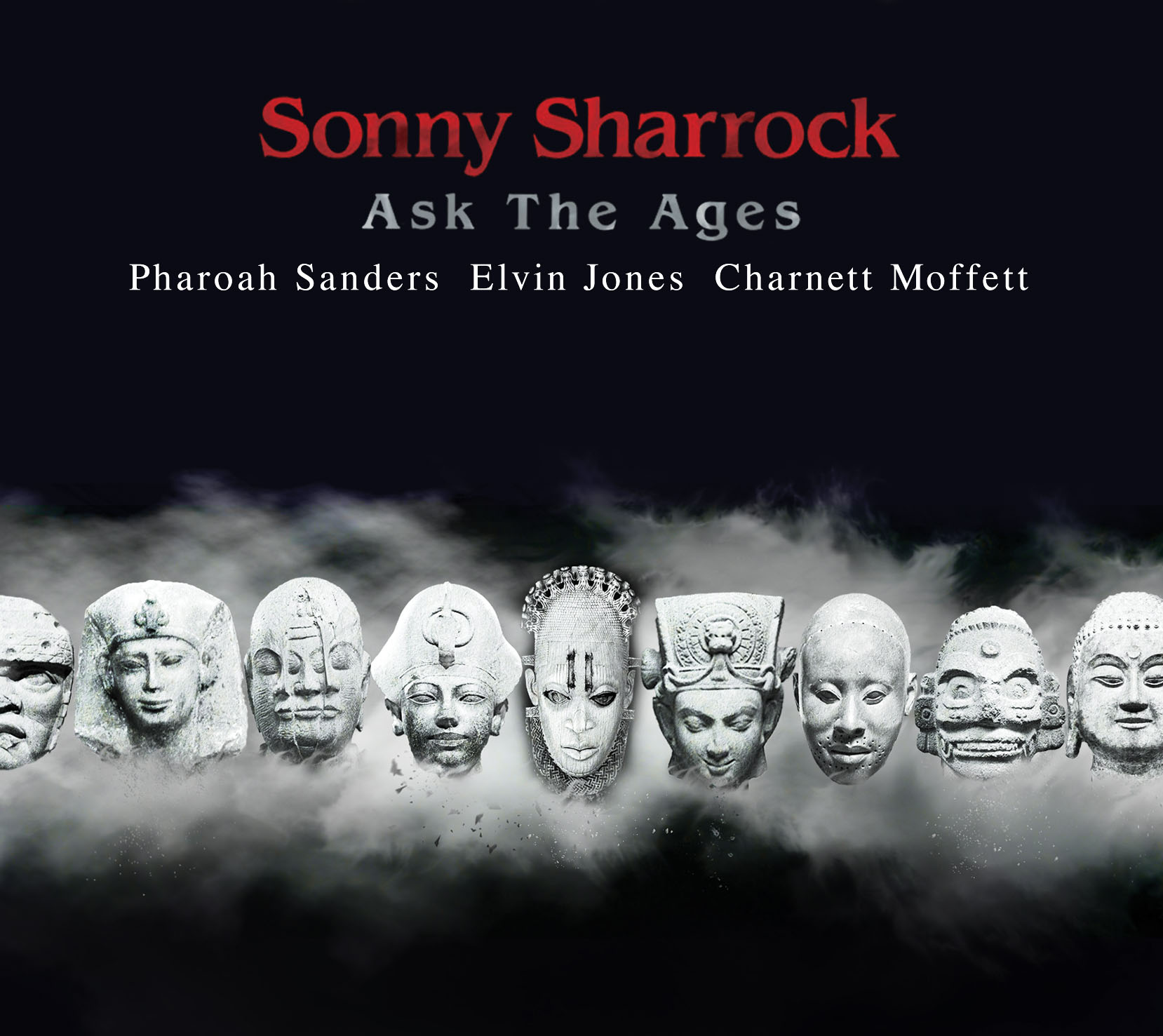
Many creative musicians have struggled to find a supportive audience, and that was certainly the case with guitarist Sonny Sharrock. He emerged in the late 1960s as a school of one, playing free jazz with the raw power of electric blues and the sonic edge of rock guitar, bringing a signal force to recordings like Pharoah Sanders’ Tauhid and Miles Davis’ Jack Johnson. Over the following years Sharrock was in and out of music, until forming an association with bassist/producer Bill Laswell. The fruits of that association included the explosive band Last Exit and this CD from 1991, Sharrock’s last recording as a leader before his death in 1994.

Sharrock has ideal partners here, including saxophonist Sanders, drummer Elvin Jones and the younger bassist Charnett Moffett, all of them sharing a vision of music possessing palpable spiritual power. The music is often anthemic with a sonic density rare in jazz (thanks to Laswell’s production) and an emotional power seldom approached in jazz fusion. There’s a perfect balance between Sanders’ apocalyptic rant and Sharrock’s own wild inventiveness, from the skittering electric chatter of Promises Kept to the illuminated eloquence of Who Does She Hope to Be?, his ringing, sustained sound the closest a guitarist will likely ever get to the spirit of John Coltrane.

The match of the four musicians on each of Sharrock’s six compositions is uncanny, achieving its greatest power on Many Mansions, Sanders wailing above Jones’ thunderous drumming while Sharrock and Moffett generate a pulsing wall of sound.

01 Inuit hymns

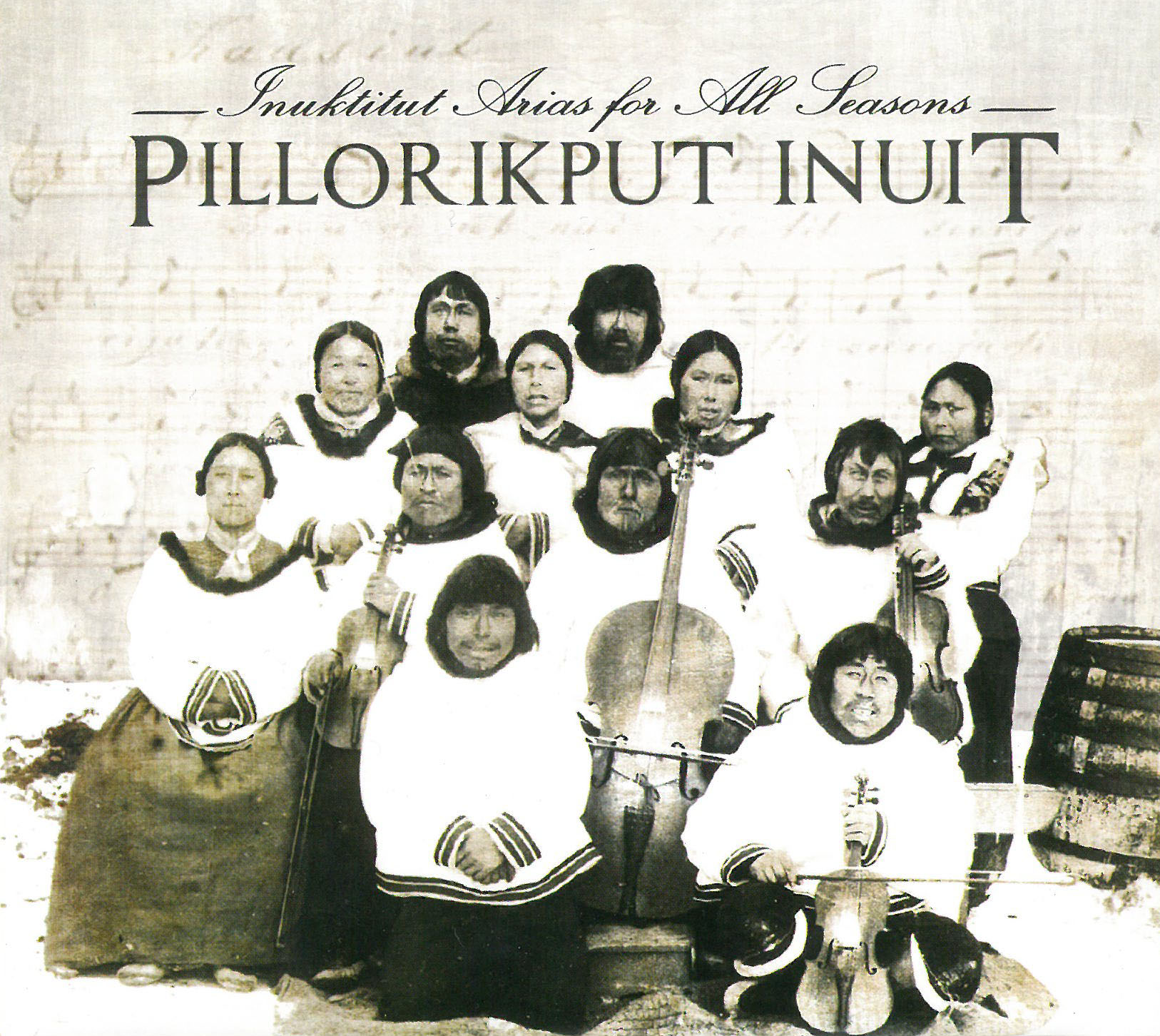
Pillorikput Inuit – Inuktitut Arias for All Seasons
Deantha Edmunds; Karrie Obed; Innismara Vocal Ensemble; Suncor Energy String Quartet; Tom Gordon
Memorial (mun.ca/mmap/back_on_track/pillorikputinuit)

Review

Musicologist and pianist Tom Gordon, professor emeritus of the School of Music at Memorial University in St. John’s, NL has long been fascinated by the sacred music performed by the Inuit Moravians of Northern Labrador. Unlike other Christian denominations, Moravian missionaries not only placed a high value on personal piety and missions, but also particularly encouraged the place of music in worship. Digging to understand this music’s history, Gordon sifted through hundreds of manuscripts in Moravian church archives along the Labrador coast.

What emerged was a rich musical practice with roots back to the 1770s and 1780s when European Moravian missionaries founded settlements in Northern Labrador at Nain, then Okak and Arvertok, the first (of many more) Christian missions to the Inuit in what is now Canada. They came to preach Christianity and one of their prime tools – and legacies – was music.

Quite rapidly the music imported from Europe evolved, in the words of Gordon, as an “expressive practice re-conceived to reflect the spirituality and aesthetic preferences of Inuit musicians.” It was music heard almost exclusively within the modest clapboard walls of Labrador Moravian churches. There it remained, almost unknown to the outside world, until now.

From these communities’ extensive repertoire of brass music, congregational singing and choral music, Gordon has chosen 16 tracks of solo sacred arias and duets, reconstructing them from church manuscripts. The result is the impressively documented and performed CD Pillorikput Inuit (Behold, the People), true not only to the letter of the source manuscripts but also to the Inuit spirit of its performers and tradition-keepers. The music chosen celebrates key annual liturgical events like Christmas and Easter, as well as the community celebrations of Married People’s Day and Church Festival Day.

Featuring the classically trained Inuk soprano Deantha Edmunds and Moravian Inuit music expert Karrie Obed, both singing in Inuktitut, the repertoire includes music by two leading European composers of their day, Handel and Haydn. As expected, songs by lesser-tier yet fascinating Moravian composers such as Johann Daniel Grimm (1719–1760), the American John Antes (1740–1811) and the English clergyman Christian Ignatius Latrobe (1758–1836) are also well represented. Organ, wind and string instrumental accompaniment, and the Innismara Vocal Ensemble from St. John’s provide suitable period support throughout.

What is unique in these performances? It’s not so much the repertoire or the conventional instrumental forces employed. It is rather the deeply heartfelt renditions of these European songs in Inuktitut representing a hybrid Inuit performance practice dating back over 225 years in Canada’s North that I find so moving. It seems to me Pillorikput Inuit represents the tip of the iceberg of the rich Inuit musical heritage the rest of us in the South are just beginning to discover, and enjoy.

09 Rebirth of a NationDJ Spooky – Rebirth of a Nation
Kronos Quartet
Cantaloupe CA21110

If ever there was a potent time to release this masterfully crafted new soundtrack to the D.W. Griffith classic, Birth of a Nation, it would be now during the tumultuous rebuilding of post-George W. Bush America by its extraordinary protagonist Barack Obama. Oblique parallel lines could be drawn through the similarities of situation, except that the country is not fighting a civil war to – among other things – end slavery. However a sharply divided people and flare-ups of discrimination along racial lines, unpopular wars and a dramatic decline in civility towards the presidency might be a likely background for such a soundtrack to what DJ Spooky, the irreverent composer aka Paul D. Miller, calls the Rebirth of a Nation.

The Kronos Quartet seem to be a perfect fit for this musical adventure and the quartet seems to come to terms with DJ Spooky’s mindset as if they were one and the same brain. Their transcendent musicianship, a result of great empathy between the players, provides not just memorable accompaniment to the dramaturgy of Griffith’s visuals but also discreet, seductive and eloquent continuo for Spooky’s own musical instruments that remain stark and dominant throughout the unfolding visuals. Yes, visuals! The soundtrack is accompanied by a wonderfully produced DVD so it is possible to hear the music work in conjunction with the original silent moving picture as well. I like, also the laser-bright instrumentation by Spooky.

Advanced Jazz’s Fountain of Youth

One common shibboleth of mid-20th century creative music was that “jazz was a young man’s art.” Putting aside the sexism implicit in the statement, the idea denied jazz musicians the sort of late career acclaim that notated music masters like Pablo Casals and Vladimir Horowitz enjoyed. Times have more than changed. Expanded from the Baby Boomer cliché that “50 is the new 30” and its upwards affiliations, career longevity is now taken for granted in all serious music. These CDs recorded by improvised musicians in their 70s attest to that.

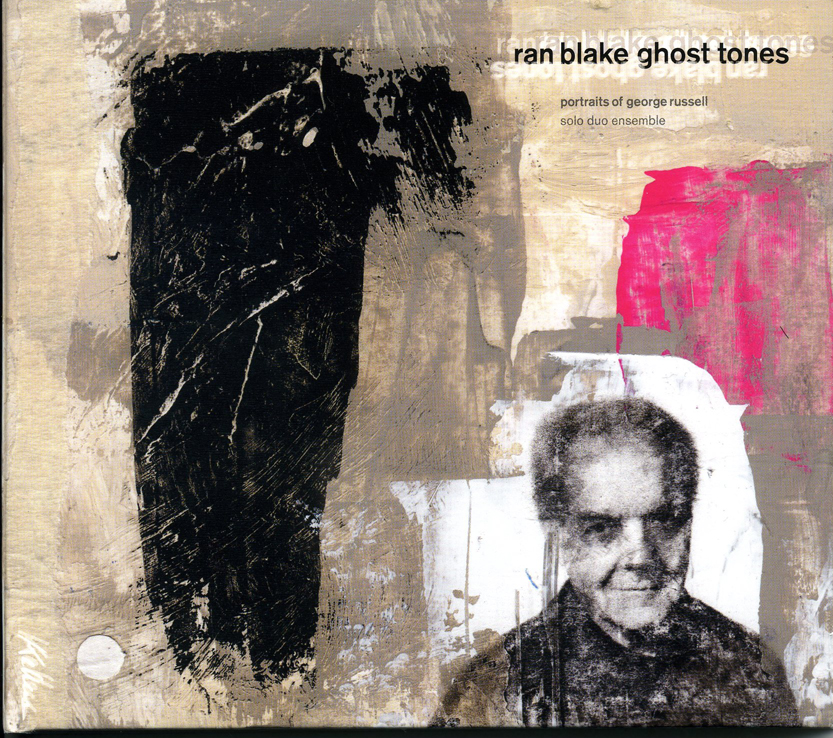
01 Ran Blake Ghost TonesTake American pianist Ran Blake for example, now 80 and usually found in a solo or duo context. But Ghost Tones (A side 0001 a-siderecords.com), created when he was a mere 75, is a more ambitious project. The 17-track CD reconstitutes the compositions/arrangements of jazz theorist George Russell (1923-2009) written for combos or big bands. Blake plays solo acoustic or electric piano framed by interjections from horns, strings, electronics and even a second piano. Like a curator who situates artifacts in modern settings, Blake’s conceptions are both contemporary and faithful to the originals. The Ballad of Hix Blewitt for instance, receives a tripartite setting with Rachel Massey’s violin sounding impressionistic sweetness; Dave “Knife” Fabris’ steel guitar reverberating with country music melancholy; and both setting off Blake’s melody variations. A similar transformation affects You Are My Sunshine which begins and ends with steel-guitar twanging, but is defined by a middle section of dissonant improvisations between Fabris and Blake. Jack’s Blues, in contrast, features Ryan Dugre’s tough guitar chording atop a brass choir, as blues-tinted piano lines weave in and out of the narration like a taxi in heavy traffic, finally introducing blues sensibility in the penultimate moments. The futuristic Stratusphunk is a solo piano feature that invests the theme with call-and-response patterning. yet retains the tune’s linear status. Still, the paramount indication of Blake’s skill appears on the forbiddingly titled Vertical Form VI and the theatrical Lonely Place. On the first, a sense of underlying swing is brought forward with tympani rat tat tats, trombone blats and Blake trading riffs with electric pianist Eric Lane. Lonely Place’s emotional lonesomeness is expressed as Aaron Hartley’s plunger trombone echoes and Doug Pet’s free-flowing tenor saxophone lines are superseded by Blake’s precise and icy harmonies.

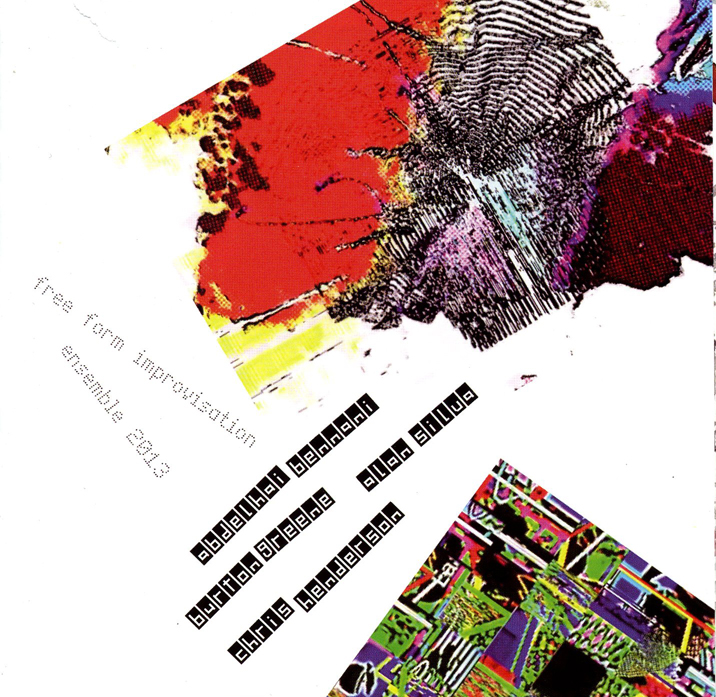
02 FreeFormAnother session honouring a departed improviser, but one who was around to participate in this, his final session, is Free Form Improvisation Ensemble 2013 (Improvising Beings ib 40 improvising-beings.com). To be honest, while the hiccupping smears emanating from French-Moroccan tenor saxophonist Abdelhaï Bennani (1950-2015) are interesting as he meanders through these two CDs of linked abstract improvisations, (as is the low-key drumming of Chris Henderson), the focus lies elsewhere. Like famous actors who make cameo appearances in small films, Bennani’s timbral strategy is cushioned or enhanced due to the contributions of American expatriates, pianist Burton Greene, now 78, and Alan Silva, now 76, who plays orchestral synthesizer. Some of Silva’s electronic double-bass approximations give a few of the 13 live improvisations a percussive rhythm that they otherwise lack. Elsewhere the oscillating sheets of sound the synthesizer produces wash over the other players like a cyclone-induced rainstorm. Silva’s blurry processes cascade in such a way to encourage the saxophonist’s harsh interface. But more often than not, whether in tandem with Bennani or on his own, it’s Greene’s considered patterns which pierce Silva’s murky enveloping sounds like a nail through wood. Almost from the beginning, the pianist’s centipede-like reach sharpens the program as he moves along the keys and symbolically within the cracks between them. With oscillating ponderousness on one side and hesitant reed puffs and percussion clatter on the other, it’s Greene who emphasizes the rhythmic thrust at the end of CD1 to create a groove. On the second disc, as Greene varies his attack from impressionistic classicism to Thelonious Monk-like angularity, he brings out sympathetic low-pitched timbres from Silva which encourage the saxophonist’s whinnying cries, and adds some levity via a lively cadenced solo in the middle. By the concluding minutes, Silva’s mass of processing retreats to bring the saxophonist into the foreground. Reading too much into Bennani’s restrained buzzes and puffs may be like those critics who portend the demise of writers by analyzing their final prose, but Bennani’s leaky, brittle tone does appear to be that of a man playing his own threnody. Luckily, the older but more nimble Silva, and especially Greene, are on hand to add palliative empathy.

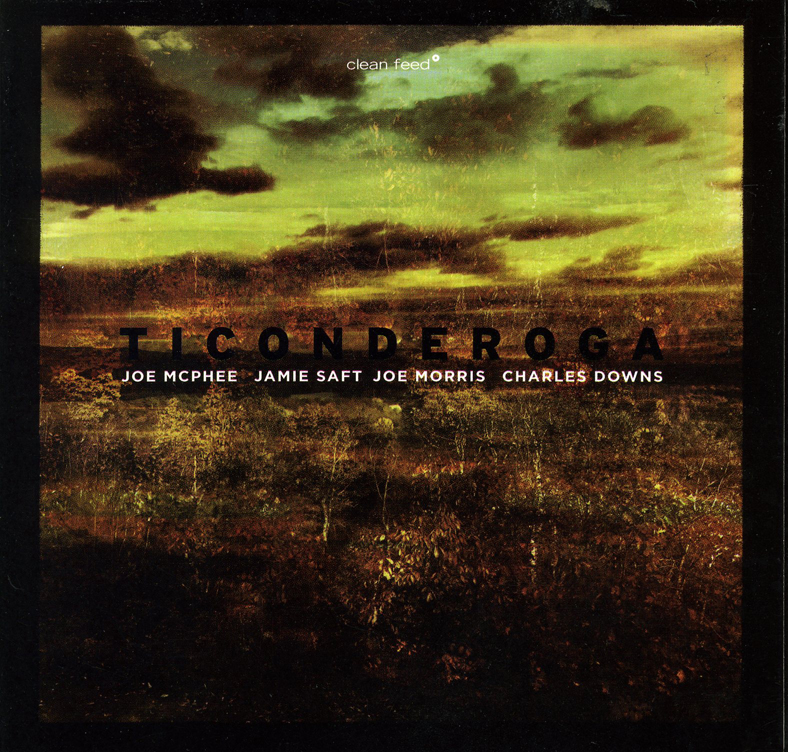
03 TiconderogaAnother improviser whose broad-mindedness and experimentation are not affected by age is saxophonist Joe McPhee, 76, who is recording and playing as prolifically now as he has since he started recording in the late 1960s. Ticonderoga (Clean Feed 345 CD cleanfeedrecords.com) finds him sharing space with a near-contemporary drummer, Charles Downs, 72, as well as pianist Jamie Saft and bassist Joe Morris, who are two or three decades younger. In this classic formation, McPhee glides between tenor and soprano, extruding textures weighty and coarse as lumber, but adding cunning aviary-pitched trills from the smaller horn. Like the mortar that bonds bricks, Downs’ collection of clunks and raps builds a strong foundation able to support any embellished strategy. Similarly, tremolo pulses and bow-sourced sprawls allow Morris to accompany and solo. Though like a tugboat alongside the ocean liner which is McPhee, Saft never abandons the background role. At the same time he uses calming harp-like string plucks and stops as frequently as keyboard tropes. With balladic tones transformed via altissimo screams into dagger-sharp notes as he plots an original path, the saxophonist’s skill is most obvious on Leaves of Certain and A Backward King. Like a mathematician scrawling numerous formulae on a blackboard, McPhee treats the first as a testing ground for exotic multiphonics, stretching out an assembly line’s worth of reed textures to form variegated patterns. Finally, alongside Saft’s yearning glissandi he settles on dual tones created by shouting into his saxophone’s body tube as he masticates the reed. The result is a finale that satisfies with no letdown in excitement. Cheerful, buoyed by Saft’s guileless patterning, A Backward King initially highlights Saft exposing so many keyboard colours that he could be figuratively knitting a rainbow-dyed scarf. A subsequent processional piano statement presages McPhee’s shift from snarky stridency to gentle ballad variations, until the two swiftly reverse the process like a car backing up, and construct a new garment out of half-puckered sax blasts and half inside-piano plucks. Climatically though, Morris’ background patterning produces a pluck so dexterous and directional that it soothes the others into moderato attachment and then silence.

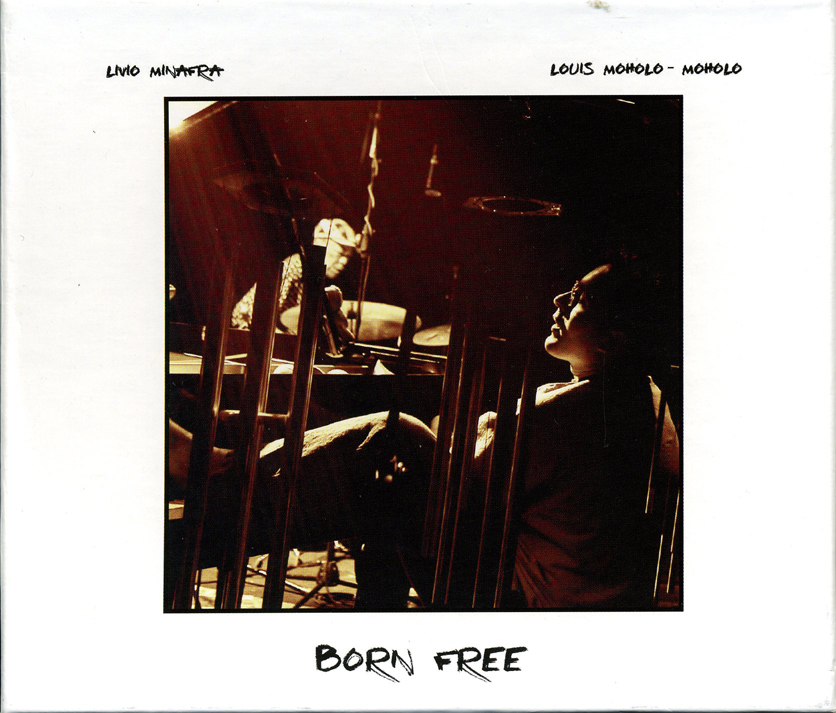
04 BornFreeMore than 40 years separate South African drummer Louis Moholo-Moholo, 75, and Italian pianist Livio Minafra, 33. But during Born Free (Incipit Records 203 egeamusic.com) the South African-Italian duo produces enthralling episodes of cinched improvisations and compositions. The CD attains its creative zenith on Flying Flamingos. Operating like two halves of a single entity, each man’s measured tones slip into place like the bolt in a lock. Exhorted verbally and by Moholo-Moholo’s jouncing minimal drum patterns, Minafra frames his narrative with rugged honky-tonk-like keyboard splashes, only to emphasize a sparkling easy swing in the tune’s centre. This responsive patterning is expressed throughout, as the two move through episodes of almost-Disney-cartoon-like tenderness on a tune such as Angel Nemali; to the repressed ferocity of Foxtrot, where acute drum pummelling and choppy, high-pitched key clattering up the piece’s Charlie Chaplin-like waddle to sprinter’s speed. Like a racing car that accelerates to 160 mph from zero, the two demonstrate similar control on the introductory and closing variations on Canto General, with the pianist’s glissandi at warp speed on the first, and the drummer’s literal collection of bells and whistles prominent on the second. This package also includes a DVD with filmed episodes from the performances plus commentary from both players.

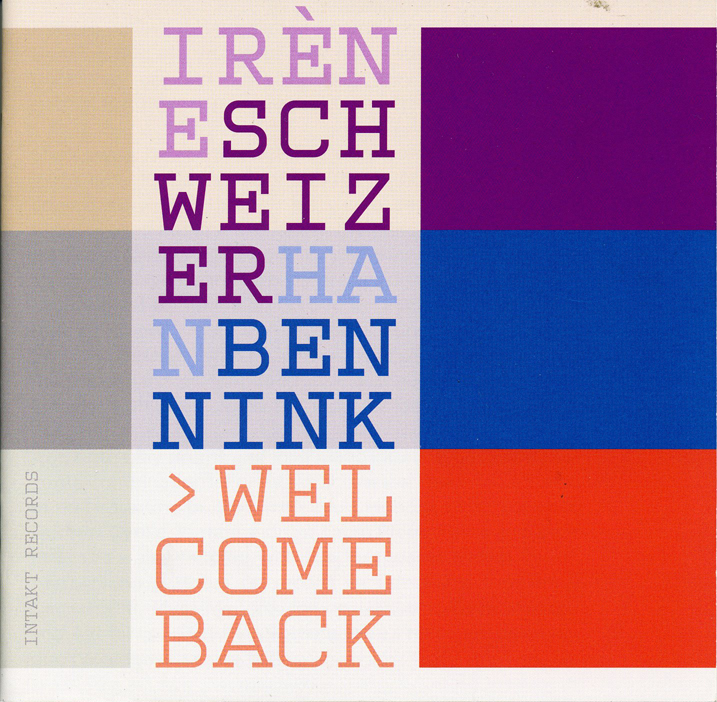
05 WelcomeBackDuring his long career Moholo-Moholo has played in many duo situations including a memorable CD with Swiss pianist Irène Schweizer. Like the other innovators here, Schweizer, 74, divides her work between playing with younger musicians and her contemporaries. Welcome Back (Intakt 254 intaktrec.ch) is titled that way since it’s the second duo CD the pianist and Dutch drummer Han Bennink, 73, have recorded. The first was in 1995. Acting their age, the two breeze through 14 tracks with élan, excitement and empathy. Schweizer’s gracious variations on ditties like Meet Me Tonight in Dreamland are mocked by bomb dropping and whistles from Bennink, but eventually overcome his disruption when she adds a touch of stride. Meanwhile jazz classic Eronel is wrapped up in fewer than two minutes, with the pianist’s pumping percussiveness swinging the contorted line. Like a reveller trying on several masks at a costume party, Schweizer’s original meld of (Thelonious) Monkish angularity, South African highlife and earlier jazz forms are showcased on Kit 4, Ntyilo, Ntyilo and Rag, with the first shapeshifting to staccato hardness abetted by the drummer’s clattering; the second theatrical and respectful, plus ending with the sonic equivalent of a multi-hued sunset; and the last narrative swelling to Willie “The Lion” Smith-style finger-busting swing. She and Bennink confirm their seasoned status on Free for All, gliding over different styles with feather-light key pressure and brush strokes that sound like sand rubbed on the snare, before intervallic leaps expose kinetic underpinnings. But the key track is Schweizer’s own Bleu Foncé. Like a detective series where the characters are known, but surprises appear in every episode, Schweizer’s variations on a traditional blues are true to the form, yet on top of Bennink’s condensed shuffle beat, she adds feints and emphasis to express her creative individuality.

George Bernard Shaw once said that “youth is wasted on the young.” In the case of these improvisers though, when it comes to music at least, age is just a number.

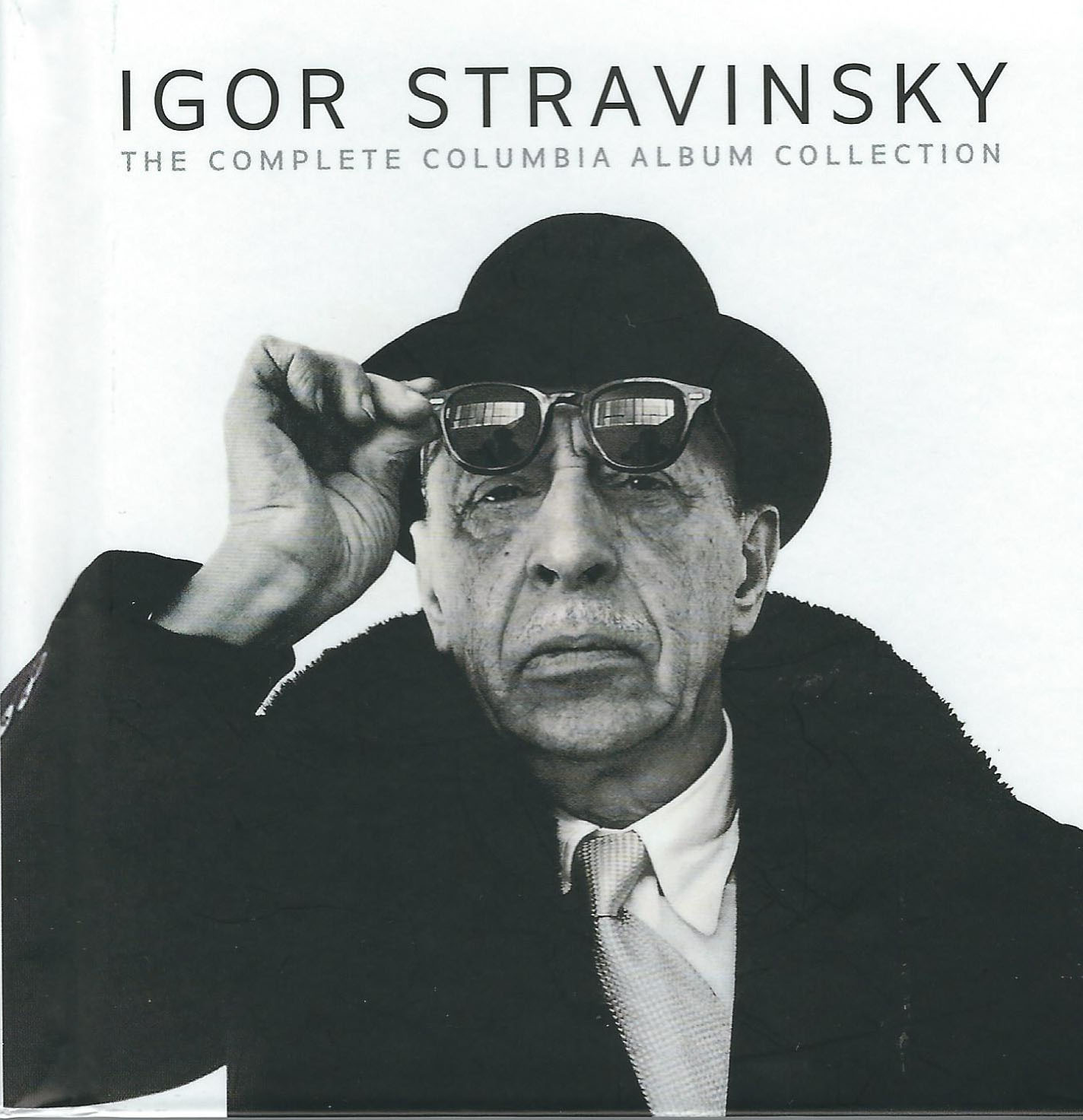
01 StravinskySome years ago during the intermission feature on a recorded concert heard on the car radio, the conductor, a prominent figure, spoke about his meeting with Igor Stravinsky of whom he asked about interpreting Le Sacre du Printemps. “Do not interpret my music,” he was instructed, “just play what I wrote.” Who better to do that than the composer himself. Igor Stravinsky – The Complete Columbia Album Collection (Sony 502616, 56 CDs, a DVD and an informative 262-page hardbound book) contains every one of his own and supervised recordings made by American Columbia and RCA Victor. In 1991 Sony issued Igor Stravinsky: The Recorded Legacy on 22 CDs and it seemed this was to be the final chapter on the Columbia recordings. In the intervening years many changes have enabled Sony to add 34 new CDs. Included now are all 19 monaural recordings including the three RCA CDs with the RCA Symphony Orchestra and all the pre-stereo recordings with the New York Philharmonic, the Cleveland Orchestra, the Metropolitan Opera and soloists including Joseph Szigeti, Vronsky and Babin, Jean Cocteau, Peter Pears, Mitchell (later Mitch) Miller, Mary Simmons, Marilyn Horne, Marni Nixon, Jennie Tourel, Bernard Greenhouse, Vera Zorina and many, many others. Each of these recordings is a part of the Stravinsky legacy.

Stravinsky’s recording of Le Sacre du Printemps from April 1940 with the Philharmonic-Symphony Orchestra of New York was the first Stravinsky work I owned. It became my reference performance and is the first disc in this new box. Listening to the 1960 recording of the 1947 version with the Columbia Symphony Orchestra (disc 22) is a different experience. After the back-in-time opening, The Augurs of Spring – The Dances of the Young Girls bursts forth unmistakably as ballet music and not simply a concert piece. Stravinsky’s propulsive beat and accents are maintained through Part One, percussive, but not confrontational nor blatantly aggressive, yet very potent and authoritative. Many, perhaps most, who acquire this new set will enjoy comparing the early to the later performances of other works. Several are of particular interest: the Symphony of Psalms (1946, NYC) versus the 1963 recording with the Toronto Festival Singers and the CBC Symphony Orchestra; also the suite from The Soldier’s Tale (1954, NYC) versus the brilliant 1961 Hollywood complete recording, abstracted as a Suite – later the complete score with narration by Jeremy Irons was issued. The Ebony Concerto’s over-rehearsed, uninspired performance from 1946 with the Woody Herman Orchestra is brought to life in 1965 by Benny Goodman and a jazz combo. Stravinsky is also heard in rehearsals, as pianist and in conversation and in a monologue, “Apropos of Le Sacre,” that clears up a few events. All the monaural recordings, from original discs and tapes, have been transferred employing 24/96 technology resulting in the highest fidelity to the originals.

Audiophiles may remember when it was de rigueur to vehemently denigrate Columbia for multi-miking that, they claimed, perverted the real sound. Listening to these priceless, landmark performances in such wide-range, you-are-there 3D realism, will certainly put a lie to that. The accompanying DVD, Stravinsky in Hollywood, is the film by Marco Capalbo that takes us from Stravinsky’s great expectations there in 1939 through to the composer’s last days in 1971 in NYC where he, with his longtime friend Robert Craft, mused over the scores and recordings of Beethoven’s late string quartets.

Review

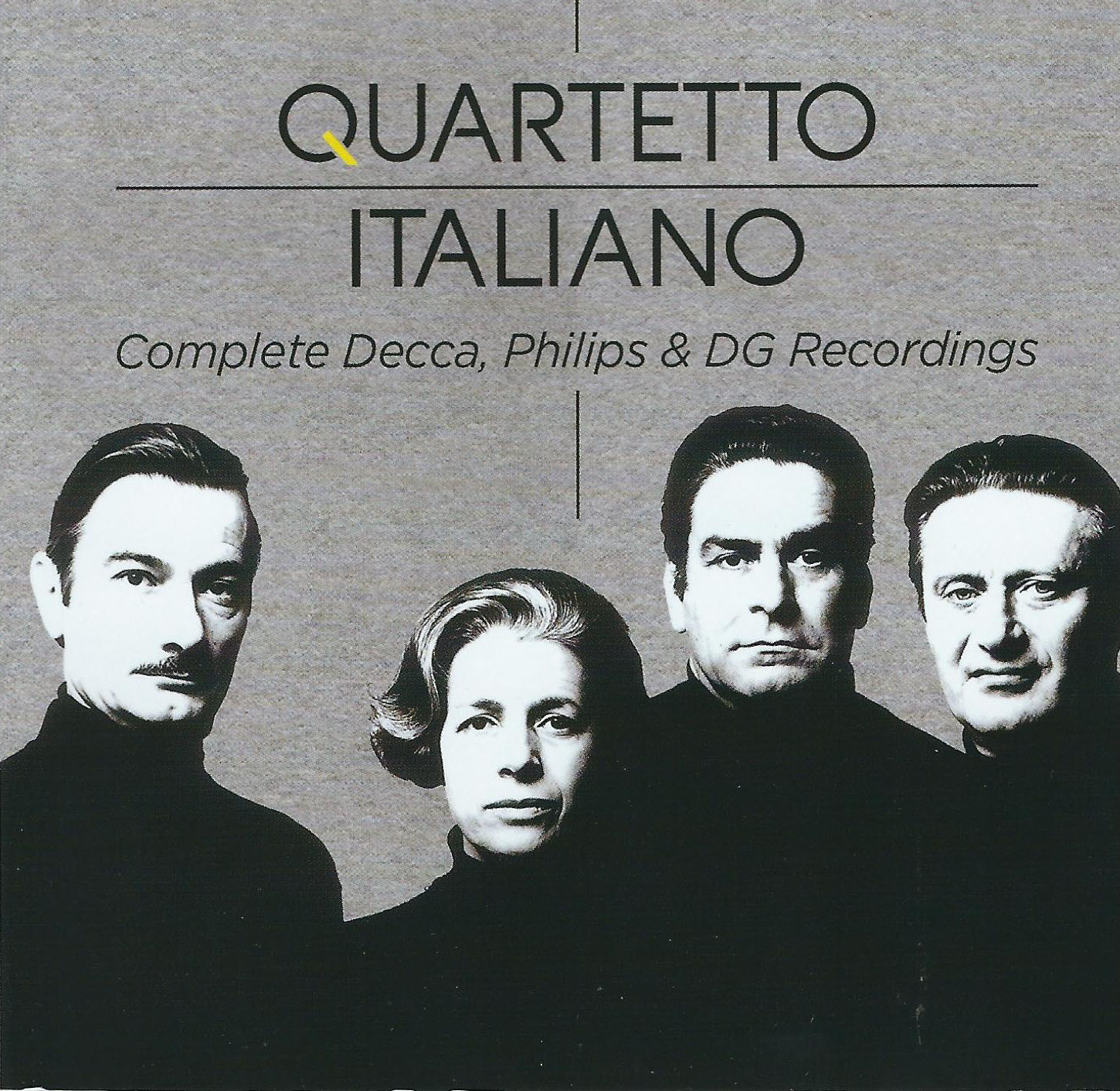
02 Quartetto ItalianoA most unexpected sequence of events occurred last week … I opened the 37-CD reissue of the Quartetto Italiano intending to check out the repertoire and listen to a piece or two for now, intending to get into it later. My big mistake was that I started with the Beethoven Op.132 and Grosse Fuge Op.133. Later became sooner, and sooner became now, and immediately I found myself embarking on the complete Beethoven cycle, all 16 quartets. From the very first bars their security, their astonishing togetherness and sonorities announce that they are not simply four musicians playing but an entity: a perfect string quartet. The group first met in Sienna in 1942 and in 1945 they came together as the Nuovo Quartetto Italiano, later dropping the Nuovo. They toured extensively and in 1951 they played in Salzburg where they impressed Wilhelm Furtwängler. The conductor convinced them to play with a greater freedom of expression by running through a performance of the Brahms F Minor Quintet with Furtwängler himself at the piano. This was a critical turning point in their career following which they introduced new rhythmic freedoms to their innate classicism. In 1965 they began their long association with Philips recording the Debussy and Ravel quartets. Included in this collection of superlative performances are the complete quartets by Beethoven, Brahms, Mozart, Schumann and Webern together with quartets by Haydn, Schubert, Boccherini, Dvořák, etc. and the Brahms F Minor Quintet with Pollini in 1980. The Quartetto Italiano disbanded in 1987.

Find complete details of Quartetto Italiano – The Complete Decca, Philips and DG Recordings (Decca 478884) here.

03a Chico Hamilton 1As the big-band era passed into history through the 1950s, new schools of jazz had already emerged, from bebop at one end of the spectrum to the cool school. Cool was characterized by easy tempos in arrangements that often had a “classical” feel as exemplified by Dave Brubeck, the Modern Jazz Quartet, Gerry Mulligan and others. Of interest were the various groups formed by Chico Hamilton.

Drummer Foreststorn “Chico” Hamilton (1921-2013), in his early musical career, had played with Charles Mingus, Illinois Jacquet, Dexter Gordon and others. Engagements with Ellington, Lionel Hampton, Nat King Cole, Billie Holiday and six years with Lena Horne attest to his proficiency and the inevitability of him forming his own groups.

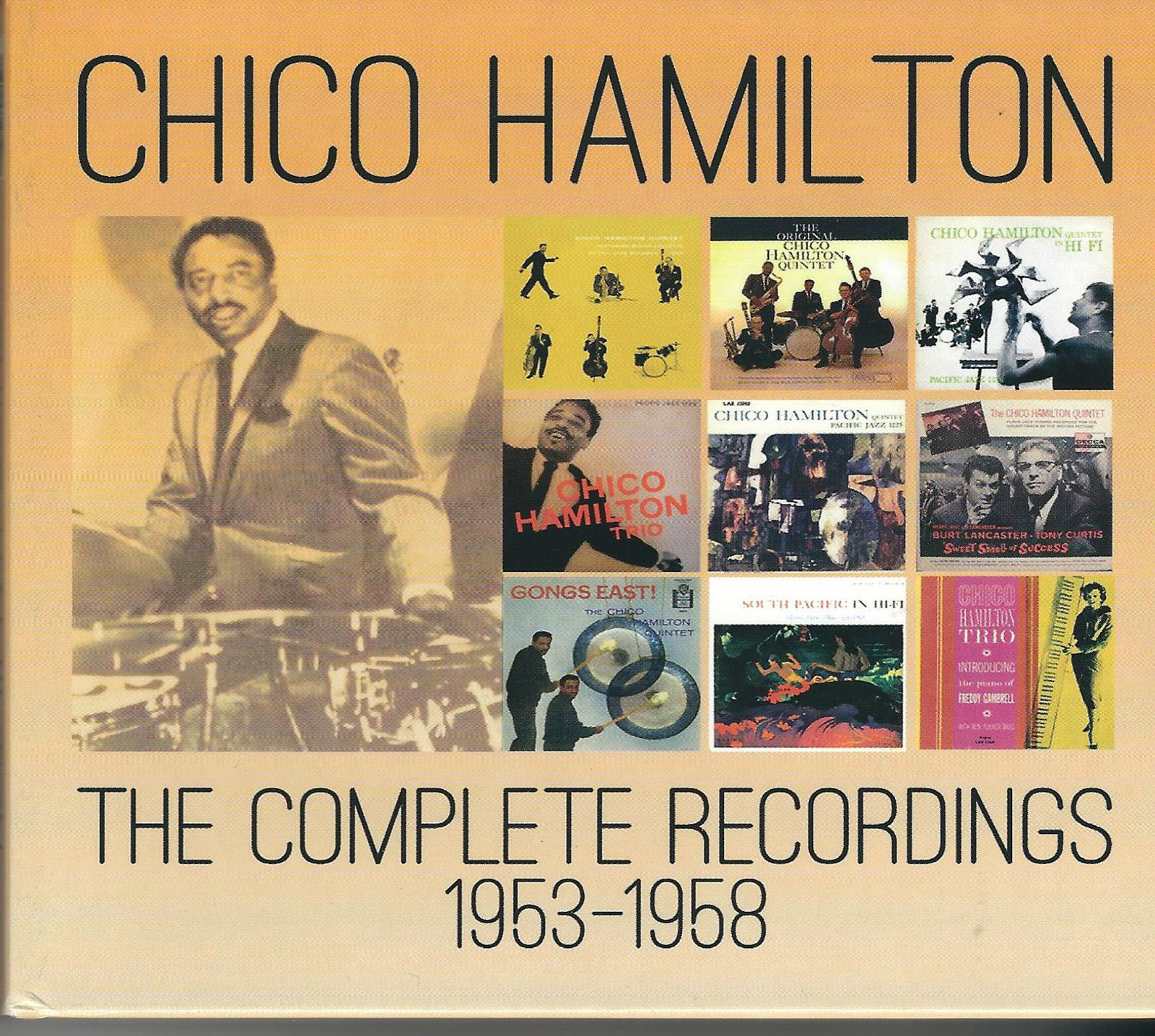
03b Chico Hamilton 2After leaving the original Gerry Mulligan Quartet in 1953, Hamilton made his first recordings for Pacific Jazz as the Chico Hamilton Trio with bassist George Duvivier and guitarist Howard Roberts. So successful was that disc that in 1955 the Chico Hamilton Quintet was formed. “At the outset, I didn’t quite know what I wanted. I only knew that I wanted something new, a different and, if possible, exciting sound.” The quintet comprised cellist Fred Katz; Buddy Collette, flute, clarinet, alto and tenor sax; Jim Hall, guitar and Carson Smith, bass. In 1956 Paul Horn replaced Collette and John Pisano replaced Hall. Their arrangements of original and standard repertoire were all in-house and except for their ghastly versions of all the tunes from South Pacific, the performers communicate a joie de vivre as fresh as yesterday and totally satisfying

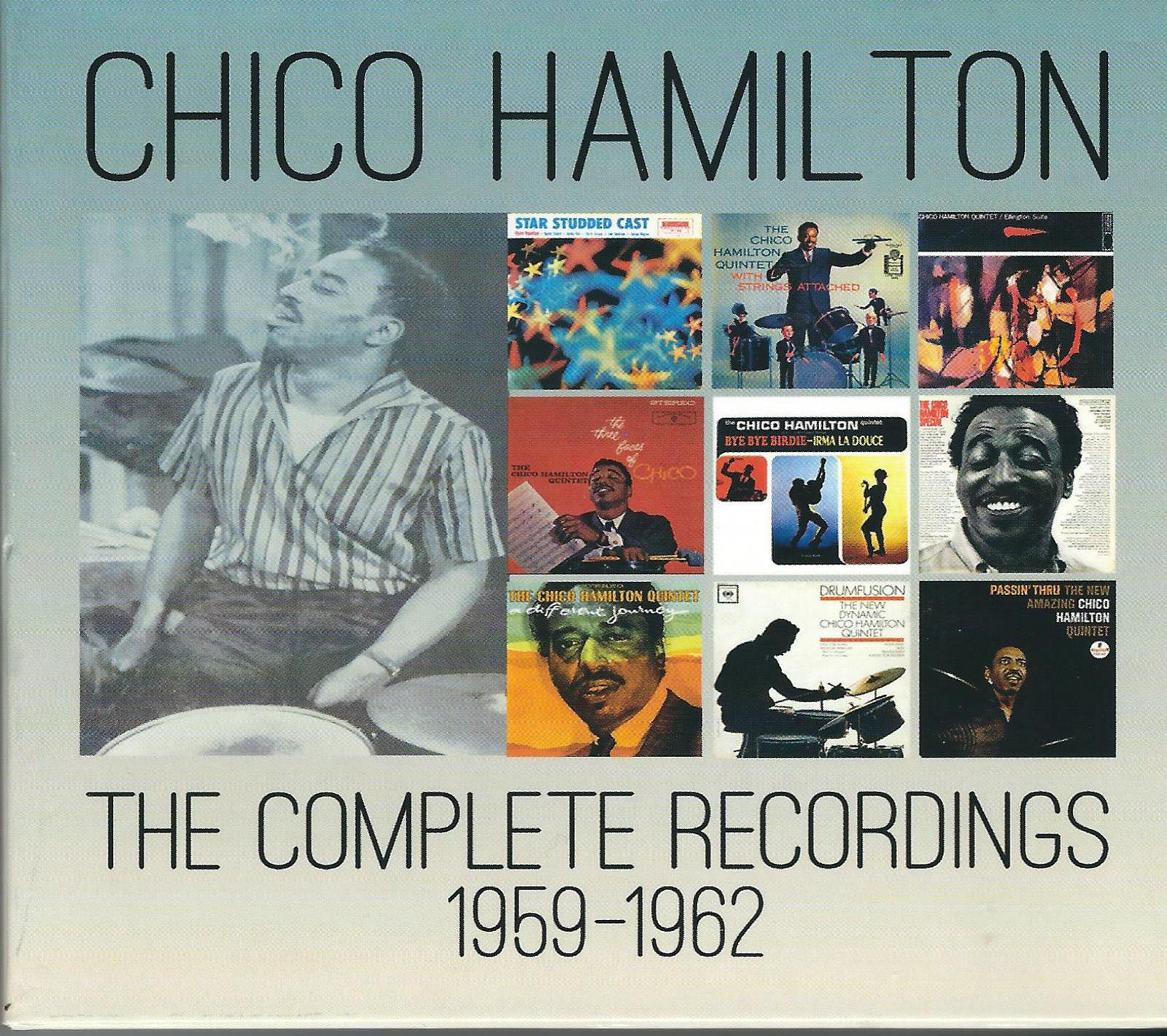
The1955 to 1959 Quintet recordings are included in Chico Hamilton – The Complete Recordings Volume 1 together with the earlier trio sessions and others totaling 98 tracks (Enlightenment ENSCD9057, 5 CDs). Volume Two contains all 84 recordings by Hamilton’s various groups on assorted labels issued on ten LPs from 1959 to 1962 (Enlightenment ENSCD9058, 5 CDs). Fans of West Coast jazz will get much pleasure from these two sets, as will all those who derive pleasure from cool, chamber jazz. The transfers are exemplary.


01 Mozart DavideMozart – Davide Penitente
Académie équestre de Versailles; Bartabas; Mozartwoche Salzburg; Les Musiciens du Louvre; Marc Minkowski
Cmajor
7331608

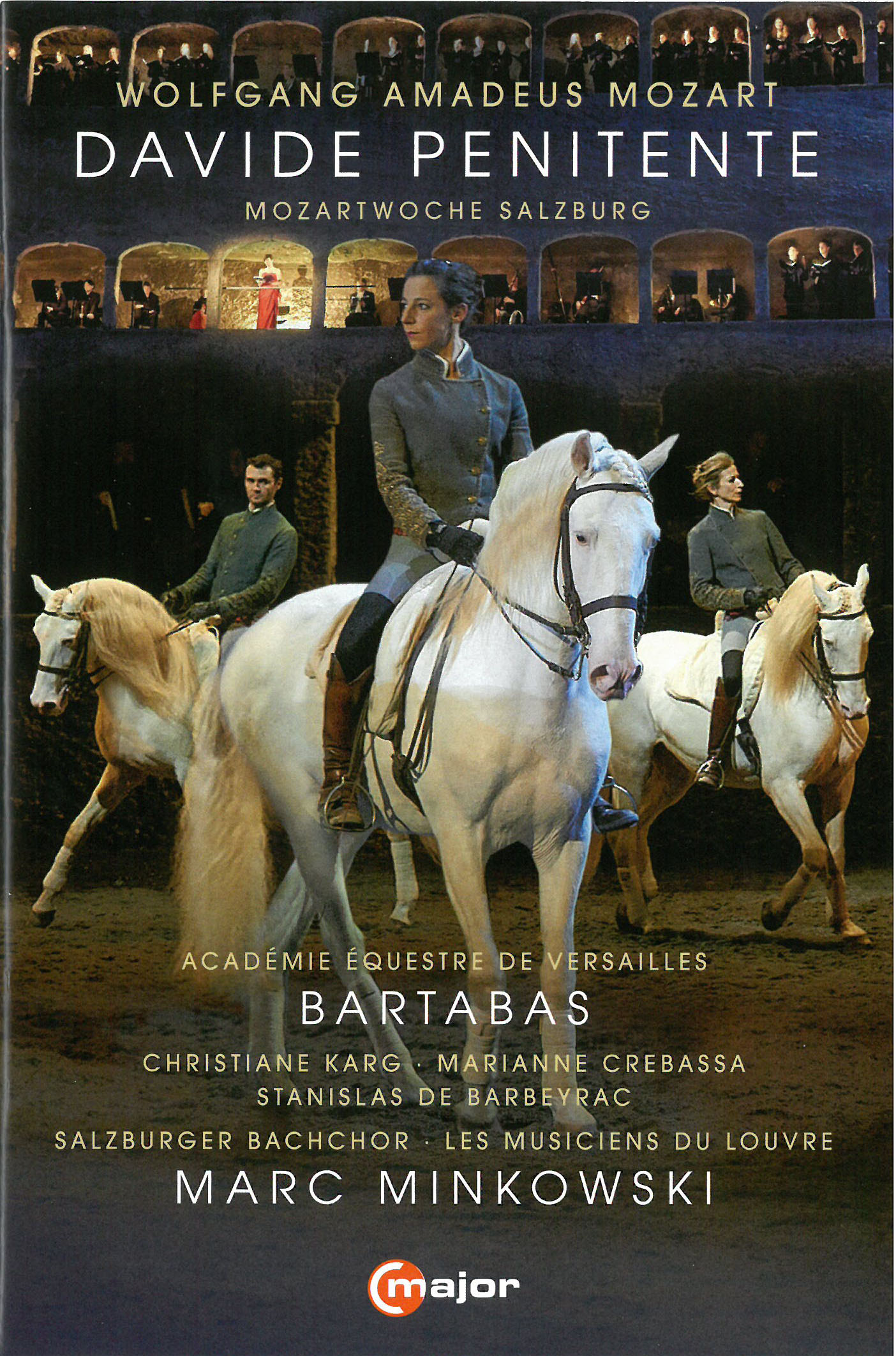
Mozart's Davide Penitente dates from 1785. It is a reworking of the Mass in C Minor, K427, but with two newly composed arias for the soprano and the tenor who had sung in the premiere of The Abduction from the Seraglio. The practice of staging works which were never meant to be staged is now quite common but there is a difference here: the soloists, the instrumentalists and the choir (all very good) perform the work as an oratorio, while the acting is done by horses and their riders, who move rhythmically to Mozart's music as choreographed by Bartabas. There are 12 horses, fine-looking animals. They all have names and receive equal billing with the musicians. A nice touch that.The soloists are soprano Christiane Karg, mezzo Marianne Crebassa and tenor Stanislas de Barbeyrac. There is an error in the booklet which states that both the arias Lungi le cure ingrate and Tra l'oscure ombre funeste are performed by the mezzo. She sings the first aria but it is the soprano who performs the second.This version of Davide Penitente was first performed in the Felsenreitschule in Salzburg in January of this year. It was a great success. I imagine that if I had been present in Salzburg last January, I might well have been swept up in the excitement. Just seeing the DVD was a bizarre experience however, and if I want to hear the work again I am likely to go back to the CD in which it is performed by La Petite Bande, conducted by Sigiswald Kuijken (on Deutsche Harmonia Mundi).

02 Brahms RequiemBrahms – Ein Deutsches Requiem
Kühmeier; Finley; Netherlands Radio Choir; Royal Concertgebouw Orchestra; Mariss Jansons
RCO Live RCO 15003

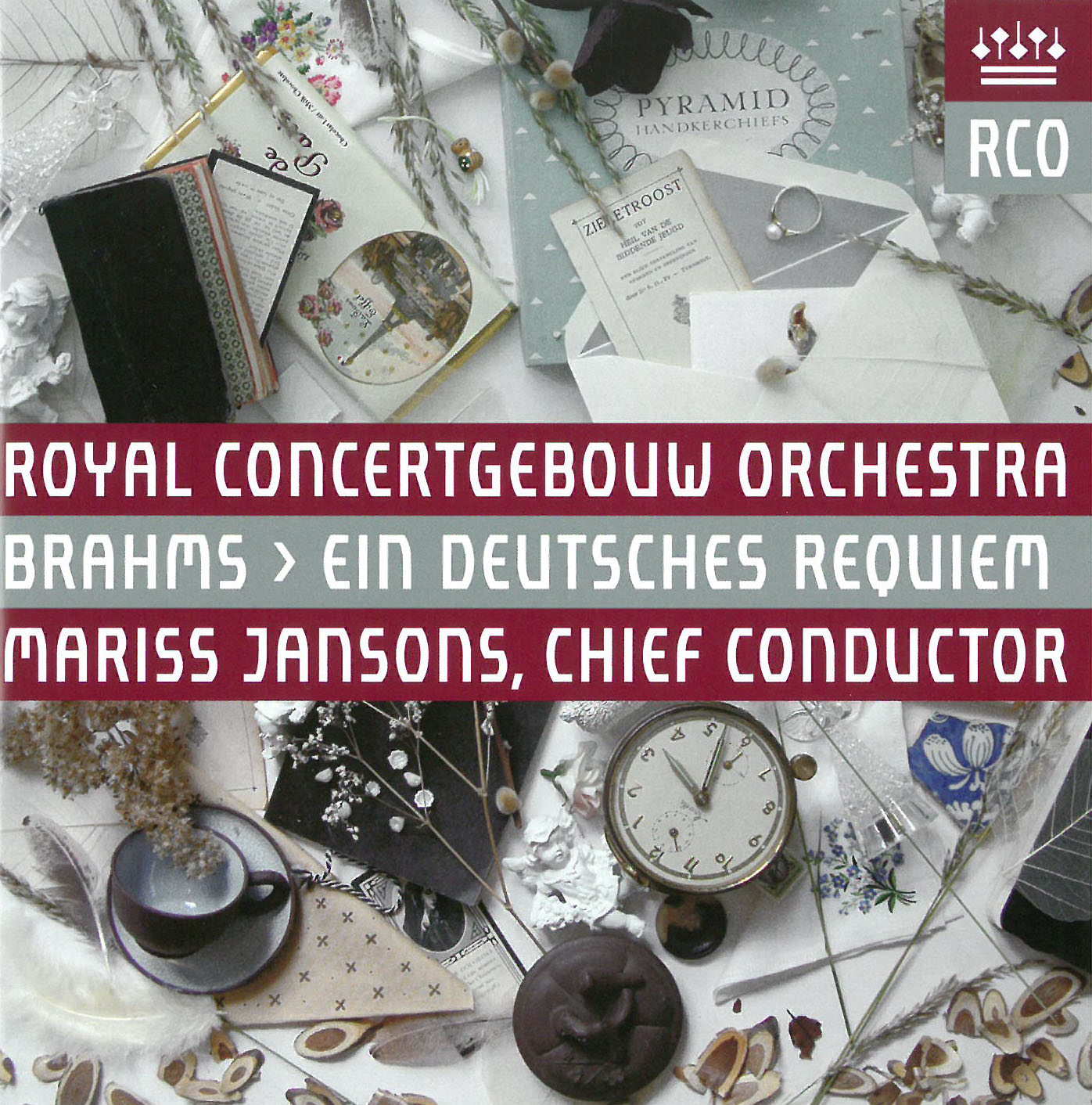
Although Requiem, a funeral mass, is most commonly associated with Mozart, (who died before finishing his own setting), most versions of Requiem were rarely written in the shadow of a musician’s impending death. True, Verdi composed his relatively late in life at 60, but he lived for another 27 years. In fact, most composers were very young when they took on this heavy subject. Berlioz, Bruckner, Cherubini, Delius, Duruflé, Dvořák, Fauré, Michael Haydn and Reger all composed either Roman Catholic or Protestant Requiems.

Ein Deutsches Requiem stands out because of its superb choral writing, incomparable soprano aria Ihr habt nun Traurigkeit and the moving baritone solo parts in the third and sixth movements. Brahms, only 23 when he started crafting the work, resumed composition after his mother’s death. Encouraged by Clara Schumann, Brahms presented a three-movement work, but this was welcomed with scorn. Only in 1867, did a six-movement work receive a triumphant reception. The work’s profile only increased when a year later he added the aforementioned solo for soprano as part number five.

It is a meditative piece, serious in its sorrow, yet lacking the transcendence of Fauré’s Requiem. The soloists become the pallbearers of this solemn mass, guiding the choral procession from the blessing of the suffering survivors to benediction of the dead. Despite being culled from the Old Testament and the Gospels, the text has been criticized for not being overtly religious. This speaks to Brahms’ humanistic, rather than religious, viewpoint. Both Ginia Kühmeier and Gerald Findley stun with their vocal performances, the latter entering a period of his life when his baritone voice moves into being defined as a bass.

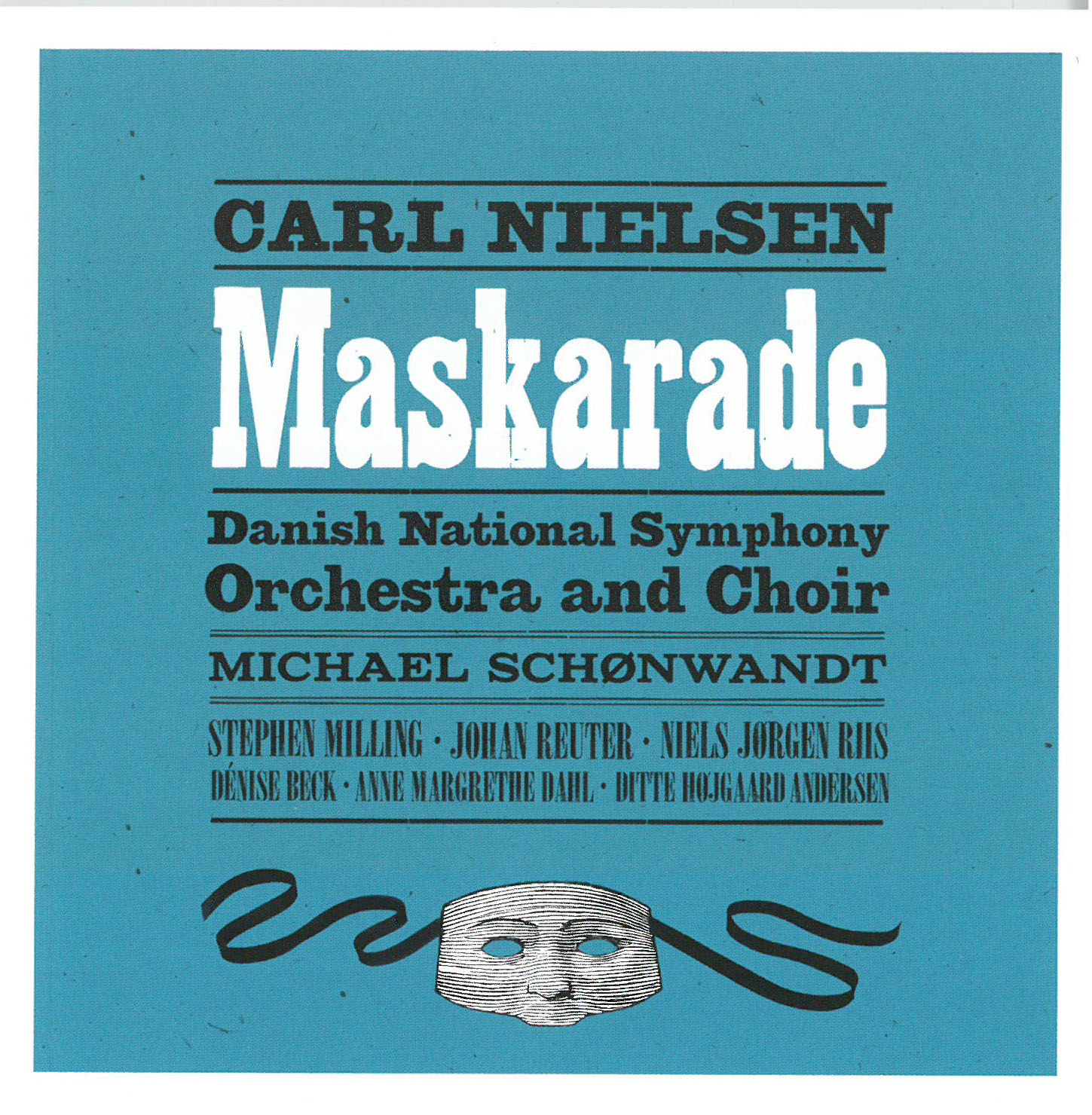
03 Nielsen Maskarade

Nielsen – Maskarade
Milling; Reuter; Riis; Beck; Dahl; Andersen; Danish NSO & Choir; Michael Schonwandt
dacapo SACD 6.220641-42

Review

This remarkable recording of Denmark’s beloved “national opera” is a superlative tribute marking the 150th anniversary of the birth of composer Carl Nielsen (1865-1931). Nielsen’s second opera, Maskarade, received its Copenhagen premiere in 1906, at a time when the composer was employed as a second violinist in the Royal Danish Theatre. Quite unlike the dramatic symphonies of his maturity, this is music of lightness and charm, immediately accessible and immensely enjoyable. The opera’s contrived comedy of mistaken identities serves as mere scaffolding for a libretto that revels in a peculiarly Danish sense of the absurd. Niels Jørgen Riis plays Leander, forced into a marriage with Leonora (Dénise Beck) by his buffoonish father Jeronimus (Stephen Milling). He eventually comes to realize during the celebrations at the masked ball that the disguised woman he truly desires is Leonora herself. Johann Reuter plays Leander’s servant Henrik, who also has his eye on Leonora’s servant, Pernille (Ditte Højgaard Andersen).

The conductor Michael Schønwandt is a magisterial proponent of the score, a work he committed to memory at the age of ten. The studio-quality SACD recording is greatly enhanced by the superb acoustics of the new Danish Royal Koncerthuset. The orchestra, chorus and the cast drawn from the Royal Danish Opera are uniformly excellent throughout. A full libretto is provided; the English translation is identical to that of the newly edited score provided by the Carl Nielsen Project of the Music Department of the Royal Danish Library, freely available as a PDF download at bit.ly/1X2vvUO courtesy of the Danish Centre for Music Publication.

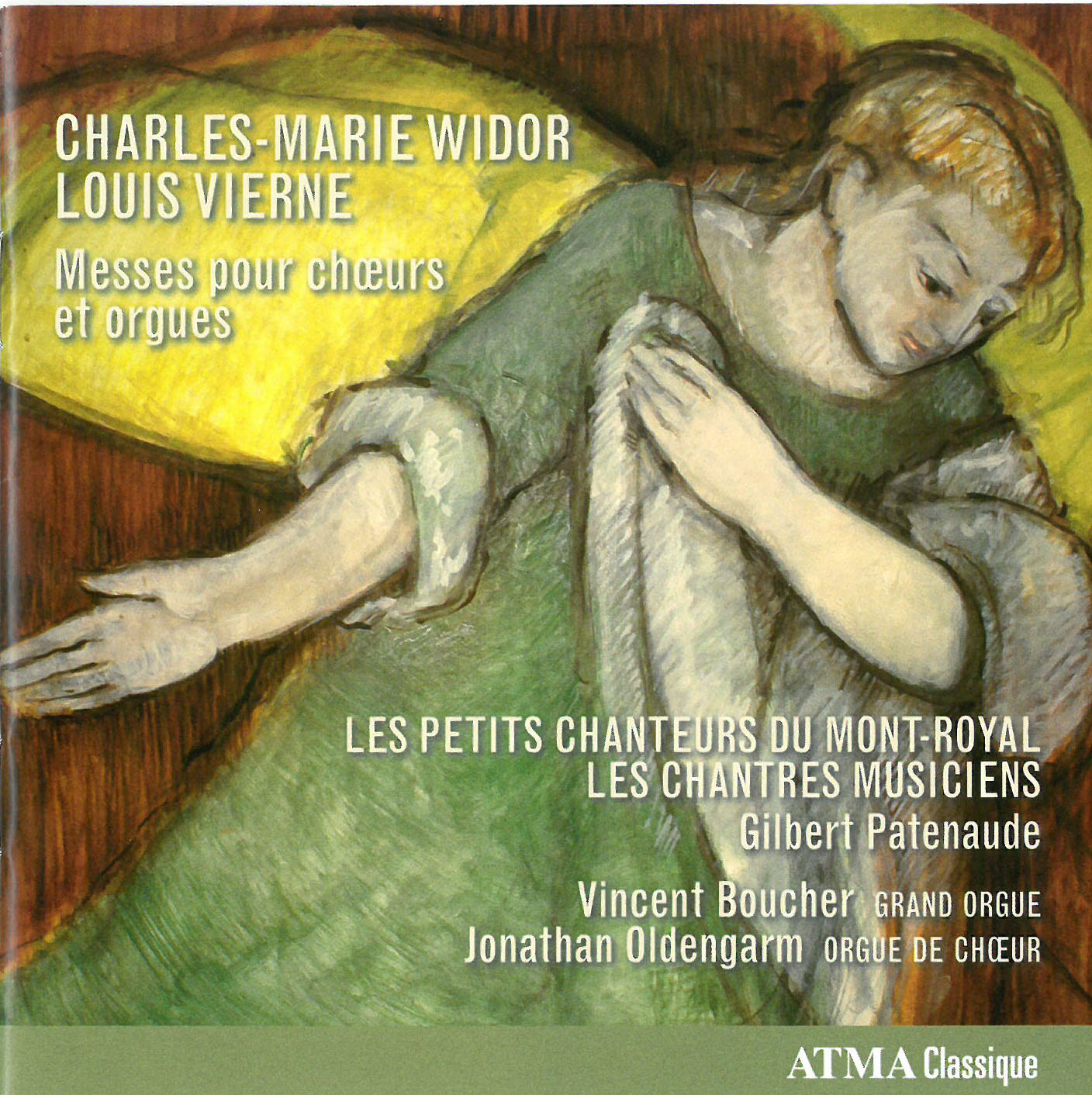
04 Widor Vierne

Widor; Vierne – Messes pour choeurs et orgues
Les Petits Chanteurs du Mont-Royal; Les Chantres Musiciens; Gilbert Patenaude; Vincent Boucher; Jonathan Oldengarm
ATMA ACD2 2718

Review

Charles-Marie Widor (1844-1937) and Louis Vierne (1870-1937) were, respectively, organists at St.-Sulpice Church and Notre Dame Cathedral. The recent Paris terrorist killings occurred not far from the churches where these works originated. During those dreadful days I felt particularly uplifted by this disc, for both the emotional resonances of the two great masses (along with six motets) and the youth and promise of the singers. There is freshness and confidence in the singìng of both boys’ and young mens’ choirs of Mount Royal led by Patenaude, that is complemented wonderfully by Boucher’s great organ and Oldengarm’s small organ near the choir. On disc we cannot fully sense the spatial separation of the great organ from the rest in Montreal’s St. Joseph’s Oratory, yet the dynamic and timbral contrasts in the magnificently resonant acoustical space are effective indeed!

Vierne’s Solemn Mass in C-Sharp Minor (the track list wrongly states F-Sharp Minor) opens with a Kyrie that felt a little stiff, but ended impressively. In the Sanctus, the affecting opening call in each of the choir’s four sections followed by the whole choir, the impassioned and even raw singing of the “Pleni sunt,” and captivating organ registration throughout were highlights. In Widor’s Mass for Two Choirs the excellent trebles of the Petits Chanteurs are heard to advantage in the Kyrie. In the Gloria there are interesting crossrhythms and other challenges, but the ensemble on the recording remains amazingly tight throughout.


Review

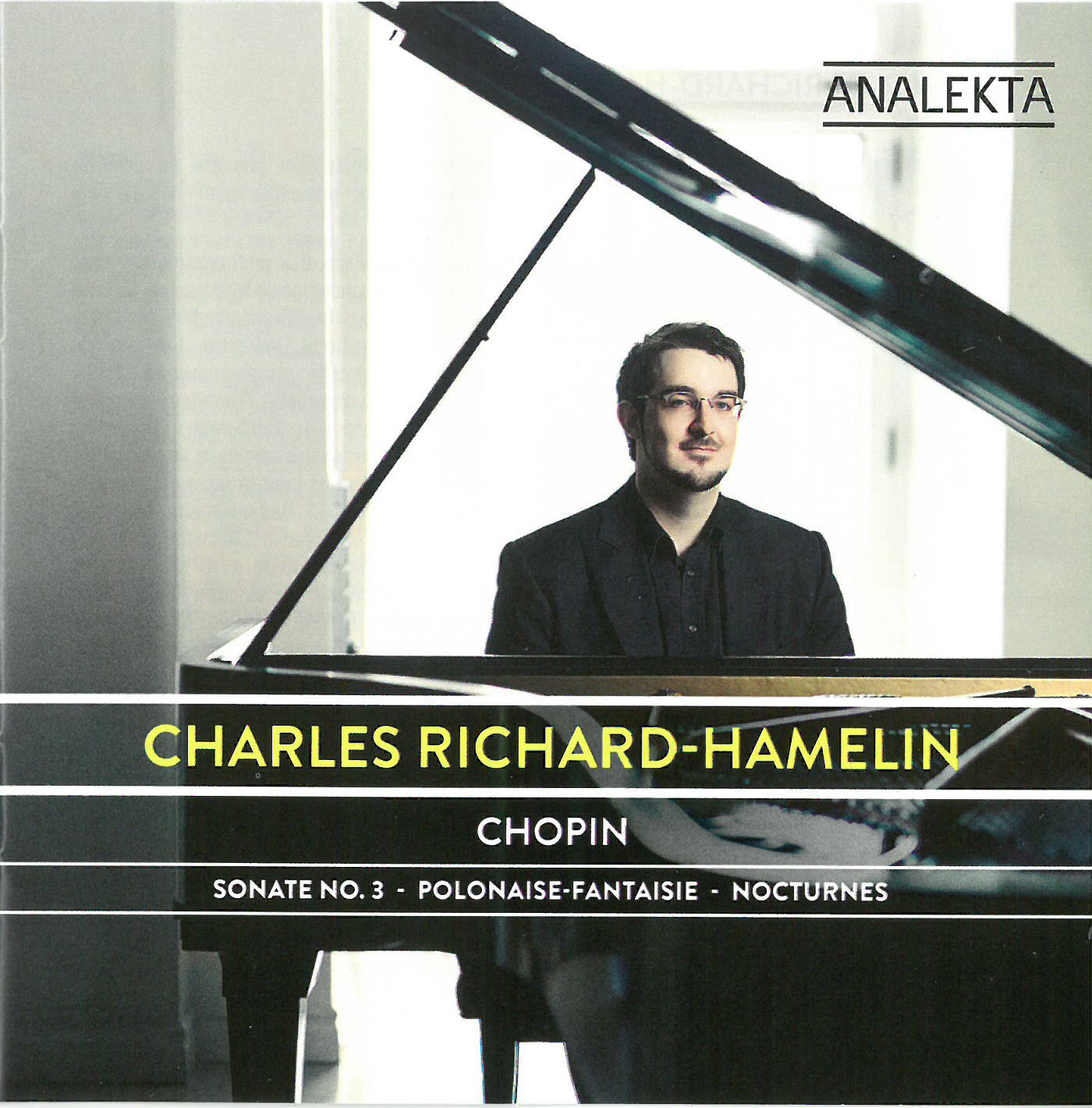
01 Charles Richard HamelinThe 2015 International Chopin Piano Competition boasted Canada’s Charles Richard-Hamelin as the second place prize winner, the first time a Canadian had won a prize in that prestigious event. His May 2015 recording was timed perfectly for this victory. Charles Richard-Hamelin – Chopin (Analekta An 2 9127) presents a very powerful player who can push the instrument right to its limits without losing or distorting the sound. It’s clear that Richard-Hamelin understands the colouristic capabilities of the piano. He is able to recede to the softest pianissimos and able to shape notes through the mechanics of the keyboard.

He is also very comfortable using wide variations in tempo without interrupting the flow of the musical idea. This is evident in the Largo of the Sonata No.3 in B minor, Op.58 where one encounters the impressive interpretive depth of this player after being dazzled by his performance of the preceding Scherzo.

The disc also includes the Polonaise-Fantasie in A-Flat Major Op.61 and two Nocturnes from Op.62 played with an especially haunting beauty.

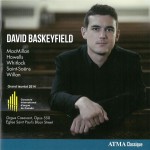
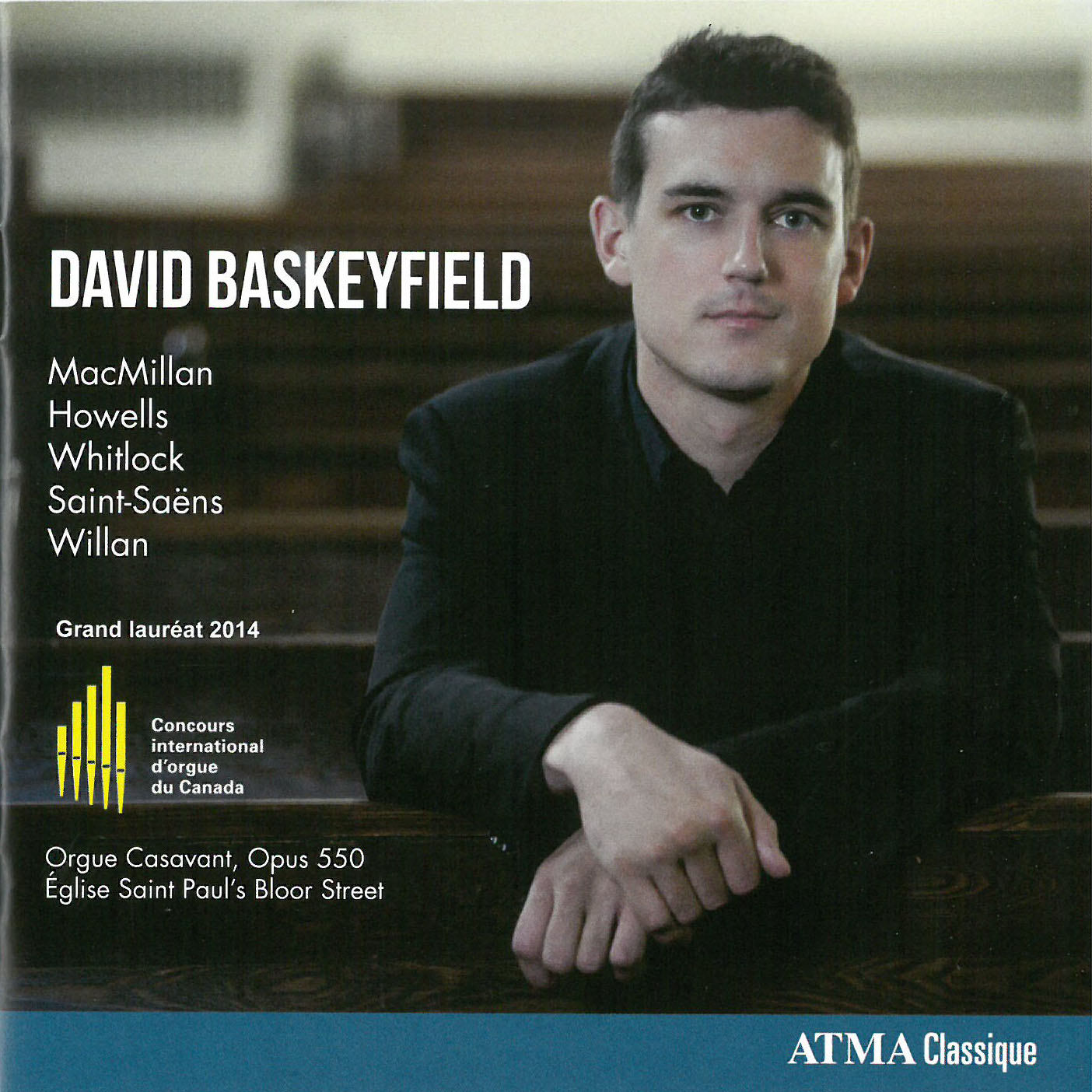
02 Baskeyfield OrganThe Canadian International Organ Competition is a fairly new horse race as these things go. Launched in 2008 it has brought considerable visibility and prestige to the performance discipline. The 2014 Grand Laureate is celebrated on David Baskeyfield – Concours international d’orgue du Canada (ATMA Classique ACD2 2719).

Familiar composers line the program notes: Willan, MacMillan, Howells and Vierne. But organists know that they always share the spotlight with the actual instrument they play as much as the music itself. In this case, it’s one of Canada’s largest organs, the Casavant Opus 550 at St. Paul’s Bloor Street, Toronto. Originally built in 1914 and restored in 1955, it has had many enhancements over the years. It’s a versatile instrument with an enormous orchestral palette.

Baskeyfield is an impressive performer and notable for his skillful registrations. His choice of tonal colours is masterful. He is English-trained and completely at home with Howells, Hollins and Willan. He also does a terrific job with the works of the French school, Vierne’s Naïades, Saint-Saëns’ Prélude et Fugue en si majeur. But the disc’s real gem is the Willan Introduction, Passacaglia and Fugue. The disc is a fabulous recording and an important document for this historic instrument now more than a century old.
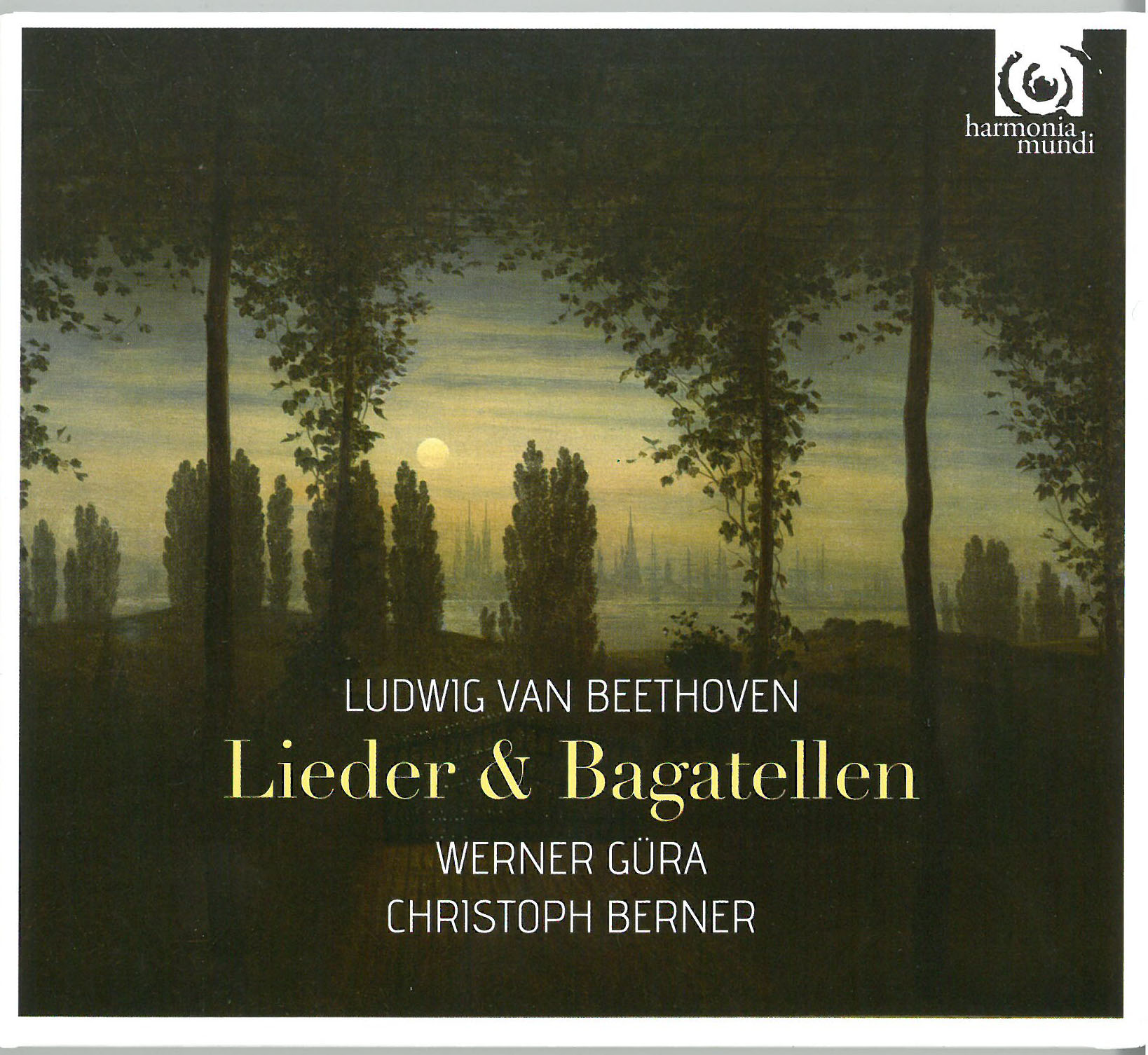
03 Beethoven Lieder and BagatellenAnother fortepiano recording has recently worked its way to the shelves and will be a treasure to many. Christoph Berner plays an 1847 Streicher on Ludwig van Beethoven Lieder & Bagatellen (harmonia mundi HMC 902217). The instrument is in remarkable condition. It’s clear, wonderfully tuned and voiced. Its tone is consistent throughout and surprisingly resonant in the upper register. Each of the six Bagatelles Op.126 is a joy to hear on this fortepiano. Berner’s playing is clean and lightly pedalled. The best feature of this performance is that he understands what these little pieces are and so, doesn’t fall prey to overthinking them.

As terrific as the Bagatelles are, the other half of the disc is the real surprise. Tenor Werner Güra, whose clear, light voice is well-suited to this repertoire, sings a number of Beethoven songs and one short cycle in a performance that is heart-stopping. He’s a very dramatic singer with great control over straight tone and vibrato. He connects directly to the poets’ emotions and shapes phrasing and dynamics to powerful effect.

Two tracks in particular are profoundly moving: Zärtliche Liebe WoO 123 and the cycle An die ferne Geliebte Op.98. The combination of Güra’s interpretation accompanied by this extraordinary instrument make this disc a valuable find for those who enjoy authentic performance practice.
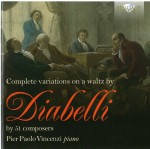
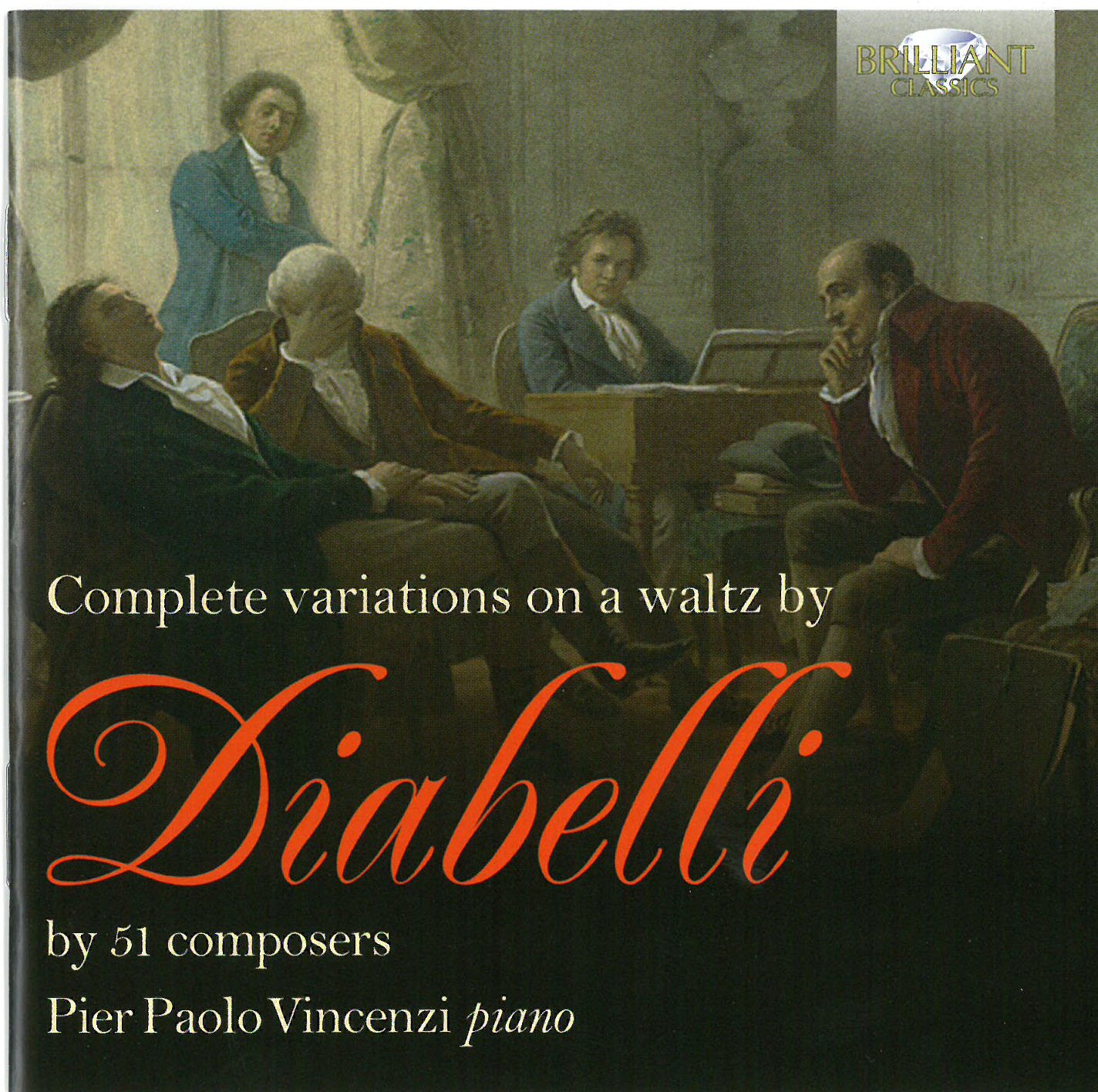
04 DiabelliPianist Pier Paolo Vincenzi has undertaken an ambitious project with his recording of the Complete variations on a Waltz by Diabelli by 51 composers (Brilliant Classics 2CD 94836) on which he also performs the Beethoven 33 Variations on a Waltz by Diabelli Op.120. The compilation of the works by the 51 composers who responded to Diabelli’s 1819 variation challenge is rich for its variety. Among the contributors are familiar composers like Hummel, Czerny, Liszt and Schubert. The others are of lesser historical standing and include a few dabbling aristocrats. Vincenzi, however, treats each variation as though it were, in fact, a masterpiece.

Whether he’s ripping through Liszt’s arpeggiated hurricane or pecking through Baron von Lannoy’s 45-second effort, Vincenzi creates a fascinating snapshot of 51 early 19th-century psycho-musical profiles. But when he performs the Beethoven variations, he changes his interpretive posture significantly. No longer dealing with 51 different iterations, he now probes the depths of a single creative mind. What Beethoven can say uniquely in 33 differently ways is obvious on the page but only the performer can really convey that. He never loses sight of Diabelli’s thematic kernel. Whether dealing with Beethoven’s fugal architecture or delighting in his Mozart impersonation, he keeps the central idea from being lost in the Byzantine workings of Beethoven’s mind.

The producer of this recording has chosen to record the piano dry with absolutely no acoustic space around the instrument at all. The ear does adjust to this and the Steinway D, despite its size, quickly becomes a very intimate instrument.

Review
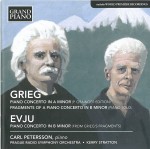
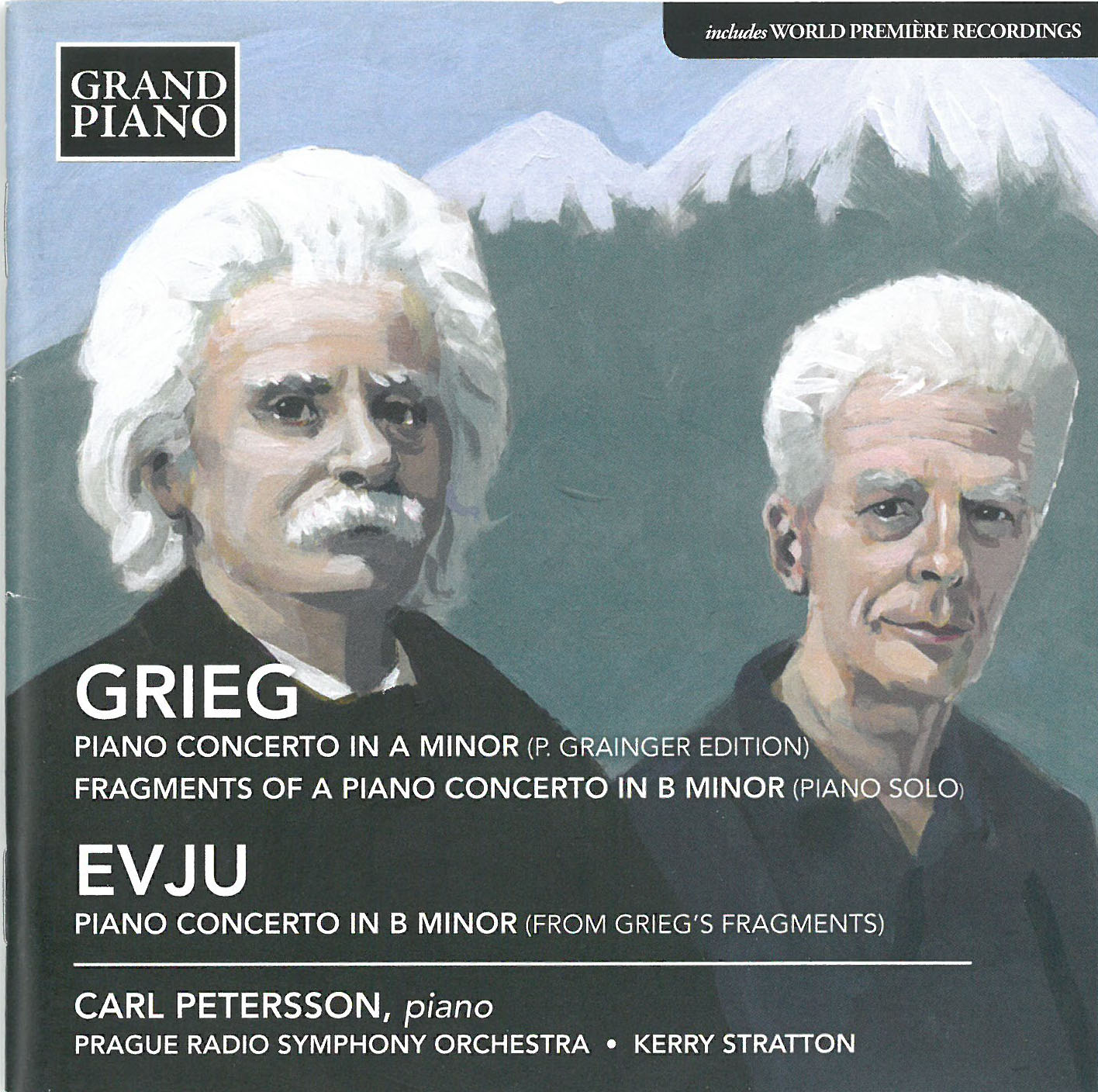
05 Grieg EvjuThe recording Grieg; Evju – Piano Concertos (Grand Piano GP689) offers a performance of Grieg’s familiar work but based on subsequent changes to the manuscript made by the composer and his friend Percy Grainger. The casual listener may not detect the revisions but they are occasionally evident in the piano part where familiar chordal structures appear to have been changed.

The recording is remarkably clear. The Prague Radio Symphony under Canadian Kerry Stratton is not especially large but always sounds full and balanced. Pianist Carl Petersson performs beautifully and seems especially committed to this revised edition.

The other work on the disc is a concerto based on a thematic fragment by Grieg. It’s a bit of an oddity but warrants several hearings before moving into the concerto that Helge Evju has crafted from it. Although in five movements, the work’s performance time is only 20 minutes. It contains many strong allusions to the A-Minor concerto. That work is said to have been one of Rachmaninov’s favourites and curiously, one also hears a few passages that are obviously reminiscent of his piano concertos.

Overall it’s a wonderful and unusual recording. The orchestra and pianist are excellent.

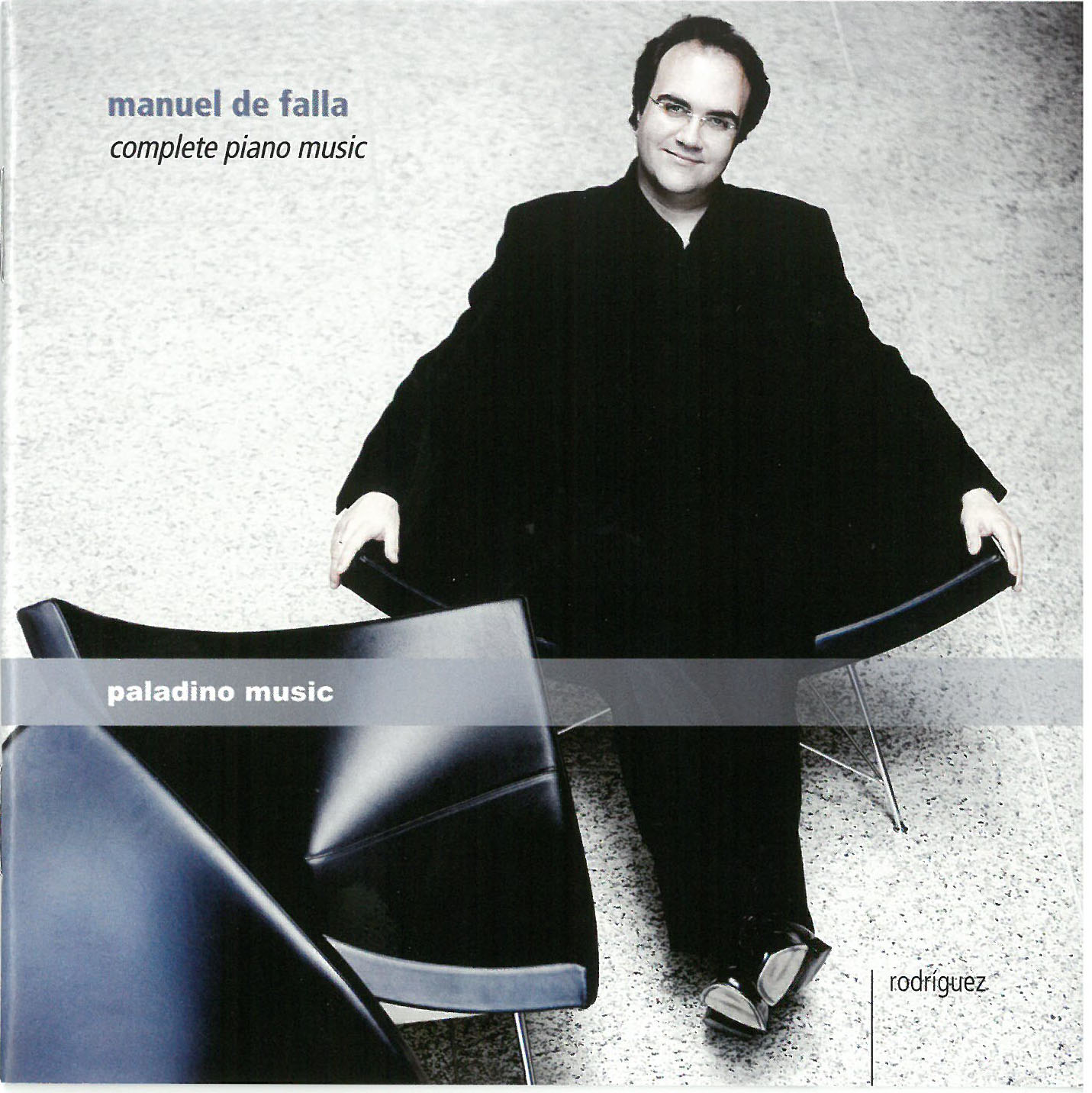
It’s unusual to find the complete piano works of Manuel de Falla recorded on a single disc. The feature of this disc is the ability to follow the evolution of the composer’s work chronologically from 1896 to 1935. A few of these works had remained unknown or unpublished until much later in the twentieth century.
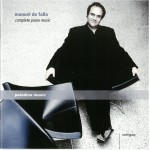
06 Rodriguez de FallaPianist Juan Carlos Rodriguez captures de Falla’s Spanish view of the world around him on Manuel de Falla – Complete Piano Music (Paladino Music pmr 0062). He reveals the strong core of western classical discipline on which uniquely Spanish sensibilities rest. We hear this rhythmically and in small characteristic turns of phrase. Rodriguez also plays de Falla’s homages to Paul Dukas and Claude Debussy with the subtle hint of French impressionism the composer intended.

Rodriguez approaches the Cuatro Piezas Españolas as the most culturally inward looking to reveal what may be the most Spanish of de Falla’s piano works.
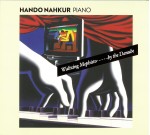
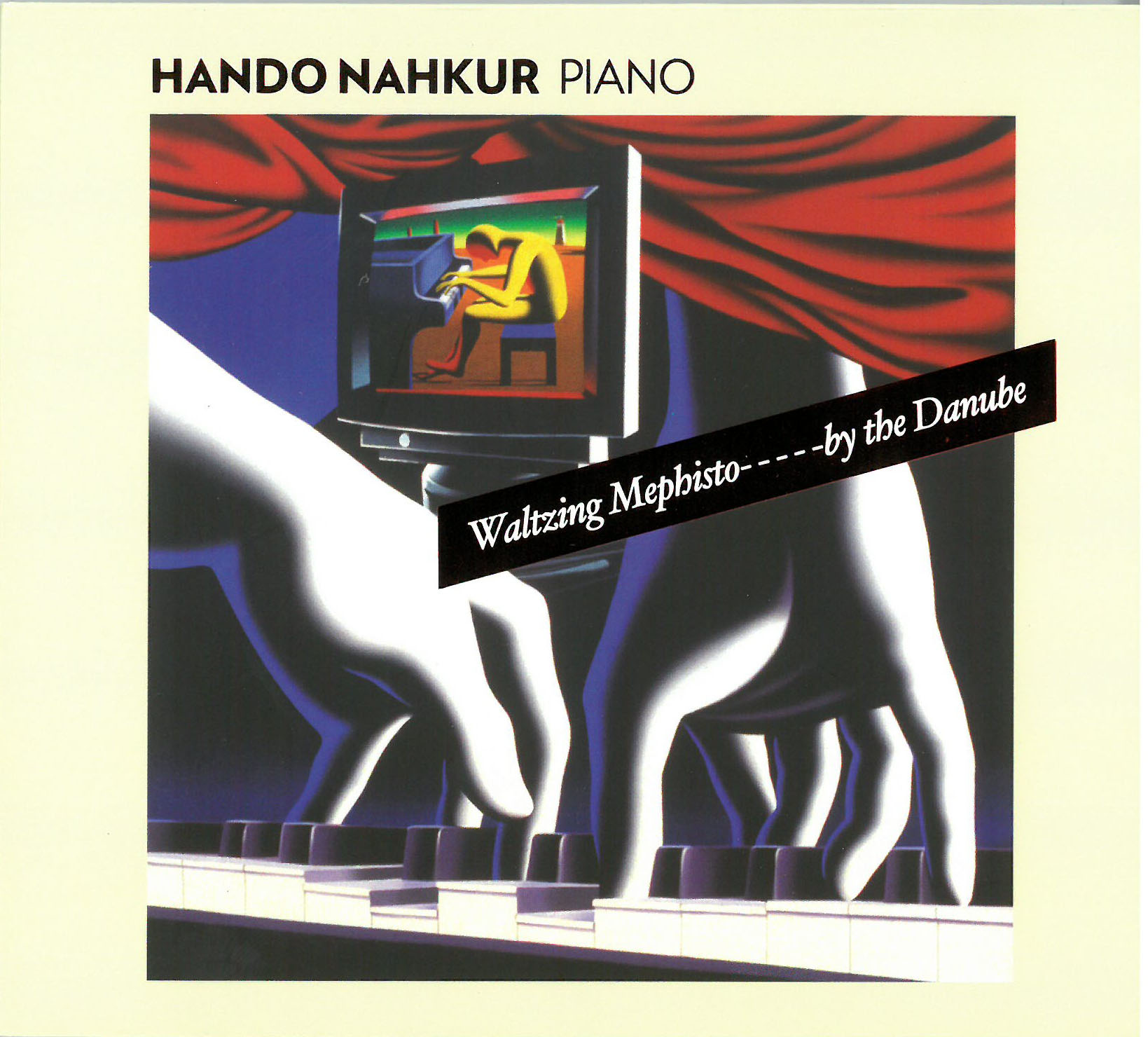
07 Hando NahkurFranz Liszt’s Mephisto Waltz has another reincarnation on Waltzing Mephisto...by the Danube (Estonian Record Productions ERP 8115) with pianist Hando Nahkur. The title track is brilliantly played with remarkable clarity through all the maniacal passages. The approach is disciplined and calculated but not lacking in any of the incendiary energy needed for this piece.

The disc also includes Schumann’s Kinderszenen, Op.15 from which the dangerously familiar Träumerei is played with gratifying freshness. Nahkur also manages the same feat with the Schumann/Liszt Widmung S.566 where he keeps the apogees of the main idea suspended with satisfying length before the descent to their phrase endings.

Arabesques on An der schönen blauen Donau is a 1900 paraphrase by Adolf Schulz-Evler of the well-known Strauss waltz. It’s rarely heard and is very Lisztian even to the point of sounding a bit like La Campanella for a few measures. It demands a lot from the pianist but Nahkur plays it with impressive ease.
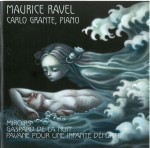
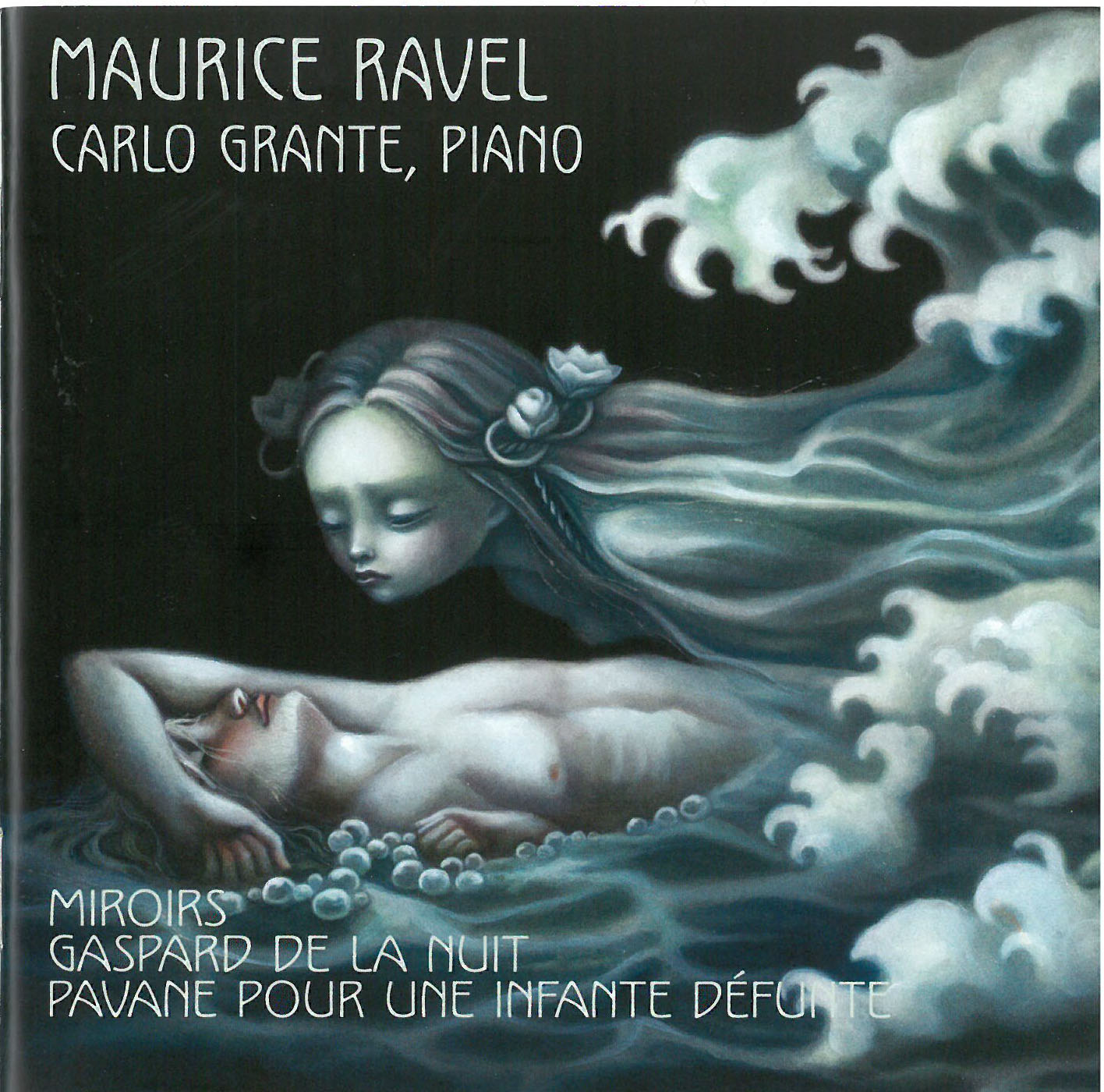
08 Carlo GranteOccasionally composers will write music so perfectly that all the colour, dynamics and nuances seem to be built in. While this doesn’t make it easier to perform it does create the pitfall of over interpretation. Wise performers recognize this and learn to surf the wave. Carlo Grante does this beautifully in Ravel: Mirroirs; Pavane pour une infante défunte; Gaspard de la nuit (Music & Arts CD-1289).

In the Miroirs set, La vallée des cloches is especially lovely for Grante’s superb touch and tonal manipulation. The Bösendorfer Imperial responds with bell-like sonority.

Curious, however, is Grante’s opening of the Pavane pour une infant défunte. He observes the staccato in the lower treble very sharply as marked in the piano score. This is unusual and quite arresting because some publishers show sustained pedal through these opening bars, to more closely approximate Ravel’s actual orchestration where these short eighths are played pizzicato in the strings while horns and bassoon hold longer supporting phrases. What’s really interesting is that Ravel’s own 1922 piano roll recording of this does neither. Ravel plays it slightly sustained (pedalled) and not nearly as short as Grante. Once past the opening idea, however, Grante moves into the sustained legato that makes this piece flow so beautifully to its ending.

The three piano poems that comprise Gaspard de la nuit are superb. Ondine moves liquidly as it should, Le Gibet rings under the same bell-like touch of the early La vallée des cloches and Scarbo is suitably menacing.
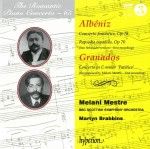
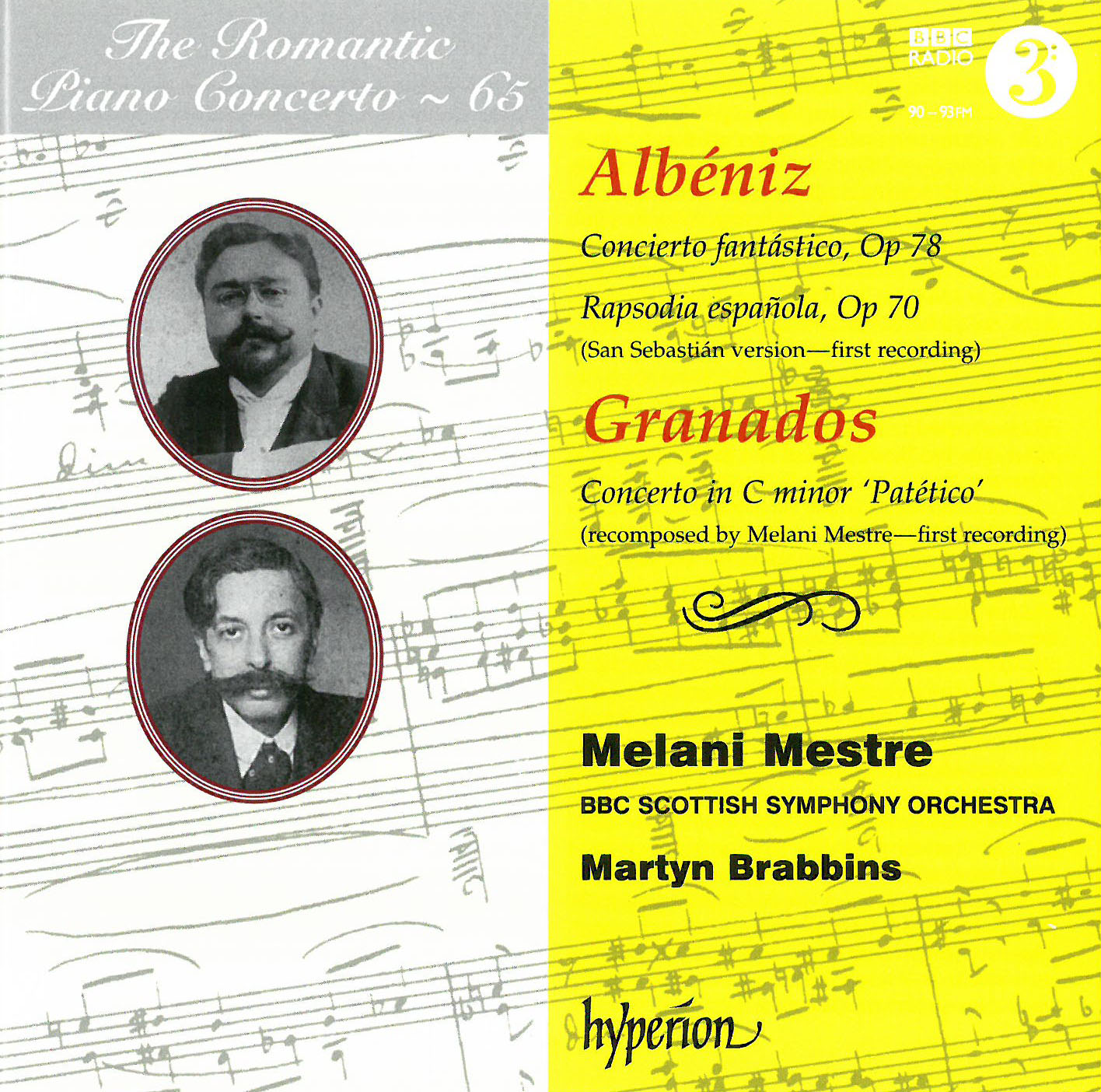
09 Romantic Concertos 65Reconstructions from fragments appeal to our curiosity by suggesting to us what might have been. It’s what drives people like Melani Mestre to record the recent addition to Hyperion’s Romantic Piano Concerto series Albéniz; Granados – Piano Concertos (CDA67918). A pianist, composer, conductor and academic, he has constructed a concerto from two fragments of a Piano Concerto in C Minor ‘Patético’ by Granados. Speculatively dated around 1910, there is no evidence to indicate whether this was intended as a single-movement work or something of larger scale but Mestre believes the latter.

For the middle and final movements he has used two other Granados’ solo piano works and adapted them for piano and orchestra. These are much more colourfully orchestrated than the first movement with plenty of percussion effects to highlight their Spanish and dance-like feel. Mestre is a skilled orchestrator and has plenty of fun playing his own adaptations. Some will argue about the validity of such efforts, but those who undertake them skillfully produce intriguing works that fuel many entertaining debates.

The Albeniz Concierto fantástico, Op.78 is a mid-career work and is decidedly un-Spanish in its feel. Still, it’s truly beautiful and not often performed or recorded. Admirers generally cite its middle movement as the gem and rightly so. The Reverie et Scherzo opens with a lovely piano line against a backdrop of broad orchestral harmonies. The final movement’s closing pages have some enchanting waltz-like episodes where Mestre’s hesitations are seductively placed to enhance the dance-like feel.
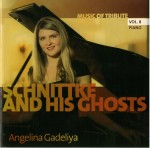
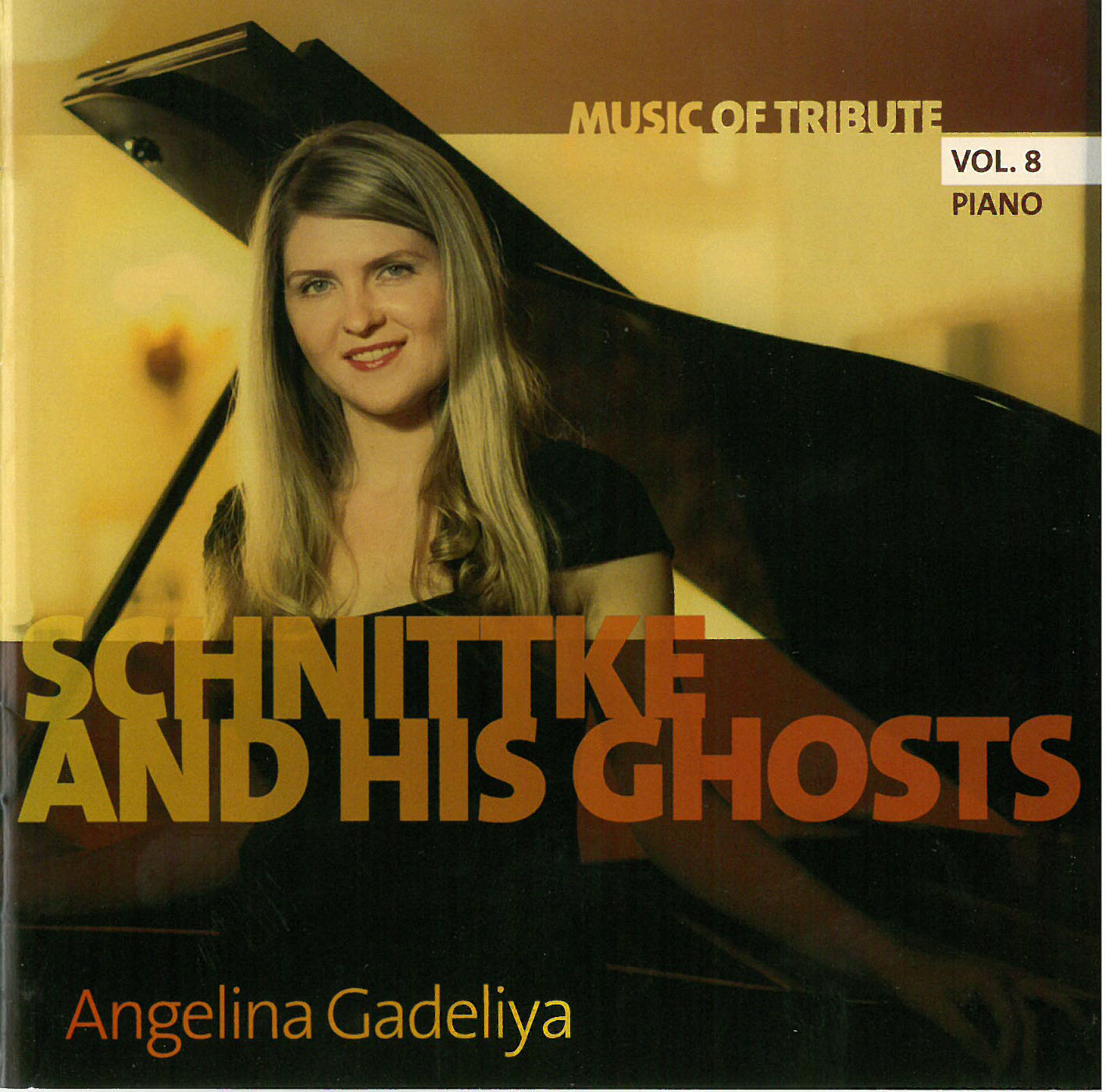
10 Schnittke GhostsPianist Angelina Gadeliya cites a profound spiritual affinity for the music of Alfred Schnittke. Born in Soviet Georgia and trained in Ukraine, she now lives in the U.S. Her enduring commitment to Schnittke’s music was deepened by an encounter with the composer’s wife and biographer a year after his death in 1998. Schnittke and his Ghosts (Labor Records Lab 7093) is an expression of that experience. Gadeliya plays two of his works and adds others to reflect the impact on Schnittke of influences including his time Vienna where he received much of his formative musical education – hence, his “Ghosts.”

She gives a very personal performance of the Sonata No.2, a darker work of Schnittke’s later years. The middle movement is unusually tonal with numerous harmonically rich clusters and the final movement contains an ad libitum that calls for tumultuous improvisation. Variations on a Chord uses contemporary devices for sustained notes, sharp attacks and sympathetically vibrating strings. Gadeliya is perfectly adept at all these techniques and captures the harsh yet playful duality of Schnittke’s six variations.

The Mozart Adagio in B Minor K540 may seem an odd inclusion until one recalls the numerous cadenzas Schnittke wrote for Mozart piano concertos and his orchestral tribute Moz-Art à la Haydn.

The Shostakovich Variations on a theme by Glinka and Scriabin’s Sonata No.4 connect us to Schnittke’s Russian roots. But in an odd way the far earlier work by Scriabin (1903) takes us much closer to the mysticism we experience in Schnittke’s music. Gadeliya has programmed a fascinating, stimulating recording and performed it masterfully.

Review
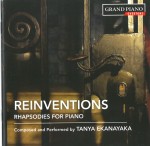
11 ReinventionsReinventions – Rhapsodies for Piano (Grand Piano/Overtone GP693) is an unusual CD and difficult to describe. Composed and performed by Tanya Ekanayaka, these works are in part improvisational and in part more formally crafted. The main inspiration for them comes from pieces preceding them in live performance. Key relationships, tonal centres and thematic fragments all serve as points of creative departure for this Sri Lankan pianist and composer.

Her keyboard technique is formidable. Massive arpeggios seem completely effortless as she weaves together traditional Sri Lankan melodies with inspirations taken from composers like Bach, Debussy and Chopin. She is capable of both the smallest nuance as well as the grandest gesture the keyboard can afford. Her works carry evocative titles such as In Lotus, Labyrinth and Dhaivaya. Her descriptions and rationales for the content of the Rhapsodies is highly detailed and musically rich. Even the most fanciful works e.g. Of Scottish Walks, Vannam & Sri Lanka’s Bugs Bunny require more than one listening. One begins to wonder if she is perhaps the Keith Jarrett of the subcontinent.

With 25,000 Syrian refugees coming to Canada, the Middle East is never very far from the daily headlines and our attention. The cultures of that region have, in their encounter with ours, produced many fascinating cross fertilizations of artistic expression. Each offers a portal for better understanding of a region that often seems so distant in many ways.

Review
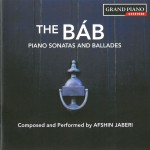
12 The BabIranian pianist and composer Afshin Jaberi has recorded THE BÁB – Piano Sonatas and Ballades (Grand Piano/Overtone GP694). Born in Bahrain and raised in Qatar, Jaberi received his musical education at the Franz Liszt Academy in Hungary and his doctorate from the Almaty Conservatory in Kazakhstan. His language is solidly Western and his discipline solidly Russian. One immediately hears the influences of the major 19th-century European composers on his keyboard language. There is however, a distinctively Eastern modality and shape to his musical ideas. Titles like The Seeker, The Bedouin and Eroica offer some idea of Jaberi’s personal quest in his music. Much of it is programmatically linked to historical episodes of the Bahai’ faith but all of it is delivered through the keyboard vocabulary of Liszt, Chopin and Schumann. Jaberi is a gifted player and composer. His work offers a rare glimpse in an unusual direction.


Back to top