cover banner“One of the advantages of playing a string instrument is getting the chance to perform with friends basically from day one. I can’t actually remember a time playing the violin where I wasn’t playing in ensembles of some sort. This is one of the things that kept me going in music - I didn’t want to lose out on hanging out with all my friends!”

- Jonathan Crow, We Are All Music’s Children, September 2012
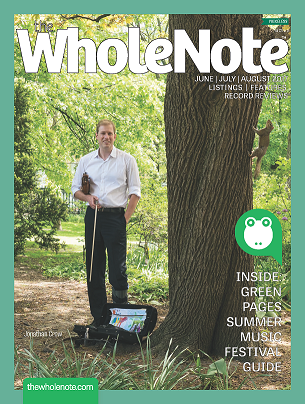
2209 TheWholeNote Summer 2017 WithGreenPages Cover QuarterIs Toronto Summer Music (TSM) going to be an excuse for you to hang out with friends? It was a question that came up early in The WholeNote’s soon-to-be-posted podcast with TSO concertmaster, New Orford String Quartet violinist and U of T associate professor Jonathan Crow, who was in our studio to speak with us mostly about his new role as the third artistic director of TSM.

“Absolutely!” he said. “It’s all true. When I was a kid the social aspect of making music was what I loved.” It’s clearly still true today; whether playing orchestral or chamber music, Crow loves the interaction. “You can learn so much from other people.”

The fact that his first TSM season in charge turned out to be Canada’s sesquicentennial could have been a a bit of a headache curatorially for Crow, had the festival stood on its head to make Canadian music the primary focus. But the chamber-music friendship factor turned what might have been a headache into, in his words, “kind of a no-brainer.”

There were a lot of top Canadian performers he already wanted to get for the festival, he explains, and the “sesqui thing” gave him the chance: Andrew Wan (OSM concertmaster and New Orford String Quartet violinist); Nikki Chooi (newly named concertmaster of the Metropolitan Opera Orchestra - “one of the biggest violin jobs in the world”); Desmond Hoebig (the last cellist of the Orford String Quartet); and Joseph Johnson (TSO principal cellist), who has made Canada his home.

“The idea became to make this a big celebration, to bring back Canadian artists - somebody like Martin Beaver, who’s one of Canada’s greatest violinists. Ever. But who happens to live in the States for many years now…he should be a mainstay on every single concert stage in Canada.

“In an interesting way, Canada’s a very, very big country, but it’s a very small musical world. So Desmond is somebody that I knew of growing up - he always taught at Scotia Festival, and my wife is from Halifax…he was one of Canada’s great, great cellists of all time, and he was principal of the Cleveland Orchestra, and has had a huge career. But, because he’s very busy, is not back as much as he would like. We’re thrilled that he was able to have some time in the summer to come play with us.”

Hoebig and Johnson, he tells us, will play the cello parts in Schubert’s Quintet in C Major, the centrepiece of July 28’s “String Extravaganza” concert. Violinists Wan and Chooi along with violist Steven Dann complete the starry quintet. “It’s really the pinnacle of all chamber music,” Crow said. “It’s the scope. When people talk about Schubert’s heavenly length, somehow this piece doesn’t feel too long. It feels epic. And it feels at the end that you’ve really gone somewhere.”

Crow himself is playing with Hoebig two days earlier in Dvořák’s Piano Trio in F Minor Op.65. Crow will take the violin part with Angela Park on piano. “It’s a little bit selfish, but I just love that piece so much.” He elaborates when I ask what it is that he loves about it: “The tunes. I love Dvořák for sure but there’s something about piano trio tunes that you just feel that you have so much freedom…to be soloistic on the spur of the moment.”

It’s interesting to hear him describe the subtleties in what can be characterized as TSM’s string-centric program this year. (For example, the festival opens July 13 with the St. Lawrence String Quartet playing selections from their 1992 Banff International String Quartet Competition win; then the competition’s most recent winners, the Rolston String Quartet, echo them in the July 24 recital of selections from their winning Banff program.)

He talks about the effect the St. Lawrence’s playing had on him as a student hearing a Bartók string quartet [the Third] for the first time. “I had no idea you could do that on a violin,” he says. And on the topic of the repertoire for that opening concert: “I think for the audiences here to see Haydn [Op.20 No.2], who basically invented the quartet, Beethoven [Op.131], who perfected it, if you will, and then [R. Murray] Schafer [Quartet No.3], who followed in their footsteps…to have a chance to hear three of the great, great quartet writers of all time all together and see how that program connects, I think is wonderful.”

As it matures, TSM is evolving steadily into much more than just a series of mainstage concerts, and Crow is eager to talk about these developments. There is the new Kids Concerts program which will be offered for free at 10am on each Wednesday of the festival. “It’s not going to be different people playing the kids concerts: James Ehnes is going to play,” he says. “It’s interesting for kids to see where the people onstage got their inspiration.”

He’s also excited about the so-called reGENERATION concerts, in which fellows from across the world are put together with a guest mentor in a chamber-music setting; each piece is worked on for a week, and then it’s performed. “The idea that you can get to see someone who’s doing it for the first time and learning what it’s like doing it for the first time - for me, that’s amazing,” Crow says.

“I also love the open classes because you get to see the way people think about music,” Crow says about the Sunday Public Masterclasses that will be given by James Ehnes, Soile Isokoski and pianist Jane Coop. “We see him [Ehnes] on stage; we see what he has practised. But it’s always interesting to get inside the head of someone like Jimmy and then see what he is actually thinking,” Crow said. “You can see that when he teaches somebody else; you can see how he reacts to what they do.”

Other highlights (all talked about in the podcast): Anton Kuerti will be the subject of a tribute he helped curate with one of his best-known former students, Jane Coop. According to Crow, they created a program of what Kuerti liked and was known for, pieces that epitomize him as a person and a performer. For Crow, “Anton [is] a huge Canadian presence, kind of an iconic figure in the history of music in Canada;” and in a nod to TSM’s art-of-song origins, mezzo-soprano Julie Nesrallah has created a program of mini-operas (a lot of Carmen a little bit of Thaïs, and other gems), which she will host and perform in along with TSM alumna Danika Lorèn, tenor Roger Honeywell, bass Gary Relyea, pianist Robert Kortgaard and violinist Nikki Chooi (who will perform Franz Waxman’s crowd-pleasing Carmen Fantasy).

To hear the full conversation with Jonathan Crow, or any of our other podcasts, search for “The WholeNote” in your favourite podcast app, or go to TheWholeNote.com/podcasts.

Toronto Summer Music runs from July 13 to August 5 in Koerner Hall, Walter Hall and the Church of the Redeemer.

Paul Ennis is the managing editor of The WholeNote.
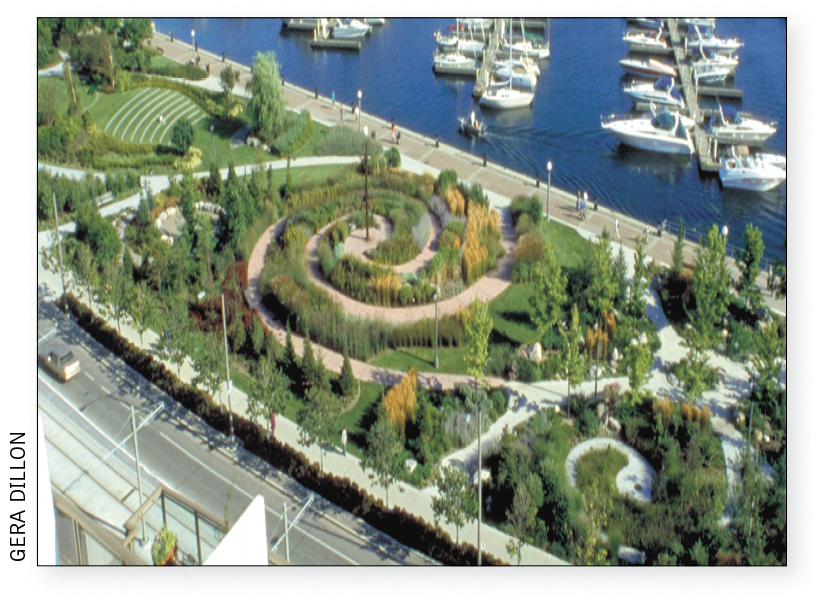
2209 Curators 2This will be the 17th consecutive year that Tamara Bernstein has programmed Thursday and Sunday concerts right through the summer in the Music Garden at the west end of Harbourfront - 19 concerts a season “for many years now.” She was on a train when we tracked her down by email: “actually, the first of three trains, if I’ve grasped things correctly – from Dublin to Ennis, Ireland – a wee vacation.”

 What keeps her coming back to this particular summer project year after year is, first off, the love that audiences and performers have for these concerts.

“Our large audiences prove that there is nothing inherently ‘elitist’ about classical music – that everyone – not just connoisseurs; not just adults – can enjoy sophisticated genres like string quartets, early music, South Asian ragas, and so on.

“And, of course, I love the accessibility of the concerts – the fact that people of every age, economic and educational background, ethnicity, etc., can come together and enjoy wonderful music performed by outstanding artists. Things like this create quality of life beyond ‘getting and spending,’ and give a city a soul. This is becoming more and more urgent in Toronto as ever-rising housing prices stress the budgets of those who live here – whether it’s families, young people, or pensioners - all of whom are well-represented in our audiences.

“I love being able to work with such a large palette – 19 concerts gives me a lot to play with, and a chance to reflect some of Toronto’s cultural diversity. And the fact that the concerts are free means that I don’t have to worry about whether something a bit off the beaten track will sell. Audiences, meanwhile, can take a chance on musical genres or styles that may be new to them. It’s also enormously satisfying to present young artists, or artists whose regular audiences may be somewhat rarified, as our audiences are large, diverse and very appreciative.

And the least enjoyable part of it? Her reply is succinct. “Speaking personally, I remain disappointed by the increased traffic at the Toronto Island Airport in recent years – we’ve had to add a third set of speakers to deal with it.”

I point out to her two programs that stood out for me as examples of her curatorial style and methods: cellist Elinor Frey on June 29, and violinist Edwin Huizinga with guitarist William Coulter on August 24.

These two concerts indeed check a number of my curatorial ‘boxes’,” she replies and reels them off: Bach; period instruments; contemporary music; traditional music; and a very high performance standard. 

“J.S. Bach’s Suite No.1 for unaccompanied cello was the inspiration for the Toronto Music Garden: this is a great excuse (not that one needs one!) to include his music – and at least one of his cello suites – on every season. This year Elinor Frey opens the season with his Second and Fourth Suites for solo cello. I’m a big fan of ‘early music’ in general; in addition to Elinor Frey and Edwin Huizinga, this year’s lineup includes countertenor Michael Taylor, recorder player Vincent Lauzer, and other specialists in historically informed performance.

“Elinor Frey’s concert also demonstrates our commitment to new and recent music: along with the two Bach’s Suites, she’ll perform a 2015 piece for Baroque cello, written for her by Toronto composer Linda C[atlin] Smith. Later in the season, Vincent Lauzer will give the world premiere of a piece we’ve commissioned for him by Montreal composer Maxime McKinley.

“For his Music Garden concert, Edwin Huizinga is teaming up with Grammy-winning guitarist William Coulter, performing wonderful arrangements of works for violin by Bach and Vivaldi. They’ll also perform traditional music (in this case, Celtic), which is also an important part of Music Garden programming.”

Her audiences are a mix of long-time faithfuls, people drawn by a specific performer, and, always, many who just happen upon the event. But the distinction is not particularly important to her.

“I’ve always believed that classical music performed by outstanding performers will connect with all audiences. Happily, every season confirms that!”

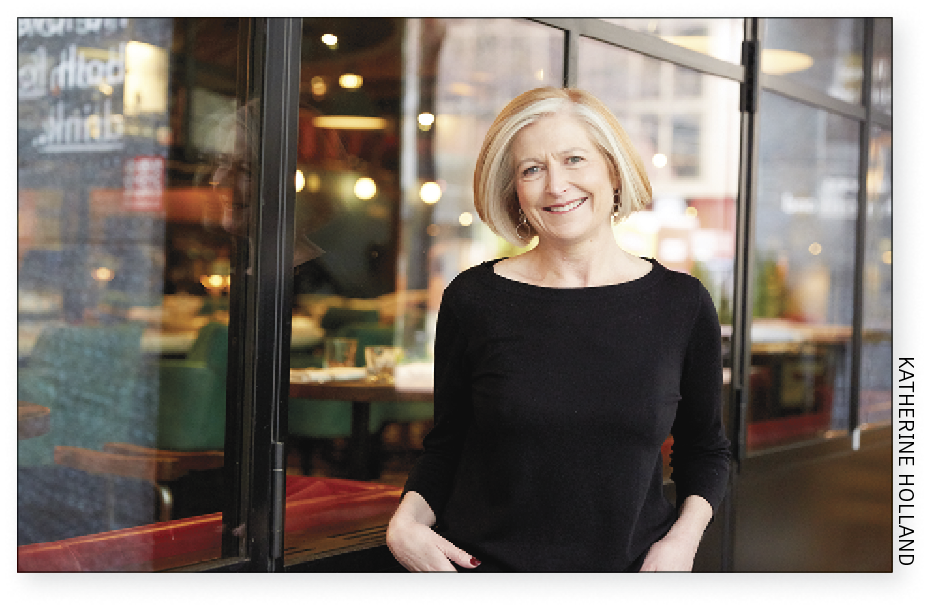
2209 Curators 3Luminato heads into into its 11th iteration this coming June 14 to 25. Josephine Ridge, the festival giant’s new artistic director, is heading into her first. “This is David Perlman, the editor of The WholeNote,” says the Luminato staffer introducing me to Ridge, in a bright little meeting room in their Artscape Youngplace offices.

“We’ve had a great relationship with The WholeNote over the last number of years,” the briefing-on-the-fly continues. “I’d say my favourite thing about The WholeNote team is that lots of people who contribute to The WholeNote are also artists or musicians, or work in various areas in the community, so there’s always really great insight from that team because of their personal experiences.”

(Already, for me, before the interview even starts, there’s a slightly different feeling to the encounter: these are not necessarily details that would have been of particular interest to Ridge’s predecessor.)

Ridge arrives at Luminato straight from three years as artistic director of the Melbourne Festival in her Australian homeland. “I realize it’s still early days,” I say, “but are there useful comparisons you can make?”

“So many people comment on similarities temperamentally between Canadians and Australians and particularly about Toronto and Melbourne being quite similar. And I think superficially they are right,” she says. “There are similarities in terms of the look and feel in particular. In terms of the layout they are both grid-based cities with a distinct watery edge – and Melbourne could make more of its water edge as well. Melbourne’s festival is in October, which is masquerading as a spring month but tends to be distinctly cool. Kids are heading into exams…but I think that the similarities between the cities finishes quite soon once you start digging under the surface of things.

“Certainly when I arrived I felt quite easily at home and was given a wonderful warm welcome, but then there’s the whole discovery of working out the neighbourhoods and how it fits together. It’s tremendously spread out – both cities are, but Toronto even more so. I know the whole molecular structure of the place changed with amalgamation into the GTA. But it’s really tremendous to go to a new city and start finding out those areas that are different - what makes it tick and gives it its personality.”

“So what are the things you’re finding here where you say ‘Aha, I recognize that one’?” I ask. 

“So, the things from a cultural and artistic perspective that are immediately obvious are that there are tremendously active, good-quality layers through the whole arts ecology here…a really active independent sector, and that feeds of course into the other layers: marvellous opera, ballet, symphony, chamber music. Culturally that’s really important to the health of the city - that you’ve got those layers where there’s some fluidity between them, where there’s some connection where you can see how that ecology actually works. That is a similarity with Melbourne for sure. The other thing is that both cities are big music towns, and music in all the genres, so from contemporary through all forms of popular to classical. So I think that’s a really distinguishing characteristic of both cities. And audiences who are really discerning and know their music and understand the niche interests, and I think that’s fantastic.

“Those things I recognized very fast. And one of the things that’s important for Luminato and one of the things that I really believe deeply is that the role of a festival has to be integrated within the whole cultural landscape, and the organizations and institutions who are working all year. It is our job to figure out what we can do with them or what we can do that is going to add to what they are doing. So that means you’ve got to sit down and talk to as many people as you possibly can, and that’s been a fantastic process and I have really enjoyed it. It doesn’t mean that all of those conversations immediately bear fruit, but it means that you start conversations where over the coming years the audiences will start to see where those discussions have led.”

“So how do you get in step, with the big organizations especially, when they are programming two and three years out already?” I ask. “That’s a timeline thing, really,” she says. “I arrived here properly in July last year, and the TSO, for example, right now is programming through 2019, so that’s actually a really good example. When I arrived I started living in three years straight away at the same time. I have to. That’s enabled us to start developing some projects and collaborations that will come through in the next few years, because I needed to start those conversations right away in order for that to happen. It’s an important part of what we should be doing, because otherwise we are just a series of events that we are presenting that are not necessarily deeply contributing as a part of what’s going on.”

I remind her of the original Luminato slogan, “Bringing the World to Toronto,” suggesting to her that the ambiguity of it was a bit of a stumbling block: “Is the mandate supposed to be about bringing the best of the world’s art to Toronto, or is it pitching government, tourism in particular, on the potential of bringing the world to Toronto to watch a great city at play?”

“The answer is both,” she says. “I think that in order to be a festival that brings people from the world here, we have to have a really solid, deep relationship with the local arts and its companies and institutions because that’s about us connecting the local with the global. I don’t think Luminato can ever be only a festival about bringing arts from elsewhere. Because it’s also about providing that international context for local artists. Partly the ambiguity in that statement as you say is that it allows both interpretations. But as a statement it also goes back to the roots, you remember, because Luminato was founded in that post-SARS era when there was this desire to get everything going again. So it’s no mistake that the initial funding for Luminato came massively top-down from tourism, and that initial slogan reflected those origins.

“But I think it always has to be both. And I think, more than that, it’s going to be even more exciting when we can identify projects where we are enabling international collaborations. So that’s something I am looking to in the future.”

Looking at this first Luminato lineup with a Josephine Ridge thumbprint, it’s not all about looking to the future either. There’s already more musically in this festival to catch the attention of those of us working in “various areas of the community” than in any past iteration of the festival I can recall. Not musical behemoths, but a sense that music is everywhere you look.

“One of the things about this year is the quantity of genre-defying work. It’s wonderful territory for a festival. Music is central to it, but you diminish it by trying to categorize it. Almost everything has live music, a musical pulse.”

Where the comparison between Melbourne and Toronto finally does break down is that her commitment there was for a pre-set three-year term. And here? “It’s open,” she says. “I hope it will be for as long as the soil is good for the things we are trying to do.”

“I’m 66 – I don’t want to see puppets in anything.”

 – Man talking to wife in a New Yorker cartoon

2209 Pinocchio 1Funny, but he’s out of luck. Puppets and marionettes are throwing their weight around in today’s fantasy worlds alongside assorted automata, baleful robots and the human-like “synths” as they are called in Humans, the hit TV series. Michael Fassbender plays an android motoring through disaster in Ridley Scott’s Alien: Covenant. Then there’s Dr. Who, Westworld and Mr. Robot to only just begin the cyborg list.

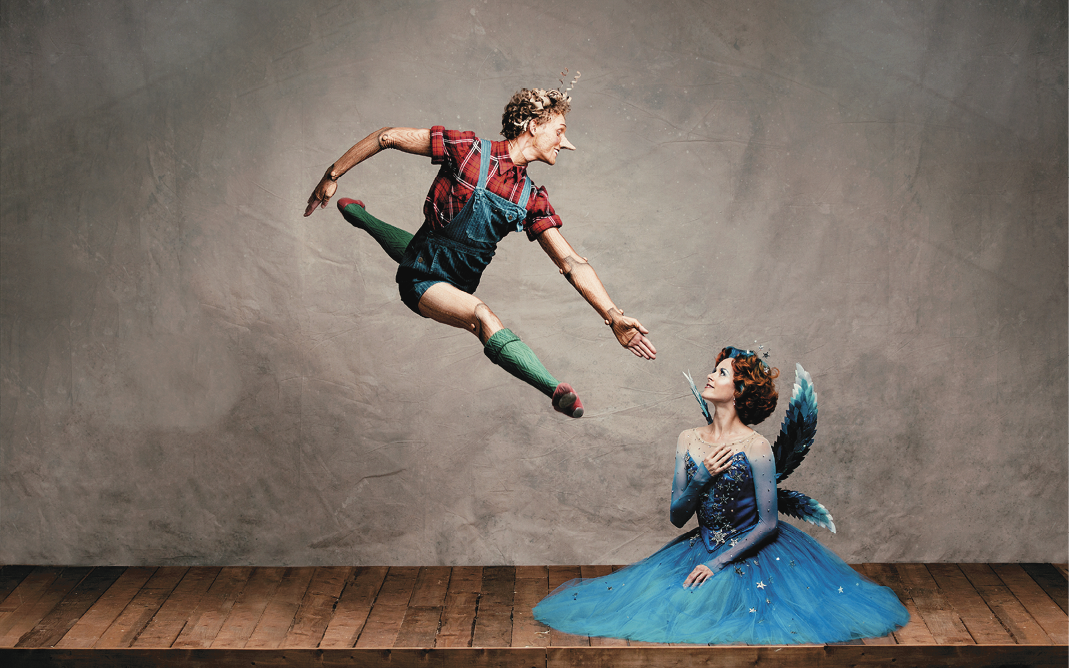
But leading the humanoid crew by a nose this year – pun unavoidable – is Pinocchio, the marionette of the moment. As proof I give you the National Ballet of Canada with its world premiere of British choreographer/dancer Will Tuckett’s Pinocchio this past spring in Toronto, and the upcoming 2017 Aix Festival’s July premiere of its Pinocchio, with Belgian composer Philippe Boesmans’ score fleshing out French playwright Joël Pommerat’s adaptation of Carlo Collodi’s kids’ adventure first published in the 1880s.

Like any Bat/Spider/Superman sequel, Pinocchio’s tale continually gets tempered to suit its time. Steven Spielberg’s 2001 A.I: Artificial Intelligence - a badly disguised riff on Collodi – has technology pulling the strings. Walt Disney Productions’ Pinocchio, invariably maligned for moral gooeyness, was in fact rather audacious for its time – 1940 – as it explored animation’s response to animation. One can only imagine what might now be out there if Stanley Kubrick and Federico Fellini had realized their Pinocchios. (That said, someone should make a film of Robert Coover’s postmodern novel, Pinocchio in Venice, where a writer interviews the aging puppet, a 100 year old American university professor, slowly reverting to his wooden state while reminiscing about The Blue Fairy.)

Arguably the most road-tested among recent live productions is British director Jonathan Dove’s opera, The Adventures of Pinocchio, travelling to Europe and the United States since its 2007 premiere in Leeds. Ballet Ouest de Montréal’s more recent Pinocchio had the little hero suffer from cyber bullying, not from the attacks by the mischievous and murderous fox and cat as in the Collodi original. And Ballet West Academy and choreographer Lindsay Folkman fashioned an inspirational Pinocchio: Awake My Soul.

Collodi – born Carlo Lorenzini – was a flinty Tuscan civil servant who detested kids, boys first and foremost. A “disgrace” and “confirmed rogue” is only the beginning of the calumny he heaps on Pinocchio. Nevertheless Collodi’s Storia di un burattino (The Tale of a Marionette) first appeared in 1881 in a kids’ publication, Il Giornale per i Bambini where it gained a huge readership. Intended as a cautionary tale aimed at the street punks of his day, the violence-filled early installments reflected the author’s richly brutal imagination. “Take care, you wicked ill-omened croaker,” the marionette warns the talking cricket in the original. “Woe to you if I fly into a passion,” Pinocchio adds before squashing the bug flat with a flying hammer – and this only in Chapter Four by the way, in the facsimile edition I am using published by BiblioBazaar Reproduction Series.

Fearing that this level of violence might scare off “i bambini,” Collodi’s editors suggested he tone down the trash talk which, in yet another example, has Pinocchio being strung up by the cat and fox to a branch of an oak tree – in the 15th chapter, as if the author had waited long enough to do away with the puppet. “A tempestuous northerly wind” gave poor Pinocchio “atrocious spasms.” Collodi eventually softened his language, brought his marionette back from the dead to be currently translated into some 240 languages.

Nevertheless, “closer to the original” is one of the most frequently used descriptions for just about any contemporary Pinocchio, along with “not like Disney” and “not just for kids.”

To these protestations we might, in the moment in time we occupy, consider adding “nothing to do with Donald Trump.” But the Trump trope is both too easy and too dangerous. “It’s impossible to make anything that escapes the world we’re living in,” ballet choreographer Will Tuckett argues. “But it’s also dangerous to choose any of those ideas now. When we get to next spring who knows where we’ll be.” (Tuckett is an ardent anti-Brexiteer.)

 “I never do theatre with a message,” playwright Pommerat tells me by email (in French; my translation) in regard to the upcoming Aix opera. “The show does offer among other things a reflection on lying. To get out of the whale Pinocchio lies to his father who thanks him in the end.”

2209 Pinocchio 2The Aix version tacks toward the fable’s deeper waters, though. “Born of the imagination of man, Pinocchio is both alive and artificial,” Pommerat says. “The staging plays on this ambivalence between animate and inanimate, human and puppet. There are lots of fake humans – mannequins – on stage. The spectator does not always know what is living from that which is inanimate.The perception of the spectator is disturbed. This [takes us] in the direction of questioning the difference between the thing and the living.

“In my staging, there is of course a scene with the fairy where Pinocchio’s nose lengthens with every lie. It’s an important symbol, both funny and violent. But in the preceding scene, Pinocchio is almost beaten to death by three murderers because he refused to tell them the truth: to confess that he was poor. It is an opera for children but the questions it raises, about education or the relationship with others for example, concern us all. Aggression, blackmail, punishment – all the adults in this tale question our relationship to authority and education.”

(It’s a vision more than a bit reminiscent of Metallica’s Master of Puppets, where string-pulling is followed by “twisting your mind and smashing your dreams.”)

Pommerat’s touchstone, he says, is Luigi Comencini’s remarkable, Le avventure di Pinocchio, the lavishly praised 1972 production for Italian television which harkens back to post-WWII Italian neo-realistic cinema – back streets filled with rubble, kids scrambling for food, that kind of thing. “I did revisit the Comencini,” says Pommerat, “but I had other sources of inspiration, the films of Fellini, (Max) Ophüls and old photos mixed with what I remember of Collodi. I created this Pinocchio in 2008 for the Théâtre (de la Monnaie, in Brussels). The libretto for that production was rewritten for opera especially for Philippe Boesmans. (Boesmans and Pommerat collaborated earlier for the 2014 production of Au Monde. Asked to come up with something new by Bernard Focroulle, Aix’s out-going chief in two years, Boesmans immediately thought of Pommerat’s Pinocchio.)

Adds Boesmans in his separate email: “I didn’t find it interesting for my music to imagine Pinocchio as a puppet. I found it more interesting that Pinocchio is a real pre-adolescent boy going through different phases. I opted for varied musical changes adapted to the adventures that happen to him.

“I’m often attracted to victims by having an attitude of compassion toward them. Julie” [based on the August Strindberg play] and Yvonne, Princesse de bourgogne are two good examples. Of course Pinocchio is a puppet, but Joël Pommerat has reconsidered him as a street boy of today. Pinocchio is not a dark character. He obviously undergoes rather violent initiatory tests that teach him to become a real little man.”

(Readers may recall that Julie, which premiered at La Monnaie in 2005, was produced in 2015 by Canadian Stage and Soundstreams, making Boesmans’ North American debut with an all-Canadian cast directed by Matthew Jocelyn. Aix’s Pinocchio has its share of Canadians, starting with soprano Marie-Eve Munger as the Fairy, along with mezzo Julie Boulianne, baritone Laurent Deleuil and soprano Magali Simard-Galdès. Munger’s Fairy is, reportedly more hot mama than Tinkerbell, offering the boy, in Pommerat’s description, “the chance of salvation.”

Will Tuckett’s spring Pinocchio for the National Ballet was also a follow-up of sorts, his second retelling of the Collodi following an earlier production for the Royal Opera House which, upon reconsideration, needed too much restructuring and rethinking for the Canadian company. “It’s more a family show than a kid’s show, more about excitement than scary,” Tuckett tells me. “There is a lot of subtext one doesn’t get into. So you have to be a lot more honest on how you tell the story. It remains a very strong morality tale, a case of ‘if you do the wrong thing your nose will grow.’ There’s a comeuppance if you transgress.”

If there’s any punishment for the title character in Tuckett’s Pinocchio it comes with the relentless – ruthless? – pace the choreography forces the dancer  (Skylar Campbell in Toronto) to maintain. Does he ever get off stage? Being an inert chunk of wood begins to look good after a while! Pulse and pace however contribute to the work’s strength, via Paul Englishby’s amenable score. “This production is huge and the music has to be light-footed enough to switch styles,” says the composer who worked with Tuckett on The Thief of Baghdad for the Royal Opera House. “Rhythmically speaking, we play all sorts of games with patterns we’ve set up. The harmony can be quite thorny at times, but Pinocchio has a a musical motive that runs the entire gamut of everything we do.”

The National Ballet’s Pinocchio would easily get the Disney seal of approval if Uncle Walt were still with us. Violence and sexuality are kept within parental guidance limits. Dramaturge Alasdair Middleton – who also wrote the book for the 2007 Jonathan Dove Pinocchio opera – avoids scenes of boys hanging or cricket crunching.

The Aix Festival has emerged in recent years as the Tiffany’s of the European music season; it’s always sunny and cher. Having Ottawa’s Philippe Sly as its Don Giovanni this year shouldn’t dent this impression in the slightest. (In thinking of the cavernous quality of Sly’s voice, a true bass-baritone, one is reminded of British critic Kenneth Tynan once describing Richard Burton’s voice as having “the stillness of a cathedral.”) But the festival – 70 years old next year – has become particularly sure-footed when it comes with its commissioning and performance of contemporary opera.

It seems Aix’s instinct to re-imagine what opera might be – sometimes falling flat on its makeup in the process – often has to do with revisiting the power of illusion itself. Its 2012 hit, George Benjamin’s Written on Skin, set in 13th-century France revolved around illustrated texts. Last year’s Kalila wa Dimna, based on a 2,000-year-old bestseller in Arabic, dealt with the slippery relationship truth has with politics. Likewise, Pinocchio the marionette functions in a diminutive way, the way opera does on the grand scale, as an artificial means of understanding our humanity.

Speaking of artificial means. There is one Trump-Pinocchio connection after all. Geppetto is called “pudding” by the local kids, because of the yellow hair in his wig.

Performances of Pinocchio are at the Grand Théâtre de Provence July 3, 7, 11 and 14 at 8pm and July 9 and 16 at 5pm.

Peter Goddard, music, film and visual arts critic for the Toronto Star with a National Newspaper Award for criticism, is the author of The Great Gould, due out this summer from Dundurn Press.

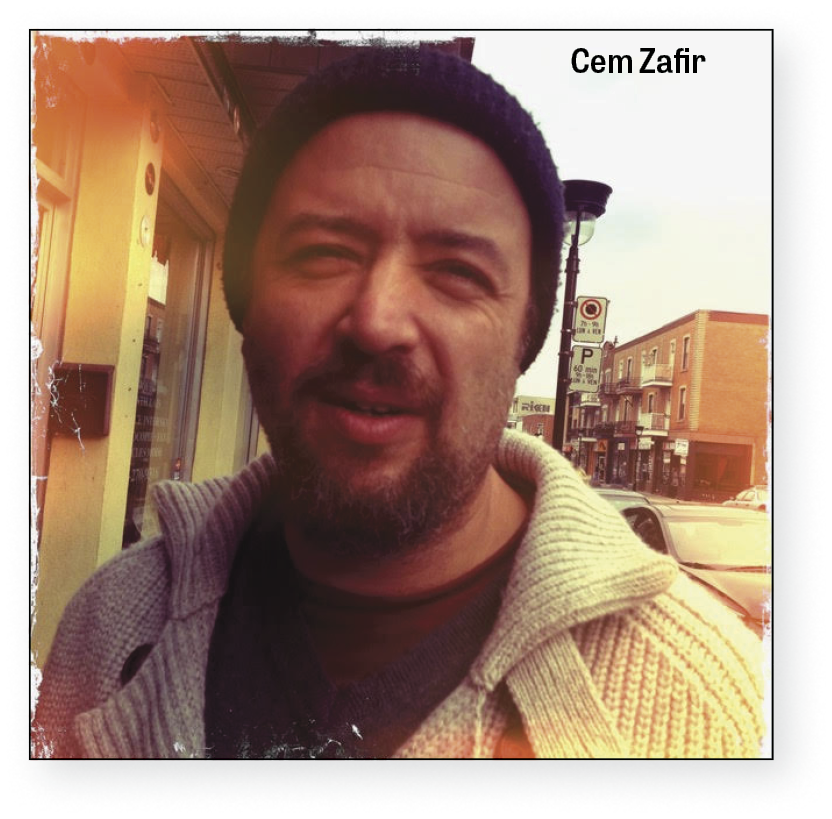
2209 Feat Jazz 1Jazz festivals sometimes follow an uncomfortable pattern. Early success breeds an appetite for more. It’s difficult to attract crowds with niche music, so the emphasis turns to the most accessible forms of jazz, sometimes even distant relations. Fortunately, there are people like Hamilton’s Cem Zafir, committed to jazz at the margins, edgy, experimental music that’s defined by the risk of improvisation not by the tapping of feet.

Zafir, who first started booking radical jazz-John Zorn’s Masada and Rashied Ali-in BC around 2000, started the four-day Something Else! Festival of Creative Music in 2014. He’s clearly developing a sustainable model, using well-known, compatible musicians whose working lives involve overlapping ensembles. Amid the welter of bands appearing between June 16 -19 is a hard core of international improvisers, with musicians from the Netherlands and Japan as well as Canada and the US.

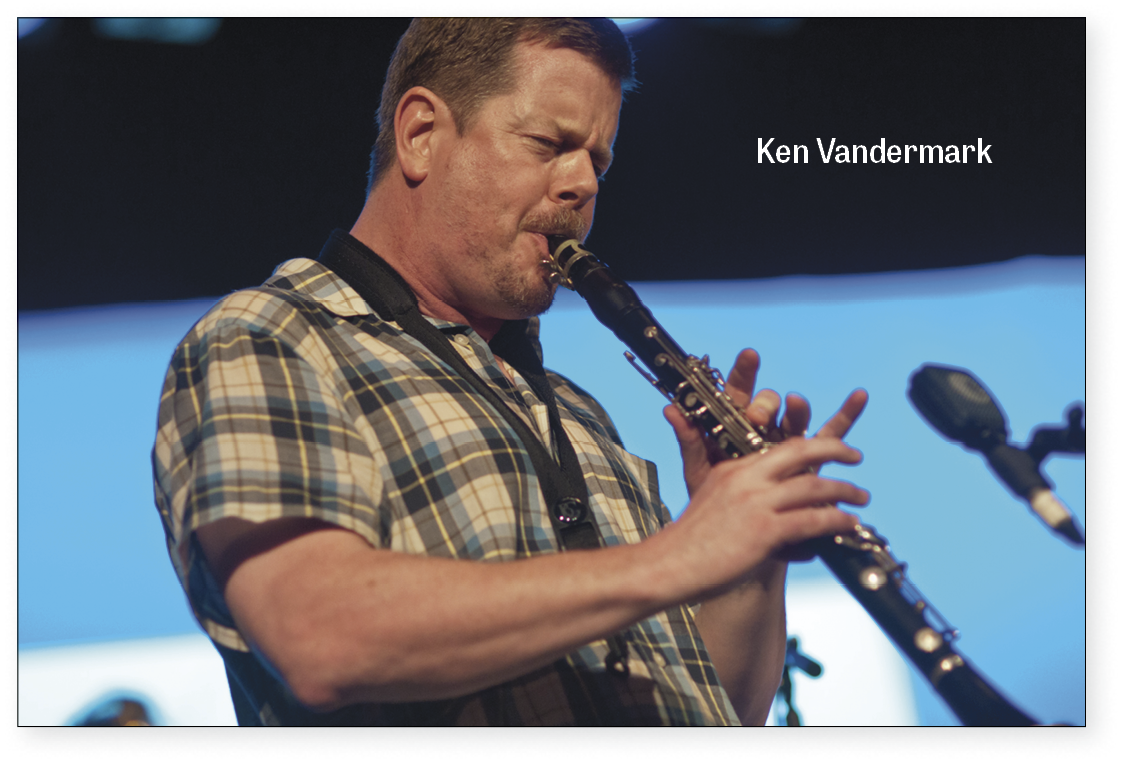
Ken Vandermark, saxophonist, composer and master of creative musical networking is artist-in-residence. He opens the festival with a solo performance and then over the next few days appears in numerous shifting ensembles. The DKV Trio (the other members are percussionist supreme Hamid Drake and stand-out bassist Kent Kessler) appears with guest guitarist Joe Morris on Saturday afternoon; during the Sunday matinee, DKV combines with Eloping with the Sun, the long-standing trio of Drake, Morris and New York bassist William Parker in which the three emphasize various African, ethnic and small instruments (even the trumpet is the pocket version). Alone, Eloping with the Sun concludes Saturday evening; DKV returns for the Sunday evening concert.

In another combination, Vandermark appears in duet with trumpeter Nate Wooley. Vandermark’s contribution to the duo is a work-in-progress called Sequences of Snow, in which he takes “visual and sonic aspects from [Michael] Snow’s films…as inspiration for material to interpret and transform for a completely different medium.” Wooley, whose experimentation extends to applying the International Phonetic Alphabet to trumpet sound production, also appears in a solo concert as does Joe Morris, who can alter one’s view of a guitar’s possibilities.

2209 Feat Jazz 2Perch Hen Brock & Rain, heard on Friday night and Sunday afternoon, consists of two well-travelled couples with distinguished resumes: Netherlander saxophonist/clarinetist Ab Baars and violist Ig Henneman and Brooklyn-resident saxophonist Ingrid Laubrock and drummer Tom Rainey. Baars, a prominent member of Amsterdam’s ICP, also has a guest-spot with Eloping with the Sun. Another couple, the Tokyo-based trumpeter Natsuki Tamura and pianist Satoko Fujii appear in Kaze (Japanese for “wind”), an intercontinental explosion of brassy brilliance with the French trumpeter Christian Pruvost and drummer Peter Orins.

There are plenty of other performances as well, including solo turns by trumpeter Nicole Rampersaud and percussionist Tatsuya Nakatani. Montrealer Woody Epps’ Togetherness includes stand-out musicians, like saxophonist Erik Hove and trombonist Scott Thomson. Spontaneous ensembles punctuate the afternoon series, including a tribute to the late Toronto guitarist Ken Aldcroft.

It’s an opportunity to hear a spectrum of international radicals who are never heard in Toronto in this concentration.

For a complete schedule and locations, see zulapresents.org


Back to top