In last month’s column I mentioned that the Concert Band of Cobourg would be making their annual trip to Plattsburgh New York once again this year. Having heard about this event many times over the years, and since a trip of that distance by a community band is rare, I decided to journey to Plattsburgh myself. What could be so special with this event that a large concert band would undertake a six-hour journey and stay for the weekend to perform in a parade and a concert? I wasn’t disappointed.
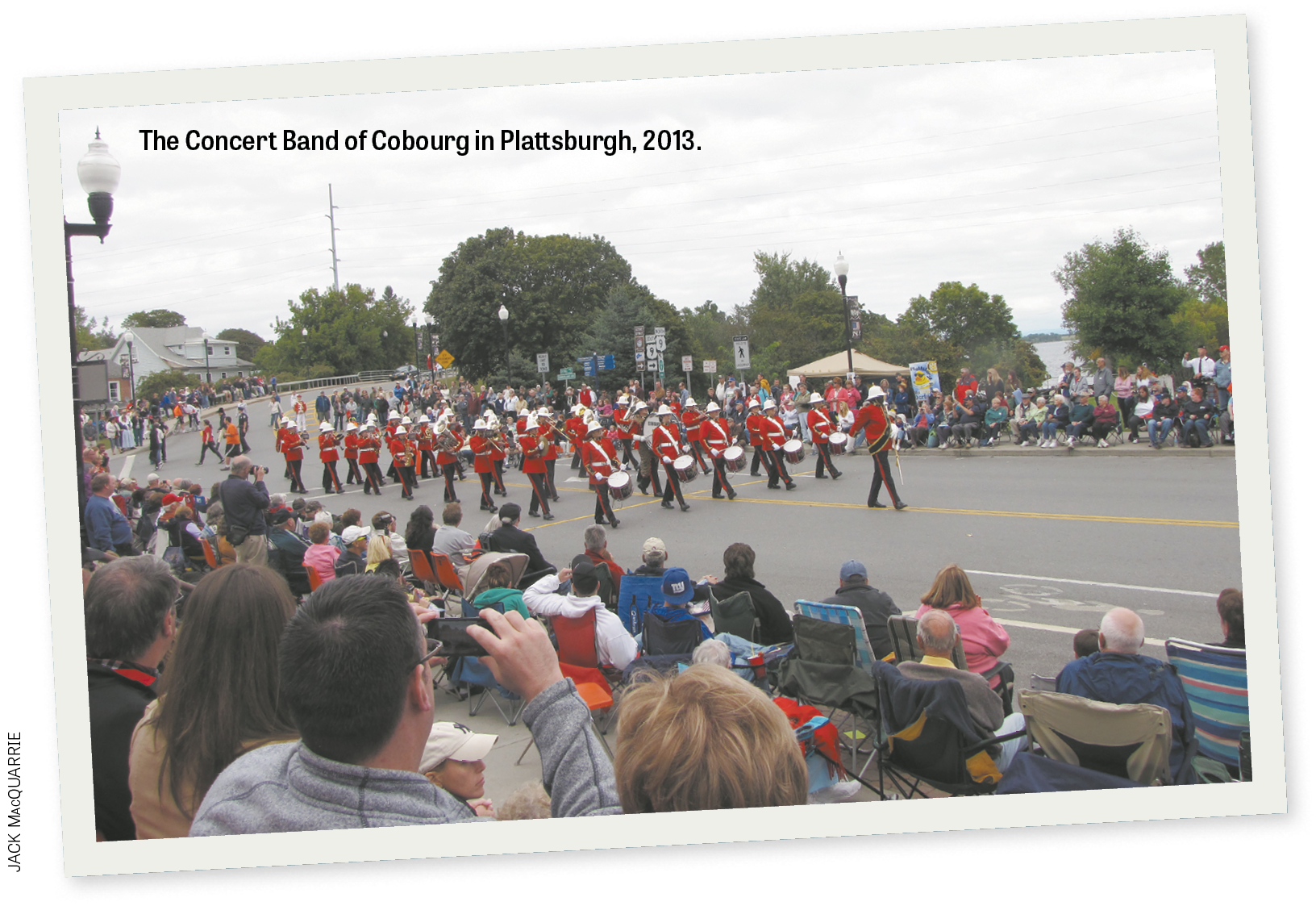
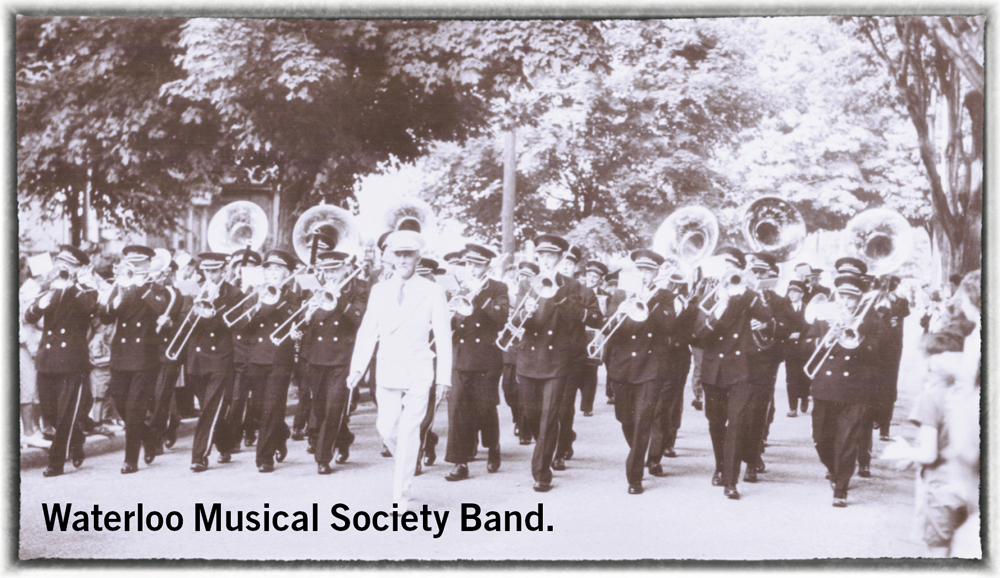
bandstandSpecifically, the many events were all part of the annual commemoration of the Battle of Plattsburgh, the final clash of the War of 1812. After a full week of battle re-enactments, encampments and similar events, the Saturday afternoon parade included many Canadian and American bands. The theme of this year’s event was “The Canadian Connection.” In their role as the official band of Her Majesty’s Royal Marine Association, the Concert Band of Cobourg, along with the Cobourg Legion Pipes and Drums of Branch 133, were the headliners of the parade. Also on parade were the Pipes and Drums of the RCMP from Montreal, and the Sailing Masters of 1812, a traditional fife and drum corps dressed in sailing masters’ uniforms of the era.

On the reviewing stand, from Montreal, the Grand Marshals for the parade were 92-year-old Okill Stuart and his wife, Sylvia. Mr. Stuart, resplendent in his tartan kilt, displayed an array of medals earned between the time he landed on Juno Beach on June 6, 1944, and his return to civilian life after WWII. Everywhere we turned we were greeted by enthusiastic men, women and children dressed as they might have been 200 years ago. Tradition was certainly on display everywhere, but with an occasional modern twist. When I see the pipes and drums on parade, I usually expect to see the traditional husky drum major and pipe major. Not so with the Cobourg Legion Pipes and Drums. Their pipe major is a petite woman named Mary Ito.

On Saturday evening the Concert Band of Cobourg was featured in a concert in the beautifully restored 1920s-vintage Strand Theater. It was a full house with a of mix of local residents, band members’ families and friends from Cobourg, Peterborough, Toronto, Montreal and elsewhere.

Conductor Paul Storms and his team did a wonderful job so that, as far as any spectator could tell, everything went off without a hitch. Personally I am indebted to Paul Storms for providing all the information I needed before the trip and even reserving a hotel room in Plattsburgh. We walked into the hotel, stated names and were immediately recognized as members of the Cobourg contingent. The town of Plattsburgh was fully involved with a wide variety of associated attractions. Among other things, to acquaint us with all that was planned for this commemorative week, we received a 74-page book detailing all events. Personal chats with the mayor of Plattsburgh near the reviewing stand and with the mayor of Cobourg in his hospitality suite at the hotel certainly made us feel right at home. Next year will be the 200th anniversary of the Battle of Plattsburgh and we are already making plans to be there.

The evenings in the hotel provided a great opportunity to renew acquaintances with at least eight Cobourg band members with whom I had played in various groups over the years. In those conversations, many reminisced about their former conductor Roly White and their former drum major Tom MacMillan who just passed away on July 31 of this year. Not only did I hear about the pleasures of playing in this band, but as is common at such events I also heard stories of why people had left other bands — tales of discontent with repertoire, parting of ways with conductors, and many other issues, some avoidable and some probably not. Hmm, I feel another column coming on! All in all a memorable weekend where I came away feeling like an honourary band member. If I lived closed to Cobourg, I would be knocking at their door to become a member.

Uxbridge Revisited: Speaking of well-organized happy bands, it’s time to revisit the Uxbridge Community Concert Band. This is a summertime-only band, operating at a time when many members are liable to have conflicting demands on their time. Nevertheless, this band has managed to overcome obstacles tby having all volunteer non-musical positions well filled without grumbling. Early in the season a list of jobs to be undertaken is posted and members are asked to select the job of their choice. These range from the mundane, such as carrying percussion equipment and stage setup, to producing art work and program notes. I have not heard of any other band that played a concert on a Saturday and had CDs of that concert complete with very attractive cover art available free for every band member four days later at their Wednesday “Music Sorting Party.” Yes, the band members have a party with refreshments to sort all of the music. It’s a party, not a dull tedious job left for the librarian. If you are a band member, do your members pitch in for that job?

Legend: The term legend is grossly overworked in the world of music. However, if there is anyone on the local musical scene that deserves such an epithet, it is certainly appropriate for Eddie Graf. At the age of 92, Eddie still loves to play his alto sax and clarinet and is still actively working as one of the most respected musicians and arrangers in his field. From his days as a band leader entertaining troops in Europe during WWII, through his half century of CBC work, Eddie has been a tireless player, composer, arranger and band leader. By his side since her days as a dancer with Eddie’s Army Show band, his wife, lovely Bunnie has been part of the team. Now we have learned that plans are in the works to produce a documentary for television on the life and music of Eddie Graf dating back to his days with the Canadian Forces where he met Bunnie, also 92 years young.

The fall musical season is certainly in full swing now. Last month we were grasping for information on band activities. Not so now. We have been inundated. The Brampton Concert Band, under the direction of music director, Vince Gassi, begin their season with “Lights, Camera, Action: The Music of Jerry Goldsmith and Friends,”with performances by the Brampton Youth Concert Band and special guests, the Pipes and Drums of the Lorne Scots. For those not familiar with the name Jerry Goldsmith, he’s the one responsible for the musical scores for such films as Star Trek, Papillon, Chinatown, King Solomon’s Mines, Basic Instinct, Alien and Planet of the Apes among others. That’s Saturday, October 19 at 8pm.

The Hannaford Street Silver Band launches their 30th anniversary season with “Strike Up the Band,” on Sunday afternoon, October 20. This will feature Gregson’s monumental piece Of Men and Mountains and a new “cutting edge” commission by Vivian Fung.

On Sunday, October 20 at 2pm, the Markham Concert Band, with conductor Doug Manning, will present “October Pops” at the Flato Markham Theatre. Get ready for marches, show tunes, jazz and light classical selections featuring special guest vocalist Sharon Smith.

We were very pleased to hear from the Mississauga Pops Concert Band, and hope to pay them a visit in the near future. Their first concert of the fall season will be their “Hallowe’en Concert” on October 26 at St. John’s Dixie Cemetery & Crematorium. With an interesting twist, this concert will be geared towards families and will have costume contests and games for kids before the show begins at 7pm and again during intermission.

We hadn’t heard from them for some time, but we’re pleased to hear that the Scarborough Society of Musicians has started up its fifth year. The group rehearses alternate Saturdays from 11am to 1pm at Dr. Norman Bethune C.I., 200 Fundy Bay Blvd., Toronto. We haven’t heard of any concerts yet. For information, contact them at
ssm@continuingmusic.ca.

In last month’s column I mentioned attending a very special event in support of trumpeter Carlo Vanini. Unfortunately, I have to report that Carlo Vanini passed away peacefully on the morning of August 30 with his family at his side. Over the many years that I knew Carlo I had the pleasure of playing in many groups with him. Looking at the many photographs at the visitation, I learned one other connection that I had not been aware of: Carlo’s high school music teacher had been my cousin. One event I remember fondly was when I was in the audience for the year-end concert of his daughter’s high school band. His daughter performed as conductor for one special number, her teachers played in the band and Carlo was the trumpet soloist. He will be missed.

Definition Department

This month’s lesser known musical term is bar line: what musicians form after the concert.

We invite submissions from readers. Let’s hear your daffynitions. 

Jack MacQuarrie plays several brass instruments and has performed in many community ensembles. He can be contacted at bandstand@thewholenote.com.


Cobourg Goesto Plattsburgh
bandstandAccording to my calendar summer is almost over. However, in my experience, it tried to start and then gave up some weeks ago. On the band scene my experience is quite similar. I had hoped to hear from quite a number of bands telling of their activities over the summer months when TheWholeNote was taking a breather. With a couple of notable exceptions, there was a deafening silence from the bands regarding their summer programming. If you are a member of a band, tell us about your activities. Whether they are highlights of recent events or announcements of ones coming up, we and other readers are interested. Having said that, we really prefer a simple release in the form of an MS Word document attached to an email. Trying to dig for gems of information in a multi-layered, colourful website, no matter how attractive, frequently yields little or no useful information.

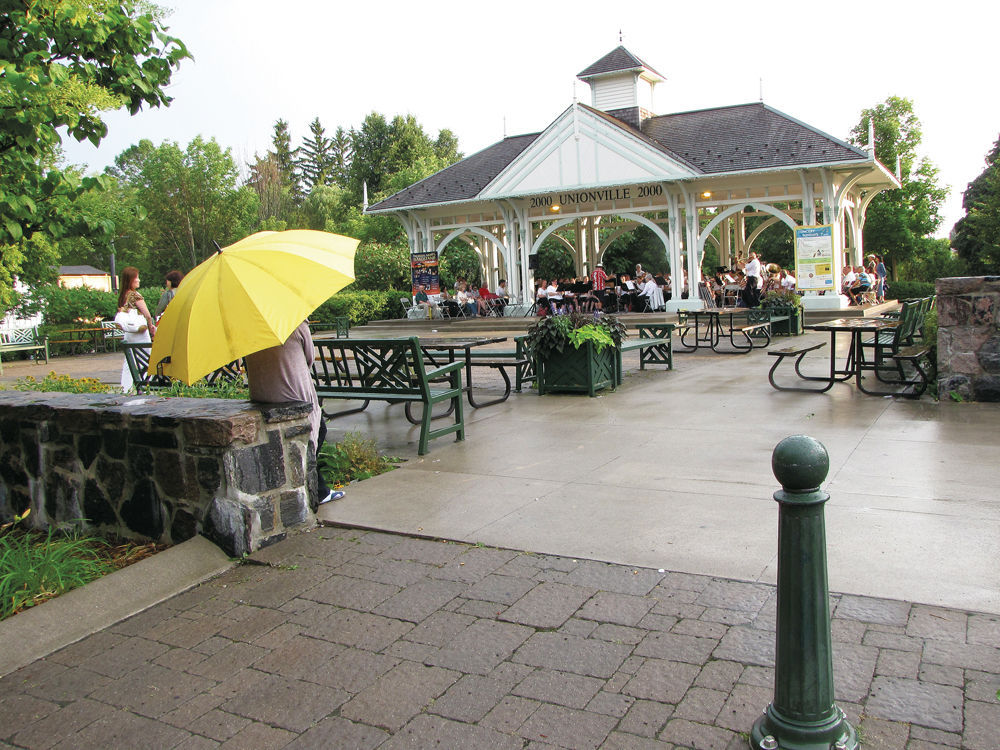
We do know that there were many series of regular concerts at Victoria Park in Milton, at the Unionville Millennium Bandstand, the Orillia Aqua Theatre and other locations. Unfortunately, we have no anecdotes to report.

In past issues of this column the topic of programming, and specifically theme programming, has received some attention. In one case a band director admitted to settling for second rate music in order to adhere slavishly to a selected theme. This year it is a pleasure to report on a themed program, with a difference, which really worked. The Uxbridge Community Concert Band’s director Steffan Brunette produced a well-researched themed program this year which set a new standard. The program was simply titled “The Elements.”

In recent years modern science revealed to us how all matter on earth was composed of combinations of elements. In our elementary science classes we learned about the periodic table of elements and how they are combined to form all of the physical materials which we encounter in our daily lives. However in ancient times the perception was very different. The belief was that everything known in the world was made up of only four elements: earth, wind, water and fire. These concepts were inspired by natural observation of the phases of matter. Almost since the earliest forms of written music, composers have written works to convey emotions induced by human encounters with those four elements.

This concert took the audience on a musical journey through time with a broad range of musical impressions from those of George Frideric Handel in the 1600s to works of composers in the 21st century. In addition to Handel’s Water Music and his Music from the Royal Fireworks, there was Manuel de Falla’s Ritual Fire Dance, excerpts from Stravinsky’s Firebird Suite and several works written within the past ten years. There was an interesting adaptation of the traditional African-American spiritual, Wade In The Water, by none other than Professor Adolphus Cunningham Hailstork III. There was even a musical impression of the volcanic eruption of Mazama in the state of Oregon that occurred over 7,000 years ago. It was a program that was musically varied, tasteful and kept the audience interested. Full marks go to Steffan Brunette.

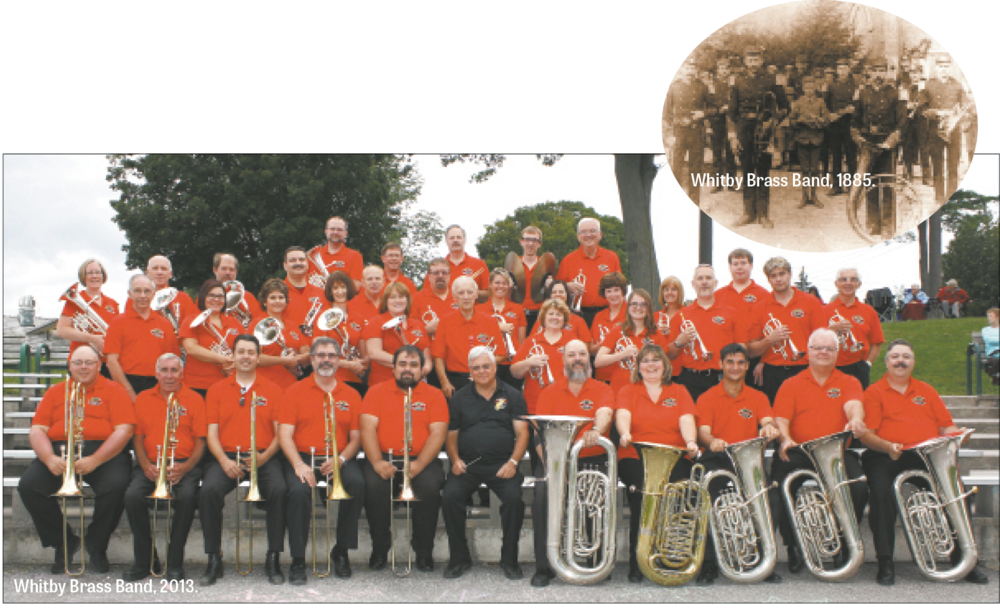
One of the oldest brass bands in Canada, the Whitby Brass Band, is celebrating its 150th anniversary this year. The official celebration event will take place in Whitby, Friday September 27. That will be followed by a special anniversary concert on Saturday, September 28. Some months ago, as a part of their anniversary celebrations, the band sponsored a competition for young musicians to compose a concert march to commemorate this anniversary. First place went to Abundance by Marcus Venables of Toronto, second place toAlumnus by Gerry Murphy Jr. of Oshawa, third place toLegacy by Kristie Hunter of Uxbridge and fourth place to Heydenshore March by Sean Breen of Markham.

In Cobourg there is celebration and there is grief. Once again this year, the Concert Band of Cobourg will be travelling to Plattsburgh, New York, in their role as the Band of Her Majesty’s Royal Marine Association. However, this year, their longtime drum major, Tom MacMillan, will not be heading the parade. Tom succumbed to cancer in mid-August. Tom MacMillan joined the Concert Band of Cobourg over 30 years ago as its drum major and led the band in every significant parade since then. In the words of Paul Storms, director of music: “He was a big huge part, and he was the centrepiece of the band in everything we did over the last 30 years. He put the band on the map with his looks and his proud walk. Every time we did tattoos or parades, once he called the band to attention you could see him in his glory and how proud he was to lead us, and how proud we were to have him lead us.”

MacMillan retired from the Ontario Provincial Police in 1993, but it was his involvement with the citizens of Cobourg that made him shine. Over the years he won many awards from community service clubs, the town of Cobourg and the province of Ontario. From his blue town crier uniform complete with tiny rimmed glasses, to the white beard he wore when playing the role of Santa, or carrying the mace for the band, MacMillan was the definition of community involvement.

So, after a busy summer of weekly concerts, the band’s principal activity will be, as mentioned, their annual participation in the commemoration of the Battle of Plattsburgh on September 14. The theme of the weekend is the “Canadian Connection” which will feature them along with the Cobourg Legion Pipes and Drums of Branch 133. The bands will be featured in a parade, beat retreat ceremony and evening concert. In the concert the band will have the honour of opening the newly renovated Strand Theatre in Plattsburgh.

On another down note, I recently attended a benefit event at the Frenchman’s Bay Yacht Club to honour trumpeter Carlo Vanini. Well known in Toronto band circles and a regular for many years in the Bob Cary Orchestra at what was formerly the Chick ’n’  Deli, Carlo has been seriously ill. Hundreds of friends and family members were there to express their support. We hope to see him back soon.

Definition Department

This month’s lesser known musical term is An-Dante: a tempo that’s infernally slow. We invite submissions from readers. Let’s hear your daffynitions. 

Jack MacQuarrie plays several brass instruments and has performed in many community ensembles. He can be contacted at bandstand@thewholenote.com.

In last month’s issue I referred to a number of concerts by small ensembles. Since then I had the pleasure of attending a very different program by small ensembles. In the most recent of their intimate offerings, the Naval Club of Toronto hosted a return of members of the band of HMCS York. This band, one of several reserve force bands in Toronto, has amassed quite a talented group of musicians. Time was when the membership of such reserve bands constituted a mix of skilled amateur members along with one or two school music teachers. Today this band can boast that close to 75 percent of their members hold degrees in music, including some doctorates.

The program opened with a duet for alto trombone and harpsichord by an early composer that I had not heard of, a predecessor of Leopold Mozart and Michael Haydn. The trombonist, Leading Seaman James Chilton, holds a Ph.D. from the University of British Columbia and is one of a few who are introducing this instrument to their audiences. Three hundred years ago the alto trombone, and its larger brother the tenor trombone, enjoyed significant status as solo instruments. However, the use of trombones as solo instruments declined for almost 200 years. Beethoven didn’t use trombones in his symphonies until his Fifth, where they appear in the final movement.

In the 20th century the tenor re-emerged as a solo instrument, but with a few exceptions, the alto has languished to this day. It was great to hear of its return. (On my return home after that performance, I rushed to play a CD of concertos for alto trombone and orchestra by Leopold Mozart and Michael Haydn.)

The rest of the program consisted mostly of performances by various combinations of brass instruments. A trombone quartet chose lesser known works by 20th century composers including American Arthur Fracenpol and Briton Malcolm Arnold. A quintet brought us back to the present with their version of When I’m 64.

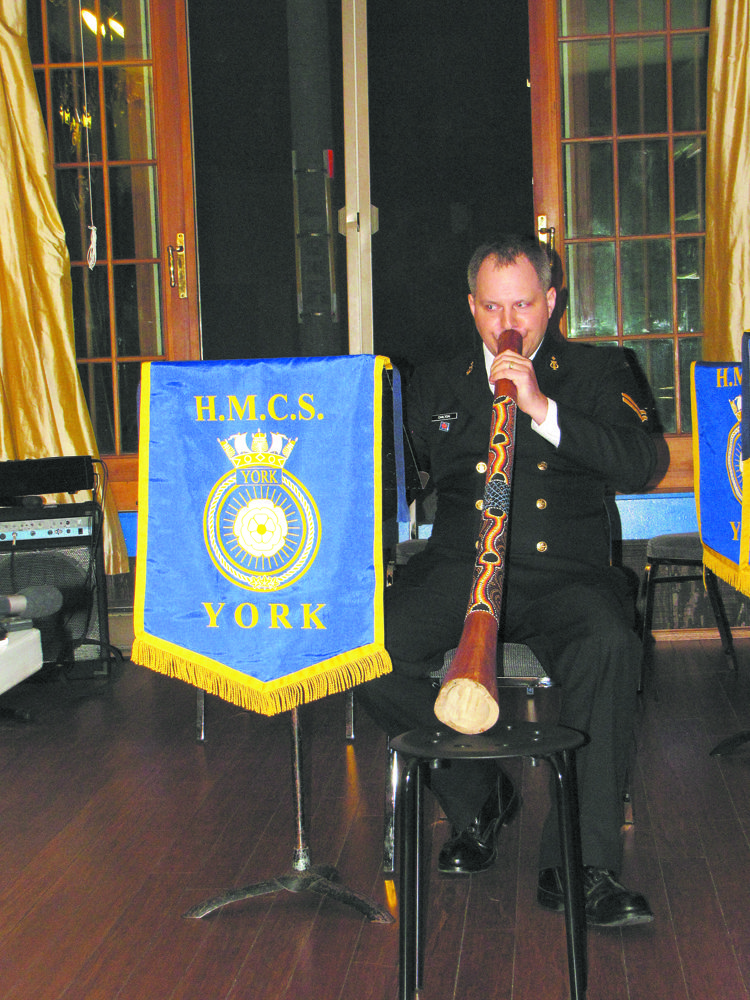
bandstand didgeridooOther than one oboe solo, it was almost all brass. I said “almost” because L.S. Chilton suddenly digressed from his various sizes of trombones to introduce an original composition, his Opus 1 for Solo Didgeridoo. The possibility of a naval musician in full uniform performing on such an instrument in public was beyond my wildest illusions, but there he was. For those not familiar with the construction or origins of the didgeridoo, it is a traditional instrument made by Aboriginal craftsmen in Arnhem Land in Northern Australia. While this was a factory-made instrument, the original native Australian instruments are made from the trunks of eucalyptus trees, the cores of which have been hollowed out by termites. He hopes to get one of those “termite crafted originals” in the future. While I once had the opportunity to make sounds on a didgeridoo, I can’t say that I ever came close to playing anything resembling music on it.

Traditionally, in concerts, naval bands always play their official “regimental march” Heart of Oak. This time, as a bit of a spoof, all of the participating musicians treated us to a vocal rendition of that in four-part harmony.

Since the concert at the Naval Club had such a significant trombone component, this might be a good time to recount a story of a special trombone in my life. Many years ago, having played a tenor trombone for most of my life, I suddenly had the urge to try a bass trombone. So I visited a dealer to inquire about such an instrument. The price of the new Vincent Bach instrument that I tried was beyond my budget at the time and I left empty-handed. That same evening, during a rehearsal, a total stranger who had been sitting behind the trombone section leaned over and whispered in my ear, “Do you know anyone who would like to buy a bass trombone?” I almost jumped out of my skin. When I asked for details, the gentleman handed me a piece of paper with his name “Tommy” and suggested that I phone him.

The next day I visited him. There it was; a genuine New York Bach bass trombone. For those not familiar with the Bach instruments, Vincent Bach was an Austrian trumpeter who moved to New York shortly after the First World War and set up shop to make trumpets and trombones. In later years he moved to Mount Vernon and subsequently sold the business, whereupon the operation was moved to Elkart, Indiana. Those early New York and Mount Vernon instruments are coveted by brass musicians for their craftsmanship and tone quality. The asking price was surprisingly low. Tommy explained that he had suffered a stroke and could no longer play. He just wanted the horn to have a good home. (Some time later he confessed that he had an ulterior motive. Another individual in the same trombone section, who we’ll call Joe, had been hounding Tommy to buy the trombone. Tommy couldn’t stand Joe and wanted the instrument to be played beside him where Joe could eat his heart out.)

Over the years I have wondered about the history of the instrument. There is still the name Harry Stevenson — bass trombonist for the Toronto Symphony for many years — marked on the inside of the case. A few weeks ago I had the opportunity to learn a bit more about my treasure. Tedd Waggoner, the Bach instrument specialist from Elkart, was giving a presentation on the evolution of the early Bach instruments at Long and McQuade in Toronto. I took my instrument to show to him. In this presentation he pointed out how Vincent Bach had maintained meticulous records of every instrument produced with all specifications, dates and names of customers. Waggoner had been able to convince the current management to retain these individual record cards on all of the early instruments. Shortly after his return to his office I received a copy of the card with all of the details. It was completed on April 22, 1941, and sold on January 16, 1945, to a Colin Campbell in New York. How and when did it get from New York to Harry Stevenson? Were there other owners? I feel like a genealogist trying to trace the ancestry of my treasure. Are there any readers who might shed some light? For the benefit of those who might wish to own such a horn, I already have a list of trombonists hoping to be mentioned in my will. Finally on the topic of trombones, the Sheraton Cadwell orchestras are looking for one or two experienced trombone players to join them. For details visit their website at sheratoncadwell.com.

So much for some of the musical events in my life these past few weeks. What is on the horizon for the summer months? Since there will not be another issue of TheWholeNote until September, I set out to determine what would be happening in the community music world over the next three months. With a few exceptions, the community bands in this part of the world served up a deafening silence as far as news of their activities was concerned. With a dearth of information at hand, I turned to band websites to see what they were reporting. In one case, the band in question greeted me with the news of their next great performance in October 2012. Another gave all sorts of detail about their forthcoming trip in September 2010. A third gave a list of every performance in the past three years, but nothing about the future. Come on folks, tell us what you are doing.

Here’s some of what we do know. Steffan Brunette and the summertime-only Uxbridge Community Concert Band will be performing their usual two concerts plus a ceremony with the local branch of the Royal Canadian Legion. The Festival Wind Orchestra will feature all movie music in their spring concert on June 22 at 2pm, at Crescent School. The Newmarket Citizens’ Band has a busy schedule, including the Veterans Day Ceremony at the Newmarket Cemetery (June 9 at 1:30pm), the Aurora Canada Day Parade (July 1 at 10am), the Newmarket Canada Day Fireworks Concert (Richardson Park, July 1 at 7pm), the Orillia Aqua Theatre (August 4 at 6:30pm) and a Clarington Older Adult Association concert (September 22 at 12 noon). The Concert Band of Cobourg is offering a Coronation Concert Celebration series with performances in Toronto June 2, in Kingston June 9 and in Cobourg June 15. As in previous years there will be a series of regular concerts by several bands at the Orillia Aqua Theatre in Couchiching Beach Park and on the Unionville Millenium Bandstand.

While it is definitely not a community band, there is a new small ensemble in Toronto that warrants some attention. Conductor Simon Capet is back in town with a new chamber orchestra with the very musical name Euphonia. There will be two main differences in their performances. They will be performing in small, non-traditional venues and will not be wearing any kind of formal attire.

Rather than viewing these small venue performances as an innovation, the members of Euphonia consider it a return to the past. As Capet points out, public concerts in the days when these composers presented their works were not in large austere concert halls. They were lively social gatherings in the taverns of their day, where the musicians were surrounded by their audiences as they enjoyed refreshments and conversations along with the music. As in those early days, the musicians will be in the centre of the room, not up some distant stage remote from their audience. Tentatively, these concerts will be on the second Monday of every month, with their next concert, consisting of music of Mozart, C.P.E. Bach and Haydn, at the Lula Lounge June 10 at 8pm.

Turning to happenings in September, it seems appropriate to return to naval matters. On the weekend of September 14 the Concert Band of Cobourg, in their role as the Band of Her Majesty’s Royal Marines Association (Ontario), will be travelling to Plattsburgh, New York. For several years now the band, and a considerable group of friends, have made an annual trek to participate in ceremonies commemorating the Battle of Plattsburgh on Lake Champlain. Yes, there was a naval battle on Lake Champlain with no fewer than 30 ships involved. It took place on September 11, 1814, just before the signing of the Treaty of Ghent, and was the final battle of the War of 1812. I might just make the trip there myself this year.

Definition Department

This month’s lesser known musical term is Antiphonal: referring to the prohibition of cell phones in the concert hall. 

Jack MacQuarrie plays several brass instruments and has performed in many community ensembles. He can be contacted at bandstand@thewholenote.com.

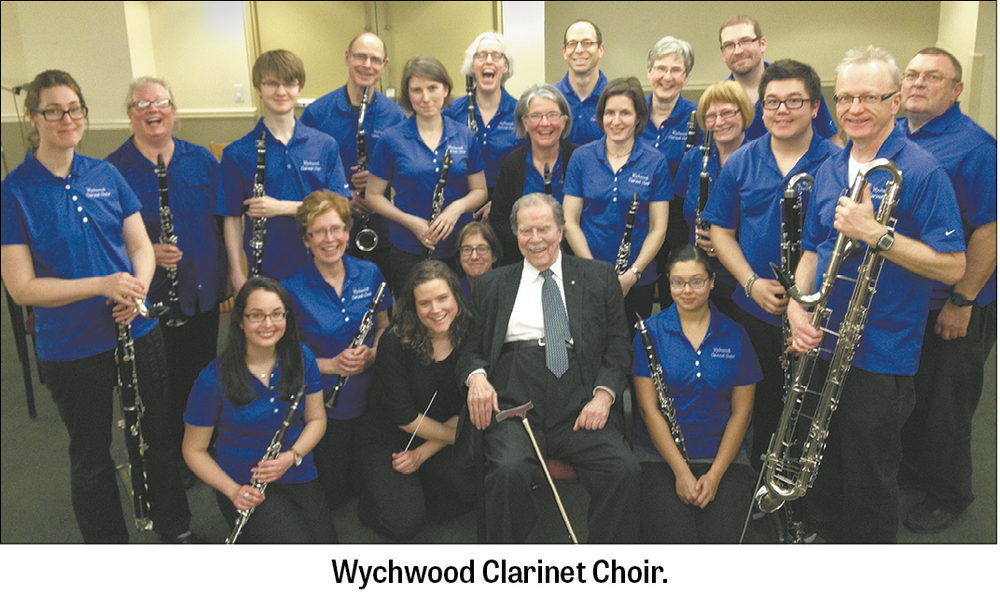
1808-bandstandIt all started with a very nasty accident but with an outcome that, as I witnessed, was anything but accidental, namely a well-crafted concert by a rarely heard form of musical ensemble. As for the accident, it happened a few months ago. After one of their regular rehearsals, members of the Wychwood Clarinet Choir saw a woman riding her bicycle getting tangled with the streetcar tracks and being thrown to the pavement. Immediately, those choir members sprang into action like a well-practised team. They rendered first aid and took the victim back to her home at the nearby Christie Gardens retirement residence.

Over the ensuing weeks, those choir members and the victim, Bruna Nota, remained in touch and developed a strong bond of friendship. As her recovery progressed, Nota suggested that it might be appropriate for the choir to perform a concert for the residents of Christie Gardens. I had the pleasure of being a guest at that concert, my introduction to the work of the Wychwood Clarinet Choir, their director, Michele Jacot and several excellent arrangements for the ensemble, several by choir members.

Jacot grew up in Toronto in a house where there was constant good music. I asked her one of my usual questions: “Did you choose the clarinet or did the clarinet choose you?” Apparently the clarinet chose her, when she began music studies at Oakwood Collegiate. After undergraduate studies in music performance at the University of Toronto and a master’s degree from Northwestern, she returned to Toronto and embarked on a career of performing and private teaching. Now in its fourth season, the Wychwood Clarinet Choir was the brainchild of Jacot and a few of her adult clarinet students. It now numbers 20 regular members including her former teacher at Oakwood.

To acquaint audience members with the many diverse voices of the six members of the clarinet family, a sextet consisting of one of each instrument performed a very clever arrangement of What Shall We Do With a Drunken Sailor by choir member and former teacher, Roy Greaves. This was followed by one movement of a transcription of a Mozart serenade for wind octet also arranged by Greaves.

In the planning for this performance and their spring concert, the hunt for suitable arrangements led to another “happy accident.” It turned out that choir member Katherine Carleton knew renowned Canadian composer Howard Cable. Might he have written or arranged works for such a group? Yes he had. He hadn’t seen them for quite some time, but with a bit of digging, he provided two works. The first was an original 1964 composition, Wind Song, which he wrote for members of the Band of the North American Aerospace Defense Command (NORAD) in Colorado Springs. The other was an arrangement of “Bewitched, Bothered and Bewildered” from the 1940 Rodgers and Hart Broadway musical Pal Joey. So Cable was there to guest conduct these two works, mentioning that he had not heard either work in 50 years.

As a surprise for Cable, two former choir members, Harry Musicar and Sydney Gangbar, were invited to this performance. They were both schoolmates of his at Toronto’s Parkdale Collegiate and played with him in the school orchestra under Leslie Bell (who later achieved prominence as conductor of the Leslie Bell singers). In so many ways this concert really clicked for all concerned.

If you have never heard a clarinet choir with its many voices, it’s time to do so. Wychwood will be performing their spring concert at 3:30pm, May 12 at the Church of St. Michael-and-all-Angels in Toronto. While Cable has a prior commitment which will preclude his attendance at that spring concert, a bond has been formed with the choir. Rumour has it that he has already written a new work which will feature Jacot as soloist. We’ll be looking for him and that work at their fall concert.

Hannaford: April also saw the great Hannaford Street Silver Band’s annual three-day festival. The winner of this year’s Hannaford Youth Rising Stars Solo Competition was Jonathan Elliotson from Orangeville who has just finished second year in the performance program at U of T’s Faculty of Music. He played Jubliance by William Himes on cornet from memory. Elliotson has been the end-chair solo cornet in the Hannaford Youth Band this past season. The Hannaford Youth final concert of the season will be May 11 at 2pm at the Church of the Redeemer in Toronto. It will feature Andrew McCandless, principal trumpet of the TSO as guest soloist.

Speaking of Hannaford, at last year’s Hannaford Rising Stars competition, Jacob Plachta, now in third year trombone performance at U of T, won performing his own composition Sonata for Trombone and Brass. At this year’s HSSB festival, the Youth Band premiered Plachta’s new work for brass band titled Celebration. Another Youth Band member, Adrian Ling, has written a three-movement work titled Progressions for Brass Band, with one movement for each band of the Youth Program: Junior, Community and Youth. These three movements will be performed at their spring concert with the three bands set up in different locations in the church. Ling is a first-year composition student at U of T and started with the Hannaford Youth Program seven years ago. At the Junior Band’s Christmas concert, they performed a piece called Elf Factory composed by nine-year-old percussionist James Muir, about the elves complaining about working for “the man” who is of course Santa. It even has lyrics that are sung in the middle by the band members. At the Community Band’s February concert, they performed a piece written by grade nine tuba player Blaise Gratton called The Perfect Storm. This has lots of rhythm and percussion with lots of notes for the tubas. Who thought that composition was only for the old fogeys?

Ensemble time: It was gratifying this month to learn of a number of concerts by small ensembles. There is nothing like playing in a small group to hone one’s timing, tuning, phrasing and sense of cohesion with fellow musicians. This month, Western University professor Henry Meredith told me about a student concert set up to do just that, with pieces featuring students with like instruments, in ensembles with such clever titles as the “Majestic Trumpets,” the “Trom-Bonus” and the “Horn-Utopia.” Meanwhile, members of the four Toronto New Horizons bands organized an afternoon of “Chamber Sweets” where at least 17 small groups performed while audience members indulged their sweet tooths on the assortment of goodies provided. On May 25 the Milton Concert Band will present “Maytoberfest.” That’s their version of Octoberfest in May, complete with a full-course German dinner and a special musical treat: the guest small ensemble will be the Alphorn Choir of the Ein Prosit German Band of Kalamazoo, Michigan.

Kudos: Our hats are off to the Newmarket Citizens Band for their performance at the recent Music Alive festival. This is a non-competitive adjudicated festival, and they were awarded the highest possible Platinum rating for their efforts. It takes lots of confidence to start off an adjudicated performance with a number like Amparito Roca to establish your credentials. 

Jack MacQuarrie plays several brass instruments and has performed in many community ensembles. He can be contacted at bandstand@thewholenote.com.

BandstandBefore tackling the challenge of writing this April column, I would normally look out the window in anticipation of signs of spring and then settle down to report on spring concerts and festivals on the sunny horizon. However, even though my calendar says that spring is now due, mother nature disagrees and has decided to hide any indications that spring might be in the offing. Everything is covered with a white blanket. Unfortunately, several bands that we usually hear from are keeping their spring events hidden under a blanket of silence. In short, there is a dearth of news from the community band world.

Let’s have a look at what we have heard to date. For details of locations, times and ticket prices see the listings section. The first event on our band calendar is the Hannaford Street Silver Band’s annual Festival of Brass on the weekend of April 5, 6 and 7 at the Jane Mallett Theatre. The festival begins, as in previous years, with “Rising Stars.” This will feature finalists in HSSB’s annual Young Artists Solo Competition at the Church of the Redeemer on Bloor St. in Toronto. The winners of this competition then have the honour of performing their selected solos with the Hannaford Street Silver Band in the final concert of the festival on Sunday afternoon.

Rumour has it that Jacob Plachta, winner last year and the year before, may well be on the scene again this year. Last year Plachta not only won the competition, but did so performing his own composition Sonata for Trombone and Brass. Although we have no details in time for publication, I have heard that a number of members of the Hannaford Youth Band have now been bitten by the composing bug and have several compositions in the works. Plachta has apparently written a new work this year but we don’t have any details yet.

On Saturday, after masterclasses in the morning, it’s the “Community Showcase” where brass ensembles from the GTA and beyond compete for the annual Hannaford Cup. In past years there have been participating groups from as far away as upstate New York and Ottawa. On Sunday it will be guest conductor Alain Trudel on the podium for the grand finale of the weekend featuring winners of HSSB’s annual Young Artists Solo Competition and Festival Slow Melody contest performing with the HSSB. The show will conclude when the Hannaford Youth Band joins in for a massed band finale.

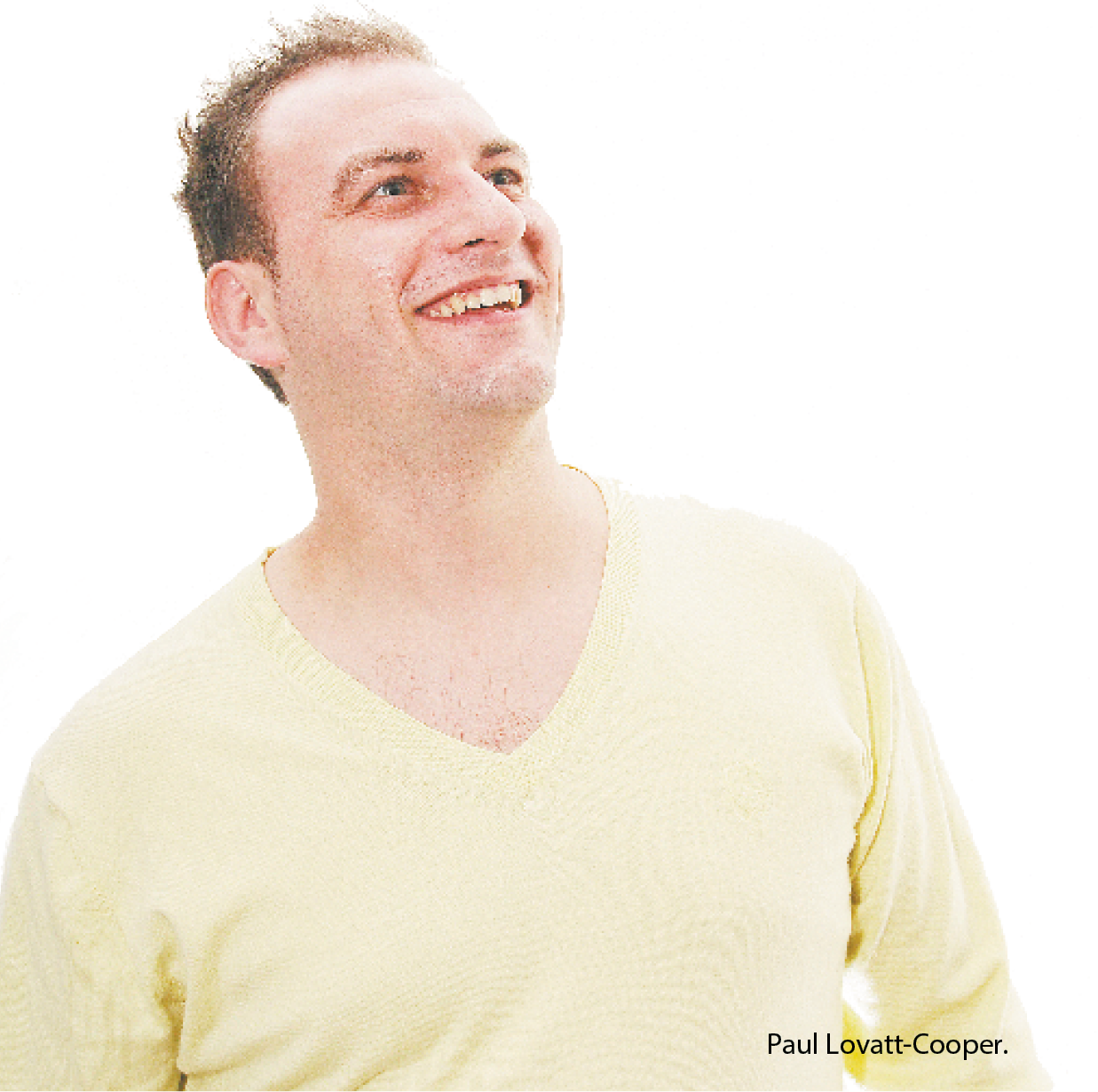
Of particular interest will be the North American premiere of Breath of Souls by the young British composer Paul Lovatt-Cooper. Having not heard of this composer before, it was time for a little research with the aid of such authorities as Google and associates. Coming from a Salvation Army family, he studied music at the University of Salford. After a stint as a percussionist with the renowned Fairey Band he is now “composer in association” of the Black Dyke Band. In recent years several of his compositions have been recorded by leading brass bands in Europe and the UK. His composition The Dark Side of the Moon was selected as the test piece for the third section of the National Brass Band Championships of Great Britain 2008 regional contests. The same piece was selected as the test piece for the third section of the 2008 Dutch National Brass Band Championships at Groningen. Breath of Souls was selected as the test piece for the Championship Section of the 2011 National Brass Band Championships of Great Britain held at the Royal Albert Hall, London, in October. The following is a quote from a respected British source: “Ever since a young composer called Paul Lovatt-Cooper came to prominence following the world premiere of Earth’s Fury at Symphony Hall in 2004, the banding world has increasingly taken notice of his unique blend of fresh, inventive and downright enjoyable music making.”

On April 14 Wellington Winds, under the baton of Daniel Warren, will present “Jokes and Riddles,” a program of works by Strauss, Elgar, Ives, Rossini, Bach, Rauber and even P.D.Q. Bach. Guests will be the WW Brass Quintet. This will be at Knox Presbyterian Church in Waterloo. The program will be repeated April 21 in Kitchener.

On April 17 at Byron United Church, London’s own Plumbing Factory Brass Band will present “Celebrating Canada — Our Home and Native Land.” The program will open and close with two different marches both titled Bravura — a word which conjures up our national spirit of energy, pride and glory. Conductor Henry Meredith’s own salute to the Queen’s jubilee celebrations is his fanfare version of God Save the Queen, based on a 19th century harmonization with words describing “Our Native Land, Fair Canada.” Handel’s Coronation Anthem Zadok the Priest follows — it was performed 60 years ago at our Queen’s coronation in 1953. Howard Cable’s The Banks of Newfoundland is an arrangement of several folk songs from our oldest, yet newest, province, and the flora and fauna of Canada is depicted by Laurendeau’s Land of the Maple and Grumble’s popular Chanticleer Rag. Canada’s waterways are then portrayed by Clarke’s cornet solo The Maid of the Mist (named for the famous Niagara Falls tour boat) plus a world premiere performance of a composition commissioned by the Plumbing Factory Brass Band. Called On the Thames, the work by PFBB cornetist Kyle Hutchinson reflects the river Thames in London, Ontario, and its namesake in London, England. In April, Canada’s cold winter should be just a memory, so the band will be thinking of warm breezes when it plays Bach’sAir from Suite No. 3, and looking forward to such summer activities as weddings, jazz festivals and circuses. Representing those summertime events are the rarely heard Sousa waltz song, I’ve Made My Plans for the Summer, Mozart’s Marriage of Figaro overture, an arrangement of Dave Brubeck’s multimetric Blue Rondo a la Turk, in memory of the great jazz pianist who passed away last December, and Duble’s circus music, our second Bravura march for the evening.

In its program titled “Fiesta,” the Milton Concert Band will be exploring the many exciting facets of Latin culture brought to life in classical and contemporary music, on April 20 in the Milton Centre for the Arts.

On April 21 at the Richmond Hill Centre for the Performing Arts, it will be “Silk, Spice and the New World” for the Silverthorn Symphonic Winds, with conductor Andrew Chung, as they explore music from the ancient Silk Road route. This program will celebrate the music of Asia, Europe and the Mediterranean. Camille Watts on flute and piccolo will be their guest artist. Richmond Hill Centre for the Performing Arts,

Unlike most of the other community bands we have heard from, the Pickering Community Concert Band’s April 21 spring concert in Ajax will not be a “themed concert.” Conductor Doug Manning has selected quite a spectrum of works from Toronto arranger Eddie Graf’s arrangement of Clarinet a la Mode to the great British classic Mannin Veen. Paul Schwarz will be their guest vocalist. One week later at the Flato Markham Theatre on April 28, Doug Manning will be at the helm of the Markham Concert Band with a themed concert. “The Best of Broadway” will include selections from The Sound of Music, Mamma Mia, Jersey Boys and others.

More on the trend to themed concerts: In a recent issue I made reference to a trend to program what I referred to as themed concerts. Proponents of the concept argue that a theme is a way to attract an audience. Opponents argue that a “slavish” adherence to a theme can place significant restrictions on suitable repertoire. Personally, I have mixed reactions. Some of the best concerts I have heard in recent times have been skillfully crafted on themes. On the other hand, some of the worst have resorted to second rate selections to adhere to the theme. When I discussed the matter with one conductor, he admitted that he had found himself restricted by programming to a theme and then stated: “You end up servicing a concert with an arbitrary motif.” We would like to hear from readers, particularly band members. What are your thoughts?

More on changing technologies: In the past, much of the information we received on band activities arrived by email. It was almost always in the form of a straightforward press release from which it was a simple matter to extract much of the information. Recently, we have seen a significant change. Several of the submissions that we have received lately have been difficult, if not impossible, to deal with. We now frequently receive PDF files of posters. It is not possible to extract information from these. We could print them and then type in what we read, but this can be very time consuming. Even worse is a simple email message suggesting that we visit one or more websites to hunt for information. One recent submission had suggestions to visit no fewer than ten different websites. There was really nothing to indicate what we might find if we did so.

A different perspective: For someone like myself, steeped in the more traditional forms of music, it is interesting to hear the very different roles assigned to different instruments in the more popular genres of the day. In a recent CBC Radio One program reviewing the latest “Music Industry” awards, the reviewer, commenting on the performance of one “contemporary” group, stated: “They even had a trumpet. It was a nice little touch to have a trumpet.” How would that go over in the band world? 

Jack MacQuarrie plays several brass instruments and has performed in many community ensembles. He can be contacted at bandstand@thewholenote.com.

How does one get started in banding? Nowadays, the most common way is through school music programs. Almost every secondary school in this part of the world has a music program, and many elementary schools do as well. It hasn’t always been that way though. When I went to school in Windsor, Ontario, we had no formal music program, nor did any other school in the city. The school had an excellent fully equipped auditorium with a balcony. It was the best auditorium in the city. When world renowned groups like the Russian Don Cossack Chorus came to town, that is where they performed. It was also home to many amateur productions like the Gilbert and Sullivan operettas where my parents first met.

1806 BandstandThings have changed. Most secondary schools have bands as well as choirs, and many have large string ensembles as well. As for my old school, it is now the major school for the performing arts in the region. How did young people get introduced to music performance back then? For boys there were a few boys’ bands, and girls were more or less left out. A recent short excerpt on CBC Radio triggered my thoughts on this subject. In the program B is for Brass Dave Pell, bass trombonist with the Hannaford Street Silver Band, related how he started. As a boy, Pell’s introduction began when he was given a euphonium in the Salvation Army band. He was soon in love with the instrument and its sound. However, it’s only used in bands. So when it was time to buy his own instrument, he wanted an instrument which would be found in a broader spectrum of ensembles. He chose the trombone.

My own case was very similar. My two best friends, Keith and Jimmy, played in a boys’ band sponsored by a local service club. I decided to try to join the band with them. I thought that I would like to play drums. There were no “openings” for drummers, so I was handed a euphonium and shown how to made a semi-musical sound. When that band ceased to operate, I was without an instrument. I liked the euphonium, but realized that there were many kinds of musical groups where the euphonium was not used. I wanted the option of being able to play in dance orchestras or symphony orchestras. Would it be trumpet with the same fingering or trombone with the same mouthpiece? Like Pell, I chose trombone. Also like Pell, I have retained my love affair with the sound of the euphonium and the counter melodies often written for it. When I meet young people who have embraced their particular instruments, a frequent question which I ask is: “Did you choose the instrument or did the instrument choose you”? In Dave Pell’s case and mine the euphonium chose us, then we chose the trombone.

Bands, their repertoire, their audiences and their performance venues have certainly evolved over the years. From the works bands of Britain and Europe to the early town bands in North America, much of the programming was military music or transcriptions of classical works. Prior to and throughout WWII the major events for bands were tattoos, with most groups parading before a reviewing stand. On the platform would be one featured band playing such works as concert overtures between various parts of the marching groups. But gradually, over the years the perception of bands and band music has evolved. The concert band has finally gained the respectability of performing in concert halls. The concert band that also participates in parades is a rarity today.

Not so splendid isolation: Before looking at what the bands in this area are offering this spring and summer, there is another evolving trend in the band world which is receiving mixed reactions in the banding community. I’m referring to the use of mp3 files for learning new works. Many bands are now posting recordings of their current repertoire on their bands’ websites or asking their members to sign on to their internet groups, to listen to a recording and follow it on their printed music. In some cases it is suggested that the members should play along with this at home. Is this a good idea?

Proponents are all in favour of using any means to achieve a better performance. But the first flaw is the assumption that all band members have ready access to a high speed internet connection with suitable sound reproduction capabilities. It also assumes that members are comfortable using all of this technology. Even if this unlikely situation were possible, and that there were no distractions in the home, is this the best way to learn a new work? There certainly would be no interaction with other band members. Those opposed to the idea consider it to be the community band equivalent of “paint by numbers” games for children. There is an output. But is it art? What will happen to the all important sight reading skills which are so valued? We would love to hear from readers on this subject. Have you tried it? Did it work for you and/or your band, or was it more of a distraction? Are there other aspects of modern technology having an influence in your band experience?

Upcoming: As for programming, so far we have heard from two bands with details of what they will be performing in the coming months. In both cases, in keeping with a popular trend, they are “theme” programs. The first is that of Henry Meredith’s Plumbing Factory Brass Band in London, Ontario, which always has imaginative programs. Titled “Our Home and Native Land – A Celebration of Canada,” the April 17 program will open and close with two different marches both called Bravura, a word which conjures up our national spirit of energy, pride and glory. Included will be Handel’s Coronation Anthem “Zadok the Priest” which was performed 60 years ago at our Queen’s coronation in 1953. The band will then take the audience on a musical tour of Canada with such numbers as Howard Cable’s The Banks of Newfoundland, an arrangement of several folk songs from our oldest, yet newest, province. Canada’s waterways will be portrayed by Herbert L. Clarke’s cornet solo The Maid of the Mist, named for the famous Niagara Falls tour boat.

The Uxbridge Community Concert Band has taken a different approach to its theme programming. Last year band members were asked to vote on a single number from previous years that they would like to perform again. Their choice of previously performed music was a suite from The Firebird. From that evolved the theme of “The Elements” for an upcoming concert. It will all be music about earth, wind, air and fire. From the fast-moving Dancing in the Wind, the power of the sacred volcano Mazama and the gospel stylings of Wade in the Water, through the tumultuous Ritual Fire Dance to the grand finale of The Firebird, it should be quite a musical journey.

Down the road: The University of Toronto, Scarborough (UTSC) and the Ontario Band Association (OBA), are inviting interested groups to participate in the 2013 UTSC & OBA Chamber Music Festival. This is a three-day music festival that will take place from April 16 to 18, 2013, at the UTSC campus. Further information will soon be available at onband.ca/cmf.

We have not heard any more on the York University band workshop in May, mentioned in last month’s column, but expect to have more details well before the date. 

Jack MacQuarrie plays several brass instruments and has performed in many community ensembles. He can be contacted at bandstand@thewholenote.com.

Retraction: In the March 2010 issue of this publication I referred to a collection of early wax cylinder recordings in my possession (picked up at a sale in a barn in Prince Edward County, by the way). Amongst them, I said, there was, to the best of my recollection, a conversation reputed to be between Thomas Edison and Johannes Brahms. Challenged repeatedly by a reader to substantiate my claim or retract it (since there is no evidence that Brahms and Edison ever met), I have stalled on doing so, in the hope that I’d get round to rummaging through more than half a century of “stuff.” Since, three years later,
I seem to be no closer to getting around to doing so, I hereby retract any claims made in this column as to the existence of such a cylinder.

Another year has arrived, and with it many happenings on the local musical scene. The information which has been tumbling in at an amazing rate is so diverse that this time the challenge of where to begin is more difficult than ever. Perhaps it’s best to simply pick up where I left off two months ago on the topic of programming. In the last issue I mentioned two out-of-town concerts I was looking forward to from groups with a reputation for excellent programming. I am happy to say they lived up to expectations.

The first was presented by London-based Plumbing Factory Brass Band. Skillfully crafted by its director Henry Meredith, this program, titled “Dance Music of Many Times and Places,” took us on a musical journey through ten countries spanning over four and a half centuries. We were even taken to outer space for a dance of “two heavenly bodies” to commemorate last summer’s transit of Venus, with Sousa’s march by that name. Polkas, waltzes, two steps, tarantellas and more were enhanced with demonstrations by dance historian Cathy Stephens. Even the printed program was a delight, containing a collection of photos and drawings which shed a light on the works.

The concert in Waterloo four days later by the Wellington Winds was equally imaginative, mixing traditional Christmas music, including gems like Holst’s In the Bleak Midwinter, with transcriptions of stellar orchestral works including a five-movement concerto grosso by Arcangelo Corelli, a concerto for clarinet by Carl Maria von Weber and a concerto for guitar by Antonio Vivaldi.

At intermission the Wellington Winds introduced their “Appassionato” initiative with presentations by local dignitaries. The centerpiece of this project is a two hour-DVD “illustrating the life of a concert band.” I will have more to say about that extraordinary project in a later column. However, since our last issue, news of local band happenings has been pouring in, so it is time to move on to new topics.

bandstand  1Markham: Of great personal interest to me is the completion of the Cornell Community Centre and Library in Markham. A few years ago I had the privilege of arranging visits by members of the Markham Town Council and other interested parties to the band rehearsal facilities in Cobourg and Oshawa in the hopes of persuading local officials to incorporate musical rehearsal facilities into a community centre under consideration. That dream of the Markham Concert Band has now come to fruition. The band played their last rehearsal in their old rehearsal hall just before Christmas. The first rehearsal in January was in the spacious new hall with shadow-free lighting, storage rooms and two small practice rooms. Included in this room is a bleacher-type seating arrangement which folds out into the room to provide accommodation for a modest-sized audience when required. The official opening of the centre is tentatively scheduled for February 9.

While on the subject of the Markham Band, they will be presenting their first concert of the year on Sunday afternoon, March 3, in the Flato Markham Theatre. “Stories and Legends” will feature excerpts from Disney’s Fantasia, Prokofiev’s Peter and the Wolf and Copland’s Lincoln Portrait. One regular feature that the Markham Band includes in every concert program is a profile of a band member. Over the years these profiles have provided audience members with an insight into the diversity of the people behind the instruments. They learn of the occupations, hobbies and perhaps even eccentricities of the music makers on stage. As was pointed out to me recently, they also serve another very useful purpose. They help band members get to know each other. Most rehearsals leave little time for socializing, and these profiles help to shed a bit of light on the person behind that familiar face in a section on the far side of the band.

Brampton: On Saturday, February 23 at 8pm, the Brampton Concert Band under the direction of new music director, Vince Gassi, will be presenting “A World of Music” in a special tribute to retiring music director Darryl Eaton in the Rose Theatre. Darryl has been at the helm since 1999.

CAMMAC: Would you like to improve your sight-reading and performance skills? CAMMAC’s Wind Band Workshop might be for you. The workshop will focus on key performance skills such as dynamics, articulation, balance and blend in a hands-on learning experience. This tips and tools session will be conducted by Fran Harvey, a music educator and conductor who holds degrees in music and education. Since 2003, Fran has been the conductor of the Metropolitan Silver Band. The workshop will take place on February 23 at 2pm at the Northern District Library, 40 Orchard View Blvd., Toronto. For more information, contact Gerald Martindale, 416-551-5183, bellman@rogers.com.

York University:While on the subject of workshops, York University has recently announced that they will be conducting another band workshop similar to the very successful inaugural one last year. We don’t have many details yet. However, this isn’t taking place until early May. As soon as more details are received, they will be posted in this column.

CBA Award: We have just received word that Matthew Donnelly, 26, of New Hamburg, Ontario, has been named winner of the Canadian Band Association’s 2013 annual award for the best original score by a new Canadian composer. Donnelly, who plays clarinet, as well as acoustic and electric bass in the 60-member Kitchener Musical Society Band, was inspired by the beauty and history of the local Nith River when he started work more than a year ago on a composition titled River Valley Sketches. After trying out draft versions on fellow musicians at KMSB rehearsals, he entered his score in the competition. His composition topped a field of 27 submissions from musicians coast to coast. The first place honours also come with a $1,000 cash prize.

Resa’s Pieces:A little news item from Resa’s Pieces tells us that the band has added quite a few new members this year and is getting close to the 60 mark. They are gearing up now for their 14th gala on June 11 in the George Weston Recital Hall. More details will follow in a later issue.

Honours: Just in, here’s an item of interest to brass players. Former Tonight Show bandleader Doc Severinsen was recently surprised with an unexpected honour. Minutes before Severinsen’s second-half appearance in a recent Koerner Hall concert, Peter Simon, president of the Royal Conservatory, named the trumpet virtuoso an Honourary Fellow of the Royal Conservatory.

While on the subject of honours, we have just learned that Christopher Lee, principal flute of the Toronto Philharmonia, has been invited to be the guest of the Los Angeles Flute Guild for their Flute Festival 2013. In addition to giving a masterclass, he will participate in a recital with other luminaries of the flute world. Congratulations Chris.

Roy Schatz:Their final performance will have passed by the time this issue is published and its not even a band event, but I would be remiss if I failed to mention the 50th anniversary season of the St. Anne’s Music and Drama Society, at the forefront of Gilbert and Sullivan productions in Toronto since its inception. My parents met in a G & S production where my mother sang the role of Buttercup in HMS Pinafore. As a child I was brought up on G & S. As an adult, I played in the St. Anne’s Orchestra for many years and got to know its director, Roy Schatz. In recent years Roy has turned the directing reins over to daughter Laura, but he will be on stage singing in his 50th consecutive year in this year’s production of The Gondoliers in the role of His Grace, The Duke of Plaza-Toro. How many performers can match that? Performing in same group’s annual presentation for 50 years without a break must be a record for Guinness to consider. Congratulations Roy. 

Jack MacQuarrie plays several brass instruments and has performed in many community ensembles. He can be contacted at bandstand@thewholenote.com.

It’s that time of year again. As of this writing there has only been one light dusting of snow, but the merchants have been promoting their super special Christmas offerings since sunrise on the day after Halloween. Unlike some other times of the year, when we are on a quest for community ensemble news, our mail bag is filled to the brim with information on Christmas concerts and other initiatives. By the time this issue is off the presses, alas, some of these will have already passed into the history books. Having said that, whether over or just ahead, several of these offerings represent a pronounced shift in the “same old” repertoire selected for the Christmas season, and are therefore worthy of comment.

bandstand daniel warrenThe Repertoire Bandwagon: While there are still some Christmas carols and more modern fare like Rudolf and Frosty the Snowman in these programs, there is much more depth in many, including transcriptions from the baroque and classical periods. There are also featured soloists on less likely instruments. Here are three early examples of this trend, one just over, two just ahead: thePlumbing Factory Brass Band (PFBB) from London (November 28), the Markham Concert Band (December 2)and theWellington Winds from Waterloo (also December 2). If their offerings are any indication of things to come in the community band world, they are most welcome. Bring on the seasonal concerts.

The feature number of the Markham Band’s December 2 concert is a modern concert band arrangement of The Nutcracker, complete with Kate Kunkel as guest harpist. If you are in a band looking for new repertoire, this arrangement is worthwhile, but not for the faint of heart. If the band doesn’t have at least one competent bassoonist, don’t consider this. The Markham Band also has the brass quintet from the Navy’s HMCS York Band as guests.

Rather than produce a Christmas concert per se, The Plumbing Factory’s director, Dr. Henry Meredith, has continued with his approach of thematic programming with “Dances of Many Times and Places.” Like one of his previous offerings of marches through the ages, this November 28 program featured a broad spectrum of dances. On the fast-paced side it included Smetana’s Dance of the Comedians and Manuel de Falla’s pyrotechnical Ritual Fire Dance, along with Rossini’s tarantella, La Danza, Chopin’s “Minute” Waltz, and Bizet’s Farandole from L’Arlesienne Suite #2. For a totally different perspective on “the dance,” The Plumbers also premiered two Victorian era Canadian dances with Ontario connections: The Burlington Polka and the Cayuga Two Step, published as solo piano editions in 1851 and 1906 respectively, and heard for the first time in over 100 years as arrangements for brass band by PFBB tuba player, Dave Pearson. One of their soloists was euphonium player, Terry Neudorf who brought his well-travelled vogelJoy ensemble to accompany his variations on My Grandfather’s Clock.

For their program on December 2 at 3pm, Wellington Winds have decided on a significant component of baroque music, but have chosen selections that are still seasonal. These include the Alfred Reed arrangement of Bach’s Wachet Auf, Phillip Gordon’s version of a Corelli Concerto Grosso, a Vivaldi Concerto in D major for Guitar and a Scott Amort transcription of Weber’s Concerto in F minor for Clarinet. More contemporary seasonal works include Holst’s Christmas Day (original for brass), the Robert Smith arrangements of Holst’s In the Bleak Midwinter and Vaughan Williams’ Fantasia on Greensleeves, and James Curnow’s Christmas Fancies.

More than a concert: Although we are looking forward to a concert of excellent music, the Wellington Winds afternoon will be much more than a concert. It will be the launch of a major initiative; the first of its kind that we have heard of anywhere in Canada. The band will be previewing their DVD/YouTube channel/online teaching guide project. Ultimately they hope to have as many as 100 Canadian band works on the site, some as full video, but most as sound only clips. The intent and hope is that this project will be a resource for all band people in Canada. They hope that the whole project will be as useful as possible for high school band teachers to engage their students in the conversation about making music performance a permanent part of their lives.

This project was achieved with the aid of significant public funding from the Ontario Trillium Foundation. Hopefully, in the not too distant future, the foundation will see that not just the Wellington Winds, but all of our community bands, deserve similar funding from the foundation.

Our hats are off to the Wellington Winds for this remarkable initiative. I am looking forward to producing a comprehensive review of this project in the next issue of The WholeNote, after I have seen the presentation at the concert, watched the DVD, seen some of the YouTube content and browsed the teaching guide. In the meantime, ask Mr. Google to take you to the Wellington Winds home page, watch an interview with Howard Cable and sample some of the content already there.

Of the other concerts planned for the holiday season, that of the Festival Wind Orchestra in Toronto offers another departure from what we normally expect. Keith Reid, their conductor tells us that the theme is “Russian Christmas Music.” Again we have Tchaikovsky’s Nutcracker Suite. Their solo feature will be Rimsky-Korsakov’s Variations on a Theme of Glinka with Katrina Liddell as oboe soloist.

Rather than break with tradition, the oldest of the bands that we heard from, the Newmarket Citizens Band, is carrying on with a long-standing tradition that most “town bands” have abandoned. They are performing in no fewer than four Santa Claus parades and are also playing three concerts for residents of retirement or long term care facilities. Their commitment to these parades is strong enough that the band owns a complete set of well-insulated winter uniform jackets.

In the new year: After a recent recital by flutist Christopher Lee, I had a fascinating conversation with his accompanist, Simon Capet. In the months ahead this talented accompanist and conductor will be a globetrotting ambassador of music, conducting such groups as the Orchestra of Light and Hope in Cairo where all of the musicians are blind women, or the Calcutta Chamber Orchestra where all members are men from a single orphanage. While this certainly does not qualify as community banding per se, it definitely qualifies in the category of bringing communities and music together. Rather than attempt to do justice to this amazing venture in bringing peoples around the world together through music, I suggest a visit to Simon’s website: kicksimon.com. Learn about his plans for this year in Ghana, Egypt and Sri Lanka.

We rarely see tangible recognition of the many ways in which a local band may serve its community. I was fortunate enough recently to see tangible recognition of such service in a form one does not usually expect. At their annual Remembrance Day dinner, the Uxbridge branch of The Royal Canadian Legion did just that by inviting Steffan Brunette, conductor of the Uxbridge Community Concert Band as their guest speaker.

Back on the repertoire front again, I would like to report on my discovery of a daunting work for trumpet soloist. During a visit to America in the late 1800s, Jacques Offenbach wrote his American Eagle Waltz. Although originally written for trumpet and orchestra, there are now arrangements on the market for band as well. I wonder if Herbert L. Clarke might have performed this one. If your band is looking to shake up your trumpet section, this number should do it.

bandstand scarborough society of musiciansOther bands: The Brampton Concert Band will perform their concert “Christmas at The Rose” December 8. The Milton Concert Band will present their concert, “Home for the Holidays,” at the Mattamy Theatre in Milton on December 8 at 8pm (not in the listings) with a special performance of Twas the Night Before Christmas. They have also announced that their conductor Joseph Resendes is taking a leave while he assumes new duties at McMaster University for the coming year. During that period, the band’s assistant conductor, Sheena Nykolaiszyn will take over the baton.

Among the newer bands to appear on the scene in recent years, Resa’s Pieces is certainly prospering with over fifty regular members. However, Resa tells me that they could use another trombone and euphonium as well as some extra percussion including timpani.

Having not heard from them in a long time, it was good to hear that the Scarborough Society of Musicians have embarked on their fifth season. Formed by a small group of high school graduates who “wanted to stay involved in music and ensure an opportunity exists for new grads to continue exploring their talents,” they expect to play a number of retirement home concerts in the coming months. If interested, visit their website at www.continuingmusic.ca. Unfortunately, some of the press releases and posters sent to us by these groups were damaged and unreadable. Check the listings section for more details.

Argos: As I am writing this column, the 100th Grey Cup game and its festivities are dominating the news in Toronto. The Argonauts are in the game, but there is no official Argonaut band for the pregame or halftime shows. Few Argo fans are aware that the team did have its own official 48-piece professional band from 1957 to 1967. In fact, when I telephoned the Argonaut office not long ago, nobody could find any record of such a band in the team’s archives. The band played for all home games and some parades, but never got to play for a Grey Cup. How am I so sure? I played in that band for all ten years of its existence.

Clarification: On another front, my memory has recently been challenged. In the March 2010 issue of this publication I referred to an early wax cylinder recording of a conversation reputed to be between Thomas Edison and Johannes Brahms. Recently I have been taken to task by a reader who questions the existence of such a recording with the comment: “There is no evidence, apparently, that Edison and Brahms ever met.” He has thrown down the gauntlet and asked that I now substantiate my statement in that 2010 column with proof. He states: ”A statement that does not stand up to inspection must not remain unchallenged.” Since all of my old cylinder recordings fell under my son’s jurisdiction a few years ago, they are not right at hand for me to check. If such a recording might be as rare and valuable as the reader suggests, I had better get after my son to track down all of those old cylinders. They could be worth a princely sum.  

Jack MacQuarrie plays several brass instruments and has performed in many community ensembles. He can be contacted at bandstand@thewholenote.com.

In last month’s column I solicited responses on selecting band repertoire and programming. While I would still love to hear from more readers on these topics, the responses received to date were very welcome.

On the subject of who should have a say in these matters, most people indicated that they would like to have a greater voice, but had reservations on how to establish a decision making system. Fred Cassano from the Columbus Centre Concert Band pointed out that, in addition to other considerations, their library is influenced by their main sponsor and tailored to their main audiences. Since the Columbus Centre bills itself as “the heart of Toronto’s Italian community,” it is only natural that this band has a greater percentage of Italian music than other bands might have. In fact the band has already built a program for next year around the theme of the 150th anniversary of the unification of Italy, and another to honour the 200th anniversary of Verdi’s birth. As for additions to our list, they suggest Neopolitan Overture, Verdi’s Nabucco and Grand March from Aida, Count Basie Salute, Souza marches, Dixieland Band selections (featuring soloists) and music from The Lion King.

Last month I also asked for some suggestions to add to a list of “hackneyed or over-performed works.” From responses to date, Harold Walters’ Instant Concert is a front-runner followed closely by his Hootenanny. However, as Fred Cassano also mentions, Instant Concert is a “crowd pleaser.” It’s a matter of reconciling the different preferences between performers and audiences. Personally, having had to play each of these works many times per year for the past 45 years or more, I would be happy to relegate them to the archives for a year or so. However, many audience members may have never heard them and are entertained by a bit of novelty.

When it comes to selecting new concert works written specifically for concert band, while the internet makes it possible to hear what these works might sound like, there is little opportunity to assess the challenges they may present to the performers. There is no relying on recalling familiar melodies. On the other hand, if the work is of good quality, not only are the band members rewarded with new reading challenges, but the audiences experience new music. Three works which fall into that category have come to my attention in recent months. Commissioned by the Kobe Symphonic Band in Japan, Tanczi (2006) is a set of three Russian dances by Belgian composer Jan Van der Roost. Not for the faint of heart, this is an ideal selection to provide rehearsal challenges to all sections of the band. Once mastered, it is a very rewarding number for the audience. Another good contemporary choice is Concerto d’Amore (1995) by Dutch composer Jacob de Haan. It is considerably less demanding, but still provides challenges and entertainment. Another is Transformations by American composer Robert Longfield (2003). Commissioned for a school music festival in Dade county Florida, this work develops a wide series of variations based on the musical notes DADE in honour of the county where it was first performed. While a good reading exercise, it is less entertaining for an audience than the other two.

As was mentioned in the September issue, the last weekend in September was designated as the third annual Culture Days weekend. My only foray was to accept the invitation of the Hannaford Street Silver Band to sit in and join them for an afternoon of music making. With a prior morning rehearsal elsewhere on trombone, I had a choice to make. Should I take the trombone and switch from bass clef to treble clef, or should I try something bolder. There was an instrument lurking in one of my closets which hadn’t seen the light of day for over 25 years; an E-flat horn.

Some call this E-flat horn an alto horn and some call it a tenor horn. By either name it is normally never seen anywhere but in a brass band. Here was my chance. So, in the space of a couple of hours, it was a switch from a B-flat slide in bass clef to a three-valve horn in treble clef. “Never fear” thought I, “the Hannaford folks will have simple music for us visitors.” The first couple of numbers were just fine. Hymns are always a good way to get the tuning settled. Then it happened. In rapid succession, we went through the two suites for military band by Gustav Holst followed by Mozart’s Marriage of Figaro Overture. The parts for my newly adopted instrument were more challenging than I expected. The “peck horn,” as it is sometimes referred to with some derision, gained new respect from me. If the hospitable hosts of this worthwhile event do it again next year, I’ll be there.

31-32-bandstand-hannaford-option-3While on the subject of the Hannaford Street Silver Band, they have a very special treat for lovers of brass band music. Their first concert of the season, “Trumpets of the Angels,” on Saturday November 3 at 8pm in the Metropolitan United Church, will feature the renowned British composer and conductor, Edward Gregson, leading the HSSB in performances of his brass band masterworks, Trumpets of the Angels and Rococo Variations. The HSSB will also premiere John Burge’s Cathedral Architecture, commissioned by the HSSB, with organ virtuoso William O’Meara, and the beloved overture, Fall Fair, by Godfrey Ridout in a newly authorized transcription by Stephen Bulla.

As for what is happening on the community band scene, I am happy to report that the new Brampton Youth Concert Band is now in full swing under the direction of their new music director, Susan Barber Kahro. If you live in the area and have a young musician in the family, here’s a great opportunity. For additional information, including how to join and membership fees, visit their website at bramptonconcertband.com. Also on the youth band scene, the 2013 National Youth Band of Canada will be meeting in New Brunswick and Nova Scotia from April 27 to May 5, 2013. Musicians 16 to 21 years of age are encouraged to audition by December 1, 2012. For more information visit their website at canadianband.ca.

Over the past few weeks we have received far more information on community band activities than can be included in this month’s column. On the New Horizons front, there are now six bands at three levels with over 100 regular members. This year, the Canadian Band Association (Ontario) held its Community Band Weekend in Richmond Hill on October 13 and 14, with host band, the Silverthorn Symphonic Winds. On the first day as many as 50 band members from various community bands across the province, along with the Silverthorn Symphonic Winds, rehearsed seven selections, each with a different conductor. The second day featured a concert at the Richmond Hill Centre for the Performing Arts.

It may be rushing things a bit, but we are already getting information on Christmas concerts. The Markham Concert Band is presenting “A Seasonal Celebration” on Sunday, December 2, 2012. It will include Tchaikovsky’s Nutcracker Suite with guest harpist Kate Kunkel, as well as the Brass Quintet from the band of HMCS York, Toronto’s Naval Reserve Division.

DEFINITION DEPARTMENT

This month’s lesser known musical term is Articulosis: to be unable to play staccato. We invite submissions from readers. Let’s hear your daffynitions. 

Jack MacQuarrie plays several brass instruments and has performed in many community ensembles. He can be contacted at bandstand@thewholenote.com.

Although the weather man may tell us that fall has officially just begun, for most community ensembles the fall season is well under way. If the fall concert isn’t scheduled for October, it will be in early November at the latest. Before we know it the Christmas concert will be on the horizon. It may even be time to plan and select the repertoire for the spring.

Ah, the repertoire, what is it? That very academic sounding word conjures up many different images for many of us. Is it the next concert program, the music that’s in the rehearsal folder, what’s in the band’s library or ...? The Oxford dictionary defines repertoire as a stock of works that a performer knows or is prepared to perform. Webster defines it similarly. In other words, it isn’t all of that material in the band library that hasn’t seen the light of day for years. It’s the music that the band would be capable of performing with some reasonable rehearsal time.

For most bands, the die is cast for any performances bwetween now and the new year. What about music for 2013? Will it be the same old reliable chestnuts that are rotated regularly between the library and the rehearsal folder, or will there be some new material? For me, this triggers two potentially controversial questions. Who decides what should be in the library, what should be in the rehearsal folder and who plans the programs? My experience is that band members rarely have much say in concert programming. More about that later. Let’s start with the library and then the rehearsal folder.

What should be in a band library? Just about every band has its stock of hackneyed or over performed works, the names of which don’t warrant repeating here; we all know which ones fall into that category. Give them a rest. Put them in retirement for a year or more.

So, here’s where we are asking for reader participation. We are asking you to tell us what you would like to have in your band’s library. We hope to put on The WholeNote website a suggested possible basic library. As a starter, I have come up with 16 categories, with one or two examples of what I consider to be worthwhile repertoire in each category. (Feel free to disagree!) In any case, I invite you to send me your suggestions for what (else) you think should be included in a basic band library. If you have any new categories to suggest, please do so.

Here’s my “Better Band Library” starter kit:

  • Suites for concert band: Holst Suite in E-Flat, Vaughan Williams Folk Song Suite.
  • Concert overtures: Egmont Overture.
  • Overtures to operas and operettas: Poet and Peasant, Light Cavalry.
  • Broadway and London musicals: Oliver, Annie.
  • Parade marches: The Middy, Invercargill.
  • Concert marches: Pentland Hills, Colonel Bogey on Parade.
  • Big band era arrangements: Big Band Favorites, Swinging Songs of Yesterday.
  • Canadian:Calvert’s Suite on Canadian Folk Songs.
  • Traditional: Grundman’s An Irish Rhapsody, Nestico’s All Through the Night.
  • Arrangements of operatic solos: Nessun Dorma.
  • Latin: Cha Cha for Band, Blue Tango.
  • Gentle calming: Ashokan Farewell, Frank Ericson’s Air for Band.
  • Arrangements associated with particular performers: As Performed by Sinatra or Eubie.
  • Film scores: Titanic.
  • TV scores:Mission Impossible.
  • Novelty numbers: Lassus Trombone, Bugler’s Holiday.

While many bands perform concerts with choirs and/or vocal soloists, there really is no significant recognized repertoire for such combinations. For now we will not include such categories in our basic library.

The rehearsal folder: So, now that we have our basic library, what should be in our rehearsal folder? Should the rehearsal folder only contain music that is being prepared for performance, or should there be some good rigorous material for the sole purpose of challenging the band members? Each such number could remain in the folder for a few weeks and then be replaced with something new. For some years, I have been playing regularly in a smaller group with a very extensive library. The contents of the rehearsal folder are constantly changing. At any time it contains about half old material and half new. Not a rehearsal goes by without at least one number never seen before and others that haven’t been looked at for a long time. The result is that everyone’s sight reading skills remain well honed. Certainly, some of the material may never be performed for an audience, but it serves a good purpose. I would suggest that it would be worthwhile for a band to have in its rehearsal folder at least one such number at all times with some regular rotation, say once a month. This should help to keep everyone’s reading skills at a consistently good level. Most of us don’t aspire to be renowned virtuosos, but we all enjoy the satisfaction of having played our part of that good music well.

Program selection: Who should have a say in program selection? In most cases this is the sole prerogative of the conductor with some input from the librarian. Who are the other parties whose preferences could, and perhaps should, be considered? Put another way, we might ask for whom is the concert planned? Is it primarily to please the audience, band members, the conductor or, even possibly, sponsors? I would like to suggest that band members should have a greater voice in programming. For most, they play in a band for the personal satisfaction of making music with other like-minded individuals. I would like to see a movement to campaign for band members to have a greater say in the planning of programs. Without their regular participation and devotion, the band would cease to exist. Get band members involved in programming. Even before that, start with the decision of what should go into a rehearsal folder.

Now that we have a library and a rehearsal folder, how about selecting a program. What are the capabilities of the band members who have to perform the material? If your band doesn’t have a hot shot bassoonist at the present time, obviously you don’t include anything with an important bassoon part. If it’s a minor part, some other instrument can play the cues to ensure that the part isn’t missing completely. As for solo parts within selections, who gets to play them? In many bands, the longest serving member in the section automatically gets the nod even though other members of the section may be equally capable, if not more so. Seniority of membership is not necessarily synonymous with level of musicianship. In some bands of my acquaintance, solo excerpts are shared by all section members unless some do not wish to be included. That’s another way to foster proficiency and build confidence.

In recent years many bands have taken to producing concerts with a “theme.” Perhaps it was all music of the movies, disasters, space exploration or something else? Is this what your audiences enjoy? Why not ask them to complete a survey form at intermission?

Do your audiences really enjoy such additions as video excerpts and slide shows or do they feel that this detracts from the musical performance? Put another way, is your band staging a multimedia presentation or a musical concert? What would the band members prefer?

With all of that, who gets to make the decision of what to include in a program? Why not prepare a questionnaire for members to complete? Certainly, some just want to come to the rehearsal and then go home, but others might just have some ideas with merit. I might even suggest a programming committee from within the band. Naturally, in the end, the final decision must rest with the conductor, but let band members provide some creative input.

That’s my two cents worth: Let’s have your comments along with selections to be included in The WholeNote basic library.

Definition Department

This month’s lesser known musical term is Vibratto: child prodigy son of the concertmaster. We invite submissions from readers. Let’s hear your daffynitions.

Coming events: Please see the listings section for full details. 

Jack MacQuarrie plays several brass instruments and has performed in many community ensembles. He can be contacted at bandstand@thewholenote.com.

It’s transition time. Our one month break from publication is over, and it’s time both to reflect on the past few weeks and see what’s ahead for the month of September. It has been an interesting few weeks since I last put “pen to paper.” On the personal side there have been many performances, mostly outdoors, and a few cancellations. I have also had a few more visits to the Baycrest Centre where I am participating in their studies on the influences of musical activity on cognitive function. More about that in another issue.

39 bandstand photo by jack macquarrieConcert band reflectionsOne of the most noteworthy developments on the community band scene has been the evolution of the Sunday evening concert series organized by the Markham Community Band and an organization called Unionville Presents. Initiated last year using the MCB’s inflatable bandshell in a parking lot in Markham, this year the series was expanded in scope and moved to the excellent Unionville Millenium Bandstand. With the exception of one concert, the rain held off; when I arrived to hear the North York Concert Band, the audience out front was limited to one solitary listener under a large yellow umbrella, but on stage there were two dozen or so listeners comfortably seated on each side of the band under the extended wings of the roof. As the concert progressed the rain departed, and by the end of the concert a good-sized audience was seated in front of the band. The crowd the following week was almost the same for the Richmond Hill Concert Band, with a dozen or so listeners also standing on a porch of a house across the road. For all the following weeks, with superb weather, the bands played to a full house of adults, children, dogs and even a trained cockatoo who added his gymnastics to the entertainment of those nearby.

Culture Days: Now for an update on Culture Days. This is a national event, now in its third year, which has obtained much less publicity than it deserves. Cultural Days is a coast-to-coast-to-coast federal government initiative to get artists and arts organizations out in the community and get the public aware of and involved with them. Thousands of activity organizers self-mobilize at the grassroots level to present and coordinate free public activities that take place throughout the country over the last weekend of September each year, this year September 28, 29 and 30. One Culture Days event of interest to community band members, that we are aware of, is an invitation to local brass players by members of the Hannaford Street Silver Band to sit in and join them for an afternoon of music making. Many members of the Hannaford audience are active brass players themselves, and so the Hannaford folks thought that it would be great to get together with them and make some music. The band will be in the sanctuary of the Metropolitan United Church in downtown Toronto on Sunday, September 30 from 2pm to 4pm to play music, enjoy some refreshments, and welcome any and all brass players of any age or ability level to play with them. (For those who might like a practising edge, check back at the Hannaford website www.hssb.ca for updates on this event. They expect to have parts available for download from their website. See also listings section D, “The ETCeteras,” for other Culture Days events.

Happy 140th anniversary to you! A few years ago we made some comments in this column referring to “Canada’s oldest community band.” That sparked quite a response from a number of bands, each of which claimed to be “Canada’s oldest band” or “Canada’s oldest continuously operating band.” Rather than re-ignite that discussion, it is more appropriate to offer congratulations to the Newmarket Citizens Band as they prepare to celebrate the 140th anniversary of the band being recognized as the “Official Town Band of Newmarket.” While a band had been playing in the community prior to then, it was in 1872 that the band was officially recognized as the town band. At that time a petition was circulated amongst the local business community by three sons of the fur trader William Roe. One of the sponsors was Robert Simpson of the Simpson department store chain. The grand sum of $319 was raised to purchase instruments.

To celebrate their 140 years of continuous service in the community, the Newmarket Citizens Band are inviting everyone to a special free concert complete with balloons and birthday cake. They will present a musical journey through time at the Riverwalk Commons, 200 Doug Duncan Dr., in Newmarket, on September 30. Festivities will get underway at 2pm. Bravo to one of the few bands that still participate in parades including, a half dozen or so Santa Claus parades every year.

Something for next month: With the approach of fall, many bands indulge in a bit of retrospection and then plan for concerts, other functions and repertoire for the coming season. An excellent stimulus for that is to meet with members of other bands at the CBA Community Band Weekend. Every October the Canadian Band Association (Ontario) conducts such an event. This is an opportunity for community musicians to meet like-minded individuals, play a broad selection of music under the direction of leading Ontario conductors and perform in a joint concert on the Sunday afternoon with the host band and a composite band. This year’s weekend, hosted by the Silverthorn Symphonic Winds, will take place on October 13 and 14, in Richmond Hill. Check for further details next month.

Endings:Unfortunately, we must report on the passing of two long-time band community members.

John Evans was the drummer for the GTA Swing Band up until last year. Brother John, as he was referred to, also played with the Swansea Community Concert Band led by his brother Frank Evans. John was 90. There will be a memorial service held in the fall.

As an undergraduate at University of Toronto, Ed Nixon was a regular on tuba in the Varsity Band. Years later, when the U of T Alumni Band was formed, Ed was a charter member. I have fond recollections of an incident with Ed while we were both in the Varsity Band. It was back in the days when university football fans travelled to out of town games by chartered train. After a night of celebrating a victory over the Queen’s University team, Ed and I missed our train back to Toronto. The solution was simple: let’s hitchhike home. Wearing our blue and white uniforms and carrying our instruments, we headed out to the highway and raised our thumbs. However, there was one problem: Ed was carrying a sousaphone. We did get a ride in the open rumble seat of an old car. Two carefree happy students, one trombone and one sousaphone made it back from Kingston with just a bit of gawking by passing motorists. Wish I had a photo. Ed was 84.

DEFINITION DEPARTMENT

This month’s lesser known musical term is Vesuvioso: an indication to build up to a fiery conclusion. We invite submissions from readers. Let’s hear your daffynitions.  

Jack MacQuarrie plays several brass instruments and has performed in many community ensembles. He can be contacted at bandstand@thewholenote.com.

Back to top