15_opera_michael_maniaci2_photo_by_michael_cooperApril is once again the opera month of the Ontario cultural calendar with eight fully-staged operas in Southern Ontario plus at least two operas in concert on offer. One of the fully-staged productions comes from a brand new company, Wish Opera, that seeks to further the work of Canadian artists in its productions.

The month begins with the final performance, outside our listings coverage area, on April 2, of Donizetti’s Lucia di Lammermoor by Opera Lyra Ottawa, at the National Arts Centre. It stars Lyubov Petrova as Lucia, Marc Hervieux as Edgardo and Gregory Dahl as Enrico. See www.operalyra.ca.

The month continues with the peripatetic Opera Kitchener presenting Rossini’s The Barber of Seville in Guelph on April 7,
in Waterloo on April 9, and in Mississauga on April 15. Visit www.operakitchener.com for more information. Remaining on the periphery of the Big Smoke, Opera Hamilton presents the favourite double bill of Cavalleria Rusticana and I Pagliacci on April 21 and 23. Many familiar singers – Joni Henson, Sally Dibblee, Wendy Hatala-Foley and Gregory Dahl – appear along with Richard Troxall as Turiddu and Jeffrey Springer as Canio. See operahamilton.ca
for more.

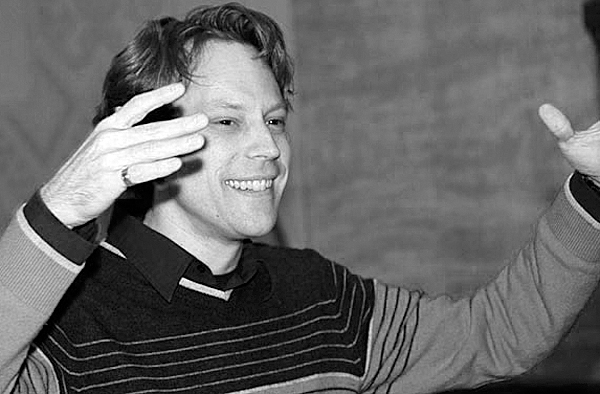
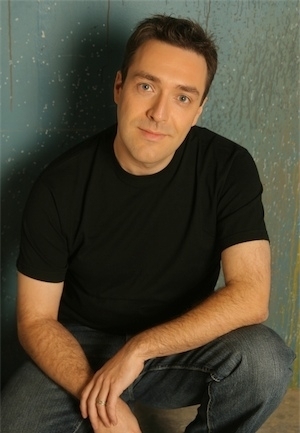
The season in Toronto proper starts with performances of Rudolf Friml’s Rose Marie on April 15 and 16 by Wish Opera, about which there is more below. Opera Atelier concludes its 2010-11 season with North America’s first-ever period production of Mozart’s La Clemenza di Tito running April 22 to May 1, and reuniting many of the cast members that made OA’s Idomeneo so electrifying: Measha Brueggergosman as Vitellia, Michael Maniaci as Sesto, Krešimir Špicer as Tito and Curtis Sullivan as Publio. They are joined by Mireille Asselin as Servilia and Mireille Lebel as Annio. David Fallis conducts the Tafelmusik Orchestra. See www.operaatelier.com.

The Canadian Opera Company begins its spring season with Rossini’s version of the Cinderella story, La Cenerentola, April 23 to May 25. The COC last staged this work in 1996. This production, co-produced with Houston Grand Opera, Welsh National Opera and two European companies, is directed by Joan Font and conducted by Leonardo Vordoni. Elizabeth DeShong in the title role is joined by Lawrence Brownlee, Brett Polegato and Donato DiStefano. The Rossini runs in repertory with Richard Strauss’s Ariadne auf Naxos, April 30 to May 29. The COC last staged this work in 1995. This production from Welsh National Opera is directed by Neil Armfield and conducted by the great Sir Andrew Davis. Richard Margison sings The Tenor and Bacchus, Adrianne Pieczonka is The Prima Donna and Ariadne and Jane Archibald scales the coloratura heights as Zerbinetta. For more details see www.coc.ca.

The final opening is Toronto Operetta Theatre’s production of the Gilbert and Sullivan classic, The Pirates of Penzance, from April 26 to May 1. Ryan Harper and Jessica Cheung will be Frederic and Mabel while David Ludwig and Jean Stilwell will sing the Pirate King and Ruth, his trusty maid of all work. Robert Cooper will conduct and Guillermo Silva-Marin will direct.

As for operas in concert, Opera by Request will present Verdi’s La Traviata on April 6 in St. Catharines, April 8 in Toronto and April 11 in London. OBR’s next presentation is Britten’s The Turn of the Screw on April 16. See www.operabyrequest.ca.

On April 28, the COC Ensemble Studio offers a triple bill for free at noon at the Richard Bradshaw Auditorium. On the program are Menotti’s The Telephone, Samuel Barber’s A Hand of Bridge and a new work by Ana Sokolovic, composer of Queen of Puddings’ The Midnight Court.
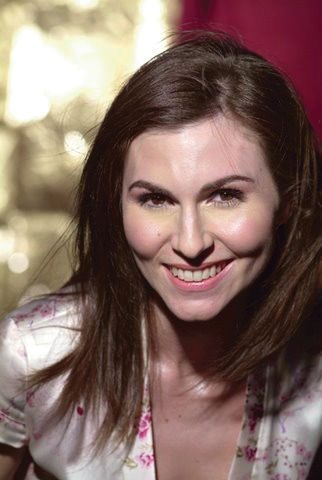
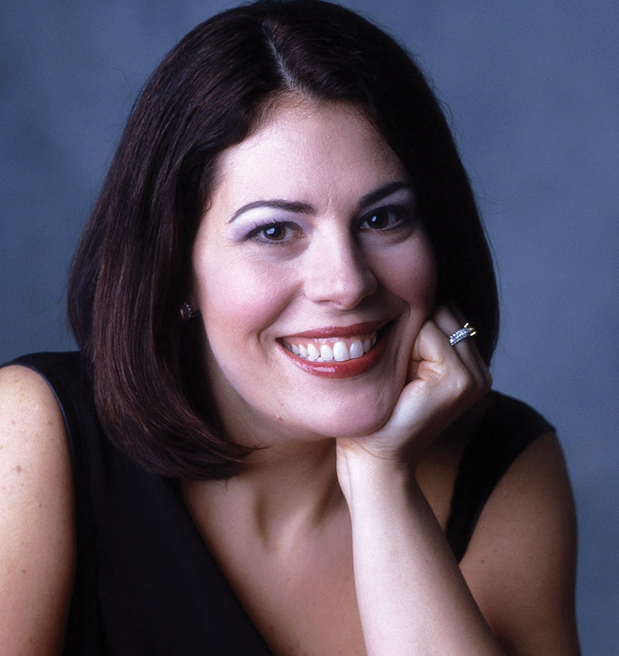
16_opera_tonia_cianciulli__wish_operaAs mentioned at the outset, entering the lists this month with Rudolf Friml’s Rose Marie is the brand new company, Wish Opera, founded by soprano Tonia Cianciulli. Last March, Wish Opera made its debut with concerts of opera arias at the Sandra Faire and Ivan Fecan Theatre at York University. A production of Don Giovanni announced for June that year never took place. Cianciulli loved the York University venue but realized that to be successful her company would have to find a more accessible venue, closer to dining options before and after the show. Luckily, she came across the John Bassett Theatre located in the Metro Toronto Convention Centre. The little-known venue is “a real gem” in Cianciulli’s words. Self-contained, with its own entrance onto Front Street, it has 1330 seats, an orchestra pit and adjacent rooms for receptions.

Cianciulli knows she has her work cut out for her in finding a niche in Toronto’s opera scene and creating a following, but she feels “Wish Opera has something different to offer that will appeal not just to opera lovers, but people in the fashion industry, the design industry, art, photography – we’ll have something for everyone.” Wish Opera “seeks to promote and nurture and gain awareness for Canadian talent in all mediums.”

For Rose Marie, Cianciulli has assembled a wide-ranging group of artists and designers including Charles Pachter and aboriginal artists Maynard Jonny Jr. and Bernice Gordon, whose artworks projected on stage will provide backdrops for the action. Gordon is also contributing a hand-carved totem pole and serves as an advisor in revising the 1924 book by Otto Harbach and Oscar Hammerstein II to make it more sensitive to aboriginal people. Finally, rather than calling Malabar to rent costumes, Cianciulli wants to make audiences aware of current Canadian designers. Thus, the show will feature fashions created by young Quebec designers Denis Gagnon and Marie Saint Pierre along with Girl Friday, Cabaret, Breeyn McCarney and Natasha Lazarovic. The furnishings and chandeliers will also be provided by Canadian companies.

Cianciulli says the idea of Rose Marie as Wish Opera’s first fully-staged opera came from conductor Kerry Stratton, who loves the music. Before he emigrated to the U.S., Friml was a pupil of Antonin Dvořák in Prague. The operetta, set in the Canadian Rockies about the love between a French Canadian girl and an English Canadian miner, was a great hit in New York and London. Especially in the famous 1936 film version starring Nelson Eddy and Jeanette MacDonald, it became the archetypal image of Canada for many non-Canadians. There has likely not been a professional staging of the work since a production at the Shaw Festival in 1981. The Wish Opera production will be directed by Lesley Ballantyne with French Canadian mezzo Maude Brunet in the title role and tenor Todd Delaney as her lover. The cast also includes singers Olivier Laquerre, Michael York, Deborah Overes, Sarah Christina Steinert, Anne Marie Ramos, Dan Mitton and actor Sundance Crowe. As part of its community outreach, Wish Opera sponsors the attendance of children to special performances, donates a portion of all ticket revenue to the Hospital for Sick Children and sends artists to perform at Sick Kids’ in-house theatre. For tickets and more information visit www.wishopera.ca or call 1-877-700-3130. Though April may already be crowded with opera, Cianciulli knows that there are still not enough opportunities for Canadian singers at home. If Wish Opera can provide those opportunities and make Canadians more aware of all the artists in their midst, it will have performed an invaluable service. Its next project is Gounod’s Roméo et Juliette on October 28 and 29 this year. We wish them all the best. n

Christopher Hoile is a Toronto-based writer on opera and theatre. He can be contacted at opera@thewholenote.com.
March sees performances of two rarities – both influenced by the Nationalist movement in music in the 19th century.  On March 9, 11, 12 and 13, Toronto Operetta Theatre presents a fully staged version of the zarzuela Luisa Fernanda (1932) by Federico Moreno Torroba (1891-1982) and on March 27 Opera in Concert presents a concert version of Antonín Dvořák’s comic opera The Devil and Kate (1899). Both works are regularly staged in their homelands – Spain and the Czech Republic, respectively – but are largely unknown outside of them. To discover more about the two works I spoke with Guillermo Silva-Marin, artistic director of both opera companies.

Luisa Fernanda is one of the most popular of all zarzuelas and will be the fourth zarzuela TOT has presented following Tomás Bretón’s La Verbena de la paloma in 1999, Gonzalo Roig’s Cecilia Valdés in 2003 and Francisco Asenjo Barbieri’s El Barberillo de Lavapiés in 2005. This makes TOT the only operetta company in the world, as far as can be determined, to include Spanish repertoire on a regular basis along with works from Europe and America. Ohio Light Opera, North America’s largest operetta festival, presented zarzuela once in 1999, but never since, and the Festival Internazionale dell’Operetta in Trieste has so far never included Spanish works.

Silva-Marin’s inclusion of zarzuela is a conscious effort to diversify the TOT’s offerings both because of the inherent value of the works and because the Hispanic community, as he notes, “is hardly ever represented in the cultural tapestry of this city.” Unlike Viennese or Parisian operetta, zarzuela has largely remained unknown outside of Spain, first because of the misconception that the works were “too typically Spanish” to travel and second for the practical reason that Spain was politically isolated in the central part of the 20th century when interest in opera was expanding.

It is true, though, that zarzuela is not quite like operetta. In fact, it presents an art form that neatly complements its European counterparts. As Silva-Marin explains, “Zarzuela is, unlike operetta, a little bit more overt as to how it is critical of social, moral and political issues and portrays those not so much in a fun way but in a critical way. Gilbert and Sullivan poke fun at those in power but the tone is light. In zarzuela it is more serious. A great number of zarzuelas are daringly critical of the government, the aristocracy or of whatever social issues they’re trying to present. That gives zarzuela more of an operatic tone. In Luisa Fernanda in particular the influence of Puccini and verismo is much stronger than in other zarzuelas of the period.” While the whole movement of zarzuela was to create a nationalist school of opera, Spanish composers were fully aware of the artistic movements of their time. Silva-Marin says, “You get this mixture which is fascinating in that it is undeniably Spanish but is pushing ahead under the influence of musical movements from abroad.”

Luisa Fernanda is set in Madrid in 1868 during the revolutionary republican movement that threatened the regime of Queen Isabel II.  A typical love triangle takes on political implications when the tenor lead Javier, a colonel, finds himself torn between his fiancée Luisa Fernanda, daughter of a court clerk and the Duchess Carolina.Luisa’s friends counsel her to forget Javier because of his dangerous revolutionary ideas and to accept the attentions of the wealthy landowner Vidal, who has come to Madrid to find a wife.

Mexican tenor Edgar Ernesto Ramirez will sing Javier, a role popularized on disc by Plácido Domingo and José Carreras. Michèle Bogdanowicz will sing Luisa, Miriam Khalil the Countess and Silva-Marin himself will sing Vidal. The zarzuela will be sung in Spanish with dialogue in English but for the first time the TOT will use surtitles for the musical numbers.

25_silva_marinShifting geography, Dvořák’s The Devil and Kate, like Luisa Fernanda, is a work that has never been off the boards in its home country since its premiere. Though it may seem heresy to say so, The Devil and Kate is generally considered even more popular in the Czech Republic and in Slovakia than than Dvořák’s best-known opera Rusalka (1901). Besides its robust humour, one of the work’s greatest attractions is its abundance of folk dances. Ever since Opera in Concert’s presentation of Rusalka in 1998, Silva-Marin became curious about Dvořák’s other eight published operas. As it happened he came across a DVD of the Wexford Festival’s 1988 production of the opera sung in English. Based on a Bohemian fairy tale, Kate wants to dance so much that she declares she’d dance with the devil himself. What do you know but a mysterious stranger named Marbuel suddenly appears, dances with Kate and disappears with her underground. Fortunately, Kate has a friend Jirka, who vows to rescue her. Marion Newman sings Kate, Giles Tomkins will be the devil’s servant Marbuel. OiC will use the same clever translation by Ian Gledhill used at Wexford.  For more information about TOT visit www.torontooperetta.com and for OiC go to www.operainconcert.com. Without the efforts of Guillermo Silva-Marin, Toronto’s opera scene would lose the diversity that makes it so rich.

Christopher Hoile is a Toronto-based writer on opera and theatre. He can be contacted at opera@thewholenote.com.

Dominating the Toronto opera scene in February are two new productions by the Canadian Opera Company. On January 29 the company unveils its new production of Mozart’s The Magic Flute. Incredibly, for such an audience favourite, it has had no mainstage production since 1993, although the COC Ensemble Studio did stage its own production at the MacMillan Theatre in 2006. Then on February 5 the company presents its first-ever staging of John Adams’ 1987 opera Nixon in China. This is the first American work the COC has produced since the 1953 Wright and Forrest operetta Kismet in 1987. Some would say it’s about time we caught up with the operatic achievements of our neighbour to the south.

p14_15the_queen_of_the_night_sketch_-_photo_credit_myung_hee_choToronto has not been starved for Magic Flutes, it must be said, largely because of the rise of Opera Atelier. In 1991 OA unveiled its first production of the work followed by revivals in 2001 and 2006. The sets by Gerard Gauci, costumes by Dora Rust-D’Eye and direction of Marshall Pynkoski captured the sense of innocence and fun that make the work so appealing. In creating a new production the COC will find it is competing with one that Toronto audiences already cherish.

Diane Paulus, Artistic Director of the American Repertory Theatre at Harvard University, will helm the COC’s new staging. She is perhaps best known for having directed the 2009 Broadway revival of Hair, which won the Tony Award for Best Revival of a Musical. Those fearful that she will transpose Mozart’s opera to New York’s youth culture in the 1960s need only glance through the set and costume designs by Myung Hee Cho on display on the COC website to assuage their anxiety. The designs reflect the opera’s pseudo-Asian setting and emphasize masks – a move quite suitable for a story where people are not quite what they seem.

With a run of twelve performances, the COC will use alternates in the principal roles. The opening night cast features Michael Schade as Tamino, Isabel Bayrakdarian as Pamina, Rodion Pogossov as Papageno, Mikhail Petrenko as Sarastro and Aline Kutan as the Queen of the Night. Schade and Bayrakdarian sing on January 29 and February 1, 3, 6, 8, 12, 16 and 18. Frédéric Antoun and Simone Osborne sing the parts on February 10, 20, 23 and 25. If Antoun’s name seems familiar, it may be because audiences remember the Québécois tenor as the charismatic Belmonte in Opera Atelier’s Abduction from the Seraglio in 2008. At a special performance on February 17, members of the COC Ensemble Studio take over as soloists with all tickets at $20 to $55. At all performances Johannes Debus conducts the full COC Orchestra and Chorus. For more information visit www.coc.ca.

Alternating with The Magic Flute is John Adams’ Nixon in China on February 5, 9, 11, 13, 19, 22, 24 and 26. The COC will be presenting the acclaimed production that premiered at the Opera Theatre of Saint Louis in 2004, the first major U.S. production after the work’s world premiere at the Houston Grand Opera on October 22, 1987. It was this production of the opera that received its Canadian premiere on March 13, 2010, as part of the 2010 Vancouver Cultural Olympiad.

The opera, with a libretto by poet Alice Goodman in rhyming couplets based on news accounts and memoirs of the people involved, follows Richard Nixon’s historic five-day visit to the People’s Republic of China from February 21 to 28 in 1972. This was the first-ever visit by a sitting U.S. president to China and the first formal contact between the two countries in over twenty years. The purpose of the ardently anti-communist Nixon was a move to establish ties to counter what was deemed the threat of the Soviet Union. The opera intertwines grand public spectacle with moments of quiet reflection and, in the tradition of grand opera, even includes a ballet.

Baritone Robert Orth will sing Richard Nixon with lyric soprano Maria Kanyova as Pat Nixon, tenor Adrian Thompson as Mao Tse-Tung, coloratura soprano Marisol Montalvo as Madame Mao, bass Thomas Hammons as Henry Kissinger and baritone Chen-Ye Yuan as Chou En-lai. Pablo Heras-Casado conducts and James Robinson, who directed the 2004 production, will direct.

Adams has written, “Both Nixon and Mao were adept manipulators of public opinion, and the second scene of Act I, the famous meeting between Mao and Nixon, brings these two complex figures together face to face in a dialogue that oscillates between philosophical sparring and political one-upsmanship. Of particular meaning to me were the roles of the two principal women, Pat and Chiang Ch’ing. Both wives of politicians, they represented the ying and the yang of the two alternatives to living with someone immersed in power and political manipulation.” Those unfamiliar with Adams‘ music need only seek out the orchestra piece he extracted from the opera, “The Chairman Dances,” to recognize the appeal of Adams’ music in its use of chugging rhythms, soaring melodies and allusions to popular music, in this case the foxtrot. At long last, COC audiences will see that American opera has evolved quite a way from confections like Kismet.

Christopher Hoile is a Toronto-based writer on opera and theatre. He can be contacted at opera@thewholenote.com.

For the last month of 2010 and the first of 2011, the most interesting works of music theatre in Toronto are not operas but musicals. If you think I mean the jukebox musicals currently playing on King Street, think again. Fortunately for the reputation of the American musical, there are still composers who choose to engage with serious themes and choose the musical as the most appropriate form of expression for their ideas. Unfortunately, the difficulty of their work does not suit the current frivolous conception of musical-as-event or musical-as-party. Both musicals in question, Parade and Assassins, have thus achieved a succès d’estime rather than wide popularity. Their less than positive depiction of life in the United States requires an audience that is not only serious-minded but open-minded.

First up is Parade, with music and lyrics by Jason Robert Brown and a book by Alfred Uhry. It opened in 1998 and closed after 84 performances. Nevertheless, it won Tony Awards for Best Book and Best Musical Score and the Drama Desk Award for Outstanding Musical. The musical’s downbeat historical subject is the 1913 trial of Jewish factory manager Leo Frank, who was accused and convicted of raping and murdering a 13-year-old employee. When, after reviewing the testimony, the Governor of Georgia commuted Frank’s death sentence to life imprisonment, Frank was transferred to a small-town prison where a lynching party kidnapped him and took him to his supposed victim’s hometown where they hanged him. The parade of the title is the annual parade for Confederate Memorial Day, a holiday still observed today in eight states.

Two theatre groups will join forces to produce the Canadian premiere of the musical: Acting Up Stage, responsible for Adam Guettel’s musical Light in the Piazza earlier this year, and Studio 180, the company behind such political plays as Stuff Happens and The Laramie Project. Michael Therriault will sing the role of Leo Frank, a role created by Brent Carver on Broadway, and Tracy Michailidis will play his wife Lucille. The cast is filled with members best-known from the Shaw Festival: Neil Barclay, Jeff Irving, Gabrielle Jones, George Masswohl, Mark McGrinder, Jay Turvey and Mark Uhre. The score, filled with references to popular music of the period, is conducted by Shaw Festival music director Paul Sportelli and directed by Studio 180 artistic director Joel Greenberg. Previews begin December 30, 2010, and the show opens January 3 2011, running to January 22 at the Berkeley Street Theatre. For more information phone 416-368-3110 or visit www.paradethemusical.com.

p20Later in January comes a musical on an equally inflammatory topic: Assassins, with music and lyrics by Stephen Sondheim and a book by John Weidman. The musical opened Off Broadway in 1990 and ran for only 73 performances. Another of Sondheim’s musicals structured by theme rather than plot, Assassins uses the stories of nine people who assassinated or tried to assassinate a US president to examine the perverse underside of the American Dream. Killing the most powerful person in the world gives the deluded characters access to instant fame.

The action is set within two frames. The first is the setting itself, a seedy carnival shooting gallery, where the insidious Proprietor invites fairgoers to step up and shoot a president. Within this frame is a narrative frame provided by the Balladeer, who, as in Brecht and Weill’s Threepenny Opera, provides the backgrounds of the eight sorry figures under examination. That the Balladeer also plays the ninth assassin, Lee Harvey Oswald, is a further ploy to prevent identification of the actor with his role. Besides this, the production’s director Adam Brazier has the actors play instruments, inspired no doubt by John Doyle’s famous Sweeney Todd, thus forcing us to view the performances as performances.

Two innovative theatre companies combined forces to produce Assassins last year: Talk Is Free Theatre of Barrie and BirdLand Theatre of Toronto. The show received the 2010 Dora Award for Outstanding Production of a Musical which has led to this revival. The cast combines stars from both Stratford and Shaw: Graham Abbey, Lisa Horner, Trish Lindström and Steve Ross, among others. Reza Jacobs, assistant music director at the Shaw Festival, conducts the score that makes witty use of popular musical styles ranging from the 1860s of John Wilkes Booth to the 1980s of John Hinckley Jr . Performances take place January 8 to 23 at the Theatre Centre, 1087 Queen Street West. For more information phone 416-504-7529 or visit www.birdlandtheatre.com.

Christopher Hoile is a Toronto-based writer on opera and theatre. He can be contacted at opera@thewholenote.com.


Major productions from the Canadian Opera Company and Opera Atelier continue into November. But there are also numerous productions from the smaller companies that give the Toronto opera scene so much diversity and vibrancy.

Opera by Request will present a concert revival of Genoveva (1850), Robert Schumann’s only opera. Schumann, most famous today for his piano music, four symphonies, and his amazing output of Lieder, always nourished the dream of a “German opera.” Genoveva is based on a medieval legend concerning Genevieve of Brabant. It tells of Genoveva, the chaste wife of Siegfried of Trier, falsely accused of adultery by his servant Golo in revenge for rejecting his advances. Siegfried eventually discovers Golo’s deception and restores his wife’s honour. Richard Wagner told Schumann the libretto was undramatic, and the negative criticism of the work at its premiere discouraged Schumann from ever writing another opera.

Nevertheless, various recent revivals have often been enthusiastically received. Conductor Nikolaus Harnoncourt stated, “Genoveva is a work of art for which one should be prepared to go to the barricades,” and the DVD he recorded at the Zurich Opera House in 2008 has brought many over to the cause.

The Opera by Request presentation will feature artistic director William Shookhoff at the piano accompanying Doug MacNaughton as Siegfried, Lenard Whiting as Golo and Mila Iankova as Genoveva. This will be only the second time the work has been performed in Canada, the first presented by Opera in Concert, where Whiting and MacNaughton also sang their respective roles.

p21Asked why the work has remained a rarity, Shookhoff admits that it could be “dramatically stronger,” but says, “Perhaps because the initial productions were beset with problems, and because Schumann had no reputation as an opera composer, it was easy for the work to be ignored.” MacNaughton adds that “Schumann didn’t have the time nor the energy to be a relentless self promoter like Richard Wagner.” Both are convinced of the work’s importance. MacNaughton calls it “the missing link between Weber and Wagner.” Shookhoff notes that “The piece is musically very powerful, and Schumann’s unique orchestrations, often unfairly maligned, carry the day. It is a perfect quartet opera, where each of the four principals is given arias of exquisite beauty (Schumann’s gift as a composer of song comes through), as well as well-constructed ensembles that reach powerful climaxes. The choral writing is on a par with Schumann’s best choral works.”

Take this rare opportunity to judge for yourself and attend the November 17 performance at University of Toronto, Scarborough Campus or the November 20 performance at Trinity Presbyterian York Mills, 2737 Bayview Avenue, at Highway 401. For more information visit www.operabyrequest.ca.

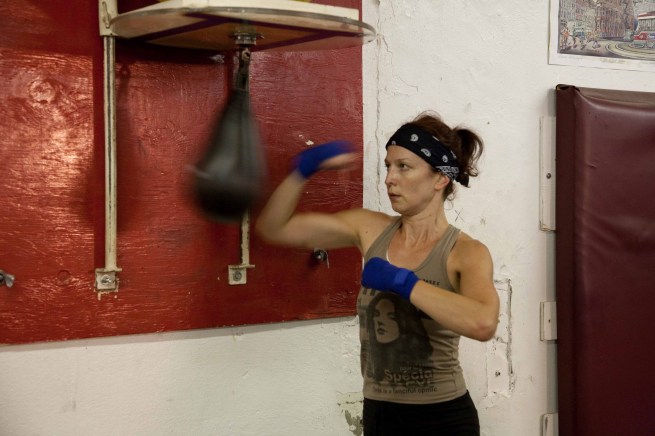
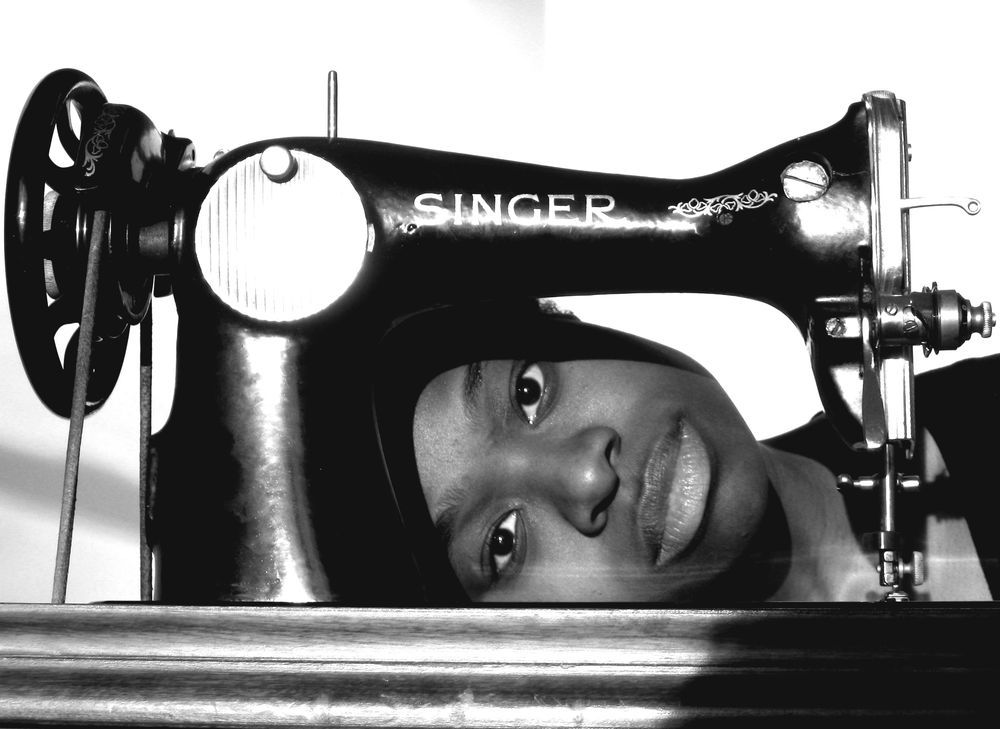
Moving to the present, Urbanvessel follows its acclaimed sewing-machine opera Stitch, with the world premiere of Voice-Box. The piece was inspired by the unusual combination of talents of mezzo-soprano Vilma Vitols, known from her appearances with Opera Atelier, but who is also an accomplished boxer. Composer Juliet Palmer says, “The result is a kind of fight night where the voice and body are both challenged. The audience gets a great sense of the power of women and the power of the singing voice.” Librettist Anna Chatterton adds, “We were also inspired by the history of female boxing. Up until 1991 women were not allowed to box until the lawyer Jenny Reid who had been training as a boxer took it to court and won the right for women to legally fight in the ring.” Women boxers last fought in the Olympics in 1922 and will finally do so again in 2012.

Asked about the structure of the work, Chatterton explains, “Voice-Box is similar to Stitch in that it is variations on the theme of female boxers rather than a linear story. This time round dance plays a larger role in the piece as choreographer Julia Aplin was on board from the beginning as a creator. We are looking at all the aspects of being a female boxer – the experience of being in the ring, fighting, training, getting ready to fight, female aggression, the choice to punch and to get punched, society’s assumptions when they see a woman with a black eye, and the history of female boxing. The opera is structured in a series of six bouts, with a fight of sorts in each bout.”

Palmer says, “The music took me to some strange new places. The electronic music is inspired by the clichés of sports themes as well as the totally captivating and visceral sounds of the boxing gym (the sounds of bells, punching bags, squeaking ropes and the hisses and grunts of a good fight). The vocal performances range from operatic combat to throat singing with a tango along the way. I needed to be able to show both the strength and vulnerability of these four incredible women.” The four performers are Vitols herself, Neema Bickersteth, Savoy Howe and Christine Duncan. Performances runs from November 10 to 14 at the Brigantine Room in the York Quay Centre, 235 Queen’s Quay West. For tickets phone 416-973-400 or visit www.harbourfrontcentre.com.


Christopher Hoile is a Toronto-based writer on opera and theatre. He can be contacted at: opera@thewholenote.com.

The 2010/11 season marks the beginning of a new era in the history of the Canadian Opera Company: the first season entirely planned by general manager Alexander Neef. Opera productions are scheduled so far ahead that, up till now, Neef had still been completing the plans created by his predecessor, the late Richard Bradshaw. In planning the current season, Neef seems to have looked very carefully over the company’s history to discover which operas were ripe for COC premieres and which were ready for revivals and new productions.

The season opens on October 2 with a new production of Verdi’s Aida. Incredible as it may seem, the COC has not staged this staple of the operatic repertoire since 1986! The fact that the opera premiered in Cairo in 1871 has caused various myths to accrue to it. It’s true that the opera was commissioned by Ismail Pasha, Khedive of Egypt, when Egypt was still part of the Ottoman Empire. It is not true, however, that it was written to celebrate the opening of the Suez Canal (which occurred two years earlier) or to open the Khedivial Opera House (which opened with Verdi’s Rigoletto earlier in 1871), the first opera house on the African continent.

Another myth is that you haven’t seen a “real” Aida unless you’ve seen the Triumphal March of Act 2 with live elephants. It is true that twelve elephants were part of the opera’s world premiere, but except for times when the work is staged as spectacle rather than opera (as in Shanghai in 2000), the only venue that regularly featured elephants in this scene was the outdoor Arena di Verona, seating 30,000. Yet even there, Franco Zeffirelli’s new production in 2002 replaced them with dancers.

p13The obsession with elephants and Aida in the popular imagination points to the central difficulty in staging the opera. Despite all the notions of spectacle the opera is in fact an intimate work about the complications of love and power involving only four characters. This is the aspect that director Tim Albery will emphasize. According to the COC, “In approaching Aida, Albery has taken note of how many private, intimate scenes are placed in the context of a society of great power, wealth, expansiveness and nationalism, and has considered how these characteristics are reflected in the societies of our own times. He has set the opera in a luxurious and ostentatious palace in an unspecified war-torn country. The lavish opulence of the surroundings will stand in contrast to the fundamental intimacy of many of the opera’s most important scenes.”

There will be 12 performances from October 2 to November 5. The first six will be sung by Sondra Radvanovsky, an American who lives just outside Toronto and is considered by many as the pre-eminent Verdi soprano of her generation. The second six will be sung by Michele Capalbo, a Canadian now resident in New York and recently hailed by Opera News as “a world-class Aida.” Australian-born tenor Rosario La Spina will sing Radames with American mezzo Jill Grove as Amneris, American Scott Hendricks as Amonasro, and Canadians Phillip Ens and Alain Coulombe as Ramfis and the King of Egypt, respectively.

The second offering of the season is Benjamin Britten’s final opera, Death in Venice (1973), last staged by the COC in 1984.
p14aRichard Bradshaw used to refer to the Britten operas he presented as part of the COC’s “Britten series,” and it’s heartening to see that Neef is continuing that notion. Let’s hope this is not the end of it. We’ve never had Owen Wingrave (1970) – and is it too much to hope for Gloriana (1953)?

The COC staging is a co-production with the Aldeburgh Festival and three other opera companies, and its unveiling at Aldeburgh was greeted with rave reviews. As at Aldeburgh, Japanese director Yoshi Oida will helm the production. British tenor Alan Oke, who won great acclaim as Gustav von Aschenbach, the central character, will reprise the role here. And to top it all off, Britten expert Steuart Bedford, who conducted the original production in 1973 at age 34, will conduct. British baritone Peter Savidge will sing The Traveller, a man Aschenbach encounters in many different guises in Venice, and British counter-tenor William Tower will sing Apollo. Canadian Adam Sergison will play Tadzio, the boy who becomes the symbol of youth and creativity that Aschenbach feels he has lost. To increase the sense of difference and unattainability, Britten envisioned Tadzio as a non-singing dancer. The opera runs from October 16 to November 6, 2010. For tickets or more information for both Aida and Death in Venice, see www.coc.ca.


Christopher Hoile is a Toronto-based writer on opera. He can be contacted at: opera@thewholenote.com.

As September looms menacingly on the horizon, all nature aligns to reinforce the sobering message that summer 2010 is gone forever. More than a few trees have sprouted red and yellow leaves, the punishing heat of the Toronto summer appears to be giving way to the air of fall, and – what is that strange humming sound in the air, especially on Thursday evenings?

Choirs or all sizes and configurations are beginning their vocal warmups. Major and minor chords buzz and resonate like eager cicadas at dusk. That strange, plaintive wail like the howl of a mournful coyote in the night? A choir director pleading in vain with singers to bring their pencils, put their music in order and pay their choir dues on time.

Choral singers, of course, are generally dormant in the summer. There is an odd and unsubstantiated rumour that they actually work for a living and go on the occasional vacation, but this is surely nothing more than idle conjecture.

If they are active at all, it is only as regards to the coming season of concerts, and each choir section has its own set of preparatory habits and customs. Sopranos check to make sure that their new season’s wardrobe is appropriate to both the year’s repertoire and to their central importance to the choir. Altos beam with pride on the new pair of sensible shoes they have invested in, knowing that the moment the conductor asks them to stand they will be able to do so in complete comfort – unlike those glory-hogs, the sopranos. The tenors busily practice their “scales” – in fact a series of spectacular high notes that bear the same relation to scales as chocolate icing to rye bread, smiling with satisfaction as the neighbours bang on the wall at a particularly resonant high C. The basses, getting ready for another comfortable season of snoozing in the back row, select their mystery novels, magazines and ergonomic pillows with care.

As these worthy folk assemble to grace us with another season’s concerts, let’s survey the vocal fun that awaits us in the year ahead. The Toronto Chamber Choir has a well-rounded season that includes a concert of English music from the renaissance era to modern times (October 24), a concert of the music of the great renaissance composer Josquin de Prez (April 2), and that finally delves into Bach’s fascination with numerology (May 15).

Tafelmusik Orchestra and Chamber Choir will be performing Handel’s Dixit Dominus (November 11-14), Bach’s B Minor Mass (February 9-13) and, interestingly, Beethoven’s Ninth Symphony – this group’s first foray into what has been traditionally the territory of larger choirs and modern instrument orchestras (April 7-10). John Tuttle’s Exultate Chamber singers have an ambitious season that includes Duruflé’s Requiem, one of Bach’s Lutheran masses, and Rachmaninoff’s All Night Vigil, often known as the Vespers (www.exultate.net).

An admirable four out of five concerts by the Elmer Iseler Singers feature music by Canadian composers, notably an a-cappella programme of mass settings by Healey Willan, Ruth Watson Henderson and Eleanor Daley, as well as Palestrina (October 24). EIS conductor Lydia Adams pursues this Canadian theme with the Amadeus Choir as well, as they perform Our Home and Native Land: Songs and Stories of Canada (May 14).

Soundstreams Canada celebrates ten years of hosting epic gatherings of choirs, combining 180 voices to perform various works by Arvo Pärt, and a newly commissioned piece by the venerable R. Murray Schafer (November 7). Kitcher’s Da Capo Chamber Choir is undertaking a number of concerts featuring new music, as well (dacapochamberchoir.ca).

The Toronto Mendelssohn Choir takes part in the TSO’s performance of Mahler’s Symphony No. 2 (September 25), and follows this with Bach’s St John Passion (March 3) and Mozart’s Great Mass in C Minor (May 11). Toronto’s Nathaniel Dett Chorale performs “Voices of the Diaspora – Haitian Voices” (February 23 and 26).

Barrie’s Lyrica Chamber Choir looks at some rarer repertoire in the excellent choral works of Montreal Composer Donald Patriquin (December 11), 19th-century German composer Josef Rheinberger (March 26), and an American themed mixed programme (May 28).

P22As a concert reviewer, the phrase “choral pot-pourri” tends to make my heart sink. But as a singer and concert-goer I know that these can be some of the most interesting concerts in any given season. It’s in concerts of smaller works that the interesting nooks and crannies of choral repertoire are fully explored. Smaller scale works – often written originally for liturgical contexts and not necessarily intended for concert performance – comprise a central part of the choral repertoire, and a concert of smaller works by one composer, or varied works with a similar theme, can be among the most interesting concerts of a season.

Several concerts in this vein are being given this season by Toronto’s Bell ‘Arte Singers (bellartesingers.ca), and the Burlington Civic Chorale (burlingtoncivicchorale.ca). The Cantabile Choirs of Kingston have gone an audacious step further than a single themed concert, and have programmed an entire season of concerts on the theme of “Voyages.” This set of programmes looks particularly intriguing (cantabile.kingston.net).

The multitudinous Messiah concerts that await us in December need no advertising at this time. One interesting point worth mentioning: recent scholarship has ascertained that the beloved “Hallelujah” chorus was in fact written by lesser-known Handel contemporary Nicola Porpora. Accordingly, no performance of Messiah this year will include that section of the work. (Just kidding!)

The Common Thread Community chorus of Toronto showcases Latin-American music (September 8), Robert Cooper’s Chorus Niagara provides a live choral soundtrack to the classic Lon Chaney film “Hunchback of Notre Dame” (November 5-6), and the Guelph Chamber Choir performs Bach’s Christmas Oratorio (November 27) and Brahms’ German Requiem (April 2). The Oriana Women’s Choir performs Pergolesi’s Stabat Mater (March 5) and a special concert in tribute to William Brown’s 15th year as conductor (May 7).

Make sure to check out the various excellent childrens’ choirs in the region, among them the Mississauga Children’s Choir (mississaugachildrenschoir.com), the Bach Children’s Chorus (www.bachorus.org), the Toronto Beaches Children’s Chorus (torontobeacheschildrenschorus.com) and the Viva Youth Singers of Toronto (vivayouthsingers.com). The distinguished Toronto Children’s Chorus offers us a rare chance to hear Brahms’ Four Songs for Two Horns and Harp and Verdi’s Laudi Alla Vergine Maria (May 7).

All in all, the season appears to be a good mixture of the familiar and the rare, the majestic and the intimate. It’s excellent to see the amount of new music being performed: choirs are contributing new sounds to the tradition as well as building on what has gone before.

Benjamin Stein is a tenor and theorbist. He can be contacted at: choralscene@thewholenote.com.

The 2010/11 opera season is upon us with the promise of over 26 different opera productions announced so far in Toronto and environs over the next ten months. Rather than give an overview of all these productions, I’ll focus on the five I presently look forward to most.

The 2010/11 season marks the first season planned entirely by Canadian Opera Company general manager Alexander Neef. He seems to have looked over the company’s production record to find those operas that the company has never or at least not recently produced. The first of these to arrive is Benjamin Britten’s final opera Death in Venice (1973), last staged by the COC in 1984. The opera is based on Thomas Mann’s 1912 novella about an elderly writer’s strange attraction to Tadzio, a Polish boy staying with his family in Venice before a cholera epidemic strikes the city. The COC will present the acclaimed 2007 Aldeburgh Festival production directed by Yoshi Oida, starring Alan Oke, who won kudos there as Aschenbach, and conducted by Steuart Bedford, who conducted the original production in 1973. Britten’s spare, delicate score should fare much better in the Four Seasons Centre than it could in the O’Keefe in 1984. The opera runs from October 16 to November 6.

P20The second noteworthy opera from the COC is the Toronto premiere of John Adams’ Nixon in China (1987), an opera now performed around the world that had its Canadian premiere as part of the 2010 Vancouver Cultural Olympiad. The choice is significant for a number of reasons. First, the COC hasn’t presented an American opera since Kismet in 1987 and before that Candide in 1984. While it’s true that Canada is inundated with American popular culture, it is foolish to exclude those American works that have become accepted touchstones of 20th-century opera. There are other operas by Adams, not to mention by Carlisle Floyd, Philip Glass or Jake Heggie, that have become well-known elsewhere but have never been staged here.

The COC production of Nixon in China comes from Opera Theatre of Saint Louis where it was staged in 2004 by James Robinson. He will also direct the Toronto production, which will feature Robert Orth as Richard Nixon, Adrian Thompson as Mao Tse-Tung and Tracy Dahl as Madame Mao. The production runs February 5 to 26, 2011. For more information see www.coc.ca.

Toronto is fortunate among North American cities to have a resident professional operetta company, Toronto Operetta Theatre. And we’re doubly fortunate that under the leadership of Guillermo Silva-Marin, the TOT has not been content to stage only Gilbert and Sullivan or Viennese operetta, but to introduce Toronto audiences to Old and New World zarzuela, the Spanish form of operetta that is part of the heritage of an increasing North American demographic. This year TOT presents its first production of Luisa Fernanda (1932) by Federico Moreno Torroba (1891-1982). The work is often considered the last of the great romantic zarzuelas before the form, as it became increasingly political, became extinct during the Spanish Civil War.

In Luisa Fernanda the action takes place in 1868 when the reign of Queen Isabel II is under threat by a revolutionary republican movement that eventually achieves success. For those curious to know more there is a 2006 DVD starring Placido Domingo as the protagonist, conducted by Jesús López-Corbos. The TOT production will be conducted by José Hernández and will star Mexican tenor Edgar Ernesto Ramirez and Canadian soprano Michèle Bogdanowicz. Luisa Fernanda plays March 9-13, 2011.

This season, Opera Atelier completes its long-held goal of staging what it calls its “Mozart Six.” The sixth in this series is Mozart’s second last opera, La Clemenza di Tito (1791), that Toronto has not seen fully staged since a COC production in 1991. What makes this production especially exciting is that it reunites five of the singers that made OA’s Idomeneo such a wild success in 2008. Returning for Tito are Kresimir Spicer in the title role, Measha Brüggergosman as Vitellia, Michael Maniaci as Sesto, Mireille Asselin as Servilia and Curtis Sullivan as Publio. David Fallis will conduct and Marshall Pynkoski will direct. See www.operaatelier.com for more.

Coming up sometime in 2011 (the date is still to be announced) will be the latest opera by Ana Sokolovic for Queen of Puddings Music Theatre. The work is called Svadba (The Wedding) and will be based on existing Slavic and Balkan folk tales. Sokolovic is the composer of QoP’s Sirens/Sirènes and the acclaimed chamber opera The Midnight Court from 2005 that travelled to London’s Covent Garden in 2006. Svadba, scored for six female singers, is set on the night before a fiancée leaves for her wedding while her friends keep her company with enactments of pagan rituals and peasant stories. See www.queenofpuddingsmusictheatre.com for further information.


Christopher Hoile is a Toronto-based writer on opera and theatre. He can be contacted at: opera@thewholenote.com.

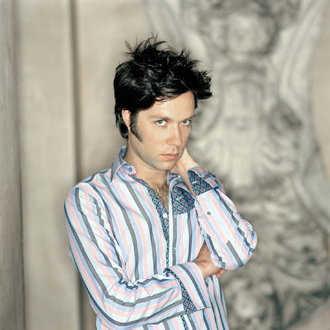
p10There are two important opera stories this month: one surrounded by a plethora of media attention, and one that should be better known. The first is the North American premiere of Prima Donna by Rufus Wainwright, at Toronto’s Luminato Festival. The second is Handel’s Giulio Cesare, marking the first time Orchestra London will stage its own opera production.

It is safe to say that no opera by a Canadian composer has ever received as much international media coverage as Prima Donna, the centrepiece of this year’s Luminato Festival. The principal reason is that its composer, Rufus Wainwright, is at age 36 already famous as a singer/songwriter. The son of folk-singers Kate McGarrigle and Loudon Wainwright III and brother of singer Martha Wainwright, he was born into a musical family and began touring with them at age 13. In 1998 his self-titled first album won him the accolade “Best New Artist of the Year” from Rolling Stone.

In 2006, Peter Gelb, the new general manger of the Metropolitan Opera, commissioned new operas from nine composers in an effort to revitalize the Met and to draw in younger audiences. Of these nine, who included Jake Heggie (Dead Man Walking), Adam Guettel (The Light in the Piazza) and Wynton Marsalis, Wainwright had made the most progress by mid 2007. But there was a problem: Wainwright’s libretto, written by Bernadette Colomine and himself, was in French. Gelb claimed that presenting a new opera not in English was “an immediate impediment.” Wainwright, however, insisted that French was part of the texture of the work.

Once the two parted company, many festivals vied to produce it. It premiered at the Manchester International Festival on July 10, 2009, with a subsequent performances in London in April 2010. Wainwright insisted that Luminato should present the North American premiere.

The opera is set in Paris on July 14, 1970, and follows a day in the life of aging diva Régine Saint Laurent. She is planning her comeback but happens to fall in love with the journalist interviewing her. Wainwright, who has long been a fan of opera and whose songs are sometimes classified as “operatic pop,” has written an homage to traditional opera. Thus, audiences need not worry that this new work will also be avant garde. In Luminato’s new production, directed by Tim Albery, Janis Kelly reprises the title role with a cast that includes local favourites Gregory Dahl as the butler and Colin Ainsworth as the journalist. Robert Houssart conducts the 57-member orchestra. The opera will be performed at the Elgin Theatre on June 14, 16, 18 and 19. For more information see www.luminato.com.

cesaroniAt the start of the month, Orchestra London takes a bold new step by becoming a producer of opera. For the past five years the orchestra under maestro Timothy Vernon has presented one opera each June at the Grand Theatre. All of these have been transfers of productions from Pacific Opera Victoria where Vernon is the artistic director. The orchestra’s first production as “Opera London” is Handel’s Giulio Cesare, directed by American Timothy Nelson, who at age 30 has already received much acclaim for his productions.

Nelson is unusual as opera directors go because he is also a musician and conductor. In 2003 he founded American Opera Theatre at Georgetown University in Washington, DC, to explore his interests in movement, music, design and opera as theatre. In 2008 he was the director and conductor of Marc-Antoine Charpentier’s David et Jonathas (1688) at the Brooklyn Academy of Music and last year, among many other credits, he was the director and conductor of Purcell’s Dido and Aeneas and John Blow’s Venus and Adonis in Virginia and the director of Philip Glass’s Hydrogen Jukebox, staged as part of Obama’s inaugural celebrations. Currently he is the artistic director of the Canadian Operatic Arts Academy at the University of Western Ontario.

Known for his up-to-date takes on the classics, Nelson plans to relocate the action in Giulio Cesare from Egypt to a present-day war-torn country suggesting Afghanistan. For a highly detailed look at Nelson’s thoughts behind this concept, have a look at his blog (blog.operalondon.ca), which includes video lectures and stage designs. The cast will feature the well-known countertenor Drew Minter in the title role with Lucia Cesaroni as Cleopatra, Roseanne van Sandwijk as Sesto and Ian Howell as Tolomeo.
Beside the excitement that this project will bring to London, this is a rare opportunity to see Handel’s opera fully-staged in a house of only 839 seats. Performances are June 3 and 5 at 7:30 and June 6 at 2pm. For more information visit www.uwo.ca/music/operalondon.

Christopher Hoile is a Toronto-based writer on opera. He can be contacted at: opera@thewholenote.com.

p16aThis year May is the new April. In the past, in Southern Ontario, April has seen the most operatic activity of any month of the year – but this year, May seems to have taken over that position. This month there are works from the 17th century to the 21st, most fully staged but some in concert format.

Dominating the schedule are three works staged by the Canadian Opera Company. The COC’s revival of its 1996 production of Wagner’s The Flying Dutchman opened on April 24 but continues until May 20. Evgeny Nikitin sings the title role, while Julie Makarov is Senta and Mats Almgren is Daland. The original director, Christopher Alden, directs, and COC music director Johannes Debus conducts his first Wagner opera for the company.

From May 1 to 30 the COC presents its first-ever Maria Stuarda, the 1835 opera by Gaetano Donizetti that premiered only three months after his Lucia di Lammermoor. Serena Farnocchia sings the title role with Alexandrina Pendatchanska as Elisabetta. Stephen Lawless directs the 2007 Dallas Opera production and Antony Walker conducts.

The COC concludes its 2009-10 season with its first production of Mozart’s Idomeneo since 2001. Toronto was treated to an outstanding Idomeneo from Opera Atelier in 2008, so it will be interesting to see how this 2007 production from l’Opéra du Rhin, directed by François de Carpentries, compares. Paul Groves sings the title role, with Krisztina Szabó as Idamante, Isabel Bayrakdarian as Ilia and Tamara Wilson as Elettra, so memorably sung for OA by Measha Brueggergosman. The opera runs from May 9 to 29 and is conducted by early music expert Harry Bicket.

Three more fully staged works come from smaller companies. Toronto Masque Theatre presents “A Molière Celebration.” In addition to purely spoken comedies, Molière also wrote so-called “comédie-ballets” that included interludes of song and dance often omitted in modern revivals. TMT will present the interludes written by Jean-Baptiste Lully for Le Bourgeois Gentilhomme in 1670 and those written by Lully’s rival Marc-Antoine Charpentier for Le Malade imaginaire in 1673. Soloists will include sopranos Shannon Mercer and Dorothea Ventura, countertenor Richard Whittall, tenor Cory Knight and baritone David Roth. Performances take place at the Al Green Theatre in the Miles Nadal Jewish Community Centre from May 12 to 15, directed by Derek Boyes and conducted by Larry Beckwith. Visit www.torontomasquetheatre.com for details.

p16bMay will see the world premiere of Dean Burry’s The Secret World of Og, adapted from the beloved 1961 children’s book by Pierre Berton. The work is a commission by the Canadian Children’s Opera Chorus, and all 200 members of the CCOC will be on stage. As many will know, the story concerns four children who descend through a trapdoor into an underground world of mushrooms whose green inhabitants can only utter the word “Og.” CCOC artistic director Ann Cooper Gay will conduct and Joe Ivany will direct. The opera runs from May 5 to 9. For more information visit
www.canadianchildrensopera.com.

p17Later in the month, from May 26 to 30, Urbanvessel revives its popular but highly unusual opera Stitch at the Theatre Centre. The 45-minute opera, subject of an “On Opera” interview with composer Juliet Palmer and librettist Anna Chatterton in March 2008, is written for three female voices accompanied only by the sound of sewing machines and concerns the mechanization of women’s work and its political ramifications. As in 2008, Christine Duncan, Patricia O’Callaghan and Neema Bickersteth will perform under the direction of Ruth Madoc-Jones. For more information visit
www.urbanvessel.com.

Two concert performances from Opera By Request fill out the month – Mozart’s Die Entführung aus dem Serail on May 7 and Carl Maria von Weber’s Der Freischütz on May 15. Both take place at the College Street United Church, 452 College St. See www.operaby-request.ca for details.

Finally, on May 1 and 2 Toronto Operetta Theatre is holding “A Gilbert and Sullivan Extravaganza,” a gala concert of G&S highlights including high tea. All the funds raised will go to assist TOT’s 2010-11 season. TOT patrons will know that the company was forced to cancel its production of The Pirates of Penzance last month for financial reasons. One consequence of the economic downturn in the arts has been the loss of donors and sponsors. TOT was hit particularly hard when a major sponsor pulled out just before the current season began. The company had to raise emergency funds simply to stage its second show, Canada’s own operetta, Leo, the Royal Cadet, a work that TOT’s efforts had rescued from undeserved obscurity. As Canada’s only professional operetta company, as one of the few in the world that strives to present works from all the national traditions, and as a company that from the beginning has showcased Canadian singers, TOT is a gem that must be preserved. Potential sponsors and donors please take note. Visit www.torontooperetta.com for more information.

Christopher Hoile is a Toronto-based writer on opera. He can be contacted at: opera@thewholenote.com.

marion_portrait2005_3Over the years April has become the most opera-heavy month of the year. Joining a full slate of old favourites from well-known companies (I’ll say more about these later) is a world premiere from an exciting young company.

Indie(n) Rights Reserve presents Giiwedin (“The North Wind”), in co-production with the Native Earth Performing Arts Centre. The opera, written in the Anishnaabemowin, French and English languages, tells the story of Noodin-Kwe and her struggle to protect her ancestral land in Northeastern Ontario. It runs at the Theatre Passe Muraille Mainspace April 8-24.

Librettist and co-composer Spy Dénommé-Welch and co-composer Catherine Magowan respeonded to questions I asked them, providing much insight into the opera and its background.

Read more: Giiwedin- Operatic Winds of Change
Back to top