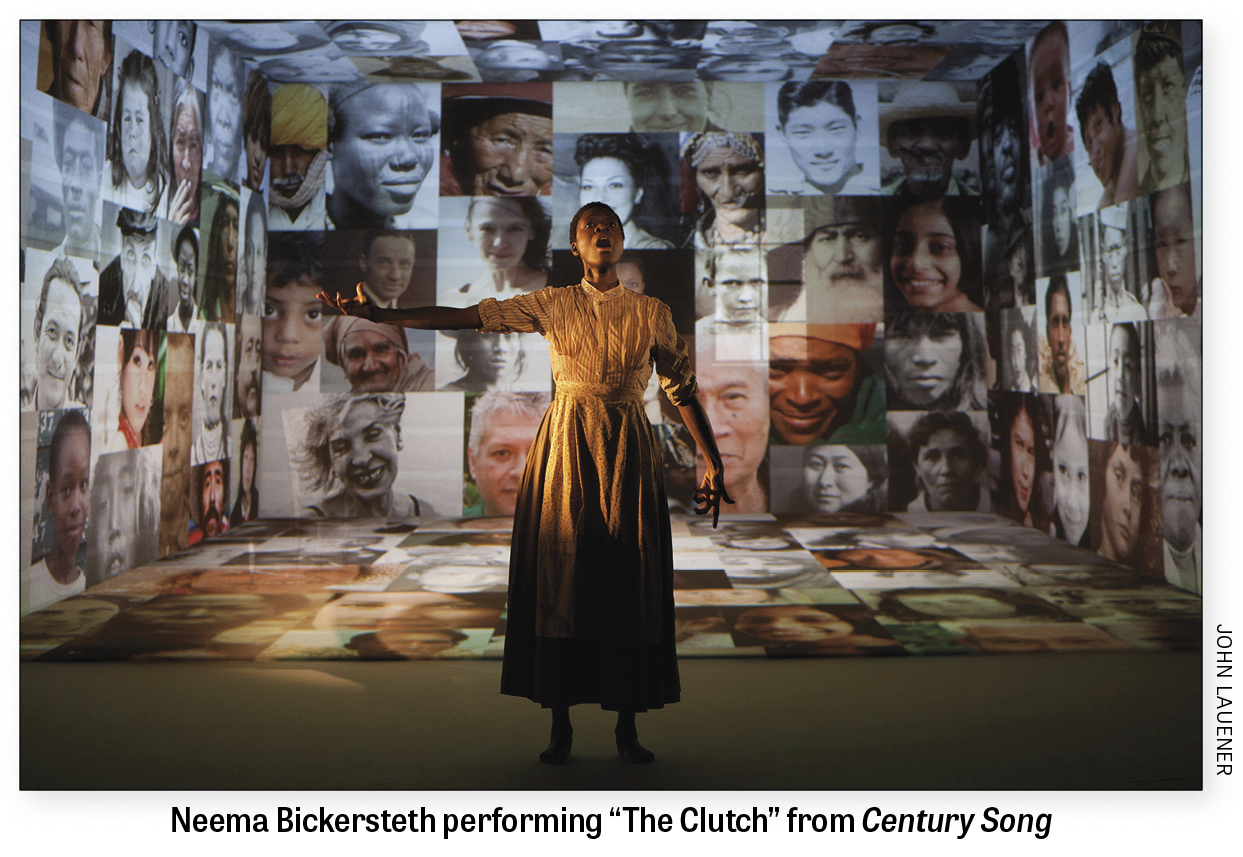
2207 In With The NewI find it fascinating how particular themes that surface in new music events happening in the city have a way of rolling into each other. In my interview in the March issue of The WholeNote with Owen Pallett, he spoke about how he was bringing a different focus to the TSO’s New Creations Festival by emphasizing music related to gender and Indigenous identities as well as genre diversity. A similar theme of exploring identity is at the heart of Century Song, a music, dance and image-based stage work created by soprano Neema Bickersteth in collaboration with choreographer Kate Alton and theatre director Ross Manson of Volcano Theatre. The piece runs from April 19 to 29 and is presented by Nightwood Theatre.

Using Virginia Woolf’s novel Orlando as an inspiration, Century Song moves through a series of scenes spanning 100 years as it follows the story of a black woman in Canada. The tale is told using the language of the body – both the wordless sounds of the voice and the physical gestures created by the choreography. And the story it tells is one close to Bickersteth’s heart – in fact it is an embodiment of her own personal journey. The work however didn’t start out with this goal in mind, Bickersteth told me during our recent phone interview. Rather it emerged during the development process. The initial question she wanted to explore was whether a classically based singer could both sing and dance as is done in music theatre. Together with Alton, they chose a series of 20th-century compositions for soprano that used only vocal sounds and no text. While rehearsing, it became apparent from the feedback that “I had been putting a persona on top of what I was doing. The music was just a song with no character or text. But I realized I was pretending to be a white woman while singing, something I had always done with classical music due to my university training.”

Bickersteth grew up in Alberta and is a first-generation Canadian born to parents originally from Sierra Leone. She grew up with a love of singing and eventually studied classical voice and opera at UBC. During the rehearsal process when she became aware she was singing as a white woman, she also discovered that this wasn’t conscious, but “something that had entered me from early on. It was a personal issue I needed to take a look at. What are the layers that I don’t even know are there?” These discoveries took the piece into a different direction, becoming the threads that tied the entire work together. The character that emerged “came from within me,” she said.

Each of the selected compositions is staged within a particular location and time period with a focus on highlighting aspects of Canadian black history. This is accomplished through the set design, projected images and costume. Beginning with Rachmaninoff’s Vocalise written in 1915, the setting is Alberta during the second decade of the 20th century. At that time black communities were relegated to the outskirts of town, with the men often forced into leaving home to find work in Edmonton and the women and children struggling to survive. However, Bickersteth says, “there is always a way through,” and her character finds that necessary inner strength.

After WWI, things change, and the character is now a well-dressed jazz singer in Montreal. There is a sense of things being easy and beautiful, communicated through the shimmering colours of Messiaen’s Vocalise-Étude composed in 1935. As the music progresses into an uneasiness, the character begins to raise questions through her sounds and physical movements about whether this new place she has landed is really so great after all. This uneasiness grows darker during the performance of the second Messaien piece, an excerpt from his 1941 composition Quartet for the End of Time during which Bickersteth becomes a wartime factory worker. The creators adapt a section where the violin and cello lines play in unison into a vocalise, using electronic processing on Bickersteth’s voice to create the doubling effect.

Between each of the composed vocal works, Gregory Oh (piano) and Ben Grossman (percussion) perform structured improvisations on their respective instruments along with various electroacoustic sounds sourced from their laptops. These transitional improvisations were created in collaboration with the composer of Century Song, Reza Jacobs, along with Debashis Sinha, who performed during earlier productions of the piece. The music following the Messaien piece is explosive in nature, highlighting the character’s internal war coming to terms with things “once believed in, but not anymore. It’s that identity struggle that causes a breakdown.”

This storm leads into calm with the performance of A Flower by John Cage, composed in 1950 and set for voice and percussive piano sounds. The setting is Vancouver, where during the postwar period the small black community was moved to housing projects, making way for the Georgia Street viaduct. Using film footage with a rapid succession of images to create the transition through to the 1970s, the next persona to appear is modelled after Bickersteth’s mother, who juggled being a wife and mother while studying and working at a job. She, like many other women of the 1970s, was determined to do it all and this level of intense activity is aptly portrayed through the performance of Récitation 10 by Georges Aperghis. The musicians pick up the heightened field of action and push it to an extreme tempo while Bickersteth dances her way through to the final work composed specifically for her by Jacobs. During this frenetic transition we see images of different faces wearing clothing from all times and cultures. Bickersteth explains how this ties into her personal journey with the piece: “It’s all me. Am I pretending to be someone else? Who am I, who are you, who do we see each other as? If you see a black woman dressed up in a sari – what does that mean to you?”

The final Vocalise by Jacobs is the musical moment where Bickersteth can finally land within her own voice. “Working from a personal perspective as opposed to a put-on perspective creates a freedom that can be heard and seen in my body. It’s a freedom that comes from your heart, from within your creative centre. My voice is still my voice, I am classically trained, but I do have this curiosity for my ‘other voices.’ What else can my voice do, what else can my body do?” Of Jacobs’ piece she says: “I think of it as an anthem. He told me to do whatever my voice wanted, since he knows that my voice wants to do many things other than straight classical. You can hear the freedom and discovery in my voice.”

Changing the conversation in the musical world to include race and gender has been much slower to emerge than in the visual arts, film and theatre worlds for example. Bickersteth commented on this: “What I love and see happening is the mixing of all art and genres. The more overlapping and connecting that occurs, the more these conversations will happen and changes will be quicker. I’m hopeful too that we can be free to do what we want.”

Emergent Events:

With the month of April marking the end of the academic year comes an abundance of student concerts occurring at all the local universities. I suggest you check out the listings for the full roster, but here are a few highlights: On April 3 at the Don Wright Faculty of Music, Western University a concert by the Contemporary Music studio and on April 4, an “Electroacoustic Music Compositions Concert.” Also on at the University of Toronto, the gamUT: Contemporary Music Ensemble will be performing. Outside the academic world, two concerts from the Music Gallery’s Emergents series presents opportunities to hear the latest from young creators. The concert on April 7 offers performances by Castle If, the electronic composer Jess Forrest who works with a collection of analog synthesizers to create soundworlds inspired by the pioneers of electronica, and Laura Swankey, an innovative improvising vocalist. The May 5 Emergents concert features performances by The Toronto Harp Society, whose mandate is to encourage new works for the harp by Canadian composers, and Toronto’s newest saxophone duo Stereoscope Duo, with Olivia Shortt and Jacob Armstrong. They too share a passion for developing repertoire for their instruments, while also mixing in electronics and collaborations with dancers.

Quick Picks:

Apr 1: Academy Ballet Classique/Slant. “River Flow: Confluence of Music, Words, and Dance.” Interdisciplinary work celebrating rivers. World premiere by Owen Bloomfield; Cambridge.

Apr 2: Esprit Orchestra. Works by Thomas Adès (England), Arthur Honegger (Switzerland), Alexander Mosolov (Russia), John Adams (USA), Chris Paul Harman (Canada).

Apr 6, 13: Toronto Symphony Orchestra. Sesquies by William Rowson (April 6) and Marc Bélanger (April 13).

Apr 7: Canadian Music Centre. Centrediscs CD launch: Worlds Apart by pianist Christina Petrowska Quilico.

Apr 14: Music at Metropolitan. Music for Good Friday. Works by composers Eleanor Daley, Stephanie Martin, Jeff Enns and others, along with Eternal Light – A Requiem by Howard Goodall.

Apr 21: Canadian Music Centre. French ensemble Hanatsu miroir presents works by Canadian, Brazilian, French and Italian composers.

Apr 23: Gallery 345. “The Art of the Flute: A Musical Aviary.” Works by James Shields, Andrew Staniland, Takemitsu, Saariaho, Hindemith, Feld and Richard Rodney Bennett. 

Apr 28: New Music Concerts. “Celebrating John Beckwith.” Works by Beckwith including premieres of two works: Calling and Quintet; John Weinzweig and Stravinsky.

Apr 30, May 7: Wellington Winds. “Wind Symphony Whimsy.” Featuring The Seven Deadly Sins by Michael Purves-Smith.

May 5: Spectrum Music. “Portraits de Georgian Bay.” Spectrum composers’ arrangements of songs composed by the Georgian Bay duo Kelly Lefaive and Joelle Westman.

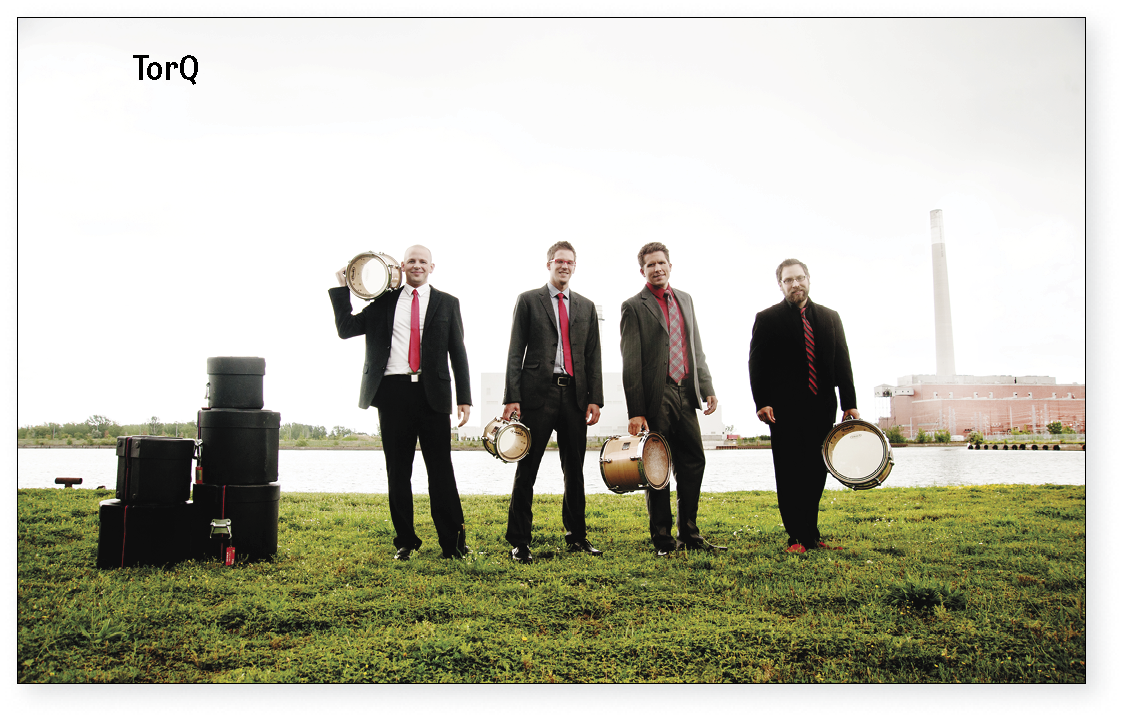
May 5: Array Ensemble. “The Hits: Array Percussion Trio.” Works by Jo Kondo, Rolf Wallin, Guo Wenjing and Erik Oña.

May 6: Haliburton Concert Series. “Guy & Nadina.” Includes a work by Canadian Glenn Buhr.

Wendalyn Bartley is a Toronto-based composer and electro-vocal sound artist. sounddreaming@gmail.com.
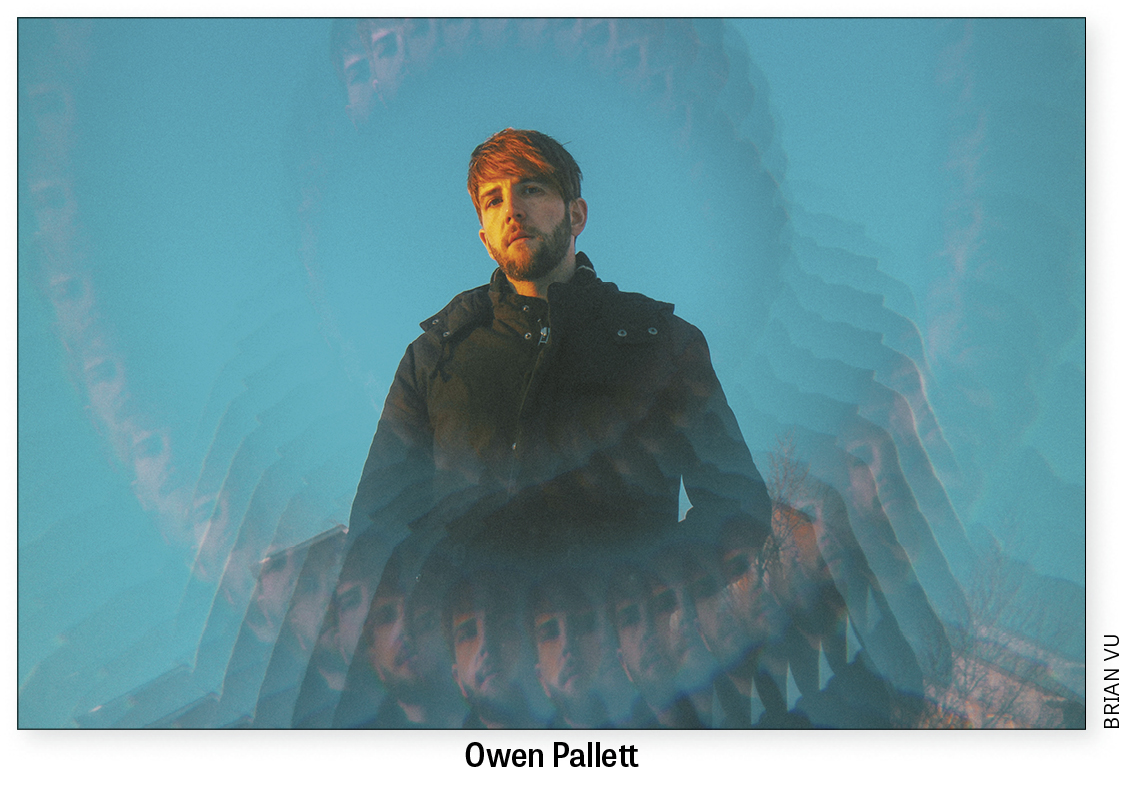
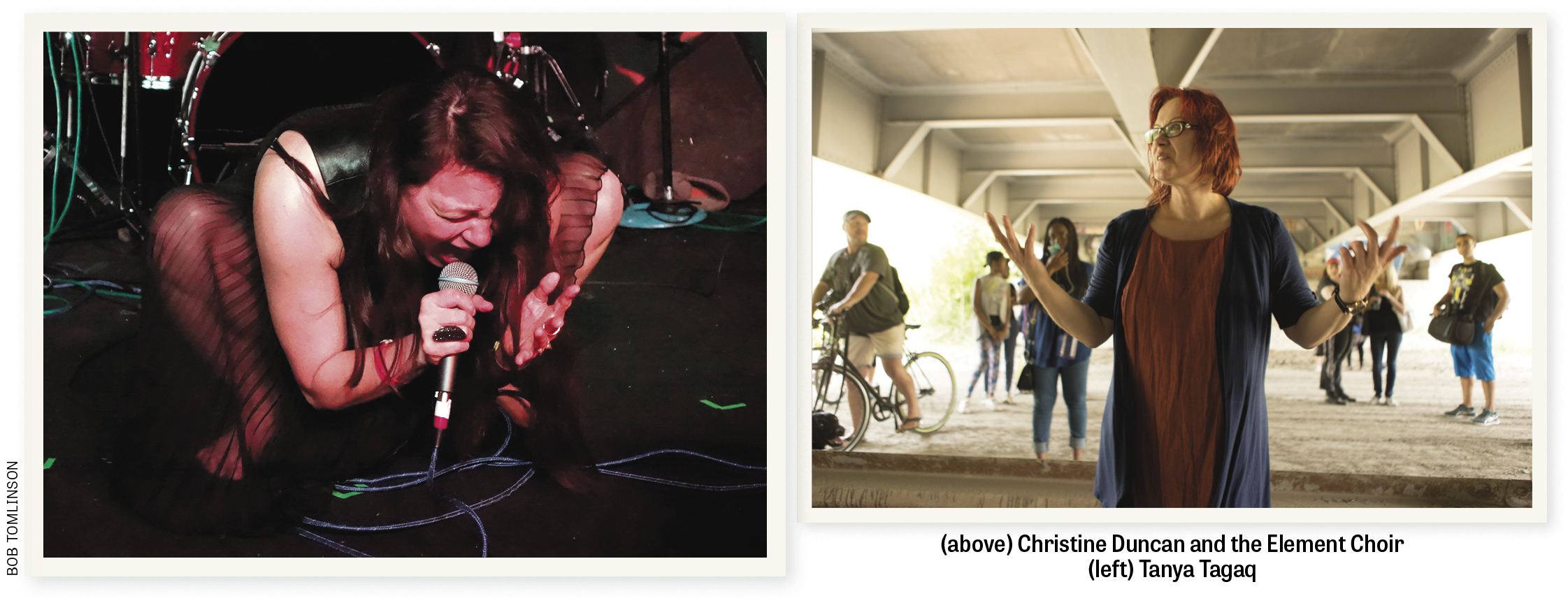
2206-BBB-New.jpgIn last month’s column, my opening story focused on the upcoming New Creations Festival presented by the Toronto Symphony Orchestra, with concerts on March 4, 8 and 11. I featured a conversation with Christine Duncan speaking about a new commission entitled Qiksaaktuq for the March 4 concert, a collaboration between Duncan, Tanya Tagaq, Jean Martin and orchestrator Christopher Mayo that combines both notated score and improvisation. To continue coverage of the New Creations Festival for the March issue, I spoke with guest curator and composer/performer Owen Pallett about his vision for the festival and the highlights of the March 8 and 11 concerts.

 A year ago, a review by Michael Vincent in the March 6 edition of The Toronto Star noted that in the 2016 New Creations Festival there were no female composers featured. The author stated that this omission demonstrated “a lack of awareness towards the diversity of the community,” and he ended his review with a hope that the TSO would listen to this critique. By selecting Owen Pallett as the guest curator for this year’s festival, I think it’s fair to say that they are now listening. When I spoke with Pallett, I began by asking him what his curatorial vision was. “My priority is on critical work,” he began. “There has been a big change in the [cultural] conversation over the last 15 years, and I want to reflect that in the concerts.” For Pallett, this means having representation from both female and male composers, as well as the inclusion of Indigenous and culturally diverse performers. He also wanted to reflect the full spectrum of new music practices that exist outside the traditional concert hall. This goal is evident in both the selection of composers he wanted to include, as well as the choice of performers for the lobby concerts that happen both pre- and post-concert. “There’s an enormous audience in Toronto for new music, but they don’t know it exists. People are interested in listening to challenging music, and I’m also working to address that in this series.” In the end, Pallett is not interested in theoretical ideas of what new music is, but rather in selecting works that are, in his words, BOLD.

As examples, he cites the music of Cassandra Miller that displays “enormous and monolithic gestures, like giant glaciers, which are far removed from other schools of new music composition.” Speaking of glacial landscapes, another composer Pallett selected is Daniel Bjarnason from Iceland who takes Ligeti’s ideas of cloud structures and turns them into a new language. Both Bjarnason and Miller’s works (Round World and Emergence, respectively) will be premiered on March 11. Pallett’s choice to include Tanya Tagaq’s improvised performance will give audiences a chance to experience “the most emotional response you’ll hear from an improvised performer.” Another of his composer selections is American Nico Muhly (Mixed Messages, March 8 concert), whose style is a “concentrated John Adams-inspired tonalism drawing from many different sources and time periods.” Muhly, currently one of the most visible composers in the USA, has worked and recorded with a range of classical and pop/rock musicians and refuses to be pinned down to one specific genre.

Pallett’s own commissioned work, Songs From An Island, will be premiered on March 8. What we will hear that night is a 15-minute excerpt from a 75-minute work he is currently working on. Originally, Pallett began writing a more conventional piece for the festival, but after recently hearing American composer Andrew Norman’s work Play, he decided to shelve it and go full out to create a more edgy piece that “investigates the cross section of folk songwriting and the aspects of modern orchestration that I’m most interested in.” The piece is a series of songs about a man who washes up on an island and gets involved in an assortment of hedonistic activities. One might think that would result in a work with a bawdy flavour, but not so. Rather, Pallett says, the piece has a more spiritual tone and ends with the character circling the planet hearing the prayers of the people below. The music is as much inspired by trends in rock music since Talk Talk, an English new wave band active from 1981 to 1992, as it is by concert music influences such as Ligeti-inspired tone clusters and Grisé’s spectralism. However, Pallett made it clear that his is not a hybrid music as he “draws equally from a number of different languages to arrive at this one unified aesthetic, one unified conclusion. I’m still trying to find the sweet spot,” he said, which is not a space “between the two worlds, but is its own place unrelated to either genre. I am completely allergic to any conversations that distinguish between pop vs. serious music. I find it classist and I reject it.”

The Festival will also feature a lineup of outstanding performers, including violinst James Ehnes performing a new violin concerto by Aaron J. Kernis (March 8) and the Kronos Quartet performing Black MIDI, a new work by Nicole Lizée (March 11). And finally, each symphony concert will begin with the performance of a two-minute Sesquie, commissioned as part of the TSO’s year-long Canada Mosiac project. These include Andrew Staniland’s Reflections on O Canada after Truth and Reconciliation (March 4) Harry Stafylakis’ Shadows Radiant (March 8) and Zeiss After Dark by Nicole Lizée (March 11). Highlights of the lobby concerts include Indigenous performers The Lightning Drum Singers led by Derrick Bressette (March 4), and the Cris Derkson Trio with Derkson on cello, Anishinaabe Hoop Dancer Nimkii Osawamick and drummer Jesse Baird (March 11). The spirit of improvisation will make an appearance as well with the performance on March 8 by the Element Choir led by Christine Duncan.

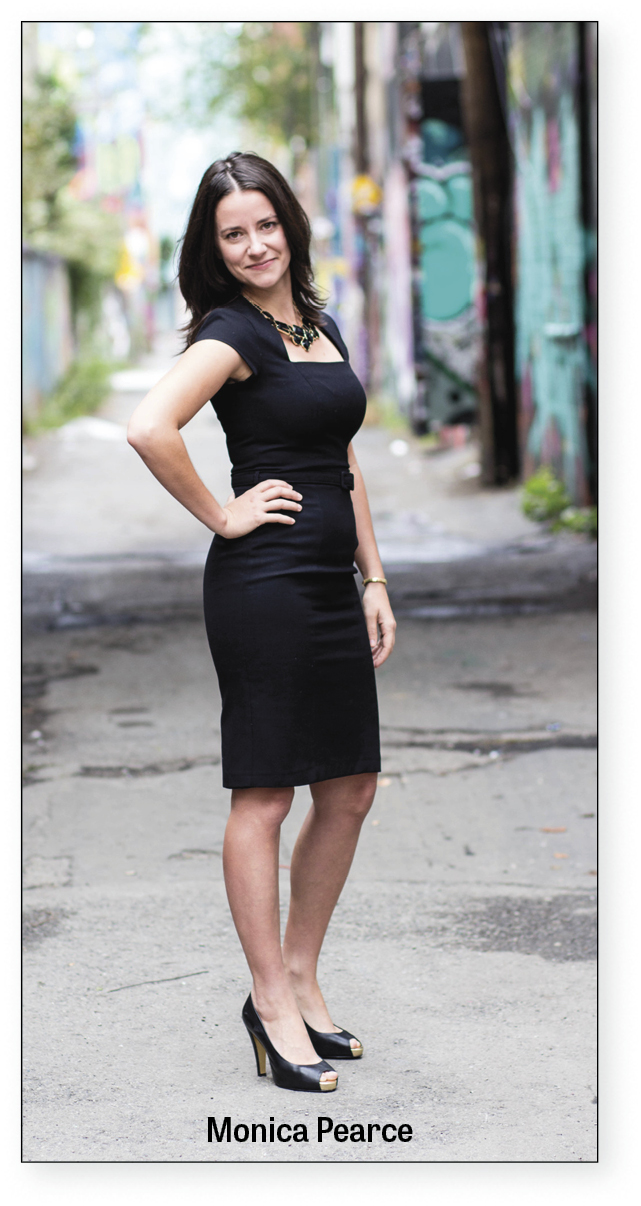
Nicole Lizée: March 11 will be a busy night for composer Nicole Lizée with her two works at the New Creations Festival along with a piece she composed for a concert featuring the Plumes ensemble at the Music Gallery. Montreal-based Plumes is a six-member group combining pop and classical influences who have invited 13 composers to create pieces inspired by Vision, Canadian producer/singer Grimes’ album. And in the spirit of Owen Pallett’s vision for New Creations, this concert includes a majority of women composers as well as a creative mandate to push genre boundaries. Alongside Lizée, other composers include Emilie LeBel, Tawnie Olson, Monica Pearce and Stephanie Moore. (And later in the month at the Gallery, the all-female Madawaska Quartet along with harpist Sanya Eng and guitarist Rob MacDonald create an immersive performance environment in which to perform works by Omar Daniel, Andrew Staniland, Scott Good and Yoko Ono. This program will also be performed on March 29 in Kitchener as part of the Kitchener-Waterloo Chamber Music Society series.)

Full Spectrum: March continues with a full spectrum of new music events. On March 10 and 11, The Toronto Masque Theatre presents The Man Who Married Himself composed by Juliet Palmer with libretto by Anna Chatterton and choreography by Hari Krishnan. The story is an intriguing one, given the gender issues already discussed. It’s an allegory of the inner battle between male and female parts, played out by the main character who rejects the idea of marrying a woman and instead creates a lover for himself from his own left side. The outcome of that experiment unfolds throughout the piece.

Continuum Contemporary Music’s lineup for their March 25 “Pivot” concert of works by emerging composers is another example of a more diverse representation of composers. The concert will present the creative outcomes of a six-month mentorship with works by four female composers (Rebecca Bruton, Maxime Corbeil-Perron, Evelin Ramon, Bekah Sims) and Philippine-born Juro Kim Feliz. Montrealer Beavan Flanagan rounds out a program of pieces exploring acoustic, electroacoustic and acousmatic traditions.

And finally, the Array Ensemble will perform “The Rainbow of Forgetting” in both Toronto (March 9) and Kingston (March 10) with compositions by Mozetich, Catlin Smith, Komorous, Sherlock, Bouchard and Arnold.

With so much going on also in the early part of March, I have not been able to cover it all here. I recommend you consult my February column for some of the early March events mentioned there.

Finally here are some additional Quick Picks for this month:

Mar 2: Canadian Music Centre. “Of Bow and Breath.” Works by Vivier, Baker, Tenney, Stevenson and Foley.

Mar 5: Oriana Women’s Choir. “Journey Around the Sun.” Includes a work by Estonian composer Veljo Tormis.

Mar 8: U of T Faculty of Music presents “A 90th Celebration of John Beckwith” featuring Beckwith’s works A Game of Bowls, Follow Me and a selection of songs.

Mar 9: Canadian Opera Company. Chamber Music Series: Contemporary Originals in collaboration with the TSO’s New Creations Festival.

Mar 12: Ritual 7 presents “The Announcement Made to Mary,” a miracle play with score by Anne Bourne.

Mar 18: Caution Tape Sound Collective. Array Space.

Mar 18: Scaramella presents. “Tastes: Old and New,” contemporary works by Peter Hannan, Grégoire Jeay and Terri Hron.

Mar 18: TO.U Collective/Music at St. Andrews.presents Radulescu’s Sonatas No.3 and No.6 performed by pianist Stephen Clarke.

Mar 19: Two electroacoustic music concerts presented by U of T Faculty of Music: works by Ciamaga, Staniland, Viñao and Mario Davidovsky, L’adesso infinito for organ, projections and 4-channel sound by Dennis and Barbara Patrick, Stockhausen’s Kontakte, John Chowning’s Turenas and Tomita’s arrangement of Debussy’s Afternoon of a Faun.

Mar 22 and 23: Toronto Symphony Orchestra. Sesquie A Hero’s Welcome by Kati Agócs and North American premiere of a co-commissioned work Accused: Three Interrogations for Soprano and Orchestra byMagnus Lindberg.

Mar 25: Guitar Society of Toronto presents Duo Scarlatti. Their exact program is unknown at press time but will be selected from music from the high Baroque and 20th century works by Bogdanovic, Pisati, Iannarelli, Cascioli and Del Priora, among others.

Mar 26: U of T Faculty of Music presents “There Will Be Stars: Music of Stephen Chatman,” which includes works by Chatman, Ramsay, Parker, Hagen, and Brandon.

Mar 26: New Music Concerts presents György Kurtág’s Kafka Fragments as part of a benefit performance event. Also presented on March 27 by the Kitchener-Waterloo Chamber Music Society.

Apr 7: Music Gallery. “Emergents III: Castle If + Laura Swankey.” Joe Strutt, curator.

Wendalyn Bartley is a Toronto-based composer and electro-vocal sound artist. sounddreaming@gmail.com

2205 New 1With the beginning of 2017, Canada is about to enter into a year-long marking of the fact that the country began 150 years ago in 1867. Some will be celebrating, and others will have more ambivalent feelings about it all, aware of how much indigenous cultures have suffered and lost under a political system that attempted to destroy them. On the musical end of things, much is being planned as a celebration, and no doubt this theme will return in various ways in this column throughout the year.

One significant player in the creation of musical events to mark this moment in Canada’s history is the Toronto Symphony. Their major initiative, Canada Mosaic, will involve performance, education and collaboration initiatives across the country. One of their projects is the commissioning of two-minute orchestral works from Canadian composers called Sesquies, to be performed throughout the year by the TSO and 38 partner orchestras across the country. During February, the TSO will be premiering a series of these at several of their regular concerts, beginning on February 1 with Yatra, composed by Dinuk Wijeratne. Other Sesquies during the month include works by Vivian Fung (February 4); Jocelyn Morlock (February 8); Louis Babin (February 10); John Rea (February 15); and Andrew Staniland (March 4).

2205 New 2New Creations: One of the major ways the TSO has annually contributed to increase awareness of Canada’s composers has been through the New Creations Festival, and of course this year is no exception. The festival runs from March 4 to 11, with three concerts curated by Toronto-based composer and performer Owen Pallett. It features eight newly-commissioned works, including five from Canadian composers. In order to fit all the three festival concerts into The WholeNote issues, I will feature the March 4 program in this month’s column and follow up with the other two concerts in the March issue. The March 4 program is chock full of TSO-commissioned works: one from German composer and clarinetist Jörg Widmann, another from Canadian Jordan Pal, currently an affiliate composer with the TSO, and finally a collaboration between Tanya Tagaq, Christine Duncan and Jean Martin, with orchestrations by Christopher Mayo.

Some readers may recall a feature story about the 21C Festival that I wrote for last May’s issue of The Wholenote in which I discussed the collaboration between Tanya Tagaq and the Kronos Quartet. Tagaq, originally from Cambridge Bay in Nunavut, is a stunning improvising vocal performer in a style almost impossible to capture in words. Her sounds are influenced by both the deep guttural tones of traditional Inuit throat singing as well as the wild vocal exclamations of avant-rock. When combined with the explosive sounds of her band members, Jean Martin on percussion and Jesse Zubot on violin, both of whom use extensive electronic processing as well, it’s a sonic experience that often shakes audience members to their core. To find out more about how a performer of this nature will collaborate with the TSO, I contacted Christine Duncan, one of the collaborators in the current TSO commission.

Their commission will be a 20-minute-long work titled Qiksaaktuq, the Inuktitut word for grief, and is intended as a musical reflection upon missing and murdered indigenous women. The piece is in five movements inspired by the Kübler-Ross model of the five stages of grief: denial, anger, bargaining, depression and acceptance. Duncan talked about how the ideas for the piece came together during a series of exchanges about how to create a work combining improvisation and notation. The final verdict was that the piece would be collaboratively composed by Tagaq, Martin and Duncan with the final score orchestrated by composer Christopher Mayo. During the compositional process between the three of them, the primary focus was to create something that would feel familiar for Tagaq to improvise with. Because of Martin’s extensive experience of performing as a regular member of her band, his input was invaluable in creating a structure with the same peaks and valleys she’s used to. The piece came together using a computer software program that uses the traditional symphonic sounds, thus enabling the creators to hear the work unfolding as they worked. These tracks were then given to Mayo to create the final notated parts. The more subtle sounds not available on the computer program were discussed with Mayo and written into the score. Having an orchestrator involved was important Duncan said, as it ensured that everything would be clear to the orchestral players in a format they were used to.

Duncan’s role during the performance will be to use what she calls the “conduction hand cues” she has honed over the last several years working with the Element Choir. Using these cues, she will lead the brass section in an improvisation that will complement the notated score and Tagaq’s live improvisations. The hand cues are visual gestures that suggest the type of sound being asked for and it’s up to each performer to interpret how they will respond. During the composing of the work, the nature and timing of the specific hand cues were carefully chosen and added into the notated score. Duncan emphasized that the “overall effect of the entire piece will be like a large ensemble structured improvisation, sounding like what one of Tanya’s performances would sound like. In order to make it that loose and open it has to be completely and specifically notated to come off that way.” The piece will premiere on March 4 in Toronto and will be performed by at least three other orchestras across the country as part of the Canada Mosaic project.

I was also curious about the story behind Duncan’s creative relationship with Tagaq. It began, she said, in early 2014 when she was invited to sing at one of Tagaq’s performances in France. “Tanya is quite generous and inclusive. She loves to have people and friends around her – to get them up on stage and perform with them. For her it’s a way of having the act of performing be like an extension of family or community – that’s very important to her.” With that positive experience setting the stage, it was later on in 2014 when Tagaq’s band was preparing to perform at the Polaris Prize award show and looking for a way to do something more large scale. Martin suggested inviting Duncan’s improvising Element Choir to join in. Everyone agreed. As a testament to how much Tagaq trusted Duncan’s creative instincts, “The first time Tanya ever met the choir was onstage at the Polaris awards. It was a pretty transformative experience for everyone involved. Right away, Tanya said she wanted the Element Choir on every single gig we can have them on.”

Currently Duncan is preparing to join the band on their upcoming tour promoting Tagaq’s recent album Retribution. She will be training choirs in the conduction method in various cities and, if that isn’t possible at some locations, she will be joining in as a singer on stage with Tagaq. Reflecting back on the work that Tagaq created with the Kronos Quartet at the 21C Festival last May and how utterly original the venerable string quartet sounded in that piece, I am sure audiences will be equally entranced by this new collaborative creation with the orchestra.

Esprit: Continuing on in the spirit of new Canadian symphonic works being performed this month, Esprit’s concert on February 12 will feature three world premieres by Canadian composers, one of which has been co-commissioned by the TSO as part of their Canada Mosaic project. Survivance is the name of this piece, composed by Montrealer John Rea, who has previously received three commissions from Esprit. The program has works by two other Montreal-based composers – José Evangelista’s 2016 work Accelerando, and a world premiere by Analia Llugdar, a former student of Evangelista’s. The third world premiere, Surfacing, is a work by Adam Scime. Alongside these newly created compositions will be the performance of a 1985 piece by American Conlon Nancarrow, known for his complex works for player piano.

Wendake/Huronia: The Canadian-identity theme continues in two early February performances (February 3 and 4) by Toronto Consort of John Beckwith’s work Wendake/Huronia. The piece was originally premiered in 2015, toured amongst several Georgian Bay communities during that summer, and is orchestrated for chamber choir, First Nations drummers and singers, alto and narrator. Created in six movements with the ultimate goal being a statement of reconciliation between First Nations and European-based cultures, the majority of the work goes into an exposé of the reality of the Wendat experience – both pre- and post- contact with the French explorer Champlain. It is fitting that this work is being remounted just a month prior to John Beckwith’s 90th birthday.

Early March EventsMarch is overflowing with new music adventures so I’d like to give a heads-up now to some of what will be happening so you can mark your calendars. March 4 is shaping up to be an epic night, in addition to the New Creations concert.

First of all, Spectrum Music will be presenting “Tales of the Unconscious,” produced in partnership with Musicata: Hamilton’s Voices under the direction of Roger Bergs. Mixing jazz trio and classical choir, the concert will feature three leading jazz musicians – Mike Murley (saxophone), Andrew Downing (bass) and Chris Pruden (piano) – and give the Spectrum composers an opportunity to dig into the murky realms of dreams. Shannon Graham’s piece Bedtime Stories is based on her own dream journals while Ben McCarroll-Butler’s The Night Is Gone, the Light Is Near is based a dream had by a refugee from Syria’s civil war.

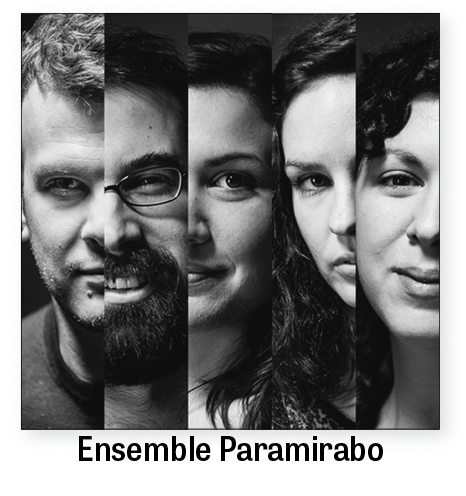
Over at the Music Gallery, Thin Edge New Music Collective teams up with the Gallery to present “Raging Against the Machine: Coming Together.” The concert  on March 4 marks the second time the Thin Edge ensemble will team up with Ensemble Paramirabo from Montreal and this year their concert will include Frederic Rzewski’s Coming Together, Yannis Kyriakides’ Karaoke Études and new works by Canadians Colin Labadie, James O’Callaghan and Anna Pidgorna. The goal of these collaborations is to create connections amongst creators and organizations across distinct geographical, cultural and linguistic identities.

And finally, from March 2 to 5, Soundstreams will be presenting a concert entitled “R. Murray Schafer’s Odditorium.” It will feature a number of works from Schafer’s Patria cycle, which combines elements from opera, theatre and dance to create a hybrid genre the composer calls “theatre of confluence.” It promises to be full of dramatic surprises and energy, with theatre and film director Chris Abraham from Crow’s Theatre overseeing the entire production.

QUICK PICKS

Feb 4: Toronto Symphony Orchestra. “The Year of the Rooster: A Chinese New Year Celebration.” Works by composers Huan Zhi Li, Chen Qigang, Vincent Ho, Shande Ding: Long March Symphony (Fifth Movement).

Feb 4: Music Gallery. “Emergents II: I=I + Caution Tape Collective.”

Feb 5: Syrinx Concerts Toronto. Includes works by Walter Buczynski.

Feb 7: Isabel Bader Centre for the Performing Arts, Kingston. Evergreen Club Contemporary Gamelan performing Canadian and international commissions.

Feb 11: Music Gallery. Performances by Alex Moskos, Doom Tickler and ZONES.

Feb 12: Kitchener-Waterloo Chamber Music Society. Improvisations with the Penderecki Quartet and the Dave Young Trio.

Feb 16: David Lidov. “Paper and Keys” includes a performance of Lidov’s VoiceMail. Array Space.

Mar 3: Alliance Française de Toronto. “The Work and Ideas of Pierre Schaeffer” with Darren Copeland.

Wendalyn Bartley is a Toronto-based composer and electro-vocal sound artist. sounddreaming@gmail.com.
Recent world events, and particularly what’s happening to our southern neighbours in the US, have had a great impact on most of us. I’ve been reflecting on the question that always seems to resurface throughout the ages during times of chaos and disturbance: how can music (and other creative arts) affect and support social change, transformation and even revolution? I agree with the notion that pursuing the creative act itself is one form of resistance. Yet I wonder what these times are asking of us regarding the creative process itself.

On November 23, I attended the Rainbow Nation concert presented by Soundstreams. It was a tribute to the legacy of Nelson Mandela and included a beautiful array of artistic styles and performers from South Africa, Canada and the US. During one of the short theatre skits that functioned as interludes between musical numbers, a conversation between a father and daughter brought home a profound truth. The father was distraught that his daughter was involved in student protests, particularly since his generation had struggled so much for the right to education. Her ringing reply was “Just listen.” The importance of listening is a message I’ve seen written over and over again in the numerous articles that have flooded my social media pages since the US election.

Warbler’s Roost

In my September column, I wrote about New Adventures in Sound Art (NAISA)’s programming of three sound installations as part of the in/future Festival at Ontario Place, noting how the practice of creating site-responsive works requires attention to the multi-layered elements of any given environment.

A few weeks ago, I travelled to a place called Warbler’s Roost to participate in a listening and soundscape weekend. A small group of sound artists gathered at this artist retreat and performance space, located about one hour north of Huntsville, to engage in the process of listening, recording and creating. Organized by the Toronto Soundhackers Meetup group in tandem with Darren Copeland, artistic director of NAISA, we began early on Saturday morning with a soundwalk – a collective act of walking in silence and listening to the environment. We then spent time both individually and in small groups making recordings of both the soundscape and of our sonic interactions with the environment. Back in the Warbler’s Roost studio, we listened to the recordings and then, again collectively, created a short composition from them that was performed later that evening as part of a NAISA concert. Within one day, we went from the simple act of being present with the sounds around us to a form of witnessing through recording and interacting to the act of creation and sharing. In a sense, this is the heartbeat that drives the musical creative act: cultivating presence and witnessing through creativity. These simple actions point to a way forward in generating listening behaviours that can inform and model how to live in a complex and diverse world.

I often find myself writing in this column about the culture and practice of listening. For example, in the October column, I spoke about the listening legacies of both R. Murray Schafer and Pauline Oliveros, along with the next-generation approach of Oliveros’ collaborator Doug Van Nort.

Dealing with these larger questions of social impact is an ongoing process of paying attention to what is emerging from the grist of what is being offered by those committed practitioners involved in the day to day music-making world. So with these thoughts as a background, let’s turn now to what is happening locally in the upcoming months of December and January.

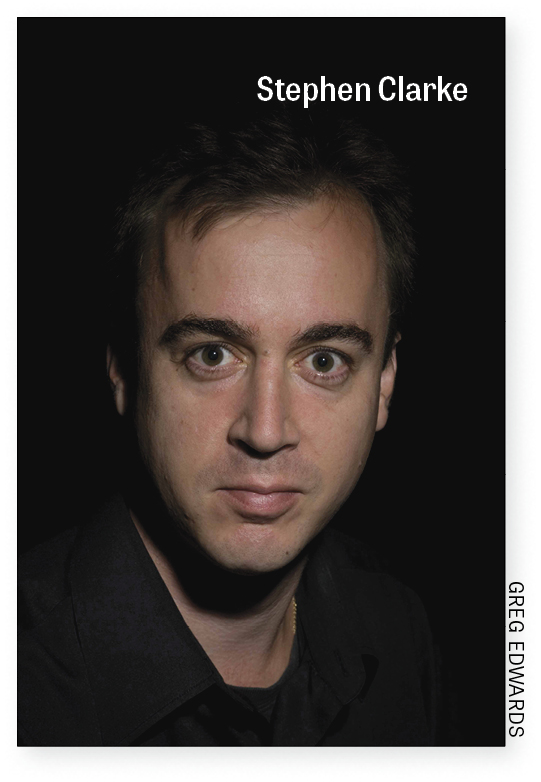
Stephen Clarke

2204 In with the New 1

Early in the new year, at Gallery 345 on January 8, Arraymusic Ensemble member Stephen Clarke will present a concert of solo piano works by four composers, each of whom has a very distinctive voice: Giacinto Scelsi (Italy) Udo Kasemets (Canada), Horatiu Rădulescu (Romania/France) and Gerald Barry (Ireland). I talked with Clarke about the repertoire and his interest in the music of these composers, two of whom he has had personal friendships with.

It is the more mystical approach that both Schelsi and Rădulescu share that intrigues Clarke, as both these composers incorporate different influences from Eastern philosophies and religions. In fact it was Rădulescu’s interest in Hindu and Byzantine music and the way it works with natural resonances that sent him in the direction of pursuing what is known as spectral composition, a style that focuses on working with the overtone or harmonic series. Clarke will be performing Rădulescu’s 1968 piano sonata, Cradle to Abysses, a tightly structured atonal work with a mystical atmosphere, which was written just before the composer made his shift to spectral-based music. It is often thought that spectral composition began in the mid 1970s with French composers such as Grisey and Murail. However, Rădulescu’s forays into working with overtones, which can take one into a deeper relationship with the natural acoustic world, predate the French school.

To highlight the contrast between spectral and non-spectral approaches, Clarke chose to include Udo Kasemets’ Feigenbaum Cascades (1995) in the program. Hence the title of the concert:Cascades and Abysses.” The Kasemets piece, a spectral work written originally for Clarke, works with the harmonic series in a “beautifully pure mathematical way that speaks for itself.” In sharp contrast to this simplicity, Clarke will perform two works by Gerald Barry, a composer known for his more hyperactive and ironic approach as demonstrated in his ability to use banal material and infuse it with a highly charged energy. In Humiliated and Insulted, Barry’s piece written for Clarke in 2013, the audience will hear a work that sounds like a congregation singing a hymn, yet something has gone terribly wrong. Everyone is singing together, but not from the same spot in the score and, to make it more pronounced, no one even seems to notice.

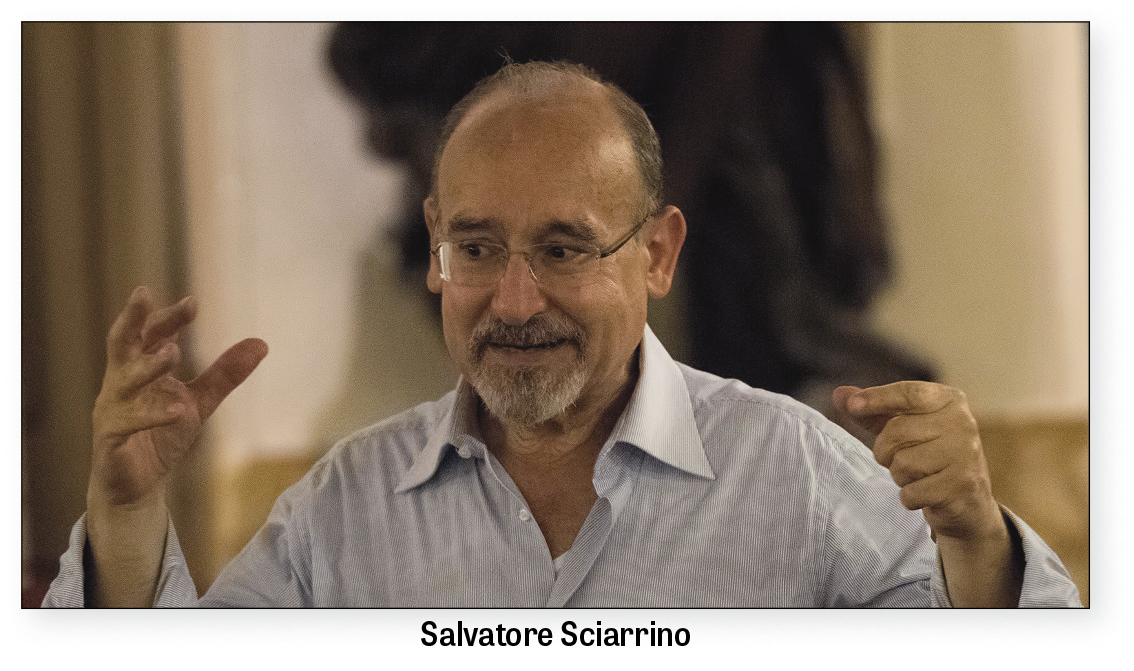
Other opportunities to hear Clarke perform include a concert in early March where he will present a complete program of Rădulescu’s music on the Bosendorfer piano at St. Andrew’s Church. This piano comes equipped with extended lower notes, which are called for by the composer in these works. This concert will give fans of spectral composition ample opportunity to hear Rădulescu’s masterful approach. Clarke will also be performing on February 5 in a concert of works by Italy’s Salvatore Sciarrino, this year’s visiting composer at the University of Toronto’s New Music Festival. This final concert of the festival is a collaboration with New Music Concerts during which four of Sciarrino’s works spanning 1981 to 2015 will be heard.

U of T New Music Festival

2204 In with the New 2Sciarrino, one of Europe’s leading composers, writes music that seeks to portray the fragility of life, often creating pieces that are on the edge of audibility and pushing the instruments to their extreme limits. In his biography, he describes his style as “leading to a different way of listening, a global emotional realization, of reality as well as of one’s self.” Sciarrino’s music can also be heard during the festival at a concert featuring music for piano on January 30, which will also include works by Nono, Fedele and Berio.

The festival highlight will be the performance on February 1 of Sciarrino’s opera The Killing Flower (Luci mie traditrici) produced by Wallace Halladay and Toronto New Music Projects. The libretto is based upon the play Il tradimento per l’onore, which was first performed in Rome in 1664. A story of intrigue, love, betrayal and murder, the opera has become Sciarrino’s most often performed work out of his 14 music-theatre pieces composed to date. He recognizes the influence cinema plays in the creation of works for the stage and approaches his own creative process with this in mind. He openly declares that what he really wants through his composing is “to change the world.” Additional festival events include the performance of the Karen Kieser Prize-winning work by Sophie Dupuis, Perceptions de La Fontaine, a noontime lecture by Sciarrino on February 2, and a concert of music by contemporary Italian composers on February 4.

Electroacoustic Technologies

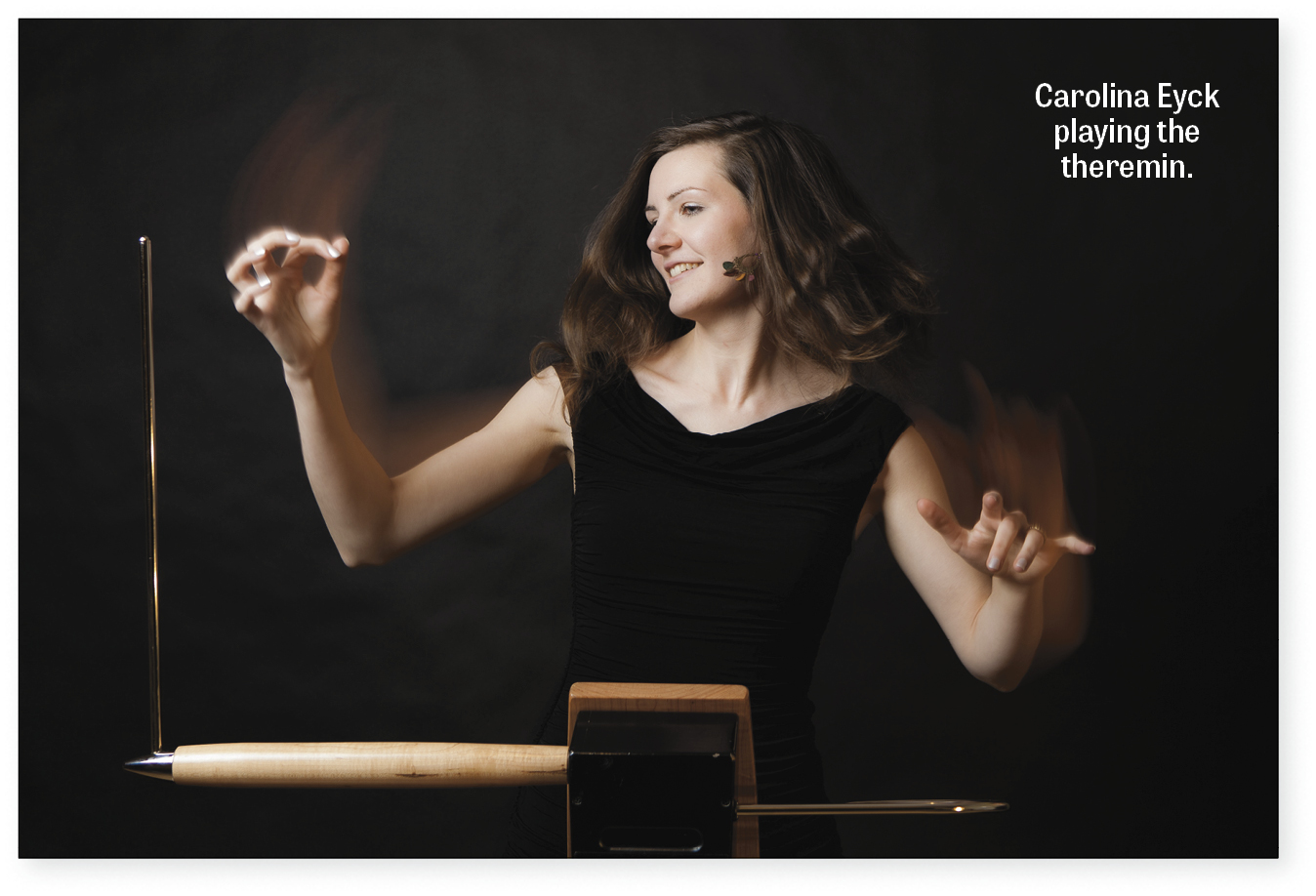
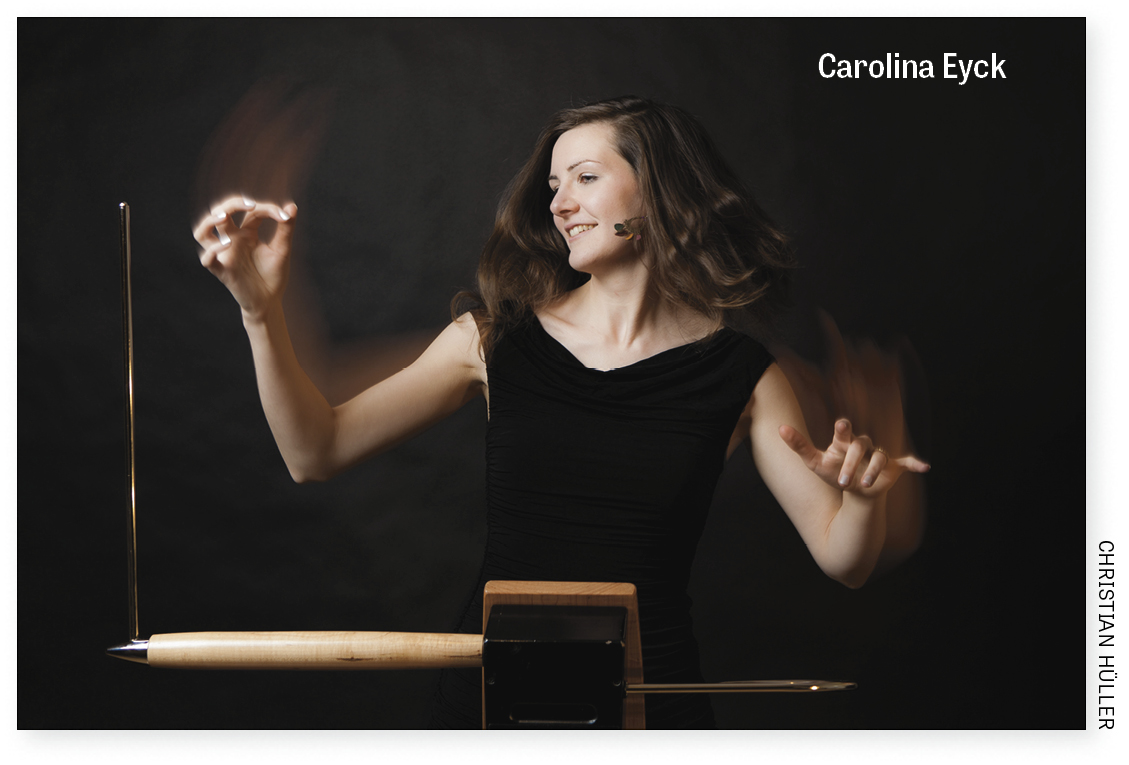
2204 In with the New 3Turning now to innovative performers using electroacoustic technologies, two women making waves in this field will be visiting Toronto over the next two months. First, American composer and sound artist Andrea Parkins, along with her ensemble, will be performing at the Music Gallery on December 20, using interactive electronics to create relationships and contrasts between the real and the ephemeral. She will collaborate in this performance with local artists Lina Allemano, Germaine Liu and Jason Doell. On January 7, theremin virtuoso Carolina Eyck from Germany will perform the world premiere of her latest composition as part of a New Music Concerts program. She will also be in town to celebrate the release of hew new CD, Fantasias for Theremin and String Quartet. Other composers whose works will be presented at the NMC event include Canadians D. Andrew Stewart and Omar Daniel, Bohuslav Martinů from Czechoslovakia and Maurice Ravel.

Two events that Soundstreams will be offering will be the return of the popular “Electric Messiah,” December 5 to 7, featuring wild and wacky renditions of Handel’s classic with singers Christine Duncan, Carla Huhtanen, Gabriel Dharmoo and Jeremy Dutcher, with electronic backup from Cheldon “Slowpitch” Paterson on turntables, Jeff McLeod on organ and John Gzowski on guitar. Moving ahead to February, Soundstreams is celebrating 100 years of Estonia’s independence by bringing the Estonian Philharmonic Chamber Choir to town on February 2, performing world premieres by Canadian composers Omar Daniel and Toronto-born Riho Esko Maimets (who is of Estonian heritage), along with compositions by Arvo Pärt.

QUICK PICKS

2204 In with the New 4Canadian Music Centre

Dec 12: Centrediscs CD Launch: Canadian Flute Masterpieces.

Dec 15: “Class Axe” – a concert of new works for classical guitar by M. Côté, J. Denenberg, M. Horrigan, A. Jang, T. Kardonne and S. Marwood.

Canadian Opera Company

Jan 5: “Vocal Series” – First Nations mezzo-soprano Marion Newman presents a concert on the theme of reconciliation, featuring works by Canadian composers.

Feb 1: “Dance Series” – Peggy Baker Dance Projects; music by Debashis Sinha.

Other

Dec 12: Toronto Masque Theatre – No Tongue Will Tally by Harry Somers and Claude Bissell.

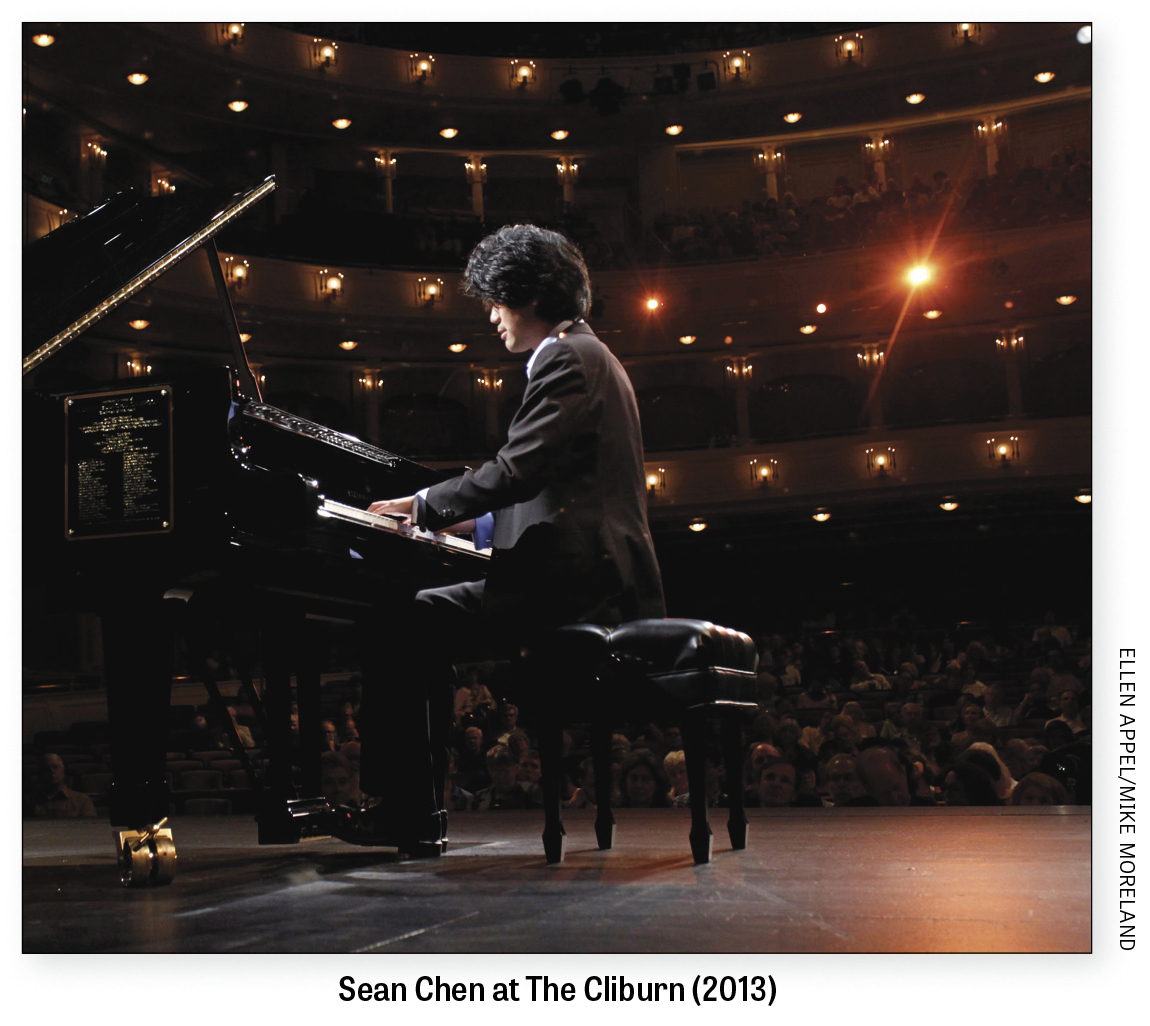
Jan 10: Music Toronto – Sean Chen plays two works by Ligeti, as well as his own piano transcriptions.

Jan 21: Music Gallery – “The New Flesh.”

Wendalyn Bartley is a Toronto-based composer and electro-vocal sound artist. sounddreaming@gmail.com.
It should come as no surprise, since we are well into the current concert season, that the month of November is overflowing with a wide-ranging assortment of new music activity. My focus for this month is to give the reader an overview of all that is on tap for those curious about the latest sounds emerging from live and practising composers and performers of new music. I’ll begin this overview with two of the newer presenters on the scene: Spectrum Music and the Thin Edge New Music Collective.

Spectrum Music’s concerts are distinctive in the way in which they incorporate fascinating and unusual research and scholarship encompassing a wild variety of topics. Often they include panel discussions featuring noted scholars and authors related to the topic at hand. Their November 12 concert, Tales from the Deep Blue, will focus on research that has been undertaken to better understand better the mysteries of the ocean. Apparently, scientists have finer maps of Mars than of the ocean that covers 70 percent of this planet. The music that has been created by the Spectrum composers and performed by the eclectic Shaw Street Collective encompasses such topics as some of the ocean’s most extraordinary species, unusual geographic features and lost historical artifacts. The concert will also feature a new work by koto-playing indie singer-songwriter Jessica Stuart.

Thin Edge New Music Collective’s concert Balancing on the Edge is an out-of-the-box adventure pairing new music with leading edge circus performers. This daring combination is a metaphor for the ways in which globally we are perched on the edge of survival and evolution. Musically, the program will feature compositions by Cage, Xenakis, David Lang, Nicole Lizée and world premieres by Scott Rubin and Nick Storring. The event will feature special guest DJ P-Love and ten circus performers, with three opportunities to see and hear the spectacle on November 18 and 19. Added to the mix will be lightning design, live projections and video.

Firsts of the season:

2203 New Music 1

Nicole Lizée’s music receives another performance this month as part of Continuum Music’s first concert of the season on November 13. RavAGE, is a celebration of music by composers who drive current technology to the edge, often resorting to inventing new software or hardware to assist them in their creative expression. Lizée’s piece, Colliding Galaxies: Colour and Tones, will be remounted from Continuum’s 2015 Collide project as part of this concert. Other works include a piece by composer Pierre Jodlowksi and artist Pascal Baltazar of France who combine video and instrumental music while Poland’s Jagoda Szmytka creates a retro-futuristic video game interface in performance with the Continuum ensemble. Other works by Christopher Mayo and James O’Callaghan fill out the program.

Arraymusic’s concert on December 3 marks the first Array Ensemble concert curated by new artistic director, Martin Arnold, and brings together the music of various composers that Arraymusic will be collaborating with over the next few years. And yes, once again, Lizée’s name appears on the program, which also includes solo, duet and ensemble works by Canadian composers Cassandra Miller, André Cormier and John Abram, along with UK composers Joanna Baillie and Laurence Crane.

2203 New Music 2The first Emergents concert of the season at the Music Gallery, will happen on November 17. Curator Chelsea Shanoff has paired Wapiti, a Montreal-based piano and violin duo, with the trio Völur. Wapiti will perform works by Bolivian, Argentinian, American and German composers, including a work by Morton Feldman, and a world premiere by German composer Nicolaus Huber written specifically for them. Völur combines the sounds of bass, voice, violin and drums to create hypnotic tapestries of melodies, noise and silence. It promises to be an otherworldly evening of song, sound and chant.

And, finally among these “firsts,” the Evergreen Club Contemporary Gamelan will perform their first concert of the season on December 3 and their first concert ever at the Aga Khan Museum. On the program are three works composed by contemporary Indonesian composers – Nano Suratno, Burhan Sukarma, and Ade Suparman as well as Ibu Trish by Lou Harrison and Rainforest by Canadian composer Paul Intson. Several of the works are arrangements by members of the Evergreen Club for the unique instrumentation of their gamelan.

New Music Concerts is bringing in the wind quintet Slowind from Slovenia for their concert on December 2. This ensemble was established 22 years ago and has become the most active new music ensemble in Slovenia. They are adamant performers of contemporary music, encouraging a younger generation of Slovenian composers through commissioning and performance. In their NMC program, they will performs works by composers from Denmark, Italy, Slovenia, Japan and Folia, a work by Toronto’s own Robert Aitken, written in 1981. The concert will also include NMC’s annual tribute to Elliott Carter.

Rarely heard: Two different events featuring outstanding vocal performers offer an opportunity to experience new music that is rarely heard. Music Toronto’s concert on December 1 will feature acclaimed Acadian soprano Suzie LeBlanc in an evening of music focused on the poetry of Pultizer Prize winner Elizabeth Bishop, who lived from 1911 to 1979. Many of the pieces on the program also appear on the CD I Am in Need of Music released in 2013, and includes compositions by Canadians Alasdair MacLean, John Plant and Emily Doolittle. World premieres by British composer Ivan Moody and Canadian Peter Togni will round out the program.

And the free noon-hour Canadian Opera Company’s Vocal Series will present the composition Ayre, a song cycle by the Argentinean-born composer Osvaldo Golijov and performed by Miriam Khalil on November 10. This music promises to mesmerize, as the composer has woven together influences from Arabic, Hebrew, Sardinian, and Sephardic traditions.

Esprit: The Esprit Orchestra concert on November 20 has a curious title – “m’M.” This is also the title of the composition by Philippe Leroux (Canada/France) that will be performed in the program. It’s a concerto grosso, with the “m” representing the little orchestra and “M” the big orchestra. Canadian Zosha Di Castri’s piece Alba conjures the atmosphere of a winter dawn on the Prairies in northern Alberta. This sense of the mysteries of nature is also what we will hear in George Crumb’s work A Haunted Landscape, written in 1984. The featured performer of the evening, cellist Joseph Johnson will also take on the French composer Marc-André Dalbavie’s Concerto for Cello and Orchestra. Another opportunity to hear the music of Philippe Leroux will be at the COC’s Chamber Music Series free noon-hour program on November 22 featuring the McGill University’s Contemporary Music Ensemble. Leroux’s work Extended Apocalypsis will be heard along with two other pieces – Division by Franck Bedrossian, who studied with Leroux at IRCAM and Project miroirs by Sean Ferguson, dean of McGill’s Schulich School of Music. Leroux currently teaches composition at McGill.

Micro-Ritmia: On November 20, the Music Gallery presents the Mexican composer Ernesto Martinez and his group Micro-Ritmia at the Tranzac Club. Martinez's music is a blend of various influences, including the player-piano works of Conlon Nancarrow, whom he met in his younger years, Balinese Gamelan techniques and Mexican folk traditions. The ensemble performs on piano, marimba and altered guitars using complex hocketing techniques in this, their Canadian debut. Also on the program is Taktus, a Toronto-based group who reenvision minimalist and electroacoustic music for the marimba.

WU: If you are longing for a musical experience of sustained quiet and slow-moving gestures, then listening to the hour-long work WU by Victoria-based composer Rudolf Komorous is the perfect answer. Performed by the virtuosic pianist Eve Egoyan in the intimate setting of her own studio, this masterwork promises the type of experience one could have while waiting for a cherry tree blossom to fall…or not. The concept of Wu is from the Zen Buddhist tradition and means the “not expected.” Even though the piece has a meditative quality, it has an intensity to it that keeps the ear focused and attentive to each slight change. The performances will take place on November 6, 13, 20 and 27 and audience members are requested to book their seat via email due to limited seating.

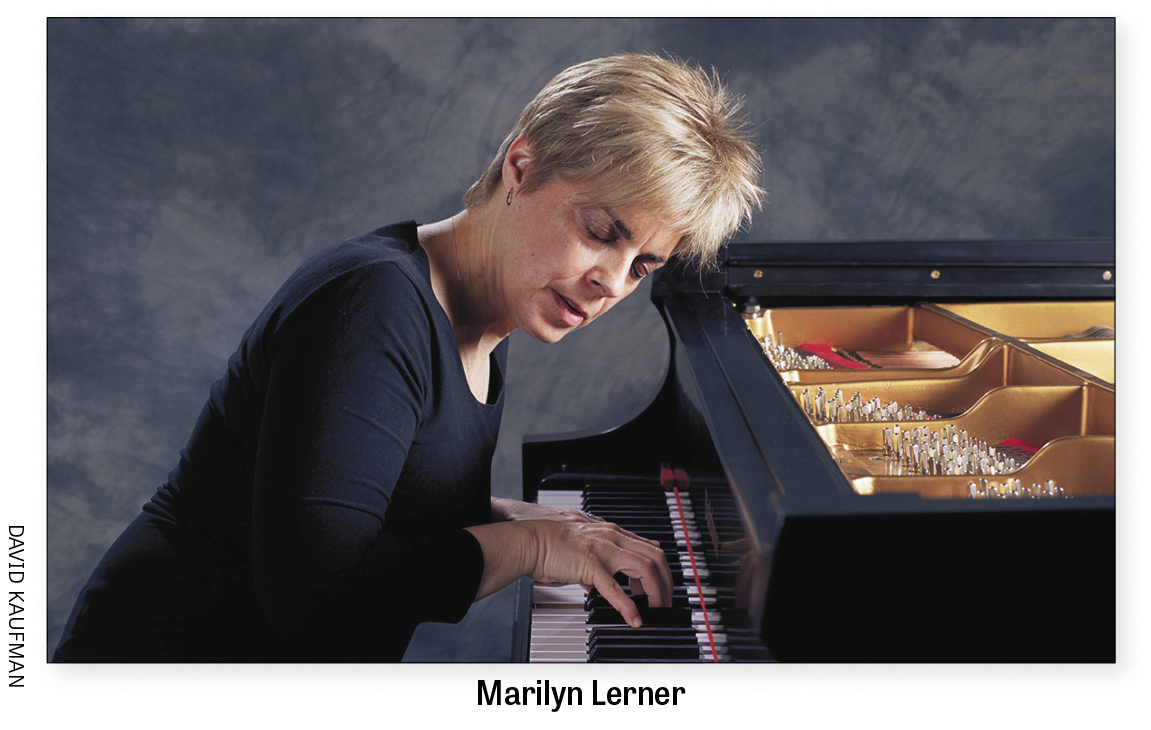
Improv: And finally, on the improvisation scene, three events stand out: the 416 Toronto Creative Improvisers Festival from November 2 to 5 at the Tranzac Club featuring numerous outstanding improvising musicians from the 416 area and beyond, including a performance by the Kyle Brenders Big Band on November 5. Spontaneous Group Composition will be happening at the Array Space on November 23 featuring Jonathan Adjemian, Nick Buligan, Karen Ng and Martin Arnold. And on December 2 at Gallery 345, don’t miss the sonic adventures of the Queen Mab Trio – Lori Freedman, Marilyn Lerner and Ig Henneman, who blend various influences including jazz, musique actuelle, rock, and 20th-century classical music.

Wendalyn Bartley is a Toronto-based composer and electro-vocal sound artist. sounddreaming@gmail.com.
2202-InWithTheNew-Photo1.jpgBack in the mid 1960s, two composers in their mid-30s took part in a summer workshop being offered by the University of Toronto. The course was in electronic music and at the time, the studio at U of T was one of the leading centres in the field. Those two composers were Pauline Oliveros and R. Murray Schafer. During Oliveros’ most recent trip to Toronto in the summer of 2014, she noted that fact during a talk she gave at TIES – the Toronto International Electroacoustic Symposium. At the time when I heard her tell us this anecdote, I couldn’t help be struck by the fact that these two people sharing the same creative environment in the bowels of an electronic studio in Toronto would go on to radically alter the way we understand the process of listening.

One can only wonder what aspects of that workshop influenced their ideas around perception of sound and listening. For me personally, I know that spending endless hours in a studio has made all the difference in my own listening behaviours and approach to composing. And now, during the month of October, separate events are taking place in the city which highlight the work and legacy of these two musical pioneers. Oliveros is one of the featured artists in the Music Gallery’s X Avant XI Festival running from October 13 to October 16, and Schafer will be honoured at Esprit Orchestra’s concert on October 23.

This theme for this year’s X Avant Festival is reverberation – including both how the use of reverb in sound marks distinctive styles, and how specific ideas move through the world and leave their legacy. One of the distinct elements of Oliveros’ legacy is what she calls Deep Listening. During the same talk she gave in 2014 at TIES, she also told the story of how that term came to be. Curiously, it started off as a pun. In 1988, Oliveros and her ensemble made a recording in a deep cistern well in Washington State that has a reverb time of 45 seconds. After the recording, she made a joke to her colleagues about the experience as one of “deep listening.” Up to this point in her career, she had been developing a practice she called Sonic Meditations, a way of approaching composing and performing through listening, focused awareness and attention. After the cistern experience, the term Deep Listening was coined; she currently defines it as “listening in every possible way to everything possible to hear no matter what one is doing.” This encompasses exploring “the difference between the involuntary nature of hearing and the voluntary, selective nature – exclusive and inclusive – of listening.” That the term arose in part out of an experience of reverberation is an interesting connection to the X Avant theme.

Oliveros will be returning to Toronto to perform at the X Avant Festival on October 14. To get an idea of how her Deep Listening legacy has reverberated out to a younger generation of musicians, I spoke with one of the other performers in her concert, Doug Van Nort. Van Nort first encountered Oliveros’ work when he began his MFA studies in electronic arts in 2001 at Rensselaer Polytechnic Institute in Troy, NY, where she was teaching. During his second year, despite his main focus on learning music programming and thinking about electronic compositions, he was invited to become a teaching assistant for her Deep Listening course, and within no time found himself facilitating some of the DL exercises and receiving feedback from Pauline on how he was doing. This experience was to have a profound impact on his future career.

2202-InWithTheNew-Photo2.jpgDuring his PhD studies at McGill University, Van Nort continued to have a connection with Oliveros and the rich worldwide community of deep listeners, eventually returning to RPI to engage in research around questions of telematic performance, systems thinking and composing for electronic spaces. Essentially, telematic performance involves performing with others who are in different locations while the idea of creating telepresence raises the question of whether we actually feel we are sharing the same space or not. During this research phase, he performed weekly over a five-year period with Oliveros and colleague Jonas Braasch.

Since an intersection between deep listening and technology is a signature aspect of Oliveros’ work, I asked Van Nort about how the relationship between these two elements expressed itself in his own work. His response was curious: “My first pass is always to say I’m not interested in technology, even though I have a degree in music technology.” He explained that this is his way of distancing himself from a fetishization of technology in order to bring attention and focus back to what is unique about technological mediation in performance. It comes down to the idea of creating systems for musical performance that has kept him close to Oliveros as both his mentor and collaborator all these years. How can sonic events, gestures and sounds spread and circulate within an integrated network or web and still be perceived as a musical performance with instrumental-like qualities? He mentioned that this approach was present even in Oliveros’ early works such as I of IV which was created in the U of T studio in 1966.

The outcome of Van Nort’s research and performance collaboration with Oliveros has been the creation of GREIS (pronounced “grace”) – the Granular-Feedback Expanded Instrument System, which even in its title is a nod to Oliveros’ own Expanded Instrument System (EIS) which she has developed over many years. During the X Avant XI Festival concert on October 14, Van Nort will be performing with GREIS in interaction with Oliveros on her digital accordian, Anne Bourne on cello, and Ione with spoken word. GREIS is a system that fundamentally puts things in motion and requires the performers to react to it. In the ensemble context, everyone is both generating their own gestures as well as reacting with what is coming back from GREIS – which can happen at any point in time. “What results is the creation of a tight organism that has to respond together and move in a given direction. It doesn’t work without Deep Listening.”

Van Nort’s input into the system will be sourced from his large library of field recordings that he will stretch and filter. A second layer will be his capturing and reshaping of the sounds coming from Bourne’s cello and Oliveros’ digital accordian and then fitting these gestures back into the musical flow at some point. In addition, there will be a spatialization component that GREIS will contribute by generating various types of movements over eight speakers – a wide and fast motion for example, or a tight and slow motion. And finally, Ione’s spoken words will sit on top of this entire sonic field in their pure acoustic form. Van Nort sums up the full experience with these words: “The core intent is to create something that is a breathing living organism that has to have at its essence an organic motion to it regardless of whether there is digital technology inserted in the path or not.” For the listener, it will be an enveloping and immersive improvisational environment within which one is invited to be mindful of both global and focal attention – taking in both the entirety of the sound field while also following the individual lines as much as possible. Alternating between both fields is a fundamental aspect of the Deep Listening experience. Toronto is fortunate to now have Van Nort as a professor of digital performance at York University where he runs the DisPerSion Lab and the Electro-acoustic Orchestra.

The music of R. Murray Schafer will be the focus of Esprit Orchestra’s concert on October 23, “Power On.” This tribute to Schafer will include three works spanning 1976 to 1990 and feature performers Robert Aitken, Ryan Scott and Krisztina Szabó. Schafer’s music compositions include an extensive repertoire of works for the concert hall, his 12-part cycle of musical/theatrical works he calls Patria, and a series of pieces composed for performance in outdoor environments. As I mentioned in the opening paragraphs, Schafer has also had an enormous influence on how we listen. Early in his career, he became aware of the increasing amount of noise in our everyday environment, leading him to undertake research into this growing phenomenon that no one was paying attention to. This research led him to coin the term “soundscape” along with other terms to describe the ecology of the acoustic environment. Much of this research ended up in the recordings and booklet of The World Soundscape Project and his extensive book, The Tuning of the World, published in 1977. Part of Schafer’s legacy is bringing awareness to how we listen to the sounds of the environment and their impact on us both individually and collectively. This approach to listening has influenced his approach to composition, as well as the development of both educational resources and community-based experiences to bring awareness of the world of sound around us.

Soundstreams and New Music Concerts. The legend of the flute will be the focus of Soundstreams’ season opener events. Density 2036, a project begun by virtuoso flutist Claire Chase to create a new body of works for solo flute, will be on display October 4 in one of Soundstreams’ “Ear Candy” events. On October 12, their concert “Magic Flutes” will feature Chase along with four other virtuoso flute players performing a repertoire of works in a surround-sound environment, including a world premiere from Canada’s Anna Höstman.

The New Music Concerts event on October 30 will feature the return of the Ensemble contemporain de Montréal and the latest edition of Generation 2016, their biennial project designed to mentor, rehearse and tour works by four young Canadian composers. This year’s roster includes Taylor Brook (Alberta), Symon Henry (Quebec), Sabrina Schroeder (BC) and Adam Scime (Ontario).

QUICK PICKS

Oct 15: Toronto Messiaen Ensemble performing George Crumb’s Makrokosmos, among other works.

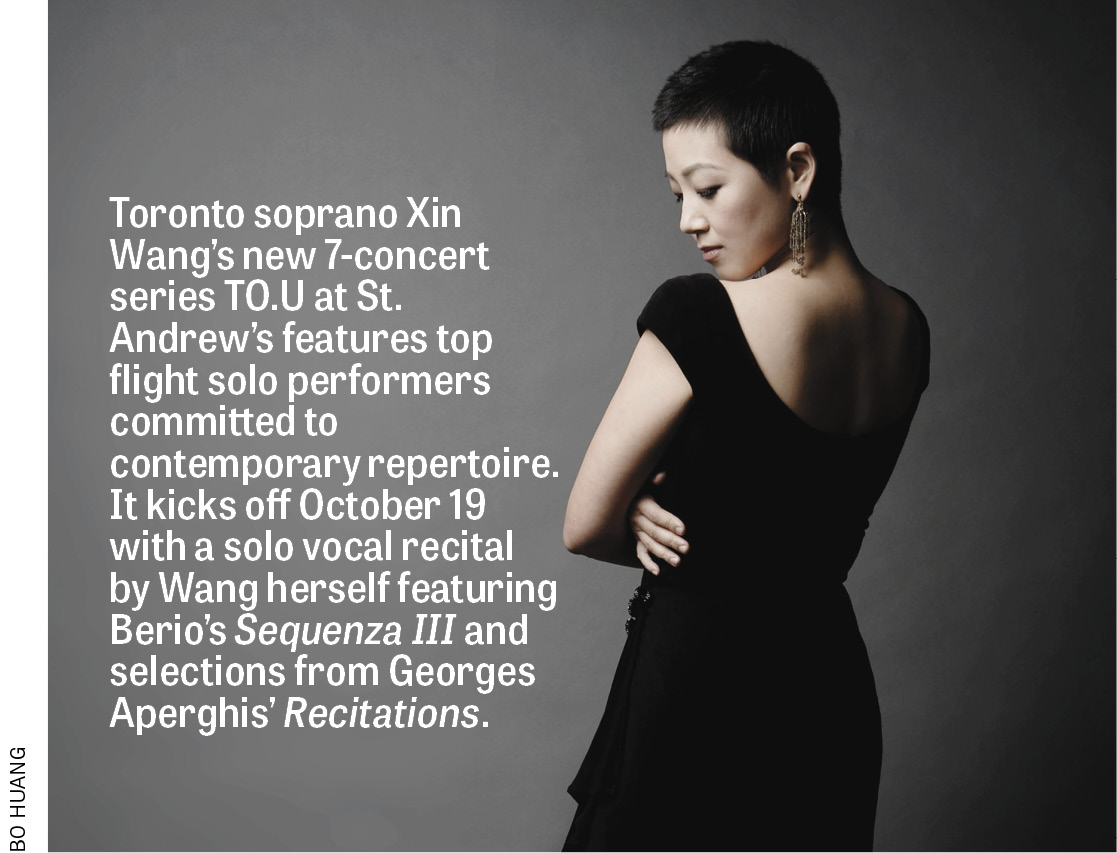
2202-InWithTheNew-Photo3.jpgOct 19: Xin Wang of TO.U Collective performs Berio’s Sequenza III along with works by Webern, Georges Aperghis and others.

Oct 25 and 26: Talisker Players perform Schafer’s Beauty and the Beast, Morlock’s …et je danse and Louie’s Songs of Enchantment.

Oct 30: Toronto Chamber Choir premieres David Barber’s Remember Not.

Nov 6: The Royal Conservatory presents percussionist Steven Schick in works by Lei Liang, Mark Applebaum, John Cage and Iannis Xenakis. Free tickets available October 6.

Wendalyn Bartley is a Toronto-based composer and electro-vocal sound artist. sounddreaming@gmail.com.
Something unique and original is happening this September in the world of music and art – the in/future Festival at Ontario Place running from September 15 to 25. The festival is the vision of Art Spin, a project founded in 2009 to create experiences in alternative venues that create a dialogue between the Toronto art community and the public. With in/future, they are transforming one of the most beloved places in Ontario into a series of site-specific projects by visual, sound and media artists, as well as programming several world music concerts and film/video screenings.

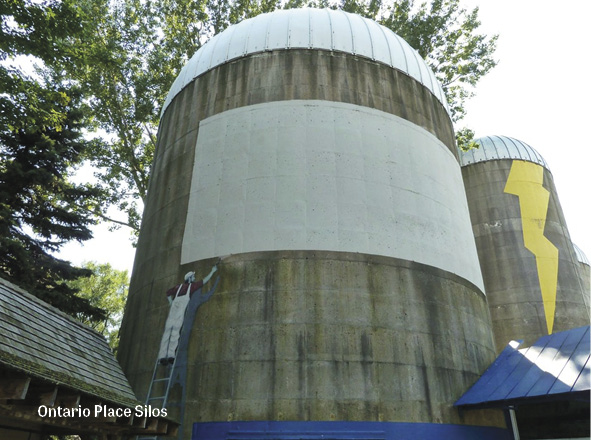
2201_-_New_1.jpgOntario Place opened in 1971 fuelled by optimistic and utopian notions of the future strongly reflected in the design of the buildings as well as in the content of the exhibits. In the words of the original Ontario Place theme song, it was a “once-in-a-lifetime, never-before place.” One thing that is sure to occur for many during the festival is the triggering of memories of what the future once looked like. And that is the point really. The art installations will offer opportunities to look back at a particularly 1970s vision of things. In the words of New Adventures in Sound Art’s artistic director Darren Copeland, “We who are now in that future are looking at the past’s view of us.” Copeland was approached by Rui Pimenta, one of Art Spin’s directors, to curate sound installations in one of the old exhibit silos. There are close to ten of these structures, that once housed exhibits on the natural elements, that will be turned into performance and installation sites for the festival.

Central to NAISA’s aesthetic vision is the spatialization of sound, so the opportunity to put sound into a round, acoustically reverberant space was a perfect match. During our interview, Copeland stressed the importance of describing the works that NAISA is curating for their installation as “site-responsive” rather than “site-specific.” For the NAISA installation (running from September 19-25), Copeland provided a production framework with his spatialization software and eight-speaker setup for three composer/performers (Anne Bourne, Lisa Conway and myself) to create pieces that are personal responses to not only the acoustics of the silo, but the entire entity and vision of what Ontario Place was.

When I asked Copeland to describe the process for him as curator and producer, he stated that “each piece had different ways of using the space, with different configurations and processes, none of which I knew before we started recording in the silo.” And although the composers could bring materials with them for the recording, it was “a process of discovery for them as well, once present in the environment. A combination of the artist’s ideas, the ideas I brought, and the architecture of the space conspired in the moment to provide the direction and substance of what was made. That wouldn’t have happened if we had been in a neutral space – the third ingredient would be missing. It would have been a planned project that happens in spite of the location,” he said.

Anne Bourne chose to record and layer multiple tracks of cello and voice improvisations in the silo space. During the process though, a curious thing happened – memories of her experiences performing on the circular revolving stage at Ontario Place’s popular Forum venue surfaced. As Bourne described it to me, the significance of the round stage meant that everyone had an equal and inclusive experience of connection with the performers, and every voice was equidistant from the centre. This is in contrast to the more hierarchical nature of the proscenium stage. It was being in the round architecture of the silo that triggered her performance memories and led her into taking on the role of transmitter of those inclusive values while improvising. It’s not hard to see here the connection between the architecture and the futuristic visions of the early 1970s.

Lisa Conway was also influenced by the structure of the silos, but took her piece in a very different direction. She chose to work with recordings of the materials generally associated with silos – sand, grain and salt sounds – and played with the concept of these sound textures within large resonant spaces as the focus for her piece. For my own work, I created a prerecorded electroacoustic soundtrack made up of Ontario Place soundscapes, a variety of pre-composed vocal drones, and processed excerpts from the original Ontario Place theme song. In the silo, I improvised a vocal track while listening to the prerecorded track, playing with the words of the theme song and the acoustics of the silo. The final format for the entire installation will present all three pieces mixed and spatialized amongst the eight-speaker array and played sequentially in the reverberant silo environment.

I also spoke to two other artists working with sound in their installations for in/future.

Simone Jones, a multidisciplinary artist who works with film, video and electronics, is working on two pieces for the festival. The first is collaboration with visual artist Laura Millard that will be installed in the former Ice Silo and is a dialogue between sound and lightbox images. The images are created from aerial drone shots of circular and intersecting snowmobile patterns on a frozen lake, and the two artists have chosen to keep the original icebergs from the silo exhibit as part of their installation to emphasize the wintery environment. For the sound, Jones improvised on Philip Glass’ Etude No.1 and edited her piano recordings to highlight the repetitive pattern. The soundfiles will also be treated spatially with panning movements between two stereo speakers.

Jones’ second work will be located at the observation decks at the southwest tip of Ontario Place. Video footage of a body in water, as well as images of water itself will be projected onto a large scrim placed between the two decks and high enough that it will appear to float. The soundscape will include recordings of water as well as an introduction created and performed by 14-year old cellist Will Smyth. For Jones, what is exciting about this project is the opportunity to create work with a deliberate connection to place. “I like to be nostalgic about Ontario Place and the idea of recapturing some of that optimism that was so evident in the visual motif of the silos and the dome of the Cinesphere. The creation of public space is one of the most important things that we can do as a society.”

The theme of urban space also surfaced during my conversation with sound artist and producer Michael Trommer. Trommer’s piece will be located just to the east of the observation deck along a stretch of beach, also facing the open water. Using field recordings made during the night at various lakes up north and at Georgian Bay, Trommer’s intention is to transpose a very different time and place onto an urban beach through his amplified soundscape. This will create an ambiguous environment in which people will be hearing sounds that belong and yet don’t quite belong. Ideally, the ambiguity will be further emphasized by hiding the speakers from view and also using a subwoofer speaker to accentuate the low frequencies. Because the recordings were made at night when sound can travel far more easily, he ended up capturing soundscapes that were five to ten kilometres away: loon calls, Wasaga Beach clubs, and people speaking at a cottage for example. Trommer is drawn to liminal locations such as waterfronts that transition from urban to natural and where you have a shift in materials, going from dense concrete to open space. Having grown up in Montreal, and in close proximity to La Ronde, the site of Expo 67 (a similarly utopian vision), “there is something that resonates for me about these places which are replicating natural shapes like the dome rather than the rectangular and stacked slab-like shapes of our urban environment.”

Personally, the opportunities to return to Ontario Place this summer, as well as speaking to the other artists I’ve written about for this column, have reaffirmed for me the importance of creating pieces in response to place. Connecting with memories and revisiting a space that holds collective values worth reconsidering makes the in/future project a crucial event for all to experience. It will no doubt generate an ongoing conversation about this iconic urban oasis. Ontario Place is scheduled to reopen in 2017 with a new mandate.

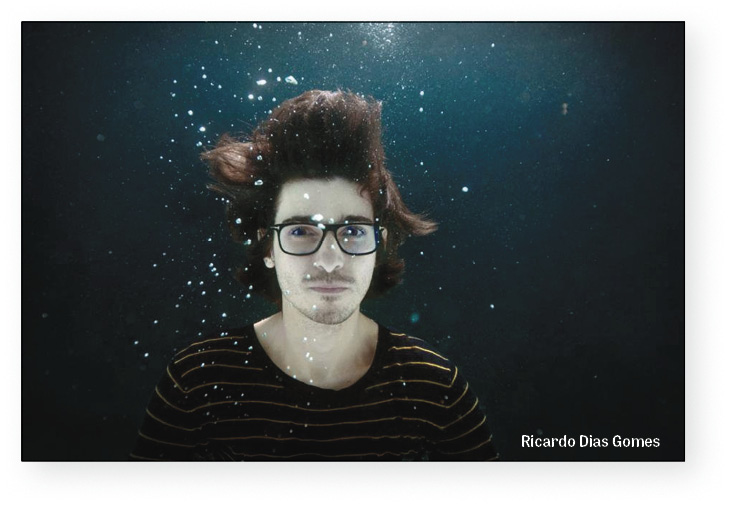
2201_-_New_2.jpgThe Opening Concert Season. Although most of our new music presenters wait until October to get their seasons rolling, there are some events coming up in September that are important to look at. In keeping with the theme of sound in resonant environments, the Music Gallery will present a concert on September 17 of three artists united by their fascination with drones and reverberant spaces. Bassist and composer Ricardo Dias Gomes will perform his intimate yet aggressive drones, surrounded by a visual design of his own making. Montreal saxophonist Ida Toninato’s performance will feature her love of big sounds in big spaces, while emerging multidisciplinary artist Kat Estacio will play with notions of nostalgia and decolonization in her performance.

On September 30, New Music Concerts presents “Beijing Memories,” a concert of highlights from their China tour. This past July, eight musicians from NMC were invited to be the ensemble-in-residence at the Beijing International Composition Workshop. The evening will feature highlights from the three concerts performed as part of that residency in Beijing, with compositions by Brian Current, Omar Daniel, Wen Deqing, Lei Liang and competition winner Zhao Yi from China.

The Thin Edge New Music Collective is busy this month with three different events. First, on September 2, they will be performing in Contact Contemporary Music’s annual INTERsection event on Labour Day weekend at the Music Gallery along with guest guitarist Elliott Sharp. INTERsection continues on September 3 all day at Yonge-Dundas Square with an impressive lineup of performers. Then on September 15 and 16, Thin Edge is hosting the Feldman Festival at Array Space, performing works by composers Morton Feldman, Linda Catlin Smith and Barbara Monk Feldman. And finally on September 29, their fundraising event will present works by Nick Storring, Scott Rubin, Xenakis, Cage and others.

QUICK PICKS

Sept 2: National Ballet of Canada/Art Gallery of Ontario present “The Dreamers Ever Leave You,” with live music composed by Lubomyr Melnyk.

Sept 18: Niagara Symphony Orchestra’s concert premieres Toward Light, a new commissioned work by Canadian composer Roydon Tse.

Sept 21: University of Waterloo Department of Music presents Earth Piece by Canadian composer Carol Weaver.

Wendalyn Bartley is a Toronto-based composer and electro-vocal sound artist. sounddreaming@gmail.com.
New_1.pngAs I sit to write this column, I’m still feeling the after-effects of the May 25 concert with the Kronos Quartet and guest performer Tanya Tagaq at the Royal Conservatory’s 21C Music Festival – an event that was featured in last month’s WholeNote. It was a truly sublime moment in time, making it difficult to find words that encapsulate the experience of being transported into a kaleidoscope of global musical styles and then beyond into uncharted territory – and all within the scope of the two violins, viola and cello, plus voice. The anticipated commission from Tagaq for the quartet was, as first violinist David Harrington said during his introduction, “unlike anything you’ve ever heard for the string quartet.” With a string quartet score created from transcriptions of recorded improvised vocalizations made by Tagaq in a studio a few months ago, and Tagaq adding a live vocal layer, it was as if the earth itself was opening up to reveal new layers and aspects of what’s possible. It began with creaking string tones and subterranean vocal tones which started out so low in range that I couldn’t help be reminded of another vocal pioneer, Roy Hart, whose principle of the eight-octave voice was at the heart of his company’s research throughout the 1960s and 70s. It was this push into stretching vocal boundaries that opened up possibilities for composers to write for the extended voice. The performance of Nunuvut, the second work performed by Tagaq and the quartetin the concert, was more improvisational in nature, with a series of intense, intimate and sensual duets that Tagaq engaged in with each individual performer before turning to the capacity audience to deliver a sonic portrait of our collective presence. It was a spectacular beginning to the upcoming summer season.

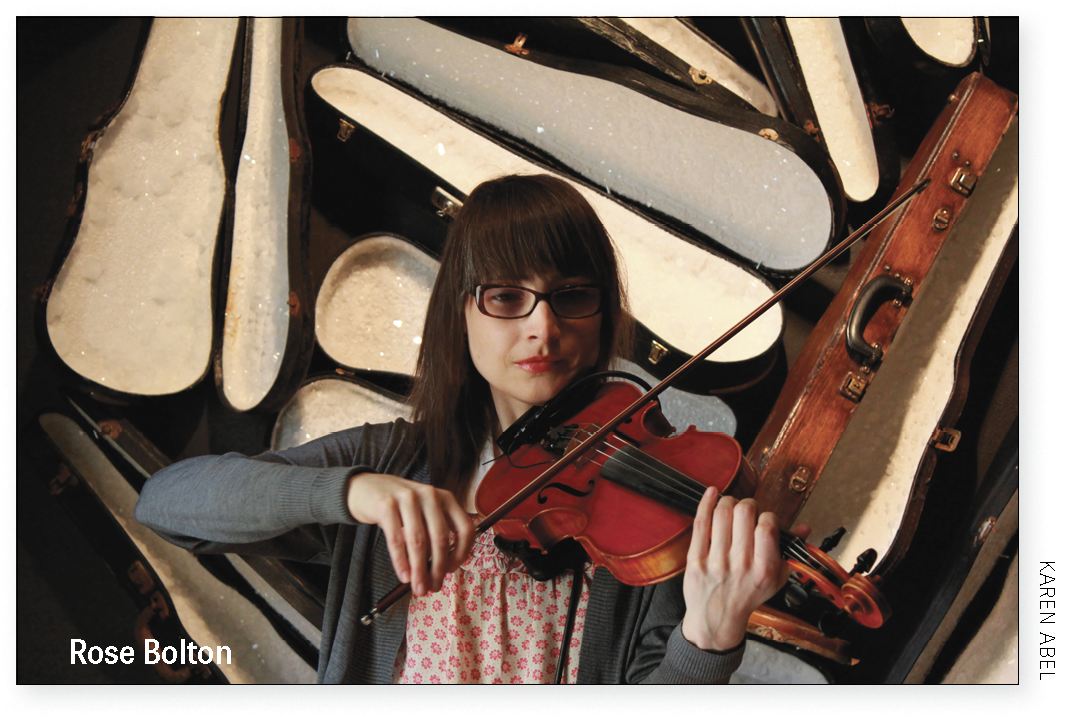
Launching into the summer season usually means it’s festival time, which often translates into opportunities to experience music that pushes at the far outer edges. Certainly with the Luminato Festival this year, this will be the case, and not just with its music programming since this year’s primary venue, the Hearn Generating Station, will be making its own artistic statement. Situated on the waterfront, it’s the site of a de-commissioned power station that will be turned into a temporary cultural venue for the next ten years of Luminato. With a series of interlocking areas designed for performances and exhibitions, along with restaurant and club spaces, the building will take on the air of an architectural installation. Another in-house feature of this environment will be a state-of-the-art surround sound system and projection space with multiple screens. Which, as it turns out, is the perfect venue for the fully immersive music and visual concert piece created by composer Rose Bolton and filmmaker Marc de Guerre being performed on June 22.

The piece, Song of Extinction, is just as its title suggests – a work that raises the critical issue of species extinction through the combination of melody, word and image. And although songform is at the heart of Bolton’s compositional language for this piece, the musical scale of the project is extensive, combining youth and adult choirs, an instrumental chamber ensemble, percussion, two keyboard players, and electronics. The work was originally initiated by Music in the Barns under the direction of Carol Gimbel whose specialty is in creating multimedia and site-specific installation concerts.

Despite the focus on the difficult and critical theme of what is happening to the mass disappearance of species on our planet, the work is not activist in nature. As de Guerre explained in a recent conversation both he and Bolton had with me about the piece, “I believe in the power and beauty of images. In the same way that music gets under your skin and moves you, and you don’t really know why or what it means or what it’s doing to you, the images are functioning in very much the same way.” He continued to reflect on this topic by saying “I find it odd given what’s happening on the planet that there hasn’t been a body of work with this theme from a more art perspective rather than it just being about political activism.”

And that’s why using song is so important for both of these creators. They think of the piece as “a heartbreak song in the same way that songs are about heartbreak. This is about our heartbreak because of what we do to the earth, to the planet.” Their ultimate priority is to make a work that is emotionally powerful, to lead people into an experience of “feeling what we are doing to the earth.” In fact, de Guerre says, “If I don’t feel anything when I experience a work of art, then I don’t consider it to be successful.” Thus the nature of the piece is a poetic, impressionistic and non-literal approach to the theme, with the film images conceived around the music.

Bolton’s approach to song was to create melodies that people would love to sing and love to hear – melodies that would “stick in people’s heads after the performance.” For inspiration, she first turned to the songs of Robert Burns and his way of writing that asks universal questions. The next step was to ask the Order of Canada-appointed poet Don McKay to become involved. She asked him if he could write in a similar way, creating texts that addressed her questions related to the theme of extinction. The Newfoundland-based McKay is a poet whose strong personal connection to the land infuses his work, creating poetry that both Bolton and de Guerre described as “grounding.” His way of using precise language to create images that are sweeping and allegorical in nature was a perfect fit, and with these texts, Bolton was able to take their essence and turn them into lyrics for the songs. The texts will also be published as a book of poems that will be available at the concert.

The songs will be performed by both the VIVA! Youth Singers of Toronto and Tafelmusik Chamber Choir, with the adults representing the current generation and the children the generation of the future. Both choirs will be engaged in conversations between the present and the future. The keyboard players will also perform on the harpsichord as well as electronic keyboards, with the composer performing the electronics on her laptop as well as triggering the spatial movement of the sound amongst the multiple speaker sound system. The electronics are more ambient in nature, like a wash, and will include live processing of the instrumental sounds with simple delay effects. The overall arc of the piece begins with an air of innocence in the first half, with almost a feeling of reverence towards nature and nonhuman species. Then at a pivotal point, things take a turn for a more solemn and desperate view towards our world and the reality of extinction. Song of Extinction promises to be a powerful and evocative meditation on those realities that are often difficult to cope with. No doubt however, we as audience members respond, we will be left with more stirring questions than solid answers.

One of the other boundary-pushing musical events of Luminato is the return of Unsound Toronto, a two-night sonic playground on June 10 and 11 combining ambient, drone, noise and other forms of experimental soundmaking. As well, a giant listening party is being planned on June 16 for all those who want to experience the recording of last year’s Apocalypsis performance composed by R. Murray Schafer and performed by a cast of 1000 or more.

Parallel to these events at the festival is the concert celebrating 40 years at the Music Gallery on June 11. Combining new music, video, performance and site-specific installation works, the evening promises to be a sonic portrayal of past, present and future. Starting the evening off will be a performative walking tour of St. George the Martyr’s courtyard highlighting oral histories, followed by performances with Mridangam master drummer Trichy Sankaran, Tenderness (aka Chrissy Reichert) alongside dancer Allison Peacock, and turntable artist SlowPitchSound (Cheldon Paterson) who will mine the Gallery’s sound archives to create new visions out of past performances. And while on the topic of summertime wild and untamed sound events, I must mention the Electric Eclectics festival that takes place from July 29 to 31 in the countryside near Meaford. Directed by Gordon Monahan and Chris Worden, the festival combines experimental music, sound art, DJ artists and sound installations in a relaxed camping environment. Check out their website for the extensive lineup, which includes two noteworthy duos: Not the Wind, Not the Flag, and the duo of Jennifer Castle and Mary Margaret O’Hara.

New_2.pngThe Rest of the Summer: Here are my listings of what else to look out for during the hazy and hot months ahead.

JUNE

One highlight early in the month is Spectrum Music’s Tower of Babel concert on June 4 with new compositions evoking various interpretations of this iconic story which appears in Christian, Islamic and Jewish religious texts. The pieces will explore the question of whether this ancient story can shed any light on contemporary divisons amongst nations and religious groups. Globally acclaimed oud player, Amos Hoffman, will be one of the performers. For improvised music lovers, there is DroneDoctor, a drone music meditation concert on June 5; the CCMC performing at Gallery 345 on June 11; and Audio Pollination on June 25.

Sounds of the Next Generation (SONG) will be performing Spirit Garden: Spring Planting by R. Murray Schafer, an outdoor music drama, running June 11 and 12 on a farm in Cold Springs, near Cobourg. The piece involves planting a garden, and will be followed up by a harvesting concert on September 25. On June 25 the Canadian Music Centre presents new works by Chris Paul Harman including his Five Japanese Children’s Songs and the world premiere of his Five Pieces for Clarinet and Piano. Other new and traditional works inspired by Japan will also be included.

JULY

On July 17, Soundstreams Salon presents the premiere of Emilie Lebel’s collaboration with Jumblies Theatre and community participants. Over at the Stratford Summer Music Festival, TorQ Percussion will perform Strange and Sacred Noise by John Luther Adams, on July 26. The work is a visual and aural exploration of the sonic geography of Alaska, answering the composers question “What would it sound like if the wilderness could sing, and I could hear it singing?”

One of the largest summer festivals to include an extensive amount of new concert music is the Ottawa International Chamber Music Festival. I’ve compiled a summarized overview, but I also recommend checking the listings for more details. On July 22, there is a concert of seven Canadian works for oboe and piano. Two events for new music lovers take place on July 26: a performance of Reciprocity, a multidisciplinary work by UK composer Patrick Cohen is followed later in the evening by a series of boundary-crossing works performed by Jesse Stewart, David Mott and Ernst Reijseger. On July 29 the Cecilia String Quartet performs works by four Canadian women composers, while on July 31 Morton Feldman’s masterwork, Clarinet and String Quartet, will be played by James Campbell and the Quatuor Bozzini.

AUGUST

Continuing with the Ottawa Chamberfest, their special New Music Miniseries comprised of three concerts spread throughout the day on August 1. The first includes works by Canadians Palmer, Di Castri and Murphy, followed by a second concert of seven works by Canadian composers for violin and piano. The miniseries ends up with a more international concert, with two works by Pierre Boulez among others. The final new music work of the festival is a performance of Christos Hatzis’ landmark multidisciplinary spectacle, Constantinople, on August 2.

Mr. Shi and His Lover, a contemporary Chinese language music theatre work composed by Torontonian Njo Kong Kie will be presented as part of this year’s SummerWorks Performance Festival, running from August 5 to 8 and 11 to 13. The Classical Unbound Festival which occurs in Prince Edward County has a Living Canadian Composer Stream of concerts, with pieces by Morlock Buczynski and Mozetich spread throughout their concerts on August 19, 24 and 26. And finally, Summer Music in the Garden’s September 1 concert will feature works by Ann Southam.

Have an enjoyable and relaxing music-filled summer and keep your eyes posted for details of Contact Contemporary Music’s annual extravaganza on Labour Day weekend at Dundas Square.

Wendalyn Bartley is a Toronto-based composer and electro-vocal sound artist. sounddreaming@gmail.com.
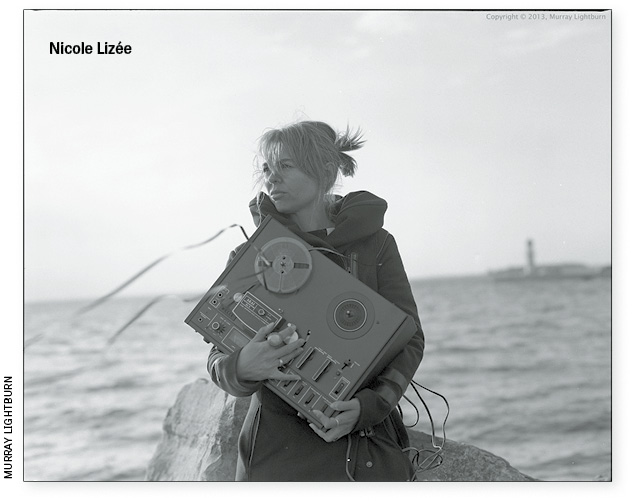
New_1.jpgIf you are a fan of minimalist music and are craving more after the recent performances of Steve Reich’s music in Toronto, you’ll want to experience Surface Image, performed by Vancouver-born pianist Vicky Chow and composed by American Tristan Perich. The hour-long piece characterized by a constant pulse of repetitive rhythmic patterns for piano and electronics will be performed at the Music Gallery on May 14 and at the Open Ears Festival in Kitchener on May 28. Chow commissioned the work in 2013 and already there is a recording on the New Amsterdam label along with a growing list of live performances. As she said in a recent phone interview, “It just happens to be a piece people are interested in, and I end up performing it a lot.”

The piece begins for solo piano, with patterns based on one harmony and simple rhythms. As the first section unfolds, the electronics slowly enter, and before you know it you’re immersed in a huge sea of piano and electronics. Throughout the piece, the relationship between the live piano part and the electronics changes, as human and machine dance with the other. Accompanying, supporting, leading, following and departing from one another, each of the sections highlights different ways the piano and electronic sounds interact with one another. Each section is like a different planet with a completely different mood, becoming almost like its own island in the larger ocean of sound.

The electronics component consists of 40 speakers, each individually connected to an electronic circuit board. Each of these boards has its own program which generates lo-fi 1-bit electronic sounds through its attached speaker. Once the entire system is turned on, it runs on its own. Chow likened the process to an electronic greeting card, where once you open it, the piece turns on and just goes. Unlike Reich’s Music for Eighteen Musicians for example, where the number of repetitions of patterns can be varied, Surface Image is precisely notated from beginning to end. The main variations that occur happen due to the type of acoustic space the work is performed in and the way the sound is reflected. Usually the 40 speakers are set up flanking the piano, but if the space is narrow, a different arrangement will be needed, with the speakers closer together. Chow told me, “Every time I play the piece, I hear different parts of the electronics. Depending on the space, the sound bounces in different ways and there have been times when I’ve wondered if I was in the right place in the score, since I hadn’t heard that part before.”

Chow is the pianist for the well-known Bang on a Can All-Stars ensemble based in New York City. She initially met Perich through a Bang on a Can summer festival, and was drawn to his work because of his ability to combine 1-bit sound technology with writing for the acoustic piano. It is this mix of piano and electronics that lies at the heart of her musical passions. And although Surface Image can be defined as being part of the minimalist aesthetic, she doesn’t consider herself a minimalist pianist. She’s more interested in finding ways that push at the boundaries of the piano repertoire and canon, rather than just a specific genre of music.

Besides her work performing with the All-Stars ensemble, Chow has a flourishing solo career and is increasingly finding herself working with Canadian composers such as Eliot Britton from Winnipeg and Adam Basanta from Montreal. In this context, she is able to pursue her interest in piano and electronics. For example, in a work by Basanta created for piano and hand-held mini transducers, devices that needs a resonant body in order to make sound, Chow performs the work by manipulating the transducers on different areas of the piano strings and frame. Her forthcoming album on the New Amsterdam label will feature six works for both prepared piano and piano with different forms of electronics, including tape, prerecorded piano sounds and live processing. One upcoming venture will be a collaboration with Montreal-based drummer Ben Reimer. Together they have commissioned works from Canadians Vincent Ho and electronics wizard Nicole Lizée to be premiered at next years PuSh Festival in Vancouver.

New_2.jpgOpen Ears Festival: From May 26 to June 4 the Waterloo region will once again be taken over by the sounds of the Open Ears Festival. At the heart of this festival is the act of listening to a diverse range of musics – including new classical, electroacoustic, musique actuelle and sound installations. As mentioned, Surface Image will be performed on May 28, and the composer and media artist Tristan Perlich will be in attendance on May 29. He will be presenting an artist talk at 1pm covering the range of his work, including his Machine Drawings which will be on display, and his explorations into 1-bit music and other sound-based technologies.

Continuing on with the theme of electronics, the concert June 2 will focus on works for the theremin, the world’s first motion sensor music instrument patented in the United States in 1928 after being originally developed by Léon Theremin when he lived in Russia and was working on a government research program. The concert at Open Ears will begin with author Sean Michaels reading from his historical novel, Us Conductors, to set the scene for the theremin’s beginnings. Next, an influential work for the theremin and chamber ensemble, composed in 1944 by Czech composer Bohuslav Martinů will be heard, followed by a new work for Karlax – a new-motion sensor instrument designed and performed by D. Andrew Stewart. The highlight of the evening will be the opportunity to hear Carolina Eyck, the world’s foremost theremin virtuoso. She will perform several works, including the ones previously listed, as well as a new work by Omar Daniel involving Nicola Tesla’s high voltage coil invented in 1891. And because Open Ears is all about listening, the appearance of three Listening Choir events makes complete sense. From May 27 to 29, the Listening Choir project by Christopher Willes and Adam Kinner will invite participants on group walks through urban spaces to experience collective and individual ways of listening. The walks will also include the recording of different places, objects, language and ideas within the soundscape using homemade recording devices. Thus the act of listening becomes an act of performance. For a complete overview of the full range of the festivals program, definitely check out their website: openears.ca

Sounds of Finland, Japan and the Indonesian Gamelan: This month offers opportunities to tune into the sounds coming out of these three distinctive cultural traditions. First of all, the music of Finnish composer Tomi Räisänen will be performed on May 19 at a concert presented by the junctQin keyboard collective. Finnish-Canadian pianist Heidi Saario will join the junctQin collective in the performance of two world premieres by Räisänen: Falls, for piano six hands, and Superdodecaphonium for solo piano, as well as others of his works.

On May 24, two days before their Japan: NEXT concert at the 21C festival, Continuum Contemporary Music will be presenting another event at Gallery 345 to celebrate the Japanese concept of Ma. In music this concept translates into the idea that what you don’t play is as important as what you do play. It’s the space or tension between sounds, and to take it further into the nonmusical domain, the space between two people or two objects. Lining the walls of Gallery 345 will be an exhibition of 30 prints courtesy of the Japan Foundation, some of which deal with Ma in graphic design. Beginning with a film on how Ma is expressed in woodblock art, the concert will then showcase the Okeanos ensemble, a UK-based group of westerners who will perform both traditional works for the koto and sho and contemporary works, all focused on the communication of Ma.

Finally on May 19, the Evergreen Club Contemporary Gamelan, will perform a concert of works from their recent CD, Higgs Ocean. Evergreen Club is an ensemble committed to the performance and commissioning of contemporary music for the gamelan, an ensemble of bronze and wooden instruments from Indonesian culture. In this concert they will team up with the Bozzini string quartet to perform five works by Canadian composers especially written for this collaboration of strings and gamelan sounds.

Additional New Music Performances

May 1: Royal Conservatory. Kaija Saariaho: Changing Light for soprano and violin.

May 4 and 5: Toronto Symphony Orchestra. John Adams: Scheherazade.2 – Dramatic Symphony for Violin and Orchestra.

May 4 to 8; 11 to 15: Coleman Lemieux et Compagnie. Against Nature/À Rebours. Music by James Rolfe.

May 5: Royal Conservatory. Glenn Gould School New Music Ensemble; works by Boulez, A. Norman and Sokolović.

May 13: Canadian Music Centre. “Fantastic! Barbara Pritchard in Recital”; works by Beckwith, Pentland, McIntyre, Hatch, Pearce and Parker.

May 25 to 29: Royal Conservatory’s 21C Music Festival; seven concerts with 28+ premieres.

May 26: Music Gallery. Emergents IV: Kiri Koto Ensemble and Boomwhackers.

May 26: Canadian Music Centre; premiere of a new work by Chris Paul Harman, Julia Den Boer, piano.

May 28: Array Music Young Composers’ Workshop Concert 2016.

Wendalyn Bartley is a Toronto-based composer and electro-vocal sound artist. sounddreaming@gmail.com.
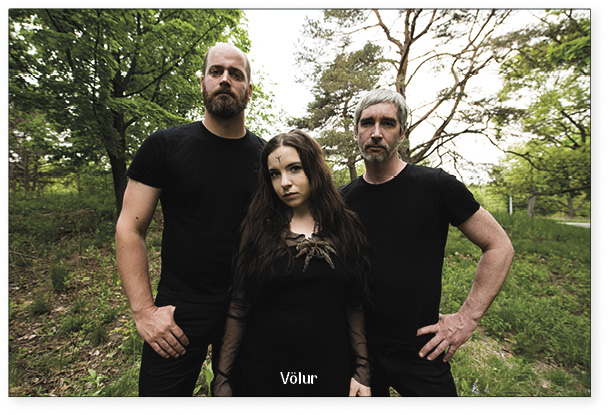
This month’s column takes a behind-the-scenes look at two quite different upcoming events in April – the Curiosity Festival presented by the Toy Piano Composers and an upcoming concert by the independent pianist/improviser/composer Marilyn Lerner which while different in nature from the TPC event was also surprisingly similar to it, in some very interesting ways. There was the piano connection of course; but also the artists’ interest in combining different elements, influences and genres to create their own unique creative statements. This is certainly a theme that comes up regularly in this column, but I wasn’t necessarily expecting to find this commonality when I set out to interview both parties.

BBB-New1.jpgMonica Pearce: Beginning early in April, the TPC’s first festival, the Curiosity Festival, aims – in the words of co-founder Monica Pearce – to “bring together three unique musical explorations that go beyond what the collective already does.” Known primarily for their chamber concerts highlighting music written by their composer members, this festival has three strikingly different components: a series of operas performed in collaboration with the Bicycle Opera Project on April 1 and 2; a sound installation at the Canadian Music Centre created by TPC member Nancy Tam on April 6 and 7; and a chamber concert on April 9 that highlights all things metal, including the presence of metal music, that genre of rock that developed in the late 60s and 70s with the rise of bands such as Led Zeppelin and Deep Purple.

The TPC, now in their eighth season, began from a desire by co-founders Pearce and Chris Thornborrow to create opportunities for their music to be performed once they had completed their music studies. At the same time, Pearce acquired a used toy piano and started writing pieces for the instrument. They both agreed that calling their new collective Toy Piano Composers would be a playful and imaginative name. Although the toy piano does not always appear in all their concerts (a risk, Pearce admits, in terms of managing audiences’ expectations), they have decided to stick with a name that reflects so clearly the group’s spirit of playful adventure.

The first concert of the festival, “Travelogue,” celebrates TPC’s ongoing vigorous collaboration with the Bicycle Opera Project. Bicycle Opera cycles from concert to concert as a way to make the operatic art form more relevant, intimate and accessible. Their environmentally friendly approach to travel merged with their vision of showcasing emerging talent has won them enthusiastic crowds wherever they happen to go. At the Curiosity Festival, they will be performing four operas – three composed by TPC members Pearce, Elisha Denburg and August Murphy-King, and the fourth composed by Tobin Stokes on recommendation from the Bicycle Opera directors. All four pieces include aspects of travel – from the bicycle to the space shuttle – with each work tapping into the terrain of human struggle with life’s circumstances.

Playback, the sound installation by Nancy Tam at the Canadian Music Centre’s Chalmers House home, features her expertise and interest in sound art and theatre. It’s a site-specific work for ten participants at a time who will be guided around the CMC space listening over headphones hooked up to individual portable audio players. Tam’s audio walk will contain excerpts from interviews she conducted with composers across Canada, as well as recordings of Tam’s music and soundscape elements. For the interviews, composers were asked such questions as “What is Canadian music, what is your relationship to composition and to the CMC?” as well as being asked to try to remember what the Chalmers House used to look like before the renovations.

The “Metal” concert includes works by TPC members Fiona Ryan, Chris Thornborrow, Bekah Simms, Daniel Brophy, Ruth Guechtal and Alex Eddington. Both Brophy and Guechtal have incorporated the metal genre influence into their overall compositional style, and this concert will give them an opportunity to let this influence become an integral part of a chamber concert. Other thematic approaches to the idea of metal include Thornborrow’s exploration of the metals of industry, Ryan’s interest in metal at a chemical level, and of course the use of metallic instruments. And, in keeping with their name, music for the toy piano will also appear on this concert.

The inaugural Curiosity Festival takes its place among the other new music festivals in the city, and although not as big and well-funded as New Creations or 21C, it is the first festival coming from the younger generation of presenters, Pearce told me. As for its future, TPC will assess the impact of the festival to see if it has made a positive contribution and if so, how often to repeat it. Other future visions include recording, touring and collaborating with ensembles such as Chamber Cartel from Atlanta who also present music for the toy piano. And even though they now have a core ensemble made up of flute, clarinet, piano, percussion, piano, double bass and conductor, they are committed to remaining composer-focused, despite the various challenges such as lack of sustainable funding opportunities that this presents.

BBB-New2.jpgMarilyn Lerner: No stranger to collaboration with a wide variety of ensembles and individual artists, pianist/composer and improviser Marilyn Lerner decided to take a leap into solo performance for her upcoming concert at Gallery 345 on April 16. For those not familiar with Lerner’s music, she has created her own unique and dynamic blend from a variety of influences, the most central ones being jazz, free improvisation, contemporary classical and klezmer. Within her current ensemble, The Ugly Beauties, with cellist Matt Brubeck and drummer Nick Fraser, she is able to navigate these various genres and bring a compositional style that combines the notated with the improvised. This way of working is in fact, she says, a genre unto itself, with the main question being “How do we get from one composed section to another?” That’s where the improvisation kicks in. The art of lieder combined with Yiddish poetry is another love of hers and has been behind her collaborations with singers such as Toronto’s David Wall and New Yorker Adrienne Cooper.

So what to expect on April 16? I suspect it will be a fine blended soup of all of it. In our interview, Lerner told me her plan is to pull out many pieces she has previously written but which haven’t yet been performed. “I love harmony, and even though I play a lot of improvised and free music, this side of me doesn’t get to come out of the closet. I’ve written a lot of beautiful songs, and would like a chance to play them, as this seems truer to my own sensibilities.” She used the phrase “abstract lyricism” to define her approach, with an interest in an unfolding, restless harmony much like that which you find in the music of Wagner and Strauss. Influences from French impressionists Ravel and Debussy also find their way in there, as well as her love of playing Bach.

And even though these pieces have a composed element to them, she will bring her improviser self into the mix. In her preparation for the concert, she will practise various improvising approaches, but in the moment of the performance it will be a spontaneous treatment. “I strive to play the piano as a horizontal multi-voiced instrument, no matter what I’m playing. Interesting, considering that I love harmony,” she comments. No matter what style or genre she embarks upon however, ultimately, “my heart is in writing pieces that express how I’m feeling.”

Ensemble Goings-on:

New Music Concerts concludes its busy season on Apr 24 with “Flutes Galore,” a concert featuring 24 flute players performing several works and premieres by Canadian composers. NMC artistic director and flutist, Robert Aitken, has three works on the program, including the world premiere of his latest work Caracas. Other world premieres include Impulse, a NMC commission by Alex Pauk and Two Fancies by Robert W. Stevenson. Works by Bruce Mather and Christopher Butterfield complete the extravaganza concert in what promises to be a unique sound event with the presence of multiple flutes on stage.

Kitchener-Waterloo: This year marks the 40th anniversary of the music faculty at Wilfrid Laurier University in Waterloo and the new music organization NUMUS is celebrating this milestone with orchestral concerts on Apr 2 and 3 featuring world premieres by Stephanie Martin and Glenn Buhr. In their Apr 23 concert, SlowPitchSound presents his hypnotic rhythms and unconventional uses of the turntable as an instrument in conjunction with cinematic images and the movements of modern dancer Lybido. Also in the area, Ensemble Made in Canada performs works by Canadians Omar Daniel, Apr 8, and John Burge, Apr 9, for the Kitchener-Waterloo Chamber Music Society.

The Music Gallery presents “Emergents III” on Apr 8 in a show curated by Alex Samaras. The program begins with a set by the duo The Science of What? with Jessica Chen and Justin Orok performing improvisations and deconstructions of popular song. The second set presents the music of Jeremy Bellaviti, an emerging composer whose style merges contemporary classical with the rhythmical influences of folk music. The concert will also feature the premiere of his new work for violinist Sarah Fraser-Raff.

Arraymusic’s Apr 5 concert, “Four New Works,” presents world premieres by Anna Höstman, Gregory Newsome, Adam Scime and Scott Wilson, with guest soprano Carla Huhtanen. Continuum is heading west in April for a tour of British Columbia in collaboration with Ballet Kelowna and four choregraphers. Reimagined Renaissance Music is the theme that will be explored musically in works by Rodney Sharman, Jocelyn Morlock and Michael Oesterle. Toronto audiences will have the chance to see and hear this show in the fall.

Additional Listings

Apr 7: Women’s Musical Club of Toronto. Commissioned premiere by Zosha di Castri.

Apr 8: Essential Opera. Several contemporary operas, each focused on a different facet of women’s lives featuring composers Leslie Uyeda, Anna Pidgorna, Anna Höstman, Fiona Ryan, Elizabeth Raum, John Estacio and Jake Heggie.

Apr 23: mmmm Composers In Concert. New works by Michel Allard, Marco Burak, Michael Dobinson and Michelle Wells. Stratford.

Apr 27: Canadian Music Centre. Three commissions of Canadian works by Katarina Curcin, Nicole Lizée and Kati Agócs performed by the Cecilia String Quartet.

April 28 and 30: Toronto Symphony. towards Osiris (2005) by German composer Matthias Pintscher.

Wendalyn Bartley is a Toronto-based composer and electro-vocal sound artist. sounddreaming@gmail.com.
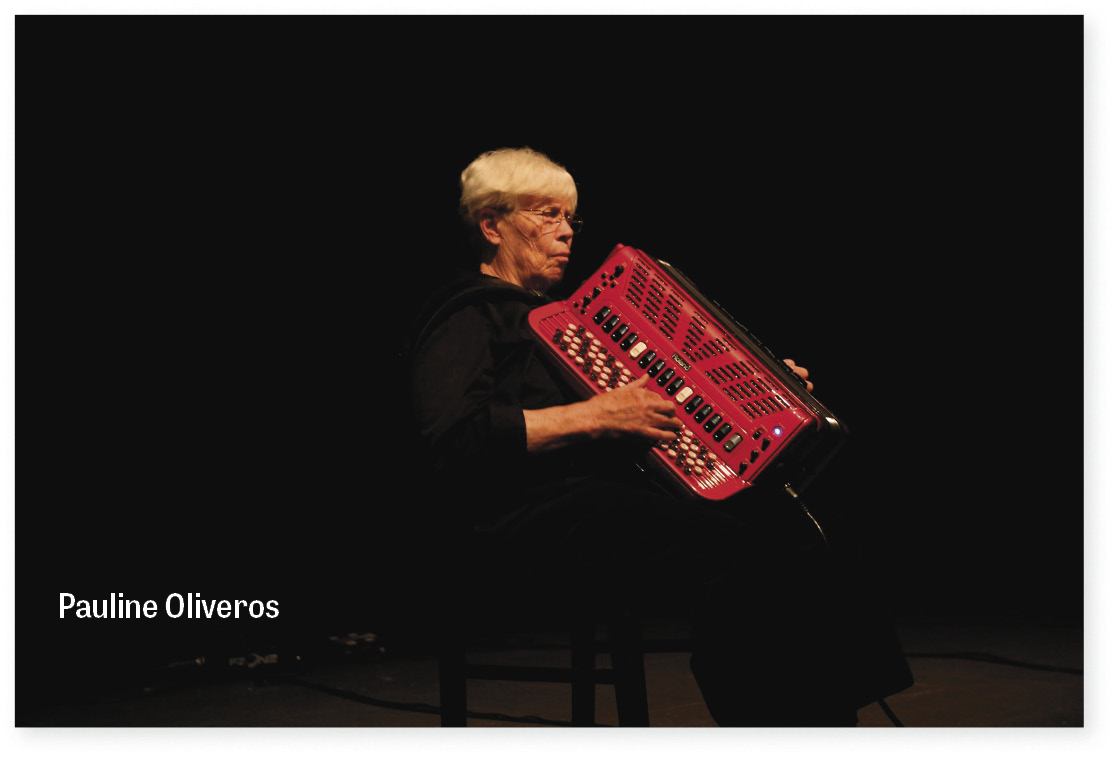
2106-New_1.pngThe month of March begins in a big way this year with the annual New Creations Festival presented by the Toronto Symphony. In last month’s issue I introduced the main features of what is being planned for the three concerts happening on March 5, 9 and 12, including the presence of guest composer, conductor, violist and co-curator Brett Dean from Australia. One of the three commissioned works for this year’s festival is a unique collaboration between composer Paul Frehner and filmmaker Peter Mettler. I had an opportunity to speak with both of these creators to find out how their piece for orchestra and film came into being and what we can expect to experience on March 9, the night of the performance.

I began by asking Frehner how the commission came to be and wondered if the two artists had worked together before. As it turned out, the project began when Frehner was approached by Gary Kulesha on behalf of the TSO with a request to be involved in the writing of a work for orchestra and film. According to Frehner, Mettler was then approached on a recommendation from film director Atom Egoyan. The two artists had never met before, so right from the beginning, they started with a dialogue that involved examples of each other’s work being sent back and forth, and engaging in conversations exploring various ideas that each were drawn to.

Writing music for film often takes a predictable path, where the composer writes to a set sequence of images. Not so with the way Mettler works. He has spent the last 12 years developing software that functions as an instrument for editing and mixing both image and sound to create a film “on the spot.” He can use this instrument to both improvise and create, providing a personal challenge that is “far more exciting than just pushing play.” In the early stages of their collaboration, Mettler sent Frehner up to 90 minutes of raw footage, some of which were extended sequences. Frehner latched onto a few of these and wrote music inspired by those scenes. Using music software to create an orchestral rendering of the music, Frehner sent his sketches back to Mettler, who then began to improvise using his bank of 2000 or more images, finding visual complements to what the music was doing. Gradually a shape began to emerge as the dynamic exchange continued and in the end, many of the image sequences that Mettler chose were not related to those that Frehner was originally inspired to write music for.

In their initial dialogues, they discovered that they shared a mutual interest in science and physics. Beginning with conversations on particle physics, they eventually decided to focus the piece on ideas of cyclical rotation – orbits, tidal rhythms, and natural cycles, ending up with the title From the Vortex Perspective. Structurally, the music has both cyclical elements and abrupt changes. Several ideas return, each time with variations in orchestration.

Frehner’s compositional style can be described as eclectic, integrating such influences as Brit and American rock, jazz pianists Oscar Peterson and Keith Jarrett, early music, as well as the music of a range of composers including Grisey, Vivier and Nancarrow. In this project with Mettler, Frehner chose to feature the brass instruments prominently in various places, incorporating unison writing and the low register instruments. In other places, the string section has the main idea, whereas at other times, strings provide a textural background. Visually, the film begins with images of an abstracted forest environment, moving into reflections on water. At one point when the music becomes heavily punctuated, the viewer is taken through a sequence of different grasses and reeds with the sunlight bursting through to create complementary accents. Some of the slowly evolving scenes created opportunities for Frehner to linger longer with some of his musical ideas, taking his time to explore them rather than looking for other directions.

For the performance, the images will be projected onto three screens – two smaller monitors surrounded by a larger screen, with the spatial aspect of the three image sources becoming an aspect of the overall composition. And just as the conductor and musicians interpret the musical score, Mettler has created his own guiding score as an aid for his real-time performance during which he will respond to the subtleties of the music to create a live version of the film. Thus this work is a true performance in both mediums of image and sound.

As mentioned above, Brett Dean is this year’s guest of the New Creations Festival. As it turns out, Frehner and Dean crossed paths over ten years ago on two different occasions – in 2002 at the Winnipeg New Music Festival where Dean was the featured composer and Frehner had a composition; and a few years later at the Malaysian Philharmonic Orchestra’s International Composers Competition where Dean was the judge and Frehner was one of the composers present. Dean’s role as curator for the New Creations Festival includes the programming of three of his own works, each substantial pieces for orchestra, as well as works by fellow Australians Anthony Pateras and James Ledger.

2106-New_2.pngNew Music for Orchestra: The New Creations Festival is not the only chance to hear new orchestral work this next month. The Toronto Symphony will perform works by three Canadian composers: Home” from New World by Michael Oesterle on March 31, Alligator Pie by Abigail Richardson-Schulte on April 2 in matinee performances, and Ringelspiel by Ana Sokolović, performed by the evening’s guest performers – the National Arts Centre Orchestra – on April 2. On March 31, Esprit Orchestra teams up with the Elmer Iseler Singers for their last concert of the season to perform two newly commissioned works with mythic themes: Soul and Psyche for choir and orchestra, composed by Esprit’s founder and conductor Alex Pauk, and Sirens by Canadian Douglas Schmidt. The program also includes Hussein Janmohamed’s choral work Nur: Reflections on Light, which weaves together Ismaili Muslim melodies, Quranic recitation and Indian ragas, and the classic orchestral dance score La création du monde by Darius Milhaud, infamous for its combination of jazz and classical rhythms from the early 1920s.

Soundstreams: Soundstreams is cooking this month with several events. Starting off in early March, they will present three concerts of the music of Scottish composer James MacMillan in three cites: Kingston (March 4), Kitchener (March 6) and Toronto (March 8). The program will highlight MacMillan’s masterpiece, Seven Last Words from the Cross, as well as selections from Schafer’s The Fall into Light. The Toronto concert will include additional works by MacMillan (The Gallant Weaver) and Schafer (In Memoriam Alberto Guerrero), along with a performance of James Rolfe’s When Lilacs Last in the Dooryard Bloom’d, a Soundstreams commission from 2006 based on Walt Whitmans’s elegy written after the assassination of U.S. President Abraham Lincoln.

Then in mid-month, Soundstreams will kick off a series of events being planned to celebrate the 80th birthday of minimalist pioneer Steve Reich culminating in a gala concert on April 14. Getting the ball rolling will be their second Ear Candy event on March 19 featuring Reich’s first major work It’s Gonna Rain, created from a surprise discovery made while fiddling about with out-of-sync tape loops. The phasing technique he developed from these experiments paved the way for the birth of his minimalist aesthetic. It’s also an opportunity to hear his Electric Counterpoint which has been recorded by such artists as Radiohead’s Jonny Greenwood, whose Water will have its Canadian premiere in the New Creations Festival on March 12. The Ear Candy evening also features a diverse array of local artists, each of whom has been influenced by the minimalist aesthetic. Four of these performers, including DJ SlowPitchSound and Brandon Valdivia, will also be performing the previous evening on March 18 at the Soundstreams’ Salon 21, which offers a historical look at the development of minimalism.

Music Gallery: The performance of Reich’s music continues over at the Music Gallery in a concert on March 17 featuring composer and performer Michael Century. In his earlier days, Century founded The Banff Centre for the Arts Media Arts program in 1988, a program that helped initiate new media practice in Canada. In this concert, Century will perform Reich’s Piano Counterpoint, an arrangement for solo piano and tape of Reich’s classic Six Pianos, as well as premieres of his own works for piano, accordion and live electronics. These works use open software and an eight-channel immersive speaker array. Additional pieces by American composers Julia Wolfe, John Cage and Morton Feldman will be heard in the second half of the evening.

The Music Gallery continues to mark their 40-year history with an installation and listening salon opening on March 11 celebrating their partnership with Musicworks Magazine. The magazine has a long tradition of including recordings with their print issues, first released as cassettes and now as CDs. Past and present editors and contributors to the cassette legacy will be speaking of their memories and experiences at the opening event.

New Music Concerts: New Music Concerts is also busy with two upcoming concerts. On March 11 (in Kitchener) and March 13 (in Toronto) in a co-presentation with the Music Gallery, the Quasar Saxophone Quartet performs music by five Quebecois composers writing for saxophone quartet and electronics, including video in one of the works. The quartet is dedicated to the creation of contemporary works with their interests ranging from instrumental music to improvisation and electronics. On April 3, the electronic theme continues with their concert entitled Viva Electronica. It will be an evening of three world premieres, all of them NMC commissions from composers Anthony Tan, Keith Hamel and Paul Steenhuisen. Each of these artists has done significant research in the world of electronics, live electroacoustics and music software programming, as well as taught the ins and outs of working with music technology at various universities.

Additional New Music Events:

Mar 6: John Laing Singers perform works by Glen Buhr and Eric Whitacre.

Mar 6: Junction Trio hosts Schola Magdalena performing works by Stephanie Martin.

Mar 10: Canadian Music Centre; “Truth North Stories” with piano works by Anhalt and Morawetz.

Mar 18 Canadian Music Centre; “Canadian Art Song Showcase” with works by Alice Ho, John Beckwith, Sylvia Rickard and Hiroki Tsurumoto.

Apr 2: Nagata Shachu with TorQ, performing works for Japanese, Western and world percussion. clip_image001.png

Wendalyn Bartley is a Toronto-based composer and electro-vocal sound artist. sounddreaming@gmail.com.
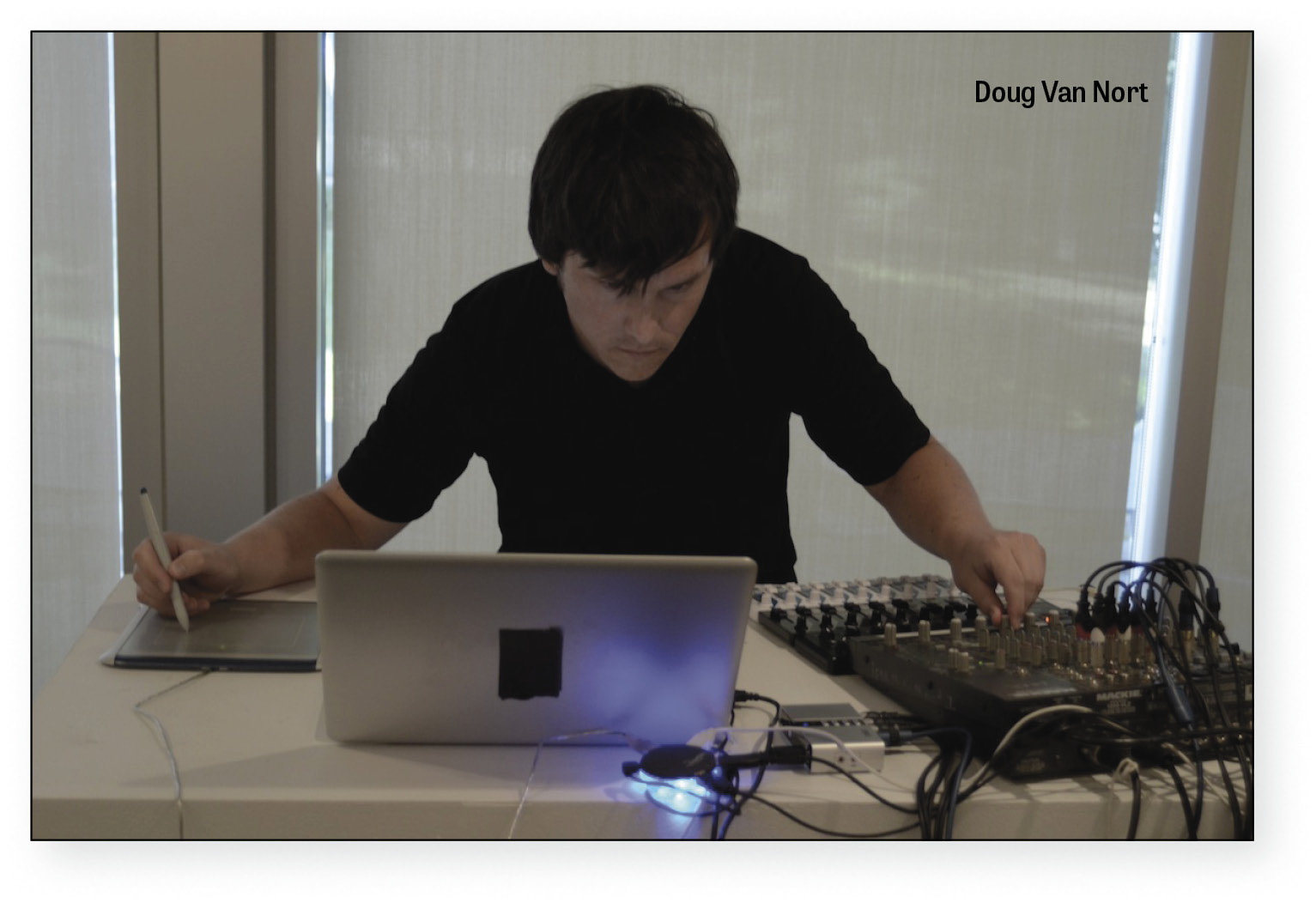
Back to top