RCM_WHOLENOTE_728x90_Jan-Feb26-FINAL

02 Jordana TalskyZahava
Jordana Talsky
Independent (jordanatalsky.com)

I really admire artists who evolve and embrace new styles and technologies. Taking a risk is never easy, and with Zahava, Jordana Talsky has made the leap from more traditional music-making to relying solely on her voice, using vocal looping to produce a whole EP. As is true for a lot of developments, Talsky stumbled upon looping by accident. She was trying to find a quick way to capture musical ideas and found that doing a recording was faster than notating. 

Having a strong voice, big range and a variety of vocal colours to draw on certainly helps, and Talsky has it all, plus exceptional songwriting skills and an ear for arranging. Collaborating with talented multi-instrumentalist Justin Abedin – here lending a hand with producing, recording and songwriting – also helps. The six songs on the EP are all very accessible in that they follow traditional verse-chorus structures and have relatable themes about self-exploration and relationship struggles. The general musical style is more in the pop vein than Talsky’s earlier jazzy releases and tinges of the blues show up on Trouble Up and there’s a soulful edge to City Lights. Oh Yeah has hit written all over it. 

There are plenty of artists out there using looping and other technologies to one degree or another and, of course, lots of great music is being made by singers recording the old fashioned way, in a studio with a band. I just really appreciate it when artists mix it up a bit, and Zahava is a fine example of that.

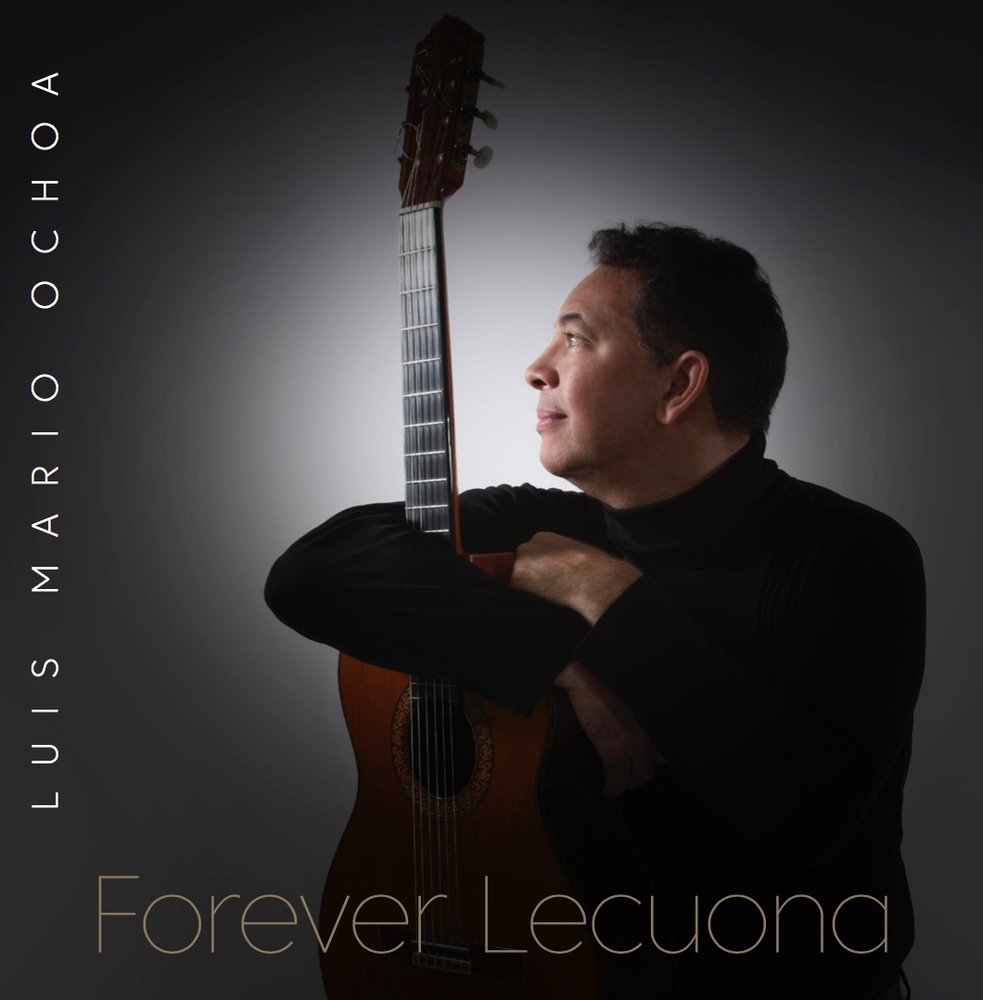
03 Luis Mario Ochoa jpegForever Lecuona
Luis Mario Ochoa
Independent (luismario.com)

Ernesto Lecuona, known as “the Gershwin of Cuba,” is the subject of the latest release by singer-guitarist Luis Mario Ochoa. Since Lecuona wrote both music and lyrics during his prolific and celebrated career, I suppose he’s both George and Ira Gershwin. Indeed, his most famous work was done in the field of operetta and film (for which he was nominated for an Academy Award), and Ochoa includes several of those tracks, lovingly reproduced here.

You couldn’t find a more authentic interpreter of this music than Ochoa, who was born and raised in Cuba and studied the great masters during his musical education at the University of Havana. Cuba’s loss was Toronto’s gain when Ochoa emigrated here in 1990 and became a bandleader and regular feature on the club circuit. Ochoa has drawn on the deep Toronto talent pool for the world-class musical support on this album, including gifted multi-instrumentalist Louis Simao on bass, fellow countryman Hilario Duran on piano (no electronic keyboards here!) and Luis Orbegoso and Chendy Leon on percussion.  

With songs dating back to the early 1900s, this is a nostalgic but still relevant collection of classic Cuban sounds. Themes of heartbreak and longing never go out of style, do they? Neither does dancing, and this album will surely inspire you to get on your feet and take a turn around the floor. This may be especially true for non-Spanish speakers, as all the songs are in that language, of course. But everyone speaks the language of uplifting rhythm and Ochoa’s beautiful guitar playing and bright, plaintive singing clearly convey the message.

04 Joy RideJoyRide
Colin Maier; Charles Cozens
Independent (joyrideconcerts.com)

Oboist Colin Maier, who also plays bass here, and accordionist/pianist Charles Cozens, are the Canadian duo JoyRide. Their multi-instrumental performances, arrangements and compositional talents are centre stage in hybrid music incorporating many styles including classical, jazz, klezmer, blues and tango in this, their first studio album.

JoyRide performs the music perfectly. It’s a bonus to hear them also talking in humourous conversations like in the opening Maier/Cozens Spirit of Earth chat about Maier’s on tour encounter with pelicans above Maier’s bass and Cozens’ keyboard backdrop music. The next track, Cozens’ super-fast arrangement of the Dixieland classic, Tiger Rag, features alternating virtuosic oboe and accordion lines. Cozens’ COVID-lockdown-inspired upbeat composition, Isolation Blues, has Maier on harmonica, Cozens on honky-tonk piano and both on vocals. Relatable COVID-experience lyrics, midstream chatter like “I finally learned how to use a vacuum,” and colourful piano and harmonica solos make this my nomination for COVID theme song.

 Music only in Cozens’ J.S. Bach arrangement renamed Air on a Blue String as string members from Burlington’s New Millennium Orchestra join in a very classical start with its famous opening theme played true to style by Maier’s oboe until Cozens’ gradual piano change to jazzy style eventually gives way to a more classical ringing note strings closing. Time to dance in Cozens’ Tango de la Noche with his bouncy tango nuevo accordion lines, his upfront piano grooves, Maier’s bass and oboe lines, and strings.

From serious to hilarious, JoyRide’s release should lift all music lovers’ spirits to make life fun again!

05 Vlada MarsRemains of the Day
Vlada Mars
Independent (vladamars.com)

There are some albums that go straight for the heart of the listener and stay there for a while. Remains of the Day is certainly such an album. Written for solo piano, this music is pure poetry, spoken from the heart with a genuine sense of purpose. 

Vlada Mars, Serbian-Canadian composer and pianist based in Vancouver, has seven albums under her belt but this one definitely stands out. Although dedicated to all matriarchs of the world, Remains of the Day is an ode to one woman – Mars’ mother. Composed over the period of two years and paralleling the last few months of her mother’s life, her subsequent death and Vlada’s own grieving, this album is so personal that the listener can’t help but feel the emotions expressed as part of ourselves.

Mars presents a unique compositional voice. Genre crossing and embracing the minor keys, her music is haunting, nostalgic, intimate. There are no big statements here but rather everything is expressed in understated, meaningful gestures that have beauty in their core. Still, there is an unmistakable passion, especially in the juxtaposition of the driving rhythms underneath tender voices. Mars is a master of rubato phrases, which adds to her flair for sentimental melodies. Perhaps the meaning of Saudade, one of 11 compositions on the album, shows the nature of her music the best – a melancholy of longing for something or someone that is no longer here. 

Note: this album is not available for streaming. One can purchase it from Vlada’s website as a CD or download.

07 Court de Louis XIVDe La Cour de Louis XIV à Shippagan – Chants traditionnels acadiens et airs de cour du XVIIieme sièècle
Suzie Leblanc; Marie Nadeau-Tremblay; Vincent Lauzer; Sylvain Bergeron
ATMA ACD2 2837 (atmaclassique.com/en)

Louis XIV made his France a hub for culture which attracted composers such as Michel Lambert and Robert de Visée. French settlers in what is now Eastern Canada – for instance in Shippagan, an overwhelmingly French-speaking town in northeastern New Brunswick – brought music from France. The contents of this CD reflect a selection of these treasures performed by some of ATMA Classique’s most talented artists. It does not take long for recorder player Vincent Lauzer to make his presence felt; with his trilled notes he admirably captures the atmosphere of Pourquoi doux rossignol? 

Then there is the aunting quality of Rossignolet sauvage, with its theme of a finished love affair (il faut se délaisser, we must move on.) Listen to the combination of soprano Suzie LeBlanc (accompanying herself on dulcimer!) and the instrumentalists as they interpret the lines of this traditional song.

The instrumental tracks should not be disregarded. De Visée’s Prélude, sarabande et gigue, played with dignity on archlute by Sylvain Bergeron, is very typical of exactly the contemporary lute music Louis XIV encouraged with his cultural offensive.    

Overall perhaps, and despite the courtly – and supposedly superior – origin of many of these tracks, it is the traditional pieces that are the most effective. Le berger features LeBlanc declaiming her love for her shepherd in the yearning manner reminiscent of bygone troubadours.

A CD with a new angle on musical history – and well worthy of attention.

Listen to 'De La Cour de Louis XIV à Shippagan' Now in the Listening Room

08 Iberi SupraSupra
Iberi Choir
Naxos World NXW76162-2 (naxosdirect.com/search/nxw76162-2)

Buba Murgulia, leader of the Georgian male-voice choir Iberi, is described in the Supra liner notes as “growing up surrounded by singing,” like many Georgians. Unlike most however, he formed a choir with other passionate countrymen. They’ve taken Georgian song to international audiences since 2012, touring Europe, USA, Asia and Australia.

Recognizing the significance of Georgian vocal polyphony, in 2008 it was inscribed on UNESCO’s List of the Intangible Cultural Heritage of Humanity. Iberi’s broad repertoire includes a variety of regional Georgian styles, drawing on the rich history of Georgian polyphonic song.

Simplifying to great degree, Georgian choral singing most often has three voices. And regional genres range from soft, moving liturgical songs, lullabies and guitar-accompanied urban songs, to loud and rugged songs meant for work, recounting history – and very importantly, for feasting. 

The word supra is commonly translated as “feast.” Integral to Georgian society, this ancient, frequently multi-day tradition, features wine, food, singing and ritualized toasting which reaffirms the essential values of life, the importance of the ancestors and the motherland.

Iberi’s new album Supra is a selection of 13 songs that you might well hear at such a celebration. I was stirred by feast songs like Mravalzhamieri (May You Live Long), soothed by the medieval Georgian hymn Shen Khar Venakhi (Thou Art a Vineyard) and charmed by the urban love song Mkholod Shen Erts.

My only regret? I didn’t have a bottle of Georgian wine at hand to join in the supra.

Back to top