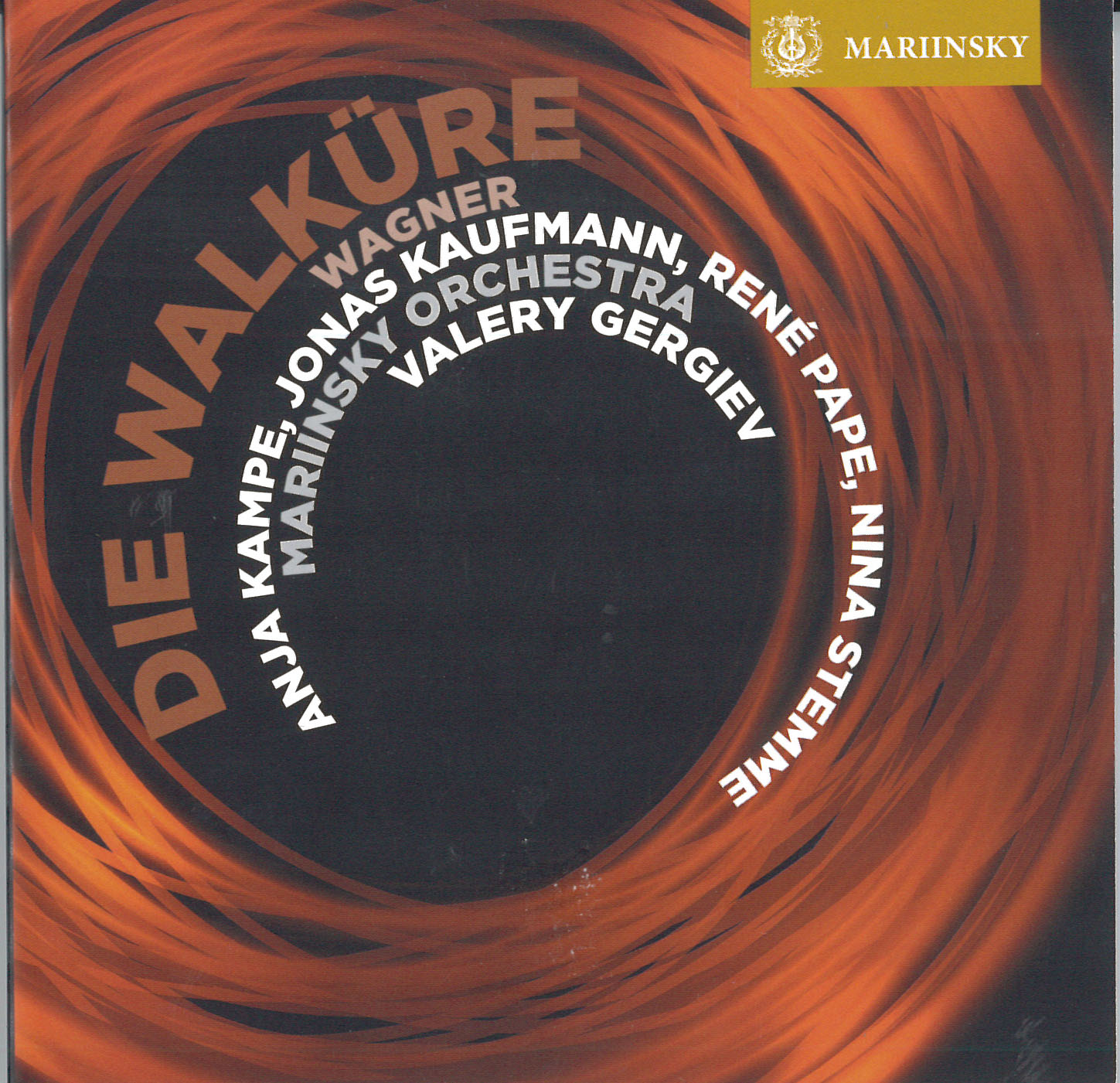
04a Mahler Sym3 FeltzIs there too much Mahler being performed these days? The venerable Dutch conductor Bernard Haitink believes so, contending that a “Mahler cult” has created a glut on the market which is distorting orchestral programming in favour of this formerly maligned composer and threatening to marginalize even the mighty Beethoven. There are even those, he claims, who never set foot in a concert hall unless Mahler is programmed. Hopefully, he concludes, Mahler mania will fade away in due time (like the collapse of the Dutch tulip mania of 1637 perchance?). It is a peculiar assertion coming from a man who has recorded the entire cycle of symphonies twice over and continues to churn out new performances with a global selection of orchestras; even so, Mahler himself predicted his symphonies would someday surpass Beethoven’s in popularity. Any conductor or ensemble worth their salt these days feels duty-bound to tackle them, regardless of their capability for or empathy with the complex and demanding works. It helps too that Mahler’s own conducting experience led him to virtually “idiot-proof” his scores with extremely detailed performance instructions throughout, and his obsessive retouching of his instrumentation after every performance has resulted in new editions continuing to appear to this day. Especially in the recent double centenary years this has led to many high-profile integral cycles springing forth bearing a uniform, streamlined quality all too often indistinguishable from each other.

04b Mahler Sym4 FeltzIt is therefore refreshing to come across these very interesting and idiosyncratic performances from the Stuttgart Philharmonic, which began appearing without much fanfare once a year on the Dreyer Gaido label soon after the young (born 1971) Gabriel Feltz was appointed director of the Stuttgart ensemble in 2004. Feltz has yet to make his conducting debut on this continent and this orchestra’s recordings have only recently been added to the Naxos catalogue. A remarkable feature of these discs is the conductor’s own insightful program notes, replete with music examples (!) and cogent arguments for Feltz’s interpretations, which often contradict or re-interpret the printed scores. The most daring example is undoubtedly the startling up-tempo interpretation of the rabble-rousing march midway through the first movement of the
04c Mahler Sym5 FeltzThird Symphony (CD 21065), utterly contradicting Mahler’s call for a steady tempo throughout this section. Other examples are less radical yet still telling: the compulsive alternations of nimbleness and near panic of the

Fourth Symphony
’s (CD 21072) ostensively charming opening movement; the utter serenity Feltz brings to the famous Adagietto of the Fifth Symphony (CD 21052), so often bathed in an excess of sentimentality; or the positively erotic atmosphere he conjures towards the end of the second “Nachtmusik” of the Seventh Symphony (CD 21041).

04d Mahler Sym6 FeltzI especially enjoyed reading his statistical argument for the placing of the Scherzo as the second movement of the Sixth Symphony (CD 21045), settling once and for all a specious argument that has gone on for decades amongst musicologists. His interpretation of the first movement of the Sixth is notable for its urgently martial clip, offset by a luxuriant pulling back of the tempo for the secondary theme in just the right proportion. Feltz’s solution to the potpourri finale of the Seventh at first seems counterintuitive; he emphasizes the disjointedness of the rondo form rather than smoothing it over, yet it somehow works quite successfully.

04e Mahler Sym7 FeltzOf all these performances perhaps the massive Third Symphony takes pride of place for the excellent unnamed trombone soloist in the first movement, the unmannered gracefulness of the middle movements and the very moving alto solo (Alexandra Petersamer) in the penultimate movement; only the finale seems to fall a bit short in sonic intensity. Perhaps the orchestra was a bit tuckered by this point however; these are all live performances including ofttimes thunderous applause at their conclusions from the otherwise respectfully taciturn audience.

The sound is clear and spacious, with no evident sonic trickery, though I did find the volume needed to be cranked a bit higher than normal to bring the string section into focus. Though there are unquestionably finer isolated performances of these works to be found in the ever-growing Mahler discography, very few contemporary cycles exhibit the integrity of vision Feltz brings to these works. I look forward to enjoying the remaining five symphonies in this cycle in the years to come; there’s never enough Mahler for me!


05 RachmaninovRachmaninov - Symphony No.2; Dances from Aleko
Royal Liverpool Philharmonic Orchestra; Vasily Petrenko
EMI Classics 9154732

Early in his career Rachmaninov was regarded as a gifted pianist, an occupation that supported the unrecognized composer. By his last decade, living in the United States, he was recognized both as a composer and an extraordinary concert pianist. I was told by a friend who was a member of the New York Philharmonic during the Toscanini era that the maestro asserted that Rachmaninov’s performance in Beethoven’s “Emperor” Concerto in 1933 remained peerless. The Second Symphony was written in during 1906 and 1907, half a dozen years after the now signature Piano Concerto No.2 and is solidly of the romantic era, full of great tunes in the recognizable Russian tradition. Performances were often truncated in order not to burden audiences with a 60-minute symphony. Into the LP era, too, shortened versions were recorded.

 Under an unsympathetic baton, the first movement can seem endless and tiresome, an impression put to rest by some fine recorded performances, none more convincing than this one.

Here Petrenko’s penetration into the score produces a reading of unusual empathy that quickly draws the listener’s attention to the composer’s sensitivity and yearning, tension and release. There is Russian lushness aplenty from musicians who clearly love what they are playing.

The second movement, marked Allegro Molto in the opening, is given a perceptibly broader tempo than is favoured by others but, to my ears, it has panache.

The third movement, Adagio, is quite exquisite as Petrenko preserves the tranquility and nostalgia implicit in the score with wistful memories of the first movement. The triumphant rush of the last movement brings this superb recording to a rousing finale. If you are up for some orchestral thrills and a startlingly real recording with dramatic dynamics and astonishing body from the very quietest passages to ravishing tuttis then this recording is a must, even if it duplicates other performances in your collection.

06 Argerich Lugano ConcertosLugano Concertos
Martha Argerich and Friends
Deutsche Grammophon
477 9884

Martha Argerich! For lovers of piano music such as myself, the very name conjures up feelings of near reverence for a veritable icon in the world of classical music. Ever since she wandered into an EMI recording studio in London in 1965, aged 24, to record her first major album, she has rightfully enjoyed an international reputation as a charismatic pianist and recording artist. Since 2002, Argerich has also assumed the role of impresario, annually gathering musicians for the Martha Argerich Project, part of the Lugano Festival held every June – and it’s from this event that her latest offering is based, a fine four-disc set of live recordings on the Deutsche Grammophon label titled Martha Argerich Lugano Concertos.

This is a beautifully packaged collection, with extensive notes and photographs in book-in-sleeve format. Drawn from past festivals, the music was recorded over seven summers, with repertoire spanning a period of 150 years. Not all the other artists taking part are well known but included in the group are pianists Paul Gulda and Gabriela Montero, the Lugano Percussion Group and the Orchestra della Svizzera Italiana under a number of different conductors including Gabriela Chmura, Ion Marin and her one-time husband, Charles Dutoit.

At first impression, the listener is immediately struck by the set’s eclecticism. Yes, they all involve ensembles of various sizes, but the music comprises a myriad of styles and periods, with works by such diverse composers as Beethoven, Schumann, Bartok, Brahms, Milhaud and Stravinsky. The set opens with the classically refined Piano Concerto No.1 by Beethoven, music from around 1800. Here, Argerich demonstrates her typically flawless technique and a certain robust quality that seems particularly suitable for the music of a young composer on the verge of fame. In complete contrast is the Concerto for Two Pianos by Francis Poulenc, where she and her pianist partner Alexander Gurning along with the Swiss-Italian Orchestra conducted by Ersmo Capilla easily capture the cheeky and exuberant spirit of this music written in 1932.

Not all the pieces involve large ensembles. For example, the Divertissement à la Hongroise by Schubert finds Argerich on stage with pianist Alexander Mogilevsky in a thoughtful interpretation of Schubert’s homage to the Hungarian folk idiom. For a delightful 2005 performance of the Brahms Liebeslieder Waltzes, she’s joined by pianist Gabriela Montero and the Swiss Radio Television Chorus directed by Diego Fasolis.

Martha Argerich Lugano Concertos is indeed a fine testimony not only to Argerich’s talents as a performer, but also to her skill at gathering and showcasing talent, both well known and less familiar. All have come together for the purpose of making music on a very high level – and what a perfect holiday gift the set would make for the music lover on your list!


Violinist Jacques Israelievitch has been active with a solo and chamber career since stepping down from his 20-year stint as concertmaster of the Toronto Symphony Orchestra in 2008. He has compiled a fascinating CD catalogue on the Fleur de Son Classics label over the past 12 years, and two new issues were received this month. Well, one new issue and one not quite so new, by the look of it.

07a Israelievitch French SonatasFrench Violin Sonatas (FDS 58005), in which Israelievitch is ably accompanied by the outstanding pianist Kanae Matsumoto, is certainly new – it’s scheduled for release on November 13 and at the time of writing is not even listed on the label’s website – but it was recorded more than two years ago at the Chautauqua Institution in New York state. Israelievitch is, not surprisingly, very comfortable with these four works from his native country. He has a quite distinctive style, with a gentleness and a sweet softness to his playing that makes the violin very much a feminine instrument in his hands. That’s not to say that it lacks intensity or strength, though, as the spiky opening of the lovely Poulenc sonata proves.

The rarely-heard sonata by Gabriel Pierné is a cyclical, post-Franck work from 1900 that apparently did much to establish the violin sonata as a serious chamber music form in a French music world that was dominated by opera.

The Debussy sonata was the last work that the composer was to complete; the 1917 premiere with the young violinist Gaston Poulet was also Debussy’s last public performance. There’s a direct link here: in 1944 Poulet became a professor at the Paris Conservatoire, where one of his future pupils would be a certain Jacques Israelievitch.

A fine performance of the Ravel sonata completes a fascinating CD, beautifully presented in a glossy digi-pack.

The New Arts Trio has been the trio-in-residence at the Chautauqua Institution since 1978. Pianist Rebecca Penneys is the only original member; cellist Arie Lipsky joined in 1996 and Jacques Israelievitch in 1999.

07b New Arts TrioTheir 30th Anniversary Recital is available on New Arts Trio at Chautauqua (FDS 58000), just received but apparently issued in 2010. There are solid if not spectacular performances of Dvořák’s “Dumky” Piano Trio and Astor Piazzolla’s Primavera Porteña, along with two works written for the Trio in 2008 – Michael Colina’s Idoru and Ella Milch-Sheriff’s Credo. The Dumky is by far the major work here, though, both in content and in length.

08 Brahms QuintetsThe Brahms Clarinet Quintet has long been one of my favourite works, and you can usually tell within the first few bars what sort of performance it’s going to be. The greatest praise I can give the performance by the Tokyo String Quartet with clarinettist Jon Manasse on the new harmonia mundi CD Brahms Quintets Op.34 & Op.115 (HMU 807558) is that after the opening bars I wrote “Glorious opening – wistful, warm, autumnal – clarinet tone just right – strings beautifully judged” and then spent the next 38 minutes basking in as engrossing and satisfying a performance of this wonderful work as I can remember.

The same high standard continues with the Piano Quintet, Op.34 where the Tokyo Quartet is joined by Jon Nakamatsu in another perfectly-judged performance. Again one to cherish.

Sometimes, as a reviewer, you just stop listening critically and simply get lost in the performances. That’s what happened here, and what can possibly top that?

09 Schumann concertosThe excellent Hyperion series The Romantic Violin Concerto reaches Volume 13 with another outstanding CD, this time featuring Anthony Marwood and the BBC Scottish Symphony Orchestra under Douglas Boyd in the Schumann Violin Concertos in D Minor and A Minor – the latter a direct transcription by the composer of his Cello Concerto – and the Phantasie in C Major (CDA67847).

There seems to be renewed interest in these works, which for many years – until 1937 for the D Minor and 1987 for the A Minor – remained unplayed and unheard; this is the second set I’ve received in just over a year, following Ulf Wallin’s meticulously researched performances on the BIS label, reviewed in September 2011.

Marwood, as usual, is simply outstanding in this, his third contribution to the highly acclaimed series.

10 schumann piano quintetThere is more Schumann, this time the Piano Quartet, Piano Quintet and the Märchenerzählungen, on a new Naxos CD by the Fine Arts Quartet with Xiayin Wang on piano (8.572661).

The Quartet and Quintet were written in 1842, Schumann’s “year of chamber music”, and are given the level of performance you would expect from musicians of this standing. The Fine Arts, after all, have been around since 1946, although obviously none of the current players is an original member. Until just last year, however, three of the four members – the two violinists and the cellist – had been together for 30 years.

The Märchenerzählungen (Fairy Tale Narrations) Op.132 was written in 1853, a mere four months before Schumann’s failed suicide attempt, although there is nothing in the music to suggest this. It is a work that is new to me, and is played here in Schumann’s optional version for Violin, Viola and Piano, the violin replacing the clarinet of the original. Quartet members Ralph Evans and Nicoló Eugelmi join Wang in bringing out all the warmth of these four charming pieces.

The recordings were made two years ago (apparently it often seems to take a long time for CDs to reach the market). Since then cellist Wolfgang Laufer has been replaced by Robert Cohen.

11 Haydn EyblerThe six string quartets of Haydn’s Op.33 are featured on a new 2CD set from Analekta in performances by the Eybler Quartet (AN 2 9842-3). The performers – violinists Aisslinn Nosky and Julia Wedman, violist Patrick Jordan and cellist Margaret Gay – are all well-known on the Canadian early music scene through their affiliation with groups such as Tafelmusik and I Furiosi, so there’s no doubting that we are in good hands here from a stylistic point of view.

On first hearing, I did find the tone to be a bit thin, but then for me it’s the usual question of competing balances with period performances: purity of tone versus a thinness of sound; lack of – or sparingly used – vibrato versus a lack of warmth. It all comes down to a matter of personal taste, and if you’re used to a fuller sound in your Haydn quartets – even if it’s not really appropriate – then this might not be for you. There is no doubting, however, that these are highly enjoyable, technically sound performances and idiomatic interpretations, lovingly played and beautifully recorded at Glenn Gould Studio in Toronto.

The order of the individual quartets is a bit strange, given that the timings for the six works don’t vary that much and the keys are all different: CD1 has quartets five, one and six, while CD2 has quartets two, four and three.

01 Rantanen MissaBrevisMissa Brevis – A Mass for Accordion
Matti Rantanen; Marko Ylonen
Siba Records SACD-1009

Finnish accordionist Matti Rantanen is one of the bedrocks of European “classical” accordion as a teacher at the Sibelius Academy and an international performer. Here he performs mainly solo music with numerous liturgical references.

The transcriptions of Haydn and Mozart are well conceived. Rantanen’s expertise makes each work sound legitimate on the accordion, however a wider dynamic range in the Haydn and more playfulness in the Mozart would have added to the listening experience. Though originally written for cello and piano/organ, Ahti Sonninen’s Hymns of Zion for cello and accordion is a lyrical tone poem duet with cellist Marko Ylonen.

The title track Missa Brevis – A Mass for Accordion is a modern take on the old form. The accordion emulates the qualities of the church organ with its held long tones, florid arpeggios and chunky chords, while the range of dynamics, multi-note glissandos and subtle differentiations on articulation are so very accordion exclusive. Similar sentiments surface in Tapio Nevanlinna’s Hug. Petri Makkonen’s Chorale Prelude is exquisite. A former accordion student of Rantanen, Makkonen’s personal relationship with the instrument must have aided in his balanced writing of a florid right hand against held low tones in the left. Unfortunately, the huge glissando connecting the opening section to the middle lyric melody comes across as a “trick” instead of a bridge. The last two chords are delightful.

Rantanen’s musical personality makes this recording a thoughtful and intriguing expose of fine accordion musicianship and composition.

Surveying the array of jazz reissues and box sets that have appeared since the dawn of the compact disc, one might imagine that all of the major work has already found its way onto CD. It turns out that’s still not the case, as scrupulously remastered and researched collections continue to appear. The year’s best CD sets include a compilation of the first 25 years of an early master’s recordings, highlights from a year in the life of a great jazz composer, previously unreleased performances by esteemed pianists and an expansive work of new music that took 34 years to realize. There’s even a bargain box of 25 varied CDs, many of them undeniable classics.

01 Hawkins

Since launching in 1983, Mosaic Records has set the highest standard for jazz reissues, searching for the best possible sources, ensuring that sets are as complete as possible and packaging them in a handsome, uniform style with definitive accompanying texts. This year Mosaic released an extraordinary portrait of one of the few genuine giants of jazz: Classic Coleman Hawkins Sessions 1922-1947 (Mosaic #251: www.mosaicrecords.com). It’s an extraordinary historical sweep, beginning with Hawkins as a teenage clarinetist in Mamie Smith’s Jazz Hounds, following him through his long tenure with Fletcher Henderson to features with the Mound City Blues Blowers (an early example of racial integration in the recording studio) and Count Basie. There are also towering performances like his famous 1939 Body and Soul and examples of his expanding sponsorship of the early luminaries of be-bop.

02 Mingus

The latest Mosaic release is the seven-CD Charles Mingus: The Jazz Workshop Concerts 1964-65 (Mosaic #253). It includes the explosive bassist-composer’s performances at New York’s Town Hall, Amsterdam, Minneapolis and the Monterey Jazz Festivals in 1964 and 1965 with bands ranging from five to 11 pieces. Mingus was at his creative peak in the mid-60s, launching challenging new compositions like Meditations on a Pair of Wire Cutters, all supported by a cast of distinguished musicians, including the brilliant reed player Eric Dolphy in the last months of his life, trumpeter Johnny Coles, tenor saxophonist Clifford Jordan, pianist Jaki Byard and Mingus’ perpetual rhythm partner, drummer Dannie Richmond. At times, the music feels like it might ignite the CD player. Much of this material originally appeared on LP, but most of it has never appeared on CD and there are also newly discovered concert segments.

03 top of the gate

Pianist Bill Evans is one of the best-documented musicians in jazz, with expansive box sets chronicling his work for multiple labels and two seven-CD sets chronicling his last performances. Now more has come to light and it will be welcome news to fans of Evans’ luminous, limpid harmonic exploration: Live at Art d’Lugoff’s Top of the Gate (Resonance Records HCD-2011 www.resonancerecords.org) devotes its two CDs to Evans’ two sets of October 23, 1968 with bassist Eddie Gomez and drummer Marty Morell. Evans could create and sustain dream states, propelled by the most complex interaction and the subtlest extensions of harmony that jazz had ever heard at the time. Gomez is never less than brilliant and the charging energy the two bring to My Funny Valentine raises the set to essential listening.

04 Sleeper

Sleeper (ECM 2290/2291) is another lost session by a highly influential pianist: Keith Jarrett. The two-CD set comes from a 1979 Tokyo concert by Jarrett’s distinctive European Quartet with saxophonist Jan Garbarek, bassist Palle Danielsson and drummer Jon Christensen. The music is imbued with a lyricism and an openness that combine to sweep a listener along. There’s a melodic clarity that can suggest folk music, and Jarrett’s compositions provide distinct thematic flavours, including the Middle-Eastern Oasis and the gospel-hued Chant of the Soil.

05 Ten Freedom SummersIf you’re an adventurous listener, there’s also a contemporary masterpiece that arrived this year in a four-CD set: Wadada Leo Smith’s Ten Freedom Summers (Cuneiform Rune350-353 www.cuneiformrecords.com). The cutting-edge trumpeter/composer began composing works inspired by the struggle for African-American civil rights back in 1977 and continued the work until 2010 when he was commissioned by Southwest Chamber Music to add new works and set them for his own Golden Quartet/Quintet and the chamber ensemble. The result is four CDs of hard-edged, intensely involving music that is probing, elegiac and magisterial by turn. It’s rarely easy listening, but it’s a stunning integration of political and musical issues and composed and improvised idioms, undoubtedly a major musical work.

06 Perfect Collection 2If you’re looking for an instant record collection, Sony is producing a series called The Perfect Jazz Collection (Sony 8697720092), with two volumes so far. It might not be perfect, but it’s very good, whether you’re discovering or recalling jazz as it appeared in the LP era, with 25 CDs in mini-LP format drawn from Columbia and RCA labels in each release. In the first volume, you get excellent late work from Louis Armstrong and Duke Ellington; masterpieces by Sarah Vaughan, Miles Davis (Kind of Blue, no less, the ultimate jazz record), Chet Baker, Stan Getz, Dave Brubeck, Erroll Garner, Thelonious Monk and Charles Mingus; and hard bop, soul jazz and fusion classics by Art Blakey, George Benson and Herbie Hancock, respectively. There are also great records you might never come across otherwise, like pianist Martial Solal at Newport ’63. Are there terrible records included? There might be two or three, but even Sonny Meets Hawk (a weird meeting of saxophone greats Sonny Rollins and Coleman Hawkins when Rollins was creating his own version of the avant-garde) and Bird (the soundtrack to the Clint Eastwood film about Charlie Parker that grafts new rhythm tracks on old Parker performances) are “interesting.”

07 Perlman MusideumAlive at Musideum
Sophia Perlman; Adrean Farrugia
Independent #AS1012 (www.sophiaperlman.com)

This latest CD project from luminous vocalist Sophia Perlman and gifted pianist Adrean Farrugia was recorded “Live” at an intimate, evocative venue boasting one of Toronto’s finest pianos – the ideal spot for capturing this intimate, eclectic and thoroughly splendid performance. Perlman and Farrugia have a profound chemistry and sensitivity to their individual creative modalities, and the collection of tunes is diverse, to say the least.

The duo explores compositions from such far-flung artists as David Bowie, Gershwin, Thelonious Monk and Geri Allen. These are bold, original choices in repertoire – rendered with an intuitive, high musicality and purity of intent that is reminiscent of the work of Alan Broadbent and the late Irene Kral.

Standouts include a clever, contemporized reworking of Gershwin’s But Not For Me, featuring a rhythmic piano part and Perlman’s horn-like scat singing. Also, her rich, sensual, alto voice caresses the melody of a rarely performed Ellington composition, All Too Soon. Certainly one of the most interesting tracks is the duo’s interpretation of David Bowie’s anthem against the mundane, Life on Mars. Also gorgeous – albeit deliciously melancholy – is a legato take on the Tin Pan Alley classic After You’ve Gone, and Farrugia’s dynamic solo piano performance on Geri Allen’s Feed the Fire clearly establishes his position as one of the finest and most technically gifted pianists on the scene today.

Kudos must go to Donald Quan and Roger Sader for their superb job of onsite recording. Every lovely, melodic and complex nuance has been beautifully captured.

08 Panton ChristmasChristmas Kiss
Diana Panton
Independent DIA-CD-5605 (www.dianapanton.com)

If the post isn’t already taken, I’d like to nominate Diana Panton as Canada’s jazz sweetheart. With this, her fifth CD in about as many years, Panton firmly establishes herself as a steadfast source for pretty and accessible song collections. Though she works in the jazz realm and collaborates with some of the most respected jazz players in the industry – Don Thompson on bass and piano, Reg Schwager on guitar and Guido Basso on flugelhorn and trumpet – Panton takes quite a straightforward approach in her singing. She picks finely written pieces, usually from a few decades ago, and delivers them in an honest and endearing way. With Christmas Kiss, winter and holiday tunes get the velvet glove treatment. Although most will be familiar such as Winter Wonderland and Have Yourself a Merry Little Christmas, there are a few lesser known selections such as C’est Noel Cheri and the title tune, written by Panton and Thompson. Dave Fishberg’s Snowbound epitomizes cool yet cozy comfort, especially with the addition of Thompson’s tasteful work on vibes. And for that perennial duet, Baby it’s Could Outside, R & B legend and fellow Hamiltonian, Harrison Kennedy, plays the role of the persuader. The CD release event is December 10 at the Old Mill Inn.

09 Kurt Elling1619 Broadway – The Brill Building Project
Kurt Elling
Concord Jazz CJA-33959-02

When I first heard that Kurt Elling was turning his cerebral musical sights on songs from the Brill Building era for his next album, I couldn’t imagine how the two very different styles would come together. The BrillBuilding was a musical factory known for churning out teen-oriented pop hits in the late 50s and early 60s from resident songwriters such as Jerry Goffin and Carole King, Barry Mann and Cynthia Weil and Neil Sedaka.

Kurt Elling is a true jazz singer; a hep cat who takes a serious and sometimes ponderous approach to music, often with stunning results. So hearing his take on fluffy tunes like You Send Me and Pleasant Valley Sunday is an exercise in open-mindedness for listeners familiar with the original versions.

1619 Broadway: The Brill Building Project is no trip down memory lane – these songs have, for the most part, been completely and successfully re-imagined. Working with his longtime collaborator, pianist Laurence Hobgood, guitarist John McLean, bassist Clark Sommers and drummer Kendrick Scott, Elling plays with tempos and enriches harmonies at every turn. The most effective arrangements are those that stay true or add additional depth to the original meaning of the song, despite musical wanderings, like the taut, striving On Broadway and I’m Satisfied with its swingy groove. Best, though, are the more straightforward and expressive approaches such as I Only Have Eyes for You, So Far Away and American Tune. Nobody can touch Elling when it comes to delivering a beautiful ballad.

Kurt Elling and his quintet play the Living Arts Centre in Mississauga, March 22, 2013.

10 Red Hot RambleRed Hot Ramble
Red Hot Ramble
Independent RHR001 (www.redhotramble.ca)

Recorded at The Canterbury Music Company, Toronto, March 30, 2012 with Roberta Hunt, lead vocals, piano, Alison Young, baritone and alto sax, Glenn Anderson, drums, percussion and Jack Zorawski, bass. All three also sing background vocals. They are joined by Andrej Saradin, trumpet and Jamie Stager, trombone on some of the numbers.

Roberta Hunt and Red Hot Ramble have established a following in Toronto with their New Orleans influenced brand of jazz and this CD is a good representation of their entertaining approach to the music.

The music is infectious and I particularly enjoyed the soloing of Alison Young. The music is a mix of material ranging from Doctor Jazz by Joe "King" Oliver to Horace Silver's The Preacher and all of it with a contemporary New Orleans feel. Purists might raise an eyebrow or two at the chord changes of Lonesome Road, the 1927 song by Nathaniel Shilkret and Gene Austin, but with repeated listening I got accustomed to this version.

The band is propelled along nicely by Glenn Anderson and Jack Zorawski. Anderson's playing, for example, on the Eddie Harris number Cold Duck Time shows a real understanding of the idiom. Roberta herself lends her own distinctive styling to the proceedings and the overall result is like party night in a friendly bar.

11 Dream GypsyDream Gypsy
Bruce Harvey; Tom Hazlitt; Kevin Coady
Audubon Music Productions

Bruce Harvey is an exceptionally talented pianist, a fact well-known by other musicians but under-recognized as far as the general listening public is concerned. This is partly because he has a busy career playing shows and accompanying singers, and he spends much less time featuring himself as a soloist or building a high profile outside the immediate musical community.

This recording will go some way to changing that perception. There is a pensive quality to much of the music throughout this CD which is made up of well-known standards, like Laura and Falling In Love With Love, some lesser-known pieces such as You’re My Everything, Old Portrait by Charles Mingus, J. J. Johnson’s Lament and one original by Bruce called Claire De Soleil. There is also a tantalisingly short, (just over one minute), take on Ray Noble’s Cherokee which is given the name Odd Fragment.

Throughout the album Harvey’s imaginative playing amply demonstrates why he is highly regarded by his peers and his fellow musicians. Tom Hazlitt and Kevin Coady provide a sympathetic and tasteful accompaniment.

Like many CDs today this is an independent production so if you are interested in purchasing it please contact harvemuse@yahoo.ca.

12 TrapistCDThe Golden Years
Trapist
Staubgold Digital 19
www.staubgold.com

Although no one would ever confuse the improvisations on this CD with ecclesiastical plainsong, the fact that this Canadian/German/Austrian trio’s name suggests the Trappist order, implies the deferential skill it brings to the music. Not only do the three players cunningly negotiate the boundaries between jazz improvisation, rock beats and electronic interface, but like monks in that order which discourages speech, this compelling program includes as many lucid and protracted pauses as measured instrumental timbres.

Over the course of four mesmerizing tracks, Vancouver-born bassist Joe Williamson’s steadying thumps are advanced with the same sort of electronic delays and modulations as German-born guitarist Martin Siewert brings to his slurred fingering, which is already distorted and processed. Plus the inventive slaps, flams and drags from Austrian percussionist Martin Brandlmayr are only as pronounced as needed to keep the program balanced. Ambidextrous or overdubbed, he expands the basic tripartite sound generation with piano riffs or vibraphone reverb when needed.

Filtering out extraneous timbres throughout, Trapist reaches a climax of sorts on The Spoke and the Horse when perfectly timed twanging guitar licks, a juddering bass line and emphasized drum rolls blend with the crackling and grinding voltage undercurrent for a satisfying rhythmic exposition. Meanwhile, bass and drums harmony is expanded with sensitive vibe colouration and dense, signal-processed buzzing. Finally, after folksy guitar strums and metronomic bass stops are paired with processed sequences that could be telephone dial tones or aviary twitters, the final track incorporates the intimation of waves lapping against the seashore. A similar resonance was heard on the first track, bringing the program full circle.

Additionally this CD confirms how wide a sonic spectrum can result when electronics are put in the service of intelligent intermingling of a minimum of instrumental textures.

13 ContinuumDavid Virelles arrived in Toronto in 2001 at 17, the protégé of Jane Bunnett who has helped in so many ways to take Cuban music to the world. Virelles received the first Oscar Peterson Prize at Humber College from Peterson himself, then won the Grand Prix de Jazz award at the 2006 Montreal Jazz Festival. Since moving to New York in 2009, he’s been studying and working with adventurous musicians like Steve Coleman and Henry Threadgill. Virelle’s first American release as a leader, Continuum (Pi Recordings 46 www.pirecordings.com), is a brilliant step forward — an exploration of Afro-Cuban ritual elements in which his sometimes pensive, sometimes explosive improvisations are framed by poet and percussionist Román Diaz, whose poems are in Spanish and African-derived ritual languages. The music is rooted by bassist Ben Street and given further dimension and sonic potency by the great drummer Andrew Cyrille, who brings both Haitian ancestry and jazz lineage to the sessions. In a world where mere piano chops are common, Virelles’ Continuum demonstrates real depth and vision.

14 TaigaAl Henderson rarely pushes his bass out front but it’s hard to overlook his presence as a bandleader and a composer, creating music with independent harmonic structures, a keen sense of voicings, memorable lines and real passion. His latest CD Taiga (Cornerstone CRST CD 138 www.cornerstonerecordsinc.com), named for the Northern boreal forest, is steeped in the traditions of Mingus and Monk (Martian Jump is pure Monk) whether it’s hard-driving or weirdly atmospheric — like Croaking Raven which comes with Newfoundland bird tapes, eerie bass clarinet and a recitation of Poe. Henderson is armed with A-list saxophonists — Pat LaBarbera on tenor and Alex Dean on alto, tenor and bass clarinet, and there are appearances on some tracks by baritone specialist David Mott — and the three make up a superb Ellingtonian reed choir on Henderson’s Portrait of Billy Strayhorn.

15 DisterheftBrandi Disterheft is another standout bassist, with a deep resonant sound of her own and a deft hand at constructing supportive lines and emotionally direct solos. She also has a knack for creating good group chemistry and well-crafted CDs, beginning with the Juno-winning Debut in 2006. On Gratitude (Justin-Time Just 247), she’s assembled a first-rate New York band that she uses to excellent effect. It’s a group with soulful depths, with transplanted Canadian pianist Renee Rosnes coming to the fore on Disterheft’s Blues for Nelson Mandela and the horns — alto saxophonist Vincent Herring and trumpeter Sean Jones — sounding terrific on Rosnes’ anthemic post-bop Mizmahta. Disterheft also sings on a couple of tracks, including the soul classic Compared to What, in a light, musical way that’s a fine complement to her instrumental abilities.

16 Peggy LeeFirst formed as a sextet in 1998 and now an octet, the Peggy Lee Band has an almost magical capacity for musical synthesis, moving seamlessly between the cellist-leader’s compositions, jazz improvisation and freely improvised solos that often explore alternative techniques. On their fifth CD Invitation (Drip Audio DA00853 www.dripaudio.com) the title track has the clear harmonies of a folk song, while other tracks will pick up the moods of hymns, 1930s swing and the elegies and landscapes of Samuel Barber or Aaron Copland, with frequent introductions and interludes of almost interior monologue — the cello sings in whistling, tumbling harmonics, a trombone solo by Jeremy Berkman in which several trombones seem to mutter together, or a passage by guitarist Tony Wilson that might spring from African strings.

17 SanzaruKate Hammett-Vaughan can be Canada’s most adventurous jazz singer — she’s turned the writer Jane Bowles’ post-stroke notebooks into art song (on Conspiracy from 2006) — but she’s also explored more conventional repertoire, revealing at every turn a talent that’s as inspired and skilful as it is daring. Whatever the material, Hammett-Vaughan is one of our best singers, with a rich contralto, an ability to sing with the clarity of speech and a host of subtle, expressive techniques from altering pitch to shifting vibrato. A sense of conversational ease permeates Sanzaru (S/R www.katehv.com), a live recording devoted to standards. She’s joined by Bill Coon, a guitarist who plays very few notes, just the best ones, and bassist Adam Thomas who sings as well, with such ebullience and musicality that he recalls Louis Prima. Come Rain or Come Shine and ‘S Wonderful are highlights.

18a Conversations18b Cooke-WiensVancouver saxophonist Coat Cooke may be best known as the leader of the NOW Orchestra, a brilliant aggregation of 16 Vancouver improvisers that set a national standard for such ensembles. He’s heard on a very different scale on two new releases, each featuring a duo. Cooke’s free-jazz side comes through on Conversations with drummer Joe Poole (Now Orchestra CLNOW006 www.noworchestra.com) with Cooke working through the saxophone family in a series of dialogues ranging from the intensity of Feeling Feint to the puckishly vocal Dancing the Night Away, all of it enhanced by Poole’s subtly complex drumming. There’s a very different side of Cooke to be heard on the free improvisation of High Wire with Montreal guitarist Rainer Wiens (Now Orchestra CLNOW007). The emphasis is on texture and timbre, eerie whistling saxophone tones moving through layers of bowed and scratched guitar strings. There’s something uncannily involving about these fragile, evolving drones, a kind of tensile strength and focus that rewards sustained attention.

Defying doomsayers who predicted the death of the LP, the CD’s disappearance appears oversold. True music collectors prefer the physical presence and superior fidelity of a well-designd CD package and important material continues to be released. Partisans of advanced music, for instance, can choose any one of these sets.

19 Pharoah SandersThe only saxophonist to be part of saxophonist John Coltrane’s working group, tenorist Pharoah Sanders is celebrated for his own highly rhythmic Energy Music. In the Beginning 1963-64 (ESP-Disk ESP-4069 www.espdisk.com), a four-CD package, highlights his steady growth. Besides Sanders’ first album as leader, very much in the freebop tradition and as part of a quintet of now obscure players, the other previously released sounds capture Sanders’ recordings in the Sun Ra Arkestra. More valuable is a CD of unissued tracks where Sanders asserts himself in quartets led by cornetist Don Cherry or Canadian pianist Paul Bley. The set is completed by short interviews with all of the leaders. Oddly enough, although they precede his solo debut, Sanders’ playing is most impressive with Bley and Cherry. With more of a regularized beat via bassist David Izenson and drummer J.C. Moses, Cherry’s tracks advance melody juxtaposition and parallel improvisations with Sanders’ harsh obbligato contrasted with the cornetist’s feisty flourishes; plus the darting lines and quick jabs of pianist Joe Scianni provide an unheralded pleasure. Bley’s economical comping and discursive patterning lead the saxophonist into solos filled with harsh tongue twisting lines and jagged interval leaps. With Izenson’s screeching assent and drummer Paul Motian’s press rolls, the quartet plays super fast without losing the melodic thread. Sun Ra is a different matter. Recorded in concert, the sets include helpings of space chants such as Rocket #9 and Next Stop Mars; a feature for Black Harold’s talking log drums; showcases for blaring trombones, growling trumpets; plus the leader’s propulsive half-down-home and half-outer-space keyboard. Sharing honking and double tonguing interludes with Arkestra saxists Pat Patrick and Marshall Allen, Sanders exhibits his characteristic stridency. Enjoyable for Sun Ra’s vision which is spectacular and jocular, these tracks suggest why the taciturn Sanders soon went on his own.

20 DrumsDreamsPartially in reaction to vocifeous American players like Sanders, by the 1970s European innovators developed a spacious and subdued take on improvisation. This can be sampled via the solo work of Swiss percussionist Pierre Favre, a model of taste and restraint on Drums and Dreams (Intakt CD 197 www.intaktrec.ch). Overall it’s 1972’s Abanaba which is the defining masterwork, with 1970’s Drum Conversation and 1978’s Mountain Wind, the buildup and elaboration of maturity. Favre has such command of the sonorous properties of his expanded kit that he can use approximations of tones from unusual sources such as guiro, conches, unlathed cymbals and thunder sheets plus a regular kit without bombast or showiness. A track such as Kyoto is a fascinating duet between kettle drum and tuned gongs, expanded by theremin-like resonations; while Gerunonius is an essay in abrasion, as textures created by sawing with a bow on drum rims are integrated with shakes, pops and pulls. Roro fastens on triple sticking at supersonic speeds, producing ringing tones from log drums, cymbals and gongs, while the final track demonstrates how aggression can be paced as bell trees ping and snares sizzle. CD1 establishes a framework for juxtapositions, with silences integrated with kinetic paradiddles and ruffs. Sounding at times like multiple players, Favre’s distinctive sounds are as likely to arise by twisting mallets on aluminum bars as from blunt whacks on oversized gongs. By 1978, his rhythmic palette had expanded so that he could replicate the sound of a telephone bell ring or Chinese temple bell with equal facility and without any loss in power.

21 SpontaneousThis mixture of delicacy and strength is expanded to its pianistic limits on Spontaneous Suite for Two Pianos (Rogueart R0G-037 www.roguart.com). These four CDs capture an entire recording session beginning with the evocative acceleration from feathery chording to anvil-like kinetic pressure on CD1, track one, and conclude with key-clipping near-player piano continuum on CD4, track seven. Anyone who follows dual keyboardists like Radu Lupu and Murray Perahia or Albert Ammons andPete Johnson will be staggered by the work here. Completely improvised, the nine interlocking suites expose almost all variations of what can be extracted from 176 keys. Technical wizardry plus jazz inflections are apparent in the playing of Connie Crothers and David Arner, yet focussed reductionism as well as spontaneity is also on tap.

Piano guru Lennie Tristano’s most accomplished student, New York-based Crothers has recorded with jazzmen like drummer Max Roach. Up-state New York’s Arner is associated with choreographers such as Meredith Monk. Playing side-by-side with layered chords, palindromes or in counterpoint, the two evoke many aspects of piano literature while creating their own. For instance The Hoofer which bounces and taps as a terpsichorean fantasia is followed by Blues and the Moving Image. Despite low-pitched glissandi, this blues is polyrhythmic, depending on a dusting of high-frequency tremolo to provide the necessary emotion. The Reckoning is meditative and linear, while Density 88X2 moves from jocular patterns to blunt syncopation. An extended sequence like City Rhapsody may unroll staccatissimo with soundboard rumbles and ringing cadenzas in equal measures, but it never unravels or loses connectivity. Overall the real connection this duo exhibits is with their own histories. Basso notes on Swing Migration and Fool both unearth Tristanto-like themes among the cumulative cascades and pitch-sliding vibrations.

22 EchtzeitMusikWith the German capital now home to a mass of creative musicians, it takes 40 selections on a three-CD anthology Echtzeitmusik Berlin (Mikroton CD 14/15/16 www.mikroton.net) to try to define the scene. Although currents of free jazz, notated music, punk-rock and all sorts of electronic programming are universally accepted, echtzeitmusik is defined differently by each innovator. For instance the long pauses and foreshortened breaths from Robin Hayward’s microtonal tuba and intermittent plinks from Morten Olsen’s rotating bass drum on Deep Skin may come from the same reductionist base as Versprechen which mutates piano string strums by Andrea Neumann with linear trumpet breaths from Sabine Ercklentz. But the studio collage that’s Annette Krebs’ In-between, mutating ring-modulator whooshes, music samples and layered voices has little in common except density with Antoine Chessex’s Errances which inflates a single saxophone’s tremolo timbres to near organ-like cascades. So what defines the sounds? The key may be Blues No.5 by Perlonex.Guitar feedback, turntable scratches plus drum smacks and electronic quivers reach an intensity that equals the emotionalism of a blues singer. Consequently honesty and innovation supersede musical forms. Echtzeitmusik Berlinallows the listener to sample and choose.

The difficulty for this reviewer with any of the many different omnibus collections that have appeared in cubes of various sizes over the last while is where to start, what to sample first? Sometimes it is easier ... in any Beethoven Symphonies collection I start with the Fourth, but let me share a new quandary:

01 Mozart 111Deutsche Grammophon has released a further inexpensive collection to commemorate their 111th anniversary, MOZART 111 containing 111 compositions on 55 CDs (DG 4750059). Representing his entire oeuvre are 111 complete works played by various artists from every performance practice. I acknowledge that I know most of the works reasonably well and some quite well. Also many of the various recordings are in the back of my mind somewhere. So what would you listen to first when every disc is equally enticing? Here is the menu: Symphonies 25, 26, 29, 38, 39 (Pinnock/ECO), 28, 33 (Levine/PO), 32, 35, 36 (Karajan/BPO), 40, 41 (Minkowski/Musiciens du Louvre); Piano concertos 6, 17, 21 (Anda/Salzburg Mozarteums), 27, 10 for two pianos (Emil & Elena Gilels/Böhm/VPO), 19, 23 (Pollini/Böhm/VPO), 20, 24 (Bilson/Gardiner), 14, 26 (Pires/Abbado/VPO); Various concertos, violin 3, 4, 5 (Perlman/Levine/VPO), Sinfonia Concertante K364, Concertone K190 (Perlman/Zukermann/Mehta/Israel PO), clarinet K622, flute K313, flute and harp K299, Andante for flute K315, oboe K314, bassoon K191, horn 1, 2, 3, 4 (Orpheus Chamber); Serenades: K361; wind serenades K375, K388 (Orpheus Chamber),”Posthorn” K320, “Eine Kleine Nachtmusik” K525 (Levine/VPO), Serenata Notturna K239, Divertimento K334 (Karajan/BPO); String quartets, the six Haydn Quartets (Hagen); Miscellany, Divertimento K334, Masonic Funeral Music K477 (Böhm/VPO). And that’s only the first 23 discs out of 55, and the best is yet to come! The church music, the Requiem (Abbado/VPO), more chamber music, many recitals and complete operas: Idomeneo, Die Entführung aus dem Serail, Le Nozze di Figaro, Don Giovanni, Cosi fan tutte and Die Zauberflöte. For many decades the DG sound has been ideal for Mozart and with these acknowledged masters of the repertoire, it really wasn’t that hard to get into the collection; getting out was hard.

02 Weissenberg“Nobody that I have ever heard played the piano any better than Alexis Weissenberg.” This pronouncement was made by Glenn Gould on August 24, 1977 on a CBC radio program devoted to Weissenberg. The evidence to support this statement can be certainly heard on a new collection devoted to the artistry of the young Alexis Weissenberg, recorded between 1949 and 1955 (The Sigi Recordings DOREMI DHR-7987/8, 2 CDs). Until his mid-20s he went by the name Sigi Weissenberg and his first three LPs are credited to that name. Every bar on these recordings made by Columbia and the French label Lumen confirms an innate pianistic and artistic talent of immense stature. One could now easily argue that he never played better than he is heard here. He recorded much of this repertoire again for EMI but not nearly at the same level of bravura, freshness and excitement. I went directly to a particularly favourite work, the Liszt Sonata and was literally astounded by the towering performance and the true-to-life sound. Incomparable on any level! Similarly, the other works portray the same pianistic achievement, from Bach-Liszt, Haydn, Soler, Czerny, Prokofiev, Scriabin and more Liszt. An unexpected and important release. You must hear that Liszt Sonata!

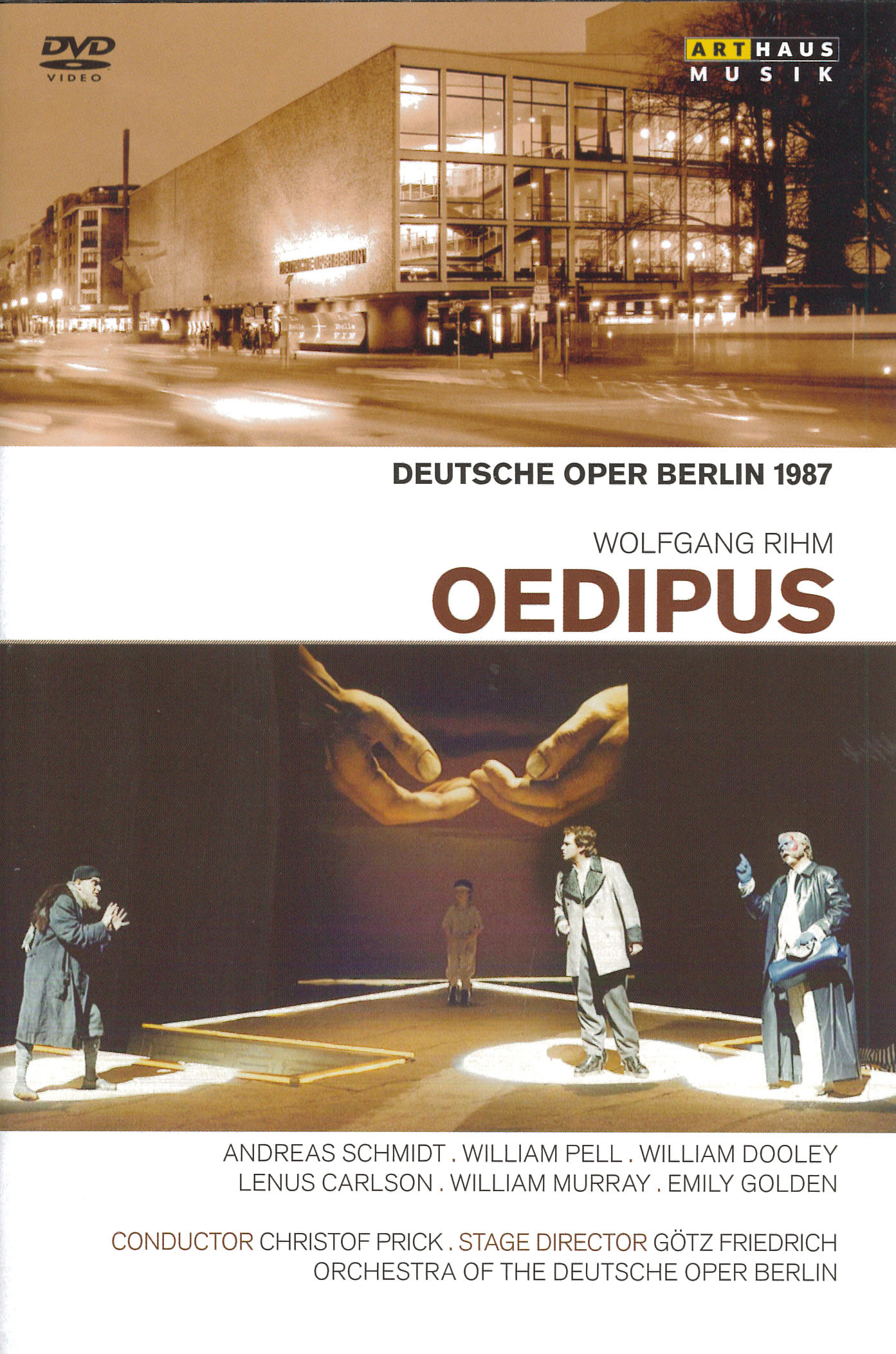
03 Tote StadtBefore he came to Hollywood in 1934, Erich Wolfgang Korngold (1897–1957) was lauded as a child prodigy and then as a prodigious composer. One of his more renowned operas was Die Tote Stadt, first performed in 1924 in Berlin with Lotte Lehmann and Richard Tauber in the leads. Korngold’s movie scores are today accepted as classics, Anthony Adverse, King’s Row, The Sea Hawk, Robin Hood and many more, but his operas are rarely mounted. Die Tote Stadt is full of great romantic tunes and falls comfortably on the ear. However, the plot is quite macabre and more than somewhat difficult to grasp. Some of it is real and the rest is in the skewed and haunted mind of Paul, the central figure who, it seems, killed his wife earlier. This 1983 production by the Deutsche Oper Berlin (Arthaus Musik 101656) staged by Gotz Friedrich stars his wife, Karan Armstrong and James King as Paul. The set and costumes are perfect for the 1920s and, at last, the plot is clear ... I think. The conductor is Heinrich Hollreiser and there is a bonus track with Friedrich introducing the opera and clarifying the plot.

04 BrittenReaders with an awareness of historic performers may be wish to spend an hour or so with Benjamin Britten conducting the English Chamber Orchestra on a new DVD from ICA (ICAD 5083). These are live performances from Fairfield Halls in Croydon on December 20, 1964 as telecast in black and white by the BBC. The concert begins with a nifty performance of the Mozart Symphony No.40, quite straightforward but beautifully played with sustained lines. To end the concert Peter Pears joins Britten for a magnificent performance of Britten’s Nocturne Op.60 for tenor, seven obbligato instruments and strings. I have been listening to this work for decades but the intensity of this performance touched me, revealing its true quality. Britten admirers owe it to themselves to hear and see this outstanding performance. There are two bonus tracks in full colour from a concert at The Maltings on June 5, 1970, in which they play the Adagio and Scherzo from Mendelssohn’s Scottish Symphony.

05 HarnoyOne of the most pleasant CDs to come my way recently is Ofra Harnoy and Friends (DOREMI DHR 6609). The selections were recorded during the 1980s and 1990s but most are new to her discography. Repertoire ranges from Vivaldi to Gershwin via Mozart, Beethoven, Rimsky-Korsakov, de Falla and several lesser known names. She impresses by her versatility in adapting to the various styles, projecting the joy of music making in whatever the repertoire. It is also evident that her enthusiasm is shared by her colleagues. Harnoy was popular with young audiences and with her special appeal had drawn them into classical music. She was, as they say, a natural! Before her retirement from the concert stage to raise a family, the cellist had close to 40 discs listed in the Schwann catalogue. Additionally hers was a familiar name on Billboard’s International Best Sellers charts. Included on this refreshing compilation are performances with Igor Oistrakh in the Vivaldi Double Concerto RV546 and Maureen Forrester in Massenet’s delightful Élégie. An enjoyable 80 minutes.

01-WattaWestonCD002Dialogues in Two Places
Trevor Watts; Veryan Weston
Hi4Head Records HFH 010D (www.hi4headrecords.com)

Confirmation of the Guelph Jazz Festival’s increasing importance on the international scene is this significant 2-CD set by British saxophonist Trevor Watts and pianist Veryan Weston. Both men have helped define improvised music since the 1970s, and during a rare North American foray in 2011, recorded one CD in Guelph and the other in Toledo.
               
Nationalism aside, the two appear more assured north of the border, with the climax, Cardigan, a 32 minute intermezzo. Three months earlier in Ohio they distributed their aleatoric and dextrous efforts among six much shorter improvisations. Playing both soprano and alto saxophones, Watts’ tone is sequentially taut, peeping, staccato and agitated in Toledo, while Weston’s lines encompass both formal pianism and near-splintered tremolo dynamics to extend and pivot the performances. Toledo’s high point appears on Glenwood. Here a contrapuntal intersection displays the saxophonist’s mercurial skills at speedy and slow tempos while compressing tones for nuance and colour. Also featured is the pianist initially accelerating, then halving the accompaniment, while moving from high-intensity chording and pounding to edgy soundboard and string plinking patterns.
               
Practically an invention on its own, Cardigan dramatically conveys the veterans’ familiarity with each other’s sound strategies and their ability to parry and thrust in split second intervals. The initial variations find Weston’s kinetic pumps, clips and unexpected octave jumps prodding Watts to move from reed bites and snorts into broken octave, aviary-like tremolos as the two explore the tune in tandem. By the exposition’s midpoint, metronomic keyboard cascades embolden the saxman to unleash a variant of circular breathing which culminates in juddering bagpipe-resembling tremolos. Soon afterwards Weston’s playful variations in the piano’s bass clef sustain the rhythm as he splays sharp harmonies. Leading to the finale, further developments find Watts echoing and shaking grace notes to affiliate with the pianist’s now low frequency, slow-paced chording. By the end pinched oboe-like reed bites replace an ocean-wide vibrato as Weston’s meticulous keyboard framing leads to parallel diminuendo.
               
Before a short encore, the applause from the Guelph audience is almost as protracted as the length of some of the Toledo tracks.

Back to top