In Memoriam Richard Truhlar
(February 14, 1950 – September 17, 2013)

editors cornerRichard Truhlar was a man of broad horizons. When I first met him I was still in high school and he, four years my senior, quickly became my mentor in both literature and music. It was through him that I discovered the vast riches of contemporary fiction; my first exposure to the labyrinthine works of Thomas Pynchon, Kobo Abe, Julio Cortázar and Alain Robbe-Grillet. In music Richard had very catholic tastes and a vast knowledge of the classical repertoire. But more important to me was his interest in the work of 20th century composers. It was through him that I first encountered the music of Takemitsu, Penderecki, Messiaen and the world(s) of electronic music. But Richard’s world extended to earlier times as well and I remember his fascination with Elgar’s Dream of Gerontius and his affection for the music of Delius. His interests also reached well beyond the classical realm, with a wealth of knowledge of the alternative rock scene. I remember when I was house-bound with a broken leg in 1985 Richard made me a wonderful compilation tape of music by Brian Eno, Robert Fripp, David Sylvian and others which kept me in good company in those claustrophobic days of confinement and opened my ears to new worlds. Our relationship spanned a number of technologies, from the LPs we spent late nights listening to, through the cassette age of self-produced recordings and compilations, into the digital age. It was Richard who gave me my first compact disc — a recording of Schoenberg’s Verklärte Nacht performed by the Ensemble InterContemporain under Pierre Boulez.

Richard Truhlar was a poet, writer of fictions, visual artist, text/sound/musical composer and performer, editor and publisher; a true renaissance man. His main contribution to the artistic community, beyond his own writings and compositions, was as a publisher. This is true in both the literary and musical worlds. In the early years he published chapbooks under his own imprints of Teksteditions and Underwhich Editions. This latter also had an audio arm producing cassette tapes of electronic and text-based music and sound poetry in the Audiographics series. While admittedly featuring much of his own creative output, I would emphasize that this was not vanity publishing but rather a fully professional enterprise featuring the work of a variety of artists from around the country and even across the world. It was Richard’s experience in producing and successfully distributing this esoteric music that led me to recommend him for a position at the Canadian Music Centre when I learned that the coordinator of the Centrediscs label was leaving. Richard had previously told me that he never stayed at a job for more than seven years so neither of us suspected that this would turn out to be such a good fit that he would stay at the CMC for two and a half decades.

During that time he oversaw the production of more than 120 compact discs running the gamut of art music in this country. Some of the highlights were the then Complete String Quartets (i.e. the first five) of R. Murray Schafer with the Orford Quartet in its final recording; the Canadian Composer Portraits series, surely one of the most important documents of Canadian musical history; A Window on Somers celebrating the life and music of Harry Somers, and a number of discs devoted to the work of Ann Southam. Talivaldis Kenins and Gilles Tremblay were also particular favourites, but Richard’s efforts were not restricted to the senior generation of composers. Among the many projects realized under his direction were discs devoted to mid-career composers Alice Ho, Christos Hatzis, Alexina Louie and James Rolfe to name just a few, and younger composers such as Chris Paul Harman, Melissa Hui, Jeffrey Ryan and Nicole Lizée had their first commercial releases on Centrediscs. There were also discs too many to innumerate of choral, chamber, orchestral, instrumental and electronic music by Canada’s most creative artists.

While the mandate of the Centrediscs label is restricted to promoting the work of the Canadian Music Centre’s associate composers, Richard’s vision was again much broader. Concurrent with his activities as the Centrediscs coordinator, he expanded the Canadian Music Centre Distribution Service, providing global access to an extended catalogue of Canadian alternative and art music encompassing many genres not otherwise represented by the CMC.

Although very private and somewhat reclusive in his personal life, Richard was a man of vision and creative energy who touched the lives of many. As testified by a host of friends and colleagues from across the arts community at his memorial service, Richard Truhlar was highly respected, greatly loved and will be sorely missed.

You can read more about Richard’s life and work at richardtruhlar.com and his most recent publishing activities at teksteditions.com. 

—David Olds, DISCoveries Editor

discoveries@thewholenote.com

01-Bud-RoachSospiro: Alessandro Grandi –
Complete Arias, 1626
Bud Roach
Musica Omnia mo0506
musicaomnia.org

Grandi’s songs were highly popular in Venice in the 1620s. Here they are played as they would have been — for solo voice and instrument. In this case, tenor Bud Roach accompanies himself on the five-course Spanish guitar that created real competition for both lute and theorbo. From the start, Roach interprets a much-maligned genre by combining a sensuous set of lyrics with the strumming technique (in Italian, stile battuto) offered by the Spanish guitar of that period. He brings a real vigour and animation to this CD.

It is always tempting to associate this genre with a lovesick young man describing his anguish over unfulfilled love. From track two alone, Grandi’s young man laments the pain he feels from Chloris, Lilla, Flora and a whole host of nymphs! For a really sensuous approach, listen to the lyrics of È si grave‘I tormento, the anguish of the words accompanied by expressive yet measured guitar accompaniment. And for those who are totally disillusioned, you are not alone — Sotto aspetto ridente warns of “a hidden, deadly poison. Don’t believe in Love!”

Roach displays his own vocal versatility in songs such as Consenti pur e ti pieghi, which tests his higher ranges. His skill with the baroque guitar needs no further comment. Quite simply, this is a comprehensive rendition of Grandi’s multi-faceted arias, which demand and receive a multi-faceted performance from Roach. He himself acknowledges his inspiration from one of the very greatest period-performance musicians, the much-loved James Tyler, whose research into the earliest guitars has proved invaluable in bringing this genre to modern audiences.

02a-Handel---Orlando02b-Handel---AlessandroHandel – Orlando
Owen Willets; Karina Gauvin;
Allyson McHardy; Amanda Forsythe; Nathan Berg; Pacific Baroque Orchestra; Alexander Weimann
ATMA ACD22678

Handel – Alessandro
Max Emanuel Cencic; Julia Lezhneva; Karina Gauvin; Xavier Sabata;
Armonia Atenea; City of Athens Choir; George Petrou
Decca 4784699

Ariosto’s early 16th century epic, Orlando Furioso, has been a real quarry for opera composers and their librettists. The earliest was by Giulio Caccini, in 1625, and altogether more than 90 operas have been based on Ariosto. Handel composed three: Orlando in 1733 and Ariodante and Alcina both in 1735. In Orlando two important roles were added to what Ariosto had provided: the shepherdess Dorinda first appeared in a 1711 opera with music by Domenico Scarlatti (the music is now lost), while the wise and benevolent magician Zoroastro, a Sarastro figure, is essentially Handel’s invention.

The orchestra on the CDs of Orlando is the Vancouver-based Pacific Baroque Orchestra. It includes several musicians familiar to Toronto audiences: the violinists Chantal Rémillard and Linda Melsted and the lutenist Sylvain Bergeron. The quality of their playing is matched by the quality of the singing. Several of the singers are Canadian: the soprano Karina Gauvin, the mezzo Allyson McHardy and the bass-baritone Nathan Berg. There is also a fine performance of the shepherdess Dorinda by the American soprano Amanda Forsythe. Orlando is sung by the young English countertenor Owen Willetts; he is a revelation. I have some reservations about the casting of Berg as Zoroastro. Although Berg is an accomplished singer, the role could do with a deeper bass. It was written for the famous Antonio Montagnana and, among modern singers, David Thomas comes closest to capturing the qualities Montagnana must have had. Thomas can be heard in the complete recording of the opera conducted by Christopher Hogwood and also in the Harmonia Mundi recital record (no longer available), Arias for Montagnana.

The earlier opera, Alessandro (Alexander the Great), is sometimes seen as heroic, whereas Orlando has been labelled magical. Both labels are misleading. In Orlando Handel is more concerned with exploring Orlando’s madness and the interactions between the characters than with Alcina’s magical world. AlthoughAlessandroopens in a suitably martial manner, much of the rest of the opera focuses on the way Alessandro is torn between two women and on the rivalry between them. That rivalry mirrors that of the singers for whom the parts were written, Francesca Cuzzoni and Faustina Bordoni, “the Rival Queens.” On this recording their parts are very well taken by Karina Gauvin (as the Scythian princess Lisaura) and Julia Lezhneva (as Rossane, Alessandro’s captive). It also features two superb countertenors, Max Emanuel Cencic as Alessandro and Xavier Sabata as the Indian King Tassile. I would recommend both recordings to anyone interested in Handel or baroque opera.

Concert Note: Isabel Bayrakdarian will impersonate both Rival Queens in a series of concerts with Tafelmusik April 9 to 13.

03-Mozart-CosiMozart – Così fan tutte
Persson; Brower; Plachetka; Villazon; Erdmann; Corbelli; Chamber Orchestra of Europe; Yannick Nézet-Séguin
Deutsche Grammophon 4790641

This opera buffa with wonderful symmetry of three men, three women, two sisters, two lovers and two “cads” is one of Mozart’s most enduring. He was not, however, the first one to try to set the libretto by Lorenzo da Ponte, who also wrote Don Giovanni and Le nozze di Figaro. It turns out that none other than Antonio Salieri tried his hand at this opera of intrigue, betrayal and happy ending. Alas, Salieri gave up after just a few duets had been scored and Mozart had the green light to add yet another gem to the operatic repertoire. The title (sometimes translated as “Such are all women”) frequently raises the feminist ire, but a closer reading (and better translation: “They All Do It”) quickly diffuses the argument.

It is about the games people in love play — and the male protagonists emerge not only humbled, but also shamed. What is of particular interest in this recording is the assured conducting of the Quebec wunderkind, Yannick Nézet-Séguin, who is rapidly establishing a reputation as a go-to operatic conductor. His appearances at the Met and elsewhere are greeted with uniform praise. Another point of interest is the participation of Rolando Villazon. The Mexican tenor, after a brilliant debut and a string of successful roles, had to undergo vocal cord surgery — every singer’s nightmare — in 2009. Unfortunately, as recently as April of 2013 he had to cancel a number of appearances due to ongoing vocal problems. It has to be said that his voice is not fully recovered, but in this recording cannot be faulted.

04-LabyrinthPeter von Winter – Das Labyrinth
Christof Fischesser; Julia Novikova;
Malin Hartelius; Michael Schade;
Thomas Tatzi; Mozarteumorchester Salzburg; Ivor Bolton
ArtHaus Musik 101 677

If you did not know that The Magic Flute had a sequel, you are not alone. Despite the three decades of successful productions after its 1798 premiere in Vienna, Das Labyrinth disappeared from the stages, it seemed, for good. After the success of The Magic Flute, Emanuel Schikaneder, ever the impresario and driven by profit as often as by art alone, sensed the public’s appetite for more. The libretto was the easy part — still fantastical and baroque, and yet more down to earth in character descriptions, making them more ambiguous and human. But what of the music? With Mozart’s death, it wasn’t possible to find another composing genius to take on the task. Enter Peter von Winter, acclaimed composer of the era, in service to the Bavarian court. He took a surprisingly fresh approach — only a few homages to Mozart, a playful re-interpretation of Papageno’s tune, but other than that — original, definitely romantic music.

Truth be told, the re-animated Queen of the Night does not scale coloraturas comparable to those of Mozart. Neither is Sarastro the stentorian announcer of what’s right and true. The frantic set changes were Schikaneder’s way of dazzling the audience and seem unnecessary now. This Salzburg production, only the second this century, however, proves that Das Labyrinth is a worthy companion piece and ideally presented side by side, or more cheek by jowl, with The Magic Flute — as Schikaneder intended.

It may yet happen — there are two new productions of the opera planned for this season in North America alone!

05-Wagner-Rheingold-GergievWagner – Das Rheingold
René Pape; Nikolai Putilin;
Stephan Rugamer; Mariinsky Orchestra; Valery Gergiev
Mariinsky MAR0526

When Valery Gergiev and his Mariinsky Orchestra mounted a new production of Wagner’s monumental Ring Cycle in 2003, the event marked the return of Russians performing opera in the original language rather than in the vernacular. The entire project was acclaimed, leading to the company taking their production to Germany, Japan and elsewhere, including the Royal Opera House, Covent Garden and New York’s Met.

The critics were not unanimous but, as I seem to recall, the sets contributed to a diversity of opinions. However, in an audio cycle, our sole concern is the performance, not the production.

These new recordings were made in the Mariinsky concert hall in two sessions, two years apart. From the first minutes it is eminently clear that this will be a powerful performance and as the story unfolds Gergiev and his cast let us know that, except for the teasing Rhine Maidens, these characters are a pack of disingenuous narcissists, not models of good behaviour and fine sensibilities. Their métier is deceit and deal-making and deal-breaking. We know that is bad karma as they will find out by the end of the complete cycle when only the Rhine Maidens survive to have the last laugh.

As with any music he conducts, Gergiev is absolutely faithful to the score, a quality that has pros and cons. In Stravinsky, for example, his performances are outstanding but his Mahler symphonies are glaringly unidiomatic, a quality much admired by many. Gergiev’s orchestra is easily up to Wagner’s demands; accurate, dynamic and secure, together with being finely balanced. The only familiar voice is the German bass René Pape as Wotan; the other soloists are Russians who all bring their characters to life, singing without any discomfort in German, except for a glaring lapse from Alexei Markov (Donner) who repeatedly sings “Donner, de Herr” instead of “Donner, der Herr” as he summons the mists. A miserly observation indeed, one that does not detract from this extraordinarily exciting beginning of this ambitious undertaking to which I now look forward with the highest expectations.

I mentioned the quality of the orchestra which is captured in demonstration quality sound by a Russian team under the supervision of ex-Decca, award-winning producer James Mallinson who also does the same for the London Symphony’s and Chicago Symphony’s own recordings. The layout from left to right and front to back is the ultimate in realism for orchestra and singers ... a touchable reality.

I have since received a copy of Die Walküre which was issued earlier this year and reviewed by Janos Gardonyi in April. I somehow missed his review at the time but as I read it now I see that he was as enthusiastic as I. Do check it out. A few comments though ... Jonas Kaufmann’s Siegmund is far ahead of what we saw from the Met two seasons ago. Although Gergiev displays much empathy with the characters, he keeps everything pertinent and free from any hyperbolic heart-on-the-sleeve moments that divert our attention from the linearity of the plot. Performances such as this demonstrate, to me at least, that not a note of Die Walküre is wasted or superfluous. As in Das Rheingold, the recorded sound is wondrous; a convincing argument that a recorded concert performance is sonically superior to a live opera house recording. There is a world of difference between the sound of an orchestra in the pit from the expansive freedom and air on the stage. We look forward to Siegfried and Götterdämmerung to be released towards the end of 2014.

06-Britten---Peter-GrimesBritten – Peter Grimes
John Graham-Hall; Susan Gritton; Christopher Purves; Felicity Palmer; Catherine Wyn-Rogers; Teatro alla Scala; Robin Ticciati
Opus Arte OA 1103 D

The year 1945 saw the premiere of what many consider the greatest of English operas to date, Benjamin Britten’s Peter Grimes. The harrowing tale of a fisherman whose apprentices suffer mysterious deaths at sea was quickly taken up internationally, with Milan’s La Scala mounting a production in 1947. The present DVD brings us their latest staging, featuring a predominantly English cast and production team. John Graham-Hall plays the demanding leading role of Grimes as a paranoid wreck of a man with little suggestion of the commanding malevolence the late Jon Vickers brought to the role. Though his reedy voice is bright enough to fill the hall and his interpretation is effective in its own terms, Graham-Hall has a bit of trouble finding his notes at times, especially if a large interval is involved. The supporting cast is rock solid however, with Susan Gritton as Ellen Orford and Christopher Purves as Captain Balstrode both excelling in their roles as Grimes’ only friends amongst the hostile hypocrites of the fishing village. The massive choral passages so vital to this work are commanding, though it would be wise to turn on the English captions as the diction of the Italian chorus is sometimes a bit mushy (oddly, there are no Italian subtitles offered on this disc).

The orchestra pit at La Scala is larger than most, allowing a luscious string section to bloom under the assured leadership of the rising young British conductor Robin Ticciati. Perversely, director Richard Jones has opted to move the time frame of this fishy tale from coastal Britain of 1830 to the urban blight of U.K. council housing of the 1980s. The money saved on costuming was evidently passed on to movement co-ordinator Sarah Fahie, who gingers up the strutting local yobs and mini-skirted strumpets with some risible disco-era booty shaking. The only visible evocations of the sea are limited to incongruous flocks of stuffed seagulls perched hither and yon. Set designer Tom Pye contributes clever articulated boxes which sway effectively from side to side in the strobe-lit storm scene. Video and sound quality are both excellent. Despite my reservations about the wacky stage direction this is a production well worth a look.

Concert Notes:The Canadian Opera Company presents seven performances of Peter Grimes from October 5 to 26 at the Four Seasons Centre. James Ehnes performs Britten’s Violin Concerto with the Toronto Symphony Orchestra under Stéphane Denève’s direction on October 10 and 12 at Roy Thomson Hall. (See Editor’s Corner in our June 2013 issue for a review of Ehnes’ recording of this concerto with the Bournemouth Symphony.)

07-La-Voix-HumainePoulenc – La Voix Humaine
Felicity Lott; Graham Johnson
Champs Hill Records CHRBR045

La Voix Humaine, the third and last opera written by Francis Poulenc, is based on the play by Jean Cocteau and well known as the solitary “tour-de-force” for any soprano gifted with an acting ability. The piece is a bit of a curiosity, as Poulenc apparently detested all “mechanical” forms of communication, preferring face-to-face encounters. The lonely voice of a woman, whose lover’s cruel comments we can only imagine, is a surprisingly relevant tale now, in the age of text-message and Facebook breakups. The inherent inability (as Cocteau insisted) of two human beings to fully communicate causes the piece to be touching, irritating and sorrowful in parts.

The novelty of this recording is that it eschews the traditional Poulenc orchestration in favour of solo piano accompaniment. It is the first time (since Poulenc’s own performances, accompanying Denise Duval over 50 years ago) that permission has been given for La Voix Humaine to be recorded with piano accompaniment. Rosine Seringe, the composer’s niece, has granted a special dispensation to Felicity Lott and Graham Johnson — as a token of decades of special friendship between the artists and the Poulenc Estate — for this work to be produced (according to Champs Hill Records).

Does it change the work significantly? I would insist that yes, it is a different La Voix Humaine — a lonelier, sadder, but by no means less satisfying experience.

09-Sounzscapes-of-our-LandsSounZSCApes: From Our Lands
Toronto Children’s Chorus; Elise Bradley
Marquis MAR 439

Following in the footsteps of Jean Ashworth Bartle (who founded the Toronto Children’s Chorus and shaped its sound for 29 years), Elise Bradley emigrated from New Zealand in 2007 to take the helm. This recording honours her journey with a collection of songs from both New Zealand and Canada, including Maori chants alongside compositions celebrating the traditions of Canadian First Nations peoples. Other Canadian favourites such as Song of the Mira and songs by Eleanor Daley and Srul Irving Glick, are paired with New Zealander Dorothy Buchanan’s Peace Song as well as many other compositions, sacred and secular, from both countries.

One continues to be struck by the disciplined care that goes into shaping the sound of young voices in this choir as well as the juxtaposition of seasoned musicians recruited to accompany, teaching excellent musicality to the choristers by example. In this recording the children perform with (amongst others) organist Christopher Dawes, TSO principal oboe Sarah Jeffrey and clarinettist Joaquin Valdepeñas. Elise Bradley hopes to share this music by taking the choir to her native country in the near future; I’m sure they will enjoy the partnership (and the chorus) just as much as we do here.

08-SoldatenZimmermann – Die Soldaten
Laura Akin; Gabriela Beňačková;
Renée Morloc; Daniel Brenna;
Tomasz Konieczny; Alfred Muff;
Wiener Philharmoniker; Ingo Metzmacher
EuroArts 2072588

Salzburg’s Felsenreitschule, a 17th-century riding school carved into a cliff, makes a brilliant setting for this must-see production of Bernd Alois Zimmerman’s landmark opera. It was filmed at the 2012 Salzburg Festival, where director Alvis Hermanis staged the non-stop action in front of a series of archways, with live horses parading around behind.

Die Soldaten (The Soldiers) tells a bleak, violent story. But Hermanis avoids sensationalizing it, and instead takes a poetic approach. So at key moments, like the pivotal rape scene, his dramatic use of the bales of hay that are strewn around the stage makes the impact all the more powerful.

The cast is stellar. But it’s Laura Aikin’s tour-de-force performance as Marie that ultimately grabs attention. It’s not just her fearless delivery of the treacherously jagged vocal lines. Her characterization of a naive young lady who is just trying to get ahead is utterly convincing, even when, at the end, she is so brutalized by the soldiers that her own father doesn’t recognize her. Right from the explosive opening chords, the Vienna Philharmonic under Ingo Metzmacher projects the vivid colours and textures that make this opera, now 50 years old, sound thoroughly contemporary.

Unfortunately there are no views into the huge orchestra, while the stage is too often filmed in close-up. When Marie walks across a tightrope suspended high above the stage, it is filmed so closely that it’s evident she’s an acrobatic double dressed as Marie, undermining the potent image of Marie balanced precariously on a high-wire.

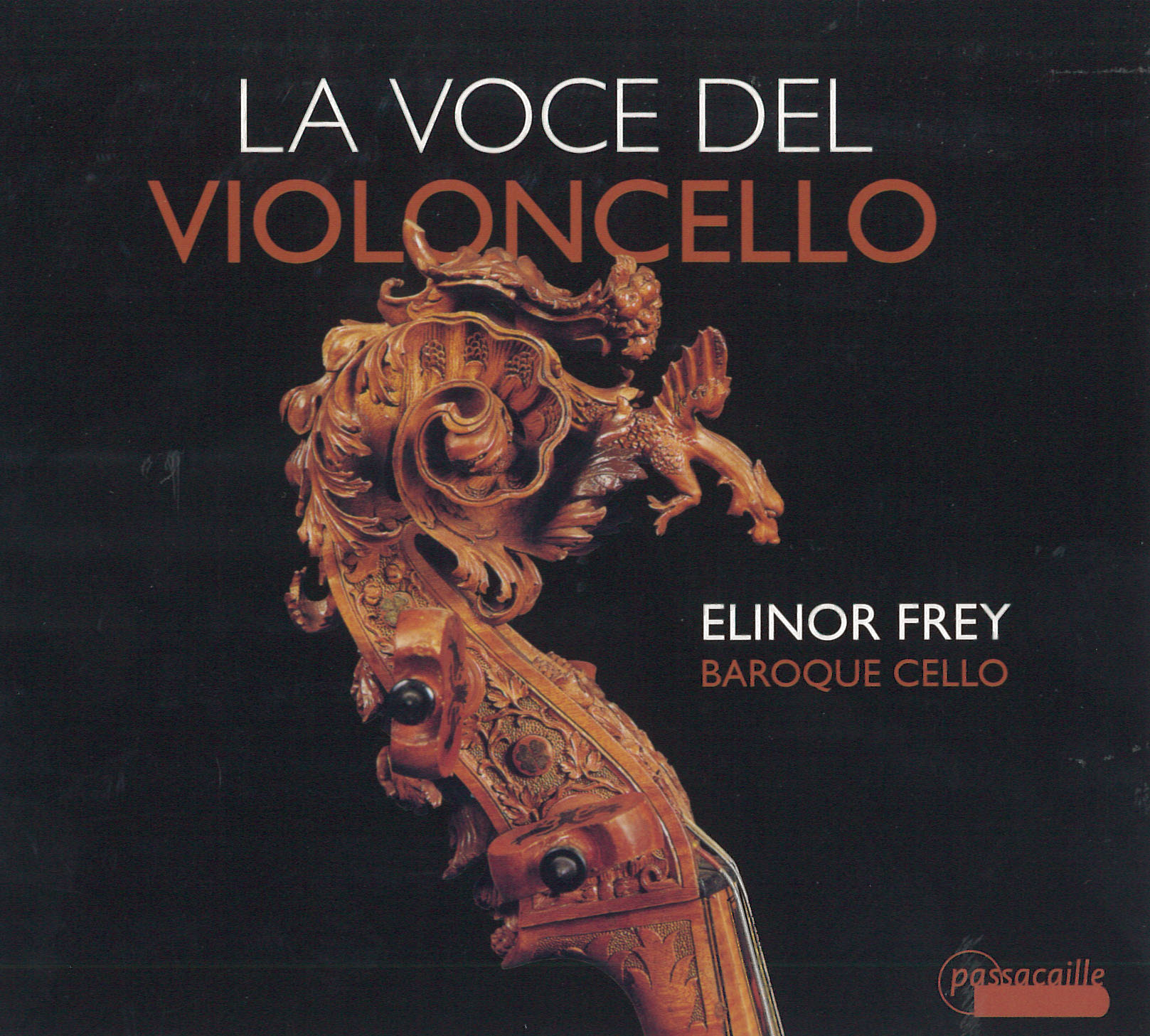
01-Voce-VioloncelloLa Voce del Violoncello: Solo Works of
the First Italian Cellist-Composers
Elinor Frey; Esteban la Rotta; Susie Napper
Passacaille 993
passacaille.be

The program of this very welcome new disc spotlights the earliest solo repertoire for the violoncello, dating from the mid-1600s to the first half of the 18th century in Italy, showcasing music by Colombi, Vitali, Galli, Ruvo, Domenico Gabrielli, Dall’Abaco and Supriani. Not household names to be sure, but they all wrote some great music for the cello — and in Elinor Frey, they have an advocate of the first order.

As one might expect from a recording of early Baroque music, many shorter pieces are featured here: ricercars, toccatas, capriccios, short sonatas and a few pieces on dance basses. Most are unaccompanied, with a few accompanied in tasteful fashion by theorbo or guitar by Esteban La Rotta, or by the continuo team of La Rotta and cellist Susie Napper.

The variety of this well-paced program makes for intriguing listening, as does the use of various historical tunings and pitches — what a palette of colours! Vitali’s lovely Bergamasca and Passa galli, Giulio de Ruvo’s diminutive Romanelle and Tarantelli, Dall’Abaco’s sonatas and Colombi’s Ciaccona were my personal favourites the first time around, but as I revisit this CD I’m sure that every piece will get its turn in the limelight. What a pleasure. Frey’s playing is adroit, expressive and engaging; and she also appears to have the happy ability to marry her own voice to those of the composers, rather than getting in their way.

02-Bach-StringsBach – Reconstructions and
Transcriptions for Strings
Furor Musicus; Antoinette Lohmann
Edition Lilac 110910-2
editionlilac.com

When I first learned of this disc, I had it in my mind that it was no more than a compilation of Bach arrangements along the lines of those overly lush and romantic versions as orchestrated by Leopold Stokowski c.1958. On the contrary, nothing could be further from the truth on this Edition Lilac label CD titled Reconstructions and Transcriptions for Strings with music by the Leipzig cantor stylishly presented by Furor Musicus under the direction of Antoinette Lohmann.

Formed by Lohmann in 2008, Furor Musicus comprises a group of Dutch musicians who have all played together in various other ensembles over the years and who wished to continue to perform music from the Baroque period. This is a delightful disc featuring four works, the Orchestral Suite No. 2 BWV1067, a short fugue, the Concerto BWV1053 and seven movements from the famous Goldberg Variations, all the pieces in the form of reconstructions or transcriptions that could have existed for strings.

Lohmann points out that the suite — most often heard performed by flute and strings — was probably based on an earlier work written a whole tone lower and conceived for strings alone. With all due respect to flutists, this interpretation is utterly convincing, the ensemble achieving a wonderful sense of poise and transparency. On the other hand, the concerto is most often heard performed by keyboard, although Bach’s original intentions remain unclear. Nevertheless, Lohmann’s skilful and elegant performance on the viola in the solo part seems very natural, and that Bach was a violist himself makes for a convincing argument that he may well have intended this concerto for his own use. The two remaining pieces — the short Fugue BWV539 and seven movements from the Goldberg Variations— are both transcriptions, and once again demonstrate a keen affinity for the music and further proof that under Lohmann’s careful direction a baroque string ensemble is a viable means of enjoying this well-known fare.

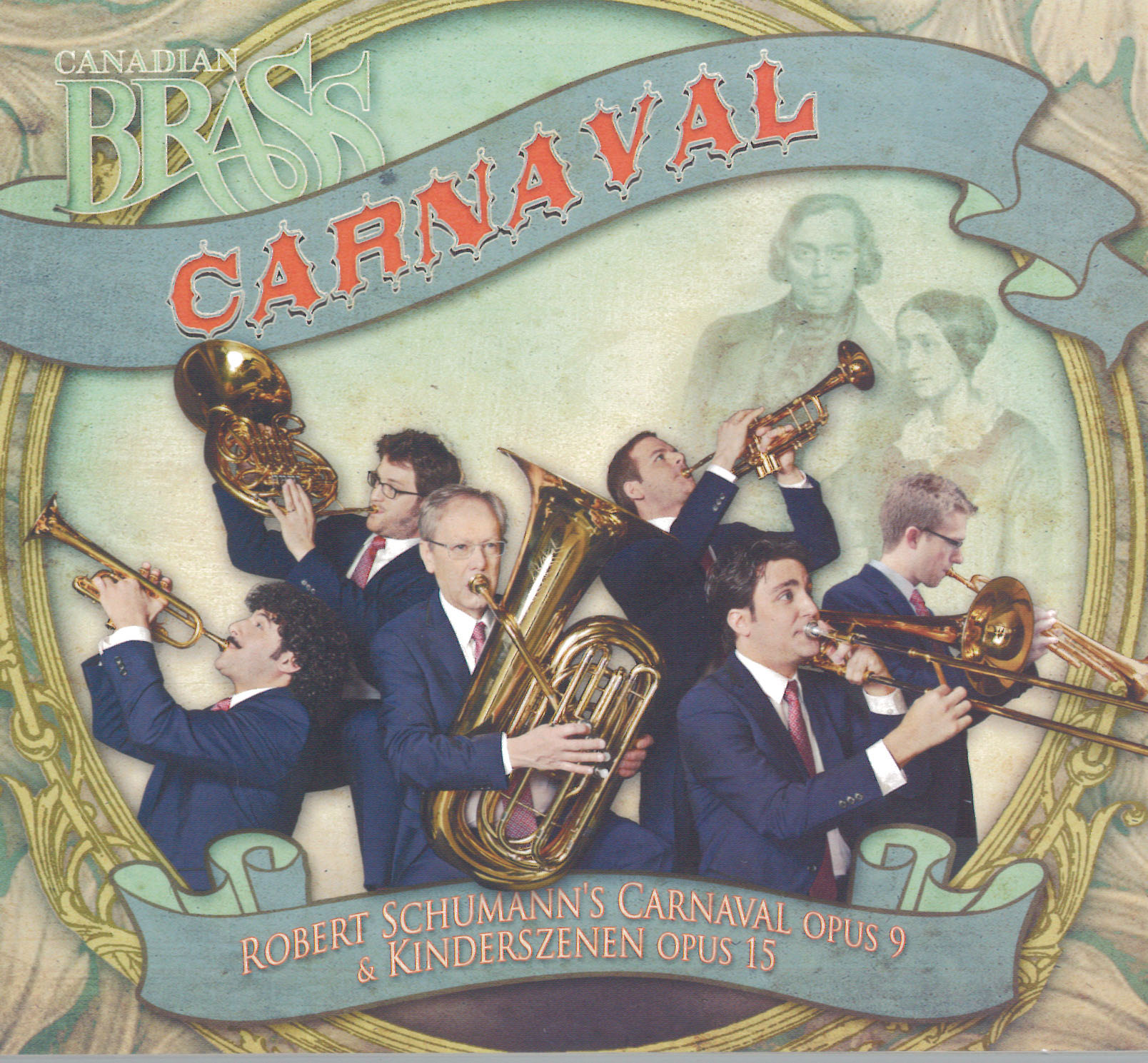
02-Canadian-BrassCarnaval – Robert Schumann’s Carnaval and Kinderszenen
Canadian Brass
Opening Day ODR 7438
openingday.com

The Canadian Brass has their work cut out for them in this recording of brass adaptations of Robert Schumann’s piano compositions Carnaval, Op.9 and Kinderszenen, Op.15.

Both works are mainstays of the piano repertoire, being musically and technically daunting, humbling and gratifying to perform. In these versions by Brass members Chris Colleti and Brandon Ridenour, the same challenges are remarkably conquered.I am familiar with the original piano compositions so I do miss the subtlety of colour and sentiment in both the fast contrapuntal lines and slower melodic sections that the pianist achieves. However, the performances on brass instruments add new elements of expression.

The brass choir sound such as in the opening “Preambule” of Carnaval works extremely well. The technical brilliance of the ensemble is proven again in the speedy Intermezzo: Paganini. Surprisingly, the most “piano specific” movements work the best. In Chopin, the pianistic arpeggio-like lines are transformed into a steady backdrop against the soaring melody. “Traumerei” from Kinderszenen transforms into a brass anthem of contrasting instrumental phrases. Also fun is to hear the low instruments in “Fast zu Ernst” and in the closing cadence of final track “Der Dichter spricht.” I only wish there was more sense of spontaneity and abandon in the performances.

No surprise in the excellent sound quality achieved by recording in Toronto’s Christ Church Deer Park. This is a worthy venue to record in. And this is a worthy recording to listen to.

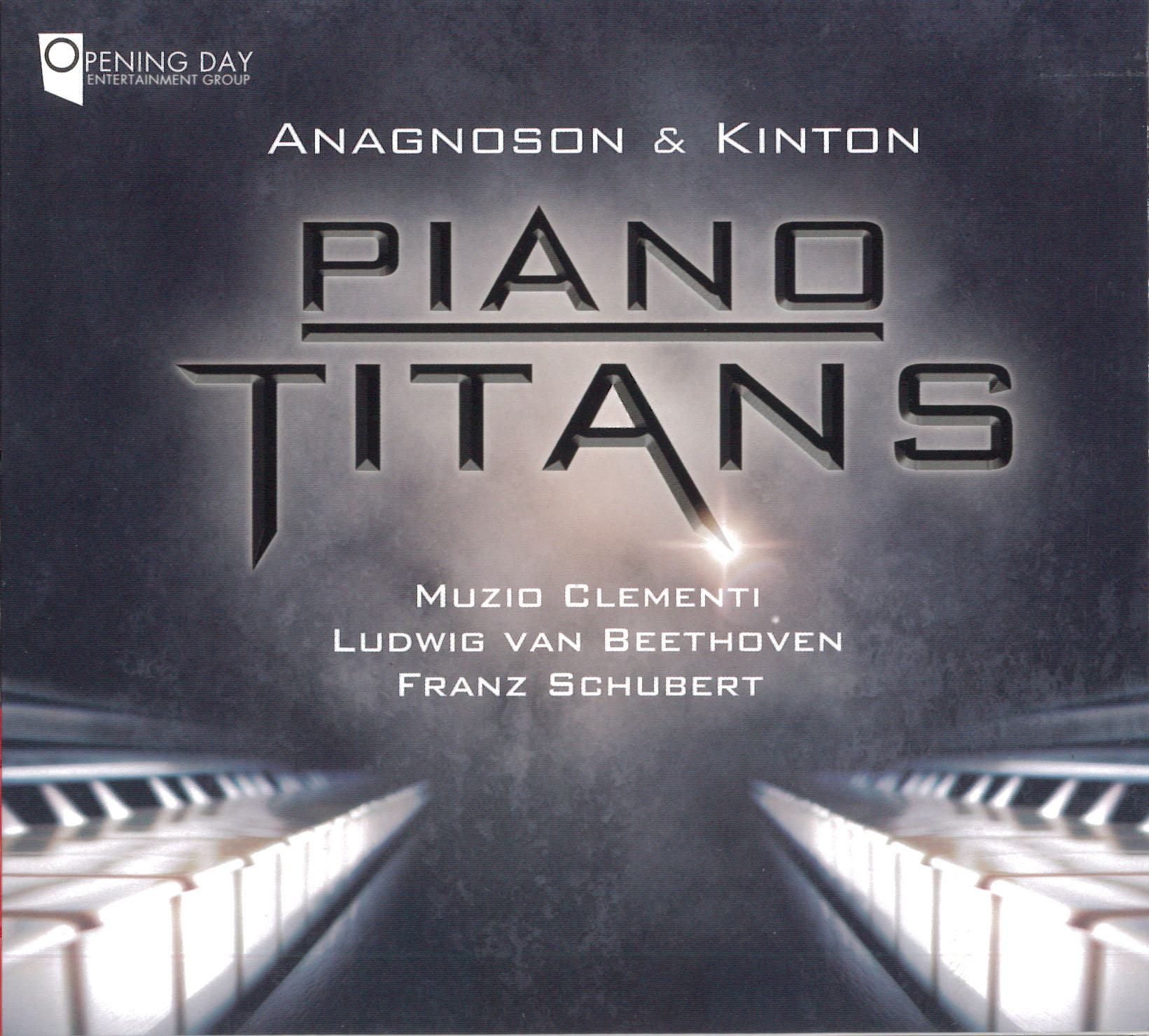
01-AnagnosonKintonPiano Titans
Anagnoson & Kinton
Opening Day ODR 7432
openingday.com

Has it really been almost 40 years that the Toronto-based pianists James Anagnoson and Leslie Kinton have delighted audiences with their exemplary keyboard skills? The two pianists met as students while at the Aspen Music Festival. Nine discs and more than 1,000 performances later, they’re recognized as one of the world’s foremost piano duos and this latest CD, titled Piano Titans with music by Clementi, Beethoven and Schubert, is a testament to their ongoing success.

To be honest, the title may be a bit of a misnomer. While Anagnoson & Kinton could rightly be regarded as piano titans, (as could Beethoven and Schubert), most of the music on this CD — apart from the great Schubert Fantasie — wouldn’t be regarded as “titanic.” Instead, it comprises small musical gems, as pleasing to listen to as they are to perform.

The disc opens with two short piano sonatas by Clementi, famous during his lifetime as a pianist, composer and piano manufacturer. Nowadays Clementi’s works are performed more by students than by professionals, but his music is not without its charm, and the duo does it justice, exhibiting a particular precision and elegance of phrase. Three Marches Op.45 by Beethoven follow, scored for four hands at one piano. Complete with musical depictions of treading feet and drum-roll effects, these pieces are great fun, undoubtedly conceived for performance in amateur Viennese drawing rooms.

Anagnoson & Kinton save the best for last in a compelling performance of the great Schubert Fantasie in F Minor D940. Written for one piano, four hands, the piece is now regarded as one of the finest piano duet compositions in the repertoire. Here the two are in perfect sync, easily capturing the dramatic intensity of the music through a strong and assured performance, thus rounding off the CD in a most satisfying way.

Well done, gentlemen. May you continue to face each other across the expanse of two grand pianos for many years to come!

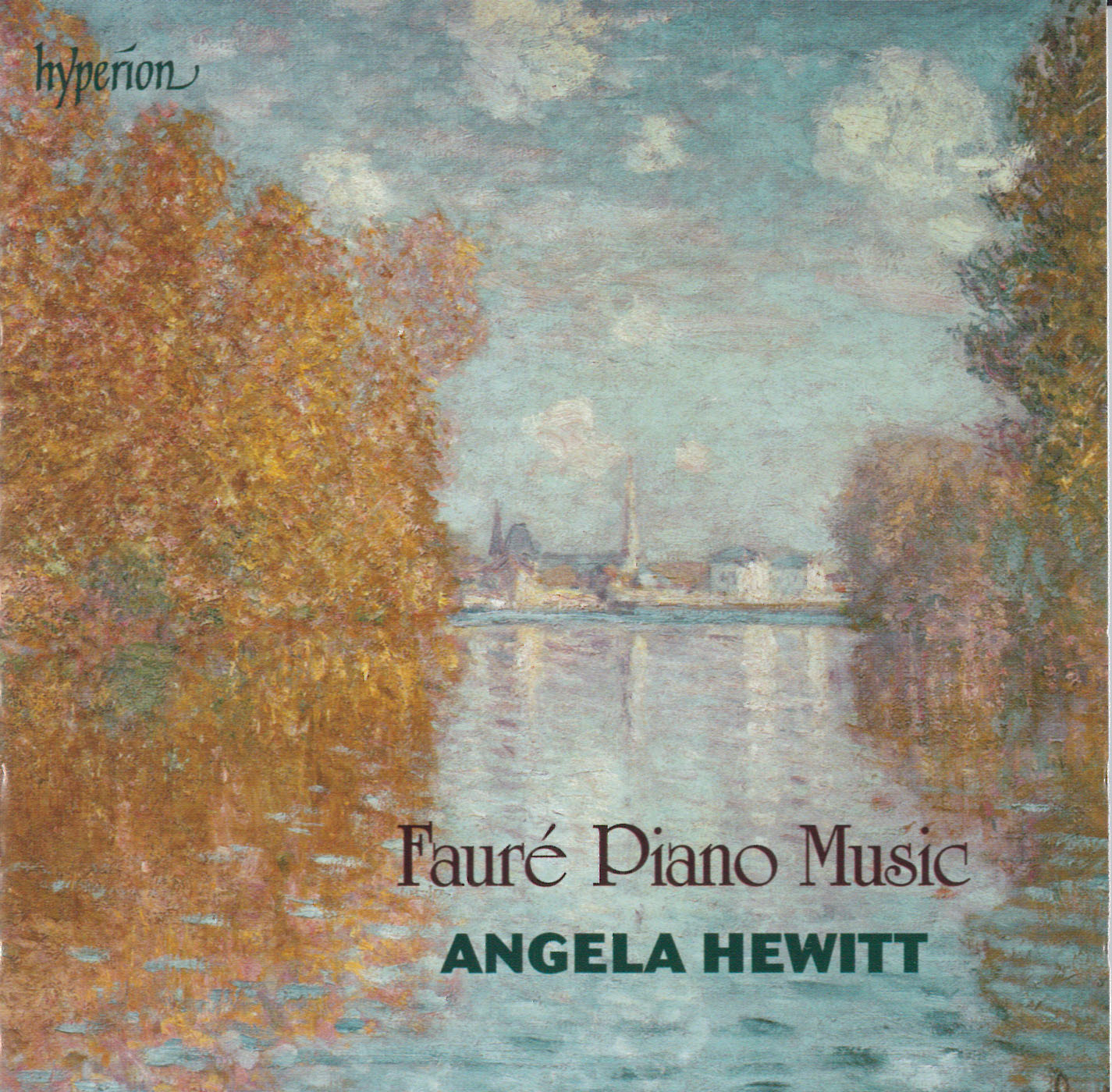
03-Faure-HewittFauré – Piano Music
Angela Hewitt
Hyperion CDA67875

In her informative liner notes, pianist Angela Hewitt writes in her commentary about Gabriel Fauré’s Nocturne No.5 in B-Flat Major, Op.37 that “there is a grace combined with a contained strength behind every note.” This description can also be used to describe Hewitt’s powerhouse performances here.

Thème et variations, Op.73 opens with a march-like statement reminiscent of Hewitt’s Bach performances. The abrupt changes in dynamics from loud to soft are executed perfectly by Hewitt, with heartfelt beauty and an inherent sense of romantic melodic line. Each variation is flowing, clear and spontaneous. After variation 10, Allegro vivo’s dramatic ending, it is Hewitt’s intelligent and emotional interpretation of the more sparse variation 11, Andante molto, moderato espressivo that foreshadows more moving performances of the following two sparkling Valse-caprices and three dreamy Nocturnes. The slightly chromatic nature of the opening melody combined with the darkness of the harmonies of the above-mentioned technically demanding Nocturne No.5 leads to a carefully crafted work of wide-ranging moods. The Ballade pour piano seul, Op.19 is the earliest piece featured. Hewitt’s sense of cadence resolution and manipulation of tempo supports well-defined and tonally colourful melodies and trilling ornamentation.

Hewitt writes that she was first introduced to and learned Fauré’s Ballade as a 15-year-old student. Her decades-long dedication to his work is apparent here. This is not salon music — it is substantial piano repertoire performed unforgettably by a passionate and brilliant pianist.

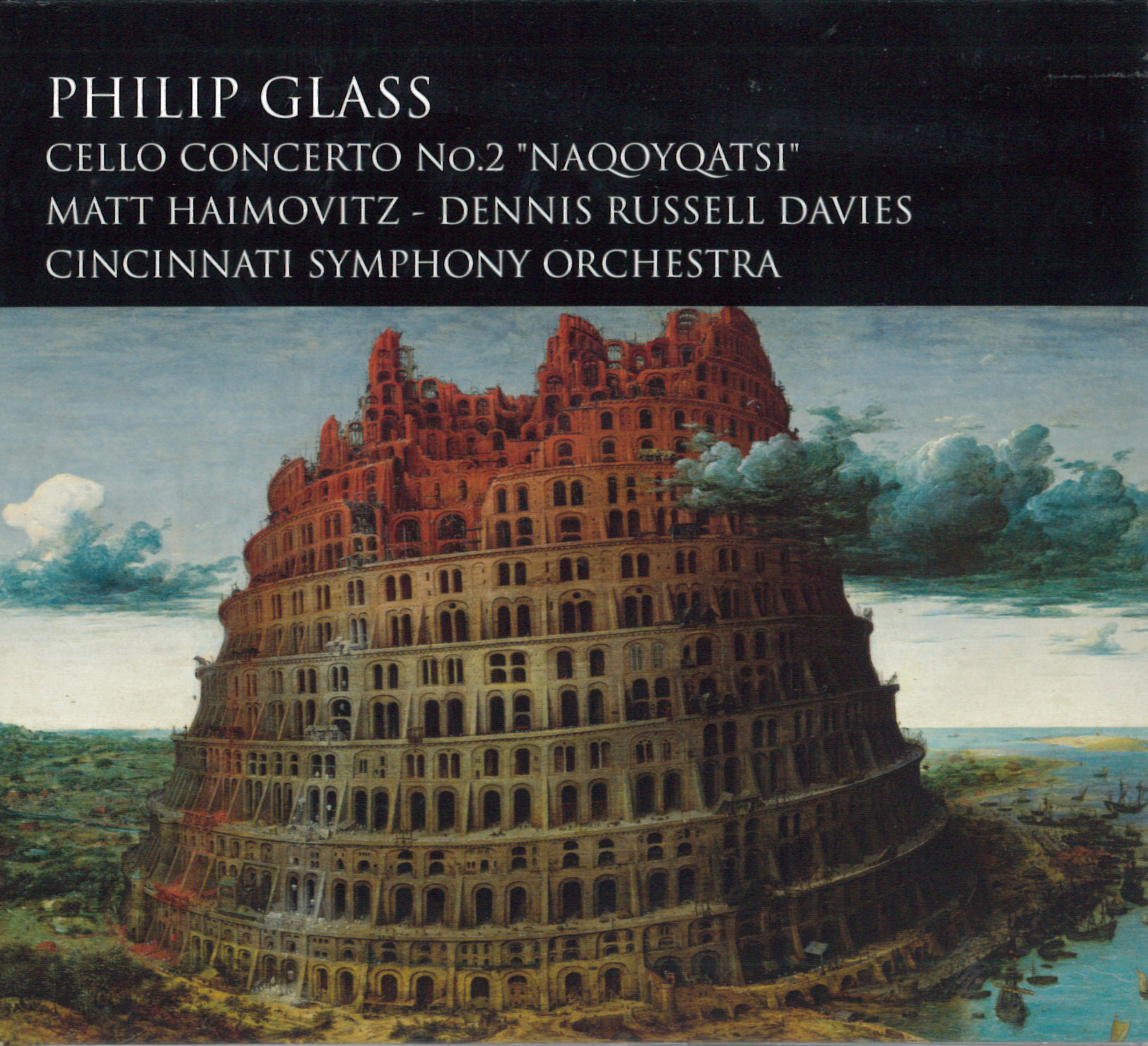
01-Glass-CelloThe terrific Matt Haimovitz is back with another fascinating CD, this time featuring the Cello Concerto No.2 “Naqoyqatsi” by Philip Glass (Orange Mountain Music OMM 0087). Long-time Glass champion Dennis Russell Davies provides excellent support with the Cincinnati Symphony Orchestra.

The bulk of the music dates from the 2002 score Glass wrote for Naqoyqatsi: Life as War, the third film in a Godfrey Reggio trilogy that featured only music and images. The prominent solo cello part was played by Yo-Yo Ma. When Glass became a creative director of the Cincinnati Symphony Orchestra in the 2011/12 season, a commission from the orchestra gave him the opportunity to re-work the film score as a full concerto for cello and orchestra.

It’s not a concerto in the traditional formal or structural sense, but neither is it always what you might expect to hear if you are familiar with Glass’ music. Glass acknowledges that the film’s largely digital images steered him towards “a very acoustic, symphonic piece” which would make the images seem less synthetic and more approachable, thus hopefully making it easier for audiences to connect with the film.

There are seven movements, all shorter than eight minutes in length, with the solo cello third and fifth movements acting as connecting passages within the overall structure. The faster movements certainly have the typical Glass sound, but the cello writing throughout is contemplative and more rhapsodic than virtuosic. Haimovitz plays beautifully throughout this intriguing and highly satisfying work.

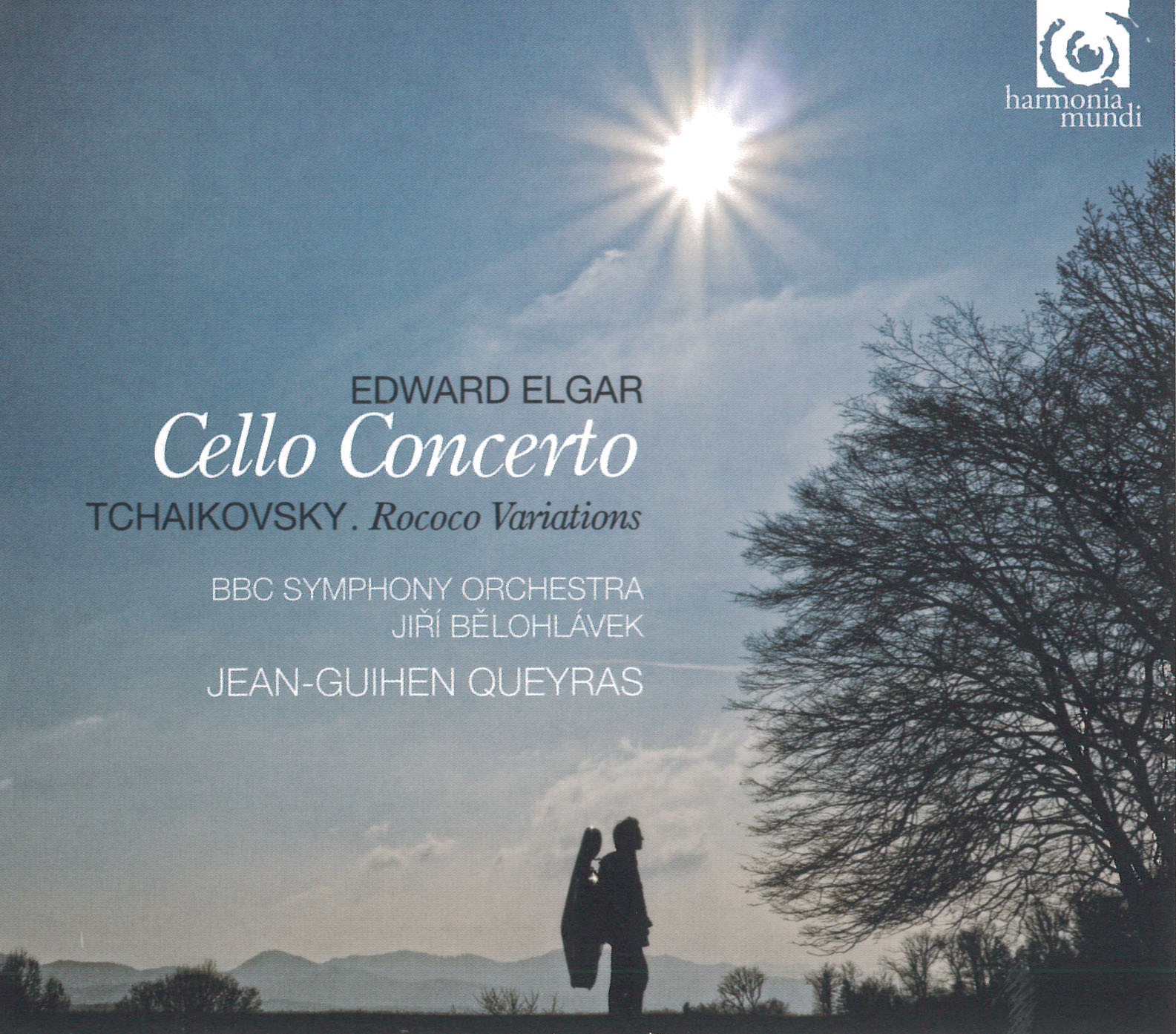
02-Elgar-QueyrasIf you come across a performance of the Elgar Cello Concerto that puts the iconic Jacqueline du Pré recording with Barbirolli completely out of your mind, then you know you’ve found something really special. That’s exactly what the French (but Montreal-born) cellist Jean-Guihen Queyras manages to do with his stunning new harmonia mundi CD, which couples the Elgar concerto with Tchaikovsky’s Rococo Variations and two short pieces by Dvořák (HMC 902148).

It’s clear from the opening solo bars of the Elgar that Queyras understands the inner soul of this quintessentially English work by the most English of composers. It’s a simply beautiful opening — thoughtful, probing and expansive. Jiří Bĕlohlávek draws a performance from the BBC Symphony Orchestra that is perfectly attuned, catching the mood of wistful Romanticism with playing that always has weight and depth, but is never heavy.

The performance level never drops throughout the remainder of the CD. Dvořák’s Rondo Op.94 and Klid (Silent Woods) Op.68/5 were originally written for cello and piano, and orchestrated by the composer in 1893, shortly before he began work on his Cello Concerto. Again, Queyras’ tone is quite beautiful.

The Tchaikovsky Variations were extensively revised and rearranged, prior to publication, by the cellist Wilhelm Fitzenhagen, the composer’s colleague at the Moscow Conservatory, not exactly with Tchaikovsky’s approval, but apparently without much complaint either. It’s still the version we usually hear. Another dazzling performance by Queyras rounds out a marvellous CD.

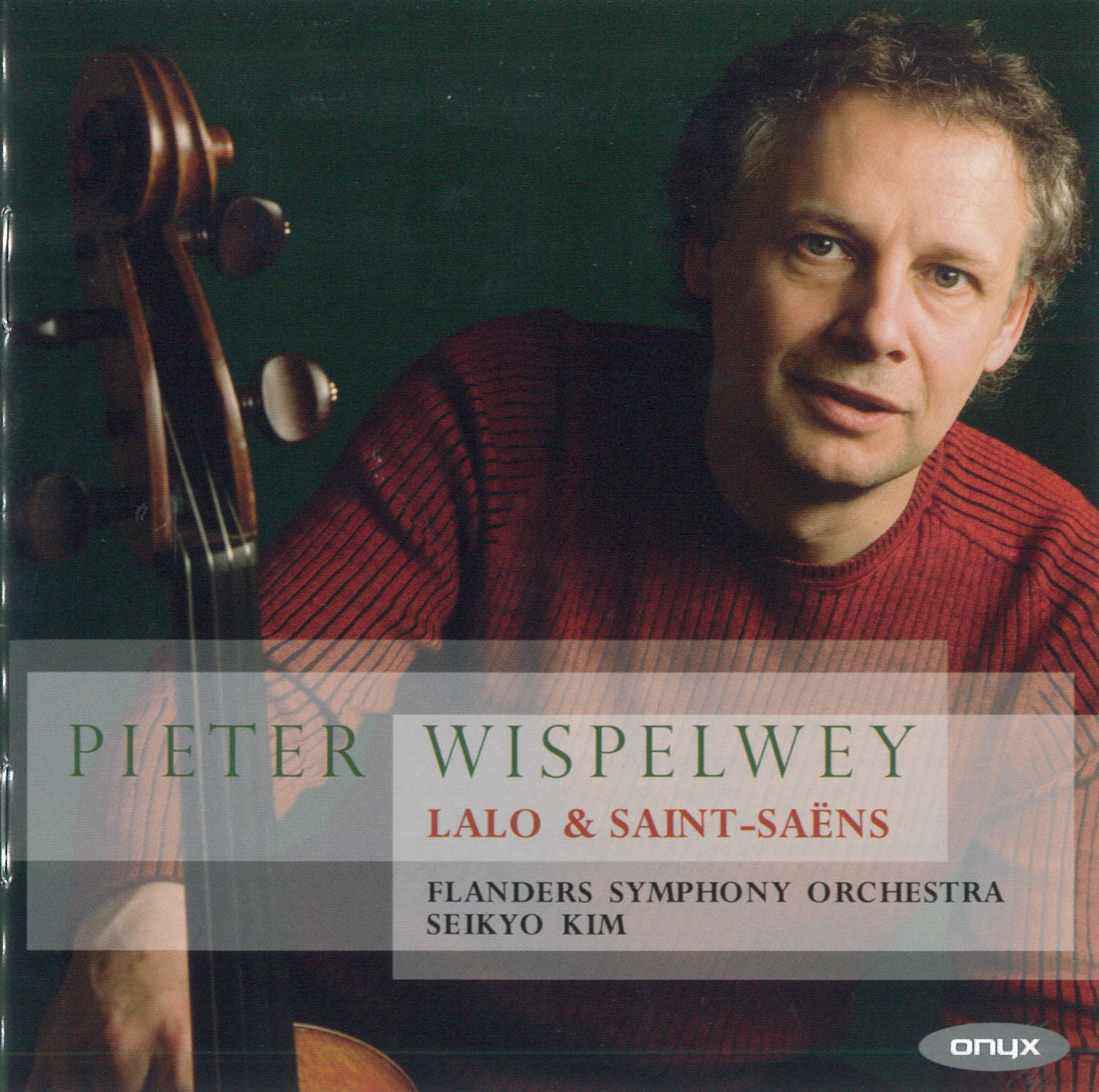
03-WispelweyThe Dutch cellist Pieter Wispelwey has compiled an extensive and impressively varied discography, ranging from the Bach Solo Suites (reviewed in this column last April) to works by Shostakovich, Ligeti and Britten. His latest CD on Onyx Classics pairs two rarely heard works: the Lalo D Minor Cello Concertoand theConcerto No.2,also in D minor, by Saint-Saëns (Onyx 4107).

Wispelwey is in terrific form; indeed, on the strength of these performances it’s difficult to understand why we don’t hear these two outstanding concertos more often. The Lalo is a powerful work with a charming slow movement. Wispelwey’s line is strong and fluent, offering wonderfully assured playing with never a hint of empty bravura. The Saint-Saëns No.2 is a striking concerto that has been unjustly overshadowed by No.1, and reminds us just how much this often-marginalized composer has to offer. Wispelwey displays terrific agility in an extremely difficult and challenging work, with some particularly tender and heartfelt high register playing in the slow movement.

04-Faust-BartokThe Flanders Symphony Orchestra under Seikyo Kim provides top-notch support throughout, and also performs the filler on this CD, the Love Scene from Berlioz’ dramatic symphony Roméo et Juliette. It’s Berlioz at his best and beautifully performed, but this is a CD you’ll be buying for the Lalo and Saint-Saëns.

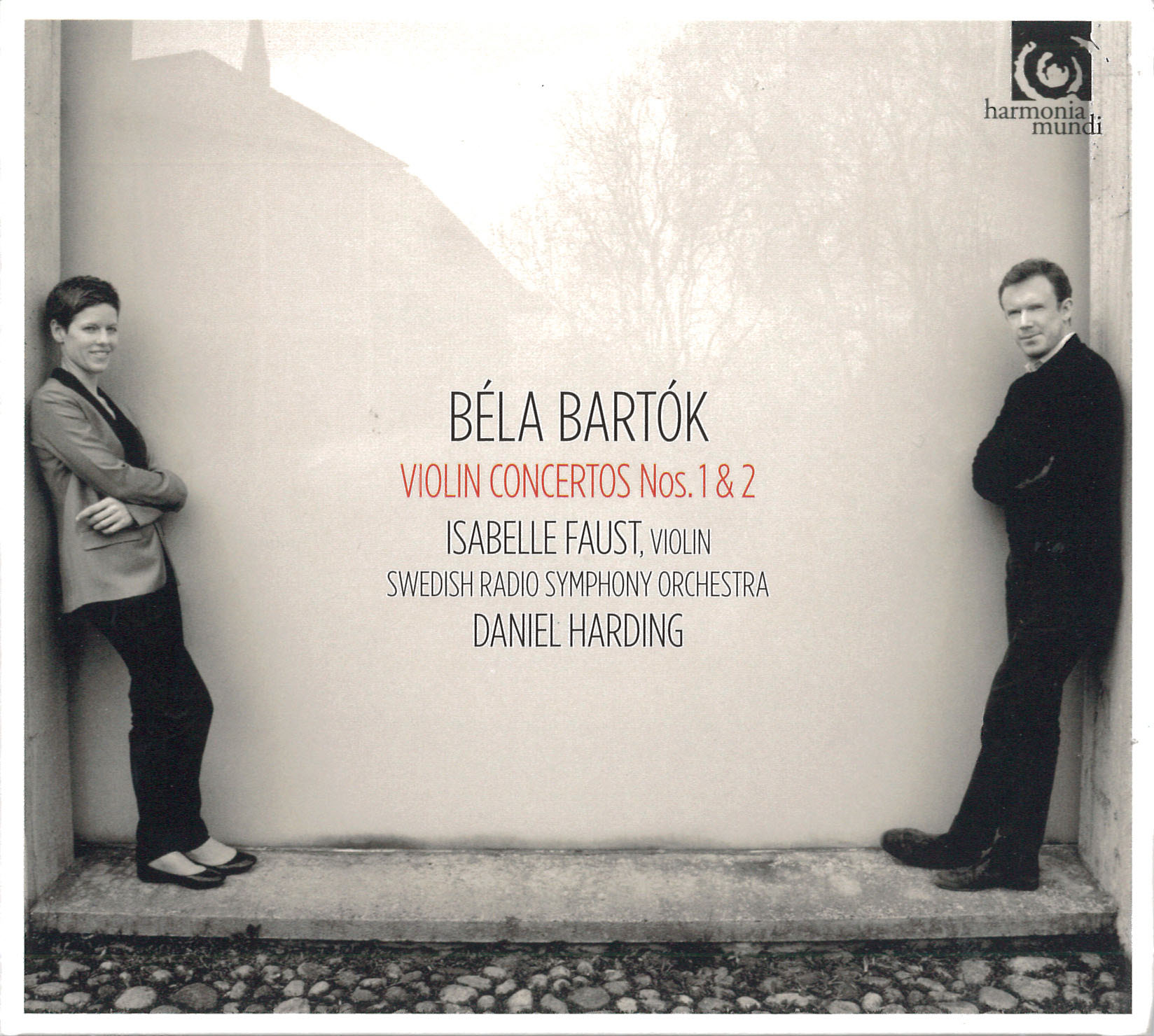
Violinist Isabelle Faust and conductor Daniel Harding team up on another outstanding harmonia mundi CD, with marvellous performances of the Violin Concertos Nos.1 & 2 by Béla Bartók (HMC 902146). The orchestra is the Swedish Radio Symphony Orchestra; Harding has been their principal conductor since 2007. He has already recorded highly successful concerto discs with violinists Nicola Benedetti, Janine Jansen and Ray Chen, and this latest CD is the equal of any of them. Faust is a consummate artist, and her rapport here with Harding is palpable.

For many years the 1938 concerto we now refer to as No.2 was regarded as Bartók’s only violin concerto, but 30 years earlier he had written a concerto for the violinist Stefi Geyer, with whom he was deeply in love. The relationship didn’t last, though, with Geyer rejecting not only the composer but also the concerto. She did keep the manuscript the composer sent her, however, and bequeathed it to the Swiss conductor Paul Sacher, who conducted the premiere in Basel in 1958; it was published in 1959 as Violin Concerto No.1, Op.posth. In her preparation for this recording Faust went back to the various original sources for this early concerto, and discusses the process in fascinating detail in her excellent — and extensive — booklet notes. The depth of her understanding is evident in the depth of her interpretation; this really is an exceptional performance in all respects.

The same innate grasp of the material is just as evident in the Concerto No.2, which also receives an outstanding performance. What makes it even more special is that Faust and Harding choose to use the original ending for the work, which has no solo violin part over the closing bars. Zoltán Székely, for whom the concerto was written, asked the composer to write an alternative ending where the violin could play to the end of the work along with the orchestra and Bartók obliged. The original ending is well worth hearing!

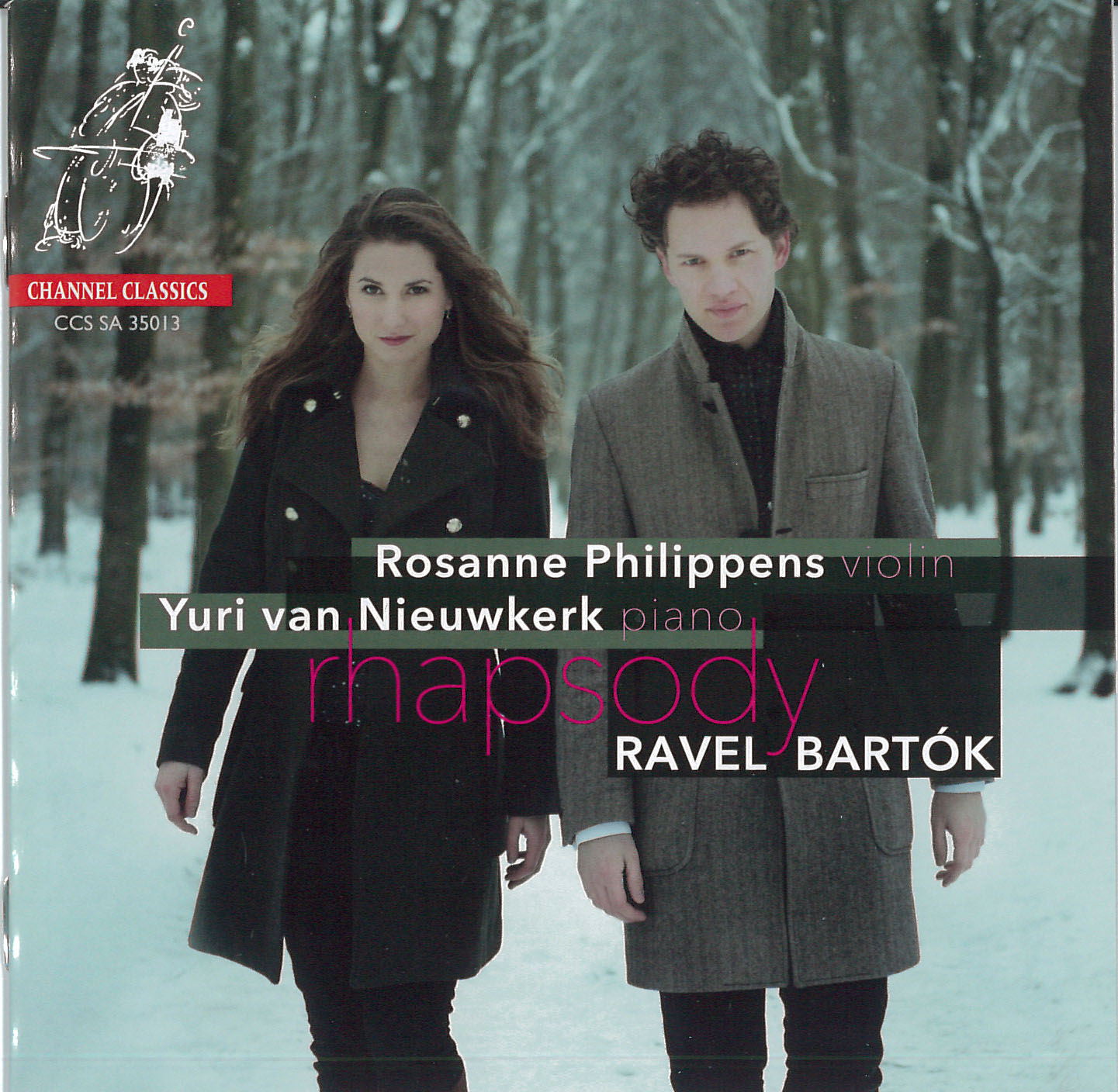
05-Rosanne-PhillippensThe young Dutch violinist Rosanne Philippens is a new name to me, but if Rhapsody, her debut CD on Channel Classics (CCS SA 35013), is anything to go by, we’ll all be hearing a lot more of her in the future. She is accompanied by her regular keyboard partner Yuri van Nieuwkerk in a recital of works by Ravel and Bartók. This may seem like an odd pairing at first glance, but the performers note that both composers worked in a period when a wide range of musical styles — jazz and blues, for instance — were influencing the European musical world; almost all of the works here were written in the 1920s.

Ravel’s Tzigane is given a straightforward but very solid performance, but the real Ravel gem here is the Violin Sonata No.2, which showcases Philippens’ big, expansive tone. There is a perfect balance between the two performers in the first movement; a lovely Moderato: Blues middle movement; and some outstanding playing and great dynamics in the Perpetuum Mobile: Allegro finale.

The Bartók pieces are equally well-served, with just the right mix of spikiness and lyricism in the two Rhapsodies from 1928 and the Rumanian Folk Dances from 1915.

The final track is the short Scène de la Csárda No.4 – Hejre Kati by Bartók’s fellow-countryman Jenö Hubay. Written some 40 years before the other works on the disc, it seems a bit of an odd choice, but it provides a rousing ending to an excellent debut CD that suggests there are great things ahead for this duo.

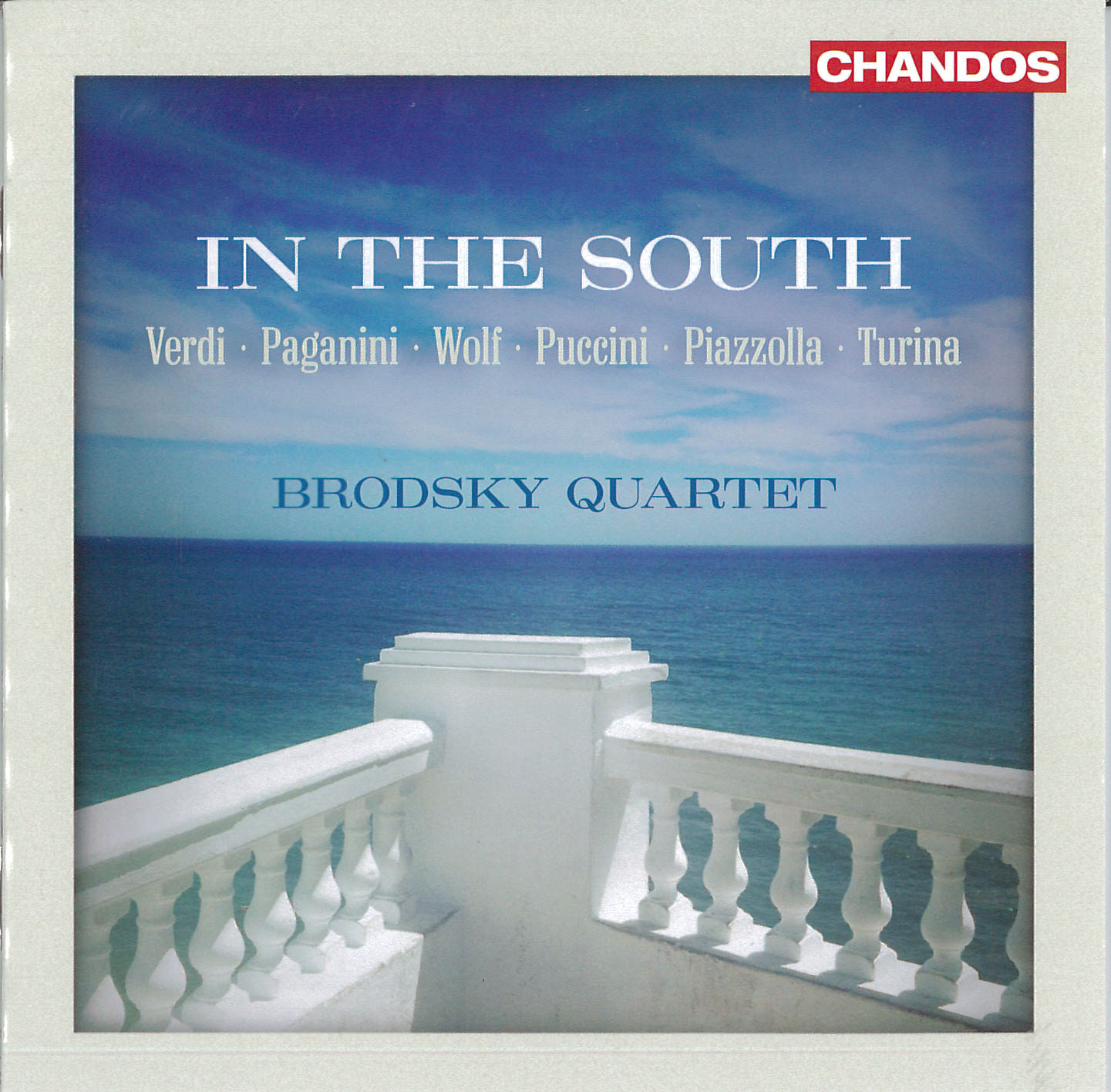
06-Brodsky-In-the-SouthI must admit to being quite astonished to find that Britain’s Brodsky Quartet has been around for over 40 years — two founder members are still there — and has over 60 recordings to its credit. Their latest Chandos CD, In the South (CHAN 10761) is typical of their wide-ranging and intelligent programming, exploring the attraction of the South in musical history, and its relationship with and influence on the North.

It’s essentially a recital of short, almost light classical works by composers from both hemispheres, although the programmatic link does seem a little stretched at times. The Brodsky members play with a lovely sensitivity and a great dynamic range throughout the disc, and really seem to get to the heart of these works, which are not insubstantial despite their brevity.

Hugo Wolf’s Italian Serenade opens the disc, followed by Puccini’s soulful Crisantemi (Chrysanthemums). Verdi’s String Quartet in E Minor, the composer’s only work in the genre, was an attempt to marry the Italian vocal tradition with the German classical quartet form. Critical opinion differed on its success, but here it is handled quite beautifully and with great sensitivity; it’s never too heavy or serious and the lyrical qualities are never over-stressed.

I don’t recall ever having heard Turina’s La oración del torero (The Toreador’s Prayer) before, but it really is a quite beautiful and very effective work. Astor Piazzolla’s Four, for Tango was written four years before the composer’s death, and is typical of his later tango compositions. Its dissonances and percussive effects should come as no surprise, as it was written for the Kronos Quartet.

The disc ends with two of the Paganini 24 Solo Caprices, arranged for string quartet by the Brodsky’s violist Paul Cassidy. No.6 is particularly attractive, and No.24 has some fascinating instrumental effects. The programmatic link, apparently, is that Paganini represented the instrumental “southern individualism” of the 19th century,which is viewed here through the “northern” string quartet form. A bit of a stretch, perhaps, but nonetheless a terrific CD.  

Back to top