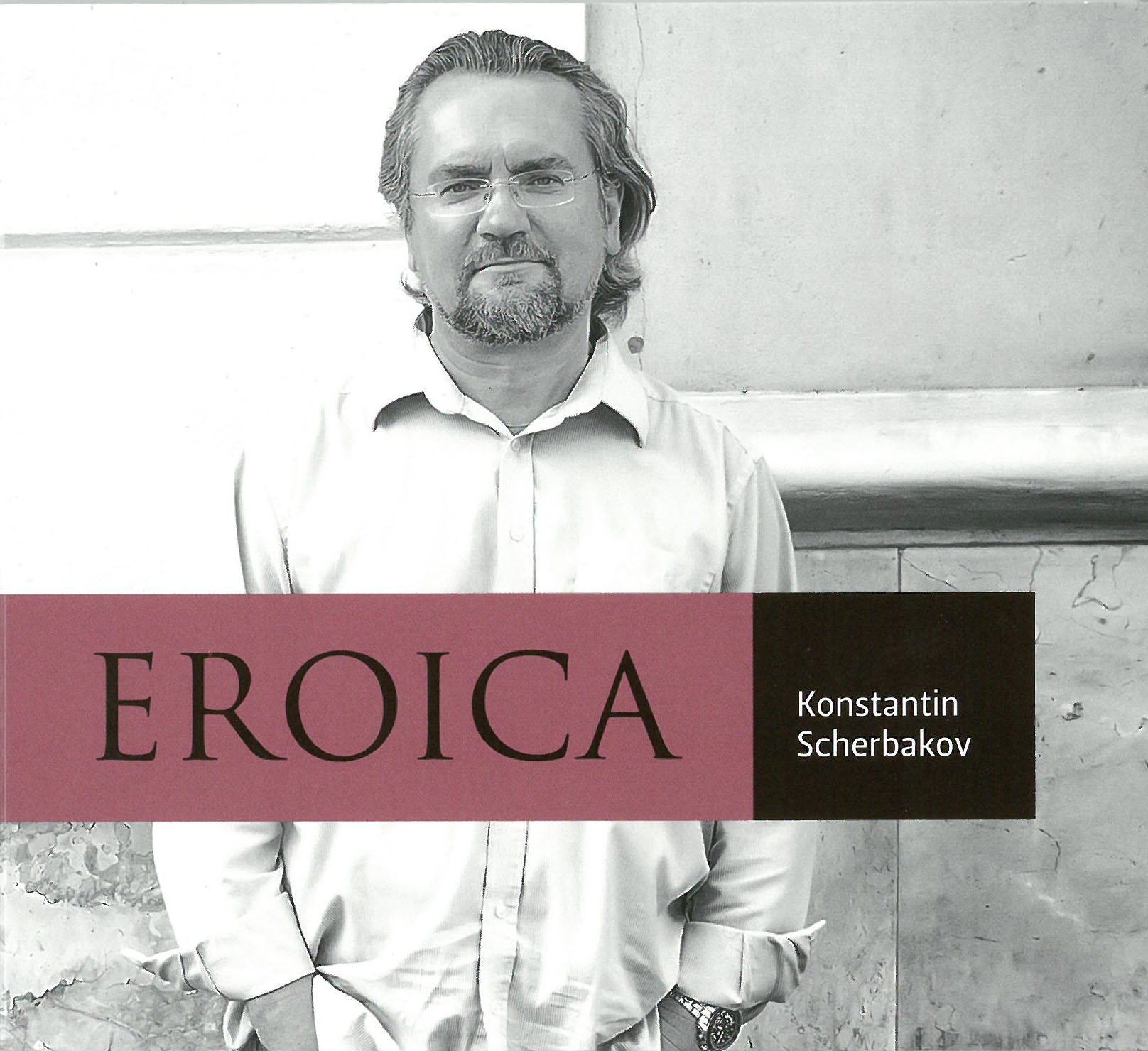
01 EroicaVariations, by their nature, tend toward the cerebral. Pianists who understand this devote a good deal of effort maintaining their ties to the thematic homeland in spite of the distances a composer may travel in his creative wanderings. Konstantin Scherbakov demonstrates this beautifully in Eroica (Two Pianists Records TP1039190) where Beethoven’s Eroica Variations Op.35 journey far on a surprisingly short musical idea. When at times the composer has left little more than a hint of harmonic progression as a fragment of the original idea, Scherbakov finds it and underlines it to remind us of our point of departure. By the time he’s played through all fifteen variations, the closing fugue comes as a highly energized and joyous finale in the form Beethoven so loved to use.

The same disc contains both the Pathétique and Appassionata sonatas. Here, Scherbakov is more formal. He is very aware of the architecture around his musical content and artfully recalls the ideas Beethoven requires in the closing arguments. The Adagio of the Sonata No.8 in C Minor, Op.13Pathétique” is perhaps less outwardly emotional than some would like, but this works well in the context of Scherbakov’s overall approach to both sonatas. A strong performer with a clear technique, he has made this a very fine addition to anyone’s Beethoven collection. Production values on this disc are very high despite the fact that the program was recorded in different locations (UK and Moscow).
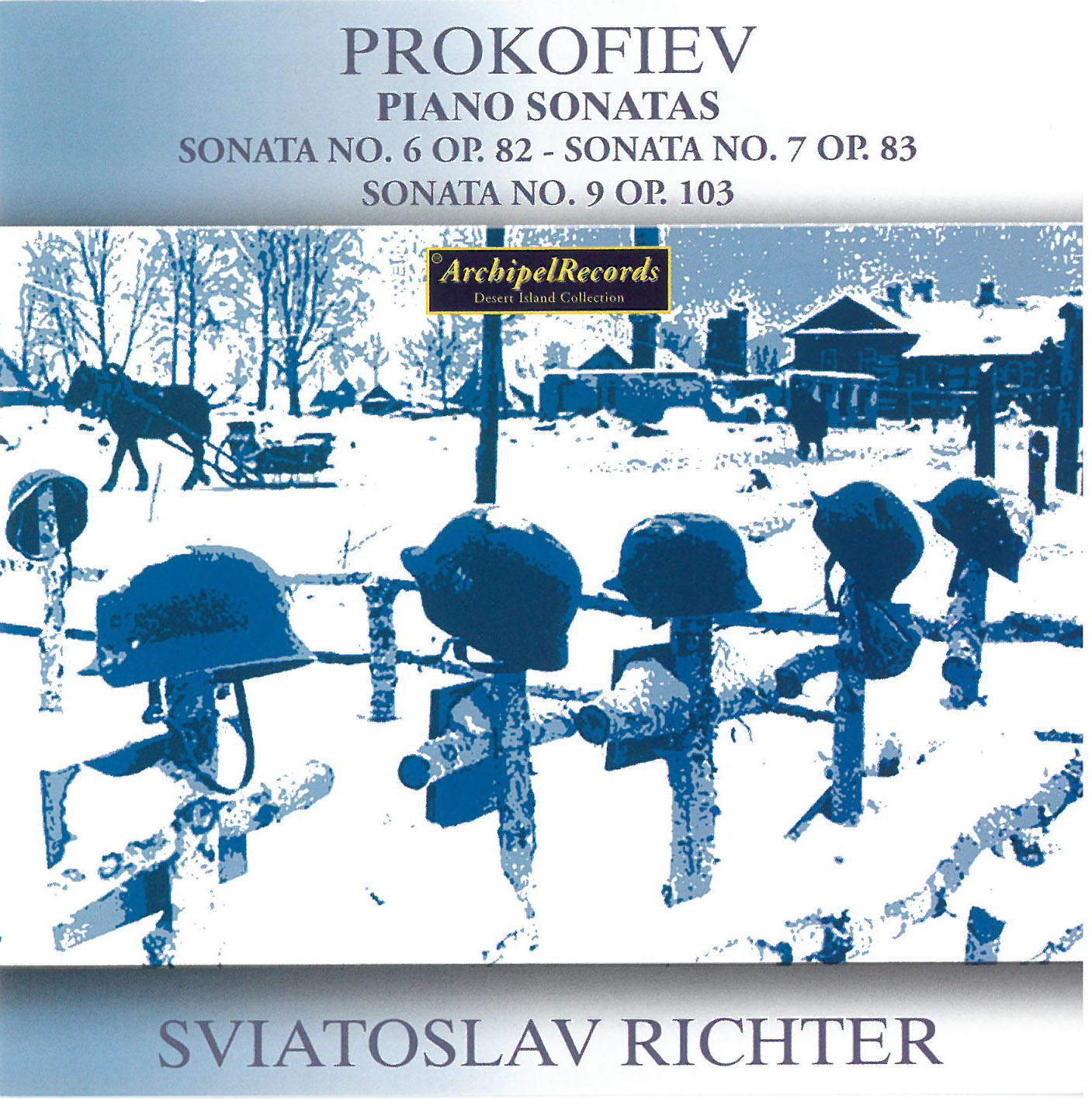
02 Prokofiev RichterAlso recorded in Moscow are Prokofiev’s Piano Sonatas 6, 7 and 9. Digitally restored from original sources Prokofiev Piano Sonatas (Archipel Records ARPCD 465) features three separate public recitals by Sviatoslav Richter from the mid-1950s. Disappointingly bereft of any historical notes about the concerts, the disc is economically packaged but thankfully a little web sleuthing can uncover plenty more about this material. These are among the recordings from the decade that introduced Richter to the West. The audio restoration is wonderful although the somewhat narrow frequency range of the recording reflects the technology of the period. Still, it in no way impedes the colossal technique Richter possessed. His utter control of the wildest passages in Sonatas 6 and 9 stand in contrast to his pensive playing of the Sonata 7 where doleful reflection speaks of the personal burden Prokofiev felt under the Stalinist regime.

Richter seems the perfect pianist for this repertoire. Recording two of Prokofiev’s “War” sonatas from the early 1940s (No.6 and No.7) just a few years after Stalin’s (and the composer’s) death, one wonders what the propaganda chatter must have been at the time. The final sonata on the disc, No.9, was written for and dedicated to Richter in 1947. All three of these performances are truly arresting.
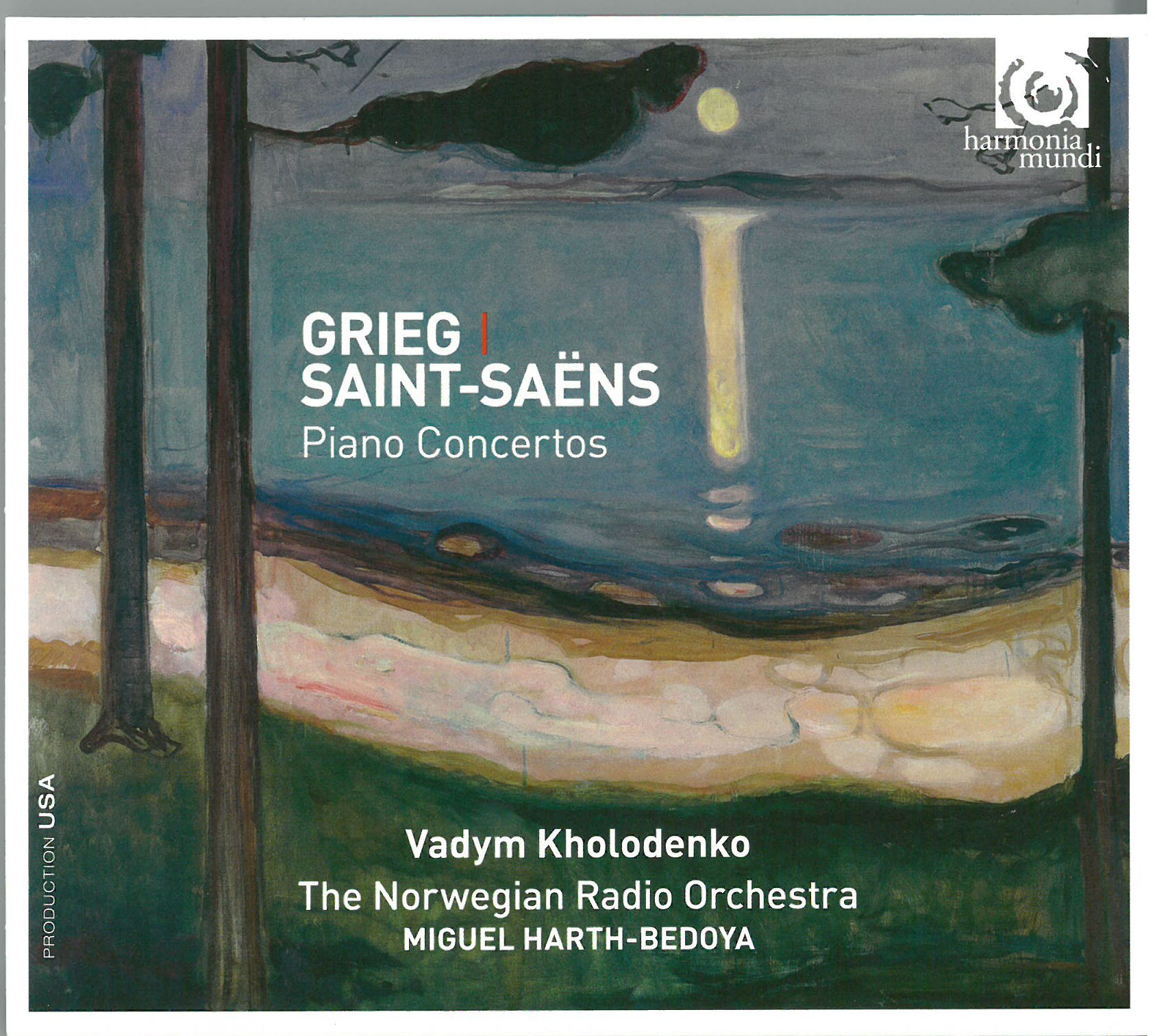
03 Vadym KholodenkoVadym Kholodenko is the 2013 Van Cliburn International Piano Competition gold medalist. His collaboration with Miguel Harth-Bedoya and the Norwegian Radio Orchestra in Grieg, Saint Saëns Piano Concertos (harmonia mundi HMU 907629) produces thoughtful and unhurried performances. Pianist and conductor are in complete agreement on tempi that favour a more relaxed approach than we sometimes hear. This subtle expansion of time offers the listener an extra moment of consideration before processing the composer’s next thought. The Grieg slow movement is especially exquisite for this reason.

The Saint Saëns Concerto No.2 in G Minor, Op.22 is not quite so restrained. Kholodenko takes the first two movements almost ad libitum alternating between the pensive approach of the opening movement and his dazzling chromatic octave runs in the second. But the third is where he explodes out of the gate with real drama. The palpable energy and crisp articulation make this a performance hard to surpass. This is Kholodenko’s second recording for the label. His third is the Prokofiev concertos the first disc of which we can expect the first disc in 2016.
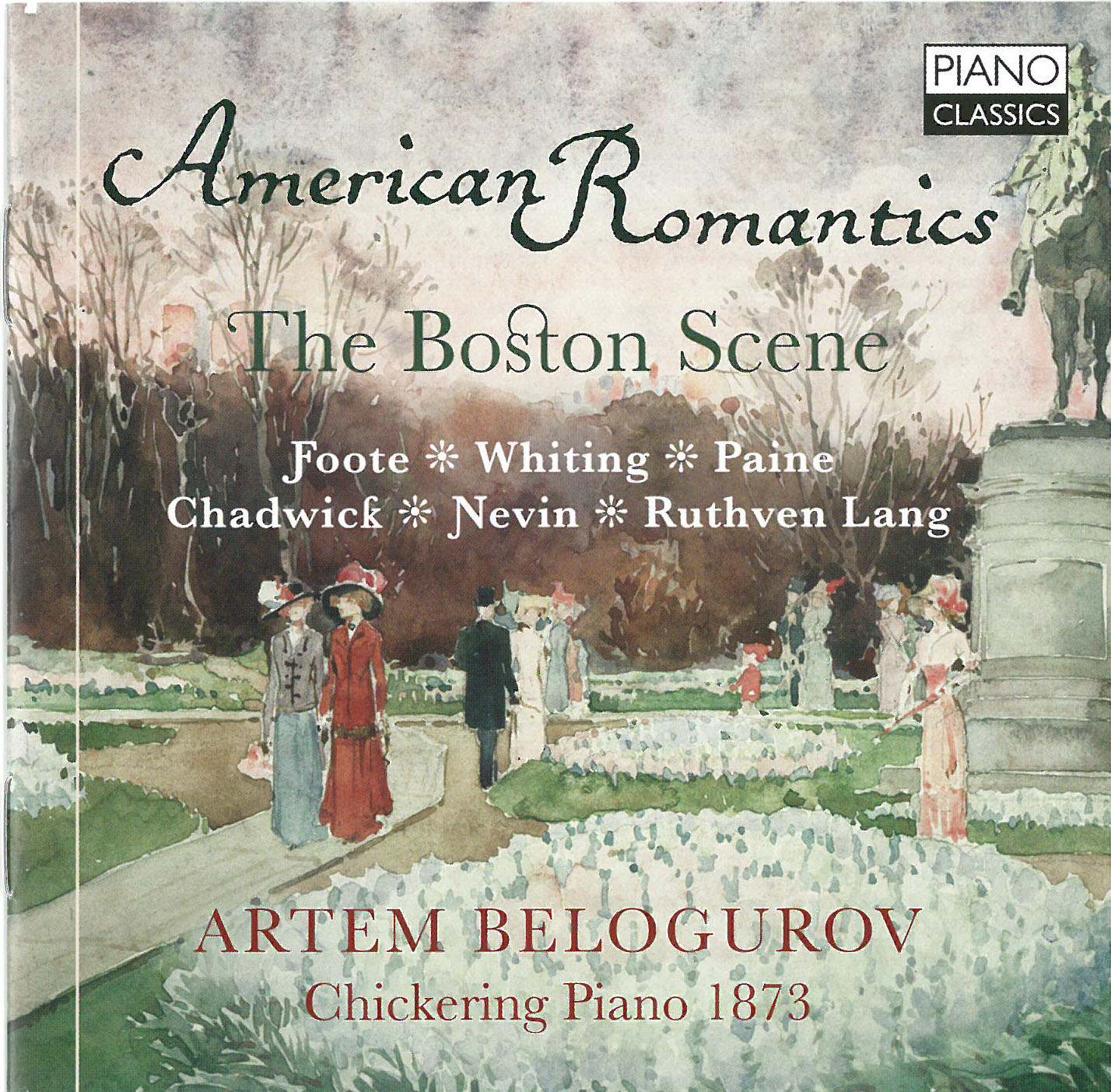
04 American RomanticsLast month’s column reviewed several discs using period instruments. American Romantics, The Boston Scene (Piano Classics PCL0080) does something similar using an 1873 Chickering grand in a historic Episcopal church in Charlestown, MA. The instrument benefits from modern action and sounds more like a contemporary piano than a fortepiano. Still, its darker colours and unique upper register voicing remind us of its vintage. Pianist Artem Belogurov clearly loves this piano and as much caresses it as plays it. His repertoire choices reveal how much this late romantic American school owed to its European origins.

It wasn’t until the next generation of composers, the modernists of the early 20th century, that an identifiable American voice began to emerge. Still, this disc’s program helps us understand the creative heritage from which that sprang. Highly programmatic, these short pieces by Foote, Paine, Chadwick and Nevin are beautifully written by composers who knew their craft well. Belogurov commits to them wholly. His playing is sincere and utterly convincing.

The disc is enlightening, entertaining and offers a profoundly satisfying final track with Margaret Ruthven Lang’s Rhapsody in E Minor Op.21. Published in 1895, it’s the most substantial work on the recording and demonstrates a remarkable affinity between composer and pianist, across cultures and generations.

Review
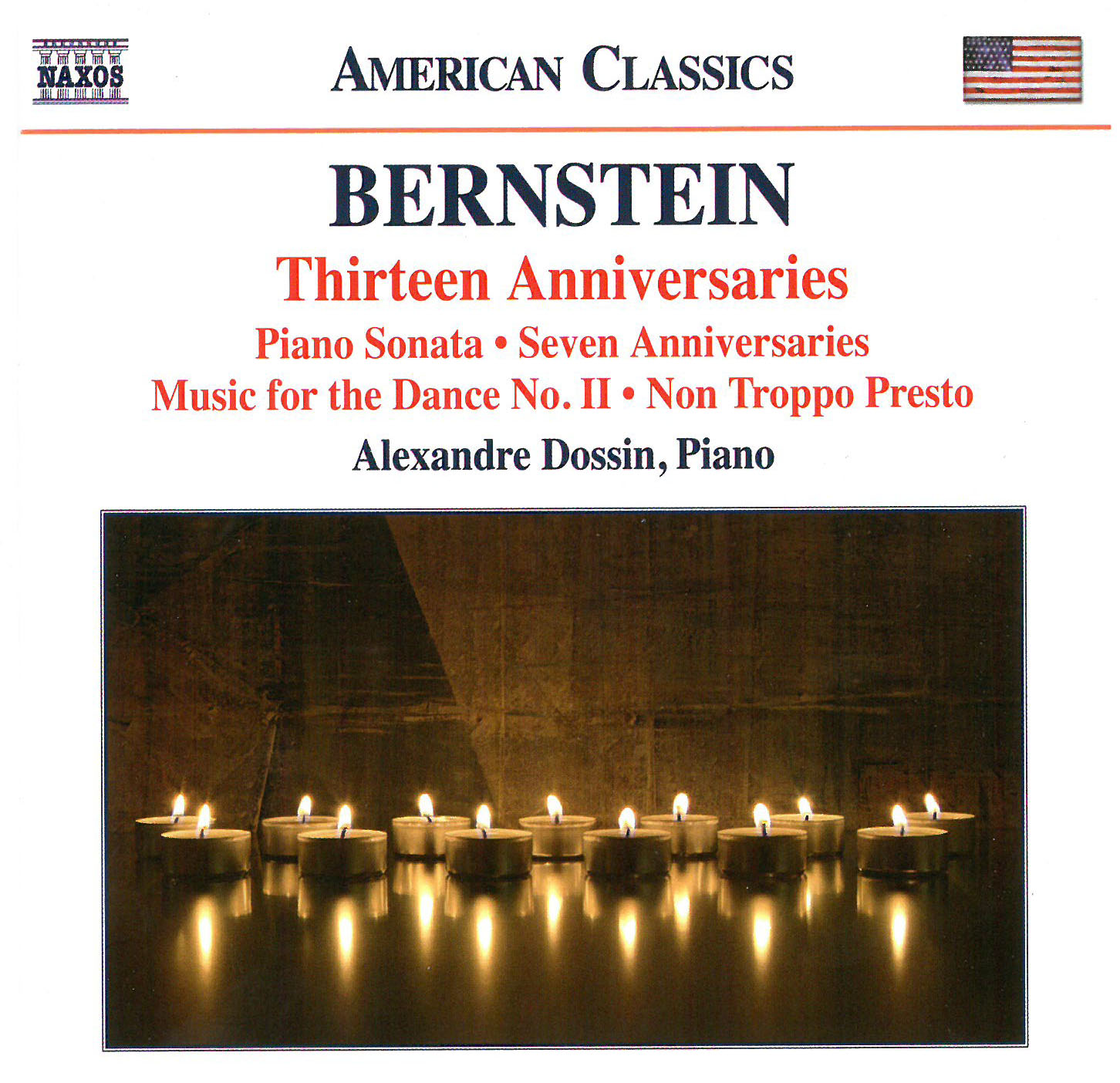
05 Bernstein 13Some four decades later Leonard Bernstein, then in his late teens, wrote his Sonata for the Piano (1938) and Music for the Dance No.2. These two works open and close pianist Alexandre Dossin’s program on Bernstein: Thirteen Anniversaries (Naxos 8.559756). Dossin is Brazilian-born, Moscow Conservatory-trained and now teaches in the U.S. He plays the Sonata with all the boldness and assertiveness that the young Bernstein brought to the page. It’s brilliant music and brilliantly played. The three-movement Music for the Dance is polytonal and angular in rhythm. Dossin understands Bernstein’s structures and always keeps the principal ideas up front for us to follow.

Thirteen Anniversaries from 1988 is the last of four such collections of miniatures Bernstein wrote for his family and numerous friends. A half century separates these from the early compositions on this disc and the difference is remarkable. Dossin conveys what the older composer is feeling. For Stephen Sondheim is a heartfelt tribute to his friend and librettist with very subtle harmonic tilts in the direction of Broadway. In Memoriam: Ellen Goetz is simple and profoundly moving and serves as a fitting close to the set. The 1943 Seven Anniversaries contains tributes to Aaron Copland as well as Serge and Nathalie Koussevitsky and others. Dossin finishes this set with an aggressively energized For William Schumann. All of it is superb.
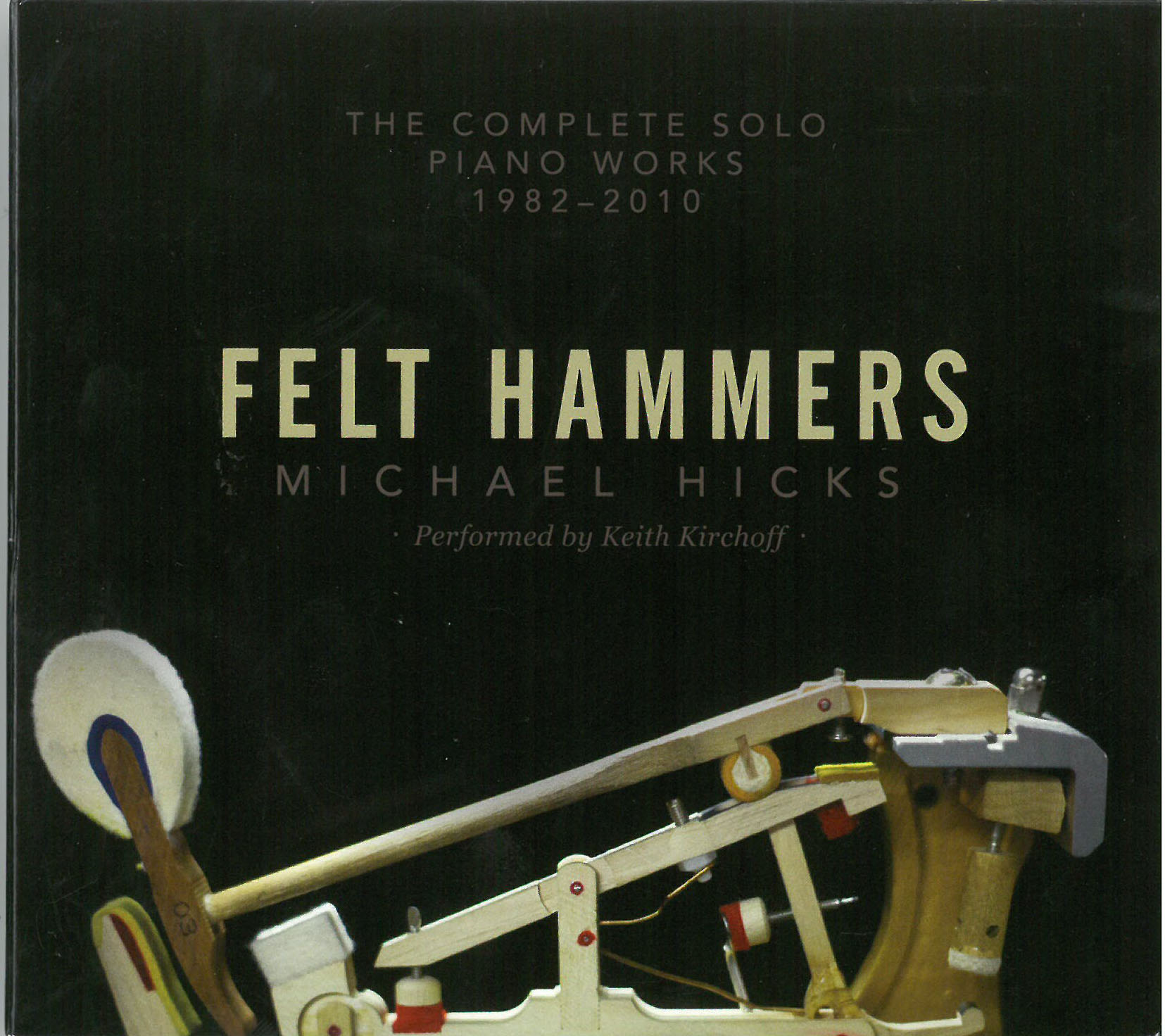
06 Felt HammersFelt Hammers (Tantara TCD0314FHM) is a collection of the piano works of Michael Hicks played by Keith Kirchoff. This disc is far from common fare but more than a few will like it – a lot. Contemporary and a bit experimental in both composition and performance, the music has titles that reflect strong allusions to the sacred, poetic and philosophical. Still, one hesitates to deem it entirely programmatic. With the piano tuned to Werckmeister III (a tuning system with subtle shimmers in certain keys), Kirchoff plays the instrument in the conventional way, but also stops and plucks strings manually and occasionally adds vocalizations.

The core of the program is The Stations of The Cross and its narrative is easy to follow. What raises this composition far out of the ordinary is that Kirchoff has fully captured Hicks’ intention to use the piano in ways that create new and powerfully evocative sonorities. These are sound paintings that strongly project images of Jesus’ journey from condemnation to death and burial. It’s emotionally graphic, though in an abstract way.

The Annunciation is the only piece that extensively uses familiar keyboard technique. Its technical demands are high and Kirchoff meets them capably. The disc opens with a helpful introduction to Hicks’ keyboard language. The Idea of Domes is a simple keyboard tone poem that delivers exactly what its title suggests and prepares the listener for what’s to come. The closing track L’épitaph de Monk is based on Thelonious Monk’s Crepuscule with Nellie and echoes the rhythmic note clusters that punctuate Monk’s original. Those in the target niche for this recording will find it very gratifying.
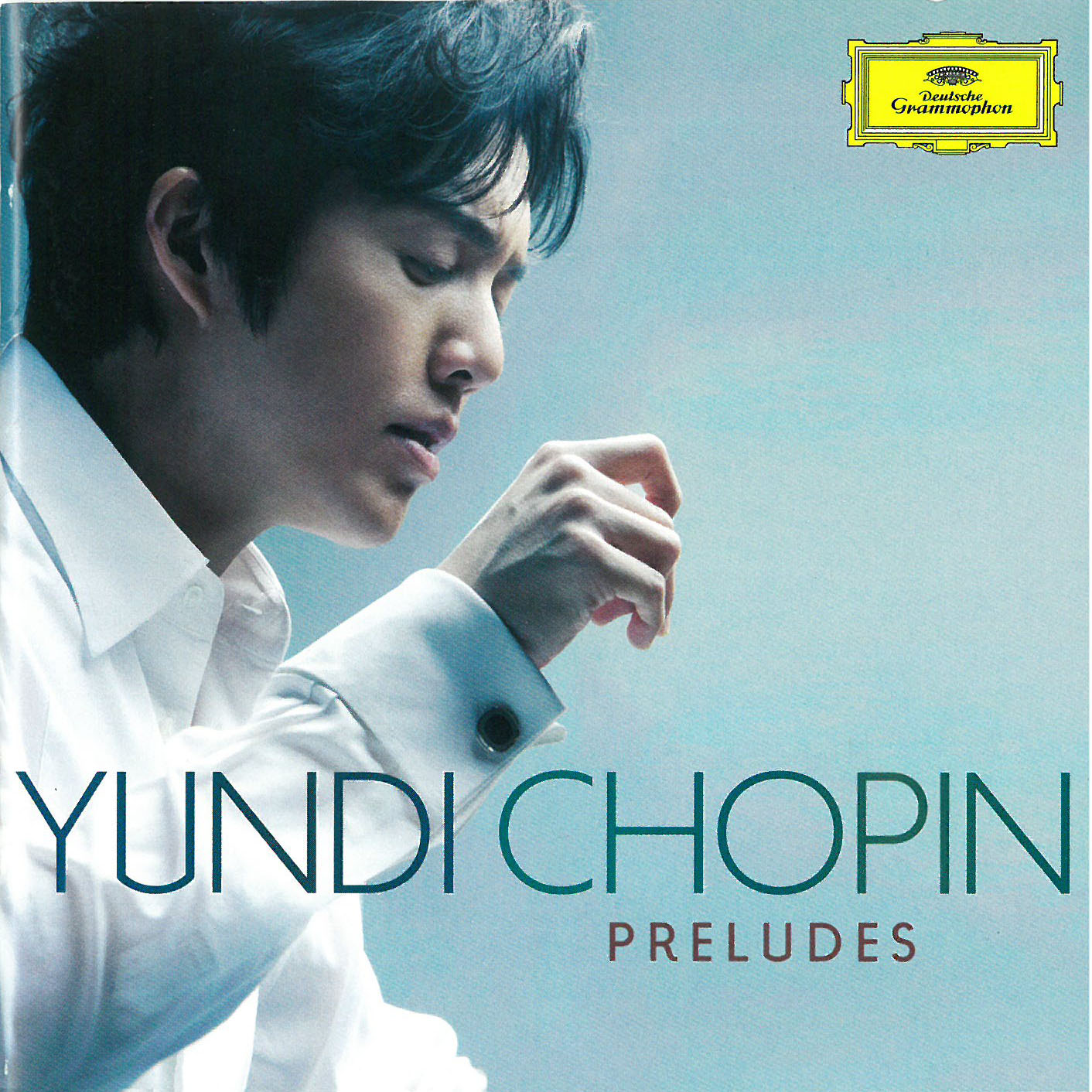
07 Yundi ChopinSince winning first prize at the 2000 International Chopin Competition at age 18, Chinese pianist Yundi has scarcely stopped to catch his breath. Countless international tours and 16 recordings later Yundi’s energy is as impressive as ever. His latest disc is Yundi Chopin Preludes (Mercury Classics/Deutsche Grammophon 4811910) which presents all of the Op.28 Preludes plus the Op.45 in C-sharp Minor and a posthumous work as well.

While each on separate tracks, the 24 preludes are produced with very little time between them and give the effect of a larger single piece. This has the novel effect of joining Chopin’s disparate ideas, many less than a minute long, into a statement that he may never have considered. If anything, it allows us a high-contrast glimpse of his remarkable imagination and technique, none of which is beyond Yundi’s grasp. His playing is often unbelievably fast as in the Prelude No.18 in F Minor, but never sacrifices clarity or phrasing. Others like the No.23 in F Major move with an enchanting fluidity. It’s a breathtaking recording and easy to play often for the sheer marvel of it.
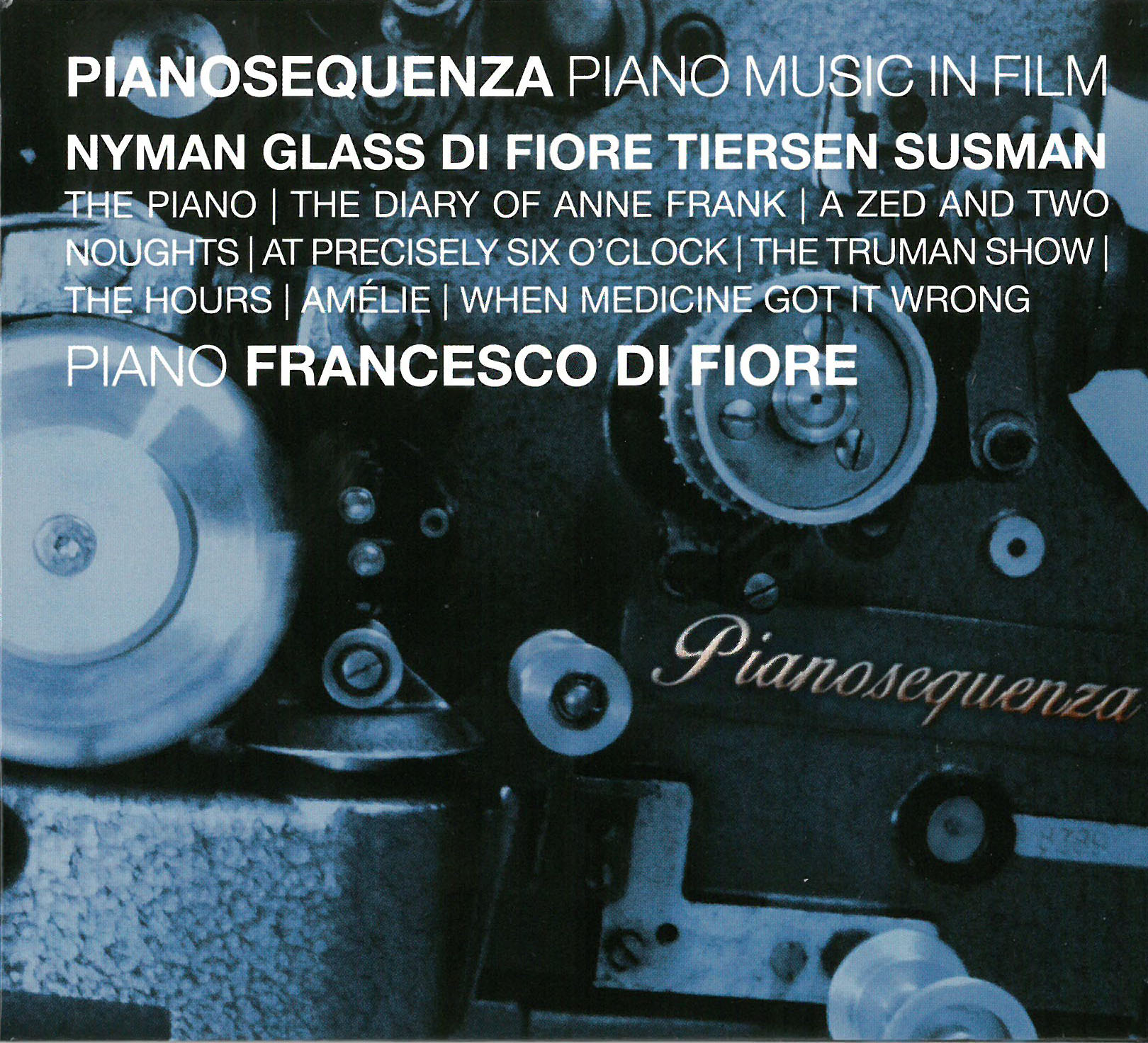
08 PianosequenzaFilm music became its own form when musicians first started playing for silent movies. Largely given to supporting and enhancing the emotions portrayed on the screen, film scores occasionally rise beyond their usual task and stand on their own artistic merits. Composer/pianist Francesco Di Fiore has taken this a step further by creating a video and piano performance project using selected shots from a variety of modern films and has reinterpreted the film scores as minimalist keyboard iterations. The studio version of this live project is Piano Sequenza – Piano Music in Film (Zefir Records 9642) and is a remarkably intimate listening experience.

Most of the music selected for this recording was already piano-centric, either written for the instrument as solo or using it to carry the main thematic idea. Di Fiore’s reinterpretations have the effect of being artistic distillations, powerful for their links to films we know well, The Piano, The Hours, The Truman Show and others. And while there is a strong melancholic undercurrent to it all, he infuses it with a clear and uplifting simplicity that has a lingering effect.

Whether he is spinning the ideas of Michael Nyman or Phillip Glass, Di Fiore succeeds in turning the piano into a unique voice, through which we experience the film world of directors Peter Weir, Jane Campion and the others included on this unusual disc.
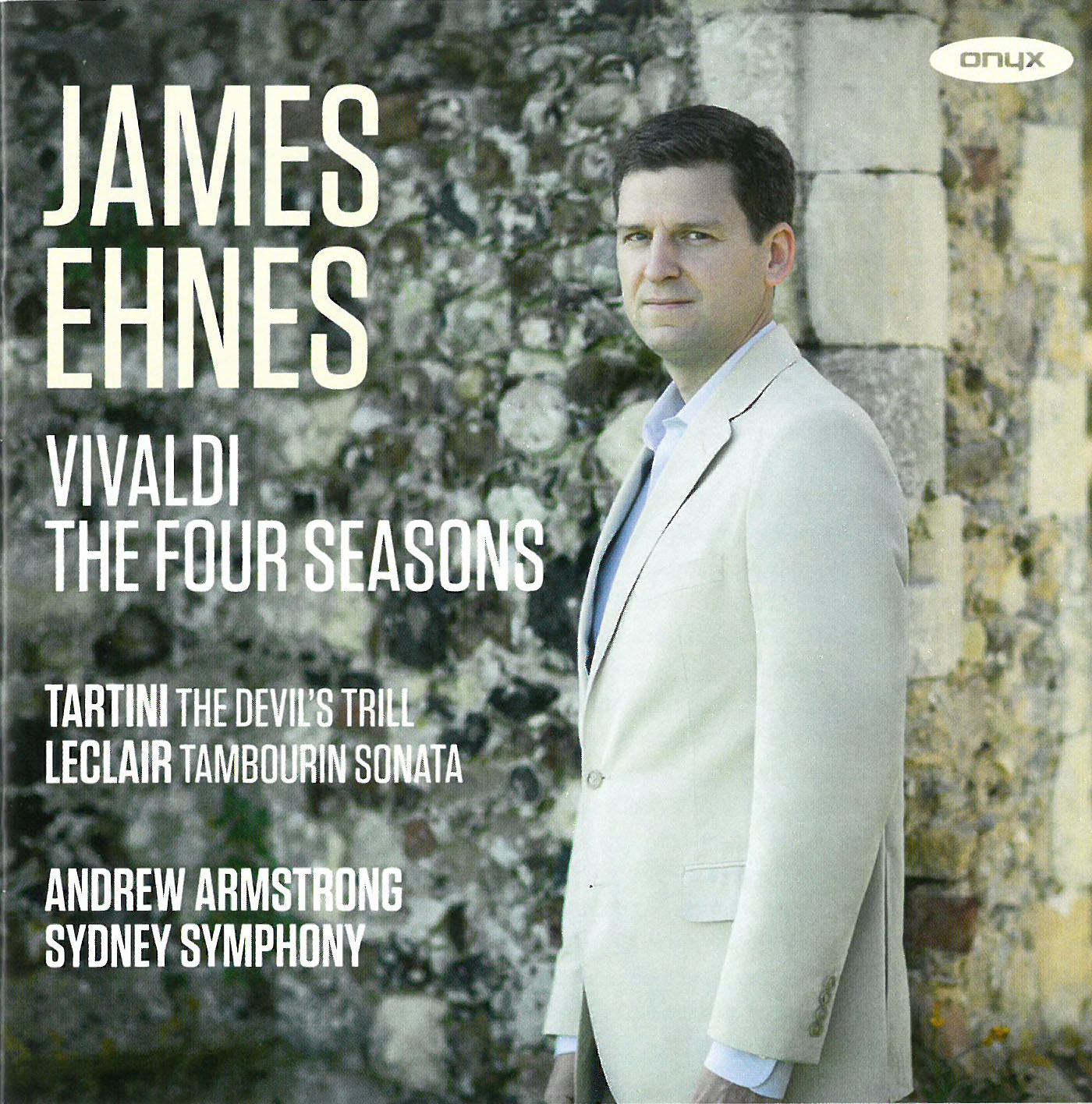
01 Ehnes VivaldiOur own James Ehnes is back with a CD of early 18th century works on Vivaldi Four Seasons (Onyx 4134), with his regular partner Andrew Armstrong at the piano for Tartini’s Devil’s Trill Sonata and Leclair’s Tambourin Sonata, and the Sydney Symphony under Ehnes’ direction providing the support for the title work. It’s the first time Ehnes has recorded The Four Seasons, and it was certainly worth the wait. The playing is everything you would expect from him: it’s warm, intelligent and beautifully judged, with sensitive and very effective orchestral accompaniment.

The Tartini and Leclair sonatas are the opening works on the CD, with Ehnes using the Kreisler edition of the Devil’s Trill sonata that ends with the challenging cadenza that Kreisler added to the work. Again, the playing by both performers is outstanding.

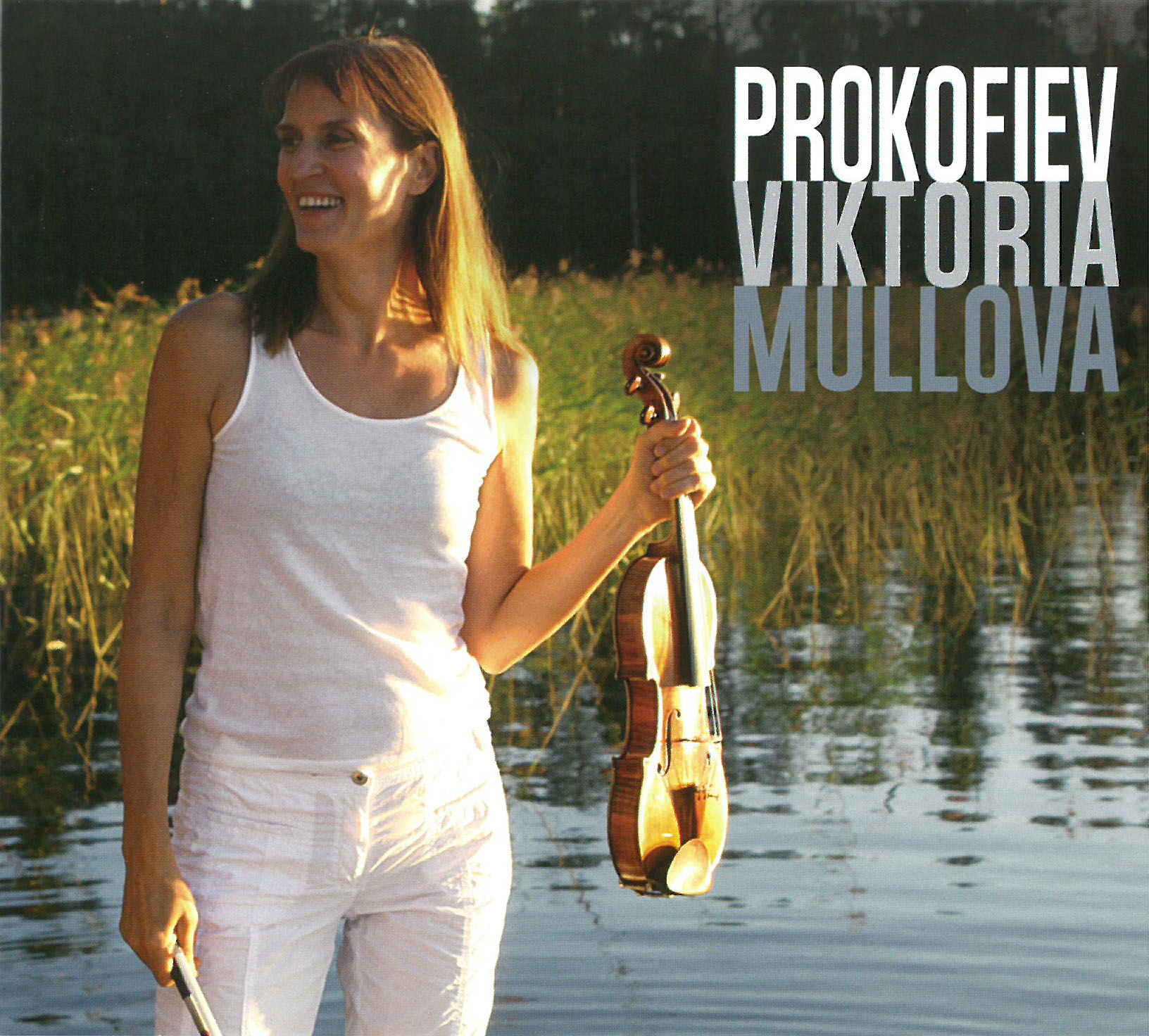
02 Prokofiev MullovaAnother Onyx CD features live concert recordings of violin music by Sergei Prokofiev in terrific Frankfurt performances by Viktoria Mullova (ONYX 4142). The Frankfurt Radio Symphony Orchestra under Paavo Järvi provides the support in the lovely Concerto No.2 in G, Op.63, recorded over two days in May 2012. Mullova is equally at home in the work’s beautiful slow movement and in the music’s spikier passages.

Prokofiev’s two unaccompanied violin sonatas – the Sonata for Two Violins in C, Op.56 and the Solo Violin Sonata in D, Op.115 – were recorded in December 2014. Tedi Papavrami joins Mullova in the former. The recorded ambience is full and resonant, especially in the concerto, and there is no real sign of audience presence other than the applause at the end of the works, which fades out after a few seconds.

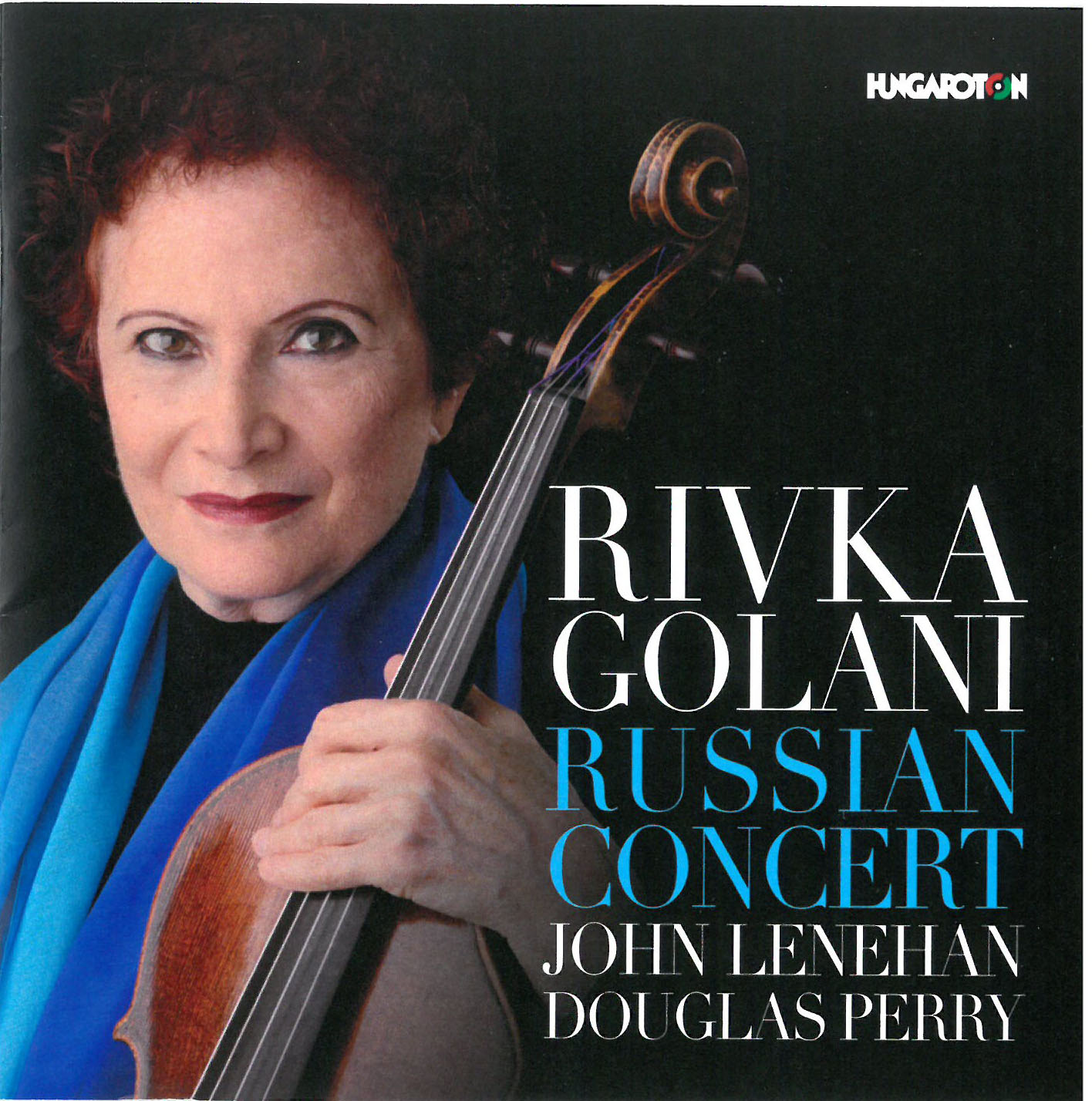
03 Rivka GolaniThere’s more live Prokofiev, as well as Shostakovich and Rachmaninov on Russian Concert, a 2-CD recording of the March 28, 2006 concert in Toronto’s Glenn Gould Studio by the outstanding violist Rivka Golani and pianist John Lenehan (Hungaroton HCD 32743-44). The concert opens and closes with pieces (six on CD1, five on CD2) from Prokofiev’s ballet Romeo and Juliet, transcribed for viola and piano, with the composer’s permission, by the Russian violist Vadim Borisovsky. Violist Douglas Perry joins Golani and Lenehan for the final two pieces.

CD1 ends with a brooding performance of the Shostakovich Sonata for Viola and Piano Op.147, the only work in the concert in its original form, but the heart of the recital is the transcription – again by Borisovsky – of Rachmaninov’s Cello Sonata in G Minor Op.19. More than anything else on the two CDs this brings impassioned playing from both performers, with the piano often predominant in a role that is far from being merely an accompaniment. Despite the wonderful viola playing, however, it’s difficult to ignore the fact that the instrument’s pitch is higher and somewhat thinner than the cello’s, and the absence of the latter’s strength, depth and richness, particularly in the lower strings, alters the tonal relationship with the piano; at times here, the music just seems to be too big for the instrument. Still, what a performance!

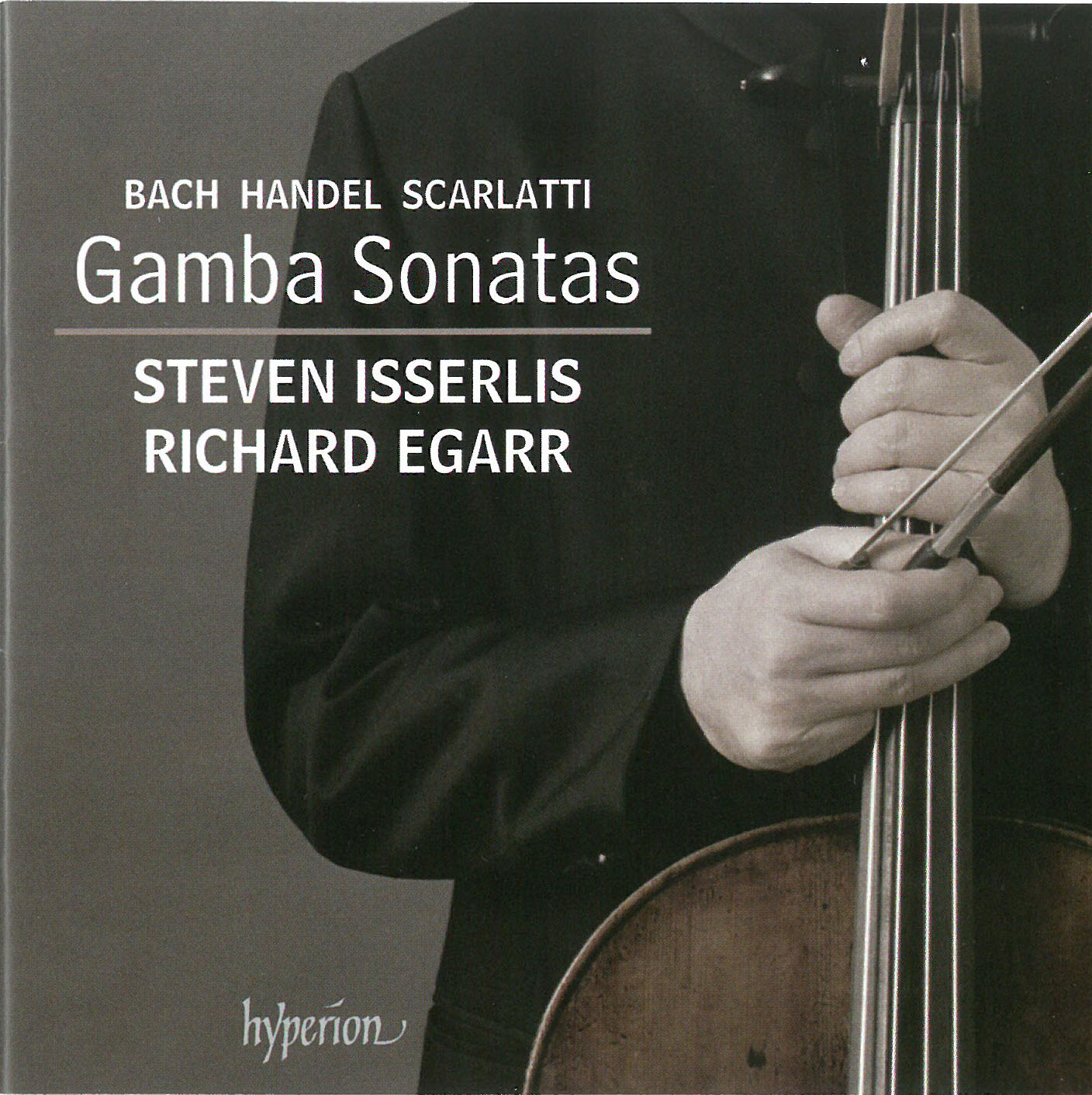
04 Isserlis GambaThe ever-reliable English cellist Steven Isserlis is back with yet another delightful CD, this time with harpsichordist Richard Egarr on Bach, Handel and Scarlatti Gamba Sonatas (Hyperion CDA68045).

Bach’s three sonatas – in G Major BWV1027, D Major BWV1028 and G Minor BWV1029 – are programmed around Domenico Scarlatti’s Sonata in D Minor Kk90 and Handel’s Violin Sonata in G Minor HWV364b. The Handel here relies on an authentic manuscript version that shows the opening of the violin part lowered an octave and indicated as for viola da gamba. In this work and the Scarlatti the players are joined by Robin Michael on cello continuo.

Isserlis points out that playing with a harpsichord allows him “to play as lightly as possible without ever courting inaudibility,” and the result is playing of grace, lightness and warmth. Add the usual intelligent and insightful booklet notes written by Isserlis in his inimitable style – he even quotes Spinal Tap’s Nigel Tufnel at one point – and the whole package is another winner.

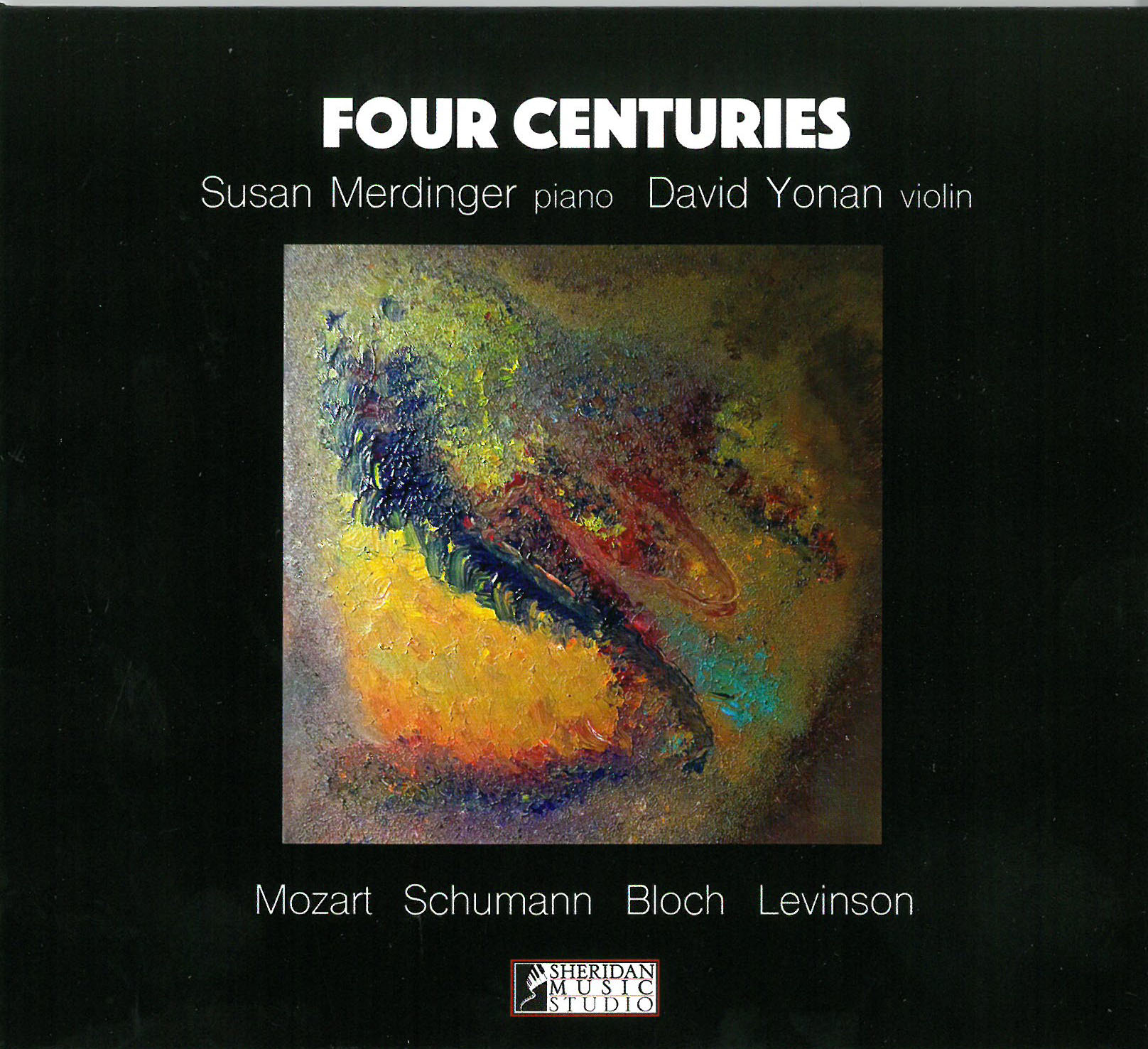
05 Four CenturiesThe often-asked question “How could I not have heard them play before?” raised its head again this month when I played Four Centuries, a new CD from pianist Susan Merdinger and violinist David Yonan featuring works by Mozart, Schumann, Bloch and the Chicago-based contemporary composer Ilya Levinson (Sheridan Music Studio susanmerdinger.org). Both players have impressive résumés, but the Berlin-born Yonan made his recital debut in Berlin, Moscow and St. Petersburg at the age of 11. He also studied with the legendary Dorothy DeLay at Juilliard. He has impeccable technique, a sumptuous tone and a real depth to his playing.

A lovely performance of Mozart’s Sonata No.13 in B-flat Major, K454 opens the disc, with the fine balance between the instruments reminding us that the work was written as being “for Piano and Violin.”

Schumann’s Sonata for Violin and Piano No.1 in A Minor, Op.105 is also beautifully played, but it is the 20th century work, Bloch’s Suite Hébraïque that really steals the show here. “It is the Jewish soul that interests me,” said Bloch, and it’s that soul which is at the heart of this three-movement suite and given a brilliant realization by Yonan. It’s stunning playing.

The final work is the world premiere recording of Levinson’s Elegy: Crossing the Bridge, a short piece dedicated to David Yonan, who gave the world premiere in Chicago in 2011. Susan Merdinger is a terrific partner throughout a highly satisfying CD.

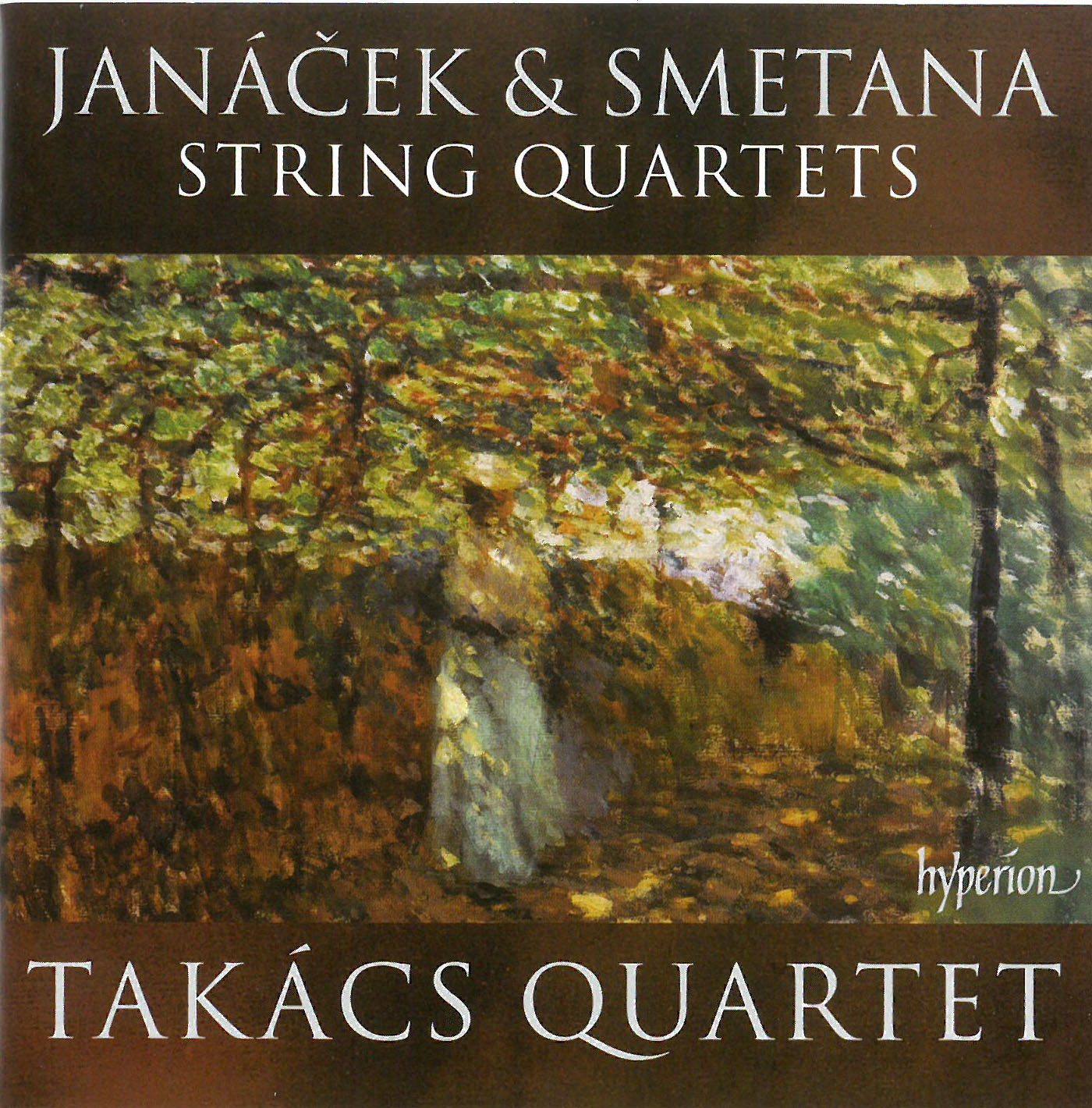
06 Janacek SmetanaThree of the great Czech string quartets are featured on Janáček & Smetana String Quartets, the latest CD from the Takács Quartet (Hyperion CDA67997). All three works, while being strongly nationalistic, are also intensely personal.

Smetana openly admitted that his Quartet No.1 in E Minor, From My Life, was a tone picture of his life: the first movement is his youthful yearnings; the second the dance music of his youth; the third his first love – his future wife, whom he would lose to tuberculosis; and the fourth his joy in incorporating nationalism in his mature music, a joy that would be terminated by his growing deafness, represented in the score by the sudden ominous high E harmonic pitch that sounded in the composer’s ear. It’s obvious from the passionate opening that this will be a rewarding performance, and it never disappoints.

Janáček’s two quartets, subtitled The Kreutzer Sonata and Intimate Letters, were both written late in his life, when he had found his decidedly individual voice and was experiencing a late surge in his career. In particular, he was deeply involved in an intensely passionate – though essentially unrequited – friendship with the young Kamila Stősslová, and the second quartet specifically represents events in Janáček’s relationship with her; despite his age, it’s full of the passion and yearning of a youthful man.

The performances of both works here are all that you could want them to be.

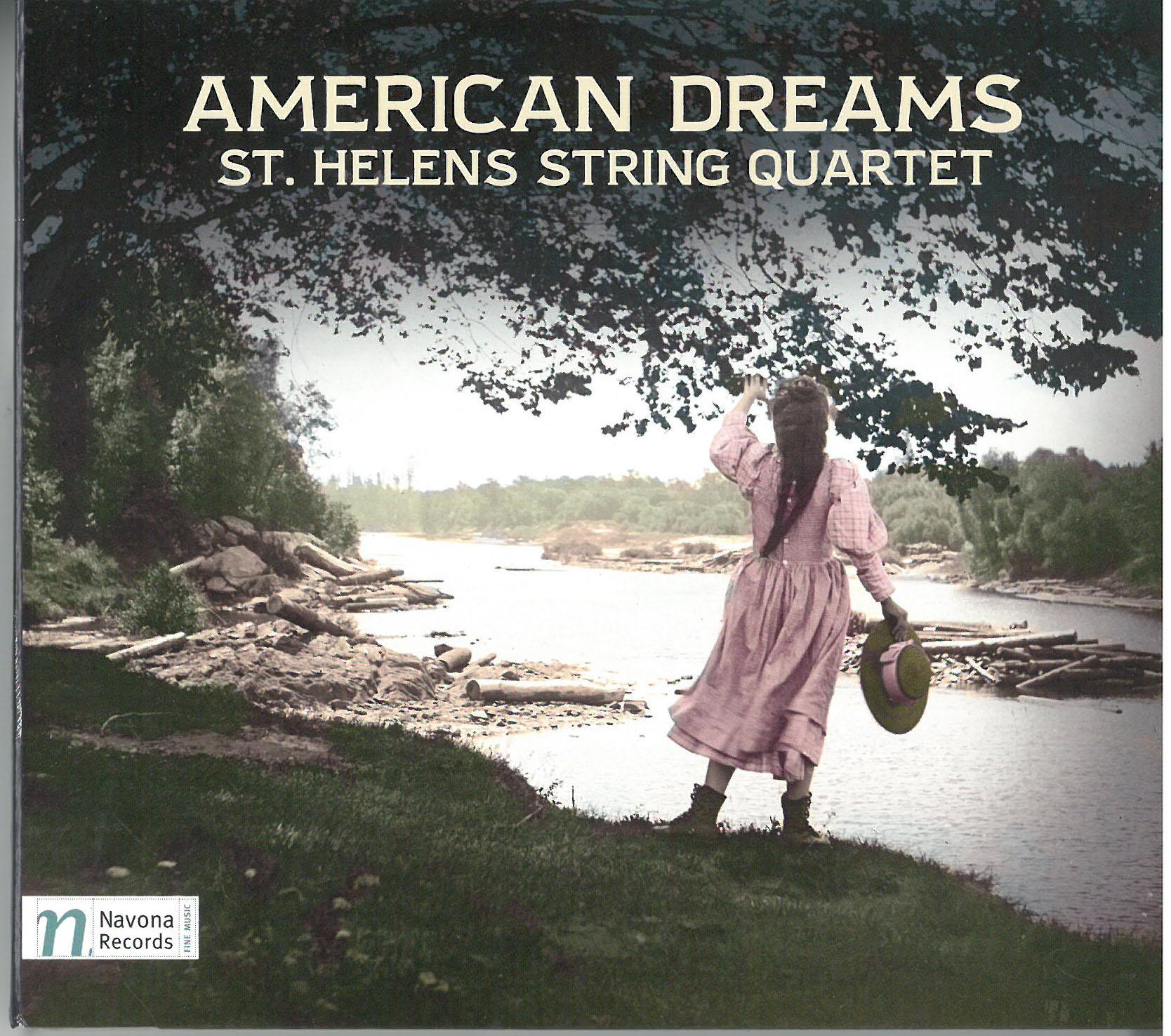
07 St Helens QuartetAmerican Dreams is the title of a lovely new CD from the St. Helens String Quartet (Navona Records NV6004) as well as the subtitle of the opening work, Peter Schickele’s String Quartet No.1 from 1983.

Schickele, who turned 80 this year, has enjoyed a long career as a composer and performer when not busy with his alter ego P.D.Q. Bach. This quartet, the major work on the CD, is beautifully written, moving in an arch from an Appalachian start through jazz, blues and fiddle styles and a Navajo song back to the dulcimer-like Appalachian tune from the opening.

Ken Benshoof (born 1933), Bern Herbolsheimer (born 1948) and Janice Giteck (born1946) are the other composers, represented by a variety of short works. Benshoof’s Swing Low from 2004 is eight views of the famous spiritual, and his Remember is a nostalgic sketch from 1977. His Diversions from 2005 – six pieces in various moods, including Blue Grass and Raggedy Blues – are for violin and piano, with pianist Lisa Bergman providing the accompaniment.

Botanas, Herbolsheimer’s five-movement work from 2008, is named for the appetizers served in Mexican bars and cafes. The two pieces by Giteck are Ricercare (Dream Upon Arrival) from 2012 and Where can one live safely, then? In surrender, written for the St. Helens Quartet in 2005. There is nothing here that is hard to assimilate, and a great deal that is thought-provoking and highly enjoyable. The playing throughout is warm and idiomatic, the recording quality excellent.

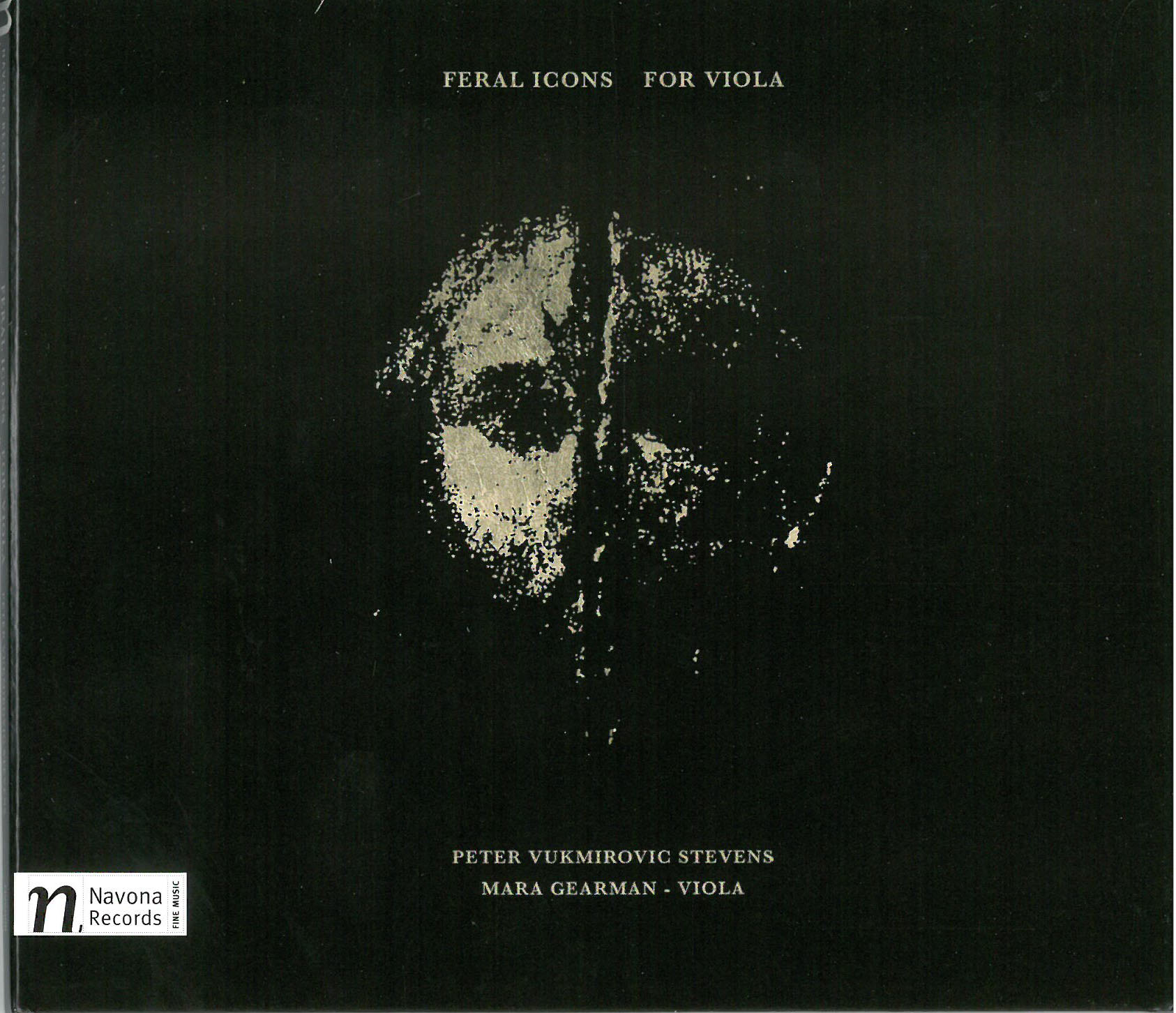
08 Feral Icons for Viola

Also from Navona Records is Feral Icons, a suite of six movements for solo viola by Peter Vukmirovic Stevens performed by Mara Gearman (NV6008). The work was written for Gearman in 2013-14, and according to the very sparse booklet notes employs Stevens’ signature sound of extended tonality and isometric rhythms.

To be honest, I’m not quite sure what that means in this particular context. We’re told that Stevens, who studied with Bern Herbolsheimer among others, has a compositional approach that strips away the extraneous to reveal simplicity, and certainly the writing here seems to be mostly tonal and quite accessible, with a fairly standard use of the instrument. There’s not a great deal of dynamic, rhythmic or tonal range though, and Gearman’s vibrato never seems to vary much. Still, she’s more than up to any technical challenges the work presents.

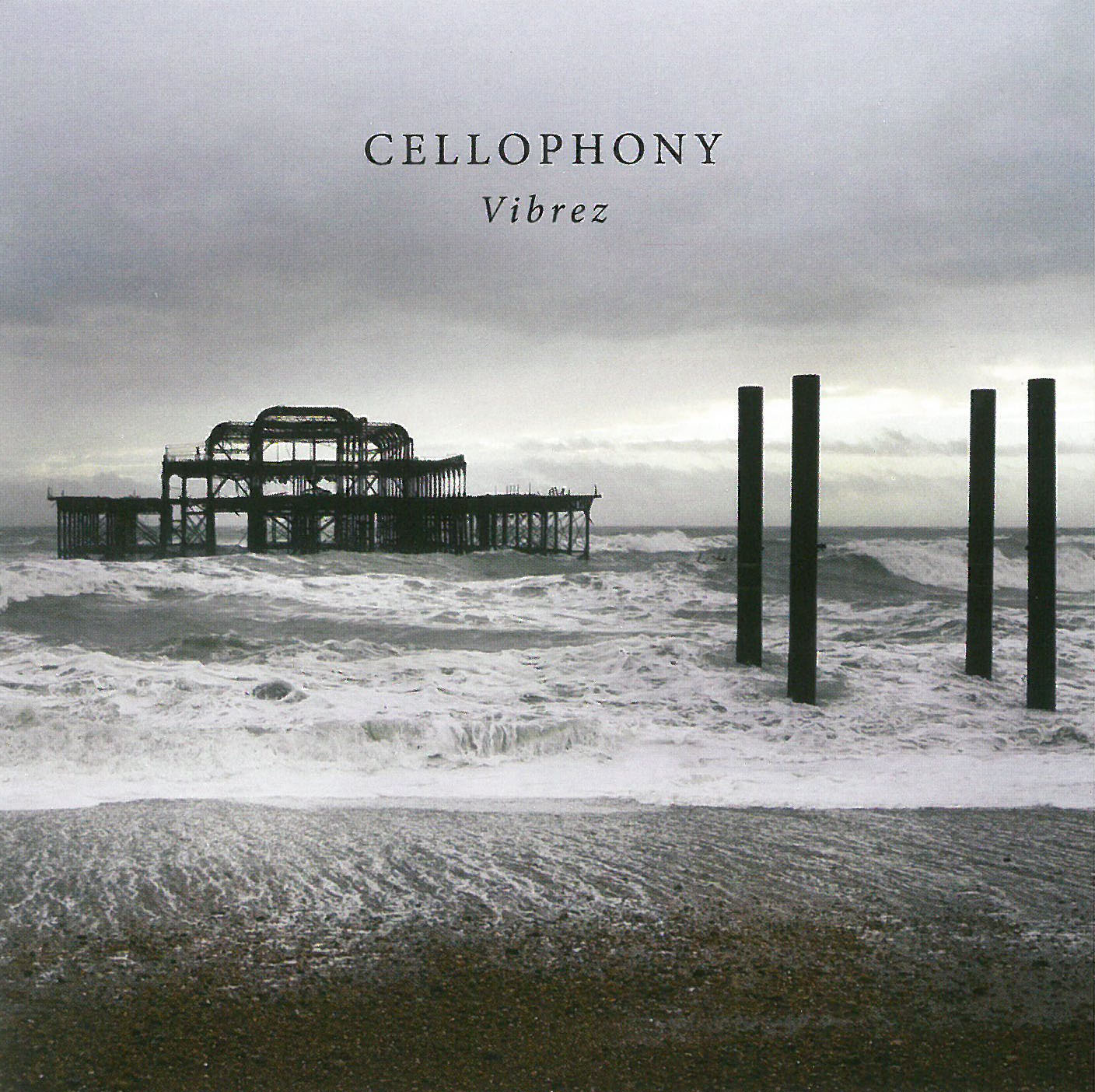
09 CellophonyJudging by the number of cello ensembles around these days, cellists must love company. Vibrez is the first release on the UK’s Edition Classics label by the London-based cello octet Cellophony (EDN1047), featuring a program of nine arrangements by octet member Richard Birchall and one original composition. The eclectic list includes Wagner’s Prelude to Act 1 of Tristan und Isolde, three Schubert songs, Liszt’s La Lugubre Gondola, Wieniawski’s Scherzo-Tarantelle (in a particularly dazzling performance), Mendelssohn’s Ave Maria, a Bach Prelude and Barber’s Adagio Op.11, the famousAdagio for Strings.” The original composition Violoncelles, Vibrez! by the contemporary Italian composer and cellist Giovanni Sollima completes a charming and entertaining disc.

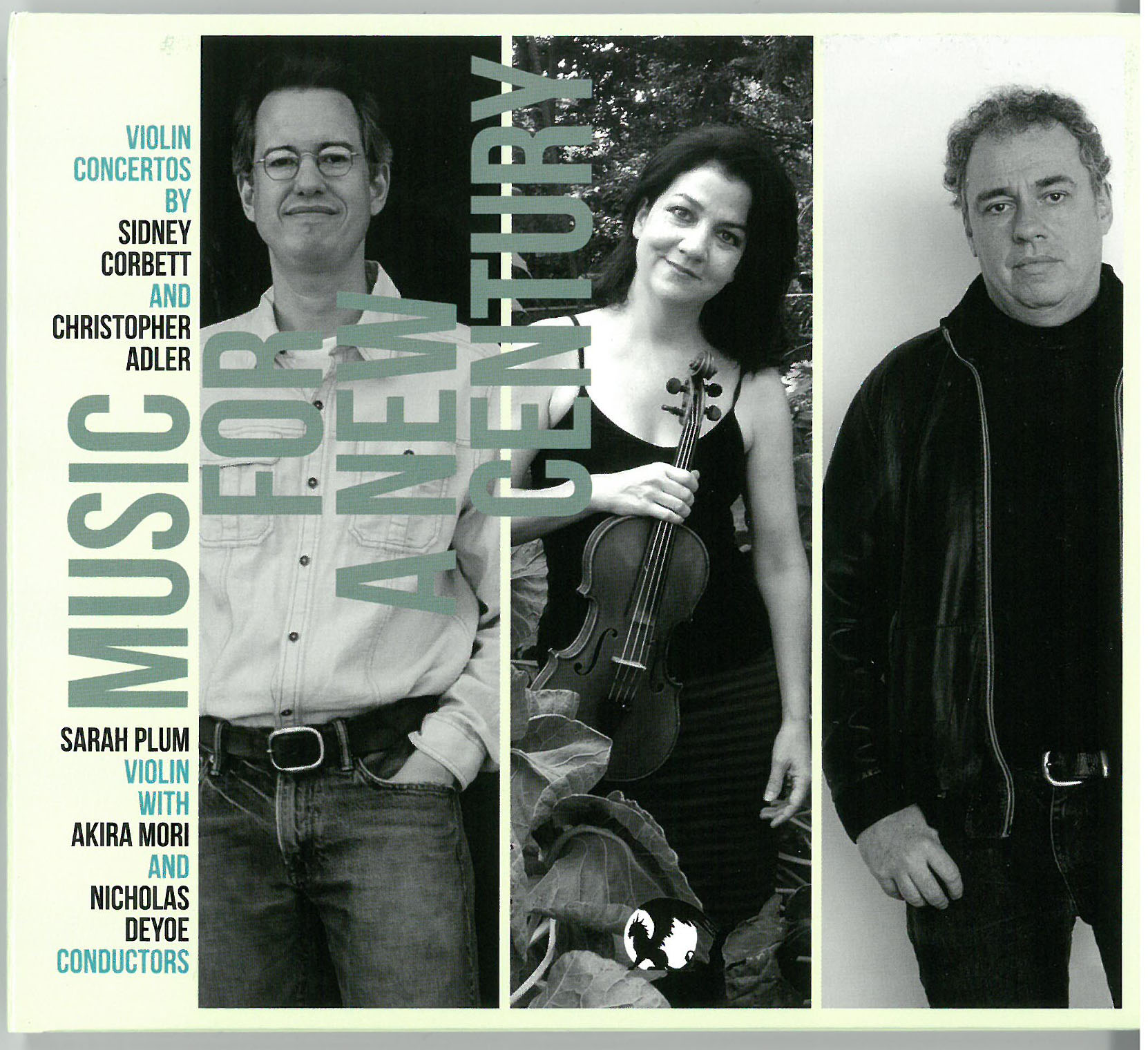
10 Sarah PlumMusic for a New Century is a new and intriguing CD of Violin Concertos by the American composers Sidney Corbett and Christopher Adler, performed by Sarah Plum (Blue Griffin Recording BGR371).

The Chamber Music Midwest Festival Orchestra under Akira Mori joins Plum in a live recording of Corbett’s Yaël at its June 5, 2011 North American premiere in Wisconsin, while Nicholas Deyoe conducts San Diego New Music in the world premiere of the Adler concerto, commissioned by Plum specifically to pair with the Corbett on this CD release.

While both works are clearly very strong neither is an easy first listen, with a good deal of unrelenting toughness that tends to act like a suit of emotional armour, keeping you at bay. Plum, however, calls them “beautiful, original and quite striking,” and says that she is “confident that they will enter the repertoire and be played for many years to come.” I really hope she’s right, but I won’t be putting any money on it; these are works that are not immediately audience friendly in the traditional sense, even on repeated hearings, and might prove difficult to program.

Mind you, it’s difficult to imagine a better flag bearer for them than Sarah Plum, who is quite brilliant here, or better performances or recordings. This is still an indispensable addition to the contemporary American violin concerto discography.

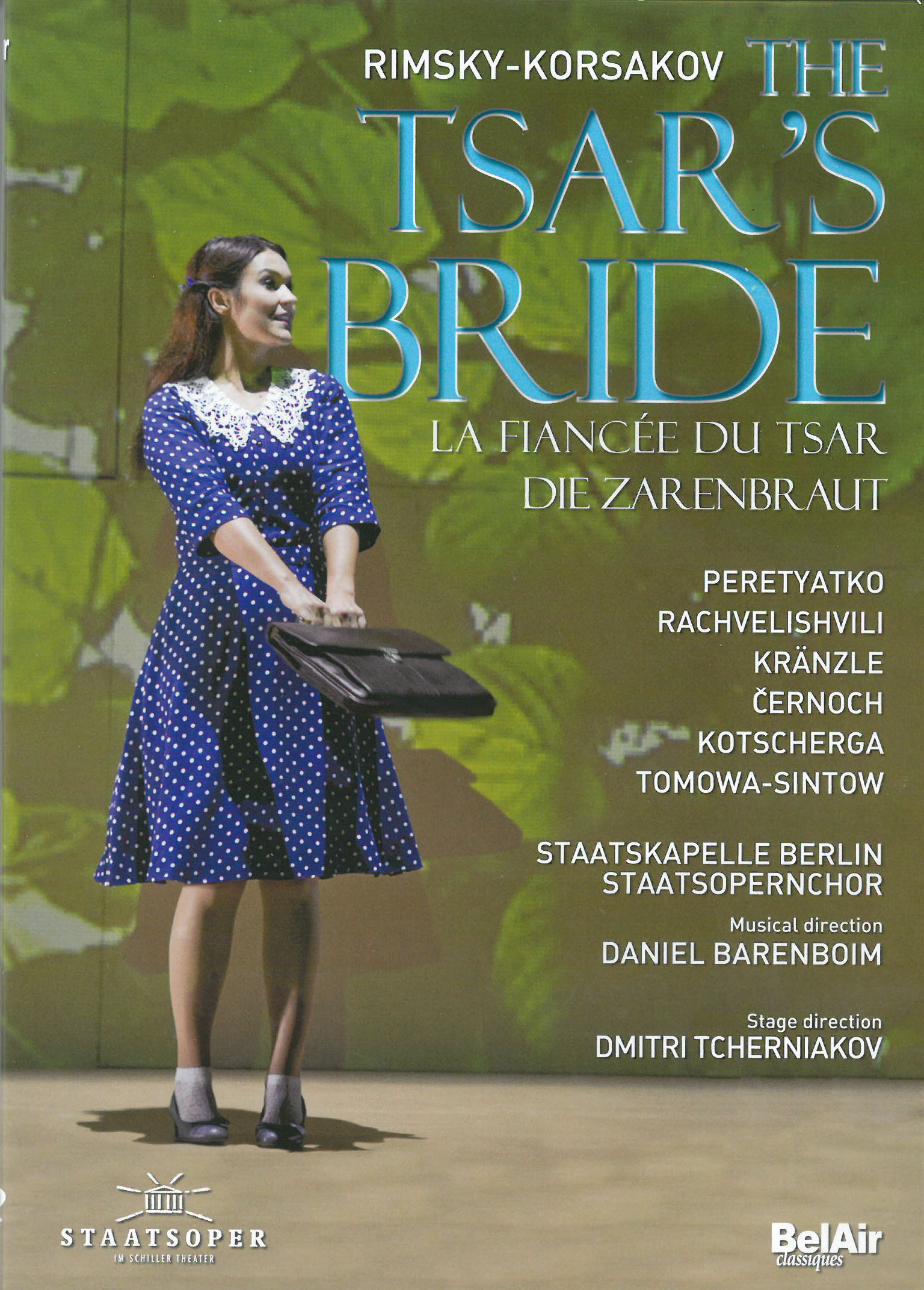
01 Rimsky Korsakov Tsar BrideRimsky-Korsakov – The Tsar’s Bride
Peretyatko; Rachvelishvili;Kränzle; Cernoch; Kotscherga; Tomowa-Sintow; Staatkapelle Berlin; Daniel Barenboim
BelAir Classics BAC105

This production was a highlight of the 2013 season in Berlin. One of the reasons was Russian director-genius, Dimitry Tcherniakov (creator of the COC’s unorthodox and spectacular Don Giovanni last February) who has since become a very desirable commodity all over the world. Tcherniakov’s modern concept targets the world of media bosses inventing computer-generated heroes and rounding up beautiful women (remember The Bachelor?) to be chosen against their will to be their wives. His concept chimes in nicely with the gruesome original story and is also very engaging, colourful and spectacular to look at.

Rimsky-Korsakov’s opera The Tsar’s Bride is largely unknown in the West and it is the true story of Ivan the Terrible’s chosen bride who was poisoned soon after their marriage. The opera is strongly dramatic with beautiful melodic invention and is profoundly moving, especially in the hands of Daniel Barenboim, who is packing in sold-out performances one after the other in Berlin and in Milan – at La Scala where Verdi was discovered and where he is referred to these days simply as “The Maestro.”

The celebrated cast is headed by Russia’s latest export, the gorgeous high soprano Olga Peretyatko, still a bit of an unknown quantity to most, but already a star. I’ve watched her in Rossini literally charming the Pesaro audience with her conquering hair-raisingly difficult vocal acrobatics and her spectacular stage presence. It’s almost impossible to outdo her, yet mezzo Anita Rachvelishvili’s deeply felt, heartbreaking performance as the wronged woman gets even more applause at the end. Of the men, German bass-baritone J.M. Kränzle, who is also a great character actor, makes a big impression as a larger-than-life and complex Boyar Grigory. Opera at its best.

02 ParryParry – I Was Glad; Coronation Te Deum
Choir of Westminster Abbey; Onyx Brass; Daniel Cook; James O’Donnell
Hyperion CMA68089

Sir Hubert Parry’s most famous Church of England standards such as Jerusalem, Dear Lord and Father of mankind (on his hymn tune Repton), the ode Blest pair of sirens, his “Mag and Nunc” (Magnificat and Nunc dimittis) and coronation pieces I was glad and Te Deum are featured alongside lesser-known early works in this excellent recording by the gentlemen and boys of Westminster Abbey. Though some contemporaries saw Parry as overly conventional, one must admit that his music can be rousing and has graced many a royal occasion, not just in his own time but in ours as well.

While I was glad and Te Deum served for coronations throughout the 20th century, Blest pair of sirens Parry’s setting of Milton’s ode At a Solemn Music, was performed by the Westminster Abbey Choir for the wedding of the Duke and Duchess of Cambridge (William and Kate). By employing the Onyx Brass, this recording pays tribute to the many times brass was introduced in arrangements of Parry’s work, notably those by Grayston Ives. The choir performs as if born to this music and an excellent solo quartet for the Magnificat emerges from its ranks, including a treble solo of great clarity by the young Alexander Kyle. Organist Daniel Cook veritably shines, having been given the over 11-minute Fantasia and Fugue in G Major.

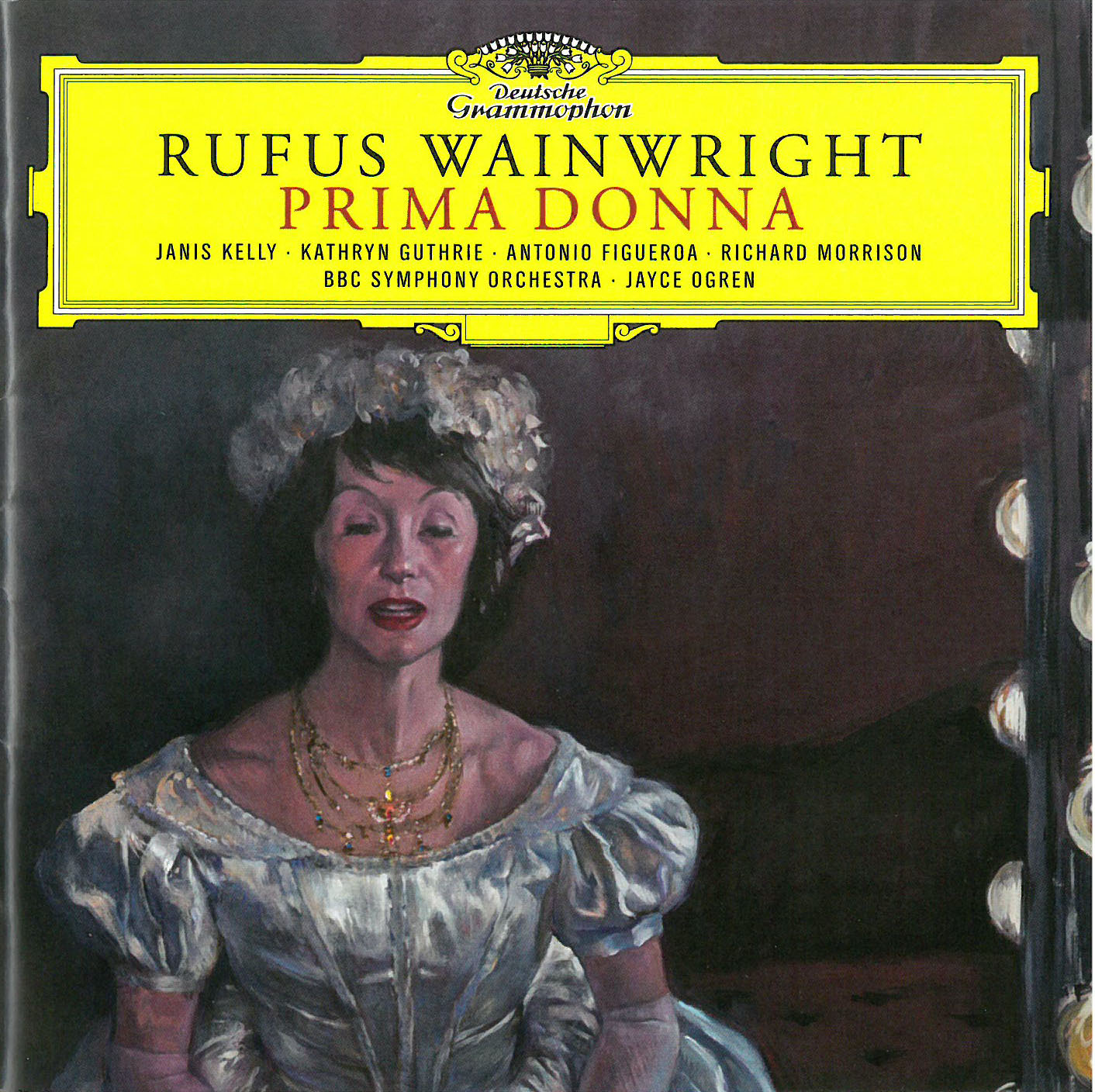
03 Wainwright Prima DonnaRufus Wainwright – Prima Donna
Janis Kelly; Kathryn Guthrie; Antonio Figueroa; Richard Morrison; BBC Symphony; Jayce Ogren
Deutsche Grammophon 479 5340

Review

Rufus Wainwright is certainly a polarizing figure. Celebrated by some, panned by others, for his fawning song-by-song recreation of Judy Garland’s concerts. He has been a ubiquitous presence at the Toronto Luminato Festival and is now a recorded opera composer. Wait, what? Yes, his 2009 opera Prima Donna, seen in Toronto at Luminato, recently received the full Deutsche Grammophon treatment with a stellar cast. Wainwright says he was inspired by a late-in-life interview with Maria Callas, apparently conducted in French, hence the language of the opera. Instigated apparently as a promise of commission from Peter Gelb and the Metropolitan Opera, it did not end up at the Met – Gelb insisted on a new opera in English, not French. Instead, the Manchester Festival and the now defunct New York City Opera staged it to little fanfare. So, how is it? Surprisingly listenable. Wainwright does not break any new ground here, but it is a competent piece of Puccini-esque nostalgia. The interesting part is that Wainwright writes the best melodies not for his Prima Donna, but for her imagined lover, the journalist André Letourneur. Late in the work, in the fifth scene of the second act, the beautiful voice of Antonio Figueroa brings to life some fine operatic writing. In an intriguing twist of the libretto, the scene is a recreation of the past glory of the Prima Donna and her partner, foreshadowing the sad ending. Nostalgic musically and thematically, Prima Donna is a surprisingly enjoyable effort from the bad boy of torch song.

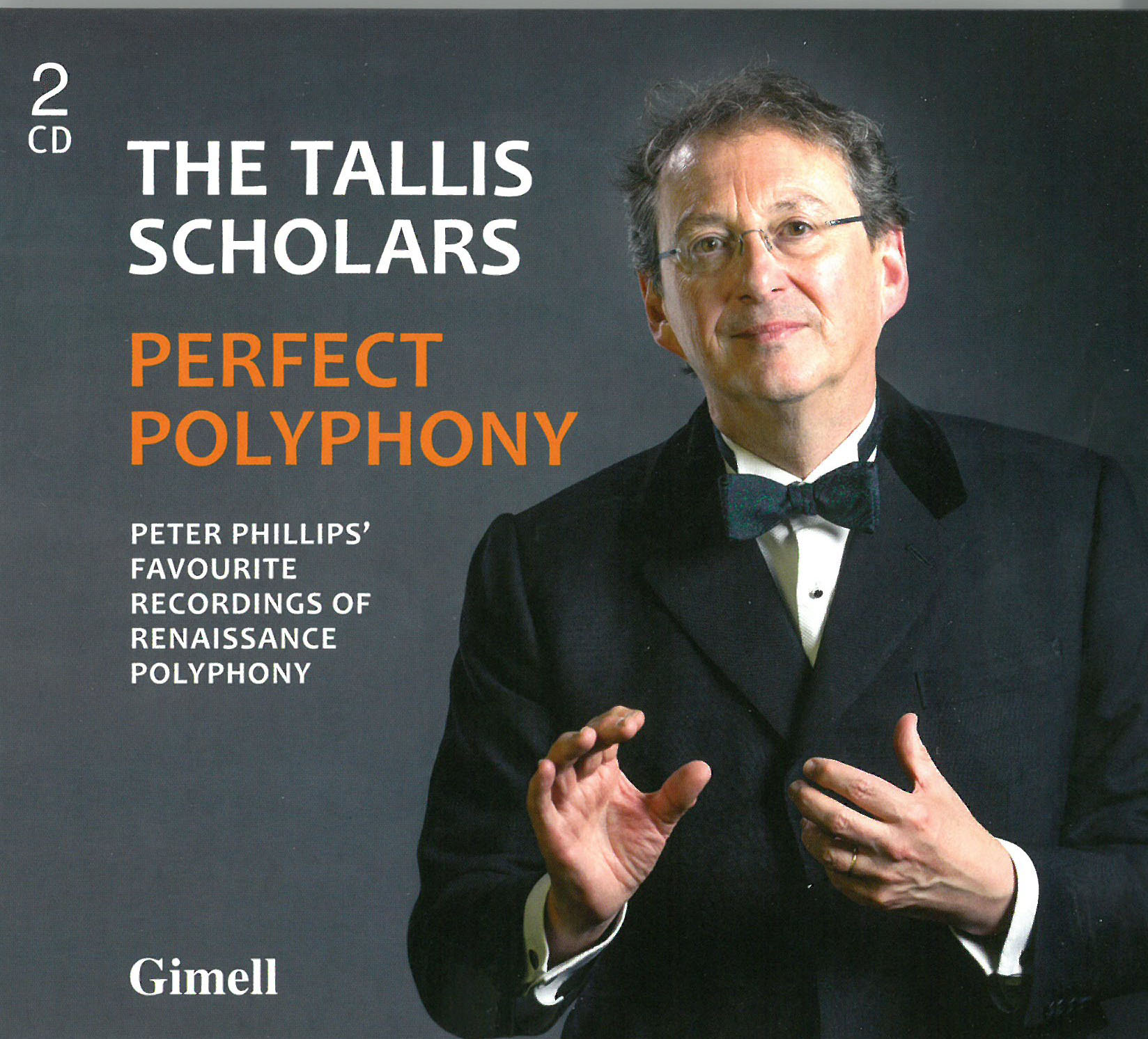
01 Tallis ScholarsPerfect Polyphony – Peter Phillips’ Favourites
Tallis Scholars
Gimell CDGIM 213

Coming up to 2000 concerts and 56 albums, director Peter Phillips has chosen to celebrate the Tallis Scholars by compiling his favourite recordings from 40 years of their stellar performances of Renaissance polyphony. Appropriately, the disc begins with Palestrina’s Missa Papae Marcelli, which also happens to be the very first piece the group ever recorded, and is followed by a lovely 1987 recording of Victoria’s Versa est in luctum. Tackling Gesualdo’s intense and harmonically challenging Ave, dulcissima Maria highlights the high level of precision these singers can execute. Particularly moving are the two sets of Lamentations of Jeremiah by Thomas Tallis, with Brumel and Ferrabosco’s settings following. Repetition, however, is not an issue: each composer’s treatment (and selection of text) is quite different. The opening of Josquin’s Missa Ave maris stella is resplendent with purity of tone, particularly in the women’s voices, and is lovely in its canonic pursuit from start to finish. The Tallis Scholars’ perfect intonation is enhanced by their uncanny ability to imbue the performance with meaning and beauty, never departing from the true spiritual significance of these works.

Concert note: The Chamber Music Orillia Chamber Choir performs Palestrina’s Missa Papae Marcelli and works by Rachmaninoff, Fauré and Bach under Jeffrey Moellman’s direction on November 8, at St. James' Anglican Church, Orillia.

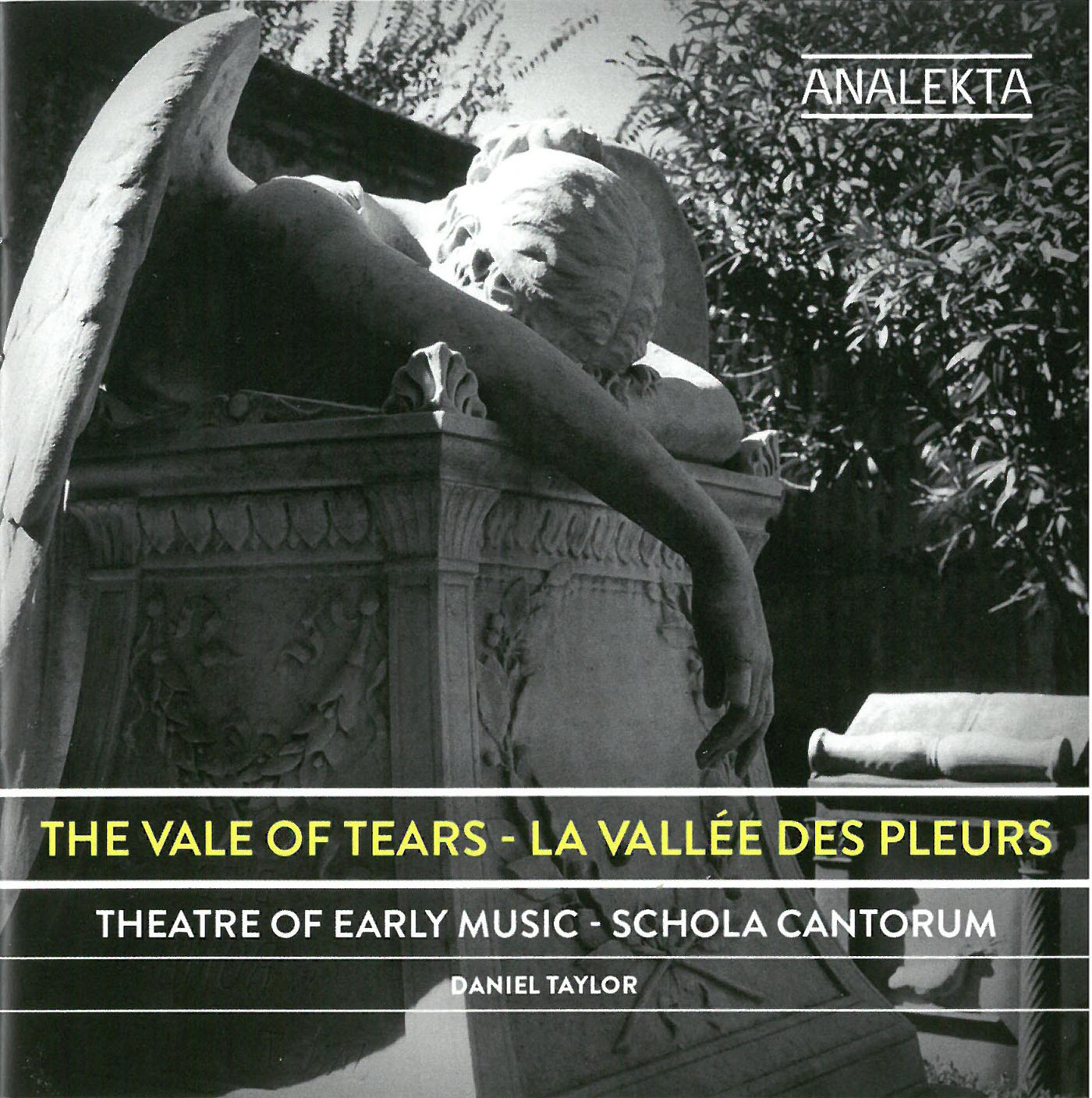
02 Vale of TearsThe Vale of Tears
Theatre of Early Music; Schola Cantorum; Daniel Taylor
Analekta AN 2 9144

Many years ago I discovered Heinrich Schütz’s funeral cantata, the Musikalische Exequien at an early music workshop in Amherst, Massachusetts. I am not exaggerating when I say that this was one of the most stunning musical experiences which have come my way. The week ended with a performance which was recorded. Naturally I rushed out to obtain the tape. It proved truly awful. Fortunately I discovered a fine professional performance conducted by Hans-Martin Linde on LP (it never made it to CD). Since then there have been others. I do not myself care for the very extroverted disc conducted by John Eliot Gardiner (Archiv) but there is a superb rendering by Vox Luminis on Ricercar, conducted by Lionel Meunier, who is also one of the bass soloists.

I am not going to claim that this new recording led by Daniel Taylor is even better, but it certainly runs close. It gets off to a very good start with the Intonation sung by Rufus Müller, who is terrific throughout. The singing is very fine and besides Müller I very much enjoyed the soprano soloists, Agnes Zsigovics and Ellen McAteer. The CD also contains two short movements from a mass by Michael Praetorius as well as a cantata by Bach (O heiliges Geist- und Wasserbad, BWV165). That cantata has a solo quartet consisting of Zsigovics, Müller, Daniel Taylor (alto) and Alexander Dobson (baritone). They are very good as are some of the obbligato players, notably the violinist Cristina Zacharias and the cellist Christina Mahler. Highly recommended.

Concert note: The Theatre of Early Music Choir and Students of the Schola Cantorum led by Daniel Taylor, are featured in The Lamb: An A Cappella Christmas Concert at Walter Hall, Edward Johnson Building, University of Toronto, on November 29.

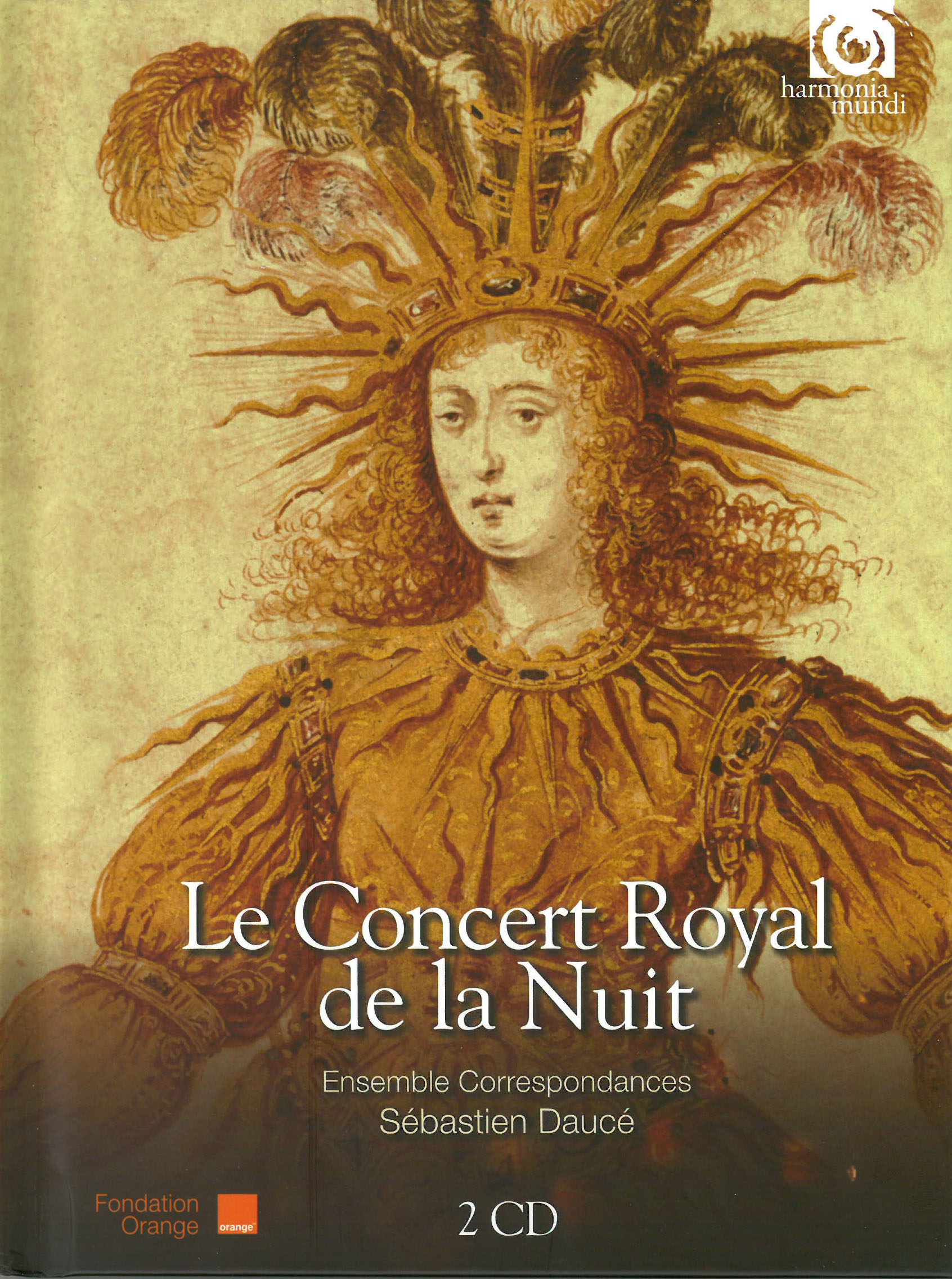
03 Concert Royal de la NuitLe Concert Royal de la Nuit
Ensemble Correspondances; Sébastien Daucé
harmonia mundi HMC 952223.24

The ballet Le Concert Royal de la Nuit was first performed in 1653. It can be seen as an act of homage to the young French king, the then 15-year old Louis XIV, who also danced the main part, that of the rising sun. A complete list of the performers has survived: it includes 24 princes and aristocrats, four courtiers and five children. We know that the author of the text was Isaac de Benserade. Jean de Cambefort was the most prominent composer of the music. The vocal music has been preserved but the instrumental music is based on a copy by Philidor, made half a century after the ballet’s performance. Philidor wrote out the top line and sometimes the bass line. It was left to the conductor, Sébastien Daucé, to reconstruct the implied but missing inner lines.

Often now record companies try to economize on the material provided. That is not the case here where the CDs come with a richly documented book of almost 200 pages that includes illustrations of the original performers and their costumes, illustrations taken from the material preserved at Waddesdon Manor in Buckinghamshire. In one of his notes, Daucé mentions that he had originally intended to create a complete reconstruction of the original ballet, but that was not feasible. Instead, we have here all the vocal music as well as 51 of the original 77 dance sequences. This music is juxtaposed with selections from two Italian operas written for Paris: Ercole amante by Francesco Cavalli and Orfeo by Luigi Rossi. These operatic sequences are written in a rather different idiom than that of the dance music but they go together surprisingly well. The record also contains some earlier airs by Antoine Boesset (who had died in 1643): these provide an interesting contrast with the slightly later dance music. The music requires large forces to do it justice: I counted 16 singers and 34 instrumentalists. Everything is beautifully done.

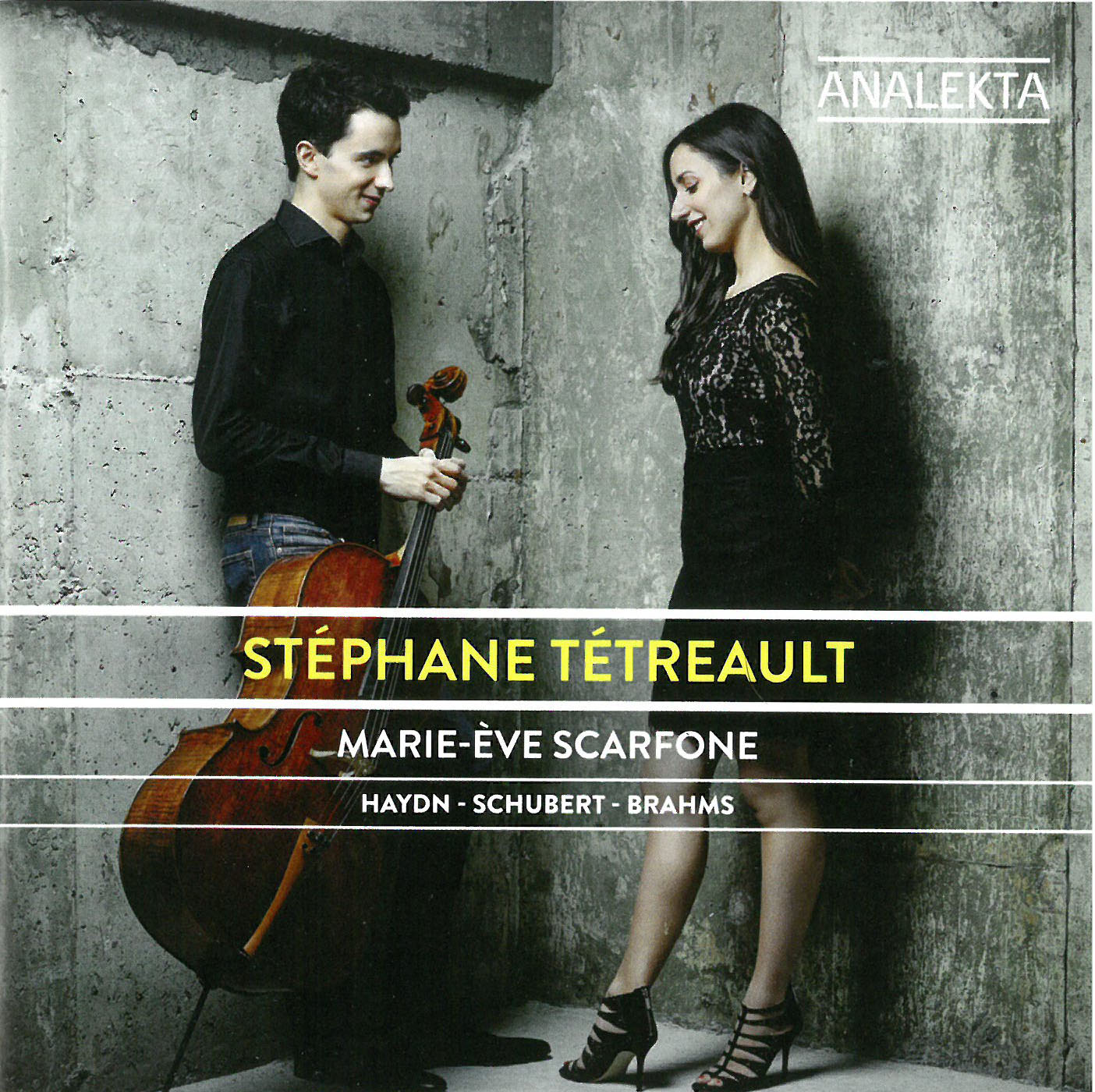
01 stephane TetreaultHaydn; Schubert; Brahms
Stéphane Tétrault; Marie-Ève Scarfone
Analekta AN 2 9994

This cello disc comprises three significant works by Viennese masters. Haydn’s delighful Divertimento in D Major was arranged for cello and piano by Gregor Piatigorsky from the original, composed for the viol-related baryton, viola and cello. Cellist Stéphane Tétreault is heartfelt in the opening Adagio’s melodies, still achieving classical poise with pianist Marie-Ève Scarfone. They convey the Menuet’s classicism and match the finale’s brightness and geniality. For me the disc’s highlight is Schubert’s Sonata in A Minor for the six-stringed, bowed arpeggione (1824), now usually played on the cello. The duo’s reading is impassioned, its expression tasteful. Dramatic arpeggios and leaps suggest agitation and crying. The Adagio’s emotional opening cello melody carries forward into a well-shaped long line. There is plenty of colour in Tétreault’s playing, with flexibility of tempo and perfect ensemble by the duo.

Lucie Renaud’s fine program notes point out nostalgic and historical elements in Brahms’ Sonata in E Minor (1871) – for example the second movement’s minuet and third movement’s fugato – and connections to the disc’s previous works. After the Schubert, I was struck by this piece’s analogous leaping cello cries in the first movement’s opening theme. And Brahms-like Schubert is a master at mixing major- and minor-key inflections that evoke shifting moods. The performers are neither routine nor precious in their expressive reading of the Menuetto. And Scarfone comes to the fore in the finale, playing its contrapuntal passages with fire and conviction. 

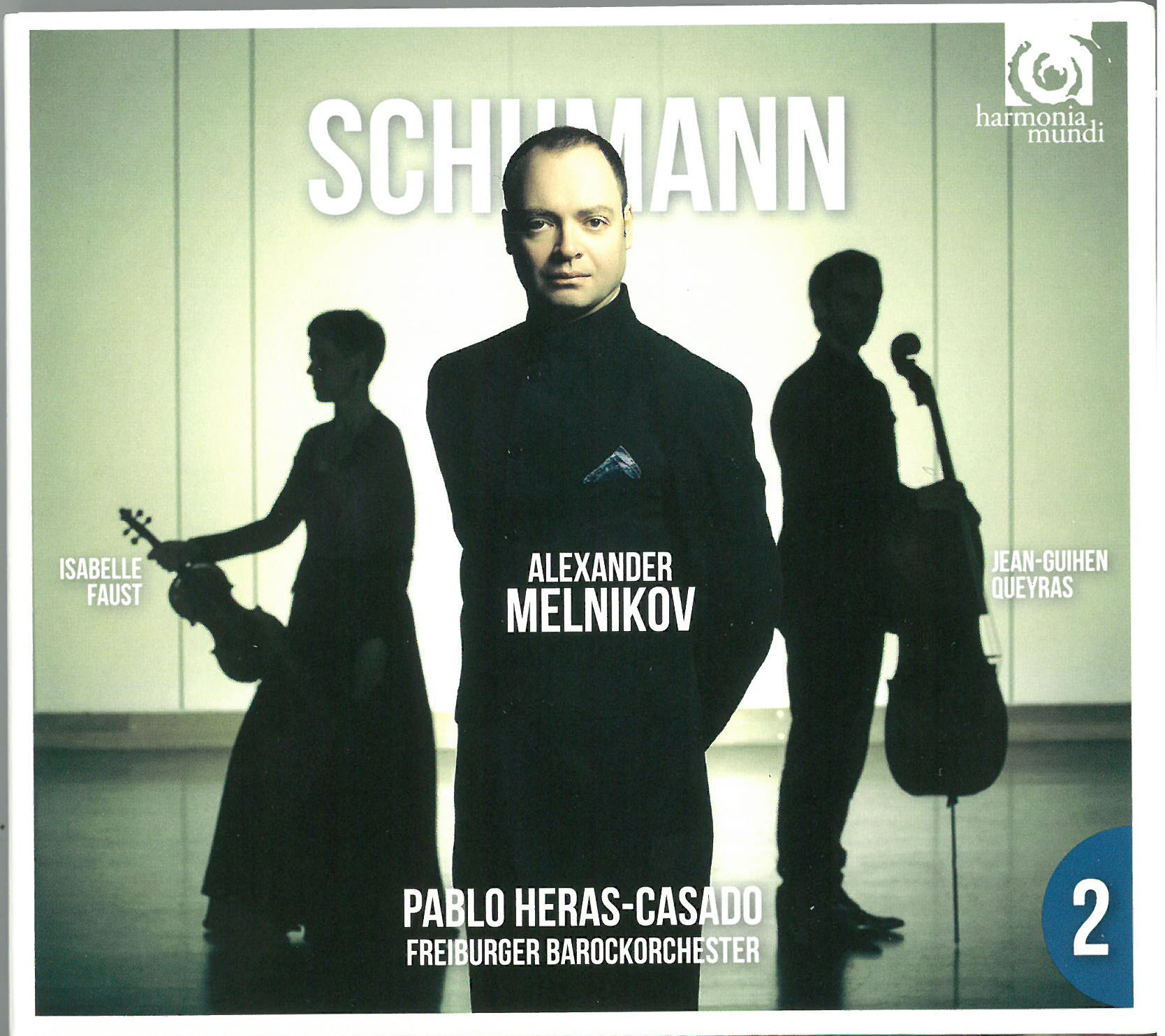
02 Schumann Heras CasadoSchumann – Piano Concerto in A minor; Piano Trio No.2
Alexander Melnikov; Isabelle Faust; Jean-Guihen Queyras; Freiburger Barockorchester; Pablo Heras-Casado
harmonia mundi HMC 902198

This is the second installment of Schumann’s three trios and concertos. The first (HMC 902196) contained the violin concerto and the third trio Op.110 in performances that were game changing with a soft attack and sensitive textures.

This orchestra as we know by now, with their aesthetic firmly based, seeks to recreate the sound of early music in its time. The open mesh to their sound illuminates this middle-romantic deployment of pre-modern instruments. With valveless horns and trumpets, woodier woodwinds, sinewy gut strings and taut percussion, this must be the sound the composer knew wherein no instrument is buried. Schumann in his concertos sought to harmonize the sound of soloist and orchestra rather than throw them against each other as Brahms did later. The pianoforte employed in this concert performance, recorded in the Berlin Philharmonie, is an 1837 Érard. The enthusiastic performance is a revelation, driven by Spanish conductor Heras-Casado’s well-paced tempi, always attentive to the felicities of Schumann’s score. All aspects considered, this is decidedly a benchmark account.

Exactly as I noted in my May 2015 WholeNote review of their performance of the Third Trio, “Faust and her colleagues radiate ardor and optimism, performing with sensitivity, sincere musicality and flawless ensemble that hold the listener’s attention.” Their choice of instruments is interesting: Melnikov’s pianoforte is again the Streicher (1847 Vienna), Faust’s violin the 1704 Strad and Queras’ cello the 1696 Gioffredo Cappa.

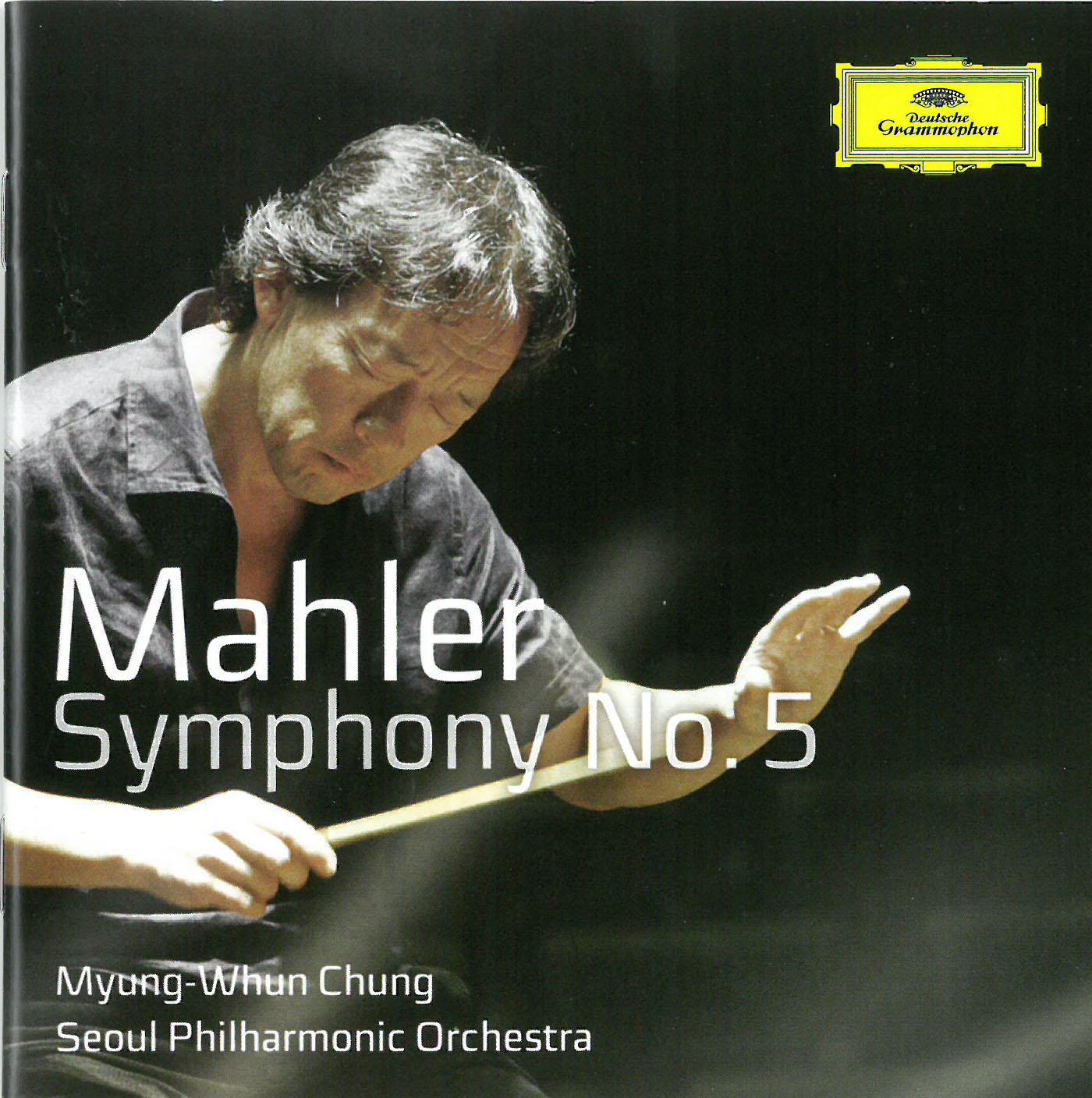
Mahler – Symphony No.5
Seoul Philharmonic Orchestra; Myung-Whun Chung
Deutsche Grammophon 481 154-0

Mahler – Symphony No.10
Orchestre Metropolitain; Yannick Nézet-Séguin
ATMA ACD2 2711

03a Mahler 5 ChungTwo very different recordings pose the question: how “live” is a live performance? The Korean conductor Myung-Whun Chung has brought the Seoul Philharmonic to the world’s attention thanks to his recording contract with the venerable yellow label and the orchestra certainly sounds fabulous in this latest DG recording of Mahler’s Fifth Symphony. Though it is difficult to say precisely whether the credit lies entirely with the conductor or the German Tonmeister team, the results are sonically exceptional. It is, after all, quite unusual to detect the grainy sound of contrabassoon doublings so distinctly in the concert hall or to apprehend orchestral balances this clearly in real life live performances. In any case, Chung proves himself a master of this familiar work, conducted from memory and sensitively interpreted with a convincing Viennese lilt in the lengthy third movement Scherzo and a moving yet not maudlin performance of the celebrated Adagietto. The challenge of the Rondo finale is adroitly solved by taking a middle-ground tempo that binds together the ever-shifting tempi of the disparate sections.

Review

03b Mahler 10

From the outset of his Tenth Symphony it is clear that Mahler was tentatively entering into a new sonic realm of expanded chromaticism and rhythmic freedom, tragically cut short by his untimely death at the age of 50. He left behind skeletal sketches of the entire work which has been reconstructed several times, the most familiar of these being the third Deryck Cooke version presented here. For the most part the Orchestre Métropolitain delivers an impressive performance save for some occasionally ragged playing by the brass section. Though the normal OM string section has been doubled in strength for this performance, they still fall 17 players short of the Seoul forces and the difference is telling. Nonetheless Nézet-Séguin uses this to his advantage, bringing forth a beautifully veiled pianissimo behind the exquisite flute solo in the moving finale of the work. ATMA’s production is far less interventionist, spliced (not altogether seamlessly) together from multiple performances in long takes with a modest array of microphones. Despite the disparate production values of these two releases it is the ATMA recording I find myself returning to most often; Nézet-Séguin clearly has something special to say about this least familiar Mahler symphony and I am willing to forgive its relatively minor shortcomings.

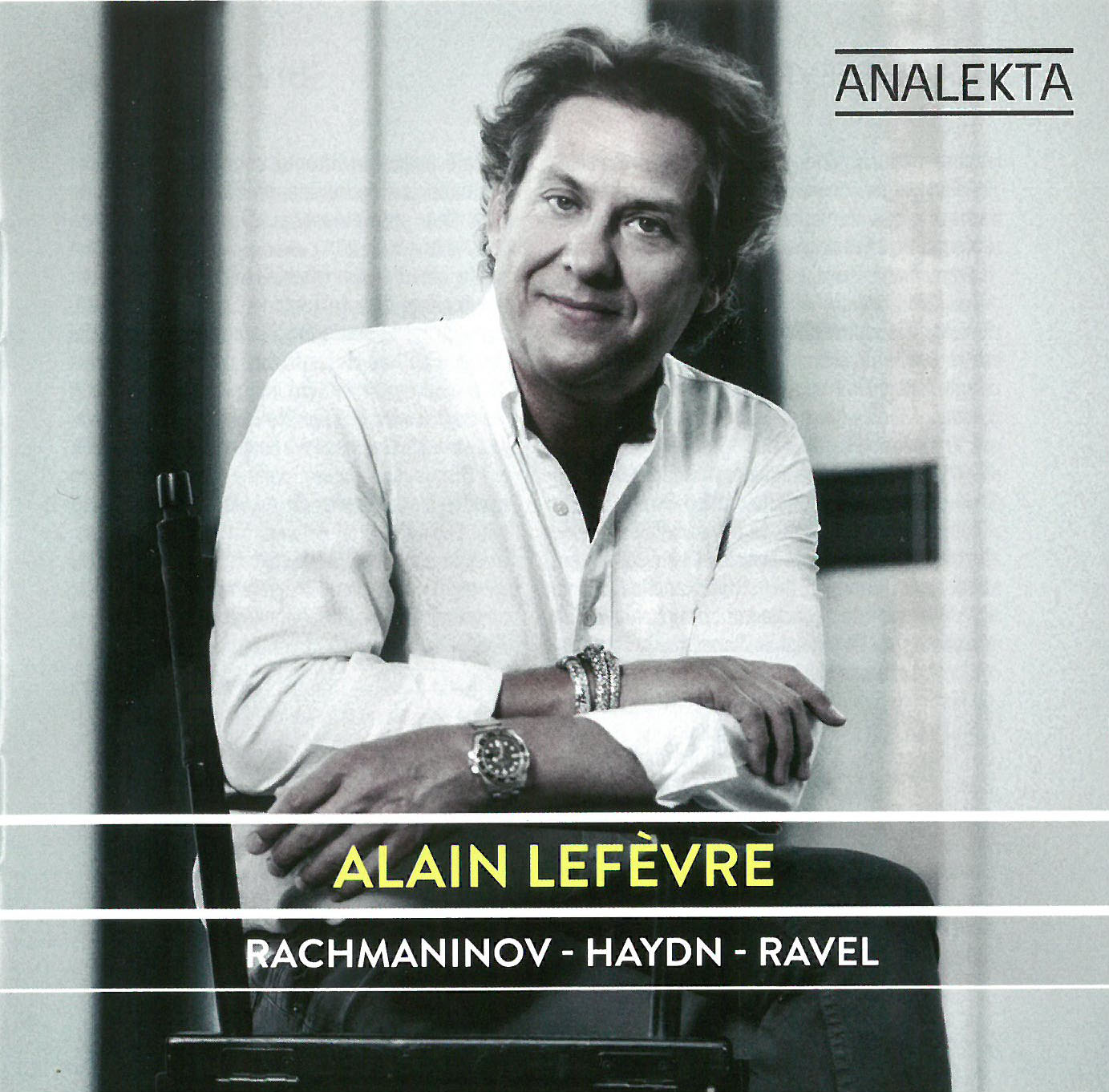
04 Alain LefevreRachmaninov; Haydn; Ravel
Alain Lefèvre
Analekta AN 2 9296

Ever since winning first prize in piano and chamber music at the Paris Conservatoire followed by first prize at the Alfred Cortot International Piano Competition, Alain Lefèvre has earned a reputation as an artist of the first rank. His performances have won him rave reviews in the press and he has appeared on concert stages as far reaching as New York, Berlin, London and Shanghai. Although born in Poitiers, France, Canada has long claimed him as a native citizen, owing to his long period in this country beginning with his first lessons at the Collège Marguerite-Bourgeoys in Montreal.

His newest disc on the Analekta label features an eclectic program of music by Rachmaninov, Haydn and Ravel. From the opening descending arpeggio of the Rachmaninov Sonata No. 2 in B-flat Minor, the listener is made keenly aware that Lefèvre is in full command of this most challenging repertoire. Like Chopin’s sonata of the same key, this work is a study in contrasting movements. Lefèvre approaches the technical demands of the first and third with apparent ease, capturing the dark and dramatic spirit with much bravado, while the quietly introspective second movement is treated with much sensitivity. In total contrast is the Haydn Sonata No.38 in F Major, dating from 1773. Lefèvre’s interpretation is elegant and precise, demonstrating a particular clarity of phrasing as befits this music, clearly rooted in the classical tradition.

Ravel’s La Valse from 1918 has always been regarded as a tour de force. In this version for piano, Lefèvre adroitly captures the waltz’s kaleidoscopic moods, from the opening references to a gracious Second Empire ballroom to its final frenzy – a true musical depiction of a “harsh new world” brought on by the immense political and social changes of the early 20th century. Bravo, M. Lefèvre – once again you have proven yourself most worthy of the accolades bestowed by critics and audiences alike.

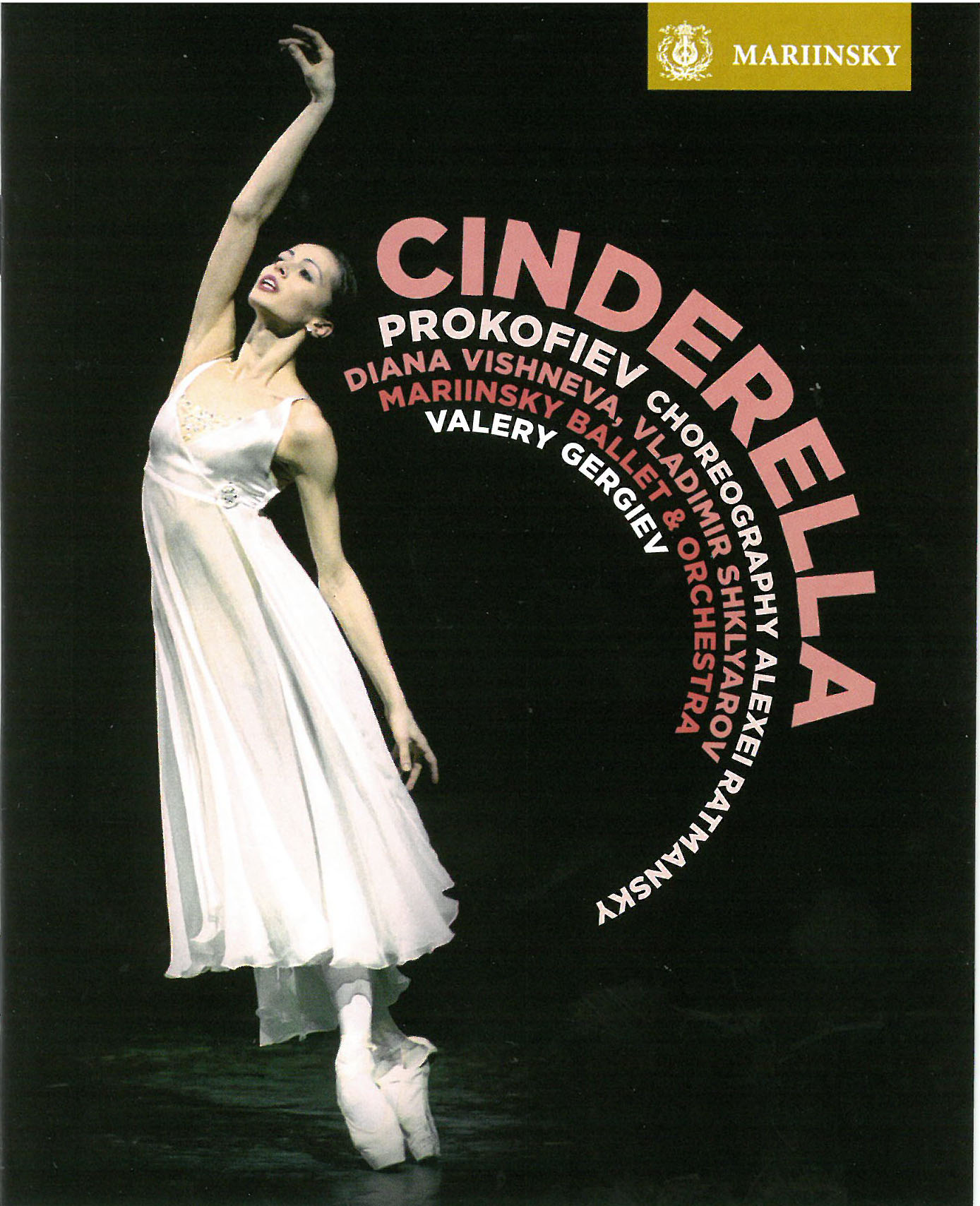
05 Prokofiev CinderellaProkofiev – Cinderella
Mariinsky Ballet & Orchestra; Valery Gergiev
Mariinsky MAR0555

Of late, with its ongoing confrontation in Ukraine, European trade sanctions and a worrisome intervention in the Syrian war, Russia is again starting to look like a frozen-in-time empire of the Cold War. There is no such freeze in the artistic life of the country however. Case in point: new, exciting choreography for Cinderella. This staple of traditional ballet, rendered beautifully by many artists, from Margot Fonteyn to Maya Plisetskaya, was a stylish piece, to be sure, but it has been in dire need of a makeover. The new Cinderella is simply brilliant. Contemporary and energetic, with smart costumes by Elena Markovskaya, it plays, as it should, as a modern parable of the triumph of good over evil. The sheer nervous energy of the performance highlights the beauty of the score. In typical Prokofiev fashion, the music reveals itself to be even more ahead of its time than we suspected.

The physically demanding new choreography illustrates perfectly the tension of the score and highlights Prokofiev’s uncanny ability to express movement through music. Filmed in the Mariinsky Theatre in St. Petersburg, the work truly belongs in Mariinsky II, designed by the Canadian starchitect Jack Diamond. Fresh, exciting and triumphant, this recording leaves us hoping that Putin’s Russia is nothing but a phase in the history of a great artistic nation.

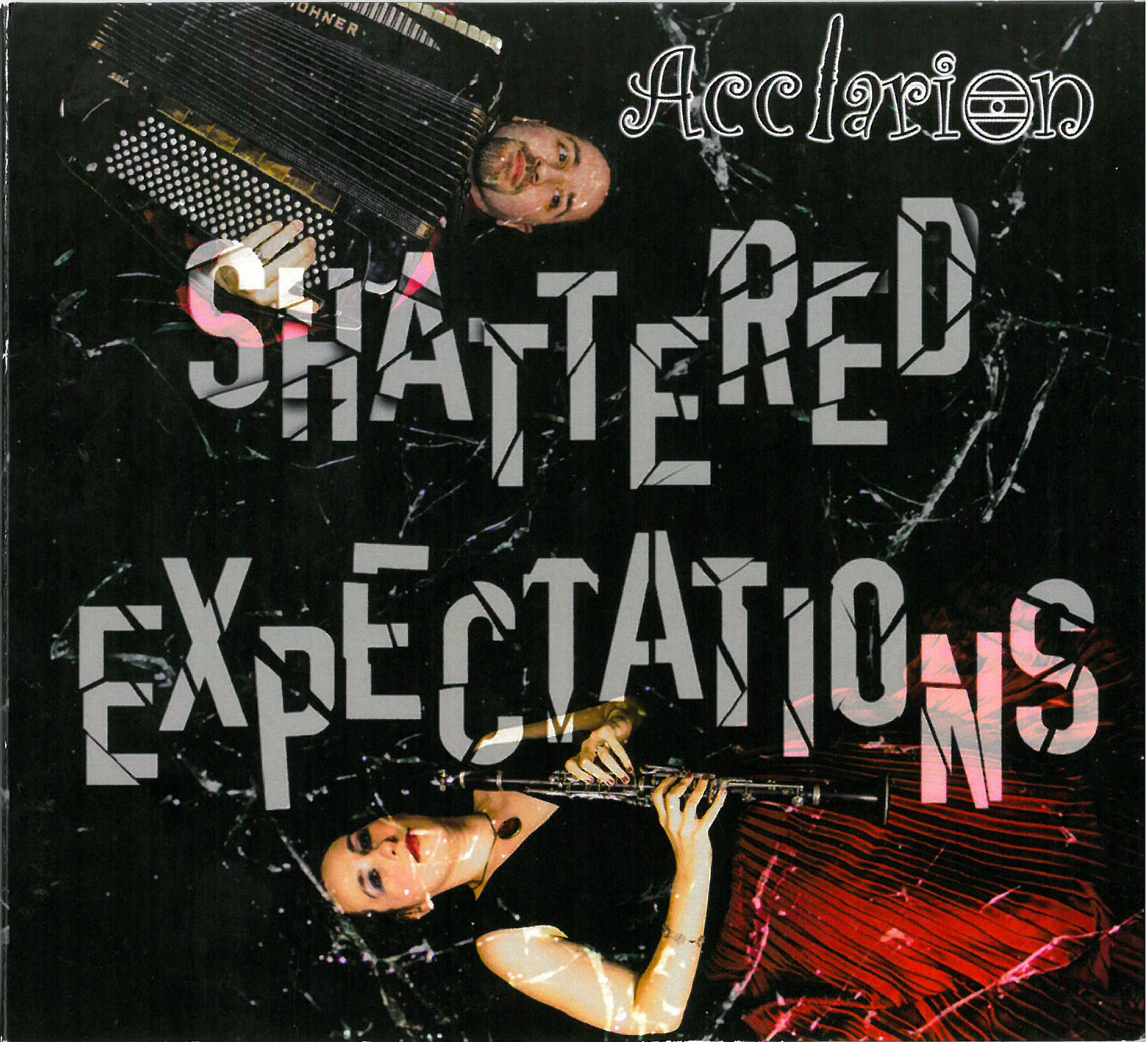
06 AcclarionShattered Expectations
Acclarion
Acclarion Records ACC3000 (acclarion.ca)

Review

Acclarion’s latest release showcases the phenomenal musicianship of clarinetist Rebecca Carovillano and accordionist David Carovillano. Partners both in life and in this 12-year duo project, they perform here with passion, elegance, wit and stylistic acuity.

Five tracks are composed by David Carovillano. It is always a joy and an ear-opening experience to hear a composer play his own works. Rooted in romantic and post-romantic soundscapes with touches of jazz flavours, the serene virtuosic opening and challenging fluid lines of Twilight of Shadows and driving momentum of the aptly titled Frenzy, especially showcase Acclarion’s tight ensemble awareness of balance, breath and colour, and the composer’s thorough knowledge of both instruments.

Mozart’s Clarinet Quintet for Two is a gorgeous performance by two exceptional classical players as the accordion proves itself to be a perfect instrument to join the clarinet in this transcription. Likewise the three short Vaughan-Williams English Folk Song tracks are welcome, soothing delights both in arrangement and the colourful lush sonic qualities.

Rebecca Carovillano is a star clarinet performer with solid breath control, superb varied tone and an unmatched musical ear sensitive to nuance. David Carovillano plays the accordion with the same qualities, and solid bellows control and technical mastery. Together they create detailed and interesting musical conversations. More varied dynamics and a bit more spontaneity would drive the duo toward a welcome future musical journey that will hopefully continue for many years to come!

01 Leo OrnsteinLeo Ornstein – Piano Quintet; String Quartet No.2
Marc-André Hamelin; Pacifica Quartet
Hyperion CMA68084

Why has there been a revival of music by composer/ pianist Leo Ornstein (1893-2002)? From early groundbreaking piano pieces onward, his was an extraordinary (and extraordinarily long!) musical life. In 1906 his family emigrated from Russia to the United States where he trained as a piano virtuoso, but after an amazing start he gave up concertizing. His father was a cantor and Ornstein’s Russian-Jewish musical heritage came to the fore. In a modernist context it permeates the Piano Quintet (1927), which I think ranks in quality with the Shostakovitch and Bloch quintets for piano and string quartet. The tempestuous opening movement typifies Ornstein’s rhapsodic process of linking varied phrases and sections that suggest frenzied dances, song-like laments, marches and much more. I particularly liked the slow movement, especially a passage with high violin, mysterious piano repeated notes and chords, and uneasy supporting strings. The Quintet reflects Ornstein’s piano virtuosity; Marc-André Hamelin, who has recorded a notable Ornstein solo disc on Hyperion, is ideal, while the outstanding Pacifica Quartet partners him with confidence, colour and clarity.

Ornstein’s String Quartet No.2 (c.1929) is a more orderly affair. Strings are treated more independently than in the Quintet,and the lower instruments are given solos. The Pacifica Quartet emphasizes the work’s lyrical beauty with well-shaped melodic gestures and sensitive playing of accompanying parts, which through Ornstein’s variety of chord spacings, registers and rhythmic patterns become just as interesting as his melodies.

02 Harley SpinSpin – like a ragged flock
James Harley; Ellen Waterman
Independent ADAPPS 15001(jamesharleymusic.com)

Review

Spin is a highly original disc created by composer James Harley and performer Ellen Waterman, combining electroacoustic composition, improvisation and spatialized sound. Harley provides the electroacoustics, processing, sound diffusion and theremin playing, while Waterman performs on an array of flutes and provides vocal elements. To demonstrate their improvisational creative process, they have included two versions of two different pieces. The first two tracks, Birding I and II, intermingle a wide range of bird and flute calls, creating hints of an intimate human-nature dialogue before cascading into more complex dissonant textures.

The second two tracks, Fluting I and II, create a sonic environment that puts the listener within a field of multiple flute voices, particularly evident when listening in the 5.1 surround sound format, a major feature of this recording. Sound diffusion is the art of moving the sound sources amongst multiple speakers. In listening to all six pieces, I observed a different-than-usual approach to diffusion. Rather than sounds dispersed individually in different spatial locations, I experienced a melded aesthetic, much like being in a reverberant space with the combined sound coming from all directions. Creating contrast between different locations in the space was, however, utilized in unique ways – to split up the layers of a dissonant chord, or to highlight glissandi moving between front and back. Spin creates a unique aural experience, providing several touchstones highlighting our relationship with nature. Although primarily a surround-sound DVD without a CD layer, the disc includes stereo files that can be downloaded to a computer or iPod.

Back to top