02_Shostakovich_Gergiev.jpgShostakovich – Symphony No.9; Violin Concerto
Leonidas Kavakos; Mariinsky Orchestra; Valery Gergiev
Mariinsky MAR0524

Symphony No.9 in E-Flat Major Op.70 is a lively, mocking, inspiring, bouncy, sarcastic picture of human nature. Originally imagined as a monumental work, with chorus and soloists – the ode to the victorious ending of the brutal war – it eventually emerged as a 22-minute-long creation that was lighthearted, humorous and transparent. Shostakovich himself said: “It is a merry little piece. Musicians will love to play it, and critics will delight in blasting it.” He was right, indeed. The work had a disappointing effect on the general public, and was quickly banned by the Soviet regime. However, amidst the parades and humour, this symphony is illuminated by deeply felt moments of human suffering in the slower movements and features the most heartbreaking bassoon solo in the fourth movement. The Mariinsky Orchestra, under the baton of maestro Valery Gergiev, displays a wonderful uniformity of sound and phrasing. Their interpretation of this work is both exciting and reassuring.

The Ninth Symphony is coupled here with the dark and reflective Violin Concerto No.1, arguably one of the best violin concertos ever written. It opens with Nocturne, essentially a long violin narrative. Dance-like elements become more devilish toward the end of the Scherzo, increasing the virtuosity in the violin lines. The central movement, Passacaglia, brings a sense of inevitability that culminates in the cadenza, which starts as a beautiful lament but changes into a furious display of emotions. The soloist, Leonidas Kavakos, while superb throughout, truly shines in this movement – his expression is raw, vulnerable yet powerful, revelatory in nature, bewitching to the listener. Burlesque, the last movement, has an eerie combination of spookiness and light, ending in swirls of melodies and rhythms, like a shamanic dance.

The outstanding acoustic qualities of the Mariinsky Theatre (where this album was recorded) makes this disc even more enjoyable.
 

03_Taktus_Glass_Houses2.jpgGlass Houses for Marimba – Music by Ann Southam
Taktus
Centrediscs CMCCD 21415

It was with great pleasure that I listened to Taktus (percussionists Greg Harrison and Jonny Smith) playing Glass Houses for Marimba. It was difficult not to compare this version to the piano pieces, which I have recorded; however, music should be experienced in the moment and in different interpretations so I enjoyed this CD.

In these performances tempi and articulation vary from the piano in interesting ways. No.5 by the marimbas clocks in at 5 minutes 21 seconds in comparison to the piano’s 8 minutes 28 seconds. The marimbas play this Glass House in a slower tempo and make it more meditative, rather than the virtuosic piano version. I like that their version is quite different from the piano, although I do prefer No.5 with all its repeats, faster and with an edge. Glass House No.1 as heard here is twice as long as the piano version, although the tempi were comparable (more repeats were added). The shorter version is closer to the original score but the transcription from piano to marimba results in different tonal colours and phrasing.

I do think it is important to have different performances and interpretations. How boring music would be if everyone played the same way. I like the contrasting dynamics in No.7, which is almost three minutes slower than the original. Again, different sounds emerge from different instruments and this highlights the unique quality of this music. No.8 is wicked for the piano – there is a 33-note drone which the pianist must memorize in order to focus on the right hand melodies. Needless to say I relished hearing two people perform this difficult piece with such relaxed ease and expertise. My favourite Glass House in this CD was the performance by Taktus of No.9 because it accentuated the colours and delicate nuances of the marimbas. The playing throughout the CD was impeccable and articulate.

Editor’s Note: Centrediscs will be re-issuing Christina Petrowska Quilico’s piano recording of Ann Southam’s complete Glass Houses as a 2-CD set in the coming months.

05_Vivienne_Spiterri.jpgIsadora Sings
Vivienne Spiteri
Isadorart isi 03 (isadorart.qc.ca)

The harpsichord is an instrument of opposites. Of ancient origins, it lives on through recent trends of recreation. Sounding with pointillistic attacks of sharp precision, it can unfold with a rich and flexible resonance and tone. Thick blocks of complex sounds contrast with clear, transparent layers of register and texture. Although known for its role in early music performance, these qualities provide a rich sonic palette for today’s composers. Isadora Sings reveals these colours through a series of evocative and dynamic pieces. Vivienne Spiteri and her collaborators pair the harpsichord with electronics, blending them into unique sound fields, extending the instrument beyond its usual capabilities.

Of note is Cinéma, mode d’emploi by Pierre Derochers which, through live sampling, creates a thrilling layering of dense, frenzied activity. Also, in Hope Lee’s Tangram, added bass clarinet (played by Lori Freedman) supplements the vastness of the electronics, as well as complementing the harpsichord in its ritual-like meditations and ecstatic outbursts.

Most interesting is the title track, a collaboration between Spiteri and composer Kent Olofsson, which uses an array of rarely heard extended techniques. Hand muting, pitch bending, strumming, plucking, even rubbing the strings to excite harmonics, are echoed in the electronics, creating a vast, spacious world of sound. Shadow and light of varying intensities come into focus, from obscure faintness to blinding opaqueness. An imaginative and unique exploration for the curious listener.

While the pieces can feel a bit lengthy, the artists’ vision provides rich sonic rewards for the willing ear.


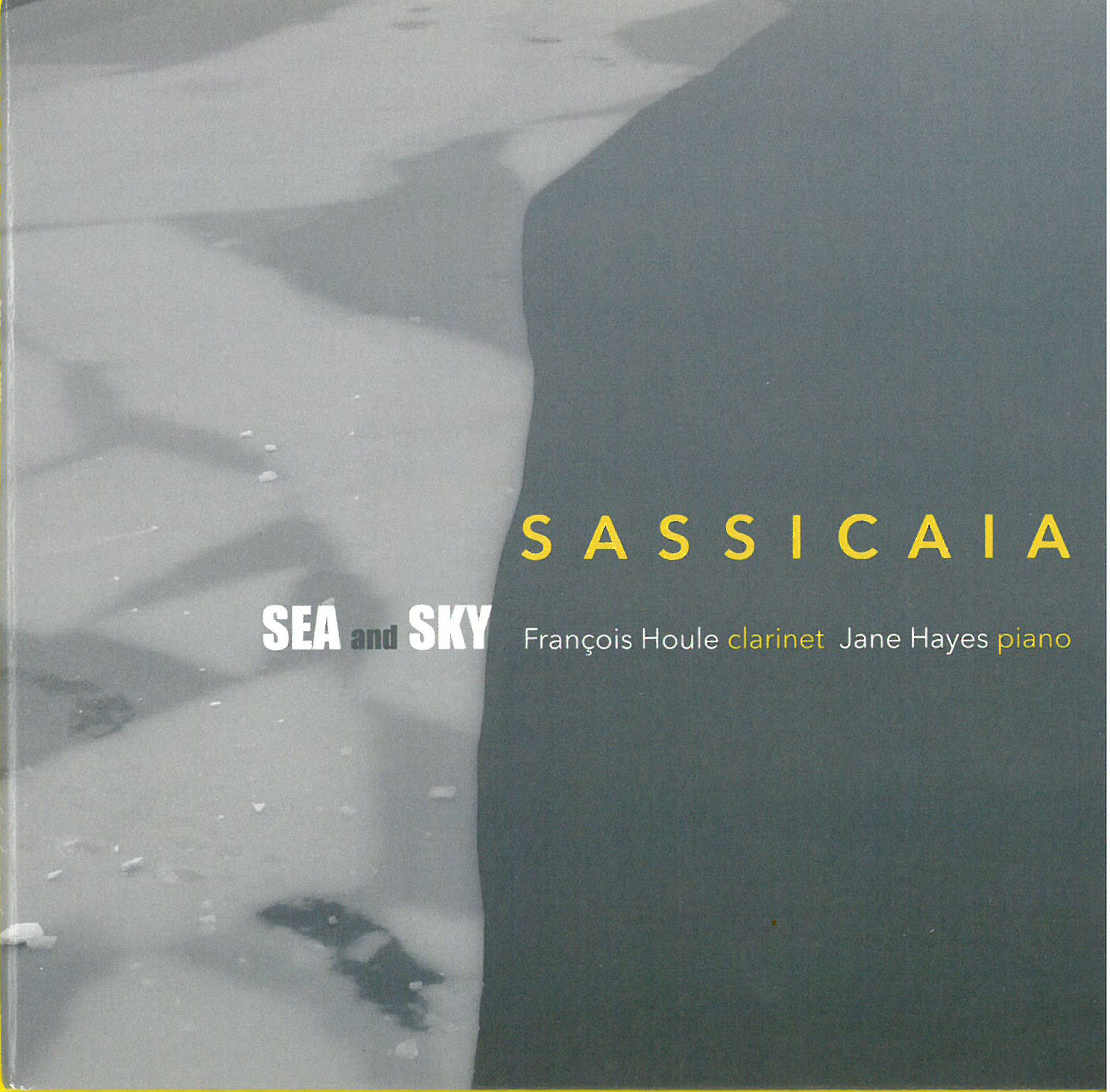
Sassicaia
François Houle; Jane Hayes
Redshift Records TK438 (redshiftmusic.org)

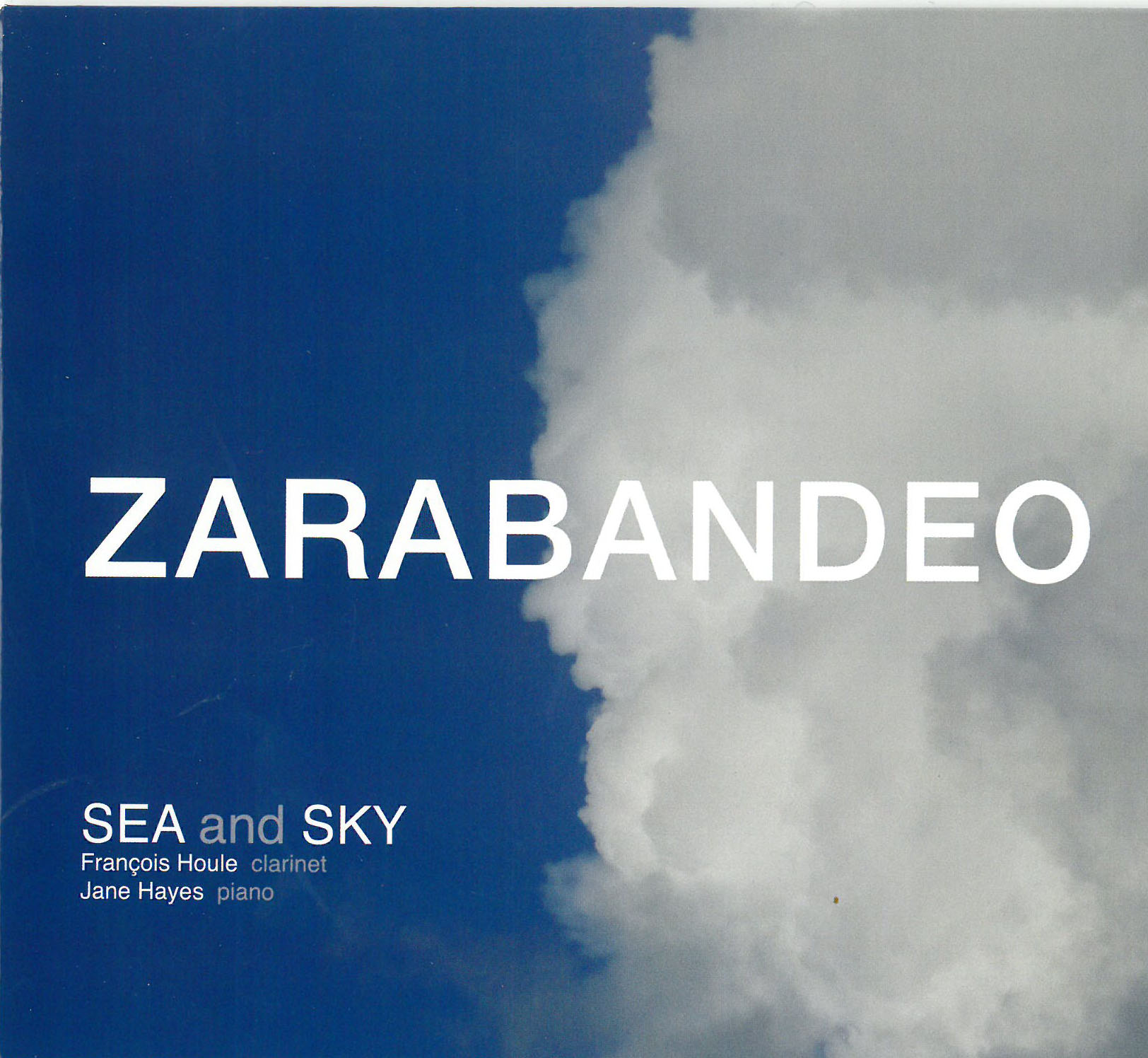
Zarabandeo
François Houle; Jane Hayes
Afterday AA1501 (francoishoule.ca)

06a_Houle_Sassicaia.jpgThe versatile Vancouver-based duo Sea and Sky consists of clarinetist François Houle and pianist Jane Hayes. They have released a pair of CDs: Sassicaia features current Canadian compositions, many of them commissioned by the duo; the other, Zarabandeo, is a collection of pieces in, for want of a better word, Latin style. Both collections are compelling, and both demonstrate the considerable interpretive strengths of this seasoned ensemble. Releasing them together makes sense. It lends a weight to the enterprise that might be missing if one or the other had come out alone. They are set against one another by contrast, not similarity.

The title track on the Canadian collection is by Bruce Mather, who has named a number of works for impressive wines. His pointillist and microtonal piece is both gravel terroir and heady bouquet. It is a contemplative, mysterious centerpiece to the disc. Owen Underhill’s Duotone features pointillism and microtones as well, and also the captivating clarinet double tones that Houle demonstrates with mastery.

Less effective to me is the headbanger by Keith Hamel entitled Cyclone. Intended to depict the energy of the weather event, its heavy base and static quality forced my ear into shelter. As unfortunate an inclusion as that piece is, the meditation that begins immediately following in Paul Dolden’s Eternal Return of a Ritual Form serves as balm that quickly turns to hallucinogenic drug. Dolden spins a basic repetitive formula into nervous dervishness. Cleverly constructed as a kind of maniacal passacaglia, the 17-minute piece keeps the listener wondering “what next?” When a free improv section gives way to a drum solo, before one can think “OH NO!” it heads on into mad variation X. A gradual disintegration should lead to a calm coda, but instead, everything is all insect buzz and numb desolation. Quite a trip.

06b_Houle_Zarabandeo.jpgThe opening track of the other disc provides the title. Not your parents’ sarabande, Zarabandeo is by Mexican composer Arturo Marquez. Following this tuneful and romantic rondo form are two effective short works by Cuban clarinetist/composer Paquito D’Rivera. Featured also are works by Argentinians Carlos Guastavino and the tango master Astor Piazzolla. In Ravel’s Pièce en forme de Habanera Houle shows a nice touch, though here he doesn’t meet the style standard set by the remarkable Jane Hayes, whose work on this second album is full of character and verve. Houle includes two takes of Piazzolla’s haunting nocturne Oblivion (he emulates many jazzers here and gives us two interesting improvised intros to the piece). I don’t agree that Two Majorcan Pieces qualifies for inclusion. For me the rest of the collection is utterly charming and substantial enough without Joseph Horovitz’ ersatz Spanishism. Houle lets his sound go in playing this material, allowing his jazz chops to take some focus away from his tone. No one else will likely quibble with that and I can just suffer my envy of his slap tongue in silence.


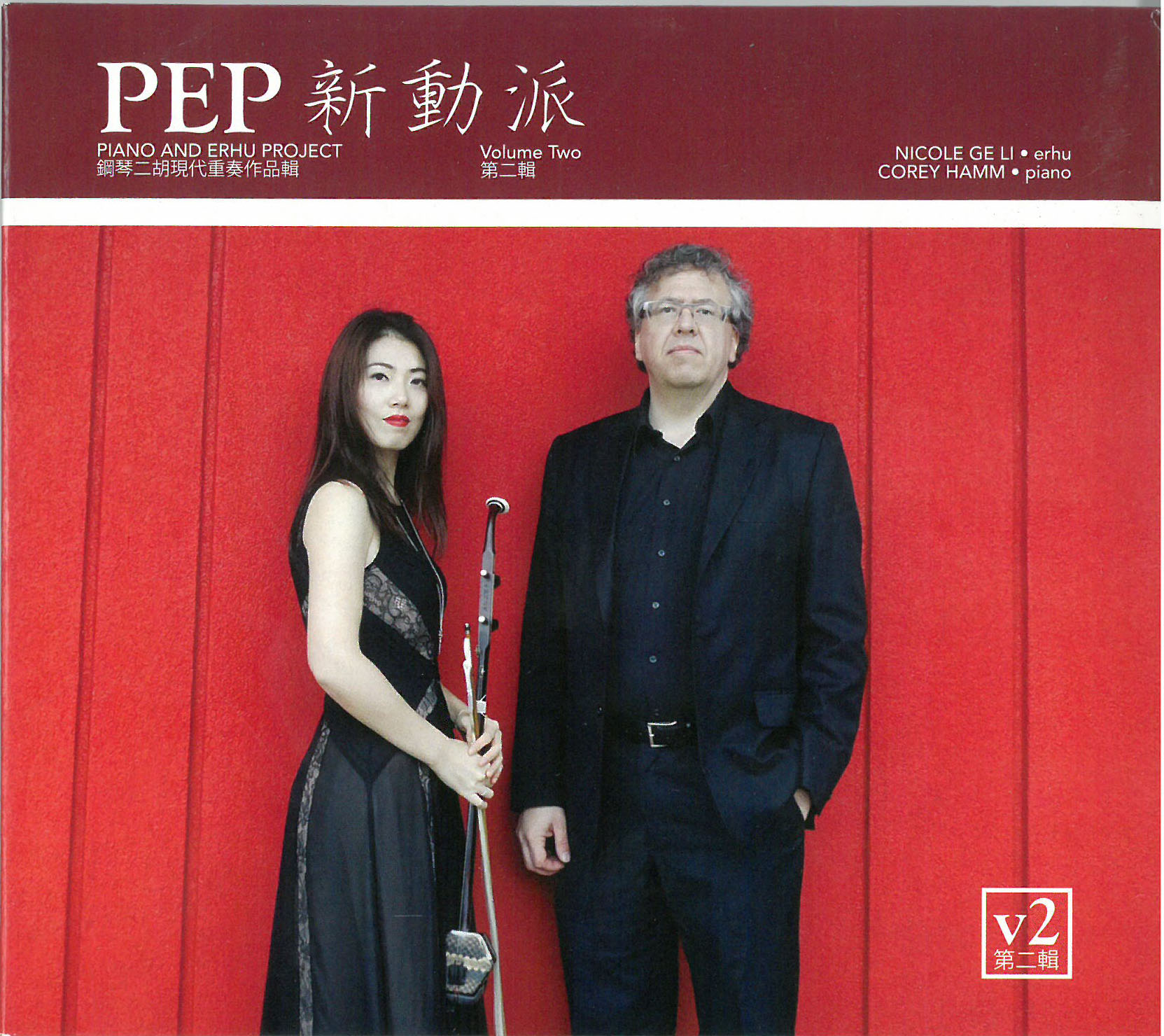
07_PEP_2.jpgPiano and Erhu Project Volume 2
Nicole Ge Li; Corey Hamm
Redshift Records TK440 redshiftrecords.org

In the February 2015 issue of The WholeNote I weighed in on the satisfying premiere album by the Vancouver Piano and Erhu Project (PEP). With the prompt release of PEP, Volume 2 the transcultural duo of pianist Corey Hamm and erhu virtuoso Nicole Ge Li have further raised the bar. The album offers substantial rewards for listeners. Among them: nine well-crafted compositions in the Western art music tradition for this not-quite-yet standard instrumental pairing by nine composers with strong Canadian ties.

The album’s repertoire exhibits several high points including Keith Hamel’s emotion-packed, elegiac Homage to Liu Wenjin, nominated for Composition of the Year at the 2015 Western Canadian Music Awards. The other contributing composers are represented with works rich with glints of virtuosity, humour, nostalgia and dreamscape.

It is Who Made the Inch of Grass composed by Aaron Gervais which haunted me the most, however, prompting repeated pleasurable listening. Gervais explores the erhu’s richly lyrical voice in his Debussy-daubed work, which in several passages is also subtly favoured with Messiaen-like chordal harmonies in the piano.

The duo’s musically nuanced playing, combined with repertoire freshly commissioned in 2013 and 2014 – attractively captured in this recording – has caught the attention of critical ears. The album earned a nomination for Classical Recording of the Year at the 2015 Western Canadian Music Awards. Given the rewards on display here and PEP’s ever-growing repertoire and reputation, in what musical directions will Volume 3 take us?


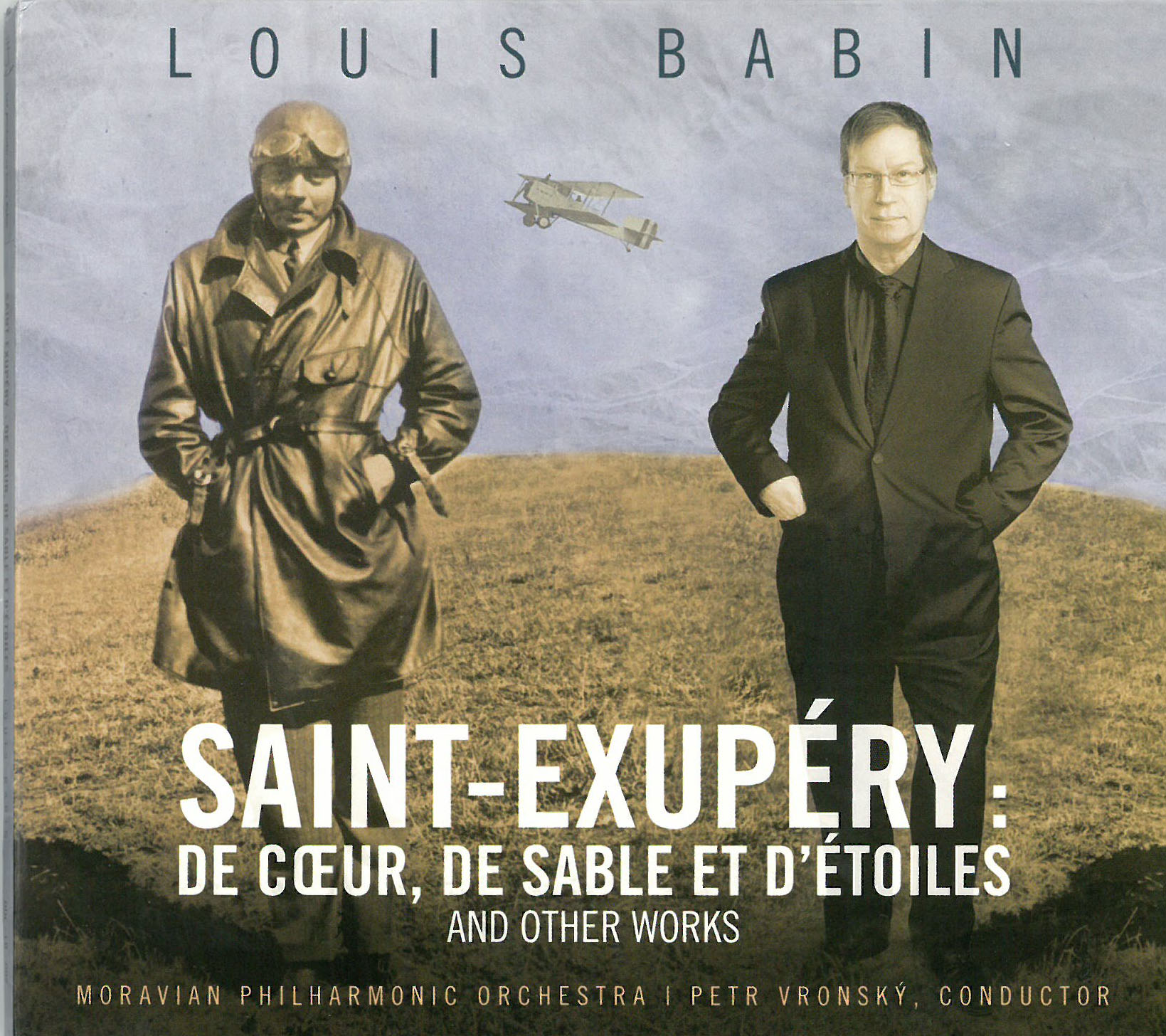
08_Louis_Babin.jpgLouis Babin – Saint-Exupéry: De Coeur, De Sable et D’Étoiles
Moravian Philharmonic Orchestra; Petr Vronsky
Les Productions Louis Babin ODL-LB-002 (louisbabin.com)

Antoine de Saint-Exupéry is perhaps best remembered today as the creator of the famous children’s book Le Petit Prince. Yet he was not only an acclaimed French author of several important works and laureate of high French literary awards, but also a French Air Force pilot who lost his life during a reconnaissance mission in 1944. What a noble character to honour in music, and that’s exactly what Québec-born composer Louis Babin has undertaken here. The CD opens with Saint Exupéry: de coeur, de sable et d’étoiles, a three-movement work named for Saint Exupéry’s novel from 1939. The music pays homage not only to the author but to his whole life. Vol de vie, the first movement, is suitably bold and heroic, featuring an appealing array of tonal colours treated by the Moravian Philharmonic with great panache. The second movement, Les adieux au Petit Prince is moody and mysterious, making effective use of percussion, while La marche des Hommes with its stirring brass sections, is pure cinematography.

Couleurs for string orchestra is a poignant reflection on the trials of adolescence while the Suite du promeneur is a musical depiction of life’s passage on earth. Also scored for strings, the suite comprises four miniature movements, each a study in contrasts, from the wistfulness of Le Curieux to the steadfast defiance of La morale de cette. Despite its French roots, this music seems to have a Scandinavian feel to it, the sprightly rhythms and angular lines akin to those of Dag Wirén or Carl Nielsen. The warm and resonant sound from the Moravian strings further enhances a solid performance.

The premise behind this CD is an intriguing one and it’s resulted in some fine music by a composer we should be hearing more from – bravo to Babin and the musicians from Moravia.

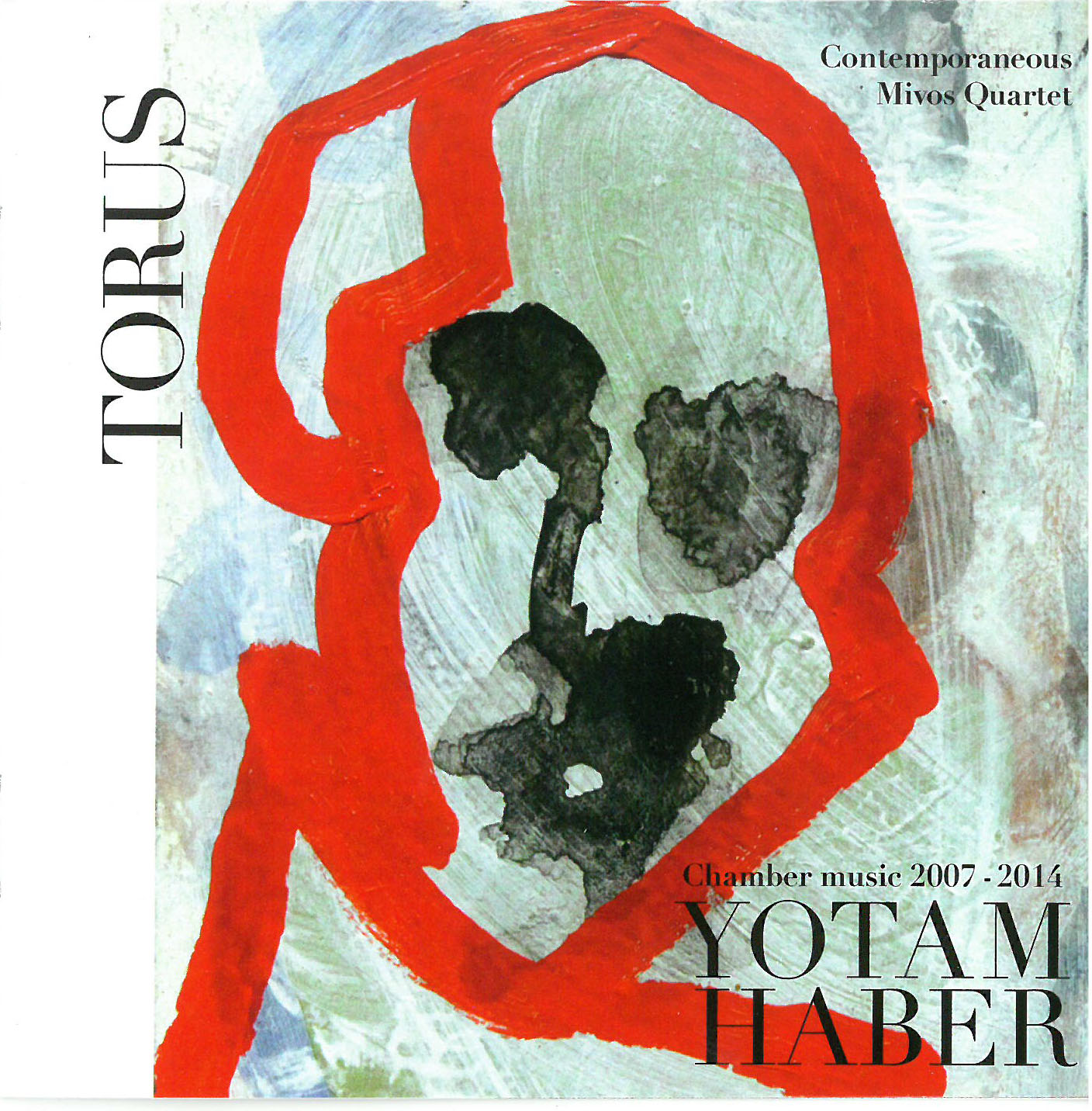
09_Yotam_Haber.jpgTorus
Yotam Haber – Chamber Music 2007-2014
Contemporaneous; Mivos Quartet; Max Mandel; Eric Huebner
Roven RR10015

In this release of chamber music selections by renowned composer Yotam Haber, creative influences range from modernist sculpture to Jewish chant. Each piece on the disc provides a sonorous glimpse into Haber’s compositional world; it is rich and full of haunting expression. The diversity of style on display throughout each piece is a testament to his range of influence. While there remains a close tie to a rigid brand of modernism, Haber is not afraid to explore passages filled with lavish lyricism and broad melodic contour.

We Were All and On Leaving Brooklyn are pieces that exemplify a careful and unique deliberation paid to vocal timbre and text setting. Reichian bursts of post-minimalism are interspersed with clever passages infused with driving rhythmic exuberance. A compelling sense of pacing and harmonic inventiveness in Last Skin (a piece for eight micro-tuned violins in two parts) is perhaps the most captivating example of why Haber’s voice is distinctly his own. Microtonal eeriness and waves of colourful harmony culminate to reach a powerful set of gestures all within the confines of limited materials. The string quartet Torus evokes a three-dimensional listening space around which tremendous and threatening forces rustle and drive at breakneck speeds. In From the Book of Maintenance and Sustenance, Haber uses Jewish liturgical melodies that echo touching historical associations and a haunting nostalgia.

The musical environment on this disc is abundant and boundless. Each work is an indication that Haber’s ear is tuned in to the surrounding world. These influences make their way into the music and are married with a truly distinctive creative voice. The result is a riveting set of chamber compositions that make for a rewarding listening experience.


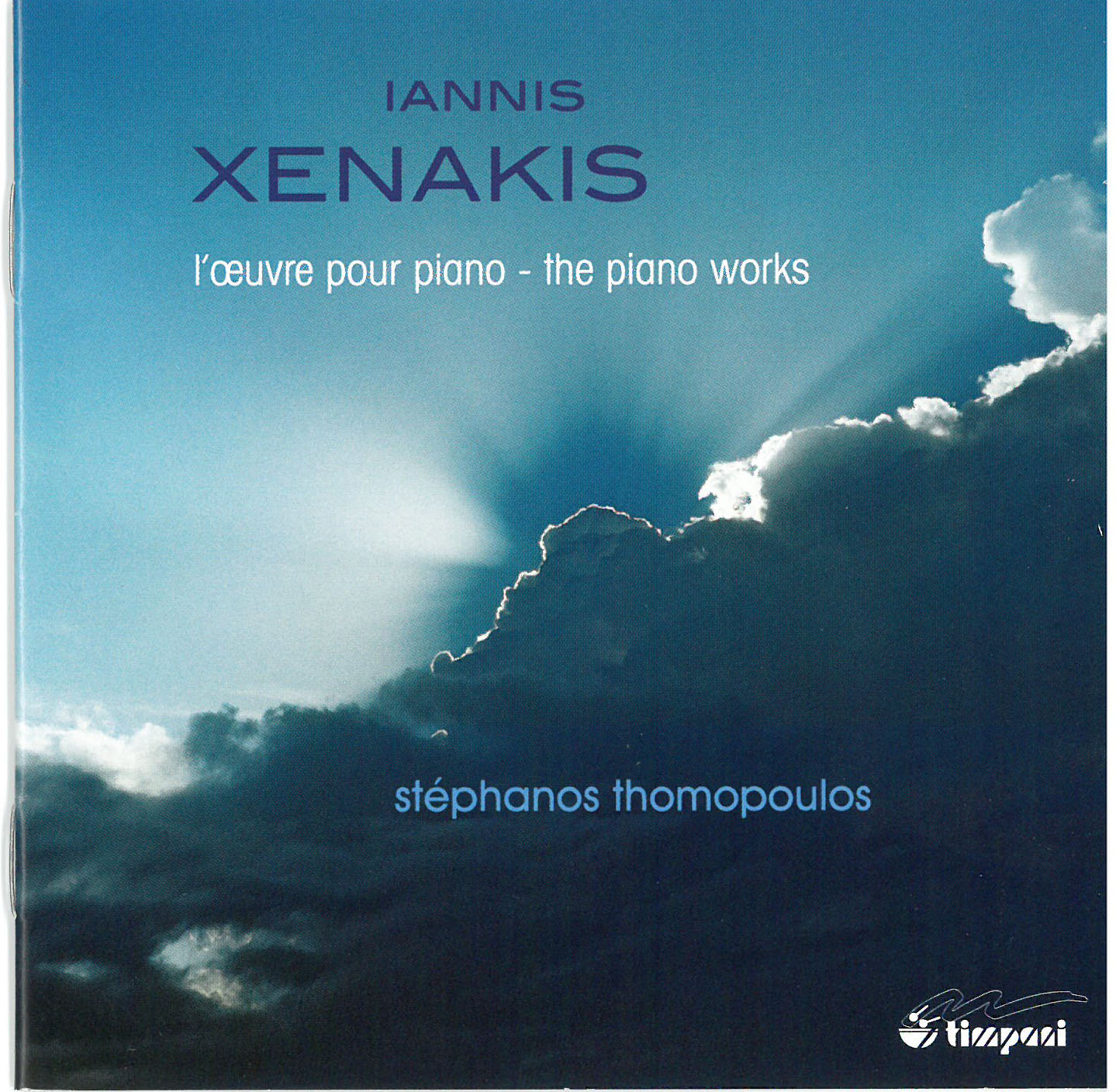
Iannis Xenakis – the piano works
Stephanos Thomopoulos
Timpani Records 1C1232

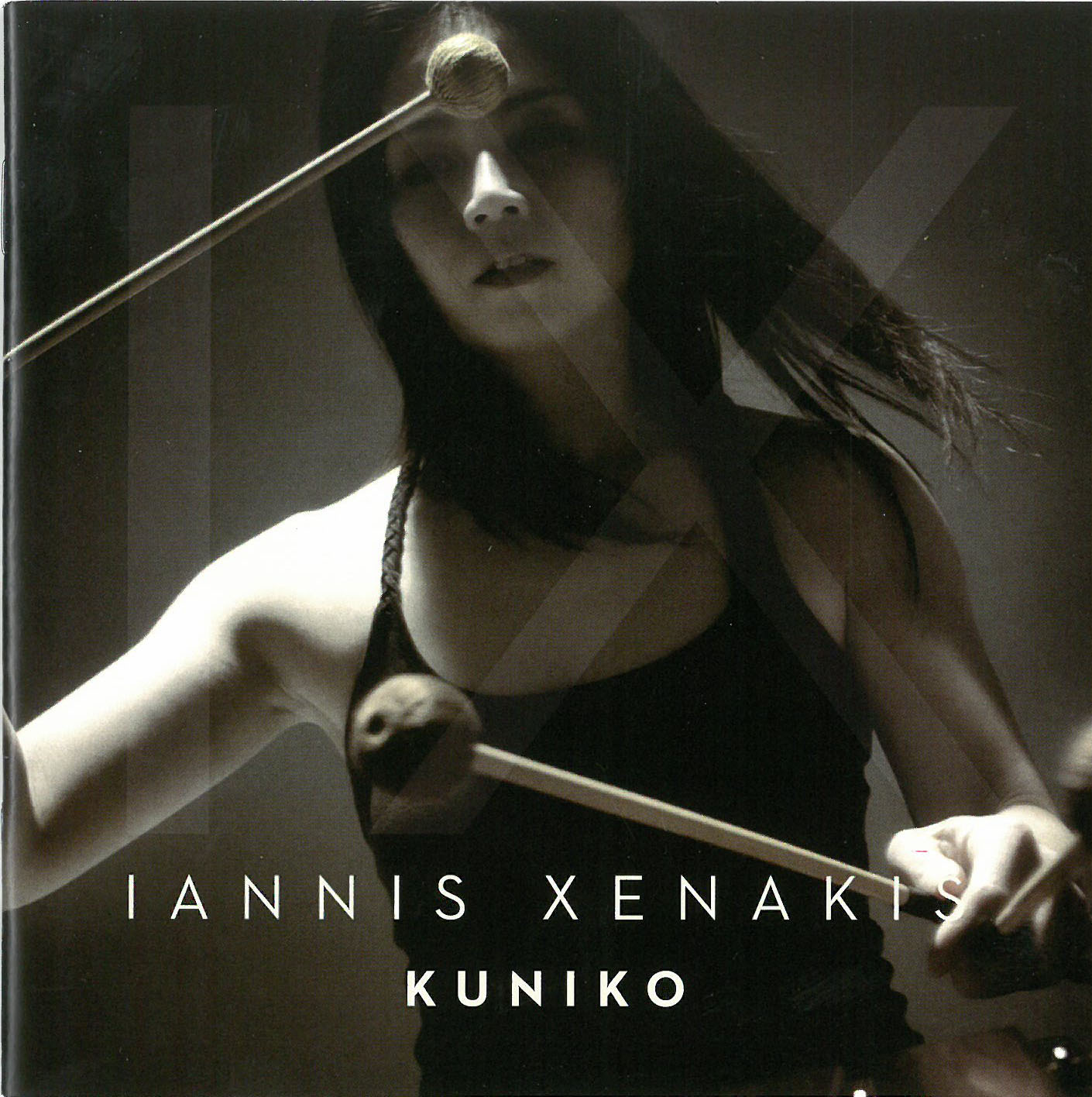
Xenakis: IX – Pleiades; Rebonds
Kuniko
Linn Records CKD 495

10a_Xenakis_Piano.jpgThe music of iconoclast modern composer Iannis Xenakis has by now been mostly released on disc. There are a few firsts, though, in these two new discs. Stéphanos Thomopoulos, a Greek pianist now living in France who did a doctorate on Xenakis’ piano music, has delved into the archives to dig out some early pieces completed while the composer was studying composition in the years 1949-52: Six chansons pour piano, and Trois pièces inédites. There is very little “Xenakis” in these pieces, but they are interesting and quite well written for the piano. The collection is eclectic, not traditional but not avant-garde. Thomopoulos adds the early trio, Zyia, for soprano, flute and piano, to his exploration of Xenakis’ juvenilia. This has been recorded before, and is quite a substantial work, a rather strange mixture of simple modal melodies, virtuosic flurries, low clusters and mathematical (Fibonacci) ostinato patterns. There is nothing here to be heard of Xenakis’ groundbreaking works Metastaseis and Pithoprakta, even though they appeared just a few years later. On the rest of the disc Thomopoulos presents excellent readings of Xenakis’ four mature piano works: Herma, Evryali, Mists and À R. I thought I heard a piano string snapping at a climactic point in Herma, but there are a few other snaps, pointing to hot levels during the recording. The sound is otherwise clear and full.

10b_Xenakis_Kuniko.jpgThe quality of sound is one of the main features of the Kuniko disc, presenting two of Xenakis’ important works for percussion, Pléïades and Rebonds. They have both been recorded before, but never has Pléïades, a 40-minute opus for six percussionists, been done by one player! (It is multi-tracked, of course.) The label, Linn Records, is connected to the high-end audio company based in Scotland. This hybrid disc lets you listen in pristine surround sound (requiring SACD capacity) or in stereo. If you get the chance, listen to the surround version: it is amazing – the intricate layers of rhythms and instruments coming at you from all round. Kuniko is a fine percussionist, and she clearly has taken much care with this recording. I especially enjoyed the sound of her Sixxens, metallic instruments specially fabricated for this piece. In concert, the sound can be quite harsh, but here we get all the details, the sound a cross between Indonesian gamelan and Harry Partch microtonal percussion. The disc closes with the solo work, Rebonds, for drums and woodblocks. She plays well, the one surprise being the substitution of a marimba-like instrument for the woodblocks.


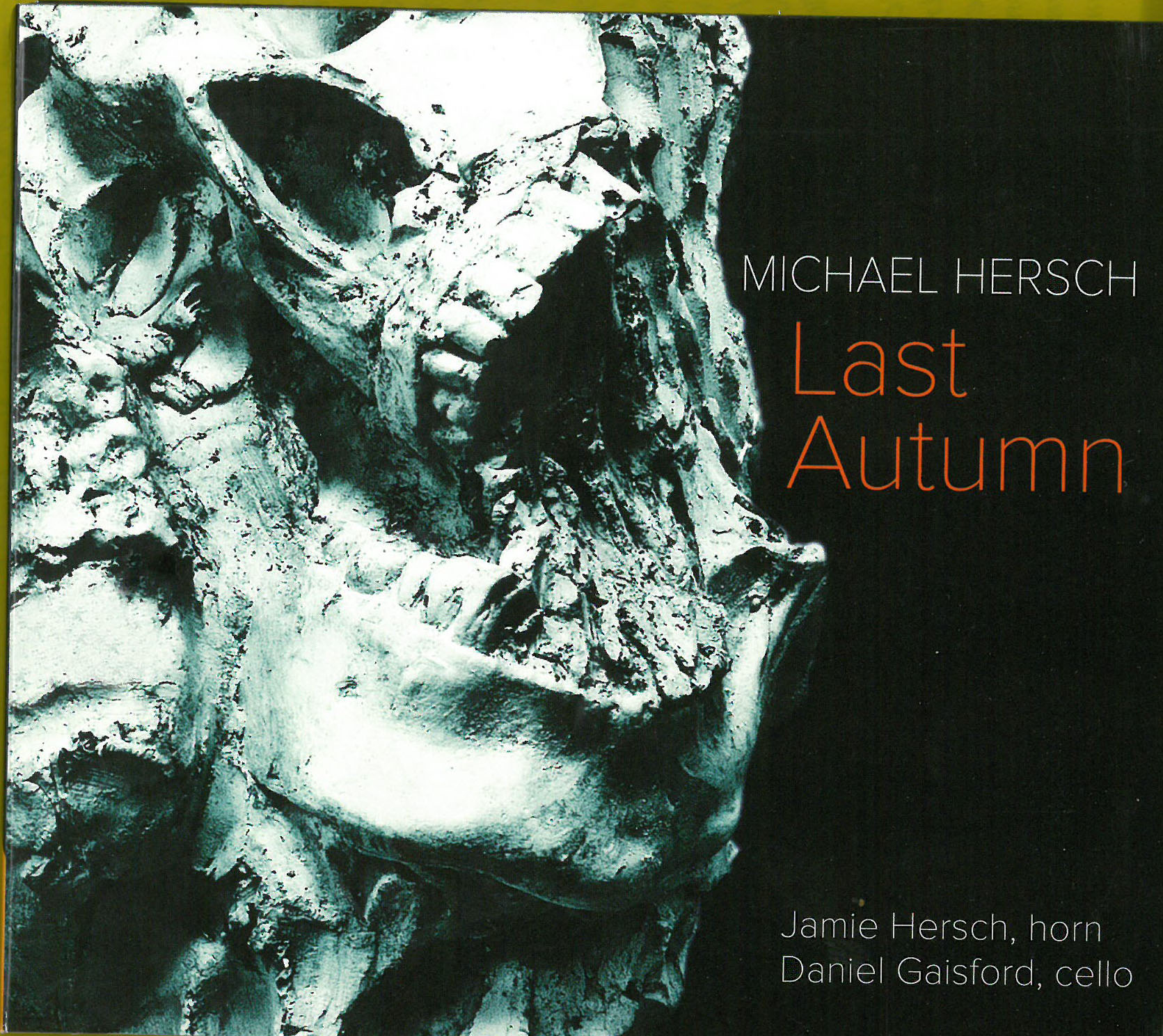
11_Hersch_Last_Autumn.jpgMichael Hersch – Last Autumn
Jamie Hersch; Daniel Gaisford
Innova 907 (michaelhersch.com)

Michael Hersch is a composer who has experienced considerable success from an early age. He won first prize in the Concordia American Composers Awards, one of the youngest composers to be awarded a Guggenheim Fellowship in music, and a Rome Prize recipient, all in his 20s. Due to this early success, many orchestras began to regularly commission Hersch which led to an impressive catalogue of large ensemble words. In recent years however, the composer has shifted to compositions for smaller forces that are comprised of increasingly expansive forms. The music of Last Autumn is no exception. Scored for cello and horn, the piece consists of 41 movements lasting nearly two hours. While this seems like an impossible instrumental combination to maintain a level of interest necessary over two hours, Hersch, on the contrary, has composed an endlessly impressive collection of moods and textures for the two instruments. Inspired by classical dance forms and the poetry of W.G. Sebald, each movement occupies a unique sound world ranging from the pungent and monumental to the beautifully stagnant and fragile. Many of the movements are violent entryways into small forms with unified gestures. Various solo interludes are wonderful examples of how the composer is able to successfully transfer the essence of the chosen poetry into impressive sonic journeys. Much of the music in the piece is violent and extreme while maintaining a mysterious clarity. The careful interplay between the horn and cello begins to fashion a connective tissue that stabilizes the miniature sound worlds throughout each movement. Perhaps the most impressive writing is for the cello, a feature of the piece that is undoubtedly aided by the fact that the horn player is the composer's brother Jamie Hersch. This impressive set of miniatures is an ideal listening experience for those seeking truly novel sonic experiments within a modernist approach.


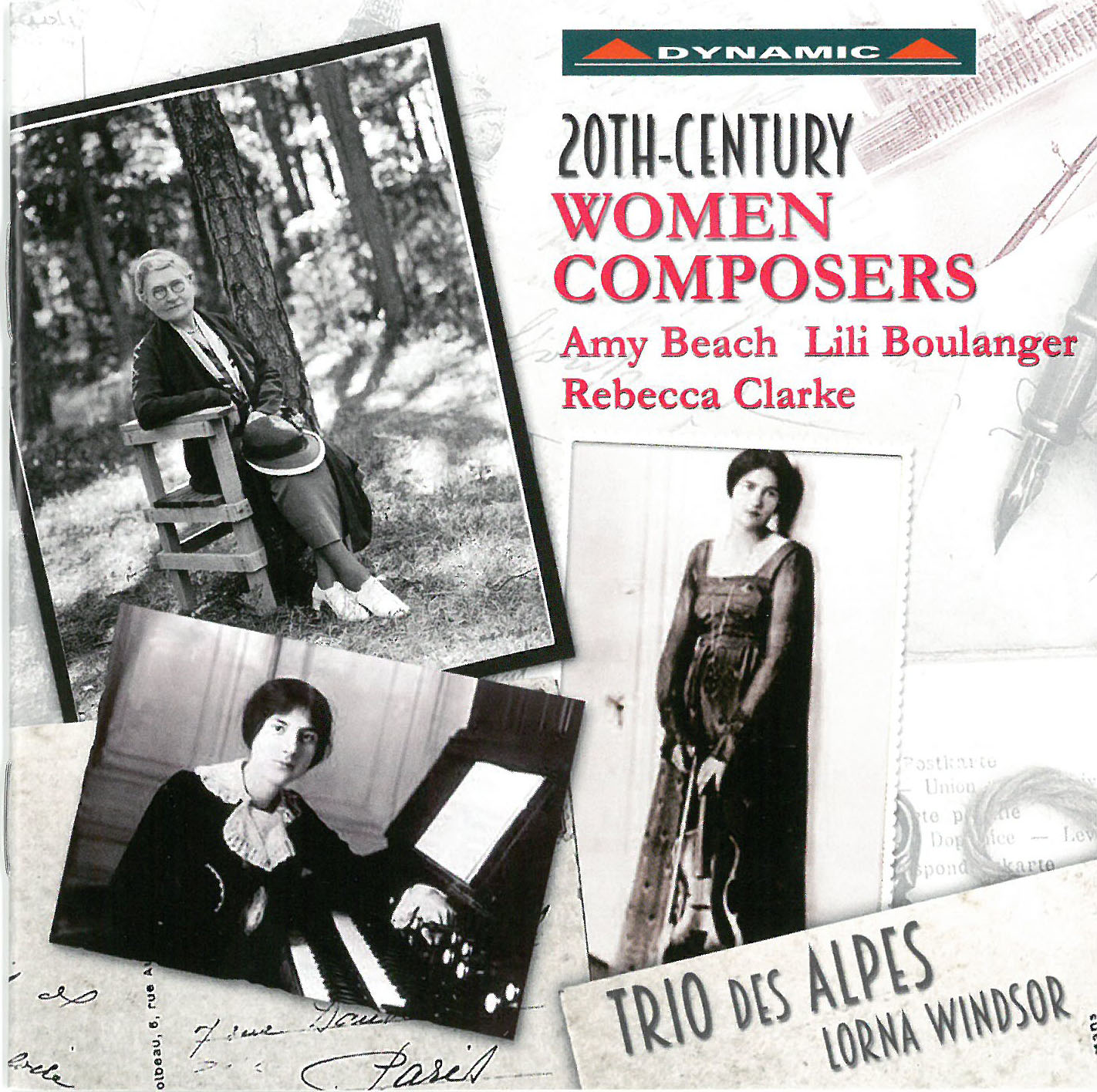
01_Women_Composers.jpg20th-Century Women Composers
Trio des Alpes; Lorna Windsor
Dynamic DCS 7717

This is inspired programming, with the works on this disc thoroughly complementing each other. All three composers represented here were born within a quarter-century of each other. They each write in an expressive style that marks the transition from romanticism to modernism. None are musical innovators. But as women, they are rightly regarded as pioneers today.

Amy Beach, who was born in Boston in 1867, is the most well-known composer here. Her Trio for violin, cello and piano is a complex, virtuosic work, which ends with a memorable flourish. Swiss soprano Lorna Windsor’s performance of four art songs are engaging enough to make me want to explore more of Beach’s enormous song repertoire.

English composer and violist Rebecca Clarke enjoyed what she called her “one whiff of success” when she introduced her Viola Sonata in 1919, and then, soon after, this lovely Trio. Flamboyant, intense, driven, this is an exciting work, especially as performed by the Swiss-based Trio des Alpes.

The youngest composer here, Frenchwoman Lili Boulanger (sister of the influential teacher and composer Nadia), was only 25 when she died in 1918. The Trio des Alpes brings out the moody expressivity of her two contrasting pieces for piano trio, the first, D’un soir triste, plaintive, the second, D’un matin de printemps, exuberant.

These fine pieces are too rarely heard, making this thoroughly enjoyable disc particularly significant.


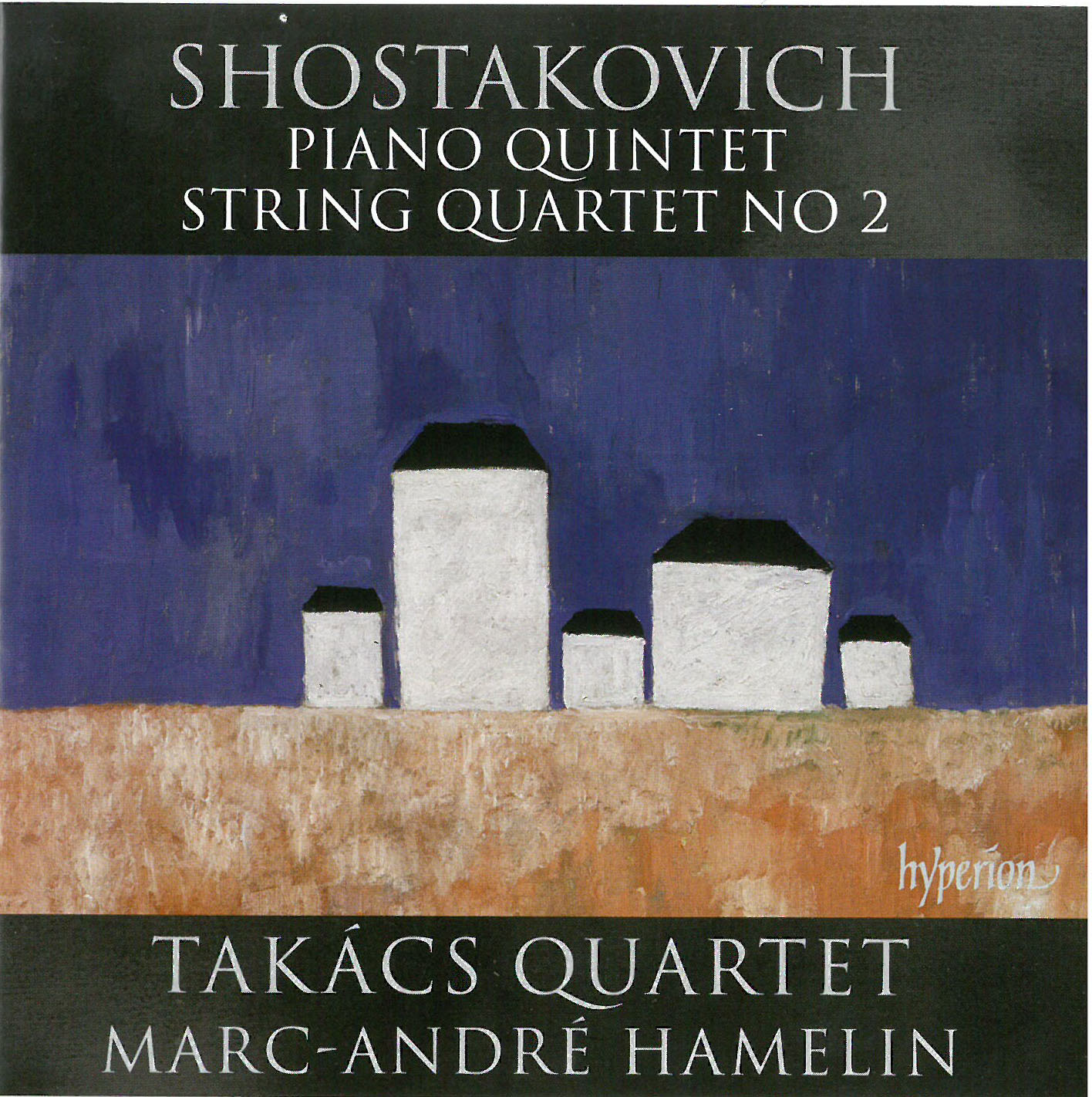
02_Shostakovich.jpgShostakovich – Piano Quintet;
String Quartet No.2
Takács Quartet; Marc-André Hamelin
Hyperion CDA67987

This recording of Shostakovich’s chamber works is an absolute delight – hauntingly beautiful, insightful and, above all, highly sentient to the mix of turmoil and soaring of Shostakovich’s life as expressed through his music. Chamber music was perceived as an act of bourgeois elitism in Stalin’s Soviet Union, even though it was precisely the form that allowed the most intimate connections between composer, musicians and their audience. So it is no surprise that Shostakovich composed eight symphonies before his second string quartet was premiered in 1944. Interestingly enough, 13 more string quartets followed in rapid succession.

String Quartet No.2 in A Major shows little connection to the stormy events of the Second World War (as opposed to his symphonies), appearing to be much more personal. It was composed in a mere 19 days and includes wonderful folk melodies, syncopated rhythms and minor modes of Gypsy/Jewish inflections. The Takács Quartet’s playing is robust and energetic in the first movement and deeply touching in the Recitative, where violin improvisatory lamentations are supported by the rest of the ensemble playing soft seventh chords. Outstanding solos are intercepted with close-knit ensemble sound in the third and fourth movements, which end majestically yet uncharacteristically in the minor key.

The Piano Quintet in G Minor premiered in 1940, becoming one of the most beloved piano quintets of all time. It contains five movements, with the emotional tension peaking in the ethereal Intermezzo and ending with a cleverly innocent Finale. Pianist Marc-André Hamelin is dominantly powerful in percussive sections while adding sublime textures to the ensemble sound in contemplative parts. Highly recommended.


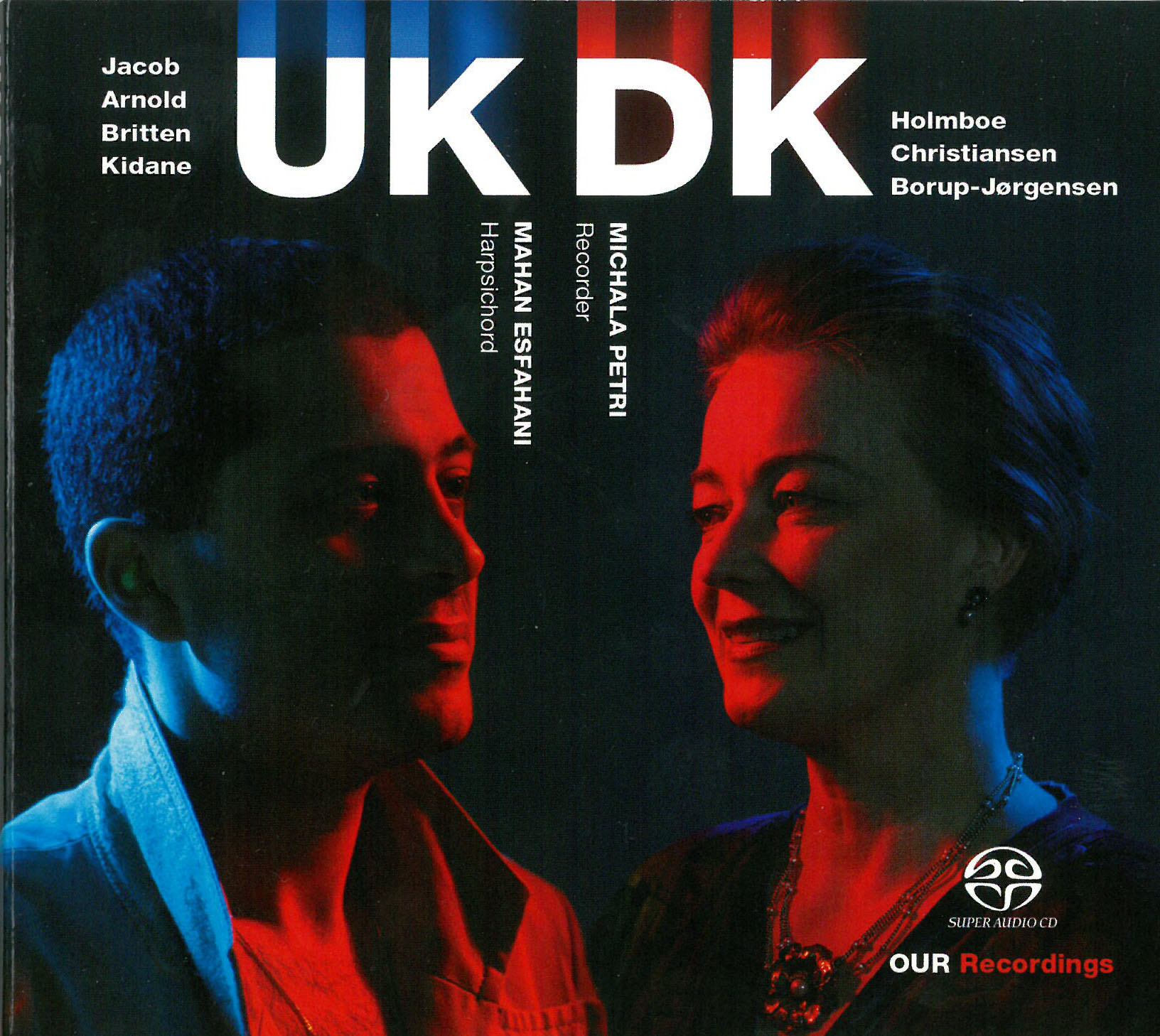
03_UK_DK.jpgUK DK
Michala Petri; Mahan Esfahani
OUR Recordings 6.220611

Another offering from Danish recorder player Michala Petri’s own label, this disc serves up a smorgasbord of modern-era music from Denmark and Britain, played by Petri and Tehran-born, London-based harpsichordist Mahan Esfahani. It’s to be much appreciated that Petri remains so committed to the commissioning, performance and recording of new works for the recorder.

Off the top, Malcolm Arnold’s Sonatina reveals the interpretive unity and precise ensemble which make this such a successful duo, and the six little movements of Benjamin Britten’s Alpine Suite receive the best performance they’ve probably ever had. Gordon Jacob’s Sonatina and Encore are quite beautiful, but marred a little by some pungent tuning on the alto recorder. (That said, when Petri plays at blistering speed or sings a counter melody along with herself, she’s right on the Cleartune money.)

Given the title of Henning Christiansen’s piece – It’s Spring – one might expect the recorder to be typecast in its centuries-old role of bird imitator par excellence; and indeed it is, with the addition of some harpsichord bumblebee imitation. The aleatoric, post-modern angst of Daniel Kidane’s Tourbillon and Axel Børup-Jørgensen’s Fantasia provide a different mood and are very welcome here. Along with Vagn Holmboe’s Sonata, they also strike a more equal musical partnership between the two instruments than much of the other music. Mahan Esfahani’s playing is a real delight and I find it a little sad that the harpsichord parts here don’t all make better use of him.


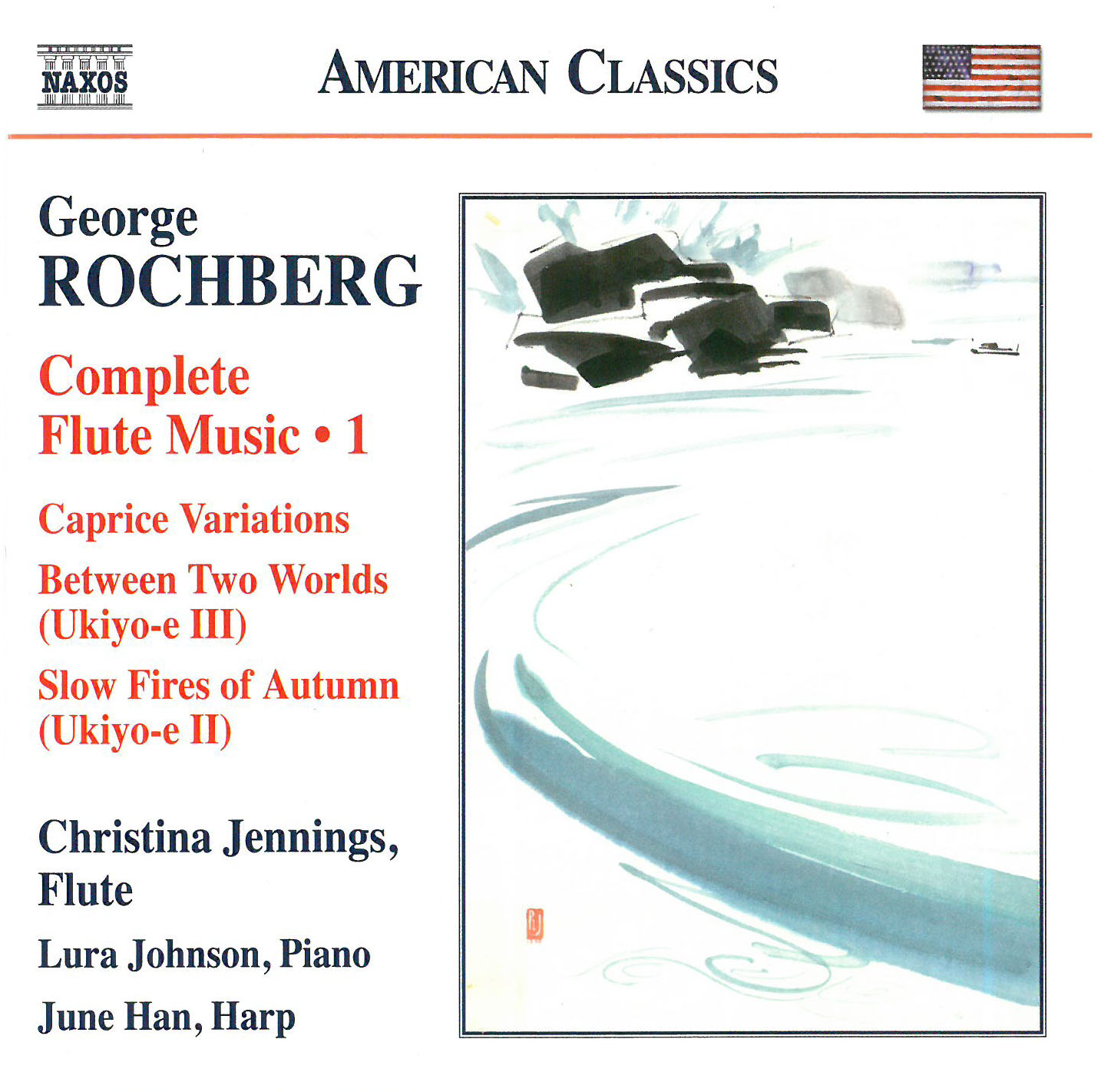
04_Rochberg.jpgGeorge Rochberg – Complete Flute Music 1
Christina Jennings; Lura Johnson;
June Han
Naxos 8.559776

The WholeNote’s 20th season has brought symmetry: in the September issue I reviewed Marina Piccinini’s marvellous CD of Paganini’s 24 Caprices; in this last issue the recording of George Rochberg’s flute music includes 20 of his 51 Caprice Variations (on Paganini’s Caprice No. 24 in A Minor), a significant addition not only to the already long list of compositions based on this work but also to the flute repertoire.

Like the original Caprices, Rochberg’s variations were written for the violin. Jennings has adapted “…those best suited to the flute while representing the enormous stylistic range of [the] whole set.” It is to her credit both that the Caprice Variations sounds as if it was written for the flute and that her formidable technique is up to its prodigious technical demands.

The common thread binding the other two compositions, Between Two Worlds and The Fires of Autumn, could be considered to be the obsession of 20th-century composers with finding a new musical language. I can hear the composer’s voice in the atonal language of the first and the adopted Japanese idiom of the other if I consider them explorations, part of this search; but, Rochberg’s language and his voice seem most convincingly related in the Caprice Variations, which are so deeply rooted in the western musical tradition. Perhaps T.S. Eliot was right: “…the end of all our exploring will be to arrive where we started and know the place for the first time.”


05_Morton_Feldman.jpgMorton Feldman: Two Pianos and other pieces 1953-1969
John Tilbury; Philip Thomas
Another Timbre at81x2
(anothertimbre.com)

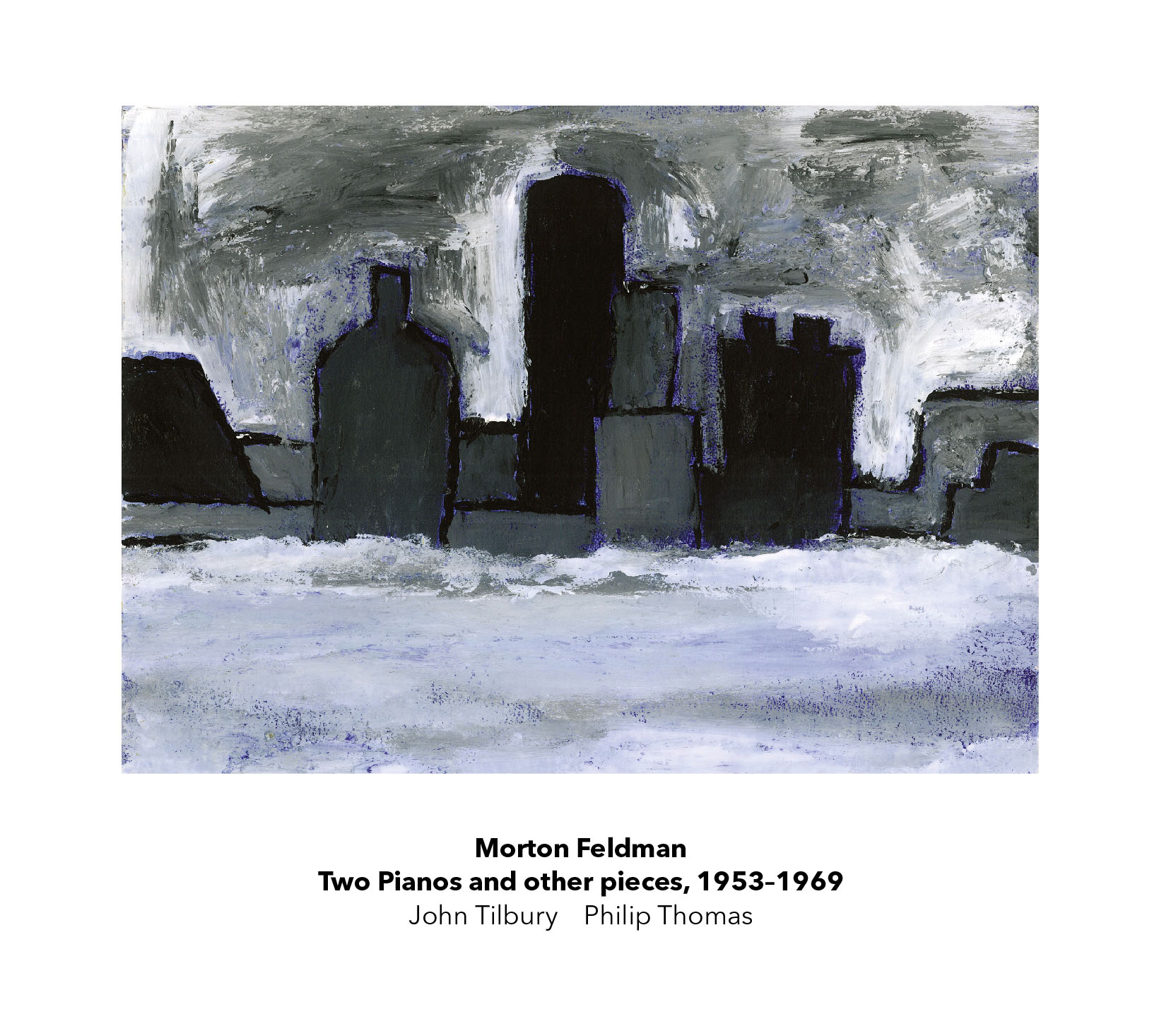
Along with John Cage and Christian Wolff, Morton Feldman was a key figure in the mid-century development of indeterminacy as a component in composition, creating works that emerge anew in each performance. This 2CD set focuses on a crucial period in his development and includes pieces for two pianos as well as pieces for three and four pianos and piano in various small ensembles. While the earliest, Intermission 6 (1953), presents the performers with various bits of notation and the direction to play in any order, the other pieces employ sequential notation that plays with time, whether using notes without rhythmic values or instructing musicians to sound a note when the decay of the previous one has begun.

In his extensive notes (available through anothertimbre.com), Philip Thomas emphasizes Feldman’s preoccupations with sound and time: they’re key to the way this special world ultimately involves us. While these works are designed to develop great structural complexity, the focus on sounds and their incremental evolution draws us ever further into the instant of the work’s coming into being, its evolving architecture stretching to erase its own boundaries. These works lead directly to Feldman’s later massive essays in time without being overshadowed by them.

Here John Tilbury and Philip Thomas bracket their program with two performances of Two Pianos (1957), each subtly distinct from the other. The complexity expands on the later Two Pieces for Three Pianos (1966) and the ensemble piece, False Relationships and the Extended Ending (1968). Tilbury may be Feldman’s most incisive interpreter (he first performed one of his works in 1960); his collaborators here share his attention to sonic nuance.


01_Isserlis.jpgProkofiev; Shostakovich – Cello Concertos
Steven Isserlis; Frankfurt Radio Symphny Orchestra; Paavo Järvi
Hyperion CDA68037

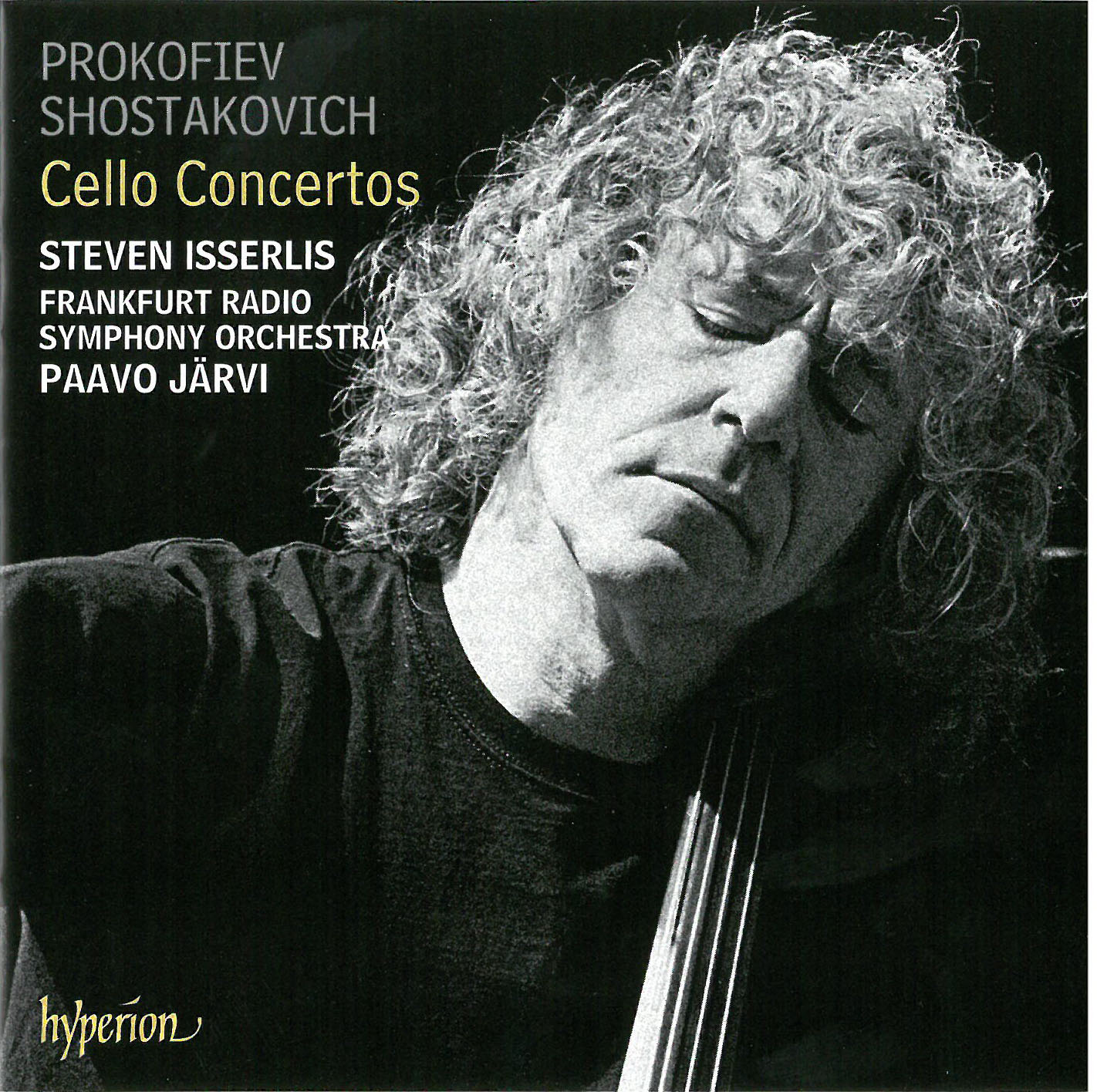
Prokofiev began this concerto in Paris in 1934, where he was urged by fellow émigré Gregor Piatigorsky to write such a work. Piatigorsky was enthusiastic over the first movement and the opening of the second but at that point Prokofiev returned to Russia. The work waited until 1938 to be completed in Moscow where it debuted to resounding indifference. The cellist had played it, against the composer’s wishes, as a sentimental piece and the conductor had no opinion. In 1940 its debut in the United States by Koussevitzky and Piatigorsky in Boston was hardly a triumph.

The 1956 recording of the concerto by János Starker and the Philharmonia under Walter Susskind is a polite affair and while beautifully played the overall mood misses the pungency that Prokofiev must have intended. The 1972 performance by Christine Walevska conducted by Eliahu Inbal is a far cry from the Starker, animated and alert and well recorded by Philips.

Recorded in concert in 2013, Steven Isserlis and Paavo Järvi together have set the record straight with new eyes on the score, delivering a fresh, vital interpretation. The first pages of the first movement announce that this is to be a compelling performance. The third movement, a set of theme and variations, is totally engaging, more rhythmic and interesting than previously revealed.

Their Shostakovich, too, is outstanding. One would believe that in his several recordings Rostropovich, the dedicatee, had the field covered. Easygoing tempo and high-spirited playing provide a most attractive alternative, especially with the tidy yet dynamic orchestral collaboration. The sound and wide range of the recording are state of the art. The Prokofiev solo March, arranged by Piatigorsky, is a jaunty little encore.


02_Kernis.jpgAaron Jay Kernis – Three Flavors; Two Movements; Superstar Etude No.3
Andrew Russo; James Ehnes; Albany Symphony Orchestra; David Alan Miller
Naxos 8.559711

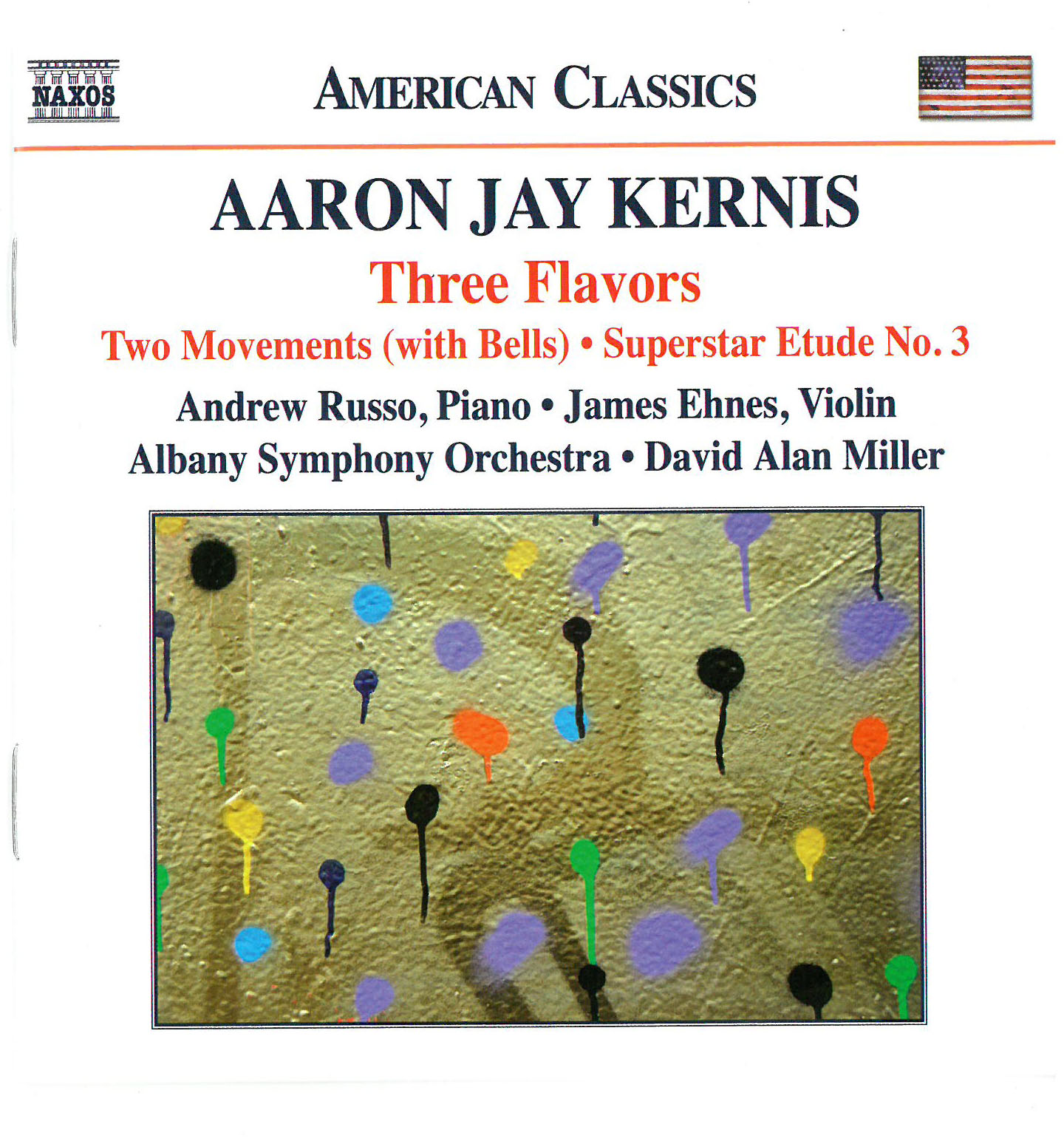
Aaron Jay Kernis was all of 23 back in the early 1980s when he first attracted attention with the premiere of his composition Dream of the Morning Sky by the New York Philharmonic. Since then, the Pennsylvania-born composer has earned a reputation as one of the most distinguished of his generation – a winner of not only a Pulitzer Prize, but also the Prix de Rome and the Grawemeyer Award. His large output is characterized by an affable and eclectic style, clearly evident on this Naxos recording which features three of his compositions performed by the Albany Symphony, conducted by David Alan Miller with Andrew Russo, piano, and James Ehnes, violin.

Three Flavors initially began as a concerto for toy piano, but it was later adapted for a modern instrument. To say the least, the piece is a study in contrasts. The first movement abounds in driving repetitive motives and modal harmonies – do I hear a hint of Stravinsky and a nod to Indonesian gamelan? In total contrast, the second movement, Lullaby-Barcarolle, is all gentleness, containing a lyricism not dissimilar to that found in works by Samuel Barber. Blue Whirl, the third movement finale, is clearly influenced by jazz rhythms and blues that Andrew Russo performs with great bravado, while the Albany Symphony provides a solid foundation.

It was in homage to his late father that Kernis composed Two Movements (with Bells) in 2007, a BBC Proms commission for James Ehnes. Scored for violin, piano and orchestra, the two movements each begin wistfully, but the mood soon becomes more flamboyant. Together, Ehnes and Russo engage in an animated and lively discourse, adroitly handling the energetic angular lines. Russo returns for a solo in Ballad(e) out of the Blue(s) – Superstar Etude No.3.  Although the piece was inspired by Gershwin, there are also echoes of Oscar Peterson, Art Tatum and Errol Garner through its jazz harmonies and improvisational quality.

Kudos to all the artists on this CD for showcasing music by one of America’s most eclectic contemporary composers.


Back to top