03 Finding a VoiceFinding a Voice: The Evolution of the American Sound
Walden Chamber Players
Independent (waldenchamberplayers.org)

Review

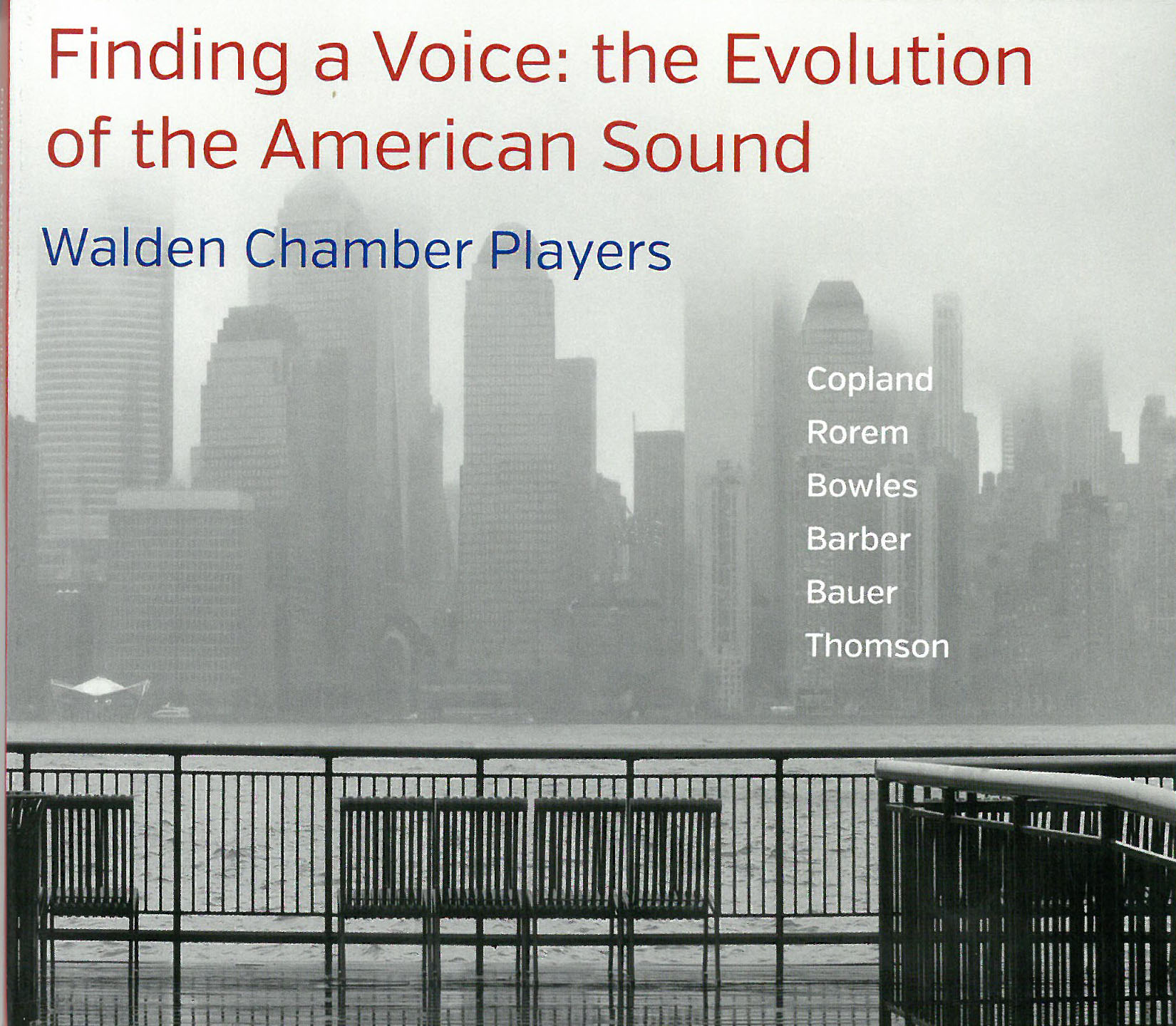
This new disc from the Walden Chamber Players features compositions which might be described as the linking species of the American music family tree. Ably performed here are works by little-known composers (Marion Bauer 1882-1955), lesser-known works by composers well known (Aaron Copland’s Threnodies), and works by modern composers who write close enough in time to us that they might remain in our blind spot (Ned Rorem).

Rorem is best-represented here, and rightfully so – after all, he is a still-living and underappreciated American composer whose healthy sense of deference to American musical heritage is best exemplified by his Ives-tinged The Unquestioned Answer (2002). But it is actually Virgil Thomson’s ghost that looms largest over this recording. In the middle of the 20th century, Thomson achieved more infamy as cantankerous critic than fame as a composer. As far back as 1944, he took aim at the cult of the warhorse, noting that “the enjoyment and understanding of music are dominated in a most curious way by the prestige of the masterpiece.” In that same essay, he wrote, “this snobbish definition of excellence is opposed to the classical concept of a Republic of Letters.”

These words could serve as this disc’s manifesto; it demands that we re-evaluate these works which might have otherwise been lost to the murk of history. They may not be capital-M masterpieces (whatever that actually means), but they are nonetheless worth hearing.
04 FinnissyWAM
Michael Finnissy; Michael Norsworthy
New Focus Recordings FCR157 (newfocusrecordings.com)

While it may not move you to tears or laughter, the music of Michael Finnissy should hold you in a kind of rapt fascination, like an elaborate mechanism with multi-coloured parts moving according to mysterious laws. This new release features American clarinetist Michael Norsworthy. The composer provides the piano accompaniment; also performing are violinist William Fedkenheuer and the New England Conservatory Wind Ensemble.

Brief liner notes by the composer offer some helpful information: his substantial Clarinet Sonata unfolds calmly, the piano part presenting a cantus firmus derived from a late Beethoven piano sonata (Op.110). There is no obvious link, but each bar of the original is presented in retrograde (but presumably in the original order) while the clarinet line swans about lazily above. The second track, for E-flat clarinet, two pianos and two bass drums, uses a chance element: though the material is defined, its synchronicity is not. The E-flat colour is shocking; one at first wonders if Norsworthy has forgotten his better reeds at home.

Track three introduces cat screeches (yes, literally) and still more chance elements. I do believe my allergies were acting up so I found it hard to concentrate. I kept waiting to sneeze at the next feline interjection. As cute as the kitties are, I preferred the jazzy final track with wind ensemble: Giant Abstract Samba is fun.

Just as Finnissy recomposes  Beethoven earlier, on the title track his musical source is Mozart. He obviously has no fear of vengeful ghosts seeking him out. WAM moves the performers on- and offstage, a theatrical effect somewhat diluted on record. You’ll hear the violin and later the clarinet at a distance at different moments. I have no idea what it all means, but it’s…fascinating.

05 Sirius QuartetPaths Become Lines
Sirius Quartet
Autentico Music AMCDA00004 (autenticomusic.com)

Far from being a spin-off or a clone of the Kronos Quartet, the Sirius Quartet is a fiercely – individually and collectively – creative ensemble that explores an aural landscape with no definable borders. Violinists Fung Chern Hwei and Gregor Huebner, violist Ron Lawrence and cellist Jeremy Harman are composers who worship at the altar of creativity. These are musicians who enter the very grain of the wood of their instruments, emerging after being subsumed in the mysterious vibrations of the air within. Wave after wave of sound forms rippling tonal colours that come alive swathed in the timbres of their instruments. Each time their music is heard one can’t help being impressed by their devilishly good virtuosity.

The present recording offers ten classic selections – including a four-part suite – from recent, original repertoire and also furnishes further evidence of the development of the ensemble as they mine an impossibly deep world where jazz meets the classics. Alongside the high spirits of Huebner’s Racing Mind, for instance, a profound contemplative tone is struck in Huebner’s composition, The Wollheim Quartet, a remarkable piece of visceral drama as well as sweetness of tone, with superbly poised rhythm in its Presto movement. Harman’s Paths Become Lines bursts out in expansive chords and heaving with thick-textured agitation before the music builds into a heated climax. And that is just the beginning of a disc full of excitement and drama.

06 Tower MusicTower Music – Bertolozzi Plays the Eiffel Tower
Joseph Bertolozzi
Innova 933 (innova.mu)

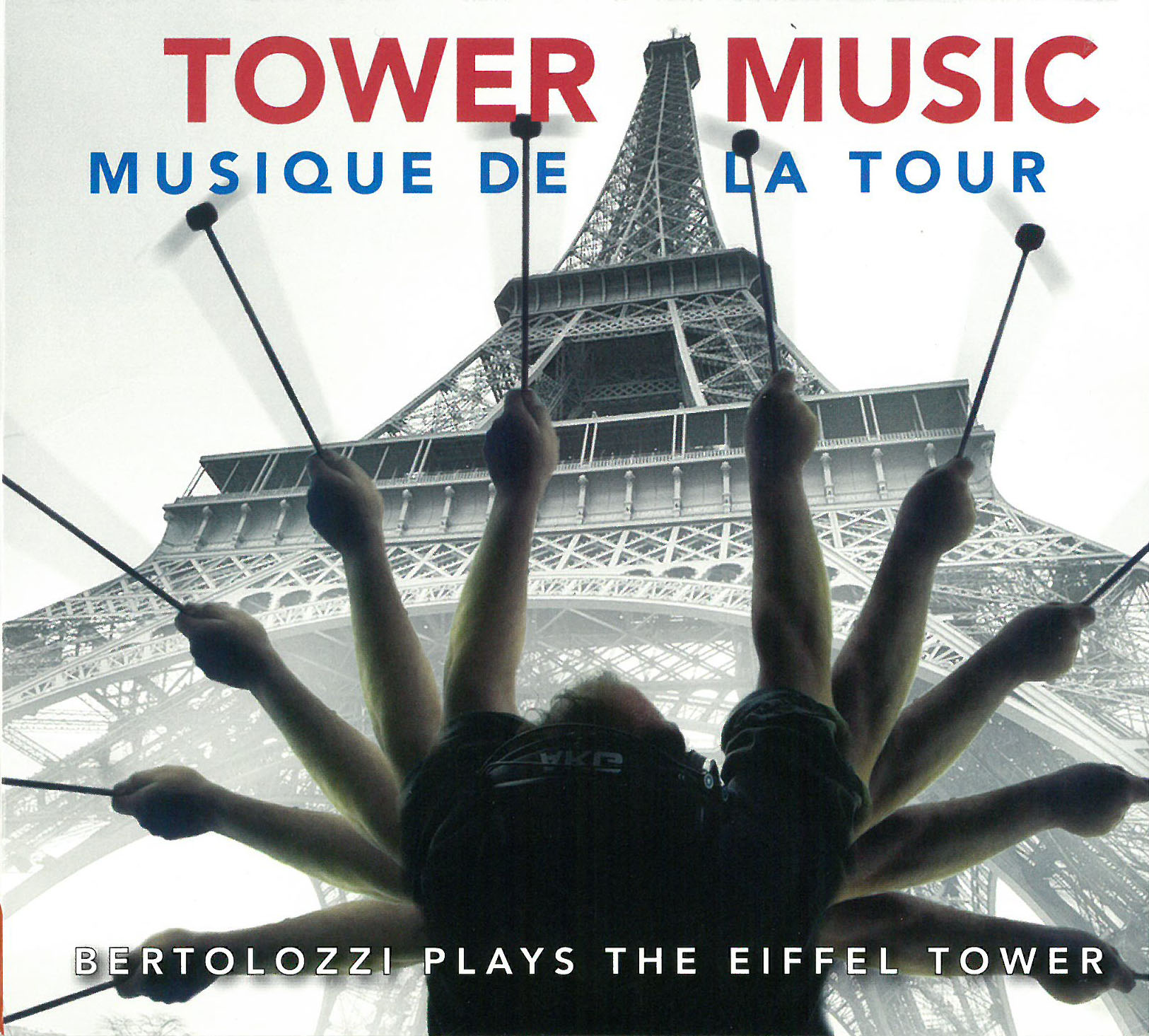
American composer/percussionist Joseph Bertolozzi’s Tower Music is the culmination of a ten-year project to “play” Paris’ Eiffel Tower using various percussion mallets, etc. The over 10,000 samples recorded live by contact microphones were then reduced to 2,800 descriptively named sounds which he then used to compose the nine exciting tracks. Bertolozzi stresses that only tones made by playing the actual surfaces of Eiffel Tower are heard, and that no added effects were utilized.

The to-be-expected rhythmic percussive sounds are heard on A Thousand Feet of Sound and the jump-up-and-boogie grooves of Tower Music. A big surprise is the range of pitches and dynamics comprising the ear-worm melodies of the lilting waltz Elephant on the Tower. Especially intriguing is Evening Harmonies, in which the composer abandons rhythmic and melodic compositional traditions and lets the Tower play for its own sound sake. The rich sonorities and soundscapes of this composed yet free-improvisational-feel-piece turn the Eiffel Tower into a musical instrument of inherent deep tone, abrasive power and wide dynamic range. An informative bonus track has Bertolozzi explaining the ins and outs of the recording, production and details of this project.

This is more than just a raised eyebrow joie de vivre sound installation. Bertolozzi is a sensitive musician attuned to quality sound production and dynamic rhythmical nuances. His compositions are concise, clear and accessible. There are plans for a future live performance. For now, listen and enjoy!

01 IntersystemsIntersystems
Intersystems
Alga Marghen Number One (forcedexposure.com)

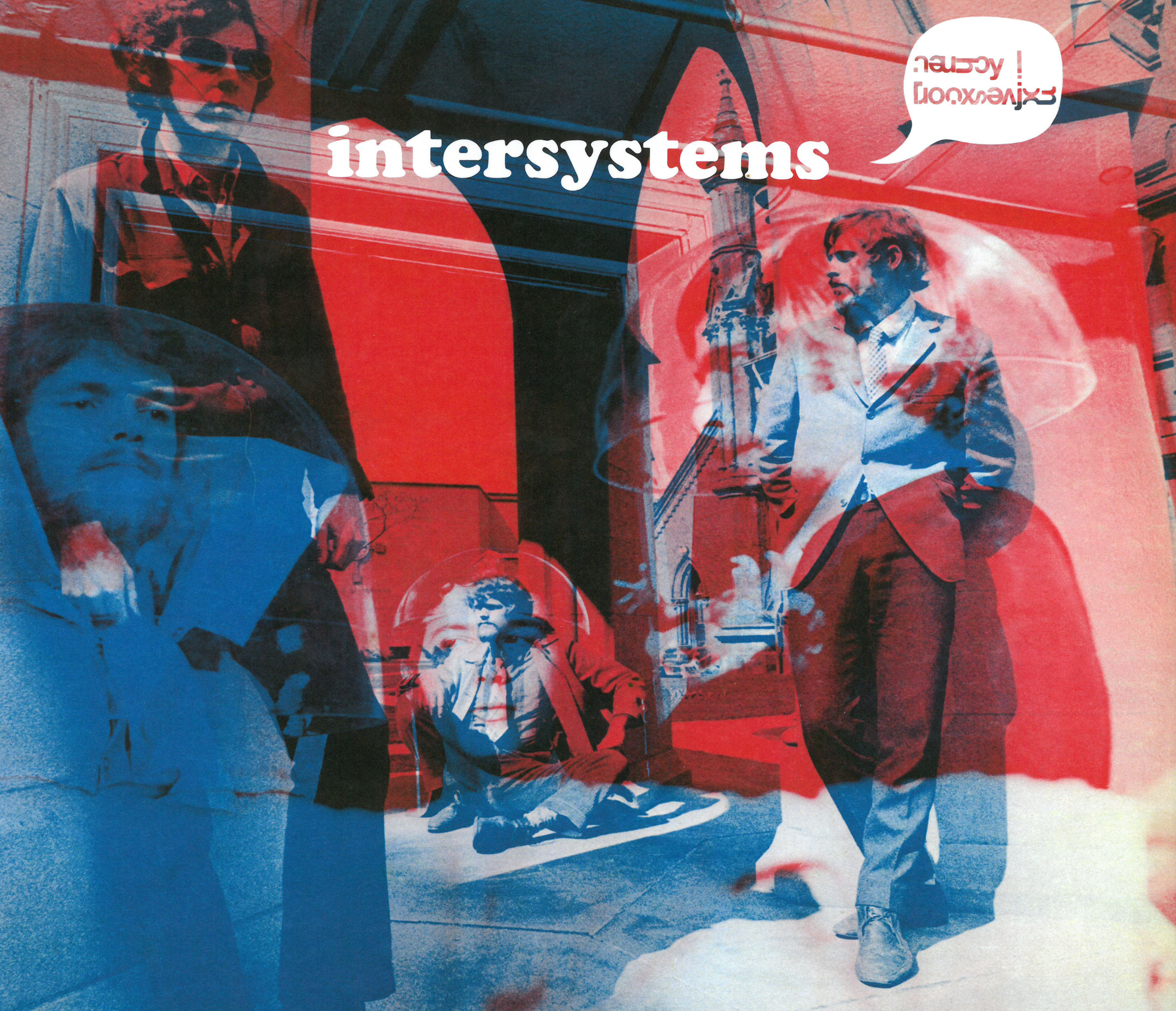
Intersystems’ outer limits musique concrète began as the soundtrack to the suitably named “Mind Excursion” event at the University of Toronto in 1967. This immersive environment filled ten rooms with sights, sounds and smells for a sensory overloading psychedelic experience.

The team behind this “electrosonic presentation” was sculptor Michael Hayden, architect Dick Zander, electronic composer John Mills-Cockell and poet Blake Parker. Over the next two years, Intersystems masterminded a series of similarly mind-massaging installations along with three albums, now lovingly enshrined in this lavish box set from Italy’s Alga Marghen.

The reproduced sleeve of 1967’s Intersystems Number One credits Mills-Cockell’s “musical visitations” and Parker’s “chaste mouthings,” as introduced on the immortal Orange Juice & Velvet Underwear. Scraping strings and hypnotic drones propel Parker’s deadpan conjuring of “gentle boys,” “smells of oranges” and “marmalade on velvet.” As Nick Storring offers in his essay, “it may be the most typically capital-p Psychedelic cut of their entire catalog,” but simply sets the scene for what’s to come.

Parker’s blending of the sensual with the surreal and the banal never quite becomes clear in the shimmering subaquatics of Intersystems’ debut. Sonic equivalents of his Burroughsian cut-ups are John Cale’s The Gift, Throbbing Gristle’s Hamburger Lady or the foghorn oration in an ocean of din from Bill Exley of the Nihilist Spasm Band (later signed to Intersystems’ label Allied Records on Hayden’s suggestion.) Parker’s poetry is far more kitchen sink, yet its power is felt subliminally, changing the temperature in any room where it’s played.

As Mills-Cockell explains in his essay, a device called “The Coffin” created the ominous acousmatics of Intersystems Number One. This satin-lined box was the resting place for piano wire, tuning pegs and contact mics to switch between ghostly samples like a radio station from beyond. By 1968’s Peachy, he had become one of Canada’s earliest owners of a Moog Mark II synthesizer, voyaging even further out.

Peachy opener Experienced Not Watched is comparable to the prog fantasias of Mills-Cockell’s later project Syrinx, but proves to be another fakeout. Intersystems’ masterpiece flows through a jump-cut collage of sputtering sound effects, orchestral swells and Parker’s disembodied Dalek buzzing. Their final album, Free Psychedelic Poster Inside, amps up the agitation with lobe-slicing sine waves and seasick stereo pans, alongside the story of a “plastic” couple on the brink.

Emerging from this spawning pool, Mills-Cockell’s Moog would be employed by the likes of Kensington Market, Bruce Cockburn and Anne Murray. He would see brighter lights, but these avant-garde origins deserve a flashback. Nearly 50 years later, the remastered LPs are packaged with 132 densely packed pages of images and essays, finally giving listeners the chance to lucidly experience Intersystems’ mind excursions in the mind’s eye.

02 Ana SokolovicAna Sokolović – Folklore Imaginaire
Ensemble Transmission
Naxos 8.573304

Review

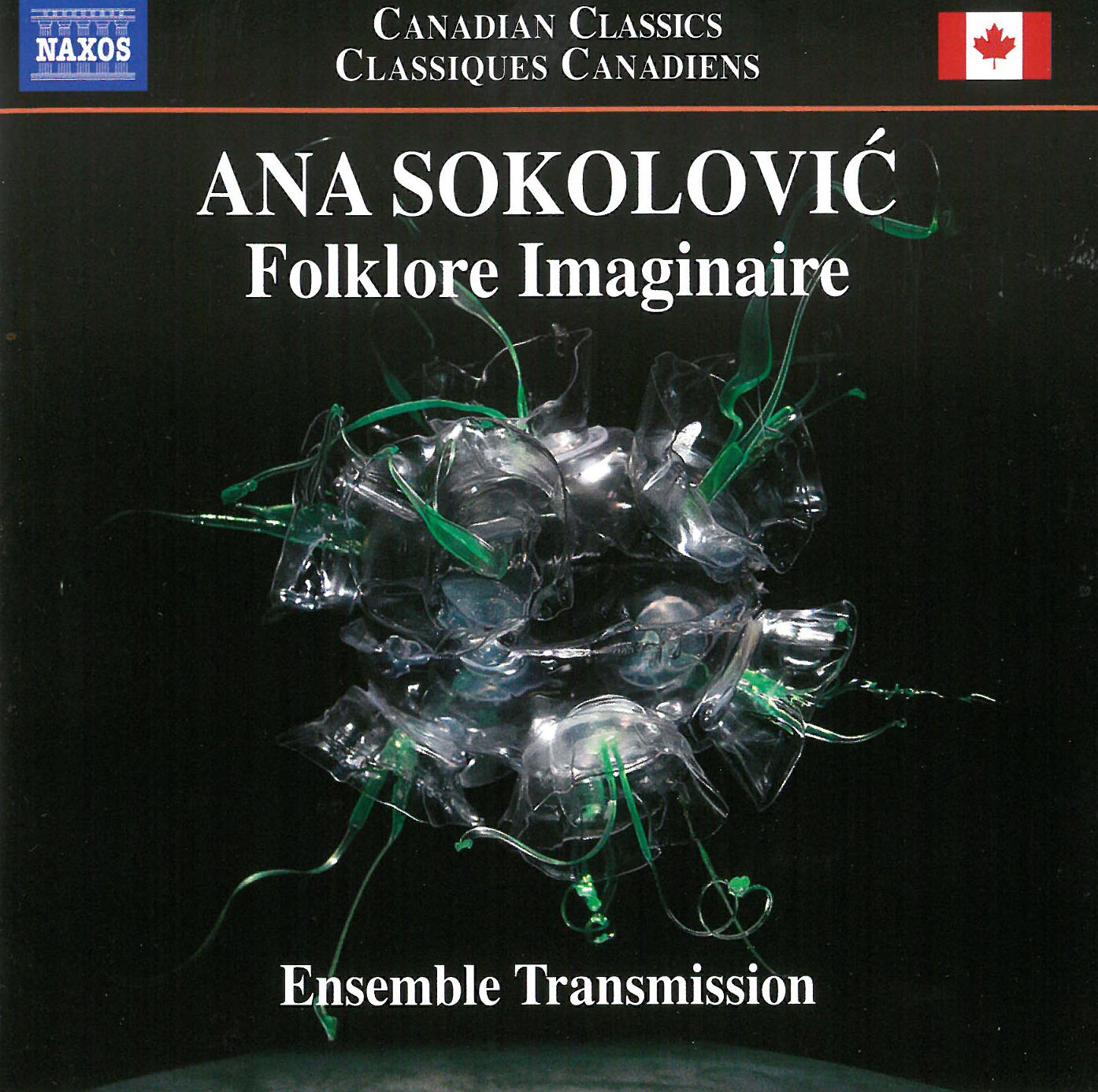
Folklore Imaginaire is the name of Serbian-born Canadian composer Ana Sokolović’s newest CD. With six works performed by Montreal’s Ensemble Transmission, a mixed chamber ensemble for flute, clarinet, violin, cello, percussion and piano, the recording is a vibrant demonstration of the rhythmic vitality and scope of Sokolović’s compositional talents. Each piece is scored for different combinations of instruments, ranging from the haunting and atmospheric sounds of bass flute and piano in Un bouquet de brume to the effervescent Ciaccona for the full ensemble.

One of the most striking characteristics of Sokolović’s music is the influence of her roots in Balkan music. Her music never descends into pastiche folk music, but rather it’s the driving spirit of her heritage that shines through in unique ways in dialogue with her own creative strategies. Her sense of humour is evident particularly in Portrait parle, a trio for violin, cello and piano, in which she uses a police document from around 1900 that gives tips on how to describe the human body when filing criminal reports. She uses these depictions of the forehead, hair, nose and lips, for example, as a basis for her musical transformations. In Mesh, she uses the instructions for how to use a hair dryer as her inspiration.

Sokolović’s music appeals to a wide variety of listeners. Her ear for unique sonorities combined with classically based strategies for musical transformation blended with a dynamic pulse that runs throughout each piece makes this CD a multi-varied and rich listening experience.

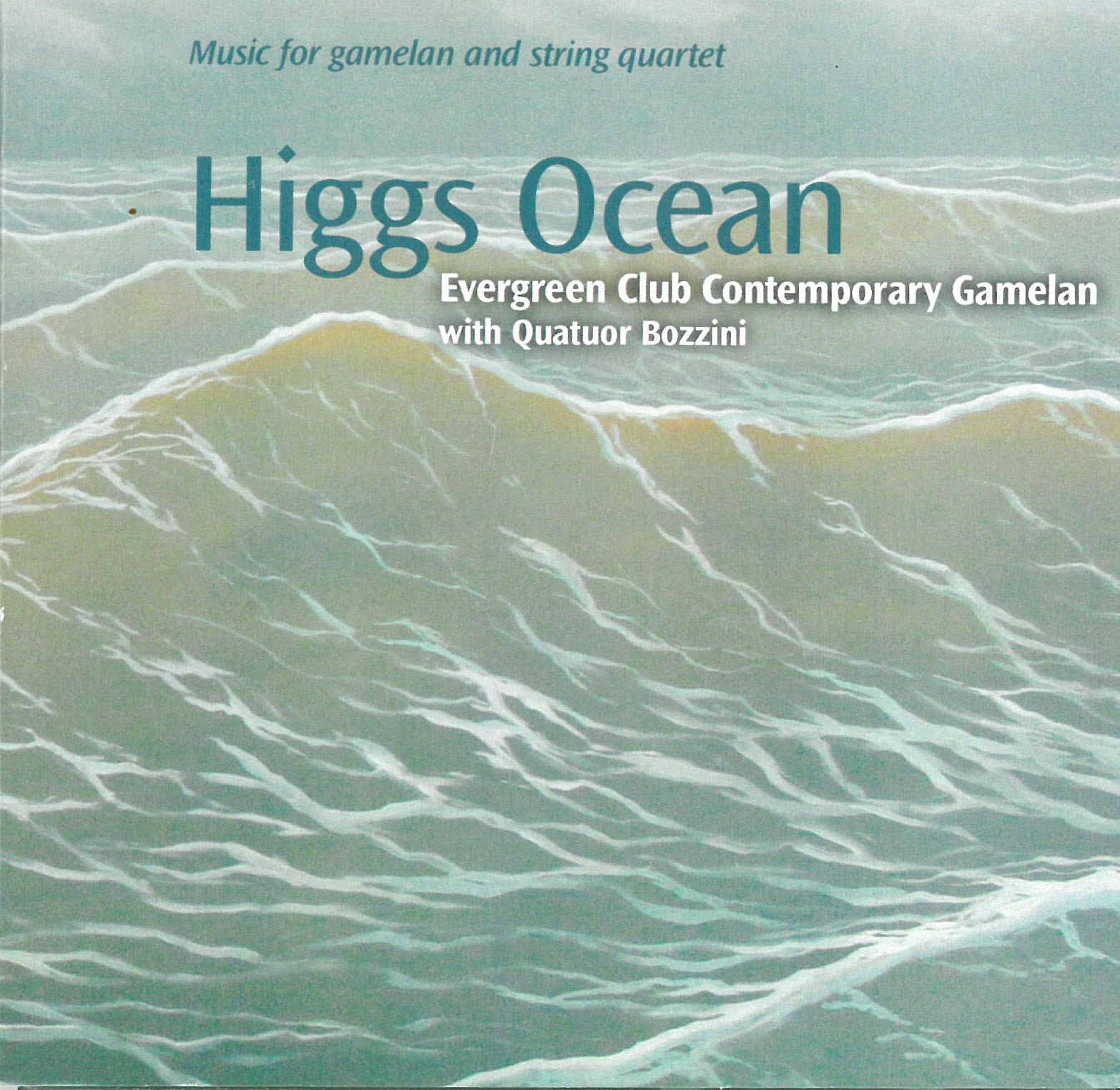
03 Evergreen BozziniHiggs Ocean – Music for Gamelan and String Quartet
Evergreen Club Contemporary Gamelan; Quatuor Bozzini
Artifact Music ART-042 (evergreenclubgamelan.ca)

Toronto’s Evergreen Club Contemporary Gamelan has just released a superb CD entitled Higgs Ocean that features five works for the ECCG performing on their unique Indonesian-based bronze and wood instruments in counterpoint with the sounds of the Quatuor Bozzini string quartet – a daring combination of soundworlds, cultures, tunings and timbres. Since their beginnings in 1983, the ECCG have been steadily building a repertoire of works through the commissioning of Canadian and international composers. This CD is no exception with five commissioned works composed by Canadians.

The first, In the High Branches by Linda Catlin Smith, tackles head-on the fundamental challenge in pairing the two groups of instruments. Smith calls it an “oil and water situation.” Her solution was to allow both ensembles to have their own distinctive space to establish their identities. Gradually one hears these two worlds merging in such a way that they blend seamlessly.

Smith’s work sets the stage for the remaining pieces, each of which handle this challenge in different ways whether that be through the use of repeating rhythmic patterns and melodic motives, such as in Michael Oesterle’s Higgs Ocean and Ana Sokolović’s In Between or the more starkly pointillist style in Spe Salvi by Petar-Kresimir Klanac. One distinctive feature in Sokolović’s piece is the use of glissandi on the flute-like suling that swoop and soar around the string and gong-like textures. Overall, the CD displays a sense of surety and conviction in its exploration and blending of two cultural legacies.

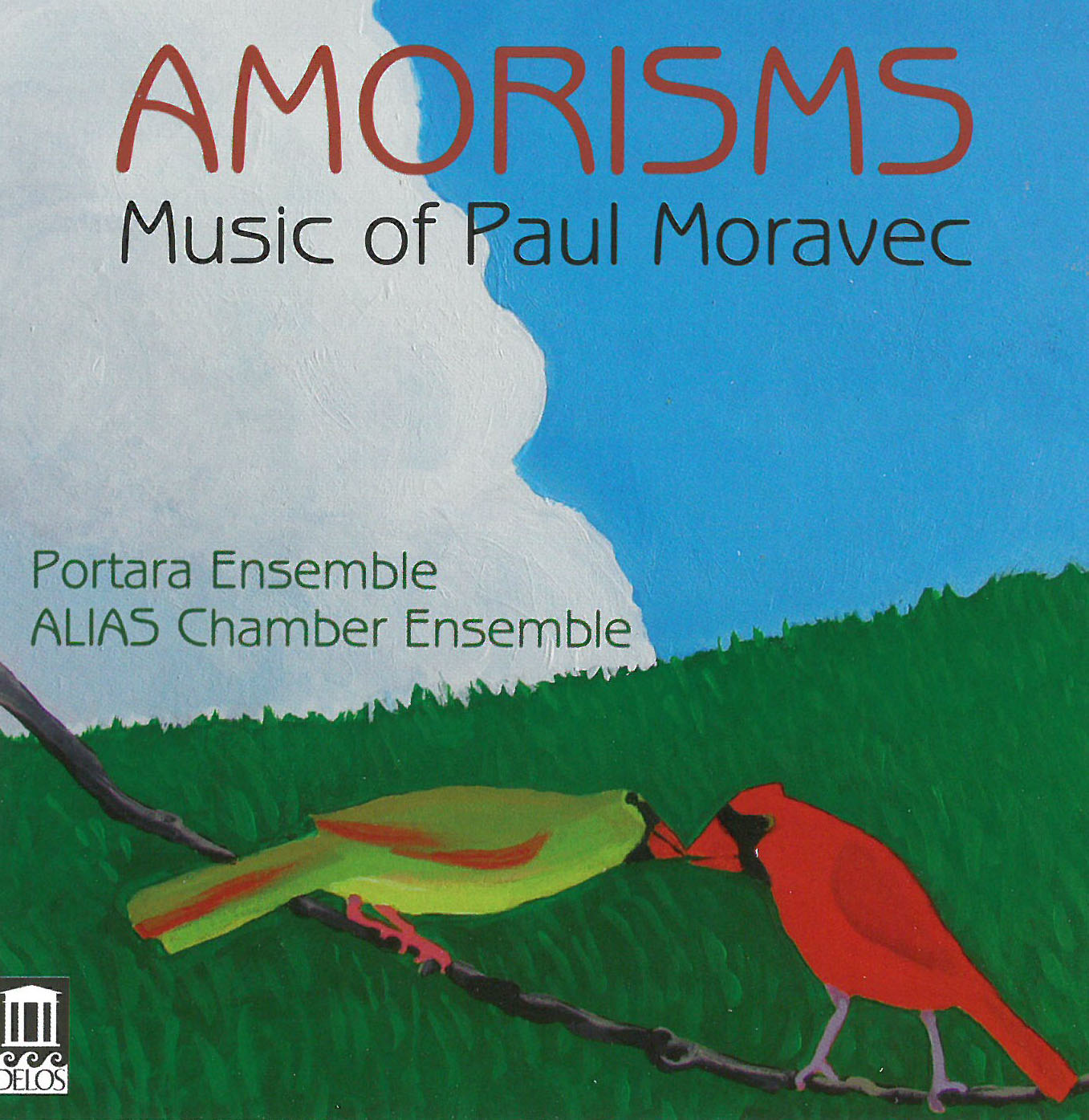
04 MoravecAmorisms – Music of Paul Moravec
Portara Ensemble; ALIAS Chamber Ensemble
Delos DE 3470

The word amorism is defined as the state of someone who is preoccupied with love and lovemaking or with writing about love. Certainly the case with the Elizabethans; Shakespeare was surely the most prolific in this regard. Composer Paul Moravec joked that “William Shakespeare is a sort of silent partner who has been very good to me over the years.” Two of the three works on this recording, Amorisms and Tempest Fantasy, are based on the Bard’s works. In writing Amorisms, which was jointly commissioned by ALIAS Chamber Ensemble, vocal ensemble Portara and the Nashville Ballet, Moravec speaks of the challenges of writing engaging music for both, whilst not detracting from the dance performance. The resultant music, with recurring, carefully pruned texts, provides a gorgeous and evocative palette to enhance the stage performance.

The second work on the album, Tempest Fantasy, earned the composer a Pulitzer Prize in 2004. Scored for violin, cello, clarinet and piano, each of the first three movements evokes one of the play’s characters: the sprightly Ariel, the mystic Prospero and the earthy Caliban. A fourth movement portrays the island soundscapes and the finale a challenging flight of fancy only for the most adept of players; ALIAS certainly rises to the task.

The outstanding Portara vocal ensemble joins the instrumentalists again for the third work on the recording, Sacred Love Songs, settings of biblical texts as well as the Prayer of St. Francis, with an instrumental interlude as the penultimate movement.

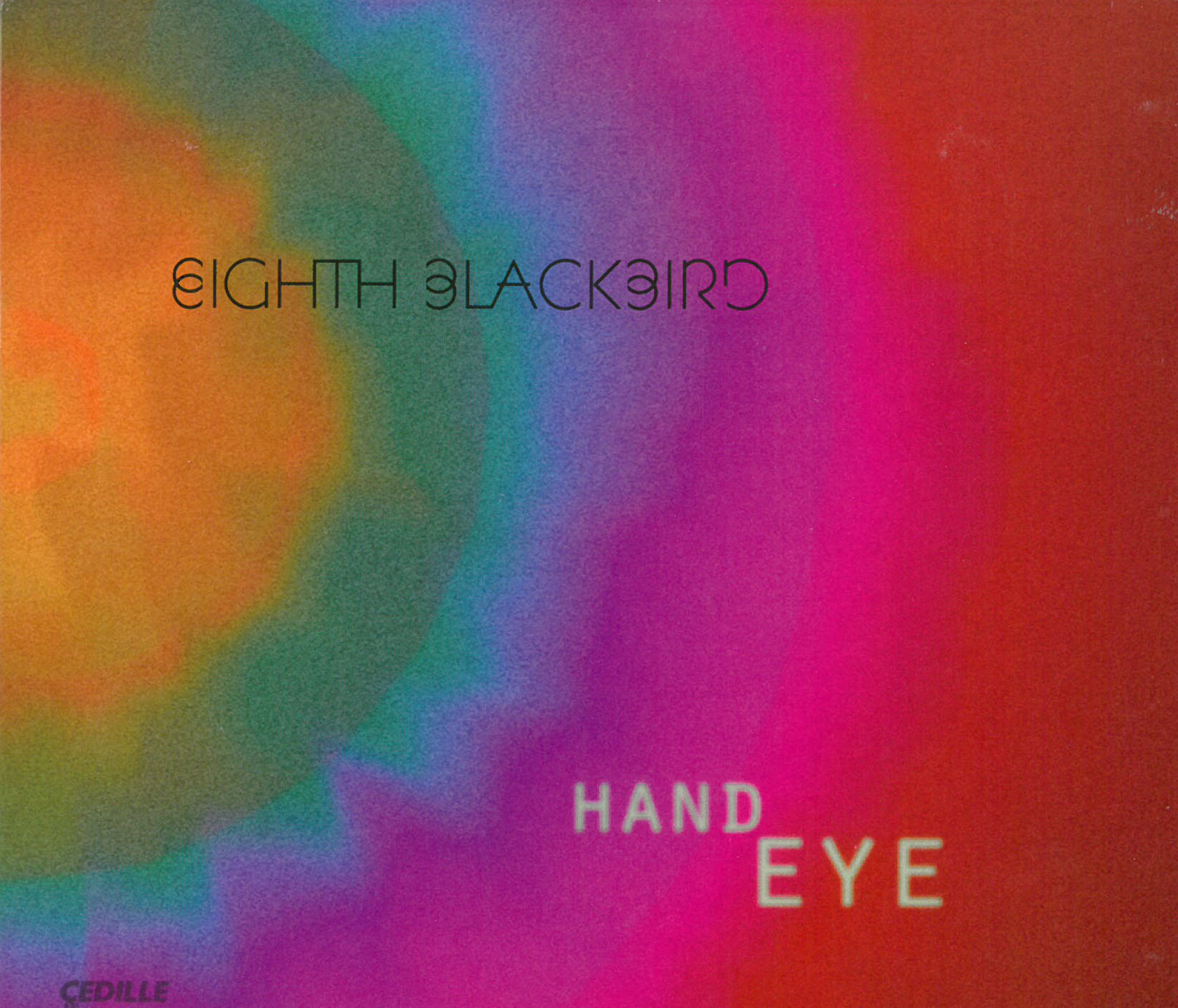
06 Eighth BlackbirdHand Eye
Eighth Blackbird
Cedille CDR 90000 162

Hot off their fourth Grammy Award win (2016 Best Small Ensemble/Chamber Music Performance for Filament) Eighth Blackbird’s latest record Hand Eye might be better described as a natural phenomenon – an autonomous, multimedia collage which seems to have arisen inevitably from the storm of information whirling in a data-saturated world.

For this project, Eighth Blackbird, all Oberlin alumni, collaborated with the composer supergroup Sleeping Giant, all Yale alumni. The two groups are made up of six members each, a handsome symmetry which is artfully exploited here: for each piece, one composer paired up with one performer to develop a work centering around that performer’s particular instrument. This is just one of Hand Eye’s organizational layers, however. In another, the composers take inspiration from works of art in the Maxine and Stuart Frankel Foundation for Art collection; in yet another the six pieces form one continuous narrative with a motivic continuity that is perceptible on the first listen.

As such, Hand Eye is meant to be taken in all at once – but there are certainly standout works. By-By Huey (by Ted Hearne) marshals bass clarinet wails, Ligeti-esque muted piano ostinati and a solo jazz piano pastiche into something not only internally coherent, but coherent with the works which surround it as well. Checkered Shade (Timo Andres), which owes much to David Lang, is inspired by a fractal drawing, and feels like the musical equivalent of scrolling out on a satellite map of earth until only a dot remains. In Hand Eye, Eighth Blackbird strides over the boundary between inspiration and art.

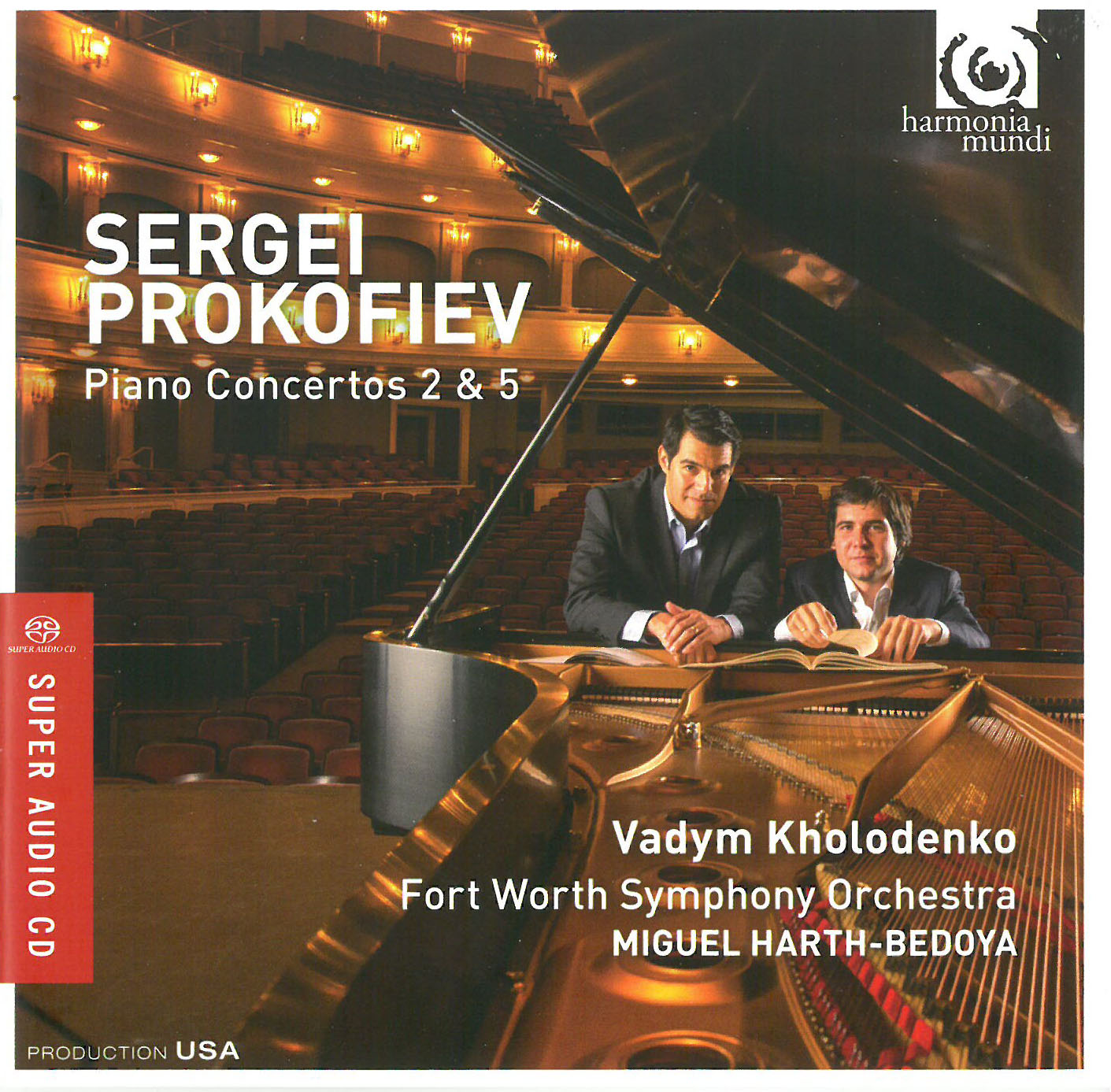
01 Prokofiev Piano ConcertosProkofiev – Piano Concertos 2 & 5
Vadym Kholodenko; Fort Worth Symphony; Miguel Harth-Bedoya
Harmonia Mundi USA – HMU 807631

Among the plethora of emerging piano virtuosos a name to watch is Vadym Kholodenko, the Ukrainian winner of the 2013 Van Cliburn competition. Of special interest is his partnership with the Fort Worth Symphony including the recording of all five Prokofiev piano concertos. Kholodenko’s stylistic and technical rapport with conductor Miguel Harth-Bedoya and orchestra shows in fine ensemble playing. I come to this Prokofiev Concerto No.2 (1913) with memories: Yefim Bronfman’s blazing performance with the Toronto Symphony; also novelist Philip Roth’s astounded account of Bronfman’s Prokofiev Two in The Human Stain. Khodolenko’s technique is fully sufficient yet he emphasizes expressive, lyrical aspects more, starting with the expansive opening melody. He even manages to make the cadenza’s romantic ballast sound meaningful. The perpetual motion Scherzo and heavy tramping Intermezzo have fewer expressive opportunities. The Finale does however, amid much virtuosic bravado that Kholodenko also navigates successfully.

By 1932 when he wrote Concerto No.5 Prokofiev was seeking stylistic simplicity, no doubt under increasing pressure from the Soviet regime. Many passages show that he still had the ability to be both musically childlike and inventive. For example, the second movement’s clock-ticking motion becomes interesting with lightning quick scales and staccatos that pianist and orchestra make sound crystalline. In the fourth movement, the piano weaves beautifully around lyrical winds; later on, the performers achieve the required solemnity. I look forward to the other three concertos from this team.

02 Bartok LigetiBartók; Ligeti
Ensemble InterContemporain; Matthias Pintscher
Alpha 217

Though György Ligeti’s early large-scale works brought him fame, his name was largely absent from North American orchestra programs in the 1980s. As a result, for many, he is associated with bagatelles and études instead of megaliths like Atmosphères. This Ensemble InterContemporain recording, better than merely reminding us of his orchestral roots, reaffirms his genius in both styles.

This is especially true of the Piano Concerto, featuring Hidéki Nagano, which feels at times like orchestral Ligeti and intimate Ligeti happening simultaneously, the sound streams occasionally lining up in a happy coincidence akin to those moments when a car’s turn signal blinks in time with the radio. This mechanical analogy is particularly apt, as the perpetual motion piano part also conjures up Conlon Nancarrow’s player piano works. The second movement showcases Ligeti’s trademark cosmic orchestral writing; here he weaves slide whistles and ocarinas into the fabric of a soundscape reminiscent of his Lontano for orchestra, delicately toeing the line between the apocalyptic and the mawkish in a way only Ligeti can.

Also featured are Ligeti’s concertos for violin and cello. Ligeti described his piano concerto as “music as frozen time, as an object in an imaginary space,” but these words might be yet better suited to his Cello Concerto, performed here by Pierre Strauch. The above are joined by two Bartók pieces, Contrasts and the Sonata for Two Pianos and Percussion, and appropriately enough – for no two composers offer a more compelling solution to the problems posed by a world where both trite tonality and humourless avant-gardism are equally exhausted.

Concert Note: Matthias Pintscher makes his Toronto Symphony Orchestra debut conducting Mahler’s Symphony No.1, Mozart’s Piano Concerto No.24 (with Inon Barnatan) and his own Towards Osiris on April 28 and April 30.

03 AndreyevSamuel Andreyev – Moving
ensemble proton bern; Matthias Kuhn
Klarthe K014 klarthe.com

Paris-based Canadian composer Samuel Andreyev is deeply influenced by the plastic arts; he describes the first work on this disc, the Marcel Duchamp-inspired La Pendule de Profil, in terms of cubism, and his pieces tend toward an object-like quality. A good analog for the entire decade of work represented here, however, might be abstract impressionism. The impressionists placed the immediacy of perception above all else, carefully modulating light and colour to reproduce the experience of motion and time. The abstract impressionists took it further, distilling the object until only motion and colour remained. Andreyev, too, reduces musical perception to its elementary components, exploiting attack and especially timbre for their visceral, immediate impressions.

Where the abstract impressionism analogy fails, however, is in Andreyev’s meticulous structural clarity. An abstract impressionist painting overwhelms with its chaotic density. Andreyev’s music, although saturated with chromaticism, is not spatially dense, and as a result the listener perceives the music as both weighty but translucent, ordered but atemporal.

The miracle material that enables this remarkable paradox is ensemble proton bern itself; the symbiosis between composer and the musicians is palpable throughout. As rare instrument specialists, the Swiss ensemble gives free rein to Andreyev’s timbral explorations. The best examples are PLP, which features the Lupophon, a bass oboe with a fibrous, tenor saxophone-like sound, and Bern Trio, an ethereal gossamer fog for quartertone-tuned harp, viola, and oboe d’amore. A moving disc in both senses of the word.

04 Simon MartinSimon Martin – Hommage à Leduc, Borduas, et Riopelle
Quatuor Bozzini; Quasar quatuor de saxophones; Trio de guitares contemporain
Ambiances Magnétiques Collection QB CQB 1616 (quatuorbozzini.ca)

The young composer Simon Martin has created three separate works here with highly distinct instrumentation in homage to a trinity of closely linked Québécois painters central to the history of Canadian art. The first piece L’heure mauve, inspired by the Ozias Leduc painting and the last of these works to be composed (2009), is performed by a trio of classical guitarists. Historically, Martin has arrived at the earliest of these painters last and he’s matched Leduc’s symbolist landscape with an extraordinary minimalism, organizing a piece that matches periods of silence with complex rhythmic patterns created on strummed flurries or plucked notes on open strings.

Projections libérantes (2007), named for a text by Paul-Émile Borduas, was composed for Quasar saxophone quartet. The piece uses saxophone multiphonics created by alternate fingerings and shifting embouchures to mine the instruments’ sonic resources, drawing, for example, simultaneous low-frequency blasts and whistling highs from the baritone.

That sonic creativity is matched by Martin’s handling of the string quartet in Icebergs et Soleil de minuit — Quatuor en blanc, which takes its inspiration from Jean-Paul Riopelle’s series of black and white paintings. It’s a series of brief vignettes, sometimes highly gestural, in which Quatuor Bozzini explores different textures often employing harmonics to create a kind of richly nuanced transparency, a contradictory dense thinness of sound resembling the texture of a painted surface, as clusters can gradually reduce to single attenuated pitches.

What ties these works together is Martin’s fascination with the physical matter engaged by these painters and the power of brush or spatula strokes in their work, qualities transferred to his own dramatic exploration of individual instrumental timbres and subtly evolving sounds. The ultimate effect resembles the dynamic stillness and material transformation that links his three subjects’ work. It’s music of power, beauty and originality, worthy of its subjects.

05 FairouzMohammed Fairouz – No Orpheus
Kate Lindsey; Kiera Duffy; Christopher Burchett
Naxos 8.559783

Review

The young American composer Mohammed Fairouz has quickly become a widely performed and recorded composer. Although barely into his 30s, Fairouz has been commissioned by many important American institutions and performers. In his latest Naxos release Fairouz has compiled a selection of art song spanning a ten-year range in his output. The disc is comprised of four works that incorporate texts by W.B. Yeats, Edgar Allan Poe and William Wordsworth, along with selections from the writings of Alma Mahler, the ancient Arabic poet Ibn Shuhayd and contemporary poets Wayne Koestenbaum and Lloyd Schwartz. This collection reinforces Fairouz’s command over his approach to musical expression. Those who are familiar with his musical language appreciate it for an immediate sense of accessibility, its strong link to popular music infused with light romanticism and a familiar lyricism. Fairouz writes well for the voice. There is clarity of intention in his vocal writing that leaves nothing beyond the surface for the listener.

Mezzo-soprano Kate Lindsey, soprano Kiera Duffy and baritone Christopher Burchett bring a strong sense of musicality and drama to this recording and are able to interpret this music with a calming sense of ease and intuitiveness. At times the music is bare. The instrumental writing for cello and piano make for a light accompaniment that – despite a sense of clarity – perhaps leaves the listener wanting a bit more. Where clarity of artistic voice elevates this music to certain successful neighbourhoods, a deeper level of expression is perhaps lacking throughout. This recording provides a light, pleasing listening experience that doesn’t pin the listener down with any type of heavy material.

06 LangerElena Langer – Landscape with Three People
Anna Dennis; William Towers; Nicholas Daniel
harmonia mundi HMU 907669

Elena Langer, a Russian-born composer who studied in London, writes in an idiom that recalls Mussorgsky’s Pictures at an Exhibition as orchestrated by Ravel; she combines a Russian folk sensibility with modern orchestral colours and a deep understanding of the resonances between text and music.

This is especially true of the title piece, a work for soprano, countertenor, oboe, harpsichord and trio of strings. Here Langer casts the poetry of Lee Harwood, a 20th-century English poet best known for being John Ashbery’s lover during the 1960s, in a baroque-inspired musical mould. There is an uneasiness in the configuration, though – the poems, dealing as they do with urban love, threaten to struggle free from the old-fashioned harmonic conventions that constrain them. Langer, delighting in this tension, exploits it to very wry effect. This is especially true of the oboe part, which, ostensibly representing the third figure in a love triangle with the soprano and countertenor, frequently seems to make stage-whispered asides to the audience, offering commentary on the action in the way only wickedly good gossip can. “This is my first love scene,” sing the soprano and countertenor, but the oboe’s acidic obbligato implies mockingly that this is neither their first nor their last “first love scene” at all. Ultimately, the oboe is subsumed by the affair, and the three figures are left to swirl in the purgatorial ambiguity of their similar tessiture. Such nuances pervade the works of this vital composer.

01 IvesIves – Symphonies Nos.3 & 4; Unanswered Question; Central Park in the Dark
Seattle Symphony; Ludovic Morlot
Seattle Symphony SSM1009 (seattlesymphony.org)

Charles Ives had a beautiful musical mind, far ahead of his time. In my youth I watched a televised performance by Stokowski with the American Symphony of Ives’ Symphony No.4 (1910-16). Each subsequent hearing magnifies my appreciation of this masterpiece. Conductor Ludovic Morlot and the Seattle Symphony seem comfortable with the work’s contradictions. Ethereal high strings evoke night uncannily in the short Prelude yet orchestral interruptions are harsh; meanwhile a hopeful chorus sings the hymn Watchman. Is it right to have all of this going on? Ives would say, “Sure – why not?” Then a complex movement, Comedy, goes much further. It opens with quarter-tone string glissandi, the quiet soon intruded on by other material including marches and full brass, sentimental tunes, a piano waltz and a violin solo, often with different simultaneous tempi. Conductor, orchestra and engineer still manage to keep everything in balance in this musical funhouse! The following strict hymn-tune-based Fugue could not contrast more vividly. In the visionary Finale, despite diverse interruptions, Morlot maintains the unifying sense of a parade bookended by percussion-alone passages that emerge from and return to silence.

The classics The Unanswered Question (1908) and Central Park in the Dark (1898-1907) receive scrupulous, loving treatment, with impeccable intonation. In Symphony No. 3, “The Camp Meeting” (1901 - 14) a different side of Ives appears, as turn-of-the-century classical music language combines seamlessly with nineteenth-century American hymnody; this recording presents a persuasive case for the result.

Back to top