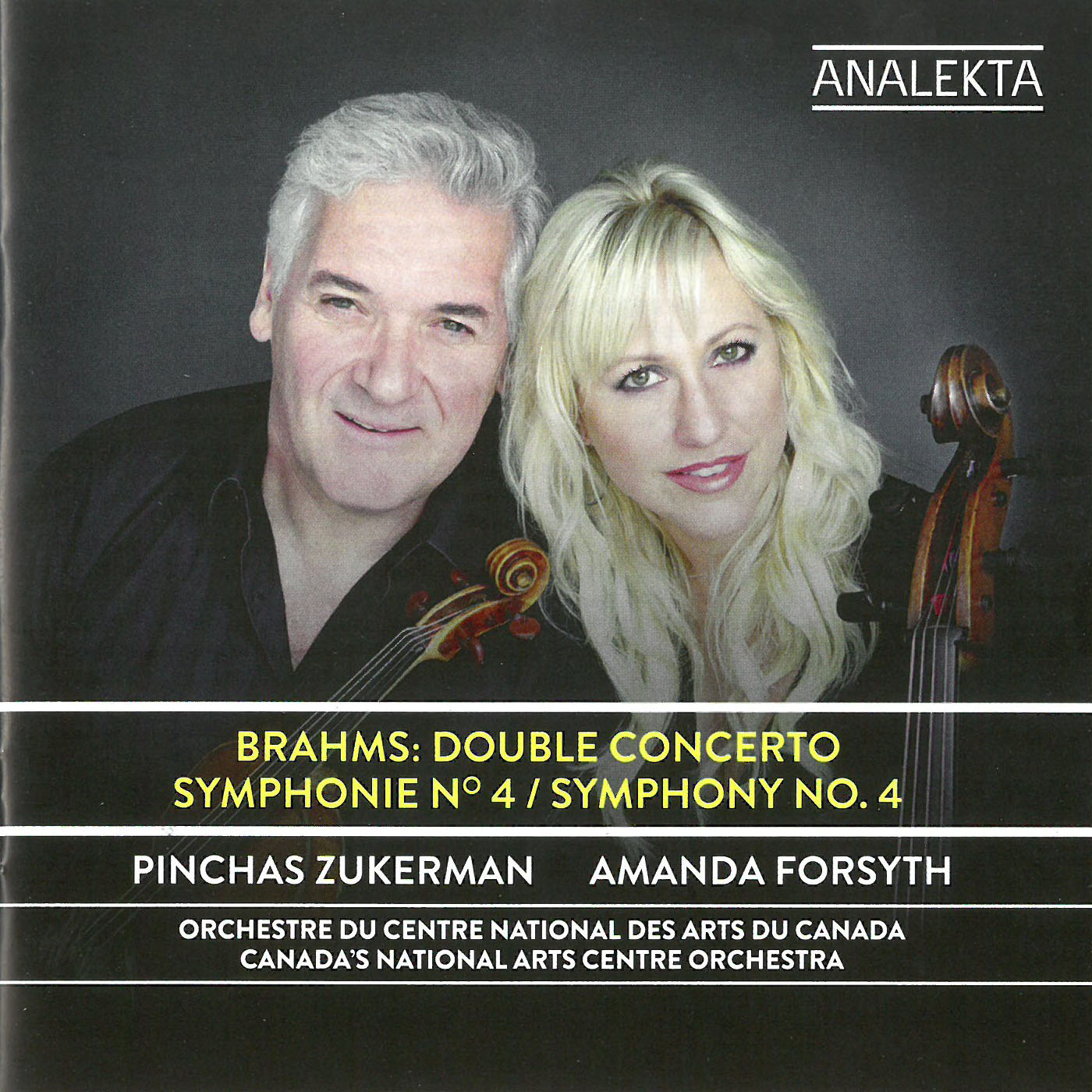
04 Brahms DoubleBrahms – Double Concerto; Symphony No.4
Pinchas Zukerman; Amanda Forsyth; National Arts Centre Orchestra
Analekta AN 2 8782

Pinchas Zuckerman, who retired after 16 years at the helm of the NACO, has certainly left his mark on the Canadian musical scene. His promotion of musical training for young musicians surely will be his most lasting legacy, alongside the hundreds of concerts and live recordings he generated. A case in point is a new Analekta disc recorded live. The Double Concerto by Brahms is like one of those amazing perfect recipes from The Joy of Cooking: get the right ingredients, follow the recipe exactly and presto: it always works. You need one virtuosic violinist (Zuckerman fits the bill perfectly), one cellist, who can keep up (Forsyth more than keeps up here!) and an orchestra that knows not to overstep. It helps that Zuckerman and Forsyth pair up frequently for this piece and have a definite rapport, developed over their years of playing together. So this Double Concerto hits all the right buttons – it is unrestrained, powerful, and tsunami-like in delivery, while shimmering with sans pareil melodic lines. There are virtuosic passages the likes of which Heifetz and Rostropovich made us expect from soloists. Real aural pleasure, if not breaking any new ground.

Alas, it is in the Symphony No.4 that we understand why Zuckerman will be remembered as a solo virtuoso, rather than a team player. His reading of the score seems muted and slowed down, as if he expects the orchestra will not to be able to keep up. The result is still Brahms, majestic, but somewhat leaden and heavy-footed, as if the will to live were slowly trickling out of the music. After 40 years of virtuosity, it may be the most honest pronouncement from Zuckerman – he is a solo act.

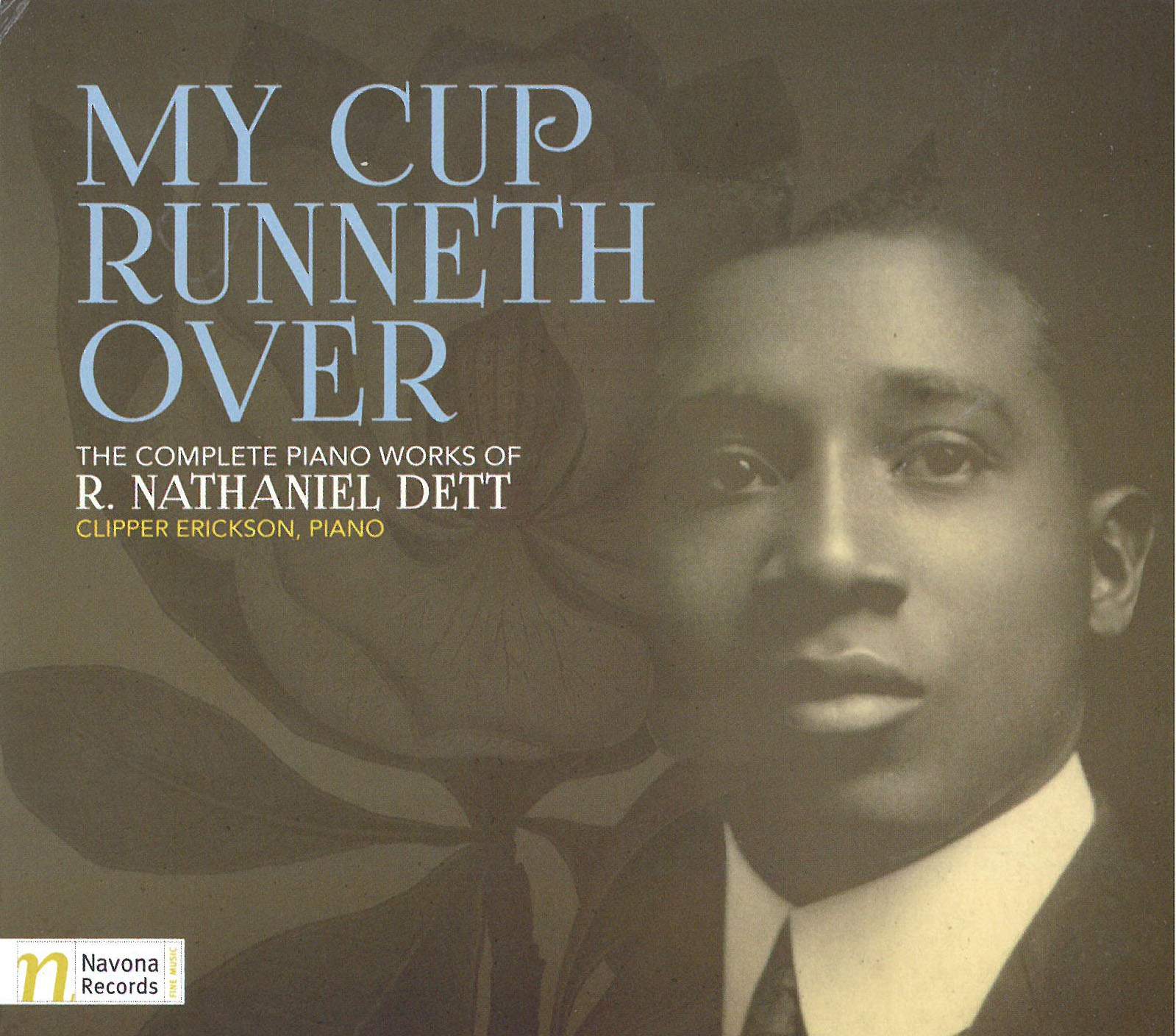
Nathaniel Dett

My Cup Runneth Over – Complete Piano Works of R. Nathaniel Dett
Clipper Erickson
Navona Records NV6013 (navonarecords.com)

Review

While we have enjoyed many opportunities to hear the choral music of Nathaniel Dett (1882-1943), this is the first ever recording of the prolific composer’s complete piano works which encompass quite a range, both in period and style. Pianist Clipper Erickson, who completed his DMA at Temple University researching Dett’s work, raised funds for this recording project through a Kickstarter campaign. Recorded in Germany for Navona Records and distributed by Naxos, the disc provides an enjoyable and significant dose of music history for professional and layman alike.

Canadian-born Dett’s styles range here from popular dance music and jazz to spirituals, romanticism and impressionism, with rags and salon suites alongside works influenced by Liszt, Dvořák, Debussy and Grainger. And like some of the aforementioned influences, Dett had both education and talent to seamlessly incorporate folk idioms into art music. His piano pieces explore diverse themes: the love of nature (Magnolia), the Deep South (In the Bottoms), Rosicrucian philosophy (Enchantment), the poetry of Rabindrath Tagore (Cinnamon Grove) and scripture (Eight Bible Vignettes). Erickson, an accomplished pianist, performs with great sensitivity to these themes and an obvious admiration for the great composer. Kudos to Erickson for his initiative and to those who chose to support this endeavour. A welcome release, just in time for Black History Month.


Review

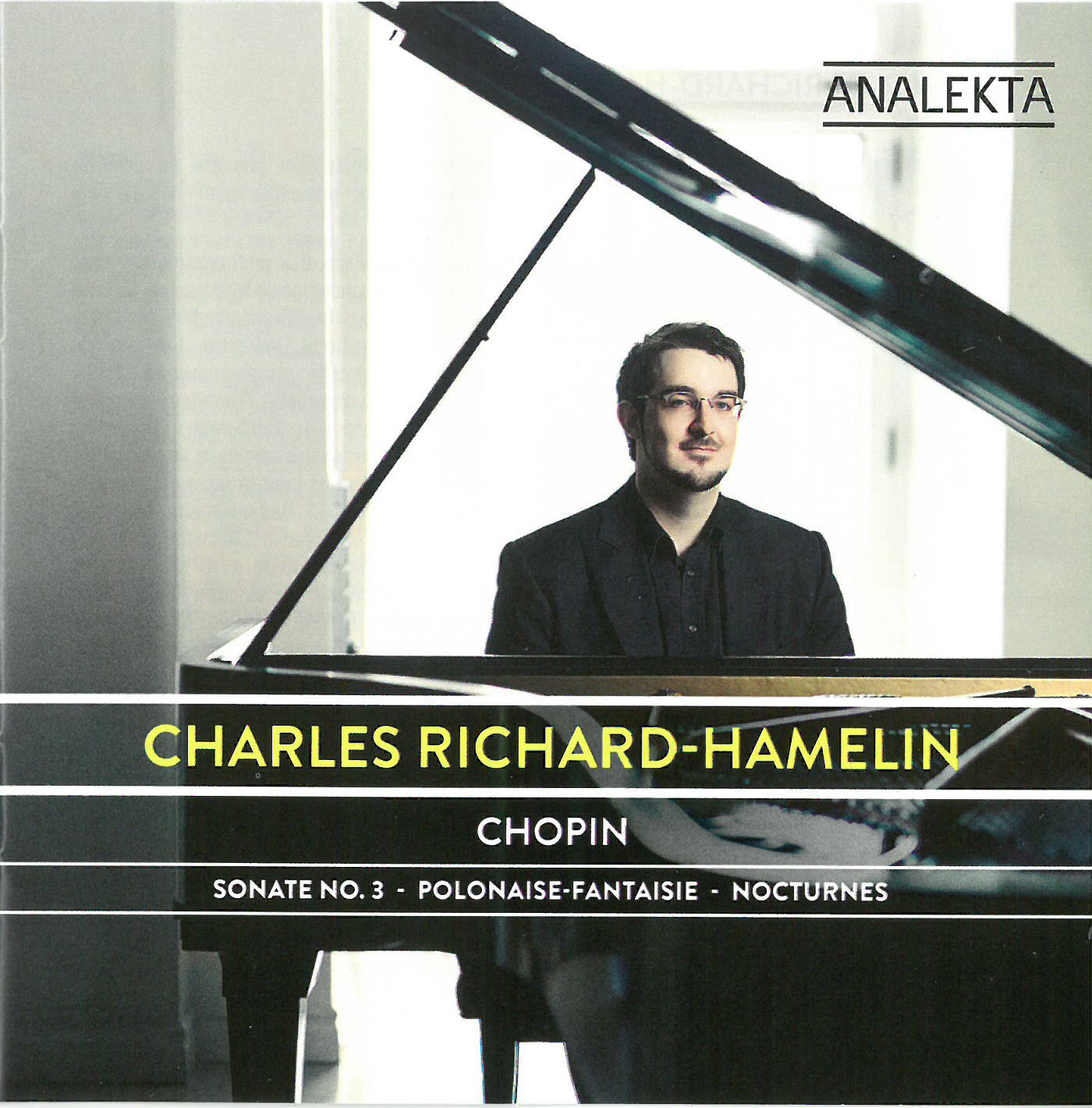
01 Charles Richard HamelinThe 2015 International Chopin Piano Competition boasted Canada’s Charles Richard-Hamelin as the second place prize winner, the first time a Canadian had won a prize in that prestigious event. His May 2015 recording was timed perfectly for this victory. Charles Richard-Hamelin – Chopin (Analekta An 2 9127) presents a very powerful player who can push the instrument right to its limits without losing or distorting the sound. It’s clear that Richard-Hamelin understands the colouristic capabilities of the piano. He is able to recede to the softest pianissimos and able to shape notes through the mechanics of the keyboard.

He is also very comfortable using wide variations in tempo without interrupting the flow of the musical idea. This is evident in the Largo of the Sonata No.3 in B minor, Op.58 where one encounters the impressive interpretive depth of this player after being dazzled by his performance of the preceding Scherzo.

The disc also includes the Polonaise-Fantasie in A-Flat Major Op.61 and two Nocturnes from Op.62 played with an especially haunting beauty.

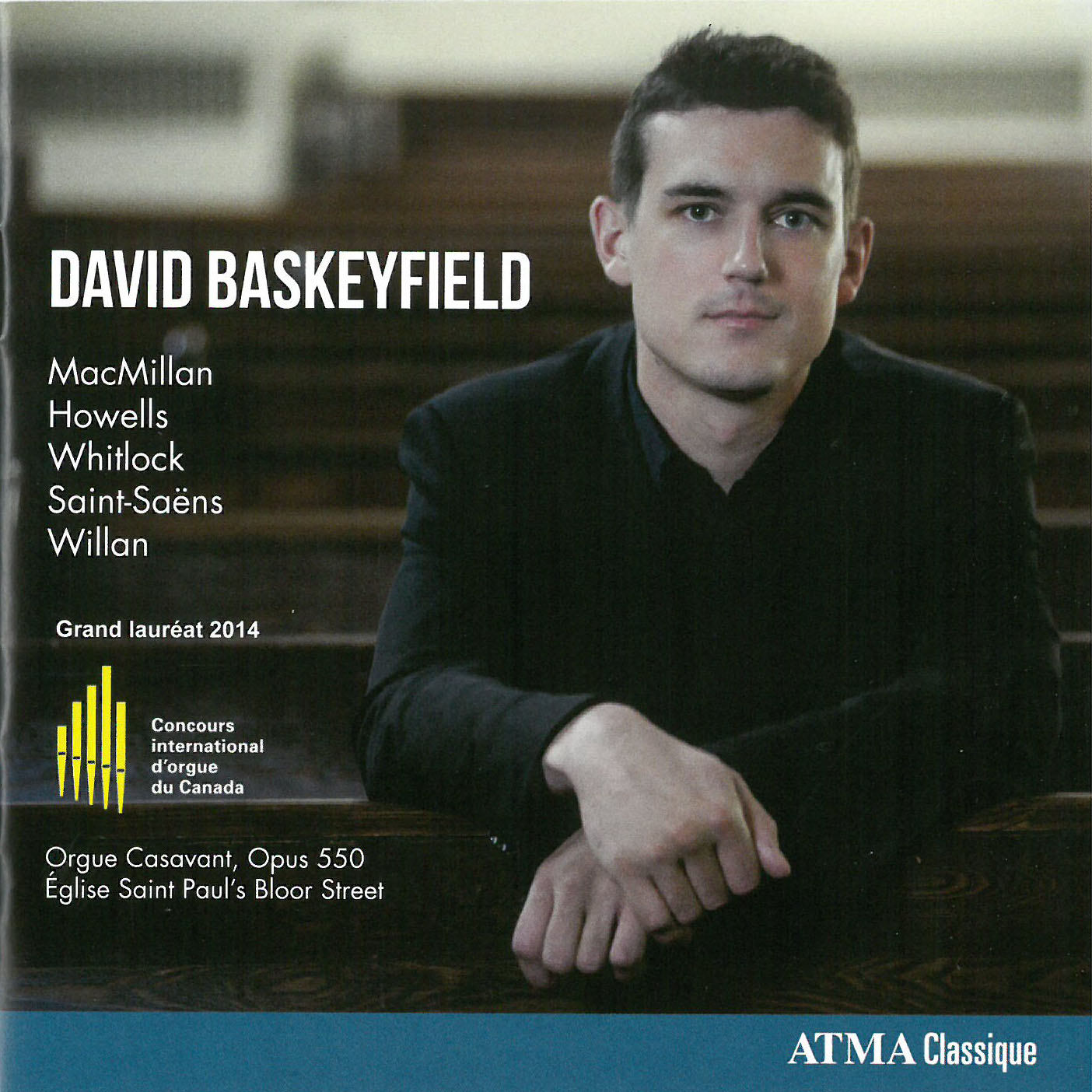
02 Baskeyfield OrganThe Canadian International Organ Competition is a fairly new horse race as these things go. Launched in 2008 it has brought considerable visibility and prestige to the performance discipline. The 2014 Grand Laureate is celebrated on David Baskeyfield – Concours international d’orgue du Canada (ATMA Classique ACD2 2719).

Familiar composers line the program notes: Willan, MacMillan, Howells and Vierne. But organists know that they always share the spotlight with the actual instrument they play as much as the music itself. In this case, it’s one of Canada’s largest organs, the Casavant Opus 550 at St. Paul’s Bloor Street, Toronto. Originally built in 1914 and restored in 1955, it has had many enhancements over the years. It’s a versatile instrument with an enormous orchestral palette.

Baskeyfield is an impressive performer and notable for his skillful registrations. His choice of tonal colours is masterful. He is English-trained and completely at home with Howells, Hollins and Willan. He also does a terrific job with the works of the French school, Vierne’s Naïades, Saint-Saëns’ Prélude et Fugue en si majeur. But the disc’s real gem is the Willan Introduction, Passacaglia and Fugue. The disc is a fabulous recording and an important document for this historic instrument now more than a century old.

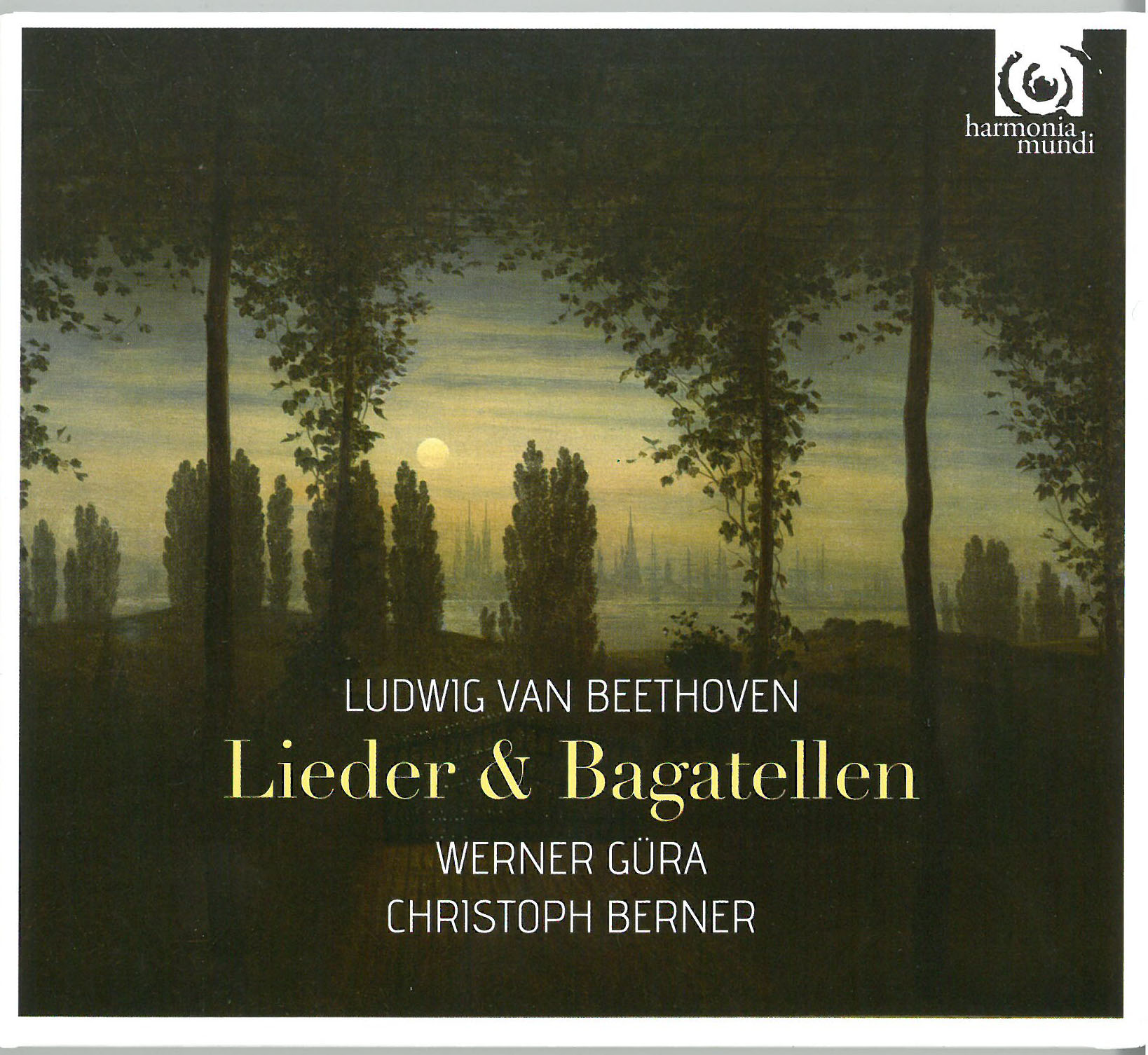
03 Beethoven Lieder and BagatellenAnother fortepiano recording has recently worked its way to the shelves and will be a treasure to many. Christoph Berner plays an 1847 Streicher on Ludwig van Beethoven Lieder & Bagatellen (harmonia mundi HMC 902217). The instrument is in remarkable condition. It’s clear, wonderfully tuned and voiced. Its tone is consistent throughout and surprisingly resonant in the upper register. Each of the six Bagatelles Op.126 is a joy to hear on this fortepiano. Berner’s playing is clean and lightly pedalled. The best feature of this performance is that he understands what these little pieces are and so, doesn’t fall prey to overthinking them.

As terrific as the Bagatelles are, the other half of the disc is the real surprise. Tenor Werner Güra, whose clear, light voice is well-suited to this repertoire, sings a number of Beethoven songs and one short cycle in a performance that is heart-stopping. He’s a very dramatic singer with great control over straight tone and vibrato. He connects directly to the poets’ emotions and shapes phrasing and dynamics to powerful effect.

Two tracks in particular are profoundly moving: Zärtliche Liebe WoO 123 and the cycle An die ferne Geliebte Op.98. The combination of Güra’s interpretation accompanied by this extraordinary instrument make this disc a valuable find for those who enjoy authentic performance practice.

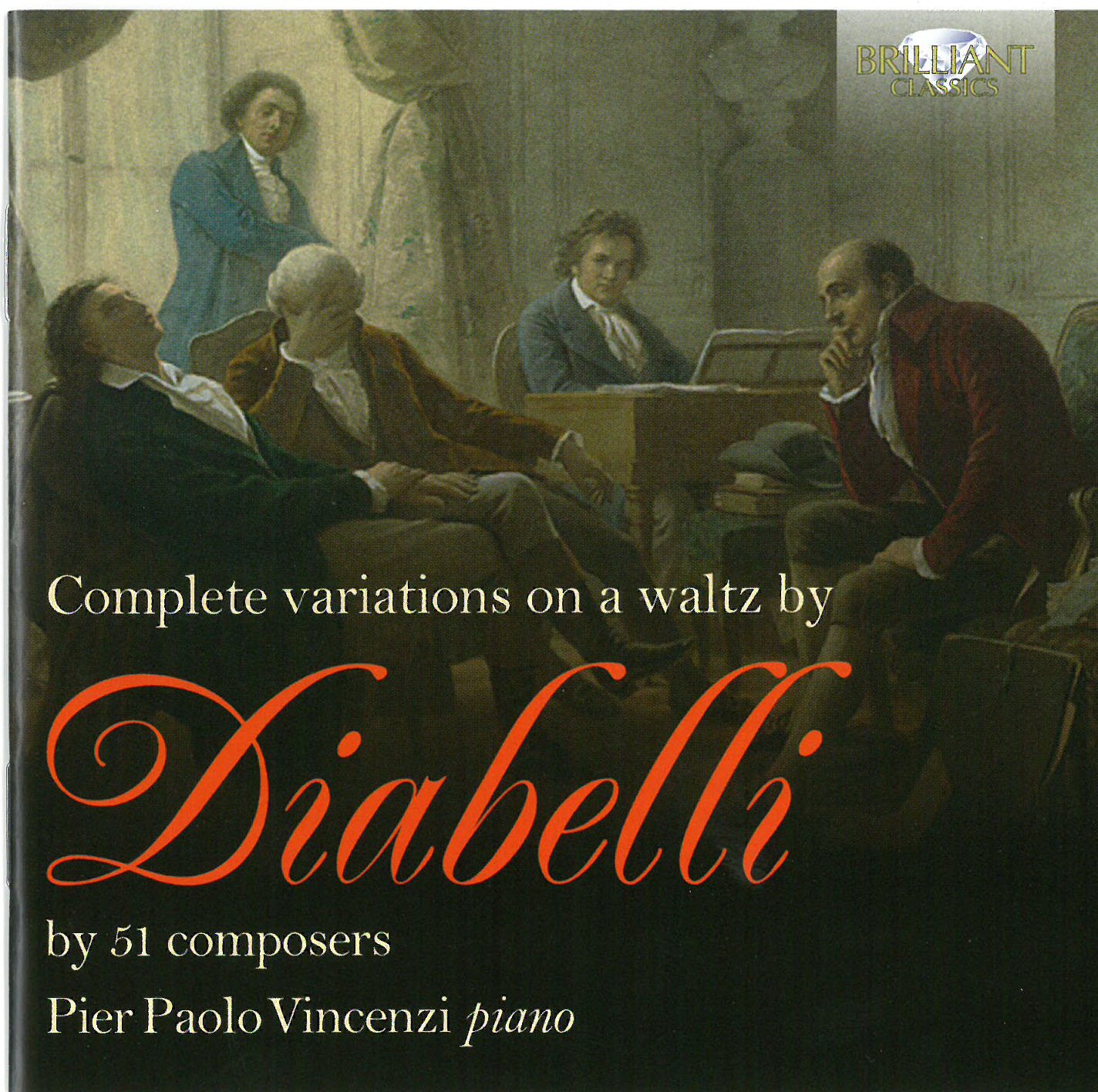
04 DiabelliPianist Pier Paolo Vincenzi has undertaken an ambitious project with his recording of the Complete variations on a Waltz by Diabelli by 51 composers (Brilliant Classics 2CD 94836) on which he also performs the Beethoven 33 Variations on a Waltz by Diabelli Op.120. The compilation of the works by the 51 composers who responded to Diabelli’s 1819 variation challenge is rich for its variety. Among the contributors are familiar composers like Hummel, Czerny, Liszt and Schubert. The others are of lesser historical standing and include a few dabbling aristocrats. Vincenzi, however, treats each variation as though it were, in fact, a masterpiece.

Whether he’s ripping through Liszt’s arpeggiated hurricane or pecking through Baron von Lannoy’s 45-second effort, Vincenzi creates a fascinating snapshot of 51 early 19th-century psycho-musical profiles. But when he performs the Beethoven variations, he changes his interpretive posture significantly. No longer dealing with 51 different iterations, he now probes the depths of a single creative mind. What Beethoven can say uniquely in 33 differently ways is obvious on the page but only the performer can really convey that. He never loses sight of Diabelli’s thematic kernel. Whether dealing with Beethoven’s fugal architecture or delighting in his Mozart impersonation, he keeps the central idea from being lost in the Byzantine workings of Beethoven’s mind.

The producer of this recording has chosen to record the piano dry with absolutely no acoustic space around the instrument at all. The ear does adjust to this and the Steinway D, despite its size, quickly becomes a very intimate instrument.

Review

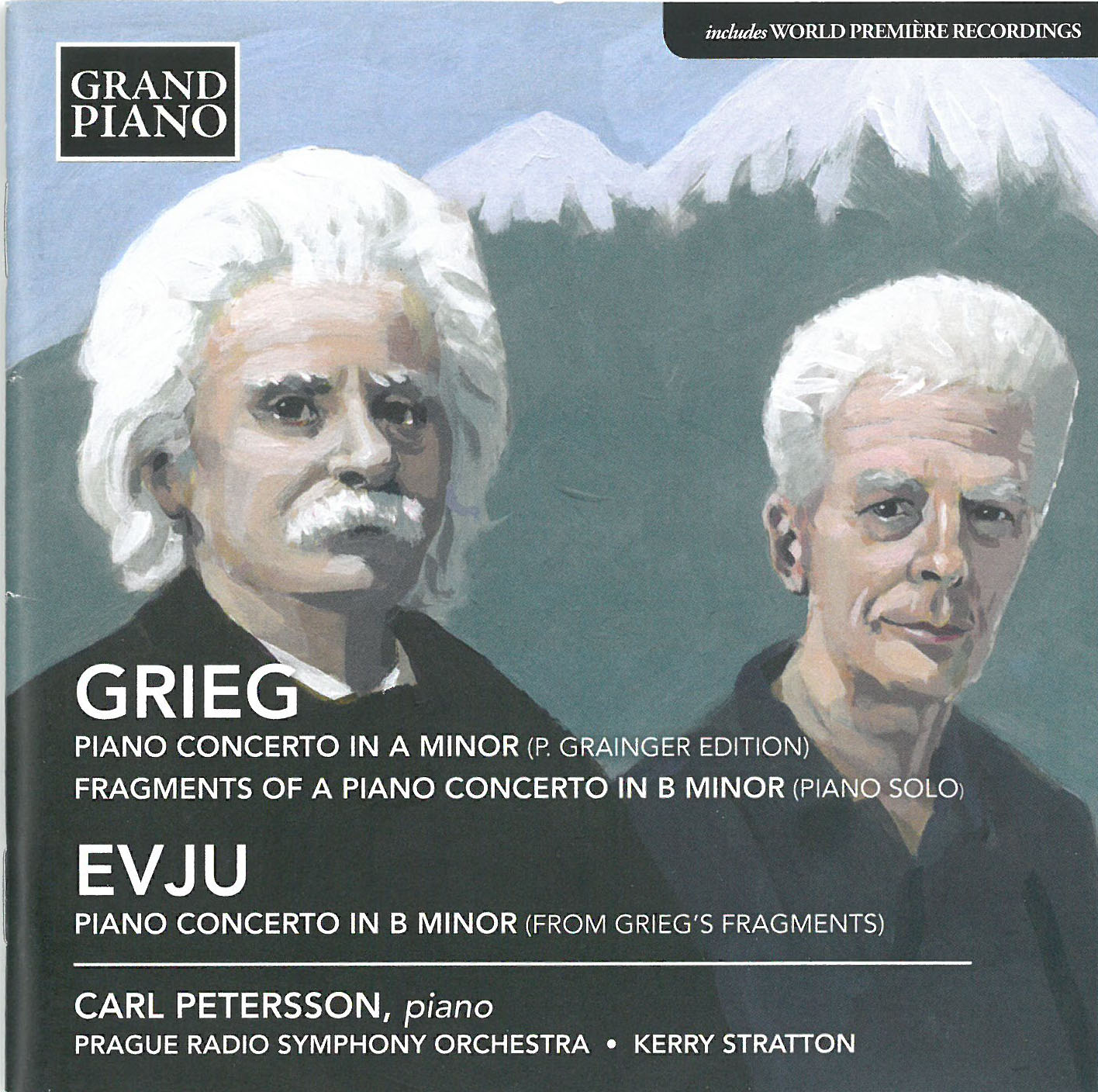
05 Grieg EvjuThe recording Grieg; Evju – Piano Concertos (Grand Piano GP689) offers a performance of Grieg’s familiar work but based on subsequent changes to the manuscript made by the composer and his friend Percy Grainger. The casual listener may not detect the revisions but they are occasionally evident in the piano part where familiar chordal structures appear to have been changed.

The recording is remarkably clear. The Prague Radio Symphony under Canadian Kerry Stratton is not especially large but always sounds full and balanced. Pianist Carl Petersson performs beautifully and seems especially committed to this revised edition.

The other work on the disc is a concerto based on a thematic fragment by Grieg. It’s a bit of an oddity but warrants several hearings before moving into the concerto that Helge Evju has crafted from it. Although in five movements, the work’s performance time is only 20 minutes. It contains many strong allusions to the A-Minor concerto. That work is said to have been one of Rachmaninov’s favourites and curiously, one also hears a few passages that are obviously reminiscent of his piano concertos.

Overall it’s a wonderful and unusual recording. The orchestra and pianist are excellent.

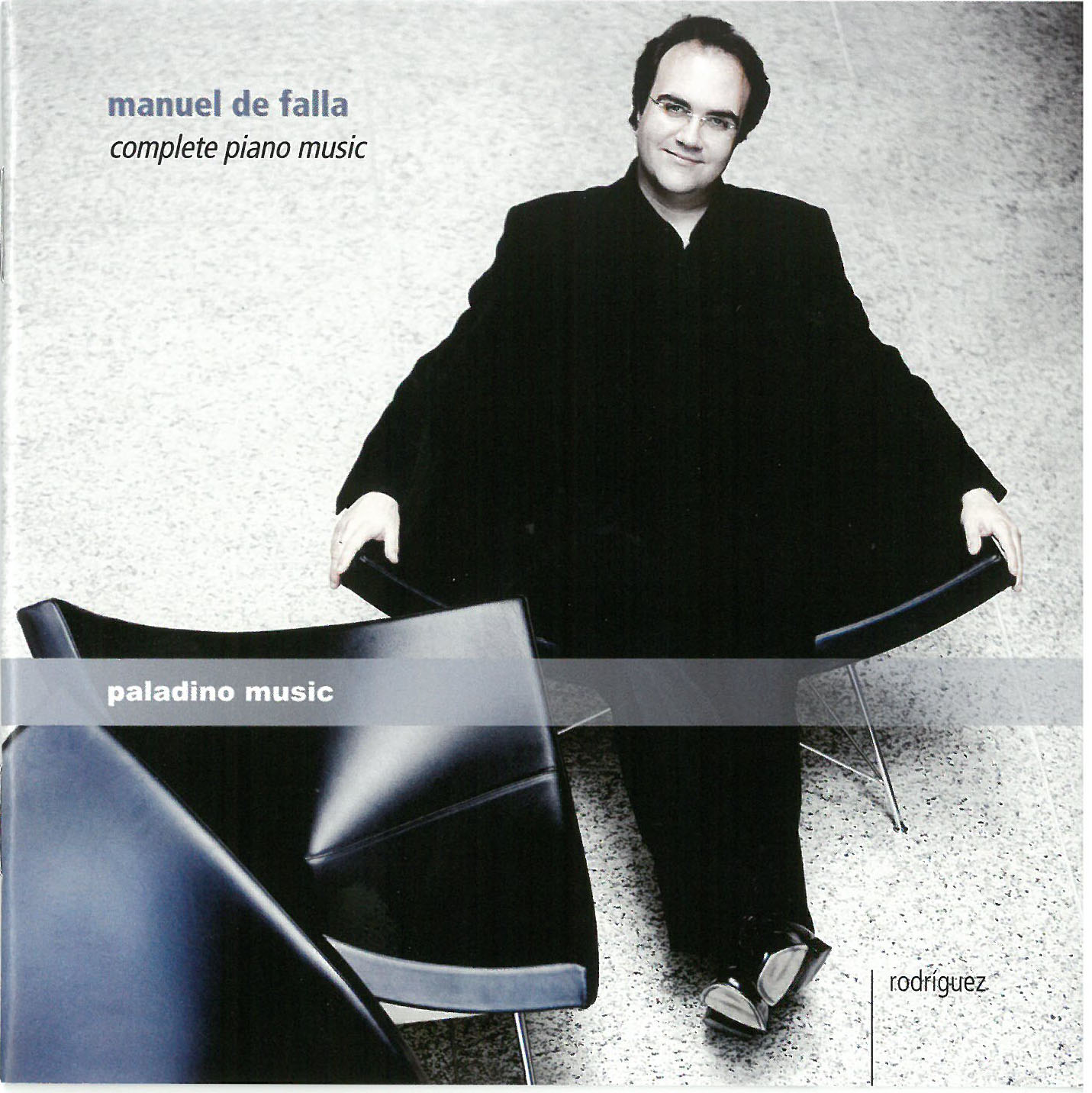
It’s unusual to find the complete piano works of Manuel de Falla recorded on a single disc. The feature of this disc is the ability to follow the evolution of the composer’s work chronologically from 1896 to 1935. A few of these works had remained unknown or unpublished until much later in the twentieth century.

06 Rodriguez de FallaPianist Juan Carlos Rodriguez captures de Falla’s Spanish view of the world around him on Manuel de Falla – Complete Piano Music (Paladino Music pmr 0062). He reveals the strong core of western classical discipline on which uniquely Spanish sensibilities rest. We hear this rhythmically and in small characteristic turns of phrase. Rodriguez also plays de Falla’s homages to Paul Dukas and Claude Debussy with the subtle hint of French impressionism the composer intended.

Rodriguez approaches the Cuatro Piezas Españolas as the most culturally inward looking to reveal what may be the most Spanish of de Falla’s piano works.

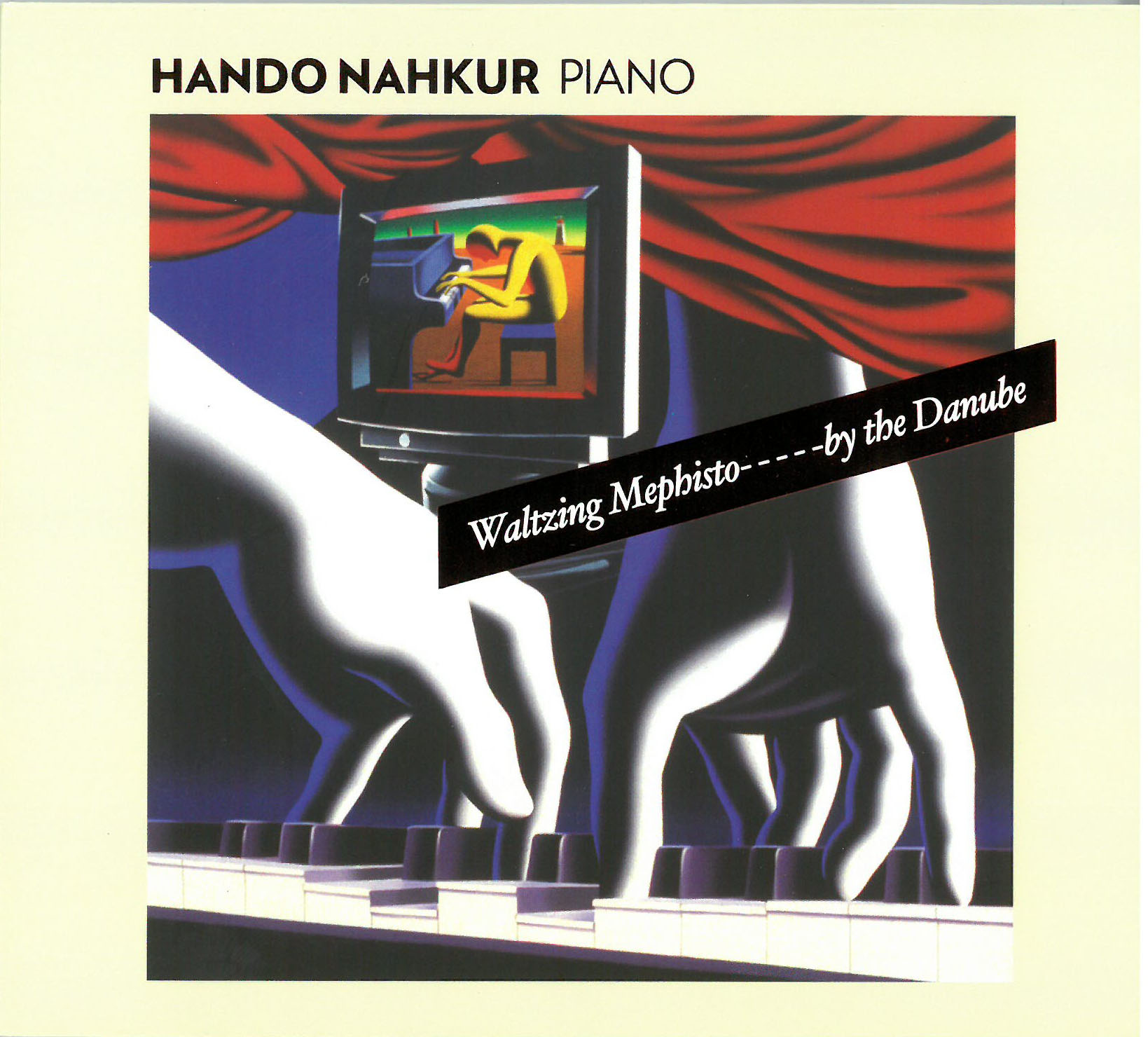
07 Hando NahkurFranz Liszt’s Mephisto Waltz has another reincarnation on Waltzing Mephisto...by the Danube (Estonian Record Productions ERP 8115) with pianist Hando Nahkur. The title track is brilliantly played with remarkable clarity through all the maniacal passages. The approach is disciplined and calculated but not lacking in any of the incendiary energy needed for this piece.

The disc also includes Schumann’s Kinderszenen, Op.15 from which the dangerously familiar Träumerei is played with gratifying freshness. Nahkur also manages the same feat with the Schumann/Liszt Widmung S.566 where he keeps the apogees of the main idea suspended with satisfying length before the descent to their phrase endings.

Arabesques on An der schönen blauen Donau is a 1900 paraphrase by Adolf Schulz-Evler of the well-known Strauss waltz. It’s rarely heard and is very Lisztian even to the point of sounding a bit like La Campanella for a few measures. It demands a lot from the pianist but Nahkur plays it with impressive ease.

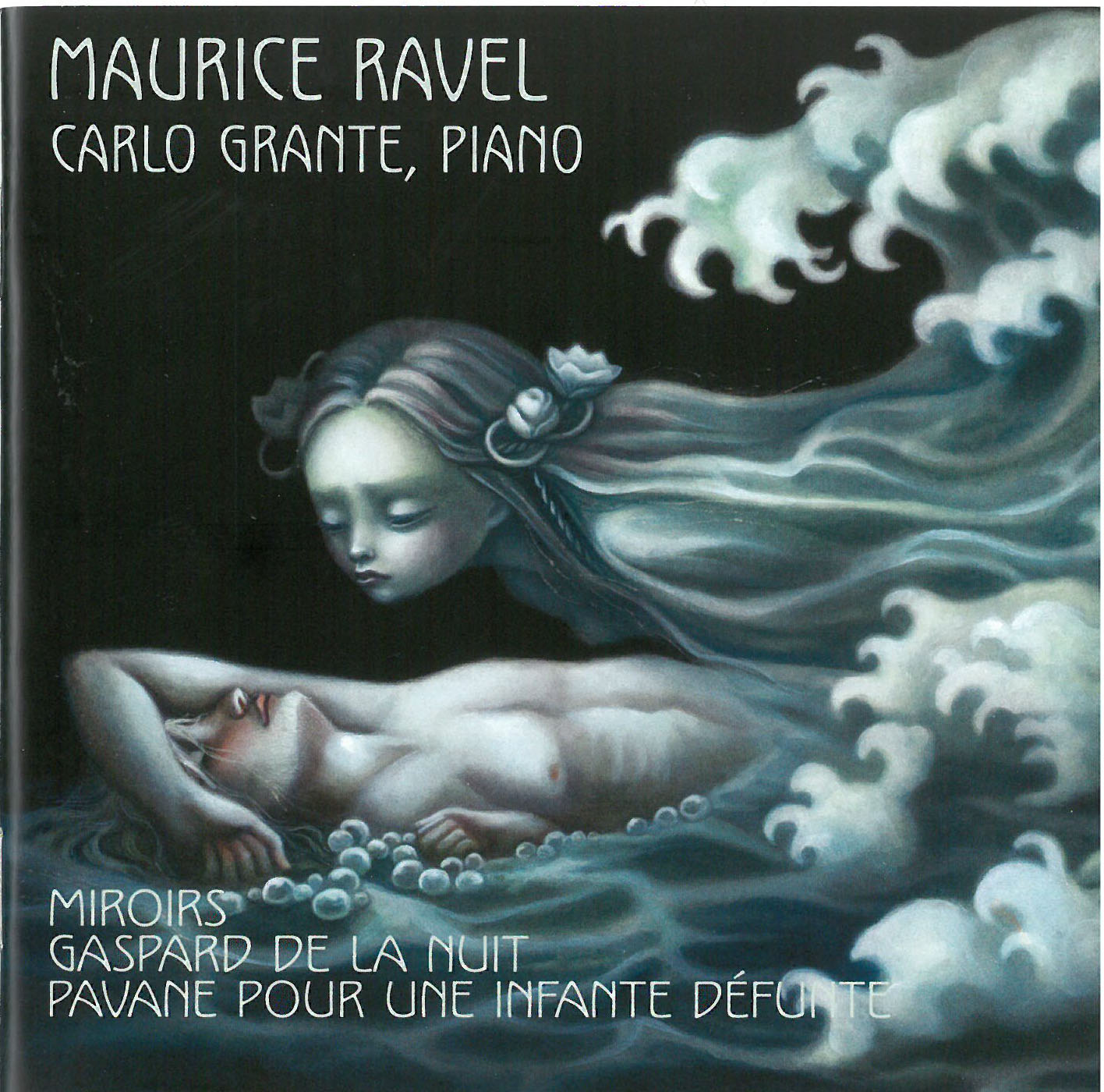
08 Carlo GranteOccasionally composers will write music so perfectly that all the colour, dynamics and nuances seem to be built in. While this doesn’t make it easier to perform it does create the pitfall of over interpretation. Wise performers recognize this and learn to surf the wave. Carlo Grante does this beautifully in Ravel: Mirroirs; Pavane pour une infante défunte; Gaspard de la nuit (Music & Arts CD-1289).

In the Miroirs set, La vallée des cloches is especially lovely for Grante’s superb touch and tonal manipulation. The Bösendorfer Imperial responds with bell-like sonority.

Curious, however, is Grante’s opening of the Pavane pour une infant défunte. He observes the staccato in the lower treble very sharply as marked in the piano score. This is unusual and quite arresting because some publishers show sustained pedal through these opening bars, to more closely approximate Ravel’s actual orchestration where these short eighths are played pizzicato in the strings while horns and bassoon hold longer supporting phrases. What’s really interesting is that Ravel’s own 1922 piano roll recording of this does neither. Ravel plays it slightly sustained (pedalled) and not nearly as short as Grante. Once past the opening idea, however, Grante moves into the sustained legato that makes this piece flow so beautifully to its ending.

The three piano poems that comprise Gaspard de la nuit are superb. Ondine moves liquidly as it should, Le Gibet rings under the same bell-like touch of the early La vallée des cloches and Scarbo is suitably menacing.

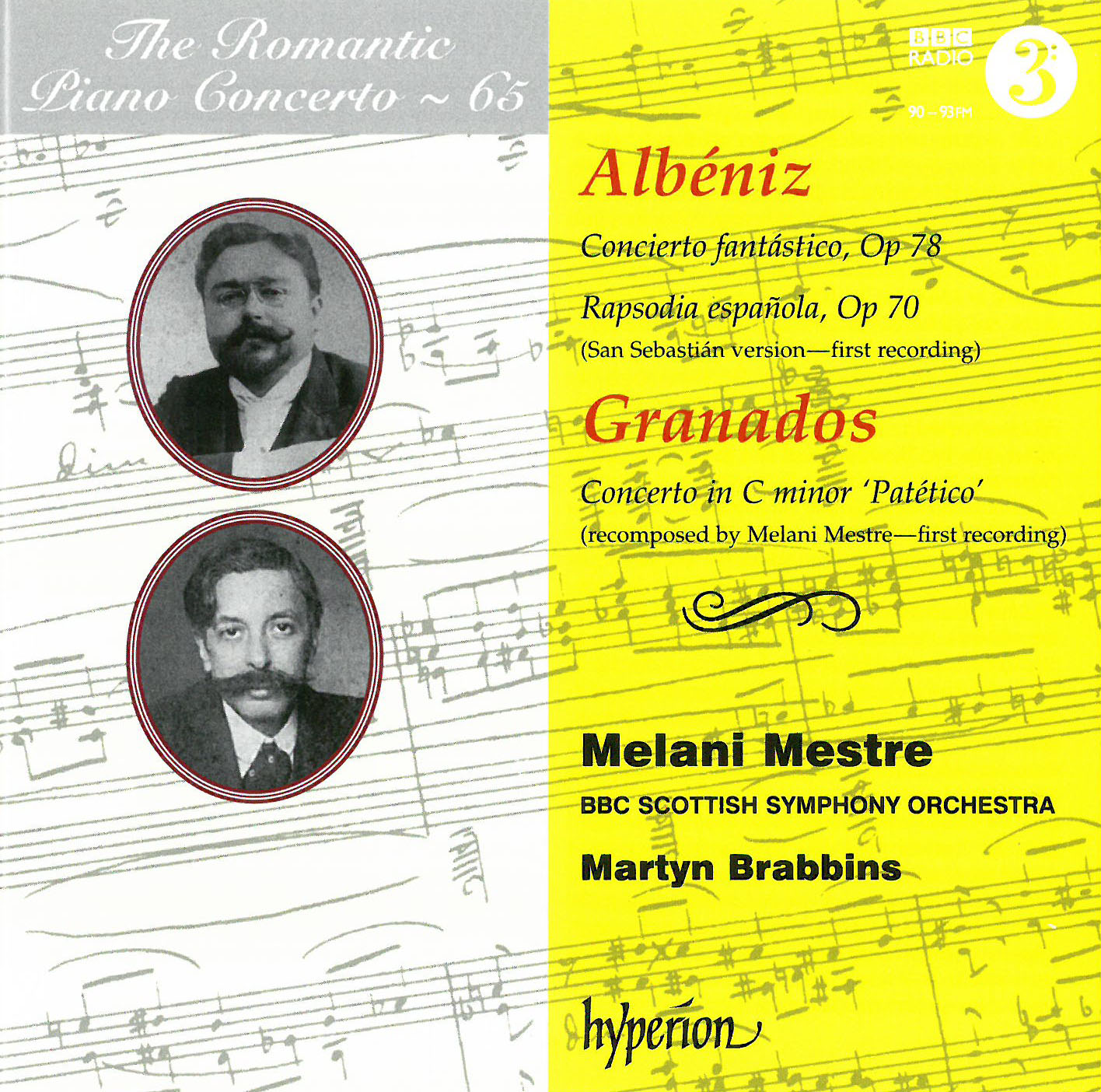
09 Romantic Concertos 65Reconstructions from fragments appeal to our curiosity by suggesting to us what might have been. It’s what drives people like Melani Mestre to record the recent addition to Hyperion’s Romantic Piano Concerto series Albéniz; Granados – Piano Concertos (CDA67918). A pianist, composer, conductor and academic, he has constructed a concerto from two fragments of a Piano Concerto in C Minor ‘Patético’ by Granados. Speculatively dated around 1910, there is no evidence to indicate whether this was intended as a single-movement work or something of larger scale but Mestre believes the latter.

For the middle and final movements he has used two other Granados’ solo piano works and adapted them for piano and orchestra. These are much more colourfully orchestrated than the first movement with plenty of percussion effects to highlight their Spanish and dance-like feel. Mestre is a skilled orchestrator and has plenty of fun playing his own adaptations. Some will argue about the validity of such efforts, but those who undertake them skillfully produce intriguing works that fuel many entertaining debates.

The Albeniz Concierto fantástico, Op.78 is a mid-career work and is decidedly un-Spanish in its feel. Still, it’s truly beautiful and not often performed or recorded. Admirers generally cite its middle movement as the gem and rightly so. The Reverie et Scherzo opens with a lovely piano line against a backdrop of broad orchestral harmonies. The final movement’s closing pages have some enchanting waltz-like episodes where Mestre’s hesitations are seductively placed to enhance the dance-like feel.

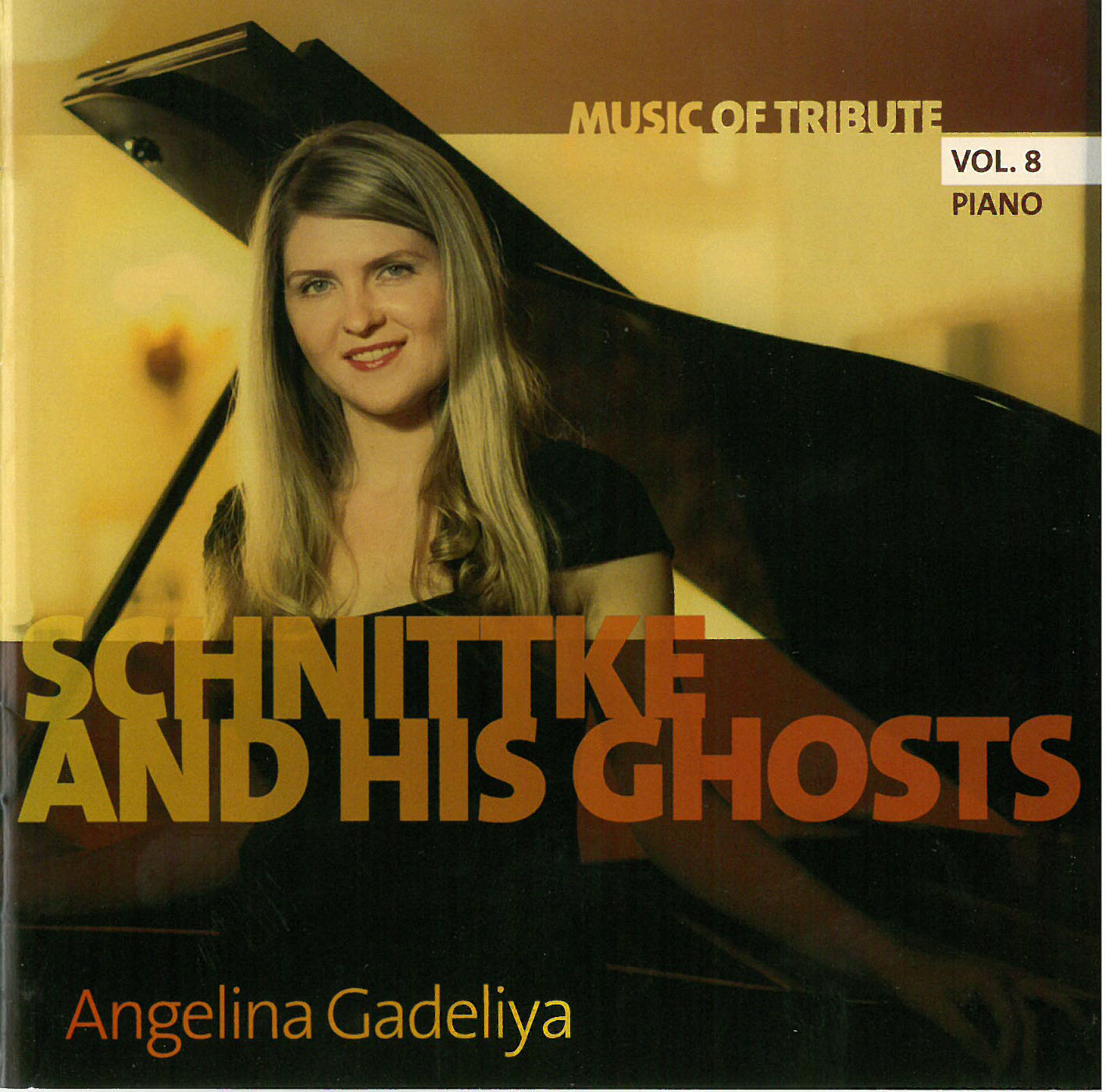
10 Schnittke GhostsPianist Angelina Gadeliya cites a profound spiritual affinity for the music of Alfred Schnittke. Born in Soviet Georgia and trained in Ukraine, she now lives in the U.S. Her enduring commitment to Schnittke’s music was deepened by an encounter with the composer’s wife and biographer a year after his death in 1998. Schnittke and his Ghosts (Labor Records Lab 7093) is an expression of that experience. Gadeliya plays two of his works and adds others to reflect the impact on Schnittke of influences including his time Vienna where he received much of his formative musical education – hence, his “Ghosts.”

She gives a very personal performance of the Sonata No.2, a darker work of Schnittke’s later years. The middle movement is unusually tonal with numerous harmonically rich clusters and the final movement contains an ad libitum that calls for tumultuous improvisation. Variations on a Chord uses contemporary devices for sustained notes, sharp attacks and sympathetically vibrating strings. Gadeliya is perfectly adept at all these techniques and captures the harsh yet playful duality of Schnittke’s six variations.

The Mozart Adagio in B Minor K540 may seem an odd inclusion until one recalls the numerous cadenzas Schnittke wrote for Mozart piano concertos and his orchestral tribute Moz-Art à la Haydn.

The Shostakovich Variations on a theme by Glinka and Scriabin’s Sonata No.4 connect us to Schnittke’s Russian roots. But in an odd way the far earlier work by Scriabin (1903) takes us much closer to the mysticism we experience in Schnittke’s music. Gadeliya has programmed a fascinating, stimulating recording and performed it masterfully.

Review

11 ReinventionsReinventions – Rhapsodies for Piano (Grand Piano/Overtone GP693) is an unusual CD and difficult to describe. Composed and performed by Tanya Ekanayaka, these works are in part improvisational and in part more formally crafted. The main inspiration for them comes from pieces preceding them in live performance. Key relationships, tonal centres and thematic fragments all serve as points of creative departure for this Sri Lankan pianist and composer.

Her keyboard technique is formidable. Massive arpeggios seem completely effortless as she weaves together traditional Sri Lankan melodies with inspirations taken from composers like Bach, Debussy and Chopin. She is capable of both the smallest nuance as well as the grandest gesture the keyboard can afford. Her works carry evocative titles such as In Lotus, Labyrinth and Dhaivaya. Her descriptions and rationales for the content of the Rhapsodies is highly detailed and musically rich. Even the most fanciful works e.g. Of Scottish Walks, Vannam & Sri Lanka’s Bugs Bunny require more than one listening. One begins to wonder if she is perhaps the Keith Jarrett of the subcontinent.

With 25,000 Syrian refugees coming to Canada, the Middle East is never very far from the daily headlines and our attention. The cultures of that region have, in their encounter with ours, produced many fascinating cross fertilizations of artistic expression. Each offers a portal for better understanding of a region that often seems so distant in many ways.

Review

12 The BabIranian pianist and composer Afshin Jaberi has recorded THE BÁB – Piano Sonatas and Ballades (Grand Piano/Overtone GP694). Born in Bahrain and raised in Qatar, Jaberi received his musical education at the Franz Liszt Academy in Hungary and his doctorate from the Almaty Conservatory in Kazakhstan. His language is solidly Western and his discipline solidly Russian. One immediately hears the influences of the major 19th-century European composers on his keyboard language. There is however, a distinctively Eastern modality and shape to his musical ideas. Titles like The Seeker, The Bedouin and Eroica offer some idea of Jaberi’s personal quest in his music. Much of it is programmatically linked to historical episodes of the Bahai’ faith but all of it is delivered through the keyboard vocabulary of Liszt, Chopin and Schumann. Jaberi is a gifted player and composer. His work offers a rare glimpse in an unusual direction.

01 ShiksaWhen you listen to the simply astonishing opening track of Shiksa, the new CD from violinist Lara St. John and pianist/composer Matt Herskowitz on St. John’s own Ancalagon label (ANC 143 larastjohn.com/ancalagon) you could be forgiven for thinking that the rest of the CD couldn’t possibly match up – but you would be wrong!

The Czardashian Rhapsody is Martin Kennedy’s fiendishly difficult take on the traditional Czardas, with hints of Liszt’s Hungarian Rhapsody No.2 thrown in for good measure. It’s stunning, but there’s much more to come in this program of predominantly Middle Eastern and Eastern European music. All 14 tracks are based on traditional material, and feature creative arrangements by Milica Paranosic, John Kameel Farah, Yuri Boguinia, Serouj Kradjian, David Ludwig, Gene Pritsker, John Psathas, Michael P. Atkinson and the two performers themselves. Herskowitz’s Nagilara, his own take on Hava Nagila, is another showstopper, as is St. John’s Oltenian Hora, a dazzling display of what she calls “a bunch of improvised Romanian violin tricks, twists and turns.”

These are all much more than just mere showpieces though, and in many instances they clearly have personal resonance for both the composers and performers. What is truly remarkable is the way in which St. John effortlessly and completely captures the sound, style, mood and flavour of these evocative works; Shiksa may be a Yiddish term for a non-Jewish woman, but there’s no hint here of St. John’s being an outsider or anything other than totally and genuinely immersed in this music – you get the feeling that she’s playing these pieces from the inside out. The recorded sound, especially for the piano, is superb – hardly surprising, given that the recording was made in the beautiful acoustics of Le Domaine Forget de Charlevoix in Saint-Irénée, Québec.

02 Haimowitz BachI’ve noted before that it’s almost impossible to do comparative reviews of Bach’s unaccompanied violin and cello works; all you can do is look at the performer’s approach and the creative process and report on the result. Luckily, cellist Matt Haimovitz has virtually done this for us in his new 2-CD set of J. S. Bach: The Cello Suites According to Anna Magdalena (PentaTone Oxingale Series PTC 5186 555). In the extensive booklet essay Haimovitz details his journey so far with these wonderful and challenging works, starting with his hearing the legendary 1930s Casals recordings when he was nine, having a teacher at the time who had been a pupil of Casals and who required Haimovitz to play two movements of Bach each day as part of his regular practice routine, and having the privilege in his mid-teens of playing the Goffriller cello used by Casals.

The year 2000 saw Haimovitz perform all six suites in Germany, relying primarily on the Bärenreiter edition and the manuscript copy by Anna Magdalena Bach, the composer’s wife – Bach’s original manuscript has never been found. On his return, he launched the new Oxingale Records label with a 3-CD set of the suites, only to find that within a few years he could no longer agree with his interpretations.

Since then he has turned increasingly to the Anna Magdalena manuscript, which he feels is closest in spirit to the original and provides many keys to the playing style and interpretation. He discusses these in detail in the essay.

The performances here, needless to say, are an absolute delight. The cello used is a Matteo Goffriller made in Venice in 1710, with a cello piccolo by the 18th-century maker Georg Nicol. Köllmer used for the Suite V; the bow is a baroque replica made by David Hawthorne. Tuning is A=415 and not the current A=440, so the suites are all down a semi-tone from present-day pitch.

Haimovitz says that “with humility, and no small dose of courage, I continue on my journey with Bach and The Cello Suites, studying the gospel according to Anna Magdalena.” I just hope he continues to take us along with him.

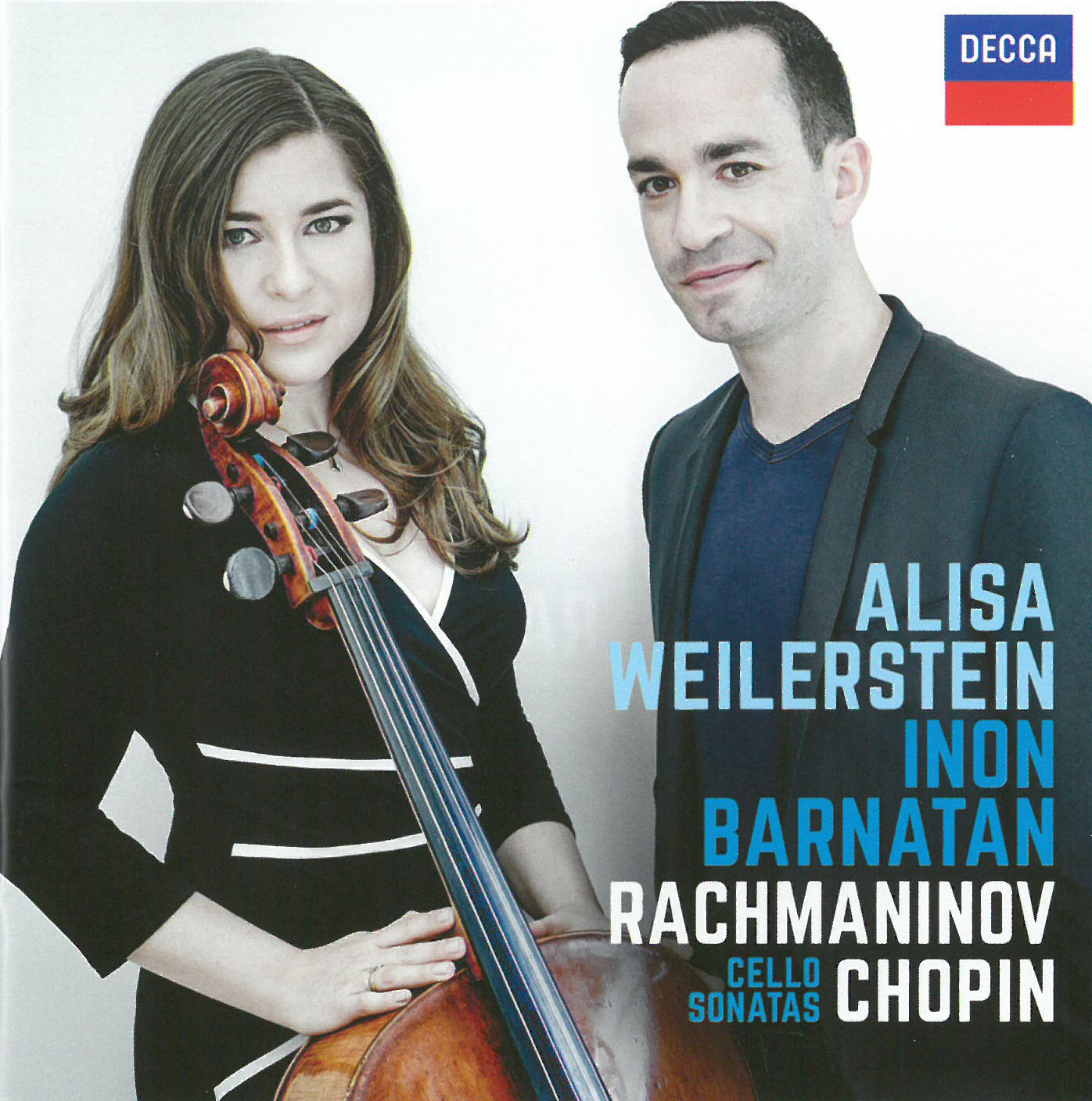
03 WeillersteinFollowing her solo recital disc and CDs of the Dvořák, Elgar and Carter cello concertos the latest CD from American Alisa WeilersteinRachmaninov & Chopin: Cello Sonatas (Decca 478 8416) with the New York-based Israeli pianist Inon Barnatan shows just how much she has to offer in the chamber music field. From the opening bars of the Rachmaninov Cello Sonata in G Minor, Op.19 it’s clear that this is going to be gloriously expansive playing from both performers. Barnatan is simply superb at the keyboard, with a beautifully judged use of legato in the long, flowing Rachmaninov phrases, and Weilerstein displays the qualities so often mentioned in reviews of her playing: technique, passion and intensity. It’s a captivating and engrossing performance.

The high standard continues through the Vocalise, Op.34 No.14 to the Chopin Cello Sonata in G Minor, Op.65, written mostly during the composer’s last summer on his lover George Sand’s estate in Nohant. The first movement in particular clearly gave Chopin a great deal of trouble, and was dropped for the premiere performance. It’s a strong, turbulent work very similar in mood to the Rachmaninov, and the two make an ideal pairing here.

The sonata was dedicated to the French cellist Auguste Franchomme, who gave the first (albeit truncated) performance in 1848 in Chopin’s final public concert. It was Franchomme who arranged the Étude in C-Sharp Minor, Op.25 No.7 for cello and piano, one of two shorter Chopin works on the CD. The Introduction & Polonaise Brillante in C Major, Op.3 dates mostly from Chopin’s youth – the Introduction was added later for Franchomme – and provides a lovely end to a truly beautiful CD.

Review

04 Baiba Skride

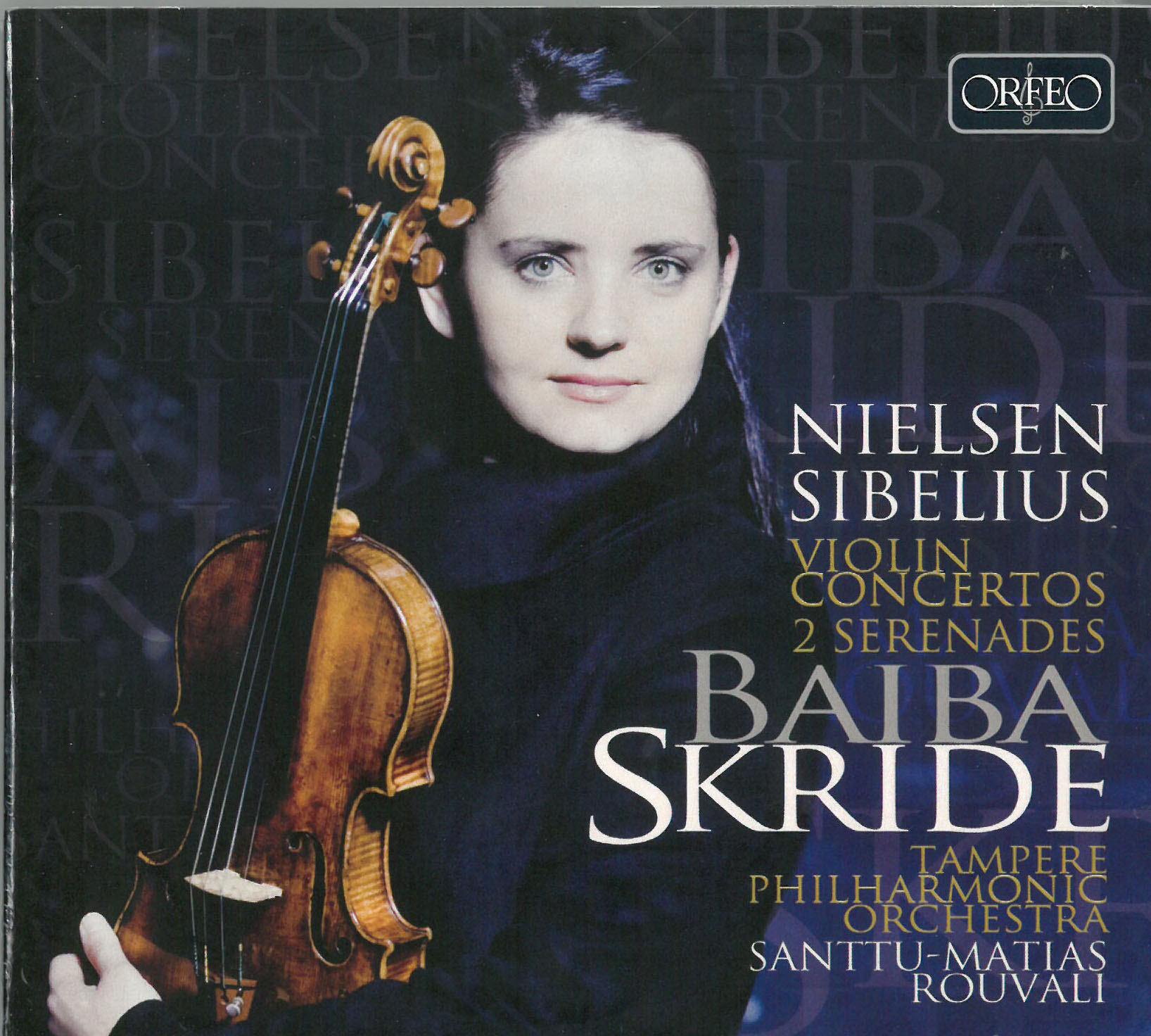
The Sibelius & Nielsen Violin Concertos make an excellent and natural pairing on the new 2-CD set from Latvian violinist Baiba Skride, with Finland’s Tampere Philharmonic Orchestra under Santtu-Matias Rouvali (Orfeo C 896 152 A). Both composers were born in 1865; both were violinists; both became the leader of their respective country’s Nationalist musical movement; and the concertos were written within a few years of each other in the first decade of the 20th century.

Skride is terrific in the Sibelius, with her rather fast and somewhat narrow vibrato providing a steely edge to the lush tone and phrasing and giving the work a real Nordic feel. The Two Serenades for Violin and Orchestra Op.69 complete the first disc; written in 1912-13, they are not heard all that often, and are a welcome addition here.

The Nielsen concerto is a lovely work that should really be more widely known; indeed, Nielsen’s music in general has never quite gained the recognition outside of his native Denmark that it deserves. In this case it may be the length and shape of the work that’s to blame: it’s almost 40 minutes long, and although ostensibly in four movements is actually in two sections, with the brief first and third “movements” – the latter the only slow movement – acting more as introductions for each half. Also, the simply glorious theme that appears after the brief flourish at the beginning of the work never reappears, and nothing else quite matches it. The performance here is outstanding, though.

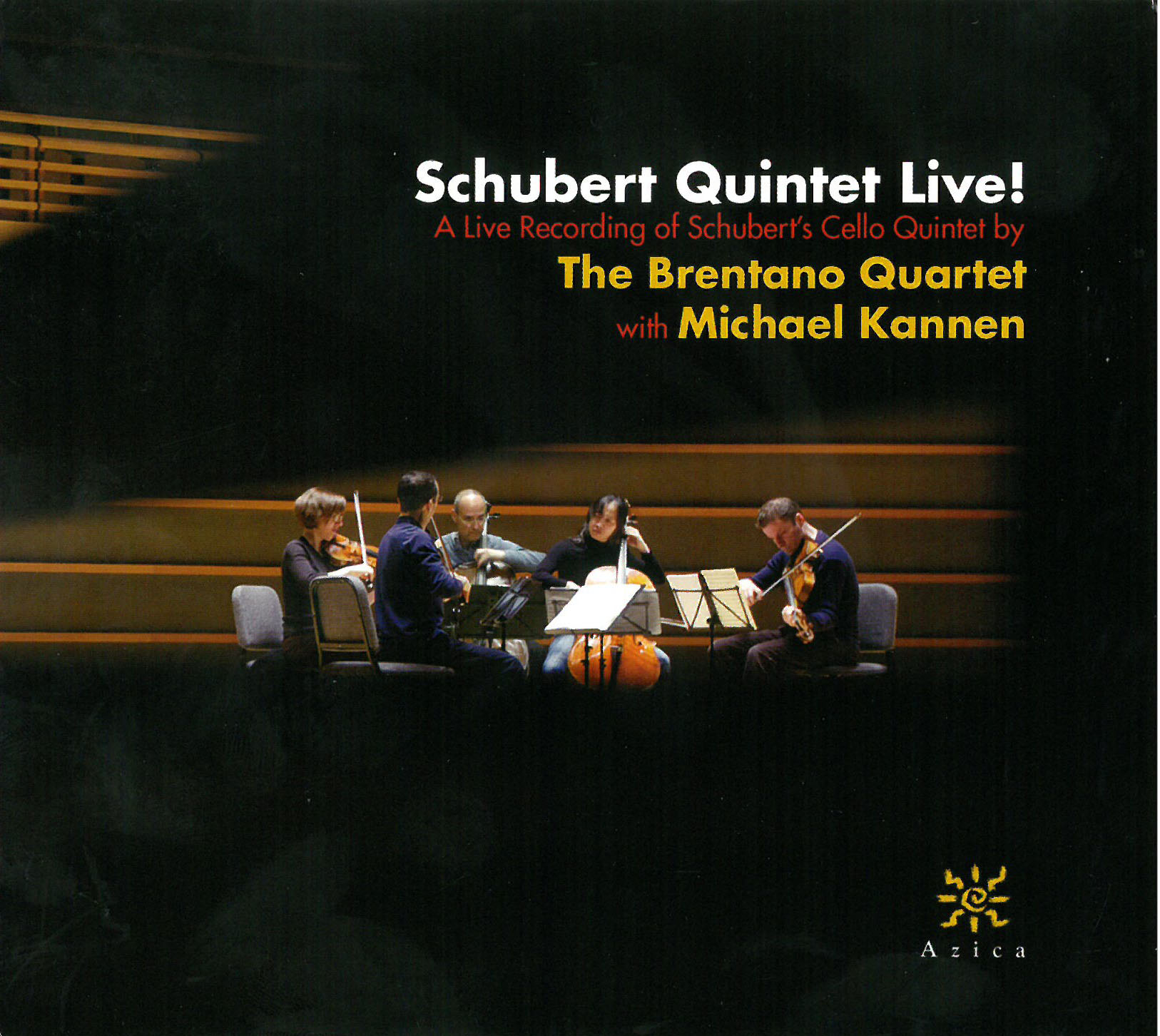
05 Schubert LiveAlthough leaving the group within eight years of its inception in 1992 the Brentano String Quartet’s founding cellist, Michael Kannen, continued his association with the ensemble, joining them on second cello in numerous performances of Schubert’s String Quintet in C Major D956 over the years, always harboring the hope that he would be able to record it with them one day. In September 2014 his wish came true in a quite exquisite way when the Brentano Quartet decided to make a live recording of the work at Amherst College in Massachusetts. An interactive weekend was built around three performances over three days, and the result was the new CD Schubert Quintet Live! (Azica ACD-71304).

The booklet notes include fascinating reflections on the recording challenges by Alan Bise, the producer and mix engineer for the project, as well as reflections on the performances by Kannen and violinist Mark Steinberg. Bise says that any minor blemishes had to be left in where fixing them would spoil the musical feel of a section, but he notes that “the energy and spirit represented here are almost impossible to capture in a closed recording session without an audience.” Other than the applause at the end there is very little to signify the physical presence of an audience, but the energy and spirit that Bise noted, and that they helped to create, clearly make a major contribution to the emotional effect of the music. It is indeed a wonderful performance of one of the greatest works in the chamber music repertoire.

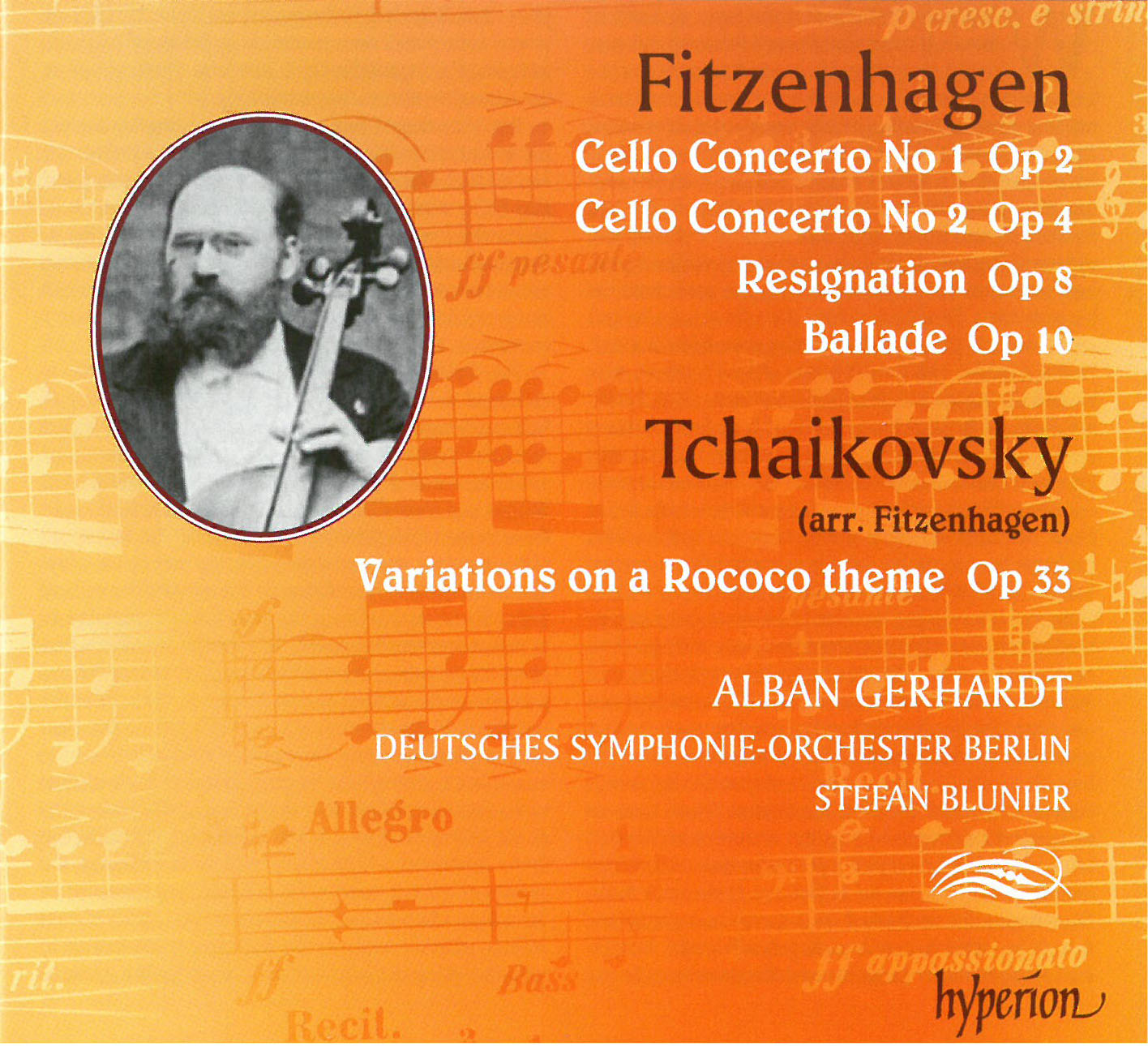
06 Romantic Cello 7The outstanding Hyperion series The Romantic Cello Concerto reaches Volume 7 with works by the German composer and cellist Wilhelm Fitzhagen (1848-1890), featuring cellist Alban Gerhardt and the Deutsches Symphonie-Orchester Berlin under Stefan Blunier (CDA68063). Fitzhagen was apparently mostly self-taught as a composer, but his two concertos for his instrument are solid, competent and attractive works very much in the German style of the period. The Concerto No.1 in B Minor, Op.2 and the Concerto No.2 in A Minor, Op.4 “Fantastique” are both early works, from 1870 and 1871 respectively, round about the time that Fitzhagen became professor of cello at the Imperial Conservatoire in Moscow. The First Concerto is a short work in three movements played without a break; a dazzling and challenging cadenza at the end of the first movement leads into a very brief (just over three minutes) but lyrical and simply beautiful Andante. The Second Concerto is also quite short, but again displays Fitzhagen’s fluently melodic style.

The central track on the CD is Tchaikovsky’s Variations on a Rococo Theme Op.33 from 1877. On moving to Moscow Fitzhagen had quickly established himself as a cellist, and soon came to know Tchaikovsky, who dedicated the Variations to Fitzhagen and sent him the manuscript for his comments. The cellist went a good deal further, making cuts and tempo changes, adding his own passages and changing the order of three of the variations. Somewhat reluctantly, Tchaikovsky let the radically altered version stand, and it is the work for which Fitzhagen is most remembered.

Fitzhagen’s Ballade – Concertstück Op.10, a single-movement work which is longer than the First Concerto, and Resignation – Ein geistliches Lied ohne Worte Op.8, a very brief but simply lovely piece, round out the CD.

Alban Gerhardt has been the soloist on five of the seven releases in this terrific series that never fails to delight and impress, and he is once again in his element with this music.

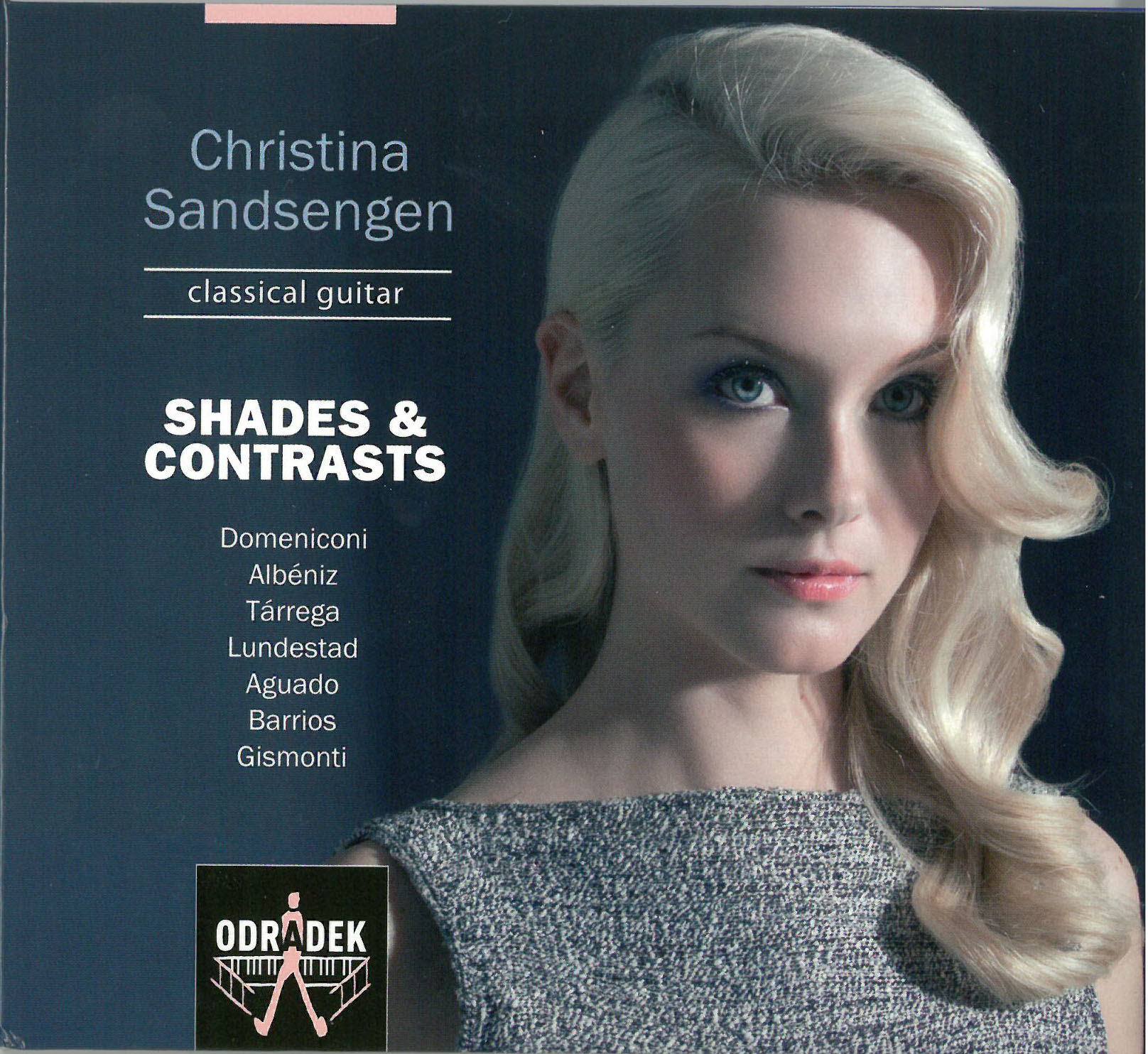
07 SandsengenShades & Contrasts is a quite stunning debut CD from the Norwegian guitarist Christina Sandsengen (Odradek ODRCD326 odradek-records.com). Standard works by Albéniz, Tárrega, Aguado and Agustin Barrios Mangoré are mixed with contemporary works by Sven Lundestad, Carlo Domeniconi and Egberto Gismonti in a varied and highly impressive recital. These are outstanding performances, delivered with a flawless technique and sumptuous tone. Expect to hear a lot more of this artist.

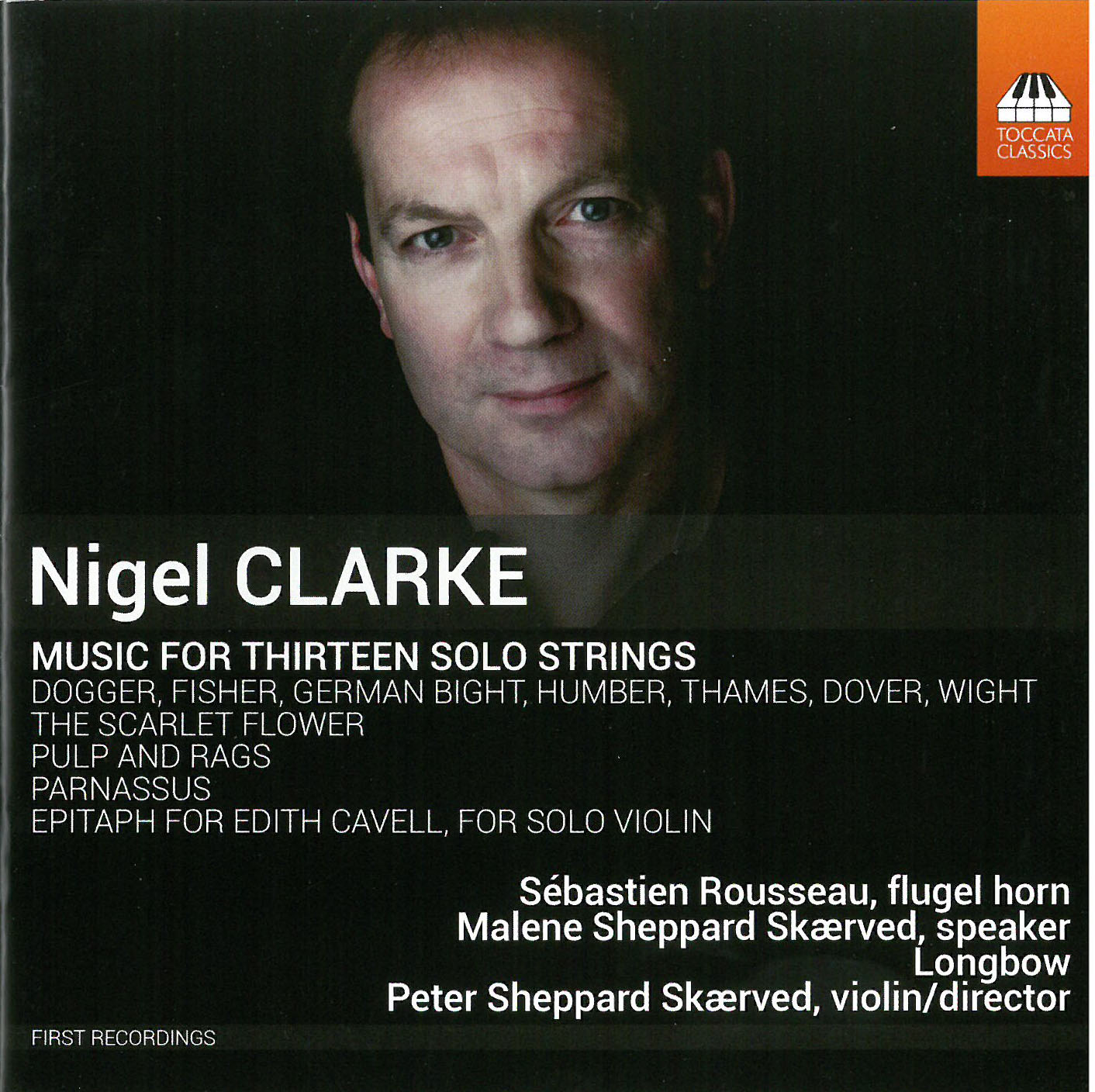
08 Nigel ClarkeThe English composer Nigel Clarke (b.1960) is featured on Music for Thirteen Solo Strings, a new CD from Toccata Classics with the 13-member string ensemble Longbow under the direction of violinist Peter Sheppard Skærved (TOCC 0325). Clarke and Skærved have enjoyed a close collaboration for almost 30 years. Their shared interest in music for divided strings (as opposed to string ensembles working in sections) led to Parnassus for Thirteen Solo Strings in 1986. It’s music that sounds a bit chaotic at first, but soon bears out Skærved’s observation that the frictional interchange between adjacent players playing contrary but related material can produce a sort of ensemble “fire-making” that generates a good deal of instrumental energy; there’s energy here in abundance.

The other four works on the CD are all from the past three years, two of them the result of an artistic collaboration with Dover Arts Development in Clarke’s home county of Kent and two of them tributes to Edith Cavell, the English nurse shot by the Germans in the First World War. Dogger, Fisher, German Bight, Humber, Thames, Dover, Wight, for Speaker, Thirteen Solo Strings and Sound Design is described as a diptych, Clarke’s music being preceded by a lengthy poem sketching Dover’s history written and delivered by Skærved’s wife, the Danish writer Malene Skærved. The title will have immediate meaning for anyone who has ever listened to the Shipping Forecast on BBC Radio; the seven names are of the sea areas from off the eastern coast of England, around the southeast corner and along the south coast past Dover. The music has clear – and self-confessed – references to sea music, including Britten’s Four Interludes from Peter Grimes and Debussy’s La Mer. The Navy Hymn (Eternal father, strong to save) emerges from the chaos of a storm to guide the piece to a serene and mostly tonal ending. Pulp and Rags, also linked to a Malene Skærved poem (not quoted), was inspired by the machinery in Buckland Paper Mill, an old mill near Dover that closed in 2000 after 230 years.

The Scarlet Flower for Flugel Horn and Thirteen Solo Strings features soloist Sébastien Rousseau in a work written as a memorial to Edith Cavell, the opening horn solo later being reworked for solo muted violin as Epitaph for Edith Cavell, with which Skærved closes an intriguing disc.

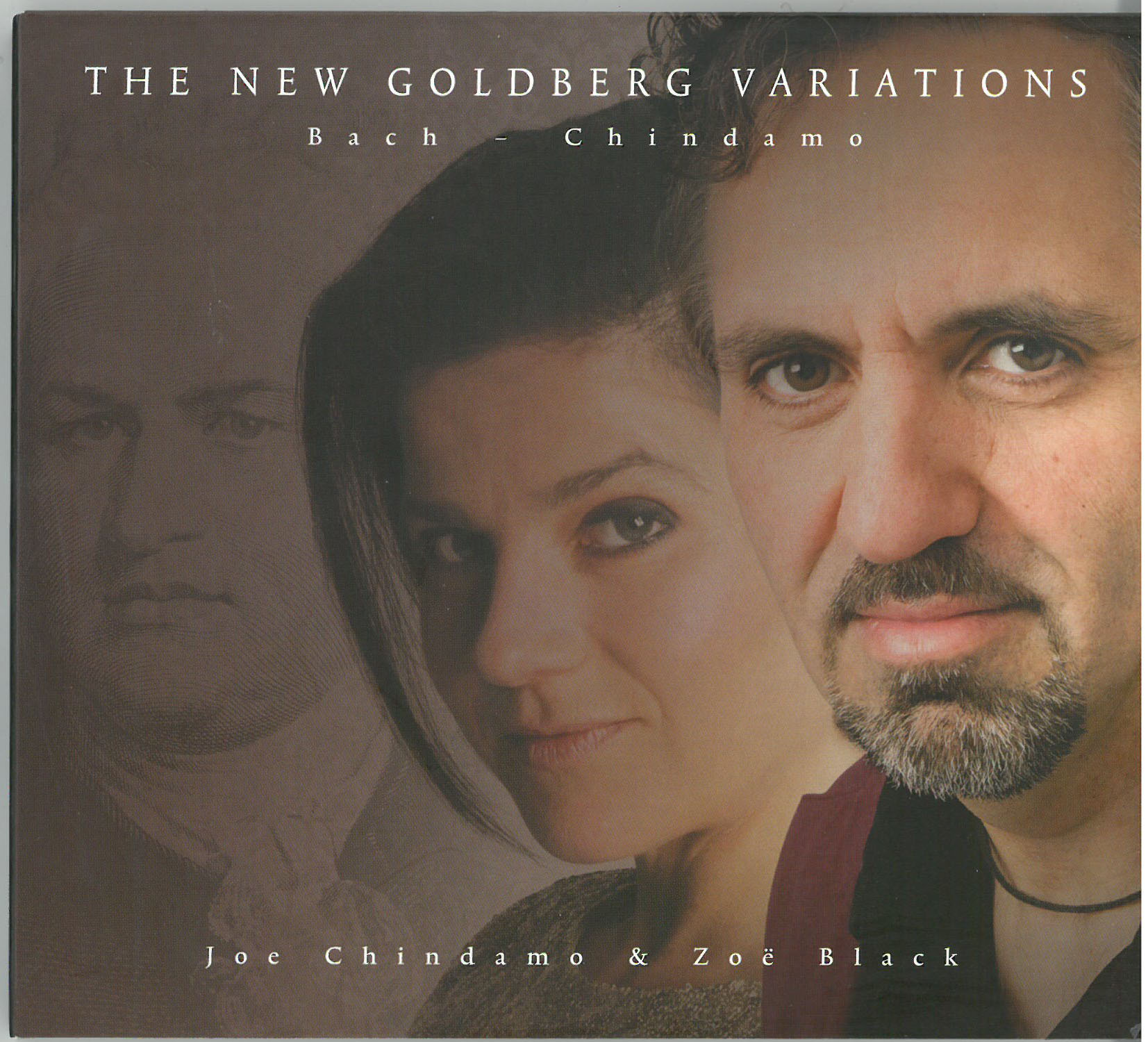
09 New GoldbergsThe New Goldberg Variations, a CD from the Australian duo of composer/pianist Joe Chindamo and violinist Zoe Black (Alfire Records ALFI15002) is described as “J. S. Bach’s original and complete Goldberg Variations with a newly composed counterpart for violin.” The violin part was written by Chindamo at Black’s request, and Chindamo says that the only self-imposed rule was that he would not alter a single note Bach wrote, and that he would adhere to Bach’s language and aesthetic.

The first Variation offers a continuous violin line as opposed to an occasional commentary, and from then on there’s a tendency for the violin to become the primary listening focus, although it does assume a background role quite often. One thing is clear – any misgivings you may have about the project are certainly not the result of any lack of quality in the writing or playing of the violin part; both are done with consummate skill. It’s all beautifully played, with a clean, bright and warm violin sound, and plenty of thoughtful keyboard work which, ironically, made me want to hear what Chindamo would do with the original Goldberg Variations on his own.

Purists may well object – imagine listening to Glenn Gould’s recordings and then saying “Yeah – I think I’ll write a violin part….” – but it is well-written, sympathetic and imaginative. However – and here’s the rub – it really is a different, collaborative work now, not merely an added commentary on the original; indeed, the CD cover shows Bach – Chindamo as the joint composing credits. It certainly makes for highly enjoyable listening, but whether or not it will ever be accepted as a bona fide concert work is open to question – and an interesting one at that.

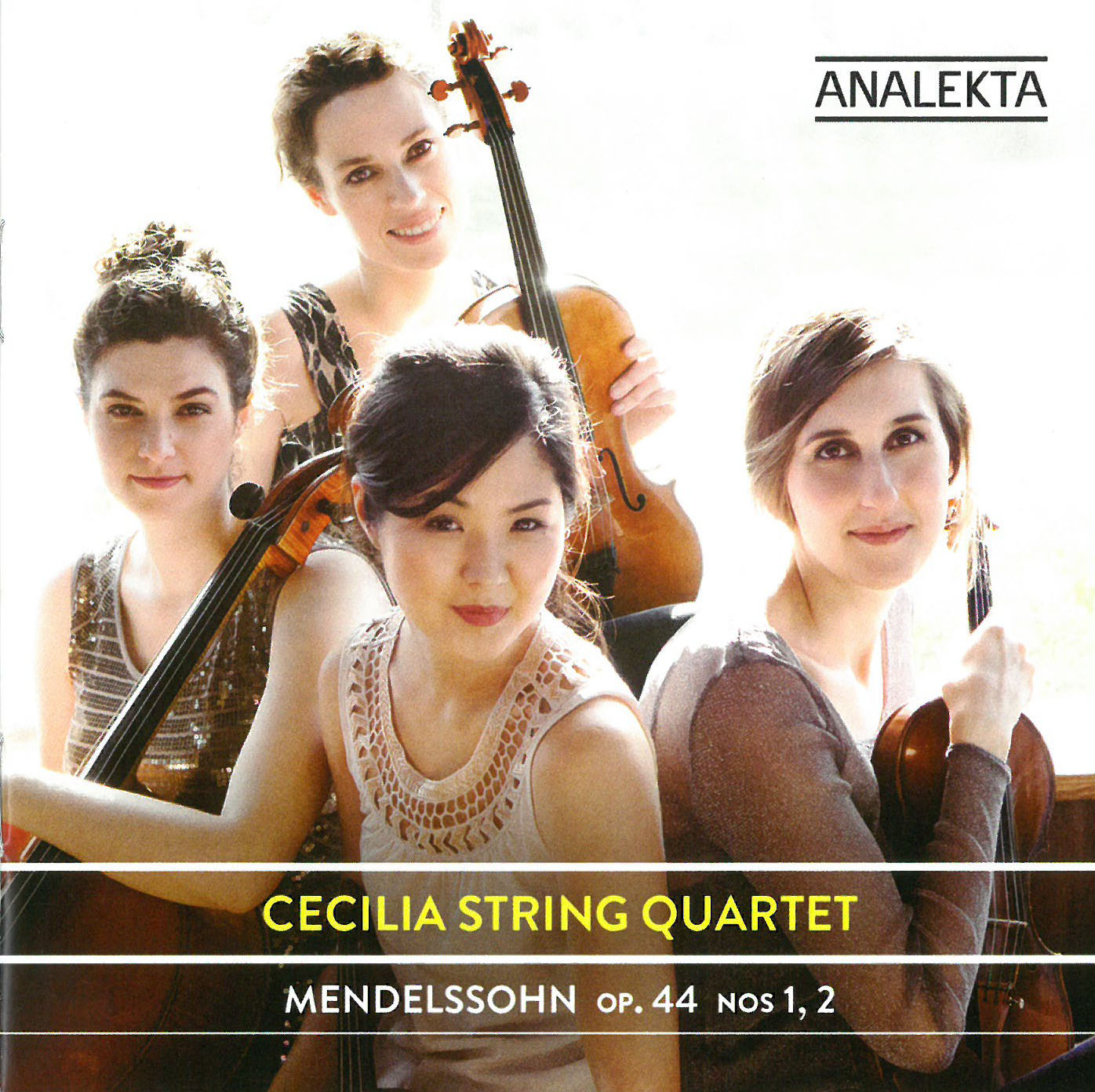
01 Cecilia MendelssohnMendelssohn – String Quartets Op.44 Nos.1&2
Cecilia String Quartet
Analekta AN 2 9844

Having played these two quartets many times over the years and listening to them, one way or another, countless more times, I am still amazed at the enchanting influence Mendelssohn’s quartets hold over string players and their audiences. His penchant for combining beautiful melodies with the intricate underlying textures seems especially suited to the Cecilia Quartet, who bring out a weaving of the voices in the most enticing manner. Sonorous, youthfully energetic, refined and exuberant at the same time – all are characteristics of this recording, but what I was most impressed with was the element of subtle understatement that Cecilia Quartet mastered throughout. This ensemble did not put the emphasis on the most obvious elements of Mendelssohn’s music (though they are, of course, undeniable) but, rather integrated it with the delicate texturing of phrasing and enunciation.

The three quartets opus 44 were written within a year (1837-1838), at the most prosperous time of Mendelssohn’s life. The newly married composer began working on them on his honeymoon and the opening of the Quartet in D Major, Op.44 No.1 carries through the buoyancy and generosity of happiness discovered. Two middle movements are more classical in nature, while the finale brings out the spirited dance elements.

Mendelssohn was the master of combining a sense of urgency with melancholy and such is the opening of the Quartet in E Minor, Op.44 No.2 in contrast to the sentimentality of the third movement. Cecilia Quartet is particularly adept at highlighting the nimbleness of the Scherzo with their impressive bow technique but they certainly don’t lack power in the final movement.

Recommended to all the admirers of notes ingenious and pleasing.

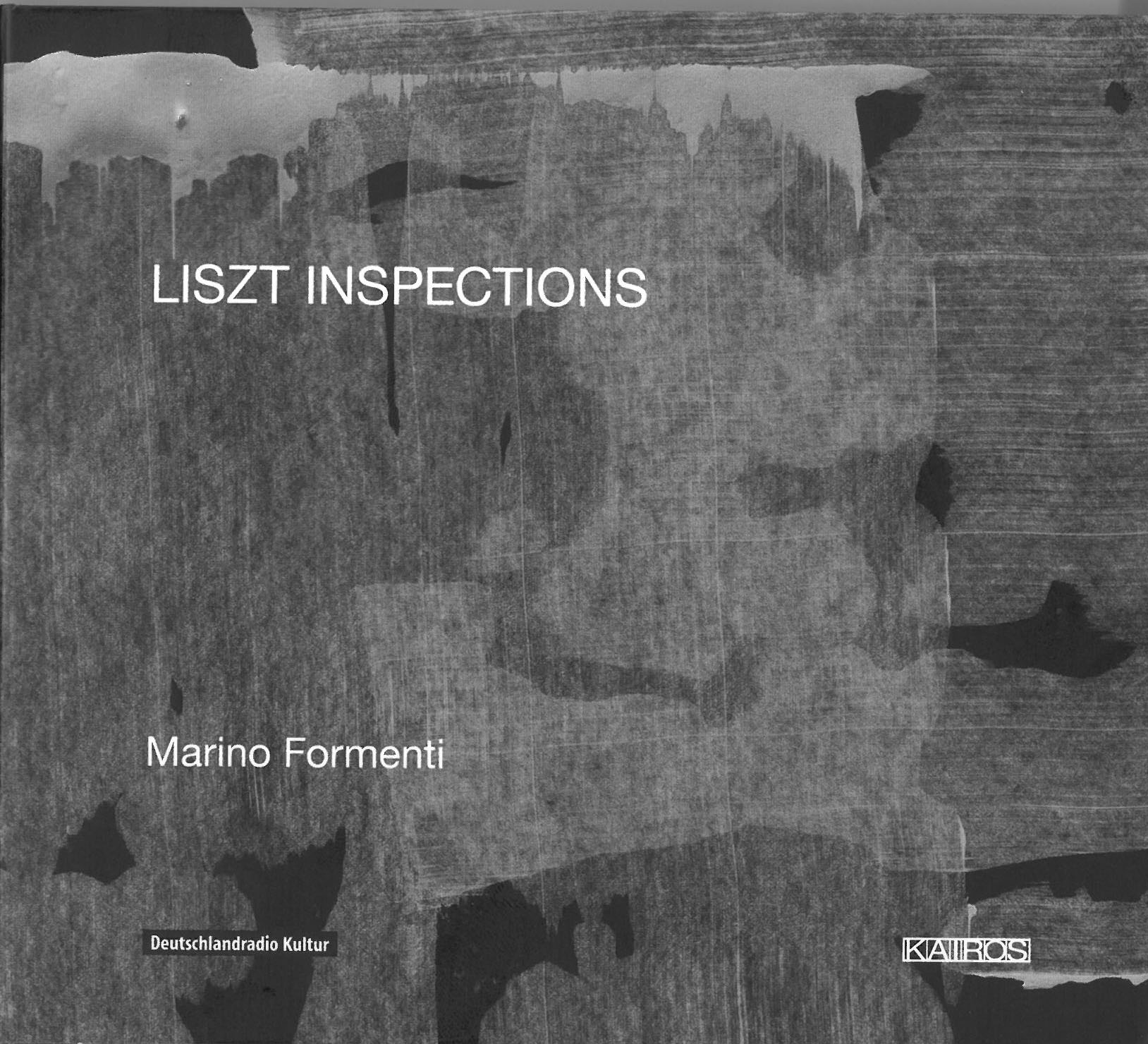
02 Liszt InspectionsLiszt Inspections
Marino Formenti
Kairos 0013292KAI

The magician of the keyboard, Franz Liszt started early and lived a long life playing, composing and experimenting. His son-in-law Wagner already blew apart traditional harmonies with Tristan, but Liszt introduced atonality for the first time (see Faust Symphony, first movement). Atonality of course later became the cornerstone of the Second Viennese School of Schoenberg, Webern and Berg and also the starting point of Italian pianist and conductor Mario Formenti’s remarkable journey: Liszt Inspections.

Formenti selects over a dozen of Liszt’s less familiar pieces, played so sensitively that those alone would make this an attractive set to have, but that’s not his purpose at all. Instead he looks into various aspects (he calls it Vocabulary) of music common to both Liszt and a number of avant-garde composers and builds a well-argued thesis unearthing and proving these relationships. Each of the Liszt compositions illustrates one point of the Vocabulary (e.g. constructivism, sound, minimalism, death, remembering-forgetting, elimination of the metre, silence and more) and by this process he achieves two things: 1) proving Liszt’s genius and his vision into the future and 2) bringing a number of contemporary pieces into focus highlighting them so the average listener who’d otherwise willfully reject new music, is enticed to listen. I am willing to bet that the next time any of these composers’ music is played he will do so with interest. There are at least a dozen composers, like Adams, Berio, Kurtág, Ligeti, Rihm, Stockhausen etc., each with his own unique style that up to now I had considered so much noise and hogwash. In the shining light of Liszt these begin to shine as well. Nice achievement for Signor Formenti.

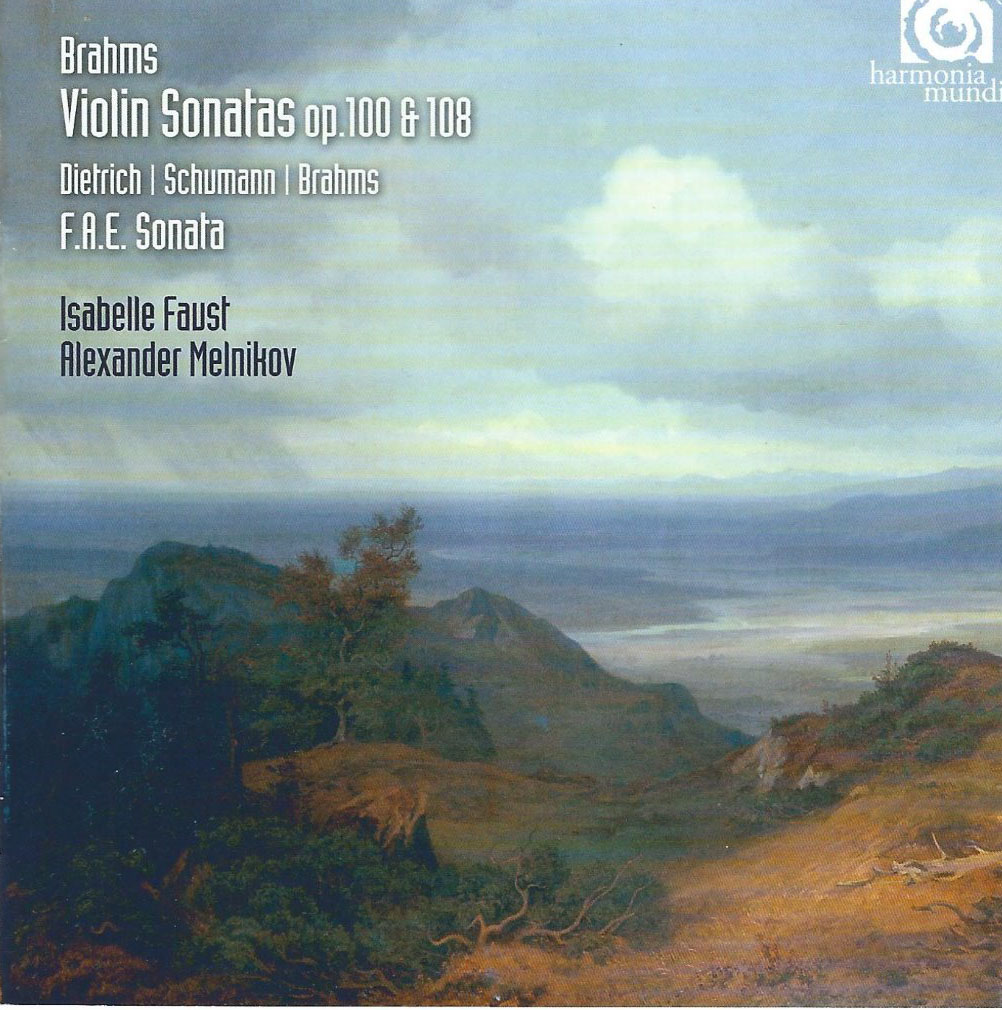
03 Brahms FaustBrahms – Violin Sonatas; Schumann – Romances; FAE Sonata
Isabelle Faust; Alexander Melnikov
harmonia mundi HMC902219

Isabelle Faust has become famous for her performances on a gut-strung 1799 Strad that in almost every case have become models of period performance practice successfully extended into works of the mid-19th century. To today’s ears, her return to the more intimate, late romantic values could sound reticent with her unusually delicate, lean tone, very simple and deeply penetrating. Her recent Schumann piano trio recordings are shining examples of her persuasive approach, with its chaste, almost textured tone. She had already recorded Brahms First Violin Sonata (HMC901981) and this new disc once again features the like-minded approach of Alexander Melnikov playing his own 1875 Bösendorfer which can hardly be mistaken for the more recent instrument to which we have become attuned. The employment of this earlier practice versus the more viscerally robust esthetic of today’s Brahms is illuminating. Here Brahms is speaking rather than being spoken about. Melnikov has a rare affinity to perform Brahms and he and Faust are of one mind. The Schumann pieces are wonderfully poetic, leaving no doubt that they have the exact measure of this gentle, tragic composer.

The unusual F.A.E. Sonata is a four-movement work written in 1853 by Albert Dietrich, Schumann and Brahms for violinist Joseph Joachim to identify the composer of each movement. He had no trouble doing so.

The flawless sound places the listener about five rows back, at which point the two instruments are correctly balanced. This very successful album is most enthusiastically recommended.

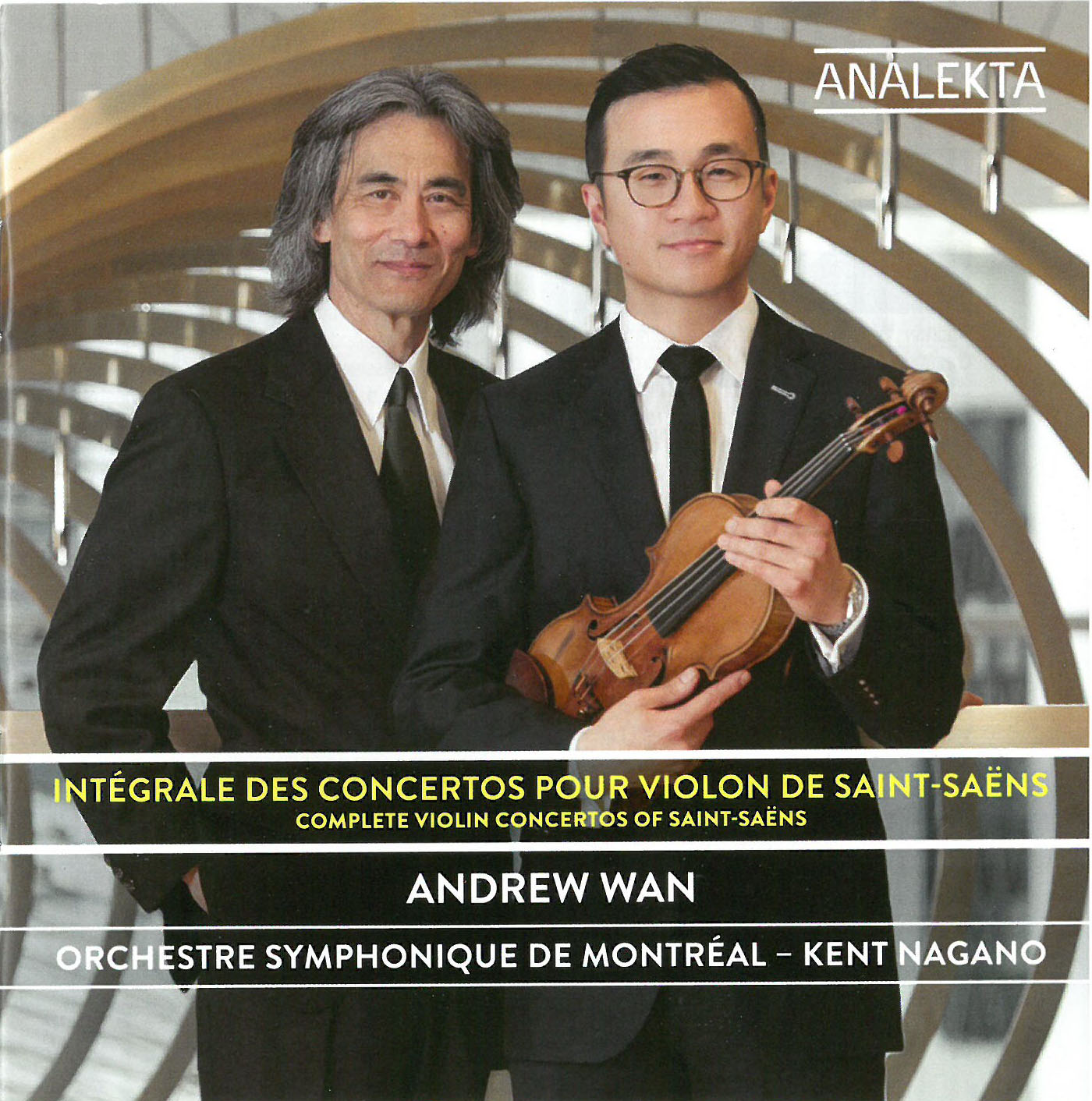
05 Saint Saens Violin

Saint-Saëns – Complete Violin Concertos
Andrew Wan; Orchestre Symphonique de Montréal; Kent Nagano
Analekta AN 2 8770

Review

Even though Camille Saint-Saëns was an exceptionally prolific composer, it seems that his temperament was especially suited to the form of the solo concerto, allowing him to blend virtuosity (which he held in high regard) with the wealth of his musical ideas. He also had a special fondness for the violin, especially after meeting Pablo de Sarasate (the 19th century violin superstar) to whom he dedicated his first and third violin concertos. It comes as no surprise that Andrew Wan, another violin superstar (though from an entirely different era) and one of the youngest concertmasters of a major symphony, has performed and recorded Saint-Saëns’ complete violin concertos with the Orchestre Symphonique de Montréal, the very orchestra he leads. This certainly has an advantage point – the soloist and the orchestra have an astonishing rapport on this recording.

Captured here are live recordings from a series of concerts held at Maison symphonique de Montréal in November 2014. It is no small accomplishment to be able to perform all three concertos, as they are not only technically demanding but also ask of the soloist to be both versatile and flexible in their interpretation. Andrew Wan stands up to this task easily and fiercely – while technically superb in the live performances, he captures his audiences even more with his passion and the constant changes of sound colour.

The first two concertos have been unfairly neglected on the concert stage – they are every bit as exciting and expressive as the third one – but this recording just may change that.

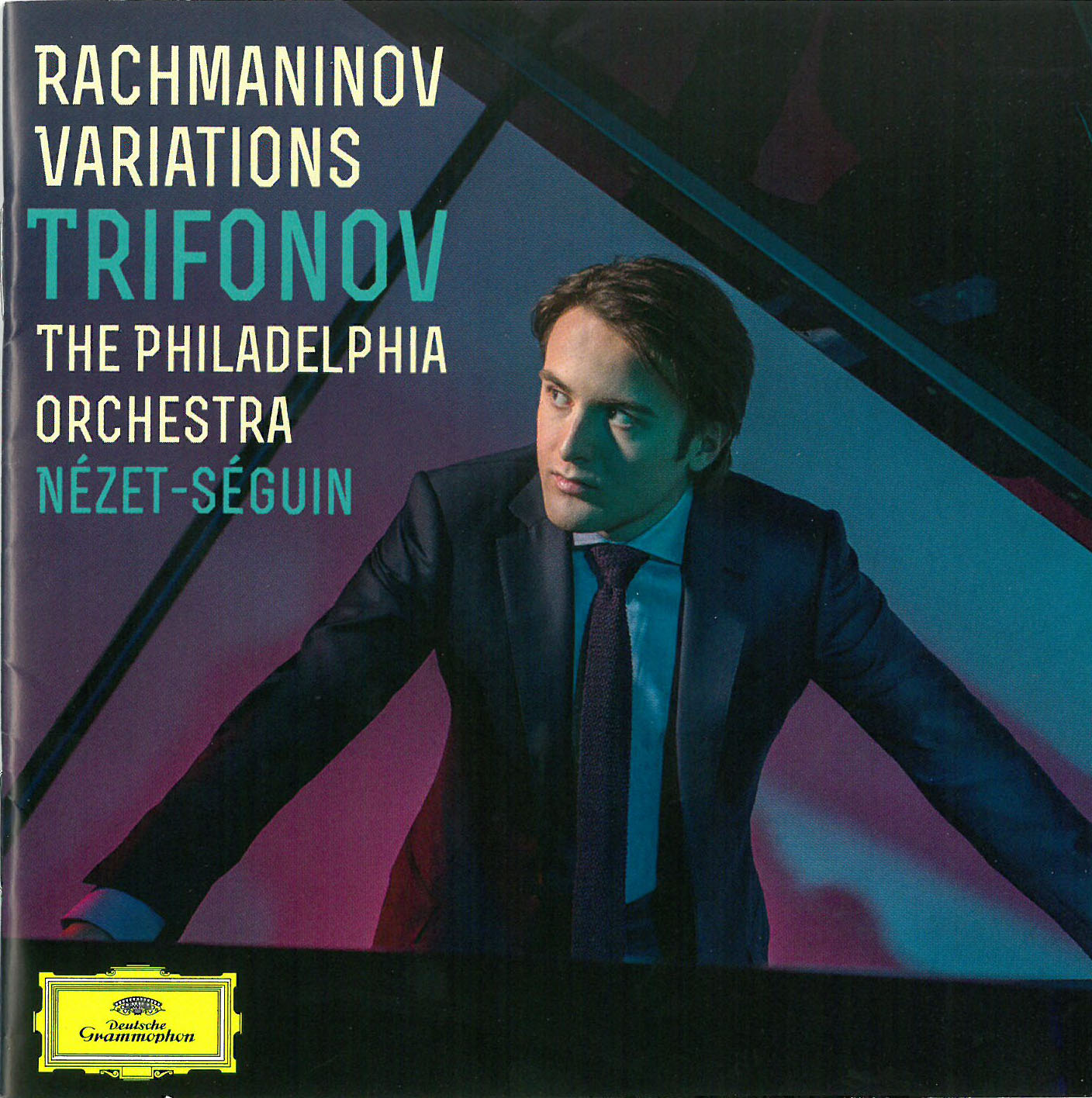
06 Rachmaninov

Rachmaninov Variations
Daniil Trifonov; Philadelphia Orchestra; Yannick Nézet-Séguin
Deutsche Grammophon 4794970

Review

How appropriate that a pianist by the name of Daniil Trifonov would record a disc of music by Sergei Rachmaninov plus a composition of his own titled Rachmaniana. To be honest, I was unfamiliar with his name, but it seems this 24-year-old already has more than a few feathers in his cap. Not only has he been the recipient of numerous prizes, including first prize in the prestigious Arthur Rubinstein competition, but he is making a worldwide name for himself. In this recording – his sixth – he has teamed up with Canadian conducting superstar Yannick Nézet-Séguin and the Philadelphia Orchestra, resulting in a fusion of two great artists.

There are innumerable recordings of the Rachmaninov Paganini Variations, but this is surely one of the finest. Trivonov’s flawless technique is matched throughout by the Philadelphia Orchestra’s full-bodied and robust sound. The variations literally fly by the listener in rapid succession, each a musical microcosm, notwithstanding the poetic and familiar No.18 which is treated with the heartfelt lyricism it so deserves. Both soloist and orchestra make ease of the enormous technical demands presented in the variations leading to the tumultuous finale, doing so with a sense of strong self-assurance.

Rachmaninov’s Variations on a Theme by Chopin Op.22 are based on the familiar Prelude Op.28 No.20. Trifonov approaches the music with great sensitivity, deftly capturing the kaleidoscopic moods of the 22 movements. His own set of variations, Rachmaniana, was written out of homesickness for his native Russia while temporarily residing in the U.S. While there is much originality within the score, the style also draws from Rachmaninov’s own musical idiom – the work opens in a quietly introspective manner, but the finale is a burst of technical exuberance.

The familiar Variations on a Theme of Corelli predate the Paganini Variations by only three years. Despite the myriad of moods conveyed within, Trifonov creates a unified whole, demonstrating intelligence and an innate musicality for this most demanding repertoire. While a Russian artist performing Russian music doesn’t always guarantee a stellar performance, in this case it did – this recording is bound to be a benchmark.

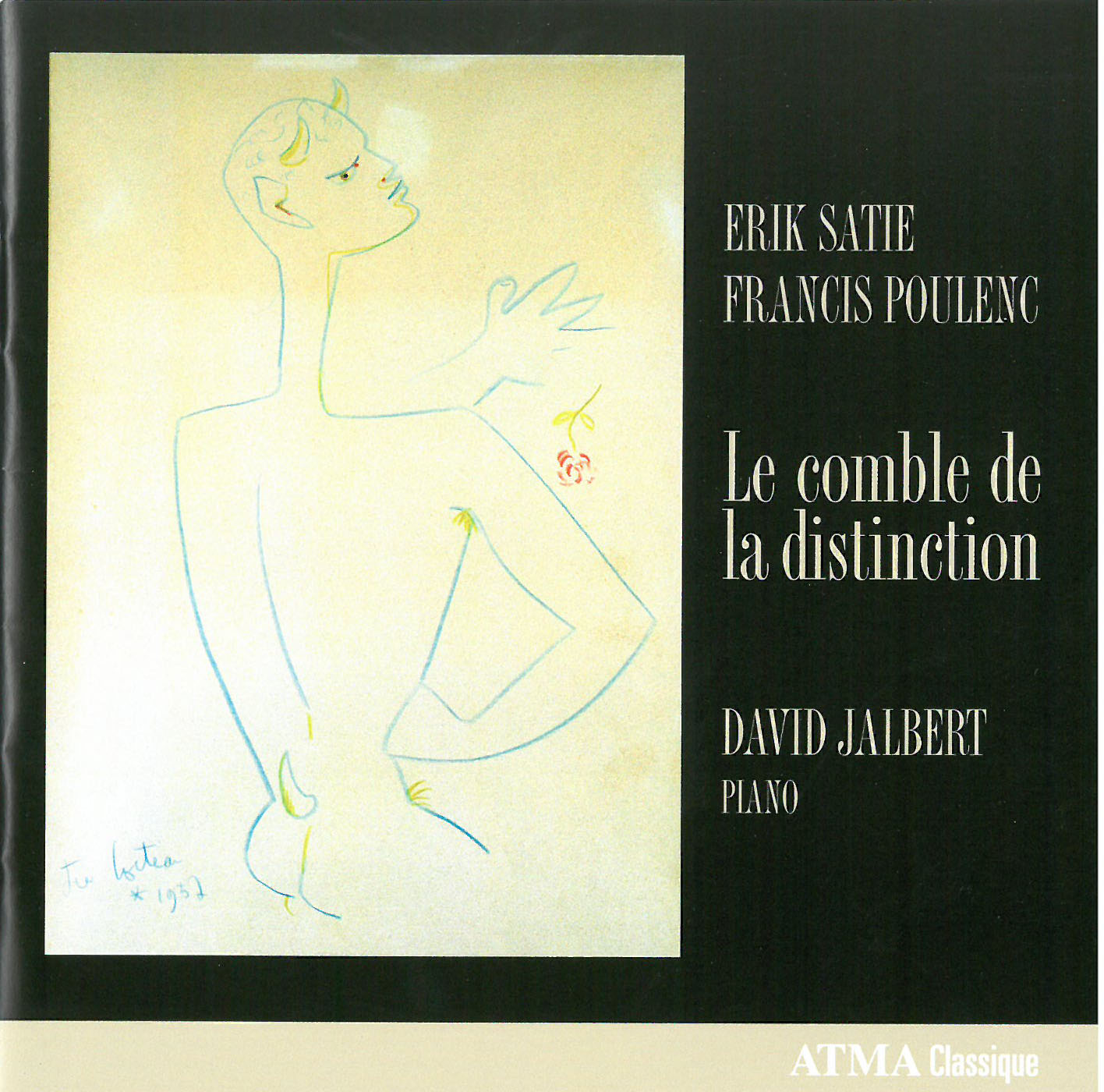
07 Satie Poulenc

Satie; Poulenc – Le comble de la distinction
David Jalbert
ATMA ACD2 2683

Review

Francis Poulenc (1899-1963), composer and pianist, was a man of many contradictions, perpetually vacillating between the sacred and profane. Paradoxically, this bipolar anxiety constitutes the very essence and charm of his music. His sometimes drastic stylistic mood swings are exemplified in Jalbert’s deeply affectionate performance of Poulenc’s Soirées de Nazelles that opens this album, a lengthy work for solo piano consisting of a series of 11 musical portraits of personalities he encountered while on vacation in central France. The music of Erik Satie (1866-1925) is interspersed throughout this album in a compelling dialogue with Poulenc’s. Poulenc himself greatly enjoyed the company of Satie in that composer’s twilight years, finding him “marvellously funny” and a fertile source of musical and spiritual inspiration. In fact, Poulenc’s public debut composition, the Rapsodie nègre of 1917, is dedicated to him. Jalbert’s hypnotic performance of Satie’s austere Trois Gymnopédies is followed by Poulenc’s three unusually focused Mouvements perpétuels. Poulenc the magpie is here too, in the form of two Improvisations honouring Schubert and Edith Piaf. The subsequent selections of Satie’s Valses distiguées… and Je te veux invoke the spirit of the cabaret that Poulenc also expressed so well. Poulenc the miniaturist returns to centre stage in the final selection, a masterly rendition of the kaleidoscopic Nocturnes composed over the course of 1929-1938.

In an age of knuckle-busting keyboard technicians fixated on a single era, composer or concerto it is a great pleasure to encounter an artist of Jalbert’s stature for whom the piano is simply a transcendent means of human expression. My only frustration with this admirable disc is the generic program notes which fail to explain the ironic subtitles of the two Poulenc suites. For the record, the title track has been rendered elsewhere as “The epitome of distinction.”

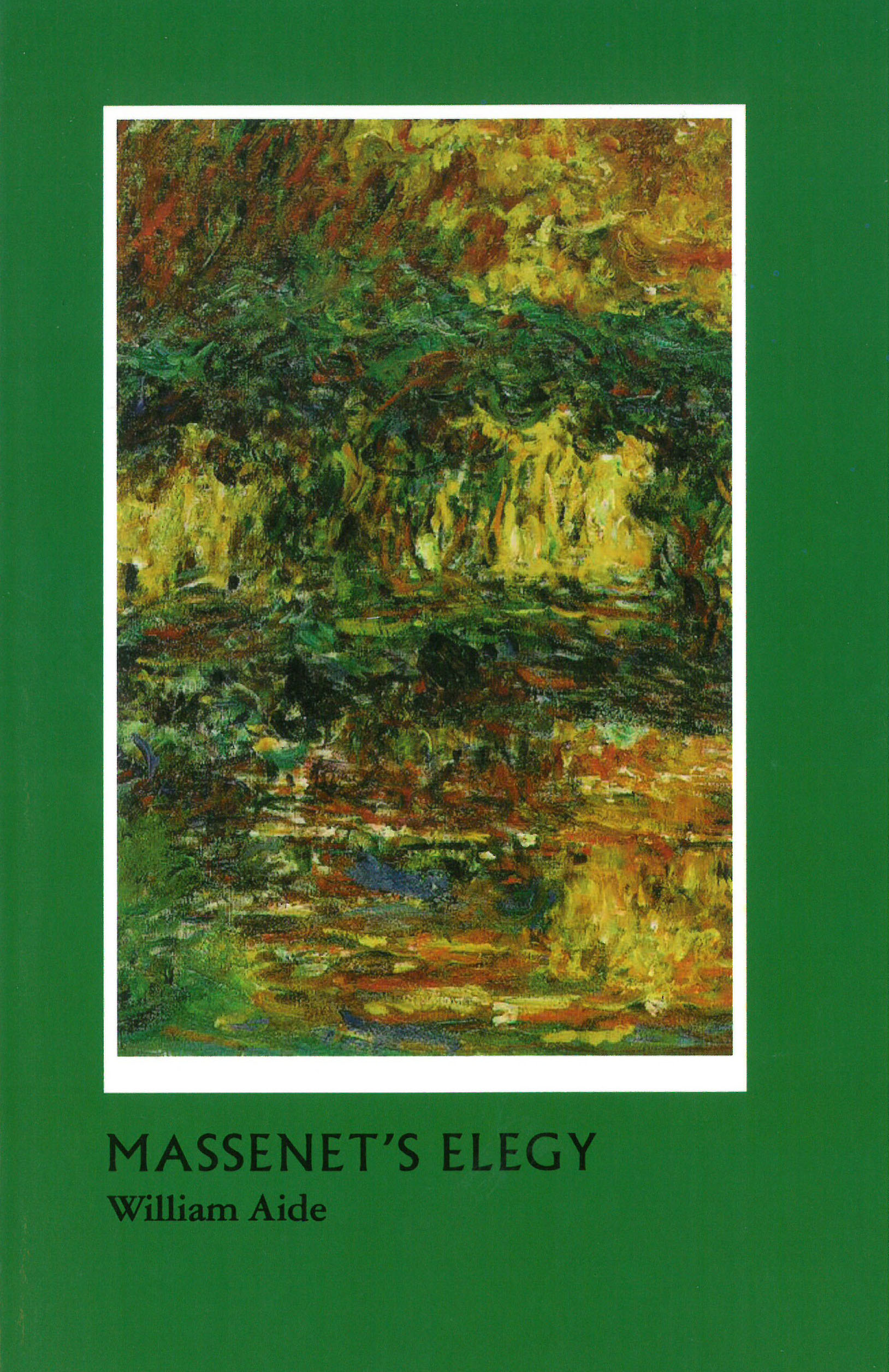
08 Massenets Elegy

Massenet's Elegy
William Aide
Oberon Press 978 0 7780 1429 4 (oberonpress.ca)

Review

When you open the back cover of this book of poems, you find a CD tucked into a plastic sleeve. It contains a collection of live recordings spanning 30 years by one of Canada’s premier pianists and teachers, William Aide. The sound quality is variable, but the performances all dazzle – from his incisive Chopin and colourful Schumann to two luminous Debussy pieces. But it’s the poems that are the main attraction here. Aide is that rare musician who uses words as expressively as music. His irrepressible search for grace has universal appeal. For music lovers there’s the way he invokes composers like Schubert, Chopin, Schumann, and – surprisingly – Massenet, whose Elegy inspired Aide to become a pianist.

Here is how he begins To an Old Executor:

“Skip the need to dig the sod
Buy a flowering linden tree
And sentimental as can be
Commit to Schubert, not to God.

Some of Aide’s most affecting poems are tributes to people who changed his life, like his first piano teacher Miss Myrtle McGrath, who taught him the Elegy, his later teacher the Chilean master Alberto Guerrero, who taught so many of Canada’s finest pianists (see John Beckwith’s excellent biography), his fellow student Glenn Gould, and his own student Peter Vonek, whose death from AIDS left him bereft.

Aide has long been recognized as a significant voice in Canadian music. With four fine books (one a gutsy memoir) under his belt, he is unquestionably a voice that matters in Canadian literature as well.

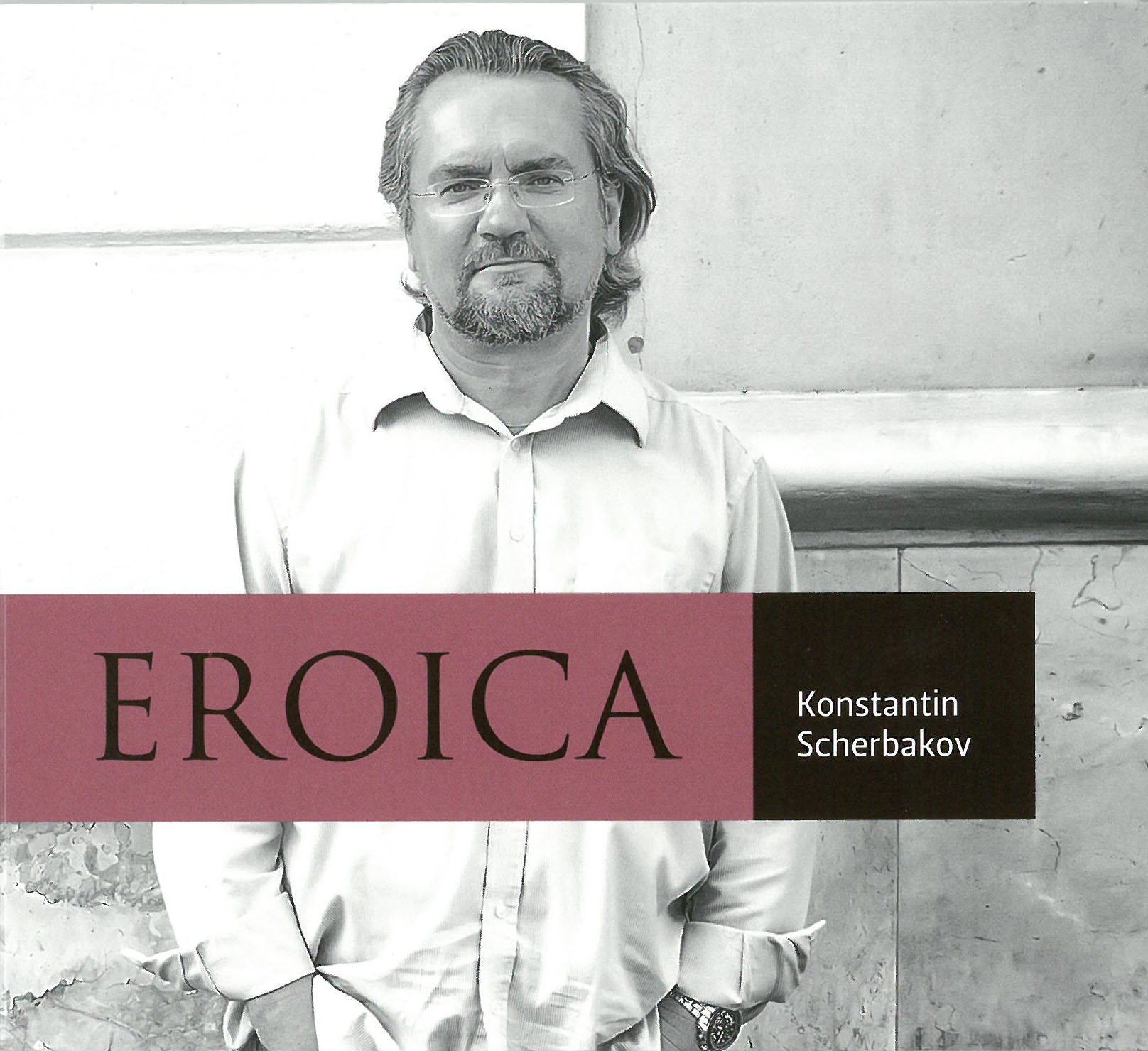
01 EroicaVariations, by their nature, tend toward the cerebral. Pianists who understand this devote a good deal of effort maintaining their ties to the thematic homeland in spite of the distances a composer may travel in his creative wanderings. Konstantin Scherbakov demonstrates this beautifully in Eroica (Two Pianists Records TP1039190) where Beethoven’s Eroica Variations Op.35 journey far on a surprisingly short musical idea. When at times the composer has left little more than a hint of harmonic progression as a fragment of the original idea, Scherbakov finds it and underlines it to remind us of our point of departure. By the time he’s played through all fifteen variations, the closing fugue comes as a highly energized and joyous finale in the form Beethoven so loved to use.

The same disc contains both the Pathétique and Appassionata sonatas. Here, Scherbakov is more formal. He is very aware of the architecture around his musical content and artfully recalls the ideas Beethoven requires in the closing arguments. The Adagio of the Sonata No.8 in C Minor, Op.13Pathétique” is perhaps less outwardly emotional than some would like, but this works well in the context of Scherbakov’s overall approach to both sonatas. A strong performer with a clear technique, he has made this a very fine addition to anyone’s Beethoven collection. Production values on this disc are very high despite the fact that the program was recorded in different locations (UK and Moscow).

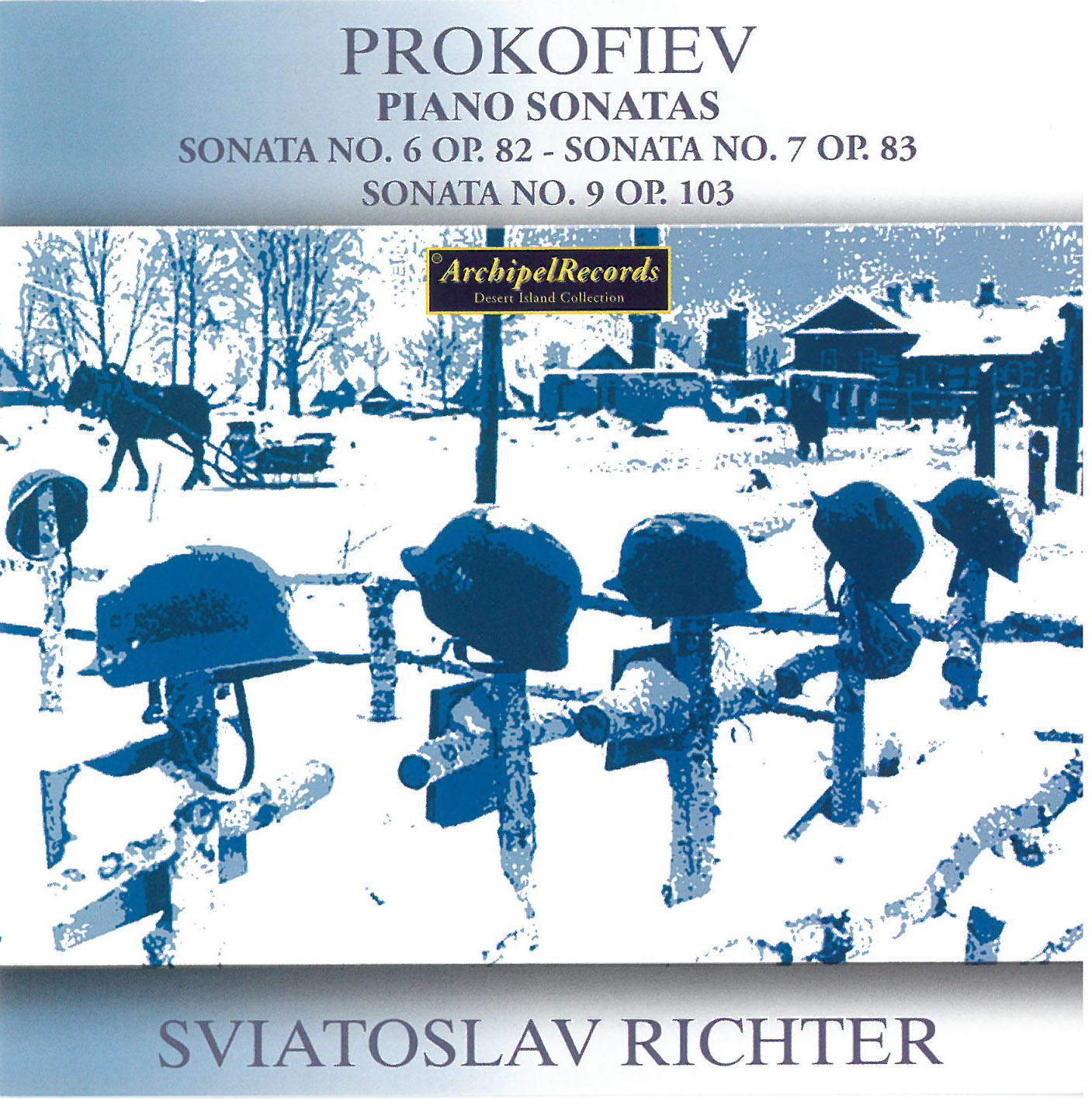
02 Prokofiev RichterAlso recorded in Moscow are Prokofiev’s Piano Sonatas 6, 7 and 9. Digitally restored from original sources Prokofiev Piano Sonatas (Archipel Records ARPCD 465) features three separate public recitals by Sviatoslav Richter from the mid-1950s. Disappointingly bereft of any historical notes about the concerts, the disc is economically packaged but thankfully a little web sleuthing can uncover plenty more about this material. These are among the recordings from the decade that introduced Richter to the West. The audio restoration is wonderful although the somewhat narrow frequency range of the recording reflects the technology of the period. Still, it in no way impedes the colossal technique Richter possessed. His utter control of the wildest passages in Sonatas 6 and 9 stand in contrast to his pensive playing of the Sonata 7 where doleful reflection speaks of the personal burden Prokofiev felt under the Stalinist regime.

Richter seems the perfect pianist for this repertoire. Recording two of Prokofiev’s “War” sonatas from the early 1940s (No.6 and No.7) just a few years after Stalin’s (and the composer’s) death, one wonders what the propaganda chatter must have been at the time. The final sonata on the disc, No.9, was written for and dedicated to Richter in 1947. All three of these performances are truly arresting.

03 Vadym KholodenkoVadym Kholodenko is the 2013 Van Cliburn International Piano Competition gold medalist. His collaboration with Miguel Harth-Bedoya and the Norwegian Radio Orchestra in Grieg, Saint Saëns Piano Concertos (harmonia mundi HMU 907629) produces thoughtful and unhurried performances. Pianist and conductor are in complete agreement on tempi that favour a more relaxed approach than we sometimes hear. This subtle expansion of time offers the listener an extra moment of consideration before processing the composer’s next thought. The Grieg slow movement is especially exquisite for this reason.

The Saint Saëns Concerto No.2 in G Minor, Op.22 is not quite so restrained. Kholodenko takes the first two movements almost ad libitum alternating between the pensive approach of the opening movement and his dazzling chromatic octave runs in the second. But the third is where he explodes out of the gate with real drama. The palpable energy and crisp articulation make this a performance hard to surpass. This is Kholodenko’s second recording for the label. His third is the Prokofiev concertos the first disc of which we can expect the first disc in 2016.

04 American RomanticsLast month’s column reviewed several discs using period instruments. American Romantics, The Boston Scene (Piano Classics PCL0080) does something similar using an 1873 Chickering grand in a historic Episcopal church in Charlestown, MA. The instrument benefits from modern action and sounds more like a contemporary piano than a fortepiano. Still, its darker colours and unique upper register voicing remind us of its vintage. Pianist Artem Belogurov clearly loves this piano and as much caresses it as plays it. His repertoire choices reveal how much this late romantic American school owed to its European origins.

It wasn’t until the next generation of composers, the modernists of the early 20th century, that an identifiable American voice began to emerge. Still, this disc’s program helps us understand the creative heritage from which that sprang. Highly programmatic, these short pieces by Foote, Paine, Chadwick and Nevin are beautifully written by composers who knew their craft well. Belogurov commits to them wholly. His playing is sincere and utterly convincing.

The disc is enlightening, entertaining and offers a profoundly satisfying final track with Margaret Ruthven Lang’s Rhapsody in E Minor Op.21. Published in 1895, it’s the most substantial work on the recording and demonstrates a remarkable affinity between composer and pianist, across cultures and generations.

Review

05 Bernstein 13Some four decades later Leonard Bernstein, then in his late teens, wrote his Sonata for the Piano (1938) and Music for the Dance No.2. These two works open and close pianist Alexandre Dossin’s program on Bernstein: Thirteen Anniversaries (Naxos 8.559756). Dossin is Brazilian-born, Moscow Conservatory-trained and now teaches in the U.S. He plays the Sonata with all the boldness and assertiveness that the young Bernstein brought to the page. It’s brilliant music and brilliantly played. The three-movement Music for the Dance is polytonal and angular in rhythm. Dossin understands Bernstein’s structures and always keeps the principal ideas up front for us to follow.

Thirteen Anniversaries from 1988 is the last of four such collections of miniatures Bernstein wrote for his family and numerous friends. A half century separates these from the early compositions on this disc and the difference is remarkable. Dossin conveys what the older composer is feeling. For Stephen Sondheim is a heartfelt tribute to his friend and librettist with very subtle harmonic tilts in the direction of Broadway. In Memoriam: Ellen Goetz is simple and profoundly moving and serves as a fitting close to the set. The 1943 Seven Anniversaries contains tributes to Aaron Copland as well as Serge and Nathalie Koussevitsky and others. Dossin finishes this set with an aggressively energized For William Schumann. All of it is superb.

06 Felt HammersFelt Hammers (Tantara TCD0314FHM) is a collection of the piano works of Michael Hicks played by Keith Kirchoff. This disc is far from common fare but more than a few will like it – a lot. Contemporary and a bit experimental in both composition and performance, the music has titles that reflect strong allusions to the sacred, poetic and philosophical. Still, one hesitates to deem it entirely programmatic. With the piano tuned to Werckmeister III (a tuning system with subtle shimmers in certain keys), Kirchoff plays the instrument in the conventional way, but also stops and plucks strings manually and occasionally adds vocalizations.

The core of the program is The Stations of The Cross and its narrative is easy to follow. What raises this composition far out of the ordinary is that Kirchoff has fully captured Hicks’ intention to use the piano in ways that create new and powerfully evocative sonorities. These are sound paintings that strongly project images of Jesus’ journey from condemnation to death and burial. It’s emotionally graphic, though in an abstract way.

The Annunciation is the only piece that extensively uses familiar keyboard technique. Its technical demands are high and Kirchoff meets them capably. The disc opens with a helpful introduction to Hicks’ keyboard language. The Idea of Domes is a simple keyboard tone poem that delivers exactly what its title suggests and prepares the listener for what’s to come. The closing track L’épitaph de Monk is based on Thelonious Monk’s Crepuscule with Nellie and echoes the rhythmic note clusters that punctuate Monk’s original. Those in the target niche for this recording will find it very gratifying.

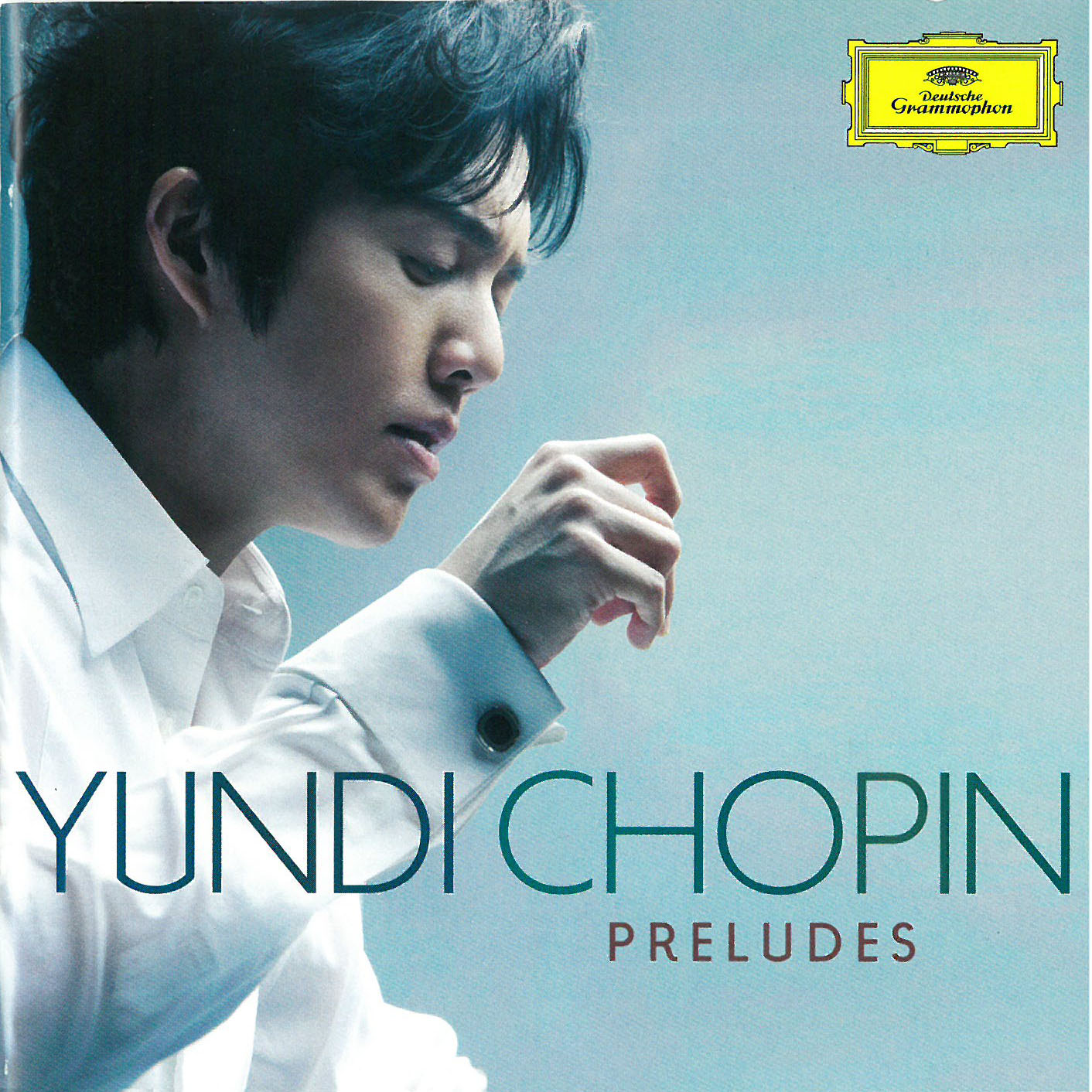
07 Yundi ChopinSince winning first prize at the 2000 International Chopin Competition at age 18, Chinese pianist Yundi has scarcely stopped to catch his breath. Countless international tours and 16 recordings later Yundi’s energy is as impressive as ever. His latest disc is Yundi Chopin Preludes (Mercury Classics/Deutsche Grammophon 4811910) which presents all of the Op.28 Preludes plus the Op.45 in C-sharp Minor and a posthumous work as well.

While each on separate tracks, the 24 preludes are produced with very little time between them and give the effect of a larger single piece. This has the novel effect of joining Chopin’s disparate ideas, many less than a minute long, into a statement that he may never have considered. If anything, it allows us a high-contrast glimpse of his remarkable imagination and technique, none of which is beyond Yundi’s grasp. His playing is often unbelievably fast as in the Prelude No.18 in F Minor, but never sacrifices clarity or phrasing. Others like the No.23 in F Major move with an enchanting fluidity. It’s a breathtaking recording and easy to play often for the sheer marvel of it.

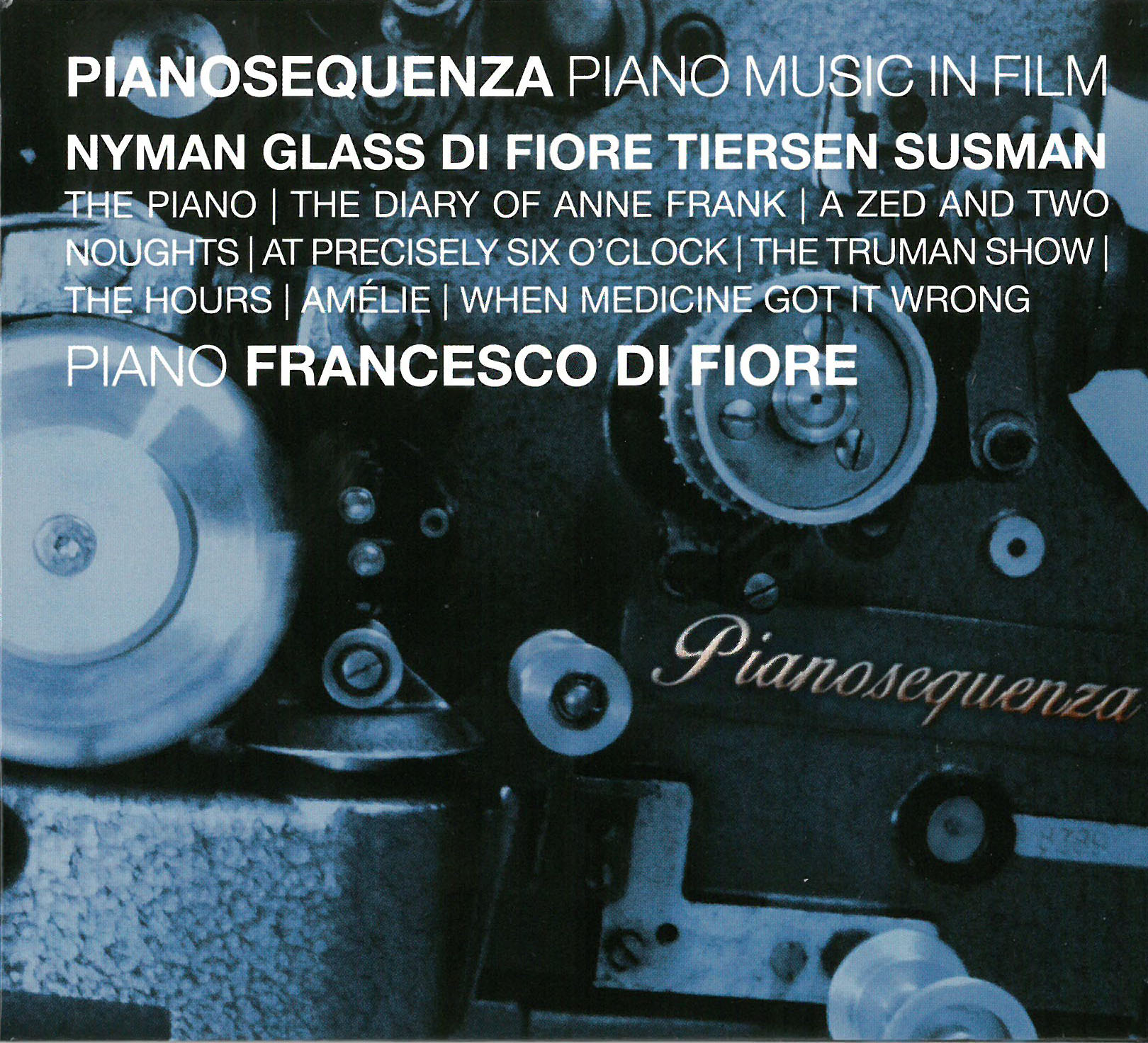
08 PianosequenzaFilm music became its own form when musicians first started playing for silent movies. Largely given to supporting and enhancing the emotions portrayed on the screen, film scores occasionally rise beyond their usual task and stand on their own artistic merits. Composer/pianist Francesco Di Fiore has taken this a step further by creating a video and piano performance project using selected shots from a variety of modern films and has reinterpreted the film scores as minimalist keyboard iterations. The studio version of this live project is Piano Sequenza – Piano Music in Film (Zefir Records 9642) and is a remarkably intimate listening experience.

Most of the music selected for this recording was already piano-centric, either written for the instrument as solo or using it to carry the main thematic idea. Di Fiore’s reinterpretations have the effect of being artistic distillations, powerful for their links to films we know well, The Piano, The Hours, The Truman Show and others. And while there is a strong melancholic undercurrent to it all, he infuses it with a clear and uplifting simplicity that has a lingering effect.

Whether he is spinning the ideas of Michael Nyman or Phillip Glass, Di Fiore succeeds in turning the piano into a unique voice, through which we experience the film world of directors Peter Weir, Jane Campion and the others included on this unusual disc.

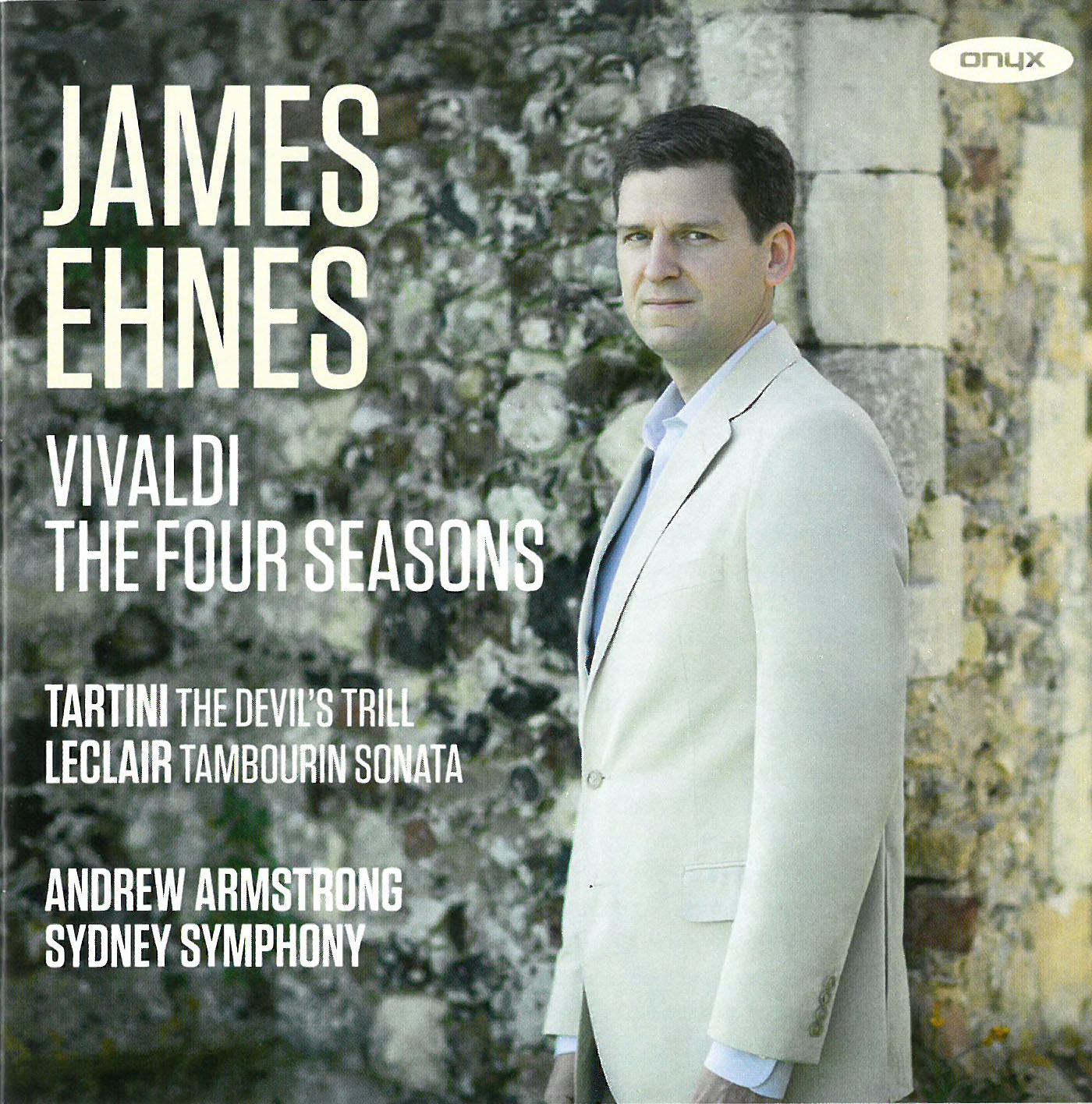
01 Ehnes VivaldiOur own James Ehnes is back with a CD of early 18th century works on Vivaldi Four Seasons (Onyx 4134), with his regular partner Andrew Armstrong at the piano for Tartini’s Devil’s Trill Sonata and Leclair’s Tambourin Sonata, and the Sydney Symphony under Ehnes’ direction providing the support for the title work. It’s the first time Ehnes has recorded The Four Seasons, and it was certainly worth the wait. The playing is everything you would expect from him: it’s warm, intelligent and beautifully judged, with sensitive and very effective orchestral accompaniment.

The Tartini and Leclair sonatas are the opening works on the CD, with Ehnes using the Kreisler edition of the Devil’s Trill sonata that ends with the challenging cadenza that Kreisler added to the work. Again, the playing by both performers is outstanding.
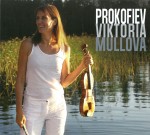
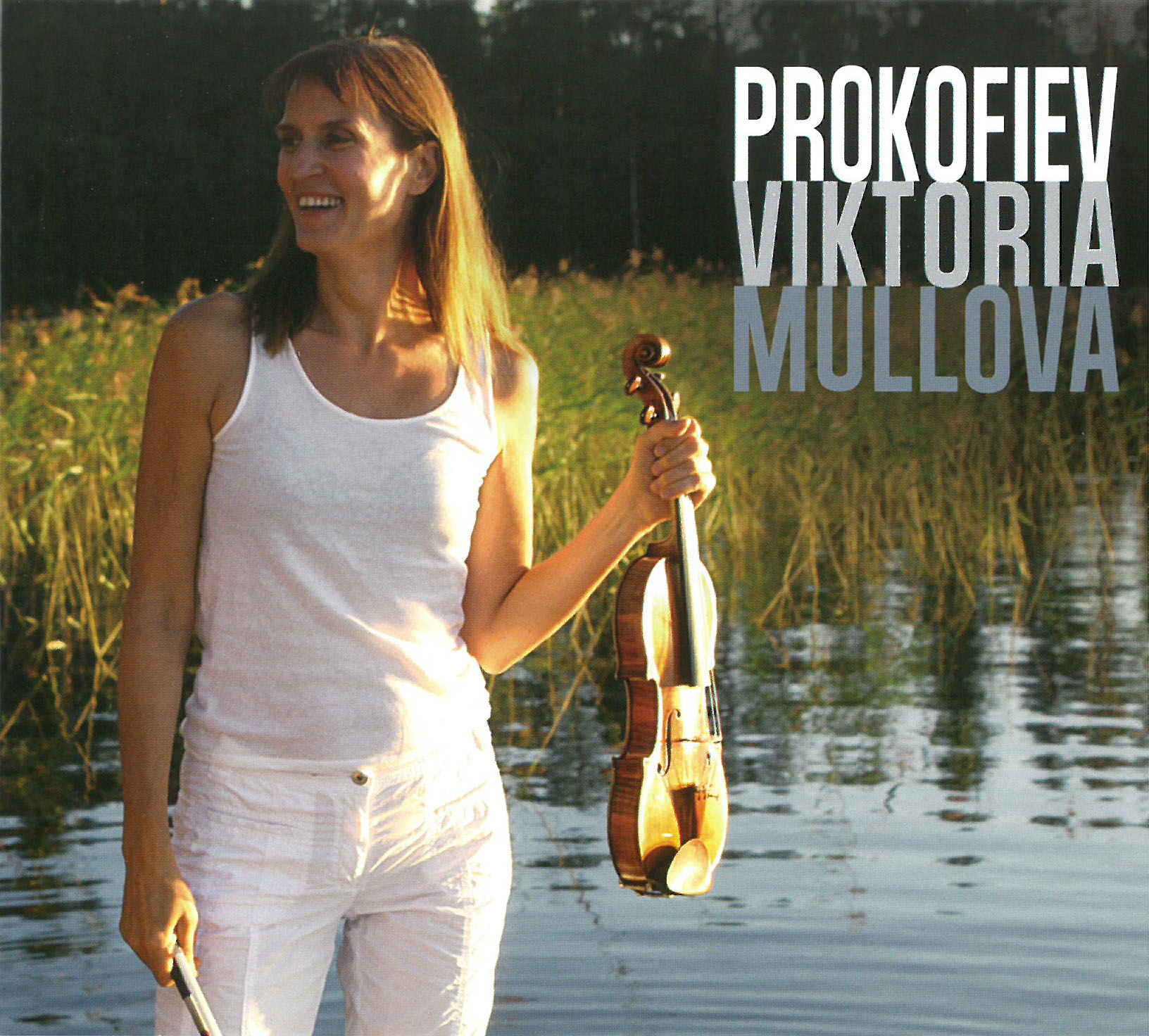
02 Prokofiev MullovaAnother Onyx CD features live concert recordings of violin music by Sergei Prokofiev in terrific Frankfurt performances by Viktoria Mullova (ONYX 4142). The Frankfurt Radio Symphony Orchestra under Paavo Järvi provides the support in the lovely Concerto No.2 in G, Op.63, recorded over two days in May 2012. Mullova is equally at home in the work’s beautiful slow movement and in the music’s spikier passages.

Prokofiev’s two unaccompanied violin sonatas – the Sonata for Two Violins in C, Op.56 and the Solo Violin Sonata in D, Op.115 – were recorded in December 2014. Tedi Papavrami joins Mullova in the former. The recorded ambience is full and resonant, especially in the concerto, and there is no real sign of audience presence other than the applause at the end of the works, which fades out after a few seconds.
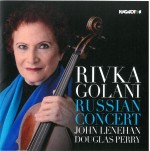
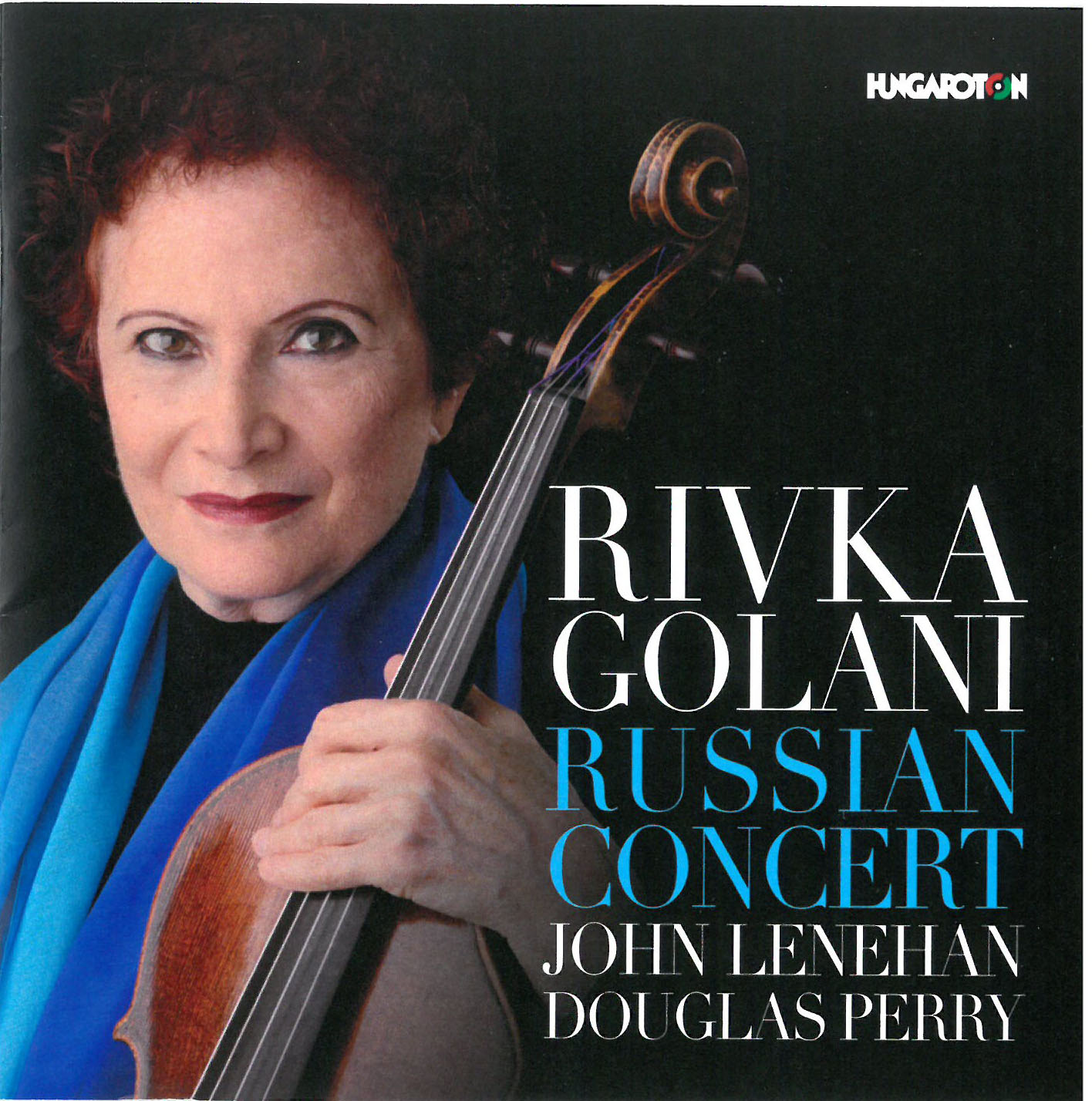
03 Rivka GolaniThere’s more live Prokofiev, as well as Shostakovich and Rachmaninov on Russian Concert, a 2-CD recording of the March 28, 2006 concert in Toronto’s Glenn Gould Studio by the outstanding violist Rivka Golani and pianist John Lenehan (Hungaroton HCD 32743-44). The concert opens and closes with pieces (six on CD1, five on CD2) from Prokofiev’s ballet Romeo and Juliet, transcribed for viola and piano, with the composer’s permission, by the Russian violist Vadim Borisovsky. Violist Douglas Perry joins Golani and Lenehan for the final two pieces.

CD1 ends with a brooding performance of the Shostakovich Sonata for Viola and Piano Op.147, the only work in the concert in its original form, but the heart of the recital is the transcription – again by Borisovsky – of Rachmaninov’s Cello Sonata in G Minor Op.19. More than anything else on the two CDs this brings impassioned playing from both performers, with the piano often predominant in a role that is far from being merely an accompaniment. Despite the wonderful viola playing, however, it’s difficult to ignore the fact that the instrument’s pitch is higher and somewhat thinner than the cello’s, and the absence of the latter’s strength, depth and richness, particularly in the lower strings, alters the tonal relationship with the piano; at times here, the music just seems to be too big for the instrument. Still, what a performance!
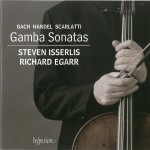
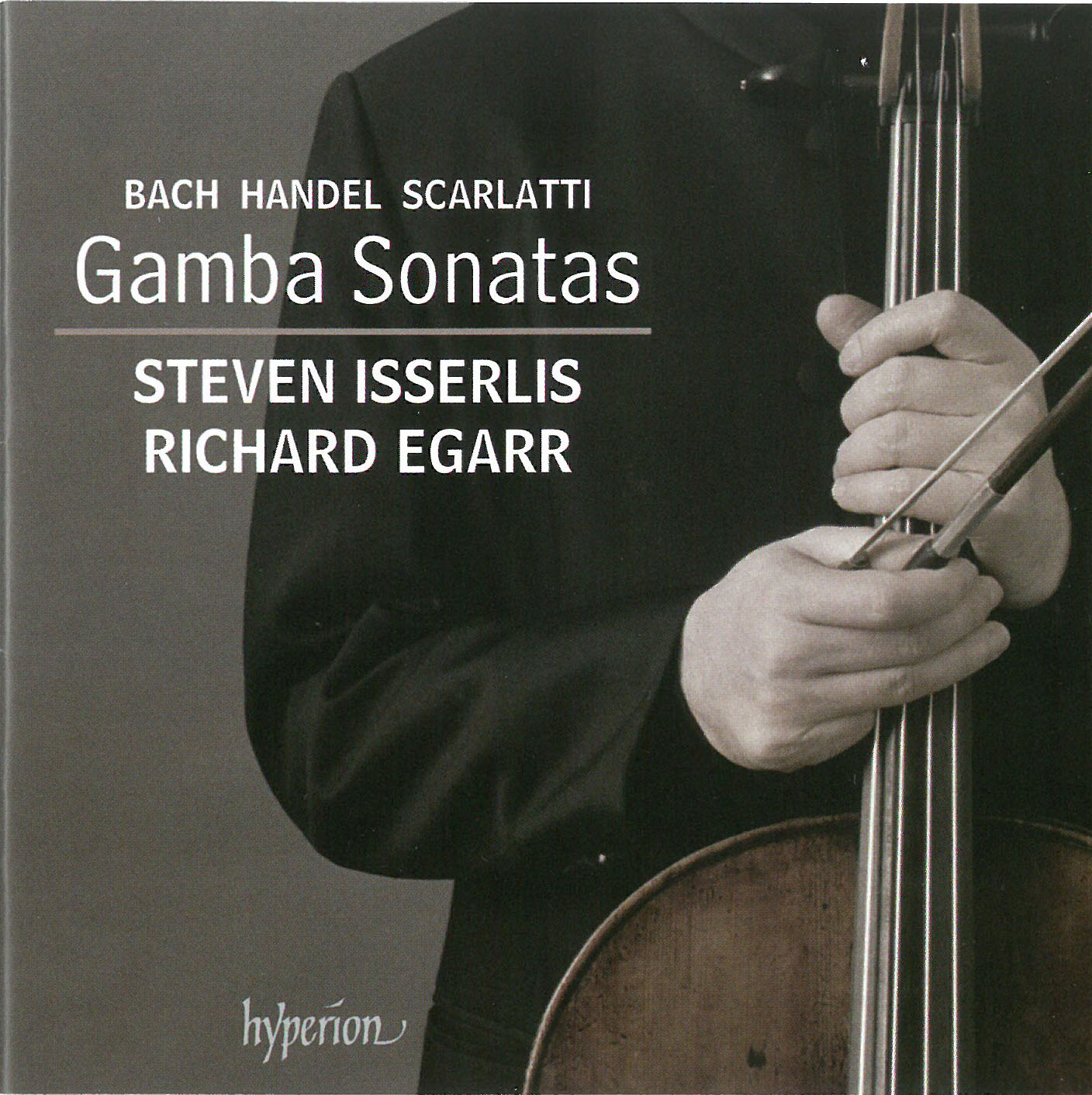
04 Isserlis GambaThe ever-reliable English cellist Steven Isserlis is back with yet another delightful CD, this time with harpsichordist Richard Egarr on Bach, Handel and Scarlatti Gamba Sonatas (Hyperion CDA68045).

Bach’s three sonatas – in G Major BWV1027, D Major BWV1028 and G Minor BWV1029 – are programmed around Domenico Scarlatti’s Sonata in D Minor Kk90 and Handel’s Violin Sonata in G Minor HWV364b. The Handel here relies on an authentic manuscript version that shows the opening of the violin part lowered an octave and indicated as for viola da gamba. In this work and the Scarlatti the players are joined by Robin Michael on cello continuo.

Isserlis points out that playing with a harpsichord allows him “to play as lightly as possible without ever courting inaudibility,” and the result is playing of grace, lightness and warmth. Add the usual intelligent and insightful booklet notes written by Isserlis in his inimitable style – he even quotes Spinal Tap’s Nigel Tufnel at one point – and the whole package is another winner.
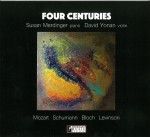
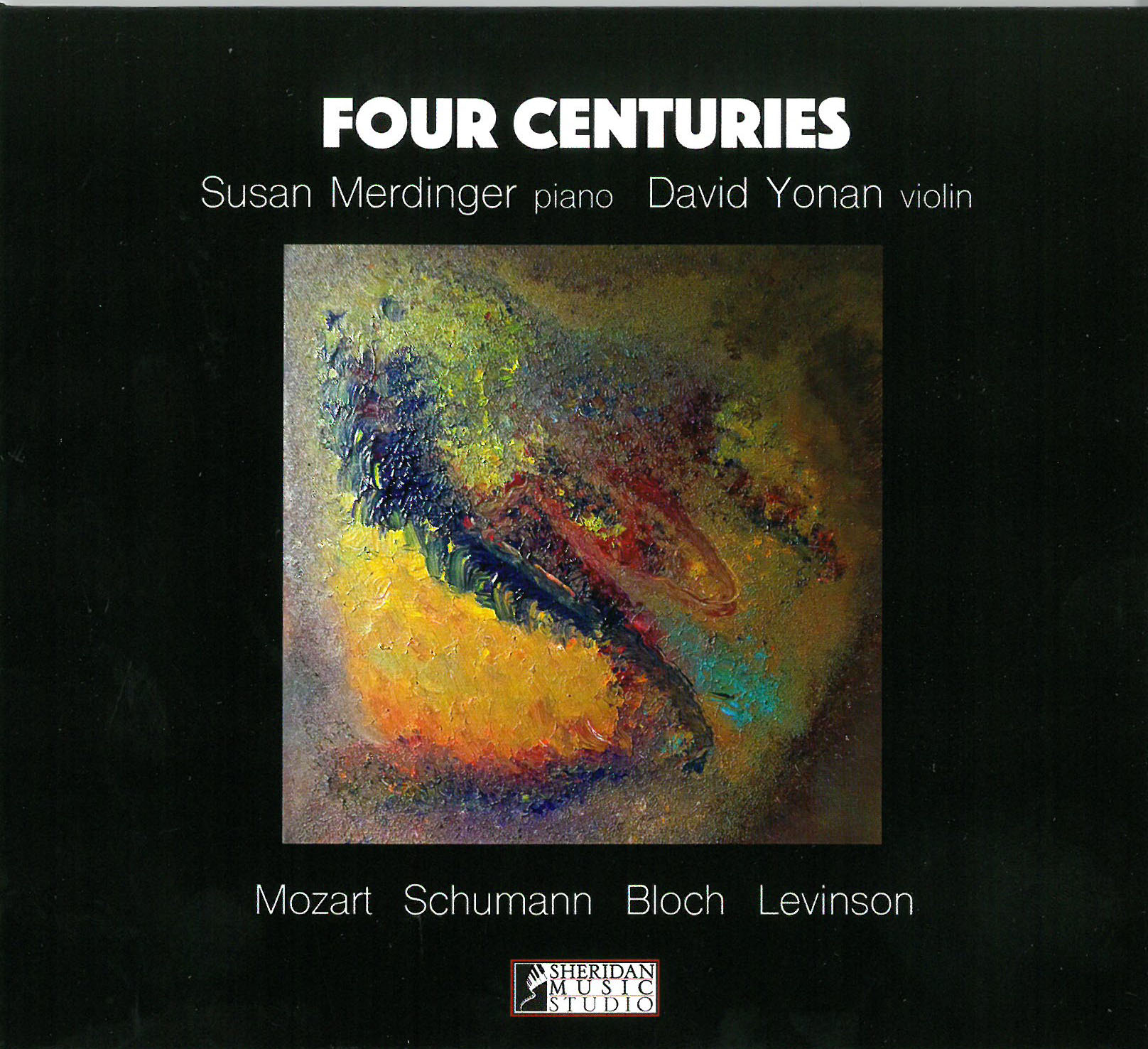
05 Four CenturiesThe often-asked question “How could I not have heard them play before?” raised its head again this month when I played Four Centuries, a new CD from pianist Susan Merdinger and violinist David Yonan featuring works by Mozart, Schumann, Bloch and the Chicago-based contemporary composer Ilya Levinson (Sheridan Music Studio susanmerdinger.org). Both players have impressive résumés, but the Berlin-born Yonan made his recital debut in Berlin, Moscow and St. Petersburg at the age of 11. He also studied with the legendary Dorothy DeLay at Juilliard. He has impeccable technique, a sumptuous tone and a real depth to his playing.

A lovely performance of Mozart’s Sonata No.13 in B-flat Major, K454 opens the disc, with the fine balance between the instruments reminding us that the work was written as being “for Piano and Violin.”

Schumann’s Sonata for Violin and Piano No.1 in A Minor, Op.105 is also beautifully played, but it is the 20th century work, Bloch’s Suite Hébraïque that really steals the show here. “It is the Jewish soul that interests me,” said Bloch, and it’s that soul which is at the heart of this three-movement suite and given a brilliant realization by Yonan. It’s stunning playing.

The final work is the world premiere recording of Levinson’s Elegy: Crossing the Bridge, a short piece dedicated to David Yonan, who gave the world premiere in Chicago in 2011. Susan Merdinger is a terrific partner throughout a highly satisfying CD.
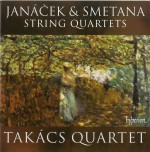
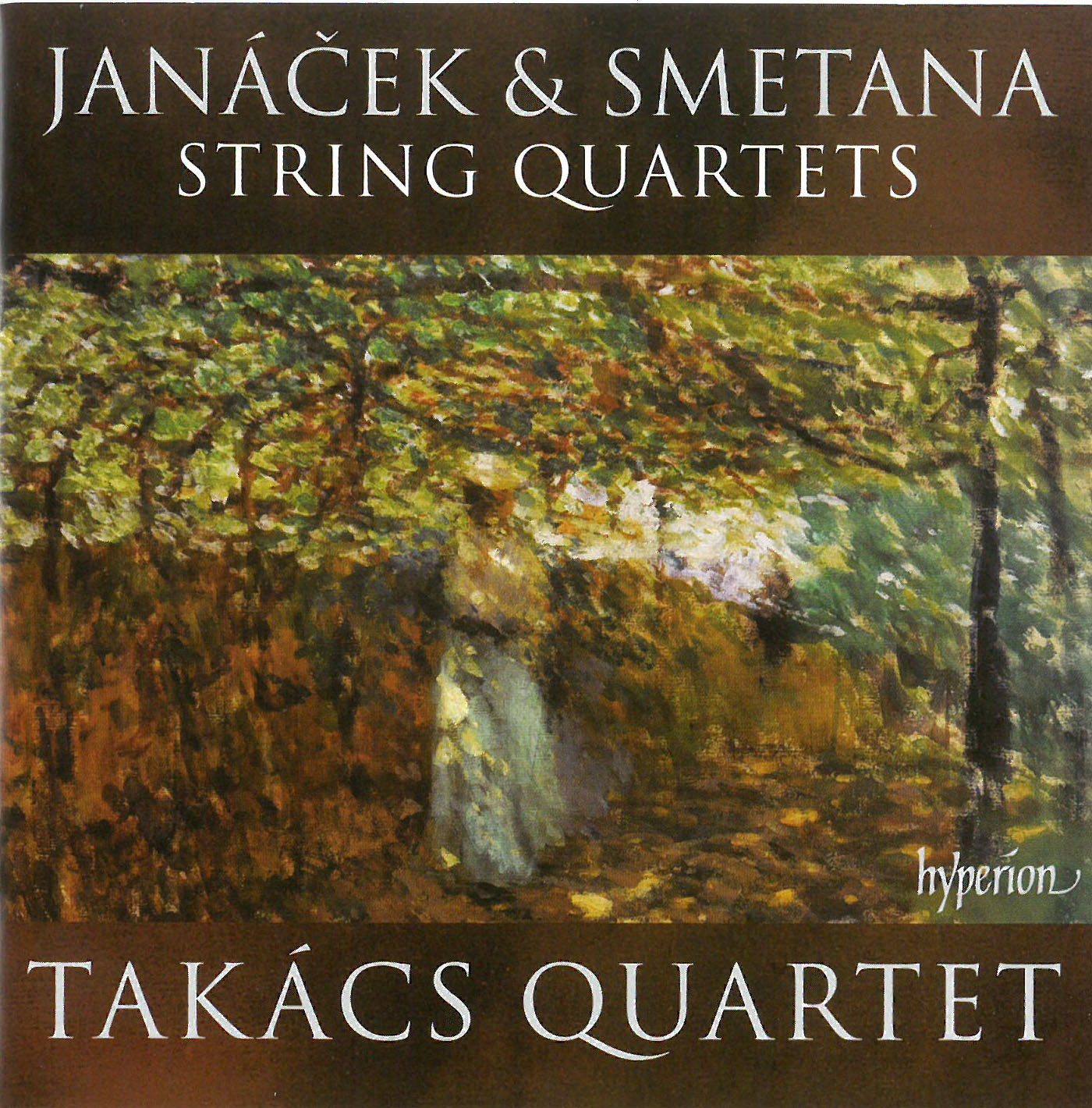
06 Janacek SmetanaThree of the great Czech string quartets are featured on Janáček & Smetana String Quartets, the latest CD from the Takács Quartet (Hyperion CDA67997). All three works, while being strongly nationalistic, are also intensely personal.

Smetana openly admitted that his Quartet No.1 in E Minor, From My Life, was a tone picture of his life: the first movement is his youthful yearnings; the second the dance music of his youth; the third his first love – his future wife, whom he would lose to tuberculosis; and the fourth his joy in incorporating nationalism in his mature music, a joy that would be terminated by his growing deafness, represented in the score by the sudden ominous high E harmonic pitch that sounded in the composer’s ear. It’s obvious from the passionate opening that this will be a rewarding performance, and it never disappoints.

Janáček’s two quartets, subtitled The Kreutzer Sonata and Intimate Letters, were both written late in his life, when he had found his decidedly individual voice and was experiencing a late surge in his career. In particular, he was deeply involved in an intensely passionate – though essentially unrequited – friendship with the young Kamila Stősslová, and the second quartet specifically represents events in Janáček’s relationship with her; despite his age, it’s full of the passion and yearning of a youthful man.

The performances of both works here are all that you could want them to be.

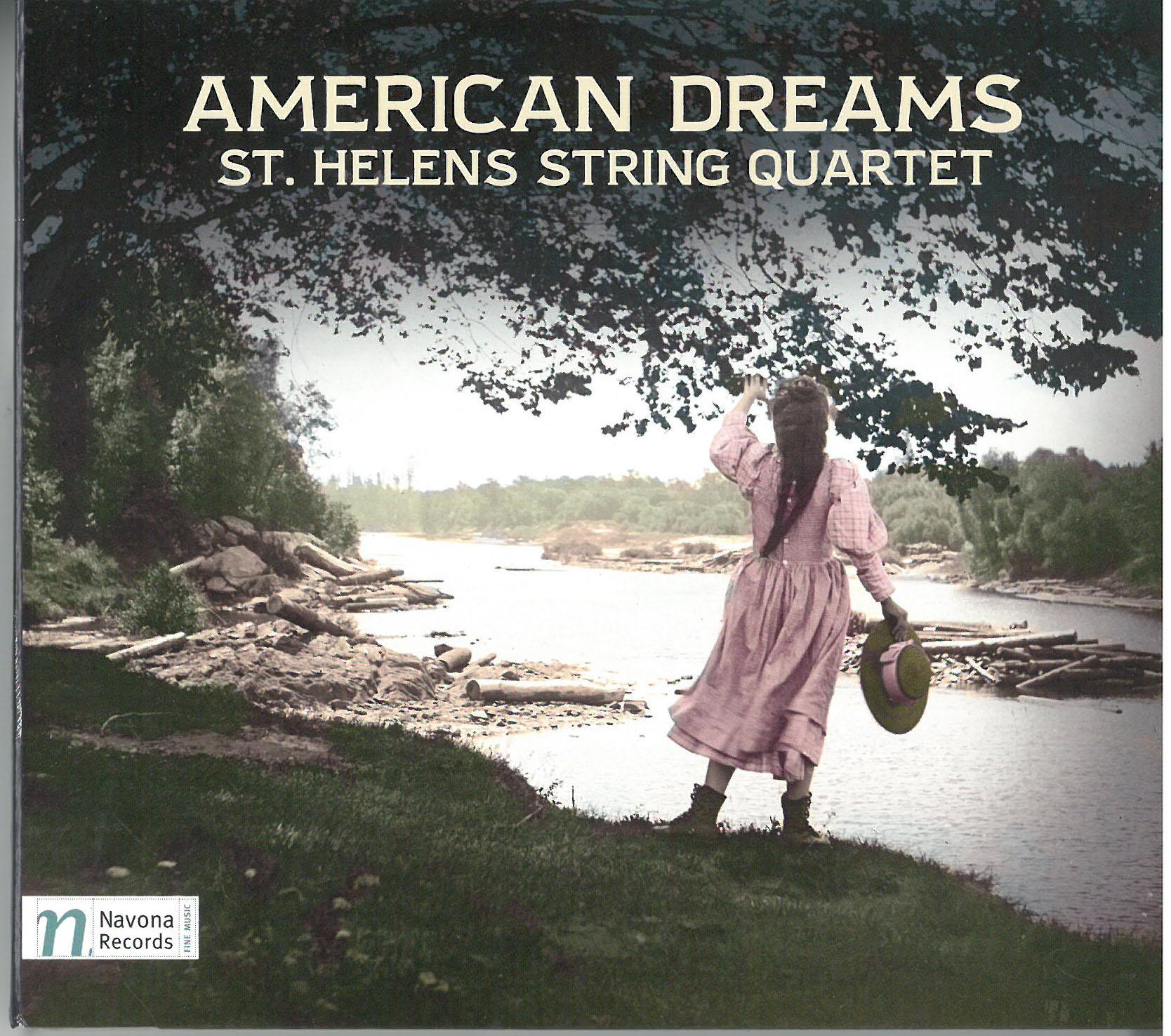
07 St Helens QuartetAmerican Dreams is the title of a lovely new CD from the St. Helens String Quartet (Navona Records NV6004) as well as the subtitle of the opening work, Peter Schickele’s String Quartet No.1 from 1983.

Schickele, who turned 80 this year, has enjoyed a long career as a composer and performer when not busy with his alter ego P.D.Q. Bach. This quartet, the major work on the CD, is beautifully written, moving in an arch from an Appalachian start through jazz, blues and fiddle styles and a Navajo song back to the dulcimer-like Appalachian tune from the opening.

Ken Benshoof (born 1933), Bern Herbolsheimer (born 1948) and Janice Giteck (born1946) are the other composers, represented by a variety of short works. Benshoof’s Swing Low from 2004 is eight views of the famous spiritual, and his Remember is a nostalgic sketch from 1977. His Diversions from 2005 – six pieces in various moods, including Blue Grass and Raggedy Blues – are for violin and piano, with pianist Lisa Bergman providing the accompaniment.

Botanas, Herbolsheimer’s five-movement work from 2008, is named for the appetizers served in Mexican bars and cafes. The two pieces by Giteck are Ricercare (Dream Upon Arrival) from 2012 and Where can one live safely, then? In surrender, written for the St. Helens Quartet in 2005. There is nothing here that is hard to assimilate, and a great deal that is thought-provoking and highly enjoyable. The playing throughout is warm and idiomatic, the recording quality excellent.
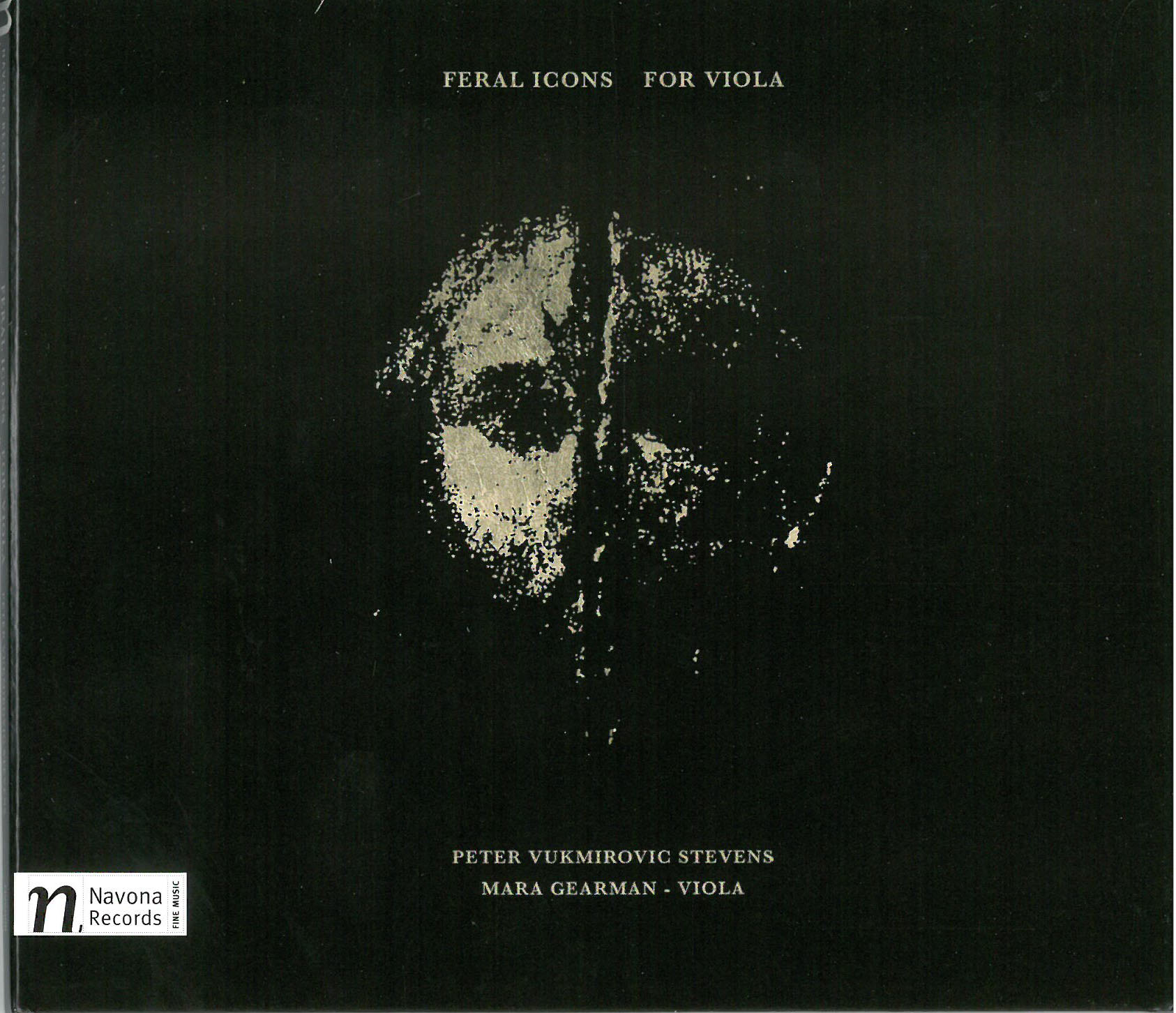
08 Feral Icons for Viola

Also from Navona Records is Feral Icons, a suite of six movements for solo viola by Peter Vukmirovic Stevens performed by Mara Gearman (NV6008). The work was written for Gearman in 2013-14, and according to the very sparse booklet notes employs Stevens’ signature sound of extended tonality and isometric rhythms.

To be honest, I’m not quite sure what that means in this particular context. We’re told that Stevens, who studied with Bern Herbolsheimer among others, has a compositional approach that strips away the extraneous to reveal simplicity, and certainly the writing here seems to be mostly tonal and quite accessible, with a fairly standard use of the instrument. There’s not a great deal of dynamic, rhythmic or tonal range though, and Gearman’s vibrato never seems to vary much. Still, she’s more than up to any technical challenges the work presents.
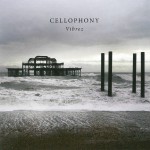
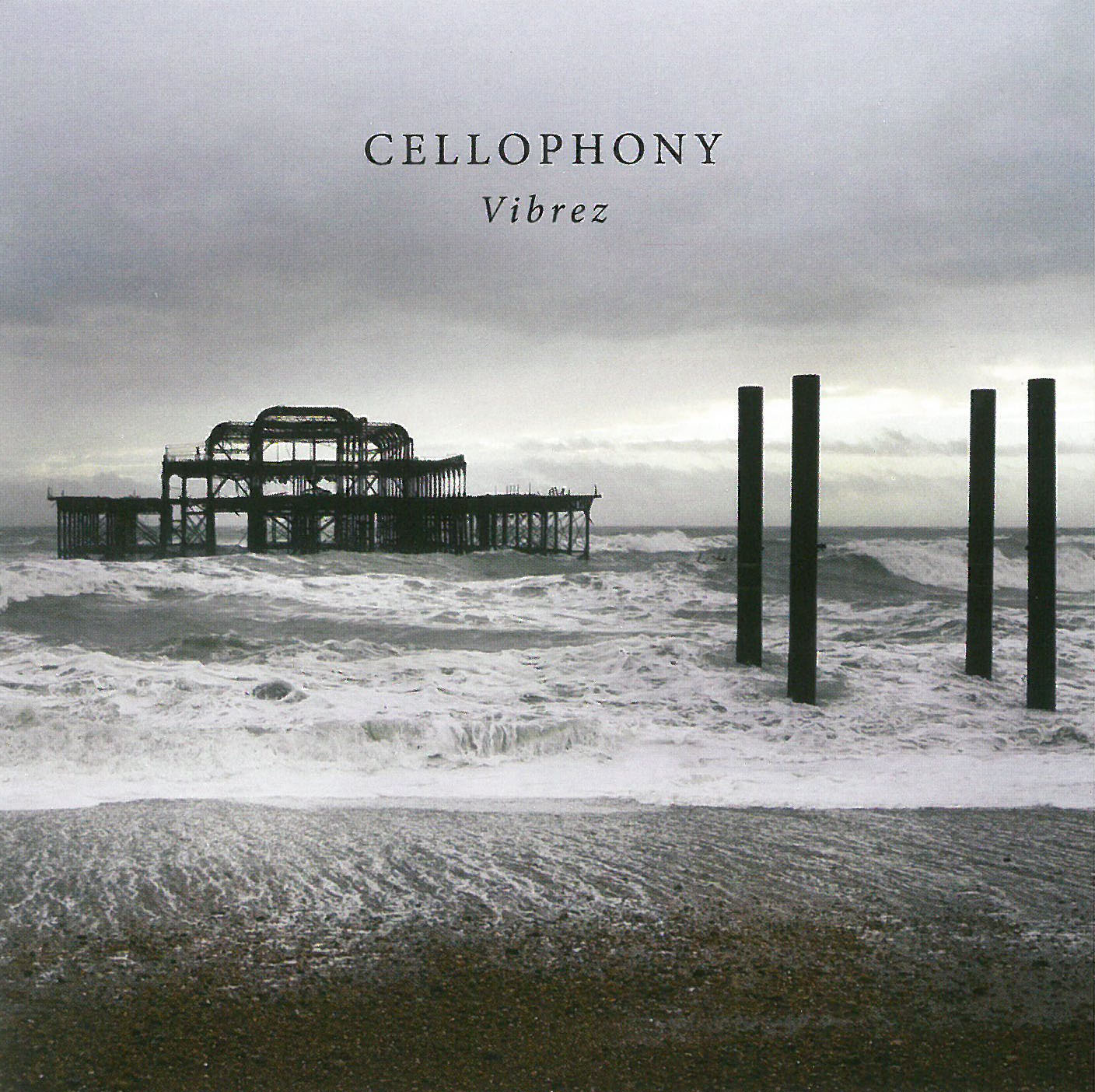
09 CellophonyJudging by the number of cello ensembles around these days, cellists must love company. Vibrez is the first release on the UK’s Edition Classics label by the London-based cello octet Cellophony (EDN1047), featuring a program of nine arrangements by octet member Richard Birchall and one original composition. The eclectic list includes Wagner’s Prelude to Act 1 of Tristan und Isolde, three Schubert songs, Liszt’s La Lugubre Gondola, Wieniawski’s Scherzo-Tarantelle (in a particularly dazzling performance), Mendelssohn’s Ave Maria, a Bach Prelude and Barber’s Adagio Op.11, the famousAdagio for Strings.” The original composition Violoncelles, Vibrez! by the contemporary Italian composer and cellist Giovanni Sollima completes a charming and entertaining disc.
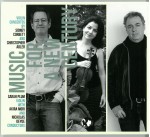
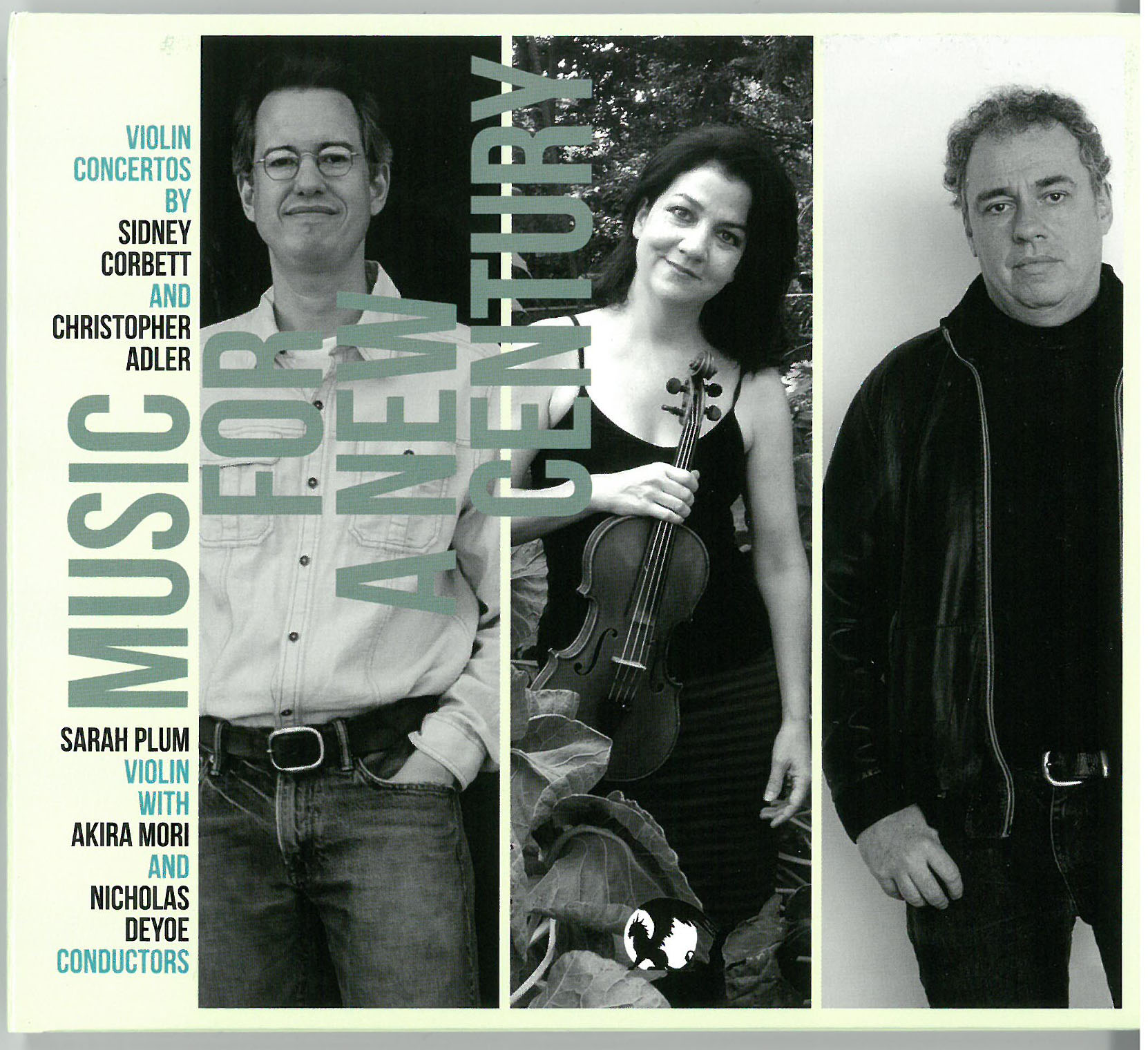
10 Sarah PlumMusic for a New Century is a new and intriguing CD of Violin Concertos by the American composers Sidney Corbett and Christopher Adler, performed by Sarah Plum (Blue Griffin Recording BGR371).

The Chamber Music Midwest Festival Orchestra under Akira Mori joins Plum in a live recording of Corbett’s Yaël at its June 5, 2011 North American premiere in Wisconsin, while Nicholas Deyoe conducts San Diego New Music in the world premiere of the Adler concerto, commissioned by Plum specifically to pair with the Corbett on this CD release.

While both works are clearly very strong neither is an easy first listen, with a good deal of unrelenting toughness that tends to act like a suit of emotional armour, keeping you at bay. Plum, however, calls them “beautiful, original and quite striking,” and says that she is “confident that they will enter the repertoire and be played for many years to come.” I really hope she’s right, but I won’t be putting any money on it; these are works that are not immediately audience friendly in the traditional sense, even on repeated hearings, and might prove difficult to program.

Mind you, it’s difficult to imagine a better flag bearer for them than Sarah Plum, who is quite brilliant here, or better performances or recordings. This is still an indispensable addition to the contemporary American violin concerto discography.


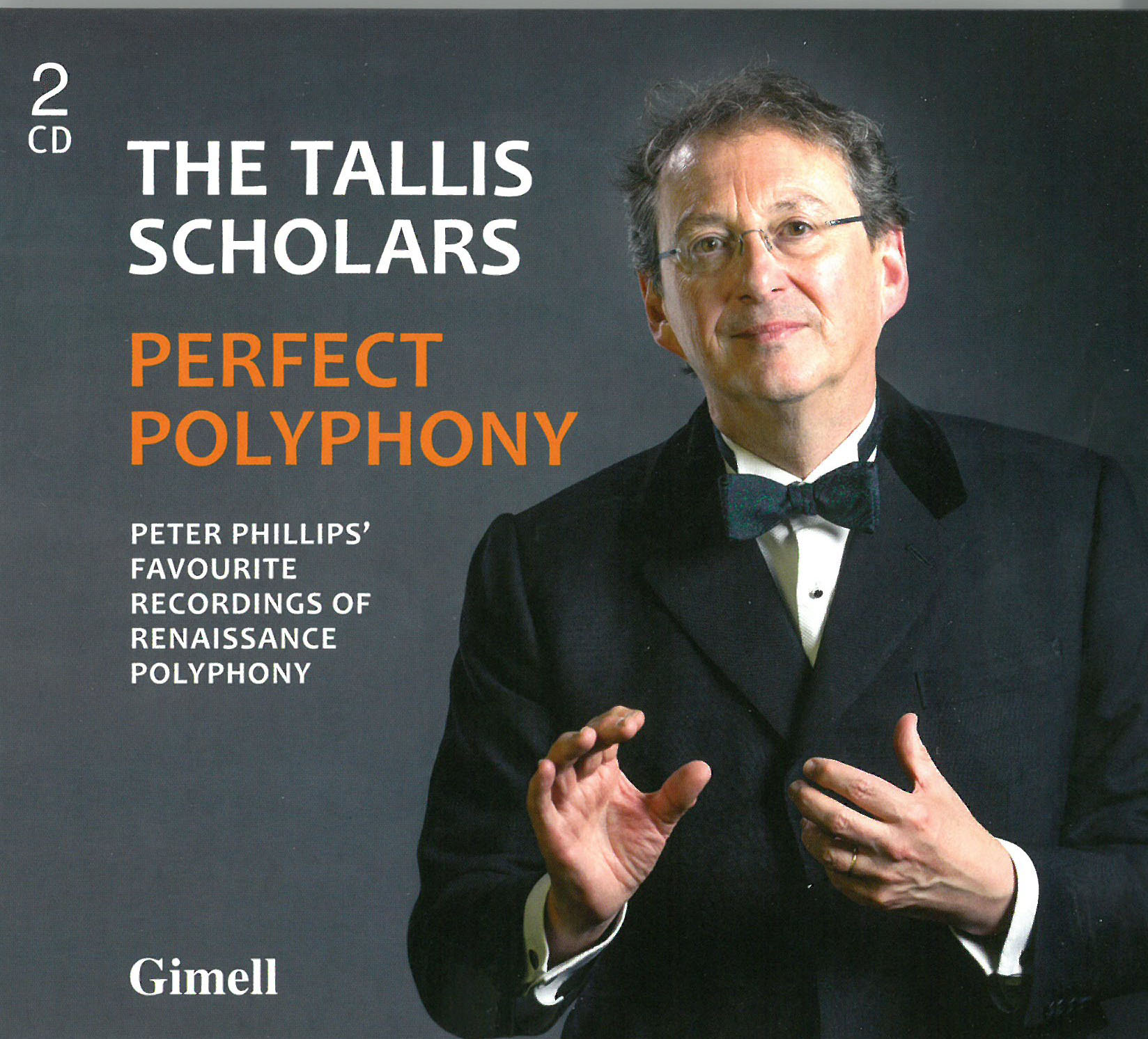
01 Tallis ScholarsPerfect Polyphony – Peter Phillips’ Favourites
Tallis Scholars
Gimell CDGIM 213

Coming up to 2000 concerts and 56 albums, director Peter Phillips has chosen to celebrate the Tallis Scholars by compiling his favourite recordings from 40 years of their stellar performances of Renaissance polyphony. Appropriately, the disc begins with Palestrina’s Missa Papae Marcelli, which also happens to be the very first piece the group ever recorded, and is followed by a lovely 1987 recording of Victoria’s Versa est in luctum. Tackling Gesualdo’s intense and harmonically challenging Ave, dulcissima Maria highlights the high level of precision these singers can execute. Particularly moving are the two sets of Lamentations of Jeremiah by Thomas Tallis, with Brumel and Ferrabosco’s settings following. Repetition, however, is not an issue: each composer’s treatment (and selection of text) is quite different. The opening of Josquin’s Missa Ave maris stella is resplendent with purity of tone, particularly in the women’s voices, and is lovely in its canonic pursuit from start to finish. The Tallis Scholars’ perfect intonation is enhanced by their uncanny ability to imbue the performance with meaning and beauty, never departing from the true spiritual significance of these works.

Concert note: The Chamber Music Orillia Chamber Choir performs Palestrina’s Missa Papae Marcelli and works by Rachmaninoff, Fauré and Bach under Jeffrey Moellman’s direction on November 8, at St. James' Anglican Church, Orillia.

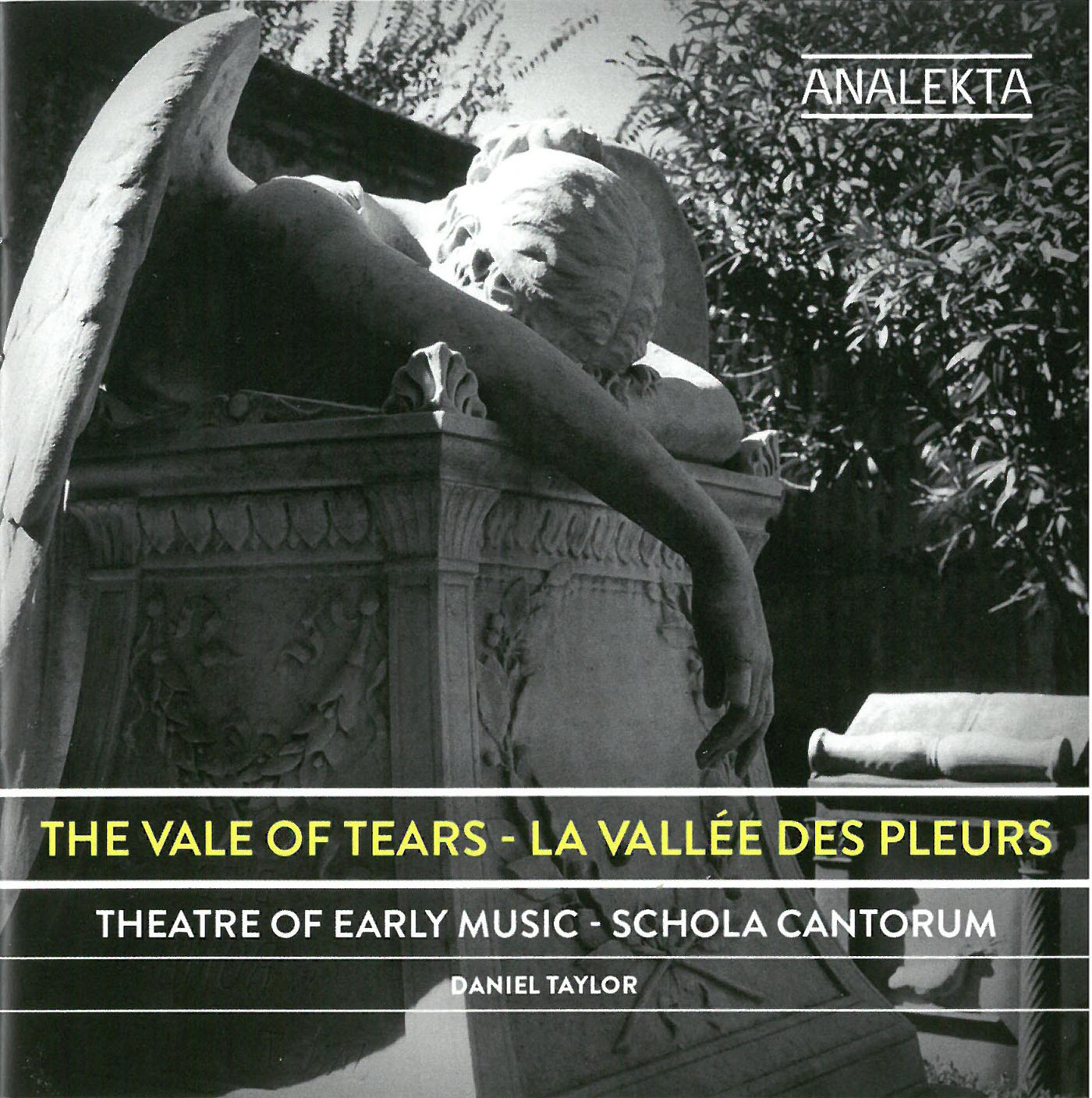
02 Vale of TearsThe Vale of Tears
Theatre of Early Music; Schola Cantorum; Daniel Taylor
Analekta AN 2 9144
Many years ago I discovered Heinrich Schütz’s funeral cantata, the Musikalische Exequien at an early music workshop in Amherst, Massachusetts. I am not exaggerating when I say that this was one of the most stunning musical experiences which have come my way. The week ended with a performance which was recorded. Naturally I rushed out to obtain the tape. It proved truly awful. Fortunately I discovered a fine professional performance conducted by Hans-Martin Linde on LP (it never made it to CD). Since then there have been others. I do not myself care for the very extroverted disc conducted by John Eliot Gardiner (Archiv) but there is a superb rendering by Vox Luminis on Ricercar, conducted by Lionel Meunier, who is also one of the bass soloists.

I am not going to claim that this new recording led by Daniel Taylor is even better, but it certainly runs close. It gets off to a very good start with the Intonation sung by Rufus Müller, who is terrific throughout. The singing is very fine and besides Müller I very much enjoyed the soprano soloists, Agnes Zsigovics and Ellen McAteer. The CD also contains two short movements from a mass by Michael Praetorius as well as a cantata by Bach (O heiliges Geist- und Wasserbad, BWV165). That cantata has a solo quartet consisting of Zsigovics, Müller, Daniel Taylor (alto) and Alexander Dobson (baritone). They are very good as are some of the obbligato players, notably the violinist Cristina Zacharias and the cellist Christina Mahler. Highly recommended.

Concert note: The Theatre of Early Music Choir and Students of the Schola Cantorum led by Daniel Taylor, are featured in The Lamb: An A Cappella Christmas Concert at Walter Hall, Edward Johnson Building, University of Toronto, on November 29.

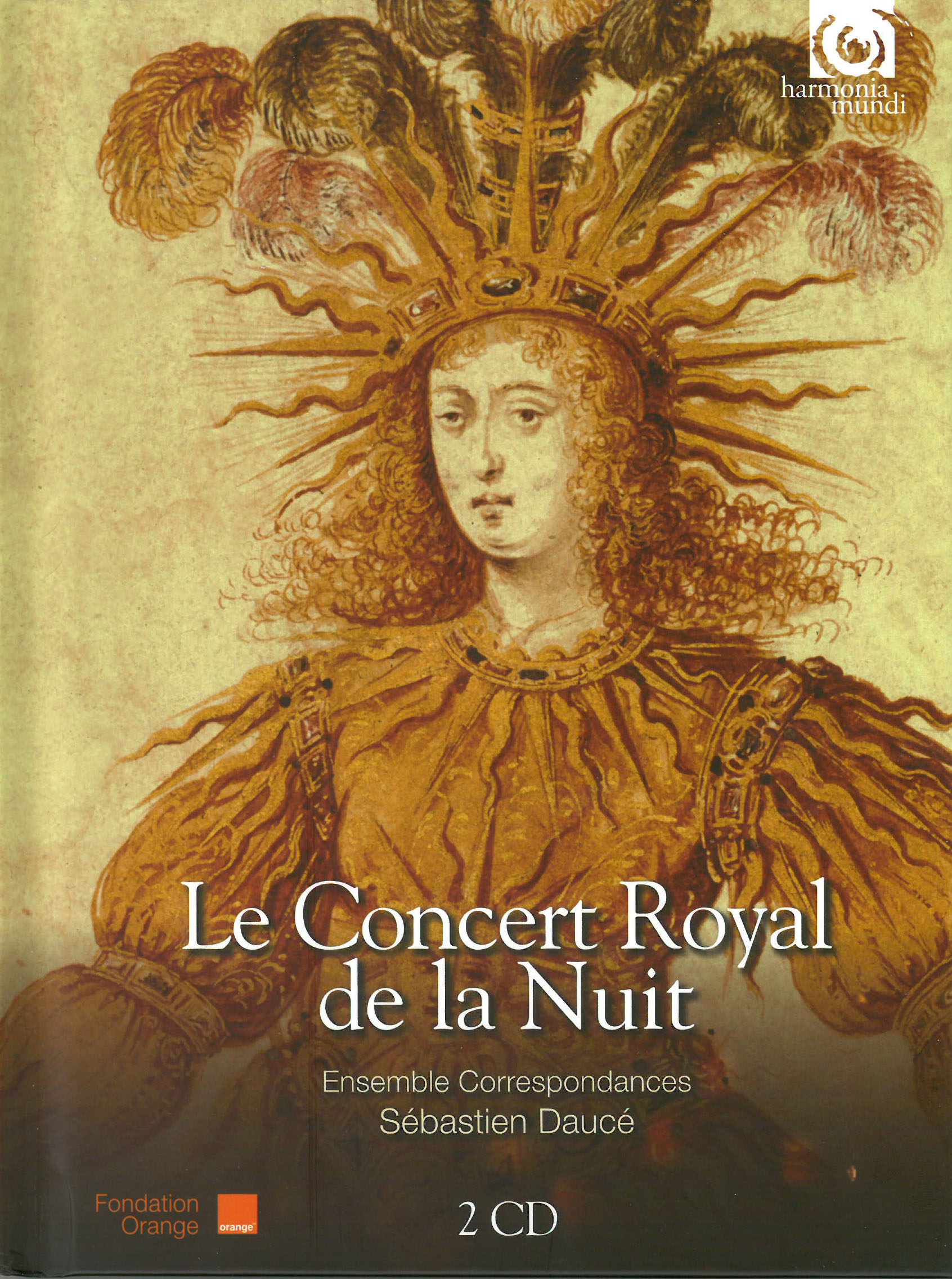
03 Concert Royal de la NuitLe Concert Royal de la Nuit
Ensemble Correspondances; Sébastien Daucé
harmonia mundi HMC 952223.24

The ballet Le Concert Royal de la Nuit was first performed in 1653. It can be seen as an act of homage to the young French king, the then 15-year old Louis XIV, who also danced the main part, that of the rising sun. A complete list of the performers has survived: it includes 24 princes and aristocrats, four courtiers and five children. We know that the author of the text was Isaac de Benserade. Jean de Cambefort was the most prominent composer of the music. The vocal music has been preserved but the instrumental music is based on a copy by Philidor, made half a century after the ballet’s performance. Philidor wrote out the top line and sometimes the bass line. It was left to the conductor, Sébastien Daucé, to reconstruct the implied but missing inner lines.

Often now record companies try to economize on the material provided. That is not the case here where the CDs come with a richly documented book of almost 200 pages that includes illustrations of the original performers and their costumes, illustrations taken from the material preserved at Waddesdon Manor in Buckinghamshire. In one of his notes, Daucé mentions that he had originally intended to create a complete reconstruction of the original ballet, but that was not feasible. Instead, we have here all the vocal music as well as 51 of the original 77 dance sequences. This music is juxtaposed with selections from two Italian operas written for Paris: Ercole amante by Francesco Cavalli and Orfeo by Luigi Rossi. These operatic sequences are written in a rather different idiom than that of the dance music but they go together surprisingly well. The record also contains some earlier airs by Antoine Boesset (who had died in 1643): these provide an interesting contrast with the slightly later dance music. The music requires large forces to do it justice: I counted 16 singers and 34 instrumentalists. Everything is beautifully done.

Back to top