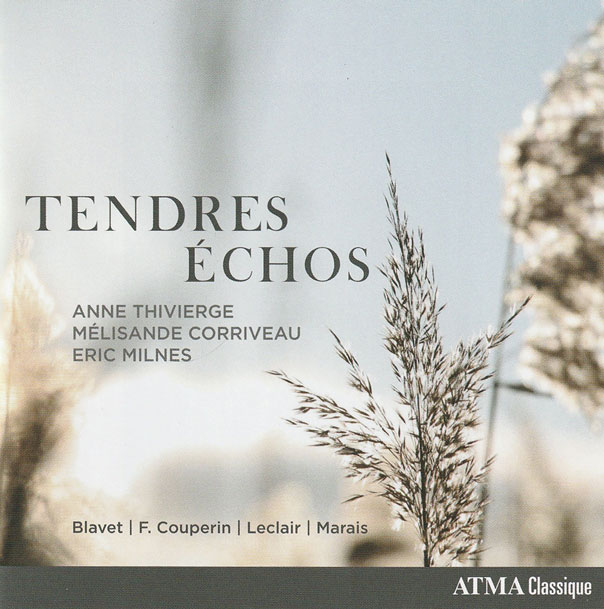
02 Tendres EchoesTendres échos
Anne Thivierge; Mélisande Corriveau; Eric Milnes
ATMA ACD2 2871 (atmaclassique.com/en)

Flutist Anne Thivierge, viola de gambist Mélisande Corriveau and harpsichordist Eric Milnes, playing period instruments, bring works from François Couperin’s Concert Royal No 2 for Flute and Continuo in D Major and Minor and the Pièces de clavecin, the 14th suite (of 27) from his book Ordres to life – together with works by Marin Marais, Michel Blavet and Jean-Marie Leclair.

Couperin’s work is marked by expressiveness enhanced by rich ornamentation, which – unusual for the time – is never left to the discretion of the performer, but always precisely specified. Here he adopts what came to be called style brisé (broken style) in which the notes of the chord are not all played together, but one after the other (originally in imitation of lutists).

Marais, who studied with Jean-Baptiste Lully, had come under the latter’s development of a style that melded the French and the Italian (of Corelli). Marais’ Pièce for Viola de gamba and Continuo Suite No.1 in D Minor soars in its rhapsodic La follette movement and ends with the soulfully expressive Gigue La favorite.

On Blavet’s Sonata for Flute and Continuo in D Minor Op.2 No.2, the flute is clean and vibrant, the continuo gently sympathetic, as the musicians immerse themselves in the music’s warm beauty. An alert sense of rhetoric is evident in the intricately wrought, magical performance of Leclair’s Trio Sonata for Flute, Viola de gamba and Continuo in D Major.

Listen to 'Tendres échos' Now in the Listening Room

03 Boulder BachBoulder Bach Festival
Boulder Bach Festival; Zachary Carrettin
Sono Luminus DSL-02265 (sonoluminus.com)

Recorded immediately after the 2022 Boulder Bach Festival, this disc contains several of the highlights featured in that year’s performances, including Bach’s Concerto for two violins, BWV 1043, and the magnificent Concerto for harpsichord, BWV 1052, as well as two vocal works by Johann Christoph Bach. 

For early music aficionados, what makes this recording most interesting is that these works are performed on modern instruments – apart from the harpsichord, of course – with period-based nuances such as using a Baroque bow for the double bass, or a classical bow on a viola, added at the discretion of the performer. By making these decisions by ear, rather than adherence to convention and 20th-century tradition, the musicians tailored their sound to the overall interpretation, producing a result that is more forthcoming and strident than period instruments, but with the shapes and phrasings that listeners have come to expect. 

These interpretations portray Bach at his most dramatic and invigorating, with performances that are full of energy and joy. The Concerto for two violins is serious yet playful, abounding with communicativeness and ample musical dialogue between the soloists and orchestra. The Concerto for harpsichord, always serious, is imbued with a lightness and grace that keeps it from becoming funereal, but it is also played deliberately enough that it contains all the gravity demanded of it.

The vocal works by J.S. Bach’s older cousin Johann Christoph Bach (1642-1703) – not to be confused with J.S. Bach’s uncle, who had the same name and introduced J.S. to the organ, or J.S.’ eldest brother who also had the same name and mentored J.S. after his parents died – are beautiful in their simplicity, and a fine contrast to the density of Johann Sebastian’s musical vernacular. With two excellent performances of two of Bach’s finest concertos, this disc is not one to be overlooked, and is an excellent testament to the talent present at the Boulder Bach Festival.

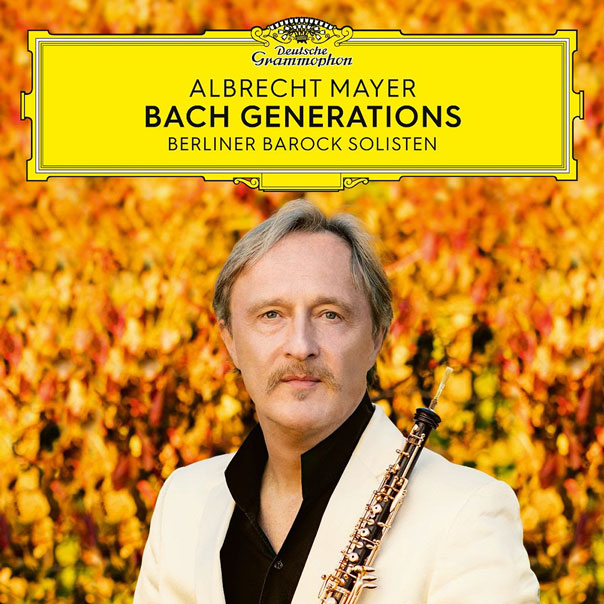
04 Bach GenerationsBach Generations
Albrecht Mayer; Berliner Barock Solisten
Deutsche Grammophon 486 4183 (store.deutschegrammophon.com/p50-a157976/albrecht-mayer)

Curated by oboist, Albrecht Mayer, Bach Generations is the latest in a series of portrait albums featuring the Bach family. Beginning the incredible legacy, Johann Sebastian’s early musical influences began with his father who played the violin and extended to his father’s first cousin, composer Johann Christoph.  Johann Sebastian went on to become one of the most prolific composers of all time, teaching all ten* of his children music with four of them becoming notable composers. Each of these composer sons had their own style and relationship to their father’s music. This album showcases three generations of the Bach family with music by JS Bach’s uncle, Johann Christoph, Johann Sebastian himself as well as two of his sons, Carl Philipp Emanuel and Johann Christoph Friedrich Bach. 

Bach Generations opens with the JS’s Concerto for Oboe d’amore which is best known today as the Harpsichord Concerto No.4 in A Major. Following this beautiful work are transcriptions of concertos by Carl Philipp Emanuel and Johann Christoph Friedrich, a Badinerie and Air from Johann Sebastian’s Orchestral Suites Nos.2 and 3, as well as a Bach family favourite, Gottfried Heinrich Stölzel’s Bist du bei mir. Concluding with Ach, dass ich Wassers g’nug hätte by Johann Christoph Bach, Mayer ties in the third generation of the Bach family legacy with this lovely transcription for English horn, solo violin, strings, and continuo.

Played with Berliner Barock Solisten in traditional Baroque style, Mayer elegantly performs these works on modern instruments. With his rounded tone, expressive playing and virtuosity on the oboe, oboe d’amore and English horn, he showcases the beauty of expression throughout the Bach generations.

05 Beethoven Concertos OhlssonThe Complete Beethoven Piano Concertos
Garrick Ohlsson; Grand Teton Music Festival Orchestra; Sir Donald Runnicles
Reference Recordings FR-751SACD (gtmf.org/beethoven-piano-concertos-recording)

Ludwig van Beethoven’s five piano concertos are monumental contributions to the Western Art Music canon, providing an overview of musical evolution through masterful compositions that have remained in the core repertory for over two centuries. Always an innovator and disruptor of established trends, these works trace Beethoven’s progression from traditional forms to increasingly original ones. For example, Beethoven’s Fifth Concerto, the “Emperor” begins with a piano-centric cadenza at a time when it was customary for the orchestra to play a lengthy introduction. Although this seems like a mildly interesting break from convention in the 21st century, such re-inventions were edge-of-your-seat moments for Beethoven’s audience. 

Recorded during live performances at the 2022 Grand Teton Music Festival, located near Wyoming’s Rocky Mountain range, this complete set of Beethoven concertos features the festival’s orchestra conducted by the renowned Sir Donald Runnicles and pianist Garrick Ohlsson, a student of the late Claudio Arrau. This collection is decidedly level-headed, providing consistently reliable results, but also limiting the impact of climactic moments. These interpretations are charming, but perhaps lack the precipitousness and risk-taking that is required to turn them into something beautiful and breathtaking.

Despite its overall conservatism, there are some striking moments on this disc, including the glorious Adagio from the fifth concerto, in which the balance between winds and strings is notable, particularly for a live recording. Performing the complete set of Beethoven’s piano concertos is an expansive and impressive task, and this collection is well-suited for those seeking an all-encompassing survey of these magnificent works.

06 Helene GrimaudFor Clara
Hélène Grimaud; Konstantin Krimmel
Deutsche Grammophon (deutschegrammophon.com/en/artists/helenegrimaud)

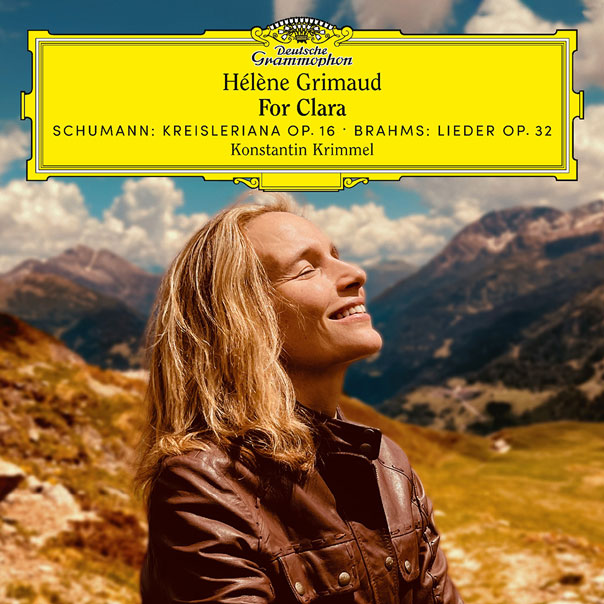
“Imagine, since my last letter I have again an entire volume of new things ready. I shall call it Kreisleriana. My music seems to me to be wonderfully entwined, for all its simplicity.” So wrote Robert Schumann to his wife Clara in April 1838 regarding the set of eight pieces which he named after a fictious character created by E.T.A. Hoffmann. Dedicating the collection to Chopin, it became one his most renowned compositions and is featured on this splendid DG recording titled For Clara together with the three Intermezzi Op.117 and the set of Lieder und Gesange Op.32 by Brahms performed by pianist Hélène Grimaud with baritone Konstantin Krimmel. 

The French-born pianist refers to Schumann as “the most literary of composers” and she returns to his music having previously recorded Kreisleriana in 2009 and the Piano Concerto in 2022. Not surprisingly, her performance is subline. The first, third and seventh in the set display a flawless technique while the neverending changes in mood throughout are treated with a stylish sensitivity.

The three Intermezzi by Brahms from 1892 are quietly introspective, each one of a deeply personal character. These autumnal works were among the last the composer wrote and Grimaud approaches the score with a delicate poignancy.

With their themes of loss and disillusionment, the set of nine Lieder und Gesange written in 1864 with texts by Georg Friedrich Daumer and August von Platen may seem a dark choice for these challenging times. Nevertheless, Grimaud and Krimmel are a formidable pairing, with Krimmel’s warm tone and fine diction together with Grimaud’s sympathetic partnership resulting in a most satisfying performance. Bravo to both artists – Robert, Clara and Johannes would all have been pleased!

07 Haochen Zhang LisztFranz Liszt – Transcendental Etudes
Haochen Zhang
BIS BIS-2681 (bis.se)

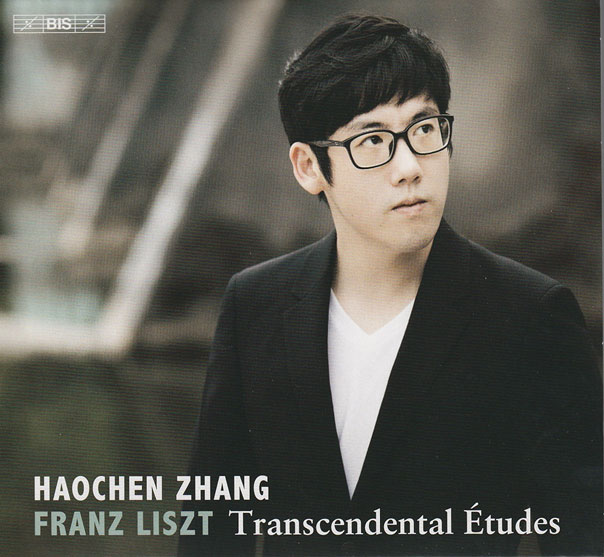
Liszt’s 12 Études d’exécution trancendante (or Transcendental Etudes) comprise perhaps the greatest documents of musical Romanticism, a high watermark in the history of the piano, amounting to nothing less than the creation of modern keyboard technique. That Haochen Zhang has even attempted these studies is a testament as much to his audacity as it is to the unbridled virtuosity that he displays in his performance of them. 

These studies teem with such outrageous difficulties that, in their day (1831) they were the most difficult works for the piano; even now there’s but a handful of pianists who can play them authoritatively. Lazar Berman’s (Melodiya, 1963), Boris Berezovsky’s (TELDEC, 1996) and Leslie Howard’s (Hyperion, 2016) have always been considered benchmark recordings. 

We must add Zhang’s exquisite recording to this short list. To play these works at all requires a formidable technique; to play them so as to convey their poetry rather than the effort required to play them is a gift afforded to very few. Clearly Zheng is one of those. 

Throughout the performance of the 12 studies Zheng displays technical prowess to deal with the pyrotechnics required of a stellar performance of the works. He rises above mere gratuitous display of pianism to reach a plateau of intense emotional conviction – especially in the first four etudes. Moreover, he also knows how to enter the introspective core of such pieces as the beautiful Ricordanza and Harmonies du soir.

08 Saint SaensSaint-Saëns – Complete Symphonies
Malmo Symphony Orchestra; Marc Soustrot
Naxos 8.503301 (naxos.com/CatalogueDetail/?id=8.503301)

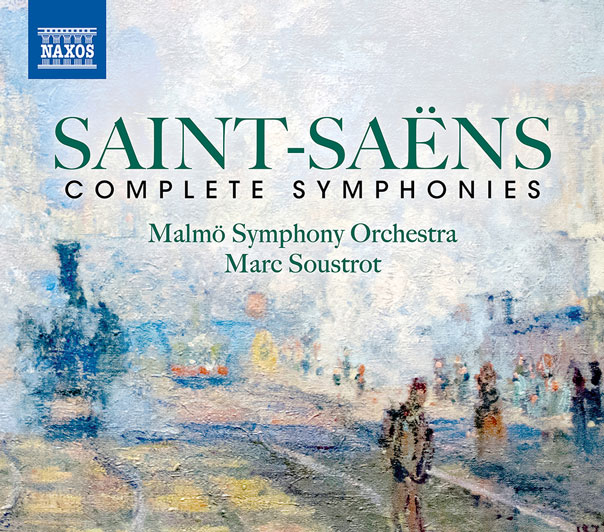
Anyone trying to dismiss Camille Saint-Saëns as a minor composer and pushing him to the sidelines would be surprised hearing this already much praised new set of his complete symphonic output. The conductor is Marc Soustrot a highly accomplished French musician, specialist in French Romanticism and he puts his heart and soul into these performances. The Swedish orchestra follows him every inch of the way and with HD sound this set becomes a clear first choice.

I have always been fond of this tremendously talented French composer/pianist who had a long productive life from the mid 19th into early 20th century. The fondness I mentioned originated when my father took me to the first concert of my life at age seven right after the War. The program started with Danse Macabre and my dad explained to me the story of the ghosts and the skeletons, the midnight bells, the devil’s violin solo and the final rooster call.... Wow!  I also became quite addicted to the Carnival of the Animals.

Saint-Saëns was a child prodigy and wrote a symphony when he was 15 but was cautious like Brahms and didn’t give it a number. He called it Symphony in A Major and it is a tribute to Mozart. It’s a charming work, quite expertly written; it is interesting that he used the same four notes (C, D, F, E) Mozart used to build the last magnificent contrapuntal movement of the Jupiter Symphony.

His numbered symphonies began two years later with No.1 in E-flat Major and I found it thoroughly enjoyable. It has a gorgeous second movement (March, Scherzo) with a melody one wants to sing along with while the Adagio has a long, sustained clarinet solo, so enchanting I wished it would never end. To top it, the Finale even has a military band that sounds like a Napoleonic march. This is French Empire music. In fact, the symphonies were admired by Berlioz and Gounod.

After a competition entry symphony, again without a number, Urbs Roma (now almost never played) the boy keeps honing his skills with the Second Symphony, already a mature work with an energetic, syncopated fugue and an elegant presto, a somewhat Italianate finale where the influence of Mendelssohn is noticeable.

However, the best is yet to come. 

It is so interesting that in many a composer’s career there is a sudden qualitative leap, a divine inspiration that produces a work so superior to and unlike what has been written before. Such a work is the magnificent Third Symphony in C Minor. It’s a masterpiece of the first order, highly innovative with an organ and two pianos added. Much recorded by the greats, it’s always a highlight in the concert hall. There is a cyclical theme (à la Liszt) which underlines the structure, is capable of many transformations and keeps everything together. The first movement is exciting with the cyclical theme in restless, constant motion while the second movement simply glows with religious piety with the wonderful support by the organ. The tempo picks up in the incisive Scherzo where the two pianos are added. After a suspenseful Transition an explosion ff of the organ is very effective. The symphony ends triumphantly with a final accelerando and a long-reverberated organ note.

As an added bonus, this fascinating set also contains the four inspired and atmospheric symphonic poems, including my old friend the Danse Macabre and three others all inspired by Greek mythology.

09 Rachmaninoff YN SSergei Rachmaninoff – Symphonies 2 & 3; Isle of the Dead
Philadelphia Orchestra; Yannick Nézet-Séguin
Deutsche Grammophon 486 4775 (deutschegrammophon.com/en/catalogue/products/rachmaninoff-symphonies-nos-23-isle-of-the-dead-nezet-seguin-the-philadelphia-orchestra-13001)

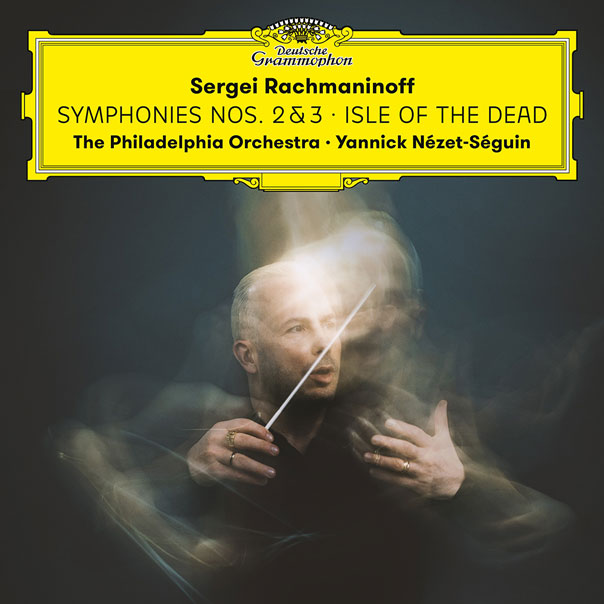
Mention the name Sergei Rachmaninoff today and the chances are that pianist Yuja Wang and her incandescent recordings of his work come to mind. Not this time, however, for what we have here is the enigmatic and towering figure of Yannick Nézet-Séguin conducting the mighty Philadelphia Orchestra. The result is a double disc featuring Symphonies Nos. 2 & 3 and Rachmaninoff’s first orchestral masterpiece Isle of The Dead, performed in all their solemn grandeur.

Symphony No.2 is a work of immense power and maturity. Its richness of themes makes it the most absorbing of the composer’s three symphonies. The penultimate Adagio is one of the greatest symphonic movements in Russian music. It becomes perilously sentimental in places, but its lush harmony and exquisite orchestration are so genuinely felt that you’ll forgive any excesses.

Symphony No.3 is very nearly as powerful; a great surge of orchestral energy follows the hushed Orthodox chant of the opening, and the singing interludes between the music’s recurring motifs are of Rachmaninoff’s most alluring kind.

The Isle of The Dead is an amazingly powerful piece, whose sepulchral air works its way insidiously into the memory.

Throughout the program Nézet-Séguin fires up the Philadelphia Orchestra to get into the guts of this extraordinary music. His sense of the passion and grand design of the works is non pareil. His interpretation is thrilling and he maintains a tight balance and responsive tempi throughout.

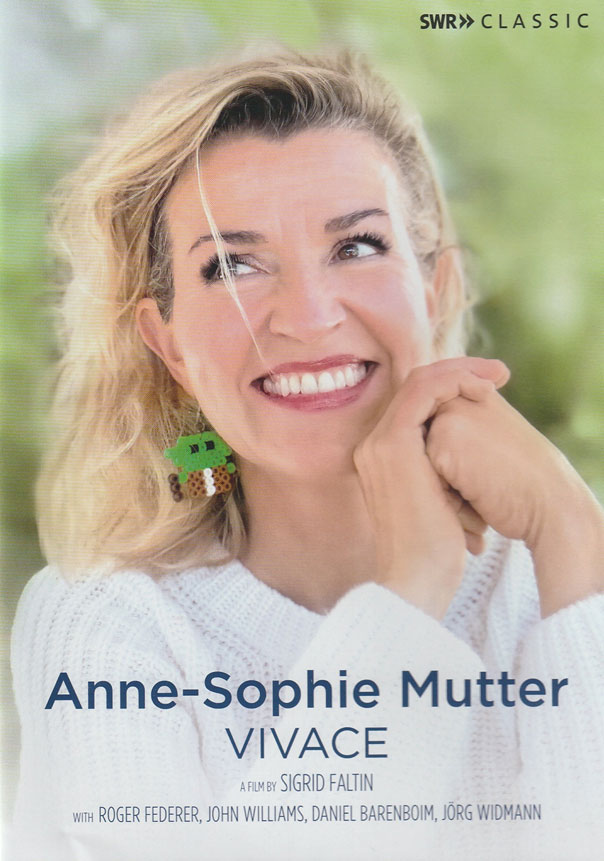
10 Anne Sophie MutterVivace – A Film by Sigrid Faltin
Anne-Sophie Mutter
SWR Classic SWR19132DVD (naxos.com/CatalogueDetail/?id=SWR19132DVD)

World-famous violinist Anne-Sophie Mutter is 60 years old, a widow of two illustrious beloved husbands, an avid tennis player (her icon is Roger Federer) and in terrific physical and psychical shape. So, when award-winning German filmmaker Sigrid Faltin decided to create a documentary about her she chose to portray Mutter in an outdoor Alpine setting, in a long mountain hike near Kitzbuhel, Austria walking side by side with the filmmaker and her little dachshund, talking spontaneously about anything that comes to mind.

The most important feature of the film is her place in society represented by a few of her favorite people, her friends. They area an eminent group including Federer, German composer Jörg Widmann, Daniel Barenboim, who conducted for her in Salzburg, celebrity composer/conductor John Williams who wrote a concerto for her, her accompanist Lambert Orkis and a magician from New York, Steve Cohen. Cohen performs a little magic trick of tearing up a dollar bill into little pieces, puts it into his mouth, takes it out, blows at it and it becomes whole again, perfectly intact. Wow!

In the film there are excerpts of her playing at various ages. She was a child prodigy and could play Paganini caprices at age five or a Hungarian Dance at breakneck speed. She was discovered by the legendary Herbert von Karajan and became his protégé. This gave an immense boost and catapulted her into world fame. Today she owns two priceless Stradivari violins and has given concerts all over the world, gathering many awards and decorations. Even played at the White House for Barack Obama. Her discography is simply astounding, mostly with DGG, but also with Sony and EMI. 

But fame didn’t spoil her. She is a passionate supporter of new music, introducing many new works and sharing her considerable fortune to help young musicians and many charities. Now she is touring the world with her own chamber group, Mutter Virtuosi, comprising amazing young string players. What a delight to listen to them. Her motto is FORWARD! It just about sums her up.

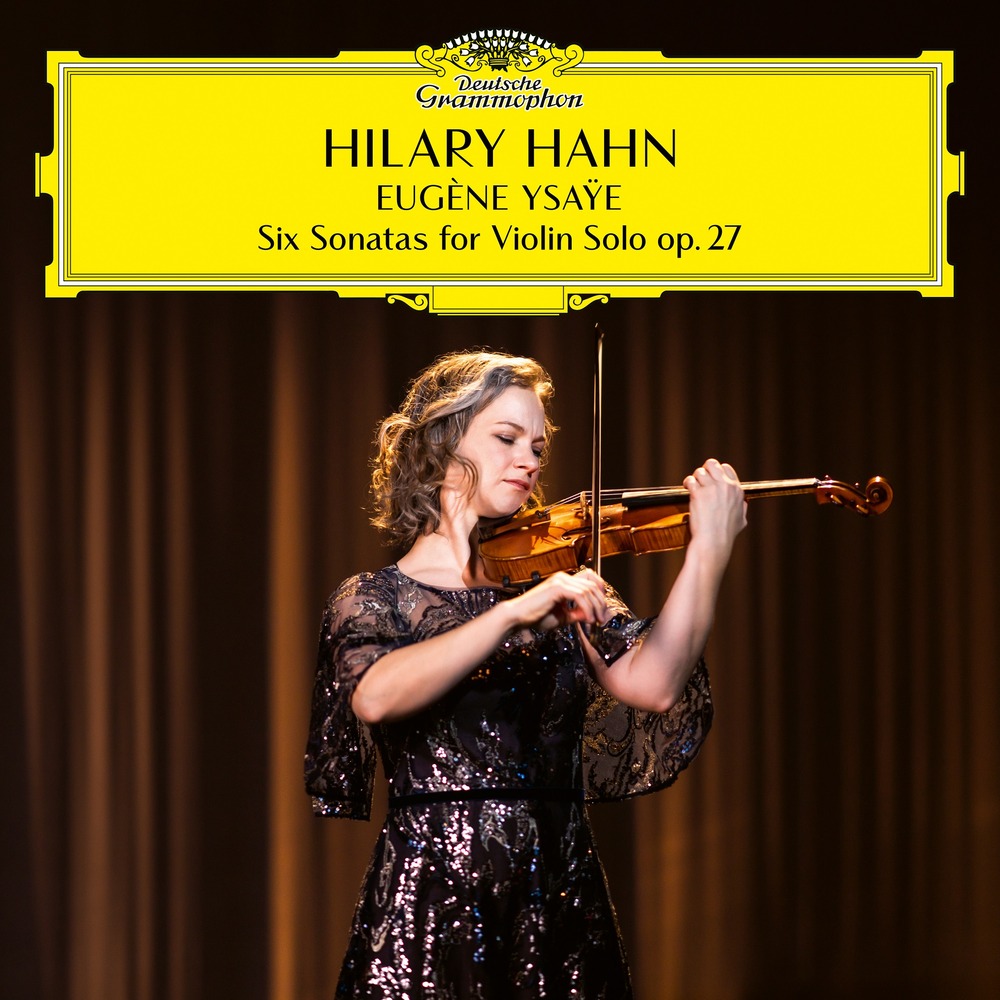
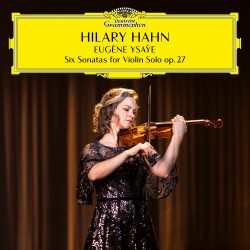
01 Hilary Hahn YsayeWith the July release of her new CD Eugène Ysaÿe Six Sonatas for Violin Solo Op.27 violinist Hilary Hahn celebrates the centenary of these remarkable and challenging works, each dedicated to a younger contemporary of the aging Belgian composer (Deutsche Grammophon 00028948641765 store.deutschegrammophon.com/p51-i0028948641765/hilary-hahn/eugene-ysa-e-six-sonatas-for-violin-solo-op-27/index.html).

The impetus for their composition was Ysaÿe’s experiencing a performance of Bach’s Sonatas and Partitas by the young Joseph Szigeti in 1923. Like the Bach cycle, the Ysaÿe set starts with a G-Minor work and ends with one in E Major. Szigeti is the dedicatee of the first; Jacques Thibaud, George Enescu, Fritz Kreisler, Mathieu Crickboom and Manuel Quiroga are the other five.

Hahn spent seven years studying at the Curtis Institute with Jascha Brodsky, the last living student of Ysaÿe, so has a direct link with these sonatas. As always, her playing is remarkably strong and quite brilliant, anchored by flawless technique and a profound musicality.  
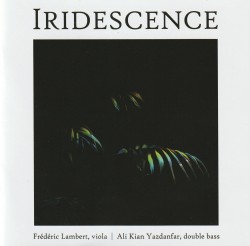
02 IridescenceThe reasoning behind the digital-only release from Leaf Music featuring Orchestre Symphonique Laval principal violist Fédéric Lambert and Orchestre Symphonique de Montréal principal double bassist Ali Kian Yazdanfar is that Iridescence – the variability in an object’s colour when you change the viewing angle – here refers to our viewing the two instruments from a different perspective (LM268 leaf-music.ca).

The duet works are Evan Chambers’ 1997 The Fisherstreet Duo, Efraín Oscher’s 2008 Escenas del Sur and the 2000 three-movement Duo for Viola and Double Bass by the Welsh composer Gareth Wood.

Each player has a solo piece, completely different in style and effect. Lambert’s is the quiet, contemplative in manus tuas, a 2009 work by Caroline Shaw based on a Thomas Tallis motet and originally written for solo cello, but Yazdanfar steals the show with the dazzling Thème Varié pour Contrebasse solo, a 1976 composition by Jean Françaix with variations built on trills, sixteenth notes, double stops, pizzicato and harmonics.
Listen to 'Iridescence' Now in the Listening Room

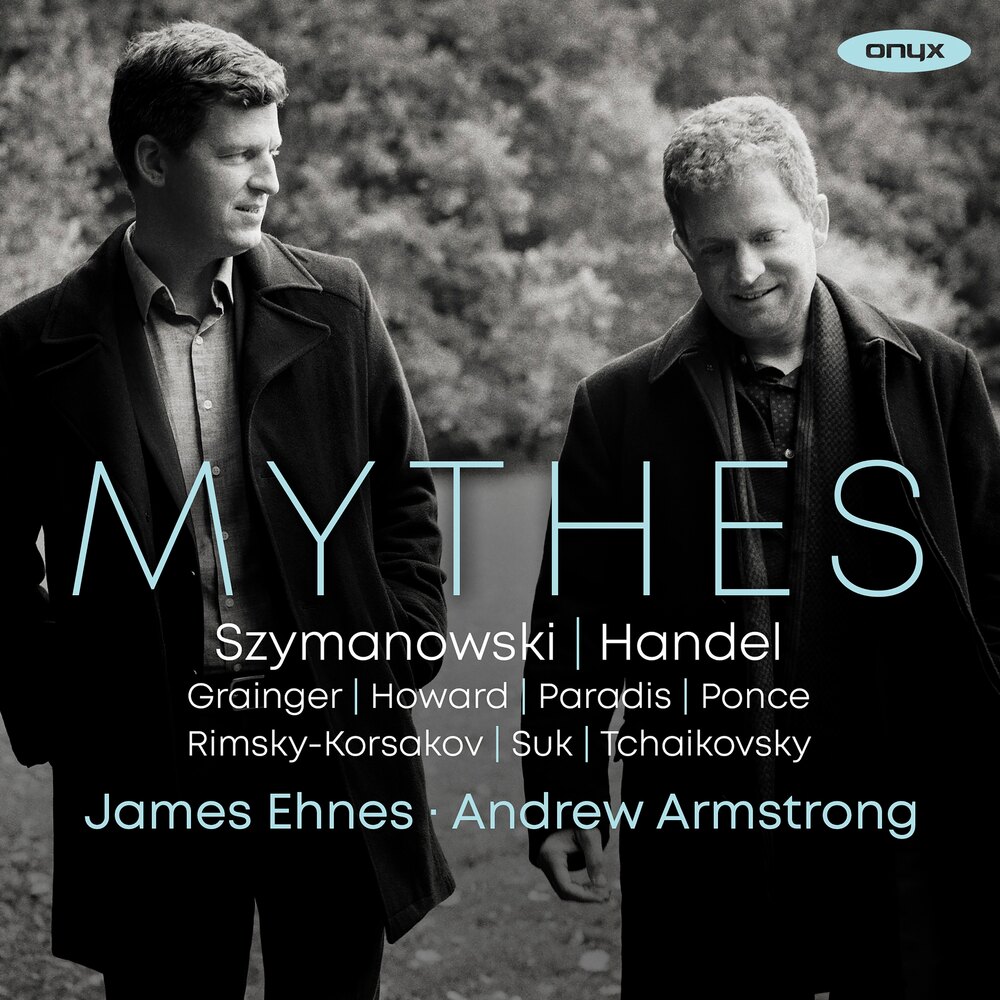
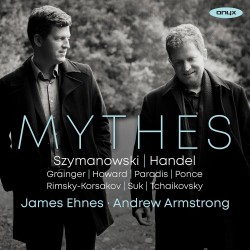
03 James Ehnes MythesI’m not sure exactly what the reasoning was behind the selection of works on Mythes, the latest CD from violinist James Ehnes and his regular pianist partner Andrew Armstrong, but there’s no doubting the quality of the recital of two major works and a series of encore pieces (ONYX4234 onyxclassics.com/release/james-ehnes-andrew-armstrong-mythes).

When Szymanowski wrote his Mythes Op.30 in 1915 he felt that he and the violinist Pavel Kochanski were developing a new mode of expression for the instrument. Certainly the three sensuous pieces are full of brilliantly coloured and nuanced violin effects, all superbly captured by Ehnes.

The original keyboard part for Handel’s Sonata in D Major HWV371 exists only as a figured bass line, with Armstrong here using a version that the duo has essentially adapted from various performing editions. A varied selection of seven encores completes the CD: Kreisler’s arrangements of a Tchaikovsky Chant sans paroles and Grainger’s Molly on the Shore; Heifetz’s arrangements of Rimsky-Korsakov’s Flight of the Bumblebee and Ponce’s Estrellita; James Newton Howard’s brief 133...At Least; Josef Suk’s Burleska; and the Sicilienne attributed to Maria Theresa von Paradis.
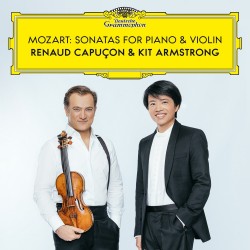
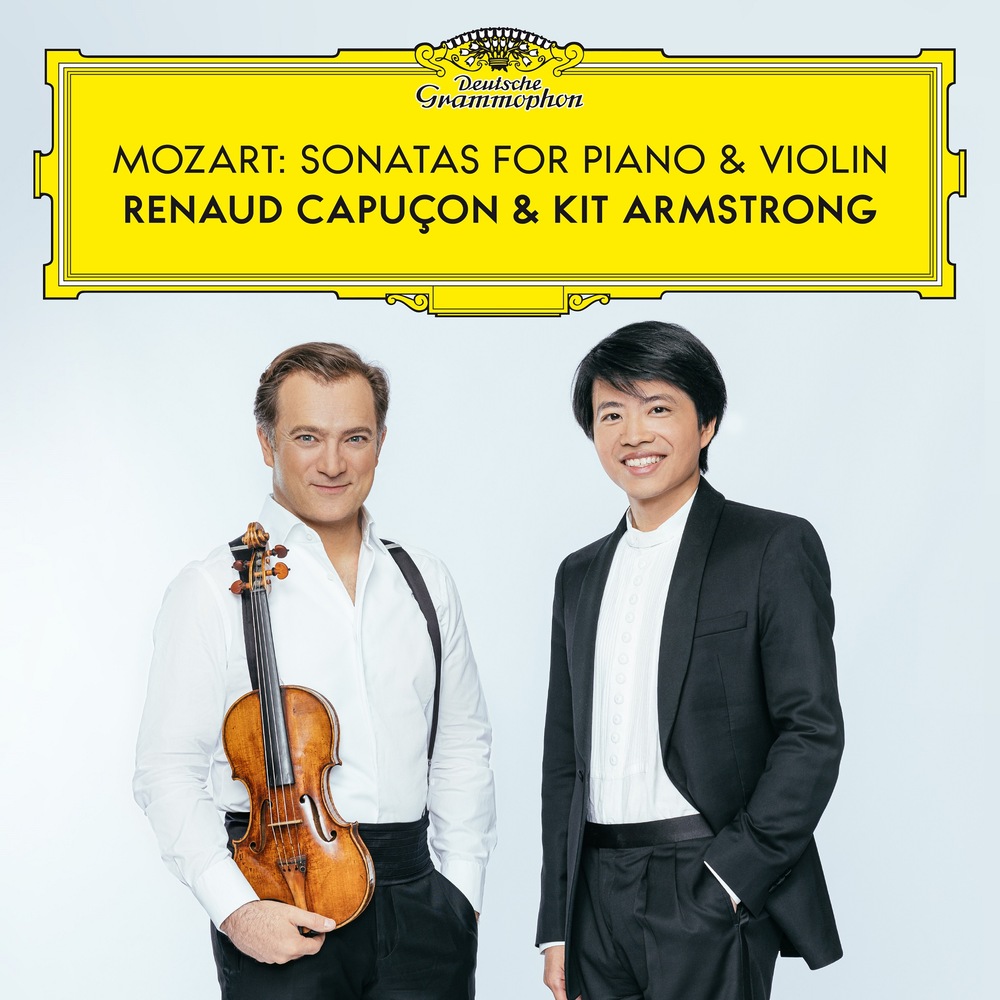
04 Mozart Capucon ArmstrongWhen pianist Kit Armstrong and violinist Renaud Capuçon played all 16 of the mature Mozart violin sonatas at the Mozart Week festival in Salzburg in 2016 Capuçon says that they “knew at once that we wanted to record them.” The result is the outstanding four CD box set of Mozart: Sonatas for Piano & Violin, works that mark Mozart’s development of the genre from keyboard sonatas with violin accompaniment to the fully fledged violin sonatas of the nineteenth century. The 12 Variations in G Major on “La bergère Célimène K359 and the 6 Variations in G Minor on “Hélas! j’ai perdu mon amant” K360 complete disc two (Deutsche Grammophon 486 4463 deutschegrammophon.com/en/catalogue/products/mozart-sonatas-for-piano-violin-capucon-armstrong-12981).

Armstrong’s booklet note perfectly describes their approach and the result: “However, we did not historicize in our playing: on the contrary, it was particularly rewarding to see beauties brought forth by later techniques blossom in Mozart’s music. When I hear Renaud render Mozart’s lyrical flights with all the sumptuousness and refinement that modern violin playing can have, I am convinced: it is beautiful, and that is what matters.”  
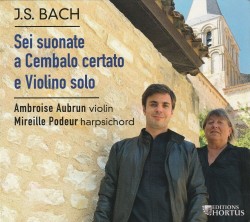
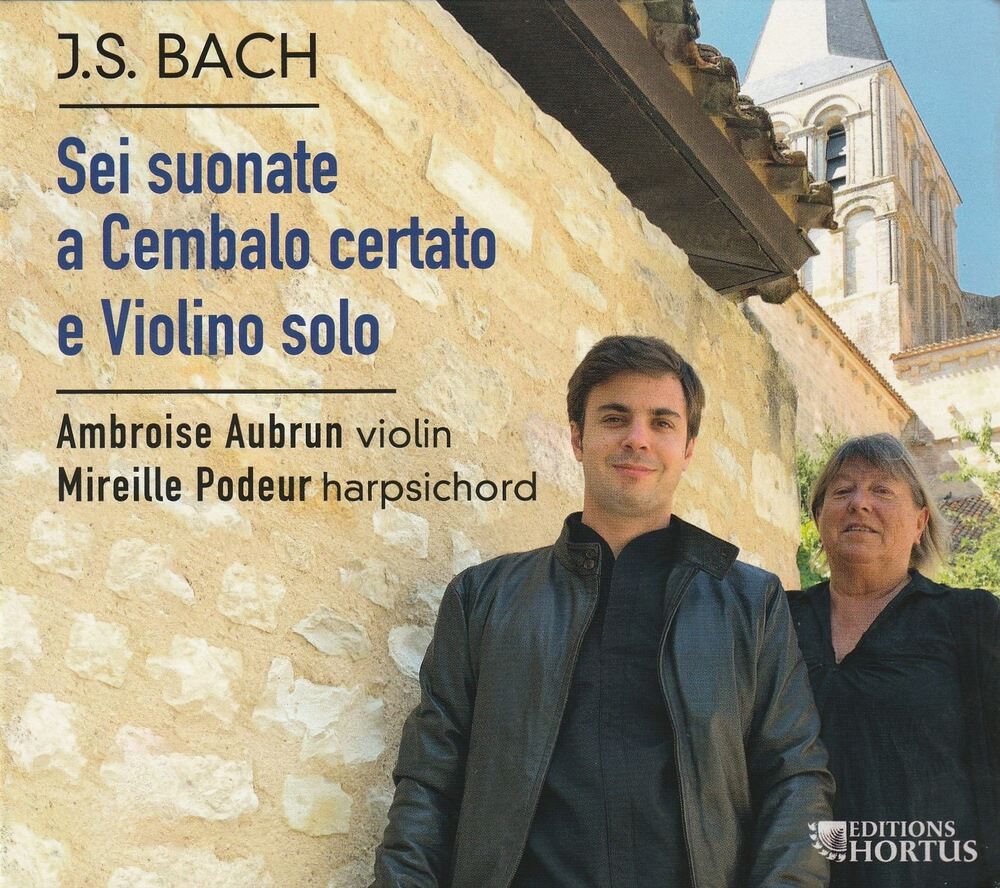
05 Ambroise Aubrun BachBach’s sonatas for violin and piano, predating Mozart’s by some 60 years, are essentially extensions of the Baroque trio sonata. Probably dating from 1720-23 during his time at Cöthen, they were reworked in later years but never published in his lifetime. Several contemporary manuscripts exist, but no autograph copy. They are presented on a 2CD set by violinist Ambroise Aubrun with Mireille Podeur on harpsichord on J.S. BACH Sei suonate a Cembalo certato e Violino solo (Six Sonatas for Obbligato Harpsichord and Violin BWV1014-1019) (Hortus 228-229 editionshortus.com).

The idiomatic performances are delicate and refined, perhaps a bit lacking in warmth. An excellent booklet essay by Podeur with some fascinating technical insight adds to a top-notch release.
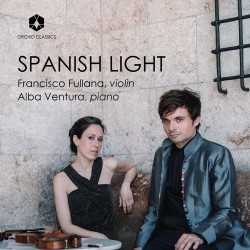
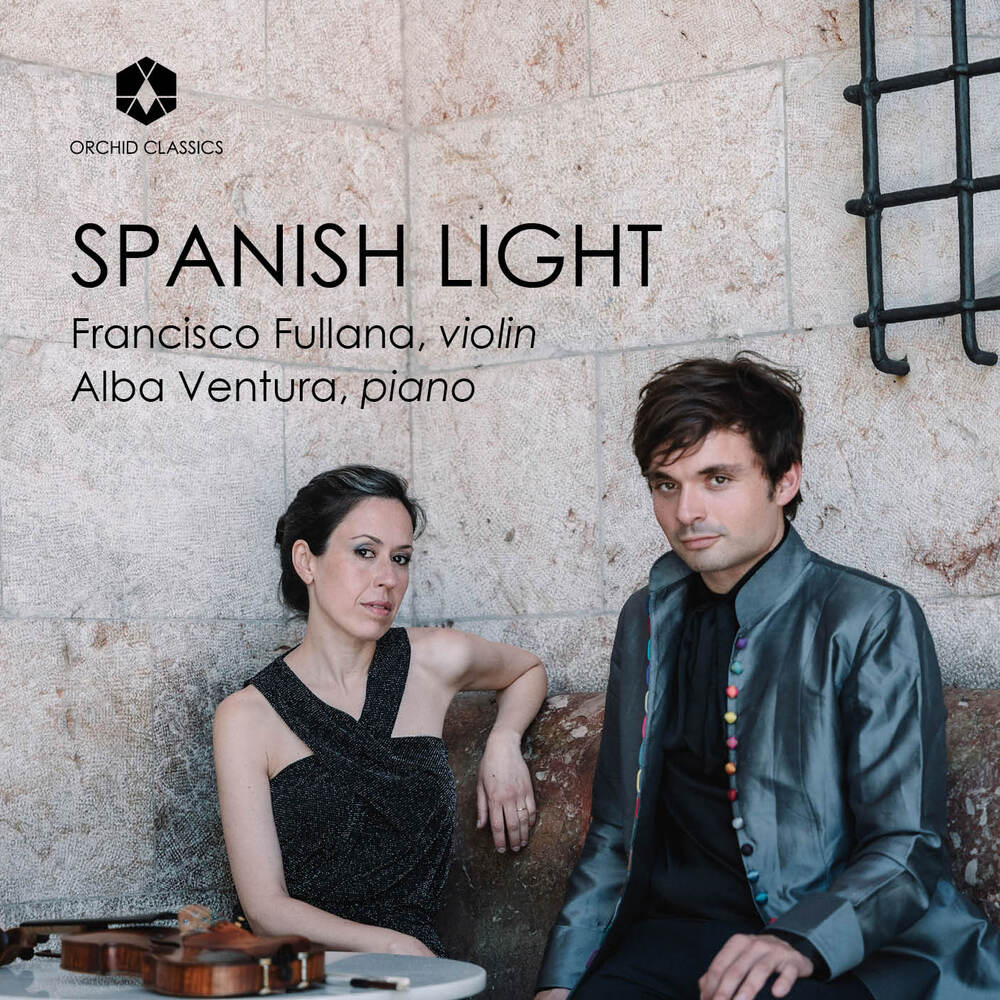
06 Fullana Spanish LightOn Spanish Light the violinist Franscisco Fullana returns to his Andalusian roots in an outstanding recital with the Spanish pianist Alba Ventura (Orchid Classics ORC100250 orchidclassics.com).

Turina’s Violin Sonata No.2 Op.82, Sonata española from 1934 incorporates Andalusian and gypsy melodies in a work that also shows the influence of Turina’s studies in Paris. Sarasate’s Romanza andaluza is from the second volume of Spanish Dances Op.22, while his Zigeunerweisen Op.20, originally for violin and orchestra is heard in the piano arrangement made by the composer and recorded by him with one of the three Catalan composers featured here, Joan Manén (1883-1971) in 1904.

Written for Jacques Thibaud, the single movement Granados Violin Sonata H.127 is a real gem; of uncertain date, it wasn’t published until 1971. The two movements IV Oració al Maig and VI La font are from the Seis sonetos of 1921-22 by Eduardo Toldrà (1895-1962). The Manén piece is his terrific Caprice catalán No.3 Op.23.

The traditional Catalan Christmas song El cant dels ocells (Song of the Birds) adapted by Fullana from the Pablo Casals cello arrangement, ends a superb disc.
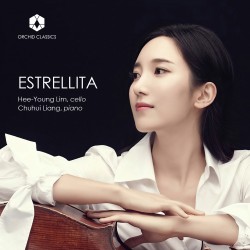
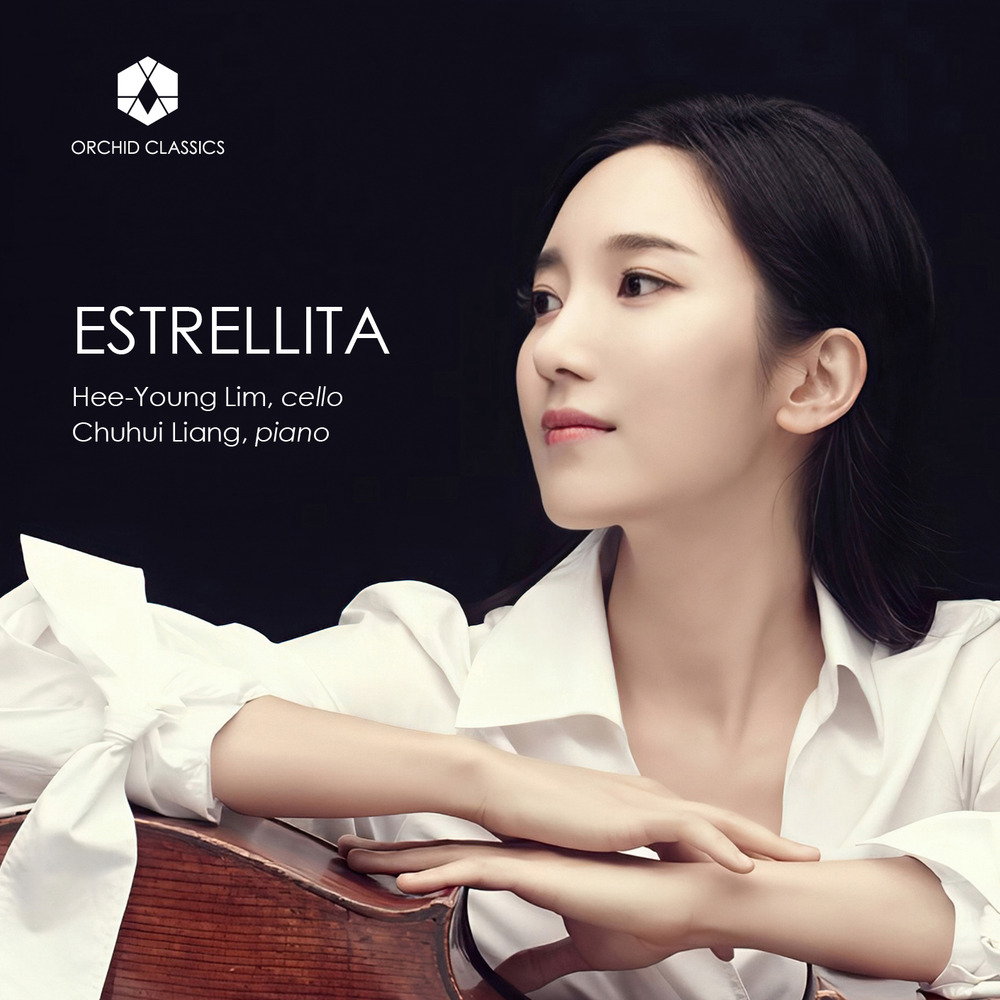
07 Hee Young Lim EstrellitaIf you like putting on a CD and just relaxing to a stream of beautifully played popular melodies then you should love Estrellita, the new album of “a selection of encores:  small but sparkling gems of the repertoire” from Korean cellist Hee-Young Lim and Chinese pianist Chuhui Liang (Orchid Classics ORC100227 orchidclassics.com).

Sandwiched between Saint-Saëns’ The Swan and Schubert’s Ave Maria are two pieces by Ravel, including the Pavane pour une infante défunte, two by Tchaikovsky, including the Souvenir d’un lieu cher, Godard’s Berceuse from Jocelyn, Amy Beach’s Romance, Rubinstein’s Melodie, the Ponce title track and pieces by Liszt, Debussy, Brahms and Ysaÿe. The Liszt, Brahms and Beach arrangements are by the cellist. BBC Music Magazine noted the warmth and expressiveness of her tone, “which is of truly rare beauty.” Indeed it is, across the full range of the instrument.
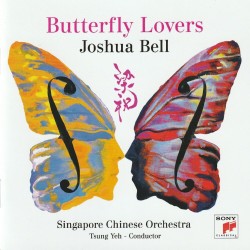
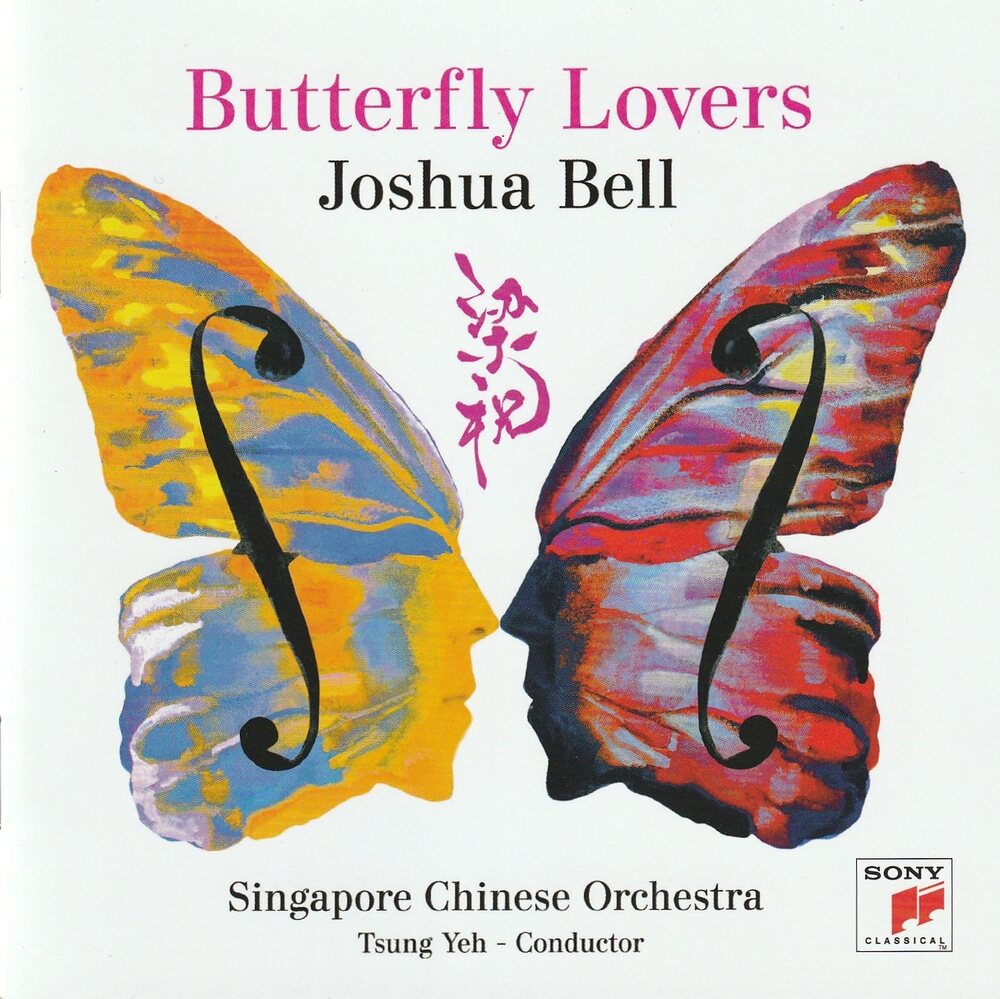
08 Butterfly LoversButterfly Lovers, the popular violin concerto at the heart of the new CD from Joshua Bell with the Singapore Chinese Orchestra under Tsung Yeh (Sony Classical 19658810972 joshuabell.com) was written in 1959 by Chen Gang and He Zhanhao, two students at the Shanghai Conservatory. Despite its use of Chinese folk melodies and pentatonic scales it was scored for a standard late-Romantic symphony orchestra, presumably to widen its appeal beyond China’s borders.

Here, though, it’s performed in a rarely heard arrangement by Yan Huichang and Ku Lap-Man for an orchestra of traditional Chinese instruments, the only Western exceptions being cellos, double basses, harp and some of the percussion section. Described as being more of a rediscovery than a mere reorchestration, it’s a remarkable listening and musical experience, making you wish – unrealistically, it must be said – that this could be the standard performing edition.

Bell and Yeh don’t stop there, however, presenting the three other works on the disc in arrangements for the same orchestra. Massenet’s Méditation from Thaïs doesn’t sound a whole lot different, but the Saint-Saëns Introduction et rondo capriccioso in A Minor Op.28 and Sarasate’s Zigeunerweisen Op.20 certainly display a quite different and fascinating tonal palette. Bell’s beautifully subtle phrasing seems to mirror the Oriental nature of the soundscape.
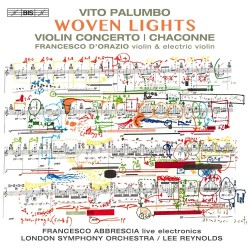
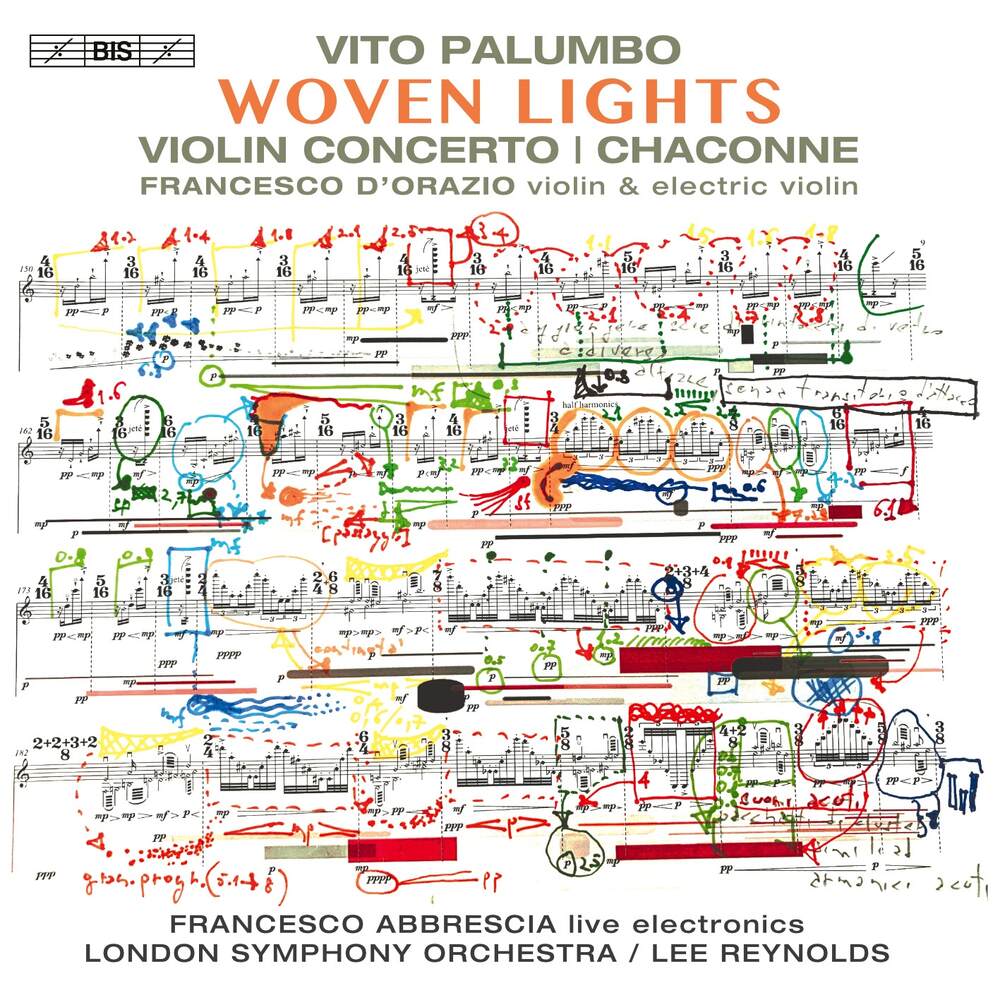
09 Vito PalumboAlthough it was released in January the CD Woven Lights, featuring the Violin Concerto and the Chaconne for electric violin (five strings) and electronics by Italian composer Vito Palumbo (b.1972) only recently came to my attention (BIS-2625 bis.se).

The 2015 Violin Concerto was recorded at Abbey Road Studios in September 2016 with soloist Francesco D’Orazio and the London Symphony Orchestra under Lee Reynolds. It’s a quite fascinating work, albeit difficult to describe; in the booklet notes the description is “a work of bittersweet lyricism,” the composer himself noting the echoes of Alban Berg, especially towards the end of the piece.

D’Orazio recorded the two-part Chaconne of 2019-20 in Italy in January 2021 and it is much more difficult to assess objectively. Francesco Abbrescia realizes the sampled sounds and electronics in I. Woven Lights, where the chaconne principle of variation in the opening section gradually transforms into a dialogue with initially sparse electronics that become thicker and denser, while II. The Glows in the Dark is for electric violin and 30 pre-recorded electronic violin parts, pre-recorded by the same performer. 
Listen to 'Woven Lights' Now in the Listening Room

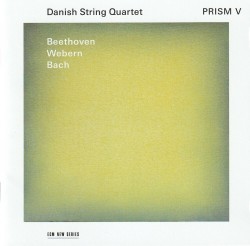
10 Prism VThe Danish String Quartet completes a journey of almost eight years with PRISM V – Beethoven Webern Bach, the final volume in a series where connections are drawn from a Bach fugue through one of the five late Beethoven quartets to a quartet by a later master – “a beam of music split through Beethoven’s prism” (ECM New Series 2565 485 8469 ecmrecords.com).

Beethoven drew many melodic motifs from Bach’s Well-Tempered Clavier for his late quartets. The opening track here is the Chorale prelude Vor deinen Thron tret ich hiermit BWV668. The Beethoven is the String Quartet No.16 in F Major Op.135, and the later master is the young Anton Webern, whose richly chromatic 1905 String Quartet, written while he was studying with Arnold Schoenberg quotes the Op.135 and also shows the influence of Schoenberg’s Verklärte Nacht.

Bach’s unfinished Contrapunctus XIV from The Art of Fugue brings a superb series to a somehow perfectly appropriate conclusion. “We have worked hard on these pieces for almost a decade,” say the quartet members, “and we have done our best.” 

Their best is simply as good as you could wish to hear.
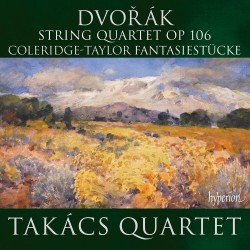
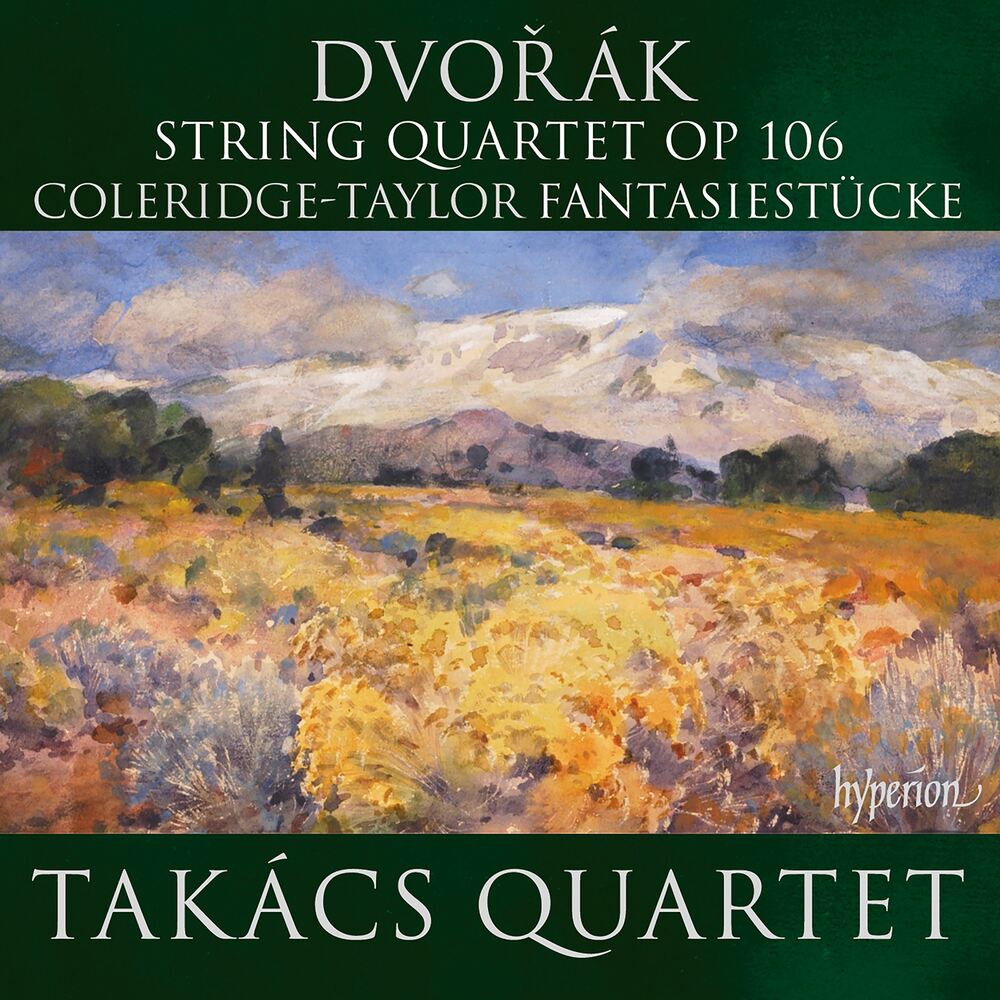
11 Takacs DvorakTwo complementary and contemporaneous works are presented on Dvořák String Quartet Op.106, Coleridge-Taylor Fantasiestücke in beautiful performances by the Takács Quartet (Hyperion CDA6813 hyperion-records.co.uk/r.asp).

Coleridge-Taylor made three trips to the United States, and his use of indigenous American melodies shows an affinity with Dvořák, who was a major influence. His 5 Fantasiestücke Op.5 though, is a competent and pleasant early work, written when he was a student at the Royal College of Music in London.

The Dvořák String Quartet No.13 in G Major Op.106 was the first composition written after his return from America in 1895 and reflects his happiness at being home again. Completing the CD is Dvořák’s Andante appassionato B40a from 1873, the original slow movement from an early A-Minor quartet listed as Op.12 and discarded when the composer revised the work. 

As always, there’s faultless, gorgeous playing from this superb ensemble.
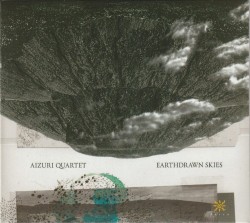
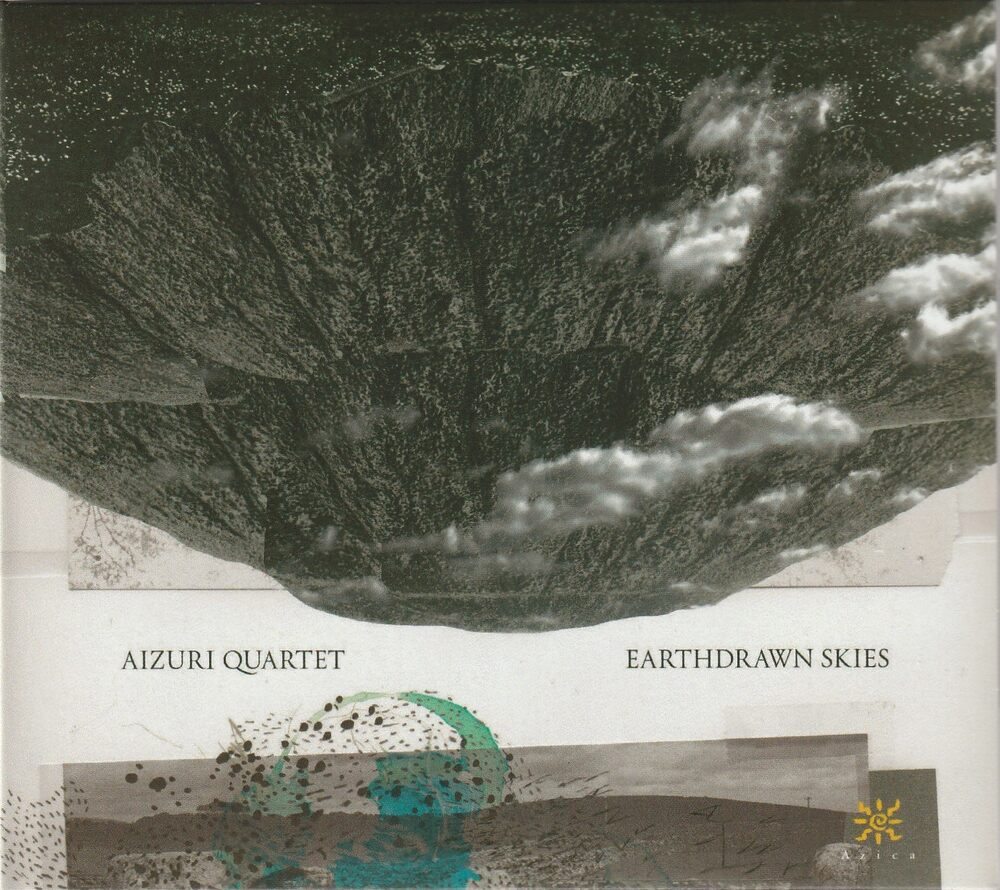
12 Aizuri QuartetOn Earthdrawn Skies the Aizuri Quartet explores deep connections between humans and the natural world with music that “draws from the earth as it reaches upward and outward” (Azica ACD-71359 azica.com).

Hildegard von Bingen’s chant Columba aspexit is heard in Alex Fortes’ commissioned arrangement which cleverly builds through a series of solos, duets and trios to a full-group unison.

The String Quartet No.1 by the British-Jamaican composer Eleanor Alberga is described as an exploration of the cosmos, launching us into space with jagged rhythms and melodies, contemplating the star-filled sky and energetically returning to earth. 

The Armenian composer and ethnomusicologist Komitas Vardapet is represented by Sergei Aslamazian’s arrangement of five Armenian Folk Songs, and an excellent CD ends with the Sibelius String Quartet in D Minor Op.56, Voces Intimae, written in self-imposed isolation in Aiola while he tried to overcome the alcoholism that plagued him in Helsinki and reconnect with his natural surroundings.
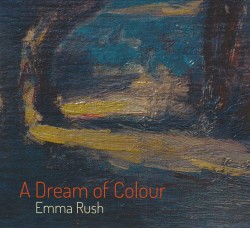
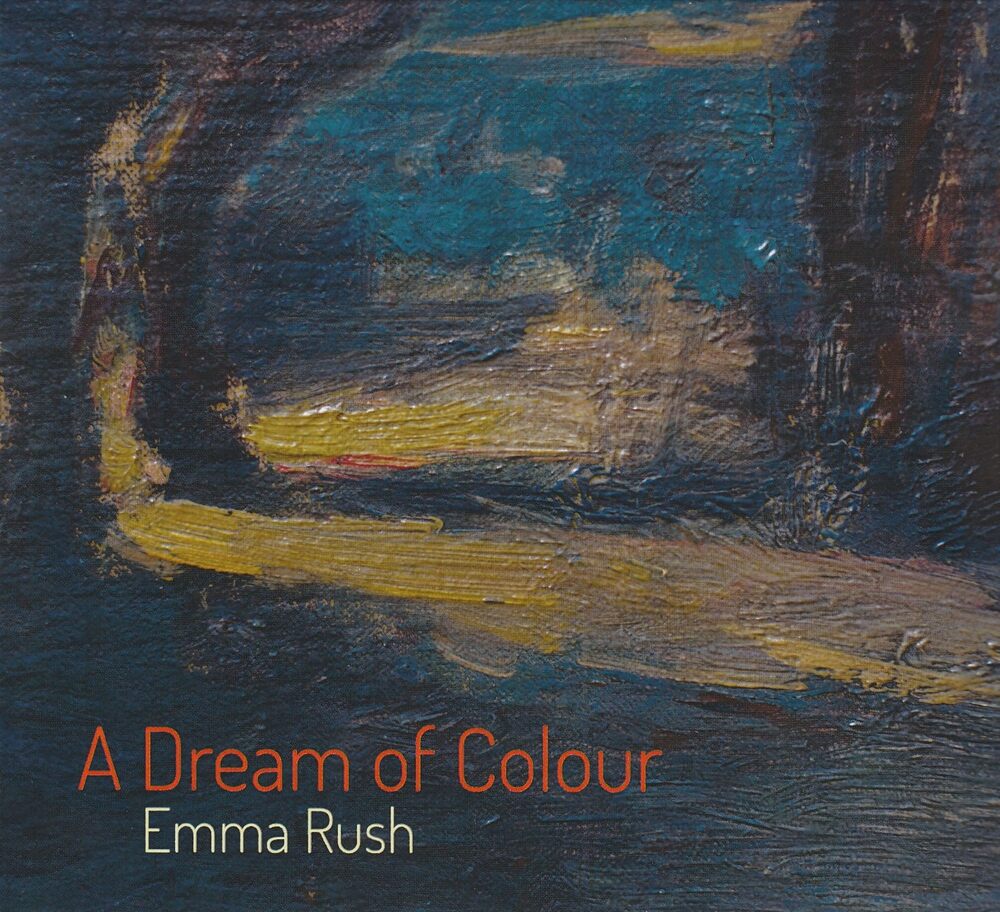
13 Emma RushGuitarist Emma Rush grew up in Hamilton, Ontario and had a family connection to the Canadian Impressionist painter William Blair Bruce, whose paintings she saw in the homes of her grandparents and aunts. In 2020 she commissioned seven new Canadian compositions inspired by Bruce’s paintings, and her new CD A Dream of Colour – Music inspired by the paintings of William Blair Bruce is the result (emma-rush.com).

The subject paintings are beautifully reproduced in colour in the CD booklet, accompanied by a brief note by the composers – Christine Donkin, Amy Brandon, Dale Kavanagh, Craig Visser (a striking piece for guitar and tape), christina volpini, Daniel Medizadeh and Jeffrey McFadden.

Rush is an outstanding player, and her beautifully clean, sensitive and nuanced interpretations of exquisite additions to the contemporary Canadian guitar repertoire, beautifully recorded and presented, make for a terrific disc.
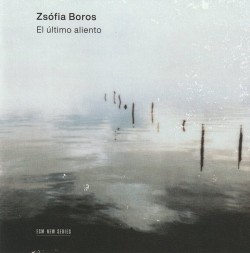
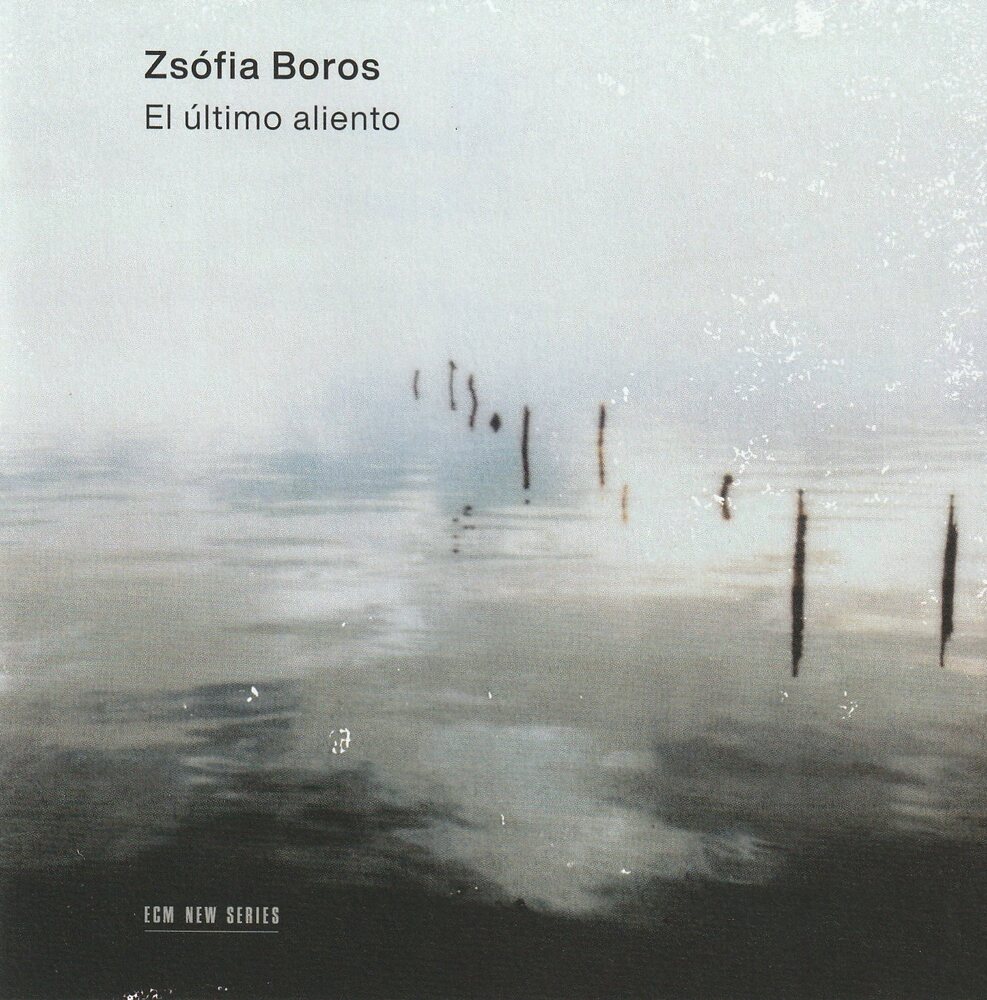
14 Zsofia BorosEl último aliento (The last breath), the new CD from the Hungarian guitarist Zsófia Boros features music from Argentina and the compositions of the contemporary French composer Mathias Duplessy (ECM New Series 2769 485 8302 ecmrecords.com).

There are six pieces by Duplessy: De rêve et de pluie, Le secret d’Hiroshigé, Le labyrinthe de Vermeer, Berceuse, Valse pour Camille and Perle de Rosée.  All display Duplessy’s distinctive Romanticism, a mix of traditional tonality with contemporary forms and structure.

Four Argentinian composers are featured, with Quique Sinesi’s El abrazo and Tormenta de ilusión of particular interest: for the former, Boros stretches a rubber band over the fretboard to mute the sound, and for the latter switches from guitar to ronroco, an instrument from the Andean region with ten strings in five double-courses.

Joaquin Alem’s Salir adentro, Ginastera’s Milonga and the title track by the Buenos Aires composer and guitarist Carlos Moscardini complete a CD of quiet, atmospheric music, all played with warmth, sensitivity and admirable technique.
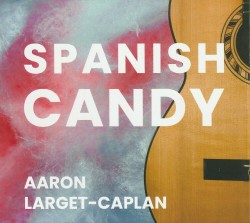
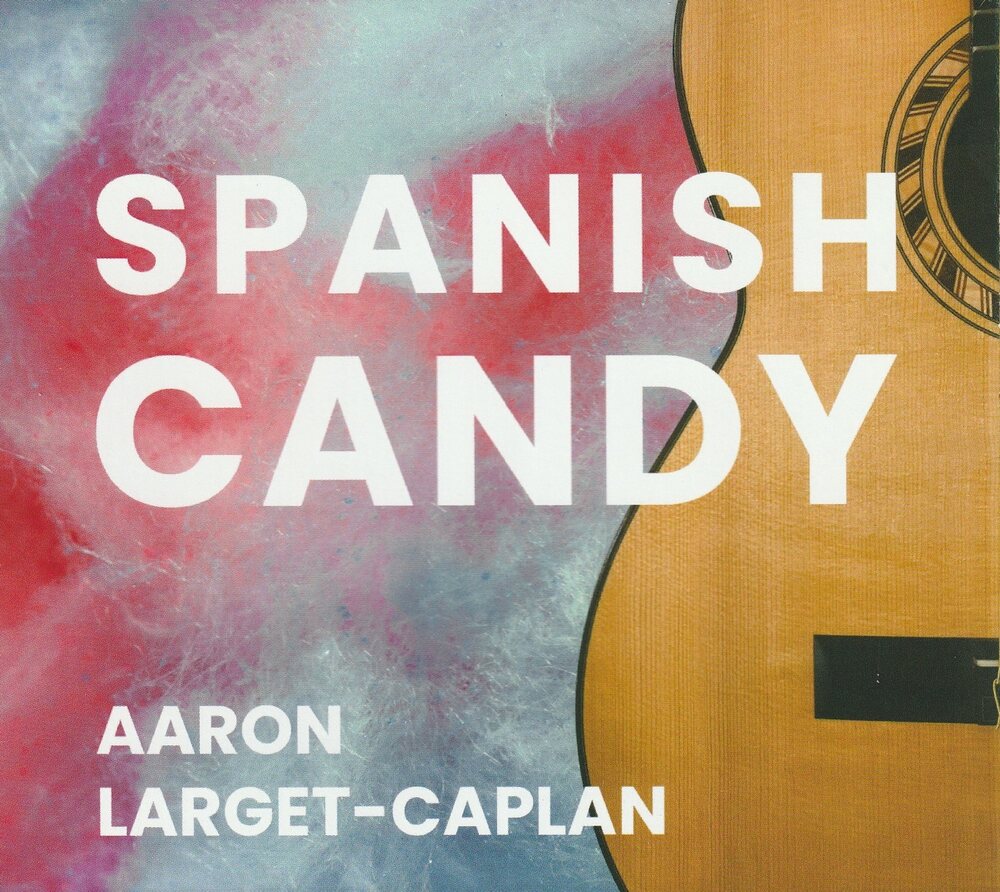
15 Aaron Larget CaplanWe usually encounter guitarist Aaron Larget-Caplan with his New Lullaby Project CDs, but his tenth solo album, Spanish Candy reflects his work with the Spanish classical music and flamenco dance ensemble ¡Con Fuego!, which reimagines Spanish classical compositions with flamenco techniques and flavours while also adding flamenco works to the standard repertoire (Tiger Turn 888-10 alcguitar.com).

There are three pieces by Albéniz here – Zambra Granadina and Larget-Caplan’s own arrangements of Sevilla and Granada – Five Pieces by Tárrega, including Recuerdos de la Alhambra, the flamenco solo Mantilla de Feria by Esteban de Sanlúcar, and Larget-Caplan’s arrangement of Pascual Marquina’s España Cañi.

Larget-Caplan’s aim to “juxtapose the fiery passions of flamenco with the subtle colors and harmonic riches of classical music” results in an entertaining – if somewhat brief at 33 minutes – CD.


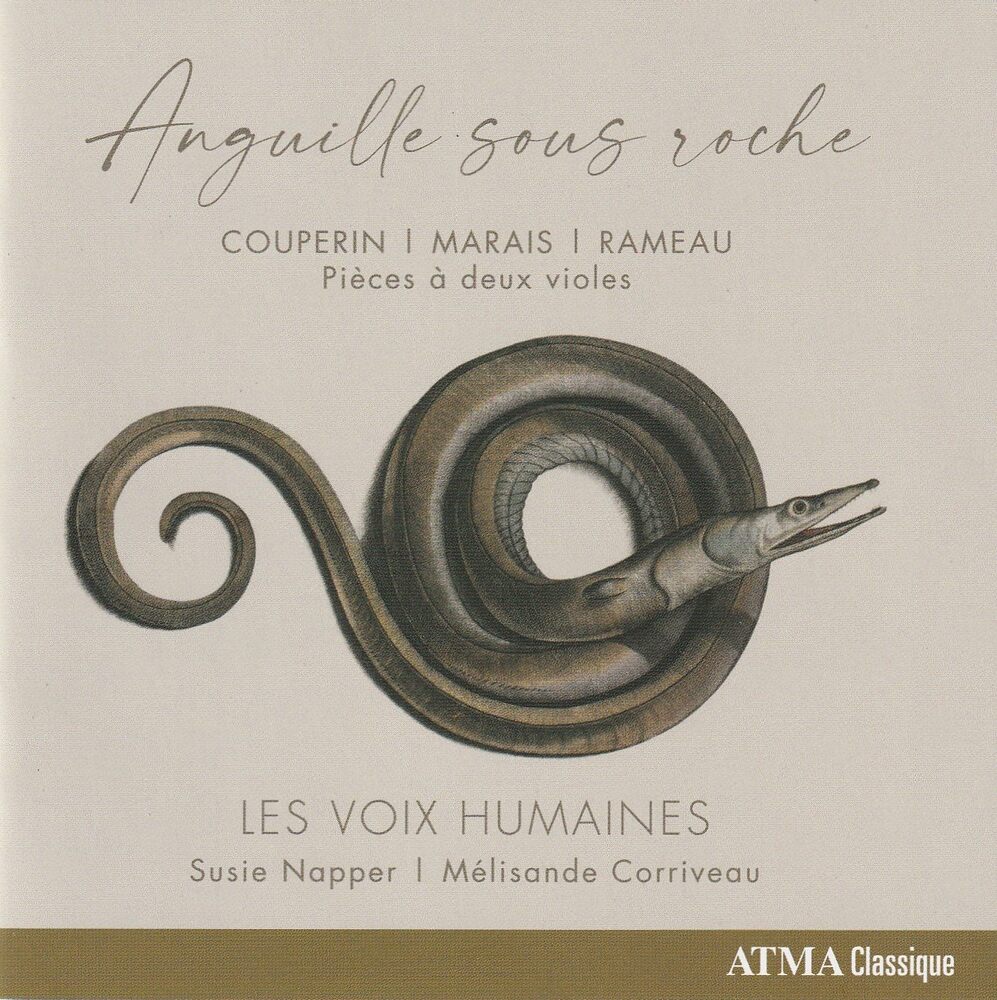
01 Voix HumainesAnguille sous roche (Marais; Couperin; Rameau)
Les Voix Humaines
ATMA ACD2 2858 (atmaclassique.com/en)

Monreal-based viol de gambists Susie Napper and Margaret Little formed a partnership in 1985 naming themselves Les Voix Humaines and since that time, they have earned a formidable reputation for their performances of early music chiefly by English and French composers. Over the years, the duo has been augmented by gambists Mélisande Corriveau and Felix Deak, with violinist Jessy Dubé joining the ensemble in 2021. This newest recording on the ATMA label – humorously titled Anguille sous roche – or Something Fishy – marks a departure in personnel in that Corriveau replaces Little here in duets with Napper in a program of music by Marin Marais, François Couperin and Jean-Philippe Rameau. 

The music is drawn from several sources – Couperin’s collection Les Goûts Réunis from 1724, Rameau’s only collection of chamber music published in 1741, and from various collections of Piėces de Viole by Marais. Most of the pieces are barely four minutes in length and while many of them are dance movements, others are more fanciful in nature such as Rameau’s La Coulicam (referring to the Persian conqueror Thamas Kuli Khan) and the finale, L’Anguille (the Eel).

Throughout, Napper and Corriveau produce a wonderfully resonant sound, the phrasing keenly articulated. The German poet Goethe once described chamber musicians as “having a conversation” and this is certainly the case with the intimate and intuitive approach taken by the two performers. There is nothing at all “fishy” about this recording – attractive repertoire and solid musicianship make it a welcome addition to the Baroque chamber catalogue.

Listen to 'Anguille sous roche (Marais; Couperin; Rameau)' Now in the Listening Room

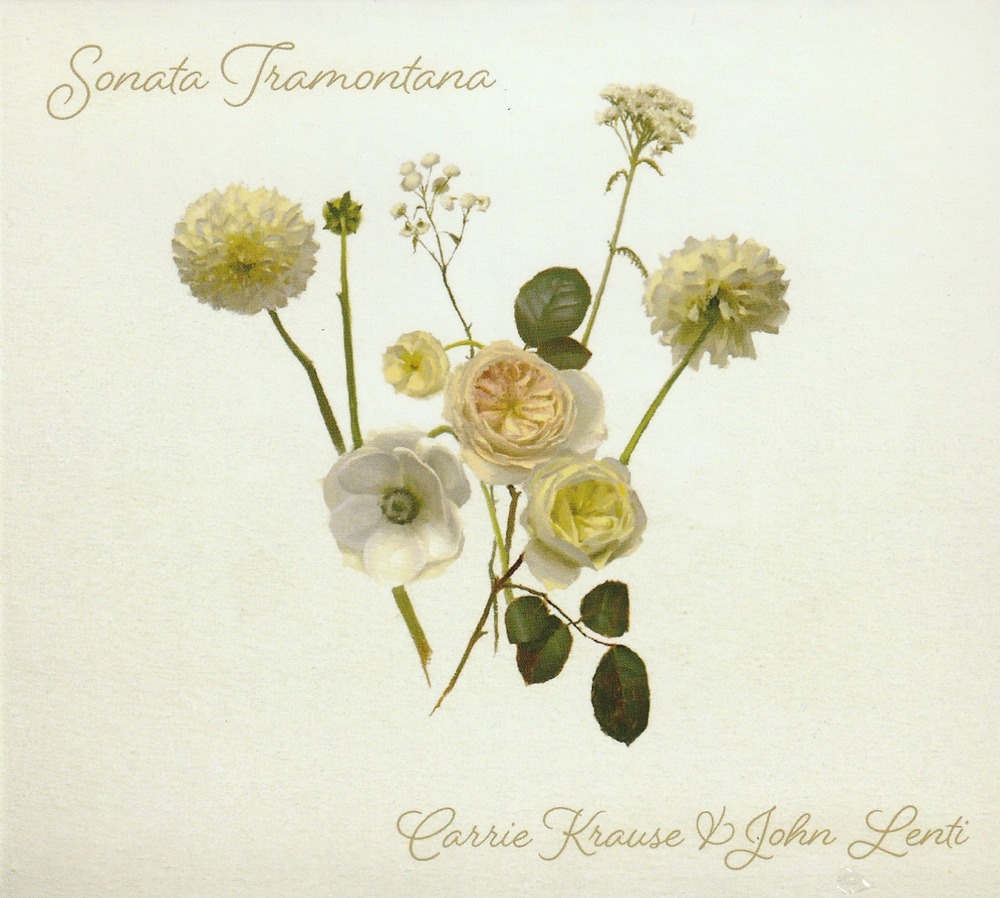
02 Sonata TramontanaSonata Tramontana
Carrie Krause; John Lenti
Black Bear Records BMM01 (baroquemusicmontana.bandcamp.com)

Sonata Tramontana, full of life and nuance, is such a refreshing take on the centuries-old repertoire it comprises. Conceived by Montana violinist Carrie Krause, it centres around intimate gestures, deep connection with nature and appreciation of life in all forms. It is the kind of music that is meant to be played in small spaces, flowery meadows or on riverbanks. Everything on this album works in synergy – from cover art and beautifully written liner notes, to the heartfelt performances.

The album features 17th-century music for violin and theorbo by Italian, Austrian and German composers Mealli, Schmelzer, Caccini, Biber, Böddecker and Castaldi, an elusive repertoire that remains relatively unknown to the wider audiences and brings vigour and bloom to what might be considered somewhat predictable in the realm of historical performances. Krause and her partner in crime, theorbo virtuoso John Lenti, are just fabulous, their performance is nothing short of beautiful. Krause has a way of bringing the most interesting, almost visceral textures out of her Baroque violin. Her ornamentations are lovely and complemented well by Lenti’s strong presence. 

Although passionate and meaningful, this music is unpretentious. Krause and Lenti tell stories, visit mountain peaks and valleys, drink from the lakes and creeks, dance in town squares, all the while balancing virtuosity and tranquility. The music glows and grows throughout the album, reaching for hidden nooks and corners, filling our ears with delight.

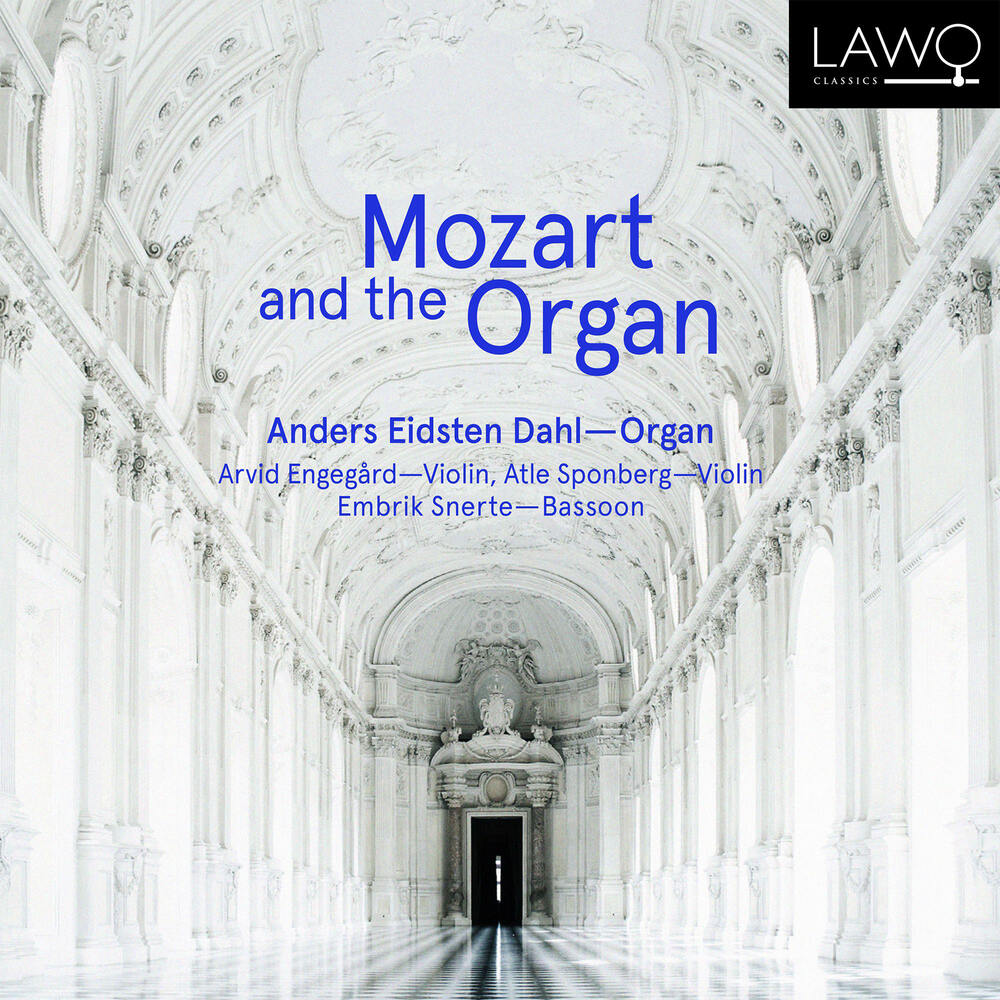
03 Mozart and the OrganMozart and the Organ
Anders Eidsten Dahl; Arvid Engegård; Atle Sponberg; Embrik Snerte
LAWO Classics (lawo.no)

When one thinks of Mozart, the mind can go many places, from opera to overture, sonata to symphony. One area of music with which Mozart is not often associated, however, is organ music. By all accounts, Mozart was a fine player who enjoyed the sounds of the instrument – going so far as to title it “The King of Instruments” – but the organ was not a vehicle for concertizing in Mozart’s time, instead used almost exclusively in church services.

What Mozart did write for organ falls into two categories: the first is the collection of 17 “Epistle” sonatas, chamber music written between 1772 and 1780 for masses in Salzburg, played between the reading of texts; the second is music that Mozart wrote for the “Flotenuhr” – a large grandfather clock containing a self-playing organ. There are two large-scale works from this latter category that are played quite frequently today, the Adagio and Allegro in F Minor K594 and the magnificently monumental Fantasia in F Minor K608.

Organist Anders Eidsten Dahl gives a tremendous overview of this music in Mozart and the Organ, which includes 14 of the 17 church sonatas and both K594 and K608. Recorded in the Swedish Church in Oslo, Norway featuring violinists Arvid Engegård and Atle Sponberg and bassoonist Embrik Snerte, each of the sonatas is a little gem containing its own delightful character and range of expression, compressed into a miniature form. The larger organ works are wonderfully paced and expertly interpreted, and Dahl makes Mozart’s challenging writing sound effortless and clear, especially in perilous passages where rapid and constant movement make great demands of the performer.

Mozart and the Organ is highly recommended to all who appreciate Mozart and organ music, whether together or separately. These works are masterpieces and well worth hearing, whether for the first time or the hundredth.

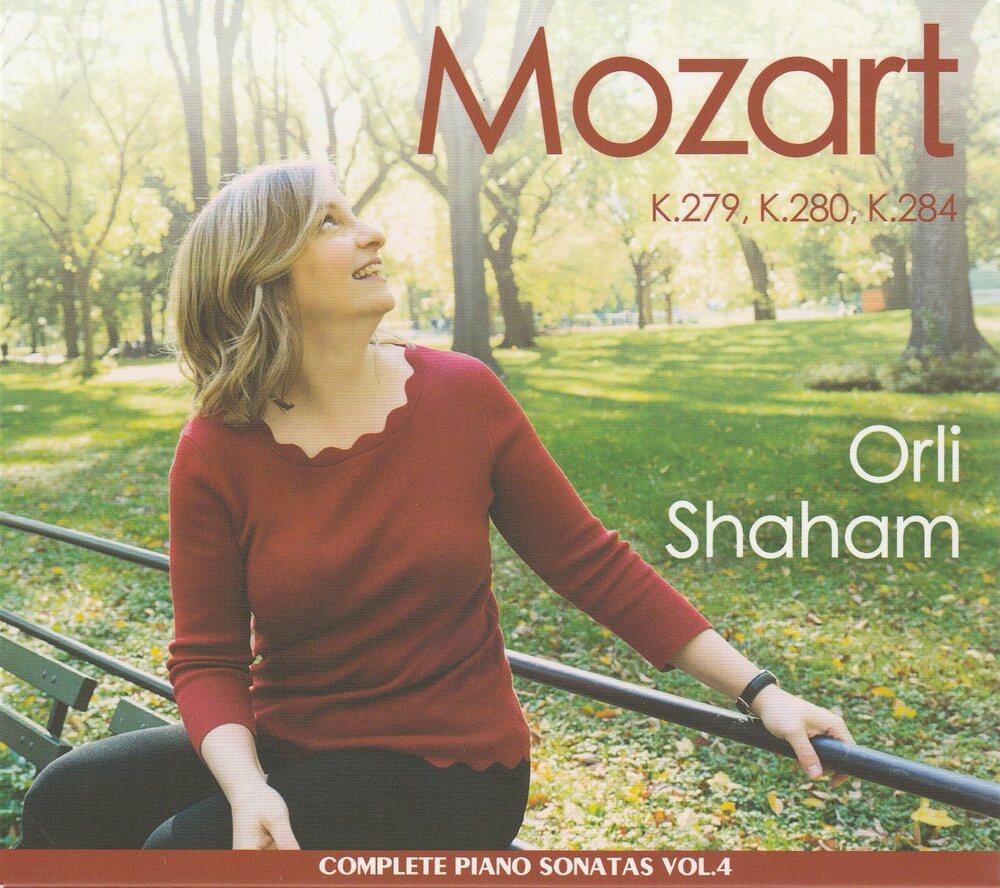
04 Mozart Orli ShahamMozart – Complete Piano Sonatas Vol.4
Orli Shaham
Canary Classics CC23 (canaryclassics.com)

Violinist Gil is not the only Shaham who is making waves wherever classical music is adored. His younger sister Orli has been showing the world that her steely, lyrical pianism is eminently suited to the performance of Wolfgang Amadeus Mozart. However, rather than put on a show with Mozart’s more celebrated piano music the younger Shaham is focusing her attention on Mozart’s lesser-performed sonatas en route to giving us a complete collection of the elegantly sparse works with their virtually endless supply of sparkling melodies, 

Volume 4 of the ongoing series features three of the earliest sonatas – the F Major, No.2 K280, the C Major No.1 K279 and the D Major, No.6 K284, Dürnitz. Should there be any question as to why these (early) works grace the fourth volume of Shaham’s Mozart Complete Piano Sonatas the answer lies in the simple fact that they are no less technically demanding, being as they are of great harmonic ingenuity and melodic richness, as the later sonatas.

The Allegro and (especially) the Rondeau en Polonaise: Andante movement of the Dürnitz are cases in point. The latter – in Shaham’s skilful hands – reflects a pre-eminently graceful Polish dance of Mozart’s vivid imagination. As with Volumes 1, 2 and 3 Shaham’s delicate phrasing brings out the cornucopia of Mozart’s melodic delights from end to end on this disc, but especially in the filigreed brilliance of the Dürnitz sonata.

Listen to 'Mozart: Complete Piano Sonatas Vol.4' Now in the Listening Room

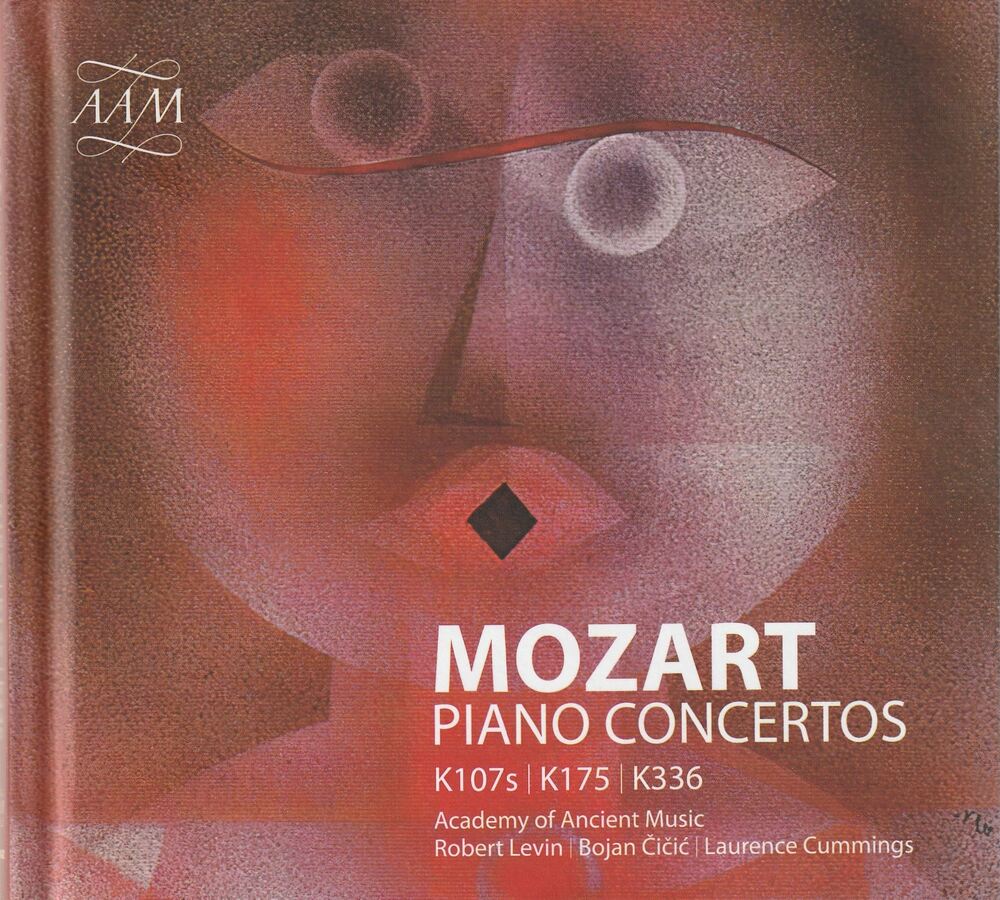
05 Mozart Condertos LevinMozart – Piano Concerto No.5 & Church Sonata No.17
Robert Levin; Academy of Ancient Music
AAM AAM042 (aam.co.uk)

At first glance, the music contained in this recording is somewhat perplexing: of all the incredible music Mozart composed, why choose one full piano concerto, a few juvenile transcriptions, and a church sonata that’s less than five minutes long? There is a reason, and it’s a good one.

In 1993, Robert Levin and Academy of Ancient Music founder Christopher Hogwood set out to record Mozart’s complete works for keyboard and orchestra, with the first of a planned 13 recordings released in 1994. Despite its noble intentions, the project was cancelled midway through, as the advent of downloadable digital music formats in the early 2000s changed the market quickly and drastically. Now, over 20 years later, AAM and Levin are continuing the cycle, scheduled for completion in June 2024, which will become the first-ever recording of Mozart’s complete works for keyboard and orchestra on either modern or historical instruments.

The most aurally striking aspect of this recording is that the Piano Concerto No.5 in D Major K175 doesn’t feature a piano at all, but rather an organ. This is for several reasons, including the necessity of a pedalboard to reach the lowest notes in the keyboard part, the limited upper range, and Mozart’s use of the term Clavicembalo, generic nomenclature that encompassed a range of keyboard instruments. Rather than being impractically theoretical, however, the use of the organ provides great clarity and prominence to the solo part and blends exceedingly well with the ensemble.

The other noteworthy pieces on this recording are the Three Piano Concertos after J.C. Bach K107, through which the young Mozart learned his craft and honed his skills. Far from the masterpieces of his later years, these works were joint efforts between Wolfgang and his fathe, Leopold, who would revise his son’s transcriptions and add embellishments and other instructional guidance. Juxtaposing these early works with only slightly more mature compositions, the younger Mozart clearly learned quickly.

A valuable component of a valuable project, this recording is informative and tremendously appealing, both individually and as part of its larger set.

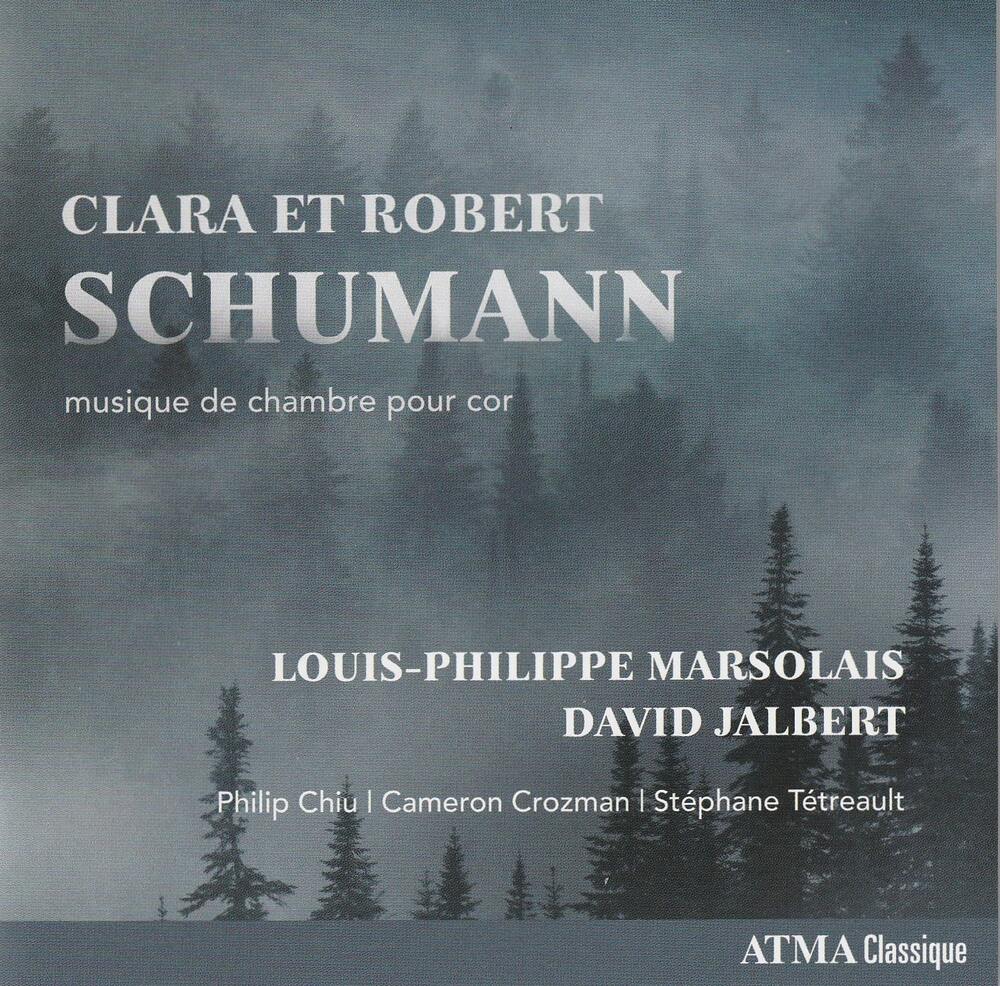
06 Clara and RobertClara et Robert Schumann – Chamber Music for Horn
Louis-Philippe Marsolais; David Jalbert; Philip Chiu; Cameron Crozman; Stéphane Tétreault
ATMA ACD2 2874 (atmaclassique.com/en)

Somewhere, among the writings of Marcus Aurelias, Seneca or Epictetus, there is a Stoic maxim that argues that the easier something is to do, the less meaningful and fulfilling it is for one’s personhood and soul. The Stoics, it seems, liked doing hard things. And in classical music, there is perhaps no instrument more difficult to master than the French horn (simply “the horn” among the classical intelligentsia), what with its perplexing embouchure placement and quixotic fingering positions. But, just as the inverse of the aforementioned maxim would posit that the more difficult something is to do, the more satisfying and efficacious the result, it is also a truism (or perhaps just my opinion) that a well-played French horn ranks among the most breathtaking sounds in all of music. A single listen to Clara et Robert Schumann – musique pour cor, a 2023 ATMA release featuring the exquisite horn stylings of Montreal-based musician and educator Louis-Philippe Marsolais, should illuminate why this is the case.

Evidencing an enveloping warm, round and inviting timbre on the brass instrument, Marsolais, joined by terrific pianists Philip Chiu and David Jalbert, as well as cellists Stéphane Tétreault and Cameron Crozman, foregrounds a thoughtful selection of chamber music composed by Clara and Robert Schumann, now placed into new and engaging musical contexts. Repertoire originally composed for a variety of instruments takes on an intimate sheen, sonic patina and mellow lustre when stated here on the horn, providing both the opportunity to feature the instrument more robustly as a principal solo voice, and continue the overdue and ongoing efforts taken to appropriately write Clara Schumann more prominently into the canon of classical compositions and composers.

Back to top