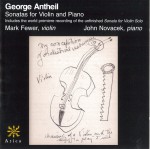
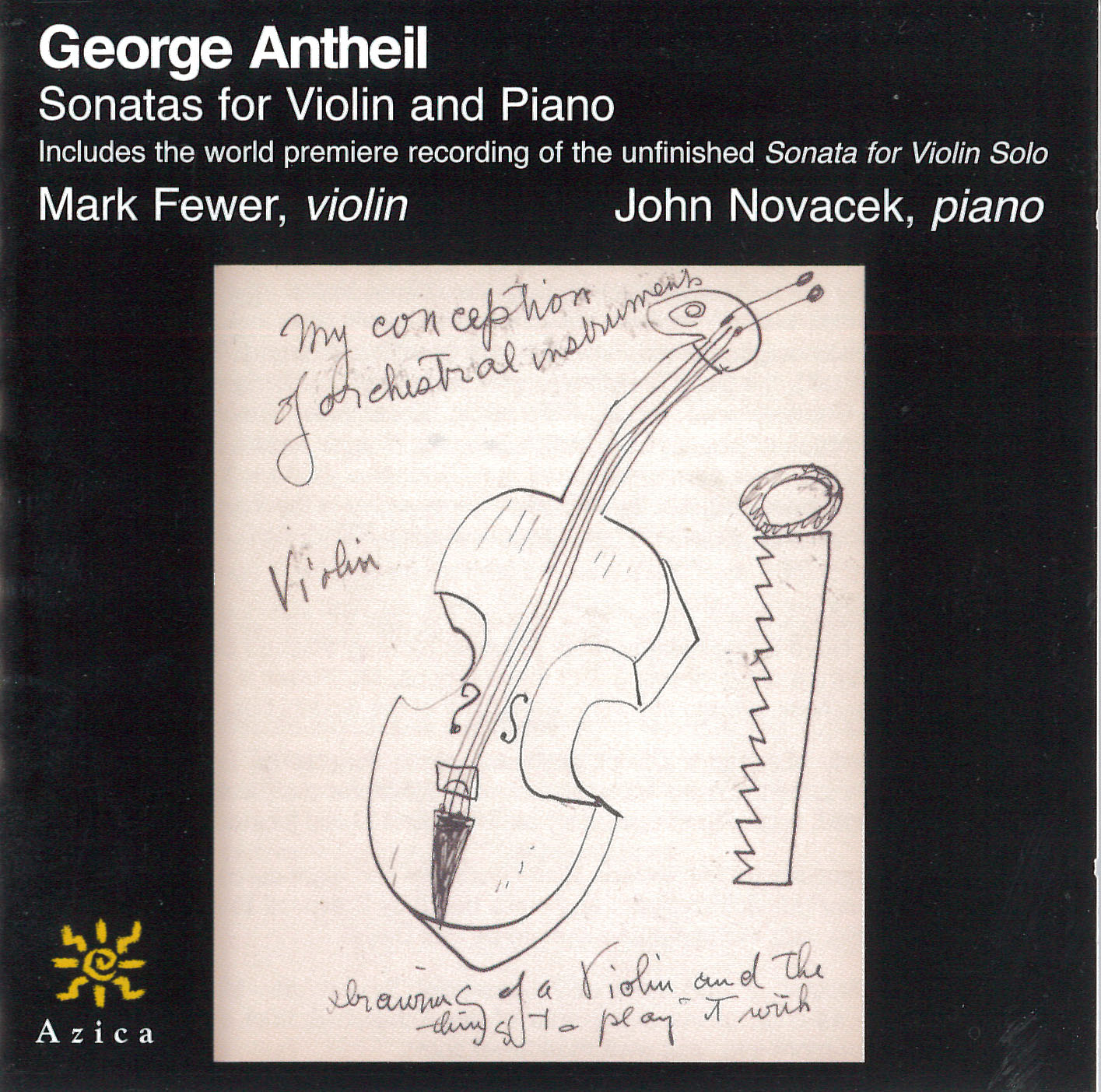
 Violinist Mark Fewer, never one for simply sticking to the standard repertoire, has combined with pianist John Novacek on an absolutely stunning CD of Sonatas for Violin and Piano by the American composer George Antheil (Azica ACD-71263) which grabs you by the ears right from the start and never lets go. In the early 1920s Antheil was a fixture of the “Americans in Paris” social scene, where he was befriended by the poet Ezra Pound and the American violinist Olga Rudge, for whom the first two sonatas were written in 1923. Sonata No.2 is an astonishing single-movement aural onslaught, parodying and distorting a whole range of well-known melodies and styles over a percussive chordal accompaniment; it could almost have been written by Charles Ives. Sonata No.1 is no less challenging, and calls for a huge range of unorthodox effects, Antheil’s music at that time reflecting his fascination with machines and mechanical noise. Sonata No.4(2) dates from 1947-48, when Antheil was back in America, and having second thoughts about his avant-garde years; it leans more towards Prokofiev than to the percussive Stravinsky of the earlier works. Although the fourth sonata Antheil wrote, it was officially termed his “New Second Sonata” after he disowned the original No.2 and revamped Nos.1 & 3 into a single “new” No.1. The unfinished Solo Sonata from 1927 completes the CD. Antheil gave the manuscript to Rudge; now in her papers at Yale, it has never been performed before. The first movement is complete; the second merely a few haunting minutes. Fewer and Novacek are both simply brilliant throughout. The booklet notes by Mauro Piccinini are outstanding, contributing enormously to a fuller understanding of the music’s background. Recorded at McGill’s Schulich School of Music, the sound quality matches the stunning performances.
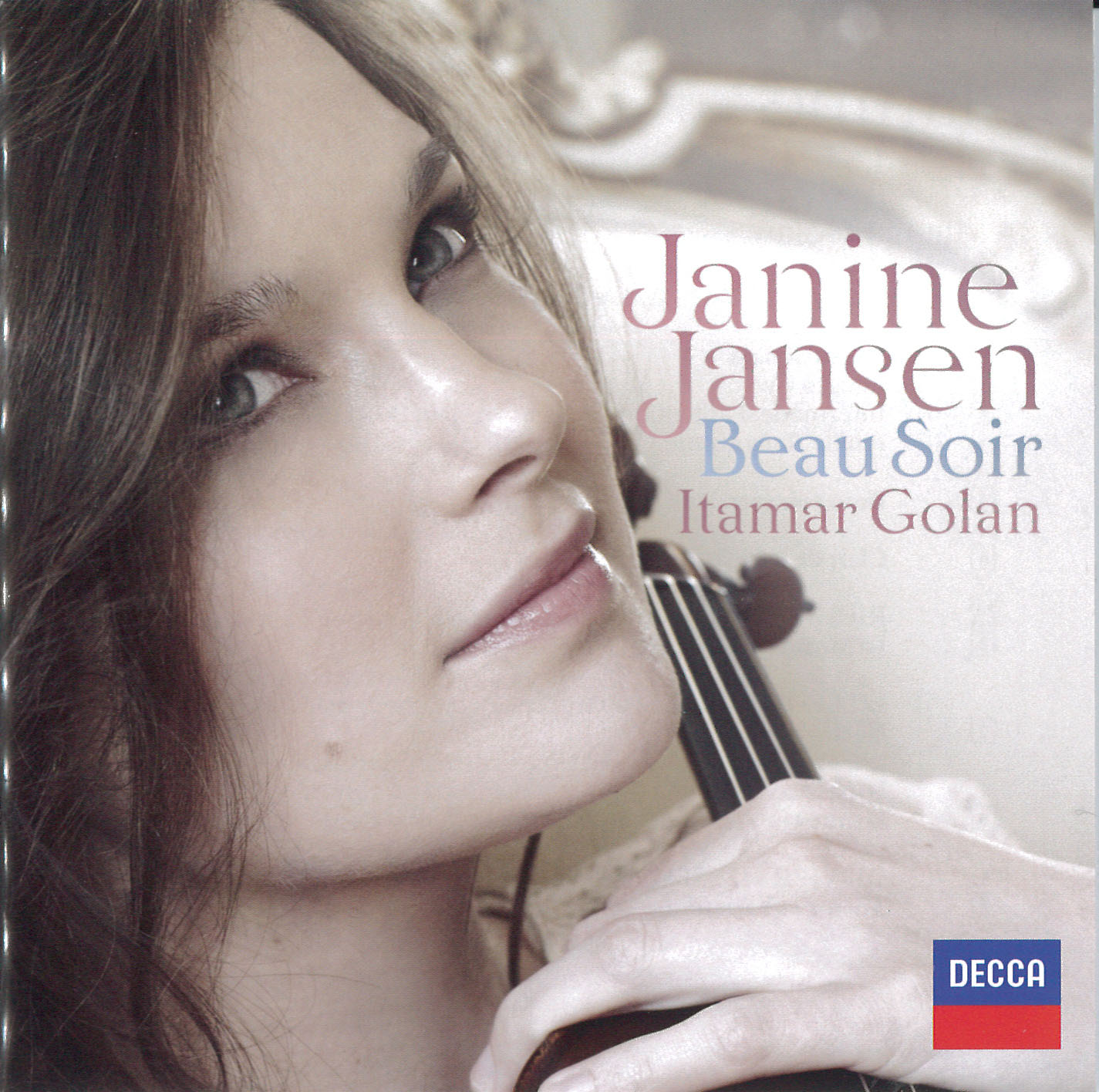
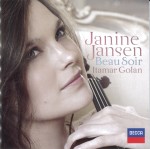 I’ve raved about the Dutch violinist Janine Jansen before; Beau Soir, her new CD with pianist Itamar Golan - and her first recital disc - is yet more proof of her musical artistry and sensitivity (Decca 478 2256). The Debussy and Ravel sonatas are the backbone of a programme of French pieces, including Debussy’s Beau soir and Clair de lune, Messiaen’s Thème et Variations, Fauré’s Après un rêve and Lili Boulanger’s Nocturne. Richard Dubugnon, who wrote a concerto for Jansen in 2008, also contributes four miniatures; he noticed the common nocturnal theme in some of the selected works, and suggested structuring the CD as a musical journey from evening through to morning, writing his pieces to supply the missing parts. They fit perfectly. Jansen clearly has an innate understanding of the French sound, with its subtlety and delicacy, and offers interpretations that are full of nuance, shimmering warmth and ravishing sensuality. I just wish they would dispense with the cheesy booklet photos: she really doesn’t need them.
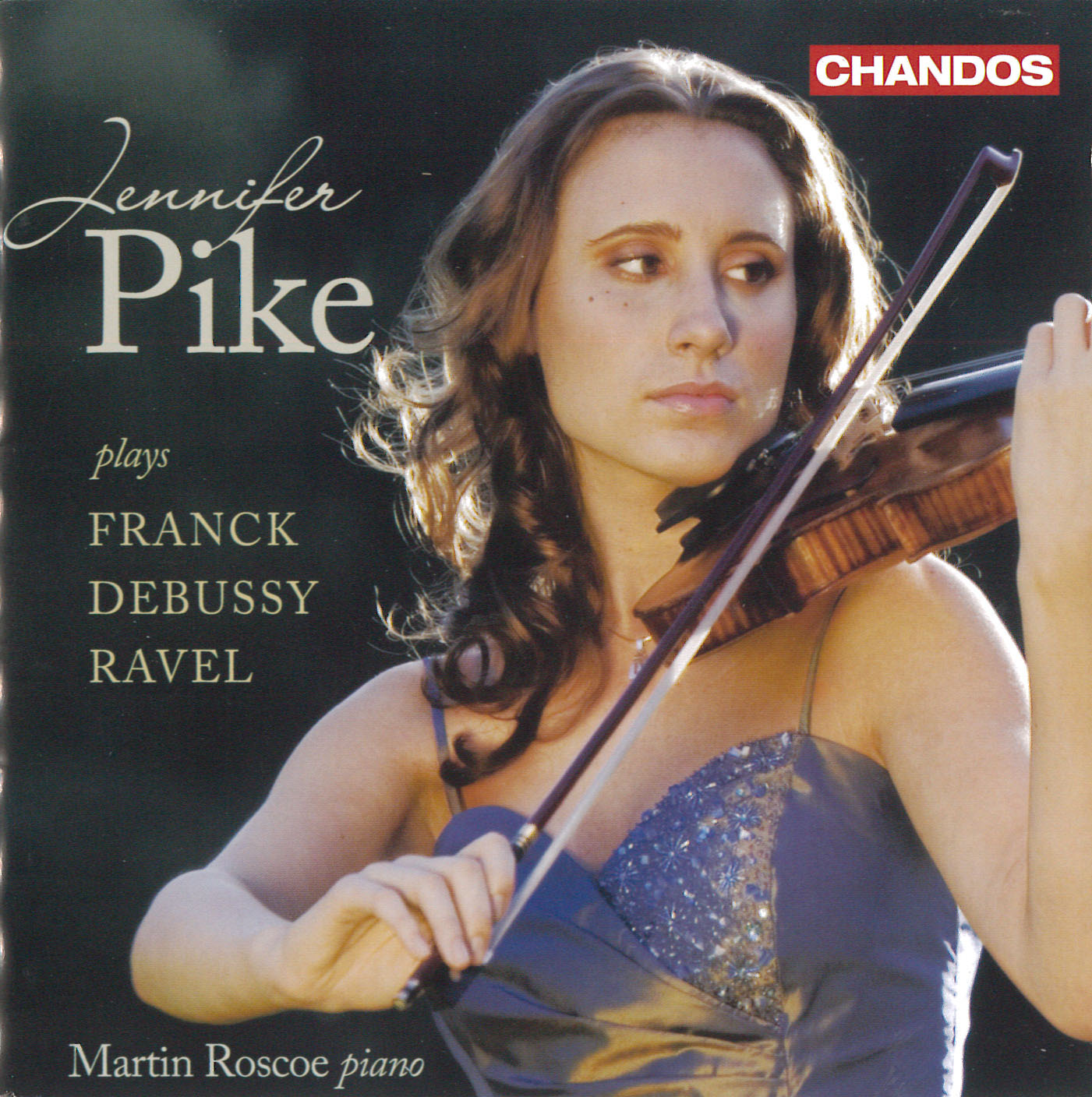
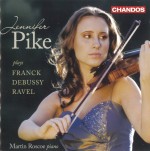 The Debussy and Ravel Violin Sonatas, along with the Franck, are also featured on a CD - apparently her first - from young British violinist Jennifer Pike (Chandos CHAN 10667), who has been attracting a good deal of attention in England since winning the BBC Young Musician of the Year competition in 2001 at the age of 12. There’s a different mood to the Debussy here, less subtle and more straightforward than the Jansen, and with less of a “French” feel about it. The Ravel fares better, with the last movement in particular benefitting from Pike’s drive and energy. The Franck is competent and workmanlike without being in any way memorable. The experienced pianist Martin Roscoe provides solid support.
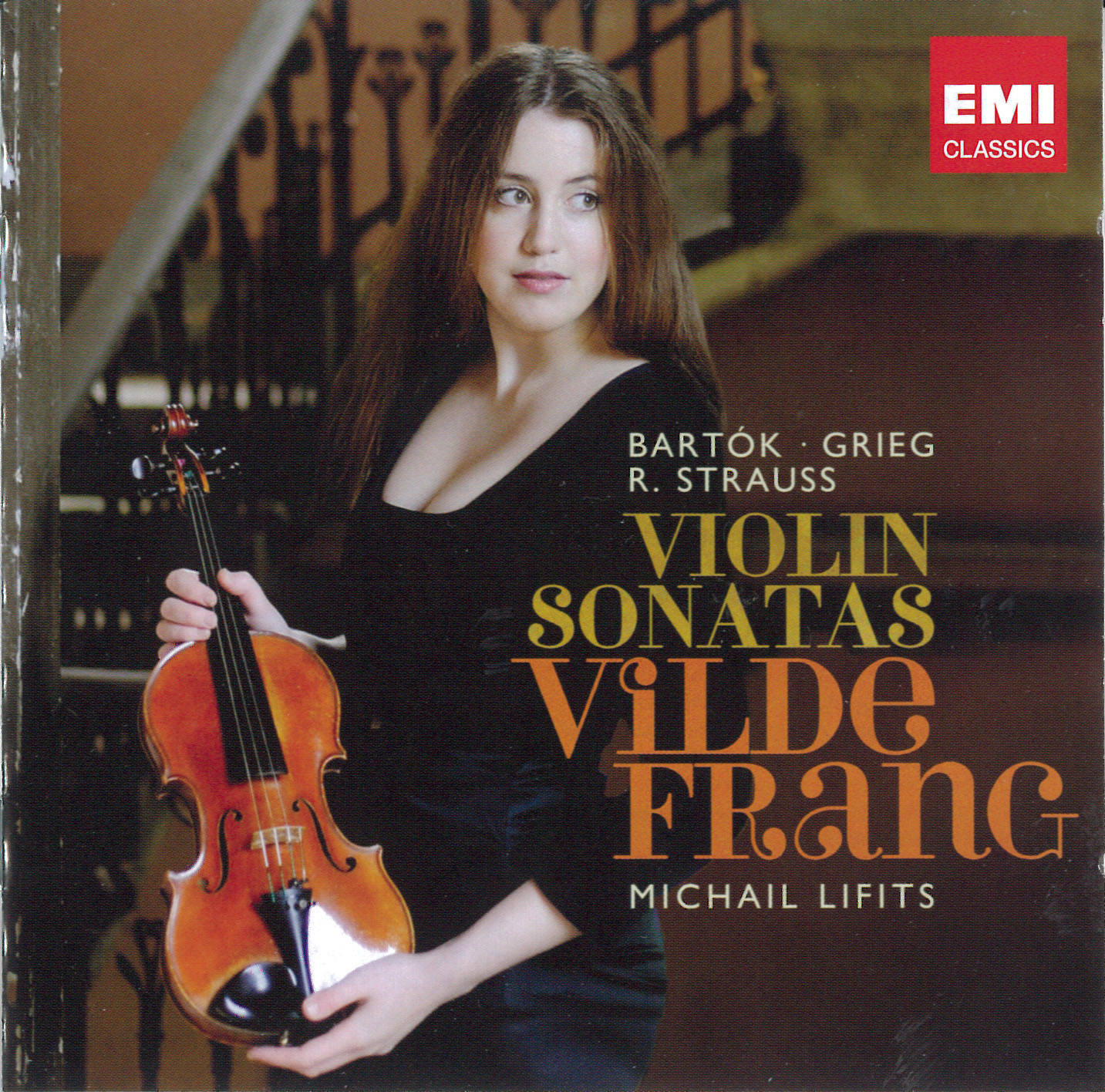
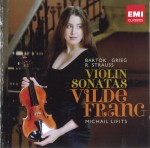 Another young European garnering a lot of attention is the Norwegian violinist Vilde Frang, whose CD of the Grieg and Strauss Violin Sonatas with pianist Michail Lifits (EMI Classics 9 47639 2), together with the Bartok Solo Sonata, is also a first recital disc, following her well-received debut CD of the Sibelius and Prokofiev No.1 concertos. Frang, her label’s Young Artist of the Year in 2010, is understandably at home with the Grieg, and there is also fine playing in the Strauss, but at first sight the Bartok seems an odd stable-mate. Still, Frang’s clean, almost easy-sounding performance makes it feel possibly a bit less visceral and more “mainstream” than usual. This is clearly a player to watch.
If the CD is becoming an obsolete technology and a commercial dead duck, then somebody apparently forgot to tell Naxos. This month sees two more CDs from British violinists, as the label continues to make significant and invaluable contributions to the recorded repertoire by taking the road less-travelled.
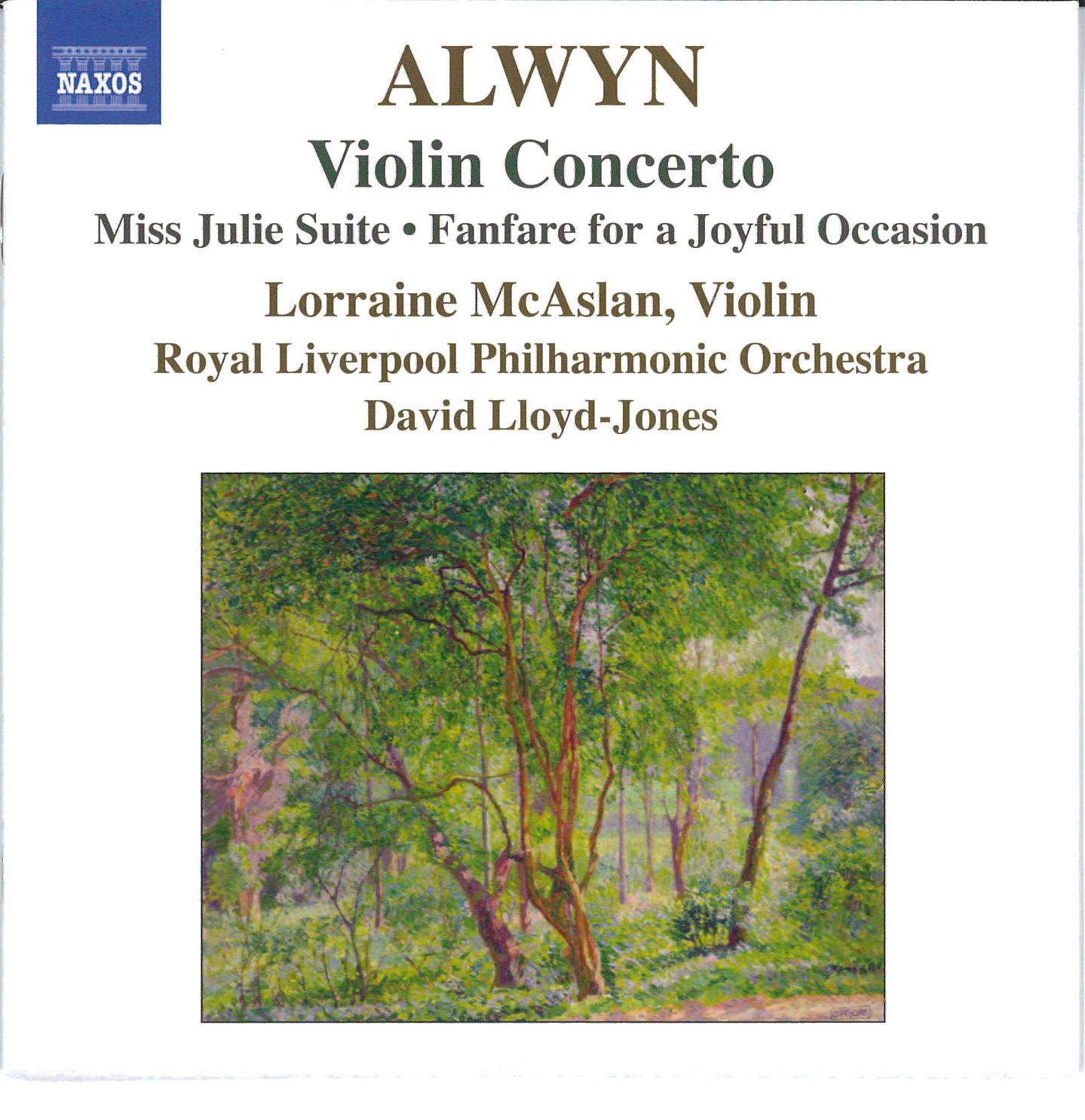
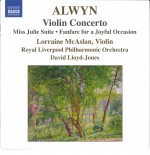 The English composer William Alwyn (1905-85), previously best-known for his film scores, has been particularly well-served by Naxos, with over a dozen CDs of his orchestral, chamber and vocal music issued to date. Scottish violinist Lorraine McAslan is the soloist in his Violin Concerto (Naxos 8.570705), with the Royal Liverpool Philharmonic Orchestra under David Lloyd-Jones. Astonishingly, the work has never received a professional concert performance: the closest it came was a private violin and piano performance in 1940, the year after it was completed. It was considered for a Henry Wood Promenade concert in 1943, but rejected by the BBC, and was finally resurrected for a commercial recording in 1993. The CD blurb describes it as “romantic and rhapsodic”, and it is fully that, and more, with a big “main title” movie opening, a beautifully atmospheric slow movement, with shades of Vaughan Williams, and a strong finale. McAslan, who seems to specialize in lesser-known English concertos, is very much at home here. I found her lower tone a bit on the nasal side, but in the higher register she is terrific - assured and brilliant in tone. Alwyn’s wonderful gift for orchestration is also on display in the Miss Julie Suite, a three-movement arrangement by Philip Lane of music from Alwyn’s early 1970s opera. It’s a brooding, dramatic, sweeping score with superb orchestral colour. No wonder Alwyn was so successful with his film scores. The short Fanfare for a Joyful Occasion, a short work for brass and percussion from 1958, completes an immensely satisfying CD, with the crystal-clear recording quality well up to the usual Naxos standard.
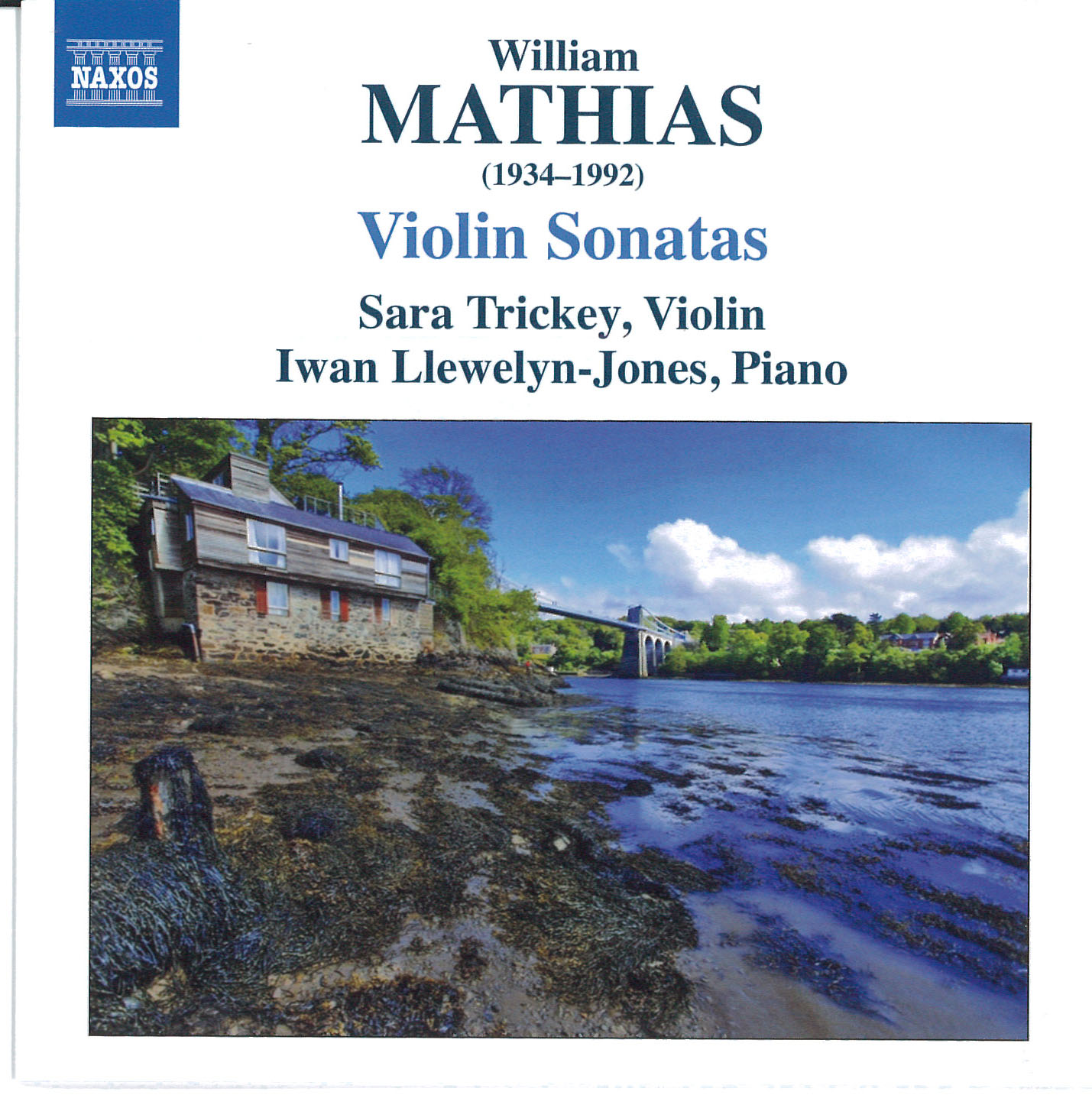
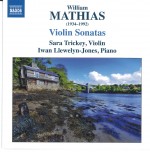 The second Naxos disc features the Violin Sonatas of the Welsh composer William Mathias (1934-92), performed by Sara Trickey and Iwan Llewelyn-Jones (Naxos 8.572292). The Sonata No.1 was written in 1961 on a commission from the Cheltenham Festival, where it was first performed in 1962. It has a sparse, angular opening - “spiky and aggressively rhythmic” in the composer’s words - with a lyrical middle movement and an energetic finale. Sonata No.2 was a commission to celebrate Mathias’s 50th birthday in 1984; the booklet notes rightly refer to the “four vividly contrasted movements” making “virtuosic demands of both performers.” I found the third work on the disc, the world premiere recording of the Violin Sonata (1952), to be the most enjoyable - perhaps surprisingly, given that Mathias apparently chose not to recognize it. Written when he was 18, and between school and university, it was the first work of the composer’s to be performed in public, and was the first entry in Mathias’s personal catalogue of compositions, albeit without an opus number. It was subsequently withdrawn and never performed again. In 1992 Mathias reviewed his entire catalogue, and chose to rehabilitate some of his withdrawn works - but this wasn’t one of them. Since his death, however, his estate has occasionally given careful consideration to the limited release of the withdrawn scores, and agreed to the inclusion of the work in this CD. Sara Trickey is a precise and accurate player, with a sweet tone, possibly a bit thin at times, but not a great deal of tonal or dynamic contrast. Her vibrato seems a bit unfocussed in the slower passages, and she only really seems to take flight in the faster, rhythmic sections. On this evidence I’m not sure I would call her playing “fiery and passionate” (the quote from The Strad magazine that dominates her publicity material) - The Guardian’s reference to her “clean-cut precision” seems much more appropriate.
I doubt if any record label has done as much for the promotion of American music as has Naxos with their ongoing and comprehensive American Classics series. Two new CDs in the series feature the violin works of two established but quite different composers now in their 50s.
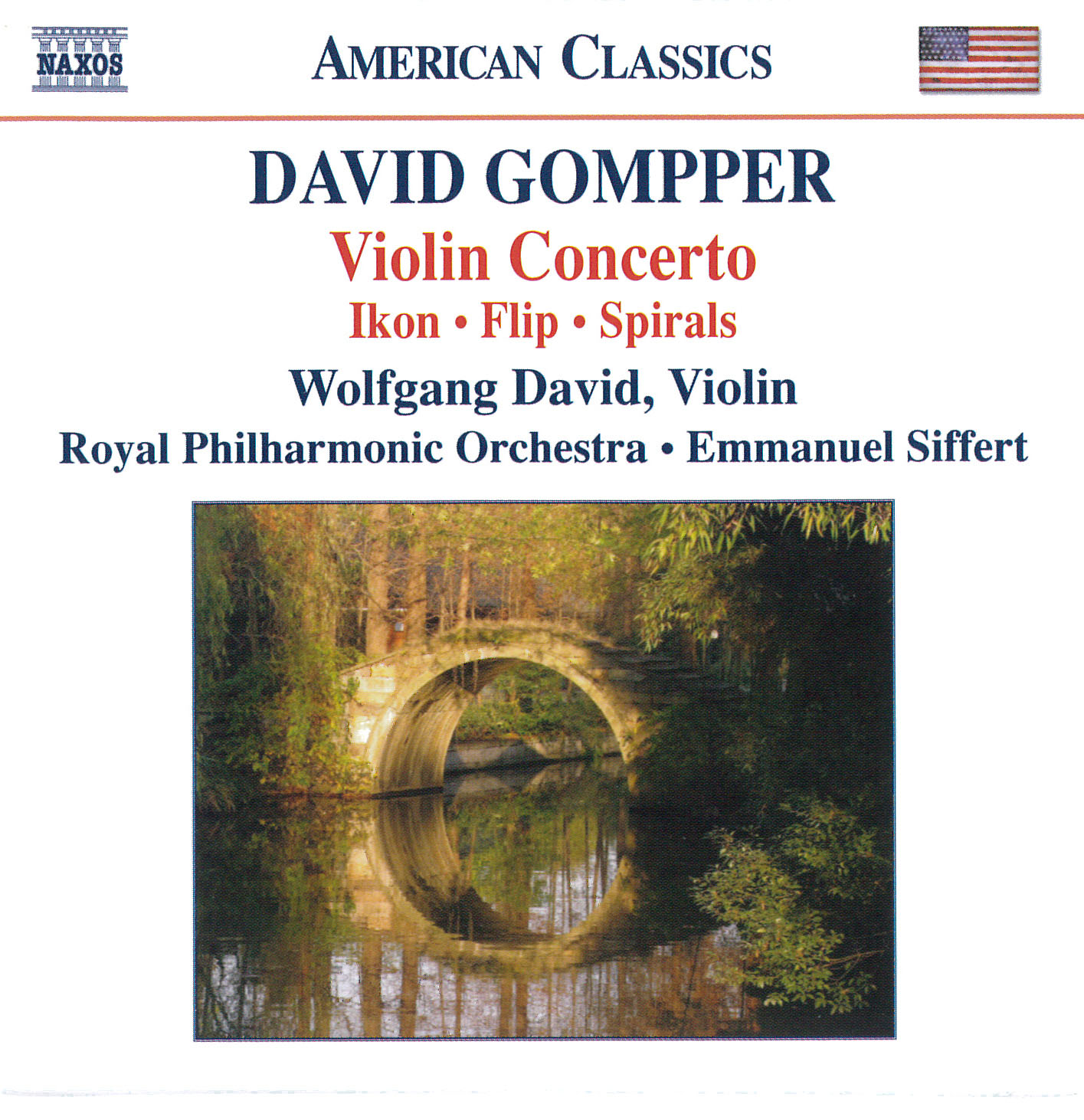
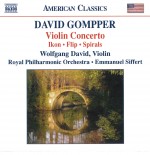 Wolfgang David is the soloist in the Violin Concerto of David Gompper, with the Royal Philharmonic Orchestra under Emmanuel Siffert (Naxos 8.559637). The disc highlights the problems you can encounter trying to review contemporary music, when you probably don’t know the composer or his works, and have no scores to consult. The booklet notes, by Gompper himself, did little to help in that regard; in fact, far from being an aid to understanding, they just made things more obtuse. In Spirals, for instance, we are told that “…the Fibonacci series is applied to all musical parameters, including pitch distribution, density control and formal and micro-rhythmic structural formulations.” Great. But, hey, music either communicates or it doesn’t, and this does. This is someone who clearly knows exactly what they’re doing, and the description of Gompper’s music on the CD cover - “tightly-organised yet free-flowing” - is spot-on. The Violin Concerto, which occupied Gompper for the best part of a decade, is a substantial work in the traditional three-movement form, and after a tough opening settles down into an often lyrical and beautifully orchestrated piece. David and the RPO are in top form. Ikon, from 2008, is a representation of a 19th-century Russian house icon that the composer obtained in Estonia that year while on tour with David. Flip, from 1993, was written for a chamber orchestra, and playfully flips or switches various musical ideas and borrowed snippets. Spirals, despite the complex programme note, is a highly effective 2007 work in which David is joined by violinist Peter Zazofsky. I still have no idea what Gompper means about the framework, but it really doesn’t matter: you don’t have to understand the architect’s blueprints to appreciate an impressive building.
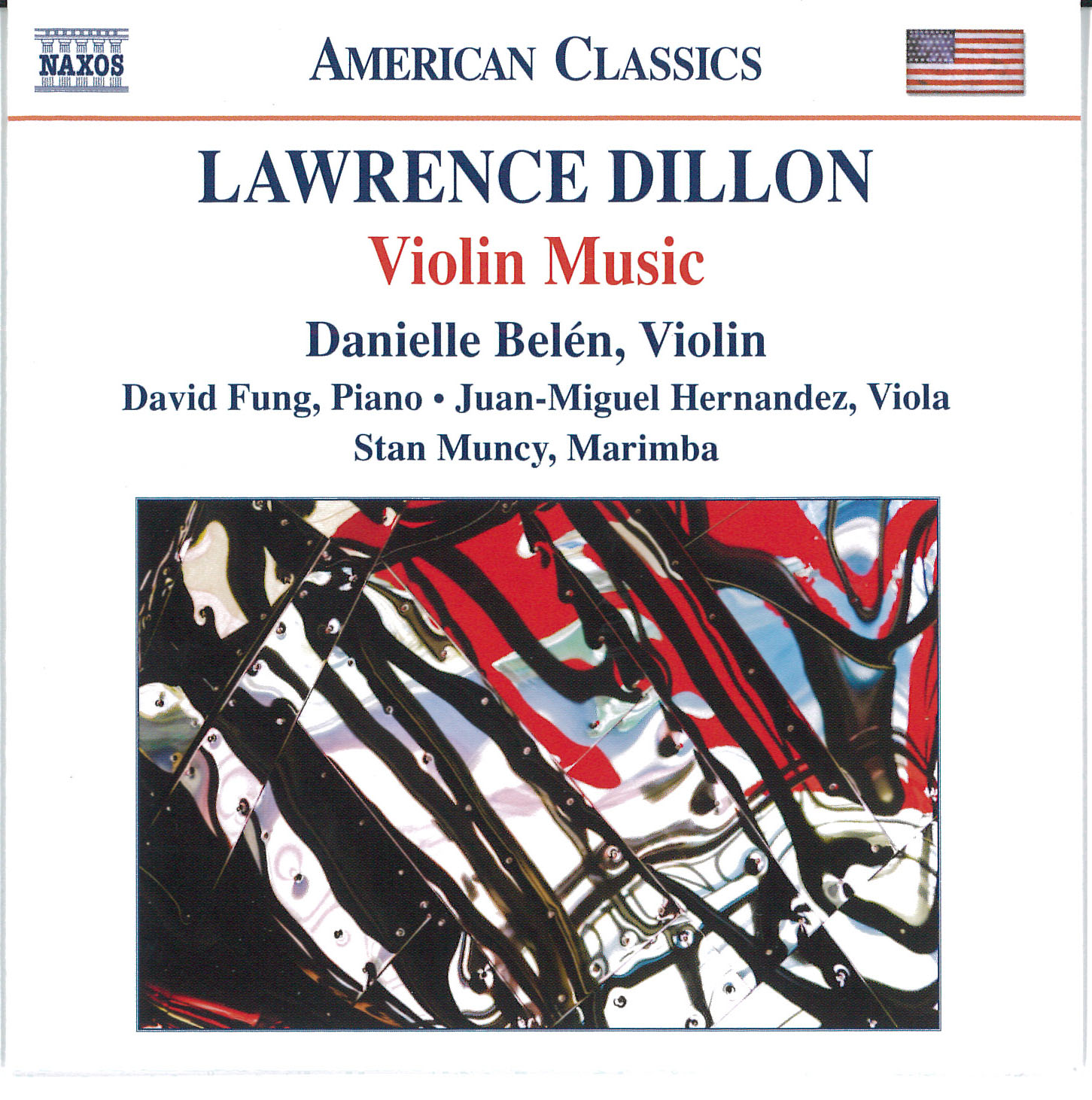
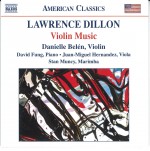 Lawrence Dillon, on the other hand, is an instantly accessible composer, and the CD of his Violin Music marks the recording debut of the Mexican-American violinist Danielle Belen (Naxos 8.559644). Her playing is terrific from the outset, with a full, warm tone and a daunting technique. There isn’t a single moment on the entire CD when you don’t feel that she is in complete control, both technically and musically. There are seven pieces here, covering a period of 25 years. The story behind the two solo violin works, Mister Blister - the opening track - and Fifteen Minutes, is quite fascinating, and was the genesis for the CD. In 2006, Dillon was one of fifteen composers asked by violinist Piotr Szewczyk to write a short solo violin piece of a few minutes’ duration; Dillon left the project for several months and, becoming somewhat confused, thought he was to write a one-minute piece. He ended up writing sixteen, and, unable to pick one, sent them all to Szewczyk. The virtuosic Mister Blister was rushed off in a single afternoon when the error was pointed out. The other sixteen pieces were rearranged into Fifteen Minutes; Szewczyk ended up premiering both works and putting them on his website, where Belen found them while looking for an American composer to feature on her debut CD. They are varied and quite dazzling - and in one of the movements Belen is even required to accompany herself on a kazoo! The earliest work on the disc is Façade, a deceptively simple student work from 1983 that I found quite captivating, but which apparently caused a stir at its premiere. Frequently performed since then, it is a particular favourite of Belen’s. David Fung is the accompanist. Canadian born violist Juan-Miguel Hernandez joins Belen for the Bacchus Chaconne, a 1991 work that Dillon wrote as part of his coming to terms with the last-minute loss of a commission for a cello concerto that he was just completing after 18 months’ work. The Violin Sonata Motion, from 2008, was originally scored for flute and piano, although Dillon had always had a violin adaptation in mind; he finally made this when Belen contacted him in 2008 to ask about recording his complete violin works. Fung is again the accompanist, as he is in The Voice, a transcription of an aria from Dillon’s 2001 opera Buffa. Stan Muncy accompanies Belen on marimba in Spring Passing, a 1997 version of an elegy Dillon wrote for his father, who died when the composer was only 2. The always-reliable Naxos team of Norbert Kraft and Bonnie Silver handled the production at St John Chrysostom Church, Newmarket, and the CBC’s Glenn Gould Studio in Toronto. The former location, with its added resonance, was used for the solo string works.


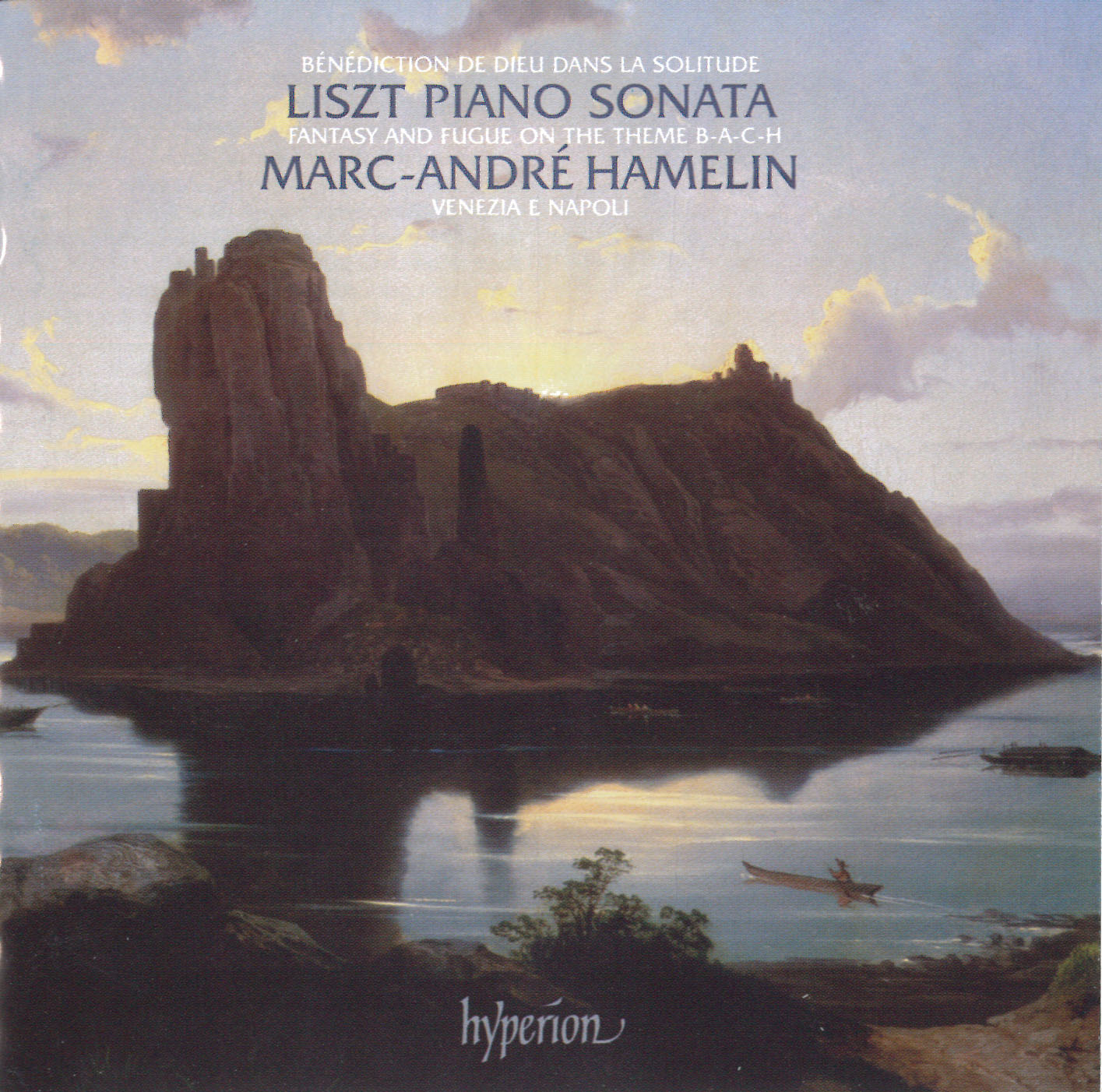 Liszt - Piano Sonata
_kreutzer.jpg)
_russian_cello.jpg)