01-Eton-ChoirbookMusic from the Eton Choirbook
Tonus Peregrinus
Naxos 8.572840

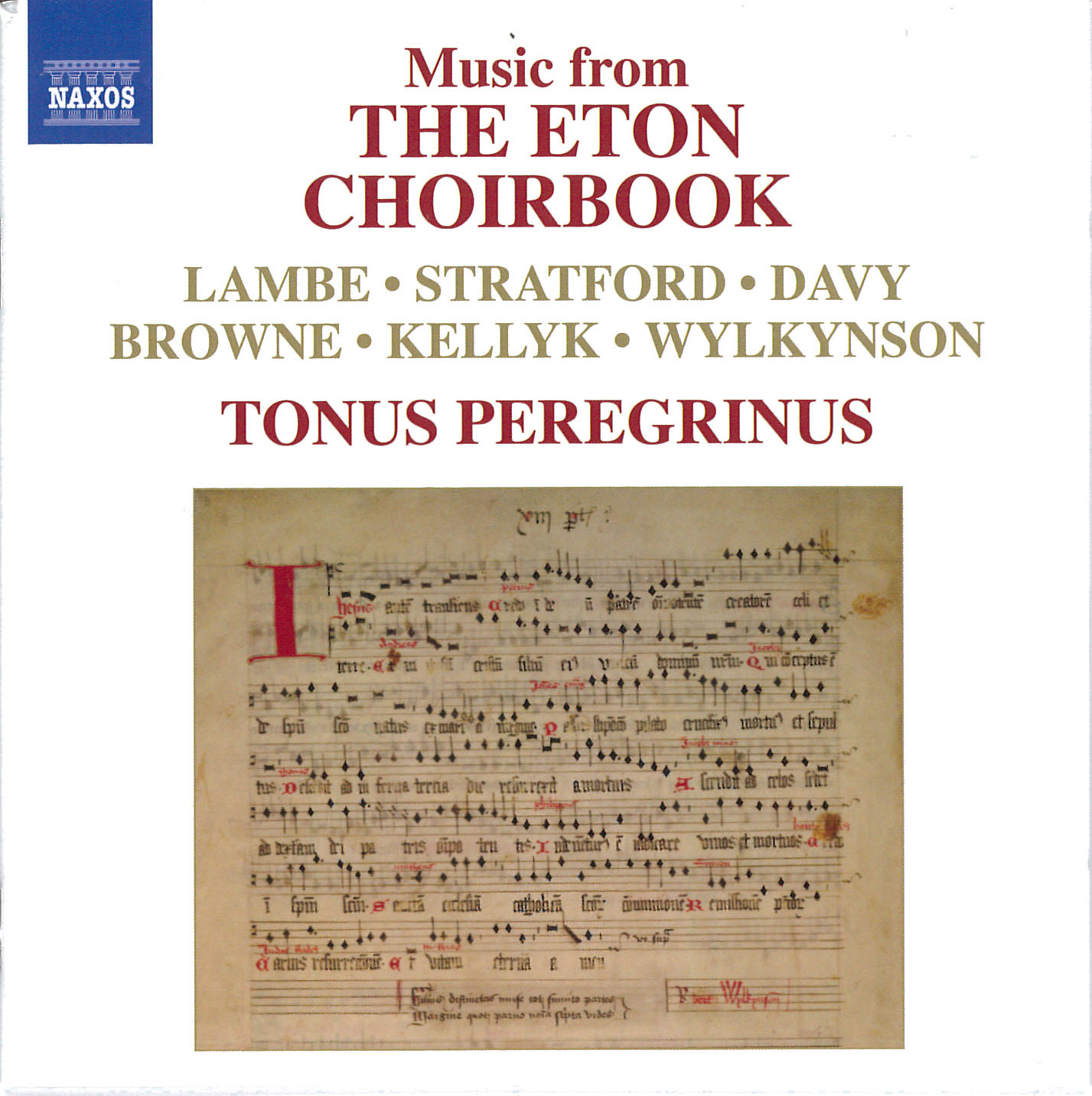
The Eton College Choirbook is one of pre-Reformation England’s greatest glories. English composers rejoiced in their settings of music that were as joyful as the architecture in which they were performed was lofty. The Choirbook required the skins of “112 average-sized calves” to produce; none died in vain, as this recording proves.

Two composers included here, Lambe and Browne, probably had connections with Eton. Lambe’s Nesciens mater a 5 is so exhilarating it could be used at any modern service — and the Choirbook likely dates from 1500!

William, Monk of Stratford, gave his Magnificat a 4 an ebullient character. Tonus Peregrinus uses 13 voices, five upper and eight lower, initially alternating but ultimately combined. Occasionally William’s polyphony uses strange examples of either lost or extra beats — is the lost beat between “the rich” and “he hath sent away empty” a deliberate ploy?

A second Magnificat, by Hugh Kellyk, is not as strident as William’s. It is nonetheless very demanding on the higher voices. Tonus Peregrinus’ already high reputation is only enhanced by its interpretations of the Eton Choirbook.

The opening pages of Richard Davy’s St. Matthew Passion have been lost. Jesus stands before Pilate and the events leading to crucifixion are recounted. Davy uses the arrangement soprano, alto, tenor, bass for both Pilate and Pilate’s wife. The bass part for both characters is, perhaps strangely, sung by one singer, Nick Flower. This certainly does not detract from the sheer forcefulness of Davy’s interpretation.

John Browne’s Stabat mater also uses 13 voices. Emphasis is placed on the soprano voices in what is a very powerful setting; mention must be made, however, of the bass parts, which are omnipresent if somewhat overshadowed.

Naxos is celebrating its 25th anniversary this year. It describes this recording as “perhaps the jewel in the crown of its series of Milestones of Western music.” Only “perhaps?”

ChauvonChauvon – Les nouveaux bijoux
Washington McClean; Alison Melville;
Julia Wedman; Michael McCraw;
Charlotte Nediger
early-music.com EMCCD-7773
www.early-music.com

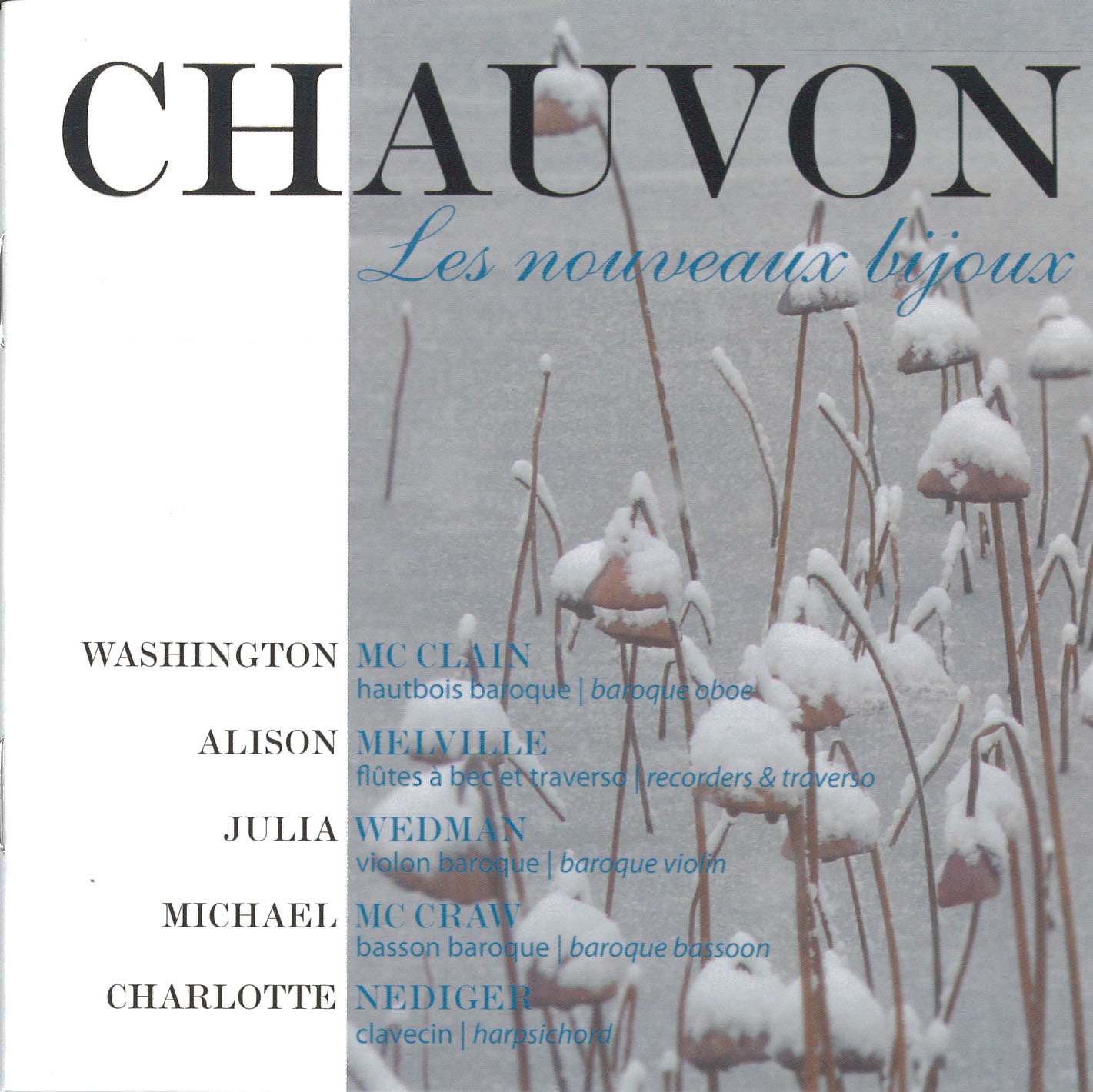
A virtual who’s who of North American early music specialists jump headfirst into the clever and charming world of French baroque composer François Chauvon, whose name may be unfamiliar to the reader. A student of Couperin, he composed a small number of chamber and vocal works between 1710 and 1740.

Tibiades (1717) is a collection of suites for baroque oboe and flute, with some suites including violin. Influenced by the Italian concertato texture style of the time, the instruments to be played were specified, but which line for each was not indicated. The performers are at liberty to choose their part, and when to play tutti and solo. Here, the performers not only choose their parts, but expand their choices by the addition of bassoon and continuo. The resulting instrumentation creates charming and distinct settings.

Eight suites are featured. Each is short in duration, with the occasional movement under one minute. The 44 second “Arpégement, le Pièche (gracieusement)” is a memorable harpsichord interlude from the Première Suite. Chauvon also dabbled with programmatic titles. The “la Mélancholique” movement from the Troisième Suite is slow and somewhat glum in notation and the selected instrumentation.

As to be expected, all the performers are spectacular. I especially marvel at Alison Melville’s breath control on recorders and traverse flute and harpsichordist Charlotte Nediger’s extraordinary continuo expertise. This recording is early music at its best.

01-Hamelin-HaydnHaydn – Piano Sonatas III
Marc-André Hamelin
Hyperion CDA67882

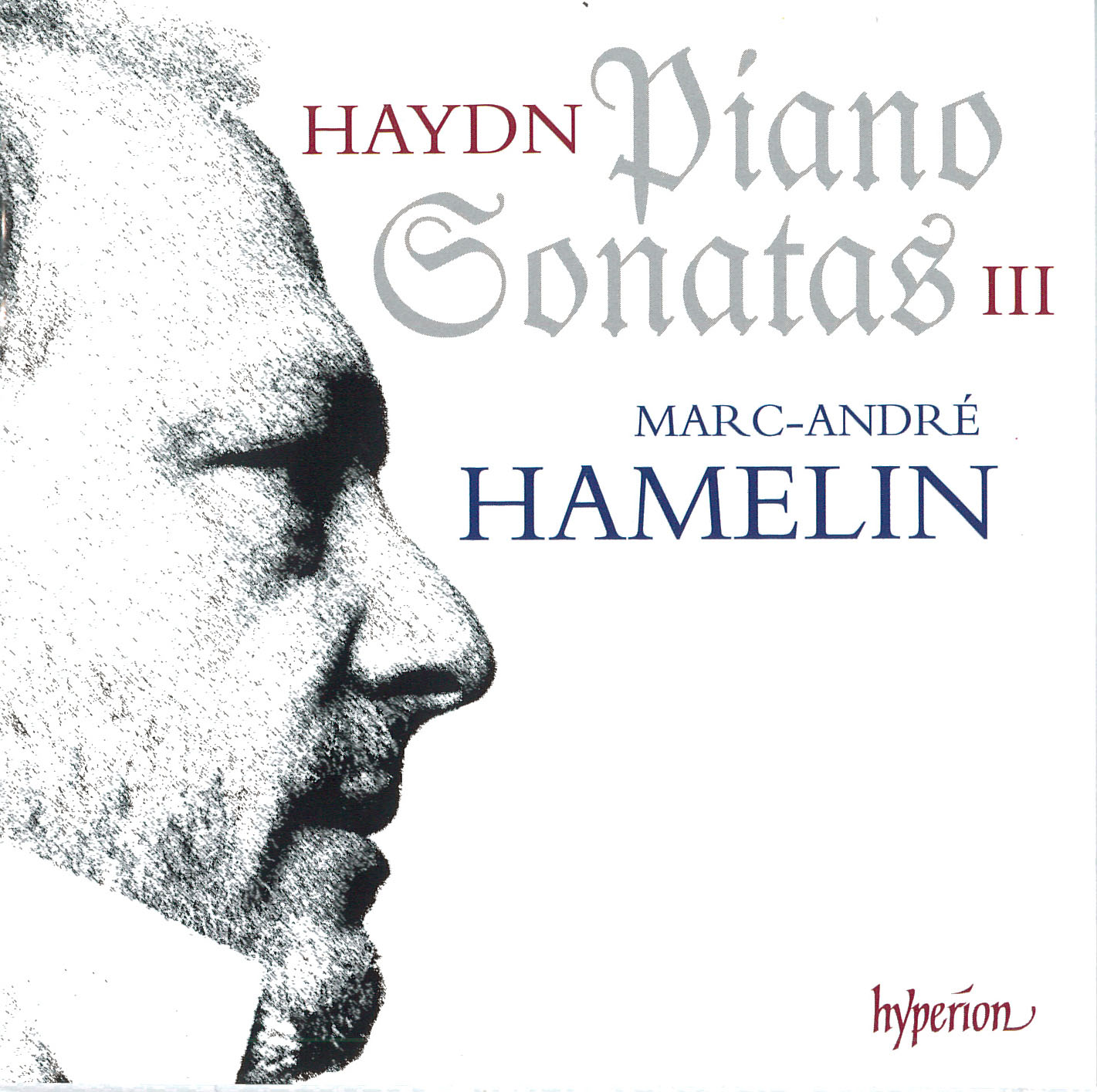
Few Canadian pianists have produced such an eclectic catalogue of recordings as Marc-André Hamelin. Ever since his first CDs featuring music by composers such as Claude Caron, Stephen Albert and William Bolcom, he has demonstrated a decided affinity for music a little off the mainstream. Yet this isn’t to suggest that the Montreal native has ever ignored the standard “old masters” either, and indeed, his latest offering on the Hyperion label is a case in point, a fine two-disc compilation of Haydn piano sonatas from the HobXVI series.

This is actually the third volume of Haydn piano sonatas Hamelin has recorded, the first two appearing in 2007 and 2009. For this set, he chose 11 sonatas mainly dating from Haydn’s middle period of the 1760s and 70s. This was a time when the 30- and 40-something-year-old composer was prodigiously creating string quartets and full scale operas while in the service of the Esterhazy family. Not surprisingly, these sonatas are true models of classical form. While they present no huge technical demands on the part of the performer, Hamelin approaches them in an intelligent manner, his playing finely nuanced with the subtleties so integral in music from this period. Yet not all is rococo galanterie here. Many of the slow movements demonstrate a deep melancholia, clearly foreshadowing romanticism, and once again Hamelin has no difficulty in conveying the contrasting moods through his finely shaped phrases and sense of timing.

An added bonus in this set is the inclusion of two divertimentos, later published as Sonatas 1 and 6 in the Hoboken XVI catalogue, and also a short sonata in D major, now known as “#51.” The sonata was a product of Haydn’s second visit to London in 1794 and demonstrates a much greater sense of stylistic freedom, as if Haydn was by now attempting to go beyond the restrictions of traditional Viennese classicism. He was to live only 15 more years and by 1809 the European musical world had very much moved on.

This set of finely crafted music elegantly played is a wonderful addition to the catalogue, proof once again (if proof is needed), of Hamelin’s outstanding musicianship and ability to excel at anything he chooses to play.

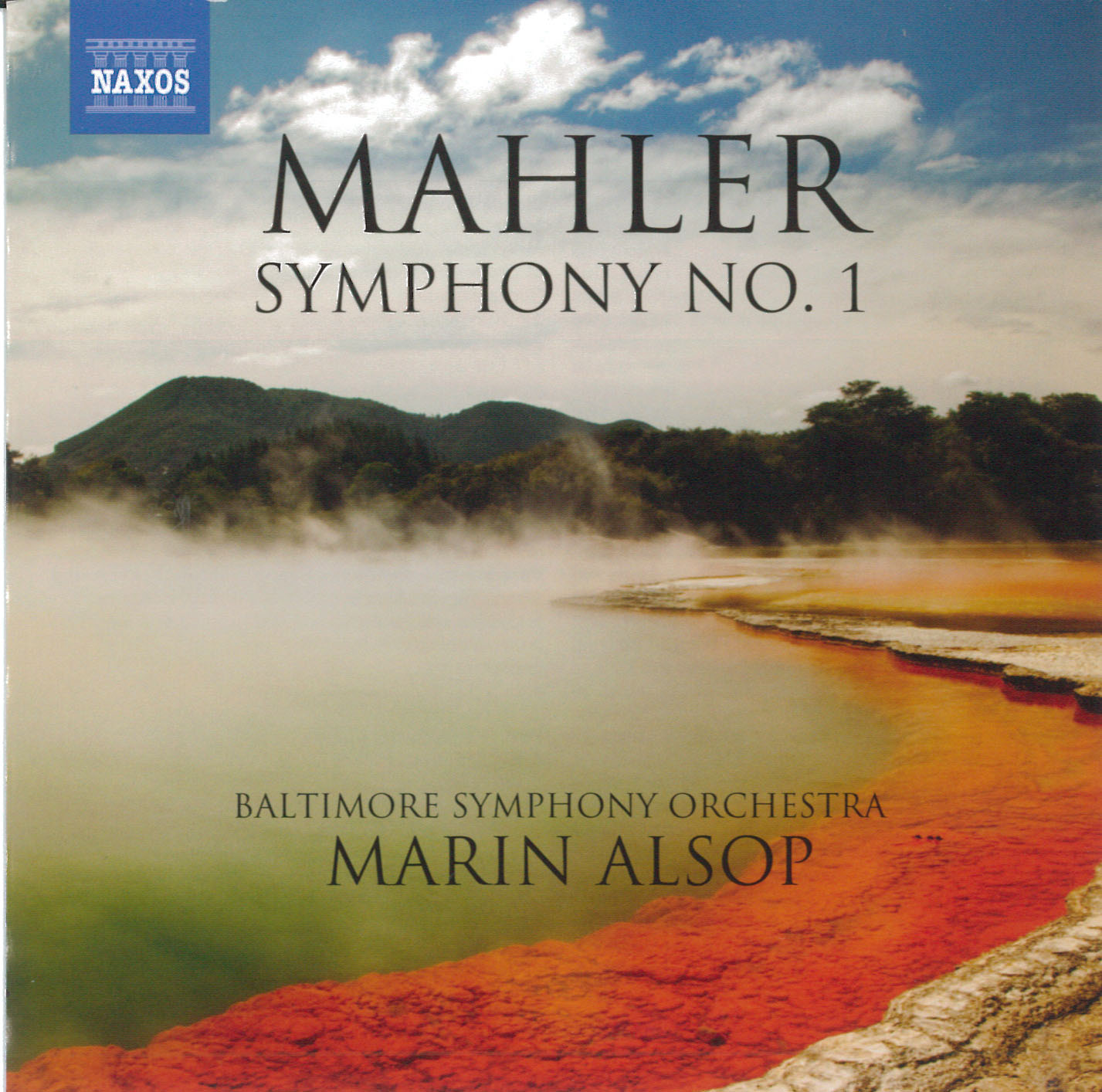
03a-Mahler-Fischer03b-Mahler-AlsopMahler – Symphony No.1
Budapest Festival Orchestra; Ivan Fischer
Channel Classics CCS SA 33112

Mahler – Symphony No.1
Baltimore Symphony Orchestra;
Marin Alsop
Naxos 8.572207

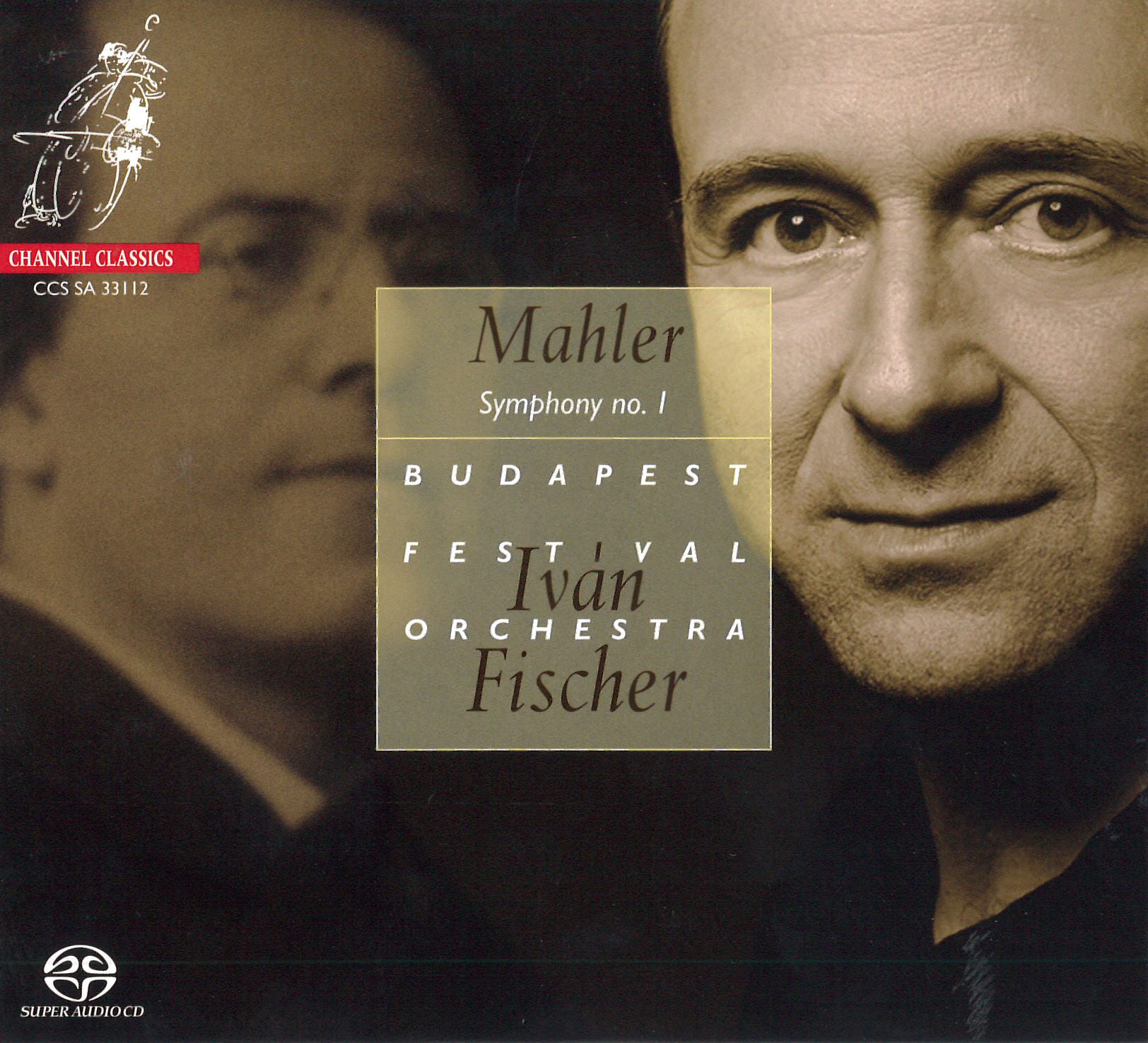
The preliminary version of Gustav Mahler’s First Symphony (described at the time as a Symphonic Poem in five movements) was premiered under the composer’s direction in Budapest in 1889. Its unfamiliar polystylistic collage and inexplicable programmatic elements utterly baffled the audience of the day. Conductor Iván Fischer, in his notes to this new recording with his elite Budapest Festival Orchestra, writes that ever since “at each performance we Hungarians have a moral duty to convince audiences that this is a perfect and exceptionally beautiful masterpiece.” Mission accomplished! This is a performance of remarkable sensitivity, ranging from the intimacy of chamber music to the most powerful, heaven-storming explosions, masterfully recorded in first class studio sound. The dynamic range is exceptionally vivid, tempos are flexible without ever becoming neurotic and the interpretation is thoroughly convincing throughout. The near doubling of the tempo in the closing pages provides a novel and exhilarating conclusion to a truly admirable performance, one of the very best I’ve heard in decades.

Marin Alsop and the Baltimore Symphony paint this score with a much broader brush. In such grandiose music this blunt approach still works marvelously, thanks to the enthusiastic, gritty response from the orchestra and their equally feisty conductor who for the most part seems happy to be carried along with the tide. I take exception however to their use of a recent edition of the score that proposes, on extremely flimsy evidence found not in the score itself but in a set of contested orchestral parts, that the celebrated contrabass solo that so poignantly launches the funereal third movement was intended to be played by the entire bass section. It is known that Mahler evidently tried it this way just once in a rehearsal with the New York Philharmonic in 1909 but quickly abandoned the idea, describing their bass section as “just ONE bass player and seven cobblers!” While these infamously high pitched eight bars (to the tune of the well-known Frére Jacques) have now become standard audition material, to pull such a stunt simply because standards of bass playing have since greatly improved strikes me as a poetic crime of the highest order. I was bothered as well that the recording level has been audibly heightened for this movement, proof positive that the additional basses do not result in a richer tonal experience. This is a generally quite satisfying live performance from quite some time ago (2008), unfortunately marred by notably muddy sound and less than stellar production values.

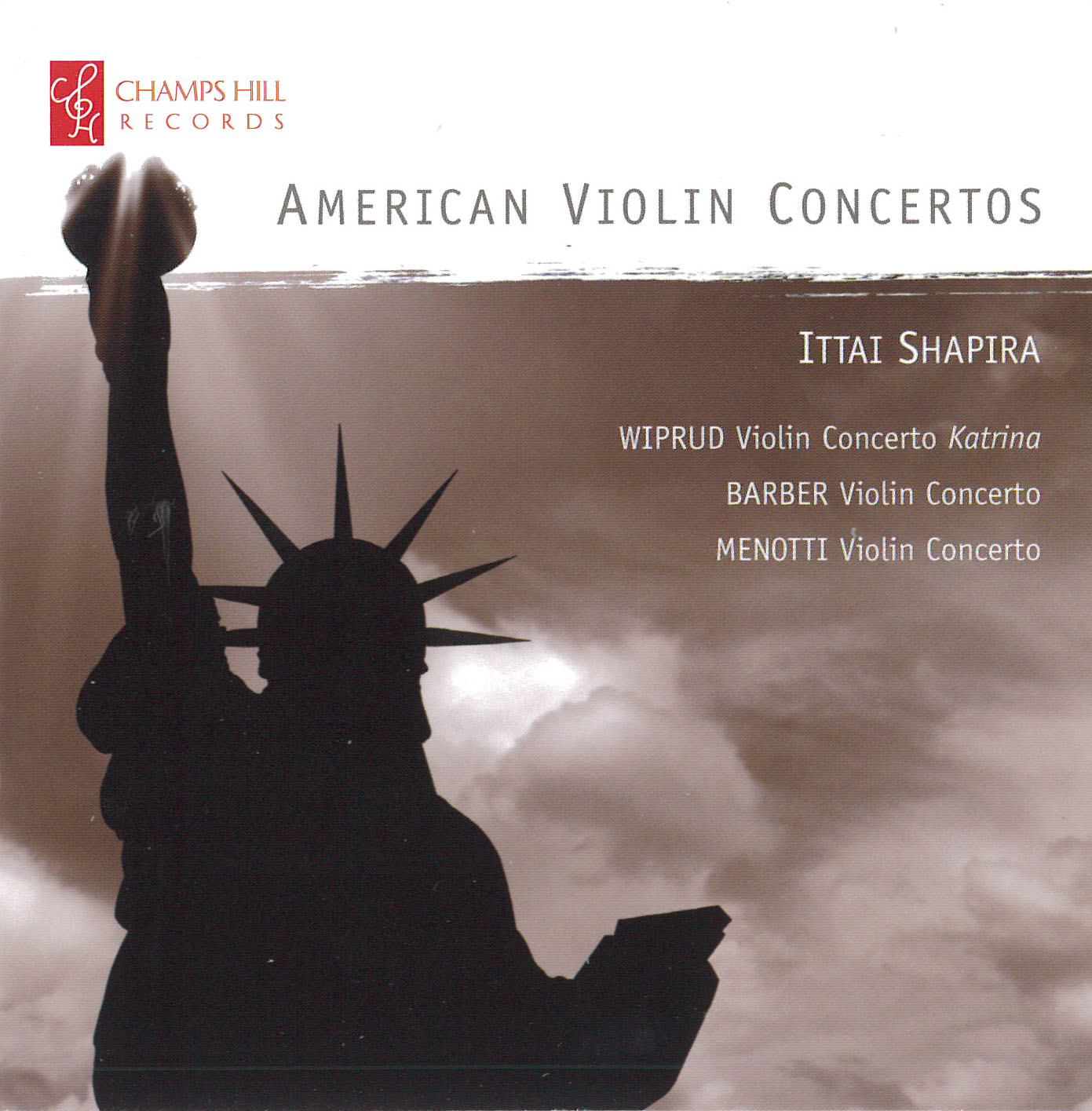
01-Itai-ShapiraJust over a year ago I didn’t know of the Israeli violinist Ittai Shapira, but this month sees the third CD of his that I’ve reviewed in the past 15 months. American Violin Concertos, on the English nonprofit label Champs Hill, features reissues of the violin concertos of Samuel Barber and Gian Carlo Menotti with a world premiere recording of the violin concerto Katrina by Theodore Wiprud (CHRCD043). The Barber and Menotti were recorded in Moscow in 2001 with the Russian Philharmonic Orchestra under Thomas Sanderling, and issued separately on the ASV label. The Wiprud was recorded in Liverpool earlier this year, with the Royal Liverpool Philharmonic Orchestra under Neil Thomson.

The Wiprud concerto was written at Shapira’s request, and premiered by him just a year ago. The composer describes it as reflecting on the devastation that Hurricane Katrina wrought on the musical life of the whole Delta region, the cradle of so much American music, and as exploring the enduring nature of music, and of life itself, even when apparently crushed by such overwhelming events. It’s a strongly tonal and very effective work.

I don’t recall hearing the Menotti before, but again it’s an immediately accessible work with hints of the Barber in the slow movement – hardly surprising, given the two composers’ almost life-long relationship. Shapira is in his usual superb form – and boy, can this guy play! He certainly has something new to say with the Barber. He takes his time with a meditative and rhapsodic first movement, allowing it to build slowly, but never at the expense of the lyrical nature. Both here, and in the slow movement in particular, the sensitive orchestral balance allows many often unheard details to come through. The Presto finale, while fast, is never simply a headlong rush, with clear delineation of the solo line.

Shapira never puts a foot wrong in impassioned, committed and intelligent performances. One of my earlier reviews mentioned that the violinist had already had 14 concertos written for him; this latest CD makes it easy to see why composers want to write for him. It’s also just as easy to see why people want to listen.
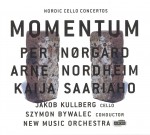
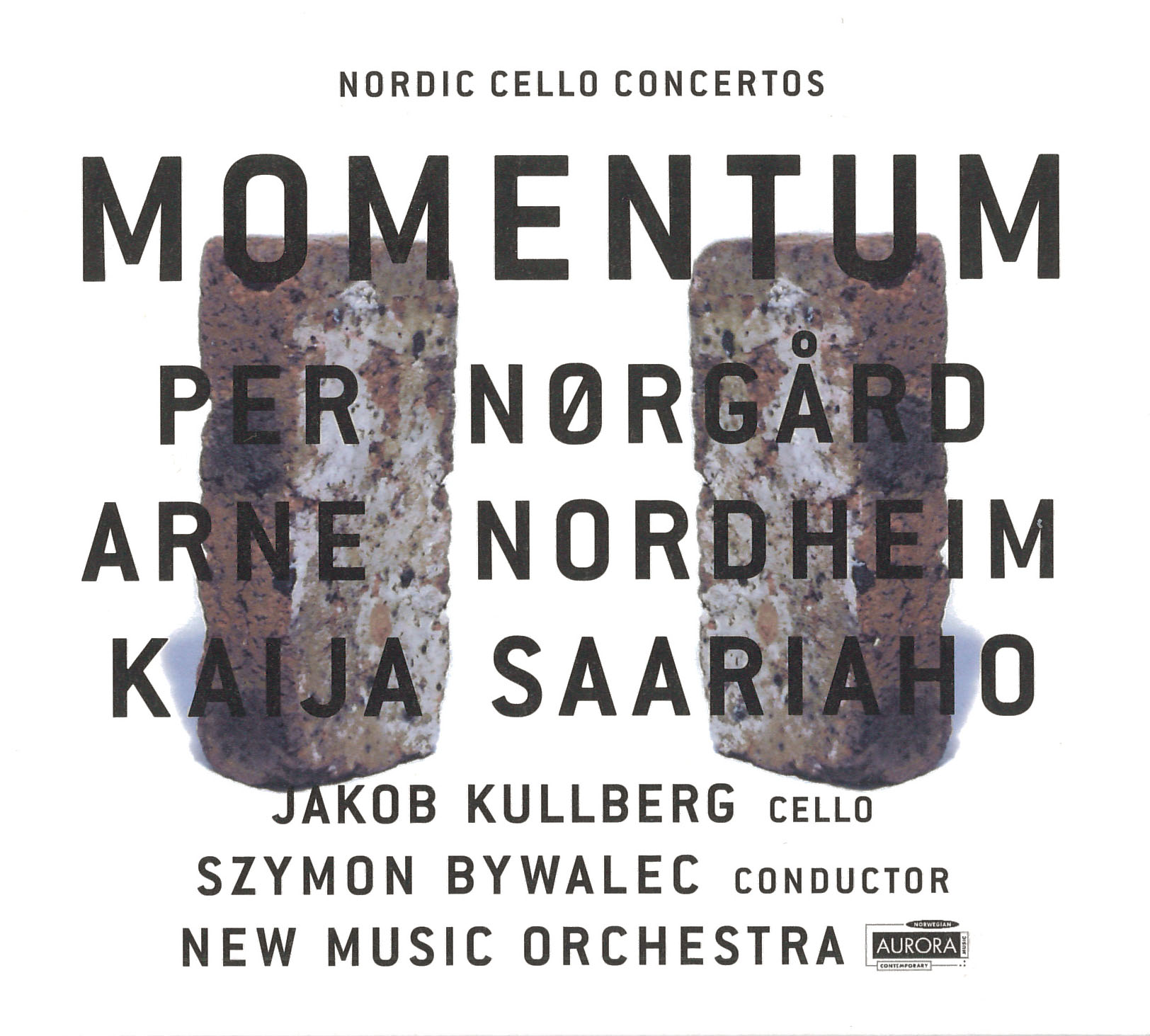
02-Momentum-Cello-ConcertosMany years ago I worked for the Chester/Wilhelm Hansen music publishers in London, England, and we would receive a constant stream of new issue Scandinavian works from the Copenhagen office. Two of the leading composers were Denmark’s Per Nørgård (b.1932) and Norway’s Arne Nordheim (1931-2010) and both are featured on the new CD MomentumNordic Cello Concertos, featuring the Danish cellist Jakob Kullberg with the New Music Orchestra under Szymon Bywalec (Aurora ACD5075). The third work on the CD is Amers – Concerto No.1 for Cello, Ensemble and Electronics, by Finland’s Kaija Saariaho (b.1952).

I had difficulty back then trying to identify personal or national styles in the Scandinavian composers, and I find much the same problem now. It’s a challenge in any case to try to judge performances of contemporary works without the benefit of a study score; all you can really do is try to decide if the music communicates with the listener. The level of performance here is clearly very high throughout the CD, although the degree of communication will probably be a matter of individual taste.

Nørgård’s Momentum – Cello Concerto No.2 was written in 2009, and dedicated to Kullberg, who also gave the first performance; composer and soloist have enjoyed a close collaboration for the last 15 years.

Nordheim’s Tenebrae – Concerto for Cello and Orchestra was written in 1982 for Rostropovich and is performed here in a chamber orchestra version. It’s not a literal depiction of the Roman Catholic ecclesiastical service, but certainly addresses the same issues of shadow and pain.

Saariaho’s Amers – “sea marks” or “buoys” – was written in 1992, and was inspired by a collection of French poetry on the theme of the sea. The addition of electronic sounds possibly makes it a tougher first listen.

These are clearly works that must be listened to, and not approached casually; the result, though, will be worth the effort.

The Nørgård and Nordheim concertos – the latter apparently only in this chamber version – are premiere recordings. Both works are published by Wilhelm Hansen; the Saariaho, coincidentally, is published by Chester.
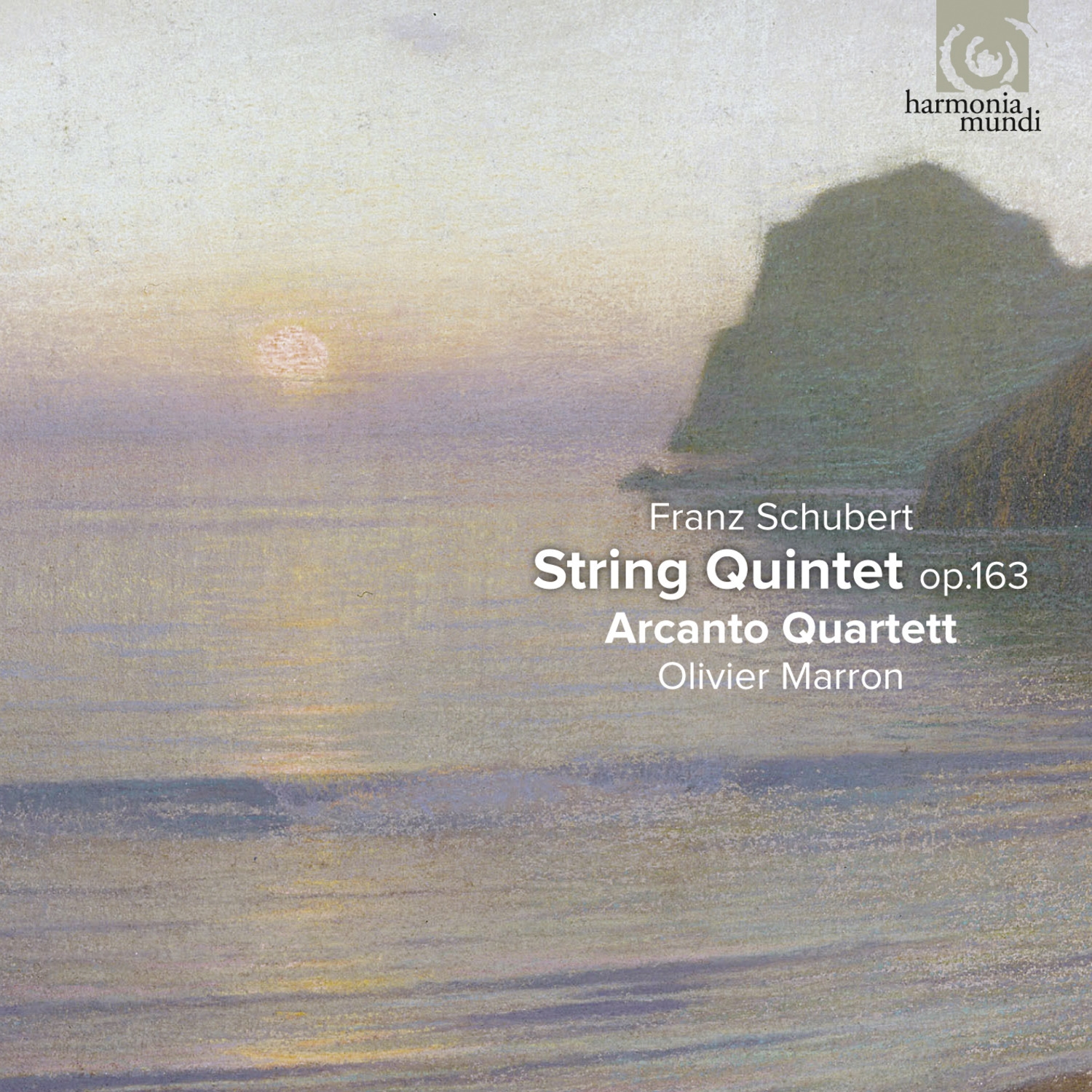
03-Schubert-String-QuintetLast month’s column featured an outstanding recording of the last string quartet that Schubert wrote, two years before his death, and this month there’s a CD of Schubert’s final string chamber work, the wonderful String Quintet in C Major, Op.163, D956, (harmonia mundi HMC 902106) that matches it in all respects. The ensemble in this performance is the German Arcanto Quartett with Olivier Marron on second cello.

The work was written in the summer of 1828, only a few months before Schubert died in November, and it’s one of the great masterpieces of the string chamber repertoire. Strangely, it wasn’t performed until 1850 and didn’t appear in print until 1853.

The lengthy booklet notes, somewhat awkward in their translation, present a complex, rather puzzling and not always convincing analysis of the nature of the contrasting elements in the music, but this is a work which needs no explanation, especially in performances like this one.

Recorded in the Teldex Studio in Berlin, the sound and balance are both exemplary.
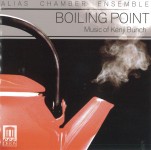
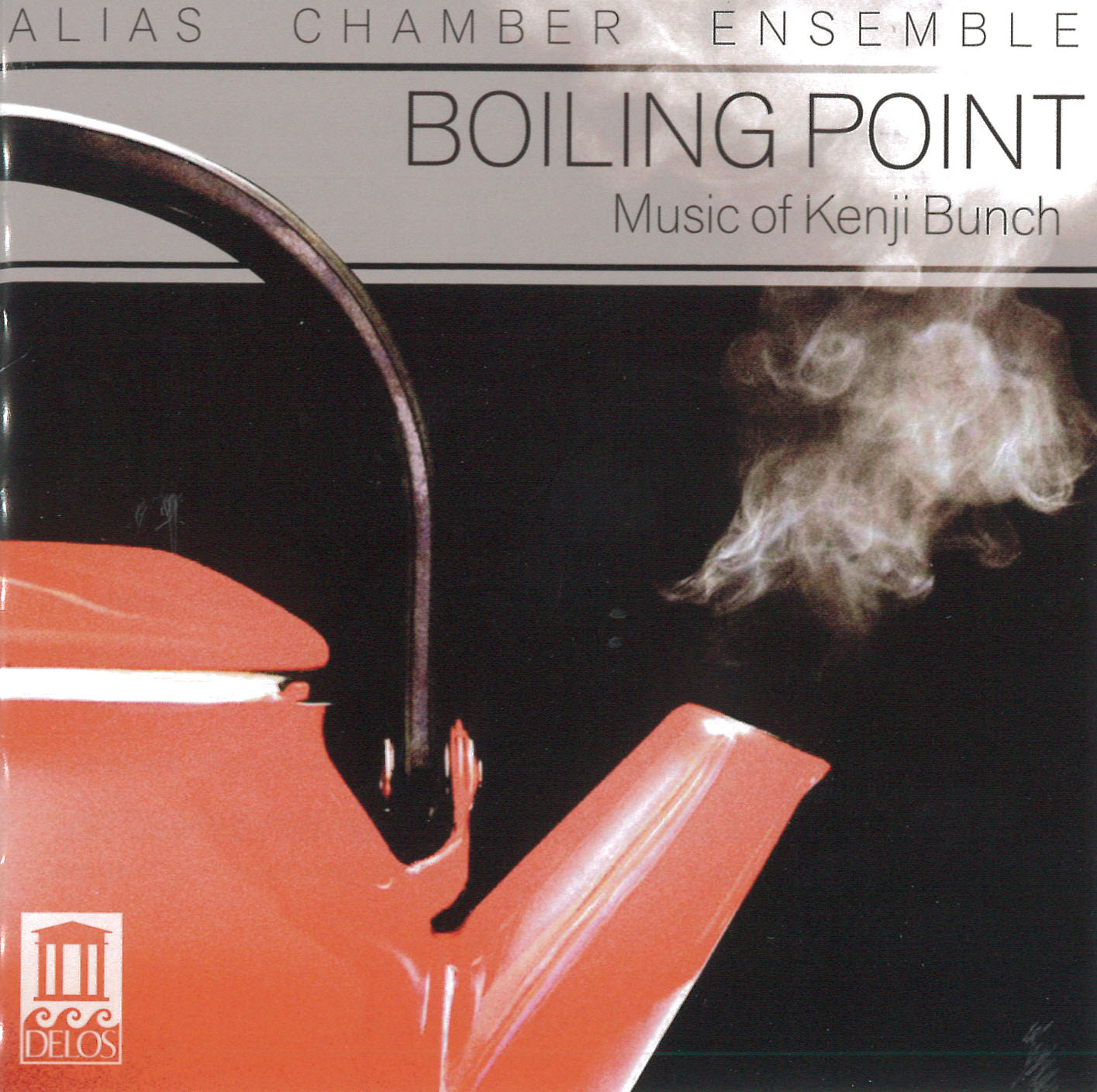
04-Boiling-PointI still find it a bit strange having to use the term “21st century music,” but that’s what we have on the very interesting and appealing CD Boiling Point – Music of Kenji Bunch (Delos DE 3430) featuring members of the Alias Chamber Ensemble.

In a perceptive foreword, the Pulitzer Prize-winning composer Kevin Puts notes that it still isn’t easy “to write from the heart without fear of elitist backlash,” as Bunch does, and goes on to describe Bunch as a consummate musician who “can write effortlessly in a myriad of styles and languages, which he is able to juxtapose with elegance and humor.” All of which should give you a good idea of what this disc sounds like. It’s strongly – but not entirely – tonal music that reflects numerous diverse musical influences, and it’s beautifully crafted and always interesting.

Bunch, born in Portland, Oregon in 1973, describes the CD as a collection of some of his favourite and most deeply personal chamber works of the past decade.

Each of the five movements of String Circle for string quintet (with two violas) pays tribute to a particular kind of American string music: the highlight is a brilliant all-pizzicato movement evoking banjos and ukuleles.

Drift is a charming trio for clarinet, viola and piano; 26.2, for French horn and string trio, celebrates and depicts the composer’s first running of the New York City marathon with his wife – 26.2 miles is the official distance.

Luminaria, for violin and harp, drew its inspiration from the Mexican/Pueblo tradition of votive candles enclosed in coloured paper wrappings.

The final title track, for string quartet, string bass and drums, is a spirited full tilt romp that follows the development of water in a kettle as it gradually escalates to the boil; it’s performed with a live kettle on stage, the performance ending only when the whistle blows!

All in all, a delightful CD of solid, captivating pieces, beautifully performed and recorded. 

01-Gouts-AccordesLes Gouts Accordes
Esteban La Rotta; Jivko Georgiev; Margaret Little; Katelyn Clark
ATMA ACD2 2673

Louis XIV wanted to bring ethnic cohesion to his western European mini-empire. Realising culture would play a part in this, he brought Italian-born Giovanni Battista Lulli to his court and rebranded him as Jean-Baptiste Lully. This CD brings us Lully and Robert de Visée (who actually was French-born) and others such as Jean-Baptiste Barrière who composed in the Sun King’s wake.

Barrière’s second and sixth trio sonatas bring out a rich resonant quality in the theorbo. This continues in the allegro movements with a part for viola da gamba which plays the spritely gigue that ends both sonatas. The theorbo is, above all, given a chance to showcase itself with de Visée’s A Minor theorbo suite. Here, the incorporation of more lively dance-based movements, the gavotte and rondeau, enhance the enjoyment of the suite and Esteban La Rotta’s dexterity manifests itself.

Finally, there is a theorbo solo where de Visée arranges the “Ritournelles des Fées” from Lully’s opera Roland. In the hands of La Rotta the solo underlines just how versatile the theorbo was at a time when it was being challenged in every area of performance by the harpsichord. Indeed, it also demonstrates how effective the combination of Lully and de Visée was in forming a cohesive French musical tradition.

01-BusoniBusoni – Clarinet Concertino; Flute Divertimento; Rondo alecchinesco
Giammorco Casani; Laura Minguzzi; Gianluca Terranova; Orchestra Sinfonica
di Roma; Francesco La Vecchia
Naxos 8.572922

The Italian maestro Francesco da Vecchia, who favoured us last season with an ambitious new recording of Busoni’s gargantuan Piano Concerto, continues his championing of the music of Ferruccio Busoni (1866-1924) with a generous sampling of shorter orchestral works by this sorely underrated composer whose inimitable compositions have long been overshadowed by his towering reputation as a legendary performer. The centrepieces of the present disc are two single movement wind concertos. Giammarco Casani is the exceedingly suave soloist in the Clarinet Concertino while Laura Minguzzi provides an appropriately sprightly interpretation of the mercurial Divertimento for flute and small orchestra. My only grievance with these interpretations is that they are engineered with the soloists forced unrealistically forward in the sonic mix.

An additional quartet of purely orchestral works presents a broad chronological overview of Busoni’s stylistic development, commencing with the bustling neo-classical Comedy Overture of 1897, the moody, otherworldly Song of the Spirit Dance with its striking aboriginal references inspired by Busoni’s foray to America, followed by the sardonic Rondò arlecchinesco (both from 1915) and concluding with Busoni’s last orchestral work, the Viennese-accented Tanzwalzer of 1920.

In an unusual practice for Naxos, there are two different sets of liner notes, the usual prosaic English version by the ubiquitous Richard Whitehouse and, as best as I can tell, a considerably more insightful Italian essay by Tommaso Manera.

02-Ten-Thing10
tenThing
EMI Classics 088326 2

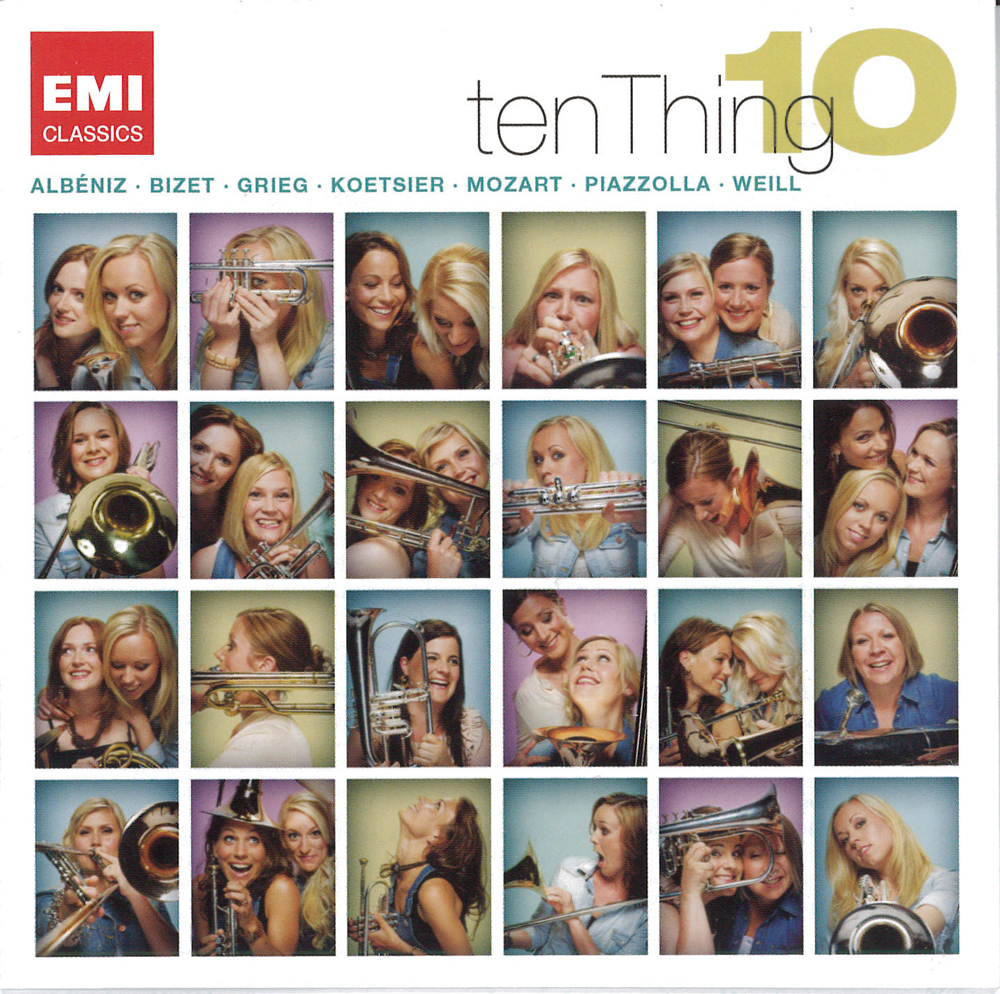
A few months ago I reviewed the CD Storyteller by Norwegian trumpeter Tine Thing Helseth with orchestra and piano accompaniment. Now she is back with a ten member all woman brass ensemble called tenThing. This group, in instrumentation and sound, more closely resembles an enlarged brass quintet that a small brass band. The group consists of four trumpets, three tenor trombones, one bass trombone, one French horn and one tuba. The opener is a rousing version of a Carmen Suite arranged for the group by Roger Harvey. The group’s precise articulation comes to the fore in their rendition of Asturias by Albéniz. It’s not just the trumpets; the trombone and tuba always come through crisp and clean.

For me, a welcome inclusion is a seven movement suite from Kurt Weill’s Threepenny Opera. The trombone playing in particular captures the spirit that Weill would have wanted; Mack the Knife and Polly come to life. Two impressionistic works by Astor Piazzolla add a bit of Latin flavour, and a spirited rendition of Mozart’s Rondo alla Turca provides the real fiery component of this compilation.

There is no attempt to showcase the leader or any other member on this recording. Throughout, Helseth and her cohorts are members of the tight ensemble. The recording quality is top notch with 68 minutes of varied listening pleasure. Unfortunately, the disc is devoid of any biographical information, which is particularly annoying for the lesser known figures such as Dutch composer Jan Koetsier, who gets no mention although his three movement Brass Symphony, Op.80 and another shorter work are included.


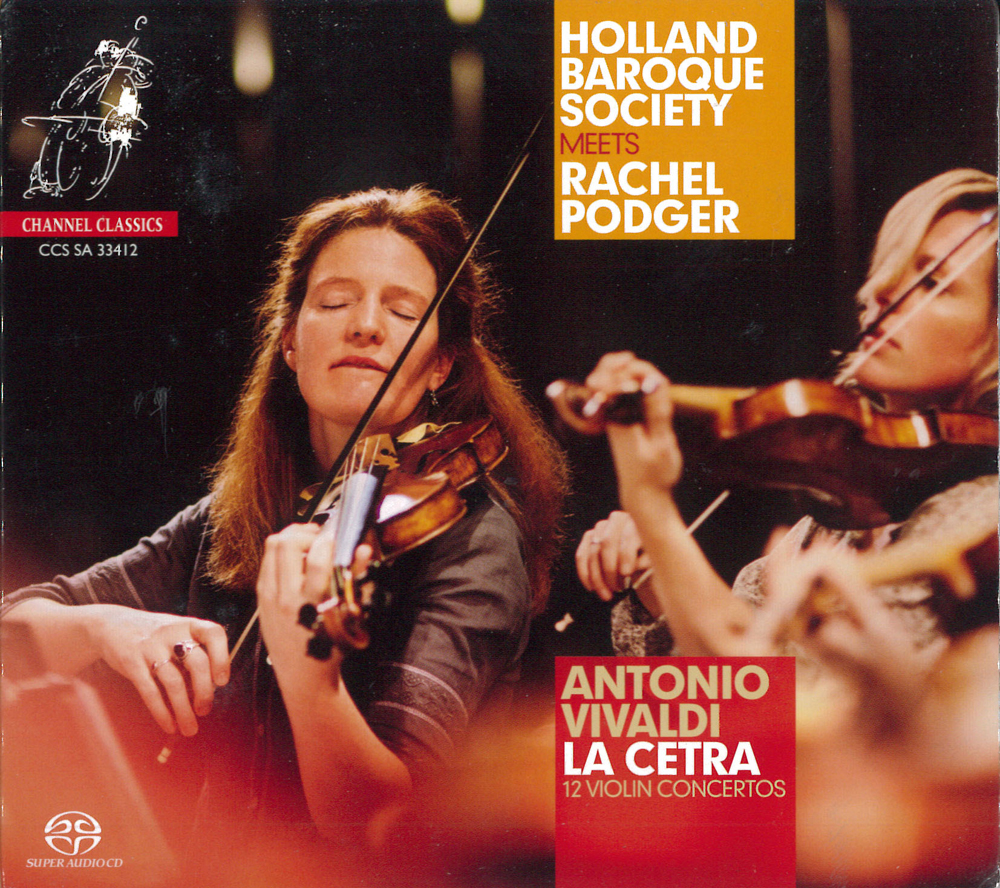
01-Vivildi-Holland-Baroque-PodgerBaroque specialist Rachel Podger is in magnificent form on a new 2-CD set of Vivaldi’s La Cetra – 12 Violin Concertos Op.9, with matching support from the Holland Baroque Society (Channel Classics CCS SA 33412). Podger is technically superb in all respects in concertos which demand a very high level of playing, managing to make them sound effortless but never empty and crystal clear and precise without ever lacking warmth. The outstanding accompaniment is lively, bright and full of dynamic contrast, with a continuo group consisting of organ and two lutes in addition to the usual cello and harpsichord sounding particularly effective in the solo violin passages. There’s the usual Vivaldi display of seemingly endless circles of fifths, scale and arpeggio passages and sequences, of course, plus the false familiarity — there are moments when you could swear you’ve put the Four Seasons on by mistake — but these are concertos that have enough variation to easily hold your interest throughout the two discs.

Recorded in Amsterdam, the wonderful sound quality adds to the enjoyment of a marvellous issue; this is simply one of the best Vivaldi sets you are ever likely to hear.

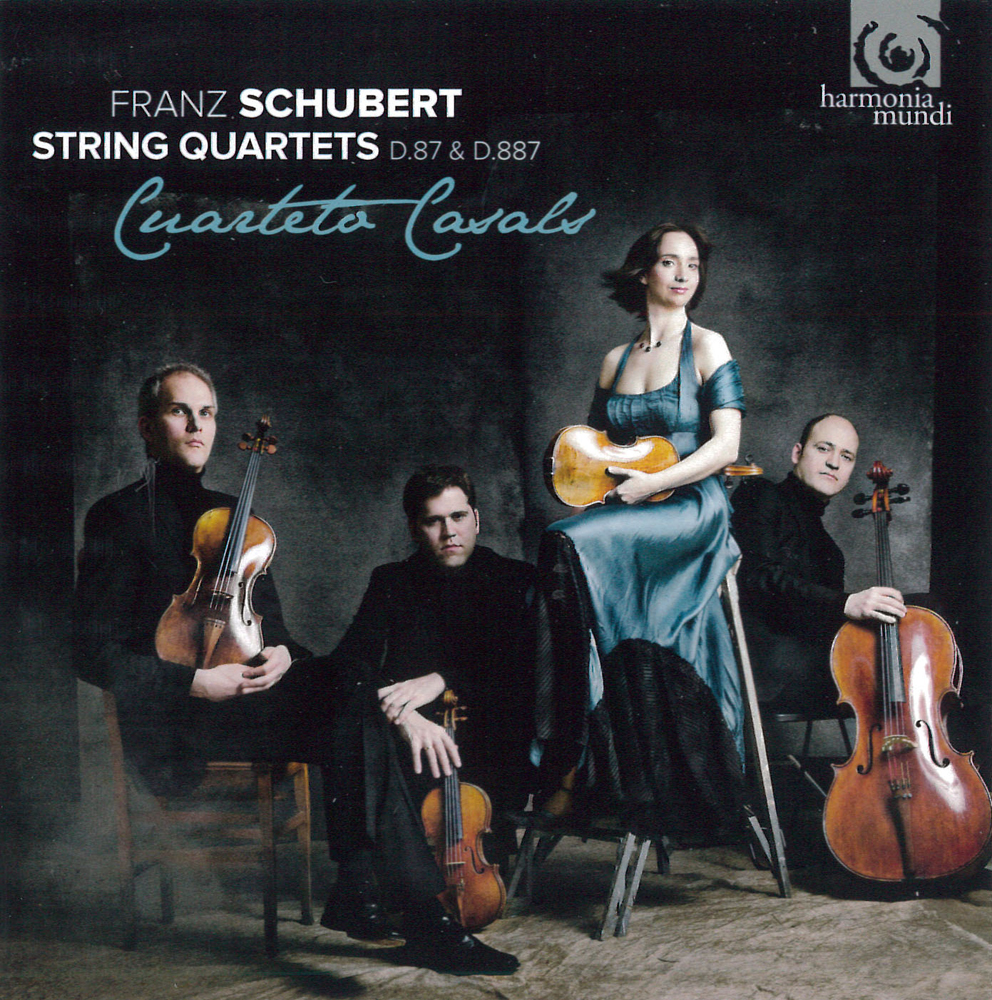
02-Schubertt’s been a long time since any string quartet CD had an impact on me to equal that of the latest issue from the Barcelona-based Cuarteto Casals, but stunning performances of the Schubert String Quartets D.87 and D.877 (harmonia mundi HMC 902121) left me quite lost for words.

Despite his tragically short life — or maybe because of it — Schubert managed to plumb depths in his later music that few composers have ever matched, let alone exceeded. The two quartets on this CD are from opposite ends of his career: the E-Flat Major D87 is the work of a 16-year-old who regularly played quartets at home with his family members, while the G Major D887 is Schubert’s final quartet, written in 1826 just two years before his death. The string quartet genre hadn’t really been around all that long at the time — only 50 or 60 years or so — but the emotional and technical distance that Schubert traveled in the 13 years that separate the two works is simply remarkable. The e-flat quartet is a charming and interesting work that owes much to Haydn and Mozart, but the g major is a worthy contemporary of the late Beethoven quartets. And what an astonishing work it is! — powerful, turbulent, full of wonderful theatrical and symphonic effects, and given a rich, fully committed performance by the Cuarteto Casals, whose passion and dynamic range perfectly match the emotional range of the music. Their wonderful playing is beautifully recorded, with perfect balance and just the right amount of resonance. A simply outstanding disc.

03-LekeuI’m sure most of us have a favourite composer whom we feel is unjustly neglected or underperformed. One such for me is the Belgian-born Guillaume Lekeu, who was just establishing himself in Paris after studying with César Franck and Vincent d’Indy when he died suddenly of typhoid fever the day after his 24th birthday in 1894. ATMA has released a CD of his Trio et Quatuor avec piano (ACD2 2651) featuring the Canadian Trio Hochelaga with the TSO principal violist Teng Li. Both works are very much of their time and clearly in the same style as those of Franck and d’Indy. The Piano Trio is the larger work, and the only completed one of the two; the Piano Quartet was unfinished at Lekeu’s death, and needed an additional few bars from d’Indy to make the second movement performable. It’s a shame it’s incomplete: Lekeu was a late starter, despite his early demise, and it’s clear that a more personal voice was beginning to emerge in this work. The Trio Hochelaga — violinist Anne Robert, cellist Paul Marleyn and pianist Stéphane Lemelin — give full-bodied and committed performances, although I found the violin vibrato to be a bit too wide and heavy at times, threatening to compromise the intonation and making the unison runs with the cello sound a bit out of synch. Overall, the feeling here is not so much one of masterpieces all too few, but more one of future masterpieces unfulfilled and of huge promise cruelly cut short.

04-FuchsIt’s interesting to note how, in recent years, a good deal of contemporary composition in the U.S. appears to have swung back to works with a strong tonal base, often with a strong cinematic feel to them. A recent Naxos CD (8.559723) in their excellent American Classics series features performances by the London Symphony Orchestra under JoAnn Falletta of five works by Kenneth Fuchs, who was born in 1956. This is actually the third Naxos album of Fuchs’ works by this team — Falletta and Fuchs have been collaborating for over 25 years — and it shows a lyrical composer with great imagination and a fine ear for orchestral colour. Two orchestral works — Atlantic Riband and the overture Discover the Wild — open and close the disc. Falletta is joined by her Buffalo Philharmonic concertmaster, the outstanding Michael Ludwig, for American Rhapsody (Romance for violin and orchestra) and by the LSO’s Paul Silverthorne for Divinum Mysterium (Concerto for viola and orchestra), which was written for the performer. Both soloists are in top form, with Ludwig’s beautiful tone again fully evident. The Concerto Grosso for string quartet and string orchestra completes the CD. Despite the occasional suggestion of an English influence — Britten’s Sea Interludes in the Atlantic Riband and the Divinum Mysterium, for instance, or Vaughan Williams’ Lark Ascending in the Rhapsody — this is music firmly in the American mainstream tradition. There are more than a few hints of Copland and the American pastorale; at times, though, you could be forgiven for thinking that you were listening to music for a major motion picture or a top level television news or sports program.

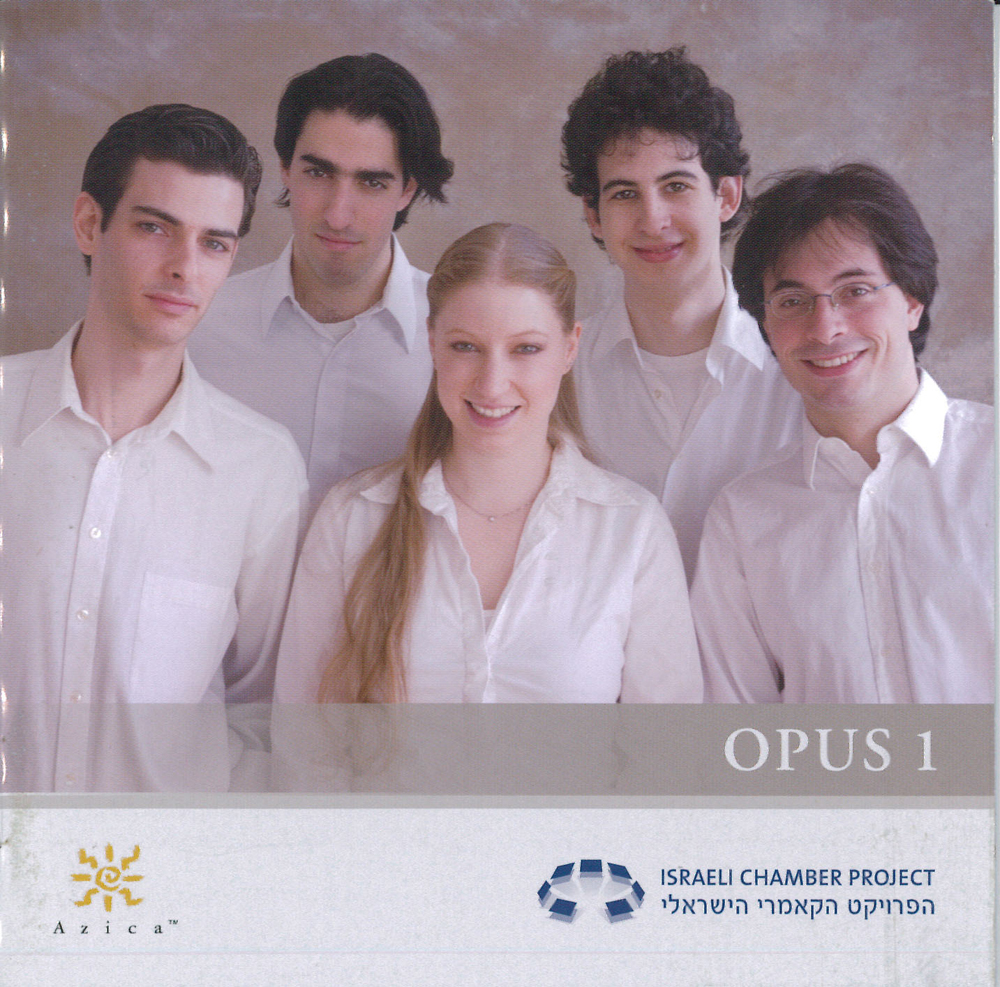
05-Israel-Chamber-ProjectOPUS 1 (Azica ACD-71274) is the impressive debut recording by the Israeli Chamber Project, a group of distinguished young Israeli musicians that was founded in 2008. All of the six members featured on this CD — Itamar Zorman (violin), Shmuel Katz (viola), Michal Korman (cello), Tibi Cziger (clarinet), Sivan Magen (harp) and Assaff Weisman (piano) — are established and experienced performers in their own right, with very impressive backgrounds and résumés. The playing, not surprisingly, is of the highest quality throughout a varied but always interesting program. The Saint-Saëns Fantasie for Violin and Harp, Op.124 from 1907, is one of several pieces that the composer wrote for the harp; it’s a simply lovely work that beautifully illustrates his understanding of the instrument. Martinů’s Chamber Music No.1, written only five months before his death in 1959, is the only work to use all six players. It’s full of folk rhythms, with a slow movement reminiscent of Bartòk’s “night music.” Matan Porat’s Night Horses was commissioned for, and dedicated to, the Israeli Chamber Project, who specifically requested the instrumentation of clarinet, violin, cello and piano to match that of Messiaen’s Quatuor pour le fin du temps. This is its first recording. Sivan Magen arranged Debussy’s 1915 Cello Sonata for cello and harp in 2010, and it works extremely well. Again, this is a premiere recording. A spirited performance of Bartòk’s Contrasts for clarinet, violin and piano rounds out an excellent disc. 

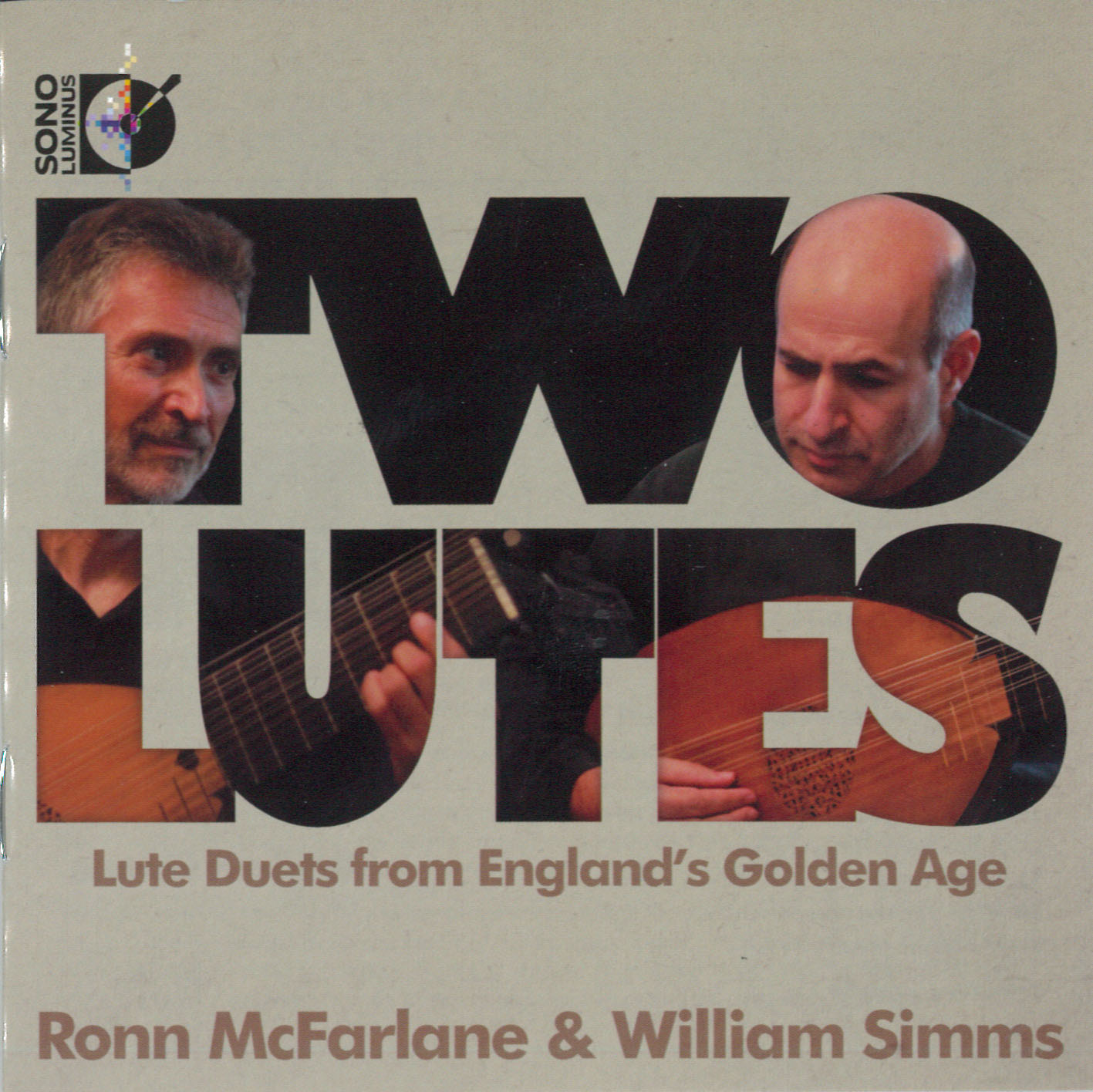
01-Two-LutesTwo Lutes – Lute Duets from England’s Golden Age
Ronn McFarlane; William Simms
Sono Luminus DSL-92155

Lute duets form some of the most enchanting and at the same time most demanding recitals. Imagine a selection of 27 such duets!

La Rossignal has always been a testing but satisfying example of the genre. Both lutenists bring out the disciplined yet exuberant quality of this piece; they follow immediately with the stately and measured Delight Pavan of John Johnson, 15 years Queen Elizabeth’s “royal lewter.”

Ronn McFarlane and William Simms have gone well beyond formal compositions by Elizabethan composers — the anonymous Robin is to the Greenwood Gone is performed with a dedication and passion which Dowland and his contemporaries would have felt honoured by.

Then there are the sadly less well-known composers. Who can listen to the complexity of John Danyel’s Passemezzo Galliard and not wonder not just at the complexity of the galliard but also the performance to which we are treated? Listeners can even enjoy Thomas Robinson’s Passamezzo Galliard and compare the two, notably their slow almost laboured opening bars.

Johnson it is, however, who contributes the most duets. His Chi Passa (which differs considerably from the Commedia dell’arte version normally found), Queen’s Treble and Flatt Pavan and Galliard (was ever a composition so inappropriately named?) are interpreted so as to lend no doubt as to how long the players have been a duet.

This reviewer tried to make notes while listening to the duets. He was persistently but very happily prevented by the sheer pleasure of their content.

03-Vivaldi-Discoveries-2Vivaldi – New Discoveries II
Modo Antiquo; Federico Maria Sardelli
Naïve OP 30534

The story behind this disc is a fascinating one. As explained in the handsome and comprehensive accompanying booklet, the recording is made up entirely of newly-discovered operatic and instrumental music by Vivaldi, found over the past 20 years in various private and public collections in England, Scotland, Belgium and Germany. These include a flute concerto, two sonatas and one concerto for violin, and four arias from the opera L’inganno trionfante in amore.

The CD opens with an exuberant flute concerto titled “Il Gran Mogol,” found in Edinburgh in the archives of the 18th century amateur flutist Lord Robert Kerr. The violin sonatas (from the Foundling Museum in London) and concerto (found in Dresden) are exciting, virtuosic and inventive works. The opera arias date from around 1725, when a documented performance of L’inganno trionfante in amore took place in Venice. These arias, from a score long thought lost, turned up in 1995 in the Royal Library of Belgium!

The performances on the disc are of a uniformly high quality, with special mention going to the brilliant transverse flute playing of Alexis Kossenko and the fanciful and endlessly varied playing of violinist Anton Steck. Risk-taking like this is imperative to bring Vivaldi’s music off the page.

While we are familiar with Vivaldi’s deep impact on composers such as J.S. Bach, this recording is another reminder of how wide-reaching Vivaldi’s influence was across Europe in the early 18th century.

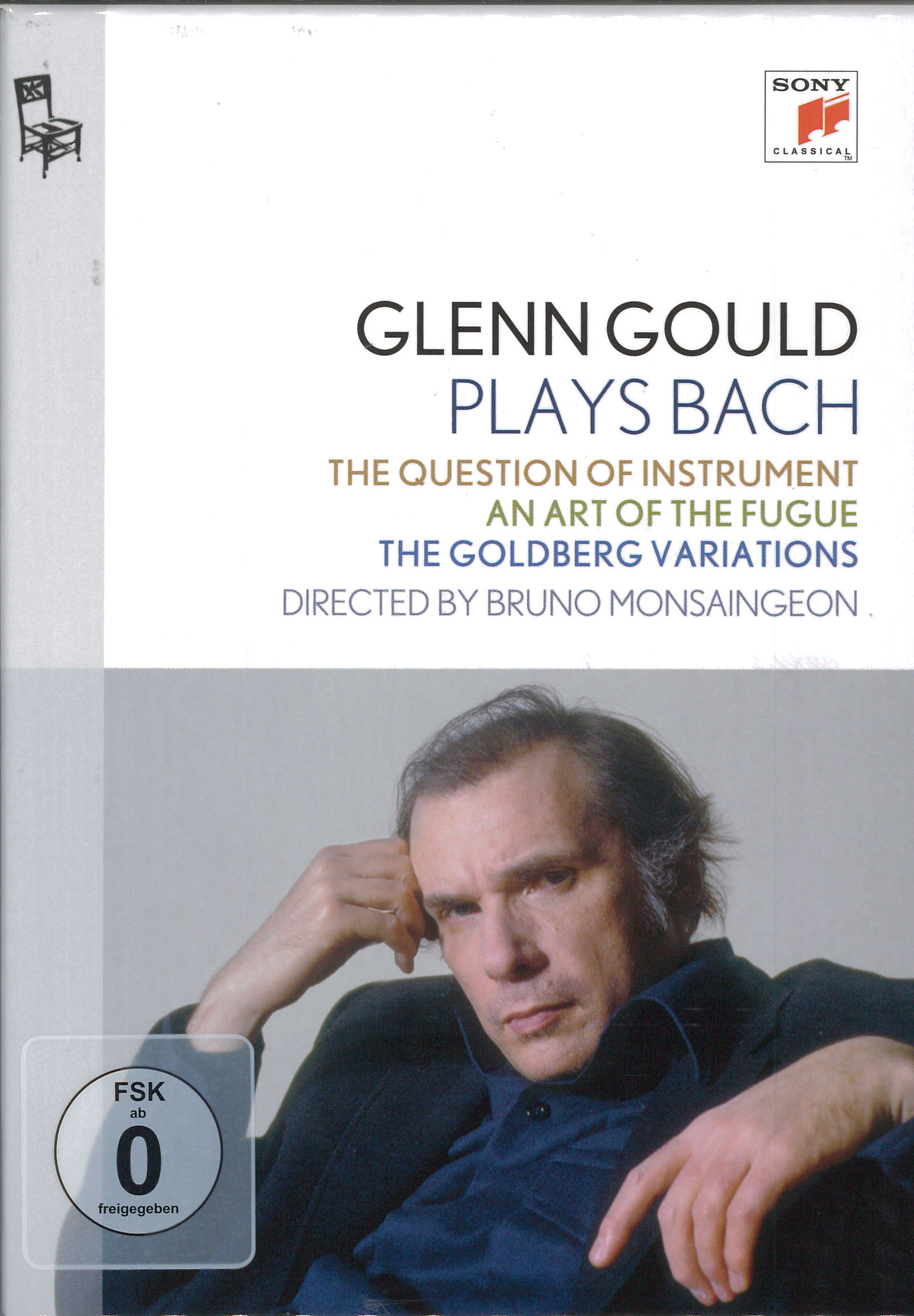
04a-Gould-plays-BachGlenn Gould plays Bach
Bruno Monsaingeon
Sony Classical 88691975049-01/2/3

It was with trepidation that I undertook this review of Glenn Gould’s three films directed by Bruno Monsaingeon. For many musicians, including myself, Glenn Gould was an icon. We grew up listening to his prodigious recordings of Bach and other composers. In fact, my first contemporary music experience as a pre-teen was listening to the Gould recordings of Schoenberg, Berg, Webern and Krenek. These and the inimitable Bach performances by Gould influenced my future repertoire choices and inspired me to adore Bach. I was mesmerized by Gould’s intelligence, wit, genius and effortless charisma in front of the camera or microphone. The question for me was whether he would still continue to seduce musically and charm conversationally today. There is an abundance of excellent Goldberg Variations in the market now and with everyone attempting to be a star on YouTube, being on camera is not necessarily such a special event anymore.

The first DVD, The Question of Instrument, allayed my fears. Glenn Gould shall remain on his pedestal. This is an excellent and invaluable clinic in voicing. In spite of the occasional harsh tone and lots of singing, the contrapuntal lines always flow naturally with an unerring articulation and precision. The voicing feels free and flexible as if being composed on the spot. The levels of dynamics are rich and varied with unique characteristics that force you to follow the lines to the resolution. The conversation in this DVD is a must for all musicians, teachers, scholars and performers. It is the question of harpsichord or piano.

Glenn Gould could have been a lawyer because he wins his argument easily. He supports playing Bach on the piano. Bach was into structure and his music adapts to any instrument. Gould also believes that the piano can get you closest to Bach’s conceptions of form, structure, harmony and counterpoint. He performs several pieces, demonstrating alternate versions of phrasing and sonority. He discusses various instrumentations that can come from one piece and gives relevant examples. Gould dismisses critics of the piano by calling their arguments “musicological overkill.” Brilliant, virtuosic music is also offered as an argument to favour the piano over the harpsichord (in spite of Scarlatti’s efforts). To demonstrate, Gould performs the Chromatic Fantasia in D Minor and although he calls the piece a “monstrosity” he played it with emotion and impeccable technique. This is a very improvisatory piece, almost like background film music according to Gould, and with his singing he sounded like an opera star with an over the top accompanist from a horror film from the 40s. This was a moment of welcome levity and reminds us of Gould’s comic acting abilities. He refers to this kind of music as Bach for people who do not like Bach. The other work on his “hit” radar was the Italian Concerto, another overplayed work on student recitals. Gould compared the Italian Concerto to Georgian architecture but insisted that Handel wrote this kind of music better. In performing this piece Gould says that it is best not to destroy the structure with too many crescendos and pianistic affectations. For comparison Gould performed the Sarabande from the Partita No.6 in E Minor to demonstrate a freer form and showed us different tempos that all seemed to work. His performance of the entire Partita No.4 in D Major was a marvel. The ornaments are crisp and exciting; the counterpoint is articulate and the voicing impeccable with a tapestry of texture and touch.

The second DVD is called An Art of the Fugue and appropriately begins with the Fugue in B-Flat Major on the name BACH. Again, what a wonderful masterclass in fugues for any musician; everything complicated is explained with clarity and ease by Gould. The program notes, which are excellent, by the way, say that Gould rehearsed everything. It doesn’t matter, it still sounds spontaneous and the information is invaluable. The fugal structures become a dramatic journey through harmony, counterpoint and resolution. What a majestic performance and deep understanding Gould brings to all the fugues he performs in this DVD. For those who find fugues boring, listen to and watch this DVD. Highlights include the E Major from Book 2, a cantabile Ricercare, which was also Arnold Schoenberg’s favourite. Preludes are missing from this fugue extravaganza. Gould has some demeaning comments on the Preludes but gives a nod to the one from the Prelude and Fugue in A Major,Book 2. Gould speaks for the artistic and creative merits of fugal structures. Fugal adventures were not popular in Bach’s time. Gould mentions minuets as the hot form of the day. However, Bach turned his back on this and other forms to borrow concepts from the last 100 years such as Flemish devotional music. There is a piece in the Art of the Fugue which also shows Bach’s far-reaching chromaticism in an infinitely expanding musical universe. It sounds like Schoenberg. The astonishing and ear-opening comments and playing inspired me to immediately go to the piano and play some fugues.

What to say about the third DVD The Goldberg Variations? I enjoyed the introduction which showed Gould picking his takes and explaining why he chose them. He also spoke about his reasons for recording the Goldberg Variations again for the second time. He said that the technology of 1955, due to the lack of stereo and Dolby, invalidated the process of the first version. What a coup for musicians to have Gould’s two versions, but it made me wonder if he had lived would he have recorded it again? The DVD concludes with the entire performance of the Goldberg Variations.

Teary eyed and blissfully involved with the music, I can only say that Glenn Gould shall remain an icon and a legend with his awe inspiring genius. I know that there are a lot of recordings, books and DVDs about him but I highly recommend this trilogy.

Editor’s Note:
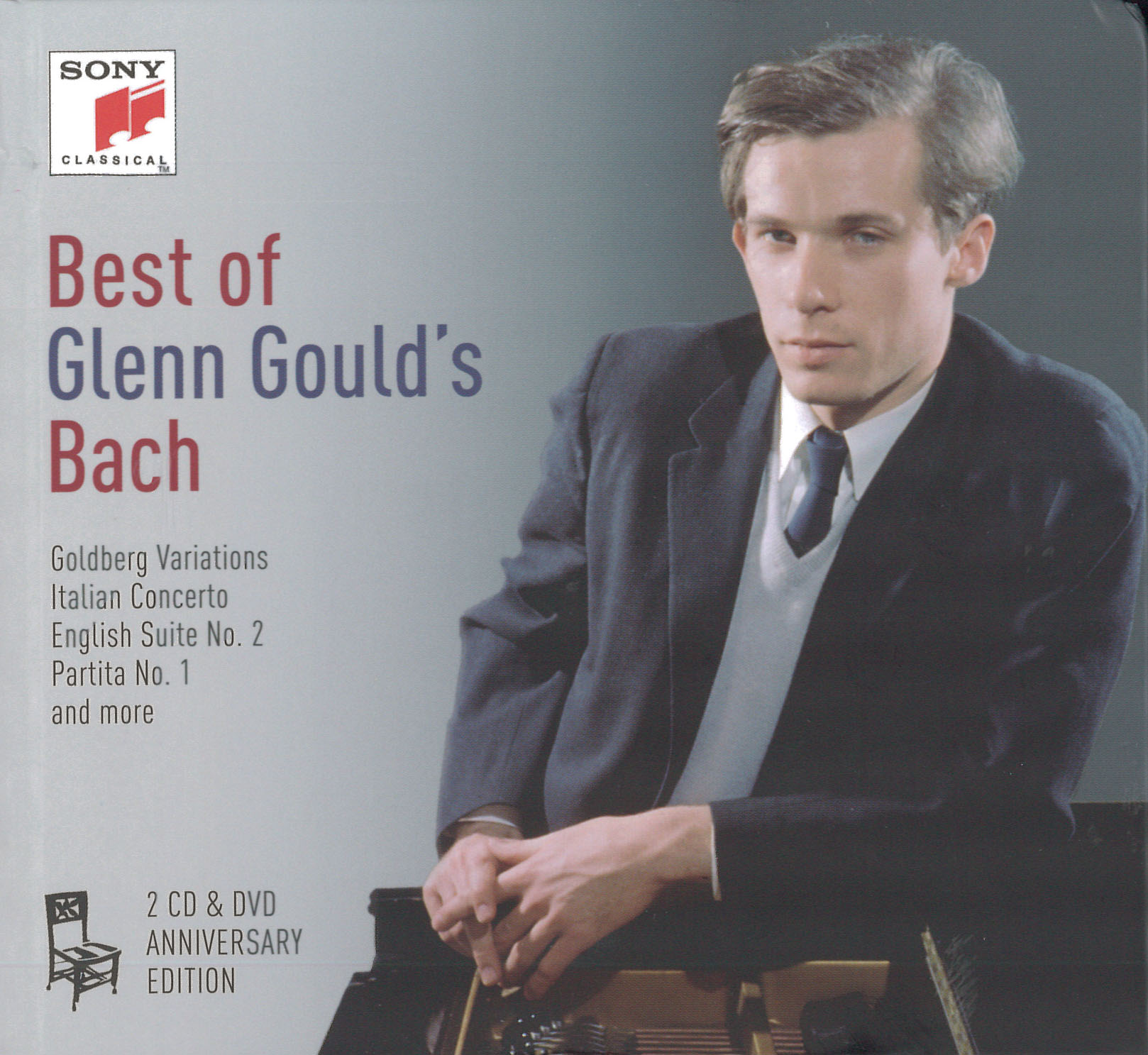
04b-Best-of-Goulds-BachSeptember marks 80 years since Glenn Gould’s birth and 30 since his untimely death just days after his 50th birthday and Sony is releasing a number of Anniversary Edition CDs and DVDs in the coming months. The first to come our way is Best of Glenn Gould’s Bach, a 2-CD plus DVD set, which includes excerpts from the historic 1955 recording of The Goldberg Variations, the Italian Concerto (mentioned above), English Suite No.2 and Partita No.1 among other offerings (Sony Masterworks 88728421762).

Dreamers Renegades Visionaries:
The Glenn Gould Variations
is a two-day festival of new work, new interpretations and new collaborations, from Argentina, Britain, Canada, China, Croatia, France, Germany, Japan and the USA at Convocation Hall, University of Toronto, September 22 and 23. It features more than 50 participants including Canadian luminaries Brent Carver, Adrienne Clarkson, Adam Egoyan, François Girard, Norman Jewison and Mark Kingwell to name but a few. Full details are available at www.glenngouldvariations.ca.

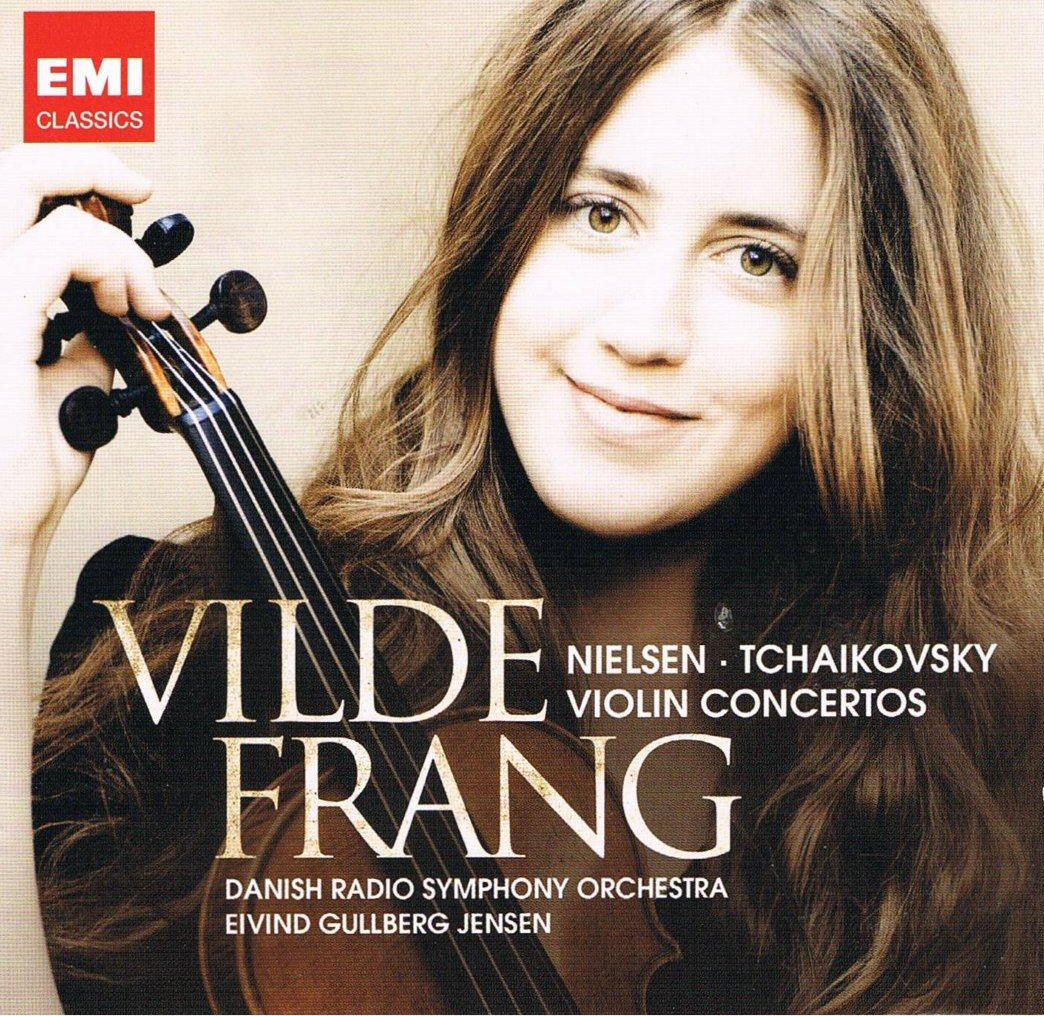
01-vilde frangTchaikovsky; Nielsen – Violin Concertos
Vilde Frang; Danish National Symphony Orchestra; Elvind Gullberg Jensen
EMI 5099960257024

When I was auditioning the recording of the Sibelius Violin Concerto played by Vilde Frang, who was then a new name to me (reviewed October 2010), I found her nothing short of a sensational violinist and an outstanding music maker. Born in Norway in 1986, she is well known and widely respected by her peers. She tours extensively and plays a 19th century Jean-Baptiste Vuillaume violin lent to her by the Anne-Sophie Mutter Foundation.

In 2011 she was heard in three violin sonatas accompanied by pianist Michael Lifts (EMI 9476392): the Grieg Sonata No.1 in F Op.8, the unaccompanied Bartok Sonata, and the Richard Strauss ­Sonata in E-Flat. In each work her absorption is deeply projected, producing performances of the very highest calibre. Unfamiliar repertoire to some, these are all splendid works but it is the charming Strauss opus to which I find myself returning.

The Tchaikovsky concerto has been recorded untold times over the last century by most of the greats and there are many breathtaking renditions, making it extremely improbable that there could be any new ideas, but Frang pulls it off. Her interpretation is fresh and original and seductively alluring. The first movement, for example, while necessarily virtuosic, unfolds like a narrative.

In the great Nielsen concerto where there are fewer competitors, she nevertheless offers a magical treat; similarly poetic, soul-searching and heart-warming. Again the orchestra is superb and in harmony with the soloist. Thanks to the engineers, the recorded sound is natural, transparent and well balanced, with uninhibited tuttis.

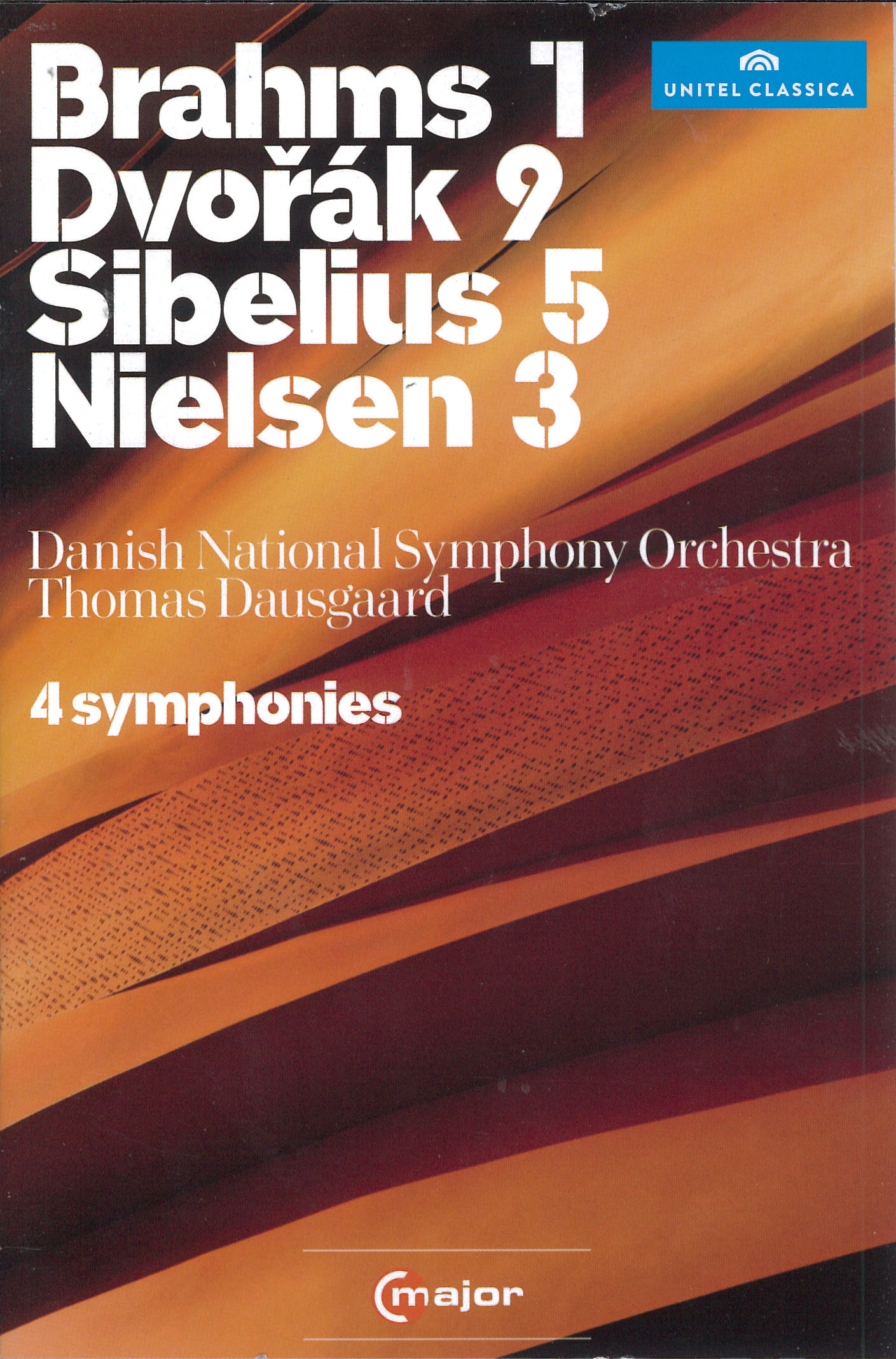
02-Thomas-Dausgaard4 SYMPHONIES:
BRAHMS 1
DVORAK 9

SIBELIUS 5
NIELSEN 3
Danish National Symphony Orchestra,
Thomas Dausgaard, conductor. 
C Major   710604,   one Blu-Ray disc or
                 710508,   two DVDs

This is an outstanding collection of four deservedly famous and favourite symphonies enjoying superlative performances in state-of-the-art, high definition sight and sound. Toronto concert-goers who were fortunate enough to attend some or all of Dausgaard’s Sibelius cycle in 2010 with the TSO, or the recent concert which included the Brahms Second Symphony, have a good idea of his ability to deliver performances that alert even the most jaded ears.

For some years, performances of the Brahms First Symphony have been, to my ears, tediously dutiful in maintaining that this is an august work to be performed as a rite. The opening tempo and energy of Dausgaard’s Brahms promises that this will not be yet another routine walk through ... and it isn’t. This is a sit up and take notice performance from the very beginning to the final movement, crowned with a radiant, jubilant finale, the like of which I’m unaware.

There is an introspective talk about each symphony on individual bonus tracks in which Dausgaard walks us through the work, section by section, suggesting in idyllic terms what the composer is feeling and attempting to convey. His observations are friendly, articulate and most engaging.

None of these performances is pedestrian and all four symphonies are approached with the same enthusiasm. The Dvořák has a wonderful bloom; broad and spacious and entirely as Dausgaard describes it. The Sibelius is an inspired performance. The fermenting inner voices in the coda of the first movement are daringly breathtaking; in the finale of the last movement, a valedictory, there is a sense of motionless resolution unerringly judged by Dausgaard. If you are not a Nielsen fan than this Third, the “Expansiva,” would be an excellent place to start.

Dausgaard doesn’t pause to make points that make themselves in the score. He has the rare ability to imbue an orchestra with a spirit and purpose that goes far beyond giving them tempi and balances. Watch his face in these performances and see how.

This set finds Dausgaard before the orchestra of which he was the chief conductor from 2004 t0 2011. In this capacity he may be familiar to some listeners from his very extensive recorded repertoire by the post-Wagnerian, Danish composer Rued Langgaard (1853-1952), a devout Theosophist, whose neglected music was resurrected with Dausgaard’s help. The recordings, all on the DaCapo label, include the 16 symphonies, tone poems, choral works, and a video of The AntiKrist (DVD or BLU-RAY), a religious mystery opera.

The symphonies on this 2-DVD set are concert performances from the Koncerthuset in Copenhagen that opened in January 2009. Designed by architect Jean Nouvel and acoustician Toyota Yasuhisa, the structure has four halls including the main auditorium, seen here, seating 1,800. It is the most expensive concert hall ever built, coming in at nearly $300 million. It is owned by and home to Danmarks Radio.

03a BertoliRhapsody in Blue and other piano works
Mauro Bertoli
Cavalli Musica

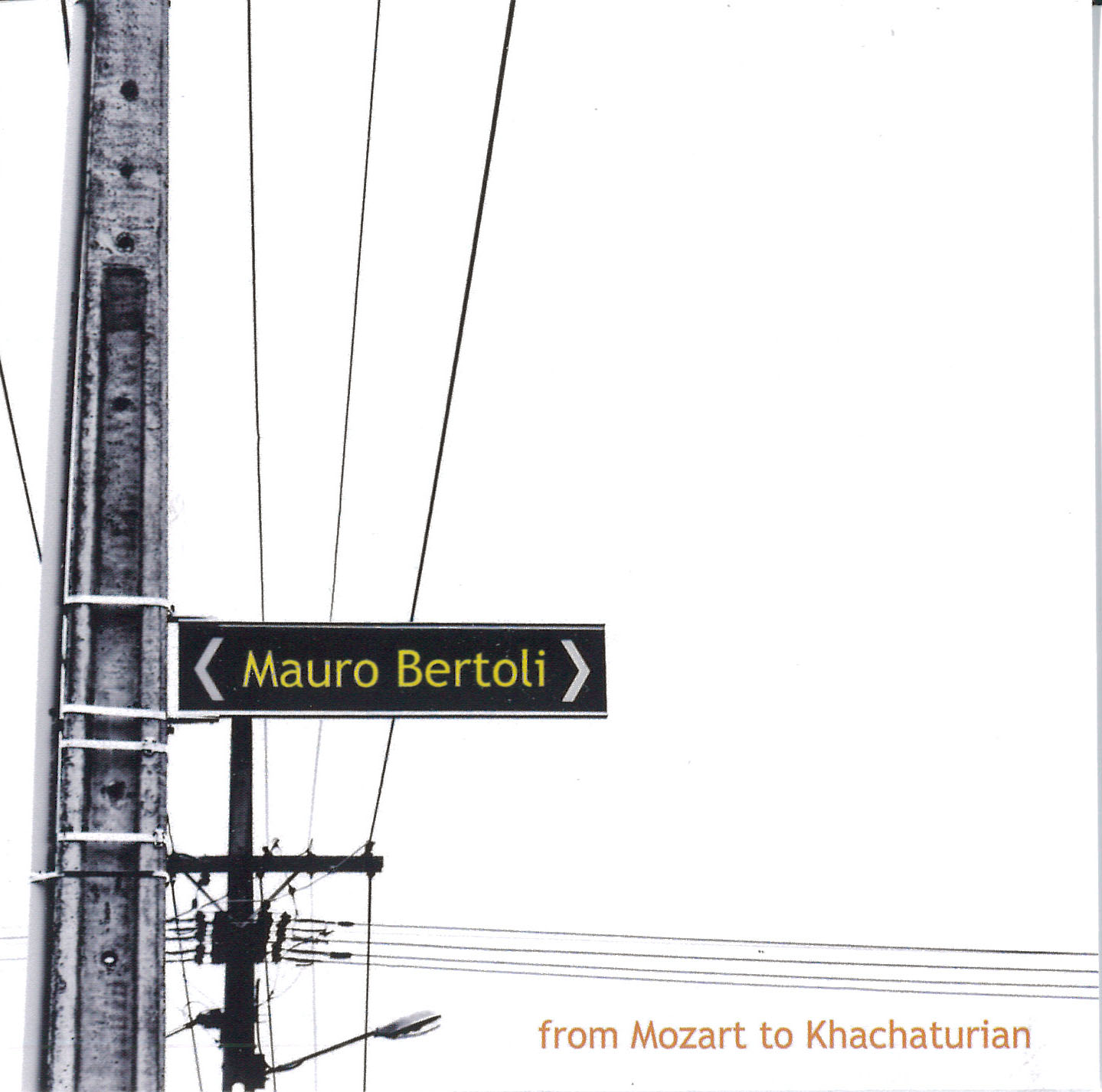
From Mozart to Khachaturian
Mauro Bertoli
Cavalli Musica

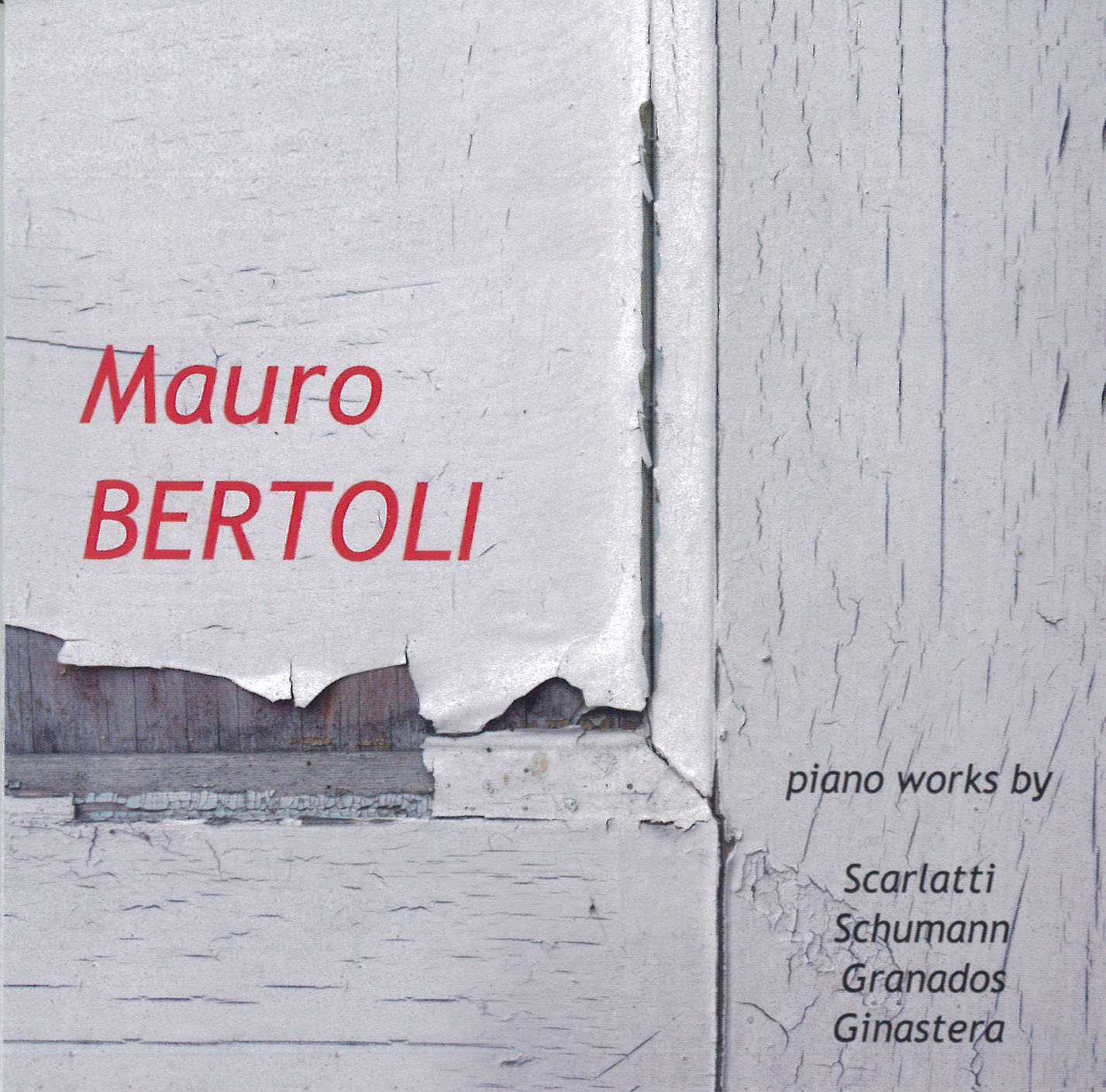
Piano Works by Scarlatti; Schumann; Granados; Ginastera
Mauro Bertoli
Cavalli Musica
www.maurobertoli.com

03b-BertoliIn the world of classical music, Italy has long been known for producing famous singers and conductors. For some reason, though, the list of renowned Italian pianists is considerably shorter — Arturo Benedetti Michelangeli and Maurizio Pollini are among those who come to mind. However, with the release of three CDs on the Cavalli Musica label featuring a young artist by the name of Mauro Bertoli, that list should be immediately augmented! Born in Italy, Mr. Bertoli has been the recipient of several international piano prizes including the prestigious Giuseppe Sinopoli Award in 2006, and he has appeared in major concert halls throughout Europe, North America, Israel and China. It’s our good fortune that he has decided to settle in Canada, where he’s currently on the piano performance faculty at Carleton University in Ottawa.

At the outset, these discs are impressive with their eclecticism. While certain pianists tend to concentrate on music of certain periods, or by particular composers, Bertoli’s repertoire is wide and encompassing, spanning 300 years of piano literature. For example, the CD Rhapsody in Blue and Other Piano Works, focuses primarily on music from the romantic period, with pieces by Schumann, Brahms and Liszt, but also included is the brief and poignant Für Alina by Arvo Pärt. The Brahms Intermezzo Op.188, No.2 and the Liszt Romance S169 are warmly introspective, while the Schumann Toccata Op.7 aptly demonstrates Bertoli’s flawless command of the keyboard. In contrast, Gershwin’s Rhapsody in Blue provides a rousing conclusion. Bertoli may hail from the land of olive trees, but his convincing interpretation of this jazzy and syncopated music from 1924 has ”Manhattan” written all over it.

The disc From Mozart to Khachaturian is another study in contrasts. Opening with Mozart’s poetic and gracious Rondo K494, the disc also features two of Liszt’s Hungarian Rhapsodies, Schumann’s Sonata for the Young, Op.118, Granados’ Allegro de Concert and Shostakovich’s Three Fantastic Dances — a virtual United Nations of piano literature.

03c-BertoliNot many pianists today turn their attention to keyboard music of the Italian Baroque, but three sonatas by Domenico Scarlatti lead off the third disc, all of them demonstrating Bertoli’s manual dexterity and acute sense of timing. Also on this CD are the Schumann Paganini Etudes, Op.3 and Nachtstücke, Op.23. But for me, the highlight of this recording is surely the set of three Danzas Argentinas by Alberto Ginastera. Written in 1937, this music dates from early in the composer’s career and is challenging from all perspectives. With their complex rhythms and chromatic harmonies, these dances might faze many pianists, but Bertoli handles the complexities with apparent ease, bringing the disc to a spirited conclusion.

My only quibble with all three discs is the recording quality, which I found somewhat “dry.” Fine playing such as this deserves a decent sound, and a little more resonance would have been preferable. But this is minor issue and certainly doesn’t detract from these eclectic collections of piano repertoire. Bravissimo, Mr. Bertoli — let’s hear from you again!

Concert Notes: Bertoli is pianist-in-residence at Barrie’s Colours of Music festival (September 21 to 30) and will be performing several concerts there including Strauss’ Enoch Arden with actor Kevin White on the 24th and a solo recital on September 30 featuring works by Gershwin, Khachaturian and Schumann; he will also conduct a masterclass on September 27. On October 7, Bertoli performs at U of T’s Hart House for their Sunday Concert Series.

04-Alison-BalsomAlison Balsom
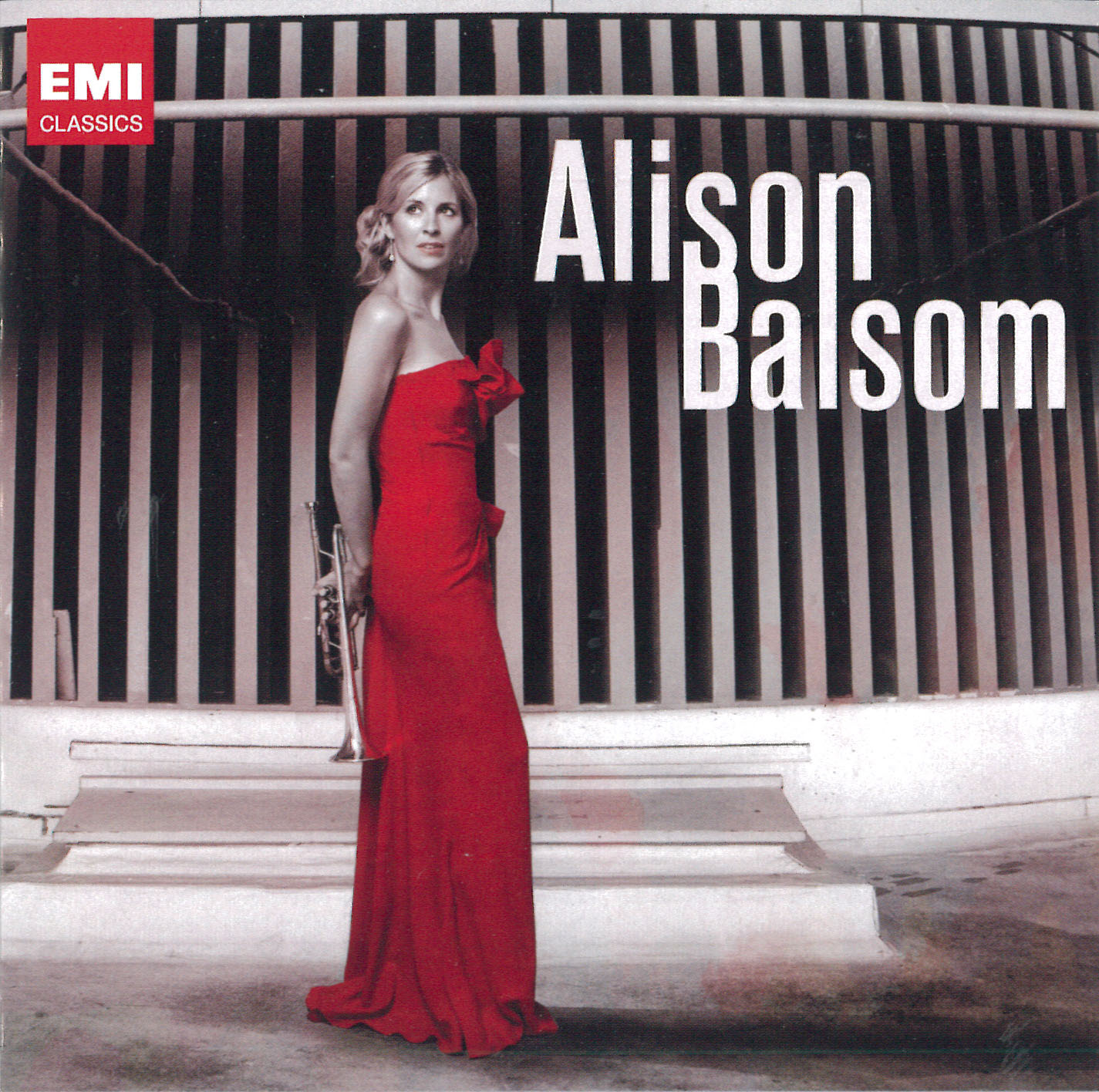
Alison Balsom
EMI Classics 50999731660 2 3

Two years ago I had the opportunity to review the first recording I had heard by this amazing young British trumpeter. For the most part, that recording consisted of transcriptions of works which were not originally written for trumpet. By contrast, this recent disc contains a wider spectrum of music. The recording starts and ends with works by Argentinean composer Astor Piazzolla. Balsom’s haunting tone sets the stage with his Escuale, and ends with a dazzling fiery performance of Libertango. While this recording too contains mostly transcriptions, it also has the Andante movement of a trumpet concerto by a composer named Neruda. Since no first name was given, a visit to Google turned up three composers by that name. From the sound of the work, I would assume that it is the work of 18th century composer Johann Baptist Neruda. There are movements from an oboe concerto by Marcello, a trio sonata by Bach, a flute work by Debussy and yet another excellent transcription of Rachmaninoff’s ubiquitous Vocalise. A new work, written for Balsom by Scottish composer James Macmillan, Seraph for trumpet and string orchestra, is in a similar vein.

Rounding out the program are arrangements of two traditional works, Shenandoah and Nobody Knows. Since much of the music is by lesser known composers, I would have appreciated some biographical information. Unfortunately there is none. Overall this is an excellent display of the talent of this young woman’s virtuosity. One does not have to be a trumpet aficionado to enjoy an hour of quality music with this CD.

Back to top