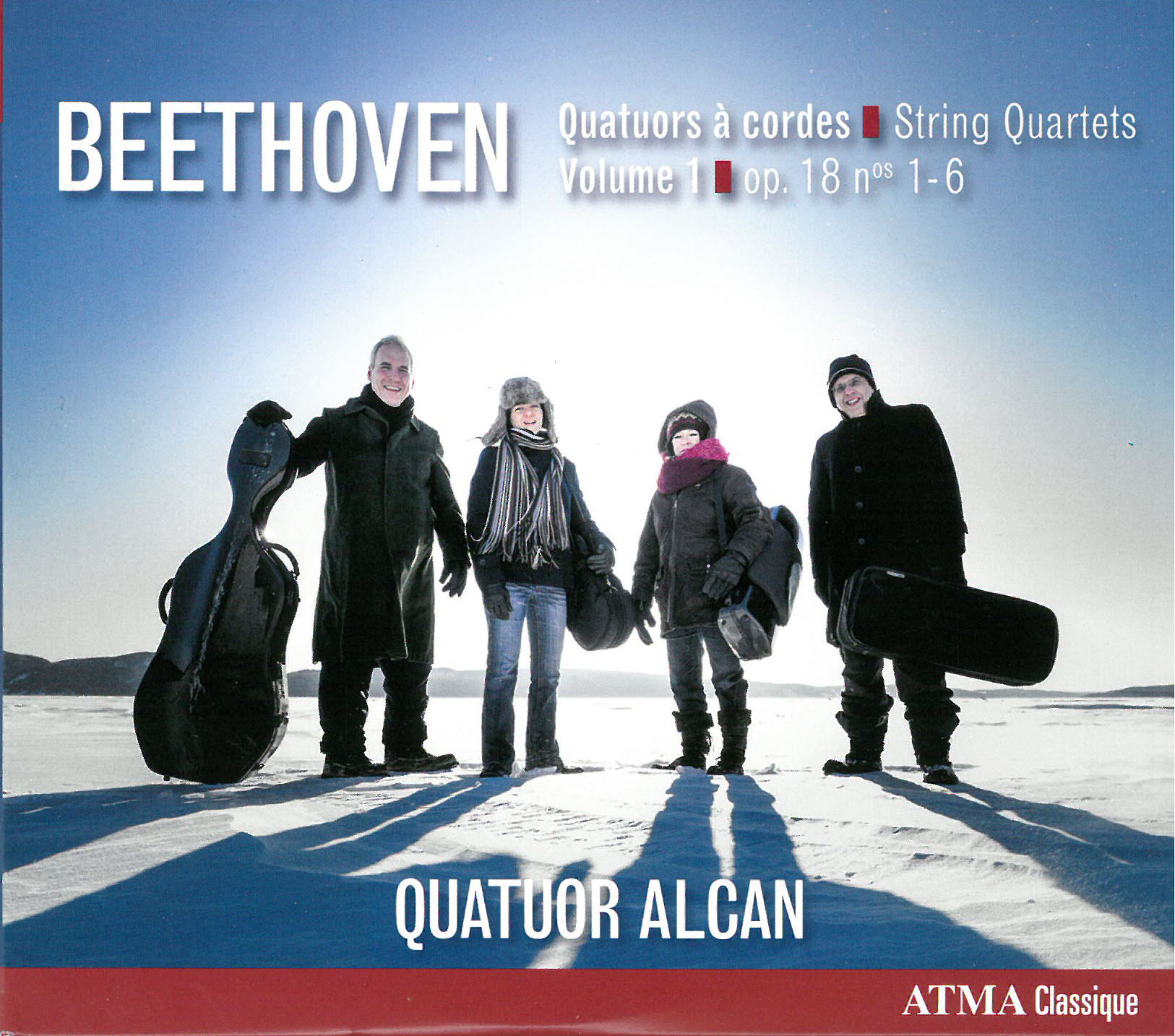
Robbins 01 Beethoven AlcanCanada’s Quatuor Alcan has been at the forefront of the string quartet world for many years now, and the ensemble is currently celebrating its 25th anniversary. The group’s sizeable discography includes quartets by Haydn, Mozart and Schubert, but so far, perhaps surprisingly, only two of Beethoven’s 16 string quartets. That’s about to change, however, as their 25th anniversary is being marked by the release of a CD series of the complete Beethoven Cycle. Volume 1 (ATMA ACD2 2491) was released in November and is a 2-CD issue containing the six quartets of Op.18. Although the ensemble’s website refers to the Beethoven project as a “new recording,” these six quartets here were actually recorded between May 2007 and November 2010. 

It’s certainly an auspicious start to the series. There’s marvellous playing, tremendous accuracy and attention to detail here, made even more effective by the way this ensemble seems to think, breathe and play in complete unison.

The Alcan is up against serious competition in this field of course, with complete cycles still available from most of the leading ensembles of the last 60 years – the Guarneri, Amadeus, Orford, Alban Berg, Budapest, Borodin, Emerson, Tokyo, Artemis and Quartetto Italiano for starters. The good news, though, is that comparisons are not only almost impossible but also completely irrelevant; this promises to be a terrific set, and that’s all that matters.

Volumes 2 and 3 are scheduled for release in February and April of this year. Stay tuned.

Robert Schumann, more than any other composer I can think of, tended to concentrate on one particular genre of composition at a time. 1842 was his chamber music year and his three String Quartets Op.41 were written in a matter of eight weeks in June and July, after he had spent several months preparing by studying the quartets of Haydn, Mozart and – in particular – Beethoven, whose late quartets had so impressed him a few years earlier. The influence of the latter is easy to hear, but the voice that really leaps out at you is that of Mendelssohn, to whom the quartets were dedicated on their publication in 1848.
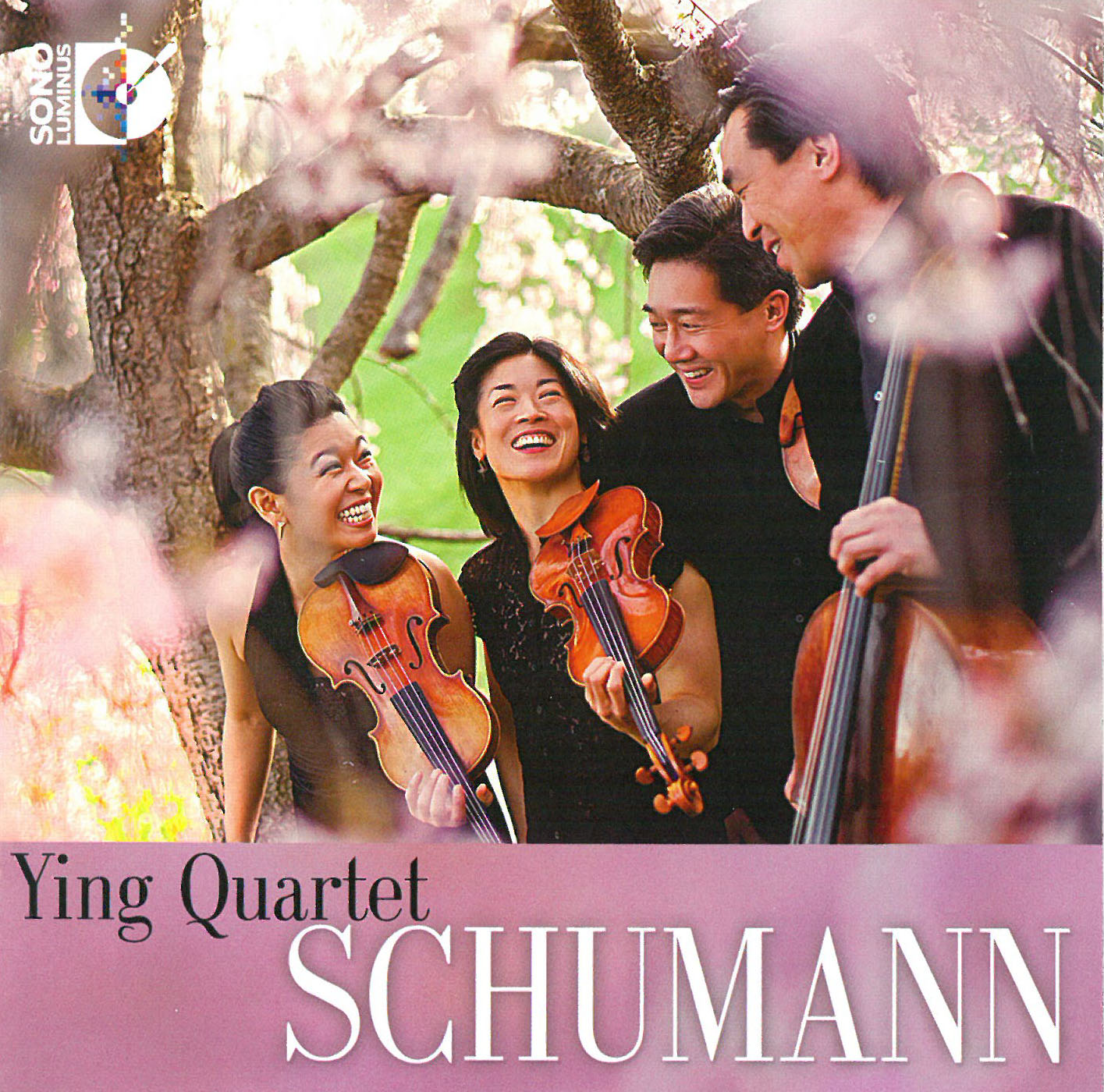
Robbins 02 Schumann YingOn Schumann, their latest CD (Sono Luminus DSL-92184), the Ying Quartet gives passionate and committed performances of these wonderful works. Schumann’s non-keyboard compositions are often viewed as being somewhat pianistic, but if any of his works belie this view it’s these string quartets: they are beautifully written – idiomatic, strong and imaginative, sensitive and nuanced, with wide-ranging emotions and an abundance of rhythmic vitality. All of these qualities are fully exploited by the Ying Quartet; this is full-blooded Romantic playing recorded with a rich resonance.

The CD package comes with an additional Pure Audio Blu-ray CD equipped with the mShuttle application, enabling you to access portable copies of the music featured on the regular CD.
Robbins 03 LanggaardThe third and final volume of the outstanding series of the Complete String Quartets by the Danish composer Rued Langgaard (1893-1952) is now available (DACAPO 6.220577). Volume 1 was reviewed in depth in this column in July 2012 and Volume 2 in April 2014, at which times I noted that Denmark’s Nightingale String Quartet was simply superb in this series of all nine quartets by a composer described as an eccentric outsider who was virtually ignored by the Danish musical establishment in his lifetime.

Most of Langgaard’s string quartets were written in his youth, between 1914 and 1925, although his later revision and recycling of earlier material makes for a confusing numbering system which doesn’t include all of the quartets and doesn’t even reflect the order of their composition. As the excellent booklet notes point out, the works date from the departure point between Late Romanticism and Modernism and cover a remarkably wide stylistic spectrum, with tonal idioms ranging from Mozart to Bartók.

This third volume features the String Quartet No.1 from 1914-15 (revised in 1936), the String Quartet No.5 from 1925 (revised 1926-38) and the very brief string quartet movement Italian Scherzo from late 1950, Langgaard’s last contribution to the genre. This track and the String Quartet No.1 are world premiere recordings.

Once again, the performances by the prize-winning all-female Nightingale Quartet are outstanding – warm, passionate, expressive and displaying great ensemble playing. Beautifully recorded at the Royal Danish Academy of Music and issued on Denmark’s national record label, these performances are as close to definitive as you can get; the complete set is an outstanding addition to the 20th century string quartet discography.
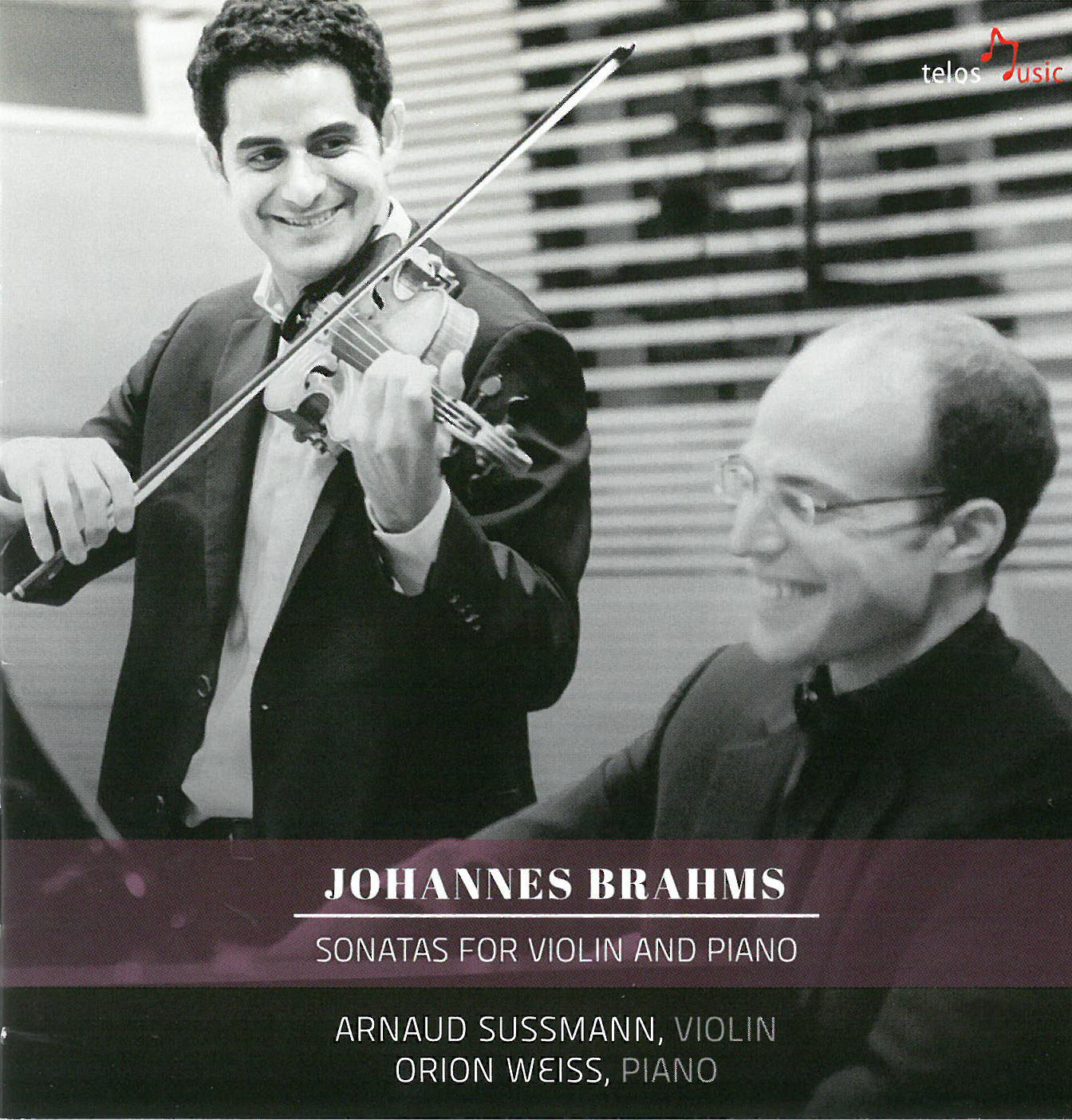
Robbins 04 Brahms SonatasIt’s always a good sign when you play through an entire CD of some of your favourite works and realize that you were so taken by the performances that you haven’t even made any notes. That’s exactly what happened with the new CD of the three Brahms Sonatas for Violin and Piano in performances by the French violinist Arnaud Sussmann and the American pianist Orion Weiss (Telos Music TLS 174). From the opening bars of the wistful G Major Op.78 through the graceful A Major Op.100 to the tempestuous D Minor Op.108, this is simply beautiful playing. Sussmann has a warm, soft tone and faultless intonation, and perfectly captures the different moods of these glorious works. His tonal quality and nuanced phrasing are matched by Weiss, who is an outstanding collaborator and partner throughout the CD. Recorded in Germany in 2013, the sound quality and balance are excellent.

There are so many terrific young violinists around these days that it’s difficult to keep up with them all. The English violinist Thomas Gould is a new name to me, but like many of the soloists I encounter for the first time is already into his early 30s and well-established; also, like many of his contemporaries who grew up in the musical world of the 1980s and 1990s, he is reluctant to restrict his playing to any particular genre.
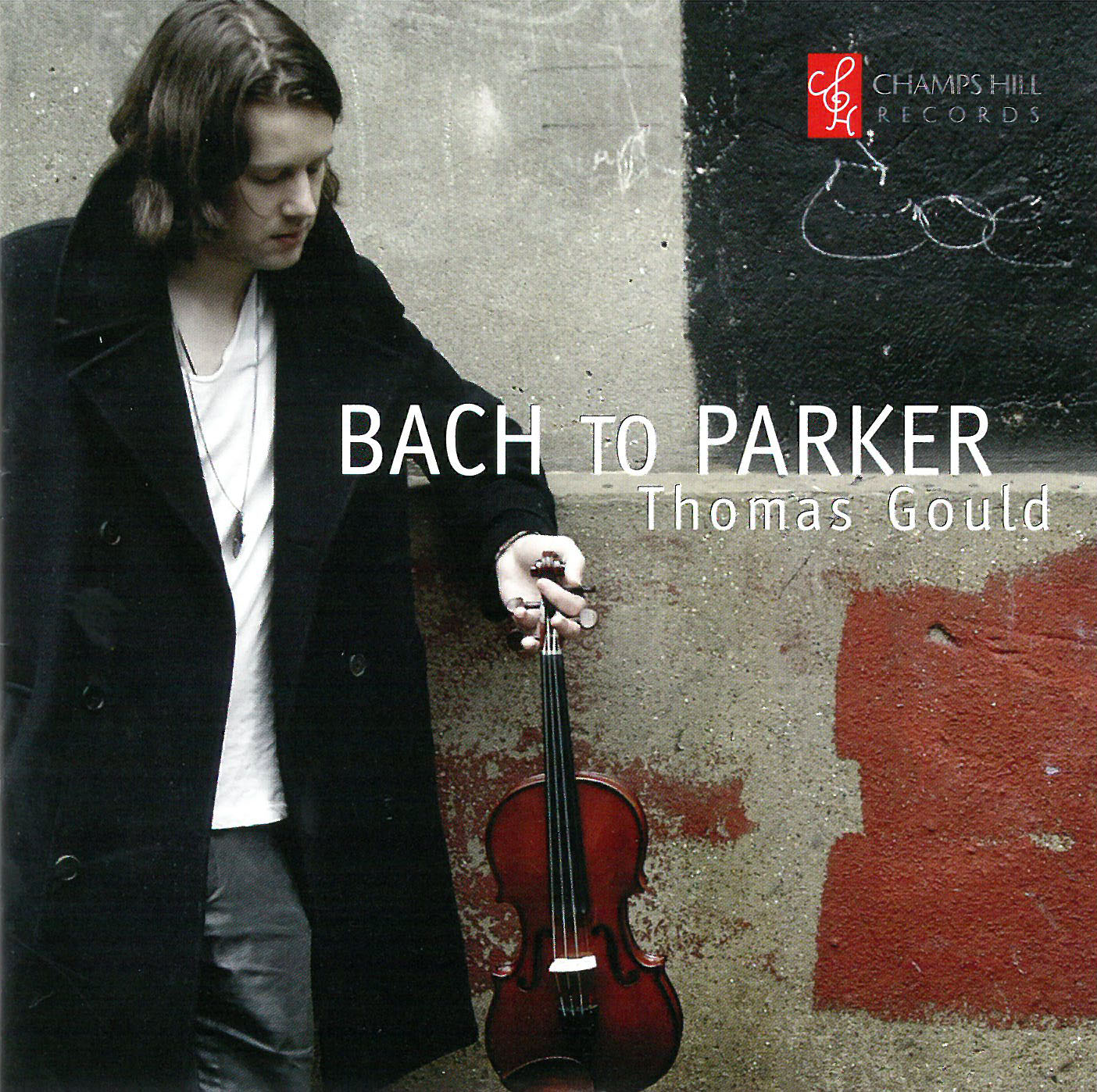
Robbins 05 Thomas GouldGould describes his latest CD, Bach to Parker (Champs Hill CHRCD078) as beginning life as a recital program in which he interspersed movements from Bach’s Six Sonatas and Partitas for unaccompanied violin with some of the new works recorded here for the first time. His intention was to show how contemporary extended violin technique has evolved from Bach’s supreme contrapuntal writing, and the result is a fascinating CD.

Gould’s technical prowess and musical intelligence are established right from the start with a warm, expansive performance of the great Chaconne from Bach’s D-minor Partita No.2. From then on it’s an eclectic list of ten short pieces written by predominantly young contemporary composers – six are still in their 30s – almost all of whom were either born or are now resident in the UK.

Two pieces – Nico Muhly’s A Long Line and Mark Bowden’s Lines Written A Few Miles Below – use pre-recorded backing tracks, but the rest are pure solos by Graham Williams (Mr. Punch), Anna Meredith (Charged), Nimrod Borenstein (Quasi una cadenza), Ewan Campbell (Two Extremes), Aziza Sadikova (La Baroque), Dai Fujikura (Kusmetche) and John Hawkins (Bobop).

The CD ends with the Miles Davis tune Donna Lee, made famous by the recording with Charlie Parker’s quintet – hence the title of the CD. Gould is joined by bassist David O’Brien in a terrific but all-too-brief jazz performance that channels Stéphane Grappelli.


Gould’s tone is sumptuous throughout, regardless of the style he is required to play; hardly surprising, given that he plays a 1782 J.B. Guadagnini violin. The whole CD is a fascinating look at the contemporary music scene in England, and at the way that many young virtuoso musicians view their role and function in a changing musical world.
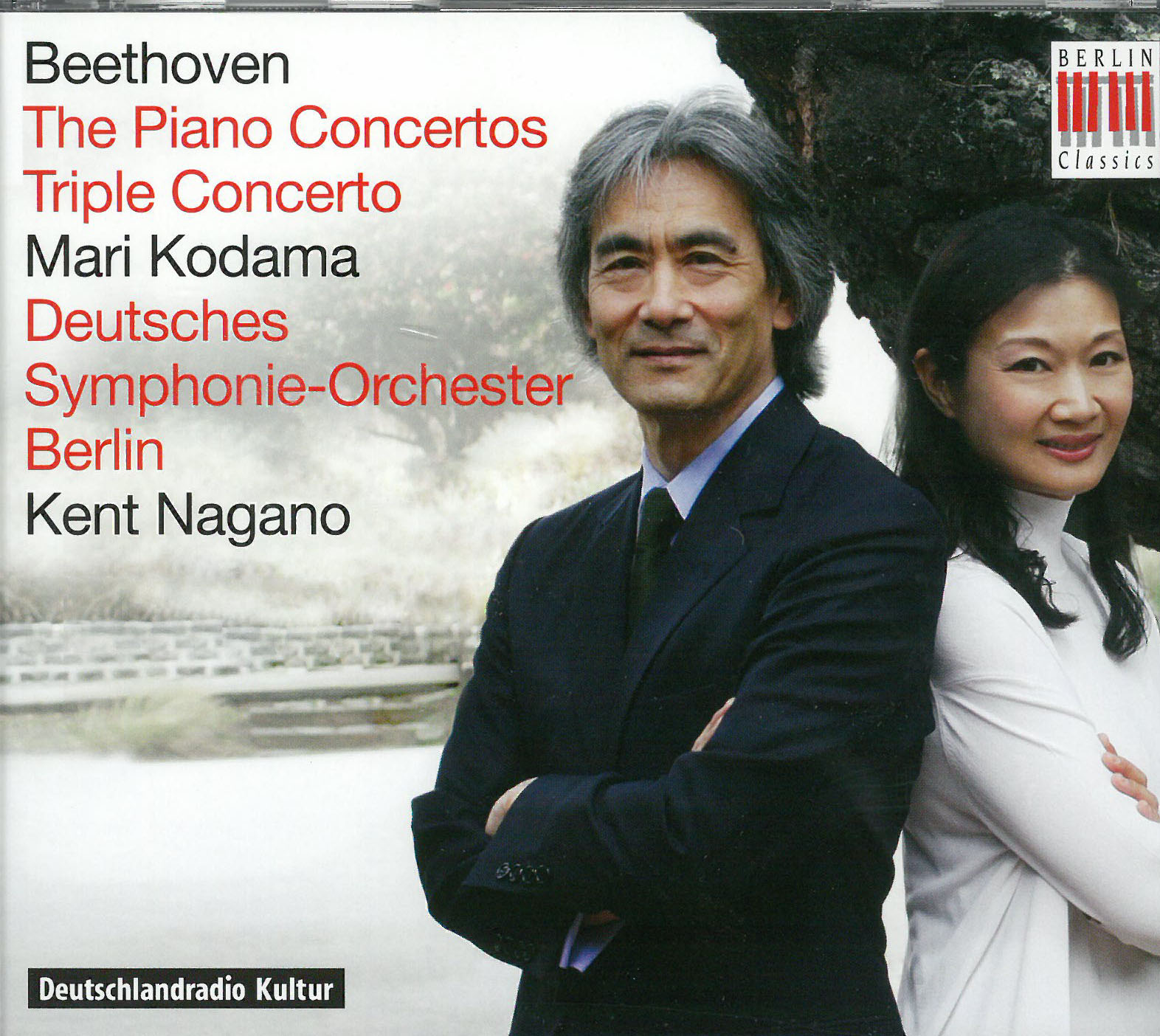
03 Classical 01 Beethoven Piano ConcertosBeethoven – The Piano Concertos; Triple Concerto
Mari Kodama; Deutsches Symphonie-Orchester Berlin; Kent Nagano
Berlin Classics 0300597BC

They say marriages are made in heaven and this is a good case for it, especially if the wife is distinguished Japanese pianist Mari Kodama and the husband the incomparable Kent Nagano, one of the top five conductors today. Apart from their obvious love for each other, there is another bond, their love of Beethoven. For them playing these concertos is a constant revelation, a journey of discovery, as if they’ve never heard this music before. “Richly nuanced” comes to mind as Kodama particularly delights in the unexpected, where Beethoven breaks tradition, as well as in his sense of humour, most pronounced in the two early concertos she recorded in 2006 (previously reviewed enthusiastically on these pages). At that time she was relatively unknown.

It has taken almost eight years for the young pianist to mature sufficiently to conquer the final three, in which Beethoven by a tremendous quantum leap broke loose from the spectre of his predecessors, Haydn and Mozart. Each one is a new entity, a world of its own, completely different from those written before and completely different from each other as well. From the poignant, minor key Third, through the gracefully eloquent, unorthodox and probably the most forward-looking Fourth, to the boldly defiant, heroic Fifth which the deaf Beethoven wrote while Vienna was being heavily bombarded by Napoleon’s guns, all shine with technical brilliance, superbly controlled passion, grace, rhythmic precision, clarity and an epic sweep that are certainly the mark of a mature pianist. A spectacular achievement for Kodama, who is joined by Kolja Blacher (violin) and Johannes Moser (cello) in a memorable performance of the Triple Concerto in C Major, Op.56 under Nagano’s deft direction.

03 Classical 02 Clarinet TriosBeethoven; Brahms; Weber
Jon Manasse; Jon Nakamatsu; Clive Greensmith
Harmonia Mundi HMU 807618

Oh, to have made this recording! What fine playing and fine representation of the repertoire from clarinetist Jon Manasse, with Jon Nakamatsu on cello and Clive Greensmith on piano. The early Beethoven Trio, Op.11 sets a tone of heady optimism, youthful spirit and crisp virtuosity. Beethoven had yet to discover his deafness when he wrote this work. It is perhaps hindsight informing the sense one gets that the young composer felt invulnerable, yet this performance favours the notion. Interesting liner notes fill in details about this seldom-recorded piece, including the fact that Beethoven took the theme for its third movement from a popular opera aria of the day, now forgotten.

At the far end of the romantic spectrum is the final work on the disc, Brahms’ monumental Trio in A Minor, Op.114. As dark and melancholic as the Beethoven is light and chipper, it is a work for which Brahms saved a final great outburst of his Sturm und Drang manner. The piece is difficult, especially the finale, where the sections can seem almost cut-and-pasted together. This tremendous ensemble works beautifully together, eliding and joining the range of moods into a seamless expression. Manasse does something mysterious with his tone in the haunting, second movement Adagio. Rather than press, he floats. It’s extraordinary. This is a special performance, and I’m glad to have heard it.

Sandwiched by the trios is Weber’s Grand Duo Concertante Op.48. Here I’m bound to question how often they dip into the rubato well, which I think cheapens Weber’s music. I like Weber. I think he shows what a lesser-talented Beethoven might have written, had he grown up in the real one’s shadow.

03 Classical 03 Fantasy Parkerfantasy
Jon Kimura Parker
Independent FP0908
(jonkimuraparker.com)

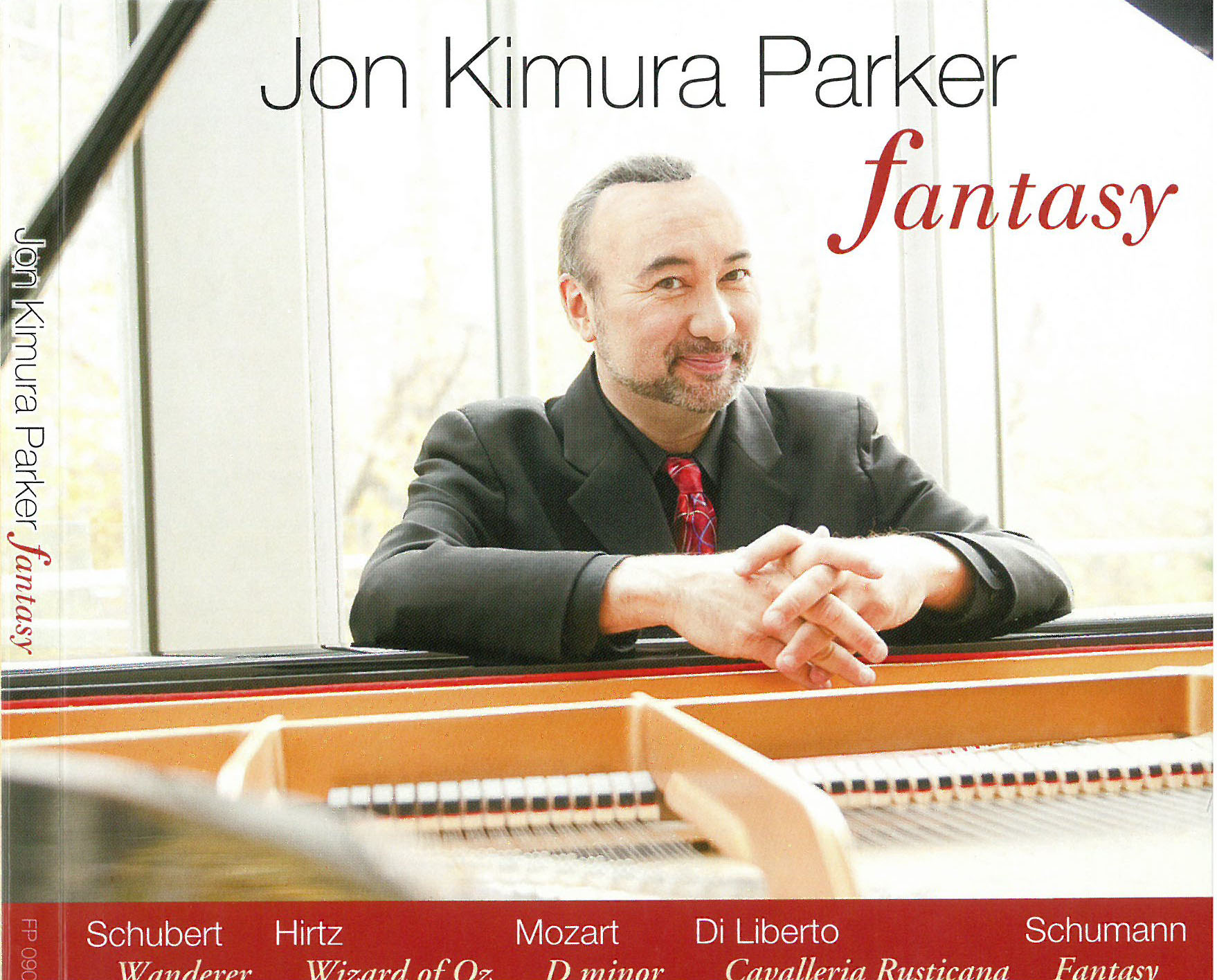
Jon Kimura Parker first gained attention as the Gold Medal winner of the Leeds International Piano Competition in 1984 and he has since maintained a stellar 30-year career. Parker’s newest release fantasy presents five solo piano works in this genre, demonstrating not only his technical prowess, but also his substantial range. The recording opens with Schubert’s Fantasie in C Major, D760, also known as the Wanderer Fantasy, and closes with another monumental work, Schumann’s Fantasie, Op.17. Parker’s deeply expressive playing and seemingly tireless energy propel the momentum of these complex, multi-movement compositions.

Originally written for two pianos, William Hirtz’s Wizard of Oz Fantasy (1999) is presented here in a solo piano arrangement that transforms a medley of Herbert Stothart & Harold Arlen’s Academy Award-winning score into a virtuoso’s delight with its changing textures and dazzling finale. Calogero Di Liberto’s Fantasia sulla Cavalleria Rusticana is a tribute to the opera composer, and fellow Sicilian, Pietro Mascagni with a fantasy that, although written in 2005, recalls the Romantic grandeur of Liszt’s operatic piano transcriptions. The bravura of these two works is in stark contrast to Mozart’s unfinished Fantasia in D minor, KV397 featuring Parker’s own 90-second ending and refined playing.

Mention should also be made of the excellent audio quality of this 75-minute CD that was recorded in Stude Concert Hall at Rice University, Texas where Parker is professor of piano.

03 Classical 04 Niagara PlayersTransformation
Gallery Players of Niagara
Independent GPN14002 (galleryplayers.ca)

Chamber transcriptions of vocal or orchestral music are nothing new – as early as the 1780s, Bohemian composer Joseph Tribensee was arranging arias from Mozart operas for woodwind ensembles, helping to bring music from the opera house onto the street. The tradition continues today, and among the most recent offerings is this delightful disc aptly titled Transformation, featuring arrangements of works by Beethoven, Ravel and Schumann performed by the Gallery Players of Niagara.

The disc opens with Beethoven’s Violin Sonata Op.24 “Spring” – as transcribed for flute, violin, viola and cello by GPN violist Patrick Jordan. Here, the deft arrangement is greatly enhanced by elegant and finely-nuanced playing in which the ensemble achieves a particularly sensitive balance at all times.

Ravel thought highly enough of his keyboard suite Le Tombeau de Couperin to produce an orchestral version in 1919. In this particular arrangement for oboe, clarinet, violin, cello and piano, Trevor Wagler indeed achieves what he set out to do – to remain as faithful to the original as possible. The playing is both graceful and spirited, while the inclusion of the piano is an attractive reminder that the suite was originally conceived for solo keyboard.

Most transcriptions diminish the original orchestration, but in the case of the third work – Schumann’s famous song cycle Dichterliebe Op.48 the resources are augmented, comprising an unusual combination of string quartet, classical guitar and double bass, all joined by Canadian baritone Brett Polegato. Yet Patrick Jordan’s arrangement in no way hampers the mood of quiet introspection, and the six members together with Polegato’s warm interpretation achieve a wonderful sense of intimacy right up to the anguished finale, Die alten, bösen Lieder.

Transformation is appealing on two levels – tasteful and sympathetic arrangements coupled with some fine music-making. It’s perfect listening for a brisk day in February – or for that matter, any time of year.

03 Classical 05 Debussy HamelinDebussy – Images; Preludes II
Marc-Andr
é
Hamelin
Hyperion CDA67920

Internationally recognized French-Canadian pianist Marc-André Hamelin has an impressively extensive repertoire and an astounding discography of approximately 60 albums recorded on the Hyperion label. Hamelin originally developed a reputation as a virtuoso performer of little-known, and fiendishly difficult, late-19th and early-20th century music. This CD showcases Hamelin’s masterful technical control and intriguing interpretive vision as he ventures into the world of Impressionism with a recording of Debussy’s Images (complete) and Préludes, Book II.

Written between 1905 and 1907, the two volumes of Images feature Debussys six well-known favourites Reflets dans l’eau, Hommage à Rameau, Mouvement, Cloches à travers les feuilles, Et la lune descend sur le temple qui fut and Poissons d’or. Suited to the composers rare moments of overt virtuosity, Hamelin executes the intricate passagework with fluidity and ease, exposing an array of subtle tone colours.

The first book of twelve Préludes was composed in 1909-1910, with the second set published three years later. Each Prelude has a descriptive title and the works are considered some of Debussys finest compositions for piano. Hamelin effectively captures the different moods of each piece, bringing a brooding quality to the dark Brouillards and Feuilles morts, complexity to Ondine, and a subtle playfulness to the comic General Lavine. The final prelude Feux d’artifice (Fireworks), the most difficult of the set, catapults this beautiful album to a resplendent close.

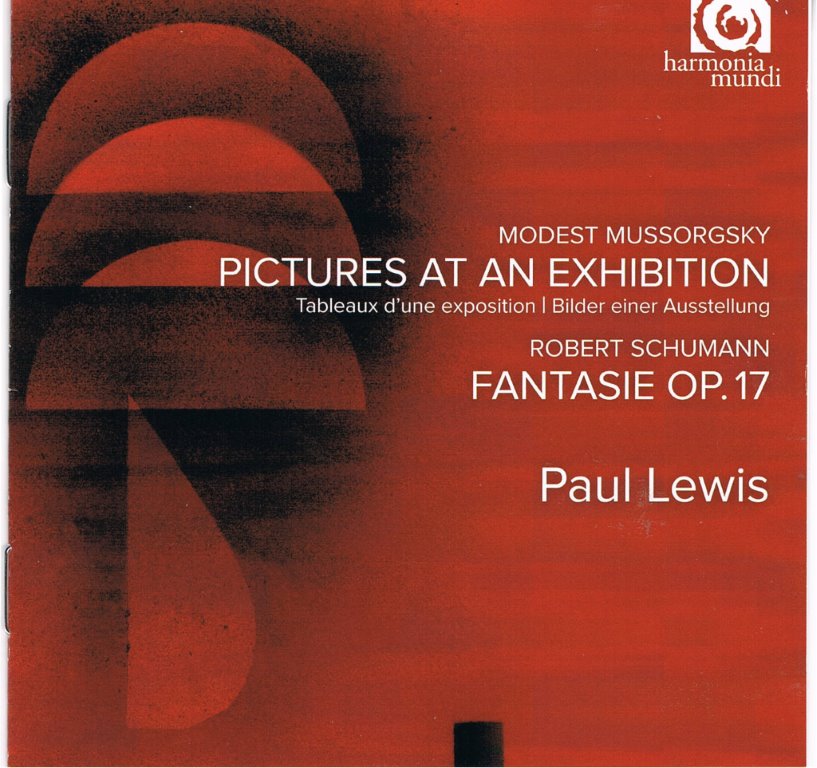
03 Classical 06 Pictures at an ExhibitionMussorgsky – Pictures at an Exhibition; Schumann – Fantasie
Paul Lewis
Harmonia Mundi HMC902096

For the first time in memory I found myself truly listening to Mussorgsky’s music. The score itself is not unfamiliar to most music lovers and collectors for whom the only reason for hearing a new performance is surely to assess the pianistic and athletic prowess of the performer. Not so here… not at all. From the opening Promenade there is a real sense of discovery that is unlike any other version, recorded or live, that I have ever heard. This is patrician playing in the very best sense of the word.

There is more than a sense of musical narrative here. His art makes maximum use of the ups and downs of the journey that arcs the music through its climactic episodes with patrician ease. He is always the empathetic observer. This may seem obvious but Lewis is the only performer of whom I am aware, who, instead of imposing his pianistic stamina on the score, successfully plays the music from within, thereby revealing the unsuspected, hidden beauties, the ebb and flow, tension and release as carefully written by the composer.

The listener to this unique performance may well conclude that any orchestration of it is superfluous, losing many of Mussorgsky’s subtlest nuances. Most pianists end up with a demonstration of how loudly they can erect the Great Gate of Kiev, now judged to be a measure of a great performance. Lewis employs extraordinary control in restraining his performance to achieve maximum effect without limiting its power, thereby rather strengthening it.

A stroke of genius on someone’s part was to follow the extroverted Mussorgsky with the substantial, inward-looking Schumann Fantasie. Many of the greats have recorded this work but Lewis stands behind none of them.

The sound is exemplary.

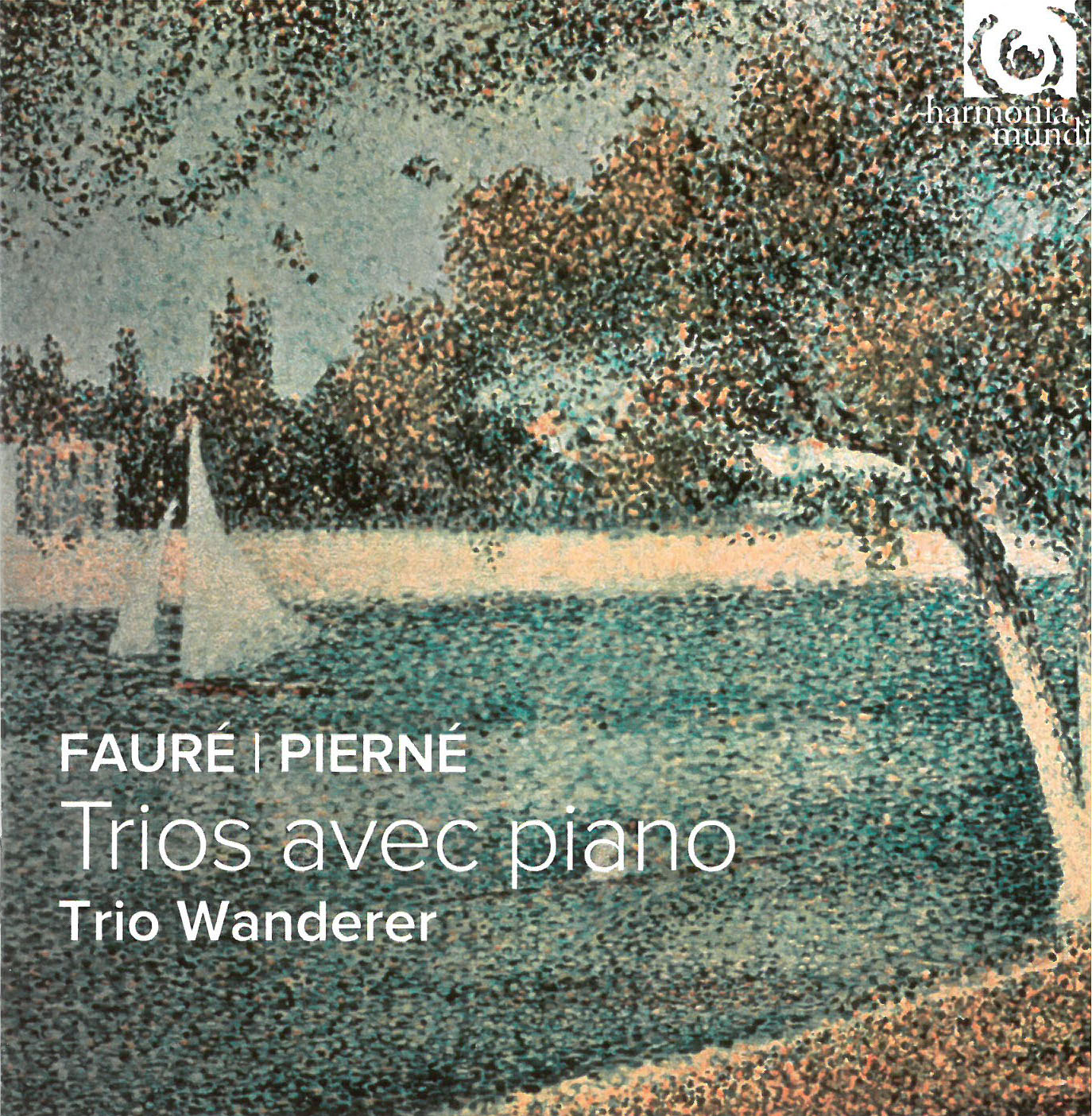
03 Classical 08 Piano TriosFauré; Pierné – Trios avec piano
Trio Wanderer
Harmonia Mundi HMC 902192

Here are two piano trios that belong in anyone’s strings-and-piano chamber music collection! One surprise: I have always found the technically challenging finale of the Fauré Trio, Op.120 problematic on account of its quirky, off-balance character. But Trio Wanderer turns this into a positive quality by emphasizing it rather than smoothing it over, with spiky accents and precise articulation that never interfere with overall fluency. In the wonderful Andantino they capture both the sentiment of the opening melody and the probing character of motivic development and harmonic exploration that follows. Both in this and the opening movement, I found myself moving from admiration of the elegance and clarity of playing to appreciation of subtle effects of light and shade, the nuances that make Fauré’s music such a delight when well-performed.

The Trio, Op.45 by Gabriel Pierné (1863-1937) is the strongest work I have heard by this composer. The extended opening movement seems to receive its energy from an enigmatic, syncopated figure in the piano, which grows and changes in myriad ways. Pierné’s palette is darker than Fauré’s, with thicker sonorities and dynamics ranging from fortissimo climaxes to whispering string harmonics. Trio Wanderer is adept in this dramatic style, and equally so in the dance style of the bouncy middle movement, influenced by the Basque zortzico. A highly inventive theme and variations featuring amazing fingered harmonics on the violin rounds off the work.


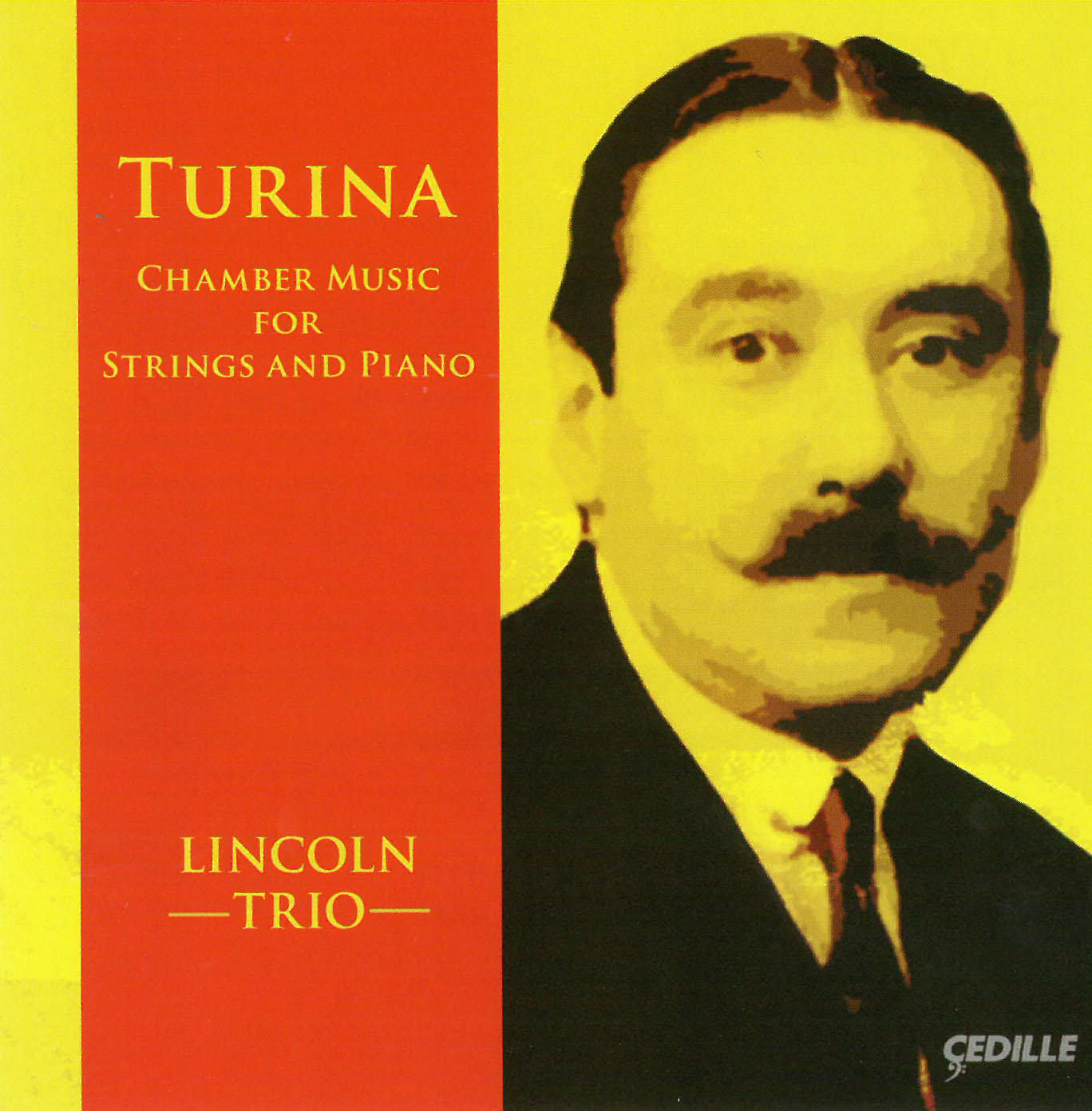
03 Classical 09 TurinaTurina – Chamber Music for Strings and Piano
Lincoln Trio
Cedille CDR 90000 150

Bullfighting, Andalusian rhythms, Spanish flavoured motifs and French aesthetics – this is the world of Joaquín Turina (1882-1949), a relatively unknown Spanish composer and pianist. This double CD presents the chamber works written over the 30-year period of his most prolific time as a composer. Compositions include several piano trios, a piano quartet and a piano quintet as well as a sextet written for solo viola, piano and string quartet. Turina, born in Seville, spent most of his life in Spain, with the exception of the period between 1905-1914, when he studied piano and composition at Schola Cantorum in Paris. French influence on his music is apparent – as a matter of fact, Turina adopted and used César Franck’s principle of cyclic composition in most of his works. Late Romantic elements are also present in his lush melodies and cinematic atmosphere, especially in slow movements. But what makes his music alive is virtuosic piano writing coupled with rhythmical sounds of his native land, Andalusia.

Among many interesting works presented here, Circulo, Op.91 stands out for me. It depicts the day as a circle – not with youthful vigour but rather with the restraint of a life lived – and brings out the essence of Turina’s musical aesthetics.

Members of the Lincoln trio – Desirée Ruhstrat (violin), David Cunliffe (cello) and Marta Aznavoorian (piano) – not only play with passion but also highlight beautifully the sublime sounds of muted strings (Turina loved using this effect) and effortlessly convey the fugal aspects present in many of these compositions. The ensemble sound blossoms in larger works, with each guest artist (violists Ayane Kozasa and Doyle Armbrust, violinists Jasmine Lin and Aurelien Fort Pederzoli) adding a bit of individual sound to Turina’s music.

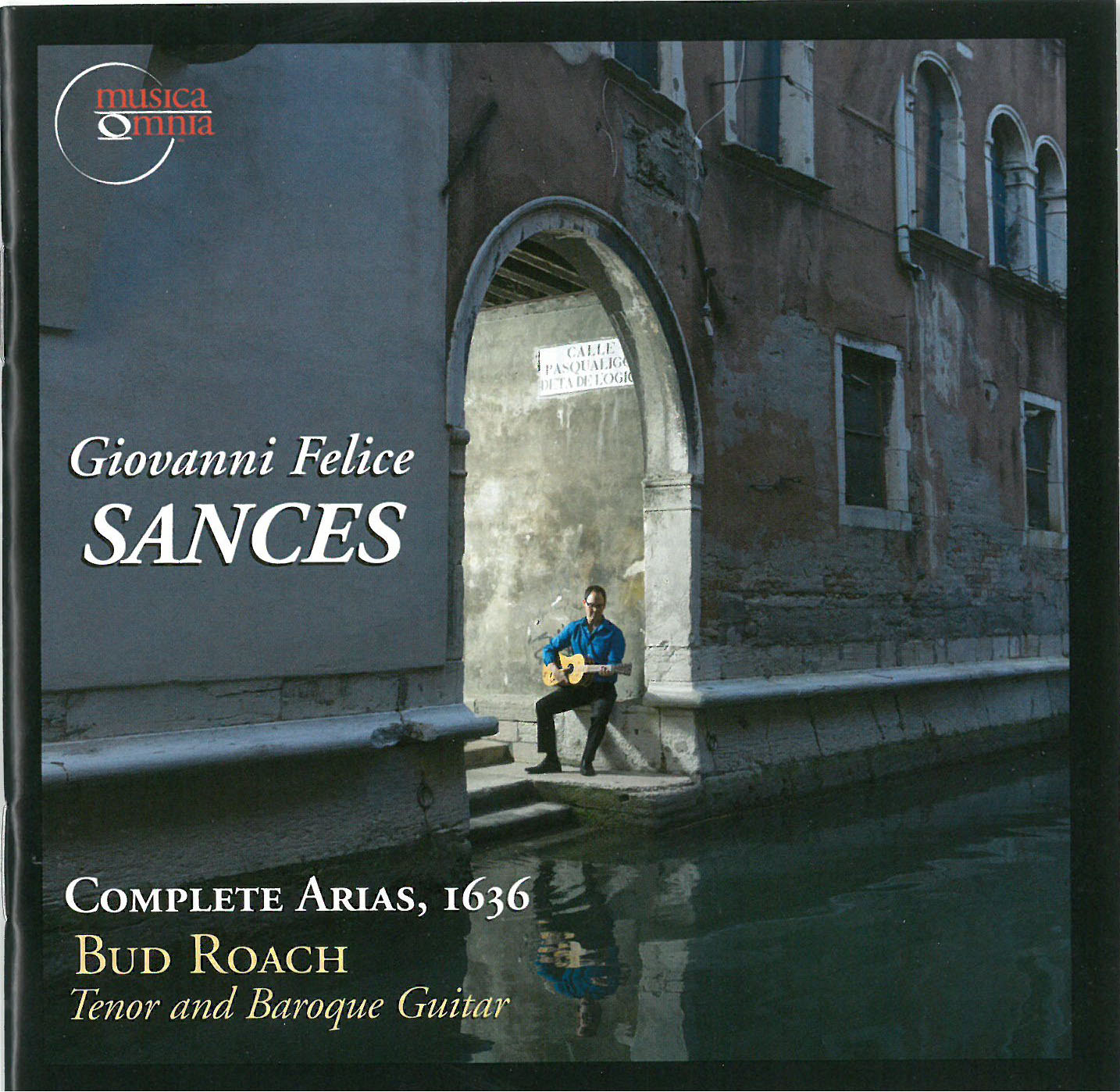
02 Early 02 Bud RoachGiovanni Felice Sances – Complete Arias, 1636
Bud Roach
Musica Omnia mo0611

Bud Roach started his professional career as an oboist (he played in several American orchestras) but more recently has concentrated on singing and conducting. He is the director of Capella Intima, which in recent years has given us performances of the anonymous Giuseppe and of Gagliano’s Dafne. Both as a singer and as a director he specializes in Italian work of the early 17th century. His first recording as a tenor was of songs by Alessandro Grandi and he has now followed this up with a CD of arias by Giovanni Felice Sances, music first published in 1636. On both recordings he accompanies himself on the baroque guitar. I heard him perform these works at the Boston Early Music Festival Fringe in July 2013 and it gave me pleasure to renew my acquaintance with them. The final song on the disc (Accenti queruli) is not part of the 1636 edition: it is a chaconne which was such a prominent and influential form in the early baroque.

Roach’s voice is light but clear and distinctive; he has no problem with the high tessitura of many of the songs. Throughout he sings with real expressiveness. These songs can be seen as part of a Petrarchan tradition of erotic poetry but at the same time they show an affinity with popular song. They are now little-known and under-performed. Roach deserves credit for bringing this repertoire back to life.


02 Early 03 ApotheosesCouperin – Apothéoses
Gli Incogniti; Amandine Beyer
Harmonia Mundi HMC 902193

It is crystal clear that this recording is a labour of love and full of vibrancy and personality. The six instrumentalists of Gli Incogniti throw themselves into Couperin’s music, infusing it with youthful vigour and airy spontaneity.

The program is bookended by sonatas – La Superbe and La Sultane – both played with exquisite attention to detail and “French” virtuosity, i.e. a wide vocabulary of fresh ornamentation that gives one the idea that everything is being improvised. Violinists Amandine Beyer and Alba Roca are perfectly matched and dance around each other with great subtlety. Equally impressive is the continuo team: solid as a rock and adding heft and/or tenderness where needed.

The major pieces – Couperin’s Apothéoses de Lulli et Corelli – are works of tremendous scope, based on Couperin’s intended philosophical desire to reunite the tastes and styles of Italian and French instrumental music. They are programmatic, multi-movement masterpieces and the performances on this disc are very fine. My only argument is with the tempos of some of the more transparent movements. There is a driving quality to the group’s playing that is immensely attractive most of the time; however, some of the ethereal, transparent movements need more dreamy air and space – and could simply be slower.

Special mention must be made of the gorgeous, sensuous gamba playing of Baldomero Barciela and Filipa Meneses in La Sultane. Their performance of this sonata is worth the price of the CD alone.


02 Early 04 Stadella DuetsStradella – Duets
Susanne Rydén; Emma Kirkby; Sergio Foresti; Harmonices Mundi; Claudio Astronio
Brilliant Classics 94343

Alessandro Stradella’s private life has created a wave of speculation although it is clear that he was killed in Genoa in 1682. His untimely end deprived Italian music of an exceptional composer. On this CD, however, we enjoy the voice of the singer who is for many both the face and the voice of early music, Dame Emma Kirkby. She appears on eight duets, commencing with the lively Cara labbra che d’amore. More intense is Pazienza, finirá l’influenza with its sombre stringed introduction and continuo. Here Susanne Rydén and bass Sergio Foresti convey a message of hope, even though Foresti’s bass and the continuo still combine to produce a certain overshadowing darkness. Kirkby displays a real intensity with her interpretation of Ahi, che posar non puote, a duet with Foresti, where her skills are at their finest.

 For Rydén, one of the most testing pieces must be Fulmini, quanto sa quel sembiante severo – the musical elements portraying the arrows of emotion are clearly recognizable. For Kirkby the test of how to demonstrate pictorial qualities in music comes in Ardo, sospiro e piango, where dissonance is used to evoke musical sighs. Dietro l’orme del desio is another highly demanding duet. Many of the classic Italian devices are employed to great effect; for example, in one passage, in addition to difficult notes, pauses underline the meaning and rhythm of words.

 There is no doubt that listening to this recording confirms the loss to music when we think what Stradella might have gone on to compose and also Dame Emma Kirkby’s place in early music.

02 Early 05 Hewitt BachBach – The Art of the Fugue
Angela Hewitt
Hyperion CDA67980

Four years ago, Hyperion released all of Canadian pianist Angela Hewitt’s recordings of Bach’s solo keyboard works as a 15-disc boxed set. It was a huge project, but it didn’t include Bach’s monumental late work, The Art of the Fugue. Hewitt has now tackled this set of 18 fugues and canons, which she describes in her detailed booklet notes as “completely overwhelming, both intellectually and emotionally.”

Hewitt’s stylistic trademarks are here – dancing rhythms, nuanced touch and sparkling clarity. She colours each voice so distinctively, you can hear right into the complex textures. But her greatest achievement is to reveal the spiritual depth that suffuses this work. It becomes not just an exploration of all the things counterpoint can do, but an exploration of just about everything that music can possibly do – and then some.

Bach never specified the instrumentation for this work. Hewitt makes as convincing a case for performing it on a modern piano as any I have heard, especially with an instrument as responsive as her Fazioli.

Bach’s score ends, enigmatically, part way through the final fugue. Most performances either stop there, or add on a completion in Bach’s style. Following the original edition, Hewitt stops mid-fugue, pauses, then plays Bach’s “deathbed” chorale prelude Wenn wir in höchsten Nöten sein (When in the hour of utmost need), which C.P.E. Bach copied into the score after his father’s death. It makes for an intimate and moving finale.


03 Classical 03 Mahler 9 ChaillyMahler – Symphony No.9
Gewandhaus Orchestra; Riccardo Chailly
Accentus Music ACC 20299

This is the sixth of Chailly’s live performances of Mahler symphonies thus far released on Blu-Ray video discs (and DVD). Each release (since the Second and Eighth) contains a discussion of the particular symphony, together with selected rehearsals and concert excerpts to illustrate Chailly’s rethinking of performance practices and where he believes Mahler’s intentions were misunderstood.

We observe Chailly and Mahler scholar and author Henry-Louis de le Grange discussing the work and weighing all the clues that led to their considered opinion that this symphony is not one of resignation and farewell as Leonard Bernstein, for one, would have it. In this performance, Chailly’s first movement reflects the metre of the first movement of the Fourth Symphony; the second movement is faster than usual with a sense of fantasy and the third, Rondo-Burleske, is pleasingly brisk. His last movement is for listeners who are weary of the hand-wringing performances, especially those of Bernstein who helped resurrect Mahler in the 1950s, that treat the symphony as a tragic resignation, another Abschied. Chailly’s is a mighty performance, very positive and life-affirming.

These are Chailly’s own insights and after several listening sessions I am inclined to agree. There is no positive right or wrong, simply different points of view. This is a brilliant performance, exceptional on every level, and deserves to be heard and reheard.


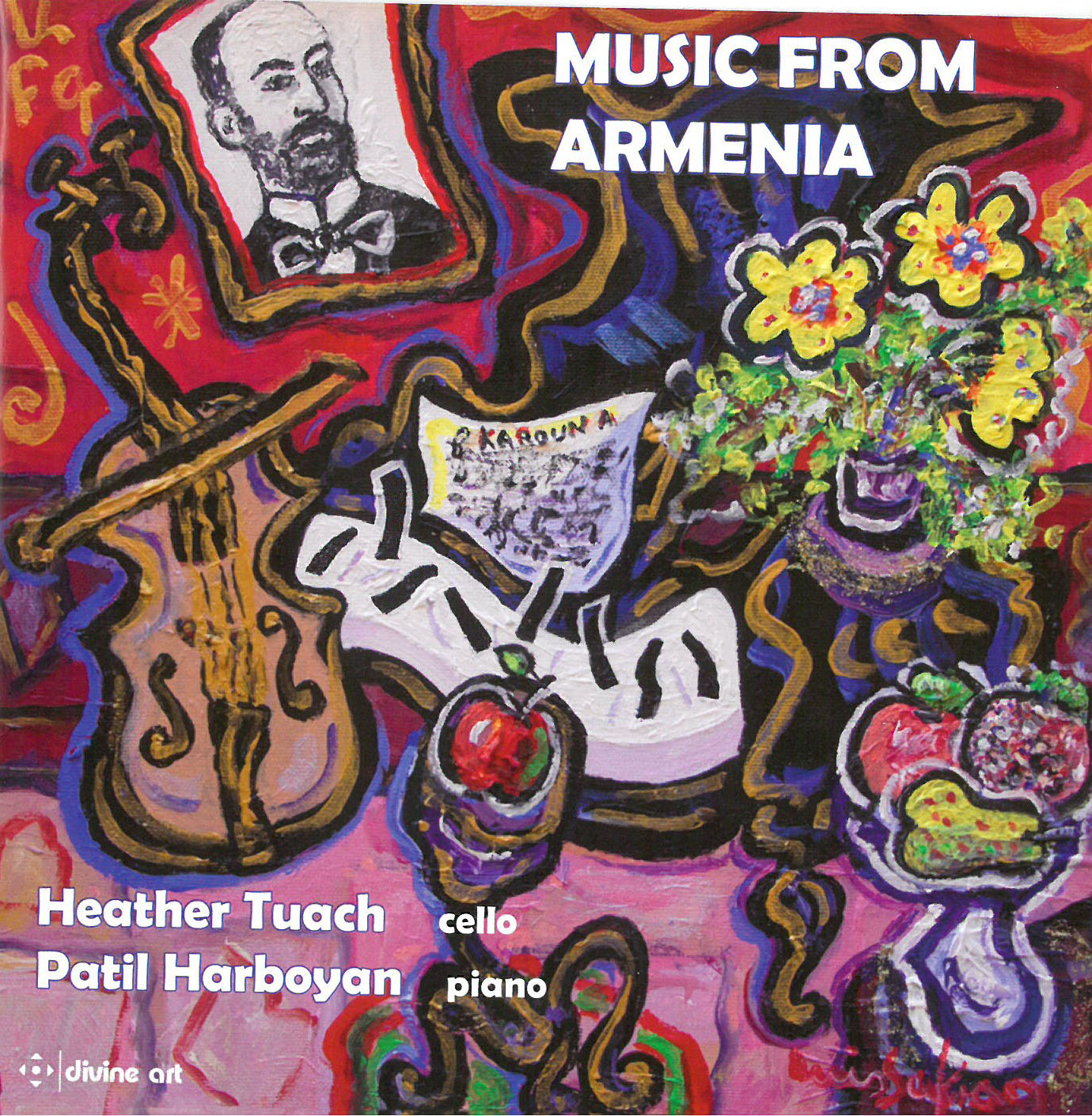
Terry 01 Music from ArmeniaThe idea for Music from Armenia for Cello and Piano, a Divine Art CD (divineartrecords.com) featuring Newfoundland cellist Heather Tuach and the Armenian-Canadian pianist Patil Harboyan, began with a 2012 recital by the duo in Newfoundland that included Alexander Arutiunian’s Impromptu, the short work that opens this disc. The enthusiastic audience reaction to the piece encouraged the performers to search the Armenian cello and piano repertoire for music that would make for an appealing and informative CD. They certainly succeeded.

Armenia was under Soviet Russian rule from 1920 to 1991, and the music here is essentially what you would expect from that background (Arno Babajanian’s Vocalise, for example, is very similar to Rachmaninov’s), but the significant aspect of the CD is its recognition of the importance of the documentation and preservation of Armenian folk music.

The crucial figure in this respect was Gomidas, described in the excellent booklet notes as the founder of Armenian classical music and ethnomusicology, working in much the same manner as his direct contemporary Béla Bartók in Hungary. Most of his ten short folk songs here are arrangements by cellist Geronty Talalyan of the string quartet versions by Sergei Aslamazian, and they’re highly entertaining.

The one major work on the CD is the Sonata for Cello and Piano Op.35 by Haro Stepanian, who graduated from the Leningrad Conservatory and also collected Armenian melodies from his homeland; the influences of both his Russian training and his Armenian folk music research are evident in a very attractive and effective work.

The whole CD is a fascinating portrait of a musical heritage perhaps most widely represented for most people by the music of Aram Khachaturian, who openly acknowledged his – and Armenian music’s – debt to Gomidas. The performances are rich and full of nuance, and the balance and recorded sound are ideal.

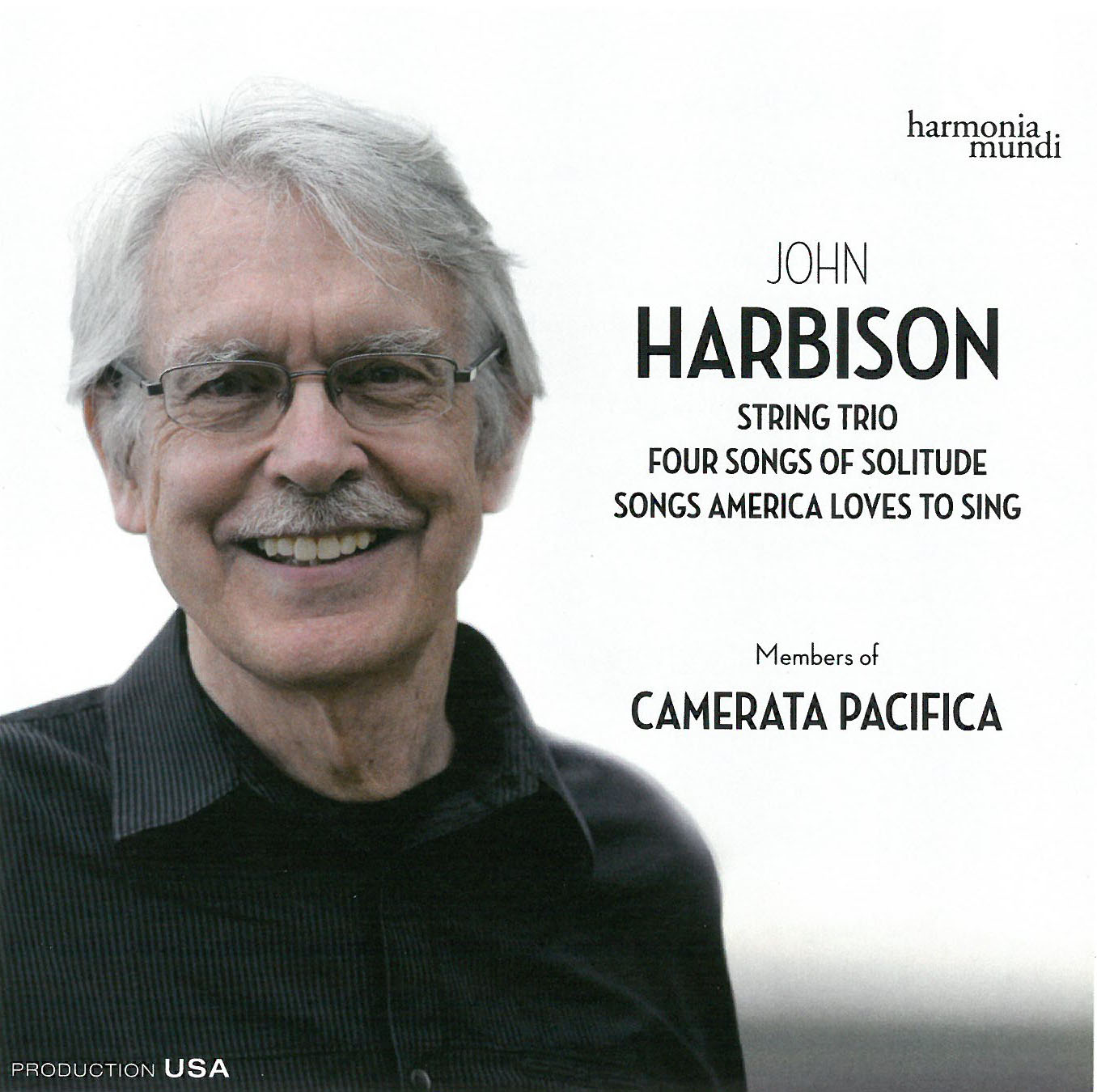
Terry 02 HarbisonChamber Works is a quite exceptional new CD featuring members of Camerata Pacifica playing music by the American composer John Harbison, who turns 76 later this month (harmonia mundi usa HMU 907619). Violinist Amy Schwartz Moretti, violist Richard O’Neill and cellist Ani Aznavoorian combine for the six-movement String Trio from 2013, a striking work of strength and depth.

Paul Huang is outstanding in the Four Songs of Solitude for solo violin, written for Harbison’s violinist wife. Technically challenging, these are lyrical pieces (“songs, not sonatas or fugues,” stresses the composer) with a definite edge.

Songs America Loves to Sing, a set of ten popular American melodies for flute, clarinet, violin, cello and piano, rounds out a marvelous CD. The final track, Anniversary Song, ends with a wheezy harmonica contribution in Happy Birthday To You. It’s simply terrific stuff!

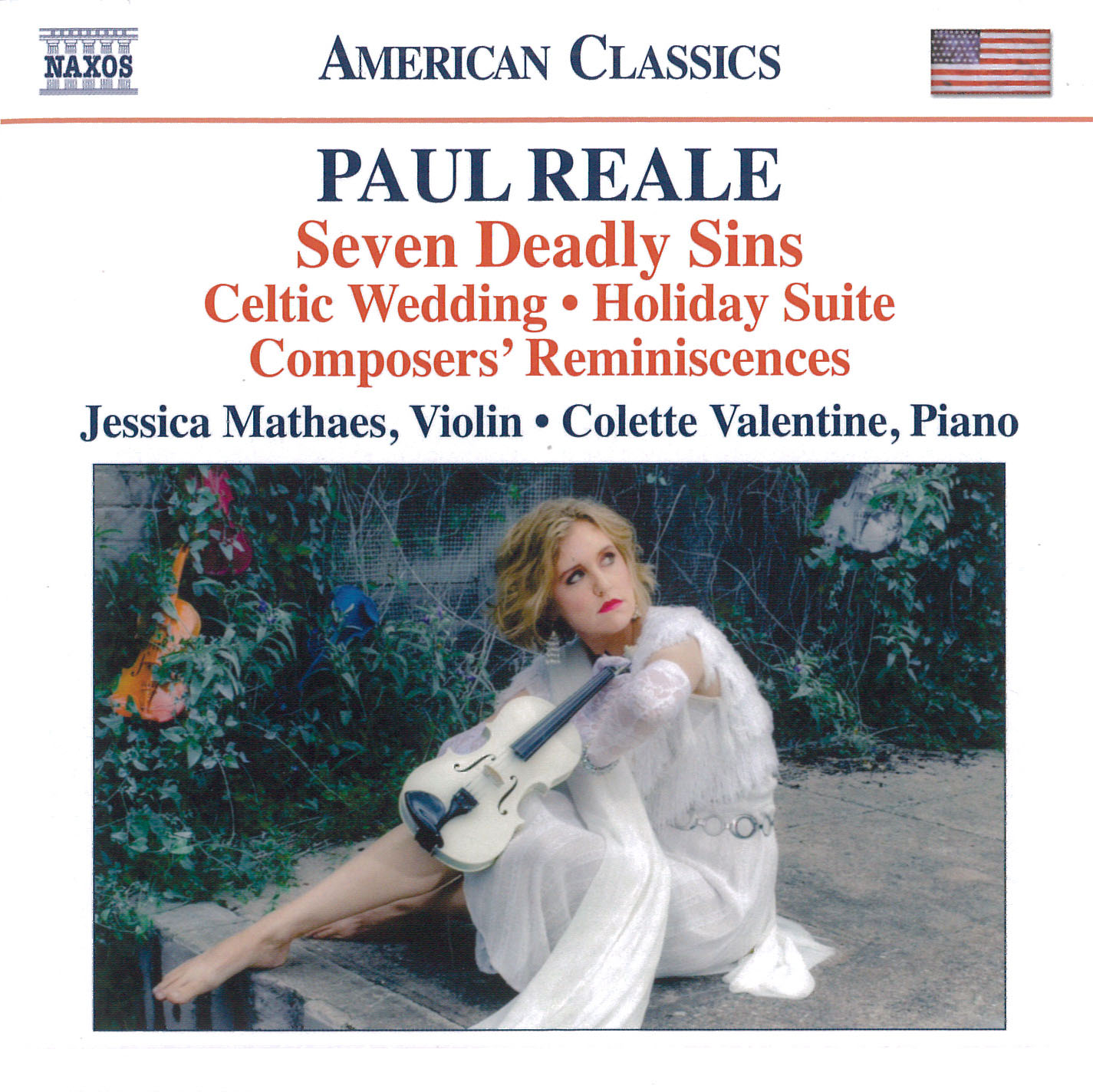
Terry 03 Paul RealeOne of the real benefits of reviewing CDs is the exposure to composers – especially contemporary ones – who are new to you. Seven Deadly Sins, the new Naxos American Classics CD (9.70204) of music for violin and piano by Paul Reale, who turned 71 this year, leaves me wondering why I haven’t encountered his music before. I’ve obviously been missing something. The terrific Jessica Mathaes (another name new to me) is the violinist here on her second CD, and Colette Valentine the equally impressive pianist.

The Seven Deadly Sins suite was written in 2009 for Mathaes especially for this recording (made in 2012) and offers humorous observations of their effect on the human condition. Composers’ Reminiscences is a suite for solo violin written in 2000, but substantially revised for this recording. The seven short but challenging pieces are described as “impressions” (and not imitations) of the styles of Bartók, Puccini, Paganini, Webern, Corelli, Ives and Haydn, but to be honest it’s difficult to differentiate between the two approaches. The Sonata for Violin and Piano, “Celtic Wedding” is another work that has been extensively revised, this time from the 1991 original, for its publication in 2007.

The CD ends with the all-too-brief Holiday Suite, three very short pieces celebrating Thanksgiving, Christmas and New Year’s; the latter features Auld Lang Syne mixed with the soul of Dave Brubeck’s Take Five. “This is good-time music,” says Reale, “melody driven, and devoid of pretension.”

That’s also a pretty good description of the entire CD. This is immediately accessible music written with craft, bite, intelligence and humour, and given outstanding performances. Surprisingly, only the Celtic Wedding is available in sheet music form. It’s a pity; this is music that cries out for – and would be greatly appreciated by – a much wider audience.

There was a time, after the 1964 Isaac Stern and Leonard Bernstein Columbia LP was deleted from the catalogue, when you would have been hard pushed to find a recording of Samuel Barber’s Violin Concerto, but things have certainly changed: it’s now probably the most popular violin concerto of the 20th century, and is currently available on at least two dozen CDs.

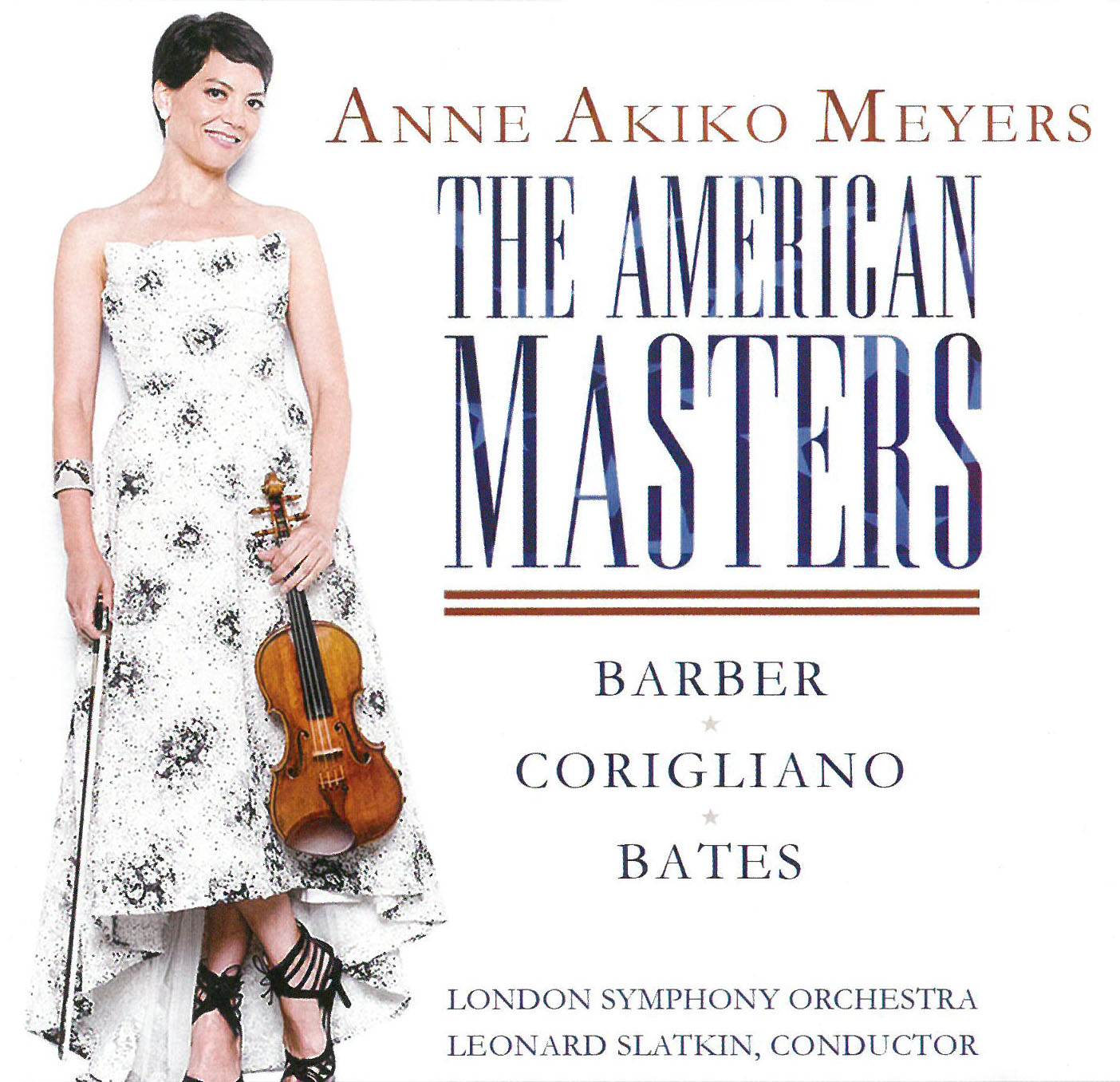
Terry 04 Meyers American MastersThe American violinist Anne Akiko Meyers opens her latest CD, The American Masters (eOne EOM-CD-7791), with her second recorded performance of the Barber; the concerto was featured on her debut CD in 1988. It’s really difficult to find an unsatisfactory performance of this work, and there’s certainly no danger of that here. I haven’t been able to compare this recording with the 1988 performance, but I suspect that this one is perhaps more introspective and nuanced, reflecting the quarter of a century that Meyers has spent with the work. It may be somewhat less passionate and intense than some recordings, especially in the haunting slow movement, but it’s an intelligent and committed performance.

There is clearly intelligence in the programming of this CD, too, with John Corigliano’s Lullaby for Natalie, a short piece written for Meyers in 2010 and named for her baby daughter, forming the central point between the Barber concerto and the Violin Concerto by Mason Bates, a work commissioned by Meyers. Corigliano was mentored by Barber in a relationship that developed into a close friendship, and Bates has enjoyed an identical relationship with Corigliano.

The Bates concerto, written in 2012, is an interesting work that promises to become more effective on closer acquaintance. The soloist, in the composer’s own words, is treated as a hybrid musical creature, based on the Archaeopteryx, the first dinosaur/bird hybrid; the three movement titles – Archaeopteryx, Lakebed memories and The rise of the birds – reflect the continuous unfolding of the music.

Leonard Slatkin conducts the London Symphony Orchestra, and is clearly in his element with the music: Corigliano notes that as well as being a close friend of his, Slatkin has also championed all three composers on the disc. Meyers, incidentally, is now playing the 1741 ex-Vieuxtemps Guarneri del Gesu violin, bought by an anonymous buyer in 2013 and awarded to Meyers for her lifetime use; the price was reported as being in excess of 16 million dollars. Needless to say, the sound throughout the CD is sumptuous!

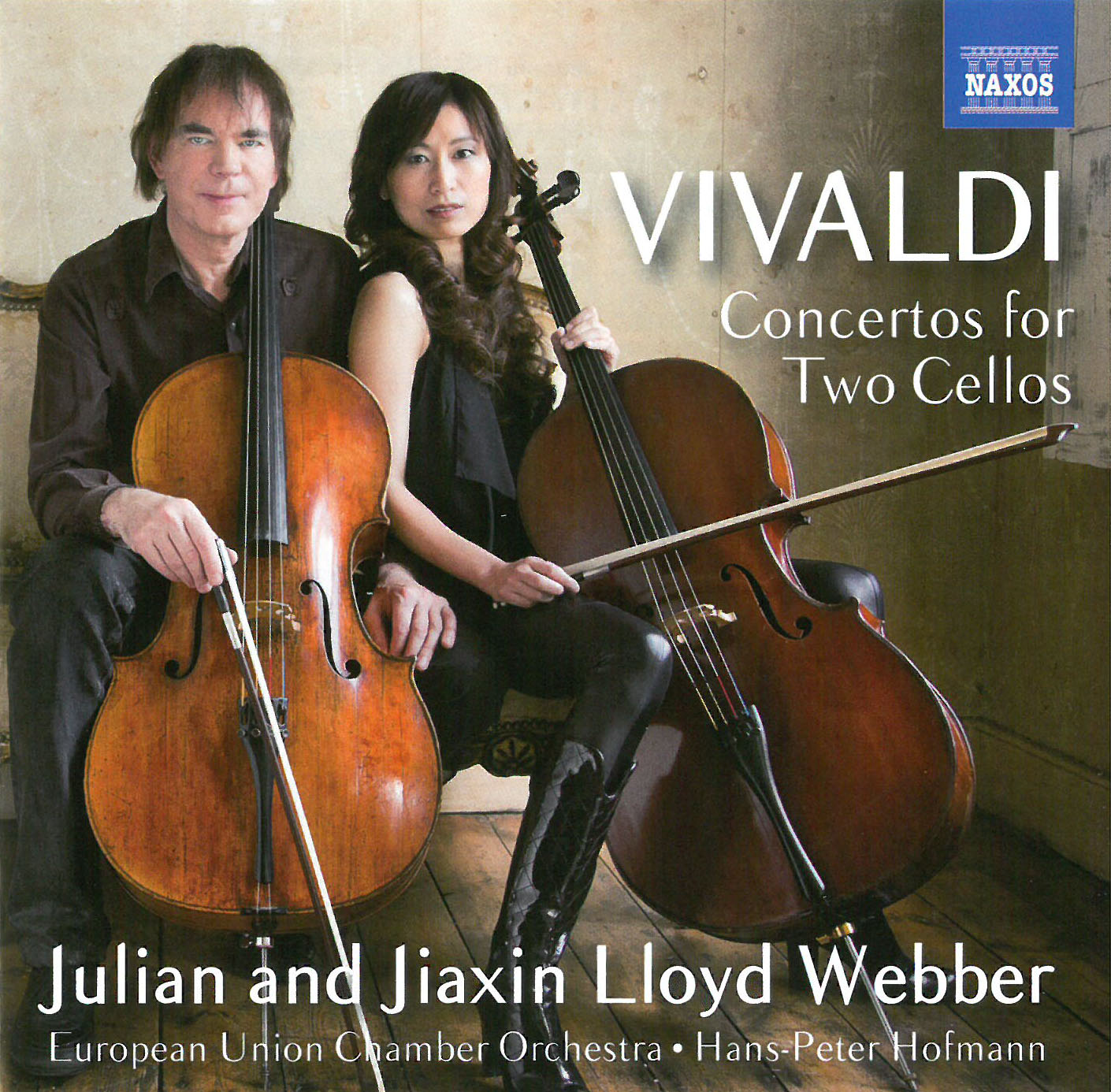
Terry 05 Lloyd Weber VivaldiCellist Julian Lloyd Webber is joined by his cellist wife Jiaxin Lloyd Webber and the European Union Chamber Orchestra directed by violinist Hans-Peter Hofmann in a CD of Vivaldi Concertos for Two Cellos (Naxos 8.573374). Only one of the six concertos here – the G minor, RV531 – is a Vivaldi two-cello original, the others being arrangements by Lloyd Webber of concertos for two mandolins (in G major, RV532), cello and bassoon (in E minor, RV409), oboe and bassoon (in G major, RV545), two horns (in F major, RV539) and the recently discovered Concerto in G minor, RV812 for violin and cello.

It was, of course, normal practice in the time of Bach and Vivaldi for composers to transcribe their own works for different instruments, so there’s nothing radical happening here. These three-movement concertos are all very short, however (only three exceed ten minutes, and none reaches the 12-minute mark), and while there are variations in the content it does tend to bring to mind the old line about Vivaldi having written not 500 different concertos, but the same concerto 500 times.

Most of the time it does tend to sound as if there is only one solo cello, or perhaps more accurately a solo cello with a cello continuo underneath, but there’s a light-hearted feel to the performances and the recordings, and excellent playing by all concerned. It sounds like it must have been great fun to do; it’s certainly great fun to listen to.

The final track on the CD, somewhat puzzlingly, is Lloyd Webber’s attractive arrangement for two cellos of the Milonga from Astor Piazzolla’s Concerto for Bandoneon and Guitar. The two cellos are clearly independent and intertwining voices here. All works other than the Vivaldi original concerto are world premiere recordings of these arrangements.

Terry 06 Strauss Verdi QuartetsFormed at Yale University and based in New York City since 2007, the Ensō String Quartet has been active for 15 years now, and has built a formidable reputation in the process including winning the Banff International String Quartet Competition in 2004. String Quartets, their seventh album – and fifth for Naxos – features the complete string quartet music by three composers known primarily for their operas: Richard Strauss, Giuseppe Verdi and Giacomo Puccini (Naxos 8.573108).

From the opening bars of the early Strauss String Quartet in A Major, written when the composer was 17, it is clear why the ensemble has been garnering rave reviews for their CD releases; it’s beautifully rich, full-blooded and warm playing from the outset, and just perfect for the late Romantic nature of the music. Puccini’s Crisantemi, reportedly written in a single evening in 1890 in memory of the composer’s friend the Duke of Aosta, is a short piece named for chrysanthemums, the Italian flower of mourning, and is well known in both its original form and in a string orchestra setting. Rarely heard, however, are his charming Three Minuets in A Major, written when the composer was 25.

Most people, when they find they have some unexpected free time on their hands, just relax; the 60-year-old Verdi, when the Naples premiere of his opera Aida in 1873 had to be postponed for a few days due to the lead soprano’s illness, chose to sit down and write a string quartet. The String Quartet in E Minor is his only work in the genre, and attempted to marry the Italian vocal tradition with the German classical quartet form. Critical opinion differed on its success, but it’s a solid and finely crafted work, perhaps less purely melodic than you would expect, and with a strong formal structure. It can tend to sound somewhat ponderous and serious in the wrong hands, but the performance here strikes exactly the right balance.

The recording was made in the glorious acoustics of St. Anne’s Anglican Church in Toronto, with the ever-reliable team of Norbert Kraft and Bonnie Silver in charge. The quality of the recorded sound, not surprisingly, is superb.

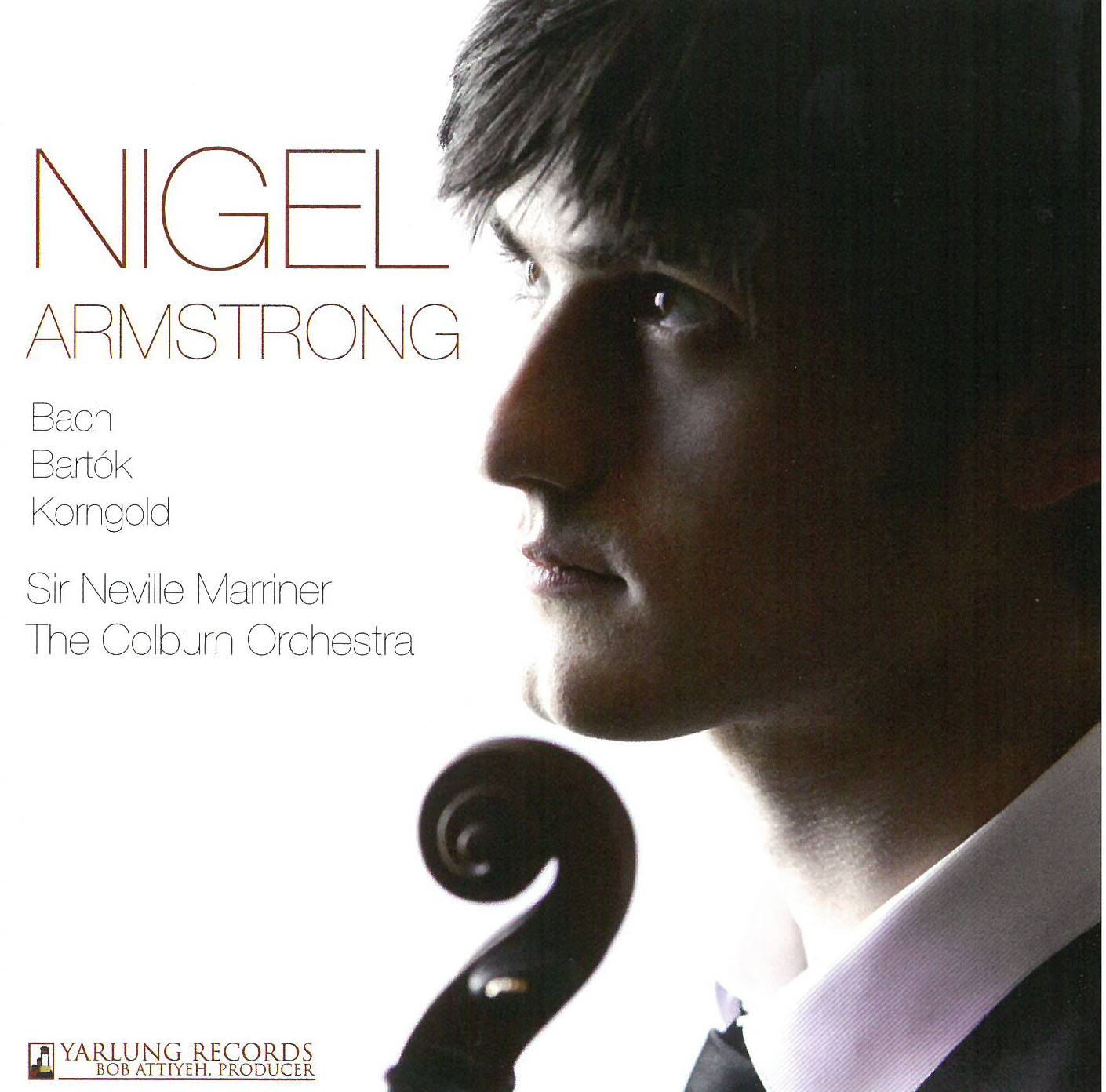
Terry 07 Nigel ArmstrongI was somewhat nonplussed by Nigel Armstrong, the eponymous debut CD by the young American violinist on Yarlung Records, a label which specialises in producing debut discs by rising young artists (Yarlung Records 65007). Two unaccompanied works, the Bartók Sonata for Solo Violin and the Bach Sonata No.3 in C Major are both given accomplished performances, but Armstrong’s vibrato seems a bit narrow and thin, giving the recordings a slightly strained air at times. He’s up against major competition in such works, of course, and while there is much to admire here – especially the smooth melodic line in the contrapuntal Bach sections – neither performance is likely to unseat whichever favourite you have in your collection.

Then comes a live performance of the Korngold Violin Concerto, recorded with the Colburn Orchestra (Armstrong spent four years at the Colburn School in Los Angeles) under Sir Neville Marriner, and we’re in a different world. The vibrato is bigger and warmer, the tone rich and full, and the soaring, expansive performance quite outstanding, although again Armstrong is up against stiff competition in the market. If there’s one aspect that’s a bit disappointing, it’s the recording quality: there is a fair bit of audience and extraneous noise, and the acoustics in the concert hall seem very dry. The movement tracks are also cut off very quickly to exclude any audience reaction.

I did what I normally do with performers who are new to me, and looked Armstrong up online; I was astonished at what I found. There’s a brief but interesting clip on YouTube in which Bob Attiyeh, the producer of the CD, explains how they went about it (look for Nigel Armstrong The Debut Recording) but the real gems were the associated links. There are clips from Armstrong’s performances at a violin competition in Buenos Aires in 2010, one a gorgeous Piazzolla work with string bass and bandoneon and the other a terrific Paganini Caprice, and two clips from the Tchaikovsky Competition in Moscow, one of the end section of the Bach D minor Chaconne, and the other a simply astonishing performance of John Corigliano’s Stomp for solo violin, a fiddle-based work that includes Armstrong playing the instrument behind his back.

The CD booklet notes spend a fair amount of time in a navel-gazing discussion of the choices and challenges facing an international concert soloist – Armstrong spent some time studying at a Zen monastery in upstate New York, and has spent summers working on an organic farm in Germany. Attiyeh says that he looks forward to Armstrong’s next Los Angeles concert, “or to the taste of a new Armstrong organic carrot, whichever comes first.” I’m not sure that he’s joking.

It will certainly be interesting to see where this young man’s career leads him. One thing is clear: he’s an astonishing talent, and I’m not sure this debut CD really does him justice.

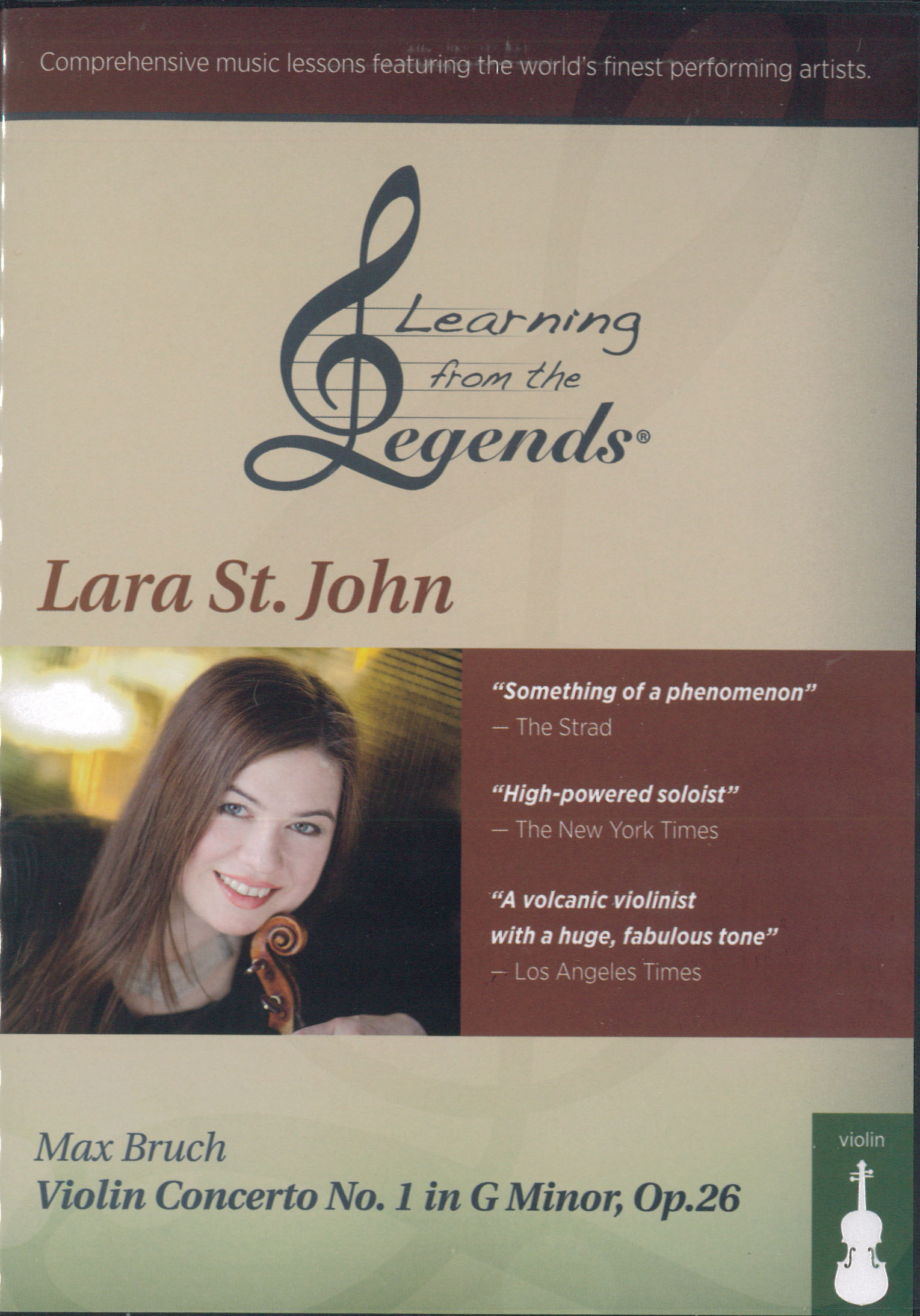
Robbins 01 Lara St. JohnIt’s an idea so obvious that you have to wonder why the market isn’t already flooded: a DVD that features a world-class soloist going through a major concerto almost bar by bar, explaining the problems and challenges, and discussing ways of addressing them. DVDs of masterclasses are occasionally issued, but I don’t know of anything quite like the Learning from the Legends series (learningfromthelegends.com), which has recently started its catalogue with two 2-DVD sets featuring Lara St. John playing and dissecting two of the most popular violin concertos in the repertoire: the Bruch G Minor and the Mendelssohn.

The Bruch set came my way recently, and it’s absolutely fascinating and engrossing. DVD1 features St. John playing the concerto with pianist Eduard Laurel, but with the work broken up into short segments, often of only a few bars. The violin music appears at the foot of the screen, and St. John discusses just about everything you can think of before repeating the section: technical challenges and problems; interpretation; performance issues; tips and advice; fingering; bowing; practising and learning the solo part. The first movement dissection takes 45 minutes; the second 33 minutes, and the finale 43 minutes.

DVD2 has the uninterrupted performance of the concerto by St. John and Laurel, a piano-only accompaniment, and a selection of short help sections from St. John: The Importance of Finding a Teacher; Practice Philosophy; and eight short Technical Exercises.

St. John’s relaxed and friendly presentation-style is perfect, and her commentary always apposite and perceptive. The camera work is almost entirely close-up, with every possible angle of fingering and hand position shown clearly.

It’s absolutely indispensable stuff for student violinists, and offers fascinating and revelatory insights for anyone interested in how concert performances are built. Sheet music for St. John’s own edition of the solo part is available for download through the publisher’s website.

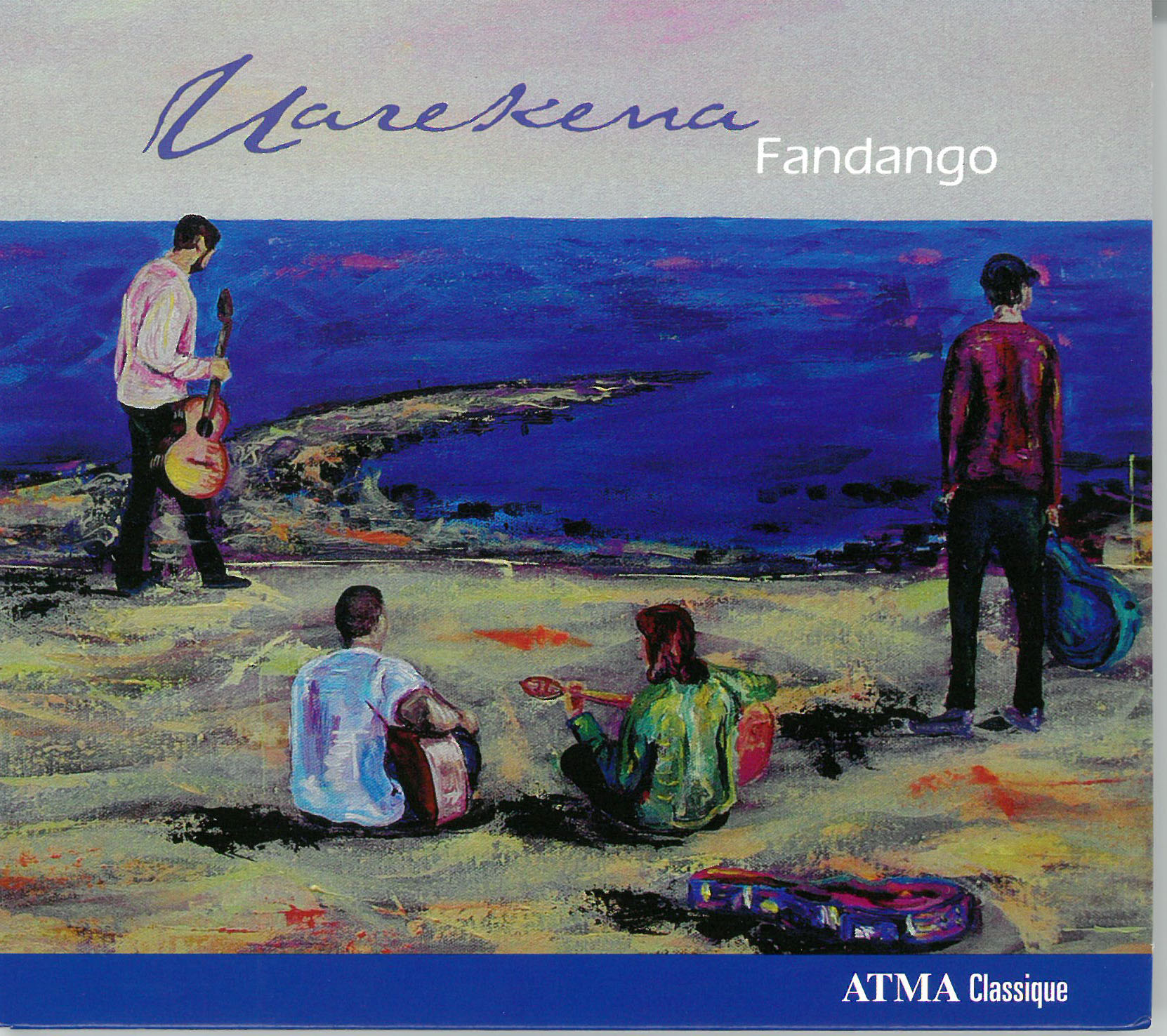
Robbins 02 Fandango guitarsQuebec’s Quatuor Fandango was formed six years ago as a student ensemble at the Conservatoire de musique in Gatineau. Uarekena, their debut CD, presents an attractive program of short works and some excellent ensemble playing (ATMA ACD2 2707).

The disc opens with Comme un Tango and closes with Carnaval, two short pieces by Patrick Roux, the quartet’s teacher and mentor in Gatineau. Dušan Bogdanović’s Introduction and Danse was inspired by the music of Eastern Europe and Sérgio Assad’s title track reflects his Brazilian heritage.

Grieg’s Peer Gynt Suite is followed by Leo Brouwer’s Paisaje cubano and Jürg Kindle’s Berimbao, the latter named after the African instrument that consists of a steel string struck with a stick. There are some particularly interesting sound effects in the Brouwer and Kindle pieces – and yes, you can play the guitar with a pencil!

The recorded sound is warm and resonant, the balance excellent and the playing terrific. The group rightly points out that the guitar quartet is a relatively recent addition to the list of performing ensembles, and the repertoire continues to grow, both in original compositions and arrangements and transcriptions. This CD is a welcome addition to the quartet discography, and a debut disc to be proud of.

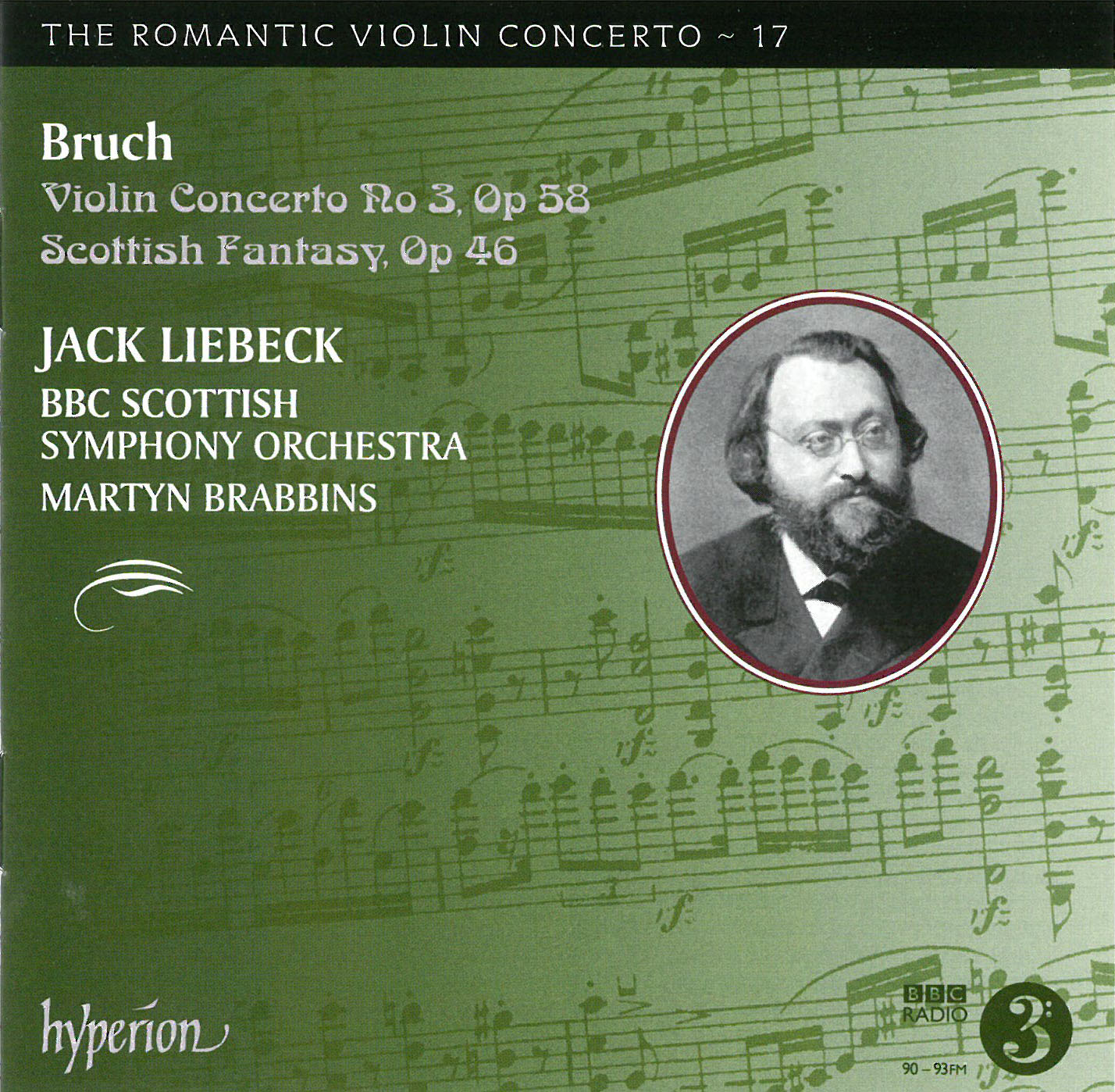
Robbins 03 BruchGiven that the outstanding Hyperion series The Romantic Violin Concerto has mostly highlighted lesser-known composers, the selection of Max Bruch for Volume 17 (CDA68050) may, at first glance, seem a bit surprising. The huge popularity of the Concerto No.1 in G Minor, however, overshadowed the two later concertos, both in D minor, which Bruch wrote for the instrument.

The Violin Concerto No.3, Op.58 is the main feature here. It’s a long work, with absolutely gorgeous music throughout, and a particularly lovely slow movement. The melodies are perhaps less immediately memorable than those in the G minor concerto, which may help to explain why the work never really established itself, but it’s easy to see why Bruch grew so annoyed and frustrated when violinists always preferred to play the earlier concerto.

If there is a bit of a surprise here, it might be the choice of the Scottish Fantasy, Op.46 as the accompanying work, instead of the even less-heard and perhaps more obvious Violin Concerto No.2; still, it’s such a lovely and familiar work that it’s hard to complain, and it shows, perhaps, the difference that strong melodies that stay with you after just one hearing can make to a work’s impact.

The English violinist Jack Liebeck is in superb form in both works, with Martyn Brabbins and the BBC Scottish Symphony Orchestra providing excellent support.

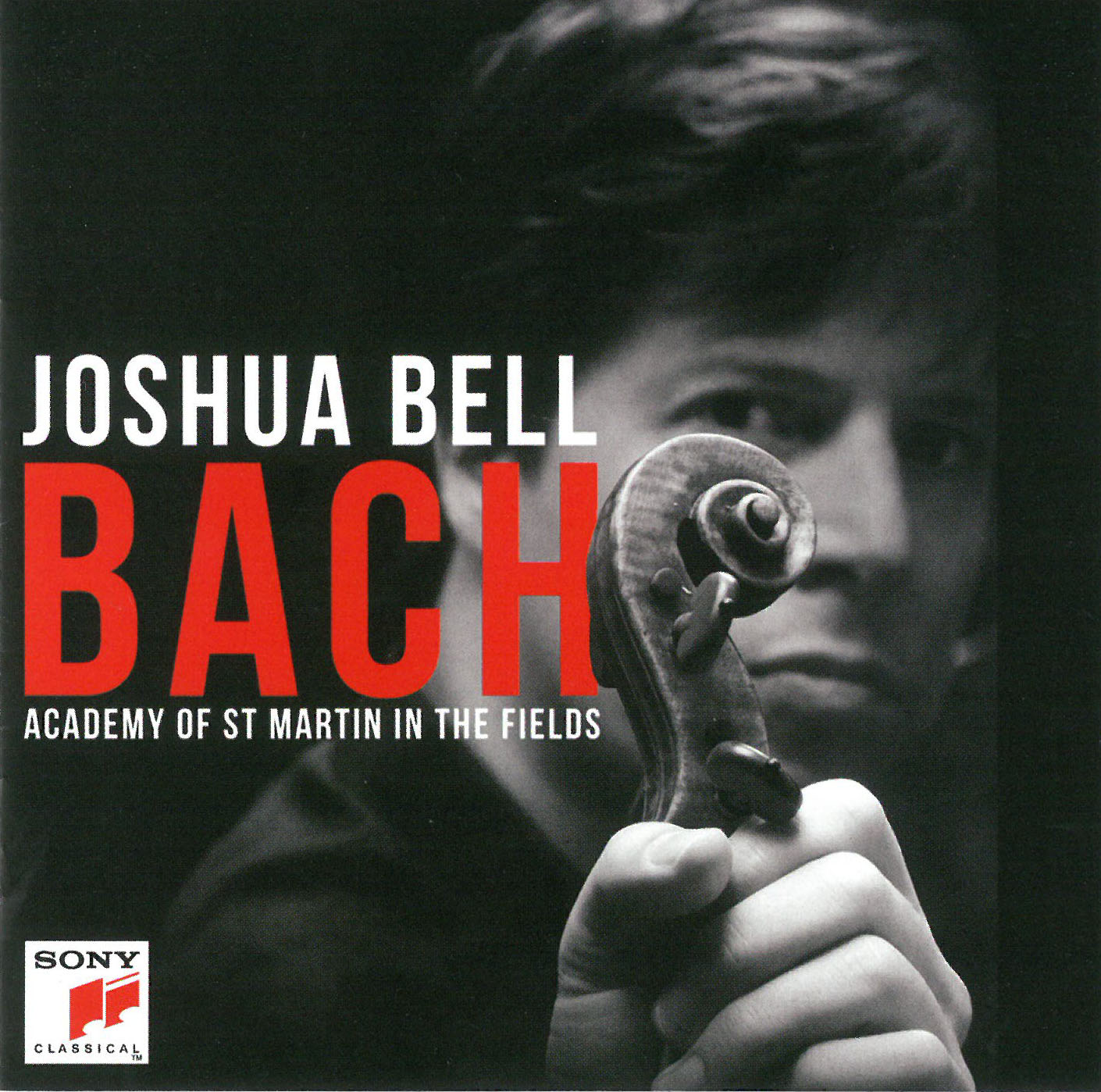
Robbins 04 Bell BachJoshua Bell joins the Academy of St. Martin in the Fields as soloist and music director in performances of the two solo violin concertos by J. S. Bach on his latest CD, Bach (Sony Classical 88843 08779). The Concerto No.1 in A Minor, BWV 1041 and the Concerto No.2 in E Major, BWV 1042 are both given bright, sympathetic readings with beautiful playing from all the participants. The slow movements are heartfelt without ever being overplayed, and the finales have a genuine dance feel to them.

It’s hard to understand now how anyone could ever have felt that any of the Bach solo Sonatas & Partitas needed a piano accompaniment, but in the mid-19th century both Robert Schumann and Felix Mendelssohn did just that, Schumann supplying a piano part for all six works, and Mendelssohn – who was mainly responsible for the revival of Bach’s music in the first place – writing an accompaniment for the great D minor Chaconne. The Chaconne is included here with the Mendelssohn accompaniment, but Bell takes it a step further by using an orchestral arrangement of Mendelssohn’s piano part that he created with the Philharmonia Orchestra violinist Julian Milone. Bell openly admits that the Bach original cannot be improved upon, but appreciates that it does give him another way to experience the work and the opportunity to play it with his friends in the Academy. It’s an interesting experiment, and one that is repeated with the Gavotte en Rondeau from the E major Partita, this time with Schumann’s accompaniment getting the Milone treatment. A lovely reading of the Air from the Orchestral Suite in D Major completes an excellent CD.

Robbins 05 Daniel Hope

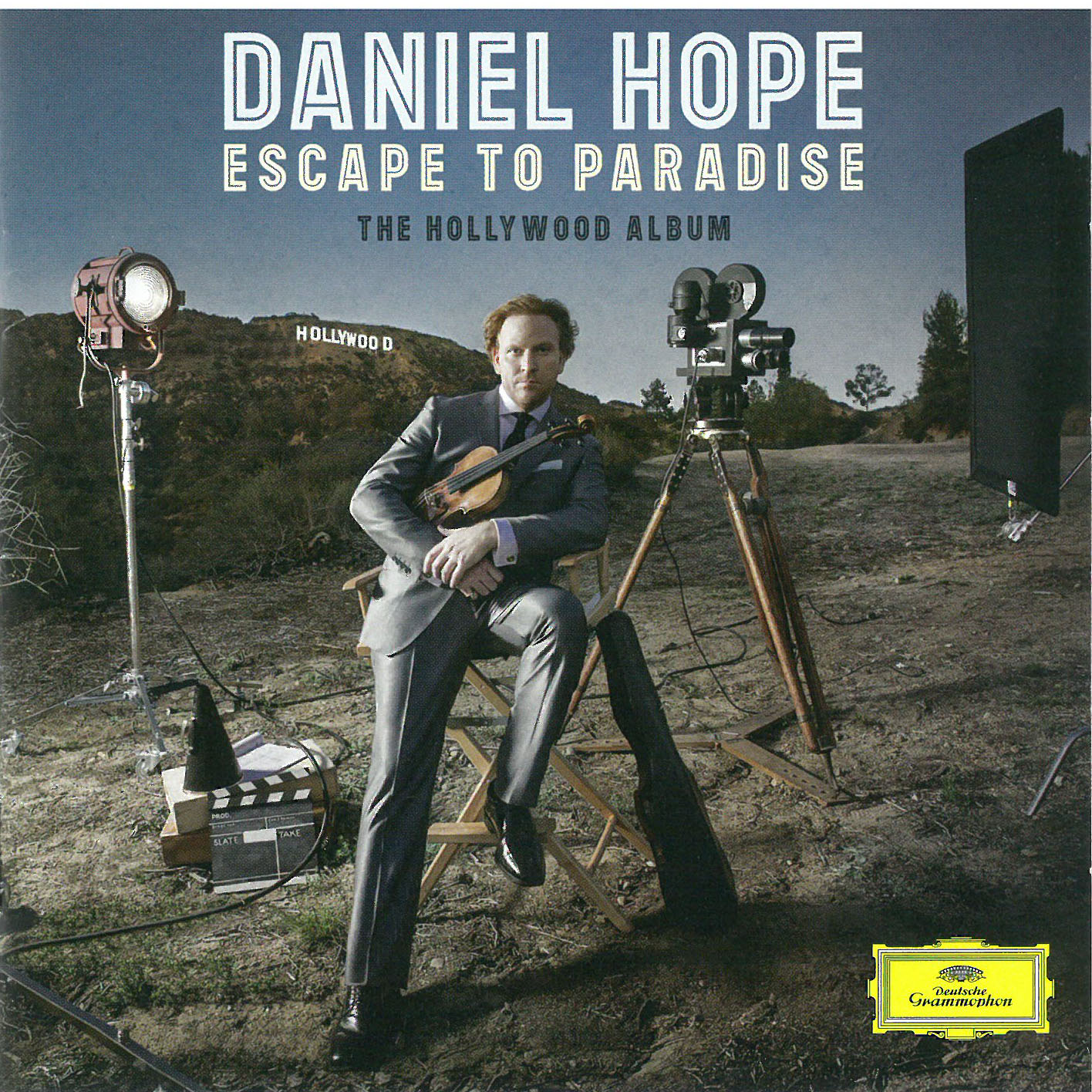
The title of violinist Daniel Hope’s new CD, Escape to Paradise: The Hollywood Album (Deutsche Grammophon            4792954), is a bit misleading. Hope’s focus is on composers who escaped from Hitler’s Europe to the warmth of the Hollywood movie scene, but there’s non-Hollywood music here from pre-and post-war Germany – including a Korngold work from 1908 – as well as non-escapee music from second-generation Hollywood composers like John Williams and Ennio Morricone.

Hope and the Royal Stockholm Philharmonic Orchestra under Alexander Shelley display a big Hollywood tone right from the opening notes of Miklós Rózsa’s Love Theme from Ben Hur, and carry the same style into the major work on the disc, Erich Korngold’s Violin Concerto Op.35; the concerto was built around themes from Korngold’s Hollywood movie scores. It’s a fine performance of a lovely work.

The remainder of the CD is given over to 14 short pieces, most of them arrangements; five are for duo or chamber ensemble, including three that feature members of the Deutsches Kammerorchester Berlin. Ex-Police frontman Sting sings his own lyrics (replacing Berthold Brecht’s!) to a song from Hanns Eisler’s Hollywood Liederbuch, and German singer Max Raabe contributes a flat (unfortunately in both meanings of the word) performance of Kurt Weill’s Speak Low.

The best tracks are those for soloist and orchestra, including the themes from Rózsa’s El Cid, Morricone’s Nuovo Cinema Paradiso, Williams’ Schindler’s List and Thomas Newman’s American Beauty. The disc ends with a slow, low-key and really quite odd solo violin arrangement of As Time Goes By.

The CD is a strange mixture in many ways; some moments resonate less than others, and the vocal tracks in particular seem more like intrusions than contributions, but Hope’s playing is stylish and of a very high standard throughout. Editor’s Note: Alexander Shelley succeeds Pinchas Zukerman as conductor of the National Arts Centre Orchestra in September 2015. 

Robbins 06 Parra

Terra Incognito, featuring the Colombian-born guitarist and composer Arturo Parra, is the debut CD from the new Montreal music and book publishing company La Grenouille Hirsute/Shaggy Frog Productions (LGH1301).

The sub-title of the CD is Seven sound portraits, Parra having spent time with seven men and women from different parts of the Americas before composing seven original pieces “at the request of their subjects” in response to what he had heard. The title, Terra Incognito, refers to the phrase that used to indicate unknown territory on early maps and globes. More on that in a minute.

I didn’t quite know what to expect from this disc. Parra has extensive experience with contemporary mixed media compositions for guitar, and, we are told, “…has to date invented over fifty extended guitar techniques and forms of guitar/vocal expression, and continues to expand the expressive range of his instrument through his sonic explorations.” Not that you would know that from this CD: from reading the promotional material I expected a far more edgy, experimental approach, but it’s mostly riffs and improvisations on standard classical guitar etudes, patterns and techniques, with the occasional extraneous sound – clicks here, a swoosh there – and some fairly standard guitar sound effects – string slides, percussive knocks and the like.

The relevance of the Terra Incognito title is explained by the album’s representing “a vast fresco of a grand journey through unknown lands… a journey that ultimately leads [listeners] back to their home port.” The language throughout the entire package – and particularly in the almost impenetrable booklet notes on the seven track titles – is, to put it mildly, opaque. Here is Parra expounding on his view that every portrait is also, in some way, a portrait of its author: “Each of us is, to another, a two-way mirror watching us watching ourselves while we believe we are watching someone else; a mirror in which we stare into infinity, entranced by our own features, while the mirror stares at itself believing it is staring at us.” Um… OK. “Would I have written the portraits in full knowledge of how naked they would leave me? Don’t know, can’t say.” The entire booklet notes are of a similar nature, either at the far edge of perception or simply pretentious – take your pick – but it doesn’t really matter; the point is that they bear absolutely no relation to the end product and to what you hear.

Don’t get me wrong. Make no mistake: this guy can play. Parra is an extremely talented and proficient guitarist and composer, and the pieces here show an advanced technique and a refined awareness of the instrument’s range and colour palette. There is, however, little sense of the individual pieces being portraits of anything; the whole CD, far from feeling like a journey, feels more like a series of improvisational – albeit high quality and beautifully played – studies.

The recording quality is excellent, and there is a great deal to enjoy on this disc. I just have a big problem believing that it actually does what it claims to do.


Back to top