01_Edison_Quintana.jpgPianist Edison Quintana has recorded an intriguing document that surveys Mexican piano music of the 19th and 20th centuries. Admittedly, we know only a modest amount of Mexican music history and most of us would be lucky to name more than one Mexican composer. What a surprise then to discover some familiar names in the programme notes and hear the marks of both European romanticism and serialism in México entre dos siglos (URTEXT JBCC243).

The new world’s independence of musical evolution from trends in the old world seems much less obvious in the Mexican case. There are, for example, strong echoes of Liszt in Ricardo Castro’s Vals-capricho. Manuel Ponce’s Intermezzo No.3 evokes a languorous Chopin waltz and José Pablo Moncayo’s Tres piezas para piano conjures up works by Bartók and Satie. But, lest I suggest that Mexican composers tend to be derivative, one should note how Silvestre Revueltas’ Cancion uses strong patterns of parallel fourths in a pentatonic mode to create an air of something uniquely indigenous. And who knew that Juventino Rosas’ Sobre las olas is immediately familiar as North America’s best known carnival tune?

Quintana selects a beautifully balanced program that moves through an artful variety of contrasts. He is a seasoned, mature performer and academic who breathes articulate authenticity into every piece he performs. Mexican composers are fortunate to have such a champion.

Review

02_Lars_Vogt.jpg

I’ve always enjoyed comparing piano performances of Bach’s Goldberg Variations because one learns so much about the essence that the pianist discovers in the opening Aria and how that informs the subsequent 30 variations. Lars Vogt brings an overall light touch to his performance and a highly disciplined tempo free of overly expressive rubato and dynamics. Instead he concentrates on pulling forward the contrapuntal material with satisfying clarity. On the few occasions where he does allow for pullbacks to emphasize contrast or underline an emotional point, he does so with measured reserve and the result is very effective. His Goldberg Variations (ONDINE ODE 1273-2) is   masterfully constructed with clear intent and informed by a rhythmic conviction that never wavers. The several toccata-like variations are delivered with speed and clarity at no cost to Bach’s inner voices. His performance of the closing Aria is possibly the most tender I have ever heard. A small point but one that made me smile was Vogt’s reversal of an arpeggio in the repeat of the Aria. An unexpected and lovingly cheeky moment. You should definitely add this CD to your Goldberg collection.

03_Olga_Paschenko_Beethoven.jpgAnother variations disc is Olga Pashchenko’s Beethoven Variations (ALPHA 201) which also includes the Sonatas 19 and 20. Pashchenko plays a modern fortepiano modelled after a Viennese instrument built ca. 1818. The recording is surprisingly good. One reason for its immediate appeal is that the instrument has been prepared in such a way as to offer tonal and pitch stability so often absent in other performances. Rather than sound like a saloon upright out of a cheesy western, this fortepiano actually establishes a credible voice with an astonishing range of colours across its dynamic range. Pashchenko deserves credit for understanding its potential and mastering the technique to realize it. This is the keyboard sound Beethoven would have known before he came to play the English Broadwood grands. It would have been the voice for which he first wrote.

Both sets of variations on this disc are based on original themes by Beethoven and so break with the more common practice of using material by other composers. Pashchenko treats the fugue at the end of the Prometheus Variations Op.35 rather independently from the main body of the set but her assertive playing is completely captivating through the development section where her technique truly shines. She’s equally dazzling in the Fantasia Op.77.

04_Beethoven_fortepiano.jpgAmerican pianist Penelope Crawford on Beethoven Sonatas Opp.78, 81a, 90 & 101 (musica omnia MO-0510) also uses a fortepiano in her recording. This one, however, is not a modern copy but an original 1835 instrument by Viennese builder Conrad Graf. Its sound is surprisingly modern and different from that of Pashchenko’s recording. One of Beethoven’s last instruments was by this same builder, though by then Beethoven’s deafness would have prevented him from appreciating its finer qualities.

Crawford’s approach to this repertoire is well-founded on her years teaching at several American institutions. Her performance credentials, too, are varied and impressive, having played much period music with ensembles dedicated to historically informed interpretations. Her program traces the evolution of Beethoven’s style from the (late) middle period sonatas to the denser, more complex later works with longer thematic ideas. She does a splendid job with increasing aggressiveness in the Opp.90 and 101 sonatas. One of her more fascinating techniques is how she uses the pedals to both mute and sustain specific passages in a tonal colour not possible on modern pianos.

This is a very fine recording with special significance to those who value historical authenticity.

05_Angela_Hewitt_Beethoven.jpgAngela Hewitt’s recording of Beethoven Piano Sonatas (Hyperion CDA 68086) puts a pair of early works up against two considerably later utterances in the form. Hyperion produced this 2014 concert recording on a Fazioli in a Berlin church with an acoustic that offers a perfectly balanced space around the piano. One only ever hears more of the room when the music rises above forte and, even so, the intimacy of the performance is never lost.

Following Hewitt on Facebook, one stays in touch with her travels, rehearsals, recording sessions and performances. It makes listening to her CDs rather like going to a friend’s home for a private recital. She is a fastidious player when it comes to articulation and her phrasings are masterful in both the Op.2 and Op.10 sonatas where echoes of classical structure are quite pronounced. Hewitt delivers everything from the crispest staccatos to the gentlest lifts in defining the inner voices that Beethoven weaves throughout. The Adagio of the C Minor Sonata is especially engaging because Hewitt understands how Beethoven wants to unsettle its pretty little thematic idea. She does this beautifully.

Hewitt’s approach to the A-Flat Major Sonata Op.110 second movement is a good deal less frenetic than many pianists often take but never lacks for convincing energy. The final movement is, however, the most arresting. Here Hewitt creates a profound air of mystery around the extended Adagio that sustains the listener for about eight minutes until she breaks into the closing fugue. A terrific disc.

Concert note: Angela Hewitt performs work by Scarlatti, Bach, Beethoven, Albeniz and De Falla in Kingston at the Isabel Bader Centre for the Performing Arts on October 11.

Review

06_Schubert_Schiff.jpg

Pianist Andras Schiff has taken an historic approach to Franz Schubert (ECM New Series 2425/26 481 1572) and documents a wide variety of the composer’s works on a fortepiano. He deliberately begins his notes with an intriguing “Confessions of a Convert” chapter that lays out his rationale and passion for this choice. Using his own instrument, built by Franz Brodmann in Vienna ca.1820, Schiff launches into repertoire most of us have only ever heard on a modern piano.

Opening the 2-CD set with Ungarische Melodie in h-moll D817, Schiff cleverly gives his zither-like instrument a culturally Eastern selection that gets our immediate attention. Small action clicks and an intimate voice make this recording’s premise very persuasive. While capable of the softest pianissimos and mellowest hammer strikes, Schiff’s fortepiano still delivers some powerful full-throated chords and he uses this capability masterfully throughout his program.

The familiar Moments musicaux D780 and Impromptus D935 take some getting used to but hearing them this way eventually suggests that a smaller performance conception is actually credible and perhaps this is closer to what Schubert had intended. The Sonata in B Major D906, however, is perhaps the most difficult to accept in this sonically smaller way. Too many years of hearing it from large concert grands have left a mark not easily erased.

If this project and its argument were in the hands of someone less a pianist and musician than Schiff it would be far less persuasive. But it seems the 1820 Brodmann has become Schiff’s new muse and that he has found a new voice. We are bound to pay attention.

07a_Michael_Lewin.jpgMichael Lewin has recorded Debussy’s Préludes Book 1 and Book 2. As separate CDs, Starry Night (Sono Luminus SL 92190) and Beau Soir (Sono Luminus DSL 92175) both add other Debussy works to fill the discs. The set also includes the first recording of a Beau Soir transcribed for piano by Koji Attwood.

07b_Beau_Soir.jpg

Anyone undertaking a recording project on this scale has to understand the composer at the most profound level. Brilliant technique is not enough to play through all the Préludes and explore Debussy’s 24 character constructions using his unique keyboard vocabulary. Lewin’s approach seems to be one that allows the music to take all the time it needs to unfold. He never rushes a phrase or resolution but prefers to let it hang until it completes itself as in Des pas sur la neige. By contrast, he drives the Steinway through the impossibly rapid repetitions that Debussy demands in La danse de Puck, Jardins sous la pluie and other similar tracks. Lewin also draws key motifs effortlessly out of Debussy’s familiar pools of swirling harmonies.

His performance avoids the pitfall of self-indulgence, so tempting with this repertoire. He never loses himself in the hypnotic but stays in complete control. This gives him the advantage when delivering the rhythmic angularity of La sérénade interrompue and Golliwog’s Cake Walk. Recorded a year apart, the set should be owned together. Each recording also includes a Blu-ray Pure Audio Disc.

Review

08_Kuhnau_Organ.jpgItalian organist Stefano Molardi has undertaken an ambitious project with Kuhnau Complete Organ Music (Brilliant Classics 95089). The 3-CD set contains all the Sonatas, Preludes, Fugues and a single Toccata. Kuhnau was Bach’s immediate predecessor at the Leipzig Tomaskirche and made a significant impact on the music of his time.

The entire project was recorded in the summer of 2014 on two different instruments that might well have been known to Kuhnau. Both built by Gottfried Silbermann, the 1714 cathedral organ in Freiburg and the smaller 1722 organ of the St. Marienkirche in Rötha both show the typically bright mixtures and overtone-rich reeds of the German Baroque.

Molardi approaches the Six Biblical Sonatas in a way that exploits their highly programmatic content. Using all the colours and effects available on the Freiburg organ, he retells the numerous Old Testament stories that Kuhnau portrays. As late baroque style goes, there is an amazing freedom of expression in the writing that includes great fantasia-like sweeps as well as rigid fugal architecture. Kuhnau must have had a ball writing these.

Even more impressive are the individual Preludes, especially the Prelude in E Minor and the Prelude alla breve in G Major. Both are regal in presentation and use the full scale of their instrument to fill the Freiburg cathedral. Both organs are, of course, trackers and so give us some audible mechanical action noise during soft passages. This a wonderful document for serious organ buffs.

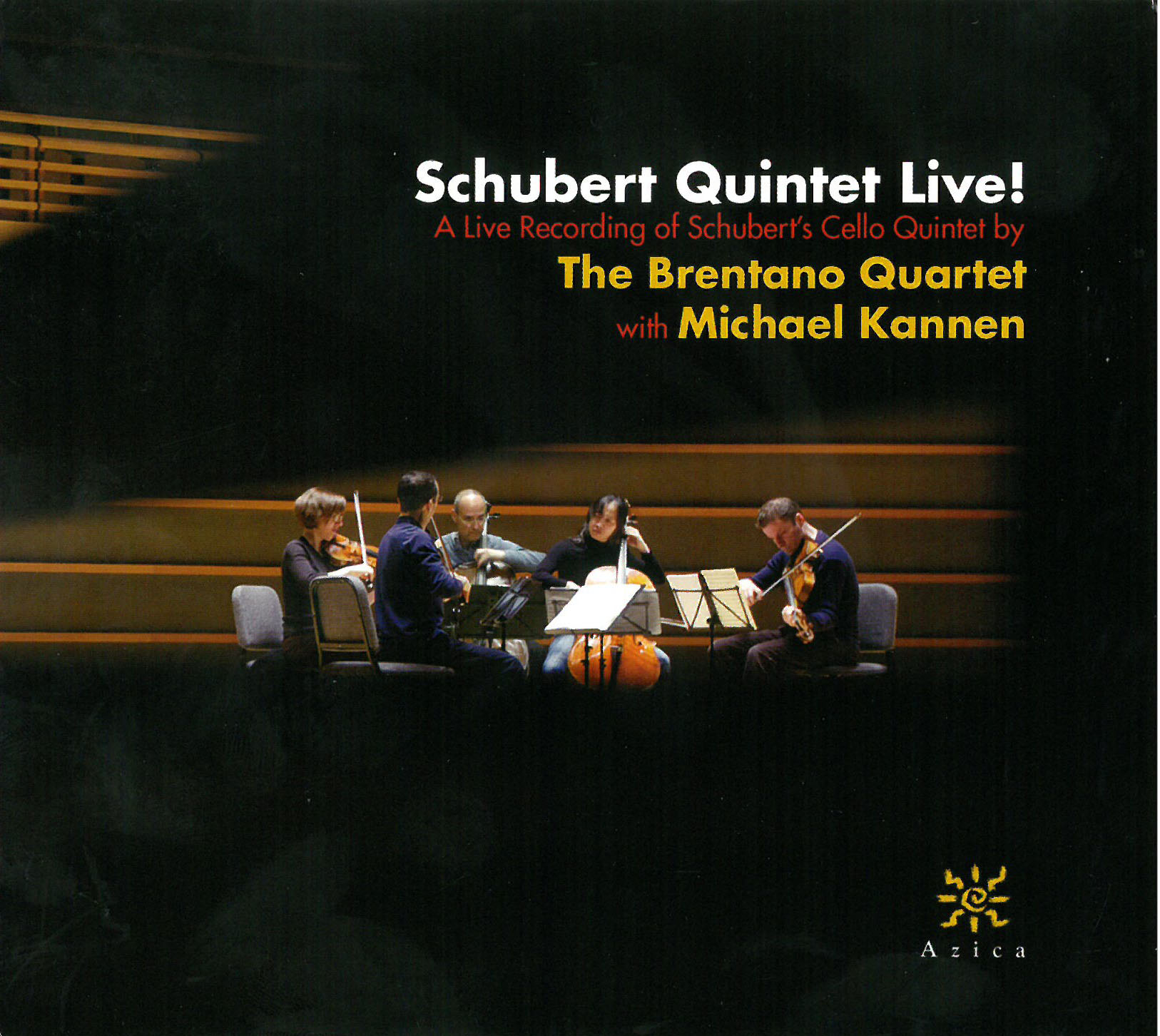
01_Duo_Concertante.jpgDuo Concertante, the Newfoundland-based duo of violinist Nancy Dahn and pianist Timothy Steeves, have followed up their outstanding set of the complete Beethoven Sonatas with an equally satisfying CD of Double Concertos for Violin, Piano and Orchestra by Felix Mendelssohn and Andrew Paul MacDonald (Marquis Classics MAR 81463). Marc David conducts the Newfoundland Symphony Orchestra, apparently in their recording debut.

The Mendelssohn D Minor Concerto is a remarkably assured work written – quite astonishingly – when the composer was only 14 years old. It is performed here in the version with winds and timpani that Mendelssohn added to the original string scoring shortly after the first private performance of the work in 1823. There are clear stylistic links with Mozart and Beethoven, but the grace and lyricism of the mature composer are already in evidence. Dahn and Steeves both display the perfectly judged tone and style that made their Beethoven set such an outstanding success, as well as shining in the virtuosic passages.

The MacDonald Double Concerto Op.51 was commissioned by Duo Concertante some 15 years ago after they heard the composer’s Violin Concerto and was premiered with the NSO in 2000. It really is a very attractive and convincing work, essentially in traditional concerto form but cast in a single movement with the three sections separated by cadenzas. The Duo has performed both concertos numerous times since then, and the two works are perfect companions on a really attractive CD.

The NSO apparently includes student and community members as well as professionals, but you’d never know it – the playing here is never less than top-notch.

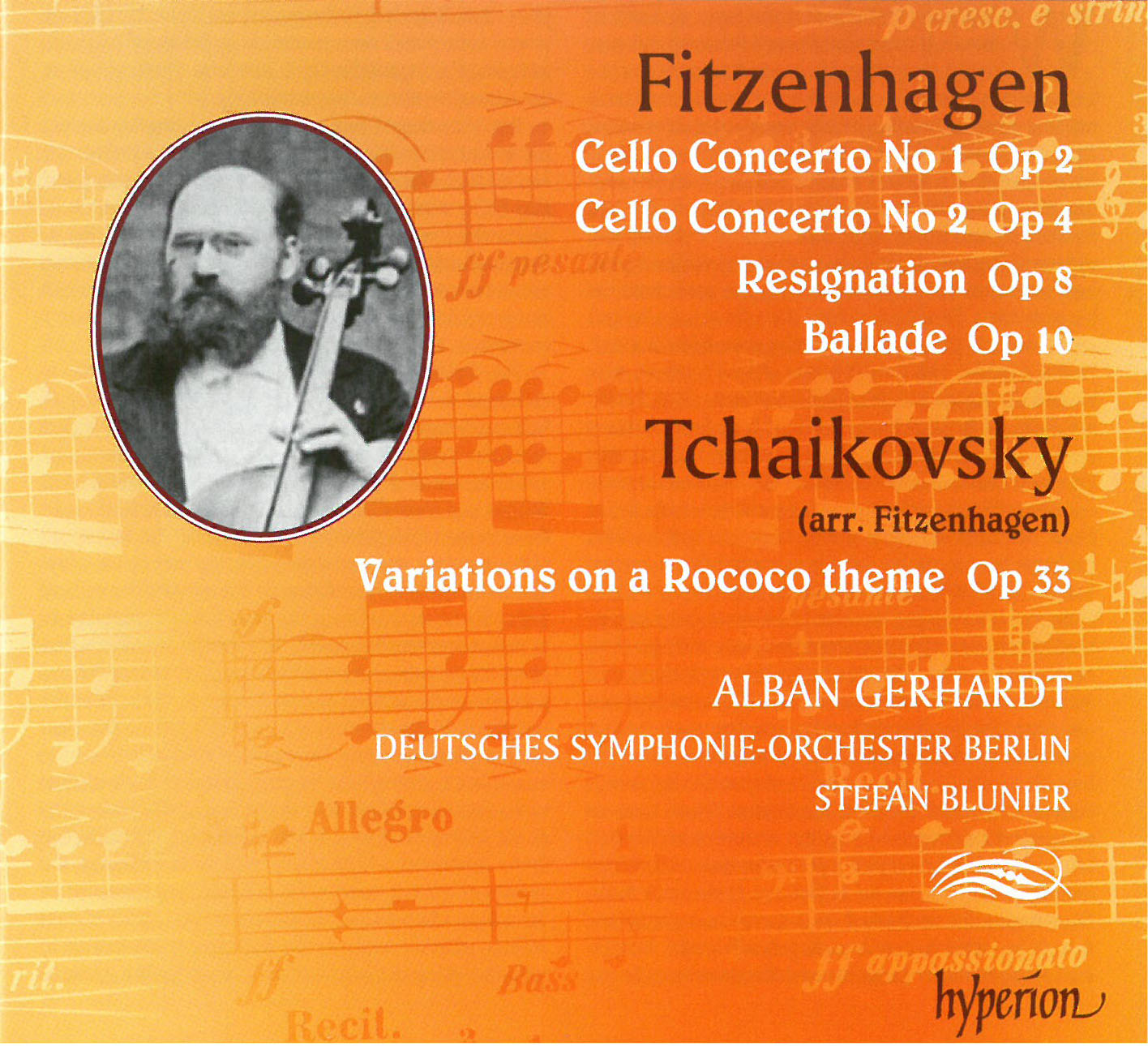
02_Mordkovich.jpgThe Russian violinist Lydia Mordkovitch, who died last December at the age of 70, lived the second half of her life in Britain and was a founding artist for Chandos Records, for whom she made over 60 recordings. The 2-CD set of British Violin Concertos is one of four re-issues of her recordings that the label released in July as a Lydia Mordkovitch Tribute, and it’s simply stunning (CHAN 241-53). The four concertos are by Sir Arnold Bax, recorded in 1991 with the London Philharmonic Orchestra; Sir George Dyson, recorded in 1994 with the City of London Sinfonia; Sir Arthur Bliss, recorded in 2006 with the BBC National Orchestra of Wales; and John Veale, recorded in 2000 with the BBC Symphony Orchestra. Bryden Thomson conducts the Bax; Richard Hickox the other three works.

The concertos by Bax (1938) and Bliss (1955) are exactly what you would expect from two main-stream mid-20th-century English composers in their prime: wonderfully strong, richly melodic works with outstanding idiomatic solo parts and brilliant orchestration.

The music of John Veale was completely new to me, which was somewhat puzzling given that I was still living in England when he would have been in his prime; his romantic tonal music, however, had been swept aside by the avant-garde movement in England in the mid-1960s, when the likes of Stockhausen, Boulez and Henze ruled the roost, and there were virtually no performances or broadcasts of his work. As a result Veale wrote nothing for 12 years, and the striking Violin Concerto from 1981-84 marked his return to composition. Certainly his style hadn’t changed: you can hear echoes of his work in the British film industry in the 1940s and 1950s, and also more than a hint of two of his favourite composers, William Walton and – in particular – Samuel Barber. The slow movement is absolutely beautiful.

The real gem here, though, is the Dyson, again someone whose orchestral music will be new to most people. It’s a simply glorious four-movement work from 1941: large (44 minutes), expansive, sweeping, lushly orchestrated, and quite symphonic in feel. Mordkovitch’s playing is simply sublime, as it is throughout the entire set.

If this issue is in any way indicative of Mordkovitch’s contribution to the British music scene then it magnifies the loss – but what a marvellous way to be remembered. It’s a wonderful set, and an absolute must-buy for anyone even remotely interested in 20th-century violin concertos.

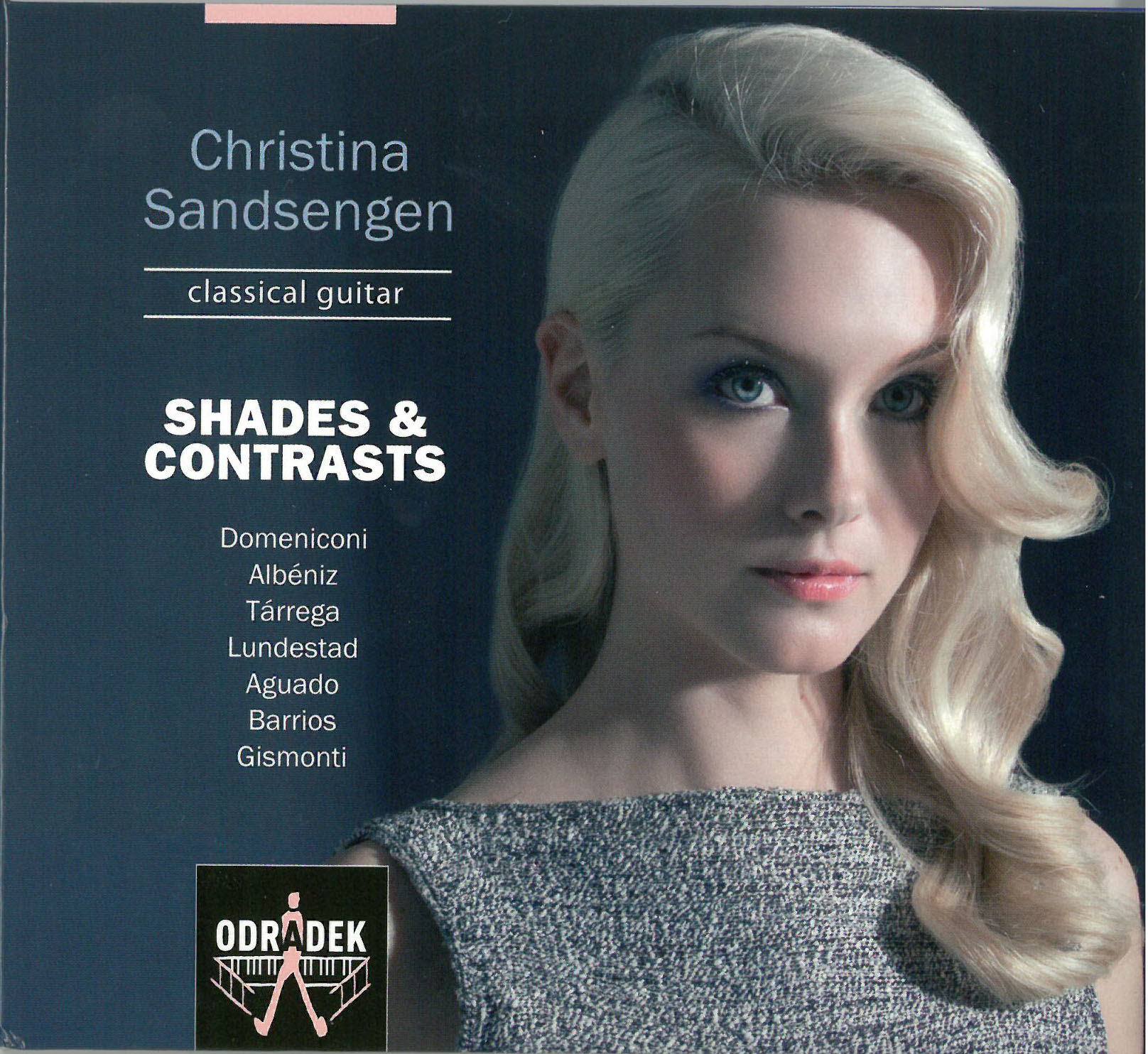
03_Waley_Cohen.jpgThe new CD by the English violinist Tamsin Waley-Cohen and the Welsh pianist Huw Watkins of Works for Violin & Piano by Hahn & Szymanowski (Signum Classics SIGCD432) was a real revelation in two ways: I don’t recall having heard the performers or the works on the disc before.

My not knowing Waley-Cohen is the more difficult to explain; she has issued five previous CDs, enjoys a wide-ranging career and has garnered a great deal of critical acclaim. When Ruggiero Ricci calls you “the most exceptionally gifted young violinist I have ever encountered,” you’re clearly headed in the right direction. It’s easy to hear why: her dazzling technical assurance and interpretative subtlety are clear from the outset.

You may know the two violin concertos by Karol Szymanowski, but possibly not the Violin Sonata in D Minor, Op.9. It’s a lovely melodic early work in the Romantic vein, written when the composer was 21. I’m not sure what the connection between Szymanowski and Reynaldo Hahn is supposed to be – the booklet notes call it “a somewhat tenuous one,” which is putting it mildly – but it really doesn’t matter when it means that works like the Romance in A Major, the Violin Sonata in C Major and the Nocturne in E-Flat Major are given wider exposure, especially in performances like these. The Sonata in particular is a beautiful work full of French refinement and harmonic subtlety and some particularly lovely piano writing.

A terrific performance of Szymanowski’s Nocturne and Tarantella, Op.28 provides a passionate and brilliant end to a CD that features outstanding playing from both performers.

Since 2007, incidentally, Waley-Cohen has played the Stradivarius violin previously owned by Lorand Fenyves, so long a fixture at the University of Toronto’s Faculty of Music.

Concert note:  Szymanowski’s Sonata in D Minor Op.9 will be performed by Annette-Barbara Vogel and Durval Cesetti  at the Don Wright Faculty of Music at Western University on October 16 and at the Kitchener-Waterloo Chamber Music Society on November 4.

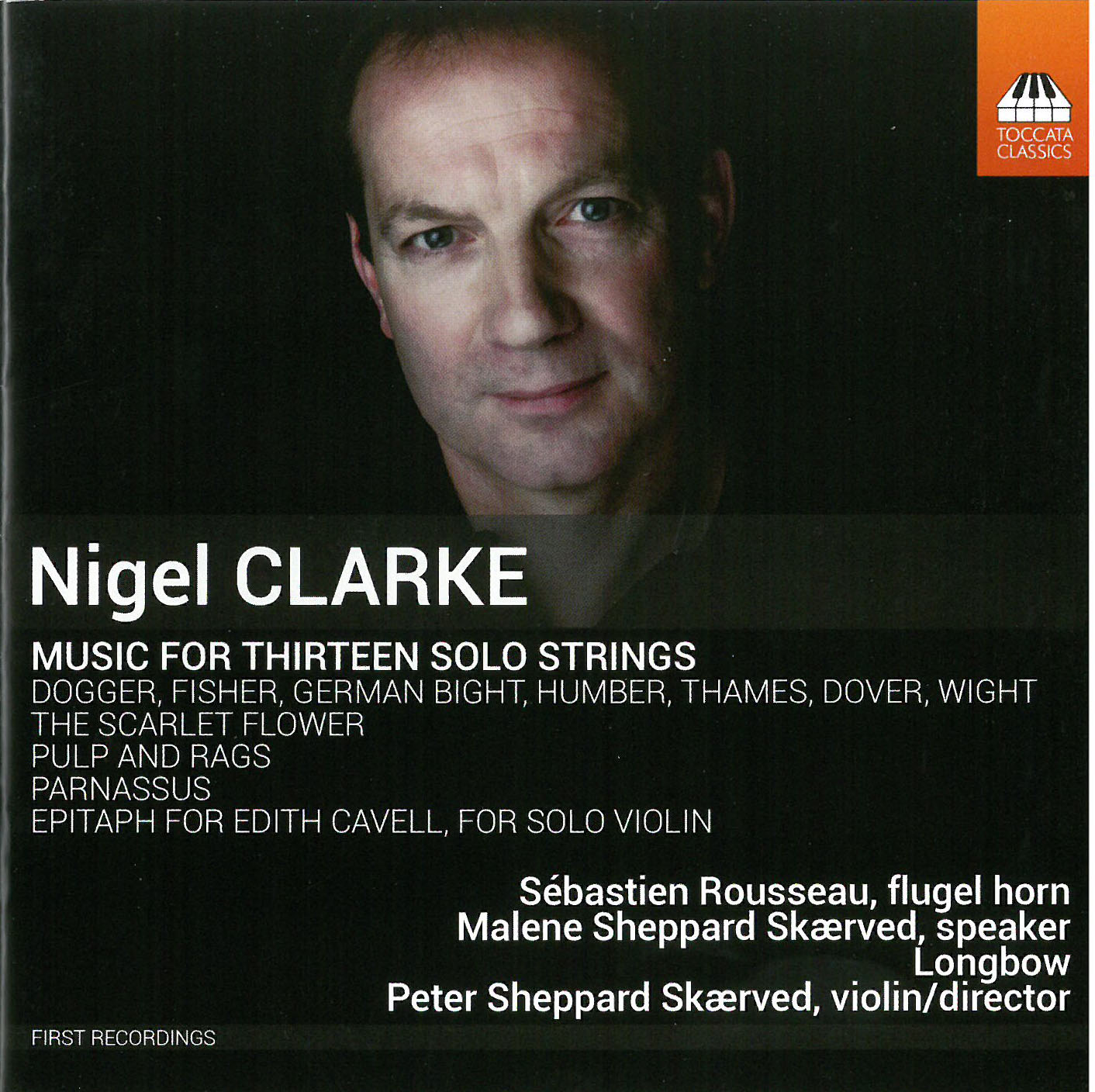
04_Dana_Zemtsov.jpgRomantic Metamorphoses is the second of three CDs the 23-year-old Netherlands-based violist Dana Zemtsov will be recording for the Channel Classics label and features the Dutch pianist Cathelijne Noorland as accompanist (CCS SA 37215).

The Sonata in B-Flat Major Op.36 is one of four works that the violinist/composer Henri Vieuxtemps wrote for the viola. It’s a lovely work that clearly shows what Zemtsov calls his lyrical romanticism, and one that eschews virtuosity for its own sake: Vieuxtemps’ pupil Eugène Ysaÿe quoted the composer as saying “Not runs for the sake of runs – sing, sing!” Zemtsov’s big, warm tone and effortless technique certainly enable her playing to sing here.

Evgeni Zemtsov’s Melodie im alten Stil for viola and piano has a very special meaning for the soloist: it was written by her grandfather for the young viola player who would become his fiancée, and who would give birth to Dana Zemtsov’s father a year later. It’s a short piece, but simply lovely.

The Swiss-American composer Ernest Bloch, who was a pupil of Ysaÿe, has rarely received the attention his compositions merit. His Suite ‘1919’ for viola and piano was written a few years after his first move to the USA in 1916, and won him a Coolidge Prize in 1919. It’s an expansive and fascinating piece with some exotic subtitles for the four movements: In the Jungle: Life in the Primitive World and Grotesques: Simian Stage, for instance. Zemtsov describes it as a “romantically fantasized adventure through savage nature and tribes under the sun in the jungle.” It gives both players ample opportunity to shine.

Mention a Carmen Fantasy for violin and orchestra and Sarasate’s composition based on Bizet’s melodies usually comes to mind, but a different one by Franz Waxman has long been a cult favourite with violinists. It’s played here in a Mikhail Kugel arrangement for viola and piano, and provides a spirited end to the CD.

Review

05_Quincy_Porter.jpg

While he was on the faculty at Cleveland’s Mannes School of Music from 1917 to 1920 Ernest Bloch taught a number of young American composers, among whom was Quincy Porter. Porter’s String Quartets Nos.5-8 feature on a new CD from Naxos (8.559781), which continues to issue terrific recordings of music that, if not exactly off the beaten track, thrives along the sides of the main musical highways. Quartets Nos.1-4 were issued on Naxos 8.559305 in 2007, to glowing reviews.

Porter was a professional string player in the 1920s, and the four works here, written between 1935 and 1950, show just how well he understood the medium: they are idiomatic and immediately accessible, very appealing, strongly tonal and highly expressive.

Recorded between 2008 and 2012, the performances by the Ives Quartet are of the highest quality.

06_Jerusalem_Beethoven.jpgThere’s another beautiful set of Beethoven string quartets available, this time from the Jerusalem Quartet, which is currently celebrating its 20th anniversary. Their main focus for the 2015/16 season is the six quartets of Béla Bartók, which they will be presenting in three different concert formats; one of these will be a four-concert cycle combining the Bartók with the six Beethoven String Quartets Op.18. The new 2-CD set of the Op.18 works on Harmonia Mundi (HMC 902207.08) is the first of two album releases which will mark the ensemble’s anniversary; Bartók’s Quartets Nos.2, 4 and 6 will be released in early 2017.

Beethoven came relatively late (he was 30) to the string quartet genre, but you would never know it from the quality of these works – hardly surprising, perhaps, given that he carefully studied the late quartets of both Mozart and Haydn before setting to work. These performances by the Jerusalem Quartet are everything you could wish for and everything you would expect from an ensemble that has been playing together for 20 years. It’s a terrific set.

07_Avalon_Quartet.jpgIlluminations is another fascinating CD from Cedille Records, featuring the Avalon String Quartet in works by Debussy, Britten, Osvaldo Golijov and Stacy Garrop (CDR 90000 156). There’s a lovely reading of Debussy’s String Quartet in G Minor Op.10 to start things off, followed by four quite fascinating short pieces by the young Benjamin Britten. The Three Divertimenti (a March, Waltz and Burlesque) were written in 1933 by the 19-year-old composer as part of a projected five-movement suite and are startlingly modern – the March sounds like Dag Wirén meets Bartók. Revised in 1936 under the present title, they remained unplayed during the composer’s lifetime after the initial unsuccessful performance. Alla marcia is in the same vein and from the same period and was originally planned as the opening movement for the suite.

Golijov’s evocative and effective Tenebrae from 2000 ends the CD, but the focal point is the String Quartet No.4: Illuminations, the 2011 work by the Chicago-based Garrop that gives the disc its title. It’s a charming piece that is essentially a meditation on five stunning illustrations from the 15th-century Book of Hours known as The Hours of Catherine of Cleves, now in the Pierpont Morgan Library in New York. Eleven short pieces depict the opening of the book, the five illuminations with two interludes, and finally the closing of the book at the end of prayer.

The Avalon Quartet has been together for 20 years now, but this is their first recording for the Cedille label. They’re in top form throughout a lovely disc.

01_Rossini_Aureliano.jpgRossini – Aureliano in Palmira
Michael Spyres; Jessica Pratt; Lena Belkina; Raffaella Lupinacci; Dimitri Pkhaladze; Orchestra Sinfonica G. Rossini; Teatro Comunale di Bologna; Will Crutchfield
ArtHaus Musik 109073

Twenty-one-year-old Rossini’s early attempt at opera seria was a flop in Milan, at La Scala, and subsequently disappeared from the stage until recently when American musicologist/scholar Will Crutchfield dug it up from obscurity and reconstructed the score to be performed in Pesaro (Rossini’s birthplace) where it became a well-deserved success. The story dates back to the fourth century A.D. when the Roman emperor Aurelianus led a campaign against Palmyra (in today’s Syria) with its warrior queen, the beautiful Zenobia, with whom he predictably falls in love. There are complications with the queen’s Persian lover, so it becomes a love triangle and the opera is rather long (three and a half hours), but the music is ravishingly beautiful as we hear it now, so one wonders what kind of performance it must have been back in 1813 (Verdi’s year of birth) for the picky Milanese to have rejected it. It didn’t bother the enterprising Rossini much, though. He simply took some of the best music and recycled it into his Barber of Seville.

Here in Pesaro where singing is sacrosanct (and would put most big name opera houses to shame), the opera is performed with the best forces available today. The wonderful Michael Spyres, heroic Rossini tenor, ideal in the title role, is suitably imperial, yet sympathetic and compassionate with a voice of tremendous power. The stupendous Australian soprano, Jessica Pratt has no equal today in coping with the immensely difficult range and glass-shattering high notes of Queen Zenobia. She is certainly the darling of the mainly Italian, connoisseur crowd. The third principal, Arsace the Persian prince, is the youngest, Ukrainian-born mezzo Lena Belkina, who is making big waves in Europe today with her mellifluous deep notes and spectacular range. Italian soprano Raffaella Lupinacci is charming, stylish and thoroughly competent in the lesser role of Publia.

Colourfully staged by Italian director Mario Martone in rich tones of burnt amber and translucent moving screens, and very ably conducted by Crutchfield, whose love of Rossini is manifest at every gesture, this production is highly recommended.

03_Togni.jpgPeter-Anthony Togni – Responsio
Jeff Reilly; Suzie LeBlanc; Andrea Ludwig; Charles Daniels; John Potter
ATMA ACD2 2731

Composer Peter-Anthony Togni has brilliantly created a soundscape spanning the centuries. Togni follows in the compositional footsteps of medieval composers by borrowing, responding and drawing on Guillaume de Machaut’s medieval masterpiece Messe de Nostre Dame (circa 1365). The surprising success of Responsio lies in the strength of Togni’s writing as he then combines and contrasts this medieval groundwork with musical ideas from the intervening centuries.

The vocal quartet score features beautifully crafted four-part, chant-based writing that transcends stylistic periods, with especially dreamy harmonies and luscious counterpoint in the Machaut-based sections. The written and improvisational bass clarinet part moves the 12-section work through the musical centuries into the modern day in a part full of moving reflective passages and fragments of extended contemporary techniques. The best example is the Gloria where the vocalists swiftly and effortlessly switch stylistic tonalities of the centuries while the bass clarinet either supports the singers or works in musical opposition. The section ends with an unexpected yet gratifying bass clarinet blast!

Suzie LeBlanc (soprano), Andrea Ludwig (mezzo-soprano), Charles Daniels (tenor) and John Potter (tenor) are a cohesive vocal quartet with voices that blend tightly together in ensemble and shine as soloists. Bass clarinetist Jeff Reilly is a master of his instrument and the music, and also acts as the recording’s producer.

02_Doni_Lute.jpgLivre de Luth de Gioseppe Antonio Doni
Sylvain Bergeron
ATMA ACD2 2724

This lovely album has the poetry and wisdom needed to fuel the imagination of all romantics out there. But that is not all – it is also a fine display of Sylvain Bergeron’s mastery on a 14-string archlute and a testament to the abundance and variety of Italian lute music from the onset of the 17th century.

Gioseppe Antonio Doni was most likely an amateur lute player, possibly of noble descent, who compiled the manuscript of early 17th-century lute pieces into the collection known today as The Doni Lute Book. This collection, well known among lute players but relatively obscure among larger music circles, consists of almost 100 pieces by several different composers, including Doni’s teacher and lute virtuoso Andrea Falconieri as well as Giovanni Girolamo Kapsberger, Giuseppe Baglioni and Archangelo Lori.

According to the liner notes, Sylvain Bergeron first encountered the book in his early days as a lute student and has continued to enjoy the collection ever since. For this recording Bergeron chose 25 compositions from the manuscript and grouped them into five sets, according to tonality and mood, thus creating a musical portrait of characters and colours. All sets but one contain Toccatas (some of them virtuosic and with daring modulations) and among many Correntes, there are some that are alluring illustrations of dreamy tenderness.

The relative simplicity of these pieces brings out the delicacy of Bergeron’s marvellous sound – here is the refined and astute player who brings tales from the past to his captivated audiences.

03_Rameau_Indes_Galantes.jpgRameau – Les Indes galantes
Les Talens Lyriques; Christophe Rousset
Alpha 710

It has always surprised me that, whereas musicians are concerned with the use of baroque performance practices in their realizations of 18th-century music, so few directors are interested in the use of baroque stage conventions. Of the operas I have seen, those directed by Gilbert Blin at the Boston Early Music Festival provide the only exceptions. In this production of Rameau’s Les Indes galantes, it is always clear that this is a modern conception by the director, Laura Scozzi. The opera opens with Hébé, the goddess of youth, dressed in a very revealing slip. She is joined by a troupe of nude dancers who give physical expression to their sense of joy. But on two occasions, an apple is tasted, a not too subtle warning that the fall is imminent. The fall arrives when Bellone, the goddess of war (the part is scored for a baritone) arrives on an all-terrain motorized vehicle. He is followed by a motley crew of ecclesiastics and men in football shirts. The male dancers are then given chainsaws and they move away. The main scenes in Rameau’s opera present us with exotic worlds: Turkey, Peru, Persia, America. In this production we see these worlds in terms of modern tourism in which faraway countries are linked through air travel. At the very end of the opera the dancers return and they are now joined by a very pregnant woman, also nude. Is there a suggestion here that we have moved beyond experience to a higher innocence?

Christophe Rousset conducts with real bite, unlike William Christie, stylish but sedate, in the earlier CD (Harmonia Mundi), in which Rousset played the harpsichord continuo. The outstanding singer is the French-Algerian soprano Amel Brahim-Djelloul. We hear her as Hébé, as the Inca princess Phani and as the slave-girl Fatima. The Canadian baritone Nathan Berg is good in the role of the Inca priest Huascar.

Schoenberg – Gurrelieder
Barbara Haveman; Brandon Jovanovich; Thomas Bauer; Gerhard Siegel; Claudia Mahnke; Johannes Martin Kränzle; Gürzenich-Orchester, Köln; Markus Stenz
Hyperion CDA68081/2

Schoenberg – Pierrot Lunaire; Documentary: Solar Plexus of Modernism
Salzburg Festival
Belvedere 10125 

02a_Schoenberg_Gurrelieder.jpgGurrelieder, songs of Gurre, is one of the most exotic expressions of the late romantic era. The work, set to Jens Peter Jacobsen’s Gurre Sange, grew from a modest song cycle for two voices and piano into a giant cantata demanding an orchestra of twice the normal size, a triple male choir, a full choir and five soloists of post-Wagnerian capabilities. Not to mention a kitchen of iron chains. Beginning with the 1932 live Stokowski/Philadelphia and then the 1953 René Leibowitz (a pupil of Schoenberg)/Paris recordings, there are now 24 versions on CD and another on one DVD, almost all recorded in public concerts. For decades the work was considered unperformable and probably unsaleable (as did our own TSO in 2000, abruptly cancelling scheduled performances), undoubtedly because of Schoenberg’s role as the high priest of modernism whose music would not attract audiences. Nothing could be further from the truth, for this is the crowning glory of the high romantic, post-Wagnerian period.

This new performance is a product of the highest refinement of every aspect from individual players and ensembles inspired by a conductor who most clearly understands the innermost workings of this piece. The five soloists, whose names are not familiar, are perfectly cast and well understand the nuances of their roles. As the work resolves, the additional Sprechstimme role here receives a definitive performance, Kranzle naturally observing the implied pitches and occasionally breaking into actual singing as he announces the most glorious sunrise in all music. Quite an event. This whole production is a triumph not only for the performance but for the work itself which is now actually becoming popular.

The entire experience is captured in a recording of extraordinary clarity, balance and dynamics including the thunder of this vast array. It’s all there without any audible spotlighting. I consider this to be a most significant release and thoroughly recommendable.

02b_Schoenberg_Pierrot.jpgWhen Igor Stravinsky was asked to name an important musical work of the beginning of the 20th century, he replied that “Pierrot Lunaire is the solar plexus of 20th century music.” Schoenberg’s melodrama and its era are discussed and illustrated on the DVD including illuminating commentaries by an impassioned Mitsuko Uchida and the four other members of the chamber group that she assembled for this live performance from the 2011 Salzburg Festival.

The actual performance has all the intensity and passion imaginable; however, vocalist Barbara Sukowa is not a trained singer but an actress. Without the discipline of a finely tuned vocal technique so essential in this complex genre, she is but an actress playing a role. Not even close to good enough. Pity, because the well-prepared documentary is valuable.

03_Shostakovich.jpgShostakovich – Piano Concertos
Anna Vinnitskaya; Kremerata Baltica
Alpha 203

This is a remarkable debut disc from Russian-German pianist Anna Vinnitskaya. The two Shostakovich piano concertos are brilliant and entertaining, parodic and pensive in turn. In the Concerto in C Minor for Piano, Trumpet and Strings, Op.35 (1933) soloist-director Vinnitskaya maintains tight ensemble and clear articulation with the Kremerata Baltica string orchestra and trumpeter Tobias Willner. The first movement illustrates Shostakovich’s method of assembling triads, scales and popular songs or classical themes into an ironic crazy-quilt whole, featuring harmonic sidesteps into new keys. In the second movement strings play a wide-ranging lyrical melody with poise, as a muted trumpet in dialogue with the piano does later. The virtuosic finale features Vinnitskaya’s still more rapid-fire piano and Willner’s matching double-tonguing.

In the Piano Concerto No.2 in F Major, Op.102 (1957), Omer Meir Wellber conducts the Winds of Staatskapelle Dresden together with Kremerata Baltica. The first and third major-key movements are tuneful in accordance with Soviet expectations, with military band-style flourishes and plenty of piano scales. The third however has sufficient contrast: it is largely in 7/4 metre, woodwinds are brilliant and French horns a standout, and there is even a quoted Hanon piano finger exercise! Best of all for me is Anna Vinnitskaya’s sensitive high-register playing in the the middle movement, which seems like a reminiscence of childhood. In the disc’s last two works pianist Ivan Rudin joins Vinnitskaya in idiomatic playing of Shostakovich’s Concertino (1954) and Tarantella (1955) for two pianos. Recommended for Shostakovich lovers.

01_Israelievitch.jpgFancies and Interludes
Jacques Israelievitch; Christina Petrowska Quilico
Centrediscs CMCCD 21315

Fancies and Interludes is both a labour of love and musical declaration, intuited and played by two ingenious and accomplished musicians – former Toronto Symphony concertmaster Jacques Israelievitch and pianist Christina Petrowska Quilico. Recorded live at York University’s Tribute Communities Recital Hall, it has the immediacy and the vigour of a live performance (background sounds of pages being turned included), which makes the music come alive with the splendour of the excitement (or the sorrow) of each precious phrase as it was played in the moment.

Fancies and Interludes includes four duos for violin and piano by contemporary Canadian composers. The title track belongs to the last piece on the album, the lengthy and rich Fancies and Interludes VI by Raymond Luedeke, a prolific composer and former TSO clarinetist who wrote this composition especially for Jacques Israelievitch. Five Fancies are framed by Six Interludes, starting as a somewhat fragmented conversation between two vastly different voices and resolving in a harmonious ending.

On the other hand, the album opens with the strong momentum of Oskar Morawetz’s Duo for violin and piano. This piece grabs the listener right away, taking them on the journey from the rhythmical flow of the beginning to the deep lament in a Phrygian D-minor in the last section. Nestled in between are Drop by James Rolfe, my personal favourite on this recording, a fascinating musical travel from earth to heaven and back, and ...and dark time flowed by her like a river, by another composer with a TSO connection, composer-adviser Gary Kulesha. The work is a play between tonal and atonal, reflecting a search for the meaning of a moment in time.

The programming on this CD is exquisite – the compositions flow one after another as if they were meant to be. Israelievitch and Petrowska Quilico allow the impulse, the urge to soar and expand in their playing while granting the listener a breathing space – the true embodiment of Fancies and Interludes.

Editor’s Note: Jacques Israelievitch, who enjoyed an international career as a soloist, conductor and teacher, died September 5. He was 67 years old. He was diagnosed with aggressive, metastatic lung cancer in late February this year. Israelievitch had the distinction of being the longest-serving concertmaster of the Toronto Symphony Orchestra. Retiring in 2008 after 20 years, he joined the faculty of York University’s School of the Arts, Media, Performance & Design, as professor of violin and viola. On August 14, in a special ceremony at his home, Israelievitch was presented with the Order of Canada, one of this country’s highest civilian orders, recognizing outstanding achievement, dedication to the community and service to the nation for nearly three decades. Although Fancies and Interludes was the last CD released during his lifetime, Isrealievitch and Christina Petrowska Quilico completed recording Mozart’s 28 violin sonatas last May. The CDs will be released in 2016.

03_Keillor_Poetic_Sketches.jpgPoetic Sketches
Elaine Keillor
Centrediscs CMCCD 21615

Pianist Elaine Keillor appears on an extensive discography of 28 solo and chamber albums. Her newest solo release Poetic Sketches takes its title from Oskar Morawetz’s 1991 composition that includes the rhythmically energetic Prelude to a Drama, Raindrops, Storm, a haunting Prayer in Distress and the lively perpetual motion Olympic Sprinter.

Through a Narrow Window is an intense and convincing work by Estonian-Canadian composer Elma Miller that imparts the composer’s concern for the devastation of the environment and our “narrow window” of understanding regarding the ecological destruction of the planet.

John Weinzweig’s Netscapes is constructed from repeating motivic fragments that, according to the composer’s program notes, require “no further elaboration.” Having recorded the work on my own CD released last year, I am still intrigued, now as a listener, by the innovative structure of the piece and the integration of jazz-inflected interludes. Although entirely different in compositional technique and style, Alexina Louie’s In a Flash also incorporates jazz-like influences as Keillor’s interpretation brings verve to the composer’s performance direction of “energetically sassy.”

From John Milton’s pastoral poem L’Allegro, Patrick Cardy’s humorous Quips and Cranks: Five Bagatelles for piano (2004) was the composer’s last piece written before his untimely death at age 52. Keillor’s clarity of articulation creates vitality as she conveys the charm of these delightful works.

Kelly-Marie Murphy’s virtuoso Let Hands Speak (2003) was written for the Honens International Piano Competition and Keillor meets the technical challenges head-on in a spirited driving interpretation as the CD ends with an exciting climax.

04_John_Burge.jpgChamber Music of John Burge
Ensemble Made in Canada
Centrediscs CMCCD 21715

John Burge (b.1961) has produced a large body of instrumental and vocal works, while teaching at Queen’s University since 1987 and serving as president of the Canadian League of Composers (1998 to 2006). His Flanders Fields Reflections for string orchestra won the 2009 JUNO for best Canadian composition. The three works on this disc display Burge’s characteristic neo-romantic coupling of melodiousness with strong rhythmic drive.

Ensemble Made in Canada, formed in 2006 and winner of the CBC Galaxie Rising Stars award, is currently ensemble-in-residence at Western University. The ensemble commissioned this CD’s major work, the 34-minute Piano Quartet (2012), in which two highly propulsive movements, the first employing minimalist elements, bracket an elegiac Adagietto containing a scherzo (Presto misterioso). All three movements are dramatic attention-holders.

The disc opens with Pas de Deux (2010), performed by the Ensemble’s violinist Elissa Lee and cellist Rachel Mercer. Its structure mirrors that of the balletic duo and the music’s warm lyricism and rocking rhythm could easily be choreographed for a real, danced love-duet.

The ensemble’s other pair, violist Sharon Wei and pianist Angela Park, perform String Theory (2011), composed as the test piece for the 2012 Eckhardt-Gramatté competition. It’s “a compendium of string effects,” writes Burge, designed to challenge the competitors’ techniques, yet it’s no hodge-podge of mere “effects,” thanks to its constant melodic and rhythmic forward motion.

Three very engaging pieces, very engagingly performed.

05_Tim_Brady.jpgTim Brady – The How and The Why of Memory
Symphony Nova Scotia
Centrediscs CMCCD 21515

Montrealer Tim Brady is a fertilizing force on the Canadian new music scene. A composer, electric guitarist, improvising musician, concert and record producer, his active administrative engagement with the Canadian concert music community over the past few decades has been multifaceted and deep. On this album, as distinct from previous Brady albums I have reviewed in these pages, we hear his composer chops applied to orchestral forces: a symphony bookended by two string concertos, one for violin and one for viola. They are admirably rendered by Symphony Nova Scotia, conducted by Bernhard Gueller.

Listening to The How and the Why of Memory: Symphony #4, (2010-2013), cast in a single continuously unfolding movement, I was repeatedly reminded of textures and rhythmic and harmonic ideas of composers active in the early- to mid-20th century. Perhaps those allusions are implied by the title. Brady however never allows such superficial affiliations to get in the way of musical momentum or dramatic gesture, characteristics embedded in his musical voice which engage listeners on an emotional level.

Brady’s very confident Viola Concerto (2012-2013) is dominated by its violist Jutta Puchhammer-Sédillot’s cocoa-coloured sound and brilliantly lyrical playing. It is also imbued with a heart-on-sleeve expressiveness, counterpointed by poised classicist melodic phrases and minimalist sequences. The multi-hued orchestration is endowed with plenty of rhythmic excitement and harmonic movement, relieved by mysterious moments of elegiac repose. The last section, marked “groove,” is particularly effective and texturally surprising. The Viola Concerto is my favourite work on the album and it makes a very valuable new addition to the international viola concerto repertoire.

06_Stefan_Wolpe.jpgStefan Wolpe Vol.7 – Music for Violin and Piano
Movses Pogossian; Susan Grace; Varty Manouelian
Bridge Records 9452 (bridgerecords.com)

Armenian-born Movses Pogossian, first-prize winner of the 1985 USSR National Violin Competition and now based in California, is the featured soloist in the latest of Bridge Records’ landmark series devoted to German-Jewish/American composer Stefan Wolpe (1902-1972).

Wolpe’s four-movement, half-hour-long Violin Sonata (1949) is among his most enduring works, spanning an emotional gamut from playful and joyous to melancholy and anguished, and all the way back again. Pogossian and pianist Susan Grace provide all the intensity and flexibility required for its varied moods.

Pogossian is joined by his wife, Varty Manouelian, in two pieces, Duo for Two Violins (1924), with motoric echoes of Bartók, and the short Two Studies for Two Violins and Piano (1933).

The CD opens and closes with unaccompanied works, Second Piece for Violin Alone (1966), a three-minute quirky charmer that would make an effective recital encore, and the 15-minute Piece in Two Parts (1964), a thoughtful, thought-provoking series of brief, pithy phrases, influenced perhaps by Wolpe’s interest in Oriental meditation. The disc also includes a 29-bar fragment from an unfinished Second Violin Sonata (1959).

The detailed booklet notes are by Toronto musicologist Austin Clarkson, who studied with Wolpe and became, in 1981, the first board chairman and general editor of the Stefan Wolpe Society.

This is intriguing repertoire that deserves to be heard.

07_Cage_Bozzini.jpgJohn Cage: Four
Quatuor Bozzini
Quatuor Bozzini CQB1414 (actuellecd.com)

Montreal’s Quatuor Bozzini has been together for 16 years and has recorded 15 CDs of the kind of challenging contemporary music that they specialize in, including works by Canadians Malcolm Goldstein, Tim Brady and Jean Derome and international figures like Steve Reich and James Tenney. The experience tells as they take on John Cage’s three works for string quartet, realizing distinctive versions in the process.

The earliest of the compositions, String Quartet in Four Parts (1949-50), is a work descriptive of the four seasons with the composer’s notes encouraging light string contact and no vibrato. The work’s structure and minimal harmonies create an unlikely resemblance to the melodic purity of medieval music. Leaping ahead to 1983, Thirty Pieces for String Quartet presents the musicians with both demands and choices: each piece lasts about a minute, with each musician given a sequence of notes to be fitted into the “time bracket.” The musicians individually choose between microtonal, tonal and chromatic options, but the parts are not directly related to one another except for the coordination of segment lengths. The music that emerges within these configurations is rich in complexity and convergence, a kind of collaboration between composer, performer and listener.

The final work, Four, from 1989, is the most radically reductive of these works, still employing time brackets but offering choices from its sparse materials to all the performers. The result is spacious but continuous with tonal structures that may gently evolve or appear transient. The cumulative work is a serene landscape in which mysterious elements emerge and disappear.

Quatuor Bozzini assumes the substantial demand that this music makes on its performers: to at once realize the work in shaping its form while allowing the components to maintain their distinct, non-structural identities. If the Arditti Quartet’s recordings of these works (on Muse from the early 1990s) have long stood as masterful readings (they worked closely with Cage on Four), Quatuor Bozzini does a fine job of traversing this music, inevitably creating new works in the process.

08_Korngold_Project.jpgThe Korngold Project Part One
Daniel Rowland; Priya Mitchell; Julian Arp; Luis Magalhães
TwoPianists Records TP1039282 (twopianists.com)

Pianist Luis Magalhães, originally from Portugal and now living in South Africa, is co-founder of TwoPianists Records and its Korngold Project, which here makes an auspicious debut, daring to go head-to-head (in the Suite) against Sony’s recording (SK 48253) by the all-star cast of Joseph Silverstein, Jaime Laredo, Yo-Yo Ma and Leon Fleisher.

To my very pleasant surprise, in a movement-by-movement comparison, Magalhães and the European-based string players outdo the famous foursome in every way, bringing much, much more punch and passion to this punchy, passionate work, one of three Korngold composed for pianist Paul Wittgenstein, who lost an arm in World War I. The balances here are much better, too, with the strings as closely miked as the piano, while on the Sony CD the strings seem muted, lacking focus and presence. (The flaccid Swedish performance on DG 459 631-2 isn’t worth considering.)

The Piano Trio doesn’t sound at all like a composition by a 12-year-old – but it is! – and it’s filled with real music, late-romantic Viennese gemütlichkeit laced with many of the already-distinctive melodic and rhythmic gestures that would remain with Korngold all his life. It, too, receives a vigorous, upfront performance, recorded live, as was the Suite, with well-deserved applause at its conclusion.

The Korngold Project will focus on the composer’s chamber music. This Korngold enthusiast, for one, looks forward to Part Two and beyond.

Nordic Sound – Tribute to Axel Borup-Jørgensen
Michala Petri; Lapland Chamber Orchestra; Clemens Schuldt
OUR Recordings (ourrecordings.com)

Danish & Faroese Recorder Concertos
Michala Petri; Aalborg Symphony; Henrik Vagn Christensen
OUR Recordings (ourrecordings.com)

August brought me two CDs of modern recorder concertos from Denmark, released on the Danish label OUR Recordings, and what a pleasant smörgåsbord they are (sorry, couldn’t resist that one).


Review

09a_Nordic_Sound.jpg

Nordic Sound is a special tribute to Axel Borup-Jørgensen (1924-2012), one of Denmark’s most influential modern-era composers, and four of the six works on the program are for recorder and strings. Inspired by the Danish landscape, Bent Sørensen creates a mystical and spacious atmosphere in Whispering, and the elegant pointillism and rhythmic complexity of the Faroese composer Sunleif Rasmussen’s Winter Echoes elicits wonderful and virtuosic playing from all parties. Mogens Christensen requests a panoply of flutters, pips, chirps and multiphonics from Michala Petri in his Nordic Summer Scherzo, all of which makes for a tour-de-force of bird imitation, and Thomas Clausen’s four-movement Concertino provides a tasteful shift to the neo-Baroque. Two pieces for strings, by Pelle Gudmundsen-Holmgreen and Borup-Jørgensen himself, are beautifully played by the members of the Lapland Chamber Orchestra under Clemens Schuldt.


Review

09b_Danish_Recorder.jpg

Danish and Faroese Recorder Concertos also features Petri as recorder soloist but this time with the excellent Aalborg Symphony Orchestra under Henrik Vagn Christensen. A novel by Italo Calvino was the inspiration for Rasmussen’s four-movement Territorial Songs, and his inventive, multi-faceted use of orchestral colour and depth of melodic expression is impressive. Chacun son son by Gudmundsen-Holmgreen begins with the whimsical combination of bass recorder, bass clarinet, clarinet and bassoon, and the various sections of the orchestra are pitted against one another, as one might expect given the piece’s title. The recorder is well incorporated into the woodwind section here, rather than being cast in a more typical soloist’s role, and the instrument, particularly the bass recorder, balances well with the others, something unlikely in an unplugged live performance. Thomas Koppel’s Moonchild’s Dream is the third contribution to the program and its lovely yet unmistakable film vibe is no surprise, considering that it was originally commissioned for a video.

As always in this repertoire, Petri continues to show why she remains a leading inspirer of new repertoire for the instrument. I just wish that the excellent solo clarinetist from the Aalborg Orchestra had been credited, as the violinist was.

Back to top