13 Solo Alone and MoreSolo, Alone and More
Jonas Frøland
Our Recordings 6.220681 (ourrecordings.com)

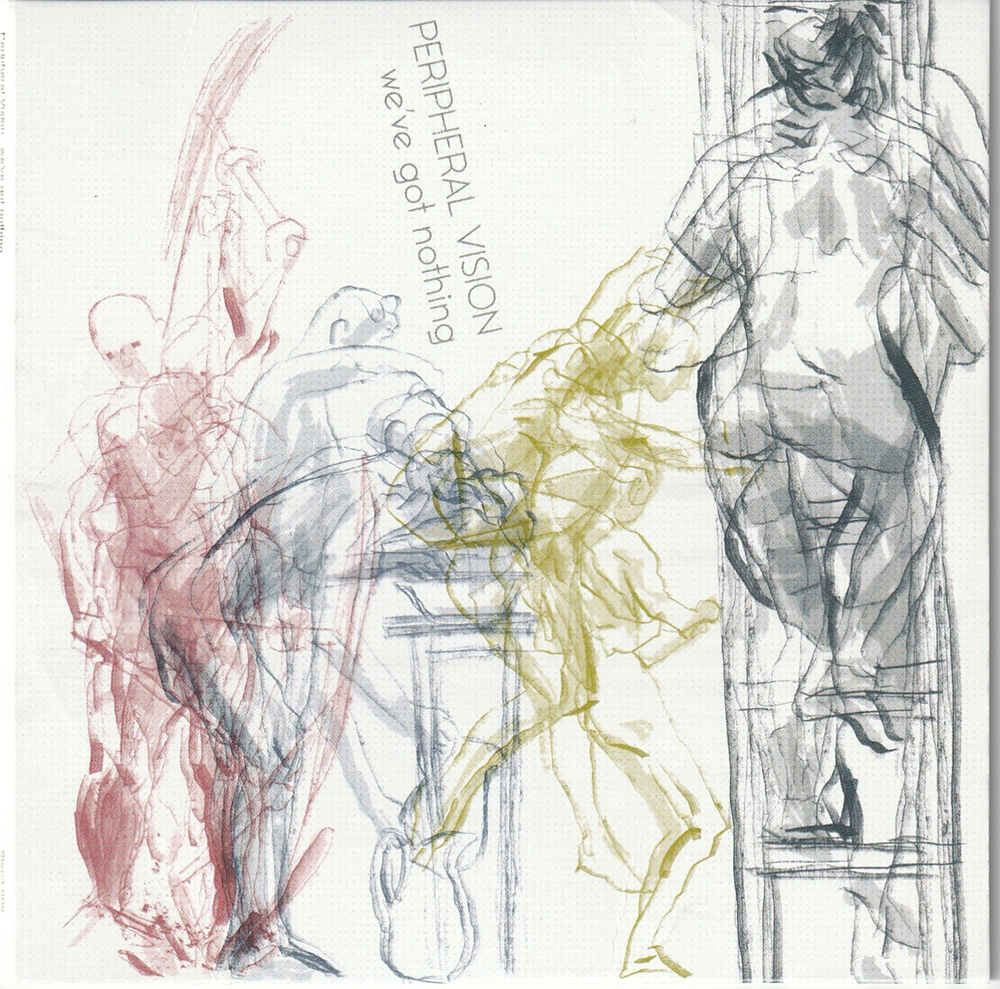
Reading the notes to Solo Alone and More, a clarinet collection played by young hotshot Jonas Frøland, one remembers the value of a good editor. I got some smiles reading the overlong and quirky paragraphs accompanying this demonstration of instrumental excellence. 

Three works are excerpts: the first cadenza from Carl Nielsen’s Clarinet Concerto (1928) opens the collection, announcing Frøland’s range and musicality; the follow-up suggests to me he hasn’t considered the dramatic range of Stravinsky’s Three Pieces for Clarinet Solo (1919). Stravinsky wrote these as a gift to the patron who backed L’Histoire du Soldat, and I always imagine them staged. He plays the first piece more as a rhythmic aria than a static, atmospheric tableau. The middle section of the second movement is, to my mind, a limping Soldier’s March; instead, Frøland treats the eighth-note pulse differently in the inner and outer sections, fundamentally changing the pulse between them. I’d love a chance to talk it over with him, because I don’t think that’s what Igor had in mind. 

Frøland’s dynamic control and technical fluidity amaze in Messiaen’s Abîme des Oiseaux (1940) (the second excerpt of the collection, from the Quatuor Pour la Fin du Temps) and Bent Sørensen’s beautiful Lontanamente Fragments of a Waltz (2012). Both feature that most desirable clarinet trait: pianississississimo. Mette Nielsen’s Alone for Basset Clarinet (2021) was commissioned by Frøland. It’s an unsettling exploration of microtones that left me chilled. Fully half an hour of this 70-minute program is taken up with Gunnar Berg’s Pour Clarinette Seul (1957) and Simon Steene-Andersen’s De Profundis, (2000/rev2019). Substantial works both. And the third excerpt? Tossed in is a rewrite of the cor anglais solo from Act III of Tristan und Isolde.  

01 Shadow and LightShadow & Light – Canadian Double Concertos
Marc Djokic; Christiana Petrowska Quilico; Sinfonia Toronto; Nurhan Arman
Centrediscs CMCCD 31823 (cmccanada.org/product-category/recordings/centrediscs)

Originating in the early 1700s, during the later portion of the Baroque era, the concerto presented composers of the time with an instrumental compositional structure (a formula if you will) perfectly suited to feature an instrumental soloist. A double concerto, therefore, shines the spotlight equally on two soloists, accompanied by different aggregations, providing composers with another voice of possibility to help realize their creative intentions. How nice then, in our time of near constant and rapid change, that this formula is still meaningful and relevant, particularly so in the capable compositional hands of Alice Ping Yee Ho, Christos Hatzis and Larysa Kuzmenko. 

Writing for the pairing of violin and piano (the dependably terrific Christina Petrowska Quilico and violinist Marc Djokic backed capably by Sinfonia Toronto under the direction of conductor Nurhan Arman), the aforementioned compositional triumvirate bring Shadow & Light to life with influences ranging from Felix Mendelssohn and Johannes Brahms, to Hitchcock foil Bernard Herrmann and the author Jules Verne. If the range of this description sounds expansive and beyond categorization, that’s because it is! The result, released on Centrediscs and supported by any number of Canadian arts-based granting agencies, is a truly post-modern affair that plays in the margins that lie between the binary of the traditional double-concerto form and a set of influences that escape categorization. Whatever the conceit, the result is a satisfying and extremely fine recording that expands the canon of both Canadian composition and the rare double-concerto pairing of violin and piano for future repertoire consideration.

Listen to 'Shadow & Light: Canadian Double Concertos' Now in the Listening Room

02 Frank HorvatFrank Horvat – A Village of Landscapes
Sébastien Malette (bassoon); Allison Wiebe (piano)
I Am Who I Am Records (frankhorvat.com)

I’ve reviewed several albums by prolific Toronto composer and pianist Frank Horvat for The WholeNote. His often Romantically inclined, emotionally charged music often also employs a dizzying array of heartfelt, compelling extra-musical themes. These range from the personal (love, mental health), to the social (environment, social justice), and a combination of the two (dealing musically with pandemic isolation). 

A Village of Landscapes, perhaps his 21st album, features a suite of 13 compositions stylishly and convincingly performed by bassoonist Sébastien Malette, in five movements accompanied by Allison Wiebe on piano. The 13 pieces are furthermore divided into three mini-suites: for bassoon with piano, unaccompanied bassoon and bassoon with electronics.

For example, the atmospheric movement Smoking Hills is scored for hazy basso profundo contrabassoon sounds and bass-heavy piano, while Sharbot Lake features a continuous high bassoon melody over shifting, phasing synth chords. Top of FormTop of Form

In this album Horvat’s thematic inspiration was supplied by photographs of places in the Canadian landscape by Michelle Valberg, representing each of the country’s ten provinces and three territories. Horvat writes, “Our present world is at a precipice when it comes to protecting our natural resources, so as an artist, I feel I have a duty to have my compositions reflect this.

“The bassoon is a VERY versatile instrument. It has a wide range of notes, timbre contrasts and dynamics,” avers Horvat. In A Village of Landscapes he successfully explores many less-known characteristics of the instrument, working against stereotypes of buffoonery and jollity that too often plague the bassoon.

Listen to 'Frank Horvat: A Village of Landscapes' Now in the Listening Room

03 Graham Campbell Palms UpwardGraham Campbell; Palms Upward
Various Artists
Independent (grahamcampbell.ca)

Graham Campbell is a good composer. His music is open-hearted and enjoyable to listen to. There is no apparent need to shock or jar the listener, while there is every success in moving them or bringing them peace. Call me jaded or just old, but if someone writes well, stays within conservative conventions of metre and tonality, whose sincerity of expression is their primary calling card, I’m on their side. The music is pleasing, while not especially haunting or challenging.

Pianist Angela Park provides beautiful colour on many of the tracks, most especially in the haunting Lost Souvenir, a movement from an unnamed larger work. Violinists Mark Fewer and Valerie Li, violist Caitlin Boyle and cellist Amahl Arulanandam join her for three brief pieces for piano quintet: Between Breaths, Snow Rider and Dive. Whether out of modesty or budget concerns, the digital release includes no accompanying booklet. 

Palms Upward, the title track, might have been commissioned by or written for Graham’s father, clarinetist James Campbell, but without liner notes one is left guessing. It’s an unusual grouping that works well: clarinet with violin, viola, double bass and guitars (Rob MacDonald and Tracy Anne Smith of ChromaDuo). 

The track titles are evocative enough to allow the imagination room to fill in the blanks. Still, I’m curious to know a little more, like what does Driftless Sea mean? This is the final track, featuring klezmer-coloured clarinet playing a folk-like melody alongside a string quartet, guitars (played by Campbell fils) and Jaash Singh on darbuka. Kettle Vapours (Park on solo piano) might suggest reflections on watching a pot boil, but it’s more eventful, more solid than vapid. Barely an intermezzo, it works. 

Double bass playing is ably supplied by Charles James on several tracks, while the composer supplies guitar and piano on tracks 7 and 8 respectively.

Listen to 'Graham Campbell; Palms Upward' Now in the Listening Room

04 David Jaeger Chamber Works For ViolaDavid Jaeger – Chamber Works for Viola
Carol Gimbel; Marina Poplavskaya; Cullan Bryant
Navona Records NV6528 (navonarecords.com/catalog/nv6528)

Toronto composer and music producer David Jaeger (b.1947) has had a long, illustrious career. A founding member of the Canadian Electronic Ensemble, he enjoyed an influential four-decade career at CBC Radio commissioning hundreds of compositions and producing well over a thousand national broadcasts championing contemporary concert music from Canada and beyond.

Jaeger’s early 1970s show Music of Today kindled my growing interest in new developments in classical music. My interest was further stoked by his long-running, influential new music program Two New Hours (1978-2007) on which I occasionally appeared.

When not in the studio or on international juries, Jaeger always found time to pursue his own composing. And the viola appears time and time again in his scores. For example, the early Favour (1980) for viola and live digital delay controlled by the performer was written for the outstanding Israeli violist Rivka Golani, followed by Sarabande (1993).

The five works on Chamber Works for Viola continue Jaeger’s exploration of the expressive possibilities of the instrument, here played by New York/Toronto violist extraordinaire, Carol Gimbel. 

My recital favourite is the expressive viola solo White Moon Legend. Exploiting the instrument’s wide range of bowed cantabile and pizzicato effects, Jaeger’s melodies appear in contrasting tessituras, heightening the work’s dramatic narrative arc.

Gimbel’s passionate advocacy of this music is amply supported by the warm and husky tones of her ex-Emmanuel Vardi 1725 viola. Also a great support is the attractive recording which details the viola within natural-sounding room sonics graced with a satisfying bloom of reverb.

Listen to 'David Jaeger: Chamber Works for Viola' Now in the Listening Room

05 Beatings Are In the BodyBeatings Are In the Body
Beatings Are In the Body
For the Living and the Dead (beatingsareinthebody.bandcamp.com)

The self-titled debut release Beatings Are in the Body is by the gifted experimental Canadian performer/composer trio of Erika Angell (voice/electronics/bells), Róisín Adams (piano/Wurlitzer/voice/sticks) and Peggy Lee (cello/voice/sticks). Their name is drawn from a work by Canadian poet Meaghan McAneeley, who contributed the release’s artwork/design and texts for two tracks. The musicians explore and draw their compositional/performance inspiration from how the physical body carries and stores wide-ranging memories, pain and emotions throughout life, in acoustic and electroacoustic, atonal and tonal compositions, jazz, songs, poetry and free improvisations. 

The opening track, Blurry, features accessible tonal piano-chord rhythms, vocals and moving cello interludes between and during spoken/sung phrases. Time for experimental new music with electronics, spoken/sung at times noisy vocals and instrumentals in Triploop. Superimposed modern electronic sound effects with acoustic instruments are especially memorable. Like a Deepness/Let Go is a contemporary atonal tragic almost-pop song with vocal solo with warbling, piano chords, melodious cello countermelody and emotional loud high vocal and cello unison held-notes at longer phrase beginnings. A subsequent faster section suddenly goes back to a slow dramatic grim song with the repeated lyric “Let go” to abrupt an ending. Intense, the too-short free improvisation, Rhiza, is like pain at its painful worst with sound effects like crashing dishes, improvisational vocal sounds and cello string bangs.

The 12 diverse emotional tracks flow seamlessly when listened to in order. Random track listening offers a different sound scenario. The tight, respectful performances create inspiring, not depressing, music!

06 Land Sea SkyLAND SEA SKY for Raj Sen
Experimental Music Unit
Independent (experimentalmusicunit.bandcamp.com)

Experimental Music Unit is a trio based in Lekwungen Territory (located on the southern tip of Vancouver Island) consisting of Tina Pearson (flute, accordion, voice), George Tzanetakis (clarinets, saxophones) and Paul Walde (bass guitar, percussion). EMU specializes in exploratory music and sound practices grounded in ecological studies, focused improvisation and collaboration. Their latest audio project, LAND SEA SKY released as a 38-minute EP, reflects all those interests.

The EP is the musical realization of a text score by Pearson, composed during the winter of 2020-2021. Like so many, EMU was frustratingly isolated during the COVID pandemic. While they could meet remotely through online platforms, most of all they longed to make music together again outdoors. 

LAND SEA SKY was their response. Recording their parts in the studio, EMU however imagined they were actually playing together at Finnerty Cove, a rocky outcropping on the east shore of Lekwungen territory on the Salish Sea. The lapping waves, gulls and other oceanic sounds captured on the field recording eloquently places the trios’ musicking in this site-specific sonic space. 

I found the most magical moments happened when the trio entered into a dialogue with the oceanscape, or when the latter emerged into the sonic foreground – a startling transformation. Starting softly, leisurely, the ever-shifting, subtly articulated interplay between the human trio and the Salish Sea’s many voices reflects EMU’s deep connection with and respect for the place where they “live and play.” 

LAND SEA SKY proved to be more than a purely musical experience: it’s a timely reminder that the root of all human song is in nature.

07 Samuel AdamsSamuel Adams – Current
Spektral Quartet; Karen Gomyo; Conor Hanick
Other Minds Records (samuelcarladams.bandcamp.com/album/current)

In the world of contemporary classical music releases, this album is likely to make a splash for its precision, ideas and remarkable performances. Three recent works (two of them world premiere recordings) by American composer Samuel Adams centre around the integration of acoustic and electronic sounds. Adams does not blur the lines between these sounds nor does he try to draw on the complexity of each. Rather, he allows both to coexist, mingle and support the other in natural ways. The music on this album is mostly minimal in nature, and that works in its favour rather than as limitation. There is space to sit”with the sound, to breathe with the colours and build a relationship with what we hear.

The title piece, written for string quartet and snare drums, co-commissioned and recorded by the fantastic Spektral Quartet, is an example of Adams’ creativity at work. Four snare drums are activated by the transducer speakers that are placed atop them, essentially used as the echo-chambers. The sound effect is fabulous; it comes in the form of a variety of timbres, vibrations, pitches and everything in between, the sonic world building at its best.

Equally luminous are a solo piano and electronics work, Shade Studies, displaying tranquil pulsations, gestures and sine waves subtly altering piano tones, and Violin Diptych, a resonant evocation of Bach coupled with the most intriguing acoustically produced delay effect at the end of short phrases. 

08 Malek JandaliMalek Jandali Concertos
Rachel Barton Pine; Anthony McGill; ORF Vienna RSO; Marin Alsop
Cedille CDR 90000 220 (cedillerecords.org)

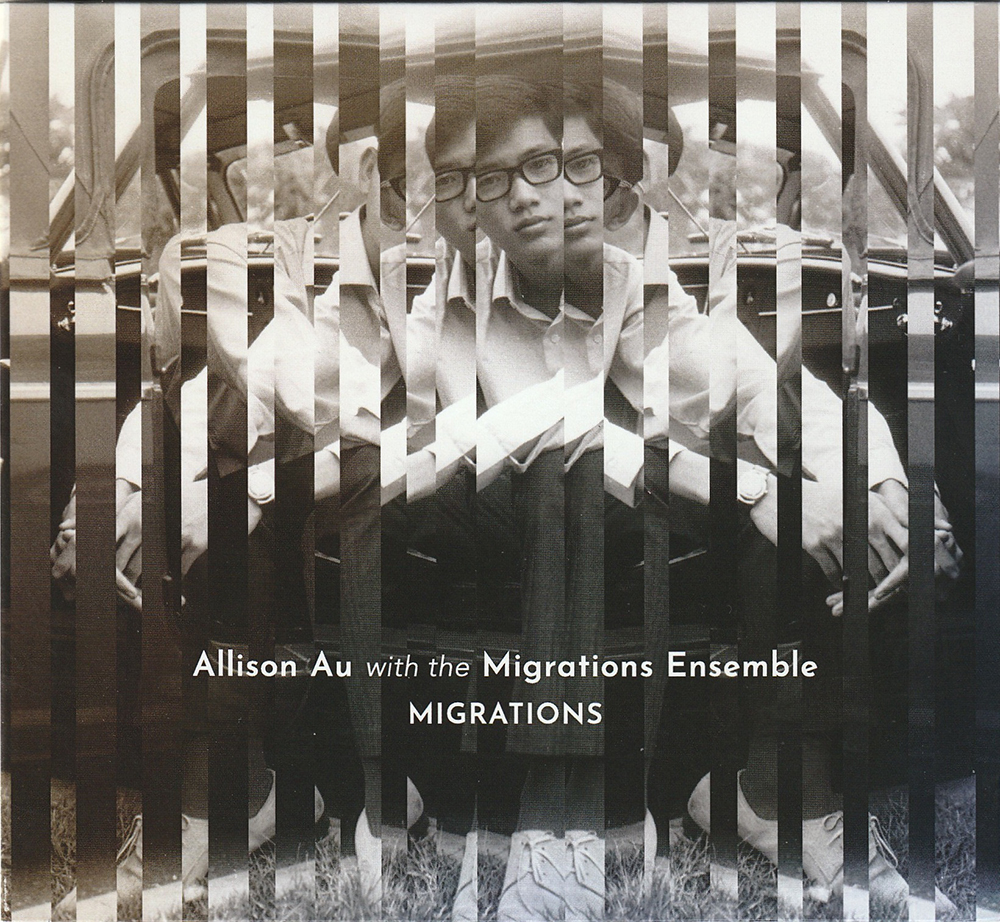
Syrian-American Malek Jandali (b.1972) effectively combines Arabic melodies, modes and rhythms with Western classical structures. His 36-minute Violin Concerto (2014) honours “all women who thrive with courage.” Jandali identifies four women beaten, arrested or disappeared by Syrian authorities, including his own mother who, with his father, was brutally assaulted after he performed at a Washington demonstration.

In the Allegro moderato, sinuous, plaintive violin melodies, portentous orchestral chords and restless rhythms culminate in an extended, anguished, angry solo cadenza. The mournful Andante follows, the violin singing a prolonged lament over throbbing drumbeats, slowly building to a stirring, hymn-like climax. Nostalgic folk dances animate the Allegretto, but the concerto ends with a slow, sorrowful violin solo and a sustained, darkly sombre final chord.

The 25-minute Clarinet Concerto (2021) was written for New York Philharmonic principal clarinetist Anthony McGill and dedicated “in memory of all victims of injustice.” The music is less overtly Arabic, the emotions more elusive. In the Andante misterioso, the clarinet intones a pensive, wandering melody over percussive punctuations. The misterioso mood continues in the Nocturne: Andante, with brooding, broken clarinet phrases and irregular percussive rhythms. The Allegro moderato features klezmer-like Syrian dance tunes, a virtuoso cadenza exploiting the clarinet’s extreme registers and a final festive dance, a happy ending to this mostly downcast concerto.   

Well-earned applause for violinist Rachel Barton Pine, clarinetist McGill, conductor Marin Alsop, the ORF Vienna Radio Symphony Orchestra and, most of all, composer Malek Jandali.

09 Clare Chase Density 2036Density 2036: Parts VI-VIII
Claire Chase
New Focus Recordings FCR353 (newfocusrecordings.com)

To call Claire Chase a once-in-a-generation flutist may sound to many like speculation. But now, with the release of what is collectively referred to as Density 2036, doubters, naysayers and outright refuseniks have all gone the way of extinct species. There are now three double albums in this series. On the heels of the first two – Density 2036 (2013-2015) and Density 2036 (2016-2017) – comes Chase’s triple-CD Density 2036 – Part VI (2019); Part VII (2020); Part VIII (2021). 

With each CD (numbered serially) Chase and her flutes took us by the hand to lead us into a magical multi-layered landscape. Transcending both time and place, Chase interpreted compositions often written expressly for her in such a manner that the resultant music created its own temporal dimension. This new triple release not only carries on where Chase left off, but in it she raises the proverbial bar on her artistry.

As the music of each part unfolds, so too does a discourse with structure and archetype quite unique to these works. It may even be called a Chase rhetoric, an Orphic dialogue of struggle and release. Each work is a ravishing poetic episode or (in the case of Part VII Liza Lim: Sex Magic) a series of poetic episodes. Every gesture is graced by lyricism and the memorable material is calibrated to create an abstract drama that says precisely all it needs to.

Such is the audacity of Chase’s vision of her instrument that the music which comes in hot evanescent diaphragmatic breaths, the waves of which ebb and flow and penetrate disparate sonic palettes from the palpitating heart (in Phylis Chen’s Roots of Interior for flute and heartbeat), on Part VI. Multiple soundworlds collide on Matana Roberts’ Auricular Hearsay in Part VIII. The centrepiece is decidedly Part VII Liza Lim’s Sex and Magic, a sweeping masterwork evocative of the near mythic life-affirming power of women, redolent of legends, oracles and history woven into a scalp-tingling wonderscape featuring – among other instruments – the death-defying aural majestic sound of Chase’s contrabass flute. 

The Density saga was ignited by Edgard Varèse’s Density 21.5 and its tantalizing three-note key figure. Chase’s ongoing musical work builds an epic musical edifice with a hot breath of musical notes that leap off the page, like whirling dervishes and pirouetting ballet dancers leaping into rarefied air.

Listen to 'Density 2036: Parts VI-VIII' Now in the Listening Room

10 Avner DormanAvner Dorman – Siklòn
Boston Modern Orchestra Project; Gil Rose
BMOP Sound 1090 (bmop.org/audio-recordings)

Much-performed, multi-award-winning Avner Dorman (b.Tel Aviv 1975) says his eight-minute Siklòn (2015) “reflects the violent nature of Miami’s hurricanes” (siklòn – Haitian Creole for “hurricane”) “as well as the frenzy of energy from a place driven by hot weather, sometimes clashing ideas and the effervescence of youth.” The highly percussive perpetuum mobile rushes headlong toward an extended, cacophonous crescendo of rising brass fanfares. 

Dorman’s 14-minute Astrolatry (2011) depicts a prehistoric nocturnal ritual. Glittering glockenspiel and harp help illuminate awed reverence in Celestial Revelations; marimba and bass drum underline the savage orgiastic dance of The Worship of the Stars. The five-movement, 13-minute Uriah: The Man the King Wanted Dead (2009) recounts King David’s arranging the death of Bathsheba’s husband in dramatic, near-cinematic music. (Astrolatry and Uriah’s scenarios and music would make powerful ballets.)

In the 11-minute After Brahms: Three Intermezzi for Orchestra (2015), inspired by Brahms’ late piano works, rich, warm, late-Romantic sonorities support the urgent Allegro con molto appassionato, gentle Delicatamente con molta espressione and autumnal Adagio espressivo.

Violence returns with the 19-minute Ellef Symphony (2000; ellef – Hebrew for “one thousand”). Fear is filled with sombre foreboding, Slaughter with martial brutality. Elegy portrays a mother grieving over her dead son; …(silence) offers “a prospect for peace” with “the new millennium as an empty canvas…it is up to us to write the poem of the future.”

Conductor Gil Rose and the Boston Modern Orchestra Project vividly perform Dorman’s very vivid compositions.

11 BIKEncertoReynaliz Herrera – BIKEncerto: a concerto for solo bicycle and orchestra
Reynaliz Herrera; Ideas, Not Theories
Ideas, Not Theories (reynalizherrera.bandcamp.com)

Boston-based, Mexico-born Reynaliz Herrera is a talented, award-winning musician, percussionist, performer, composer, educator and bicycle performer. Graduating from Boston Conservatory in 2012, she continued exploring the bicycle as a musical instrument by performing and composing for it. In 2012 Herrera founded Ideas, Not Theories, a theatrical percussion company/chamber ensemble for which she is director, composer, scriptwriter, lead performer and producer. This experimental ensemble focuses on her original music for bicycles and other unconventional instruments, having performed in festivals in the US, Canada, Mexico and Barbados. 

Herrera’s debut release is the four movement BIKEncerto: a concerto for solo bicycle and orchestra. Each movement highlights a specific bicycle sound as Herrera reconciles her classical background with her musical bicycle sounds, strings and winds orchestra. I. Everything showcases different bike sounds with a classical orchestral beginning with alternating strings and winds. Virtuosic solo bike melodic and percussive tapping and drum-like rolls ground the tempo while showing off Herrera’s musicianship. II. Spokes Movement has her melodic “Spokes Keyboard,” tuned rods add playful sounds. III. Metallic Movement has faster atonal brilliantly performed orchestral lines and complementary atonal metallic bike lines and rolls. Two-part IV. Tires Movement features Reynaliz’s “Tires Keyboard” in Brazilian Samba inspired sounds. Part 2 features orchestral wide-pitch lines, exciting higher cymbal-like bike sounds to closing dance-along bike solo, then orchestra to a short percussive ending.

Herrera’s exuberant music successfully incorporates musical styles like classical, atonal, minimalistic and pop/rock. Uplifting fun listening for all ages, regardless of personal musical preferences.

Listen to 'BIKEncerto: a concerto for solo bicycle and orchestra' Now in the Listening Room

12 EnnangaEnnanga
Ashley Jackson
Bright Shiny Things BSTC-0188 (brightshiny.ninja)

The rediscovery of music by Black composers continues apace. William Grant Still (1895-1978), arguably the finest of all, named his 18-minute Ennanga for harp, string quintet and piano after the arched harp of Uganda. The first two movements are warmly nostalgic, almost heartbreaking in their evocation of African chant and hints of Sometimes I Feel Like a Motherless Child. The finale is a jolly, propulsive dance. Still’s harp writing is exquisitely lovely, lovingly played by Ashley Jackson, holder of a doctorate from Juilliard and currently a senior administrator and teacher at Hunter College in Manhattan.

Jackson arranged Alice Coltrane’s nine-minute Prema, originally for piano and strings, substituting the harp for the piano. Coltrane (1937-2007) was a jazz singer, pianist and harpist (and jazzman John’s wife), but Prema isn’t jazzy, with sustained moody, droning strings and shimmering songfulness from the harp.

In both Ennanga and Prema, Jackson is joined by fellow members of the Harlem Chamber Players; she solos on the CD’s three other pieces, each lasting about five minutes. Essence of Ruby by harpist Brandee Younger (b.1983) is reflective and yearning, bordering on the blues. Two of the Twenty-four Negro Melodies by Samuel Coleridge-Taylor (1875-1912), originally for piano, are here arranged by Jackson. In the spirituals I’m Troubled in Mind and The Angels Changed My Name, Jackson finds resolve and courage, ending this beauty-filled CD with a sense of optimism. (The CD runs only 43 minutes – I wanted more!)

13 Denis LevaillantLe Voyage Immobile/The Still Journey – Works for strings and accordion
Olivier Innocenti; Various Artists
DLM 3422 (denislevaillant.net)

Paris-based composer, writer and pianist Denis Levaillant’s works in many genres defy classification in his unique colours, instrumentation and stylistic explorations. This 2CD release in its colourful bilingual hardcover liner book features works composed from 1987 to 2021.

CD1 opens with Un mystérieux chemin (2017) for solo viola, inspired by music of northern India. It is a dramatic rhythmic piece opening with a slow tense, emotional moving melody with high to low held-notes, performed perfectly by Pierre Lénert. Quatuor Amôn and accordionist Olivier Innocenti perform L’Andalouse Books 1 and 2 (2004). The accordion blends well with the strings. Opening Book 1 Movement1 has accordion, then strings in a noisy, low-pitched atonal start with alternating high and low held notes. A moody work with expressive melody, accented rhythms and high-pitched accordion notes and lower strings. Book 2 Movement 1 starts with a single melodic accordion line leading to full ensemble playing. Uplifting, lively syncopated sections with a sudden low section leading to a fast closing. Book 2 Movement 2 shows Levaillant’s understanding of the accordion’s full high-to-low-pitch range in held-note drones, with added strings held notes. A faster rhythmic section leads to more held notes, with syncopated accordion bellows shakes. Accordion solo Danse Nocturne (2019) with very low pitch left hand and contrasting high pitch right hand, is beautiful, challenging bellows control technique to make all sounds enter together. Fast-note flourishes are contrasting. A solo cello, and a string quartet work complete this first disc.

CD2 features two string quartets and two string trios. With its theme and six variations Les Heures défaites String Quartet No.1 (1987), features Quatuor Joachim. Levaillant writes that this was initially conceived as “ballet music.” Theme begins with beautiful tonal cello melody with slight slide, then entry of other strings, both contrapuntal and one lead with accompaniment. Faster tonal Variation 1 has detached and plucked notes, contrapuntal lines and legato melody phrases with detached notes. Variation 5 has higher squeaky notes and lower short melody, an idea that reappears in his future work. Trois derviches String Trio No.2 (2020), recorded by Sébastian Surel, Pierre Lenert and Alexis Descharmes, alternates low and high notes, staccatos, rhythmic unisons and brief silences. One more string quartet and string trio complete CD2. 

So fascinating to listen to Levaillant’s compositional development of beautiful, well-composed, virtuosic works over three and a half decades.

Listen to 'Le Voyage Immobile/The Still Journey' Now in the Listening Room

01 Fuat TuacImmigrant
Fuat Tuaç; Kevin Turcotte; Eric St-Laurent; Jordon O’Connor; Eric West
Independent (fuattuac.bandcamp.com/album/immigrant)

Accomplished, multi-lingual vocalist and composer, Fuat Tuaç, has just released his new CD, and it does not disappoint. Tuaç wears several hats here, as composer, arranger, producer and artist. He has also surrounded himself with his talented long-time collaborators, guitarist Eric St-Laurent, bassist Jordan O’Connor, drummer Eric West and trumpeter Kevin Turcotte. As the title would suggest, Tuaç explores his Canadian immigrant experience here, as well as the contemporary social ethos in the depersonalized era of technology. Included in this well-crafted project are two vocal duets: the sexy cool Chez Moi, sung en française with the exquisite Montreal-based chanteuse, Kim Richardson and Uzun Ince Bir Yoldayim, rendered in exotic, evocative Turkish (Tuaç’s native tongue) and performed to perfection with noted Turkish vocalist, Yesim Akin. Both duets illustrate Tuaç’s taste and musical skill and are highlights of the recording.

The compelling opener, No Strings Attached (a Tuaç original), is a groovy, jazzy ode to the often confusing nature of romantic relationships in these troubled times and Asla Unutamam is a delicious Turko-bossa, featuring a stunner of a trumpet solo from Turcotte. Tuaç soars as a vocalist here – defining his style, sound and approach. The very personal title track is a hopeful, and yet melancholy portrait of the courageous individuals who have eschewed or fled their homeland in order to manifest a life of creative and personal freedom – and the challenges, confusion and joy that is part of that journey. Tuaç imbues the track with his deep emotional experience, as well as a superb vocal. Moss Park… is another standout, a disturbing exploration of our own very Canadian, urban inhumanity.

Listen to 'Immigrant' Now in the Listening Room

02 Peggy Lee BandA Giving Way
Peggy Lee Band
Songlines SSL1636-2 (songlines.com)

The cellist Peggy Lee has been – with The Peggy Lee Band – very prolific in a composing career that has stretched across several years and, with A Giving Way, six riveting albums. Her work is always deeply thoughtful and often radiantly effusive, a sort of synthesis with masses of seething counterpoint set in a seemingly perfect acoustical sound-world. The songs played here are typical of the elegant compositions, innovatively interpretated, with richly laced textures and extravagant climaxes by musicians who – by virtue of their long-term association with Lee – know her music almost intimately.

This is repertoire full of the slithering and bittersweet glissandos of Lee’s cello, the elegant burbling of brass and winds from Brad Turner, Jeremy Berkman and Jon Bentley respectively. Together they make a joyful noise with guitarists Ron Samworth and Tony Wilson, with the tumbling rhythms of André Lachance’s bass guitar and rattle, hum and sizzle of Dylan van der Schyff’s drums and cymbals. 

It is difficult to fathom why Lee is not better known for the eloquence and uniqueness of the music that she creates around the solemn atmosphere of her cello. Perhaps this may have something to do with attempting to define it in terms of this genre or that. However, the uniquely beautiful sonorities of (for instance) Internal Structures, Justice / Honour; even the interpretation of Whispering Pines, and other songs on A Giving Way, show Lee to be an artist with a breathtakingly singular voice.

Back to top