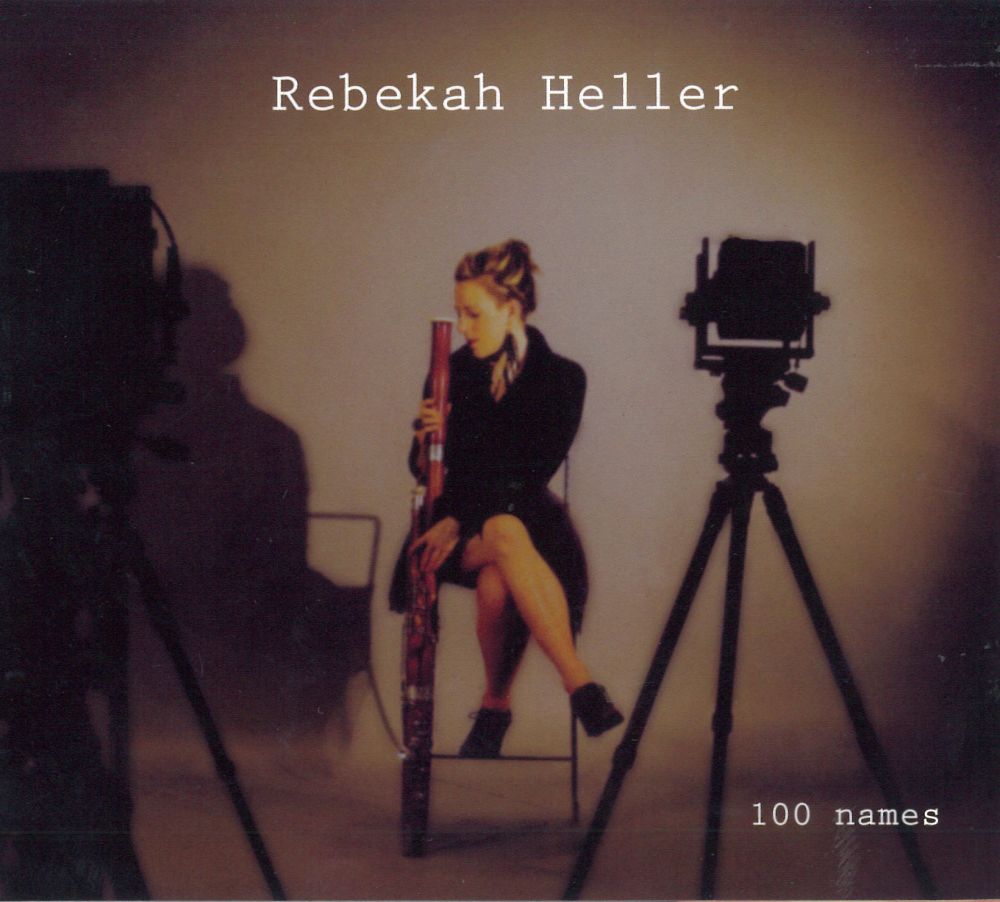
05 modern 04 rebekah heller100 names
Rebekah Heller
Tundra Records 001

American bassoonist Rebekah Heller is a respected performer in both classical and contemporary music styles, and a core member of the U.S.-based International Contemporary Ensemble (ICE). In her debut solo release on ICE’s own Tundra label, Heller performs with a sweet tone, precise attack and colourful phrases in six recent compositions written for her.

She is especially original in her witty musical repartees to the electroacoustic tapes, feedback effects and live processing. The gut-wrenching distortion and percussive bassoon make the opening track by Edgar Guzman loud and in-your-face memorable. Though more tape effects provide colourful backdrops to the bassoon in works by Marcelo Toledo and the bonus track by Du Yun, these are no match for the superb composition On speaking a hundred names by Nathan Davis. This strong composition for bassoon and live processing is a showpiece for Heller’s sensitive interpretation and enviable breath control. The bassoon solo Calling by Dai Fujikura is a microtonal outing that demonstrates her strength as a soloist. Not only can Heller play the bassoon, she can fearlessly speak the text of Gertrude Stein’s Tender Buttons and play percussion too in the moving work …and also a fountain by Marcos Balter.

100 names features a wide breadth of extended bassoon techniques, all performed beautifully, and sure to be enjoyed by new music lovers. Rebekah Heller needs to be congratulated for her dedication to the bassoon, and her ability to inspire composers.


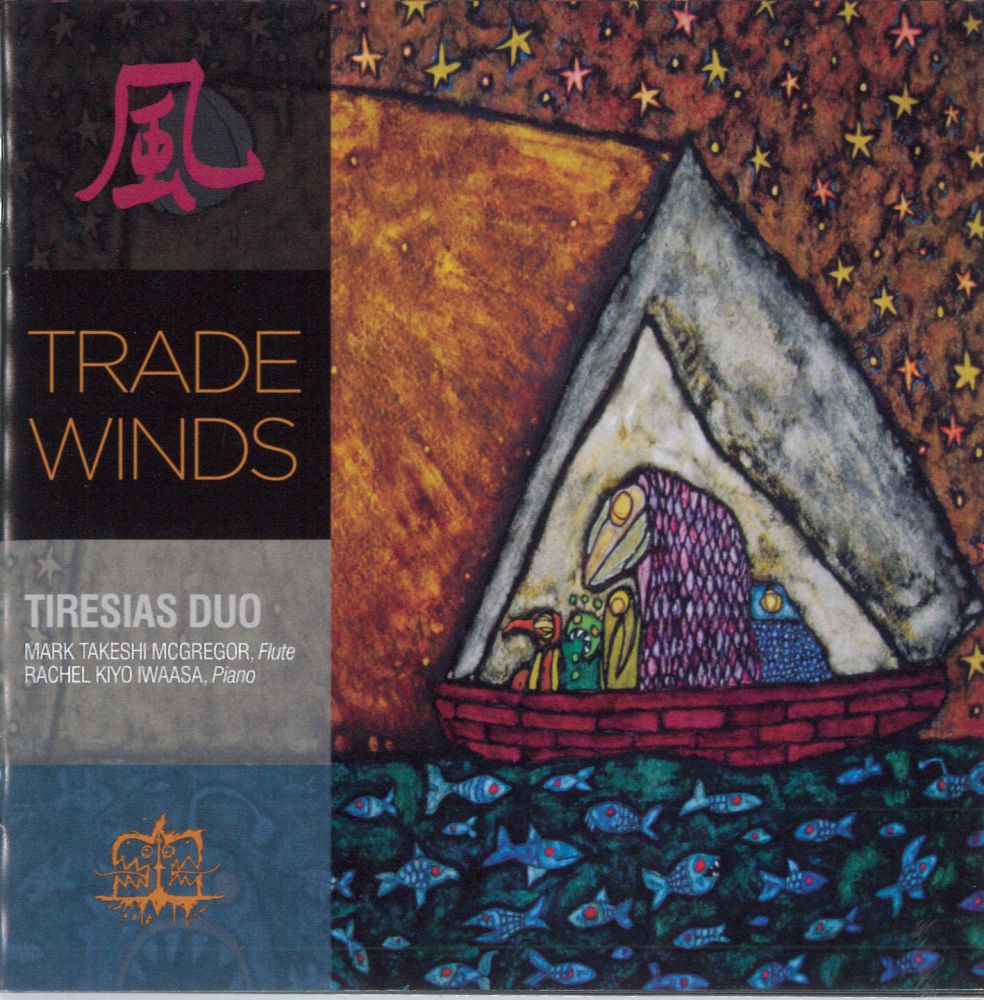
05 modern 05 tiresius duoTrade Winds
Tiresias Duo (Mark Takeshi McGregor; Rachel Kiyo Iwaasa)
Redshift Records TK428 (redshiftmusic.org)

Having reviewed Mark Takeshi McGregor’s CD of flute ensemble music, Different Stones back in November 2009, and now his most recent 2CD set, Trade Winds, I can say with conviction that I think he is a national treasure! It is not only that he is a great flutist and a truly engaging performer. I heard his recital at the Canadian Flute Association convention in June – it was truly memorable, not only because of his rapport with contemporary repertoire but also because he has a nose for that je ne sais quoi that makes a work a good piece of music. His choice of repertoire, and there is a lot of it – close to two hours – is unerringly good. The fact that the field was narrowed by limiting it to composers with some sort of connection with Japan makes his accomplishment even more remarkable.

There are discoveries here such as Kara Gibbs, whose Untitled Scenes covers the gamut from playful to meditative and serene; the flute sonata by Vancouver composer, Christopher Kovarik, reveals a unique compositional voice, forged through the study of Bach, Prokofiev and Shostakovich; and I was taken completely by surprise by the three works for solo flute by Paul Douglas, a flutist as well as a composer, and McGregor’s teacher at UBC. Elliot Weisgarber was another Canadian composer I had never heard of. A clarinetist in the late 1960s, he spent three years in Japan, where he learned to play the shakuhachi. His Miyako Sketches, to me anyway, reveals a thorough absorption of the Japanese musical tradition convincingly transferred to the western tradition.

I would be remiss not to mention Rachel Kiyo Iwaasa, whose superb ease and sensitivity as McGregor’s collaborator on the piano contribute substantially to the project. Canadian flutists, get this CD and then get the music performed on it and make it part of your repertoire! Everyone else, get it and start marvelling at the quality of the music of our composers.


Jörg Widmann – Violin Concerto; Antiphon; Insel der Sirenen
Christian Tetzlaff; Swedish RSO; Daniel Harding
Ondine ODE 1215-2

Orchestral works by contemporary German composer Jörg Widmann (b. 1973) receive fine readings here. Widmann is a virtuoso clarinetist who understands the orchestra’s newer sonic resources and has a performer’s sense of the dramatic. The title of Christoph Schlüren’s liner notes, Hedonism of Danger, indicates another aspect of this composer’s voice.

The one-movement Violin Concerto (2007) has roots from the later 20th century German neo-Expressionists back to Alban Berg. Overall the work is the antithesis of “cool” – the violin writing is intense with broad lyrical gestures and sharp contrasts. Tetzlaff’s tone is rich in the lower registers; harmonics are ethereal and intonation reliable. Harding’s orchestra stays sonorous in extreme registers, never submerging the soloist’s voice in its natural soundscape.

I particularly like Insel der Sirenen (Island of the Sirens) of 1997 for violin and 19 strings. It re-imagines the episode in Homer’s Odyssey as experienced on a rickety boat in the harsh seascape, with periodic squeaks, honks and rustling over tremolando waves. The solo violin “siren’s” vibrato is wide and glissandi wider; other sirens are high-pitched and the atmosphere is menacing.

Antiphon (2007-08) for full orchestra is the most hard-edged and dissonant work. Abrupt, aggressive gestures such as sharp attacks and crescendi suggest a post-industrial world where things are battered and torn at. In both this and the preceding work, innovations of Schafer, Penderecki and Ligeti are excitingly transformed by and for a new generation in a new millennium.

Concert Note: Widmann is featured as composer, conductor and clarinetist when New Music Concerts presents ”A Portrait of Jörg Widmann” on April 18 at the Betty Oliphant Theatre.

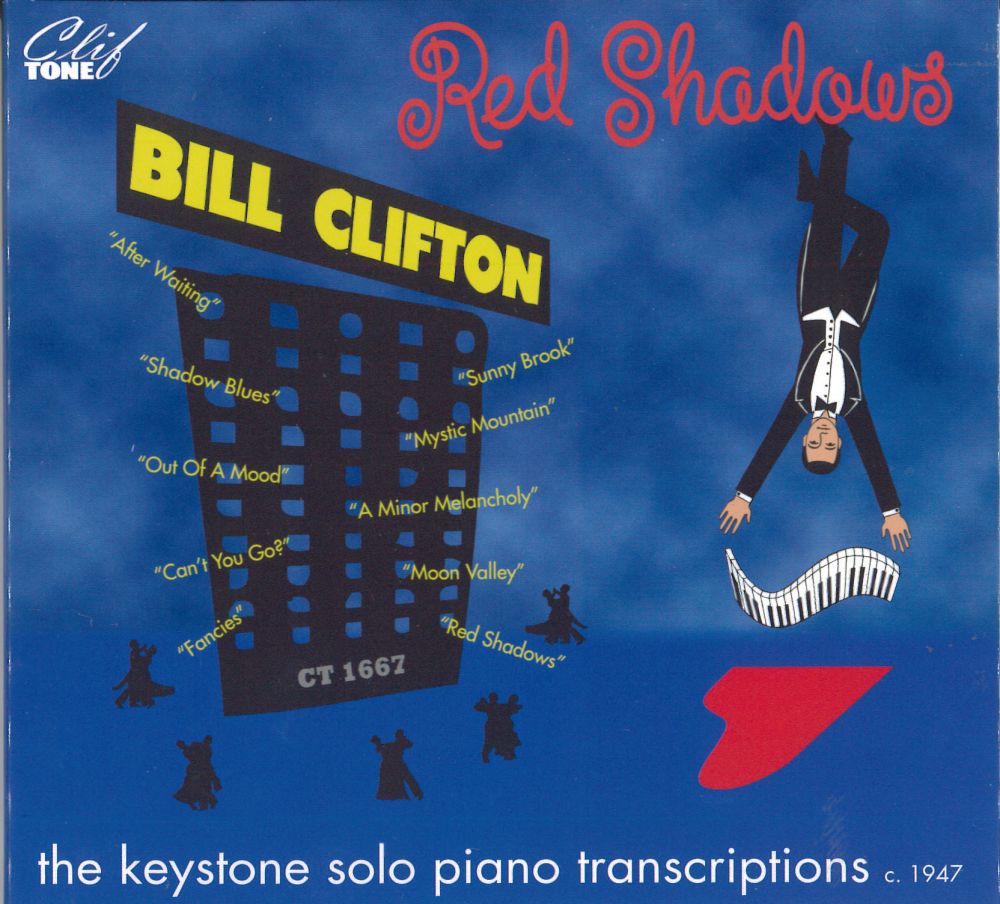
06 jazz 01 bill cliftonRed Shadows
Bill Clifton
Cliftone Records CT 1667 (billcliftonpiano.com)

Toronto-born Bill Clifton is hardly a household name but at a time when some pianists were exploring a more modern approach to their playing using advanced harmonics, Clifton was one of them. Oscar Peterson, in his autobiography A Jazz Odyssey, makes mention of Clifton, describing his playing as “noticeably introspective, having an intuitive, languid Debussy-esque feel to it.” And indeed the ten original compositions on this CD have the feel of a series of etudes with strong jazz content.

Clifton’s playing is sensitive without being overly sentimental and repeated listening heightened the pleasure I derived from his music. The one standard, the final track on the album, a popular song called Little Girl by Al Jolson, is performed before an audience and given a straight-ahead jazz treatment. The mood of the rest of the album is suggested by the titles of the pieces – Sunny Brook, Mystic Mountain, A Minor Melancholy and Moon Valley being a few examples. They suit late-in-the-day listening and give an insight into the composer’s contemplative and searching mind.

If you are interested, you can learn more about Bill Clifton in my Jazz Notes column this month.

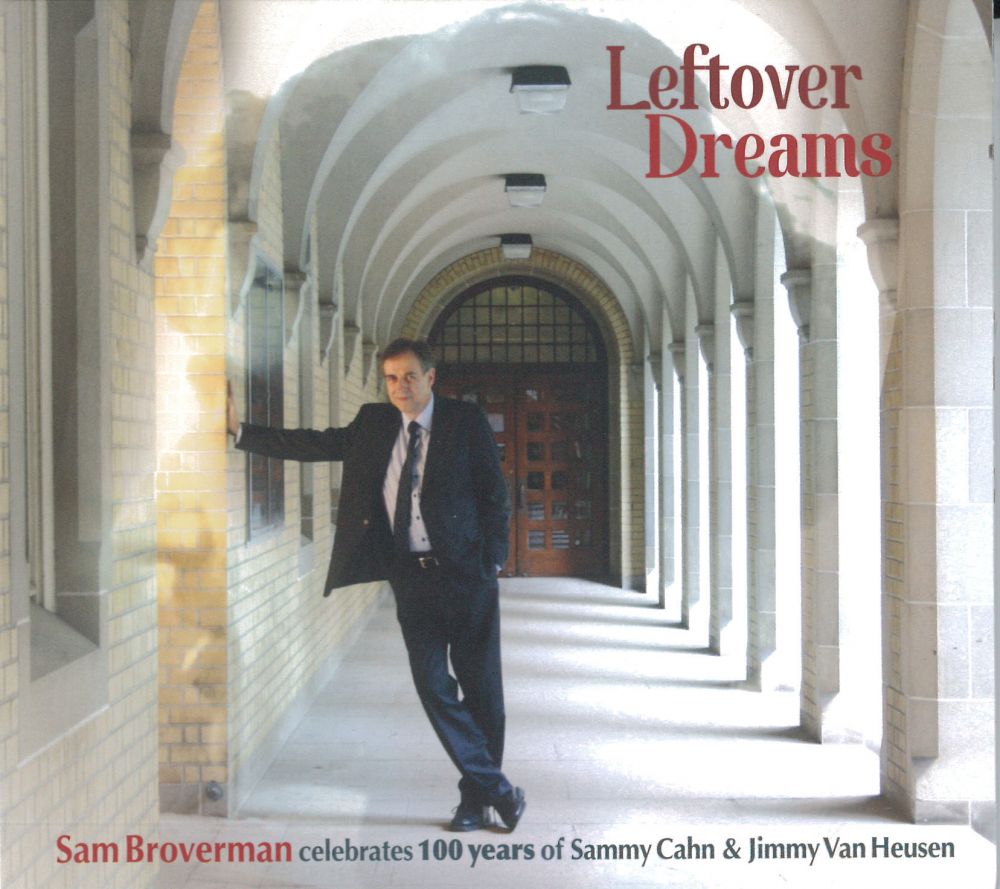
06 jazz 02 sam brovermanLeftover Dreams
Sam Broverman
Independent BR003 (brovermusic.com)

Astonishingly, it has been more than 100 years since the 1913 births of two of the most seminal and prolific film, stage and popular music composer/lyricists of the modern era – Sammy Cahn and Jimmy Van Heusen. Although in their later careers these two geniuses collaborated with other notables, their partnership yielded 11 Academy Award nominations and three Oscars. In Leftover Dreams, gifted and expressive vocalist Sam Broverman has presented a sumptuous buffet drawn from the work of Cahn and Van Heusen – carefully selecting not only their more familiar and beloved compositions, but also rarely performed gems including the poignant All My Tomorrows (a stunner) and the buoyant It Could Happen to You.

This well-produced recording is an immensely satisfying musical assemblage, and features a first-call jazz trio, including Mark Kieswetter on piano, producer and musical director Jordan O’Connor on bass and Ernesto Cervini on drums. Certainly one of the most moving and sumptuously arranged songs is Van Heusen’s and Johnny Mercer’s Empty Tables. In the annals of Hollywood legend, Mercer and Judy Garland carried on a long-term love affair (unbeknownst to their respective spouses). The two remained close for the duration of Garland’s life, and she actually passed away only a couple of years before Empty Tables was composed. The ballad is said to reflect Mercer’s deep feelings of grief and loss.

Another stand-out is A Sammy Cahn Song – an original composition by Broverman, whose silky smooth, pitch-perfect baritone is the ideal expression for these superb and timeless compositions.


06 jazz 03 circlewideListen Both Ways
George Schuller’s Circle Wide
Playscape PSR # 053112 (playscape-recordings.com)

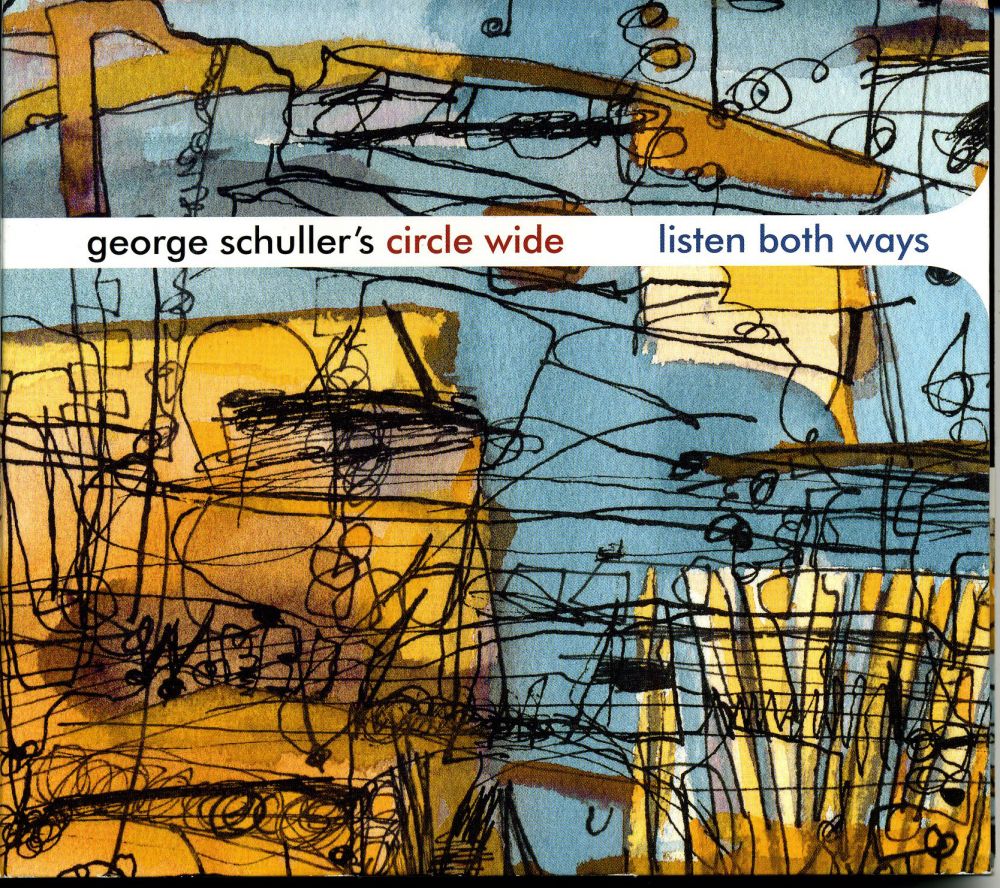
A restrained percussionist and bandleader, George Schuller, who will be playing The Rex March 4 and 5 as part of an all-star aggregation featuring guitarist Michael Musillami and bassist Joe Fonda, exhibits his gift for composition and arrangements on this quintet session.

Most of the tunes sparkle with easy swing based on the clever juxtaposition of Peter Apfelbaum’s tenor saxophone with Brad Shepik’s guitar and Tom Beckham’s vibes. Beside Schuller’s drumming rebounds which often cuff and prod the soloists into an architecturally perfect presentation, Dave Ambrosio’s bass holds the rhythm steady. The saxman, who suggests what Stan Getz would sound like had he sharpened his tone after the early 1960s, outputs a slurry efficiency on straightforward tunes such as Could This Be the Year? yet can also spew out dramatic split tones on A Map Would Help while backed by shaking guitar licks, cascading rustles from the drummer and popping aluminum bar resonation from the vibist.

As a switch, Apfelbaum plays melodica on the band’s version of Jesus Maria. Using the key flute’s tremolo range to put an individual stamp on the Carla Bley classic, his whistling stutter is enhanced by the smooth flow of Beckham’s motor-driven continuum, with Shepik’s downward strums defining the melodic line. Meanwhile Edwin, a juddering waltz and Schuller’s own Bed Head also show off the band’s combination of playful and precise creation. Although the guitarist gets a little raucous on the latter, it’s the drummer’s peppy rolls and centred timing prodding containment which keeps the improvisation from spinning out of control. With the overall sound picture buoyant yet complex, listening both or any way confirms the high quality of this CD.


07 pot pourri 01 art of timeSgt. Pepper
Art of Time Ensemble
Art of Time Recordings ATR 001 (artoftimeensemble.com)

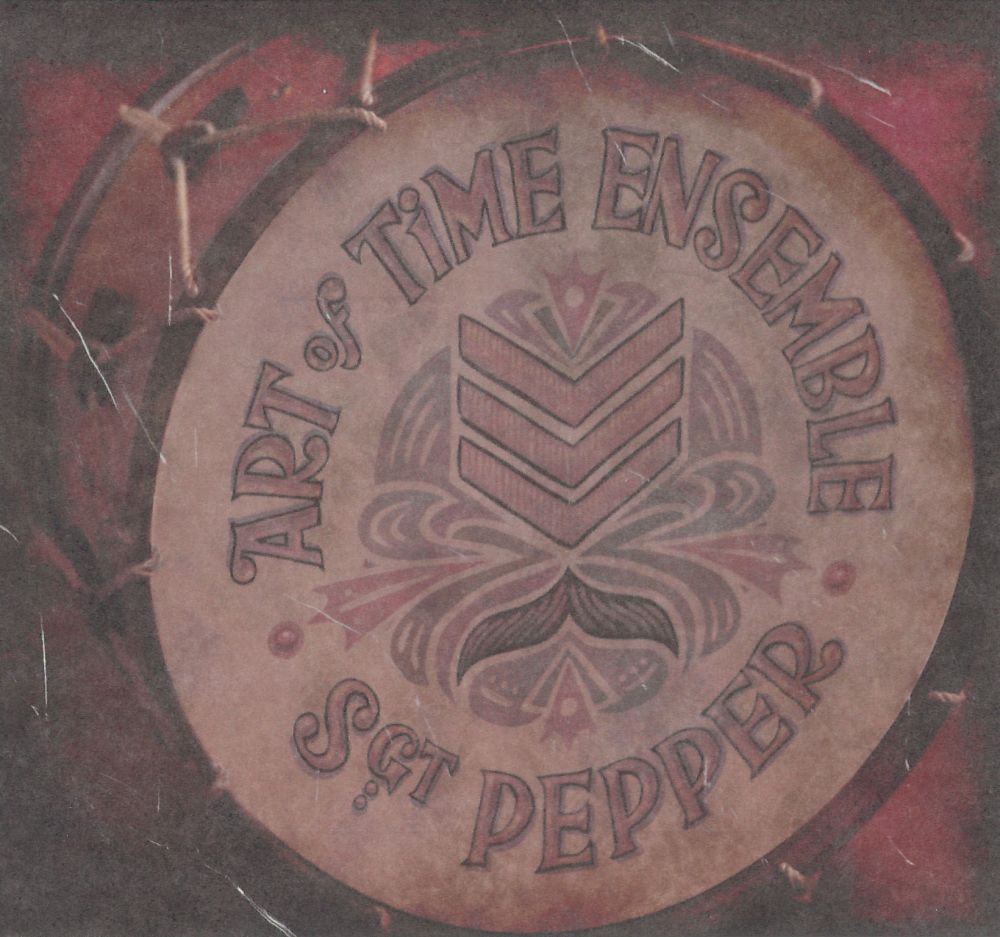
It was 47 years ago that Sgt. Pepper’s Lonely Hearts Club Band was unleashed on the planet. It was a major departure, not only for the Beatles but for the pop/rock world in general, because of its complex arrangements, overdubs and use of an orchestra. The Beatles had recently declared they were fed up with touring, so with Sgt. Pepper they were free to record whatever they wanted without the constraint of having to recreate it live later on. So the fact that Toronto’s Art of Time Ensemble has not only recreated it, but also released a live recording, is a major feat. But this is no mere copy of the iconic album. The arrangers – all 11 of them from across the spectrum of pop, jazz and classical music – have written inventive treatments of the songs, building on the great songwriting and ideas of the Lennon/McCartney/Martin team.

Andrew Burashko, the force behind Art of Time, has gathered together a dozen of the best musicians in the land from a variety of disciplines including singers from some well-known Canadian bands. Steven Page (Bare Naked Ladies), Andy Maize (Skydiggers), John Mann (Spirit of the West) and Craig Northey (Odds) all bring their individual styles to the lead parts. Covering a much-loved work such as this is a delicate balancing act – needing to be different enough to be fresh, but not too far off to be unrecognizable – and they’ve done it admirably. Anyone who is a Beatles fan – or a music fan – should enjoy revisiting this great work through this CD.

07 pot pourri 02 ault sistersTimeless
Ault Sisters
Independent AAA13001 (aultsisters.com)

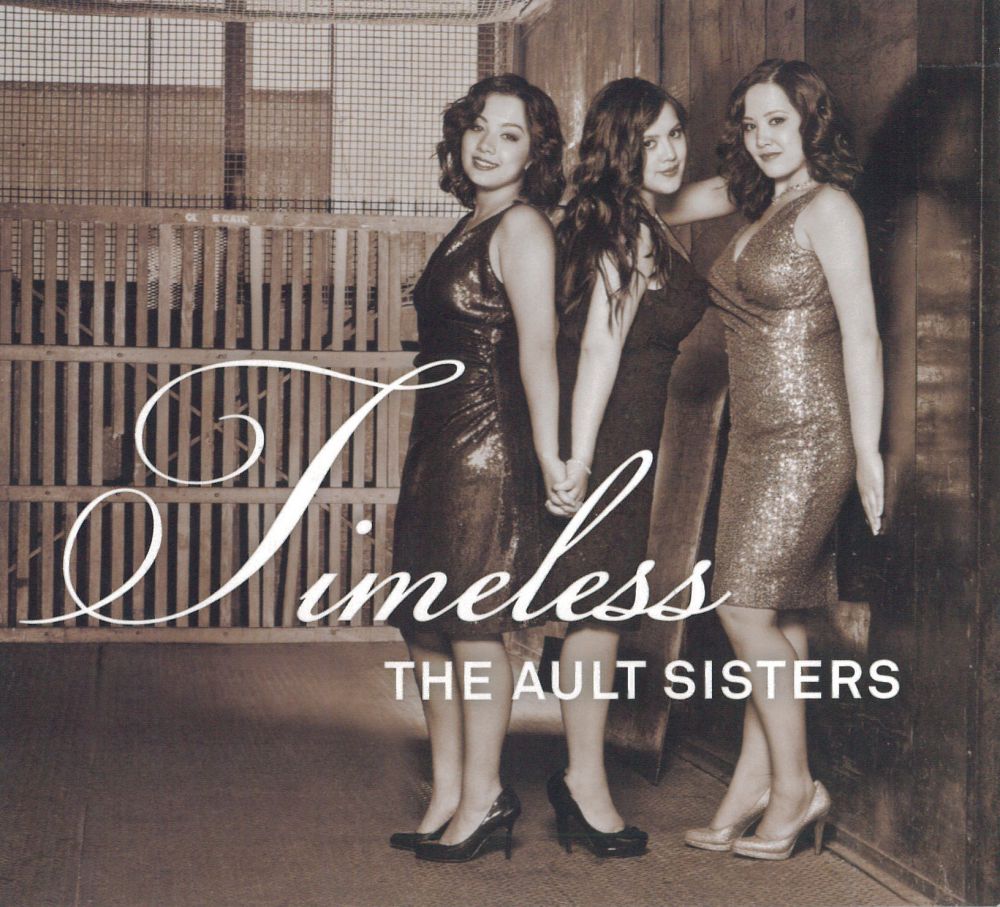
The Ault Sisters are a fresh and vibrant vocal trio, featuring three youthful and charming vocalists – Amanda, Alicia and Alanna Ault. On their second outing as recording artists, longtime producer Greg Kavanagh has assembled a stellar band, including the thrilling Robi Botos on piano, George Koller on bass, Ben Riley on drums, John Johnson on saxophones, Ted Quinlan on guitar and the dynamic William Sperandei on trumpet. In addition, well-respected vocalist Debbie Fleming is responsible for all of the clever vocal arrangements (aside from a wonderful contribution by Dylan Bell on Van Morrison’s perennial Moondance).

The Ault sisters have an almost supernatural vocal blend that can only be achieved when genetics are involved – and the sisters freely and effortlessly adopt different vocal parts depending on the material. Although the repertoire on Timeless tends to travel safely down the middle of the road, the Ault Sisters’ purity of sound and musicianship easily make the most out of each neo-standard.

The peppy opener, Back to You, an original by Chris Smith and Kavanagh, sets the tone for this up-beat and entertaining recording. Other standouts include a stunning rendition of Joni Mitchell’s River, featuring the great John Johnson on soprano saxophone; a lush, romantic arrangement of Stevie Wonder’s gorgeous (and rarely performed) ballad Ribbon in the Sky and a crisp contemporary take on the Gershwins’ immortal They Can’t Take That Away From Me. These talented young artists have a tremendous future ahead of them and we should all look forward to what’s next on their mutual dance card!

Concert Note:The CD release for the Ault Sisters Timeless is March 11 at the Jazz Bistro.

07 pot pourri 03 swingle singersWeather to Fly
Swingle Singers
World Village 450025

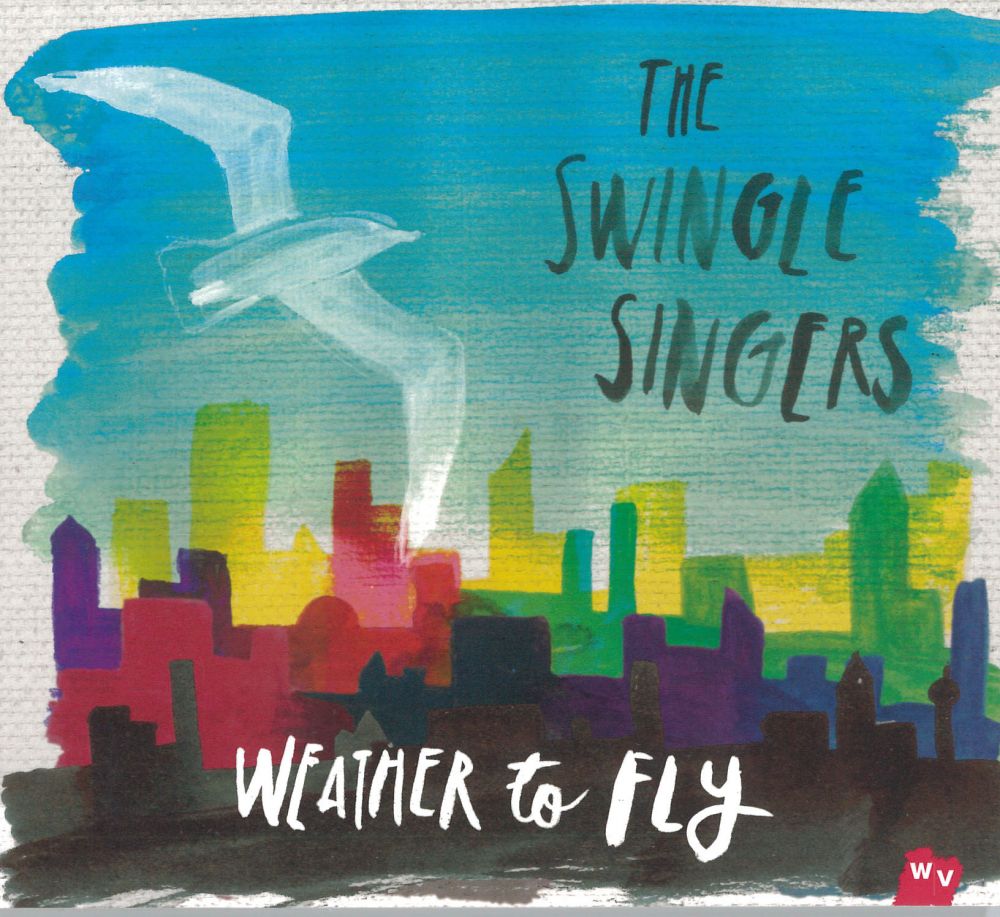
The Swingle Singers have been around since before the cast members of Glee were a gleam in their parents’ eyes, but they are surely rejoicing in the renewed interest in group singing the TV show has brought about. The a cappella group was formed in 1962 in Paris by Ward Swingle and came to notoriety for their renditions of Bach’s Well-Tempered Klavier. Having gone through many incarnations and currently based in England, the seven-voice group now even includes a Canadian, baritone Kevin Fox.

A cappella singing presents many challenges and while the ability to blend is a coveted skill, it can sometimes result in a homogenous sound that can become tedious. So the vocal percussion on many of the cuts on Weather to Fly adds a welcome dimension. The eclectic repertoire includes a Turkish traditional song, a Piazzola tango and a cute play on a Beyoncé hit – Swingle Ladies. The 80s are represented with the Tears for Fears’ tune Woman in Chains, complete with vocally recreated synth parts, and Chick Corea’s much-covered Spain, here given an oddly antiseptic treatment that I found unappealing (and a little reminiscent of Alvin and The Chipmunks). The title track on the other hand is an example of the best an a cappella group can be – the arrangement makes the most of the voices (especially the beautiful bass of Edward Randell). The soloists Clare Wheeler, Sara Brimer and Oliver Griffiths give impeccable performances. 

Reed sections have been part of jazz’s performing vernacular since its earliest days. But only with the freedom that arose with modern improvised music in the 1960s were the woodwinds able to stand on their own. In the right hands, with the right ideas, a group consisting only of saxophones and/or clarinets can produce satisfying sounds that don’t need the intervention of a rhythm section or even brass for additional colours. All of the fine discs here demonstrate that.

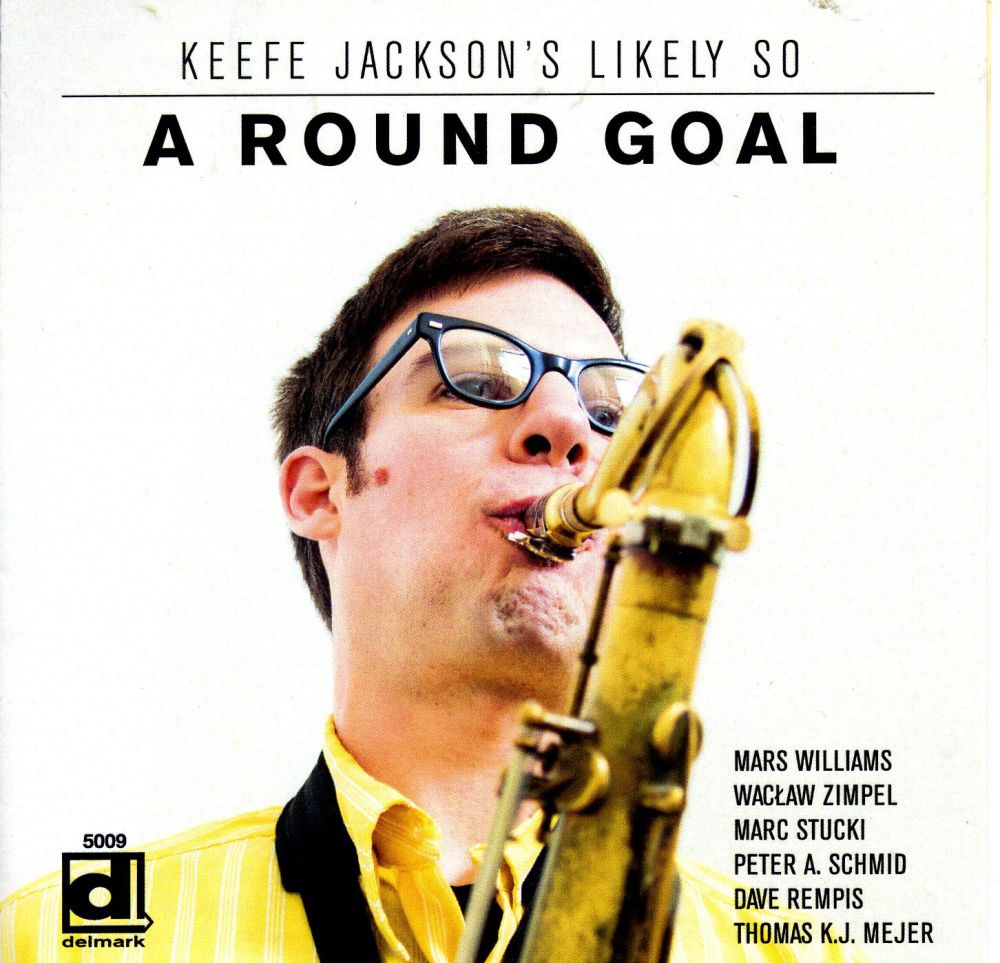
waxman 01 roundgoalChicago tenor saxophonist and bass clarinetist Keefe Jackson extends this concept on A Round Goal (Delmark DE 5009 delmark.com), with his Likely So ensemble consisting of seven reed players. Including two of his Windy City associates – Dave Rempis and Mars Williams – three Swiss stylists – Thomas K.J. Mejer, Peter A. Schmid and Marc Stucki – plus Polish clarinetist Waclaw Zimpel – the septet members play two or three horns each, providing all the necessary contrast and colours for Jackson’s 11-part suite. After leading the others in unison ostinato lines on Round Goal for instance, alto saxophonist Williams sparks the improvisation with jagged, bracing squeaks that inflate to dog-whistle-like glossolalia, without ignoring swing. Similarly while tenor saxophonist Stucki brings prototypical free jazz cries to Was Ist Kultur, the others’ shifting modes ensure the compositional thread isn’t lost. In contrast, tracks like Neither Spin nor Weave and the descriptively titled Pastorale confirm that experimentation doesn’t have to be abrasive. The former, including contributions from five clarinetists, uses mellow architecture to construct a round of calming timbres. Pastorale, meanwhile, is a showcase for Zimpel. His bass clarinet adds a formal sheen to the proceedings, with tongue fluttering gradually giving way to unforced motions. Later, Mejer’s contrabass saxophone is freed from its role providing pedal point textures with the other low-pitched reeds featured on My Time is My Own. Buzzing out notes that could come from a cello played sul ponticello, his smears and snorts are eventually knit into a tapestry of harmonized timbre with the other horns. By the CD’s end it’s obvious that harsh textures can arise from any reed register to build excitement, as can soothing harmonies. Overall, the key point is that individual showiness never takes the place of balanced interaction.

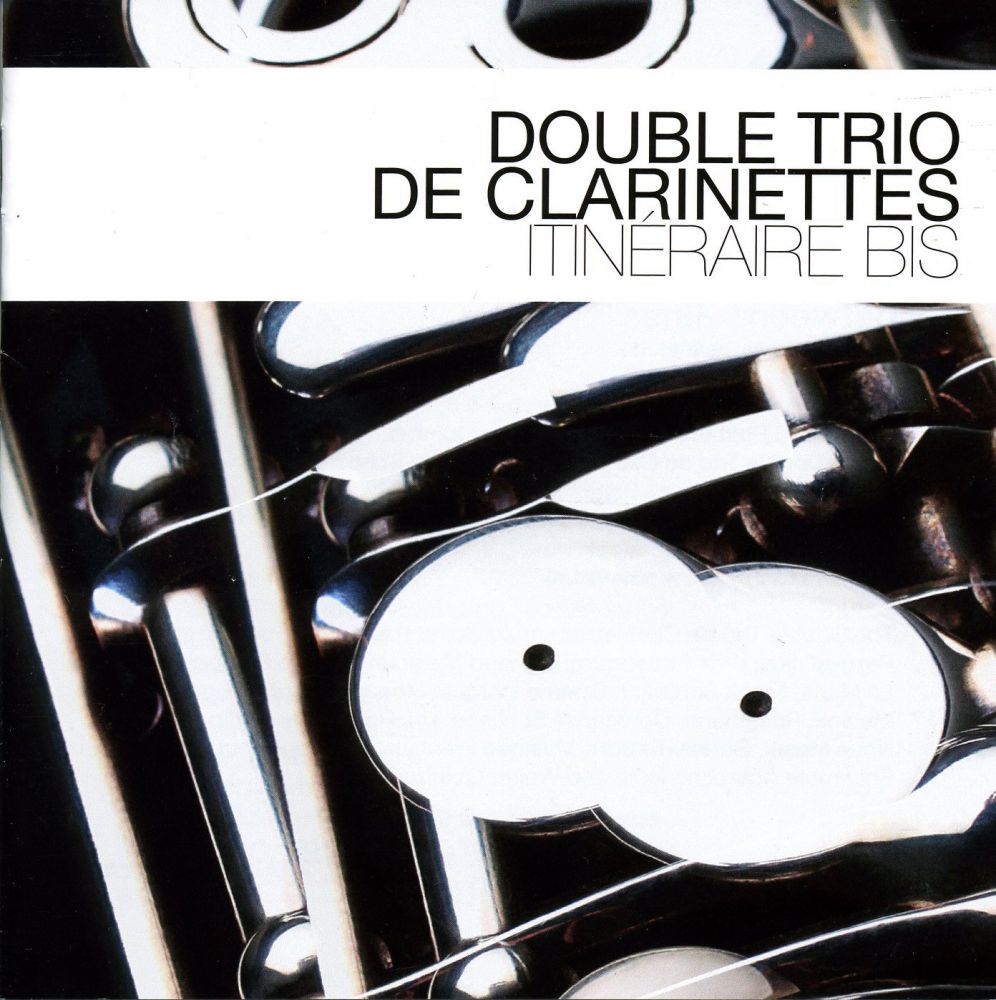
waxman 02 doubletrioMore restrained in execution, but with similar inspirations so that the program never flags, is Itinéraire Bis (Between the Lines BTLCHR 71231 doublemoon.de). Blending two clarinet trios into the Double Trio de Clarinettes, the players use standard, alto, E-flat, bass and contrabass clarinets to highlight the woodwind’s unique properties. Although the Berlin-based Clarinet Trio of Jürgen Kupke, Gebhard Ullmann and Michael Thiecke may be more oriented towards jazz and improvised music and the Paris-based Trio de Clarinettes, which includes Armand Angster, Sylvain Kassap and Jean-Marc Foltz, has more of a new music bent, no fissure exists here. Parameters are established as early as track one, Almost Twenty-Eight, with the reedists spending as much time vocalizing exuberant harmonies as playing. But while such ebullience is present throughout the disc, so is the sophistication that melds atmospheric textures, expressing individual instruments’ rugged or shrill qualities as the pieces advance. Ullmann’s Desert… Bleue… East for instance is a centred performance that includes an unfolding hint of menace, even as vibrating low tones and seagull-like cries are harmonized into a smooth flow. Meantime Kassap takes a more cerebral and musicological approach. His compositions, Bizarre, FAK! and Charles Town, But Yesterday… which follow one another, set up a distinctive continuum. Initially an essay in low pitches, he sabotages the first track’s relaxation with chattering, slightly bizarre interjections ending with a kazoo-like cry; the next sequence deconstructs the line into shaking timbres only to have it snap back into shape following comfortable harmonies from the other players, standard clarinet in the lead; and concludes with a thorough re-examination of the theme. Rhino-like pedal points from the lower-pitched reeds balance the flighty aviary cries from the other woodwinds, with the result beautifully balanced polyphony that succinctly express the theme then stops instantly.

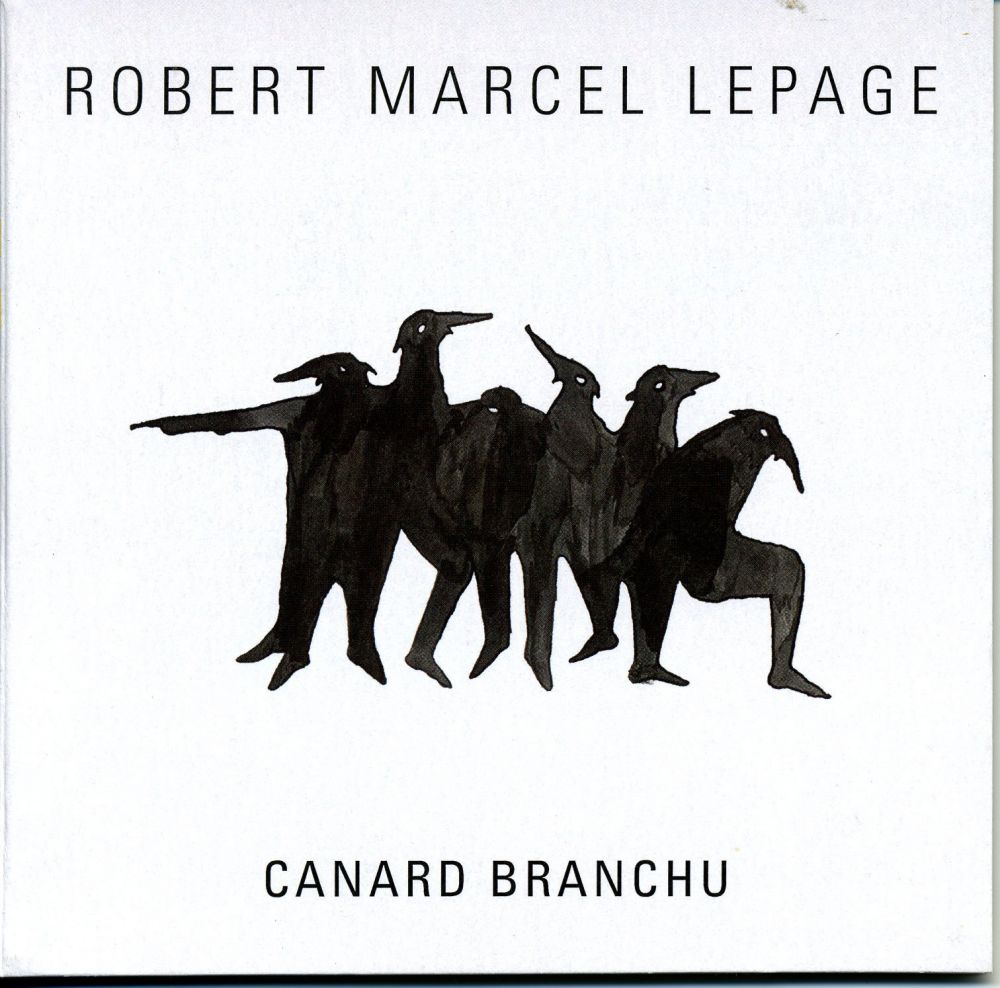
waxman 03 canardThe difference may result from geography or personality, but in sharp contrast to the concentration on solemn experimentation which characterize the Double Trio and Keefe Jackson CDs, Montreal clarinetist Robert Marcel Lepage's Canard Branchu (Ambiances Magnétiques AM 216 CD actuelcd.com) in the main promotes unselfconscious merriment. With his reputation for creating soundtracks, Lepage sets his compositions here in a fanciful swamp populated by the insects, birds and amphibians. Moreover while many tracks on the other CDs appear to be evolving improvisations, Lepage’s are self-contained songs. Nonetheless while the sounds may be decorous and controlled, they’re not formal and mix good fun alongside technically clever improvisations. The band make-up is different as well. The core is Jean-Sébastien Leblanc and Pierre Emmanuel Poizat on clarinets, Guillaume Bourque, bass clarinet, André Moisan on basset-horn plus bassist Fraser Hollins and drummer Pierre Tanguay, with Nicolas Borycki adding electric organ on three tracks. Bass clarinetist Lori Freedman joins the band on one track and plays another unaccompanied; while the composer plays solo and duets with Moisan on two different cuts. With steady rhythm section work, the others are freed for supple, contrapuntal work, resembling the score for a kids’ show on one hand and Duke Ellington’s arrangements for clarinet trio on the other. Characteristic is Le Pelleteur de nuages, whose church-like harmonies courtesy of Borycki underlie a theme that touches on Can’t Help Falling in Love plus Creole Love Call. Bourque shines on Maringouins en escadron as tremolo horn parts sound as if they come from an accordion; whereas Fondation: qui sommes-nous? is a pseudo-tango that contrasts the basset-horn’s serene chalumeau with slick drum patterns. Chalumeau is also in use on Mi-figue, mi-bémol, Lepage’s solo feature, that improvises succinctly on the melody line, whereas on her own feature, Freedman’s variants on Le Grand Héron et la demoiselle use hectoring cries, irregular vibrations, split tones and spetrofluctuation to deconstruct the theme into individual atoms, then reconstruct in pointillist fashion.

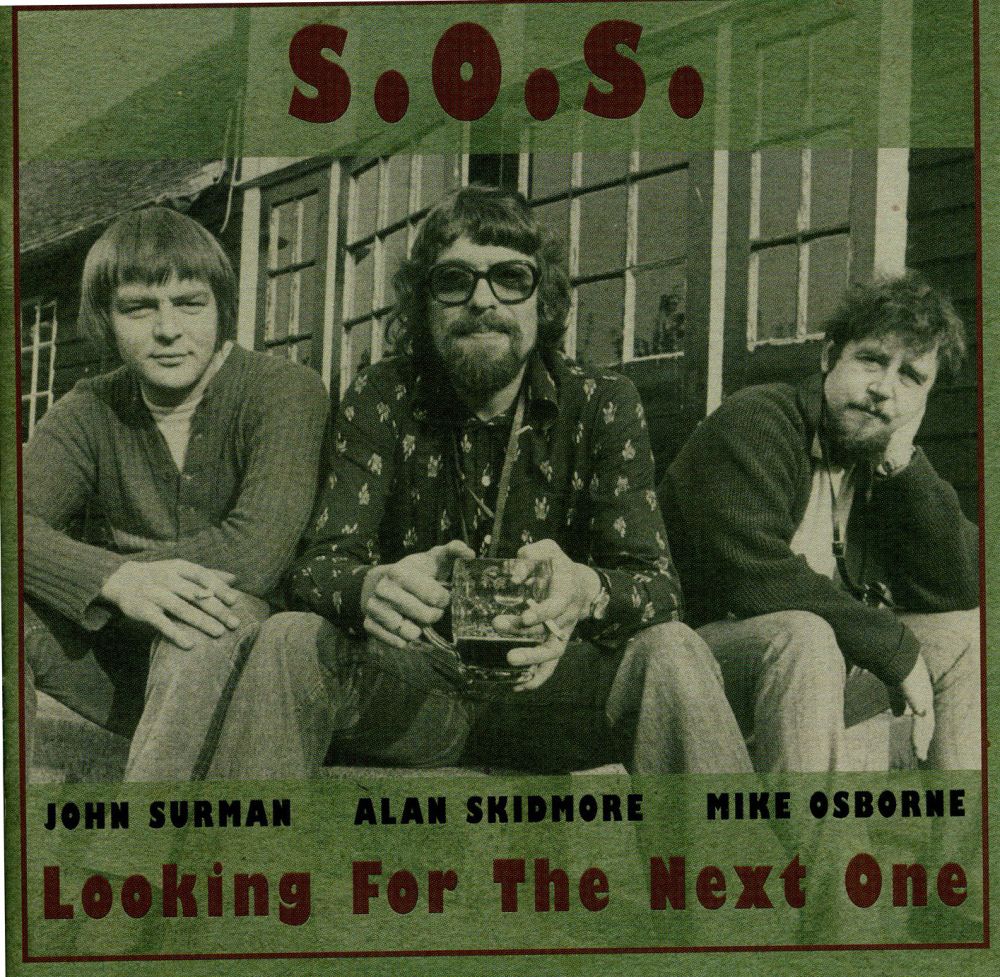
waxman sosThese bands’ instrumentation wouldn’t have been possible without the pioneering efforts of players who demonstrated how flexible multi-reed ensembles could be. One of the first, S.O.S.,namedafter the members’ initials, involved three of the United Kingdom’s top jazzmen: Mike Osborne, who played alto saxophone and percussion; Alan Skidmore, on soprano and tenor saxophones and drums; plus John Surman who divided his skills among soprano and baritone saxophones, bass clarinet, synthesizer and keyboards. Looking for the Next One (Cuneiform RUNE 360/361 cuneiformrecords.com) is a two-CD set of previously un-issued material recorded in 1974 and 1975. Like Lepage, the trio often expands the concept by using synthesized loops or drum beats as continuum, but emphasis throughout is still on saxophone blends or solos. Especially moving are the jerky squeaks and cornucopia of smears, slurs and sighs output by Osborne (1941-2007), defining the substantive jazz qualities of the band, especially on cuts such as Suite and the title track. The latter at first pairs quivering, Sun Ra-like wave forms with faux baroque piano until the narrative breaks out into firebrand solos from the alto saxophonist and tenor man, with Skidmore’s incendiary blowing contrasting with Osborne’s lonely cries. A more sophisticated effort, unlike some of the other tracks, whose rhythms sound as if they migrated from a contemporary Africanized-jazz fusion date, the more-than-25-minute Suite cunningly develops its narrative from among electric piano comping plus varied pitch variations from all three horns. A tapestry of tones, smears, flattement and irregular vibrations show off each reedist to his best advantage, while maintaining forward motion. S.O.S. isn’t all about technique though. A traditional air arranged by Surman, The Mountain Road mixes a flat-out Irish reel with buzzing jazz inflections, propelling two sorts of staccato dance rhythms. That experiment worked so well that the reel appears again during the extended Trio Trio, sharing space with Ellington echoes and reed-theme deconstruction, atop bubbling synthesizer loops.

In trio or larger formations, each of these CDs confirms the long-term viability of woodwind groups creating exhilarating sounds.

Many musicians act as their own agents, produce and distribute their own recordings and promote their own concerts, but a few take on far greater roles, developing performance spaces and record labels, helping create vital scenes. Three such figures are Vancouver’s Cory Weeds, Toronto’s Ken Aldcroft and Rimouski’s Éric Normand.

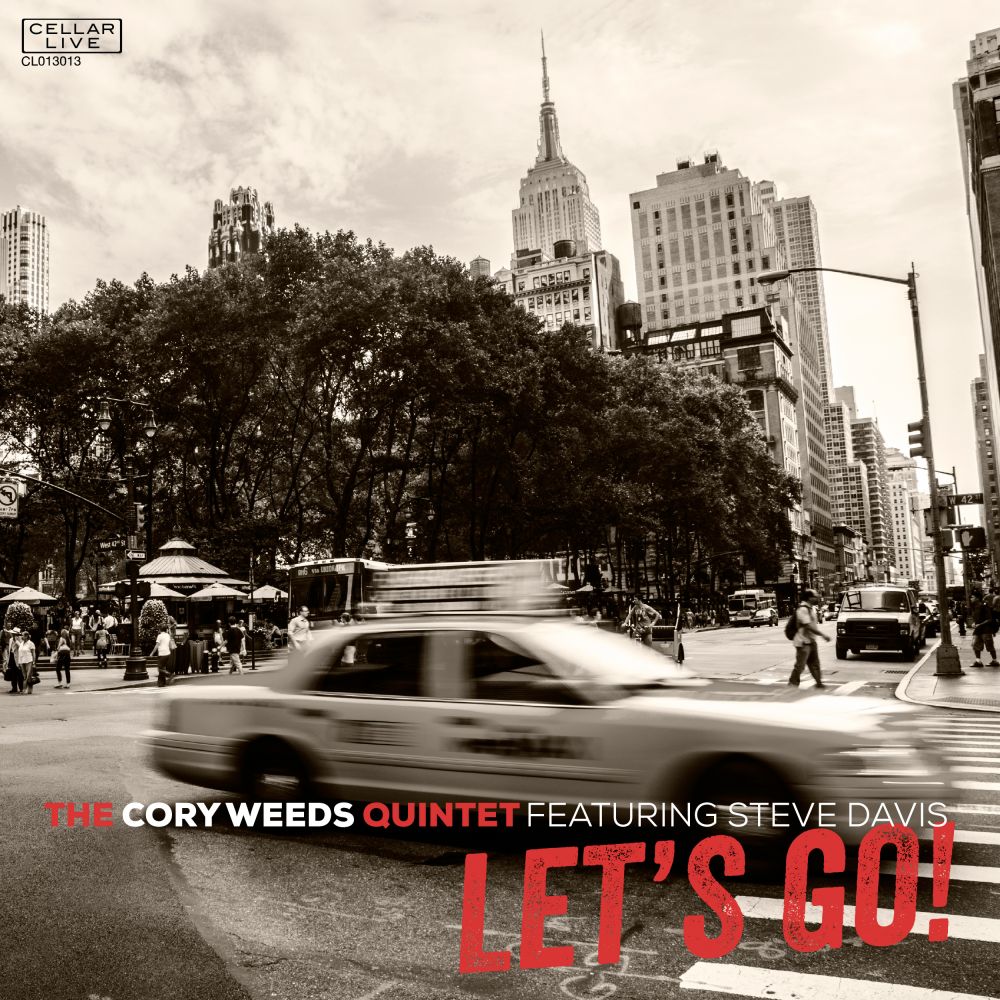
broomer 01a weeds lets goTenor Saxophonist Cory Weeds is an all-purpose advocate for mainstream modern jazz, running Cory Weeds’ Cellar Jazz Club and the very active Cellar Live label. Canada/U.S. musical exchanges figure in three recent releases. Let’s Go! (CL 013013 cellarlive.com) documents Weeds’ visit to New York’s Smoke Jazz Club with his regular associates, pianist Tilden Webb, bassist Ken Lister and drummer Jesse Cahill, and adds New York trombonist Steve Davis. Recorded at the end of a 19-performance tour, the experience shows. The music is a pure distillation of hard-bop, featuring tight-knit, spirited playing throughout, highlighted by the muscular lyricism of the tenor/trombone combination. A highlight is a reflective rendering of the late trombonist/pianist Ross Taggart’s ballad Thinking of You.
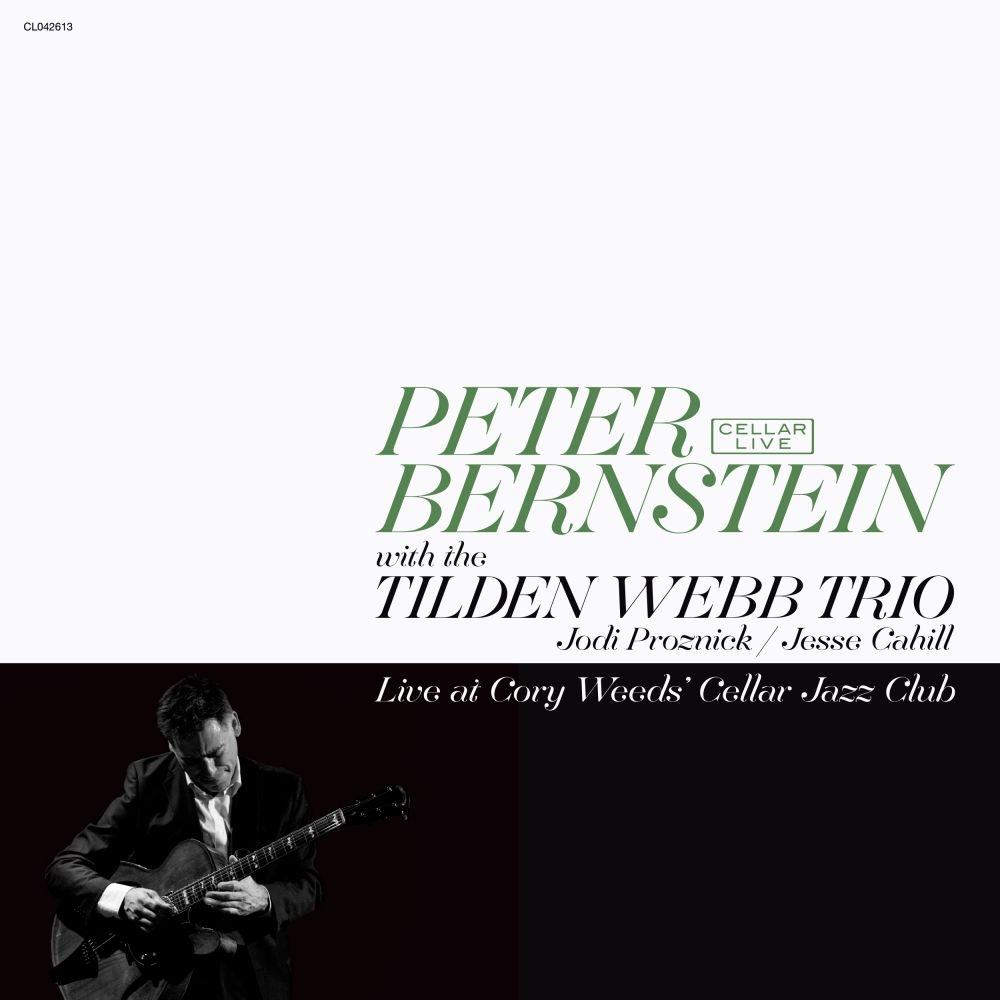
broomer 01b peter bernsteinThe recording venue switches to Weeds’ own club for American guitarist Peter Bernstein with the Tilden Webb Trio (CL 042613). Along with bassist Jodi Proznick, Webb and Cahill are once again models of support: Webb a worthy foil to Bernstein, turning out long lines that coil and twist, alive with melodic surprise, and Cahill providing animating drive and prodding rhythmic detail. With a distinctive singing tone, rare sustain and inspired virtuosity, Bernstein finds new dimensions in standards and jazz classics, from a heart-felt Darn that Dream to elegiac renderings of John Coltrane’s Wise One and John Lewis’ Django.
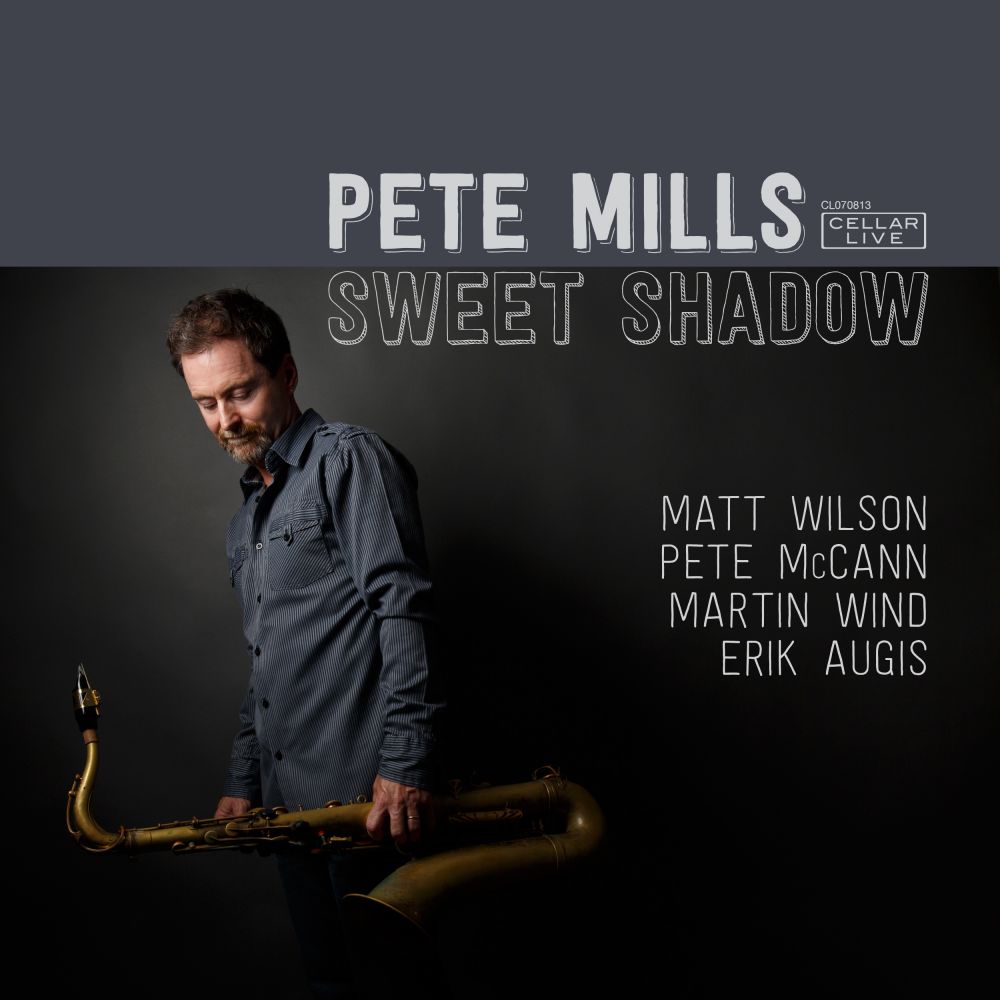
broomer 01c weeds sweet shadowThe cross-border emphasis continues with tenor saxophonist Pete MillsSweet Shadow (CL 070813). Originally from Toronto (his CD includes a photo of Charlie Parker’s autograph, collected at the 1953 Massey Hall concert by his father, Ernie), Mills, who teaches at Denison University in Ohio, is a wildly inventive player with a light, airy sound and solid fundamentals. Sam Rivers and Joe Henderson likely number among his inspirations, while his themes include Roland Kirk’s Serenade to a Cuckoo and Diamonds Are a Girl’s Best Friend. Aided by a first-rate New York band that includes guitarist Pete McCann and drummer Matt Wilson, Mills also plays two freely improvised duets with Wilson.

Since migrating from Vancouver more than a decade ago, guitarist Ken Aldcroft has become an essential figure in the Toronto improvised music scene, producing performance series and acting as one of the founders of AIMToronto, an association of improvisers. Documenting his own work on his Trio Records since 1997, Aldcroft has just released two contrasting sessions.
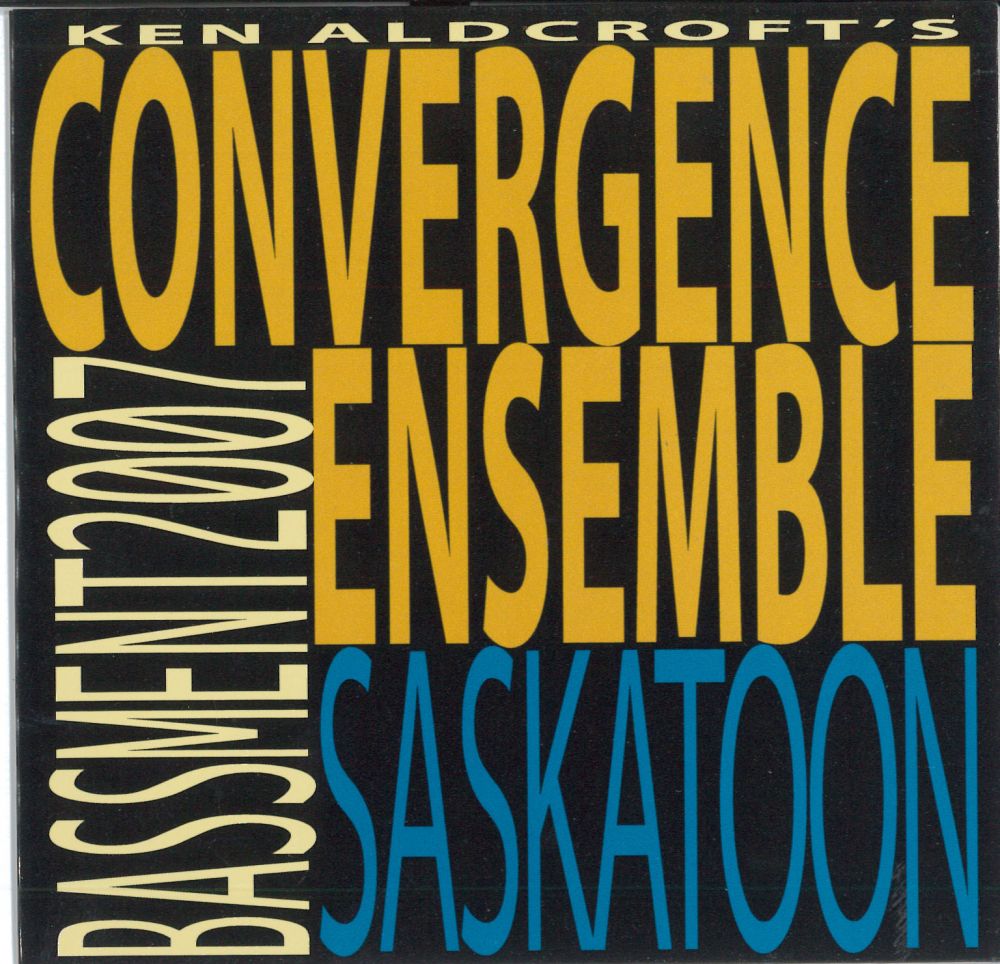
broomer 02a saskatoonAldcroft’s Convergence Ensemble is his principal group, a long-standing quintet that has been a laboratory for his developing compositional approach. Saskatoon (TRP-017 kenaldcroft.com/triorecords.asp) was recorded at the Bassment in 2007, so it’s clearly an old performance with enduring significance. Alto saxophonist Evan Shaw, trombonist Scott Thomson, bassist Wes Neal and drummer Joe Sorbara share Aldcroft’s commitment to the group, and it’s apparent in every instant of this music, a consistent collective creation on Aldcroft’s themes. Our Hospitality cleverly integrates free jazz, swing and instrumental click languages.
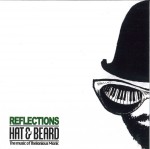
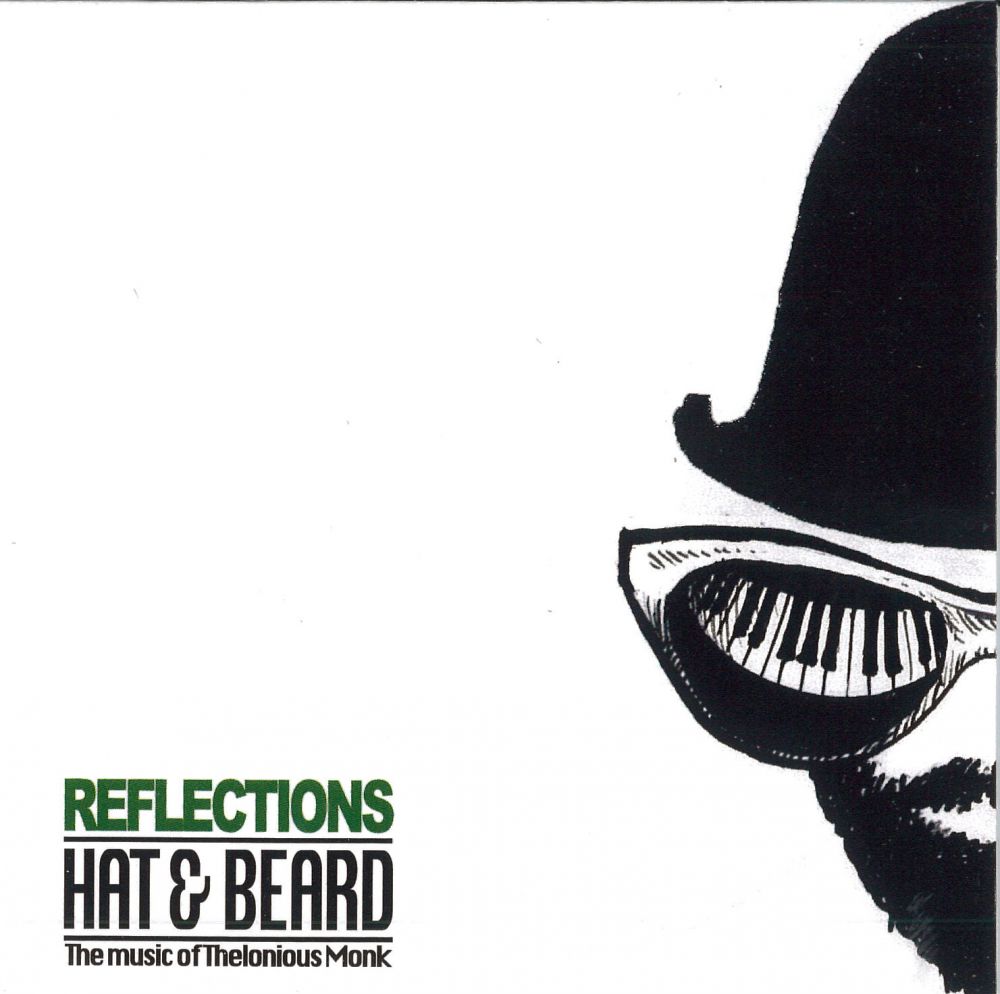
broomer 02b hat   beard reflections coverFor sheer playfulness, there’s Aldcroft’s duo with drummer Dave Clark, Hat and Beard: The Music of Thelonious Monk. Their second all-Monk program, Reflections (TRP-018), extends Monk’s own assertive rhythms, clashing phrases and unlikely chord changes. The approach, with Clark’s explosive, weirdly precise cacophony and Aldcroft’s acid-toned minimalism, may owe as much to the members of Captain Beefheart’s Magic Band as to Monk himself. It’s all a delight, but Pannonica and Monk’s Dream are stand-outs.
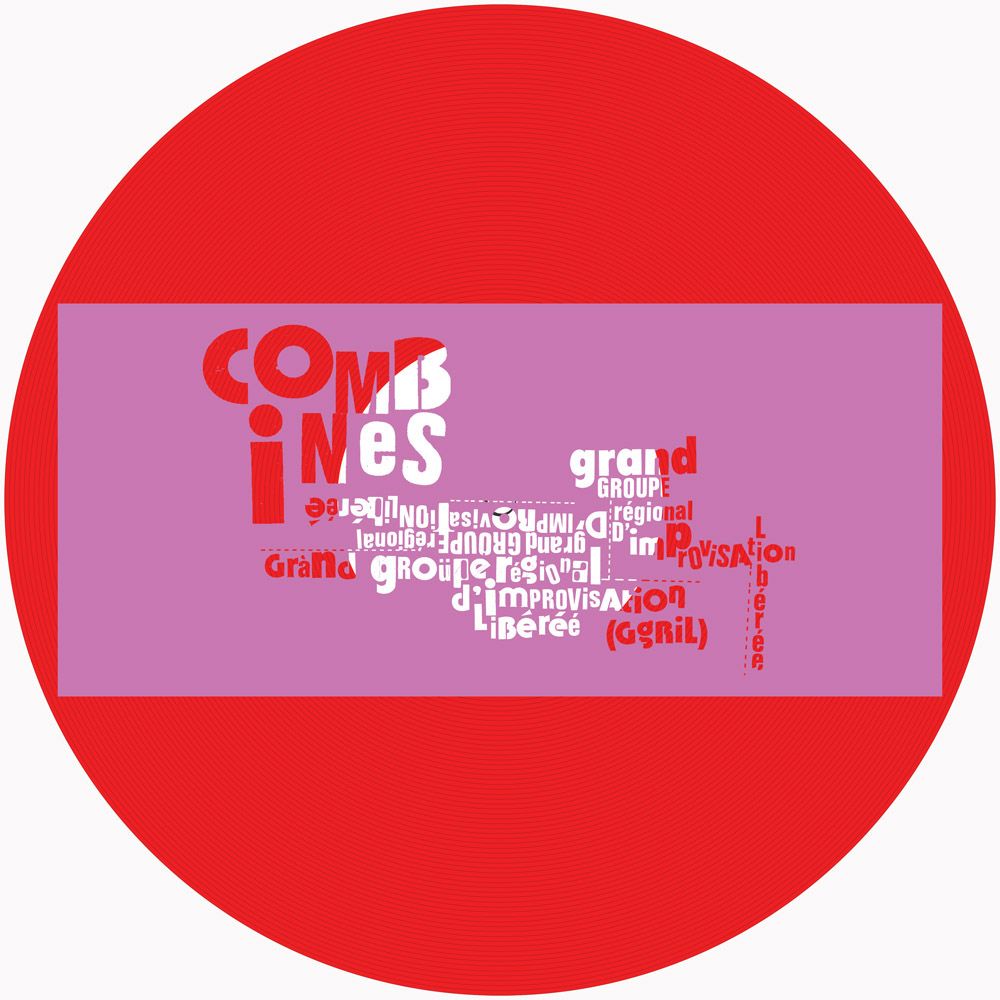
broomer 03a le-ggril---combines---2While Weeds and Aldcroft work in major population centres, bassist Éric Normand, through sheer creativity, commitment and energy, has somehow made Rimouski, Quebec a hotbed for free improvisation, producing concerts, drawing in international guests and releasing music in a welter of media on his Tour de Bras label.

The acronym GGRIL may identify the large ensemble Grand Groupe Régional d’Improvisation Libérée, but it also suggests “guerrilla,” emblematic of Normand’s adaptive and spontaneous rebellion. GGRIL has released one of the year’s most beautiful records, Combines a red-vinyl LP in a clear plastic sleeve, (TDB 990001LP tourdebras.com). There’s a delightful sense of community get-together in the music, whether it’s using chance methodologies or two conductors simultaneously leading a collective improvisation, and it extends to the unlikely combination of instrumentalists: multiple percussionists, bassists, and guitarists with an accordionist among the featured voices.
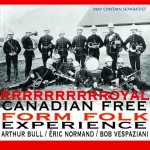
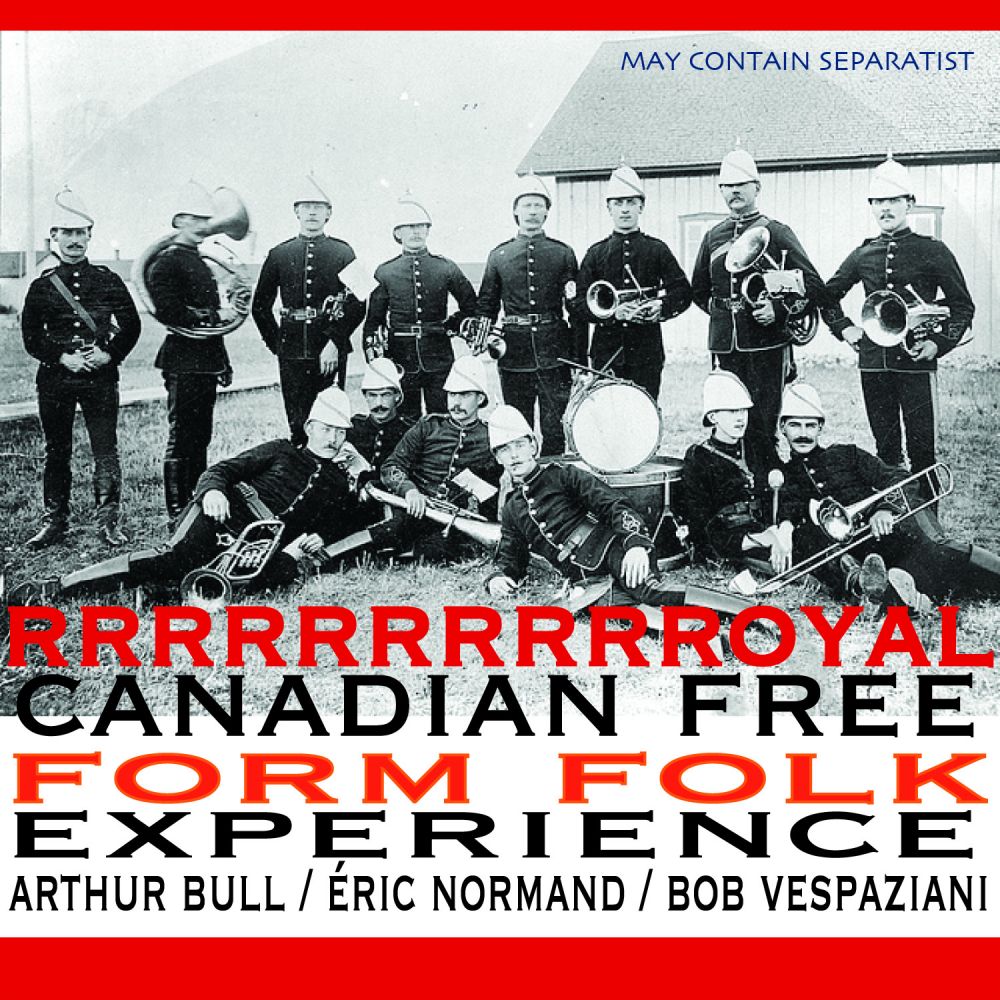
broomer 03b rcfffe coverAt the opposite pole of media, there’s the insubstantial Rrrrrrrrrroyal Canadian Free Form Folk Experience (tourdebras.com) by the trio ofNormand, Halifax-based guitarist Arthur Bull, and Toronto percussionist Bob Vespaziani, also known as the Surruralisms. Available as a paid download or free streaming audio, the work consists of a single half-hour improvisation called Batoche’s Battle, a brilliant realization of Normand’s aesthetic, melding folk materials and instruments with the most radically concentrated, minimalist, electroacoustic improvisation. It’s an invitation to sample one of Canada’s most creative musical visions.
broomer 03c pink saliva imageNormand has also released the latest music by the Montreal-based trio Pink Saliva, with trumpeter Ellwood Epps, bassist Alexandre St-Onge and drummer Michel F. Côté also exploring electronics. Available as a download or a micro-edition CD, Il parait que... (TDBW0003) is a tangled forest of vital distorted sound, Epps’ amplified trumpet sounding like a raw nervein the undergrowth.


Long-playing discs were developed by Bell Laboratories in the early 1930s and a few recordings of Stokowski and the Philadelphia Orchestra were issued by Victor. The shellac discs of the time were not viable and they were withdrawn. In 1948 thanks to vinylite and other factors, LPs were perfected at Columbia Records under Peter Goldmark. By the early 1950s LPs were in common currency, to the chagrin of RCA, the final holdout, who tenaciously supported their “convenient” seven-inch 45s including multiple-disc sets. The transfers of existing 78 rpm masters to LPs were much sought after and required no costly recording sessions and Columbia and RCA had performances dating back to the turn of the century. Tape recorders had newly enabled anybody to inexpensively document performances anywhere… well anywhere but in the United States where the musicians’ union held sway.

The Westminster Recording Company, founded in NYC in 1949, promptly looked to Europe to record those artists and ensembles that had not been signed up by producers such as Walter Legge for EMI. Through these Westminster recordings, new names became familiar to the record-buying public. Included in this exhilarating new collection of superb musicians was the German conductor Hermann Scherchen. Over the years into the stereo era he produced a Beethoven symphonies cycle, Haydn symphonies, Liszt tone poems, Mahler symphonies, Bach choral works, plus a body of work by Mozart, Berlioz, Tchaikovsky, Offenbach, Ravel, Honegger and others. Not only were the performances fresh and exciting but the sound, as heard on any and every Westminster recording, was the ultimate in realism and meticulously edited, on the best pressings in the industry.

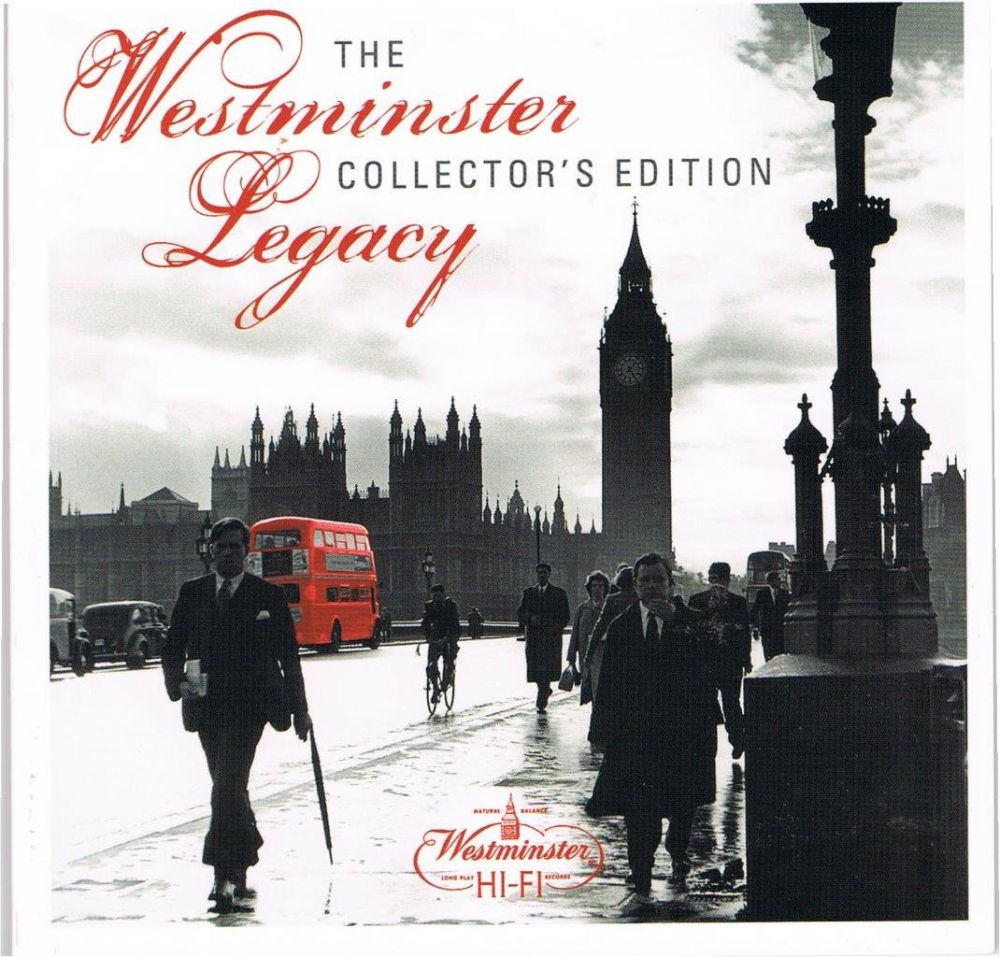
08 old wine 01 westminsterIn The Westminster Legacy, The Collector’s Edition (DG 4792343, 40 CDs) music lovers and collectors alike will find some usual and lots of unusual repertoire not to be found in any other omnibus edition. Some examples: 14 songs by Henri Duparc sung by Léopold Simoneau; Sena Jurinac singing Schumann’s Frauenliebe & Leben and Liederkreis, Op.39; Julian Bream playing Turina, de Falla and Sor; The Vienna Konzerthaus Quartet plays Schubert’s Quintet in C major, Op.163 and the Octet Op.166; Paul Badura-Skoda plays Schubert’s Wanderer Fantasie, Moments musicaux D780 and the four Impromptus D899; Jörg Demus plays César Franck and Fauré; the Smetana Quartet plays two Beethoven quartets and joins the Smetana Quartet for the Mendelssohn Octet Op.20. The venerable Egon Petri performs three Beethoven Sonatas, the Pathetique, the Appassionata and the Hammerklavier; the young Daniel Barenboim gives us Mozart’s Piano Concerto No.22 and the Piano Sonatas No. 8 & 16; Clara Haskil plays Mozart’s Piano Concerto No.20 and 11 Scarlatti Sonatas. Violinist Erica Morini plays the Brahms and Tchaikovsky concertos.

And there’s more, a lot more, including Holst’s The Planets (Boult), the complete Nutcracker Ballet (Rodzinski), Handel’s complete opera Rodelinda (Priestman) and Beverly Sills singing Bellini and Donizetti Heroines. The sound on these discs remains as vital as when we first heard them. Check the complete track listing at deutschegrammophon.com/en/cat/4792343.

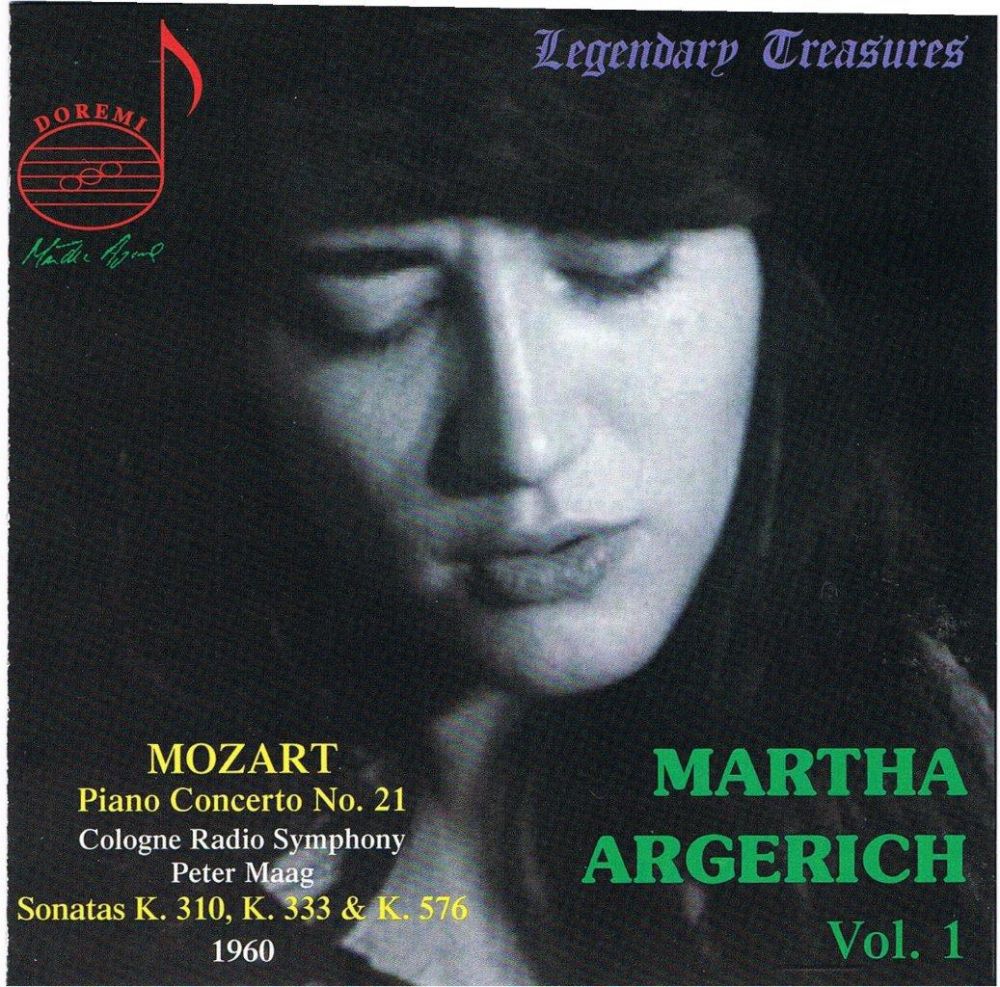
08 old wine 02 argerichMartha Argerich is recognized as one of the finest pianists in the pantheon. From her early years when she was not yet 20, Doremi has unearthed four Mozart performances of works that she has not recorded commercially (DHR-8024). The 21st Piano Concerto, aka Elvira Madigan, with Peter Maag conducting the Cologne Radio Symphony was broadcast on September 8, 1960. From the same year she is heard in the only minor key sonata, K.310 in C Minor and also K.333 and K.576. Argerich already possessed all the magic ingredients for outstanding Mozart interpretations: sensitivity, style, lilt, a pulse and breathing with captivating innocence. A Mozart lover’s delight.

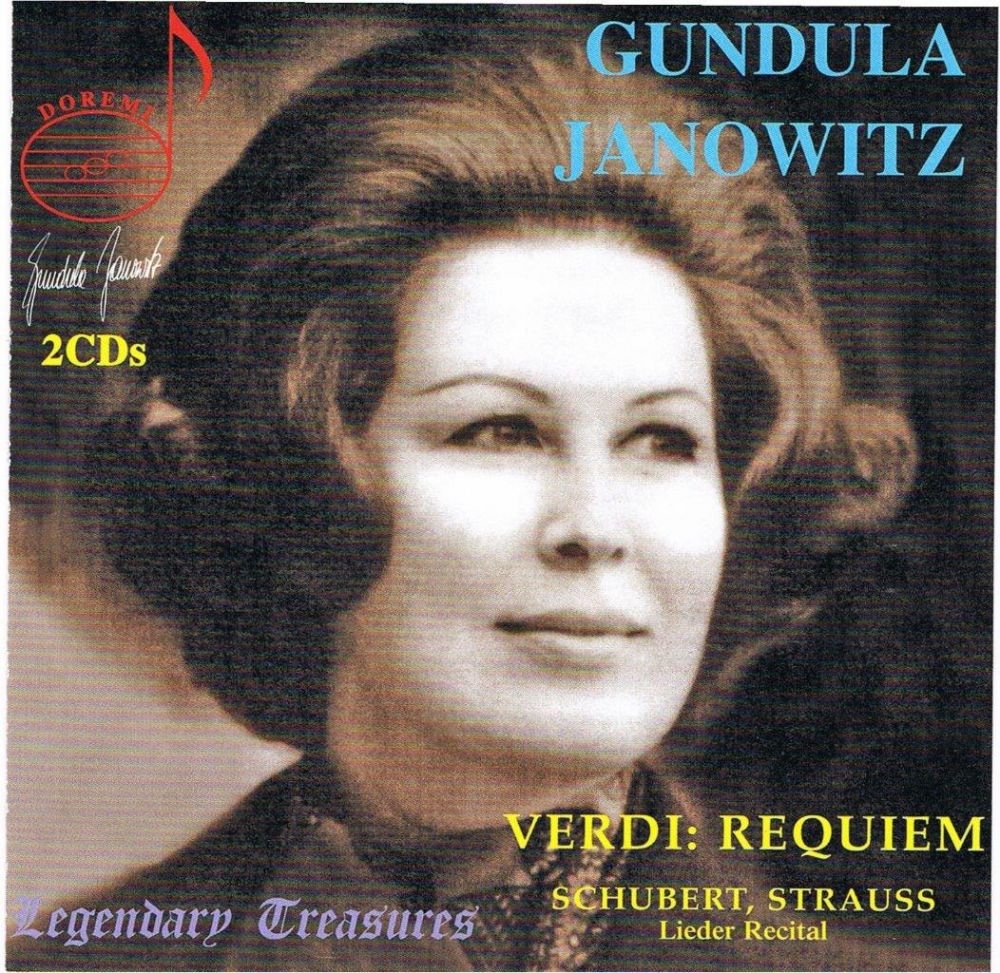
08 old wine 03 verdi requiemDoremi has happily restored to active duty the 1970 Verdi Requiem with Gundula Janowitz from Salzburg with Karajan conducting (DHR-7734/5, 2 CDs). There is no commercial recording of the Requiem with Janowitz which is surprising because the ethereal beauty of her voice that illuminates this performance is quite incomparable. On stage with her were Christa Ludwig, Carlo Bergonzi and Ruggero Raimondi.

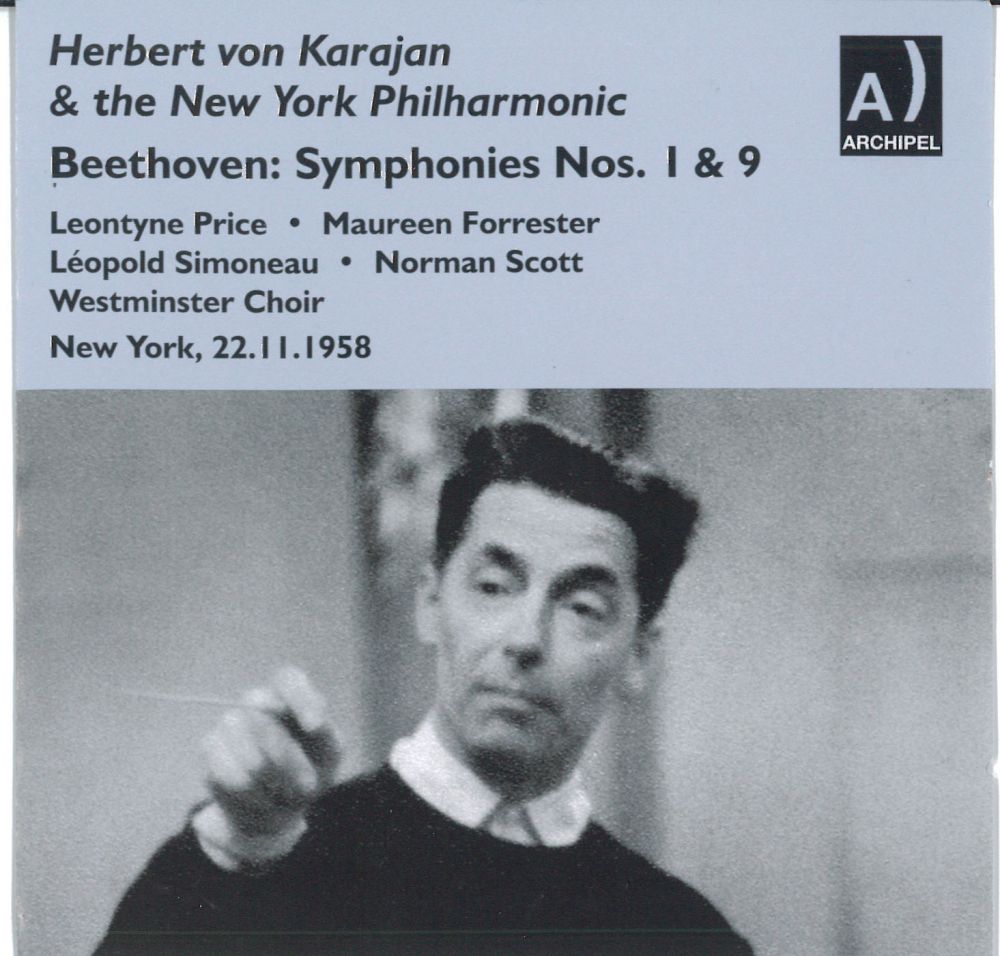
08 old wine 04 karajan beethovenOn November 15, 1958 Herbert von Karajan made his first appearance with an American orchestra, The New York Philharmonic, in a program of Webern, Mozart and Richard Strauss (Heldenleben, of course). Their November 22 concert consisted of the Beethoven Symphonies Nos.1 & 9 with the Westminster Choir and soloists Leontyne Price, Maureen Forrester, Léopold Simoneau and Norman Scott. Archipel has issued this concert (ARPCD 0556, 2 CDs). I was not expecting the polish and suavity of the playing, after all these were New Yorkers, not Viennese or Berliners who were simpatico with Karajan. The First is immediately seamless and articulate, a quality that continues throughout. There is no lingering to smell the roses or make a point. Orchestral balances are ideal and the mono sound good enough to hear all in perspective.

The Ninth has the enormous sweep and drive, played with often astonishing fire and occasional raw energy. Unfortunately, the recorded balance seems to have been adjusted during the intermission as timpanist Saul Goodman often swamps his colleagues in the tuttis making the sound somewhat dense. The third symphony in the package is a Beethoven Fifth from Salzburg recorded August 18, 1948 with The Vienna Philharmonic. This Promethean performance from Salzburg has astonishing assurance and an unmistakable aura of optimism. Those familiar with Karajan’s Ninth recorded eight months earlier in Vienna by EMI will know exactly what I mean. The monaural recording is dynamic and very satisfying. This performance is recommended without any hesitation. A must-have.

02 vocal 01 salieri falstaffSalieri – Falstaff
John Del Carlo; Teresa Ringholz; Richard Croft; Stuttgart RSO; Arnold Östman
ArtHaus Musik 102306

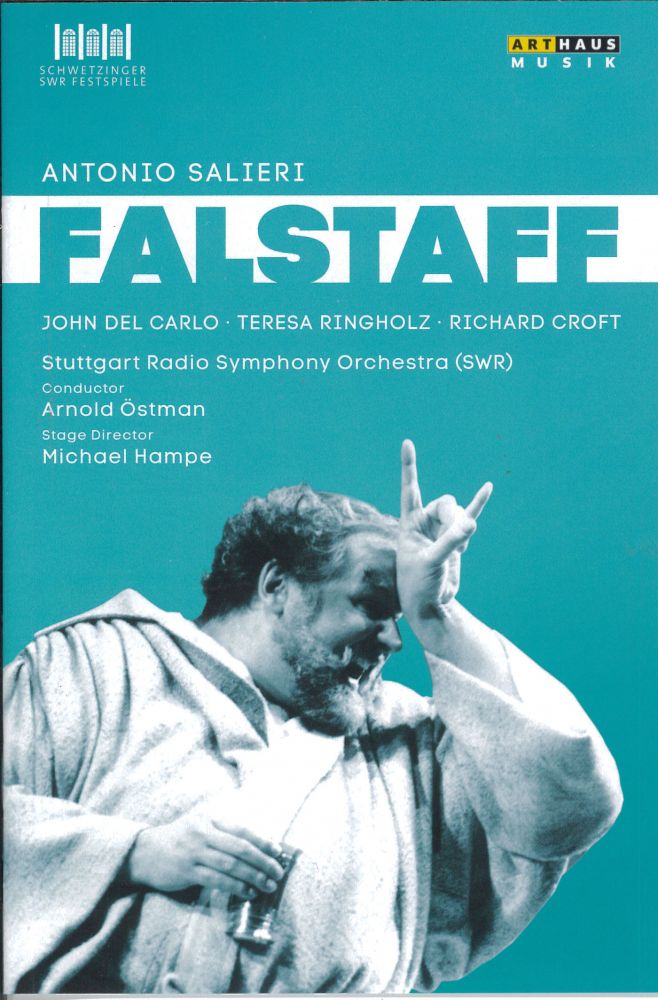
This recording is not exactly new. It gives us a live performance from the Schwetzingen Festival, which dates from 1995. The DVD was first released in 2000 (it is still available in that format). So we are dealing with what is essentially a repackaging.

Although in the early 17th century Monteverdi’s opera had both serious and comic elements, in the 18th century these tended to be divided between opera seria and opera buffa. That division was not absolute and several of Handel’s operas (most notably Partenope and Serse) were in part comic. It was not until Mozart, however, that the serious potential of comic opera was brought out. Antonio Salieri’s Falstaff was first performed in January 1799, a little more than seven years after Mozart’s death. Yet it is a comic opera that shows little of the complexities which we find in Don Giovanni or Così fan tutte. Nor is Falstaff’s story as interestingly treated as it is by Verdi, Nicolai or Vaughan Williams.

I found much of Salieri’s opera decidedly unfunny and much of the music rather routine. There are a few exceptions such as Mr. Ford’s jealousy arias (beautifully sung by the tenor Richard Croft) and the final scene in which Falstaff is confronted with a ritual scene of torment (with the soprano Teresa Ringholz very fine as the Queen of the Fairies). It is not a coincidence that it is exactly those scenes which carry a threat which move beyond what is merely comic. 


02 vocal 02 haydn lord nelsonHaydn – Lord Nelson Mass
Mary Wilson; Abigail Fischer; Keith Jameson; Kevin Deas; Boston Baroque; Martin Pearlman
Linn CKD 426

Written when Haydn was in his mid-60s and at a time of great uncertainty for Europe, the premiere of this mass must have been an emotionally charged one for the citizens of Vienna – the threatened invasion by Napoleon’s army having been recently thwarted by British Admiral Horatio Nelson. With the start of the Kyrie featuring a terrifying military outburst of trumpets and timpani followed by a jubilant rejoicing choir, the audience must have been deeply moved by the dramatic effect. Two years later, Haydn presented this work to the conquering hero when he visited the Esterhazy palace.

Boston Baroque certainly captures the character of those times, deftly alternating huge dynamic ranges that switch from jubilant and boisterous celebration to reflective and prayerful gratitude. And the current day performers were affected by equally upsetting events. Rehearsals for the recording took place at the time of the Boston Marathon bombing, giving a much too realistic experience of the original title of the work (Mass in difficult, uncertain or anxious times). Particularly poignant is the soloist’s quartet for the Agnus Dei. Following the Mass on this recording, Martin Pearlman leads the orchestra in a lively, fast-paced and vigorous rendition of Haydn’s Symphony No.102, another exuberant offering most welcome and uplifting to the spirit.


02 vocal 03 verdi requiemVerdi – Messa da Requiem, Live at the Hollywood Bowl
Di Giacomo; DeYoung; Griglo; D’Arcangelo; Los Angeles Philharmonic and Master Chorale; Gustavo Dudamel
Cmajor 714708

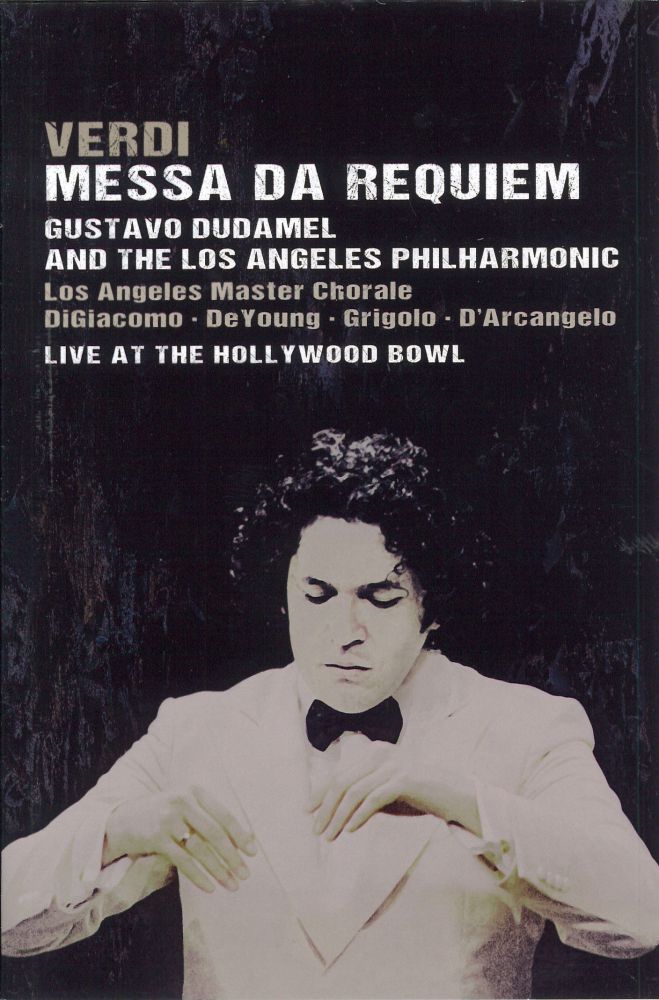
Young Dudamel’s idea of bringing Verdi’s Requiem into the open air, to an unlikely venue with questionable acoustics was a risky undertaking. It was riddled with technical problems from the very beginning, but somehow it came off surprisingly well and turned out to be a huge success. And with good reason too.

Young he may be yet he is not a showman, but a very serious, dedicated and astute musician. He conducts the entire mass without a score and without a baton, using his hand gestures (like Karajan did), not at all easy when controlling the vast forces at his disposal. He says he wants to have the piece in his hands, close to his heart. Using carefully maintained slow tempi ensures every detail is moulded to perfection, but he never lets the tension sag – Verdi would have hated that! He is also fully aware of the tremendous dramatic aspects of the work: witness the sudden deep silence after the gigantic outburst of “Dies Irae” when the clouds disperse to open up to clear blue sky, with trumpets sounding from high above and one really feels God is coming to pass final judgment.

There is a fine quartet of soloists, each having their memorable moment: Juliana Di Giacomo is heartbreaking in “Libera me,” the part actually written first where the soprano reigns supreme; Michelle DeYoung shines eternal light in “Lux Aeterna.” Vittorio Grigolo is certainly no easy-going Duke of Mantua (where I saw him last) but deeply moving in his tenor solo at “Ingemisco” and Ildebrando D’Arcangelo, with his very suitable name, is a seasoned veteran in the basso role who provides a solid foundation to the numerous solo assemblies Verdi had always excelled in writing.


02 vocal 04 busoni faustBusoni – Doktor Faust
Henschel; Begley; Hollop; Jenis; Kerl; Fischer-Dieskau; l’Opéra National de Lyon; Kent Nagano

Erato 2564 64682-4

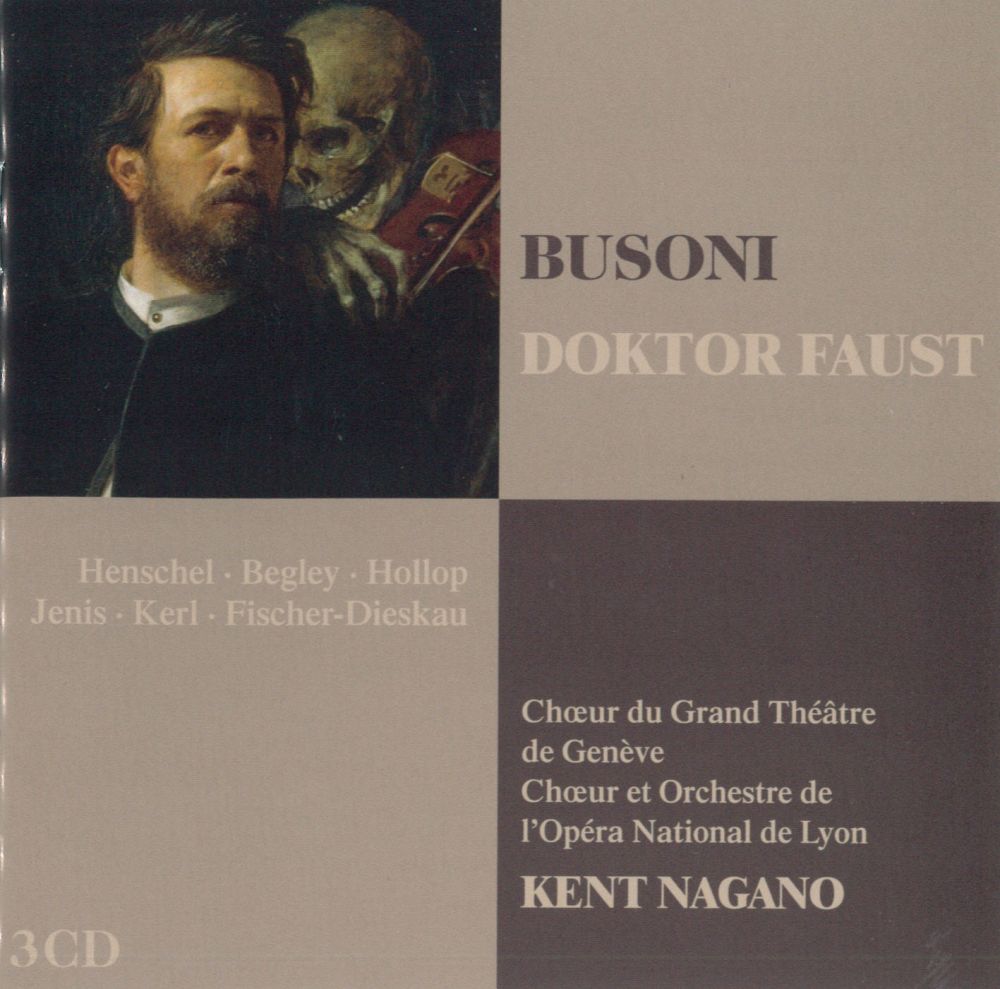
Ferruccio Busoni (1866-1924) was celebrated by his contemporaries as an astounding pianist and valued teacher but considered himself above all a composer. It was not until the 1980s however that his compositions began to attract the international attention they deserve. Busoni rightly considered his opera Doktor Faust as the summation of his life’s work. His interpretation of the Faust legend takes its inspiration not from Goethe but from the origins of this mythical figure in Medieval puppet plays. He wrote and published his own libretto in 1916 and devoted the remainder of his life to its composition. Sadly, he died just short of the completion of his masterpiece, which he entrusted to his student Philipp Jarnach to fulfill for the 1925 premiere.

In 1982 the musicologist Anthony Beaumont reconstructed two more scenes intended for the ending of the opera from previously unavailable sketches and this “complete” version was issued on the Erato label in 1988. The Erato firm was absorbed by Warner Music in 1992 and this important recording became unavailable. Happily, further corporate restructuring has brought it back to life in Warner’s new “Erato Opera Collection” launched in 2013. This reissue features the Opéra de Lyon production under the direction of Kent Nagano with Dietrich Henschel in the lead role, Kim Begley as Mephistopheles and Eva Jenis as the Duchess of Parma among others. Though the interpretations are immaculate and the sound is very fine the repackaging offers only a brief synopsis and no libretto is provided, though with some sleuthing an English translation of the Jarnach version can be located on the internet.

The incomparable Dietrich Fischer-Dieskau first made this work famous in a compelling 1970 recording conducted by Ferdinand Leitner with the Bavarian RSO on the Deutsche Grammophon label. Fischer-Dieskau (Henschel’s teacher from long ago) also appears in the cast of the Erato production, though his is merely a speaking role at this late point in his career. The landmark DG recording has also long been in limbo though I am happy to report it too has resurfaced in digital form on iTunes. Were it not for some major cuts to the score (not necessarily a bad thing) and the damage done by the woefully wobbly Hildegard Hillebrecht as the Duchess it would still stand as my preferred interpretation of this strangely beautiful drama.

The Beaumont additions are provided as fillers at the end of the third disc of the Erato set, with suggestions of programming the tracks to either avoid or include them clumsily sketched out, though there is no discussion of the history of the reconstruction in the documentation. Rather than ending with the melodramatic death of Faust in dismal E-flat minor the Beaumont version ends with his mystical redemption through reincarnation in a luminous C major. Take your pick then, though it seems to me that on the opera stage death wins every time. The Beaumont edition has evidently failed to catch on; the recent 2001 Metropolitan Opera and 2006 Zurich Opera productions revert to the 1925 Jarnach version. Both featured baritone Thomas Hampson in a temperamental interpretation of the title role, with the latter performance available as an ArtHaus DVD previously reviewed here by yours truly (March 2008).


Back to top