15 Carl AllenTippin'
Carl Allen; Christian McBride; Chriss Potter
Cellar Music 011424 (carlallen.bandcamp.com/album/tippin)

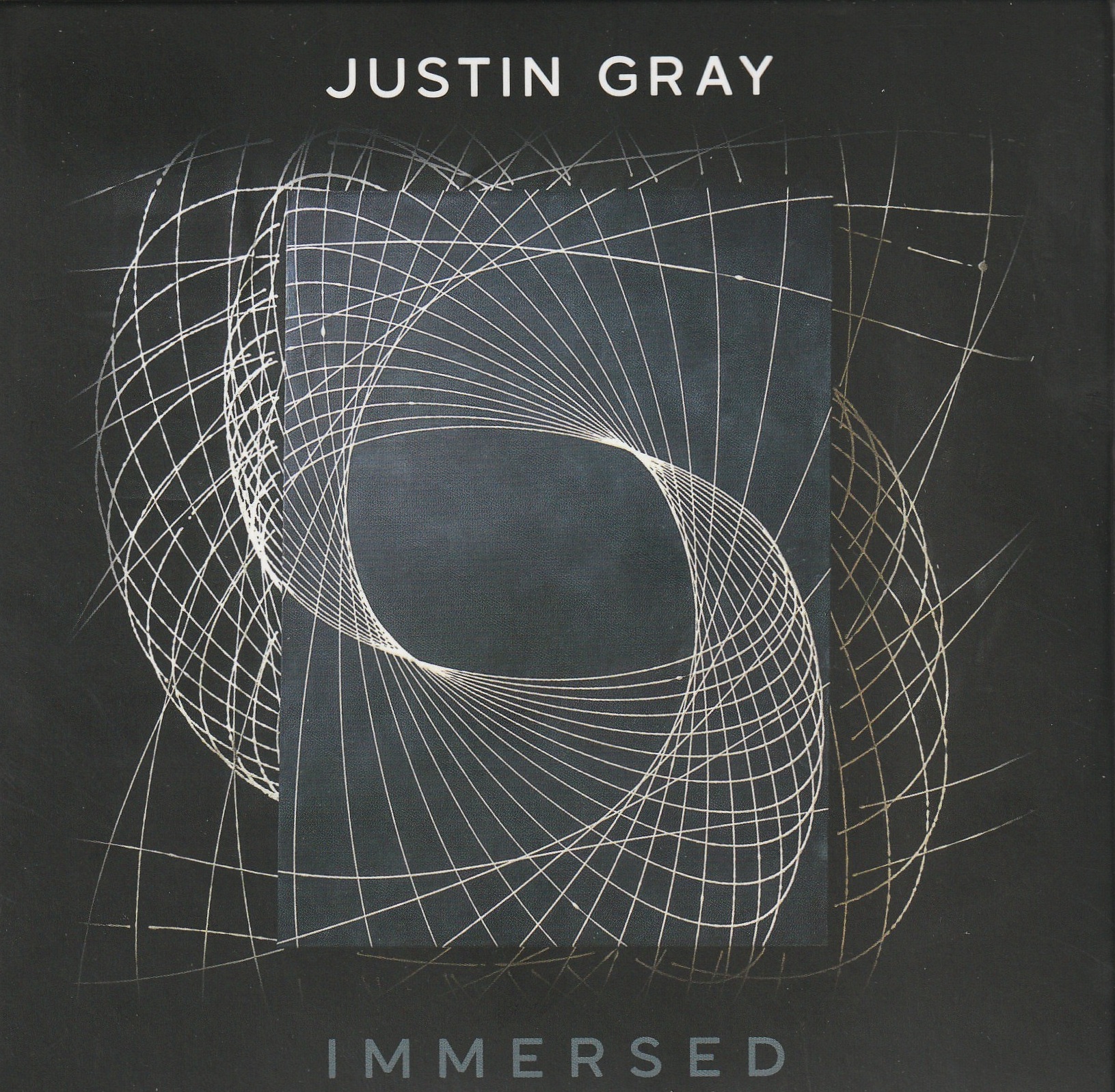
Canadian Cory Weeds’ Cellar Music is an extremely well curated label, and they’ve accomplished the commendable feat of achieving a unified sound amidst a diverse catalogue. Tippin’ is drummer Carl Allen’s first album as a bandleader in over two decades, and he’s chosen to showcase himself in an intimate trio format. Allen’s work as both a sideman and a leader features grounded and swinging aesthetics, and he’s chosen 12 unique pieces of music that allow him to shine in a playful and interactive manner. 

The drummer is joined by two fellow Americans, saxophonist Chris Potter and bassist Christian McBride. They are all stalwarts of the New York jazz scene, and the album is recorded across the Hudson River at the legendary Van Gelder Studio in New Jersey. The trio becomes a quartet for Kenny Barron’s composition Song For Abdullah, when Canadian multi-instrumentalist John Lee joins the group on piano. Lee has released several albums with Cellar Music and fits right in as a guest on this uplifting number. 

The trio takes advantage of contrasting sounds and textures, with Potter doubling on soprano sax and bass clarinet, and McBride contributing some immaculate bowed melodies and solos. Allen penned two of the album’s compositions, Hidden Agenda, and Roy’s Joy, a nod to the late trumpeter Roy Hargrove. These fit neatly alongside a smattering of contemporary jazz pieces and torch songs.  

Charlie Parker’s Parker’s Mood is the first track of the album, and it sets the mood for what’s to come. A recording that’s simultaneously spot-on and virtuosic, but “chill” and intimate enough for a more casual jazz listener to enjoy.

16 Old Adam on Turtle IslandOld Adam on Turtle Island
Dikeman/Hong/Lumley/Warelis
Relative Pitch RPR 1203 (
relativepitchrecords.bandcamp.com/album/old-adam-on-turtle-island)

As intense as it is international, Old Adam on Turtle Island’s two extended tracks showcase the collective skills of four Amsterdam-based players in creating modern layered improvised music. The disc is built around the seemingly inexhaustible ability of American tenor saxophonist John Dikeman to propel note bending screaming smears, split tones and altissimo shrieks with constant ferocity as rolling clips from Polish pianist Marta Warelis alternately decorate or drive the expositions. Korean drummer Sun-Mi Hong’s measured clunks or reverberations underline sequences with beats more felt than heard, while Canadian bassist Aaron Lumley divides his string sweeps between rhythmic continuity and interludes which add to the strident polyphony without upsetting linear motion.

The encounter reaches its apogee on Groove - Choral - Manifest, the second track, which is introduced by Lumley’s multi-string sul ponticello slides and stops. Superseding weighted drum ruffs and tolling keyboard clips, hefty pizzicato sweeps prod Dikeman and Warelis to filet enough discursive keyboard shakes and bellicose overblowing to reveal a moderated horizontal group finale.

With enough solid interludes to allow each musician to depict progressive and reactive skills, the session is also elevated to a definition of creative music sophistication.

17 Steve SwellHommage à Galina Ustvolskaya
Steve Swell’s Imbued With Light
Silkheart SHCD 166 (silkheart.bandcamp.com/album/hommage-galina-ustvolskaya)

Surrounded by a coterie of six fellow New York improvisers, trombonist Steve Swell blends these players’ tones to honour the oeuvre of Russian composer Galina Ustvolskaya (1919-2006). A unique home-grown avant-gardist whose music was often out of the Kremlin’s favour, her idiosyncratic creations are saluted by Swell and company with a nine-section suite influenced by her sound blocks and frequent triple forte sequences.

The instrumentation means that these salutes highlight more than Ustvolskaya’s favorite motifs like percussive piano dynamics played by Robert Boston or Chris Hoffman’s strained spiccato cello slices. Also highlighted are Sara Schoenbeck’s pinched bassoon undulations, which introduce Essential Workers and often harmonize with Ben Stapp’s tuba burps; as well as Harris Eisenstadt’s percussion patterning. Swell’s brass skills contribute as do Herb Robertson’s trumpet yelps, grace notes or squeaky toys which produce layered cadences on Composite #12.  

With slurry honks, gutbucket snarls and speedy note bending, at times in unison with the other brass, the trombonist puts an individual stamp on such pieces as Hammer, Rocks and Toe The Wet Sprocket. Simultaneously his portamento connections with metronomic keyboard work and tuba stops confirm the tunes’ horizontal evolution – and unexpected marching band resemblances – despite frequent interludes of thematic mutation. 

This CD should introduce more people to Ustvolskaya’s works and at the same time confirm how exceptional the Swell septet’s tribute to her music is since it’s created with its own distinctive sounds.

01 Happy FacesHappy Faces
Dave Robbins Big Band
Reel to Real Records RTRCD015 (thedaverobbinsbigband.bandcamp.com/album/happy-faces)

The big band is often associated with being a kind of period piece of the proverbial Swing Era and we tend to forget that the best of them can come to represent the very epitome of an all-encompassing concert instrument. Truth be told this vaunted position is not only the exclusive domain of the flashiest outfits such as the Duke Ellington and Count Basie, or the Benny Goodman and Lionel Hampton orchestras either.

On this disc the redoubtable American/Canadian bandleader Dave Robbins and his illustrious colleagues explore the fire power of controlled chamber music that arises when various brass, reeds and woodwind instruments, and piano, bass and drums, are put in the hands of some quite legendary musicians. Happy Faces, the resultant album is a magisterial edifice of music in numerous lyrical and colourful contexts, each one reflecting the singular ability of each of the contributing musicians to swing with proverbial style and abandon. 

Robbins (1923-2005) was a generous purveyor of musical good taste, and it is not only charts such as Have Vine Will Swing and Africa Lights that provide indubitable evidence of this. There are reasons beyond those charts to savour the disc. Fraser MacPherson’s tenor saxophone on March Winds Will Blow, and Don Clark’s trumpet solo on Asiatic Raes is another; as is Don Thompson’s tasteful contrabass on the abovementioned Have Vine Will Swing

Released on Cellar Live’s Reel to Real label for historic performances, Happy Faces comprises Jazz Workshop broadcasts recorded at Vancouver's Cave Supper Club between 1963 and ’65. It is an elegant reminder of the swinging legacy of Dave Robbins.

02 Freddie Hubbard On FireOn Fire - Jazz from the Blue Morocco
Freddie Hubbard
Resonance Records HCD 2073 (resonancerecords.org/artists/freddie-hubbard)

Few jazz trumpeters have had the initial impact or sustained achievement of Freddie Hubbard. Born in 1938, he made a substantial impact in New York in 1960, in both hard bop circles and the avant-garde, recording his first date as a bandleader for Blue Note and appearing on Ornette Coleman’s landmark Free Jazz. In the following year, he joined Art Blakey’s Jazz Messengers and appeared on John Coltrane’s Olé and Africa/Brass. Merging elements of both schools in his own music, Hubbard also managed to combine the trumpet’s brassy power with the fluency of line associated with saxophonists.

On Fire is a two CD or three LP set recorded at a Bronx club called Blue Morocco in 1967. While one might lose the precise separation of a recording studio, a live recording has a special spontaneity and the real scale of a performance. Hubbard’s own contribution to the standard repertoire, the waltz Up Jumped Spring, stretches to 17 minutes, while separate traditional standards – Bye, Bye Blackbird and Summertime – combine for 40 lively minutes. 

Hubbard is joined here by his regular working band, youthful musicians (ages range from 23 to 26) who would all go on to have significant careers. On Hubbard’s True Colors, he and tenor saxophonist Bennie Maupin press the envelope to explosive free jazz. Throughout pianist Kenny Barron, bassist Herbie Lewis and drummer Freddie Waits contribute to the overall excitement, making individual statements as well as supporting Hubbard’s creative energies.

03 Bill Evans in NorwayBill Evans in Norway - The Kongsberg Concert
Bill Evans; Eddie Gomez; Marty Morell
Elemental Music (elementalmusicrecords.bandcamp.com/album/bill-evans-in-norway-the-kongsberg-concert)

To say that iconic jazz pianist Bill Evans has been a profound influence on several generations of jazz pianists would be something of an understatement. Evans (who passed in 1980) emerged as a sideman on the New York scene in the 1950s, and through his work with a long list of jazz luminaries, Evans not only helped usher in contemporary jazz (with all of its modern expressions), but also perfected the Art of the Trio as we know it today. This never previously released music was originally recorded at a concert at Norway’s Kongsberg Jazz Festival in June 1970. The recording was produced for this release by “Jazz Detective” Zev Feldman. Evans is joined here by his longest-running trio – Eddie Gomez on bass and Marty Morrell on drums. This comprehensive, annotated recording includes rare interviews with Evans with extensive notes by Evans scholar Marc Myers.

The brilliantly restored programme includes a cornucopia of standards from legendary tunesmiths, and features fresh versions of two Evans compositions, 34 Skidoo and Turn Out the Stars. At the time of the performance, Evans was in a particularly positive space, which is very much apparent in the lively tempos and energy of the trio. Harold Arlen’s Come Rain or Come Shine is performed here with a free, extended bass solo by Gomez, framed by the relentless rhythm of Morell.  Evans jumps in with joy, in a celebration of both the melody and its improvisational possibilities. 

During What Are You Doing the Rest of Your Life the audience is reverential as they experience both the sheer artistry and great sensitivity of Evans. Other standouts include an almost modal, up-tempo Autumn Leaves, a sumptuous piano performance of Denny Zeitlan’s Quiet Now and the nearly unbearable beauty of Bernstein’s Some Other Time. Every track here is a gem – and a living tutorial of how jazz should be understood and played.

04 Ella The Moment Of TruthMoment of Truth - Ella at the Coliseum
Ella Fitzgerald
Ume 602475454267 (shop.ellafitzgerald.com/products/the-moment-of-truth-ella-at-the-coliseum-digital)

Now this right here is a true discovery! On June 30, 1967 at the Oakland Coliseum Arena, Ella Fitzgerald appeared with her trio, members of the Duke Ellington Orchestra, and entertained a rapturous audience that inspired her deeply.

While the First Lady of Song’s voice was a few years beyond the peak of her powers, it was still a magnificent instrument at the time of this recording. She still had the bell-like tone for ballads (You’ve Changed), the sensational ability to swing like a gate (The Moment of Truth), and a childlike imagination in her scat singing (In a Mellow Tone). Most impressive is her adventurous phrasing throughout; the coda on Don’t Be That Way stretches the title phrase effortlessly into upwards of 40 notes, in what is just one of several jaw-dropping moments in the set.

The inclusion of songs never before heard in Fitzgerald’s discography make this album particularly exciting, especially the pitch-perfect version Alfie, which of course was a big hit the year before this concert, and Music to Watch Girls By, a great example of her ability to make a silk purse out of a sow’s ear. Bye Bye Blackbird is loose as a goose with the delicious spontaneity of a late-night jam session.

Audiophiles should know that the mixing and mastering of this album are very impressive – it feels like you are right there in the audience, cheering on one of the greatest artists in jazz history.

Only a vanity project if designed that way, multiple recordings from a single artist can offer more than collating obscure or famous souvenirs of a storied career or celebrating a brace of hits. When it comes to creative music, multiple discs give the creator more space to showcase original music in one package and a chance for the listener to hear in complete detail perspectives the individual innovator wishes to present. Dealing with musical auteurs here, each of these sets serve a different purpose. One is new music attached to receiving an important artistic honour. Another presents different tranches of a musician’s oeuvre as he celebrates an important age milestone. The third collects idiosyncratic performances of wholly original music.

01 Joelle LeandreHonouring her as the first non-American recipient of the Lifetime Achievement award presented annually by New York’s Vision Festival Lifetime Rebel (RogueArt ROG-0137 rogueart1.bandcamp.com/album/lifetime-rebel) assembles concerts from French bassist Joëlle Léandre. Three CDs recorded during the 2023 festivities feature her with her Tiger Trio of flutist Nicole Mitchell and pianist Myra Melford; on another with her Roaring Tree group with pianist Craig Taborn and violist Mat Maneri; and a third matches her bass and voice with the spoken words of Fred Moten. Another disc, presenting her Atlantic Ave. Septet, was recorded six months later in France with trombonist Steve Swell, tenor/soprano saxophonist Ingrid Laubrock, violinist Jason Hwang, violist Maneri, cellist Fred Lonberg-Holm and guitarist Joe Morris. Interestingly enough, every other player featured is American. These international connections and her unique role in the music world are touched on, along with other subjects in the included DVD where Léandre, who will be 74 this year, is interviewed about her long career with first notated and then improvised music, interspaced with bass solos. 

While the interaction with Moten gives Léandre a chance to demonstrate her immediate response to poetic prompts, Moten’s citing of various jazz heroes within his stream of consciousness, seemingly disjointed tales about neighborhoods, travel and relationships don’t really connect to Léandre’s sounds. His poetics seem more fanciful than logical. Moten singing a snatch of Lush Life comes across as less musical than the yells and yodels Léandre appends to her string improvisations that reach an early climax as she mumbles and string bumps to underline his salute to other bass playing avatars. 

More balanced, the Tiger Trio improv is swifter and tougher with pieces starting from a connective centre and moving outwards. Mitchell’s transverse arabesques growl and trill with the same finesse; her highest notes resembling human vocals while her thickened quavers balance the bassist’s sul ponticello strokes, which sometimes appear to slice the strings and wood like a sharp axe blade. Melford’s measured comping means that connection and expression are never lost and her quick key clips and tingles are dynamic enough to cement forward motion even as Mitchell peeps and Léandre vocally whoops, mumbles and pants. 

The Roaring Tree trio’s set of improvised chamber music is involved in contrapuntal expositions involving intense keyboard leaps on one side and buzzing pitches from the bass and viola on the other. Maneri’s strident clipping and spiccato slashes decorate the four tracks’ top layer while Léandre’s responsive buzzes maintain the bottom. Everything comes to a head on Roaring Tree #4 where the set’s finale involves moving a portamento piano turnaround into pedal point with vital arco extensions from the others, as the exposition moves from andante to allegro to prestissimo. 

Latterly, the Atlantic Ave. Septet’s nearly 43-minute performance of Atlantic Ave. #1 captures a fully realized composition by the bassist which uses the ensemble's capabilities to broaden the piece which reflects aspects of her musical persona. Bisected by several tutti interludes during which the players ascend the scale with confidence, the polyphonic movement encompasses harmonized, almost romantic sequences with space for individual expression. Although the five string players sometimes move as a block, a jazz-like walking bass line and harsh col legno string banging arise solely from the cellist and bassist. Hwang and Maneri alternate between swelling unison strokes and aviary squeaks. Swell’s plunger tones roughen up any string cushioning as do Laubrock’s thin soprano sax squeaks. Despite sections of cacophony, Léandre and Swell combine for a break that’s almost baroque, while the saxophonist’s tenor contributions inject an element of modern jazz into the piece. Beside her distinctive tough wood smacks and pizzicato pacing, by the conclusion the bassist vocalizes her now familiar Bedlam-style grumbles and faux operatic bel canto cries. Confirming the individuality of her composition, this quirk is manifest seven-fold at the beginning, the end and at mid-point as all the musicians vocally mutter, yell, gurgle, laugh and hector before circling back to their instruments. 

02 Burkhard BeinsSignificant birthdays can also be a reason for exploratory musicians to reflect on their legacy. To celebrate his 60th birthday last year Berlin-based composer/improviser Burkhard Beins has released Eight Duos (Ni Vu Ni Connu LP 053-055 nivuniconnu.bandcamp.com/album/eight-duos), whose eight selections feature his collaboration with a cross section of the city’s other sound makers. Beins, who also creates sound installations, has for decades been involved in the German capital’s evolving Echtzeitmusik or real-time music scene. Here he varies his instrumentation on every track bringing out an amplified cymbal, bass drum, snare drum, drum kit, analog synthesizers, walkie talkie and samples at various times, with his partners playing acoustically or heavily involved with electronics. Unleash with pianist Quentin Tolimieri, is probably the closest to jazz. Using a full kit Beins’ echoes and rattles complement the pianist’s linear dynamics that slide down the scale and then reverse in such a manner that Tolimieri’s sudden stops and hammered keys end up as percussive as Beins’ beats. In contrast Transmission, where Beins’ synthesizer and samples are interlaced with the antennas, receivers and tape machines of Italian Marta Zapparoli, is solely affiliated to voltage. The rugged oscillations by both distend to mirrored affiliations which centre on extensive textures that commingle as widening electric lawnmower-like drones and unvarying rumbles are only infrequently pierced by suction-like projections, muffled rocket-launching explosions, airy whooshes and backwards flanges and shakes. The result is almost opaque until the final dissolve. Still the most characteristic duets involve two individual Echtzeitmusik theoreticians: idiosyncratic trumpeter Axel Dörner and Andrea Neumann, who plays inside piano and mixing board. Initially low key, Expansion blends board hisses and reverb with Neumann’s careful string slides that meld tolling, buzzing and clipped timbres. Beins’ isolated cymbal vibrations and strained scratches end with reverberations sounding like distant thunder. The joint murmurs simultaneously suggest vibrant colours and crepuscule. A variant of this, Dörner’s technique on Unlock is to never emphasize a whole note but instead create brass architecture from half valve spits, hollow strains, toneless breaths, growly smears and distant whistles. Occasionally side snare scratches and foreshortened drum top rubs match up with trumpet strategy combining tongue and palm percussion sizzles.

03a ArmstrongVolOneThe oddest sessions here are the two-volume four-disc Louis Armstrong’s America Vol. 1 and Vol. 2 (ESP 5109/5110 allenloweesp.bandcamp.com/album/louis-armstrongs-america) performed by tenor saxophonist Allen Lowe & the Constant Sorrow Orchestra. Despite what the title may suggest this isn’t a salute to Satchmo’s music, but instead 69 unique tunes composed by Lowe that mix the styles of jazz created during Armstrong’s lifetime (1901-1971). Played by a total of 24 musicians in different small groups, the postmodern performances feature variations of every style from Classic Jazz to Free Jazz, with pivots into blues and tinges of rock.

03b ArmstrongVolTwoA writer as well as a musician Lowe whose career sideline for cancer treatment is referenced throughout with multiple versions of the non-sentimental ballad I Should Have Stayed Dead, reflects his POMO orientation in quirky song titles which are inside jokes for jazz fans. Duke Ellington’s Black and Tan Fantasy becomes Black and White Fantasy and a jolly march with Ray Suhy’s clanking banjo, Aaron Johnson’s slippery clarinet and Frank Lacy’s muted trumpet prominent. Hello Dali, a contrafact of Hello Dolly, joins synthesizer gurgles, some bebop licks and ends with the famous few notes from Beethoven’s Fifth Symphony. Under the Weather, a take off on Armstrong and Earl Hines’ Weatherbird, rolls along with pianist Loren Schoenberg emulating Hines’ swift and splattering patterns and Lowe’s slippery Swing Era sax solo. A salute to an early ragtime popularizer Mr. Harney Turn Me Loose has pianist Matthew Shipp melding his free jazz timing to a raggy beat; while Shufflin’ The Deck (Take 5, Please) turns the Dave Brubeck quartet’s Take Five into a simple shuffle as Johnson languidly and pianist Jeppe Zeeberg vigorously create a Bizarro version of Brubeck/Paul Desmond duets. When Dave Schildkraut Goes Marching In blends When The Saints featuring slap bass and banjo with hard tenor sax riffs and bass drum accents in the style of the obscure bop saxophonist of the title. Meanwhile guitarist Marc Ribot adds his searing rock-blues flanges on tunes like Riot On The Sunset Strip – named for the 1967 drug exploitation film – where Lowe quotes Lonely Avenue within his slurpy, honking solo. Trombonist Ray Anderson comes across as the session’s MVP, adding modernized gutbucket slurs and rippling tailgate extensions mated with Johnson’s clarion Trad clarinet on Back Home Rag; and contrasts his basement plunger tones with tap-dancing like drumming on Mr. Jenkins Lonely Orphan Band a take off on both Sgt. Pepper's and the New Orleans orphanage band where Louis Armstrong learned to play cornet. There’s even a sly salute to modern notated music with John Cage Turns the Page (or: 3:02) where Lowe and company burlesque Cage’s infamous “silent” piece by shaking loosened strings, slapping piano wood, muffle drum pops, advance brief reed cries and above all noisily shred and crunch paper.

Multiple sets can be used by musicians to celebrate honours, notable age milestones or to express multiple ideas without having to précis a musical vision. All are equally valid.

03 ConfluenciasConfluencias
Melon Jimenez; Lara Wong
Scatcat Music (larawong.com/melonlara)

Confluencias contains hauntingly atmospheric oceans of music that are likely to fill your listening room. Both the music of the flute of Lara Wong and the guitar of Melón Jiménez (with contrabass and percussion and judiciously added electronics as well) combine to make it so. 

Wong is a virtuoso concert flutist and turns on the most seductive charm every time she puts the instruments to her lips, sculpting extraordinary melodic phrases and lines. But when she exchanges that flute for the hollowed-out bamboo of the Indian bansuri she unleashes an exponentially bewitching charm that will hold you in irresistible – and willing – bondage. 

Jiménez is no less a virtuoso. He puts this to work to bring to life his flamenco roots. He evokes memories of the great province of Andalusia that is home of the greatest of flamenco practitioners including José Miguel Carmona Niño, Juan José Carmona Amaya El Camborio, Paco de Lucía, Pepe Habichuela, and others. 

Jiménez’s flawless technique is employed through picados and rasgueados (flamenco strumming) with great sensitivity. He’s playing to bring to life what Federico García Lorca called the “Dark sounds of duende – that mysterious force that everyone feels, and no philosopher has explained. The duende is not in the throat: the duende surges up, inside, from the soles of the feet.”

Two songs on this riveting album that will leave you breathless are Kalima and Pardo Perdío.

Berio QuartetsBerio: Intégrale des quatuors à cordes | Complete String Quartets
Quatuor Molinari
ATMA Classique ACD2 2848 (atmaclassique.com/en/product/berio-complete-string-quartets)

Serial winners of awards often tend to give something back. Quite often that means donating money to a deserving cause and – to all intents and purposes – being done with it, and that’s not nothing.

In the case of the much-celebrated Quatuor Molinari, giving something back is a continuation of their collective lives, of the philosophy that has governed every day since 1997 when they first dedicated those very lives to breaking musical ground in “devoting themselves to string quartets of the 20th and 21st centuries.” This endeavour continues with Intégrale des quatuors à cordes, (The Complete String Quartets) of Luciano Berio (1925-2003).

From the (complete quartets) of R. Murray Schafer, the repertory work of Bartók, Berg and Britten, Gubaidulina and Ligeti, Penderecki, Schoenberg and Webern this quartet – so named after the legendary Canadian painter Guido Molinari – has lit a crackling flame for the avant-garde. Their Kurtág cycle which won them the Ecko Klassik Award (now Opus Klassik) in 2017 is one of many prestigious international awards to adorn their proverbial mantlepiece,

Sparks fly when Quatuor Molinari – Olga Ranzenhofer (first violin and artistic director), Antoine Bareil (violin), Frédéric Lambert (viola) and Pierre-Alain Bouvrette (cello) – take to the stage, challenged by Berio. His work would push musicians with even the most sublime technical skill to the limits, with his love of the theatrical, fascination with the voice, and his constant willingness to engage with art of the past –Monteverdi and Dante – and the present – jazz and electronic music. His unique “future-past” musical sojourns certainly define these seemingly omnivorous works.

The expressive breadth of Berio’s music is beautifully captured in these sumptuous performances. The dazzling semantic and musical labyrinths concocted by each work demand pyrotechnical skill from the Molinari. The miraculously lucid performance of Notturno is the highlight of this fascinating disc.

01 Israelievitch MozartIt’s hard to believe that it’s been almost ten years since we lost violinist Jacques Israelievitch. To mark the anniversary the Navona label has reissued as a set the six volumes of Mozart: Complete Sonatas & Variations for Piano & Violin (Navona NV6697 navonarecords.com/catalog/nv6697) recorded in partnership with Christina Petrowska Quilico at York University between November 2014 and May 2015 and originally released on the Fleur de Son Classics label.

Retiring after 20 years as concertmaster of the Toronto Symphony Orchestra, Israelievitch joined the faculty at York in 2008 where he formed a duo with Petrowska Quilico that resulted in their wanting to record all the Mozart sonatas. Part way through the project he was diagnosed with advanced lung cancer, and after a break for hospital treatment was able to find the strength to complete the project just four months before his death. The last six sonatas were recorded in less than four hours, but there’s no hint of physical weakness in his playing, although the final sessions were apparently marked by extreme pain and fatigue.

The early juvenile sonatas are essentially piano sonatas with violin embellishments, Israelievitch weaving delightful lines around Petrowska Quilico’s finely measured playing, but the mature sonatas see a genuine partnership, two players clearly of one mind.

There’s no booklet with the set, but information can be accessed at the Navona Records website, including Petrowska Quilico’s touching memories of that final summer.

It’s truly a worthy and lasting memorial tribute to a fine and greatly missed violinist and what was clearly a very special musical and personal partnership and friendship.

02 KineticKinetic is the remarkable solo album by violinist Michael Jinsoo Lim, who as concertmaster and soloist with the Pacific Northwest Ballet felt himself to be “at the intersection of music and dance” for over 15 years; each piece here has a dance connection (Planet M Records PMR-006 planetmrecords.bandcamp.com/album/michael-jinsoo-lim-kinetic).

There are personal connections with all but one of the composers: Lim and his wife, the violist/composer Melia Watras, were founding members of the Corigliano Quartet, named for American composer John Corigliano; Watras has collaborated with fellow violist/composer Leilehua Lanzilotti; Lim has known Paola Prestini since their Juilliard days. 

All three works by Watras - Doppelgänger Dances, A dance of honey and inexorable delight and Homage to Swan Lake – were written for this project and are world-premiere recordings, as are Lanzilotti’s where we used to be and Prestini’s A Jarful of Bees. Corigliano is represented by The Red Violin Caprices and the glorious fiddle-inspired Stomp, which requires the player to do exactly that.

Piazzolla’s Tango-Études Nos.1, 3 and 4 are interspersed throughout a fascinating recital of quite brilliant playing by Lim.

Listen to 'Kinetic' Now in the Listening Room

03 Anja LechnerOn BACH | ABEL | HUME, her first solo album for the ECM label, cellist Anja Lechner brings together three different composers from two centuries for an intriguing musical recital inspired by the tonal language of the viola da gamba (ECM New Series 2806 ecmrecords.com/product/bach-abel-hume-anja-lechner).

Little is known about the Scottish composer Tobias Hume (c.1579-1645) whose skill on the viola da gamba contributed significantly to its establishment as a solo instrument. His short pieces, seven of which are heard here, were mostly notated in tablature and appeared in The First Book of Ayres printed in 1605.

The German Carl Friedrich Abel (1723-87), represented by an Arpeggio and an Adagio, both in D minor, helped the instrument achieve renewed prominence before it finally faded from regular usage.

At the heart of the CD are Bach’s Suites for Violoncello Solo No.1 in G Major, BWV1007 and No.2 in D Minor, BWV1008, written when the solo cello was establishing independence but incorporating much of the sound and language of the declining viola da gamba – in fact, they may possibly have been written for Abel’s father, a cellist and gambist in Bach’s Köthen court orchestra.

Lechner’s effortless and sensitive playing, resonantly recorded, makes for a delightful disc.

04 Mozart DuosThere’s some fascinating content on Mozart String Duos, violinist Catherine Cosbey and violinist/violist Dorian Komanoff Bandy presenting period-instrument performances of the two Duos for Violin and Viola in G Major, K423 and in B-flat Major, K424, alongside newly discovered historical arrangements of a Mozart violin sonata and several arias from a late opera (Leaf Music LM297 leaf-music.ca/music/lm297).

Cosbey and Bandy apparently insert “extensive embellishments and cadenzas” into their performances, although they are not particularly noticeable. The two Duos receive idiomatic readings, but while there are numerous alternative recordings available you won’t have heard any of the fascinating violin duets here before. 

The Violin Sonata in A Major K305 was transcribed for two violins by an anonymous Parisian arranger in 1799 and it’s really effective, drawing some of the best playing on the CD from the duo. Mozart’s opera La Clemenza di Tito was premiered in September 1791, just three months before the composer’s death; five arias were arranged for two violins by Johann Christian Stumpf, a German composer active in Parisian publishing in the 1780s who died in 1801. 

The duets were discovered in rare book libraries in Texas and Germany, and have in all probability not been heard since the early 1800s. Who knows what other gems we’ve been missing?

Listen to 'Mozart String Duos' Now in the Listening Room

05 Schumann IbragimovaYou’d have to go a long way to find a more exciting duo than violinist Alina Ibragimova and her long-time partner of 16 years, pianist Cédric Tiberghien. Sparks fly when they play together, and their latest CD of the Schumann Violin Sonatas adds another dazzling recital to their discography (Hyperion CDA68354 hyperion-records.co.uk/dc.asp?dc=D_CDA68354).

The Violin Sonata No.1 in A Minor Op.105 and the Violin Sonata No.2 in D Minor Op.121 were both written in 1851. The Violin Sonata No.3 in A Minor, Wo027 has had a varied history. In late 1853 Schumann suggested the composition of a collaborative sonata for violinist Joseph Joachim to be written by himself, Brahms and Albert Dietrich and based on the initial letters of Joachim’s personal motto: F-A-E for “Frei aber einsam” (Free but lonely). Schumann contributed the slow movement and finale, shortly afterwards adding two new movements to replace those of Brahms and Dietrich, hence completing a third sonata, his last surviving major work. 

Although originally delighted with the sonata, Clara Schumann and Joachim grew to view it negatively; it was not included in the Collected Edition prepared by Clara, Joachim and Brahms, and remained unpublished until 1956. 

06 WITRAZDescribed as a poignant tribute to resilience and artistic reassembly, the new CD Witraż - the Polish word for Stained-Glass Window – references the shattered windows of Winchester Cathedral during the English Civil War and the rearranging of the shards into mosaics by the local people, comparing it to the way beliefs and values were shattered in Eastern Europe between the two World Wars. Shannon Lee is the excellent violinist and pianist Arseniy Gusev her equal partner (Azica ACD-71373 shannonleeviolin.com/projects/witraz).

Szymanowski’s shimmeringly beautiful Mythes – La fontaine d’Arethuse (actually from 1915) opens a recital of the highest quality, book-ended by the two major works, Bartók’s Violin Sonata No.1 from 1922 (with a really terrific Allegro finale) and Stravinsky’s 1932 Duo Concertante. In between are several short works: Gusev’s arrangement of Come di lontananza, No.5 of the 1925 piano solo Reflections Op.16 by Ukrainian composer Boris Lyatoshynsky (1895-1968); Bohuslav Martinů’s 1927 Impromptu H.116 and two items by Grażyna Bacewicz, her Kolysanka (Cradle Song) and the CD’s 1932 title track.

I’m not sure if the works always fit with the purported inspiration for the CD, but there’s no doubting the standard of the playing.

Listen to 'Witraż' Now in the Listening Room

07 Francisco MignoneFrancisco Mignone (1897-1986) was a leading figure in 20th-century Brazilian music and part of the first generation of modernist Brazilian composers. The excellent new CD of his Complete Violin Sonatas in the Naxos Music of Brazil series features violinist Emmanuele Baldini and pianist Lucas Thomazinho (8.574595 naxos.com/CatalogueDetail/?id=8.574595).

The three numbered sonatas – No.1 from 1964 and Nos.2 & 3, both from 1966, a period when Mignone was writing atonal music – are all world premiere recordings, and not exactly what you might expect from mid-century Brazilian chamber music, the first two being quite strident, experimental and fragmented in character and technically challenging. No.3 was reworked from 1962’s Sonata for Flute and Piano, and shows less fragmentation and a greater clarity of form.

Two early unnumbered sonatas complete the disc, the substantial three-movement Sonata in A Major from 1919 and the quite lovely single remaining movement from the 1916 Sonata in G Major both belonging to a different world, one infused with the French influence of Fauré and Debussy.

08 Nash Ensemble DebussyWith Debussy – The Nash Ensemble the British chamber group celebrates its 60th anniversary season with a recital of Debussy’s three late sonatas and his early string quartet (Hyperion CDA 68463 hyperion-records.co.uk/dc.asp?dc=D_CDA68463).

The Prélude à l’après-midi d’un faune in a really effective arrangement for wind quintet, string quartet, harp and crotales by the French composer David Walter opens the disc, followed by the three sonatas from 1915-17 that Debussy completed from a planned set of six. 

Stephanie Gonley is the violinist and Alasdair Beatson the pianist in a simply beautiful performance of the Violin Sonata in G Minor, and the standard never drops through the Sonata for Flute, Viola and Harp – Philippa Davies, Lawrence Power and Lucy Wakeford the respective soloists – and the Cello Sonata, with cellist Adrian Brendel and pianist Simon Crawford-Phillips the excellent performers. 

A passionate and immensely satisfying performance of the 1893 String Quartet, Debussy’s first mature chamber music work, completes a CD of the highest quality.

09 Beethoven CalidoreThe Calidore String Quartet completes its Beethoven project with Beethoven: The Early Quartets, a 3-CD set that ends their release of the complete cycle of Beethoven’s string quartets (Signum Classics SIGCD883 signumrecords.com/product/beethoven-the-early-quartets/SIGCCD883).

Although the six Op.18 quartets are often the first ones that players tackle, the Calidore members note that “they are by no means the easiest. Their transparency, elegance and robust shifts of character demand the most exacting levels of execution, poise and feeling,” and that’s exactly what you get in these outstanding performances. When The Middle Quartets was reviewed in this column a few months ago I commented that the unity of the ensemble playing was of the highest quality, and that there was a wonderfully varied dynamic range, and exactly the same can be said of this issue as well.

Hopefully the three volumes will be issued as a box set at some point, when they would offer an exceptionally strong option for a complete set.

10 Brahms Novus QuartetIt wasn’t only with the creation of symphonies that Johannes Brahms felt the heavy tread of Beethoven holding him back: he admitted that he had destroyed over 20 string quartets before publicly presenting his two Op.51 quartets in 1873, when he was 40 years old. On the 2CD release Brahms The Complete String Quartets the Korean Novus Quartet gives absolutely ravishing performances of the composer’s three completed quartets (Aparte AP366 apartemusic.com/en/album-details/brahms-string-quartets).

CD1 has String Quartets No.1 in C Minor, Op.51 No.1 and No.2 in A Minor, Op.51 No.2, while the second CD is devoted to the String Quartet No.3 in B-flat Major, Op.67 from 1876. This is Brahms playing of the highest quality – warm, vibrant, rich and passionate, and beautifully recorded. I’ve never heard them sound better – it’s a simply outstanding release.

11 Kalevi AhoThe Finnish composer Kalevi Aho (b.1949) started writing string quartets at the very beginning of his composing career, although he did not return to the form until 2021. His early works in the genre are presented on Kalevi Aho String Quartets 1-3 in powerful performances by the Stenhammar Quartet (BIS-2609 SACD bisrecords.lnk.to/2609).

Initially self-taught and taking inspiration from essentially tonal music heard on the radio, Aho wrote his String Quartet No.1 in 1967 at the age of 18, an earlier work from 1966 not being included in his official quartet canon. Even so, a self-imposed performance ban on the newer work resulted in its not being premiered until June 2019.

The String Quartet No.2 from 1970 was written in his second year of studies with Einojuhani Rautavaara at the Sibelius Academy in Helsinki, its lovely opening Adagio and short, slow Adagio finale book-ending a brilliant, fugal and virtuosic middle Presto that brings Shostakovich to mind.

The String Quartet No.3 from 1971 marked the end of his studies with Rautavaara and the emergence of a personal language, its eight short, continuous movements forming a symmetrical journey from innocence to increasing complexity.

12 Ligeti MarmenThe Marmen Quartet was formed in 2013 at London’s Royal College of Music, and is committed to contemporary music. Their new CD Ligeti – Bartók, featuring strong and committed performances of three major 20th-century string quartets is their first recording for the BIS label (BIS-2693 SACD bisrecords.lnk.to/2693).

Ligeti’s String Quartet No.1, Métamorphoses nocturnes is a work of eight short movements from 1953-54, representing the peak of his “Hungarian” period before leaving the country for the West in 1956. Bartók’s middle quartets were a big influence on Ligeti, and one of them – the String Quartet No.4 from 1928 – is the middle work of the CD. Performances of the work were strictly forbidden in communist Hungary, and Ligeti knew it only from the score.

Ligeti’s String Quartet No.2 from 1968 is from his second period, and is a challenging work accurately described here as being calculated anarchy, with dynamic extremes and sublime climaxes.

13 ExileYou can always expect something different, inventive, insightful and immensely satisfying from violinist Patricia Kopatchinskaja, and so it proves yet again with her latest CD Exile, described as bringing together composers who for the most part were compelled to flee their homeland, and featuring cellist Thomas Kaufmann and the Camerata Bern (ALPHA1110 outhere-music.com/en/albums/exile).

Alfred Schnittke left Soviet Russia in 1990. His 1978 Cello Sonata No.1 is heard here in the 2020 version for cello, strings and harpsichord by Martin Merker, the haunting tonal picture of the opening Largo followed by a dazzling Presto with remarkable playing by Kaufmann.

Soviet oppression and the banning of his works forced Andrzej Panufnik to flee Poland in 1954. His Concerto for Violin and Strings is a charming work commissioned by Yehudi Menuhin. Ivan Wyschnegradsky (1893-1979), known for his use of quarter tones and micro intervals was another composer to flee Russia, in his case to Paris in 1920. His three-movement String Quartet No.2, Op.18 from 1931 is a delight.

Eugene Ysaÿe left Belgium at the start of the Great War, ending up in the U.S.A. via England; his Exil! Poème symphonique for high strings, Op.25 from 1917 is a passionately elegiac work for four violins and four violas. Two folk tunes and a short Schubert quartet movement arranged for strings by Kopatchinskaja complete the disc.

Performance and recording levels are superb throughout. 

01 Handel Nine German AriasHandel – Nine German Arias
Nicole Palmer; Marika Holmqvist; Rebecca Humphrey; Barbara Weiss
Zenith Ensemble (zenithensemble.org)

Of Georg Frideric Handel it is believed – and certainly true – that of his contemporaries, only J.S. Bach produced work in which such qualities of robustness, lucidity and passion were so delicately balanced. These Nine German Arias, an exposition of rarely performed gems by baroque Zenith Ensemble - Nacole Palmer co-artistic director and soprano, Markia Holmqvist baroque violin, Rebecca Humphrey baroque cello, Barbara Weiss harpsichord - are an indisputable testament to this fact.

With immaculate consistency of sound and approach the Zenith Ensemble makes a more than fitting and generous celebration of this repertoire, confirming the organization’s high achievement of this period work. These are live-wire performances, technically excellent and propelled with exactly the right degree of eloquence and driving energy by Palmer. Her Handelian qualities are superbly showcased.

Palmer’s interpretations combine great imagination and musicality with a special ability to find details in the music that you maybe hadn’t registered before. Magically, she draws them out and thrills you with them. In Den Angenedmen Büschen and Süsser Blumen Ambraflocken are but two outstanding examples. 

I must leave room to laud the instrumental performers. They make things easier for Palmer. Bright but strong in tone, virtuoso but pressingly expressive, Holmqvist, Humphrey and Weiss display just enough distinctiveness that can touch the heart by revealing there are three other persons to Zenith, not just Palmer’s superb voice.

02 Forgotten SpringForgotten Spring – The Early Lieder of Fanny Hensel
Harry Baechtel; Chuck Dillard
Acis APL53882 (acisproductions.com/forgotten-spring-fanny-hensel-lieder-harry-baechtel-chuck-dillard)

A quarter of a century into our next millennium we are in the thrall of remarkable discovery, that of incredible music by women composers. These works include buried masterpieces by composers such as Clara Schumann, Florence Price – and most remarkable of all – hidden gems by the brilliant Fanny Mendelssohn Hensel.

Some of Hensel’s work has been performed and recorded (and reviewed here too). And now we have a disc of some of her most remarkable work. In fact, The Early Lieder of Fanny Hensel, displays a genius akin to her illustrious brother Felix.

Listening to this recording is a heady experience. It almost feels as if no expression would be hyperbole enough to express admiration for Hensel’s lieder. Her maturity – rare erudition with regard to the poetics of lied, sensitivity to lyric and finding the absolute perfectly suited melodic and harmonic conception to employ – is breathtaking. 

The extraordinary music interprets poems by Johann Peter Eckermann who lived in the long shadow of Goethe. Among other poets represented are works by Luise Hensel, Ludwig Tieck, Johann Henrich Voß and Sir Walter Scott.  

Meanwhile the deep and resonant baritone of Harry Baechtel captures the textural luminosity distilled into wondrous music. Moreover, the delicate pianism of Chuck Dillard makes for a perfect musical partnership.

Listen to 'Forgotten Spring: The Early Lieder of Fanny Hensel' Now in the Listening Room

03 Cohen Steal a PencilGerald Cohen – Steal a Pencil for Me
Opera Colorado; Ari Pelto
Sono Luminus SLE-20034 (sonoluminus.com/sonoluminus/steal-a-pencil-for-me?rq=pencil)

The evil Nazi era of the 30s and 40s stole more than six million lives. But that Holocaust during World War II held many miracles in secret. One of these unfolds on this exquisite double-disc, in a deeply expressive opera with short solo and duet arias and powerful recitatives, which goes like a bolted arrow directly to the heart.

Steal a Pencil for Me, by composer Gerald Cohen and librettist Deborah Brevoort, is a story of joy, hope and the imperative to survive in tender, requited eternal love (mixed in with elemental sadness and despair). Let’s also not forget a magnificent cast of opera stars playing principal characters and the cast of supporting artists together part of Opera Colorado, expertly shepherded by the conductor Ari Pelto.

Based on the book of the same name, the narrative is a quadrangular love story: among principal Jaap Polak (played with lyrical tenderness and strength by baritone Gidean Dabi) and his deeply empathetic wife Manja (brilliant Adriana Zabala), Jaap’s true love Ina Soap (the liquid soprano Inna Dukach) and her fiancé Rudi Cohen (the sublime, dramatic Daniel McGrew). Other roles are superbly played and include friends and family, three Nazis, and a chorus of nine with chorusmaster Sahar Nouri, who is also a pianist in the orchestra.

Act 1 telling of persecution in Amsterdam and the unfolding of the love story in Westerbork is brought to dramatic life. Act 2 depicts survival in Bergen-Belsen, a secret Passover celebration, lovers lost and reunited in a happy conclusion back in Amsterdam. The package includes booklet essays, Brevoort’s libretto driven by excellent cultural anthropology. Cohen’s vent is dramatic and dark, and atmospherically sinister. And operatically grand. The tenderness of the dénouement after short, outstanding operatic arias and recitatives is sustained throughout making for a memorable event.

01 Basson sous lempireUn Basson Sous L’Empire: Etienne Ozi -  Six grandes sonates pour le basson
Matthieu Lussier; Amanda Keesmaat; Christophe Gauthier
ATMA ACD2 2876 (atmaclassique.com/en/product/a-bassoonist-during-the-first-french-empire-the-music-of-etienne-ozi)

Étienne Ozi was the greatest French bassoonist of his day. Living from 1754 to 1813, he was active as a performer in Paris all through the Revolution and was instrumental (sorry!) in helping to found the Paris Conservatory. His method book for the bassoon was published in 1803 and remained an essential part of every French bassoonist’s training for at least the next 50 years. As well as advice on reeds, scales, and ornamentation, the method included 12 progressively more difficult sonatas composed by Ozi himself. The six most advanced of these make up the bulk of this recording with soloist Mathieu Lussier accompanied by Amanda Keesmaat on cello and Christophe Gauthier playing some on harpsichord and some on fortepiano. 

This is not profound music by any means, but it is well-crafted and pleasant and sits solidly in the mainstream of French pre-Romantic style. The performers are excellent, adding tasteful embellishments and articulations throughout; Lussier’s tone is always rich and clean and the fortepiano is a delight, even sounding like a guitar at times. Lussier deserves a hearty pat on the back for making this carefree music available to bassoonists and their fans. The last three tracks on the disc, however, are where things get really interesting. Inspired by the similarity in the two names, François Vallières composed settings of three of Ozzy Osbourne’s greatest hits: for bassoon, cello and fortepiano. I happen to love hearing familiar music re-interpreted using older styles, so I was delighted by these works: tasteful, stylistic and fun, but also full of genuine affection. Who knew Osbourne was so melodic?

02 Beethoven forgotten concertoBeethoven – The Forgotten Concerto for Fortepiano, Op.61a
Anders Mustens; Das Neue Mannheimer Orchester; Rachel Beesley
Leaf Musi Distribution n/a (leaf-music-distributes-new-beethoven-album-from-anders-muskens)

In recent decades, artists have increasingly extended the reach of period instrument performance practice forward in time, moving from the Baroque to Classical works of Mozart and Beethoven through the Romantic era. Now, very fine recordings are available of music by Mahler and Ravel, performed on instruments and in a style that the composers would likely have recognized. This new recording from Canadian pianist Anders Muskens and the New Mannheim Orchestra reflects their desire not only to play on instruments from Beethoven’s time, but also in a style drawn from practices common in the first decade of the 19th century. 

The work in question is better known as Beethoven’s sole violin concerto (1806), which Beethoven himself arranged as a piano concerto in 1807 at the request of composer and publisher Muzio Clementi. Though not heard nearly as often as the original for violin, the revised version for piano is not actually “forgotten” today – there are at least two dozen recordings of the piano concerto, including by pianists as well-known as Barenboim, Berezovsky and Mustonen.

There is a notable flexibility of tempo throughout this performance, lending the music an improvisatory quality, particularly in lyrical passages. Muskens exploits the full range of sonority of his 1806 Broadwood piano, from the delicacy of his first movement entry and the tinkling high register in the first statement of the third movement’s main theme, to the stormy bass tremolos of his improvised cadenza leading from the second into the third movement. The frequent use of portamenti in the strings takes more getting used to: listen to how they swoop between notes in the first movement before the pianist’s entry (3:01) or during the second theme (5:23). Nevertheless, this is an engaging and committed performance which encourages us to listen to a familiar masterwork with fresh ears.

Listen to 'Beethoven: The Forgotten Concerto for Fortepiano, Op.61a' Now in the Listening Room

Back to top