 Here, almost verbatim, is a Facebook post (not by me) from 2021 I stumbled across while researching this issue’s cover story. I have saved space by combining bunches of single sentence paragraphs. But I have kept the ANNOYING CAPITALIZATION because in Facespeak it’s a way of thumping on a metaphysical lectern, to make sure your “friends” get the point.
In over 20 years I’ve played over 1600 professional string quartet concerts for over 425 organizations in my career to date. Of those, only 30% had me back for a second time. Wait for it … only 9% had me back more than 5 times (40 organizations) AND. If I look really closely, there are 20 organizations that have made my career, my life, what it is. A full life. 20 years, 20 organizations. 9%.
And then I look at what music education is prepping us for. What stories is it telling us or NOT telling us? What fantasies is it selling and WHAT ARE THE REALITIES? How antiquated IS our music education? We’re stuck in old patterns of soloist, orchestra, chamber musician, teacher AND we’re still educating the way it was fundamentally set up between 1960 and 1980.
I’m turning 45 in 3 days. So. This was the education that was happening when I was BORN. And EVEN THEN the education wasn’t completely relevant to what musicians went out and did to thrive.
Here’s a secret not-so-secret. I HATE DOUBLE STOPS AND still SUCK AT THEM. Tenths, forget it.Your’re never hearing a Paganini out of me ever again. I don’t even like Paganini. And let’s not even get started talking about trills. HOW MANY TIMES HAVE I ACTUALLY PLAYED A CONCERTO OR PAGANINI IN MY CAREER? Concerti – 2 (Beethoven and Vivaldi – loved them both) PAGANINI - 0. And yet some institutions (my own included) REQUIRE Paganini to gain entrance into them to educate for a music degree. And all institutions are REQUIRING concerti.
Here’s what I see: We live in an entrepreneurial society. Musicians always have portfolio careers – all of us. Musicians all do some or all of: Teaching, Performing (Orchestra, Chamber Music, Solo), Building a business, Marketing and Sales, Negotiation, Interpersonal Skills, Fundraising, Connecting. The list goes on …
Is our EDUCATION SYSTEM educating ONLY to play the instrument better OR ARE WE EDUCATING TO BUILD A CAREER AND A LIFE? Is it educating us to FORM CONNECTIONS? Be RELEVANT? Fulfilled? Balanced? Financially SECURE?
Now that I’m 20 years in, I believe it should be the whole ball game. I want a life and a career AND I want to play the instrument better. And I want it to connect with my inspiration, my why, my voice. I want THAT from my education, or the institution I am paying to educate me. AND I WANT THIS FOR ALL MY CLIENTS AND STUDENTS.
It’s time to change up the contract and pivot. Innovate or die.
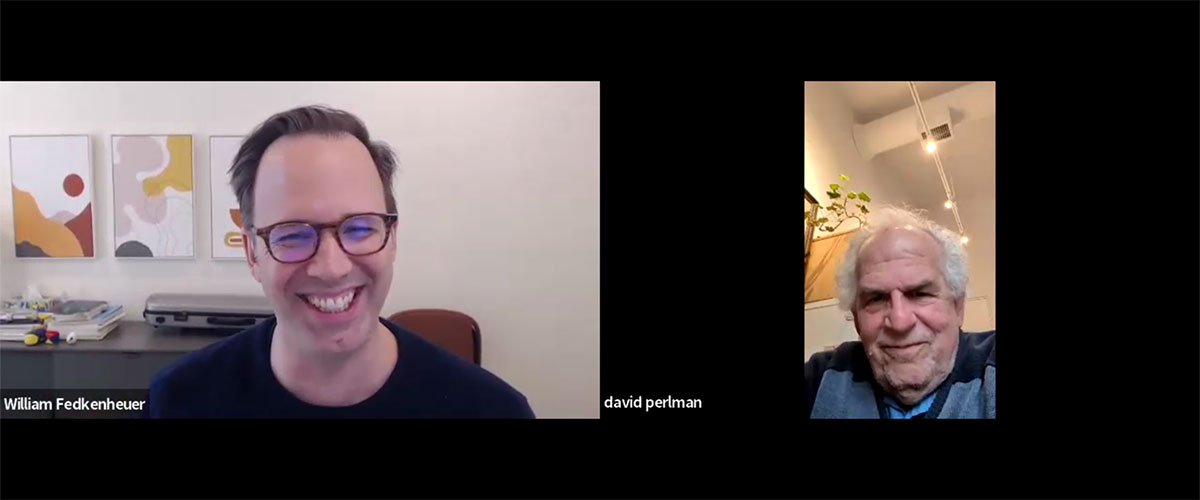
The post was violinist/fiddler Will Fedkenheuer’s, now heading into his first Toronto Summer Music Festival and Academy as their fourth Artistic Director.
The post’s “innovate or die” is a stark message. It got me thinking that if he feels so strongly about it, the “and Academy” part of the TSM title was probably what had lured him back across the border.
For WholeNote, “Innovate or die” means questions like where does print fit in? We’ve been harvesting live music listings for a generation and publishing them in time to be useful. But print, the way we are doing it now, is no longer timely. So what will it be best for next?
Enjoy this overloaded lifeboat of an issue for what it is – a snapshot of a moment in time. And sign up for our weekly listings updates and e-bulletins. Please.
We will see you again in print in September.
David Perlman can be reached at publisher@thewholenote.com


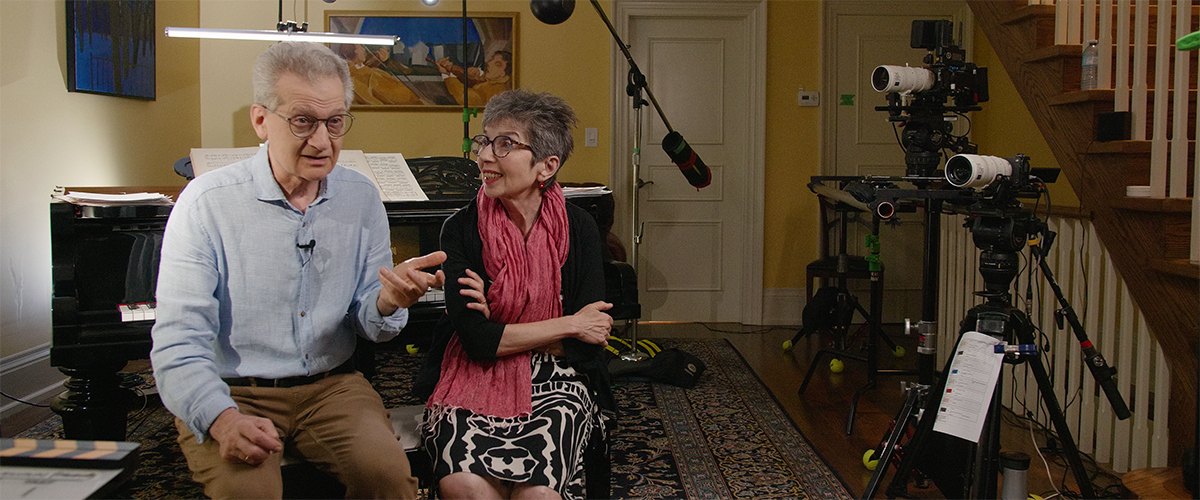 The last time Inna Perkis and Boris Zarankin were on the cover of The WholeNote was in October 2004. Their Off Centre salon series had just turned ten, and so had The WholeNote. A tenth anniversary felt like a big deal back then, so we chatted about it, at quite some length. And right at the end of the chat, one of them, probably Inna, but I am not sure, brought the conversation to a triumphant close (like the final flourish in a Perkis-Zarankin piano four-hander) by saying “and … we have a notebook with program ideas for the next twenty years.” And the other nodded and smiled.