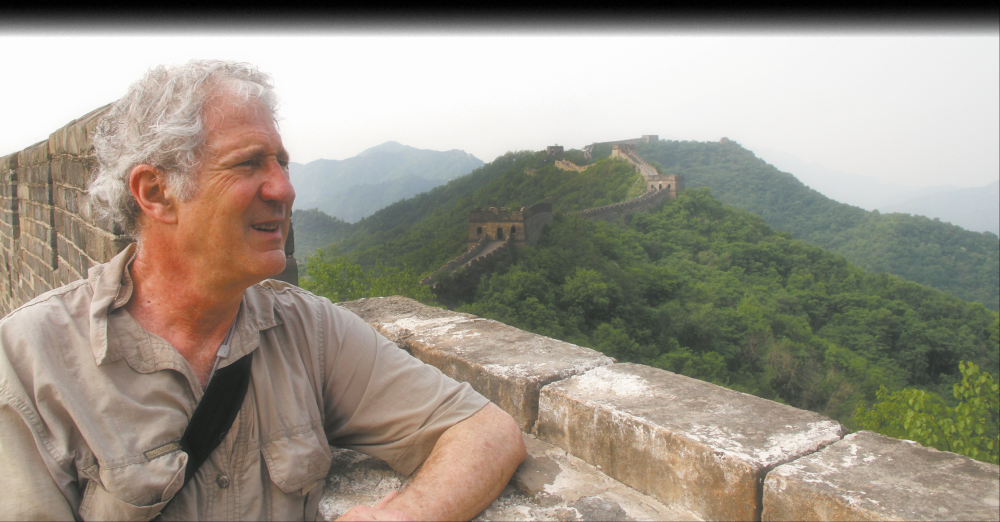
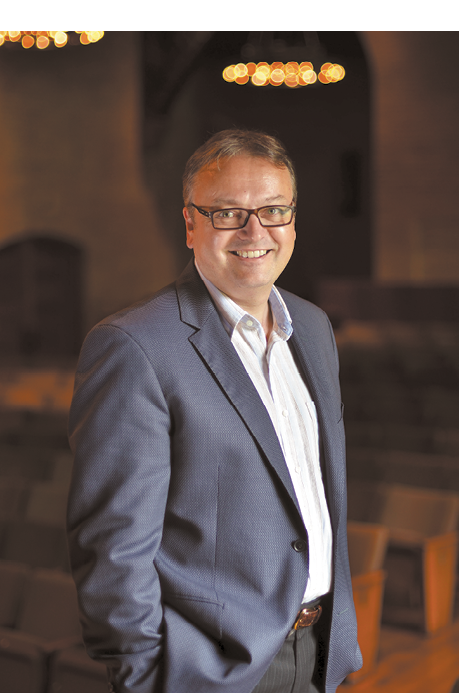
cherny on wallBack in 1941, before Lawrence Cherney was even born, in the pages of a book titled One World, a failed candidate for the presidency of the United States gave the artistic director of Soundstreams a guiding theme for much of his career.

In fact, Wendell Willkie might almost have written the very words of the Peterborough-born oboist and English horn player’s welcome to his audience for November’s “Reimagining Flamenco” presentation in the newly refurbished Jeanne Lamon Hall at Trinity-St. Paul’s Centre:

 “... Never have the world’s cultural heritages been so accessible to all, so available to be explored, appreciated and transformed,” Cherney wrote in the Soundstreams program. “No culture or heritage can survive in a vacuum, preserved in a museum in splendid isolation. Cultures interact, resonate with their surroundings. They’re in a constant state of evolution and revolution in direct relation to the ebb and flow of those surroundings.”

Read more: Lawrence Cherney Inter~Nationalist

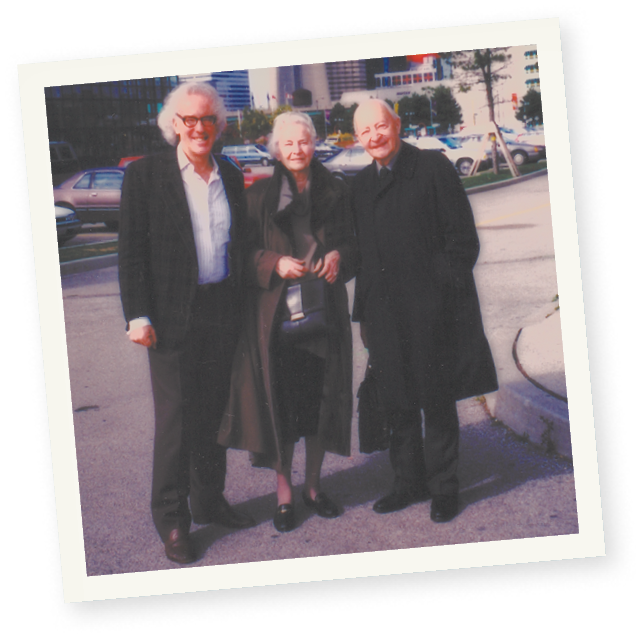
lutoslawski and aitken{The following is excerpted and adapted from a text delivered by Robert Aitken at the Symposium “Lutoslawski – Music and Legacy” held on October 26, 2013 at the Schulich School of Music of McGill University in collaboration with The Polish Academy of Arts and Sciences in Krakow and The Polish Institute of Arts and Sciences in Canada, to commemorate the centennial of composer Witold Lutoslawski’s birth.}

There are many things in life which come to be obvious. As the years go by you forget when you learned them and think that you always knew them. They become truisms that you expect everyone to know — a kind of self-evident knowledge. Was there actually a time in my life when I did not understand that Poland was truly a leader in contemporary music? I just knew it and continued to believe so for many years up to the present. So when I was invited to give this reminiscence on Witold Lutoslawski I was pleased to rethink this important part of my past to ascertain just when and what it was that brought about my great interest in Polish music and led ultimately to inviting Lutoslawski to Toronto.

Read more: Lutoslawski’s Legacy - A Personal Reminiscence

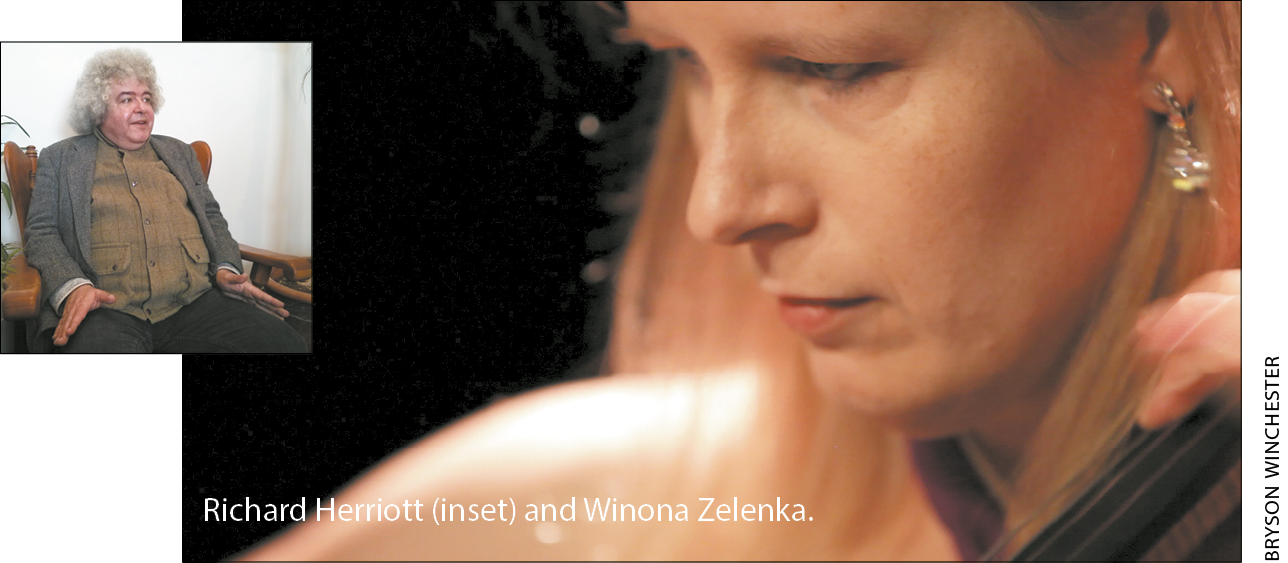
behind the scenes - music for autismMusic was what brought them together when, as eager young members of the gifted program at the Royal Conservatory in Toronto in the early 1980s, Richard Herriott and Winona Zelenka found themselves part of a hand-picked cadre of budding musicians. And music is what reunites them, after years apart and careers on opposite sides of the pond.

Zelenka is well known to readers of The WholeNote as a chamber and orchestral musician. Herriott is less so, although some will remember his November 6, 2011 appearance at Walter Hall in a moving tribute concert to the memory of Antonin Kubalek.

Both will be performing in the intimate surroundings of St. Stephen in-the-Fields Anglican Church on November 29 in a program featuring Benjamin Britten’s Cello Sonata (beloved by Zelenka), folk song settings by Vaughan Williams and the Canadian premiere of Herriott’s Rock Piano Concerto without Orchestra, subtitled “An Electric Organ, a Ladder and a Persian Rug.”

Read more: Richard Herriott and Winona Zelenka - Music for Autism

mervon 1Koerner Hall is celebrating its fifth anniversary this season. During these years, the beautiful recital hall has become an integral part of Toronto’s cultural life. The man who oversaw the launch of the hall, and who is responsible for its programming, is Mervon Mehta, the Royal Conservatory’s executive director of performing arts.

Mehta, 53, comes from music royalty. He’s the son of famed conductor Zubin Mehta and soprano/voice teacher Carmen Lasky Mehta. Grandfather/conductor/violinist Mehli Mehta was the founder of the Bombay Symphony Orchestra, uncle Zarin Mehta was executive director of the Montreal Symphony, Ravinia Festival and the New York Philharmonic, while cousin Bejun Mehta is an internationally acclaimed countertenor. There are also many Mehta cousins scattered around the world who are engaged in music activity of some sort. Mervon Mehta himself is a man of many talents, first as an actor and later as an arts administrator.

Mehta sat down with Paula Citron for a wide-ranging and candid interview that lasted for over two hours. The following Q&A reflects the who, what and where of Mervon Mehta.

You certainly had a peripatetic early life that included Vienna, Liverpool, Saskatoon and Philadelphia, before finally settling in Montreal where you grew up. Why all the travelling? My parents met as music students at Vienna’s Hochschule. We left when I was six months old. My dad was appointed assistant conductor of the Royal Liverpool Philharmonic after winning an international conducting competition there. Because my parents had no job prospects and no money when that appointment ended, we went to live with my mother’s parents in Saskatoon. When it was clear that Saskatoon wasn’t going to jumpstart a career, we moved to Philadelphia to be with my father’s parents. We slept on their couch. My grandfather was a member of the Curtis String Quartet and taught at the University of the Arts. My dad got a lucky break when he was called to replace a conductor at the Montreal Symphony, which led directly to his becoming the music director of the MSO. Maybe the board thought that an Indian conductor was exotic and sexy.

Read more: Mervon Mehta's Royal Mandate

verdi 1Who was Giuseppe Verdi and what makes him unique and different from that other fellow born in the same year of 1813 — Richard Wagner? Verdi was from Italian peasant stock and therefore strong, healthy, tough and stubborn, and lived a long life of 88 years (unlike Wagner who was plagued with ill health throughout his life and died before the age of 70). This toughness, coupled with great ambition, enormous talent, almost boundless energy and shrewd business acumen, enabled him to write ten operas in just seven years, one for each major opera house in Italy; and by the age of 40 he became the talk of his nation, rich and respected. He was also a pleasant man who was kind to his parents and his wife, but also a bit shy and wary of publicity. He was no egotist, womanizer or debt-ridden spendthrift like Wagner, but rather a patriot and great supporter of a unified Italy who shared his wealth generously and was charitable to the less fortunate.

Born october 10, 1813, Verdi was, in a word, the right man for the right time. Italy had been a very musical nation from time immemorial. As early as the 16th century opera was “invented” by an Italian, Monteverdi, albeit in a primitive form, but it continued to be developed by a succession of composers who glorified the singing voice through a style called “bel canto.” By the early 19th century there were masters like Bellini and Donizetti and countless lesser composers, now forgotten, who became great celebrities providing the finest musical theatre entertainment the Italian public craved. They were followed by Gioachino Rossini, a musical wunderkind who took the helm and became enormously rich with some 60 very successful operas. However, after the death of his wife in 1845, Rossini retired from the opera scene, Bellini was dead and Donizetti in an insane asylum, so there was a vacuum ready to be filled. And it was this country boy, this Giuseppe Verdi who filled it.

Read more: Viva Verdi! An appreciation by Janos Gardonyi
Back to top