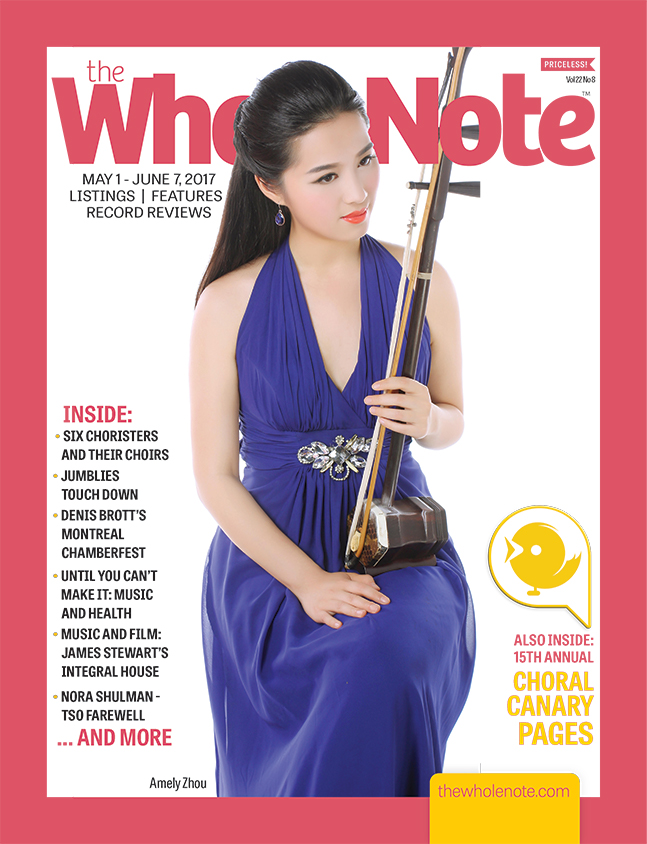
2208 CoverBannerTheWholeNote 2208 Cover Lipstick 01025xOne of the aims of World Fiddle Day Toronto, which takes place Saturday May 20 at the Aga Khan Museum, is to celebrate bowed string instruments of all musical traditions, not just the music made by the globally dominant violin family. In organology (the study of instruments) the Chinese erhu, (technically a bowed two-stringed spike lute) is a prominent, though quite distant, member of the extended violin family. And WFDT has chosen Amely Zhou, the young Canadian erhu soloist trained in both Chinese and Western music, to be that instrument’s flagbearer in this year’s workshops and evening feature concert.

Zhou began her music studies at an early age in the city of Shenzhen, located in southeastern China near Hong Kong. She states in a 2015 interview that she “started learning erhu when I entered Shenzhen Art School in Grade 4…In my studies with my teacher Lei Zhang, I was constantly inspired by his music and by the sweet tone he could achieve from this simple-looking instrument. The soulfulness of the erhu still carries my feelings and emotions away, along with the vibrations of the strings.”

After immigrating to Canada, in 2007 she joined the Toronto Chinese Orchestra, where she serves today as the bowed string section assistant principal. In 2010 she co-founded the Chinese-Western fusion band Spire for which she both performs and arranges music.

While enrolled at York University she won the university’s 2013 Concerto Competition as the erhu soloist in the Red Plum Capriccio. Zhou graduated in 2015 from York with an Honours B.A. in Music, and that year was accepted into the prestigious Shanghai Conservatory of Music summer program with a full scholarship to continue her erhu studies.

The high value she places on connecting with fellow musicians and audiences is among the most distinguishing features of her playing. As her biography on the Small World Music website notes, “Amely inspires others with her open-hearted and emotive playing. While challenging herself to the fullest, she premiered more than 30 new works by composers around the world.”

Among the GTA’s most prominent younger generation erhu soloists, Zhou is passionate about promoting traditional Chinese music in Canada. On the other hand she also actively challenges her musical world by frequently collaborating with musicians representing musical expressions based in the Western vernacular, and further afield: Iran, India and Azerbaijan.

One of her projects has been premiering contemporary works mixing erhu with other instruments. These include works by University of Toronto student composers Roydon Tse, Tse Yueng Ho, Chen Ke, Lin Yuting and Adrian Ling, as well as by senior composers Chan Ka Nin (Double Happiness) and Alice Ho (Four Seasons). In 2014 she commissioned and premiered Wind Chaser for erhu and piano by emerging Toronto composer Matthew Van Driel.

In her 2015 interview Zhou shares an insight into a core musical value, one which extends beyond that of culture of origin, vocation and career. “My teacher Lei Zhang…not only taught me how to play erhu, but also how to be a good person. Music teaches a person patience and kindness. You will have to be able to inspire yourself before you can inspire others with your music.”

Andrew Timar

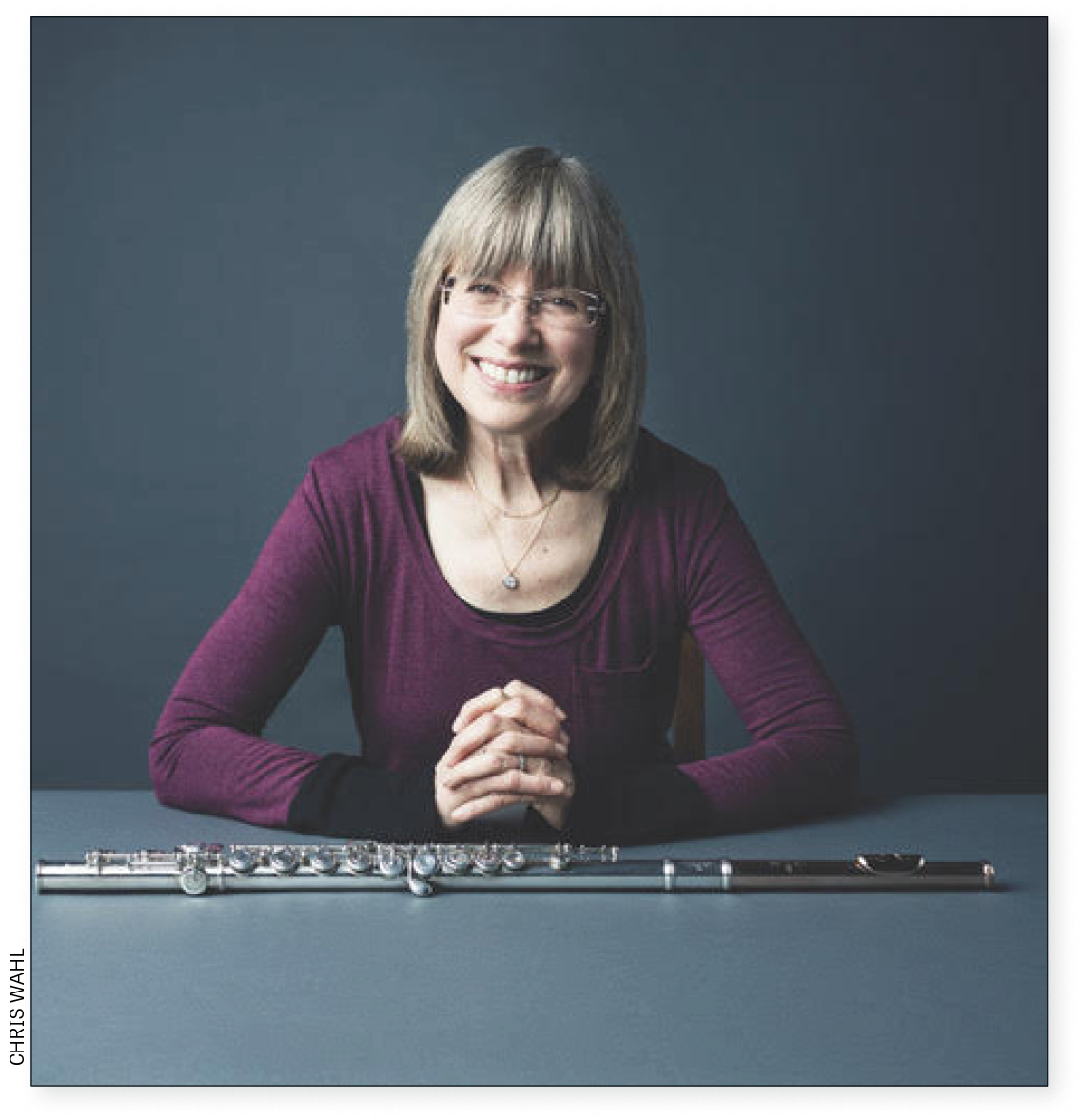
2208 Feat Shulman Banner2208 Feat ShulmanWhen Nora Shulman won the associate principal flute position with the Toronto Symphony in 1974, it was the second orchestral job she’d ever had. Now, it’s also her last. After 43 years with the TSO – 31 of those as its principal flutist – Shulman is retiring at the end of this season. When she leaves, she’ll have been the longest-serving principal flutist in the history of the orchestra.

But before that, she has one major solo left to play. On May 26 to 28, Shulman will appear as a soloist with the TSO in American composer Charles Griffes’ Poem for Flute and Orchestra (1918). Paired on a program with Beethoven’s Seventh Symphony, two short works by Frederick Delius and Chan Ka Nin, and the Grieg Piano Concerto, the piece oozes rich, early-20th-century lyricism – and makes for a powerful swan song.

“The Griffes is personally a very appropriate choice for me,” said Shulman when we spoke in late April. “I played it with the orchestra many years ago – it’s one of the very, very most beautiful pieces in our repertoire. So I was enthusiastic about playing it again.

“It is a piece that you simply revisit,” she adds. “A piece that you probably played when you were a teenager or in your early 20s…and you revisit it as a teacher because your students play it, and you revisit it as a performer. For me, it’s coming home, to repertoire that I truly love and feel comfortable with.”

As she finishes her final season with the orchestra, “coming home” – and letting go of the gigging mentality – has begun to feel like a common thread. “I’m [trying to] accept the idea that retirement doesn’t have to be going into the next job,” she says. “I’ve worked for almost 50 years. It’s okay not to be putting myself into another kind of a job.

“A friend of mine gave me the best advice – because a lot of people say, ‘What are you going to do next?’ And I’ve found it a difficult question to address. The person who gave me perhaps the wisest counsel said ‘Don’t think about it; just live your life. And enjoy the time and the space that you’re going to have.’”

In Shulman’s case, that means teaching – both privately and on faculty at the University of Toronto – and revisiting personal projects. For one, she plans on returning to her study of the traverso, and the earlier flute repertoire that goes along with it. She’ll also be playing a central role in the organization of the second annual Flute Day at U of T, in October 2017. And in the meantime, she’ll be enjoying the breathing room.

For her colleagues and students, it comes as no surprise that Shulman would have the personal fortitude necessary to hold a position like hers for over four decades – and to exit it on her own terms. “She’s really unique in her ability to just understand what a student needs,” says Sophie Lanthier, a U of T flutist who has studied with Shulman for the last four years. “Studying with Nora is almost like going to her for a prescription – not just for what I need to improve but how I need to improve it. She has so much perspective from her time with the TSO, and so much knowledge of the context of the flute within an orchestra. She makes you want to work harder when you work with her.

“I don’t know where I’d be as a flute player, if I hadn’t decided to study with Nora when I did,” Lanthier adds. “She’s world-class.”

Flutist and piccoloist Camille Watts, who has sat in the flute section of the TSO with Shulman for 27 years, agrees. “Nora is a dream colleague,” she says. “When you sit next to somebody for all these years, you feel with them, you think with them – you become a kind of unit of sound and of music-making together. Nora is in that way a completely inclusive, generous player – responding to what she hears with incredible creativity and integrity. Every concert means something to her. And besides that, we have fun. You can’t have better than that.”

And as for Shulman’s own takeaway from the Toronto Symphony? As she talks about her years with the orchestra – from the transition to Toronto from her first job in Denver to the photo she still has of Sir Andrew Davis and Maureen Forrester at the Great Wall from their tour to China in 1978 to the new music she’s been learning for the final concerts of this season – it becomes clear that some gigs are long-lasting for a reason. And that through it all, she’s never lost sight of what a job like this has meant to her.

“It was really having a dream come true, getting a position as a principal flute player,” she says. “I was lucky – and I’ve never really lost that feeling of gratefulness and privilege. And I’ve always taken it very seriously. Never for granted, not one day.”

Nora Shulman will perform Griffes’ Poem for Flute and Orchestra with the TSO May 26 to 28, as part of her final season with the orchestra.

Sara Constant is a Toronto-based flutist and musicologist, and is digital media editor at The WholeNote. She can be reached at editorial@thewholenote.com.

2207 Feat BachBethlehemAccording to Chaucer, April is the month that with its sweet showers “pierces March’s drought to the root,” causing all kinds of people, music lovers not excepted, to get a bit giddy and take themselves off on all manner of “sundry pilgrimages.” As a lifelong chronic agoraphobe who typically gets on airplanes only for trips revolving around grim duty of one kind or another, I was until last year, a steadfast exception to the Chaucerian rule. But 2016 was different. Not once but twice I noted my nearest exits, turned off all electronic devices and faithfully obeyed the fasten seatbelt sign as I took off into the wide blue yonder for the purpose of attending music festivals in other parts of the world.

I am, therefore, now an expert on the subject of music festivals. So pay attention.

Rule number one: Other than the ones that take place in your hometown and can therefore be ignored unless you have guests, there are only two types of festivals.

One is the kind of festival that is sufficiently compelling in its own right that it causes you to journey some place you never have thought of visiting, even if you had heard of it.

The other is a festival you never heard of but taking place somewhere so special in its own right that you feel compelled to go there at least once in your lifetime. And when you do, you discover that there’s a festival there that tickles your musical fancy, so you go to it because you are already there.

There’s one of each kind in this story: the 2016 first annual Jerusalem Summer Opera Festival falls into the second category; the 110th Annual Bethlehem Bach Festival falls into the first.

2207 Feat BachBethlehem2The Bethlehem Bach Festival takes place in Bethlehem, PA, nestled in the Lehigh Valley region of Southeastern Pennsylvania, this year on the weekends of May 12-13 and May 19-20. Colonized in the first half of the 18th century by Moravian settlers, Bethlehem became also, in the 1860s (across the river from the old town), the site of Lehigh University, a private school established by businessman Asa Packer. (The church that bears his name, on the Lehigh campus, remains the venue for the performance of the Bach Mass in B Minor that is the climax of each year’s festival.) And between the two halves of the town, along the riverbank is the looming rusting hulk of what was, from the 1880s till the 1990s, the steel mill from which Bethlehem Steel derived its name. Twelve years after the mill was built, in 1898, the Bethlehem Bach Choir came into being. Two years after that it gave the first ever complete North American performance of Bach’s B Minor Mass. Through that whole galvanic century, the choir and the festival have endured through thick and thin, because they bring to the music not just a consistently high standard of musicianship, but a precious intangible – the fact that the music is a living expression of community.

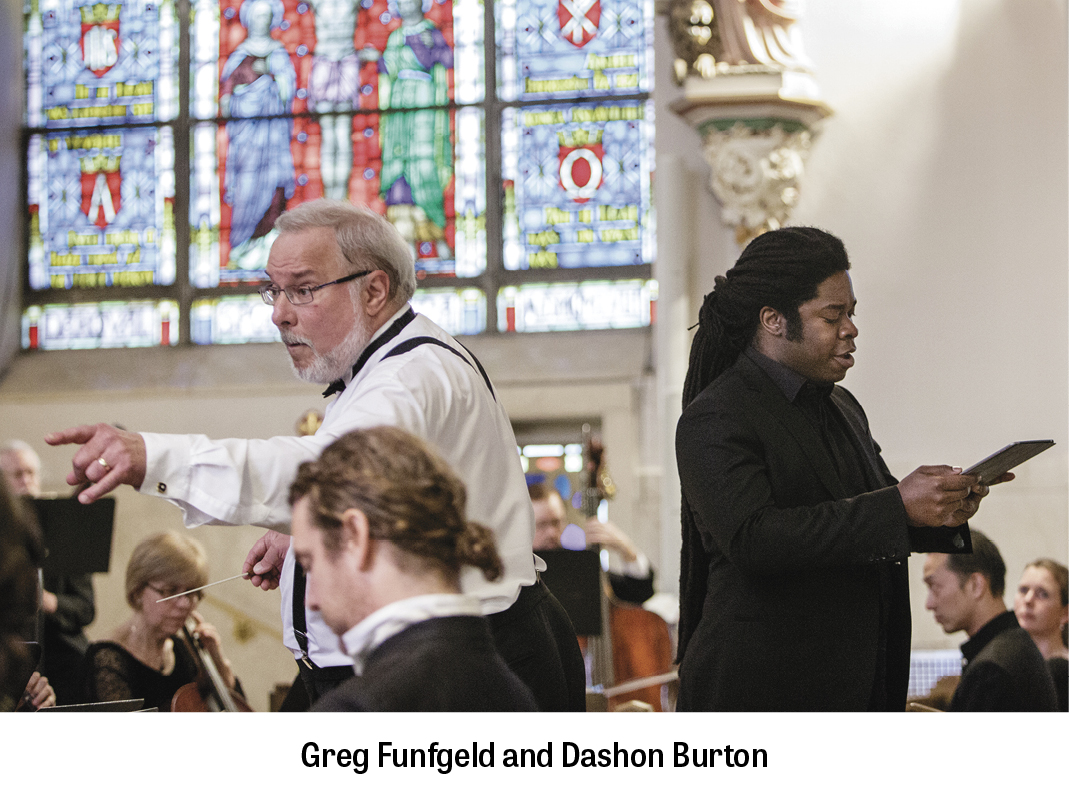
I’ve written before about how my first awareness of the Bethlehem Bach Festival came about because of the non-stop procession of top-flight Canadian soloists to the festival, especially since Greg Funfgeld took on conductorship of the choir in 1983. Countertenor Daniel Taylor, for example, returns for the 19th consecutive year, joined again this year by soprano Agnes Zsigovics (a protégée of Taylor’s at the University of Toronto, and surely a performer to watch) and by Benjamin Butterfield, also a frequent visitor but absent last year. The three US soloists are also regulars: soprano Rosa Lamoreaux, baritone William Sharp and Dashon Burton, bass. One of Funfgeld’s gifts as a conductor is his sense of balance and blend; another is his loyalty to his performers. Talk to the soloists and they will tell you that as much as anything, the opportunity to renew beloved musical relationships in a consistent context is one of the things that keeps them coming back.

It’s been said that North America (at least from a colonial perspective) has too much geography and not enough history, while the problem in the Middle East is just the reverse. But if one thinks local rather than global, the distinction starts to blur. Walk from the Hotel Bethlehem (built in the 1920s with Bethlehem steel!) through the old Moravian Quarter, across the bridge past the hulk of the steel mill, where signs of civic landscaping and urban renewal are visibly starting to happen on the river edge, up the opposite hill to the Packer Church, and take your place in the audience. There will always be more than one generation of the same family in the choir that looks back at you. And the music, when it starts, will have a healing sound that is only possible when it is as current as it is timeless.

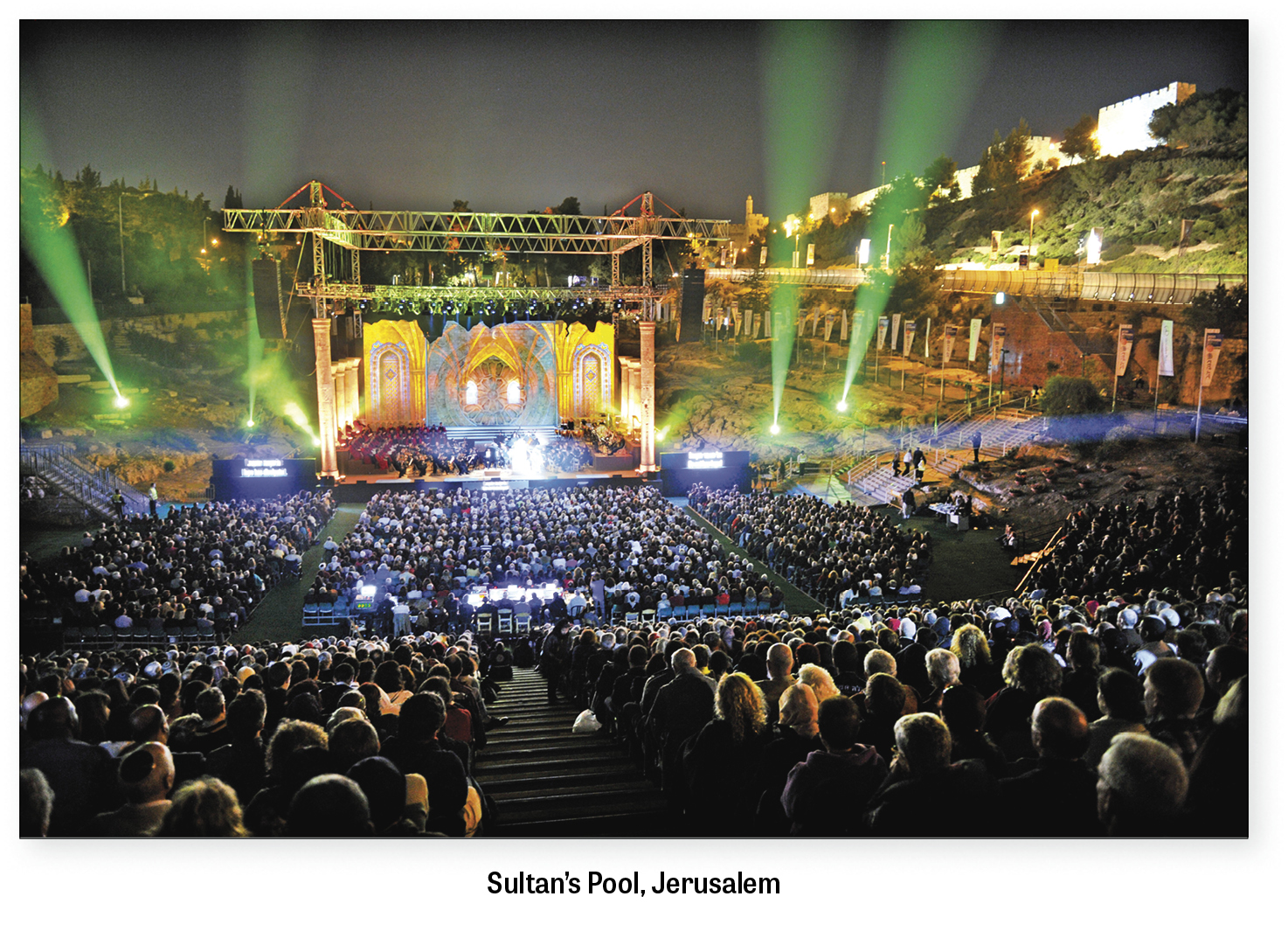
Jerusalem Opera Festival: Last summer’s trip to the Jerusalem Opera Festival had several memorable moments. One was sitting, late at night, on the rooftop licenced patio of the Mamilla Hotel in downtown Jerusalem, after returning from the evening’s main event, a thoroughly enjoyable outdoor performance of Rigoletto at the 6000-seat Sultan’s Pool amphitheatre, a few hundred feet down the hill. There’s something infinitely less annoying about amplification and outdoor acoustics when the surroundings are as genuinely imposing. (Although I do remember thinking, as an ambulance barrelled down the hill, klaxon blaring, alongside the amphitheatre, right on cue, that maybe this time Gilda would be saved! The second night’s performance, at the Sultan’s Pool again, titled “Opera Paradiso,” was, to my taste less successful, featuring a range of operatic moments from film, sung and performed live by singers and orchestra while the related movie excerpts flickered silently onscreen.

I found myself wondering if there was perhaps a trap for the festival in trying to attract the same 6000 people two days in a row to the one venue, rather than setting the goal of doing the same show twice in a row to grow the audience, and to lay on other things, large and small, for each audience on their “other” night. A better way to build partnerships in the community, said my small-town brain.

As it happens, this year’s Jerusalem Festival has just been announced, and someone else must have been thinking along the same lines I was. There will be two performances of Nabucco, June 21 and 22 at Sultan’s Pool. It will be very interesting to see what else, if anything, operatic or not, gets programmed head to head with those two performances.

My favourite story from the whole visit indicates the size of the challenge ahead. We were in Tel Aviv, home base of the Israeli Opera, at the end of the visit, being shown around the props and costumes room, backstage. Our guide, an opera staff member, was talking frankly about how the two cities were completely different worlds. (“It’s an hour’s drive at a speed of 30 centuries an hour,” someone said.) The NIOC staffer described how her own children, growing up backstage among the props and costumes, had never even been to Jerusalem until they were five or six years old. Holding tight to her hand as they walked through the souks with their dizzying variety of cultural and religious garb, one of the children turned to her, pointing at someone walking by in unfamiliar attire. “Mommy, what costume is that?” the child asked.

The greatest challenge for this particular festival, it seems to me, is that Jerusalem as a city is itself a living opera, on a grander, more viscerally demanding scale than anything the arts can hope to muster. It will be interesting to see how much attention this particular festival can hope to grab moving forward.

David Perlman can be reached at publisher@thewholenote.com.

2207-BeckwithFeature.jpg2207 Feat EncountersFirst encounters hold a special fascination for many of us. The name of our country for example – so familiar, yet revealing multiple rich layers of transcultural enigmas when you dig deeper – is no exception.

The word canada first appears in writing in Jacques Cartier’s 1535-36 travel journals. It’s a transcription of the word kanatha, likely meaning “village” in a now-extinct Laurentian language of the St. Lawrence Iroquoians. Cartier used it to describe the region he visited near the contemporary Quebec City. His tag caught on: within ten years Canada appears as a toponym printed on a French map.

Tracing the roots of that name back to a discussion between First Nation native and European explorer’s interpretive act of labelling some 482 years ago evokes some of the power of early encounters. It certainly places Canada’s 150th anniversary into a much larger historical frame.

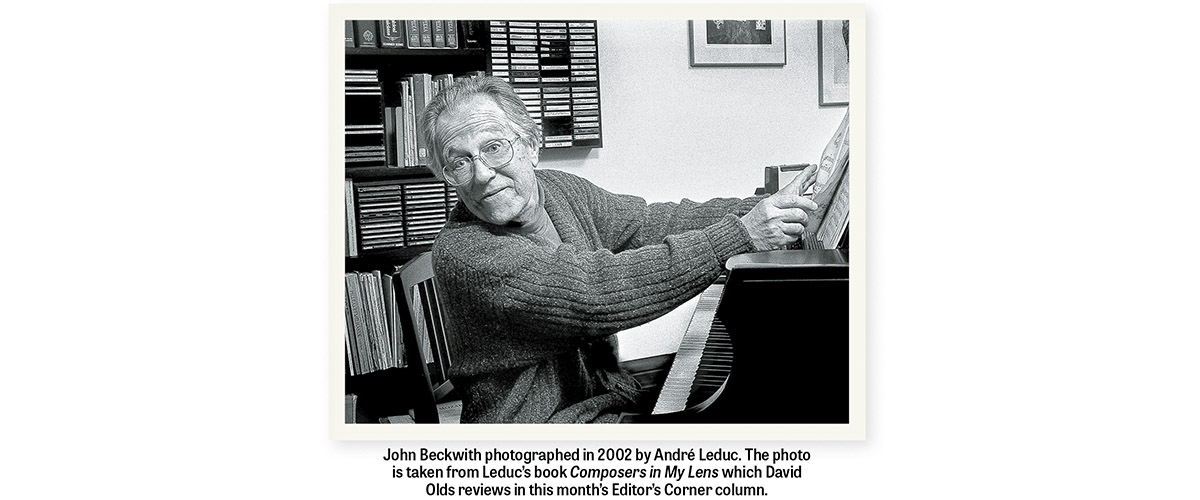
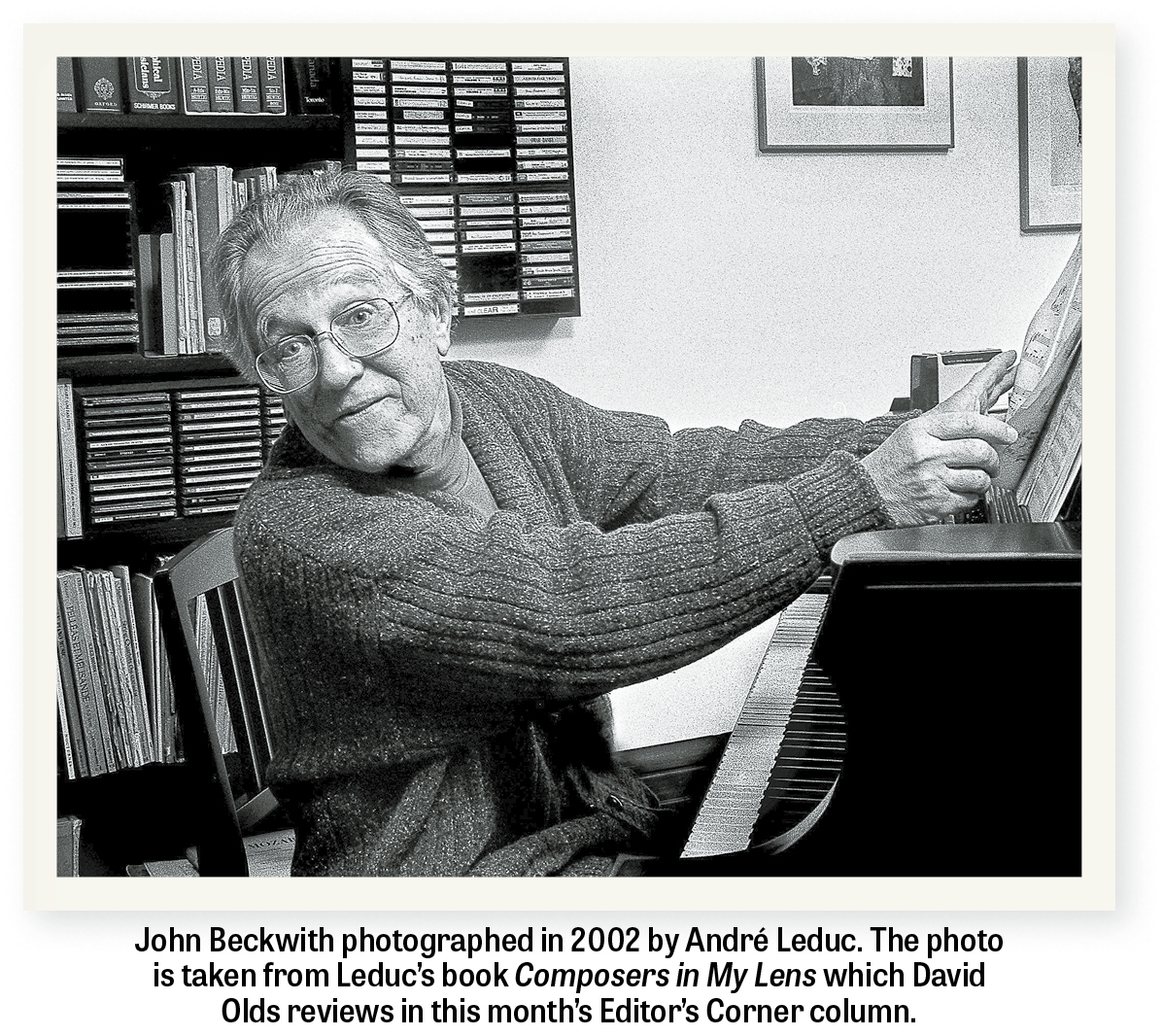
It also serves as a suitable backstory to the celebrations this year of the career of the veteran Toronto composer, music educator and prolific writer John Beckwith, now in his 91st year. He was professionally associated with the Faculty of Music, University of Toronto, from 1952, serving as dean 1970-77. Between 1985 and his early retirement in 1990 he served as the first director of its Institute for Canadian Music – and a number of his compositions mine Canadian themes and music performance practices.

He is being honoured this year with multiple retrospectives of his music, including a performance of his Wendake/Huronia (2015). Dubbed a “choral documentary” Wendake/Huronia is scored for alto, narrator, chorus, early-instrument ensemble and native drums, and is set primarily in 17th-century Canada. It was most recently performed by the Toronto Consort as the second half of the program “Kanatha/Canada: First Encounters” on February 4, at Trinity-St. Paul’s Centre’s Jeanne Lamon Hall.

Beckwith’s six-movement work employing voices and period instruments evokes the pre- and post-contact soundscape of the St. Lawrence Valley beginning with the sounds of snowshoe travel in the winter, and canoeing in the summer.

As for the French and Wendat lyrics, Beckwith partly adapted the words and poetry of Georges Sioui, Wendat Traditional Knowledge Keeper and Coordinator of Aboriginal Studies at the University of Ottawa. Sioui’s contributions appear in the angry Lamentation, 1642, as well as in the more optimistic final movement À l’avenir (To the Future) “reflecting today’s efforts towards reconciliation of aboriginal and settler cultures.”

It’s a remarkably ambitious, socially complex and sensitive work for any composer, let alone one in his tenth decade. Curious about the man, I spoke to broadcaster and composer David Jaeger, a former University of Toronto Beckwith student and later a colleague.

“I first encountered Beckwith’s name in the 1969 John Cage book Notations which included Beckwith’s Circle, with Tangents [for solo harpsichord and string orchestra]” recalled Jaeger. “The score looked orderly, neat, intellectually rigorous, meticulous and clear in its intentions. Then while a grad student at U of T I took a course on the music of Canada. Who better to teach it but John Beckwith? He was a very good teacher: well-prepared, methodical, well-organized and professional.”

After joining the CBC in 1973 as a radio music producer and creating the celebrated new music program Two New Hours, Jaeger enjoyed a number of professional interactions with Beckwith. “From time to time, John would receive commissions from various organizations. He always had surprises in store. His creative mind is so multifaceted and fertile. Peregrine, his 1989 viola concerto performed by the Esprit Orchestra, for example, was inspired by compass settings. If it was music, John was interested. This emerges clearly in his ‘Canadiana’ pieces, in his adaptations of folk songs and regional music like [his 1966] Sharon Fragments.”

Jaeger also commented on Beckwith’s place in Canadian music, education and culture. “His writing has greatly helped his own legacy through his published works. I’m thinking of his beautifully written autobiography. I feel that ‘setting the record’ takes active maintenance, and that it must be regularly presented to the public in order for it to survive into the next generation.”

Last month the University of Toronto’s Faculty of Music honoured its former dean with “A 90th Celebration of John Beckwith. It was followed by a lecture by Beckwith tellingly titled CanMus Then and Now, “a comparison between musical life in the centennial year, 1967, and 50 years later in the sesquicentennial year 2017.” And who better to provide this insight into CanMus than John Beckwith?

New Music Concerts is adding its seasoned voice to the celebration on April 28 at Trinity-St. Paul’s Centre with “John Beckwith at 90.” NMC artistic director Robert Aitken invited his longtime friend and colleague Beckwith to choose the repertoire for the concert. He selected two of his latest works, Calling (2016) and Quintet (2016). Both will receive their world premieres. And although Beckwith’s Avowals (1985) has been recorded by the tenor Benjamin Butterfield and pianist William Aide for Centrediscs, this will be their first concert performance of it.

In addition, Beckwith has picked compositions for the concert that have personal meaning: Stravinsky’s In Memoriam Dylan Thomas (1954) and String Quartet No. 3 (1962) by his teacher John Weinzweig. These two works reflect yet another kind of encounter: that with music and musicians early in a composer’s career, marking it forever.

Andrew Timar is a Toronto musician and music writer. He can be contacted at worldmusic@thewholenote.com.

2207 Music and Health 1It’s Glee Club choir day at Toronto’s Baycrest Hospital. The grey-haired seniors, all diagnosed with dementia, are seated in a semi-circle in a room with colourful paintings and a big welcome sign. Most of them sit sedately. Some stare into space.

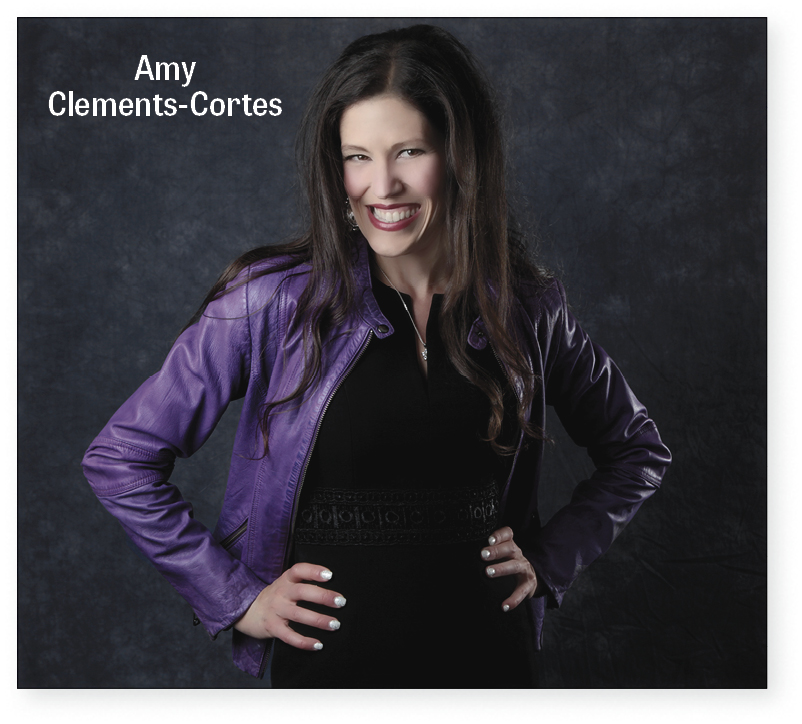
Dr. Amy Clements-Cortes, music therapist and assistant professor, University of Toronto, strides into the room and begins singing to the accompaniment of the keyboard.

Several clients join in and the group begins to awaken. Some tap their toes. Others clap their hands. A few bob their heads. Their eyes brighten as they focus on their conductor. Some don’t sing, but smile quietly. One man sits open-mouthed and lethargic for a while, but eventually grabs the hand of the staff person sitting next to him and pumps it up and down to the beat.

Clements-Cortes beams at the group. “You’re sounding nice,” she says.

Though she’s impressed with the quality of the singing, she’s also pleased by the ability of the music to temporarily revive her clients, many of whom suffer from Alzheimer’s.

Baycrest clients share the condition with about 376,000 Canadians, according to the Alzheimer Society of Canada. The disorder is projected to afflict 625,000 lives by 2032.

The disease is caused by abnormal protein clusters that build up in the brain and clog the connections between individual nerve cells, says Lee Bartel, professor of music at the University of Toronto. Over time the presence of these gummy blobs disrupt the circuits in the brain, barring structures from communicating.

Loss of memory is the hallmark of Alzheimer’s disease. Autobiographical memory, the recall of life events, is one type of recollection degraded by the disorder, says Ashley Vanstone, PhD candidate in clinical psychology at Queen’s. When patients forget pivotal moments in their lives, they lose pieces of themselves and their very sense of identity is shattered. “You see people slipping away from who they are.”

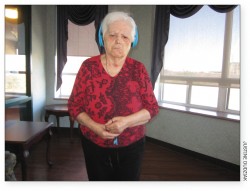
In a Toronto nursing home, the Villa Colombo, resident Maria Mirabelli sits motionless in her wheelchair. Her eyes are glassy, and she’s chewing on air.

The sentimental Italian song, Mama, comes over the speakers, and Mirabelli focuses, smiling softly and clapping. She starts mouthing the words to the song.

Her son John Mirabelli has seen this transformation before, but never fails to be astonished. “It’s incredible – she doesn’t even know my name,” he says.

The music is also inspiring flashbacks from her past, says activity aide Teresa Cribari. It returns her to the days when she cooked in her kitchen on Sundays while listening to the radio. “I think the music soothes her,” says her son. “It’s great to see her like that.”

Music has the uncanny ability to momentarily reanimate clients by activating their fraying memories, says Vanstone. One famous case involved EN, an Alzheimer patient who spoke in garbled sentences but still recognized familiar songs. Researchers concluded that memory for speech and for music resided in different locations in the brain, and the latter was relatively spared even in advanced dementia.
2207 Music and Health 2Scientists have since pointed out several mechanisms accounting for the doggedness of musical memory. To pull a tune out of storage you first need to make sense of it, says Vanstone.  Compared to speech, music lends itself well to this task, as the grammar of music is internalized early in life. And, unlike in speech, the components of music are replicated – the melody is reinforced by accompanying chords, which are connected to regular rhythms. That means we’re not dependent on any one conveyor of musical meaning. “If your ability to perceive one mode is shaky, you’ve got lots of others.”

Not only can Alzheimer’s patients often recall melodies, they can also remember their lyrics long after they’ve forgotten where they live. The close association between the brain pathways for melody and lyrics accounts for this surprising feat, says Vanstone. “Melody and lyrics are like two parallel tracks joined by rungs – like a ladder. So the memory for melody can support the memory for lyrics.”

But music’s best stunt is its capacity to rekindle the milestones of our lives. These autobiographical memories include landmarks such as graduations and weddings, and are rich in sentiment. Music relies on these emotions to resurrect the recollections, says Vanstone. “Music is very good at conveying feelings – it builds up and lets go, giving a sense of tension and release,” he says. This ability to tap into our deepest passions helps us to draw out the experience that was laid down with the same fervent backdrop.

Music can also aid in recovering memories through its impact on our body’s physiology, says Ryerson PhD candidate Katlyn Peck. Music can stimulate areas of the brain responsible for releasing the chemical dopamine, which helps reconstruct memories. Retrieving a remembrance requires the brain to function at an optimal level of arousal – neither over-stimulated nor under-activated. Music can soothe anxious patients or activate depressed ones, creating the ideal environment for reminiscence.

While memory loss is hard enough for sufferers of Alzheimer’s, this problem can be compounded by depression. In the initial stages of the disease, clients are aware of their declining function. “They become frustrated with themselves when they recognize their problems,” says Clements-Cortes.

Fortunately, attending live concerts can partially reverse this complication, says Michael Thaut, professor of music at the University of Toronto. He led a study in which patients with Alzheimer’s attended nine monthly concerts along with their significant others. He noted striking changes in their moods over the course of the study. “They went from being frozen and inaccessible to smiling and singing along with the music.” 

Back at Baycrest, one man with piercing emerald eyes and matching green pants becomes increasingly animated as the hour progresses. He acts out the songs with dramatic facial expressions and theatrical gestures. His baritone voice belts out Love Me Tender, as he gazes wistfully at Clements-Cortes and points his index finger right at her.

“I enjoy expressing myself,” he says. “Today I was expressing love – I can feel what the songs were saying.”

Music bolsters the mood many different ways, says Clements-Cortes. For starters, it provides an alternative method of communication when words have become compromised. As well, music stirs the production of endorphins. “These are the chemicals causing the pleasurable runner’s high,” she says. Rapid music also ratchets up arousal, ramping up breathing and heart rate.

Music also gives us a high akin to the glow of good sex or the lure of gambling. MRI scans have shown that listening to music engages the reward centre of the brain and triggers the discharge of the feel-good chemical, dopamine, says Thaut.

Tunes also counteract the immobility of depression. When people listen to music, the part of the brain responsible for movement becomes activated. Even if they continue sitting, their minds are in flight, says Thaut.

Anxiety is another common consequence of Alzheimer’s, says Thaut. As the disease progresses, patients no longer recognize their surroundings, their loved ones, or even their own memories. These deficits leave them feeling disoriented and can lead to agitation – yelling, resisting a bath, or even hitting loved ones.

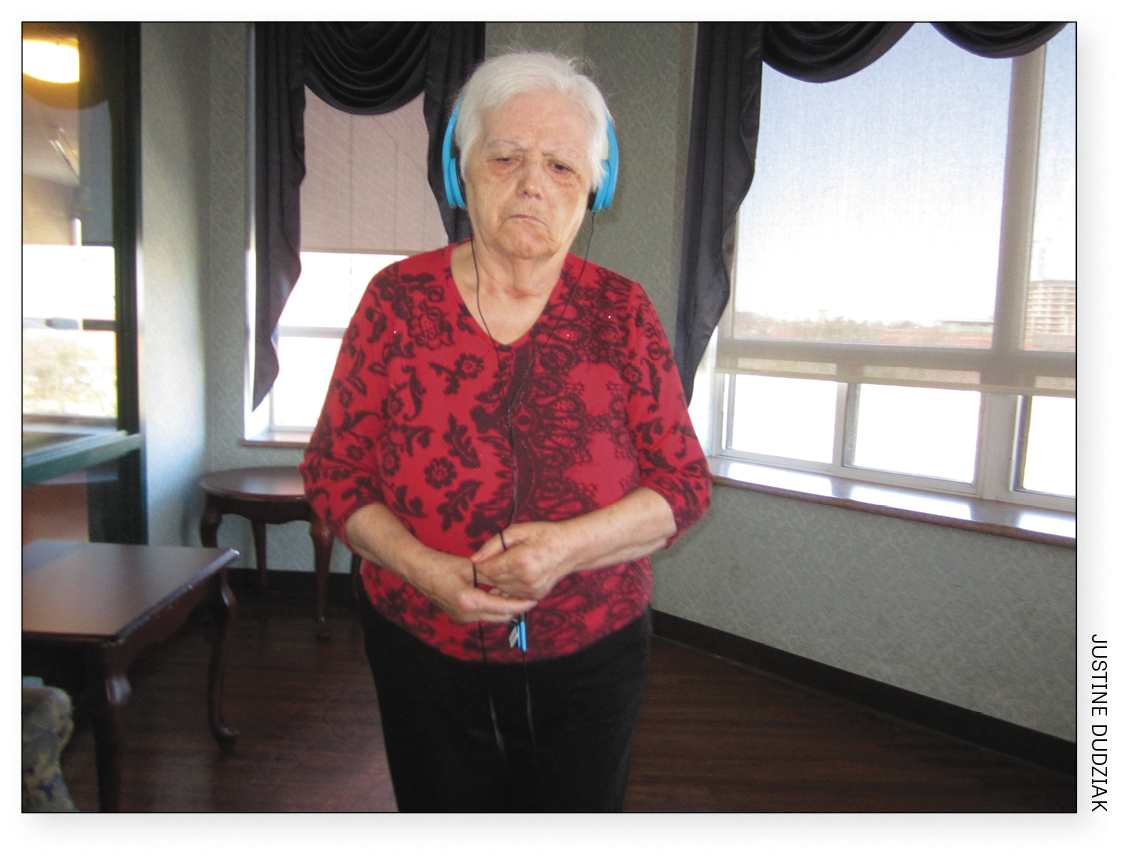
Gina Scenna wanders up and down the hallways of Villa Colombo. She appears angry and confused. “She’s trying to look for something but she can’t find it,” says behaviour specialist Anna Abrantes.

Abrantes puts on her iPod filled with her favourite Italian songs. Scenna’s expression softens. She grabs Abrantes’ hands and starts dancing, bopping up and down in time to the music. When she tires, she sits down calmly, eyes closed, rapt in reverie.

Inspired by the movie Alive Inside, about the benefits of music on dementia, the Alzheimer Society of Toronto supplies free iPods, loaded with individualized music, to clients with dementia.

Our bodies are soothed by music, says Clements-Cortes. We produce oxytocin when we hear pleasant songs. This substance, known as the “the cuddle hormone,” is normally released in the presence of our lovers. “It gives us a feeling of contentment.” Listening to familiar tunes is also comforting and dials down our stress hormone, cortisol.

Music can be particularly reassuring to agitated Alzheimer’s patients, says Thaut. Its ability to stir memories back to life reduces clients’ disorientation. “If a person feels more anchored to themselves and to their environments, that makes them more secure.”

Music benefits the caregivers too, says Vanstone. “It’s tremendously rewarding to see their loved ones spark up a little bit.” As well, significant others don’t need to fear the side effects, including falls, which are an inevitable consequence of antipsychotics used to treat agitation.

The choir sings its final song, Shalom Aleichem (Hebrew for “Peace be upon you”). As the last harmonies soar to the ceiling,  Clements-Cortes claps her hands. “Great job, excellent,” she says.

She is thrilled with the way music has temporarily turned back the clock on the singers’ lives. “Using music someone enjoys and has a connection to helps to revive their personality,” she says. “It’s like their old self is back for a little bit.”

The man in the green pants walks up to her at the end of the practice. He probably can’t articulate why he feels so stoked after an hour of singing. But he knows one thing. “I love you a bushel and a peck,” he tells his choir leader, referring to the lyrics of one of the golden oldies. Clements-Cortes is moved. “I’m honoured to work as a music therapist. I love seeing the benefits of music in their lives,” she says.

To obtain an iPod for your loved one, see alz.to/get-help/music-project.

Vivien Fellegi is a former family physician now working as a freelance medical journalist.

Back to top