01 Echoes of a Vanished PeopleJim O’Leary – Echoes of a Vanished People
Helen Pridmore; David Rogosin; Karin Aurell; Eileen Walsh; James Gardiner; Dale Sorensen
Centrediscs CMCCD 34524 (centrediscs.bandcamp.com/album/echoes-of-a-vanished-people)

The Centrediscs label of the Canadian Music Centre seems to exist in the realm of the classical music landscape. That’s where they seem most relevant although they bloom in art and folk song and magically original expressions often merging both disciplines. The extraordinarily flame-haired and brilliant flutist Jaye Marsh sent me a copy of her ethereal work, Flute in the Wild (CMCCD 28921, 2021) and sent me scurrying for more from the intrepid landmark imprint. 

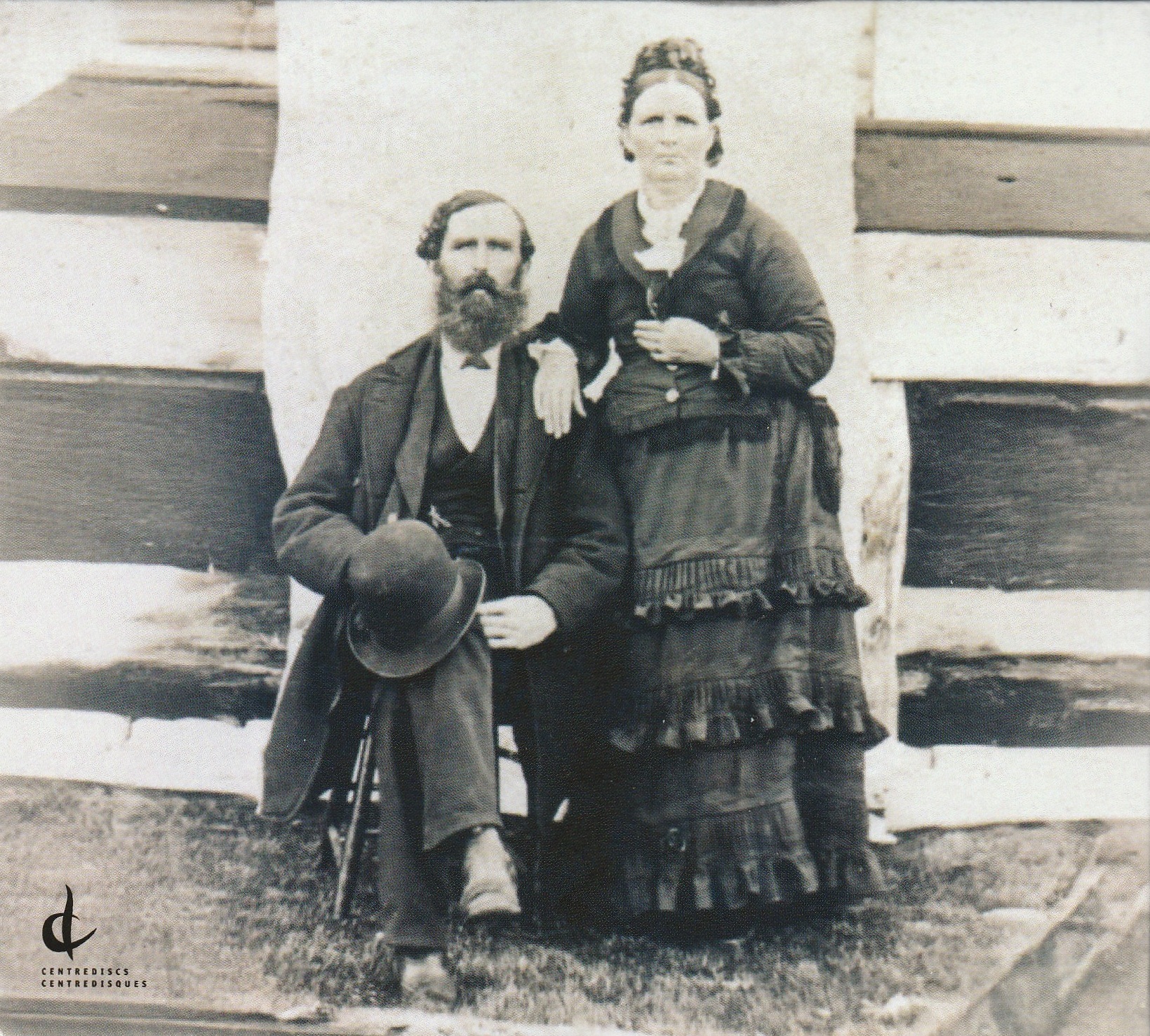
Point in case is Echoes of a Vanished People where we hear the luminous-voiced Helen Pridmore singing of people in the lonely landscapes of our vast exquisite country; six extraordinary works written by the eloquent Jim O’Leary – an expert craftsman specialising in Canadian art song.

O’Leary draws on poems and other lyrical works by the Newfoundland and Labrador author Michael Crummey and songs by Susan Pannefather Gray and others. The music and lyrics take us into the countryside of O’Leary’s childlike imagination where it mixes beauty and a long-ranging sense of love for the grizzled past. The songs are evocative of long rainy days and freezing nights. Each track takes us into a wild place with trusted and inspiring friends. Both O’Leary and Pridmore have their fingers on the pulse of a ruddy sanguinity of old in this auspicious offering.

02 Daniel Janke Map of YouDaniel Janke – Map of You
Rachel Fenlon
Centrediscs CMCCD 32323 (danieljanke.bandcamp.com/album/map-of-you)

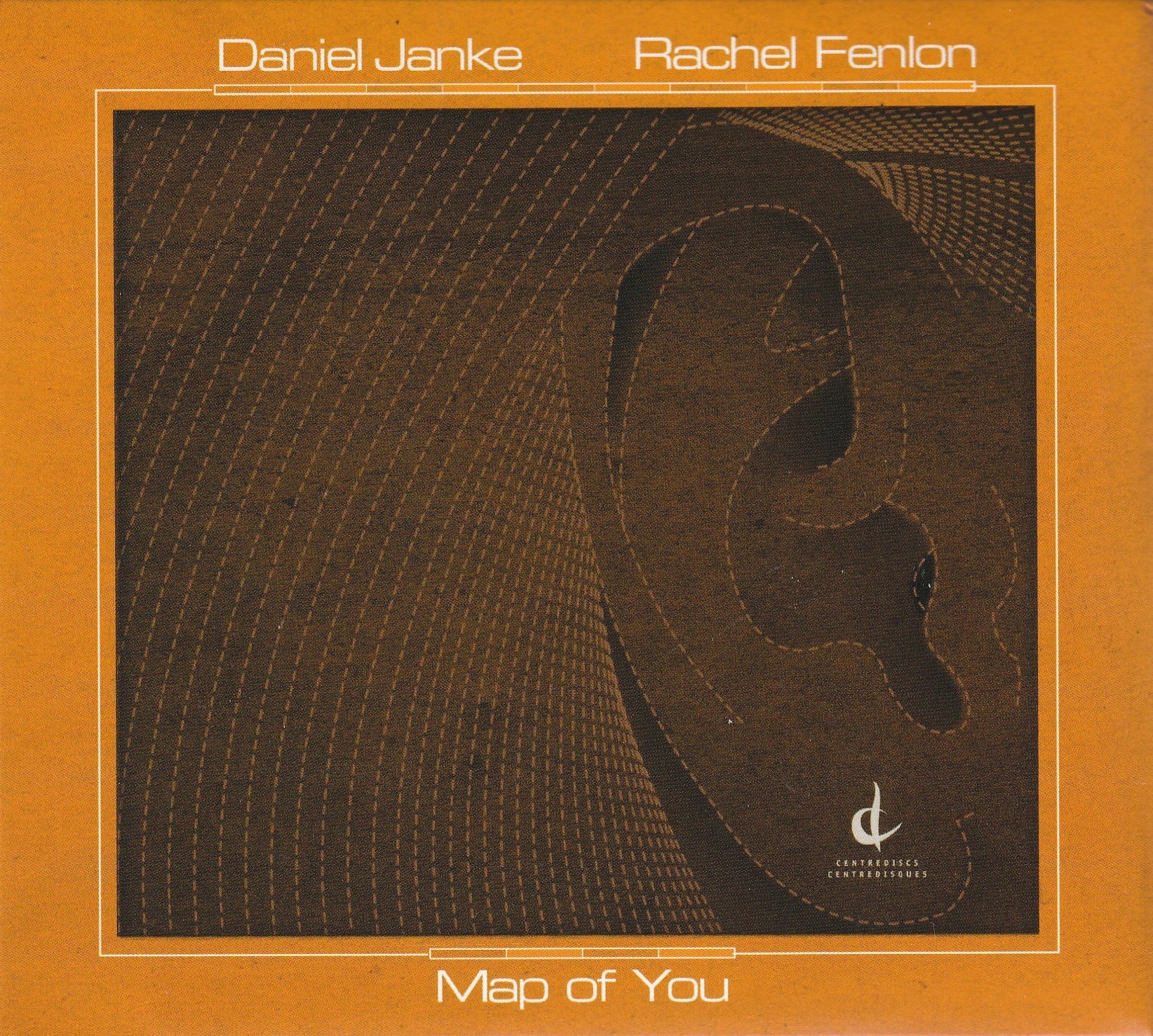
The music recorded on Centrediscs is increasingly wondrous and challenging. This “existential” repertoire by Daniel Janke is a wonderful example of this. Vocalist and pianist Rachel Fenlon interprets Janke’s Map of You, an exquisite song cycle densely packed with ideas, emotions, and depth of thought.

The idea of dealing with “existential material” of this kind is sensational, with its mixture of beautiful arias and recitatives. The theme of Love in all its aspects is challenging. For instance, the songs – The Drunken Lover and Two Oranges in My Pocket – may even change your way of perceiving characteristics of love in opera.

Map of You is a work in progress by Daniel. It is beautifully interiorized by Rachel Fenlon who renders it in a wonderful manner. There may not be a better shaping of an operatic character. I am fairly sure that as the producers dug deepest, they found an exquisite partnership. Brava tutti.

Listen to 'Daniel Janke: Map of You' Now in the Listening Room

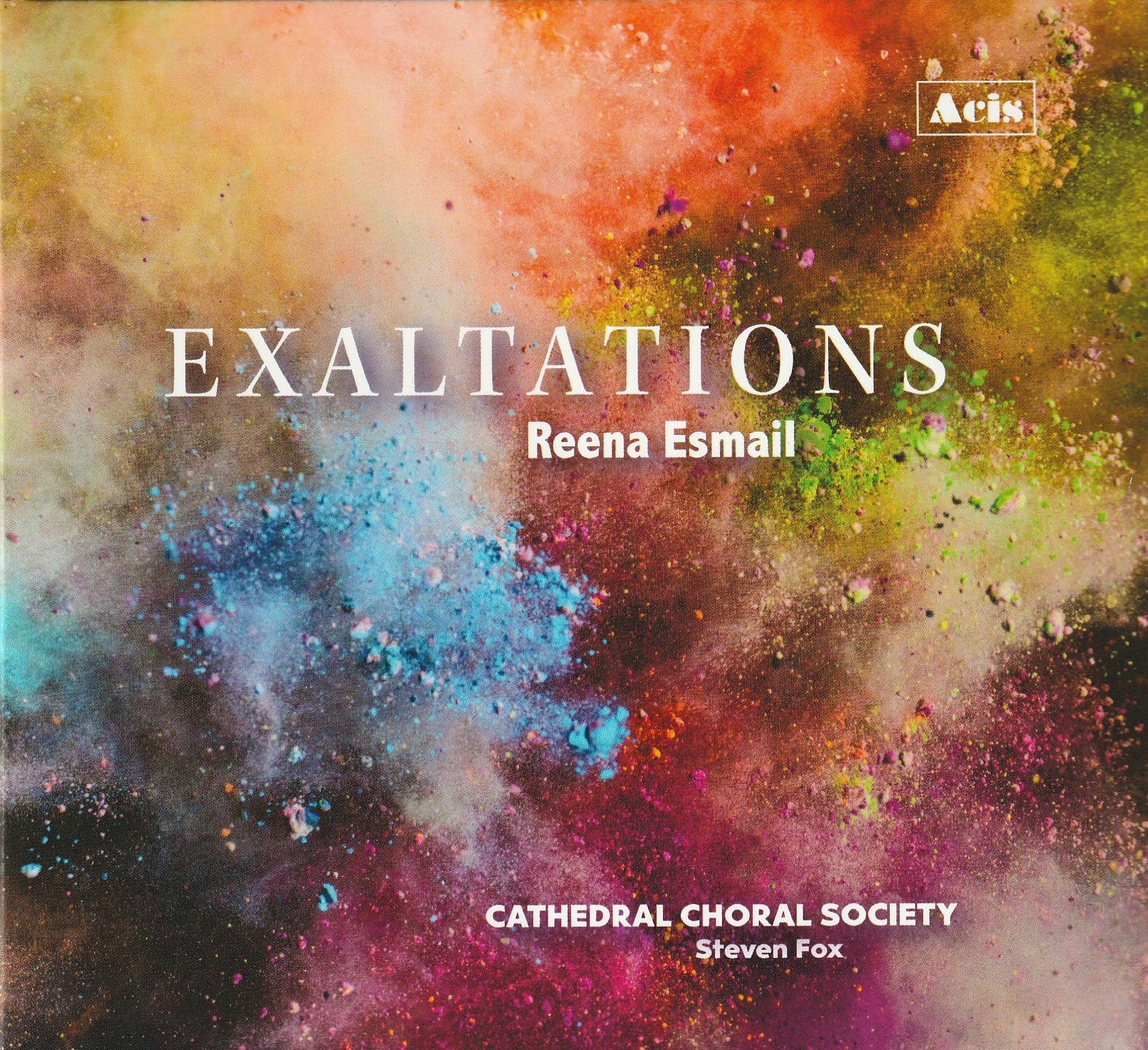
03 Reena Ismael ExaltationsReena Esmail – Exaltations
Cathedral Choral Society; Steven Fox
Acis APL78314 (acisproductions.com/reena-esmail-exaltations-cathedral-choral-society-fox)

Young American composer Reena Esmail presents three rather short numbers that are unconventional in ways that suggest a different, looser approach to writing liturgical pieces for the Christian Church. None of these pieces are underlaid with the usual prayers found in similar church pieces, but these Exaltations have very minimal texts which are only words and short Mass fragments that however serve in repetition and emphasize the basic impetus to be both joyous and contemplative.

The forces employed are a large mixed choir, four soloists who only sing in the second of the three parts, and a brass quintet. The music is in a readily approachable liturgical style universal in Christian religious cultures throughout the latter part of the 20th century, being mostly tonal, though not simply diatonic. There is a similarity to the music of Holst, who was influenced by his studies in East Indian music, in its feel and harmony. Esmail is of East Indian extraction, and she has almost surreptitiously included a technical element of East Indian Classical Music, in that each of these pieces is in a different Raga, or melodic framework, from the Indian tradition. This influences the mainly homophonic tone setting, although very subtly. 

The performance and recording are first class, and I suspect the whole project, recorded live at the National Presbyterian shrine Washington D.C. was conceived by Stephen Fox, director of the Cathedral Concert Society Choir. He has impressed in recent years with his Rachmaninoff Project, and in helping to resuscitate music by Ethel Smythe.

This is a most interesting curio, I just wish there was more of it.

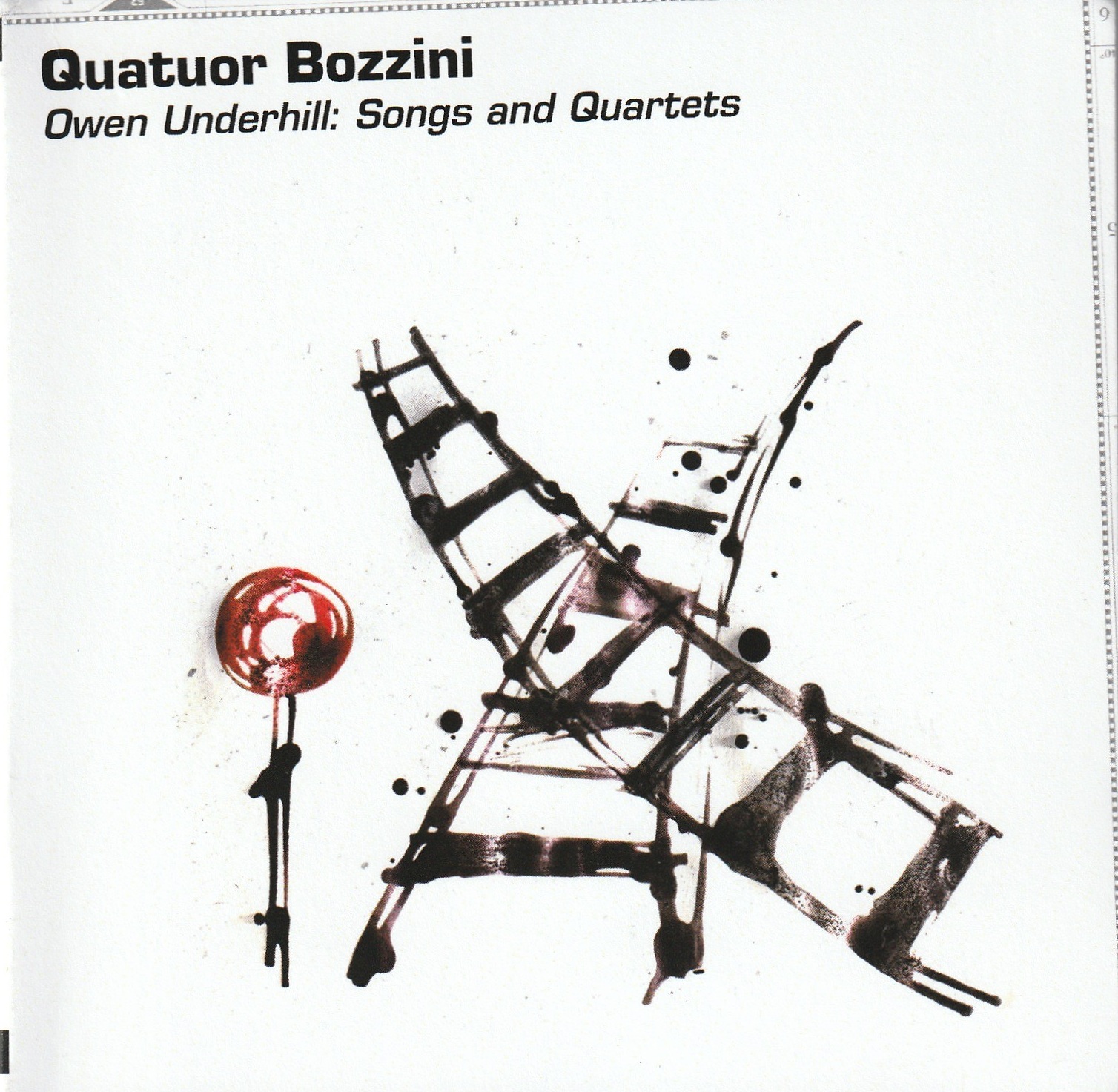
04 Owen UnderhillOwen Underhill – Songs and Quartets
Daniel Cabena; Jeremy Berkman; Quatuor Bozzini
Collection Quatuor Bozzini CQB 2536 (collectionqb.bandcamp.com/album/owen-underhill-songs-and-quartets)

Owen Underhill leapt at the idea of having Quatuor Bozzini record his Second String Quartet, written after a chance encounter with John Cage in 1986 and later revised in 2017. The Bozzini had previously recorded his Trombone Quintet with soloist Jeremy Berkman. Embarking on this new project Underhill took the opportunity to compose music for the quartet based on the poetry of Henry Vaughan and Sir Walter Raleigh (The Retreat and What is Our Life respectively), with countertenor Daniel Cabenas and Berkman playing the sackbut (an early trombone dating from the era of the poems)

Northern Line – Angel Station String Quartet No.2, was penned after witnessing a performance by the Merce Cunningham Dance Company with live music by Cage. Underhill says “The final movement is a quodlibet which includes four quotations from Cage’s String Quartet in Four Parts (1949-50), an amazing piece and an important work in Quatuor Bozzini’s repertoire and discography.” String Quartet No.5 – Land and Water from 2017 is also in four movements which “etch out connections to the natural world, specific locations and personal experiences,” according to the composer.

The larger works The Retreat and String Quartet No.2 are outstanding. And What is Our Life and String Quartet No.5 are among Underhill’s most sophisticated. These are stellar works, giant steps by a fine composer who is surely on to even bigger challenges and outcomes in a burgeoning catalogue. Owen Underhill: Songs and Quartets, showcasing a more lyrical side of the Bozzini Quartet, will certainly make Underhill a more sought-after composer and these performers much more in demand.

Listen to 'Owen Underhill: Songs and Quartets' Now in the Listening Room

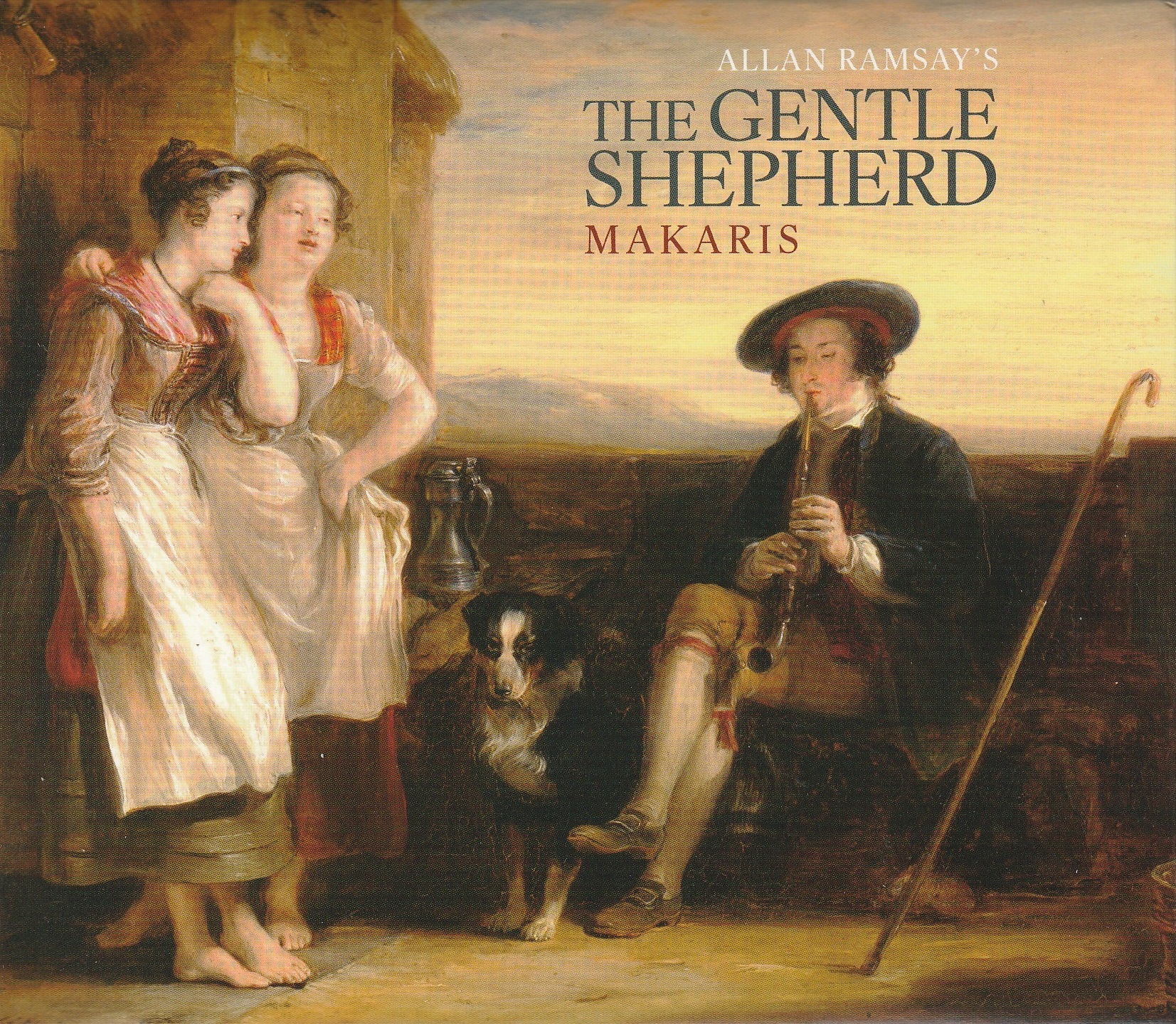
01 Gentle ShepherdAllan Ramsay's The Gentle Shepherd 
Makaris
Olde Focus Recordings FCR924 (newfocusrecordings.com/catalogue/makaris-allan-ramsays-the-gentle-shepherd)

Throughout the 18th century, Allan Ramsay’s The Gentle Shepherd (1729) was a smash hit on Edinburgh and London stages, and continued to be performed by amateur companies until late in the 19th. Robert Burns himself praised the poetry, and the story inspired over 40 paintings. Now, 300 years after the libretto’s publication, Scottish Baroque ensemble Makaris has given us the opera’s very first recording, and it is a delight— brimming with humour, verve, and accomplished musicianship.

This was not only the first Scottish opera but also the first ballad opera, an original libretto set to popular airs and songs of the day. These have no composer in the usual sense; the poet would simply indicate the name of the air to which his words should be sung. For this reason, much of the compositional responsibility fell on the musicians, who operated in a liminal space between oral and written traditions. For this recording Makaris had to create their own arrangements, drawing from a bare-bones score made after Ramsay’s death and digging into archives. They admit to taking some liberties for the sake of bringing the songs alive by choosing unexpected or atypical harmonies. This is all for the better; it springs off the recording so vividly that one longs for a live production.

This recording will appeal to those who enjoy theatre music by Boyce or Arne and works such as the Beggar’s Opera. It might also intrigue those who are familiar with some of the traditional tunes that show up here, in sparkling arrangements and with words added. The Waulking of the Fould is played much the same as it is now in Cape Breton or Scotland, and the O’Carolan’s beloved Sí Beag, Sí Mór is very recognizable, too. 

Ramsay’s work has one more relevant element for Canadian listeners in 2025: one of his motivations in writing and publishing was to champion Scotland’s culture and identity, and he was a vocal opponent of the Union of 1707 (which incorporated Scotland into Great Britain). Now, where is OUR Gentle Shepherd?

02 Judgement of ParisJohn Weldon - The Judgement of Paris
Academy of Ancient Music; Cambridge Handel Opera; Julian Perkins
AAM AAM046 (aam.co.uk/product/john-weldon-the-judgment-of-paris)

This lesser-known masque is a rarity. In an era of prequels The Judgement of Paris is certainly not performed frequently, and never before recorded. It would do well to remember that the story this masque tells is a prequel to Homer’s epic of the Trojan war, the Iliad. 

The Judgement of Paris, an important augury of the Trojan war, appears in Book 24, Verse 22 (ff) of the Iliad. In that event Eris, the goddess of discord, not invited to the wedding of Peleus and Thetis, extracts revenge by tossing a golden Apple of Discord, inscribed, "To the fairest one," amid the wedding guests. This results in a dispute between demigoddesses, Hera, Athena, and Aphrodite as to who the “fairest” is. Aphrodite bemuses Paris into kidnapping Helen of Sparta as the most beautiful mortal woman in the world, carrying her off to Troy. Thus, Eris' casus belli precipitates the Trojan War.

John Weldon (1670-1729) “won” a contest to compose music to William Congreve’s libretto. His succession of short arias are executed masterfully. These all feature eloquently crafted ritornellos and an attractive variety of instrumental writing. Each of the performances by the seven principal characters, chorus and instrumentalists is stellar. The Academy of Ancient Music and Cambridge Handel Opera Company’s period piece helmed by Julian Perkins runs at white heat when Jonathan Brown’s Paris takes the stage. Meanwhile Anna Dennis’ masterful Venus sparkles in every phrase.

03 Art Choral ModerneArt Choral Vol.6 - Moderne 
Ensemble Artchoral; Matthias Maute
ATMA ACD2 2425 (atmaclassique.com/en/product/art-choral-vol-6-moderne)

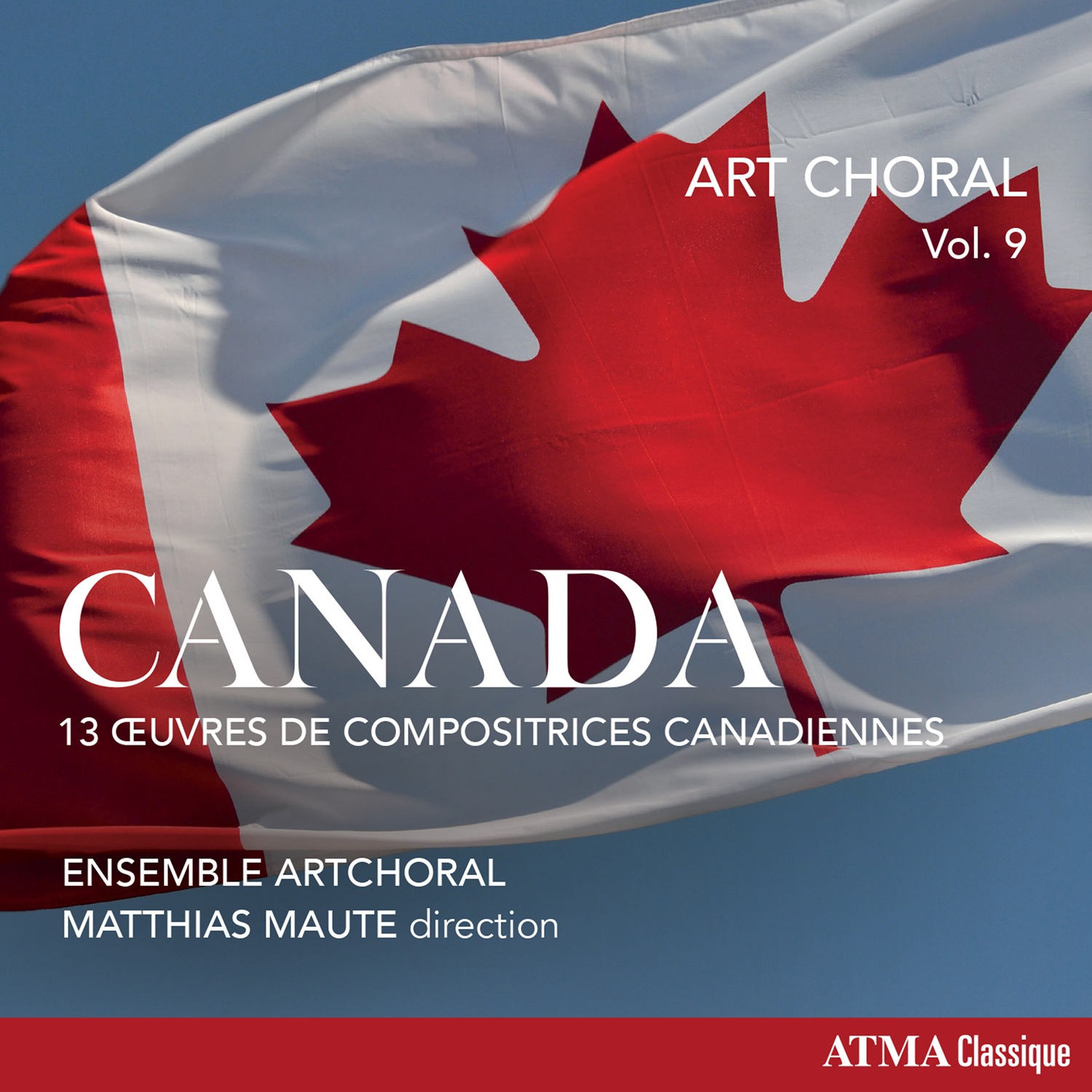
Five previous “Volumes” by Montreal’s Ensemble ArtChoral traversed the Renaissance-to-Romantic musical eras. Vol.6, Moderne, offers 11 pieces from the 20th and 21st centuries, their impact enhanced by the CD’s reverberant acoustic, making the 12-member ensemble sound much bigger. 

Two movements from Quatuor Antiphonae Marianae Selectae by Slovenian Ambrož Čopi (b.1973) are engagingly cheerful and rhythmically playful. Unicornis Captivatur by Norwegian Ola Gjeilo (b.1978) alternates reverential solemnity with joyful celebration in a tale of animal death and rebirth.

Three stirring works evoke medieval chant – Præter rerum seriem by Canada’s Andrew Balfour (b.1967), the somber Kyrie eleison from Missa Regensis by Latvian Ugis Prauliņš (b.1957) and, most movingly, the haunting, lyrical O magnum mysterium by American Morten Lauridsen (b.1943). These soul-searching pieces receive appropriately slow, reflective treatment from conductor Matthias Maute. This contrasts with Maute’s very rapid tempi that compromise the noble gravitas of two beloved favourites, heard here in alternative settings – Agnus Dei, Samuel Barber’s own arrangement of his Adagio for Strings and Lux Æterna, a transcription by John Cameron of Nimrod from Elgar’s Enigma Variations.

The CD closes with two austere motets – Pablo Casals’ O vos omnes and Aaron Copland’s Help Us, O Lord (composed as an assignment while studying with Nadia Boulanger). A more fitting ending, I think, would have been the disc’s seventh track – Nyon Nyon by American Jake Runestad (b.1986), the singers propulsively mimicking electric guitars, synthesizers and drums. It’s a perfect encore piece!

04 Wainwright Dream RequiemRufus Wainwright - Dream Requiem
Meryl Streep; Anna Prohaska; Maitrise, Choeur and Orchestre Philharmonique di Radio France; Mikko Franck
Warner Classics 5021732500601 (warnerclassics.com/release/dream-requiem-rufus-wainwright)

Rufus Wainwright’s Dream Requiem was surely made for this moment – even though the Canadian composer, pop songwriter and singer wrote it during the throes of COVID. We feel a sense of foreboding right from the beginning, when the narrator tells us, "I had a dream, which was not all a dream.” With that, we are plunged into the nightmare of Lord Byron’s aptly named poem, Darkness

A Requiem deals with loss. Yet what’s described is total annihilation. Wainwright artfully transcends the utter devastation by layering sections of the Latin Mass for the Dead into Byron’s apocalyptic poem. Hope comes in the final section, the In Paradisum, when the sublime children’s choir offers the consolations of eternal rest.  

Wainwright’s musical language here is not the most daring. But it is imaginative, personal, and highly expressive. Sumptuous melodies, catchy rhythms, rich harmonies – all inescapably Wainwright’s.

Conductor Mikko Franck calibrates the huge forces for both expressiveness and clarity. Soprano Anna Prohaska soars with the exquisite presence of a divine spirit, while the dramatically charged choir honours Wainwright’s deep connection to the words. 

Actor Meryl Streep catches every nuance in Byron’s text. Her sober narration reins in Wainwright’s heart-on-sleeve romanticism – that is, until the Dies Irae. Streep, as the voice of retribution, tears through it in a frenetic, virtuosic tour de force.  

Wainwright is undoubtedly better known for his singing and songwriting than his classical compositions. But Dream Requiem should be heard.

05 Hannigan Electric FieldsElectric Fields
Barbara Hannigan; Kati and Marielle Labeque; David Chalmin
Alpha Classics ALPHA 980 (outhere-music.com/en/albums/electric-fields)

By now my editor knows full well just how mesmerised I am by Barbara Hannigan. How – in my eyes – she can do no wrong. He also knows that if there is a new Hannigan recording – as sure as day follows night – I will make a beeline for it and likely find no fault in it whatsoever. The reason? There will be no fault with a Hannigan recording. That’s just the way it is. 

Let’s put aside Hannigan’s prowess as an actor and conductor for now. As an operatic star she is a once-in-a-lifetime kind of artist who does everything right, by any composer, in any repertoire from any era. This is how things go on Electric Fields (or might I say, “eclectic fields”?).

Her soprano instrument is lustrous throughout, whether she is interpreting Hildegard von Bingen (c.1098-1179) – O virga mediatrix and O vis aetrnitatis – or Barbara Strozzi (1619-1977) – Che si può fare – or two works by Bryce Dessner (b.1976). Hannigan also contributes one composition – Che t’ho fatt’io based on a fragment of Latin texts by Francesca Caccini (1587-c.1640).

Admittedly Hannigan shines alongside such star power as the piano-playing heavyweights, Katia and Marielle Labèque, and the wizardry of composer/performer David Chalmin’s ambient atmospheric contributions. But Hannigan’s performance is flawless – again. Each work is a priceless sound-painting. Each phrase has its own tinta; each vocal section a distinctive character. It’s exciting to wonder what comes next. One can only dream.

Back to top