01 The Soundmakers Project BR F535 COVERThe Soundmakers Project
Ineke Vandoorn; Marc van Vugt; Christine Duncan; The Soundmakers
Baixim Records (baiximrecords.bandcamp.com/album/the-soundmakers-project-2)

Canadian vocalist Christine Duncan has covered the waterfront when it comes to inventing ways to use a human voice and is no stranger to virtually all styles of music. Born into a travelling fundamentalist Pentecostal musical family, she wove her way through R+B, blues, jazz and contemporary opera before she hit the ground running when she arrived in Toronto from Vancouver in the early 2000s, eventually landing in the improvising scene. 

In 2007, Duncan and her partner, drummer Jean Martin, applied for a grant for her to develop a vocabulary of hand signals for improvising choir and to assemble a group on a more permanent basis. Their successful application allowed the duo to develop the concept of the Element Choir, both by taking cues from other vocal improvising directors before her such as Butch Morris, the London Improvisers Orchestra, Anthony Braxton, John Zorn and others, as well as creating Duncan’s own unique conducting style, and her hand signals have become a fluid and organic response to her musicality. 

Her joy of sharing her love of sound and community is profoundly evident as well as her expert leadership and experience (Duncan is also an active educator, teaching in the jazz programs at Humber College and the University of Toronto since 2003). For anyone not familiar with the choir, she leads the group of non-professional vocalists into challenging soundscapes of noises, chatters, whispers and wails all with practiced hand gestures and signals, and has continued to refine her skills to become the world leader in structured improvisational vocal ensemble. 

In walks The Soundmakers, a Dutch Grammy-winning duo Ineke Vandoorn, vocalist, and Marc van Vugt, guitarist, who lead an ensemble of 50 improvising (again, non-professional) vocalists, and who witnessed Duncan’s work with the Element Choir. By 2024 they invited Duncan to combine their music with vocal soundscapes under her direction with their own Soundmakers, leading to the creation of the Soundmakers Project. Featuring compositions by Vandoorn and van Vugt, Duncan so expertly guides the group that on occasion – such as the first track Hatfield 22 – it’s hard to believe the sounds coming from the group. 

The third track Soundmakers Choir Improvisation demonstrates the range of colour Duncan draws from the group. The Collar is a dense, humorous collection of expressive meows and melodies that perfectly backs the jazzy libretto and guitar breakdown. A truly beautiful track La Caresse is expansive and ethereal along with the final Soundmakers Improv 1. The album is a beautiful showcase of music and community, and kudos to the Dutch group for bringing Duncan together with their compositions. 

To see Christine Duncan live is to marvel at the skill, musicianship and sheer joy she imparts. Check out the teaser video for this album online, or find her with the Element Choir collaborations with Inuit singer Tanya Tagaq and the Toronto Symphony.

Listen to 'The Soundmakers Project' Now in the Listening Room

02 Steve Amirault I Am HereI am Here
Steve Amirault
Independent (steveamirault.bandcamp.com/album/i-am-here)

Montreal-based pianist, composer, vocalist and B3 organist, Steve Amirault has been referred to by noted journalist Paul Wells as “a Grand Master,” and nothing could be more true or well-deserved. Nova Scotia born Amirault has graced international stages with an array of iconic jazz musicians, including the late Sheila Jordan, Joe Lovano, Dave Liebman and Eddie Gomez. In his new recording, Amirault plums his emotional and artistic depths with 12 original solo piano compositions that run the gamut stylistically, often incorporating subtle influences of his jazz heroes, which include Monk, Bud Powell, Ahmad Jamal and the Michel Petrucciani. Having begun his musical journey as a drummer, Amirault easily imbues every track here with a palpable rhythmic backbone as well as nearly unbearably gorgeous melodic lines. 

The programme opens with Wednesday Waltz. Sweet, lilting and intricate – Amirault’s fingers and ridiculous chops literally dance across the keys, on this nostalgia-tinged track. Of special beauty is Empathy – stark, moving and rife with almost Gospel-like motifs that Amirault utilizes to explore the uplifting process and sometimes the bitter dues of being an essentially empathetic human being at this time, on this earth.  

Another stand-out is Soho Dreams, a lyrical, groovy reverie that paints a picture of a beloved NYC neighborhood – with all of its fabulous contradictions. The deeply moving title track closes the project, and wraps this stunner of a recording with Amirault’s incandescent and soulful art – a heady cocktail of stunning technique, emotion and a wealth of complex musical ideas fearlessly and lovingly presented. Bravo!

Listen to 'I am Here' Now in the Listening Room

03 Brad Turner Its All SoIt’s All So
Brad Turner; Trio Plus One
Cellar Music CMF090924 (bradturner.bandcamp.com/album/it-s-all-so)

Much of what I wanted to discuss about It’s All So is already covered in the album’s detailed and eloquent liner notes. The music speaks for itself too, and hopefully this review provides context in the form of a glowing recommendation for those who have yet to listen.

Brad Turner is a stalwart Vancouver-based multi-instrumentalist, composer, and educator who I first heard on trumpet. Unlike some who merely dabble on other instruments, Turner brings a unique and masterful voice to any tool of expression. That tool is piano on It’s All So, and the “plus one” of Turner’s Trio Plus One is percussionist Jack Duncan.  

Duncan is a creative guest, joining Turner’s longstanding rhythm section of Darren Radtke on bass and Bernie Arai on drums. The piano trio format offers ample creative space, and Duncan adds steady grooves without “boxing in” any of the album’s eight selections. Turner penned each composition for the musicians present, save for an arrangement of Cole Porter’s Love For Sale that is unique enough to sound like another original. 

Jazz is at the heart of It’s All So, but the album features grooves equally appropriate under the “Latin” umbrella. The compositions and playing remind me of Woody Shaw and Clare Fischer at times, among other artists who expertly fused these genres. This could suggest a departure from the hard-swinging catalogue of Cellar Music, but after repeated listening the album fits their mandate to a tee. This is a unique and memorable addition to Turner’s discography.

04 NoamLemish ThereIsBeautyNoam Lemish – There’s beauty enough in being here
Noam Lemish; Sundar Viswanathan; Andrew Downing; Nick Fraser
TPR Records (noamlemish.bandcamp.com/album/theres-beauty-enough-in-being-here-2)

In mid-November 2025, I attended the album release concert for jazz pianist/composer Noam Lemish’s newest project, There’s Beauty Enough in Being Here. The house was full, the energy warm and inviting, the music-making superb and uplifting! While indeed there was beauty enough in being “there” in person, this “gently ravishing” (an irresistible one-sheet quote) CD effortlessly conveys those same elements of warmth, grace and beauty.

A consummate musician on every front – player, composer, accompanist, collaborator, innovator, pedagogue – Lemish continues on his “trademark” multicultural, boundary-expanding, genre-blurring journey with this album. Inspired by the “be in, and appreciate, the moment” sentiment of Portuguese poet, Fernando Pessoa’s poem titled, Beyond the Bend in the Road, the nine captivating, original tracks incorporate jazz idioms, Middle Eastern sounds, Classical music and Himalayan folk tunes. 

Joining Lemish are first call musicians on the Canadian jazz scene: Sundar Viswanathan on saxes and bansuri, bassist Andrew Downing and Nick Fraser, drums. With ease and sensitivity, this all-star quartet delivers the contemplative, mysterious, expansive and hopeful sounds and sensibilities that permeate the album. Aviv (Hebrew for the spring season) is lyrical and moody, with gorgeous overlays between sax and piano. Kadrin Gatshor (Gratitude) is a beautifully melodic homage to the Bhutanese people. About 20 years ago, Lemish wrote It Was There All Along, and recently “rescued” the then untitled piece from languishing in an old, composition notebook. It is lovely. So are the remaining tracks, particularly the stunning, Schumann-inspired The Poignancy of Now.

There’s more than enough beauty here.

05 BARI ed AlivePut It There
BARI-ed Alive
Cornerstone Records CRST CD 171 (cornerstonerecordsinc.com/pages/cat171.html)

Most jazz fans will remember Gerry Mulligan and Pepper Adams as two famous baritone sax players but otherwise this large full-throated instrument is usually consigned to the end of the saxophone line in a big band. But we now have BARI-ed Alive, a Toronto jazz sextet featuring Alex Dean, Shirantha Beddage and Chris Gale all playing the baritone saxophone, with Jeff McLeod on Hammond B3 organ, Andrew Scott on guitar and Morgan Childs on drums. 

Put it There is the new release from this group and contains nine original tunes all written by members of the band. The album begins with the high energy and quick tempos of Abraca-Pocus and Baritone Boogaloo which provide great grooves and some high-voltage solos. Blues for Owl is slower and bluesier with lots of feeling and a few growls in the solos. Turrentrane is (I assume) a play on the two tenor sax players Stanley Turrentine and John Coltrane and its beginning seems inspired by Smoke On the Water

The tunes are all fairly standard, and offer not surprises but many swinging delights. The “bari” sax is a remarkably expressive instrument and the team of Dean, Beddage and Gale swing hard and blow the heck out of all the tunes. Their rhythm section is also rock solid; McLeod gives us many tasty organ solos and Scott’s guitar intro to Don’t Call Me Victor is simply gorgeous. May I suggest their next album be titled: Three Baris, No Waiting?

Listen to 'Put It There' Now in the Listening Room

06 Saku MantereSaku Mantere – Divine Apology
Saku Mantere; Various artists
Orchard of Pomegranates (sakumantere.bandcamp.com/album/divine-apology)

So-called universal themes are bridges, not capsules. They serve to connect and relate our lived experiences, not fold them into each other neatly. Divine Apology is a wonderful network of these bridges. Pulling from the written works of artists from various disciplines including Norman Cristofoli, Dylan Thomas and Kalervo Hämäläinen, the sonic poetry of Saku Mantere breathes new meaning into every line. 

Lapin Äidin Kehtolaulu turns a lullaby into a fleet-footed waltz in which everyone involved rips their solos with such a vigorous fervor that invokes the mother-child dynamic found in the song’s lyrics racing through eternity. Mantere’s vocals personify care and wistfulness, each syllable its own delectable morsel, vibrato conveying more compassionate feeling for the song’s address with each passing beat. There is a bittersweetness constantly permeating through how harmony interacts with lyric, lines like “the circle of life is closing in” from Mantere’s own Not Fair being more an observation or acceptance than a lament. 

On a personal note, I love albums that feel like windows into the room in which they were recorded, and as Adrian Vedady takes an eloquent bass solo while Kate Wyatt paints in the margins with her comping, I feel like I can find physical refuge in the surrounding calm. Divine Apology is a window through and through. It is a window into familiar notions of love, grief, smallness, earnestness and connection. It is a window into how these notions tint Mantere’s world.

07 Trio of BloomTrio of Bloom
Craig Taborn; Nels Cline; Marcus Gilmore
Pyroclastic Records PR42 (trioofbloom.bandcamp.com/album/trio-of-bloom)

Besides the abundantly obvious fact that it is scientifically impossible to go wrong with this lineup of musicians, one striking thing about the debut recording of this super trio is how it stands as a testament to how much more experimenting and boundary-obliterating still remains to be done in careers this storied. Each musician is a loose spigot of cascading ideas and moments of profound motivic force, the union of which gives each improvisation a shapeshifting quality. 

Signposts reached in soft alignment, growths develop organically rather than methodically, an unspoken knowing that renders even the dizzying Unreal Light five-five-four-four metric cycle intrinsic to owning a pulse. Craig Taborn’s keys and Nels Cline’s guitar bite, ravage, warmly embrace, coalesce, and repel the air, while drummer Marcus Gilmore channels fluid deposits of universal energy, dancing currents through the mind’s eye. Music that finds itself woven into the fabric of everything that has been and will follow, all while finding its own outpost in the midst of the living. Even as time is manipulated by phrases that feel unsusceptible to the trappings of any bar lines, it is seldom wasted. When a song like Diana is three minutes, it need not run a second longer, even as sentences run on without periods, and a simple gesture contains all the narrative depth of an epic. 

Trio of Bloom is music for rare moments of stillness in our world, letting one’s imagination run amok, and for awesome music’s sake.

08 A Day in the Life OfA Life in the Day Of
Gabriella Cancelli; Lori Freedman; Stefano Giust; Giorgio Pacorig; Paolo Pascolo
Setola Di Maiale SM 4950 (setoladimaiale.net/catalogue/view/SM4950)

Souvenir of a busperson’s holiday in Italy by Canadian bass clarinetist Lori Freedman, the two long improvisations that make up A Life in the Day Of find her in buona compagnia with sympatico local improvisers flutist Paolo Pascolo, trumpeter Gabriele Cancelli, percussionist Stefano Giust and pianist Giorgio Pacorig.

Introduced by keyboard clips and trumpet yelps, the players pound, project and pepper the expositions with all manner of distinct, dissonant and defining sounds while maintaining a logical flow. As Freedman’s thickened chalumeau snores and clarion tongue stops emerge, she infrequently trades places with Pacorig’s percussive key clips and strummed strings or Giust’s crunches and shuffles to preserve the continuum. Cancelli’s brassy grace notes constantly move up the scale when not intersecting with the others for linear motion, while Pascolo’s flute trills create ethereal counterpoint, except for rare pivots when his bass flute pressure reaches a low-pitch ostinato.  

As passages shift from mellow to multiphonics, each player seems determined to expose every variable tone from plunger growls to ascending peeps to distant breaths. Climax is reached during the final section of A Life In The Day Of (Part II). The pianist’s shift to indicative swing draws out drum rim shots and vocalized half-valve trumpeting so that even Freedman’s intense split tones fit into the finale. 

With its concluding rhythmic emphasis and continuous sound explorations the session fascinates and proves how improvisers from different countries can efficiently reach the same groove.

09 UnseparateUnseparate
Webber/Morris Big Ban
Out of Your Head Records OOYH 037 (outofyourheadrecords.com/news/2025/7/22/pre-order-webbermorris-big-band-unseparate-ooyh-037)

Recalibrating big band music for the 21st century with sophisticated arrangements and solo space for most members of this 19-piece New York ensemble are two expatriate Canadians, who co-lead, conduct and play tenor saxophones and flutes: Ontario’s Angela Morris and B.C.’s Anna Webber. 

Led by Morris and Webber since 2015 and continuing the sonic experiments of the band’s debut release from 2019, Unseparate includes the four-part Just Intonation Etudes For Big Band; segments of the title suite interspaced throughout the disc; and three standalone compositions. The latter pseudo-concertos include interludes like Yuhan Su’s vibraphone resonations, alto saxophonist Jay Rattman’s tongue stops and Jen Baker’s trombone plunger growls. An unabashed blues, balanced on Dustin Carlson’s guitar twangs Microchimera is most notable as brass and reed sections bolster and buttress Webber’s flute trills and Jake Henry’s heraldic trumpet screeches.

Even more assured are the long form compositions, especially the Etudes. Morris’ clarion reed stops introduce the throbbing theme which steadily ascends alongside group dynamics as contrapuntal sequences dominate the brass and reeds. While the tracks inflate and ascend, tolling vibe slaps, Jeff Davis’ drum ruffs and Lisa Parrott’s baritone saxophone burbles preserve linear evolution as overlapping respites from Tim Vaughn’s plunger trombone blasts and squeezed brass triplets. Before dissolving into cacophony, sections return to straight-ahead emphasis with artful reed pulses and percussion thumps. 

An exemplar of cultivated big band writing and playing, Unseparate may have been created in the U.S., but like the Auto Pact needs Canadian input to be put into motion.

01 Clela ErringtonWalkin’ Each Other Home
Clela Errington
Independent (clelaerrington.bandcamp.com/album/walkin-each-other-home)

In today’s musical world of autotune, synthesized everything and the outright fakery of AI, having a new album of genuine artistry and stripped-down arrangements is a refreshing treat. Imagine someone simply sitting at a mic with an acoustic guitar and singing good songs. What a concept. But that’s exactly what veteran singer-songwriter-guitarist, Clela Errington has done.

Yes, she’s gotten a little help from some very musical friends, most notably blues/roots master Jimmy Bowskill, who does co-producer duty, and plays guitar, mandolin and bass. Other main musicians include Steve O’Connor on keyboards and accordion and Ian McKeown on drums and percussion. But it’s Errington’s soulful vocal interpretations that carry the album, which explores a few styles, but leans heavily toward slow and mid-tempo, bluesy numbers. It opens strongly with a traditional song, I Know You Rider, that kind of puts me in mind of early Stevie Winwood. Careless Love is another traditional song, but in more of a country vein, with a distinct lilt. Got to Make a Change Blues, is a fun sassy cover of a Memphis Minnie blues shuffle designed to get you up on your feet.  

If you’ve not yet heard of Errington, despite this being her fifth album, you could be forgiven, since she spent much of her adult life in Prince Edward Island. But she’s been back in the Toronto area for a while now and can regularly be seen gracing stages here with her warm presence. She often performs with her daughter, singer Jocelyn Barth, who lends her voice to two tracks here, including the Errington original that closes out the album, Full Moon Dark Time, and the blend is exquisite.

Overall, Errington’s warm vocals and accessible style, along with the intimate recording technique, make Walkin’ Each Other Home feel like a good friend is sitting right over there singing these songs just for us.

ELIANA CUEVAS Mi Pequena Cover 3000x3000Mi Pequeña
Eliana Cuevas; Jorge Glem
Lula World Records (lulaworldrecords.ca/product-page/mi-penqueña-by-eliana-cuevas)

Venezuelan/Canadian/International chanteuse and composer, Eliana Cuevas, has long been acclaimed for her previous six well-received albums and dynamic live performances, as well as for her vision as a bandleader and composer. Her choices are rife with diverse cultural and cross-ethnic musical influences. Cuevas’ Mi Pequena (My Little Girl) was created in collaboration with the well-respected multi-Latin GRAMMY-winning cuatro player, Jorge Glem. The cuatro (sometimes mis-identified as a Ukelele by the un-enlightened) is at the very core of indigenous Venezuelan music, and Glem is one of the foremost cuatro artists to be found on the globe.  

The opening title track was composed by former Cuevas collaborator, the late, iconic Aquilas Baez and features a diaphanous intro by Glem, which is joined by Cuevas’ sensual, sibilant and resonant voice, dancing through this lovely, melodic, folk-inspired composition. Cuevas is blessed with not only a supple vocal instrument, but is also a master communicator – beyond language or culture – existing in the shared musical stratosphere. On La Partida (Simon Diaz/Carlos Bennett) Glem reaches levels of artistry and technique on the cuatro which are breathtaking, as is Cuevas’ powerful and gymnastic vocal. 

Other exquisite tracks include Henry Martinez’ muy romantico ballad, Venme a Buscar. Cuevas exposes her very soul here, using vocal dynamics like a paintbrush. On Glem’s delightful Cambur Pinton, rapid fire Spanish lyrics rendered exquisitely by Cuevas intensify the rhythmic dynamism of Glem and the under-exposed scope of the essential cuatro. Cueva’s only composition here, El Quarto Venezolano (The Venezuelan Fourth) is a stunner, with Cuevas on piano, re-enforcing the rhythmic spine, with Glem’s cuatro and Cuevas’ sumptuous voice weaving a powerful Venezuelan spell that will captivate all listeners of this finely crafted and exceptionally performed recording.

Listen to 'Mi Pequeña' Now in the Listening Room

03 Schmaltz and PepperSchmaltz & Pepper
Schmaltz & Pepper
Independent SP01 (schmaltzandpepper.com/store)

During a “random” chamber music gig he played back in November 2023, stellar musician and principal TSO clarinettist, Eric Abramovitz, commented to fellow virtuoso, violinist Rebekah Wolkstein, that he had always wanted to be in a klezmer band. Wolkstein’s reaction? “Let’s do it!” And right there, she got out her computer, started scheduling stuff and Schmaltz & Pepper was born.

Six months later, the band was playing concerts and summer festivals, wowing audiences with their dazzling mastery and musicianship, performing original, sassy, sophisticated and, yes, schmaltzy (in a good way) material in breathtaking arrangements! 

And now we have their brilliant, eponymous debut CD. Rounding out this klezmer supergroup are three more top-tier, award winning musicians: Drew Jurecka on violin and bandoneon; pianist Jeremy Ledbetter; and Michael Herring, bass. Their jazz, swing, classical, Roma and European folk music infused brand of klezmer is virtuosic, soul-stirring, innovative and just plain fun! The track titles, alone, are entertaining: Mozart the Mensch, Gefilte Fugue, Tango Shmango, Manischewitz Mazurka, to name a few. And then there’s the rip-snorting (pun intended) The Yiddish Bullfighter. Wolkstein, also an accomplished vocalist, treats us to both a humorous lament about trying to find the perfect (non-musician) man in I’m Sorry Mama, and a delightful, “Modern Major General-esque” romp in Evil Eye

Schmaltz & Pepper have upended the traditional boundaries of klezmer music, joyously Stirring the Pot (see track 1) on the Jewish and world music stage.

04a Jussi Reijonen Cover Jussi Reijonen Sayr SaltThirstsayr: salt | thirst
Jussi Reijonen
unmusic (jussireijonen.bandcamp.com)

sayr: kaiho - live in Helsinki
Jussi Reijonen
unmusic (jussireijonen.bandcamp.com)

Guitarist and oud player Jussi Reijonen was born in Finland and raised in Finland, Jordan, Tanzania, Oman and Lebanon, and has spent much of his adult life in the USA. In 2025 he released two albums: Sayr: salt / thirst recorded in a studio and Sayr: kaiho, recorded “Live in Helsinki.” Reijonen’s liner notes explain that the Arabic concept of “sayr” means a “course” or “motion” and in his own music it refers to “a musical pathway unfolding through improvisation” to a “a memory palace of sound.” 

One of the fascinating aspects of these works is the guitar at their centre: a late-40s Gibson LG-2 acoustic that was “gifted to him by a former student.” It is common to hear this kind of guitar playing folk, country or roots music where its lineage has been built, but in these two albums its acoustic properties are moved into a much more exploratory realm and the result is a unique beauty. The music is not as melodic as it is “sonorous” with plucking, eastern minor scales, silences and melancholy riffs that pull a different and inspired resonance from the instrument. 

04b Jussi Reijonen Cover Reijonen sayr kaihoReijonen has stated “sayr is an exploration of the small, the simple and the sparse; the rugged earth” which takes the idea of “roots music” off in a much different direction. For example, the piece salt is 17 minutes long with several different sections and moods: it begins softly with many complex chords plucked and sustained, then moves into a faster section with lyrical swirls and a tonality revealing more of an eastern influence. Repetition is used throughout but each succeeding statement is changed as it reveals another emotion or thought. 

It is an inspiration to hear such meditatively beautiful sounds released from this 80-year-old instrument and I recommend repeated listening for everyone.

Listen to 'sayr: salt | thirst' Now in the Listening Room

Despite its many other attributes, the Netherlands was never known as a major centre for Jazz and Improvised Music. At least that is until the late 1960s, when ensembles such as the Willem Breuker Kollektief and the Instant Composers Pool led by Misha Mengelberg and Han Bennink began touring internationally and cementing interactions with other international players. Since that time the Dutch scene has blossomed with successive generations of local musicians playing there and, especially in this century, numerous innovative musical stylists from not only Europe but also elsewhere migrating there for a time or permanently. 

01 SpinfexOne fine example of this enriched cross fertilization is the Amsterdam-based Spinifex group which celebrates its 20th anniversary with the release of Maxximus (Trytone Records TT59-114 spinifex.bandcamp.com/album/maxximus). True to the country’s recent musical history, Spinifex’s members hail from all over. Trumpeter Bart Maris is Belgian; bass clarinetist/alto saxophonist Tobias Klein is German; tenor, bass saxophonist John Dikeman is American; bassist Gonçalo Almeida is Portuguese; while percussionist Philipp Moser and guitarist Jasper Stadhouders are Dutch. Confirming the Maxximus title, the sextet is augmented with American violist Jessica Pavone, German cellist Elisabeth Coudoux and Greek vibraphonist Evi Filippou. However, the added string emphasis and some slower tunes don’t dimmish the dynamism of Spinifex’s performances. While the band’s palate encompasses textures from relaxed (Smitten) to rasping (The Privilege of Playing the Wrong Notes), the basic interface remains the same. Most tracks don’t stay languid for long and throughout spiccato string stops and vibraphone chiming join brass smears, reed bites, percussion ratamacues and guitar twangs to define the session. 

Annie Golden includes a guitar-propelled theme revealed after cow bell clangs, brusque string stops and a bass sax ostinato introduce the track. Rounded guitar frails are soon replaced by buzzing sul ponticello slices from Pavone and Coudoux as the saxophone outputs becomes ferocious enough to blend R&B-like honking and atonal Free Jazz until hard drum pumps propel the nonet into descending harmonies. Group unity is also expressed on Phoenix when Maris puts aside his stinging piccolo trumpet rips for a connection between his muted trumpet lines and pizzicato strings ambulation. While later string sweeps almost resemble parody Mittle (sic) European formalism, the resulting cushioning is transformed by the climax into polyphonic horn lines and string projections while cymbal slaps and trumpet slurs pierce the interface.  

02 So We Could LiveA more compact band, which takes some of its focus from saxophone and trumpet is So We Could Live (Zennez Records ZR 202515 zacklober.bandcamp.com/album/so-we-could-live) except this time Jasper Blom the veteran tenor saxophonist and Suzan Veneman, the younger trumpeter are both from the Netherlands. But also true to the scene’s internationalism, the quartet’s leader is ex-Montrealer Zack Lober, and the drummer is South Korean Sun-Mi Hong. More in the modern mainstream mode than some sessions, this LP-length (38 minutes) CD is a group effort. That’s because except for Dad/Bésame Mucho, an unaccompanied threnody for his father, featuring an emphasized, multiple-stroked melody, Lober’s pumps and stops are embedded within the band’s narratives. Hong locks in with the bassist with cymbal sizzles and paradiddles that complement cadenced forward motion. However when the horns’ unison intersection isn’t emphasized each player expresses individuality. 

On Feathered Head, for instance, a swinging pseudo-Hard Bopper, Veneman works her brass draughts higher and higher, exposing triplets that aren’t screechy or distended and when mated with a sliding reed interjection replicates lively harmonies. Balancing on a thick bass pulse Landscape is an attentive foot tapper where the ambulatory exposition is coloured by Bloom’s wobbly near-(Stan) Getzian vibrato shifts. With most improvisations never overbearing, the most advanced line is the polytonal Vignette where the saxophonist’s multi-tongued slides and slurs sometimes ascend to squeaks and Veneman’s note-bending breaths are a bit strained. Still, the climax is fully harmonized. 

03 NomadsSpikier than the other discs and with an augmented ensemble is bass clarinetist Ziv Taubenfeld’s Nomads (Full Sun Records FSR 001 fullsunrecords-zivtaubenfeld.bandcamp.com/album/ziv-taubenfeld-full-sun-nomads), as his Full Sun septet includes players from at least two generations of Netherlands-based, but not necessarily Dutch, players. First there’s Israeli-born Taubenfeld, who after a decade in Amsterdam recently relocated to Lisbon. Additionally reflecting the CD title that would be appropriate for the players on all discs here, the band is filled out by veteran and younger players. There’s experienced American alto saxophonist/clarinetist Micheal Morre and Dutch trombonist Joost Buis joined by slightly younger arrivals: Argentinean pianist Nico Chientaroli and Taiwanese vibraphonist Yung-Tuan Ku. Also in hand are drummer Onno Govaert and bassist Rozemarie Heggen who are actually from the Netherlands. 

Interestingly enough though, despite the leader’s reed adaptations, Nomads’ four tracks are as concerned with percussion as horn textures. That’s because, especially on Rozemarie’s Flying Carpet, and frequently elsewhere, Buis joins Govaert and Ku with additional idiophone vibrations as well as the introduction of extra shakes and pulsations from Taubenfeld’s gongs and Chientaroli’s vibrating objects. This schism and connection is made even more obvious on Balbalus. The track expands the swirling polyphony of piano patterns, slinky clarion reed stops, measured vibe pops, drum rolls and bass string buzzes emphasized elsewhere to accentuate swaths of experimental textures. After a formalist piano intro linked to key stops and soundboard echoes, Boppish hi-hat slaps and a walking bassline adumbrate horn harmonies that soon splinter into gutbucket trombone blasts and slippery clarinet twitters that could arise in a Dixieland session. As the pianist exposes first angled key slaps then bluesy chording, pinched double bass sweeps and a collection of multiphonic barks and yelps move the three horns into a crammed Free Jazz mode until the entire band climaxes with an andante pseudo march. 

04 OreOnno Govaert is also a part of Brazilian bassist Pedro Ivo Ferreira’s Orè quartet whose Matter Antimatter (Trytone TT 519-113 trytonerecords.bandcamp.com/album/matter-antimatter) is a foursome like Lober’s, but features musicians from other countries who play different instruments. They are Portugues alto saxophonist José Soares and Uruguayan guitarist Miguel Petruccelli. Proving once again the Netherlands’ attraction for international musicians and sound experimentation, what could have been a Lusitanian or Hispanic session instead takes elements of each player’s tradition and mixes them with Dutch exactness while adding free jazz touches. 

Separating the longer tracks are around one minute unaccompanied solo interludes for each musician, although the only exceptional instance is Overpass where stretched and scraped strings bounce and buzz with door-stop-like resonance. While there are a couple of instances where the gentle reed-guitar blend threatens to slink back to Bossa Nova-like gentleness or Ode where berimbau string samples are worked into the mix, overall Matter Antimatter maintains a tougher stance. Linear advancement is never abandoned nor are turns towards foot tapping patterns. Notably though a touch of dissonance is audible throughout. Pastor for instance may begin in lento tempo with gentle drum plops, but its elaboration encompasses double bass string slaps, guitar frails, sneaky reed burbles that work up in pitch and cymbal patterning that turns to a concluding echoing smash. Soares isolates snarls, yelps and split tones on the title track that are coordinated with drum top scratches and bass string stops. Orè’s lyrical direction is pleasant but perhaps more antimatter with extended tracks and improvisational experiments would have created more than some turns to matter of fact melodies in this musical formula.   

05 AxiomAnother expatriate South American, Venezuelan guitarist Andrew Moreno leads Axiom (Honolulu Records HR 34 andrewmoreno.bandcamp.com/album/axiom). Yet with the musical freedom offered by Amsterdam, he like others here has his music interpreted by an international cast. Alto/soprano saxophonist Tineke Postma is Dutch; baritone saxophonist Bo Van Der Werf is Belgian; Jonathan Ho Chin Kia, who plays bass and no-input mixing board is from Singapore and drummer Tristan Renfrow is American. Also a bit different than the other more experimental sessions, a few of the ten tracks have an over-reliance on guitar licks with some emphasizing Moreno’s jagged rock music-like buzzes, fuzz tones and elevated flanges rather than the string chiming, emphasized slides and logical horizontal riffs he plays elsewhere. Luckily these excesses are kept tot a minimum, with guitar playing comping in connection with harmonized or contrapuntal saxophone runs or the drummer’s ruffs and paradiddles more common. 

What does really set Axiom apart from the other sessions though are the feedback loops and resonant frequencies from Kia’s no-input mixing board introduced on some tracks. These signal processed sound waves create unpredictable electrified flutters that are alternating staccato and smooth. At the same time Postma’s ethereal soprano trills are more present than Van Der Werf’s baritone snores and expositions are usually most focused on group interaction. Even tracks like Vanilla Song and Matrix which reduce interplay among only guitar, bass and drums evolve in that context. The first matches a spraying guitar exposition with the drummer’s march tempo, so that concentrated twangs and echoes are as straight-ahead as well as spectacular. Meanwhile the clouds of rasping mixing board tones heard on Matrix actually frame unadorned double bass thumps and edgy guitar lines pumped with echo in an original fashion.

The Netherlands’ economic world primacy may have ended centuries ago, but as a hub for exploratory music it hasn’t lost its international appeal.

As I write this my street is adorned with ornamental lights, pumpkins, goblins, skeletons and gravestones in advance of Hallowe’en, so perhaps it is fitting that I begin my column with a work based on ghost stories. Alice Ping Yee Ho is one of Canada’s most prolific composers, and surely one of the most recorded, with a discography encompassing 13 CDs devoted to her songs and solo piano works, electronic dance scores, chamber music, orchestral pieces and several operas. There are also some two dozen compilations that include her compositions.  

01 Alice Ho Dark TalesA recent case in point is Alice Ping Yee Ho – Dark Tales, the latest from Duo Concertante (Navona Records navonarecords.com/catalog/nv6748), an evocative five-movement work inspired by Tom Dawe’s story collection An Old Man’s Winter Night. Each movement channels a ghost story rooted in Newfoundland folklore. The Newfoundland-based duo of violinist Nancy Dahn and pianist Timothy Steeves who commissioned the work is in top form here, giving each movement a distinctive colour. 

From the brash opening of the title work, through the eerie Landwash Spirits telling of shipwrecks and ghosts at sea, Sheba, in which the narrator is saved by the dog he had previously had to put down, the hauntingly beautiful Woman in the White Dress, to the concluding House in the Drook which tells of the misfortunes that befall a house built upon a “fairy ring,” the hour-long cycle captivates our imaginations. 

Originally premiered in an immersive performance with three-dimensional projections, the audio CD captures the intensity and mystery of Ho’s vision, bristling with the enchantment of the spirit world.

Listen to 'Dark Tales' Now in the Listening Room

02 Nathan HenningerAlthough not eerie in the same way, Five Scenes for Orchestra by Azores- and New York City-based Canadian composer Nathan Henninger (rich records nathanhenninger.com/music) is equally dramatic. The recording features the Scoring Berlin Orchestra, session musicians drawn from Berlin’s most prestigious orchestras, with conducting duties shared by the composer and Bernhard Wünsch. Although we are not given clues to a specific story line from the movement titles – Misterioso, Maestoso, Brightly, Misterioso and Gently – if you close your eyes you can likely invent a scenario to go with the lushly orchestrated sounds. 

The 20-minute suite is introduced with a brief prelude entitled Horn (Henninger’s own instrument), setting the stage for the adventure to come. I’ll let the composer’s descriptions give you a sense of the drama that ensues: Scene 1 – a primordial or primitive space out of which emerges the principal melody in the flute; Scene 2 – opens eerily and develops the material in a spirited way; Scene 3 – a diatonic space… drawing to a serene orchestral glow; Scene 4 – a more dramatic, cinematic and dissonant exploration… as we encounter darker elements; Scene 5 – shimmers as the celesta softly chimes [and] the horn and flute share a poignant dialogue [before returning] to the romantic theme in full bloom.

Toronto-born Henninger is a composer and conductor of music for film, TV and the concert stage, all of which is reflected in this impressive orchestral debut recording. 

03 Tamar SagivAnother debut recording, Shades of Mouring, features Israeli-born, New York City-based cellist and composer Tamar Sagiv (Sono Luminus SLE-70041 sonoluminus.com/sonoluminus/shades-of-mourning). In the notes Sagiv says “I am writing these words while the Middle East, my place of birth, is bleeding. Like me, my friends, family, and neighbours who live on the other side of fences built to divide us carry excruciating pain that flows deep as the wars continue.” 

The title work and the following Roots include a plaintive voice – presumably Sagiv’s – rising above the solo cello line in a haunting, evocative melody interrupted at times by yelps and brutal outbursts from the cello. Intermezzo is a brief, peaceful meditation for cello quartet in remembrance of her grandmother, with all lines played by Sagiv.

For the next four pieces Sagiv is joined by Leerone Hakami, violin and Ella Bukszpan viola. The first and fourth – And Maybe You Never Used to Be and Imaginary World – show the influence of Philip Glass, in particular his Mishima Quartet in the latter. My Clouds of Grief captures the heaviness that follows mourners when “colors drain from the world around you” and The End of Times in which Sagiv grapples “with uncertainty. Will we find relief in our final movements, or will pain be our lasting legacy?”

Inspired by Chet Baker’s Almost Blue the final two tracks – a solo cello work and cello quintet, again with all parts played by Sagiv – maintain the overall sense of grief, but Sagiv says “I wanted to end this album not in sorrow, but with the same quiet hope that music has always given me. The possibility that even after profound loss, we can still move forward. Together.” Let’s hope she’s right. 

04 David OcchipintiThere are some minimalist aspects to David Occhipinti’s Camera Lucida (elastic records davidocchipinti.bandcamp.com/album/camera-lucida-elastic-recordings), a collection of chamber works that brings to my mind the music of the late Michael J. Baker, longtime artistic director of Toronto’s Arraymusic ensemble. The Camera Ensemble comprises some fine Toronto jazz players – Occhipinti on guitar, Michael Davidson, vibes and marimba, Dan Fortin contrabass, Aline Homzy violin and Virginia MacDonald clarinet – with special guests from the classical world on selected tracks: Max Christie on clarinet and bass clarinet, Fraser Jackson bassoon and Andy Ballantyne piccolo. 

Well-known in the jazz world for his electric guitar work with Mike Murley, Lorne Lofsky, Terry Clarke and others, this is not Occhipinti’s first foray into chamber music – a previous recording with the Camera Ensemble dates from in 2012. This current project combines composed works with his guitar improvisations, and in the case of Southwark a group improv. Occhipinti says “I don’t think of music as having borders or labels. I like pictures of the earth that are taken from the moon, or from space, where we see a big planet with no borderlines of the countries. […] I think of music as a whole thing, and we can take elements that have influenced us to create our own musical world.”  

Camera Lucida is a successful blending of a number of styles, not quite fitting into prescribed categories. Of particular note is the marimba-centric Promised Kiss, with exhilarating solos from violin and guitar. Although there is no rhythm section per se, there is no lack of rhythm in these often boisterous tracks. One notable exception is the quirky Playtime, an ethereal sound design piece utilizing wind sounds from clarinet, vibraphone and glockenspiel, radio sounds and whistling. But my favourite is Octavia where Jackson’s dancing bassoon is given free reign. 

05 Art DecadeAnd this just in… As the deadline for filing my column fast approaches I have just received a disc that is inspiring a nostalgic romp down memory lane. Art Decade (Cantaloupe Music contaqtnewmusic.bandcamp.com/album/art-decade) comprising some fabulous music from the time I spent at CKLN-FM in the late ‘80s, is a wonderful revisioning by Evan Ziporan and Toronto’s ContaQt (formerly Contact). Compositions by Robert Fripp, Harold Budd, Brian Eno and David Bowie are featured in stunning arrangements by Ziporan and/or ContaQt founder Jerry Pergolesi. 

Ziporan’s clarinet and bass clarinet are integral parts of the mix, with ContaQt members Allison Wiebe (piano, Rhodes, organ), Andrew Noseworthy (electric guitar and electric bass), Pergolesi (drums, percussion, trumpet), Mary-Katherine Finch (cello) and Sarah Fraser Raff (violin) all contributing to the sometimes gentle ambience and sometimes overpowering wall-of-sound. Fripp’s Red and Larks’ Tongues in Aspic Part Two best fit this latter description, guitarist Joao Carvalho adding to the forces on the former and electric bassist Alex Kotyk supporting the bottom end in both. There is an astounding energy here, and that’s not just my opinion – King Crimson composer and guitarist Fripp calls Larks’ Tongues In Aspic, Part Two “a triumph,” and describes Pergolesi and Ziporan’s version of Red as having “a wonderful manic quality that many of those who cover Red fail to get. By the end, all is good. The world may or may not be in a better place, but it feels like it is.” 

These head-bangers are contrasted beautifully by Not Yet Remembered (Budd/Eno), Sense of Doubt (Bowie), and Moss Garden and Neuköln (Bowie/Eno) with their calming and melodious textures. The disc is brought to a gently scintillating conclusion with Fripp and Eno’s Evening Star in an arrangement by Ziporan and Andrew Keeling with guitarist Rob MacDonald added to the ensemble. All in all, this is a surprising and satisfying disc. Thanks for the memories! 

Listen to 'Art Decade' Now in the Listening Room

We invite submissions. CDs and DVDs should be sent to: DISCoveries, The WholeNote c/o Music Alive, 192 Spadina Ave, Toronto, ON M5T 2C2*. Comments and digital releases are welcome at discoveries@thewholenote.com.

*Please note new mailing address.

01 Stories retracedI’m not always sold on how artists describe the genesis of their CDs – violinist Nancy Zhou, for example, describes her new release STORIES (re)TRACED as a personal response to the question “What does it mean to be human?” – but when it results in a recital as stunning as this, who really cares? (Orchid Classics ORC100379 orchidclassics.com/releases/orc100379-stories-retraced).

Zhou has a strong, clear tone and virtuosity to spare, but always with a striking musicality and interpretative power. Works by two composers who were close friends open and close the disc: Ysaÿe’s Sonata No.4 in E Minor, Op.27 No.4, which was dedicated to Fritz Kreisler, and the latter’s Recitativo & Scherzo-Caprice, Op.6, both superbly played. The Bartók Sonata for Solo Violin, Sz.117 and Bach’s Partita No.1 in B Minor, BWV1002 form the middle section, the Bartók in particular a towering and memorable performance.

It’s a really outstanding CD, with the remarkable Zhou at times sounding anything but human. 

02 Niklas WalentinOn Another Night – A Celebration of Svend Asmussen the Danish violinist Niklas Walentin and the Snorre Kirk Trio of drummer Kirk, pianist Calle Brickman and bassist Anders Fjelsted present “a heartfelt tribute” to Svend Asmussen, one of Denmark’s greatest jazz violinists who died in 2017 aged 100 (Orchid Classics ORC100320 orchidclassics.com/releases/orc100320-another-june-night).

There’s a deep personal connection here: the 10-year-old Walentin met the 90-year-old Asmussen back-stage after a concert, with the two violinists later sharing a unique friendship. Asmussen gifted Walentin a collection of 11 of his jazz arrangements, and they are presented here with the violin solos remaining as true to the written form as possible.

And just look at some of the 11 track titles: Don’t Get Around Much Anymore, Someone to Watch Over Me, Basin Street Blues, All the Things You Are (a Bach-flavoured violin solo), Embraceable You, Fascinating Rhythm, Sophisticated Lady, The Nearness of You – it’s all absolute magic, with gorgeous arrangements superbly played.

It’s apparently only available as a download or a vinyl LP and not on CD.

03 The almond tree duosThe almond tree duos is the world premiere recording of a work from 2019-2021 by violist and composer Melia Watras comprising 18 brief pieces for violin and viola. The violin duties are shared by baroque violinist Tekla Cunningham and violinists Rachel Lee Priday and Michael Jinsoo Lim (Planet M Records PMR-007 planetmrecords.bandcamp.com/album/melia-watras-the-almond-tree-duos).

The work can be performed in several ways, from stand-alone pieces through various combinations to a complete set; if the latter, the order should be as recorded here.

Watras encourages experimenting with combinations of modern violin and viola with baroque violin and viola. The end result here is a fascinating soundscape, the three violinists providing a variety of techniques, tonal colours and nuances to supplement Watras’ playing.

Listen to 'The almond tree duos' Now in the Listening Room

04 Lena Neudauer BeethovenThere’s another set of the Ludwig van Beethoven Complete Violin Sonatas, this time a 3CD box with the German duo of violinist Lena Neudauer and pianist Paul Rivinius (cpo 555 550-2 naxosdirect.co.uk/items/ludwig-van-beethoven-complete-violin-sonatas-1281535).

While originally titled Sonatas for Piano and Violin the 10 works, written in Vienna between 1797 and 1812, permanently established an equal and balanced partnership between the two instruments. In that respect Rivinius is every bit Neudauer’s equal in a beautifully-judged progression from the three early Op.12 sonatas through a delightful “Spring” Sonata Op.24 to an imposing and powerful “Kreutzer” Sonata Op.47.

There’s not a false note or moment throughout an outstanding set that will stand comparison with any in the catalogue.

05 Brahms Schumann violaPianist Paul Rivinius appears again, this time with violist Christian Euler, on Brahms | Schumann Works for Viola and Piano, a CD featuring works from relatively late in each composer’s career (Musikproduktion Dabringhaus und Grimm MDG 903 2353-6 euler-viola.com/en/tontraeger/new-release-2025-brahms-schumann).

The central work on the disc is Schumann’s Märchenbilder Op.113 or Fairy Tale Pictures from 1851, a work that has no individual titles that might suggest the content of the four movements.

In 1890 Brahms decided to retire from composing, but the following year he met the clarinetist Richard Mühlfeld and was inspired to write four works for him: the Clarinet Trio Op.114, the Clarinet Quintet Op.115 and the two Clarinet Sonatas in F Minor Op.120 No.1 and E-flat Major Op.120 No.2. The latter are here in the composer’s own arrangements, which he apparently felt were “clumsy and unpleasant.” Changes to accommodate the viola were mostly octave transpositions, but here Euler has “decided to play the original clarinet version consistently and to fully exploit its large range.” It’s an interesting choice.

Listen to 'Schumann Works for Viola and Piano' Now in the Listening Room

06 Brahms Three Sonatas celloOn Brahms Three Sonatas the Armenian duo of cellist Suren Bagratuni and pianist Hrant Bagrazyan perform the two cello sonatas as well as the composer’s own transcription of his first violin sonata (Blue Griffin records GBR677 bluegriffin.com/cd-catalog/p/brahms-three-sonatas-for-cello-and-piano-suren-bagratuni-and-hrant-bagrazyan?rq=bagratuni).

The Sonatas for Cello and Piano in E Minor, Op.38 and in F Major, Op.99 are given expansive readings, with both players displaying a rich, warm tone. It’s simply lovely Brahms.

The central work on the CD is Brahms’ transcription, transposed from G major to D major, of the Violin Sonata No.1, Op.78. I sometimes have issues with cello transcriptions of violin sonatas, partly because of the alterations to the melodic line – there are several octave drops in the first movement in particular here – but also because they usually bring the instrumental part down into the piano mid-range, altering the nature of the tonal colour. Here, though, that extra warmth is a positive addition, and there’s no denying the sheer beauty of the playing.

07 Dialogue Debussy SchumannFrench cellist Juliette Herlin and Canadian pianist Kevin Ahfat are the duo on Herlin’s debut CD Dialogue: Debussy & Schumann, a recital of music by two composers whose artistic kinship is often overlooked, and whose music has long been a part of the cellist’s life (Orchid Classics ORC100382 orchidclassics.com/releases/orc100382-dialogue).

The more substantial tracks are Schumann’s Fantasiestücke Op.73, Adagio & Allegro in A-flat Major Op.70 and Drei Romanzen Op.94, and Debussy’s 1915 Cello Sonata in D Minor. Herlin arranged the two Schumann Liederkreis and Debussy’s L’âme évaporée and Beau soir, with the latter’s Nuit d’étoiles, Intermezzo and Rêverie completing the disc.

Herlin has a warm, sweet tone well-suited to the music, and is given fine support from Ahfat on a charming CD that rarely really catches fire.

08 from eastern europeOn the 2CD set From Eastern Europe the husband and wife team of cellist Marie-Elisabeth Hecker and pianist Martin Helmchen present six works by 20th-century Russian composers (Alpha Classics ALPHA827 outhere-music.com/en/albums/eastern-europe).

CD1 has the Shostakovich Cello Sonata in D Minor, Op.40, Schnittke’s remarkable Cello Sonata No.1 and Stravinsky’s Suite Italienne, K034B, drawn from his neoclassical ballet Pulcinella.

CD2 features Weinberg’s Cello Sonata No.2, Op.63 and Prokofiev’s Cello Sonata in C Major, Op.119, the recital closing with a fine reading of the Rachmaninov Cello Sonata in G Minor, Op.19, surely one of the most glorious works ever written for cello and piano.

Hecker won the First Prize and two Special Prizes at the 2005 Rostropovich Competition and is clearly in her element here, beautifully supported by Helmchen.

09 Formosa QuartetThe Music of George Frederick McKay sees the Formosa Quartet present the first commercial release of the string quartets of the mid-century American composer George Frederick McKay (1899-1970) (Orchid Classics ORC100381 orchidclassics.com/releases/orc100381-formosa-quartet).

McKay founded the Music Department at the University of Washington, where he was the Professor of Music for 41 years until 1968. The string quartets occupy a prominent place in his large output, and are described here as reflecting his distinctive musical language, shaped by influences ranging from Civil War era folk songs and Native American melodies to avant-garde satire from the West Coast urban scene.
The String Quartets No.1 “American Sketches” and No.2 “appassionato” are from 1935 and 1937 respectively, while the String Quartets No.3 “Poem of Life and Death” and No.4 “Mister Del Balboa” are both from 1950. They’re strongly tonal, immediately accessible and finely crafted works, given strong performances on this welcome release.

10 Welsh Music for StringsWelsh Music for Strings is a CD of world premiere recordings with the Royal Philharmonic Orchestra under Owain Arwel Hughes (Rubicon Classics RCD1198 rubiconclassics.com/release/welsh-music-for-strings).

The simply beautiful Elegy by Grace Williams (1906-77) was written in 1935 for the newly-formed BBC Welsh Orchestra. Described as “a prayer without words” the stunning O Sacred Heart, by leading contemporary composer Paul Mealor (b.1975), was written especially for this album. 

The short but upbeat Romance by Morfydd Owen (1891-1918) is an early work from a woman composer who died tragically young. The heartfelt Aberfan, by Christopher Wood (b.1945) was written for the 50th anniversary of the 1966 Welsh disaster.

There are two works by Arwel Hughes (1909-88), the father of the conductor: Gweddi (A Prayer) for soprano, chorus and strings, featuring Jessica Robinson and the Côr Llundain, and the lush Divertimento, recently discovered by his son.

The three-movement 1961 Music for Strings by William Mathias (1934-92) completes a really lovely disc.

11 Kremer Viktor KalabisString music by the Czech composer Viktor Kalabis (1923-2006) is presented on the new CD from violinist Gidon Kremer, who is joined by cellist Magdalene Ceple and the Kremerata Baltica under Fuad Ibrahimov in a recital of works by a lesser-known composer whose career was impacted by both the Nazi occupation of his country and the Communist regime that followed it (Hyperion CDA68474 hyperion-records.co.uk/dc.asp?dc=D_CDA68474).

The earliest work here is the three-movement Chamber Music for Strings, Op.21 from 1963. The two-movement Diptych for Strings, Op.66 and the four-movement Duettina for Violin and Cello, Op.67 are both from 1987. Kalabis described the Diptych as “chaste of expression – a study of new sonic possibilities of string ensemble,” but there are some hauntingly beautiful moments here – especially in the Op.21 – in music that seems to reveal more the more you listen to it.
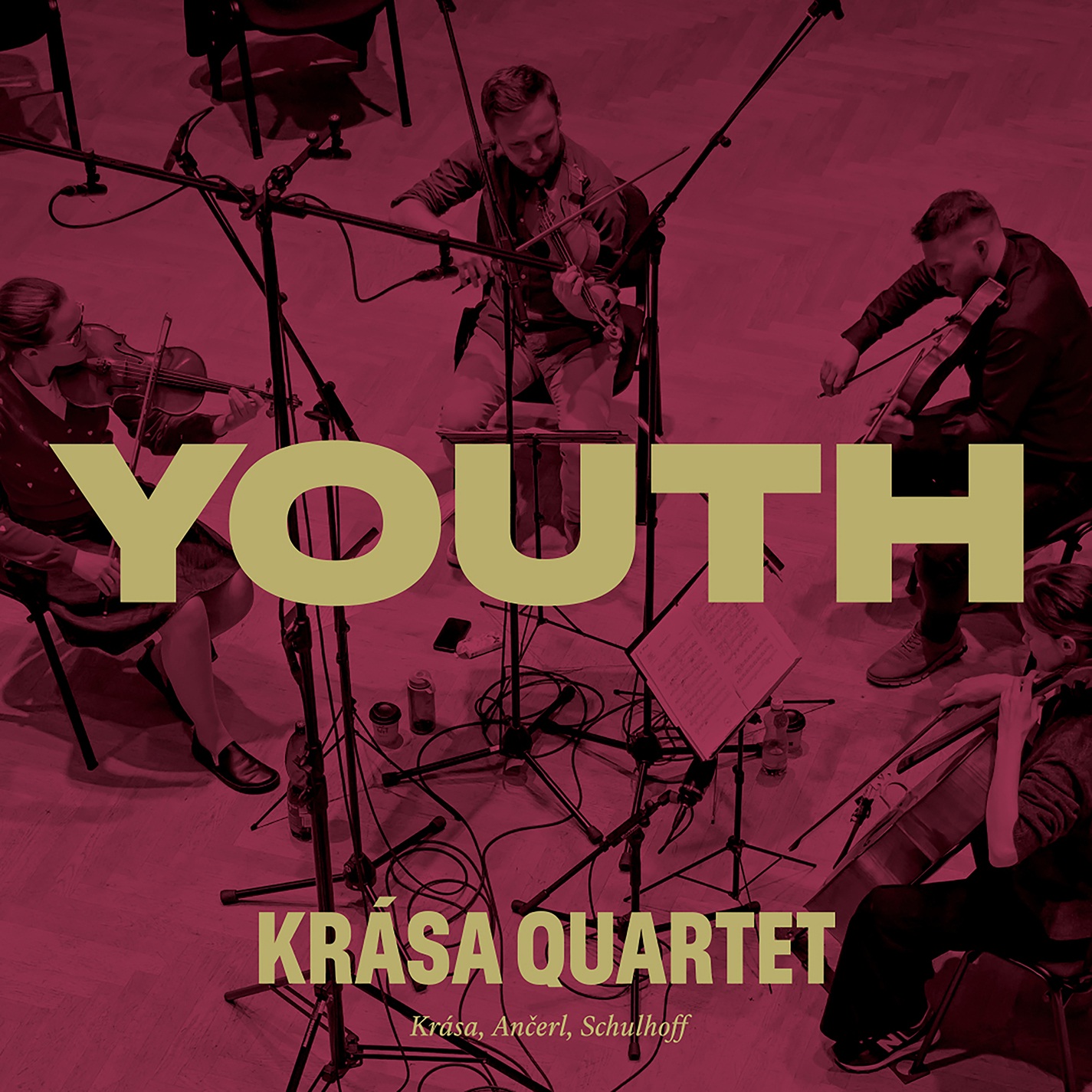
Performances, as you would expect from Kremer and his friends, are exemplary.

12 Airat IchmouratovCompositions inspired by artworks are featured on Airat Ichmouratov, a CD of music by the Russian-born Canadian composer, with cellist Stéphane Tétreault, violist Elvira Misbakhova and Les Violons du Roy under the direction of the composer (ATMA Classique ACD2 2896 atmaclassique.com/en/product/ichmouratov-the-ninth-wave-viola-concerto-no-2-cello-concerto-no-1).

The 2018 Tone Poem for Strings: The Ninth Wave Op.61 is a response to the painting of that name by the Russian marine artist Ivan Aivazovsky, Ichmouratov saying that he used impressionist techniques to capture the restless spirit of a turbulent ocean.

For his 2015 Concerto for Viola No.2, Op.41 Ichmouratov imagined a scene from the childhood of J. S. Bach, the three movements being written in a neo-Baroque style while also embracing Ichmouratov’s own neo-Romantic voice.

Three paintings – Intrigues, Repentance and Moto perpetuo – by the Montreal-based artist Natasha Turovsky inspired the 2008 Concerto No.1 for Cello and Strings with Percussion, Op.18 and provided the titles for the individual movements. Commissioned and premiered by Les Violons du Roy, it has a striking middle movement mourning the victims of the mid-century Soviet era.

13 Emma RushThe outstanding Hamilton guitarist Emma Rush is back with the Life & Times of Catharina Pratten, a delightful and fascinating CD featuring the music of the 19th-century guitarist and composer Madame Sidney Pratten and her associates (Independent emma-rush.com/the-life-and-times-of-catharina-pratten).

A child prodigy, Pratten was born in Germany in 1824, her family moving to England in 1829. She performed, composed and taught virtually up to her death in 1895, her three guitar methods and her book Learning the Guitar Simplified offering valuable insight into 19th-century guitar performance. There are seven of her pieces here, along with short works by her father Ferdinand Pelzer, her husband Robert Sidney Pratten, the Swiss child prodigy Giulio Regondi, the German guitarist and composer Leonard Schultz, Francisco Tarregá (who visited Pratten in London), the English virtuoso (and Pratten student) Ernest Shand, and Pratten`s student and biographer Frank Mott Harrison.

Rush plays two guitars from the 1850s, both associated with Pratten, in an immensely satisfying and beautifully played recital.

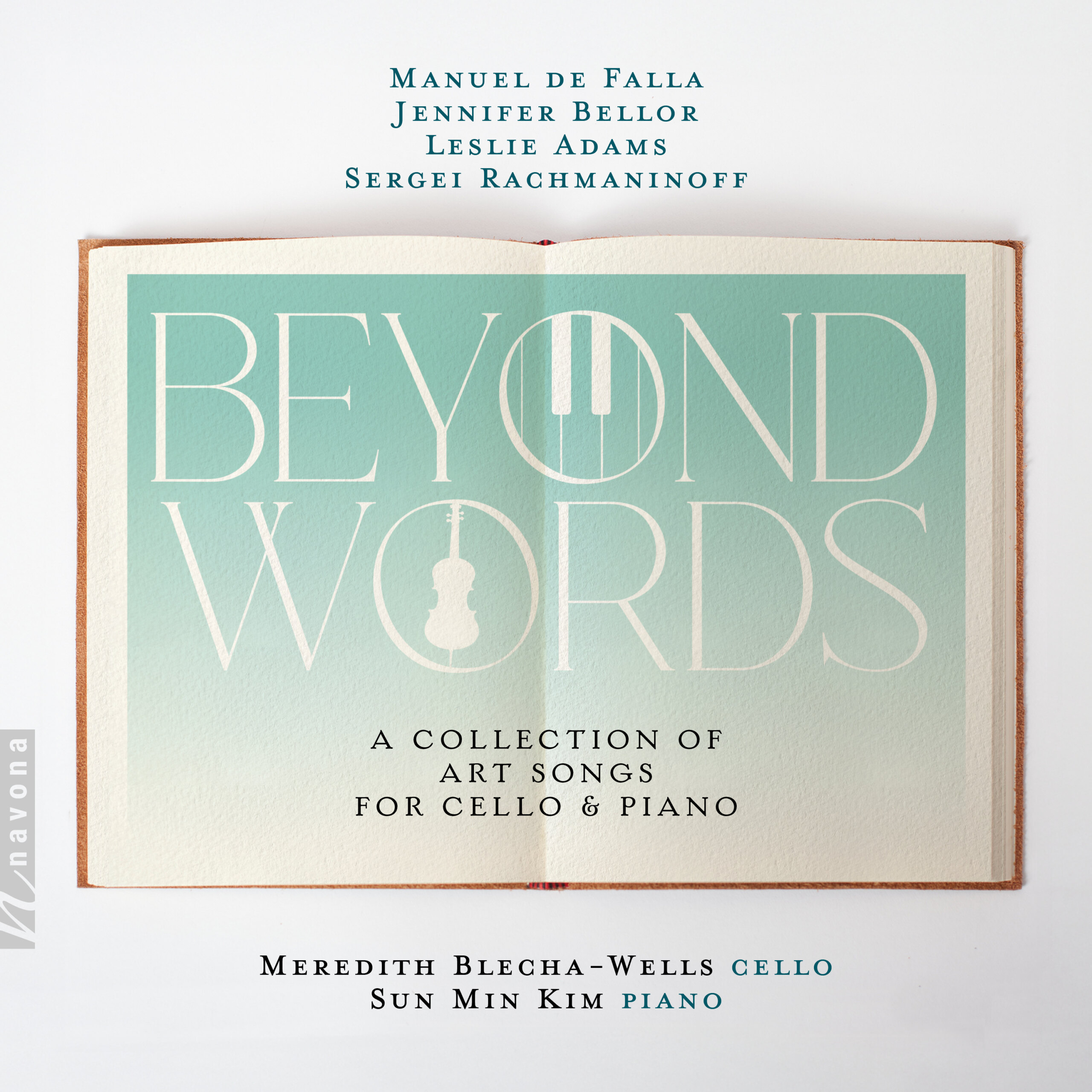
14 CancionetaThere`s more outstanding guitar playing on Cançioneta – Works for Guitar, with the English guitarist Frederick Lawton providing a snapshot of lesser-known mid-20th-century Spanish guitar music (Navona NV6723 navonarecords.com/catalog/nv6723). 

The main composer here is the pianist Federico Mompou (1893-1987), who is represented by his six-movement Suite Compostelana, composed for Andrés Segovia in 1962, and two selections – Nos.6 & 10 – from his 15-piece Cançions y Danzas piano series, the former arranged by Paolo Pegoraro and the latter transcribed by the composer.

Manuel de Falla`s Homenaje a Debussy is here, as are the three-movement Suite Valenciana by Vicente Asencio (1908-1979) and the delightful four-movement Sonata by Antonio José (1902-1936).

Lawton`s playing seems effortlessly clean, and his phrasing and musicality are first class. The recording was made using vintage microphones in order to give a warm and saturated tonal colour to the performances, and it certainly produced the desired effect on a terrific CD.

15 Empty Houses Canadian Guitar QuartetThe Canadian Guitar Quartet of Steve Cowan, Jérôme Ducharme, Christ Habib and founding member Louis Trepanier is in superb form on Empty Houses, a fascinating programme of compositions and arrangements (ATMA Classique ACD2 2883 atmaclassique.com/en/product/empty-houses).

The delightful Prologue, fougue et allegro trépidant was written by Habib’s teacher Patrick Roux for the CGQ’s 20th anniversary, the three movements referencing Chopin, Piazzolla and Bach. The other original compositions are Pulsar, by Belorussian-American composer and guitarist Olga Amelkina-Vera – its exciting rhythms gradually slowing to nothingness – and Renaud Côté-Giguère’s four-movement title track, described by the composer as an overview of his musical influences.

The hugely-effective Allegro con spirit from Mozart’s Sonata for Two Pianos, K488 (one hand=one guitar!) was arranged by Trepanier, who also arranged Areias Brancas, Orfeu Negro, a compilation of musical themes by Antônio Carlos Jobim and Luiz Bonfa from the 1959 French-Brazilian film Orfeu Negro that introduced the Bossa Nova to the outside world.

16 Matt SellickThe Thunder Bay flamenco guitarist and composer Matt Sellick, now Toronto-based, has spent much of the past decade orchestrating many of his flamenco guitar pieces and performing them with the Thunder Bay Symphony Orchestra, conducted here by Evan Mitchell on the resulting album Watching the Sky (Independent mattsellick.com).

Five of these pieces in their original form were included on Sellick’s 2014 CD After Rain, reviewed here in February 2015, and despite this being an intriguing and well-crafted project it’s difficult to feel that the orchestrations have enriched and enhanced the compositions; rather, they seem to detract from the original intimacy and impact and too often reduce the guitar to a rhythm accompaniment role. The guitar’s crispness – and After Rain had real punch – also tends to get softened in the recording balance.

The result is more of a Latin album than a flamenco album revisited, with occasional shades of José Feliciano – not a bad thing by any means. As such it has its attraction and its merits, but if you really want to know just how good a composer and guitarist Matt Sellick is then revisit After Rain.

Listen to 'Watching the Sky' Now in the Listening Room

Back to top