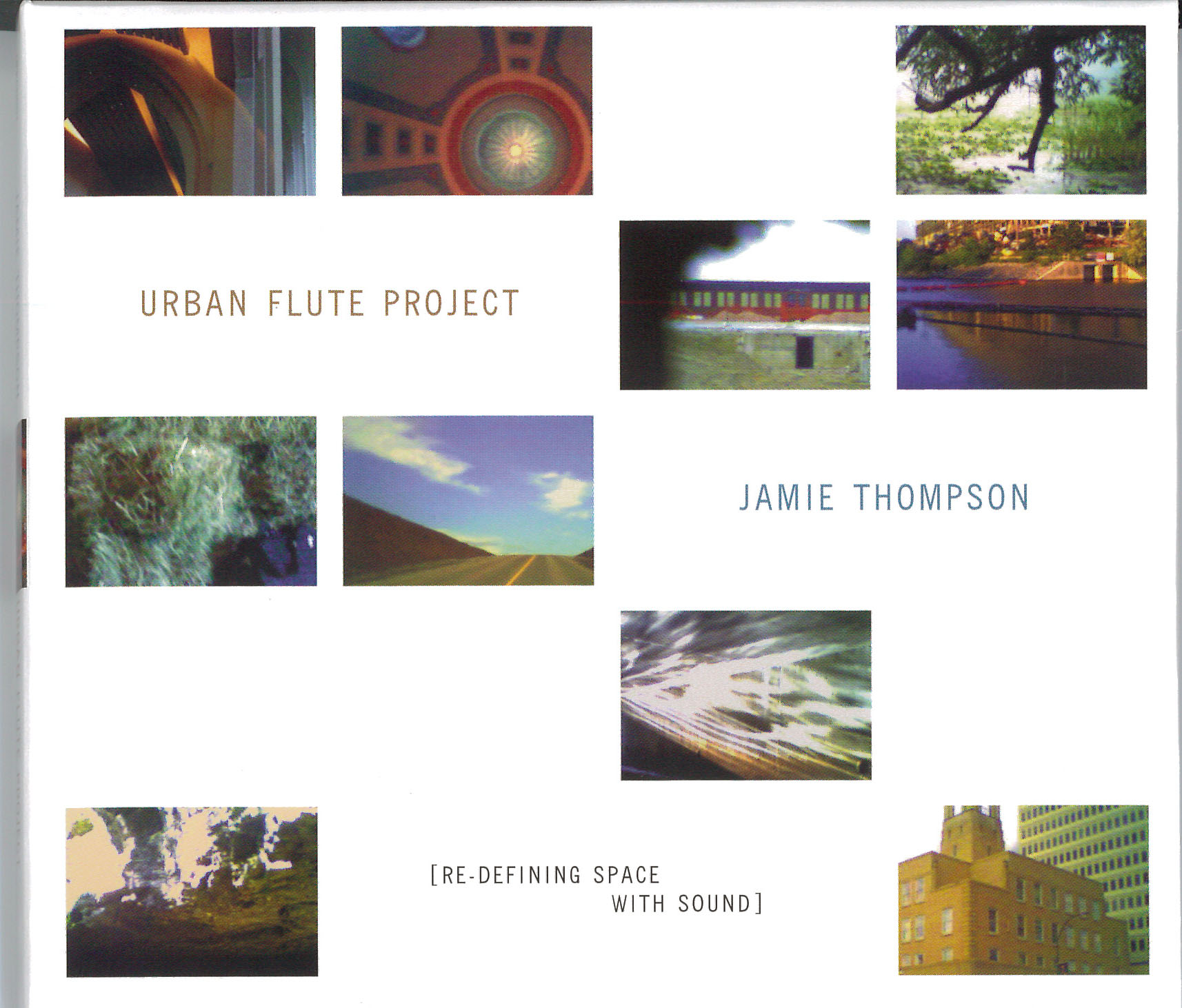
04_urban_fluteUrban Flute Project [RE:Defining Space with Sound]

Jamie Thompson

Independent UFPCD001 (www.urbanfluteproject.com)

The aim of the Urban Flute Project, the brainchild of Royal Conservatory flutist and teacher, Jamie Thompson, as I understand it, is to acquaint anyone who is interested (through its website and through CDs like this one) with urban locations around the world, not through the way they look but through their acoustical properties, conveyed by hearing a flute played in them.

This CD consists of 28 short tracks of Jamie Thompson playing in various locations. He was most successful in attaining the goal, “Re-defining space,” the CD’s sub-title, in places where the acoustical environment became a co-performer: the Manitoba Legislature; the Scarth Street Deco in Regina; track the Soldiers’ Tower at University of Toronto; Singhampton Bridge; Laird Lair; and the Millennium Centre in Winnipeg. The reverberation of these spaces became his performing partner. The ambient sound conveying the unique sonic properties – everything from moving water, birds, industrial machinery, horses’ hooves, the voices of people and even frogs – on the other tracks came across, alas, not as musical partners but as contrived impositions, reminiscent of the naïve sound effects of 1940s and 50s radio dramas.

No doubt, live at the time, every one of these musical moments would have been surprising and magical. Capturing the magic, the surprise and the spontaneity in an audio recording, has proven here to be very difficult if not impossible. The idea is good, but did not translate well into CD format. I might add that Jamie is a fine flutist and I hope he continues to record. I look forward to hearing a recording that does him justice.
01_neemaWatching You Think

NEeMA

NEeMAste (www.NEeMA.ca)


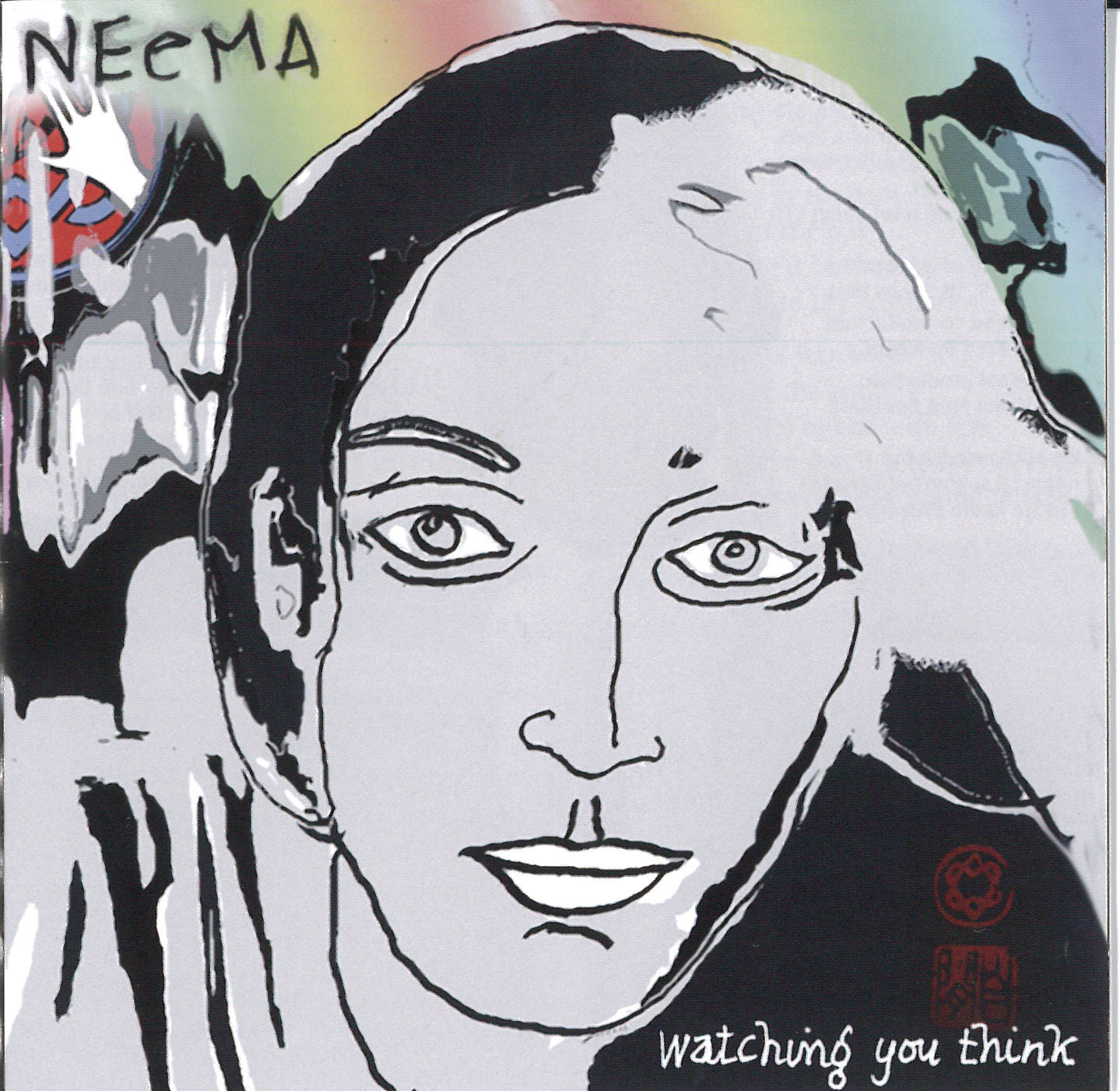
Very few people would say they listen to Leonard Cohen’s music for his singing. Most of us put up with his half-spoken rumblings in order to get to his songwriting, in particular his lyrics. The same can be said about NEeMA. Granted her singing is much prettier than Cohen's – who is one of the producers of “Watching You Think” – but that's not why you should get this album. You should get this album – immediately – for the really, really good songs.


Lyric writing is NEeMA's strongest suit and for the most part she's not telling us anything we don't already know and would say ourselves if only we were half as clever. “Some things are better left unspoken, better left unsaid. Some stories better left unwritten, letters left unread.” We understand that and all the other 11 songs NEeMA has written. (The twelfth track is a cover of Mark Knopler's heartbreaker, Romeo and Juliet). Bone To Pick With Time cleverly expresses what we all feel about our “very little window to do what we must do” and “a twisted little jack-in-the-box” is the evocative image in Jealousy.


Sensitively produced, the songs are enhanced but not overwhelmed by the arrangements: a cello here, a tabla there and, mercifully, nary a ping from that overused darling of the modern female singer-songwriter, the glockenspiel. Borrowed from a cross-section of Montreal scenes the musicians include Arcade Fire's Howard Bilerman and Tim Kingsbury, and Joe Grass and Miles Perkin who played with the late Lhasa de Sela. Check neema.ca for tour dates.


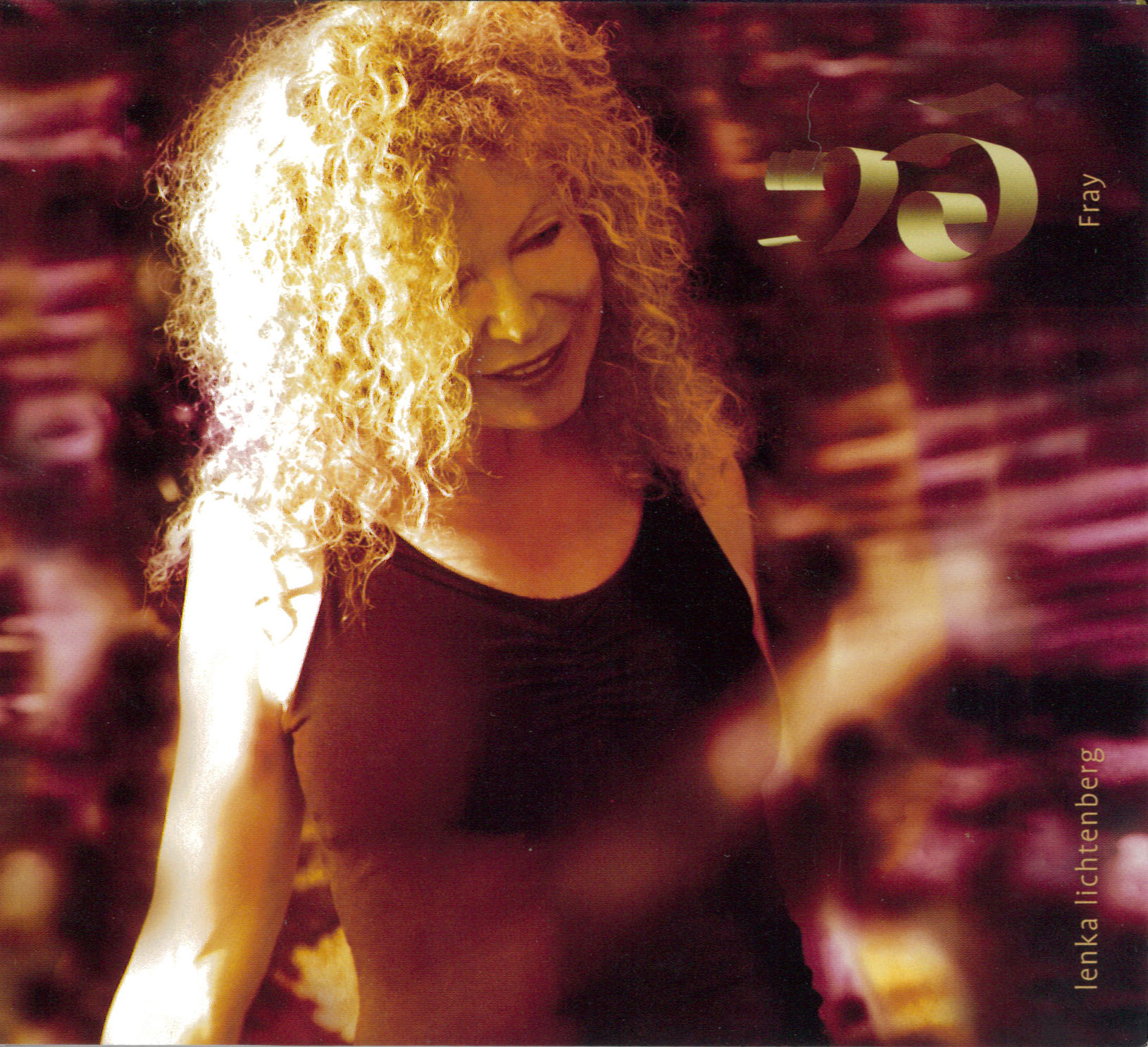
02_lenkaFray

Lenka Lichtenberg

Independent SR265 (www.lenkalichtenberg.com)


With “Fray” (Free), her fourth solo CD, the Czech born Toronto-based singer-songwriter Lenka Lichtenberg has embraced Toronto’s World Music aesthetic. Singing expressive Yiddish and English lyrics with an intimate soprano over well-wrought arrangements that bridge Eastern European, Middle-Eastern, Egyptian, South Asian, North and South American styles, Lenka takes us on a lilting musical journey replete with global echoes.


The songs on “Fray” gently blend musical boundaries, accomplished with the aid of a selection of Toronto’s world and jazz musician who’s who. Contributions shine from the quanun master George Sawa, Ravi Naimpally on tabla and dumbek, percussionist Alan Hetherington, bassist extraordinaire George Koller, woodwind expert Ernie Tollar and John Gzowski on guitars and oud. Those listeners who expect to hear standard Klezmer instruments such as piano, violin, clarinet and cornet on such an album are also rewarded.


Notwithstanding the delightful blend of word music arrangements here, Lenka Lichtenberg’s work is foremost a product of her passion and dedication to international Yiddish culture and to the development of what is sometimes called New Jewish Music. Her practice of cantorial singing within the Jewish liturgy “fills me with light and total happiness” she has said. It clearly illuminates “Fray” with a luminous energy, making the cumulative experience of listening to this album a joy.


[Editor’s note: Although for environmental reasons there is no program booklet included with the CD Ms Lichtenberg assures us all lyrics and translations will be available on her website lenkalichtenberg.com.]

Concert Note: Lenka Lichtenberg and special guests including Maryem Tollar will launch “Fray” at the Ashkenaz Festival on September 4 at 6:00 at the Lakeside Terrace, Harbourfront.

01_hiveHive
Gamelan Madu Sari
Songlines SGL 2406-2 (www.songlines.com)

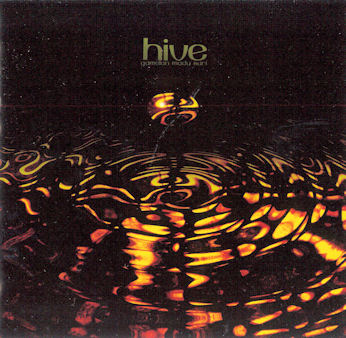
Vancouver’s brave label Songlines Recordings has just released the second fine album by that town’s Kyai Madu Sari. Playing a complete Javanese gamelan, this group of composers and musicians has been developing innovative music and theatrical productions since 1986. Their ambitious and delightfully rewarding album documents a new level of artistic sophistication and an ability to communicate their voice to a wider non-gamelan-centric audience.

“Hive” is constructed around three things: the group’s provocative shadow theatre production Semar in Lila Maya, the full possible instrumental range of the Javanese gamelan, and vocals up front in the mix. In fact those unfamiliar with the world of Javanese gamelan music may be surprised at the prominence of the glorious solo and choral singing in much of it.

Ben Rogalsky’s compositions illustrate all three threads beautifully. His song From Heaven to Earth deftly draws on two music genres for inspiration: the old-fashioned syncretic Indonesian folk style kroncong and the more recent Javanese campur sari. Behind Rogalsky’s backing of gamelan allied with mandolin, cello and string bass, are the warm and communicative vocals of the composer, Jessika Kenney and the chorus. The same vocal group is heard to good, though very different, effect in English composer Alec Roth’s eerie Full Fathom Five.

The Javanese born and long-time west coast resident Sutrisno Hartana's two elegant compositions are the most Javanese in feeling and conception of the works presented here. “Hive” is a rich and rewarding musical experience that challenges as well as it soothes – and magically manages to do it on several cultural levels at once.

02_bali_xProject Bali X
Giri Kedaton
Independent GKN-10809 (www.girikedaton.com)

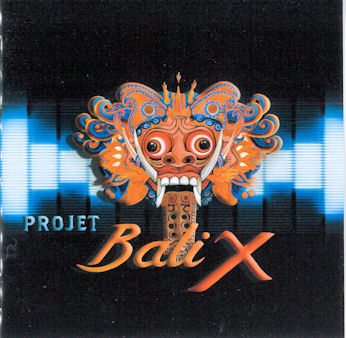
First of all, Projet Bali is defiantly not your chill-out ambient gamelan album. It is however a genre bending, skillfully composed, performed and recorded compilation by the crack Montreal Balinese gamelan group Giri Kedaton. Never academic, it incorporates with élan Western popular and classical musical elements with straight-up and twisted Balinese gong kebyar instrumentation and musical textures.

Glancing at the album’s titles is a dead giveaway to the cheeky culture-mashing intentions herein. Bali Hillbillies layers gong kebyar with the rock trinity: electric guitar, bass and drum set, with blood-pumping results. Ritual du Citadin continues the rock trope mirroring drum set breaks with kendang (drum) and ceng-ceng (Balinese multiple cymbals) features, underscored by spacey synth textures and rippling kotekan (interlocking patterns) provided by the rest of the gamelan.

The musical and material ‘metal’ metaphor is brought to the surface in Jembatan Metal. I find that the tempestuous Balinese kebyar (“burst in flame”) music & heavy metal rock energies and gestures suit each other so well that it made me wonder what took so long to marry them?

The album also embraces a Radiohead cover, surf rock vibes, synth soundscapes, Cuban bata drumming, Ennio Morricone references and techno beats, all quite comfortably and unapologetically cohabiting with gong kebyar music.

Thanks to Giri Kedaton’s twenty-six dedicated and skilled Quebec musicians and composers “Projet Bali” is one thrilling cross-cultural voyage worth taking repeatedly with little fear of culture shock.

02_sambacanaNos

Sambacana

Independent SACANA 001

(www.sambatoronto.ca)

I’ve discovered that there are two types of Brazilian musicians in our midst - those that are born in Brazil and adopt Canada as their home and those that are from here and become utterly smitten with this incredibly rich musical culture. And when the two groups of people come together the results can be marvellous, as traditional Brazilian styles are flavoured with North American sounds. Sambacana is just one of a number of examples of these hybrids in Toronto and the driving force behind the band is Alan “Canadense” Hetherington.

Hetherington is an in-demand percussionist, drummer, educator and leader of a number of groups including Escola de Samba de Toronto, a large percussion ensemble modelled after the massive bands that are prolific throughout Brazil and hit the streets at Carnaval time. The other core members of Sambacana - John Yelland, bass, Wagner Petrilli, guitars, Luis Guerra, piano and keys, Aline Morales, vocals - and a dozen guests bring a range of styles and skills to “Nos”. So we get what amounts to a sampler of Brazilian musical styles, mainly from the north east regions. Amor Transcendental is a gorgeous, meditative bossa nova written by Cibelle Iglesias; Dança de Vida, an instrumental featuring Bob Deangelis on clarinet, has touches of choro and jazz; Neve is a fun pagode lament about snow, and Molho de H.P. (HP Sauce) is a complex tribute to the genius Brazilian composer Hermeto Pascoal. This beautiful disc and information about several Brazilian groups can be found on the website noted above.

01_brigaDiaspora

Briga

Briga & Bahtalo Records

(www.brigamusic.com)

A product of Montreal’s multicultural music scene, and formerly with Les Gitans de Sarajevo and Rembetika Hipsters, Briga (Brigitte Dajczer), launched her debut solo project “Diaspora” in 2009, with recent performances in Toronto and Kingston. This accomplished violinist presents a lively and varied mix of Balkan pop/jazz, gypsy style violin, and song, on two CD’s with a back-up band of equally polished musicians on keyboards, accordion, drums, various traditional percussion, and bass. The first disc is completely instrumental, and here Briga shines as either composer or arranger of most of the tracks, as well as exuberant violin virtuoso, displaying extraordinary technique and passion. By contrast, the second disc is a collection of songs, all but one (Les Paul’s Johnny, Tu n’es pas un Ange) with lyrics and music by Briga, in English and French. While her singing is not as developed yet as her violin playing (her intonation is not always spot on), there is obvious talent here, both as singer and songwriter. And she still plays violin on the vocal tracks, though it’s not clear whether this is simultaneous or overdubbed.

One fault of this CD set is the lack of detailed liner notes; though the musicians and their instruments are named, and song lyrics are provided, there are no bios, nor any background information on the music itself, nor translations of the lyrics. Nevertheless, this is a praiseworthy first release by an artist worth following. Notable also is the stellar darbuka playing by Tacfarinas Kichou throughout.


05_shadowlandShadowLand

DaCapo Chamber Choir

Independent DC 002-09 (www.dacapochamberchoir.ca)


The essence of this recording weaves an ever-changing metamorphosis of darkness to light, highlighting the thought that neither of these polarities can possibly exist without the other. Night and day, life and death, earthly time and eternity are each a shadow of the other and which is real? The compositions chosen for this brilliantly focused choir provide exquisitely mystical and powerful music as meditations for a variety of texts highlighting this theme. The most dramatic is Whitacre's When David Heard based on the biblical passage telling of David's grief over the death of his son Absalom. Contrasting with the quietly poignant settings of Absalom fili mi we are used to, Whitacre's fourteen and a half minute setting moves through several different musical characterizations, evoking movement from sobbing to screaming, pain to ritual acceptance, through a processional passage. Other pieces such as Moonset by Jeff Enns and Nocturne by Leonard Enns which celebrate the beauty of night and the harmony of the spheres make effective use of overtones to inspire awe. In The searching sings by R. Murray Schafer, and Leonard Enn's The Amazing Day the choir celebrates the magic and lightness of nature. The recording begins and ends with two meditations on the sacred, Enn's I saw eternity and Imant Raminsh's O ignus spiritus.


Dianne Wells

01_quintessence_handbellsA Ring of Bronze

Quintessence Handbell Ensemble

Independent QHE200901 (www.quintessencebells.ca)


“Drats! If only I had listened to this CD before Christmas!” was my first reaction – it would have made a perfect gift for many of my friends. Handbell ringing is a dying art – usually ridiculed on par with the kazoo and ukulele. There is nothing to ridicule here however, as the Quintessence members are very talented musicians and arrangers. The selections range from classical (Jesu, Joy of Man’s Desiring) to spirituals (Swing Low, Sweet Chariot) to seasonal and original tunes – all superbly and precisely rendered by the five member ensemble. The amateur musicians, whose spiritual and musical home is the St. Andrew’s Presbyterian Church in Scarborough, are joined by a talented trio of professional musicians, Svetla Dybenko on cello, Kevin McChesney on guitar and Joanne McLennan on piano. Almost regardless of the tune, the sound is all Christmas – shimmering lights and joy, invoking the magic that captivates us so about the season. Do yourself (and your friends) a favour and start you Christmas 2010 shopping early at www.quintessencebells.ca.


Robert Tomas

12_triple_concertoThe Melody of Rhythm - Triple Concerto and Music for Trio

Bela Fleck; Zakir Hussain; Edgar Meyer; Detroit Symphony Orchestra; Leonard Slatkin

E1 Music KOC-CD-2024


A trio of stars creates a musical galaxy of sound, ideas, patterns and rhythm, that gives a new meaning to the words “classical crossover” – the Grammy nomination in this category pretty well sums up the high quality of “The Melody of Rhythm”

Bela Fleck (banjo), Zakir Hussain (tabla) and Edgar Meyer (double bass) are each stars in performance and composition. Their ensemble work as a trio is brilliant. Theirs is a trustworthy conversation in the six trios presented here. The music is a quilt of styles – the short rhythmic and tonal melodic ideas create amazing counterpoint.


Add the symphony orchestra in the Triple Concerto The Melody of Rhythm and a fascinating mix of the Western classical, world music and American jazz/folk is created. The best part of the three movement concerto is that not a single musician is asked to be something they are not. No uncomfortable stylistic boundaries are crossed. The symphonic musicians parts, though indicative of the banjo, tabla and double bass parts, provide more of a different viewpoint than an accompaniment to the soloists. It is clever writing with respect for the different genres from everyone involved.


Fleck, Hussain and Meyer are phenomenal as always. The Detroit Symphony Orchestra under Leonard Slatkin rises to the musical challenge. The production is clear, with the concise liner notes a dream to read. This is entertainment and musical genius to be applauded!


Tiina Kiik

Musical Season’s Greetings and a Happy New Year to you and yours with some of these new Christmas recordings out in time for the holidays.

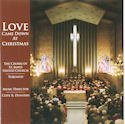
01_love_came_downThe Choirs of St. James United Church in Toronto perform with enormous holiday spirit in Love Came Down at Christmas. The ethereal angelic opening track O Come All Ye Faithful has the choir in superb form. From carols to more secular songs like Santa Claus is Coming to Town, the choir and Music Director Clive R. Dunstan have assembled the perfect mix of repertoire with an eclectic mix of organ, piano and flute accompaniment. Some high notes need to be tweaked but high marks for an excellent recording. You can email stjames_uc@rogers.com or call the church at 416-622-4113 to purchase the disc.


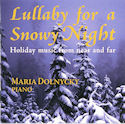
02_lullabye_snowy_nightMaria Dolnycky's Lullaby for a Snowy Night (www.mariadolnycky.com) features piano performances of holiday music from around the world. All is well played, perhaps a bit too percussive at spots, but well worth a listen, especially for Dolnycky’s intriguing take on Bela Bartok's Romanian Carols, and her touching rendition of Pietro Mascagni's Christmas Pipe Tune.


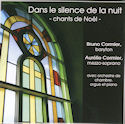
03_cormierI knew that Toronto-based baritone Bruno Cormier (www.brunocormier.com) is a very fine singer in the operatic genre. A huge Christmas present surprise for me was finding that he is also an accomplished composer. His L'arrivée du Christ is a slightly atonal yet lyrical tradition-based six part song cycle. It is the highlight of the CD Dans le silence de la nuit, a collection of French Christmas songs arranged by Bruno, and performed by him and his sister, mezzo-soprano Aurélie Cormier. This is a very professional and musically moving release. Both singers have the soul and the technique to dazzle, and are accompanied by a tight instrumental ensemble.


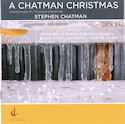
04_chatmanThe Canadian Music Centre (www.musiccentre.ca) has another Christmas star with A Chatman Christmas (Centrediscs CMCCD 15509), a collection of holiday choral music by UBC professor Stephen Chatman. Chatman's original works and arrangements of classics feature traditional harmonies with a fluid tonality, all astutely performed in this “composer-supervised recording” by the University of British Columbia Singers conducted by Bruce Pullan, with a number of special guests. Make sure to hear Jumalisten joucko, with medieval drummer Quennie Wong. This is a memorable and very idiosyncratic Christmas song.


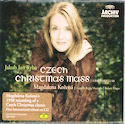
05_czech_massJakub Jan Ryba's Czech Christmas Mass (Archiv Produktion 477 8365) features mezzo-soprano Magdalena Kozenà in this re-release of a 1998 recording. Ryba (affectionately known as Hey, Mister after the mass' opening line) wrote this Czech language masterwork in 1796. A holiday tradition to this day, the charming sound is so very much in the style of the music of the time. The childlike innocence that we all associate with Christmas is perfectly captured in both words and music as the humour and loving story of Czech shepherds at the manger unfolds. Great performances by the Capella Regia Musicalis under Robert Hugo too.


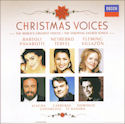
06_christmas_voicesFinally, what would Christmas be without Luciano Pavarotti singing O Holy Night, Joan Sutherland’s Joy To The World or Renati Tebaldi’s take on Schubert's Ave Maria? The two CD compilation Christmas Voices: The World's Greatest Voices, The Essential Sacred Songs (Decca 478 2093) give us these and other famous voices in timeless performances that will keep you in the holiday spirit for generations to come!

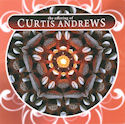
01_curtis andrewsThe Offering of Curtis Andrews

Curtis Andrews

Independent (www.curtisandrews.ca)

I’ve been smiling more than usual today, bopping around the apartment to this joie de vivre-filled CD by Curtis Andrews, Newfoundland’s globe-trotting percussionist and composer.

Very ably aided by fellow islander musicians Patrick Boyle (outstanding on trumpet), Bill Brennan (keyboards), Chris Harnett (saxes and flute), Brad Jefford (electric guitar) and other fine players, Andrews’ very eclectic world roots are clearly on display here.

The music is self-described as world jazz and the tag fits. Drawing from Andrews’ studies in South Asian, West Africa and North America music, The Offering of… merges all those influences in an energy-rich field, couched in mainstream jazz forms improv-rich solos and melodic-harmonic language. With such a rich multi-cultural banquet, I must admit it took me several listening to fully clue into the multi-layered inter-cultural musical goings on.

Equally at home on mrdangam (South Indian classical drum) and Ewe (West African) percussion as on drum set, Andrews sets a high musical standard for his collaborators. Not indulging in mere musical exoticism Andrews impresses with his good humour in Genghis Khanda Blues (yes, it is in 5/4), and shear musical ambition on exhibit in his virtuoso mrdangam solo in Malabar. One of my favourite tracks is Camel Ride, an enigmatic though easy-going east-coast feel post-Shakti bebop. Kaju Fenny (titled after a reportedly wicked Goan cashew liquor) is another outstanding chart. A tip: if you want to join the players in their fun, just be sure to keep tapping a slow 7 beat cycle throughout its convoluted beat groupings. That way you can land on the downbeat with them.

The Offering of Curtis Andrewsmarks the debut of an important and accessible new world-conscious compositional and percussion voice. Visit the website to preview the album, download the free charts, and hum or play along!


01_jesse_cook_advanceThe Rumba Foundation

Jesse Cook

EMI 50999 698061 2 4

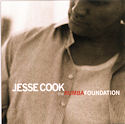
Jesse Cook can now add ethnomusicologist to his résumé, right under rumba flamenco guitar god. For his 7th album, the award-winning composer travelled to Bogota, Colombia to absorb the musical culture and integrate it into his unique style of nuevo flamenco music. And he’s done a fine job of it, too. Sometimes when musicians attempt to bring together musical genres the result is somewhat disjointed, with one style awkwardly inserted into the other, never achieving a true blend. But on “The Rumba Foundation” Cook and crew achieve an artful marriage of rhythms and harmonies. Several tracks have been recorded with Colombian musicians Los Gaiteros de San Jacinto, and on Manolo’s Lament and Bogota by Bus the group has found the common ground between the musics and traditional Colombian instruments like gaita flutes are completely at home. La Rumba del Jefe’s medium groove completely hits the rhythmic sweet spot.

Cook’s writing and playing shifts easily between contemplative ballads and blistering guitar work. So although there are new sounds here, we also get treated to some of his trademark gorgeous ballads on Tuesday’s Child and Homebound (aided by Chris Church’s plaintive violin), while unleashing the million-note-a-minute runs on Paul Simon’s Cecilia. This, the only cover on the record, is completely appropriate as the rousing multicultural rendition is a great tribute to the man who was one of the first to bring “world” music to North American pop audiences.

02_tasaAlchemy

Tasa with special guests: Mark Feldman; Adrean Farrugia; Dhruba Ghosh;

DJ Olive Independent TASA004

(www.tasamusic.com)

Ten years ago Tasa’s founder, tabla player Ravi Naimpally, set out to realize his vision to create a new musical form out of the many cultures that co-exist in this country. True to form and mission, “Alchemy” delivers on all fronts.

The complete experience of the album leaves the listener feeling as if they had been traveling, shifting in and out of place, space and time. The “trippiness” of the music can largely be attributed to the soundscaping of guitarist Chris Gartner, and the intermittent scratching of guest DJ Olive. Fragments of electronica sneak up on you in a delightful and unjarring kind of way. If pressed to choose a favourite, it would be Boatman’s Song – an original and haunting arrangement of a traditional Indian folk song. The band collectively evokes mystic waters, complete with rain stick. I was mesmerized by the “other worldliness” of Tasa’s newest addition, Samidha Joglekar’s alaaps (extemporized free-form vocalizations), and I could lose myself inside the reverb and timbre of Ernie Tollar’s magical flute playing.

Dhurba Ghosh guests on sarangi, a stringed instrument akin to the violin considered by many as the closest acoustic reproduction of the human voice. Samudra, one of Naimpally’s originals, means ocean in Sanskrit. Ghosh’s sarangi and Tollar’s sax toss around their easy conversation like waves with the “voice” of Naimpally’s tabla. The song ends in a whirlpool jam session. The album’s last two tracks, Bija and Solar really showcase the band’s versatility and bring new meaning to the term World music.

01_kate_shuttTelephone Game
Kate Schutt
Cuto CUTO 001
(www.kateschutt.com)


Kate Schutt came out with a very accomplished debut CD “No Love Lost” in 2007, which was especially impressive for a young artist with no label backing. She has built on that artistic success and reached further into her considerable creative storehouse for “Telephone Game”. Subtle and stylish, the record is not easily categorized, but leans to pop, soul and jazz, with a full roster of skilled instrumentalists (most notably Teri Lyne Carrington on drums) adding variety and depth. Schutt wrote all of the songs and the one that’ll have you reaching for the replay button is Open Window, with its sweet story of young love and Gregoire Maret’s epic harmonica playing.


Her strong resemblance to Rickie Lee Jones, both in singing style and lyric writing – at once gritty and vulnerable - can’t be ignored. Still, Schutt is carving her own path and although she draws on a few genres, she has a distinctive voice that asserts itself throughout the work. The only minor flaw with the record is that the arrangements are a bit inconsistent. On the one hand, horns add gutsy heft to Take Me With You and strings give a clever nod to the disco era on Fake ID, however on Take Everything and Blackout some of the background vocals sound disjointed and out of place. But it’s a minor distraction from what is otherwise a great record from a gifted musician and songwriter.

02_viking_vacationVikings on Vacation
Ensemble Polaris
Bisma Bosma Records BBR002
(www.ensemblepolaris.com)

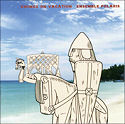
Self-described Arctic fusion band Ensemble Polaris takes a well deserved sonic break from its usual Northern Exposure with “Vikings on Vacation”. As the hilarious cover art so aptly displays, the dour Viking horsemen are melting on the beach. And while they may not be headed Due South - superb renditions of Swedish folk material are still a main focus - the choice of tracks by such non northern stars as Nino Rota and local Torontonians conjure up more of an international musical pastiche.

Band member Kirk Elliott contributes Cod’s Anatomy, a five part suite of short melodies written after a trip to sunny Newfoundland. Many styles are visited here with the Reel from Doran House a toe tapping joie de vivre. Guest composer Andrew Downing’s You Lovely Island is outstanding. Inspired by some melodies from West Side Story’s America, the piece allows the ensemble a chance to prove that they are more than just another folk music band. This is Leonard Bernstein on the rocks with its lilting melodies and rhythm. Member Debashis Sinha’s Emil Goes to Market is a world music piece originally written for Maza Mezé given in a joyful Polaris rendition.

Our musical vacationers are more laid back in their performances this time. The group plays with care, precision and creativity. However, considering the skills and musicality of the players, more spontaneous improvisation would have been a welcome addition.

“Vikings on Vacation” is great music to enjoy whether you are travelling the world or just taking a short holiday on the veranda.

Concert note: Ensemble Polaris celebrates the release of “Vikings on Vacation” in concert at the Music Gallery/Church of Saint George the Martyr on Friday October 16.

Back to top