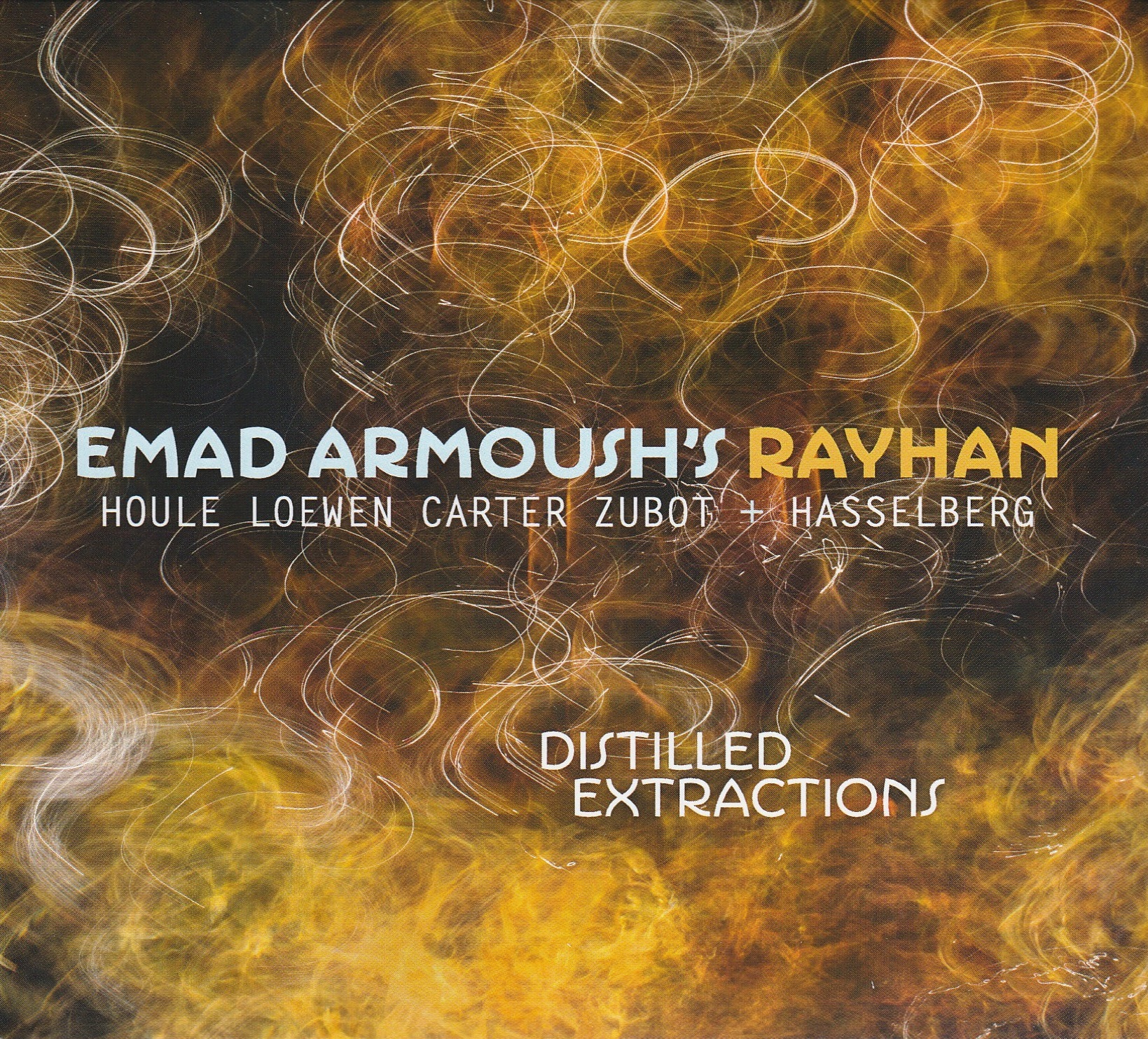
05 Emad ArmoushDistilled Extractions
Emad Armoush’s Rayhan
Afterday AA2401 (afterday.bandcamp.com/album/distilled-extractions)

Bringing together the ensemble Rayhan for Distilled Extractions becomes a stroke of genius when paired with Emad Armoush’s lineup of traditional Arabic songs and original compositions. The ensemble – all veteran Canadian improvisors – have both the skill and the chemistry to explore beyond the basic songs to bring an evolutionary vision to the album. The result is simply beautiful.

Armoush’s oud, ney, and vocals lead the ensemble through these pieces but leave space for the group to expand with improvisations and occasional electronics, giving the album a modern feel but never losing the essence of the traditional tunes. Rayhan, comprising clarinetist François Houle, Jesse Zubot on violin and effects, JP Carter on trumpet, Kenton Loewen on drums (and Marina Hassleberg guesting on cello) is exquisite in their delicate balance and chemistry, but much could be also be praised for Houle’s perfectly balanced and creative mastering ensuring the primary focus and authenticity remains with the traditional songs.

The entire album flows seamlessly, enriched by the group’s improvisations, electronic explorations and occasional jazz influences, and I loved every track. From the opening improvisation of El Helwa Di, to Lahza, beginning with a breathtaking trumpet and effects solo before evolving into a rhythmic groove, to Zourouni, starting with a free improvisation featuring Houle’s clarinet at the forefront, the album effortlessly blends traditional and contemporary elements, eventually gathering the entire ensemble and bringing the album to a conclusion that left me seeking out where this group will be performing next.

Listen to 'Distilled Extractions' Now in the Listening Room

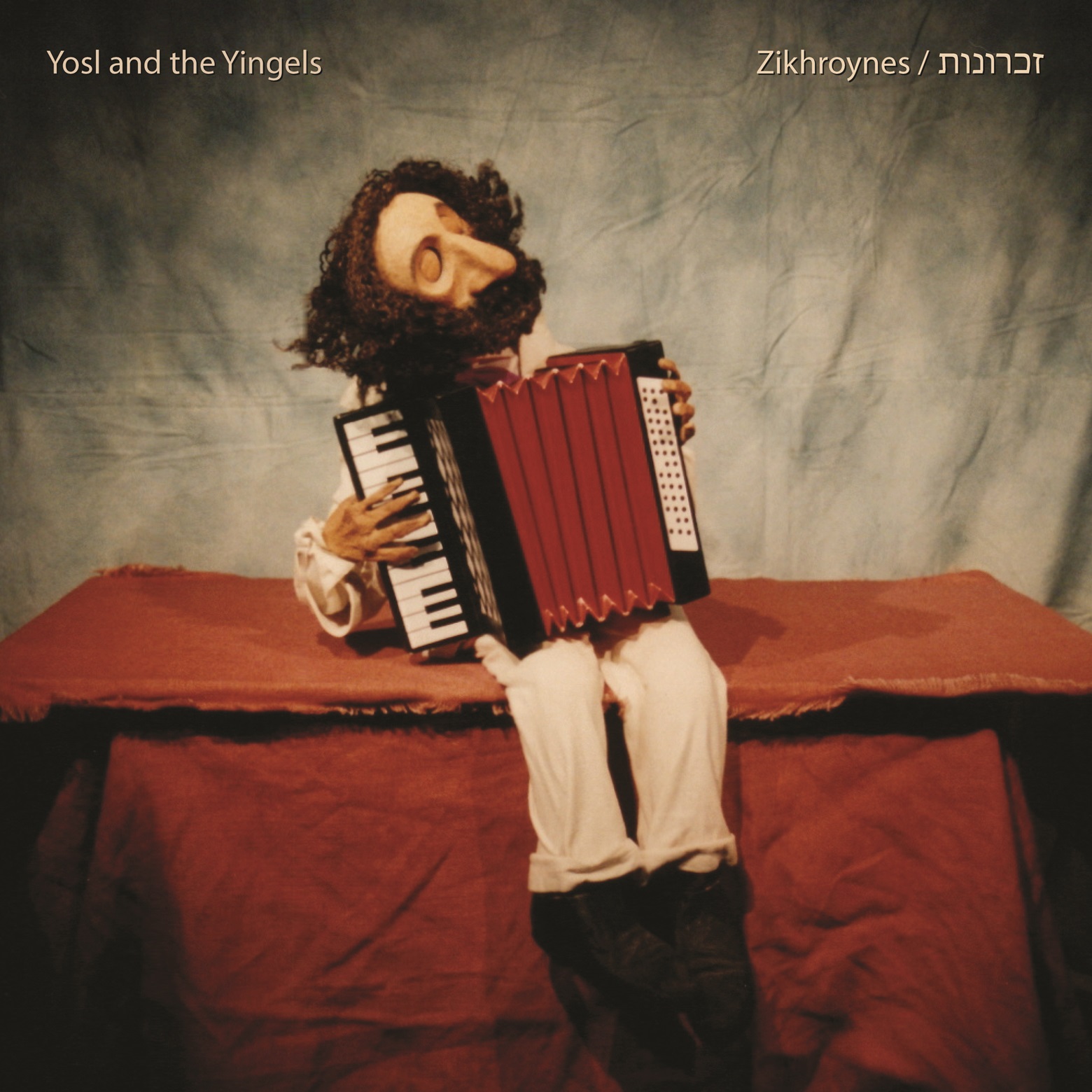
06 Yosl and the YinglesZikhroynes / זכרונות
Yosl and the Yingles
(josephlandau.com/yosl-and-the-yingels)

It’s not often an EP of original Yiddish songs lands in one’s inbox; rarer, still, for it to be reviewed in The WholeNote. Well, that’s exactly what has transpired with Zikhroynes, “Memories,” the lovely debut by Yosl and the Yingels.

Led by Toronto-based singer-songwriter and accordionist, Joseph Landau, this Yiddish swing and folk band arose out of a busking project during the pandemic. For Zikhroynes, Landau, one of only a few Canadian composers currently penning songs in Yiddish, chose four of his favourites (from the dozens he has written), each embodying classic aspects of Klezmer instrumentation, form and style, and the familiar Yiddish musical theatre themes of nostalgia and yearning. 

Mayn Haymshtetele, “My Hometown,” evokes the longing for the shtetl (think “Anatevka” from Fiddler) or in Landau’s case, his childhood Jewish enclave in Thornhill, just north of Toronto. Blimele, “Little Flower,” is a beautiful, lilting waltz, reminiscent of Tumbalalaika. Listen for the spectacular clarinet solo by the always-astonishing Jacob Gorzhaltsan in Lomir Freylekh Zayn, “Let’s Be Happy.” And the Yiddish swing era of the Barry Sisters is perfectly captured in Shternbild, “Constellation.” 

Enjoyment of this enchanting gem is greatly enhanced by the essential, highly informative “Lyric Explainers” found on Landau’s YouTube channel: youtube.com/@josephdavidlandau/videos.

01 Lenka LichtenbergFeel With Blood – Echoes of Theresienstadt
Lenka Lichtenberg
Six Degrees (open.spotify.com/album/6Dj5Uf3eCSgVNUCOePO6fr)

This album of songs is a continuation of the experiences of Anna Hana Friesová (1901-1987), and of Lenka Lichtenberg, her granddaughter. These stories of Friesová’s life in a concentration camp were first sung in the Czech language on Thieves of Dreams (2022) by Lichtenberg, an artist with a gorgeously spellbinding and agile soprano that sometimes swoops down into a dark lower register, eminently suited to bringing the elemental sadness of Friesová’s poetry to life. 

The crimson-coloured outer package is the first sign that what you are about to hear are especially heartbreaking songs based on Friesová’s diaries that documented life during the Holocaust. In Feel With Blood, Lichtenberg has grown to deeply inhabit more than just her grandmother’s character, but her very life. She sings with great feeling and intensity and an always vivid response to the text documented in Friesová’s diaries. Lichtenberg’s voice is sharp as a knife, penetrating the depth of life and poetry with each beauteously soft – sung or recited – phrase. The vocalist often employs chilling chest tones as she draws us into Friesová’s world, making her Holocaust life leap off the page. 

The superb song poetry features matchless depictions of Friesová’s loneliness and suffering. Lichtenberg displays sublime artistry, with an uncanny ability to make the North Indian tabla and its polyrhythms perfectly suited to the ululations of a voice soaked in Czech folk melodies on this wonderfully orchestrated recording.

02 AzadiAzadi
Tamar Ilana & Ventanas
Lula World Records LWR04551A (lulaworldrecords.ca/product-page/azadi-by-tamar-ilana-ventanas-cd)

Toronto-based multilingual singer and dancer Tamar Ilana, of Jewish, Indigenous, Romanian and Scottish descent, grew up on the road learning from and performing with her ethnomusicologist mother Dr. Judith Cohen. 

In three well-received previous albums Ilana’s world music band Ventanas (“windows” in Spanish), drew on her multiple roots and those of her Toronto bandmates. Their new studio album Azadi vividly extends the group’s musical purview, effectively mixing highly contrasting vocal and instrumental numbers over 12 tracks. As well as showcasing traditional Flamenco, Sephardic, Balkan and Brazilian songs in inventive arrangements, compositions by Ventanas members contribute contemporary themes. Ilana renders the lyrics in an impressive range of languages: Spanish, Ladino, French, Urdu, Greek, Portuguese and Bulgarian. 

Meaning “freedom” in Urdu and Farsi, the album’s title track was inspired by the women’s freedom movement in Iran opening with the uplifting lines, “Sun breaks through the darkened and cloudy skies / Shining bright on open and peaceful eyes / Moving free with liberty…” As for the song Ventanas Altas, within the charm of its vocal melody lies a secret earworm power. I was compelled to listen to it several times. This old wedding-courtship song, popular among Sephardic Jews of Salonika Greece, was collected by Cohen in Montréal. Ilana’s unaffected light soprano sounds just right.

Ilana shares that she’s “always struggled with my multiple identities, both cultural and genetic. As the world also struggles with these issues on multiple fronts, this album is a deep reflection of these questions, and a musical response in the form of peace, collaboration and acceptance.” I’m feeling it too.

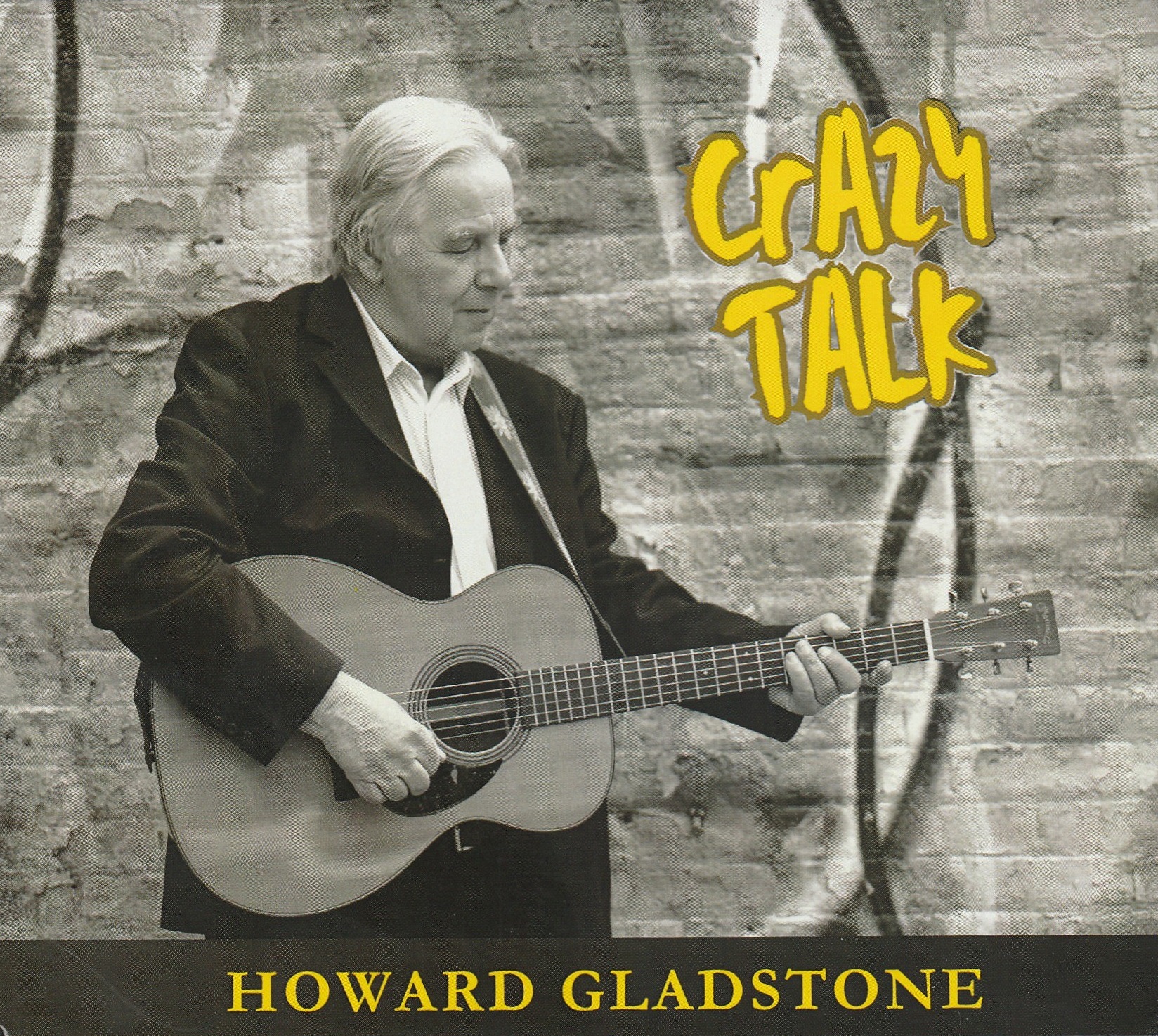
01 Howard GladstoneCrazy Talk
Howard Gladstone
Sonic Peace Music SP000221 (howardgladstone.bandcamp.com/album/crazy-talk)

Toronto-based singer-songwriter Howard Gladstone’s eighth release is a 12-track recording showcasing his mature clear vocals, poetic storytelling lyrics in jazz to world to folk to rock music. He is joined by his core band members bassist Bob Cohen and guitarist/co-composer/co-producer Tony Quarrington, frequent pianist/vocalist Laura Fernandez and six other musicians.

Title track Crazy Talk, co-written with Quarrington, is a subtle tribute to Patsy Cline, the Beatles and Robbie Robertson. This lighthearted, jazzy country tune features a Quarrington guitar solo, Cohen bass solo, Fernandez back up vocals and Gladstone singing his witty lyrics like “That’s crazy talk… but then again, I’m crazy too.”  

Latin/world music references resonate in Little Bird where Jacob Gorzhaltsan’s birdlike flute trills, tweets and high pitched melodies accompany Gladstone. Oh, the Waters is multi-section with colourful guitar and accordion echoing. Irish Rain is a rollicking Irish drinking song held together by drum taps and Gladstone’s classic vocals. 

Longtime fans and new listeners alike should enjoy this hopeful, timeless Gladstone release.

Listen to 'Crazy Talk' Now in the Listening Room

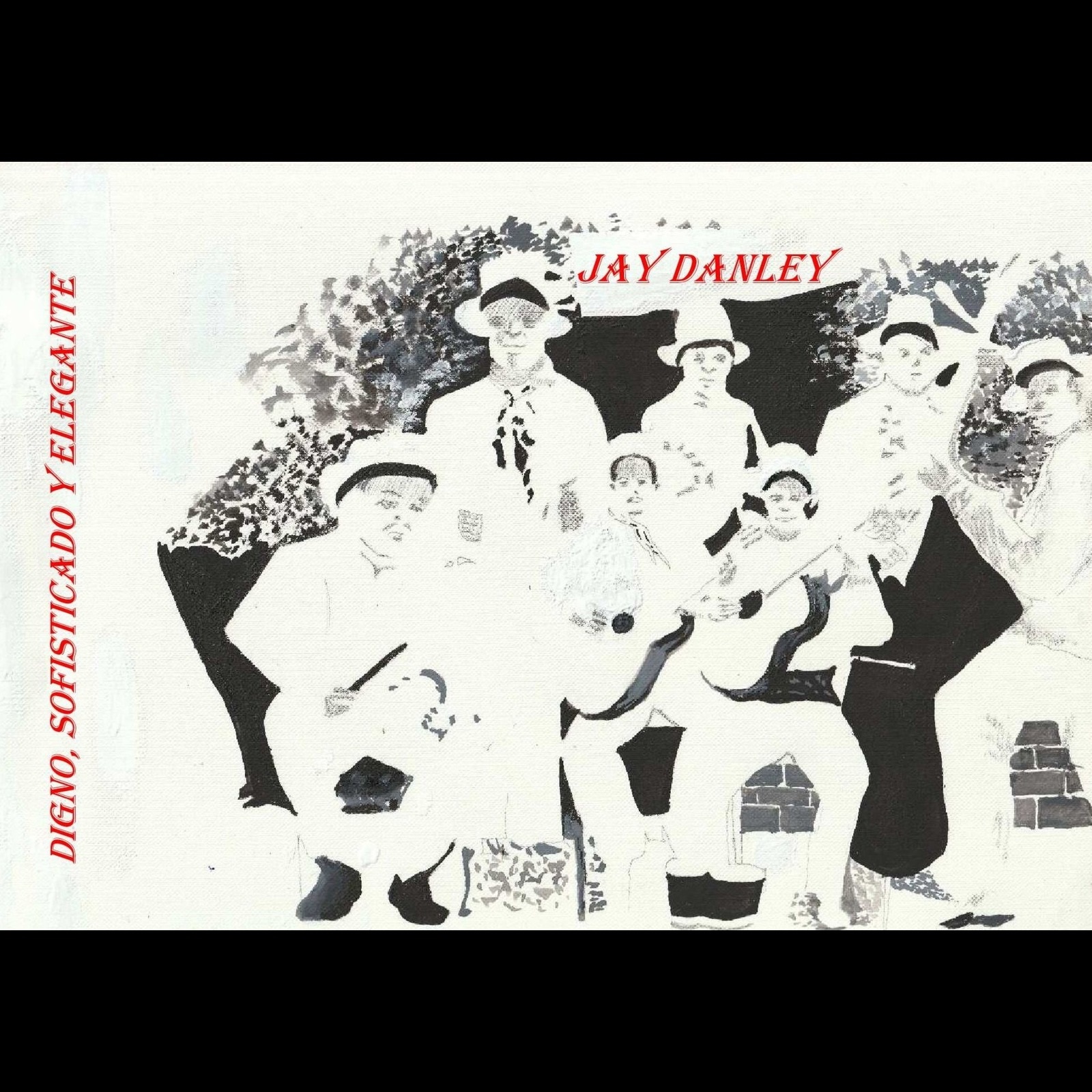
02 Jay DanleyDigno, Sophisticado Y Elegante
Jay Danley
Independent (jaydanley.bandcamp.com/album/digno-sophisticado-y-elegante)

Canadian composer and musician Jay Danley is a multi-instrumentalist with a passion for Cuban music. He has performed with Jane Bunnett, members of Buena Vista Social Club, and can be heard on recordings by Hilario Duran.

On Digno, Sophisticado Y Elegante, Danley takes you in spirit to eastern Cuba, where 19th century Spanish and African-influenced music and dance come together in a collection of original compositions that feature the tres, a three-course string instrument central to the Son Cubano tradition. On this ambitious self-produced instrumental recording Danley plays all the instruments.

 In the slow dance opening track, Adiós Al Ayer (Goodbye to Yesterday) the delicate sound of the tres almost whispers as it recalls times past, and is reminiscent of the ache felt when listening to Duran’s interpretation of Mirame Así (Look at Me Like This), on which Danley plays. El Pasado Seacabo (The Past Is Over) takes us further into rural Cuba charming us with its graceful melody. This is small-setting music that is never rushed nor calls attention to itself. 

On Guapachou Danley exceeds expectations by featuring the tres with a jazz improviser’s virtuosity. The tres follows multiple lines flying chromatically over the slow-moving chords. The single take tres solo is masterful. At the same time, amidst all this music mastery, one is left nostalgic for a time when the limitations of sampled horns and multitrack home recording was not required to bring engaging new music to the world.

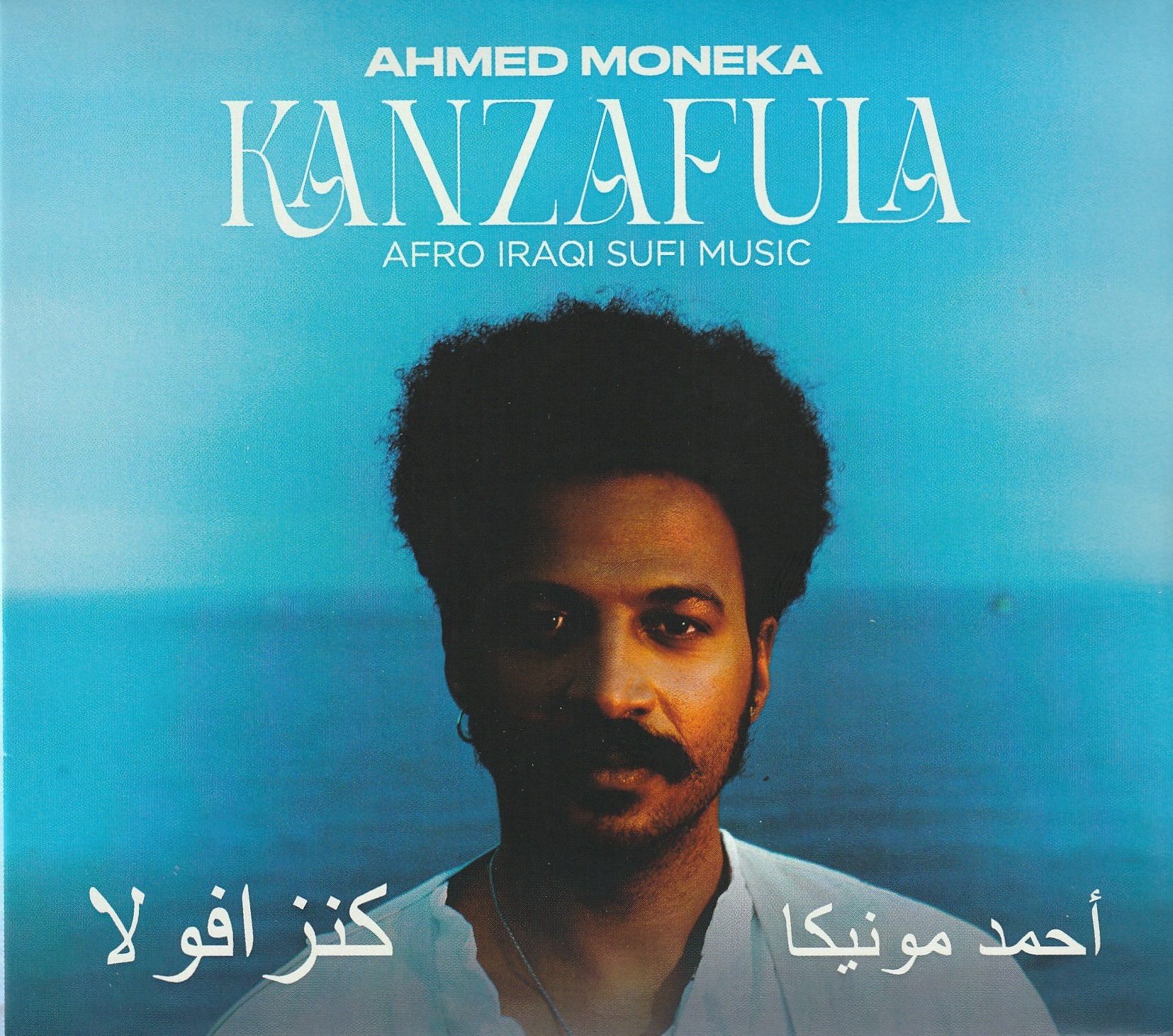
03 KanzufulaKanzafula – Afro Iraqi Sufi Music
Ahmed Moneka
Lula World Records LWR042A (ahmedmoneka.com)

Since being forced to flee Baghdad as a refugee after acting in a gay rights film in 2015, Iraqi actor and artist Ahmed Moneka has continued to share his bright light in film, art and music. His first album Kanzafula reflects his African, Iraqi-Arabic history to his eventual landing in Toronto, using poetic lyrics to describe his journey through three wars in Iraq and his continued activism. With his smokey, expressive vocals, Moneka gives his all to these songs, a flavourful collection of Arabic melodies infused with Afro grooves, soul, jazz and rock. The album wishes for love and peace during the often-fraught experiences from home countries at war, but even with the heaviness of some of the lyrics, the album remains joyous and uplifting. 

The song Aman opens the album with a rock/funk vibe, asking us to keep safety and connection to our hearts, and to spread hope and love. Chil Mali Wali is a traditional Iraqi song in a melodic maqam, a protest song of British colonization from the 1920s. The song Sea is inspired by Afro-Arabic rhythm that defies sitting still. Khitar: ‘The Guest’ is a song dedicated to Indigenous Canadians and features Moneka’s silky bass vocals and jazz-flavoured chorus and solos from the band. 90 Days shares Moneka’s love of his home Iraq when he returns for a short period to work and is a gem of solo voice and instrumental. Oh Mother is a great blend of Maqam and rock and feels like party music, where Treed Trooh? is a funky slow meditation on separation. The album closes with Sidi Mansure, a traditional Tunisian ecstatic trance song that really drives one to dance. 

Each track of the album is captivating, even without the lyrics, but the reward of reading the translations only deepens their reach, and solos from the top-notch band really bring them home.

04 Michael Cloud DuguayMichael Cloud Duguay – Succeeder
MC Duguay; Various Artists
Watch That Ends the Night (michaelcloudduguay.bandcamp.com/album/succeeder)

Glorious and gorgeous, Succeeder lives up to its name as it includes a community of musicians to make Michael Cloud Duguay’s songwriting and compositions explode in sonic splendour. The liner notes on Bandcamp (and on the artist’s website) provide a fascinating history of these songs and Duguay’s musical and life journey and I will not attempt a summary except to say it all makes for a rich and diverse background to this unique production. 

A Very Fine Start begins the album with the rhythm section and a warm pedal steel providing a beautiful backdrop along with a female background singer. Amidst the lyrics about family and circumstances instruments are added, including a fine baritone sax solo, over the evocative soundscapes. Someone Else’s Blues has a funkier and soulful up-tempo beat with a horn section and harmony vocalists. Port Hope begins more delicately with a tremolo guitar, pedal steel and arpeggiated piano backing things up. There are 17 performers listed and the instruments include drums, bass, piano, vocalists, pedal steel, saxophones, percussion, guitar, flutes, jaw harp, accordion, hurdy-gurdy and pocket trumpet to list only a few. I would like the vocals to be mixed more clearly, but it is also fascinating how they blend into the orchestration and emerge as spots of insight. 

The artist’s website declares “the album continues to mine the sumptuous, expansive rootsiness of Duguay’s earlier albums, yet also gestures toward the more outward experimentation of several of his upcoming projects through its careful, yearning ambiences.” I cannot improve on that description because the feeling of Succeeder with its evocative ambiences, its blending of folk, jazz and experimental idioms, and the joy of the Peterborough musicians who helped create this work are all important to its expansiveness. Please sit in a quiet place and let this album embrace you for a sumptuous 45 minutes.

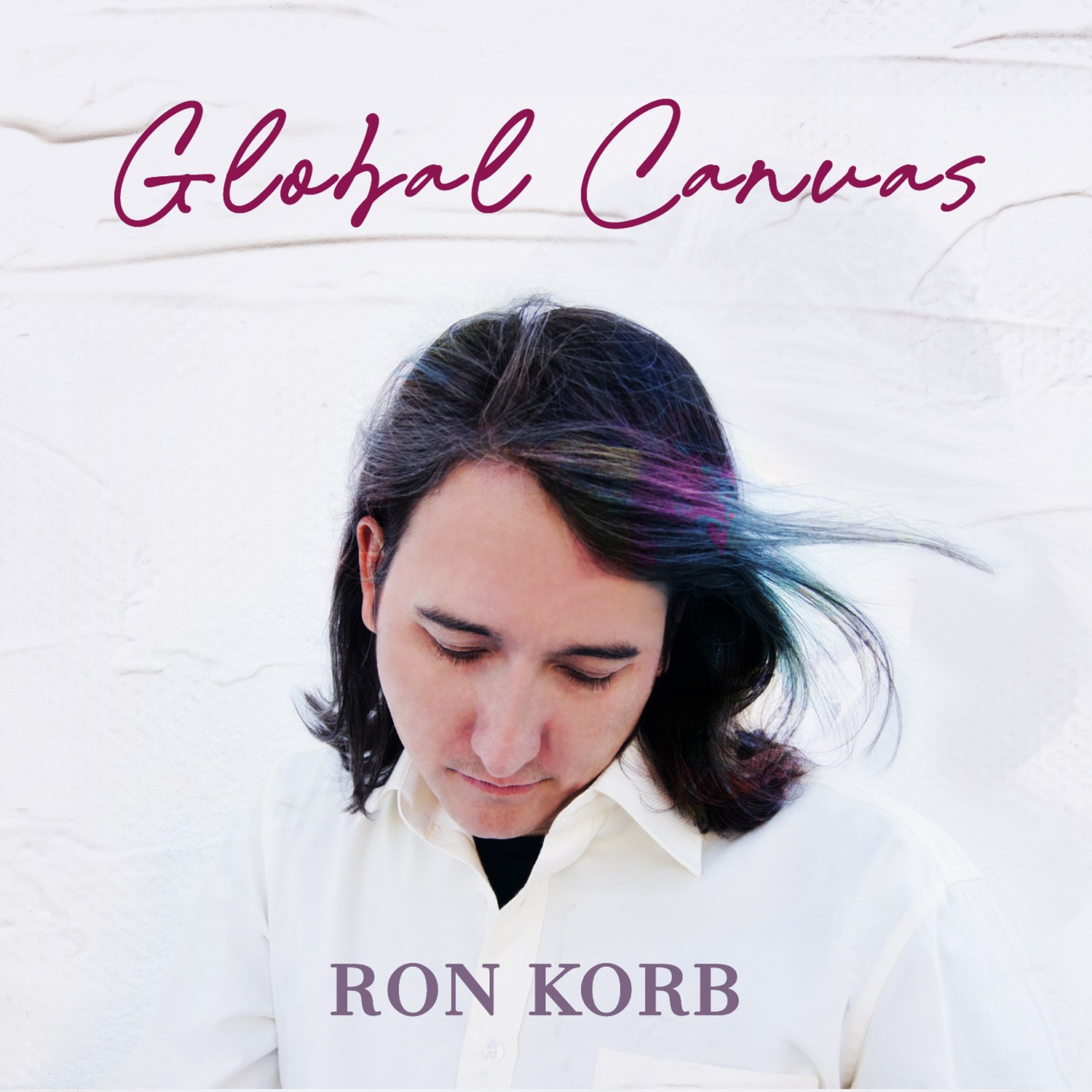
05 Ron KorbGlobal Canvas
Ron Korb
Humbledragon Entertainment HD2024 (ronkorb.com/globalcanvas-cd)

Flutist, Ron Korb, has made a brilliant career, performing on not only the usual Boehm flute but also on an array of flutes and related instruments from other cultures, which is what makes him such an extraordinary musician. I can say without exaggeration that he has mastered an extraordinary number of instruments, all of which are of the flute family, but which are all different and present unique problems. In addition to the usual flute and bass flute, which figures prominently on this recording, Ron plays an oriental bamboo flute and several other oriental instruments.

Korb is joined by 19 musicians playing an assortment of western and oriental instruments, which add an extensive and highly unusual orchestration in which contrast has a striking role, as in track eight (Kindness), which begins with Ron playing the melody on the bawu, a side-blown Chinese reed instrument that sounds a bit like a clarinet, after which this same melody is repeated on the erhu, a 2- string Chinese bowed string instrument. In track three, (Desire), Korb begins with a contemplative melody on the bass flute and is joined unexpectedly by the tabla (Indian drum). He even delves into the absence of orchestration in track 16 (Peace Flute), an unaccompanied bass flute solo, in which the resonant bass sonority provides all that is needed.

Also featured are several Latin jazz tracks on which Korb uses a Boehm flute and to which Cuban-Canadian pianist Hilario Duran makes significant contributions.

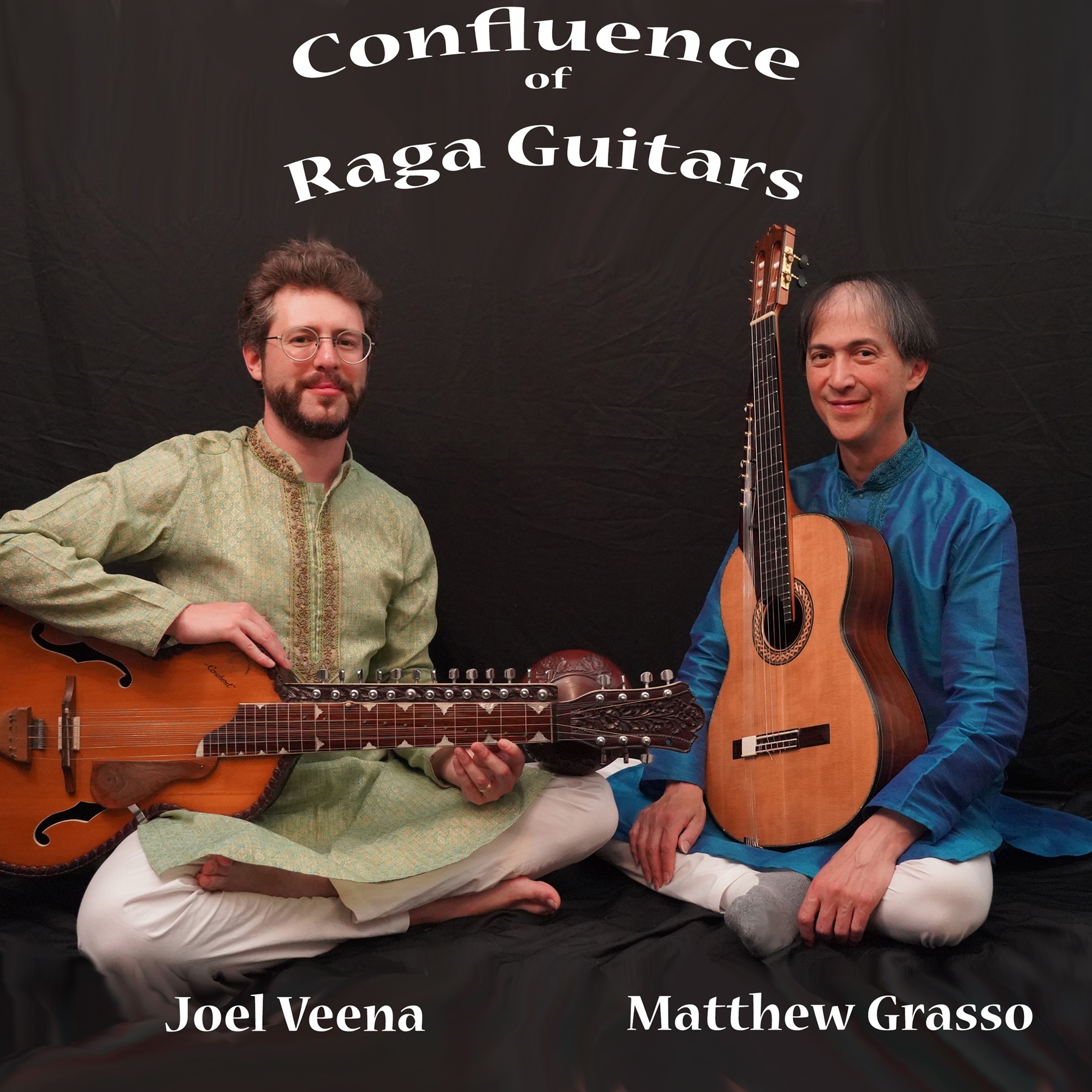
06 Confluence Raga GuitarsConfluence of Raga Guitars
Joel Veena; Matthew Grasso
Independent (bit.ly/ragaguitars)

It’s probable the guitar was first introduced to South Asia in the 16th century via the Portuguese colony of Goa. The next guitar wave to arrive there was the Hawaiian (lap steel) guitar, a key sound in the commercially successful and influential touring Hawaiian music and dance troupes of the 1920s and later decades. In the 1960s Brij Bhushan Kabra adapted the guitar to play Hindustani (North Indian) classical music, lap steel style. Performing concerts and releasing numerous LPs, Kabra and his students’ innovations have long been accepted by the Hindustani music world. 

Confluence of Raga Guitars showcases the latest evolution of Indian guitar construction and its related raga-based music performance practice. Eloquently played by Matthew Grasso (Tantrakari guitar) and Joel “Veena” Eisenkramer (Indian slide guitar), two American guitarists who have dedicated themselves to playing in the Hindustani classical tradition, the album explores three ragas. 

Their presentation has several novel features. While the ragas are rendered in a traditional way, each focuses on an alaap (where the outline of the raga is melodically explored without meter), and jor (where melodies pick up speed and rhythmic activity). Typically, the following section is the gat (bandish) which introduces a theme within a tala, usually accompanied by tabla. Interestingly, however, the musicians have chosen not to include a gat section. This keeps the listener’s attention tightly focused on the dialogue between the two guitars, highlighting their distinctive approaches to melody, tone production and timbral diversity. For example, Grasso’s Tantrakari guitar uses nylon strings, plus steel sympathetic strings and a specially tuned fingerboard. On the other hand, Eisenkramer’s new Indian slide guitar is an evolution of the instrument design long ago adopted into Hindustani music. His glissando microtonal ornaments and expressive affect contrast markedly with Grasso’s more Spanish guitar-sounding fingerstyle approach, dramatically enlivening the album’s dialectical duet (jugalbandi).

Listen to 'Confluence of Raga Guitars' Now in the Listening Room

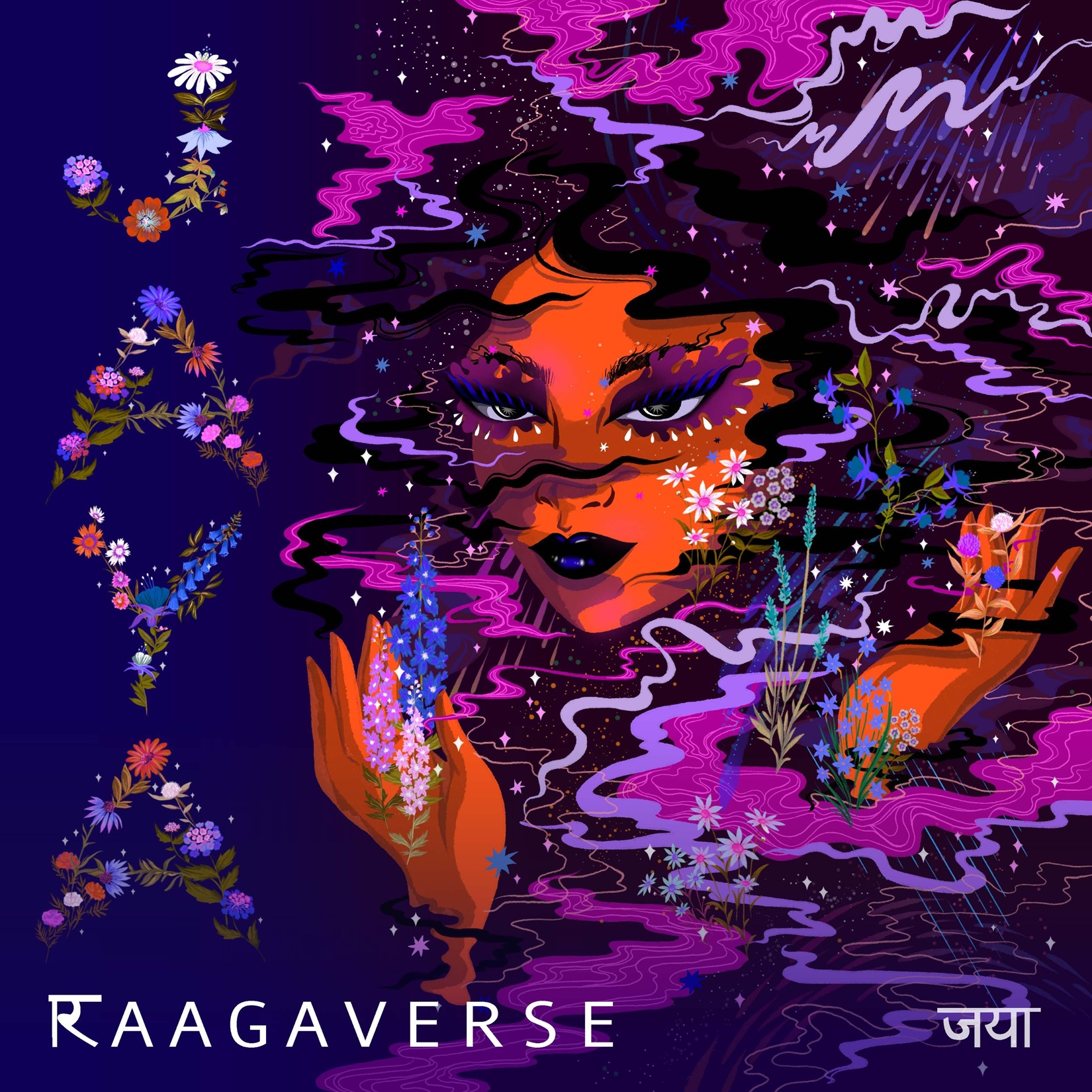
01 RaagaverseJaya
Raagaverse
Rhea Records (raagaverse.bandcamp.com/album/jaya)

I have the pleasure of reviewing two albums from Canada’s West Coast this month, and it’s always a treat as a Toronto-based writer to explore the musical happenings elsewhere in the country. Jaya is an exciting debut album from Vancouver collective Raagaverse, led by its vocalist Shruti Ramani. Admittedly Ramani was the member of the group I was least familiar with prior to exploring this recording, but her reputation precedes her in contemporary musical circles nation-wide. 

Jaya’s album design alludes to the Indian origins of its contents, eschewing the often-drab layouts and artwork that enclose many Canadian jazz discs. Rhea Records features artists from the jazz/improvised music realm, and while Raagaverse’s core quartet instrumentation might be right at home performing originals and standards, this album uniquely evades categorization. 

Pianist Noah Franche-Nolan and drummer Nick Bracewell have recently become common names in Vancouver’s creative music scene, and they bring both youthful energy and mature restraint to their playing in Raagaverse. Jodi Proznick is a coveted bassist locally and internationally who shines throughout this album, notably with an energetic solo on Parindey. Ramani’s use of Indian syllables when improvising was of particular interest to me, offering a unique approach compared to wordless vocalising. 

There was an “Indo-Jazz” trend some years ago that led to interesting music at its best, and some strange appropriation when less successful. Raagaverse manages to enter this domain in the most organic and exciting way possible, while simultaneously existing in a realm of its own divorced from labelling. If you’re a fan of jazz, Indian music, contemporary improvisation or all of the above, I highly recommend Jaya. And even if you’re not inclined in any of those directions, I expect you’ll still find a favourite track or two.

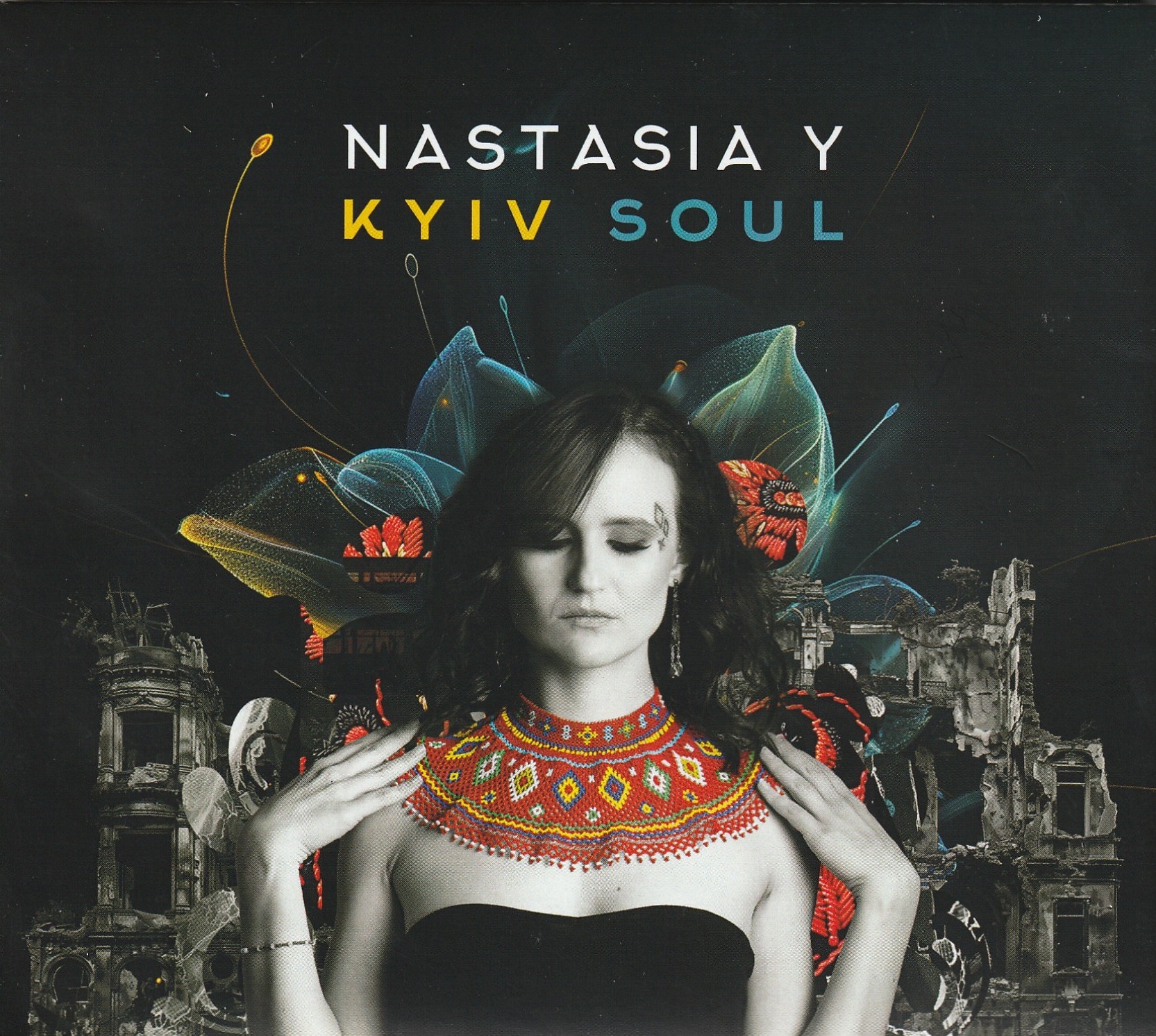
02 Nastasia YKyiv Soul
Nastasia Y
Lula World Records (nastasiay.com)

Innovative vocalist/keyboardist/creator Nastasia Y has just released a dynamic and thought-provoking recording which has been informed by her remarkable journey… growing up in Kyiv while being surrounded by her late activist father’s folk songs, to eventually joining the global indie jazz coterie of Toronto’s explosive world music/independent music scene. Nastasia’s potent material is really a fusion of folk songs, or as Nastasia says “Ukrainian Blues,” with a liberal dash of jazz and funk. On this unique project, she has assembled a gifted complement, while celebrating the proud legacy of resistance and Ukrainian patriotism of her late, heroic father, Kost’ Yerofeyev. The recording also explores the depths of Slavic ancestral magic and the incredible fortitude and bravery of the Ukrainian resistance, as well as the nature of war and the nature of love. 

The repertoire here has all been composed/adapted by Nastasia, including Salgir River, a traditional Crimean song of the nearly obliterated Tatar people, re-imagined with ancient, powerful and stirring vocals and face-melting contiguous guitar/synth lines. A true stand-out is Kupalo, a contemporary twist on the mystical Ukrainian summer solstice celebration and a fine guitar solo by KC Roberts is the icing on the pagan cake!! 

Also superb is the Carpathian ballad, Pod Oblachkom, which dives deep into the nature of infatuation. Nastasia’s crystalline, pitch pure soprano inveigles the listener into the magical, mysterious depths of passion. And the incendiary closer, Bez Vas, is a contemporary Ukrainian power ballad, not only embracing President Zelenskyy’s vision, but musically highlighting the eternal cultural identity of Ukrainians and of their sovereign nation.

03 Amanda MartinezRecuerdo
Amanda Martinez
Independent (amandamartinez.ca)

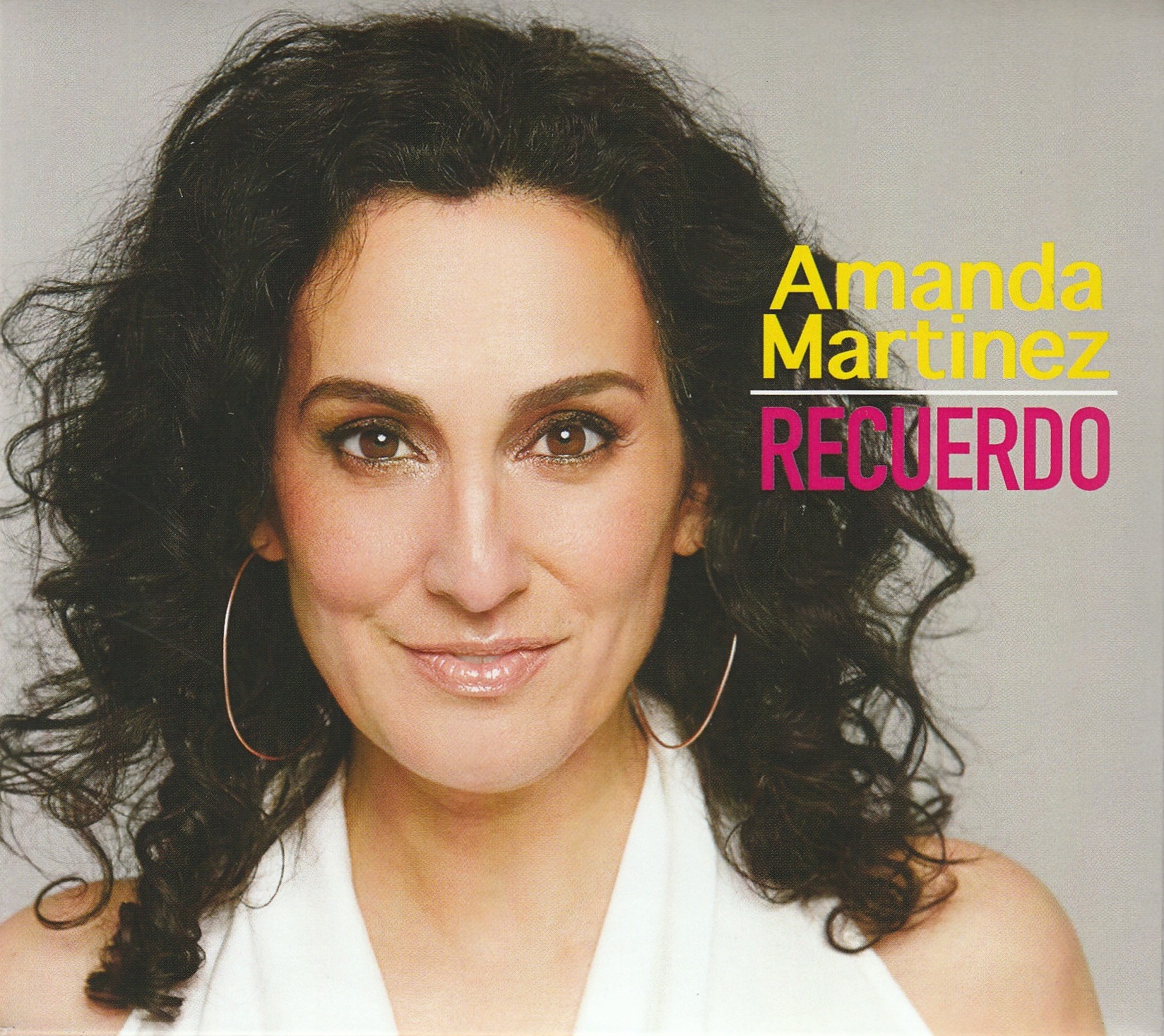
With the release of her fifth recording, dynamic Latina vocalist/composer Amanda Martinez has presented a programme of original compositions and collaborations that is rife with ideas, instrumental skill and deft arrangements,all embraced by her sumptuous vocals. Martinez has also assembled a stellar complement here, comprised of fine musicians and composers, including trumpeter Alexander Brown; Osvaldo Rodriguez on violin and piano; producer Kevin Laliberte on guitar, keyboards, drum and bass programming; co-producer Drew Birston on acoustic and electric bass, ukelele, accordion and piano and Rosendo “Chendy” Leon on drums, percussion and back-up vocals. Additional featured vocalists include Aviva Chernick, Donne Roberts and guitarist Waleed Abdulhamid.

Every track here is an inspired work of art, but must-listens include the stunning title song, Recuerdo (I Remember), which was written by Martinez and Laliberte in honour of her late father – a fearless man, filled with optimism and a zest for life and music. No te vayas (Don’t Go) was penned by Martinez, Chernick and Birston and brilliantly interweaves Hebrew and Spanish lyrics in this sumptuous ballad about the complex emotions of having to say the final good-bye to our ailing, much adored fathers.

Of special beauty is Sol de ayer (Martinez/Rosales), which features Birston on accordion and Laliberte on luminous guitar. The moving closer, Nostalgia, presents Martinez at her most evocative, while the magic of Laliberte’s guitar supports and embraces her gorgeous vocal interpretation of this deeply emotional exploration of love and loss.

04 Island HoppingIsland Hopping
Gabriel Evan Orchestra
Independent n/a (gabrielevanorchestra.bandcamp.com/album/island-hopping)

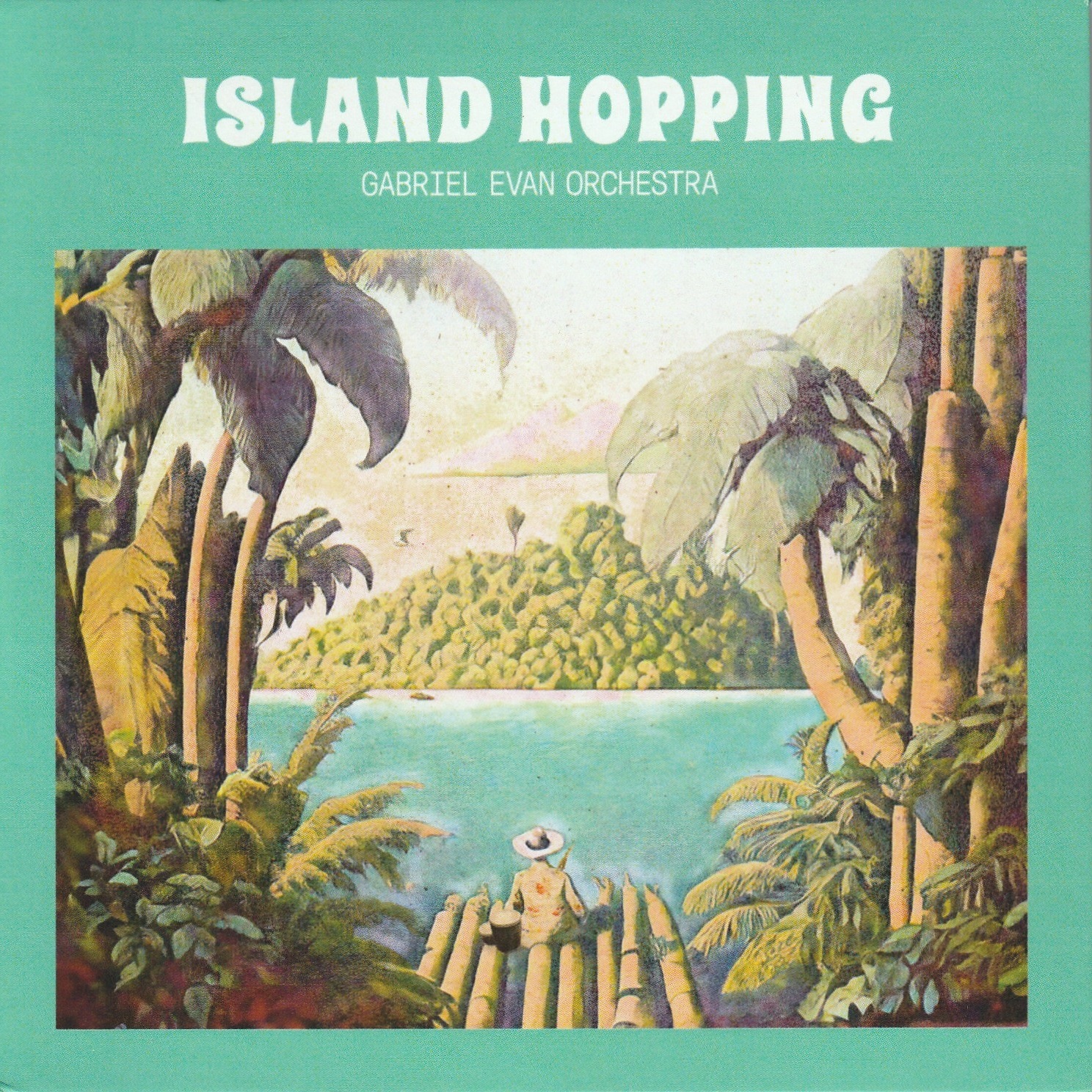
This is New York saxophonist Gabriel Evan’s third album and continues his investigation of delightfully retro genres from the context of Caribbean jazz. When I first heard Island Hopping it brought to mind Earl Bostic, the American alto sax player who played a combination of jazz, swing and jump blues from the 30s to the 60s. Evan’s primary instrument is soprano saxophone and his “orchestra” has Charlie Halloran on trombone, Josh Dunn (guitar), Kris Tokarski (piano) Pete Olynciw (upright bass) and Jafet Perez (drums and percussion). All the tunes are lively and delightful and many date from the 30s (such as Carmencita, a classic Lionel Belasco waltz) while two are Evan’s originals. In the latter group, Boychick Calypso is a playful shuffle full of sophisticated energy and delightfully melodic solos while Habana Hammock is gently relaxing as its name suggests. Island Hopping’s upbeat swing is infectious throughout and you cannot help but smile from beginning to end.

05 Lemon Bucket OrchestraCuckoo
Lemon Bucket Orkestra
(lemonbucket.com)

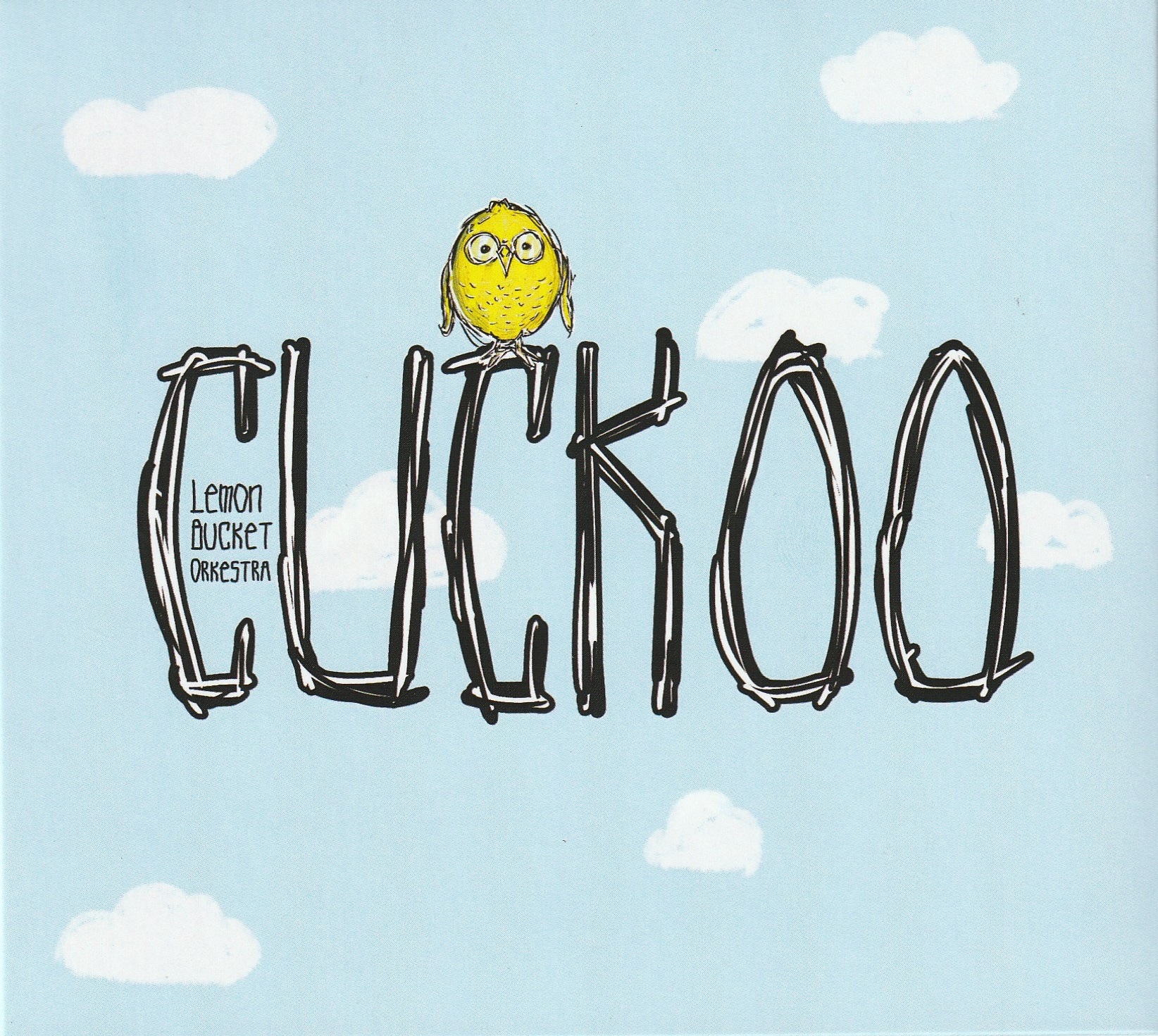
There is so, so much exciting world music performance energy in Toronto-based Lemon Bucket Orkestra’s fourth release. Together for 14 years, their ensemble playing has paid off again, as they cleverly combine powerful Ukrainian folk polyphony, driving Balkan rhythms, Klezmer and such modern Western music elements like punk to create their sound.  

The 11 tracks feature LBO’s modern arrangements of traditional folk music and original compositions. Opening track arrangement of Shchedryj Vechor, a traditional Ukrainian folk song, opens with bright singing and accented ends of phrases. Drum crashes and horn held notes and a short horn solo leads back to opening repeated singing. Title track Cuckoo draws on two Ukrainian folk songs, with whispered speaking female vocals. Energy galore comes from violin against background repeated horns, background screaming/talking, back to fully orchestrated sung melody. Unexpected clapping to repeated horn solo and quieter vocal quasi screaming. Big crash ending with screaming backdrop. Two tracks – original Mik Mik and traditional Ukrainian Da Ishly Divky – showcase special “feature” Macedonian master trumpeter/arranger Nizo Alimov from Kočani Orkestar. Petrunino combines traditional Bulgarian folk and Irish jigs and it is astounding how well these two culture’s music combines. Fun violin combines Irish, a bit of jazz, Bulgarian folk for a completely new musical genre.

Lemon Bucket Orkestra is pushing the boundaries of traditional world folk music to great success, giving it a new sonic future while still respecting the original song. From intense, loud sounds to groundbreaking genre arrangements to free sections, it is party time!

06 ParadeLullabies After Storms and Floods
Parade
Elastic Recordings ER013 (paradetoronto.bandcamp.com)

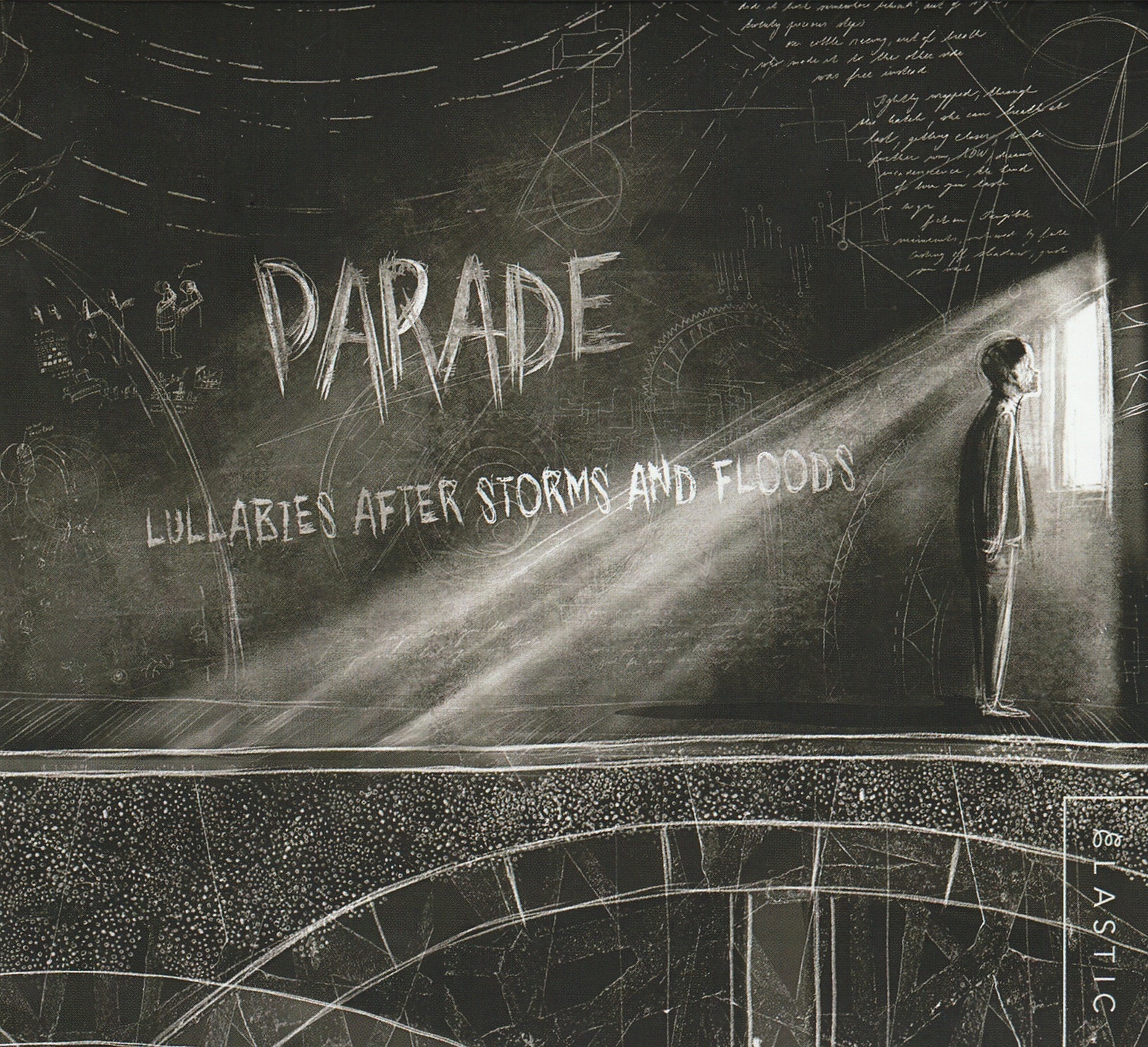
Their press release states that Parade “is an experimental pop-rock trio based out of Toronto, Ontario featuring Stefan Hegerat (drums, compositions), Chris Pruden (synthesizers) and Laura Swankey (vocals, electronics)” who draw on “their diverse backgrounds in jazz, classical and electronic music” to combine “improvisation and composition to create unique and immersive sonic landscapes.” Their latest album Lullabies After Storms and Floods demonstrates an eclectic and exciting mix of slightly dissonant melodies, electronic sounds which invade and regress, sweeps of drums and precise but almost emotionless vocals. 

The Bridge begins quietly with a soft vocal (”What moved her to cross the bridge that night….”) and builds into a more epic rock piece with some swirling drums, before returning to the opening mood. The Basin begins with a “marimba” repeating a minimalist pattern for over two minutes before it abruptly shifts to a standard rock beat with Swankey singing “In the basin, where tender thoughts coalesce… trapped in stillness, my heart is on ice…”. The vocals are eventually replaced by the recurring minimalist rhythm but with different instrumentation. Other pieces contain jazz influenced sections (the opening to Frozen Portrait deliciously evokes a late-night jazz singer and the piano work is subtle and warm). The mixture of vocals (with vibratoless and slightly dissonant melodies) and changing moods and genres, make Parade an intriguing and fascinating band and this album succeeds in producing many “immersive sonic landscapes.”

Listen to 'Lullabies After Storms and Floods' Now in the Listening Room

Back to top