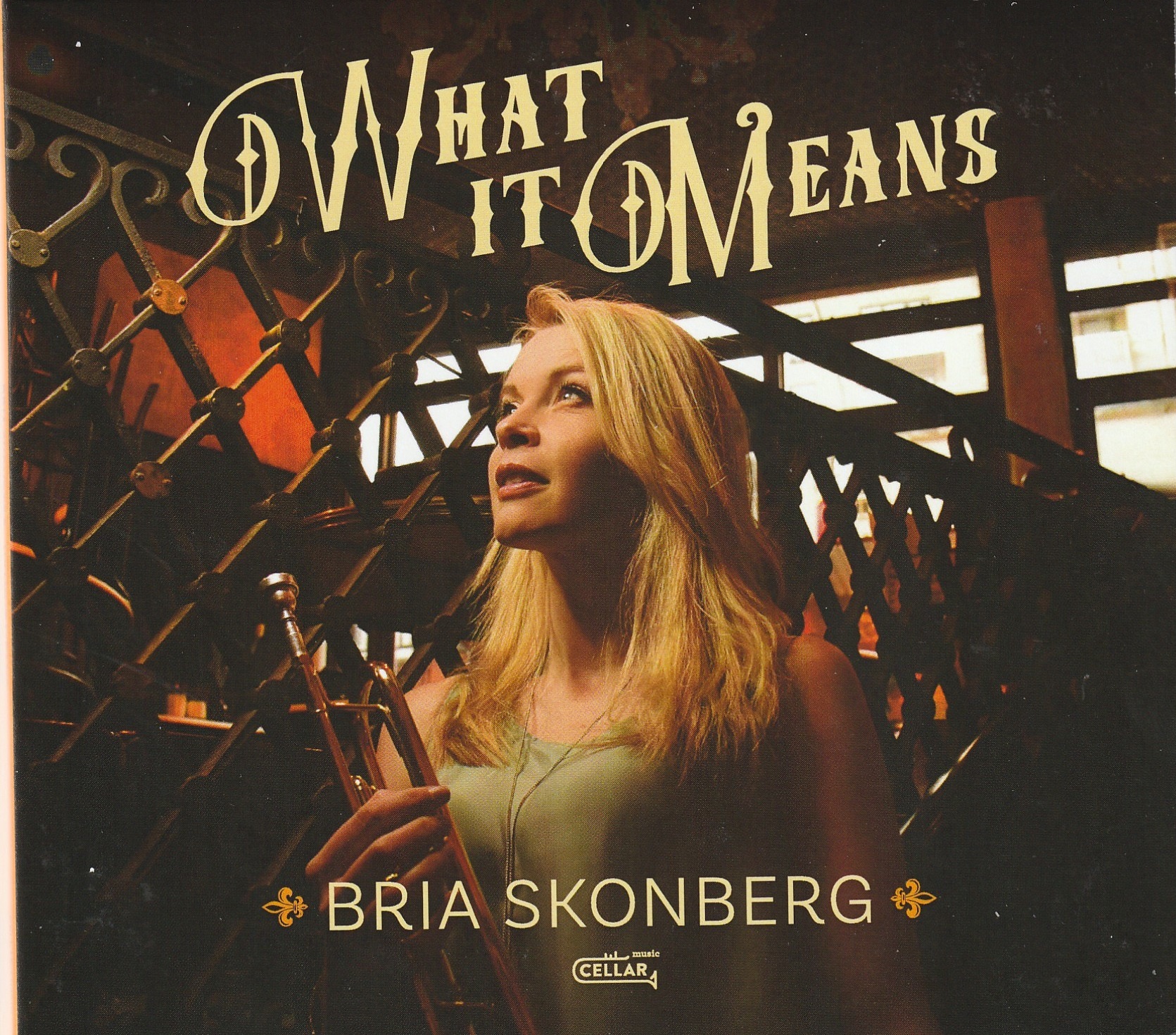
07 Bria SkonbergWhat It Means
Bria Skonberg
Cellar Music CM072624 (briaskonberg.bandcamp.com/album/what-it-means)

Back in the second half of the year 2000 aficionados, jazz bandleaders and critics were busy extolling the virtues of a young musician from Vancouver. Her name was Bria Skonberg and she played trumpet and sang with seductive vulnerability. Two decades later Skonberg reminds us why so many fell in love with her music, returning to what Hugues Panassié rightly described as le jazz hot

Skonberg’s 2024 installment – her eighth album, entitled What it Means – is red-hot indeed. As with her earlier recordings this one too is eloquent, enterprisingly and imaginatively programmed and reshapes classic repertoire as she propels “hot” charts into a whole new world of her music making. 

In Skonberg’s playing, there’s the familiar virtuosity and refinement that marked her previous albums. She embraces the full resources of her trumpet to recreate classics such as Louis Armstrong’s Cornet Chop Suey and Sidney Bechet’s Petit Fleur. Her originals, In The House and Elbow Bump, show a native’s grasp of the New Orleans idiom and are a triumph of music-making. Her eminently captivating voice adorns John Lennon’s Beautiful Boy (Darling Boy).

Skonberg is helped along the way by New Orleans “royalty” including banjoist Don Vappie, drummer Herlin Riley and the adorable vocalist Gabrielle Cavassa.

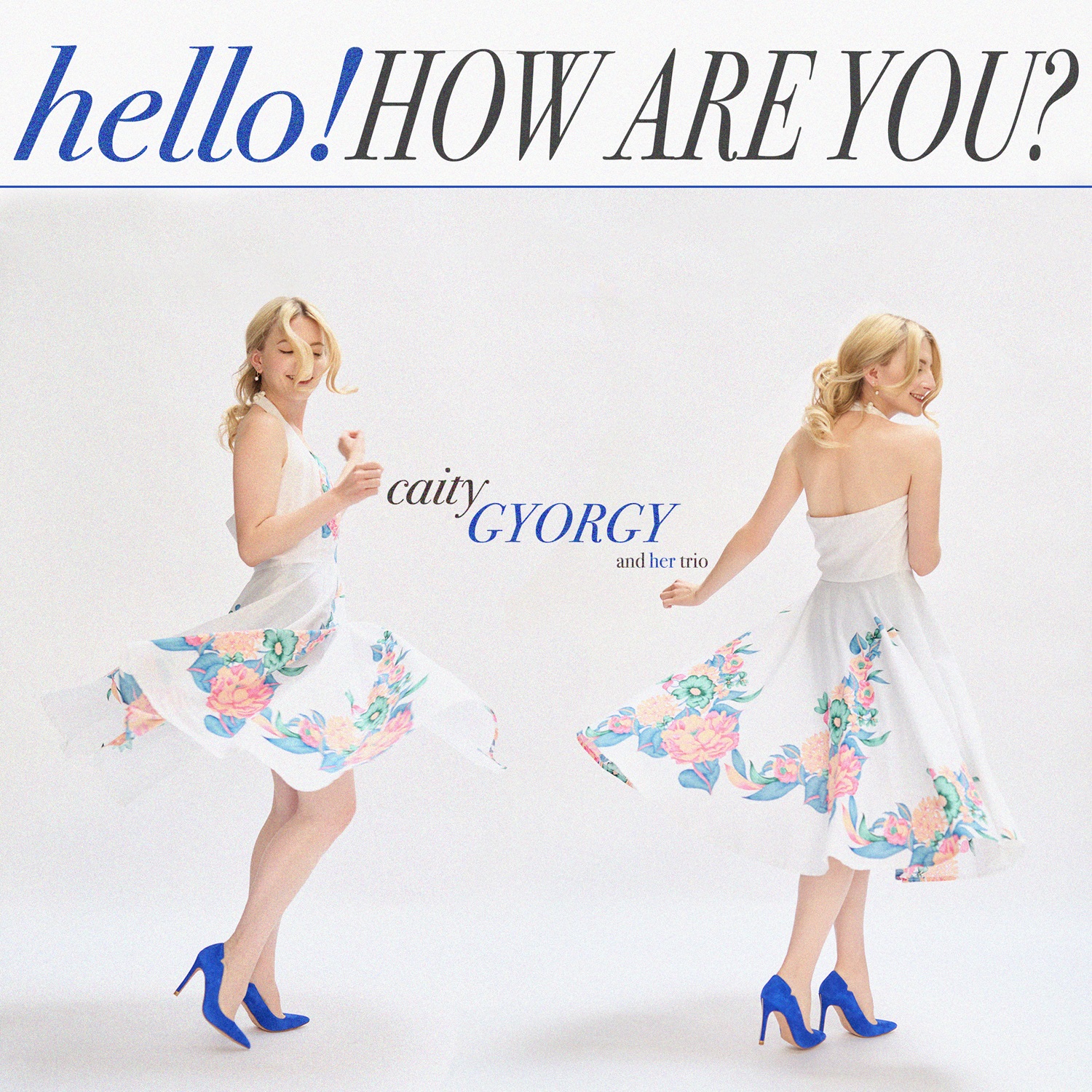
08 Caity GyorgyHello! How Are You?
Caity Gyorgy and her trio
Independent (caitygyorgy.com)

With Hello! How Are You? Caity Gyorgy continues on her path toward world domination of the vocal jazz scene. Jokes aside, since embarking on her career a few short years ago, the singer and songwriter has released two EPs and three albums – two of which have won JUNO awards – and completed a Master’s degree, all before turning 26. With her fourth album Gyorgy not only gives us her trademark brilliant vocals, but her songwriting just keeps getting stronger, too. All but three of the tracks were written by her, in the style of the Great American Songbook, yet they sound very fresh, as Gyorgy combines sophisticated lyrics with interesting musicality.

The album launches with the hard-swinging title track, showcasing Gyorgy’s scatting skills alongside her super tight trio of Anthony D’Alessandro on piano, Thomas Hainbuch on upright bass and Jacob Wutzke on drums. Standout tracks for me are Just My Luck, a slightly melancholy and totally gorgeous piece of writing and music-making, driven by sparse yet compelling rhythm section work. The sharp wit of Letter From the Office Of is a nice contrast. Being a sucker for a heartbreaking ballad, I’ll be listening to Familiar Face on repeat for the next while. I also really liked the rhythmic take on Rodgers and Hart’s It Never Entered My Mind, which manages to make the song’s already poignant lament even deeper.

With this accomplished album I predict yet more accolades in Gyorgy’s future. “Hello Grammy committee! How are you?”

Listen to 'Hello! How Are You?' Now in the Listening Room

09 Dun Dun BandPita Parka Pt. 1: Xam Egdub
Dun-Dun Band
Ansible Editions 007 (kunudusuvuntu.bandcamp.com/album/pita-parka-pt-i-xam-egdub)

When the music, instrumental credits (i.e. Craig Dunsmuir on single line electric guitar and P___r P____r, Colin Fisher on the “Hahahacksaw” Jim Duggan, Mike Smith handling keyboard transcombobulations), themes and textures defy categorization, why bother trying to categorize them? Pita Parka, Pt.1: Xan Egdub is the latest from Dun-Dun Band, which is an incredible improvised music project that has yielded truly unique odysseys across the sonic spectrum. As a ten-piece outfit sporting an impressive lineup of perpetual experimenters on their respective instruments, it is astounding to witness the places they go throughout this album, and perhaps even more inspiring to experience long stretches of restraint. 

Leader Dunsmuir’s influences include elements of minimalism and post rock, which is manifest in the strong devotion to repetition and atmospheric build throughout these compositions. No.1 in particular has hypnotic qualities to it, with the cyclical nature of its primary sequences continuously hooking and holding the listener in a trance, daring their ears to become lost in minute detail rather than any overt changes to each steadfast rhythmic pattern. Throughout, there is a tangible sense of interconnectedness and deep listening between musicians, primarily evident in magical instances where a sound or idea crawls to the forefront, and the rest of the ensemble immediately uplifts it on a whim. Why bother trying to categorize all this? Mileage may vary, but one thing is for certain: however you try, categorizations won’t stick.

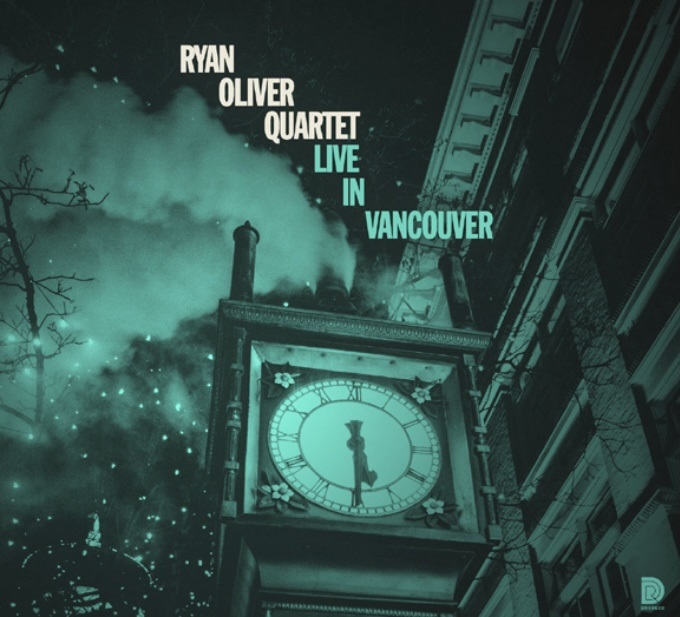
10 Ryan OliverLive in Vancouver
Ryan Oliver Quartet
(ryanoliverquartet.bandcamp.com/album/live-in-vancouver)

Toronto saxophonist extraordinaire Ryan Oliver’s sizzling new release takes us on a journey back in time to the 60s and the world of jazz at the time. The record is full of Oliver’s unique and catchy takes on classic tunes, such as John Coltrane’s Equinox and the American traditional folk song The Wayfaring Stranger, covered by many famous artists such as Johnny Cash and Burl Ives. Elevating the tunes to new heights is a group of star-studded musicians, some of Canada’s best: Brian Dickinson on piano, Neil Swainson on bass and Terry Clarke on drums. Oliver has this to say about the idea for this record: “I wanted to showcase compositions from the jazz lexicon associated with some of my influences while also adding in original music and new takes on existing repertoire.”

A notable aspect of this album is that it is recorded live, from a two-night stint that Oliver and company had at Frankie’s Jazz Club in Vancouver a year ago. Live records always have a certain magical quality to them, the raw emotions portrayed in the songs and the musicians’ talents, personalities and styles of playing come to the forefront, there’s less of a “polished” quality to the tunes. Take The Wayfaring Stranger for example, where the loneliness and ruggedness of the journey through life is expressed and heard directly through Oliver’s wailing saxophone melody. For an immersive musical experience, check out this album.

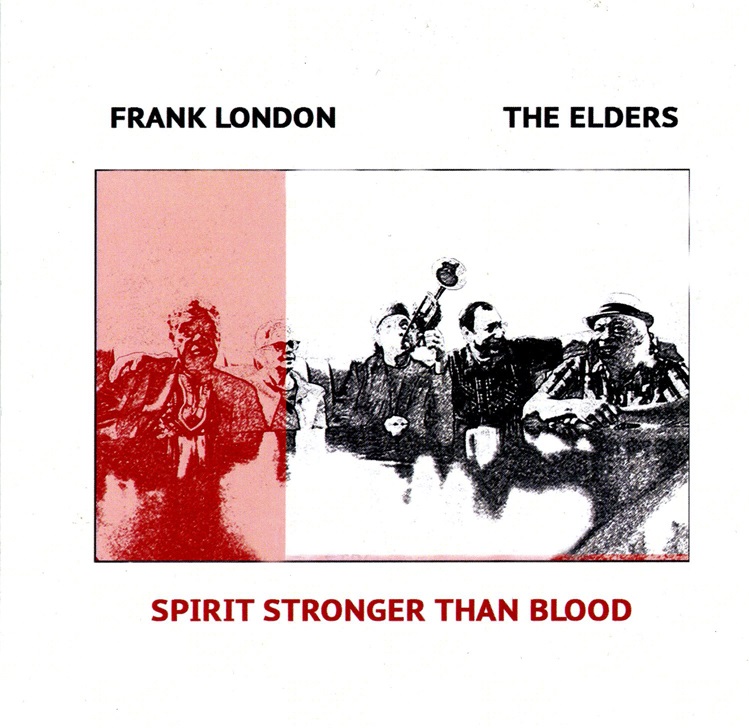
11 Frank London EldersSpirit Stronger than Blood
Frank London; The Elders
ESP Disk 5099 CD (espdisk.com)

While much music is a celebration of life and birth, a subcategory exists dealing with death and dying. However, few creations approach eventual demise with the same combination of remembrance and defiance as this disc by New York trumpeter Frank London’s quartet. Recently diagnosed with myelofibrosis, a rare and fatal blood cancer, London’s compositions celebrate other artists who have died from cancer. Aiding him are veteran improvisers, New Yorkers drummer Newman Taylor Baker and bassist Hilliard Greene, Toronto pianist Marilyn Lerner, and on four of the six selections, the trumpeter’s long-time associate and now ordained rabbi, tenor saxophonist Greg Wall.

Despite the topic the tracks are anything but downers, instead they usually move with relaxed bounces or swaying swing. They also inhabit the juncture where freylekhs meet funk, with the instrumental language and rhythms often as much Latin as Ladino. Sound tapestries include cymbal sizzles, thick string pulses, chiming keyboard patterns and reed bites and squeezes. As well, when not playing in unison with Lerner or Wall, London’s tone is much closer to Garbriel than the graveyard. He tongues triplets, projects half-valve and bent notes with davening intensity and moves from meditative respiration to guttural growls that push The Elders into sounding like a Judaic Jazz Messengers.

A common medical-philosophical theory is that dying is just another stage in a person’s life, where acceptance eventually overcomes grief. Add audacity and London’s band aptly demonstrates those concepts on this CD.

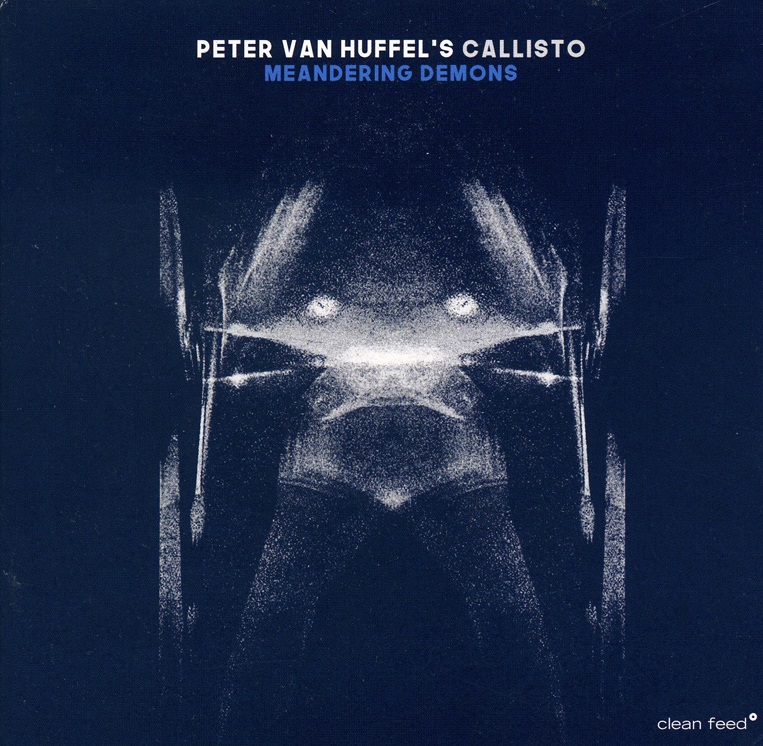
12 Peter Van Huffels CallistoMeandering Demons
Peter Van Huffel’s Callisto
Clean Feed CF 667 CD (cleanfeedrecords.bandcamp.com/album/meandering-demons)

With tandem harmonies comparable to those of the classic Gerry Mulligan quartet, baritone saxophonist Peter Van Huffel from Kingston, ON and Toronto trumpeter Lina Allemano do more than put a contemporary spin on these seven Berlin-recorded tracks. Their polyphonic counterpoint includes spiky and smeared timbres, fragmented and stretched by the electronics used by Van Huffel and pianist Antonis Anissegos, yet with the expositions steadied by drummer Joe Hertenstein’s concentrated rumbles.

Alongside horizontal narratives, massive space remains for all four to personalize the expositions with raging triplets and half-valve growls from Allemando, bitten-off snarls, thickened overblowing and basement slurs from Van Huffel and just enough keyboard clips, stops and voltage-altered textures to overcome the expected. On Ravenous Hound for instance a concluding lockstep horn march is emphasized only after an impressive display of drum patterning and key clicks. With Interdimensional Planet Hopper the jokey veracity of the title is established as multidirectional tempos and pitches billow. Electronics expand and contract motifs created by raunchy reed vamps, strained brass bugling, celeste-resembling tapping from Anissegos and Hertenstein’s thickened ruffs and ratchets until all return to earth with a four-part unison finale.

Although throughout quartet members can create raunchy narratives seemingly without stopping for breath, thematic control is always evident. While some sounds expressed suggest the fun pinpointed in the disc’s concluding track title – Barrel of Monkeys – it’s clear that these musical devils can also meander into the music of angels.

Although multiple-disc box sets are usually used as best-of retrospectives, another reason for collating numerous discs is when the artists involved decide that certain performances are so exceptional that they can’t be limited to a single or double disc. So it is with these live sets which involve respectively an American sax quartet; a collaboration between a Norwegian-American saxophone-drum duo with Japanese musicians; and a series of sets by a Swedish-French-British quartet.
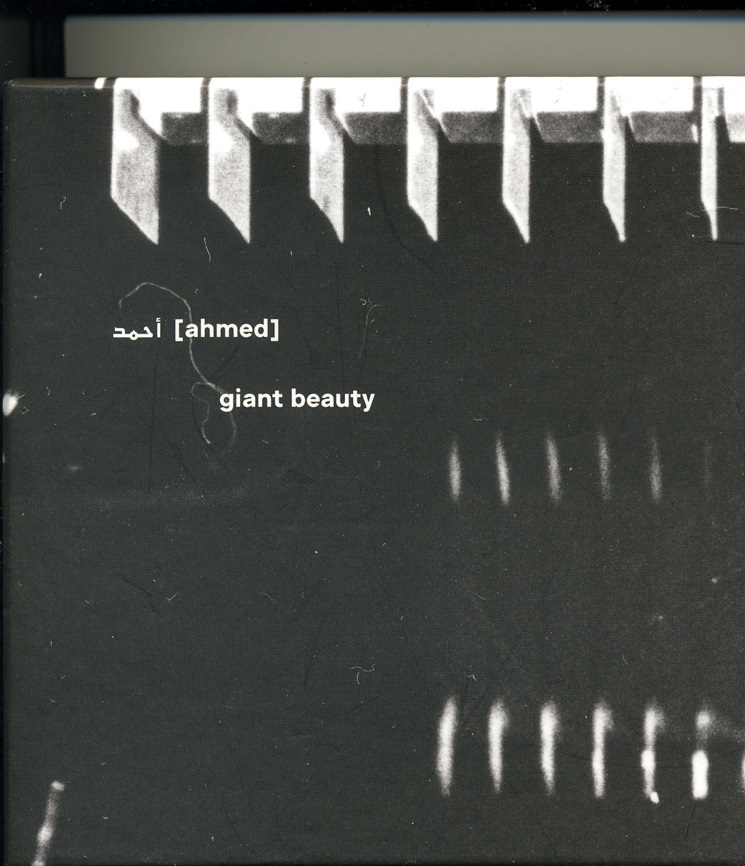
01 ahmed BeautyThe third band is مد [ahmed], whose five-CD set Giant Beauty (Fönstret 9-13 fonstret.edition-festival.com) is dedicated to the quartet’s interpretations of music composed by bassist/oud player Ahmed Abdul-Malik (1927-1993). Best-known for his work with Thelonious Monk, as leader he released a series of LPs between 1958 and 1962 that affected a fusion of jazz, African and Arabic music: World Music before it had a name. Experienced creative musicians, Swedish bassist Joel Grip, French drummer Antonin Gerbal and alto saxophonist Seymour Wright and pianist Pat Thomas from the UK improvise on five Abdul-Malik compositions recorded during a five-night gig in a Stockholm arts space. Although each player is also expert in hushed, lower-case improv, their collective aggressive side is upfront. Every tune times in at approximately 45 minutes (about nine times its original length). That means the quartet members have enough space to weave variations on and create an individual and contemporary feel to tunes that show their age with titles like african bossa nova. Take tracks like el harris (anxious) or oud blues for example. With bedrock bass thumps and string buzzes plus responsive drum shuffles on the first, Wright’s stretched split tones and jagged vibrations at a variety of tempos and pitches are sutured closely to Thomas’ prestissimo key clipping that becomes more intense as pressure builds from the tandem exposition. Although the saxophonist’s squalling, mewling and yelping extrusions and the pianist’s player-piano-like speedy patterns and key stabbing evolve with seemingly unstoppable dynamism, interludes of paced swing alternate with returns to the initial theme. A walking bass line signals a modulation to andante tempo, and following some faux-exotic reed honks wraps up the piece with bowed string stops and singular piano pumps. 

More animated ferment is expressed on oud blues. With emphasis on the second rather than the first word of the title, Wright’s honks and snorts relate more to Midwestern R&B than Middle eastern Raqs sharqi, while Thomas’ pressurized runs and Grip’s upfront string stops suggest rent-party boogie-woogies not the sounds of a Persian barbat. Gerbal’s drum backbeat paces Wright’s screaming altissimo runs as the tempo increases, reaching a crescendo at the halfway point as reed doits and honks attach themselves to the pressurized dynamics Thomas extracts from all parts of the piano. Although freewheeling Dixieland-style breaks are heard, off-centre slides and flattement from Wright plus subtle keyboard asides confirm the tune’s modernity the same way as concentrated piano, bass and drum pacing maintains the performance’s forward motion. The final minutes are both speculative and swinging as reed tongue slaps and piano key smashes share space with arco string slices and drum rattles. If there’s such a thing as accessible avant-garde then مد [ahmed] has created it and it’s available here.
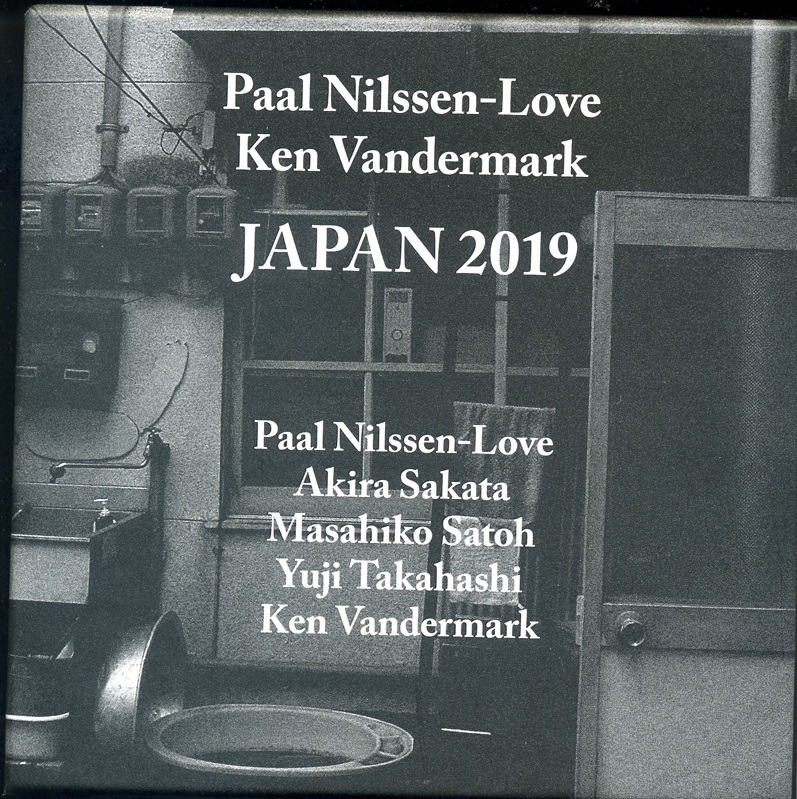
02 Japan 2019Another aggregation that established a similar part experimental, part expected program, wrapped up in linear form is the duo of Norwegian drummer Paal Nilssen-Love and American tenor saxophonist/clarinetist Ken Vandermark. The seven CDs on Japan 2019 (PNL Records PNL 059 Audiographic AG-022 audiographicrecords.com/album/japan-2019) preserve sounds from a unique tour where the long-time associates not only played as a duo, but organized trios and quartets alongside similarly creative Japanese improvisers. Two discs capture the creative partnership both have built up playing together over two decades. The saxophonist’s snarls, honks and sudden turns to more melodic flutters from all parts of his horns are met by the drummer’s steady beats where paradiddles and pops share space with thick ruffs to enhance the improvisations. But the most telling tracks here are those where the visitors interact with three veteran Japanese improvisers. Instructively note how Vandermark and Nilssen-Love react to the different piano styles of Masahiko Satoh and Yuji Takahashi. On disc two, Takahashi. who specializes in playing New Music and oddly enough Bach, gradually boosts his output from plinks and cross pulsing to unleashed intensity that meets Vandermark’s corkscrew reed variations and Nilssen-Love’s metal rim clanking and bass drum emphasis. As clarinet runs surge to atonal squeaks and powerful drum smacks turn woodier, the pianist slithers between shaded keyboard passages and a climax of single note comping. Takahashi’s midpoint switch to adagio key-dusting brings out warmer peeps from the clarinet plus responsive percussion pitter patter. With all three in sync the languid finale unites low-pitch rumbles from Nilssen-Love, squeaks from Vandermark and Takahashi’s measured keyboard pumps. Contrast that with the aggressive comping of Masahiko Satoh on disc five, whose free-jazz piano invention has faced the likes of Roger Turner and Joëlle Léandre. As his playing turns to thickened chording and soundboard vibrations, ascending tones from Vandermark’s saxophone turn to altissimo squeaks and superfast slurs as Nilssen-Love’s regularized drum smacks create a buffer zone between multiphonic reed shrieks and Satoh’s methodological exploration of crunching glissandi and darting keyboard stabs. After the pianist’s sophisticated feints are accompanied by a weighty obbligato from the saxophonist, the drummer’s smacks and cymbal chiming move the improvisation into a stop-time sequence that, driven by elevated keyboard tickles, concludes the piece with juddering sighs and pops from the other two.
The situation is different when the drummer and saxophonist work with alto saxophonist/clarinetist Akira Sakata, a Japanese free jazz pioneer who has recorded with Peter Brötzmann among many others. Disc six isn’t an expected blow-fest, but an instance of how two reed players with simpatico ideas can logically build up improvisations to realized climaxes. Starting with intertwined, almost gentle respiration from both saxophonists, the drummer’s pounding tom toms prod basement lows and altissimo screams to move upfront. Vandermark’s spetrofluctuation and prestissimo tonguing and Sakata’s sandpaper rough growls climax with aviary gargles and dog whistle equivalents from both. Switching to clarinets Vandermark’s clarion tones meet Sakata’s snuffles until the reed duo double teams the drummer’s dissected but responsive ruffs, leading to a metal and Mylar solo from Nilssen-Love. Back on saxophones, Vandermark forces balanced air through his bell to scoop out foghorn-like blasts while Sakata squeaks split tones up the scale. As the drummer’s bellicose press rolls fade, mid-range clarinet tones from Sakata and Vandermark recall the introduction’s gentleness, creating a high-pitched near-lullaby climax. The most telling of these configurations occurs on disc four however as the visitors improvise alongside both pianists. As one keyboardist hunts and pecks and the other creates regularized passages, they’re challenged by Vandermark’s excitable flattement and scooped tongue stops. The thematic exposition is defined by the dual pianos clipping and chiming reverberations as reed whistles and peeps and tough drum smacks add gravitas so that the narrative become more than decorative. At the same time as they circle each other’s clanks and frails with nuanced textures, Satoh and Takahashi display their exploratory bona fides by filling the spaces between the 176 keys with comments on each other’s playing. Drum battering becomes more responsive and split tones more linear as all sounds dissolve into stasis.
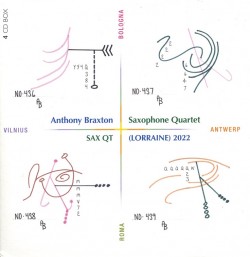
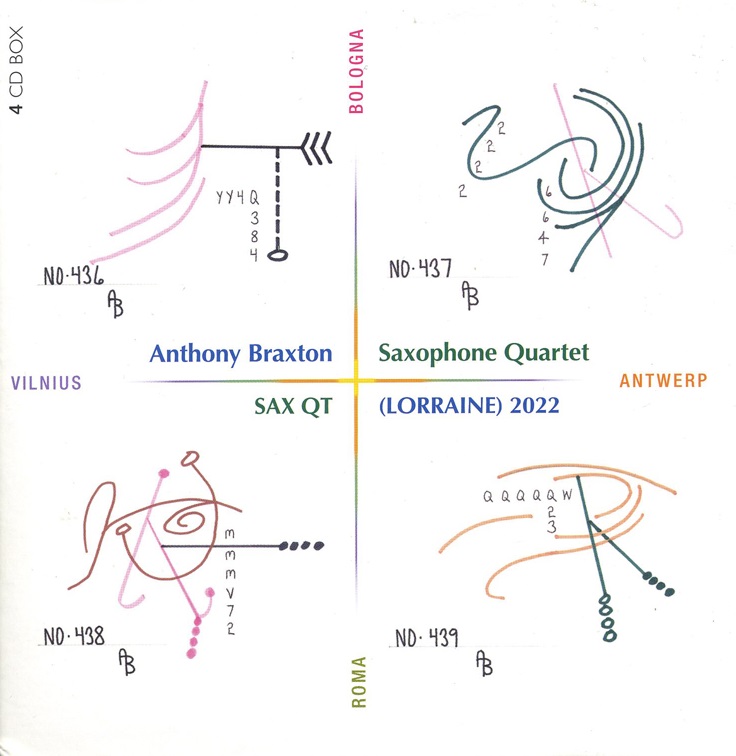
03 Anthony BraxtonOne and sometimes two saxophones are featured on the CD sets above. But composer/saxophonist Anthony Braxton organized the four-CD set, SAX QT (LORRAINE) 2022 (Angelica IDA 056 dischidiangelica.bandcamp.com/album/sax-qt-lorraine-2022), to preserve his saxophone quartet’s triumphant 2022 European tour interpretating four of his newest compositions for that configuration. Besides Braxton, who plays alto, soprano, sopranino and electronics, the others are James Fei on sopranino and alto, Chris Jonas playing alto and tenor and Ingrid Laubrock on soprano and tenor; plus baritone, tenor and soprano saxophonist André Vida, who filled in for Laubrock in the first Vilnius-recorded disc. One key to Braxton’s numerically titled compositions is how architecturally designed they are. With each multi-sectional performance timed at a little less or more than 48 minutes, connecting planes are designed so that they intersect in ways that are both layered and balanced. Construction details create foundation harmonies as the four reeds intermingle for expressive harmonies. But space is also available for terse or slightly longer interludes or interjections. Whether involving tongue slaps, altissimo trills, brief shrieks, corkscrew surges or basement-level undulations, these sonic edifices’ decorations aren’t extraneous ornamentation, but crucial parts of the compositions’ strategy. Added to the reed parts, which at points resonate like the pressurized pitches of a pipe organ, are the programmed or synthesized electronic oscillations. Serving as contrasting warbling wave forms or bubbling oscillations the voltage contrasts or displays the polyphonic timbres which characterize the rest of the structure. Less academic than they seem with these descriptions, among the performances of Compositions 436, 437, 438 and 439 are interludes of emotion and elation. But considering the doubling and tripling of saxes used by the players no soloist can be singled out. The achievement of these musical structures engineered by Braxton is that they exist as solid instances of his evolving, yet profoundly individualistic, realized work. 

Their value as documents and fine musical works is also why each of these boxed sets have been created. 

01 FarahserFarahser
John Kameel Farah; Nick Fraser
Elastic Recordings ER010 (elasticrecordings.com/farahser)

In this collection of musical dialogues between two virtuosic and creative musicians, Nick Fraser and John Kameel Farah provide some answers to Fraser’s question: “Where does improvisation end and composition start?” The opening track’s ambiguous opening sequence is like a musical voicing of the question; Fraser and Farah answer it with inventive exchanges that explore their shared, diverse musical influences.

Based in Toronto, Fraser is a Juno-winning drummer known for stylistic breadth and progressive playing, earning him respect in the international improvised music community and a key role in Canada’s new jazz scene. Farah is a Canadian composer and pianist living in Berlin whose adventurous improvisatory performances include keyboards and electronics, incorporating aspects of baroque and early music, contemporary classical, jazz and modal melodies evoking his Palestinian heritage.

Fraser suggested the collaboration when the pair reconnected 20 years after their first meeting. They started in the studio with 26 improvised duets; from this raw material, they selected some ideas or approaches which became the eight tracks on the album. The ambient mood of the opening track, Flatland, gives way to different energies such as a sequence featuring Farah’s trademark sinewy melodies in Insect Mountain. Dirge featuresa hypnotic walking bass over which unfolds beguiling melodies, all interrupted by a flurry of activity from drums and synths. The closing track, Elevator, showcases Farah’s pianistic prowess with rippling upward motifs, while Fraser gives us a masterclass in brushwork. 

Even listeners who might be hesitant about experimental improvisation will find things to delight them on this album. Recommended!

02 Will RegnerTraces
Will Régnier
Independent (willregnier.com)

Will Régnier is a Montreal drummer, composer and producer who has played in progressive rock and jazz bands over the past 15 years while finishing bachelor’s and master’s degrees in jazz performance and composition. Traces is his first album and reveals a calm sophistication, infused with catchy riffs and melodies, with some edgy fusion thrown in for spice. 

The title track demonstrates Regnier’s diverse influences, beginning with a folk-rock arpeggiated guitar intro which then moves into a solid piano melody (doubled with guitar), then some counterpoint between drums and bass; midway through Marcus Lowry performs a beautiful guitar solo with classical undertones. Lights Out opens with a delicately funky bass line and then a subtly distorted and complex guitar melody. Throughout the album there are multiple examples of sophisticated interplay between piano and guitar. The pieces in Traces move effortlessly across styles aided by the accomplished and inspired playing of Régnier, Lowry, Yannick Anctil (piano) and Alex Le Blanc (double bass). Each song mixes composed and improvised sections which showcase evolving narratives. Traces is an excellent debut album and is always compelling.

Listen to 'Traces' Now in the Listening Room

03 MimosaBien ensemble
Mimosa
Cellar Music CMF060623 (mimosamusic.bandcamp.com/album/bien-ensemble)

French/English Vancouver-based jazz quintet Mimosa is celebrating its 25th anniversary as a band in 2024. Their fourth release, Bien ensemble (Good Together) is self-described as being “about connection through friendship and music.” Mimosa’s members’ different backgrounds, personalities and languages inspire unique music from each other, along with jazz, Brazilian sambas, French 60s pop and Cabaret music influences. Mimosa is Rebecca Shoichet (vocals, accordion), Anna Lumière (piano, accordion, Fender Rhodes, organ, Moog, vocals), Karen Graves (sax, flute, vocals), Conrad Good (bass) and Bernie Arai (drums). Special guests here are Heather Anderson (trumpet, flugelhorn) and Susana Williams (percussion).

Lumière composes most of Mimosa’s music. She also collaborates with band members like title track Bien ensemble with Shoichet. Calm opening jazz piano and French vocals develop into faster colourful instrumental solos above a snappy drum backdrop. English vocals return to slower closing. Lumière’s High in the Sky is classic instrumental jazz with quasi backdrop English vocals. Tight ensemble supports many instrumental solos, especially the outstanding trumpet solo. Mimosa’s Graves sings Birds at 4 am, her English composition co-written with B. Murphy. Slow depressing lack of sleep storytelling with piano/drums backdrops to hopeful decrescendo cymbals and piano ending. Guests Anderson and Williams join Mimosa in the closing Lumière track Trouble. The sax solo followed by a subtle accordion solo adds colour and then loud piano chords. Love everyone singing at the ending!  

This release achieves its celebratory purpose as musicians, vocalists, composers along with excellent production, create perfect music!

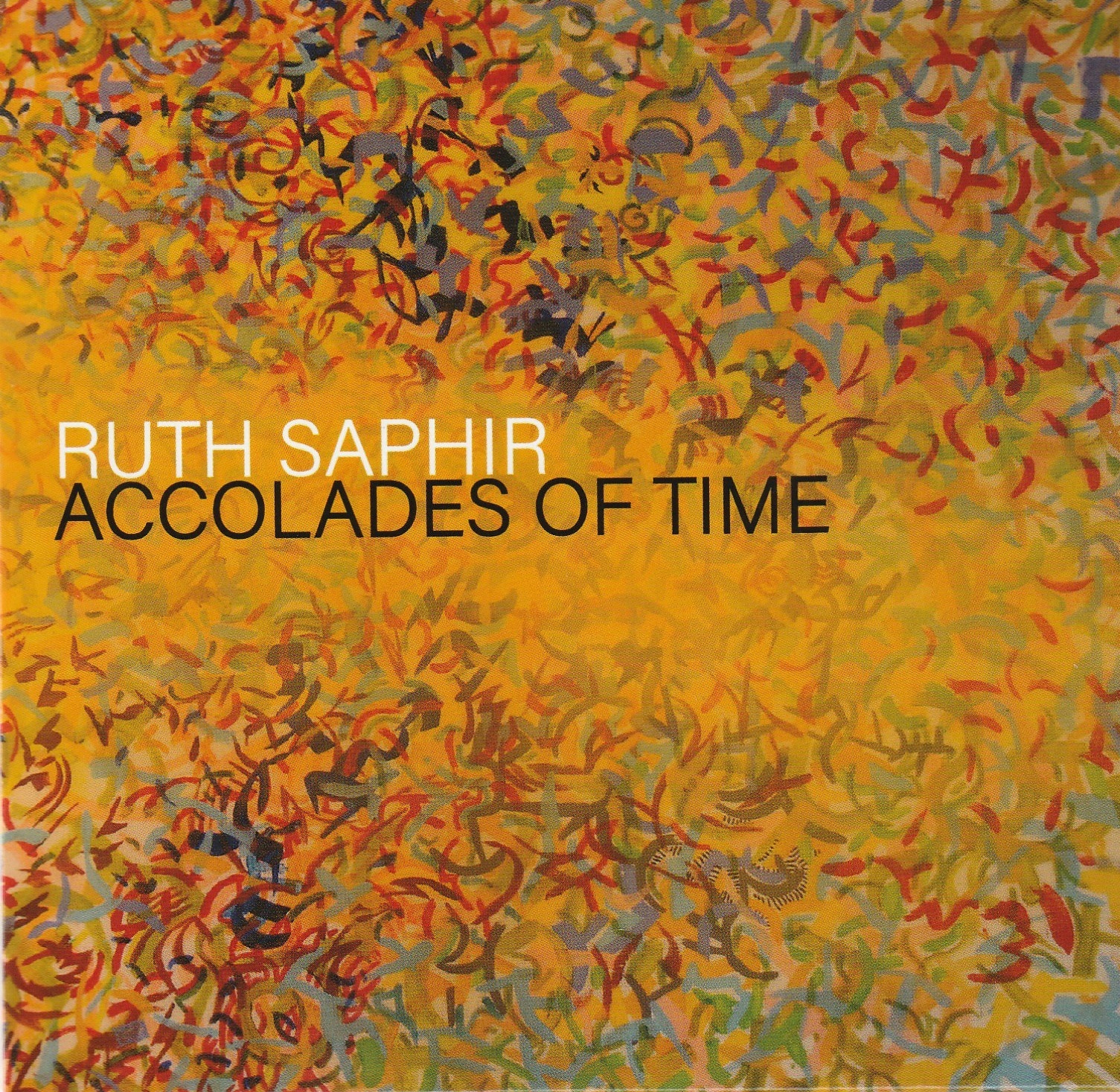
04 Ruth SaphirAccolades of Time
Ruth Saphir
Orchard of Pomegranates (ruthsaphir.com)

With lyrics that poignantly reflect on identity and relationships as they transcend the passage of time, an expressive band that fits this elegant thematic tapestry and a consistently goosebump-inducing vocal performance from Ruth Saphir, Ancestral Shadows is a musical odyssey that feels immensely rewarding with each listen. 

Revolving around the central quartet consisting of Ruth Saphir (voice, flute), Kate Wyatt (piano), Adrian Vedady (bass) and Mili Hong (drums), it truly feels like each musician’s contributions are valued and paced perfectly throughout the album. The incredible one-two punch of Where Do Dreams Go? and Hand-Me-Down-Clothes feature Vedady’s bass as the most prominent instrument in the mix, with the warm breadth of his tone and tasteful nature of his bass lines making every pause in the melody feel full of vitality. This careful, concerted dance between ensemble and songwriter continues in magical moments such as the gradual foray into double time following the effortlessly graceful way Saphir stretches the phrase “I know you wanted to” during Lost at Sea, a swinging number if there ever was one. When we’re in the flow I feel the undertow intrude feels directly addressed to a rhythm section that sits so on top of every beat it practically anticipates it, yet invokes feeling in a very unsuppressed manner.

 Autobiographical in one instant and familiar in the next, this music makes for a truly ecstatic listening experience.

05 Roddy ElliasMoon Over Lake
Roddy Ellias
KWIMU Music KW-007 (roddyellias.bandcamp.com/album/moon-over-lake)

When inevitably transfixed and immersed in the sheer lushness that emanates from Roddy Ellias’ guitar, it is easy to forget you’re listening to a collection of songs, rather than one self-contained piece. When faced with such a dizzying array of odd pulses, phrases without clean endings, and several texturally rich sections where Ellias sounds like he has cloned himself, there can arise a temptation to overanalyze, attempting to grasp a firm hold of all that feels increasingly less tangible. To give into these urges keeps the listener at a distance, which stands at odds to the vulnerability of Ellias’ creative endeavour. 

Short, imagery-laden track titles complement the spacious, meditative feeling of listening to multiple voices interacting within one instrument, punctuated by the occasional audible breath (such as the one in Flower) and chord that reverberates through a physical space. Hope deals in resonances, finding hidden melodies within its chordal elements while allowing the inner voices to color much of the mood, each sustained tone lingering as if to convey a sense of yearning. Chant rides an intricate groove through its entire runtime without belabouring it, but always implying it through blissful syncopated runs and occasionally reintroducing its titular refrain in fragments before the triumphant outro. 

Nary a composition here overstays its welcome – the overall listen is quite brisk – but they are all intricate parts of a fulfilling, harmonious whole.

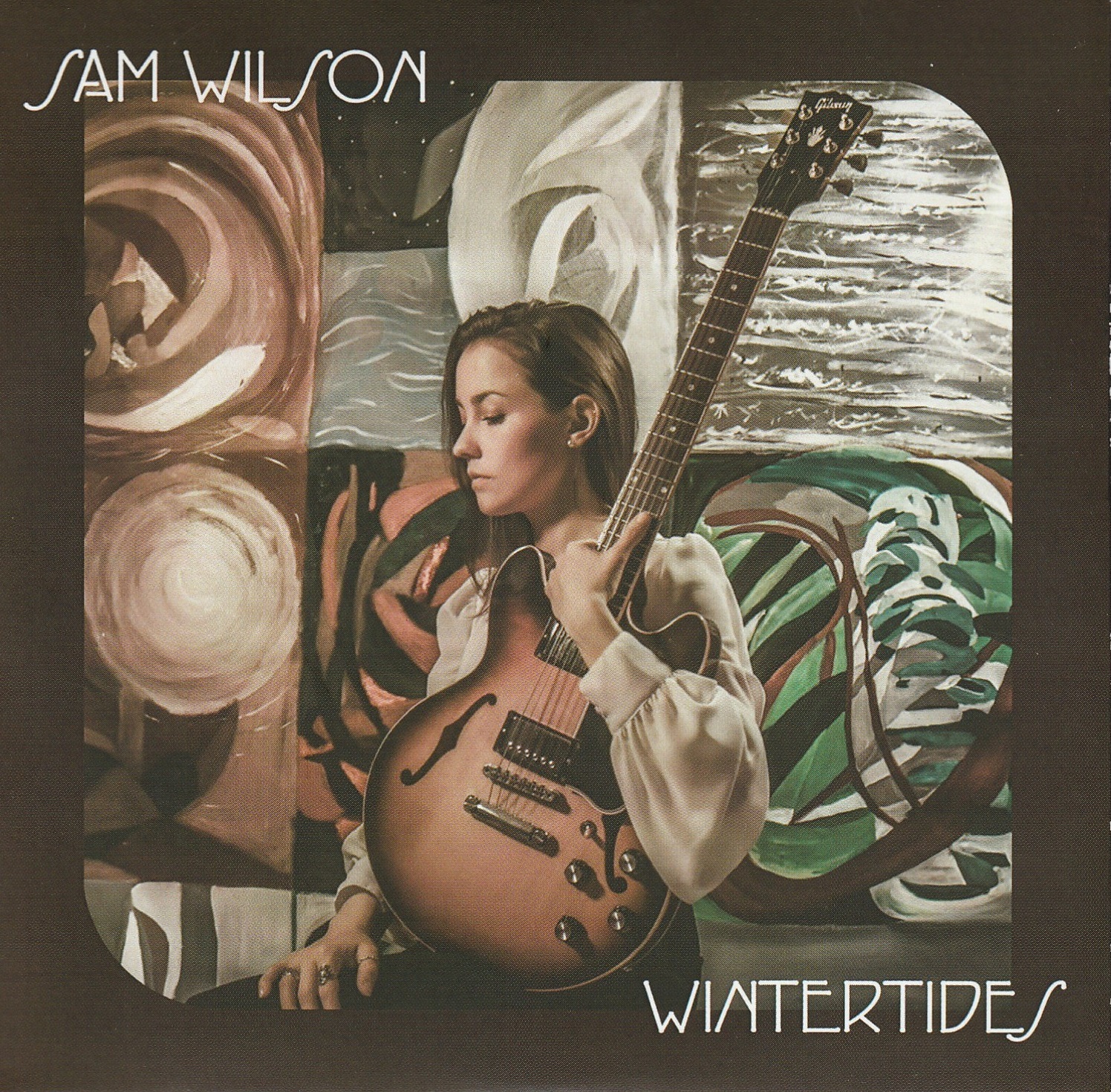
06 Sam WilsonWintertides
Sam Wilson
Studio 204 (samwilsonmusiq.bandcamp.com)

The state of the Canadian guitar in the key of jazz has never been in such good shape as it is today. You only have to consider the contributions to jazz literature made by such masters as  Ray Norris,Diz Disley, Ed Bickert,Lorne Lofsky, Nelson Symonds, Lenny Breau, Oliver Gannon, Sonny Greenwich, and from Bill Coon to Reg Schwager and Jocelyn Gould. You could fill an entire library of jazz music with those names alone.

To that roster you would have to add the name of Sam Wilson. The young east coast composer and virtuoso instrumentalist displays skill and mature judgement in the performance of her original works. She puts on an exquisite musical display on her fourth recording Wintertides, a homage to the landscapes of the two disparate coastlines of Canada. 

Weaving ornate tapestries featuring wonderfully colour-laden notes and phrases Wilson – together with bassist Gordie Hart and drummer Jen Yakamovich – offer subtle, often striking, interpretations of Wilson’s superbly-crafted and affecting miniatures.  

Despite meditating on the single theme of relocating “bi-coastal” landscapes to a canvas of soundscapes the settings of each of the ten works couldn’t be more different. Melodic lines are eloquently ornamented. Slowly unfolding harmonies are stimulating, heightening the impressive, sweeping canvases from earth to sky. Dancing urgency of rhythms dapple the music as if adding curved brushstrokes to these musical canvases. The Moon Song and Wintertides are masterpieces.

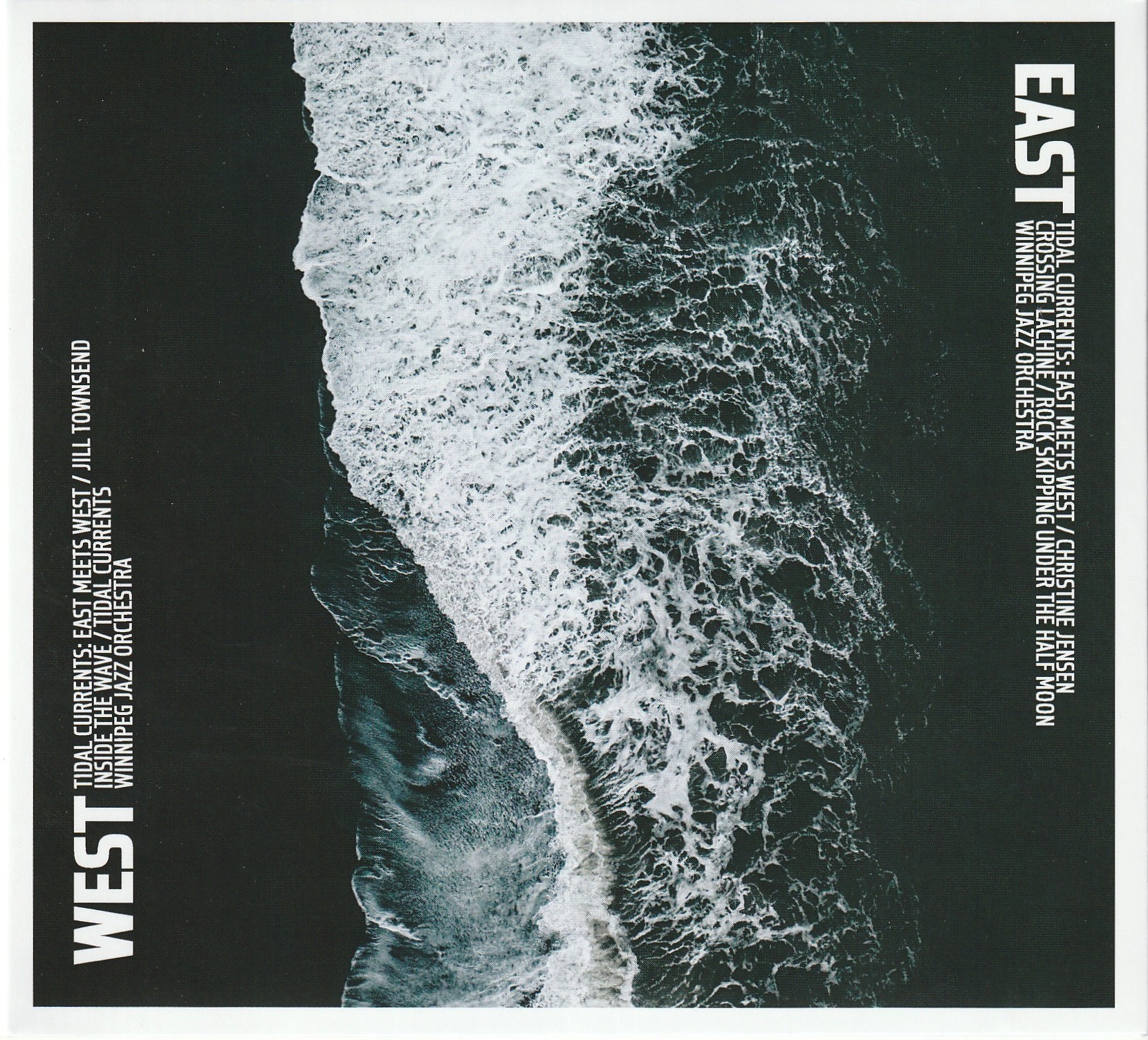
07 Winnipeg Jazz OrchTidal Currents: East Meets West
Winnipeg Jazz Orchestra
Chronograph Records CR-109 (winnipegjazzorchestra.com/cd-details---tidal-currents--east-meets-west)

Tidal Currents: East Meets West is the latest offering from the Winnipeg Jazz Orchestra. It’s the seventh release by this ensemble, and fits beautifully into their catalogue without sounding derivative or too similar to their previous recordings. Composers Jill Townsend and Christine Jensen provide the repertoire, based on themes from their respective upbringings on the East and West coasts of Canada. United in the landlocked geographical center of the country, the WJO gives a slick and polished performance of pieces by both composers, featuring soloists from the group as well as Jensen on soprano saxophone. 

“Short but sweet” is the best way to describe Tidal Currents, at a runtime of just under 30 minutes. If the group had decided to add an additional track or two, they would not be unwelcomed, but after several listens through the album in its entirety, I’m not left feeling owed anything either. We have gone from an era of 70-plus minute CDs to one focused more around singles and EPs. Whether this programming choice was deliberate or not, Tidal Currents might just be the perfect length to satiate the modern attention span. 

It is an impressive feat that the album’s four tracks alternate composers while still functioning together as a suite. This is a testament to both the ensemble playing, and visions of the composers. There is unity throughout an organic set of music, but ample contrast to keep listeners engaged. Albums may be getting shorter, but this means us listeners have no excuse not to digest statements like Tidal Currents in their entirety as intended.

Listen to 'Tidal Currents: East Meets West' Now in the Listening Room

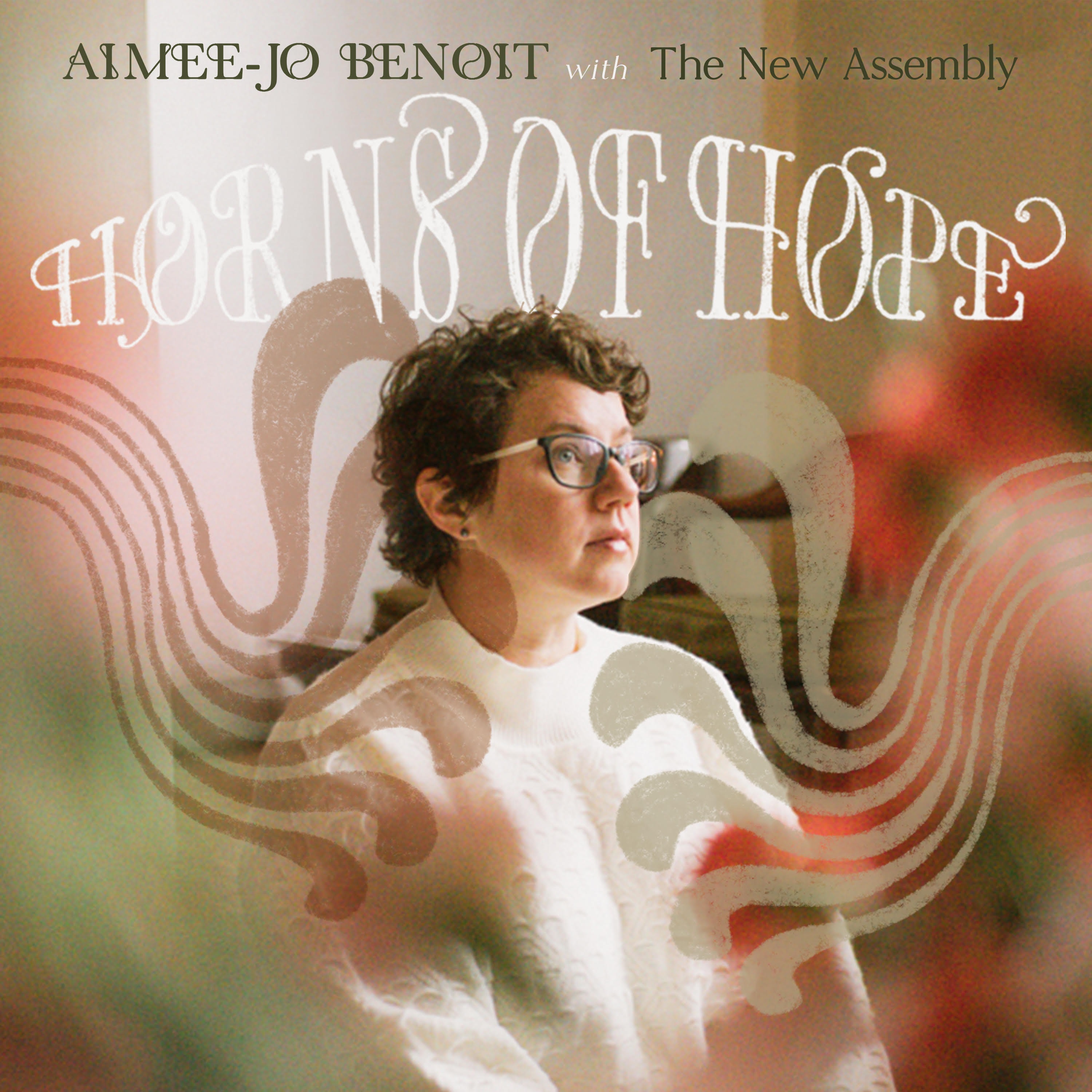
08 Aimee Jo BenoitHorns of Hope
Aimee-Jo Benoit; The New Assembly
Chronograph Records (chronographrecords.com/releases/horns-of-hope)

Calgary-based jazz vocalist/composer, Aimee-Jo Benoit has just released her sophomore recording – a compelling, highly creative collection of music that is a joyous celebration of some of her most seminal influences including songs from Canadian luminaries kd lang, Joni Mitchell, Leonard Cohen, Daniel Lanois and Sarah Harmer. Benoit’s voice is a warm, rich, sonorous instrument – and like a fine violin, and through her masterful communication skills, she is capable of transporting the listener to any emotional plateau desired. Joining Benoit on this exceptional recording are a fine Calgary-based ensemble, including arranger Carsten Rubeling on trombone, Mark De Jong on tenor saxophone and trombone, Andre Wickenheiser on trumpet and a tight rhythm section comprised of bassist Jon Wielebknowski, keyboardist Augustine Yates and drummer Dan Gaucher.

The eight-track programme (including one original from Benoit) kicks off with Barefoot, filled with powerful horn lines, dynamic rhythms and a pitch-pure, velvet-like vocal, which wraps itself around every part of lang’s lyrical poetry, and Rubeling’s innovative and stirring horn-infused arrangement is nothing short of magnificent. A dynamic solo from Wickenheiser is a highlight, as well as the stripped-down coda. 

Other delights include a refreshing take on Mitchell’s Little Green, infusing the tune with jazz elements that would delight Mitchell. Goucher’s gorgeous bass work holds this beautiful tune lovingly in his hands. Harmer’s notable You Were Here is presented in the stark resonance of De Jong on baritone, eventually joined by the full ensemble. Benoit sails through and above everything – gracing all with a brush of the wings of her magnificent voice, her skills and her taste.

Listen to 'Horns of Hope' Now in the Listening Room

09 Francois HouleFatrasies
François Houle; Kate Gentile; Alexander Hawkins
Victo cd 137 (victo.qc.ca)

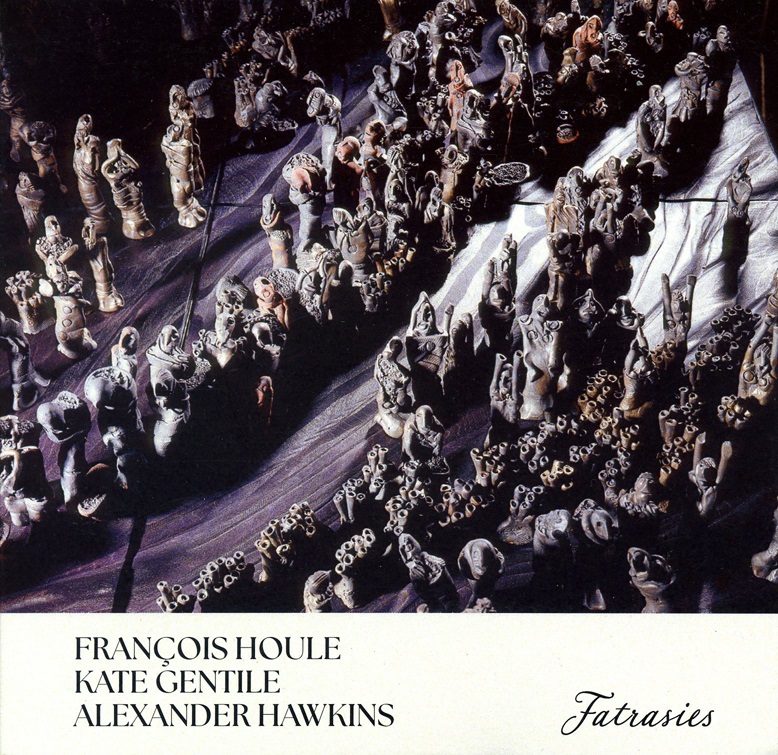
Three masters of the improv craft from three different countries confirm not only creative music’s universality but also how so-called abstract music can be as definitive as any other. Each of the five instant compositions blend American Kate Gentile’s restrained drum pops and rumbles, the UK’s Alexander Hawkins’ refractive pianism ranging from meditative to mauling and Canadian François Houle’s output from two clarinets and electronics that encompasses textures ranging from hissing trills to bagpipe-like drones.

Used sparingly to amplify tones, electronics underline Houle’s versatility since by playing both clarinets at once or dismantling them for extra timbres he produces distinctive sounds from the near opaque to free-flowing. Not to be outdone, Hawkins creates immediate responses to either player’s musical thrusts. For instance on La petite bête he doubles his speed to intersect with the clarinetist’s rappelling up the scale. On Tart ara mon cueur, as blowsy basset clarinet tones widen and intensify, the pianist moves from gentle clinks to splayed percussive pedal action. Gentile responds quickly as well and hard thumps plus cymbal colours join the piano patterns to properly frame Houle’s dual clarinet output so that it becomes moderate and linear.

There are numerous instances of the interaction flowing the other way such as electronic whizzes meeting piledriver piano runs or hollow-sounding reed flutters extending an a capella piano introduction.  The (so-far) shared democratic heritage of these countries could serve as a metaphor for how well these three interact.

Back to top